AB 532: State agencies: collection of data: race or ethnic origin.
- Session Year: 2015-2016
- House: Assembly
- Latest Version Date: 2015-10-02
Existing law requires state agencies, boards, or commissions that directly or by contract collect demographic data as to the ancestry or ethnic origin of Californians, and state agencies conducting surveys as to the ancestry or ethnic origin of state civil service employees, to use separate collection categories for each major Asian and Pacific Islander group.
This bill would require any state agency, board, or commission that directly or by contract collects demographic data, as soon as reasonably feasible and in no event later than January 1, 2022, to provide forms that offer respondents the option of selecting one more ethnic or racial designations.
Existing law requires state agencies, boards, or commissions that directly or by contract collect demographic data as to the ancestry or ethnic origin of Californians, and state agencies conducting surveys as to the ancestry or ethnic origin of state civil service employees, to use separate collection categories for each major Asian and Pacific Islander group.
This bill would require any state agency, board, or commission that directly or by contract collects demographic data, as soon as reasonably feasible and in no event later than January 1, 2022, to provide forms that offer respondents the option of identifying as multiracial and selecting one more ethnic or racial designations.
Existing law requires state agencies, boards, or commissions that directly or by contract collect demographic data as to the ancestry or ethnic origin of Californians, and state agencies conducting surveys as to the ancestry or ethnic origin of state civil service employees, to use separate collection categories for each major Asian and Pacific Islander group.
This bill would enact the Ethnic Heritage Respect and Recognition Act to require any state agency, board, or commission that directly or by contract collects demographic data, as soon as reasonably feasible and in no event later than January 1, ____, 2022, to provide forms that offer respondents the option of identifying as multiracial and selecting one more ethnic or racial designation according to specified federal standards. designations.
Existing law requires state agencies, boards, or commissions that directly or by contract collect demographic data as to the ancestry or ethnic origin of Californians, and state agencies conducting surveys as to the ancestry or ethnic origin of state civil service employees, to use separate collection categories for each major Asian and Pacific Islander group.
This bill would enact the Ethnic Heritage Respect and Recognition Act to require any state agency, board, or commission that directly or by contract collects demographic data, as soon as reasonably feasible and in no event later than January 1, ____, to provide forms that offer respondents the option of selecting one more ethnic or racial designation according to specified federal standards.
(a)The Legislature hereby finds and declares all of the following:
(1)The State of California currently has the largest population of people in the United States who identify with more than one ethnicity or race. This population of Californians who identify as multiracial is rapidly growing.
(2)Many state forms that currently require respondents to choose only a single ethnicity or race force multiracial Californians to deny a significant part of their heritage. Information collected in this manner often deprives the state of accurate data with which to meet the needs of its diverse communities.
(3)It is in the best interest of the State of California to respect, embrace, and understand the full diversity of its citizens.
(4)Since 1997, the federal Office of Management and Budgets Standards for Maintaining, Collecting, and Presenting Federal Data on Race and Ethnicity have required federal agencies to ensure that individuals have the option of selecting one or more ethnic or racial designations on federal government forms requesting this information.
(b)Any state agency, board, or commission that directly or by contract collects demographic data on the ethnic origin, ethnicity, or race of Californians shall do all of the following:
(1)Provide forms that offer respondents the option of selecting one or more ethnic or racial designations. Recommended forms for the instruction accompanying a multiple response question are mark one or more or select one or more.
(2)Ensure in cases when data on respondents ethnic origin, ethnicity, or race is reported to any other state agency, board, or commission that it is neither tabulated nor reported without all of the following:
(A)The number or percentage of respondents who identify with each ethnic or racial designation alone and not in combination with any other ethnic or racial designation.
(B)The number or percentage of respondents who identify with each ethnic or racial designation, whether alone or in combination with other ethnic or racial designations.
(C)The number or percentage of respondents who identify with multiple ethnic or racial designations.
(D)For civil rights monitoring and enforcement, complying with the rules for multiple race response allocation issued by the federal Office of Management and Budget Bulletin No. 00-02 in cases of state or federally mandated actions related to an ethnic or a racial community, or to assessing disparate impact or discriminatory patterns. In these cases, the requirement of subparagraph (C) shall not be considered satisfied without also complying with the requirements of subparagraphs (A), (B), and (D).
(c)Each state agency, board, or commission required to comply with subdivision (b) shall comply as early as reasonably feasible when updating forms, software, hardware, or information collection procedures, and in no event later than January 1, 2022.
(d)Notwithstanding any other provision of this section, any state agency, board, or commission that collects demographic data from a local agency may continue to collect and report that data to any other state agency, board, or commission in the form that the local agency submits it.
(e)Notwithstanding any other provision of this section, any state agency, board, or commission that collects ethnic or racial data solely to comply with federal requirements may continue to collect and report that data to any other state agency, board, or commission in the form required by the federal government.
(a)The Legislature hereby finds and declares all of the following:
(1)The State of California currently has the largest population of people in the United States who identify with more than one ethnicity or race. This population of Californians who identify as multiracial is rapidly growing.
(2)Many state forms that currently require respondents to choose only a single ethnicity or race force multiracial Californians to deny a significant part of their heritage. Information collected in this manner often deprives the state of accurate data with which to meet the needs of its diverse communities.
(3)It is in the best interest of the State of California to respect, embrace, and understand the full diversity of its citizens.
(4)Since 1997, the federal Office of Management and Budgets Standards for Maintaining, Collecting, and Presenting Federal Data on Race and Ethnicity have required federal agencies to ensure that individuals have the option of selecting one or more ethnic or racial designations on federal government forms requesting this information.
(b)Any state agency, board, or commission that directly or by contract collects demographic data on the ethnic origin, ethnicity, or race of Californians shall do all of the following:
(1)Provide forms that offer respondents the option of identifying as multiracial and selecting one or more ethnic or racial designations. Recommended forms for the instruction accompanying a multiple response question are mark one or more or select one or more.
(2)Ensure in cases when data on respondents ethnic origin, ethnicity, or race is reported to any other state agency, board, or commission that it is neither tabulated nor reported without all of the following:
(A)The number or percentage of respondents who identify with each ethnic or racial designation alone and not in combination with any other ethnic or racial designation.
(B)The number or percentage of respondents who identify with each ethnic or racial designation, whether alone or in combination with other ethnic or racial designations.
(C)The number or percentage of respondents who identify with multiple ethnic or racial designations.
(D)For civil rights monitoring and enforcement, complying with the rules for multiple race response allocation issued by the federal Office of Management and Budget Bulletin No. 00-02 in cases of state or federally mandated actions related to an ethnic or a racial community, or to assessing disparate impact or discriminatory patterns. In these cases, the requirement of subparagraph (C) shall not be considered satisfied without also complying with the requirements of subparagraphs (A), (B), and (D).
(c)Each state agency, board, or commission required to comply with subdivision (b) shall comply as early as reasonably feasible when updating forms, software, hardware, or information collection procedures, and in no event later than January 1, 2022.
(d)Notwithstanding any other provision of this section, any state agency, board, or commission that collects demographic data from a local agency may continue to collect and report that data to any other state agency, board, or commission in the form that the local agency submits it.
(a)The Legislature hereby finds and declares all of the following:
(1)The State of California currently has the largest population of people in the United States who identify with more than one ethnicity or race. This population of Californians who identify as multiracial is rapidly growing.
(2)Many state forms that currently require respondents to choose only a single ethnicity or race force multiracial Californians to deny a significant part of their heritage. Information collected in this manner often deprives the state of accurate data with which to meet the needs of its diverse communities.
(3)It is in the best interest of the State of California to respect, embrace, and understand the full diversity of its citizens.
(4)Since 1997, the federal Office of Management and Budgets Standards for Maintaining, Collecting, and Presenting Federal Data on Race and Ethnicity have required federal agencies to ensure that individuals have the option of selecting one or more ethnic or racial designations on federal government forms requesting this information.
(b)Any state agency, board, or commission that directly or by contract collects demographic data on the ethnic origin, ethnicity, or race of Californians shall do all of the following:
(1)Provide forms that offer respondents the option of identifying as multiracial and selecting one or more ethnic or racial designations. Recommended forms for the instruction accompanying a multiple response question are mark one or more or select one or more.
(2)Ensure in cases when data on respondents ethnic origin, ethnicity, or race is reported to any other state agency, board, or commission that it is neither tabulated nor reported without all of the following:
(A)The number or percentage of respondents who identify with each ethnic or racial designation alone and not in combination with any other ethnic or racial designation.
(B)The number or percentage of respondents who identify with each ethnic or racial designation, whether alone or in combination with other ethnic or racial designations.
(C)The number or percentage of respondents who identify with multiple ethnic or racial designations.
(D)For civil rights monitoring and enforcement, complying with the rules for multiple race response allocation issued by the federal Office of Management and Budget Bulletin No. 00-02 in cases of state or federally mandated actions related to an ethnic or a racial community, or to assessing disparate impact or discriminatory patterns. In these cases, the requirement of subparagraph (C) shall not be considered satisfied without also complying with the requirements of subparagraphs (A), (B), and (D).
(c)Each state agency, board, or commission required to comply with subdivision (c) (b) shall comply as early as reasonably feasible when updating forms, software, hardware, or information collection procedures, and in no event later than January 1, 2022.
(d)Notwithstanding any other provision of this section, any state agency, board, or commission that collects demographic data from a local agency may continue to collect and report that data to any other state agency, board, or commission in the form that the local agency submits it.
(a)This section shall be known and may be cited as the Ethnic Heritage Respect and Recognition Act.
(b)
8310.6.(a)The Legislature hereby finds and declares all of the following:
(1)The State of California currently has the largest population of people in the United States who identify with more than one ancestry, ethnicity, ethnicity or race. This population of Californians who identify as multiracial is rapidly growing.
(2)Many state forms that currently require respondents to choose only a single ancestry, ethnicity, ethnicity or race force multiracial Californians to deny a significant part of their heritage. Information collected in this manner often deprives the state of accurate data with which to meet the needs of its diverse communities.
(3)It is in the best interest of the State of California to respect, embrace, and understand the full diversity of its citizens.
(4)Respect for individual dignity should guide the processes and methods for collecting and encoding data on ancestry, ethnicity, and race.
(5)
(4)Since 1997, the federal Office of Management and Budgets Standards for Maintaining, Collecting, and Presenting Federal Data on Race and Ethnicity have required federal agencies to ensure that individuals have the option of selecting one or more ethnic or racial designations on federal government forms requesting this information.
(c)
(b)Any state agency, board, or commission that directly or by contract collects demographic data on the ancestry, ethnic origin, ethnicity, or race of Californians shall do all of the following:
(1)Provide forms that offer respondents the option of identifying as multiracial and selecting one or more ethnic or racial designations pursuant to the federal Office of Management and Budgets Standards for Maintaining, Collecting, and Presenting Federal Data on Race and Ethnicity. designations. Recommended forms for the instruction accompanying a multiple response question are mark one or more and or select one or more. A single designation for multiracial respondents does not satisfy this requirement.
(2)Ensure in cases when data on respondents ancestry, ethnic origin, ethnicity, or race is reported to any other state agency, board, or commission that it is neither tabulated nor reported without all of the following:
(A)The number or percentage of respondents who identify with each ethnic or racial designation alone and not in combination with any other ethnic or racial designation.
(B)The number or percentage of respondents who identify with each ethnic or racial designation, whether alone or in combination with other ethnic or racial designations.
(C)The number or percentage of respondents who identify with multiple ethnic or racial designations.
(D)For civil rights monitoring and enforcement, complying with the rules for multiple race response allocation issued by the federal Office of Management and Budget Bulletin No. 00-02 in cases of state or federally mandated actions related to an ethnic or a racial community, or to assessing disparate impact or discriminatory patterns. In these cases, the requirement of subparagraph (C) shall not be considered satisfied without also complying with the requirements of subparagraphs (A), (B), and (D).
(d)
(c)Each state agency, board, or commission required to comply with subdivision (c) shall comply as early as reasonably feasible when updating forms, software, hardware, or information collection procedures, and in no event later than January 1, ____. 2022.
(e)
(d)Notwithstanding any other provision of this section, any state agency, board, or commission that collects demographic data from a local agency may continue to collect and report that data to any other state agency, board, or commission in the form that the local agency submits it.
(a)This section shall be known and may be cited as the Ethnic Heritage Respect and Recognition Act.
(b)The Legislature hereby finds and declares all of the following:
(1)The State of California currently has the largest population of people in the United States who identify with more than one ancestry, ethnicity, or race. This population of Californians who identify as multiracial is rapidly growing.
(2)Many state forms that currently require respondents to choose only a single ancestry, ethnicity, or race force multiracial Californians to deny a significant part of their heritage. Information collected in this manner often deprives the state of accurate data with which to meet the needs of its diverse communities.
(3)It is in the best interest of the State of California to respect, embrace, and understand the full diversity of its citizens.
(4)Respect for individual dignity should guide the processes and methods for collecting and encoding data on ancestry, ethnicity, and race.
(5)Since 1997, the federal Office of Management and Budgets Standards for Maintaining, Collecting, and Presenting Federal Data on Race and Ethnicity have required federal agencies to ensure that individuals have the option of selecting one or more ethnic or racial designations on federal government forms requesting this information.
(c)Any state agency, board, or commission that directly or by contract collects demographic data on the ancestry, ethnic origin, ethnicity, or race of Californians shall do all of the following:
(1)Provide forms that offer respondents the option of selecting one or more ethnic or racial designations pursuant to the federal Office of Management and Budgets Standards for Maintaining, Collecting, and Presenting Federal Data on Race and Ethnicity. Recommended forms for the instruction accompanying a multiple response question are mark one or more and select one or more. A single designation for multiracial respondents does not satisfy this requirement.
(2)Ensure in cases when data on respondents ancestry, ethnic origin, ethnicity, or race is reported to any other state agency, board, or commission that it is neither tabulated nor reported without all of the following:
(A)The number or percentage of respondents who identify with each ethnic or racial designation alone and not in combination with any other ethnic or racial designation.
(B)The number or percentage of respondents who identify with each ethnic or racial designation, whether alone or in combination with other ethnic or racial designations.
(C)The number or percentage of respondents who identify with multiple ethnic or racial designations.
(D)For civil rights monitoring and enforcement, complying with the rules for multiple race response allocation issued by the federal Office of Management and Budget Bulletin No. 00-02 in cases of state or federally mandated actions related to an ethnic or a racial community, or to assessing disparate impact or discriminatory patterns. In these cases, the requirement of subparagraph (C) shall not be considered satisfied without also complying with the requirements of subparagraphs (A), (B), and (D).
(d)Each state agency, board, or commission required to comply with subdivision (c) shall comply as early as reasonably feasible when updating forms, software, hardware, or information collection procedures, and in no event later than January 1, ____.
(e)Notwithstanding any other provision of this section, any state agency, board, or commission that collects demographic data from a local agency may continue to collect and report that data to any other state agency, board, or commission in the form that the local agency submits it.
|
Date
|
Status
|
|---|---|
| Oct 2, 2015 | Chaptered by Secretary of State - Chapter 433, Statutes of 2015. |
| Oct 2, 2015 | Approved by the Governor. |
| Sep 17, 2015 | Enrolled and presented to the Governor at 4 p.m. |
| Sep 9, 2015 | Senate amendments concurred in. To Engrossing and Enrolling. (Ayes 77. Noes 0. Page 3014.). |
| Sep 9, 2015 | Assembly Rule 77 suspended. (Page 2990.) |
| Sep 9, 2015 | Senate amendments concurred in. To Engrossing and Enrolling. (Ayes 77. Noes 0.). |
| Sep 9, 2015 | Senate amendments concurred in. To Engrossing and Enrolling. |
| Sep 9, 2015 | Assembly Rule 77 suspended. |
| Sep 8, 2015 | Read third time. Passed. Ordered to the Assembly. (Ayes 40. Noes 0. Page 2591.). |
| Sep 8, 2015 | In Assembly. Concurrence in Senate amendments pending. May be considered on or after September 10 pursuant to Assembly Rule 77. |
| Sep 8, 2015 | Read third time. Passed. Ordered to the Assembly. |
| Sep 4, 2015 | Read second time. Ordered to third reading. |
| Sep 3, 2015 | Read third time and amended. Ordered to second reading. |
| Aug 31, 2015 | Read second time and amended. Ordered to third reading. |
| Aug 27, 2015 | From committee: Amend, and do pass as amended. (Ayes 6. Noes 1.) (August 27). |
| Aug 17, 2015 | In committee: Referred to APPR. suspense file. |
| Jul 9, 2015 | In committee: Hearing postponed by committee. |
| Jun 29, 2015 | From committee: Do pass and re-refer to Com. on APPR. (Ayes 10. Noes 2.) (June 29). Re-referred to Com. on APPR. |
| Jun 4, 2015 | Referred to Com. on G.O. |
| May 26, 2015 | Read third time. Passed. Ordered to the Senate. (Ayes 76. Noes 0. Page 1593.) |
| May 26, 2015 | In Senate. Read first time. To Com. on RLS. for assignment. |
| May 26, 2015 | Read third time. Passed. Ordered to the Senate. |
| May 21, 2015 | Read second time. Ordered to Consent Calendar. |
| May 20, 2015 | Read second time and amended. Ordered returned to second reading. |
| May 19, 2015 | From committee: Amend, and do pass as amended. To Consent Calendar. (Ayes 17. Noes 0.) (May 13). |
| Apr 29, 2015 | From committee: Do pass and re-refer to Com. on APPR. with recommendation: To Consent Calendar. (Ayes 9. Noes 0.) (April 29). Re-referred to Com. on APPR. |
| Apr 29, 2015 | From committee: Do pass and re-refer to Com. on APPR. (Ayes 9. Noes 0.) (April 29). Re-referred to Com. on APPR. |
| Apr 21, 2015 | Re-referred to Com. on A. & A.R. |
| Apr 20, 2015 | From committee chair, with author's amendments: Amend, and re-refer to Com. on A. & A.R. Read second time and amended. |
| Apr 9, 2015 | In committee: Set, first hearing. Hearing canceled at the request of author. |
| Mar 5, 2015 | Referred to Com. on A. & A.R. |
| Feb 24, 2015 | From printer. May be heard in committee March 26. |
| Feb 23, 2015 | Read first time. To print. |
|
Date
|
Description
|
Location
|
Votes
|
|
|---|---|---|---|---|
| Sep 9, 2015 | AB 532 MCCARTY Concurrence in Senate Amendments | Assembly Floor |
Passed |
|
| Sep 8, 2015 | Assembly 3rd Reading AB532 McCarty By Hall | Senate Floor |
Passed |
|
| Aug 27, 2015 | Do pass as amended | Senate Standing Committee on Appropriations |
Passed |
|
| Aug 17, 2015 | Placed on suspense file | Senate Standing Committee on Appropriations |
Passed |
|
| Jun 29, 2015 | Do pass, but first be re-referred to the Committee on [Appropriations] | Senate Standing Committee on Governmental Organization |
Passed |
|
| May 26, 2015 | AB 532 MCCARTY Consent Calendar Second Day | Assembly Floor |
Passed |
|
| May 13, 2015 | Do pass as amended. To Consent Calendar. | Assembly Standing Committee on Appropriations |
Passed |
|
| Apr 29, 2015 | Do pass and be re-referred to the Committee on [Appropriations] with recommendation: To Consent Calendar | Assembly Standing Committee on Accountability and Administrative Review |
Passed |
This list shows positions taken on this bill by organizations on the date displayed, which is linked to the original source.
Positions by individuals are not included.
AB 532
Page 2
CONCURRENCE IN SENATE AMENDMENTS
AB 532
(McCarty)
As Amended September 3, 2015
Majority vote
ASSEMBLY: |
76-0 |
(May 26, 2015) |
SENATE: |
40-0 |
(September 8, 2015) |
Original Committee Reference: A. & A.R.
SUMMARY: Requires state entities that collect demographic information on ethnicity and race to provide forms that offer respondents the option of selecting one or more ethnic or racial designations, by January 1, 2022.
The Senate amendments:
Delete the requirement for state entities to offer respondents the option of identifying in a separate multiracial category.
Clarify that any state agency, board, or commission that collects ethnic and racial data solely to comply with federal requirements may continue to collect and report that data to any other state agency, board, or commission in the form required by the federal government.
EXISTING LAW requires a state agency, board, or commission that directly, or by contract, collects demographic data as to the ancestry or ethnic origin of Californians, to use separate collection categories and tabulations for each major Asian group and each major Pacific Islander group. This data is required to be made available to the public in accordance with state and federal law, except for confidential personal identifying information. (Government Code Section 8310.5)
FISCAL EFFECT: According to the Senate Appropriations Committee, unknown, but significant overall costs to comply with this bill's mandates. Many state entities report minor and absorbable costs to comply by 2022, and many others are unaffected by this bill because they don't collect demographic data. The following entities that provided information would have significant costs:
The Department of Human Resources and the State Personnel Board estimates costs in the range of $250,000 (General Fund), primarily associated with programming duties to update systems.
The Administrative Office of the Courts indicates that several of the mandated duties of the courts require the collection of demographic data. Some of these procedures either currently allow for multiple racial or ethnic designations, or could be updated in the normal course of business by 2022. Courts also collect race data on criminal defendants through case management systems, most of which offer the option to identify as "multiracial" or "other," but not to select more than one designation. Costs to update 58 separate case management systems are unknown, but likely significant. (Trial Court Trust Fund)
Unknown costs to the Employment Development Department (EDD), potentially in the range of $1 million (General Fund). EDD indicated costs related to the May 20th version of this bill would be approximately $6.5 million, largely attributable to costs to add a new "multiractial" designation to multiple Information Technology systems and programs. Amendments remove the option for respondents to identify as multiracial, so staff assumes the initial identified costs will be substantially decreased. Updated fiscal estimates from EDD are currently unavailable.
COMMENTS: Existing law sets minimum requirements but does not limit the amount of demographic data state entities may collect. Current collection forms seek to provide multiple racial designations from which an individual may select more than one designation to express their racial identity. Difficulty arises, however, when an individual finds that their racial identity cannot be accurately expressed through the limited number of racial designations listed on the forms.
The author's office emphasizes that "by allowing multiracial Californians the choice of selecting one or more ethnic/racial designations, AB 532 will give policymakers, service providers, health practitioners and others a truer picture of the state’s diversity."
Analysis Prepared by: William Herms / A. & A.R. / (916) 319-3600 FN: 0002217
AB 532
Page 6
|
Office of Senate Floor Analyses (916) 651-1520 Fax: (916) 327-4478 |
THIRD READING
Bill No: AB 532
Amended: 9/3/15 in Senate
SENATE GOVERNMENTAL ORG. COMMITTEE: 10-2, 6/29/15
AYES: Hall, Block, Gaines, Glazer, Hernandez, Hill, Hueso, Lara, McGuire, Vidak
NOES: Berryhill, Runner
NO VOTE RECORDED: Galgiani
SENATE APPROPRIATIONS COMMITTEE: 6-1, 8/27/15
AYES: Lara, Beall, Hill, Leyva, Mendoza, Nielsen
NOES: Bates
ASSEMBLY FLOOR: 76-0, 5/26/15 (Consent) - See last page for vote
SUBJECT: State agencies: collection of data: race or ethnic origin
DIGEST: This bill requires any state agency, board, or commission that collects demographic data to provide forms that offer respondents the option of selecting one or more ethnic or racial designations.
Senate Floor Amendments of 9/3/15 add a provision clarifying that any state entity that collects ethnic or racial data solely to comply with federal requirements may continue to collect and report that data to any other state entity in the form required by the federal government.
ANALYSIS:
Existing law requires a state agency, board, or commission that directly, or by contract, collects demographic data as to the ancestry or ethnic origin of Californians, to use separate collection categories and tabulations for each major Asian group and each major Pacific Islander group. This data is required to be made available to the public in accordance with state and federal law, except for personal identifying information, which shall be deemed confidential.
This bill:
Requires state agencies, boards, or commissions that directly or by contract collect demographic data on ethnic origin, ethnicity, or race of Californians to provide forms that offer respondents the option of selecting one or more ethnic or racial designations.
Requires state agencies, boards, or commissions when reporting respondent data to any other state agency, board, or commission to tabulate and report all of the following:
The number or percentage of respondents who identify with each ethnic or racial designation alone and not in combination with any other ethnic or racial designation.
The number or percentage of respondents who identify with each ethnic or racial designation, whether alone or in combination with other ethnic or racial designations.
The number or percentage of respondents who identify with multiple ethnic or racial designations.
Federally mandated actions related to civil rights monitoring and enforcement.
Requires state agencies, boards, or commissions to comply as early as reasonably feasible when updating forms, software, hardware, or collection procedures, but no later than January 1, 2022.
Permits any state agency, board, or commission that collects demographic data from a local entity to continue to collect and report that data in the form the local entity submits.
Clarifies that any state agency, board, or commission that collects ethnic or racial data solely to comply with federal requirements may continue to collect and report that data to any other state agency, board, or commission in the form required by the federal government.
Contains legislative findings and declarations relative to the fact that California has the largest population of people in the United States who identify with more than one ethnicity race and that many state forms require respondents to choose only a single ethnicity or race which forces multiracial Californians to deny a significant portion of their heritage which in turn deprives the state of accurate data with which to meet the needs of its diverse communities.
Background
Purpose of AB 532. Existing law sets minimum requirements but does not limit the amount of demographic data state entities may collect. Current collection forms seek to provide multiple racial designations from which an individual may select more than one designation to express their racial identity. Difficulty arises, however, when an individual finds that their racial identity cannot be accurately expressed through the limited number of racial designations listed on the forms.
The author’s office points out that, “in 1997 the federal government revised its Standards for Maintaining, Collecting, and Presenting Federal Data on Race and Ethnicity – since then, federal agencies have been required to ensure that multiracial individuals have the option of selecting one or more ethnic or racial designations on federal government forms requesting such data.” The author’s office also reports that “over the past ten years, considerable research has been conducted on the population segment reporting multiple races, and the fact that people may identify themselves as being more than one race has become a common part of discussions and understanding of race and ethnicity. Results from the 2010 Census provided new information on the two or more races population in the United States and, for the first time, enabled comparisons of this population from two major data points.”
According to the author’s office, “current data collection practices can be unfair and offensive to the rapidly increasing population of Californians who identify with more than one ethnicity or race. Roughly one in six births overall in the state and one in four births to native-born mothers is multiracial/ethnic. While many state agencies have taken the initiative to put in place measures to recognize this reality, many multiracial Californians are still forced to deny significant parts of their racial and ethnic identity on state forms when they are required to select only one ethnic or racial designation.”
The author’s office emphasizes that “by allowing multiracial Californians the choice of selecting one or more ethnic/racial designations, AB 532 will give policymakers, service providers, health practitioners and others a truer picture of the state’s diversity.”
Prior/Related Legislation
AB 1088 (Eng, Chapter 689, Statutes of 2011) required certain state agencies to collect and tabulate data for additional major Asian groups, as listed, in order to better reflect the diversity of Asian American, Hawaiian and Pacific Islander communities in California.
AB
1281 (Portantino, 2009) would have enacted the California School
Racial Equality Designation Act and required any state agency, board,
or commission that directly, or by contract, collects demographic
data on the race or ethnicity of pupils in any elementary or
secondary school to provide written instructions for reporting racial
information that specify that multiracial pupils may select 2 or more
racial categories. (Vetoed – Governor’s message stated the
California Department of Education has already put into place
processes to update forms and instructions to accommodate the
inclusion of multiracial students. Therefore, this bill is
unnecessary.)
SB 26 (Simitian, 2007) would have enacted
the “Ethnic Heritage Respect and Recognition Act of 2007”
requiring any state entity that collects demographic data on the
ancestry, ethnic origin, ethnicity, or race of Californians to
provide forms that offer respondents the option of selecting one or
more ethnic or racial designations. (Died in Assembly
Appropriations)
SB 1615 (Simitian, 2006) would have
enacted the Ethnic Heritage Respect and Recognition Act to require
any state agency, board, or commission that directly or by contract
collects demographic data, as soon as reasonably feasible and in no
event later than January 1, 2014, to provide forms that offer
respondents the option of selecting one more ethnic or racial
designation according to specified federal standards. (Died in
Senate Appropriations)
AB 2324 (Chan, 2004), among other things, would have required each state program directly involved in furnishing information to, or rendering services to, the public to collect data regarding the race, ethnicity, and primary language of all participants, on a voluntary basis. (Died in Assembly Appropriations)
FISCAL EFFECT: Appropriation: No Fiscal Com.: Yes Local: No
According to the Senate Appropriations Committee, unknown, but significant overall costs to comply with the bill’s mandates. Many state entities report minor and absorbable costs to comply by 2022, and many others are unaffected by the bill because they don’t collect demographic data. The following entities that provided information would have significant costs:
The Department of Human Resources and the State Personnel Board (CalHR) estimates costs in the range of $250,000 (General Fund), primarily associated with programming duties to update systems.
The Administrative Office of the Courts (Judicial Council) indicates that several of the mandated duties of the courts require the collection of demographic data. Some of these procedures either currently allow for multiple racial or ethnic designations, or could be updated in the normal course of business by 2022. Courts also collect race data on criminal defendants through case management systems, most of which offer the option to identify as “multiracial” or “other,” but not to select more than one designation. Costs to update 58 separate case management systems are unknown, but likely significant. (Trial Court Trust Fund)
Unknown costs to the Employment Development Department (EDD), potentially in the range of $1 million (General Fund). EDD indicated costs related to the May 20 version of the bill would be approximately $6.5 million, largely attributable to costs to add a new “multiractial” designation to multiple IT systems and programs. The author’s amendments adopted by this committee would remove the option for respondents to identify as multiracial, so staff assumes the initial identified costs will be substantially decreased. Updated fiscal estimates from EDD are currently unavailable.
SUPPORT:
(Verified 9/4/15)
California Immigrant Policy Center
Project RACE
OPPOSITION: (Verified 9/4/15)
None received
ARGUMENTS IN SUPPORT: Writing in support, the California Immigrant Policy Center states that “Current data collection practices not only create a false picture of the state’s diversity but also set up a situation where accurate, reliable information is not available to doctors, teachers, service providers, and policymakers. For example, there is an increasing awareness in the healthcare community that intake forms requiring people to mark ‘only one race’ can prevent doctors from providing culturally appropriate and medically relevant information to their multiracial patients.”
Also writing in support, Project RACE states, “We support legislation that includes self-identification and a multiracial identifier or check box on forms that require racial and ethnic information. We support AB 532 as written.”
ASSEMBLY FLOOR: 76-0, 5/26/15
AYES: Achadjian, Alejo, Travis Allen, Baker, Bigelow, Bonilla, Bonta, Brough, Brown, Burke, Calderon, Campos, Chang, Chau, Chiu, Chu, Cooley, Cooper, Dababneh, Dahle, Daly, Dodd, Eggman, Frazier, Beth Gaines, Gallagher, Cristina Garcia, Eduardo Garcia, Gatto, Gipson, Gomez, Gonzalez, Gordon, Gray, Grove, Hadley, Roger Hernández, Holden, Irwin, Jones, Jones-Sawyer, Kim, Lackey, Levine, Linder, Lopez, Low, Maienschein, Mayes, McCarty, Medina, Melendez, Mullin, Nazarian, Obernolte, O'Donnell, Olsen, Patterson, Perea, Quirk, Rendon, Ridley-Thomas, Rodriguez, Salas, Santiago, Steinorth, Mark Stone, Thurmond, Ting, Wagner, Waldron, Weber, Wilk, Williams, Wood, Atkins
NO VOTE RECORDED: Bloom, Chávez, Harper, Mathis
Prepared by: Arthur Terzakis / G.O. / (916) 651-1530
9/4/15 10:48:02
**** END ****
AB 532
Page 6
|
Office of Senate Floor Analyses (916) 651-1520 Fax: (916) 327-4478 |
THIRD READING
Bill No: AB 532
Amended: 8/31/15 in Senate
SENATE GOVERNMENTAL ORG. COMMITTEE: 10-2, 6/29/15
AYES: Hall, Block, Gaines, Glazer, Hernandez, Hill, Hueso, Lara, McGuire, Vidak
NOES: Berryhill, Runner
NO VOTE RECORDED: Galgiani
SENATE APPROPRIATIONS COMMITTEE: 6-1, 8/27/15
AYES: Lara, Beall, Hill, Leyva, Mendoza, Nielsen
NOES: Bates
ASSEMBLY FLOOR: 76-0, 5/26/15 (Consent) - See last page for vote
SUBJECT: State agencies: collection of data: race or ethnic origin
DIGEST: This bill requires any state agency, board, or commission that collects demographic data to provide forms that offer respondents the option of selecting one or more ethnic or racial designations.
ANALYSIS:
Existing law requires a state agency, board, or commission that directly, or by contract, collects demographic data as to the ancestry or ethnic origin of Californians, to use separate collection categories and tabulations for each major Asian group and each major Pacific Islander group. This data is required to be made available to the public in accordance with state and federal law, except for personal identifying information, which shall be deemed confidential.
This bill:
Requires state agencies, boards, or commissions that directly or by contract collect demographic data on ethnic origin, ethnicity, or race of Californians to provide forms that offer respondents the option of selecting one or more ethnic or racial designations.
Requires state agencies, boards, or commissions when reporting respondent data to any other state agency, board, or commission to tabulate and report all of the following:
The number or percentage of respondents who identify with each ethnic or racial designation alone and not in combination with any other ethnic or racial designation.
The number or percentage of respondents who identify with each ethnic or racial designation, whether alone or in combination with other ethnic or racial designations.
The number or percentage of respondents who identify with multiple ethnic or racial designations.
Federally mandated actions related to civil rights monitoring and enforcement.
Requires state agencies, boards, or commissions to comply as early as reasonably feasible when updating forms, software, hardware, or collection procedures, but no later than January 1, 2022.
Permits any state agency, board, or commission that collects demographic data from a local entity to continue to collect and report that data in the form the local entity submits.
Contains legislative findings and declarations relative to the fact that California has the largest population of people in the United States who identify with more than one ethnicity race and that many state forms require respondents to choose only a single ethnicity or race which forces multiracial Californians to deny a significant portion of their heritage which in turn deprives the state of accurate data with which to meet the needs of its diverse communities.
Background
Purpose of AB 532. Existing law sets minimum requirements but does not limit the amount of demographic data state entities may collect. Current collection forms seek to provide multiple racial designations from which an individual may select more than one designation to express their racial identity. Difficulty arises, however, when an individual finds that their racial identity cannot be accurately expressed through the limited number of racial designations listed on the forms.
The author’s office points out that, “in 1997 the federal government revised its Standards for Maintaining, Collecting, and Presenting Federal Data on Race and Ethnicity – since then, federal agencies have been required to ensure that multiracial individuals have the option of selecting one or more ethnic or racial designations on federal government forms requesting such data.” The author’s office also reports that “over the past ten years, considerable research has been conducted on the population segment reporting multiple races, and the fact that people may identify themselves as being more than one race has become a common part of discussions and understanding of race and ethnicity. Results from the 2010 Census provided new information on the two or more races population in the United States and, for the first time, enabled comparisons of this population from two major data points.”
According to the author’s office, “current data collection practices can be unfair and offensive to the rapidly increasing population of Californians who identify with more than one ethnicity or race. Roughly one in six births overall in the state and one in four births to native-born mothers is multiracial/ethnic. While many state agencies have taken the initiative to put in place measures to recognize this reality, many multiracial Californians are still forced to deny significant parts of their racial and ethnic identity on state forms when they are required to select only one ethnic or racial designation.”
The author’s office emphasizes that “by allowing multiracial Californians the choice of selecting one or more ethnic/racial designations, AB 532 will give policymakers, service providers, health practitioners and others a truer picture of the state’s diversity.”
Prior/Related Legislation
AB 1088 (Eng, Chapter 689, Statutes of 2011) required certain state agencies to collect and tabulate data for additional major Asian groups, as listed, in order to better reflect the diversity of Asian American, Hawaiian and Pacific Islander communities in California.
AB
1281 (Portantino, 2009) would have enacted the California School
Racial Equality Designation Act and required any state agency, board,
or commission that directly, or by contract, collects demographic
data on the race or ethnicity of pupils in any elementary or
secondary school to provide written instructions for reporting racial
information that specify that multiracial pupils may select 2 or more
racial categories. (Vetoed – Governor’s message stated the
California Department of Education has already put into place
processes to update forms and instructions to accommodate the
inclusion of multiracial students. Therefore, this bill is
unnecessary.)
SB 26 (Simitian, 2007) would have enacted
the “Ethnic Heritage Respect and Recognition Act of 2007”
requiring any state entity that collects demographic data on the
ancestry, ethnic origin, ethnicity, or race of Californians to
provide forms that offer respondents the option of selecting one or
more ethnic or racial designations. (Died in Assembly
Appropriations)
SB 1615 (Simitian, 2006) would have
enacted the Ethnic Heritage Respect and Recognition Act to require
any state agency, board, or commission that directly or by contract
collects demographic data, as soon as reasonably feasible and in no
event later than January 1, 2014, to provide forms that offer
respondents the option of selecting one more ethnic or racial
designation according to specified federal standards. (Died in
Senate Appropriations)
AB 2324 (Chan, 2004), among other things, would have required each state program directly involved in furnishing information to, or rendering services to, the public to collect data regarding the race, ethnicity, and primary language of all participants, on a voluntary basis. (Died in Assembly Appropriations)
FISCAL EFFECT: Appropriation: No Fiscal Com.: Yes Local: No
According to the Senate Appropriations Committee, unknown, but significant overall costs to comply with the bill’s mandates. Many state entities report minor and absorbable costs to comply by 2022, and many others are unaffected by the bill because they don’t collect demographic data. The following entities that provided information would have significant costs:
The Department of Human Resources and the State Personnel Board (CalHR) estimates costs in the range of $250,000 (General Fund), primarily associated with programming duties to update systems.
The Administrative Office of the Courts (Judicial Council) indicates that several of the mandated duties of the courts require the collection of demographic data. Some of these procedures either currently allow for multiple racial or ethnic designations, or could be updated in the normal course of business by 2022. Courts also collect race data on criminal defendants through case management systems, most of which offer the option to identify as “multiracial” or “other,” but not to select more than one designation. Costs to update 58 separate case management systems are unknown, but likely significant. (Trial Court Trust Fund)
Unknown costs to the Employment Development Department (EDD), potentially in the range of $1 million (General Fund). EDD indicated costs related to the May 20 version of the bill would be approximately $6.5 million, largely attributable to costs to add a new “multiractial” designation to multiple IT systems and programs. The author’s amendments adopted by this committee would remove the option for respondents to identify as multiracial, so staff assumes the initial identified costs will be substantially decreased. Updated fiscal estimates from EDD are currently unavailable.
SUPPORT:
(Verified 8/28/15)
California Immigrant Policy Center
Project RACE
OPPOSITION: (Verified 8/28/15)
None received
ARGUMENTS IN SUPPORT: Writing in support, the California Immigrant Policy Center states that “Current data collection practices not only create a false picture of the state’s diversity but also set up a situation where accurate, reliable information is not available to doctors, teachers, service providers, and policymakers. For example, there is an increasing awareness in the healthcare community that intake forms requiring people to mark ‘only one race’ can prevent doctors from providing culturally appropriate and medically relevant information to their multiracial patients.”
Also writing in support, Project RACE states, “We support legislation that includes self-identification and a multiracial identifier or check box on forms that require racial and ethnic information. We support AB 532 as written.”
ASSEMBLY FLOOR: 76-0, 5/26/15
AYES: Achadjian, Alejo, Travis Allen, Baker, Bigelow, Bonilla, Bonta, Brough, Brown, Burke, Calderon, Campos, Chang, Chau, Chiu, Chu, Cooley, Cooper, Dababneh, Dahle, Daly, Dodd, Eggman, Frazier, Beth Gaines, Gallagher, Cristina Garcia, Eduardo Garcia, Gatto, Gipson, Gomez, Gonzalez, Gordon, Gray, Grove, Hadley, Roger Hernández, Holden, Irwin, Jones, Jones-Sawyer, Kim, Lackey, Levine, Linder, Lopez, Low, Maienschein, Mayes, McCarty, Medina, Melendez, Mullin, Nazarian, Obernolte, O'Donnell, Olsen, Patterson, Perea, Quirk, Rendon, Ridley-Thomas, Rodriguez, Salas, Santiago, Steinorth, Mark Stone, Thurmond, Ting, Wagner, Waldron, Weber, Wilk, Williams, Wood, Atkins
NO VOTE RECORDED: Bloom, Chávez, Harper, Mathis
Prepared by: Arthur Terzakis / G.O. / (916) 651-1530
8/30/15 19:19:47
**** END ****
AB 532 (McCarty) Page 2 of 2
SENATE COMMITTEE ON APPROPRIATIONS
Senator Ricardo Lara, Chair
2015 - 2016 Regular Session
AB 532 (McCarty) - State agencies: collection of data: race or ethnic origin.
|
|
Version: May 20, 2015 |
Policy Vote: G.O. 10 - 2 |
Urgency: No |
Mandate: No |
Hearing Date: August 27, 2015 |
Consultant: Mark McKenzie |
*********** ANALYSIS ADDENDUM – SUSPENSE FILE ***********
The following information is revised to reflect amendments
adopted by the committee on August 27, 2015
Bill Summary:
AB 532 would require state entities that collect demographic information on ethnicity and race to provide forms that offer respondents the option of selecting one or more ethnic or racial designations, by January 1, 2022.
Fiscal Impact:
Unknown, but significant overall costs to comply with the bill’s mandates. Many state entities report minor and absorbable costs to comply by 2022, and many others are unaffected by the bill because they don’t collect demographic data. The following entities that provided information would have significant costs:
The Department of Human Resources and the State Personnel Board (CalHR) estimates costs in the range of $250,000 (General Fund), primarily associated with programming duties to update systems.
The Administrative Office of the Courts (Judicial Council) indicates that several of the mandated duties of the courts require the collection of demographic data. Some of these procedures either currently allow for multiple racial or ethnic designations, or could be updated in the normal course of business by 2022. Courts also collect race data on criminal defendants through case management systems, most of which offer the option to identify as “multiracial” or “other,” but not to select more than one designation. Costs to update 58 separate case management systems are unknown, but likely significant. (Trial Court Trust Fund)
Unknown costs to the Employment Development Department (EDD), potentially in the range of $1 million (General Fund). EDD indicated costs related to the May 20 version of the bill would be approximately $6.5 million, largely attributable to costs to add a new “multiractial” designation to multiple IT systems and programs. The author’s amendments adopted by this committee would remove the option for respondents to identify as multiracial, so staff assumes the initial identified costs will be substantially decreased. Updated fiscal estimates from EDD are currently unavailable.
Author Amendments:
Delete the requirement for state entities to offer respondents the option of identifying as multiracial.
-- END --
AB 532 (McCarty) Page 3 of 3
SENATE COMMITTEE ON APPROPRIATIONS
Senator Ricardo Lara, Chair
2015 - 2016 Regular Session
AB 532 (McCarty) - State agencies: collection of data: race or ethnic origin
|
|
Version: May 20, 2015 |
Policy Vote: G.O. 10 - 2 |
Urgency: No |
Mandate: No |
Hearing Date: August 17, 2015 |
Consultant: Mark McKenzie |
This bill meets the criteria for referral to the Suspense File.
Bill Summary:
AB 532 would require state entities that collect demographic information on ethnicity and race to provide forms that offer respondents the option of identifying as multiracial and to select one or more ethnic or racial designations, by January 1, 2022.
Fiscal Impact:
Unknown, but significant overall costs to comply with the bill’s mandates. Many state entities report minor and absorbable costs to comply by 2022, and many others are unaffected by the bill because they don’t collect demographic data. The following entities that provided information would have significant costs:
The Employment Development Department (EDD) estimates costs of up to $6.5 million (General Fund) to reprogram the Unemployment Insurance program’s Single Client Database and the Workforce Services CalJOBS systems. EDD identified over 600 programs that would need updates, and the CalJOBS system would need to be updated through vendor contracts. Some of these costs could be mitigated to the extent they are made in conjunction with other updates between now and 2022, although none are planned at this time.
The Department of Human Resources and the State Personnel Board (CalHR) estimates costs in the range of $250,000 (General Fund), primarily associated with programming duties to update systems.
The Administrative Office of the Courts (Judicial Council) indicates that several of the mandated duties of the courts require the collection of demographic data. Some of these procedures either currently allow for multiple racial or ethnic designations, or could be updated in the normal course of business by 2022. Courts also collect race data on criminal defendants through case management systems, most of which offer the option to identify as “multiracial” or “other,” but not to select more than one designation. Costs to update 58 separate case management systems are unknown, but likely significant. (Trial Court Trust Fund)
Background:
Existing state law requires state agencies, boards, or commissions that directly or by contract collect demographic data as to the ancestry or ethnic origin of Californians to use separate collection categories for each major Asian and Pacific Islander group, as specified.
Existing federal regulations require federal agencies to ensure respondents have the option of selecting one or more ethnic or racial designations on federal government forms requesting such information. [Standards for Maintaining, Collecting, and Presenting Federal Data on Race and Ethnicity (62 FR 58782-58790)]
There is no current requirement in state law for agencies to provide respondents with an option to identify as multiracial or to indicate more than one racial or ethnic designation.
Proposed Law:
AB 532 would require any state agency, board, or commission that collects demographic data on ethnic origin, ethnicity, or race to provide forms that offer respondents the option of identifying as multiracial and selecting one or more ethnic or racial designations. The bill would require data on race or ethnicity that is reported to other state agencies, boards, or commissions to be tabulated and reported with all of the following:
The number or percentage of respondents who identify with each ethnic or racial designation alone and not in combination with other racial or ethnic designations.
The number or percentage of respondents who identify with each ethnic or racial designation, whether alone or in combination with other racial or ethnic designations.
The number or percentage of respondents who identify with multiple ethnic or racial designations.
The data must be reported and tabulated in compliance with specified federal rules in cases of state or federally mandated actions related to an ethnic or racial community, or in assessing disparate impact or discriminatory patterns.
Each affected state agency, board, and commission must comply as early as reasonably feasible, and no later than January 1, 2022. State entities that collect demographic data from a local agency would be authorized to continue to collect and report that data in the form that the data is submitted.
Related Legislation:
Both SB 26 (Simitian), which was held on the Assembly Appropriations Suspense File in 2007, and SB 1615 (Simitian), which was held on this Committee’s Suspense File in 2006, contained provisions that were nearly identical to this bill. A key distinction between this bill and previous versions is that this bill requires agencies to provide the option of identifying as multiracial and selecting one or more ethnic or racial designations, while the previous versions did not require forms to include the added field of multiracial but did require the selection of one or more designation.
Staff Comments:
There are over 200 state departments, boards, commissions and agencies in state government. Many departments and agencies do not collect racial or ethnic data, and would therefore be unaffected by this bill. Some others currently offer the option to collect more than one racial or ethnic designation on forms that collect demographic information, and would also be unaffected by the bill, while others are able to comply by 2022, as specified in the bill. Several entities reported significant costs, as noted above, and some others that are likely to collect demographic information, such as the Department of Public Health and the Department of Social Services, were unable to provide information for purposes of this analysis. Overall state costs are unknown, but likely in the millions of dollars over several fiscal years.
-- END --
AB 532 (McCarty) Page 5 of 5
SENATE COMMITTEE ON GOVERNMENTAL ORGANIZATION
Senator Isadore Hall, III
Chair
2015 - 2016 Regular
Bill No: AB 532 Hearing Date: 6/29/2015
Author: |
McCarty |
||
Version: |
5/20/2015 Amended |
||
Urgency: |
No |
Fiscal: |
Yes |
Consultant: |
Arthur Terzakis |
||
SUBJECT: State agencies: collection of data: race or ethnic origin
DIGEST: This bill requires any state agency, board, or commission that collects demographic data to provide forms that offer respondents the option of identifying as “multiracial” and selecting one or more ethnic or racial designations.
ANALYSIS:
Existing law requires a state agency, board, or commission that directly, or by contract, collects demographic data as to the ancestry or ethnic origin of Californians, to use separate collection categories and tabulations for each major Asian group and each major Pacific Islander group. This data is required to be made available to the public in accordance with state and federal law, except for personal identifying information, which shall be deemed confidential.
This bill:
Requires state agencies, boards, or commissions that directly or by contract collect demographic data on ethnic origin, ethnicity, or race of Californians to provide forms that offer respondents the option of identifying as multiracial and selecting one or more ethnic or racial designations.
Requires state agencies, boards, or commissions when reporting respondent data to any other state agency, board, or commission to tabulate and report all of the following:
The number or percentage of respondents who identify with each ethnic or racial designation alone and not in combination with any other ethnic or racial designation.
The number or percentage of respondents who identify with each ethnic or racial designation, whether alone or in combination with other ethnic or racial designations.
The number or percentage of respondents who identify with multiple ethnic or racial designations.
Federally mandated actions related to civil rights monitoring and enforcement.
Requires state agencies, boards, or commissions to comply as early as reasonably feasible when updating forms, software, hardware, or collection procedures, but no later than January 1, 2022.
Permits any state agency, board, or commission that collects demographic data from a local entity to continue to collect and report that data in the form the local entity submits.
Contains legislative findings and declarations relative to the fact that California has the largest population of people in the United States who identify with more than one ethnicity race and that many state forms require respondents to choose only a single ethnicity or race which forces multiracial Californians to deny a significant portion of their heritage which in turn deprives the state of accurate data with which to meet the needs of its diverse communities.
Background
Purpose of AB 532. Existing law sets minimum requirements but does not limit the amount of demographic data state entities may collect. Current collection forms seek to provide multiple racial designations from which an individual may select more than one designation to express their racial identity. Difficulty arises, however, when an individual finds that their racial identity cannot be accurately expressed through the limited number of racial designations listed on the forms.
The author’s office points out that, “in 1997 the federal government revised its Standards for Maintaining, Collecting, and Presenting Federal Data on Race and Ethnicity – since then, federal agencies have been required to ensure that multiracial individuals have the option of selecting one or more ethnic or racial designations on federal government forms requesting such data.” The author’s office also reports that “over the past ten years, considerable research has been conducted on the population segment reporting multiple races, and the fact that people may identify themselves as being more than one race has become a common part of discussions and understanding of race and ethnicity. Results from the 2010 Census provided new information on the two or more races population in the United States and, for the first time, enabled comparisons of this population from two major data points.”
According to the author’s office, “current data collection practices can be unfair and offensive to the rapidly increasing population of Californians who identify with more than one ethnicity or race. Roughly one in six births overall in the state and one in four births to native-born mothers is multiracial/ethnic. While many state agencies have taken the initiative to put in place measures to recognize this reality, many multiracial Californians are still forced to deny significant parts of their racial and ethnic identity on state forms when they are required to select only one ethnic or racial designation.”
The author’s office emphasizes that “by allowing multiracial Californians the choice of selecting one multiracial box and providing a selection of one or more ethnic/racial designations, AB 532 will give policymakers, service providers, health practitioners and others a truer picture of the state’s diversity.”
Prior/Related Legislation
AB 176 (Bonta, 2015) places certain requirements regarding the collection of demographic data, by the state's public segments of postsecondary education and by state health-related departments, pertaining to tabulation categories of Native Hawaiian, Asian, and Pacific Islander groups. (Pending in Senate policy committee)
AB 1088 (Eng, Chapter 689, Statutes of 2011) required certain state agencies to collect and tabulate data for additional major Asian groups, as listed, in order to better reflect the diversity of Asian American, Hawaiian and Pacific Islander communities in California.
AB
1281 (Portantino, 2009) would have enacted the California School
Racial Equality Designation Act and required any state agency, board,
or commission that directly, or by contract, collects demographic
data on the race or ethnicity of pupils in any elementary or
secondary school to provide written instructions for reporting racial
information that specify that multiracial pupils may select 2 or more
racial categories. (Vetoed – Governor’s message stated the
California Department of Education has already put into place
processes to update forms and instructions to accommodate the
inclusion of multiracial students. Therefore, this bill is
unnecessary.)
SB 26 (Simitian, 2007) would have enacted
the “Ethnic Heritage Respect and Recognition Act of 2007”
requiring any state entity that collects demographic data on the
ancestry, ethnic origin, ethnicity, or race of Californians to
provide forms that offer respondents the option of selecting one or
more ethnic or racial designations. (Died in Assembly
Appropriations)
SB 1615 (Simitian, 2006) would have
enacted the Ethnic Heritage Respect and Recognition Act to require
any state agency, board, or commission that directly or by contract
collects demographic data, as soon as reasonably feasible and in no
event later than January 1, 2014, to provide forms that offer
respondents the option of selecting one more ethnic or racial
designation according to specified federal standards. (Died in
Senate Appropriations)
AB 2324 (Chan, 2004), among other things, would have required each state program directly involved in furnishing information to, or rendering services to, the public to collect data regarding the race, ethnicity, and primary language of all participants, on a voluntary basis. (Died in Assembly Appropriations)
FISCAL EFFECT: Appropriation: No Fiscal Com.: Yes Local: No
SUPPORT:
California Immigrant Policy Center
Project RACE
OPPOSITION:
None received
ARGUMENTS IN SUPPORT: Writing in support, the California Immigrant Policy Center states that “Current data collection practices not only create a false picture of the state’s diversity but also set up a situation where accurate, reliable information is not available to doctors, teachers, service providers, and policymakers. For example, there is an increasing awareness in the healthcare community that intake forms requiring people to mark ‘only one race’ can prevent doctors from providing culturally appropriate and medically relevant information to their multiracial patients.”
Also writing in support, Project RACE states, “We support legislation that includes self-identification and a multiracial identifier or check box on forms that require racial and ethnic information. We support AB 532 as written.”
AB 532
Page 2
Date of Hearing: May 13, 2015
ASSEMBLY COMMITTEE ON APPROPRIATIONS
Jimmy Gomez, Chair
AB 532
(McCarty) – As Amended April 20, 2015
Policy Committee: |
Accountability and Administrative Review |
Vote: |
9 - 0 |
|
|
|
|
|
|
|
|
Urgency: No State Mandated Local Program: No Reimbursable: No
SUMMARY:
This bill requires any state agency, board, or commission that collects demographic data to provide forms that offer the option of "multiracial" identification, and selecting one or more ethnic or racial designations. Specifically, this bill:
Requires state agencies, boards, or commissions when reporting respondents data to any other state agency, board, or commission to tabulate and report all of the following:
The number or percentage of respondents who identify with each ethnic or racial designation alone.
The number or percentage of respondents who identify with each ethnic or racial designation in combination with other ethnic or racial designations.
The number or percentage of respondents who identify with multiple ethnic or racial designations.
Federally mandated actions related to civil rights monitoring and enforcement.
Requires state agencies, boards, or commissions to comply as soon as reasonably feasible, but no later than January 1, 2022.
Allows any state agency, board, or commission that collects demographic data from a local agency to continue to collect and report that data in the form the local agency submits.
FISCAL EFFECT:
Minor costs to state agencies, boards and commissions that collect demographic data to update forms and information collection procedures over a six-year period ending January 1, 2022.
COMMENTS:
Background and Purpose. Data collection by state agencies, boards, or commissions that collect demographic data is not uniform across entities. Existing law sets minimum requirements but does not limit the amount of information an entity may collect. Current collection forms seek to provide multiple racial designations from which an individual may select more than one designation to express their racial identity. Difficulty arises, however, when an individual finds that their racial identity cannot be accurately expressed through the limited number of racial designations listed on the forms. Race organizations have identified the need for individuals who consider themselves multiracial to have the option of self-identifying as simply "multiracial" as opposed to attempting to express their racial identity through an ever expanding list of racial designations. By adding a racial designation of "multiracial" in combination with allowing more than one ethnic or racial designation, this bill allows individuals to choose the method that best suits them.
Analysis Prepared by: Jennifer Swenson / APPR. / (916) 319-2081
AB 532
Page 2
Date of Hearing: April 15, 2015
ASSEMBLY COMMITTEE ON ACCOUNTABILITY AND ADMINISTRATIVE REVIEW
Rudy Salas, Chair
AB 532
McCarty – As Amended April 20, 2015
SUBJECT: State agencies: collection of data: ancestry or ethnic origin
SUMMARY: Requires any state agency, board, or commission that collects demographic data, as specified, to provide forms that offer the respondents the option of identifying as multiracial and selecting one or more ethnic or racial designations. Specifically, this bill:
Requires state agencies, boards, or commissions when reporting respondents data to any other state agency, board, or commission to tabulate and report all of the following:
The number or percentage of respondents who identify with each ethnic or racial designation alone.
The number or percentage of respondents who identify with each ethnic or racial designation in combination with other ethnic or racial designations.
The number or percentage of respondents who identify with multiple ethnic or racial designations.
Federally mandated actions related to civil rights monitoring and enforcement.
Requires state agencies, boards, or commissions to comply as reasonably feasible, but no later than January 1, 2022.
Allows any state agency, board, or commission that collects demographic data from a local agency to continue to collect and report that data in the form the local agency submits.
EXISTING LAW requires a state agency, board, or commission that directly, or by contract, collects demographic data as to the ancestry or ethnic origin of Californians, to use separate collection categories and tabulations for each major Asian group and each major Pacific Islander group. This data is required to be made available to the public in accordance with state and federal law, except for personal identifying information, which shall be deemed confidential. (Government Code 8310.5)
FISCAL EFFECT: Unknown
COMMENTS: Data collection by state agencies, boards, or commissions that collect demographic data is not uniform across these entities. Existing law sets minimum requirements but does not limit the amount of information an entity may collect.
For example, the California Department of Education requires schools to collect and report data consistent with federal requirements for education eligibility and accountability reports. Putting both state and federal data collection requirements for schools together yields the following for the category of race:
American Indian or Alaska Native
13 different Asian codes (This is per California state law. The federal government only has an Asian category.)
Filipino (This is per California state law. The federal government includes Filipino within the Asian category.)
Black or African American
White
This bill would add to this list a single racial designation of "multiracial" and allow for more than one racial designation to be identified.
The discussion on how best to capture demographic data is dynamic and constantly evolving. Understanding diversity allows policy decision makers to craft public policy to better serve all Californians, ranging from more effective education in schools to more accessible health care across the state.
Current collection forms seek to provide multiple racial designations from which an individual may select more than one designation to express their racial identity. Difficulty arises, however, when an individual finds that their racial identity cannot be accurately expressed through the limited number of racial designations listed on the forms. Race organizations have identified the need for individuals who consider themselves multiracial to have the option of self-identifying as simply "multiracial" as opposed to attempting to express their racial identity through an ever expanding list of racial designations.
This bill seeks to preserve both approaches. By adding a racial designation of "multiracial" in combination with allowing more than one ethnic or racial designation, this bill allows individuals to choose the method that best suits them.
State agencies, boards and commissions would be required to update forms, software, hardware or information collections procedures no later than January 1, 2022.
The introduced version of this bill did not include the use of a specific "multiracial" race designation. This led to opposition from Project Race. The author chose to amend this bill to include this option.
REGISTERED SUPPORT / OPPOSITION:
Support
California Immigrant Policy Center (Prior version)
Opposition
Project Race (Prior version)
Analysis Prepared by: William Herms / A. & A.R. / (916) 319-3600
Discussed in Hearing
 48SEC
Assembly Floor
 2MIN
Senate Floor
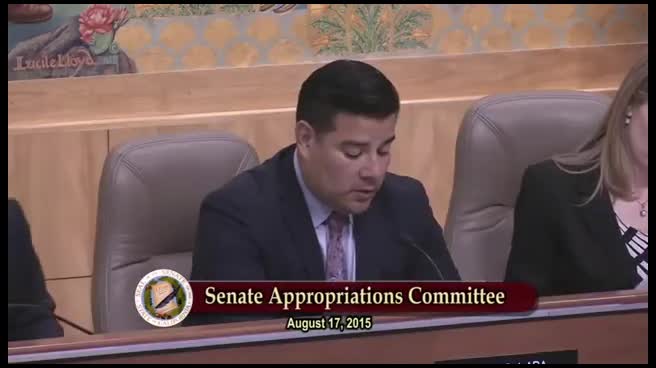 16SEC
Senate Standing Committee on Appropriations
 4MIN
Senate Standing Committee on Governmental Organization
Bill Author

Bill Co-Author(s):