AB 2214: Ocean Protection Council: microplastics.
- Session Year: 2023-2024
- House: Assembly
- Latest Version Date: 2024-08-28
Current Status:
Failed
(2024-09-22: Vetoed by Governor.)
Introduced
In Committee
First Chamber
In Committee
Second Chamber
Enacted
Existing law, the California Ocean Protection Act, establishes the Ocean Protection Council in state government to coordinate activities of state agencies that are related to the protection and conservation of coastal waters and ocean ecosystems to improve the effectiveness of state efforts to protect ocean resources within existing fiscal limitations, among other duties. Existing law requires, to the extent that funds are available from bonds or other sources, including from federal, state, academic, or other public or private entities, on or before December 31, 2024, the council to adopt and implement a Statewide Microplastics Strategy related to microplastic materials that pose an emerging concern for ocean health.
This bill would require, on or before March 1, 2025, the council to establish and lead an interagency coordination group, and would require the council, in coordination with the interagency coordination group, to identify and recommend to the Legislature, on or before December 31, 2025, statutory changes that are needed to implement the recommendations described in the Statewide Microplastics Strategy, as specified. The bill would require the council, in coordination with the interagency coordination group, to adopt a workplan, on or before December 31, 2025, outlining which participating agencies within the interagency coordination group will implement the recommendations. The bill would require the workplan to be provided to the Legislature on or before December 31, 2025. The bill would repeal these provisions on January 1, 2029.
Existing law, the California Ocean Protection Act, establishes the Ocean Protection Council in state government to coordinate activities of state agencies that are related to the protection and conservation of coastal waters and ocean ecosystems to improve the effectiveness of state efforts to protect ocean resources within existing fiscal limitations, among other duties. Existing law requires, to the extent that funds are available from bonds or other sources, including from federal, state, academic, or other public or private entities, on or before December 31, 2024, the council to adopt and implement a Statewide Microplastics Strategy related to microplastic materials that pose an emerging concern for ocean health.
This bill would require, on or before March 1, 2025, the council to establish and lead an interagency coordination group, and would require the council, in coordination with the interagency coordination group, to identify and recommend to the Legislature, on or before December 1, 31, 2025, statutory changes that are needed to implement the recommendations described in the Statewide Microplastics Strategy, as specified. The bill would require the council, in coordination with the interagency coordination group, to adopt a workplan, on or before December 1, 31, 2025, outlining which participating agencies within the interagency coordination group will implement the recommendations. The bill would require the workplan to be provided to the Legislature on or before December 1, 31, 2025. The bill would repeal these provisions on January 1, 2029.
Existing law, the California Ocean Protection Act, establishes the Ocean Protection Council in state government to coordinate activities of state agencies that are related to the protection and conservation of coastal waters and ocean ecosystems to improve the effectiveness of state efforts to protect ocean resources within existing fiscal limitations, among other duties. Existing law requires, to the extent that funds are available from bonds or other sources, including from federal, state, academic, or other public or private entities, on or before December 31, 2024, the council to adopt and implement a Statewide Microplastics Strategy related to microplastic materials that pose an emerging concern for ocean health.
This bill would require, on or before March 1, 2025, the council to establish and lead an interagency coordination group group, and would require the council, in coordination with the interagency coordination group, to identify and recommend to the Legislature, on or before December 1, 2025, statutory changes that are needed to implement the recommendations described in the Statewide Microplastics Strategy, as specified. The bill would require the council, in coordination with the interagency coordination group, to adopt a workplan, on or before December 1, 2025, outlining who which participating agencies within the interagency coordination group will implement the recommendations. The bill would require the workplan to be provided to the Legislature on or before December 1, 2025. The bill would repeal these provisions on January 1, 2029.
Existing law, the California Ocean Protection Act, establishes the Ocean Protection Council in state government to coordinate activities of state agencies that are related to the protection and conservation of coastal waters and ocean ecosystems to improve the effectiveness of state efforts to protect ocean resources within existing fiscal limitations, among other duties. Existing law requires, to the extent that funds are available from bonds or other sources, including from federal, state, academic, or other public or private entities, on or before December 31, 2024, the council to adopt and implement a Statewide Microplastics Strategy related to microplastic materials that pose an emerging concern for ocean health.
This bill would require, on or before March 1, 2025, the council to establish and lead an interagency coordination group to identify and recommend to the Legislature, on or before December 1, 2025, statutory changes that are needed to implement the recommendations described in the Statewide Microplastics Strategy, as specified. The bill would require the council, in coordination with the interagency coordination group, to adopt a workplan, on or before December 1, 2025, outlining who within the interagency coordination group will implement the recommendations. The bill would require the workplan to be provided to the Legislature on or before December 1, 2025. The bill would repeal these provisions on January 1, 2029.
Existing law authorizes the formation of resource conservation districts for the control of runoff, the prevention or control of soil erosion, the development and distribution of water, and the improvement of land capabilities. Existing law authorizes a resource conservation district to, among other things, facilitate coordinated resource management efforts for watershed restoration and enhancement, but prohibits a district from conserving water for power purposes and from producing or distributing power for its own use or for the use of others.This bill would make nonsubstantive changes to the latter provision.Existing law authorizes the formation of resource conservation districts for the control of runoff, the prevention or control of soil erosion, the development and distribution of water, and the improvement of land capabilities. Existing law authorizes a resource conservation district to, among other things, facilitate coordinated resource management efforts for watershed restoration and enhancement, but prohibits a district from conserving water for power purposes and from producing or distributing power for its own use or for the use of others.
This bill would make nonsubstantive changes to the latter provision.
The Legislature finds and declares all of the following:
(a)Plastics are ubiquitous in Californians daily lives and are recognized globally as the most harmful and persistent fraction of marine litter, accounting for at least 85 percent of marine waste.
(b)Microplastics can result from the breakdown of plastics, and are pervasive and persistent in marine and terrestrial environments. Microplastics are anticipated to increase by almost 300 percent by 2030.
(c)Research has shown that microplastic exposures can cause adverse health effects, including tissue inflammation, impaired growth, developmental anomalies, and reproductive difficulties.
(d)Synthetic microfibers, shed or fragmented from polyester, nylon, or rayon clothing and textiles, are one of the most abundant and ubiquitous types of microplastics. With global production of synthetic textiles expected to triple by 2050, microfiber pollution in California is expected to continue to grow.
(e)Research has shown that up to 18,000,000 microfibers may be released during every wash cycle. Once released, microfibers travel via wastewater to wastewater treatment plants, where current biosolid application practices result in microfibers entering the environment. It is estimated that in California alone, 4,900,000 pounds of microfibers are generated from apparel washing each year. Without intervention, it is estimated that annual microfiber emissions to Californias natural environments from machine washing of synthetic textiles will continue to increase.
(f)Microplastics pollution does not come within any single agencys jurisdiction, making interagency coordination a crucial component for effective policy and regulation implementation, and ensuring that California takes a national and global leadership role in managing microplastics pollution.
(g)In response to growing concerns regarding microplastics pollution, the Ocean Protection Council was required by statute to develop a strategy to address microplastics. The final Statewide Microplastics Strategy was published in early 2022 and includes 22 recommendations to reduce and manage microplastics.
(h)California can use state agency expertise and authority to engage in complementary efforts to reduce microplastics pollution and achieve a goal of zero plastic pollution entering state waters by 2030.
SEC. 2.Section 35636 is added to the Public Resources Code, to read:35636.(a)On or before March 1, 2025, the council shall establish and lead an interagency coordination group that includes, but is not limited to, representatives from the following agencies:
(1)California Coastal Commission.
(2)California Water Quality Monitoring Council.
(3)Department of Resources Recycling and Recovery.
(4)Department of Toxic Substances Control.
(5)Office of Environmental Health Hazard Assessment.
(6)State Energy Resources Conservation and Development Commission.
(7)State Water Resources Control Board.
(b)(1)On or before December 31, 2025, and pursuant to the requirements of paragraph (6) of subdivision (a) of Section 35615, the council, in coordination with the interagency coordination group, shall identify and recommend to the Legislature statutory changes that are needed to implement the recommendations described in the Statewide Microplastics Strategy published by the Ocean Protection Council dated February 2022.
(2)Pursuant to paragraph (1), the council shall do both of the following:
(A)Identify and recommend statutory changes needed to implement the recommendation to promote, or otherwise require, the sale and use of ENERGY STAR condenser dryers and washing machines with a microfiber filtration system with a mesh size of not greater than 100 micrometers and develop a program to incentivize postmarket retrofits or purchases through rebates and other mechanisms.
(B)Examine the appropriateness of policies and approaches for reducing microplastics pollution that were developed by other states or countries, including definitions and biodegradable standards.
(c)On or before December 31, 2025, the council, in coordination with the interagency coordination group, shall adopt a workplan outlining which participating agencies within the interagency coordination group will implement the recommendations. The workplan shall be provided to the Legislature, in accordance with Section 9795 of the Government Code, on or before December 31, 2025.
(d)The council may satisfy its reporting duties under this section by including the recommended statutory changes and workplan required pursuant to subdivisions (b) and (c) in the report required pursuant to paragraph (2) of subdivision (g) of Section 35635.
(e)The council, in order to accomplish the requirements of this section, may augment a task force or workgroup that has already been formed.
(f)This section shall be implemented by agency personnel within the scope of their duties.
(g)This section shall remain in effect only until January 1, 2029, and as of that date is repealed.
The Legislature finds and declares all of the following:
(a)Plastics are ubiquitous in Californians daily lives and are recognized globally as the most harmful and persistent fraction of marine litter, accounting for at least 85 percent of marine waste.
(b)Microplastics can result from the breakdown of plastics, and are pervasive and persistent in marine and terrestrial environments. Microplastics are anticipated to increase by almost 300 percent by 2030.
(c)Research has shown that microplastic exposures can cause adverse health effects, including tissue inflammation, impaired growth, developmental anomalies, and reproductive difficulties.
(d)Synthetic microfibers, shed or fragmented from polyester, nylon, or rayon clothing and textiles, are one of the most abundant and ubiquitous types of microplastics. With global production of synthetic textiles expected to triple by 2050, microfiber pollution in California is expected to continue to grow.
(e)Research has shown that up to 18,000,000 microfibers may be released during every wash cycle. Once released, microfibers travel via wastewater to wastewater treatment plants, where current biosolid application practices result in microfibers entering the environment. It is estimated that in California alone, 4,900,000 pounds of microfibers are generated from apparel washing each year. Without intervention, it is estimated that annual microfiber emissions to Californias natural environments from machine washing of synthetic textiles will continue to increase.
(f)Microplastics pollution does not come within any single agencys jurisdiction, making interagency coordination a crucial component for effective policy and regulation implementation, and ensuring that California takes a national and global leadership role in managing microplastics pollution.
(g)In response to growing concerns regarding microplastics pollution, the Ocean Protection Council was required by statute to develop a strategy to address microplastics. The final Statewide Microplastics Strategy was published in early 2022 and includes 22 recommendations to reduce and manage microplastics.
(h)California can use state agency expertise and authority to engage in complementary efforts to reduce microplastics pollution and achieve a goal of zero plastic pollution entering state waters by 2030.
SEC. 2.Section 35636 is added to the Public Resources Code, to read:35636.(a)On or before March 1, 2025, the council shall establish and lead an interagency coordination group that includes, but is not limited to, representatives from the following agencies:
(1)California Coastal Commission.
(2)California Water Quality Monitoring Council.
(3)Department of Resources Recycling and Recovery.
(4)Department of Toxic Substances Control.
(5)Office of Environmental Health Hazard Assessment.
(6)State Energy Resources Conservation and Development Commission.
(7)State Water Resources Control Board.
(b)(1)On or before December 31, 2025, and pursuant to the requirements of paragraph (6) of subdivision (a) of Section 35615, the council, in coordination with the interagency coordination group, shall identify and recommend to the Legislature statutory changes that are needed to implement the recommendations described in the Statewide Microplastics Strategy published by the Ocean Protection Council dated February 2022, including, but not limited to, both of the following: 2022.
(1)Expand the statewide microbead ban to include microplastics that are intentionally added to specific consumer products, such as cosmetics, household and industrial detergents, and cleaning products.(2)Pursuant to paragraph (1), the council shall do both of the following:
(2)Promote,(A)Identify and recommend statutory changes needed to implement the recommendation to promote, or otherwise require, the sale and use of ENERGY STAR condenser dryers and washing machines with a microfiber filtration system with a mesh size of not greater than 100 micrometers and develop a program to incentivize postmarket retrofits or purchases through rebates and other mechanisms.
(B)Examine the appropriateness of policies and approaches for reducing microplastics pollution that were developed by other states or countries, including definitions and biodegradable standards.
(c)On or before December 31, 2025, the council, in coordination with the interagency coordination group, shall adopt a workplan outlining which participating agencies within the interagency coordination group will implement the recommendations. The workplan shall be provided to the Legislature, in accordance with Section 9795 of the Government Code, on or before December 31, 2025.
(d)The council may satisfy its reporting duties under this section by including the recommended statutory changes and workplan required pursuant to subdivisions (b) and (c) in the report required pursuant to paragraph (2) of subdivision (g) of Section 35635.
(e)The council, in order to accomplish the requirements of this section, may augment a task force or workgroup that has already been formed.
(f)This section shall be implemented by agency personnel within the scope of their duties.
(g)This section shall remain in effect only until January 1, 2029, and as of that date is repealed.
The Legislature finds and declares all of the following:
(a)Plastics are ubiquitous in Californians daily lives and are recognized globally as the most harmful and persistent fraction of marine litter, accounting for at least 85 percent of marine waste.
(b)Microplastics can result from the breakdown of plastics, and are pervasive and persistent in marine and terrestrial environments. Microplastics are anticipated to increase by almost 300 percent by 2030.
(c)Research has shown that microplastic exposures can cause adverse health effects, including tissue inflammation, impaired growth, developmental anomalies, and reproductive difficulties.
(d)Synthetic microfibers, shed or fragmented from polyester, nylon, or rayon clothing and textiles, are one of the most abundant and ubiquitous types of microplastics. With global production of synthetic textiles expected to triple by 2050, microfiber pollution in California is expected to continue to grow.
(e)Research has shown that up to 18,000,000 microfibers may be released during every wash cycle. Once released, microfibers travel via wastewater to wastewater treatment plants, where current biosolid application practices result in microfibers entering the environment. It is estimated that in California alone, 4,900,000 pounds of microfibers are generated from apparel washing each year. Without intervention, it is estimated that annual microfiber emissions to Californias natural environments from machine washing of synthetic textiles will continue to increase.
(f)Microplastics pollution does not come within any single agencys jurisdiction, making interagency coordination a crucial component for effective policy and regulation implementation, and ensuring that California takes a national and global leadership role in managing microplastics pollution.
(g)In response to growing concerns regarding microplastics pollution, the Ocean Protection Council was required by statute to develop a strategy to address microplastics. The final Statewide Microplastics Strategy was published in early 2022 and includes 22 recommendations to reduce and manage microplastics.
(h)California can use state agency expertise and authority to engage in complementary efforts to reduce microplastics pollution and achieve a goal of zero plastic pollution entering state waters by 2030.
SEC. 2.Section 35636 is added to the Public Resources Code, to read:35636.(a)On or before March 1, 2025, the council shall establish and lead an interagency coordination group that includes, but is not limited to, representatives from the following agencies:
(1)California Coastal Commission.
(2)California Water Quality Monitoring Council.
(3)Department of Resources Recycling and Recovery.
(4)Department of Toxic Substances Control.
(5)Office of Environmental Health Hazard Assessment.
(6)State Energy Resources Conservation and Development Commission.
(7)State Water Resources Control Board.
(b)The interagency coordination group shall do both of the following:(1)(b)On or before December 1, 31, 2025, and pursuant to the requirements of paragraph (6) of subdivision (a) of Section 35615, the council, in coordination with the interagency coordination group, shall identify and recommend to the Legislature statutory changes that are needed to implement the recommendations described in the Statewide Microplastics Strategy published by the Ocean Protection Council dated February 2022, including, but not limited to, both of the following:
(A)(1)Expand the statewide microbead ban to include microplastics that are intentionally added to specific consumer products, such as cosmetics, household and industrial detergents, and cleaning products.
(B)(2)Promote, or otherwise require, the sale and use of ENERGY STAR condenser dryers and washing machines with a microfiber filtration system with a mesh size of not greater than 100 micrometers and develop a program to incentivize postmarket retrofits or purchases through rebates and other mechanisms.
(2)(c)On or before December 1, 31, 2025, the council, in coordination with the interagency coordination group, shall adopt a workplan outlining which participating agencies within the interagency coordination group will implement the recommendations. The workplan shall be provided to the Legislature, in accordance with Section 9795 of the Government Code, on or before December 1, 31, 2025.
(d)The council may satisfy its reporting duties under this section by including the recommended statutory changes and workplan required pursuant to subdivisions (b) and (c) in the report required pursuant to paragraph (2) of subdivision (g) of Section 35635.
(c)(e)The council, in order to accomplish the requirements of this section, may augment a task force or workgroup that has already been formed.
(d)(f)This section shall be implemented by agency personnel within the scope of their duties.
(e)(g)This section shall remain in effect only until January 1, 2029, and as of that date is repealed.
The Legislature finds and declares all of the following:
(a)Plastics are ubiquitous in Californians daily lives and are recognized globally as the most harmful and persistent fraction of marine litter, accounting for at least 85 percent of marine waste.
(b)Microplastics can result from the breakdown of plastics, and are pervasive and persistent in marine and terrestrial environments. Microplastics are anticipated to increase by almost 300 percent by 2030.
(c)Research has shown that microplastic exposures can cause adverse health effects, including tissue inflammation, impaired growth, developmental anomalies, and reproductive difficulties.
(d)Synthetic microfibers, shed or fragmented from polyester, nylon, or rayon clothing and textiles, are one of the most abundant and ubiquitous types of microplastics. With global production of synthetic textiles expected to triple by 2050, microfiber pollution in California is expected to continue to grow.
(e)Research has shown that up to 18,000,000 microfibers may be released during every wash cycle. Once released, microfibers travel via wastewater to wastewater treatment plants, where current biosolid application practices result in microfibers entering the environment. It is estimated that in California alone, 4,900,000 pounds of microfibers are generated from apparel washing each year. Without intervention, it is estimated that annual microfiber emissions to Californias natural environments from machine washing of synthetic textiles will continue to increase.
(f)Microplastics pollution does not come within any single agencys jurisdiction, making interagency coordination a crucial component for effective policy and regulation implementation, and ensuring that California takes a national and global leadership role in managing microplastics pollution.
(g)In response to growing concerns regarding microplastics pollution, the Ocean Protection Council was required by statute to develop a strategy to address microplastics. The final Statewide Microplastics Strategy was published in early 2022 and includes 22 recommendations to reduce and manage microplastics.
(h)California can use state agency expertise and authority to engage in complementary efforts to reduce microplastics pollution and achieve a goal of zero plastic pollution entering state waters by 2030.
SEC. 2.Section 35636 is added to the Public Resources Code, to read:35636.(a)On or before March 1, 2025, the council shall establish and lead an interagency coordination group that includes, but is not limited to, representatives from the following agencies:
(1)California Coastal Commission.
(2)California Water Quality Monitoring Council.
(3)Department of Resources Recycling and Recovery.
(4)Department of Toxic Substances Control.
(5)Office of Environmental Health Hazard Assessment.
(6)State Energy Resources Conservation and Development Commission.
(7)State Water Resources Control Board.
(b)The interagency coordination group shall do both of the following:
(1)On or before December 1, 2025, and pursuant to the requirements of paragraph (6) of subdivision (a) of Section 35615, the council, in coordination with the interagency coordination group, shall identify and recommend to the Legislature statutory changes that are needed to implement the recommendations described in the Statewide Microplastics Strategy published by the Ocean Protection Council dated February 2022, including, but not limited to, all both of the following:
(A)Expand the statewide microbead ban to include microplastics that are intentionally added to specific consumer products, such as cosmetics, household and industrial detergents, and cleaning products.
(B)Promote, or otherwise require, the sale and use of ENERGY STAR condenser dryers and washing machines with filtration rates of 100 microns or smaller, a microfiber filtration system with a mesh size of not greater than 100 micrometers and develop a program to incentivize postmarket retrofits or purchases through rebates and other mechanisms.
(C)The council, in order to accomplish the requirements of this section, may augment a task force or workgroup that has already been formed.(D)This section shall be implemented by agency personnel within the scope of their duties.(2)On or before December 1, 2025, the council, in coordination with the interagency coordination group, shall adopt a workplan outlining who which participating agencies within the interagency coordination group will implement the recommendations. The workplan shall be provided to the Legislature, in accordance with Section 9795 of the Government Code, on or before December 1, 2025.
(c)The workplan shall be provided to the Legislature, in accordance with Section 9795 of the Government Code, on or before December 1, 2025.(c)The council, in order to accomplish the requirements of this section, may augment a task force or workgroup that has already been formed.
(d)This section shall be implemented by agency personnel within the scope of their duties.
(d)(e)This section shall remain in effect only until January 1, 2029, and as of that date is repealed.
The Legislature finds and declares all of the following:
(a)Plastics are ubiquitous in Californians daily lives and are recognized globally as the most harmful and persistent fraction of marine litter, accounting for at least 85 percent of marine waste.
(b)Microplastics can result from the breakdown of plastics, and are pervasive and persistent in marine and terrestrial environments. Microplastics are anticipated to increase by almost 300 percent by 2030.
(c)Research has shown that microplastic exposures can cause adverse health effects, including tissue inflammation, impaired growth, developmental anomalies, and reproductive difficulties.
(d)Synthetic microfibers, shed or fragmented from polyester, nylon, or rayon clothing and textiles, are one of the most abundant and ubiquitous types of microplastics. With global production of synthetic textiles expected to triple by 2050, microfiber pollution in California is expected to continue to grow.
(e)Research has shown that up to 18,000,000 microfibers may be released during every wash cycle. Once released, microfibers travel via wastewater to wastewater treatment plants, where current biosolid application practices result in microfibers entering the environment. It is estimated that in California alone, 4,900,000 pounds of microfibers are generated from apparel washing each year. Without intervention, it is estimated that annual microfiber emissions to Californias natural environments from machine washing of synthetic textiles will continue to increase.
(f)Microplastics pollution does not come within any single agencys jurisdiction, making interagency coordination a crucial component for effective policy and regulation implementation, and ensuring that California takes a national and global leadership role in managing microplastics pollution.
(g)In response to growing concerns regarding microplastics pollution, the Ocean Protection Council was required by statute to develop a strategy to address microplastics. The final Statewide Microplastics Strategy was published in early 2022 and includes 22 recommendations to reduce and manage microplastics.
(h)California can use state agency expertise and authority to engage in complementary efforts to reduce microplastics pollution and achieve a goal of zero plastic pollution entering state waters by 2030.
SEC. 2.Section 35636 is added to the Public Resources Code, to read:35636.(a)On or before March 1, 2025, the council shall establish and lead an interagency coordination group that includes, but is not limited to, representatives from the following agencies:
(1)California Coastal Commission.
(2)California Water Quality Monitoring Council.
(3)Department of Resources Recycling and Recovery.
(4)Department of Toxic Substances Control.
(5)Office of Environmental Health Hazard Assessment.
(6)State Energy Resources Conservation and Development Commission.
(7)State Water Resources Control Board.
(b)The interagency coordination group shall do both of the following:
(1)On or before December 1, 2025, and pursuant to the requirements of paragraph (6) of subdivision (a) of Section 35615, the council, in coordination with the interagency coordination group, shall identify and recommend to the Legislature statutory changes that are needed to implement the recommendations described in the Statewide Microplastics Strategy published by the Ocean Protection Council dated February 2022, including, but not limited to, all of the following:
(A)Expand the statewide microbead ban to include microplastics that are intentionally added to specific consumer products, such as cosmetics, household and industrial detergents, and cleaning products.
(B)Promote, or otherwise require, the sale and use of ENERGY STAR condenser dryers and washing machines with filtration rates of 100 microns or smaller, and develop a program to incentivize postmarket retrofits or purchases through rebates and other mechanisms.
(C)The council, in order to accomplish the requirements of this section, may augment a task force or workgroup that has already been formed.
(D)This section shall be implemented by agency personnel within the scope of their duties.
(2)On or before December 1, 2025, the council, in coordination with the interagency coordination group, shall adopt a workplan outlining who within the interagency coordination group will implement the recommendations.
(c)The workplan shall be provided to the Legislature, in accordance with Section 9795 of the Government Code, on or before December 1, 2025.
(d)This section shall remain in effect only until January 1, 2029, and as of that date is repealed.
SECTION 1.Section 9001 of the Public Resources Code is amended to read:9001.(a)The Legislature hereby declares all of the following:(1)Resource conservation, enhancement, restoration, adaptation, and resilience are of fundamental importance to the prosperity and welfare of the people of this state. The Legislature believes that the state must assume leadership in formulating and putting into effect a statewide program of soil, water, and biodiversity conservation, enhancement, restoration, adaptation, and resilience and related natural resource conservation.(2)The climate crisis is happening now, impacting California in unprecedented ways, including intensifying wildfires, mudslides, floods, and drought, sea level rise, and extreme heat, that threaten our economy, communities, public safety, and cultural and natural resources.(3)Resource conservation districts are important partners to the state in achieving the states ever-evolving goals to protect, conserve, restore, and enhance natural resources and to mitigate and adapt to the impacts of climate change.(4)This division is enacted to accomplish the following purposes:(A)To provide the means by which the state may cooperate with the United States and with resource conservation districts organized pursuant to this division in securing the adoption in this state of conservation, enhancement, restoration, adaptation, and resilience practices, including, but not limited to, farm, range, open space, urban development, wildlife, recreation, watershed, water quality, and woodland, best adapted to save the basic resources, soil, water, and air of the state from unreasonable and economically preventable waste and destruction.(B)To provide for the organization and operation of resource conservation districts for the purposes of the protection, conservation, restoration, or enhancement of natural resources, the improvement or enhancement of adaptation or resilience to climate change, the mitigation or sequestration of carbon emissions on natural lands and working lands, soil and water conservation, the control of runoff, the prevention and control of soil erosion, and erosion stabilization, including, but not limited to, these purposes in open areas, agricultural areas, urban development, wildlife areas, recreational developments, watershed management, the protection of water quality and water reclamation, the development of storage and distribution of water, and the treatment of each acre of land according to its needs.(b)A district, in addition to any other authority provided by law, may do all of the following:(1)Ensure consistency with the authorities and policies of the United States, this state, counties, cities, public districts, other resource conservation districts, persons, associations, and corporations.(2)With the consent of the owner, construct on privately or publicly owned lands any necessary works for the protection, conservation, restoration, or enhancement of natural resources, the improvement or enhancement of adaptation or resilience to climate change, the mitigation or sequestration of carbon emissions, or the prevention and control of soil erosion and erosion stabilization.(3)Facilitate coordinated resource management efforts for watershed restoration and enhancement.(4)Develop and implement projects and programs for the conservation, enhancement, restoration, adaptation, and resilience of soil, water, and biodiversity and related natural resource conservation.(c)A district shall not conserve water for power purposes or produce or distribute power for its own use or for the use of others.(a)The Legislature hereby declares all of the following:
(1)Resource conservation, enhancement, restoration, adaptation, and resilience are of fundamental importance to the prosperity and welfare of the people of this state. The Legislature believes that the state must assume leadership in formulating and putting into effect a statewide program of soil, water, and biodiversity conservation, enhancement, restoration, adaptation, and resilience and related natural resource conservation.
(2)The climate crisis is happening now, impacting California in unprecedented ways, including intensifying wildfires, mudslides, floods, and drought, sea level rise, and extreme heat, that threaten our economy, communities, public safety, and cultural and natural resources.
(3)Resource conservation districts are important partners to the state in achieving the states ever-evolving goals to protect, conserve, restore, and enhance natural resources and to mitigate and adapt to the impacts of climate change.
(4)This division is enacted to accomplish the following purposes:
(A)To provide the means by which the state may cooperate with the United States and with resource conservation districts organized pursuant to this division in securing the adoption in this state of conservation, enhancement, restoration, adaptation, and resilience practices, including, but not limited to, farm, range, open space, urban development, wildlife, recreation, watershed, water quality, and woodland, best adapted to save the basic resources, soil, water, and air of the state from unreasonable and economically preventable waste and destruction.
(B)To provide for the organization and operation of resource conservation districts for the purposes of the protection, conservation, restoration, or enhancement of natural resources, the improvement or enhancement of adaptation or resilience to climate change, the mitigation or sequestration of carbon emissions on natural lands and working lands, soil and water conservation, the control of runoff, the prevention and control of soil erosion, and erosion stabilization, including, but not limited to, these purposes in open areas, agricultural areas, urban development, wildlife areas, recreational developments, watershed management, the protection of water quality and water reclamation, the development of storage and distribution of water, and the treatment of each acre of land according to its needs.
(b)The districts, A district, in addition to any other authority provided by law, may do all of the following:
(1)Ensure consistency with the authorities and policies of the United States, this state, counties, cities, public districts, other resource conservation districts, persons, associations, and corporations.
(2)With the consent of the owner, construct on privately or publicly owned lands any necessary works for the protection, conservation, restoration, or enhancement of natural resources, the improvement or enhancement of adaptation or resilience to climate change, the mitigation or sequestration of carbon emissions, or the prevention and control of soil erosion and erosion stabilization.
(3)Facilitate coordinated resource management efforts for watershed restoration and enhancement.
(4)Develop and implement projects and programs for the conservation, enhancement, restoration, adaptation, and resilience of soil, water, and biodiversity and related natural resource conservation.
(c)The districts A district shall not conserve water for power purposes or produce or distribute power for their its own use or for the use of others.
|
Date
|
Status
|
|---|---|
| Sep 22, 2024 | Vetoed by Governor. |
| Sep 3, 2024 | Enrolled and presented to the Governor at 3:30 p.m. |
| Aug 26, 2024 | Senate amendments concurred in. To Engrossing and Enrolling. (Ayes 64. Noes 7. Page 6575.). |
| Aug 20, 2024 | In Assembly. Concurrence in Senate amendments pending. May be considered on or after August 22 pursuant to Assembly Rule 77. |
| Aug 20, 2024 | Read third time. Passed. Ordered to the Assembly. (Ayes 32. Noes 6. Page 5232.). |
| Aug 6, 2024 | Read second time. Ordered to third reading. |
| Aug 5, 2024 | From committee: Be ordered to second reading pursuant to Senate Rule 28.8. |
| Jul 3, 2024 | From committee: Do pass and re-refer to Com. on APPR. (Ayes 5. Noes 1.) (July 3). Re-referred to Com. on APPR. |
| Jun 20, 2024 | From committee chair, with author's amendments: Amend, and re-refer to committee. Read second time, amended, and re-referred to Com. on E.Q. |
| Jun 11, 2024 | From committee: Do pass and re-refer to Com. on E.Q. (Ayes 8. Noes 2.) (June 11). Re-referred to Com. on E.Q. |
| May 29, 2024 | Referred to Coms. on N.R. & W. and E.Q. |
| May 22, 2024 | In Senate. Read first time. To Com. on RLS. for assignment. |
| May 21, 2024 | Read third time. Passed. Ordered to the Senate. (Ayes 61. Noes 8. Page 5431.) |
| May 20, 2024 | Read second time. Ordered to third reading. |
| May 16, 2024 | From committee: Do pass. (Ayes 11. Noes 3.) (May 16). |
| May 1, 2024 | In committee: Set, first hearing. Referred to APPR. suspense file. |
| Apr 24, 2024 | From committee: Do pass and re-refer to Com. on APPR. (Ayes 5. Noes 1.) (April 23). Re-referred to Com. on APPR. |
| Apr 18, 2024 | Re-referred to Com. on E.S. & T.M. |
| Apr 17, 2024 | From committee chair, with author's amendments: Amend, and re-refer to Com. on E.S. & T.M. Read second time and amended. |
| Apr 9, 2024 | From committee: Do pass and re-refer to Com. on E.S. & T.M. (Ayes 12. Noes 2.) (April 9). Re-referred to Com. on E.S. & T.M. |
| Apr 8, 2024 | Re-referred to Com. on W., P., & W. |
| Apr 4, 2024 | From committee chair, with author's amendments: Amend, and re-refer to Com. on W., P., & W. Read second time and amended. |
| Apr 1, 2024 | Re-referred to Com. on W., P., & W. |
| Mar 21, 2024 | From committee chair, with author's amendments: Amend, and re-refer to Com. on W., P., & W. Read second time and amended. |
| Mar 21, 2024 | Referred to Coms. on W., P., & W. and E.S. & T.M. |
| Feb 8, 2024 | From printer. May be heard in committee March 9. |
| Feb 7, 2024 | Read first time. To print. |
|
Date
|
Description
|
Location
|
Votes
|
|
|---|---|---|---|---|
| Aug 26, 2024 | AB 2214 Bauer-Kahan Concurrence in Senate Amendments | Assembly Floor |
Passed |
|
| Aug 20, 2024 | Assembly 3rd Reading AB2214 Bauer-Kahan et al. By Glazer | Senate Floor |
Passed |
|
| Jul 3, 2024 | Do pass, but first be re-referred to the Committee on [Appropriations] | Senate Standing Committee on Environmental Quality |
Passed |
|
| Jun 11, 2024 | Do pass, but first be re-referred to the Committee on [Environmental Quality] | Senate Standing Committee on Natural Resources and Water |
Passed |
|
| May 21, 2024 | AB 2214 Bauer-Kahan Assembly Third Reading | Assembly Floor |
Passed |
|
| May 16, 2024 | Do pass. | Assembly Standing Committee on Appropriations |
Passed |
|
| Apr 23, 2024 | Do pass and be re-referred to the Committee on [Appropriations] | Assembly Standing Committee on Environmental Safety and Toxic Materials |
Passed |
|
| Apr 9, 2024 | Do pass and be re-referred to the Committee on [Environmental Safety and Toxic Materials] | Assembly Standing Committee on Water, Parks, and Wildlife |
Passed |
This list shows positions taken on this bill by organizations on the date displayed, which is linked to the original source.
Positions by individuals are not included.
|
Organization
|
Position
|
Date
|
|---|---|---|
| 7th Generation Advisors | ** Support | |
| Active San Gabriel Valley | ** Support | |
| Azul | ** Support | |
| Blue Ocean Warriors | ** Support | |
| California Environmental Voters | ** Support | |
| Californians Against Waste | ** Support | |
| cleanearth4kids.org | ** Support | |
| Climate Action California | ** Support | |
| Climate Reality San Francisco Bay Area Chapter | ** Support | |
| Community Environmental Council | ** Support | |
| Friends of Ballona Wetlands | ** Support | |
| Heal The Bay | ** Support | |
| Junior Philanthropist Foundation | ** Support | |
| League To Save Lake Tahoe | ** Support | |
| Monterey Bay Aquarium | ** Support | |
| Monterey Bay Aquarium Foundation | ** Support | |
| Ocean Conservancy | ** Support | |
| Ocean Conservation Society | ** Support | |
| Plastic Pollution Coalition | ** Support | |
| Resource Renewal Institute | ** Support | |
| Save Our Shores | ** Support | |
| Sierra Institute for Community and Environment | ** Support | |
| Social Compassion In Legislation | ** Support | |
| Solano County Democratic Central Committee | ** Support | |
| Surfrider Foundation | ** Support | |
| The 5 Gyres Institute | ** Support | |
| The Last Plastic Straw | ** Support | |
| The Nature Conservancy | ** Support |
GOVERNOR'S VETO
GV Bill Id:AB 2214
Author:(Bauer-Kahan and McKinnor)
As Enrolled Ver:August 28, 2024
2/3 vote
SUMMARY
Requires the Ocean Protection Council (OPC) to lead an interagency coordination group to recommend statutory changes, adopt a workplan to implement recommendations from the 2022 Statewide Microplastics Strategy (Strategy), and examine the appropriateness of policies and approaches for reducing microplastic pollution that were developed by other states or countries.
Governor’s Veto Message
"This bill requires the [OPC] to lead an interagency coordination group to recommend statutory changes and adopt a work plan to implement recommendations from the [Strategy].
In 2018, Governor Brown signed Senate Bill 1263, requiring the OPC to develop a Statewide Microplastics Strategy. The resulting Strategy, developed by the OPC in coordination with state agencies and external partners, provides a comprehensive and coordinated approach to identify early actions California can take to address microplastic pollution and advance existing microplastic research.
To date, the OPC has invested $7 million in funding for plastic pollution projects, including $3 million in funding specifically for microplastics. Recently funded projects are focused on examining the efficacy of microplastic removal from wastewater treatment plants; the use of low-impact development projects such as rain gardens and infiltration trenches; identifying sources and pathways of microplastics to stormwater; understanding ecological sensitivity to microplastics; and standardizing microplastic monitoring methods.
As scientific understanding advances, the OPC, alongside state agency partners, will evaluate the findings and lessons learned to provide policy recommendations to the Legislature by December 2025, per existing law. I believe this bill and the requirement for agencies to build out work plans ahead of the publishing of policy recommendations is premature.”
COMMENTS
According to OPC, worldwide, an estimated 11 million metric tons of plastic enter the ocean each year. Without any intervention, this amount is anticipated to triple by 2040. Over time, plastics break down in aquatic environments into pieces of ever-decreasing size. Pieces less than 5 millimeters are classified as "microplastics". Microplastics are easily ingested by ocean life, causing harm such as tissue inflammation, impaired growth, developmental abnormalities, and reproductive complications. Microplastics have also been found in human stool, lung, and placenta samples, and within soils and plants. Research in California has identified tire and road wear, synthetic textiles, cigarette filters, and single-use plastic foodware as some of the top sources of microplastics in California bay and ocean waters, sediment, and fish tissue.
SB 1263 (Portantino), Chapter 609, Statutes of 2018, requires OPC to adopt a statewide research strategy and identify early actions to reduce microplastic pollution in California's marine environment. In 2022, OPC released its Strategy, which provides a multi-year roadmap for the state to take a national and global leadership role in managing microplastic pollution. The Strategy outlines a two-track approach to comprehensively manage microplastics in California. The first track outlines immediate, 'no regrets' actions and multi-benefit solutions to reduce and manage microplastic pollution, while the second track outlines a comprehensive research strategy to enhance the scientific foundation for microplastic monitoring, source identification, risk assessment, and development of management solutions.
For most, but not all, of the recommendations, the Strategy identifies one or more potential agency partners. Potential agency partners are not identified for a recommendation related to promoting or requiring the sale and use of ENERGY STAR dryers and washing machines with microfiber filters. The California Energy Commission (CEC) would likely be responsible for this objective. In addition, the Strategy does not specify state agency plans for implementing the recommendations, nor does it specify formalized plans for interagency collaboration to support implementation. The Strategy calls for OPC and partnering agencies to provide recommendations to the Legislature by December 2025. This bill codifies the deadline for these recommendations.
According to the Author
"[This bill] addresses the urgent need to mitigate the pervasive presence of microplastics, which pose significant threats to both human health and the environment. Microplastics, including synthetic microfibers, are ubiquitous pollutants found across various ecosystems, and their prevalence has led to heightened human exposure. A global study conducted by [World Wide Fund] International revealed alarming statistics, suggesting that individuals may ingest an average of [five] grams of plastic per week, equivalent to the weight of a credit card. Synthetic microfibers, originating primarily from polyester, nylon, or rayon textiles, constitute a significant portion of microplastic pollution. It is estimated that in California alone, 4,900,000 pounds of microfibers are generated from apparel washing each year. Consequently, microfibers persistently infiltrate the environment, necessitating proactive measures to curb their detrimental effects. [This bill] leverages our state agency expertise and authority to engage in complementary efforts to reduce microplastics pollution and achieve a goal of zero plastic pollution entering state waters by 2030."
Arguments in Support
A coalition of organizations write in support indicating the threat of microplastics to the environment, wildlife, and public health. "Microplastic pollution poses a multifaceted challenge that demands coordinated action across various sectors and jurisdictions. By bringing the state government's experts together to identify explicit ways to address the proliferation of microplastics in our environment, [this bill] ensures California's leadership at a global level in effectively managing and mitigating the adverse impacts of microplastic pollution."
Arguments in Opposition
None on file.
FISCAL COMMENTS
According to the Assembly Appropriations Committee, this bill has the following fiscal impact:
- According to OPC, the workload associated with this bill is absorbable within existing resources. OPC contends the requirements of this bill are already reflected in OPC's strategic priorities. Further, OPC facilitates an interagency plastic pollution steering committee, which includes representatives of all the state entities listed in this bill with the exception of CEC. Finally, OPC notes it is already required to submit a report to the Legislature on the Strategy and that this bill expands this existing requirement to include an interagency workplan.
- Costs of an unknown, likely minor, amount for other state agencies to consult with OPC (General Fund or special fund).
VOTES
ASM WATER, PARKS, AND WILDLIFE: 12-2-1
YES: Papan, Addis, Alvarez, Bennett, Bonta, Davies, Garcia, Hart, Luz Rivas, Schiavo, Villapudua, Weber
NO: Alanis, Gallagher
ABS, ABST OR NV: Mathis
ASM ENVIRONMENTAL SAFETY AND TOXIC MATERIALS: 5-1-1
YES: Garcia, Connolly, McKinnor, Papan, Reyes
NO: Hoover
ABS, ABST OR NV: Ta
ASM APPROPRIATIONS: 11-3-1
YES: Wicks, Arambula, Bryan, Calderon, Wendy Carrillo, Mike Fong, Grayson, Haney, Hart, Pellerin, Villapudua
NO: Sanchez, Dixon, Jim Patterson
ABS, ABST OR NV: Ta
ASSEMBLY FLOOR: 61-8-11
YES: Addis, Aguiar-Curry, Alanis, Alvarez, Arambula, Bains, Bauer-Kahan, Bennett, Berman, Boerner, Bonta, Bryan, Calderon, Juan Carrillo, Wendy Carrillo, Connolly, Davies, Mike Fong, Garcia, Gipson, Grayson, Haney, Hart, Irwin, Jackson, Jones-Sawyer, Kalra, Lee, Low, Lowenthal, Maienschein, McCarty, McKinnor, Muratsuchi, Stephanie Nguyen, Ortega, Pacheco, Papan, Pellerin, Petrie-Norris, Quirk-Silva, Ramos, Rendon, Reyes, Rodriguez, Blanca Rubio, Santiago, Schiavo, Soria, Ting, Valencia, Villapudua, Waldron, Wallis, Ward, Weber, Wicks, Wilson, Wood, Zbur, Robert Rivas
NO: Dixon, Essayli, Vince Fong, Gallagher, Lackey, Jim Patterson, Joe Patterson, Sanchez
ABS, ABST OR NV: Cervantes, Chen, Megan Dahle, Flora, Friedman, Gabriel, Holden, Hoover, Mathis, Luz Rivas, Ta
SENATE FLOOR: 33-6-1
YES: Allen, Alvarado-Gil, Archuleta, Ashby, Atkins, Becker, Blakespear, Bradford, Caballero, Cortese, Dodd, Durazo, Eggman, Glazer, Gonzalez, Hurtado, Laird, Limón, McGuire, Menjivar, Min, Newman, Padilla, Portantino, Roth, Rubio, Skinner, Smallwood-Cuevas, Stern, Umberg, Wahab, Wiener, Wilk
NO: Dahle, Grove, Jones, Niello, Ochoa Bogh, Seyarto
ABS, ABST OR NV: Nguyen
ASSEMBLY FLOOR: 641-7-8
YES: Addis, Aguiar-Curry, Alanis, Alvarez, Arambula, Bains, Bauer-Kahan, Bennett, Berman, Boerner, Bonta, Bryan, Calderon, Juan Carrillo, Wendy Carrillo, Connolly, Davies, Mike Fong, Friedman, Gabriel, Garcia, Gipson, Grayson, Haney, Hart, Holden, Hoover, Irwin, Jackson, Jones-Sawyer, Kalra, Lee, Low, Lowenthal, Maienschein, McKinnor, Muratsuchi, Stephanie Nguyen, Pacheco, Papan, Pellerin, Petrie-Norris, Quirk-Silva, Ramos, Rendon, Reyes, Luz Rivas, Rodriguez, Blanca Rubio, Santiago, Schiavo, Soria, Ting, Valencia, Villapudua, Waldron, Wallis, Ward, Weber, Wicks, Wilson, Wood, Zbur, Robert Rivas
NO: Megan Dahle, Dixon, Gallagher, Lackey, Jim Patterson, Joe Patterson, Sanchez
ABS, ABST OR NV: Cervantes, Chen, Essayli, Flora, Mathis, McCarty, Ortega, Ta
UPDATED
VERSION: August 28, 2024
CONSULTANT: Stephanie Mitchell / W., P., & W. / (916) 319-2096 FN: 0005112
CONCURRENCE IN SENATE AMENDMENTS
CSA1 Bill Id:AB 2214
Author:(Bauer-Kahan and McKinnor)
As Amended Ver:June 20, 2024
Majority vote
SUMMARY
Requires the Ocean Protection Council (OPC) to lead an interagency coordination group to recommend statutory changes and adopt a workplan to implement recommendations from the 2022 Statewide Microplastics Strategy (Strategy).
Senate Amendments
- Strikes the requirement that OPC and the interagency coordination group identify and recommend statutory changes regarding the expansion of the statewide microbead ban.
- Requires OPC and the interagency coordination group examine the appropriateness of policies and approaches for reducing microplastic pollution that were developed by other states or countries.
COMMENTS
According to OPC, worldwide, an estimated 11 million metric tons of plastic enter the ocean each year. Without any intervention, this amount is anticipated to triple by 2040. Over time, plastics break down in aquatic environments into pieces of ever-decreasing size. Pieces less than 5 millimeters are classified as "microplastics". Microplastics are easily ingested by ocean life, causing harm such as tissue inflammation, impaired growth, developmental abnormalities, and reproductive complications. Microplastics have also been found in human stool, lung, and placenta samples, and within soils and plants. Research in California has identified tire and road wear, synthetic textiles, cigarette filters, and single-use plastic foodware as some of the top sources of microplastics in California bay and ocean waters, sediment, and fish tissue.
SB 1263 (Portantino), Chapter 609, Statutes of 2018, requires OPC to adopt a statewide research strategy and identify early actions to reduce microplastic pollution in California's marine environment. In 2022, OPC released its Strategy, which provides a multi-year roadmap for the state to take a national and global leadership role in managing microplastic pollution. The Strategy outlines a two-track approach to comprehensively manage microplastics in California. The first track outlines immediate, 'no regrets' actions and multi-benefit solutions to reduce and manage microplastic pollution, while the second track outlines a comprehensive research strategy to enhance the scientific foundation for microplastic monitoring, source identification, risk assessment, and development of management solutions.
For most, but not all, of the recommendations, the Strategy identifies one or more potential agency partners. Potential agency partners are not identified for a recommendation related to promoting or requiring the sale and use of ENERGY STAR dryers and washing machines with microfiber filters. The California Energy Commission (CEC) would likely be responsible for this objective. In addition, the Strategy does not specify state agency plans for implementing the recommendations, nor does it specify formalized plans for interagency collaboration to support implementation. The Strategy calls for OPC and partnering agencies to provide recommendations to the Legislature by December 2025. This bill codifies the deadline for these recommendations.
According to the Author
"[This bill] addresses the urgent need to mitigate the pervasive presence of microplastics, which pose significant threats to both human health and the environment. Microplastics, including synthetic microfibers, are ubiquitous pollutants found across various ecosystems, and their prevalence has led to heightened human exposure. A global study conducted by [World Wide Fund] International revealed alarming statistics, suggesting that individuals may ingest an average of [five] grams of plastic per week, equivalent to the weight of a credit card. Synthetic microfibers, originating primarily from polyester, nylon, or rayon textiles, constitute a significant portion of microplastic pollution. It is estimated that in California alone, 4,900,000 pounds of microfibers are generated from apparel washing each year. Consequently, microfibers persistently infiltrate the environment, necessitating proactive measures to curb their detrimental effects. [This bill] leverages our state agency expertise and authority to engage in complementary efforts to reduce microplastics pollution and achieve a goal of zero plastic pollution entering state waters by 2030."
Arguments in Support
A coalition of organizations write in support indicating the threat of microplastics to the environment, wildlife, and public health. "Microplastic pollution poses a multifaceted challenge that demands coordinated action across various sectors and jurisdictions. By bringing the state government's experts together to identify explicit ways to address the proliferation of microplastics in our environment, [this bill] ensures California's leadership at a global level in effectively managing and mitigating the adverse impacts of microplastic pollution."
Arguments in Opposition
None on file
FISCAL COMMENTS
According to the Assembly Appropriations Committee, this bill has the following fiscal impact:
- According to OPC, the workload associated with this bill is absorbable within existing resources. OPC contends the requirements of this bill are already reflected in OPC's strategic priorities. Further, OPC facilitates an interagency plastic pollution steering committee, which includes representatives of all the state entities listed in this bill with the exception of CEC. Finally, OPC notes it is already required to submit a report to the Legislature on the Strategy and that this bill expands this existing requirement to include an interagency workplan.
- Costs of an unknown, likely minor, amount for other state agencies to consult with OPC (General Fund or special fund).
VOTES:
ASM WATER, PARKS, AND WILDLIFE: 12-2-1
YES: Papan, Addis, Alvarez, Bennett, Bonta, Davies, Garcia, Hart, Luz Rivas, Schiavo, Villapudua, Weber
NO: Alanis, Gallagher
ABS, ABST OR NV: Mathis
ASM ENVIRONMENTAL SAFETY AND TOXIC MATERIALS: 5-1-1
YES: Garcia, Connolly, McKinnor, Papan, Reyes
NO: Hoover
ABS, ABST OR NV: Ta
ASM APPROPRIATIONS: 11-3-1
YES: Wicks, Arambula, Bryan, Calderon, Wendy Carrillo, Mike Fong, Grayson, Haney, Hart, Pellerin, Villapudua
NO: Sanchez, Dixon, Jim Patterson
ABS, ABST OR NV: Ta
ASSEMBLY FLOOR: 61-8-11
YES: Addis, Aguiar-Curry, Alanis, Alvarez, Arambula, Bains, Bauer-Kahan, Bennett, Berman, Boerner, Bonta, Bryan, Calderon, Juan Carrillo, Wendy Carrillo, Connolly, Davies, Mike Fong, Garcia, Gipson, Grayson, Haney, Hart, Irwin, Jackson, Jones-Sawyer, Kalra, Lee, Low, Lowenthal, Maienschein, McCarty, McKinnor, Muratsuchi, Stephanie Nguyen, Ortega, Pacheco, Papan, Pellerin, Petrie-Norris, Quirk-Silva, Ramos, Rendon, Reyes, Rodriguez, Blanca Rubio, Santiago, Schiavo, Soria, Ting, Valencia, Villapudua, Waldron, Wallis, Ward, Weber, Wicks, Wilson, Wood, Zbur, Robert Rivas
NO: Dixon, Essayli, Vince Fong, Gallagher, Lackey, Jim Patterson, Joe Patterson, Sanchez
ABS, ABST OR NV: Cervantes, Chen, Megan Dahle, Flora, Friedman, Gabriel, Holden, Hoover, Mathis, Luz Rivas, Ta
SENATE FLOOR: 33-6-1
YES: Allen, Alvarado-Gil, Archuleta, Ashby, Atkins, Becker, Blakespear, Bradford, Caballero, Cortese, Dodd, Durazo, Eggman, Glazer, Gonzalez, Hurtado, Laird, Limón, McGuire, Menjivar, Min, Newman, Padilla, Portantino, Roth, Rubio, Skinner, Smallwood-Cuevas, Stern, Umberg, Wahab, Wiener, Wilk
NO: Dahle, Grove, Jones, Niello, Ochoa Bogh, Seyarto
ABS, ABST OR NV: Nguyen
UPDATED
VERSION: June 20, 2024
CONSULTANT: Stephanie Mitchell / W., P., & W. / (916) 319-2096 FN: 0004279
SENATE RULES COMMITTEE Office of Senate Floor Analyses (916) 651-1520 Fax: (916) 327-4478 | AB 2214 |
THIRD READING
Bill No: AB 2214
Author: Bauer-Kahan (D) and McKinnor (D)
Amended: 6/20/24 in Senate
Vote: 21
SENATE NATURAL RES. & WATER COMMITTEE: 8-2, 6/11/24
AYES: Min, Allen, Eggman, Hurtado, Laird, Limón, Padilla, Stern
NOES: Seyarto, Dahle
NO VOTE RECORDED: Grove
SENATE ENVIRONMENTAL QUALITY COMMITTEE: 5-1, 7/3/24
AYES: Allen, Gonzalez, Hurtado, Menjivar, Skinner
NOES: Dahle
NO VOTE RECORDED: Nguyen
SENATE APPROPRIATIONS COMMITTEE: Senate Rule 28.8
ASSEMBLY FLOOR: 61-8, 5/21/24 - See last page for vote
SUBJECT: Ocean Protection Council: microplastics
SOURCE: Author
DIGEST:
This bill requires the Ocean Protection Council (OPC) to lead an interagency coordination group to recommend statutory changes and adopt a workplan to implement recommendations from the 2022 Statewide Microplastics Strategy (Strategy).
ANALYSIS:
Existing law:
- Establishes OPC in state government and requires OPC to, among other things, coordinate activities of state agencies that are related to the protection and conservation of coastal waters and ocean ecosystems to improve the effectiveness of state efforts to protect ocean resources, establish a science advisory team, and identify and recommend to the Legislature changes in law needed to achieve these goals. (Public Resources Code (PRC) §35600 et seq.)
- Requires, under the Porter-Cologne Water Quality Control Act, the State Water Resources Control Board (State Water Board) and Regional Water Quality Control Boards to implement a program to control discharges of preproduction plastic (including plastic resin pellets and powdered coloring for plastics) from point and nonpoint sources. Requires the State Water Board to determine the appropriate regulatory methods to address the discharges from these point and nonpoint sources. (Water Code §13367.)
- Declares that littered plastic products have caused and continue to cause significant environmental harm and have burdened local governments with significant environmental cleanup costs. (PRC §42355.)
- Enacts the Plastic Microbeads Nuisance Prevention Law, prohibiting the sale of personal care products that contain plastic microbeads on and after January 1, 2020, and makes several related findings and declarations, including that (PRC §42360 et seq.):
- Plastic does not biodegrade into elements or compounds commonly found in nature, but instead, upon exposure to the elements, photodegrades into smaller pieces of plastic, causing land and water pollution that is virtually impossible to remediate;
- Plastic pollution is the dominant type of anthropogenic debris found throughout the marine environment;
- Plastic pollution is an environmental and human health hazard and a public nuisance; and
- Microplastics are persistent organic compounds that attract other pollutants commonly present in the environment, many of which are recognized to have serious deleterious impacts on human health or the environment.
- Requires, on or before December 31, 2024, OPC to adopt and implement a Strategy related to microplastic materials that pose an emerging concern for ocean health; specifies that the goal of the Strategy is to increase understanding of the scale and risks of microplastics on the marine environment and to identify proposed solutions to address the impacts of microplastics. (PRC §35635(b).)
- Requires the State Water Board to adopt a definition of microplastics in drinking water by July 1, 2020; adopt a standard methodology to test drinking water for microplastics; and, adopt testing and reporting requirements. (Health & Safety Code §116376.)
This bill:
- Requires OPC, by March 1, 2025, to establish and lead an interagency coordination group that includes representatives from the California Coastal Commission, California Water Quality Monitoring Council, Department of Resources Recycling and Recovery, Department of Toxic Substances Control, Office of Environmental Health Hazard Assessment, California Energy Commission, and the State Water Board.
- Requires OPC, by December 31, 2025, and in coordination with the interagency coordination group, to identify and recommend to the Legislature statutory changes needed to implement the recommendations described in the Strategy, including, but not limited to:
- Promoting, or otherwise requiring, the sale and use of ENERGY STAR condenser dryers and washing machines with a microfiber filtration system, and developing a program to incentivize postmarket retrofits or purchase through rebates and other mechanisms; and
- Examining the appropriateness of policies and approaches for reducing microplastics pollution that were developed by other states or countries.
- Requires OPC, by December 31, 2025, and in coordination with the interagency coordination group, to adopt and provide to the Legislature a workplan outlining which participating agencies within the interagency coordination group will implement the recommendations.
- Authorizes OPC to satisfy its reporting duties by including the recommended statutory changes and workplan in the report on Strategy implementation that OPC is required to submit to the Legislature pursuant to existing law.
- Authorizes OPC to augment a task force or workgroup that has already been formed to accomplish the requirements of this bill.
- Provides that this bill shall be implemented by agency personnel within the scope of their duties.
- Makes findings and declarations relating to the health and environmental impacts of microplastics.
- Sunsets on January 1, 2029.
Background
Microplastics. According to OPC, worldwide, an estimated 11 million metric tons of plastic enter the ocean each year. Over time, plastics break down in aquatic environments into pieces of ever-decreasing size, with those less than 5 microns[1] in size known as microplastics. Microplastics fall into two general categories: primary microplastics manufactured at a small size (e.g. preproduction plastic pellets used in manufacturing or microbeads in personal care products) or secondary microplastics that result from the breakdown of larger plastics.
Laboratory experiments have shown that organisms, such as zooplankton and fish, ingest microplastics indicating microplastics may accumulate in higher trophic organisms. However, microplastics are not only a marine pollution problem. Microplastics have been found nearly everywhere scientists have looked, from freshwater environments to agricultural soil, and within human placenta, stool samples, and lung tissue. Research in California has identified tire and road wear, synthetic textiles, cigarette filters, and single-use plastic foodware as among the top sources of microplastics.
Statewide Microplastics Strategy. SB 1263 (Portantino, Chapter 609, Statutes of 2018) requires OPC to adopt a statewide research strategy and identify early actions to reduce microplastic pollution in California’s marine environment. In 2022, OPC released its Strategy, which provides a multi-year roadmap for the state to take a national and global leadership role in managing microplastic pollution.
The Strategy outlines a two-track approach to comprehensively manage microplastics in California. The first track outlines immediate, ‘no regrets’ actions and multi-benefit solutions to reduce and manage microplastic pollution, while the second track outlines a comprehensive research strategy to enhance the scientific foundation for microplastic monitoring, source identification, risk assessment, and development of management solutions. The Strategy outlines several policy recommendations and calls for OPC and partnering agencies to provide recommendations to the Legislature by December 2025.
OPC Recent Efforts on Microplastics. OPC recently attended the Fourth Session of the United Nations Intergovernmental Program on Plastic Pollution to develop a legally binding instrument on plastic pollution. As part of a panel on the role of local and state governments, OPC discussed the importance of source reduction to prevent plastic pollution and highlighted California’s actions to reduce and prevent plastic pollution through the Strategy.
OPC is also supporting the San Francisco Estuary Institute in developing a statewide Plastics Monitoring Plan to support the development of a statewide monitoring network for both large plastic and microplastics debris in California waters. A Draft Plastics Monitoring Plan is anticipated to be released for public comment in early 2025.
Related/Prior legislation
AB 234 (Bauer-Kahan, 2023) would have prohibited a synthetic polymer microparticle, as defined, from being placed on the market; specified multiple effective dates for restrictions, depending upon product type; and established exemptions on the basis of biodegradability, determined using specified tests and pass criteria. This bill was held in the Assembly Natural Resources Committee.
AB 1628 (McKinnor, 2023) would have required all new washing machines sold or offered for sale in the state for residential or state use contain a microfiber filtration system by January 1, 2029. AB 1628 was vetoed by the Governor.
SB 54 (Allen, Chapter 75, Statutes of 2022) established the Plastic Pollution Prevention and Packaging Producer Responsibility Act. This bill requires that by 2032, 100% of packing in California be recyclable or compostable, that 25% of plastic packaging be cut, that 65% of single-use packaging be recycled, and raises $5 billion from industry over 10 years to help cut plastic pollution.
AB 1724 (Stone, 2022) would have required all state-owned washing machines to contain a microfiber filtration system with a mesh size of 100 microns or smaller. The bill was held on the suspense file in the Assembly Appropriations Committee.
AB 622 (Friedman, 2021) would have required, on or before January 1, 2024, that all washing machines sold as new in California contain a microfiber filtration system with a mesh size of 100 microns or smaller. The bill was held in the Assembly Environmental Safety and Toxic Materials Committee.
AB 802 (Bloom, 2021) would have required the State Water Board to identify the best available control technology for filtering microfibers from an industrial, institutional, or commercial laundry facility. The bill was held in the Assembly Environmental Safety and Toxic Materials Committee.
AB 1952 (Stone, 2020) would have required the Department of General Services, in coordination with the California Environmental Protection Agency, to implement a one-year pilot program to assess the efficacy of microfiber filtration systems for 10 state-owned laundry facilities and report the results to the Legislature on or before January 1, 2023. The bill was held in the Assembly Accountability and Administrative Review Committee.
AB 2297 (Bloom, 2020) would have required the State Water Board to identify the best available control technology for filtering microfibers from an industrial, institutional, or commercial laundry facility. The bill was held in the Assembly Environmental Safety and Toxic Materials Committee.
AB 3232 (Friedman, 2020) would have required, on or before January 1, 2023, that all washing machines sold commercially in California contain a microfiber filtration system with a 90% or greater filtration rate. The bill was held in the Assembly Environmental Safety and Toxic Materials Committee.
AB 129 (Bloom, 2019) would have required the State Water Board to take specified actions relating to microfiber pollution on or before July 1, 2020, and would have required the State Water Board to identify best practices for clothing manufacturers to reduce the amount of microfibers released into the environment. The bill was held in the Assembly Environmental Safety and Toxic Materials Committee.
SB 1263 (Portantino, Chapter 609, Statutes of 2018) required OPC to adopt a statewide research strategy and identify early actions to reduce microplastic pollution in California’s marine environment.
SB 1422 (Portantino, Chapter 902, Statutes of 2018) required the State Water Board to adopt a definition of microplastics in drinking water, to adopt a standard methodology to be used for the testing drinking water for microplastics, and established requirements for four years of testing and reporting.
AB 888 (Bloom, Chapter 594, Statutes of 2015) prohibited the sale of personal care products with plastic microbeads.
FISCAL EFFECT: Appropriation: No Fiscal Com.: Yes Local: No
SUPPORT: (Verified 8/6/2024)
7th Generation Advisors
Active San Gabriel Valley
Azul
Blue Ocean Warriors
California Environmental Voters
Californians Against Waste
Cleanearth4kids.org
Climate Action California
Climate Reality San Francisco Bay Area Chapter
Community Environmental Council
Friends of Ballona Wetlands
Heal the Bay
Junior Philanthropists Foundation
League to Save Lake Tahoe
Monterey Bay Aquarium Foundation
Ocean Conservancy
Ocean Conservation Society
Plastic Pollution Coalition
Resource Renewal Institute
Save Our Shores
Sierra Institute for Community and Environment
Social Compassion in Legislation
Solano County Democratic Central Committee
Surfrider Foundation
The 5 Gyres Institute
The Last Plastic Straw
The Nature Conservancy
OPPOSITION: (Verified 8/6/24)
None received
ARGUMENTS IN SUPPORT: According to the author, “AB 2214 addresses the urgent need to mitigate the pervasive presence of microplastics, which pose significant threats to both human health and the environment. Microplastics, including synthetic microfibers, are ubiquitous pollutants found across various ecosystems, and their prevalence has led to heightened human exposure. A global study conducted by WWF International revealed alarming statistics, suggesting that individuals may ingest an average of 5 grams of plastic per week, equivalent to the weight of a credit card. Synthetic microfibers, originating primarily from polyester, nylon, or rayon textiles, constitute a significant portion of microplastic pollution. It is estimated that in California alone, 4,900,000 pounds of microfibers are generated from apparel washing each year. Consequently, microfibers persistently infiltrate the environment, necessitating proactive measures to curb their detrimental effects. AB 2214 leverages our state agency expertise and authority to engage in complementary efforts to reduce microplastics pollution and achieve a goal of zero plastic pollution entering state waters by 2030.”
ASSEMBLY FLOOR: 61-8, 5/21/24
AYES: Addis, Aguiar-Curry, Alanis, Alvarez, Arambula, Bains, Bauer-Kahan, Bennett, Berman, Boerner, Bonta, Bryan, Calderon, Juan Carrillo, Wendy Carrillo, Connolly, Davies, Mike Fong, Garcia, Gipson, Grayson, Haney, Hart, Irwin, Jackson, Jones-Sawyer, Kalra, Lee, Low, Lowenthal, Maienschein, McCarty, McKinnor, Muratsuchi, Stephanie Nguyen, Ortega, Pacheco, Papan, Pellerin, Petrie-Norris, Quirk-Silva, Ramos, Rendon, Reyes, Rodriguez, Blanca Rubio, Santiago, Schiavo, Soria, Ting, Valencia, Villapudua, Waldron, Wallis, Ward, Weber, Wicks, Wilson, Wood, Zbur, Robert Rivas
NOES: Dixon, Essayli, Vince Fong, Gallagher, Lackey, Jim Patterson, Joe Patterson, Sanchez
NO VOTE RECORDED: Cervantes, Chen, Megan Dahle, Flora, Friedman, Gabriel, Holden, Hoover, Mathis, Luz Rivas, Ta
Prepared by: Paul Jacobs / N.R. & W. / (916) 651-4116
8/7/24 13:38:14
**** END ****
There are 1,000 microns in one millimeter. ↑
SENATE COMMITTEE ON ENVIRONMENTAL QUALITY
Senator Allen, Chair
2023 - 2024 Regular
Bill No. | AB 2214 | Hearing Date: | 7/3/2024 |
Author: | Bauer-Kahan | ||
Version: | 6/20/2024 | ||
Urgency: | No | Fiscal: | Yes |
Consultant: | Holly Rudel | ||
SUBJECT: Ocean Protection Council: microplastics
DIGEST: Requires the Ocean Protection Council (OPC) to establish and lead an interagency coordination group to recommend statutory changes and adopt a work-plan to implement recommendations from the Statewide Microplastics Strategy.
ANALYSIS:
Existing law:
- Establishes the Ocean Protection Council (OPC) in state government and requires OPC to, among other things, coordinate activities of state agencies that are related to the protection and conservation of coastal waters and ocean ecosystems to improve the effectiveness of state efforts to protect ocean resources, establish a science advisory team, and identify and recommend to the Legislature changes in law needed to achieve these goals. (Public Resources Code (PRC) §35600 et seq.)
- Requires, under the Porter-Cologne Water Quality Control Act, the State Water Resources Control Board (State Water Board) and Regional Water Quality Control Boards to implement a program to control discharges of preproduction plastic (including plastic resin pellets and powdered coloring for plastics) from point and nonpoint sources. Requires the State Water Board to determine the appropriate regulatory methods to address the discharges from these point and nonpoint sources. (Water Code (WC) §13367)
- Requires, on or before December 31, 2024, the OPC, to the extent funding is available, to adopt and implement a Statewide Microplastics Strategy (OPC Strategy) related to microplastic materials that pose an emerging concern to ocean health. Requires OPC to work with the State Water Board, the Office of Environmental Health Hazard Assessment (OEHHA), and other interested entities in developing the OPC Strategy. Establishes that the goal of the OPC Strategy is to increase understanding of the scale and risks of microplastic materials on the marine environment and identify solutions to address the impacts of microplastic materials, to the extent feasible. (Public Resources Code (PRC) § 35635)
- Requires the State Water Board to adopt a definition of microplastics in drinking water and to adopt a standard methodology to be used in the testing of drinking water for microplastics and requirements for four years of testing and reporting of microplastics in drinking water, including public disclosure of those results. (HSC §116376)
- Requires, on or before December 31, 2025, the OPC to submit a report to the Legislature on the implementation of the Statewide Microplastics Strategy on the council’s findings and recommendations for policy changes or additional research that may be needed. (HSC §35635(g)(2))
This bill:
- Requires OPC, by March 1, 2025, to establish and lead an interagency coordination group that includes representatives from the California Coastal Commission, California Water Quality Monitoring Council, Department of Resources Recycling and Recovery (CalRecycle), Department of Toxic Substances Control (DTSC), Office of Environmental Health Hazard Assessment (OEHHA), State Energy Resources Conservation and Development Commission (CEC), and the State Water Resources Control Board (State Water Board).
- Requires OPC, by December 31, 2025, and in coordination with the interagency coordination group, to identify and recommend to the Legislature statutory changes needed to implement the recommendations described in the Strategy, including, but not limited to:
- Promoting, or otherwise requiring, the sale and use of ENERGY STAR condenser dryers and washing machines with a microfiber filtration system, and developing a program to incentivize postmarket retrofits or purchase through rebates and other mechanisms; and
- Examining the appropriateness of policies and approaches for reducing microplastics pollution that were developed by other states or countries.
- Requires OPC, by December 31, 2025, and in coordination with the interagency coordination group, to adopt and provide to the Legislature a work-plan outlining which participating agencies within the interagency coordination group will implement the recommendations.
Background
- Persistence of plastic and climate impact. The annual global plastic production will reach an estimated 1.1 billion metric tons by 2050. Degradation studies estimate the half-lives of plastics in the natural environment range from 50 to 1200 years, depending on the plastic’s composition and environmental exposures. Plastics generated 1.8 billion metric tons of greenhouse gas (GHG) emissions in 2019, which represents 3.4% of global GHG (more than the percentage of CO2 contributed by the global aviation industry); annual emissions from plastics will exceed 4.3 billion metric tons by 2060.
- Prevalence and impacts of microplastics. Once plastics enter the environment, they break into smaller fragments known as microplastics. Microplastics, defined as small plastic particles with a diameter of less than 5mm, have become a subject of increasing environmental concern. Microplastics can come in different shapes (fragments, films, and fibers), sizes, and materials (e.g. polystyrene, polyester). Because microplastics are so small, they can travel in water, air, and the bodies of living organisms. As a result, microplastics are ubiquitous in the environment and are found in some of the most remote areas on earth, including arctic sea ice, the deep ocean, mountain peaks in national parks, and human embryos. Of particular concern for living organisms, microplastics’ small size allows them to bioaccumulate up the food chain. Plastics in water, for instance, can be consumed by fish and shellfish and become part of their tissue. The fish and shellfish can in turn be eaten by humans or other animals: with each step up the food web, the concentration of microplastics accumulates.
- Statewide microplastics strategy. In 2018, in response to rising concerns over the potential impacts of microplastics on ocean and human health in California, the Legislature adopted SB 1422 and SB 1263, requiring the State Water Board to address microplastics in drinking water and the California Ocean Protection Council (OPC) to develop a Statewide Microplastics Strategy to address microplastics in the ambient marine environment, respectively. In February 2022, the OPC released its Statewide Microplastics Strategy which provides a multi-year roadmap for California to take a national and global leadership role in managing microplastics pollution. Multiple state agencies and external partners are working together to reduce the introduction of microplastics in California’s coastal ocean and other aquatic systems. Foundational to this Strategy is a recognition that the state must take decisive, precautionary action to reduce microplastics pollution, while scientific knowledge and understanding of microplastics sources, impacts, and successful reduction measures continue to grow.
The Strategy outlines a two-track approach to comprehensively manage microplastics in California. The first track outlines immediate, ‘no regrets’ actions and multi-benefit solutions to reduce and manage microplastics pollution, while the second track outlines a comprehensive research strategy to enhance the scientific foundation for microplastics monitoring, source identification, risk assessment, and development of management solutions.
The Strategy outlines several policy recommendations categorized by three early action objectives: Pollution Prevention; Pathway Interventions; Outreach and Education; and four scientific development objectives: Monitoring; Risk Thresholds and Prioritization; Sources and Prioritization; and Evaluating New Solutions. According to the report, as policy recommendations are implemented and scientific understanding advances, OPC, alongside state agency partners, will evaluate the findings and lessons learned to provide additional recommendations to the California Legislature by December 2025, to ensure that California takes action to reduce microplastics pollution that is informed by the best available science.
- Microplastics in the European Union (EU). In September 2023, the European Union adopted a restriction on microplastics intentionally added to products and a proposal for regulation on preventing plastic pellet losses to the environment. The goal of these restrictions was to reduce microplastic releases by 30% by 2030. The adopted restriction uses a broad definition of microplastics to cover all synthetic polymer particles below five millimeters that are organic, insoluble, and resist degradation. Some of the products in the scope of the restriction are: artificial sport surfaces, cosmetics, detergents, fertilizers, glitter, toys, and medicines. The restriction takes place over several time scales, depending on the complexity of the use and the evaluated need to transition away from microplastics (some examples: restrictions on glitter took effect immediately; cosmetics, after 4-12 years; sports pitches after 8 years). Among the restrictions to the restriction are biodegradable plastics, provided they meet the biodegradability criteria outlined in the regulation.
Comments
- Purpose of Bill. According to the author, “AB 2214 addresses the urgent need to mitigate the pervasive presence of microplastics, which pose significant threats to both human health and the environment. Microplastics, including synthetic microfibers, are ubiquitous pollutants found across various ecosystems, and their prevalence has led to heightened human exposure. A global study conducted by WWF International revealed alarming statistics, suggesting that individuals may ingest an average of 5 grams of plastic per week, equivalent to the weight of a credit card. Synthetic microfibers, originating primarily from polyester, nylon, or rayon textiles, constitute a significant portion of microplastic pollution. It is estimated that in California alone, 4,900,000 pounds of microfibers are generated from apparel washing each year. Consequently, microfibers persistently infiltrate the environment, necessitating proactive measures to curb their detrimental effects. AB 2214 leverages our state agency expertise and authority to engage in complementary efforts to reduce microplastics pollution and achieve a goal of zero plastic pollution entering state waters by 2030.”
- Who’s on first? As noted in the Strategy, the issue of microplastics is complex, and reducing their prevalence and impacts on human health will require decision-makers and state agencies to consider the sources of microplastics, as well as their management once they enter the environment. These questions span multiple agency jurisdictions and bodies of law, including the regulation of land and water use (multiple agencies, including the California Coastal Commission); recycling and solid waste management (CalRecycle); consumer products (multiple agencies, including DTSC through its Safer Consumer Products Program); drinking water (the State Water Board, under the Safe Drinking Water Act); and, water quality (the State Water Board and Regional Water Boards, under the Porter-Cologne Act), to name a few.
While the Strategy provides specific policy recommendations, an implementation timeline, and an identification of roles for partnering agencies, statutory changes are likely needed to implement the recommendations. The lack of clear statutory direction could lead to delayed action as state departments identify and assess their authority to take necessary implementation steps. Failing to successfully implement the recommendations from the Strategy could adversely affect California’s ability to serve as an effective model for other jurisdictions or demonstrate global leadership in combating microplastics.
For most of the recommendations, the Strategy identifies one or more potential agency partners. However, the Strategy does not specify state agency plans for implementing the recommendations, nor does it specify formalized plans for interagency collaboration to support implementation. Addressing microplastics is complex and strategies to reduce their prevalence and impacts on human health will span multiple agency jurisdictions. In its 2013 report, "Sustainability for the nation: Resource connections and governance linkages," the National Academies of Sciences, Engineering, and Medicine emphasizes the importance of interagency coordination for addressing complex, cross-cutting issues, particularly with respect to environmental problems that have wide-ranging impacts on human health, ecosystems, community resilience, and access to affordable supplies of food, water, and energy.
Current state law does not require the multiple agencies identified as potential partners in the Strategy to collaborate, nor does it require any one entity to facilitate interagency coordination. According to the Assembly Appropriations analysis, “OPC contends the requirements of this bill are already reflected in OPC’s strategic priorities. Further, OPC facilitates an interagency plastic pollution steering committee, which includes representatives of all the state entities listed in this bill with the exception of CEC. Finally, OPC notes it is already required to submit a report to the Legislature on the Strategy and that this bill expands this existing requirement to include an interagency workplan.” Requiring interagency coordination could help ensure that participating state agencies appropriately delegate responsibilities for particular portions of the Strategy. Cooperation and coordination among leading agencies would also prevent duplication of implementation efforts.
- Let’s get specific. In addition to providing a broad framework for interagency coordination, there are two specific requirements that AB 2214 highlights:
- Washer/dryer microfiber filtration system. The bill requires the advisory group to identify and recommend statutory changes needed to implement the recommendation to promote or require the use of ENERGY STAR condenser dryers/washers with microfiber filtration systems. AB 1628 (McKinnor, 2023) would have required that all new washing machines sold or offered for sale in the state for residential or state use contain a microfiber filtration system by January 1, 2029. This bill was vetoed by Governor Gavin Newsom, who wrote in his veto message: “I encourage the author to consider alternative approaches to incentivize, rather than mandate, the use of filters or other technologies that could remove microfibers in wastewater.” Recommendations for achieving this goal outlined by Governor Newsom will likely come out of this advisory group.
- Work by other states or countries. The bill also requires the advisory group to examine the appropriateness of policies for reducing microplastics pollution developed by other states or countries, including definitions and biodegradable standards. This may entail evaluating the policies recently adopted by the EU (see Background Comment 4).
- Balancing act. Aligned with SB 1263 (Portantino, Chapter 609, Statutes of 2018), AB 2214 requires the advisory group to submit a workplan to the Legislature outlining which participating agencies within the coordination group will implement the recommendations, by December 31, 2025. Under the Bagley-Keene Act, any State board, commission, or committee meeting on official business must publicly notice their meetings, prepare agendas, accept public testimony, and conduct their meetings in public. These requirements would apply to the advisory board established by AB 2214. It is important to appropriately balance this relatively quick timeline with the importance of public comment and contribution. Given that the advisory group established by this bill is advising on what actions are needed to implement the recommendations already established in the 2022 Microplastics Strategy and that any statutory changes the group recommended would be taken up in the Legislature (providing more of a forum for public comment), it may be reasonable to streamline this interagency collaboration. However, public input may also be helpful in informing the recommendations that come out of the advisory group.
Related/Prior Legislation
AB 234 (Bauer-Kahan, 2023) would have prohibited a synthetic polymer microparticle, as defined, from being placed on the market; specified multiple effective dates for restrictions, depending upon product type; and established exemptions on the basis of biodegradability, determined using specified tests and pass criteria. This bill was held in the Assembly Natural Resources Committee.
AB 1628 (McKinnor, 2023) would have required that all new washing machines sold or offered for sale in the state for residential or state use contain a microfiber filtration system by January 1, 2029. This bill was vetoed by Governor Gavin Newsom.
AB 1724 (Stone, 2022) would have required all state-owned washing machines to contain a microfiber filtration system with a mesh size of 100 microns or smaller. This bill was held on the suspense file in the Assembly Appropriations Committee.
AB 622 (Friedman, 2021) would have required, on or before January 1, 2024, that all washing machines sold as new in California contain a microfiber filtration system with a mesh size of 100 microns or smaller. This bill was held in the Assembly Environmental Safety and Toxic Materials Committee.
AB 802 (Bloom, 2021) would have required the State Water Board to identify the best available control technology for filtering microfibers from an industrial, institutional, or commercial laundry facility. This bill was held in the Assembly Environmental Safety and Toxic Materials Committee.
AB 3232 (Friedman, 2020) would have required, on or before January 1, 2023, that all washing machines sold commercially in California contain a microfiber filtration system with a 90% or greater filtration rate. This bill was held in the Assembly Environmental Safety and Toxic Materials Committee.
AB 129 (Bloom, 2019) would have required the State Water Board to take specified actions relating to microfiber pollution on or before July 1, 2020, and would have required the State Water Board to identify best practices for clothing manufacturers to reduce the amount of microfibers released into the environment. This bill was held in the Assembly Environmental Safety and Toxic Materials Committee.
SB 1263 (Portantino, Chapter 609, Statutes of 2018). Requires the OPC to adopt and implement a Statewide Microplastics Strategy that increases understanding of the scale and risks of microplastics pollution in the marine environment and identifies proposed solutions.
DOUBLE REFERRAL:
This measure was heard in Senate Natural Resources & Water Committee on June 11, 2024, and passed out of committee with a vote of 8-2.
SOURCE:
Author
SUPPORT:
7th Generation Advisors
Activesgv
Azul
Blue Ocean Warriors
California Environmental Voters
Californians Against Waste
Cleanearth4kids.org
Community Environmental Council
Friends of Ballona Wetlands
Heal the Bay
Monterey Bay Aquarium
Ocean Conservancy
Ocean Conservation Society
Plastic Pollution Coalition
Resource Renewal Institute
Save Our Shores
Sierra Institute for Community and Environment
Social Compassion in Legislation
Surfrider Foundation
The 5 Gyres Institute
The Last Plastic Straw
The Nature Conservancy
OPPOSITION:
None received
ARGUMENTS IN SUPPORT:
According to a coalition of environmental groups, “Microplastic pollution poses a multifaceted challenge that demands coordinated action across various sectors and jurisdictions. By bringing the state government’s experts together to identify explicit ways to address the proliferation of microplastics in our environment, AB 2214 ensures California's leadership at a global level in effectively managing and mitigating the adverse impacts of microplastic pollution.”
Positions reflect letters received by noon one week prior to the hearing.
-- END --
SENATE COMMITTEE ON NATURAL RESOURCES AND WATER
Senator Dave Min, Chair
2023 - 2024 Regular
Bill No: AB Hearing Date: June 11, 2024
Author: | Bauer-Kahan | ||
Version: | April 17, 2024 Amended | ||
Urgency: | No | Fiscal: | Yes |
Consultant: | Paul Jacobs | ||
Subject: Ocean Protection Council: microplastics
SUMMARY
This bill would require the Ocean Protection Council (OPC) to lead an interagency coordination group to recommend statutory changes and adopt a workplan to implement recommendations from the 2022 Statewide Microplastics Strategy (Strategy).
BACKGROUND AND EXISTING LAW
Background:
Microplastics. According to OPC, worldwide, an estimated 11 million metric tons of plastic enter the ocean each year. Over time, plastics break down in aquatic environments into pieces of ever-decreasing size, with those less than 5 microns[1] in size known as microplastics. Microplastics fall into two general categories: primary microplastics manufactured at a small size (e.g. preproduction plastic pellets used in manufacturing or microbeads in personal care products) or secondary microplastics that result from the breakdown of larger plastics.
Laboratory experiments have shown that organisms, such as zooplankton and fish, ingest microplastics indicating microplastics may accumulate in higher trophic organisms. However, microplastics are not only a marine pollution problem. Microplastics have been found nearly everywhere scientists have looked, from freshwater environments to agricultural soil, and within human placenta, stool samples, and lung tissue. Research in California has identified tire and road wear, synthetic textiles, cigarette filters, and single-use plastic foodware as among the top sources of microplastics.
Statewide Microplastics Strategy. SB 1263 (Portantino, Chapter 609, Statutes of 2018) requires OPC to adopt a statewide research strategy and identify early actions to reduce microplastic pollution in California’s marine environment. In 2022, OPC released its Strategy, which provides a multi-year roadmap for the state to take a national and global leadership role in managing microplastic pollution.
The Strategy outlines a two-track approach to comprehensively manage microplastics in California. The first track outlines immediate, ‘no regrets’ actions and multi-benefit solutions to reduce and manage microplastic pollution, while the second track outlines a comprehensive research strategy to enhance the scientific foundation for microplastic monitoring, source identification, risk assessment, and development of management solutions. The Strategy outlines several policy recommendations, including, but not limited to:
- Implement the statewide requirement that single-use foodware and condiments be provided only upon request by 2022.
- Encourage state purchasing and service contracts to require reusable foodware whenever feasible and reduce the state’s reliance on single-use foodware by 2022.
- Enact comprehensive statewide plastic source reduction, reuse, and refill goals by 2023.
- Prohibit the sale and distribution of expanded polystyrene foodware and packaging by 2023.
- Expand the statewide microbead ban to include microplastics that are intentionally added to specific consumer products, such as cosmetics, household and industrial detergents, cleaning products, and paints by 2023.
- Prohibit the sale and distribution of single-use tobacco products that demonstrably contribute to tobacco product plastic pollution, including, but not limited to, cigarette filters, electronic cigarettes, plastic cigar tips, and unrecyclable tobacco product packaging by 2022.
- Identify Extended Producer Responsibility strategies for recycling or disposal of plastic packaging and foodware by 2022.
- Promote, or otherwise require, the sale and use of ENERGY STAR condenser dryers and washing machines with filtration rates of 100 microns or smaller and develop a program to incentivize post-market retrofits or purchases through rebates and other mechanisms by 2024.
- Prioritize compliance assurance, and conduct enforcement actions as necessary, for preproduction plastic pellets discharge prohibitions beginning in 2022.
- Prioritize the interception of trash and plastic debris with trash receptacles and trash services in ‘trash hot spots’ beginning in 2022.
- Further promote recycling of tertiary-treated wastewater that would otherwise be discharged to the ocean beginning in 2022.
- Further develop microplastics wastewater treatment plant process removal strategies beginning in 2023.
The Strategy calls for OPC and partnering agencies to provide recommendations to the Legislature by December 2025 and includes an implementation timeline.
OPC Recent Efforts on Microplastics. OPC recently attended the Fourth Session of the United Nations Intergovernmental Program on Plastic Pollution to develop a legally binding instrument on plastic pollution. As part of a panel on the role of local and state governments, OPC discussed the importance of source reduction to prevent plastic pollution and highlighted California’s actions to reduce and prevent plastic pollution through the Strategy.
OPC is also supporting the San Francisco Estuary Institute in developing a statewide Plastics Monitoring Plan to support the development of a statewide monitoring network for both large plastic and microplastics debris in California waters. A Draft Plastics Monitoring Plan is anticipated to be released for public comment in early 2025.
Existing law:
- Establishes OPC in state government and requires OPC to, among other things, coordinate activities of state agencies that are related to the protection and conservation of coastal waters and ocean ecosystems to improve the effectiveness of state efforts to protect ocean resources, establish a science advisory team, and identify and recommend to the Legislature changes in law needed to achieve these goals. Public Resources Code (PRC) §35600 et seq.
- Requires, under the Porter-Cologne Water Quality Control Act, the State Water Resources Control Board (State Water Board) and Regional Water Quality Control Boards to implement a program to control discharges of preproduction plastic (including plastic resin pellets and powdered coloring for plastics) from point and nonpoint sources. Requires the State Water Board to determine the appropriate regulatory methods to address the discharges from these point and nonpoint sources. Water Code §13367.
- Declares that littered plastic products have caused and continue to cause significant environmental harm and have burdened local governments with significant environmental cleanup costs. PRC §42355.
- Enacts the Plastic Microbeads Nuisance Prevention Law, prohibiting the sale of personal care products that contain plastic microbeads on and after January 1, 2020, and makes several related findings and declarations, including that (PRC §42360 et seq.):
- Plastic does not biodegrade into elements or compounds commonly found in nature, but instead, upon exposure to the elements, photodegrades into smaller pieces of plastic, causing land and water pollution that is virtually impossible to remediate;
- Plastic pollution is the dominant type of anthropogenic debris found throughout the marine environment;
- Plastic pollution is an environmental and human health hazard and a public nuisance; and
- Microplastics are persistent organic compounds that attract other pollutants commonly present in the environment, many of which are recognized to have serious deleterious impacts on human health or the environment.
- Requires, on or before December 31, 2024, OPC to adopt and implement a Strategy related to microplastic materials that pose an emerging concern for ocean health; specifies that the goal of the Strategy is to increase understanding of the scale and risks of microplastics on the marine environment and to identify proposed solutions to address the impacts of microplastics. PRC §35635(b).
- Requires the State Water Board to adopt a definition of microplastics in drinking water by July 1, 2020; adopt a standard methodology to test drinking water for microplastics; and, adopt testing and reporting requirements. Health & Safety Code §116376.
PROPOSED LAW
This bill would:
- Require OPC, by March 1, 2025, to establish and lead an interagency coordination group that includes representatives from the California Coastal Commission, California Water Quality Monitoring Council, Department of Resources Recycling and Recovery, Department of Toxic Substances Control, Office of Environmental Health Hazard Assessment, California Energy Commission, and the State Water Board.
- Require OPC, by December 31, 2025, and in coordination with the interagency coordination group, to identify and recommend to the Legislature statutory changes needed to implement the recommendations described in the Strategy, including, but not limited to:
- Expand the statewide microbead ban to include microplastics that are intentionally added to consumer products; and
- Promote, or otherwise require, the sale and use of ENERGY STAR condenser dryers and washing machines with a microfiber filtration system with a mesh size of not greater than 100 microns, and develop a program to incentivize postmarket retrofits or purchase through rebates and other mechanisms.
- Require OPC, by December 31, 2025, and in coordination with the interagency coordination group, to adopt and provide to the Legislature a workplan outlining which participating agencies within the interagency coordination group will implement the recommendations.
- Authorize OPC to satisfy its reporting duties by including the recommended statutory changes and workplan in the report on Strategy implementation that OPC is required to submit to the Legislature pursuant to existing law.
- Authorize OPC to augment a task force or workgroup that has already been formed to accomplish the requirements of this bill.
- Provide that this bill shall be implemented by agency personnel within the scope of their duties.
- Make findings and declarations relating to the health and environmental impacts of microplastics.
- Sunset on January 1, 2029.
ARGUMENTS IN SUPPORT
According to the author, “AB 2214 addresses the urgent need to mitigate the pervasive presence of microplastics, which pose significant threats to both human health and the environment. Microplastics, including synthetic microfibers, are ubiquitous pollutants found across various ecosystems, and their prevalence has led to heightened human exposure. A global study conducted by WWF International revealed alarming statistics, suggesting that individuals may ingest an average of 5 grams of plastic per week, equivalent to the weight of a credit card. Synthetic microfibers, originating primarily from polyester, nylon, or rayon textiles, constitute a significant portion of microplastic pollution. It is estimated that in California alone, 4,900,000 pounds of microfibers are generated from apparel washing each year. Consequently, microfibers persistently infiltrate the environment, necessitating proactive measures to curb their detrimental effects. AB 2214 leverages our state agency expertise and authority to engage in complementary efforts to reduce microplastics pollution and achieve a goal of zero plastic pollution entering state waters by 2030.”
ARGUMENTS IN OPPOSITION
None received
COMMENTS
Dual referral. This bill is referred to this Committee and the Senate Environmental Quality Committee. Elements of the bill under the latter Committee’s jurisdiction will be discussed before that Committee and are included here for completeness and context only.
Implementation Matters. While the Strategy provides specific policy recommendations, an implementation timeline, and an identification of roles for partnering agencies, statutory changes are likely needed to implement the recommendations. The lack of clear statutory direction could lead to delayed action as state departments identify and assess their authority to take necessary implementation steps. Failing to successfully implement the recommendations from the Strategy could adversely affect California’s ability to serve as an effective model for other jurisdictions or demonstrate global leadership on combating microplastics.
For most of the recommendations, the Strategy identifies one or more potential agency partners. However, the Strategy does not specify state agency plans for implementing the recommendations, nor does it specify formalized plans for interagency collaboration to support implementation. Addressing microplastics is complex and strategies to reduce their prevalence and impacts on human health will span multiple agency jurisdictions. In its 2013 report, "Sustainability for the nation: Resource connections and governance linkages," the National Academies of Sciences, Engineering, and Medicine emphasizes the importance of interagency coordination for addressing complex, cross-cutting issues, particularly with respect to environmental problems that have wide-ranging impacts on human health, ecosystems, community resilience, and access to affordable supplies of food, water, and energy.
Current state law does not require the multiple agencies identified as potential partners in the Strategy to collaborate, nor does it require any one entity to facilitate interagency coordination. Requiring interagency coordination could help ensure that participating state agencies appropriately delegate responsibilities for particular portions of the Strategy. Cooperation and coordination among leading agencies would also prevent duplication of implementation efforts.
Prior legislation.
AB 234 (Bauer-Kahan, 2023) would have prohibited a synthetic polymer microparticle, as defined, from being placed on the market; specified multiple effective dates for restrictions, depending upon product type; and established exemptions on the basis of biodegradability, determined using specified tests and pass criteria. This bill was held in the Assembly Natural Resources Committee.
AB 1628 (McKinnor, 2023) would have required all new washing machines sold or offered for sale in the state for residential or state use contain a microfiber filtration system by January 1, 2029. AB 1628 was vetoed by the Governor.
SB 54 (Allen, Chapter 75, Statutes of 2022) establishes the Plastic Pollution Prevention and Packaging Producer Responsibility Act. This bill requires that by 2032, 100% of packing in California be recyclable or compostable, that 25% of plastic packaging be cut, that 65% of single-use packaging be recycled, and raises $5 billion from industry over 10 years to help cut plastic pollution.
AB 1724 (Stone, 2022) would have required all state-owned washing machines to contain a microfiber filtration system with a mesh size of 100 microns or smaller. This bill was held on the suspense file in the Assembly Appropriations Committee.
AB 622 (Friedman, 2021) would have required, on or before January 1, 2024, that all washing machines sold as new in California contain a microfiber filtration system with a mesh size of 100 microns or smaller. This bill was held in the Assembly Environmental Safety and Toxic Materials Committee.
AB 802 (Bloom, 2021) would have required the State Water Board to identify the best available control technology for filtering microfibers from an industrial, institutional, or commercial laundry facility. This bill was held in the Assembly Environmental Safety and Toxic Materials Committee.
AB 1952 (Stone, 2020) would have required the Department of General Services, in coordination with the California Environmental Protection Agency, to implement a one-year pilot program to assess the efficacy of microfiber filtration systems for 10 state-owned laundry facilities and report the results to the Legislature on or before January 1, 2023. This bill was held in the Assembly Accountability and Administrative Review Committee.
AB 2297 (Bloom, 2020) would have required the State Water Board to identify the best available control technology for filtering microfibers from an industrial, institutional, or commercial laundry facility. This bill was held in the Assembly Environmental Safety and Toxic Materials Committee.
AB 3232 (Friedman, 2020) would have required, on or before January 1, 2023, that all washing machines sold commercially in California contain a microfiber filtration system with a 90% or greater filtration rate. This bill was held in the Assembly Environmental Safety and Toxic Materials Committee.
AB 129 (Bloom, 2019) would have required the State Water Board to take specified actions relating to microfiber pollution on or before July 1, 2020, and would have required the State Water Board to identify best practices for clothing manufacturers to reduce the amount of microfibers released into the environment. This bill was held in the Assembly Environmental Safety and Toxic Materials Committee.
SB 1263 (Portantino, Chapter 609, Statutes of 2018) required OPC to adopt a statewide research strategy and identify early actions to reduce microplastic pollution in California’s marine environment.
SB 1422 (Portantino, Chapter 902, Statutes of 2018) required the State Water Board to adopt a definition of microplastics in drinking water, to adopt a standard methodology to be used for the testing drinking water for microplastics, and established requirements for four years of testing and reporting.
AB 888 (Bloom, Chapter 594, Statutes of 2015) prohibits the sale of personal care products with plastic microbeads.
SUPPORT
7th Generation AdvisorsActive San Gabriel Valley
Azul
Blue Ocean Warriors
California Environmental Voters (formerly CLCV)
Californians Against Waste
Cleanearth4kids.org
Climate Action California
Community Environmental Council
Friends of Ballona Wetlands
Heal the Bay
Junior Philanthropists Foundation
League to Save Lake Tahoe
Monterey Bay Aquarium Foundation
Ocean Conservancy
Ocean Conservation Society
Plastic Pollution Coalition
Resource Renewal Institute
Save Our Shores
Sierra Institute for Community and Environment
Social Compassion in Legislation
Surfrider Foundation
The 5 Gyres Institute
The Last Plastic Straw
The Nature Conservancy
OPPOSITION
None Received
-- END --
There are 1,000 microns in one millimeter. ↑
ASSEMBLY THIRD READING
ATR Bill Id:AB 2214
Author:(Bauer-Kahan and McKinnor)
As Amended Ver:April 17, 2024
Majority vote
SUMMARY
Requires the Ocean Protection Council (OPC) to lead an interagency coordination group to recommend statutory changes and adopt a workplan to implement recommendations from the 2022 Statewide Microplastics Strategy (Strategy).
Major Provisions
- Requires OPC, by March 1, 2025, to establish and lead an interagency coordination group that includes representatives from the California Coastal Commission, California Water Quality Monitoring Council, Department of Resources Recycling and Recovery, Department of Toxic Substances Control, Office of Environmental Health Hazard Assessment, California Energy Commission (CEC), and the State Water Resources Control Board.
- Requires OPC, by December 31, 2025, and in coordination with the interagency coordination group, to identify and recommend to the Legislature statutory changes needed to implement the recommendations described in the Strategy, as specified.
- Requires OPC, by December 31, 2025, and in coordination with the interagency coordination group, to adopt and provide to the Legislature a workplan outlining which participating agencies within the interagency coordination group will implement the recommendations.
- Authorizes OPC to satisfy its reporting duties by including the recommended statutory changes and workplan in the report on Strategy implementation that OPC is required to submit to the Legislature pursuant to existing law.
- Authorizes OPC to augment a task force or workgroup that has already been formed to accomplish the requirements of this bill.
- Provides that this bill shall be implemented by agency personnel within the scope of their duties.
- Sunsets on January 1, 2029.
COMMENTS
According to OPC, worldwide, an estimated 11 million metric tons of plastic enter the ocean each year. Without any intervention, this amount is anticipated to triple by 2040. Over time, plastics break down in aquatic environments into pieces of ever-decreasing size, with those less than 5 millimeters in size known as “microplastics”. Microplastics are easily ingested by ocean life, causing harm such as tissue inflammation, impaired growth, developmental abnormalities, and reproductive complications. Microplastics have also been found in human stool, lung, and placenta samples, and within soils and plants. Research in California has identified tire and road wear, synthetic textiles, cigarette filters, and single-use plastic foodware as among the top sources of microplastics in California bay and ocean waters, sediment, and fish tissue. Precautionary management of microplastic pollution and upstream source reduction are the most effective response to this crisis.
SB 1263 (Portantino), Chapter 609, Statutes of 2018, requires OPC to adopt a statewide research strategy and identify early actions to reduce microplastic pollution in California’s marine environment. In 2022, OPC released its Strategy, which provides a multi-year roadmap for the state to take a national and global leadership role in managing microplastic pollution.
For most, but not all, of the recommendations, the Strategy identifies one or more potential agency partners. Potential agency partners are not identified for a recommendation related to promoting or requiring the sale and use of ENERGY STAR dryers and washing machines with microfiber filters. CEC would likely be responsible for this objective. In addition, the Strategy does not specify state agency plans for implementing the recommendations, nor does it specify formalized plans for interagency collaboration to support implementation. The Strategy calls for OPC and partnering agencies to provide recommendations to the Legislature by December 2025. This bill codifies the deadline for these recommendations.
According to the Author
“[This bill] addresses the urgent need to mitigate the pervasive presence of microplastics, which pose significant threats to both human health and the environment. Microplastics, including synthetic microfibers, are ubiquitous pollutants found across various ecosystems, and their prevalence has led to heightened human exposure. A global study conducted by WWF International revealed alarming statistics, suggesting that individuals may ingest an average of 5 grams of plastic per week, equivalent to the weight of a credit card. Synthetic microfibers, originating primarily from polyester, nylon, or rayon textiles, constitute a significant portion of microplastic pollution. It is estimated that in California alone, 4,900,000 pounds of microfibers are generated from apparel washing each year. Consequently, microfibers persistently infiltrate the environment, necessitating proactive measures to curb their detrimental effects. [This bill] leverages our state agency expertise and authority to engage in complementary efforts to reduce microplastics pollution and achieve a goal of zero plastic pollution entering state waters by 2030.”
Arguments in Support
A coalition of organizations write in support indicating the threat of microplastics to the environment, wildlife, and public health. “Microplastic pollution poses a multifaceted challenge that demands coordinated action across various sectors and jurisdictions. By bringing the state government’s experts together to identify explicit ways to address the proliferation of microplastics in our environment, [this bill] ensures California's leadership at a global level in effectively managing and mitigating the adverse impacts of microplastic pollution.”
Arguments in Opposition
None on file.
FISCAL COMMENTS
According to the Assembly Appropriations Committee:
- According to OPC, the workload associated with this bill is absorbable within existing resources. OPC contends the requirements of this bill are already reflected in OPC’s strategic priorities. Further, OPC facilitates an interagency plastic pollution steering committee, which includes representatives of all the state entities listed in this bill with the exception of CEC. Finally, OPC notes it is already required to submit a report to the Legislature on the Strategy and that this bill expands this existing requirement to include an interagency workplan
- Costs of an unknown, likely minor, amount for other state agencies to consult with OPC (General Fund or special fund).
VOTES
ASM WATER, PARKS, AND WILDLIFE: 12-2-1
YES: Papan, Addis, Alvarez, Bennett, Bonta, Davies, Garcia, Hart, Luz Rivas, Schiavo, Villapudua, Weber
NO: Alanis, Gallagher
ABS, ABST OR NV: Mathis
ASM ENVIRONMENTAL SAFETY AND TOXIC MATERIALS: 5-1-1
YES: Garcia, Connolly, McKinnor, Papan, Reyes
NO: Hoover
ABS, ABST OR NV: Ta
ASM APPROPRIATIONS: 11-3-1
YES: Wicks, Arambula, Bryan, Calderon, Wendy Carrillo, Mike Fong, Grayson, Haney, Hart, Pellerin, Villapudua
NO: Sanchez, Dixon, Jim Patterson
ABS, ABST OR NV: Ta
UPDATED
VERSION: April 17, 2024
CONSULTANT: Stephanie Mitchell / W., P., & W. / (916) 319-2096 FN: 0003025
Date of Hearing: May 1, 2024
ASSEMBLY COMMITTEE ON APPROPRIATIONS
Buffy Wicks, Chair
ABPCA Bill Id:AB 2214
Author:(Bauer-Kahan) – As Amended Ver:April 17, 2024
Policy Committee: | Water, Parks and Wildlife | Vote: | 12 - 2 |
Environmental Safety and Toxic Materials | 5 - 1 | ||
|
|
Urgency: No State Mandated Local Program: No Reimbursable: No
SUMMARY:
This bill requires the Ocean Protection Council (OPC) to lead an interagency coordination group to recommend statutory changes and adopt a workplan to implement recommendations from the 2022 statewide microplastics strategy (Strategy).
Specifically, this bill, among other things:
- Requires OPC, by March 1, 2025, to establish and lead an interagency coordination group that includes representatives from the California Coastal Commission, California Water Quality Monitoring Council, Department of Resources Recycling and Recovery, Department of Toxic Substances Control, Office of Environmental Health Hazard Assessment, California Energy Commission (CEC), and the State Water Resources Control Board.
- Requires OPC, by December 31, 2025, and in coordination with the interagency coordination group, to identify and recommend to the Legislature statutory changes needed to implement the recommendations described in the Strategy, as specified.
- Requires OPC, by December 31, 2025, and in coordination with the interagency coordination group, to adopt and provide to the Legislature a workplan outlining which participating agencies within the interagency coordination group will implement the recommendations.
- Authorizes OPC to satisfy its reporting duties by including the recommended statutory changes and workplan in the report on Strategy implementation that OPC is required to submit to the Legislature pursuant to existing law.
- Authorizes OPC to augment a task force or workgroup that has already been formed to accomplish the requirements of this bill.
- Provides that this bill shall be implemented by agency personnel within the scope of their duties.
- Sunsets on January 1, 2029.
FISCAL EFFECT:
- According to OPC, the workload associated with this bill is absorbable within existing resources. OPC contends the requirements of this bill are already reflected in OPC’s strategic priorities. Further, OPC facilitates an interagency plastic pollution steering committee, which includes representatives of all the state entities listed in this bill with the exception of CEC. Finally, OPC notes it is already required to submit a report to the Legislature on the Strategy and that this bill expands this existing requirement to include an interagency workplan.
- Costs of an unknown, likely minor, amount for other state agencies to consult with OPC (General Fund or special fund).
Because this bill has the primary purpose of creating (a) a reporting requirement and (b) the equivalent of a task force, it is a candidate for this committee’s suspense file, consistent with the committee’s rules and practice.
COMMENTS:
1) Purpose. According to the author:
AB 2214 addresses the urgent need to mitigate the pervasive presence of microplastics, which pose significant threats to both human health and the environment…It is estimated that in California alone, 4,900,000 pounds of microfibers are generated from apparel washing each year. Consequently, microfibers persistently infiltrate the environment, necessitating proactive measures to curb their detrimental effects. AB 2214 leverages our state agency expertise and authority to engage in complementary efforts to reduce microplastics pollution and achieve a goal of zero plastic pollution entering state waters by 2030.
2) Background. According to OPC, worldwide, an estimated 11 million metric tons of plastic enter the ocean each year. Without any intervention, this amount is anticipated to triple by 2040. Over time, plastics break down in aquatic environments into pieces of ever-decreasing size, with those less than 5 millimeters in size known as “microplastics”. Microplastics are easily ingested by ocean life, causing harm such as tissue inflammation, impaired growth, developmental abnormalities, and reproductive complications. Microplastics have also been found in human stool, lung, and placenta samples, and within soils and plants. Research in California has identified tire and road wear, synthetic textiles, cigarette filters, and single-use plastic foodware as among the top sources of microplastics in California bay and ocean waters, sediment, and fish tissue. Precautionary management of microplastic pollution and upstream source reduction are the most effective response to this crisis.
SB 1263 (Portantino), Chapter 609, Statutes of 2018, requires OPC to adopt a statewide research strategy and identify early actions to reduce microplastic pollution in California’s marine environment. In 2022, OPC released its statewide microplastics strategy, which provides a multi-year roadmap for the state to take a national and global leadership role in managing microplastic pollution.
For most, but not all, of the recommendations, the Strategy identifies one or more potential agency partners. Potential agency partners are not identified for a recommendation related to promoting or requiring the sale and use of ENERGY STAR dryers and washing machines with microfiber filters. CEC would likely be responsible for this objective. In addition, the Strategy does not specify state agency plans for implementing the recommendations, nor does it specify formalized plans for interagency collaboration to support implementation. The Strategy calls for OPC and partnering agencies to provide recommendations to the Legislature by December 2025. This bill codifies the deadline for these recommendations.
Analysis Prepared by: Nikita Koraddi / APPR. / (916) 319-2081
Date of Hearing: April 23, 2024
ASSEMBLY COMMITTEE ON ENVIRONMENTAL SAFETY AND TOXIC MATERIALS
Eduardo Garcia, Chair
ABPCA Bill Id:AB 2214 (
Author:Bauer-Kahan) – As Amended Ver:April 17, 2024
SUBJECT: Ocean Protection Council: microplastics
SUMMARY: Requires the Ocean Protection Council (OPC) to establish and lead an interagency coordination group to recommend statutory changes and adopt a workplan to implement recommendations from the 2022 Statewide Microplastics Strategy (Strategy). Specifically, this bill:
- Makes findings and declarations relating to the health and environmental impacts of microplastics; the importance of interagency coordination for effective policy implementation; and, achieving a goal of zero plastic pollution entering state waters by 2030, through complementary efforts among state agencies.
- Requires, on or before March 1, 2025, the OPC to establish and lead an interagency coordination group that includes, but is not limited to, representatives from the California Coastal Commission, California Water Quality Monitoring Council, Department of Resources Recycling and Recovery (CalRecycle), Department of Toxic Substances Control (DTSC), Office of Environmental Health Hazard Assessment (OEHHA), State Energy Resources Conservation and Development Commission, and the State Water Resources Control Board (State Water Board).
- Requires the OPC—on or before December 31, 2025 and in coordination with the interagency coordination group—to identify and recommend to the Legislature statutory changes that are needed to implement the recommendations described in the Strategy, including, but not limited to recommendations to:
- Expand the statewide microbead ban to include microplastics that are intentionally added to specific consumer products; and,
- Promote, or otherwise require, the sale and use of ENERGY STAR condenser dryers and washing machines with a microfiber filtration system with a mesh size of not greater than 100 micrometers, and develop a program to incentivize postmarket retrofits or purchases through rebates and other mechanisms.
- Requires the OPC—on or before December 31, 2025, and in coordination with the interagency coordination group—to adopt a workplan outlining which participating agencies within the interagency coordination group will implement the recommendations; and, requires that the workplan be provided to the Legislature on or before December 31, 2025.
- Authorizes the OPC to satisfy its reporting duties by including the recommended statutory changes and workplan in the report on Strategy implementation that the OPC is required to submit to the Legislature pursuant to Public Resources Code (PRC) § 35635(g)(2).
- Authorizes the OPC to augment a task force or workgroup that has already been formed to accomplish the requirements established by AB 2214.
- Requires implementation by agency personnel to be within the scope of their duties.
- Repeals the requirements established by AB 2214 on January 1, 2029.
EXISTING LAW:
- Establishes the OPC in state government and requires the OPC to, among other things, coordinate activities of state agencies that are related to the protection and conservation of coastal waters and ocean ecosystems to improve the effectiveness of state efforts to protect ocean resources, establish a science advisory team, and identify and recommend to the Legislature changes in law needed to achieve these goals. (PRC § 35600, et seq.)
- Requires, on or before December 31, 2024, OPC to adopt and implement a Strategy related to microplastic materials that pose an emerging concern for ocean health; requires the OPC to work with the State Water Board, OEHHA, and other interested entities in the development of the Strategy; specifies that the goal of the Strategy is to increase understanding of the scale and risks of microplastics on the marine environment and to identify proposed solutions to address the impacts of microplastics. (PRC § 35635(b))
- Requires, on or before December 31, 2025, the OPC to report to the Legislature on the implementation of the Strategy and the OPC's findings pursuant to required components in the Strategy, including recommendations for policy changes or additional research that may be needed. (PRC § 35635(g)(2))
- Requires, under the Porter-Cologne Water Quality Control Act (Porter-Cologne Act), the State Water Board and Regional Water Quality Control Boards (Regional Water Boards) to implement a program to control discharges of preproduction plastic (including plastic resin pellets and powdered coloring for plastics) from point and nonpoint sources; requires the State Water Board to determine the appropriate regulatory methods to address the discharges from these point and nonpoint sources. (Water Code § 13367)
- Enacts the Plastic Microbeads Nuisance Prevention Law, prohibiting the sale of personal care products that contain plastic microbeads on and after January 1, 2020, and makes several related findings and declarations, including that:
- Plastic does not biodegrade into elements or compounds commonly found in nature, but instead, upon exposure to the elements, photodegrades into smaller pieces of plastic, causing land and water pollution that is virtually impossible to remediate;
- Plastic pollution is the dominant type of anthropogenic debris found throughout the marine environment;
- Plastic pollution is an environmental and human health hazard and a public nuisance; and,
- Microplastics are persistent organic compounds that attract other pollutants commonly present in the environment, many of which are recognized to have serious deleterious impacts on human health or the environment. (PRC § 42360, et seq.)
- Requires the State Water Board to adopt a definition of microplastics in drinking water by July 1, 2020; adopt a standard methodology to test drinking water for microplastics; and, adopt testing and reporting requirements. (Health & Safety Code § 116376)
FISCAL EFFECT: Unknown.
COMMENTS:
Need for the bill: According to the author:
"AB 2214 addresses the urgent need to mitigate the pervasive presence of microplastics, which pose significant threats to both human health and the environment. Microplastics, including synthetic microfibers, are ubiquitous pollutants found across various ecosystems, and their prevalence has led to heightened human exposure. A global study conducted by WWF International revealed alarming statistics, suggesting that individuals may ingest an average of 5 grams of plastic per week, equivalent to the weight of a credit card. Synthetic microfibers, originating primarily from polyester, nylon, or rayon textiles, constitute a significant portion of microplastic pollution. It is estimated that in California alone, 4,900,000 pounds of microfibers are generated from apparel washing each year. Consequently, microfibers persistently infiltrate the environment, necessitating proactive measures to curb their detrimental effects. AB 2214 leverages our state agency expertise and authority to engage in complementary efforts to reduce microplastics pollution and achieve a goal of zero plastic pollution entering state waters by 2030."
Microplastic pollution and the Statewide Microplastics Strategy: In 2018, the Legislature recognized the need for a comprehensive plan to address microplastics pollution and passed SB 1263 (Portantino, Chapter 609, Statutes of 2018), which requires the OPC to adopt and implement a Statewide Microplastics Strategy that increases understanding of the scale and risks of microplastics pollution in the marine environment and identifies proposed solutions. Released in February 2022, the Strategy provides a multi-year roadmap designed to help California take on a national and global leadership role in managing microplastics pollution.
According to research reviewed in the Strategy, plastics are ubiquitous in both Californians’ daily lives and in the environment. Worldwide, an estimated 11 million metric tons of plastic enter the ocean each year, and without any intervention, this amount is anticipated to triple by 2040. Plastics are recognized globally as the most harmful and persistent fraction of marine litter, accounting for at least 85% of total marine waste. Over time, plastics break down in aquatic environments into pieces of ever-decreasing size, with those less than 5 millimeters in size known as microplastics.
Microplastics fall into two general categories: primary microplastics manufactured at a small size (e.g., preproduction plastic pellets used in manufacturing or microbeads in personal care products) or secondary microplastics that result from the breakdown of larger plastics. Microplastics have a range of polymer types, sizes, shapes, and associated chemicals, with irregular shapes and fibers found increasingly in marine organisms, including mammals, fish, mollusks, and crustaceans. In toxicity studies, microplastic exposures have been shown to cause adverse effects, including tissue inflammation, impaired growth, developmental anomalies, and reproductive difficulties.
In California, microplastics have been observed in Monterey Bay, San Francisco Bay, the Greater Farallones National Marine Sanctuary, Lake Tahoe, and in Southern California waterways. Microplastics are present nearly everywhere scientists have looked, from pristine mountain streams to agricultural soil, and within human placenta, stool samples, and lung tissue. Microplastics can enter the food web, where plastic particles can transfer into tissue, and expose humans to plastic-associated and endocrine-disrupting chemicals from seafood consumption.
OPC collaborated with partner agencies and research institutions to develop the Strategy's scientific foundation. This collaboration included efforts to characterize the predominant sources and pathways of microplastics in the San Francisco Bay; initiate standardized sampling, detection, characterization, and microplastic monitoring methods; and, create a preliminary risk assessment framework for sampling, monitoring, and evaluating microplastics statewide. The recommended actions outlined in the Strategy are organized into two basic categories, or "tracks": 1) management actions that California can begin implementing immediately; and, 2) research priorities to inform future actions. The OPC maintains that, over the next several years, California can achieve reductions in microplastic pollution and catalyze increased scientific understanding by implementing the 22 recommended early actions and 13 research priorities outlined in the Strategy.
Specifically, the Strategy recommends the following framework for the first track, comprised of immediate, "no regrets" actions:
- Pollution Prevention: Eliminate plastic waste at the source (e.g., products or materials from which microplastics originate such as vehicle tires, textiles, single use foodware and packaging, agriculture, and fisheries and aquaculture), including through the expansion of the state's existing microbead ban, and by promoting or requiring the sale and use of ENERGY STAR dryers and washing machines with microfiber filters;
- Pathway Interventions: Intervene within specific pathways (e.g., stormwater runoff, wastewater, and aerial deposition) that mobilize microplastics into California waters; and,
- Outreach and Education: Engage and inform the public and industries of microplastic sources, impacts, and solutions.
For the second track, which outlines research strategies to inform future action and enhance the scientific understanding of microplastics, the Strategy recommends:
- Monitoring: standardize a statewide monitoring approach and understand and identify trends in statewide microplastic pollution;
- Risk Thresholds and Assessment: improve understanding of impacts to aquatic life and human health, including developing a water quality objective;
- Sources and Pathways Prioritization: identify and prioritize future management solutions based on local data; and,
- Evaluating New Solutions: develop and implement future pollution prevention and pathway intervention solutions.
For most, but not all, of the recommendations, the Strategy identifies one or more potential agency partners. Potential agency partners are not identified for the recommendation on promoting or requiring the sale and use of ENERGY STAR dryers and washing machines with microfiber filters. In addition, the Strategy does not specify state agency plans for implementing the recommendations, nor does it specify formalized plans for interagency collaboration to support implementation.
Tackling complex, multifaceted policy issues through interagency collaboration: As noted in the Strategy, the issue of microplastics is complex, and reducing their prevalence and impacts on human health will require decisionmakers and state agencies to consider the sources of microplastics, as well as their management once they enter the environment. These questions span multiple agency jurisdictions and bodies of law, including the regulation of land and water use (multiple agencies, including the California Coastal Commission); recycling and solid waste management (CalRecycle); consumer products (multiple agencies, including DTSC through its Safer Consumer Products Program); drinking water (the State Water Board, under the Safe Drinking Water Act); and, water quality (the State Water Board and Regional Water Boards, under the Porter-Cologne Act), to name a few.
In its 2013 report, "Sustainability for the nation: Resource connections and governance linkages," the National Academies of Sciences, Engineering, and Medicine emphasizes the importance of interagency coordination for addressing complex, cross-cutting issues, particularly with respect to environmental problems that have wide-ranging impacts on human health, ecosystems, community resilience, and access to affordable supplies of food, water, and energy. According to the report:
"…many authorizing or enabling acts focus on a single mission, or a single domain—water or energy, for example—even if the domain is part of an interconnected resource system…[The] description for this fragmentation of authority is the stovepipe or silo effect: Each agency focuses on implementing its own statutory mandate…There is a rational justification for this phenomenon—namely, the agencies were created as repositories for expertise and experience in a particular area…so they appropriately concentrate on that area and not on matters outside their jurisdiction. But there are consequences for concentrating in this way: It often leads to silo-based approaches to interconnected systems."
To reduce siloing and tackle cross-cutting issues, the report highlights the importance of interagency collaboration, to allow for shared decisionmaking that "engages agencies and stakeholders in goal-setting, planning, knowledge building, implementation, assessment, and decision adjustments." A 2023 report from the United States Government Accountability Office (GAO), "Leading practices to enhance interagency collaboration and address crosscutting challenges," similarly points to agency siloing as a major impediment to implementing policy solutions for complex issues. The GAO report highlights several mechanisms and leading practices for collaboration, including the establishment of interagency groups and the clarification of agency roles and responsibilities.
Current state law does not require the multiple agencies identified as potential partners in the Strategy to collaborate, nor does it require any one entity to facilitate interagency coordination. Requiring interagency coordination and designating a convener—as AB 2214 does—could help ensure that participating state agencies delegate responsibilities for particular portions of the Strategy, and determine how to best leverage limited resources, by identifying areas of synergy and reducing fragmentation and duplication. The requirement for a workplan in AB 2214 could also provide the Legislature with clarification on how state agencies plan to assume leadership for and implement specific recommendations in the Strategy; these details are not specified in the Strategy, nor are they required to be reported to the Legislature, under current state law.
This bill: AB 2214 requires the OPC to establish and lead an interagency coordination group, and to recommend statutory changes and adopt a workplan for the implementation of the Strategy's recommendations. By requiring interagency coordination, this bill could help facilitate strong implementation of the Strategy and build upon the Legislature's prior efforts to tackle the cross-cutting, complex issue of microplastics pollution. This bill could also help ensure that the Legislature receives recommendations for statutory changes that are specific to implementing the Strategy and informed by the state's regulatory and scientific expertise on microplastics.
Arguments in support: According to a coalition of supporting organizations:
"Absent urgent interventions, microplastics will continue to pose a threat to our environment, wildlife, and public health…AB 2214 aims to address the cross-sectoral issue of microplastic pollution comprehensively. The bill requires the [OPC] to establish and lead an interagency coordination group to identify and recommend statutory changes needed to implement the recommendations described in the Statewide Microplastics Strategy. This strategy, developed in response to the growing concerns regarding microplastics pollution, includes 22 recommendations to reduce and manage microplastics. Among these actions, the bill notably mandates the OPC review expanding the statewide microbead ban to include microplastics intentionally added to specific consumer products and determine the best way to promote the sale and use of ENERGY STAR condenser dryers and washing machines equipped with microfiber filters.
Microplastic pollution poses a multifaceted challenge that demands coordinated action across various sectors and jurisdictions. By bringing the state government’s experts together to identify explicit ways to address the proliferation of microplastics in our environment, AB 2214 ensures California's leadership at a global level in effectively managing and mitigating the adverse impacts of microplastic pollution."
Arguments in opposition: None on file.
Related legislation:
- AB 234 (Bauer-Kahan, 2023). Would have prohibited a synthetic polymer microparticle, as defined, from being placed on the market; specified multiple effective dates for restrictions, depending upon product type; and established exemptions on the basis of biodegradability, determined using specified tests and pass criteria. This bill was held in the Assembly Natural Resources Committee.
- AB 1628 (McKinnor, 2023). Would have required that all new washing machines sold or offered for sale in the state for residential or state use contain a microfiber filtration system by January 1, 2029. This bill was vetoed by Governor Gavin Newsom.
- AB 1724 (Stone, 2022). Would have required all state-owned washing machines to contain a microfiber filtration system with a mesh size of 100 microns or smaller. This bill was held on the suspense file in the Assembly Appropriations Committee.
- AB 622 (Friedman, 2021). Would have required, on or before January 1, 2024, that all washing machines sold as new in California contain a microfiber filtration system with a mesh size of 100 microns or smaller. This bill was held in the Assembly Environmental Safety and Toxic Materials Committee.
- AB 802 (Bloom, 2021). Would have required the State Water Board to identify the best available control technology for filtering microfibers from an industrial, institutional, or commercial laundry facility. This bill was held in the Assembly Environmental Safety and Toxic Materials Committee.
- AB 1952 (Stone, 2020). Would have required the Department of General Services, in coordination with the California Environmental Protection Agency, to implement a one-year pilot program to assess the efficacy of microfiber filtration systems for 10 state-owned laundry facilities and report the results to the Legislature on or before January 1, 2023. This bill was held in the Assembly Accountability and Administrative Review Committee.
- AB 2297 (Bloom, 2020). Would have required the State Water Board to identify the best available control technology for filtering microfibers from an industrial, institutional, or commercial laundry facility. This bill was held in the Assembly Environmental Safety and Toxic Materials Committee.
- AB 3232 (Friedman, 2020). Would have required, on or before January 1, 2023, that all washing machines sold commercially in California contain a microfiber filtration system with a 90% or greater filtration rate. This bill was held in the Assembly Environmental Safety and Toxic Materials Committee.
- AB 129 (Bloom, 2019). Would have required the State Water Board to take specified actions relating to microfiber pollution on or before July 1, 2020, and would have required the State Water Board to identify best practices for clothing manufacturers to reduce the amount of microfibers released into the environment. This bill was held in the Assembly Environmental Safety and Toxic Materials Committee.
- SB 1263 (Portantino, Chapter 609, Statutes of 2018). Requires the OPC to adopt and implement a Statewide Microplastics Strategy that increases understanding of the scale and risks of microplastics pollution in the marine environment and identifies proposed solutions.
REGISTERED SUPPORT / OPPOSITION:
Support
7th Generation Advisors
Active San Gabriel Valley
Azul
Blue Ocean Warriors
California Environmental Voters (formerly CLCV)
Californians Against Waste
Cleanearth4kids.org
Climate Action California
Community Environmental Council
Friends of Ballona Wetlands
League to Save Lake Tahoe
Monterey Bay Aquarium Foundation
Ocean Conservancy
Ocean Conservation Society
Plastic Pollution Coalition
Resource Renewal Institute
Save Our Shores
Sierra Institute for Community and Environment
Social Compassion in Legislation
The 5 Gyres Institute
The Last Plastic Straw
The Nature Conservancy
Opposition
None on file.
Analysis Prepared by: Naomi Ondrasek / E.S. & T.M. /
Date of Hearing: April 9, 2024
ASSEMBLY COMMITTEE ON WATER, PARKS, AND WILDLIFE
Diane Papan, Chair
ABPCA Bill Id:AB 2214 (
Author:Bauer-Kahan) – As Amended April 4, 2024
SUBJECT: Ocean Protection Council: microplastics
SUMMARY: Requires the Ocean Protection Council (OPC) to establish and lead an interagency coordination group to recommend statutory changes and adopt a workplan to implement recommendations from the 2022 Statewide Microplastics Strategy (Strategy). Specifically, this bill:
- Requires the OPC to establish and lead an interagency coordination group that includes, but is not limited to, representatives from the California Coastal Commission, California Water Quality Monitoring Council, Department of Resources Recycling and Recovery, Department of Toxic Substances Control, Office of Environmental Health Hazard Assessment, State Energy Resources Conservation and Development Commission, and State Water Resources Control Board (Water Board).
- Requires the interagency coordination group, on or before December 1, 2025, to identify and recommend to the Legislature statutory changes that are needed to implement the recommendations described in the Strategy, including, but not limited to:
- Expansion of the statewide microbead ban to include microplastics that are intentionally added to consumer products;
- Promote, or otherwise require, the sale and use of ENERGY STAR condenser dryers and washing machines with a microfiber filtration system with a mesh size of not greater than 100 micrometers, and develop a program to incentivize postmarket retrofits or purchase through rebates and other mechanisms;
- Allows OPC to augment a task force or work group that has already been formed to accomplish these requirements; and
- Requires implementation by agency personnel to be within the scope of their duties.
- Requires OPC, in coordination with the interagency coordination group, to adopt a workplan outlining which participating agency within the interagency coordination group will implement the recommendations and requires the workplan be provided to the Legislature on or before December 1, 2025.
- Allows OPC to augment a task force or work group that has already been formed to accomplish these requirements.
- Requires implementation by agency personnel to be within the scope of their duties.
- Repeals this section on January 1, 2029.
- Makes findings and declarations regarding the health and environmental impacts of microplastics.
EXISTING LAW:
- Establishes OPC in state government and requires OPC to, among other things, coordinate activities of state agencies that are related to the protection and conservation of coastal waters and ocean ecosystems to improve the effectiveness of state efforts to protect ocean resources, establish a science advisory team, and identify and recommend to the Legislature changes in law needed to achieve these goals [Public Resources Code (PRC) § 35600 et seq.].
- Requires, under the Porter-Cologne Water Quality Control Act, the Water Board and Regional Water Quality Control Boards to implement a program to control discharges of preproduction plastic (including plastic resin pellets and powdered coloring for plastics) from point and nonpoint sources. Requires the Water Board to determine the appropriate regulatory methods to address the discharges from these point and nonpoint sources (Water Code § 13367).
- Declares that littered plastic products have caused and continue to cause significant environmental harm and have burdened local governments with significant environmental cleanup costs (PRC § 42355).
- Enacts the Plastic Microbeads Nuisance Prevention Law, prohibiting the sale of personal care products that contain plastic microbeads on and after January 1, 2020, and makes several related findings and declarations, including that (PRC § 42360 et seq.):
- Plastic does not biodegrade into elements or compounds commonly found in nature, but instead, upon exposure to the elements, photodegrades into smaller pieces of plastic, causing land and water pollution that is virtually impossible to remediate;
- Plastic pollution is the dominant type of anthropogenic debris found throughout the marine environment;
- Plastic pollution is an environmental and human health hazard and a public nuisance; and
- Microplastics are persistent organic compounds that attract other pollutants commonly present in the environment, many of which are recognized to have serious deleterious impacts on human health or the environment.
- Requires, on or before December 31, 2024, OPC to adopt and implement a Strategy related to microplastic materials that pose an emerging concern for ocean health; specifies that the goal of the Strategy is to increase understanding of the scale and risks of microplastics on the marine environment and to identify proposed solutions to address the impacts of microplastics [PRC § 35635(b)].
- Requires the State Water Board to adopt a definition of microplastics in drinking water by July 1, 2020; adopt a standard methodology to test drinking water for microplastics; and, adopt testing and reporting requirements (Health & Safety Code § 116376).
FISCAL EFFECT: Unknown. This bill is keyed fiscal.
COMMENTS:
- Purpose of this bill. This bill requires OPC and an interagency coordination group to provide recommendations to the Legislature and adopt a workplan to implement recommendations from the Strategy. According to the author, “[This bill] addresses the urgent need to mitigate the pervasive presence of microplastics, which pose significant threats to both human health and the environment. Microplastics, including synthetic microfibers, are ubiquitous pollutants found across various ecosystems, and their prevalence has led to heightened human exposure. A global study conducted by WWF International revealed alarming statistics, suggesting that individuals may ingest an average of 5 grams of plastic per week, equivalent to the weight of a credit card. Synthetic microfibers, originating primarily from polyester, nylon, or rayon textiles, constitute a significant portion of microplastic pollution. It is estimated that in California alone, 4,900,000 pounds of microfibers are generated from apparel washing each year. Consequently, microfibers persistently infiltrate the environment, necessitating proactive measures to curb their detrimental effects. [This bill] leverages our state agency expertise and authority to engage in complementary efforts to reduce microplastics pollution and achieve a goal of zero plastic pollution entering state waters by 2030.”
- Background. Microplastics, defined by the Water Board as synthetic particles with at least three dimensions ranging from 1 nm to 5 mm in size, are considered pervasive and persistent global pollutants. Microplastics fall into two general categories: primary microplastics manufactured at a small size (e.g., preproduction plastic pellets used in manufacturing or microbeads in personal care products) or secondary microplastics that result from the breakdown of larger plastics. Microplastics have a range of polymer types, sizes, shapes, and associated chemicals.
Environmental impact. Plastics are a global threat to ocean health. Worldwide, an estimated 11 million metric tons of plastic enter the ocean each year, with this amount expected to triple by 2040 if no intervention takes place. Plastics are recognized globally as the most harmful and persistent fraction of marine litter, accounting for at least 85% of total marine waste.[1] Over time, plastics break down in aquatic environments into pieces of ever-decreasing size, creating microplastics, which are increasingly found in marine organisms, including mammals, fish, mollusks, and crustaceans. In toxicity studies, microplastic exposures have been shown to cause adverse effects, including tissue inflammation, impaired growth, developmental anomalies, and reproductive difficulties. Laboratory experiments have shown that organisms, such as zooplankton and fish, ingest microplastics indicating microplastics may accumulate in higher trophic organisms. In California, microplastics have been observed in Monterey Bay, San Francisco Bay, the Greater Farallones National Marine Sanctuary, Lake Tahoe, and in Southern California waterways.
Microplastics are not only a marine pollution problem. Microplastics have been found nearly everywhere scientists have looked, from freshwater environments to agricultural soil, and within human placenta, stool samples, and lung tissue.
Statewide Microplastics Strategy. This Statewide Microplastic Strategy (February 2022), required by SB 1263 (Portantino, Chapter 609, Statutes of 2018), provides a multi-year roadmap for California to take a national and global leadership role in managing microplastics pollution by utilizing a two-track approach to manage microplastic pollution. The recommended actions are consistent with OPC’s California Ocean Litter Prevention Strategy and build upon the Top 10 Recommendations to Address Plastic Pollution in California’s Coastal and Marine Ecosystems.
The first track lists 22 immediate, “no regrets” actions and multi-benefit solutions to reduce and manage microplastic pollution:
- Pollution Prevention: Eliminate plastic waste at the source (e.g., products or materials from which microplastics originate such as vehicle tires, textiles, single use foodware and packaging, agriculture, and fisheries and aquaculture).
- Pathway Interventions: Intervene within specific pathways (e.g., stormwater runoff, wastewater, aerial deposition) that mobilize microplastics into California waters.
- Outreach & Education: Engage and inform the public and industries of microplastic sources, impacts, and solutions.
Two solutions from this section are specifically mentioned in this bill: (1) expand the microbead ban to include microplastics that are intentionally added to specific consumer products; and (2) promote, or otherwise require, the sale and use of ENERGY STAR condenser dryers and washing machines.
The second track outlines a 13-point comprehensive research strategy to enhance the scientific understanding of microplastics in California and inform future action:
- Monitoring: standardize a statewide monitoring approach and understand and identify trends of microplastic pollution statewide.
- Risk Thresholds & Assessment: improve understanding of impacts to aquatic life and human health, including developing a water quality objective.
- Sources & Pathways Prioritization: identify and prioritize future management solutions based on local data.
- Evaluating New Solutions: develop and implement future pollution prevention and pathway intervention solutions.
The Strategy includes an implementation timeline as well as which agencies will be tasked with partnering on the objectives. The Strategy was prepared in collaboration with all the agencies listed as ‘interagency coordination group’ required by this bill, except the CEC. CEC would be responsible for the washing machine and dryer objective—the only objective that did not have a designated partner in the Strategy. The Strategy also calls for OPC and partnering agencies to provide recommendations to the Legislature by December 2025. This bill codifies the deadline for these recommendations to be provided to the Legislature.
- Double referral. This bill is also referred to the Assembly Environmental Safety and Toxic Materials Committee.
- Arguments in support. The Nature Conservancy, Ocean Conservancy, and 5 Gyres write in support of this bill stressing the macro-problem of micro-fibers as they are the most abundant and ubiquitous type of microplastic. “Asia and Europe are already farther ahead of the U.S. in implementing filtration solutions to tackle post-consumer microfiber pollution. Microfiber filtration technology is currently built into washing machines from major brands like Panasonic, Hitachi, Sharp, and Toshiba. […] California has the opportunity with [this bill] to lead the nation to address plastic microfiber pollution and incentivize innovation among washing machine manufacturers. With filtration solutions in hand, we can no longer afford to wait to address the threats of microfiber pollution.”
- Related legislation. AB 1628 (McKinnor) of 2023 would have required all new washing machines sold or offered for sale in the state for residential or state use contain a microfiber filtration system by January 1, 2029. AB 1628 was vetoed by the Governor.
SB 1263 (Portantino) Chapter 609, Statutes of 2018, required OPC to adopt a statewide research strategy and identify early actions to reduce microplastic pollution in California’s marine environment.
SB 1422 (Portantino) Chapter 902, Statutes of 2018, required the Water Board to adopt a definition of microplastics in drinking water, to adopt a standard methodology to be used for the testing drinking water for microplastics, and established requirements for four years of testing and reporting.
AB 888 (Bloom), Chapter 594, Statutes of 2015, prohibits the sale of personal care products with plastic microbeads.
SB 270 (Padilla), Chapter 850, Statutes of 2014 and Proposition 67 (2016) established a statewide single-use carryout bag ban, requiring a fee for paper and reusable bag in grocery stores, food marts, liquor stores, and retail stores with a pharmacy.
REGISTERED SUPPORT / OPPOSITION:
Support
Ocean Conservancy
The 5 Gyres Institute
The Nature Conservancy
Opposition
None on file
Analysis Prepared by: Stephanie Mitchell / W., P., & W. / (916) 319-2096
From Pollution to Solution: A global assessment of marine litter and plastic pollution. UN environment programme, (2021). ↑
Discussed in Hearing
 54SEC
Assembly Floor
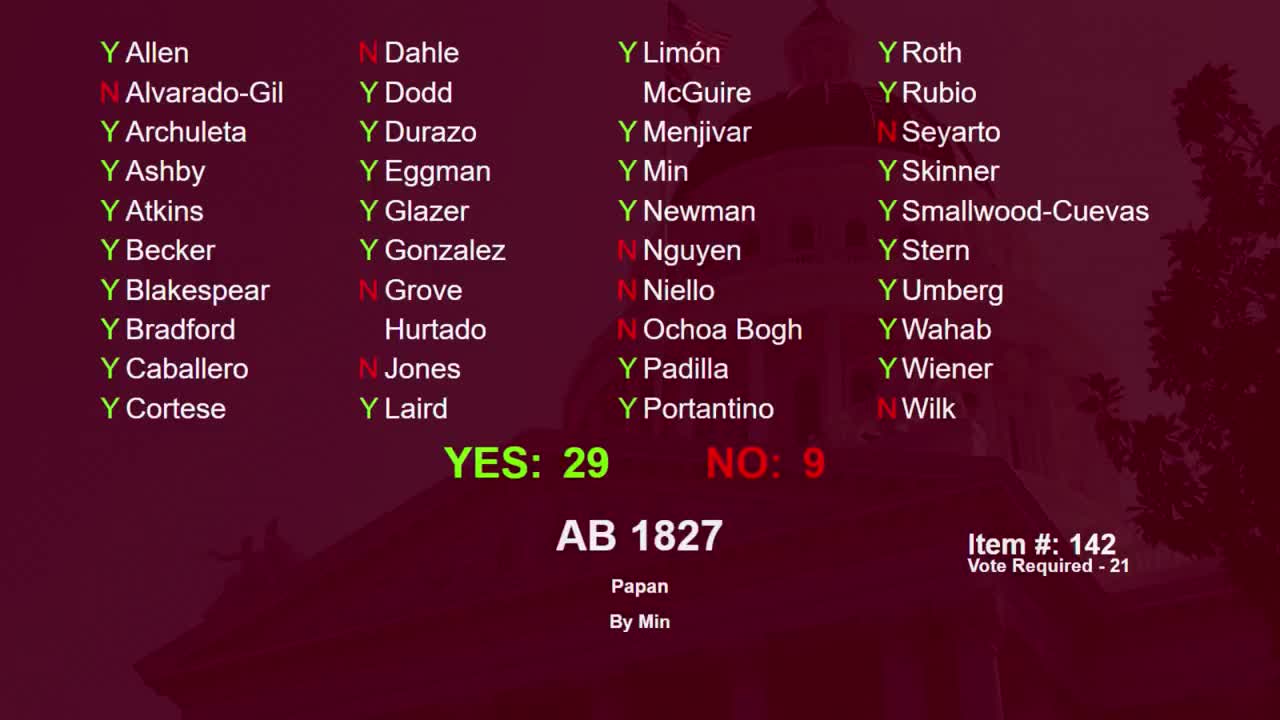 2MIN
Senate Floor
 4MIN
Senate Standing Committee on Environmental Quality
 15MIN
Senate Standing Committee on Natural Resources and Water
 1MIN
Assembly Floor
 8MIN
Assembly Standing Committee on Environmental Safety and Toxic Materials
 6MIN
Assembly Standing Committee on Water, Parks, and Wildlife


Bill Co-Author(s):