AB 2224: Special immigrant juvenile status: court orders and guardianship.
- Session Year: 2023-2024
- House: Assembly
- Latest Version Date: 2024-09-29
Current Status:
Passed
(2024-09-29: Chaptered by Secretary of State - Chapter 955, Statutes of 2024.)
Introduced
In Committee
First Chamber
In Committee
Second Chamber
Enacted
Existing federal law establishes a procedure for providing certain immigrants with the classification of special immigrant juvenile status (SIJS) and authorizes those persons to apply for an adjustment of status to that of a lawful permanent resident within the United States. Under federal law, SIJS criteria include, among other things, that the immigrants reunification with one or both parents is not viable due to abuse, neglect, abandonment, or a similar basis found under state law, and for whom it would not be in their best interest to be returned to their or their parents previous country of nationality or country of last habitual residence. Under existing state law, a superior court has jurisdiction to make the factual findings necessary to enable a child to petition the United States Citizenship and Immigration Services for classification as a special immigrant juvenile under those federal provisions.
If a court grants an order that includes the determinations regarding SIJS, and the person who requested the determinations has submitted a request for expedited processing accompanied by a properly conformed proposed order, the bill would require the court to provide the person who requested the determinations with a certified copy of the order within 3 court days of the date of the hearing at which the determinations were made, or the date the proposed order was submitted, whichever is later.
Existing law authorizes the probate court to appoint a guardian of the person of an unmarried individual who is 18 years of age or older, but who has not yet attained 21 years of age, in connection with a petition to make the necessary findings regarding SIJS, as specified, if the proposed ward consents. Existing law authorizes the petition for guardianship to be filed by a parent, relative, or any other person on behalf of the proposed ward, or by the proposed ward.
This bill would authorize a court to appoint a parent as the guardian of the person of their unmarried child who is 18 years of age or older, but who has not yet attained 21 years of age, under those provisions. The bill would also make technical and conforming changes to related provisions.
Existing federal law establishes a procedure for providing certain immigrants with the classification of special immigrant juvenile status (SIJS) and authorizes those persons to apply for an adjustment of status to that of a lawful permanent resident within the United States. Under federal law, SIJS criteria include, among other things, that the immigrants reunification with one or both parents is not viable due to abuse, neglect, abandonment, or a similar basis found under state law, and for whom it would not be in their best interest to be returned to their or their parents previous country of nationality or country of last habitual residence. Under existing state law, a superior court has jurisdiction to make the factual findings necessary to enable a child to petition the United States Citizenship and Immigration Services for classification as a special immigrant juvenile under those federal provisions.
If the court issues an order making the necessary determinations regarding SIJS, this bill would require that a certified copy of the order be provided to the petitioner on the same day the order was issued by the court.If a court grants an order that includes the determinations regarding SIJS, and the person who requested the determinations has submitted a request for expedited processing accompanied by a properly conformed proposed order, the bill would require the court to provide the person who requested the determinations with a certified copy of the order within 3 court days of the date of the hearing at which the determinations were made, or the date the proposed order was submitted, whichever is later.
Existing law authorizes the probate court to appoint a guardian of the person of an unmarried individual who is 18 years of age or older, but who has not yet attained 21 years of age, in connection with a petition to make the necessary findings regarding SIJS, as specified, if the proposed ward consents. Existing law authorizes the petition for guardianship to be filed by a parent, relative, or any other person on behalf of the proposed ward, or by the proposed ward.
This bill would authorize a court to appoint a parent as the guardian of the person of their unmarried child who is 18 years of age or older, but who has not yet attained 21 years of age, under those provisions. The bill would also make technical and conforming changes to related provisions.
Existing federal law establishes a procedure for providing certain immigrants with the classification of special immigrant juvenile status (SIJS) and authorizes those persons to apply for an adjustment of status to that of a lawful permanent resident within the United States. Under federal law, SIJS criteria include, among other things, that the immigrants reunification with one or both parents is not viable due to abuse, neglect, abandonment, or a similar basis found under state law, and for whom it would not be in their best interest to be returned to their or their parents previous country of nationality or country of last habitual residence. Under existing state law, a superior court has jurisdiction to make the factual findings necessary to enable a child to petition the United States Citizenship and Immigration Services for classification as a special immigrant juvenile under those federal provisions.
If the court issues an order making the necessary determinations regarding SIJS, this bill would require that a certified copy of the order be provided to the petitioner on the same day the order was issued by the court.
Existing law authorizes the probate court to appoint a guardian of the person of an unmarried individual who is 18 years of age or older, but who has not yet attained 21 years of age, in connection with a petition to make the necessary findings regarding SIJS, as specified, if the proposed ward consents. Existing law authorizes the petition for guardianship to be filed by a parent, relative, or any other person on behalf of the proposed ward, or by the proposed ward.
This bill would authorize a court to appoint a parent as the guardian of the person of their unmarried child who is 18 years of age or older, but who has not yet attained 21 years of age, under those provisions. The bill would also make technical and conforming changes to related provisions.
Under existing state law, noncitizen victims of trafficking, domestic violence, and other serious crimes, as defined, are eligible for certain public social services and health care services to the same extent as individuals who are admitted to the United States as refugees. Existing law requires the discontinuance of those services if there is a final administrative denial of a visa application, as specified. Existing law requires that benefits and services under those provisions be paid from state funds to the extent federal funding is unavailable.This bill would expand those services to individuals who have filed a petition with the appropriate federal agency for SIJS, and to individuals who received, or who made or are preparing to make a request for, an order from the superior court making the necessary determinations to enable them to file that petition for SIJS. The bill would require the discontinuance of the services if there is a final administrative denial of all pending applications or petitions by an individual, as specified. The bill would make conforming changes to related provisions. By increasing duties for counties to administer and determine eligibility for public social services and health care services, the bill would impose a state-mandated local program.Existing law continuously appropriates moneys from the General Fund to defray a portion of county costs under the California Work Opportunity and Responsibility to Kids (CalWORKs) program.This bill would instead provide that the continuous appropriation would not be made for purposes of implementing these provisions.The California Constitution requires the state to reimburse local agencies and school districts for certain costs mandated by the state. Statutory provisions establish procedures for making that reimbursement.This bill would provide that, if the Commission on State Mandates determines that the bill contains costs mandated by the state, reimbursement for those costs shall be made pursuant to the statutory provisions noted above.Existing federal law establishes a procedure for providing certain immigrants with the classification of special immigrant juvenile status (SIJS) and authorizes those persons to apply for an adjustment of status to that of a lawful permanent resident within the United States. Under federal law, SIJS criteria include, among other things, that the immigrants reunification with one or both parents is not viable due to abuse, neglect, abandonment, or a similar basis found under state law, and for whom it would not be in their best interest to be returned to their or their parents previous country of nationality or country of last habitual residence. Under existing state law, a superior court has jurisdiction to make the factual findings necessary to enable a child to petition the United States Citizenship and Immigration Services for classification as a special immigrant juvenile under those federal provisions.
If the court issues an order making the necessary determinations regarding SIJS, this bill would require that a certified copy of the order be provided to the petitioner on the same day the order was issued by the court.
Existing law authorizes the probate court to appoint a guardian of the person of an unmarried individual who is 18 years of age or older, but who has not yet attained 21 years of age, in connection with a petition to make the necessary findings regarding SIJS, as specified, if the proposed ward consents. Existing law authorizes the petition for guardianship to be filed by a parent, relative, or any other person on behalf of the proposed ward, or by the proposed ward. Existing law authorizes a relative or any other person on behalf of a ward, or the ward, to file a petition to extend the guardianship of the person for a period of time not to extend beyond the ward reaching 21 years of age.
This bill would authorize a court to appoint a parent as the guardian of the person of their unmarried child who is 18 years of age or older, but who has not yet attained 21 years of age, under those provisions. The bill would clarify that a parent is authorized to file a petition to extend the guardianship of the ward under those provisions. The bill would also make technical and conforming changes to related provisions.
Under existing state law, noncitizen victims of trafficking, domestic violence, and other serious crimes, as defined, are eligible for certain public social services and health care services to the same extent as individuals who are admitted to the United States as refugees. Existing law requires the discontinuance of those services if there is a final administrative denial of a visa application, as specified. Existing law requires that benefits and services under those provisions be paid from state funds to the extent federal funding is unavailable.
This bill would expand those services to individuals who have filed a petition with the appropriate federal agency for SIJS, and to individuals who received, or who made or are preparing to make a request for, an order from the superior court making the necessary determinations to enable them to file that petition for SIJS. The bill would require the discontinuance of the services if there is a final administrative denial of all pending applications or petitions by an individual, as specified. The bill would make conforming changes to related provisions. By increasing duties for counties to administer and determine eligibility for public social services and health care services, the bill would impose a state-mandated local program.
Existing law continuously appropriates moneys from the General Fund to defray a portion of county costs under the California Work Opportunity and Responsibility to Kids (CalWORKs) program.
This bill would instead provide that the continuous appropriation would not be made for purposes of implementing these provisions.
The California Constitution requires the state to reimburse local agencies and school districts for certain costs mandated by the state. Statutory provisions establish procedures for making that reimbursement.
This bill would provide that, if the Commission on State Mandates determines that the bill contains costs mandated by the state, reimbursement for those costs shall be made pursuant to the statutory provisions noted above.
Existing federal law establishes a procedure for providing certain immigrants with the classification of special immigrant juvenile status (SIJS) and authorizes those persons to apply for an adjustment of status to that of a lawful permanent resident within the United States. Under federal law, SIJS criteria include, among other things, that the immigrants reunification with one or both parents is not viable due to abuse, neglect, abandonment, or a similar basis found under state law, and for whom it would not be in their best interest to be returned to their or their parents previous country of nationality or country of last habitual residence. Under existing state law, a superior court has jurisdiction to make the factual findings necessary to enable a child to petition the United States Citizenship and Immigration Services for classification as a special immigrant juvenile under those federal provisions.
If the court issues an order making the necessary determinations regarding SIJS, this bill would require that a certified copy of the order be provided to the petitioner on the same day the order was issued by the court.
Existing law authorizes the probate court to appoint a guardian of the person of an unmarried individual who is 18 years of age or older, but who has not yet attained 21 years of age, in connection with a petition to make the necessary findings regarding SIJS, as specified, if the proposed ward consents. Existing law authorizes the petition for guardianship to be filed by parent, relative, or any other person on behalf of the proposed ward, or by the proposed ward. Existing law authorizes a relative or any other person on behalf of a ward, or the ward, to file a petition to extend the guardianship of the person for a period of time not to extend beyond the ward reaching 21 years of age.
This bill would authorize a court to appoint a parent as the guardian of the person of their unmarried child who is 18 years of age or older, but who has not yet attained 21 years of age, under those provisions. The bill would clarify that a parent is authorized to file a petition to extend the guardianship of the ward under those provisions. The bill would also make technical and conforming changes to related provisions.
Under existing state law, noncitizen victims of trafficking, domestic violence, and other serious crimes, as defined, are eligible for certain public social services and health care services to the same extent as individuals who are admitted to the United States as refugees. Existing law requires the discontinuance of those services if there is a final administrative denial of a visa application, as specified. Existing law requires that benefits and services under those provisions be paid from state funds to the extent federal funding is unavailable.
This bill would expand those services to individuals who have filed a petition with the appropriate federal agency for SIJS, and to individuals who received the judicial determinations necessary received, or who made or are preparing to make a request for, an order from the superior court making the necessary determinations to enable them to file that petition for SIJS. The bill would require the discontinuance of the services if there is a final administrative denial of all pending applications or petitions by an individual, as specified. The bill would make conforming changes to related provisions. By increasing duties for counties to administer and determine eligibility for public social services and health care services, the bill would impose a state-mandated local program.
Existing law continuously appropriates moneys from the General Fund to defray a portion of county costs under the California Work Opportunity and Responsibility to Kids (CalWORKs) program.
This bill would instead provide that the continuous appropriation would not be made for purposes of implementing these provisions.
The California Constitution requires the state to reimburse local agencies and school districts for certain costs mandated by the state. Statutory provisions establish procedures for making that reimbursement.
This bill would provide that, if the Commission on State Mandates determines that the bill contains costs mandated by the state, reimbursement for those costs shall be made pursuant to the statutory provisions noted above.
Existing federal law establishes a procedure for providing certain immigrants with the classification of special immigrant juvenile status (SIJS) and authorizes those persons to apply for an adjustment of status to that of a lawful permanent resident within the United States. Under federal law, SIJS criteria include, among other things, that the immigrants reunification with one or both parents is not viable due to abuse, neglect, abandonment, or a similar basis found under state law, and for whom it would not be in their best interest to be returned to their or their parents previous country of nationality or country of last habitual residence. Under existing state law, a superior court has jurisdiction to make the factual findings necessary to enable a child to petition the United States Citizenship and Immigration Services for classification as a special immigrant juvenile under those federal provisions.
Under existing state law, noncitizen victims of trafficking, domestic violence, and other serious crimes, as defined, are eligible for certain public social services and health care services to the same extent as individuals who are admitted to the United States as refugees. Existing law requires the discontinuance of those services if there is a final administrative denial of a visa application, as specified. Existing law requires that benefits and services under those provisions be paid from state funds to the extent federal funding is unavailable.
This bill would expand those services to individuals who have filed a petition with the appropriate federal agency for SIJS, and to individuals who received the judicial determinations necessary to enable them to file that petition for SIJS. The bill would make conforming changes to related provisions. By increasing duties for counties to administer and determine eligibility for public social services and health care services, the bill would impose a state-mandated local program.
Existing law continuously appropriates moneys from the General Fund to defray a portion of county costs under the California Work Opportunity and Responsibility to Kids (CalWORKs) program.
This bill would instead provide that the continuous appropriation would not be made for purposes of implementing these provisions.
The California Constitution requires the state to reimburse local agencies and school districts for certain costs mandated by the state. Statutory provisions establish procedures for making that reimbursement.
This bill would provide that, if the Commission on State Mandates determines that the bill contains costs mandated by the state, reimbursement for those costs shall be made pursuant to the statutory provisions noted above.
(a)(1)A superior court has jurisdiction under California law to make judicial determinations regarding the dependency or custody, or both, and care of children within the meaning of the federal Immigration and Nationality Act (8 U.S.C. Sec. 1101 et seq. and 8 C.F.R. Sec. 204.11), which includes, but is not limited to, the juvenile, probate, and family court divisions of the superior court. These courts have jurisdiction to make the judicial determinations necessary to enable a child to petition the United States Citizenship and Immigration Services for classification as a special immigrant juvenile pursuant to Section 1101(a)(27)(J) of Title 8 of the United States Code.
(2)The judicial determinations set forth in paragraph (1) of subdivision (b) may be made for a child up to 21 years of age at any point in a proceeding regardless of the division of the superior court or type of proceeding if the prerequisites of that subdivision are met. A nunc pro tunc entry is permissible and shall not require proof of any clerical or other error, as long as the determinations could have been made as of the nunc pro tunc date.
(b)(1)If an order is requested from the superior court making the necessary determinations regarding special immigrant juvenile status pursuant to Section 1101(a)(27)(J) of Title 8 of the United States Code, and there is evidence to support those determinations, which may consist solely of, but is not limited to, a declaration by the child who is the subject of the petition, the court shall issue the order, which shall include all of the following determinations, each of which shall be supported by reference to the relevant provisions of California law:
(A)The child was either of the following:
(i)Declared a dependent of the court.
(ii)Legally committed to, or placed under the custody of, a state agency or department, or an individual or entity appointed by the court. The court shall indicate the date on which the dependency, commitment, or custody was ordered and the factual basis for making the order.
(B)That reunification of the child with one or both of the childs parents was determined not to be viable because of abuse, neglect, abandonment, or a similar basis pursuant to California law. The court shall indicate the date on which reunification was determined not to be viable, and the factual basis for making the determination.
(C)That it is not in the best interest of the child to be returned to the childs, or the childs parents, previous country of nationality or country of last habitual residence. The court shall indicate the factual basis for making the determination.
(2)The superior court may make additional determinations pursuant to this section that are supported by evidence only if requested by a party. The asserted, purported, or perceived motivation of the child seeking classification as a special immigrant juvenile shall not be admissible in making the findings under this section. The court shall not include nor reference the asserted, purported, or perceived motivation of the child seeking classification as a special immigrant juvenile in the courts findings under this section.
(3)If a court grants an order that includes the determinations described in paragraph (1), and the person who requested the determinations has submitted a request for expedited processing accompanied by a properly conformed proposed order, the court shall provide the person who requested the determinations with a certified copy of the order within three court days of the date of the hearing at which the determinations were made, or the date the proposed order was submitted, whichever is later.
(c)In any judicial proceedings in response to a request that the superior court make the determinations necessary to support a petition for classification as a special immigrant juvenile, information regarding the childs immigration status that is not otherwise protected by state confidentiality laws shall remain confidential and shall be available for inspection only by the court, the child who is the subject of the proceeding, the parties, the attorneys for the parties, the childs counsel, and the childs guardian.
(d)In any judicial proceedings in response to a request that the superior court make the findings necessary to support a petition for classification as a special immigrant juvenile, records of the proceedings that are not otherwise protected by state confidentiality laws may be sealed using the procedure set forth in California Rules of Court 2.550 and 2.551.
(e)This section shall be operative on January 1, 2025.
SEC. 2.Section 1510.1 of the Probate Code is amended to read:1510.1.(a)(1)With the consent of the proposed ward, the court may appoint a guardian of the person for an unmarried individual who is 18 years of age or older, but who has not yet attained 21 years of age, in connection with a petition to make the necessary findings regarding special immigrant juvenile status pursuant to subdivision (b) of Section 155 of the Code of Civil Procedure. The court may appoint a parent as the guardian of the person of their unmarried child who is 18 years of age or older, but who has not yet attained 21 years of age.
(2)A petition for guardianship of the person of a proposed ward who is 18 years of age or older, but who has not yet attained 21 years of age, may be filed by a parent, relative, or any other person on behalf of the proposed ward, or the proposed ward.
(b)(1)At the request of, or with the consent of, the ward, the court may extend an existing guardianship of the person for a ward past 18 years of age, for purposes of allowing the ward to complete the application process with the United States Citizenship and Immigration Services for classification as a special immigrant juvenile pursuant to Section 1101(a)(27)(J) of Title 8 of the United States Code.
(2)A relative or any other person on behalf of a ward, or the ward, may file a petition to extend the guardianship of the person for a period of time not to extend beyond the ward reaching 21 years of age.
(c)This section does not authorize the guardian to abrogate any of the rights that a person who has attained 18 years of age may have as an adult under state law, including, but not limited to, decisions regarding the wards medical treatment, education, or residence, without the wards express consent.
(d)For purposes of this division, the terms child, minor, and ward include an unmarried individual who is younger than 21 years of age and who, pursuant to this section, consents to the appointment of a guardian or extension of a guardianship after they attain 18 years of age.
(e)The Judicial Council shall, by July 1, 2016, adopt any rules and forms needed to implement this section.
SEC. 3.Section 1514 of the Probate Code is amended to read:1514.(a)Upon hearing of the petition, if it appears necessary or convenient, the court may appoint a guardian of the person or estate of the proposed ward or both.
(b)(1)In appointing a guardian of the person, the court is governed by Chapter 1 (commencing with Section 3020) and Chapter 2 (commencing with Section 3040) of Part 2 of Division 8 of the Family Code, relating to custody of a minor.
(2)Except as provided in Section 1510.1 or 2105, a minors parent may not be appointed as a guardian of the person of the minor.
(c)The court shall appoint a guardian nominated under Section 1500 insofar as the nomination relates to the guardianship of the estate unless the court determines that the nominee is unsuitable. If the nominee is a relative, the nominees immigration status alone shall not constitute unsuitability.
(d)The court shall appoint the person nominated under Section 1501 as guardian of the property covered by the nomination unless the court determines that the nominee is unsuitable. If the person so appointed is appointed only as guardian of the property covered by the nomination, the letters of guardianship shall so indicate.
(e)Subject to subdivisions (c) and (d), in appointing a guardian of the estate:
(1)The court is to be guided by what appears to be in the best interest of the proposed ward, taking into account the proposed guardians ability to manage and to preserve the estate as well as the proposed guardians concern for and interest in the welfare of the proposed ward.
(2)If the proposed ward is of sufficient age to form an intelligent preference as to the person to be appointed as guardian, the court shall give consideration to that preference in determining the person to be so appointed.
(a)(1)A superior court has jurisdiction under California law to make judicial determinations regarding the dependency or custody, or both, and care of children within the meaning of the federal Immigration and Nationality Act (8 U.S.C. Sec. 1101 et seq. and 8 C.F.R. Sec. 204.11), which includes, but is not limited to, the juvenile, probate, and family court divisions of the superior court. These courts have jurisdiction to make the judicial determinations necessary to enable a child to petition the United States Citizenship and Immigration Services for classification as a special immigrant juvenile pursuant to Section 1101(a)(27)(J) of Title 8 of the United States Code.
(2)The judicial determinations set forth in paragraph (1) of subdivision (b) may be made for a child up to 21 years of age at any point in a proceeding regardless of the division of the superior court or type of proceeding if the prerequisites of that subdivision are met. A nunc pro tunc entry is permissible and shall not require proof of any clerical or other error, as long as the determinations could have been made as of the nunc pro tunc date.
(b)(1)If an order is requested from the superior court making the necessary determinations regarding special immigrant juvenile status pursuant to Section 1101(a)(27)(J) of Title 8 of the United States Code, and there is evidence to support those determinations, which may consist solely of, but is not limited to, a declaration by the child who is the subject of the petition, the court shall issue the order, which shall include all of the following determinations, each of which shall be supported by reference to the relevant provisions of California law:
(A)The child was either of the following:
(i)Declared a dependent of the court.
(ii)Legally committed to, or placed under the custody of, a state agency or department, or an individual or entity appointed by the court. The court shall indicate the date on which the dependency, commitment, or custody was ordered and the factual basis for making the order.
(B)That reunification of the child with one or both of the childs parents was determined not to be viable because of abuse, neglect, abandonment, or a similar basis pursuant to California law. The court shall indicate the date on which reunification was determined not to be viable, and the factual basis for making the determination.
(C)That it is not in the best interest of the child to be returned to the childs, or the childs parents, previous country of nationality or country of last habitual residence. The court shall indicate the factual basis for making the determination.
(2)The superior court may make additional determinations pursuant to this section that are supported by evidence only if requested by a party. The asserted, purported, or perceived motivation of the child seeking classification as a special immigrant juvenile shall not be admissible in making the findings under this section. The court shall not include nor reference the asserted, purported, or perceived motivation of the child seeking classification as a special immigrant juvenile in the courts findings under this section.
(3)If the court issues an order making the necessary determinations regarding special immigrant juvenile status, a certified copy of the order shall be provided to the petitioner on the same day the order was issued by the court.(3)If a court grants an order that includes the determinations described in paragraph (1), and the person who requested the determinations has submitted a request for expedited processing accompanied by a properly conformed proposed order, the court shall provide the person who requested the determinations with a certified copy of the order within three court days of the date of the hearing at which the determinations were made, or the date the proposed order was submitted, whichever is later.
(c)In any judicial proceedings in response to a request that the superior court make the determinations necessary to support a petition for classification as a special immigrant juvenile, information regarding the childs immigration status that is not otherwise protected by state confidentiality laws shall remain confidential and shall be available for inspection only by the court, the child who is the subject of the proceeding, the parties, the attorneys for the parties, the childs counsel, and the childs guardian.
(d)In any judicial proceedings in response to a request that the superior court make the findings necessary to support a petition for classification as a special immigrant juvenile, records of the proceedings that are not otherwise protected by state confidentiality laws may be sealed using the procedure set forth in California Rules of Court 2.550 and 2.551.
(e)This section shall be operative on January 1, 2025.
SEC. 2.Section 1510.1 of the Probate Code is amended to read:1510.1.(a)(1)With the consent of the proposed ward, the court may appoint a guardian of the person for an unmarried individual who is 18 years of age or older, but who has not yet attained 21 years of age, in connection with a petition to make the necessary findings regarding special immigrant juvenile status pursuant to subdivision (b) of Section 155 of the Code of Civil Procedure. The court may appoint a parent as the guardian of the person of their unmarried child who is 18 years of age or older, but who has not yet attained 21 years of age.
(2)A petition for guardianship of the person of a proposed ward who is 18 years of age or older, but who has not yet attained 21 years of age, may be filed by a parent, relative, or any other person on behalf of the proposed ward, or the proposed ward.
(b)(1)At the request of, or with the consent of, the ward, the court may extend an existing guardianship of the person for a ward past 18 years of age, for purposes of allowing the ward to complete the application process with the United States Citizenship and Immigration Services for classification as a special immigrant juvenile pursuant to Section 1101(a)(27)(J) of Title 8 of the United States Code.
(2)A relative or any other person on behalf of a ward, or the ward, may file a petition to extend the guardianship of the person for a period of time not to extend beyond the ward reaching 21 years of age.
(c)This section does not authorize the guardian to abrogate any of the rights that a person who has attained 18 years of age may have as an adult under state law, including, but not limited to, decisions regarding the wards medical treatment, education, or residence, without the wards express consent.
(d)For purposes of this division, the terms child, minor, and ward include an unmarried individual who is younger than 21 years of age and who, pursuant to this section, consents to the appointment of a guardian or extension of a guardianship after they attain 18 years of age.
(e)The Judicial Council shall, by July 1, 2016, adopt any rules and forms needed to implement this section.
SEC. 3.Section 1514 of the Probate Code is amended to read:1514.(a)Upon hearing of the petition, if it appears necessary or convenient, the court may appoint a guardian of the person or estate of the proposed ward or both.
(b)(1)In appointing a guardian of the person, the court is governed by Chapter 1 (commencing with Section 3020) and Chapter 2 (commencing with Section 3040) of Part 2 of Division 8 of the Family Code, relating to custody of a minor.
(2)Except as provided in Section 1510.1 or 2105, a minors parent may not be appointed as a guardian of the person of the minor.
(c)The court shall appoint a guardian nominated under Section 1500 insofar as the nomination relates to the guardianship of the estate unless the court determines that the nominee is unsuitable. If the nominee is a relative, the nominees immigration status alone shall not constitute unsuitability.
(d)The court shall appoint the person nominated under Section 1501 as guardian of the property covered by the nomination unless the court determines that the nominee is unsuitable. If the person so appointed is appointed only as guardian of the property covered by the nomination, the letters of guardianship shall so indicate.
(e)Subject to subdivisions (c) and (d), in appointing a guardian of the estate:
(1)The court is to be guided by what appears to be in the best interest of the proposed ward, taking into account the proposed guardians ability to manage and to preserve the estate as well as the proposed guardians concern for and interest in the welfare of the proposed ward.
(2)If the proposed ward is of sufficient age to form an intelligent preference as to the person to be appointed as guardian, the court shall give consideration to that preference in determining the person to be so appointed.
(a)(1)A superior court has jurisdiction under California law to make judicial determinations regarding the dependency or custody, or both, and care of children within the meaning of the federal Immigration and Nationality Act (8 U.S.C. Sec. 1101 et seq. and 8 C.F.R. Sec. 204.11), which includes, but is not limited to, the juvenile, probate, and family court divisions of the superior court. These courts have jurisdiction to make the judicial determinations necessary to enable a child to petition the United States Citizenship and Immigration Services for classification as a special immigrant juvenile pursuant to Section 1101(a)(27)(J) of Title 8 of the United States Code.
(2)The judicial determinations set forth in paragraph (1) of subdivision (b) may be made for a child up to 21 years of age at any point in a proceeding regardless of the division of the superior court or type of proceeding if the prerequisites of that subdivision are met. A nunc pro tunc entry is permissible and shall not require proof of any clerical or other error, as long as the determinations could have been made as of the nunc pro tunc date.
(b)(1)If an order is requested from the superior court making the necessary determinations regarding special immigrant juvenile status pursuant to Section 1101(a)(27)(J) of Title 8 of the United States Code, and there is evidence to support those determinations, which may consist solely of, but is not limited to, a declaration by the child who is the subject of the petition, the court shall issue the order, which shall include all of the following determinations, each of which shall be supported by reference to the relevant provisions of California law:
(A)The child was either of the following:
(i)Declared a dependent of the court.
(ii)Legally committed to, or placed under the custody of, a state agency or department, or an individual or entity appointed by the court. The court shall indicate the date on which the dependency, commitment, or custody was ordered and the factual basis for making the order.
(B)That reunification of the child with one or both of the childs parents was determined not to be viable because of abuse, neglect, abandonment, or a similar basis pursuant to California law. The court shall indicate the date on which reunification was determined not to be viable, and the factual basis for making the determination.
(C)That it is not in the best interest of the child to be returned to the childs, or the childs parents, previous country of nationality or country of last habitual residence. The court shall indicate the factual basis for making the determination.
(2)The superior court may make additional determinations pursuant to this section that are supported by evidence only if requested by a party. The asserted, purported, or perceived motivation of the child seeking classification as a special immigrant juvenile shall not be admissible in making the findings under this section. The court shall not include nor reference the asserted, purported, or perceived motivation of the child seeking classification as a special immigrant juvenile in the courts findings under this section.
(3)If the court issues an order making the necessary determinations regarding special immigrant juvenile status, a certified copy of the order shall be provided to the petitioner on the same day the order was issued by the court.
(c)In any judicial proceedings in response to a request that the superior court make the determinations necessary to support a petition for classification as a special immigrant juvenile, information regarding the childs immigration status that is not otherwise protected by state confidentiality laws shall remain confidential and shall be available for inspection only by the court, the child who is the subject of the proceeding, the parties, the attorneys for the parties, the childs counsel, and the childs guardian.
(d)In any judicial proceedings in response to a request that the superior court make the findings necessary to support a petition for classification as a special immigrant juvenile, records of the proceedings that are not otherwise protected by state confidentiality laws may be sealed using the procedure set forth in California Rules of Court 2.550 and 2.551.
(e)This section shall be operative on January 1, 2025.
SEC. 2.Section 1510.1 of the Probate Code is amended to read:1510.1.(a)(1)With the consent of the proposed ward, the court may appoint a guardian of the person for an unmarried individual who is 18 years of age or older, but who has not yet attained 21 years of age, in connection with a petition to make the necessary findings regarding special immigrant juvenile status pursuant to subdivision (b) of Section 155 of the Code of Civil Procedure. The court may appoint a parent as the guardian of the person of their unmarried child who is 18 years of age or older, but who has not yet attained 21 years of age.
(2)A petition for guardianship of the person of a proposed ward who is 18 years of age or older, but who has not yet attained 21 years of age, may be filed by a parent, relative, or any other person on behalf of the proposed ward, or the proposed ward.
(b)(1)At the request of, or with the consent of, the ward, the court may extend an existing guardianship of the person for a ward past 18 years of age, for purposes of allowing the ward to complete the application process with the United States Citizenship and Immigration Services for classification as a special immigrant juvenile pursuant to Section 1101(a)(27)(J) of Title 8 of the United States Code.
(2)A relative or any other person on behalf of a ward, or the ward, may file a petition to extend the guardianship of the person for a period of time not to extend beyond the ward reaching 21 years of age.
(c)This section does not authorize the guardian to abrogate any of the rights that a person who has attained 18 years of age may have as an adult under state law, including, but not limited to, decisions regarding the wards medical treatment, education, or residence, without the wards express consent.
(d)For purposes of this division, the terms child, minor, and ward include an unmarried individual who is younger than 21 years of age and who, pursuant to this section, consents to the appointment of a guardian or extension of a guardianship after they attain 18 years of age.
(e)The Judicial Council shall, by July 1, 2016, adopt any rules and forms needed to implement this section.
SEC. 3.Section 1514 of the Probate Code is amended to read:1514.(a)Upon hearing of the petition, if it appears necessary or convenient, the court may appoint a guardian of the person or estate of the proposed ward or both.
(b)(1)In appointing a guardian of the person, the court is governed by Chapter 1 (commencing with Section 3020) and Chapter 2 (commencing with Section 3040) of Part 2 of Division 8 of the Family Code, relating to custody of a minor.
(2)Except as provided in Section 1510.1 or 2105, a minors parent may not be appointed as a guardian of the person of the minor.
(c)The court shall appoint a guardian nominated under Section 1500 insofar as the nomination relates to the guardianship of the estate unless the court determines that the nominee is unsuitable. If the nominee is a relative, the nominees immigration status alone shall not constitute unsuitability.
(d)The court shall appoint the person nominated under Section 1501 as guardian of the property covered by the nomination unless the court determines that the nominee is unsuitable. If the person so appointed is appointed only as guardian of the property covered by the nomination, the letters of guardianship shall so indicate.
(e)Subject to subdivisions (c) and (d), in appointing a guardian of the estate:
(1)The court is to be guided by what appears to be in the best interest of the proposed ward, taking into account the proposed guardians ability to manage and to preserve the estate as well as the proposed guardians concern for and interest in the welfare of the proposed ward.
(2)If the proposed ward is of sufficient age to form an intelligent preference as to the person to be appointed as guardian, the court shall give consideration to that preference in determining the person to be so appointed.
SEC. 4.Section 13283 of the Welfare and Institutions Code is amended to read:13283.Notwithstanding any other law, the department shall ensure that noncitizen victims of trafficking, domestic violence, and other serious crimes, and noncitizens who have been abused, neglected, or abandoned, as defined in subdivision (b) of Section 18945, have access to refugee cash assistance, and refugee social services set forth in this chapter, to the same extent as individuals who are admitted to the United States as refugees under Section 1157 of Title 8 of the United States Code. These individuals shall be subject to the same work requirements and exemptions as other participants, provided that compliance with these requirements is authorized by law. An exemption from these requirements shall be available if physical or psychological trauma related to or arising from the victimization impedes their ability to comply. Assistance and services under this section shall be paid from state funds to the extent federal funding is unavailable.SEC. 5.Section 14005.2 of the Welfare and Institutions Code is amended to read:14005.2.Unless otherwise specified in this chapter, the eligibility of a person eligible under the Cuban-Haitian Entrant Program or the Refugee Resettlement Program for health care services under Section 14005 shall be determined by applying the same income and resource methodologies and standards and all other eligibility criteria established pursuant to this chapter that are applied by the department in determining the eligibility of a medically needy family person, except for those criteria that establish categorical relatedness, and only as long as federal funds are available. Noncitizen victims of trafficking, domestic violence, and other serious crimes, and noncitizens who have been abused, neglected, or abandoned, as defined in subdivision (b) of Section 18945, shall be eligible for these services to the same extent as individuals who are admitted to the United States as a refugee under Section 1157 of Title 8 of the United States Code. Services under this subdivision shall be paid from state funds to the extent federal funding is unavailable.SEC. 6.Section 18945 of the Welfare and Institutions Code is amended to read:18945.(a)Noncitizen victims of trafficking, domestic violence, and other serious crimes, and noncitizens who have been abused, neglected, or abandoned, as defined in subdivision (b), shall be eligible for public social services under this division, and health care services under Part 6.2 (commencing with Section 12693) of Division 2 of the Insurance Code, to the same extent as individuals who are admitted to the United States as refugees under Section 1157 of Title 8 of the United States Code. These services shall discontinue if there is a final administrative denial of all pending applications or petitions by an individual, including an application for T nonimmigrant status under Section 1101(a)(15)(T)(i) or (ii) of, a petition for U nonimmigrant status under Section 1101(a)(15)(U)(i) or (ii) of, or a petition for special immigrant juvenile status under Section 1101(a)(27)(J) of, Title 8 of the United States Code, as applicable. For trafficking victims on behalf of whom law enforcement officials have not yet filed for continued presence or who have not yet filed an application for a visa, benefits issued pursuant to this subdivision shall be available for up to one year, and shall continue after that date only if an application for continued presence, or an application for a visa, is filed within the one-year period. Benefits and services under this subdivision shall be paid from state funds to the extent federal funding is unavailable.(b)For purposes of this section, noncitizen victims of trafficking, domestic violence, and other serious crimes, and noncitizens who have been abused, neglected, or abandoned shall be defined to include all of the following:(1)Noncitizen victims of a severe form of trafficking in persons, who have been subjected to an act or practice described in Section 7102(8) or (9) of Title 22 of the United States Code or Section 236.1 of the Penal Code, and who have filed an I-914 application for T Nonimmigrant status with the appropriate federal agency, are preparing to file an application for status under Section 1101(a)(15)(T)(i) or (ii) of Title 8 of the United States Code, or otherwise are taking steps to meet the conditions for federal benefits eligibility under Section 7105 of Title 22 of the United States Code.(2)Individuals who have filed a formal application with the appropriate federal agency for status under Section 1101(a)(15)(U)(i) or (ii) of Title 8 of the United States Code.(3)(A)Individuals who have filed a petition with the appropriate federal agency for special immigrant juvenile status under Section 1101(a)(27)(J) of Title 8 of the United States Code.(B)Individuals who received an order from the superior court making the necessary determinations to enable the individual to file the petition described in subparagraph (A).(C)Individuals who made, or are preparing to make, a request for an order from the superior court making the necessary determinations to enable the individual to file the petition described in subparagraph (A).(c)After one year from the date of application for public social services, noncitizen victims of a severe form of trafficking, as defined in paragraph (1) of subdivision (b), shall be ineligible for state-funded services if a visa application has not been filed until under Section 1101(a)(15)(T)(i) or (ii) of Title 8 of the United States Code.(d)A noncitizen victim of a severe form of trafficking, as defined in paragraph (1) of subdivision (b), who is issued a visa shall be removed from the state-funded program and provided federally funded public social services benefits under the provisions of Section 1522 of Title 8 of the United States Code, or another federal program for which the noncitizen victim may be eligible.(e)For purposes of this section, Section 13283, and Section 14005.2:(1)In determining whether an applicant for public social services has been a victim of a severe form of human trafficking, as defined in Section 7102(8) or (9) of Title 22 of the United States Code, or Section 236.1 of the Penal Code, the state or local agency shall consider all relevant and credible evidence. A sworn statement by a victim, or a representative if the victim is not able to competently swear, shall be sufficient if at least one item of additional evidence is also provided, including, but not limited to, any of the following:(A)Police, government agency, or court records or files.(B)News articles.(C)Documentation from a social services, trafficking, or domestic violence program, or a legal, clinical, medical, or other professional from whom the applicant or recipient has sought assistance in dealing with the crime.(D)A statement from any other individual with knowledge of the circumstances that provided the basis for the claim.(E)Physical evidence.(F)A copy of a completed visa application.(G)Written notice from the federal agency of receipt of the visa application.(2)If the victim cannot provide additional evidence, then the sworn statement shall be sufficient if the county or state agency makes a determination documented in the case file that the applicant is credible.SEC. 7.No appropriation pursuant to Section 15200 of the Welfare and Institutions Code shall be made for purposes of implementing this act.SEC. 8.If the Commission on State Mandates determines that this act contains costs mandated by the state, reimbursement to local agencies and school districts for those costs shall be made pursuant to Part 7 (commencing with Section 17500) of Division 4 of Title 2 of the Government Code.(a)(1)A superior court has jurisdiction under California law to make judicial determinations regarding the dependency or custody, or both, and care of children within the meaning of the federal Immigration and Nationality Act (8 U.S.C. Sec. 1101 et seq. and 8 C.F.R. Sec. 204.11), which includes, but is not limited to, the juvenile, probate, and family court divisions of the superior court. These courts have jurisdiction to make the judicial determinations necessary to enable a child to petition the United States Citizenship and Immigration Services for classification as a special immigrant juvenile pursuant to Section 1101(a)(27)(J) of Title 8 of the United States Code.
(2)The judicial determinations set forth in paragraph (1) of subdivision (b) may be made for a child up to 21 years of age at any point in a proceeding regardless of the division of the superior court or type of proceeding if the prerequisites of that subdivision are met. A nunc pro tunc entry is permissible and shall not require proof of any clerical or other error, as long as the determinations could have been made as of the nunc pro tunc date.
(b)(1)If an order is requested from the superior court making the necessary determinations regarding special immigrant juvenile status pursuant to Section 1101(a)(27)(J) of Title 8 of the United States Code, and there is evidence to support those determinations, which may consist solely of, but is not limited to, a declaration by the child who is the subject of the petition, the court shall issue the order, which shall include all of the following determinations, each of which shall be supported by reference to the relevant provisions of California law:
(A)The child was either of the following:
(i)Declared a dependent of the court.
(ii)Legally committed to, or placed under the custody of, a state agency or department, or an individual or entity appointed by the court. The court shall indicate the date on which the dependency, commitment, or custody was ordered and the factual basis for making the order.
(B)That reunification of the child with one or both of the childs parents was determined not to be viable because of abuse, neglect, abandonment, or a similar basis pursuant to California law. The court shall indicate the date on which reunification was determined not to be viable, and the factual basis for making the determination.
(C)That it is not in the best interest of the child to be returned to the childs, or the childs parents, previous country of nationality or country of last habitual residence. The court shall indicate the factual basis for making the determination.
(2)The superior court may make additional determinations pursuant to this section that are supported by evidence only if requested by a party. The asserted, purported, or perceived motivation of the child seeking classification as a special immigrant juvenile shall not be admissible in making the findings under this section. The court shall not include nor reference the asserted, purported, or perceived motivation of the child seeking classification as a special immigrant juvenile in the courts findings under this section.
(3)If the court issues an order making the necessary determinations regarding special immigrant juvenile status, a certified copy of the order shall be provided to the petitioner on the same day the order was issued by the court.
(c)In any judicial proceedings in response to a request that the superior court make the determinations necessary to support a petition for classification as a special immigrant juvenile, information regarding the childs immigration status that is not otherwise protected by state confidentiality laws shall remain confidential and shall be available for inspection only by the court, the child who is the subject of the proceeding, the parties, the attorneys for the parties, the childs counsel, and the childs guardian.
(d)In any judicial proceedings in response to a request that the superior court make the findings necessary to support a petition for classification as a special immigrant juvenile, records of the proceedings that are not otherwise protected by state confidentiality laws may be sealed using the procedure set forth in California Rules of Court 2.550 and 2.551.
(e)This section shall be operative on January 1, 2025.
SEC. 2.Section 1510.1 of the Probate Code is amended to read:1510.1.(a)(1)With the consent of the proposed ward, the court may appoint a guardian of the person for an unmarried individual who is 18 years of age or older, but who has not yet attained 21 years of age, in connection with a petition to make the necessary findings regarding special immigrant juvenile status pursuant to subdivision (b) of Section 155 of the Code of Civil Procedure. The court may appoint a parent as the guardian of the person of their unmarried child who is 18 years of age or older, but who has not yet attained 21 years of age.
(2)A petition for guardianship of the person of a proposed ward who is 18 years of age or older, but who has not yet attained 21 years of age, may be filed by a parent, relative, or any other person on behalf of the proposed ward, or the proposed ward.
(b)(1)At the request of, or with the consent of, the ward, the court may extend an existing guardianship of the person for a ward past 18 years of age, for purposes of allowing the ward to complete the application process with the United States Citizenship and Immigration Services for classification as a special immigrant juvenile pursuant to Section 1101(a)(27)(J) of Title 8 of the United States Code.
(2)A parent, other relative, relative or any other person on behalf of a ward, or the ward, may file a petition to extend the guardianship of the person for a period of time not to extend beyond the ward reaching 21 years of age.
(c)This section does not authorize the guardian to abrogate any of the rights that a person who has attained 18 years of age may have as an adult under state law, including, but not limited to, decisions regarding the wards medical treatment, education, or residence, without the wards express consent.
(d)For purposes of this division, the terms child, minor, and ward include an unmarried individual who is younger than 21 years of age and who, pursuant to this section, consents to the appointment of a guardian or extension of a guardianship after they attain 18 years of age.
(e)The Judicial Council shall, by July 1, 2016, adopt any rules and forms needed to implement this section.
SEC. 3.Section 1514 of the Probate Code is amended to read:1514.(a)Upon hearing of the petition, if it appears necessary or convenient, the court may appoint a guardian of the person or estate of the proposed ward or both.
(b)(1)In appointing a guardian of the person, the court is governed by Chapter 1 (commencing with Section 3020) and Chapter 2 (commencing with Section 3040) of Part 2 of Division 8 of the Family Code, relating to custody of a minor.
(2)Except as provided in Section 1510.1 or 2105, a minors parent may not be appointed as a guardian of the person of the minor.
(c)The court shall appoint a guardian nominated under Section 1500 insofar as the nomination relates to the guardianship of the estate unless the court determines that the nominee is unsuitable. If the nominee is a relative, the nominees immigration status alone shall not constitute unsuitability.
(d)The court shall appoint the person nominated under Section 1501 as guardian of the property covered by the nomination unless the court determines that the nominee is unsuitable. If the person so appointed is appointed only as guardian of the property covered by the nomination, the letters of guardianship shall so indicate.
(e)Subject to subdivisions (c) and (d), in appointing a guardian of the estate:
(1)The court is to be guided by what appears to be in the best interest of the proposed ward, taking into account the proposed guardians ability to manage and to preserve the estate as well as the proposed guardians concern for and interest in the welfare of the proposed ward.
(2)If the proposed ward is of sufficient age to form an intelligent preference as to the person to be appointed as guardian, the court shall give consideration to that preference in determining the person to be so appointed.
SEC. 4.Section 13283 of the Welfare and Institutions Code is amended to read:13283.Notwithstanding any other law, the department shall ensure that noncitizen victims of trafficking, domestic violence, and other serious crimes, and noncitizens who have been abused, neglected, or abandoned, as defined in subdivision (b) of Section 18945, have access to refugee cash assistance, and refugee social services set forth in this chapter, to the same extent as individuals who are admitted to the United States as refugees under Section 1157 of Title 8 of the United States Code. These individuals shall be subject to the same work requirements and exemptions as other participants, provided that compliance with these requirements is authorized by law. An exemption from these requirements shall be available if physical or psychological trauma related to or arising from the victimization impedes their ability to comply. Assistance and services under this section shall be paid from state funds to the extent federal funding is unavailable.
SEC. 5.Section 14005.2 of the Welfare and Institutions Code is amended to read:14005.2.Unless otherwise specified in this chapter, the eligibility of a person eligible under the Cuban-Haitian Entrant Program or the Refugee Resettlement Program for health care services under Section 14005 shall be determined by applying the same income and resource methodologies and standards and all other eligibility criteria established pursuant to this chapter that are applied by the department in determining the eligibility of a medically needy family person, except for those criteria that establish categorical relatedness, and only as long as federal funds are available. Noncitizen victims of trafficking, domestic violence, and other serious crimes, and noncitizens who have been abused, neglected, or abandoned, as defined in subdivision (b) of Section 18945, shall be eligible for these services to the same extent as individuals who are admitted to the United States as a refugee under Section 1157 of Title 8 of the United States Code. Services under this subdivision shall be paid from state funds to the extent federal funding is unavailable.
SEC. 6.Section 18945 of the Welfare and Institutions Code is amended to read:18945.(a)Noncitizen victims of trafficking, domestic violence, and other serious crimes, and noncitizens who have been abused, neglected, or abandoned, as defined in subdivision (b), shall be eligible for public social services under this division, and health care services under Part 6.2 (commencing with Section 12693) of Division 2 of the Insurance Code, to the same extent as individuals who are admitted to the United States as refugees under Section 1157 of Title 8 of the United States Code. These services shall discontinue if there is a final administrative denial of all pending applications or petitions by an individual, including an application for T nonimmigrant status under Section 1101(a)(15)(T)(i) or (ii) of, a petition for U nonimmigrant status under Section 1101(a)(15)(U)(i) or (ii) of, or a petition for special immigrant juvenile status under Section 1101(a)(27)(J) of, Title 8 of the United States Code, as applicable. For trafficking victims on behalf of whom law enforcement officials have not yet filed for continued presence or who have not yet filed an application for a visa, benefits issued pursuant to this subdivision shall be available for up to one year, and shall continue after that date only if an application for continued presence, or an application for a visa, is filed within the one-year period. Benefits and services under this subdivision shall be paid from state funds to the extent federal funding is unavailable.
(b)For purposes of this section, noncitizen victims of trafficking, domestic violence, and other serious crimes, and noncitizens who have been abused, neglected, or abandoned shall be defined to include all of the following:
(1)Noncitizen victims of a severe form of trafficking in persons, who have been subjected to an act or practice described in Section 7102(8) or (9) of Title 22 of the United States Code or Section 236.1 of the Penal Code, and who have filed an I-914 application for T Nonimmigrant status with the appropriate federal agency, are preparing to file an application for status under Section 1101(a)(15)(T)(i) or (ii) of Title 8 of the United States Code, or otherwise are taking steps to meet the conditions for federal benefits eligibility under Section 7105 of Title 22 of the United States Code.
(2)Individuals who have filed a formal application with the appropriate federal agency for status under Section 1101(a)(15)(U)(i) or (ii) of Title 8 of the United States Code.
(3)(A)Individuals who have filed a petition with the appropriate federal agency for special immigrant juvenile status under Section 1101(a)(27)(J) of Title 8 of the United States Code.
(B)Individuals who received an order from the superior court making the necessary determinations to enable the individual to file the petition described in subparagraph (A).
(C)Individuals who made, or are preparing to make, a request for an order from the superior court making the necessary determinations to enable the individual to file the petition described in subparagraph (A).
(c)After one year from the date of application for public social services, noncitizen victims of a severe form of trafficking, as defined in paragraph (1) of subdivision (b), shall be ineligible for state-funded services if a visa application has not been filed until under Section 1101(a)(15)(T)(i) or (ii) of Title 8 of the United States Code.
(d)A noncitizen victim of a severe form of trafficking, as defined in paragraph (1) of subdivision (b), who is issued a visa shall be removed from the state-funded program and provided federally funded public social services benefits under the provisions of Section 1522 of Title 8 of the United States Code, or another federal program for which the noncitizen victim may be eligible.
(e)For purposes of this section, Section 13283, and Section 14005.2:
(1)In determining whether an applicant for public social services has been a victim of a severe form of human trafficking, as defined in Section 7102(8) or (9) of Title 22 of the United States Code, or Section 236.1 of the Penal Code, the state or local agency shall consider all relevant and credible evidence. A sworn statement by a victim, or a representative if the victim is not able to competently swear, shall be sufficient if at least one item of additional evidence is also provided, including, but not limited to, any of the following:
(A)Police, government agency, or court records or files.
(B)News articles.
(C)Documentation from a social services, trafficking, or domestic violence program, or a legal, clinical, medical, or other professional from whom the applicant or recipient has sought assistance in dealing with the crime.
(D)A statement from any other individual with knowledge of the circumstances that provided the basis for the claim.
(E)Physical evidence.
(F)A copy of a completed visa application.
(G)Written notice from the federal agency of receipt of the visa application.
(2)If the victim cannot provide additional evidence, then the sworn statement shall be sufficient if the county or state agency makes a determination documented in the case file that the applicant is credible.
SEC. 7.No appropriation pursuant to Section 15200 of the Welfare and Institutions Code shall be made for purposes of implementing this act.
SEC. 8.If the Commission on State Mandates determines that this act contains costs mandated by the state, reimbursement to local agencies and school districts for those costs shall be made pursuant to Part 7 (commencing with Section 17500) of Division 4 of Title 2 of the Government Code.
(a)(1)A superior court has jurisdiction under California law to make judicial determinations regarding the dependency or custody, or both, and care of children within the meaning of the federal Immigration and Nationality Act (8 U.S.C. Sec. 1101 et seq. and 8 C.F.R. Sec. 204.11), which includes, but is not limited to, the juvenile, probate, and family court divisions of the superior court. These courts have jurisdiction to make the judicial determinations necessary to enable a child to petition the United States Citizenship and Immigration Services for classification as a special immigrant juvenile pursuant to Section 1101(a)(27)(J) of Title 8 of the United States Code.
(2)The judicial determinations set forth in paragraph (1) of subdivision (b) may be made for a child up to 21 years of age at any point in a proceeding regardless of the division of the superior court or type of proceeding if the prerequisites of that subdivision are met. A nunc pro tunc entry is permissible and shall not require proof of any clerical or other error, as long as the determinations could have been made as of the nunc pro tunc date.
(b)(1)If an order is requested from the superior court making the necessary determinations regarding special immigrant juvenile status pursuant to Section 1101(a)(27)(J) of Title 8 of the United States Code, and there is evidence to support those determinations, which may consist solely of, but is not limited to, a declaration by the child who is the subject of the petition, the court shall issue the order, which shall include all of the following determinations, each of which shall be supported by reference to the relevant provisions of California law:
(A)The child was either of the following:
(i)Declared a dependent of the court.
(ii)Legally committed to, or placed under the custody of, a state agency or department, or an individual or entity appointed by the court. The court shall indicate the date on which the dependency, commitment, or custody was ordered and the factual basis for making the order.
(B)That reunification of the child with one or both of the childs parents was determined not to be viable because of abuse, neglect, abandonment, or a similar basis pursuant to California law. The court shall indicate the date on which reunification was determined not to be viable, and the factual basis for making the determination.
(C)That it is not in the best interest of the child to be returned to the childs, or the childs parents, previous country of nationality or country of last habitual residence. The court shall indicate the factual basis for making the determination.
(2)The superior court may make additional determinations pursuant to this section that are supported by evidence only if requested by a party. The asserted, purported, or perceived motivation of the child seeking classification as a special immigrant juvenile shall not be admissible in making the findings under this section. The court shall not include nor reference the asserted, purported, or perceived motivation of the child seeking classification as a special immigrant juvenile in the courts findings under this section.
(3)If the court issues an order making the necessary determinations regarding special immigrant juvenile status, a certified copy of the order shall be provided to the petitioner on the same day the order was issued by the court.
(c)In any judicial proceedings in response to a request that the superior court make the determinations necessary to support a petition for classification as a special immigrant juvenile, information regarding the childs immigration status that is not otherwise protected by state confidentiality laws shall remain confidential and shall be available for inspection only by the court, the child who is the subject of the proceeding, the parties, the attorneys for the parties, the childs counsel, and the childs guardian.
(d)In any judicial proceedings in response to a request that the superior court make the findings necessary to support a petition for classification as a special immigrant juvenile, records of the proceedings that are not otherwise protected by state confidentiality laws may be sealed using the procedure set forth in California Rules of Court 2.550 and 2.551.
(e)This section shall be operative on January 1, 2025.
SEC. 2.Section 1510.1 of the Probate Code is amended to read:1510.1.(a)(1)With the consent of the proposed ward, the court may appoint a guardian of the person for an unmarried individual who is 18 years of age or older, but who has not yet attained 21 years of age, in connection with a petition to make the necessary findings regarding special immigrant juvenile status pursuant to subdivision (b) of Section 155 of the Code of Civil Procedure. The court may appoint a parent as the guardian of the person of their unmarried child who is 18 years of age or older, but who has not yet attained 21 years of age.
(2)A petition for guardianship of the person of a proposed ward who is 18 years of age or older, but who has not yet attained 21 years of age, may be filed by a parent, relative, or any other person on behalf of the proposed ward, or the proposed ward.
(b)(1)At the request of, or with the consent of, the ward, the court may extend an existing guardianship of the person for a ward past 18 years of age, for purposes of allowing the ward to complete the application process with the United States Citizenship and Immigration Services for classification as a special immigrant juvenile pursuant to Section 1101(a)(27)(J) of Title 8 of the United States Code.
(2)A relative parent, other relative, or any other person on behalf of a ward, or the ward, may file a petition to extend the guardianship of the person for a period of time not to extend beyond the ward reaching 21 years of age.
(c)This section does not authorize the guardian to abrogate any of the rights that a person who has attained 18 years of age may have as an adult under state law, including, but not limited to, decisions regarding the wards medical treatment, education, or residence, without the wards express consent.
(d)For purposes of this division, the terms child, minor, and ward include an unmarried individual who is younger than 21 years of age and who, pursuant to this section, consents to the appointment of a guardian or extension of a guardianship after he or she attains they attain 18 years of age.
(e)The Judicial Council shall, by July 1, 2016, adopt any rules and forms needed to implement this section.
SEC. 3.Section 1514 of the Probate Code is amended to read:1514.(a)Upon hearing of the petition, if it appears necessary or convenient, the court may appoint a guardian of the person or estate of the proposed ward or both.
(b)(1)In appointing a guardian of the person, the court is governed by Chapter 1 (commencing with Section 3020) and Chapter 2 (commencing with Section 3040) of Part 2 of Division 8 of the Family Code, relating to custody of a minor.
(2)Except as provided in Section 1510.1 or 2105, a minors parent may not be appointed as a guardian of the person of the minor.
(c)The court shall appoint a guardian nominated under Section 1500 insofar as the nomination relates to the guardianship of the estate unless the court determines that the nominee is unsuitable. If the nominee is a relative, the nominees immigration status alone shall not constitute unsuitability.
(d)The court shall appoint the person nominated under Section 1501 as guardian of the property covered by the nomination unless the court determines that the nominee is unsuitable. If the person so appointed is appointed only as guardian of the property covered by the nomination, the letters of guardianship shall so indicate.
(e)Subject to subdivisions (c) and (d), in appointing a guardian of the estate:
(1)The court is to be guided by what appears to be in the best interest of the proposed ward, taking into account the proposed guardians ability to manage and to preserve the estate as well as the proposed guardians concern for and interest in the welfare of the proposed ward.
(2)If the proposed ward is of sufficient age to form an intelligent preference as to the person to be appointed as guardian, the court shall give consideration to that preference in determining the person to be so appointed.
SECTION 1.SEC. 4.Section 13283 of the Welfare and Institutions Code is amended to read:13283.Notwithstanding any other law, the department shall ensure that noncitizen victims of trafficking, domestic violence, and other serious crimes, and noncitizen children noncitizens who have been abused, neglected, or abandoned, as defined in subdivision (b) of Section 18945, have access to refugee cash assistance, and refugee social services set forth in this chapter, to the same extent as individuals who are admitted to the United States as refugees under Section 1157 of Title 8 of the United States Code. These individuals shall be subject to the same work requirements and exemptions as other participants, provided that compliance with these requirements is authorized by law. An exemption from these requirements shall be available if physical or psychological trauma related to or arising from the victimization impedes their ability to comply. Assistance and services under this section shall be paid from state funds to the extent federal funding is unavailable.
SEC. 2.SEC. 5.Section 14005.2 of the Welfare and Institutions Code is amended to read:14005.2.Unless otherwise specified in this chapter, the eligibility of a person eligible under the Cuban-Haitian Entrant Program or the Refugee Resettlement Program for health care services under Section 14005 shall be determined by applying the same income and resource methodologies and standards and all other eligibility criteria established pursuant to this chapter that are applied by the department in determining the eligibility of a medically needy family person, except for those criteria that establish categorical relatedness, and only as long as federal funds are available. Noncitizen victims of trafficking, domestic violence, and other serious crimes, and noncitizen children noncitizens who have been abused, neglected, or abandoned, as defined in subdivision (b) of Section 18945, shall be eligible for these services to the same extent as individuals who are admitted to the United States as a refugee under Section 1157 of Title 8 of the United States Code. Services under this subdivision shall be paid from state funds to the extent federal funding is unavailable.
SEC. 3.SEC. 6.Section 18945 of the Welfare and Institutions Code is amended to read:18945.(a)Noncitizen victims of trafficking, domestic violence, and other serious crimes, and noncitizen children noncitizens who have been abused, neglected, or abandoned, as defined in subdivision (b), shall be eligible for public social services under this division, and health care services under Part 6.2 (commencing with Section 12693) of Division 2 of the Insurance Code, to the same extent as individuals who are admitted to the United States as refugees under Section 1157 of Title 8 of the United States Code. These services shall discontinue if there is a final administrative denial of all pending applications or petitions by an individual, including an application for T nonimmigrant status under Section 1101(a)(15)(T)(i) or (ii) of, a petition for U nonimmigrant status under Section 1101(a)(15)(U)(i) or (ii) of, or a petition for special immigrant juvenile status under Section 1101(a)(27)(J) of, Title 8 of the United States Code. Code, as applicable. For trafficking victims on behalf of whom law enforcement officials have not yet filed for continued presence or who have not yet filed an application for a visa, benefits issued pursuant to this subdivision shall be available for up to one year, and shall continue after that date only if an application for continued presence, or an application for a visa, is filed within the one-year period. Benefits and services under this subdivision shall be paid from state funds to the extent federal funding is unavailable.
(b)For purposes of this section, noncitizen victims of trafficking, domestic violence, and other serious crimes, and noncitizen children noncitizens who have been abused, neglected, or abandoned shall be defined to include all of the following:
(1)Noncitizen victims of a severe form of trafficking in persons, who have been subjected to an act or practice described in Section 7102(8) or (9) of Title 22 of the United States Code or Section 236.1 of the Penal Code, and who have filed an I-914 application for T Nonimmigrant status with the appropriate federal agency, are preparing to file an application for status under Section 1101(a)(15)(T)(i) or (ii) of Title 8 of the United States Code, or otherwise are taking steps to meet the conditions for federal benefits eligibility under Section 7105 of Title 22 of the United States Code.
(2)Individuals who have filed a formal application with the appropriate federal agency for status under Section 1101(a)(15)(U)(i) or (ii) of Title 8 of the United States Code.
(3)(A)Individuals who have filed a petition with the appropriate federal agency for special immigrant juvenile status under Section 1101(a)(27)(J) of Title 8 of the United States Code.
(B)Individuals who received the judicial determinations necessary to enable them to file the petition described in subparagraph (A).(B)Individuals who received an order from the superior court making the necessary determinations to enable the individual to file the petition described in subparagraph (A).
(C)Individuals who made, or are preparing to make, a request for an order from the superior court making the necessary determinations to enable the individual to file the petition described in subparagraph (A).
(c)After one year from the date of application for public social services, noncitizen victims of a severe form of trafficking, as defined in paragraph (1) of subdivision (b), shall be ineligible for state-funded services if a visa application has not been filed until under Section 1101(a)(15)(T)(i) or (ii) of Title 8 of the United States Code.
(d)A noncitizen victim of a severe form of trafficking, as defined in paragraph (1) of subdivision (b), who is issued a visa shall be removed from the state-funded program and provided federally funded public social services benefits under the provisions of Section 1522 of Title 8 of the United States Code, or another federal program for which the noncitizen victim may be eligible.
(e)For purposes of this section, Section 13283, and Section 14005.2:
(1)In determining whether an applicant for public social services has been a victim of a severe form of human trafficking, as defined in Section 7102(8) or (9) of Title 22 of the United States Code, or Section 236.1 of the Penal Code, the state or local agency shall consider all relevant and credible evidence. A sworn statement by a victim, or a representative if the victim is not able to competently swear, shall be sufficient if at least one item of additional evidence is also provided, including, but not limited to, any of the following:
(A)Police, government agency, or court records or files.
(B)News articles.
(C)Documentation from a social services, trafficking, or domestic violence program, or a legal, clinical, medical, or other professional from whom the applicant or recipient has sought assistance in dealing with the crime.
(D)A statement from any other individual with knowledge of the circumstances that provided the basis for the claim.
(E)Physical evidence.
(F)A copy of a completed visa application.
(G)Written notice from the federal agency of receipt of the visa application.
(2)If the victim cannot provide additional evidence, then the sworn statement shall be sufficient if the county or state agency makes a determination documented in the case file that the applicant is credible.
SEC. 4.SEC. 7.No appropriation pursuant to Section 15200 of the Welfare and Institutions Code shall be made for purposes of implementing this act.
SEC. 5.SEC. 8.If the Commission on State Mandates determines that this act contains costs mandated by the state, reimbursement to local agencies and school districts for those costs shall be made pursuant to Part 7 (commencing with Section 17500) of Division 4 of Title 2 of the Government Code.
Notwithstanding any other law, the department shall ensure that noncitizen victims of trafficking, domestic violence, and other serious crimes, and noncitizen children who have been abused, neglected, or abandoned, as defined in subdivision (b) of Section 18945, have access to refugee cash assistance, and refugee social services set forth in this chapter, to the same extent as individuals who are admitted to the United States as refugees under Section 1157 of Title 8 of the United States Code. These individuals shall be subject to the same work requirements and exemptions as other participants, provided that compliance with these requirements is authorized by law. An exemption from these requirements shall be available if physical or psychological trauma related to or arising from the victimization impedes their ability to comply. Assistance and services under this section shall be paid from state funds to the extent federal funding is unavailable.
SEC. 2.Section 14005.2 of the Welfare and Institutions Code is amended to read:14005.2.Unless otherwise specified in this chapter, the eligibility of a person eligible under the Cuban-Haitian Entrant Program or the Refugee Resettlement Program for health care services under Section 14005 shall be determined by applying the same income and resource methodologies and standards and all other eligibility criteria established pursuant to this chapter that are applied by the department in determining the eligibility of a medically needy family person, except for those criteria that establish categorical relatedness, and only as long as federal funds are available. Victims Noncitizen victims of trafficking, domestic violence, and other serious crimes, and noncitizen children who have been abused, neglected, or abandoned, as defined in subdivision (b) of Section 18945, shall be eligible for these services to the same extent as individuals who are admitted to the United States as a refugee under Section 1157 of Title 8 of the United States Code. Services under this subdivision shall be paid from state funds to the extent federal funding is unavailable.
SEC. 3.Section 18945 of the Welfare and Institutions Code is amended to read:18945.(a)Noncitizen victims of trafficking, domestic violence, and other serious crimes, and noncitizen children who have been abused, neglected, or abandoned, as defined in subdivision (b), shall be eligible for public social services under this division, and health care services under Part 6.2 (commencing with Section 12693) of Division 2 of the Insurance Code, to the same extent as individuals who are admitted to the United States as refugees under Section 1157 of Title 8 of the United States Code. These services shall discontinue if there is a final administrative denial of a visa application an application for T nonimmigrant status under Section 1101(a)(15)(T)(i) or (ii), or (ii) of, a petition for U nonimmigrant status under Section 1101(a)(15)(U)(i) or (ii), of (ii) of, or a petition for special immigrant juvenile status under Section 1101(a)(27)(J) of, Title 8 of the United States Code. For trafficking victims on behalf of whom law enforcement officials have not yet filed for continued presence or who have not yet filed an application for a visa, benefits issued pursuant to this subdivision shall be available for up to one year, and shall continue after that date only if an application for continued presence, or an application for a visa, is filed within the one-year period. Benefits and services under this subdivision shall be paid from state funds to the extent federal funding is unavailable.
(b)For purposes of this section, noncitizen victims of trafficking, domestic violence, and other serious crimes crimes, and noncitizen children who have been abused, neglected, or abandoned shall be defined to include both all of the following:
(1)Noncitizen victims of a severe form of trafficking in persons, who have been subjected to an act or practice described in Section 7102(8) or (9) of Title 22 of the United States Code or Section 236.1 of the Penal Code, and who have filed an I-914 application for T Nonimmigrant status with the appropriate federal agency, are preparing to file an application for status under Section 1101(a)(15)(T)(i) or (ii) of Title 8 of the United States Code, or otherwise are taking steps to meet the conditions for federal benefits eligibility under Section 7105 of Title 22 of the United States Code.
(2)Individuals who have filed a formal application with the appropriate federal agency for status under Section 1101(a)(15)(U)(i) or (ii) of Title 8 of the United States Code.
(3)(A)Individuals who have filed a petition with the appropriate federal agency for special immigrant juvenile status under Section 1101(a)(27)(J) of Title 8 of the United States Code.
(B)Individuals who received the judicial determinations necessary to enable them to file the petition described in subparagraph (A).
(c)After one year from the date of application for public social services, noncitizen victims of a severe form of trafficking, as defined in paragraph (1) of subdivision (b), shall be ineligible for state-funded services if a visa application has not been filed until under Section 1101(a)(15)(T)(i) or (ii) of Title 8 of the United States Code.
(d)A noncitizen victim of a severe form of trafficking, as defined in paragraph (1) of subdivision (b), who is issued a visa shall be removed from the state-funded program and provided federally funded public social services benefits under the provisions of Section 1522 of Title 8 of the United States Code, or another federal program for which the noncitizen victim may be eligible.
(e)For purposes of this section, Section 13283 13283, and Section 14005.2:
(1)In determining whether an applicant for public social services has been a victim of a severe form of human trafficking, as defined in Section 7102(8) or (9) of Title 22 of the United States Code, or Section 236.1 of the Penal Code, the state or local agency shall consider all relevant and credible evidence. A sworn statement by a victim, or a representative if the victim is not able to competently swear, shall be sufficient if at least one item of additional evidence is also provided, including, but not limited to, any of the following:
(A)Police, government agency, or court records or files.
(B)News articles.
(C)Documentation from a social services, trafficking, or domestic violence program, or a legal, clinical, medical, or other professional from whom the applicant or recipient has sought assistance in dealing with the crime.
(D)A statement from any other individual with knowledge of the circumstances that provided the basis for the claim.
(E)Physical evidence.
(F)A copy of a completed visa application.
(G)Written notice from the federal agency of receipt of the visa application.
(2)If the victim cannot provide additional evidence, then the sworn statement shall be sufficient if the county or state agency makes a determination documented in the case file that the applicant is credible.
SEC. 4.No appropriation pursuant to Section 15200 of the Welfare and Institutions Code shall be made for purposes of implementing this act.
SEC. 5.If the Commission on State Mandates determines that this act contains costs mandated by the state, reimbursement to local agencies and school districts for those costs shall be made pursuant to Part 7 (commencing with Section 17500) of Division 4 of Title 2 of the Government Code.
|
Date
|
Status
|
|---|---|
| Sep 29, 2024 | Chaptered by Secretary of State - Chapter 955, Statutes of 2024. |
| Sep 29, 2024 | Approved by the Governor. |
| Sep 5, 2024 | Enrolled and presented to the Governor at 4 p.m. |
| Aug 27, 2024 | Senate amendments concurred in. To Engrossing and Enrolling. (Ayes 76. Noes 0.). |
| Aug 20, 2024 | In Assembly. Concurrence in Senate amendments pending. May be considered on or after August 22 pursuant to Assembly Rule 77. |
| Aug 20, 2024 | Read third time. Passed. Ordered to the Assembly. (Ayes 40. Noes 0. Page 5229.). |
| Jul 2, 2024 | Read second time. Ordered to third reading. |
| Jul 1, 2024 | From committee: Be ordered to second reading pursuant to Senate Rule 28.8. |
| Jun 20, 2024 | Read second time and amended. Re-referred to Com. on APPR. |
| Jun 19, 2024 | From committee: Amend, and do pass as amended and re-refer to Com. on APPR. (Ayes 10. Noes 0.) (June 18). |
| Jun 5, 2024 | Referred to Com. on JUD. |
| May 24, 2024 | In Senate. Read first time. To Com. on RLS. for assignment. |
| May 23, 2024 | Read third time. Passed. Ordered to the Senate. (Ayes 71. Noes 0. Page 5600.) |
| May 20, 2024 | Read second time. Ordered to third reading. |
| May 16, 2024 | From committee: Amend, and do pass as amended. (Ayes 11. Noes 2.) (May 16). |
| May 16, 2024 | Read second time and amended. Ordered returned to second reading. |
| May 16, 2024 | Assembly Rule 63 suspended. |
| May 1, 2024 | In committee: Set, first hearing. Referred to APPR. suspense file. |
| Apr 16, 2024 | From committee: Do pass and re-refer to Com. on APPR. (Ayes 10. Noes 0.) (April 16). Re-referred to Com. on APPR. |
| Apr 15, 2024 | Re-referred to Com. on JUD. |
| Apr 11, 2024 | From committee chair, with author's amendments: Amend, and re-refer to Com. on JUD. Read second time and amended. |
| Apr 10, 2024 | From committee: Do pass and re-refer to Com. on JUD. (Ayes 5. Noes 0.) (April 9). Re-referred to Com. on JUD. |
| Apr 2, 2024 | In committee: Set, first hearing. Hearing canceled at the request of author. |
| Mar 13, 2024 | Re-referred to Com. on HUM. S. |
| Mar 12, 2024 | From committee chair, with author's amendments: Amend, and re-refer to Com. on HUM. S. Read second time and amended. |
| Feb 26, 2024 | Referred to Com. on HUM. S. |
| Feb 8, 2024 | From printer. May be heard in committee March 9. |
| Feb 7, 2024 | Read first time. To print. |
|
Date
|
Description
|
Location
|
Votes
|
|
|---|---|---|---|---|
| Aug 27, 2024 | AB 2224 Santiago Concurrence in Senate Amendments | Assembly Floor |
Passed |
|
| Aug 20, 2024 | Assembly 3rd Reading AB2224 Santiago By Durazo | Senate Floor |
Passed |
|
| Jun 18, 2024 | Do pass as amended, but first amend, and re-refer to the Committee on [Appropriations] | Senate Standing Committee on Judiciary |
Passed |
|
| May 23, 2024 | AB 2224 Santiago Assembly Third Reading | Assembly Floor |
Passed |
|
| May 16, 2024 | Do pass as amended. | Assembly Standing Committee on Appropriations |
Passed |
|
| Apr 16, 2024 | Do pass and be re-referred to the Committee on [Appropriations] | Assembly Standing Committee on Judiciary |
Passed |
|
| Apr 9, 2024 | Do pass and be re-referred to the Committee on [Judiciary] | Assembly Standing Committee on Human Services |
Passed |
This list shows positions taken on this bill by organizations on the date displayed, which is linked to the original source.
Positions by individuals are not included.
|
Organization
|
Position
|
Date
|
|---|---|---|
| Bet Tzedek | ** Support | |
| California Faculty Association | ** Support | |
| California Immigrant Policy Center | ** Support | |
| Coalition to Abolish Slavery and Trafficking | ** Support | |
| Immigrant Legal Resource Center | ** Support | |
| Los Angeles Center for Law and Justice | ** Support | |
| Seneca Family of Agencies | ** Support |
CONCURRENCE IN SENATE AMENDMENTS
CSA1 Bill Id:AB 2224
Author:(Santiago)
As Amended Ver:June 20, 2024
Majority vote
SUMMARY
Requires a court to provide a certified copy of an order that includes the special immigrant juvenile status (SIJS)-related determination within three court days of the day of the hearing or the date the proposed order was submitted, whichever is later, if a request for expedited processing has been submitted. Permits the court, as it relates to an SIJS petition, to appoint a parent as the guardian of the person of their unmarried child who is between 18 and 21 years of age.
Senate Amendments
- Revised the timeline regarding when the court is required to provide a certified copy of the SIJS-related determination order from the same day it was issued to now be provided within three court days of the date of the hearing at which the determinations were made, or the date the proposed order was submitted, whichever is later.
- Clarify that the person who requested the determinations must submit a request for expedited processing accompanied by a properly conformed proposed order for the court to provide the person who requested the determinations with a certified copy of the order.
COMMENTS
Background. Special Immigrant Juvenile Status is a classification used at the federal level to help undocumented youth remain in the country under specified protections. SIJS was established in 1990 and has been expanded upon by several states to allow access to services for immigrant children, including allowing for lawful permanent resident (LPR) status. The Immigrant Legal Resource Center, San Francisco Public Defender's Office and Public Counsel provided an overview of the SIJS eligibility requirements in a 2017 presentation as follows:
First, a juvenile court must establish the child's eligibility for immigration relief. Without the court's findings, the child is unable to apply for SIJS. A "juvenile court," for SIJS purposes, is "a court located in the United States (U.S.) having jurisdiction under state law to make judicial determinations about the custody and care of juveniles." Since this is a federal definition, this includes different types of California courts, including those overseeing dependency and delinquency proceedings, as well as those presiding guardianships, adoptions, and even family law cases. What matters is the jurisdiction of California courts, not the labels they use for themselves.
Second, the juvenile court must have either 1) declared the child dependent on the court; 2) legally committed the child to, or placed the child under the custody of, an agency or department of a state; or, 3) legally committed the child to, or placed the child under the custody of, an individual or entity appointed by the court. Juvenile court dependents meet this requirement. A child whose custody is entrusted to a guardian, whether an institutional guardian or a prospective adoptive parent, also meets this requirement.
In addition to the criteria above, the court must also find that the child's reunification with one or both parents is not viable due to abuse, neglect, abandonment, or a similar basis under state law. "Under California law, children have met this requirement when, for example, their parents are deceased; their parents' identities are unknown; their parents have sexually, physically, or emotionally harmed them; or, their parents have not provided appropriate care, support, or protection. By definition, SIJS-eligible children have suffered the lack of a stable and safe two-parent household." Additionally, the court must determine that it is not in the child's best interest to be returned to their or their parent's country of nationality.
Once the child's eligibility for immigration relief has been determined and is authorized to petition for SIJS by a state court, it is federal immigration authorities that ultimately decide whether a minor will be granted SIJS. After SIJS applicants submit their petition to the U.S. Citizenship and Immigration Services (USCIS), USCIS has 180 days to make a decision, per federal law. However, the USCIS' adjudication timeline is often delayed. If these young adults do receive SIJS approval by federal authorities, the next step is filing their LPR petition, which also comes with additional delays. Despite SIJS' humanitarian intent, LPR petitions are processed under the employment-based immigration visa system, which is subject to annual visa caps. Given these caps, SIJS young adults must to wait years for a decision on their LPR petition, solely due to visa unavailability. A youth who gains LPR through SIJS can never petition for a parent (even a non-abusive parent in a one-parent SIJS case), but can petition for a spouse or minor children.
As of March 2023, 107,693 youth with approved SIJS petitions were waiting for a visa to become available so that they may apply for LPR, with California being one of the top states with the most impacted youth. This bill requires the court to provide petitioners of SIJS with a certified copy of the order within three court days of the date of the hearing at which the determinations were made, or the date the proposed order was submitted, whichever is later. This provision aims to address the critical need for timely access to legal documentation, as well as streamlines the process for petitioners, thereby reducing potential delays and ensuring efficient handling of SIJS proceedings.
According to the Author
"Special Immigrant Juvenile Status applicants are vulnerable children and young people who have endured parental abuse, neglect, or abandonment. Unfortunately, while seeking immigration relief, they often face lengthy delays in their application process without access to any public social services. [This bill] would correct this inequity by ensuring parity with similarly situated immigrant groups and make clarifying, procedural changes."
Arguments in Support
California Faculty Association writes, "[This bill] will enhance protections for some of the most vulnerable members of our society—immigrant youth who have endured significant hardship. This bill ensures that these young people receive timely access to the legal documentation they need and provides a clear framework for appointing guardians to protect their best interests."
Arguments in Opposition
No opposition on file.
FISCAL COMMENTS
According to the Senate Appropriations Committee, pursuant to Senate Rule 28.8, the June 20, 2024, version of this bill would result in negligible state costs.
VOTES:
ASM HUMAN SERVICES: 5-0-2
YES: Lee, Calderon, Gipson, Jackson, Ortega
ABS, ABST OR NV: Essayli, Mathis
ASM JUDICIARY: 10-0-2
YES: Kalra, Bauer-Kahan, Bryan, Connolly, Haney, Maienschein, McKinnor, Pacheco, Reyes, Waldron
ABS, ABST OR NV: Dixon, Sanchez
ASM APPROPRIATIONS: 11-2-2
YES: Wicks, Arambula, Bryan, Calderon, Wendy Carrillo, Mike Fong, Grayson, Haney, Hart, Pellerin, Villapudua
NO: Sanchez, Ta
ABS, ABST OR NV: Dixon, Jim Patterson
ASSEMBLY FLOOR: 71-0-9
YES: Addis, Aguiar-Curry, Alanis, Alvarez, Arambula, Bains, Bauer-Kahan, Bennett, Berman, Boerner, Bonta, Bryan, Calderon, Juan Carrillo, Wendy Carrillo, Chen, Connolly, Davies, Dixon, Flora, Mike Fong, Vince Fong, Friedman, Gabriel, Gallagher, Garcia, Gipson, Grayson, Haney, Hart, Hoover, Irwin, Jackson, Jones-Sawyer, Kalra, Lackey, Lee, Low, Lowenthal, Maienschein, McCarty, McKinnor, Muratsuchi, Stephanie Nguyen, Ortega, Pacheco, Papan, Jim Patterson, Joe Patterson, Pellerin, Petrie-Norris, Quirk-Silva, Ramos, Rendon, Reyes, Rodriguez, Santiago, Schiavo, Soria, Ting, Valencia, Villapudua, Waldron, Wallis, Ward, Weber, Wicks, Wilson, Wood, Zbur, Robert Rivas
ABS, ABST OR NV: Cervantes, Megan Dahle, Essayli, Holden, Mathis, Luz Rivas, Blanca Rubio, Sanchez, Ta
SENATE FLOOR: 40-0-0
YES: Allen, Alvarado-Gil, Archuleta, Ashby, Atkins, Becker, Blakespear, Bradford, Caballero, Cortese, Dahle, Dodd, Durazo, Eggman, Glazer, Gonzalez, Grove, Hurtado, Jones, Laird, Limón, McGuire, Menjivar, Min, Newman, Nguyen, Niello, Ochoa Bogh, Padilla, Portantino, Roth, Rubio, Seyarto, Skinner, Smallwood-Cuevas, Stern, Umberg, Wahab, Wiener, Wilk
UPDATED
VERSION: June 20, 2024
CONSULTANT: Bri-Ann Hernández / HUM. S. / (916) 319-2089 FN: 0004290
SENATE RULES COMMITTEE Office of Senate Floor Analyses (916) 651-1520 Fax: (916) 327-4478 | AB 2224 |
THIRD READING
Bill No: AB 2224
Author: Santiago (D)
Amended: 6/20/24 in Senate
Vote: 21
SENATE JUDICIARY COMMITTEE: 10-0, 6/18/24
AYES: Umberg, Wilk, Allen, Ashby, Caballero, Durazo, Niello, Roth, Stern, Wahab
NO VOTE RECORDED: Laird
SENATE APPROPRIATIONS COMMITTEE: Senate Rule 28.8
ASSEMBLY FLOOR: 71-0, 5/23/24 - See last page for vote
SUBJECT: Special immigrant juvenile status: court orders and guardianship
SOURCE: Bet Tzedek
Coalition to Abolish Slavery and Trafficking
Immigrant Legal Resource Center
Los Angeles Center for Law and Justice
DIGEST:
This bill requires a court that grants a request to make the findings necessary for a person to seek Special Immigrant Juvenile Status (SIJS or SIJ status) to provide the petitioner a certified copy of the order within three court days of the hearing, provided certain conditions are met, and clarifies that a parent may be appointed the guardian of a person between 18 and 21 years of age in connection with a SIJS application.
ANALYSIS:
Existing federal law:
- Defines a “special immigrant juvenile” as a person under 21 years of age who is declared a dependent by a juvenile court or committed to the custody of a state agency or a court-appointed individual; whose reunification with one or both of their parents is not viable due to abuse, neglect, abandonment, or a similar basis found under state law; and whose return to their country of nationality or last habitual residence is not in their best interest. (Title 8 United States Code (U.S.C.) § 1101(a)(27)(J))
- Provides immigration relief that relies on a state’s interest in the welfare of children by providing for Special Immigrant Juvenile Status where a state determines that reunification with one or both of the immigrant’s parents is not viable due to abuse, neglect, abandonment, or similar basis found under state law and that it would not be in the child’s best interest to return to their home country. (Title 8 U.S.C. § 1101(a)(27))
- Provides that a person who has obtained SIJ status may, on the basis of that status, apply for a visa for lawful permanent residency. (Title 8 U.S.C. § 1153(b)(4); see also Title 8 Code of Federal Regulations § 204.11)
Existing state law:
- Authorizes a superior court to make the judicial findings and determinations that are necessary for a person to seek SIJ status from the federal government, regardless of the division of the superior court or the stage of the proceedings, provided that the prerequisites are met. (Code Civil (Civ.) Proc. § 155(a))[1]
- Provides that, if an order is requested from the superior court making the necessary findings regarding SIJ status, and there is evidence to support those findings, which may consist solely of, but is not limited to, a declaration by the child who is the subject of the petition, the court shall issue the order, which shall include all of the following findings:
- The child was either (1) declared a dependent of the court, or (2) legally committed to, or placed under the custody of, a state agency or department, or an individual entity appointed by the court. The court shall indicate the date on which the dependency, commitment, or custody was declared.
- That reunification of the child with one or both of the child’s parents was determined not to be viable because of abuse, neglect, abandonment, or similar basis pursuant to California law. The court shall indicate the date on which reunification was determined not to be viable.
- That it is not in the best interest of the child to be returned to the child’s, or the child’s parent’s, previous country of nationality or country of last habitual residence. (Code Civ. Proc. § 155(b))
- Provides that, in any judicial proceedings in response to a request that the superior court makes the determinations necessary to support a petition for classification as a SIJ, information regarding the child’s immigration status that is not otherwise protected by state confidentiality laws shall remain confidential and shall be available for inspection only by the court, the child who is the subject of the proceeding, the parties, the attorneys for the parties, the child’s counsel, and the child’s guardian; and that information may be sealed using specified procedures set forth in the California Rules of Court. (Code Civ. Proc. § 155(c)(d))
- Permits a relative or other person on behalf of a minor, or the minor if 12 years of age or older, to file a petition for the appointment of a guardian of the minor. A relative may file a petition for a guardian regardless of the relative’s immigration status. (Probate (Prob.) Code § 1510)
- Provides that, with the consent of the proposed ward, a court may appoint a guardian of the person, or extend a guardianship of the person, for an unmarried individual who is 18 years of age or older, but who has not yet attained 21 years of age, in connection with a petition to make the necessary findings regarding SIJ status.
- The petition may be filed by a parent, relative, or any other person on behalf of the ward or the proposed ward, or the ward or proposed ward.
- Provides that a guardianship established or extended under this provision does not abrogate any of the rights that a person who has attained 18 years of age may have as an adult under state law, including, but not limited to, decisions regarding the ward’s medical treatment, education, or residence, without the ward’s express consent. (Prob. Code § 1510.1(a)-(c))
- Provides that the terms “child,” “minor,” and “ward,” for purposes of the Probate Code provisions establishing guardianships, conservatorships, and other protective proceedings, include a person who is younger than 21 years of age and who consents to the appointment of a guardian or extension of a guardianship after they attain 18 years of age pursuant to 5). (Prob. Code § 1510.1(d))
- Provides that, except in specified circumstances where a custodial parent has been diagnosed as having a terminal condition, a minor’s parent may not be appointed as a guardian of the person of the minor. (Prob. Code §§ 1514, 2105(f))
This bill:
- Requires a court that issues an order making the necessary determinations regarding SIJ status to provide a certified copy of the order to the petitioner on the same day that the order was issued by the court.
- Permits a court to appoint a parent as a guardian of the person of their unmarried child who is 18 years of age or older, but who has not yet attained 21 years of age, when the guardian is appointed in connection with a petition to make the necessary determinations regarding SIJ status.
- Provides that a parent may be appointed as a guardian of the person of a person aged 18 years of age and under 21 years of age, with their consent, pursuant to Probate Code section 1510.1.
Comments
Special Immigrant Juvenile Status (SIJS) is a federal immigration classification that helps vulnerable children and youth remain in the United States. Any unmarried person under age 21 who has been abused, neglected, or abandoned by a parent may seek classification as a Special Immigrant Juvenile (SIJ) and then immediately apply for lawful permanent resident status. To be eligible to petition for SIJ status from the federal government, a child or youth first must obtain an order from a state court that makes findings establishing the petitioner’s eligibility. At the federal level, there is currently a significant backlog in processing SIJS petitions.
This bill is intended to streamline and clarify existing statutes in order to help SIJS-eligible children and youth cut down on the delay in obtaining SIJ status. First, this bill requires a court that grants a request for SIJ findings to issue a certified copy of the order to the party seeking the findings within three court days of the hearing on the request, provided certain conditions are met. Second, this bill clarifies that a Probate Court may appoint the parent of a consenting person who is 18 years or older, but under 21 years of age, as the person’s guardian in connection with a petition to make SIJ findings.
FISCAL EFFECT: Appropriation: No Fiscal Com.: Yes Local: No
SUPPORT: (Verified 6/28/24)
Bet Tzedek (co-source)
Coalition to Abolish Slavery and Trafficking (co-source)
Immigrant Legal Resource Center (co-source)
Los Angeles Center for Law and Justice (co-source)
California Faculty Association
California Immigrant Policy Center
Seneca Family of Agencies
OPPOSITION: (Verified 6/28/24)
None received
ARGUMENTS IN SUPPORT: According to Bet Tzedek, a co-sponsor of this bill:
SIJS applicants are vulnerable children and young people who face lengthy delays in their application process. Once SIJS applicants submit their petition to the U.S. Citizenship and Immigration Services (USCIS), USCIS has 180 days to make a decision per federal law. Unfortunately, the USCIS’ adjudication timeline is often delayed.
If these children and young people receive SIJS approval, they face additional delays in filing their Lawful Permanent Resident (LPR) application. Despite SIJS’ humanitarian intent, their LPR application is processed under the employment-based immigrant visa system, which is subject to numerical limits and per country visa caps. Given these caps, SIJS applicants have to wait years before they can apply for LPR status, solely due to visa unavailability.
To combat these backlogs, it is crucial to ensure there is clarity and expediency in filing a SIJS petition as it makes them one-step closer to filing their LPR application. AB 2224 supports this aim by making the following important procedural changes related to the SIJS court order:
- Clarifying that the court can appoint a parent as the guardian for their unmarried child if they are over the age of 18 but under 21 and pursuing SIJS
- Ensuring that individuals receive the SIJS court order the same day the court issues it.
ASSEMBLY FLOOR: 71-0, 5/23/24
AYES: Addis, Aguiar-Curry, Alanis, Alvarez, Arambula, Bains, Bauer-Kahan, Bennett, Berman, Boerner, Bonta, Bryan, Calderon, Juan Carrillo, Wendy Carrillo, Chen, Connolly, Davies, Dixon, Flora, Mike Fong, Vince Fong, Friedman, Gabriel, Gallagher, Garcia, Gipson, Grayson, Haney, Hart, Hoover, Irwin, Jackson, Jones-Sawyer, Kalra, Lackey, Lee, Low, Lowenthal, Maienschein, McCarty, McKinnor, Muratsuchi, Stephanie Nguyen, Ortega, Pacheco, Papan, Jim Patterson, Joe Patterson, Pellerin, Petrie-Norris, Quirk-Silva, Ramos, Rendon, Reyes, Rodriguez, Santiago, Schiavo, Soria, Ting, Valencia, Villapudua, Waldron, Wallis, Ward, Weber, Wicks, Wilson, Wood, Zbur, Robert Rivas
NO VOTE RECORDED: Cervantes, Megan Dahle, Essayli, Holden, Mathis, Luz Rivas, Blanca Rubio, Sanchez, Ta
Prepared by: Allison Whitt Meredith / JUD. / (916) 651-4113
7/2/24 9:32:00
**** END ****
Code of Civil Procedure section 155 will be amended on January 1, 2025, to clarify that a superior court may make SIJ findings on a nunc pro tunc basis. (See AB 1650 (Jim Patterson, Ch. 851, Stats. 2023).) This bill amends the version of the law that will take effect on January 1, 2025. ↑
Senator Thomas Umberg, Chair
2023-2024 Regular Session
Bill No: AB 2224 (Author:Santiago)
Version: May 16, 2024
Hearing Date: June 18, 2024
Fiscal: Yes
Urgency: No
Consultant: AWM
SUBJECT
Special immigrant juvenile status: court orders and guardianship
DIGEST
This bill requires a court that granted a request to make the findings necessary for a person to seek Special Immigrant Juvenile Status (SIJS or SIJ status) to provide the petitioner a certified copy of the order, and clarifies that a parent may be appointed the guardian of a person between 18 and 21 years of age in connection with a SIJS application.
EXECUTIVE SUMMARY
Special Immigrant Juvenile Status is a federal immigration classification that helps vulnerable children and youth remain in the United States. Any unmarried person under age 21 who has been abused, neglected, or abandoned by a parent may seek classification as a Special Immigrant Juvenile and then immediately apply for lawful permanent resident status. In order to petition for SIJ status from the federal government, an eligible child or youth first must obtain an order from a state court that makes findings establishing the petitioner’s eligibility. At the federal level, there is currently a significant backlog in processing SIJS petitions.
This bill is intended to streamline and clarify existing statutes in order to help SIJS-eligible children and youth cut down on the delay in obtaining SIJ status. First, the bill requires a court that grants a request for SIJ findings to issue a certified copy of the order on the same day as the order is granted. Second, the bill clarifies that a Probate Court may appoint the parent of a consenting person who is 18 years or older, but under 21 years of age, as the person’s guardian in connection with a petition to make SIJ findings. In response to concerns from stakeholders, the author has agreed to amendments to extend slightly the time frame in which a state court must issue an order after granting a request for SIJS findings.
This bill is sponsored by Bet Tzedek, the Coalition to Abolish Slavery and Trafficking, the Immigrant Legal Resource Center, and the Los Angeles Center for Law and Justice and is supported by Seneca Family of Agencies. The Committee has not received timely opposition to this bill.
PROPOSED CHANGES TO THE LAW
Existing federal law:
- Defines a “special immigrant juvenile” as a person under 21 years of age who is declared a dependent by a juvenile court or committed to the custody of a state agency or a court-appointed individual; whose reunification with one or both of their parents is not viable due to abuse, neglect, abandonment, or a similar basis found under state law; and whose return to their country of nationality or last habitual residence is not in their best interest. (8 U.S.C. § 1101(a)(27)(J).)
- Provides immigration relief that relies on a state’s interest in the welfare of children by providing for Special Immigrant Juvenile Status where a state determines that reunification with one or both of the immigrant’s parents is not viable due to abuse, neglect, abandonment, or similar basis found under state law and that it would not be in the child’s best interest to return to their home country. (8 U.S.C. § 1101(a)(27).)
- Provides that a person who has obtained SIJ status may, on the basis of that status, apply for a visa for lawful permanent residency. (8 U.S.C. § 1153(b)(4); see also 8 C.F.R. § 204.11.)
Existing state law:
- Authorizes a superior court to make the judicial findings and determinations that are necessary for a person to seek SIJ status from the federal government, regardless of the division of the superior court or the stage of the proceedings, provided that the prerequisites are met. (Code Civ. Proc., § 155(a).)[1]
- Provides that, if an order is requested from the superior court making the necessary findings regarding SIJ status, and there is evidence to support those findings, which may consist solely of, but is not limited to, a declaration by the child who is the subject of the petition, the court shall issue the order, which shall include all of the following findings:
- The child was either (1) declared a dependent of the court, or (2) legally committed to, or placed under the custody of, a state agency or department, or an individual entity appointed by the court. The court shall indicate the date on which the dependency, commitment, or custody was declared.
- That reunification of the child with one or both of the child’s parents was determined not to be viable because of abuse, neglect, abandonment, or similar basis pursuant to California law. The court shall indicate the date on which reunification was determined not to be viable.
- That it is not in the best interest of the child to be returned to the child’s, or the child’s parent’s, previous country of nationality or country of last habitual residence. (Code Civ. Proc., § 155(b).)
- Provides that, in any judicial proceedings in response to a request that the superior court makes the determinations necessary to support a petition for classification as a SIJ, information regarding the child’s immigration status that is not otherwise protected by state confidentiality laws shall remain confidential and shall be available for inspection only by the court, the child who is the subject of the proceeding, the parties, the attorneys for the parties, the child’s counsel, and the child’s guardian; and that information may be sealed using specified procedures set forth in the California Rules of Court. (Code Civ. Proc., § 155(c), (d).)
- Permits a relative or other person on behalf of a minor, or the minor if 12 years of age or older, to file a petition for the appointment of a guardian of the minor. A relative may file a petition for a guardian regardless of the relative’s immigration status. (Prob. Code, § 1510.)
- Provides that, with the consent of the proposed ward, a court may appoint a guardian of the person, or extend a guardianship of the person, for an unmarried individual who is 18 years of age or older, but who has not yet attained 21 years of age, in connection with a petition to make the necessary findings regarding SIJ status.
- The petition may be filed by a parent, relative, or any other person on behalf of the ward or the proposed ward, or the ward or proposed ward.
- Provides that a guardianship established or extended under this provision does not abrogate any of the rights that a person who has attained 18 years of age may have as an adult under state law, including, but not limited to, decisions regarding the ward’s medical treatment, education, or residence, without the ward’s express consent. (Prob. Code, § 1510.1(a)-(c).)
- Provides that the terms “child,” “minor,” and “ward,” for purposes of the Probate Code provisions establishing guardianships, conservatorships, and other protective proceedings, include a person who is younger than 21 years of age and who consents to the appointment of a guardian or extension of a guardianship after they attain 18 years of age pursuant to 5). (Prob. Code, § 1510.1(d).)
- Provides that, except in specified circumstances where a custodial parent has been diagnosed as having a terminal condition, a minor’s parent may not be appointed as a guardian of the person of the minor. (Prob. Code, §§ 1514, 2105(f).)
This bill:
- Requires a court that issues an order making the necessary determinations regarding SIJ status to provide a certified copy of the order to the petitioner on the same day that the order was issued by the court.
- Permits a court to appoint a parent as a guardian of the person of their unmarried child who is 18 years of age or older, but who has not yet attained 21 years of age, when the guardian is appointed in connection with a petition to make the necessary determinations regarding SIJ status.
- Provides that a parent may be appointed as a guardian of the person of a person aged 18 years of age and under 21 years of age, with their consent, pursuant to Probate Code section 1510.1.
COMMENTS
- Author’s comment
According to the author:
Special Immigrant Juvenile Status applicants are vulnerable children and young people who have endured parental abuse, neglect, or abandonment. Unfortunately, while seeking immigration relief, they often face lengthy delays in their application process. AB 2224 aims to address the SIJS backlog by ensuring clarity and expediency in the state’s role in the application process.
2. Background on SIJ findings
As explained by the California Supreme Court:
Congress first established the SIJ classification in 1990 to provide relief to immigrant children who were eligible for long-term foster care and whose interests would not be served by returning to their country of origin. Congress has since amended the provisions governing SIJ status several times…Under the law as amended, a child is eligible for SIJ status if: (1) the child is a dependent of a juvenile court, in the custody of a state agency by court order, or in the custody of an individual or entity appointed by the court; (2) the child cannot reunify with one or both parents due to abuse, neglect, abandonment, or a similar basis found under state law; and (3) it is not in the child’s best interest to return to [their] home country or the home country of [their] parents. Under federal immigration regulations, each of these findings is to be made in the course of state court proceedings.[2]
Under current federal regulations, a person is eligible for SIJ classification when they are under 21 years of age and unmarried at the time the petition was filed and is the subject of a court order that makes the findings set forth above.[3] An eligible person may petition for SIJ classification from the Secretary of the United States Department of Homeland Security; petitions are processed by United States Citizenship and Immigration Services (USCIS).[4] If SIJ status is granted, the recipient may seek lawful permanent residence which, in turn, permits the recipient to seek U.S. citizenship in five years.[5]
Because the SIJ predicate findings must be made by a state court, California law governs when, and under what circumstances, a SIJ-eligible person may seek an order. Code of Civil Procedure section 155 (Section 155) provides the procedural requirements for making an order setting forth the SIJ findings, and permits any superior court to make these findings upon request.[6] Additionally—because SIJ eligibility requires that the applicant be placed in the custody of an individual or entity appointed by the court, or otherwise a dependent of the court—the Probate Code permits the appointment of a guardian, or the extension of a guardianship, for a person who is 18 years of age or older, but not yet 21 years of age, with the consent of that person.[7]
3. This bill requires a court to timely process an order making SIJS findings and clarifies provisions of the Probate Code relating to appointing a guardian for purposes of pursuing SIJ status
As the author and sponsors note, there is a massive backlog of SIJS cases pending before USCIS.[8] As of March 2023, over 107,000 SIJS cases were pending before USCIS; over 16,000 of the affected youth are located in California.[9] Although the United States Department of State has since eliminated a policy that restricted the number of SIJ visas allocated on an annual basis, the backlog remains.[10] For SIJ-eligible children and youth, therefore, time is of the essence in obtaining the court order necessary to petition USCIS for SIJ status. This bill is intended to assist SIJS-eligible children and youth in two ways.
First, this bill requires a court that grants a request for SIJS findings to issue a certified copy of the order on the same day as the order is granted. According to the author, some courts take weeks, or even months, after granting a request to issue an order; if the requesting party has provided the court with an adequate proposed order, there is no reason for such an extreme delay. In response to concerns from stakeholders, the author has agreed to amend the bill to require a certified copy of the order to be issued three days after the request is granted or from the date the court receives a properly conformed proposed order, whichever is later, if the party makes a request for expedited processing. The amendments are set forth in greater detail in part 4.
Second, this bill clarifies that a Probate Court may appoint the parent of a consenting person who is 18 years or older, but under 21 years of age, as the person’s guardian in connection with a petition to make SIJS findings. While the Probate Code already permits a person who is 18 years of age, but under 21 years of age, to consent to such a guardianship, the Probate Code does not expressly state that the court may appoint the parent as the guardian, and a separate provision states that a parent generally may not be appointed as a minor’s guardian.[11] Accordingly, this bill amends the relevant sections of the Probate Code to clarify that this general rule does not apply in a guardianship established in connection with an 18-to-20-year-old who is eligible for SIJS findings.
4. Amendments
As noted above, the author has agreed to amend the bill to provide the courts with slightly more time to issue an order making SIJS-predicate findings. The amendments are set forth below, subject to any nonsubstantive amendments the Office of Legislative Counsel may make.
Amendment
At page 4, delete lines 30-33 and insert:
(3) If a court grants an order that includes the determinations described in paragraph (1), and the person who requested the findings has submitted a request for expedited processing accompanied by a properly conformed proposed order, the court shall provide the person who requested the findings with a certified copy of the order within three court days of the date of the hearing at which the findings were made, or the date the proposed order was submitted, whichever is later.
5. Arguments in support
According to Bet Tzedek, a co-sponsor of the bill:
SIJS applicants are vulnerable children and young people who face lengthy delays in their application process. Once SIJS applicants submit their petition to the U.S. Citizenship and Immigration Services (USCIS), USCIS has 180 days to make a decision per federal law. Unfortunately, the USCIS’ adjudication timeline is often delayed.
If these children and young people receive SIJS approval, they face additional delays in filing their Lawful Permanent Resident (LPR) application. Despite SIJS’ humanitarian intent, their LPR application is processed under the employment-based immigrant visa system, which is subject to numerical limits and per country visa caps. Given these caps, SIJS applicants have to wait years before they can apply for LPR status, solely due to visa unavailability.
To combat these backlogs, it is crucial to ensure there is clarity and expediency in filing a SIJS petition as it makes them one-step closer to filing their LPR application. AB 2224 supports this aim by making the following important procedural changes related to the SIJS court order:
- Clarifying that the court can appoint a parent as the guardian for their unmarried child if they are over the age of 18 but under 21 and pursuing SIJS
- Ensuring that individuals receive the SIJS court order the same day the court issues it
SUPPORT
Bet Tzedek (co-sponsor)
Coalition to Abolish Slavery and Trafficking (co-sponsor)
Immigrant Legal Resource Center (co-sponsor)
Los Angeles Center for Law and Justice (co-sponsor)
Seneca Family of Agencies
OPPOSITION
None received
RELATED LEGISLATION
Pending Legislation: None known.
Prior Legislation:
AB 1650 (Jim Patterson, Ch. 851, Stats. 2023) clarified that a superior court is authorized to make the necessary factual determinations for a child up to the age of 21 to seek SIJ status nunc pro tunc (retroactively) beginning January 1, 2025.
AB 1412 (Bloom, 2019) would have established a division within the Family Code addressing SIJ-predicate findings and establishing more detailed procedures regarding a petition for SIJ-predicate findings filed within the family court or probate court. AB 1412 died in the Assembly Judiciary Committee.
AB 1379 (Irwin, 2019) would have amended Section 155 to state that, in any judicial proceeding in response to a request for SIJ-predicate findings, the existence of a standby guardian designated under the Probate Code and evidence that a contingency had occurred making the standby guardian operative shall serve as affirmative evidence that the covered juvenile has been abandoned and cannot be reunified with one or both parents. AB 1379 died in the Assembly Judiciary Committee.
AB 2090 (Gonzalez Fletcher, Ch. 209, Stats. 2018) clarified that a petition for a guardianship for a person over 18 years of age, but under the age of 21, may be filed by the parent of the person.
PRIOR VOTES:
Assembly Floor (Ayes 71, Noes 0)
Assembly Appropriations Committee (Ayes 11, Noes 2)
Assembly Judiciary Committee (Ayes 10, Noes 0)
Assembly Human Services Committee (Ayes 5, Noes 0)
**************
Code of Civil Procedure section 155 will be amended on January 1, 2025, to clarify that a superior court may make SIJ findings on a nunc pro tunc basis. (See AB 1650 (Jim Patterson, Ch. 851, Stats. 2023).) This bill amends the version of the law that will take effect on January 1, 2025. ↑
Bianka M. v. Superior Court (2018) 5 Cal.5th 1004, 1012-1013. ↑
8 C.F.R. § 204.11(b). ↑
Ibid. ↑
8 U.S.C. §§ 1101, 1255, 1427. ↑
Code Civ. Proc., § 155. ↑
Prob. Code, § 1510.1. ↑
See, e.g., Davidson, et al., False Hopes: Over 100,000 Immigrant Youth Trapped in the SIJS Backlog (2023) p. 11. ↑
Id. at p. 24. ↑
Id. at p. 23. ↑
Prob. Code, §§ 1510.1, 1514. ↑
ASSEMBLY THIRD READING
ATR Bill Id:AB 2224
Author:(Santiago)
As Amended Ver:May 16, 2024
Majority vote
SUMMARY
Requires a court to provide an order making special immigrant juvenile status (SIJS)-related determinations on the same day it was issued and authorizes a court to appoint a parent as guardian of the person of a SIJS applicant who is between 18 and 21 years of age.
Major Provisions
- Requires, if the court issues an order making the necessary determinations regarding SIJS, a certified copy of the order to be provided to the petitioner on the same day the order was issued by the court.
- Authorizes the court to appoint a parent as the guardian of the person of their unmarried child who is 18 years of age or older, but who has not yet attained 21 years of age.
COMMENTS
Background. Special Immigrant Juvenile Status is a classification used at the federal level to help undocumented youth remain in the country under specified protections. SIJS was established in 1990 at the federal level and has been expanded upon by several states to allow access to services for immigrant children, including allowing for lawful permanent resident (LPR) status. The Immigrant Legal Resource Center, San Francisco Public Defender's Office and Public Counsel provided an overview of the SIJS eligibility requirements in a 2017 presentation as follows:
First, a juvenile court must establish the child's eligibility for immigration relief. Without the court's findings, the child is unable to apply for SIJS. A "juvenile court," for SIJS purposes, is "a court located in the United States having jurisdiction under state law to make judicial determinations about the custody and care of juveniles." Since this is a federal definition, this includes different types of California courts, including those overseeing dependency and delinquency proceedings, as well as those presiding guardianships, adoptions, and even family law cases. What matters is the jurisdiction of California courts, not the labels they use for themselves.
Second, the juvenile court must have either 1) declared the child dependent on the court, 2) legally committed the child to, or placed the child under the custody of, an agency or department of a state, or 3) legally committed the child to, or placed the child under the custody of, an individual or entity appointed by the court. Juvenile court dependents meet this requirement. A child whose custody is entrusted to a guardian, whether an institutional guardian or a prospective adoptive parent, also meets this requirement.
In addition to the criteria above, the court must also find that the child's reunification with one or both parents is not viable due to abuse, neglect, abandonment, or a similar basis under state law. "Under California law, children have met this requirement when, for example, their parents are deceased; their parents' identities are unknown; their parents have sexually, physically, or emotionally harmed them; or, their parents have not provided appropriate care, support, or protection. By definition, SIJS-eligible children have suffered the lack of a stable and safe two-parent household." Additionally, the court must determine that it is not in the child's best interest to be returned to their or their parent's country of nationality.
Once the child's eligibility for immigration relief has been determined and is authorized to petition for SIJS by a state court, it is federal immigration authorities that ultimately decide whether a minor will be granted SIJS. After SIJS applicants submit their petition to the United States (U.S.) Citizenship and Immigration Services (USCIS), USCIS has 180 days to make a decision, per federal law. However, the USCIS' adjudication timeline is often delayed, leaving this vulnerable population without access to any social services. If these young adults receive SIJS approval by federal authorities, the next step is filing their LPR petition, which also comes with additional delays. Despite SIJS' humanitarian intent, LPR petitions are processed under the employment-based immigration visa system, which is subject to annual visa caps. Given these caps, SIJS young adults have to wait years for a decision on their LPR petition, solely due to visa unavailability. A youth who gains LPR through SIJS can never petition for a parent (even a non-abusive parent in a one-parent SIJS case), but can petition for a spouse or minor children.
As of March 2023, 107,693 youth with approved SIJS petitions were waiting for a visa to become available so that they may apply for LPR, with California being one of the top states with the most impacted youth. This bill requires the court to provide petitioners of SIJS with a certified copy of the order on the same day it is issued, which addresses the critical need for timely access to legal documentation. This provision streamlines the process for petitioners, reducing potential delays and ensuring efficient handling of SIJS proceedings.
Parent as Guardian in SIJS Cases. As previously discussed, according to federal law, a youth qualifies for SIJS if reunification with "one or both" parents is not feasible due to abuse or neglect, and returning the child to their country of origin is not in their best interest. Essentially, federal law envisions a scenario where one non-abusive parent resides in the U.S., while the abusive parent remains in the child's country of origin. Without the protection afforded by SIJS, the child could face deportation to the abusive parent, separating them from a fit parent in the U.S.
To address this situation and provide the child with the opportunity to apply for SIJS, AB 2090 (Gonzalez-Fletcher), Chapter 209, Statutes of 2018, amended existing statute to include the word "parent." This amendment would enable the court to appoint a parent as a guardian for the sole purpose of pursuing SIJS. By doing so, the child would be able to access federal protection for which they are eligible and deserving. Without this provision, the child may be compelled to leave a fit parent in the U.S. and be deported to the custody of an abusive parent abroad.
According to the Author
"Special Immigrant Juvenile Status applicants are vulnerable children and young people who have endured parental abuse, neglect, or abandonment. Unfortunately, while seeking immigration relief, they often face lengthy delays in their application process without access to any public social services. [This bill] would correct this inequity by ensuring parity with similarly situated immigrant groups and make clarifying, procedural changes."
Arguments in Support
According to Bet Tzedek Legal Services, Coalition to Abolish Slavery and Trafficking, Immigrant Legal Resource Center, and Los Angeles Center for Law and Justice, "SIJS applicants are vulnerable children and young people who face several delays in their application process without access to any social services. They do not qualify for benefits until they become lawful permanent residents (LPR). If these children and young people receive SIJS approval, they face additional delays in filing their LPR application, which is subject to numerical limits and per country visa caps. Given these caps, SIJS applicants have to wait ears before they can apply for LPR status, solely due to visa unavailability. [This bill] makes important procedural changes related to SIJS court order..."
Arguments in Opposition
No opposition on file.
FISCAL COMMENTS
According to the Assembly Committee on Appropriations on May 16, 2024: Costs of an unknown, but likely absorbable amount to the courts.
VOTES
ASM HUMAN SERVICES: 5-0-2
YES: Lee, Calderon, Gipson, Jackson, Ortega
ABS, ABST OR NV: Essayli, Mathis
ASM JUDICIARY: 10-0-2
YES: Kalra, Bauer-Kahan, Bryan, Connolly, Haney, Maienschein, McKinnor, Pacheco, Reyes, Waldron
ABS, ABST OR NV: Dixon, Sanchez
ASM APPROPRIATIONS: 11-2-2
YES: Wicks, Arambula, Bryan, Calderon, Wendy Carrillo, Mike Fong, Grayson, Haney, Hart, Pellerin, Villapudua
NO: Sanchez, Ta
ABS, ABST OR NV: Dixon, Jim Patterson
UPDATED
VERSION: May 16, 2024
CONSULTANT: Bri-Ann Hernández / HUM. S. / (916) 319-2089 FN: 0003426
Date of Hearing: May 1, 2024
ASSEMBLY COMMITTEE ON APPROPRIATIONS
Buffy Wicks, Chair
ABPCA Bill Id:AB 2224
Author:(Santiago) – As Amended Ver:April 11, 2024
Policy Committee: | Human Services | Vote: | 5 - 0 |
Judiciary | 10 - 0 | ||
|
|
Urgency: No State Mandated Local Program: Yes Reimbursable: Yes
SUMMARY:
This bill modifies existing law to include Special Immigrant Juvenile Status (SIJS) youth and those with pending applications among the non-citizen victims eligible for social services in California. The bill achieves this by requiring a court to provide an order making SIJS-related determinations on the same day the order was issued and authorizing a court to appoint a parent as guardian of the person of an SIJS applicant who is between 18 and 21 years old.
Specifically, this bill:
- Requires a court, if the court issues an order making the necessary determinations regarding SJIS, to provide a certified copy of the order the same day the order was issued by the court.
- Explicitly authorizes a court to appoint a parent as the guardian of the person of their unmarried child who is 18 years of age or older, but who has not yet attained 21 years of age.
- Expands eligibility for public social services and health care services, including access to refugee cash assistance, refugee social services, and the Refugee Resettlement Program for healthcare services, to noncitizen victims of trafficking, domestic violence, and other serious crimes and noncitizens who have been abused, neglected or abandoned.
- Requires public social services and healthcare services to be discontinued if there is a final administrative denial of all pending applications or petitions by an individual, including an application for T nonimmigrant status (T visa), a petition for U nonimmigrant status
(U visa), or a petition for SIJS, as applicable. - Expands the term “noncitizen victims of trafficking, domestic violence, and other serious crimes” to include “noncitizens who have been abused, neglected, or abandoned.” Further includes under this definition individuals who have filed a petition with the appropriate federal agency for SIJS and individuals who received an order from the superior court or who have made, or are preparing to make, a request for an order from the superior court making the necessary determinations to enable the individual to file the SIJS petition.
FISCAL EFFECT:
- CDSS estimates ongoing General Fund costs in the low tens of millions of dollars annually to provide services to SIJS applicants and recipients awaiting visa approval. This estimate assumes a take-up rate of approximately 20% to 30%.
- Costs to counties of an unknown amount to administer the expanded program and determine eligibility under the new requirements in this bill. These costs are likely reimbursable by the state, subject to a determination by the Commission on State Mandates.
According to the Legislative Analyst’s Office, the General Fund faces a structural deficit in the tens of billions of dollars over the next several fiscal years.
COMMENTS:
- Purpose. The author seeks to help vulnerable immigrant minors and young adults acquire streamlined access to social services by allowing those seeking SIJS to be eligible for public social services. Existing state law allows those who receive SIJS to be eligible for state-funded support after they have been approved, but not during the determination period. This bill bridges that gap. According to the author:
SIJS applicants are vulnerable children and young people who have endured parental abuse, neglect, or abandonment. Unfortunately, while seeking immigration relief, they often face lengthy delays in their application process without access to any public social services. [This bill] would correct this inequity by ensuring parity with similarly situated immigrant groups and make clarifying, procedural changes.
- Background. “Special Immigrant Juvenile Status” is a federal immigration classification that allows undocumented, vulnerable children and youth to remain in the United States. Under the Trafficking Victims Protection Reauthorization Act of 2008, Pub. L. No. 110-457, any unmarried person under age 21 who has been abused, neglected, or abandoned by a parent may seek classification as a special immigrant juvenile and then immediately apply for lawful permanent resident (LPR) status.
Under existing law, noncitizen victims of trafficking, domestic violence, and other serious crimes, as defined, are eligible for certain public social services and health care services to the same extent as individuals who are admitted to the United States as refugees. Existing law requires those services be discontinued if there is a final administrative denial of a visa application. Existing law requires that benefits and services under those provisions be paid from state funds to the extent federal funding is unavailable.
However, SIJS youth and those with pending applications are ineligible for public social services until they obtain their LPR status, a process that can take several years. During this time, SIJS youth are unable to access a number of social services they would otherwise be eligible for. This bill proposes a number of changes to facilitate access to various social services for SIJS youth and those with pending applications.
- Related Legislation. AB 325 (Reyes), of this legislative session, is an expanded and more costly version of this bill and provides eligibility for public social services to certain noncitizens. AB 325 was held on the Senate Appropriations Committee’s suspense file.
AB 2218 (Santiago), of this legislative session, extends eligibility for the Enhanced Services for Asylees and Vulnerable Noncitizens (ESAVN) program to nonprofit organizations with one year of experience providing case management services and culturally and linguistically
appropriate support services.
- Prior Legislation. AB 1461 (Reyes), of the 2021-22 Legislative Session, was substantially similar to AB 325 and was vetoed by Governor Newsom who stated, “Bills with a significant fiscal impact, such as this, are best considered in the annual budget process.”
Analysis Prepared by: Jennifer Swenson / APPR. / (916) 319-2081
Date of Hearing: April 16, 2024
ASSEMBLY COMMITTEE ON JUDICIARY
Ash Kalra, Chair
ABPCA Bill Id:AB 2224
Author:(Santiago) – As Amended Ver:April 11, 2024
SUBJECT: Human services: special immigrant juvenile status
KEY ISSUES:
- IN ORDER TO FACILITATE APPLICANTS’ ABILITY TO ACCESS CERTAIN STATE-PROVIDED SOCIAL SERVICES, SHOULD COURTS BE REQUIRED TO PROVIDE GUARDIANSHIP ORDERS MAKING NECESSARY DETERMINATIONS REGARDING SPECIAL IMMIGRANT JUVENILE STATUS AVAILABLE TO THE APPLICANT THE SAME DAY THE ORDER WAS ISSUED?
- SHOULD the law be amended to eliminate any ambiguity and clearly permit NON-ABUSIVE PARENTS to BE ELIGIBLE TO BE APPOINTED AS GUARDIANS FOR special immigrant juvenile status APPLICANTS WHO ARE BETWEEN 18 and 21 YEARS OLD?
SYNOPSIS
"Special Immigrant Juvenile Status" (SJIS) is a federal immigration classification that can help undocumented, vulnerable children and youth remain in the United States. Under the Trafficking Victims Protection Reauthorization Act of 2008, Pub. L. No. 110-457, any unmarried person under age 21 who has been abused, neglected, or abandoned by a parent may seek classification as a Special Immigrant Juvenile and then immediately apply for lawful permanent resident status. In California, a number of categories of noncitizen survivors of crimes, including human trafficking and domestic violence, are eligible for certain social services and benefits. However, SIJS youth are not eligible for many of the same benefits, even though they may have suffered similar traumas.
This bill proposes to modify existing law to make SIJS youth and those with pending applications eligible for social services in California. In order to promote this access, this bill would require same-day access to court orders making SIJS determinations and allow a non-abusive parent to be appointed as guardian for a SIJS applicant between the ages of 18 – 21.
This bill is co-sponsored by Bet Tzedek Legal Services, the Coalition to Abolish Slavery and Trafficking (CAST), and the Immigrant Legal Resource Center (ILRC). It is additionally supported by the California Immigrant Policy Center, the Los Angeles Center for Law and Justice and the California Faculty Association. It was previously heard by the Assembly Committee on Human Services and approved on a vote of 5-0.
SUMMARY: Requires a court to provide an order making special immigrant juvenile status-related determinations on the same day it was issued and authorizes a court to appoint a parent as guardian of the person of a SIJS applicant who is between 18 and 21 years old. Specifically, this bill:
- Requires a court, if the court issues an order making the necessary determinations regarding SJIS, to provide a certified copy of the order the same day the order was issued by the court.
- Explicitly authorizes a court to appoint a parent as the guardian of the person of their unmarried child who is 18 years of age or older, but who has not yet attained 21 years of age.
- Expands eligibility for public social services and health care services, including access to refugee cash assistance, refugee social services, and the Refugee Resettlement Program for healthcare services, to noncitizen victims of trafficking, domestic violence, and other serious crimes and noncitizens who have been abused, neglected or abandoned.
- Requires public social services and healthcare services to be discontinued if there is a final administrative denial of all pending applications or petitions by an individual, including an application for T nonimmigrant status (T visa), a petition for U nonimmigrant status
(U visa), or a petition for SIJS, as applicable. - Expands the term “noncitizen victims of trafficking, domestic violence, and other serious crimes” to include “noncitizens who have been abused, neglected, or abandoned.”
- Expands definition of “noncitizen victims of trafficking, domestic violence, and other serious crimes, and noncitizens who have been abused, neglected, or abandoned” to include:
- Individuals who have filed a petition with the appropriate federal agency for SIJS;
- Individuals who received an order from the superior court making the necessary determinations to enable the individual to file the petition described in a) above; and,
- Individuals who have made, or are preparing to make, a request for an order from the superior court making the necessary determinations to enable the individual to file the petition described in a) above.
EXISTING LAW:
- Allows a probate court to appoint a guardian of the person, the estate, or both for a child under 18, taking into consideration the best interests of the proposed ward. Allows the court, with the consent of the proposed ward, to appoint a guardian for an unmarried individual who is 18 years of age or older, but who has not yet attained 21 years of age, in connection with a petition to make necessary findings regarding SIJS, as specified. (Probate Code Sections 1501 and 1501.1.)
- Allows a nonprofit charitable corporation to be appointed as a guardian or conservator of the person or estate, or both, if the corporation is incorporated in California; the articles of incorporation authorize the corporation to accept appointments as guardians or conservators; and the corporation has been providing care, counseling, or financial assistance to the proposed ward or conservatee under the supervision of a registered social worker. Requires the petition to include in the caption the name of a responsible corporate officer who must act for the corporation and states how a replacement, if necessary, is to be established. (Probate Code Section 2104.)
- Under federal law, defines a "special immigrant juvenile" as a person under 21 who is declared a dependent by a juvenile court or committed to the custody of a state agency or a court-appointed individual, whose reunification with one or both parents is not viable due to abuse, neglect, abandonment, or a similar basis found under state law, and whose return to their country of nationality or last habitual residence is not in their best interest. Allows such person to obtain SIJS and, based on that, apply for a visa for lawful permanent residency. (8 U.S.C. Sections 1101 (a)(27)(J) and 1153 (b)(4).)
- Provides that the superior court (including a juvenile, probate, or family court, department, or division of the superior court) has jurisdiction to make judicial determinations regarding the custody and care of juveniles within the meaning of the federal Immigration and Nationality Act. Requires the superior court to make an order containing the necessary findings regarding SIJS pursuant to federal law if there is evidence to support those findings. (Code of Civil Procedure Section 155.)
- Authorizes various public social services programs for which eligible low-income persons may qualify, including refugees: California Work Opportunity and Responsibility to Kids (CalWORKs), Medi-Cal, Healthy Families, Cash Assistance for Immigrants and California Food Assistance Program. (Welfare and Institutions Code Sections 10000 – 18999.98. Unless otherwise specified all further statutory references are to the Welfare and Institutions Code.)
- Provides that "refugee social services" include, but are not limited to, English language and employment training funded through federal appropriations. (Section 13275 (c).)
- Establishes the “CalFresh program” for the administration of federal Supplemental Nutrition Assistance Program (SNAP) benefits to eligible individuals. Provides program requirements and eligibility, as specified. (Sections 18900 et seq.)
- Establishes the CalWORKs program within California to provide Temporary Assistance for Needy Families (TANF) funds for welfare-to-work (WTW) services to eligible families. (Sections 11200 et seq.)
- Requires all individuals over 16 years of age, unless they are otherwise exempt, to participate in WTW activities as a condition of eligibility for CalWORKs. (Section 11320.3.)
- Establishes the “Electronic Benefits Transfer (EBT) Act” and defines the EBT system as the program designed to provide benefits to those eligible to receive public assistance benefits such as CalWORKs and CalFresh. (Section 10065 et seq.)
- Requires the California Department of Social Services (CDSS) to allocate appropriated federal funds for refugee social services programs to each eligible county and, if the department exercises its discretion, to a qualified nonprofit organization, based on the number of refugees receiving aid in the eligible county or the number of refugees that reside in the eligible county. (Section 13276.)
- Requires a county, to the extent permitted by federal law, to utilize funds to pay for the costs of any services provided to, or activity performed on behalf of, any refugee participating in the Refugee Cash Assistance Program. (Section 13278.)
- Requires that refugee social services programs be available to recipients of refugee cash assistance and refugees receiving county general assistance in eligible counties. If the county does not provide these services, a portion of the funds allocated to the county may be used to provide services to recipients of refugee cash assistance and refugee recipients of general assistance based on federal requirements and service needs. (Section 13279.)
- Provides that, in counties receiving federal refugee social services funding, the county welfare department shall include in its CalWORKs plan a section that specifically addresses the provision of services for refugee applicants for, and recipients of, aid and the orderly transition of those applicants and recipients into the CalWORKs program. (Section 13280.)
- Authorizes CDSS, notwithstanding any other law, and to the extent permitted by federal law, to contract with, or issue grants to, qualified nonprofit organizations for the purpose of administering federally funded refugee cash assistance within a county. (Section 13284.)
- Authorizes the provision of aid to eligible legal immigrants who have been lawfully admitted for permanent residence or are otherwise permanently residing in the United States, to the extent permitted by federal law. (Section 11104.)
- Provides eligibility for public social services, benefits, and health care services provided through the state to noncitizen victims of trafficking, domestic violence, and other serious crimes, as specified. (Section 18945.)
FISCAL EFFECT: As currently in print this bill is keyed fiscal.
COMMENTS: This bill seeks to facilitate the ability for vulnerable immigrant minors and young adults to access social services. According to the author:
Unfortunately, while seeking immigration relief, [applicants for Special Immigrant Juvenile Status] often face lengthy delays in their application process without access to any public social services. AB 2224 would correct this inequity by ensuring parity with similarly situated immigrant groups and make clarifying, procedural changes.
Special Immigrant Juvenile Status. "Special Immigrant Juvenile Status" is a federal immigration classification that can help undocumented, vulnerable children and youth remain in the United States. Under the Trafficking Victims Protection Reauthorization Act of 2008, Pub. L. No. 110-457, any unmarried person under age 21 who has been abused, neglected, or abandoned by a parent may seek classification as a Special Immigrant Juvenile and then immediately apply for lawful permanent resident (LPR) status. To be eligible for SIJS, a state juvenile court must first find that:
- The child is a dependent of a juvenile court or committed to the custody of a state agency or a court-appointed individual;
- Reunification with one or both of the child's parents is not viable due to abuse, neglect, abandonment, or a similar basis found under state law; and
- Return to the child's country of nationality or last habitual residence is not in the child's best interest. (8 U.S.C. Section 1101 (a)(27)(J).)
The first finding originally only applied to children under the direct jurisdiction of the juvenile court, thus limiting eligibility for SIJS. This was expanded in 2008 to include children with a court-appointed custodian, thus allowing the required findings to be made on behalf of children with guardianships established by a probate court and custodial arrangements established by a family court. The needed findings can be made today in any superior court in California, including a juvenile, probate, or family court. (Code of Civil Procedure Section 155.) This significantly expanded the number of immigrant children eligible for SIJS. Once a state court makes the requisite findings, the child may apply to the U.S. Citizenship and Immigration Services for SIJS status. (8 U.S.C. Section 1153 (b)(4).)
Thus, a child in California today, who is under 18, can have the necessary findings made in a juvenile court as part of a dependency or delinquency proceeding, in family court as part of a custody proceeding or in probate court as part of a guardianship proceeding, since all those proceedings would satisfy the first required finding – the child is either declared a dependent by the juvenile court or is legally committed to, or placed under the custody of, a state agency or department, or an individual or entity appointed by the court. For youth over 18, but less than 21, AB 900 (Levine), Chap. 694, Stats. 2015, specifically addressed the issue of the "age gap" between California and federal law. While federal law allows any youth up to age 21 to obtain SIJS, an otherwise qualified California youth between the ages of 18 and 21 not under the jurisdiction of the juvenile court could not obtain the necessary finding because California probate courts only have jurisdiction of persons up to the age of 18. AB 900 addressed this gap by authorizing a court to create a guardianship for a willing youth, between 18 and 21 years of age, for the limited purpose of obtaining the state court findings that will permit the youth to apply for SIJS status.
The importance of SIJS and availability of certain resources, or lack thereof. As detailed in the analysis for this bill for its hearing in the Assembly Committee on Human Services, noncitizen victims of various crimes, including domestic violence, are eligible for certain social services and health care services to the same extent as refugees. However, SIJS applicants and those who have obtained SIJS are ineligible unless and until they are able to obtain their LPR status. The application process for legal permanent residency for a SIJS applicant is issued under the employment-based immigration visa system which is subject to annual caps. Unfortunately, the total processing time from initiating the SIJS application to obtaining LPR status can accumulate to multiple years. During this time, SIJS youth are unable to access a number of social services despite the underlying facts such as trauma and abuse that justify their SIJS status.
Acknowledging the apparent discrepancy between the underlying purpose of special immigrant juvenile status and applicants’ and SIJS youth’s inability to access these services, this bill proposes a number of changes to facilitate access to various social services available to SIJS youth and those who are awaiting final adjudication.
This bill makes various changes to the Welfare and Institutions Code regarding individuals’ eligibility for certain social services and health care services, including extending eligibility to SIJS youth as well as those whose applications are pending or in process. The determination around who should access these services falls in the jurisdiction of the Assembly Committee and Human Services which passed this measure out on a vote of 5-0. Therefore, the remainder of this analysis will focus on the proposed amendments to the Probate Code and resulting impact on the guardianship process in probate courts.
This bill proposes two primary changes to the Probate Code impacting SIJS applicants and eligible youth. First, the bill requires a court to provide a certified copy of an order making the necessary determinations regarding SIJS on the day it is issued. Acknowledging delays are a regular occurrence in courtrooms throughout the state, it is not unreasonable to conclude that an applicant may obtain the necessary SIJS determinations in court but be unable to provide any certified evidence of the necessary findings until much later. Therefore, this requirement seems a reasonable step to not only in expediting the applicant’s ability to proceed in their application process with United States Citizenship and Immigration Services (USCIS), but also allow them to access the additional services made available by this bill.
Second, this bill explicitly allows a court to appoint a parent as a guardian for purposes of a SIJS petition if the applicant is over 18. It’s important to note that existing law’s requirement of a determination that the applicant’s reunification with a parent is not viable due to neglect, abuse, or abandonment is necessary as to one or both parents. This leaves the theoretical opportunity for a parent who has not abused, neglected, or abandoned the SIJS youth to be appointed as guardian for purposes of SIJS determinations. The situation would be unique to SIJS-eligible youth who are over the age of 18, as guardianship is only granted in circumstances where the ward does not have a custodial parent. In this case, because the ward is no longer a minor. To the extent existing law does not already permit for the appointment of a parent as guardian in the limited situation of SIJS-eligible youth between the ages of 18 and 21, the language proposed by this bill would eliminate any uncertainty and thus facilitate another avenue for those who would benefit from the status to obtain it.
Probate Code Section 1510.1 generally permits, with the consent of the proposed ward, for a court to appoint a guardian for an unmarried individual who is between 18 and 21 years old in order to pursue SIJS. Subdivision (b)(2) of this same section permits, in cases where the guardianship was established before the ward turned 18 and with the ward’s consent, a “relative or any other person on behalf of a ward, or the ward” to file a petition to extend guardianship up until the ward turns 21. (Probate Code Section 1510.1 (b).) An earlier version of this bill made an additional modification to existing law by changing the language in Section 1510.1 (b)(2) to refer to “a parent, other relative, or any other person[.]” However, considering that a parent is a relative by definition, this language is arguably duplicative and risks potential confusion. Recent amendments removed the language and maintain existing law.
The bill’s proposed changes to the probate court process would also seem to facilitate SIJS applicant’s ability to access important social services and resources provided by the state, and are a laudable goal in line with efforts by this Legislature to provide adequate resources to the state’s immigrant communities.
ARGUMENTS IN SUPPORT: This bill is sponsored by Bet Tzedek Legal Services, the Coalition to Abolish Slavery and Trafficking (CAST), and the Immigrant Legal Resource Center (ILRC). It is additionally supported by the California Immigrant Policy Center, the Los Angeles Center for Law and Justice and the California Faculty Association. In support of the bill the sponsors submit the following:
SIJS applicants are vulnerable children and young people who face several delays in their application process without access to any social services. They do not qualify for benefits until they become lawful permanent residents. Once SIJS applicants submit their petition to the U.S. Citizenship and Immigration Services (USCIS), USCIS has 180 days to make a decision per federal law. Unfortunately, the USCIS’ adjudication timeline is often delayed.
If these children and young people receive SIJS approval, they face additional delays in filing their Lawful Permanent Resident (LPR) application. Despite SIJS’ humanitarian intent, their LPR application is processed under the employment-based immigrant visa system, which is subject to numerical limits and per country visa caps. Given these caps, SIJS applicants have to wait years before they can apply for LPR status, solely due to visa unavailability.
To combat these backlogs, it is crucial to ensure there is clarity and expediency in filing a SIJS petition as it makes them one-step closer to filing their LPR application. AB 2224 supports this aim with important procedural changes related to the SIJS court order and provides social services to these young vulnerable people who are applying for immigration relief.
REGISTERED SUPPORT / OPPOSITION:
Support
Bet Tzedek Legal Services (co-sponsor)
Coalition to Abolish Slavery and Trafficking (CAST) (co-sponsor)
Immigrant Legal Resource Center (co-sponsor)
California Faculty Association
California Immigrant Policy Center
Los Angeles Center for Law and Justice
Opposition
None on file
Analysis Prepared by: Manuela Boucher-de la Cadena / JUD. / (916) 319-2334
Date of Hearing: April 9, 2024
ASSEMBLY COMMITTEE ON HUMAN SERVICES
Alex Lee, Chair
ABPCA Bill Id:AB 2224 (
Author:Santiago) – As Amended Ver:March 12, 2024
SUBJECT: Human services: special immigrant juvenile status
SUMMARY: Requires the court to provide the petitioner for Special Immigrant Juvenile Status (SIJS) with a certified copy of the order on the same day it is issued, if the court makes the necessary determinations. Authorizes a court to appoint a parent as the guardian of their unmarried child who is between 18 and 21 years of age, and clarifies that a parent can file a petition to extend guardianship of that child. Expands eligibility for public social services and healthcare services to noncitizens who have been abused, neglected, or abandoned, including those who filed a petition for SIJS, who received a court order that enables them to file a petition for SIJS, and those who are seeking a court order to file for SIJS. Requires public social services and healthcare services to be discontinued if all pending applications or petitions are administratively denied. Specifically, this bill:
- Requires, if the court issues an order making the necessary determinations regarding SIJS, a certified copy of the order to be provided to the petitioner on the same day the order issued by the court.
- Authorizes the court to appoint a parent as the guardian of the person of their unmarried child who is 18 years of age or older, but who has not yet attained 21 years of age.
- Permits a parent on behalf of a ward, or the ward, to file a petition to extend the guardianship of the person for a period of time not to extend beyond the ward attaining 21 years of age.
- Expands eligibility for public social services and health care services, including access to refugee cash assistance, refugee social services, and the Refugee Resettlement Program for healthcare services, to noncitizen victims of trafficking, domestic violence, and other serious crimes and noncitizens who have been abused, neglected or abandoned.
- Requires public social services and healthcare services to be discontinued if there is a final administrative denial of all pending applications or petitions by an individual, including an application for T nonimmigrant status (T visa), a petition for U nonimmigrant status
(U visa), or a petition for SIJS, as applicable. - Expands the term “noncitizen victims of trafficking, domestic violence, and other serious crimes” to include “noncitizens who have been abused, neglected, or abandoned.”
- Expands definition of “noncitizen victims of trafficking, domestic violence, and other serious crimes, and noncitizens who have been abused, neglected, or abandoned” to include:
- Individuals who have filed a petition with the appropriate federal agency for SIJS;
- Individuals who received an order from the superior court making the necessary determinations to enable the individual to file the petition described in a) above; and,
- Individuals who have made, or are preparing to make, a request for an order from the superior court making the necessary determinations to enable the individual to file the petition described in a) above.
- Makes technical changes.
EXISTING LAW:
State law:
- Authorizes various public social services programs for which eligible low-income persons may qualify, including refugees: California Work Opportunity and Responsibility to Kids (CalWORKs), Medi-Cal, Healthy Families, Cash Assistance for Immigrants and California Food Assistance Program. (Welfare and Institutions Code [WIC] § 10000 – 18999.98)
- Provides that "refugee social services" include, but are not limited to, English language and employment training funded through federal appropriations. (WIC § 13275(c))
- Establishes the “CalFresh program” for the administration of federal Supplemental Nutrition Assistance Program (SNAP) benefits to eligible individuals. Provides program requirements and eligibility, as specified. (WIC § 18900 et seq.)
- Establishes the CalWORKs program within California to provide Temporary Assistance for Needy Families (TANF) funds for welfare-to-work (WTW) services to eligible families. (WIC § 11200 et seq.)
- Requires all individuals over 16 years of age, unless they are otherwise exempt, to participate in WTW activities as a condition of eligibility for CalWORKs. (WIC § 11320.3)
- Establishes the “Electronic Benefits Transfer (EBT) Act” and defines the EBT system as the program designed to provide benefits to those eligible to receive public assistance benefits such as CalWORKs and CalFresh. (WIC § 10065 et seq.)
- Requires the California Department of Social Services (CDSS) to allocate appropriated federal funds for refugee social services programs to each eligible county and, if the department exercises its discretion, to a qualified nonprofit organization, based on the number of refugees receiving aid in the eligible county or the number of refugees that reside in the eligible county. (WIC § 13276)
- Requires a county, to the extent permitted by federal law, to utilize funds to pay for the costs of any services provided to, or activity performed on behalf of, any refugee participating in the Refugee Cash Assistance Program. (WIC § 13278)
- Requires that refugee social services programs be available to recipients of refugee cash assistance and refugees receiving county general assistance in eligible counties. If the county does not provide these services, a portion of the funds allocated to the county may be used to provide services to recipients of refugee cash assistance and refugee recipients of general assistance based on federal requirements and service needs. (WIC § 13279)
- Provides that, in counties receiving federal refugee social services funding, the county welfare department shall include in its CalWORKs plan a section that specifically addresses the provision of services for refugee applicants for, and recipients of, aid and the orderly transition of those applicants and recipients into the CalWORKs program. (WIC § 13280)
- Authorizes CDSS, notwithstanding any other law, and to the extent permitted by federal law, to contract with, or issue grants to, qualified nonprofit organizations for the purpose of administering federally funded refugee cash assistance within a county. (WIC § 13284)
- Authorizes the provision of aid to eligible legal immigrants who have been lawfully admitted for permanent residence or are otherwise permanently residing in the United States (U.S.), to the extent permitted by federal law. (WIC § 11104)
- Provides eligibility for public social services, benefits, and health care services provided through the state to noncitizen victims of trafficking, domestic violence, and other serious crimes, as specified. (WIC § 18945)
- Allows a probate court to appoint a guardian of the person, the estate, or both for a child under 18 years of age, taking into consideration the best interest of the proposed ward. However a court may, with the consent of the proposed ward, appoint a guardian for an unmarried individual who is 18 years of age or older, but who has not yet attained 21 years of age, in connection with a petition to make necessary findings regarding SIJS, as specified. (Probate Code § 1501; 1501.1)
- Provides that the superior court (including a juvenile, probate, or family court department or division of the superior court) has jurisdiction to make judicial determinations regarding the custody and care of juveniles within the meaning of the federal Immigration and Nationality Act. Requires the superior court to make an order containing the necessary findings regarding SIJS pursuant to federal law, if there is evidence to support those findings. (Code of Civil Procedure § 155)
Fiscal law:
- Establishes the federal SNAP, pursuant to the Food Stamps Act of 1964, to provide benefits to families and individuals meeting specified criteria. (7 United States Code Section [U.S.C.] § 2011)
- Establishes the federal TANF program to provide aid and WTW services to eligible families. (42 U.S.C. § 601 et seq.)
- Defines "special immigrant juvenile" as a person under 21 years of age who is declared a dependent by a juvenile court or committed to the custody of a state agency or a court-appointed individual, whose reunification with one or both parents is not viable due to abuse, neglect, abandonment, or a similar basis found under state law, and whose return to their country of nationality or last habitual residence is not in the juvenile's best interest. Allows such person to obtain SIJS and, based on that, apply for a visa for lawful permanent residency. (8 U.S.C. § 1101(a)(27)(J); 8 Code of Federal Regulations § 204.11)
- Prohibits the federal government from returning to their home countries people whose life or freedom would be threatened because of the person's race, religion, nationality, membership in a particular social group, or political opinion. (8 U.S.C. § 1231(b)(3))
FISCAL EFFECT: Unknown, this bill has not been analyzed by a fiscal committee.
COMMENTS:
Background. Special Immigrant Juvenile Status is a classification used at the federal level to help undocumented youth remain in the country under specified protections. SIJS was established in 1990 at the federal level and has been expanded upon by several states to allow access to services for immigrant children, including allowing for lawful permanent resident (LPR) status. The Immigrant Legal Resource Center, San Francisco Public Defender’s Office and Public Counsel provide an overview of the SIJS eligibility requirements in a 2017 presentation as follows:
First, a juvenile court must establish the child’s eligibility for immigration relief. Without the court’s findings, the child is unable to apply for SIJS. A “juvenile court,” for SIJS purposes, is “a court located in the United States having jurisdiction under State law to make judicial determinations about the custody and care of juveniles.” Since this is a federal definition, includes different types of California courts, including those overseeing dependency and delinquency proceedings, as well as those presiding guardianships, adoptions, and even family law cases. What matters is the jurisdiction of California courts, not the labels they use for themselves.
Second, the juvenile court must have either 1) declared the child dependent on the court,
2) legally committed the child to, or placed the child under the custody of, an agency or department of a state, or 3) legally committed the child to, or placed the child under the custody of, an individual or entity appointed by the court. Juvenile court dependents meet this requirement. A child whose custody is entrusted to a guardian, whether an institutional guardian or a prospective adoptive parent, also meets this requirement.
In addition to the criteria above, the court must also find that the child's reunification with one or both parents is not viable due to abuse, neglect, abandonment, or a similar basis under state law. “Under California law, children have met this requirement when, for example, their parents are deceased; their parents’ identities are unknown; their parents have sexually, physically, or emotionally harmed them; or their parents have not provided appropriate care, support, or protection. By definition, SIJS-eligible children have suffered the lack of a stable and safe two-parent household.” Additionally, the court must determine that it is not in the child's best interest to be returned to their or their parent's country of nationality.
In short, any unmarried, undocumented individual under 21 years of age who has been abused, neglected, or abandoned by one or both parents and has been declared a dependent of the juvenile court or been committed to the custody of specified entities may seek SIJS classifications. Through current requirements, a large portion of undocumented unaccompanied minors in California would qualify for SIJS; however, many are unaware of the application process regulations and do not receive their right to service. SIJS may also apply to many unaccompanied minors, or those youth who arrived in the U.S. without lawful status, had not yet reached 18 years of age, and with respect to whom either there is no legal parent or guardian in the U.S., or no parent or legal guardian in the U.S. is available to provide care and physical custody.
Once the child’s eligibility for immigration relief has been determined and is authorized to petition for SIJS by a state court, it is federal immigration authorities that ultimately decide whether a minor will be granted SIJS. After SIJS applicants submit their petition to U.S. Citizenship and Immigration Services (USCIS), USCIS has 180 days to make a decision, per federal law. However, the USCIS’ adjudication timeline is often delayed, leaving this vulnerable population without access to any social services. According to a report titled, “False Hopes: Over 100,000 Immigrant Youth Trapped in the SIJS Backlog” published by the End SIJS Backlog Coalition, in fiscal year 2023, SIJS applicants waited on average 263 days to receive a decision on their petition. This means applicants are required to wait an additional three months past the USCIS deadline for any news. Additionally, there are no derivative applications for SIJS applicants, meaning parents, siblings, or even minor children cannot apply for SIJS throughout the SIJS process.
If these young adults receive SIJS approval by federal authorities, the next step is filing their LPR petition, which also comes with additional delays. Despite SIJS’ humanitarian intent, LPR petitions are processed under the employment-based immigration visa system, which is subject to annual visa caps. Given these caps, SIJS young adults have to wait years for a decision on their LPR petition, solely due to visa unavailability. A youth who gains LPR through SIJS can never petition for a parent (even a non-abusive parent in a one-parent SIJS case), but can petition for a spouse or minor children.
As of March 2023, 107,693 youth with approved SIJS petitions were waiting for a visa to become available so that they may apply for LPR, with California being one of the top states with the most impacted youth. This bill requires the court to provide petitioners of SIJS with a certified copy of the order on the same day it is issued, which addresses the critical need for timely access to legal documentation. This provision streamlines the process for petitioners, reducing potential delays and ensuring efficient handling of SIJS proceedings.
Parent as Guardian in SIJS Cases. As previously discussed, according to federal law, a youth qualifies for SIJS if reunification with "one or both" parents is not feasible due to abuse or neglect, and returning the child to their country of origin is not in their best interest. Essentially, federal law envisions a scenario where one non-abusive parent resides in the U.S., while the abusive parent remains in the child's country of origin. Without the protection afforded by SIJS, the child could face deportation to the abusive parent, separating them from a fit parent in the U.S.
To address this situation and provide the child with the opportunity to apply for SIJS,
AB 2090 (Gonzalez-Fletcher), Chapter 209, Statutes of 2018, amended existing statute to include the word "parent." This amendment would enable the court to appoint a parent as a guardian for the sole purpose of pursuing SIJS. By doing so, the child would be able to access federal protection for which they are eligible and deserving. Without this provision, the child may be compelled to leave a fit parent in the U.S. and be deported to the custody of an abusive parent abroad.
This bill grants courts the authority to appoint parents as guardians for their unmarried children 18 to 21 years of age, which aligns with current law, and allows parents or wards to petition for the extension of guardianship until the ward reaches 21 years of age, particularly for those seeking SIJS.
Refugee Resettlement Program. In California, the Refugee Resettlement Program assists refugees, Cuban and Haitian entrants, asylees, human trafficking victims, Special Immigrant Visa holders, and Amerasians establish themselves in the state after approval of eligibility. The Refugee Programs Bureau within CDSS has statewide administrative responsibility for the program. Program benefits and services are delivered at the local level by county welfare departments and refugee service providers. Certain counties where large populations of refugees reside are designated as refugee-impacted. These refugee-impacted counties offer additional employment and social services to refugees. Refugees who live in these counties may be eligible for special employment services and training. The Counties of Alameda, Los Angeles, Orange, Sacramento, San Diego, San Francisco, Santa Clara, and Stanislaus are currently considered refugee-impacted counties.
Public Social Services. Under current state law, noncitizen victims of trafficking, domestic violence, and other serious crimes, as defined, are eligible for certain public social services and health care services to the same extent as individuals who are admitted to the U.S. as refugees. Noncitizen victims who have applied for certain federal visas related to survivors of crimes are eligible for services. Existing law requires that these services be paid from state funds to the extent federal funding is unavailable, and that those services discontinue if there is a final administrative denial of a visa application, as specified. However, for those petitioning and applying for SIJS, SIJS young adults are ineligible for benefits until they become LPRs.
California Food Assistance Program (CFAP). The federal government imposed restrictions on federal food assistance by prohibiting eligibility for LPRs until they had resided in the U.S. for five years. States were granted the option by the federal government to offer state-funded food assistance to this population, including LPRs who had arrived less than five years prior. In response, California established CFAP to provide state-funded food assistance to eligible noncitizens using the same EBT and California Statewide Automated Welfare Systems as CalFresh to distribute benefits. Through the EBT system, the federal government directly deposits funds into the accounts of participating households, with the state later reimbursing the federal government for these expenditures.
CFAP benefits are equivalent to those provided by CalFresh and vary based on factors such as household size, income, and deductible expenses. In the 2022-23 fiscal year, CFAP benefits amounted to $78 million from the General Fund, with an average monthly benefit of $159 per person. In April 2023, the Public Policy Institute of California (PPIC) reported that CFAP served about 42,000 noncitizens. Certain noncitizens, such as those who are undocumented, are currently ineligible for CFAP based on their immigration status.
According to CDSS, examples of individuals eligible for CFAP include noncitizens who are:
- LPRs who have not met the five-year U.S. residency requirements or 40 qualifying work quarters criteria;
- Parolees;
- Conditional entrants; or,
- Battered or abused.
The April 2023 PPIC report further revealed that California is home to 10.5 million immigrants, representing almost 25% of the entire U.S. immigrant population. As of 2019, data from the Center for Migration Studies indicated that 22% of these immigrants were undocumented, while the remaining 78% possessed legal status, such as being naturalized citizens, visa holders, or LPRs. Recent spending plans have allocated funding to extend CFAP to all income-eligible noncitizens 55 years of age and older, regardless of immigration status, to begin in October 2025. The Legislative Analyst’s Office reports that CalFresh and CFAP served about 3.2 million households total in June 2023.
Refugee Cash Assistance (RCA) Program. RCA is a federally funded cash assistance program for refugees who are not otherwise eligible for any other cash aid. RCA includes employment and various social services aimed at aiding refugees in achieving self-sufficiency. Populations eligible for the RCA encompasses all of the following groups: Refugees, Asylees, Cuban and Haitian entrants, Special Immigrant Visa holders, Afghan and Ukrainian Parolees, Amerasians, and certified victims of human trafficking.
RCA is available for up to 12 months from date of admission to the U.S. in qualifying status, date of final grant of asylum or date or certification by the Office of Refugee Resettlement (ORR) as victim of trafficking. Victims of human trafficking may be eligible for additional services before they have a certification by the Office of Trafficking in Persons (OTIP) as a victim of trafficking.
Under current law, U and T visa holders, are eligible for social services. These visas apply to undocumented crime victims and trafficking victims. By expanding the definition of “noncitizens victims” to include individuals who have filed petitions or received court orders related to SIJS enables access to social services for this population. Overall, this bill would correct this injustice and ensure parity within our social safety net by providing those same opportunities for support to children and young adults pursuing SIJS.
Author’s Statement. According to the Author, “Special Immigrant Juvenile Status applicants are vulnerable children and young people who have endured parental abuse, neglect, or abandonment. Unfortunately, while seeking immigration relief, they often face lengthy delays in their application process without access to any public social services. [This bill] would correct this inequity by ensuring parity with similarly situated immigrant groups and make clarifying, procedural changes.”
Equity Implications. This bill represents a comprehensive approach to addressing the needs of vulnerable noncitizens, particularly those seeking SIJS and those who have experienced abuse, neglect, or abandonment. Streamlining procedures, expanding eligibility criteria, and ensuring the provision of essential services to noncitizens who have experienced abuse, neglect, or abandonment, including those seeking SIJS, represents a crucial step towards addressing the needs of marginalized populations.
Double-referral. Should this bill pass out of this committee, it will be referred to the Assembly Committee on Judiciary.
RELATED OR PRIOR LEGISLATION:
AB 325 (Reyes) of 2023, would have expanded eligibility for public social services to certain noncitizens, as specified. AB 325 was held on the Senate Appropriations Committee suspense file.
AB 1461 (Reyes) of 2021, would have provided that specific applicants are eligible for certain public social services, as specified. AB 1461 was substantially similar to this bill and was vetoed by Governor Newsom because “bills with a significant fiscal impact, such as this, are best considered in the annual budget process.”
AB 2642 (Levine), Chapter 103, Statutes of 2018, provided that a nonprofit charitable corporation not incorporated in this state may be appointed as the guardian of a minor if specified requirements are met, which include that the nonprofit charitable corporation is licensed by this state to provide care for minors; the nonprofit charitable corporation is contracted by the federal Department of Health and Human Services, ORR to provide care and custody of the minor; and the petition for guardianship is filed in connection with a petition to make the necessary findings regarding SIJS.
AB 2090 (Gonzalez-Fletcher), Chapter 209, Statutes of 2018, specified that a parent may be appointed as a guardian of his or her own child in connection with a petition to make necessary findings regarding SIJS.
AB 900 (Levine) Chapter 694,, Statutes of 2015, authorized, with the consent of the proposed ward, a probate court to establish or extend a guardianship of the person for an unmarried individual, who is at least 18 years of age, but not yet 21, in connection with a petition to make necessary findings for the youth to pursue SIJS immigration relief.
AB 2345 (Gonzalez) of 2014, would have expanded eligibility for noncitizens who are lawfully in the U.S. for aid under the CalWORKs program and nutrition assistance under the California Food Assistance Program. AB 2345 was held on the Assembly Appropriations Committee suspense file.
SB 873 (Committee on Budget and Fiscal Review), Chapter 685, Statutes of 2014), strengthened protections for immigrant children by making it clear that all California courts have jurisdiction to make SIJS findings.
SB 1569 (Kuehl), Chapter 672, Statutes of 2006, provided temporary and immediate access to social services, including CalWORKs and CFAP, for noncitizen survivors of human trafficking, domestic violence, and other serious crimes.
REGISTERED SUPPORT / OPPOSITION:
Support
Bet Tzedek Legal Services (Co-Sponsor)
Coalition to Abolish Slavery and Trafficking (CAST) (Co-Sponsor)
Immigrant Legal Resource Center (Co-Sponsor)
Los Angeles Center for Law and Justice (Co-Sponsor)
California Immigrant Policy Center
Opposition
None on file.
Analysis Prepared by: Bri-Ann Hernández / HUM. S. / (916) 319-2089
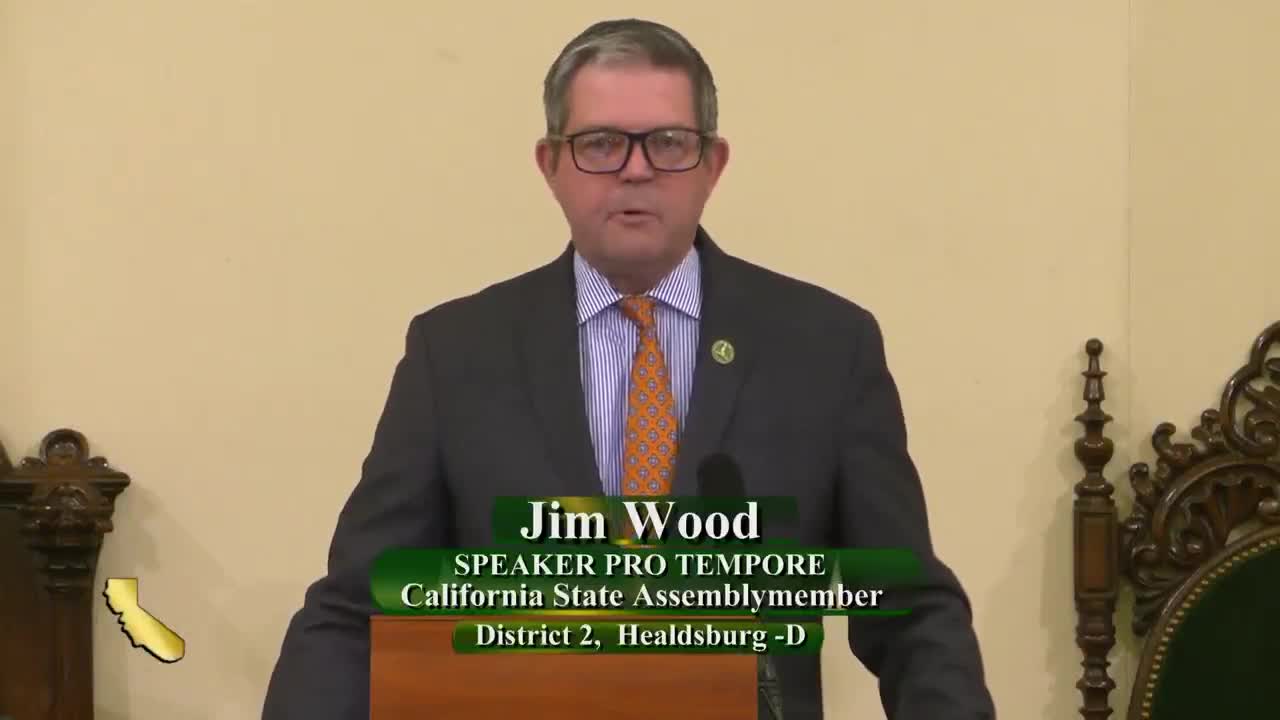
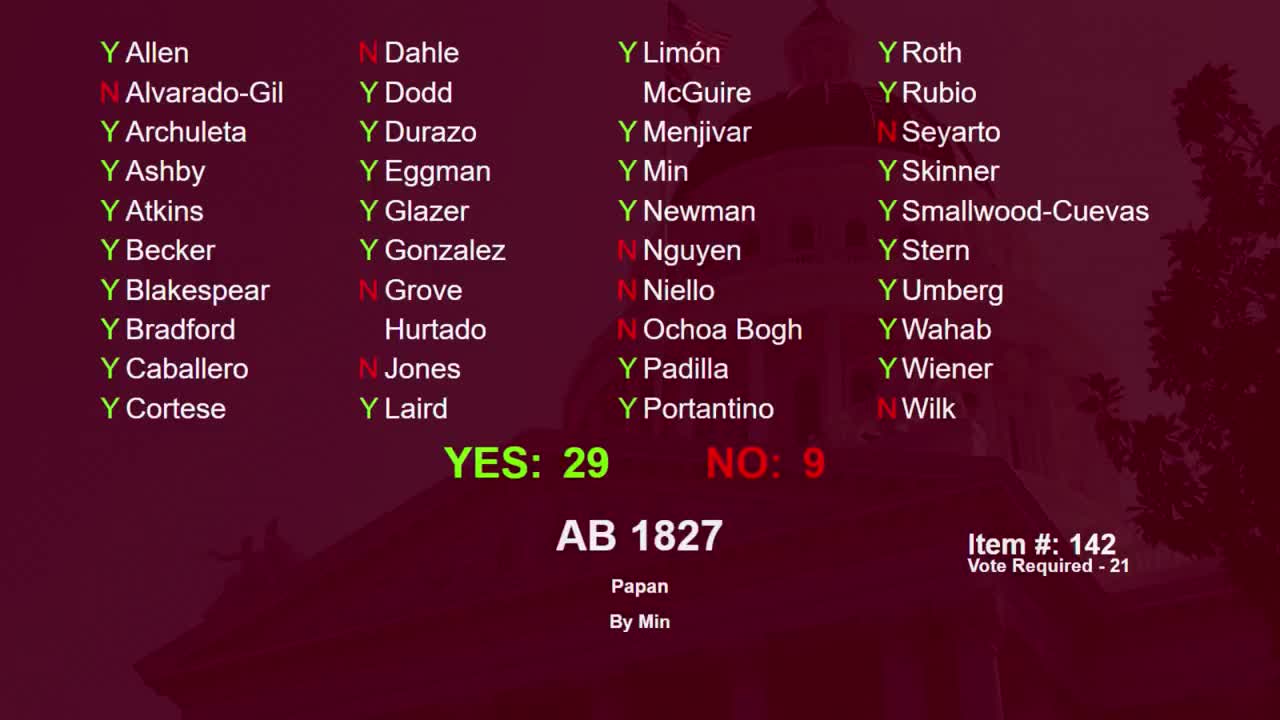
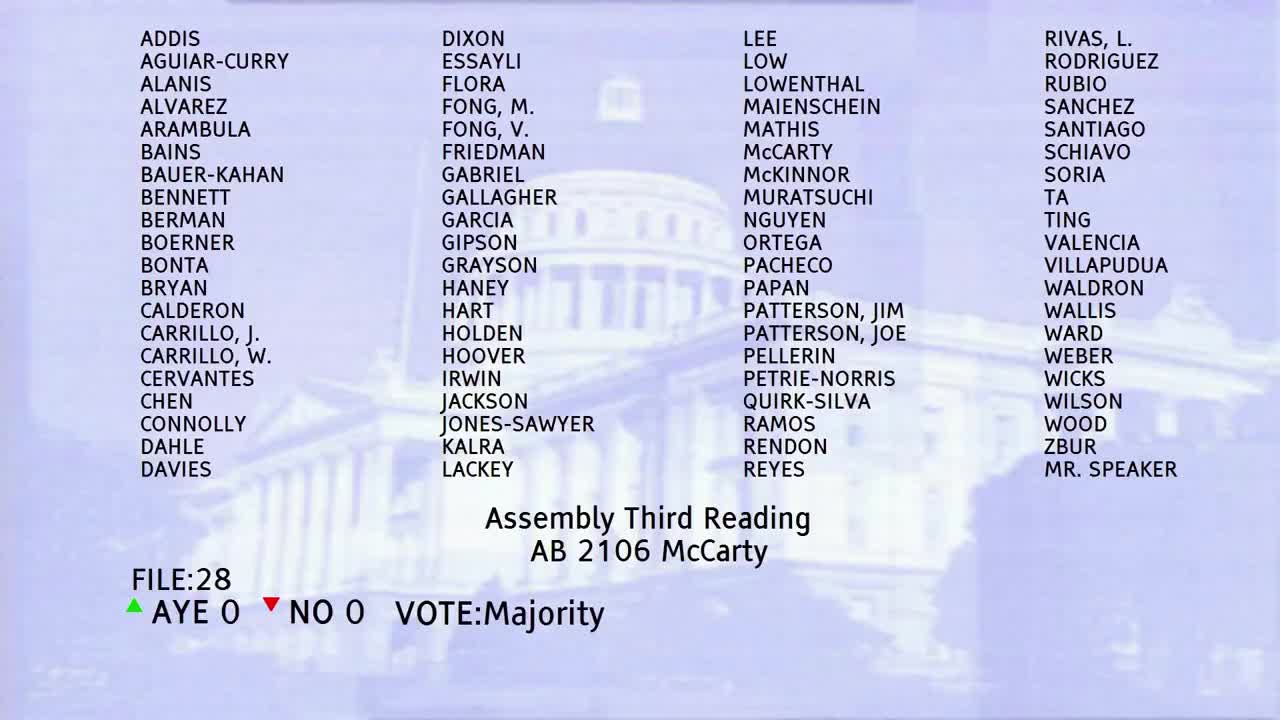
Bill Author

Bill Co-Author(s):