AB 2229: California Healthy Youth Act: menstrual health education.
- Session Year: 2023-2024
- House: Assembly
- Latest Version Date: 2024-09-27
Current Status:
Passed
(2024-09-27: Chaptered by Secretary of State - Chapter 706, Statutes of 2024.)
Introduced
In Committee
First Chamber
In Committee
Second Chamber
Enacted
Existing law, the California Healthy Youth Act, requires school districts, defined to include county boards of education, county superintendents of schools, the California School for the Deaf, the California School for the Blind, and charter schools, to ensure that all pupils in grades 7 to 12, inclusive, receive comprehensive sexual health education and human immunodeficiency virus (HIV) prevention education, as specified. The act defines comprehensive sexual health education for these purposes to mean education regarding human development and sexuality, including education on pregnancy, contraception, and sexually transmitted infections.
This bill would additionally include in that definition of comprehensive sexual health education the topic of menstrual health. To the extent the bill would impose additional duties on local educational agencies, the bill would impose a state-mandated local program.
The California Constitution requires the state to reimburse local agencies and school districts for certain costs mandated by the state. Statutory provisions establish procedures for making that reimbursement.
This bill would provide that, if the Commission on State Mandates determines that the bill contains costs mandated by the state, reimbursement for those costs shall be made pursuant to the statutory provisions noted above.
Existing law, the California Healthy Youth Act, requires school districts, defined to include county boards of education, county superintendents of schools, the California School for the Deaf, the California School for the Blind, and charter schools, to ensure that all pupils in grades 7 to 12, inclusive, receive comprehensive sexual health education and human immunodeficiency virus (HIV) prevention education, as specified. The act defines comprehensive sexual health education for these purposes to mean education regarding human development and sexuality, including education on pregnancy, contraception, and sexually transmitted infections. Under the act, the instruction is required to adhere to specified criteria, including, among other things, that pupils are provided with knowledge and skills for making and implementing healthy decisions about sexuality, as provided.
This bill would additionally include in that definition of comprehensive sexual health education the topic of menstrual health, defined for these purposes to mean a state of complete physical, mental, and social well-being and not merely the absence of disease or infirmity, in relation to the menstrual cycle. The bill would add to the above-described criteria that instruction and materials also teach pupils about the menstrual cycle, premenstrual syndrome and pain management, menstrual hygiene, menstrual disorders, menstrual irregularities, menopause, menstrual stigma, and any other relevant topics related to the menstrual cycle. By imposing health. To the extent the bill would impose additional duties on local educational agencies, the bill would impose a state-mandated local program.
The California Constitution requires the state to reimburse local agencies and school districts for certain costs mandated by the state. Statutory provisions establish procedures for making that reimbursement.
This bill would provide that, if the Commission on State Mandates determines that the bill contains costs mandated by the state, reimbursement for those costs shall be made pursuant to the statutory provisions noted above.
Existing law, the California Healthy Youth Act, requires school districts, defined to include county boards of education, county superintendents of schools, the California School for the Deaf, the California School for the Blind, and charter schools, to ensure that all pupils in grades 7 to 12, inclusive, receive comprehensive sexual health education and human immunodeficiency virus (HIV) prevention education, as specified. The act defines comprehensive sexual health education for these purposes to mean education regarding human development and sexuality, including education on pregnancy, contraception, and sexually transmitted infections. Under the act, the instruction is required to adhere to specified criteria, including, among other things, that pupils are provided with knowledge and skills for making and implementing healthy decisions about sexuality, as provided.
This bill would additionally include in that definition of comprehensive sexual health education the topic of menstrual health, defined for these purposes to mean a state of complete physical, mental, and social well-being and not merely the absence of disease or infirmity, in relation to the menstrual cycle. The bill would add to the above-described criteria that instruction and materials also teach pupils about the menstrual cycle, premenstrual syndrome and pain management, menstrual hygiene, menstrual disorders, menstrual irregularities, menopause, menstrual stigma, and any other relevant topics related to the menstrual cycle. By imposing additional duties on local educational agencies, the bill would impose a state-mandated local program.
The California Constitution requires the state to reimburse local agencies and school districts for certain costs mandated by the state. Statutory provisions establish procedures for making that reimbursement.
This bill would provide that, if the Commission on State Mandates determines that the bill contains costs mandated by the state, reimbursement for those costs shall be made pursuant to the statutory provisions noted above.
The Legislature hereby finds and recognizes the importance of instruction and materials that teach pupils about the menstrual cycle, premenstrual syndrome and pain management, menstrual hygiene management, menstrual disorders, menstrual irregularities, menopause, menstrual stigma, and any other relevant topics related to the menstrual cycle.
SEC. 2.Section 51931 of the Education Code is amended to read:51931.For the purposes of this chapter, the following definitions apply:
(a)Age appropriate refers to topics, messages, and teaching methods suitable to particular ages or age groups of children and adolescents, based on developing cognitive, emotional, and behavioral capacity typical for the age or age group.
(b)Comprehensive sexual health education means education regarding human development and sexuality, including education on menstrual health, pregnancy, contraception, and sexually transmitted infections.
(c)English learner means a pupil as described in subdivision (a) of Section 306.
(d)HIV prevention education means instruction on the nature of human immunodeficiency virus (HIV) and AIDS, methods of transmission, strategies to reduce the risk of HIV infection, and social and public health issues related to HIV and AIDS.
(e)Instructors trained in the appropriate courses means instructors with knowledge of the most recent medically accurate research on human sexuality, healthy relationships, pregnancy, and HIV and other sexually transmitted infections.
(f)Medically accurate means verified or supported by research conducted in compliance with scientific methods and published in peer-reviewed journals, where appropriate, and recognized as accurate and objective by professional organizations and agencies with expertise in the relevant field, such as the federal Centers for Disease Control and Prevention, the American Public Health Association, the American Academy of Pediatrics, and the American College of Obstetricians and Gynecologists.
(g)(1)School district includes county boards of education, county superintendents of schools, the California School for the Deaf, and the California School for the Blind.
(2)Commencing with the 201920 school year, school district also includes charter schools.
SEC. 3.If the Commission on State Mandates determines that this act contains costs mandated by the state, reimbursement to local agencies and school districts for those costs shall be made pursuant to Part 7 (commencing with Section 17500) of Division 4 of Title 2 of the Government Code.
The Legislature hereby finds and recognizes the importance of instruction and materials that teach pupils about the menstrual cycle, premenstrual syndrome and pain management, menstrual hygiene management, menstrual disorders, menstrual irregularities, menopause, menstrual stigma, and any other relevant topics related to the menstrual cycle.
SECTION 1.SEC. 2.Section 51931 of the Education Code is amended to read:51931.For the purposes of this chapter, the following definitions apply:
(a)Age appropriate refers to topics, messages, and teaching methods suitable to particular ages or age groups of children and adolescents, based on developing cognitive, emotional, and behavioral capacity typical for the age or age group.
(b)Comprehensive sexual health education means education regarding human development and sexuality, including education on menstrual health, pregnancy, contraception, and sexually transmitted infections.
(c)English learner means a pupil as described in subdivision (a) of Section 306.
(d)HIV prevention education means instruction on the nature of human immunodeficiency virus (HIV) and AIDS, methods of transmission, strategies to reduce the risk of HIV infection, and social and public health issues related to HIV and AIDS.
(e)Instructors trained in the appropriate courses means instructors with knowledge of the most recent medically accurate research on human sexuality, healthy relationships, pregnancy, and HIV and other sexually transmitted infections.
(f)Medically accurate means verified or supported by research conducted in compliance with scientific methods and published in peer-reviewed journals, where appropriate, and recognized as accurate and objective by professional organizations and agencies with expertise in the relevant field, such as the federal Centers for Disease Control and Prevention, the American Public Health Association, the American Academy of Pediatrics, and the American College of Obstetricians and Gynecologists.
(g)Menstrual health means a state of complete physical, mental, and social well-being and not merely the absence of disease or infirmity, in relation to the menstrual cycle.(h)(g)(1)School district includes county boards of education, county superintendents of schools, the California School for the Deaf, and the California School for the Blind.
(2)Commencing with the 201920 school year, school district also includes charter schools.
SEC. 2.Section 51933 of the Education Code is amended to read:51933.All comprehensive sexual health education and HIV prevention education provided pursuant to Section 51934, whether taught or supplemented by school district personnel or by outside consultants or guest speakers pursuant to Section 51936, shall satisfy all of the following criteria:(a)Instruction and materials shall be age appropriate.(b)All factual information presented shall be medically accurate and objective.(c)All instruction and materials shall align with and support the purposes of this chapter as set forth in paragraphs (1) to (5), inclusive, of subdivision (b) of Section 51930 and may not be in conflict with them.(d)(1)Instruction and materials shall be appropriate for use with pupils of all races, genders, sexual orientations, and ethnic and cultural backgrounds, pupils with disabilities, and English learners.(2)Instruction and materials shall be made available on an equal basis to a pupil who is an English learner, consistent with the existing curriculum and alternative options for an English learner pupil as otherwise provided in this code.(3)Instruction and materials shall be accessible to pupils with disabilities, including, but not limited to, providing a modified curriculum, materials and instruction in alternative formats, and auxiliary aids.(4)Instruction and materials shall not reflect or promote bias against any person on the basis of any category protected by Section 220.(5)Instruction and materials shall affirmatively recognize that people have different sexual orientations and, when discussing or providing examples of relationships and couples, shall be inclusive of same-sex relationships.(6)Instruction and materials shall teach pupils about gender, gender expression, gender identity, and explore the harm of negative gender stereotypes.(e)Instruction and materials shall encourage a pupil to communicate with the pupils parents, guardians, and other trusted adults about human sexuality and provide the knowledge and skills necessary to do so.(f)Instruction and materials shall teach the value of and prepare pupils to have and maintain committed relationships such as marriage.(g)Instruction and materials shall provide pupils with knowledge and skills they need to form healthy relationships that are based on mutual respect and affection, and are free from violence, coercion, and intimidation.(h)Instruction and materials shall provide pupils with knowledge and skills for making and implementing healthy decisions about sexuality, including negotiation and refusal skills to assist pupils in overcoming peer pressure and using effective decisionmaking skills to avoid high-risk activities.(i)Instruction and materials shall teach pupils about the menstrual cycle, premenstrual syndrome and pain management, menstrual hygiene management, menstrual disorders, menstrual irregularities, menopause, menstrual stigma, and any other relevant topics related to the menstrual cycle.(j)Instruction and materials may not teach or promote religious doctrine.SEC. 3.If the Commission on State Mandates determines that this act contains costs mandated by the state, reimbursement to local agencies and school districts for those costs shall be made pursuant to Part 7 (commencing with Section 17500) of Division 4 of Title 2 of the Government Code.
REVISIONS: HeadingLine 2.For the purposes of this chapter, the following definitions apply:
(a)Age appropriate refers to topics, messages, and teaching methods suitable to particular ages or age groups of children and adolescents, based on developing cognitive, emotional, and behavioral capacity typical for the age or age group.
(b)Comprehensive sexual health education means education regarding human development and sexuality, including education on menstrual health, pregnancy, contraception, and sexually transmitted infections.
(c)English learner means a pupil as described in subdivision (a) of Section 306.
(d)HIV prevention education means instruction on the nature of human immunodeficiency virus (HIV) and AIDS, methods of transmission, strategies to reduce the risk of HIV infection, and social and public health issues related to HIV and AIDS.
(e)Instructors trained in the appropriate courses means instructors with knowledge of the most recent medically accurate research on human sexuality, healthy relationships, pregnancy, and HIV and other sexually transmitted infections.
(f)Medically accurate means verified or supported by research conducted in compliance with scientific methods and published in peer-reviewed journals, where appropriate, and recognized as accurate and objective by professional organizations and agencies with expertise in the relevant field, such as the federal Centers for Disease Control and Prevention, the American Public Health Association, the American Academy of Pediatrics, and the American College of Obstetricians and Gynecologists.
(g)Menstrual health means a state of complete physical, mental, and social well-being and not merely the absence of disease or infirmity, in relation to the menstrual cycle.
(g)
(h)(1)School district includes county boards of education, county superintendents of schools, the California School for the Deaf, and the California School for the Blind.
(2)Commencing with the 201920 school year, school district also includes charter schools.
SEC. 2.Section 51933 of the Education Code is amended to read:51933.All comprehensive sexual health education and HIV prevention education provided pursuant to Section 51934, whether taught or supplemented by school district personnel or by outside consultants or guest speakers pursuant to Section 51936, shall satisfy all of the following criteria:
(a)Instruction and materials shall be age appropriate.
(b)All factual information presented shall be medically accurate and objective.
(c)All instruction and materials shall align with and support the purposes of this chapter as set forth in paragraphs (1) to (5), inclusive, of subdivision (b) of Section 51930 and may not be in conflict with them.
(d)(1)Instruction and materials shall be appropriate for use with pupils of all races, genders, sexual orientations, and ethnic and cultural backgrounds, pupils with disabilities, and English learners.
(2)Instruction and materials shall be made available on an equal basis to a pupil who is an English learner, consistent with the existing curriculum and alternative options for an English learner pupil as otherwise provided in this code.
(3)Instruction and materials shall be accessible to pupils with disabilities, including, but not limited to, the provision of providing a modified curriculum, materials and instruction in alternative formats, and auxiliary aids.
(4)Instruction and materials shall not reflect or promote bias against any person on the basis of any category protected by Section 220.
(5)Instruction and materials shall affirmatively recognize that people have different sexual orientations and, when discussing or providing examples of relationships and couples, shall be inclusive of same-sex relationships.
(6)Instruction and materials shall teach pupils about gender, gender expression, gender identity, and explore the harm of negative gender stereotypes.
(e)Instruction and materials shall encourage a pupil to communicate with his or her the pupils parents, guardians, and other trusted adults about human sexuality and provide the knowledge and skills necessary to do so.
(f)Instruction and materials shall teach the value of and prepare pupils to have and maintain committed relationships such as marriage.
(g)Instruction and materials shall provide pupils with knowledge and skills they need to form healthy relationships that are based on mutual respect and affection, and are free from violence, coercion, and intimidation.
(h)Instruction and materials shall provide pupils with knowledge and skills for making and implementing healthy decisions about sexuality, including negotiation and refusal skills to assist pupils in overcoming peer pressure and using effective decisionmaking skills to avoid high-risk activities.
(i)Instruction and materials shall teach pupils about the menstrual cycle, premenstrual syndrome and pain management, menstrual hygiene management, menstrual disorders, menstrual irregularities, menopause, menstrual stigma, and any other relevant topics related to the menstrual cycle.
(i)(j)Instruction and materials may not teach or promote religious doctrine.
SEC. 3.If the Commission on State Mandates determines that this act contains costs mandated by the state, reimbursement to local agencies and school districts for those costs shall be made pursuant to Part 7 (commencing with Section 17500) of Division 4 of Title 2 of the Government Code.
|
Date
|
Status
|
|---|---|
| Sep 27, 2024 | Chaptered by Secretary of State - Chapter 706, Statutes of 2024. |
| Sep 27, 2024 | Approved by the Governor. |
| Sep 10, 2024 | Enrolled and presented to the Governor at 4:30 p.m. |
| Aug 28, 2024 | In Assembly. Ordered to Engrossing and Enrolling. |
| Aug 28, 2024 | Read third time. Passed. Ordered to the Assembly. (Ayes 40. Noes 0.). |
| Aug 19, 2024 | Read second time. Ordered to third reading. |
| Aug 15, 2024 | From committee: Do pass. (Ayes 6. Noes 0.) (August 15). |
| Jun 24, 2024 | In committee: Referred to suspense file. |
| Jun 12, 2024 | From committee: Do pass and re-refer to Com. on APPR with recommendation: To Consent Calendar. (Ayes 7. Noes 0.) (June 12). Re-referred to Com. on APPR. |
| May 29, 2024 | Referred to Com. on ED. |
| May 22, 2024 | In Senate. Read first time. To Com. on RLS. for assignment. |
| May 21, 2024 | Read third time. Passed. Ordered to the Senate. (Ayes 73. Noes 0. Page 5432.) |
| May 20, 2024 | Read second time. Ordered to third reading. |
| May 16, 2024 | From committee: Do pass. (Ayes 15. Noes 0.) (May 16). |
| May 16, 2024 | Coauthors revised. |
| Apr 17, 2024 | In committee: Set, first hearing. Referred to APPR. suspense file. |
| Apr 9, 2024 | Re-referred to Com. on APPR. |
| Apr 8, 2024 | Read second time and amended. |
| Apr 4, 2024 | From committee: Amend, and do pass as amended and re-refer to Com. on APPR. (Ayes 7. Noes 0.) (April 3). |
| Feb 26, 2024 | Referred to Com. on ED. |
| Feb 8, 2024 | From printer. May be heard in committee March 9. |
| Feb 7, 2024 | Read first time. To print. |
|
Date
|
Description
|
Location
|
Votes
|
|
|---|---|---|---|---|
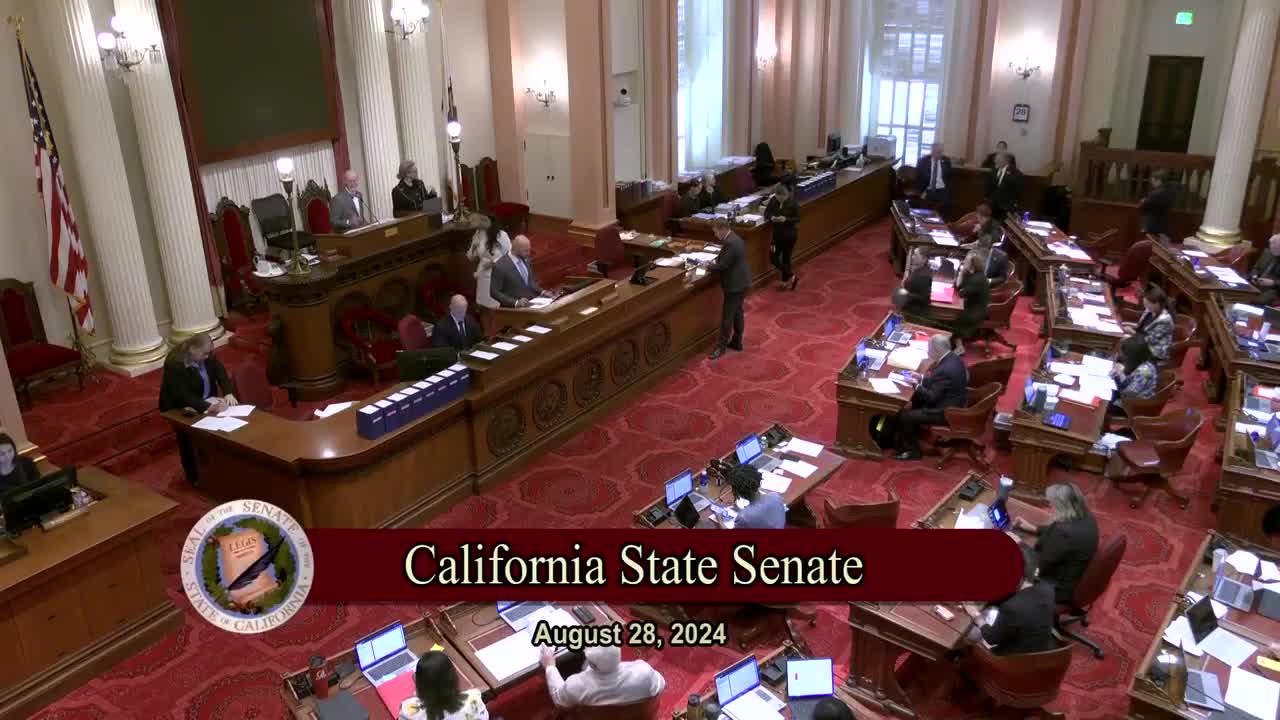
| Aug 28, 2024 | Assembly 3rd Reading AB2229 Wilson et al. By Rubio | Senate Floor |
Passed |
|
| Aug 15, 2024 | Do pass | Senate Standing Committee on Appropriations |
Passed |
|
| Jun 24, 2024 | Placed on suspense file | Senate Standing Committee on Appropriations |
Passed |
|
| Jun 12, 2024 | Do pass, but first be re-referred to the Committee on [Appropriations] with the recommendation: To Consent Calendar | Senate Standing Committee on Education |
Passed |
|
| May 21, 2024 | AB 2229 Wilson Assembly Third Reading | Assembly Floor |
Passed |
|
| May 16, 2024 | Do pass. | Assembly Standing Committee on Appropriations |
Passed |
|
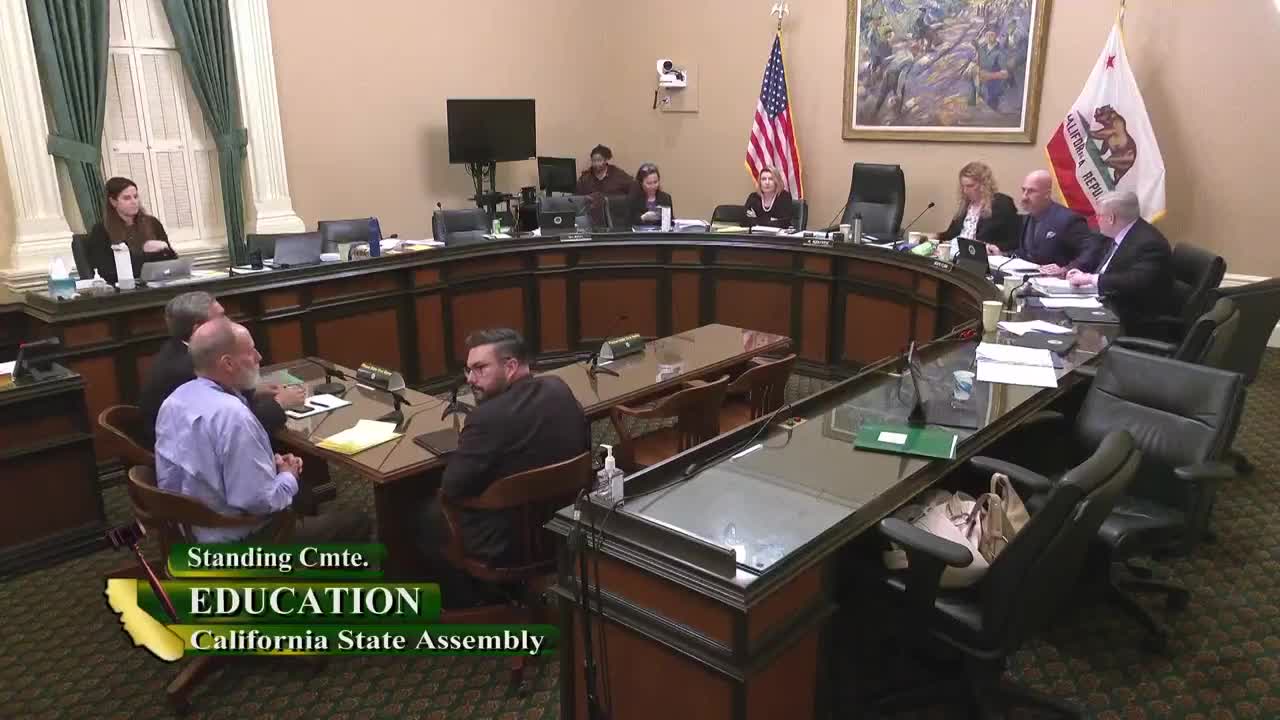
| Apr 3, 2024 | Do pass as amended and be re-referred to the Committee on [Appropriations] | Assembly Standing Committee on Education |
Passed |
This list shows positions taken on this bill by organizations on the date displayed, which is linked to the original source.
Positions by individuals are not included.
|
Organization
|
Position
|
Date
|
|---|---|---|
| Aclu California Action | ** Support | |
| Advocates for Youth | ** Support | |
| Alameda County Office Of Education | ** Support | |
| Alliance for Children's Rights | ** Support | |
| American Academy Of Pediatrics, California | ** Support | |
| American College Of Obstetricians And Gynecologists District Ix | ** Support | |
| California Academy Of Family Physicians | ** Support | |
| CFT- a Union of Educators & Classified Professionals, Aft, Afl-cio | ** Support | |
| Days for Girls International | ** Support | |
| Equality California | ** Support | |
| Ignite | ** Support | |
| Junior Leagues of California State Public Affairs Committee | ** Support | |
| National Association of Pediatric Nurse Practitioners | ** Support | |
| PERIOD. | ** Support | |
| Period - the Menstrual Movement | ** Support | |
| Reproductive Freedom for All | ** Support | |
| San Francisco Unified School District | ** Support | |
| Solano Community College | ** Support | |
| Students Against Period Poverty Cupertino | ** Support |
SENATE RULES COMMITTEE Office of Senate Floor Analyses (916) 651-1520 Fax: (916) 327-4478 | AB 2229 |
THIRD READING
Bill No: AB 2229
Author: Wilson (D), et al.
Amended: 4/8/24 in Assembly
Vote: 21
SENATE EDUCATION COMMITTEE: 7-0, 6/12/24
AYES: Newman, Ochoa Bogh, Cortese, Glazer, Gonzalez, Limón, Wilk
ASSEMBLY FLOOR: 73-0, 5/21/24 - See last page for vote
SUBJECT: California Healthy Youth Act: menstrual health education
SOURCE: Author
DIGEST:
This bill includes in the definition of “comprehensive sexual health education” the topic of menstrual health.
ANALYSIS:
Existing law:
Education Code (EC)
- Requires, in the California Healthy Youth Act (CHYA), requires school districts, defined to include county boards of education, county superintendents of schools, the California School for the Deaf, the California School for the Blind, and charter schools, to ensure that all pupils in grades 7 to 12, inclusive, receive comprehensive sexual health education and human immunodeficiency virus (HIV) prevention education, as specified. (EC § 51931)
- States that on or before the start of the 2024–25 school year, a public school, including a school operated by a local education agency (LEA), county office of education (COE), or charter school, maintaining any combination of classes from grades 3 to 12, inclusive, shall stock the school’s restrooms at all times with an adequate supply of menstrual products, available and accessible, free of cost, in all women’s restrooms and all-gender restrooms, and in at least one men’s restroom. (EC § 35292.6)
- Ensures pupils in grades 7 to 12 receive instruction, once in junior high or middle school and once in high school, about adolescent relationship abuse and intimate partner violence, including the early warning signs, among other things required under the CHYA. (EC § 51934)
- Requires, commencing October 1, 2020, a public school, including a charter school, or a private school, that serves pupils in any of grades 7 to 12, inclusive, and that issues pupil identification cards shall have printed on either side of the pupil identification cards the telephone number for the National Domestic Violence Hotline. (EC § 215.5 (a)(2))
- Allows LEAs to contract with outside consultants or guest speakers, including those who have developed multilingual curricula or curricula accessible to persons with disabilities, to deliver comprehensive sexual health education and HIV prevention education or to provide training for school district personnel. All outside consultants and guest speakers shall have expertise in comprehensive sexual health education and HIV prevention education and have knowledge of the most recent medically accurate research on the relevant topic or topics covered in their instruction.
This bill includes in the definition of “comprehensive sexual health education” the topic of menstrual health.
Comments
- Need for the bill. According to the author, “AB 2229 would add the definition of "Menstrual Health" and would alter the current sexual health curriculum by adding information regarding the menstrual cycle and all other relevant topics related to the menstrual cycle. Menstrual education is important because it will help pupils understand the naturally occurring role it plays in a healthy body and break the stigma surrounding menstruation. The stigma surrounding menstruation causes unnecessary shame, including body shaming and prevents those menstruating from seeking medical advice when needed.”
- The Importance of Menstrual Health. Understanding menstruation is crucial for girls to achieve their optimal health. Being aware of what to expect and how to manage periods is empowering and can help prevent health complications. Menstrual education can also help girls recognize what is expected and abnormal about their periods, such as pain levels, amount of bleeding, and frequency. This understanding can assist them and their doctors in identifying menstrual disorders sooner, potentially saving time, medical costs, and years of physical discomfort. A 2019 Harris Interactive poll of 2,000 teens aged 13 to 19 in the United States commissioned by the nonprofit organization PERIOD and a menstrual products company found:
- Two-thirds of teens have felt stressed due to limited access to period products.
- 20% have struggled to afford period products or could not purchase them at all.
- 61% have worn a tampon or pad for more than 4 hours because they did not have enough access to period products (which puts them at risk of infection and Toxic Shock Syndrome (TSS)). While some pupils who menstruate may choose to reduce the cost of menstrual products by reducing the time between changing the product, this choice can have deathly health consequences caused by TSS. In 1980, the Center for Disease Control established a close association between incidents of TSS and tampon use. The potentially fatal disease causes fever, shock, low blood pressure, skin rashes, and liver and kidney abnormalities. In 1982 the Federal Drug Administration required that menstrual tampon packages contain a brief statement alerting consumers to the dangers of TSS, including the risk to all women using tampons during their menstrual period, especially the reported higher risks to women under 30 years of age and teenage girls. The package warnings also included the incidence of TSS of 6 to 17 per 100,000 menstruating women and girls per year and the risk of death from contracting TSS.
- 84% have either missed class time or know someone who missed it because they could not access period products.
- 25% have missed class because of insufficient access to period products.
- 83% think lack of access to period products is an issue that is not discussed enough.
- 66% do not want to be at school during their period.
- 69% feel embarrassed when they have to bring period products to the bathroom. The majority (51%) of students feel their school does not care about them if they do not provide free period products in their bathrooms.
- 51% have missed at least part of a class or class period due to menstruation symptoms such as cramps.
- California Healthy Youth Act. The CHYA took effect in 2003 and was initially known as the Comprehensive Sexual Health and HIV/AIDS Prevention Education Act (Act). Originally, the Act required LEAs to provide comprehensive sexual health education in any grade, including kindergarten, so long as it consisted of age-appropriate instruction and used instructors trained in the appropriate courses. Beginning in 2016 with AB 329 (Weber, Chapter 398, Statutes of 2015), the act was renamed the CHYA and, for the first time, required LEAs to provide comprehensive sexual health education and HIV prevention education to all students at least once in middle school and at least once in high school. From its inception in 2003 through today, the CHYA has always afforded parents the right to opt their child out of a portion, or all, of the instruction and required LEAs to notify parents and guardians of this right. Parents and guardians can exercise this right by informing the LEA in writing of their decision. This bill would include in the definition of “comprehensive sexual health education” the topic of menstrual health.
- Health Education Framework (2019). On May 8, 2019, the State Board of Education (SBE) officially adopted the 2019 Health Education Curriculum Framework for California Public Schools (the Health Education Framework) after over two years of development. The Health Education Framework is aligned to the 2008 California Health Education Content Standards, which support the development of knowledge, skills, and attitudes in eight overarching standards: (a) essential health concepts; (b) analyzing health influences; (c) accessing valid health information; (4) interpersonal communication; (5) decision making; (d) goal setting; (e) practicing health-enhancing behaviors; and (f) health promotion in six content areas of health education, including sexual health.
FISCAL EFFECT: Appropriation: No Fiscal Com.: Yes Local: Yes
According to the Senate Appropriations Committee analysis, “This bill could expand what school districts are able to claim as a reimbursable state mandate under the existing HIV prevention education mandate, regardless of whether this instruction is already being provided. The extent of these costs is unknown as it would vary by school district, but it could be in the low hundreds of thousands of dollars statewide in Proposition 98 General Fund each year. The California Department of Education indicates that if additional training is needed for teachers, the training cost for one day is estimated to be $300 for each full-time equivalent position. There are approximately 1,000 full-time equivalent teachers in the state that are assigned to health education.”
SUPPORT: (Verified 8/15/24)
ACLU California Action
Alameda County Office of Education
Alliance for Children's Rights
American Academy of Pediatrics, California
American College of Obstetricians and Gynecologists District IX
California Academy of Family Physicians
CFT - A Union of Educators & Classified Professionals, AFT, AFL-CIO
Days for Girls International
Equality California
Ignite
Junior Leagues of California State Public Affairs Committee
PERIOD.
San Francisco Unified School District
Solano Community College
Students Against Period Poverty Cupertino
1 Individual
OPPOSITION: (Verified 8/15/24)
None received
ARGUMENTS IN SUPPORT: According to ACLU California Action, “The California Healthy Youth Act (CHYA) (AB 329, Weber) enacted in 2015, mandates that all public schools provide comprehensive sexual health education at least once in middle school and once in high school. The ACLU was one of the sponsors of CHYA and in the nearly ten years since its passage, has worked to ensure CHYA’s effective implementation by providing technical and strategic assistance to school districts, advocates, parents, and students. We were also a cosponsor of the Menstrual Equity for All Act of 2021 (MEAA), which expanded existing mandates around the provision of menstrual products at no cost in California public schools. CHYA already defines comprehensive sexual health education as including “human development,” and in our experience, many school districts already provide some information about menstruation in the context of discussing puberty. However, after the passage of MEAA, it became clear that additional clarity in the law was required to ensure that education about menstruation under CHYA was robust and meaningful. AB 2229 will help ensure that students are educated regarding important menstrual health topics such as the menstrual cycle, premenstrual syndrome and pain management, menstrual disorders, and other related menstrual topics. A lack of menstrual education can perpetuate social stigmas, leading to shame, embarrassment, and poor health outcomes for students. California students have the right to comprehensive sex education that gives them the “knowledge and skills they need to develop healthy attitudes concerning adolescent growth and development, body image, gender, sexual orientation, relationships, marriage, and family.” Cal. Ed. Code 51930(b)(2). As such, California must ensure all students have access to menstrual health education that reduces period stigma and helps them feel safe, comfortable, and confident. In recognizing the effects of menstrual health education on student health, well-being, and dignity, AB 2229 ensures that California students have the knowledge and skills they need to develop healthy attitudes about their growth and development.”
ASSEMBLY FLOOR: 73-0, 5/21/24
AYES: Addis, Aguiar-Curry, Alanis, Alvarez, Arambula, Bains, Bauer-Kahan, Bennett, Berman, Boerner, Bonta, Bryan, Calderon, Juan Carrillo, Wendy Carrillo, Chen, Connolly, Davies, Dixon, Essayli, Flora, Mike Fong, Vince Fong, Gallagher, Garcia, Gipson, Grayson, Haney, Hart, Hoover, Irwin, Jackson, Jones-Sawyer, Kalra, Lackey, Lee, Low, Lowenthal, Maienschein, McCarty, McKinnor, Muratsuchi, Stephanie Nguyen, Ortega, Pacheco, Papan, Jim Patterson, Joe Patterson, Pellerin, Petrie-Norris, Quirk-Silva, Ramos, Rendon, Reyes, Rodriguez, Blanca Rubio, Sanchez, Santiago, Schiavo, Soria, Ta, Ting, Valencia, Villapudua, Waldron, Wallis, Ward, Weber, Wicks, Wilson, Wood, Zbur, Robert Rivas
NO VOTE RECORDED: Cervantes, Megan Dahle, Friedman, Gabriel, Holden, Mathis, Luz Rivas
Prepared by: Kordell Hampton / ED. / (916) 651-4105
8/18/24 9:07:25
**** END ****
SENATE COMMITTEE ON APPROPRIATIONS
Senator Anna Caballero, Chair
2023 - 2024 Regular Session
AB 2229 (Wilson) - California Healthy Youth Act: menstrual health education
Version: April 8, 2024 | Policy Vote: ED. 7 - 0 |
Urgency: No | Mandate: Yes |
Hearing Date: June 24, 2024 | Consultant: Lenin Del Castillo |
Bill Summary:
This bill would add the topic of menstrual health to the instruction in “comprehensive sexual health education” that students receive in grades seven through 12.
Fiscal Impact:
This bill could expand what school districts are able to claim as a reimbursable state mandate under the existing HIV prevention education mandate, regardless of whether this instruction is already being provided. The extent of these costs is unknown as it would vary by school district, but it could be in the low hundreds of thousands of dollars statewide in Proposition 98 General Fund each year. The California Department of Education indicates that if additional training is needed for teachers, the training cost for one day is estimated to be $300 for each full-time equivalent position. There are approximately 1,000 full-time equivalent teachers in the state that are assigned to health education.
Background:
Existing law requires, in the California Healthy Youth Act (CHYA), school districts, to ensure that all pupils in grades 7 to 12, inclusive, receive comprehensive sexual health education and human immunodeficiency virus (HIV) prevention education, as specified. The law provides that pupils in grades 7 to 12 receive instruction once in junior high or middle school and once in high school, about adolescent relationship abuse and intimate partner violence, including the early warning signs, among other things required under the CHYA.
Existing law allows LEAs to contract with outside consultants or guest speakers, including those who have developed multilingual curricula or curricula accessible to persons with disabilities, to deliver comprehensive sexual health education and HIV prevention education or to provide training for school district personnel. All outside consultants and guest speakers shall have expertise in comprehensive sexual health education and HIV prevention education and have knowledge of the most recent medically accurate research on the relevant topic or topics covered in their instruction.
Proposed Law:
This bill would include in the definition of “comprehensive sexual health education” the topic of menstrual health that students area to receive in grades seven through 12.
Related Legislation:
AB 2932 (Joe Patterson, 2024) would require the Instructional Quality Commission to consider, when the Health Framework is revised, on or after January 1, 2025, content on sextortion, as specified. This bill is pending in this Committee.
AB 2053 (Mathis, 2024) would require schools to include additional information related to adolescent relationship abuse and intimate partner violence within the CHYA. This bill is pending on the Senate Floor.
Staff Comments:
The CHYA took effect in 2003 and was initially known as the Comprehensive Sexual Health and HIV/AIDS Prevention Education Act (Act). Previously, the Act required LEAs to provide comprehensive sexual health education in any grade, including kindergarten, so long as it consisted of age-appropriate instruction and used instructors trained in the appropriate courses. AB 329 (Weber, Chapter 398, Statutes of 2015) renamed the Act as the CHYA and required LEAs to provide comprehensive sexual health education and HIV prevention education to all students at least once in middle school and at least once in high school.
This bill would add the topic of menstrual health to the instruction in “comprehensive sexual health education” that students receive in grades seven through 12. By adding more content that must be included in this instruction, the bill could expand the existing HIV prevention education mandate (known as AIDS Instruction and AIDS Prevention Instruction). These additional requirements generally include having instruction satisfy certain criteria, include specified components, requiring outside speakers to have certain expertise, and clarifying the parental opt-out process which could lead to updating annual notices. Consistent with the previous determinations by the Commission on State Mandates (Commission) regarding the AIDS instruction mandate, the Commission is likely to also determine the requirements in this bill to be a higher level of service and therefore a reimbursable state mandate.
-- END --
SENATE COMMITTEE ON EDUCATION
Senator Josh Newman, Chair
2023 - 2024 Regular
Bill No: Hearing Date: June 12, 2024
Author: | Wilson | ||
Version: |
| ||
Urgency: | Fiscal: | ||
Consultant: | |||
Subject: .
SUMMARY
This bill would include in the definition of “comprehensive sexual health education” the topic of menstrual health.
BACKGROUND
Existing Law:
Education Code (EC)
- Requires, in the California Healthy Youth Act (CHYA), requires school districts, defined to include county boards of education, county superintendents of schools, the California School for the Deaf, the California School for the Blind, and charter schools, to ensure that all pupils in grades 7 to 12, inclusive, receive comprehensive sexual health education and human immunodeficiency virus (HIV) prevention education, as specified. (EC § 51931)
- On or before the start of the 2024–25 school year, a public school, including a school operated by a local education agency (LEA), county office of education (COE), or charter school, maintaining any combination of classes from grades 3 to 12, inclusive, shall stock the school’s restrooms at all times with an adequate supply of menstrual products, available and accessible, free of cost, in all women’s restrooms and all-gender restrooms, and in at least one men’s restroom. (EC § 35292.6)
- Ensures pupils in grades 7 to 12 receive instruction, once in junior high or middle school and once in high school, about adolescent relationship abuse and intimate partner violence, including the early warning signs, among other things required under the CHYA. (EC § 51934)
- Requires, commencing October 1, 2020, a public school, including a charter school, or a private school, that serves pupils in any of grades 7 to 12, inclusive, and that issues pupil identification cards shall have printed on either side of the pupil identification cards the telephone number for the National Domestic Violence Hotline. (EC § 215.5 (a)(2))
- Allows LEAs to contract with outside consultants or guest speakers, including those who have developed multilingual curricula or curricula accessible to persons with disabilities, to deliver comprehensive sexual health education and HIV prevention education or to provide training for school district personnel. All outside consultants and guest speakers shall have expertise in comprehensive sexual health education and HIV prevention education and have knowledge of the most recent medically accurate research on the relevant topic or topics covered in their instruction.
ANALYSIS
This bill:
- This bill would include in the definition of “comprehensive sexual health education” the topic of menstrual health.
STAFF COMMENTS
- Need for the bill. According to the author, “AB 2229 would add the definition of "Menstrual Health" and would alter the current sexual health curriculum by adding information regarding the menstrual cycle and all other relevant topics related to the menstrual cycle. Menstrual education is important because it will help pupils understand the naturally occurring role it plays in a healthy body and break the stigma surrounding menstruation. The stigma surrounding menstruation causes unnecessary shame, including body shaming and prevents those menstruating from seeking medical advice when needed.”
- The Importance of Menstrual Health. Understanding menstruation is crucial for girls to achieve their optimal health. Being aware of what to expect and how to manage periods is empowering and can help prevent health complications. Menstrual education can also help girls recognize what is expected and abnormal about their periods, such as pain levels, amount of bleeding, and frequency. This understanding can assist them and their doctors in identifying menstrual disorders sooner, potentially saving time, medical costs, and years of physical discomfort.
A 2019 Harris Interactive poll of 2,000 teens aged 13 to 19 in the United States commissioned by the nonprofit organization PERIOD and a menstrual products company found:
• Two-thirds of teens have felt stressed due to limited access to period products.
• 20% have struggled to afford period products or could not purchase them at all.
• 61% have worn a tampon or pad for more than 4 hours because they did not have enough access to period products (which puts them at risk of infection and Toxic Shock Syndrome (TSS)). While some pupils who menstruate may choose to reduce the cost of menstrual products by reducing the time between changing the product, this choice can have deathly health consequences caused by TSS. In 1980, the Center for Disease Control established a close association between incidents of TSS and tampon use. The potentially fatal disease causes fever, shock, low blood pressure, skin rashes, and liver and kidney abnormalities. In 1982 the Federal Drug Administration required that menstrual tampon packages contain a brief statement alerting consumers to the dangers of TSS, including the risk to all women using tampons during their menstrual period, especially the reported higher risks to women under 30 years of age and teenage girls. The package warnings also included the incidence of TSS of 6 to 17 per 100,000 menstruating women and girls per year and the risk of death from contracting TSS.
• 84% have either missed class time or know someone who missed it because they could not access period products.
• 25% have missed class because of insufficient access to period products.
• 83% think lack of access to period products is an issue that is not discussed enough.
• 66% do not want to be at school during their period.
• 69% feel embarrassed when they have to bring period products to the bathroom.
• The majority (51%) of students feel their school does not care about them if they do not provide free period products in their bathrooms.
• 51% have missed at least part of a class or class period due to menstruation symptoms such as cramps.
- California Healthy Youth Act. The CHYA took effect in 2003 and was initially known as the Comprehensive Sexual Health and HIV/AIDS Prevention Education Act (Act). Originally, the Act required LEAs to provide comprehensive sexual health education in any grade, including kindergarten, so long as it consisted of age-appropriate instruction and used instructors trained in the appropriate courses. Beginning in 2016 with AB 329 (Weber, Chapter 398, Statutes of 2015), the act was renamed the CHYA and, for the first time, required LEAs to provide comprehensive sexual health education and HIV prevention education to all students at least once in middle school and at least once in high school. From its inception in 2003 through today, the CHYA has always afforded parents the right to opt their child out of a portion, or all, of the instruction and required LEAs to notify parents and guardians of this right. Parents and guardians can exercise this right by informing the LEA in writing of their decision.
This bill would include in the definition of “comprehensive sexual health education” the topic of menstrual health.
- Health Education Framework (2019). On May 8, 2019, the State Board of Education (SBE) officially adopted the 2019 Health Education Curriculum Framework for California Public Schools (the Health Education Framework) after over two years of development. The Health Education Framework is aligned to the 2008 California Health Education Content Standards, which support the development of knowledge, skills, and attitudes in eight overarching standards: (1) essential health concepts; (2) analyzing health influences; (3) accessing valid health information; (4) interpersonal communication; (5) decision making; (6) goal setting; (7) practicing health-enhancing behaviors; and (8) health promotion in six content areas of health education, including sexual health.
- Related Legislation.
AB 2932 (Joe Patterson, 2024) would require the Instructional Quality Commission (IQC) to consider, when the Health Framework is revised, on or after January 1, 2025, content on sextortion, as specified.
AB 2053 (Mathis, 2024) would require that instruction about adolescent relationship abuse and intimate partner violence include, within the CHYA, the resources available to students related to adolescent relationship abuse and intimate partner violence, include the National Domestic Violence Hotline and local domestic violence hotlines that provide confidential support services for students that have experienced domestic violence or stalking, and that are available by telephone 24 hours a day.
AB 329 (Weber, Chapter 398, Statutes of 2015) makes instruction in sexual health education mandatory, revises HIV prevention education content, expands topics covered in sexual health education, requires this instruction to be inclusive of different sexual orientations, and clarifies parental consent policy.
AB 230 (Reyes, Chapter 421, Statutes of 2023) expands the requirement that schools serving students in grades 6 through 12 stock specified restrooms with menstrual products to include schools serving students in grades 3 to 5.
AB 367 (C. Garcia, Chapter 664, Statutes of 2021) requires all public schools serving students in grades 6 to 12 to stock specified restrooms with an adequate supply of free menstrual products, commencing in the 2022-23 school year; and requires the California State University (CSU) and each community college district, and encourages the Regents of the University of California (UC), independent institutions of higher education, and private postsecondary educational institutions, to stock an adequate supply of free menstrual products at no fewer than one designated and accessible central location on each campus.
SUPPORT
ACLU California Action
Alameda County Office of Education
Alliance for Children's Rights
American Academy of Pediatrics, California
American College of Obstetricians and Gynecologists District IX
California Academy of Family Physicians
CFT — A Union of Educators & Classified Professionals, AFT, AFL-CIO
Days for Girls International
Equality California
Ignite
PERIOD.
San Francisco Unified School District
Solano Community College
OPPOSITION
None received
-- END --
ASSEMBLY THIRD READING
ATR Bill Id:AB 2229
Author:(Wilson)
As Amended Ver:April 8, 2024
Majority vote
SUMMARY
Adds menstrual health to the content in comprehensive sexual health education students are required to receive once in middle school and once in high school.
Major Provisions
- Adds menstrual health to the definition of comprehensive sexual health education for purposes of the California Healthy Youth Act, which requires that students receive instruction in specified topics once in middle and once in high school.
COMMENTS
Growth, Development, and Sexual Health is a major part of the current health curriculum. The California Health Content Standards, adopted by the State Board of Education (SBE) in 2008, as well as the Health Curriculum Framework, adopted by the SBE in 2019, include significant content on the topic of Growth, Development, and Sexual Health. Menstrual health is one part of a broader set of topics which is already addressed in this subject area, and that the trend of incrementally adding to the California Healthy Youth Act will eventually amount to a mandate that a health course be provided.
Students' knowledge of menstruation. According to a small study provided by the author, adolescent girls often lack sufficient education on puberty and menstrual health topics and also experience puberty at younger ages than in previous decades. Students in this study reported receiving inadequate and disengaging menstruation and puberty content (Schmitt, 2022). Another study found that only three states (California, Michigan, and New Jersey) specifically covered menstrual product topics (Kuhlmann, 2022).
According to the Author
"AB 2229 would add the definition of 'Menstrual Health' and would alter the current sexual health curriculum by adding information regarding the menstrual cycle and all other relevant topics related to the menstrual cycle.
Menstrual education is important because it will help pupils understand the naturally occurring role it plays in a healthy body and break the stigma surrounding menstruation. The stigma surrounding menstruation causes unnecessary shame, including body shaming, and prevents those menstruating from seeking medical advice when needed."
Arguments in Support
Period – the Menstrual Movement writes, "The California Healthy Youth Act (AB 329) enacted in 2016 provides mandatory middle and high school sexual health education. However, Education Code 51931 does not state that menstrual health is part of the comprehensive sexual health curriculum. The lack of education can perpetuate social stigmas surrounding menstruation, leading to shame and poor health outcomes. AB 2229 will help ensure that teens are educated regarding important menstrual health topics such as the menstrual cycle, menstrual disorders, and other related menstrual topics. The new menstrual health education will supplement the current sexual health curriculum."
Arguments in Opposition
None on file.
FISCAL COMMENTS
According to the Assembly Appropriations Committee:
- Unknown, one-time Proposition 98 General Fund costs, potentially in the tens of thousands of dollars to low hundreds of thousands of dollars, to schools for teacher training on including information about menstrual health as part of comprehensive sexual health education. Ongoing costs would likely be minimal once teachers are trained in the material. Costs would be lower to the extent this content is already provided by schools.
- According to the California Department of Education, the state has about 1,000 full-time equivalent teachers assigned to health education. If 25% of these teachers received three hours of training at the rate of $70 per hour, costs would be about $50,000 statewide. If 100% of teachers received training, costs would be about $200,000 statewide
VOTES
ASM EDUCATION: 6-0-0
YES: Muratsuchi, Addis, Alvarez, Bonta, Hoover, McCarty
ASM APPROPRIATIONS: 15-0-0
YES: Wicks, Sanchez, Arambula, Bryan, Calderon, Wendy Carrillo, Dixon, Mike Fong, Grayson, Haney, Hart, Jim Patterson, Pellerin, Ta, Villapudua
UPDATED
VERSION: April 8, 2024
CONSULTANT: Tanya Lieberman / ED. / (916) 319-2087 FN: 0003133
Date of Hearing: April 17, 2024
ASSEMBLY COMMITTEE ON APPROPRIATIONS
Buffy Wicks, Chair
ABPCA Bill Id:AB 2229
Author:(Wilson) – As Amended Ver:April 8, 2024
Policy Committee: | Education | Vote: | 7 - 0 |
|
| ||
|
|
Urgency: No State Mandated Local Program: Yes Reimbursable: Yes
SUMMARY:
This bill adds menstrual health to the instruction in comprehensive sexual health education students are to receive in grades seven through 12.
FISCAL EFFECT:
Unknown, one-time Proposition 98 General Fund costs, potentially in the tens of thousands of dollars to low hundreds of thousands of dollars, to schools for teacher training on including information about menstrual health as part of comprehensive sexual health education. Ongoing costs would likely be minimal once teachers are trained in the material. Costs would be lower to the extent this content is already provided by schools.
According to the California Department of Education, the state has about 1,000 full-time equivalent teachers assigned to health education. If 25% of these teachers received three hours of training at the rate of $70 per hour, costs would be about $50,000 statewide. If 100% of teachers received training, costs would be about $200,000 statewide.
If the Commission on State Mandates determines the bill’s requirements to be a reimbursable state mandate, the state would need to reimburse these costs to schools or provide funding through the K-12 Mandate Block Grant.
According to the Legislative Analyst’s Office, the General Fund faces a structural deficit in the tens of billions of dollars over the next several fiscal years.
COMMENTS:
- Purpose. According to the author:
Menstrual education is important because it will help pupils understand the naturally occurring role it plays in a healthy body and break the stigma surrounding menstruation. The stigma surrounding menstruation causes unnecessary shame, including body shaming, and prevents those menstruating from seeking medical advice when needed.
- Background. Current law requires school districts to ensure students in grades seven to 12 receive comprehensive sexual health education. Current law defines comprehensive sexual health education as education regarding human development and sexuality, including education on pregnancy, contraception, and sexually transmitted infections. This bill adds menstrual health to the definition of comprehensive sexual health education, therefore requiring schools to begin providing instruction in this area of health.
The state’s Health Education Curriculum Framework is intended to assist schools in teaching comprehensive sexual health education, among other health topics. While schools are not required to use the framework, the framework makes several references to menstruation.
- Related Legislation. AB 2053 (Mathis) requires schools to include additional information related to adolescent relationship abuse and intimate partner violence as part of comprehensive sexual health education. The bill is pending on the Assembly floor.
Analysis Prepared by: Natasha Collins / APPR. / (916) 319-2081
Date of Hearing: April 3, 2024
ASSEMBLY COMMITTEE ON EDUCATION
Al Muratsuchi, Chair
ABPCA Bill Id:AB 2229 (
Author:Wilson) – As Introduced Ver:February 7, 2024
SUBJECT: California Healthy Youth Act: menstrual health education
SUMMARY: Requires that students, once in middle school and once in high school, pursuant to the California Healthy Youth Act, be instructed on the menstrual cycle, premenstrual syndrome and pain management, menstrual hygiene management, menstrual disorders, menstrual irregularities, menopause, menstrual stigma, and any other relevant topics related to the menstrual cycle. Specifically, this bill:
- Requires that, as part of the California Healthy Youth Act, that students enrolled in local educational agencies (LEAs) and charter schools receive instruction, once in middle school and once in high school, about the menstrual cycle, premenstrual syndrome and pain management, menstrual hygiene management, menstrual disorders, menstrual irregularities, menopause, menstrual stigma, and any other relevant topics related to the menstrual cycle.
- Defines menstrual health to mean a state of complete physical, mental, and social well-being and not merely the absence of disease or infirmity, in relation to the menstrual cycle.
EXISTING LAW:
- Requires, in the California Healthy Youth Act, requires school districts, defined to include county boards of education, county superintendents of schools, the California School for the Deaf, the California School for the Blind, and charter schools, to ensure that all pupils in grades 7 to 12, inclusive, receive comprehensive sexual health education and human immunodeficiency virus (HIV) prevention education, as specified. The Act defines “comprehensive sexual health education” for these purposes to mean education regarding human development and sexuality, including education on pregnancy, contraception, and sexually transmitted infections. Under the act, the instruction is required to adhere to specified criteria, including, among other things, that pupils are provided with knowledge and skills for making and implementing healthy decisions about sexuality. (Education Code (EC) 51931 et seq.)
- Requires that, on or before the start of the 2024-25 school year, a school operated by a school district, a COE, or a charter school enrolling students in grades 3 through 12 stock the school’s restrooms at all times with an adequate supply of menstrual products, available and accessible free of cost, in all women’s restrooms, all-gender restrooms, and in at least one men’s restroom. (EC 35292.6)
- Requires that, on or before the start of the 2022-23 school year, a school operated by a school district, a COE, or a charter school enrolling students in grades 6 through 12 stock the school’s restrooms at all times with an adequate supply of menstrual products, available and accessible free of cost, in all women’s restrooms, all-gender restrooms, and in at least one men’s restroom. (EC 35292.6)
- Prohibits schools from charging for menstrual products provided to students. (EC 35292.6)
- Requires schools to post a notice regarding these requirements in a prominent and conspicuous location in every restroom required to stock menstrual products. Requires this notice to include the text of this requirement and contact information, including an email address and telephone number, for a designated individual responsible for maintaining the requisite supply of menstrual products. (EC 35292.6)
- Defines “menstrual products” to mean menstrual pads and tampons for use in connection with the menstrual cycle. (EC 35292.6)
FISCAL EFFECT: This bill has been keyed a possible state-mandated local program by the Office of Legislative Counsel.
COMMENTS:
Need for the bill. The author states, “AB 2229 would add the definition of ‘Menstrual Health’ and would alter the current sexual health curriculum by adding information regarding the menstrual cycle and all other relevant topics related to the menstrual cycle.
Menstrual education is important because it will help pupils understand the naturally occurring role it plays in a healthy body and break the stigma surrounding menstruation. The stigma surrounding menstruation causes unnecessary shame, including body shaming, and prevents those menstruating from seeking medical advice when needed.”
Growth, Development, and Sexual Health is a major part of the current health curriculum. The California Health Content Standards, adopted by the State Board of Education (SBE) in 2008, as well as the Health Curriculum Framework, adopted by the SBE in 2019, include significant content on the topic of Growth, Development, and Sexual Health. The Committee may wish to consider that menstrual health is one part of a broader set of topics which is already addressed in this subject area, and that the trend of incrementally adding to the California Healthy Youth Act will eventually amount to a mandate that a health course be provided.
Students’ knowledge of menstruation. According to a small study provided by the author, adolescent girls often lack sufficient education on puberty and menstrual health topics and also experience puberty at younger ages than in previous decades. Students in this study reported receiving inadequate and disengaging menstruation and puberty content (Schmitt, 2022). Another study found that only three states (California, Michigan, and New Jersey) specifically covered menstrual product topics (Kuhlmann, 2022).
Adolescent experience relating to menstruation and school. A 2019 Harris Interactive poll of 2,000 U.S. teens aged 13 to 19 commissioned by the nonprofit organization PERIOD and a menstrual products company found:
- Two-thirds of teens have felt stress due to a lack of access to period products;
- 20% have struggled to afford period products or were not able to purchase them at all;
- 61% have worn a tampon or pad for more than 4 hours because they did not have enough access to period products (which puts them at risk of infection and toxic shock syndrome);
- 84% have either missed class time or know someone who missed class time because they did not have access to period products;
- 25% have missed class because of lack of access to period products;
- 83% think lack of access to period products is an issue that is not talked about enough;
- 66% do not want to be at school when they are on their period;
- 69% feel embarrassed when they have to bring period products to the bathroom;
- 51% reported feeling that their school does not care about them if they do not provide free period products in their bathrooms; and
- 51% have missed at least part of a class or class period due to menstruation symptoms such as cramps.
Access to menstrual products and school absenteeism. School absenteeism is associated with multiple negative school and life course outcomes, and low income is associated with higher rates of absenteeism. (Sosu, 2021)
Nearly all research on the relationship between access to menstrual products and absence from school has been conducted in developing countries. More research on this topic is needed in U.S. schools.
One small study conducted in Missouri found that one-third of the participants reported missing school due to a lack of period products. Almost half reported being unable to afford menstrual products most months, and over 60% used products provided at school. (Kuhlmann, 2021) Another larger study using survey data from women who had attended U.S. high schools found that lack of access to menstrual products resulted in 13% having missed school, 15% having been late to school, and 24% having left school early for the day. Lack of access was also identified by 18% of respondents as having impacted their ability to learn. There were statistically significant correlations between a school’s failure to provide menstrual products and a student having missed school, having left school early, and negative impacts on their ability to learn. (Cotropia, 2019)
During the 2015-16 school year, New York City conducted a pilot program in which 380 menstrual product dispensers were placed in 25 middle and high schools. The City reported a 2.4% increase in school attendance during the pilot program year. In 2016, the city adopted a requirement that made free feminine hygiene products available to students in the bathrooms of school buildings in which there are female students in grades 6 to 12.
Arguments in support. Period – the Menstrual Movement writes, “The California Healthy Youth Act (AB 329) enacted in 2016 provides mandatory middle and high school sexual health education. However, Education Code 51931 does not state that menstrual health is part of the comprehensive sexual health curriculum. The lack of education can perpetuate social stigmas surrounding menstruation, leading to shame and poor health outcomes. AB 2229 will help ensure that teens are educated regarding important menstrual health topics such as the menstrual cycle, menstrual disorders, and other related menstrual topics. The new menstrual health education will supplement the current sexual health curriculum.”
Recommended Committee amendments. Staff recommends that this bill be amended to 1) narrow the bill to the addition of “menstrual health” in section 51931(c), and 2) to add findings and declarations about the need for education in the menstrual health topics specified in the bill.
Related legislation. AB 230 (Reyes), Chapter 421, Statutes of 2023, expands the requirement that schools serving students in grades 6 through 12 stock specified restrooms with menstrual products to include schools serving students in grades 3 to 5.
AB 367 (C. Garcia), Chapter 667, Statutes of 2021, requires all public schools serving students in grades 6 to 12 to stock specified restrooms with an adequate supply of free menstrual products, commencing in the 2022-23 school year; and requires the California State University (CSU) and each community college district, and encourages the Regents of the University of California (UC), independent institutions of higher education, and private postsecondary educational institutions, to stock an adequate supply of free menstrual products at no fewer than one designated and accessible central location on each campus.
AB 10 (C. Garcia), Chapter 687, Statutes of 2017, requires a public school serving grades 6 to grade 12 that meets the 40% pupil poverty threshold required to operate a schoolwide Title 1 program to stock at least 50% of the school’s restrooms with feminine hygiene products at all times.
AB 150 (Committee on Budget), Chapter 82, Statutes of 2021, indefinitely extends the sales and use tax exemptions for the sale of, or the storage, use, or other consumption of, menstrual hygiene products.
REGISTERED SUPPORT / OPPOSITION:
Support
Advocates for Youth
Alameda County Office of Education
Alliance for Children's Rights
American Academy of Pediatrics, California
California Federation of Teachers AFL-CIO
Ignite
National Association of Pediatric Nurse Practitioners
Period - the Menstrual Movement
Reproductive Freedom for All
One individual
Opposition
None on file
Analysis Prepared by: Tanya Lieberman / ED. / (916) 319-2087
Discussed in Hearing
 2MIN
Senate Floor
 1MIN
Senate Standing Committee on Appropriations
 2MIN
Assembly Floor
 11MIN
Assembly Standing Committee on Education
Bill Author