AB 226: University of California: California Native American Graves Protection and Repatriation Act of 2001.
- Session Year: 2023-2024
- House: Assembly
- Latest Version Date: 2023-10-10
Current Status:
Passed
(2023-10-10: Chaptered by Secretary of State - Chapter 639, Statutes of 2023.)
Introduced
In Committee
First Chamber
In Committee
Second Chamber
Enacted
The California Constitution provides that the University of California constitutes a public trust, and requires the university to be administered by the Regents of the University of California, a corporation in the form of a board, with full powers of organization and government, subject to legislative control only for specified purposes.
The California Native American Graves Protection and Repatriation Act of 2001 requires all agencies and museums, which is defined to include higher education institutions, that receive state funding and have possession or control over collections of California Native American human remains and associated funerary objects to inventory those remains and objects for repatriation to the appropriate California Indian tribes, as specified.
This bill would urge the University of California to, on or before June 30, 2024, and annually thereafter, report each University of California campuss progress towards completing repatriation pursuant to the California Native American Graves Protection and Repatriation Act of 2001. The bill would urge the office of the President of the University of California to provide available funding to sufficiently support those efforts. The bill would urge the University of California to prohibit use of any Native American human remains or cultural items for purposes of teaching or research at the University of California.
Existing law requires the California State Auditor to conduct an audit commencing in the year 2019 and again in 2021 regarding the University of Californias compliance with the federal and California acts and to report its findings to the Legislature and all other appropriate entities.
This bill would require the California State Auditor to additionally conduct an audit again in 2024 and 2026, and to also report its findings to the Native American Heritage Commission.
The California Constitution provides that the University of California constitutes a public trust, and requires the university to be administered by the Regents of the University of California, a corporation in the form of a board, with full powers of organization and government, subject to legislative control only for specified purposes.
The California Native American Graves Protection and Repatriation Act of 2001 requires all agencies and museums, which is defined to include higher education institutions, that receive state funding and have possession or control over collections of California Native American human remains and associated funerary objects to inventory those remains and objects for repatriation to the appropriate California Indian tribes, as specified.
This bill would urge the University of California to, on or before June 30, 2024, and annually thereafter, report each University of California campuss progress towards completing repatriation pursuant to the California Native American Graves Protection and Repatriation Act of 2001. The bill would urge the office of the President of the University of California to provide available funding to sufficiently support those efforts. The bill would urge the University of California to prohibit use of any Native American human remains or cultural items for purposes of teaching or research at the University of California.
The California Constitution provides that the University of California constitutes a public trust, and requires the university to be administered by the Regents of the University of California, a corporation in the form of a board, with full powers of organization and government, subject to legislative control only for specified purposes.
The California Native American Graves Protection and Repatriation Act of 2001 requires all agencies and museums, which is defined to include higher education institutions, that receive state funding and have possession or control over collections of California Native American human remains and associated funerary objects to inventory those remains and objects for repatriation to the appropriate California Indian tribes, as specified.
This bill would urge the University of California to, on or before June 30, 2024, and annually thereafter, report each University of California campuss progress towards completing repatriation pursuant to the California Native American Graves Protection and Repatriation Act of 2001. The bill would urge the office of the President of the University of California to provide available funding to sufficiently support those efforts.
(a)As used in this article, the following definitions apply:
(1)Act means the California Native American Graves Protection and Repatriation Act of 2001 established pursuant to Chapter 5 (commencing with Section 8010) of Part 2 of Division 7 of the Health and Safety Code.
(2)Institution means a campus of the University of California.
(b)On or before June 30, 2024, and annually thereafter, the University of California is strongly urged to report each institutions progress towards completing repatriation pursuant to the act.
(c)The office of the President of the University of California is strongly urged to provide available funding to sufficiently support each institutions efforts towards completing repatriation pursuant to the act.
(d)The University of California is strongly urged to prohibit use of any Native American human remains or cultural items for purposes of teaching or research at the University of California.
SEC. 2.Section 8028 of the Health and Safety Code is amended to read:8028.The California State Auditor, in accordance with Chapter 6.5 (commencing with Section 8543) of Division 1 of Title 2 of the Government Code, shall conduct an audit commencing in the year 2019 and in 2021, and again in 2024 and 2026 regarding the University of Californias compliance with the federal Native American Graves Protection Repatriation Act (25 U.S.C. Sec. 3001 et seq.) and this chapter. The State Auditor shall report its findings to the Legislature, the Native American Heritage Commission, and all other appropriate entities.
(a)As used in this article, the following definitions apply:
(1)Act means the California Native American Graves Protection and Repatriation Act of 2001 established pursuant to Chapter 5 (commencing with Section 8010) of Part 2 of Division 7 of the Health and Safety Code.
(2)Institution means a campus of the University of California.
(b)On or before June 30, 2024, and annually thereafter, the University of California is strongly urged to report each institutions progress towards completing repatriation pursuant to the act.
(c)The office of the President of the University of California is strongly urged to provide available funding to sufficiently support each institutions efforts towards completing repatriation pursuant to the act.
(d)The University of California is strongly urged to prohibit use of any Native American human remains or cultural items for purposes of teaching or research at the University of California.
SEC. 2.Section 8028 of the Health and Safety Code is amended to read:8028.The California State Auditor, in accordance with Chapter 6.5 (commencing with Section 8543) of Division 1 of Title 2 of the Government Code, shall conduct an audit commencing in the year 2019 and again in 2021 in 2021, and again in 2024 and 2026 regarding the University of Californias compliance with the federal Native American Graves Protection Repatriation Act (25 U.S.C. Sec. 3001 et seq.) and this chapter. The State Auditor shall report its findings to the Legislature Legislature, the Native American Heritage Commission, and to all other appropriate entities.
(a)As used in this article, the following definitions apply:
(1)Act means the California Native American Graves Protection and Repatriation Act of 2001 established pursuant to Chapter 5 (commencing with Section 8010) of Part 2 of Division 7 of the Health and Safety Code.
(2)Institution Institution means a campus of the University of California.
(b)On or before June 30, 2024, and annually thereafter, the University of California is strongly urged to report each institutions progress towards completing repatriation pursuant to the act.
(c)The office of the President of the University of California is strongly urged to provide available funding to sufficiently support each institutions efforts towards completing repatriation pursuant to the act.
(d)The University of California is strongly urged to prohibit use of any Native American human remains or cultural items for purposes of teaching or research at the University of California.
REVISIONS: HeadingLines 1 and 2.(a)As used in this article, the following definitions apply:
(1)Act means the California Native American Graves Protection and Repatriation Act of 2001 established pursuant to Chapter 5 (commencing with Section 8010) of Part 2 of Division 7 of the Health and Safety Code.
(2)Institution means a campus of the University of California.
(b)On or before June 30, 2024, and annually thereafter, the University of California is strongly urged to report each institutions progress towards completing repatriation pursuant to the act.
(c)The office of the President of the University of California is strongly urged to provide available funding to sufficiently support each institutions efforts towards completing repatriation pursuant to the act.
|
Date
|
Status
|
|---|---|
| Oct 10, 2023 | Chaptered by Secretary of State - Chapter 639, Statutes of 2023. |
| Oct 10, 2023 | Approved by the Governor. |
| Sep 21, 2023 | Enrolled and presented to the Governor at 3:30 p.m. |
| Sep 14, 2023 | Senate amendments concurred in. To Engrossing and Enrolling. (Ayes 80. Noes 0. Page 3544.). |
| Sep 13, 2023 | In Assembly. Concurrence in Senate amendments pending. |
| Sep 13, 2023 | Read third time. Passed. Ordered to the Assembly. (Ayes 39. Noes 0. Page 2764.). |
| Sep 8, 2023 | Ordered to special consent calendar. |
| Sep 5, 2023 | Read second time. Ordered to third reading. |
| Sep 1, 2023 | Read second time and amended. Ordered returned to second reading. |
| Sep 1, 2023 | From committee: Amend, and do pass as amended. (Ayes 7. Noes 0.) (September 1). |
| Jun 26, 2023 | In committee: Referred to APPR. suspense file. |
| Jun 14, 2023 | From committee: Do pass and re-refer to Com. on APPR with recommendation: To Consent Calendar. (Ayes 7. Noes 0.) (June 14). Re-referred to Com. on APPR. |
| May 31, 2023 | Referred to Com. on ED. |
| May 23, 2023 | In Senate. Read first time. To Com. on RLS. for assignment. |
| May 22, 2023 | Read third time. Passed. Ordered to the Senate. (Ayes 77. Noes 0. Page 1707.) |
| May 18, 2023 | Read second time. Ordered to third reading. |
| May 18, 2023 | From committee: Do pass. (Ayes 15. Noes 0.) (May 18). |
| Apr 26, 2023 | In committee: Set, first hearing. Referred to APPR. suspense file. |
| Apr 12, 2023 | From committee: Do pass and re-refer to Com. on APPR. (Ayes 12. Noes 0.) (April 11). Re-referred to Com. on APPR. |
| Apr 12, 2023 | Coauthors revised. |
| Mar 21, 2023 | Re-referred to Com. on HIGHER ED. |
| Mar 20, 2023 | From committee chair, with author's amendments: Amend, and re-refer to Com. on HIGHER ED. Read second time and amended. |
| Jan 26, 2023 | Referred to Com. on HIGHER ED. |
| Jan 12, 2023 | From printer. May be heard in committee February 11. |
| Jan 11, 2023 | Read first time. To print. |
|
Date
|
Description
|
Location
|
Votes
|
|
|---|---|---|---|---|
| Sep 14, 2023 | AB 226 Ramos Concurrence in Senate Amendments | Assembly Floor |
Passed |
|
| Sep 13, 2023 | Special Consent AB226 Ramos et al. | Senate Floor |
Passed |
|
| Sep 1, 2023 | Do pass as amended | Senate Standing Committee on Appropriations |
Passed |
|
| Jun 26, 2023 | Placed on suspense file | Senate Standing Committee on Appropriations |
Passed |
|
| Jun 14, 2023 | Do pass, but first be re-referred to the Committee on [Appropriations] with the recommendation: To Consent Calendar | Senate Standing Committee on Education |
Passed |
|
| May 22, 2023 | AB 226 Ramos Assembly Third Reading | Assembly Floor |
Passed |
|
| May 18, 2023 | Do pass. | Assembly Standing Committee on Appropriations |
Passed |
|
| Apr 11, 2023 | Do pass and be re-referred to the Committee on [Appropriations] | Assembly Standing Committee on Higher Education |
Passed |
This list shows positions taken on this bill by organizations on the date displayed, which is linked to the original source.
Positions by individuals are not included.
|
Organization
|
Position
|
Date
|
|---|---|---|
| California Faculty Association | ** Support | |
| Generation Up | ** Support | |
| Habematolel Pomo Of Upper Lake | ** Support | |
| Morongo Band Of Mission Indians | ** Support | |
| Santa Ynez Band Of Chumash Indians | ** Support | |
| Yocha Dehe Wintun Nation | ** Support |
CONCURRENCE IN SENATE AMENDMENTS
CSA1 Bill Id:AB 226
Author:(Ramos and Cervantes)
As Amended Ver:September 1, 2023
Majority vote
SUMMARY
Requires additional audits in 2024 and 2026 by the California State Auditor (CSA) regarding University of California's (UC) compliance with federal and state laws (Native American Graves Protection and Repatriation Act [NAGPRA]) relating to Native American remains and cultural items. Further, this measure strongly urges, annually by June 30, 3024, and annually thereafter, on each UC campus' progress towards completing repatriation of Native American remains and cultural items. Additionally, this measure strongly urges the UC Office of the President to provide funding to support each UC Campus' efforts towards repatriation. Lastly, this bill strongly urges UC to prohibit use of any Native American human remains or cultural items for the purpose of teaching or research at UC.
Senate Amendments
- Require the CSA to conduct additional audits in 2024 and 2026 regarding UC's compliance with federal and State NAGPRA.
- Address potential chaptering out issues.
- Make technical and clarifying changes.
COMMENTS
This measure, in part, urges the UC, on or before June 30, 2024, and annually thereafter, to report each campus of the UC's progress towards completing repatriation pursuant to the CalNAGPRA.
Background on federal and CalNAGPRA. The federal NAGPRA was enacted on November 16, 1990, to address the rights of lineal descendants, Indian tribes, and Native Hawaiian organizations to certain Native American human remains, funerary objects, sacred objects, and objects of cultural patrimony. In 1990, the Congressional Budget Office estimated that NAGPRA would apply to the remains of between 100,000 and 200,000 individuals in museums and Federal agency collections. In the last 15+ years, museums and Federal agencies have announced their willingness to repatriate the remains of 31,093 individuals. Another 111,000 human remains were listed as "culturally unidentifiable".
The federal NAGPRA assigned several implementation responsibilities to the Secretary of the Interior, including:
- Promulgating implementing regulations;
- Establishing and providing staff support to the Native American Graves Protection and Repatriation Review Committee;
- Making grants to assist museums, Indian tribes, and Native Hawaiian organizations in fulfilling their responsibilities under the Act;
- Extending inventory deadlines for museums that demonstrate a good faith effort;
- Publishing notices for museums and Federal agencies in the Federal Register;
- Assessing civil penalties on museums that fail to comply with provisions of the Act; and,
- Responding to notices of inadvertent discoveries of Native American cultural items on Department of the Interior lands.
The CalNAGPRA, enacted in 2001, created a process whereby California Native Tribes could seek to repatriate human remains and objects from their cultural heritage from museums and custodial institutions. Additionally, CalNAGPRA established a ten-member appointed Repatriation Commission with authority to order repatriation, to mediate disputes, to issue subpoenas, and to impose civil penalties. Further, CalNAGPRA required any agency or museum that has possession or control over collections of California Native American human remains and associated funerary objects to complete, by January 1, 2003, an inventory of all items and with specified information in the inventory that will facilitate return of the objects.
The Legislature amended CalNAGPRA in 2018 in response to allegations from stakeholders that the UC had an inferior record of completed repatriations and that participation by tribes in the repatriation process had been limited.
Current UC Policy and Procedures on Curation and Repatriation of Human Remains and Cultural Items. The UC established its Policy and Procedures on Curation and Repatriation of Human Remains and Cultural Items. The UC policy, found here: https://policy.ucop.edu/doc/2500489/NAGPRA, took effect on January 1, 2022.
The general principles of the UC's policy apply to all human remains in the UC's collections. The policy also pertains specifically to Native American and Native Hawaiian human remains and Cultural Items (defined per NAGPRA). The policy is intended to ensure the UC complies with NAGPRA.
Additionally, the intent of the policy is to assure the respectful and dignified treatment of human remains and the consideration of living descendants of those deceased. The UC policy recognizes that individuals and communities have cultural and religious concerns that must be considered in determining the treatment and disposition of human remains in its collections.
Recent California State Auditor (CSA) Audits. The CSA released a second report of the UC's compliance with federal and state NAGPRA on November 17, 2022: http://www.bsa.ca.gov/pdfs/reports/2021-047.pdf. The CSA audit found that although the UC has made progress since the initial CSA audit in 2020, the UC must take extra steps to ensure the timely return of Native American remains and cultural items.
Additionally, the CSA noted that the UC campuses of Berkeley, Riverside, Santa Barbara, and San Diego continue to maintain large collections of Native American human remains and cultural items; and that some of said campuses have failed to conduct a comprehensive review of all Native American human remains and cultural items in their control.
Further, the CSA concluded, among other things, that the UC Office of the President (UCOP) had yet to ensure that campuses have the necessary and appropriate guidance to return their collections, including newly discovered collections, in a timely and consistent manner. For tribes attempting to regain their ancestors, the lack of uniformity has caused frustration and complication. Additionally, UC campuses have not begun consultations with tribes as mandated by the CalNAGPRA. Lastly, the UCOP-required repatriation implementation plans have not been finalized; and the UCOP has not formally committed to providing sustainable funding for repatriation-related activities.
The CSA suggests amending state law to require the UC to regularly report on UC campuses' progress toward completion of repatriation, to require UCOP to provide adequate funding to support campuses' repatriation efforts, and to review CalNAGPRA to allow individuals with other types of educational backgrounds to qualify for committee membership.
The UCOP's response to the audit was that the UC remains committed to fully implementing all of the CSA's recommendations. The UC Provost and Executive Vice President for Academic Affairs stated the following:
The University is making a stronger commitment to repatriating ancestral remains and cultural items in a prompt and respectful manner. To strengthen this ongoing effort, the University intends to implement each recommendation to the University made by your office. We will continue to look for ways to make real and meaningful progress in our efforts. We look forward in the coming months to keeping you and our many other partners in this effort apprised of our actions.
This measure appears to align to the CSA's policy recommendations.
Bones used in classes likely taken from Native American graves. In August of 2020, a professor of integrative biology at UC Berkeley self-reported previously undisclosed holdings of Native American skeletal remains being used for teaching in the department. The professor's disclosure of the remains was prompted by the then interim UC systemwide policy that asks high-risk departments to locate and disclose all previously unreported holdings of any potentially NAGPRRA/CalNAGPRA-eligible human remains.
The UC Berkeley campus wrote to the Native American Heritage Commission in May 2022; their letter found here: https://nahc.ca.gov/wp-content/uploads/2022/07/Action-2_NAHC_UC-Berkeley_Campus-Policy-Search-Findings_May-16.pdf in part states:
As per the policy, this large number of unreported human remains were moved to an appropriate and secure location, and a preliminary determination was made to determine whether the items fall under NAGPRA or CalNAGPRA, as per the UC policy. The remains were moved from the department in July 2021, and an analysis of the remains was led by Sabrina Agarwal [UC Berkeley Chair of the NAGPRA Advisory Committee] from September - December 2021, in order to determine only for each remain element if it could be Native American in origin and the overall minimum number of individual ancestors. No in depth or destructive analysis was made. It was determined that the minimum number of individuals that could potentially be Native American archaeological ancestral is 95. There were a total of 22 minimum number of individuals determined to not be Native American (medically marked and/or labeled specimens). We note that while these ancestral remains are certainly archaeological, there is no way to determine the provenance of where they were removed. Further, the 95 minimum number of individuals is represented by thousands of smaller disarticulated and commingled skeletal and dental remains.
As per the policy under section "Protecting Previously Unreported Items Potentially Subject to NAGPRA or CalNAGPRA" these ancestral remains are now managed and preserved securely and there is absolutely no research or instructional use, in accordance with the requirements of Section V.J.2. Since it is possible that these ancestral remains are subject to NAGPRA or CalNAGPRA our campus will comply with all applicable portions of the policy (e. g. Consultation, Inventory/Summary completion, and respectful treatment), NAGPRA (including 43 C.F.R. Section 10.13), CalNAGPRA, and campus policies and procedures.
The UC's policy on Native American remains has explicitly prohibited the use of Native American remains for use for either teaching or research. To ensure this policy was clearly understood, the UC systemwide Provost underscored the particular restrictions in a letter sent to all UC Chancellors on October 27, 2022.
This measure, in part, urges the UC to prohibit use of any Native American human remains or cultural items for purposes of teaching or research at the UC.
According to the Author
According to the author, "the UC system is not compliant with NAGPRA of 1990 and the 2001 California counterpart, CalNAGPRA." The author states that, "the State Auditor has conducted two audits on this issue and in the most recent [audit] has found that although some improvements have been made, the UC system has not taken adequate action to ensure a timely return of Native American remains and cultural items."
Further, the author states, "AB 226 builds upon the work of the legislature when it comes to properly repatriating Native American remains and cultural items in the University of California system."
Lastly, the author contends that, "this bill is vital to preserve tribal culture and ensure Native American tribes have the opportunities to pay honor and respect to our ancestors and elders, including those who have come before, and to the tribal members that continue to create pathways for future generations."
Arguments in Support
According to the Santa Ynez Band of Chumash Indians (Chumash), "The Chumash strongly support AB 226 (Ramos) to force the University of California to comply with the State Auditor's recommendations as a result of a 2021 audit to report each institution's progress towards compliance with the federal Native American Graves Protection and Repatriation Act of 1990 (NAGPRA) and the 2001 California counterpart, CalNAGPRA. The Chumash believe that anything that brings our ancestors home is deserving of our support."
Arguments in Opposition
None on file.
FISCAL COMMENTS
According to the Senate Committee Appropriations:
- While the UC indicates no fiscal impact as it already collects information about progress toward repatriation, the bill could potentially lead to additional, unknown cost pressure for the UC in the out years. The UC Office of the President provided campuses with $2 million in the 2022 fiscal year and $2.75 million in the 2023 fiscal year to support repatriation efforts. The Office of the President intends to provide campuses with similar amounts of funding in the 2024 fiscal year, pending campus planning reports and budget requests.
- This bill could also result in additional General Fund costs for the CSA to conduct the audits in 2024 and 2026. A precise estimate is unknown, but it could be in the low to mid hundreds of thousands of dollars on a one-time basis. Staff notes that the bill appears to be in violation of Joint Rule 37.4 which requires any bill requiring action by the CSA to contain an appropriation for the cost of any study or audit.
VOTES:
ASM HIGHER EDUCATION: 12-0-0
YES: Mike Fong, Ta, Addis, Arambula, Gabriel, Irwin, Low, Ortega, Sanchez, Santiago, Wallis, Weber
ASM APPROPRIATIONS: 15-0-1
YES: Holden, Megan Dahle, Bryan, Calderon, Wendy Carrillo, Dixon, Mike Fong, Hart, Lowenthal, Mathis, Papan, Pellerin, Sanchez, Weber, Ortega
ABS, ABST OR NV: Robert Rivas
ASSEMBLY FLOOR: 77-0-3
YES: Addis, Aguiar-Curry, Alanis, Alvarez, Arambula, Bains, Bauer-Kahan, Bennett, Berman, Boerner, Bonta, Bryan, Calderon, Juan Carrillo, Wendy Carrillo, Cervantes, Connolly, Megan Dahle, Davies, Dixon, Essayli, Flora, Mike Fong, Vince Fong, Friedman, Gabriel, Gallagher, Garcia, Gipson, Grayson, Haney, Hart, Holden, Hoover, Irwin, Jackson, Jones-Sawyer, Kalra, Lee, Low, Lowenthal, Maienschein, Mathis, McCarty, McKinnor, Muratsuchi, Stephanie Nguyen, Ortega, Pacheco, Papan, Jim Patterson, Joe Patterson, Pellerin, Petrie-Norris, Ramos, Reyes, Luz Rivas, Robert Rivas, Rodriguez, Blanca Rubio, Sanchez, Santiago, Schiavo, Soria, Ta, Ting, Valencia, Villapudua, Waldron, Wallis, Ward, Weber, Wicks, Wilson, Wood, Zbur, Rendon
ABS, ABST OR NV: Chen, Lackey, Quirk-Silva
SENATE FLOOR: 39-0-1
YES: Allen, Alvarado-Gil, Archuleta, Ashby, Atkins, Becker, Blakespear, Bradford, Cortese, Dahle, Dodd, Durazo, Eggman, Glazer, Gonzalez, Grove, Hurtado, Jones, Laird, Limón, McGuire, Menjivar, Min, Newman, Nguyen, Niello, Ochoa Bogh, Padilla, Portantino, Roth, Rubio, Seyarto, Skinner, Smallwood-Cuevas, Stern, Umberg, Wahab, Wiener, Wilk
ABS, ABST OR NV: Caballero
UPDATED
VERSION: September 1, 2023
CONSULTANT: Jeanice Warden / HIGHER ED. / (916) 319-3960 FN: 0002312
SENATE RULES COMMITTEE Office of Senate Floor Analyses (916) 651-1520 Fax: (916) 327-4478 | AB 226 |
THIRD READING
Bill No: AB 226
Author: Ramos (D) and Cervantes (D), et al.
Amended: 9/1/23 in Senate
Vote: 21
SENATE EDUCATION COMMITTEE: 7-0, 6/14/23
AYES: Newman, Ochoa Bogh, Cortese, Glazer, McGuire, Smallwood-Cuevas, Wilk
SENATE APPROPRIATIONS COMMITTEE: 7-0, 9/1/23
AYES: Portantino, Jones, Ashby, Bradford, Seyarto, Wahab, Wiener
ASSEMBLY FLOOR: 77-0, 5/22/23 - See last page for vote
SUBJECT: University of California: California Native American Graves Protection and Repatriation Act of 2001
SOURCE: Santa Ynez Band of Chumash Indians
DIGEST:
This bill requires additional audits in 2024 and 2026 regarding University of California’s (UC) compliance with federal and state laws relating to Native American remains and cultural items. It strongly urges, annually reporting commencing on June 30, 2024, on each campus’s progress towards completing repatriation of Native American remains and cultural items. This bill also strongly urges the UC Office of the President to provide funding to support each institution’s efforts towards repatriation. Lastly, this bill strongly urges UC to prohibit use of any Native American human remains or cultural items for the purpose of teaching or research at UC.
ANALYSIS:
Existing law:
- Creates the Native American Graves Protection and Repatriation Act (NAGPRA) of 1990, which, in part:
- Requires federal agencies, museums, and institutions, which includes UC campuses, to repatriate "cultural items" to lineal descendants and culturally-affiliated Indian tribes and Native Hawaiian organizations, as provided;
- Defines cultural items to include human remains, funerary objects, sacred objects, and objects of cultural patrimony, as specified;
- Declares that the Secretary of the Interior may assess civil penalties on museums that fail to comply;
- Establishes procedures for the inadvertent discovery or planned excavation of Native American cultural items on federal or tribal lands;
- Makes it a criminal offense to traffic in Native American human remains without right of possession or in Native American cultural items obtained in violation of the Act, as provided; and,
- Establishes penalties for trafficking in remains or cultural items, including up to 12 months imprisonment and a $100,000 fine for first offender violations. (Public Law 101- 601; 25 U.S.C. 3001-3013)
- Creates the California Native American Graves Protection and Repatriation Act (state NAGPRA), which, in part:
- States that it is the intent of Legislature to, among other things, apply the state’s repatriation policy consistently with the federal NAGPRA while considering the unique history of California towards California Indian tribes and facilitate the implementation of the federal NAGPRA with respect to publicly funded agencies and museums in California.
- Requires any public agency or museum (includes UC campuses) that has possession or control over collections of California Native American human remains or associated funerary objects to complete a review of their inventories of all these remains and associated funerary objects in accordance with the requirements specified in the act.
- Requires agencies and museums to consult with affiliated California Indian tribes on any protocols to be used in the inventory process prior to new or additional inventory work being conducted.
- Requires an agency or museum receiving a repatriation request for human remains and cultural items to follow the criteria specified in the act.
- Requires the UC, as a condition for using state funds for the handling or maintenance of Native American human remains and cultural items, to establish a systemwide NAGPRA Implementation and Oversight Committee, and for any campus subject to the federal NAGPRA to establish a campus implementation committee and:
- Requires the UC Regents to establish a systemwide NAGPRA Implementation and Oversight Committee with membership as specified.
- Requires UC, in consultation with the California Native American Tribes, to adopt and implement certain policies and procedures to better implement the federal NAGPRA and to timely submit the policies and procedures to the Native American Heritage Commission for review and comment.
- Requires that UC ensure that each campus committee utilize the specified policies and procedures adopted and also adopt procedures to support appeals and dispute resolutions in cases where a tribe disagrees with a campus determination regarding repatriation or disposition of human remains or cultural items.
- Authorizes a UC campus to adopt policies to supplement the systemwide polices adopted, under certain conditions and in consultation with California Native American tribes.
- Requires each campus that is subject to the federal NAGPRA to establish a NAGPRA implementation committee, with membership as specified. The act provides that claims for repatriation or claims of any violation of the policies and procedures adopted are to be submitted to the campus committee for determination.
- Requires the California State Auditor to conduct an audit regarding the UC’s compliance with he federal NAGPRA and the state NAGPRA and report it is findings to the Legislature commencing in 2019 and again in 2021. (Health and Safety Code Section 8010 et.al and Section 8024 – 8028.5)
- Establishes the UC, a public trust to be administered by the Regents of the UC and grants the Regents full powers of organization and government, subject only to such legislative control as may be necessary to insure security of its funds, compliance with the terms of its endowments, statutory requirements around competitive bidding and contracts, sales of property and the purchase of materials, goods and services. (Article IX, Section (9)(a) of the California Constitution)
- Grants the UC Regents regulatory authority over the UC. (EC § 92440, et seq.)
This bill:
- Requires additional audits in 2024 and 2026 regarding UC’s compliance with federal and state repatriation statutes.
- Urges the UC, by June 30, 2024, and annually thereafter, to report each institution’s progress towards completing repatriation according to the state NAGPRA of 2001.
- Urges the UC Office of the President to provide available funding to sufficiently support each institution’s efforts towards completing repatriation according to the state NAGPRA of 2001.
- Urges the UC to prohibit use of any Native American human remains or cultural items for purposes of teaching or research at the UC.
- Defines various terms for purposes of this measure.
- Makes technical changes addresses chaptering issues.
Comments
- Need for the bill. According to the author, “the UC system is not compliant with NAGPRA of 1990 and the 2001 California counterpart, CalNAGPRA.” The author states that, “the State Auditor has conducted two audits on this issue and in the most recent [audit] has found that although some improvements have been made, the UC system has not taken adequate action to ensure a timely return of Native American remains and cultural items.” Further, the author states, “AB 226 builds upon the work of the legislature when it comes to properly repatriating Native American remains and cultural items in the University of California system.”
Lastly, the author contends that, “this bill is vital to preserve tribal culture and ensure Native American tribes have the opportunities to pay honor and respect to our ancestors and elders, including those who have come before, and to the tribal members that continue to create pathways for future generations.”
- Current requirements. This bill imposes new duties on UC regarding the care, preservation and repatriation of Native American human remains and cultural items, in addition to the conditions outlined in current law. Existing law established by AB 2836 (Gloria, Chapter 823, Statutes of 2018) requires that the UC Regents establish a systemwide NAGPRA Implementation and an Oversight committee and that each campus subject to the federal NAGPRA establish a campus specific implementation committee in order to implement the federal and State NAGPRA laws. It also requires UC to adopt and implement systemwide policies and procedures in consultation with California tribes, and submit them to the Native American Heritage Commission for review and comment. Campuses may adopt supplementary policies if they determine that individual circumstances are not adequately addressed by systemwide policies.
- Related audit report. The California State Auditor (Auditor) released its second report of the UC’s compliance with federal and state NAGPRA on November 17, 2022. It states that, although the university has made progress since its 2020 audit, it must take extra steps to ensure the timely return of Native American remains and cultural items. The auditor noted that UC Berkeley, Riverside, Santa Barbara and San Diego continue to maintain large collections and that some of them have failed to conduct a comprehensive review of all human remains and cultural items in their control.
The auditor concluded, among other things, that UC Office of the President (UCOP) has not yet established that campuses have the appropriate guidance to return their collections, including newly discovered collections, in a timely and consistent manner. For tribes attempting to regain their ancestors, the lack of uniformity has caused frustration and complication. In addition, colleges have not begun consultations with tribes as mandated by the state NAGPRA. In other instances, the UCOP-required repatriation implementation plans had not been finalized, and the UCOP had not formally committed to providing sustainable funding for repatriation-related activities.
The auditor made two sets of recommendations, one aimed at the Legislature and the other directed towards the Regents. First, the auditor suggests legislative action amending state law to require UC to regularly report on its campuses’ progress toward completion of repatriation, to require UCOP to provide adequate funding to support campuses’ repatriation efforts, and to review state NAGPRA to allow individuals with other types of educational backgrounds to qualify for committee membership.
Audit recommendations directed at UC propose that the system issue guidance on partner entities for item repatriation, establish a uniform process that campuses must adhere to when consulting with tribes regarding university inventories, have full-time repatriation coordinators, and submit detailed repatriation plans with budget for review. UC issued a response to the audit recommendations and agreed to accept all of them.
The provisions in this bill codifies two of the three auditor recommendations issued to the Legislature, specifically to report on progress and provide sufficient funds to support repatriation efforts.
FISCAL EFFECT: Appropriation: No Fiscal Com.: Yes Local: No
According to the Senate Appropriations Committee:
While the UC indicates no fiscal impact as it already collects information about progress toward repatriation, the bill could potentially lead to additional, unknown cost pressure for the UC in the out years. The UC Office of the President provided campuses with $2 million in the 2022 fiscal year and $2.75 million in the 2023 fiscal year to support repatriation efforts. The Office of the President intends to provide campuses with similar amounts of funding in the 2024 fiscal year, pending campus planning reports and budget requests.
This bill could also result in additional General Fund costs for the State Auditor to conduct the audits in 2024 and 2026. A precise estimate is unknown, but it could be in the low to mid hundreds of thousands of dollars on a one-time basis. Staff notes that the bill appears to be in violation of Joint Rule 37.4 which requires any bill requiring action by the California State Auditor to contain an appropriation for the cost of any study or audit.
SUPPORT: (Verified 9/1/23)
Santa Ynez Band of Chumash Indians (source)
California Faculty Association
Generation Up
Habematolel Pomo of Upper Lake
Yocha Dehe Wintun Nation
OPPOSITION: (Verified 9/1/23)
None received
ASSEMBLY FLOOR: 77-0, 5/22/23
AYES: Addis, Aguiar-Curry, Alanis, Alvarez, Arambula, Bains, Bauer-Kahan, Bennett, Berman, Boerner, Bonta, Bryan, Calderon, Juan Carrillo, Wendy Carrillo, Cervantes, Connolly, Megan Dahle, Davies, Dixon, Essayli, Flora, Mike Fong, Vince Fong, Friedman, Gabriel, Gallagher, Garcia, Gipson, Grayson, Haney, Hart, Holden, Hoover, Irwin, Jackson, Jones-Sawyer, Kalra, Lee, Low, Lowenthal, Maienschein, Mathis, McCarty, McKinnor, Muratsuchi, Stephanie Nguyen, Ortega, Pacheco, Papan, Jim Patterson, Joe Patterson, Pellerin, Petrie-Norris, Ramos, Reyes, Luz Rivas, Robert Rivas, Rodriguez, Blanca Rubio, Sanchez, Santiago, Schiavo, Soria, Ta, Ting, Valencia, Villapudua, Waldron, Wallis, Ward, Weber, Wicks, Wilson, Wood, Zbur, Rendon
NO VOTE RECORDED: Chen, Lackey, Quirk-Silva
Prepared by: Olgalilia Ramirez / ED. / (916) 651-4105
9/5/23 9:20:16
**** END ****
SENATE COMMITTEE ON
Senator Anthony Portantino, Chair
2023 - 2024 Regular Session
AB 226 (Ramos) - University of California: California Native American Graves Protection and Repatriation Act of 2001
Version: | Policy Vote: |
Urgency: | Mandate: |
Hearing Date: | Consultant: |
Bill Summary:
This bill urges, by June 30, 3024, and annually thereafter, the University of California (UC) to report each campus’s progress towards completing repatriation of Native American remains and cultural items. The bill also strongly urges the UC Office of the President to provide funding to support each institution’s efforts towards repatriation. Lastly, UC is strongly urged to prohibit use of any Native American human remains or cultural items for purpose of teaching or research at UC.
*********** ANALYSIS ADDENDUM – SUSPENSE FILE ***********
The following information is revised to reflect amendments
adopted by the committee on September 1, 2023
Fiscal Impact:
While the UC indicates no fiscal impact as it already collects information about progress toward repatriation, the bill could potentially lead to additional, unknown cost pressure for the UC in the out years. The UC Office of the President provided campuses with $2 million in the 2022 fiscal year and $2.75 million in the 2023 fiscal year to support repatriation efforts. The Office of the President intends to provide campuses with similar amounts of funding in the 2024 fiscal year, pending campus planning reports and budget requests.
This bill could also result in additional General Fund costs for the State Auditor to conduct the audits in 2024 and 2026. A precise estimate is unknown, but it could be in the low to mid hundreds of thousands of dollars on a one-time basis. Staff notes that the bill appears to be in violation of Joint Rule 37.4 which requires any bill requiring action by the California State Auditor to contain an appropriation for the cost of any study or audit.
Author Amendments:
Require additional audits in 2024 and 2026 regarding UC’s compliance with federal and state repatriation statutes and address chaptering issues.
-- END --
SENATE COMMITTEE ON
Senator Anthony Portantino, Chair
2023 - 2024 Regular Session
AB 226 (Ramos) - University of California: California Native American Graves Protection and Repatriation Act of 2001
Version: | Policy Vote: |
Urgency: | Mandate: |
Hearing Date: | Consultant: |
Bill Summary:
This bill urges, by June 30, 3024, and annually thereafter, the University of California (UC) to report each campus’s progress towards completing repatriation of Native American remains and cultural items. The bill also strongly urges the UC Office of the President to provide funding to support each institution’s efforts towards repatriation. Lastly, UC is strongly urged to prohibit use of any Native American human remains or cultural items for purpose of teaching or research at UC.
Fiscal Impact:
While the UC indicates no fiscal impact as it already collects information about progress toward repatriation, staff notes that the bill could potentially lead to additional, unknown cost pressure for the UC in the out years. The UC Office of the President provided campuses with $2 million in the 2022 fiscal year and $2.75 million in the 2023 fiscal year to support repatriation efforts. The Office of the President intends to provide campuses with similar amounts of funding in the 2024 fiscal year, pending campus planning reports and budget requests.
Background:
Under existing law, the California Native American Graves Protection and Repatriation Act (state NAGPRA) states that it is the intent of Legislature to, among other things, apply the state’s repatriation policy consistently with the federal NAGPRA while considering the unique history of California towards California Indian tribes and facilitate the implementation of the federal NAGPRA with respect to publicly funded agencies and museums in California.
Existing law requires any public agency or museum (includes UC campuses) that has possession or control over collections of California Native American human remains or associated funerary objects to complete a review of their inventories of all these remains and associated funerary objects in accordance with the requirements specified in the act.
Existing law requires agencies and museums to consult with affiliated California Indian tribes on any protocols to be used in the inventory process prior to new or additional inventory work being conducted. It also requires an agency or museum receiving a repatriation request for human remains and cultural items to follow the criteria specified in the act.
Existing law requires the UC, as a condition for using state funds for the handling or maintenance of Native American human remains and cultural items, to establish a systemwide NAGPRA Implementation and Oversight Committee, and for any campus subject to the federal NAGPRA to establish a campus implementation committee. It also requires the UC Regents to establish a systemwide NAGPRA Implementation and Oversight Committee with membership as specified. Further, the UC is required, in consultation with the California Native American Tribes, to adopt and implement certain policies and procedures to better implement the federal NAGPRA and to timely submit the policies and procedures to the Native American Heritage Commission for review and comment.
The California State Auditor (Auditor) released its second report of the UC’s compliance with federal and state NAGPRA on November 17, 2022. It states that, although the university has made progress since its 2020 audit, it must take extra steps to ensure the timely return of Native American remains and cultural items. The auditor noted that UC Berkeley, Riverside, Santa Barbara and San Diego continue to maintain large collections and that some of them have failed to conduct a comprehensive review of all human remains and cultural items in their control.
The auditor concluded, among other things, that UCOP has not yet established that campuses have the appropriate guidance to return their collections, including newly discovered collections, in a timely and consistent manner. For tribes attempting to regain their ancestors, the lack of uniformity has caused frustration and complication. In addition, colleges have not begun consultations with tribes as mandated by the state NAGPRA. In other instances, the UCOP-required repatriation implementation plans had not been finalized, and the UCOP had not formally committed to providing sustainable funding for repatriation-related activities.
Proposed Law:
This bill urges the UC, by June 30, 2024, and annually thereafter, to report each institution’s progress towards completing repatriation according to the state NAGPRA of 2001. The bill also urges the UC Office of the President to provide available funding to sufficiently support each institution’s efforts towards completing repatriation according to the state NAGPRA of 2001.
This bill urges the UC to prohibit use of any Native American human remains or cultural items for purposes of teaching or research at the UC.
Related Legislation:
SB 61 (Dodd) would require the UC Office of the President to comply with various requirements regarding repatriation of California Native American human remains and cultural objects. This bill is pending in the Assembly Higher Education Committee.
AB 275 (Ramos, Chapter 167, Statutes of 2020) revises the process for agencies to complete and review their collections of California Native American human remains and associated funerary objects for repatriation.
AB 1662 (Ramos, Chapter 112, Statutes 2019) expands the membership of the UC system wide NAGPRA Implementation, and Oversight Committee, from two to three voting members from a tribe located in California thereby increasing the committee’s overall membership to eight individuals.
-- END --
SENATE COMMITTEE ON EDUCATION
Senator Josh Newman, Chair
2023 - 2024 Regular
Bill No: Hearing Date: June 14, 2023
Author: | Ramos | ||
Version: |
| ||
Urgency: | Fiscal: | ||
Consultant: | |||
Subject: .
SUMMARY
This bill strongly urges, by June 30, 2024, and annually thereafter, the University of California (UC) to report each campus’s progress towards completing repatriation of Native American remains and cultural items. The bill also strongly urges the UC Office of the President to provide funding to support each institution’s efforts towards repatriation. Lastly, UC is strongly urged to prohibit use of any Native American human remains or cultural items for purpose of teaching or research at UC.
BACKGROUND
Existing law:
Federal law
- Creates the Native American Graves Protection and Repatriation Act ( NAGPRA) of 1990, which, in part:
- Requires federal agencies, museums, and institutions, which includes UC campuses, to repatriate "cultural items" to lineal descendants and culturally-affiliated Indian tribes and Native Hawaiian organizations, as provided;
- Defines cultural items to include human remains, funerary objects, sacred objects, and objects of cultural patrimony, as specified;
- Declares that the Secretary of the Interior may assess civil penalties on museums that fail to comply;
- Establishes procedures for the inadvertent discovery or planned excavation of Native American cultural items on federal or tribal lands;
- Makes it a criminal offense to traffic in Native American human remains without right of possession or in Native American cultural items obtained in violation of the Act, as provided; and,
- Establishes penalties for trafficking in remains or cultural items, including up to 12 months imprisonment and a $100,000 fine for first offender violations. (Public Law 101- 601; 25 U.S.C. 3001-3013)
State law:
- Creates the California Native American Graves Protection and Repatriation Act (state NAGPRA), which, in part:
- States that it is the intent of Legislature to, among other things, apply the state’s repatriation policy consistently with the federal NAGPRA while considering the unique history of California towards California Indian tribes and facilitate the implementation of the federal NAGPRA with respect to publicly funded agencies and museums in California.
- Requires any public agency or museum (includes UC campuses) that has possession or control over collections of California Native American human remains or associated funerary objects to complete a review of their inventories of all these remains and associated funerary objects in accordance with the requirements specified in the act.
- Requires agencies and museums to consult with affiliated California Indian tribes on any protocols to be used in the inventory process prior to new or additional inventory work being conducted.
- Requires an agency or museum receiving a repatriation request for human remains and cultural items to follow the criteria specified in the act.
- Further requires the UC, as a condition for using state funds for the handling or maintenance of Native American human remains and cultural items, to establish a systemwide NAGPRA Implementation and Oversight Committee, and for any campus subject to the federal NAGPRA to establish a campus implementation committee and:
- Requires the UC Regents to establish a systemwide NAGPRA
Implementation and Oversight Committee with membership as specified.
- Requires UC, in consultation with the California Native American
Tribes, to adopt and implement certain policies and procedures to better implement the federal NAGPRA and to timely submit the policies and procedures to the Native American Heritage Commission for review and comment.
- Requires that UC ensure that each campus committee utilize the
specified policies and procedures adopted and also adopt procedures to support appeals and dispute resolutions in cases where a tribe disagrees with a campus determination regarding repatriation or disposition of human remains or cultural items.
- Authorizes a UC campus to adopt policies to supplement the
systemwide polices adopted, under certain conditions and in consultation with California Native American tribes.
- Requires each campus that is subject to the federal NAGPRA to
establish a NAGPRA implementation committee, with membership as specified. The act provides that claims for repatriation or claims of any violation of the policies and procedures adopted are to be submitted to the campus committee for determination.
- Requires the California State Auditor to conduct an audit regarding
the UC’s compliance with he federal NAGPRA and the state NAGPRA and report it is findings to the Legislature commencing in 2019 and again in 2021. (Health and Safety Code Section 8010 et.al and Section 8024 – 8028.5)
- Establishes the UC, a public trust to be administered by the Regents of the UC and grants the Regents full powers of organization and government, subject only to such legislative control as may be necessary to insure security of its funds, compliance with the terms of its endowments, statutory requirements around competitive bidding and contracts, sales of property and the purchase of materials, goods and services (Article IX, Section (9)(a) of the California Constitution).
- Grants the UC Regents regulatory authority over the UC. (EC § 92440, et seq.)
ANALYSIS
This bill:
- Urges the UC, by June 30, 2024, and annually thereafter, to report each institution’s progress towards completing repatriation according to the state NAGPRA of 2001.
- Urges the UC Office of the President to provide available funding to sufficiently support each institution’s efforts towards completing repatriation according to the state NAGPRA of 2001.
- Urges the UC to prohibit use of any Native American human remains or cultural items for purposes of teaching or research at the UC.
- Defines, for purposes of this measure, the following terms:
- “Act” Means the California Native American Graves Protection and
Repatriation Act of 2001.
- “Institution” means a campus of the UC.
STAFF COMMENTS
- Need for the bill. According to the author, “the UC system is not compliant with NAGPRA of 1990 and the 2001 California counterpart, CalNAGPRA.” The author states that, “the State Auditor has conducted two audits on this issue and in the most recent [audit] has found that although some improvements have been made, the UC system has not taken adequate action to ensure a timely return of Native American remains and cultural items.” Further, the author states, “AB 226 builds upon the work of the legislature when it comes to properly repatriating Native American remains and cultural items in the University of California system.”
Lastly, the author contends that, “this bill is vital to preserve tribal culture and ensure Native American tribes have the opportunities to pay honor and respect to our ancestors and elders, including those who have come before, and to the tribal members that continue to create pathways for future generations.”
- Current requirements. This bill would impose new duties on UC regarding the care, preservation and repatriation of Native American human remains and cultural items, in addition to the conditions outlined in current law. Existing law established by AB 2836 (Gloria, Chapter 823, Statutes of 2018) requires that the UC Regents establish a systemwide NAGPRA Implementation and an Oversight committee and that each campus subject to the federal NAGPRA establish a campus specific implementation committee in order to implement the federal and State NAGPRA laws. It also requires UC to adopt and implement systemwide policies and procedures in consultation with California tribes, and submit them to the Native American Heritage Commission for review and comment. Campuses may adopt supplementary policies if they determine that individual circumstances are not adequately addressed by systemwide policies.
- Related Audit Report. The California State Auditor (Auditor) released its second report of the UC’s compliance with federal and state NAGPRA on November 17, 2022. It states that, although the university has made progress since its 2020 audit, it must take extra steps to ensure the timely return of Native American remains and cultural items. The auditor noted that UC Berkeley, Riverside, Santa Barbara and San Diego continue to maintain large collections and that some of them have failed to conduct a comprehensive review of all human remains and cultural items in their control.
The auditor concluded, among other things, that UC Office of the President (UCOP) has not yet established that campuses have the appropriate guidance to return their collections, including newly discovered collections, in a timely and consistent manner. For tribes attempting to regain their ancestors, the lack of uniformity has caused frustration and complication. In addition, colleges have not begun consultations with tribes as mandated by the state NAGPRA. In other instances, the UCOP-required repatriation implementation plans had not been finalized, and the UCOP had not formally committed to providing sustainable funding for repatriation-related activities.
The auditor made two sets of recommendations, one aimed at the Legislature and the other directed towards the Regents. First, the auditor suggests legislative action amending state law to require UC to regularly report on its campuses’ progress toward completion of repatriation, to require UCOP to provide adequate funding to support campuses’ repatriation efforts, and to review state NAGPRA to allow individuals with other types of educational backgrounds to qualify for committee membership.
Audit recommendations directed at UC, propose that the system issue guidance on partner entities for item repatriation, establish a uniform process that campuses must adhere to when consulting with tribes regarding university inventories, have full-time repatriation coordinators, and submit detailed repatriation plans with budget for review. UC issued a response to the audit recommendations and agreed to accept all of them.
The provisions in this bill codify two of the three auditor recommendations issued to the Legislature, specifically to report on progress and provide sufficient funds to support repatriation efforts.
- Prior and related legislation.
SB 61 (Dodd, 2023), similar to this bill, codifies portions of the audit recommendations related to NAGPRA compliance. Specifically, it requires, as a condition for the use of state funds to handle and maintain Native American human remains and cultural items, that the UCOP comply with various requirements regarding the repatriation of Native American human and cultural items, including issue guidance on partner entities for item repatriation, establish a uniform process that campuses must adhere to when consulting with tribes regarding university inventories, have full-time repatriation coordinators, and submit detailed repatriation plans with budgets for review. SB 61 and this bill focus on different recommendations; as such, the bills do not appear to establish conflicting policies. SB 61 was passed by this committee with a vote of 7 to 0 and has been referred to the Assembly Committee on Higher Education.
AB 1662 (Ramos, Chapter 112, Statutes 2019) expands the membership of the UC system wide NAGPRA Implementation, and Oversight Committee, from two to three voting members from a tribe located in California thereby increasing the committee’s overall membership to eight individuals.
AB 2836 (Gloria, Chapter 823, Statutes of 2018) required the UC Regents to establish and support a system-wide NAGPRA Implementation and Oversight Committee, and for any campus subject to the federal NAGPRA to establish a campus implementation committee.
AB 978 (Steinberg, Chapter 818, Statutes of 2001) enacted the California NAGPRA to establish a process for repatriating Native American human remains and cultural items that are currently in the possession of any state or local agency or any museum that receives state funds.
SUPPORT
Santa Ynez Band of Chumash Indians (Sponsor)
California Faculty Association
Generation Up
OPPOSITION
None received
-- END --
ASSEMBLY THIRD READING
ATR Bill Id:AB 226
Author:(Ramos and Cervantes)
As Amended Ver:March 20, 2023
Majority vote
SUMMARY
Urges the University of California (UC) to report each UC campus's progress towards completing repatriation, as specified.
Major Provisions
- Urges the UC, on or before June 30, 2024, and annually thereafter, to report each campus of the UC's progress towards completing repatriation pursuant to the California Native American Graves Protection and Repatriation Act (CalNAGPRA) of 2001.
- Urges the UC Office of the President to provide available funding to sufficiently support each campus of the UC's efforts towards completing repatriation, per CalNAGPRA.
- Urges the UC to prohibit use of any Native American human remains or cultural items for purposes of teaching or research at the UC.
- Defines, for purposes of this measure, the following terms:
- "Act" means CalNAGPRA of 2001; and,
- "Institution" means a campus of the UC.
COMMENTS
This measure, in part, urges the UC, on or before June 30, 2024, and annually thereafter, to report each campus of the UC's progress towards completing repatriation pursuant to the CalNAGPRA.
Background on federal and CalNAGPRA. The federal NAGPRA was enacted on November 16, 1990, to address the rights of lineal descendants, Indian tribes, and Native Hawaiian organizations to certain Native American human remains, funerary objects, sacred objects, and objects of cultural patrimony. In 1990, the Congressional Budget Office estimated that NAGPRA would apply to the remains of between 100,000 and 200,000 individuals in museums and Federal agency collections. In the last 15+ years, museums and Federal agencies have announced their willingness to repatriate the remains of 31,093 individuals. Another 111,000 human remains were listed as "culturally unidentifiable".
The federal NAGPRA assigned several implementation responsibilities to the Secretary of the Interior, including:
- Promulgating implementing regulations;
- Establishing and providing staff support to the Native American Graves Protection and Repatriation Review Committee;
- Making grants to assist museums, Indian tribes, and Native Hawaiian organizations in fulfilling their responsibilities under the Act;
- Extending inventory deadlines for museums that demonstrate a good faith effort;
- Publishing notices for museums and Federal agencies in the Federal Register;
- Assessing civil penalties on museums that fail to comply with provisions of the Act; and,
- Responding to notices of inadvertent discoveries of Native American cultural items on Department of the Interior lands.
The CalNAGPRA, enacted in 2001, created a process whereby California Native Tribes could seek to repatriate human remains and objects from their cultural heritage from museums and custodial institutions. Additionally, CalNAGPRA established a ten-member appointed Repatriation Commission with authority to order repatriation, to mediate disputes, to issue subpoenas, and to impose civil penalties. Further, CalNAGPRA required any agency or museum that has possession or control over collections of California Native American human remains and associated funerary objects to complete, by January 1, 2003, an inventory of all items and with specified information in the inventory that will facilitate return of the objects.
The Legislature amended CalNAGPRA in 2018 in response to allegations from stakeholders that the UC had an inferior record of completed repatriations and that participation by tribes in the repatriation process had been limited.
Current UC Policy and Procedures on Curation and Repatriation of Human Remains and Cultural Items. The UC established its Policy and Procedures on Curation and Repatriation of Human Remains and Cultural Items. The UC policy, found here: https://policy.ucop.edu/doc/2500489/NAGPRA, took effect on January 1, 2022.
The general principles of the UC's policy apply to all human remains in the UC's collections. The policy also pertains specifically to Native American and Native Hawaiian human remains and Cultural Items (defined per NAGPRA). The policy is intended to ensure the UC complies with NAGPRA.
Additionally, the intent of the policy is to assure the respectful and dignified treatment of human remains and the consideration of living descendants of those deceased. The UC policy recognizes that individuals and communities have cultural and religious concerns that must be considered in determining the treatment and disposition of human remains in its collections.
Recent California State Auditor (CSA) Audits. The CSA released a second report of the UC's compliance with federal and state NAGPRA on November 17, 2022: http://www.bsa.ca.gov/pdfs/reports/2021-047.pdf. The CSA audit found that although the UC has made progress since the initial CSA audit in 2020, the UC must take extra steps to ensure the timely return of Native American remains and cultural items.
Additionally, the CSA noted that the UC campuses of Berkeley, Riverside, Santa Barbara, and San Diego continue to maintain large collections of Native American human remains and cultural items; and that some of said campuses have failed to conduct a comprehensive review of all Native American human remains and cultural items in their control.
Further, the CSA concluded, among other things, that the UC Office of the President (UCOP) had yet to ensure that campuses have the necessary and appropriate guidance to return their collections, including newly discovered collections, in a timely and consistent manner. For tribes attempting to regain their ancestors, the lack of uniformity has caused frustration and complication. Additionally, UC campuses have not begun consultations with tribes as mandated by the CalNAGPRA. Lastly, the UCOP-required repatriation implementation plans have not been finalized; and the UCOP has not formally committed to providing sustainable funding for repatriation-related activities.
The CSA suggests amending state law to require the UC to regularly report on UC campuses' progress toward completion of repatriation, to require UCOP to provide adequate funding to support campuses' repatriation efforts, and to review CalNAGPRA to allow individuals with other types of educational backgrounds to qualify for committee membership.
The UCOP's response to the audit was that the UC remains committed to fully implementing all of the CSA's recommendations. The UC Provost and Executive Vice President for Academic Affairs stated the following:
"The University is making a stronger commitment to repatriating ancestral remains and cultural items in a prompt and respectful manner. To strengthen this ongoing effort, the University intends to implement each recommendation to the University made by your office. We will continue to look for ways to make real and meaningful progress in our efforts. We look forward in the coming months to keeping you and our many other partners in this effort apprised of our actions."
This measure appears to align to the CSA's policy recommendations.
Bones used in classes likely taken from Native American graves. In August of 2020, a professor of integrative biology at UC Berkeley self-reported previously undisclosed holdings of Native American skeletal remains being used for teaching in the department. The professor's disclosure of the remains was prompted by the then interim UC systemwide policy that asks high-risk departments to locate and disclose all previously unreported holdings of any potentially NAGPRRA/CalNAGPRA-eligible human remains.
The UC Berkeley campus wrote to the Native American Heritage Commission in May 2022; their letter found here: https://nahc.ca.gov/wp-content/uploads/2022/07/Action-2_NAHC_UC-Berkeley_Campus-Policy-Search-Findings_May-16.pdf in part states:
"As per the policy, this large number of unreported human remains were moved to an appropriate and secure location, and a preliminary determination was made to determine whether the items fall under NAGPRA or CalNAGPRA, as per the UC policy. The remains were moved from the department in July 2021, and an analysis of the remains was led by Sabrina Agarwal [UC Berkeley Chair of the NAGPRA Advisory Committee] from September - December 2021, in order to determine only for each remain element if it could be Native American in origin and the overall minimum number of individual ancestors. No in depth or destructive analysis was made. It was determined that the minimum number of individuals that could potentially be Native American archaeological ancestral is 95. There were a total of 22 minimum number of individuals determined to not be Native American (medically marked and/or labeled specimens). We note that while these ancestral remains are certainly archaeological, there is no way to determine the provenance of where they were removed. Further, the 95 minimum number of individuals is represented by thousands of smaller disarticulated and commingled skeletal and dental remains."
"As per the policy under section "Protecting Previously Unreported Items Potentially Subject to NAGPRA or CalNAGPRA" these ancestral remains are now managed and preserved securely and there is absolutely no research or instructional use, in accordance with the requirements of Section V.J.2. Since it is possible that these ancestral remains are subject to NAGPRA or CalNAGPRA our campus will comply with all applicable portions of the policy (e. g. Consultation, Inventory/Summary completion, and respectful treatment), NAGPRA (including 43 C.F.R. Section 10.13), CalNAGPRA, and campus policies and procedures."
The UC's policy on Native American remains has explicitly prohibited the use of Native American remains for use for either teaching or research. To ensure this policy was clearly understood, the UC systemwide Provost underscored the particular restrictions in a letter sent to all UC Chancellors on October 27, 2022.
This measure, in part, urges the UC to prohibit use of any Native American human remains or cultural items for purposes of teaching or research at the UC.
According to the Author
According to the author, "the UC system is not compliant with NAGPRA of 1990 and the 2001 California counterpart, CalNAGPRA." The author states that, "the State Auditor has conducted two audits on this issue and in the most recent [audit] has found that although some improvements have been made, the UC system has not taken adequate action to ensure a timely return of Native American remains and cultural items."
Further, the author states, "AB 226 builds upon the work of the legislature when it comes to properly repatriating Native American remains and cultural items in the University of California system."
Lastly, the author contends that, "this bill is vital to preserve tribal culture and ensure Native American tribes have the opportunities to pay honor and respect to our ancestors and elders, including those who have come before, and to the tribal members that continue to create pathways for future generations."
Arguments in Support
According to the Santa Ynez Band of Chumash Indians (Chumash), "The Chumash strongly support AB 226 (Ramos) to force the University of California to comply with the State Auditor's recommendations as a result of a 2021 audit to report each institution's progress towards compliance with the federal Native American Graves Protection and Repatriation Act of 1990 (NAGPRA) and the 2001 California counterpart, CalNAGPRA. The Chumash believe that anything that brings our ancestors home is deserving of our support."
Arguments in Opposition
None on file.
FISCAL COMMENTS
According to the Assembly Committee on Appropriations:
Minor and absorbable General Fund costs to UC to complete annual reporting and provide funding to support each institution's efforts towards repatriation.
According to the UC Office of the President, it already collects information about progress toward repatriation. In addition, the UC Office of the President provided UC campuses with $2 million in the 2022 fiscal year and $2.75 million in the 2023 fiscal year to support repatriation efforts. The Office of the President intends to provide campuses with similar amounts of funding in the 2024 fiscal year, pending campus planning reports and budget requests.
VOTES
ASM HIGHER EDUCATION: 12-0-0
YES: Mike Fong, Ta, Addis, Arambula, Gabriel, Irwin, Low, Ortega, Sanchez, Santiago, Wallis, Weber
ASM APPROPRIATIONS: 15-0-1
YES: Holden, Megan Dahle, Bryan, Calderon, Wendy Carrillo, Dixon, Mike Fong, Hart, Lowenthal, Mathis, Papan, Pellerin, Sanchez, Weber, Ortega
ABS, ABST OR NV: Robert Rivas
UPDATED
VERSION: March 20, 2023
CONSULTANT: Jeanice Warden / HIGHER ED. / (916) 319-3960 FN: 0000739
Date of Hearing: April 26, 2023
ASSEMBLY COMMITTEE ON APPROPRIATIONS
Chris Holden, Chair
ABPCA Bill Id:AB 226
Author:(Ramos) – As Amended Ver:March 20, 2023
Policy Committee: | Higher Education | Vote: | 12 - 0 |
|
| ||
|
|
Urgency: No State Mandated Local Program: No Reimbursable: No
SUMMARY:
This bill strongly urges, by June 30, 3024, and annually thereafter, the University of California (UC) to report each campus’s progress towards completing repatriation of Native American remains and cultural items. The bill also strongly urges the UC Office of the President to provide funding to support each institution’s efforts towards repatriation. Lastly, UC is strongly urged to prohibit use of any Native American human remains or cultural items for purpose of teaching or research at UC.
FISCAL EFFECT:
Minor and absorbable General Fund costs to UC to complete annual reporting and provide funding to support each institution’s efforts towards repatriation.
According to the UC Office of the President, it already collects information about progress toward repatriation. In addition, the UC Office of the President provided UC campuses with $2 million in the 2022 fiscal year and $2.75 million in the 2023 fiscal year to support repatriation efforts. The Office of the President intends to provide campuses with similar amounts of funding in the 2024 fiscal year, pending campus planning reports and budget requests.
COMMENTS:
- Purpose. According to the author:
The UC system is not compliant with NAGPRA of 1990 and the 2001 California counterpart, CalNAGPRA.” The author states that, “the State Auditor has conducted two audits on this issue and in the most recent [audit] has found that although some improvements have been made, the UC system has not taken adequate action to ensure a timely return of Native American remains and cultural items.
- Background. Federal law created the Native American Graves Protection and Repatriation Act (NAGPRA) in 1990, which requires federal agencies and institutions that receive federal funding to repatriate Native American human remains and cultural objects to the tribes that have ancestral, cultural, or geographic links to them.
AB 978 (Steinberg), Chapter 818, Statutes of 2001, created the California Native American Graves Protection and Repatriation Act (CalNAGPRA). CalNAGPRA requires every state agency or museum with possession or control over Native American human remains or cultural objects to repatriate these objects.
AB 2836 (Gloria), Chapter 823, Statutes of 2018, required the UC Regents to establish a systemwide UC NAGPRA Implementation and Oversight Committee to bring consistent standards and best practices to the UC system's compliance with NAGPRA and CalNAGPRA. The bill also required the California State Auditor to conduct an audit every two years regarding UC’s compliance with NAGPRA and CalNAGPRA.
The California State Auditor released its second audit of UC’s compliance with NAGPRA and CalNAGPRA on November 17, 2022. The audit found that although the UC has made progress since the initial audit in 2020, the UC must take additional steps to ensure the timely repatriation of Native American remains and cultural objects. The audit also found the UC Office of the President has not formally committed to providing sustainable funding for repatriation-related activities.
The audit recommends the Legislature require the UC to regularly report on each UC campus’s progress toward repatriation and require the UC Office of the President to provide adequate funding to support each campus’s repatriation efforts.
This bill implements the auditor’s recommendations. The bill, however, does not specify to whom the UC must report progress towards completing repatriation.
- Related Legislation. SB 61 (Dodd) of this legislative session requires the UC Office of the President to comply with various requirements regarding repatriation of California Native American human remains and cultural objects.
- Prior Legislation. AB 275 (Ramos), Chapter 167, Statutes of 2020, revised the process for agencies to complete and review their collections of California Native American human remains and associated funerary objects for repatriation.
AB 1662 (Ramos and Gloria), Chapter 112, Statutes of 2019, added an additional member from a California tribe to the UC NAGPRA Implementation and Oversight Committee.
Analysis Prepared by: Natasha Collins / APPR. / (916) 319-2081
Date of Hearing: April 11, 2023
ASSEMBLY COMMITTEE ON HIGHER EDUCATION
Mike Fong, Chair
ABPCA Bill Id:AB 226 (
Author:Ramos) – As Amended Ver:March 20, 2023
SUBJECT: University of California: California Native American Graves Protection and Repatriation Act of 2001.
SUMMARY: Urges the University of California (UC) to report each UC campus’s progress towards completing repatriation, as specified. Specifically, this bill:
- Urges the UC, on or before June 30, 2024, and annually thereafter, to report each campus of the UC’s progress towards completing repatriation pursuant to the California Native American Graves Protection and Repatriation Act (CalNAGPRA) of 2001.
- Urges the UC Office of the President to provide available funding to sufficiently support each campus of the UC’s efforts towards completing repatriation, per CalNAGPRA.
- Urges the UC to prohibit use of any Native American human remains or cultural items for purposes of teaching or research at the UC.
- Defines, for purposes of this measure, the following terms:
- “Act” means CalNAGPRA of 2001; and,
- “Institution” means a campus of the UC.
EXISTING LAW:
Federal law.
- Creates the NAGPRA of 1990, which, in part:
- Requires federal agencies and institutions, including museums that receive federal funding, to repatriate "cultural items" to lineal descendants and culturally-affiliated Indian tribes and Native Hawaiian organizations, as provided;
- Defines cultural items to include human remains, funerary objects, sacred objects, and objects of cultural patrimony, as specified;
- Declares that the Secretary of the Interior may assess civil penalties on museums that fail to comply;
- Establishes procedures for the inadvertent discovery or planned excavation of Native American cultural items on federal or tribal lands;
- Makes it a criminal offense to traffic in Native American human remains without right of possession or in Native American cultural items obtained in violation of the Act, as provided; and,
- Establishes penalties for trafficking in remains or cultural items, including up to 12 months imprisonment and a $100,000 fine for first offender violations (Public Law 101- 601; 25 U.S.C. 3001-3013).
State law.
- Establishes the UC, a public trust to be administered by the Regents of the UC and grants the Regents full powers of organization and government, subject only to such legislative control as may be necessary to insure security of its funds, compliance with the terms of its endowments, statutory requirements around competitive bidding and contracts, sales of property and the purchase of materials, goods and services (Article IX, Section (9)(a) of the California Constitution).
- Grants the UC Regents regulatory authority over the UC (Education Code Section 92440, et seq.).
- Creates the CalNAGPRA, which, in part:
- Applies the state’s repatriation policy consistently with the NAGPRA;
- Facilitates the implementation of NAGPRA with respect to publicaly funded agencies and museums in California;
- Encourages voluntary disclosure and return of Native American human remains and cultural items by a private institution or museum;
- Stipulates that an agency or museum receiving a repatriation request shall repatriate human remains and cultural items, as specified; and,
- Stipulates that if there is a committee or group of California Indian tribes authorized by their respective tribal governments to accept repatriation of human remains and cultural items originating from their state aboriginal territory or culturally affiliated with those tribal governments, the items may be repatriated to those groups (Health and Safety Code (HSC) Section 8010, et seq.).
- Establishes UC NAGPRA, a structure for a UC systemwide campus-based NAGPRA process for repatriation for UC campuses that have Native American cultural artifacts or remains. Creates UC NAGPRA, a UC administrative oversight committee, with membership as follows:
- Three voting members of a California Indian tribe as defined under the federal NAGPRA that are either an elder, spiritual leader, tribal leader, tribal member, or designated by the governing body of the individual’s tribe;
- One voting member of a California Indian tribe that is not recognized by the federal government, but is indigenous to the territory that is now known as the State of California, is listed in the Bureau of Indian Affairs Branch of Acknowledgement and Research petitioner list pursuant to Section 82.1 of Title 25 of the Federal Code of Regulations and is determined by the commission to be a tribe that is eligible to participate in the repatriation process set forth in this chapter;
- Four voting members from the UC. Not fewer than two of these members shall be affiliated with an American Indian or Native American Studies program; and,
- One nonvoting member from each UC campus that is subject to the federal NAGPRA (HSC Section 8026).
FISCAL EFFECT: Unknown
COMMENTS: Purpose of this measure. According to the author, “the UC system is not compliant with NAGPRA of 1990 and the 2001 California counterpart, CalNAGPRA.” The author states that, “the State Auditor has conducted two audits on this issue and in the most recent [audit] has found that although some improvements have been made, the UC system has not taken adequate action to ensure a timely return of Native American remains and cultural items.”
Further, the author states, “AB 226 builds upon the work of the legislature when it comes to properly repatriating Native American remains and cultural items in the University of California system.”
Lastly, the author contends that, “this bill is vital to preserve tribal culture and ensure Native American tribes have the opportunities to pay honor and respect to our ancestors and elders, including those who have come before, and to the tribal members that continue to create pathways for future generations.”
This measure, in part, urges the UC, on or before June 30, 2024, and annually thereafter, to report each campus of the UC’s progress towards completing repatriation pursuant to the CalNAGPRA.
Background on federal and CalNAGPRA. The federal NAGPRA was enacted on November 16, 1990, to address the rights of lineal descendants, Indian tribes, and Native Hawaiian organizations to certain Native American human remains, funerary objects, sacred objects, and objects of cultural patrimony. In 1990, the Congressional Budget Office estimated that NAGPRA would apply to the remains of between 100,000 and 200,000 individuals in museums and Federal agency collections. In the last 15+ years, museums and Federal agencies have announced their willingness to repatriate the remains of 31,093 individuals. Another 111,000 human remains were listed as “culturally unidentifiable”.
The federal NAGPRA assigned several implementation responsibilities to the Secretary of the Interior, including:
- Promulgating implementing regulations;
- Establishing and providing staff support to the Native American Graves Protection and Repatriation Review Committee;
- Making grants to assist museums, Indian tribes, and Native Hawaiian organizations in fulfilling their responsibilities under the Act;
- Extending inventory deadlines for museums that demonstrate a good faith effort;
- Publishing notices for museums and Federal agencies in the Federal Register;
- Assessing civil penalties on museums that fail to comply with provisions of the Act; and,
- Responding to notices of inadvertent discoveries of Native American cultural items on Department of the Interior lands.
The CalNAGPRA, enacted in 2001, created a process whereby California Native Tribes could seek to repatriate human remains and objects from their cultural heritage from museums and custodial institutions. Additionally, CalNAGPRA established a ten-member appointed Repatriation Commission with authority to order repatriation, to mediate disputes, to issue subpoenas, and to impose civil penalties. Further, CalNAGPRA required any agency or museum that has possession or control over collections of California Native American human remains and associated funerary objects to complete, by January 1, 2003, an inventory of all items and with specified information in the inventory that will facilitate return of the objects.
The Legislature amended CalNAGPRA in 2018 in response to allegations from stakeholders that the UC had an inferior record of completed repatriations and that participation by tribes in the repatriation process had been limited.
Current UC Policy and Procedures on Curation and Repatriation of Human Remains and Cultural Items. The UC established its Policy and Procedures on Curation and Repatriation of Human Remains and Cultural Items. The UC policy, found here: https://policy.ucop.edu/doc/2500489/NAGPRA, took effect on January 1, 2022.
The general principles of the UC's policy apply to all human remains in the UC's collections. The policy also pertains specifically to Native American and Native Hawaiian human remains and Cultural Items (defined per NAGPRA). The policy is intended to ensure the UC complies with NAGPRA.
Additionally, the intent of the policy is to assure the respectful and dignified treatment of human remains and the consideration of living descendants of those deceased. The UC policy recognizes that individuals and communities have cultural and religious concerns that must be considered in determining the treatment and disposition of human remains in its collections.
Recent California State Auditor (CSA) Audits. The CSA released a second report of the UC’s compliance with federal and state NAGPRA on November 17, 2022: http://www.bsa.ca.gov/pdfs/reports/2021-047.pdf. The CSA audit found that although the UC has made progress since the initial CSA audit in 2020, the UC must take extra steps to ensure the timely return of Native American remains and cultural items.
Additionally, the CSA noted that the UC campuses of Berkeley, Riverside, Santa Barbara, and San Diego continue to maintain large collections of Native American human remains and cultural items; and that some of said campuses have failed to conduct a comprehensive review of all Native American human remains and cultural items in their control.
Further, the CSA concluded, among other things, that the UC Office of the President (UCOP) had yet to ensure that campuses have the necessary and appropriate guidance to return their collections, including newly discovered collections, in a timely and consistent manner. For tribes attempting to regain their ancestors, the lack of uniformity has caused frustration and complication. Additionally, UC campuses have not begun consultations with tribes as mandated by the CalNAGPRA. Lastly, the UCOP-required repatriation implementation plans have not been finalized; and the UCOP has not formally committed to providing sustainable funding for repatriation-related activities.
The CSA suggests amending state law to require the UC to regularly report on UC campuses’ progress toward completion of repatriation, to require UCOP to provide adequate funding to support campuses’ repatriation efforts, and to review CalNAGPRA to allow individuals with other types of educational backgrounds to qualify for committee membership.
The UCOP’s response to the audit was that the UC remains committed to fully implementing all of the CSA’s recommendations. The UC Provost and Executive Vice President for Academic Affairs stated the following:
“The University is making a stronger commitment to repatriating ancestral remains and cultural items in a prompt and respectful manner. To strengthen this ongoing effort, the University intends to implement each recommendation to the University made by your office. We will continue to look for ways to make real and meaningful progress in our efforts. We look forward in the coming months to keeping you and our many other partners in this effort apprised of our actions.”
This measure appears to align to the CSA’s policy recommendations.
Bones used in classes likely taken from Native American graves. In August of 2020, a professor of integrative biology at UC Berkeley self-reported previously undisclosed holdings of Native American skeletal remains being used for teaching in the department. The professor’s disclosure of the remains was prompted by the then interim UC systemwide policy that asks high-risk departments to locate and disclose all previously unreported holdings of any potentially NAGPRRA/CalNAGPRA-eligible human remains.
The UC Berkeley campus wrote to the Native American Heritage Commission in May 2022; their letter found here: https://nahc.ca.gov/wp-content/uploads/2022/07/Action-2_NAHC_UC-Berkeley_Campus-Policy-Search-Findings_May-16.pdf in part states:
“As per the policy, this large number of unreported human remains were moved to an appropriate and secure location, and a preliminary determination was made to determine whether the items fall under NAGPRA or CalNAGPRA, as per the UC policy. The remains were moved from the department in July 2021, and an analysis of the remains was led by Sabrina Agarwal [UC Berkeley Chair of the NAGPRA Advisory Committee] from September - December 2021, in order to determine only for each remain element if it could be Native American in origin and the overall minimum number of individual ancestors. No in depth or destructive analysis was made. It was determined that the minimum number of individuals that could potentially be Native American archaeological ancestral is 95. There were a total of 22 minimum number of individuals determined to not be Native American (medically marked and/or labeled specimens). We note that while these ancestral remains are certainly archaeological, there is no way to determine the provenance of where they were removed. Further, the 95 minimum number of individuals is represented by thousands of smaller disarticulated and commingled skeletal and dental remains.”
“As per the policy under section “Protecting Previously Unreported Items Potentially Subject to NAGPRA or CalNAGPRA” these ancestral remains are now managed and preserved securely and there is absolutely no research or instructional use, in accordance with the requirements of Section V.J.2. Since it is possible that these ancestral remains are subject to NAGPRA or CalNAGPRA our campus will comply with all applicable portions of the policy (e. g. Consultation, Inventory/Summary completion, and respectful treatment), NAGPRA (including 43 C.F.R. Section 10.13), CalNAGPRA, and campus policies and procedures.”
The UC’s policy on Native American remains has explicitly prohibited the use of Native American remains for use for either teaching or research. To ensure this policy was clearly understood, the UC systemwide Provost underscored the particular restrictions in a letter sent to all UC Chancellors on October 27, 2022.
This measure, in part, urges the UC to prohibit use of any Native American human remains or cultural items for purposes of teaching or research at the UC.
Related legislation. SB 61 (Dodd), which is awaiting a hearing in the Senate Committee on Appropriations, in part, requires the UCOP, as a condition for the use of state funds, to handle and maintain Native American human remains and cultural items, and must comply with various requirements regarding the repatriation of Native American human and cultural items, in addition to requirements already established by the CalNAGPRA.
Aspects of SB 61 appear to be in conflict with some of the provisions contained in this measure.
As both measures move through the Legislative Process, the authors may wish to collaborate on future amendments in order to avoid any potential chaptering-out conflicts.
Prior legislation. AB 275 (Ramos), Chapter 167, Statutes of 2020, in part, revised the process for agencies to complete and review their inventories of collections of California Native American human remains and associated funerary objects for repatriation.
AB 1662 (Ramos and Gloria), Chapter 112, Statutes of 2019, added an additional member from a California Tribe to the UC NAGPRA Implementation and Oversight Committee.
AB 2836 (Gloria), Chapter 823, Statutes of 2018, in part, required the UC Regents to establish and support a systemwide UC NAGPRA Implementation and Oversight Committee, and for any campus subject to the federal NAGPRA, to establish a campus implementation committee.
AB 978 (Steinberg), Chapter 818, Statutes of 2001, in part, enacted the CalNAGPRA of 2001, to establish a process for repatriating Native American human remains and cultural items that are currently in the possession of any state or local agency or any museum that receives state funds.
REGISTERED SUPPORT / OPPOSITION:
Support
GENup
Habematolel Pomo of Upper Lake
Morongo Band of Mission Indians
Santa Ynez Band of Chumash Indians
Opposition
None on file.
Analysis Prepared by: Jeanice Warden / HIGHER ED. / (916) 319-3960
Discussed in Hearing
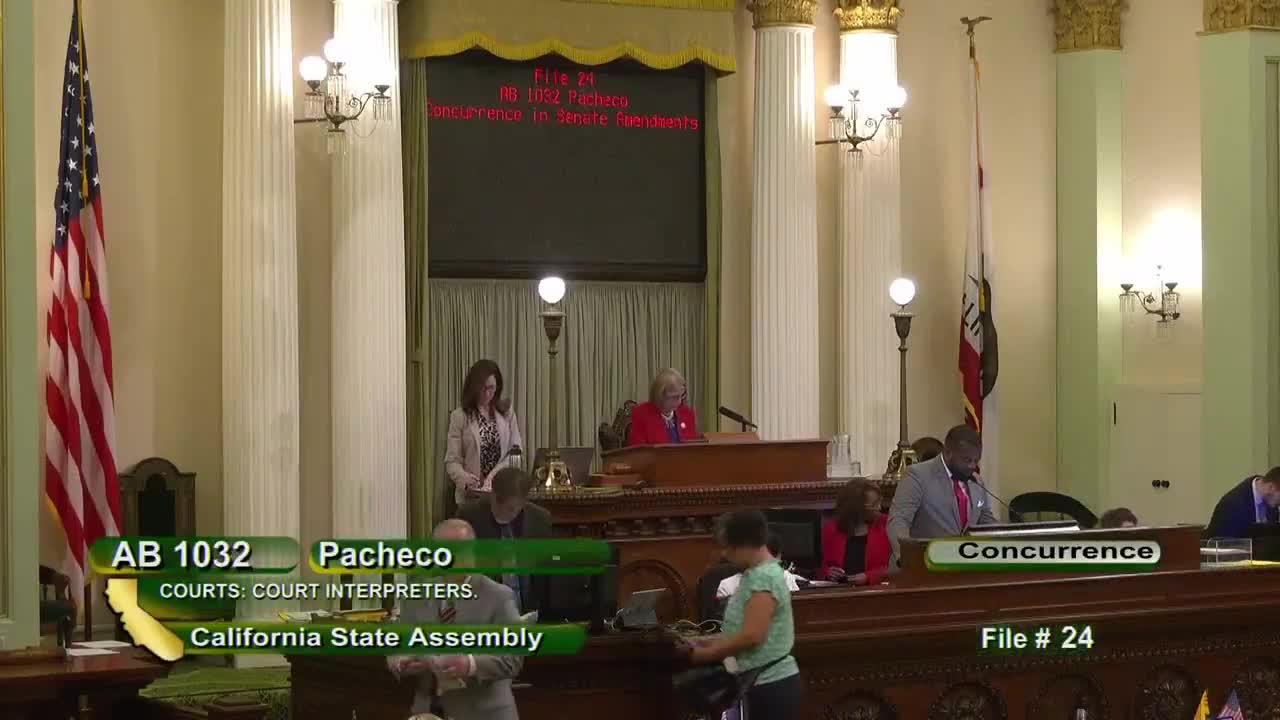 45SEC
Assembly Floor
 2MIN
Assembly Floor
 6MIN