AB 2295: Crimes: commencement of prosecution.
- Session Year: 2023-2024
- House: Assembly
- Latest Version Date: 2024-09-28
Current Status:
Passed
(2024-09-28: Chaptered by Secretary of State - Chapter 825, Statutes of 2024.)
Introduced
In Committee
First Chamber
In Committee
Second Chamber
Enacted
Existing law generally requires that the prosecution of a felony sex offense be commenced within 10 years after the commission of the offense. Existing law requires specified sex offenses that are committed when the victim is under 18 years of age and under certain circumstances, such as rape of a person with a mental disorder or disability or sodomy with force or fear, to be commenced by the victims 40th birthday.
This bill would clarify that if the conditions authorizing prosecution for these crimes are not met, the prosecuting agency may nevertheless provide victim assistance to the person, including support with pursuing restorative justice.
Existing law generally requires that the prosecution of a felony sex offense be commenced within 10 years after the commission of the offense. Existing law requires specified sex offenses that are committed when the victim is under 18 years of age and under certain circumstances, such as rape of a person with a mental disorder or disability or sodomy with force or fear, to be commenced by the victims 40th birthday.
This bill would allow the prosecution of these specified sex offenses to be commenced on or after the victims 40th birthday if specified conditions are met, including, among other things, if the criminal complaint is filed within one year of the date of a report to a California law enforcement agency and there is independent evidence that clearly and convincingly corroborates the victims allegation. clarify that if the conditions authorizing prosecution for these crimes are not met, the prosecuting agency may nevertheless provide victim assistance to the person, including support with pursuing restorative justice.
Existing law generally requires that the prosecution of a felony sex offense be commenced within 10 years after the commission of the offense. Existing law requires specified sex offenses that are committed when the victim is under 18 years of age and under certain circumstances, such as rape of a person with a mental disorder or disability or sodomy with force or fear, to be commenced by the victims 40th birthday.
This bill would allow the prosecution of these specified sex offenses to be commenced at any time, as specified. on or after the victims 40th birthday if specified conditions are met, including, among other things, if the criminal complaint is filed within one year of the date of a report to a California law enforcement agency and there is independent evidence that clearly and convincingly corroborates the victims allegation.
Existing law generally requires that the prosecution of a felony sex offense be commenced within 10 years after the commission of the offense. Existing law requires specified sex offenses that are committed when the victim is under 18 years of age and under certain circumstances, such as rape of a person with a mental disorder or disability or sodomy with force or fear, to be commenced by the victims 40th birthday.
This bill would allow the prosecution of these specified sex offenses to be commenced at any time, as specified.
(a)(1)Notwithstanding any other limitation of time described in this chapter, prosecution for a felony offense described in Section 261, 286, 287, 288, 288.5, or 289, or former Section 288a, or Section 289.5, as enacted by Chapter 293 of the Statutes of 1991 relating to penetration by an unknown object, that is alleged to have been committed when the victim was under 18 years of age, may be commenced any time prior to the victims 40th birthday.
(2)Paragraph (1) shall only apply to crimes that were committed on or after January 1, 2015, or for which the statute of limitations that was in effect prior to January 1, 2015, has not run as of January 1, 2015.
(3)If the requirements in paragraph (1) are not met, the prosecuting agency may nevertheless provide victim assistance to the person, including support with pursuing restorative justice.
(b)Notwithstanding any other limitation of time described in this chapter, if either subdivision (a) of this section or subdivision (b) of Section 799 does not apply, prosecution for a felony offense described in subdivision (c) of Section 290 shall be commenced within 10 years after commission of the offense.
(a)(1)Notwithstanding any other limitation of time described in this chapter, prosecution for a felony offense described in Section 261, 286, 287, 288, 288.5, or 289, or former Section 288a, or Section 289.5, as enacted by Chapter 293 of the Statutes of 1991 relating to penetration by an unknown object, that is alleged to have been committed when the victim was under 18 years of age, may be commenced any time prior to the victims 40th birthday.
(2)Paragraph (1) shall only apply to crimes that were committed on or after January 1, 2015, or for which the statute of limitations that was in effect prior to January 1, 2015, has not run as of January 1, 2015.
(3)(A)Notwithstanding paragraphs (1) and (2), prosecution for crimes described in paragraph (1) may also be commenced on or after the victims 40th birthday for crimes that were committed on or after January 1, 2025, or for which the statute of limitations that was in effect prior to January 1, 2025, has not run as of January 1, 2025.(B)This paragraph applies only if all of the following occur:(i)The limitation period specified in Section 800 or 801, whichever is later, has expired.(ii)The criminal complaint is filed within one year of the date of a report to a California law enforcement agency by a person.(iii)The crime involved substantial sexual conduct, as described in subdivision (b) of Section 1203.066.(iv)There is independent evidence that clearly and convincingly corroborates the victims allegation.(C)If the requirements in paragraph (B)(3)If the requirements in paragraph (1) are not met, the prosecuting agency may nevertheless provide victim assistance to the person, including support with pursuing restorative justice.
(b)Notwithstanding any other limitation of time described in this chapter, if either subdivision (a) of this section or subdivision (b) of Section 799 does not apply, prosecution for a felony offense described in subdivision (c) of Section 290 shall be commenced within 10 years after commission of the offense.
(a)(1)Notwithstanding any other limitation of time described in this chapter, prosecution for a felony offense described in Section 261, 286, 287, 288, 288.5, or 289, or former Section 288a, or Section 289.5, as enacted by Chapter 293 of the Statutes of 1991 relating to penetration by an unknown object, that is alleged to have been committed when the victim was under 18 years of age, may be commenced any time prior to the victims 40th birthday.
(2)Paragraph (1) shall only apply to crimes that were committed on or after January 1, 2015, or for which the statute of limitations that was in effect prior to January 1, 2015, has not run as of January 1, 2015.
(3)(A)Notwithstanding paragraphs (1) and (2), prosecution for crimes described in paragraph (1) may also be commenced on or after the victims 40th birthday for crimes that were committed on or after January 1, 2025, or for which the statute of limitations that was in effect prior to January 1, 2025, has not run as of January 1, 2025.
(B)This paragraph applies only if all of the following occur:
(i)The limitation period specified in Section 800 or 801, whichever is later, has expired.
(ii)The criminal complaint is filed within one year of the date of a report to a California law enforcement agency by a person.
(iii)The crime involved substantial sexual conduct, as described in subdivision (b) of Section 1203.066.
(iv)There is independent evidence that clearly and convincingly corroborates the victims allegation.
(C)If the requirements in paragraph (B) are not met, the prosecuting agency may nevertheless provide victim assistance to the person, including support with pursuing restorative justice.
(b)Notwithstanding any other limitation of time described in this chapter, if either subdivision (a) of this section or subdivision (b) of Section 799 does not apply, prosecution for a felony offense described in subdivision (c) of Section 290 shall be commenced within 10 years after commission of the offense.
REVISIONS: HeadingLines 1 and 2.(a)(1)Notwithstanding any other limitation of time described in this chapter, prosecution for a felony offense described in Section 261, 286, 287, 288, 288.5, or 289, or former Section 288a, or Section 289.5, as enacted by Chapter 293 of the Statutes of 1991 relating to penetration by an unknown object, that is alleged to have been committed when the victim was under 18 years of age, may be commenced any time prior to the victims 40th birthday.
(2)Paragraph (1) shall only apply to crimes that were committed on or after January 1, 2015, or for which the statute of limitations that was in effect prior to January 1, 2015, has not run as of January 1, 2015.
(3)Notwithstanding paragraphs (1) and (2), prosecution for crimes described in paragraph (1) may also be commenced on or after the victims 40th birthday for crimes that were committed on or after January 1, 2025, or for which the statute of limitations that was in effect prior to January 1, 2025, has not run as of January 1, 2025.
(b)Notwithstanding any other limitation of time described in this chapter, if either subdivision (a) of this section or subdivision (b) of Section 799 does not apply, prosecution for a felony offense described in subdivision (c) of Section 290 shall be commenced within 10 years after commission of the offense.
|
Date
|
Status
|
|---|---|
| Sep 28, 2024 | Chaptered by Secretary of State - Chapter 825, Statutes of 2024. |
| Sep 28, 2024 | Approved by the Governor. |
| Sep 11, 2024 | Enrolled and presented to the Governor at 4 p.m. |
| Aug 29, 2024 | Assembly Rule 77 suspended. |
| Aug 29, 2024 | Senate amendments concurred in. To Engrossing and Enrolling. (Ayes 76. Noes 0.). |
| Aug 28, 2024 | In Assembly. Concurrence in Senate amendments pending. May be considered on or after August 30 pursuant to Assembly Rule 77. |
| Aug 28, 2024 | Read third time. Passed. Ordered to the Assembly. (Ayes 38. Noes 0.). |
| Aug 19, 2024 | Read second time. Ordered to third reading. |
| Aug 15, 2024 | Read second time and amended. Ordered returned to second reading. |
| Aug 15, 2024 | From committee: Amend, and do pass as amended. (Ayes 7. Noes 0.) (August 15). |
| Jun 24, 2024 | In committee: Referred to suspense file. |
| Jun 11, 2024 | From committee: Do pass and re-refer to Com. on APPR. (Ayes 5. Noes 0.) (June 11). Re-referred to Com. on APPR. |
| May 29, 2024 | Referred to Com. on PUB S. |
| May 22, 2024 | In Senate. Read first time. To Com. on RLS. for assignment. |
| May 21, 2024 | Read third time. Passed. Ordered to the Senate. (Ayes 73. Noes 0. Page 5437.) |
| May 20, 2024 | Read second time. Ordered to third reading. |
| May 16, 2024 | From committee: Do pass. (Ayes 15. Noes 0.) (May 16). |
| May 16, 2024 | Coauthors revised. |
| May 8, 2024 | In committee: Set, first hearing. Referred to APPR. suspense file. |
| Apr 29, 2024 | Re-referred to Com. on APPR. |
| Apr 25, 2024 | Read second time and amended. |
| Apr 24, 2024 | From committee: Amend, and do pass as amended and re-refer to Com. on APPR. (Ayes 8. Noes 0.) (April 23). |
| Feb 26, 2024 | Referred to Com. on PUB. S. |
| Feb 13, 2024 | From printer. May be heard in committee March 14. |
| Feb 12, 2024 | Read first time. To print. |
|
Date
|
Description
|
Location
|
Votes
|
|
|---|---|---|---|---|
| Aug 29, 2024 | AB 2295 Addis Concurrence in Senate Amendments | Assembly Floor |
Passed |
|
| Aug 28, 2024 | Assembly 3rd Reading AB2295 Addis et al. By Min | Senate Floor |
Passed |
|
| Aug 15, 2024 | Do pass as amended | Senate Standing Committee on Appropriations |
Passed |
|
| Jun 24, 2024 | Placed on suspense file | Senate Standing Committee on Appropriations |
Passed |
|
| Jun 11, 2024 | Do pass, but first be re-referred to the Committee on [Appropriations] | Senate Standing Committee on Public Safety |
Passed |
|
| May 21, 2024 | AB 2295 Addis Assembly Third Reading | Assembly Floor |
Passed |
|
| May 16, 2024 | Do pass. | Assembly Standing Committee on Appropriations |
Passed |
|
| Apr 23, 2024 | Do pass as amended and be re-referred to the Committee on [Appropriations] | Assembly Standing Committee on Public Safety |
Passed |
This list shows positions taken on this bill by organizations on the date displayed, which is linked to the original source.
Positions by individuals are not included.
|
Organization
|
Position
|
Date
|
|---|---|---|
| American Association Of University Women - California | ** Support | |
| American Association of University Women San Jose | ** Support | |
| California Alliance for Youth and Community Justice | ** Against | |
| California Attorneys For Criminal Justice | ** Against | |
| California Legislative Women's Caucus | ** Support | |
| Californians United for a Responsible Budget | ** Against | |
| California Police Chiefs Association | ** Support | |
| California State Sheriffs' Association | ** Support | |
| CHILD USA | ** Support | |
| Consumer Attorneys Of California | ** Support | |
| Ella Baker Center For Human Rights | ** Against | |
| Fair Chance Project | ** Against | |
| Felony Murder Elimination Project | ** Against | |
| Friends Committee On Legislation Of California | ** Against | |
| Legal Services for Prisoners with Children | ** Against | |
| Peace Officers Research Association Of California | ** Support | |
| San Francisco Public Defender | ** Against | |
| Silicon Valley De-Bug | ** Against | |
| Smart Justice California, a project of Tides Advocacy | ** Against | |
| Survivors Network of Those Abused by Priests | ** Support | |
| Team Justice | ** Against | |
| Uncommon Law | ** Against | |
| Young Women's Freedom Center | ** Against |
CONCURRENCE IN SENATE AMENDMENTS
CSA1 Bill Id:AB 2295
Author:(Addis and Lackey)
As Amended Ver:August 15, 2024
Majority vote
SUMMARY
Provides that, if prosecution for specified sex crimes alleged to have been committed when the victim was under 18 years of age did not commence prior to the victim's 40th birthday, that the prosecuting agency may nevertheless provide victim assistance to the victim, including support with restorative justice.
Senate Amendments
- Delete the proposed changes to the statute of limitation for specified sex crimes where the victim was a minor at the time of the offense.
- Clarify that a prosecuting agency may still provide victim assistance, including support with pursuing restorative justice, if prosecution for specified sex crimes alleged to have been committed when the victim was under 18 years of age did not commence prior to the victim's 40th birthday.
COMMENTS
As Passed by the Assembly, this bill:
- Provided that prosecution for the following specified sex crimes may be commenced on or after the victim's 40th birthday if committed on or after January 1, 2025, or for which the statute of limitations that was in effect prior to January 1, 2025, has not run as of January 1, 2025.
- Provided that the above applies only if all of the following occur:
- The limitation period, as specified, has expired;
- The criminal complaint is filed within one year of the date of a report to a California law enforcement agency by a person;
- The crime involved substantial sexual conduct, as specified; and,
- There is independent evidence that clearly and convincingly corroborates the victim's allegation.
- Provided that the prosecuting agency may nevertheless provide victim assistance to the person, including support with pursing restorative justice.
According to the Author
"For many survivors, disclosing abuse is a long and painful process. Numerous factors prevent survivors, especially those abused as children, from reporting their abuse including: feelings of shame, lacking trusted adults and opportunities to disclose, and fear of additional victimization or not being believed. Even when survivors become adults, various societal, institutional, and psychological barriers impede their ability to report their abuser. Many survivors miss the deadline to obtain justice because trauma affects them in a way that causes them to delay disclosure of their abuse until they are older. It is an unacceptable tragedy that victims of abuse are unable to hold their abuser accountable simply because the law arbitrarily says their time to report has run out.
"AB 2295 ends California's cruel and arbitrary criminal statute of limitations for minors who have experienced sexual abuse, removing barriers that prevent survivors from seeking justice. AB 2295 will codify a survivor's right to justice, regardless of their age or how long it took them to come forward. In doing so, California will stand with all survivors, at all ages."
Arguments in Support
According to Survivors Network of Those Abused by Priests, "We are writing to you today to express our support for Assembly Bill 2295, which would eliminate the criminal statute of limitations for all child sexual assault crimes in California going forward. SNAP is grateful to Assemblymember Dawn Addis for this effort to make California safer for our children.
"Statistics tell us that one in four girls and one in five boys are sexually abused before they reach the age of 18. Due to the trauma of such assaults, the young victims suffer the effects for the rest of their lives. Yet, delayed disclosure is common. Over half of survivors who come forward first disclose at age 50 or older. 30% never come forward.
"In addition, the legal system is bent in favor of the perpetrators, not the victims. When survivors finally report these crime, the courts often turn them away due to an arbitrary statute of limitations (SOL). Murder has no statute of limitations, and child sex abuse is similarly a heinous crime. Many victims refer to it as 'soul murder.'
"As we noted above, the impact of sexual assault as a child continues to traumatize the survivors throughout their lives. The inability to hold perpetrators accountable further compounds the pain of the victims. Many acquire alcohol or drug addictions, and others commit suicide.
"Child abusers are familiar with the SOL laws and find comfort in knowing that most victims are not likely to report their crimes until well after the SOL has passed. The short SOL also renders useless other child protection measures such sex offender registries. If those who sexually assault children are never convicted in a criminal case, they remain anonymous to parents, youth organizations or communities.
"AB 2295 would eliminate the arbitrarily SOLs for criminal child sex abuse cases going forward. This will allow child victims to seek justice, to help get these perpetrators off the streets, and thereby to prevent more child sexual assaults. It will also create a public record of these offenders so parents, churches, youth organizations, and communities can take the appropriate steps to prevent these criminals from accessing children."
Arguments in Opposition
According to Uncommon Law, "AB 2295 would remove that statute of limitation and allow the prosecution to start at any time regardless of how far removed the commencement date of the prosecution is from the date of offense. Existing law provides a statute of limitations which is much longer than normal to account for the fact that victims of sex crimes that occur when the victim is a child might not come to light until those victims are adults and are in a position to contact authorities regarding the crimes. To account for that fact, existing law allows prosecutions to be brought in these cases up until the victim turns 40. This is already a substantial departure from the statute of limitations in other offenses and provides more than enough time to commence a prosecution.
"Maintaining statutes of limitations is important because evidence deteriorates over time and erroneous decisions are more likely to occur if the gap in time between underlying events and trial is lengthy. Statutes of limitation preserve the integrity of the justice system by precluding prosecution when evidence has been lost, memories have faded, and witnesses have disappeared. This helps ensure that innocent people are not convicted. By removing the statute of limitation completely, AB 2295 eliminates necessary guardrails for justice and greatly increases the risks of wrongful prosecution and conviction."
FISCAL COMMENTS
According to the Senate Appropriations Committee, "No state costs."
VOTES:
ASM PUBLIC SAFETY: 8-0-0
YES: McCarty, Alanis, Lackey, Stephanie Nguyen, Reyes, Ting, Wilson, Zbur
ASM APPROPRIATIONS: 15-0-0
YES: Wicks, Sanchez, Arambula, Bryan, Calderon, Wendy Carrillo, Dixon, Mike Fong, Grayson, Haney, Hart, Jim Patterson, Pellerin, Ta, Villapudua
ASSEMBLY FLOOR: 73-0-7
YES: Addis, Aguiar-Curry, Alanis, Alvarez, Arambula, Bains, Bauer-Kahan, Bennett, Berman, Boerner, Bonta, Bryan, Calderon, Juan Carrillo, Wendy Carrillo, Chen, Connolly, Davies, Dixon, Essayli, Flora, Mike Fong, Vince Fong, Gallagher, Garcia, Gipson, Grayson, Haney, Hart, Hoover, Irwin, Jackson, Jones-Sawyer, Kalra, Lackey, Lee, Low, Lowenthal, Maienschein, McCarty, McKinnor, Muratsuchi, Stephanie Nguyen, Ortega, Pacheco, Papan, Jim Patterson, Joe Patterson, Pellerin, Petrie-Norris, Quirk-Silva, Ramos, Rendon, Reyes, Rodriguez, Blanca Rubio, Sanchez, Santiago, Schiavo, Soria, Ta, Ting, Valencia, Villapudua, Waldron, Wallis, Ward, Weber, Wicks, Wilson, Wood, Zbur, Robert Rivas
ABS, ABST OR NV: Cervantes, Megan Dahle, Friedman, Gabriel, Holden, Mathis, Luz Rivas
SENATE FLOOR: 39-0-1
YES: Allen, Archuleta, Ashby, Atkins, Becker, Blakespear, Bradford, Caballero, Cortese, Dahle, Dodd, Durazo, Eggman, Glazer, Gonzalez, Grove, Hurtado, Jones, Laird, Limón, McGuire, Menjivar, Min, Newman, Nguyen, Niello, Ochoa Bogh, Padilla, Portantino, Roth, Rubio, Seyarto, Skinner, Smallwood-Cuevas, Stern, Umberg, Wahab, Wiener, Wilk
ABS, ABST OR NV: Alvarado-Gil
UPDATED
VERSION: August 15, 2024
CONSULTANT: Andrew Ironside / PUB. S. / (916) 319-3744 FN: 0004941
CONCURRENCE IN SENATE AMENDMENTS
CSA1 Bill Id:AB 2295
Author:(Addis and Lackey)
As Amended Ver:August 15, 2024
Majority vote
SUMMARY
Provides that, if prosecution for specified sex crimes alleged to have been committed when the victim was under 18 years of age did not commence prior to the victim's 40th birthday, that the prosecuting agency may nevertheless provide victim assistance to the victim, including support with restorative justice.
Senate Amendments
- Delete the proposed changes to the statute of limitation for specified sex crimes where the victim was a minor at the time of the offense.
- Clarify that a prosecuting agency may still provide victim assistance, including support with pursuing restorative justice, if prosecution for specified sex crimes alleged to have been committed when the victim was under 18 years of age did not commence prior to the victim's 40th birthday.
COMMENTS
As Passed by the Assembly, this bill:
- Provided that prosecution for the following specified sex crimes may be commenced on or after the victim's 40th birthday if committed on or after January 1, 2025, or for which the statute of limitations that was in effect prior to January 1, 2025, has not run as of January 1, 2025.
- Provided that the above applies only if all of the following occur:
- The limitation period, as specified, has expired;
- The criminal complaint is filed within one year of the date of a report to a California law enforcement agency by a person;
- The crime involved substantial sexual conduct, as specified; and,
- There is independent evidence that clearly and convincingly corroborates the victim's allegation.
- Provided that the prosecuting agency may nevertheless provide victim assistance to the person, including support with pursing restorative justice.
According to the Author
"For many survivors, disclosing abuse is a long and painful process. Numerous factors prevent survivors, especially those abused as children, from reporting their abuse including: feelings of shame, lacking trusted adults and opportunities to disclose, and fear of additional victimization or not being believed. Even when survivors become adults, various societal, institutional, and psychological barriers impede their ability to report their abuser. Many survivors miss the deadline to obtain justice because trauma affects them in a way that causes them to delay disclosure of their abuse until they are older. It is an unacceptable tragedy that victims of abuse are unable to hold their abuser accountable simply because the law arbitrarily says their time to report has run out.
"AB 2295 ends California's cruel and arbitrary criminal statute of limitations for minors who have experienced sexual abuse, removing barriers that prevent survivors from seeking justice. AB 2295 will codify a survivor's right to justice, regardless of their age or how long it took them to come forward. In doing so, California will stand with all survivors, at all ages."
Arguments in Support
According to Survivors Network of Those Abused by Priests, "We are writing to you today to express our support for Assembly Bill 2295, which would eliminate the criminal statute of limitations for all child sexual assault crimes in California going forward. SNAP is grateful to Assemblymember Dawn Addis for this effort to make California safer for our children.
"Statistics tell us that one in four girls and one in five boys are sexually abused before they reach the age of 18. Due to the trauma of such assaults, the young victims suffer the effects for the rest of their lives. Yet, delayed disclosure is common. Over half of survivors who come forward first disclose at age 50 or older. 30% never come forward.
"In addition, the legal system is bent in favor of the perpetrators, not the victims. When survivors finally report these crime, the courts often turn them away due to an arbitrary statute of limitations (SOL). Murder has no statute of limitations, and child sex abuse is similarly a heinous crime. Many victims refer to it as 'soul murder.'
"As we noted above, the impact of sexual assault as a child continues to traumatize the survivors throughout their lives. The inability to hold perpetrators accountable further compounds the pain of the victims. Many acquire alcohol or drug addictions, and others commit suicide.
"Child abusers are familiar with the SOL laws and find comfort in knowing that most victims are not likely to report their crimes until well after the SOL has passed. The short SOL also renders useless other child protection measures such sex offender registries. If those who sexually assault children are never convicted in a criminal case, they remain anonymous to parents, youth organizations or communities.
"AB 2295 would eliminate the arbitrarily SOLs for criminal child sex abuse cases going forward. This will allow child victims to seek justice, to help get these perpetrators off the streets, and thereby to prevent more child sexual assaults. It will also create a public record of these offenders so parents, churches, youth organizations, and communities can take the appropriate steps to prevent these criminals from accessing children."
Arguments in Opposition
According to Uncommon Law, "AB 2295 would remove that statute of limitation and allow the prosecution to start at any time regardless of how far removed the commencement date of the prosecution is from the date of offense. Existing law provides a statute of limitations which is much longer than normal to account for the fact that victims of sex crimes that occur when the victim is a child might not come to light until those victims are adults and are in a position to contact authorities regarding the crimes. To account for that fact, existing law allows prosecutions to be brought in these cases up until the victim turns 40. This is already a substantial departure from the statute of limitations in other offenses and provides more than enough time to commence a prosecution.
"Maintaining statutes of limitations is important because evidence deteriorates over time and erroneous decisions are more likely to occur if the gap in time between underlying events and trial is lengthy. Statutes of limitation preserve the integrity of the justice system by precluding prosecution when evidence has been lost, memories have faded, and witnesses have disappeared. This helps ensure that innocent people are not convicted. By removing the statute of limitation completely, AB 2295 eliminates necessary guardrails for justice and greatly increases the risks of wrongful prosecution and conviction."
FISCAL COMMENTS
According to the Senate Appropriations Committee, "No state costs."
VOTES:
ASM PUBLIC SAFETY: 8-0-0
YES: McCarty, Alanis, Lackey, Stephanie Nguyen, Reyes, Ting, Wilson, Zbur
ASM APPROPRIATIONS: 15-0-0
YES: Wicks, Sanchez, Arambula, Bryan, Calderon, Wendy Carrillo, Dixon, Mike Fong, Grayson, Haney, Hart, Jim Patterson, Pellerin, Ta, Villapudua
ASSEMBLY FLOOR: 73-0-7
YES: Addis, Aguiar-Curry, Alanis, Alvarez, Arambula, Bains, Bauer-Kahan, Bennett, Berman, Boerner, Bonta, Bryan, Calderon, Juan Carrillo, Wendy Carrillo, Chen, Connolly, Davies, Dixon, Essayli, Flora, Mike Fong, Vince Fong, Gallagher, Garcia, Gipson, Grayson, Haney, Hart, Hoover, Irwin, Jackson, Jones-Sawyer, Kalra, Lackey, Lee, Low, Lowenthal, Maienschein, McCarty, McKinnor, Muratsuchi, Stephanie Nguyen, Ortega, Pacheco, Papan, Jim Patterson, Joe Patterson, Pellerin, Petrie-Norris, Quirk-Silva, Ramos, Rendon, Reyes, Rodriguez, Blanca Rubio, Sanchez, Santiago, Schiavo, Soria, Ta, Ting, Valencia, Villapudua, Waldron, Wallis, Ward, Weber, Wicks, Wilson, Wood, Zbur, Robert Rivas
ABS, ABST OR NV: Cervantes, Megan Dahle, Friedman, Gabriel, Holden, Mathis, Luz Rivas
UPDATED
VERSION: August 15, 2024
CONSULTANT: Andrew Ironside / PUB. S. / (916) 319-3744 FN: 0004941
SENATE RULES COMMITTEE Office of Senate Floor Analyses (916) 651-1520 Fax: (916) 327-4478 | AB 2295 |
THIRD READING
Bill No: AB 2295
Author: Addis (D) and Lackey (R), et al.
Amended: 8/15/24 in Senate
Vote: 21
SENATE PUBLIC SAFETY COMMITTEE: 5-0, 6/11/24
AYES: Wahab, Seyarto, Bradford, Skinner, Wiener
SENATE APPROPRIATIONS COMMITTEE: 7-0, 8/15/24
AYES: Caballero, Jones, Ashby, Becker, Bradford, Seyarto, Wahab
ASSEMBLY FLOOR: 73-0, 5/21/24 - See last page for vote
SUBJECT: Crimes: commencement of prosecution
SOURCE: Survivors Network of those Abused by Priests
DIGEST:
This bill provides that if the conditions authorizing prosecution under an extended statute of limitations is not met, a prosecuting agency may nevertheless provide victim assistance to a person, including support with pursuing restorative justice.
ANALYSIS:
Existing law:
- Provides that prosecution for crimes punishable by imprisonment for eight years or more and not otherwise covered must be commenced within six years after commission of the offense. (Pen. Code, § 800.)
- Provides that prosecution for other felonies punishable by less than eight years must be commenced within three years after commission of the offense. (Pen. Code, § 801.)
- States that prosecution for a misdemeanor shall be commenced within one year after the commission of the offense, unless otherwise specified. (Pen. Code, § 802, subd. (a).)
- Provides that unless provided, as specified, a limitation of time is not tolled or extended for any reason. (Penal Code § 803, subd. (a).)
- Provides that prosecution of a felony offense of rape, sodomy, oral copulation, lewd and lascivious acts, continuous sexual abuse of a child, or penetration by foreign object, under certain circumstances, committed on or after January 1, 2017, and crimes for which the statute of limitations that was in effect prior to January 1, 2017, has not run as of January 1, 2017, may be commenced at any time. (Pen. Code, § 799, subd. (b).)
- Provides that that prosecution for a felony offense that requires registration as a sex offender must commence within 10 years of the commission of the offense, unless a longer statute of limitations applies as specified. (Pen. Code, § 801.1, subd. (b).)
- Provides that prosecution for a felony offense of rape, sodomy, oral copulation, lewd and lascivious acts, continuous sexual abuse of a child, or forcible sexual penetration that was committed on or after January 1, 2015, or for which the statute of limitations has not run as of January 1, 2015 where the victim was under 18 years old at the time of the offense, may be commenced at any time prior to the victim’s 40th birthday. (Pen. Code, § 801.1, subd. (a).)
- States that a criminal complaint may be filed within one year of the date of a report to a California law enforcement agency by a person of any age alleging that the person was the victim of specified sex crimes that occurred when the person was under 18 years of age, if all of the following occur:
- The limitation period, as specified, has expired;
- The crime involved substantial sexual conduct, excluding masturbation that is not mutual; and,
- There is independent evidence that corroborates the victim’s allegation. If the victim was 21 years of age or older at the time of the report, the independent evidence shall clearly and convincingly corroborate the victim’s allegation. (Pen. Code, § 803, subd. (f)(1) & (2).)
- Provides that evidence shall not be used to corroborate the victim’s allegation if that evidence would otherwise be inadmissible during trial. Independent evidence excludes the opinions of mental health professionals. (Pen. Code, § 803, subd. (f)(3).)
This bill provides that if the conditions authorizing prosecution under an extended statute of limitations are not met, the prosecuting agency may nevertheless provide victim assistance to the person, including support with pursuing restorative justice.
Background
Existing Statutes of Limitations. Generally, the statute of limitations for misdemeanor offenses requires commencement of prosecution within one year of the commission of the offense (Pen. Code § 802) and for felony offenses, within three years of the commission of the offense (Pen. Code § 801). There are specified exceptions that either provides for a longer statute of limitations (Pen. Code, §§ 801.5, 802), tolls the time (stops the clock) until the crime is discovered or when some other triggering event occurs (Pen. Code § 803), or provides no statute of limitations at all such as crimes punishable by death or life imprisonment without parole (Pen. Code § 799).
Specified felony sex crimes, including rape, aiding and abetting rape, sodomy, lewd or lascivious acts, continuous sexual abuse of a child, oral copulation, and sexual penetration, that are committed under certain circumstances also do not have a statute of limitations when the offense was committed on or after January 1, 2017, or if the statute of limitations had not expired as of January 1, 2017. (Pen. Code, § 799, subd. (b).)
If any of the longer statute of limitations for minor victims or Penal Code section 799(b) do not otherwise apply, the prosecution for a felony sex offense subject to mandatory sex offender registration must be commenced within 10 years after the commission of the offense. (Pen. Code, § 801.1, subd. (b).) The statute of limitations for the sex offenses implicated in this bill (rape, sodomy, lewd and lascivious acts, continuous sexual abuse of a child, oral copulation, or forcible sexual penetration) requires commencement of prosecution prior to victim's 40th birthday, if the crime was committed when the victim was under 18. (Pen. Code, § 801.1, subd. (a).)
In addition to these two statutes of limitations, there is a tolling provision for prosecution of specified sex offenses. (Pen. Code, § 803.) Existing law authorizes prosecution to be commenced within one year of the date a person of any age reports to California law enforcement that he or she, while under the age of 18 years, was a victim of a sex crime, as specified, if all of the following occur:
- The limitation period specified in Section 800, 801, or 801.1, whichever is later, has expired;
- The crime involved substantial sexual conduct, as specified, excluding masturbation that is not mutual; and,
- There is independent evidence that corroborates the victim's allegation. (Pen. Code, § 803, subd. (f).)
This bill amends the law that requires prosecution for specified sex offenses (rape, sodomy, oral copulation, lewd and lascivious acts, continuous sexual abuse of a child, or forcible sexual penetration) committed when the victim was under 18, to commence prior to victim's 40th birthday, by authorizing prosecution after the victim’s 40th birthday if the following conditions are met:
- The limitation period in Penal Code sections 800 or 801, whichever is later, has expired;
- The criminal complaint is filed within one year of the date of a report to a California law enforcement agency by a person;
- The crime involved substantial sexual conduct, as specified; and,
- There is independent evidence that clearly and convincingly corroborates the victim’s allegation.
This bill also provides that if the above requirements are not met, the prosecuting agency may nevertheless provide victim assistance to the person, including support with pursuing restorative justice.
FISCAL EFFECT: Appropriation: No Fiscal Com.: Yes Local: No
According to the Senate Committee on Appropriations, there are no state costs.
SUPPORT: (Verified 8/15/24)
Survivors Network of Those Abused by Priests (source)
American Association of University Women San Jose
American Association of University Women - California
California Legislative Women's Caucus
California Police Chiefs Association
California State Sheriffs' Association
Child USA
Consumer Attorneys of California
Peace Officers Research Association of California
OPPOSITION: (Verified 8/15/24)
California Attorneys for Criminal Justice
Californians United for a Responsible Budget
Team Justice
ASSEMBLY FLOOR: 73-0, 5/21/24
AYES: Addis, Aguiar-Curry, Alanis, Alvarez, Arambula, Bains, Bauer-Kahan, Bennett, Berman, Boerner, Bonta, Bryan, Calderon, Juan Carrillo, Wendy Carrillo, Chen, Connolly, Davies, Dixon, Essayli, Flora, Mike Fong, Vince Fong, Gallagher, Garcia, Gipson, Grayson, Haney, Hart, Hoover, Irwin, Jackson, Jones-Sawyer, Kalra, Lackey, Lee, Low, Lowenthal, Maienschein, McCarty, McKinnor, Muratsuchi, Stephanie Nguyen, Ortega, Pacheco, Papan, Jim Patterson, Joe Patterson, Pellerin, Petrie-Norris, Quirk-Silva, Ramos, Rendon, Reyes, Rodriguez, Blanca Rubio, Sanchez, Santiago, Schiavo, Soria, Ta, Ting, Valencia, Villapudua, Waldron, Wallis, Ward, Weber, Wicks, Wilson, Wood, Zbur, Robert Rivas
NO VOTE RECORDED: Cervantes, Megan Dahle, Friedman, Gabriel, Holden, Mathis, Luz Rivas
Prepared by: Stella Choe / PUB. S. /
8/19/24 10:47:26
**** END ****
SENATE COMMITTEE ON
Senator Anna Caballero, Chair
2023 - 2024 Regular Session
AB 2295 (Addis) - Crimes: commencement of prosecution
Version: | Policy Vote: |
Urgency: | Mandate: |
Hearing Date: | Consultant: |
Bill Summary:
AB 2295 clarify that if the conditions authorizing prosecution for specified sex offenses are not met, prosecuting agency may nevertheless provide victim assistance to the person, including support with pursuing restorative justice.
*********** ANALYSIS ADDENDUM – SUSPENSE FILE ***********
The following information is revised to reflect amendments
adopted by the committee on August 15, 2024
Fiscal Impact:
No state costs.
Committee Amendments:
Delete provisions extending the statute of limitations.
-- END --
SENATE COMMITTEE ON APPROPRIATIONS
Senator Anna Caballero, Chair
2023 - 2024 Regular Session
AB 2295 (Addis) - Crimes: commencement of prosecution
Version: April 25, 2024 | Policy Vote: PUB. S. 5 - 0 |
Urgency: No | Mandate: No |
Hearing Date: June 24, 2024 | Consultant: Liah Burnley |
Bill Summary:
AB 2295 would eliminate the statute of limitations for specified sex crimes committed when the victim was under the age of 18, if certain conditions are met, and if the crime was committed on or after January 1, 2025, or if the statute of limitations has not expired as of January 1, 2025.
Fiscal Impact:
- Costs (Trial Court Trust Fund, General Fund) of an unknown but potentially significant amount to the courts to adjudicate criminal charges brought under this bill that would otherwise be barred by the existing statute of limitations. A defendant charged with a misdemeanor or felony is entitled to no-cost legal representation and a jury trial. Actual court costs will depend on the number of cases filed and the amount of court time needed to adjudicate each case. It generally costs approximately $1,000 to operate a courtroom for one hour. If five new cases are filed statewide as a result of this bill, each requiring five days of court time to adjudicate, the resulting workload cost to the courts would be approximately $200,000. Although courts are not funded on the basis of workload, increased pressure on the Trial Court Trust Fund may create a need for increased funding for courts from the General Fund. The Governor’s 2024-25 budget proposes $83.1 million ongoing from the General Fund to backfill declining revenue to the Trial Court Trust Fund.
- Costs (General Fund) to the California Department of Corrections and Rehabilitation (CDCR) to incarcerate people convicted of offenses for which prosecution would otherwise be barred by the existing statute of limitations. The Legislative Analyst’s Office (LAO) estimates the average annual cost to incarcerate one person in state prison is $133,000. Actual incarceration costs will depend on the number of convictions and the length of each sentence, but may be in the hundreds of thousands to millions of dollars annually.
Background:
A statute of limitations is a legal requirement that the prosecution of a criminal offense must be commenced within a set period of time after the offense occurred. These statutes help protect a defendant from facing a charge they can no longer effectively defend against due to the passage of time. Over time, physical evidence can get lost or degrade so that it cannot be tested, and witnesses may move, die, or forget what they saw. If criminal charges are filed many years after an offense occurred, it can be extremely difficult for a defendant to mount an effective legal defense, even if the defendant is, in fact, innocent. With some exceptions, existing law generally establishes a one-year statute of limitations for most misdemeanors and a three-year statute of limitations for felonies punishable by less than eight years in prison.
Sex offenses have significantly longer statutes of limitation. For felony offenses that require registration as a sex offender, there is a 10-year statute of limitations. For instances of rape, sodomy, lewd and lascivious acts, continuous sexual abuse of a child, oral copulation, or forcible sexual penetration where the victim was a minor at the time of the crime, a prosecution may commence up until the victim turns 40. The Penal Code also contains several provisions that pause (or “toll”) the statute of limitations for these offenses if a victim who was a minor at the time of the crime reports the crime to law enforcement or if the identity of the suspect is conclusively established by DNA testing. If specified criteria are met, these tolling provisions allow prosecution for these sex offenses long beyond the statute of limitations otherwise established in law.
Proposed Law:
This bill would prospectively eliminate the criminal statute of limitations, where the offense occurs after January 1, 2025, or for which the statute of limitations has not yet run as of January 1, 2025, for the following offenses, if the victim was a minor at the time of the offense:
- Rape;
- Sodomy;
- Lewd and lascivious acts;
- Continuous sexual abuse of a child;
- Oral copulation; and,
- Forcible sexual penetration.
-- END --
SENATE COMMITTEE ON PUBLIC SAFETY
Senator Aisha Wahab, Chair
2023 - 2024 Regular
Bill No: AB 2295 Hearing Date: June 11, 2024
Author: | Addis | ||
Version: | April 25, 2024 | ||
Urgency: | No | Fiscal: | Yes |
Consultant: | SC | ||
Subject: Crimes: commencement of prosecution
HISTORY
Source: Survivors Network of those Abused by Priests (SNAP)
Prior Legislation: AB 452 (Addis), Chapter 655, Statutes of 2023
SB 558 (Rubio), Chapter 877, Statutes of 2023
AB 1455 (Wicks), Chapter 595, Statutes of 2021
AB 218 (Gonzalez), Chapter 861, Statutes of 2019
SB 813 (Leyva), Chapter 813, Statutes of 2016
SB 1779 (Burton), Chapter 149, Statutes of 2002
Support: American Association of University Women (AAUW) San Jose; American; Association of University Women – California; California Legislative Women's Caucus; California Police Chiefs Association; California State Sheriffs' Association; Child USA; Consumer Attorneys of California; Peace Officers Research Association of California (PORAC)
Opposition: California Attorneys for Criminal Justice; Californians United for a Responsible Budget; Team Justice
Assembly Floor Vote: 73 - 0
PURPOSE
The purpose of this bill is to eliminate the statute of limitations for specified sex crimes committed when the victim was under the age of 18, if certain conditions are met and if the crime was committed on or after January 1, 2025 or if the statute of limitations has not expired as of January 1, 2025.
Existing law provides that prosecution for crimes punishable by imprisonment for eight years or more and not otherwise covered must be commenced within six years after commission of the offense. (Pen. Code, § 800.)
Existing law provides that prosecution for other felonies punishable by less than eight years must be commenced within three years after commission of the offense. (Pen. Code, § 801.)
Existing law states that prosecution for a misdemeanor shall be commenced within one year after the commission of the offense, unless otherwise specified. (Pen. Code, § 802, subd. (a).)
Existing law provides that unless provided, as specified, a limitation of time is not tolled or extended for any reason. (Penal Code § 803, subd. (a).)
Existing law provides that prosecution of a felony offense of rape, sodomy, oral copulation, lewd and lascivious acts, continuous sexual abuse of a child, or penetration by foreign object, under certain circumstances, committed on or after January 1, 2017, and crimes for which the statute of limitations that was in effect prior to January 1, 2017, has not run as of January 1, 2017, may be commenced at any time. (Pen. Code, § 799, subd. (b).)
Existing law provides that that prosecution for a felony offense that requires registration as a sex offender must commence within 10 years of the commission of the offense, unless a longer statute of limitations applies as specified. (Pen. Code, § 801.1, subd. (b).)
Existing law provides that prosecution for a felony offense of rape, sodomy, oral copulation, lewd and lascivious acts, continuous sexual abuse of a child, or forcible sexual penetration that was committed on or after January 1, 2015, or for which the statute of limitations has not run as of January 1, 2015 where the victim was under 18 years old at the time of the offense, may be commenced at any time prior to the victim’s 40th birthday. (Pen. Code, § 801.1, subd. (a).)
Existing law states that a criminal complaint may be filed within one year of the date of a report to a California law enforcement agency by a person of any age alleging that the person was the victim of specified sex crimes that occurred when the person was under 18 years of age, if all of the following occur:
- The limitation period, as specified, has expired;
- The crime involved substantial sexual conduct, excluding masturbation that is not mutual; and,
- There is independent evidence that corroborates the victim’s allegation. If the victim was 21 years of age or older at the time of the report, the independent evidence shall clearly and convincingly corroborate the victim’s allegation. (Pen. Code, § 803, subd. (f)(1) & (2).)
Existing law provides that evidence shall not be used to corroborate the victim’s allegation if that evidence would otherwise be inadmissible during trial. Independent evidence excludes the opinions of mental health professionals. (Pen. Code, § 803, subd. (f)(3).)
This bill states that a criminal complaint for specified sex crimes that occurred when the victim was under the age of 18, that were committed on or after January 1, 2025, or for which the statute of limitations that was in effect prior to January 1, 2025, has not run as of January 1, 2025, may be filed on or after the victim’s 40th birthday if the following conditions are met:
- The limitation period in Penal Code sections 800 or 801, whichever is later, has expired;
- The criminal complaint is filed within one year of the date of a report to a California law enforcement agency by a person;
- The crime involved substantial sexual conduct, as specified; and,
- There is independent evidence that clearly and convincingly corroborates the victim’s allegation.
This bill provides that if the above requirements are not met, the prosecuting agency may nevertheless provide victim assistance to the person, including support with pursuing restorative justice.
COMMENTS
- Need for This Bill
According to the author of this bill:
For many survivors, disclosing abuse is a long and painful process. Numerous factors prevent survivors, especially those abused as children, from reporting their abuse including: feelings of shame, lacking trusted adults and opportunities to disclose, and fear of additional victimization or not being believed. Even when survivors become adults, various societal, institutional, and psychological barriers impede their ability to report their abuser. Many survivors miss the deadline to obtain justice because trauma affects them in a way that causes them to delay disclosure of their abuse until they are older. It is an unacceptable tragedy that victims of abuse are unable to hold their abuser accountable simply because the law arbitrarily says their time to report has run out.
- Purpose and Effect of Statutes of Limitations
Statutes of limitations require commencement of a prosecution within a certain period of time after the commission of a crime. A prosecution is initiated by filing an indictment or information, filing a complaint, certifying a case to superior court, or issuing an arrest or bench warrant. (Penal Code § 804.) The failure of a prosecution to be commenced within the applicable period of limitation is a complete defense to the charge. The statute of limitations is jurisdictional and may be raised as a defense at any time, before or after judgment. (People v. Morris (1988) 46 Cal.3d 1, 13.) The defense may only be waived under limited circumstances. (See Cowan v. Superior Court (1996) 14 Cal.4th 367.)
The United States Supreme Court has stated that statutes of limitations are the primary guarantee against bringing overly stale criminal charges. (United States v. Ewell (1966) 383 U.S. 116, 122.) There is a measure of predictability provided by specifying a limit beyond which there is an irrebutable presumption that a defendant's right to a fair trial would be prejudiced. Such laws reflect legislative assessments of relative interests of the state and the defendant in administering and receiving justice: “Significantly, a statute of limitations reflects a legislative judgment that, after a certain time, no quantum of evidence is sufficient to convict. And that judgment typically rests, in large part, upon evidentiary concerns – for example, concern that the passage of time has eroded memories or made witnesses or other evidence unavailable. (Stogner v. California (2003) 539 U.S. 607, 615.)
In general, the statutory limitations period is related to the seriousness of the offense as reflected in the length of punishment established by the Legislature. (People v. Turner (2005) 134 Cal.App.4th 1591, 1594-1595; see, e.g., Pen. Code, §§ 799-805.) After a comprehensive review of criminal statutes of limitation in 1984, the Law Revision Commission recommended that the length of a “limitations statute should generally be based on the seriousness of the crime.” (17 Cal. Law Revision Com. Rep. (1984) p. 313.) The Legislature overhauled the entire statutory scheme with this recommendation in mind. In People v. Turner, supra, 134 Cal.App.4th 1591, the court summarized the recommendations of the Law Revision Commission:
The use of seriousness of the crime as the primary factor in determining the length of the applicable statute of limitations was designed to strike the right balance between the societal interest in pursuing and punishing those who commit serious crimes, and the importance of barring stale claims. It also served the procedural need to provid[e] predictability and promote uniformity of treatment for perpetrators and victims of all serious crimes. The commission suggested that the seriousness of an offense could easily be determined in the first instance by the classification of the crime as a felony rather than a misdemeanor. Within the class of felonies, a long term of imprisonment is a determination that it is one of the more serious felonies; and imposition of the death penalty or life in prison is a determination that society views the crime as the most serious. (People v. Turner, supra, 134 Cal.App.4th at pp. 1594-1595, citations omitted.)
The statute of limitations is jurisdictional and may be raised as a defense at any time, before or after judgment. (People v. Morris (1988) 46 Cal.3d 1, 13.) The defense may only be waived under limited circumstances. (See Cowan v. Superior Court (1996) 14 Cal.4th 367.)
The prosecution bears the burden of proving, by a preponderance of the evidence, that a charged offense was committed within the applicable period of limitations. (People v. Lopez (1997) 52 Cal.App.4th 233, 248.) The court is required to construe application of the statute of limitations strictly in favor of the defendants. (People v. Zamora (1976) 18 Cal.3d 538, 574; People v. Lee (2000) 82 Cal.App.4th 1352, 1357-1358.)
- Existing Statutes of Limitations and This Bill
Generally, the statute of limitations for misdemeanor offenses requires commencement of prosecution within one year of the commission of the offense (Pen. Code § 802) and for felony offenses, within three years of the commission of the offense (Pen. Code § 801). There are specified exceptions that either provides for a longer statute of limitations (Pen. Code, §§ 801.5, 802), tolls the time (stops the clock) until the crime is discovered or when some other triggering event occurs (Pen. Code § 803), or provides no statute of limitations at all such as crimes punishable by death or life imprisonment without parole (Pen. Code § 799).
Specified felony sex crimes, including rape, aiding and abetting rape, sodomy, lewd or lascivious acts, continuous sexual abuse of a child, oral copulation, and sexual penetration, that are committed under certain circumstances also do not have a statute of limitations when the offense was committed on or after January 1, 2017, or if the statute of limitations had not expired as of January 1, 2017. (Pen. Code, § 799, subd. (b).)
If any of the longer statute of limitations for minor victims or Penal Code section 799(b) do not otherwise apply, the prosecution for a felony sex offense subject to mandatory sex offender registration must be commenced within 10 years after the commission of the offense. (Pen. Code, § 801.1, subd. (b).) The statute of limitations for the sex offenses implicated in this bill (rape, sodomy, lewd and lascivious acts, continuous sexual abuse of a child, oral copulation, or forcible sexual penetration) requires commencement of prosecution prior to victim's 40th birthday, if the crime was committed when the victim was under 18. (Pen. Code, § 801.1, subd. (a).)
In addition to these two statutes of limitations, there is a tolling provision for prosecution of specified sex offenses. (Pen. Code, § 803.) Existing law authorizes prosecution to be commenced within one year of the date a person of any age reports to California law enforcement that he or she, while under the age of 18 years, was a victim of a sex crime, as specified, if all of the following occur:
- The limitation period specified in Section 800, 801, or 801.1, whichever is later, has expired;
- The crime involved substantial sexual conduct, as specified, excluding masturbation that is not mutual; and,
- There is independent evidence that corroborates the victim's allegation. (Pen. Code, § 803, subd. (f).)
This bill amends the law that requires prosecution for specified sex offenses (rape, sodomy, oral copulation, lewd and lascivious acts, continuous sexual abuse of a child, or forcible sexual penetration) committed when the victim was under 18, to commence prior to victim's 40th birthday, by authorizing prosecution after the victim’s 40th birthday if the following conditions are met:
- The limitation period in Penal Code sections 800 or 801, whichever is later, has expired;
- The criminal complaint is filed within one year of the date of a report to a California law enforcement agency by a person;
- The crime involved substantial sexual conduct, as specified; and,
- There is independent evidence that clearly and convincingly corroborates the victim’s allegation.
This bill also provides that if the above requirements are not met, the prosecuting agency may nevertheless provide victim assistance to the person, including support with pursuing restorative justice.
- Ex Post Facto Protections
The United States Constitution prohibits the ex post application of criminal laws. (U.S. Const., art. 1, § 10.) This prohibition forbids the enactment of laws “which imposes a punishment for an act which was not punishable at the time it was committed; or imposes additional punishment to that then prescribed.” (Weaver v. Graham (1981), 450 U.S. 24, 28.) The purpose of this prohibition is to assure that legislative acts give fair warning of their effect and to restrict potentially vindictive legislation. (Id. at p. 29.)
In Stogner v. California, supra, 539 U.S. 607 the Supreme Court ruled that a law enacted after expiration of a previously applicable limitations period violates the Ex Post Facto Clause when it is applied to revive a previously time-barred prosecution. (Id. at pp. 610-611, 616.) However, extension of an existing statute of limitations is not ex post facto as long as the prior limitations period has not expired. (Id. at pp. 618-619.) Existing statutory law also provides that any change in the time period for the commencement of prosecution applies to any crime if prosecution for the crime was not barred on the effective date of the change by the statute of limitations in effect immediately prior to the effective date of the change. (Pen. Code § 803.6, subd. (b).)
Under these principles, a change to the statute of limitations cannot apply to crimes where the statute of limitations period has already expired.
This bill specifies that the extended statute of limitations applies to crimes committed on or after January 1, 2025 which would be the effective date of this bill, or crimes for which the statute of limitations has not yet expired.
- Argument in Support
According to American Association of University Women California:
Statutes of limitations exist for both criminal and civil causes of action. They begin to run from the date of the injury, the date it was discovered, or the date it would have been discovered with reasonable efforts. Historically, statutes of limitations, the deadlines for prosecuting crimes, have been arbitrary and unfairly short, especially with child sexual abuse.
In 2014, California passed SB 926 (Beall) which extended the statute of limitations for survivors of child sexual abuse to allow survivors to take criminal action against their abusers up to the day they turn forty years old.
For millions of survivors, the statute of limitations on their claims expired long before they came forward to seek justice. The trauma from child sexual assault often takes years for survivors to process, which unfortunately results in many survivors never disclosing their abuse. Most survivors therefore miss the deadline to obtain justice because trauma affects them in a way that causes them to delay disclosure of their abuse until they are older. According to Child USA, over half of child sex abuse survivors first disclose they were abused at age 50 or older.
-- END –
SENATE COMMITTEE ON PUBLIC SAFETY
Senator Aisha Wahab, Chair
2023 - 2024 Regular
Bill No: AB 2295 Hearing Date: June 11, 2024
Author: | Addis | ||
Version: | April 25, 2024 | ||
Urgency: | No | Fiscal: | Yes |
Consultant: | SC | ||
Subject: Crimes: commencement of prosecution
HISTORY
Source: Survivors Network of those Abused by Priests (SNAP)
Prior Legislation: AB 452 (Addis), Chapter 655, Statutes of 2023
SB 558 (Rubio), Chapter 877, Statutes of 2023
AB 1455 (Wicks), Chapter 595, Statutes of 2021
AB 218 (Gonzalez), Chapter 861, Statutes of 2019
SB 813 (Leyva), Chapter 813, Statutes of 2016
SB 1779 (Burton), Chapter 149, Statutes of 2002
Support: American Association of University Women (AAUW) San Jose; American; Association of University Women – California; California Legislative Women's Caucus; California Police Chiefs Association; California State Sheriffs' Association; Child USA; Consumer Attorneys of California; Peace Officers Research Association of California (PORAC)
Opposition: California Alliance for Youth & Community Justice; California Attorneys for Criminal Justice; Californians United for a Responsible Budget; Fair Chance Project; Felony Murder Elimination Project; Freedom 4 Youth; Team Justice; Young Women’s Freedom Center
Assembly Floor Vote: 73 - 0
PURPOSE
The purpose of this bill is to eliminate the statute of limitations for specified sex crimes committed when the victim was under the age of 18, if certain conditions are met and if the crime was committed on or after January 1, 2025 or if the statute of limitations has not expired as of January 1, 2025.
Existing law provides that prosecution for crimes punishable by imprisonment for eight years or more and not otherwise covered must be commenced within six years after commission of the offense. (Pen. Code, § 800.)
Existing law provides that prosecution for other felonies punishable by less than eight years must be commenced within three years after commission of the offense. (Pen. Code, § 801.)
Existing law states that prosecution for a misdemeanor shall be commenced within one year after the commission of the offense, unless otherwise specified. (Pen. Code, § 802, subd. (a).)
Existing law provides that unless provided, as specified, a limitation of time is not tolled or extended for any reason. (Penal Code § 803, subd. (a).)
Existing law provides that prosecution of a felony offense of rape, sodomy, oral copulation, lewd and lascivious acts, continuous sexual abuse of a child, or penetration by foreign object, under certain circumstances, committed on or after January 1, 2017, and crimes for which the statute of limitations that was in effect prior to January 1, 2017, has not run as of January 1, 2017, may be commenced at any time. (Pen. Code, § 799, subd. (b).)
Existing law provides that that prosecution for a felony offense that requires registration as a sex offender must commence within 10 years of the commission of the offense, unless a longer statute of limitations applies as specified. (Pen. Code, § 801.1, subd. (b).)
Existing law provides that prosecution for a felony offense of rape, sodomy, oral copulation, lewd and lascivious acts, continuous sexual abuse of a child, or forcible sexual penetration that was committed on or after January 1, 2015, or for which the statute of limitations has not run as of January 1, 2015 where the victim was under 18 years old at the time of the offense, may be commenced at any time prior to the victim’s 40th birthday. (Pen. Code, § 801.1, subd. (a).)
Existing law states that a criminal complaint may be filed within one year of the date of a report to a California law enforcement agency by a person of any age alleging that the person was the victim of specified sex crimes that occurred when the person was under 18 years of age, if all of the following occur:
- The limitation period, as specified, has expired;
- The crime involved substantial sexual conduct, excluding masturbation that is not mutual; and,
- There is independent evidence that corroborates the victim’s allegation. If the victim was 21 years of age or older at the time of the report, the independent evidence shall clearly and convincingly corroborate the victim’s allegation. (Pen. Code, § 803, subd. (f)(1) & (2).)
Existing law provides that evidence shall not be used to corroborate the victim’s allegation if that evidence would otherwise be inadmissible during trial. Independent evidence excludes the opinions of mental health professionals. (Pen. Code, § 803, subd. (f)(3).)
This bill states that a criminal complaint for specified sex crimes that occurred when the victim was under the age of 18, that were committed on or after January 1, 2025, or for which the statute of limitations that was in effect prior to January 1, 2025, has not run as of January 1, 2025, may be filed on or after the victim’s 40th birthday if the following conditions are met:
- The limitation period in Penal Code sections 800 or 801, whichever is later, has expired;
- The criminal complaint is filed within one year of the date of a report to a California law enforcement agency by a person;
- The crime involved substantial sexual conduct, as specified; and,
- There is independent evidence that clearly and convincingly corroborates the victim’s allegation.
This bill provides that if the above requirements are not met, the prosecuting agency may nevertheless provide victim assistance to the person, including support with pursuing restorative justice.
COMMENTS
- Need for This Bill
According to the author of this bill:
For many survivors, disclosing abuse is a long and painful process. Numerous factors prevent survivors, especially those abused as children, from reporting their abuse including: feelings of shame, lacking trusted adults and opportunities to disclose, and fear of additional victimization or not being believed. Even when survivors become adults, various societal, institutional, and psychological barriers impede their ability to report their abuser. Many survivors miss the deadline to obtain justice because trauma affects them in a way that causes them to delay disclosure of their abuse until they are older. It is an unacceptable tragedy that victims of abuse are unable to hold their abuser accountable simply because the law arbitrarily says their time to report has run out.
- Purpose and Effect of Statutes of Limitations
Statutes of limitations require commencement of a prosecution within a certain period of time after the commission of a crime. A prosecution is initiated by filing an indictment or information, filing a complaint, certifying a case to superior court, or issuing an arrest or bench warrant. (Penal Code § 804.) The failure of a prosecution to be commenced within the applicable period of limitation is a complete defense to the charge. The statute of limitations is jurisdictional and may be raised as a defense at any time, before or after judgment. (People v. Morris (1988) 46 Cal.3d 1, 13.) The defense may only be waived under limited circumstances. (See Cowan v. Superior Court (1996) 14 Cal.4th 367.)
The United States Supreme Court has stated that statutes of limitations are the primary guarantee against bringing overly stale criminal charges. (United States v. Ewell (1966) 383 U.S. 116, 122.) There is a measure of predictability provided by specifying a limit beyond which there is an irrebutable presumption that a defendant's right to a fair trial would be prejudiced. Such laws reflect legislative assessments of relative interests of the state and the defendant in administering and receiving justice: “Significantly, a statute of limitations reflects a legislative judgment that, after a certain time, no quantum of evidence is sufficient to convict. And that judgment typically rests, in large part, upon evidentiary concerns – for example, concern that the passage of time has eroded memories or made witnesses or other evidence unavailable. (Stogner v. California (2003) 539 U.S. 607, 615.)
In general, the statutory limitations period is related to the seriousness of the offense as reflected in the length of punishment established by the Legislature. (People v. Turner (2005) 134 Cal.App.4th 1591, 1594-1595; see, e.g., Pen. Code, §§ 799-805.) After a comprehensive review of criminal statutes of limitation in 1984, the Law Revision Commission recommended that the length of a “limitations statute should generally be based on the seriousness of the crime.” (17 Cal. Law Revision Com. Rep. (1984) p. 313.) The Legislature overhauled the entire statutory scheme with this recommendation in mind. In People v. Turner, supra, 134 Cal.App.4th 1591, the court summarized the recommendations of the Law Revision Commission:
The use of seriousness of the crime as the primary factor in determining the length of the applicable statute of limitations was designed to strike the right balance between the societal interest in pursuing and punishing those who commit serious crimes, and the importance of barring stale claims. It also served the procedural need to provid[e] predictability and promote uniformity of treatment for perpetrators and victims of all serious crimes. The commission suggested that the seriousness of an offense could easily be determined in the first instance by the classification of the crime as a felony rather than a misdemeanor. Within the class of felonies, a long term of imprisonment is a determination that it is one of the more serious felonies; and imposition of the death penalty or life in prison is a determination that society views the crime as the most serious. (People v. Turner, supra, 134 Cal.App.4th at pp. 1594-1595, citations omitted.)
The statute of limitations is jurisdictional and may be raised as a defense at any time, before or after judgment. (People v. Morris (1988) 46 Cal.3d 1, 13.) The defense may only be waived under limited circumstances. (See Cowan v. Superior Court (1996) 14 Cal.4th 367.)
The prosecution bears the burden of proving, by a preponderance of the evidence, that a charged offense was committed within the applicable period of limitations. (People v. Lopez (1997) 52 Cal.App.4th 233, 248.) The court is required to construe application of the statute of limitations strictly in favor of the defendants. (People v. Zamora (1976) 18 Cal.3d 538, 574; People v. Lee (2000) 82 Cal.App.4th 1352, 1357-1358.)
- Existing Statutes of Limitations and This Bill
Generally, the statute of limitations for misdemeanor offenses requires commencement of prosecution within one year of the commission of the offense (Pen. Code § 802) and for felony offenses, within three years of the commission of the offense (Pen. Code § 801). There are specified exceptions that either provides for a longer statute of limitations (Pen. Code, §§ 801.5, 802), tolls the time (stops the clock) until the crime is discovered or when some other triggering event occurs (Pen. Code § 803), or provides no statute of limitations at all such as crimes punishable by death or life imprisonment without parole (Pen. Code § 799).
Specified felony sex crimes, including rape, aiding and abetting rape, sodomy, lewd or lascivious acts, continuous sexual abuse of a child, oral copulation, and sexual penetration, that are committed under certain circumstances also do not have a statute of limitations when the offense was committed on or after January 1, 2017, or if the statute of limitations had not expired as of January 1, 2017. (Pen. Code, § 799, subd. (b).)
If any of the longer statute of limitations for minor victims or Penal Code section 799(b) do not otherwise apply, the prosecution for a felony sex offense subject to mandatory sex offender registration must be commenced within 10 years after the commission of the offense. (Pen. Code, § 801.1, subd. (b).) The statute of limitations for the sex offenses implicated in this bill (rape, sodomy, lewd and lascivious acts, continuous sexual abuse of a child, oral copulation, or forcible sexual penetration) requires commencement of prosecution prior to victim's 40th birthday, if the crime was committed when the victim was under 18. (Pen. Code, § 801.1, subd. (a).)
In addition to these two statutes of limitations, there is a tolling provision for prosecution of specified sex offenses. (Pen. Code, § 803.) Existing law authorizes prosecution to be commenced within one year of the date a person of any age reports to California law enforcement that he or she, while under the age of 18 years, was a victim of a sex crime, as specified, if all of the following occur:
- The limitation period specified in Section 800, 801, or 801.1, whichever is later, has expired;
- The crime involved substantial sexual conduct, as specified, excluding masturbation that is not mutual; and,
- There is independent evidence that corroborates the victim's allegation. (Pen. Code, § 803, subd. (f).)
This bill amends the law that requires prosecution for specified sex offenses (rape, sodomy, oral copulation, lewd and lascivious acts, continuous sexual abuse of a child, or forcible sexual penetration) committed when the victim was under 18, to commence prior to victim's 40th birthday, by authorizing prosecution after the victim’s 40th birthday if the following conditions are met:
- The limitation period in Penal Code sections 800 or 801, whichever is later, has expired;
- The criminal complaint is filed within one year of the date of a report to a California law enforcement agency by a person;
- The crime involved substantial sexual conduct, as specified; and,
- There is independent evidence that clearly and convincingly corroborates the victim’s allegation.
This bill also provides that if the above requirements are not met, the prosecuting agency may nevertheless provide victim assistance to the person, including support with pursuing restorative justice.
- Ex Post Facto Protections
The United States Constitution prohibits the ex post application of criminal laws. (U.S. Const., art. 1, § 10.) This prohibition forbids the enactment of laws “which imposes a punishment for an act which was not punishable at the time it was committed; or imposes additional punishment to that then prescribed.” (Weaver v. Graham (1981), 450 U.S. 24, 28.) The purpose of this prohibition is to assure that legislative acts give fair warning of their effect and to restrict potentially vindictive legislation. (Id. at p. 29.)
In Stogner v. California, supra, 539 U.S. 607 the Supreme Court ruled that a law enacted after expiration of a previously applicable limitations period violates the Ex Post Facto Clause when it is applied to revive a previously time-barred prosecution. (Id. at pp. 610-611, 616.) However, extension of an existing statute of limitations is not ex post facto as long as the prior limitations period has not expired. (Id. at pp. 618-619.) Existing statutory law also provides that any change in the time period for the commencement of prosecution applies to any crime if prosecution for the crime was not barred on the effective date of the change by the statute of limitations in effect immediately prior to the effective date of the change. (Pen. Code § 803.6, subd. (b).)
Under these principles, a change to the statute of limitations cannot apply to crimes where the statute of limitations period has already expired.
This bill specifies that the extended statute of limitations applies to crimes committed on or after January 1, 2025 which would be the effective date of this bill, or crimes for which the statute of limitations has not yet expired.
- Argument in Support
According to American Association of University Women California:
Statutes of limitations exist for both criminal and civil causes of action. They begin to run from the date of the injury, the date it was discovered, or the date it would have been discovered with reasonable efforts. Historically, statutes of limitations, the deadlines for prosecuting crimes, have been arbitrary and unfairly short, especially with child sexual abuse.
In 2014, California passed SB 926 (Beall) which extended the statute of limitations for survivors of child sexual abuse to allow survivors to take criminal action against their abusers up to the day they turn forty years old.
For millions of survivors, the statute of limitations on their claims expired long before they came forward to seek justice. The trauma from child sexual assault often takes years for survivors to process, which unfortunately results in many survivors never disclosing their abuse. Most survivors therefore miss the deadline to obtain justice because trauma affects them in a way that causes them to delay disclosure of their abuse until they are older. According to Child USA, over half of child sex abuse survivors first disclose they were abused at age 50 or older.
- Argument in Opposition
According to Young Women’s Freedom Center:
Existing law requires specified sex offenses that are committed when the victim is under 18 years of age to be commenced by the victim’s 40th birthday.
AB 2295 would remove that statute of limitation and allow the prosecution to start at any time regardless of how far removed the commencement date of the prosecution is from the date of offense. Existing law provides a statute of limitations which is much longer than normal to account for the fact that victims of sex crimes that occur when the victim is a child might not come to light until those victims are adults and are in a position to contact authorities regarding the crimes. To account for that fact, existing law allows prosecutions to be brought in these cases up until the victim turns 40. This is already a substantial departure from the statute of limitations in other offenses and provides more than enough time to commence a prosecution.
Maintaining statutes of limitations is important because evidence deteriorates over time and erroneous decisions are more likely to occur if the gap in time between underlying events and trial is lengthy. Statutes of limitation preserve the integrity of the justice system by precluding prosecution when evidence has been lost, memories have faded, and witnesses have disappeared. This helps ensure that innocent people are not convicted. By removing the statute of limitation completely, AB 2295 eliminates necessary guardrails for justice and greatly increases the risks of wrongful prosecution and conviction.
-- END –
ASSEMBLY THIRD READING
ATR Bill Id:AB 2295
Author:(Addis and Lackey)
As Amended Ver:April 25, 2024
Majority vote
SUMMARY
Eliminates the statute of limitations for specified sex crimes where the victim was a minor at the time of the offense.
Major Provisions
- Provides that prosecution for the following specified sex crimes may be commenced on or after the victim's 40th birthday if committed on or after January 1, 2025, or for which the statute of limitations that was in effect prior to January 1, 2025, has not run as of January 1, 2025.
- Provides that the above applies only if all of the following occur:
- The limitation period, as specified, has expired;
- The criminal complaint is filed within one year of the date of a report to a California law enforcement agency by a person;
- The crime involved substantial sexual conduct, as specified; and,
- There is independent evidence that clearly and convincingly corroborates the victim's allegation.
- Provides that the prosecuting agency may nevertheless provide victim assistance to the person, including support with pursing restorative justice.
COMMENTS
According to the Author
"For many survivors, disclosing abuse is a long and painful process. Numerous factors prevent survivors, especially those abused as children, from reporting their abuse including: feelings of shame, lacking trusted adults and opportunities to disclose, and fear of additional victimization or not being believed. Even when survivors become adults, various societal, institutional, and psychological barriers impede their ability to report their abuser. Many survivors miss the deadline to obtain justice because trauma affects them in a way that causes them to delay disclosure of their abuse until they are older. It is an unacceptable tragedy that victims of abuse are unable to hold their abuser accountable simply because the law arbitrarily says their time to report has run out.
"AB 2295 ends California's cruel and arbitrary criminal statute of limitations for minors who have experienced sexual abuse, removing barriers that prevent survivors from seeking justice. AB 2295 will codify a survivor's right to justice, regardless of their age or how long it took them to come forward. In doing so, California will stand with all survivors, at all ages."
Arguments in Support
According to Survivors Network of Those Abused by Priests, "We are writing to you today to express our support for Assembly Bill 2295, which would eliminate the criminal statute of limitations for all child sexual assault crimes in California going forward. SNAP is grateful to Assemblymember Dawn Addis for this effort to make California safer for our children.
"Statistics tell us that one in four girls and one in five boys are sexually abused before they reach the age of 18. Due to the trauma of such assaults, the young victims suffer the effects for the rest of their lives. Yet, delayed disclosure is common. Over half of survivors who come forward first disclose at age 50 or older. 30% never come forward.
"In addition, the legal system is bent in favor of the perpetrators, not the victims. When survivors finally report these crime, the courts often turn them away due to an arbitrary statute of limitations (SOL). Murder has no statute of limitations, and child sex abuse is similarly a heinous crime. Many victims refer to it as 'soul murder.'
"As we noted above, the impact of sexual assault as a child continues to traumatize the survivors throughout their lives. The inability to hold perpetrators accountable further compounds the pain of the victims. Many acquire alcohol or drug addictions, and others commit suicide.
"Child abusers are familiar with the SOL laws and find comfort in knowing that most victims are not likely to report their crimes until well after the SOL has passed. The short SOL also renders useless other child protection measures such sex offender registries. If those who sexually assault children are never convicted in a criminal case, they remain anonymous to parents, youth organizations or communities.
"AB 2295 would eliminate the arbitrarily SOLs for criminal child sex abuse cases going forward. This will allow child victims to seek justice, to help get these perpetrators off the streets, and thereby to prevent more child sexual assaults. It will also create a public record of these offenders so parents, churches, youth organizations, and communities can take the appropriate steps to prevent these criminals from accessing children."
Arguments in Opposition
According to Uncommon Law, "AB 2295 would remove that statute of limitation and allow the prosecution to start at any time regardless of how far removed the commencement date of the prosecution is from the date of offense. Existing law provides a statute of limitations which is much longer than normal to account for the fact that victims of sex crimes that occur when the victim is a child might not come to light until those victims are adults and are in a position to contact authorities regarding the crimes. To account for that fact, existing law allows prosecutions to be brought in these cases up until the victim turns 40. This is already a substantial departure from the statute of limitations in other offenses and provides more than enough time to commence a prosecution.
"Maintaining statutes of limitations is important because evidence deteriorates over time and erroneous decisions are more likely to occur if the gap in time between underlying events and trial is lengthy. Statutes of limitation preserve the integrity of the justice system by precluding prosecution when evidence has been lost, memories have faded, and witnesses have disappeared. This helps ensure that innocent people are not convicted. By removing the statute of limitation completely, AB 2295 eliminates necessary guardrails for justice and greatly increases the risks of wrongful prosecution and conviction."
FISCAL COMMENTS
According to the Assembly Appropriations Committee:
- Costs (Trial Court Trust Fund, General Fund) of an unknown but potentially significant amount to the courts to adjudicate criminal charges brought under this bill that would otherwise be barred by the existing statute of limitations. A defendant charged with a misdemeanor or felony is entitled to no-cost legal representation and a jury trial. Actual court costs will depend on the number of cases filed and the amount of court time needed to adjudicate each case. It generally costs approximately $1,000 to operate a courtroom for one hour. If five new cases are filed statewide as a result of this bill, each requiring five days of court time to adjudicate, the resulting workload cost to the courts would be approximately $200,000.
Although courts are not funded on the basis of workload, increased pressure on the Trial Court Trust Fund may create a need for increased funding for courts from the General Fund. The Governor's 2024-25 budget proposes $83.1 million ongoing from the General Fund to backfill declining revenue to the Trial Court Trust Fund.
- Costs (General Fund) to the California Department of Corrections and Rehabilitation to incarcerate people convicted of offenses for which prosecution would otherwise be barred by the existing statute of limitations. The Legislative Analyst's Office (LAO) estimates the average annual cost to incarcerate one person in state prison is $133,000. Actual incarceration costs will depend on the number of convictions and the length of each sentence, but may be in the hundreds of thousands to millions of dollars annually.
According to the LAO, the General Fund faces a structural deficit in the tens of billions of dollars over the next several fiscal years.
VOTES
ASM PUBLIC SAFETY: 8-0-0
YES: McCarty, Alanis, Lackey, Stephanie Nguyen, Reyes, Ting, Wilson, Zbur
ASM APPROPRIATIONS: 15-0-0
YES: Wicks, Sanchez, Arambula, Bryan, Calderon, Wendy Carrillo, Dixon, Mike Fong, Grayson, Haney, Hart, Jim Patterson, Pellerin, Ta, Villapudua
UPDATED
VERSION: April 25, 2024
CONSULTANT: Andrew Ironside / PUB. S. / (916) 319-3744 FN: 0003370
Date of Hearing: May 8, 2024
ASSEMBLY COMMITTEE ON APPROPRIATIONS
Buffy Wicks, Chair
ABPCA Bill Id:AB 2295
Author:(Addis) – As Amended Ver:April 25, 2024
Policy Committee: | Public Safety | Vote: | 8 - 0 |
|
| ||
|
|
Urgency: No State Mandated Local Program: No Reimbursable: No
SUMMARY:
This bill prospectively eliminates the statute of limitations for specified sex crimes committed when the victim was a minor at the time of the offense, if specified conditions are met.
Specifically, among other provisions, this bill:
- Provides that prosecution for specified sex crimes may be commenced on or after the victim’s 40th birthday if committed on or after January 1, 2025, or for which the statute of limitations that was in effect prior to January 1, 2025, has not run as of January 1, 2025.
- Provides that the above applies only if all of the following occur:
- The limitation period, as specified, has expired.
- The criminal complaint is filed within one year of the date of a report to a California law enforcement agency by a person.
- The crime involved substantial sexual conduct, as specified.
- There is independent evidence that clearly and convincingly corroborates the victim’s allegation.
FISCAL EFFECT:
- Costs (Trial Court Trust Fund, General Fund) of an unknown but potentially significant amount to the courts to adjudicate criminal charges brought under this bill that would otherwise be barred by the existing statute of limitations. A defendant charged with a misdemeanor or felony is entitled to no-cost legal representation and a jury trial. Actual court costs will depend on the number of cases filed and the amount of court time needed to adjudicate each case. It generally costs approximately $1,000 to operate a courtroom for one hour. If five new cases are filed statewide as a result of this bill, each requiring five days of court time to adjudicate, the resulting workload cost to the courts would be approximately $200,000.
Although courts are not funded on the basis of workload, increased pressure on the Trial Court Trust Fund may create a need for increased funding for courts from the General Fund. The Governor’s 2024-25 budget proposes $83.1 million ongoing from the General Fund to backfill declining revenue to the Trial Court Trust Fund.
- Costs (General Fund) to the California Department of Corrections and Rehabilitation to incarcerate people convicted of offenses for which prosecution would otherwise be barred by the existing statute of limitations. The Legislative Analyst’s Office (LAO) estimates the average annual cost to incarcerate one person in state prison is $133,000. Actual incarceration costs will depend on the number of convictions and the length of each sentence, but may be in the hundreds of thousands to millions of dollars annually.
According to the LAO, the General Fund faces a structural deficit in the tens of billions of dollars over the next several fiscal years.
COMMENTS:
- Purpose. According to the author:
AB 2295 ends California’s cruel and arbitrary criminal statute of limitations for minors who have experienced sexual abuse, removing barriers that prevent survivors from seeking justice. AB 2295 will codify a survivor’s right to justice, regardless of their age or how long it took them to come forward. In doing so, California will stand with all survivors, at all ages.
- Background. A statute of limitations is a legal requirement that the prosecution of a criminal offense must be commenced within a set period of time after the offense occurred. These statutes help protect a defendant from facing a charge they can no longer effectively defend against due to the passage of time. Over time, physical evidence can get lost or degrade so that it cannot be tested, and witnesses may move, die, or forget what they saw. If criminal charges are filed many years after an offense occurred, it can be extremely difficult for a defendant to mount an effective legal defense, even if the defendant is, in fact, innocent. With some exceptions, existing law generally establishes a one-year statute of limitations for most misdemeanors and a three-year statute of limitations for felonies punishable by less than eight years in prison.
Sex offenses have significantly longer statutes of limitation. For felony offenses that require registration as a sex offender, there is a 10-year statute of limitations. For instances of rape, sodomy, lewd and lascivious acts, continuous sexual abuse of a child, oral copulation, or forcible sexual penetration where the victim was a minor at the time of the crime, a prosecution may commence up until the victim turns 40. The Penal Code also contains several provisions that pause (or “toll”) the statute of limitations for these offenses if a victim who was a minor at the time of the crime reports the crime to law enforcement or if the identity of the suspect is conclusively established by DNA testing. If specified criteria are met, these tolling provisions allow prosecution for these sex offenses long beyond the statute of limitations otherwise established in law.
If specified conditions are met, this bill prospectively eliminates the criminal statute of limitations for the following offenses if the victim was a minor at the time of the offense: rape, sodomy, lewd and lascivious acts, continuous sexual abuse of a child, oral copulation, or forcible sexual penetration. In other words, if an offense meets all the conditions laid out above, a prosecution for that offense may be brought at any point in time after the offense occurs. As noted above, this applies only in cases where the offense occurs after January 1, 2025, or for which the statute of limitations has not yet run as of January 1, 2025.
- Related Legislation. AB 2984 (Gipson) prospectively eliminates the statute of limitations for fleeing the scene of an accident that caused death or permanent, serious injury. AB 2984 is pending hearing in this committee.
SB 690 (Rubio) extends the statute of limitations for the crime of domestic violence from five years to 15 years. SB 690 is pending on this committee’s suspense file.
Analysis Prepared by: Annika Carlson / APPR. / (916) 319-2081
Date of Hearing: April 23, 2024
Counsel: Andrew Ironside
ASSEMBLY COMMITTEE ON
Kevin McCarty, Chair
ABPCA Bill Id:
Author:() – As Ver:
As Proposed to be Amended in Committee
SUMMARY:
Eliminates the statute of limitations for specified sex crimes where the victim was a minor at the time of the offense. Specifically, this bill:
- Provides that prosecution for the following specified sex crimes may be commenced on or after the victim’s 40th birthday if committed on or after January 1, 2025, or for which the statute of limitations that was in effect prior to January 1, 2025, has not run as of January 1, 2025.
- Provides that the above applies only if all of the following occur:
- The limitation period, as specified, has expired;
- The criminal complaint is filed within one year of the date of a report to a California law enforcement agency by a person;
- The crime involved substantial sexual conduct, as specified; and,
- There is independent evidence that clearly and convincingly corroborates the victim’s allegation.
- Provides that the prosecuting agency may nevertheless provide victim assistance to the person, including support with pursing restorative justice.
EXISTING LAW:
- Provides that prosecution for a felony offense that requires registration as a sex offender must comment within 10 years of the commission of the offense, except where the victim was under 18-years-old at the time of the offense, in which case the prosecution may be commenced at any time prior to the victim’s 40th birthday. (Pen. Code, § 801.1, subd. (a) & (b).)
- Provides that the above only applies to crimes that were committed on or after January 1, 2015, or for which the statute of limitations that was in effect prior to January 1, 2015, has not run as of January 1, 2015. (Pen. Code, § 801.1, subd. (a)(2).)
- Provides that prosecution for the following offenses, where the victim was a minor at the time of the offense, may commence at any time:
- Rape, as specified (Pen. Code, § 261);
- Sodomy, as specified (Pen. Code, § 286);
- Oral copulation, as specified (Pen. Code, § 287);
- Lewd acts upon a child involving "substantial sexual conduct," as specified (Pen. Code, § 288.);
- Continuous sexual abuse of a child (Pen. Code, § 288.5); or,
- Sexual penetration, as specified (Pen. Code, § 289).
- Rape, as specified (Pen. Code, § 261);
- Provides that a criminal complaint may be filed within one year of the date of a report to a California law enforcement agency by a person of any age alleging that the person, while under 18 years of age, was the victim of specified sex crimes if all of the following occur:
- The limitation period, as specified, has expired;
- The crime involved substantial sexual conduct, excluding masturbation that is not mutual; and,
- There is independent evidence that corroborates the victim’s allegation. If the victim was 21 years of age or older at the time of the report, the independent evidence shall clearly and convincingly corroborate the victim’s allegation. (Pen. Code, § 803, subd. (f)(1) & (2).)
- The limitation period, as specified, has expired;
- Provides that evidence shall not be used to corroborate the victim’s allegation if that evidence would otherwise be inadmissible during trial. Independent evidence excludes the opinions of mental health professionals. (Pen. Code, § 803, subd. (f)(3).)
- Provides that a criminal complaint may be filed within one year of the date on which the identity of the suspect is conclusively established by DNA testing, if both of the following conditions are met:
- The crime is one that requires registration as a sex offender; and,
- The offense was committed before January 1, 2001, and biological evidence collected in connection with the offense is analyzed for DNA type no later than January 1, 2004, or the offense was committed on after January 1, 2001, and biological evidence collected in connection with the offense is analyzed for DNA type no later than two years from the date of the offense. (Pen. Code, § 803, subd. (g).)
- The crime is one that requires registration as a sex offender; and,
FISCAL EFFECT:
Unknown
COMMENTS:
- Author's Statement: According to the author, “For many survivors, disclosing abuse is a long and painful process. Numerous factors prevent survivors, especially those abused as children, from reporting their abuse including: feelings of shame, lacking trusted adults and opportunities to disclose, and fear of additional victimization or not being believed. Even when survivors become adults, various societal, institutional, and psychological barriers impede their ability to report their abuser. Many survivors miss the deadline to obtain justice because trauma affects them in a way that causes them to delay disclosure of their abuse until they are older. It is an unacceptable tragedy that victims of abuse are unable to hold their abuser accountable simply because the law arbitrarily says their time to report has run out.
“AB 2295 ends California’s cruel and arbitrary criminal statute of limitations for minors who have experienced sexual abuse, removing barriers that prevent survivors from seeking justice. AB 2295 will codify a survivor’s right to justice, regardless of their age or how long it took them to come forward. In doing so, California will stand with all survivors, at all ages.” - Statute of Limitations Generally: The statute of limitations requires commencement of a prosecution within a certain period of time after the commission of a crime. A prosecution is
initiated by filing an indictment or information, filing a complaint, certifying a case to superior court, or issuing an arrest or bench warrant. (Pen. Code, § 804.)
The statute of limitations serves several important purposes in a criminal prosecution, including staleness, prompt investigation, and repose. The statute of limitations protects persons accused of crime from having to face charges based on evidence that may be unreliable, and from losing access to the evidentiary means to defend against the accusation. With the passage of time, memory fades, witnesses die or otherwise become unavailable, and physical evidence becomes unobtainable or contaminated.
The statute of limitations also imposes a priority among crimes for investigation and prosecution. The deadline serves to motivate the police and to ensure against bureaucratic delays in investigating crimes.
Additionally, the statute of limitations reflects society's lack of desire to prosecute crimes committed in the distant past. The interest in repose represents a societal evaluation of the time after which it is neither profitable nor desirable to commence a prosecution.
These principals are reflected in court decisions. The United States Supreme Court has stated that statutes of limitations are the primary guarantee against bringing overly stale criminal charges. (United States v. Ewell (1966) 383 U.S. 116, 122.) There is a measure of predictability provided by specifying a limit beyond which there is an irrebuttable presumption that a defendant's right to a fair trial would be prejudiced. Such laws reflect legislative assessments of relative interests of the state and the defendant in administering and receiving justice.
In Stogner v. California (2003) 539 U.S. 607, the United States Supreme Court underscored the basis for statutes of limitations: "Significantly, a statute of limitations reflects a legislative judgment that, after a certain time, no quantum of evidence is sufficient to convict. And that judgment typically rests, in large part, upon evidentiary concerns – for example, concern that the passage of time has eroded memories or made witnesses or other evidence unavailable." (Id. at p. 615.)
The amount of time a prosecuting agency may charge an alleged defendant varies based on the crime. In general, the limitations period is related to the seriousness of the offense as reflected in the length of punishment established by the Legislature. (People v. Turner (2005) 134 Cal.App.4th 1591, 1594-1595; see, e.g., Pen. Code, §§ 799-805.) After a comprehensive review of criminal statutes of limitation in 1984, the Law Revision Commission recommended that the length of a “limitations statute should generally be based on the seriousness of the crime.” (17 Cal. Law Revision Com. Rep. (1984) p. 313.) The Legislature overhauled the entire statutory scheme with this recommendation in mind. In People v. Turner, supra, 134 Cal.App.4th 1591, the court summarized the recommendations of the Law Revision Commission:
The use of seriousness of the crime as the primary factor in determining the length of the applicable statute of limitations was designed to strike the right balance between the societal interest in pursuing and punishing those who commit serious crimes, and the importance of barring stale claims. It also served the procedural need to provid[e] predictability and promote uniformity of treatment for perpetrators and victims of all serious crimes. The commission suggested that the seriousness of an offense could easily be determined in the first instance by the classification of the crime as a felony rather than a misdemeanor. Within the class of felonies, a long term of imprisonment is a determination that it is one of the more serious felonies; and imposition of the death penalty or life in prison is a determination that society views the crime as the most serious. (People v. Turner, supra, 134 Cal.App.4th at pp. 1594-1595, citations omitted.)
The failure of a prosecution to be commenced within the applicable period of limitation is a complete defense to the charge. The statute of limitations is jurisdictional and may be raised as a defense at any time, before or after judgment. (People v. Morris (1988) 46 Cal.3d 1, 13.) The defense may only be waived under limited circumstances. (See Cowan v. Superior Court (1996) 14 Cal.4th 367.)
The prosecution bears the burden of proving, by a preponderance of the evidence, that a charged offense was committed within the applicable period of limitations. (People v. Lopez (1997) 52 Cal.App.4th 233, 248.) The court is required to construe application of the statute of limitations strictly in favor of the defendants. (People v. Zamora (1976) 18 Cal.3d 538, 574; People v. Lee (2000) 82 Cal.App.4th 1352, 1357-1358.)
For most types of offenses, the statute of limitations begins to run on the day that the offense was actually committed. However, the statute of limitations period does not commence as to continuing offenses until the entire course of conduct is complete. (People v. Zamora, supra, 18 Cal.3d 538.) And in cases involving crimes such as fraud or embezzlement the statute of limitations may begin to run at the point that the offense is discovered. (See e.g. Pen. Code, § 803, subd. (c).)
This bill would extend the statute of limitations for specified sex crimes alleged to have been committed when the victim was under 18-years-old.
- Statute of Limitations for Sex Crimes: The prosecution for a felony sex offense subject to mandatory sex offender registration must be commenced within 10 years after the commission of the offense. (Pen. Code, § 801.1, subd. (b).) Additionally, the statute of limitations for the sex offenses implicated in this bill (rape, sodomy, lewd and lascivious acts, continuous sexual abuse of a child, oral copulation, or forcible sexual penetration) is until the victim's 40th birthday, if the crime was committed when the victim was under 18. (Pen. Code, § 801.1, subd. (a).)
In addition to these two statutes of limitations, there are two tolling provisions for prosecution of specified sex offenses. (See Pen. Code, § 803.)
First, a prosecution can be commenced within one year of the date a person of any age reports to California law enforcement that he or she, while under the age of 18 years, was a victim of a sex crime, as specified, if all of the following occur:
(1) The limitation period specified in Section 800, 801, or 801.1, whichever is later, has expired;
(2) The crime involved substantial sexual conduct, as specified, excluding masturbation that is not mutual; and,
(3) There is independent evidence that corroborates the victim's allegation. (Pen. Code, § 803, subd. (f).)
Alternatively, a prosecution can be commenced within one year of the date on which the identity of the suspect is conclusively established by DNA testing, if both of the following conditions are met:
(1) The crime is one that is subject to mandatory sex offender registration; and
(2) The offense was committed prior to January 1, 2001, and biological evidence collected in connection with the offense is analyzed for DNA type no later than January 1, 2004, or the offense was committed on or after January 1, 2001, and biological evidence collected in connection with the offense is analyzed for DNA type no later than two years from the date of the offense. (Pen. Code, § 803, subd. (g).)
Finally, the statute of limitations can be extended indefinitely if the sex crime is charged under an alternate sentencing scheme or penalty provision. So, if a sex crime is prosecuted under the One Strike Law, it is not subject to a statute of limitations but can be commenced at any time. (See People v. Hale (2012) 204 Cal.App.4th 961 [for a sex crime punishable by life there is no limitation].)
- Ex Post Facto: In Stogner v. California, supra, 539 U.S. 607 the Supreme Court ruled that a law enacted after expiration of a previously applicable limitations period violates the Ex Post Facto Clause when it is applied to revive a previously time-barred prosecution. (Id. at pp. 610-611, 616.) However, extension of an existing statute of limitations is not ex post facto as long as the prior limitations period has not expired. (Id. at pp. 618-619.)
This bill states that the provisions eliminating the statute of limitations for the specified crimes will apply either only to crimes committed after its effective date, or to crimes for which a statute of limitations that was in effect before its effective date has not run as of that date. In other words, the bill extends current limitations periods, but does not try to revive time-barred cases. Therefore, there do not appear to be any ex post facto concerns raised by this bill. - Argument in Support: According to Survivors Network of Those Abused by Priests, “We are writing to you today to express our support for Assembly Bill 2295, which would eliminate the criminal statute of limitations for all child sexual assault crimes in California going forward. SNAP is grateful to Assemblymember Dawn Addis for this effort to make California safer for our children.
“Statistics tell us that one in four girls and one in five boys are sexually abused before they reach the age of 18. Due to the trauma of such assaults, the young victims suffer the effects for the rest of their lives. Yet, delayed disclosure is common. Over half of survivors who come forward first disclose at age 50 or older. 30% never come forward.
“In addition, the legal system is bent in favor of the perpetrators, not the victims. When survivors finally report these crime, the courts often turn them away due to an arbitrary statute of limitations (SOL). Murder has no statute of limitations, and child sex abuse is similarly a heinous crime. Many victims refer to it as ‘soul murder.’
“As we noted above, the impact of sexual assault as a child continues to traumatize the survivors throughout their lives. The inability to hold perpetrators accountable further compounds the pain of the victims. Many acquire alcohol or drug addictions, and others commit suicide.
“Child abusers are familiar with the SOL laws and find comfort in knowing that most victims are not likely to report their crimes until well after the SOL has passed. The short SOL also renders useless other child protection measures such sex offender registries. If those who sexually assault children are never convicted in a criminal case, they remain anonymous to parents, youth organizations or communities.
“AB 2295 would eliminate the arbitrarily SOLs for criminal child sex abuse cases going forward. This will allow child victims to seek justice, to help get these perpetrators off the streets, and thereby to prevent more child sexual assaults. It will also create a public record of these offenders so parents, churches, youth organizations, and communities can take the appropriate steps to prevent these criminals from accessing children.” - Argument in Opposition: According to Uncommon Law, “AB 2295 would remove that statute of limitation and allow the prosecution to start at any time regardless of how far removed the commencement date of the prosecution is from the date of offense. Existing law provides a statute of limitations which is much longer than normal to account for the fact that victims of sex crimes that occur when the victim is a child might not come to light until those victims are adults and are in a position to contact authorities regarding the crimes. To account for that fact, existing law allows prosecutions to be brought in these cases up until the victim turns 40. This is already a substantial departure from the statute of limitations in other offenses and provides more than enough time to commence a prosecution.
“Maintaining statutes of limitations is important because evidence deteriorates over time and erroneous decisions are more likely to occur if the gap in time between underlying events and trial is lengthy. Statutes of limitation preserve the integrity of the justice system by precluding prosecution when evidence has been lost, memories have faded, and witnesses have disappeared. This helps ensure that innocent people are not convicted. By removing the statute of limitation completely, AB 2295 eliminates necessary guardrails for justice and greatly increases the risks of wrongful prosecution and conviction.” - Related Legislation:
- AB 2878 (Gabriel), would extend the statute of limitations for offenses involving Pandemic Unemployment Assistance fraud that occurred between March 19, 2020 and December 31, 2022, from three or four years, to 12 years.
- AB 2984 (Gipson), would eliminate the statute of limitations for fleeing the scene of an accident that caused death or permanent, serious injury. AB 2984 will be heard today in this committee.
- SB 690 (Rubio), would extends the statute of limitations for the crime of domestic violence from 5 years to 15 years. SB 690 is pending in Assembly Appropriations Committee.
- SB 1343 (Min), would toll the statute of limitation for specified offenses, including the willful or negligent cutting, destroying, mutilating, or removing of plant material growing upon state or county highway rights-of-way or the unlawful importation, transportation, possession, or release into this state of specified wild animals, until the offenses have been discovered or could have reasonably been discovered. SB 1343 is pending in Senate Public Safety Committee.
- AB 2878 (Gabriel), would extend the statute of limitations for offenses involving Pandemic Unemployment Assistance fraud that occurred between March 19, 2020 and December 31, 2022, from three or four years, to 12 years.
- Prior Legislation:
- AB 452 (Addis), Chapter 655, Statutes of 2023, eliminated the statute of limitations for civil actions for damages as a result of childhood sexual assault.
- SB 558 (Rubio), Chapter 877, Statutes of 2023, expanded the definition of childhood sexual assault to include specified violations of Penal Code Sections 311.1 and 311.2, which provide criminal penalties for the sale, production, distribution, or exhibition of obscene matter depicting children engaging in or simulating sexual conduct.
- AB 1547 (McKinnor), of the 2023-2024 Legislative Session, would have revived, for one year, claims seeking to recover damages arising out of a sexual assault by an employee of a juvenile probation camp or detention facility owned and operated by a county or of a youth facility owned and operated by the Division of Juvenile Justice, that would otherwise be barred because the statute of limitations has expired. AB 1547 on suspense in the Assembly Appropriations Committee.
- AB 2959 (Committee on Judiciary), Chapter 444, Statutes of 2022, provided that claims for childhood sexual assault are not required to be presented to any governmental entity prior to the commencement of an action.
- AB 1455 (Wicks), Chapter 595, Statutes of 2021, amended the statute of limitations for seeking damages arising out of a sexual assault committed by a law enforcement officer, eliminated the claim presentation requirements for such claims, and revived such claims that would otherwise be barred by the existing statute of limitations.
- AB 218 (Gonzalez), Chapter 861, Statutes of 2019, extended the time for commencement of actions for childhood sexual assault to 40 years of age or five years from discovery of the injury; provided enhanced damages for a cover up of the assault; and provided a three-year window in which expired claims are revived.
- AB 1510 (Reyes), Chapter 462, Statutes 2019, revived otherwise time-barred claims for damages arising from sexual assault and other inappropriate conduct of a sexual nature.
- AB 3120 (Gonzalez), of the 2018-2019 Legislative Session, was nearly identical to AB 218. It passed the Legislature, but was vetoed by the Governor.
- SB 1053 (Beall), Chapter 153, Statutes of 2018, provided that the procedures authorized to be prescribed by Section 935 relating to claims for money or damages against local public entities do not apply to claims of childhood sexual abuse made as described in Section 905(m).
- SB 813 (Leyva), Chapter 813, Statutes of 2016, eliminated any statute of limitation for specified sex offenses.
- SB 1779 (Burton), Chapter 149, Statutes of 2002, provided that an action for recovery of damages suffered as a result of childhood sexual abuse may be commenced on or after the plaintiff’s 26th birthday if the third party defendant person or entity knew, had reason to know, or was otherwise on notice, of any unlawful sexual conduct by an employee, volunteer, representative, or agent, and failed to take reasonable steps and implement reasonable safeguards to avoid future acts of unlawful sexual conduct.
- AB 452 (Addis), Chapter 655, Statutes of 2023, eliminated the statute of limitations for civil actions for damages as a result of childhood sexual assault.
REGISTERED SUPPORT / OPPOSITION:
Support
California Police Chiefs Association
California State Sheriffs' Association
Child USA
Consumer Attorneys of California
Peace Officers Research Association of California (PORAC)
Survivors Network of Those Abused by Priests (SNAP)
9 Private Individuals
Opposition
California Alliance for Youth and Community Justice
California Attorneys for Criminal Justice
Californians United for A Responsible Budget
Ella Baker Center for Human Rights
Fair Chance Project
Felony Murder Elimination Project
Friends Committee on Legislation of California
Legal Services for Prisoners With Children
San Francisco Public Defender
Silicon Valley De-bug
Smart Justice California, a Project of Tides Advocacy
Team Justice
Uncommon Law
Young Women's Freedom Center
Analysis Prepared by:
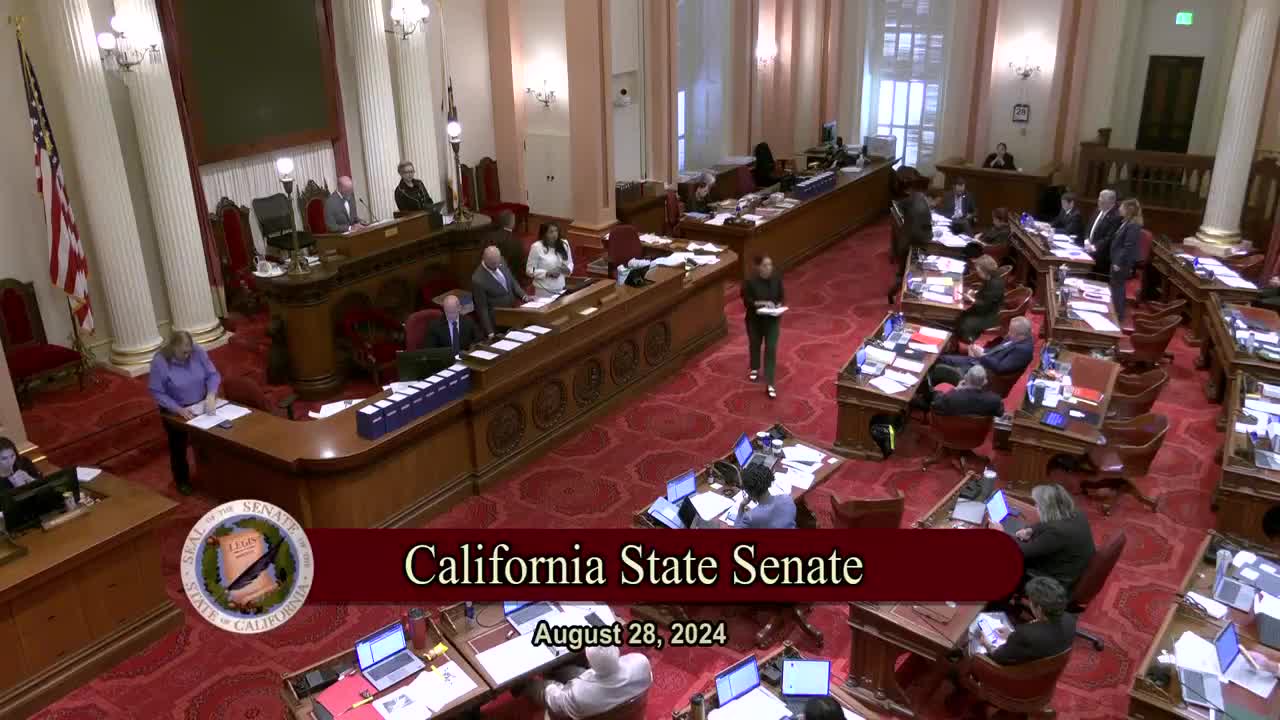


Bill Co-Author(s):