AB 232: Temporary practice allowances.
- Session Year: 2023-2024
- House: Assembly
- Latest Version Date: 2023-10-10
Current Status:
Passed
(2023-10-10: Chaptered by Secretary of State - Chapter 640, Statutes of 2023.)
Introduced
In Committee
First Chamber
In Committee
Second Chamber
Enacted
Existing law, the Licensed Marriage and Family Therapist Act, the Clinical Social Worker Practice Act, and the Licensed Professional Clinical Counselor Act, generally govern the provision of marriage and family therapy services, clinical social work services, and professional clinical counseling services, respectively, in the state and prohibit a person from practicing those healing arts without a license granted pursuant to the respective provisions of each act.
This bill, until January 1, 2026, would, under all of the acts described above, authorize a person who holds a license in another jurisdiction of the United States as a marriage and family therapist, clinical social worker, or professional clinical counselor to provide services in the state for a period not to exceed 30 consecutive days in any calendar year if certain conditions are met, including the license from another jurisdiction is at the highest level for independent clinical practice in the jurisdiction in which the license was granted, the client is located in California during the time the person seeks to provide care in California, and the client is a current client of the person and had an established, ongoing client-provider relationship with the person at the time the client became located in California. The bill would require a person who intends to provide services pursuant to those provisions to provide the Board of Behavioral Sciences with certain information before providing services, including the jurisdiction in which the person is licensed, the type of license held, and the license number. The bill would also make various nonsubstantive and conforming changes.
Existing law, the Licensed Marriage and Family Therapist Act, the Clinical Social Worker Practice Act, and the Licensed Professional Clinical Counselor Act generally govern the provision of marriage and family therapy services, clinical social work services, and professional clinical counseling services, respectively, in the state and prohibit a person from practicing those healing arts without a license granted pursuant to the respective provisions of each act.
This bill, until January 1, 2026, would, under all of the acts described above, authorize a person who holds a license in another jurisdiction of the United States as a marriage and family therapist, clinical social worker, or professional clinical counselor to provide services in the state for a period not to exceed 30 consecutive days in any calendar year if certain conditions are met, including the license from another jurisdiction is at the highest level for independent clinical practice in the jurisdiction in which the license was granted, the client is located in California during the time the person seeks to provide care in California, and the client is a current client of the person and had an established, ongoing client-provider, therapeutic client-provider relationship with the person at the time the client became located in California. The bill would require a person who intends to provide services pursuant to those provisions to provide the Board of Behavioral Sciences with certain information before providing services, including the jurisdiction in which the person is licensed, the type of license held, and the license number. The bill would also make various nonsubstantive and conforming changes.
Existing law, the Licensed Marriage and Family Therapist Act, the Clinical Social Worker Practice Act, and the Licensed Professional Clinical Counselor Act generally govern the provision of marriage and family therapy services, clinical social work services, and professional clinical counseling services, respectively, in the state and prohibit a person from practicing those healing arts without a license granted pursuant to the respective provisions of each act.
This bill, until January 1, 2026, would, under all of the acts described above, authorize a person who holds a license in another jurisdiction of the United States as a marriage and family therapist, clinical social worker, or professional clinical counselor to provide services in the state for a period not to exceed 30 consecutive days in any calendar year if certain conditions are met, including the license from another jurisdiction is at the highest level for independent clinical practice in the jurisdiction in which the license was granted, the client is located in California during the time the person seeks to provide care in California, and the client is a current client of the person and was the persons client immediately before had an established, ongoing client-provider, therapeutic relationship with the person at the time the client became located in California. The bill would require a person who intends to provide services pursuant to those provisions to provide the Board of Behavioral Sciences with certain information before providing services, including the jurisdiction in which the person is licensed, the type of license held, and the license number. The bill would also make various nonsubstantive and conforming changes.
Existing law, the Licensed Marriage and Family Therapist Act, the Clinical Social Worker Practice Act, and the Licensed Professional Clinical Counselor Act generally govern the provision of marriage and family therapy services, clinical social work services, and professional clinical counseling services, respectively, in the state and prohibit a person from practicing those healing arts without a license granted pursuant to the respective provisions of each act.
This bill, until January 1, 2026, would, under all of the acts described above, authorize a person who holds a license in another jurisdiction of the United States as a marriage and family therapist, clinical social worker, or professional clinical counselor to provide services in the state for a period not to exceed 30 consecutive days in any calendar year if certain conditions are met, including the license from another jurisdiction is at the highest level for independent clinical practice in the jurisdiction in which the license was granted, the client is located in California during the time the person seeks to provide care in California, and the client is a client of the person and was the persons client immediately before the client became located in California. The bill would require a person who intends to provide services pursuant to those provisions to provide the Board of Behavioral Sciences with certain information before providing services, including the jurisdiction in which the person is licensed, the type of license held, and the license number. The bill would also make various nonsubstantive and conforming changes.
Existing law, the Licensed Marriage and Family Therapist Act, the Clinical Social Worker Practice Act, and the Licensed Professional Clinical Counselor Act generally govern the provision of marriage and family therapy services, clinical social work services, and professional clinical counseling services, respectively, in the state and prohibit a person from practicing those healing arts without a license granted pursuant to the respective provisions of each act.
This bill, until January 1, 2026, would, under all of the acts described above, authorize a person who holds a license in another jurisdiction of the United States as a marriage and family therapist, clinical social worker, or professional clinical counselor to provide services in the state for a period not to exceed 30 consecutive days in any calendar year if certain conditions are met, including the license from another jurisdiction is at the highest level for independent clinical practice in the jurisdiction in which the license was granted, the client is located in California during the time the person seeks to provide care in California, and the client is a client of the person and was the persons client immediately before the client became located in California. The bill would require a person who intends to provide services pursuant to those provisions to provide the Board of Behavioral Sciences with certain information before providing services, including the jurisdiction in which the person is licensed, the type of license held, and the license number.
(a)(1)Many California families and many individual Californians are experiencing difficulty and distress and are in need of wise, competent, caring, compassionate, and effective counseling in order to enable them to improve and maintain healthy family relationships.
(2)Healthy individuals and healthy families and healthy relationships are inherently beneficial and crucial to a healthy society and are our most precious and valuable natural resource. Licensed marriage and family therapists provide a crucial support for the well-being of the people and the State of California.
(b)A person shall not engage in the practice of marriage and family therapy, as defined by Section 4980.02, unless the person holds a valid license as a marriage and family therapist pursuant to this chapter.
(c)Except as provided in subdivision (d), a person shall not do either of the following without a license obtained pursuant to this chapter.
(1)Advertise that the person performs the services of a marriage, family, child, domestic, or marital consultant.
(2)Use the titles listed in paragraph (1) or any similar titles, including the letters L.M.F.T., M.F.T., or M.F.C.C., or another name, word, initial, or symbol in connection with or following the persons name to imply that the person performs the services suggested by those titles.
(d)(1)A person licensed under Article 4 (commencing with Section 4996) of Chapter 14 or under Chapter 6.6 (commencing with Section 2900) may engage in the practice of marriage and family therapy and advertise that the person practices marriage and family therapy.
(2)A person described in paragraph (1) shall not advertise that the person holds the marriage and family therapists license, including by using the letters L.M.F.T., M.F.T., or M.F.C.C., or another name, word, initial, or symbol in connection with or following the persons name to imply licensure as a marriage and family therapist, unless the person is licensed pursuant to this chapter.
SEC. 2.Section 4980.11 is added to the Business and Professions Code, to read:4980.11.(a)Notwithstanding Section 4980, a person who holds a license in another jurisdiction of the United States as a marriage and family therapist may provide marriage and family therapy services in this state for a period not to exceed 30 consecutive days in any calendar year, if all of the following conditions are met:
(1)The license from another jurisdiction is at the highest level for independent clinical practice in the jurisdiction in which the license was granted.
(2)The license from another jurisdiction is current, active, and unrestricted.
(3)The client is located in California during the time the person seeks to provide care in California.
(4)The client is a current client of the person and has an established, ongoing client-provider relationship with the person at the time the client became located in California.
(5)The person informs the client of the limited timeframe of the services and that the person is not licensed in California.
(6)The person provides the client with the Board of Behavioral Sciences internet website address.
(7)The person informs the client of the jurisdiction in which the person is licensed and the type of license held and provides the client with the persons license number.
(b)A person who intends to provide marriage and family therapy services pursuant to this section shall provide the board with all of the following information before providing services:
(1)The name under which the person is licensed in another jurisdiction, the persons mailing address, the persons phone number, the persons social security number or individual taxpayer identification number, and the persons electronic mailing address, if the person has an electronic mailing address.
(2)The jurisdiction in which the person is licensed, the type of license held, and the license number.
(3)The date on which the person will begin providing marriage and family therapy services to the persons client in California.
(c)A person who provides services pursuant to this section is deemed to have agreed to practicing under the jurisdiction of the board and to be bound by the laws of this state.
(d)This section does not apply to any person licensed by the board whose license has been suspended or revoked.
(e)This section shall remain in effect only until January 1, 2026, and as of that date is repealed.
SEC. 3.Section 4980.30 of the Business and Professions Code is amended to read:4980.30.Except as otherwise provided by this chapter, a person shall not practice, or advertise the performance of, marriage and family therapy services unless the person has applied to the board for a license, paid the license fee required by this chapter, and obtained a license from the board.
SEC. 4.The heading of Article 1 (commencing with Section 4991) is added to Chapter 14 of Division 2 of the Business and Professions Code, to read:1.General ProvisionsSEC. 5.Section 4991.2 of the Business and Professions Code is amended to read:4991.2.For purposes of this chapter:
(a)Accredited school of social work means a school that is accredited by the Commission on Accreditation of the Council on Social Work Education.
(b)Board means the Board of Behavioral Sciences.
SEC. 6.Section 4996.16.1 is added to the Business and Professions Code, to read:4996.16.1.(a)Notwithstanding Section 4996, a person who holds a license in another jurisdiction of the United States as a clinical social worker may provide clinical social work services in this state for a period not to exceed 30 consecutive days in any calendar year, if all of the following conditions are met:
(1)The license from another jurisdiction is at the highest level for independent clinical practice in the jurisdiction in which the license was granted.
(2)The license from another jurisdiction is current, active, and unrestricted.
(3)The client is located in California during the time the person seeks to provide care in California.
(4)The client is a current client of the person and has an established, ongoing client-provider relationship with the person at the time the client became located in California.
(5)The person informs the client of the limited timeframe of the services and that the person is not licensed in California.
(6)The person provides the client with the Board of Behavioral Sciences internet website address.
(7)The person informs the client of the jurisdiction in which the person is licensed and the type of license held and provides the client with the persons license number.
(b)A person who intends to provide clinical social work services pursuant to this section shall provide the board with all of the following information before providing services:
(1)The name under which the person is licensed in another jurisdiction, the persons mailing address, the persons phone number, the persons social security number or individual taxpayer identification number, and the persons electronic mailing address, if the person has an electronic mailing address.
(2)The jurisdiction in which the person is licensed, the type of license held, and the license number.
(3)The date on which the person will begin providing clinical social work services to the persons client in California.
(c)A person who provides services pursuant to this section is deemed to have agreed to practicing under the jurisdiction of the board and to be bound by the laws of this state.
(d)This section does not apply to any person licensed by the board whose license has been suspended or revoked.
(e)This section shall remain in effect only until January 1, 2026, and as of that date is repealed.
SEC. 7.Section 4999.23 is added to the Business and Professions Code, to read:4999.23.(a)Notwithstanding Section 4999.30, a person who holds a license in another jurisdiction of the United States as a professional clinical counselor may provide professional clinical counseling services in this state for a period not to exceed 30 consecutive days in any calendar year, if all of the following conditions are met:
(1)The license from another jurisdiction is at the highest level for independent clinical practice in the jurisdiction in which the license was granted.
(2)The license from another jurisdiction is current, active, and unrestricted.
(3)The client is located in California during the time the person seeks to provide care in California.
(4)The client is a current client of the person and has an established, ongoing client-provider relationship with the person at the time the client became located in California.
(5)The person informs the client of the limited timeframe of the services and that the person is not licensed in California.
(6)The person provides the client with the Board of Behavioral Sciences internet website address.
(7)The person informs the client of the jurisdiction in which the person is licensed and the type of license held and provides the client with the persons license number.
(b)A person who intends to provide professional clinical counseling services pursuant to this section shall provide the board with all of the following information before providing services:
(1)The name under which the person is licensed in another jurisdiction, the persons mailing address, the persons phone number, the persons social security number or individual taxpayer identification number, and the persons electronic mailing address, if the person has an electronic mailing address.
(2)The jurisdiction in which the person is licensed, the type of license held, and the license number.
(3)The date on which the person will begin providing professional clinical counseling services to the persons client in California.
(c)A person who provides services pursuant to this section is deemed to have agreed to practicing under the jurisdiction of the board and to be bound by the laws of this state.
(d)This section does not apply to any person licensed by the board whose license has been suspended or revoked.
(e)This section shall remain in effect only until January 1, 2026, and as of that date is repealed.
(a)(1)Many California families and many individual Californians are experiencing difficulty and distress and are in need of wise, competent, caring, compassionate, and effective counseling in order to enable them to improve and maintain healthy family relationships.
(2)Healthy individuals and healthy families and healthy relationships are inherently beneficial and crucial to a healthy society and are our most precious and valuable natural resource. Licensed marriage and family therapists provide a crucial support for the well-being of the people and the State of California.
(b)A person shall not engage in the practice of marriage and family therapy, as defined by Section 4980.02, unless the person holds a valid license as a marriage and family therapist pursuant to this chapter.
(c)Except as provided in subdivision (d), a person shall not do either of the following without a license obtained pursuant to this chapter.
(1)Advertise that the person performs the services of a marriage, family, child, domestic, or marital consultant.
(2)Use the titles listed in paragraph (1) or any similar titles, including the letters L.M.F.T., M.F.T., or M.F.C.C., or another name, word, initial, or symbol in connection with or following the persons name to imply that the person performs the services suggested by those titles.
(d)(1)A person licensed under Article 4 (commencing with Section 4996) of Chapter 14 or under Chapter 6.6 (commencing with Section 2900) may engage in the practice of marriage and family therapy and advertise that the person practices marriage and family therapy.
(2)A person described in paragraph (1) shall not advertise that the person holds the marriage and family therapists license, including by using the letters L.M.F.T., M.F.T., or M.F.C.C., or another name, word, initial, or symbol in connection with or following the persons name to imply licensure as a marriage and family therapist, unless the person is licensed pursuant to this chapter.
SEC. 2.Section 4980.11 is added to the Business and Professions Code, to read:4980.11.(a)Notwithstanding Section 4980, a person who holds a license in another jurisdiction of the United States as a marriage and family therapist may provide marriage and family therapy services in this state for a period not to exceed 30 consecutive days in any calendar year, if all of the following conditions are met:
(1)The license from another jurisdiction is at the highest level for independent clinical practice in the jurisdiction in which the license was granted.
(2)The license from another jurisdiction is current, active, and unrestricted.
(3)The client is located in California during the time the person seeks to provide care in California.
(4)The client is a current client of the person and had has an established, ongoing client-provider, therapeutic client-provider relationship with the person at the time the client became located in California.
(5)The person informs the client of the limited timeframe of the services and that the person is not licensed in California.
(6)The person provides the client with the Board of Behavioral Sciences internet website address.
(7)The person informs the client of the jurisdiction in which the person is licensed and the type of license held and provides the client with the persons license number.
(b)A person who intends to provide marriage and family therapy services pursuant to this section shall provide the board with all of the following information before providing services:
(1)The name under which the person is licensed in another jurisdiction, the persons mailing address, the persons phone number, the persons social security number or individual taxpayer identification number, and the persons electronic mailing address, if the person has an electronic mailing address.
(2)The jurisdiction in which the person is licensed, the type of license held, and the license number.
(3)The date on which the person will begin providing marriage and family therapy services to the persons client in California.
(c)A person who provides services pursuant to this section is deemed to have agreed to practicing under the jurisdiction of the board and to be bound by the laws of this state.
(d)This section does not apply to any person licensed by the board whose license has been suspended or revoked.
(e)This section shall remain in effect only until January 1, 2026, and as of that date is repealed.
SEC. 3.Section 4980.30 of the Business and Professions Code is amended to read:4980.30.Except as otherwise provided by this chapter, a person shall not practice, or advertise the performance of, marriage and family therapy services unless the person has applied to the board for a license, paid the license fee required by this chapter, and obtained a license from the board.
SEC. 4.The heading of Article 1 (commencing with Section 4991) is added to Chapter 14 of Division 2 of the Business and Professions Code, to read:1.General ProvisionsSEC. 5.Section 4991.2 of the Business and Professions Code is amended to read:4991.2.For purposes of this chapter:
(a)Accredited school of social work means a school that is accredited by the Commission on Accreditation of the Council on Social Work Education.
(b)Board means the Board of Behavioral Sciences.
SEC. 6.Section 4996.16.1 is added to the Business and Professions Code, to read:4996.16.1.(a)Notwithstanding Section 4996, a person who holds a license in another jurisdiction of the United States as a clinical social worker may provide clinical social work services in this state for a period not to exceed 30 consecutive days in any calendar year, if all of the following conditions are met:
(1)The license from another jurisdiction is at the highest level for independent clinical practice in the jurisdiction in which the license was granted.
(2)The license from another jurisdiction is current, active, and unrestricted.
(3)The client is located in California during the time the person seeks to provide care in California.
(4)The client is a current client of the person and had has an established, ongoing client-provider, therapeutic client-provider relationship with the person at the time the client became located in California.
(5)The person informs the client of the limited timeframe of the services and that the person is not licensed in California.
(6)The person provides the client with the Board of Behavioral Sciences internet website address.
(7)The person informs the client of the jurisdiction in which the person is licensed and the type of license held and provides the client with the persons license number.
(b)A person who intends to provide clinical social work services pursuant to this section shall provide the board with all of the following information before providing services:
(1)The name under which the person is licensed in another jurisdiction, the persons mailing address, the persons phone number, the persons social security number or individual taxpayer identification number, and the persons electronic mailing address, if the person has an electronic mailing address.
(2)The jurisdiction in which the person is licensed, the type of license held, and the license number.
(3)The date on which the person will begin providing clinical social work services to the persons client in California.
(c)A person who provides services pursuant to this section is deemed to have agreed to practicing under the jurisdiction of the board and to be bound by the laws of this state.
(d)This section does not apply to any person licensed by the board whose license has been suspended or revoked.
(e)This section shall remain in effect only until January 1, 2026, and as of that date is repealed.
SEC. 7.Section 4999.23 is added to the Business and Professions Code, to read:4999.23.(a)Notwithstanding Section 4999.30, a person who holds a license in another jurisdiction of the United States as a professional clinical counselor may provide professional clinical counseling services in this state for a period not to exceed 30 consecutive days in any calendar year, if all of the following conditions are met:
(1)The license from another jurisdiction is at the highest level for independent clinical practice in the jurisdiction in which the license was granted.
(2)The license from another jurisdiction is current, active, and unrestricted.
(3)The client is located in California during the time the person seeks to provide care in California.
(4)The client is a current client of the person and had has an established, ongoing client-provider, therapeutic client-provider relationship with the person at the time the client became located in California.
(5)The person informs the client of the limited timeframe of the services and that the person is not licensed in California.
(6)The person provides the client with the Board of Behavioral Sciences internet website address.
(7)The person informs the client of the jurisdiction in which the person is licensed and the type of license held and provides the client with the persons license number.
(b)A person who intends to provide professional clinical counseling services pursuant to this section shall provide the board with all of the following information before providing services:
(1)The name under which the person is licensed in another jurisdiction, the persons mailing address, the persons phone number, the persons social security number or individual taxpayer identification number, and the persons electronic mailing address, if the person has an electronic mailing address.
(2)The jurisdiction in which the person is licensed, the type of license held, and the license number.
(3)The date on which the person will begin providing professional clinical counseling services to the persons client in California.
(c)A person who provides services pursuant to this section is deemed to have agreed to practicing under the jurisdiction of the board and to be bound by the laws of this state.
(d)This section does not apply to any person licensed by the board whose license has been suspended or revoked.
(e)This section shall remain in effect only until January 1, 2026, and as of that date is repealed.
(a)(1)Many California families and many individual Californians are experiencing difficulty and distress and are in need of wise, competent, caring, compassionate, and effective counseling in order to enable them to improve and maintain healthy family relationships.
(2)Healthy individuals and healthy families and healthy relationships are inherently beneficial and crucial to a healthy society and are our most precious and valuable natural resource. Licensed marriage and family therapists provide a crucial support for the well-being of the people and the State of California.
(b)A person shall not engage in the practice of marriage and family therapy, as defined by Section 4980.02, unless the person holds a valid license as a marriage and family therapist pursuant to this chapter.
(c)Except as provided in subdivision (d), a person shall not do either of the following without a license obtained pursuant to this chapter.
(1)Advertise that the person performs the services of a marriage, family, child, domestic, or marital consultant.
(2)Use the titles listed in paragraph (1) or any similar titles, including the letters L.M.F.T., M.F.T., or M.F.C.C., or another name, word, initial, or symbol in connection with or following the persons name to imply that the person performs the services suggested by those titles.
(d)(1)A person licensed under Article 4 (commencing with Section 4996) of Chapter 14 or under Chapter 6.6 (commencing with Section 2900) may engage in the practice of marriage and family therapy and advertise that the person practices marriage and family therapy.
(2)A person described in paragraph (1) shall not advertise that the person holds the marriage and family therapists license, including by using the letters L.M.F.T., M.F.T., or M.F.C.C., or another name, word, initial, or symbol in connection with or following the persons name to imply licensure as a marriage and family therapist, unless the person is licensed pursuant to this chapter.
SEC. 2.Section 4980.11 is added to the Business and Professions Code, to read:4980.11.(a)Notwithstanding Section 4980, a person who holds a license in another jurisdiction of the United States as a marriage and family therapist may provide marriage and family therapy services in this state for a period not to exceed 30 consecutive days in any calendar year, if all of the following conditions are met:
(1)The license from another jurisdiction is at the highest level for independent clinical practice in the jurisdiction in which the license was granted.
(2)The license from another jurisdiction is current, active, and unrestricted.
(3)The client is located in California during the time the person seeks to provide care in California.
(4)The client is a current client of the person and was the persons client immediately before had an established, ongoing client-provider, therapeutic relationship with the person at the time the client became located in California.
(5)The person informs the client of the limited timeframe of the services and that the person is not licensed in California.
(6)The person provides the client with the Board of Behavioral Sciences internet website address.
(7)The person informs the client of the jurisdiction in which the person is licensed and the type of license held and provides the client with the persons license number.
(b)A person who intends to provide marriage and family therapy services pursuant to this section shall provide the board with all of the following information before providing services:
(1)The name under which the person is licensed in another jurisdiction, the persons mailing address, the persons phone number, the persons social security number or individual taxpayer identification number, and the persons electronic mailing address, if the person has an electronic mailing address.
(2)The jurisdiction in which the person is licensed, the type of license held, and the license number.
(3)The date on which the person will begin providing marriage and family therapy services to the persons client in California.
(c)A person who provides services pursuant to this section is deemed to have agreed to practicing under the jurisdiction of the board and to be bound by the laws of this state.
(d)This section does not apply to any person licensed by the board whose license has been suspended or revoked.
(e)This section shall remain in effect only until January 1, 2026, and as of that date is repealed.
SEC. 3.Section 4980.30 of the Business and Professions Code is amended to read:4980.30.Except as otherwise provided by this chapter, a person shall not practice, or advertise the performance of, marriage and family therapy services unless the person has applied to the board for a license, paid the license fee required by this chapter, and obtained a license from the board.
SEC. 4.The heading of Article 1 (commencing with Section 4991) is added to Chapter 14 of Division 2 of the Business and Professions Code, to read:1.General ProvisionsSEC. 5.Section 4991.2 of the Business and Professions Code is amended to read:4991.2.For purposes of this chapter:
(a)Accredited school of social work means a school that is accredited by the Commission on Accreditation of the Council on Social Work Education.
(b)Board means the Board of Behavioral Sciences.
SEC. 6.Section 4996.16.1 is added to the Business and Professions Code, to read:4996.16.1.(a)Notwithstanding Section 4996, a person who holds a license in another jurisdiction of the United States as a clinical social worker may provide clinical social work services in this state for a period not to exceed 30 consecutive days in any calendar year, if all of the following conditions are met:
(1)The license from another jurisdiction is at the highest level for independent clinical practice in the jurisdiction in which the license was granted.
(2)The license from another jurisdiction is current, active, and unrestricted.
(3)The client is located in California during the time the person seeks to provide care in California.
(4)The client is a current client of the person and was the persons client immediately before had an established, ongoing client-provider, therapeutic relationship with the person at the time the client became located in California.
(5)The person informs the client of the limited timeframe of the services and that the person is not licensed in California.
(6)The person provides the client with the Board of Behavioral Sciences internet website address.
(7)The person informs the client of the jurisdiction in which the person is licensed and the type of license held and provides the client with the persons license number.
(b)A person who intends to provide clinical social work services pursuant to this section shall provide the board with all of the following information before providing services:
(1)The name under which the person is licensed in another jurisdiction, the persons mailing address, the persons phone number, the persons social security number or individual taxpayer identification number, and the persons electronic mailing address, if the person has an electronic mailing address.
(2)The jurisdiction in which the person is licensed, the type of license held, and the license number.
(3)The date on which the person will begin providing clinical social work services to the persons client in California.
(c)A person who provides services pursuant to this section is deemed to have agreed to practicing under the jurisdiction of the board and to be bound by the laws of this state.
(d)This section does not apply to any person licensed by the board whose license has been suspended or revoked.
(e)This section shall remain in effect only until January 1, 2026, and as of that date is repealed.
SEC. 7.Section 4999.23 is added to the Business and Professions Code, to read:4999.23.(a)Notwithstanding Section 4999.30, a person who holds a license in another jurisdiction of the United States as a professional clinical counselor may provide professional clinical counseling services in this state for a period not to exceed 30 consecutive days in any calendar year, if all of the following conditions are met:
(1)The license from another jurisdiction is at the highest level for independent clinical practice in the jurisdiction in which the license was granted.
(2)The license from another jurisdiction is current, active, and unrestricted.
(3)The client is located in California during the time the person seeks to provide care in California.
(4)The client is a current client of the person and was the persons client immediately before had an established, ongoing client-provider, therapeutic relationship with the person at the time the client became located in California.
(5)The person informs the client of the limited timeframe of the services and that the person is not licensed in California.
(6)The person provides the client with the Board of Behavioral Sciences internet website address.
(7)The person informs the client of the jurisdiction in which the person is licensed and the type of license held and provides the client with the persons license number.
(b)A person who intends to provide professional clinical counseling services pursuant to this section shall provide the board with all of the following information before providing services:
(1)The name under which the person is licensed in another jurisdiction, the persons mailing address, the persons phone number, the persons social security number or individual taxpayer identification number, and the persons electronic mailing address, if the person has an electronic mailing address.
(2)The jurisdiction in which the person is licensed, the type of license held, and the license number.
(3)The date on which the person will begin providing professional clinical counseling services to the persons client in California.
(c)A person who provides services pursuant to this section is deemed to have agreed to practicing under the jurisdiction of the board and to be bound by the laws of this state.
(d)This section does not apply to any person licensed by the board whose license has been suspended or revoked.
(e)This section shall remain in effect only until January 1, 2026, and as of that date is repealed.
(a)(1)Many California families and many individual Californians are experiencing difficulty and distress and are in need of wise, competent, caring, compassionate, and effective counseling in order to enable them to improve and maintain healthy family relationships.
(2)Healthy individuals and healthy families and healthy relationships are inherently beneficial and crucial to a healthy society and are our most precious and valuable natural resource. Licensed marriage and family therapists provide a crucial support for the well-being of the people and the State of California.
(b)A person shall not engage in the practice of marriage and family therapy, as defined by Section 4980.02, unless the person holds a valid license as a marriage and family therapist pursuant to this chapter.
(c)Except as provided in subdivision (d), a person shall not do either of the following without a license obtained pursuant to this chapter.
(1)Advertise that the person performs the services of a marriage, family, child, domestic, or marital consultant.
(2)Use the titles listed in paragraph (1) or any similar titles, including the letters L.M.F.T. L.M.F.T., M.F.T., or M.F.C.C., or other another name, word, initial, or symbol in connection with or following the persons name to imply that the person performs the services suggested by those titles.
(d)(1)A person licensed under Article 4 (commencing with Section 4996) of Chapter 14 or under Chapter 6.6 (commencing with Section 2900) may engage in the practice of marriage and family therapy and advertise that the person practices marriage and family therapy.
(2)A person described in paragraph (1) shall not advertise that the person holds the marriage and family therapists license, including by using the letters L.M.F.T., M.F.T., or M.F.C.C., or another name, word, initial, or symbol in connection with or following the persons name to imply licensure as a marriage and family therapist, unless the person is licensed pursuant to this chapter.
SEC. 2.Section 4980.11 is added to the Business and Professions Code, to read:4980.11.(a)Notwithstanding Section 4980, a person who holds a license in another jurisdiction of the United States as a marriage and family therapist may provide marriage and family therapy services in this state for a period not to exceed 30 consecutive days in any calendar year, if all of the following conditions are met:
(1)The license from another jurisdiction is at the highest level for independent clinical practice in the jurisdiction in which the license was granted.
(2)The license from another jurisdiction is current, active, and unrestricted.
(3)The client is located in California during the time the person seeks to provide care in California.
(4)The client is a client of the person and was the persons client immediately before the client became located in California.
(5)The person informs the client of the limited time frame timeframe of the services and that the person is not licensed in California.
(6)The person provides the client with the Board of Behavioral Sciences internet website address.
(7)The person informs the client of the jurisdiction in which the person is licensed and the type of license held and provides the client with the persons license number.
(b)A person who intends to provide marriage and family therapy services pursuant to this section shall provide the board with all of the following information before providing services:
(1)The name under which the person is licensed in another jurisdiction, the persons mailing address, the persons phone number, the persons social security number or individual taxpayer identification number, and the persons electronic mailing address, if the person has an electronic mailing address.
(2)The jurisdiction in which the person is licensed, the type of license held, and the license number.
(3)The date on which the person will begin providing marriage and family therapy services to the persons client in California.
(c)A person who provides services pursuant to this section is deemed to have agreed to practicing under the jurisdiction of the board and to be bound by the laws of this state.
(d)This section does not apply to any person licensed by the board whose license has been suspended or revoked.
(e)This section shall remain in effect only until January 1, 2026, and as of that date is repealed.
SEC. 3.Section 4980.30 of the Business and Professions Code is amended to read:4980.30.Except as otherwise provided by this chapter, a person shall not practice, or advertise the performance of, marriage and family therapy services unless the person has applied to the board for a license, paid the license fee required by this chapter, and obtained a license from the board.
SEC. 4.The heading of Article 1 (commencing with Section 4991) is added to Chapter 14 of Division 2 of the Business and Professions Code, to read:1.General ProvisionsSEC. 5.Section 4991.2 of the Business and Professions Code is amended to read:4991.2.For purposes of this chapter:
(a)Accredited school of social work means a school that is accredited by the Commission on Accreditation of the Council on Social Work Education.
(b)Board means the Board of Behavioral Sciences.
SEC. 6.Section 4996.16.1 is added to the Business and Professions Code, to read:4996.16.1.(a)Notwithstanding Section 4996, a person who holds a license in another jurisdiction of the United States as a clinical social worker may provide clinical social work services in this state for a period not to exceed 30 consecutive days in any calendar year, if all of the following conditions are met:
(1)The license from another jurisdiction is at the highest level for independent clinical practice in the jurisdiction in which the license was granted.
(2)The license from another jurisdiction is current, active, and unrestricted.
(3)The client is located in California during the time the person seeks to provide care in California.
(4)The client is a client of the person and was the persons client immediately before the client became located in California.
(5)The person informs the client of the limited time frame timeframe of the services and that the person is not licensed in California.
(6)The person provides the client with the Board of Behavioral Sciences internet website address.
(7)The person informs the client of the jurisdiction in which the person is licensed and the type of license held and provides the client with the persons license number.
(b)A person who intends to provide clinical social work services pursuant to this section shall provide the board with all of the following information before providing services:
(1)The name under which the person is licensed in another jurisdiction, the persons mailing address, the persons phone number, the persons social security number or individual taxpayer identification number, and the persons electronic mailing address, if the person has an electronic mailing address.
(2)The jurisdiction in which the person is licensed, the type of license held, and the license number.
(3)The date on which the person will begin providing clinical social work services to the persons client in California.
(c)A person who provides services pursuant to this section is deemed to have agreed to practicing under the jurisdiction of the board and to be bound by the laws of this state.
(d)This section does not apply to any person licensed by the board whose license has been suspended or revoked.
(e)This section shall remain in effect only until January 1, 2026, and as of that date is repealed.
SEC. 7.Section 4999.23 is added to the Business and Professions Code, to read:4999.23.(a)Notwithstanding Section 4999.30, a person who holds a license in another jurisdiction of the United States as a professional clinical counselor may provide professional clinical counseling services in this state for a period not to exceed 30 consecutive days in any calendar year, if all of the following conditions are met:
(1)The license from another jurisdiction is at the highest level for independent clinical practice in the jurisdiction in which the license was granted.
(2)The license from another jurisdiction is current, active, and unrestricted.
(3)The client is located in California during the time the person seeks to provide care in California.
(4)The client is a client of the person and was the persons client immediately before the client became located in California.
(5)The person informs the client of the limited time frame timeframe of the services and that the person is not licensed in California.
(6)The person provides the client with the Board of Behavioral Sciences internet website address.
(7)The person informs the client of the jurisdiction in which the person is licensed and the type of license held and provides the client with the persons license number.
(b)A person who intends to provide professional clinical counseling services pursuant to this section shall provide the board with all of the following information before providing services:
(1)The name under which the person is licensed in another jurisdiction, the persons mailing address, the persons phone number, the persons social security number or individual taxpayer identification number, and the persons electronic mailing address, if the person has an electronic mailing address.
(2)The jurisdiction in which the person is licensed, the type of license held, and the license number.
(3)The date on which the person will begin providing professional clinical counseling services to the persons client in California.
(c)A person who provides services pursuant to this section is deemed to have agreed to practicing under the jurisdiction of the board and to be bound by the laws of this state.
(d)This section does not apply to any person licensed by the board whose license has been suspended or revoked.
(e)This section shall remain in effect only until January 1, 2026, and as of that date is repealed.
(a)(1)Many California families and many individual Californians are experiencing difficulty and distress, distress and are in need of wise, competent, caring, compassionate, and effective counseling in order to enable them to improve and maintain healthy family relationships.
(2)Healthy individuals and healthy families and healthy relationships are inherently beneficial and crucial to a healthy society, society and are our most precious and valuable natural resource. Licensed marriage and family therapists provide a crucial support for the well-being of the people and the State of California.
(b)No A person may shall not engage in the practice of marriage and family therapy therapy, as defined by Section 4980.02, unless he or she the person holds a valid license as a marriage and family therapist, or unless he or she is specifically exempted from that requirement, nor may any person advertise himself or herself as performing the services of a marriage, family, child, domestic, or marital consultant, or in any way use these or any similar titles, including the letters L.M.F.T. M.F.T., or M.F.C.C., or other name, word initial, or symbol in connection with or following his or her name to imply that he or she performs these services without a license as provided by this chapter. Persons licensed under Article 4 (commencing with Section 4996) of Chapter 14 of Division 2, or under Chapter 6.6 (commencing with Section 2900) may engage in such practice or advertise that they practice marriage and family therapy but may not advertise that they hold the marriage and family therapists license. therapist pursuant to this chapter.
(c)Except as provided in subdivision (d), a person shall not do either of the following without a license obtained pursuant to this chapter.
(1)Advertise that the person performs the services of a marriage, family, child, domestic, or marital consultant.
(2)Use the titles listed in paragraph (1) or any similar titles, including the letters L.M.F.T. M.F.T., or M.F.C.C., or other name, word, initial, or symbol in connection with or following the persons name to imply that the person performs the services suggested by those titles.
(d)(1)A person licensed under Article 4 (commencing with Section 4996) of Chapter 14 or under Chapter 6.6 (commencing with Section 2900) may engage in the practice of marriage and family therapy and advertise that the person practices marriage and family therapy.
(2)A person described in paragraph (1) shall not advertise that the person holds the marriage and family therapists license, unless the person is licensed pursuant to this chapter.
SECTION 1.SEC. 2.Section 4980.11 is added to the Business and Professions Code, to read:4980.11.(a)Notwithstanding Section 4980, a person who holds a license in another jurisdiction of the United States as a marriage and family therapist may provide marriage and family therapy services in this state for a period not to exceed 30 consecutive days in any calendar year, if all of the following conditions are met:
(1)The license from another jurisdiction is at the highest level for independent clinical practice in the jurisdiction in which the license was granted.
(2)The license from another jurisdiction is current, active, and unrestricted.
(3)The client is located in California during the time the person seeks to provide care in California.
(4)The client is a client of the person and was the persons client immediately before the client became located in California.
(5)The person informs the client of the limited time frame of the services and that they are the person is not licensed in California.
(6)The person provides the client with the Board of Behavioral Sciences internet website address.
(7)The person informs the client of the jurisdiction in which they are the person is licensed and the type of license held and provides the client with the persons license number.
(b)A person who intends to provide marriage and family therapy services pursuant to this section shall provide the board with all of the following information before providing services:
(1)The name under which the person is licensed in another jurisdiction, the persons mailing address, the persons phone number, the persons social security number or individual taxpayer identification number, and the persons electronic mailing address, if the person has an electronic mailing address.
(2)The jurisdiction in which the person is licensed, the type of license held, and the license number.
(3)The date on which the person will begin providing marriage and family therapy services to the persons client in California.
(c)A person who provides services pursuant to this section is deemed to have agreed to practicing under the jurisdiction of the board and to be bound by the laws of this state.
(d)This section does not apply to any person licensed by the board whose license has been suspended or revoked.
(e)This section shall remain in effect only until January 1, 2026, and as of that date is repealed.
SEC. 3.Section 4980.30 of the Business and Professions Code is amended to read:4980.30.Except as otherwise provided herein, by this chapter, a person desiring to practice and to shall not practice, or advertise the performance of of, marriage and family therapy services shall apply unless the person has applied to the board for a license, pay paid the license fee required by this chapter, and obtain obtained a license from the board.
SEC. 4.The heading of Article 1 (commencing with Section 4991) is added to Chapter 14 of Division 2 of the Business and Professions Code, to read:1.General ProvisionsSEC. 5.Section 4991.2 of the Business and Professions Code is amended to read:4991.2.For purposes of this chapter:
Accredited(a)Accredited school of social work, within the meaning of this chapter, is work means a school that is accredited by the Commission on Accreditation of the Council on Social Work Education.
(b)Board means the Board of Behavioral Sciences.
SEC. 2.SEC. 6.Section 4996.16.1 is added to the Business and Professions Code, to read:4996.16.1.(a)Notwithstanding Section 4996, a person who holds a license in another jurisdiction of the United States as a clinical social worker may provide clinical social work services in this state for a period not to exceed 30 consecutive days in any calendar year, if all of the following conditions are met:
(1)The license from another jurisdiction is at the highest level for independent clinical practice in the jurisdiction in which the license was granted.
(2)The license from another jurisdiction is current, active, and unrestricted.
(3)The client is located in California during the time the person seeks to provide care in California.
(4)The client is a client of the person and was the persons client immediately before the client is became located in California.
(5)The person informs the client of the limited time frame of the services and that they are the person is not licensed in California.
(6)The person provides the client with the Board of Behavioral Sciences internet website address.
(7)The person informs the client of the jurisdiction in which the person is licensed and the type of license held and provides the client with the persons license number.
(b)A person who intends to provide clinical social work services pursuant to this section shall provide the Board of Behavioral Sciences board with all of the following information before providing services:
(1)The name under which the person is licensed in another jurisdiction, the persons mailing address, the persons phone number, the persons social security number or individual taxpayer identification number, and the persons electronic mailing address, if the person has an electronic mailing address.
(2)The jurisdiction in which the person is licensed, the type of license held, and the license number.
(3)The date on which the person will begin providing clinical social work services to the persons client in California.
(c)A person who provides services pursuant to this section is deemed to have agreed to practicing under the jurisdiction of the board and to be bound by the laws of this state.
(d)This section does not apply to any person licensed by this the board whose license has been suspended or revoked.
(e)This section shall remain in effect only until January 1, 2026, and as of that date is repealed.
SEC. 3.SEC. 7.Section 4999.23 is added to the Business and Professions Code, to read:4999.23.(a)Notwithstanding Section 4999.30, a person who holds a license in another jurisdiction of the United States as a professional clinical counselor may provide professional clinical counseling services in this state for a period not to exceed 30 consecutive days in any calendar year, if all of the following conditions are met:
(1)The license from another jurisdiction is at the highest level for independent clinical practice in the jurisdiction in which the license was granted.
(2)The license from another jurisdiction is current, active, and unrestricted.
(3)The client is located in California during the time the person seeks to provide care in California.
(4)The client is a client of the person and was the persons client immediately before the client is became located in California.
(5)The person informs the client of the limited time frame of the services and that the person is not licensed in California.
(6)The person provides the client with the Board of Behavioral Sciences internet website address.
(7)The person informs the client of the jurisdiction in which the person is licensed and the type of license held and provides the client with the persons license number.
(b)A person who intends to provide professional clinical counseling services pursuant to this section shall provide the board with all of the following information before providing services:
(1)The name under which the person is licensed in another jurisdiction, the persons mailing address, the persons phone number, the persons social security number or individual taxpayer identification number, and the persons electronic mailing address, if the person has an electronic mailing address.
(2)The jurisdiction in which the person is licensed, the type of license held, and the license number.
(3)The date on which the person will begin providing professional clinical counseling services to the persons client in California.
(c)A person who provides services pursuant to this section is deemed to have agreed to practicing under the jurisdiction of the board and to be bound by the laws of this state.
(d)This section does not apply to any person licensed by this the board whose license has been suspended or revoked.
(e)This section shall remain in effect only until January 1, 2026, and as of that date is repealed.
(a)Notwithstanding Section 4980, a person who holds a license in another jurisdiction of the United States as a marriage and family therapist may provide marriage and family therapy services in this state for a period not to exceed 30 consecutive days in any calendar year, if all of the following conditions are met:
(1)The license from another jurisdiction is at the highest level for independent clinical practice in the jurisdiction in which the license was granted.
(2)The license from another jurisdiction is current, active, and unrestricted.
(3)The client is located in California during the time the person seeks to provide care in California.
(4)The client is a client of the person and was the persons client immediately before the client became located in California.
(5)The person informs the client of the limited time frame of the services and that they are not licensed in California.
(6)The person provides the client with the Board of Behavioral Sciences internet website address.
(7)The person informs the client of the jurisdiction in which they are licensed and the type of license held and provides the client with the persons license number.
(b)A person who intends to provide marriage and family therapy services pursuant to this section shall provide the board with all of the following information before providing services:
(1)The name under which the person is licensed in another jurisdiction, the persons mailing address, the persons phone number, the persons social security number or individual taxpayer identification number, and the persons electronic mailing address, if the person has an electronic mailing address.
(2)The jurisdiction in which the person is licensed, the type of license held, and the license number.
(3)The date on which the person will begin providing marriage and family therapy services to the persons client in California.
(c)A person who provides services pursuant to this section is deemed to have agreed to practicing under the jurisdiction of the board and to be bound by the laws of this state.
(d)This section does not apply to any person licensed by the board whose license has been suspended or revoked.
(e)This section shall remain in effect only until January 1, 2026, and as of that date is repealed.
SEC. 2.Section 4996.16.1 is added to the Business and Professions Code, to read:4996.16.1.(a)Notwithstanding Section 4996, a person who holds a license in another jurisdiction of the United States as a clinical social worker may provide clinical social work services in this state for a period not to exceed 30 consecutive days in any calendar year, if all of the following conditions are met:
(1)The license from another jurisdiction is at the highest level for independent clinical practice in the jurisdiction in which the license was granted.
(2)The license from another jurisdiction is current, active, and unrestricted.
(3)The client is located in California during the time the person seeks to provide care in California.
(4)The client is a client of the person and was the persons client immediately before the client is located in California.
(5)The person informs the client of the limited time frame of the services and that they are not licensed in California.
(6)The person provides the client with the Board of Behavioral Sciences internet website address.
(7)The person informs the client of the jurisdiction in which the person is licensed and the type of license held and provides the client with the persons license number.
(b)A person who intends to provide clinical social work services pursuant to this section shall provide the Board of Behavioral Sciences with all of the following information before providing services:
(1)The name under which the person is licensed in another jurisdiction, the persons mailing address, the persons phone number, the persons social security number or individual taxpayer identification number, and the persons electronic mailing address, if the person has an electronic mailing address.
(2)The jurisdiction in which the person is licensed, the type of license held, and the license number.
(3)The date on which the person will begin providing clinical social work services to the persons client in California.
(c)A person who provides services pursuant to this section is deemed to have agreed to practicing under the jurisdiction of the board and to be bound by the laws of this state.
(d)This section does not apply to any person licensed by this board whose license has been suspended or revoked.
(e)This section shall remain in effect only until January 1, 2026, and as of that date is repealed.
SEC. 3.Section 4999.23 is added to the Business and Professions Code, to read:4999.23.(a)Notwithstanding Section 4999.30, a person who holds a license in another jurisdiction of the United States as a professional clinical counselor may provide professional clinical counseling services in this state for a period not to exceed 30 consecutive days in any calendar year, if all of the following conditions are met:
(1)The license from another jurisdiction is at the highest level for independent clinical practice in the jurisdiction in which the license was granted.
(2)The license from another jurisdiction is current, active, and unrestricted.
(3)The client is located in California during the time the person seeks to provide care in California.
(4)The client is a client of the person and was the persons client immediately before the client is located in California.
(5)The person informs the client of the limited time frame of the services and that the person is not licensed in California.
(6)The person provides the client with the Board of Behavioral Sciences internet website address.
(7)The person informs the client of the jurisdiction in which the person is licensed and the type of license held and provides the client with the persons license number.
(b)A person who intends to provide professional clinical counseling services pursuant to this section shall provide the board with the following information before providing services:
(1)The name under which the person is licensed in another jurisdiction, the persons mailing address, the persons phone number, the persons social security number or individual taxpayer identification number, and the persons electronic mailing address, if the person has an electronic mailing address.
(2)The jurisdiction in which the person is licensed, the type of license held, and the license number.
(3)The date on which the person will begin providing professional clinical counseling services to the persons client in California.
(c)A person who provides services pursuant to this section is deemed to have agreed to practicing under the jurisdiction of the board and to be bound by the laws of this state.
(d)This section does not apply to any person licensed by this board whose license has been suspended or revoked.
(e)This section shall remain in effect only until January 1, 2026, and as of that date is repealed.
|
Date
|
Status
|
|---|---|
| Oct 10, 2023 | Chaptered by Secretary of State - Chapter 640, Statutes of 2023. |
| Oct 10, 2023 | Approved by the Governor. |
| Sep 13, 2023 | Enrolled and presented to the Governor at 3 p.m. |
| Sep 7, 2023 | Senate amendments concurred in. To Engrossing and Enrolling. (Ayes 79. Noes 0. Page 3015.). |
| Sep 5, 2023 | In Assembly. Concurrence in Senate amendments pending. May be considered on or after September 7 pursuant to Assembly Rule 77. |
| Sep 5, 2023 | Read third time. Passed. Ordered to the Assembly. (Ayes 39. Noes 0. Page 2362.). |
| Aug 23, 2023 | Read second time. Ordered to third reading. |
| Aug 22, 2023 | From committee: Do pass. (Ayes 7. Noes 0.) (August 21). |
| Jun 19, 2023 | From committee chair, with author's amendments: Amend, and re-refer to committee. Read second time, amended, and re-referred to Com. on APPR. |
| Jun 7, 2023 | Read second time and amended. Re-referred to Com. on APPR. |
| Jun 6, 2023 | From committee: Amend, and do pass as amended and re-refer to Com. on APPR. (Ayes 13. Noes 0.) (June 5). |
| May 31, 2023 | From committee chair, with author's amendments: Amend, and re-refer to committee. Read second time, amended, and re-referred to Com. on B., P. & E. D. |
| May 10, 2023 | Referred to Com. on B., P. & E. D. |
| Apr 27, 2023 | In Senate. Read first time. To Com. on RLS. for assignment. |
| Apr 27, 2023 | Read third time. Passed. Ordered to the Senate. (Ayes 79. Noes 0. Page 1362.) |
| Apr 20, 2023 | Read second time. Ordered to Consent Calendar. |
| Apr 19, 2023 | From committee: Do pass. To Consent Calendar. (Ayes 14. Noes 0.) (April 19). |
| Mar 28, 2023 | From committee: Do pass and re-refer to Com. on APPR. with recommendation: To Consent Calendar. (Ayes 18. Noes 0.) (March 28). Re-referred to Com. on APPR. |
| Mar 9, 2023 | Re-referred to Com. on B. & P. |
| Mar 8, 2023 | From committee chair, with author's amendments: Amend, and re-refer to Com. on B. & P. Read second time and amended. |
| Feb 2, 2023 | Referred to Com. on B. & P. |
| Jan 13, 2023 | From printer. May be heard in committee February 12. |
| Jan 12, 2023 | Read first time. To print. |
|
Date
|
Description
|
Location
|
Votes
|
|
|---|---|---|---|---|
| Sep 7, 2023 | AB 232 Aguiar-Curry Concurrence in Senate Amendments | Assembly Floor |
Passed |
|
| Sep 5, 2023 | Assembly 3rd Reading AB232 Aguiar-Curry By Ochoa Bogh | Senate Floor |
Passed |
|
| Aug 21, 2023 | Do pass | Senate Standing Committee on Appropriations |
Passed |
|
| Jun 5, 2023 | Do pass as amended, but first amend, and re-refer to the Committee on [Appropriations] | Senate Standing Committee on Business, Professions and Economic Development |
Passed |
|
| Apr 27, 2023 | AB 232 Aguiar-Curry Consent Calendar Second Day Regular Session | Assembly Floor |
Passed |
|
| Apr 19, 2023 | Do pass. To Consent Calendar. | Assembly Standing Committee on Appropriations |
Passed |
|
| Mar 28, 2023 | Do pass and be re-referred to the Committee on [Appropriations] with recommendation: To Consent Calendar | Assembly Standing Committee on Business and Professions |
Passed |
This list shows positions taken on this bill by organizations on the date displayed, which is linked to the original source.
Positions by individuals are not included.
|
Organization
|
Position
|
Date
|
|---|---|---|
| ASPIRANET | ** Support | |
| ATA Action | ** Support | |
| Board of Behavioral Sciences | ** Support | |
| California Association Of Marriage And Family Therapists | ** Support | |
| California Council Of Community Behavioral Health Agencies | ** Support | |
| California Health+Advocates | ** Support | |
| California State Association of Psychiatrists | ** Support | |
| California Telehealth Policy Coalition | ** Support | |
| National Association Of Social Workers, California Chapter | ** Support | |
| Steinberg Institute | ** Support |
CONCURRENCE IN SENATE AMENDMENTS
CSA1 Bill Id:AB 232
Author:(Aguiar-Curry)
As Amended Ver:June 19, 2023
Majority vote
SUMMARY
Authorizes an individual who holds a license in another state as a marriage and family therapist, a clinical social worker, or a professional clinical counselor to provide services for which they hold a license for a period not to exceed 30 days without a California license if specified conditions are met.
Senate Amendments
- Require the client to be a current client and have an established, ongoing client-provider relationship at the time the client moves to California.
- Make other technical changes.
COMMENTS
Background. The Board of Behavioral Sciences (BBS) is responsible for the licensing and regulation of licensed marriage and family therapists (LMFTs), licensed clinical social workers (LCSWs), licensed professional clinical counselors (LPCCs), and licensed educational psychologists (LEPs). Each profession has its own scope of practice, entry-level requirements, and professional settings with some overlap in areas. All four of the BBS’s licensee and registrant categories provide some form of mental health services to a variety of clients in different settings.
LMFTs, LPCCs, and LCSWs must meet specified degree and experience requirements in order to obtain a license to practice in California. Currently, the BBS does not have reciprocity agreements with any other state, nor does it permit temporary practice for persons licensed outside of California who are temporarily or permanently treating California residents inside or outside of California. In order to practice in California-or provide services to a California resident, an individual must have a California-issued licensed. Current regulations state that all persons engaging in the practice of marriage and family therapy, educational psychology, clinical social work, or professional clinical counseling via telehealth, with a client who is physically located in California, must have a valid and current license or registration with the BBS. Unless the person providing services from outside of California has a California-issued license, they are not permitted to provide services of any kind, including via telehealth.
This bill authorizes an out of state license holder to continue to provide services to a current client who may be temporarily in California (on a vacation) or possibly moving into California and has not yet obtained a practitioner licensed in this state. The provisions of this bill limit services to only 30-consectutive days. This bill requires the out-of-state license holder to notify the BBS that they are providing services and provide the BBS with licensee-specific information including their name, license number, mailing address, phone number, email, date providing services, among other information. An individual with a restricted, suspended, revoked, or otherwise disciplined license would not be permitted to perform the services authorized by this bill. However, the BBS does not have any enforcement authority against individuals who are licensed by another state’s licensing board. The sunset date included with this bill is January 1, 2026, and aligns with the current sunset review of the BBS.
According to the Author
“Current Board licensing law requires a therapist to hold a valid and current California license or registration in order to provide therapy to a client who is physically located in California. There are no exceptions. This may cause continuity of care issues for a client who is temporarily visiting California and needs to see their out-of-state licensed therapist via telehealth. This can also create continuity of care issues for a client who is in the process of permanently moving to California and needs to see their current therapist while searching for a therapist who is licensed in California. [This bill] would grant a 30-day temporary practice allowance to certain qualifying therapists licensed out-of-state to continue treating existing clients who are visiting California or relocating to California.”
Arguments in Support
Supporters note generally that this bill maintains continuity of care for individuals who may be in California temporarily and need mental and behavioral health support.
Arguments in Opposition
None on file
FISCAL COMMENTS
According to the Senate Appropriations Committee, the BBS reports the need for appropriation authority of $119,000 in Fiscal Year (FY) 2023-24 and $111,000 in FY 2024-25 for a full-time limited-term staff (Behavioral Sciences Fund). This staff would be responsible for verifying active licenses in other states, entering applicants in BreEZe, monitoring non-qualifying or fraudulent requests that require clarification, updates, or referral to enforcement, and managing inquiries as necessary.
BBS also notes minor workload for staff to provide outreach, including presentations to stakeholders, and provide educational resources on the BBS’s licensing laws and California practice requirements for those out of state practitioners who are approved and utilizing the temporary practice allowance established by this bill.
The Office of Information Services within the Department of Consumer Affairs notes that BreEZe will require updates to implement the provisions of this bill. The total fiscal impact for all necessary IT changes is estimated at $12,000, which is noted to be absorbable within existing resources.
VOTES:
ASM BUSINESS AND PROFESSIONS: 18-0-1
YES: Berman, Flora, Alanis, Alvarez, Bains, Bonta, Chen, Dixon, Gipson, Grayson, Irwin, Jackson, Lee, Lowenthal, McKinnor, Stephanie Nguyen, Joe Patterson, Ting
ABS, ABST OR NV: McCarty
ASM APPROPRIATIONS: 14-0-2
YES: Holden, Megan Dahle, Calderon, Wendy Carrillo, Dixon, Mike Fong, Hart, Lowenthal, Mathis, Papan, Robert Rivas, Sanchez, Weber, Wilson
ABS, ABST OR NV: Bryan, Pellerin
ASSEMBLY FLOOR: 79-0-1
YES: Addis, Aguiar-Curry, Alanis, Alvarez, Arambula, Bains, Bauer-Kahan, Bennett, Berman, Boerner, Bonta, Bryan, Calderon, Juan Carrillo, Wendy Carrillo, Cervantes, Chen, Connolly, Megan Dahle, Davies, Dixon, Essayli, Flora, Mike Fong, Vince Fong, Friedman, Gabriel, Gallagher, Garcia, Gipson, Grayson, Haney, Hart, Holden, Hoover, Irwin, Jackson, Jones- Sawyer, Kalra, Lackey, Lee, Low, Lowenthal, Maienschein, Mathis, McCarty, McKinnor, Muratsuchi, Stephanie Nguyen, Ortega, Pacheco, Papan, Joe Patterson, Pellerin, Petrie-Norris, Quirk-Silva, Ramos, Reyes, Luz Rivas, Robert Rivas, Rodriguez, Blanca Rubio, Sanchez, Santiago, Schiavo, Soria, Ta, Ting, Valencia, Villapudua, Waldron, Wallis, Ward, Weber, Wicks, Wilson, Wood, Zbur, Rendon
ABS, ABST OR NV: Jim Patterson
SENATE FLOOR: 39-0-1
YES: Allen, Alvarado-Gil, Archuleta, Ashby, Atkins, Becker, Blakespear, Bradford, Caballero, Cortese, Dahle, Dodd, Durazo, Eggman, Glazer, Gonzalez, Grove, Hurtado, Jones, Laird, Limón, McGuire, Menjivar, Min, Newman, Nguyen, Niello, Ochoa Bogh, Portantino, Roth, Rubio, Seyarto, Skinner, Smallwood-Cuevas, Stern, Umberg, Wahab, Wiener, Wilk
ABS, ABST OR NV: Padilla
UPDATED
VERSION: June 19, 2023
CONSULTANT: Vincent Chee / B. & P. / (916) 319-3301 FN: 0001750
SENATE RULES COMMITTEE Office of Senate Floor Analyses (916) 651-1520 Fax: (916) 327-4478 | AB 232 |
THIRD READING
Bill No: AB 232
Author: Aguiar-Curry (D)
Amended: 6/19/23 in Senate
Vote: 21
SENATE BUS., PROF. & ECON. DEV. COMMITTEE: 13-0, 6/5/23
AYES: Roth, Nguyen, Alvarado-Gil, Archuleta, Ashby, Becker, Dodd, Eggman, Glazer, Niello, Smallwood-Cuevas, Wahab, Wilk
SENATE APPROPRIATIONS COMMITTEE: 7-0, 8/21/23
AYES: Portantino, Jones, Ashby, Bradford, Seyarto, Wahab, Wiener
ASSEMBLY FLOOR: 79-0, 4/27/23 (Consent) - See last page for vote
SUBJECT: Temporary practice allowances
SOURCE: Board of Behavioral Sciences
DIGEST:
This bill permits an individual who holds a license in another state as a marriage and family therapist, a clinical social worker, or a professional clinical counselor to provide services for which they hold a license in California for a period not to exceed 30 days without a California license if specified conditions are met.
ANALYSIS:
Existing law:
- Establishes the Board of Behavioral Sciences (BBS) to administer the Marriage and Family Therapy Practice Act, the Licensed Educational Psychologist Practice Act, the Licensed Clinical Social Worker Practice Act, and the Licensed Professional Clinical Counselor Practice Act. (Business and Professions Code (BPC) §§ 4980 et seq.)
- Establishes the education, supervised experience, and examination requirements necessary for licensure as a licensed marriage and family therapists (LMFT), a licensed clinical social worker (LCSW) and a licensed professional clinical counselor (LPCC). (BPC §§ 4980.36, 4996.2, 4999.33)
- Requires an applicant for licensure as a LMFT, LPCC, and LCSW to take and pass a California Law and Ethics Examination, as specified. (BPC §§ 4980.399, 4999.55, 4992.20)
This bill:
- Authorizes a person, until January 1, 2026, who holds a license in another jurisdiction of the United States as a LMFT, LCSW, or LPCC to provide marriage and family therapy, clinical social work or clinical counseling services in this state for a period not to exceed 30 consecutive days in any calendar year, if all of the following conditions are met:
- The license from another jurisdiction is at the highest level for independent clinical practice in that jurisdiction in which the license was granted;
- The license from another jurisdiction is current, active and unrestricted;
- The client is located in California during the time the person seeks to provide care in California;
- The client is a current client and has an established, on-going client-provider relationship with the person at the time the client became located in California.
- The person informs the client of the limited time frame of the services and that the person is not licensed in California;
- The person provides the client with the BBS’ internet website address; and,
- The person informs the client of the jurisdiction in which the person is licensed and the type of license held and provides the client with the person’s license number.
- Requires a person who intends to provide marriage and family therapy, clinical social work, or professional clinical counseling services pursuant to the authorization provided by this bill to provide the BBS with all of the following:
- The name of the licensed person in their jurisdiction, mailing address, phone number, social security or tax payer identification number, and email address if available;
- The jurisdiction in which the person is licensed, type of license held and the license number; and,
- The date on which the person will begin providing marriage and family therapy services to the person’s client in California.
- States that a person who provides services pursuant to the provisions of this bill is deemed to have agreed to practice under the jurisdiction of the BBS and bound by the laws of this state.
- Makes other technical and conforming changes.
Background
The BBS is responsible for the licensing and regulation of LMFTs, LCSWs, LPCCs, and LEPs. Each profession has its own scope of practice, entry-level requirements, and professional settings with some overlap in areas. All four of the BBS’s licensee and registrant categories provide some form of mental health services to a variety of clients in different settings.
LMFTs, LPCCs, and LCSWs must meet specified degree and experience requirements in order to obtain a license to practice in California. Currently, the BBS does not have reciprocity agreements with any other state, nor does it permit temporary practice for persons licensed outside of California who are temporarily or permanently treating California residents inside or outside of California. In order to practice in California-or provide services to a California resident, an individual must have a California-issued licensed. Current regulations, (California Code of Regulations (CCR) Title 16, § 1815.5) states that all persons engaging in the practice of marriage and family therapy, educational psychology, clinical social work, or professional clinical counseling via telehealth, with a client who is physically located in California, must have a valid and current license or registration with the BBS. Unless the person providing services from outside of California has a California-issued license, they are not permitted to provide services of any kind, including via telehealth.
As noted by the author and sponsor, the intent of this bill is not to capture those individuals seeking a new license in California to practice, but instead to permit an out of state license holder to continue to provide services to a current client who may be temporarily in California (on a vacation) or possibly moving into California and has not yet obtained a practitioner licensed in this state. This bill aims to include safeguards to ensure that the temporary practice does not expand beyond a limited transitional time and that the practitioner provide information to the client about their ability to provide services under limited conditions.
The provisions of this bill limit services to only 30-consectutive days. This bill requires the out-of-state license holder to notify the BBS that they are providing services and provide the BBS with licensee-specific information including their name, license number, mailing address, phone number, email, date providing services, among other information. An individual with a restricted, suspended, revoked, or otherwise disciplined license would not be permitted to perform the services authorized by this bill. However, the BBS does not have any enforcement authority against individuals who are licensed by another state’s licensing board. The sunset date included with this bill is January 1, 2026, and aligns with the current sunset review of the BBS.
FISCAL EFFECT: Appropriation: No Fiscal Com.: Yes Local: No
According to the Senate Appropriations Committee:
The BBS reports the need for appropriation authority of $119,000 in Fiscal Year (FY) 2023-24 and $111,000 in FY 2024-25 for a full-time limited-term staff (Behavioral Sciences Fund). This staff would be responsible for verifying active licenses in other states, entering applicants in BreEZe, monitoring non-qualifying or fraudulent requests that require clarification, updates, or referral to enforcement, and managing inquiries as necessary.
BBS also notes minor workload for staff to provide outreach, including presentations to stakeholders, and provide educational resources on the BBS’s licensing laws and California practice requirements for those out of state practitioners who are approved and utilizing the temporary practice allowance established by this bill.
The Office of Information Services within the Department of Consumer Affairs notes that BreEZe will require updates to implement the provisions of this bill. The total fiscal impact for all necessary IT changes is estimated at $12,000, which is noted to be absorbable within existing resources.
SUPPORT: (Verified 8/22/23)
Board of Behavioral Sciences (source)
Aspiranet
Ata Action
California Association of Marriage and Family Therapists
California Council of Community Behavioral Health Agencies
California Health+Advocates,
California State Association of Psychiatrists
California Telehealth Policy Coalition
National Association of Social Workers, California Chapter
Steinberg Institute
OPPOSITION: (Verified 8/22/23)
None received
ARGUMENTS IN SUPPORT: Supporters note generally that this bill maintains continuity of care for individuals who may be in California temporarily and need mental and behavioral health support.
ASSEMBLY FLOOR: 79-0, 4/27/23
AYES: Addis, Aguiar-Curry, Alanis, Alvarez, Arambula, Bains, Bauer-Kahan, Bennett, Berman, Boerner, Bonta, Bryan, Calderon, Juan Carrillo, Wendy Carrillo, Cervantes, Chen, Connolly, Megan Dahle, Davies, Dixon, Essayli, Flora, Mike Fong, Vince Fong, Friedman, Gabriel, Gallagher, Garcia, Gipson, Grayson, Haney, Hart, Holden, Hoover, Irwin, Jackson, Jones-Sawyer, Kalra, Lackey, Lee, Low, Lowenthal, Maienschein, Mathis, McCarty, McKinnor, Muratsuchi, Stephanie Nguyen, Ortega, Pacheco, Papan, Joe Patterson, Pellerin, Petrie-Norris, Quirk-Silva, Ramos, Reyes, Luz Rivas, Robert Rivas, Rodriguez, Blanca Rubio, Sanchez, Santiago, Schiavo, Soria, Ta, Ting, Valencia, Villapudua, Waldron, Wallis, Ward, Weber, Wicks, Wilson, Wood, Zbur, Rendon
NO VOTE RECORDED: Jim Patterson
Prepared by: Elissa Silva / B., P. & E.D. / 916-651-4104
8/23/23 14:52:03
**** END ****
SENATE COMMITTEE ON
Senator Anthony Portantino, Chair
2023 - 2024 Regular Session
AB 232 (Aguiar-Curry) - Temporary practice allowances
Version: | Policy Vote: |
Urgency: | Mandate: |
Hearing Date: | Consultant: |
Bill Summary:
AB 232 authorizes a person who holds a license in another state as a marriage and family therapist, a clinical social worker, or a professional clinical counselor to provide services for which that person holds a license in California for up to 30 consecutive calendar days without a California license if specified conditions are met and specified information is provided to the Board of Behavioral Sciences (BBS) before services are provided.
Fiscal Impact:
The BBS reports the need for appropriation authority of $119,000 in Fiscal Year (FY) 2023-24 and $111,000 in FY 2024-25 for a full-time limited-term staff (Behavioral Sciences Fund). This staff would be responsible for verifying active licenses in other states, entering applicants in BreEZe, monitoring non-qualifying or fraudulent requests that require clarification, updates, or referral to enforcement, and managing inquiries as necessary.
BBS also notes minor workload for staff to provide outreach, including presentations to stakeholders, and provide educational resources on the BBS’s licensing laws and California practice requirements for those out of state practitioners who are approved and utilizing the temporary practice allowance established by this bill.
The Office of Information Services within the Department of Consumer Affairs notes that BreEZe will require updates to implement the provisions of this bill. The total fiscal impact for all necessary IT changes is estimated at $12,000, which is noted to be absorbable within existing resources.
Background:
The BBS is responsible for the licensing and regulation of licensed marriage and family therapists (LMFTs), licensed clinical social workers (LCSWs), licensed professional clinical counselors (LPCCs), and licensed educational psychologists (LEPs). Each profession has its own scope of practice, entry-level requirements, and professional settings with some overlap in areas. All four of the BBS’s licensee and registrant categories provide some form of mental health services to a variety of clients in different settings. Each of the licensed profession groups under BBS must meet specified licensing requirements and practice in certain settings.
Currently, the BBS does not have reciprocity agreements with any other state, nor does it permit temporary practice for persons licensed outside of California who are temporarily or permanently treating California residents inside or outside of California. In order to practice in California-or provide services to a California resident—an individual must have a California-issued licensed.
Current regulations, (California Code of Regulations Title 16, § 1815.5) state that all persons engaging in the practice of marriage and family therapy, educational psychology, clinical social work, or professional clinical counseling via telehealth, with a client who is physically located in California, must have a valid and current license or registration with the BBS. Unless the person providing services from outside of California has a California-issued license, they are not permitted to provide services of any kind, including via telehealth.
Proposed Law:
- Authorizes a person who holds a license in another jurisdiction of the United States as a LMFT, LCSW, or a LPCC to provide services in California for a period up to 30 consecutive days in any calendar year if all of the following conditions are met:
- The license from another jurisdiction is at the highest level for independent clinical practice in the jurisdiction in which the license was granted.
- The license from another jurisdiction is current, active, and unrestricted.
- The client is located in California during the time the person seeks to provide care in California.
- The client is a current client of the person and has an established, ongoing client-provider relationship with the person at the time the client became located in California.
- The person informs the client of the limited timeframe of the services and that the person is not licensed in California.
- The person provides the client with the BBS’s internet website address.
- The person informs the client of the jurisdiction in which the person is licensed and the type of license held and provides the client with the person’s license number.
- Requires a person intending to provide marriage and family therapy services, clinical social work services, or professional clinical counseling services pursuant to the a temporary practice allowance, to provide the BBS with all of the following information before providing services:
- The name under which the person is licensed in another jurisdiction, the person’s mailing address, the person’s phone number, the person’s social security number or individual taxpayer identification number, and the person’s electronic mailing address, if the person has an electronic mailing address.
- The jurisdiction in which the person is licensed, the type of license held, and the license number.
- The date on which the person will begin providing clinical social work services to the person’s client in California.
- Provides that persons providing services pursuant to a temporary practice allowance is deemed to have agreed to practice under the jurisdiction of the BBS and be bound by California laws.
- Provides that any person licensed by the BBS whose license has been suspended or revoked is not eligible to apply for a temporary practice allowance.
- Sunsets the temporary practice allowances on January 1, 2026.
Staff Comments:
The boards and bureaus within the Department of Consumer Affairs are special fund agencies whose activities are funded by regulatory and license fees and generally receive no support from the General Fund. New legislative mandates, even those modest in scope, may in totality create new cost pressures and impact the entity’s operating costs, future budget requests, or license fees.
-- END --
SENATE COMMITTEE ON
BUSINESS, PROFESSIONS AND ECONOMIC DEVELOPMENT
Senator Richard Roth, Chair
2023 - 2024 Regular
Bill No: AB 232 Hearing Date: June 5, 2023
Author: | Aguiar-Curry | ||
Version: |
| ||
Urgency: | Fiscal: | ||
Consultant: | |||
Subject: Temporary practice allowances.
SUMMARY:
Permits an individual who holds a license in another state as a marriage and family therapist, a clinical social worker, or a professional clinical counselor to provide services for which they hold a license in California for a period not to exceed 30 days without a California license if specified conditions are met.
Existing law:
- Establishes the Board of Behavioral Sciences (BBS) to administer the Marriage and Family Therapy Practice Act, the Licensed Educational Psychologist Practice Act, the Licensed Clinical Social Worker Practice Act, and the Licensed Professional Clinical Counselor Practice Act. (Business and Professions Code (BPC) §§ 4980 et seq.)
- Establishes the education, supervised experience, and examination requirements necessary for licensure as a licensed marriage and family therapists (LMFT), a licensed clinical social worker (LCSW) and a licensed professional clinical counselor (LPCC). (BPC §§ 4980.36, 4996.2, 4999.33)
- Requires an applicant for licensure as a LMFT, LPCC, and LCSW to take and pass a California Law and Ethics Examination, as specified. (BPC §§ 4980.399, 4999.55, 4992.20)
- Establishes the fees required for licensure as a LMFT, LCSW, LPCC. (BPC §§ 4987.7, 4996.3, 4999.120)
- Prohibits any person from engaging in the practice of marriage and family therapy unless they hold a valid license as a marriage and family therapist from the BBS, or unless they are specifically exempted from that requirement. (BPC § 4980(b))
- Prohibits any person from engaging in the practice of clinical social work unless at the time of so doing such person holds a valid, unexpired, and unrevoked license from the BBS. (BPC § 4996(b))
- Prohibits any person from practicing or advertising the performance of professional clinical counseling services without a license issued by the BBS. (BPC § 4999.30)
This bill:
- Authorizes a person, until January 1, 2026, who holds a license in another jurisdiction of the United States as a LMFT, LCSW, or LPCC to provide marriage and family therapy, clinical social work or clinical counseling services in this state for a period not to exceed 30 consecutive days in any calendar year, if all of the following conditions are met:
- The license from another jurisdiction is at the highest level for independent clinical practice in that jurisdiction in which the license was granted;
- The license from another jurisdiction is current, active and unrestricted;
- The client is located in California during the time the person seeks to provide care in California;
- The person informs the client of the limited time frame of the services and that the person is not licensed in California;
- The person provides the client with the BBS’ internet website address; and,
- The person informs the client of the jurisdiction in which the person is licensed and the type of license held and provides the client with the person’s license number.
- Requires a person who intends to provide marriage and family therapy, clinical social work, or professional clinical counseling services pursuant to the authorization provided by this bill to provide the BBS with all of the following:
- The name of the licensed person in their jurisdiction, mailing address, phone number, social security or tax payer identification number, and email address if available;
- The jurisdiction in which the person is licensed, type of license held and the license number; and,
- The date on which the person will begin providing marriage and family therapy services to the person’s client in California.
- States that a person who provides services pursuant to the provisions of this bill is deemed to have agreed to practice under the jurisdiction of the BBS and bound by the laws of this state.
- Makes other technical and conforming changes.
FISCAL EFFECT:
This bill is keyed fiscal by Legislative Counsel. According to the Assembly Committee on Appropriations BBS anticipates approximately 100 temporary practice allowance requests per month as a result of this bill thus will require appropriation authority of $119,000 in 2023-24 and $111,000 in 2024-25 for staff to perform various tasks.
COMMENTS:
- Purpose. The Board of Behavioral Sciences is the sponsor of this bill. According to the author, “The Board frequently receives questions from out-of-state licensees who ask if they can continue to see their client via telehealth while the client is temporarily traveling in California, or when the client has moved to California. At times, they indicate that the client is high risk and that it is imperative that the client continue to have mental health services. However, current law has no allowance for an out-of-state licensee to continue to see their existing client while the client is travelling here.
“This issue appears to have become more common due to the sudden increased use of therapy via telehealth during the COVID-19 pandemic. During the pandemic, the California Emergency Management Services Agency (EMSA) implemented a program to allow out-of-state licensed health care practitioners with a pre-existing patient who is moving to California to obtain a 30-day waiver to temporarily continue to provide care to that patient remotely via telehealth. However, this allowance ended on February 28, 2023, due to the state’s COVID-19 State of Emergency ending on that date.”
- Background.
Board of Behavioral Sciences. The BBS is responsible for the licensing and regulation of LMFTs, LCSWs, LPCCs, and LEPs. Each profession has its own scope of practice, entry-level requirements, and professional settings with some overlap in areas. All four of the BBS’s licensee and registrant categories provide some form of mental health services to a variety of clients in different settings. Each of the licensed profession groups under BBS must meet specified licensing requirements and practice in certain settings.
- LMFTs are employed in mental health agencies, counseling centers, and private practice. LMFT’s utilize counseling or therapeutic techniques to assist individuals, couples, families, and groups with a focus on marriage, family, and relationship issues.
- AMFTs have completed the required educational program and are in the process of obtaining the hours of supervisory experience required for licensure.
- LCSWs are employed in health facilities, private practice, and state and county mental health agencies. LCSWs utilize counseling and psychotherapeutic techniques to assist individuals, couples, families, and groups.
- ASWs have completed the required educational program and are in the process of obtaining the hours of supervisory experience required for licensure.
- LPCCs apply counseling interventions and psychotherapeutic techniques to identify and remediate cognitive, mental, and emotional issues, including personal growth, adjustment to disability, crisis intervention, and psychosocial and environmental problems. LPCCs work in a variety of settings including hospitals, private practice, and community-based mental health organizations.
- APCCs have completed the required educational program and are in the process of obtaining the hours of supervisory experience required for licensure.
Licensure Requirements. LMFTs, LPCCs, and LCSWs must meet specified degree and experience requirements in order to obtain a license to practice in California. Applicants for licensure as a LMFT must have either a doctoral degree or master’s degree in marriage and family therapy, psychology, clinical psychology, counseling psychology, or ether counseling or clinical mental health counseling with an emphasis in either marriage, family, and child counseling or marriage and family therapy. The degree must come from an academic institution that is approved by either the Bureau for Private Postsecondary Education, or accredited by either the Commission on Accreditation for Marriage and Family Therapy Education or a regional or national institution that is accredited by the United State Department of Education. There are specific coursework that must completed throughout the program in various subject matter and individuals must meet practicum in supervised experience that includes, but not limited to, face-to-face counseling; assessment, diagnosis, prognosis, and treatment planning; professional writing including documentation of services, treatment plans, and progress notes, among others. In order to obtain supervised experience, a person must register with the board as an associate. Applicants must also submit fingerprints for a criminal record inquiry and take and pass both a California Law and Ethics examination and a clinical licensing examination.
Applicants for licensure as a LCSW must obtain a master’s of social work degree from an accredited school of social work. They must register with the BBS as an associate while earning post-degree supervised experience. Individuals must complete additional coursework topics, if necessary, in specific areas including child abuse assessment and reporting in California, Alcoholism and Chemical Substance Abuse & Dependency, Aging, Long Term Care and Elder/Dependent Adult Abuse, among others. Applicants must also submit fingerprints for a criminal record inquiry, and pass both a California Law and Ethics Examination and the Association of Social Work Boards national examination.
Applicants for licensure as a LPCC must obtain a doctoral or master’s degree that is counseling in or psychotherapy in content, which is obtained from either an accredited institution or one that is approved by the BBS. There is specific coursework that must completed throughout the program in various subject matter and must meet practicum in supervised experience. In addition, persons seeking licensure as a professional clinical counselor must register with the BBS while pursuing the supervised experience hours required for licensure. In addition, applicants must submit fingerprints for a criminal record inquiry and take and pass both a California Law and Ethics Examination and the National Clinical Mental Health Counseling Examination.
Out-of-State Applicants. Currently, the BBS does not have reciprocity agreements with any other state, nor does it permit temporary practice for persons licensed outside of California who are temporarily or permanently treating California residents inside or outside of California. In order to practice in California-or provide services to a California resident--an individual must have a California-issued licensed. Current regulations, (California Code of Regulations (CCR) Title 16, § 1815.5) state that all persons engaging in the practice of marriage and family therapy, educational psychology, clinical social work, or professional clinical counseling via telehealth, with a client who is physically located in California, must have a valid and current license or registration with the BBS. Unless the person providing services from outside of California has a California-issued license, they are not permitted to provide services of any kind, including via telehealth. In order to obtain a California license to practice an individual must meet the degree, education, and experience requirements that are set forth in California law. If an individual is missing a requirement, there are pathways available to obtain any missing education.
In addition, current law, BPC § 115.5, requires the DCA to expedite the licensure process and waive the licensure application fee and the initial licensure fee of an applicant who is married to, or in a domestic partnership, with an active duty member of the Armed Forces of the United States who is assigned to a duty station in this state under official active duty military orders; or holds a current license in another state, district, or territory of the United States in the profession or vocation for which the applicant seeks a license from the board.
As noted by the author and sponsor, the intent of this bill is not to capture those individuals seeking a new license in California to practice, but instead to permit an out of state license holder to continue to provide services to a current client who may be temporarily in California (on a vacation) or possibly moving into California and has not yet obtained a new licensed-California based practitioner. This bill aims to include safeguards to ensure that the temporary practice does not expand beyond a limited transitional time and that the practitioner provide information to the client about their ability to provide services under limited conditions.
The provisions of this bill would limit those services to only 30-consectutive days. This bill would require the out-of-state license holder to notify the BBS that they are providing services and provide the BBS with licensee-specific information including their name, license number, mailing address, phone number, email, date providing services, among other information. An individual with a restricted, suspended, revoked, or otherwise disciplined license would not be permitted to perform the services authorized by this bill. However, the BBS does not have any enforcement authority against individuals who are licensed by another state’s licensing board.
The BBS has noted that it receives questions from out-of-state licensees who ask if they can continue to see their client via telehealth while the client is temporarily traveling in California, or when the client has moved to the state. However, as stated, current law has no allowance for an out-of-state licensee to continue to see their existing client while the client is traveling in California. In 2020, the BBS established a special Telehealth Committee to determine if any of the BBS’s statutes and regulations related to the practice of telehealth by its licensees, registrants, and trainees need to be updated or clarified. The BBS’s Telehealth Committee considered the issue of some flexibility and oversight for temporary practice allowances and the issue was further discussed by the BBS’s Policy and Advocacy Committee and later brought to the full board.
Other states. According to information provided by the sponsor, there are seven states with allowance for a temporary practice authorization similar to this bill including Arizona, Colorado, Florida, New Jersey, Utah, Wyoming, and District of Columbia. The timeframe for providing services varies between 10-45 days up to no limit in the District of Columbia. Only two of those states require a notification to the state licensing board in which they will be providing those services, Utah and New Jersey.
The BBS is not aware of complaints from other states about California-licensed practitioners who may have performed services, in a temporary capacity, to persons in other states who permit a temporary practice. This bill limits this type of practice to once a year only.
This bill includes a sunset date for the authorization of temporary practice to allow the BBS time to review and determine if any changes are necessary to the authorization based on complaints, or issues that are raised during the two-year period. The sunset date included with this bill is January 1, 2026, and would align with the current sunset review of the BBS.
- Prior Related legislation. SB 679 (Bates, Chapter 380, Statutes of 2019) restructures the code sections outlining requirements for persons applying to be LMFTs, LCSWs, and LPCCs who have out-of-state education or experience. Additionally, it creates a new pathway for licensure for individuals applying to be LMFTs, LCSWs, or LPCCs who have held active and unrestricted out-of-state licenses in their respective practices for at least two years.
SB 229 (Figueroa, Chapter 658, Statutes of 2005) limited authorization for a psychologist licensed by another state or country to practice in this state at the doctoral level licensed by another state or Canada, among other provisions.
- Arguments in Support. The BBS writes in support, “The Board believes this proposal successfully strikes a careful balance in ensuring both public protection and mental health continuity of care for individuals who are travelling to this state temporarily, or who are in the process of relocating here.”
ATA writes in support and notes, “As patients and consumers seek out more convenient and affordable ways to access health care, telehealth providers have come to rely on a variety of technological modalities to deliver care. Allowing out-of-state family therapists, social workers, and clinical counseling providers that maintain good standing in their own state, the opportunity to deliver telehealth services in California will help patients maintain continuity of care services when they move to or temporarily reside in California. This important legislation helps to remove arbitrary geographical barriers that would limit access to needed services and ATA Action recommends passing this legislation.
The National Association of Social Workers, California Chapter writes in support and notes, “This bill includes certain safeguards such as only allowing 30 consecutive days of care in a calendar year and requiring the client to be an existing client of the out of state therapist to prevent any abuse of practicing in California for an extended period.”
The California Association of Marriage and Family Therapy writes in support and notes, “Along with continuity of care, the bill also highlights that practice is temporary and that out of state licensees should not be practicing within the California borders without a California license.”
The Steinberg Institute writes in support and notes, “Current Board of Behavioral Sciences licensing law requires a therapist to hold a valid and current California license or registration to provide therapy to a client who is physically located in California. There are no exceptions. This may cause continuity of care issues for a client who is temporarily visiting California and needs to see their out-of-state licensed therapist via telehealth.”
CaliforniaHealth+Advocates writes in support, “Current Board licensing law requires a therapist to hold a valid and current California license or registration to provide therapy to a client who is physically located in California. There are no exceptions. This causes continuity of care issues for patients who are temporarily visiting California and need to see their out-of-state licensed therapist via telehealth. This can also create continuity of care issues for patients permanently moving to California who need to see their current therapist while searching for a therapist who is licensed in California.”
The California Telehealth Policy Coalition writes in support and notes, “The Coalition believes AB 232’s temporary practice allowance is an important step in ensuring access to care via telehealth and supporting continuity of care for patients, who should be able to see the provider they already have a relationship with while in California for a short stay or while looking for a new mental health provider after moving.”
- Policy Comments and Questions and Suggested Author’s Amendments.
Lack of Enforcement. This bill includes requirements for out-of-state license holders to abide by, including providing their client and BBS will specific information, however, there are no enforcement tools for the BBS to address any non-compliance issues with those out of state licensees. The BBS does not have jurisdiction over licensees in other states, therefore, if a person violates any of the requirements of this bill, they are likely to evade any disciplinary action in California and potentially even their home state.
Therapeutic Relationship. Pursuant to the bill, in order for these providers to be eligible to treat a client in California while they remain licensed in another state, the client must be “a client of the person and was the person’s client immediately before the client became located in California.” The vagueness of this timeframe could lead to unintended consequences. In order to provide clarity and ensure that an established relationship exists, the bill should be amended according to the following:
(4) The client is a current client of the person and was the person’s client immediately has an established, ongoing client-provider, therapeutic relationship with the person at the time the client became located in California.
SUPPORT AND OPPOSITION:
Support:
Board of Behavioral Sciences (Sponsor)
ATA Action
California Association of Marriage and Family Therapists
CaliforniaHealth+ Advocates
California Telehealth Policy Coalition
National Association of Social Workers, California Chapter
Steinberg Institute
Opposition:
None received
-- END --
Date of Hearing: April 19, 2023
ASSEMBLY COMMITTEE ON APPROPRIATIONS
Chris Holden, Chair
ABPCA Bill Id:AB 232
Author:(Aguiar-Curry) – As Amended Ver:March 8, 2023
Policy Committee: | Business and Professions | Vote: | 18 - 0 |
|
| ||
|
|
Urgency: No State Mandated Local Program: No Reimbursable: No
SUMMARY:
This bill allows a therapist (marriage and family therapist, clinical social worker, or professional clinical counselor) who is licensed in another state to provide services for up to 30 consecutive days in a calendar year to a patient who is traveling or relocating to California. This bill sunsets on January 1, 2026.
FISCAL EFFECT:
The Board of Behavioral Sciences (Board) anticipates approximately 100 temporary practice allowance requests per month as a result of this bill. The Board will require appropriation authority of $119,000 in 2023-24 and $111,000 in 2024-25 (Behavioral Science Examiners Fund) for an office technician to do the following:
- Verify active licensures in other states.
- Monitor the applicants in BreEZe (the Department of Consumers Affairs’ licensing and enforcement system) for potential duplicate requests and other potential signs of fraudulent or non-qualifying requests that would require clarification, updates, or referral to enforcement.
- Manage inquiries and communication on program qualifications or other related questions.
The Board will also need staff time to implement and provide outreach to stakeholders to provide information and links to the Board’s licensing laws. Additionally, BreEZe will require updates to implement this bill.
COMMENTS:
- Purpose. According to the author:
Current Board licensing law requires a therapist to hold a valid and current California license or registration in order to provide therapy to a client who is physically located in California. There are no exceptions. This may cause continuity of care issues for a client who is temporarily visiting California and needs to see their out-of-state licensed therapist via telehealth. This can also create continuity of care issues for a client who is in the process of permanently moving to California and needs to see their current therapist while searching for a therapist who is licensed in California. AB 232 would grant a 30-day temporary practice allowance to certain qualifying therapists licensed out-of-state to continue treating existing clients who are visiting California or relocating to California.
- Sponsor. This bill is sponsored by the Board, which states it frequently receives questions from out-of-state licensees who ask if they can continue to see their clients via telehealth while the clients are temporarily traveling in California or have moved to California. Current law has no allowance for an out-of-state licensee to continue to see their existing client while the client is traveling here.
Analysis Prepared by: Allegra Kim / APPR. / (916) 319-2081
Discussed in Hearing
 1MIN
Senate Floor
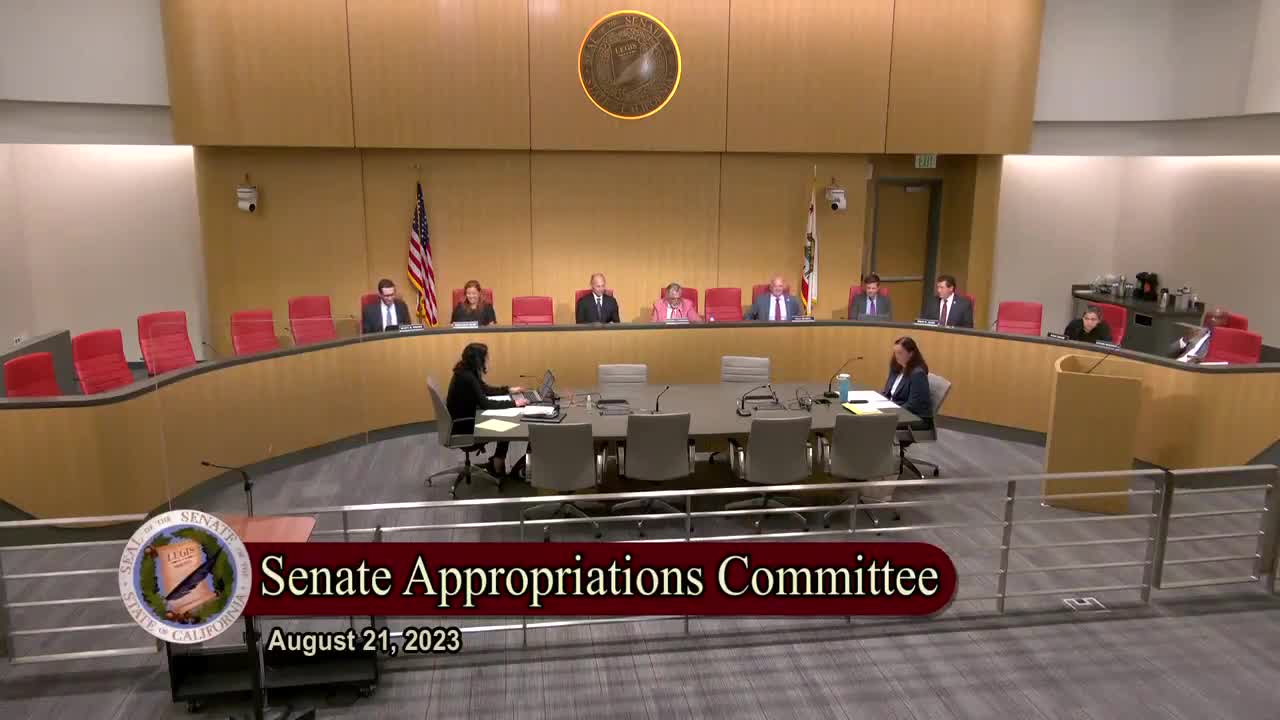 3MIN
Senate Standing Committee on Appropriations
 9MIN
Senate Standing Committee on Business, Professions and Economic Development
Bill Author

Bill Co-Author(s):