AB 2403: Community colleges: student equity plan.
- Session Year: 2023-2024
- House: Assembly
- Latest Version Date: 2024-09-27
Current Status:
Passed
(2024-09-27: Chaptered by Secretary of State - Chapter 715, Statutes of 2024.)
Introduced
In Committee
First Chamber
In Committee
Second Chamber
Enacted
Existing law, the Seymour-Campbell Student Success Act of 2012, provides that the purpose of the act is to increase California community college student access and success by providing effective core matriculation services, including orientation, assessment and placement, counseling, other education planning services, and academic interventions. Existing law establishes the Student Equity and Achievement Program and requires a community college district, as a condition of the receipt of funds under the program, to comply with specified requirements, including the maintenance of a student equity plan to ensure equal educational opportunities and promote student success for all students, regardless of race, gender, age, disability, or economic circumstances. Existing law requires a student equity plan to be developed with the active involvement of all groups on campus as required by law, including, but not limited to, the academic senate, academic faculty and staff, student services, and students, and with the involvement of appropriate people from the community.
This bill would require a student equity plan to also include a description of the active involvement of all groups on campus in developing the student equity plan for each community college in the community college district. To the extent that the bill would impose new duties on community college districts, it would constitute a state-mandated local program.
The California Constitution requires the state to reimburse local agencies and school districts for certain costs mandated by the state. Statutory provisions establish procedures for making that reimbursement.
This bill would provide that, if the Commission on State Mandates determines that the bill contains costs mandated by the state, reimbursement for those costs shall be made pursuant to the statutory provisions noted above.
Existing law authorizes the legislative body of a city or a county to establish an enhanced infrastructure financing district to finance public capital facilities or other specified projects of communitywide significance, including projects that implement a sustainable communities strategy, as specified.The bill would additionally include, in the list of facilities and projects the district may fund, community food and climate resilience projects that increase local food production in and for disadvantaged communities, as defined, and are powered by renewable energy, including community gardens.Existing law authorizes the legislative body of a city or a county to establish an enhanced infrastructure financing district to finance public capital facilities or other specified projects of communitywide significance, including projects that implement a sustainable communities strategy, as specified.
The bill would additionally include, in the list of facilities and projects the district may fund, community food and climate resilience projects that increase local food production in and for disadvantaged communities, as defined, and are powered by renewable energy, including community gardens.
(a)As a condition for receiving Student Success and Support Program funding, and in order to ensure equal educational opportunities and to promote student success for all students, regardless of race, gender, age, disability, or economic circumstances, the governing board of each community college district shall maintain a student equity plan that includes all of the following for each community college in the community college district:
(1)Campus-based research, as to the extent of student equity by gender and for each of the following categories of students, that uses the methodology established pursuant to subdivision (d) of Section 78221:
(A)Current or former foster youth.
(B)Students with disabilities.
(C)Low-income students.
(D)Veterans.
(E)Students in the following ethnic and racial categories, as they are defined by the United States Census Bureau for the 2010 Census for reporting purposes:
(i)American Indian or Alaska Native.
(ii)Asian.
(iii)Black or African American.
(iv)Hispanic or Latino.
(v)Native Hawaiian or other Pacific Islander.
(vi)White.
(vii)Some other race.
(viii)More than one race.
(F)Homeless students.
(G)Lesbian, gay, bisexual, or transgender students.
(H)Additional categories of students determined by the governing board of the community college district.
(2)To the extent that student data described in paragraph (1) has been collected, the office of the Chancellor of the California Community Colleges shall make the data available to community college districts for determining student equity and disproportionate impact.
(3)Goals for access and retention, degree and certificate completion, English as a Second Language and foundational skills, completion, and transfer for the overall student population and for each population group of high-need or disadvantaged students, and a determination of what activities are most likely to effectively meet those goals.
(4)Whether significant underrepresentation is found to exist pursuant to paragraphs (1) and (3), based on the methodology established pursuant to subdivision (d) of Section 78221, measures for addressing the disparities in those areas, implementation activities designed to attain the goals specified in paragraph (3), including, but not limited to, the adoption of evidence-based models of remediation, implementation of placement and enrollment policies that more accurately predict student success and identify students pretransfer needs, and a means of coordinating with, at a minimum, the following student equity-related categorical programs or campus-based programs:
(A)Students with disabilities.
(B)Extended Opportunity Programs and Services and Special Services.
(C)Fund for Student Success.
(D)Student Success and Support Program.
(E)Programs for foster youth.
(F)Programs for veterans.
(G)Special Services for CalWORKs Recipients.
(H)Student Financial Aid Administration.
(I)Student Success for Basic Skills Students.
(5)Sources of funds for the activities in the plan.
(6)A schedule and process for evaluation.
(7)An executive summary that includes, at a minimum, the student groups for whom goals have been set, the goals, the initiatives that the community college or community college district will undertake to achieve these goals, the resources that have been budgeted for that purpose, and the community college district official to contact for further information. Commencing with the 201617 academic year, the executive summary shall also include a detailed accounting of how funding was expended and an assessment of the progress made in achieving the identified goals.
(8)A description of the active involvement of all groups on campus, including, but not limited to, those identified in subdivision (b), in developing the student equity plan.
(b)Student equity plans shall be developed with the active involvement of all groups on campus as required by law, including, but not limited to, the academic senate, academic faculty and staff, student services, and students, and with the involvement of appropriate people from the community.
(c)The plan shall be adopted by the governing board of the community college district and submitted to the Chancellor of the California Community Colleges on or before January 1, 2015, who shall publish all executive summaries, sending copies to the appropriate policy and budget committees of the Legislature, the Department of Finance, every community college and community college district, each consultation group identified in subdivision (b) that so requests, and additional individuals and organizations as deemed appropriate.
(d)The plan shall be updated every three academic years and plan updates shall be submitted to the Chancellor of the California Community Colleges for publication and distribution as provided for in subdivision (c).
(e)(1)Funding included in the Budget Act for the Student Equity and Achievement Program may be used for the provision of emergency student financial assistance to help an eligible student overcome unforeseen financial challenges that would directly impact the students ability to persist in the students course of study. These challenges include, but are not limited to, the immediate need for shelter or food. Each community college district and campus is encouraged to consider the unique characteristics of its student body in developing specific guidelines for further defining what constitutes an unforeseen financial challenge for its students.
(2)In order for emergency student financial assistance to be an allowable use of Student Equity and Achievement Program funds, emergency student financial assistance shall be included in the institutions plan for interventions to students.
(3)For purposes of this subdivision, the following terms are defined as follows:
(A)Eligible student means a student who has experienced an unforeseen financial challenge, who is making satisfactory academic progress, as defined by the college the student attends, and who is at risk of not persisting in the students course of study due to the unforeseen financial challenge. For purposes of this paragraph, the definition of satisfactory academic progress used by the community college shall provide that homelessness, as defined as a homeless individual within the meaning of the federal McKinney-Vento Homeless Assistance Act (42 U.S.C. Sec. 11302(a)), or as defined as a homeless child or youth, as defined in subsection (2) of Section 725 of the federal McKinney-Vento Homeless Assistance Act (42 U.S.C. Sec. 11434a(2)), is an extenuating circumstance for students who are otherwise unable to meet the requirements deemed to constitute satisfactory academic progress at that community college, and that extenuating circumstance may be considered by the institution to alter or excuse compliance with those progress requirements.
(B)Emergency student financial assistance means financial support to assist a student to overcome unforeseen financial challenges, including, but not limited to, direct aid in the form of emergency grants, housing and food assistance, textbook grants, and transportation assistance, so that the student can continue the students course of study.
SEC. 2.If the Commission on State Mandates determines that this act contains costs mandated by the state, reimbursement to local agencies and school districts for those costs shall be made pursuant to Part 7 (commencing with Section 17500) of Division 4 of Title 2 of the Government Code.
(a)As a condition for receiving Student Success and Support Program funding, and in order to ensure equal educational opportunities and to promote student success for all students, regardless of race, gender, age, disability, or economic circumstances, the governing board of each community college district shall maintain a student equity plan that includes all of the following for each community college in the community college district:
(1)Campus-based research, as to the extent of student equity by gender and for each of the following categories of students, that uses the methodology established pursuant to subdivision (d) of Section 78221:
(A)Current or former foster youth.
(B)Students with disabilities.
(C)Low-income students.
(D)Veterans.
(E)Students in the following ethnic and racial categories, as they are defined by the United States Census Bureau for the 2010 Census for reporting purposes:
(i)American Indian or Alaska Native.
(ii)Asian.
(iii)Black or African American.
(iv)Hispanic or Latino.
(v)Native Hawaiian or other Pacific Islander.
(vi)White.
(vii)Some other race.
(viii)More than one race.
(F)Homeless students.
(G)Lesbian, gay, bisexual, or transgender students.
(H)Additional categories of students determined by the governing board of the community college district.
(2)To the extent that student data described in paragraph (1) has been collected, the Office office of the Chancellor of the California Community Colleges shall make the data available to community college districts for determining student equity and disproportionate impact.
(3)Goals for access and retention, degree and certificate completion, English as a Second Language and foundational skills, completion, and transfer for the overall student population and for each population group of high-need or disadvantaged students, and a determination of what activities are most likely to effectively meet those goals.
(4)Whether significant underrepresentation is found to exist pursuant to paragraphs (1) and (3), based on the methodology established pursuant to subdivision (d) of Section 78221, measures for addressing the disparities in those areas, implementation activities designed to attain the goals specified in paragraph (3), including, but not necessarily limited to, the adoption of evidence-based models of remediation, implementation of placement and enrollment policies that more accurately predict student success and identify students pretransfer needs, and a means of coordinating with, at a minimum, the following student equity-related categorical programs or campus-based programs:
(A)Students with disabilities.
(B)Extended Opportunity Programs and Services and Special Services.
(C)Fund for Student Success.
(D)Student Success and Support Program.
(E)Programs for foster youth.
(F)Programs for veterans.
(G)Special Services for CalWORKs Recipients.
(H)Student Financial Aid Administration.
(I)Student Success for Basic Skills Students.
(5)Sources of funds for the activities in the plan.
(6)A schedule and process for evaluation.
(7)An executive summary that includes, at a minimum, the student groups for whom goals have been set, the goals, the initiatives that the community college or community college district will undertake to achieve these goals, the resources that have been budgeted for that purpose, and the community college district official to contact for further information. Commencing with the 201617 academic year, the executive summary shall also include a detailed accounting of how funding was expended and an assessment of the progress made in achieving the identified goals.
(8)A description of the active involvement of all groups on campus, including, but not limited to, those identified in subdivision (b), in developing the student equity plan.
(b)Student equity plans shall be developed with the active involvement of all groups on campus as required by law, including, but not limited to, the academic senate, academic faculty and staff, student services, and students, and with the involvement of appropriate people from the community.
(c)The plan shall be adopted by the governing board of the community college district and submitted to the Chancellor of the California Community Colleges on or before January 1, 2015, who shall publish all executive summaries, sending copies to the appropriate policy and budget committees of the Legislature, the Department of Finance, every community college and community college district, each consultation group identified in subdivision (b) that so requests, and additional individuals and organizations as deemed appropriate.
(d)The plan shall be updated every three academic years and plan updates shall be submitted to the Chancellor of the California Community Colleges for publication and distribution as provided for in subdivision (c).
(e)(1)Funding included in the Budget Act for the Student Equity and Achievement Program may be used for the provision of emergency student financial assistance to help an eligible student overcome unforeseen financial challenges that would directly impact the students ability to persist in the students course of study. These challenges include, but are not necessarily limited to, the immediate need for shelter or food. Each community college district and campus is encouraged to consider the unique characteristics of its student body in developing specific guidelines for further defining what constitutes an unforeseen financial challenge for its students.
(2)In order for emergency student financial assistance to be an allowable use of Student Equity and Achievement Program funds, emergency student financial assistance shall be included in the institutions plan for interventions to students.
(3)For purposes of this subdivision, the following terms are defined as follows:
(A)Eligible student means a student who has experienced an unforeseen financial challenge, who is making satisfactory academic progress, as defined by the college the student attends, and who is at risk of not persisting in the students course of study due to the unforeseen financial challenge. For purposes of this paragraph, the definition of satisfactory academic progress used by the community college shall provide that homelessness, as defined as a homeless individual within the meaning of the federal McKinney-Vento Homeless Assistance Act (42 U.S.C. Sec. 11302(a)), or as defined as a homeless child or youth, as defined in subsection (2) of Section 725 of the federal McKinney-Vento Homeless Assistance Act (42 U.S.C. Sec. 11434a(2)), is an extenuating circumstance for students who are otherwise unable to meet the requirements deemed to constitute satisfactory academic progress at that community college, and that extenuating circumstance may be considered by the institution to alter or excuse compliance with those progress requirements.
(B)Emergency student financial assistance means financial support to assist a student to overcome unforeseen financial challenges, including, but not limited to, direct aid in the form of emergency grants, housing and food assistance, textbook grants, and transportation assistance, so that the student can continue the students course of study.
SEC. 2.If the Commission on State Mandates determines that this act contains costs mandated by the state, reimbursement to local agencies and school districts for those costs shall be made pursuant to Part 7 (commencing with Section 17500) of Division 4 of Title 2 of the Government Code.
SECTION 1.Section 53398.50 of the Government Code is amended to read:53398.50.The Legislature finds and declares that with the dissolution of redevelopment agencies, public benefits will accrue if local agencies, excluding schools, are provided a means to finance the reuse and revitalization of former military bases, fund the creation of transit priority projects and the implementation of sustainable communities plans, fund community and climate resilience projects that increase local food production in and for disadvantaged communities and are powered by renewable energy, fund projects that enable communities to adapt to the impacts of climate change, construct and rehabilitate affordable housing units, and construct facilities to house providers of consumer goods and services in the communities served by these efforts.SEC. 2.Section 53398.52 of the Government Code is amended to read:53398.52.(a)(1)A district may finance any of the following:(A)The purchase, construction, expansion, improvement, seismic retrofit, or rehabilitation of any real or other tangible property with an estimated useful life of 15 years or longer that satisfies the requirements of subdivision (b).(B)The planning and design work that is directly related to the purchase, construction, expansion, or rehabilitation of property.(C)The costs described in Sections 53398.56 and 53398.57.(D)(i)The ongoing or capitalized costs to maintain public capital facilities financed in whole or in part by the district.(ii)Notwithstanding clause (i), a district shall not use the proceeds of bonds issued pursuant to the authority in Article 4 (commencing with Section 53398.77) to finance maintenance of any kind.(2)The facilities are not required to be physically located within the boundaries of the district. However, any facilities financed outside of a district shall have a tangible connection to the work of the district, as detailed in the infrastructure financing plan adopted pursuant to Section 53398.69.(3)A district shall not finance the costs of an ongoing operation or providing services of any kind.(b)The district shall finance only public capital facilities or other specified projects of communitywide significance that provide significant benefits to the district or the surrounding community, including, but not limited to, all of the following:(1)Highways, interchanges, ramps and bridges, arterial streets, parking facilities, and transit facilities.(2)Sewage treatment and water reclamation plants and interceptor pipes.(3)Facilities for the collection and treatment of water for urban uses.(4)Flood control levees and dams, retention basins, and drainage channels.(5)Child care facilities.(6)Libraries.(7)Parks, recreational facilities, and open space.(8)Facilities for the transfer and disposal of solid waste, including transfer stations and vehicles.(9)Brownfield restoration and other environmental mitigation.(10)The development of projects on a former military base, provided that the projects are consistent with the military base authority reuse plan and are approved by the military base reuse authority, if applicable.(11)The repayment of the transfer of funds to a military base reuse authority pursuant to Section 67851 that occurred on or after the creation of the district.(12)The acquisition, construction, or rehabilitation of housing for persons of very low, low, and moderate income, as defined in Sections 50105 and 50093 of the Health and Safety Code, for rent or purchase.(13)Acquisition, construction, or repair of industrial structures for private use.(14)(A)Acquisition, construction, or repair of commercial structures by the small business occupant of such structures, if such acquisition, construction, or repair is for purposes of fostering economic recovery from the COVID-19 pandemic and of ensuring the long-term economic sustainability of small businesses.(B)For purposes of this paragraph and subject to subparagraph (C), small business means an independently owned and operated business that is not dominant in its field of operation, the principal office of which is located in California, the officers of which are domiciled in California, and which, together with affiliates, has 100 or fewer employees, and average annual gross receipts of fifteen million dollars ($15,000,000) or less over the previous three years, or is a manufacturer, as defined in subdivision (c) of Section 14837, with 100 or fewer employees. An independently owned and operated business shall include a formula retail business that is an independently owned franchise.(C)A district may set a lower threshold for the average annual gross receipts over the previous three years and for the number of employees described in subparagraph (B).(15)Transit priority projects, as defined in Section 21155 of the Public Resources Code, that are located within a transit priority project area. For purposes of this paragraph, a transit priority project area may include a military base reuse plan that meets the definition of a transit priority project area and it may include a contaminated site within a transit priority project area.(16)Projects that implement a sustainable communities strategy, when the State Air Resources Board, pursuant to Chapter 2.5 (commencing with Section 65080) of Division 1 of Title 7, has accepted a metropolitan planning organizations determination that the sustainable communities strategy or the alternative planning strategy would, if implemented, achieve the greenhouse gas emission reduction targets.(17)Projects that enable communities to adapt to the impacts of climate change, including, but not limited to, higher average temperatures, decreased air and water quality, the spread of infectious and vector-borne diseases, other public health impacts, extreme weather events, sea level rise, flooding, heat waves, wildfires, and drought.(18)Port or harbor infrastructure, as defined by Section 1698 of the Harbors and Navigation Code.(19)The acquisition, construction, or improvement of broadband Internet access service. For purposes of this section, broadband Internet access services has the same meaning as defined in Section 53167. A district that acquires, constructs, or improves broadband Internet access service may transfer the management and control of those facilities to a local agency that is authorized to provide broadband Internet access service, and that local agency when providing that service shall comply with the requirements of Article 12 (commencing with Section 53167) of Chapter 1 of Part 1 of Division 2 of Title 5.(20)Facilities in which nonprofit community organizations provide health, youth, homeless, and social services.(21)Community food and climate resilience projects that increase local food production in and for disadvantaged communities as defined in Section 39711 of the Health and Safety Code and are powered by renewable energy, including, but not limited to, community gardens and controlled environment agriculture.(c)The district shall require, by recorded covenants or restrictions, that housing units built pursuant to this section shall remain available at affordable housing costs to, and occupied by, persons and families of very low, low, or moderate income for the longest feasible time, but for not less than 55 years for rental units and 45 years for owner-occupied units.(d)The district may finance mixed-income housing developments, but may finance only those units in such a development that are restricted to occupancy by persons of very low, low, or moderate incomes as defined in Sections 50105 and 50093 of the Health and Safety Code, and those onsite facilities for child care, after school care, and social services that are integrally linked to the tenants of the restricted units.(e)A district may utilize any powers under either the Polanco Redevelopment Act (Article 12.5 (commencing with Section 33459) of Chapter 4 of Part 1 of Division 24 of the Health and Safety Code) or Chapter 6.10 (commencing with Section 25403) of Division 20 of the Health and Safety Code, and finance any action necessary to implement that act.The Legislature finds and declares that with the dissolution of redevelopment agencies, public benefits will accrue if local agencies, excluding schools, are provided a means to finance the reuse and revitalization of former military bases, fund the creation of transit priority projects and the implementation of sustainable communities plans, fund community and climate resilience projects that increase local food production in and for disadvantaged communities and are powered by renewable energy, fund projects that enable communities to adapt to the impacts of climate change, construct and rehabilitate affordable housing units, and construct facilities to house providers of consumer goods and services in the communities served by these efforts.
SEC. 2.Section 53398.52 of the Government Code is amended to read:53398.52.(a)(1)A district may finance any of the following:
(A)The purchase, construction, expansion, improvement, seismic retrofit, or rehabilitation of any real or other tangible property with an estimated useful life of 15 years or longer that satisfies the requirements of subdivision (b).
(B)The planning and design work that is directly related to the purchase, construction, expansion, or rehabilitation of property.
(C)The costs described in Sections 53398.56 and 53398.57.
(D)(i)The ongoing or capitalized costs to maintain public capital facilities financed in whole or in part by the district.
(ii)Notwithstanding clause (i), a district shall not use the proceeds of bonds issued pursuant to the authority in Article 4 (commencing with Section 53398.77) to finance maintenance of any kind.
(2)The facilities are not required to be physically located within the boundaries of the district. However, any facilities financed outside of a district shall have a tangible connection to the work of the district, as detailed in the infrastructure financing plan adopted pursuant to Section 53398.69.
(3)A district shall not finance the costs of an ongoing operation or providing services of any kind.
(b)The district shall finance only public capital facilities or other specified projects of communitywide significance that provide significant benefits to the district or the surrounding community, including, but not limited to, all of the following:
(1)Highways, interchanges, ramps and bridges, arterial streets, parking facilities, and transit facilities.
(2)Sewage treatment and water reclamation plants and interceptor pipes.
(3)Facilities for the collection and treatment of water for urban uses.
(4)Flood control levees and dams, retention basins, and drainage channels.
(5)Child care facilities.
(6)Libraries.
(7)Parks, recreational facilities, and open space.
(8)Facilities for the transfer and disposal of solid waste, including transfer stations and vehicles.
(9)Brownfield restoration and other environmental mitigation.
(10)The development of projects on a former military base, provided that the projects are consistent with the military base authority reuse plan and are approved by the military base reuse authority, if applicable.
(11)The repayment of the transfer of funds to a military base reuse authority pursuant to Section 67851 that occurred on or after the creation of the district.
(12)The acquisition, construction, or rehabilitation of housing for persons of very low, low, and moderate income, as defined in Sections 50105 and 50093 of the Health and Safety Code, for rent or purchase.
(13)Acquisition, construction, or repair of industrial structures for private use.
(14)(A)Acquisition, construction, or repair of commercial structures by the small business occupant of such structures, if such acquisition, construction, or repair is for purposes of fostering economic recovery from the COVID-19 pandemic and of ensuring the long-term economic sustainability of small businesses.
(B)For purposes of this paragraph and subject to subparagraph (C), small business means an independently owned and operated business that is not dominant in its field of operation, the principal office of which is located in California, the officers of which are domiciled in California, and which, together with affiliates, has 100 or fewer employees, and average annual gross receipts of fifteen million dollars ($15,000,000) or less over the previous three years, or is a manufacturer, as defined in subdivision (c) of Section 14837, with 100 or fewer employees. An independently owned and operated business shall include a formula retail business that is an independently owned franchise.
(C)A district may set a lower threshold for the average annual gross receipts over the previous three years and for the number of employees described in subparagraph (B).
(15)Transit priority projects, as defined in Section 21155 of the Public Resources Code, that are located within a transit priority project area. For purposes of this paragraph, a transit priority project area may include a military base reuse plan that meets the definition of a transit priority project area and it may include a contaminated site within a transit priority project area.
(16)Projects that implement a sustainable communities strategy, when the State Air Resources Board, pursuant to Chapter 2.5 (commencing with Section 65080) of Division 1 of Title 7, has accepted a metropolitan planning organizations determination that the sustainable communities strategy or the alternative planning strategy would, if implemented, achieve the greenhouse gas emission reduction targets.
(17)Projects that enable communities to adapt to the impacts of climate change, including, but not limited to, higher average temperatures, decreased air and water quality, the spread of infectious and vector-borne diseases, other public health impacts, extreme weather events, sea level rise, flooding, heat waves, wildfires, and drought.
(18)Port or harbor infrastructure, as defined by Section 1698 of the Harbors and Navigation Code.
(19)The acquisition, construction, or improvement of broadband Internet access service. For purposes of this section, broadband Internet access services has the same meaning as defined in Section 53167. A district that acquires, constructs, or improves broadband Internet access service may transfer the management and control of those facilities to a local agency that is authorized to provide broadband Internet access service, and that local agency when providing that service shall comply with the requirements of Article 12 (commencing with Section 53167) of Chapter 1 of Part 1 of Division 2 of Title 5.
(20)Facilities in which nonprofit community organizations provide health, youth, homeless, and social services.
(21)Community food and climate resilience projects that increase local food production in and for disadvantaged communities as defined in Section 39711 of the Health and Safety Code and are powered by renewable energy, including, but not limited to, community gardens and controlled environment agriculture.
(c)The district shall require, by recorded covenants or restrictions, that housing units built pursuant to this section shall remain available at affordable housing costs to, and occupied by, persons and families of very low, low, or moderate income for the longest feasible time, but for not less than 55 years for rental units and 45 years for owner-occupied units.
(d)The district may finance mixed-income housing developments, but may finance only those units in such a development that are restricted to occupancy by persons of very low, low, or moderate incomes as defined in Sections 50105 and 50093 of the Health and Safety Code, and those onsite facilities for child care, after school care, and social services that are integrally linked to the tenants of the restricted units.
(e)A district may utilize any powers under either the Polanco Redevelopment Act (Article 12.5 (commencing with Section 33459) of Chapter 4 of Part 1 of Division 24 of the Health and Safety Code) or Chapter 6.10 (commencing with Section 25403) of Division 20 of the Health and Safety Code, and finance any action necessary to implement that act.
|
Date
|
Status
|
|---|---|
| Sep 27, 2024 | Chaptered by Secretary of State - Chapter 715, Statutes of 2024. |
| Sep 27, 2024 | Approved by the Governor. |
| Aug 27, 2024 | Enrolled and presented to the Governor at 12 p.m. |
| Aug 21, 2024 | In Assembly. Ordered to Engrossing and Enrolling. |
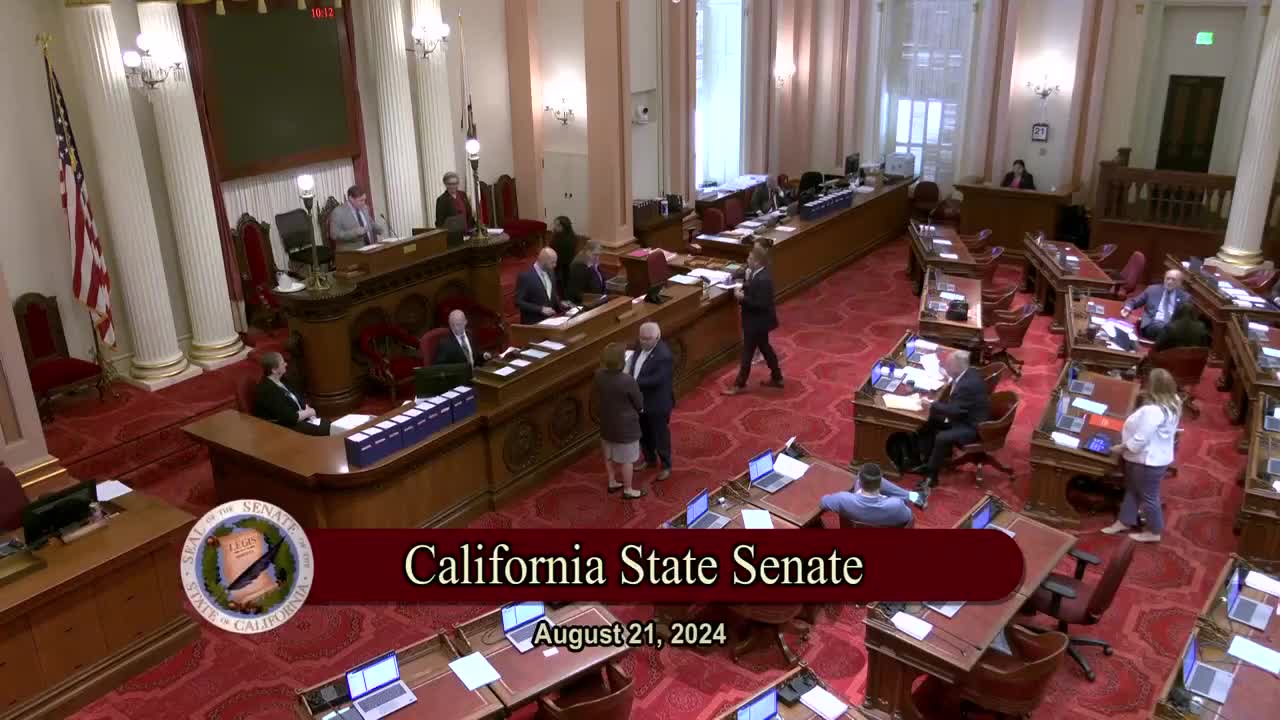
| Aug 21, 2024 | Read third time. Passed. Ordered to the Assembly. (Ayes 33. Noes 0. Page 5266.). |
| Jun 18, 2024 | Read second time. Ordered to third reading. |
| Jun 17, 2024 | From committee: Be ordered to second reading pursuant to Senate Rule 28.8. |
| Jun 5, 2024 | From committee: Do pass and re-refer to Com. on APPR with recommendation: To Consent Calendar. (Ayes 7. Noes 0.) (June 5). Re-referred to Com. on APPR. |
| May 29, 2024 | Referred to Com. on ED. |
| May 16, 2024 | In Senate. Read first time. To Com. on RLS. for assignment. |
| May 16, 2024 | Read third time. Passed. Ordered to the Senate. (Ayes 71. Noes 0.) |
| May 9, 2024 | Read second time. Ordered to Consent Calendar. |
| May 8, 2024 | From committee: Do pass. To Consent Calendar. (Ayes 15. Noes 0.) (May 8). |
| Apr 24, 2024 | From committee: Do pass and re-refer to Com. on APPR. with recommendation: To Consent Calendar. (Ayes 10. Noes 0.) (April 23). Re-referred to Com. on APPR. |
| Apr 4, 2024 | Re-referred to Com. on HIGHER ED. pursuant to Assembly Rule 96. |
| Mar 21, 2024 | Re-referred to Com. on L. GOV. |
| Mar 20, 2024 | From committee chair, with author's amendments: Amend, and re-refer to Com. on L. GOV. Read second time and amended. |
| Feb 26, 2024 | Referred to Com. on L. GOV. |
| Feb 13, 2024 | From printer. May be heard in committee March 14. |
| Feb 12, 2024 | Read first time. To print. |
|
Date
|
Description
|
Location
|
Votes
|
|
|---|---|---|---|---|
| Aug 21, 2024 | Assembly 3rd Reading AB2403 Bonta By Cortese | Senate Floor |
Passed |
|
| Jun 5, 2024 | Do pass, but first be re-referred to the Committee on [Appropriations] with the recommendation: To Consent Calendar | Senate Standing Committee on Education |
Passed |
|
| May 16, 2024 | AB 2403 Bonta Consent Calendar Second Day Regular Session | Assembly Floor |
Passed |
|
| May 8, 2024 | Do pass. To Consent Calendar. | Assembly Standing Committee on Appropriations |
Passed |
|
| Apr 23, 2024 | Do pass and be re-referred to the Committee on [Appropriations] with recommendation: To Consent Calendar | Assembly Standing Committee on Higher Education |
Passed |
This list shows positions taken on this bill by organizations on the date displayed, which is linked to the original source.
Positions by individuals are not included.
|
Organization
|
Position
|
Date
|
|---|---|---|
| California Teachers Association | ** Support | |
| Public Advocates | ** Support |
SENATE RULES COMMITTEE Office of Senate Floor Analyses (916) 651-1520 Fax: (916) 327-4478 | AB 2403 |
THIRD
Bill No: AB 2403
Author: Bonta (D)
Amended: 3/20/24 in Assembly
Vote: 21
SENATE EDUCATION COMMITTEE: 7-0, 6/5/24
AYES: Newman, Jones, Cortese, Glazer, Gonzalez, Smallwood-Cuevas, Wilk
SENATE APPROPRIATIONS COMMITTEE: Senate Rule 28.8
ASSEMBLY FLOOR: 71-0, 5/16/24 (Consent) - See last page for vote
SUBJECT: Community colleges: student equity plan
SOURCE: Public Advocates
DIGEST:
This bill modifies an existing requirement in current law that requires each California Community College (CCC) to maintain a student equity plan by requiring that the plan include a description of all groups’ involvement in developing the equity plan.
ANALYSIS:
Existing law:
- Establishes the CCC under the administration of the Board of Governors of the CCC, as one of the segments of public postsecondary education in this state. The CCC shall be comprised of community college districts. (Education Code (EC) § 70900)
- Creates for each CCC district a board of trustees, known as the governing board, and authorizes the governing board to establish, maintain, operate, and govern each CCC within their district in accordance with state and federal law, as specified. The governing board may initiate and carry on any program, activity, or may otherwise act in any manner that is not in conflict or inconsistent with any law and that is not in conflict with the purpose of a CCC district, as specified. (EC § 70902)
- Establishes the Student Success and Support Program for the purpose of encouraging the matriculation of students towards their educational goals. Specifically, funding allocated through the program to districts is to be used for the following:
- Orientation services designed to provide students with information on campus procedures, academic expectations, financial assistance, and other matters the district deems appropriate.
- Assessment before course registration, as specified.
- Counseling and other educational planning services, including, but not limited to:
- Assisting students in exploring educational and career interests, identifying educational objectives, including degree obtainment;
- Developing an educational plan leading to course selection that leads to the conferral of a degree or certificate that is aligned with the student’s educational goal;
- Referrals to special support services, including but not limited to financial aid, health services, foster youth services, and disabled student services; and,
- Evaluation of each student’s progress and referrals for academic interventions, as defined. (EC § 78212)
This bill modifies an existing requirement in current law that requires each CCC to maintain a student equity plan as a condition of receiving Student Success and Support Program funding by requiring that the plan include a description of all groups’ involvement in developing the equity plan.
Comments
- Need for the bill. According to the author, “Approximately $450 million dollars are annually provided to [CCC district] through the SEA [Student Equity and Achievement] Program…the purpose of these plans is to ensure equal educational opportunities and to promote student success for all students. In order to successfully promote equity and achievement, it is critical that stakeholders, especially students, are engaged in the development of these plans. By requiring student equity plans to detail how stakeholder engagement was executed, we can ensure that funds are used effectively and appropriately to best target student needs.”
- Vision for Success, Guided Pathways and equity plans. In 2017, the CCC Board of Governors adopted the Vision for Success, a comprehensive framework to improve student outcomes by closing achievement gaps, increasing degree and certificate attainment, increasing transfers to four-year institutions, reducing excess unit accumulation by students, and providing the necessary skills for gainful employment. The Vision for Success has acted as the foundation for supporting the financial and educational decisions of the system in producing student-driven results. Incorporated within the Vision for Success was the implementation of Guided Pathways across all community college campuses. In the 2017-2018 Budget Act, $150 million in one-time funds was allocated to establish Guided Pathways at all CCCs within five years. The principles of Guided Pathways are to provide; (a) students with clear curricular pathways to employment and further education; (b) guidance to help students choose and enter their pathways; (c) supports to ensure students stay on their chosen educational path; and (d) ensure that learning occurs with intentional outcomes such as skills mastery, credentials, or degree attainment.
In addition to funding the Guided Pathways initiative, the 2017-2018 Budget Act established the Student Equity and Achievement Program to support the community colleges in implementing Guided Pathways and advance the systemwide goal of eliminating achievement gaps for students from traditionally underrepresented groups. This program consolidated the Basic Skills Initiative, Student Equity, and the Student Success and Support Program. Colleges are to continue to maintain an equity plan as required under the Student Success and Support Program, provide matriculation services, including counseling, adopt placement policies, and provide all students with an educational plan. Ideally, an educational plan would serve as a roadmap for a student on how to achieve their desired degree or educational outcome.
Equity plans focus on enhancing achievement by evaluating specific success indicators such as access, course completion, English as a second language and basic skills completion, degrees and certificates awarded, and transfer rates. It also includes equity planning requires each college to develop detailed goals and measures to address any identified disparities. This bill seeks to provide greater transparency around campus groups’ involvement in development of these equity plans. These groups may include faculty, staff, student services, students, or community representatives.
- Demand for information on engagement strategies. The sponsors of this measure, Public Advocates, conducted an analysis of the 113 SEA [Student Equity and Achievement Plans] submitted to the Chancellor’s Office. Public Advocates claims in their support letter that information regarding student engagement is lacking and that “after analyzing the plans, specifically Section 9.3 (which describes strategies deployed to leverage student voice), Public Advocates discovered inconsistent engagement across the state. Only 14 colleges (12.38%) had multi-pronged strong engagement strategies, and 53 colleges (46.90%) didn’t list specific student engagement strategies.” The intent of the bill is to strengthen reporting requirements to produce detailed information around stakeholder engagement.
FISCAL EFFECT: Appropriation: No Fiscal Com.: Yes Local: Yes
SUPPORT: (Verified 6/18/24)
Public Advocates (source)
California Teachers Association
OPPOSITION: (Verified 6/18/24)
None received
ASSEMBLY FLOOR: 71-0, 5/16/24
AYES: Aguiar-Curry, Alanis, Arambula, Bains, Bauer-Kahan, Bennett, Berman, Boerner, Bonta, Bryan, Calderon, Juan Carrillo, Wendy Carrillo, Chen, Connolly, Davies, Dixon, Essayli, Mike Fong, Friedman, Gabriel, Gallagher, Garcia, Grayson, Haney, Hart, Holden, Hoover, Jackson, Jones-Sawyer, Kalra, Lackey, Lee, Low, Lowenthal, Maienschein, McCarty, McKinnor, Muratsuchi, Stephanie Nguyen, Ortega, Pacheco, Papan, Jim Patterson, Joe Patterson, Pellerin, Petrie-Norris, Quirk-Silva, Ramos, Rendon, Reyes, Luz Rivas, Rodriguez, Blanca Rubio, Sanchez, Santiago, Schiavo, Soria, Ta, Ting, Valencia, Villapudua, Waldron, Wallis, Ward, Weber, Wicks, Wilson, Wood, Zbur, Robert Rivas
NO VOTE RECORDED: Addis, Alvarez, Cervantes, Megan Dahle, Flora, Vince Fong, Gipson, Irwin, Mathis
Prepared by: Olgalilia Ramirez / ED. / (916) 651-4105
6/18/24 15:49:20
**** END ****
SENATE COMMITTEE ON EDUCATION
Senator Josh Newman, Chair
2023 - 2024 Regular
Bill No: Hearing Date: June 5, 2024
Author: | Bonta | ||
Version: |
| ||
Urgency: | Fiscal: | ||
Consultant: | |||
Subject:
SUMMARY
This bill modifies an existing requirement in current law that requires each California Community College (CCC) to maintain a student equity plan by requiring that the plan include a description of all groups’ involvement in developing the equity plan.
BACKGROUND
Existing law:
- Establishes the CCC under the administration of the Board of Governors of the CCC, as one of the segments of public postsecondary education in this state. The CCC shall be comprised of community college districts. (Education Code (EC) § 70900)
- Creates for each CCC district a board of trustees, known as the governing board, and authorizes the governing board to establish, maintain, operate, and govern each CCC within their district in accordance with state and federal law, as specified. The governing board may initiate and carry on any program, activity, or may otherwise act in any manner that is not in conflict or inconsistent with any law and that is not in conflict with the purpose of a CCC district, as specified. (EC § 70902)
- Establishes the Student Success and Support Program for the purpose of encouraging the matriculation of students towards their educational goals. Specifically, funding allocated through the program to districts is to be used for the following:
- Orientation services designed to provide students with information on campus procedures, academic expectations, financial assistance, and other matters the district deems appropriate.
- Assessment before course registration, as specified.
- Counseling and other educational planning services, including, but not limited to:
- Assisting students in exploring educational and career interests, identifying educational objectives, including degree obtainment;
- Developing an educational plan leading to course selection that leads to the conferral of a degree or certificate that is aligned with the student’s educational goal;
- Referrals to special support services, including but not limited to financial aid, health services, foster youth services, and disabled student services; and,
- Evaluation of each student’s progress and referrals for academic interventions, as defined. (EC § 78212)
ANALYSIS
- This bill modifies an existing requirement in current law that requires each CCC to maintain a student equity plan as a condition of receiving Student Success and Support Program funding by requiring that the plan include a description of all groups’ involvement in developing the equity plan.
STAFF COMMENTS
- Need for the bill. According to the author, “Approximately $450 million dollars are annually provided to [CCC district] through the SEA [Student Equity and Achievement] Program…the purpose of these plans is to ensure equal educational opportunities and to promote student success for all students. In order to successfully promote equity and achievement, it is critical that stakeholders, especially students, are engaged in the development of these plans. By requiring student equity plans to detail how stakeholder engagement was executed, we can ensure that funds are used effectively and appropriately to best target student needs.”
- Vision for Success, Guided Pathways and equity plans. In 2017, the CCC Board of Governors adopted the Vision for Success, a comprehensive framework to improve student outcomes by closing achievement gaps, increasing degree and certificate attainment, increasing transfers to four-year institutions, reducing excess unit accumulation by students, and providing the necessary skills for gainful employment. The Vision for Success has acted as the foundation for supporting the financial and educational decisions of the system in producing student-driven results. Incorporated within the Vision for Success was the implementation of Guided Pathways across all community college campuses. In the 2017-2018 Budget Act, $150 million in one-time funds was allocated to establish Guided Pathways at all CCCs within five years. The principles of Guided Pathways are to provide; 1) students with clear curricular pathways to employment and further education; 2) guidance to help students choose and enter their pathways; 3) supports to ensure students stay on their chosen educational path; and 4) ensure that learning occurs with intentional outcomes such as skills mastery, credentials, or degree attainment.
In addition to funding the Guided Pathways initiative, the 2017-2018 Budget Act established the Student Equity and Achievement Program to support the community colleges in implementing Guided Pathways and advance the systemwide goal of eliminating achievement gaps for students from traditionally underrepresented groups. This program consolidated the Basic Skills Initiative, Student Equity, and the Student Success and Support Program. Colleges are to continue to maintain an equity plan as required under the Student Success and Support Program, provide matriculation services, including counseling, adopt placement policies, and provide all students with an educational plan. Ideally, an educational plan would serve as a roadmap for a student on how to achieve their desired degree or educational outcome.
Equity plans focus on enhancing achievement by evaluating specific success indicators such as access, course completion, English as a second language and basic skills completion, degrees and certificates awarded, and transfer rates. It also includes equity planning requires each college to develop detailed goals and measures to address any identified disparities. This bill seeks to provide greater transparency around campus groups’ involvement in development of these equity plans. These groups may include faculty, staff, student services, students, or community representatives.
- Demand for information on engagement strategies. The sponsors of this measure, Public Advocates, conducted an analysis of the 113 SEA [Student Equity and Achievement Plans] submitted to the Chancellor’s Office. Public Advocates claims in their support letter that information regarding student engagement is lacking and that “after analyzing the plans, specifically Section 9.3 (which describes strategies deployed to leverage student voice), Public Advocates discovered inconsistent engagement across the state. Only 14 colleges (12.38%) had multi-pronged strong engagement strategies, and 53 colleges (46.90%) didn’t list specific student engagement strategies.” The intent of the bill is to strengthen reporting requirements to produce detailed information around stakeholder engagement.
SUPPORT
California Teachers Association
OPPOSITION
None received
-- END --
Date of Hearing: May 8, 2024
ASSEMBLY COMMITTEE ON APPROPRIATIONS
Buffy Wicks, Chair
ABPCA Bill Id:AB 2403
Author:(Bonta) – As Amended Ver:March 20, 2024
Policy Committee: | Higher Education | Vote: | 10 - 0 |
|
| ||
|
|
Urgency: No State Mandated Local Program: Yes Reimbursable: Yes
SUMMARY:
This bill modifies an existing requirement in current law that requires each California Community College (CCC) to develop a student equity plan and include the active involvement of all groups on campus in developing the plan. Specifically, this bill requires a student equity plan to include a description of all groups’ involvement in developing the plan.
FISCAL EFFECT:
Minor and absorbable Proposition 98 General Fund costs to CCCs to include the descriptions required by this bill.
If the Commission on State Mandates determines the bill’s requirements to be a reimbursable state mandate, the state would need to reimburse these costs to CCCs.
COMMENTS:
- Purpose. According to the author:
The purpose of [student equity] plans is to ensure equal educational opportunities and to promote student success for all students. In order to successfully promote equity and achievement, it is critical that stakeholders, especially students, are engaged in the development of these plans. By requiring student equity plans to detail how stakeholder engagement was executed, we can ensure that funds are used effectively and appropriately to best target student needs.
- Background. Current law establishes the Student Equity and Achievement Program and requires a CCC district, as a condition of the receipt of funds under the program, to comply with certain requirements, including the maintenance of a student equity plan to ensure equal educational opportunities and to promote academic success for all students. Current law requires a student equity plan to be developed with the active involvement of all groups on campus as required by law, including the academic senate, academic faculty and staff, student services, and students. The 2023 budget provides $524 million for the Student Equity and Achievement Program.
Analysis Prepared by: Natasha Collins / APPR. / (916) 319-2081
Date of Hearing: April 23, 2024
ASSEMBLY COMMITTEE ON HIGHER EDUCATION
Mike Fong, Chair
ABPCA Bill Id:AB 2403 (
Author:Bonta) – As Amended Ver:March 20, 2024
SUBJECT: Community colleges: student equity plan
SUMMARY: Requires a student equity plan to also include a description of the active involvement of all groups on campus in developing the student equity plan for each community college in a community college district (CCD). Specifically, this bill:
- Specifies that, as a condition for receiving Student Success and Support Program funding, and in order to ensure equal educational opportunities and to promote student success for all students, regardless of race, gender, age, disability, or economic circumstances, the governing board of each CCD must maintain a student equity plan that includes a description of the active involvement of all groups on campus in developing the student equity plan for each community college in the CCD.
- Makes various grammatical and technical changes.
- Establishes that, if the Commission on State Mandates determines that this act contains costs mandated by the state, reimbursement to local agencies and school districts for those costs will be made, as specified.
EXISTING LAW:
- Establishes the CCC under the administration of the Board of Governors of the CCC, as one of the segments of public postsecondary education in this state. The CCC shall be comprised of community college districts (Education Code (EDC) Section 70900).
- Creates for each CCD a board of trustees, known as the governing board, and authorizes the governing board to establish, maintain, operate, and govern each CCC within their district in accordance with state and federal law, as specified. The governing board may initiate and carry on any program, activity, or may otherwise act in any manner that is not in conflict or inconsistent with any law and that is not in conflict with the purpose of a CCC district, as specified. (EDC Section 70902).
- Establishes the Student Success and Support Program for the purpose of encouraging the matriculation of students towards their educational goals. Specifically funding allocated through the program to districts is to be used for the following:
- Orientation services designed to provide students with information on campus procedures, academic expectations, financial assistance, and other matters the district deems appropriate;
- Assessment before course registration, as specified; and,
- Counseling and other educational planning services including, but not limited to:
- Assisting students in the exploring educational and career interests, identifying educational objectives including degree obtainment;
- Developing an educational plan leading to course selection that lead to the conferral of a degree or certificate that is aligned with the student’s educational goal;
- Referrals to special support services, including but not limited to financial aid, health services, foster youth services, and disabled student services; and,
- Evaluation of each student’s progress and referrals for academic interventions, as defined (EDC Section 78212).
- Establishes the Student Equity and Achievement (SEA) Program and requires a CCD, as a condition of the receipt of funds under the program, to comply with specified requirements, including the maintenance of a student equity plan to ensure equal educational opportunities and promote student success for all students, regardless of race, gender, age, disability, or economic circumstances. (EDC Section 78222)
- Requires a student equity plan to be developed with the active involvement of all groups on campus as required by law, including, but not limited to, the academic senate, academic faculty and staff, student services, and students, and with the involvement of appropriate people from the community. (EDC Section 78220)
FISCAL EFFECT: Unknown
COMMENTS: Purpose. According to the author, “approximately $450 million dollars are annually provided to [CCDs] through the SEA Program…the purpose of these plans is to ensure equal educational opportunities and to promote student success for all students. In order to successfully promote equity and achievement, it is critical that stakeholders, especially students, are engaged in the development of these plans. By requiring student equity plans to detail how stakeholder engagement was executed, we can ensure that funds are used effectively and appropriately to best target student needs.”
Vision for Success and Guided Pathways. In 2017, the CCC Board of Governors adopted the Vision for Success, a comprehensive framework to improve student outcomes by closing achievement gaps, increasing degree and certificate attainment, increasing transfers to four-year institutions, reducing excess unit accumulation by students, and provide the necessary skills for gainful employment. The Vision for Success has acted as the foundation in supporting financial and educational decisions of the system in producing student-driven results. Incorporated within the Vision for Success was the implementation of Guided Pathways across all community college campuses. In the 2017-2018 Budget Act $150 million in one-time funds was allocated to establish Guided Pathways at all CCCs within five years. The principles of Guided Pathways is to provide:
- Students with clear curricular pathways to employment and further education.
- Guidance to help students choose and enter their pathways.
- Supports to ensure students stay on their chosen educational path.
- Ensure that learning occurs with intentional outcomes such as skills mastery, credentials or degree attainment.
Specifically, the model produced by Guided Pathways would provide all students with a set of clear course-taking patterns that promote informed enrollment decisions that aligns with the student’s chosen educational goal and seeks to provide support services to ensure students matriculate into their chosen career field. Some of the key elements of guided pathways would include proactive academic and career counseling, early alert systems for intervention for students who are struggling, and instructional supports.
In addition to funding the Guided Pathways, the 2017-2018 established the SEA Program to support the community colleges with implementing Guided Pathways and to advance the systemwide goal to eliminate achievement gaps for students from traditionally underrepresented groups. This program consolidated the Basic Skills Initiative, Student Equity, and the Student Success and Support Program. As part of consolidating these programs, colleges would maintain an equity plan, provide matriculation services, including counseling, adopt placement policies, and provide all students with an educational plan. Ideally an educational plan would be a roadmap for a student on how to achieve their intended degree or educational outcome.
Equity plans are focused on boosting achievement as measured by specific “success indicators” (access; course completion; English as a second language and basic skills completion; degrees and certificates awarded; and transfer rates) and require each college to develop detailed goals and measures addressing disparities that are discovered.
Arguments in support. Public Advocates, the sponsor of AB 2403 (Bonta), wrote in support, noting that “as a condition of funding through the SEA Program, the governing boards of CCC districts are required to maintain a student equity plan. The purpose of these plans is to ‘ensure equal educational opportunities and to promote student success for all students.’ Plans are required to include campus-based research on a variety of demographic categories. Additionally, student equity plans are already required to be developed with the active involvement of all groups on campus including the academic senate, academic faculty and staff, student services, students, and other appropriate people from the community.”
“Public Advocates conducted an analysis of the 113 SEA Plans submitted to the Chancellor’s Office. After analyzing the plans, specifically Section 9.3 (which describes strategies deployed to leverage student voice), Public Advocates discovered inconsistent engagement across the state. Only 14 colleges (12.38%) had multi-pronged strong engagement strategies and 53 colleges (46.90%) didn’t list specific student engagement strategies. This bill strengthens SEA Program guidelines by requiring CCC districts to detail their strategies to engage relevant stakeholders, including students, within their student equity plans.”
REGISTERED SUPPORT / OPPOSITION:
Support
California Teachers Association
Public Advocates
Opposition
None on file
Analysis Prepared by: Kevin J. Powers / HIGHER ED. / (916) 319-3960
Discussed in Hearing
 1MIN
Senate Floor
 59SEC
Assembly Standing Committee on Higher Education
 1MIN
Assembly Standing Committee on Higher Education
 20SEC
Assembly Standing Committee on Higher Education
Bill Author

Bill Co-Author(s):