AB 2421: Employer-employee relations: confidential communications.
- Session Year: 2023-2024
- House: Assembly
- Latest Version Date: 2024-06-17
Current Status:
Failed
(2024-08-15: In committee: Held under submission.)
Introduced
In Committee
First Chamber
In Committee
Second Chamber
Enacted
Existing law that governs the labor relations of public employees and employers, including the Meyers-Milias-Brown Act, the Ralph C. Dills Act, and provisions relating to judicial employees, public schools, provisions relating to higher education, and provisions relating to the the San Francisco Bay Area Rapid Transit District, the Santa Cruz Metropolitan Transit District, the Sacramento Regional Transit District, and other public transit employees, prohibits employers from taking certain actions relating to employee organization, including organizations. This includes imposing or threatening to impose reprisals on employees, discriminating or threatening to discriminate against employees, or otherwise interfering with, restraining, or coercing employees because of their exercise of their guaranteed rights. Those provisions of existing law further prohibit denying to employee organizations the rights guaranteed to them by existing law.
This bill would also prohibit a local public agency employer, a state employer, a judicial employer, a public school employer, a higher education employer, or the district from questioning any employee or employee representative regarding communications made in confidence between an employee and an employee representative in connection with representation relating to any matter within the scope of the recognized employee organizations representation. The bill would provide that communications between an employee and their employee representative would not be confidential if, at any time, the representative was a witness or party to any of the events forming the basis of a potential administrative disciplinary or criminal investigation.
Existing law that governs the labor relations of public employees and employers, including the Meyers-Milias-Brown Act, the Ralph C. Dills Act, provisions relating to public schools, provisions relating to higher education, and provisions relating to the the San Francisco Bay Area Rapid Transit District, prohibits employers from taking certain actions relating to employee organization, including imposing or threatening to impose reprisals on employees, discriminating or threatening to discriminate against employees, or otherwise interfering with, restraining, or coercing employees because of their exercise of their guaranteed rights. Those provisions of existing law further prohibit denying to employee organizations the rights guaranteed to them by existing law.
This bill would also prohibit a local public agency employer, a state employer, a public school employer, a higher education employer, or the district from questioning any employee or employee representative regarding communications made in confidence between an employee and an employee representative in connection with representation relating to any matter within the scope of the recognized employee organizations representation.
The Legislature finds and declares the following:
(a)It is the intent of the Legislature, in enacting this act, to establish an employee-union representative privilege in the context of California public employment. prohibit public employers from questioning any employee or employee representative regarding communications made in confidence between an employee and an employee representative in connection with representation relating to any matter within the scope of the recognized employee organizations representation.
(b)As with the attorney-client privilege, there There is a strong interest in encouraging an employee accused of wrongdoing to union members to communicate fully and frankly with his their union representative, in order to receive accurate advice about the disciplinary process. information and advice. The expectation of confidentiality is critical to the employee-union representative privilege. representation. Without confidentiality, union members would be hesitant to be fully forthcoming with their representatives, detrimentally impacting a union representatives ability to advise and represent union members with questions or problems. problems within the scope of representation.
(c)This employee-labor organization representative privilege is intended to extend to communications made in confidence, in connection with representation relating to concerted activities, including, but not limited to, anticipated or ongoing disciplinary proceedings, between an employee and their recognized labor organization representative, and where the representative is acting in their official representative capacity. confidentiality does not extend to criminal investigations.
(d)This privilege does not extend to criminal investigations, but does prohibit the employing agency from compelling any disclosures, including to third parties. act does not create an evidentiary privilege. However, confidentiality protections prohibit public employers, their agents, and those acting on their behalf from compelling the disclosure of confidential communications, including to third parties.
(e)It is the intent of the legislature to supersede American Airlines, Inc. v. Superior Court, 114 Cal.App.4th 881 (2003).SEC. 2.Section 3506.5 of the Government Code is amended to read:3506.5.A public agency shall not do any of the following:
(a)Impose or threaten to impose reprisals on employees, to discriminate or threaten to discriminate against employees, or otherwise to interfere with, restrain, or coerce employees because of their exercise of rights guaranteed by this chapter.
(b)Deny to employee organizations the rights guaranteed to them by this chapter.
(c)Question any employee or employee representative regarding communications made in confidence between an employee and an employee representative in connection with representation relating to any matter within the scope of the recognized employee organizations representation. Communications between an employee and their employee representative shall not be confidential if, at any time, the representative was a witness or party to any of the events forming the basis of a potential administrative disciplinary or criminal investigation. This subdivision does not supersede Section 3303.
(d)Refuse or fail to meet and negotiate in good faith with a recognized employee organization. For purposes of this subdivision, knowingly providing a recognized employee organization with inaccurate information regarding the financial resources of the public employer, whether or not in response to a request for information, constitutes a refusal or failure to meet and negotiate in good faith.
(e)Dominate or interfere with the formation or administration of any employee organization, contribute financial or other support to any employee organization, or in any way encourage employees to join any organization in preference to another.
(f)Refuse to participate in good faith in an applicable impasse procedure.
SEC. 3.Section 3519 of the Government Code is amended to read:3519.It shall be unlawful for the state to do any of the following:
(a)Impose or threaten to impose reprisals on employees, to discriminate or threaten to discriminate against employees, or otherwise to interfere with, restrain, or coerce employees because of their exercise of rights guaranteed by this chapter. For purposes of this subdivision, employee includes an applicant for employment or reemployment.
(b)Deny to employee organizations rights guaranteed to them by this chapter.
(c)Question any employee or employee representative regarding communications made in confidence between an employee and an employee representative in connection with representation relating to any matter within the scope of the recognized employee organizations representation. Communications between an employee and their employee representative shall not be confidential if, at any time, the representative was a witness or party to any of the events forming the basis of a potential administrative disciplinary or criminal investigation. This subdivision does not supersede Section 3303.
(d)Refuse or fail to meet and confer in good faith with a recognized employee organization.
(e)Dominate or interfere with the formation or administration of any employee organization, or contribute financial or other support to it, or in any way encourage employees to join any organization in preference to another.
(f)Refuse to participate in good faith in the mediation procedure set forth in Section 3518.
SEC. 4.Section 3524.71 of the Government Code is amended to read:3524.71.It shall be unlawful for the Judicial Council to do any of the following:
(a)Impose or threaten to impose reprisals on employees, to discriminate or threaten to discriminate against employees, or otherwise to interfere with, restrain, or coerce employees because of their exercise of rights guaranteed by this chapter. For purposes of this subdivision, employee includes an applicant for employment or reemployment.
(b)Deny to employee organizations rights guaranteed to them by this chapter.
(c)Question any employee or employee representative regarding communications made in confidence between an employee and an employee representative in connection with representation relating to any matter within the scope of the recognized employee organizations representation. Communications between an employee and their employee representative shall not be confidential if, at any time, the representative was a witness or party to any of the events forming the basis of a potential administrative disciplinary or criminal investigation. This subdivision does not supersede Section 3303.
(c)(d)Refuse or fail to meet and confer in good faith with a recognized employee organization.
(d)(e)Dominate or interfere with the formation or administration of any employee organization, or contribute financial or other support to it, or in any way encourage employees to join any organization in preference to another.
(e)(f)Refuse to participate in good faith in the mediation procedure set forth in Section 3524.68.
SEC. 4.SEC. 5.Section 3543.5 of the Government Code is amended to read:3543.5.It is unlawful for a public school employer to do any of the following:
(a)Impose or threaten to impose reprisals on employees, to discriminate or threaten to discriminate against employees, or otherwise to interfere with, restrain, or coerce employees because of their exercise of rights guaranteed by this chapter. For purposes of this subdivision, employee includes an applicant for employment or reemployment.
(b)Deny to employee organizations rights guaranteed to them by this chapter.
(c)Question any employee or employee representative regarding communications made in confidence between an employee and an employee representative in connection with representation relating to any matter within the scope of the recognized employee organizations representation. Communications between an employee and their employee representative shall not be confidential if, at any time, the representative was a witness or party to any of the events forming the basis of a potential administrative disciplinary or criminal investigation. This subdivision does not supersede Section 3303.
(d)Refuse or fail to meet and negotiate in good faith with an exclusive representative. Knowingly providing an exclusive representative with inaccurate information, whether or not in response to a request for information, regarding the financial resources of the public school employer constitutes a refusal or failure to meet and negotiate in good faith.
(e)Dominate or interfere with the formation or administration of any employee organization, or contribute financial or other support to it, or in any way encourage employees to join any organization in preference to another.
(f)Refuse to participate in good faith in the impasse procedure set forth in Article 9 (commencing with Section 3548).
SEC. 5.SEC. 6.Section 3571 of the Government Code is amended to read:3571.It shall be unlawful for the higher education employer to do any of the following:
(a)Impose or threaten to impose reprisals on employees, to discriminate or threaten to discriminate against employees, or otherwise to interfere with, restrain, or coerce employees because of their exercise of rights guaranteed by this chapter. For purposes of this subdivision, employee includes an applicant for employment or reemployment.
(b)Deny to employee organizations rights guaranteed to them by this chapter.
(c)Question any employee or employee representative regarding communications made in confidence between an employee and an employee representative in connection with representation relating to any matter within the scope of the recognized employee organizations representation. Communications between an employee and their employee representative shall not be confidential if, at any time, the representative was a witness or party to any of the events forming the basis of a potential administrative disciplinary or criminal investigation. This subdivision does not supersede Section 3303.
(d)Refuse or fail to engage in meeting and conferring with an exclusive representative.
(e)Dominate or interfere with the formation or administration of any employee organization, or contribute financial or other support to it, or in any way encourage employees to join any organization in preference to another. However, subject to rules and regulations adopted by the board pursuant to Section 3563, an employer shall not be prohibited from permitting employees to engage in meeting and conferring or consulting during working hours without loss of pay or benefits.
(f)Refuse to participate in good faith in the impasse procedure set forth in Article 9 (commencing with Section 3590).
(g)Consult with any academic, professional, or staff advisory group on any matter within the scope of representation for employees who are represented by an exclusive representative, or for whom an employee organization has filed a request for recognition or certification as an exclusive representative until such time as the request is withdrawn or an election has been held in which no representative received a majority of the votes cast. This subdivision is not intended to diminish the prohibition of unfair practices contained in subdivision (d). For the purposes of this subdivision, the term academic shall not be deemed to include the academic senates.
SEC. 6.SEC. 7.Section 28858 of the Public Utilities Code is amended to read:28858.It is unlawful for the district to do any of the following:
(a)Impose or threaten to impose reprisals on employees, to discriminate or threaten to discriminate against employees, or otherwise to interfere with, restrain, or coerce employees because of their exercise of rights guaranteed to them by this chapter. As used in this subdivision, employee includes an applicant for employment or reemployment with the district.
(b)Deny employee organizations rights guaranteed to them by this chapter.
(c)Question any employee or employee representative regarding communications made in confidence between an employee and an employee representative in connection with representation relating to any matter within the scope of the recognized employee organizations representation. Communications between an employee and their employee representative shall not be confidential if, at any time, the representative was a witness or party to any of the events forming the basis of a potential administrative disciplinary or criminal investigation. This subdivision does not supersede Section 3303 of the Government Code.
(d)Refuse or fail to meet and negotiate in good faith with an exclusive representative. Knowingly providing an exclusive representative with inaccurate information, whether or not it is in response to a request for information, constitutes a refusal or failure of the district to meet and negotiate in good faith with the exclusive representative.
(e)Dominate or interfere with the formation or administration of any employee organization, or contribute financial or other support to it, or in any way encourage employees to join any employee organization in preference to another.
(f)Refuse to participate in good faith in mutually agreed upon impasse procedures.
SEC. 8.Section 98169 of the Public Utilities Code is amended to read:98169.It is unlawful for the district to do any of the following:
(a)Impose or threaten to impose reprisals on employees, to discriminate or threaten to discriminate against employees, or otherwise to interfere with, restrain, or coerce employees because of their exercise of rights guaranteed to them by this chapter. As used in this subdivision, employee includes an applicant for employment or reemployment with the district.
(b)Deny employee organizations rights guaranteed to them by this chapter.
(c)Question any employee or employee representative regarding communications made in confidence between an employee and an employee representative in connection with representation relating to any matter within the scope of the recognized employee organizations representation. Communications between an employee and their employee representative shall not be confidential if, at any time, the representative was a witness or party to any of the events forming the basis of a potential administrative disciplinary or criminal investigation. This subdivision does not supersede Section 3303 of the Government Code.
(c)(d)Refuse or fail to meet and negotiate in good faith with an exclusive representative. Knowingly providing an exclusive representative with inaccurate information, whether or not it is in response to a request for information, constitutes a refusal or failure of the district to meet and negotiate in good faith with the exclusive representative.
(d)(e)Dominate or interfere with the formation or administration of any employee organization, or contribute financial or other support to it, or in any way encourage employees to join any employee organization in preference to another.
(e)(f)Refuse to participate in good faith in mutually agreed upon impasse procedures.
SEC. 9.Section 99563.7 of the Public Utilities Code is amended to read:99563.7.It shall be unlawful for the transit district employer to do any of the following:
(a)Impose or threaten to impose reprisals on employees, to discriminate or threaten to discriminate against employees, or otherwise to interfere with, restrain, or coerce employees because of their exercise of rights guaranteed by this chapter. For purposes of this subdivision, employee includes an applicant for employment or reemployment.
(b)Deny to employee organizations rights guaranteed to them by this chapter.
(c)Question any employee or employee representative regarding communications made in confidence between an employee and an employee representative in connection with representation relating to any matter within the scope of the recognized employee organizations representation. Communications between an employee and their employee representative shall not be confidential if, at any time, the representative was a witness or party to any of the events forming the basis of a potential administrative disciplinary or criminal investigation. This subdivision does not supersede Section 3303 of the Government Code.
(c)(d)Refuse or fail to meet and confer with an exclusive representative.
(d)(e)Dominate or interfere with the formation or administration of any employee organization, or contribute financial or other support to it, or in any way encourage employees to join any organization in preference to another. However, subject to rules and regulations adopted by the board pursuant to Section 99561, an employer shall not be prohibited from permitting employees to engage in meeting and conferring or consulting during working hours without loss of pay or benefits.
(e)(f)Refuse to participate in good faith in the impasse procedure set forth in Article 9 (commencing with Section 99568).
SEC. 10.Section 102406 of the Public Utilities Code is amended to read:102406.It is unlawful for the district to do any of the following:
(a)Impose or threaten to impose reprisals on employees, to discriminate or threaten to discriminate against employees, or otherwise to interfere with, restrain, or coerce employees because of their exercise of rights guaranteed to them by this chapter. As used in this subdivision, employee includes an applicant for employment or reemployment with the district.
(b)Deny employee organizations rights guaranteed to them by this chapter.
(c)Question any employee or employee representative regarding communications made in confidence between an employee and an employee representative in connection with representation relating to any matter within the scope of the recognized employee organizations representation. Communications between an employee and their employee representative shall not be confidential if, at any time, the representative was a witness or party to any of the events forming the basis of a potential administrative disciplinary or criminal investigation. This subdivision does not supersede Section 3303 of the Government Code.
(c)(d)Refuse or fail to meet and negotiate in good faith with an exclusive representative. Knowingly providing an exclusive representative with inaccurate information, whether or not it is in response to a request for information, constitutes a refusal or failure of the district to meet and negotiate in good faith with the exclusive representative.
(d)(e)Dominate or interfere with the formation or administration of any employee organization, or contribute financial or other support to it, or in any way encourage employees to join any employee organization in preference to another.
(e)(f)Refuse to participate in good faith in mutually agreed upon impasse procedures.
The Legislature finds and declares the following:
(a)It is the intent of the Legislature, in enacting this act, to establish an employee-union representative privilege in the context of California public employment.
(b)As with the attorney-client privilege, there is a strong interest in encouraging an employee accused of wrongdoing to communicate fully and frankly with his union representative, in order to receive accurate advice about the disciplinary process. The expectation of confidentiality is critical to the employee-union representative privilege. Without confidentiality, union members would be hesitant to be fully forthcoming with their representatives, detrimentally impacting a union representatives ability to advise and represent union members with questions or problems.
(c)This employee-labor organization representative privilege is intended to extend to communications made in confidence, in connection with representation relating to concerted activities, including, but not limited to, anticipated or ongoing disciplinary proceedings, between an employee and their recognized labor organization representative, and where the representative is acting in their official representative capacity.
(d)This privilege does not extend to criminal investigations, but does prohibit the employing agency from compelling any disclosures, including to third parties.
(e)It is the intent of the legislature to supersede American Airlines, Inc. v. Superior Court, 114 Cal.App.4th 881 (2003).
SEC. 2.Section 3506.5 of the Government Code is amended to read:3506.5.A public agency shall not do any of the following:
(a)Impose or threaten to impose reprisals on employees, to discriminate or threaten to discriminate against employees, or otherwise to interfere with, restrain, or coerce employees because of their exercise of rights guaranteed by this chapter.
(b)Deny to employee organizations the rights guaranteed to them by this chapter.
(c)Question any employee or employee representative regarding communications made in confidence between an employee and an employee representative in connection with representation relating to any matter within the scope of the recognized employee organizations representation.
(c)(d)Refuse or fail to meet and negotiate in good faith with a recognized employee organization. For purposes of this subdivision, knowingly providing a recognized employee organization with inaccurate information regarding the financial resources of the public employer, whether or not in response to a request for information, constitutes a refusal or failure to meet and negotiate in good faith.
(d)(e)Dominate or interfere with the formation or administration of any employee organization, contribute financial or other support to any employee organization, or in any way encourage employees to join any organization in preference to another.
(e)(f)Refuse to participate in good faith in an applicable impasse procedure.
SEC. 3.Section 3519 of the Government Code is amended to read:3519.It shall be unlawful for the state to do any of the following:
(a)Impose or threaten to impose reprisals on employees, to discriminate or threaten to discriminate against employees, or otherwise to interfere with, restrain, or coerce employees because of their exercise of rights guaranteed by this chapter. For purposes of this subdivision, employee includes an applicant for employment or reemployment.
(b)Deny to employee organizations rights guaranteed to them by this chapter.
(c)Question any employee or employee representative regarding communications made in confidence between an employee and an employee representative in connection with representation relating to any matter within the scope of the recognized employee organization's representation.
(c)(d)Refuse or fail to meet and confer in good faith with a recognized employee organization.
(d)(e)Dominate or interfere with the formation or administration of any employee organization, or contribute financial or other support to it, or in any way encourage employees to join any organization in preference to another.
(e)(f)Refuse to participate in good faith in the mediation procedure set forth in Section 3518.
SEC. 4.Section 3543.5 of the Government Code is amended to read:3543.5.It is unlawful for a public school employer to do any of the following:
(a)Impose or threaten to impose reprisals on employees, to discriminate or threaten to discriminate against employees, or otherwise to interfere with, restrain, or coerce employees because of their exercise of rights guaranteed by this chapter. For purposes of this subdivision, employee includes an applicant for employment or reemployment.
(b)Deny to employee organizations rights guaranteed to them by this chapter.
(c)Question any employee or employee representative regarding communications made in confidence between an employee and an employee representative in connection with representation relating to any matter within the scope of the recognized employee organizations representation.
(c)(d)Refuse or fail to meet and negotiate in good faith with an exclusive representative. Knowingly providing an exclusive representative with inaccurate information, whether or not in response to a request for information, regarding the financial resources of the public school employer constitutes a refusal or failure to meet and negotiate in good faith.
(d)(e)Dominate or interfere with the formation or administration of any employee organization, or contribute financial or other support to it, or in any way encourage employees to join any organization in preference to another.
(e)(f)Refuse to participate in good faith in the impasse procedure set forth in Article 9 (commencing with Section 3548).
SEC. 5.Section 3571 of the Government Code is amended to read:3571.It shall be unlawful for the higher education employer to do any of the following:
(a)Impose or threaten to impose reprisals on employees, to discriminate or threaten to discriminate against employees, or otherwise to interfere with, restrain, or coerce employees because of their exercise of rights guaranteed by this chapter. For purposes of this subdivision, employee includes an applicant for employment or reemployment.
(b)Deny to employee organizations rights guaranteed to them by this chapter.
(c)Question any employee or employee representative regarding communications made in confidence between an employee and an employee representative in connection with representation relating to any matter within the scope of the recognized employee organizations representation.
(c)(d)Refuse or fail to engage in meeting and conferring with an exclusive representative.
(d)(e)Dominate or interfere with the formation or administration of any employee organization, or contribute financial or other support to it, or in any way encourage employees to join any organization in preference to another. However, subject to rules and regulations adopted by the board pursuant to Section 3563, an employer shall not be prohibited from permitting employees to engage in meeting and conferring or consulting during working hours without loss of pay or benefits.
(e)(f)Refuse to participate in good faith in the impasse procedure set forth in Article 9 (commencing with Section 3590).
(f)(g)Consult with any academic, professional, or staff advisory group on any matter within the scope of representation for employees who are represented by an exclusive representative, or for whom an employee organization has filed a request for recognition or certification as an exclusive representative until such time as the request is withdrawn or an election has been held in which no representative received a majority of the votes cast. This subdivision is not intended to diminish the prohibition of unfair practices contained in subdivision (d). For the purposes of this subdivision, the term academic shall not be deemed to include the academic senates.
SEC. 6.Section 28858 of the Public Utilities Code is amended to read:28858.It is unlawful for the district to do any of the following:
(a)Impose or threaten to impose reprisals on employees, to discriminate or threaten to discriminate against employees, or otherwise to interfere with, restrain, or coerce employees because of their exercise of rights guaranteed to them by this chapter. As used in this subdivision, employee includes an applicant for employment or reemployment with the district.
(b)Deny employee organizations rights guaranteed to them by this chapter.
(c)Question any employee or employee representative regarding communications made in confidence between an employee and an employee representative in connection with representation relating to any matter within the scope of the recognized employee organizations representation.
(c)(d)Refuse or fail to meet and negotiate in good faith with an exclusive representative. Knowingly providing an exclusive representative with inaccurate information, whether or not it is in response to a request for information, constitutes a refusal or failure of the district to meet and negotiate in good faith with the exclusive representative.
(d)(e)Dominate or interfere with the formation or administration of any employee organization, or contribute financial or other support to it, or in any way encourage employees to join any employee organization in preference to another.
(e)(f)Refuse to participate in good faith in mutually agreed upon impasse procedures.
|
Date
|
Status
|
|---|---|
| Aug 15, 2024 | In committee: Held under submission. |
| Aug 5, 2024 | In committee: Referred to APPR suspense file. |
| Jul 3, 2024 | From committee: Do pass and re-refer to Com. on APPR. (Ayes 10. Noes 0.) (July 2). Re-referred to Com. on APPR. |
| Jun 26, 2024 | From committee: Do pass and re-refer to Com. on JUD. (Ayes 5. Noes 0.) (June 26). Re-referred to Com. on JUD. |
| Jun 17, 2024 | From committee chair, with author's amendments: Amend, and re-refer to committee. Read second time, amended, and re-referred to Com. on L., P.E. & R. |
| Jun 6, 2024 | In committee: Set, first hearing. Hearing canceled at the request of author. |
| Jun 5, 2024 | Referred to Coms. on L., P.E. & R. and JUD. |
| May 23, 2024 | In Senate. Read first time. To Com. on RLS. for assignment. |
| May 22, 2024 | Read third time. Passed. Ordered to the Senate. (Ayes 60. Noes 0. Page 5551.) |
| May 20, 2024 | Read second time. Ordered to third reading. |
| May 16, 2024 | From committee: Do pass. (Ayes 11. Noes 2.) (May 16). |
| Apr 24, 2024 | In committee: Set, first hearing. Referred to APPR. suspense file. |
| Apr 3, 2024 | From committee: Do pass and re-refer to Com. on APPR. (Ayes 5. Noes 0.) (April 3). Re-referred to Com. on APPR. |
| Feb 26, 2024 | Referred to Com. on P.E. & R. |
| Feb 14, 2024 | From printer. May be heard in committee March 15. |
| Feb 13, 2024 | Read first time. To print. |
|
Date
|
Description
|
Location
|
Votes
|
|
|---|---|---|---|---|
| Aug 5, 2024 | Placed on suspense file | Senate Standing Committee on Appropriations |
Passed |
|
| Jul 2, 2024 | Do pass, but first be re-referred to the Committee on [Appropriations] | Senate Standing Committee on Judiciary |
Passed |
|
| Jun 26, 2024 | Do pass, but first be re-referred to the Committee on [Judiciary] | Senate Standing Committee on Labor, Public Employment and Retirement |
Passed |
|
| May 22, 2024 | AB 2421 Low Assembly Third Reading | Assembly Floor |
Passed |
|
| May 16, 2024 | Do pass. | Assembly Standing Committee on Appropriations |
Passed |
|
| Apr 3, 2024 | Do pass and be re-referred to the Committee on [Appropriations] | Assembly Standing Committee on Public Employment and Retirement |
Passed |
This list shows positions taken on this bill by organizations on the date displayed, which is linked to the original source.
Positions by individuals are not included.
|
Organization
|
Position
|
Date
|
|---|---|---|
| Acclamation Insurance Management Services | ** Against | |
| Allied Managed Care | ** Against | |
| Arcadia Police Officers' Association | ** Support | |
| Association of California Healthcare Districts | ** Against | |
| Association Of California School Administrators | ** Against | |
| Association Of Orange County Deputy Sheriffs | ** Support | |
| Burbank Police Officers' Association | ** Support | |
| California Association Of Health Facilities | ** Against | |
| California Association Of Highway Patrolmen | ** Support | |
| California Association Of Joint Powers Authorities | ** Against | |
| California Association Of Professional Scientists | ** Support | |
| California Association Of Psychiatric Technicians | ** Support | |
| California Association Of Recreation & Park Districts | ** Against | |
| California Association Of Winegrape Growers | ** Against | |
| California Chamber Of Commerce | ** Against | |
| California Coalition of School Safety Professionals | ** Support | |
| California Farm Bureau | ** Against | |
| California School Boards Association | ** Against | |
| California School Employees Association | ** Support | |
| California Special Districts Association | ** Against | |
| California State Association Of Counties | ** Against | |
| California Statewide Law Enforcement Association | ** Support | |
| California Teachers Association | ** Support | |
| Civil Justice Association Of California | ** Against | |
| CLAREMONT POLICE OFFICERS ASSOCIATION | ** Support | |
| Coalition of Small and Disabled Veteran Businesses | ** Against | |
| Community College League of California | ** Against | |
| Corona Police Officers Association | ** Support | |
| Culver City Police Officers' Association | ** Support | |
| Deputy Sheriffs Association of Monterey County | ** Support | |
| Flasher Barricade Association | ** Against | |
| Fraternal Order of Police | ** Support | |
| Fullerton Police Officers' Association | ** Support | |
| League Of California Cities | ** Against | |
| Long Beach Police Officers Association | ** Support | |
| Los Angeles School Police Management Association | ** Support | |
| los angeles school police officers association | ** Support | |
| Murrieta Police Officers' Association | ** Support | |
| National Federation Of Independent Business | ** Against | |
| Newport Beach Police Association | ** Support | |
| Novato Police Officers Association | ** Support | |
| Orange County Employees Association | ** Support | |
| Palos Verdes Police Officers Association | ** Support | |
| Peace Officers Research Association Of California | ** Support | |
| PLACER COUNTY DEPUTY SHERIFFS ASSOCIATION | ** Support | |
| Pomona Police Officers' Association | ** Support | |
| Professional Engineers In California Government | ** Support | |
| Public Risk Innovation Solutions and Management | ** Against | |
| RIVERSIDE POLICE OFFICERS ASSOCIATION | ** Support | |
| Riverside Sheriffs Association | ** Support | |
| Rural County Representatives of California | ** Against | |
| Sacramento County Deputy Sheriffs Association | ** Support | |
| San Bernardino County SheriffS Employees Benefit Association | ** Support | |
| Santa Ana Police Officers Association | ** Support | |
| Service Employees International Union California | ** Support | |
| small school districts' association | ** Against | |
| Upland Police Officers Association | ** Support | |
| Urban Counties of California | ** Against |
SENATE COMMITTEE ON APPROPRIATIONS
Senator Anna Caballero, Chair
2023 - 2024 Regular Session
AB 2421 (Low) - Employer-employee relations: confidential communications
Version: June 17, 2024 | Policy Vote: L., P.E. & R. 5 - 0, JUD. 10 - 0 |
Urgency: No | Mandate: No |
Hearing Date: August 5, 2024 | Consultant: Robert Ingenito |
Bill Summary:
AB 2421 would prohibit specified public employers from questioning employees and employee representatives about communications between employees and employee representatives related to the representative’s representation, with a specified exception.
Fiscal Impact:
- The California Department of Human Resources (CalHR) indicates that the bill would result in unknown but potentially significant costs for itself and other state departments. Cost drivers would include dispute resolution for grievances and litigating unfair practice charges arising from the interpretation and application of the bill’s provisions. Additionally, all state departments would have to (1) implement and update collective bargaining agreements and related policies regarding allowable communications between employers and employees, and (2) update policies surrounding workplace investigations (General Fund and special funds).
- The bill would not have a fiscal impact to both the Department of Justice (DOJ) and the Public Employment Relations Board (PERB).
Background:
Current statutes and case law do not provide an employee and employee representative with an evidentiary privilege, in which the communication cannot be compelled to be disclosed or used as evidence in a court proceeding. As an example, In American Airlines, Inc. v. Superior Court, 114 Cal. App. 4th 881 (2003), a union representative asserted privilege against disclosure of certain information a represented employee shared in confidence. The court ultimately determined no such privilege existed. Since then, union representatives have periodically sponsored a number of bills seeking to establish a privilege for communications between an employee and a union representative (See Related Legislation).
Proposed Law:
This bill would, among other things, do the following:
- Prohibit specified public employers to question any employee or employee representative regarding communications made in confidence between an employee and employee representative in connection with representation that is within the scope of the recognized employee organization’s representation. Speciffy that communications between an employee and their representative are not confidential if, at any time, the representative was a witness or a party to any event that forms the basis of a potential administrative disciplinary or criminal investigation.
- Specify that the bill’s prohibitions do not supersede provisions relating to the interrogation procedures of a public safety officer under investigation.
Related Legislation:
- AB 418 (Kalra, 2019) would have established an evidentiary privilege from disclosure for communications between an employee representative and a represented employee or represented former employee. The bill died on the Senate inactive file.
- AB 3121 (Kalra, 2018) was substantively identical to AB 418. It also died on the Senate inactive file.
- AB 729 (Hernández, 2013), would have established an employee representative and a represented employee or represented former employee a privilege of refusing to disclose confidential communication between the employee or former employee and the employee representative. The bill was vetoed by the Governor.
Staff Comments:
This bill could result in increased investigation and litigation costs for local governments resulting from investigations that would not be as complete as would occur under current law (under which employees with relevant information could be questioned). Costs could also increase to the extent that local government conduct challenged as unlawful under the bill’s provisions is adjudicated before PERB.
-- END --
Senator Thomas Umberg, Chair
2023-2024 Regular Session
Bill No: AB 2421 (Author:Low)
Version: June 17, 2024
Hearing Date: July 2, 2024
Fiscal: Yes
Urgency: No
Consultant: ID
SUBJECT
Employer-employee relations: confidential communications
DIGEST
This bill prohibits specified public employers from questioning employees and employee representatives about communications between employees and employee representatives related to the representative’s representation, with an exception as specified.
EXECUTIVE SUMMARY
The inviolability of the employee-union representative relationship is essential to an employee’s representation and to the guarding of an employee’s rights to self-organization and collective bargaining. In the context of public employees, the Public Employment Relations Board (PERB) has found that communications between an employee and their employee representative are protected from disclosure to an employer in some circumstances. However, case law and statute so far has not provided an employee and employee representative with an evidentiary privilege, in which the communication cannot be compelled to be disclosed or used as evidence in a court proceeding, for their communications. This bill proposes to prohibit certain public employers from questioning their employees regarding communications between an employee and an employee representative regarding a matter within the scope of that representation. This bill provides an exception to this prohibition that specifies that such communications are not confidential if the employee representative was a witness, or a party to, an event that is the basis for a potential disciplinary or criminal investigation. This bill is sponsored by the Peace Officers Research Association of California, and is supported by a variety of employee associations. It is opposed by the California Chamber of Commerce, a number of public entity and school associations, the League of California Cities, and business groups. This bill passed out of the Senate Labor, Public Employment and Retirement Committee on a vote of 5 to 0.
PROPOSED CHANGES TO THE LAW
Existing law:
- Establishes the Meyers-Milias-Brown Act of 1968 to establish collective bargaining rights for municipal, county, and local special district employers and employees. Provides that public employees shall have the right to form, join, and participate in the activities of employee organizations of their own choosing for the purpose of representation on all matters of employer-employee relations. (Gov. Code § 3500 et seq.)
- Establishes the Public Employment Relations Board (PERB) and provides it with the powers to: determine and approve appropriate bargaining units; determine whether a particular item is within the scope of representation; arrange for and supervise representation elections by secret ballot; certify the results of elections; establish lists of persons to be available to serve as mediators, arbitrators, or factfinders; establish appropriate procedures for reviewing bargaining unit determinations; conduct studies relating to employer-employee relations; adopt rules and regulations; hold hearings, subpoena witnesses, administer oaths and take testimony or deposition of any person; to investigate unfair practice charges and take any action and make any determinations on such charges; bring an action in court to enforce its orders, rulings, and subpoenas; delegate its powers to any member of the board or person appointed by the board to perform its functions; decide contested matters regarding the certification or decertification of employee organizations; consider and decide issues relating to the rights, privileges, and duties of an employee organization; and to take any other action the board deems necessary to discharge its powers and duties. (Gov. Code § 3540 et seq.)
- Makes it unlawful for governmental subdivisions, districts, public and quasi-public corporations, public agency, and every town, city, county, city and county, and municipal corporations from doing any of the following:
- Impose or threaten to impose reprisals on employees, to discriminate or threaten to discriminate against employees, or otherwise interfere with their exercise of their labor rights;
- Deny an employee organization any labor rights;
- Refuse or fail to meet and negotiate in good faith with a recognized employee organization;
- Dominate or interfere with the formation or administration of an employee organization, contribute financial or other support to any employee organization, or encourage employees to join any organization in preference over another; and to
- Refuse to participate in good faith in an impasse procedure. (Gov. Code § 3506.5.)
- Makes it unlawful for the state to do any of the following:
- Impose or threaten to impose reprisals on employees, to discriminate or threaten to discriminate against employees, or otherwise interfere with their exercise of their labor rights;
- Deny an employee organization any labor rights;
- Refuse or fail to meet and confer in good faith with a recognized employee organization;
- Dominate or interfere with the formation or administration of an employee organization, contribute financial or other support to any employee organization, or encourage employees to join any organization in preference over another; and to
- Refuse to participate in good faith in a mediation procedure. (Gov. Code § 3519.)
- Makes it unlawful for Judicial Council to do any of the following:
- Impose or threaten to impose reprisals on employees, to discriminate or threaten to discriminate against employees, or otherwise interfere with their exercise of their labor rights;
- Deny an employee organization any labor rights;
- Refuse or fail to meet and confer in good faith with a recognized employee organization;
- Dominate or interfere with the formation or administration of an employee organization, contribute financial or other support to any employee organization, or encourage employees to join any organization in preference over another; and to
- Refuse to participate in good faith in a mediation procedure. (Gov. Code § 3524.71.)
- Makes it unlawful for a public school employer to do any of the following:
- Impose or threaten to impose reprisals on employees, to discriminate or threaten to discriminate against employees, or otherwise interfere with their exercise of their labor rights;
- Deny an employee organization any labor rights;
- Refuse or fail to meet and confer in good faith with an exclusive employee organization, or knowingly provide the exclusive representative with inaccurate information;
- Dominate or interfere with the formation or administration of an employee organization, contribute financial or other support to any employee organization, or encourage employees to join any organization in preference over another; and to
- Refuse to participate in good faith in an impasse procedure. (Gov. Code § 3543.5.)
- Makes it unlawful for an institution of higher education to do any of the following:
- Impose or threaten to impose reprisals on employees, to discriminate or threaten to discriminate against employees, or otherwise interfere with their exercise of their labor rights;
- Deny an employee organization any labor rights;
- Refuse or fail to meet and confer in good faith with an exclusive representative;
- Dominate or interfere with the formation or administration of an employee organization, contribute financial or other support to any employee organization, or encourage employees to join any organization in preference over another;
- Refuse to participate in good faith in an impasse procedure; and to
- Consult with any academic, professional, or staff advisory group on a matter within the scope of representation for employees who are represented by an exclusive representative. (Gov. Code § 3571.)
- Makes it unlawful for the San Francisco Bay Area Rapid Transit District to do any of the following:
- Impose or threaten to impose reprisals on employees, to discriminate or threaten to discriminate against employees, or otherwise interfere with their exercise of their labor rights;
- Deny an employee organization any labor rights;
- Refuse or fail to meet and confer in good faith with an exclusive representative, or knowingly provide an exclusive representative with inaccurate information;
- Dominate or interfere with the formation or administration of an employee organization, contribute financial or other support to any employee organization, or encourage employees to join any organization in preference over another;
- Refuse to participate in good faith in mutually agreed upon impasse procedures. (Pub. Utilities Code § 28858.)
- Makes it unlawful for the Santa Cruz Metropolitan Transit District to do any of the following:
- Impose or threaten to impose reprisals on employees, to discriminate or threaten to discriminate against employees, or otherwise interfere with their exercise of their labor rights;
- Deny an employee organization any labor rights;
- Refuse or fail to meet and confer in good faith with an exclusive representative, or knowingly provide an exclusive representative with inaccurate information;
- Dominate or interfere with the formation or administration of an employee organization, contribute financial or other support to any employee organization, or encourage employees to join any organization in preference over another;
- Refuse to participate in good faith in mutually agreed upon impasse procedures. (Pub. Utilities Code § 98169.)
- Makes it unlawful for a public transit district employer to do any of the following:
- Impose or threaten to impose reprisals on employees, to discriminate or threaten to discriminate against employees, or otherwise interfere with their exercise of their labor rights;
- Deny an employee organization any labor rights;
- Refuse or fail to meet and confer in good faith with an exclusive representative;
- Dominate or interfere with the formation or administration of an employee organization, contribute financial or other support to any employee organization, or encourage employees to join any organization in preference over another;
- Refuse to participate in good faith in an impasse procedure, as specified. (Pub. Utilities Code § 99563.7.)
- Makes it unlawful for the Sacramento Regional Transit District to do any of the following:
- Impose or threaten to impose reprisals on employees, to discriminate or threaten to discriminate against employees, or otherwise interfere with their exercise of their labor rights;
- Deny an employee organization any labor rights;
- Refuse or fail to meet and confer in good faith with an exclusive representative;
- Dominate or interfere with the formation or administration of an employee organization, contribute financial or other support to any employee organization, or encourage employees to join any organization in preference over another;
- Refuse to participate in good faith in mutually agreed upon impasse procedures. (Pub. Utilities Code § 102406.)
This bill:
- Makes numerous Legislative findings and declarations:
- That it is the intent of the Legislature, in enacting this bill, to prohibit public employers from questioning any employee or employee representative regarding communications made in confidence between an employee and an employee representative in connection with representation relating to any matter within the scope of the recognized employee organization’s representation;
- That there is a strong interest in encouraging union members to communicate fully and frankly with their union representative, in order to receive accurate information and advice. The expectation of confidentiality is critical to employee-union representation, and without confidentiality, union members would be hesitant to be fully forthcoming with their representatives, detrimentally impacting a union representative’s ability to advise and represent union members with questions or problems within the scope of representation.
- That this confidentiality does not extend to criminal investigations.
- That this bill does not create an evidentiary privilege, though confidentiality protections prohibit public employers, their agents, and those acting on their behalf from compelling the disclosure of confidential communications, including to third parties.
- Prohibits any of the public employers identified in (3) through (11), above, to question any employee or employee representative regarding communications made in confidence between an employee and employee representative in connection with representation that is within the scope of the recognized employee organization’s representation. Specifies that communications between an employee and their representative are not confidential if, at any time, the representative was a witness or a party to any event that forms the basis of a potential administrative disciplinary or criminal investigation.
- Specifies that the bill’s provisions do not supersede provisions relating to the interrogation procedures of a public safety officer under investigation.
COMMENTS
- Author’s statement
According to the author:
Many employees presume that discussions concerning their employment with their union representative are confidential and shielded from disclosure to their employer. However, existing law lacks explicit prohibition against employers compelling employees or their representatives to divulge such discussions. AB 2421 aims to classify any effort by an employer to enforce disclosure as an unfair labor practice, thereby protecting these communications and fostering an environment where employees feel secure confiding in their union representatives.
- Evidentiary privileges and confidentiality protections
California and federal law recognizes in various contexts that the importance of certain relationships requires that those relationships and communications made pursuant to them be protected from forced disclosure. For example, for the attorney-client relationship, the law generally recognizes the need for the client to be free to speak candidly with their attorney, and thus rules of professional conduct and evidence preclude an attorney from disclosing or being required to disclose things that their client has told them in the course of representation. This protection typically takes two forms: a guarantee in the confidentiality of the communication, and a protection against compelled disclosure in a judicial proceeding.
The second form is what is called an evidentiary privilege, and it generally prohibits a court from compelling any person to disclose or testify about communications covered by the privilege. Thus, an evidentiary privilege is a protection of the communications under the privilege being used against one of the parties to the privilege in court, thereby excluding the evidence contained in the communication from the proceeding. The exclusion is irrelevant to the reliability or importance of the privileged information, and is generally absolute. California has created a number of statutory evidentiary privileges, including: the attorney-client privilege; lawyer referral service-client privilege; spousal privilege; physician-patient privilege; clergyman-penitent privilege; sexual assault counselor-victim privilege; and the privilege against self-incrimination. (Ev. Code § 930 et seq.)
The differences between an evidentiary privilege and a guarantee of confidentiality are important. Privileges generally prevent the introduction of certain communications or testimony in court. Rules guaranteeing confidentiality, however, do not. Thus, while a court cannot compel a witness to testify about privileged information, it may compel testimony of confidential communications, in certain circumstances. Moreover, if the confidential information is obtained by a third-party in another way, it may be disclosed to another party and in court. Thus, a duty of confidentiality is far less broad and can be subject to various exceptions.
- AB 2421 prohibits certain public employers from questioning employees and employee representatives about their communications
AB 2421 proposes to create a rule ensuring the confidentiality of communications between an employee and their employee representative. It would specifically prohibit a public employer, the state, and various other specified state entities from questioning an employee or their employee representative regarding communications made in confidence between an employee and an employee representative in connection with the representation. AB 2421 specifically creates this prohibition for: any public agency; the state; Judicial Council; a public school employer; a public higher education employer; the San Francisco Bay Area Rapid Transit District; the Santa Cruz Metropolitan Transit District; a transit district employer; and the Sacramento Regional Transit District.
AB 2421’s prohibitions are not absolute. Rather, it applies narrowly: it only applies to communications made in confidence, between the employee and their representative, and the communication must be in connection to the union’s representation. It does not prohibit other entities from questioning an employee or their representative about the confidential communications, such as a third-party or a court. Thus, a court may still require an employee or their employer to testify in court about their communications. Additionally, AB 2421 provides an exception to its prohibition for any communications when the representative was a witness or party to any event that is the basis of a potential administrative disciplinary or criminal investigation. Under this exception, a public employer may still question the employee or their union representative, though arguably this only applies to questioning regarding the event underlying the disciplinary or criminal investigation.
By prohibiting an employer from questioning an employee or employee representative, AB 2421 creates an unlawful employment practice for any covered public employer to violate that prohibition. Because the public employees covered by AB 2421 all fall within the Public Employment Relations Board’s (PERB) jurisdiction, an employee would not be able to file a civil action in court for a violation of AB 2421’s provisions; their exclusive remedy would be before PERB. Thus, an aggrieved employee could allege an unlawful employment practice with the PERB, or raise it in any pending action before the board, when their employer attempts to question them contrary to the prohibitions created by AB 2421. If an employee is discharged for refusing to answer an employer’s questions that violate this section, the employee could also file an unlawful employment practice charge with PERB based on that discharge.
- Judicial decisions regarding whether communications between an employee and union representative
The existence of confidentiality between an employee and their employee representative is not an entirely new concept. In American Airlines, Inc. v. Superior Court (2003) 114 Cal.App.4th 881, the court held that California law does not impliedly provide for an employee-union representative privilege, but that, instead, the creation of evidentiary privileges is “the province of the Legislature.” (American Airlines, Inc. v. Superior Court (2003) 114 Cal.App 4th 881, 890.) Yet that case only dealt with the question of whether an evidentiary privilege existed, and not with the question of whether an employer can compel an employee to answer questions about communications between employee and their union representative. In Cook Paint v. Varnish Co., the National Labor Relations Board (NLRB) recognized that allowing an employer to compel disclosure “manifestly restrains employees in their willingness to candidly discuss matters with their chosen, statutory representatives” and “inhibits [union] stewards in obtaining needed information from employees” for their representation. (Cook Paint v. Varnish Co. (1981) 258 N.L.R.B. 1230, 1232.) Thus, the NLRB found that, when an employer compels disclosure of conversations between an employee and their union steward, it interferes with the employee’s right to engage in concerted activities and collectively bargain. (Id.)
While Cook Paint related to the National Labor Relations Act (NLRA) and not state labor law, its reasoning has also been applied in the context of public employees in California as well. In California School Employees Association v. William S. Hart Union High School District, PERB cited to Cook Paint to find that a public school district impermissibly questioned a union representative about the substance of conversations she had with employee members of the bargaining unit under the Educational Employment Relations Act. (California School Employees Association v. William S. Hart Union High School District (2018) PERB Decision No. 2595, p. 7.) In that case, PERB determined that the harm to employees’ protected labor rights outweighed the interest the employer had to investigate an alleged improper relationship between an employee and the union representative. In another case, PERB adopted a three-part test of the NLRB for determining when an employer’s questions of an employee or union representative during a deposition interfere with the protected labor rights of public employees under PERB-administered statutes. (Victor Valley Teachers Association v. Victor Valley Union High School District (2022) PERB Decision No. 2822.) The standard adopted by PERB in that case provides that questioning in a deposition may be permissible if: the questioning is relevant; the questioning does not have an illegal objective; and if the employer’s interest in obtaining the information outweighs the employees’ protected rights. (Id., p. 11.)
These PERB cases recognize the importance of the employee-employee representative relationship, as well as the risk that the questioning of an employee or employee representative about communications between the employee and representative pose to an employee’s rights to engage in self-organization and collective bargaining. However, they do not create an evidentiary privilege for employee-employee representative communications, and they also do not create a strict rule of confidentiality. Instead, they allow an employer to question an employee or employee representative in a variety of instances, based on the employer’s need for the information and a balancing test between that need and the employee’s rights.
AB 2421 provides a more robust guarantee of confidentiality. However, it also includes exceptions for the purposes of ensuring that an employer can still question the employee or employee representative when the representative was a witness or party to an event that is the cause of a disciplinary or criminal investigation. Thus, where an employer has a significant interest in obtaining information from the employee representative for the purposes of a disciplinary or criminal investigation, it may still do so.
- Other attempts to create an employee-employee representative privilege
There have been a number of previous attempts in the Legislature to provide more protections for the communications between an employee and their employee representative. In 2019, AB 418 (Kalra, 2019) was introduced to establish an evidentiary privilege for communications between a union agent and a represented public employee or former employee. While AB 418 passed this Committee, it died on the Senate floor. A year before, AB 3121 (Kalra, 2018) attempted to do the same thing. AB 3121 also passed this Committee before dying on the Senate floor. In 2013, the Legislature passed a bill creating such a privilege – AB 729 (Hernández, 2013). However, AB 729 was vetoed by the Governor. As previously noted, this bill does not go as far as these previous attempts, as it does not create an evidentiary privilege. Thus, while it provides employees and their representatives some protection from coerced testimony to an employer, it does not provide them the absolute protections that an evidentiary privilege would.
- Arguments in support
According to the Peace Officers Research Association of California, which is the sponsor of AB 2421:
[AB 2421] would essentially codify existing decisions of the California Public Employment Relations Board which prohibit public employers from coercing union representatives and interfering in the representation of union members by questioning union representatives and members regarding communications made in confidence between an employee and an employee representative in connection with representation relating to any matter within the scope of the recognized employee organization’s representation. The prohibition on such questioning is limited to public employers, so it would not affect criminal investigations conducted by separate and independent third parties, but employers could not compel disclosure of communications or order disclosure to third parties connected to or acting on behalf of the public employer.
This bill amends the MMBA and similar state collective bargaining statutes to make clear that public employers and those acting on their behalf commit an unfair labor practice by questioning union members or their labor representatives about communications between represented employees and their union representatives about matters within the scope of union representation. In short, this bill would recognize the confidentiality of those communications and preclude public employers from interfering with union representation, which benefits every public sector union and public employee in California.
The bill would also provide that communications between an employee and their employee representative would not be confidential if the representative was a witness or party to any of the events forming the basis of a potential administrative disciplinary or criminal investigation. This exception is limited to disciplinary investigations and criminal investigations and is consistent with the peace officer and firefighter bill of rights. This exception does not apply to representation in grievances and unfair practice cases.
The bill does not create a privilege equal to attorney/client or doctor/patient privileges. No privilege would exist in a civil or criminal proceeding where someone other than the employing agency or its agents sought evidence regarding those communications. For example, if an employee brought a sexual harassment lawsuit, this prohibition against employer interrogations would not prevent the plaintiff from being able to force the union representative to testify to their communications. The bill also does not preclude public employers from questioning union representatives about things they personally observed as percipient witnesses when those observations are distinct from confidential communications with union members about union representation and union matters.
Our bill is modest and balanced. It prevents public agencies from interfering in union representation matters and communications in a host of circumstances, but it does not create a statutory privilege. In fact, the prohibited conduct would merely constitute an unfair labor practice to be adjudicated by PERB.
- Arguments in opposition
According to the California Chamber of Commerce, which is opposed to AB 2421:
While the June 17 amendments state the intent is not to create an evidentiary privilege, our understanding is that the proponents do anticipate this limitation on questioning to apply in civil litigation. Communications between an employee and employee representative would be considered confidential and could not be asked about in a deposition or trial by the employer. Nothing has changed in the language to indicate otherwise and the bill would therefore still function as a privilege. Moreover, the bill is one-sided in that the employee or non-employer party in a lawsuit could seek discovery about communications that took place between another employee and a representative, but the employer never could. If they can seek discovery on that issue, it is only fair that the employer party can as well.
Further, AB 2421’s language states that it applies to communications between an employee and an “employee representative.” It is not limited to a union representative.1 Therefore, AB 2421 effectively creates a new privilege between an employee and any person who represents the employee and could apply in workplace investigations, administrative proceedings, and civil litigation, among other situations. It is also unclear for which time period this applies. Is it limited to individuals whom the union or employee designated as a representative before the communication occurred? If the representative is themselves an employee, is there any delineation between their role as coworker and representative?
Existing non-familial privileges generally are between a professional and their client or patient. The client or patient chooses what to disclose and may unilaterally end that professional relationship at any time. Attorneys, physicians, and other medical professionals have supervisory bodies able to subject them to discipline for malpractice and have legally mandated education and training requirements that are specific to these issues. On the other hand, union representatives or coworkers who may serve as an employee’s representative have no such governing body or requirements. Those privileges also have exceptions related to safety or criminal activity, which does not exist here.
Furthermore, a union representative does not only represent one worker, but they also represent the bargaining unit as a whole. What happens when there is a conflict between two workers or one worker is accused of harassing behavior towards another worker? What if an employee asks a coworker to represent them in an administrative proceeding and a dispute later arises between the two workers or one of them is accused of misconduct? Attorneys, for example, have clear conflict of interest rules to ensure that their representation of one client is not adverse to the interests of an existing or potential client. Attorneys are also subject to ethical rules regarding the confidentiality of communications with their client. Again, no such rules exist for union agents or fellow coworkers.
The above issues were raised in committee hearings when the Legislature last debated similar legislation in 2019 in AB 418 (Kalra). Those concerns remain and AB 2421 does nothing to address them. […]
[The June 17 amendments] create narrow exceptions for when the communications are not considered confidential: where the “representative was a witness or party to any of the events forming the basis of a potential administrative disciplinary or criminal investigation.” The exception does not apply where the employee was a witness or party. If one employee witnessed criminal activity and told a representative about it, it is in the public interest that the employer or its agent be able to thoroughly investigate such a serious matter.
SUPPORT
Peace Officers Research Association of California (sponsor)
California Association of Highway Patrolmen (co-sponsor)
Association of Orange County Deputy Sheriffs
California Association of Professional Scientists
California Association of Psychiatric Technicians
California School Employees Association
California Statewide Law Enforcement Association
California Teachers Association
Fraternal Order of Police
Long Beach Police Officers Association
Orange County Employees Association
Professional Engineers in California Government
Riverside Sheriffs’ Association
Sacramento County Deputy Sheriffs’ Association
San Bernardino County Sheriff’s Employees’ Benefit Association
Service Employees International Union California
OPPOSITION
Acclamation Insurance Management Services
Allied Managed Care
Association of California School Administrators
Association of California Healthcare Districts (ACHD)
California Association of Health Facilities
California Association of Joint Powers Authorities (CAJPA)
California Association of Recreation & Park Districts
California Association of Winegrape Growers
California Chamber of Commerce
California Farm Bureau
California School Boards Association
California Special Districts Association
California State Association of Counties (CSAC)
Civil Justice Association of California
Coalition of Small and Disabled Veteran Businesses
Community College League of California
Flasher Barricade Association
League of California Cities
National Federation of Independent Business
Public Risk Innovation, Solutions, and Management (PRISM)
Rural County Representatives of California (RCRC)
Small School Districts' Association
Urban Counties of California (UCC)
RELATED LEGISLATION
Pending Legislation: None known.
Prior Legislation:
AB 418 (Kalra, 2019) established an evidentiary privilege from disclosure for communications between a union agent and a represented employee or represented former employee. AB 418 died on the Senate inactive file.
AB 3121 (Kalra, 2018) established an evidentiary privilege from disclosure for communications between a union agent and a represented employee or represented former employee. AB 3121 died on the Senate inactive file.
AB 729 (Hernández, 2013) provided a union agent, as defined, and a represented employee or represented former employee a privilege of refusing to disclose any confidential communication between the employee or former employee and the union agent while the union agent is acting in their representative capacity, except as specified.
PRIOR VOTES:
Senate Labor, Public Employment, and Retirement Committee (Ayes 5, Noes 0)
Assembly Floor (Ayes 61, Noes 0)
Assembly Appropriations Committee (Ayes 11, Noes 2)
Assembly Public Employment and Retirement Committee (Ayes 5, Noes 0)
**************
SENATE COMMITTEE ON LABOR, PUBLIC EMPLOYMENT AND RETIREMENT
Senator Lola Smallwood-Cuevas, Chair
2023 - 2024 Regular
Bill No: AB 2421 Hearing Date: June 26, 2024
Author: | Low | ||
Version: | February 13, 2024 | ||
Urgency: | No | Fiscal: | Yes |
Consultant: | Glenn Miles | ||
SUBJECT: Employer-employee relations: confidential communications
KEY ISSUE
This bill prohibits a public employer from questioning an employee regarding communications made in confidence between the employee and an employee representative in connection with representation.
ANALYSIS
Existing law:
- Provides that no person has a privilege to refuse to be a witness; to refuse to disclose any matter or to refuse to produce any writing, object, or other thing, or prevent another person from the same, unless otherwise provided by statute. (Evidence (Evid.) Code § 911.)
- Governs the admissibility of evidence in court proceedings and generally provides a privilege to refuse to testify or otherwise disclose confidential communications made in the course of certain relationships. (Evid. Code §§ 954, 966, 980, 994, 1014, 1033, 1034, 1035.8, 1037.5, 1038.)
- Provides that the right of a person to claim specified privileges is waived with respect to a protected communication if the holder of the privilege has disclosed a significant part of that communication or consented to disclosure, without coercion. Existing law provides that a disclosure does not constitute a waiver where it was reasonably necessary to accomplish the purposes for which the lawyer, lawyer referral service, physician, psychotherapist, sexual assault counselor, domestic violence counselor, or human trafficking caseworker was consulted. (Evid. Code § 912(a), (d).)
- Provides that if two or more persons are joint holders of a privilege, a waiver of a right of a particular joint holder of the privilege to claim the privilege does not affect the right of another joint holder to claim the privilege. In the case of the spousal privilege, the right of one spouse to claim the privilege does not affect the right of the other spouse to claim the privilege. (Evid. Code § 912 (b).)
- Provides that if a privilege is claimed on the ground that the matter sought to be disclosed is a communication made in confidence in the course of a recognized privileged relation, the communication is presumed to have been made in confidence, and the opponent of the claim of privilege has the burden of proof to establish that the communication was not confidential. A communication does not lose its privileged character for the sole reason that it was communicated by electronic means or because persons involved in the delivery, facilitation, or storage of electronic communication may have access to the content of the communication. (Evid. Code § 917.)
- Governs collective bargaining in the private sector under the federal National Labor Relations Act (NLRA) but leaves to the states the regulation of collective bargaining in their respective public sectors. (29 United State Code § 151 et seq.)
While the NLRA and the decisions of its National Labor Relations Board (NLRB) often provide persuasive precedent in interpreting state collective bargaining law, public employees generally have no collective bargaining rights absent specific statutory authority establishing those rights.
- Provides several statutory frameworks under California law to provide public employees collective bargaining rights, govern public employer-employee relations, and limit labor strife and economic disruption in the public sector through a reasonable method of resolving disputes regarding wages, hours, and other terms and conditions of employment between public employers and recognized public employee organizations or their exclusive representatives. These include, among others, the Meyers-Milias-Brown Act (MMBA), which governs labor relations between local public agencies and their employees; the Education Employer-Employee Relations Act (EERA), which governs labor relations between school employers and their employees; and the Ralph C. Dills Act (Dills Act) which governs labor relations between the State and its employees. (Government Code (GC) § 3500 et seq.)
- Does not cover California’s public transit districts by a common collective bargaining statute. Instead, while some transit agencies are subject to the MMBA, other transit agencies are subject to labor relations provisions that are found in each district’s specific Public Utilities Code (PUC) enabling statute, in joint powers agreements, or in articles of incorporation and bylaws (for example, see PUC §40000 et seq.).
- Establishes the Public Employment Relations Board (PERB), a quasi-judicial administrative agency charged with resolving disputes and enforcing the statutory duties and rights of public agency employers and employee organizations, but provides the City, and the County, of Los Angeles a local alternative to PERB oversight through the city’s Employee Relations Board (ERB) and the county’s Employee Relations Commission (ERCOM). (GC § 3541)
This bill:
- This bill makes it unlawful under the state’s public sector collective bargaining statutes to question any employee or employee representative regarding communications made in confidence between an employee and an employee representative in connection with representation relating to any matter within the scope of the recognized employee organization’s representation. Communications between an employee and their employee representative shall not be confidential if, at any time, the representative was a witness or party to any of the events forming the basis of a potential administrative disciplinary or criminal investigation.
- The bill’s prohibition does not supersede existing employee protections, as specified, under the Public Safety Officers Procedural Bill of Rights Act.
- This bill makes the following legislative findings:
- It is the Legislature’s intent to prohibit public employers from questioning any employee or employee representative regarding communications made in confidence between an employee and an employee representative in connection with representation relating to any matter within the scope of the recognized employee organization’s representation.
- There is a strong interest in encouraging union members to communicate fully and frankly with their union representative, in order to receive accurate information and advice. The expectation of confidentiality is critical to employee-union representation. Without confidentiality, union members would be hesitant to be fully forthcoming with their representatives, detrimentally impacting a union representative’s ability to advise and represent union members with questions or problems within the scope of representation.
- This confidentiality does not extend to criminal investigations.
- This act does not create an evidentiary privilege. However, confidentiality protections prohibit public employers, their agents, and those acting on their behalf from compelling the disclosure of confidential communications, including to third parties.
COMMENTS
1. Background.
In American Airlines, Inc. v. Superior Court, 114 Cal. App. 4th 881 (2003), a union representative asserted privilege against disclosure of certain information a represented employee shared in confidence. The court ultimately determined no such privilege existed. Since then, union representatives have periodically sponsored a number of bills seeking to establish a privilege for communications between an employee and a union representative.
This bill, along the same efforts, prohibits a public employer from questioning an employee regarding communications made in confidence. The bill further states the intent of the Legislature to supersede the American Airlines, Inc. holding.
2. Need for this bill?
According to the author:
“While employees commonly believe that discussions with their union representative regarding workplace matters, such as discipline or grievances, are confidential, current state law does not explicitly prohibit employers from compelling employees or their representatives to disclose such communications. AB 2421 prohibits a local public agency employer, a state employer, a public school employer, a higher education employer, or the district from questioning any employee or employee representative regarding communications made in confidence between an employee and an employee representative in connection with representation relating to any matter within the scope of the recognized employee organization’s representation. Maintaining confidentiality in such communications is essential to fostering trust and ensuring effective representation.”
3. Proponent Arguments
According to the sponsor:
“This bill amends the MMBA and similar state collective bargaining statutes to make clear that public employers and those acting on their behalf commit an unfair labor practice by questioning union members or their labor representatives about communications between represented employees and their union representatives about matters within the scope of union representation. In short, this bill would recognize the confidentiality of those communications and preclude public employers from interfering with union representation, which benefits every public sector union and public employee in California.”
According to a coalition of several police officers association, including the Riverside Sheriffs’ Association:
“Current law prohibits public employers from taking certain actions relating to employee organization, including imposing or threatening to impose reprisals on employees, discriminating or threatening to discriminate against employees, or otherwise interfering with, restraining, or coercing employees because of their exercise of their guaranteed rights. AB 2421 will extend existing protections for confidential communications between a union member and their representative.”
4. Opponent Arguments:
A coalition of employer associations and representatives including the California Chamber of Commerce express two principal concerns. First, the bill still functions, in practice, as an evidentiary privilege in civil litigation despite the provision stating that Legislature does not intend for the bill to establish an evidentiary privilege. Second, the bill creates too narrow an exception for when it grants the confidential privilege to communication between an employee and employee representative. The coalition argues, “Communications would only be deemed not confidential if there was an investigation related to potential administrative discipline or a criminal investigation. This seems to leave a loophole for scenarios where a formal investigation has not been triggered or where the employee or representative wants to voluntarily share information with the employer if there is a concern about safety or other problematic conduct.”
According to a coalition of public employer associations, including the California State Association of Counties:
“AB 2421 would interfere with the public employer’s responsibility to provide a safe workplace, free from unlawful discrimination, harassment, or retaliation, by impeding a public employer’s ability to communicate with employees to learn about, investigate and respond to such concerns. AB 2421 could also decrease workplace safety if public employers are limited in their ability to investigate threats of violence within the workforce. Employers are legally required to promptly investigate complaints of unlawful discrimination, harassment, retaliation, and other types of unlawful workplace conduct. If the employer is limited in its communications with employees, it will make it much more difficult to comply with these legal obligations, which were imposed by the legislature to create safer workplaces, free from unlawful discrimination and harassment.”
5. Dual Referral:
The Senate Rules Committee referred this bill to the Senate Labor, Public Employment and Retirement Committee and to the Senate Judiciary Committee.
6. Prior Legislation:
AB 418 (Kalra, 2019) would have established an evidentiary privilege from disclosure for communications between an employee representative and a represented employee or represented former employee. The bill died on the Senate inactive file.
AB 3121 (Kalra, 2018) was substantively identical to AB 418. It also died on the Senate inactive file.
AB 729 (Hernández, 2013), would have established an employee representative and a represented employee or represented former employee a privilege of refusing to disclose confidential communication between the employee or former employee and the employee representative. The Governor vetoed the bill. According to his veto message:
“This bill would establish an evidentiary privilege to prohibit the disclosure of confidential communications between represented employees and their union agents.”
“I don't believe it is appropriate to put communications with a union agent on equal footing with communications with one's spouse, priest, physician or attorney. Moreover, this bill could compromise the ability of employers to conduct investigations into workplace safety, harassment and other allegations.”
SUPPORT
California Association of Highway Patrolmen (Co-sponsor)
Peace Officers Research Association of California (Co-sponsor)
Arcadia Police Officers' Association
Burbank Police Officers' Association
California Association of Professional Scientists
California Association of Psychiatric Technicians
California Coalition of School Safety Professionals
California School Employees Association
California State Council of Service Employees International Union
California Teachers Association
Claremont Police Officers Association
Corona Police Officers Association
Culver City Police Officers' Association
Deputy Sheriffs' Association of Monterey County
Fullerton Police Officers' Association
Los Angeles School Police Management Association
Los Angeles School Police Officers Association
Murrieta Police Officers' Association
Newport Beach Police Association
Novato Police Officers Association
Orange County Employees Association
Palos Verdes Police Officers Association
Placer County Deputy Sheriffs' Association
Pomona Police Officers' Association
Professional Engineers in California Government
Riverside Police Officers Association
Riverside Sheriffs' Association
Santa Ana Police Officers Association
Upland Police Officers Association
OPPOSITION
Acclamation Insurance Management Services
Allied Managed Care
Association of California School Administrators
Association of California Healthcare Districts
Association of California School Administrators
CalChamber
California Association of Health Facilities
California Association of Joint Powers Authorities
California Association of Recreation & Park Districts
California Association of Winegrape Growers
California Chamber of Commerce
California Farm Bureau
California School Boards Association
California Special Districts Association
California State Association of Counties
Civil Justice Association of California
Coalition of Small and Disabled Veteran Businesses
Community College League of California
Flasher Barricade Association
League of California Cities
National Federation of Independent Business
Public Risk Innovation, Solutions, and Management
Rural County Representatives of California
Urban Counties of California
-- END --
SENATE COMMITTEE ON LABOR, PUBLIC EMPLOYMENT AND RETIREMENT
Senator Lola Smallwood-Cuevas, Chair
2023 - 2024 Regular
Bill No: AB 2421 Hearing Date: June 26, 2024
Author: | Low | ||
Version: | February 13, 2024 | ||
Urgency: | No | Fiscal: | Yes |
Consultant: | Glenn Miles | ||
SUBJECT: Employer-employee relations: confidential communications
KEY ISSUE
This bill prohibits a public employer from questioning an employee regarding communications made in confidence between the employee and an employee representative in connection with representation.
ANALYSIS
Existing law:
- Provides that no person has a privilege to refuse to be a witness; to refuse to disclose any matter or to refuse to produce any writing, object, or other thing, or prevent another person from the same, unless otherwise provided by statute. (Evidence (Evid.) Code § 911.)
- Governs the admissibility of evidence in court proceedings and generally provides a privilege to refuse to testify or otherwise disclose confidential communications made in the course of certain relationships. (Evid. Code §§ 954, 966, 980, 994, 1014, 1033, 1034, 1035.8, 1037.5, 1038.)
- Provides that the right of a person to claim specified privileges is waived with respect to a protected communication if the holder of the privilege has disclosed a significant part of that communication or consented to disclosure, without coercion. Existing law provides that a disclosure does not constitute a waiver where it was reasonably necessary to accomplish the purposes for which the lawyer, lawyer referral service, physician, psychotherapist, sexual assault counselor, domestic violence counselor, or human trafficking caseworker was consulted. (Evid. Code § 912(a), (d).)
- Provides that if two or more persons are joint holders of a privilege, a waiver of a right of a particular joint holder of the privilege to claim the privilege does not affect the right of another joint holder to claim the privilege. In the case of the spousal privilege, the right of one spouse to claim the privilege does not affect the right of the other spouse to claim the privilege. (Evid. Code § 912 (b).)
- Provides that if a privilege is claimed on the ground that the matter sought to be disclosed is a communication made in confidence in the course of a recognized privileged relation, the communication is presumed to have been made in confidence, and the opponent of the claim of privilege has the burden of proof to establish that the communication was not confidential. A communication does not lose its privileged character for the sole reason that it was communicated by electronic means or because persons involved in the delivery, facilitation, or storage of electronic communication may have access to the content of the communication. (Evid. Code § 917.)
- Governs collective bargaining in the private sector under the federal National Labor Relations Act (NLRA) but leaves to the states the regulation of collective bargaining in their respective public sectors. (29 United State Code § 151 et seq.)
While the NLRA and the decisions of its National Labor Relations Board (NLRB) often provide persuasive precedent in interpreting state collective bargaining law, public employees generally have no collective bargaining rights absent specific statutory authority establishing those rights.
- Provides several statutory frameworks under California law to provide public employees collective bargaining rights, govern public employer-employee relations, and limit labor strife and economic disruption in the public sector through a reasonable method of resolving disputes regarding wages, hours, and other terms and conditions of employment between public employers and recognized public employee organizations or their exclusive representatives. These include, among others, the Meyers-Milias-Brown Act (MMBA), which governs labor relations between local public agencies and their employees; the Education Employer-Employee Relations Act (EERA), which governs labor relations between school employers and their employees; and the Ralph C. Dills Act (Dills Act) which governs labor relations between the State and its employees. (Government Code (GC) § 3500 et seq.)
- Does not cover California’s public transit districts by a common collective bargaining statute. Instead, while some transit agencies are subject to the MMBA, other transit agencies are subject to labor relations provisions that are found in each district’s specific Public Utilities Code (PUC) enabling statute, in joint powers agreements, or in articles of incorporation and bylaws (for example, see PUC §40000 et seq.).
- Establishes the Public Employment Relations Board (PERB), a quasi-judicial administrative agency charged with resolving disputes and enforcing the statutory duties and rights of public agency employers and employee organizations, but provides the City, and the County, of Los Angeles a local alternative to PERB oversight through the city’s Employee Relations Board (ERB) and the county’s Employee Relations Commission (ERCOM). (GC § 3541)
This bill:
- This bill makes it unlawful under the state’s public sector collective bargaining statutes to question any employee or employee representative regarding communications made in confidence between an employee and an employee representative in connection with representation relating to any matter within the scope of the recognized employee organization’s representation. Communications between an employee and their employee representative shall not be confidential if, at any time, the representative was a witness or party to any of the events forming the basis of a potential administrative disciplinary or criminal investigation.
- The bill’s prohibition does not supersede existing employee protections, as specified, under the Public Safety Officers Procedural Bill of Rights Act.
- This bill makes the following legislative findings:
- It is the Legislature’s intent to prohibit public employers from questioning any employee or employee representative regarding communications made in confidence between an employee and an employee representative in connection with representation relating to any matter within the scope of the recognized employee organization’s representation.
- There is a strong interest in encouraging union members to communicate fully and frankly with their union representative, in order to receive accurate information and advice. The expectation of confidentiality is critical to employee-union representation. Without confidentiality, union members would be hesitant to be fully forthcoming with their representatives, detrimentally impacting a union representative’s ability to advise and represent union members with questions or problems within the scope of representation.
- This confidentiality does not extend to criminal investigations.
- This act does not create an evidentiary privilege. However, confidentiality protections prohibit public employers, their agents, and those acting on their behalf from compelling the disclosure of confidential communications, including to third parties.
COMMENTS
1. Background.
In American Airlines, Inc. v. Superior Court, 114 Cal. App. 4th 881 (2003), a union representative asserted privilege against disclosure of certain information a represented employee shared in confidence. The court ultimately determined no such privilege existed. Since then, union representatives have periodically sponsored a number of bills seeking to establish a privilege for communications between an employee and a union representative.
This bill, along the same efforts, but not specifically establishing an evidentiary privilege, prohibits a public employer from questioning an employee regarding communications made in confidence, as specified.
2. Need for this bill?
According to the author:
“While employees commonly believe that discussions with their union representative regarding workplace matters, such as discipline or grievances, are confidential, current state law does not explicitly prohibit employers from compelling employees or their representatives to disclose such communications. AB 2421 prohibits a local public agency employer, a state employer, a public school employer, a higher education employer, or the district from questioning any employee or employee representative regarding communications made in confidence between an employee and an employee representative in connection with representation relating to any matter within the scope of the recognized employee organization’s representation. Maintaining confidentiality in such communications is essential to fostering trust and ensuring effective representation.”
3. Proponent Arguments
According to the sponsor:
“This bill amends the MMBA and similar state collective bargaining statutes to make clear that public employers and those acting on their behalf commit an unfair labor practice by questioning union members or their labor representatives about communications between represented employees and their union representatives about matters within the scope of union representation. In short, this bill would recognize the confidentiality of those communications and preclude public employers from interfering with union representation, which benefits every public sector union and public employee in California.”
According to a coalition of several police officers association, including the Riverside Sheriffs’ Association:
“Current law prohibits public employers from taking certain actions relating to employee organization, including imposing or threatening to impose reprisals on employees, discriminating or threatening to discriminate against employees, or otherwise interfering with, restraining, or coercing employees because of their exercise of their guaranteed rights. AB 2421 will extend existing protections for confidential communications between a union member and their representative.”
4. Opponent Arguments:
A coalition of employer associations and representatives including the California Chamber of Commerce express two principal concerns. First, the bill still functions, in practice, as an evidentiary privilege in civil litigation despite the provision stating that Legislature does not intend for the bill to establish an evidentiary privilege. Second, the bill creates too narrow an exception for when it grants the confidential privilege to communication between an employee and employee representative. The coalition argues, “Communications would only be deemed not confidential if there was an investigation related to potential administrative discipline or a criminal investigation. This seems to leave a loophole for scenarios where a formal investigation has not been triggered or where the employee or representative wants to voluntarily share information with the employer if there is a concern about safety or other problematic conduct.”
According to a coalition of public employer associations, including the California State Association of Counties:
“AB 2421 would interfere with the public employer’s responsibility to provide a safe workplace, free from unlawful discrimination, harassment, or retaliation, by impeding a public employer’s ability to communicate with employees to learn about, investigate and respond to such concerns. AB 2421 could also decrease workplace safety if public employers are limited in their ability to investigate threats of violence within the workforce. Employers are legally required to promptly investigate complaints of unlawful discrimination, harassment, retaliation, and other types of unlawful workplace conduct. If the employer is limited in its communications with employees, it will make it much more difficult to comply with these legal obligations, which were imposed by the legislature to create safer workplaces, free from unlawful discrimination and harassment.”
5. Dual Referral:
The Senate Rules Committee referred this bill to the Senate Labor, Public Employment and Retirement Committee and to the Senate Judiciary Committee.
6. Prior Legislation:
AB 418 (Kalra, 2019) would have established an evidentiary privilege from disclosure for communications between an employee representative and a represented employee or represented former employee. The bill died on the Senate inactive file.
AB 3121 (Kalra, 2018) was substantively identical to AB 418. It also died on the Senate inactive file.
AB 729 (Hernández, 2013), would have established an employee representative and a represented employee or represented former employee a privilege of refusing to disclose confidential communication between the employee or former employee and the employee representative. The Governor vetoed the bill. According to his veto message:
“This bill would establish an evidentiary privilege to prohibit the disclosure of confidential communications between represented employees and their union agents.”
“I don't believe it is appropriate to put communications with a union agent on equal footing with communications with one's spouse, priest, physician or attorney. Moreover, this bill could compromise the ability of employers to conduct investigations into workplace safety, harassment and other allegations.”
SUPPORT
California Association of Highway Patrolmen (Co-sponsor)
Peace Officers Research Association of California (Co-sponsor)
Arcadia Police Officers' Association
Burbank Police Officers' Association
California Association of Professional Scientists
California Association of Psychiatric Technicians
California Coalition of School Safety Professionals
California School Employees Association
California State Council of Service Employees International Union
California Teachers Association
Claremont Police Officers Association
Corona Police Officers Association
Culver City Police Officers' Association
Deputy Sheriffs' Association of Monterey County
Fullerton Police Officers' Association
Los Angeles School Police Management Association
Los Angeles School Police Officers Association
Murrieta Police Officers' Association
Newport Beach Police Association
Novato Police Officers Association
Orange County Employees Association
Palos Verdes Police Officers Association
Placer County Deputy Sheriffs' Association
Pomona Police Officers' Association
Professional Engineers in California Government
Riverside Police Officers Association
Riverside Sheriffs' Association
Santa Ana Police Officers Association
Upland Police Officers Association
OPPOSITION
Acclamation Insurance Management Services
Allied Managed Care
Association of California School Administrators
Association of California Healthcare Districts
Association of California School Administrators
CalChamber
California Association of Health Facilities
California Association of Joint Powers Authorities
California Association of Recreation & Park Districts
California Association of Winegrape Growers
California Chamber of Commerce
California Farm Bureau
California School Boards Association
California Special Districts Association
California State Association of Counties
Civil Justice Association of California
Coalition of Small and Disabled Veteran Businesses
Community College League of California
Flasher Barricade Association
League of California Cities
National Federation of Independent Business
Public Risk Innovation, Solutions, and Management
Rural County Representatives of California
Urban Counties of California
-- END --
ASSEMBLY THIRD READING
ATR Bill Id:AB 2421
Author:(Low)
As Introduced Ver:February 13, 2024
Majority vote
SUMMARY
Makes changes to existing law relating to public employer prohibited activity or conduct and public employer-employee relations.
Major Provisions
- Add an explicit prohibition against a local public agency employers, the state, public school employers, higher education employers, and the San Francisco Bay Area Rapid Transit District (SF BART) from questioning any employee or employee representative regarding communications made in confidence between an employee and employee representative in connection with representation relating to any matter within the scope of the recognized employee organization's representation.
- Include legislative findings, declarations, and establishes the Legislature's intent as follows generally:
- It is the intent of the Legislature to establish an employee-union representative privilege in the context of public employment;
- There is strong interest in encouraging full and frank communications between an employee accused of wrongdoing and their union representative;
- An expectation of confidentiality is critical to this privilege and without confidentiality, union members may be detrimentally impacted due to a lack of being able to be forthcoming;
- The privilege is intended to extend to communications made in confidence in connection with the representation and concerted activities, among specified others;
- The privilege does not extend to criminal investigations, but prohibits compelling disclosures by an employing agency, including third parties, and that
- This proposed statute is intended to supersede the court's decision in American Airlines, Inc. v. Superior Court (2003) 114 Cal.App.4th 881.
COMMENTS
Protecting Employee Rights through Representation is a Core Function of Labor Organizations
The communications that this bill seeks to protect occur, primarily, when an employee is filing a grievance or facing an adverse action against their employer. In these cases, the labor organization agent's role in representing an employee reflects one of the core functions of the labor organization and of organized labor as a whole representing an employee in a dispute with their employer. Should employees begin to question the confidentiality of their communications with labor organization agents, such fears would not only undermine the core functions of the organization, but may provide a chilling effect with regards to employees coming forward with claims of sexual harassment, civil rights violations, or other instances of workplace misconduct. This bill recognizes that unlike most professional-client relationships, the labor organization agent owes a duty not only to the employee, but also to all of the employees represented by the labor organization, and the labor organization agent may refuse to disclose the content of the confidential communication on the grounds that disclosure could adversely affect the union agent's other represented employees. This bill would provide employees assurances that their communications would be safe, and empower employees to candidly communicate with their labor organization agent consistent with the labor organization's core functions.
California Would Not be the First State to Recognize the Proposed Privilege
The right to protect the confidentiality of certain communications between an employee and a labor organization agent has been recognized by at least three other states, either by statute or by court ruling. In 2012, the Alaska Supreme Court recognized that a privilege between union agents and employees, similar to that between lawyers and their clients, was necessary to encourage employees to "communicate fully and frankly" with their union agents. (Peterson v. State (2012) 280 P. 3d. 559, 565.) The court noted that to force disclosure of such communication, particularly in the context of grievance discussions, would have a chilling effect on the employee's willingness to come forward and speak candidly with their agents. (Id., at p. 563; pp. 565-567.)
For the same reasons, Illinois and Maryland codified the privilege between employees and their union representatives. In Maryland, labor organizations and agents of labor organizations cannot be compelled to disclose the information that is given to them by an employee so long as that information relates to an employee grievance. (Section 9-124, Maryland Courts and Judicial Proceedings Code.) The Illinois provision extends even greater protection to the union agent and employee privilege. Under Illinois state law, the privilege between the union agent and employee extends to both civil and criminal proceedings…." (Chapter 733, Section 5/8-803.5, Illinois Code of Civil Procedure.)
The Legislative Intent of this Bill Expressly Includes Superseding Specific Case Law
Within the legislative findings and declarations of this bill it is expressly stated that it is the Legislature's intent to supersede the court's decision in American Airlines, Inc. (id.)
In American Airlines, Inc., a former employee claimed that their termination was based on racial discrimination. The union representative purported to have information from their investigation that supported the employee's claim, and a privilege against disclosure was asserted during a deposition by the employer. The trial court refused to compel the representative's testimony regarding the identity of individuals who could purportedly have confirmed the employee's discrimination claim. After transfer from the highest appellate court, a hearing was held on an order to show cause. The court determined that no such privilege existed citing Evidence Code Section 911 providing that privileges were available only by statute. The court also held that Labor Code Section 923 did not create any specific proceedings or hearings from which it could be inferred the existence of such a privilege as was claimed by the representative, and Sections 181 et seq., Title 45, United States Code (the Railway Labor Act) also did not provide, express or implied, for such a privilege. The court also rejected the representative's claim of associational privacy rights that were implicated by discovery questions at issue. On appeal, the trial court was directed to vacate its ruling and grant the employer's motion to compel (disclosure).
With the court's holding relying on Evidence Code Section 911 regarding a lack of statutory authority that recognizes and grants a labor organization and its member's an ability to assert a confidential communications privilege, the express legislative intent citing this case to be superseded and the operative provisions of this bill would prospectively nullify the holding in American Airlines, Inc. by establishing the proposed statutory privilege. Further, considering the court's holding as to the lack of statutory authority in this regard, the Legislature, pursuant to its constitutional legislative duties, may establish such authority. It is noted that while the court's reasoning also discussed the federal Railway Act, the Legislature does not have constitutional authority to directly amend or enact federal law.
With respect to Labor Code Section 923, it is noted that the labor organization agent in this case asserted the privilege during a deposition, which may be indicative as to the court's reasoning regarding its holding also based on that statute, which in fact, does not create specific proceedings or hearings to infer the existence of the privilege claimed. Although the court's reasoning relating to Labor Code Section 923 is clear, here, this bill does not prescribe in its operative provisions specific proceedings relating to asserting the proposed privilege, and does not explicitly define "confidential communications." It does, however, establish conditions precedent that such communication be made: (i) in confidence, and (ii) in connection with representation as to any matter within the scope of representation (and concerted activities, including, but not limited to, anticipated or ongoing disciplinary proceedings…). Moreover, because the conditions precedent expressly refer to "anticipated or ongoing disciplinary proceedings…," it would appear to address the court's holding in American Airlines, Inc. relating to Labor Code Section 923, previously discussed. Given this construction and the at-times adversarial nature of employer-employee relations in the public sector, ostensibly, upon the confidential communication being made, the privilege would attach and could be asserted at any time if disciplinary proceedings are anticipated (including, if the anticipated proceedings actually do not actually occur).
Other Items to Consider
If enacted and effectuated as it currently reads, to the extent that this bill: (i) would only apply to the public employers and employees governed by the specific employer-employee relations statutes explicitly stated within its provisions, it may be construed to only be applicable to those employers and their employees; thereby, creating a material disparity among employers and employees within the California public sector arena; (ii) is ambiguous as to whom has the right to assert the proposed privilege or bind another from disclosing a confidential communication, such ambiguity may result in unintended, but foreseeable consequences regarding the assertion of the right; and, (iii) may be subject to varying interpretations relating to the legislative findings and declarations regarding disclosure to a third party, such ambiguity also may result in unintended, but foreseeable consequences.
Please see the policy committee analysis for a full discussion of this bill.
According to the Author
"Many employees presume that discussions concerning their employment with their union representative are confidential and shielded from disclosure to their employer. However, existing law lacks explicit prohibition against employers compelling employees or their representatives to divulge such discussions. [This bill] aims to classify any effort by an employer to enforce disclosure as an unfair labor practice, thereby protecting these communications and fostering an environment where employees feel secure confiding in their union representatives."
Arguments in Support
Numerous supporters of this bill generally express that it's inappropriate for employees accused of wrongdoing at the workplace to not be able to candidly speak with their union representative to provide effective advocacy and representation, and that those communications are not shielded from disclosure to the employer. In addition, they state that the bill: (i) does not preclude communications from a percipient witness, including a union representative who is such a witness; (ii) is modest and balanced; (iii) appropriately recognizes that the privilege does not extend to criminal matters; and, (iv) limits its provisions to employee workplace disciplinary matters.
Arguments in Opposition
A number of opponents generally express that this bill lacks clarity as to whom is the actual holder of the privilege and effectively establishes a privilege without limitation in a manner: (i) in which there are joint holders of the privilege (i.e., union agent and employee) where they could preclude a nonrepresented employee from disclosing certain information, or (ii) where a conflicts exists among two represented coworkers such as harassing behavior among them that may not be resolved. These concerns among others, opponents state that in comparison to existing evidentiary privileges, the breadth of this bill would create an uneven playing field in favor of employees that would jeopardize workplace investigations.
FISCAL COMMENTS
According to the Assembly Appropriations Committee, this bill would result in one-time General Fund and Proposition 98 General Fund costs, of an unknown but potentially significant amount, potentially in the millions of dollars, for public agencies to update collective bargaining agreements and related policies regarding allowable communication between employers and employees. According to the California Community College (CCC) Chancellor's Office, one of many public employers that would be affected by this bill, costs would be between $13,000 and $21,000 per CCC district to implement this change. The Chancellor's Office contends, for the 72 CCC districts alone, the total cost would be between $936,000 and $2.4 million in Proposition 98 General Fund costs to implement this change.
VOTES
ASM PUBLIC EMPLOYMENT AND RETIREMENT: 5-0-2
YES: McKinnor, Boerner, Hart, Stephanie Nguyen, Luz Rivas
ABS, ABST OR NV: Lackey, Vince Fong
ASM APPROPRIATIONS: 11-2-2
YES: Wicks, Arambula, Bryan, Calderon, Wendy Carrillo, Mike Fong, Grayson, Haney, Hart, Pellerin, Villapudua
NO: Dixon, Jim Patterson
ABS, ABST OR NV: Sanchez, Ta
UPDATED
VERSION: February 13, 2024
CONSULTANT: Michael Bolden / P. E. & R. / (916) 319-3957 FN: 0003061
Date of Hearing: April 24, 2024
ASSEMBLY COMMITTEE ON APPROPRIATIONS
Buffy Wicks, Chair
ABPCA Bill Id:AB 2421
Author:(Low) – As Introduced Ver:February 13, 2024
Policy Committee: | Public Employment and Retirement | Vote: | 5 - 0 |
|
| ||
|
|
Urgency: No State Mandated Local Program: No Reimbursable: No
SUMMARY:
This bill prohibits a public employer from questioning an employee regarding communications made in confidence between the employee and an employee representative in connection with representation.
FISCAL EFFECT:
One-time General Fund and Proposition 98 General Fund costs, of an unknown but potentially significant amount, potentially in the millions of dollars, for public agencies to update collective bargaining agreements and related policies regarding allowable communication between employers and employees.
According to the California Community College (CCC) Chancellor’s Office, one of many public employers that would be affected by this bill, costs would be between $13,000 and $21,000 per CCC district to implement this change. The Chancellor’s Office contends, for the 72 CCC districts alone, the total cost would be between $936,000 and $2.4 million in Proposition 98 General Fund costs to implement this change.
According to the Legislative Analyst’s Office, the General Fund faces a structural deficit in the tens of billions of dollars over the next several fiscal years.
COMMENTS:
- Purpose. According to this bill’s findings and declarations, the author intends this bill to establish employee-union representative privilege for public employees. This privilege is to extend to communications made in confidence related to employee representation matters. The bill’s findings and declarations invoke a comparison of employee-union representative privilege to attorney-client privilege.
- Background. In American Airlines, Inc. v. Superior Court, 114 Cal. App. 4th 881 (2003), a union representative asserted privilege against disclosure of certain information a represented employee shared in confidence. The court ultimately determined no such privilege existed. This bill prohibits a public employer from questioning an employee regarding communications made in confidence. The bill further states the intent of the Legislature to supersede the American Airlines, Inc. holding.
- Support and Opposition. This bill is co-sponsored by the California Association of Highway Patrolmen and Peace Officers Research Association of California and supported by others who state the bill will prevent public agencies from interfering in union representation matters and communications.
The bill is opposed by the League of California Cities and the Association of California School Administrators, among others. Among other concerns, opponents believe this bill is unclear about what communications are covered by this bill and argue this bill would create an uneven playing field in favor of employees that would jeopardize workplace investigations.
- Prior Legislation. AB 418 (Kalra), of the 2019-20 Legislative Session, and AB 3121 (Kalra), of the 2017-18 Legislative Session, both proposed to establish an evidentiary privilege from disclosure for communications between an employee representative and a represented employee or represented former employee. Both bills died on the Senate inactive file.
AB 729 (Hernández), of the 2013-2014 Legislative Session, proposed to provide an employee representative and a represented employee or represented former employee a privilege of refusing to disclose confidential communication between the employee or former employee and the employee representative. The bill was vetoed.
Analysis Prepared by: Natasha Collins / APPR. / (916) 319-2081
Date of Hearing: April 3, 2024
ASSEMBLY COMMITTEE ON PUBLIC EMPLOYMENT AND RETIREMENT
Tina S. McKinnor, Chair
ABPCA Bill Id:AB 2421 (
Author:Low) – As Introduced Ver:February 13, 2024
SUBJECT: Employer-employee relations: confidential communications
SUMMARY: Makes changes to existing law relating to public employer prohibited activity or conduct and public employer-employee relations. Specifically, this bill:
- Adds an explicit prohibition against a local public agency employers, the state, public school employers, higher education employers, and the San Francisco Bay Area Rapid Transit District (SF BART) from questioning any employee or employee representative regarding communications made in confidence between an employee and employee representative in connection with representation relating to any matter within the scope of the recognized employee organization’s representation.
- Includes legislative findings, declarations, and establishes the Legislature’s intent as follows generally:
- It is the intent of the Legislature to establish an employee-union representative privilege in the context of public employment;
- There is strong interest in encouraging full and frank communications between an employee accused of wrongdoing and their union representative;
- An expectation of confidentiality is critical to this privilege and without confidentiality, union members may be detrimentally impacted due to a lack of being able to be forthcoming;
- The privilege is intended to extend to communications made in confidence in connection with the representation and concerted activities, among specified others;
- The privilege does not extend to criminal investigations, but prohibits compelling disclosures by an employing agency, including third parties, and that
- This proposed statute is intended to supersede the court’s decision in American Airlines, Inc. v. Superior Court (2003) 114 Cal.App.4th 881. (Emphasis added.)
EXISTING LAW:
- Provides a privilege enabling a party to refuse to testify or otherwise disclose confidential communications made in the course of certain relationships, including the following:
- Prohibits the holder of a privilege from claiming a privilege based on one of the relations listed above if a holder of the privilege, without coercion, has disclosed a significant part of the communication or has consented to a disclosure made by anyone.[8]
- Provides that if two or more persons are joint holders of a privilege, a waiver of a right of a particular joint holder of the privilege to claim the privilege does not affect the right of another joint holder to claim the privilege. In the case of the spousal privilege, the right of one spouse to claim the privilege does not affect the right of the other spouse to claim the privilege.[9]
- Provides that if a privilege is claimed on the ground that the matter sought to be disclosed is a communication made in confidence in the course of a recognized privileged relation, then the communication is presumed to have been made in confidence and the opponent of the claim of privilege has the burden of proof to establish that the communication was not confidential. Additionally, provides that a communication does not lose its privileged character for the sole reason that it was communicated by electronic means or because persons involved in the delivery, facilitation, or storage of electronic communication may have access to the content of the communication.[10]
- Governs collective bargaining in the private sector under the federal National Labor Relations Act (NLRA) but leaves it to the states to regulate collective bargaining in their respective public sectors.[11]
While the NLRA and the decisions of its National Labor Relations Board often provide persuasive precedent in interpreting state collective bargaining law, public employees have no collective bargaining rights absent specific statutory authority establishing those rights.
- Provides several statutory frameworks under California law to provide public employees collective bargaining rights, govern public employer-employee relations, and limit labor strife and economic disruption in the public sector through a reasonable method of resolving disputes regarding wages, hours and other terms and conditions of employment between public employers and recognized public employee organizations or their exclusive representatives. These include some, but not all public transit districts.
- Establishes as unlawful under various statewide public employer-employee relations statutes, certain acts or conduct by a public employer relating to employee and labor organization rights, including specified acts or conduct relating to the collective bargaining process.[12]
- Establishes the Public Employment Relations Board (PERB), a quasi-judicial administrative agency charged with administering certain statutory frameworks governing employer-employee relations, resolving disputes, and enforcing the statutory duties and rights of public agency employers and employee organizations, but provides the City and County of Los Angeles a local alternative to PERB oversight.[13]
- Does not cover California’s public transit districts by a common employer-employee relations statute. Instead, while some transit districts are subject to specific employer-employee relations statutes, the majority of transit districts are subject to labor relations provisions found in each district’s specific Public Utilities Code (P.U.C) enabling statute, joint powers agreements, or in articles of incorporation, and bylaws.
Generally, these provisions provide employees with basic rights to organization and representation, but do not define or prohibit unfair labor practices. Unlike other California public agencies and employees, public transit districts and their employees not within the jurisdiction of the PERB have no recourse to the PERB. Instead, they must rely upon the courts to remedy alleged violations. Additionally, they may be subject to provisions of the federal Labor Management Relations Act of 1947 and the 1964 Urban Mass Transit Act (modernly referred to as the Federal Transit Act).
FISCAL EFFECT: Unknown. This bill is flagged as fiscal by Legislative Counsel.
COMMENTS:
- Background
This bill reflects the fourth attempt to enact a new privilege in law, as stated in the legislative findings, declarations, and legislative intent, to protect confidential communications between a labor organization and its members from disclosure.[14]
As noted in the Assembly Committee on Judiciary’s analysis of the most recent prior legislative effort, “… similar to those traditionally granted to other relations that are characterized by, or that assume, confidentiality, including those between spouses, attorney and client, doctor and patient, and a clergy and penitent…, [t]he privilege is an exclusionary rule of evidence that permits the holder of the privilege, or the professional acting on behalf of the holder, to refuse to disclose the content of a communication that occurs in the context of the confidential relationship.”[15]
Although neither the legislative findings, declarations, or operative provisions of the current bill explicitly state an intent to establish an “evidentiary privilege” for labor organizations and their members, its intent is to establish a “confidential communications privilege” that would prohibit disclosure (including employer-compelled disclosure and disclosure to third-parties), except in a criminal investigation, where the labor organization is acting in its official capacity relating to any matter within the scope of representation, as provided. While there may be technical difference as to employing the terms “evidentiary privilege,” as in prior legislative efforts, versus “confidential communications privilege” in the current bill, materially, the practical purpose and effect of the proposed “confidential communications privilege” largely remains the same. That is, to prevent the disclosure of privileged communications (which could include the subject or content of communications) that would reveal information that, ultimately, could be used as evidence following an investigation in a subsequent adjudicative proceeding (including a grievance or disciplinary proceeding).
Further, within the legislative findings and declarations, legislative intent is stated regarding this bill and specific case law. This is discussed further below.
- Information to the Committee
When appreciating the background discussed above, because the intent of this bill is similar to the respective intents of prior legislative efforts previously reviewed and discussed by the Assembly Committee on the Judiciary, and the proverbial “wheel” need not be fully reinvented here, much of the information within this writing for purposes of discussing the current bill is largely adapted from the Assembly Committee on Judiciary’s analysis of the most recent similar prior legislative effort.[16] Here, committee staff concurs with an abundance of the information presented and discussed in the analysis of that bill, which substantively also relates to the subject of the current bill.
- Although Similar to the Relationship between a Client and Service Provider, this Privilege Acknowledges the Unique Role of Labor Organizations in Employer-Employee Relations
As discussed in the Assembly Committee on Judiciary’s analysis of the prior aforementioned bill, “[m]ost of the existing evidentiary privileges involve a relationship between a professional of some sort and a client who divulges confidential information to that professional in the course of that professional relationship. For example, attorney-client, doctor-patient, psychotherapist-patient, trained domestic violence or sexual assault counselor-victim, and clergy-penitent.
“In those relationships, the [patient or] client is considered to be the holder of the privilege and maintains the right to decide if the confidential information may be divulged. Not only may the client invoke the privilege to refuse to testify or otherwise disclose the contents of the privileged communication, but the patient or client can also prevent others, including the trained professional, from testifying about, or otherwise disclosing, the communication in an adjudicative proceeding. As a result of the codes of ethical conduct for many of the covered professions, these existing privileges extend beyond formal proceedings and serve as a general prohibition against the professional divulging the client’s communication in any context.”
- Protecting Employee Rights through Representation is a Core Function of Labor Organizations
“The communications that this bill seeks to protect occur, primarily, when an employee is filing a grievance or facing an adverse action against their employer. In these cases, the [labor organization] agent’s role in representing an employee reflects one of the core functions of the labor organization [and of organized labor, as a whole] representing an employee in a dispute with their employer…. Should employees begin to question the confidentiality of their communications with [labor organization] agents, such fears would not only undermine the core functions of the [organization], but may provide a chilling effect with regards to employees coming forward with claims of sexual harassment, civil rights violations, or other instances of workplace misconduct.
“…this bill recognizes that unlike most professional-client relationships, the [labor organization] agent owes a duty not only to the employee, but also to all of the employees represented by the [labor organization],” and “… the [labor organization] agent… may…. refuse to disclose the content of the confidential communication on the grounds that disclosure could adversely affect the union agent's other represented employees. This bill would provide employees assurances that their communications would be safe, and empower employees to [candidly] communicate [with their labor organization agent consistent with the labor organization’s core functions].”
- Should this Bill be Adopted, California Would Not be the First State to Recognize the Proposed Privilege
Also as previously discussed by the Assembly Judiciary Committee, “… the right to protect the confidentiality of certain communications between an employee and a labor organization agent has been recognized by at least three other states, either by statute or by court ruling. In 2012, the Alaska Supreme Court recognized that a privilege between union agents and employees, similar to that between lawyers and their clients, was necessary to encourage employees to “communicate fully and frankly” with their union agents.[17] The court noted that to force disclosure of such communication, particularly in the context of grievance discussions, would have a chilling effect on the employee's willingness to come forward and speak candidly with their agents.[18]
“For the same reasons, Illinois and Maryland codified the privilege between employees and their union representatives. In Maryland, labor organizations and agents of labor organizations cannot be compelled to disclose the information that is given to them by an employee so long as that information relates to an employee grievance.[19] The Illinois provision extends even greater protection to the union agent and employee privilege. Under Illinois state law, the privilege between the union agent and employee extends to both civil and criminal proceedings….”[20]
- Legislative Intent Expressly Includes Superseding Specific Case Law
As noted earlier, within the legislative findings and declarations of this bill it is expressly stated that it is the Legislature’s intent to supersede the court’s decision in American Airlines, Inc. (id.)
When considering the subject matter jurisdiction of this committee, the committee is informed that historically, it has not typically, regularly, or routinely considered advancing legislative proposals that seek to supersede, undermine, or otherwise circumvent judicial decisions for three key reasons. First, the committee historically does not do so due to respectful deference to the judicial branch of government and its judicial decisions. Second, legislative proposals within this committee’s jurisdiction that seek to supersede, circumvent, or otherwise undermine such decisions risk the potential of creating exponential, long-term, and downstream unintended consequences. Third, doing so may result in a financial windfall to a party of interest. The committee is further informed that, generally, these perspectives and historical practice largely, but not entirely, exist relating to the subject of public employee retirement.
Notwithstanding this history, given the core functions of a labor organization; to provide for and encourage employee candor with a labor organization agent relating to representation that could be protected through the proposed confidential communications privilege; and, because of the at-times adversarial nature of public employer-employee relations, the committee also is considering whether to depart from this history in this particular instance.
In American Airlines, Inc., a former employee claimed that their termination was based on racial discrimination. The union representative purported to have information from their investigation that supported the employee's claim, and a privilege against disclosure was asserted during a deposition by the employer. [21] (Empahsis added.) The trial court refused to compel the representative's testimony regarding the identity of individuals who could purportedly have confirmed the employee's discrimination claim. After transfer from the highest appellate court, a hearing was held on an order to show cause. The court determined that no such privilege existed citing Section 911 of the Evid. Code providing that privileges were available only by statute.[22] The court also held that Section 923 of the Labor Code did not create any specific proceedings or hearings from which it could be inferred the existence of such a privilege as was claimed by the representative,[23] and Sections 181 et seq., Title 45, United States Code (the Railway Labor Act) also did not provide, express or implied, for such a privilege. The court also rejected the representative's claim of associational privacy rights that were implicated by discovery questions at issue. On appeal, the trial court was directed to vacate its ruling and grant the employer’s motion to compel (disclosure).
With the court’s holding relying on Section 911 (id.) regarding a lack of statutory authority that recognizes and grants a labor organization and its member’s an ability to assert a confidential communications privilege, the express legislative intent citing this case to be superseded and collectively with the operative provisions of this bill, would prospectively nullify the holding in American Airlines, Inc. by establishing the proposed statutory privilege. Further, considering the court’s holding as to the lack of statutory authority in this regard, the Legislature, pursuant to its constitutional legislative duties, may establish such authority. It is noted that while the court’s reasoning also discussed the federal Railway Act, the Legislature does not have constitutional authority to directly amend or enact federal law.
With respect to Section 923 (id.), it is noted that the labor organization agent in this case asserted the privilege during a deposition, which may be indicative as to the court’s reasoning regarding its holding also based on that statute, which in fact, does not create specific proceedings or hearings to infer the existence of the privilege claimed. Although the court’s reasoning relating to Section 923 (id.) is clear, here, this bill does not prescribe in its operative provisions specific proceedings relating to asserting the proposed privilege, and does not explicitly define “confidential communications.” It does, however, establish conditions precedent that such communication be made: (i) in confidence, and (ii) in connection with representation as to any matter within the scope of representation (and concerted activities, including, but not limited to, anticipated or ongoing disciplinary proceedings…). Moreover, because the conditions precedent expressly refer to “anticipated or ongoing disciplinary proceedings…,” it would appear to address the court’s holding in American Airlines, Inc. relating to Section 923, (id.), previously discussed. Given this construction and the at-times adversarial nature of employer-employee relations in the public sector, ostensibly, upon the confidential communication being made, the privilege would attach and could be asserted at any time if disciplinary proceedings are anticipated (including, if the anticipated proceedings actually do not actually occur).
- The Holder of the Proposed Privilege?
Previously noted by the Assembly Judiciary Committee relating to the most recent prior legislative effort similar to the subject of the current bill, “[m]ost privileges are limited to confidential communications and the privilege is void if the communication is disclosed to a third party.” Under the existing statutory evidentiary privileges, generally, protections against third party disclosure apply if the third person was present to further the interest of the client or patient.
As to third party disclosure relating to this bill, the legislative findings and declarations recognize that a confidential communication to a third party could occur by explicitly stating that the proposed privilege “does not extend to criminal investigations, but prohibits the employing agency from compelling any disclosures, including to third parties.” As such, when considering the simplistic construction of the operative provisions of this bill, the legislative findings and declarations may be construed to mean that the proposed privilege prohibits disclosure to third parties as to matters relating to criminal investigations only, or, that the employing agency cannot compel disclosure of any confidential communication to a third party, or, that the privilege prohibits disclosure to a third party by any party.
The proposed privilege in this bill differs from the existing privileges previously discussed under “Existing Law.” Further, whereas prior similar legislative efforts relating to this subject made clear that the represented employee or represented former employee had the privilege to prevent another from disclosing privileged communications, this bill does not provide for such exacting specificity; meaning, it does not expressly state the individual (employee or union representative agent) who holds the right to assert or bind another from disclosing confidential communications. Notwithstanding this, it is noted that within the legislative findings and declarations of this bill, which are consistent with its proposed operative provisions, it states clear intent to supersede American Airlines, Inc. where the labor organization agent unsuccessfully asserted the privilege. As such, it may be reasonable to infer that, as proposed, the holder of the privilege under this bill would be the union representative to whom the confidential communication is shared. However, the legislative findings and declarations of this bill also make a comparative statement relating to the attorney-client privilege by stating, “[a]s with the attorney client privilege….” Thus, it may be more likely that the holder of the proposed privilege is intended to operate similar to the existing attorney-client privilege, instead of the aforementioned potential inference.
- Former Governor’s Veto of a Prior Similar Bill
The veto message relating to a prior bill of the former Governor states that:
“I don’t believe it is appropriate to put communications with a union agent on equal footing with communications with one’s spouse, priest, physician or attorney. Moreover, this bill could compromise the ability of employers to conduct investigations into workplace safety, harassment and other allegations.”[24]
It is noted that the former Governor’s reasoning for the veto is partly based on a philosophical objection to extending the proposed privilege to labor organizations and their members in addition to operational reasons relating to employer investigations. Notwithstanding the philosophical objection and appreciating the differences between that bill and the current bill, curiosity is piqued with respect to the reasoning related to the operational concern that extending the privilege would compromise the ability of a public employer to conduct investigations.
It is acknowledged that such a privilege may, in some way, impact the employer’s ability to conduct an investigation as confidential communications would be shielded from disclosure (except in a criminal matter). It is further acknowledged that the practical application and operation of the proposed privilege may or would be similar to the evidentiary privileges afforded to attorneys-clients, marital/spousal privilege, etc., as previously discussed. However, as to those existing and more commonly known privileges among others, it is common knowledge that the American judicial system recognizes and affords such privileges to individuals, including in criminal matters (subject to certain exceptions). Among other things, those privileges serve to preserve and safeguard the interests of an individual from the mighty weight of government or other legal/litigant adversary, and to provide a means for candor to assist the zealous representation of those interests for purposes of equity. Within that structure, inherently, those privileges have steadfastly remained, as does the means and methods to investigate, seek and obtain the truth, and arrive at a conclusion or decision that could affect the financial interests of an individual in a civil matter, or impair the freedom of an individual in a criminal matter. These privileges, among other things, rest within the bedrock of the American judicial system’s foundation. This begs the question, should such standards equally or similarly be available and apply in furtherance of preserving and safeguarding certain existing legal property interests and due process rights, legal obligations of representation by a labor organization and its representatives, and the legal representation rights of a public employee regarding their employment against the mighty weight of their government employer relating to a grievance, disciplinary, or termination matter?[25] (Emphasis added.) The immediately-aforementioned legal interests, rights, and obligations afford a public employee due process and representation regarding their employment, and this bill may be viewed as further supporting those interests and rights through the proposed confidential communications privilege.
It is further noted that some, but not all, union representatives are lawyers or attorneys bound by the Model Rules of Professional Conduct (Model Rules), which, inter alia, provides for confidentiality in client communications. As such, and as proposed, this bill would not be superior to, or likely upset, those standards to which said lawyers and attorneys are ethically bound. For union representatives whom are not lawyers or attorneys, indeed, this bill would provide similar shielding of confidential communications, sans applicability of the Model Rules.
Nevertheless, as previously stated and acknowledged, while the proposed privilege may, in some way, impact an employer’s ability to investigate, it might not eviscerate fully a public employer’s ability to investigate, seek and obtain the truth (through other means that subsequently may be used for evidentiary purposes), and arrive at a conclusion or decision regarding a public employment matter, again, similar to the more commonly known privileges historically afforded in, and within the operations of, the American judicial system.
- Suggestions to the Author for Consideration
- This Bill Only Applies to Some Public Employment Relations Statutes
Curiously, the bill’s proposed amendments to existing law only address some public employment relations statutes,[26] but not others where similar prescribed acts or conduct by a public employer also are made explicitly unlawful.[27]
To the extent that the author intends to only address those public employment relations statutes to be affected by this bill in its current form, it is quite possible that doing so may be construed to mean that, if enacted, the confidential communications privilege would only be applicable to public employers, labor organizations and their members covered by those specific statutes. This goes to follow that, if the statute were construed to have that meaning, it would create a material disparity among the multitude of other public employers, labor organizations, and their respective members covered by other public employment relations statutes that are not similarly amended and included in this bill.
If, however, that is not the intent of the author, the author may wish to consider similarly amending the other public employment relations statutes that include explicit prohibited public employer acts or conduct (Ref. fn. 24). Further, for those public employment relations statutes that do not include explicit provisions regarding unlawful acts or conduct by the public employer, the author also may wish to consider similarly applying the same privilege by amending those statutes as well.
- Potential Need for Increased Clarity as to Third Party Disclosures
As discussed under “Comment 6),” there may be varying interpretations as to the legislative findings and declarations relating to the proposed privilege and third parties disclosure (see Section 1 (d)) of this bill).
Because potential varying interpretations may exist, the author may wish to address this matter by amending this bill to further clarify third party disclosures.
- Statement by the Author
“Many employees presume that discussions concerning their employment with their union representative are confidential and shielded from disclosure to their employer. However, existing law lacks explicit prohibition against employers compelling employees or their representatives to divulge such discussions. [This bill] aims to classify any effort by an employer to enforce disclosure as an unfair labor practice, thereby protecting these communications and fostering an environment where employees feel secure confiding in their union representatives.”
- Comments by Supporters
Numerous supporters of this bill generally express that it’s inappropriate for employees accused of wrongdoing at the workplace to not be able to candidly speak with their union representative to provide effective advocacy and representation, and that those communications are not shielded from disclosure to the employer. In addition, they state that the bill: (i) does not preclude communications from a percipient witness, including a union representative who is such a witness; (ii) is modest and balanced; (iii) appropriately recognizes that the privilege does not extend to criminal matters; and, (iv) limits its provisions to employee workplace disciplinary matters.
- Comments by Opponents
A number of opponents generally express that this bill lacks clarity as to whom is the actual holder of the privilege and effectively establishes a privilege without limitation in a manner: (i) in which there are joint holders of the privilege (i.e., union agent and employee) where they could preclude a nonrepresented employee from disclosing certain information, or (ii) where a conflicts exists among two represented coworkers such as harassing behavior among them that may not be resolved. These concerns among others, opponents state that in comparison to existing evidentiary privileges, the breadth of this bill would create an uneven playing field in favor of employees that would jeopardize workplace investigations.
- Prior or Related Legislation
Assembly Bill 418 (Kalra, 2019) was substantially similar to Assembly Bill 3121 (Kalra, 2018), this bill proposed to establish an evidentiary privilege from disclosure for communications between a union agent and a represented employee or represented former employee. This bill died on the Senate inactive file.
Assembly Bill 3121 (Kalra, 2018) proposed to establish an evidentiary privilege from disclosure for communications between a union agent and a represented employee or represented former employee. This bill died on the Senate inactive file.
Assembly Bill 729 (Hernández, 2013) proposed to provide a union agent, as defined, and a represented employee or represented former employee a privilege of refusing to disclose any confidential communication between the employee or former employee and the union agent while the union agent is acting in their representative capacity, except as specified. The former Governor vetoed this bill and the veto message is italicized under “Comment 4).”
REGISTERED SUPPORT / OPPOSITION:
Support
California Association of Highway Patrolmen (Co-sponsor)
Peace Officers Research Association of California (Co-sponsor)
Arcadia Police Officers' Association
Burbank Police Officers' Association
California Association of Professional Scientists
California Association of Psychiatric Technicians
California Coalition of School Safety Professionals
California School Employees Association, AFL-CIO
California State Council of Service Employees International Union
Claremont Police Officers Association
Corona Police Officers Association
Culver City Police Officers' Association
Deputy Sheriffs' Association of Monterey County
Fullerton Police Officers' Association
Los Angeles School Police Management Association
Los Angeles School Police Officers Association
Murrieta Police Officers' Association
Newport Beach Police Association
Novato Police Officers Association
Orange County Employees Association
Palos Verdes Police Officers Association
Placer County Deputy Sheriffs' Association
Pomona Police Officers' Association
Professional Engineers in California Government
Riverside Police Officers Association
Riverside Sheriffs' Association
Santa Ana Police Officers Association
Upland Police Officers Association
Opposition
Acclamation Insurance Management Services
Allied Managed Care
Association of California School Administrators
Association of California Healthcare Districts
California Association of Health Facilities
California Association of Joint Powers Authorities
California Association of Winegrape Growers
California Chamber of Commerce
California Farm Bureau
California Special Districts Association
California State Association of Counties
Civil Justice Association of California
Coalition of Small and Disabled Veteran Businesses
Community College League of California
Flasher Barricade Association
League of California Cities
National Federation of Independent Business
Public Risk Innovation, Solutions, and Management
Rural County Representatives of California
Urban Counties of California
Analysis Prepared by: Michael Bolden / P. E. & R. / (916) 319-3957
Section 954 of the Evidence (Evid.) Code. ↑
Section 980 of the Evid. Code. ↑
Section 994 of the Evid. Code. ↑
Section 1014 of the Evid. Code. ↑
Section 1035.8 of the Evid. Code. ↑
Section 1037.5 of the Evid. Code. ↑
Sections 1033 and 1034 of the Evid. Code. ↑
Section 912 (a) of the Evid. Code. ↑
Section 912 (b), ibid. ↑
Section 917 of the Evid. Code. ↑
Sections 151 et seq., Title 29, United States Code. ↑
Sections 3506 and 3506.5 (Meyers-Milias-Brown Act), 3519 (Ralph C. Dills Act (“Dills Act”)), 3524.71 (Judicial Council Employer-Employee Relations Act), 3543.5 (Educational Employment Relations Act), and 3571 (Higher Education Employer-Employee Relations Act) of the Government (Gov.) Code, and Sections 98169 (Santa Cruz Metro. Transit District), 99563.8 (Los Angeles County Metro. Transportation Authority (LAMTA)), and 102406 (Sacramento Regional Transit District) of the P.U.C. ↑
Sections 3541 et seq. of the Gov. Code. ↑
See “Prior or Related Legislation” further below. ↑
Assembly Bill 418 (Kalra, 2019). ↑
Ref. fn. 15. ↑
Peterson v. State (2012) 280 P. 3d. 559, 565. ↑
Id., at p. 563; pp. 565-567. ↑
Section 9-124, Maryland Courts and Judicial Proceedings Code. ↑
Chapter 733, Section 5/8-803.5, Illinois Code of Civil Procedure. ↑
Also referred to as an “examination before trial,” a deposition is a session where a witness’s out of court testimony taken under oath or affirmation is recorded/reduced to a writing, usually by a court reporter, for later use in court for discovery purposes. Generally, a deposition may be before a commissioner, examiner, or other judicial officer in answer to interrogatories and cross-interrogatories that are subscribed by the witness. ↑
Section 911 of the Evid. Code provides that no person has a privilege to refuse to be a witness; no person has a privilege to disclose any matter or refuse to produce any writing, object, or thing, and that no person has a privilege that another must not be a witness, or must not disclose any matter, or must not produce any writing, object, or other thing. ↑
Relating to contracts against public policy, Section 923 of the Labor Code acknowledges the imbalance of power with respect to unorganized employees in their employer-employee relations, and expresses that employees have freedom to associate with a labor organization of their choosing to be free from those constraints through collective bargaining, mutual aid, or protection. ↑
See “Prior or Related Legislation” further below. ↑
Ref. Skelly v. State Personnel Board (1975) 15 Cal.3d 194 regarding a public employee’s due process rights (notice and a hearing), and Weingarten Rights regarding an employee’s right to have union representation during an investigatory interview conducted by the employer that the employee reasonably believes may result in disciplinary action.) ↑
Ref. fn. 12 ↑
Trial Court Interpreter Employment and Labor Relations Act (Sections 71800 et seq. of the Gov. Code), Trial Court Employment Protection and Governance Act (Sections 71600 et seq. of the Gov. Code), Orange County Transit District Act (Sections 40000 et seq. of the PUC), and Santa Clara Valley Transportation Authority (Sections 100300 et seq. of the PUC). ↑
Discussed in Hearing
 1MIN
Senate Standing Committee on Appropriations
 13MIN
Senate Standing Committee on Judiciary
 9MIN
Senate Standing Committee on Labor, Public Employment and Retirement
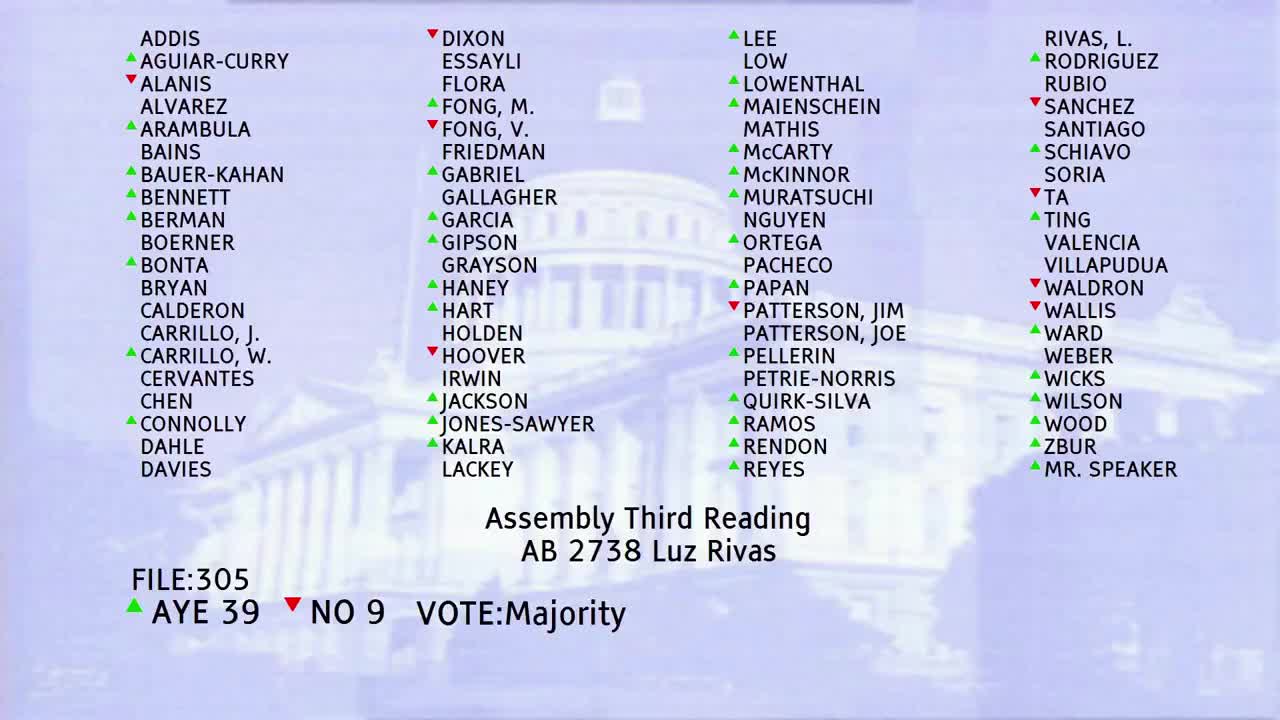 1MIN
Assembly Floor
 12MIN
Assembly Standing Committee on Public Employment and Retirement
Bill Author

Bill Co-Author(s):