AB 563: Developmental services.
- Session Year: 2015-2016
- House: Assembly
- Latest Version Date: 2015-06-11
The Lanterman Developmental Disabilities Services Act requires the State Department of Developmental Services to contract with regional centers to provide services and supports to individuals with developmental disabilities. Under existing law, the regional centers purchase needed services for individuals with developmental disabilities through approved service providers or arrange for those services through other publicly funded agencies. The services and supports to be provided to a regional center consumer are contained in an individual program plan or individualized family service plan, developed in accordance with prescribed requirements.
This bill would require the State Department of Developmental Services and the California Department of Aging Aging, in consultation with certain stakeholders, to develop best practices for providing culturally competent services and supports to aging consumers with developmental and intellectual disabilities, as specified. The bill would require the State Department of Developmental Services to conduct a 2-year pilot program that implements those best practices in 3 regional centers that reflect the geographic diversity of California and, after the conclusion of the pilot program, by January 1, 2020, submit a report, as specified, evaluating the pilot program to the Legislature. These provisions would be repealed January 1, 2021.
The Lanterman Developmental Disabilities Services Act requires the State Department of Developmental Services to contract with regional centers to provide services and supports to individuals with developmental disabilities. Under existing law, the regional centers purchase needed services for individuals with developmental disabilities through approved service providers or arrange for those services through other publicly funded agencies. The services and supports to be provided to a regional center consumer are contained in an individual program plan or individualized family service plan, developed in accordance with prescribed requirements.
This bill would require the State Department of Developmental Services and the California Department of Aging to develop best practices for providing culturally competent services and supports to aging consumers with developmental and intellectual disabilities, as specified. The bill would require the State Department of Developmental Services to conduct a 2-year pilot program that implements those best practices in 3 regional centers that reflect the geographic diversity of California and, after the conclusion of the pilot program, by January 1, 2020, submit a report, as specified, evaluating the pilot program to the Legislature. These provisions would be repealed January 1, 2021.
The Lanterman Developmental Disabilities Services Act requires the State Department of Developmental Services to contract with regional centers to provide services and supports to individuals with developmental disabilities. Under existing law, the regional centers purchase needed services for individuals with developmental disabilities through approved service providers or arrange for those services through other publicly funded agencies. The services and supports to be provided to a regional center consumer are contained in an individual program plan or individualized family service plan, developed in accordance with prescribed requirements.
This bill would require the State Department of Developmental Services and the California Department of Aging to develop guidelines and protocols establishing best practices for providing services and supports to aging consumers with developmental and intellectual disabilities. disabilities, as specified. The bill would require the State Department of Developmental Services to conduct a two-year 2-year pilot program that implements those guidelines and protocols best practices in three 3 regional centers that reflect the geographic diversity of California and, after the conclusion of the pilot program, by January 1, 2020, submit a report report, as specified, evaluating the pilot program to the Legislature. These provisions would be repealed January 1, 2021.
The Lanterman Developmental Disabilities Services Act requires the State Department of Developmental Services to contract with regional centers to provide services and supports to individuals with developmental disabilities. Under existing law, the regional centers purchase needed services for individuals with developmental disabilities through approved service providers or arrange for those services through other publicly funded agencies. The services and supports to be provided to a regional center consumer are contained in an individual program plan or individualized family service plan, developed in accordance with prescribed requirements.
This bill would require the State Department of Developmental Services and the California Department of Aging develop guidelines and protocols establishing best practices for providing services and supports to aging consumers with developmental and intellectual disabilities. The bill would require the State Department of Developmental Services to conduct a two-year pilot program that implements those guidelines and protocols in three regional centers and, by January 1, 2020, submit a report evaluating the pilot program to the Legislature. These provisions would be repealed January 1, 2021.
(a)(1)By January 1, 2017, the department and the California Department of Aging shall develop best practices for providing culturally competent services and supports to aging consumers with developmental and intellectual disabilities. In developing the best practices, the department and the California Department of Aging shall consult stakeholders, including, but not limited to, individuals with developmental disabilities, family members of individuals with developmental disabilities, service provider agency representatives, regional center representatives, labor organizations representing employees of regional centers, and the staff of appropriate policy committees of the Legislature.
(2)The best practices developed pursuant to this subdivision shall include, but not be limited to, both of the following:
(A)Regional center protocols to enhance communication with, and improve service delivery to, aging consumers with developmental and intellectual disabilities.
(B)Identification of services for inclusion in a consumers individual program plan, as appropriate, that can better support aging consumers with developmental and intellectual disabilities.
(b)The department shall conduct a two-year pilot program that implements the best practices developed pursuant to subdivision (a) in three regional centers that reflect the geographic diversity of California.
(c)(1)After the conclusion of the pilot program, the department shall submit a report to the Legislature evaluating the pilot program conducted pursuant to subdivision (b) by January 1, 2020, which shall include a determination of whether the best practices implemented in the pilot program should be implemented statewide.
(2)The report required by this subdivision shall be submitted in accordance with Section 9795 of the Government Code.
(d)This section shall remain in effect only until January 1, 2021, and as of that date is repealed, unless a later enacted statute, that is enacted before January 1, 2021, deletes or extends that date.
(a)(1)By January 1, 2017, the department and the California Department of Aging shall develop best practices for providing culturally competent services and supports to aging consumers with developmental and intellectual disabilities.
(2)The best practices developed pursuant to this subdivision shall include, but not be limited to, both of the following:
(A)Regional center protocols to enhance communication with, and improve service delivery to, aging consumers with developmental and intellectual disabilities.
(B)Identification of services for inclusion in a consumers individual program plan, as appropriate, that can better support aging consumers with developmental and intellectual disabilities.
(b)The department shall conduct a two-year pilot program that implements the best practices developed pursuant to subdivision (a) in three regional centers that reflect the geographic diversity of California.
(c)(1)After the conclusion of the pilot program, the department shall submit a report to the Legislature evaluating the pilot program conducted pursuant to subdivision (b) by January 1, 2020, which shall include a determination of whether the best practices implemented in the pilot program should be implemented statewide.
(2)The report required by this subdivision shall be submitted in accordance with Section 9795 of the Government Code.
(d)This section shall remain in effect only until January 1, 2021, and as of that date is repealed, unless a later enacted statute, that is enacted before January 1, 2021, deletes or extends that date.
(a)(1)By January 1, 2017, the department and the California Department of Aging shall develop guidelines and protocols establishing best practices for providing services and supports to aging consumers with developmental and intellectual disabilities.
(2)The best practices developed pursuant to this subdivision shall include, but not be limited to, both of the following:
(A)Regional center protocols to enhance communication with, and improve service delivery to, aging consumers with developmental and intellectual disabilities.
(B)Identification of services for inclusion in a consumers individual program plan, as appropriate, that can better support aging consumers with developmental and intellectual disabilities.
(b)The department shall conduct a two-year pilot program that implements the guidelines and protocols best practices developed pursuant to subdivision (a) in three regional centers. centers that reflect the geographic diversity of California.
(c)(1)The After the conclusion of the pilot program, the department shall submit a report to the Legislature evaluating the pilot program conducted pursuant to subdivision (b) by January 1, 2020. 2020, which shall include a determination of whether the best practices implemented in the pilot program should be implemented statewide.
(2)The report required by this subdivision shall be submitted in accordance with Section 9795 of the Government Code.
(d)This section shall remain in effect only until January 1, 2021, and as of that date is repealed, unless a later enacted statute, that is enacted before January 1, 2021, deletes or extends that date.
(a)By January 1, 2017, the department and the California Department of Aging shall develop guidelines and protocols establishing best practices for providing services and supports to aging consumers with developmental and intellectual disabilities.
(b)The department shall conduct a two-year pilot program that implements the guidelines and protocols developed pursuant to subdivision (a) in three regional centers.
(c)(1)The department shall submit a report to the Legislature evaluating the pilot program conducted pursuant to subdivision (b) by January 1, 2020.
(2)The report required by this subdivision shall be submitted in accordance with Section 9795 of the Government Code.
(d)This section shall remain in effect only until January 1, 2021, and as of that date is repealed, unless a later enacted statute, that is enacted before January 1, 2021, deletes or extends that date.
|
Date
|
Status
|
|---|---|
| Jul 9, 2015 | In committee: Hearing postponed by committee. |
| Jun 17, 2015 | In committee: Hearing postponed by committee. |
| Jun 11, 2015 | Referred to Com. on HUMAN S. |
| Jun 11, 2015 | From committee chair, with author's amendments: Amend, and re-refer to committee. Read second time, amended, and re-referred to Com. on HUMAN S. |
| Jun 2, 2015 | In Senate. Read first time. To Com. on RLS. for assignment. |
| Jun 2, 2015 | Read third time. Passed. Ordered to the Senate. (Ayes 79. Noes 0. Page 1771.) |
| Jun 2, 2015 | Read third time. Passed. Ordered to the Senate. |
| May 28, 2015 | Read second time. Ordered to third reading. |
| May 28, 2015 | From committee: Do pass. (Ayes 17. Noes 0.) (May 28). |
| May 13, 2015 | In committee: Set, first hearing. Referred to APPR. suspense file. |
| May 5, 2015 | Re-referred to Com. on APPR. |
| May 4, 2015 | Read second time and amended. |
| Apr 30, 2015 | From committee: Amend, and do pass as amended and re-refer to Com. on APPR. (Ayes 6. Noes 0.) (April 30). |
| Apr 22, 2015 | Re-referred to Com. on AGING & L.T.C. |
| Apr 21, 2015 | Read second time and amended. |
| Apr 20, 2015 | From committee: Amend, and do pass as amended and re-refer to Com. on AGING & L.T.C. (Ayes 7. Noes 0.) (April 14). |
| Mar 9, 2015 | Referred to Coms. on HUM. S. and AGING & L.T.C. |
| Feb 25, 2015 | From printer. May be heard in committee March 27. |
| Feb 24, 2015 | Read first time. To print. |
|
Date
|
Description
|
Location
|
Votes
|
|
|---|---|---|---|---|
| Jun 2, 2015 | AB 563 LOPEZ Assembly Third Reading | Assembly Floor |
Passed |
|
| May 28, 2015 | Do pass. | Assembly Standing Committee on Appropriations |
Passed |
|
| Apr 30, 2015 | Do pass as amended and be re-referred to the Committee on [Appropriations] | Assembly Standing Committee on Aging and Long-Term Care |
Passed |
|
| Apr 14, 2015 | Do pass as amended and be re-referred to the Committee on [Aging and Long-Term Care] | Assembly Standing Committee on Human Services |
Passed |
This list shows positions taken on this bill by organizations on the date displayed, which is linked to the original source.
Positions by individuals are not included.
AB 563
Page 4
ASSEMBLY THIRD READING
AB 563
(Lopez)
As Amended May 4, 2015
Majority vote
Committee |
Votes |
Ayes |
Noes |
Human Services |
7-0 |
Chu, Mayes, Calderon, Lopez, Maienschein, Mark Stone, Thurmond |
|
Aging |
6-0 |
Brown, Hadley, Gipson, Levine, Lopez, Mathis |
|
Appropriations |
17-0 |
Gomez, Bigelow, Bonta, Calderon, Chang, Daly, Eggman, Gallagher, Eduardo Garcia, Gordon, Holden, Jones, Quirk, Rendon, Wagner, Weber, Wood |
|
SUMMARY: Establishes a pilot program to address the needs of aging individuals with developmental and intellectual disabilities. Specifically, this bill:
Requires the Department of Developmental Services (DDS) and the California Department of Aging (CDA) to develop best practices for providing culturally competent services and supports to aging consumers with developmental and intellectual disabilities by January 1, 2017.
Requires those best practices to include, at least, the following:
Regional center protocols to enhance communication with, and improve service delivery to, aging consumers with developmental and intellectual disabilities.
Identification of services for inclusion in a consumer's individual program plan, as appropriate, that can better support aging consumers with developmental and intellectual disabilities.
Requires DDS to conduct a two-year pilot program that implements the best practices in three regional centers that reflect the geographic diversity of the state.
Requires DDS to submit a report to the Legislature evaluating the pilot program by January 1, 2020, including a determination of whether the best practices should be implemented statewide.
Establishes a January 1, 2021 sunset date for the pilot program.
EXISTING LAW:
Establishes an entitlement to services for individuals with developmental disabilities under the Lanterman Developmental Disabilities Services Act (Lanterman Act). (Welfare and Institutions Code (WIC) Section 4500 et seq.)
Grants all individuals with developmental disabilities, among all other rights and responsibilities established for any individual by the United States Constitution and laws and the California Constitution and laws, the right to treatment and habilitation services and supports in the least restrictive environment. (WIC Section 4502)
Establishes a system of 21 nonprofit regional centers throughout the state to identify needs and coordinate services for eligible individuals with developmental disabilities and requires the DDS to contract with regional centers to provide case management services and arrange for or purchase services that meet the needs of individuals with developmental disabilities, as defined. (WIC Section 4620 et seq.)
Requires the development of an individual program plan (IPP) for each regional center consumer, which specifies services to be provided to the consumer, based on his or her individualized needs determination and preferences, and defines that planning process as the vehicle to ensure that services and supports are customized to meet the needs of consumers who are served by regional centers. (WIC Section 4512)
Establishes the federal Older American's Act, under which a national network of state agencies on aging and area agencies on aging (AAAs) provide home- and community-based services that help older adults remain healthy and independent. Programs include nutrition, job training, senior centers, caregiver support, transportation, health promotion, benefits enrollment, and elder abuse prevention. (42 United States Code 3001 et seq.)
Establishes the Mello-Granlund Older Californians Act, which reflects the federal Older Americans Act and provides state-funded programs and services for older adults and people with disabilities. (WIC Section 9000 et seq.)
Establishes the CDA within the California Health and Human Services Agency for the purpose of providing leadership to the AAAs in developing systems of home- and community-based services that maintain individuals in their own homes or least restrictive, homelike environments. (WIC Section 9100)
FISCAL EFFECT: According to the Assembly Appropriations Committee, this bill will result in annual costs to DDS of approximately $184,000 ($110,000 General Fund) for 1.5 positions to develop best practices and guidelines for the pilot projects, as well as unknown, but potentially significant costs to DDS to implement the pilot projects. The bill lacks sufficient detail to know the extent of the work required. Additional unknown costs to DDS to compile and produce a report evaluating the pilot program and determining whether the pilot program should be implemented statewide
COMMENTS:
Developmental services: The Lanterman Act (WIC Section 4500 et seq.) guides the provision of services and supports for Californians with developmental disabilities. Each individual under the Lanterman Act, typically referred to as a "consumer," is legally entitled to treatment and habilitation services and supports in the least restrictive environment. Lanterman Act services are designed to enable all consumers to live more independent and productive lives in the community.
The term "developmental disability" means a disability that originates before an individual attains 18 years of age, is expected to continue indefinitely, and constitutes a substantial disability for that individual. It includes intellectual disabilities, cerebral palsy, epilepsy, and autism spectrum disorders (ASD). Other developmental disabilities are those disabling conditions similar to an intellectual disability that require treatment (i.e., care and management) similar to that required by individuals with an intellectual disability.
Direct responsibility for implementation of the Lanterman Act service system is shared by DDS and 21 regional centers, which are private nonprofit entities, established pursuant to the Lanterman Act, that contract with DDS to carry out many of the state’s responsibilities under the Lanterman Act. The 21 regional centers serve 280,000 consumers, providing services such as residential placements, supported living services, respite care, transportation, day treatment programs, work support programs, and various social and therapeutic activities.
Services provided to people with developmental disabilities are outlined in an IPP, which is developed by the IPP team—including, among others, the consumer, his or her legally authorized representative, and one or more regional center representatives—and is based on the consumer’s needs and choices. The Lanterman Act requires that the IPP promote community integration and maximize opportunities for each consumer to develop relationships, be part of community life, increase control over his or her life, and acquire increasingly positive roles in the community. The IPP must give the highest preference to those services and supports that allow minors to live with their families and adults to live as independently as possible in the community.
Department of Aging and Area Agencies on Aging: The CDA administers programs that serve older and disabled adults, as well as family caregivers and residents in long-term care facilities. These include basic nutrition assistance, transportation services, in-home assistance, caregiver support, health promotion, elder abuse prevention, services that help older adults find employment, and other services that help older and disabled individuals live independently in the community. CDA’s programs are administered using funds allocated under the federal Older Americans Act, the Older Californians Act, the Medi-Cal program, and public and private grants.
CDA contracts with 33 AAAs throughout California, which are responsible for planning, coordinating and directly managing programs and services CDA oversees. CDA also contracts directly with agencies that operate the Multipurpose Senior Services Program, which provides social and health care management services to help frail individuals avoid or delay institutionalization. Approximately 80% of the money for AAA programs is appropriated to the state from the federal government.
Aging and developmental disabilities: According to the United States (U.S.) Census Bureau, the nation’s population is expected to grow from 314 million in 2012 to 400 million in 2050 (a 27% increase), while the population of individuals age 65 and older is expected to increase by 94% during that same period of time, and is expected to make up more than 20% of the projected U.S. population by 2050.
Regional centers are also experiencing an increase in the number of older individuals they serve. As of December 2014, 17,600 regional center consumers were between 52 and 61 years of age, and 10,069 were 62 years of age and older, accounting for 7.25% and 4.15% of the total regional center caseload, respectively. By way of comparison, the number of regional center consumers between 52 and 61 years of age in 2004 was 10,614, and there were 4,845 individuals age 62 and older. Compared to 2004, the 2014 figure for consumers age 62 and older represents an increase of 5,224 consumers and an additional 1.4% of the overall caseload.
The University of Illinois at Chicago’s Institute on Disability and Human Development released a report in 2012, Bridging the aging and developmental disabilities service networks: Challenges and best practices, which outlines the unique service needs of aging individuals with developmental disabilities. Within the report, the authors estimate that the number of individuals over age 60 living in the community with developmental disabilities will increase considerably in the coming decades, reaching 1.4 million by 2030. They go on to state that increased life expectancy is one of the major factors contributing to the growing number of older individuals with developmental disabilities, with the mean age of death being 66 years in 1993, compared to 59 years in the 1970s and 33 years in the 1930s. 1
Down Syndrome: According to the National Down Syndrome Society, 6,000 babies born in the U.S. each year have Down Syndrome. Because it is included in the etiology of intellectual disability, over 18,000 individuals with Down Syndrome are currently served by California’s regional centers.
While data shows that, overall, individuals with intellectual and developmental disabilities are experiencing increasingly longer average lifespans, the needs of regional center consumers with Down Syndrome have a particular connection to the needs of many older adults without developmental disabilities. This is because Down Syndrome is the result of a person having a whole or partial extra copy of chromosome 21, one of the chromosomes associated with Alzheimer’s disease. According to the Alzheimer’s Association, the percentage of individuals with Alzheimer’s age 65 and older is nearly six times higher among individuals with Down Syndrome than the percentage of people of the same age group without Down Syndrome.
Need for this bill: According to the author, "Under existing law, the Department of Developmental services is required to contract with the Regional Centers to provide needed services to individuals with developmental disabilities through all stages of their lives. Currently the Regional Center system provides specific services for infants, children, adolescents and adults. There is no specific Regional Center unit that addresses the unique needs of older adults. Within the developmental disability system, several individuals and programs have independently attempted to fill the service gap that is not met by the current DDS/Regional Center system. This is indicative of the significant needs of older adults with intellectual and developmental disabilities, as the population continues to increase."
Analysis Prepared by: Myesha Jackson / HUM. S. / (916) 319-2089 FN: 0000618
1 Factor, A., Heller, T., & Janicki, M. (2012). Bridging the aging and developmental disabilities service networks: Challenges and best practices. Chicago: Institute on Disability and Human Development, University of Illinois at Chicago.
AB 563
Page 2
Date of Hearing: May 13, 2015
ASSEMBLY COMMITTEE ON APPROPRIATIONS
Jimmy Gomez, Chair
AB 563
(Lopez) – As Amended May 4, 2015
Policy Committee: |
Human Services |
Vote: |
7 - 0 |
|
Aging and Long Term Care |
|
6 - 0 |
|
|
|
|
Urgency: No State Mandated Local Program: No Reimbursable: No
SUMMARY: This bill establishes a pilot program to address the needs of aging individuals with developmental and intellectual disabilities. Specifically, this bill:
Requires the Department of Developmental Services (DDS) and the California Department of Aging to develop, by January 1, 2017, guidelines and protocols establishing best practices for providing culturally competent services and supports to aging consumers with developmental and intellectual disabilities.
Requires DDS to conduct a two-year pilot program that implements those guidelines and protocols in three regional centers, and requires DDS to submit a report to the Legislature evaluating the pilot program by January 1, 2020, as specified.
Establishes a January 1, 2021, sunset date for the pilot program.
FISCAL EFFECT:
Annual costs to DDS of approximately $184,000 ($110,000 GF) for 1.5 positions to develop best practices and guidelines for the pilot projects.
Unknown, but potentially significant costs to DDS to implement the pilot projects. The bill lacks sufficient detail to know the extent of the work required.
Additional unknown costs to DDS to compile and produce a report evaluating the pilot program and determining whether the pilot program should be implemented statewide.
COMMENTS:
Purpose. According to the author, “Under existing law, the Department of Developmental Services is required to contract with the Regional Centers to provide needed services to individuals with developmental disabilities through all stages of their lives. Currently the Regional Center system provides specific services for infants, children, adolescents and adults. There is no specific Regional Center unit that addresses the unique needs of older adults. Within the developmental disability system, several individuals and programs have independently attempted to fill the service gap that is not met by the current DDS/Regional Center system. This is indicative of the significant needs of older adults with intellectual and developmental disabilities, as the population continues to increase.”
Background. The Lanterman Act guides the provision of services and supports for Californian’s with developmental disabilities. Implementation of the Lanterman Act service system is shared by DDS and a system of 21 regional centers and four developmental centers. Separately, the California Department of Aging contracts with 33 Area Agencies on Aging. Geographically, both systems cover the entire state. Services and programs within both systems intersect more and more as families caring for developmental center clients become eligible for area agency on aging services due to age, and caregiving responsibilities.
The U.S. Census Bureau expects the nation’s population to grow from 314 million in 2012 to 400 million in 2050 (a 27% increase), while the population of individuals age 65 and older is expected to increase by 94%, and to make up more than 20% of the projected US population by 2050. Studies indicate that the number of individuals over age 60 living in the community with developmental disabilities will increase considerably in the coming decades, reaching 1.4 million nationwide by 2030. Increased life expectancy is one of the major factors contributing to the growing number of older individuals with developmental disabilities, with the mean age of death being 66 years in 1993, compared to 59 years in the 1970s and 33 years in the 1930s.
According to the DDS, “(T)he aging of parents or family members directly affects the demand for developmental services.” For instance: “…an aging caregiver may require an increased level of services and supports to maintain their family member in the home. When these caregivers die, or are no longer able to support their loved ones, alternative living arrangements must be developed or located.” DDS notes that almost all forms of out-of-home care are more expensive than supporting a person in their own home, and their own data shows that the percentage of consumers living out of home increases as they age.
This bill seeks to promote the interaction of the benefits and best practices of the DDS and Department of Aging systems.
Analysis Prepared by: Jennifer Swenson / APPR. / (916) 319-2081
AB 563
Page 4
Date of Hearing: April 30, 2015
ASSEMBLY COMMITTEE ON AGING AND LONG-TERM CARE
Cheryl Brown, Chair
AB 563
Lopez – As Amended April 21, 2015
SUBJECT: Developmental services.
SUMMARY: Directs the California Department of Developmental Services (DDS), in partnership with the California Department of Aging (CDA), to develop best practices in providing services to aging individuals with developmental and intellectual disabilities. Specifically, this bill:
Requires the California Department of Developmental Services and the California Department of Aging to develop guidelines and protocols establishing best practices for:
Communication with aging consumers with developmental and intellectual disabilities; and
Delivery of services to aging consumers with developmental and intellectual disabilities.
Requires the California Department of Developmental Services to conduct a two-year pilot program in three regional centers that reflect geographic diversity within the state, along with recommendations for implementation statewide.
Unless extended by legislation, repeals authorization for the pilot on January 1, 2021.
EXISTING LAW:
Existing federal law, the Developmental Disabilities Assistance and Bill of Rights Act of 2000 (P.L. 106-402) established the State Council on Developmental Disabilities to work to promote the core values of self-determination, independence, productivity, integration, and inclusion in all aspects of community life, and to engage in advocacy, capacity building, and systemic change activities that contribute to a coordinated, consumer-and family-centered, consumer-and family-directed, comprehensive system that includes the provision of needed community services, individualized supports, and other forms of assistance that promote self-determination for individuals with developmental disabilities and their families.
Establishes the Older Americans Act of 1965 (as amended in 2006, Public Law 109-365) in order to preserve the inherent dignity of older individuals and assure equal opportunity to the full and free enjoyment of, among other things; adequate income in retirement; the best possible physical and mental health which science can make available and without regard to economic status; obtaining and maintaining suitable housing at costs which older citizens can afford; full restorative services for those who require institutional care, and a comprehensive array of community-based, long-term care services adequate to appropriately sustain older people in their communities and in their homes, including support to family members and other persons providing voluntary care to older individuals needing long-term care services; retirement in health, honor, and dignity, after years of contribution to the economy; participation in and contribution to meaningful activity within the widest range of civic, cultural, educational, training and recreational opportunities; freedom, independence, and the free exercise of individual initiative in planning and managing their own lives; full participation in the planning and operation of community-based services and programs provided for their benefit; and protection against abuse, neglect, and exploitation.
Establishes the Lanterman Developmental Disabilities Services Act which establishes the Department of Developmental Services; clarifies that the State of California accepts responsibility for persons with developmental disabilities, and establishes an obligation to them which it must discharge on behalf of them, their families and the communities in which they live. The Lanterman Act assures that the state addresses the needs of individuals with developmental disabilities and their families, and clarifies the roles in determining service needs; and describes service options for consumers and their families, pursuant to each individual program plan.
Establishes the Mello-Granlund Older Californians Act that sets forth the state’s commitment to its older population and other populations served by the programs administered by the California Department of Aging. Specifies that CDA shall ensure that programs and services provided through the Older Americans Act and the Older Californians Act in each planning and service area are available to all older adults regardless of physical or mental disabilities, language barriers, cultural or social isolation, including that caused by actual or perceived racial and ethnic status, ancestry, national origin, religion, sex, gender, identity, marital status, familial status, sexual orientation, or by any other basis set forth in Section 12921 of the Government Code, or by association with a person or persons with one or more of these actual or perceived characteristics, that restrict an individual’s ability to perform normal daily tasks or that threaten his or her capacity to live independently.
FISCAL EFFECT: Unknown.
COMMENTS:
Author’s Statement: “Under existing law, the Department of Developmental Services (DDS) is required to contract with the Regional Centers to provide needed services to individuals with developmental disabilities through all stages of their lives. Currently the Regional Center system provides specific services for infants, children, adolescents and adults. There is no specific Regional Center unit that addresses the unique needs of older adults. Within the developmental disability system, several individuals and programs have independently attempted to fill the service gap that is not met by the current DDS/Regional Center system. This is indicative of the significant needs of older adults with Intellectual/Developmental Disabilities (I/DD) as the population continues to increase.”
Background: California developmental system supports 21 regional centers, and four developmental centers. The California Department of Aging contracts with 33 Area Agencies on Aging. Geographically, both systems cover the entire state. Services and programs within both systems intersect more and more as families caring for developmental center clients become eligible for area agency on aging services due to age, and caregiving responsibilities. Developmental center clients, too, are living longer. Demographic trends show a prospect of greater interactions amongst the two systems more into the future.
In an effort to assure efficient use of scarce public social service resources, the author is encouraging the promotion of the benefits of the two systems, and prepare to position services strategically to reduce the likelihood of duplication. The author notes that the normal aging process for developmental system clients is often complicated by a lifetime of reduced mobility, poorer general health, medications, and surgeries. The more severe the developmental disability, the greater risk – and earlier onset – of the diseases commonly associated with aging.
As people with intellectual and developmental disabilities are living longer, it is very likely that service providers for both the community of people with intellectual and/or developmental Disabilities (I/DD) and service providers for the growing population of older adults, have much to gain from each other as they strategize to promote similar core values related to self-determination, choice, independence, dignity, productivity, and inclusion in all aspects of community life for their corresponding populations. For instance, clients of both the developmental services system, and the patchwork of services for older adults, is generally associated with a family unit (73% and 84% respectively) that provides care and protection, and are therefore inherent components of any discussion about their needs.
According to the Department of Developmental Services, “(T)he aging of parents or family members directly affects the demand for developmental services.” For instance: “…an aging caregiver may require an increased level of services and supports to maintain their family member in the home. When these caregivers die, or are no longer able to support their loved ones, alternative living arrangements must be developed or located.” The Department notes that almost all forms of out-of-home care are more expensive than supporting a person in their own home, and their own data shows that the percentage of consumers living out of home increases as they age.1
Researchers from the University of Colorado noted a decade ago: “…the mean age at death for persons with mental retardation was 66 years in 1993 - up from 19 years in the 1930s and 59 in the 1970s. The mean age at death for the general population in 1993 was 70 years. Longevity has also increased dramatically for persons with Down syndrome. Average age at death for persons with Down syndrome in the 1920s was 9 years; it rose to 31 in the 1960s and to 56 in 1993,2” which lead DDS to conclude that: “…consumers’ increasing longevity means that services and supports will be provided, not only for a relatively longer period of time, but the needs will be greater or of higher intensity especially during the later years.”
According to a 2012 study by the University of Illinois at Chicago and funded by the U.S. Administration on Developmental Disabilities, “Bridging the Aging and Developmental Disabilities Service Networks, Challenges and Best Practices,” people with developmental disabilities are aging at unprecedented rates and have unique health and service needs. Adults with developmental disabilities have a higher risk of developing chronic health conditions at younger ages than other adults, due to the confluence of biological factors related to syndromes
and associated disabilities. The report highlights multiple initiatives which would benefit from collaborative relationships between those who advocate for the developmentally disabled, and those who advocate for the aged. Citing a time of dramatic policy change, the report recommends that agencies improve efficiency and coordination to better serve people with developmental disabilities and their families by better understanding the age-related needs and best practices in meeting those needs through research and evaluation.
Support: The California Commission on Aging, the principle advocate for older adults in California, states that individuals with developmental disabilities require a unique set of services as they age, which are not currently in place. By establishing guidelines and protocol, the state will create a means to assure individuals with developmental disabilities age successfully with optimal independence.
New Horizons, a southern California non-profit agency that provides job training and placement, education, counseling, residential services, and social programs for developmentally disabled adults, state that appropriate accommodations, and suitable care for adults with developmental disabilities is sorely needed.
Opposition: None
Dual Referral: AB 563 was previously heard by the Assembly Committee on Human Services where it passed on a vote of 7-0 on April 14, 2015.
Recommended Amendment:
On page 1, line 5, after the word “providing”, insert: culturally competent.
REGISTERED SUPPORT / OPPOSITION:
Support
The Adult Skills Center (TASC)
California Commission on Aging
New Horizons
Opposition
None on file.
Analysis Prepared by: Robert MacLaughlin / AGING & L.T.C. / (916) 319-3990
1 California Department of Developmental Services. Controlling Regional Center Costs, 2007
2 David Braddock, et al., The State of the States in Developmental Disabilities – 2005, Department of
Psychiatry and Coleman Institute for Cognitive Disabilities, The University of Colorado, p. 60.
AB 563
Page 5
Date of Hearing: April 14, 2015
ASSEMBLY COMMITTEE ON HUMAN SERVICES
Kansen Chu, Chair
AB 563
(Lopez) – As Introduced February 24, 2015
SUBJECT: Developmental services
SUMMARY: Establishes a pilot program to address the needs of aging individuals with developmental and intellectual disabilities.
Specifically, this bill:
Requires the Department of Developmental Services (DDS) and the California Department of Aging to develop guidelines and protocols establishing best practices for providing services and supports to aging consumers with developmental and intellectual disabilities by January 1, 2017.
Requires DDS to conduct a two-year pilot program that implements those guidelines and protocols in three regional centers, and requires DDS to submit a report to the Legislature evaluating the pilot program by January 1, 2020, as specified.
Establishes a January 1, 2021 sunset date for the pilot program.
EXISTING LAW:
Establishes an entitlement to services for individuals with developmental disabilities under the Lanterman Developmental Disabilities Services Act (Lanterman Act). (WIC 4500 et seq.)
Grants all individuals with developmental disabilities, among all other rights and responsibilities established for any individual by the United States Constitution and laws and the California Constitution and laws, the right to treatment and habilitation services and supports in the least restrictive environment. (WIC 4502)
Establishes a system of 21 nonprofit regional centers throughout the state to identify needs and coordinate services for eligible individuals with developmental disabilities and requires the DDS to contract with regional centers to provide case management services and arrange for or purchase services that meet the needs of individuals with developmental disabilities, as defined. (WIC 4620 et seq.)
Requires the development of an individual program plan (IPP) for each regional center consumer, which specifies services to be provided to the consumer, based on his or her individualized needs determination and preferences, and defines that planning process as the vehicle to ensure that services and supports are customized to meet the needs of consumers who are served by regional centers. (WIC 4512)
Requires the IPP planning processes to include:
A statement of the individual’s goals and objectives, a schedule of the type and nature of services to be provided and other information and considerations, as specified;
Review and modification, as necessary, by the regional center’s planning team no less frequently than every three years; and
Statewide training and review of the IPP plan creation, as specified. (WIC 4646.5)
Establishes the federal Older American's Act, under which a national network of state agencies on aging and area agencies on aging (AAAs) provide home- and community-based services that help older adults remain healthy and independent. Programs include nutrition, job training, senior centers, caregiver support, transportation, health promotion, benefits enrollment, and elder abuse prevention. (42 U.S.C. 3001 et seq.)
Establishes the Mello-Granlund Older Californians Act, which reflects the federal Older Americans Act and provides state-funded programs and services for older adults and people with disabilities. (WIC 9000 et seq.)
Establishes the California Department of Aging (CDA) within the California Health and Human Services Agency for the purpose of providing leadership to the AAAs in developing systems of home- and community-based services that maintain individuals in their own homes or least restrictive, homelike environments. (WIC 9100)
FISCAL EFFECT: Unknown
COMMENTS:
Developmental services: The Lanterman Act (WIC § 4500 et seq.) guides the provision of services and supports for Californians with developmental disabilities. Each individual under the Act, typically referred to as a “consumer,” is legally entitled to treatment and habilitation services and supports in the least restrictive environment. Lanterman Act services are designed to enable all consumers to live more independent and productive lives in the community.
The term “developmental disability” means a disability that originates before an individual attains 18 years of age, is expected to continue indefinitely, and constitutes a substantial disability for that individual. It includes intellectual disabilities, cerebral palsy, epilepsy, and autism spectrum disorders (ASD). Other developmental disabilities are those disabling conditions similar to an intellectual disability that require treatment (i.e., care and management) similar to that required by individuals with an intellectual disability.
Direct responsibility for implementation of the Lanterman Act service system is shared by DDS and 21 regional centers, which are private nonprofit entities, established pursuant to the Lanterman Act, that contract with DDS to carry out many of the state’s responsibilities under the Act. The 21 regional centers serve 279,000 consumers, providing services such as residential placements, supported living services, respite care, transportation, day treatment programs, work support programs, and various social and therapeutic activities. Approximately 1,100 consumers reside at one of California’s three Developmental Centers—and one state-operated, specialized community facility—which provide 24-hour habilitation and medical and social treatment services.
Services provided to people with developmental disabilities are outlined in an IPP, which is developed by the IPP team—including, among others, the consumer, his or her legally authorized representative, and one or more regional center representatives—and is based on the consumer’s needs and choices. The Lanterman Act requires that the IPP promote community integration and maximize opportunities for each consumer to develop relationships, be part of community life, increase control over his or her life, and acquire increasingly positive roles in the community. The IPP must give the highest preference to those services and supports that allow minors to live with their families and adults to live as independently as possible in the community.
Department of Aging and Area Agencies on Aging: The California Department of Aging (CDA) administers programs that serve older and disabled adults, as well as family caregivers and residents in long-term care facilities. These include basic nutrition assistance, transportation services, in-home assistance, caregiver support, health promotion, elder abuse prevention, services that help older adults find employment, and other services that help older and disabled individuals live independently in the community. CDA’s programs are administered using funds allocated under the federal Older Americans Act, the Older Californians Act, the Medi-Cal program, and public and private grants.
CDA contracts with 33 AAAs throughout California, which are responsible for planning, coordinating and directly managing programs and services CDA oversees. CDA also contracts directly with agencies that operate the Multipurpose Senior Services Program, which provides social and health care management services to help frail individuals avoid or delay institutionalization. Approximately 80% of the money for AAA programs is appropriated to the state from the federal government.
Aging and developmental disabilities: According to the U.S. Census Bureau, the nation’s population is expected to grow from 314 million in 2012 to 400 million in 2050 (a 27% increase), while the population of individuals age 65 and older is expected to increase by 94% during that same period of time, and is expected to make up more than 20% of the projected US population by 2050.
Regional centers are also experiencing an increase in the number of older individuals they serve. As of December 2014, 17,600 regional center consumers were between 52 and 61 years of age, and 10,069 were 62 years of age and older, accounting for 7.25% and 4.15% of the total regional center caseload, respectively. By way of comparison, the number of regional center consumers between 52 and 61 years of age in 2004 was 10,614, and there were 4,845 individuals age 62 and older. Compared to 2004, the 2014 figure for consumers age 62 and older represents an increase of 5,224 consumers and an additional 1.4% of the overall caseload.
The University of Illinois at Chicago’s Institute on Disability and Human Development released a report in 2012, Bridging the aging and developmental disabilities service networks: Challenges and best practices, which outlines the unique service needs of aging individuals with developmental disabilities. Within the report, the authors estimate that the number of individuals over age 60 living in the community with developmental disabilities will increase considerably in the coming decades, reaching 1.4 million by 2030. They go on to state that increased life expectancy is one of the major factors contributing to the growing number of older individuals with developmental disabilities, with the mean age of death being 66 years in 1993, compared to 59 years in the 1970s and 33 years in the 1930s. 1
Down Syndrome: According to the National Down Syndrome Society, 6,000 babies born in the U.S. each year have Down Syndrome. Because it is included in the etiology of intellectual disability, over 18,000 individuals with Down Syndrome are currently served by California’s regional centers.
While data shows that, overall, individuals with intellectual and developmental disabilities are experiencing increasingly longer average lifespans, the needs of regional center consumers with Down Syndrome have a particular connection to the needs of many older adults without developmental disabilities. This is because Down Syndrome is the result of a person having a whole or partial extra copy of chromosome 21, one of the chromosomes associated with Alzheimer’s disease. According to the Alzheimer’s Association, the percentage of individuals with Alzheimer’s age 65 and older is nearly six times higher among individuals with Down Syndrome than the percentage of people of the same age group without Down Syndrome.
Need for this bill: According to the author, “Under existing law, the Department of Developmental services is required to contract with the Regional Centers to provide needed services to individuals with developmental disabilities through all stages of their lives. Currently the Regional Center system provides specific services for infants, children, adolescents and adults. There is no specific Regional Center unit that addresses the unique needs of older adults. Within the developmental disability system, several individuals and programs have independently attempted to fill the service gap that is not met by the current DDS/Regional Center system. This is indicative of the significant needs of older adults with intellectual and developmental disabilities, as the population continues to increase.”
Recommended amendments: While the increasing number of older individuals served by regional centers does call for greater attention to be focused on their changing needs, this bill is not entirely clear as to whether the best practices that are developed will dictate new services that will be sought from providers that contract with the regional centers or new practices the regional centers will execute as they interact with consumers and their families.
Additionally, this bill establishes a pilot program in three regional centers, but there is no indication as to how the regional centers will be chosen for the pilot. This bill also does not include language regarding the potential expansion of the pilot so that aging consumers in other regional centers throughout the state might benefit from implementation of the identified best practices.
Committee staff recommends the bill be amended to do the following:
Clarify whether the best practices to be implemented pertain to actual services that will be included in a consumer’s IPP, when appropriate, or the general practices of the regional centers when they interact with aging consumers, or both.
Identify a process for selection of the three regional centers to be included in the initial pilot program.
Indicate when and how the identified best practices will be implemented in other regional centers.
DOUBLE REFERRAL. This bill has been double-referred. Should this bill pass out of this committee, it will be referred to the Assembly Committee on Aging and Long-Term Care.
REGISTERED SUPPORT / OPPOSITION:
Support
New Horizons
The Adult Skills Center (TASC)
United Cerebral Palsy of Los Angeles
Valley Village
Opposition
None on file.
Analysis Prepared by: Myesha Jackson / HUM. S. / (916) 319-2089
1 Factor, A., Heller, T., & Janicki, M. (2012). Bridging the aging and developmental disabilities service networks: Challenges and best practices. Chicago: Institute on Disability and Human Development, University of Illinois at Chicago.
Discussed in Hearing
View Older Hearings
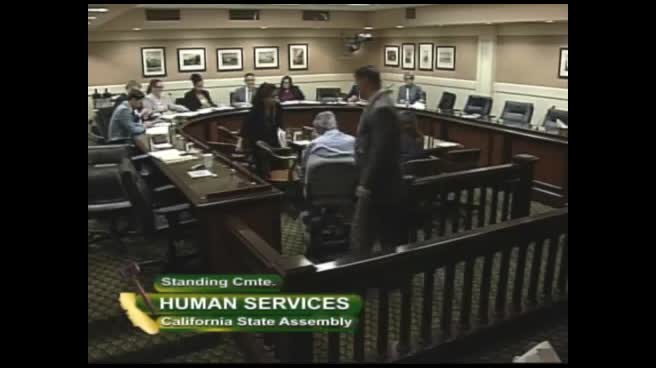
Bill Author