AB 2519: Misdemeanor offenses: deferral of sentencing: firearms prohibition.
- Session Year: 2023-2024
- House: Assembly
- Latest Version Date: 2024-02-13
Current Status:
Failed
(2024-08-15: In committee: Held under submission.)
Introduced
In Committee
First Chamber
In Committee
Second Chamber
Enacted
Existing law authorizes a judge in the superior court, at the judges discretion and over the objection of the prosecution, to defer sentencing a defendant who has submitted a plea of guilty or nolo contendere to a misdemeanor for a period not to exceed 12 months, subject to certain exceptions and requirements on the defendant.
This bill would prohibit a defendant who is charged with an offense that would prohibit them from possessing a firearm if convicted of the offense from possessing a firearm until they successfully complete diversion. By increasing duties on local law enforcement to enforce firearms prohibitions, this bill would impose a state-mandated local program.
The California Constitution requires the state to reimburse local agencies and school districts for certain costs mandated by the state. Statutory provisions establish procedures for making that reimbursement.
This bill would provide that, if the Commission on State Mandates determines that the bill contains costs mandated by the state, reimbursement for those costs shall be made pursuant to the statutory provisions noted above.
(a)A judge in the superior court in which a misdemeanor is being prosecuted may, at the judges discretion, and over the objection of a prosecuting attorney, offer diversion to a defendant pursuant to these provisions.
(b)A judge may continue a diverted case for a period not to exceed 24 months and order the defendant to comply with terms, conditions, or programs that the judge deems appropriate based on the defendants specific situation.
(c)If the defendant has complied with the imposed terms and conditions, at the end of the period of diversion, the judge shall dismiss the action against the defendant.
(d)If it appears to the court that the defendant is not complying with the terms and conditions of diversion, after notice to the defendant, the court shall hold a hearing to determine whether the criminal proceedings should be reinstituted. If the court finds that the defendant has not complied with the terms and conditions of diversion, the court may end the diversion and order resumption of the criminal proceedings.
(e)A defendant may not be offered diversion pursuant to this section for any of the following current charged offenses:
(1)Any offense for which a person, if convicted, would be required to register pursuant to Section 290.
(2)Any offense involving domestic violence, as defined in Section 6211 of the Family Code or subdivision (b) of Section 13700 of this code.
(3)A violation of Section 646.9.
(f)A defendant who is diverted pursuant to this chapter for a charged offense listed in Section 29805 shall be prohibited from possessing a firearm until they successfully complete diversion.
SEC. 2.If the Commission on State Mandates determines that this act contains costs mandated by the state, reimbursement to local agencies and school districts for those costs shall be made pursuant to Part 7 (commencing with Section 17500) of Division 4 of Title 2 of the Government Code.
|
Date
|
Status
|
|---|---|
| Aug 15, 2024 | In committee: Held under submission. |
| Jul 1, 2024 | In committee: Referred to suspense file. |
| Jun 18, 2024 | From committee: Do pass and re-refer to Com. on APPR. (Ayes 5. Noes 0.) (June 18). Re-referred to Com. on APPR. |
| Jun 5, 2024 | Referred to Com. on PUB S. |
| May 23, 2024 | In Senate. Read first time. To Com. on RLS. for assignment. |
| May 22, 2024 | Read third time. Passed. Ordered to the Senate. (Ayes 71. Noes 0. Page 5486.) |
| May 20, 2024 | Read second time. Ordered to third reading. |
| May 16, 2024 | From committee: Do pass. (Ayes 15. Noes 0.) (May 16). |
| May 8, 2024 | In committee: Set, first hearing. Referred to APPR. suspense file. |
| Apr 24, 2024 | From committee: Do pass and re-refer to Com. on APPR. (Ayes 8. Noes 0.) (April 23). Re-referred to Com. on APPR. |
| Mar 4, 2024 | Referred to Com. on PUB. S. |
| Feb 14, 2024 | From printer. May be heard in committee March 15. |
| Feb 13, 2024 | Read first time. To print. |
|
Date
|
Description
|
Location
|
Votes
|
|
|---|---|---|---|---|
| Jul 1, 2024 | Placed on suspense file | Senate Standing Committee on Appropriations |
Passed |
|
| Jun 18, 2024 | Do pass, but first be re-referred to the Committee on [Appropriations] | Senate Standing Committee on Public Safety |
Passed |
|
| May 22, 2024 | AB 2519 Maienschein Assembly Third Reading | Assembly Floor |
Passed |
|
| May 16, 2024 | Do pass. | Assembly Standing Committee on Appropriations |
Passed |
|
| Apr 23, 2024 | Do pass and be re-referred to the Committee on [Appropriations] | Assembly Standing Committee on Public Safety |
Passed |
This list shows positions taken on this bill by organizations on the date displayed, which is linked to the original source.
Positions by individuals are not included.
|
Organization
|
Position
|
Date
|
|---|---|---|
| California Attorneys For Criminal Justice | ** Against | |
| California District Attorneys Association | ** Support | |
| California Police Chiefs Association | ** Support | |
| City Of San Diego | ** Support | |
| Los Angeles Unified School District | ** Support | |
| Peace Officers Research Association Of California | ** Support |
SENATE COMMITTEE ON APPROPRIATIONS
Senator Anna Caballero, Chair
2023 - 2024 Regular Session
AB 2519 (Maienschein) - Misdemeanor offenses: deferral of sentencing: firearms prohibition
Version: February 13, 2024 | Policy Vote: PUB. S. 5 - 0 |
Urgency: No | Mandate: Yes |
Hearing Date: July 1, 2024 | Consultant: Liah Burnley |
Bill Summary: AB 2519 would prohibit individuals diverted for a charged misdemeanor, for which there would be a 10-year prohibition on possessing a firearm if convicted, from possessing a firearm until they successfully complete diversion.
Fiscal Impact:
- Costs (General Fund) to the Department of Justice (DOJ), possibly in the low hundreds of thousands of dollars annually, to add this bill’s firearm prohibition to the Armed and Prohibited Persons System (APPS). (See staff comments.)
- Costs (Trial Court Trust Fund, General Fund) to the courts to adjudicate violations of the firearm prohibition added by this bill. A defendant charged with a misdemeanor or felony is entitled to no-cost legal representation and a jury trial. Actual court costs will depend on the number of violations and the amount of court time needed to adjudicate each case. Although courts are not funded on the basis of workload, increased pressure on the Trial Court Trust Fund may create a need for increased funding for courts from the General Fund. The Governor’s 2024-25 budget proposes $83.1 million ongoing from the General Fund to backfill declining revenue to the Trial Court Trust Fund.
- Costs (local funds, General Fund) to the counties and the California Department of Corrections and Rehabilitation to incarcerate people convicted of violating the firearms prohibition added by this bill. Actual incarceration costs will depend on the number of convictions, the length of each sentence, and whether each sentence must be served in county jail or state prison. The average annual cost to incarcerate one person in county jail is approximately $29,000. The Legislative Analyst’s Office (LAO) estimates the average annual cost to incarcerate one person in state prison is $133,000. Although county incarceration costs are generally not considered reimbursable state mandates pursuant to Proposition 30 (2012), overcrowding in county jails creates cost pressure on the General Fund because the state has historically granted new funding to counties to offset overcrowding resulting from 2011 public safety realignment.
Background:
California has several laws that prohibit certain persons from purchasing firearms. All felony convictions lead to a lifetime prohibition, while a conviction of specified misdemeanors result in a 10 year prohibition. A person also may be prohibited from possessing a firearm due to a protective order or as a condition of probation. If a person communicates to his or her psychotherapist a serious threat of physical violence against a reasonably-identifiable victim or victims, the person is prohibited from owning or purchasing a firearm for five years, starting from the date the psychotherapist reports to local law enforcement the identity of the person making the threat. If a person is admitted into a facility because that person is a danger to himself, herself, or to others, the person is prohibited from owning or purchasing a firearm for five years.
Misdemeanors that result in a 10 year firearm prohibition include the crimes of stalking, sexual battery, assault with a deadly weapon, battery with serious bodily injury, brandishing a firearm or deadly weapon, assault with force likely to produce great bodily injury, battery on a peace officer, and threats of bodily injury or death. This bill would prohibit a person who is diverted for one of those misdemeanors from possessing a firearm until they successfully complete diversion.
Proposed Law:
This bill provides that a defendant who is diverted for a charged misdemeanor, for which there would be a 10-year prohibition on possessing a firearm if convicted, shall be prohibited from possessing a firearm until they successfully complete diversion.
Related Legislation:
- AB 2629 (Haney) would prohibit any person who is determined to be incompetent to stand trial on a misdemeanor offense from possessing or owning a firearm. AB 2629 is pending in this Committee.
- AB 2518 (Davies) would establish a lifetime firearm prohibition for juveniles adjudicated a ward of the court for murder, attempted murder, or voluntary manslaughter. AB 2518 is pending in this Committee.
- AB 2739 (Maienschein) would require a firearm, as specified, that is used in the commission of a crime, to be surrendered to law enforcement even where the defendant is granted diversion, if the crime would require the firearm to be surrendered if the defendant had been convicted of the crime. AB 2739 is pending on this Committee’s Suspense File.
- AB 178 (Ting), Chapter 45, Statutes of 2022, allocates $40 million to the Judicial Council to support a court-based firearm relinquishment program to ensure the consistent and safe removal of firearms from individuals who become prohibited from owning or possessing firearms and ammunition pursuant to court order.
- SB 129 (Skinner), Chapter 69, Statutes of 2021, allocates funds to DOJ to disburse to local sheriffs’ departments for APPS enforcement operations, and outlined reporting requirements for participating sheriffs’ departments.
Staff Comments:
Existing law requires the DOJ to maintain a “Prohibited Armed Persons File,” also known as the APPS program. APPS went into effect in December 2006. California is the only state in the nation with an automated system for tracking firearm owners who might fall into a prohibited status. The purpose of APPS is to disarm individuals who are legally prohibited from possessing a firearm. These individuals include convicted felons and persons convicted of certain misdemeanor offenses for domestic violence, individuals suffering from mental illness, and others. APPS tracks subjects who lawfully purchased firearms, but then illegally retained their firearms after falling into a prohibited category. The APPS program is designed to ensure that a firearms owner does not have a criminal history, mental health issues, or any issued restraining order.
The DOJ has long been working to seize the guns and ammunition of persons on the APPS list, but constant flow of new additions to the list coupled with budget and staffing shortfalls has rendered this a Sisyphean effort. DOJ has anticipated that the list will continue to grow as the Legislature adds new categories of persons to the list. This bill would invariably add individuals to APPS, requiring additional initial reviews of new matches by DOJ and ultimately requiring additional investigation and seizure operations. The APPS backlog has been a well-known and continuously discussed issue dating nearly to its creation. According to the most recent DOJ report, DOJ allocates 76 special agent positions to APPS enforcement, and only 53 of those positions are filled. Those 53 individuals are primarily responsible for removing firearms from the 24,509 prohibited persons in the APPS database as of January 2022. In 2021, the DOJ Bureau of Firearms investigated approximately 6,663 individuals who the APPS database identified as armed and prohibited persons.
-- END --
SENATE COMMITTEE ON PUBLIC SAFETY
Senator Aisha Wahab, Chair
2023 - 2024 Regular
Bill No: AB 2519 Hearing Date: June 18, 2024
Author: | Maienschein | ||
Version: | February 13, 2024 | ||
Urgency: | No | Fiscal: | Yes |
Consultant: | AB | ||
Subject: Misdemeanor offenses: deferral of sentencing: firearms prohibition
HISTORY
Source: Author
Prior Legislation: AB 732 (Mike Fong, Ch. 240, Stats. of 2023)
AB 455 (Quirk Silva, Ch. 236, Stats. of 2023)
AB 2239 (Maienschein, Ch. 143, Stats. of 2022)
AB 2551 (McCarty, Ch. 100, Stats. of 2022)
Support: California District Attorneys Association; California Police Chiefs Association; City of San Diego; Los Angeles Unified School District; Peace Officers Research Association of California
Opposition: California Attorneys for Criminal Justice
Assembly Floor Vote: 71 - 0
PURPOSE
The purpose of this bill is to prohibit a defendant charged with specified offenses for which they receive diversion from possessing a firearm until the successful completion of that term of diversion.
Existing law provides that any weapon which is considered a nuisance under specified provisions of existing law shall be surrendered to the sheriff of a county, the chief of police or other head of a municipal police department of any city or city and county, the chief of police of any campus of the University of California or the California State University, or the Commissioner of the Highway Patrol (CHP). (Pen. Code § 18000, subd. (a).)
Existing law provides that an officer to whom a weapon is surrendered, except upon receiving a certificate, as specified, stating that the retention of the weapon is necessary or proper to the ends of justice, shall destroy the weapon, and, if applicable, submit proof of its destruction to the court. (Pen. Code § 18005, subd. (a).)
Existing law prohibits any person who has been convicted of a felony from owning, purchasing, receiving or possessing a firearm, a violation of which is punishable as a felony. (Penal Code, § 29800.)
Existing law provides that persons convicted of specified serious or violent misdemeanors are prohibited from possession of firearms for a period of 10 years and that a violation of that prohibition is punishable as a misdemeanor with imprisonment up to one year or as a state prison felony. (Penal Code, § 29805 (a).)
Existing law includes within the list of misdemeanors triggering a 10 year firearm prohibition the crimes of stalking, sexual battery, assault with a deadly weapon, battery with serious bodily injury, brandishing a firearm of deadly weapon, assault with force likely to produce great bodily injury, battery on a peace officer, corporal injury to spouse, cohabitant or fellow parent, child abuse, elder abuse, unsafe storage of a firearm, and threats of bodily injury or death, among other misdemeanors. (Penal Code, § 29805 (a).)
Existing law requires any person subject to a firearm prohibition based on a conviction of a felony or specified misdemeanor to relinquish any firearms they own, possess or have under their control or custody within 48 hours if the defendant is out of custody or within 14 days if the defendant is in custody. (Penal Code, § 29810 (a).)
Existing law provides that persons with the knowledge that they have an outstanding warrant for any of the specified serious or violent misdemeanors that result in a 10-year prohibition are guilty of a crime if they possess a firearm while the warrant is outstanding. A violation is punishable as a misdemeanor, with imprisonment up to one year, or as a state prison felony. (Penal Code, §§ 29805, subd. (a), 29851.)
Existing law prohibits a person that is subject to specified restraining orders related to domestic violence from possessing or owning a firearm and punishes a violation of the prohibition as a misdemeanor with a maximum sentence of one year in the county jail. (Penal Code, § 29825.)
Existing law permits any person convicted of a specified misdemeanor, before that misdemeanor was added to the list of misdemeanors triggering a 10-year prohibition, to petition for relief. In deciding the petition, a court must ensure the petitioner is not otherwise prohibited, and may consider the interest of justice, any relevant evidence, and the totality of the circumstances. (Pen. Code, § 29860.)
Existing law requires the Attorney General to establish and maintain an online database to be known as the Prohibited Armed Persons File; the purpose of which is to cross-reference persons who have ownership or possession of a firearm on or after January 1, 1996, as indicated by a record in the Consolidated Firearms Information System, and who, subsequent to the date of that ownership or possession of a firearm, fall within a class of persons who are prohibited from owning or possessing a firearm. (Penal Code § 30000, subd. (a).)
Existing law states a judge in the superior court in which a misdemeanor is being prosecuted may, at the judge’s discretion, and over the objection of a prosecuting attorney, offer diversion to a defendant. (Pen. Code, § 1001.95, subd. (a).)
Existing law states if the defendant has complied with the imposed terms and conditions, at the end of the period of diversion, the judge shall dismiss the action against the defendant. (Pen. Code, § 1001.95, subd. (c).)
Existing law provides that if it appears to the court that the defendant is not complying with the terms and conditions of diversion, after notice to the defendant, the court shall hold a hearing to determine whether the criminal proceedings should be reinstituted. If the court finds that the defendant has not complied with the terms and conditions of diversion, the court may end the diversion and order resumption of the criminal proceedings. (Pen. Code, § 1001.95, subd. (d).)
Existing law provides that a defendant may not be offered diversion for: any for which a person would be required to register as a sex offender, any offense involving domestic violence, as specified, and stalking. (Pen. Code, § 1001.95, subd. (e).)
This bill provides that a defendant who is granted diversion pursuant to the above for an offense for which they would receive a 10-year ban on firearm possession under existing law shall be prohibited from possessing a firearm until they successfully complete diversion.
COMMENTS
- Need for This Bill
According to the Author:
Under current law, there are numerous misdemeanor criminal offenses that prohibit a defendant, if convicted, from possessing a firearm for up to 10 years. These crimes include threatening or intimidating public officials, assault, stalking, child endangerment and elder abuse. However, a defendant who is charged with one of these offenses but granted misdemeanor diversion is not subject to any firearm prohibitions even though the offenses they are charged with would warrant a prohibition if convicted. AB 2519 prohibits defendants granted misdemeanor diversion from possessing a firearm until they have successfully completed diversion. This would apply if the defendant is being diverted for a crime that would otherwise require a 10-year ban on possessing a firearm if convicted.
- Court-Initiated Misdemeanor Diversion
Diversion is the suspension of criminal proceedings for a prescribed time period with certain conditions. A defendant may not be required to admit guilt as a prerequisite for placement in a pretrial diversion program. If diversion is successfully completed, the criminal charges are dismissed and the defendant may, with certain exceptions, legally answer that he or she has never been arrested or charged for the diverted offense. If diversion is not successfully completed, the criminal proceedings resume, however, a hearing to terminate diversion is required.
Diversion programs may be pre-plea or post-plea. Pre-plea programs allow a defendant to participate in the program without admitting guilt. In post-plea programs, the defendant must first admit guilt before participating in the program. The main difference between the two types of diversion is that in a pre-plea program, if the defendant does not successfully complete the program, criminal proceedings resume and the defendant has the option to plead guilty or pursue a defense against their case. In a post-plea diversion program, if a defendant does not successfully complete the program, the defendant having already plead guilty, would be sentenced.
Court-initiated misdemeanor diversion was enacted in 2020 to reduce the number of people convicted of low level charges that may have catastrophic societal consequences and reduce court costs.[1] This diversion program authorizes a judge to divert a misdemeanor defendant, over the objection of the prosecution, except in cases of stalking, domestic violence and any offense requiring sex offender registration. The judge has broad authority to order the defendant to comply with terms, conditions, or programs that the judge deems appropriate based on the specific situation, however the case may not be diverted for a period exceeding 24 months. Similar to other existing diversion programs, if a defendant successfully completes diversion, the charges would be dismissed; if not, the judge is to hold a hearing to determine whether the defendant has not complied with the terms and conditions of diversion and whether the criminal proceedings should be reinstituted. Unlike some of the other existing pre-plea diversion programs such as mental health diversion or military diversion, court-initiated diversion contains no statutory requirements for the defendant to satisfy in order to be eligible other than the crimes that are specifically excluded.
- Firearm Possession Prohibitions for Criminal Convictions
Existing state and federal law contains a myriad of prohibitions on the possession and attempted purchase of firearms by certain individuals. Under both state and federal law, all felony convictions lead to a lifetime prohibition. California law goes further and imposes a 10-year prohibition on the possession and purchase of firearms for individuals convicted of numerous misdemeanor offenses that involve either violence or threat of violence as well as certain firearm-related crimes. Additionally, a person may be prohibited from possessing a firearm due to a protective order or as a condition of probation. If a person communicates to his or her psychotherapist a serious threat of physical violence against a reasonably-identifiable victim or victims, the person is prohibited from owning or purchasing a firearm for five years, starting from the date the psychotherapist reports to local law enforcement the identity of the person making the threat. If a person is admitted into a facility because that person is a danger to himself, herself, or to others, the person is prohibited from owning or purchasing a firearm for five years. Individuals under domestic violence restraining orders are also subject to a prohibition on firearm possession and purchase for the duration of that court order.
The Author argues that a loophole exists in existing law:
A defendant who is convicted of a misdemeanor offense listed in Penal Code §29805 is prohibited from possessing a firearm for a period of 10 years. However, defendants who are charged with a violation of a misdemeanor offense listed in PEN §29805 and are granted diversion do not currently have to comply with any firearm prohibitions. This can result in firearms remaining in the possession of potentially dangerous individuals before they have completed diversion.
Accordingly, this bill prohibits defendants who are granted diversion for crimes for which a conviction would result in a 10-year firearm ban from possessing a firearm until they have successfully completed diversion. As one opposition group points out, the bill does not prescribe
a penalty for a violation of this prohibition, raising several questions. Is a violation of the prohibition intended to be a misdemeanor, an infraction, or simply a condition of diversion the violation of which results in the reinstatement of proceedings for the original diverted offense?[2] Is a violation of the prohibition grounds for a 10-year firearm ban?
- Firearm Relinquishment Requirements
Existing California law requires any person convicted of a felony or specified misdemeanor rendering them subject to the 10-year firearm ban to relinquish all firearms under their possession. This requirement is a result of Proposition 63, which was passed by the voters and included a raft of firearm-related reform provisions which went into effect in 2018. The relinquishment provisions of Prop 63 also set forth specific procedures to be followed by a person who has been convicted in order to legally relinquish firearms.
Specifically, upon conviction, a judge must instruct the defendant of the prohibition against possessing firearms and ammunition and provide the defendant with a Prohibited Persons Relinquishment Form, which is developed by DOJ.[3] Existing law then requires the judge to assign a probation officer to the case to ensure that all firearms have been properly relinquished and verify that the firearms have in fact been relinquished prior to the final disposition of the defendant’s case, and issue a report to that effect. Under existing law, defendants who are out of custody must relinquish their firearms within 48 hours of the conviction, and in-custody defendants must relinquish firearms within 14 days via a designee.[4] A separate provision of existing law deals with the specific procedures law enforcement must follow when they receive a firearm via the relinquishment process, including how they must return the firearm to the owner should they become eligible to possess it.[5]
This bill prohibits individuals granted diversion from possessing firearms during their term of diversion, but does not specify how individuals subject to that prohibition should temporarily relinquish their firearms. The Author and Committee may wish to consider amending the bill to clarify whether the process outline above should be followed in cases to which this bill applies, or whether a separate process is necessary.
- Related Legislation
The Author of this measure is also the author of AB 2739, which, at the time this analysis was finalized, was set for hearing in this Committee on June 11. AB 2739 requires the surrender of a firearm that is used in the commission of a crime where the defendant is granted diversion if the crime would require surrender of the firearm if the defendant had been convicted. The bills do not conflict because AB 2739 applies to cases where the firearm in question is subject to surrender to law enforcement and subsequent destruction, whereas this bill applies to firearms which may be relinquished only temporarily.
- Argument in Support
According to the California Police Chiefs Association:
AB 2519 represents a strong step forward in promoting effective and equitable criminal justice practices, particularly in the realm of diversion programs. As law enforcement professionals committed to ensuring the safety and well-being of all Californians, we believe this bill represents a thoughtful and balanced approach to misdemeanor diversion and firearm possession. California’s pretrial diversion allows individuals to avoid both jail time and a criminal record by undergoing treatment and education, often focusing on drug use and mental health. To ensure the safety of victims and of communities at large, it is critical that those convicted of specified offenses complete diversion programs before being allowed to repossess a firearm. AB 2519 will ensure that this is the case.
- Argument in Opposition
According to the California Attorneys for Criminal Justice:
This bill prohibits a person from owning a firearm if they enter judicial diversion if the underlying offense would be prohibiting upon conviction. This bill does not specify what the penalty would be, but Penal Code statutory construction suggests that it would be punishable as a misdemeanor. In essence, this bill prohibits someone from owning a gun for an offense they have never been convicted of or admitted to and for which they could face up to six months in jail. Remember that section 1001.95 does not require or involve a plea of guilty or no contest. Due to the favorable terms of judicial diversion, many defendants accept it even in cases where the evidence against them is tenuous and defendable. Prohibiting defendants in diversion from possessing firearms and subjecting them to criminal liability is anathema to the goal and purpose of judicial diversion.
In addition to the foregoing, the mandate of this bill to prohibit defendants enrolled in 1001.95 diversion from owning or possessing firearms usurps the role of the judiciary and abrogates their discretion. Under current law, a judge has the discretion to prohibit a defendant from possessing firearms as a condition of judicial diversion. A judge is well positioned, upon considering the criminal complaint and various factors offered by the People and the defense, to determine whether, and in which cases, a firearm prohibition may be appropriate for a defendant in judicial diversion. A final consideration is the broad range of misdemeanor offenses enumerated in section 29805 which are prohibiting, many of which have nothing to do with firearms. To prohibit a defendant who enters judicial diversion from owning firearms in all cases wherein they are charged with an enumerated offense is unwarranted and serves no function to protect the public. Moreover, a court may, on its own motion or at the request of the prosecution, impose a firearm prohibition as a condition of continued release on bond when appropriate before judicial diversion even commences.
-- END –
AB 3234 (Ting), Ch. 334, Stats. of 2020, codified at Penal Code §1001.95 et. seq. ↑
If nothing is indicated in the statute, it would likely default to a misdemeanor. See Penal Code § 17. ↑
See the form here: bof1022.pdf (ca.gov) ; the defendant can designate a law enforcement or a third party to take control of the firearms in their possession. See PC §29810(a)(3). ↑
See Penal Code §29810. ↑
Penal Code §33800 et. seq. ↑
ASSEMBLY THIRD READING
ATR Bill Id:AB 2519
Author:(Maienschein)
As Introduced Ver:February 13, 2024
Majority vote
SUMMARY
Provides that a defendant who is diverted for a charged serious or violent misdemeanor, for which there would be a 10-year prohibition on possessing a firearm if convicted, shall be prohibited from possessing a firearm until they successfully complete diversion.
Major Provisions
COMMENTS
According to the Author
"Under current law, there are numerous misdemeanor criminal offenses that prohibit a defendant, if convicted, from possessing a firearm for up to 10 years. These crimes include threatening or intimidating public officials, assault, stalking, child endangerment and elder abuse. However, a defendant who is charged with one of these offenses but granted misdemeanor diversion is not subject to any firearm prohibitions even though the offenses they are charged with would warrant a prohibition if convicted. AB 2519 prohibits defendants granted misdemeanor diversion from possessing a firearm until they have successfully completed diversion. This would apply if the defendant is being diverted for a crime that would otherwise require a 10-year ban on possessing a firearm if convicted."
Arguments in Support
According to the City of San Diego, "Diversion programs are intended to provide an alternative to criminal prosecution and aim at preventing the creation of repeated offenders by keeping specified offenders out of jail by giving individuals a second chance and a clean slate. However, the recent diversion law created a loophole which fails to apply laws prohibiting possession of firearms to individuals while in diversion. A defendant who is convicted of a specificized [sic] misdemeanor offense is prohibited from possessing a firearm for a period of 10 years. However, defendants who are charged with a violation of a misdemeanor offense listed in the Penal Code and are granted diversion do not currently have to comply with any firearm prohibitions. AB 2519 would close that loophole and prevent gun possession until diversion is complete.
A recently published report provides a sobering profile of gun violence in the San Diego region. Although San Diego ranked lower in gun related deaths per capita than the state and national averages, the report, conducted by Health Assessment and Research for Communities, noted that from 2017 through 2022, there have been 1,310 deaths by firearms in San Diego County, often either due to homicide or suicide. San Diego has taken a leadership role, statewide and nationally in reducing gun violence through programs like the Gun Violence Prevention Unit, organized by our City Attorney and supported by the San Diego Police Department. Additionally, San Diego enacted one of the first "ghost gun" bans in the nation and continues to sponsor and support legislation that reduces the likelihood of gun violence."
Arguments in Opposition
According to California Attorneys for Criminal Justice, "Penal Code Section 1001.95 allows judges, over the objection of the prosecution, to grant diversion to a defendant in most misdemeanor cases and impose various terms, conditions, and programs as the court deems appropriate. In such cases, a defendant does not enter a plea of guilty or nolo contendere ('no contest'). Upon successful completion of diversion, the pending criminal case is dismissed, and the arrest upon which diversion was imposed shall be deemed to have never occurred. (Penal Code Section 1001.97).
"This bill prohibits a person from owning a firearm if they enter judicial diversion if the underlying offense would be prohibiting upon conviction. This bill does not specify what the penalty would be, but Penal Code statutory construction suggests that it would be punishable as a misdemeanor. In essence, this bill prohibits someone from owning a gun for an offense they have never been convicted of or admitted to and for which they could face up to six months in jail.
"Remember that Section 1001.95 does not require or involve a plea of guilty or no contest. Due to the favorable terms of judicial diversion, many defendants accept it even in cases where the evidence against them is tenuous and defendable. Prohibiting defendants in diversion from possessing firearms and subjecting them to criminal liability is anathema to the goal and purpose of judicial diversion.
"In addition to the foregoing, the mandate of this bill to prohibit defendants enrolled in 1001.95 diversion from owning or possessing firearms usurps the role of the judiciary and abrogates their discretion. Under current law, a judge has the discretion to prohibit a defendant from possessing firearms as a condition of judicial diversion. A judge is well positioned, upon considering the criminal complaint and various factors offered by the People and the defense, to determine whether, and in which cases, a firearm prohibition may be appropriate for a defendant in judicial diversion.
"A final consideration is the broad range of misdemeanor offenses enumerated in Section 29805 which are prohibiting, many of which have nothing to do with firearms. To prohibit a defendant who enters judicial diversion from owning firearms in all cases wherein they are charged with an enumerated offense is unwarranted and serves no function to protect the public. Moreover, a court may, on its own motion or at the request of the prosecution, impose a firearm prohibition as a condition of continued release on bond when appropriate before judicial diversion even commences."
FISCAL COMMENTS
According to the Assembly Appropriations Committee:
- Costs (General Fund) to the Department of Justice (DOJ), possibly in the low hundreds of thousands of dollars annually, to add this bill's firearm prohibition to the Armed and Prohibited Persons System (APPS). Costs will likely decrease after APPS is updated, but DOJ may incur additional ongoing workload costs to identify people subject to this prohibition and enforce it.
- Costs (Trial Court Trust Fund, General Fund) to the courts to adjudicate violations of the firearm prohibition added by this bill. A defendant charged with a misdemeanor or felony is entitled to no-cost legal representation and a jury trial. Actual court costs will depend on the number of violations and the amount of court time needed to adjudicate each case. Although courts are not funded on the basis of workload, increased pressure on the Trial Court Trust Fund may create a need for increased funding for courts from the General Fund. The Governor's 2024-25 budget proposes $83.1 million ongoing from the General Fund to backfill declining revenue to the Trial Court Trust Fund.
- Costs (local funds, General Fund) to the counties and the California Department of Corrections and Rehabilitation to incarcerate people convicted of violating the firearms prohibition added by this bill. Actual incarceration costs will depend on the number of convictions, the length of each sentence, and whether each sentence must be served in county jail or state prison. The average annual cost to incarcerate one person in county jail is approximately $29,000. The Legislative Analyst's Office (LAO) estimates the average annual cost to incarcerate one person in state prison is $133,000. Although county incarceration costs are generally not considered reimbursable state mandates pursuant to Proposition 30 (2012), overcrowding in county jails creates cost pressure on the General Fund because the state has historically granted new funding to counties to offset overcrowding resulting from 2011 public safety realignment.
According to the LAO, the General Fund faces a structural deficit in the tens of billions of dollars over the next several fiscal years.
VOTES
ASM PUBLIC SAFETY: 8-0-0
YES: McCarty, Alanis, Lackey, Stephanie Nguyen, Reyes, Ting, Wilson, Zbur
ASM APPROPRIATIONS: 15-0-0
YES: Wicks, Sanchez, Arambula, Bryan, Calderon, Wendy Carrillo, Dixon, Mike Fong, Grayson, Haney, Hart, Jim Patterson, Pellerin, Ta, Villapudua
UPDATED
VERSION: February 13, 2024
CONSULTANT: Andrew Ironside / PUB. S. / (916) 319-3744 FN: 0003086
Date of Hearing: May 8, 2024
ASSEMBLY COMMITTEE ON APPROPRIATIONS
Buffy Wicks, Chair
ABPCA Bill Id:AB 2519
Author:(Maienschein) – As Introduced Ver:February 13, 2024
Policy Committee: | Public Safety | Vote: | 8 - 0 |
|
| ||
|
|
Urgency: No State Mandated Local Program: Yes Reimbursable: No
SUMMARY:
This bill prohibits a defendant charged with a specified serious or violent misdemeanor from possessing a firearm until they successfully complete diversion.
Specifically, this bill’s firearm prohibition applies to a defendant charged with a misdemeanor that carries a 10-year firearm prohibition upon conviction, but who is granted diversion.
FISCAL EFFECT:
- Costs (General Fund) to the Department of Justice (DOJ), possibly in the low hundreds of thousands of dollars annually, to add this bill’s firearm prohibition to the Armed and Prohibited Persons System (APPS). Costs will likely decrease after APPS is updated, but DOJ may incur additional ongoing workload costs to identify people subject to this prohibition and enforce it.
- Costs (Trial Court Trust Fund, General Fund) to the courts to adjudicate violations of the firearm prohibition added by this bill. A defendant charged with a misdemeanor or felony is entitled to no-cost legal representation and a jury trial. Actual court costs will depend on the number of violations and the amount of court time needed to adjudicate each case. Although courts are not funded on the basis of workload, increased pressure on the Trial Court Trust Fund may create a need for increased funding for courts from the General Fund. The Governor’s 2024-25 budget proposes $83.1 million ongoing from the General Fund to backfill declining revenue to the Trial Court Trust Fund.
- Costs (local funds, General Fund) to the counties and the California Department of Corrections and Rehabilitation to incarcerate people convicted of violating the firearms prohibition added by this bill. Actual incarceration costs will depend on the number of convictions, the length of each sentence, and whether each sentence must be served in county jail or state prison. The average annual cost to incarcerate one person in county jail is approximately $29,000. The Legislative Analyst’s Office (LAO) estimates the average annual cost to incarcerate one person in state prison is $133,000. Although county incarceration costs are generally not considered reimbursable state mandates pursuant to Proposition 30 (2012), overcrowding in county jails creates cost pressure on the General Fund because the state has historically granted new funding to counties to offset overcrowding resulting from 2011 public safety realignment.
According to the LAO, the General Fund faces a structural deficit in the tens of billions of dollars over the next several fiscal years.
COMMENTS:
- Purpose. According to the author:
Under current law, there are numerous misdemeanor criminal offenses that prohibit a defendant, if convicted, from possessing a firearm for up to 10 years. These crimes include threatening or intimidating public officials, assault, stalking, child endangerment and elder abuse. However, a defendant who is charged with one of these offenses but granted misdemeanor diversion is not subject to any firearm prohibitions even though the offenses they are charged with would warrant a prohibition if convicted.
- Background. If a defendant has been charged with a misdemeanor, the court may offer the defendant diversion instead of having the defendant proceed to trial or enter a plea. If diversion is granted, the court may continue the case for up to 24 months and order the defendant to comply with terms, conditions, or programs that the judge deems appropriate based on the defendant’s specific situation. If the defendant successfully completes diversion, completes all conditions ordered by the court, makes full restitution, and complies with any protective orders issued by the court, the charges against the defendant are dismissed. If the defendant does not successfully complete diversion, the criminal case against them proceeds. Defendants charged with certain offenses are not eligible for diversion, including certain domestic violence charges and charges for offenses that require sex offender registration upon conviction.
This bill prohibits a defendant charged with a specified misdemeanor and granted diversion from possessing a firearm until they have successfully completed diversion. Although the offenses affected by this bill carry a 10-year firearm prohibition upon conviction, this bill applies a firearm prohibition to a person who has not been convicted of a crime, for the duration they are in diversion.
Analysis Prepared by: Annika Carlson / APPR. / (916) 319-2081
Date of Hearing: April 23, 2024
Counsel: Andrew Ironside
ASSEMBLY COMMITTEE ON
Kevin McCarty, Chair
ABPCA Bill Id:
Author:() – As Ver:
SUMMARY:
Provides that a defendant who is diverted for a charged serious or violent misdemeanor, for which there would be a 10-year prohibition on possessing a firearm if convicted, shall be prohibited from possessing a firearm until they successfully complete diversion.
EXISTING FEDERAL LAW:
- States that the right of the people to keep and bear arms shall not be infringed. (U.S. Const., 2nd Amend.)
- Provides that no state shall deprive any person of life, liberty, or property, without due process of law. (U.S. Const., 14th Amend.)
EXISTING LAW:
- States that a person may not be deprived of life, liberty, or property without due process of law or denied equal protection of the laws. (Cal. Const. art. I, § 7.)
- Authorizes a judge in the superior court in which a misdemeanor is being prosecuted, at the judge’s discretion, and over the objection of a prosecuting attorney, offer diversion to a defendant. (Pen. Code, § 1001.95, subd. (a).)
- Authorizes a judge to continue a diverted case for a period not to exceed 24 months and to order the defendant to comply with terms, conditions, or programs that the judge deems appropriate based on the defendant’s specific situation. (Pen. Code, § 1001.95, subd. (b).)
- Requires the judge, if the defendant has complied with the imposed terms and conditions, to dismiss the action against the defendant at the end of the period of diversion. (Pen. Code, § 1001.95, subd. (c).)
- Requires the court, if it appears to the court that the defendant is not complying with the terms and conditions of diversion, after notice to the defendant, to hold a hearing to determine whether the criminal proceedings should be reinstituted. (Pen. Code, § 1001.95, subd. (c).)
- Authorizes the court, if the court finds that the defendant has not complied with the terms and conditions of diversion, to end the diversion and order resumption of the criminal proceedings. (Pen. Code, § 1001.95, subd. (d).)
- Provides that a defendant may not be offered diversion for any of the following current charged offenses:
- Any offense for which a person, if convicted, would be required to register as s sex offender;
- Any offense involving domestic violence, as specified; and,
- Stalking. (Pen. Code, § 1001.95, subd. (e)(1)-(3).)
- Any offense for which a person, if convicted, would be required to register as s sex offender;
- Provides that persons convicted of specified serious or violent misdemeanors are prohibited from possession of firearms for a period of 10 years and that a violation of that prohibition is punishable as a misdemeanor with imprisonment up to one year or as a state prison felony. (Pen. Code, § 29805, subd. (a).)
- Provides that persons with the knowledge that they have an outstanding warrant for any of the specified serious or violent misdemeanors that result in a 10 year prohibition are guilty of a crime if they possess a firearm while the warrant is outstanding. A violation is punishable as a misdemeanor, with imprisonment up to one year, or as a state prison felony. (Pen. Code, §§ 29805, subd. (a), 29851.)
- Includes within the list of misdemeanors triggering a 10 year firearm prohibition the crimes of stalking, sexual battery, assault with a deadly weapon, battery with serious bodily injury, brandishing a firearm of deadly weapon, assault with force likely to produce great bodily injury, battery on a peace officer, and threats of bodily injury or death. The list includes a number of other misdemeanor crimes as well. (Penal Code, § 29805, subd. (a).)
- Provides that a defendant who is diverted pursuant to this chapter shall be required to complete all of the following in order to have their action dismissed:
- Complete all conditions ordered by the court.
- Make full restitution.
- Comply with a court-ordered protective order, stay-away order, or order prohibiting firearm possession, if applicable. (Penal Code, § 1001.96, subds. (a)-(c).)
- Complete all conditions ordered by the court.
- Provides that, upon successful completion of the terms, conditions, or programs ordered by the court, the arrest upon which diversion was imposed shall be deemed to have never occurred. (Penal Code, § 1001.97, subds. (a).)
FISCAL EFFECT:
Unknown
COMMENTS:
- Author's Statement: According to the author, “Under current law, there are numerous misdemeanor criminal offenses that prohibit a defendant, if convicted, from possessing a firearm for up to 10 years. These crimes include threatening or intimidating public officials, assault, stalking, child endangerment and elder abuse. However, a defendant who is charged with one of these offenses but granted misdemeanor diversion is not subject to any firearm prohibitions even though the offenses they are charged with would warrant a prohibition if convicted. AB 2519 prohibits defendants granted misdemeanor diversion from possessing a firearm until they have successfully completed diversion. This would apply if the defendant is being diverted for a crime that would otherwise require a 10-year ban on possessing a firearm if convicted.”
- Individuals Prohibited from Possessing Firearms in California: California has several laws that prohibit certain persons from purchasing firearms. All felony convictions lead to a lifetime prohibition, while a conviction of specified misdemeanors result in a 10 year prohibition. A person also may be prohibited from possessing a firearm due to a protective order or as a condition of probation. If a person communicates to his or her psychotherapist a serious threat of physical violence against a reasonably-identifiable victim or victims, the person is prohibited from owning or purchasing a firearm for five years, starting from the date the psychotherapist reports to local law enforcement the identity of the person making the threat. (Welf. & Inst. Code, § 8100, subd. (b)(1).) If a person is admitted into a facility because that person is a danger to himself, herself, or to others, the person is prohibited from owning or purchasing a firearm for five years. (Welf. & Inst. Code, § 8103, subd. (f).)
Misdemeanors that result in a 10 year firearm prohibition include the crimes of stalking, sexual battery, assault with a deadly weapon, battery with serious bodily injury, brandishing a firearm or deadly weapon, assault with force likely to produce great bodily injury, battery on a peace officer, and threats of bodily injury or death. (Penal Code, § 29805, subd. (a).) This bill would prohibit a person who is diverted for one of those misdemeanors from possessing a firearm until they successfully complete diversion. - Existing Law Permits Law Enforcement to Seek GVROs: The process to obtain an emergency GVRO is designed to address situations where a person presents a current danger to themselves or others by virtue of owning or possessing a firearm. An application for an emergency GVRO can be made orally and processed immediately. (Pen. Code, § 18170.) Current law allows an immediate family member of a person or a law enforcement officer to request a court, after notice and a hearing, to issue a GVRO enjoining the subject of the petition from having in his or her custody or control, owning, purchasing, possessing, or receiving a firearm or ammunition for a period of time from one to five years. (Ibid.) AB 3014 (Irwin) would authorizes a district attorney to petition for an ex parte gun violence restraining order (GVRO), a GVRO after notice and a hearing, and a renewal of a GVRO. Although a person currently diverted for a misdemeanor for which there is a 10-year prohibition on possessing a firearm, an immediate family member or law enforcement officer may request a GVRO if the person is current danger to themselves or others.
- Argument in Support: According to the City of San Diego, “Diversion programs are intended to provide an alternative to criminal prosecution and aim at preventing the creation of repeated offenders by keeping specified offenders out of jail by giving individuals a second chance and a clean slate. However, the recent diversion law created a loophole which fails to apply laws prohibiting possession of firearms to individuals while in diversion. A defendant who is convicted of a specificized [sic] misdemeanor offense is prohibited from possessing a firearm for a period of 10 years. However, defendants who are charged with a violation of a misdemeanor offense listed in the Penal Code and are granted diversion do not currently have to comply with any firearm prohibitions. AB 2519 would close that loophole and prevent gun possession until diversion is complete.
“A recently published report provides a sobering profile of gun violence in the San Diego region. Although San Diego ranked lower in gun related deaths per capita than the state and national averages, the report, conducted by Health Assessment and Research for Communities, noted that from 2017 through 2022, there have been 1,310 deaths by firearms in San Diego County, often either due to homicide or suicide. San Diego has taken a leadership role, statewide and nationally in reducing gun violence through programs like the Gun Violence Prevention Unit, organized by our City Attorney and supported by the San Diego Police Department. Additionally, San Diego enacted one of the first “ghost gun” bans in the nation and continues to sponsor and support legislation that reduces the likelihood of gun violence.” - Argument in Opposition: According to California Attorneys for Criminal Justice, “Penal Code section 1001.95 allows judges, over the objection of the prosecution, to grant diversion to a defendant in most misdemeanor cases and impose various terms, conditions, and programs as the court deems appropriate. In such cases, a defendant does not enter a plea of guilty or nolo contendere (‘no contest’). Upon successful completion of diversion, the pending criminal case is dismissed, and the arrest upon which diversion was imposed shall be deemed to have never occurred. (Pen. Code § 1001.97).
“This bill prohibits a person from owning a firearm if they enter judicial diversion if the underlying offense would be prohibiting upon conviction. This bill does not specify what the penalty would be, but Penal Code statutory construction suggests that it would be punishable as a misdemeanor. In essence, this bill prohibits someone from owning a gun for an offense they have never been convicted of or admitted to and for which they could face up to six months in jail.
“Remember that section 1001.95 does not require or involve a plea of guilty or no contest. Due to the favorable terms of judicial diversion, many defendants accept it even in cases where the evidence against them is tenuous and defendable. Prohibiting defendants in diversion from possessing firearms and subjecting them to criminal liability is anathema to the goal and purpose of judicial diversion.
“In addition to the foregoing, the mandate of this bill to prohibit defendants enrolled in 1001.95 diversion from owning or possessing firearms usurps the role of the judiciary and abrogates their discretion. Under current law, a judge has the discretion to prohibit a defendant from possessing firearms as a condition of judicial diversion. A judge is well positioned, upon considering the criminal complaint and various factors offered by the People and the defense, to determine whether, and in which cases, a firearm prohibition may be appropriate for a defendant in judicial diversion.
“A final consideration is the broad range of misdemeanor offenses enumerated in section 29805 which are prohibiting, many of which have nothing to do with firearms. To prohibit a defendant who enters judicial diversion from owning firearms in all cases wherein they are charged with an enumerated offense is unwarranted and serves no function to protect the public. Moreover, a court may, on its own motion or at the request of the prosecution, impose a firearm prohibition as a condition of continued release on bond when appropriate before judicial diversion even commences.” - Related Legislation:
- AB 667 (Mainschein), would increase the renewal period to a maximum of 10 years, instead of 5, for GVROs if the subject of the petition poses a significant danger of self-harm or harm to another in the near future by having a firearm. AB 667 is pending hearing in this Committee. AB 667 is pending referral in the Senate Rules Committee.
- AB 2917 (Zbur), would require the court to consider recent or past threats of violence to another group or location when determining if there are grounds to issue a GVRO. AB 2917 will be heard today in this committee.
- AB 3014 (Irwin), would authorizes a district attorney to petition for a GVRO, a GVRO after notice and a hearing, and a renewal of a GVRO. AB 3014 is pending vote by the Assembly.
- AB 667 (Mainschein), would increase the renewal period to a maximum of 10 years, instead of 5, for GVROs if the subject of the petition poses a significant danger of self-harm or harm to another in the near future by having a firearm. AB 667 is pending hearing in this Committee. AB 667 is pending referral in the Senate Rules Committee.
- Prior Legislation:
- AB 455 (Quirk Silva), Chapter 236, Statutes of 2023, authorized the prosecution to request an order from the court prohibiting a defendant from owning or possessing a firearm because they are a danger to themselves or others until they successfully complete diversion.
- AB 2239 (Maienschein), Chapter 143, Statutes of 2022, created a 10 year firearm prohibition for individuals convicted of child abuse and elder and dependent adult abuse involving violence.
- AB 2551 (McCarty), Chapter 100, Statutes 2022, required the DOJ, upon notification that a specified prohibited person attempted to purchase a firearm, to notify local authorities in the jurisdiction where the prohibited person resides of such attempt. AB 2551 is currently pending in the Assembly Appropriations Committee.
- SB 723 (Jones), Chapter 306, Statutes of 2020, clarified that an individual must have knowledge of an outstanding warrant in order to be charged with unlawful possession of a firearm.
- SB 701 (Jones), of the 2019-2020 Legislative Session, would have lowered the penalty to make it a misdemeanor for a person with an outstanding arrest warrant, as specified, to own or possess a firearm. SB 701 was vetoed by the Governor.
- AB 3129 (Rubio), Chapter 883, Statutes of 2018, added oustanding warrants and petty theft of a firearm on to the list of misdemeanors that result in a ban on the right to possess a firearm for 10 years.
- AB 785 (Jones-Sawyer), Chapter 784, Statutes of 2017, added two hate crimes to the list of misdemeanors that result in a ban on the right to possess a firearm for 10 years.
- AB 1084 (Melendez), of the 2013-2014 Legislative Session would have increased the penalties to two, three, or four years in the state prison when an individual possesses a gun, who has been prohibited from gun possession because the person has been held for specified mental health findings. AB 1084 failed passage in the Assembly Public Safety Committee.
- SB 580 (Jackson), of the 2013-2014 Legislative Session, would have would appropriated the sum of $5,000,000 from the FSESF to the DOJ to contract with local law enforcement agencies to reduce the backlog of individuals who are identified by APPS as illegally possessing firearms. SB 580 died in the Assembly Committee on Appropriations.
- SB 140 (Leno), Chapter 2, Statutes of 2013, appropriated $24 million from the DROS Special Account to the DOJ for costs associated with regulatory and enforcement of illegal possession of firearms by prohibited persons.
- AB 455 (Quirk Silva), Chapter 236, Statutes of 2023, authorized the prosecution to request an order from the court prohibiting a defendant from owning or possessing a firearm because they are a danger to themselves or others until they successfully complete diversion.
REGISTERED SUPPORT / OPPOSITION:
Support
California District Attorneys Association
California Police Chiefs Association
City of San Diego
Los Angeles Unified School District
Peace Officers Research Association of California (PORAC)
Opposition
California Attorneys for Criminal Justice
Analysis Prepared by:
Discussed in Hearing
 2MIN
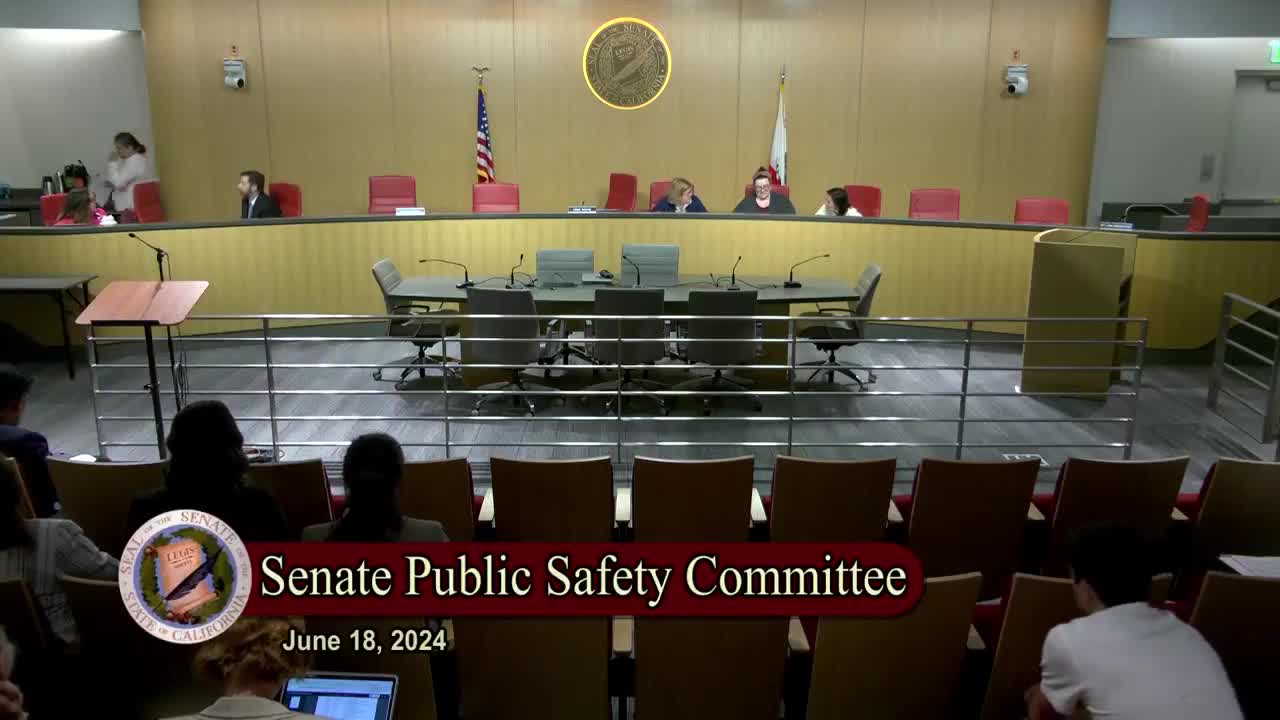
Senate Standing Committee on Public Safety
 1MIN
Assembly Floor
 2MIN
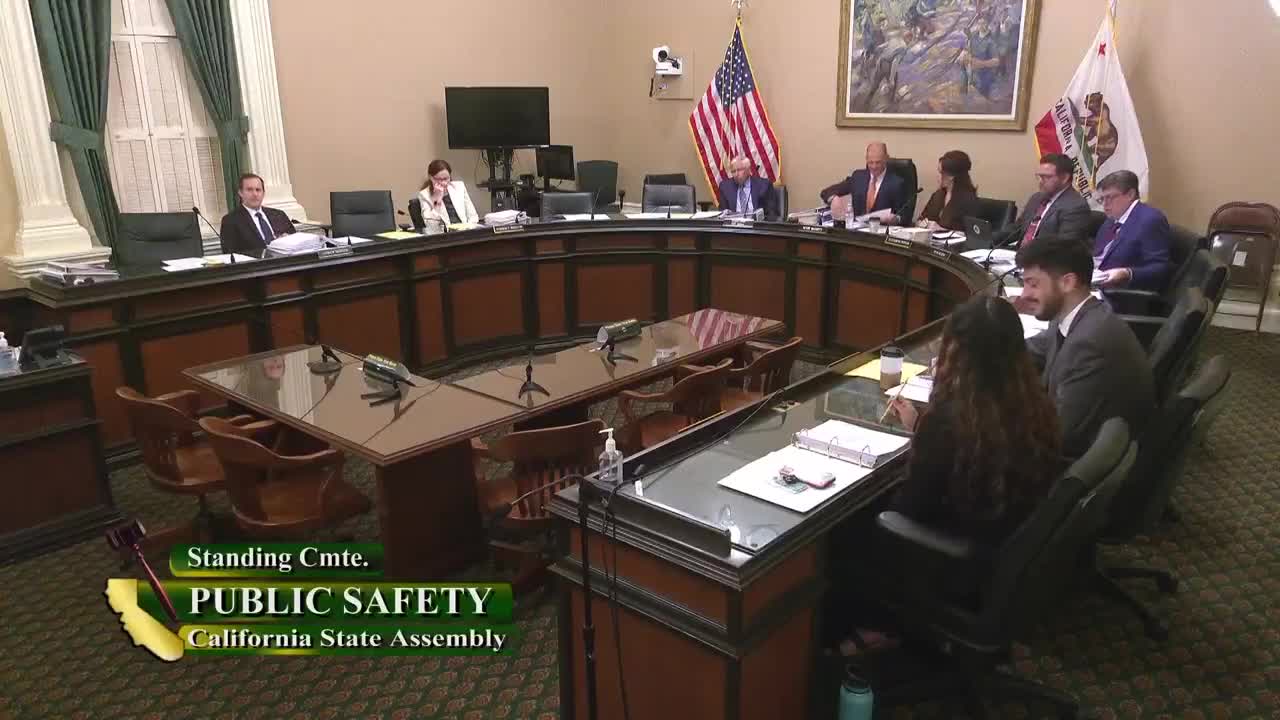
Assembly Standing Committee on Public Safety
 21SEC
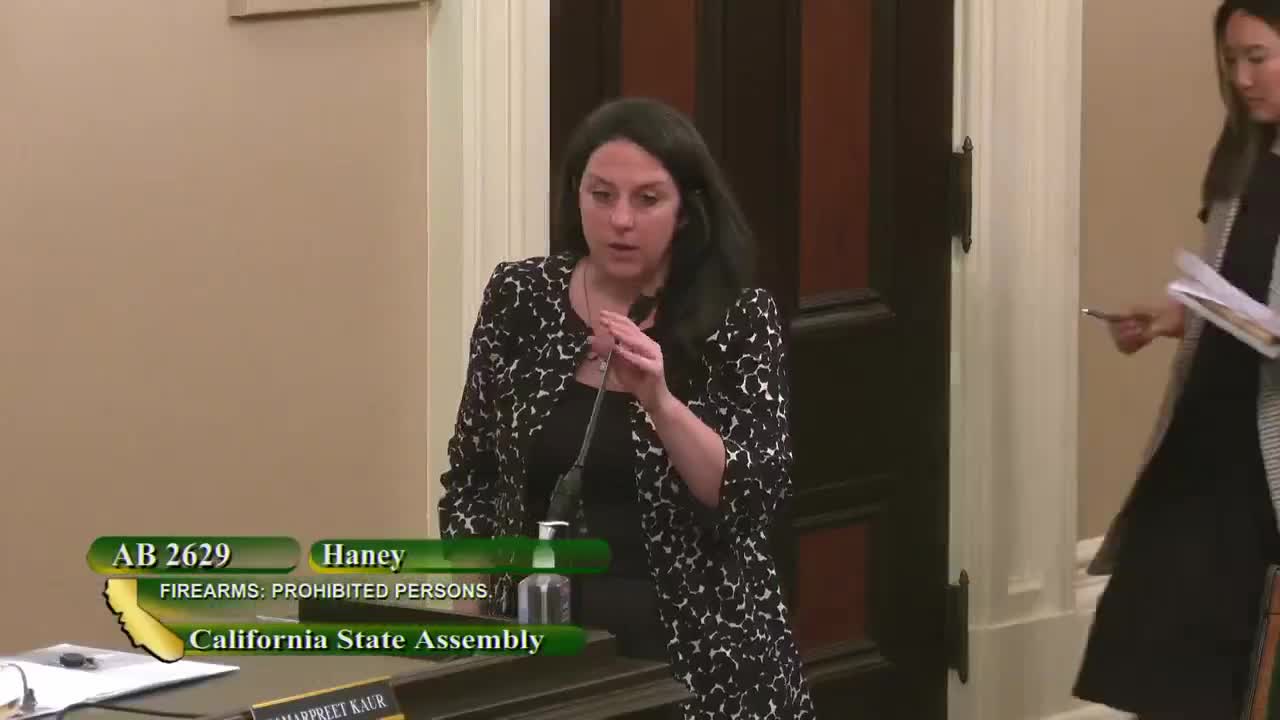
Assembly Standing Committee on Public Safety
Bill Author

Bill Co-Author(s):