AB 2556: Behavioral health and wellness screenings: notice.
- Session Year: 2023-2024
- House: Assembly
- Latest Version Date: 2024-08-26
Current Status:
Passed
(2024-08-26: Chaptered by Secretary of State - Chapter 200, Statutes of 2024.)
Introduced
In Committee
First Chamber
In Committee
Second Chamber
Enacted
Existing law, the Knox-Keene Health Care Service Plan Act of 1975, provides for the licensure and regulation of health care service plans by the Department of Managed Health Care, and makes a willful violation of the act a crime. Existing law provides for the regulation of health insurers by the Department of Insurance.
This bill would require a health care service plan, except as specified, or health insurer to provide to enrollees and insureds a written or electronic notice regarding the benefits of a behavioral health and wellness screening, as defined, for children and adolescents 8 to 18 years of age. The bill would require a health care service plan or insurer to provide the notice annually. Because a violation of the bills requirements relative to a health care service plan would be crimes, the bill would impose a state-mandated local program.
The California Constitution requires the state to reimburse local agencies and school districts for certain costs mandated by the state. Statutory provisions establish procedures for making that reimbursement.
This bill would provide that no reimbursement is required by this act for a specified reason.
Existing law, the Knox-Keene Health Care Service Plan Act of 1975, provides for the licensure and regulation of health care service plans by the Department of Managed Health Care, and makes a willful violation of the act a crime. Existing law provides for the regulation of health insurers by the Department of Insurance.
This bill would require a health care service plan, except as specified, or health insurer to provide to enrollees and insureds a written or electronic notice regarding the benefits of a behavioral health and wellness screening, as defined, for children and adolescents 8 to 18 years of age. The bill would require a health care service plan or insurer to provide the notice on an annual basis. annually. Because a violation of the bills requirements relative to a health care service plan would be crimes, the bill would impose a state-mandated local program.
The California Constitution requires the state to reimburse local agencies and school districts for certain costs mandated by the state. Statutory provisions establish procedures for making that reimbursement.
This bill would provide that no reimbursement is required by this act for a specified reason.
Existing law, the Knox-Keene Health Care Service Plan Act of 1975, provides for the licensure and regulation of health care service plans by the Department of Managed Health Care, and makes a willful violation of the act a crime. Existing law provides for the regulation of health insurers by the Department of Insurance.
This bill would require a health care service plan, except as specified, or health insurer to provide to each subscriber or policyholder of a contract or policy that covers a patient, enrollee, or insured, 10 to 18 years of age, enrollees and insureds a written or electronic notice regarding the benefits of a behavioral health and wellness screening, as defined. defined, for children and adolescents 8 to 18 years of age. The bill would require a health care service plan or insurer to provide the notice on an annual basis. Because a violation of the bills requirements relative to a health care service plan would be crimes, the bill would impose a state-mandated local program.
The California Constitution requires the state to reimburse local agencies and school districts for certain costs mandated by the state. Statutory provisions establish procedures for making that reimbursement.
This bill would provide that no reimbursement is required by this act for a specified reason.
Existing law, the Knox-Keene Health Care Service Plan Act of 1975, provides for the licensure and regulation of health care service plans by the Department of Managed Health Care, and makes a willful violation of the act a crime. Existing law provides for the regulation of health insurers by the Department of Insurance.
This bill would require a health care service plan or insurer plan, except as specified, or health insurer to provide to each legal guardian of subscriber or policyholder of a contract or policy that covers a patient, enrollee, or insured, 10 to 18 years of age, a written or electronic notice regarding the benefits of a behavioral health and wellness screening, as defined. The bill would require a health care service plan or insurer to provide the notice on an annual basis. Because a violation of the bills requirements relative to a health care service plan would be crimes, the bill would impose a state-mandated local program.
The California Constitution requires the state to reimburse local agencies and school districts for certain costs mandated by the state. Statutory provisions establish procedures for making that reimbursement.
This bill would provide that no reimbursement is required by this act for a specified reason.
Existing law, the Knox-Keene Health Care Service Plan Act of 1975, provides for the licensure and regulation of health care service plans by the Department of Managed Health Care, and makes a willful violation of the act a crime. Existing law provides for the regulation of health insurers by the Department of Insurance.
This bill would require a health care service plan or insurer to provide to each legal guardian of a patient, enrollee, or insured, 10 to 18 years of age, a written or electronic notice regarding the benefits of a behavioral health and wellness screening, as defined. The bill would require a health care service plan or insurer to provide the notice at least once every 2 years in the preferred method of the legal guardian. on an annual basis. Because a violation of the bills requirements relative to a health care service plan would be crimes, the bill would impose a state-mandated local program.
The California Constitution requires the state to reimburse local agencies and school districts for certain costs mandated by the state. Statutory provisions establish procedures for making that reimbursement.
This bill would provide that no reimbursement is required by this act for a specified reason.
Existing law, the Knox-Keene Health Care Service Plan Act of 1975, provides for the licensure and regulation of health care service plans by the Department of Managed Health Care, and makes a willful violation of the act a crime. Existing law provides for the regulation of health insurers by the Department of Insurance.
This bill would require a health care service plan or insurer to provide to each legal guardian of a patient, enrollee, or insured, 10 to 18 years of age, a written or electronic notice regarding the benefits of a behavioral health and wellness screening, as defined. The bill would require a health care service plan or insurer to provide the notice at least once every 2 years in the preferred method of the legal guardian. Because a violation of the bills requirements relative to a health care service plan would be crimes, the bill would impose a state-mandated local program.
The California Constitution requires the state to reimburse local agencies and school districts for certain costs mandated by the state. Statutory provisions establish procedures for making that reimbursement.
This bill would provide that no reimbursement is required by this act for a specified reason.
(a)(1)A health care service plan shall provide to enrollees a written or electronic notice regarding the benefits of a behavioral health and wellness screening for children and adolescents 8 to 18 years of age.
(2)Behavioral health and wellness screening means a screening, test, or assessment to identify indicators or symptoms of behavioral health issues in an individual, including, but not limited to, depression or anxiety.
(b)The notice shall provide information regarding the benefits of behavioral health and wellness screenings for both depression and anxiety.
(c)A health care service plan shall provide notice pursuant to this section annually.
(d)This section does not apply to Medi-Cal managed care that contracts with the State Department of Health Care Services entered into pursuant to Chapter 7 (commencing with Section 14000) or Chapter 8 (commencing with Section 14200) of Part 3 of Division 9 of the Welfare and Institutions Code.
SEC. 2.Section 10123.1991 is added to the Insurance Code, to read:10123.1991.(a)(1)An insurer shall provide to insureds a written or electronic notice regarding the benefits of a behavioral health and wellness screening for children and adolescents 8 to 18 years of age.
(2)Behavioral health and wellness screening means a screening, test, or assessment to identify indicators or symptoms of behavioral health issues in an individual, including, but not limited to, depression or anxiety.
(b)The notice shall provide information regarding the benefits of behavioral health and wellness screenings for both depression and anxiety.
(c)An insurer shall provide notice pursuant to this section annually.
(d)This section does not apply to Medi-Cal managed care that contracts with the State Department of Health Care Services entered into pursuant to Chapter 7 (commencing with Section 14000) or Chapter 8 (commencing with Section 14200) of Part 3 of Division 9 of the Welfare and Institutions Code.
SEC. 3.No reimbursement is required by this act pursuant to Section 6 of Article XIIIB of the California Constitution because the only costs that may be incurred by a local agency or school district will be incurred because this act creates a new crime or infraction, eliminates a crime or infraction, or changes the penalty for a crime or infraction, within the meaning of Section 17556 of the Government Code, or changes the definition of a crime within the meaning of Section 6 of Article XIIIB of the California Constitution.
(a)(1)A health care service plan shall provide to enrollees a written or electronic notice regarding the benefits of a behavioral health and wellness screening for children and adolescents 8 to 18 years of age.
(2)Behavioral health and wellness screening means a screening, test, or assessment to identify indicators or symptoms of behavioral health issues in an individual, including, but not limited to, depression or anxiety.
(b)The notice shall provide information regarding the benefits of behavioral health and wellness screenings for both depression and anxiety.
(c)A health care service plan shall provide notice pursuant to this section on an annual basis. annually.
(d)This section does not apply to Medi-Cal managed care that contracts with the State Department of Health Care Services entered into pursuant to Chapter 7 (commencing with Section 14000) or Chapter 8 (commencing with Section 14200) of Part 3 of Division 9 of the Welfare and Institutions Code.
SEC. 2.Section 10123.1991 is added to the Insurance Code, to read:10123.1991.(a)(1)An insurer shall provide to insureds a written or electronic notice regarding the benefits of a behavioral health and wellness screening for children and adolescents 8 to 18 years of age.
(2)Behavioral health and wellness screening means a screening, test, or assessment to identify indicators or symptoms of behavioral health issues in an individual, including, but not limited to, depression or anxiety.
(b)The notice shall provide information regarding the benefits of behavioral health and wellness screenings for both depression and anxiety.
(c)An insurer shall provide notice pursuant to this section on an annual basis. annually.
(d)This section does not apply to Medi-Cal managed care that contracts with the State Department of Health Care Services entered into pursuant to Chapter 7 (commencing with Section 14000) or Chapter 8 (commencing with Section 14200) of Part 3 of Division 9 of the Welfare and Institutions Code.
SEC. 3.No reimbursement is required by this act pursuant to Section 6 of Article XIIIB of the California Constitution because the only costs that may be incurred by a local agency or school district will be incurred because this act creates a new crime or infraction, eliminates a crime or infraction, or changes the penalty for a crime or infraction, within the meaning of Section 17556 of the Government Code, or changes the definition of a crime within the meaning of Section 6 of Article XIIIB of the California Constitution.
(a)(1)A health care service plan shall provide to each subscriber of a contract that covers an enrollee, 10 to 18 years of age, enrollees a written or electronic notice regarding the benefits of a behavioral health and wellness screening. screening for children and adolescents 8 to 18 years of age.
(2)Behavioral health and wellness screening means a screening, test, or assessment to identify indicators or symptoms of behavioral health issues in an individual, including, but not limited to, depression or anxiety.
(b)The notice shall provide information regarding the benefits of behavioral health and wellness screenings for both depression and anxiety.
(c)A health care service plan shall provide notice pursuant to this section on an annual basis.
(d)This section does not apply to Medi-Cal managed care that contracts with the State Department of Health Care Services entered into pursuant to Chapter 7 (commencing with Section 14000) or Chapter 8 (commencing with Section 14200) of Part 3 of Division 9 of the Welfare and Institutions Code.
SEC. 2.Section 10123.1991 is added to the Insurance Code, to read:10123.1991.(a)(1)An insurer shall provide to each policyholder of a policy that covers an insured, 10 to 18 years of age, insureds a written or electronic notice regarding the benefits of a behavioral health and wellness screening. screening for children and adolescents 8 to 18 years of age.
(2)Behavioral health and wellness screening means a screening, test, or assessment to identify indicators or symptoms of behavioral health issues in an individual, including, but not limited to, depression or anxiety.
(b)The notice shall provide information regarding the benefits of behavioral health and wellness screenings for both depression and anxiety.
(c)An insurer shall provide notice pursuant to this section on an annual basis.
(d)This section does not apply to Medi-Cal managed care that contracts with the State Department of Health Care Services entered into pursuant to Chapter 7 (commencing with Section 14000) or Chapter 8 (commencing with Section 14200) of Part 3 of Division 9 of the Welfare and Institutions Code.
SEC. 3.No reimbursement is required by this act pursuant to Section 6 of Article XIIIB of the California Constitution because the only costs that may be incurred by a local agency or school district will be incurred because this act creates a new crime or infraction, eliminates a crime or infraction, or changes the penalty for a crime or infraction, within the meaning of Section 17556 of the Government Code, or changes the definition of a crime within the meaning of Section 6 of Article XIIIB of the California Constitution.
(a)(1)A health care service plan shall provide to each legal guardian of subscriber of a contract that covers an enrollee, 10 to 18 years of age, a written or electronic notice regarding the benefits of a behavioral health and wellness screening.
(2)Behavioral health and wellness screening means a screening, test, or assessment to identify indicators or symptoms of behavioral health issues in an individual, including, but not limited to, depression or anxiety.
(b)The notice shall provide information regarding the benefits of behavioral health and wellness screenings for both depression and anxiety.
(c)A health care service plan shall provide notice pursuant to this section on an annual basis.
(d)This section does not apply to Medi-Cal managed care that contracts with the State Department of Health Care Services entered into pursuant to Chapter 7 (commencing with Section 14000) or Chapter 8 (commencing with Section 14200) of Part 3 of Division 9 of the Welfare and Institutions Code.
SEC. 2.Section 10123.1991 is added to the Insurance Code, to read:10123.1991.(a)(1)An insurer shall provide to each legal guardian of policyholder of a policy that covers an insured, 10 to 18 years of age, a written or electronic notice regarding the benefits of a behavioral health and wellness screening.
(2)Behavioral health and wellness screening means a screening, test, or assessment to identify indicators or symptoms of behavioral health issues in an individual, including, but not limited to, depression or anxiety.
(b)The notice shall provide information regarding the benefits of behavioral health and wellness screenings for both depression and anxiety.
(c)An insurer shall provide notice pursuant to this section on an annual basis.
(d)This section does not apply to Medi-Cal managed care that contracts with the State Department of Health Care Services entered into pursuant to Chapter 7 (commencing with Section 14000) or Chapter 8 (commencing with Section 14200) of Part 3 of Division 9 of the Welfare and Institutions Code.
SEC. 3.No reimbursement is required by this act pursuant to Section 6 of Article XIIIB of the California Constitution because the only costs that may be incurred by a local agency or school district will be incurred because this act creates a new crime or infraction, eliminates a crime or infraction, or changes the penalty for a crime or infraction, within the meaning of Section 17556 of the Government Code, or changes the definition of a crime within the meaning of Section 6 of Article XIIIB of the California Constitution.
(a)(1)A health care service plan shall provide to each legal guardian of an enrollee, 10 to 18 years of age, a written or electronic notice regarding the benefits of a behavioral health and wellness screening.
(2)Behavioral health and wellness screening means a screening, test, or assessment to identify indicators or symptoms of behavioral health issues in an individual, including, but not limited to, depression or anxiety.
(b)A health care service plan shall provide notice in the preferred method of the legal guardian, including, but not limited to, a hard copy sent by mail or given in person at a visit, or by an electronic transmission including, but not limited to, text message or email.(c)(b)The notice shall provide information regarding the benefits of behavioral health and wellness screenings for both depression and anxiety.
(d)(c)A health care service plan shall provide notice pursuant to this section at least once every two years. on an annual basis.
SEC. 2.Section 10123.1991 is added to the Insurance Code, to read:10123.1991.(a)(1)An insurer shall provide to each legal guardian of an insured, 10 to 18 years of age, a written or electronic notice regarding the benefits of a behavioral health and wellness screening.
(2)Behavioral health and wellness screening means a screening, test, or assessment to identify indicators or symptoms of behavioral health issues in an individual, including, but not limited to, depression or anxiety.
(b)An insurer shall provide notice in the preferred method of the legal guardian, including, but not limited to, a hard copy sent by mail or given in person at a visit, or by an electronic transmission including, but not limited to, text message or email.(c)(b)The notice shall provide information regarding the benefits of behavioral health and wellness screenings for both depression and anxiety.
(d)(c)An insurer shall provide notice pursuant to this section at least once every two years. on an annual basis.
SEC. 3.No reimbursement is required by this act pursuant to Section 6 of Article XIIIB of the California Constitution because the only costs that may be incurred by a local agency or school district will be incurred because this act creates a new crime or infraction, eliminates a crime or infraction, or changes the penalty for a crime or infraction, within the meaning of Section 17556 of the Government Code, or changes the definition of a crime within the meaning of Section 6 of Article XIIIB of the California Constitution.
(a)(1)A health care service plan shall provide to each legal guardian of an enrollee, 10 to 18 years of age, a written or electronic notice regarding the benefits of a behavioral health and wellness screening.
(2)Behavioral health and wellness screening means a screening, test, or assessment to identify indicators or symptoms of behavioral health issues in an individual, including, but not limited to, depression or anxiety.
(b)A health care service plan shall provide notice in the preferred method of the legal guardian, including, but not limited to, a hard copy sent by mail or given in person at a visit, or by an electronic transmission including, but not limited to, text message or email.
(c)The notice shall provide information regarding the benefits of behavioral health and wellness screenings for both depression and anxiety.
(d)A health care service plan shall provide notice pursuant to this section at least once every two years.
SEC. 2.Section 10123.1991 is added to the Insurance Code, to read:10123.1991.(a)(1)An insurer shall provide to each legal guardian of an insured, 10 to 18 years of age, a written or electronic notice regarding the benefits of a behavioral health and wellness screening.
(2)Behavioral health and wellness screening means a screening, test, or assessment to identify indicators or symptoms of behavioral health issues in an individual, including, but not limited to, depression or anxiety.
(b)An insurer shall provide notice in the preferred method of the legal guardian, including, but not limited to, a hard copy sent by mail or given in person at a visit, or by an electronic transmission including, but not limited to, text message or email.
(c)The notice shall provide information regarding the benefits of behavioral health and wellness screenings for both depression and anxiety.
(d)An insurer shall provide notice pursuant to this section at least once every two years.
SEC. 3.No reimbursement is required by this act pursuant to Section 6 of Article XIIIB of the California Constitution because the only costs that may be incurred by a local agency or school district will be incurred because this act creates a new crime or infraction, eliminates a crime or infraction, or changes the penalty for a crime or infraction, within the meaning of Section 17556 of the Government Code, or changes the definition of a crime within the meaning of Section 6 of Article XIIIB of the California Constitution.
|
Date
|
Status
|
|---|---|
| Aug 26, 2024 | Chaptered by Secretary of State - Chapter 200, Statutes of 2024. |
| Aug 26, 2024 | Approved by the Governor. |
| Aug 16, 2024 | Enrolled and presented to the Governor at 11 a.m. |
| Aug 8, 2024 | Senate amendments concurred in. To Engrossing and Enrolling. (Ayes 71. Noes 0. Page 6236.). |
| Jun 20, 2024 | In Assembly. Concurrence in Senate amendments pending. May be considered on or after June 22 pursuant to Assembly Rule 77. |
| Jun 20, 2024 | Read third time. Passed. Ordered to the Assembly. (Ayes 36. Noes 0. Page 4627.). |
| Jun 18, 2024 | Read second time. Ordered to Consent Calendar. |
| Jun 17, 2024 | From committee: Be ordered to second reading file pursuant to Senate Rule 28.8 and ordered to Consent Calendar. |
| Jun 11, 2024 | From committee chair, with author's amendments: Amend, and re-refer to committee. Read second time, amended, and re-referred to Com. on APPR. |
| Jun 6, 2024 | Read second time and amended. Re-referred to Com. on APPR. |
| Jun 5, 2024 | From committee: Amend, and do pass as amended and re-refer to Com. on APPR with recommendation: To Consent Calendar. (Ayes 11. Noes 0.) (June 5). |
| May 28, 2024 | From committee chair, with author's amendments: Amend, and re-refer to committee. Read second time, amended, and re-referred to Com. on HEALTH. |
| May 15, 2024 | Referred to Com. on HEALTH. |
| May 2, 2024 | In Senate. Read first time. To Com. on RLS. for assignment. |
| May 2, 2024 | Read third time. Passed. Ordered to the Senate. (Ayes 73. Noes 0. Page 5089.) |
| Apr 25, 2024 | Read second time. Ordered to Consent Calendar. |
| Apr 24, 2024 | From committee: Do pass. To Consent Calendar. (Ayes 14. Noes 0.) (April 24). |
| Apr 8, 2024 | Re-referred to Com. on APPR. |
| Apr 4, 2024 | Read second time and amended. |
| Apr 3, 2024 | From committee: Amend, and do pass as amended and re-refer to Com. on APPR. (Ayes 15. Noes 0.) (April 2). |
| Mar 4, 2024 | Referred to Com. on HEALTH. |
| Feb 15, 2024 | From printer. May be heard in committee March 16. |
| Feb 14, 2024 | Read first time. To print. |
|
Date
|
Description
|
Location
|
Votes
|
|
|---|---|---|---|---|
| Aug 8, 2024 | AB 2556 Jackson Concurrence in Senate Amendments | Assembly Floor |
Passed |
|
| Jun 20, 2024 | Consent Calendar 2nd AB2556 Jackson et al. | Senate Floor |
Passed |
|
| Jun 5, 2024 | Do pass as amended, but first amend, and re-refer to the Committee on [Appropriations] with the recommendation: To Consent Calendar | Senate Standing Committee on Health |
Passed |
|
| May 2, 2024 | AB 2556 Jackson Consent Calendar Second Day Regular Session | Assembly Floor |
Passed |
|
| Apr 24, 2024 | Do pass. To Consent Calendar. | Assembly Standing Committee on Appropriations |
Passed |
|
| Apr 2, 2024 | Do pass as amended and be re-referred to the Committee on [Appropriations] | Assembly Standing Committee on Health |
Passed |
This list shows positions taken on this bill by organizations on the date displayed, which is linked to the original source.
Positions by individuals are not included.
|
Organization
|
Position
|
Date
|
|---|---|---|
| AmericaS Health Insurance Plans | ** Against | |
| Association Of California Life And Health Insurance Companies | ** Against | |
| California Association Of Health Plans | ** Against |
CONCURRENCE IN SENATE AMENDMENTS
CSA1 Bill Id:AB 2556
Author:(Jackson)
As Amended Ver:June 11, 2024
Majority vote
SUMMARY
Requires a health plan or insurer to provide annual notices to enrollees or insureds regarding the benefits of a behavioral health and wellness screening for children and adolescents eight to 18 years of age. Exempts Medi-Cal managed care contracts from the provision of this bill.
Senate Amendments
- Delete notice requirements to each legal guardian of an enrollee or insured;
- Expand age notice requirements from 10 to 18 years of age to eight to 18 years of age; and,
- Exempt Medi-Cal managed care contracts.
COMMENTS
According to the American Academy of Pediatrics (AAP), 3-20% of children in the U.S. experience a mental health (MH) disorder each year. The use of standardized screening tools by pediatric providers is more effective in the identification of developmental, behavioral, and psychosocial issues in children than clinical assessments alone. Although poverty increases the risk for MH conditions, studies show that the greatest increase in prevalence occurred among children living in households earning greater than 400% above the federal poverty line. Universal screening reduces missed opportunities to identify children who may have MH conditions and promotes intervention aimed at preventing some of the long-term effects of a childhood mental disorder. Additionally, Mental Health America writes that 16.39% of youth aged 12-17 reported suffering from at least one depressive episode in 2022-23. Further, nearly 12% of youth are experiencing severe major depression and nearly 60% of youths suffering from major depression did not receive MH treatment. In California, 114,000 youths were not treated for their major depression. Only 28% of youth with severe depression received some consistent treatment.
- Developmental screening. This bill ensures that legal guardians are aware of the benefits of behavioral health and wellness screenings for kids. According to the Centers for Disease Control and Prevention (CDC), developmental screening takes a closer look at how a child is developing. The child will get a brief test, or the parent will complete a questionnaire about the child. The tools used for developmental and behavioral screening are formal questionnaires or checklists based on research that ask questions about a child's development, including language, movement, thinking, behavior, and emotions. Developmental screening can be done by a doctor or nurse, but also by other professionals in healthcare, early childhood education, community, or school settings. Developmental screening is more formal than developmental monitoring and normally done less often than developmental monitoring. A child should be screened if a parent or a doctor have a concern. However, developmental screening is a regular part of some of the well-child visits for all children even if there is not a known concern. The AAP recommends developmental and behavioral screening for all children during regular well-child visits at nine months, 18 months, and 30 months. In addition, AAP recommends that all children be screened specifically for autism spectrum disorder during regular well-child visits at 18 months and 24 months. The CDC states that if a child's healthcare provider does not periodically check a child with a developmental screening test, the parent can ask that it be done. If the screening tool identifies an area of concern, a formal developmental evaluation may be needed. This formal evaluation is a more in-depth look at a child's development, usually done by a trained specialist, such as a developmental pediatrician, child psychologist, speech-language pathologist, occupational therapist, physical therapist, or other specialist. The specialist may observe the child, give the child a structured test, ask the parents or caregivers questions, or ask them to fill out questionnaires. The results of this formal evaluation determines whether a child needs special treatments or early intervention services or both.
- Health Care Coverage. The Federal Mental Health Parity law requires, if health plans include services for MH and substance use disorders (SUDs) as part of their benefits, to provide those services under the same terms and conditions as other medical services. The federal Patient Protection and Affordable Care Act (ACA) also specified coverage of the 10 essential health benefits, including MH and SUD treatment services and preventive and wellness services. According to a 2015 Health Affairs Health Policy Brief, the ACA went beyond existing federal law by mandating coverage instead of requiring parity only if coverage is provided.
SB 855 (Wiener), Chapter 151, Statutes of 2020, requires commercial health plans and insurers to provide full coverage for the treatment of all MH conditions and SUDs. SB 855 also establishes specific standards for what constitutes medically necessary treatment and criteria for the use of clinical guidelines. SB 855 applies to all state-regulated health care service plans and insurers that provide hospital, medical, or surgical coverage, and to any entity acting on the plan or insurer's behalf. A health plan cannot limit benefits or coverage for MH or SUD treatments or services when medically necessary. California law requires health care coverage of behavioral health and wellness screenings.
- Recent California Initiatives. According to the California Health and Human Services Agency, the Children and Youth Behavioral Health Initiative (CYBHI) is a five-year initiative to transform the way California meets the behavioral health needs of children, youth and families. The initiative serves as the core of the Master Plan for Kids' Mental Health, California's historic investment to redefine the way child- and family-serving systems take on these challenges so that young people can thrive. In January 2023, the Department of Health Care Services (DHCS) launched language screening and transition of care tools for Medi-Cal MH services to ensure that Medi-Cal members receive timely and coordinated specialty and non-specialty MH services.
In January 2024, DHCS launched two behavioral health virtual services platforms for children, youth, and families. Launching as a part of the state's CalHOPE program, with funding from CYBHI, a $4.6 billion investment in youth behavioral health, the web- and app-based platforms will offer all California residents, regardless of insurance coverage, free one-on-one support with a live coach, a library of multimedia resources, wellness exercises, and peer communities moderated by trained behavioral health professionals to ensure the appropriateness of content and the safety of all users. These new CalHOPE platforms will complement existing services offered by health plans, counties and schools by providing additional care options and resources for parents and caregivers, children, youth and young adults in California.
According to the Author
This bill aims to increase rates of mental health screenings in people aged 10 to 18. In 2022, the United States Preventative Service Task Force recommended screening for anxiety in children and adolescents aged 8 to 18 years old. According to the CDC, early identification and expanded evidence-based prevention and intervention strategies are critical to improving pediatric mental health. The author concludes that this bill will increase early identification and intervention strategies.
Arguments in Support
The Los Angeles Unified School District (Los Angeles Unified) writes that approximately 58-60% of Los Angeles Unified's students access health care through Medi-Cal and would directly benefit from the information provided if this bill was enacted. This bill promotes access to mental health and wellness. This aligns with Los Angeles Unified's Guiding Principles of Joy and Wellness, which supports policies consistent with the principles of educational equity and that prioritize access to limited resources in areas of highest need, and Supporting the Whole Child, which recognizes that each student's potential for success is positively influenced by an environment that fosters the health, mental health, safety, engagement, support, and academic enrichment of that student. Additionally, Los Angeles Unified supports efforts to continue to raise awareness about mental health and mental illness and the various resources available to students. In a county as large as Los Angeles with nearly 1.5 million TK-12 students across 80 different school districts, this accessibility to mental health information will help ensure all of us in the school community are doing our part to increase awareness of available services and ensure a welcoming school environment for our most vulnerable students. This bill achieves this goal.
Arguments in Opposition
There is no known opposition to this bill.
FISCAL COMMENTS
According to the Senate Appropriations Committee, pursuant to Senate Rule 28.8, negligible state costs.
VOTES:
ASM HEALTH: 15-0-1
YES: Bonta, Waldron, Aguiar-Curry, Arambula, Wendy Carrillo, Flora, Haney, Jones-Sawyer, Maienschein, Joe Patterson, Rodriguez, Sanchez, Santiago, Schiavo, Weber
ABS, ABST OR NV: McCarty
ASM APPROPRIATIONS: 14-0-1
YES: Wicks, Sanchez, Arambula, Bryan, Calderon, Wendy Carrillo, Dixon, Mike Fong, Grayson, Haney, Hart, Jim Patterson, Pellerin, Ta
ABS, ABST OR NV: Villapudua
ASSEMBLY FLOOR: 73-0-7
YES: Addis, Aguiar-Curry, Alanis, Alvarez, Arambula, Bains, Bauer-Kahan, Bennett, Berman, Boerner, Bonta, Bryan, Juan Carrillo, Wendy Carrillo, Cervantes, Chen, Connolly, Davies, Dixon, Essayli, Mike Fong, Vince Fong, Friedman, Gabriel, Gallagher, Garcia, Gipson, Grayson, Haney, Hart, Holden, Hoover, Irwin, Jackson, Jones-Sawyer, Kalra, Lackey, Lee, Lowenthal, Maienschein, McCarty, McKinnor, Muratsuchi, Stephanie Nguyen, Ortega, Pacheco, Papan, Jim Patterson, Joe Patterson, Pellerin, Petrie-Norris, Quirk-Silva, Ramos, Rendon, Reyes, Luz Rivas, Rodriguez, Blanca Rubio, Sanchez, Santiago, Schiavo, Soria, Ta, Ting, Valencia, Villapudua, Waldron, Wallis, Ward, Wicks, Wilson, Wood, Zbur
ABS, ABST OR NV: Calderon, Megan Dahle, Flora, Low, Mathis, Weber, Robert Rivas
SENATE FLOOR: 36-0-4
YES: Archuleta, Ashby, Atkins, Becker, Blakespear, Bradford, Caballero, Cortese, Dahle, Dodd, Eggman, Glazer, Gonzalez, Hurtado, Jones, Laird, Limón, McGuire, Menjivar, Min, Newman, Nguyen, Niello, Ochoa Bogh, Padilla, Portantino, Roth, Rubio, Seyarto, Skinner, Smallwood-Cuevas, Stern, Umberg, Wahab, Wiener, Wilk
ABS, ABST OR NV: Allen, Alvarado-Gil, Durazo, Grove
UPDATED
VERSION: June 11, 2024
CONSULTANT: Kristene Mapile / HEALTH / (916) 319-2097 FN: 0003564
SENATE RULES COMMITTEE Office of Senate Floor Analyses (916) 651-1520 Fax: (916) 327-4478 | AB 2556 |
CONSENT
Bill No: AB 2556
Author: Jackson (D), et al.
Amended: 6/11/24 in Senate
Vote: 21
SENATE HEALTH COMMITTEE: 11-0, 6/5/24
AYES: Roth, Nguyen, Glazer, Gonzalez, Grove, Hurtado, Limón, Menjivar, Rubio, Smallwood-Cuevas, Wiener
ASSEMBLY FLOOR: 73-0, 5/2/24 (Consent) - See last page for vote
SENATE APPROPRIATIONS COMMITTEE: Senate Rule 28.8
SUBJECT: Behavioral health and wellness screenings: notice
SOURCE: Author
DIGEST:
This bill requires health insurers and health plans to annually notify enrollees and insureds about the benefits of behavioral health and wellness screenings for children eight to 18 years of age.
ANALYSIS:
Existing law:
- Establishes the Department of Managed Health Care (DMHC) to regulate health plans under the Knox-Keene Health Care Service Plan Act of 1975 (Knox-Keene Act); California Department of Insurance (CDI) to regulate health and other insurance; and, the Department of Health Care Services (DHCS) to administer the Medi-Cal program. [Health and Safety Code (HSC) §1340, et seq., Insurance Code (INS) §106, et seq., and Welfare and Institutions Code (WIC) §14000, et seq.]
- Requires every health plan contract and insurance policy that provides hospital, medical, or surgical coverage to provide coverage for medically necessary treatment of mental health and substance use disorders under the same terms and conditions applied to other medical conditions, as specified. [HSC §1374.72 and INS §10144.5]
- Requires a health plan or insurer to develop a maternal mental health program designed to promote quality and cost-effective outcomes and as part of this program, the plan or insurer is encouraged to improve screening, treatment, and referral to maternal mental health services, include coverage for doulas, incentivize training opportunities for contracting obstetric providers and education enrollees about the program. [HSC §1367.625 and INS §10123.867]
This bill:
- Requires a plan or insurer to provide, annually, to enrollees or insureds a written or electronic notice regarding the benefits of behavioral health and wellness screenings children 8 to 18 years of age.
- Defines “behavioral health and wellness screening” as a screening, test, or assessment to identify indicators or symptoms of behavioral health issues in an individual, including, but not limited to, depression or anxiety.
- Exempts Medi-Cal managed care contracts with DHCS.
Comments
- Author’s statement. According to the author, “this bill aims to increase rates of mental health screenings in people aged 10 to 18. In 2022, the U.S. Preventative Service Task Force (USPSTF) recommended screening for anxiety in children and adolescents aged eight to 18 years old. According to the Centers for Disease Control and Prevention (CDC), early identification and expanded evidence-based prevention and intervention strategies are critical to improving pediatric mental health. The author concludes that this bill will increase early identification and intervention strategies.”
- USPSTF. USPSTF was created in 1984 as an independent, volunteer panel of national experts in prevention and evidence-based medicine. USPSTF makes evidence-based recommendations about clinical preventive services such as screenings, counseling services, and preventive medications. USPSTF posts the final recommendation statement, final evidence review, and an evidence summary on its website. The recommendation statement and the evidence summary are also published in a peer-reviewed scientific journal. USPSTF assigns one of five letter grades (A, B, C, D, or I) which describe the strength of a recommendation. Grades A and B are recommended for practitioners, C should be selectively offered, D is not recommended, and I means there is insufficient evidence.
- USPSTF Recommendation Statement. As published in the Journal of the American Medical Association in 2022, USPSTF recommends screening for anxiety in children and adolescents aged eight to 18 years (B recommendation) and concludes that the current evidence is insufficient to assess the balance of benefits and harms of screening for anxiety in children seven years or younger (I statement). USPSTF references a 2018-19 National Survey of Children’s Health that found 7.8% of children and adolescents aged three to 17 years had a current anxiety disorder. Anxiety disorders are characterized by excessive fear or worry that present as emotional and physical symptoms and are associated with an increased likelihood of a future anxiety disorder or depression. The recommendation encourages clinicians to consider which anxiety disorders may be most common in their practice and which screening tools may be most feasible. Positive screening results should be confirmed by diagnostic assessment and patients should be linked to appropriate care.
FISCAL EFFECT: Appropriation: No Fiscal Com.: Yes Local: Yes
SUPPORT: (Verified 6/17/24)
Los Angeles Unified School District
OPPOSITION: (Verified 6/17/24)
None received
ARGUMENTS IN SUPPORT: The Los Angeles Unified School District writes that this bill promotes access to mental health and wellness which aligns with their guiding principles, and they support efforts to continue to raise awareness about mental health and mental illness. In a county as large as Los Angeles with nearly 1.5 million TK-12 students across 80 different school districts, this accessibility to mental health information will help ensure all of us in the school community are doing our part to increase awareness of available services and ensure a welcoming school environment for our most vulnerable students. This bill achieves this goal.
ASSEMBLY FLOOR: 73-0, 5/2/24
AYES: Addis, Aguiar-Curry, Alanis, Alvarez, Arambula, Bains, Bauer-Kahan, Bennett, Berman, Boerner, Bonta, Bryan, Juan Carrillo, Wendy Carrillo, Cervantes, Chen, Connolly, Davies, Dixon, Essayli, Mike Fong, Vince Fong, Friedman, Gabriel, Gallagher, Garcia, Gipson, Grayson, Haney, Hart, Holden, Hoover, Irwin, Jackson, Jones-Sawyer, Kalra, Lackey, Lee, Lowenthal, Maienschein, McCarty, McKinnor, Muratsuchi, Stephanie Nguyen, Ortega, Pacheco, Papan, Jim Patterson, Joe Patterson, Pellerin, Petrie-Norris, Quirk-Silva, Ramos, Rendon, Reyes, Luz Rivas, Rodriguez, Blanca Rubio, Sanchez, Santiago, Schiavo, Soria, Ta, Ting, Valencia, Villapudua, Waldron, Wallis, Ward, Wicks, Wilson, Wood, Zbur
NO VOTE RECORDED: Calderon, Megan Dahle, Flora, Low, Mathis, Weber, Robert Rivas
Prepared by: Teri Boughton / HEALTH / (916) 651-4111
6/18/24 10:49:56
**** END ****
SENATE COMMITTEE ON HEALTH
Senator Richard Roth, Chair
BILL NO: AB 2556
AUTHOR: | Jackson | ||
VERSION: | May 28, 2024 | ||
HEARING DATE: | June 5, 2024 | ||
CONSULTANT: | Teri Boughton | ||
SUBJECT: Behavioral health and wellness screenings: notice
SUMMARY:
Requires health insurers and health plans to notify, on an annual basis, subscribers or policy holders about the benefits of behavioral health and wellness screenings for depression, anxiety, and other behavioral health and wellness screenings and assessments for enrollees or insureds, 10 to 18 years of age.
Existing law:
- Establishes the Department of Managed Health Care (DMHC) to regulate health plans under the Knox-Keene Health Care Service Plan Act of 1975 (Knox-Keene Act); California Department of Insurance (CDI) to regulate health and other insurance; and, the Department of Health Care Services (DHCS) to administer the Medi-Cal program. [HSC §1340, et seq., INS §106, et seq., and WIC §14000, et seq.]
- Requires every health plan contract and insurance policy that provides hospital, medical, or surgical coverage to provide coverage for medically necessary treatment of mental health and substance use disorders under the same terms and conditions applied to other medical conditions, as specified. [HSC §1374.72 and INS §10144.5]
- Requires a health plan or insurer to develop a maternal mental health program designed to promote quality and cost-effective outcomes and as part of this program, the plan or insurer is encouraged to improve screening, treatment, and referral to maternal mental health services, include coverage for doulas, incentivize training opportunities for contracting obstetric providers and education enrollees about the program. [HSC §1367.625 and INS §10123.867]
This bill:
- Requires a plan or insurer to provide, on an annual basis, to each subscriber or policyholder a written or electronic notice regarding the benefits of behavioral health and wellness screenings for depression and anxiety for an enrollee or insured, 10 to 18 years of age.
- Defines “behavioral health and wellness screening” as a screening, test, or assessment to identify indicators or symptoms of behavioral health issues in an individual, including, but not limited to, depression or anxiety.
- Exempts Medi-Cal managed care contracts with DHCS.
FISCAL EFFECT:
According to the Assembly Appropriations Committee, minor and absorbable costs to DMHC and no costs to CDI.
PRIOR VOTES:
Assembly Floor: | 73 - 0 |
Assembly Appropriations Committee: | 14 - 0 |
Assembly Health Committee: | 15 - 0 |
COMMENTS:
- Author’s statement. According to the author, this bill aims to increase rates of mental health screenings in people aged 10 to 18. In 2022, the U.S. Preventative Service Task Force (USPSTF) recommended screening for anxiety in children and adolescents aged eight to 18 years old. According to the Centers for Disease Control and Prevention (CDC), early identification and expanded evidence-based prevention and intervention strategies are critical to improving pediatric mental health. The author concludes that this bill will increase early identification and intervention strategies.
- USPSTF. USPSTF was created in 1984 as an independent, volunteer panel of national experts in prevention and evidence-based medicine. USPSTF makes evidence-based recommendations about clinical preventive services such as screenings, counseling services, and preventive medications. USPSTF posts the final recommendation statement, final evidence review, and an evidence summary on its website. The recommendation statement and the evidence summary are also published in a peer-reviewed scientific journal. USPSTF assigns one of five letter grades (A, B, C, D, or I) which describe the strength of a recommendation. Grades A and B are recommended for practitioners, C should be selectively offered, D is not recommended, and I means there is insufficient evidence.
- USPSTF Recommendation Statement. As published in the Journal of the American Medical Association in 2022, USPSTF recommends screening for anxiety in children and adolescents aged eight to 18 years (B recommendation) and concludes that the current evidence is insufficient to assess the balance of benefits and harms of screening for anxiety in children seven years or younger (I statement). USPSTF references a 2018-19 National Survey of Children’s Health that found 7.8% of children and adolescents aged three to 17 years had a current anxiety disorder. Anxiety disorders are characterized by excessive fear or worry that present as emotional and physical symptoms and are associated with an increased likelihood of a future anxiety disorder or depression. The recommendation encourages clinicians to consider which anxiety disorders may be most common in their practice and which screening tools may be most feasible. Positive screening results should be confirmed by diagnostic assessment and patients should be linked to appropriate care.
- Related legislation. AB 1936 (Cervantes) alters requirements on health plans’ and insurers’ maternal mental health programs to require the programs consist of at least one maternal mental health screening to be conducted during pregnancy, and at least one additional screening to be conducted during the first six months of the postpartum period, if determined to be medically necessary and clinically appropriate in the judgement of the treating provider. AB 1936 is set to be heard in this Committee on June 5, 2024.
- Prior legislation. AB 1451 (Jackson of 2023) would have required a health plan contract or insurance policy issued, amended, or renewed on or after January 1, 2024 that provides coverage for medically necessary treatment of mental health and substance use disorders to cover treatment for urgent and emergency mental health and substance use disorders without preauthorization consistent with existing law. AB 1451 was vetoed by Governor Newsom, who stated:
I share the author's concern regarding the importance of accessible behavioral health services statewide, as evidenced by the billions of dollars we have invested to enhance access to timely and necessary behavioral health care, as well as the programs and reforms implemented to improve our delivery system. Existing law already prohibits prior authorization for emergency care, and requires mental health and substance use disorder services to meet timely access standards. The requirements in this bill would result in significant costs in the tens of millions of dollars, to the state General Fund and to consumers through health plan premium increases. These impacts should be considered as part of the annual budget process.
In partnership with the Legislature, we enacted a budget that closed a shortfall of more than $30 billion through balanced solutions that avoided deep program cuts and protected education, health care, climate, public safety, and social service programs that are relied on by millions of Californians. This year, however, the Legislature sent me bills outside of this budget process that, if all enacted, would add nearly $19 billion of unaccounted costs in the budget, of which $11 billion would be ongoing.
With our state facing continuing economic risk and revenue uncertainty, it is important to remain disciplined when considering bills with significant fiscal implications, such as this measure.
.
- Support. The Los Angeles Unified School District writes that this bill promotes access to mental health and wellness which aligns with their guiding principles, and they support efforts to continue to raise awareness about mental health and mental illness. In a county as large as Los Angeles with nearly 1.5 million TK-12 students across 80 different school districts, this accessibility to mental health information will help ensure all of us in the school community are doing our part to increase awareness of available services and ensure a welcoming school environment for our most vulnerable students. This bill achieves this goal.
- Technical amendments are needed to clarify the bill and make ages consistent with USPSTF recommendations.
- 1368.017. (a) (1) A health care service plan shall provide to enrollees
to each subscriber of a contract that covers an enrollee, 10 to 18 years of age,a written or electronic notice regarding the benefits of a behavioral health and wellness screening for children and adolescents 8 to 18 years of age. - 10123.1991. (a) (1) An insurer shall provide to insureds
each policyholder of a policy that covers an insured, 10 to 18 years of age, a written or electronic notice regarding the benefits of a behavioral health and wellness screening for children and adolescents 8 to 18 years of age.
- 1368.017. (a) (1) A health care service plan shall provide to enrollees
SUPPORT AND OPPOSITION:
Support: Los Angeles Unified School District
Oppose: None received
-- END --
Date of Hearing: April 24, 2024
ASSEMBLY COMMITTEE ON APPROPRIATIONS
Buffy Wicks, Chair
ABPCA Bill Id:AB 2556
Author:(Jackson) – As Amended Ver:April 4, 2024
Policy Committee: | Health | Vote: | 15 - 0 |
|
| ||
|
|
Urgency: No State Mandated Local Program: Yes Reimbursable: No
SUMMARY:
This bill requires a health plan or insurer to annually provide to the legal guardian of an enrollee or insured child between ten and 18 years of age a notice regarding the benefits of a behavioral health and wellness screening.
FISCAL EFFECT:
Minor and absorbable costs to the Department of Managed Health Care and no costs to the Department of Insurance.
COMMENTS:
- Purpose. According to the author:
This bill aims to increase rates of mental health screenings in people aged 10 to 18. In 2022 the US Preventive Services Taskforce recommended screening for anxiety in children and adolescents aged 8 to 18 years old. According to the CDC, early identification and expanded evidence-based prevention and intervention strategies are critical to improving pediatric mental health. The author concludes that this bill will increase early identification and intervention strategies.
- Background. The American Academy of Pediatrics (AAP) states 3% to 20% of children in the U.S. experience a mental health (MH) disorder each year. Mental Health America (MHA) states 16% of youth age 12 to 17 reported suffering from at least one depressive episode in 2022 and 2023, and 11.5% of youth (over 2.7 million) are experiencing severe major depression. MHA adds that nearly 60% of youths suffering from major depression did not receive MH treatment. Universal screening reduces missed opportunities to identify children who may have MH conditions and promotes intervention.
- Recent California Initiatives. The California Health and Human Services Agency recently launched the Children and Youth Behavioral Health Initiative (CYBHI), a five-year initiative to transform the way California meets the behavioral health needs of children, youth and families. The initiative serves as the core of the Master Plan for Kids’ Mental Health, which is intended to redefine the way child- and family-serving systems take on mental health challenges so young people can thrive. In January 2023, the Department of Health Care Services (DHCS) launched language screening and transition of care tools for Medi-Cal MH services to ensure that Medi-Cal members receive timely and coordinated specialty and non-specialty MH services.
In January 2024, DHCS launched two behavioral health virtual services platforms for children, youth, and families. As part of the state’s CalHOPE program, with funding from CYBHI, a $4.6 billion investment in youth behavioral health, the web- and app-based platforms will offer all California residents, regardless of insurance coverage, free one-on-one support with a live coach, a multimedia library of resources, wellness exercises, and peer communities moderated by trained behavioral health professionals. These new CalHOPE platforms will complement existing services offered by health plans, counties and schools by providing additional care options and resources for parents and caregivers, children, youth and young adults in California. - Related Legislation.
- AB 1450 (Jackson), of the current legislative session, requires a physician, hospital, health plan, and health insurer to provide to each legal guardian of a child 10 to 18 years of age a notice regarding the benefits of a behavioral health and wellness screening. AB 1450 was held at the request of the author in Assembly Health Committee.
- AB 1451 (Jackson), of the current legislative session, requires a health plan or insurance policy to provide coverage for treatment of urgent and emergency MH and SUDs, without preauthorization, and to be reimbursed in a timely manner. AB 1451 was vetoed by Governor Newsom, stating in part:
Existing law already prohibits prior authorization for emergency care, and requires mental health and substance use disorder services to meet timely access standards. The requirements in this bill would result in significant costs in the tens of millions of dollars, to the state General Fund and to consumers through health plan premium increases. These impacts should be considered as part of the annual budget process.
Analysis Prepared by: Allegra Kim / APPR. / (916) 319-2081
Date of Hearing: April 2, 2024
ASSEMBLY COMMITTEE ON HEALTH
Mia Bonta, Chair
ABPCA Bill Id:AB 2556
Author:((Jackson) – As Introduced Ver:February 14, 2024
SUBJECT: Behavioral health and wellness screenings: notice.
SUMMARY: Requires a health plan or insurer to provide notices to legal guardians, every two years, regarding the benefits of a behavioral health and wellness screening. Specifically, this bill:
Requires a health plan or insurer to provide to each legal guardian of an enrollee or insured, 10 to 18 years of age, a written or electronic notice regarding the benefits of a behavioral health and wellness screening.
- Defines behavioral health and wellness screening as a screening, test, or assessment to identify indicators or symptoms of behavioral health issues in an individual, including, but not limited to, depression or anxiety.
- Requires a health plan or insurer to provide notice in the preferred method of the legal guardian, including, but not limited to, a hard copy sent by mail or given in person at a visit, or by an electronic transmission including, but not limited to, text message or email.
- Requires the notice to provide information regarding the benefits of behavioral health and wellness screenings for both depression and anxiety, and provided at least once every two years.
EXISTING LAW:
- Establishes the Department of Managed Health Care to regulate health plans and California Department of Insurance to regulate health insurance. [Health and Safety Code (HSC) § 1340, et seq.; Insurance Code (INS) § 106, et seq.]
- Establishes as California's essential health benefits benchmark under the Patient and Protection and Affordable Care Act (ACA), the Kaiser Small Group Health Maintenance Organization, existing California health insurance mandates, and the 10 ACA mandated benefits, including mental health (MH) and substance use disorder (SUD) coverage. [HSC § 1367.005 and INS § 10112.27]
- Defines “basic health care services” as all of the following:
- Physician services, including consultation and referral;
- Hospital inpatient services and ambulatory care services;
- Diagnostic laboratory and therapeutic radiologic services;
- Home health services;
- Preventive health services;
- Emergency health care services, including ambulance and ambulance transport services and out-of-area coverage. Basic health care services includes ambulance and ambulance transport services provided through the 911 emergency response system; and,
- Hospice care. [HSC § 1345]
- Requires health plans to ensure that all services are readily available at reasonable times to each enrollee consistent with good professional practice, and to the extent feasible, a health plan to make all services readily accessible to all enrollees consistent with existing law on timely access to health care services. [HSC § 1367]
- Requires every health plan contract and insurance policy that provides hospital, medical, or surgical coverage to provide coverage for medically necessary treatment of MH and SUDs under the same terms and conditions applied to other medical conditions, as specified. [HSC § 1374.72 and INS § 10144.5]
FISCAL EFFECT: Unknown. This bill has not yet been analyzed by a fiscal committee.
COMMENTS:
- PURPOSE OF THIS BILL. According to the author, this bill aims to increase rates of mental health screenings in people aged 10 to 18. In 2022, the United States Preventative Service Task Force recommended screening for anxiety in children and adolescents aged 8 to 18 years old. According to the Centers for Disease Control and Prevention (CDC), early identification and expanded evidence-based prevention and intervention strategies are critical to improving pediatric mental health. The author concludes that this bill will increase early identification and intervention strategies.
- BACKGROUND. According to the American Academy of Pediatrics (AAP), 3-20% of children in the U.S. experience a MH disorder each year. The use of standardized screening tools by pediatric providers is more effective in the identification of developmental, behavioral and psychosocial issues in children than clinical assessments alone. Although poverty increases the risk for MH conditions, studies show that the greatest increase in prevalence occurred among children living in households earning greater than 400% above the federal poverty line. Universal screening reduces missed opportunities to identify children who may have MH conditions and promotes intervention aimed at preventing some of the long-term effects of a childhood mental disorder. Additionally, Mental Health America writes that 16.39% of youth aged 12-17 reported suffering from at least one depressive episode in 2022-23. Further, nearly 12% of youth are experiencing severe major depression and nearly 60% of youths suffering from major depression did not receive MH treatment. In California, 114,000 youths were not treated for their major depression. Only 28% of youth with severe depression received some consistent treatment.
- Developmental screening. This bill ensures that legal guardians are aware of the benefits of behavioral health and wellness screenings for kids. According to the CDC, developmental screening takes a closer look at how a child is developing. The child will get a brief test, or the parent will complete a questionnaire about the child. The tools used for developmental and behavioral screening are formal questionnaires or checklists based on research that ask questions about a child’s development, including language, movement, thinking, behavior, and emotions. Developmental screening can be done by a doctor or nurse, but also by other professionals in healthcare, early childhood education, community, or school settings. Developmental screening is more formal than developmental monitoring and normally done less often than developmental monitoring. A child should be screened if a parent or a doctor have a concern. However, developmental screening is a regular part of some of the well-child visits for all children even if there is not a known concern. The AAP recommends developmental and behavioral screening for all children during regular well-child visits at nine months, 18 months, and 30 months. In addition, AAP recommends that all children be screened specifically for autism spectrum disorder (ASD) during regular well-child visits at 18 months and 24 months. The CDC states that if a child’s healthcare provider does not periodically check a child with a developmental screening test, the parent can ask that it be done. If the screening tool identifies an area of concern, a formal developmental evaluation may be needed. This formal evaluation is a more in-depth look at a child’s development, usually done by a trained specialist, such as a developmental pediatrician, child psychologist, speech-language pathologist, occupational therapist, physical therapist, or other specialist. The specialist may observe the child, give the child a structured test, ask the parents or caregivers questions, or ask them to fill out questionnaires. The results of this formal evaluation determines whether a child needs special treatments or early intervention services or both.
- Health Care Coverage. The Federal Mental Health Parity law requires, if health plans include services for MH and SUDs as part of their benefits, to provide those services under the same terms and conditions as other medical services. The ACA also specified coverage of the 10 EHBs, including MH and SUD treatment services and preventive and wellness services. According to a 2015 Health Affairs Health Policy Brief, the ACA went beyond existing federal law by mandating coverage instead of requiring parity only if coverage is provided.
SB 855 (Wiener), Chapter 151, Statutes of 2020, requires commercial health plans and insurers to provide full coverage for the treatment of all MH conditions and SUDs. SB 855 also establishes specific standards for what constitutes medically necessary treatment and criteria for the use of clinical guidelines. SB 855 applies to all state-regulated health care service plans and insurers that provide hospital, medical, or surgical coverage, and to any entity acting on the plan or insurer's behalf. A health plan cannot limit benefits or coverage for MH or SUD treatments or services when medically necessary. California law requires health care coverage of behavioral health and wellness screenings.
- Recent California Initiatives. According to the California Health and Human Services Agency, the Children and Youth Behavioral Health Initiative (CYBHI) is a five-year initiative to transform the way California meets the behavioral health needs of children, youth and families. The initiative serves as the core of the Master Plan for Kids’ Mental Health, California’s historic investment to redefine the way child- and family-serving systems take on these challenges so that young people can thrive. In January 2023, the Department of Health Care Services (DHCS) launched language screening and transition of care tools for Medi-Cal MH services to ensure that Medi-Cal members receive timely and coordinated specialty and non-specialty MH services.
In January 2024, DHCS launched two behavioral health virtual services platforms for children, youth, and families. Launching as a part of the state’s CalHOPE program, with funding from CYBHI, a $4.6 billion investment in youth behavioral health, the web- and app-based platforms will offer all California residents, regardless of insurance coverage, free one-on-one support with a live coach, a library of multimedia resources, wellness exercises, and peer communities moderated by trained behavioral health professionals to ensure the appropriateness of content and the safety of all users. These new CalHOPE platforms will complement existing services offered by health plans, counties and schools by providing additional care options and resources for parents and caregivers, children, youth and young adults in California.
- OPPOSITION. The California Association of Health Plans (CAHP), the Association of California Life and Health Insurance Companies (ACLHIC), and America’s Health Insurance Plans (AHIP) oppose mandates for health plans and insurers to cover specific services, as well as bills that eliminate cost sharing and limit utilization management, which have similar cost impacts as coverage mandates. Moreover, they will increase costs, reduce choice and competition, and further incent some employers and individuals to avoid state regulation by seeking alternative coverage options. These bills will lead to higher premiums, harming affordability and access for small businesses and individual market consumers. CAHP, ACLHIC, and ACLHIC write that state mandates increase costs of coverage, especially for families who buy coverage without subsidies, small business owners who cannot or do not wish to self-insure, and California taxpayers who foot the bill for the state’s share of those mandates.
- PREVIOUS LEGISLATION.
- AB 1450 (Jackson) of 2023 would have required a physician and surgeon, a general acute care hospital, a health plan, and a health insurer to provide to each legal guardian of a patient, enrollee, or insured, 10 to 18 years of age, a written or electronic notice regarding the benefits of a behavioral health and wellness screening. AB 1450 was held at the request of the author in Assembly Health Committee.
- AB 1451 (Jackson) of 2023 would have required a health plan contract or health insurance policy issued, amended, renewed, or delivered on or after January 1, 2024, to provide coverage for treatment of urgent and emergency mental health and substance use disorders. Would have required the treatment to be provided without preauthorization, and to be reimbursed in a timely manner, pursuant to specified provisions. AB 1451 was vetoed by Governor Newsom, stating in part:
“This bill would require health plans to cover treatment for urgent and emergency mental health and substance use disorders without prior authorization, upon appropriation by the Legislature for administrative costs.
I share the author's concern regarding the importance of accessible behavioral health services statewide, as evidenced by the billions of dollars we have invested to enhance access to timely and necessary behavioral health care, as well as the programs and reforms implemented to improve our delivery system. Existing law already prohibits prior authorization for emergency care, and requires mental health and substance use disorder services to meet timely access standards. The requirements in this bill would result in significant costs in the tens of millions of dollars, to the state General Fund and to consumers through health plan premium increases. These impacts should be considered as part of the annual budget process.”
- AB 988 (Bauer-Kahan), Chapter 747, Statutes of 2022, requires the California Health and Human Services Agency (CHHSA) to appoint and convene a state 988 policy advisory group to advise CHHSA on the implementation and administration of the five-year implementation plan for the 988 Suicide Prevention System.
- AUTHOR’S AMENDMENTS. The author wishes to amend this bill as follows:
- Clarify that the health plan provide notice to the legal guardian of the enrollee without reference to a preferred method, including deleting the option that notices being given in person at a visit; and,
- Revise the notice requirement from at least once every two years to on an annual basis.
- COMMENTS. This bill requires notices to legal guardians of enrollees or insureds between the ages of 10 to 18. As this bill moves forward, the author should consider the following for administrative ease:
- Whether these notices should be provided to all children under age 18; and,
- Whether these notices should be forwarded to subscribers of the minor enrollee.
REGISTERED SUPPORT / OPPOSITION:
Support
None on file.
Opposition
America’s Health Insurance Plans
Association of California Life and Health Insurance Companies
California Association of Health Plans
Analysis Prepared by: Kristene Mapile / HEALTH / (916) 319-2097
Discussed in Hearing
View Older Hearings
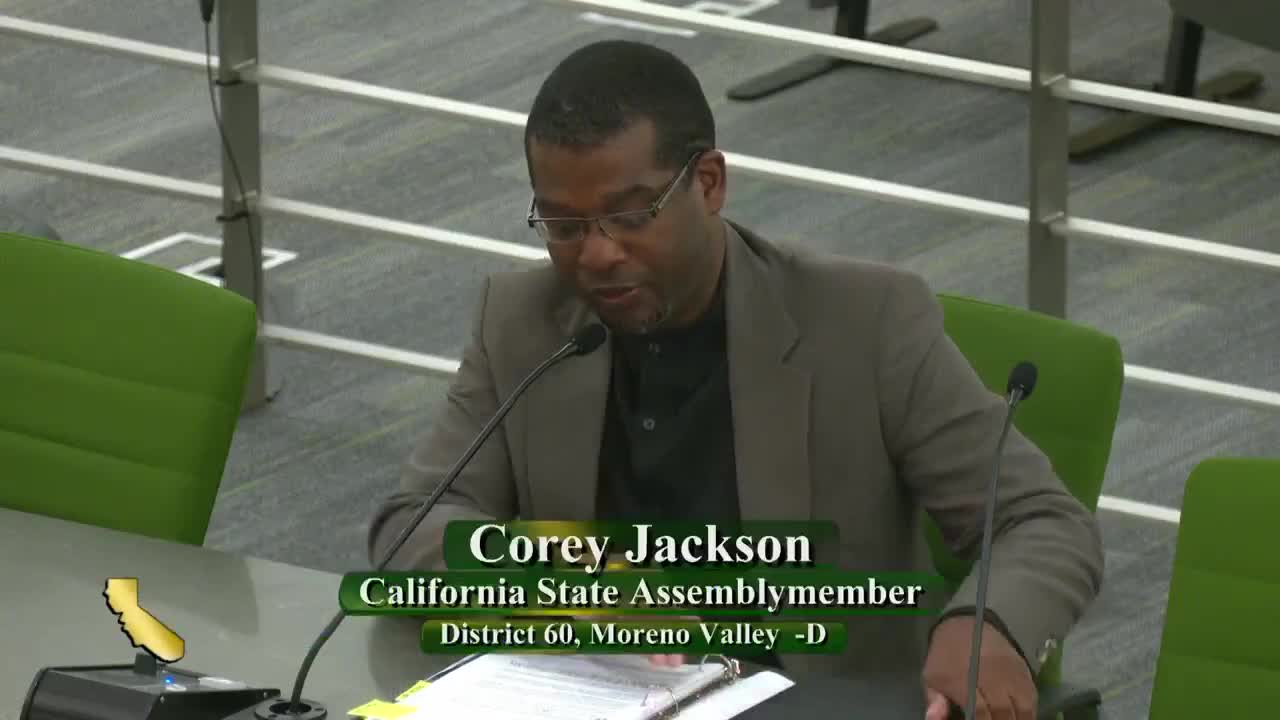
Bill Author

Bill Co-Author(s):
