AB 2558: Department of Transportation: projects: fish passage.
- Session Year: 2023-2024
- House: Assembly
- Latest Version Date: 2024-02-14
Current Status:
Failed
(2024-05-16: In committee: Held under submission.)
Introduced
In Committee
First Chamber
In Committee
Second Chamber
Enacted
Existing law vests the Department of Transportation with full possession and control of all state highways. Existing law, through the year 2025, requires the department to prepare an annual report to the Legislature describing the status of the departments progress in locating, assessing, and remediating barriers to fish passage. Existing law requires the department to pursue development of a programmatic environmental review process with appropriate state and federal regulatory agencies for remediating barriers to fish passage that will streamline the permitting process for projects.
This bill would extend this annual reporting requirement until the year 2030 and would require the reports to include other specified information. The bill would impose a deadline of January 1, 2026, for the department to implement the programmatic environmental review process.
Before the commencement of project design for a project using state or federal transportation funds, existing law requires the department to ensure that an assessment of potential barriers to fish passage is completed if the project affects a stream crossing on a stream where anadromous fish are, or historically were, found. If any structural barrier to passage exists, existing law requires remediation of the problem to be designed into the project by the implementing agency.
This bill would expand the projects for which an assessment is required to also include a project that is adjacent to, or has a nexus with, a stream where anadromous fish are, or historically were, found. If any structural barrier to passage exists, the bill would require remediation of the problem by removal of the fish passage barrier to be designed into the project by the implementing agency and remedied at the time of the projects construction.
Existing law prohibits, in certain fish and game districts, the construction or maintenance of any device or contrivance that prevents, impedes, or tends to prevent or impede, the passing of fish up and down stream. Existing law makes a violation of this provision a crime.
This bill would eliminate the requirement that the prohibition apply only in certain fish and game districts, thereby expanding the prohibition statewide. By expanding the scope of a crime, the bill would impose a state-mandated local program.
The California Constitution requires the state to reimburse local agencies and school districts for certain costs mandated by the state. Statutory provisions establish procedures for making that reimbursement.
This bill would provide that no reimbursement is required by this act for a specified reason.
Except as otherwise provided in this code, it is unlawful to construct or maintain in any stream in Districts 1, 13/8, 11/2, 2, 21/4, 21/2, 3, 31/2, 4, 41/8, 41/2, 43/4, 11, 12, 13, 23, and 25, any device or contrivance that prevents, impedes, or tends to prevent or impede, the passing of fish up and down stream.
SEC. 2.Section 156 of the Streets and Highways Code is amended to read:156.For purposes of this article, the following definitions shall apply:
(a)Barrier means any human-made culvert, stream crossing, grade control structure, or other highway-associated infrastructure that prevents or inhibits fish passage.
(b)Department means the Department of Transportation.
(a)(c)Fish passage means the ability of an anadromous fish to access appropriate habitat at all points in its life cycle, including spawning and rearing.
(b)Department means the Department of Transportation.SEC. 3.Section 156.1 of the Streets and Highways Code is amended to read:156.1.(a)The Director of Transportation shall prepare an annual report describing the status of the departments progress in locating, assessing, and remediating barriers to fish passage. barriers, including a justification for any reprioritization or delay in the remediation of barriers. This report shall be given submitted to the Legislature by October 31 of each year through the year 2025. 2030.
(b)Each report issued after October 31, 2016, shall include a status report on the remediation of barriers to fish passage on projects that have been identified pursuant to Section 156.5. The status report shall include, but is not limited to, all of the following information regarding a project identified pursuant to Section 156.5:
(1)Any updated information received by the department from the Department of Fish and Wildlife regarding the barriers to fish passage on the project.
(2)Whether funding has been committed to the project.
(3)The source of any funding for the project.
(4)The budget summary of the project.
(5)The status of inspections of culverts to ensure they are functioning properly and any other actions by the department to assess or remediate barriers to fish passage on the project.
(6)The applicable program initiation document work plan review.
(7)The estimated completion date for the project.
(c)A report to be submitted pursuant this section shall be submitted in compliance with Section 9795 of the Government Code.
SEC. 4.Section 156.2 of the Streets and Highways Code is amended to read:156.2.The department shall pursue development of a programmatic environmental review process with appropriate state and federal regulatory agencies for remediating barriers to fish passage that will streamline the permitting process for projects. projects, and shall implement this review process no later than January 1, 2026. The department shall include a description of its progress on this review process in the report specified in Section 156.1.
SEC. 5.Section 156.3 of the Streets and Highways Code is amended to read:156.3.For any project using state or federal transportation funds programmed after January 1, 2006, the department shall ensure that, if the project affects a stream crossing on on, is adjacent to, or has a nexus with a stream where anadromous fish are, or historically were, found, an assessment of potential barriers to fish passage is done prior to before commencing project design. The department shall submit the assessment to the Department of Fish and Game Wildlife and add it to the CALFISH database. If any structural barrier to passage exists, remediation of the problem by removal of the barrier shall be designed into the project by the implementing agency. agency and remedied at the time of the projects construction. New projects shall be constructed so that they do not present a barrier to fish passage. barrier. When barriers to fish passage are being addressed, plans and projects shall be developed in consultation with the Department of Fish and Game. Wildlife.
SEC. 6.Section 156.4 of the Streets and Highways Code is amended to read:156.4.For any repair or construction project using state or federal transportation funds that affects a stream crossing on on, is adjacent to, or has a nexus with a stream where anadromous fish are, or historically were, found, the department shall perform an assessment of the site for potential barriers to fish passage and submit the assessment to the Department of Fish and Game. Wildlife.
SEC. 7.Section 156.5 of the Streets and Highways Code is amended to read:156.5.(a)The Department of Fish and Wildlife shall identify projects described in this article that present the most significant barriers to fish passage. barriers.
(b)The department shall prioritize and expedite the remediation of barriers to fish passage barriers on projects identified pursuant to subdivision (a).
(c)For the 201516 fiscal year, the sum of five million dollars ($5,000,000) is hereby appropriated from the State Highway Account in the State Transportation Fund to the Department of Transportation for the identification and remediation of high-priority fish passages consistent with this section and Section 156.1.
SEC. 8.No reimbursement is required by this act pursuant to Section 6 of Article XIIIB of the California Constitution because the only costs that may be incurred by a local agency or school district will be incurred because this act creates a new crime or infraction, eliminates a crime or infraction, or changes the penalty for a crime or infraction, within the meaning of Section 17556 of the Government Code, or changes the definition of a crime within the meaning of Section 6 of Article XIIIB of the California Constitution.
|
Date
|
Status
|
|---|---|
| May 16, 2024 | In committee: Held under submission. |
| May 16, 2024 | Joint Rule 62(a), file notice suspended. (Page 5215.) |
| May 15, 2024 | In committee: Set, first hearing. Referred to APPR. suspense file. |
| Apr 23, 2024 | From committee: Do pass and re-refer to Com. on APPR. (Ayes 11. Noes 2.) (April 23). Re-referred to Com. on APPR. |
| Apr 2, 2024 | From committee: Do pass and re-refer to Com. on W., P., & W. (Ayes 12. Noes 0.) (April 1). Re-referred to Com. on W., P., & W. |
| Mar 4, 2024 | Referred to Coms. on TRANS. and W., P., & W. |
| Feb 15, 2024 | From printer. May be heard in committee March 16. |
| Feb 14, 2024 | Read first time. To print. |
|
Date
|
Description
|
Location
|
Votes
|
|
|---|---|---|---|---|
| Apr 23, 2024 | Do pass and be re-referred to the Committee on [Appropriations] | Assembly Standing Committee on Water, Parks, and Wildlife |
Passed |
|
| Apr 1, 2024 | Do pass and be re-referred to the Committee on [Water, Parks, and Wildlife] | Assembly Standing Committee on Transportation |
Passed |
This list shows positions taken on this bill by organizations on the date displayed, which is linked to the original source.
Positions by individuals are not included.
|
Organization
|
Position
|
Date
|
|---|---|---|
| California Trout | ** Support | |
| Clean Earth 4 Kids | ** Support | |
| Coastal Ranches Conservancy | ** Support | |
| Defenders Of Wildlife | ** Support | |
| Endangered Habitats League | ** Support | |
| Environmental Defense Center | ** Support | |
| Friends of the Los Angeles River | ** Support | |
| Friends of the River | ** Support | |
| Friends of the Santa Clara River | ** Support | |
| In Defense of Animals | ** Support | |
| Midpeninsula Regional Open Space Center | ** Support | |
| North County Watch | ** Support | |
| Planning And Conservation League | ** Support | |
| Santa Clarita Organization for Planning and the Environment | ** Support | |
| Save Open Space & Agricultural Resources | ** Support | |
| Sierra Club California | ** Support | |
| Sierra Institute | ** Support | |
| Sonoma Land Trust | ** Support | |
| Southwest Council, Fly Fishers International | ** Support | |
| Stewards of the Arroyo Seco | ** Support | |
| Stoecker Ecological | ** Support | |
| The Nature Conservancy | ** Support | |
| Trout Unlimited | ** Support |
Date of Hearing: May 15, 2024
ASSEMBLY COMMITTEE ON APPROPRIATIONS
Buffy Wicks, Chair
ABPCA Bill Id:AB 2558
Author:(Hart) – As Introduced Ver:February 14, 2024
Policy Committee: | Transportation | Vote: | 12 - 0 |
Water, Parks and Wildlife | 11 - 2 | ||
|
|
Urgency: No State Mandated Local Program: Yes Reimbursable: No
SUMMARY:
This bill expands an existing prohibition on constructing impediments to fish passage so that it applies statewide instead of only to certain regions, extends a requirement that the Department of Transportation (Caltrans) report annually on its progress in remediating fish passage barriers, and requires Caltrans to complete a programmatic environmental review of these barriers.
Specifically, this bill, among other things:
- Expands a prohibition on the construction or maintenance of any device or contrivance in any stream that prevents, impedes, or tends to prevent or impede the passing of fish up and down stream so that it applies statewide instead of only in certain Department of Fish and Wildlife (DFW) districts.
- Requires Caltrans’ annual report describing the status of the department’s progress in locating, assessing, and remediating barriers to include a justification for any reprioritization or delay in the remediation of barriers. Extends Caltrans’ annual reporting requirement on fish barriers from 2025 to 2030.
- Requires Caltrans, no later than January 1, 2026, to implement a programmatic environmental review process with appropriate state and federal regulatory agencies for remediating barriers that will streamline the permitting process for projects.
- Expands the requirement for Caltrans to assess a specified project’s impact on stream crossings where anadromous fish are, or were historically, found to include a project that is adjacent to, or has a nexus with, a stream. Requires, if any structural barrier to passage exists, remediation of the problem by removal of the barrier to be designed into the project by the implementing agency and remediated at the time of the project’s construction.
FISCAL EFFECT:
1) Caltrans estimates ongoing annual costs of an unknown but significant amount, likely in the tens of millions to hundreds of millions of dollars, to implement this bill (General Fund or special fund). It is unclear how many additional assessments of potential barriers will be required by expanding the requirement for Caltrans to assess a specified project’s impact on stream crossings where anadromous fish are, or were historically, found to include a project that is adjacent to or has a nexus with a stream. Completing each additional assessment will require staff and other resources. According to Caltrans’ “2020 Fish Passage Annual Legislative Report,” the cost of a single fish passage remediation project can range from hundreds of thousands of dollars to over $30 million. This same report identified 28 fish passage projects Caltrans is developing totaling approximately of $220 million to $230 million in transportation funding.
2) Costs of an unknown amount (General Fund or special fund) to DFW for additional monitoring and compliance resulting from the expansion on the prohibition on the construction or maintenance of any device or contrivance in any stream that prevents, impedes, or tends to prevent or impede the passing of fish up and down stream so that it applies statewide instead of only in certain DFW districts. DFW notes this bill creates additional workload for the department’s Caltrans program. DFW could pursue modifications to its interagency agreement to enable Caltrans to provide DFW with additional staff positions to cover increases in workload on an as-needed basis.
According to the Legislative Analyst’s Office, the General Fund faces a structural deficit in the tens of billions of dollars over the next several fiscal years.
COMMENTS:
1) Purpose. According to the author:
As a result of climate change and human disruption, salmon and steelhead trout populations have declined in California. These aquatic animals play an important role in maintaining the State’s water quality and ecosystem. AB 2558 will strengthen existing law on removing fish passage barriers to restore salmon and steelhead trout populations, furthering the State’s efforts to conserve California’s lands and coastal waters.
2) Background. Salmon are central to California’s ecology and economy, as well as to the cultures and religions of indigenous peoples along the Pacific Coast. Salmon and other salmonid species are migratory fish, moving from large saltwater or freshwater bodies to smaller freshwater streams in order to reproduce. Over the last two centuries, salmon populations have declined due, in part, to changes in water quality and infrastructure that obstruct their annual migration.
Man-made barriers to salmonid migration include road or stream crossings, irrigation diversions, and dams. Passage impediments and delays in migration affect both adult and juvenile fish. Given the magnitude and severity of the problem, reconnecting isolated stream habitat has become an important state priority for the restoration of impaired anadromous salmon and steelhead stocks.
Projects to remediate fish passage barriers to salmon and steelhead are regulated by agencies with jurisdiction over listed species, including DFW and the National Marine Fisheries Service (NMFS), as well as agencies with jurisdiction over other project area resources and habitat. FishPAC is a joint effort between Caltrans, DFW, NMFS, U.S. Fish & Wildlife Service, and other advocates of fish passage remediation and watershed restoration efforts. According to Caltrans, FishPAC recommends technical solutions, explores options for accelerated delivery of permits and projects, and identifies potential funding opportunities for barrier remediation projects.
State law requires Caltrans to remediate barriers to salmon and steelhead habitat on the State Highway System (SHS), and provide an annual report to the Legislature that provides information on progress for the previous year. The last fish barrier report to the Legislature was completed in 2020.
One of the key goals of the Governor’s 2024 “California Salmon Strategy for a Hotter, Drier Future” is to remove barriers and modernize infrastructure for salmon migration. Along with the strategy, the administration announced in March 2024 that DFW has awarded $50 million in grants for 15 projects to support a diverse array of habitat restoration projects, including several projects to remove fish passage barriers and improve habitat connectivity. Among other actions, the strategy directs Caltrans to track and remediate all fish passage barriers to salmon and steelhead habitat caused by transportation infrastructure.
A coalition of environmental organizations writes in support of this bill:
AB 2558 provides key updates to the 2005 fish passage bill (SB 857) by including all highway-associated infrastructure, not just stream crossings, that may impact fish passage and habitats. Adverse impacts on habitat can reduce population productivity and overall resilience of these species. AB 2558 also requires Caltrans to identify hurdles that need to be addressed for the timely implementation of statewide fish passage priorities. 45% of California salmonids are likely to be extinct in the next 50 years if nothing is done to intervene. Caltrans has a fundamental and important role in helping to recover our native fish species by building infrastructure in a manner that protects California’s biodiversity. AB 2558 will ensure that infrastructure-resulting fish passage barriers are assessed and improved to protect these critical aquatic habitats before it is too late.
According to Caltrans, a variety of fund sources help fund fish passage remediation efforts, depending on the project. The State Highway System Management Plan sets fish passage remediation performance objectives for projects funded by the State Highway Operation and Protection Program (SHOPP). Some projects funded by the State Transportation Improvement Program (STIP), other state funding sources, and local sources also include fish passage remediation requirements required by law. The SHOPP, STIP, and other state programs are funded by a mixture of state and federal funds.
Analysis Prepared by: Nikita Koraddi / APPR. / (916) 319-2081
Date of Hearing: April 23, 2024
ASSEMBLY COMMITTEE ON WATER, PARKS, AND WILDLIFE
Diane Papan, Chair
ABPCA Bill Id:AB 2558 (
Author:Hart) – As Introduced Ver:February 14, 2024
SUBJECT: Department of Transportation: projects: fish passage
SUMMARY: Expands an existing prohibition on constructing impediments to fish passage so that it applies statewide instead of only to certain regions. Extends a requirement that the California Department of Transportation (Caltrans) report annually on its progress remediating fish passage barriers from 2025 to 2030 and requires Caltrans to complete a programmatic environmental review of these barriers by January 1, 2026. Specifically, this bill:
- Expands a prohibition on the construction or maintenance of any device or contrivance in any stream that prevents, impedes, or tends to prevent or impede fish passage so that it applies statewide instead of only in certain Department of Fish and Wildlife (DFW) Districts.
- Requires Caltrans’ annual report on fish passage barriers to include a justification for reprioritization or delay in remediation of barriers.
- Extends Caltrans’ annual reporting requirement on fish barriers from October 31, 2025 to October 31, 2030.
- Requires Caltrans to implement a programmatic environmental review process with appropriate state and federal regulatory agencies for remediating barriers that will streamline the permitting process for projects no later than January 1, 2026.
- Expands Caltrans’ requirement to assess a project’s impact on stream crossings where anadromous fish are, or were historically, found to include stream crossings adjacent to, or with a nexus to, a stream and requires Caltrans to remediate the problem of fish passage by removing the barrier and to remedy it at the time of the project’s construction.
- Defines “barrier” for the purposes of this bill as any human-made culvert, stream crossing, grade control structure, or other highway-associated infrastructure that prevents or inhibits fish passage.
- Makes technical and conforming changes.
EXISTING LAW:
- Provides it is unlawful to construct or maintain a barrier to fish passage in any stream in the DFW Districts 1, 1 3/8, 1 1/2, 2, 2 1/4, 2 1/2, 3, 3 1/2, 4, 4 1/8, 4 1/2, 4 3/4, 11, 12, 13, 23, and 25 (Fish and Game Code § 5901).
- Requires Caltrans to prepare an annual report describing the status of the department’s progress in locating, assessing, and remediating barriers to fish passage, through the year 2025 [Streets and Highways Code (SHC) § 156.1].
- Requires Caltrans to initiate the development of a programmatic environmental review process with appropriate state and federal regulatory agencies for remediating barriers to fish passage that will streamline the permitting process for projects, and include a description of its progress on this review process in the annual report on fish barriers (SHC § 156.2).
- Requires, for projects that affects a stream crossing, Caltrans to complete an assessment of potential barrier to fish passage prior to commencing project design, and submit the assessment to DFW (SHC § 156.3).
- Requires Caltrans to remediate the barrier to fish passage in the project implementation, in consultation with DFW (SHC § 156.3).
- Provides that new projects shall not present a barrier to fish passage (SHC § 156.3).
- For projects identified by DFW as the most significant barriers to fish passage, requires DFW to prioritize and expedite the remediation of barriers to fish passage on projects identified (SHC § 156.5).
- Allocates $5 million for the 2015-16 fiscal year from the State Highway Account in the State Transportation Fund to Caltrans for the identification and remediation of high-priority fish passages (SHC § 156.5).
FISCAL EFFECT: Unknown. This bill is keyed fiscal.
COMMENTS:
- Purpose of this bill. According to the author, “As a result of climate change and human disruption, salmon and steelhead trout populations have declined in California. These aquatic animals play an important role in maintaining the state’s water quality and ecosystem. [This bill] will strengthen existing law on removing fish passage barriers to restore salmon and steelhead trout populations, furthering the state’s efforts to conserve California’s lands and coastal waters.
- Background. Salmon are central to California’s ecology and economy, as well as the cultures and religions of Indigenous peoples along the Pacific Coast. Salmon and other salmonid species are migratory fish, moving from large salt- or freshwater bodies to smaller freshwater streams in order to reproduce. Over the last two centuries, salmon populations have declined due in part to changes in water quality and infrastructure that obstruct their annual migrations, or “runs”.
Man-made barriers to salmonid migration include road/stream crossings, irrigation diversions, and dams. Road/stream crossings are extremely numerous and often cross multiple road ownerships within a watershed. Passage impediments and delays in migration affect both adult and juvenile fish. Given the magnitude and severity of the problem, reconnecting isolated stream habitat has become an important priority for the restoration of impaired anadromous salmon and steelhead stocks.
Caltrans is required to remediate barriers to salmon and steelhead habitat on the State Highway System (SHS), and provide a report to the Legislature each year that provides information on progress for the previous year. Caltrans is required to track and provide information on; crossing assessments, district and Fish Passage Advisory Committee (FishPAC) biological priorities, information for remediated barriers, and status of locations currently in project delivery.
Improving fish passage on the SHS requires a comprehensive approach focused on science and data, engineering, training, permitting, research, funding, multi-species and habitat benefits, and partnerships, because of complex considerations associated with successful fish barrier remediation. Caltrans has improved fish passage coordination and partnering across California through FishPAC, which include staff from DFW and the National Marine Fisheries Service, as well other remediation partners. The Interagency Fish Passage Engineering Working Group and the Fish Passage Leadership Action Team continue to identify and work toward improved understanding and application of successful fish passage remediation work in California. A comprehensive fish passage program is vital towards identifying, prioritizing, and treating migration barriers so that unimpeded migration of California’s salmonid populations is achieved.
Inconsistency in fish barrier reporting and remediation. Although Caltrans is mandated to do so annually, the last fish barrier report to the Legislature was completed in 2020. According to this report, Caltrans completed 510 fish passage assessments at road/stream crossings. Of those assessments, the following was identified: 13 new barriers, 62 non-barriers, and 435 locations as potential barriers which need additional surveys. - Arguments in support. California Trout and a number of environmental and conservation organizations support this bill arguing that it strengthens “existing law on the removal and remediation of [Caltrans] fish passage barriers – including culverts, grade control structures, and other highway-associated infrastructure.” California Trout notes that “safe fish passage promotes genetic diversity, mitigates aquatic habitat fragmentation, improves population variability, and enhances climate change adaptation by supporting access to refugia habitat during summer and prolonged drought conditions. Protecting freshwater corridors is, therefore, not only an investment in ecosystem health but also a proactive strategy to mitigate the impacts of habitat fragmentation and climate change on California’s biodiversity.” Finally, supporters assert this bill will help the state achieve its 30x30 goals.
- Double referral. This bill was also referred to the Assembly Transportation Committee where it passed 12-0 on April 2, 2024.
- Related legislation. AB 95 (Committee on Budget), Chapter 12, Statutes of 2015 makes statutory changes related to transportation that are necessary to implement the 2015-16 budget package, including $5 million State Highway Account funds for the remediation of fish passage barriers caused by state highways and requires Caltrans to report on the progress of remediating barriers to fish passage.
SB 857 (Kuehl), Chapter 589, Statutes of 2005, requires Caltrans to complete an assessment and remediate any potential barriers to anadromous fish, such as salmon and trout, before commencing a transportation project. Caltrans must provide an annual report to the Legislature on the progress of identifying, assessing, and addressing obstacles that impact the flow of water for salmon and trout.
REGISTERED SUPPORT / OPPOSITION:
Support
California Trout
Clean Earth 4 Kids
Coastal Ranches Conservancy
Defenders of Wildlife
Endangered Habitats League
Enviromental Defense Center
Friends of The Los Angeles River
Friends of The River
Friends of The Santa Clara River
In Defense of Animals
North County Watch
Planning and Conservation League
Santa Clarita Organization for Planning and The Environment
Save Open Space & Agricultural Resources
Sierra Club California
Sierra Institute
Sonoma Land Trust
Southwest Council, Fly Fishers International
Stewards of The Arroyo Seco
Stoecker Ecological
The Nature Conservancy
Trout Unlimited
Opposition
None on file
Analysis Prepared by: Pablo Garza / W., P., & W. / (916) 319-2096
Date of Hearing: April 1, 2024
ASSEMBLY COMMITTEE ON TRANSPORTATION
Lori D. Wilson, Chair
ABPCA Bill Id:AB 2558 (
Author:Hart) – As Introduced Ver:February 14, 2024
SUBJECT: Department of Transportation: projects: fish passage
SUMMARY: Extends the requirement that the California Department of Transportation (Caltrans) report annually on its progress remediating barriers to fish passage until October 31, 2030 and requires that Caltrans’ development of a programmatic environmental review process for these barriers be completed by January 1, 2026. Specifically, this bill:
- Expands the prohibition of the construction or maintenance of any device or contrivance in any stream that prevents, impedes or tends to prevent or impeded, the passing of fish up and down stream in certain fish and game districts—to statewide.
- Requires Caltrans’ annual report on fish passage barriers to include a justification for reprioritization or delay in remediation of barriers.
- Extends Caltrans’ annual reporting requirement on fish barriers from October 31, 2025 to October 31, 2030.
- Requires Caltrans to implement a programmatic environmental review process with appropriate state and federal regulatory agencies for remediating barriers that will streamline the permitting process for projects no later than January 1, 2026. Expands Caltrans’ requirement to assess a project’s impact on stream crossings where anadromous fish are, or were found, to include stream crossings adjacent to, or with a nexus and requires Caltrans to remediate the problem of fish passage by removing the barrier and to remedy it at the time of the project’s construction.
EXISTING LAW:
- States it is unlawful to construct or maintain in any in any stream in the California Department of Fish and Wildlife (CDFW) Districts 1, 13/8, 11/2, 2, 21/4, 21/2, 3, 31/2, 4, 41/8, 41/2, 43/4, 11, 12, 13, 23, and 25, any device or contrivance that prevents, impedes, or tends to prevent or impede, the passing of fish up and down stream. (Fish and Game Code 5901)
- Requires Caltrans to prepare an annual report describing the status of the department’s progress in locating, assessing, and remediating barriers to fish passage, through the year 2025. (SHC 156.1)
- Requires Caltrans to pursue development of a programmatic environmental review process with appropriate state and federal regulatory agencies for remediating barriers to fish passage that will streamline the permitting process for projects, and include a description of its progress on this review process in the annual report on fish barriers. (SHC 156.2)
- For projects that affects a stream crossing, requires Caltrans to complete an assessment of potential barrier to fish passage prior to commencing project design, and submit the assessment to CDFW. (SHC 156.3)
- Requires Caltrans to remediate the barrier to fish passage in the project implementation, in consultation with CDFW. (SHC 156.3)
- Specifies that new projects shall not present a barrier to fish passage. (SHC 156.3)
- For projects identified by CDFW as the most significant barriers to fish passage, requires CDFW to prioritize and expedite the remediation of barriers to fish passage on projects identified. (SHC 156.5)
- Allocates $5 million for the 2015-16 fiscal year from the State Highway Account in the State Transportation Fund to Caltrans for the identification and remediation of high-priority fish passages. (SHC 156.5)
FISCAL EFFECT: Unknown
COMMENTS: Salmon are central to California’s ecology and economy, as well as the cultures and religions of Indigenous peoples along the Pacific Coast. Salmon and other salmonid species are migratory fish, moving from large salt- or freshwater bodies to smaller freshwater streams in order to reproduce. Over the last two centuries, salmon populations have declined due in part to changes in water quality and infrastructure that obstruct their annual migrations, or “runs”.
Man-made barriers to salmonid migration include road/stream crossings, irrigation diversions and dams. Road/stream crossings are extremely numerous and often cross multiple road ownerships within a watershed. Passage impediments and delays in migration affect both adult and juvenile fish. Given the magnitude and severity of the problem, reconnecting isolated stream habitat has become an important priority for the restoration of impaired anadromous salmon and steelhead stocks.
Caltrans is required to remediate barriers to salmon and steelhead habitat on the State Highway System (SHS), and provide a report to the Legislature each year that provides information on progress for the previous year. Caltrans is required to track and provide information on; crossing assessments, district and Fish Passage Advisory Committee (FishPAC) biological priorities, information for remediated barriers, and status of locations currently in project delivery.
Improving fish passage on the SHS requires a comprehensive approach focused on science and data, engineering, training, permitting, research, funding, multi-species and habitat benefits, and partnerships, because of complex considerations associated with successful fish barrier remediation. Caltrans has improved fish passage coordination and partnering across California through FishPAC, which include staff from CDFW and the National Marine Fisheries Service, as well other remediation partners. The Interagency Fish Passage Engineering Working Group and the Fish Passage Leadership Action Team continue to identify and work toward improved understanding and application of successful fish passage remediation work in California. A comprehensive fish passage program is vital towards identifying, prioritizing, and treating migration barriers so that unimpeded migration of California’s salmonid populations is achieved.
FishPAC consists of six major areas throughout the state, which is comprised of 10 Caltrans districts. (Caltrans districts 8 and 9 are not included, since they have no anadromous fish.) Their mission is to address complex challenges related to fish passage barrier remediation, to support effective and innovative engineering solutions, and to incorporate sound science and data into FishPAC decisions. FishPAC advances the remediation of fish passage barriers on the SHS, and promotes collaborative inter-jurisdictional solutions, to ensure that barriers are assessed and documented prior to project planning and initiation.
Inconsistency in fish barrier reporting and remediation. Although Caltrans is mandated to do so annually, the last fish barrier report to the Legislature was completed in 2020. According to this report, Caltrans completed 510 fish passage assessments at road/stream crossings. Of those assessments, the following was identified: 13 new barriers, 62 non-barriers, and 435 locations as potential barriers which need additional surveys.
In January 2023, critical steelhead habitat in Gaviota Creek along U.S. 101 in Santa Barbara County, came under scrutiny after emergency work destroyed a section of SHS that Caltrans and the Coastal Ranches Conservancy had been working on over the past 10 years to improve for fish passage. According to the Caltrans emergency project species relocation summary, multiple deaths of juvenile steelheads and other aquatic animals occurred due to poor capture methods during the emergency work. The Coastal Ranches Conservancy believes it could take years to recover from the damage to the creek bed and steelhead passage.
This bill seeks to strengthen existing requirements for Caltrans to remediate and report on barriers to fish passage by requiring barrier remediation statewide, requiring Caltrans’ reporting to include a justification for any reprioritization or delay in the remediation of barriers, and extending Caltrans’ reporting from 2025 to 2030.
Salmon Strategy. In January 2024, Governor Newsom announced new efforts to help restore California’s salmon populations amidst hotter and drier weather exacerbated by climate change. The six priorities of the Governor’s salmon strategy include; removing barriers and modernizing infrastructure for salmon migration, restoring habitat, protecting water flows in key rivers at the right times, modernizing hatcheries, transforming technology and management systems, and strengthening partnerships.
Remediating fish passage barriers is key to enhancing connectivity in California's watersheds. Providing access to upstream habitats will ensure that fish populations can respond and adapt to climate change stressors, such as drought, wildfire, sea level rise, changes in stream flow, and water temperature. Over 200 fish passage experts, advocates, and partners throughout the range of salmon and steelhead habitat work collaboratively to address legacy transportation barriers with long-term solutions that facilitate fish passage and climate resilience.
This bill seems to align with the Governor’s Salmon Strategy.
According to the author, “As a result of climate change and human disruption, salmon and steelhead trout populations have declined in California. These aquatic animals play an important role in maintaining the State’s water quality and ecosystem. AB 2558 will strengthen existing law on removing fish passage barriers to restore salmon and steelhead trout populations, furthering the State’s efforts to conserve California’s lands and coastal waters.”
In support, California Trout writes, “By including updates on the progress towards reconnecting crucial freshwater corridors and fish habitat in the agency's annual reporting, this bill will strengthen the State’s efforts to protect California's rich biodiversity, and particularly its highly imperiled freshwater fishes.”
Previous legislation. AB 1760 (Committee on Water, Parks, and Wildlife), Chapter 132, Statutes of 2023 makes numerous technical and non-substantive changes to the Fish and Game Code to improve organization and clarity, remove obsolete or redundant material, and other technical clarifications and corrections, among other provisions.
AB 95 (Committee on Budget), Chapter 12, Statutes of 2015 makes statutory changes related to transportation that are necessary to implement the 2015-16 budget package, including $5 million State Highway Account funds for the remediation of fish passage barriers caused by state highways and requires Caltrans to report on the progress of remediating barriers to fish passage.
SB 857 (Kuehl), Chapter 589, Statutes of 2005, requires Caltrans to complete an assessment and remediate any potential barriers to anadromous fish, such as salmon and trout, before commencing a transportation project. Caltrans must provide an annual report to the Legislature on the progress of identifying, assessing, and addressing obstacles that impact the flow of water for salmon and trout.
REGISTERED SUPPORT / OPPOSITION:
Support
California Trout
Clean Earth 4 Kids
Coastal Ranches Conservancy
Defenders of Wildlife
Environmental Defense Center
Friends of the LA River
Friends of the River
Friends of the Santa Clara River
Midpeninsula Regional Open Space Center
North County Watch
Planning and Conservation League
Santa Clarita Organization for Planning and The Environment
Save Open Space & Agricultural Resources
Sierra Club California
Sonoma Land Trust
Southwest Council, Fly Fishers International
Stewards of the Arroyo Seco
Stoecker Ecological
The Nature Conservancy
Trout Unlimited
Opposition
None on file
Analysis Prepared by: Julia Kingsley / TRANS. / (916) 319-2093
Discussed in Hearing
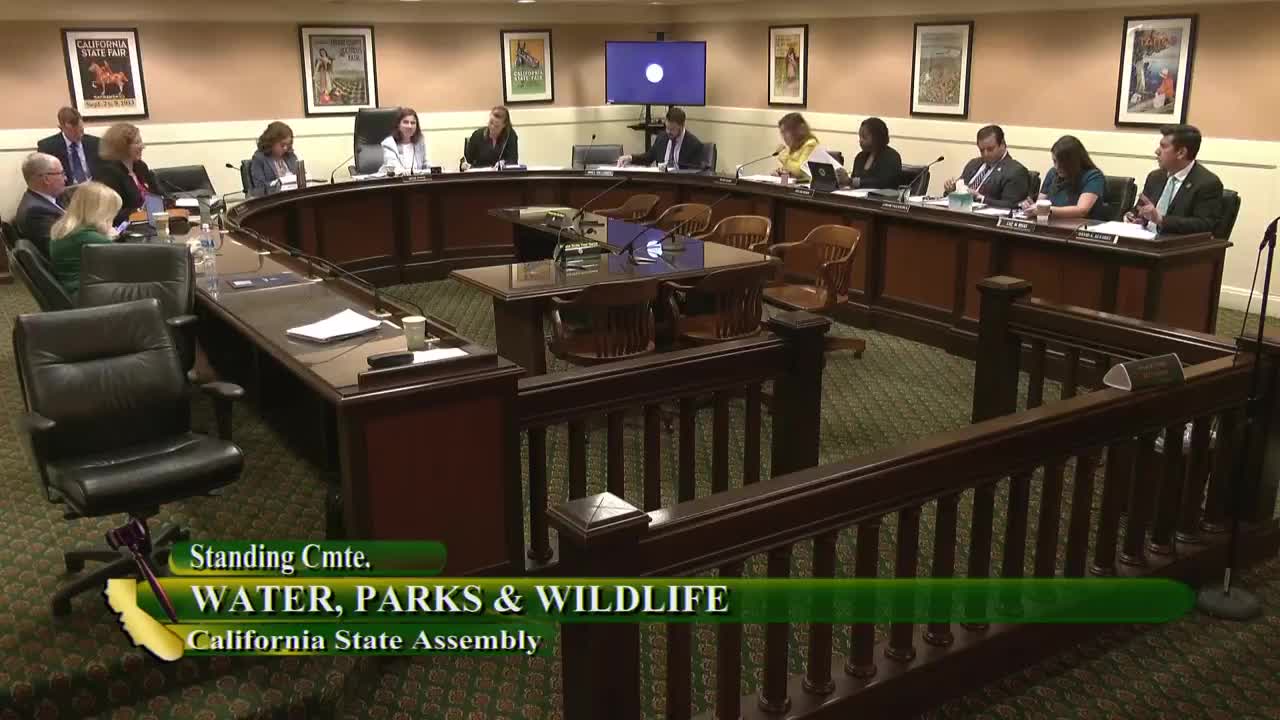
 6MIN
Assembly Standing Committee on Water, Parks, and Wildlife
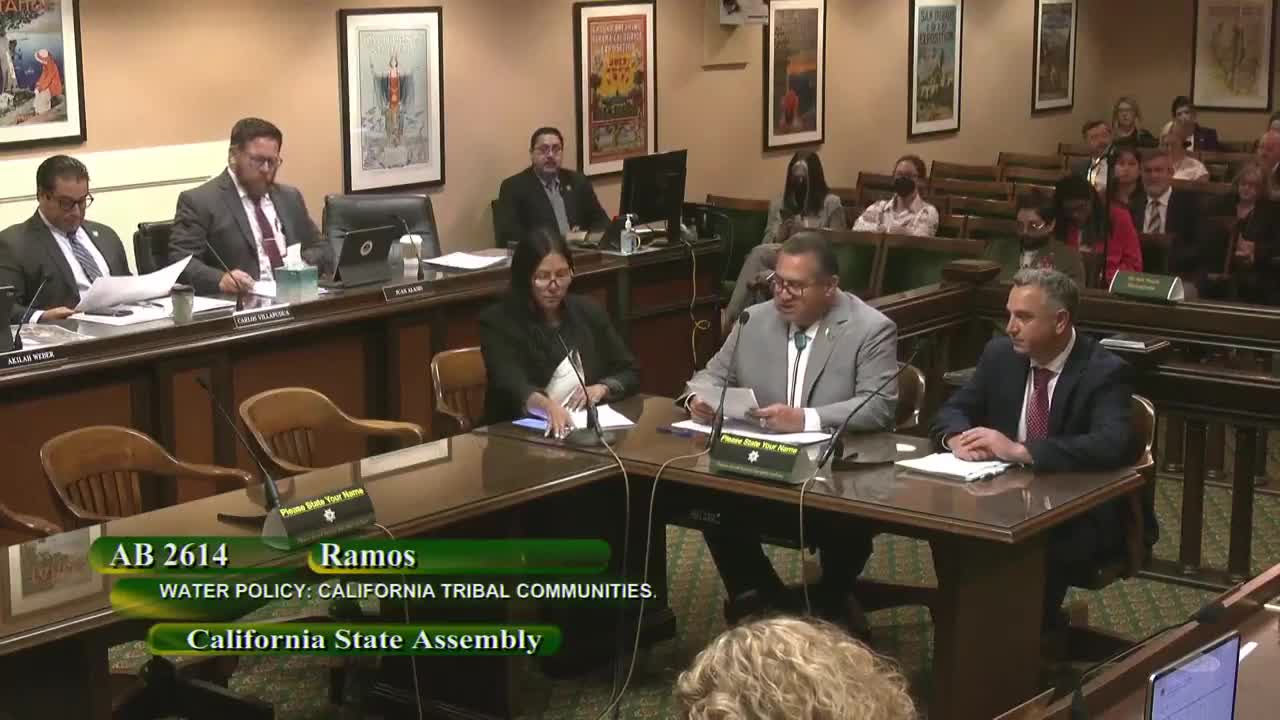
 51SEC
Assembly Standing Committee on Water, Parks, and Wildlife
 1MIN
Assembly Standing Committee on Water, Parks, and Wildlife
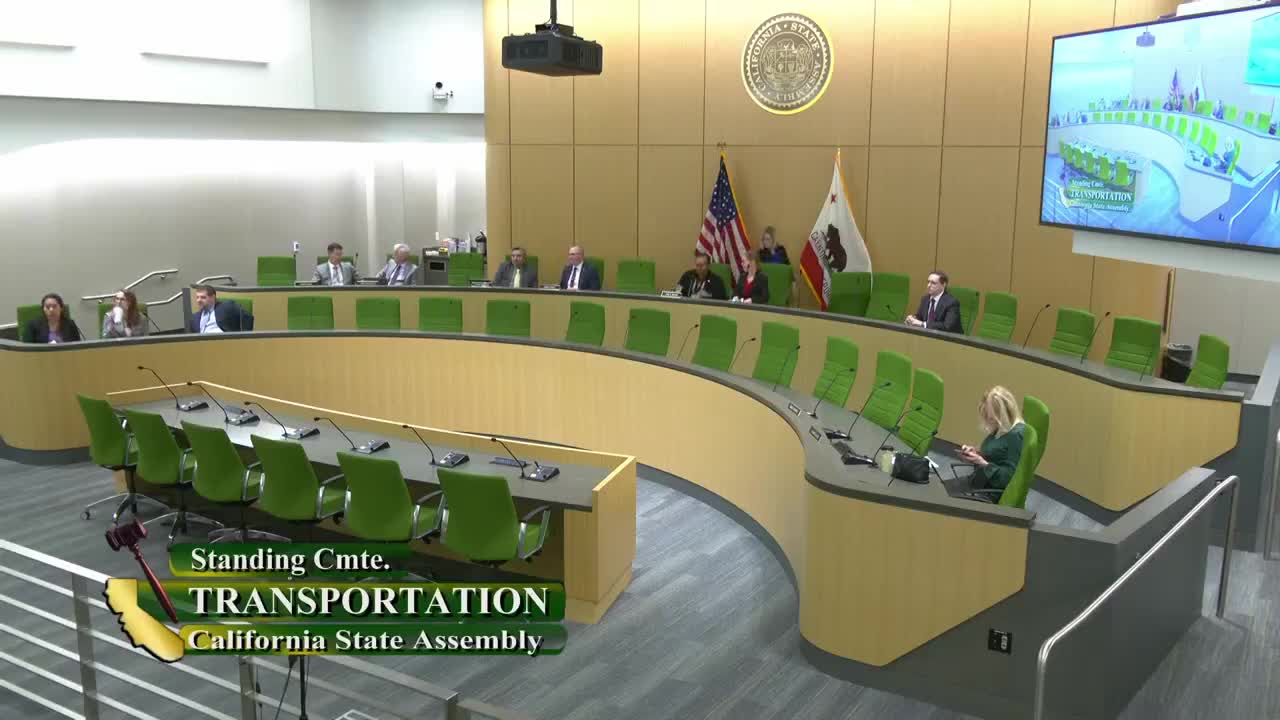 8MIN
Assembly Standing Committee on Transportation
Bill Author

Bill Co-Author(s):