AB 2561: Local public employees: vacant positions.
- Session Year: 2023-2024
- House: Assembly
- Latest Version Date: 2024-09-22
Current Status:
Passed
(2024-09-22: Chaptered by Secretary of State - Chapter 409, Statutes of 2024.)
Introduced
In Committee
First Chamber
In Committee
Second Chamber
Enacted
Existing law, the Meyers-Milias-Brown Act (act), authorizes local public employees, as defined, to form, join, and participate in the activities of employee organizations of their own choosing for the purpose of representation on matters of labor relations. The act requires the governing body of a public agency to meet and confer in good faith regarding wages, hours, and other terms and conditions of employment with representatives of recognized employee organizations and to consider fully presentations that are made by the employee organization on behalf of its members before arriving at a determination of policy or course of action.
This bill would, as specified, require a public agency to present the status of vacancies and recruitment and retention efforts at a public hearing at least once per fiscal year, and would entitle the recognized employee organization to present at the hearing. If the number of job vacancies within a single bargaining unit meets or exceeds 20% of the total number of authorized full-time positions, the bill would require the public agency, upon request of the recognized employee organization, to include specified information during the public hearing. By imposing new duties on local public agencies, the bill would impose a state-mandated local program. The bill would also include related legislative findings.
The California Constitution requires local agencies, for the purpose of ensuring public access to the meetings of public bodies and the writings of public officials and agencies, to comply with a statutory enactment that amends or enacts laws relating to public records or open meetings and contains findings demonstrating that the enactment furthers the constitutional requirements relating to this purpose.
This bill would make legislative findings to that effect.
The California Constitution requires the state to reimburse local agencies and school districts for certain costs mandated by the state. Statutory provisions establish procedures for making that reimbursement.
This bill would provide that no reimbursement shall be made pursuant to these statutory provisions for costs mandated by the state pursuant to this act, but would recognize that a local agency or school district may pursue any available remedies to seek reimbursement for these costs.
Existing law, the Meyers-Milias-Brown Act (act), authorizes local public employees, as defined, to form, join, and participate in the activities of employee organizations of their own choosing for the purpose of representation on matters of labor relations. The act requires the governing body of a public agency to meet and confer in good faith regarding wages, hours, and other terms and conditions of employment with representatives of recognized employee organizations and to consider fully presentations that are made by the employee organization on behalf of its members before arriving at a determination of policy or course of action.
This bill would authorize a recognized public organization to initiate the meet and confer process with a public agency if the total number of job vacancies within total classifications of the bargaining unit is equal to or exceeds 20% of the total authorized positions in that bargaining unit. The bill would require the public agency to promptly meet and confer with the employee organization within 30 days about substantive strategies to fill vacancies. The bill would would, as specified, require a public agency to present the status of vacancies and recruitment and retention efforts at a public hearing hearing at least once per fiscal year prior to the adoption of its final budget, year, and would entitle the recognized employee organization to present at the hearing. hearing. If the number of job vacancies within a single bargaining unit meets or exceeds 20% of the total number of authorized full-time positions, the bill would require the public agency, upon request of the recognized employee organization, to include specified information during the public hearing. By imposing new duties on local public agencies, the bill would impose a state-mandated local program. The bill would also include related legislative findings.
The California Constitution requires local agencies, for the purpose of ensuring public access to the meetings of public bodies and the writings of public officials and agencies, to comply with a statutory enactment that amends or enacts laws relating to public records or open meetings and contains findings demonstrating that the enactment furthers the constitutional requirements relating to this purpose.
This bill would make legislative findings to that effect.
The California Constitution requires the state to reimburse local agencies and school districts for certain costs mandated by the state. Statutory provisions establish procedures for making that reimbursement.
This bill would provide that no reimbursement shall be made pursuant to these statutory provisions for costs mandated by the state pursuant to this act, but would recognize that a local agency or school district may pursue any available remedies to seek reimbursement for these costs.
Existing law, the Meyers-Milias-Brown Act (act), authorizes local public employees, as defined, to form, join, and participate in the activities of employee organizations of their own choosing for the purpose of representation on matters of labor relations. The act prohibits a public agency from, among other things, imposing or threatening to impose reprisals on employees, discriminating or threatening to discriminate against employees, or otherwise interfering with specified employee rights guaranteed by the act. requires the governing body of a public agency to meet and confer in good faith regarding wages, hours, and other terms and conditions of employment with representatives of recognized employee organizations and to consider fully presentations that are made by the employee organization on behalf of its members before arriving at a determination of policy or course of action.
This bill would authorize a recognized public organization to initiate the meet and confer process with a public agency if the total number of job vacancies within total classifications of the bargaining unit is equal to or exceeds 20% of the total authorized positions in that bargaining unit. The bill would require each the public agency with high vacancy rates for more than 180 days, at the request of the recognized employee organization, to promptly meet and confer with the representative of the recognized employee organization within 21 30 days about substantive strategies to fill vacancies and to hold a public hearing within 90 days about high vacancy rates and specified related matters. vacancies. The bill would require a public agency to present the status of vacancies and recruitment and retention efforts at a public hearing at least once per fiscal year prior to the adoption of its final budget, and would entitle the employee organization to present at the hearing. By imposing new duties on local public agencies, the bill would impose a state-mandated local program. The bill would also include related legislative findings.
The California Constitution requires local agencies, for the purpose of ensuring public access to the meetings of public bodies and the writings of public officials and agencies, to comply with a statutory enactment that amends or enacts laws relating to public records or open meetings and contains findings demonstrating that the enactment furthers the constitutional requirements relating to this purpose.
This bill would make legislative findings to that effect.
The California Constitution requires the state to reimburse local agencies and school districts for certain costs mandated by the state. Statutory provisions establish procedures for making that reimbursement.
This bill would provide that no reimbursement shall be made pursuant to these statutory provisions for costs mandated by the state pursuant to this act, but would recognize that a local agency or school district may pursue any available remedies to seek reimbursement for these costs.
Existing law, the Meyers-Milias-Brown Act (act), authorizes local public employees, as defined, to form, join, and participate in the activities of employee organizations of their own choosing for the purpose of representation on matters of labor relations. The act prohibits a public agency from, among other things, imposing or threatening to impose reprisals on employees, discriminating or threatening to discriminate against employees, or otherwise interfering with specified employee rights guaranteed by the act.
This bill would require each public agency with high vacancy rates for more than 180 days, at the request of the recognized employee organization, to promptly meet and confer with the representative of the recognized employee organization within 21 days about substantive strategies to fill vacancies and to hold a public hearing within 90 days about high vacancy rates and specified related matters. By imposing new duties on local public agencies, the bill would impose a state-mandated local program. The bill would also include related legislative findings.
The California Constitution requires local agencies, for the purpose of ensuring public access to the meetings of public bodies and the writings of public officials and agencies, to comply with a statutory enactment that amends or enacts laws relating to public records or open meetings and contains findings demonstrating that the enactment furthers the constitutional requirements relating to this purpose.
This bill would make legislative findings to that effect.
The California Constitution requires the state to reimburse local agencies and school districts for certain costs mandated by the state. Statutory provisions establish procedures for making that reimbursement.
This bill would provide that no reimbursement shall be made pursuant to these statutory provisions for costs mandated by the state pursuant to this act, but would recognize that a local agency or school district may pursue any available remedies to seek reimbursement for these costs.
Existing law, the Meyers-Milias-Brown Act (act), authorizes local public employees, as defined, to form, join, and participate in the activities of employee organizations of their own choosing for the purpose of representation on matters of labor relations. The act prohibits a public agency from, among other things, imposing or threatening to impose reprisals on employees, discriminating or threatening to discriminate against employees, or otherwise interfering with specified employee rights guaranteed by the act.
This bill would require each public agency with bargaining unit high vacancy rates exceeding 10% for more than 90 days within the past for more than 180 days days, at the request of the recognized employee organization, to promptly meet and confer with a the representative of the recognized employee organization to produce, publish, and implement a plan consisting of specified components to fill all vacant positions within the subsequent 180 days. The bill would require the public agency to present this plan during a public hearing to the governing legislative body and to publish the plan on its internet website for public review for at least one year. organization within 21 days about substantive strategies to fill vacancies and to hold a public hearing within 90 days about high vacancy rates and specified related matters. By imposing new duties on local public agencies, the bill would impose a state-mandated local program. The bill would also include findings that changes proposed by this bill address a matter of statewide concern. related legislative findings.
The California Constitution requires local agencies, for the purpose of ensuring public access to the meetings of public bodies and the writings of public officials and agencies, to comply with a statutory enactment that amends or enacts laws relating to public records or open meetings and contains findings demonstrating that the enactment furthers the constitutional requirements relating to this purpose.
This bill would make legislative findings to that effect.
The California Constitution requires the state to reimburse local agencies and school districts for certain costs mandated by the state. Statutory provisions establish procedures for making that reimbursement.
This bill would provide that no reimbursement shall be made pursuant to these statutory provisions for costs mandated by the state pursuant to this act, but would recognize that a local agency or school district may pursue any available remedies to seek reimbursement for these costs.
Existing law, the Meyers-Milias-Brown Act (act), authorizes local public employees, as defined, to form, join, and participate in the activities of employee organizations of their own choosing for the purpose of representation on matters of labor relations. The act prohibits a public agency from, among other things, imposing or threatening to impose reprisals on employees, discriminating or threatening to discriminate against employees, or otherwise interfering with specified employee rights guaranteed by the act.
This bill would require each public agency with bargaining unit vacancy rates exceeding 10% for more than 90 days within the past 180 days to meet and confer with a representative of the recognized employee organization to produce, publish, and implement a plan consisting of specified components to fill all vacant positions within the subsequent 180 days. The bill would require the public agency to present this plan during a public hearing to the governing legislative body and to publish the plan on its internet website for public review for at least one year. By imposing new duties on local public agencies, the bill would impose a state-mandated local program. The bill would also include findings that changes proposed by this bill address a matter of statewide concern.
The California Constitution requires local agencies, for the purpose of ensuring public access to the meetings of public bodies and the writings of public officials and agencies, to comply with a statutory enactment that amends or enacts laws relating to public records or open meetings and contains findings demonstrating that the enactment furthers the constitutional requirements relating to this purpose.
This bill would make legislative findings to that effect.
The California Constitution requires the state to reimburse local agencies and school districts for certain costs mandated by the state. Statutory provisions establish procedures for making that reimbursement.
This bill would provide that no reimbursement shall be made pursuant to these statutory provisions for costs mandated by the state pursuant to this act, but would recognize that a local agency or school district may pursue any available remedies to seek reimbursement for these costs.
Existing law requires the Department of Technology to be responsible for the approval and oversight of information technology projects, including by consulting with agencies during initial project planning to ensure that project proposals are based on well-defined programmatic needs, clearly identifying programmatic benefits, and considering feasible alternatives to address the identified needs and benefits consistent with statewide strategies, policies, and procedures.This bill would make nonsubstantive changes to that provision.Existing law requires the Department of Technology to be responsible for the approval and oversight of information technology projects, including by consulting with agencies during initial project planning to ensure that project proposals are based on well-defined programmatic needs, clearly identifying programmatic benefits, and considering feasible alternatives to address the identified needs and benefits consistent with statewide strategies, policies, and procedures.
This bill would make nonsubstantive changes to that provision.
The Legislature finds and declares as follows:
(a)Job vacancies in local government are a widespread and significant problem for the public sector affecting occupations across wage levels and educational requirements.
(b)High job vacancies impact public service delivery and the workers who are forced to handle heavier workloads, with understaffing leading to burnout and increased turnover that further exacerbate staffing challenges.
(c)There is a statewide interest in ensuring that public agency operations are appropriately staffed and that high vacancy rates do not undermine public employee labor relations.
SEC. 2.Section 3502.3 is added to the Government Code, to read:3502.3.(a)(1)A public agency shall present the status of vacancies and recruitment and retention efforts during a public hearing before the governing board at least once per fiscal year.
(2)If the governing board will be adopting an annual or multiyear budget during the fiscal year, the presentation shall be made prior to the adoption of the final budget.
(3)During the hearing, the public agency shall identify any necessary changes to policies, procedures, and recruitment activities that may lead to obstacles in the hiring process.
(b)The recognized employee organization for a bargaining unit shall be entitled to make a presentation at the public hearing at which the public agency presents the status of vacancies and recruitment and retention efforts for positions within that bargaining unit.
(c)If the number of job vacancies within a single bargaining unit meets or exceeds 20 percent of the total number of authorized full-time positions, the public agency shall, upon request of the recognized employee organization, include all of the following information during the public hearing:
(1)The total number of job vacancies within the bargaining unit.
(2)The total number of applicants for vacant positions within the bargaining unit.
(3)The average number of days to complete the hiring process from when a position is posted.
(4)Opportunities to improve compensation and other working conditions.
(d)This section shall not prevent the governing board from holding additional public hearings about vacancies.
(e)The provisions of this section are severable. If any provision of this section or its application is held invalid, the invalidity shall not affect other provisions or applications that can be given effect without the invalid provision or application.
(f)For purposes of this section, recognized employee organization has the same meaning as defined in subdivision (a) of Section 3501.
SEC. 3.The Legislature finds and declares that Section 2 of this act, which adds Section 3502.3 to the Government Code, furthers, within the meaning of paragraph (7) of subdivision (b) of Section 3 of Article I of the California Constitution, the purposes of that constitutional section as it relates to the right of public access to the meetings of local public bodies or the writings of local public officials and local agencies. Pursuant to paragraph (7) of subdivision (b) of Section 3 of Article I of the California Constitution, the Legislature makes the following findings:
It is in the public interest, and it furthers the purposes of paragraph (7) of subdivision (b) of Section (3) of Article I of the California Constitution, to ensure that information concerning public agency employment is available to the public.
SEC. 4.No reimbursement shall be made pursuant to Part 7 (commencing with Section 17500) of Division 4 of Title 2 of the Government Code for costs mandated by the state pursuant to this act. It is recognized, however, that a local agency or school district may pursue any remedies to obtain reimbursement available to it under Part 7 (commencing with Section 17500) and any other law.
The Legislature finds and declares as follows:
(a)Job vacancies in local government are a widespread and significant problem for the public sector affecting occupations across wage levels and educational requirements.
(b)High job vacancies impact public service delivery and the workers who are forced to handle heavier workloads, with understaffing leading to burnout and increased turnover that further exacerbate staffing challenges.
(c)There is a statewide interest in ensuring that public agency operations are appropriately staffed and that high vacancy rates do not undermine public employee labor relations.
SEC. 2.Section 3502.3 is added to the Government Code, to read:3502.3.(a)(1)A recognized employee organization, as defined in subdivision (a) of Section 3501, may initiate the meet and confer process with a public agency if, at the time of the request, the total number of job vacancies within total classifications of the bargaining unit is equal to or exceeds 20 percent of the total authorized positions in that bargaining unit.(2)The public agency shall promptly meet and confer with the representative of the recognized employee organization within 30 days about substantive strategies to fill vacancies.(b)3502.3.(a)(1)A public agency shall present the status of vacancies and recruitment and retention efforts during a public hearing before the governing board at least once per fiscal year prior to the adoption of its final budget for the following year. year.
(2)If the governing board will be adopting an annual or multiyear budget during the fiscal year, the presentation shall be made prior to the adoption of the final budget.
(3)During the hearing, the public agency shall identify any necessary changes to policies, procedures, and recruitment activities that may lead to obstacles in the hiring process.
(c)(b)The recognized employee organization for a bargaining unit shall be entitled to present make a presentation at a the public hearing before the governing body. at which the public agency presents the status of vacancies and recruitment and retention efforts for positions within that bargaining unit.
(d)An employee organization may make a request pursuant to subdivision (a) only once per calendar year for each bargaining unit.(e)The meet and confer obligation imposed by subdivision (a) is in addition to the obligation imposed by Section 3505.(c)If the number of job vacancies within a single bargaining unit meets or exceeds 20 percent of the total number of authorized full-time positions, the public agency shall, upon request of the recognized employee organization, include all of the following information during the public hearing:
(1)The total number of job vacancies within the bargaining unit.
(2)The total number of applicants for vacant positions within the bargaining unit.
(3)The average number of days to complete the hiring process from when a position is posted.
(4)Opportunities to improve compensation and other working conditions.
(f)(d)This section shall not prevent the governing board from holding additional public hearings about vacancies.
(g)(e)The provisions of this section are severable. If any provision of this section or its application is held invalid, the invalidity shall not affect other provisions or applications that can be given effect without the invalid provision or application.
(f)For purposes of this section, recognized employee organization has the same meaning as defined in subdivision (a) of Section 3501.
SEC. 3.The Legislature finds and declares that Section 2 of this act, which adds Section 3502.3 to the Government Code, furthers, within the meaning of paragraph (7) of subdivision (b) of Section 3 of Article I of the California Constitution, the purposes of that constitutional section as it relates to the right of public access to the meetings of local public bodies or the writings of local public officials and local agencies. Pursuant to paragraph (7) of subdivision (b) of Section 3 of Article I of the California Constitution, the Legislature makes the following findings:
It is in the public interest, and it furthers the purposes of paragraph (7) of subdivision (b) of Section (3) of Article I of the California Constitution, to ensure that information concerning public agency employment is available to the public.
SEC. 4.No reimbursement shall be made pursuant to Part 7 (commencing with Section 17500) of Division 4 of Title 2 of the Government Code for costs mandated by the state pursuant to this act. It is recognized, however, that a local agency or school district may pursue any remedies to obtain reimbursement available to it under Part 7 (commencing with Section 17500) and any other law.
The Legislature finds and declares as follows:
(a)Job vacancies in local government are a widespread and significant problem for the public sector affecting occupations across wage levels and educational requirements.
(b)High job vacancies impact public service delivery and the workers who are forced to handle heavier workloads, with understaffing leading to burnout and increased turnover that further exacerbate staffing challenges.
(c)There is a statewide interest in ensuring that public agency operations are appropriately staffed and that high vacancy rates do not undermine public employee labor relations.
SEC. 2.Section 3502.3 is added to the Government Code, to read:3502.3.(a)Each public agency with high vacancy rates for more than 180 days shall, at the request of the recognized employee organization, as defined in subdivision (a) of Section 3501, do both of the following:3502.3.(a)(1)A recognized employee organization, as defined in subdivision (a) of Section 3501, may initiate the meet and confer process with a public agency if, at the time of the request, the total number of job vacancies within total classifications of the bargaining unit is equal to or exceeds 20 percent of the total authorized positions in that bargaining unit.
(1)Promptly(2)The public agency shall promptly meet and confer with the representative of the recognized employee organization within 21 30 days about substantive strategies to fill vacancies.
(2)Hold a public hearing within 90 days about high vacancy rates, any obstacles in the hiring process, and the public agencys strategies to fill vacancies, such as the following:(A)Developing trainings, mentorship programs, or apprenticeships to increase the pool of qualified applicants for vacant positions.(B)Identifying any necessary changes to policies, procedures, and recruitment activities that lead to obstacles in the process.(C)Identifying current permanent and temporary employees who could transition into a role in a bargaining unit and establish a training program to facilitate this practice.(D)Identifying opportunities to improve compensation, working conditions, and terms of employment.(E)Partnering with unions, community organizations, training and placement programs, and stakeholders to reduce barriers and improve access for applicants.(b)A public agency shall present the status of vacancies and recruitment and retention efforts during a public hearing before the governing board at least once per fiscal year prior to the adoption of its final budget for the following year.
(b)(c)The employee organization shall be entitled to make a presentation at the hearing held by the public agency to the public. present at a public hearing before the governing body.
(c)(d)An employee organization may make a request pursuant to subdivision (a) only once per calendar year for each bargaining unit.
(d)(e)The meet and confer obligation imposed by subdivision (a) is in addition to the obligation imposed by Section 3505.
(e)(f)This section shall not prevent the governing board from holding additional public hearings about vacancy rates. vacancies.
(f)For purposes of this section, high vacancy rates means that, at the time of the request by the employee organization pursuant to this section, 15 percent or more of the budgeted permanent full-time equivalent positions for classifications in the department have been unfilled for 180 days or more.(g)The provisions of this section are severable. If any provision of this section or its application is held invalid, the invalidity shall not affect other provisions or applications that can be given effect without the invalid provision or application.
SEC. 3.The Legislature finds and declares that Section 2 of this act, which adds Section 3502.3 to the Government Code, furthers, within the meaning of paragraph (7) of subdivision (b) of Section 3 of Article I of the California Constitution, the purposes of that constitutional section as it relates to the right of public access to the meetings of local public bodies or the writings of local public officials and local agencies. Pursuant to paragraph (7) of subdivision (b) of Section 3 of Article I of the California Constitution, the Legislature makes the following findings:
It is in the public interest, and it furthers the purposes of paragraph (7) of subdivision (b) of Section (3) of Article I of the California Constitution, to ensure that information concerning public agency employment is available to the public.
SEC. 4.No reimbursement shall be made pursuant to Part 7 (commencing with Section 17500) of Division 4 of Title 2 of the Government Code for costs mandated by the state pursuant to this act. It is recognized, however, that a local agency or school district may pursue any remedies to obtain reimbursement available to it under Part 7 (commencing with Section 17500) and any other law.
The Legislature finds and declares as follows:
(a)Job vacancies in local government are a widespread and significant problem for the public sector affecting occupations across wage levels and educational requirements.
(b)High job vacancies impact public service delivery and the workers who are forced to handle heavier workloads, with understaffing leading to burnout and increased turnover that further exacerbate staffing challenges.
(c)There is a statewide interest in ensuring that public agency operations are appropriately staffed and that high vacancy rates do not undermine public employee labor relations.
SEC. 2.Section 3502.3 is added to the Government Code, to read:3502.3.(a)Each public agency with high vacancy rates for more than 180 days shall, at the request of the recognized employee organization, as defined in subdivision (a) of Section 3501, do both of the following:
(1)Promptly meet and confer with the representative of the recognized employee organization within 21 days about substantive strategies to fill vacancies.
(2)Hold a public hearing within 90 days about high vacancy rates, any obstacles in the hiring process, and the public agencys strategies to fill vacancies, such as the following:
(A)Developing trainings, mentorship programs, or apprenticeships to increase the pool of qualified applicants for vacant positions.
(B)Identifying any necessary changes to policies, procedures, and recruitment activities that lead to obstacles in the process.
(C)Identifying current permanent and temporary employees who could transition into a role in a bargaining unit and establish a training program to facilitate this practice.
(D)Identifying opportunities to improve compensation, working conditions, and terms of employment.
(E)Partnering with unions, community organizations, training and placement programs, and stakeholders to reduce barriers and improve access for applicants.
(b)The employee organization shall be entitled to make a presentation at the hearing held by the public agency to the public.
(c)An employee organization may make a request pursuant to subdivision (a) only once per calendar year for each bargaining unit.
(d)The meet and confer obligation imposed by subdivision (a) is in addition to the obligation imposed by Section 3505.
(e)This section shall not prevent the governing board from holding additional public hearings about vacancy rates.
(f)For purposes of this section, high vacancy rates means that, at the time of the request by the employee organization pursuant to this section, 15 percent or more of the budgeted permanent full-time equivalent positions for classifications in the department have been unfilled for 180 days or more.
(f)(g)The provisions of this section are severable. If any provision of this section or its application is held invalid, the invalidity shall not affect other provisions or applications that can be given effect without the invalid provision or application.
SEC. 3.The Legislature finds and declares that Section 2 of this act, which adds Section 3502.3 to the Government Code, furthers, within the meaning of paragraph (7) of subdivision (b) of Section 3 of Article I of the California Constitution, the purposes of that constitutional section as it relates to the right of public access to the meetings of local public bodies or the writings of local public officials and local agencies. Pursuant to paragraph (7) of subdivision (b) of Section 3 of Article I of the California Constitution, the Legislature makes the following findings:
It is in the public interest, and it furthers the purposes of paragraph (7) of subdivision (b) of Section (3) of Article I of the California Constitution, to ensure that information concerning public agency employment is available to the public.
SEC. 4.No reimbursement shall be made pursuant to Part 7 (commencing with Section 17500) of Division 4 of Title 2 of the Government Code for costs mandated by the state pursuant to this act. It is recognized, however, that a local agency or school district may pursue any remedies to obtain reimbursement available to it under Part 7 (commencing with Section 17500) and any other law.
The Legislature finds and declares as follows:
(a)Job vacancies in local government are a widespread and significant problem for the public sector affecting occupations across wage levels and educational requirements.
(b)High job vacancies impact public service delivery and the workers who are forced to handle heavier workloads, with understaffing leading to burnout and increased turnover that further exacerbate staffing challenges.
(c)There is a statewide interest in ensuring that public agency operations are appropriately staffed and that high vacancy rates do not undermine public employee labor relations.
SECTION 1.SEC. 2.Section 3502.3 is added to the Government Code, to read:3502.3.(a)Each public agency with bargaining unit high vacancy rates exceeding 10 percent for more than 90 days within the past 180 days shall promptly meet 180 days shall, at the request of the recognized employee organization, as defined in subdivision (a) of Section 3501, do both of the following:
(1)Promptly meet and confer with the representative of the recognized employee organization, as defined in subdivision (a) of Section 3501, to produce, publish, and implement a plan to fill all vacant positions within the subsequent 180 days. organization within 21 days about substantive strategies to fill vacancies.
(b)The plan shall include an assessment of all the following substantive components:(1)Total number of positions and vacancies for specified job classifications, organized by agency department or division.(2)Applicable compensation rates, including health and welfare benefits and fringe benefits, of similar positions at public and private employers in the surrounding area compared to positions exceeding a 10-percent vacancy rate and their relationship with employee retention.(3)A comparison of noneconomic terms of employment in departments or divisions with vacancy rates exceeding 10 percent, including scheduling flexibility and remote work options.(4)An anonymous survey collected from present employees that assesses workplace climate, culture, bullying, safety, recognition of family responsibilities, remote work flexibilities, and leadership.(5)Descriptions of any obstacles in the hiring process, including, but not limited to, the following:(A)Average length of the hiring process for an applicant.(B)Number of applicants for vacant positions.(C)Qualifications requirements for positions that have remained vacant for more than 180 days.(D)Success or lack of community outreach efforts to recruit more applicants.(E)Availability of multilingual civil service examinations for vacant positions that require such an examination.(F)Availability or lack of training or apprenticeship programs for new hires or for career advancement for current employees.(G)Other barriers to access not listed above.(c)The plan shall address the identified problems in retention and recruitment, as described in subdivision (b), and propose specific, measurable and achievable objectives, including a timeline the public agency will take to make progress toward filling remaining vacancies in the following ways:(2)Hold a public hearing within 90 days about high vacancy rates, any obstacles in the hiring process, and the public agencys strategies to fill vacancies, such as the following:
(1)Develop
(A)Developing trainings, mentorship programs, or apprenticeships to increase the pool of qualified applicants for vacant positions.
(2)Identify
(B)Identifying any necessary changes to policies, procedures, and recruitment activities that lead to obstacles in the hiring process described in paragraph (5) of subdivision (b). process.
(3)Identify
(C)Identifying current permanent and temporary employees who could transition into a role in the a bargaining unit described in subdivision (a) and establish a training program to facilitate this practice.
(4)Identify
(D)Identifying opportunities to improve compensation, working conditions, and terms of employment.
(5)Partner
(E)Partnering with unions, community organizations, training and placement programs, and stakeholders to reduce barriers and improve access for applicants. The plan shall include specific outreach activities the department will take to recruit applicants with an equity section on a recruitment plan specific to workers from underrepresented and disadvantaged communities.
(d)(b)The employee organization shall be entitled to make a presentation at the hearing held by the public agency shall present this plan during a public hearing to the governing legislative body. to the public.
(e)The public agency shall implement the plan as required in subdivision (a).(f)The public agency shall publish the plan, including the findings detailed in subdivision (b), on its internet website for public review for at least one year.(c)An employee organization may make a request pursuant to subdivision (a) only once per calendar year for each bargaining unit.
(d)The meet and confer obligation imposed by subdivision (a) is in addition to the obligation imposed by Section 3505.
(e)This section shall not prevent the governing board from holding additional public hearings about vacancy rates.
(g)(f)The provisions of this section are severable. If any provision of this section or its application is held invalid, the invalidity shall not affect other provisions or applications that can be given effect without the invalid provision or application.
(h)There is a statewide interest in ensuring that public agency operations are appropriately staffed and that high vacancy rates do not undermine public employee labor relations. The Legislature finds and declares that this section constitutes a matter of statewide concern and shall apply to charter cities and counties. The provisions of this section shall supersede any inconsistent provisions in the charter of any city or county.SEC. 2.SEC. 3.The Legislature finds and declares that Section 1 2 of this act, which adds Section 3502.3 to the Government Code, furthers, within the meaning of paragraph (7) of subdivision (b) of Section 3 of Article I of the California Constitution, the purposes of that constitutional section as it relates to the right of public access to the meetings of local public bodies or the writings of local public officials and local agencies. Pursuant to paragraph (7) of subdivision (b) of Section 3 of Article I of the California Constitution, the Legislature makes the following findings:
It is in the public interest, and it furthers the purposes of paragraph (7) of subdivision (b) of Section (3) of Article I of the California Constitution, to ensure that information concerning public agency employment is available to the public.
SEC. 3.SEC. 4.No reimbursement shall be made pursuant to Part 7 (commencing with Section 17500) of Division 4 of Title 2 of the Government Code for costs mandated by the state pursuant to this act. It is recognized, however, that a local agency or school district may pursue any remedies to obtain reimbursement available to it under Part 7 (commencing with Section 17500) and any other law.
(a)Each public agency with bargaining unit vacancy rates exceeding 10 percent for more than 90 days within the past 180 days shall promptly meet and confer with the representative of the recognized employee organization, as defined in subdivision (a) of Section 3501, to produce, publish, and implement a plan to fill all vacant positions within the subsequent 180 days.
(b)The plan shall include an assessment of all the following substantive components:
(1)Total number of positions and vacancies for specified job classifications, organized by agency department or division.
(2)Applicable compensation rates, including health and welfare benefits and fringe benefits, of similar positions at public and private employers in the surrounding area compared to positions exceeding a 10-percent vacancy rate and their relationship with employee retention.
(3)A comparison of noneconomic terms of employment in departments or divisions with vacancy rates exceeding 10 percent, including scheduling flexibility and remote work options.
(4)An anonymous survey collected from present employees that assesses workplace climate, culture, bullying, safety, recognition of family responsibilities, remote work flexibilities, and leadership.
(5)Descriptions of any obstacles in the hiring process, including, but not limited to, the following:
(A)Average length of the hiring process for an applicant.
(B)Number of applicants for vacant positions.
(C)Qualifications requirements for positions that have remained vacant for more than 180 days.
(D)Success or lack of community outreach efforts to recruit more applicants.
(E)Availability of multilingual civil service examinations for vacant positions that require such an examination.
(F)Availability or lack of training or apprenticeship programs for new hires or for career advancement for current employees.
(G)Other barriers to access not listed above.
(c)The plan shall address the identified problems in retention and recruitment, as described in subdivision (b), and propose specific, measurable and achievable objectives, including a timeline the public agency will take to make progress toward filling remaining vacancies in the following ways:
(1)Develop trainings, mentorship programs, or apprenticeships to increase the pool of qualified applicants for vacant positions.
(2)Identify any necessary changes to policies, procedures, and recruitment activities that lead to obstacles in the hiring process described in paragraph (5) of subdivision (b).
(3)Identify current permanent and temporary employees who could transition into a role in the bargaining unit described in subdivision (a) and establish a training program to facilitate this practice.
(4)Identify opportunities to improve compensation, working conditions, and terms of employment.
(5)Partner with unions, community organizations, training and placement programs, and stakeholders to reduce barriers and improve access for applicants. The plan shall include specific outreach activities the department will take to recruit applicants with an equity section on a recruitment plan specific to workers from underrepresented and disadvantaged communities.
(d)The public agency shall present this plan during a public hearing to the governing legislative body.
(e)The public agency shall implement the plan as required in subdivision (a).
(f)The public agency shall publish the plan, including the findings detailed in subdivision (b), on its internet website for public review for at least one year.
(g)The provisions of this section are severable. If any provision of this section or its application is held invalid, the invalidity shall not affect other provisions or applications that can be given effect without the invalid provision or application.
(h)There is a statewide interest in ensuring that public agency operations are appropriately staffed and that high vacancy rates do not undermine public employee labor relations. The Legislature finds and declares that this section constitutes a matter of statewide concern and shall apply to charter cities and counties. The provisions of this section shall supersede any inconsistent provisions in the charter of any city or county.
SEC. 2.The Legislature finds and declares that Section 1 of this act, which adds Section 3502.3 to the Government Code, furthers, within the meaning of paragraph (7) of subdivision (b) of Section 3 of Article I of the California Constitution, the purposes of that constitutional section as it relates to the right of public access to the meetings of local public bodies or the writings of local public officials and local agencies. Pursuant to paragraph (7) of subdivision (b) of Section 3 of Article I of the California Constitution, the Legislature makes the following findings:
It is in the public interest, and it furthers the purposes of paragraph (7) of subdivision (b) of Section (3) of Article I of the California Constitution, to ensure that information concerning public agency employment is available to the public.
SEC. 3.No reimbursement shall be made pursuant to Part 7 (commencing with Section 17500) of Division 4 of Title 2 of the Government Code for costs mandated by the state pursuant to this act. It is recognized, however, that a local agency or school district may pursue any remedies to obtain reimbursement available to it under Part 7 (commencing with Section 17500) and any other law.
SECTION 1.Section 11546 of the Government Code is amended to read:11546.(a)The Department of Technology shall be responsible for the approval and oversight of information technology projects, which shall include, but are not limited to, all of the following:(1)Establishing and maintaining a framework of policies, procedures, and requirements for the initiation, approval, implementation, management, oversight, and continuation of information technology projects. Unless otherwise required by law, a state department shall not procure oversight services of information technology projects without the approval of the Department of Technology.(2)Evaluating information technology projects based on the business case justification, resources requirements, proposed technical solution, project management, oversight and risk mitigation approach, and compliance with statewide strategies, policies, and procedures. Projects shall continue to be funded through the established Budget Act process.(3)Consulting with agencies during initial project planning to ensure that project proposals are based on well-defined programmatic needs, clearly identifying programmatic benefits, and considering feasible alternatives to address the identified needs and benefits consistent with statewide strategies, policies, and procedures.(4)Consulting with agencies prior to project initiation to review the project governance and management framework to ensure that it is best designed for success and will serve as a resource for agencies throughout the project implementation.(5)Requiring agencies to provide information on information technology projects including, but not limited to, all of the following:(A)The degree to which the project is within approved scope, cost, and schedule.(B)Project issues, risks, and corresponding mitigation efforts.(C)The current estimated schedule and costs for project completion.(6)Requiring agencies to perform remedial measures to achieve compliance with approved project objectives. These remedial measures may include, but are not limited to, any of the following:(A)Independent assessments of project activities, the cost of which shall be funded by the agency administering the project.(B)Establishing remediation plans.(C)Securing appropriate expertise, the cost of which shall be funded by the agency administering the project.(D)Requiring additional project reporting.(E)Requiring approval to initiate any action identified in the approved project schedule.(7)Suspending, reinstating, or terminating information technology projects. The Department of Technology shall notify the Joint Legislative Budget Committee of any project suspension, reinstatement, and termination within 30 days of that suspension, reinstatement, or termination.(8)Establishing restrictions or other controls to mitigate nonperformance by agencies, including, but not limited to, any of the following:(A)The restriction of future project approvals pending demonstration of successful correction of the identified performance failure.(B)The revocation or reduction of authority for state agencies to initiate information technology projects or acquire information technology or telecommunications goods or services.(b)The Department of Technology shall have the authority to delegate to another agency any authority granted under this section based on its assessment of the agencys project management, project oversight, and project performance.(a)The Department of Technology shall be responsible for the approval and oversight of information technology projects, which shall include, but are not limited to, all of the following:
(1)Establishing and maintaining a framework of policies, procedures, and requirements for the initiation, approval, implementation, management, oversight, and continuation of information technology projects. Unless otherwise required by law, a state department shall not procure oversight services of information technology projects without the approval of the Department of Technology.
(2)Evaluating information technology projects based on the business case justification, resources requirements, proposed technical solution, project management, oversight and risk mitigation approach, and compliance with statewide strategies, policies, and procedures. Projects shall continue to be funded through the established Budget Act process.
(3)Consulting with agencies during initial project planning to ensure that project proposals are based on well-defined programmatic needs, clearly identify identifying programmatic benefits, and consider considering feasible alternatives to address the identified needs and benefits consistent with statewide strategies, policies, and procedures.
(4)Consulting with agencies prior to project initiation to review the project governance and management framework to ensure that it is best designed for success and will serve as a resource for agencies throughout the project implementation.
(5)Requiring agencies to provide information on information technology projects including, but not limited to, all of the following:
(A)The degree to which the project is within approved scope, cost, and schedule.
(B)Project issues, risks, and corresponding mitigation efforts.
(C)The current estimated schedule and costs for project completion.
(6)Requiring agencies to perform remedial measures to achieve compliance with approved project objectives. These remedial measures may include, but are not limited to, any of the following:
(A)Independent assessments of project activities, the cost of which shall be funded by the agency administering the project.
(B)Establishing remediation plans.
(C)Securing appropriate expertise, the cost of which shall be funded by the agency administering the project.
(D)Requiring additional project reporting.
(E)Requiring approval to initiate any action identified in the approved project schedule.
(7)Suspending, reinstating, or terminating information technology projects. The Department of Technology shall notify the Joint Legislative Budget Committee of any project suspension, reinstatement, and termination within 30 days of that suspension, reinstatement, or termination.
(8)Establishing restrictions or other controls to mitigate nonperformance by agencies, including, but not limited to, any of the following:
(A)The restriction of future project approvals pending demonstration of successful correction of the identified performance failure.
(B)The revocation or reduction of authority for state agencies to initiate information technology projects or acquire information technology or telecommunications goods or services.
(b)The Department of Technology shall have the authority to delegate to another agency any authority granted under this section based on its assessment of the agencys project management, project oversight, and project performance.
|
Date
|
Status
|
|---|---|
| Sep 22, 2024 | Chaptered by Secretary of State - Chapter 409, Statutes of 2024. |
| Sep 22, 2024 | Approved by the Governor. |
| Sep 13, 2024 | Enrolled and presented to the Governor at 4 p.m. |
| Aug 31, 2024 | Senate amendments concurred in. To Engrossing and Enrolling. (Ayes 57. Noes 6.). |
| Aug 31, 2024 | In Assembly. Concurrence in Senate amendments pending. |
| Aug 31, 2024 | Read third time. Passed. Ordered to the Assembly. (Ayes 27. Noes 10.). |
| Aug 26, 2024 | Read second time. Ordered to third reading. |
| Aug 23, 2024 | Read third time and amended. Ordered to second reading. |
| Aug 19, 2024 | Read second time. Ordered to third reading. |
| Aug 15, 2024 | Read second time and amended. Ordered returned to second reading. |
| Aug 15, 2024 | From committee: Amend, and do pass as amended. (Ayes 5. Noes 2.) (August 15). |
| Aug 5, 2024 | In committee: Referred to APPR suspense file. |
| Jul 3, 2024 | Read second time and amended. Re-referred to Com. on APPR. |
| Jul 3, 2024 | From committee: Amend, and do pass as amended and re-refer to Com. on APPR. (Ayes 4. Noes 1.) (July 3). |
| Jun 27, 2024 | From committee chair, with author's amendments: Amend, and re-refer to committee. Read second time, amended, and re-referred to Com. on L., P.E. & R. |
| Jun 13, 2024 | In committee: Hearing postponed by committee. |
| Jun 5, 2024 | Referred to Com. on L., P.E. & R. |
| May 23, 2024 | In Senate. Read first time. To Com. on RLS. for assignment. |
| May 22, 2024 | Read third time. Passed. Ordered to the Senate. (Ayes 51. Noes 5. Page 5491.) |
| May 20, 2024 | Read second time. Ordered to third reading. |
| May 16, 2024 | From committee: Do pass. (Ayes 11. Noes 2.) (May 16). |
| May 1, 2024 | In committee: Set, first hearing. Referred to APPR. suspense file. |
| Apr 17, 2024 | From committee: Do pass and re-refer to Com. on APPR. (Ayes 5. Noes 1.) (April 17). Re-referred to Com. on APPR. |
| Mar 19, 2024 | In committee: Hearing postponed by committee. |
| Mar 12, 2024 | Re-referred to Com. on P.E. & R. |
| Mar 11, 2024 | From committee chair, with author's amendments: Amend, and re-refer to Com. on P.E. & R. Read second time and amended. |
| Mar 11, 2024 | Referred to Com. on P.E. & R. |
| Feb 15, 2024 | From printer. May be heard in committee March 16. |
| Feb 14, 2024 | Read first time. To print. |
|
Date
|
Description
|
Location
|
Votes
|
|
|---|---|---|---|---|
| Aug 31, 2024 | AB 2561 McKinnor Concurrence in Senate Amendments | Assembly Floor |
Passed |
|
| Aug 31, 2024 | AB 2561 McKinnor Concurrence in Senate Amendments Move The Previous Question By BAUER-KAHAN | Assembly Floor |
Passed |
|
| Aug 31, 2024 | Assembly 3rd Reading AB2561 McKinnor By Smallwood-Cuevas | Senate Floor |
Passed |
|
| Aug 15, 2024 | Do pass as amended | Senate Standing Committee on Appropriations |
Passed |
|
| Aug 5, 2024 | Placed on suspense file | Senate Standing Committee on Appropriations |
Passed |
|
| Jul 3, 2024 | Do pass as amended, but first amend, and re-refer to the Committee on [Appropriations] | Senate Standing Committee on Labor, Public Employment and Retirement |
Passed |
|
| May 22, 2024 | AB 2561 McKinnor Assembly Third Reading | Assembly Floor |
Passed |
|
| May 16, 2024 | Do pass. | Assembly Standing Committee on Appropriations |
Passed |
|
| Apr 17, 2024 | Do pass and be re-referred to the Committee on [Appropriations] | Assembly Standing Committee on Public Employment and Retirement |
Passed |
This list shows positions taken on this bill by organizations on the date displayed, which is linked to the original source.
Positions by individuals are not included.
|
Organization
|
Position
|
Date
|
|---|---|---|
| Alameda County Board of Supervisors | ** Against | |
| Alpine County, CA | ** Against | |
| American Federation of State, County, and Municipal Employees | ** Support | |
| Association of California Healthcare Districts | ** Against | |
| California Air Pollution Control Officers Association | ** Against | |
| California Association Of County Treasurers & Tax Collectors | ** Against | |
| California Association Of Psychiatric Technicians | ** Support | |
| California Association Of Public Hospitals Health Systems | ** Against | |
| California Association Of Recreation & Park Districts | ** Against | |
| California Contract Cities Association | ** Against | |
| California Federation of Labor Unions | ** Support | |
| California Municipal Utilities Association | ** Against | |
| California Professional Firefighters | ** Support | |
| California School Employees Association | ** Support | |
| California Special Districts Association | ** Against | |
| California State Association Of Counties | ** Against | |
| California State Sheriffs' Association | ** Against | |
| California Transit Association | ** Against | |
| Chief Probation Officers Of California | ** Against | |
| City of Bakersfield | ** Against | |
| City Of Beaumont | ** Against | |
| City of Buena Park | ** Against | |
| city of carlsbad | ** Against | |
| City of Chino Hills | ** Against | |
| City of Colton | ** Against | |
| City of Corona | ** Against | |
| City of Cotati | ** Against | |
| city of Cypress | ** Against | |
| City of Fontana | ** Against | |
| City Of Fullerton | ** Against | |
| City of Hermosa Beach | ** Against | |
| City of Hesperia | ** Against | |
| City of Kerman, CA | ** Against | |
| City of Lafayette | ** Against | |
| City of La Habra | ** Against | |
| City of Lakeport | ** Against | |
| City of La Palma | ** Against | |
| City of La Verne | ** Against | |
| City Of Lomita | ** Against | |
| City of Los Alamitos | ** Against | |
| City Of Martinez | ** Against | |
| City of Montclair | ** Against | |
| City of Napa | ** Against | |
| City of Newport Beach | ** Against | |
| City of Norwalk | ** Against | |
| City of Oceanside | ** Against | |
| City Of Placentia | ** Against | |
| City of Rancho Cucamonga | ** Against | |
| City Of Redlands | ** Against | |
| City of San Luis Obispo | ** Against | |
| City of San Marcos | ** Against | |
| City of Santa Ana | ** Against | |
| City of Santa Barbara | ** Against | |
| City of Sunnyvale | ** Against | |
| City of Torrance | ** Against | |
| Coalition of California Welfare Rights Organizations | ** Support | |
| County Behavioral Health Directors Association | ** Against | |
| County Behavioral Health Directors Association of California | ** Against | |
| County Employee Management Association | ** Support | |
| County Health Executives Association Of California | ** Against | |
| County Of Alameda | ** Against | |
| County of Alpine | ** Against | |
| County of Butte | ** Against | |
| County of Colusa | ** Against | |
| County of Contra Costa | ** Against | |
| County Of Del Norte | ** Against | |
| County of Fresno | ** Against | |
| County of Humboldt | ** Against | |
| County Of Kern | ** Against | |
| County Of Kings | ** Against | |
| County of Lassen | ** Against | |
| County of Mendocino | ** Against | |
| County of Merced | ** Against | |
| County of Orange | ** Against | |
| county of sacramento | ** Against | |
| County of San Bernardino | ** Against | |
| County of San Joaquin | ** Against | |
| County of San Luis Obispo | ** Against | |
| County of Shasta | ** Against | |
| County of Solano | ** Against | |
| County of Tuolumne | ** Against | |
| County of Ventura | ** Against | |
| County Welfare Directors Association of California | ** Against | |
| Eastern Municipal Water District | ** Against | |
| El Dorado Irrigation District | ** Against | |
| League Of California Cities | ** Against | |
| Marin County Council of Mayors & Councilmembers | ** Against | |
| Mesa Water District | ** Against | |
| Orange County Employees Association | ** Support | |
| Peace Officers Research Association Of California | ** Support | |
| Public Risk Innovation Solutions and Management | ** Against | |
| Rural County Representatives of California | ** Against | |
| service employees international union - california | ** Support | |
| SMART - Transportation Division | ** Support | |
| South Coast Air Quality Management District | ** Against | |
| Town of Truckee | ** Against | |
| Urban Counties of California | ** Against |
CONCURRENCE IN SENATE AMENDMENTS
CSA1 Bill Id:AB 2561
Author:(McKinnor)
As Amended Ver:August 23, 2024
Majority vote
SUMMARY
Requires certain actions by local public agencies and provides certain entitlements to recognized employee organizations relating to employment vacancies, recruitment, and retention efforts, among other provisions.
Senate Amendments
1) Remove provisions that:
- Require local public agencies with bargaining unit vacancy rates that exceed a certain percentage within a prescribed period of time to promptly meet and confer with the representative of the recognized employee organization to produce, publish, and implement a plan to fill those vacancies within a certain timeframe;
- Require a prescriptive plan comprised of substantive assessment components relating to local public agencies filling vacancies, including measurable and achievable objectives, that must be implemented; and,
- Require local public agencies to publish the plan on its internet website for public review for at least one year, and monitoring of vacancies on a regular basis.
- Instead:
- Add a requirement that local public agencies present the status of vacancies, recruitment, and retention efforts during a public hearing before the governing board at least once per fiscal year, and
- If the governing board will adopt an annual or multiyear budget during the fiscal year, the presentation must be made prior to adoption of the final budget;
- During the hearing, the public agency must identify any necessary changes to policies, procedures, and recruitment activities that may lead to obstacles in the hiring process.
- Entitle the recognized employee organization of a bargaining unit to make a presentation at the public hearing at which the public agency presents the status of vacancies, recruitment and retention efforts for the positions within that bargaining unit.
- Provide that if the number of job vacancies within a single bargaining unit meet or exceeds 20 percent of the total number of authorized full-time positions, the local public agency must include the following information during the public hearing upon request of the recognized employee organization:
- The total number of job vacancies and applicants for vacant positions within the bargaining unit;
- The average number of days to complete the hiring process from when a position is posted; and,
- Opportunities to improve compensation and other working conditions.
- Define "recognized employee organization" for these purposes.
- Add legislative findings and declarations for these purposes that state:
- Job vacancies in local government are a widespread and significant problem for the public sector affecting occupations across wage levels and educational requirements.
- High job vacancies impact public service delivery and the workers who are forced to handle heavier workloads, with understaffing leading to burnout and increased turnover that further exacerbate staffing challenges.
- There is a statewide interest in ensuring that public agency operations are appropriately staffed and that high vacancy rates do not undermine public employee labor relations.
- Make technical, clarifying, or conforming changes for these purposes.
COMMENTS
Background: Vacancies in the California Public Sector
On May 10, 2023, the Assembly Committee on Public Employment and Retirement held an information hearing titled: "Strengthening California through the Public Sector and Its Workforce," which focused on various subjects, including contracting out of public employee work. During that hearing, the committee heard from a number of panelists, including experts from the University of California at Berkeley Labor Center, where data was provided and substantial concerns were expressed by other panelists about the ongoing and increasing reliance by public employers, including the state – as an employer, on a contingent, part-time, temporary, contracted out, or retired annuitant workforce to fill public sector vacancies, or to perform the duties of willing and capable existing and prospective public employees. These concerns also detailed how public employers are increasingly relying on these forms of employment and in a manner that has deleterious effects on wage growth, employee morale, employer-employee relations, and the need to ensure operational consistency and quality in the provision of services to the public that could be performed by permanent employees.[1]
Following the committee's hearing last year, on April 17, 2024, the committee held another information relating to that subject titled: "Public Service Delivery and Workforce Wellbeing – Addressing the Vacancy Crisis in Local Government," where civil service vacancies, impacts of vacancies on the civil service workforce and services, and collaborative solutions to address civil service vacancies, were discussed.[2]
The Senate Committee on Labor, Public Employment and Retirement also held a joint hearing on June 20, 2024, with the Joint Legislative Audit Committee and the Assembly Labor and Employment Committee to review a recent California State Auditor report.[3] One of the key findings of the report highlighted during that hearing was the impact of high vacancy rates at the various units of the Labor Commissioners Office (LCO). The report noted that, "[as] of June 2023, the majority of the LCO's Wage Claim Adjudication Unit's (Adjudication Unit) 17 field offices had staff vacancy rates equal to or greater than 10 percent, and 13 field offices had a vacancy rate of 30 percent or more." This problem has led to a backlog of 47,000 claims of wage theft still pending and a process of resolving those that takes over 854 days, more than six times longer than the law allows (the statutorily required timeline for resolution is 135 days).
As vacancies within state and local government continue to be a problem plaguing public services; thereby, negatively impacting the health, safety and welfare of all Californians, this bill proposes to address such matters with respect to local public agencies.
Please see the policy committee analysis for a full discussion of this bill.
According to the Author
"This bill will address the critical issue of high vacancy rates within local public agencies in "California," and "… aims to ensure that essential public services are adequately staffed while upholding the rights and interests of public employees. By mandating collaboration between public agencies and recognized employee organizations to develop comprehensive plans to fill vacancies, this bill promotes transparency, effective staffing, and positive labor relations." Further, "… by implementing these measures, we can strengthen our public workforce and better serve our communities."
Arguments in Support
Generally, supporters express that increased vacancy rates that impact the services provided by local public agencies, and the communities and individuals they serve. Chronic understaffing also negatively employees due to increased workloads, mandatory overtime, stress, and performing multiple jobs leads to burnout and high turnover, which further exacerbates the ongoing challenges of public services provision. In under-resourced communities, vacancies and shortages are detrimental.
Among other things, they further state that contracting of bargaining unit work creates additional problems such as profit motives by contractors that cut corners, decrease services, and the quality of services, and that this vacancy crisis is resulting in innovative planning and strategies to hire and secure these civil service positions, such as this bill.
Arguments in Opposition
Generally, opponents comprised of various counties, public utilities, local public agency representatives, cities, and others, express that sizeable vacancy rates existing throughout the California public sector and locally, it is more acute in some services. Local bodies recognize the long-term impacts that vacancies have on both employees and those who receive services, and nationally, certain specialty positions have a dwindling pipeline for new recruits/entrants due to service expansion, an aging workforce, and competition with other government agencies and the private sector.
Among other things, employee burnout for service delivery during COVID-19; public harassment; ongoing demands to transform systems of care and service delivery while maintaining the efficacy of services without adequate state support to meet those demands, have compounded this problem. Adding another unfunded mandate on public agencies without addressing these underlying issues increases local public agency challenges to recruit and retain qualified personnel, and as such, this bill will not solve the problem that it seeks to resolve. Instead, it will result in further compounding existing challenges and create confusion relating to collective bargaining.
Registering a position of opposed unless amended, a local Air Quality Management District has requested that local air districts be excluded from the bill, and an Irrigation District has requested that certain flexibility be granted to smaller local agencies due to a disproportionate financial impact on them in comparison to larger local agencies.
FISCAL COMMENTS
According to the Senate Appropriations Committee's analysis of a prior version of this bill, this bill would result in the following:
- The Public Employment Relations Board (PERB) indicates that it would incur annual General Fund costs of up to $142,000 to implement the provisions of the bill.
- This bill, at a minimum, would result in administrative costs to the California Department of Human Resources (CalHR) of $540,000 initially, and $180,000 on an ongoing basis (General Fund – see staff comments in the Senate Appropriations Committee analysis).
- By making specified changes to hiring practices at the local level, this bill creates a state-mandated local program. To the extent the Commission on State Mandates determines that the provisions of this bill create a new program or impose a higher level of service on local agencies, local agencies could claim reimbursement of those costs. The magnitude is unknown, but potentially in excess of $50,000 annually (General Fund).
VOTES:
ASM PUBLIC EMPLOYMENT AND RETIREMENT: 5-1-1
YES: McKinnor, Boerner, Hart, Stephanie Nguyen, Luz Rivas
NO: Vince Fong
ABS, ABST OR NV: Lackey
ASM APPROPRIATIONS: 11-2-2
YES: Wicks, Arambula, Bryan, Calderon, Wendy Carrillo, Mike Fong, Grayson, Haney, Hart, Pellerin, Villapudua
NO: Sanchez, Dixon
ABS, ABST OR NV: Jim Patterson, Ta
ASSEMBLY FLOOR: 51-5-24
YES: Addis, Aguiar-Curry, Alanis, Alvarez, Arambula, Bains, Bauer-Kahan, Bennett, Berman, Boerner, Bonta, Bryan, Wendy Carrillo, Connolly, Mike Fong, Gabriel, Garcia, Gipson, Grayson, Haney, Hart, Jackson, Jones-Sawyer, Kalra, Lee, Low, Lowenthal, Maienschein, McCarty, McKinnor, Muratsuchi, Stephanie Nguyen, Ortega, Papan, Quirk-Silva, Ramos, Rendon, Reyes, Rodriguez, Blanca Rubio, Santiago, Schiavo, Soria, Ting, Valencia, Villapudua, Ward, Weber, Wicks, Zbur, Robert Rivas
NO: Vince Fong, Gallagher, Hoover, Sanchez, Wallis
ABS, ABST OR NV: Calderon, Juan Carrillo, Cervantes, Chen, Megan Dahle, Davies, Dixon, Essayli, Flora, Friedman, Holden, Irwin, Lackey, Mathis, Pacheco, Jim Patterson, Joe Patterson, Pellerin, Petrie-Norris, Luz Rivas, Ta, Waldron, Wilson, Wood
UPDATED
VERSION: August 23, 2024
CONSULTANT: Michael Bolden / P. E. & R. / (916) 319-3957 FN: 0005061
https://aper.assembly.ca.gov/hearings/2023-24-hearings-and-agendas. ↑
Id. ↑
"The California Labor Commissioner's Office: Inadequate Staffing and Poor Oversight Have Weakened Protections for Workers," May 29, 2024. California State Auditor, Report Number 2023-104. (https://www.auditor.ca.gov/reports/the-california-labor-commissioners-office/) ↑
SENATE RULES COMMITTEE Office of Senate Floor Analyses (916) 651-1520 Fax: (916) 327-4478 | AB 2561 |
THIRD READING
Bill No: AB 2561
Author: McKinnor (D)
Amended: 8/23/24 in Senate
Vote: 21
SENATE LABOR, PUB. EMP. & RET. COMMITTEE: 4-1, 7/3/24
AYES: Smallwood-Cuevas, Cortese, Durazo, Laird
NOES: Wilk
SENATE APPROPRIATIONS COMMITTEE: 5-2, 8/15/24
AYES: Caballero, Ashby, Becker, Bradford, Wahab
NOES: Jones, Seyarto
ASSEMBLY FLOOR: 51-5, 5/22/24 - See last page for vote
SUBJECT: Local public employees: vacant positions
SOURCE: American Federation of State, County, and Municipal Employees
California Federation of Labor Unions
Service Employees International Union - California
DIGEST:
This bill requires a public agency to present the status of vacancies and recruitment and retention efforts during a public hearing before the governing board at least once per fiscal year and entitles the union for a bargaining unit to make a presentation at the public hearing, as specified.
Senate Floor Amendments of 8/23/24 remove meet and confer requirements regarding public agency vacancy rates; require a public agency to make a presentation on the status of vacancies and recruitment and retention efforts during a public hearing, as specified; entitle employee unions to make a presentation at the hearing; and require the public agency to provide specified information regarding the vacancy rates, as specified.
ANALYSIS:
Existing federal law governs collective bargaining in the private sector under the federal National Labor Relations Act (NLRA) but leaves it to the states to regulate collective bargaining in their respective public sectors. (United States Code Title 29 §151 et seq.)
Existing state law:
- Provides several statutory frameworks under California law to provide public employees collective bargaining rights and govern public employer-employee relations. Under the Meyers-Milias-Brown Act (MMBA), existing law promotes full communication between local government public employers and their employees by providing a reasonable method of resolving disputes regarding wages, hours, and other terms and conditions of employment between public employers and public employee organizations. (Government Code (GC) §3500 et seq.)
- Prohibits a public agency from engaging, among others, in any of the following:
- Imposing or threatening to impose reprisals on employees, to discriminate or threaten to discriminate against employees, or otherwise to interfere with, restrain, or coerce employees because of their exercise of rights guaranteed by the MMBA.
- Refusing or failing to meet and negotiate in good faith with a recognized employee organization.
- Dominating or interfering with the formation or administration of any employee organization, contributing financial or other support to any employee organization, or in any way encouraging employees to join any organization in preference to another.
- Refusing to participate in good faith in an applicable impasse procedure. (GC §3506.5)
- Establishes the Public Employment Relations Board (PERB), a quasi-judicial administrative agency charged with administering various statutory frameworks governing employer-employee relations, resolving disputes, and enforcing the statutory duties and rights of public agency employers, employee organizations, and employees, but provides the City, and County, of Los Angeles a local alternative to PERB oversight. (GC §3541 et seq. and 3509)
This bill:
- Amends the Meyers-Milias-Brown Act, which regulates collective bargaining between local public agencies and public employee unions, to require a public agency to present the status of vacancies and recruitment and retention efforts during a public hearing before its governing board at least once per fiscal year.
- Requires the agency to make the presentation prior to the adoption of its final budget if the agency’s governing board will be adopting an annual or multiyear budget during the fiscal year.
- Requires the agency to identify during the hearing any necessary changes to policies, procedures, and recruitment activities that may lead to obstacles in the hiring process.
- Entitles a bargaining unit’s recognized employee organization to make a presentation at the public hearing at which the public agency presents the status of vacancies and recruitment and retention efforts for positions within that bargaining unit.
- Defines for purposes of the bill’s provisions, “recognized employee organization” to mean either of the following:
- Any organization that includes employees of a public agency and that has as one of its primary purposes representing those employees in their relations with that public agency.
- Any organization that seeks to represent employees of a public agency in their relations with that public agency.
- Requires the public agency, if the number of job vacancies within a single bargaining unit meets or exceeds 20 percent of the total number of authorized full-time positions, and upon request of the recognized employee organization, to include all of the following information during the public hearing:
- The total number of job vacancies within the bargaining unit.
- The total number of applicants for vacant positions within the bargaining unit.
- The average number of days to complete the hiring process from when the employer posts a position.
- Opportunities to improve compensation and other working conditions.
- Clarifies that the bill does not prevent the governing board from holding additional public hearings about vacancies.
- Makes the bill’s provisions severable so that if a court or appropriate hearing officer holds that any provision or its application is invalid, the invalidity shall not affect other provisions or applications that the court or officer can give effect without the invalid provision or application.
- Finds and declares that these provisions further the purposes of CA Const Art I, Sec. 3 (b) (7), relating to the right of public access to the meetings of local public bodies or the writings of local public officials and local agencies and, as such, it is in the public interest to ensure that information concerning public agency employment is available to the public.
- Provides that no reimbursement shall be made pursuant to Part 7 (commencing with Section 17500) of Division 4 of Title 2 of the Government Code for costs mandated by the state pursuant to this act. However, the bill recognizes that a local agency or school district may pursue any remedies to obtain reimbursement available to it under Part 7 (commencing with Section 17500) and any other law.
Related/Prior Legislation
AB 2557 (Ortega, 2024) would have changed existing law relating to contracts by local governments for certain services by requiring such contracts to include specific standards and requirements, among other provisions. The Senate Appropriations Committee held the bill under submission.
AB 2489 (Ward, 2024) would have changed existing law relating to contracts by local governments (i.e., counties, cities, local public agencies, and municipal corporations) for certain services by requiring such contracts to include specific standards and requirements, among other provisions. The Assembly Appropriations Committee held this bill under submission.
FISCAL EFFECT: Appropriation: No Fiscal Com.: Yes Local: Yes
According to the Senate Appropriations Committee on the bill’s version before the Senate Floor Amendments of 8/23/2024:
- The Public Employment Relations Board (PERB) indicates that it would incur annual General Fund costs of up to $142,000 to implement the provisions of the bill.
- This bill, at a minimum, would result in administrative costs to the California Department of Human Resources (CalHR) of $540,000 initially, and $180,000 on an ongoing basis (General Fund, see Staff Comments).
- By making specified changes to hiring practices at the local level, this bill creates a state-mandated local program. To the extent the Commission on State Mandates determines that the provisions of this bill create a new program or impose a higher level of service on local agencies, local agencies could claim reimbursement of those costs. The magnitude is unknown, but potentially in excess of $50,000 annually (General Fund).
SUPPORT: (Verified 8/25/24)
American Federation of State, County, and Municipal Employees (Co-Source)
California Federation of Labor Unions (Co-Source)
Service Employees International Union - California (Co-Source)
California Association of Psychiatric Technicians
California Professional Firefighters
California School Employees Association
Coalition of California Welfare Rights Organizations
County Employees Management Association
Orange County Employees Association
Peace Officers Research Association of California
SMART - Transportation Division
OPPOSITION: (Verified 8/25/24)
Association of California Healthcare Districts
California Air Pollution Control Officers Association
California Association of County Treasurers & Tax Collectors
California Association of Public Hospitals & Health Systems
California Association of Recreation & Park Districts
California Contract Cities Association
California Municipal Utilities Association
California Special Districts Association
California State Association of Counties
California State Sheriffs' Association
California Transit Association
Chief Probation Officers of California
City of Bakersfield
City of Beaumont
City of Buena Park
City of Carlsbad
City of Chino Hills
City of Colton
City of Corona
City of Cotati
City of Cypress
City of Fontana
City of Fullerton
City of Hermosa Beach
City of Hesperia
City of Kerman, CA
City of La Habra
City of La Palma
City of La Verne
City of Lafayette
City of Lakeport
City of Lomita
City of Los Alamitos
City of Martinez
City of Montclair
City of Napa
City of Newport Beach
City of Norwalk
City of Oceanside
City of Placentia
City of Rancho Cucamonga
City of Redlands
City of San Luis Obispo
City of San Marcos
City of Santa Barbara
City of Santa Ana
City of Sunnyvale
City of Torrance
County Behavioral Health Directors Association
County Health Executives Association of California
County of Alpine
County of Alameda
County of Butte
County of Colusa
County of Contra Costa
County of Del Norte
County of Fresno
County of Humboldt
County of Kern
County of Kings
County of Lassen
County of Merced
County of Mendocino
County of Orange
County of Sacramento
County of San Bernardino
County of San Joaquin
County of San Luis Obispo
County of Shasta
County of Solano
County of Tuolumne
County of Ventura
County Welfare Directors Association of California
Eastern Municipal Water District
El Dorado Irrigation District
League of California Cities
Mesa Water District
Public Risk Innovation, Solutions, and Management
Rural County Representatives of California
Marin County Council of Mayors & Council Members
South Coast Air Quality Management District
Town of Truckee
Urban Counties of California
ARGUMENTS IN SUPPORT: According to the American Federation of State, County, and Municipal Employees, one of the sponsors of the measure:
“California’s local governments are facing a vacancy crisis impacting these workers, the services they provide, and the economy, with a recent study from the UC Berkeley Labor Center finding that vacancy rates are as high as 30% in several counties. Due to high vacancies, many public sector workers face increased workloads and mandatory overtime, leading to burnout and high turnover. These conditions exacerbate the vacancy crisis and impact the quality of public service delivery for communities in need. Further, the problem compounds due to understaffing-related stress and the disruption of workers’ personal lives by pushing more public service workers into the private sector as they seek other jobs with more predictable hours, manageable workloads, and competitive pay. This staffing crisis is not caused by a shortage of willing and able workers, our members believe that it is driven by a combination of factors, including unsustainable working conditions and compensation rates.”
ARGUMENTS IN OPPOSITION: A coalition of opposition from local public employers, including the California State Association of Counties and League of California Cities, writes: “the issue of vacancies is particularly acute with the highest rates typically in behavioral health, the sheriff’s department, probation departments, human resources departments, and social services. … Local governments have been implementing innovative ways to try to boost recruitment and incentivize retention (e.g., sign-on bonuses, housing stipends, etc.).
“In spite of these efforts, vacancies persist; driven by several distinct circumstances. The public sector workforce has changed. In a post-COVID era, there is a much higher demand for remote work, which is not a benefit that can be offered within public agencies across all departments or for all roles. Furthermore, newer entrants to the workforce have changed priorities when it comes to the benefits and conditions of their work…. Employees have experienced burn-out, harassment from the public, and a seemingly endless series of demands to transform systems of care or service delivery while simultaneously providing consistent and effective services, without adequate state support to meet state law. Obviously, it is difficult to retain staff in those conditions.”
“They conclude by stating that, “Local bargaining units have the ability to address workforce concerns or develop hiring/retention strategies/incentives at the bargaining table within agreements and compensation studies. We welcome partnering on workforce strategies and believe there is a more productive and economical pathway than AB 2561.”
ASSEMBLY FLOOR: 51-5, 5/22/24
AYES: Addis, Aguiar-Curry, Alanis, Alvarez, Arambula, Bains, Bauer-Kahan, Bennett, Berman, Boerner, Bonta, Bryan, Wendy Carrillo, Connolly, Mike Fong, Gabriel, Garcia, Gipson, Grayson, Haney, Hart, Jackson, Jones-Sawyer, Kalra, Lee, Low, Lowenthal, Maienschein, McCarty, McKinnor, Muratsuchi, Stephanie Nguyen, Ortega, Papan, Quirk-Silva, Ramos, Rendon, Reyes, Rodriguez, Blanca Rubio, Santiago, Schiavo, Soria, Ting, Valencia, Villapudua, Ward, Weber, Wicks, Zbur, Robert Rivas
NOES: Vince Fong, Gallagher, Hoover, Sanchez, Wallis
NO VOTE RECORDED: Calderon, Juan Carrillo, Cervantes, Chen, Megan Dahle, Davies, Dixon, Essayli, Flora, Friedman, Holden, Irwin, Lackey, Mathis, Pacheco, Jim Patterson, Joe Patterson, Pellerin, Petrie-Norris, Luz Rivas, Ta, Waldron, Wilson, Wood
Prepared by: Glenn Miles / L., P.E. & R. / (916) 651-1556, Alma Perez / L., P.E. & R. / (916) 651-1556
8/27/24 19:23:14
SENATE RULES COMMITTEE Office of Senate Floor Analyses (916) 651-1520 Fax: (916) 327-4478 | AB 2561 |
THIRD READING
Bill No: AB 2561
Author: McKinnor (D)
Amended: 8/23/24 in Senate
Vote: 21
SENATE LABOR, PUB. EMP. & RET. COMMITTEE: 4-1, 7/3/24
AYES: Smallwood-Cuevas, Cortese, Durazo, Laird
NOES: Wilk
SENATE APPROPRIATIONS COMMITTEE: 5-2, 8/15/24
AYES: Caballero, Ashby, Becker, Bradford, Wahab
NOES: Jones, Seyarto
ASSEMBLY FLOOR: 51-5, 5/22/24 - See last page for vote
SUBJECT: Local public employees: vacant positions
SOURCE: American Federation of State, County, and Municipal Employees
California Federation of Labor Unions
Service Employees International Union - California
DIGEST:
This bill requires a public agency to present the status of vacancies and recruitment and retention efforts during a public hearing before the governing board at least once per fiscal year and entitles the union for a bargaining unit to make a presentation at the public hearing, as specified.
Senate Floor Amendments of 8/23/24
ANALYSIS:
Existing federal law governs collective bargaining in the private sector under the federal National Labor Relations Act (NLRA) but leaves it to the states to regulate collective bargaining in their respective public sectors. (United States Code Title 29 §151 et seq.)
Existing state law:
- Provides several statutory frameworks under California law to provide public employees collective bargaining rights and govern public employer-employee relations. Under the Meyers-Milias-Brown Act (MMBA), existing law promotes full communication between local government public employers and their employees by providing a reasonable method of resolving disputes regarding wages, hours, and other terms and conditions of employment between public employers and public employee organizations. (Government Code (GC) §3500 et seq.)
- Prohibits a public agency from engaging, among others, in any of the following:
- Imposing or threatening to impose reprisals on employees, to discriminate or threaten to discriminate against employees, or otherwise to interfere with, restrain, or coerce employees because of their exercise of rights guaranteed by the MMBA.
- Refusing or failing to meet and negotiate in good faith with a recognized employee organization.
- Dominating or interfering with the formation or administration of any employee organization, contributing financial or other support to any employee organization, or in any way encouraging employees to join any organization in preference to another.
- Refusing to participate in good faith in an applicable impasse procedure.
(GC §3506.5)
- Establishes the Public Employment Relations Board (PERB), a quasi-judicial administrative agency charged with administering various statutory frameworks governing employer-employee relations, resolving disputes, and enforcing the statutory duties and rights of public agency employers, employee organizations, and employees, but provides the City, and County, of Los Angeles a local alternative to PERB oversight. (GC §3541 et seq. and 3509)
This bill:
- Amends the Meyers-Milias-Brown Act, which regulates collective bargaining between local public agencies and public employee unions, to require a public agency to present the status of vacancies and recruitment and retention efforts during a public hearing before its governing board at least once per fiscal year.
- Requires the agency to make the presentation prior to the adoption of its final budget if the agency’s governing board will be adopting an annual or multiyear budget during the fiscal year.
- Requires the agency to identify during the hearing any necessary changes to policies, procedures, and recruitment activities that may lead to obstacles in the hiring process.
- Entitles a bargaining unit’s recognized employee organization to make a presentation at the public hearing at which the public agency presents the status of vacancies and recruitment and retention efforts for positions within that bargaining unit.
- Defines for purposes of the bill’s provisions, “recognized employee organization” to mean either of the following:
- Any organization that includes employees of a public agency and that has as one of its primary purposes representing those employees in their relations with that public agency.
- Any organization that seeks to represent employees of a public agency in their relations with that public agency.
- Requires the public agency, if the number of job vacancies within a single bargaining unit meets or exceeds 20 percent of the total number of authorized full-time positions, and upon request of the recognized employee organization, to include all of the following information during the public hearing:
- The total number of job vacancies within the bargaining unit.
- The total number of applicants for vacant positions within the bargaining unit.
- The average number of days to complete the hiring process from when the employer posts a position.
- Opportunities to improve compensation and other working conditions.
- Clarifies that the bill does not prevent the governing board from holding additional public hearings about vacancies.
- Makes the bill’s provisions severable so that if a court or appropriate hearing officer holds that any provision or its application is invalid, the invalidity shall not affect other provisions or applications that the court or officer can give effect without the invalid provision or application.
- Finds and declares that these provisions further the purposes of CA Const Art I, Sec. 3 (b) (7), relating to the right of public access to the meetings of local public bodies or the writings of local public officials and local agencies and, as such, it is in the public interest to ensure that information concerning public agency employment is available to the public.
- Provides that no reimbursement shall be made pursuant to Part 7 (commencing with Section 17500) of Division 4 of Title 2 of the Government Code for costs mandated by the state pursuant to this act. However, the bill recognizes that a local agency or school district may pursue any remedies to obtain reimbursement available to it under Part 7 (commencing with Section 17500) and any other law.
Related/Prior Legislation
AB 2557 (Ortega, 2024) would have changed existing law relating to contracts by local governments for certain services by requiring such contracts to include specific standards and requirements, among other provisions. The Senate Appropriations Committee held the bill under submission.
AB 2489 (Ward, 2024) would have changed existing law relating to contracts by local governments (i.e., counties, cities, local public agencies, and municipal corporations) for certain services by requiring such contracts to include specific standards and requirements, among other provisions. The Assembly Appropriations Committee held the bill under submission.
FISCAL EFFECT: Appropriation: No Fiscal Com.: Yes Local: Yes
According to the Senate Appropriations Committee:
- The Public Employment Relations Board (PERB) indicates that it would incur annual General Fund costs of up to $142,000 to implement the provisions of the bill.
- This bill, at a minimum, would result in administrative costs to the California Department of Human Resources (CalHR) of $540,000 initially, and $180,000 on an ongoing basis (General Fund, see Staff Comments).
- By making specified changes to hiring practices at the local level, this bill creates a state-mandated local program. To the extent the Commission on State Mandates determines that the provisions of this bill create a new program or impose a higher level of service on local agencies, local agencies could claim reimbursement of those costs. The magnitude is unknown, but potentially in excess of $50,000 annually (General Fund).
SUPPORT: (Verified 8/25/24)
American Federation of State, County, and Municipal Employees (Co-Source)
California Federation of Labor Unions (Co-Source)
Service Employees International Union - California (Co-Source)
California Association of Psychiatric Technicians
California Professional Firefighters
California School Employees Association
Coalition of California Welfare Rights Organizations
County Employees Management Association
Orange County Employees Association
Peace Officers Research Association of California
SMART - Transportation Division
OPPOSITION: (Verified 8/25/24)
Association of California Healthcare Districts
California Air Pollution Control Officers Association
California Association of County Treasurers & Tax Collectors
California Association of Public Hospitals & Health Systems
California Association of Recreation & Park Districts
California Contract Cities Association
California Municipal Utilities Association
California Special Districts Association
California State Association of Counties
California State Sheriffs' Association
California Transit Association
Chief Probation Officers of California
City of Bakersfield
City of Beaumont
City of Buena Park
City of Carlsbad
City of Chino Hills
City of Colton
City of Corona
City of Cotati
City of Cypress
City of Fontana
City of Fullerton
City of Hermosa Beach
City of Hesperia
City of Kerman, CA
City of La Habra
City of La Palma
City of La Verne
City of Lafayette
City of Lakeport
City of Lomita
City of Los Alamitos
City of Martinez
City of Montclair
City of Napa
City of Newport Beach
City of Norwalk
City of Oceanside
City of Placentia
City of Rancho Cucamonga
City of Redlands
City of San Luis Obispo
City of San Marcos
City of Santa Barbara
City of Santa Ana
City of Sunnyvale
City of Torrance
County Behavioral Health Directors Association
County Health Executives Association of California
County of Alpine
County of Alameda
County of Butte
County of Colusa
County of Contra Costa
County of Del Norte
County of Fresno
County of Humboldt
County of Kern
County of Kings
County of Lassen
County of Merced
County of Mendocino
County of Orange
County of Sacramento
County of San Bernardino
County of San Joaquin
County of San Luis Obispo
County of Shasta
County of Solano
County of Tuolumne
County of Ventura
County Welfare Directors Association of California
Eastern Municipal Water District
El Dorado Irrigation District
League of California Cities
Mesa Water District
Public Risk Innovation, Solutions, and Management
Rural County Representatives of California
Marin County Council of Mayors & Council Members
South Coast Air Quality Management District
Town of Truckee
Urban Counties of California
ARGUMENTS IN SUPPORT: According to the American Federation of State, County, and Municipal Employees, one of the sponsors of the measure:
“California’s local governments are facing a vacancy crisis impacting these workers, the services they provide, and the economy, with a recent study from the UC Berkeley Labor Center finding that vacancy rates are as high as 30% in several counties. Due to high vacancies, many public sector workers face increased workloads and mandatory overtime, leading to burnout and high turnover. These conditions exacerbate the vacancy crisis and impact the quality of public service delivery for communities in need. Further, the problem compounds due to understaffing-related stress and the disruption of workers’ personal lives by pushing more public service workers into the private sector as they seek other jobs with more predictable hours, manageable workloads, and competitive pay. This staffing crisis is not caused by a shortage of willing and able workers, our members believe that it is driven by a combination of factors, including unsustainable working conditions and compensation rates.”
ARGUMENTS IN OPPOSITION: A coalition of opposition from local public employers, including the California State Association of Counties and League of California Cities, writes: “the issue of vacancies is particularly acute with the highest rates typically in behavioral health, the sheriff’s department, probation departments, human resources departments, and social services. … Local governments have been implementing innovative ways to try to boost recruitment and incentivize retention (e.g., sign-on bonuses, housing stipends, etc.).
“In spite of these efforts, vacancies persist; driven by several distinct circumstances. The public sector workforce has changed. In a post-COVID era, there is a much higher demand for remote work, which is not a benefit that can be offered within public agencies across all departments or for all roles. Furthermore, newer entrants to the workforce have changed priorities when it comes to the benefits and conditions of their work…. Employees have experienced burn-out, harassment from the public, and a seemingly endless series of demands to transform systems of care or service delivery while simultaneously providing consistent and effective services, without adequate state support to meet state law. Obviously, it is difficult to retain staff in those conditions.”
“They conclude by stating that, “Local bargaining units have the ability to address workforce concerns or develop hiring/retention strategies/incentives at the bargaining table within agreements and compensation studies. We welcome partnering on workforce strategies and believe there is a more productive and economical pathway than AB 2561.”
ASSEMBLY FLOOR: 51-5, 5/22/24
AYES: Addis, Aguiar-Curry, Alanis, Alvarez, Arambula, Bains, Bauer-Kahan, Bennett, Berman, Boerner, Bonta, Bryan, Wendy Carrillo, Connolly, Mike Fong, Gabriel, Garcia, Gipson, Grayson, Haney, Hart, Jackson, Jones-Sawyer, Kalra, Lee, Low, Lowenthal, Maienschein, McCarty, McKinnor, Muratsuchi, Stephanie Nguyen, Ortega, Papan, Quirk-Silva, Ramos, Rendon, Reyes, Rodriguez, Blanca Rubio, Santiago, Schiavo, Soria, Ting, Valencia, Villapudua, Ward, Weber, Wicks, Zbur, Robert Rivas
NOES: Vince Fong, Gallagher, Hoover, Sanchez, Wallis
NO VOTE RECORDED: Calderon, Juan Carrillo, Cervantes, Chen, Megan Dahle, Davies, Dixon, Essayli, Flora, Friedman, Holden, Irwin, Lackey, Mathis, Pacheco, Jim Patterson, Joe Patterson, Pellerin, Petrie-Norris, Luz Rivas, Ta, Waldron, Wilson, Wood
Prepared by: Glenn Miles / L., P.E. & R. / (916) 651-1556, Alma Perez / L., P.E. & R. / (916) 651-1556
8/26/24 17:01:20
SENATE RULES COMMITTEE Office of Senate Floor Analyses (916) 651-1520 Fax: (916) 327-4478 | AB 2561 |
THIRD READING
Bill No: AB 2561
Author: McKinnor (D)
Amended: 8/15/24 in Senate
Vote: 21
SENATE LABOR, PUB. EMP. & RET. COMMITTEE: 4-1, 7/3/24
AYES: Smallwood-Cuevas, Cortese, Durazo, Laird
NOES: Wilk
SENATE APPROPRIATIONS COMMITTEE: 5-2, 8/15/24
AYES: Caballero, Ashby, Becker, Bradford, Wahab
NOES: Jones, Seyarto
ASSEMBLY FLOOR: 51-5, 5/22/24 - See last page for vote
SUBJECT: Local public employees: vacant positions
SOURCE: American Federation of State, County, and Municipal Employees
California Labor Federation
SEIU California
DIGEST:
- This bill (1) authorizes a recognized public employee organization to initiate the meet and confer process with a public agency if, at the time of the request, the total number of job vacancies within total classifications of the bargaining unit is equal to or exceeds 20 percent of the total authorized positions in that bargaining unit; (2) requires the public agency to promptly meet and confer with the representative of the recognized employee organization within 30 days about substantive strategies to fill vacancies; and (3) requires a public agency to present the status of vacancies and recruitment and retention efforts during a public hearing before the governing board at least once per fiscal year prior to the adoption of its final budget for the following year.
ANALYSIS:
Existing federal law governs collective bargaining in the private sector under the federal National Labor Relations Act (NLRA) but leaves it to the states to regulate collective bargaining in their respective public sectors. (United States Code Title 29 §151 et seq.)
Existing state law:
- Provides several statutory frameworks under California law to provide public employees collective bargaining rights and govern public employer-employee relations. Under the Meyers-Milias-Brown Act (MMBA), existing law promotes full communication between local government public employers and their employees by providing a reasonable method of resolving disputes regarding wages, hours, and other terms and conditions of employment between public employers and public employee organizations. (Government Code §3500 et seq.)
- Prohibits a public agency from engaging, among others, in any of the following:
- Imposing or threatening to impose reprisals on employees, to discriminate or threaten to discriminate against employees, or otherwise to interfere with, restrain, or coerce employees because of their exercise of rights guaranteed by the MMBA.
- Refusing or failing to meet and negotiate in good faith with a recognized employee organization.
- Dominating or interfering with the formation or administration of any employee organization, contributing financial or other support to any employee organization, or in any way encouraging employees to join any organization in preference to another.
- Refusing to participate in good faith in an applicable impasse procedure.
- (Government Code §3506.5)
- Establishes the Public Employment Relations Board (PERB), a quasi-judicial administrative agency charged with administering various statutory frameworks governing employer-employee relations, resolving disputes, and enforcing the statutory duties and rights of public agency employers, employee organizations, and employees, but provides the City, and County, of Los Angeles a local alternative to PERB oversight. (Government Code §3541 et seq. and 3509)
This bill:
- Finds and declares that:
- Job vacancies in local government are a widespread and significant problem for the public sector affecting occupations across wage levels and educational requirements.
- High job vacancies impact public service delivery and the workers who are forced to handle heavier workloads, with understaffing leading to burnout and increased turnover that further exacerbate staffing challenges.
- There is a statewide interest in ensuring that public agency operations are appropriately staffed and that high vacancy rates do not undermine public employee labor relations.
- Authorizes a recognized public employee organization to initiate the meet and confer process with a public agency if, at the time of the request, the total number of job vacancies within total classifications of the bargaining unit is equal to or exceeds 20 percent of the total authorized positions in that bargaining unit.
- Requires the public agency to promptly meet and confer with the representative of the recognized employee organization within 30 days about substantive strategies to fill vacancies.
- Requires a public agency to present the status of vacancies and recruitment and retention efforts during a public hearing before the governing board at least once per fiscal year prior to the adoption of its final budget for the following year.
- Entitles the employee organization to present at a public hearing before the governing body.
- Limits how often an employee organization may make a request pursuant to this bill’s provisions to only once per calendar year for each bargaining unit.
- Specifies that the meet and confer obligation imposed by these provisions are in addition to the existing meet and confer responsibilities of existing law under the MMBA.
- Provides that these provisions do not prevent the governing board from holding additional public hearings about vacancies.
- Makes these provisions severable and specifies that if any provision or its application is held invalid, the invalidity shall not affect other provisions or applications that can be given effect without the invalid provision or application.
- Finds and declares that these provisions further the purposes of CA Const Art I, Sec. 3 (b) (7), relating to the right of public access to the meetings of local public bodies or the writings of local public officials and local agencies and, as such, it is in the public interest to ensure that information concerning public agency employment is available to the public.
- Provides that no reimbursement shall be made pursuant to Part 7 (commencing with Section 17500) of Division 4 of Title 2 of the Government Code for costs mandated by the state pursuant to this act. However, the bill recognizes that a local agency or school district may pursue any remedies to obtain reimbursement available to it under Part 7 (commencing with Section 17500) and any other law.
Background
Vacancy Rates in Public Employment. The state and local governments currently face significant problems filling positions. These state and local government vacancies affect services to all Californians and create excess burdens on existing personnel.
[NOTE: Please see the Senate Labor, Public Employment and Retirement Committee analysis on this bill for more background information on the impact of vacancy rates on state and local government entities and their functions.]
Need for this bill? According to the author:
“AB 2561 addresses the pressing issue of high vacancy rates in local public agencies, particularly within bargaining unit positions. The bill is necessary to ensure that essential public services are adequately staffed and that employees' rights and interests are safeguarded. … In essence, AB 2561 seeks to enhance transparency, ensure effective staffing, and foster positive labor relations within local public agencies, thereby addressing a critical need for comprehensive workforce management.”
Related/Prior Legislation
AB 2557 (Ortega, 2024) proposes to makes changes to existing law relating to contracts by local governments for certain services by requiring such contracts to include specific standards and requirements, among other provisions. The Senate Appropriations Committee held AB 2557 on its suspense file.
AB 2489 (Ward, 2024) proposes to make changes to existing law relating to contracts by local governments (i.e., counties, cities, local public agencies, and municipal corporations) for certain services by requiring such contracts to include specific standards and requirements, among other provisions. The Assembly Appropriations Committee held AB 2489 under submission.
FISCAL EFFECT: Appropriation: No Fiscal Com.: Yes Local: Yes
According to the Senate Appropriations Committee:
- The Public Employment Relations Board (PERB) indicates that it would incur annual General Fund costs of up to $142,000 to implement the provisions of the bill.
- This bill, at a minimum, would result in administrative costs to the California Department of Human Resources (CalHR) of $540,000 initially, and $180,000 on an ongoing basis (General Fund).
- By making specified changes to hiring practices at the local level, this bill creates a state-mandated local program. To the extent the Commission on State Mandates determines that the provisions of this bill create a new program or impose a higher level of service on local agencies, local agencies could claim reimbursement of those costs. The magnitude is unknown, but potentially in excess of $50,000 annually (General Fund).
SUPPORT: (Verified 8/16/24)
American Federation of State, County, and Municipal Employees (co-source)
California Labor Federation, AFL-CIO (co-source)
Service Employees International Union - California (co-source)
California Association of Psychiatric Technicians
California Professional Firefighters
California School Employees Association
Coalition of California Welfare Rights Organizations
County Employees Management Association
Orange County Employees Association
Peace Officers Research Association of California
Smart - Transportation Division
OPPOSITION: (Verified 8/16/24)
Alameda County Board of Supervisors
Association of California Healthcare Districts
California Air Pollution Control Officers Association
California Association of County Treasurers & Tax Collectors
California Association of Public Hospitals & Health Systems
California Association of Recreation & Park Districts
California Contract Cities Association
California Municipal Utilities Association
California Special Districts Association
California State Association of Counties
California State Sheriffs' Association
California Transit Association
Chief Probation Officers of California
City of Bakersfield
City of Beaumont
City of Buena Park
City of Carlsbad
City of Chino Hills
City of Colton
City of Corona
City of Cotati
City of Cypress
City of Fontana
City of Fullerton
City of Hermosa Beach
City of Hesperia
City of Kerman, CA
City of La Habra
City of La Palma
City of La Verne
City of Lafayette
City of Lakeport
City of Lomita
City of Los Alamitos
City of Martinez
City of Montclair
City of Napa
City of Newport Beach
City of Norwalk
City of Oceanside
City of Placentia
City of Rancho Cucamonga
City of Redlands
City of San Luis Obispo
City of San Marcos
City of Santa Barbara
City of Sunnyvale
City of Torrance
County Behavioral Health Directors Association
County Behavioral Health Directors Association of California
County Health Executives Association of California
County of Alpine
County of Butte
County of Colusa
County of Contra Costa
County of Del Norte
County of Fresno
County of Humboldt
County of Kern
County of Kings
County of Lassen
County of Merced
County of Sacramento
County of San Bernardino
County of San Luis Obispo
County of Shasta
County of Solano
County of Tuolumne
County of Ventura
County Welfare Directors Association of California
Eastern Municipal Water District
El Dorado Irrigation District
League of California Cities
Mesa Water District
Public Risk Innovation, Solutions, and Management
Rural County Representatives of California
Marin County Council of Mayors & Council Members
South Coast Air Quality Management District
Town of Truckee
Urban Counties of California
ARGUMENTS IN SUPPORT: According to the American Federation of State, County, and Municipal Employees, one of the sponsors of the measure:
“California’s local governments are facing a vacancy crisis impacting these workers, the services they provide, and the economy, with a recent study from the UC Berkeley Labor Center finding that vacancy rates are as high as 30% in several counties. Due to high vacancies, many public sector workers face increased workloads and mandatory overtime, leading to burnout and high turnover. These conditions exacerbate the vacancy crisis and impact the quality of public service delivery for communities in need. Further, the problem compounds due to understaffing-related stress and the disruption of workers’ personal lives by pushing more public service workers into the private sector as they seek other jobs with more predictable hours, manageable workloads, and competitive pay. This staffing crisis is not caused by a shortage of willing and able workers, our members believe that it is driven by a combination of factors, including unsustainable working conditions and compensation rates.”
ARGUMENTS IN OPPOSITION:
A coalition of opposition from local public employers, including the California State Association of Counties and League of California Cities, writes: “the issue of vacancies is particularly acute with the highest rates typically in behavioral health, the sheriff’s department, probation departments, human resources departments, and social services. … Local governments have been implementing innovative ways to try to boost recruitment and incentivize retention (e.g., sign-on bonuses, housing stipends, etc.).
“In spite of these efforts, vacancies persist; driven by several distinct circumstances. The public sector workforce has changed. In a post-COVID era, there is a much higher demand for remote work, which is not a benefit that can be offered within public agencies across all departments or for all roles. Furthermore, newer entrants to the workforce have changed priorities when it comes to the benefits and conditions of their work…. Employees have experienced burn-out, harassment from the public, and a seemingly endless series of demands to transform systems of care or service delivery while simultaneously providing consistent and effective services, without adequate state support to meet state law. Obviously, it is difficult to retain staff in those conditions.”
“They conclude by stating that, “Local bargaining units have the ability to address workforce concerns or develop hiring/retention strategies/incentives at the bargaining table within agreements and compensation studies. We welcome partnering on workforce strategies and believe there is a more productive and economical pathway than AB 2561.”
ASSEMBLY FLOOR: 51-5, 5/22/24
AYES: Addis, Aguiar-Curry, Alanis, Alvarez, Arambula, Bains, Bauer-Kahan, Bennett, Berman, Boerner, Bonta, Bryan, Wendy Carrillo, Connolly, Mike Fong, Gabriel, Garcia, Gipson, Grayson, Haney, Hart, Jackson, Jones-Sawyer, Kalra, Lee, Low, Lowenthal, Maienschein, McCarty, McKinnor, Muratsuchi, Stephanie Nguyen, Ortega, Papan, Quirk-Silva, Ramos, Rendon, Reyes, Rodriguez, Blanca Rubio, Santiago, Schiavo, Soria, Ting, Valencia, Villapudua, Ward, Weber, Wicks, Zbur, Robert Rivas
NOES: Vince Fong, Gallagher, Hoover, Sanchez, Wallis
NO VOTE RECORDED: Calderon, Juan Carrillo, Cervantes, Chen, Megan Dahle, Davies, Dixon, Essayli, Flora, Friedman, Holden, Irwin, Lackey, Mathis, Pacheco, Jim Patterson, Joe Patterson, Pellerin, Petrie-Norris, Luz Rivas, Ta, Waldron, Wilson, Wood
Prepared by: Alma Perez-Schwab / L., P.E. & R. / (916) 651-1556
8/19/24 10:55:45
**** END ****
SENATE COMMITTEE ON APPROPRIATIONS
Senator Anna Caballero, Chair
2023 - 2024 Regular Session
AB 2561 (McKinnor) - Local public employees: vacant positions
Version: July 3, 2024 | Policy Vote: L., P.E. & R. 4 - 1 |
Urgency: No | Mandate: Yes |
Hearing Date: August 15, 2024 | Consultant: Robert Ingenito |
Bill Summary:
AB 2561 would require each local public agency with high vacancy rates to (1) meet and confer with the representative of the recognized employee organization, as specified, about substantive strategies to fill vacancies, and (2) hold a public hearing about vacancy rates and strategies to fill vacancies, as specified.
*********** ANALYSIS ADDENDUM – SUSPENSE FILE ***********
The following information is revised to reflect amendments
adopted by the committee on August 15, 2024
Fiscal Impact:
- The Public Employment Relations Board (PERB) indicates that it would incur annual General Fund costs of up to $142,000 to implement the provisions of the bill.
- This bill, at a minimum, would result in administrative costs to the California Department of Human Resources (CalHR) of $540,000 initially, and $180,000 on an ongoing basis (General Fund, see Staff Comments).
- By making specified changes to hiring practices at the local level, this bill creates a state-mandated local program. To the extent the Commission on State Mandates determines that the provisions of this bill create a new program or impose a higher level of service on local agencies, local agencies could claim reimbursement of those costs. The magnitude is unknown, but potentially in excess of $50,000 annually (General Fund).
Author Amendments:
- Permit unions to initiate the meet and confer process only if, at the time of the request, the total number of vacancies within the bargaining unit meets or exceeds 20 percent.
- Remove requirement to monitor vacancies on a regular basis.
- Increase time to meet and confer from 21 days to 30 days.
- Require public agencies to present on the status of vacancies and recruitment and retention efforts during a public hearing at least once per fiscal year before adopting budget for the following year.
-- END --
SENATE COMMITTEE ON
Senator Anna Caballero, Chair
2023 - 2024 Regular Session
AB 2561 (McKinnor) - Local public employees: vacant positions
Version: | Policy Vote: |
Urgency: | Mandate: |
Hearing Date: | Consultant: |
Bill Summary:
AB 2561 would require each local public agency with high vacancy rates to (1) meet and confer with the representative of the recognized employee organization, as specified, about substantive strategies to fill vacancies, and (2) hold a public hearing about vacancy rates and obstacles to hiring as well as their strategies to fill vacancies, as specified.
Fiscal Impact:
- The Public Employment Relations Board (PERB) indicates that it would incur annual General Fund costs of up to $142,000 to implement the provisions of the bill.
- This bill, at a minimum, would result in administrative costs to the California Department of Human Resources (CalHR) of $540,000 initially, and $180,000 on an ongoing basis (General Fund, see Staff Comments).
- By making specified changes to hiring practices at the local level, this bill creates a state-mandated local program. To the extent the Commission on State Mandates determines that the provisions of this bill create a new program or impose a higher level of service on local agencies, local agencies could claim reimbursement of those costs. The magnitude is unknown, but potentially in excess of $50,000 annually (General Fund).
Background:
Vacancies within state and local government impact their ability to provide (1) services to constituents, and (2) necessary oversight and enforcement function; the impact can be felt across the State. The Legislature has conducted several hearings on the subject in recent years. Most recently, the focus has been on a recent California State Auditor report, titled The California Labor Commissioner's Office: Inadequate Staffing and Poor Oversight Have Weakened Protections for Workers (Report 2023-104). One of the key findings of the Auditor’s report highlighted the impact of high vacancy rates at the various units of the Labor Commissioner’s Office (LCO). The report noted that, “As of June 2023, the majority of the LCO’s Wage Claim Adjudication Unit’s (Adjudication Unit) 17 field offices had staff vacancy rates equal to or greater than 10 percent, and 13 field offices had a vacancy rate of 30 percent or more.” This problem has led to a backlog of 47,000 claims of wage theft still pending and a process of resolving those that takes over 854 days, more than six times longer than the law allows (the statutorily required timeline for resolution is 135 days).
The vacancy problem affects local governments as well. A 2023 hearing held in the Assembly focused on various subjects, including contracting out of public employee work. During that hearing, the committee heard from a number of panelists, including experts from the University of California at Berkeley Labor Center, where data was provided and substantial concerns were expressed by other panelists about the ongoing and increasing reliance by public employers, including the state – as an employer, on a contingent, part-time, temporary, contracted out, or retired annuitant workforce to fill public sector vacancies, or to perform the duties of willing and capable existing and prospective public employees.
Proposed Law:
This bill would, among other things, do the following:
- Require each local public agency with high vacancy rates (as defined) for more than 180 days to, at the request of the recognized employee organization, as defined, do both of the following:
- Promptly meet and confer with the representative of the recognized employee organization within 21 days about substantive strategies to fill vacancies. Limit such requests to only once per calendar year for each bargaining unit.
- Hold a public hearing within 90 days about high vacancy rates, any obstacles in the hiring process, and the public agency’s strategies to fill vacancies, as prescribed.
- Specify the following possible strategies to fill vacancies: (1) developing trainings, mentorship programs, or apprenticeships to increase the pool of qualified applicants for vacant positions, (2) identifying any necessary changes to policies, procedures, and recruitment activities that lead to obstacles in the process, (3) identifying current permanent and temporary employees who could transition into a role in a bargaining unit and establish a training program to facilitate this practice, (4) identifying opportunities to improve compensation, working conditions, and terms of employment, and (5) partnering with unions, community organizations, training and placement programs, and stakeholders to reduce barriers and improve access for applicants.
- Entitle the employee organization to make a presentation at the hearing held by the public agency to the public.
- Specify that the meet and confer obligation imposed by these provisions are in addition to the existing meet and confer responsibilities of existing law under the MMBA.
- Provide that these provisions do not prevent the governing board from holding additional public hearings about vacancy rates.
Related Legislation:
- AB 2557 (Ortega) would make changes to existing law relating to contracts by local governments for certain services by requiring such contracts to include specific standards and requirements, among other provisions. The bill is currently pending in this Committee.
- AB 2489 (Ward) proposes to make changes to existing law relating to contracts by local governments (i.e., counties, cities, local public agencies, and municipal corporations) for certain services by requiring such contracts to include specific standards and requirements, among other provisions. AB 2489 was held under submission on the Suspense File of the Assembly Appropriations Committee.
- AB 1250 (Jones-Sawyer, 2017) would have established specific standards for the use of personal service contracts by counties and cities, among other provisions. AB 1250 was held by the Senate Committee on Rules.
Staff Comments:
Staff notes that while the bill has been crafted in an effort to eliminate the potential of creating a new mandate, the Commission on State Mandates cites two decisions where the courts have determined that the evidence contradicts what is in statute. For example, Carmel Valley Fire Protection Dist v. State of California (1987) 190 Cal. App. 3rd 521, 541 notes: As a general defense against the order to reimburse, State insists that the Legislature itself concluded that the claimed costs are not reimbursable. This determination took the combined form of disclaimers, findings, and budget control language. State interprets this self-serving legislation, as well as the legislative and gubernatorial deletions, as forever sweeping away State’s obligation to reimburse the state-mandated costs at issue. Consequently, any order that ignores these restrictions on payments would amount to a court-ordered appropriation. As we shall conclude, these efforts are merely transparent attempts to do indirectly that which cannot lawfully be done directly.
Also, Long Beach Unified School District v. State of California (1990) 225 Cal App. 3rd 155, 184 notes: Having concluded that certain appropriations are generally available to reimburse Long Beach Unified School District (LBUSD), we turn to an additional issue raised by the State: that the “finding” by the Legislature that the Executive Order does not impose a “state mandated local program” prevents reimbursement. Unsupported legislative disclaimers are insufficient to defeat reimbursement. (Carmel Valley.) As discussed, LBUSD, pursuant to Section 6, has a constitutional right to reimbursement of its costs in providing an increased service mandated by the state. The Legislature cannot limit a constitutional right. (Hale v. Bohannon (1952) 38 Cal. 2nd 458, 471 [2441 P. 2d 4].
This bill would conflict with CalHR’s authority to establish and maintain merit-based personnel standards for impacted positions and ensure adherence by local public agencies. Certain positions within these agencies, as a condition of receipt of federal funds, are required to adhere to merit-based standards, procedures, and policies established and overseen by CalHR.
According to CalHR, its precise fiscal impact that would result from this bill is unknown, as the Department currently lacks a current position control tracking system to accurately assess local agency vacancy rates. The fiscal estimate provided to the Committee reflects the costs of procuring such as position control system
Multiple divisions within CalHR could be impacted by the bill, including (1) Legal, to hear certain appeals and review proposed changes, and (2) IT, to provide oversight on system procurement, and ongoing system maintenance. Additional staff would be required to track, monitor, and coordinate the development and implementation of new and ongoing requirements, as well as facilitate communication between all engaged representatives. State departments responsible for grant-in-aid programs may be required to provide reimbursement to CalHR for all incurred costs.
-- END --
SENATE COMMITTEE ON LABOR, PUBLIC EMPLOYMENT AND RETIREMENT
Senator Lola Smallwood-Cuevas, Chair
2023 - 2024 Regular
Bill No: AB 2561 Hearing Date: July 3, 2024
Author: | McKinnor | ||
Version: | June 27, 2024 | ||
Urgency: | No | Fiscal: | Yes |
Consultant: | Alma Perez-Schwab | ||
SUBJECT: Local public employees: vacant positions
KEY ISSUE
This bill requires each public agency with high vacancy rates to (1) meet and confer with the representative of the recognized employee organization, as specified, about substantive strategies to fill vacancies and (2) hold a public hearing about vacancy rates and obstacles to hiring as well as their strategies to fill vacancies, as specified.
ANALYSIS
Existing federal law:
- Governs collective bargaining in the private sector under the federal National Labor Relations Act (NLRA) but leaves it to the states to regulate collective bargaining in their respective public sectors. (United States Code Title 29 §151 et seq.)
Existing state law:
- Provides several statutory frameworks under California law to provide public employees collective bargaining rights and govern public employer-employee relations. Under the Meyers-Milias-Brown Act (MMBA), existing law promotes full communication between local government public employers and their employees by providing a reasonable method of resolving disputes regarding wages, hours, and other terms and conditions of employment between public employers and public employee organizations. (Government Code §3500 et seq.)
- Prohibits a public agency from engaging, among others, in any of the following:
- Imposing or threatening to impose reprisals on employees, to discriminate or threaten to discriminate against employees, or otherwise to interfere with, restrain, or coerce employees because of their exercise of rights guaranteed by the MMBA.
- Refusing or failing to meet and negotiate in good faith with a recognized employee organization.
- Dominating or interfering with the formation or administration of any employee organization, contributing financial or other support to any employee organization, or in any way encouraging employees to join any organization in preference to another.
- Refusing to participate in good faith in an applicable impasse procedure.
(Government Code §3506.5)
- Establishes the Public Employment Relations Board (PERB), a quasi-judicial administrative agency charged with administering various statutory frameworks governing employer-employee relations, resolving disputes, and enforcing the statutory duties and rights of public agency employers, employee organizations, and employees, but provides the City, and County, of Los Angeles a local alternative to PERB oversight. (Government Code §3541 et seq. and 3509)
This bill:
- Finds and declares that:
- Job vacancies in local government are a widespread and significant problem for the public sector affecting occupations across wage levels and educational requirements.
- High job vacancies impact public service delivery and the workers who are forced to handle heavier workloads, with understaffing leading to burnout and increased turnover that further exacerbate staffing challenges.
- There is a statewide interest in ensuring that public agency operations are appropriately staffed and that high vacancy rates do not undermine public employee labor relations.
- Requires each public agency with high vacancy rates for more than 180 days to, at the request of the recognized employee organization, as defined, do both of the following:
- Promptly meet and confer with the representative of the recognized employee organization within 21 days about substantive strategies to fill vacancies.
- Limits such requests to only once per calendar year for each bargaining unit.
- Hold a public hearing within 90 days about high vacancy rates, any obstacles in the hiring process, and the public agency’s strategies to fill vacancies, as prescribed.
- Promptly meet and confer with the representative of the recognized employee organization within 21 days about substantive strategies to fill vacancies.
- Specifies the following possible strategies to fill vacancies:
- Developing trainings, mentorship programs, or apprenticeships to increase the pool of qualified applicants for vacant positions.
- Identifying any necessary changes to policies, procedures, and recruitment activities that lead to obstacles in the process.
- Identifying current permanent and temporary employees who could transition into a role in a bargaining unit and establish a training program to facilitate this practice.
- Identifying opportunities to improve compensation, working conditions, and terms of employment.
- Partnering with unions, community organizations, training and placement programs, and stakeholders to reduce barriers and improve access for applicants.
- Entitles the employee organization to make a presentation at the hearing held by the public agency to the public.
- Specifies that the meet and confer obligation imposed by these provisions are in addition to the existing meet and confer responsibilities of existing law under the MMBA.
- Provides that these provisions do not prevent the governing board from holding additional public hearings about vacancy rates.
- Makes these provisions severable and specifies that if any provision or its application is held invalid, the invalidity shall not affect other provisions or applications that can be given effect without the invalid provision or application.
- Finds and declares that these provisions further the purposes of which relates to the right of public access to the meetings of local public bodies or the writings of local public officials and local agencies and, as such, it is in the public interest to ensure that information concerning public agency employment is available to the public.
COMMENTS
1. Background: Vacancy Rates in Public Employment
Vacancies within state and local government is a problem currently plaguing the state and one whose impact is felt by all Californians. This Committee held a joint hearing on June 20, 2024 with the Joint Legislative Audit Committee and the Assembly Labor and Employment Committee to review a recent California State Auditor report, titled The California Labor Commissioner's Office: Inadequate Staffing and Poor Oversight Have Weakened Protections for Workers (Report 2023-104). One of the key findings of the report highlighted through the hearing was the impact of high vacancy rates at the various units of the Labor Commissioners Office. The report noted that, “As of June 2023, the majority of the LCO’s Wage Claim Adjudication Unit’s (Adjudication Unit) 17 field offices had staff vacancy rates equal to or greater than 10 percent, and 13 field offices had a vacancy rate of 30 percent or more.”[1] This problem has led to a backlog of 47,000 claims of wage theft still pending and a process of resolving those that takes over 854 days, more than six times longer than the law allows (the statutorily required timeline for resolution is 135 days).
This problem is affecting local governments as well, as noted by the Assembly Public Employment and Retirement Committee analysis of this bill:
“The committee is reminded of its informational hearing on May 10, 2023, titled “Strengthening California through the Public Sector and Its Workforce,” which focused on various subjects, including contracting out of public employee work. During that hearing, the committee heard from a number of panelists, including experts from the University of California at Berkeley Labor Center, where data was provided and substantial concerns were expressed by other panelists about the ongoing and increasing reliance by public employers, including the state – as an employer, on a contingent, part-time, temporary, contracted out, or retired annuitant workforce to fill public sector vacancies, or to perform the duties of willing and capable existing and prospective public employees. These concerns also detailed how public employers are increasingly relying on these forms of employment and in a manner that has deleterious effects on wage growth, employee morale, employer-employee relations, and the need to ensure operational consistency and quality in the provision of services to the public that could be performed by permanent employees.
Following the committee’s hearing last year, on April 17, 2024, the committee held another information relating to that subject titled: “Public Service Delivery and Workforce Wellbeing – Addressing the Vacancy Crisis in Local Government,” where civil service vacancies, impacts of vacancies on the civil service workforce and services, and collaborative solutions to address civil service vacancies, were discussed. This bill represents one of the proposed solutions.”
2. Need for this bill?
According to the author:
“AB 2561 addresses the pressing issue of high vacancy rates in local public agencies, particularly within bargaining unit positions. The bill is necessary to ensure that essential public services are adequately staffed and that employees' rights and interests are safeguarded. … In essence, AB 2561 seeks to enhance transparency, ensure effective staffing, and foster positive labor relations within local public agencies, thereby addressing a critical need for comprehensive workforce management.”
3. Proponent Arguments:
According to AFSCME, one of the sponsors of the measure:
“California’s local governments are facing a vacancy crisis impacting these workers, the services they provide, and the economy, with a recent study from the UC Berkeley Labor Center finding that vacancy rates are as high as 30% in several counties. Due to high vacancies, many public sector workers face increased workloads and mandatory overtime, leading to burnout and high turnover. These conditions exacerbate the vacancy crisis and impact the quality of public service delivery for communities in need. Further, the problem compounds due to understaffing-related stress and the disruption of workers’ personal lives by pushing more public service workers into the private sector as they seek other jobs with more predictable hours, manageable workloads, and competitive pay. This staffing crisis is not caused by a shortage of willing and able workers, our members believe that it is driven by a combination of factors, including unsustainable working conditions and compensation rates.
As the workers who remain in the public sector are dealing with these challenges, this crisis directly impacts critical services that local agencies provide to our communities, such as health care, public safety, and waste handling services, among others. These agencies are consistently unable to meet the needs of the public—such as nurses’ inability to provide emergency health care to patients in need, 911 operators’ inability to promptly answer calls, or sanitation workers’ inability to handle illegal dumping in communities; services that are essential for communities to function.”
They further argue that “AB 2561 requires local public agencies that have departmental vacancy rates exceeding 15 percent for more than 180 days to meet and confer with the recognized employee organization(s) to develop strategies to fill vacancies, as well as hold a public hearing on the issue. These requirements will only apply at the request of the employee organization(s) if departments face high vacancies rates for prolonged periods (e.g., more than 6 months). The public hearing will provide an opportunity for the public to be informed about the root drivers of the high vacancy rates and for the governing board to proactively provide updates on their efforts to address the issue. AB 2561 will also provide an opportunity for the recognized employee organization(s) to participate in the development of solutions to fill vacancies, including the public hearing. This collaborative approach will ensure that the needs and concerns of employees are considered, which will ultimately benefit the employees, the agency, and public, collectively.
To address the vacancy crisis, protect civil service jobs, and ensure that communities receive crucial services, there must be accountable measures in place that give workers and public agency leaders an opportunity to transparently identify the challenges and barriers in retention and recruitment, and collaboratively develop strategies to fill vacant positions, all of which would be required under AB 2561.”
4. Opponent Arguments:
A coalition of opposition from local public employers, including the California State Association of Counties and League of California Cities, writes:
“Sizable vacancy rates exist in the public sector – for the state and for local employers. While the bill notably omits the state, the vacancy rate for the State of California has consistently been above 10 percent statewide for at least the past 20 years. As of February 2024, the vacancy rate for state jobs in California is about 20 percent.
For counties, the issue of vacancies is particularly acute with the highest rates typically in behavioral health, the sheriff’s department, probation departments, human resources departments, and social services. … Local governments have been implementing innovative ways to try to boost recruitment and incentivize retention (e.g., sign-on bonuses, housing stipends, etc.).
In spite of these efforts, vacancies persist; driven by several distinct circumstances. The public sector workforce has changed. In a post-COVID era, there is a much higher demand for remote work, which is not a benefit that can be offered within public agencies across all departments or for all roles. Furthermore, newer entrants to the workforce have changed priorities when it comes to the benefits and conditions of their work. Public employees were on the front lines of the COVID response. While the state passed legislation and the Governor signed executive orders and set policy during those challenging months, public agency employees were the vessel of service delivery and the implementer of those policies. This work was arduous, nearly endless and seemingly thankless. In conjunction with delivering on the policies and priorities set by the state during the pandemic, counties specifically, have been burdened with several simultaneous overhauls of county service delivery, as mandated by the state. There is no doubt a correlation between the county programs dealing with the largest realignments of service delivery and structural overhaul as mandated in State law and those departments with the highest vacancy rates. Employees have experienced burn-out, harassment from the public, and a seemingly endless series of demands to transform systems of care or service delivery while simultaneously providing consistent and effective services, without adequate state support to meet state law. Obviously, it is difficult to retain staff in those conditions.”
They conclude by stating that, “Local bargaining units have the ability to address workforce concerns or develop hiring/retention strategies/incentives at the bargaining table within agreements and compensation studies. We welcome partnering on workforce strategies and believe there is a more productive and economical pathway than AB 2561.”
5. Author Amendment:
Recent amendments as of June 27, 2024 substantially changed the provisions and direction of the measure. Prior versions would have required local public agencies to meet and confer with the recognized employee organization representative to produce, publish, and implement a plan to fill all vacant positions within a specified timeframe. These requirements would have been triggered when the vacancy rates exceeded 10 percent for more than 90 days within the past 180 days. Due to a drafting error in the recent amendments, the bill in print does not currently include a definition of “high vacancy rates” that would trigger the requirements of the bill now.
The author would like to amend the bill in Committee to include the following definition:
(f) For purposes of this section, “high vacancy rates” means that, at the time of the request by the employee organization pursuant to this section, 15 percent or more of the budgeted permanent full-time equivalent positions for classifications in the department have been unfilled for 180 days or more.
6. Prior/Related Legislation:
AB 2557 (Ortega, 2024) proposes to makes changes to existing law relating to contracts by local governments for certain services by requiring such contracts to include specific standards and requirements, among other provisions. AB 2557 is pending before this Committee.
AB 2489 (Ward, 2024) proposes to make changes to existing law relating to contracts by local governments (i.e., counties, cities, local public agencies, and municipal corporations) for certain services by requiring such contracts to include specific standards and requirements, among other provisions. AB 2489 is currently being held on suspense in the Assembly Appropriations Committee.
AB 1250 (Jones-Sawyer, 2017) proposed to establish specific standards for the use of personal service contracts by counties and cities, among other provisions. AB 1250 was held by the Senate Committee on Rules.
SUPPORT
American Federation of State, County and Municipal Employees, AFL-CIO (Co-sponsor)
California Labor Federation, AFL-CIO (Co-sponsor)
California State Council of Service Employees International Union (SEIU CA) (Co-sponsor)
California Association of Psychiatric Technicians
California Professional Firefighters
California School Employees Association
Coalition of California Welfare Rights Organizations
Orange County Employees Association
Peace Officers Research Association of California (PORAC)
Smart - Transportation Division
OPPOSITION
Alameda County Board of Supervisors
Alpine County, CA
Association of California Healthcare Districts (ACHD)
California Air Pollution Control Officers Association
California Association of County Treasurers and Tax Collectors
California Association of Public Hospitals & Health Systems
California Association of Recreation & Park Districts
California Municipal Utilities Association
California Special Districts Association
California State Association of Counties
California State Sheriffs' Association
California Transit Association
California Welfare Directors Association
Chief Probation Officers of California
City of Bakersfield
City of Carlsbad
City of Chino Hills
City of Corona
City of La Verne
City of Norwalk
City of Oceanside
City of Rancho Cucamonga
City of San Marcos
City of Sunnyvale
Contra Costa County
County Behavioral Health Directors Association of California
County Health Executives Association of California
County of Butte
County of Colusa
County of Del Norte
County of Fresno
County of Humboldt
County of Kern
County of Lassen
County of Merced
County of Sacramento
County of San Bernardino
County of San Luis Obispo
County of Shasta
County of Solano
County Welfare Directors Association of California
Eastern Municipal Water District
El Dorado Irrigation District
Fresno County Board of Supervisors
Kings County Administration
League of California Cities
Marin County Council of Mayors & Council Members
Mesa Water District
Public Risk Innovation, Solutions, and Management (PRISM)
Rural County Representatives of California
South Coast Air Quality Management District
Town of Truckee
Tuolumne County Board of Supervisors
Urban Counties of California
-- END --
CA State Auditor, The California Labor Commissioner, Inadequate Staffing and Poor Oversight Have Weakened Protections for Workers, May 29, 2024. Report Number 2023-104. https://www.auditor.ca.gov/reports/the-california-labor-commissioners-office/ ↑
ASSEMBLY THIRD READING
ATR Bill Id:AB 2561
Author:(McKinnor)
As Amended Ver:March 11, 2024
Majority vote
SUMMARY
Requires a local public agency to take prescribed actions relating to vacant positions, among other provisions.
Major Provisions
- Express statewide interest to ensure that public agency operations are appropriately staffed and that high vacancy rates do not undermine public employee labor relations.
- Require each local public agency that has bargaining unit vacancy rates exceeding 10 percent for more than 90 days within the past 180 days to promptly meet and confer with the recognized employee organization representative to produce, publish, and implement a plan to fill all vacant positions within the subsequent 180 days.
- Require the plan to fill all vacant positions to include an assessment of specified substantive components, and to address the problems identified in retention and recruitment, as described, and to propose a timeline with specific, measurable, and achievable objectives that the local public agency will take to make progress towards filing remaining vacancies through specified actions.
- Require the local public agency to publish the plan, including findings detailed, as provided, on its internet website for at least one year for public review.
- Include a severability clause to shield otherwise valid provisions from becoming invalid if the statute is legally challenged.
- Include legislative findings and declarations that this: a) is a matter of statewide concern; b) also applies to charter cities and counties, and c) the provisions of the government code section affected by this bill must supersede any inconsistent provisions in the charter of any city or county.
The provisions of this bill include additional legislative findings and declarations relating to the rights of public access to the meetings of local public bodies or writings of local public officials and agencies and that, consistent with the California Constitution, this matter ensures that information concerning public agency employment is available to the public.
- Include pro forma provisions relating to reimbursement for costs mandated by the state.
COMMENTS
Proposed to Address High Vacancy Rates in Local Government Positions
Towards addressing the pressing issue of high vacancy rates in local public agencies, particularly within bargaining unit positions, this bill resolves to ensure that essential public services are adequately staffed and that employees' rights and interests are safeguarded.
To accomplish this objective, this bill mandates the development of comprehensive plans in collaboration with recognized employee organizations aimed at filling vacancies within a time certain to assess various aspects such as job classifications, compensation, workplace conditions, and any obstacles hindering the hiring process in a manner that enhances transparency, ensures effective staffing, and fosters positive labor relations within local public agencies for comprehensive workforce management.
Please see the policy committee analysis for a full discussion of this bill.
According to the Author
"This bill will address the critical issue of high vacancy rates within local public agencies in California," and "… aims to ensure that essential public services are adequately staffed while upholding the rights and interests of public employees. By mandating collaboration between public agencies and recognized employee organizations to develop comprehensive plans to fill vacancies, this bill promotes transparency, effective staffing, and positive labor relations." Further, "… by implementing these measures, we can strengthen our public workforce and better serve our communities."
Arguments in Support
Generally, opponents express that increased vacancy rates that impact the services provided by local public agencies, and the communities and individuals they serve. Chronic understaffing also negatively employees due to increased workloads, mandatory overtime, stress, and performing multiple jobs leads to burnout and high turnover, which further exacerbates the ongoing challenges of public services provision. In under-resourced communities, vacancies and shortages are detrimental.
Among other things, they further state that contracting of bargaining unit work creates additional problems such as profit motives by contractors that cut corners, decrease services, and the quality of services, and that this vacancy crisis is resulting in innovative planning and strategies to hire and secure these civil service positions, such as this bill.
Arguments in Opposition
Generally, opponents comprised of various counties, public utilities, local public agency representatives, cities, and others, express that sizeable vacancy rates existing throughout the California public sector and locally, it is more acute in some services. Local bodies recognize the long-term impacts that vacancies have on both employees and those who receive services, and nationally, certain specialty positions have a dwindling pipeline for new recruits/entrants due to service expansion, an aging workforce, and competition with other government agencies and the private sector.
Among other things, employee burnout for service delivery during COVID-19; public harassment; ongoing demands to transform systems of care and service delivery while maintaining the efficacy of services without adequate state support to meet those demands, have compounded this problem. Adding another unfunded mandate on public agencies will not solve the problem that this bill seeks to resolve, and instead, it will result in further compounding existing challenges.
FISCAL COMMENTS
According to the Assembly Appropriations Committee, this bill would result in unknown, though potentially significant, ongoing costs to local entities with bargaining unit vacancy rates exceeding 10 percent for more than 90 days within the past 180 days to meet and confer with its employee organization representative to produce and implement a plan to fill all vacant positions within 180 days.
If the Commission on State Mandates determines the bill's requirements to be a reimbursable state mandate, the state would need to reimburse these costs to local entities.
VOTES
ASM PUBLIC EMPLOYMENT AND RETIREMENT: 5-1-1
YES: McKinnor, Boerner, Hart, Stephanie Nguyen, Luz Rivas
NO: Vince Fong
ABS, ABST OR NV: Lackey
ASM APPROPRIATIONS: 11-2-2
YES: Wicks, Arambula, Bryan, Calderon, Wendy Carrillo, Mike Fong, Grayson, Haney, Hart, Pellerin, Villapudua
NO: Sanchez, Dixon
ABS, ABST OR NV: Jim Patterson, Ta
UPDATED
VERSION: March 11, 2024
CONSULTANT: Michael Bolden / P. E. & R. / (916) 319-3957 FN: 0003082
Date of Hearing: May 1, 2024
ASSEMBLY COMMITTEE ON APPROPRIATIONS
Buffy Wicks, Chair
ABPCA Bill Id:AB 2561
Author:(McKinnor) – As Amended Ver:March 11, 2024
Policy Committee: | Public Employment and Retirement | Vote: | 5 - 1 |
|
| ||
|
|
Urgency: No State Mandated Local Program: Yes Reimbursable: Yes
SUMMARY:
This bill requires a local public agency to take certain actions relating to vacant positions.
Specifically, this bill requires each local public agency that has bargaining unit vacancy rates exceeding 10% for more than 90 days within the past 180 days to promptly meet and confer with the recognized employee organization representative to produce and implement a plan to fill all vacant positions within 180 days. The bill also requires the local public agency to publish the plan on its website for at least one year for public review.
FISCAL EFFECT:
Unknown, though potentially significant, ongoing costs to local entities with bargaining unit vacancy rates exceeding 10% for more than 90 days within the past 180 days to meet and confer with its employee organization representative to produce and implement a plan to fill all vacant positions within 180 days.
If the Commission on State Mandates determines the bill’s requirements to be a reimbursable state mandate, the state would need to reimburse these costs to local entities.
COMMENTS:
- Background. The Assembly Public Employment and Retirement Committee held an informational hearing on April 17, 2024, entitled “Public Service Delivery and Workforce Wellbeing – Addressing the Vacancy Crisis in Local Government.” The hearing focused on civil service vacancies, the impacts of these vacancies, and solutions to address civil service vacancies, were discussed.
This bill represents one of the proposed solutions.
- Support and Opposition. This bill is supported by various labor organizations and is co-sponsored by American Federation of State, County and Municipal Employees, AFL-CIO and the California Labor Federation. The Labor Federation writes:
Due to widespread vacancies, public agencies are chronically understaffed and struggle to provide basic services… As a result, local governments have turned to contracting out public services to private companies. Contracted out work does not solve the issue the state is facing, but creates additional problems. Private companies have a profit motive for service delivery, changing the way services are delivered and to whom. There is also less transparency, fewer performance requirements, and little accountability.
This bill is opposed by various counties, among others. A coalition letter including the California League of Cities states:
If the true intent of AB 2561 is to provide a path for public agencies to reduce staff vacancies, diverting staff away from core service delivery and mandating they spend time producing reports on their vacancy rates will not achieve that goal. The total impact of mandated realignments without adequate concurrent funding and flexibility has also contributed to these vacancy rates. Adding another unfunded mandate on public agencies will not solve the problem this bill has identified. It is just as likely to create even more burn-out from employees tasked with producing the very report the bill mandates.
Analysis Prepared by: Natasha Collins / APPR. / (916) 319-2081
Date of Hearing: April 17, 2024
ASSEMBLY COMMITTEE ON PUBLIC EMPLOYMENT AND RETIREMENT
Tina S. McKinnor, Chair
ABPCA Bill Id:AB 2561 (
Author:McKinnor) – As Amended Ver:March 11, 2024
SUBJECT: Local public employees: vacant positions
SUMMARY: Requires a local public agency to take prescribed actions relating to vacant positions, among other provisions. Specifically, this bill:
- Expresses statewide interest to ensure that public agency operations are appropriately staffed and that high vacancy rates do not undermine public employee labor relations.
- Requires each local public agency that has bargaining unit vacancy rates exceeding 10 percent for more than 90 days within the past 180 days to promptly meet and confer with the recognized employee organization representative to produce, publish, and implement a plan to fill all vacant positions within the subsequent 180 days.
- Requires the plan to fill all vacant positions to include an assessment of specified substantive components, and to address the problems identified in retention and recruitment, as described, and to propose a timeline with specific, measurable, and achievable objectives that the local public agency will take to make progress towards filing remaining vacancies through specified actions.
- Requires the local public agency to publish the plan, including findings detailed, as provided, on its internet website for at least one year for public review.
- Includes a severability clause to shield otherwise valid provisions from becoming invalid if the statute is legally challenged.
- Includes legislative findings and declarations that this: (a) is a matter of statewide concern; (b) also applies to charter cities and counties, and (c) the provisions of the government code section affected by this bill must supersede any inconsistent provisions in the charter of any city or county.
The provisions of this bill include additional legislative findings and declarations relating to the rights of public access to the meetings of local public bodies or writings of local public officials and agencies and that, consistent with the California Constitution, this matter ensures that information concerning public agency employment is available to the public.
- Includes pro forma provisions relating to reimbursement for costs mandated by the state.
EXISTING LAW:
- Governs collective bargaining in the private sector under the federal National Labor Relations Act (NLRA) but leaves it to the states to regulate collective bargaining in their respective public sectors.[1]
While the NLRA and the decisions of its National Labor Relations Board often provide persuasive precedent in interpreting state collective bargaining law, public employees have no collective bargaining rights absent specific statutory authority establishing those rights.
- Provides several statutory frameworks under California law to provide public employees collective bargaining rights, govern public employer-employee relations, and limit labor strife and economic disruption in the public sector through a reasonable method of resolving disputes regarding wages, hours, and other terms and conditions of employment between public employers and recognized public employee organizations or their exclusive representatives. These statutes include the Meyers-Milias-Brown Act (MMBA) which provides for local government public employer-employee relations.[2]
- Establishes the Public Employment Relations Board (PERB), a quasi-judicial administrative agency charged with administering various statutory frameworks governing employer-employee relations, resolving disputes, and enforcing the statutory duties and rights of public agency employers, employee organizations, and employees, but provides the City, and County, of Los Angeles a local alternative to PERB oversight.[3]
- Prohibits a public agency from engaging in certain acts or conduct. These include the public agency from, among other things, imposing or threatening to impose reprisals on employees; discriminating or threatening to discriminate against employees, or otherwise interfering with specified employee rights guaranteed by the MMBA.[4]
- Authorizes, pursuant to Sections (3) through (6), (7.5) through (8), and (10) of Article XI of the California Constitution, the establishment of a charter city or charter county for its own government and provides for the requirements and limitations of local charter authority.
FISCAL EFFECT: Unknown. This bill is flagged as fiscal by Legislative Counsel.
COMMENTS:
- Background: Need for the Bill
Information provided by the author states, among other things that, “[this bill] addresses the pressing issue of high vacancy rates in local public agencies, particularly within bargaining unit positions. The bill is necessary to ensure that essential public services are adequately staffed and that employees' rights and interests are safeguarded. Specifically, the bill mandates that public agencies with vacancy rates exceeding 10 percent for more than 90 days collaborate with recognized employee organizations to develop comprehensive plans aimed at filling these vacancies within 180 days. These plans are required to assess various aspects such as job classifications, compensation, workplace conditions, and any obstacles hindering the hiring process.
“Furthermore, the bill calls for the formulation of specific objectives and strategies to tackle retention and recruitment challenges, including the implementation of training programs and policy adjustments,” and “… mandates public agencies to present these plans at public hearings, implement them diligently, and make them accessible to the public by publishing them on their websites for thorough review. In essence, [this bill] seeks to enhance transparency, ensure effective staffing, and foster positive labor relations within local public agencies, thereby addressing a critical need for comprehensive workforce management.”
- Vacancy Rates in Local Public Employment: Increasing Reliance by Public Employers on Contracting Out Employment to Provide Services
The committee is reminded of its informational hearing on May 10, 2023, titled “Strengthening California through the Public Sector and Its Workforce,” which focused on various subjects, including contracting out of public employee work.
During that hearing, the committee heard from a number of panelists, including experts from the University of California at Berkeley Labor Center, where data was provided and substantial concerns were expressed by other panelists about the ongoing and increasing reliance by public employers, including the state – as an employer, on a contingent, part-time, temporary, contracted out, or retired annuitant workforce to fill public sector vacancies, or to perform the duties of willing and capable existing and prospective public employees. These concerns also detailed how public employers are increasingly relying on these forms of employment and in a manner that has deleterious effects on wage growth, employee morale, employer-employee relations, and the need to ensure operational consistency and quality in the provision of services to the public that could be performed by permanent employees.
These concerns also detailed how public employers are increasingly relying on these forms of employment and in a manner that has deleterious effects on wage growth, employee morale, employer-employee relations, and the need to ensure operational consistency and quality in the provision of services to the public that could be performed by permanent employees.
Following the committee’s hearing last year, on April 17, 2024, the committee held another information relating to that subject titled: “Public Service Delivery and Workforce Wellbeing – Addressing the Vacancy Crisis in Local Government,” where civil service vacancies, impacts of vacancies on the civil service workforce and services, and collaborative solutions to address civil service vacancies, were discussed.
This bill represents one of the proposed solutions.
- This Bill
This bill seeks to resolve the aforementioned concerns relating to vacancy rates throughout local government, including charter cities and charter counties, in a manner that serves the interests of the public regarding transparency, service provision, and to reduce the potential for increased labor strife.
To the extent that over time, vacancy rates are reduced in favor of permanent employees, the potential for labor strife commensurately also may be reduced.
- Statement by the Author
“[This bill] will address the critical issue of high vacancy rates within local public agencies in California,” and “… aims to ensure that essential public services are adequately staffed while upholding the rights and interests of public employees. By mandating collaboration between public agencies and recognized employee organizations to develop comprehensive plans to fill vacancies, [this bill] promotes transparency, effective staffing, and positive labor relations.” Further, “… by implementing these measures, we can strengthen our public workforce and better serve our communities."
- Comments by Supporters
Generally, opponents express that increased vacancy rates that impact the services provided by local public agencies, and the communities and individuals they serve. Chronic understaffing also negatively employees due to increased workloads, mandatory overtime, stress, and performing multiple jobs leads to burnout and high turnover, which further exacerbates the ongoing challenges of public services provision. In under-resourced communities, vacancies and shortages are detrimental.
Among other things, they further state that contracting of bargaining unit work creates additional problems such as profit motives by contractors that cut corners, decrease services, and the quality of services, and that this vacancy crisis is resulting in innovative planning and strategies to hire and secure these civil service positions, such as this bill.
- Comments by Opponents
Generally, opponents comprised of various counties, public utilities, local public agency representatives, cities, and others, express that sizeable vacancy rates existing throughout the California public sector and locally, it is more acute in some services. Local bodies recognize the long-term impacts that vacancies have on both employees and those who receive services, and nationally, certain specialty positions have a dwindling pipeline for new recruits/entrants due to service expansion, an aging workforce, and competition with other government agencies and the private sector.
Among other things, employee burnout for service delivery during COVID-19; public harassment; ongoing demands to transform systems of care and service delivery while maintaining the efficacy of services without adequate state support to meet those demands, have compounded this problem. Adding another unfunded mandate on public agencies will not solve the problem that this bill seeks to resolve, and instead, it will result in further compounding existing challenges.
- Prior or Related Legislation
Assembly Bill 2557 (Ortega, 2024) proposes to makes changes to existing law relating to contracts by local governments (i.e., counties, cities, local public agencies, and municipal corporations) for certain services by requiring such contracts to include specific standards and requirements, among other provisions. This bill is currently pending in the Assembly Committee on Public Employment and Retirement.
Assembly Bill 2489 (Ward, 2024) proposes to make changes to existing law relating to contracts by local governments (i.e., counties, cities, local public agencies, and municipal corporations) for certain services by requiring such contracts to include specific standards and requirements, among other provisions. This bill is currently pending in the Assembly Committee on Public Employment and Retirement.
Assembly Bill 1250 (Jones-Sawyer, 2017) proposed to establish specific standards for the use of personal service contracts by counties and cities, among other provisions. This bill was held by the Senate Committee on Rules.
Chapter 196, Statutes of 2013 (Assembly Bill 583, Gomez) requires the board of trustees, common council, or other legislative body of a city or the board of trustees of a library district in which a withdrawal from the county free library system becomes effective on or after January 1, 2012 to comply with specified requirements before entering into a contract to operate the city’s or the district’s libraries with a private contractor that will employ library staff to achieve cost savings, among other provisions.
Chapter 611, Statutes of 2011 (Assembly Bill 438, Williams) imposed specified requirements, until January 1, 2019, on a city or library district that intends to withdraw from a county free library system and operate libraries with a private contractor that will employ library staff to achieve cost savings.
Senate Bill 906 (Alarcon, 2003) proposed to establish standards for the use of personal service contracts by local government, similar to those of state government and school districts, for work currently or customarily performed by civil service employees. This bill failed passage by the Assembly.
Chapter 894, Statutes of 2002 (Senate Bill 1419, Alarcon) establishes standards for the use of personal service contracts in school and community college districts.
REGISTERED SUPPORT / OPPOSITION:
Support
American Federation of State, County and Municipal Employees, AFL-CIO (Co-sponsor)
California Labor Federation (Co-sponsor)
California State Council of the Service Employees International Union (Co-sponsor)
California Labor Federation, AFL-CIO
California School Employees Association, AFL-CIO
Orange County Employees Association
SMART – Transportation Division
Coalition of California Welfare Rights Organizations
Opposition
Board of Supervisors, County of Tuolumne
California Municipal Utilities Association
California Special Districts Association
California State Association of Counties
California Transit Association
City of La Verne
County Behavioral Health Directors Association of California
County Health Executives Association of California
County of Del Norte
County of Fresno
County of Humboldt
County of Kern
County of Shasta
County Welfare Directors Association of California
League of California Cities
Rural County Representatives of California
Urban Counties of California
Analysis Prepared by: Michael Bolden / P. E. & R. / (916) 319-3957
Discussed in Hearing
 2MIN
Senate Floor
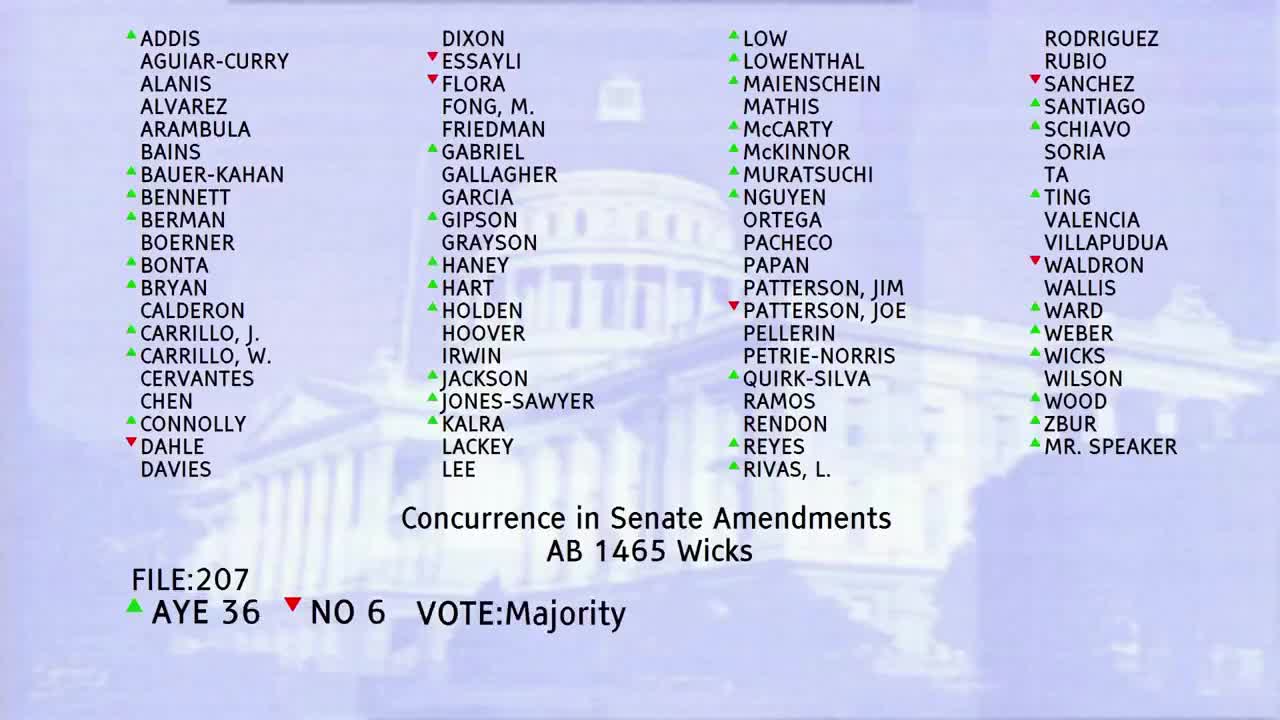 1MIN
Assembly Floor
 2MIN
Senate Standing Committee on Appropriations
 17MIN
Senate Standing Committee on Labor, Public Employment and Retirement
 2MIN
Assembly Floor
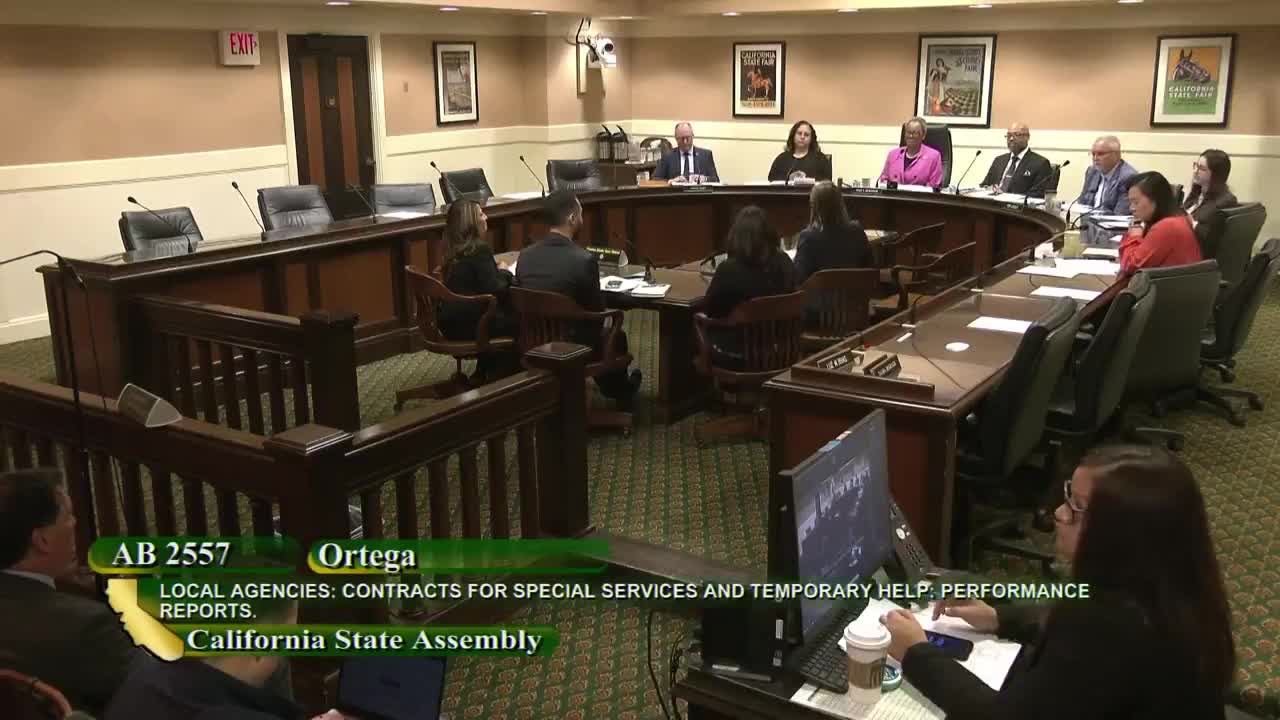 13MIN
Assembly Standing Committee on Public Employment and Retirement
Bill Author

Bill Co-Author(s):