AB 2602: Contracts against public policy: personal or professional services: digital replicas.
- Session Year: 2023-2024
- House: Assembly
- Latest Version Date: 2024-09-17
Current Status:
Passed
(2024-09-17: Chaptered by Secretary of State - Chapter 259, Statutes of 2024.)
Introduced
In Committee
First Chamber
In Committee
Second Chamber
Enacted
Existing law prohibits an employer from requiring an employee or applicant for employment to agree, in writing, to any term or condition that is known by the employer to be illegal. Existing law provides that certain contractual agreements between an employer and employee are against public policy, including specified provisions affecting an employees membership in a labor organization and the protection of state law in employment. Under existing law, enforcement of state labor laws is generally committed to the Division of Labor Standards Enforcement within the Department of Industrial Relations under the direction of the Labor Commissioner.
This bill would provide that a provision in an agreement between an individual and any other person for the performance of personal or professional services is unenforceable only as it relates to a new performance, fixed on or after January 1, 2025, by a digital replica of the individual if the provision meets specified conditions relating to the use of a digital replica of the voice or likeness of an individual in lieu of the work of the individual. The bill would define digital replica to mean a computer-generated, highly realistic electronic representation that is readily identifiable as the voice or visual likeness of an individual that is embodied in a sound recording, image, audiovisual work, or transmission in which the actual individual either did not actually perform or appear, or the actual individual did perform or appear, but the fundamental character of the performance or appearance has been materially altered, except as prescribed.
Existing law prohibits an employer from requiring an employee or applicant for employment to agree, in writing, to any term or condition that is known by the employer to be illegal. Existing law provides that certain contractual agreements between an employer and employee are against public policy, including specified provisions affecting an employees membership in a labor organization and the protection of state law in employment. Under existing law, enforcement of state labor laws is generally committed to the Division of Labor Standards Enforcement within the Department of Industrial Relations under the direction of the Labor Commissioner.
This bill would provide that a provision in an agreement between an individual and any other person for the performance of personal or professional services is unenforceable only as it relates to a new performance, fixed on or after January 1, 2025, by a digital replica of the individual if the provision meets specified conditions relating to the use of a digital replica of the voice or likeness of an individual in lieu of the work of the individual. The bill would define digital replica to mean a digital simulation of the voice or likeness of an individual that so closely resembles the individuals voice or likeness that a layperson would not be able to readily distinguish the digital simulation from the individuals authentic voice or likeness. computer-generated, highly realistic electronic representation that is readily identifiable as the voice or visual likeness of an individual that is embodied in a sound recording, image, audiovisual work, or transmission in which the actual individual either did not actually perform or appear, or the actual individual did perform or appear, but the fundamental character of the performance or appearance has been materially altered, except as prescribed.
Existing law prohibits an employer from requiring an employee or applicant for employment to agree, in writing, to any term or condition that is known by the employer to be illegal. Existing law provides that certain contractual agreements between an employer and employee are against public policy, including specified provisions affecting an employees membership in a labor organization and the protection of state law in employment. Under existing law, enforcement of state labor laws is generally committed to the Division of Labor Standards Enforcement within the Department of Industrial Relations under the direction of the Labor Commissioner.
This bill would provide that a provision in an agreement between an individual and any other person for the performance of personal or professional services is unenforceable only as it relates to a new performance, fixed on or after January 1, 2025, by a digital replica of the individual if the provision meets specified conditions relating to the use of a digital replica of the voice or likeness of an individual in lieu of the work of the individual. The bill would define digital replica to mean a digital simulation of the voice or likeness of an individual that so closely resembles the individuals voice or likeness that a layperson would not be able to readily distinguish the digital simulation from the individuals authentic voice or likeness.
Existing law prohibits an employer from requiring an employee or applicant for employment to agree, in writing, to any term or condition that is known by the employer to be illegal. Existing law provides that certain contractual agreements between an employer and employee are against public policy, including specified provisions affecting an employees membership in a labor organization and the protection of state law in employment. Under existing law, enforcement of state labor laws is generally committed to the Division of Labor Standards Enforcement within the Department of Industrial Relations under the direction of the Labor Commissioner.
This bill would provide that a provision in an agreement between an individual and any other person for the performance of personal or professional services is unenforceable only as it relates to a new performance performance, on or after January 1, 2025, by a digital replica of the individual if the provision meets specified conditions relating to the use of a digital replica of the voice or likeness of an individual in lieu of the work of the individual. The bill would require that an exclusivity provision in an underlying agreement applicable to the creation and use of a digital replica remain in force even if a provision relating to the creation and use of a digital replica is held to be unenforceable under the bill. The bill would define digital replica to mean a computer-generated, electronic representation of the voice or likeness of an individual that is readily identifiable as that individual and fixed in a sound recording or audiovisual work. digital simulation of the voice or likeness of an individual that so closely resembles the individuals voice or likeness that a layperson would not be able to readily distinguish the digital simulation from the individuals authentic voice or likeness.
Existing law prohibits an employer from requiring an employee or applicant for employment to agree, in writing, to any term or condition that is known by the employer to be illegal. Existing law provides that certain contractual agreements between an employer and employee are against public policy, including specified provisions affecting an employees membership in a labor organization and the protection of state law in employment. Under existing law, enforcement of state labor laws is generally committed to the Division of Labor Standards Enforcement within the Department of Industrial Relations, Relations under the direction of the Labor Commissioner.
This bill would provide that a provision in an agreement between an individual and any other person for the performance of personal or professional services is contrary to public policy and deemed unconscionable unenforceable only as it relates to a new performance by a digital replica of the individual if the provision meets specified conditions relating to the use of a digital replica of the voice or likeness of an individual in lieu of the work of the individual. The bill would provide require that it shall apply retroactively. The bill would require any person who is currently under, or has entered into, an agreement with an individual performing personal or professional services containing such a provision, by February 1, 2025, to notify that individual in writing that the provision is unenforceable. an exclusivity provision in an underlying agreement applicable to the creation and use of a digital replica remain in force even if a provision relating to the creation and use of a digital replica is held to be unenforceable under the bill. The bill would define digital replica to mean a computer-generated, electronic representation of the voice or likeness of an individual that is readily identifiable as that individual and fixed in a sound recording or audiovisual work.
Existing law prohibits an employer from requiring an employee or applicant for employment to agree, in writing, to any term or condition that is known by the employer to be illegal. Existing law provides that certain contractual agreements between an employer and employee are against public policy, including specified provisions affecting an employees membership in a labor organization and the protection of state law in employment. Under existing law, enforcement of state labor laws is generally committed to the Division of Labor Standards Enforcement within the Department of Industrial Relations, under the direction of the Labor Commissioner.
This bill would provide that a provision in an agreement between an individual and any other person for the performance of personal or professional services is contrary to public policy and deemed unconscionable if the provision meets specified conditions relating to the use of a digital replica of the voice or likeness of an individual in lieu of the work of the individual or to train a generative artificial intelligence system. individual. The bill would provide that it shall apply retroactively. The bill would require any person who is currently under, or has entered into, an agreement with an individual performing personal or professional services containing such a provision, by February 1, 2025, to notify that individual in writing that the provision is unenforceable.
Existing law prohibits an employer from requiring an employee or applicant for employment to agree, in writing, to any term or condition that is known by the employer to be illegal. Existing law provides that certain contractual agreements between an employer and employee are against public policy, including specified provisions affecting an employees membership in a labor organization and the protection of state law in employment. Under existing law, enforcement of state labor laws is generally committed to the Division of Labor Standards Enforcement within the Department of Industrial Relations, under the direction of the Labor Commissioner.
This bill would provide that a provision in an agreement between an individual and any other person for the performance of personal or professional services is contrary to public policy and deemed unconscionable if the provision meets specified conditions relating to the use of a digital replica of the voice or likeness of an individual in lieu of the work of the individual or to train a generative artificial intelligence system. The bill would provide that it shall apply retroactively. The bill would require any person who is currently under, or has entered into, an agreement with an individual performing personal or professional services containing such a provision, by February 1, 2025, to notify that individual in writing that the provision is unenforceable.
(a)A provision in an agreement between an individual and any other person for the performance of personal or professional services is unenforceable only as it relates to a new performance, fixed on or after January 1, 2025, by a digital replica of the individual if the provision meets all of the following conditions:
(1)The provision allows for the creation and use of a digital replica of the individuals voice or likeness in place of work the individual would otherwise have performed in person.
(2)(A)Except as provided in subparagraph (B), the provision does not include a reasonably specific description of the intended uses of the digital replica.
(B)Failure to include a reasonably specific description of the intended uses of a digital replica does not render the provision unenforceable if the uses are consistent with the terms of the contract for the performance of personal or professional services and the fundamental character of the photography or soundtrack as recorded or performed.
(3)The individual was not represented in any of the following manners:
(A)By legal counsel who negotiated on behalf of the individual licensing the individuals digital replica rights, and the commercial terms are stated clearly and conspicuously in a contract or other writing signed or initialed by the individual.
(B)By a labor union representing workers who do the proposed work, and the terms of their collective bargaining agreement expressly addresses uses of digital replicas.
(b)This section does not affect provisions of a contract other than a provision that falls under subdivision (a) and does not impact, abrogate, or otherwise affect any exclusivity grants contained in, or related to, a provision subject to subdivision (a).
(c)(1)As used in this section, digital replica means a computer-generated, highly realistic electronic representation that is readily identifiable as the voice or visual likeness of an individual that is embodied in a sound recording, image, audiovisual work, or transmission in which the actual individual either did not actually perform or appear, or the actual individual did perform or appear, but the fundamental character of the performance or appearance has been materially altered.
(2)Digital replica does not include the electronic reproduction, use of a sample of one sound recording or audiovisual work into another, remixing, mastering, or digital remastering of a sound recording or audiovisual work authorized by the copyrightholder.
(a)A provision in an agreement between an individual and any other person for the performance of personal or professional services is unenforceable only as it relates to a new performance, fixed on or after January 1, 2025, by a digital replica of the individual if the provision meets all of the following conditions:
(1)The provision allows for the creation and use of a digital replica of the individuals voice or likeness in place of work the individual would otherwise have performed in person.
(2)(A)Except as provided in subparagraph (B), the provision does not include a reasonably specific description of the intended uses of the digital replica.
(B)Failure to include a reasonably specific description of the intended uses of a digital replica does not render the provision unenforceable if the uses are consistent with the terms of the contract for the performance of personal or professional services and the fundamental character of the photography or soundtrack as recorded or performed.
(3)The individual was not represented in any of the following manners:
(A)By legal counsel who negotiated on behalf of the individual licensing the individuals digital replica rights, and the commercial terms are stated clearly and conspicuously in a contract or other writing signed or initialed by the individual.
(B)By a labor union representing workers who do the proposed work, and the terms of their collective bargaining agreement expressly addresses uses of digital replicas.
(b)This section does not affect provisions of a contract other than a provision that falls under subdivision (a) and does not impact, abrogate, or otherwise affect any exclusivity grants contained in, or related to, a provision subject to subdivision (a).
(c)(1)As used in this section, digital replica means a digital simulation of the voice or likeness of an individual that so closely resembles the individuals voice or likeness that a layperson would not be able to readily distinguish the digital simulation from the individuals authentic voice or likeness. computer-generated, highly realistic electronic representation that is readily identifiable as the voice or visual likeness of an individual that is embodied in a sound recording, image, audiovisual work, or transmission in which the actual individual either did not actually perform or appear, or the actual individual did perform or appear, but the fundamental character of the performance or appearance has been materially altered.
(2)Digital replica does not include the electronic reproduction, use of a sample of one sound recording or audiovisual work into another, remixing, mastering, or digital remastering of a sound recording or audiovisual work authorized by the copyrightholder.
(a)A provision in an agreement between an individual and any other person for the performance of personal or professional services is unenforceable only as it relates to a new performance, fixed on or after January 1, 2025, by a digital replica of the individual if the provision meets all of the following conditions:
(1)The provision allows for the creation and use of a digital replica of the individuals voice or likeness in place of work the individual would otherwise have performed in person.
(2)The (A)Except as provided in subparagraph (B), the provision does not include a reasonably specific description of the intended uses of the digital replica.
(B)Failure to include a reasonably specific description of the intended uses of a digital replica does not render the provision unenforceable if the uses are consistent with the terms of the contract for the performance of personal or professional services and the fundamental character of the photography or soundtrack as recorded or performed.
(3)The individual was not represented in either any of the following manners:
(A)By legal counsel who negotiated on behalf of the individual licensing the individuals digital replica rights, and the licensing commercial terms are stated clearly and conspicuously in an employment a contract that is separately signed or initialed by the individual or in a separate writing that is or other writing signed or initialed by the individual.
(B)By a labor union representing workers who do the proposed work, and the terms of their collective bargaining agreement expressly covers addresses uses of digital replicas.
(b)This section does not affect provisions of a contract other than a provision that falls under subdivision (a). (a) and does not impact, abrogate, or otherwise affect any exclusivity grants contained in, or related to, a provision subject to subdivision (a).
(c)As used in this section, digital replica means a digital simulation of the voice or likeness of an individual that so closely resembles the individuals voice or likeness that a layperson would not be able to readily distinguish the digital simulation from the individuals authentic voice or likeness.
(a)A provision in an agreement between an individual and any other person for the performance of personal or professional services is unenforceable only as it relates to a new performance performance, on or after January 1, 2025, by a digital replica of the individual if the provision meets all of the following conditions:
(1)The provision allows for the creation and use of a digital replica of the individuals voice or likeness in place of work the individual would otherwise have performed in person.
(2)The provision does not clearly define and detail all of the proposed include a reasonably specific description of the intended uses of the digital replica.
(3)The individual was not represented in either of the following manners:
(A)By legal counsel who negotiated on behalf of the individual licensing the individuals digital replica rights, and the licensing terms exist in a standalone written agreement. are stated clearly and conspicuously in an employment contract that is separately signed or initialed by the individual or in a separate writing that is signed by the individual.
(B)By a labor union representing workers who do the proposed work, and the terms of their collective bargaining agreement expressly covers uses of digital replicas.
(b)An exclusivity provision in an underlying agreement applicable to the creation and use of a digital replica shall remain in force even if a provision relating to the creation and use of a digital replica is held to be unenforceable under this section.(b)This section does not affect provisions of a contract other than a provision that falls under subdivision (a).
(c)As used in this section, digital replica means a computer-generated, electronic representation of the voice or likeness of an individual that is readily identifiable as that individual and fixed in a sound recording or audiovisual work. digital simulation of the voice or likeness of an individual that so closely resembles the individuals voice or likeness that a layperson would not be able to readily distinguish the digital simulation from the individuals authentic voice or likeness.
(a)A provision in an agreement between an individual and any other person for the performance of personal or professional services is contrary to public policy and is deemed unconscionable and subject to Section 1670.5 of the Civil Code unenforceable only as it relates to a new performance by a digital replica of the individual if the provision meets all of the following conditions:
(1)The provision allows for the creation and use of a digital replica of the individuals voice or likeness in place of work the individual would otherwise have performed in person.
(2)The provision does not clearly define and detail all of the proposed uses of the digital replica.
(3)The individual was not represented in either of the following manners:
(A)Represented by By legal counsel who negotiated on behalf of the individual licensing their the individuals digital replica rights rights, and the licensing terms exist in a standalone written agreement.
(B)Represented by By a labor union representing workers who do the proposed work work, and the terms of their collective bargaining agreement expressly covers uses of digital replicas.
(b)This section shall apply retroactively.(b)An exclusivity provision in an underlying agreement applicable to the creation and use of a digital replica shall remain in force even if a provision relating to the creation and use of a digital replica is held to be unenforceable under this section.
(c)Any person who is currently under, or has entered into, an agreement with an individual performing personal or professional services containing a provision as described in subdivision (a), by February 1, 2025, shall notify that individual in writing that the provision is unenforceable.(c)As used in this section, digital replica means a computer-generated, electronic representation of the voice or likeness of an individual that is readily identifiable as that individual and fixed in a sound recording or audiovisual work.
(a)A provision in an agreement between an individual and any other person for the performance of personal or professional services is contrary to public policy and is deemed unconscionable and subject to Section 1670.5 of the Civil Code if the provision meets all of the following conditions:
(1)The provision allows for the creation and use of a digital replica of the individuals voice or likeness in place of work the individual would otherwise have performed in person or allows for the use of the individuals voice and likeness to train a generative artificial intelligence system. person.
(2)The provision does not clearly define and detail all of the proposed uses of the digital replica or the generative artificial intelligence system. replica.
(3)The individual was not represented in either of the following manners:
(A)Represented by legal counsel who negotiated on behalf of the individual licensing their digital replica rights and the licensing terms exist in a standalone written agreement.
(B)Represented by a labor union representing workers who do the proposed work and the terms of their collective bargaining agreement expressly covers uses of digital replicas and generative artificial intelligence systems. replicas.
(b)This section shall apply retroactively.
(c)Any person who is currently under, or has entered into, an agreement with an individual performing personal or professional services containing a provision as described in subdivision (a), by February 1, 2025, shall notify that individual in writing that the provision is unenforceable.
(a)A provision in an agreement between an individual and any other person for the performance of personal or professional services is contrary to public policy and is deemed unconscionable and subject to Section 1670.5 of the Civil Code if the provision meets all of the following conditions:
(1)The provision allows for the creation and use of a digital replica of the individuals voice or likeness in place of work the individual would otherwise have performed in person or allows for the use of the individuals voice and likeness to train a generative artificial intelligence system.
(2)The provision does not clearly define and detail all of the proposed uses of the digital replica or the generative artificial intelligence system.
(3)The individual was not represented in either of the following manners:
(A)Represented by legal counsel who negotiated on behalf of the individual licensing their digital replica rights and the licensing terms exist in a standalone written agreement.
(B)Represented by a labor union representing workers who do the proposed work and the terms of their collective bargaining agreement expressly covers uses of digital replicas and generative artificial intelligence systems.
(b)This section shall apply retroactively.
(c)Any person who is currently under, or has entered into, an agreement with an individual performing personal or professional services containing a provision as described in subdivision (a), by February 1, 2025, shall notify that individual in writing that the provision is unenforceable.
|
Date
|
Status
|
|---|---|
| Sep 17, 2024 | Chaptered by Secretary of State - Chapter 259, Statutes of 2024. |
| Sep 17, 2024 | Approved by the Governor. |
| Sep 9, 2024 | Enrolled and presented to the Governor at 3:30 p.m. |
| Aug 28, 2024 | Senate amendments concurred in. To Engrossing and Enrolling. (Ayes 73. Noes 0.). |
| Aug 28, 2024 | Assembly Rule 77 suspended. |
| Aug 28, 2024 | In Assembly. Concurrence in Senate amendments pending. May be considered on or after August 30 pursuant to Assembly Rule 77. |
| Aug 27, 2024 | Read third time. Passed. Ordered to the Assembly. (Ayes 36. Noes 1.). |
| Aug 26, 2024 | Read second time. Ordered to third reading. |
| Aug 23, 2024 | Read third time and amended. Ordered to second reading. |
| Aug 19, 2024 | Read second time. Ordered to third reading. |
| Aug 15, 2024 | From committee: Do pass. (Ayes 7. Noes 0.) (August 15). |
| Aug 5, 2024 | In committee: Referred to APPR suspense file. |
| Jul 3, 2024 | From committee: Do pass and re-refer to Com. on APPR. (Ayes 11. Noes 0.) (July 2). Re-referred to Com. on APPR. |
| Jun 19, 2024 | From committee: Do pass and re-refer to Com. on JUD. (Ayes 5. Noes 0.) (June 19). Re-referred to Com. on JUD. |
| Jun 10, 2024 | From committee chair, with author's amendments: Amend, and re-refer to committee. Read second time, amended, and re-referred to Com. on L., P.E. & R. |
| Jun 5, 2024 | Referred to Coms. on L., P.E. & R. and JUD. |
| May 23, 2024 | In Senate. Read first time. To Com. on RLS. for assignment. |
| May 22, 2024 | Read third time. Passed. Ordered to the Senate. (Ayes 62. Noes 0. Page 5493.) |
| May 20, 2024 | Read second time. Ordered to third reading. |
| May 16, 2024 | From committee: Do pass. (Ayes 11. Noes 1.) (May 16). |
| May 8, 2024 | In committee: Set, first hearing. Referred to APPR. suspense file. |
| Apr 29, 2024 | Re-referred to Com. on APPR. |
| Apr 25, 2024 | Read second time and amended. |
| Apr 24, 2024 | From committee: Amend, and do pass as amended and re-refer to Com. on APPR. (Ayes 9. Noes 0.) (April 23). |
| Apr 16, 2024 | Re-referred to Com. on P. & C.P. |
| Apr 15, 2024 | From committee chair, with author's amendments: Amend, and re-refer to Com. on P. & C.P. Read second time and amended. |
| Apr 4, 2024 | From committee: Do pass and re-refer to Com. on P. & C.P. (Ayes 5. Noes 0.) (April 3). Re-referred to Com. on P. & C.P. |
| Apr 2, 2024 | Re-referred to Com. on L. & E. |
| Apr 1, 2024 | From committee chair, with author's amendments: Amend, and re-refer to Com. on L. & E. Read second time and amended. |
| Mar 21, 2024 | Referred to Coms. on L. & E. and P. & C.P. |
| Feb 15, 2024 | From printer. May be heard in committee March 16. |
| Feb 14, 2024 | Read first time. To print. |
|
Date
|
Description
|
Location
|
Votes
|
|
|---|---|---|---|---|
| Aug 28, 2024 | AB 2602 Kalra Concurrence in Senate Amendments | Assembly Floor |
Passed |
|
| Aug 27, 2024 | Assembly 3rd Reading AB2602 Kalra et al. By Smallwood-Cuevas | Senate Floor |
Passed |
|
| Aug 15, 2024 | Do pass | Senate Standing Committee on Appropriations |
Passed |
|
| Aug 5, 2024 | Placed on suspense file | Senate Standing Committee on Appropriations |
Passed |
|
| Jul 2, 2024 | Do pass, but first be re-referred to the Committee on [Appropriations] | Senate Standing Committee on Judiciary |
Passed |
|
| Jun 19, 2024 | Do pass, but first be re-referred to the Committee on [Judiciary] | Senate Standing Committee on Labor, Public Employment and Retirement |
Passed |
|
| May 22, 2024 | AB 2602 Kalra Assembly Third Reading | Assembly Floor |
Passed |
|
| May 16, 2024 | Do pass. | Assembly Standing Committee on Appropriations |
Passed |
|
| Apr 23, 2024 | Do pass as amended and be re-referred to the Committee on [Appropriations] | Assembly Standing Committee on Privacy and Consumer Protection |
Passed |
|
| Apr 3, 2024 | Do pass and be re-referred to the Committee on [Privacy and Consumer Protection] | Assembly Standing Committee on Labor and Employment |
Passed |
This list shows positions taken on this bill by organizations on the date displayed, which is linked to the original source.
Positions by individuals are not included.
|
Organization
|
Position
|
Date
|
|---|---|---|
| Artist Rights Alliance | ** Support | |
| Attorney General Rob Bonta | ** Support | |
| Black Music Action Coalition | ** Support | |
| CalChamber | ** Against | |
| California Democratic Party | ** Support | |
| California Labor Federation | ** Support | |
| Concept Art Association | ** Support | |
| Los Angeles County Democratic Party | ** Support | |
| Motion Picture Association | ** Against | |
| Music Artists Coalition | ** Support | |
| Oakland Privacy | ** Support | |
| Orange County Employees Association | ** Support | |
| Recording Academy | ** Support | |
| Recording Industry Association Of America | ** Support | |
| SAG-AFTRA | ** Support | |
| Songwriters of North America | ** Support | |
| VALLEY INDUSTRY AND COMMERCE ASSOCIATION | ** Against |
CONCURRENCE IN SENATE AMENDMENTS
CSA1 Bill Id:AB 2602
Author:(Kalra, et al.)
As Amended Ver:August 23, 2024
Majority vote
SUMMARY
Provides that a provision in an agreement for the performance of personal or professional services is unenforceable as it relates to a new performance, fixed on or after January 1, 2025, if it:
- contains a provision allowing for the use of a digital replica of an individual's voice or likeness;
- does not include a reasonably specific description of the digital replica's intended uses with limited exception; and
- is not negotiated with legal counsel or by a labor union, as specified.
Senate Amendments
- Make clarifying and technical changes.
- Provide that the failure to include a reasonably specific description of the intended uses of a digital replica does not render the provision unenforceable if the uses are consistent with contract terms for the performance of personal or professional services and the fundamental character of the photography or soundtrack as recorded or performed.
- Provide that the legal counsel provision pertaining to the negotiation of a contract or other writing concerns commercial rather than licensing terms.
- Add that the bill does not impact, abrogate, or otherwise affect any exclusivity grants contained in, or related to, a contract provision subject to the enforceability of a digital replica provision.
- Recast the definition of “digital replica” to mean a computer-generated, highly realistic electronic representation that is readily identifiable as the voice or visual likeness of an individual that is embodied in a sound recording, image, audiovisual work, or transmission in which the actual individual either did not actually perform or appear, or the actual individual did perform or appear, but the fundamental character of the performance or appearance has been materially altered. “Digital replica” does not include the electronic reproduction, use of a sample of one sound recording or audiovisual work into another, remixing, mastering, or digital remastering of a sound recording or audiovisual work authorized by the copyright holder.
COMMENTS
The entertainment industry in the U.S. is becoming increasing reliant on the use of artificial intelligence. Specifically, the practice of creating digital replicas of "extras" to use in streaming content is gaining popularity. For example, the Apple TV series Ted Lasso used visual effects technology to "film groups of extras in one alignment before rearranging them and filming them again, and then cutting and pasting the various groupings to fill all the seats"[1] of a soccer stadium. By using this technique, the show had no need to retain these actors for more than a brief period of time, thus severely limiting the earning potential of these workers.
But the harm to actors and performers caused by "employing" digital replicas is not merely economic. As argued in recent legal scholarship, "the deeply personal nature of misappropriation of likeness sets the replacement of actors by digital replicas apart from other jobs threatened by technology. Digital replicas do more than take actors' jobs: They take their face, their voice, their body, and their movements. The misappropriation of those qualities by digital replicas is much more invasive to actors than other instances of technology taking over jobs, and so it should be approached with greater caution and protections." [2] While opponents of this measure may argue that the bill goes too far in prohibiting digital replication under certain circumstances, one could argue that it is rather addressing the need for a greater protective framework when it comes to replicating the very essence of an individual's humanity.
According to the Author
"Last year, SAG-AFTRA took part in a historic strike, bargaining with major studios on critical topics including wages and the impact of artificial intelligence on the future of workers in the entertainment industry. Artificial intelligence has shown to be capable of reproducing or creating content based on a performer's work, without their permission or compensation. Some contracts in the entertainment industry have included clauses that grant full use of a performer's voice and likeness forever. While the industry explores new opportunities using artificial intelligence, performers must not be exploited or coerced into relinquishing their digital rights.
[This bill] strikes a balance that allows the industry to adapt to technological advancements while also protecting performer's rights to their digital self. This bill will require a performer's informed consent and proper representation in executing a contract for any transfer of rights of that individual's likeness or voice."
The author further states that the bill promotes equity for performers because "AB 2602 will ensure performers entering a contract that would transfer the rights to their likeness or voice have proper representation. Representation can be in the form of an attorney or labor union representative. This will ensure all performers are entering into contracts with full consent and not inadvertently signing away the licensing rights to their digital self in perpetuity. In particular, this bill will protect individuals who are just starting their career and non-union performers who are at the highest risk of exploitation.”
Arguments in Support
The California Labor Federation, co-sponsor of the bill, states, "Current law prohibits the use of an individual's name or likeness for commercial purposes without the individual's consent. However, in contracts with major studios, artists have unintentionally signed agreements authorizing the on-going use of their voice and likeness through digital replication without additional compensation or proper consent. These contract clauses, signed well before the capabilities of AI technology were ever imagined, would have been disguised as standard copyright or advertising language, but now serve as the studio's right to digitally own a performer's image. The lack of explicit legal protections means that artists will continue to unknowingly have their own voices and likenesses used without proper compensation or control over the most personal of possessions—their image.
Artists, especially those new to the industry who do not have access to legal or union representation, are vulnerable to signing away their livelihoods to get a big break. Artists only have one voice and one image, an irreplaceable good. By stripping the likeness or voice from a performer without a fair agreement, studios can essentially "own" the rights of a performer and produce content for the studio's benefit alone.
This phenomenon affects all performers, from up-and-coming talent to established artists. Studios and content producers currently have the unfettered ability to buy and sell the images of performers without having to pay wages, benefits, or any other compensation.
[This bill] addresses these challenges by requiring performers to have union or legal representation before signing contracts that transfer the likeness or voice of a performer to another person or employer. This bill will address the use of AI in the entertainment industry, but the concept can be applied to other industries where technology exploits human skills and products to the benefit of employers, not workers.”
Arguments in Opposition
The Motion Picture Association of America is opposed unless amended and states, "A.B. 2602 would create a method for finding provisions of employment contracts to be unenforceable. For the provision to be found unenforceable, a party would likely bring an action for a declaratory judgment in a California court. The bill adds a new section to the Labor Code, and enforcement may also fall within the Private Attorneys General Act, Labor Code Section 2698 et seq. In both circumstances, A.B. 2602 will increases costs to California's judicial system and burden the state's budget at a time when there is a significant deficit.”
FISCAL COMMENTS
According to the Senate Appropriations Committee:
- The Department of Industrial Relations (DIR) indicates that costs to its Division of Labor Standards Enforcement (DLSE) would be minor and absorbable.
- By providing that certain contract provisions regarding a performance by a digital replica are unenforceable, this bill would result in subsequent use of that digital replica being unauthorized. Current law provides a cause of action for individuals whose likeness is used for unauthorized commercial purposes. Thus, this bill may result in an increased number of civil actions, and could result in potentially significant cost pressures to the courts; the magnitude is unknown (Trial Court Trust Fund (TCTF)). The specific number of new actions that could be filed under the bill also is unknown; however, it generally costs about $1,000 to operate a courtroom for one hour. Courts are not funded on the basis of workload, and increased pressure on TCTF may create a need for increased funding for courts from the General Fund. The enacted 2024-25 budget includes $37 million in ongoing support from the General Fund to continue to backfill TCTF for revenue declines.
VOTES:
ASM LABOR AND EMPLOYMENT: 5-0-2
YES: Ortega, Wendy Carrillo, Kalra, Ward, Zbur
ABS, ABST OR NV: Flora, Alanis
ASM PRIVACY AND CONSUMER PROTECTION: 9-0-2
YES: Joe Patterson, Bryan, Hoover, Irwin, Lowenthal, Ortega, Ward, Wicks, Wilson
ABS, ABST OR NV: Bauer-Kahan, Dixon
ASM APPROPRIATIONS: 11-1-3
YES: Wicks, Arambula, Bryan, Calderon, Wendy Carrillo, Mike Fong, Grayson, Haney, Hart, Pellerin, Villapudua
NO: Dixon
ABS, ABST OR NV: Sanchez, Jim Patterson, Ta
ASSEMBLY FLOOR: 62-0-18
YES: Addis, Aguiar-Curry, Alanis, Alvarez, Arambula, Bains, Bauer-Kahan, Bennett, Berman, Boerner, Bonta, Bryan, Juan Carrillo, Wendy Carrillo, Chen, Connolly, Davies, Flora, Mike Fong, Gabriel, Garcia, Gipson, Grayson, Haney, Hart, Irwin, Jackson, Jones-Sawyer, Kalra, Lee, Low, Lowenthal, Maienschein, McCarty, McKinnor, Muratsuchi, Stephanie Nguyen, Ortega, Pacheco, Papan, Joe Patterson, Pellerin, Petrie-Norris, Quirk-Silva, Ramos, Rendon, Reyes, Rodriguez, Blanca Rubio, Santiago, Schiavo, Soria, Ting, Valencia, Waldron, Ward, Weber, Wicks, Wilson, Wood, Zbur, Robert Rivas
ABS, ABST OR NV: Calderon, Cervantes, Megan Dahle, Dixon, Essayli, Vince Fong, Friedman, Gallagher, Holden, Hoover, Lackey, Mathis, Jim Patterson, Luz Rivas, Sanchez, Ta, Villapudua, Wallis
SENATE FLOOR: 37-1-2
YES: Allen, Alvarado-Gil, Archuleta, Ashby, Atkins, Becker, Blakespear, Bradford, Caballero, Cortese, Dodd, Durazo, Eggman, Glazer, Gonzalez, Hurtado, Jones, Laird, Limón, McGuire, Menjivar, Min, Newman, Niello, Ochoa Bogh, Padilla, Portantino, Roth, Rubio, Seyarto, Skinner, Smallwood-Cuevas, Stern, Umberg, Wahab, Wiener, Wilk
NO: Dahle
ABS, ABST OR NV: Grove, Nguyen
UPDATED
VERSION: August 23, 2024
CONSULTANT: Megan Lane / L. & E. / (916) 319-2091 FN: 0004671
SENATE RULES COMMITTEE Office of Senate Floor Analyses (916) 651-1520 Fax: (916) 327-4478 | AB 2602 |
THIRD READING
Bill No: AB 2602
Author: Kalra (D), Bryan (D) and Friedman (D), et al.
Amended: 8/23/24 in Senate
Vote: 21
SENATE LABOR, PUB. EMP. & RET. COMMITTEE: 5-0, 6/19/24
AYES: Smallwood-Cuevas, Wilk, Cortese, Gonzalez, Laird
SENATE JUDICIARY COMMITTEE: 11-0, 7/2/24
AYES: Umberg, Wilk, Allen, Ashby, Caballero, Durazo, Laird, Niello, Roth, Stern, Wahab
SENATE APPROPRIATIONS COMMITTEE: 7-0, 8/15/24
AYES: Caballero, Jones, Ashby, Becker, Bradford, Seyarto, Wahab
ASSEMBLY FLOOR: 62-0, 5/22/24 - See last page for vote
SUBJECT: Contracts against public policy: personal or professional services: digital replicas
SOURCE: California Labor Federation
SAG-AFTRA
DIGEST:
This bill addresses the unauthorized use of digital replicas by providing that a provision in an agreement between an individual and any other person for the performance of personal or professional services is unenforceable only as it relates to a new performance, fixed on or after January 1, 2025, by a digital replica of the individual if the provision meets all of the specified conditions.
Senate Floor Amendments of 8/23/24 revise the definition of “digital replica” and align it with the definition of the term used in AB 1836 (Bauer-Kahan, 2024).
ANALYSIS:
Existing law:
- Provides that a promise between any employee and employer related to joining or not joining a union is contrary to public policy and unenforceable. (Labor Code §921)
- Provides that any employer who coerces or compels any person to enter into an agreement, written or verbal, not to join a union as a condition of securing employment or continuing employment, is guilty of a misdemeanor. (Labor Code §922)
- Prohibits employers from requiring employees who primarily reside and work in California to agree to adjudicate claims outside of California or forgo the substantive protections of California laws, unless the employee was represented by legal counsel in contracting away such rights. (Labor Code §925)
- Provides a cause of action for individuals whose likeness is used for unauthorized commercial purposes. (Civil Code §3344.)
This bill:
- Provides that a provision in an agreement between an individual and any other person for the performance of personal or professional services is unenforceable only as it relates to a new performance, fixed on or after January 1, 2025, by a digital replica of the individual if the provision meets all of the following conditions:
- The provision allows for the creation and use of a digital replica of the individual’s voice or likeness in place of the work the individual would otherwise have performed in person.
- The provision does not include a reasonably specific description of the intended uses of the digital replica, except as provided below in I.
- Failure to include a reasonably specific description of the intended uses of a digital replica does not render the provision unenforceable if the uses are consistent with the terms of the contract for the performance of personal or professional services and the fundamental character of the photography or soundtrack as recorded or performed.
- The individual was not represented in any of the following manners:
- By legal counsel who negotiated on behalf of the individual licensing the individual’s digital replica rights, and the commercial terms are stated clearly and conspicuously in a contract or other writing signed or initialed by the individual.
- By a labor union representing workers who do the proposed work, and the terms of their collective bargaining agreement expressly address uses of digital replicas.
- Provides that this section only affects provisions of a contract that fall under 1) above.
- Provides that this section does not impact, abrogate, or otherwise affect any exclusivity grants contained in, or related to, a provision that falls under 1) above.
- Defines, for purposes of this section, “digital replica” as a computer-generated, highly realistic electronic representation that is readily identifiable as the voice or visual likeness of an individual that is embodied in a sound recording, image, audiovisual work, or transmission in which the actual individual either did not actually perform or appear, or the actual individual did perform or appear, but the fundamental character of the performance or appearance has been materially altered.
- Specify that “digital replica” does not include the electronic reproduction, use of a sample of one sound recording or audiovisual work into another, remixing, mastering, or digital remastering of a sound recording or audiovisual work authorized by the copyrightholder.
Background
2023 WGA and SAG-AFTRA Strikes. Last summer, Hollywood came to a standstill after both the Writers Guild of America (WGA) and Screen Actors Guild and the American Federation of Television and Radio Artists (SAG-AFTRA) called for strikes. All work in the entertainment industry effectively ground to a halt, with the WGA’s strike beginning on May 2nd and lasting 148 days and SAG-AFTRA’s beginning on July 14th and lasting 118 days. Combined, the two strikes cost the California economy around $6 billion dollars. As negotiations with the Alliance of Motion Picture and Television Producers (AMPTP) dragged on, the union members on strike and employees working in tangentially related industries suffered immensely. Although the specifics of each union’s demands differed, both were in pursuit of broader protections for their members over contract minimums and the restriction of generative AI used for content creation. The dual strikes previewed future AI labor disputes that are sure to arise in the next decade.
WGA AI Contract Provisions. Among other wins, the WGA negotiated an array of regulations for the use of AI on covered projects. The collective bargaining agreement (CBA), ratified on October 9, contains the following:
- AI cannot be used to write or rewrite any scripts or treatments
- Studios are required to disclose if any material given to writers is AI-generated
- The WGA reserves the right to assert that exploitation of writers’ material to train AI is prohibited by the CBA or other law
- A writer can choose to use AI when performing writing services if the company consents and the writer follows any applicable company policies. But the company can’t require the writer to use AI software[1]
SAG-AFTRA AI Contract Provisions. The CBA negotiated by SAG-AFTRA and ratified on December 6th, gives performers substantial control over the creation and specific uses of their digital replicas. The following provisions, among others, are contained in the CBA:
- Defines an “employment based digital replica” as one created in connection with the performer’s employment on a motion picture (i.e. a movie, a TV or streaming show, etc.)
- Defines an “independently created digital replica” as one created without the performer’s participation and used in a motion picture in which they did not work
- Requires performers to offer informed consent for use of all types of digital replicas
- Specifies informed consent must be clear and conspicuous and the performer must be able to sign or initial the contract. Specifies informed consent can only be obtained for specific projects
The AI-related provisions focus on consent and compensation. Actors now have the benefit of a contractual floor to protect them from AI, as well as the option to negotiate stronger protections individually. Had AI not been a sticking point for SAG-AFTRA in contract negotiations, it is likely that lower-profile performers would not have the leverage to refuse studio demands.
Comments
This bill would provide that a provision in an agreement for the performance of personal or professional services is unenforceable, only as it relates to a new performance, fixed on or after January 1, 2025, by a digital replica if the provision contains all of the specified conditions (see “This Bill” section). The conditions in the bill are similar to the conditions SAG-AFTRA negotiated in their CBA. For example, under this bill a provision in an agreement is unenforceable if, among other conditions, the provision fails to include a reasonably specific description of the intended use of the digital replica. SAG-AFTRA requires a reasonably specific description of the intended use of employment based digital replicas.
Related/Prior Legislation
AB 1836 (Bauer-Kahan, 2024) grants a specific cause of action to beneficiaries of deceased “personalities”—individuals whose likeness has commercial value at the time of their death— for unauthorized use of a digital replica of the celebrity in audiovisual works or sound recordings. The bill is pending on the Senate floor.
FISCAL EFFECT: Appropriation: No Fiscal Com.: Yes Local: No
According to the Senate Appropriations Committee:
- The Department of Industrial Relations (DIR) indicates that costs to its Division of Labor Standards Enforcement (DLSE) would be minor and absorbable.
- By providing that certain contract provisions regarding a performance by a digital replica are unenforceable, this bill would result in subsequent use of that digital replica being unauthorized. Current law provides a cause of action for individuals whose likeness is used for unauthorized commercial purposes. Thus, this bill may result in an increased number of civil actions, and could result in potentially significant cost pressures to the courts; the magnitude is unknown (Trial Court Trust Fund (TCTF)). The specific number of new actions that could be filed under the bill also is unknown; however, it generally costs about $1,000 to operate a courtroom for one hour. Courts are not funded on the basis of workload, and increased pressure on TCTF may create a need for increased funding for courts from the General Fund. The enacted 2024-25 budget includes $37 million in ongoing support from the General Fund to continue to backfill TCTF for revenue declines.
SUPPORT: (Verified 8/23/24)
California Labor Federation (co-source)
SAG-AFTRA (co-source)
Attorney General Rob Bonta
Artists Rights Alliance
Black Music Action Coalition
California Democratic Party
Concept Art Association
Los Angeles County Democratic Party
Music Artists Coalition (MAC)
Oakland Privacy
Orange County Employees Association
Recording Academy
Recording Industry Association of America
Songwriters of North America
OPPOSITION: (Verified 8/23/24)
Calchamber
Valley Industry and Commerce Association
ARGUMENTS IN SUPPORT: According to the co-sponsors of this bill, SAG-AFTRA:
“AB 2602 would require informed consent before anyone may create and use a digital replica of an individual's voice or likeness in place of work the individual would otherwise have performed in person.
“SAG-AFTRA has been tracking and studying technologies that allow the digital recreation of performers for many years. These technologies pose direct threats to performers' livelihoods if they are not adequately regulated.
“With the recent explosion in development of this technology, it is very clear that the time is now for policy makers to act. There are too many performer contracts that were entered into years before anyone developed or even imagined this technology, but nonetheless grant overly broad, wholesale transfers of voice and likeness rights.”
ARGUMENTS IN OPPOSITION: According to the Valley Industry and Commerce Association:
“AB 2602 requires that contracts involving digital replicas specify the exact nature and use of the replicas, failing which they are deemed unenforceable. This rigid approach overlooks the dynamic nature of technology and digital content industries. The digital replica technology, essential for various sectors such as entertainment, advertising, and even education, thrives on flexibility and the ability to adapt to rapid changes and demands.
“Moreover, the bill's requirement for explicit descriptions and permissions could lead to excessive litigation, as parties struggle to interpret statutory language against evolving technological uses. Such litigations are not only costly but also deter innovative uses of digital replicas in various professional fields.
“The proposed changes under AB 2602 would also unfairly disadvantage California's tech companies, who will face stricter regulations compared to their national and global competitors. This could discourage tech companies from operating in California, thereby hindering economic growth and technological advancement in the state.”
ASSEMBLY FLOOR: 62-0, 5/22/24
AYES: Addis, Aguiar-Curry, Alanis, Alvarez, Arambula, Bains, Bauer-Kahan, Bennett, Berman, Boerner, Bonta, Bryan, Juan Carrillo, Wendy Carrillo, Chen, Connolly, Davies, Flora, Mike Fong, Gabriel, Garcia, Gipson, Grayson, Haney, Hart, Irwin, Jackson, Jones-Sawyer, Kalra, Lee, Low, Lowenthal, Maienschein, McCarty, McKinnor, Muratsuchi, Stephanie Nguyen, Ortega, Pacheco, Papan, Joe Patterson, Pellerin, Petrie-Norris, Quirk-Silva, Ramos, Rendon, Reyes, Rodriguez, Blanca Rubio, Santiago, Schiavo, Soria, Ting, Valencia, Waldron, Ward, Weber, Wicks, Wilson, Wood, Zbur, Robert Rivas
NO VOTE RECORDED: Calderon, Cervantes, Megan Dahle, Dixon, Essayli, Vince Fong, Friedman, Gallagher, Holden, Hoover, Lackey, Mathis, Jim Patterson, Luz Rivas, Sanchez, Ta, Villapudua, Wallis
Prepared by: Emma Bruce / L., P.E. & R. / (916) 651-1556
8/25/24 13:35:38
**** END ****
“Artificial Intelligence: 2023 MBA,” Writers Guild of America West, May 9, 2024, https://www.wga.org/contracts/know-your-rights/artificial-intelligence ↑
SENATE RULES COMMITTEE Office of Senate Floor Analyses (916) 651-1520 Fax: (916) 327-4478 | AB 2602 |
THIRD READING
Bill No: AB 2602
Author: Kalra (D), Bryan (D) and Friedman (D), et al.
Amended: 6/10/24 in Senate
Vote: 21
SENATE LABOR, PUB. EMP. & RET. COMMITTEE: 5-0, 6/19/24
AYES: Smallwood-Cuevas, Wilk, Cortese, Gonzalez, Laird
SENATE JUDICIARY COMMITTEE: 11-0, 7/2/24
AYES: Umberg, Wilk, Allen, Ashby, Caballero, Durazo, Laird, Niello, Roth, Stern, Wahab
SENATE APPROPRIATIONS COMMITTEE: 7-0, 8/15/24
AYES: Caballero, Jones, Ashby, Becker, Bradford, Seyarto, Wahab
ASSEMBLY FLOOR: 62-0, 5/22/24 - See last page for vote
SUBJECT: Contracts against public policy: personal or professional services: digital replicas
SOURCE: California Labor Federation
SAG-AFTRA
DIGEST:
This bill addresses the unauthorized use of digital replicas by providing that a provision in an agreement between an individual and any other person for the performance of personal or professional services is unenforceable only as it relates to a new performance, fixed on or after January 1, 2025, by a digital replica of the individual if the provision meets all of the specified conditions.
ANALYSIS:
Existing law:
- Provides that a promise between any employee and employer related to joining or not joining a union is contrary to public policy and unenforceable. (Labor Code §921)
- Provides that any employer who coerces or compels any person to enter into an agreement, written or verbal, not to join a union as a condition of securing employment or continuing employment, is guilty of a misdemeanor. (Labor Code §922)
- Prohibits employers from requiring employees who primarily reside and work in California to agree to adjudicate claims outside of California or forgo the substantive protections of California laws, unless the employee was represented by legal counsel in contracting away such rights. (Labor Code §925)
- Provides a cause of action for individuals whose likeness is used for unauthorized commercial purposes. (Civil Code §3344.)
This bill:
- Provides that a provision in an agreement between an individual and any other person for the performance of personal or professional services is unenforceable only as it relates to a new performance, fixed on or after January 1, 2025, by a digital replica of the individual if the provision meets all of the following conditions:
- The provision allows for the creation and use of a digital replica of the individual’s voice or likeness in place of the work the individual would otherwise have performed in person.
- The provision does not include a reasonably specific description of the intended uses of the digital replica, except as provided below in I.
- Failure to include a reasonably specific description of the intended uses of a digital replica does not render the provision unenforceable if the uses are consistent with the terms of the contract for the performance of personal or professional services and the fundamental character of the photography or soundtrack as recorded or performed.
- The individual was not represented in any of the following manners:
- By legal counsel who negotiated on behalf of the individual licensing the individual’s digital replica rights, and the commercial terms are stated clearly and conspicuously in a contract or other writing signed or initialed by the individual.
- By a labor union representing workers who do the proposed work, and the terms of their collective bargaining agreement expressly address uses of digital replicas.
- Provides that this section only affects provisions of a contract that fall under 1) above.
- Provides that this section does not impact, abrogate, or otherwise affect any exclusivity grants contained in, or related to, a provision that falls under 1) above.
- Defines, for purposes of this section, “digital replica” as a digital simulation of the voice or likeness of an individual that so closely resembles the individual’s voice or likeness that a layperson would not be able to readily distinguish the digital simulation from the individual’s authentic voice or likeness.
Background
2023 WGA and SAG-AFTRA Strikes. Last summer, Hollywood came to a standstill after both the WGA and SAG-AFTRA called for strikes. All work in the entertainment industry effectively ground to a halt, with the WGA’s strike beginning on May 2nd and lasting 148 days and SAG-AFTRA’s beginning on July 14th and lasting 118 days. Combined, the two strikes cost the California economy around $6 billion dollars. As negotiations with the Alliance of Motion Picture and Television Producers (AMPTP) dragged on, the union members on strike and employees working in tangentially related industries suffered immensely. Although the specifics of each union’s demands differed, both were in pursuit of broader protections for their members over contract minimums and the restriction of generative AI used for content creation. The dual strikes previewed future AI labor disputes that are sure to arise in the next decade.
WGA AI Contract Provisions.Among other wins, the WGA negotiated an array of regulations for the use of AI on covered projects. The collective bargaining agreement (CBA), ratified on October 9, contains the following:
- AI cannot be used to write or rewrite any scripts or treatments
- Studios are required to disclose if any material given to writers is AI-generated
- The WGA reserves the right to assert that exploitation of writers’ material to train AI is prohibited by the CBA or other law
- A writer can choose to use AI when performing writing services if the company consents and the writer follows any applicable company policies. But the company can’t require the writer to use AI software[1]
SAG-AFTRA AI Contract Provisions. The CBA negotiated by SAG-AFTRA and ratified on December 6th, gives performers substantial control over the creation and specific uses of their digital replicas. The following provisions, among others, are contained in the CBA:
- Defines an “employment based digital replica” as one created in connection with the performer’s employment on a motion picture (i.e. a movie, a TV or streaming show, etc.)
- Defines an “independently created digital replica” as one created without the performer’s participation and used in a motion picture in which they did not work
- Requires performers to offer informed consent for use of all types of digital replicas
- Specifies informed consent must be clear and conspicuous and the performer must be able to sign or initial the contract. Specifies informed consent can only be obtained for specific projects
The AI-related provisions focus on consent and compensation. Actors now have the benefit of a contractual floor to protect them from AI, as well as the option to negotiate stronger protections individually. Had AI not been a sticking point for SAG-AFTRA in contract negotiations, it is likely that lower-profile performers would not have the leverage to refuse studio demands.
Comments
This bill would provide that a provision in an agreement for the performance of personal or professional services is unenforceable, only as it relates to a new performance, fixed on or after January 1, 2025, by a digital replica if the provision contains all of the specified conditions (see “This Bill” section). The conditions in the bill are similar to the conditions SAG-AFTRA negotiated in their CBA. For example, under this bill a provision in an agreement is unenforceable if, among other conditions, the provision fails to include a reasonably specific description of the intended use of the digital replica. SAG-AFTRA requires a reasonably specific description of the intended use of employment based digital replicas.
Related/Prior Legislation
AB 1836 (Bauer-Kahan, 2024) would grant a specific cause of action to beneficiaries of deceased “personalities”—individuals whose likeness has commercial value at the time of their death— for unauthorized use of a digital replica of the celebrity in audiovisual works or sound recordings. The bill is pending on the Senate floor.
FISCAL EFFECT: Appropriation: No Fiscal Com.: Yes Local: No
According to the Senate Appropriations Committee,
- The Department of Industrial Relations (DIR) indicates that costs to its Division of Labor Standards Enforcement (DLSE) would be minor and absorbable.
- By providing that certain contract provisions regarding a performance by a digital replica are unenforceable, this bill would result in subsequent use of that digital replica being unauthorized. Current law provides a cause of action for individuals whose likeness is used for unauthorized commercial purposes. Thus, this bill may result in an increased number of civil actions, and could result in potentially significant cost pressures to the courts; the magnitude is unknown (Trial Court Trust Fund (TCTF)). The specific number of new actions that could be filed under the bill also is unknown; however, it generally costs about $1,000 to operate a courtroom for one hour. Courts are not funded on the basis of workload, and increased pressure on TCTF may create a need for increased funding for courts from the General Fund. The enacted 2024-25 budget includes $37 million in ongoing support from the General Fund to continue to backfill TCTF for revenue declines
SUPPORT: (Verified 8/15/24)
California Labor Federation (co-source)
SAG-AFTRA (co-source)
Artists Rights Alliance (ARA)
Attorney General, Rob Bonta
Black Music Action Coalition
California Democratic Party
Concept Art Association
Los Angeles County Democratic Party
Music Artists Coalition (MAC)
Oakland Privacy
Orange County Employees Association
Recording Academy
Recording Industry Association of America
Songwriters of North America
OPPOSITION: (Verified 8/15/24)
Calchamber
Valley Industry and Commerce Association (VICA)
ARGUMENTS IN SUPPORT:
According to the co-sponsors of the measure, SAG-AFTRA:
“AB 2602 would require informed consent before anyone may create and use a digital replica of an individual's voice or likeness in place of work the individual would otherwise have performed in person.
SAG-AFTRA has been tracking and studying technologies that allow the digital recreation of performers for many years. These technologies pose direct threats to performers' livelihoods if they are not adequately regulated.
With the recent explosion in development of this technology, it is very clear that the time is now for policy makers to act. There are too many performer contracts that were entered into years before anyone developed or even imagined this technology, but nonetheless grant overly broad, wholesale transfers of voice and likeness rights.”
ARGUMENTS IN OPPOSITION:
According to the Valley Industry and Commerce Association:
“AB 2602 requires that contracts involving digital replicas specify the exact nature and use of the replicas, failing which they are deemed unenforceable. This rigid approach overlooks the dynamic nature of technology and digital content industries. The digital replica technology, essential for various sectors such as entertainment, advertising, and even education, thrives on flexibility and the ability to adapt to rapid changes and demands.
Moreover, the bill's requirement for explicit descriptions and permissions could lead to excessive litigation, as parties struggle to interpret statutory language against evolving technological uses. Such litigations are not only costly but also deter innovative uses of digital replicas in various professional fields.
The proposed changes under AB 2602 would also unfairly disadvantage California's tech companies, who will face stricter regulations compared to their national and global competitors. This could discourage tech companies from operating in California, thereby hindering economic growth and technological advancement in the state.”
ASSEMBLY FLOOR: 62-0, 5/22/24
AYES: Addis, Aguiar-Curry, Alanis, Alvarez, Arambula, Bains, Bauer-Kahan, Bennett, Berman, Boerner, Bonta, Bryan, Juan Carrillo, Wendy Carrillo, Chen, Connolly, Davies, Flora, Mike Fong, Gabriel, Garcia, Gipson, Grayson, Haney, Hart, Irwin, Jackson, Jones-Sawyer, Kalra, Lee, Low, Lowenthal, Maienschein, McCarty, McKinnor, Muratsuchi, Stephanie Nguyen, Ortega, Pacheco, Papan, Joe Patterson, Pellerin, Petrie-Norris, Quirk-Silva, Ramos, Rendon, Reyes, Rodriguez, Blanca Rubio, Santiago, Schiavo, Soria, Ting, Valencia, Waldron, Ward, Weber, Wicks, Wilson, Wood, Zbur, Robert Rivas
NO VOTE RECORDED: Calderon, Cervantes, Megan Dahle, Dixon, Essayli, Vince Fong, Friedman, Gallagher, Holden, Hoover, Lackey, Mathis, Jim Patterson, Luz Rivas, Sanchez, Ta, Villapudua, Wallis
Prepared by: Emma Bruce / L., P.E. & R. / (916) 651-1556
8/18/24 9:19:19
**** END ****
“Artificial Intelligence: 2023 MBA,” Writers Guild of America West, May 9, 2024, https://www.wga.org/contracts/know-your-rights/artificial-intelligence ↑
SENATE COMMITTEE ON
Senator Anna Caballero, Chair
2023 - 2024 Regular Session
AB 2602 (Kalra) - Contracts against public policy: personal or professional services: digital replicas
Version: | Policy Vote: |
Urgency: | Mandate: |
Hearing Date: | Consultant: |
Bill Summary:
AB 2602 would provide that a provision in an agreement for the performance of personal or professional services that contains language allowing for the use of a digital replica of an individual’s voice or likeness is unenforceable if (1) it does not include a reasonably specific description of the intended uses, and (2) the individual is not represented by legal counsel or by a labor union, as specified.
Fiscal Impact:
- The Department of Industrial Relations (DIR) indicates that costs to its Division of Labor Standards Enforcement (DLSE) would be minor and absorbable.
- By providing that certain contract provisions regarding a performance by a digital replica are unenforceable, this bill would result in subsequent use of that digital replica being unauthorized. Current law provides a cause of action for individuals whose likeness is used for unauthorized commercial purposes. Thus, this bill may result in an increased number of civil actions, and could result in potentially significant cost pressures to the courts; the magnitude is unknown (Trial Court Trust Fund (TCTF)). The specific number of new actions that could be filed under the bill also is unknown; however, it generally costs about $1,000 to operate a courtroom for one hour. Courts are not funded on the basis of workload, and increased pressure on TCTF may create a need for increased funding for courts from the General Fund. The enacted 2024-25 budget includes $37 million in ongoing support from the General Fund to continue to backfill TCTF for revenue declines.
Background:
Artificial intelligence (AI) is often characterized as computers or machines that are capable of simulating human intelligence and problem-solving capabilities. A central tenet of the Hollywood writers’ and actors’ strikes in 2023 was the growing use of AI in the industry. Given the capabilities of generative AI to produce realistic digital replicas of human personalities, concerns have grown that the industry will increasingly rely on these digital replicas, rather than on human performances. Additionally, actors reportedly sign away the rights to use these digital replicas without full knowledge of the terms or consequences.
Proposed Law:
This bill would do the following:
- Provide that a provision in an agreement between an individual and any other person for the performance of personal or professional services is unenforceable only as it relates to a new performance, fixed on or after January 1, 2025, by a digital replica of the individual if the provision meets all of the following:
- The provision allows for the creation and use of a digital replica of the individual’s voice or likeness in place of work the individual would otherwise have performed in person.
- The provision does not include a reasonably specific description of the intended uses of the digital replica. However, failure to include this does not render the provision unenforceable if the uses are consistent with the terms of the contract and the fundamental character of the photography or soundtrack as recorded or performed.
- The individual was not represented in any of the following manners:
- By legal counsel who negotiated on behalf of the individual licensing the individual’s digital replica rights, and the commercial terms are stated clearly and conspicuously in a contract or other writing signed or initialed by the individual.
- By a labor union representing workers who do the proposed work, and the terms of their collective bargaining agreement expressly addresses uses of digital replicas.
- Clarify that it does not affect provisions of a contract other than a provision identified above and does not impact, abrogate, or otherwise affect any exclusivity grants contained in, or related to, such a provision.
- Define “digital replica” as a digital simulation of the voice or likeness of an individual that so closely resembles the individual’s voice or likeness that a layperson would not be able to readily distinguish the digital simulation from the individual’s authentic voice or likeness.
Related Legislation:
- SB 970 (Ashby) would ensure, among other things, that media manipulated or generated by artificial intelligence technology is incorporated into the right of publicity law and criminal false impersonation statutes. The bill was held under submission on the Suspense File of this Committee.
- AB 1836 (Bauer-Kahan) would prohibit a person from producing, distributing, or making available the digital replica of a deceased personality’s voice or likeness in an expressive audiovisual work or sound recording without prior consent, except as provided. The bill is currently pending in this Committee.
Staff Comments:
The $37 million in General Fund support for TCTF in 2024-25 is down sharply (over 50 percent) from previous years. The comparative figure was $74 million in 2023-24, $72 million in 2022-23, and $84 million in 2021-22.
-- END --
Senator Thomas Umberg, Chair
2023-2024 Regular Session
Bill No: AB 2602 (Author:Kalra)
Version: June 10, 2024
Hearing Date: July 2, 2024
Fiscal: Yes
Urgency: No
Consultant: CK
SUBJECT
Contracts against public policy: personal or professional services: digital replicas
DIGEST
This bill provides that a provision in an agreement for the performance of personal or professional services that contains a provision allowing for the use of a digital replica of an individual’s voice or likeness is unenforceable if it does not include a reasonably specific description of the intended uses and the individual is not represented by legal counsel or by a labor union, as specified.
EXECUTIVE SUMMARY
Artificial intelligence (AI) is often described as computers or machines that are capable of simulating human intelligence and problem-solving capabilities. At the center of last year’s historic writers’ and actors’ strikes was the growing use of AI in the industry. Given the transformative capabilities of generative artificial intelligence to produce realistic digital replicas of these personalities, concerns have grown that the industry will increasingly rely on these digital replicas, rather than on human performances. More startlingly is the issue of actors signing away the rights to use these digital replicas without fully appreciating the terms or consequences.
This bill makes unenforceable provisions in a contract that allow for the creation and use of a digital replica of the individual’s voice or likeness in place of work the individual would otherwise have performed if the intended uses of the digital replica are not properly described and where the individual was not represented by legal counsel or a labor union representative.
The bill is sponsored by SAG-AFTRA. It is supported by various organizations, including the Recording Industry Association of America and Oakland Privacy. No timely opposition was received by the Committee. It passed out of the Senate Labor, Public Employment and Retirement Committee on a vote of 5 to 0.
PROPOSED CHANGES TO THE LAW
Existing law:
- Provides that a promise between any employee and prospective employer related to joining or not joining a union is contrary to public policy and unenforceable. (Lab. Code § 922.)
- Prohibits, with regard to claims arising in California, employers from requiring employees who primarily reside and work in California to adjudicate claims outside of California or forgo the substantive protections of California laws, unless the employee was represented by legal counsel in contracting away such rights. (Lab. Code § 925.)
- Provides a cause of action for individuals against any person who knowingly uses another’s name, voice, signature, photograph, or likeness, in any manner, on or in products, merchandise, or goods, or for purposes of advertising or selling, or soliciting purchases of, products, merchandise, goods or services, without such person’s prior consent, or, in the case of a minor, the prior consent of his parent or legal guardian, except as provided. (Civ. Code § 3344.)
This bill:
- Provides that a provision in an agreement between an individual and any other person for the performance of personal or professional services is unenforceable only as it relates to a new performance, fixed on or after January 1, 2025, by a digital replica of the individual if the provision meets all of the following conditions:
- The provision allows for the creation and use of a digital replica of the individual’s voice or likeness in place of work the individual would otherwise have performed in person.
- The provision does not include a reasonably specific description of the intended uses of the digital replica. However, failure to include this does not render the provision unenforceable if the uses are consistent with the terms of the contract and the fundamental character of the photography or soundtrack as recorded or performed.
- The individual was not represented in any of the following manners:
- By legal counsel who negotiated on behalf of the individual licensing the individual’s digital replica rights, and the commercial terms are stated clearly and conspicuously in a contract or other writing signed or initialed by the individual.
- By a labor union representing workers who do the proposed work, and the terms of their collective bargaining agreement expressly addresses uses of digital replicas.
- Clarifies that it does not affect provisions of a contract other than a provision identified above and does not impact, abrogate, or otherwise affect any exclusivity grants contained in, or related to, such a provision.
- Defines “digital replica” as a digital simulation of the voice or likeness of an individual that so closely resembles the individual’s voice or likeness that a layperson would not be able to readily distinguish the digital simulation from the individual’s authentic voice or likeness.
COMMENTS
- Updating the law to address “digital replicas”
This bill seeks to address the use of “digital replicas,” which it defines as a digital simulation of the voice or likeness of an individual that so closely resembles the individual’s voice or likeness that a layperson would not be able to readily distinguish the digital simulation from the individual’s authentic voice or likeness.
Digital replicas, in some form, have been around for a while but the technology has been rapidly advancing:
Such scenarios can sound like science fiction, but “performances” by the past selves of aged or even deceased actors have helped carry movies like 2016’s “Rogue One: A Star Wars Story.” Aided by motion capture recorded on a different actor, Peter Cushing, who died in 1994, reprised his role as Grand Moff Tarkin from the original 1977 “Star Wars” film. (His estate gave permission.)
“Digital humans have been part of the visual effects process for quite a while now — about 20 years,” said Paul Franklin, a visual effects supervisor at DNEG.[1]
The concern from the artistic community is that the terms of using such digital replicas need to be fairly negotiated:
Innovations in digital technology and artificial intelligence have transformed the increasingly sophisticated world of visual effects, which can ever more convincingly draw from, replicate and morph flesh-and-blood performers into virtual avatars. Those advancements have thrust the issue toward the top of the grievances cited in the weekslong strike by the actors’ union.
SAG-AFTRA, the union representing more than 150,000 television and movie actors, fears that a proposal from Hollywood studios calling for performers to consent to use of their digital replicas at “initial employment” could result in its members’ voice intonations, likenesses and bodily movements being scanned and used in different contexts without extra compensation.[2]
This bill, building off the negotiated settlement of the strikes discussed above, targets provisions for the performance of services that allow for the use of digital replicas in place of in-person performances. The bill makes such provisions unenforceable when the individual subject to the contract has not be adequately represented by either legal counsel or a labor representative and the relevant provision fails to include a reasonably specific description of the intended uses of the digital replica, except as provided. The bill makes clear that this only affects the offending provision.
- Stakeholder positions
According to the author:
Last year, SAG-AFTRA took part in a historic strike, bargaining with major studios on critical topics including the impact of artificial intelligence on the future of workers in the entertainment industry. Artificial intelligence has shown to be capable of reproducing or creating content based on a performer's work, without their permission or compensation. Some contracts in the entertainment industry have included clauses that grant full use of a performer's voice and likeness forever. While the industry explores new opportunities using artificial intelligence, performers must not be exploited or coerced into relinquishing their digital rights.
AB 2602 strikes a balance that allows the industry to adapt to technological advancements while also protecting performer’s rights to their digital self. This bill will require a performer’s informed consent and proper representation in executing a contract for any transfer of rights of that individual’s likeness or voice.
Writing in support, SAG-AFTRA, the sponsor of the bill, states:
Protection of a performer’s digital voice and likeness is a critical issue for SAG-AFTRA. It is crucial that performers—and all individuals—control whether and how their digital self is exploited. If they enter into an agreement, it must be with informed consent. This is critical to ensure they can continue to make a living.
SUPPORT
SAG-AFTRA (sponsor)
Concept Art Association
Los Angeles County Democratic Party
Oakland Privacy
Recording Industry Association of America
OPPOSITION
None received
RELATED LEGISLATION
Pending Legislation:
SB 970 (Ashby, 2024) ensures, among other things, that media manipulated or generated by artificial intelligence technology is incorporated into the right of publicity law and criminal false impersonation statutes. SB 970 was held in the Senate Appropriations Committee.
AB 1836 (Bauer-Kahan, 2024) prohibits a person from producing, distributing, or making available the digital replica of a deceased personality’s voice or likeness in an expressive audiovisual work or sound recording without prior consent, except as provided. AB 1836 is currently in this Committee.
Prior Legislation: None known.
PRIOR VOTES:
Senate Labor, Public Employment and Retirement Committee (Ayes 5, Noes 0)
Assembly Floor (Ayes 62, Noes 0)
Assembly Appropriations Committee (Ayes 11, Noes 1)
Assembly Privacy and Consumer Protection Committee (Ayes 9, Noes 0)
Assembly Labor and Employment Committee (Ayes 5, Noes 0)
**************
Marc Tracy, Digital Replicas, a Fear of Striking Actors, Already Fill Screens (August 4, 2023) The New York Times, https://www.nytimes.com/2023/08/04/arts/television/actors-strike-digital-replicas.html. All internet citations are current as of June 27, 2024. ↑
Ibid. ↑
SENATE COMMITTEE ON LABOR, PUBLIC EMPLOYMENT AND RETIREMENT
Senator Lola Smallwood-Cuevas, Chair
2023 - 2024 Regular
Bill No: AB 2602 Hearing Date: June 19, 2024
Author: | Kalra | ||
Version: | June 10, 2024 | ||
Urgency: | No | Fiscal: | Yes |
Consultant: | Emma Bruce | ||
SUBJECT: Contracts against public policy: personal or professional services: digital replicas
KEY ISSUE
This bill addresses the unauthorized use of digital replicas by providing that a provision in an agreement between an individual and any other person for the performance of personal or professional services is unenforceable only as it relates to a new performance, fixed on or after January 1, 2025, by a digital replica of the individual if the provision meets all of the specified conditions.
ANALYSIS
Existing law:
- Provides that a promise between any employee and employer related to joining or not joining a union is contrary to public policy and unenforceable. (Labor Code §921)
- Provides that any employer who coerces or compels any person to enter into an agreement, written or verbal, not to join a union as a condition of securing employment or continuing employment, is guilty of a misdemeanor. (Labor Code §922)
- Prohibits employers from requiring employees who primarily reside and work in California to agree to adjudicate claims outside of California or forgo the substantive protections of California laws, unless the employee was represented by legal counsel in contracting away such rights. (Labor Code §925)
- Provides a cause of action for individuals whose likeness is used for unauthorized commercial purposes. (Civil Code §3344.)
This bill:
- Provides that a provision in an agreement between an individual and any other person for the performance of personal or professional services is unenforceable only as it relates to a new performance, fixed on or after January 1, 2025, by a digital replica of the individual if the provision meets all of the following conditions:
- The provision allows for the creation and use of a digital replica of the individual’s voice or likeness in place of the work the individual would otherwise have performed in person.
- The provision does not include a reasonably specific description of the intended uses of the digital replica, except as provided below in i.
- Failure to include a reasonably specific description of the intended uses of a digital replica does not render the provision unenforceable if the uses are consistent with the terms of the contract for the performance of personal or professional services and the fundamental character of the photography or soundtrack as recorded or performed.
- The individual was not represented in any of the following manners:
- By legal counsel who negotiated on behalf of the individual licensing the individual’s digital replica rights, and the commercial terms are stated clearly and conspicuously in a contract or other writing signed or initialed by the individual.
- By a labor union representing workers who do the proposed work, and the terms of their collective bargaining agreement expressly address uses of digital replicas.
- Provides that this section only affects provisions of a contract that fall under 1) above.
- Provides that this section does not impact, abrogate, or otherwise affect any exclusivity grants contained in, or related to, a provision that falls under 1) above.
- Defines, for purposes of this section, “digital replica” as a digital simulation of the voice or likeness of an individual that so closely resembles the individual’s voice or likeness that a layperson would not be able to readily distinguish the digital simulation from the individual’s authentic voice or likeness.
COMMENTS
1. 2023 WGA and SAG-AFTRA Strikes:
Last summer, Hollywood came to a standstill after both the WGA and SAG-AFTRA called for strikes. All work in the entertainment industry effectively ground to a halt, with the WGA’s strike beginning on May 2nd and lasting 148 days and SAG-AFTRA’s beginning on July 14th and lasting 118 days. Combined, the two strikes cost the California economy around $6 billion dollars. As negotiations with the Alliance of Motion Picture and Television Producers (AMPTP) dragged on, the union members on strike and employees working in tangentially related industries suffered immensely. Although the specifics of each union’s demands differed, both were in pursuit of broader protections for their members over contract minimums and the restriction of generative AI used for content creation. The dual strikes previewed future AI labor disputes that are sure to arise in the next decade.
WGA AI Contract Provisions
Among other wins, the WGA negotiated an array of regulations for the use of AI on covered projects. The collective bargaining agreement (CBA), ratified on October 9, contains the following:
- AI cannot be used to write or rewrite any scripts or treatments
- Studios are required to disclose if any material given to writers is AI-generated
- The WGA reserves the right to assert that exploitation of writers’ material to train AI is prohibited by the CBA or other law
- A writer can choose to use AI when performing writing services if the company consents and the writer follows any applicable company policies. But the company can’t require the writer to use AI software[1]
Beyond ensuring that AI cannot replace writers outright, the CBA also curbs the more likely scenario that writers will be required to adapt or edit something written by AI for less pay than producing an original work.
SAG-AFTRA AI Contract Provisions
The CBA negotiated by SAG-AFTRA and ratified on December 6th, gives performers substantial control over the creation and specific uses of their digital replicas. The following provisions are contained in the CBA:
- Defines an “employment based digital replica” as one created in connection with the performer’s employment on a motion picture (i.e. a movie, a TV or streaming show, etc.)
- Defines an “independently created digital replica” as one created without the performer’s participation and used in a motion picture in which they did not work
- Requires performers to offer informed consent for use of all types of digital replicas
- Specifies informed consent must be clear and conspicuous and the performer must be able to sign or initial the contract. Specifies informed consent can only be obtained for specific projects
- Requires the following compensation for use of an employment based digital replica:
- When used in the same motion picture the performer is employed on, compensation is based on how much the performer would have made had they worked in person
- Entitles performers to residuals if their replica remain in a motion picture and if they would have received the residuals had they done the work in person.
- Requires compensation for the use of an independently created digital replica to be bargained for, but does not set a minimum compensation[2]
The AI-related provisions focus on consent and compensation. Actors now have the benefit of a contractual floor to protect them from AI, as well as the option to negotiate stronger protections individually. Had AI not been a sticking point for SAG-AFTRA in contract negotiations, it is likely that lower-profile performers would not have the leverage to refuse studio demands.
2. Generative Artificial Intelligence (AI)
As companies make AI available for widespread use it is clear that the way we work, study, and live is bound to change. Generative AI allows anyone to create new, original illustrations and text by providing a few instructions to a program. Although AI is still rudimentary and its outputs are not always accurate or appropriate, industries have started to adopt the tool. The exact threat AI poses to workers is still unclear, but there is significant concern that many will lose their jobs without the ability to re-skill fast enough. At the same time, other workers whose tasks overlap with the current capabilities of AI are embracing the technology to do away with menial and tedious work.
The AI industry is almost entirely unregulated, which makes the protections that the WGA and SAG-AFTRA negotiated especially significant. The two contracts have the potential to be precedent setting for industries across the world. Until the federal government or state governments take action, it is up to workers to negotiate the terms surrounding AI’s use in the workplace.
3. Comments:
This bill would provide that a provision in an agreement for the performance of personal or professional services is unenforceable, only as it relates to a new performance, fixed on or after January 1, 2025, by a digital replica if the provision contains all of the specified conditions (see “This Bill” section). The conditions in the bill are similar to the conditions SAG-AFTRA negotiated in their CBA. For example, under this bill a provision in an agreement is unenforceable if, among other conditions, the provision fails to include a reasonably specific description of the intended use of the digital replica. SAG-AFTRA requires a reasonably specific description of the intended use of employment based digital replicas.
4. Need for this bill?
According to the author:
“Existing law prohibits using an individual’s name, likeness, or other recognizable traits of their persona for commercial use without that individual’s consent. California is one of several states that have enshrined this right of publicity to ensure individuals have the autonomy to control the use of their persona in the interest of their livelihood and intellectual property.
However, amidst the rise of the digital age and artificial intelligence (AI), performers across the industry have inadvertently been signing away the rights to their digital selves through clauses buried in contracts that can look like standard copyright or advertising language. Under these agreements, individuals unknowingly authorize studios to use their voice and likeness (both actual and digitally-generated) in all media, by all current and future technologies, in perpetuity, and with no additional compensation. Non-union performers, who may not have an agent negotiating on their behalf, are especially at risk of this exploitative practice.”
5. Proponent Arguments:
According to the co-sponsors of the measure, SAG-AFTRA:
“AB 2602 would require informed consent before anyone may create and use a digital replica of an individual's voice or likeness in place of work the individual would otherwise have performed in person.
SAG-AFTRA has been tracking and studying technologies that allow the digital recreation of performers for many years. These technologies pose direct threats to performers' livelihoods if they are not adequately regulated.
With the recent explosion in development of this technology, it is very clear that the time is now for policy makers to act. There are too many performer contracts that were entered into years before anyone developed or even imagined this technology, but nonetheless grant overly broad, wholesale transfers of voice and likeness rights.”
6. Opponent Arguments:
The Motion Picture Association is opposed to the measure, arguing:
“At the outset, MPA acknowledges and understands the concern around the use of digital replicas and ensuring that performers have the opportunity to consent to such uses. However, the bill goes well beyond protecting performers’ ability to control use of their image, likeness, and voice and will pose many obstacles for motion picture, television, and streaming productions.”
In regards to requiring legal representation:
“AB 2602 contrasts with California's policy of NOT requiring legal representation for many transactions.
In California, a person can engage in important life-altering transactions, such as buying or selling a home, writing a valid will, or adopting a child, all without legal representation. AB 2602, however, imposes hurdles to licensing a digital replica beyond those for those other important legal events.
Moreover, in the motion picture, television and streaming business, individuals entering into an agreement for the performance of personal or professional services may be represented by a talent agent or manager, rather than a lawyer.”
7. Dual Referral:
The Senate Rules Committee referred this bill to the Senate Labor, Public Employment and Retirement Committee and the Senate Judiciary Committee.
8. Prior Legislation:
AB 1836 (Bauer-Kahan, 2024) grants a specific cause of action to beneficiaries of deceased “personalities”—individuals whose likeness has commercial value at the time of their death— for unauthorized use of a digital replica of the celebrity in audiovisual works or sound recordings. The bill is pending in the Senate Judiciary Committee.
AB 3050 (Low, 2024) would provide that an AI-generating entity or individual that creates a deepfake using a person’s name, voice, signature, photograph, or likeness, in any manner, without permission from the person being depicted in the deepfake, is liable for the actual damages suffered by the person or persons as a result of the unauthorized use. The bill is pending in the Assembly Privacy and Consumer Protection Committee.
SB 970 (Ashby, 2024) would provide that, for purposes of Civil Code Section 3344, a synthetic voice or likeness that a reasonable person would believe to be a genuine voice or likeness, is deemed to be the voice or likeness of the person depicted. The bill was held in Senate Appropriations Committee under submission.
AB 459 (Kalra, 2023) was gut-and-amended at the end of last session to be substantially similar to this bill. The bill is pending in Senate Rules.
AB 437 (Kalra, 2022) would have prohibited, except under prescribed circumstances and for contracts entered into on or after January 1, 2023, a contract for the personal or professional services of an employee working as an actor in the production of a scripted episodic series, as specified, from prohibiting that employee from working for multiple employers. This bill died on the Senate inactive file.
SUPPORT
California Labor Federation (Co-sponsor)
SAG-AFTRA (Co-sponsor)
Artists Rights Alliance (ARA)
Black Music Action Coalition
California Democratic Party
Concept Art Association
Los Angeles County Democratic Party
Music Artists Coalition (MAC)
Oakland Privacy
Orange County Employees Association
Recording Academy
Recording Industry Association of America
Songwriters of North America
OPPOSITION
California Chamber of Commerce
Motion Picture Association
-- END --
“Artificial Intelligence: 2023 MBA,” Writers Guild of America West, May 9, 2024, https://www.wga.org/contracts/know-your-rights/artificial-intelligence ↑
“2023 TV/Theatrical Contracts,” SAG-AFTRA, https://www.sagaftra.org/contracts-industry-resources/contracts/2023-tvtheatrical-contracts ↑
ASSEMBLY THIRD READING
ATR Bill Id:AB 2602
Author:(Kalra, et al.)
As Amended Ver:April 25, 2024
Majority vote
SUMMARY
Provides that a provision in an agreement for the performance of personal or professional services is unenforceable, on or after January 1, 2025, if it: 1) contains a provision allowing for the use of a digital replica of an individual's voice or likeness; 2) does not include a reasonably specific description of the digital replica's intended uses; and 3) is not negotiated with legal representation or by a labor union, as specified.
Major Provisions
- States that a provision in an agreement between an individual and any other person for the performance of personal or professional services is unenforceable only as it relates to a new performance, on or after January 1, 2025, by a digital replica of the individual if the provision meets all of the following conditions:
- The provision allows for the creation and use of a digital replica of the individual's voice or likeness in place of work the individual would otherwise have performed in person.
- The provision does not include a reasonably specific description of the intended uses of the digital replica.
- The individual was not represented in either of the following manners:
- By legal counsel who negotiated on behalf of the individual licensing their digital replica rights, and the licensing terms are stated clearly and conspicuously by an employment contract that is separately signed or initialed by the individual or in a separate writing that is signed by the individual.
- By a labor union representing workers who do the proposed work, and the terms of their collective bargaining agreement expressly covers uses of digital replicas.
- Provides that this section does not affect provisions of a contract other than a provision that falls under 1) above.
- Defines digital replica to mean a digital simulation of the voice or likeness of an individual that so closely resembles the individual's voice or likeness that a layperson would not be able to readily distinguish the digital simulation from the individual's authentic voice or likeness.
COMMENTS
The entertainment industry in the U.S. is becoming increasing reliant on the use of artificial intelligence. Specifically, the practice of creating digital replicas of "extras" to use in streaming content is gaining popularity. For example, the Apple TV series Ted Lasso used visual effects technology to "film groups of extras in one alignment before rearranging them and filming them again, and then cutting and pasting the various groupings to fill all the seats"[1] of a soccer stadium. By using this technique, the show had no need to retain these actors for more than a brief period of time, thus severely limiting the earning potential of these workers.
But the harm to actors and performers caused by "employing" digital replicas is not merely economic. As argued in recent legal scholarship, "the deeply personal nature of misappropriation of likeness sets the replacement of actors by digital replicas apart from other jobs threatened by technology. Digital replicas do more than take actors' jobs: They take their face, their voice, their body, and their movements. The misappropriation of those qualities by digital replicas is much more invasive to actors than other instances of technology taking over jobs, and so it should be approached with greater caution and protections." [2] While opponents of this measure may argue that the bill goes too far in prohibiting digital replication under certain circumstances, one could argue that it is rather addressing the need for a greater protective framework when it comes to replicating the very essence of an individual's humanity.
According to the Author
"Last year, SAG-AFTRA took part in a historic strike, bargaining with major studios on critical topics including wages and the impact of artificial intelligence on the future of workers in the entertainment industry. Artificial intelligence has shown to be capable of reproducing or creating content based on a performer's work, without their permission or compensation. Some contracts in the entertainment industry have included clauses that grant full use of a performer's voice and likeness forever. While the industry explores new opportunities using artificial intelligence, performers must not be exploited or coerced into relinquishing their digital rights.
[This bill] strikes a balance that allows the industry to adapt to technological advancements while also protecting performer's rights to their digital self. This bill will require a performer's informed consent and proper representation in executing a contract for any transfer of rights of that individual's likeness or voice."
The author further states that the bill promotes equity for performers because "AB 2602 will ensure performers entering a contract that would transfer the rights to their likeness or voice have proper representation. Representation can be in the form of an attorney or labor union representative. This will ensure all performers are entering into contracts with full consent and not inadvertently signing away the licensing rights to their digital self in perpetuity. In particular, this bill will protect individuals who are just starting their career and non-union performers who are at the highest risk of exploitation."
Arguments in Support
The California Labor Federation, co-sponsor of the bill, states, "Current law prohibits the use of an individual's name or likeness for commercial purposes without the individual's consent. However, in contracts with major studios, artists have unintentionally signed agreements authorizing the on-going use of their voice and likeness through digital replication without additional compensation or proper consent. These contract clauses, signed well before the capabilities of AI technology were ever imagined, would have been disguised as standard copyright or advertising language, but now serve as the studio's right to digitally own a performer's image. The lack of explicit legal protections means that artists will continue to unknowingly have their own voices and likenesses used without proper compensation or control over the most personal of possessions—their image.
Artists, especially those new to the industry who do not have access to legal or union representation, are vulnerable to signing away their livelihoods to get a big break. Artists only have one voice and one image, an irreplaceable good. By stripping the likeness or voice from a performer without a fair agreement, studios can essentially "own" the rights of a performer and produce content for the studio's benefit alone.
This phenomenon affects all performers, from up-and-coming talent to established artists. Studios and content producers currently have the unfettered ability to buy and sell the images of performers without having to pay wages, benefits, or any other compensation.
[This bill] addresses these challenges by requiring performers to have union or legal representation before signing contracts that transfer the likeness or voice of a performer to another person or employer. This bill will address the use of AI in the entertainment industry, but the concept can be applied to other industries where technology exploits human skills and products to the benefit of employers, not workers."
Arguments in Opposition
The Motion Picture Association of America is opposed unless amended and states, "A.B. 2602 would create a method for finding provisions of employment contracts to be unenforceable. For the provision to be found unenforceable, a party would likely bring an action for a declaratory judgment in a California court. The bill adds a new section to the Labor Code, and enforcement may also fall within the Private Attorneys General Act, Labor Code Section 2698 et seq. In both circumstances, A.B. 2602 will increases costs to California's judicial system and burden the state's budget at a time when there is a significant deficit."
FISCAL COMMENTS
According to the Assembly Appropriations Committee,
- The Department of Justice (DOJ) reports no impact from this bill, as the DOJ does not anticipate engaging in this type of litigation.
- Costs of an unknown, but likely absorbable, amount to the Division of Labor Standards Enforcement.
- By providing that certain contract provisions regarding a performance by a digital replica are unenforceable, this bill would result in subsequent use of that digital replica being unauthorized. Existing law provides a cause of action for individuals whose likeness is used for unauthorized commercial purposes. Thus, this bill may result in an increased number of civil actions, resulting in potentially significant cost pressures of an unknown amount to the courts (Trial Court Trust Fund (TCTF)). It is unclear how many new actions may be filed statewide, but one hour of court time is estimated to cost $1,000 in workload. Although courts are not funded on the basis of workload, increased pressure on staff and the TCTF may create a need for increased court funding from the General Fund (GF) to perform existing duties. The Governor's proposed 2024-25 state budget includes $83.1 million ongoing GF to backfill declining TCTF revenue.
According to the Legislative Analyst's Office, the GF faces a structural deficit in the tens of billions of dollars over the next several fiscal years.
VOTES
ASM LABOR AND EMPLOYMENT: 5-0-2
YES: Ortega, Wendy Carrillo, Kalra, Ward, Zbur
ABS, ABST OR NV: Flora, Alanis
ASM PRIVACY AND CONSUMER PROTECTION: 9-0-2
YES: Joe Patterson, Bryan, Hoover, Irwin, Lowenthal, Ortega, Ward, Wicks, Wilson
ABS, ABST OR NV: Bauer-Kahan, Dixon
ASM APPROPRIATIONS: 11-1-3
YES: Wicks, Arambula, Bryan, Calderon, Wendy Carrillo, Mike Fong, Grayson, Haney, Hart, Pellerin, Villapudua
NO: Dixon
ABS, ABST OR NV: Sanchez, Jim Patterson, Ta
UPDATED
VERSION: April 25, 2024
CONSULTANT: Megan Lane / L. & E. / (916) 319-2091 FN: 0003256
Date of Hearing: May 8, 2024
ASSEMBLY COMMITTEE ON APPROPRIATIONS
Buffy Wicks, Chair
ABPCA Bill Id:AB 2602
Author:(Kalra) – As Amended Ver:April 25, 2024
Policy Committee: | Labor and Employment | Vote: | 5 - 0 |
Privacy and Consumer Protection | 9 - 0 | ||
|
|
Urgency: No State Mandated Local Program: No Reimbursable: No
SUMMARY:
This bill provides that certain contract provisions relating to a new performance by a digital replica of an individual are unenforceable.
Specifically, this bill deems unenforceable certain provisions in an agreement between an individual and another person for the performance of personal or professional services, as it relates to a new performance, on or after January 1, 2025, by a digital replica of the individual. The provision must meet the following conditions:
- The provision allows for the creation and use of a digital replica of the individual’s voice or likeness in place of work the individual otherwise would have performed in person.
- The provision does not include a reasonably specific description of the intended uses of the digital replica.
- The individual was not represented by legal counsel who negotiated on behalf of the individual in licensing their digital replica rights in an employment contract with clear and conspicuous licensing terms, nor by a labor union representing workers with a collective bargaining agreement (CBA) expressly covering uses of digital replicas.
FISCAL EFFECT:
- The Department of Justice (DOJ) reports no impact from this bill, as the DOJ does not anticipate engaging in this type of litigation.
- Costs of an unknown, but likely absorbable, amount to the Division of Labor Standards Enforcement.
- By providing that certain contract provisions regarding a performance by a digital replica are unenforceable, this bill would result in subsequent use of that digital replica being unauthorized. Existing law provides a cause of action for individuals whose likeness is used for unauthorized commercial purposes. Thus, this bill may result in an increased number of civil actions, resulting in potentially significant cost pressures of an unknown amount to the courts (Trial Court Trust Fund (TCTF)). It is unclear how many new actions may be filed statewide, but one hour of court time is estimated to cost $1,000 in workload. Although courts are not funded on the basis of workload, increased pressure on staff and the TCTF may create a need for increased court funding from the General Fund (GF) to perform existing duties. The Governor’s proposed 2024-25 state budget includes $83.1 million ongoing GF to backfill declining TCTF revenue.
According to the Legislative Analyst’s Office, the GF faces a structural deficit in the tens of billions of dollars over the next several fiscal years.
COMMENTS:
- Purpose. According to the author:
Artificial intelligence [(AI)] has shown to be capable of reproducing or creating content based on a performer’s work, without their permission or compensation. Some contracts in the entertainment industry have included clauses that grant full use of a performer’s voice and likeness forever. While the industry explores new opportunities using [AI], performers must not be exploited or coerced into relinquishing their digital rights.
- Support and Opposition. This bill is co-sponsored by the California Labor Federation and SAG-AFTRA, with SAG-AFTRA arguing, “It is crucial that performers – and all individuals – control whether and how their digital self is exploited. If they enter into an agreement, it must be with informed consent. This is critical to ensure they can continue to make a living.” This bill is also supported by other artist organizations and Oakland Privacy.
This bill is opposed by the Motion Picture Association (MPA), unless further amended to “clarify the scope of the bill.” MPA argues this bill “would impose new obligations on employers that conflict with the provisions of the [SAG-AFTRA CBA]” and “contrasts with California’s policy of NOT requiring legal representation for many transactions.”
- Digital Replicas in the Entertainment Industry. Due to transformative advancements in AI, digital replicas, which are computer-generated reproductions of an individual’s likeness, voice intonations, and bodily movements, can now be used to create entirely new “performances” in lieu of human actors and musicians. For example, the Apple TV series “Ted Lasso” used visual effects technology to film groups of extras in one alignment before rearranging and filming the extras again, in order to cut and paste the images to fill all the seats in a soccer stadium. By using this technique, the show had no need to retain actors for more than brief period of time and can reuse the images for future episodes, thus limiting the earning potential of these workers.
Performers across the entertainment industry may inadvertently sign away the rights to their digital selves if clauses to use their likeness in such a manner are included in contracts and made to look like standard copyright or advertising language. Non-union performers, who may not have an agent negotiating on their behalf, are especially at risk for such exploitation. This bill deems unenforceable contract provisions governing digital replicas if the provisions a) allow the replica to replace an in-person performance, b) do not sufficiently delineate uses of the replica, and c) were entered into by the performer without proper representation.
- Related Legislation. AB 1836 (Bauer-Kahan) grants a specific cause of action for unauthorized use of a personality’s digital replica to beneficiaries of a deceased personality, whose likeness had commercial value at the time of death. AB 1836 is pending hearing in this committee.
AB 459 (Kalra) was substantially similar to this bill, after being amended in the Senate to include such contents. AB 459 is pending referral by the Senate Rules Committee.
Analysis Prepared by: Irene Ho / APPR. / (916) 319-2081
Date of Hearing: April 23, 2024
ASSEMBLY COMMITTEE ON PRIVACY AND CONSUMER PROTECTION
Rebecca Bauer-Kahan, Chair
ABPCA Bill Id:AB 2602 (
Author:Kalra) – As Amended Ver:April 15, 2024
AS PROPOSED TO BE AMENDED
SUBJECT: Contracts against public policy: personal or professional services: digital replicas
SYNOPSIS
Owing to transformative advancements in artificial intelligence, digital replicas—computer-generated reproductions of an individual’s likeness, voice intonations, and bodily movements—can now be used to create entirely new “performances” in lieu of human actors and musicians. The author argues that performers across the entertainment industry have been inadvertently signing away the rights to their digital selves through clauses buried in contracts that can look like standard copyright or advertising language. Under these agreements, individuals unknowingly authorize studios to use their voice and likeness, in the phrasing of one example, “in any and all media and by all technologies and processes now known or hereafter developed, throughout the universe and in perpetuity.” Non-union performers, who may not have an agent negotiating on their behalf, are especially at risk of this exploitative practice.
This bill, which is sponsored by the Screen Actors Guild-American Federation of Television and Radio Artists (SAG-AFTRA) and the California Labor Federation, is intended to ensure performers fully understand the stakes before transferring the rights over their digital likenesses. The bill does so by deeming unenforceable contractual provisions governing digital replicas (1) that do not sufficiently delineate the uses of the digital replica, and (2) for which the performer lacked proper representation. Such representation may be in the form of an attorney or labor union representative.
The bill is supported by a coalition of organizations representing artists, as well as by Oakland Privacy. Chamber of Commerce opposes a prior version of the bill, and Motion Picture Association (MPA) takes an oppose-unless-amended position. Many of MPA’s requested amendments are adopted in the proposed Committee amendments.
The bill passed the Labor Committee by a vote of 5-0.
SUMMARY: Deems unenforceable a contractual provision governing new performances involving a digital replica, unless the provision is sufficiently specific as to the uses of the digital replica and the performer was represented during contract negotiations. Specifically, this bill:
- Deems unenforceable a provision in an agreement between an individual and any other person for the performance of personal or professional services as it relates to a new performance by a digital replica if both of the following apply:
- The provision does not clearly define and detail all of the proposed uses of the digital replica.
- The individual was not represented in either of the following manners:
- By a legal counsel who negotiated on behalf of the individual licensing the individual’s digital replica rights, and the licensing terms existing in a standalone written agreement.
- By a labor union representing workers who do the proposed work, and the terms of their collective bargaining agreement expressly covers uses of digital replicas.
- Provides that an exclusivity provision in an underlying agreement applicable to the creation and use of a digital replica remains in force even if a provision relating to the creation and use of a digital replica is held to be unenforceable under the bill.
- Defines “digital replica” as a computer-generated, electronic representation of the voice or likeness of an individual that is readily identifiable as that individual and fixed in a sound recording or audiovisual work.
EXISTING LAW:
- Provides that a promise between any employee and prospective employer related to joining or not joining a union is contrary to public policy and unenforceable. (Lab. Code § 922.)
- Prohibits, with regard to claims arising in California, employers from requiring employees who primarily reside and work in California to adjudicate claims outside of California or forgo the substantive protections of California laws, unless the employee was represented by legal counsel in contracting away such rights. (Lab. Code § 925.)
- Provides a cause of action for individuals whose likeness is used for unauthorized commercial purposes. (Civ. Code § 3344.)
FISCAL EFFECT: As currently in print, this bill is keyed fiscal.
COMMENTS:
1) Digital replicas and the entertainment industry. Despite having been dead for 64 years, James Dean was cast in a movie in 2019 using a digital replica: a computer-generated avatar of an individual’s likeness—their face, body, voice, movement; indeed, their very identity—that appears authentic and can be manipulated to move in life-like fashion. “In effect, digital replicas enable moviemakers to use existing stills, footage, and data scans of an actor to make it appear as though an actor gave a performance in a movie that the actor never actually gave. In the past, the technology has been used to finish movies when an actor dies before filming is complete. As the technology has advanced, however, it has become capable of creating entirely new performances in movies that actors had no active role in making.”[1]
Examples abound. Star Wars: The Rise of Skywalker repurposed unused footage of Carrie Fisher from The Return of Jedi, with Fisher’s daughter serving as the body stand-in for the scene.[2] The show Ted Lasso used a visual effects technology to “[t]o pack three seasons’ worth of English soccer stadiums with exasperated or exhilarated crowds.”[3] A song created with artificial intelligence to replicate the voices of performers Drake and The Weeknd went viral on social media.[4]
Concerns regarding the use of artificial intelligence in the entertainment industry played a major role in the 2023 strike by writers and performers that brought Hollywood to a standstill. One commenter described the issue as follows:
The actors’ demands include protections against digital replicas, pushing back against indications that production companies do not take their concerns seriously. They worry that their current contracts, as well as the larger legal landscape, are insufficient to protect actors against abuse of digital replicas. Artists are also concerned with the bigger picture; they worry that rapid implementation of artificial intelligence without thoughtful safeguards will not only harm actors but also kill the intangible thing that makes art art.[5]
After months of negotiations with the Alliance of Motion Picture and Television Producers, SAG-AFTRA ratified an agreement that, among other things, “establishes detailed informed consent and compensation guardrails for the use of AI, hair and makeup equity, meaningful protections for the casting process, sexual harassment prevention protections and more.”[6] With regard to artificial intelligence, the agreement governs various uses of digital replication and generally requires that the performer’s “clear and conspicuous” consent to use the digital replica be contained in a separate writing, along with a “reasonably specific description of the intended use.”[7]
2) Author’s statement. The author writes:
Last year, SAG-AFTRA took part in a historic strike, bargaining with major studios on critical topics including the impact of artificial intelligence on the future of workers in the entertainment industry. Artificial intelligence has shown to be capable of reproducing or creating content based on a performer's work, without their permission or compensation. Some contracts in the entertainment industry have included clauses that grant full use of a performer's voice and likeness forever. While the industry explores new opportunities using artificial intelligence, performers must not be exploited or coerced into relinquishing their digital rights.
AB 2602 strikes a balance that allows the industry to adapt to technological advancements while also protecting performer’s rights to their digital self. This bill will require a performer’s informed consent and proper representation in executing a contract for any transfer of rights of that individual’s likeness or voice.
3) Right of Publicity. The use of a person’s name or image without consent for commercial purposes has long been recognized as an actionable invasion of privacy under common law principles. In 1974, California Civil Code section 3344 codified the right to publicity for living personalities, imposing liability on any person who knowingly uses another’s name, voice, signature, photograph, or likeness, in any manner, on or in products, merchandise, or goods, or for purposes of advertising or selling, or soliciting purchases of, products, merchandise, goods or services, without prior consent.[8]
In Zacchini v. Scripps-Howard Broad, Co. (1977) 433 U.S. 562, the United States Supreme Court framed the right in terms of economic rather than privacy interests:
The State’s interest in permitting a “right of publicity” is in protecting the proprietary interest of the individual in his act in part to encourage such entertainment. The State’s interest is closely analogous to the goals of patent and copyright law, focusing on the right of the individual to reap the reward of his endeavors and having little to do with protecting feelings or reputation? “The rationale for [protecting the right of publicity] is the straight-forward one of preventing unjust enrichment by the theft of good will. No social purpose is served by having the defendant get free some aspect of the plaintiff that would have market value and for which he would normally pay. [Citation.]”[9]
4) Public policy versus private contracts. The author’s office provides the following example of the type of contractual provision that this bill would render unenforceable:
Player consents to the use of Player’s name, voice (actual or simulated), likeness (actual or simulated) and biography, with no additional compensation to Player, in any and all media and by all technologies and processes now known or hereafter developed, throughout the universe and in perpetuity…[10]
Under this bill, such all-encompassing provisions would be deemed unenforceable as to the rights over the digital replica. Additionally, even more specific provisions would be unenforceable unless the performer was represented by counsel or a union representative in the course of negotiations. As such, this bill implicates the constitutional prohibition on impairment of contracts. In 2020, the California Supreme Court summarized the analytical framework for state infringement on private contracts as follows:
“Both the United States and California Constitutions contain provisions that prohibit the enactment of laws effecting a ‘substantial impairment’ of contracts, including contracts of employment.” This constraint applies to public contracts, as well as those between private parties. As suggested by the reference to a substantial impairment, not every legislative impairment of contractual relations triggers the contract clause. “[T]he prohibition is not an absolute one and is not to be read with literal exactness like a mathematical formula.”
[. . .] As a threshold question, the court must determine “‘whether the state law has, in fact, operated as a substantial impairment of a contractual relationship.’ [Citations.] The severity of the impairment is said to increase the level of scrutiny to which the legislation will be subjected.” In making this determination, “the Court has considered the extent to which the law undermines the contractual bargain, interferes with a party’s reasonable expectations, and prevents the party from safeguarding or reinstating his rights.”
If the state law is found to create a “substantial” impairment, “the inquiry turns to the means and ends of the legislation.” To justify the legislation, the state “must have a significant and legitimate public purpose behind the regulation, [citation], such as the remedying of a broad and general social or economic problem. [Citation.] … The requirement of a legitimate public purpose guarantees that the State is exercising its police power, rather than providing a benefit to special interests.” If the legislation survives that scrutiny, “the next inquiry is whether the adjustment of ‘the rights and responsibilities of contracting parties [is based] upon reasonable conditions and [is] of a character appropriate to the public purpose justifying [the legislation’s] adoption.’”[11]
Arguably, the bill does not operate as a substantial impairment of a contractual relationship. It leaves intact existing contracts except for narrow circumstances involving the use of digital replicas in which the intended uses were not clearly delineated and the performer lacked representation. Depending on the specifics of the contract, it is likely that in many such cases the parties did not reasonably expect that a generic clause relating to the use of a person’s “simulated” likeness could soon render the performer obsolete.
Even if it is assumed that the bill substantially impairs vested rights, the bill is likely to withstand the lenient “legitimate public purpose” test set forth above. As Professor Erwin Chemerinsky writes, “virtually all laws have been found to meet this deferential scrutiny.”[12] Here, it can be argued that the bill serves a legitimate public purpose by resetting bargaining rights that have been upended by a sudden, dramatic transformation in technology. This targeted adjustment of rights and responsibilities, where the performer was unlikely to have understood the professionally devastating consequences of signing away the licensing rights to their digital self in perpetuity, appears to be appropriate to the bill’s public purpose of ensuring that performers make fully informed decisions regarding the use of their likeness.
Summing this issue up, Oakland Privacy, writing in support, states:
It makes sense to us to protect people’s literal physical attributes for a while longer until we all have a better understanding of what we are selling and for what purposes. While creative work like songs are deeply personal and not easily replaced if stolen from their creator, our physical likenesses are even more intimate and less replaceable, so it makes sense to be cautious and assist people who had little to no understanding of what they signed on to. Assembly Bill 2602 provides the opportunity for the re-negotiation of contracts with the appropriate guidance to protect each party’s rights, which may not have been present when the original contract was signed.
5) Amendments respond to opposition concerns. Chamber of Commerce opposes the bill; however, their letter focuses on the express retroactivity provisions in the prior iteration of the bill. These provisions created confusion over whether the bill affects performances that occur before its effective date. In view of such concerns, the author recently amended the bill to apply to “new” performances. As reflected below, the author has agreed to further clarify this by adding phrase “on or after January 1, 2025.”
Taking an oppose-unless-amended position, MPA claims “AB 2602 is an effort to legislate a subject of collective bargaining and to override the recently concluded collective bargaining agreement.” They request a number of clarifications, most of which are reflected in the amendments below. Some of these changes reflect the wording of the collective bargaining agreement, such as the requirement that the performer’s “clear and conspicuous” consent to use the digital replica be contained in a separate writing, as well as the requirement that the agreement must contain a “reasonably specific description of the intended use” of the digital replica. MPA also requests that the definition of “digital replica” match that of AB 1836 (Bauer-Kahan), which this Committee recently passed. The amendments are as follows:
927. (a) A provision in an agreement between an individual and any other person for the performance of personal or professional services is unenforceable only as it relates to a new performance, on or after January 1, 2025, by a digital replica of the individual if the provision meets all of the following conditions:
(1) The provision allows for the creation and use of a digital replica of the individual’s voice or likeness in place of work the individual would otherwise have performed in person.
(2) The provision does not clearly define and detail all of the proposed include a reasonably specific description of the intended uses of the digital replica.
(3) The individual was not represented in either of the following manners:
(A) By legal counsel who negotiated on behalf of the individual licensing the individual’s digital replica rights, and the licensing terms are stated clearly and conspicuously in an employment contract that is separately signed or initialed by the individual or in a separate writing that is signed by the individual exist in a standalone written agreement.
(B) By a labor union representing workers who do the proposed work, and the terms of their collective bargaining agreement expressly covers uses of digital replicas.
(b) An exclusivity provision in an underlying agreement applicable to the creation and use of a digital replica shall remain in force even if a provision relating to the creation and use of a digital replica is held to be unenforceable under this section. This section does not affect provisions of a contract other than a provision that falls under subdivision (a).
(c) As used in this section, “digital replica” means a computer-generated, electronic representation of the voice or likeness of an individual that is readily identifiable as that individual and fixed in a sound recording or audiovisual work. “Digital replica” means a digital simulation of the voice or likeness of an individual that so closely resembles the individual’s voice or likeness that a layperson would not be able to readily distinguish the digital simulation from the individual’s authentic voice or likeness.
5) Related legislation. AB 1836 (Bauer-Kahan, 2024) grants a specific cause of action to beneficiaries of deceased “personalities”—individuals whose likeness has commercial value at the time of their death— for unauthorized use of a digital replica of the celebrity in audiovisual works or sound recordings. The bill is pending in the Assembly Judiciary Committee.
AB 3050 (Low, 2024) would provide that an AI-generating entity or individual that creates a deepfake using a person’s name, voice, signature, photograph, or likeness, in any manner, without permission from the person being depicted in the deepfake, is liable for the actual damages suffered by the person or persons as a result of the unauthorized use. The bill is pending in this Committee.
AB 459 (Kalra, 2023) was gut-and-amended at the end of last session to be substantially similar to this bill. The bill is pending in Senate Rules.
SB 970 (Ashby, 2024) would provide that, for purposes of Civil Code Section 3344, a synthetic voice or likeness that a reasonable person would believe to be a genuine voice or likeness, is deemed to be the voice or likeness of the person depicted. The bill is pending in the Senate Public Safety Committee.
ARGUMENTS IN SUPPORT
The California Labor Federation, a co-sponsor of the bill, writes:
Current law prohibits the use of an individual’s name or likeness for commercial purposes without the individual’s consent. However, in contracts with major studios, artists have unintentionally signed agreements authorizing the on-going use of their voice and likeness through digital replication without additional compensation or proper consent. These contract clauses, signed well before the capabilities of AI technology were ever imagined, would have been disguised as standard copyright or advertising language, but now serve as the studio’s right to digitally own a performer’s image. The lack of explicit legal protections means that artists will continue to unknowingly have their own voices and likenesses used without proper compensation or control over the most personal of possessions—their image.
Artists, especially those new to the industry who do not have access to legal or union representation, are vulnerable to signing away their livelihoods to get a big break. Artists only have one voice and one image, an irreplaceable good. By stripping the likeness or voice from a performer without a fair agreement, studios can essentially “own” the rights of a performer and produce content for the studio’s benefit alone.
This phenomenon affects all performers, from up-and-coming talent to established artists. Studios and content producers currently have the unfettered ability to buy and sell the images of performers without having to pay wages, benefits, or any other compensation.
AB 2602 addresses these challenges by requiring performers to have union or legal representation before signing contracts that transfer the likeness or voice of a performer to another person or employer. This bill will address the use of AI in the entertainment industry, but the concept can be applied to other industries where technology exploits human skills and products to the benefit of employers, not workers.
It is critical that workers and their unions have a voice in the development and use of AI and other technologies in the workplace. Otherwise, technology will rapidly worsen the exploitation of workers and the elimination of jobs. California performers are some of the best in the world and should have the protections they deserve in the digital age. AB 2602 ensures this right is enshrined in state law.
REGISTERED SUPPORT / OPPOSITION:
Support
California Labor Federation, Afl-cio (co-sponsor)
SAG-AFTRA (co-sponsor)
Artists Rights Alliance (ARA)
Black Music Action Coalition
Music Artists Coalition (MAC)
Oakland Privacy
Songwriters of North America
Opposition
CalChamber
Oppose Unless Amended
Motion Picture Association
Analysis Prepared by: Josh Tosney / P. & C.P. / (916) 319-2200
Alexandra Curren, Note, Digital Replicas: Harm Caused by Actors’ Digital Twins and Hope Provided by the Right of Publicity (2023) 102 Tex. L. Rev. 155, 159. ↑
Langmann, “How J.J. Abrams Pulled Off Carrie Fisher’s CGI Flashback in Star Wars: The Rise of Skywalker” (Jan. 8, 2020) Esquire, https://www.esquire.com/entertainment/movies/a30429072/was-carrie-fisher-cgi-in-star-wars-the-rise-of-skywalker/. ↑
Tracy, “Digital Replicas, a Fear of Striking Actors, Already Fill Screens” (Aug. 4, 2023) New York Times, https://www.nytimes.com/2023/08/04/arts/television/actors-strike-digital-replicas.html. ↑
Savage, “AI-generated Drake and The Weeknd song goes viral” (Apr. 17, 2023) BBC, https://www.bbc.com/news/entertainment-arts-65298834. ↑
Digital Replicas, supra, at p. 161. ↑
Lawler, “Hollywood’s actors vote to make their new deal official—the strikes are really over” (Dec. 5, 2023) The Verge, https://www.theverge.com/2023/12/5/23990186/hollywoods-actors-vote-to-make-their-new-deal-official-the-strikes-are-really-over. ↑
SAG-AFRTRA, “TV/Theatrical Contracts 2023,” https://www.sagaftra.org/files/sa_documents/TV-Theatrical_23_Summary_Agreement_Final.pdf. ↑
Ch. 1595, Stats. 1971. ↑
Id. at p. 573. ↑
Scheiber and Koblin, “Will a Chatbot Write the Next ‘Succession’?” (Apr. 29, 2023) New York Times, https://www.nytimes.com/2023/04/29/business/media/writers-guild-hollywood-ai-chatgpt.html. ↑
Alameda County Deputy Sheriff's Assn. v. Alameda County Employee’s Retirement Assn. (2020) 9 Cal.5th 1032, 1074-1075, italics in original. ↑
Chemerinsky, “Constitutional Law: Principles and Policies” (7th ed.), p. 704. ↑
Date of Hearing: April 3, 2024
ASSEMBLY COMMITTEE ON LABOR AND EMPLOYMENT
Liz Ortega, Chair
ABPCA Bill Id:AB 2602 (
Author:Kalra) – As Amended Ver:April 1, 2024
SUBJECT: Contracts against public policy: personal or professional services: digital replicas
SUMMARY: Provides that a provision in an agreement for the performance of personal or professional services is unenforceable if it: 1) contains a provision allowing for the use of a digital replica of an individual’s voice or likeness; 2) does not clearly define and detail all of the proposed uses; and 3) is not negotiated with legal representation or by a labor union, as specified. Specifically, this bill:
- States that a provision in an agreement between an individual and any other person for the performance of personal or professional services is contrary to public policy and is deemed unconscionable and subject to a court’s refusal to enforce it if the provision meets all of the following conditions:
- The provision allows for the creation and use of a digital replica of the individual’s voice or likeness in place of work the individual would otherwise have performed in person.
- The provision does not clearly define and detail all of the proposed uses of the digital replica.
- The individual was not represented in either of the following manners:
- Represented by legal counsel who negotiated on behalf of the individual licensing their digital replica rights and the licensing terms exist in a standalone written agreement.
- Represented by a labor union representing workers who do the proposed work and the terms of their collective bargaining agreement expressly covers uses of digital replicas.
- Provides that 1) above applies retroactively.
- Requires any person who is currently under, or has entered into, an agreement with an individual performing personal or professional services containing a provision as described in (1) above, by February 1, 2025, to notify that individual in writing that the provision is unenforceable.
EXISTING LAW:
- Establishes the Department of Labor Standards Enforcement (DLSE) under the direction of the Labor Commissioner (LC) and authorizes the LC to investigate employee complaints and enforce labor laws, as specified.
Labor Code § 79 et seq. - Provides certain contracts between an employer and employee are contrary to public policy including where a person is compelled to enter into an agreement not to join or become a member of any labor organization, as a condition of securing employment or continuing in the employment, or where a person who primarily resides and works in California is forced to adjudicate claims outside of California. Labor Code § 922, §925(a).
- Provides that any person who knowingly uses another’s name, voice, signature, photograph, or likeness, in any manner, on or in products, merchandise, or goods, or for purposes of advertising or selling, or soliciting purchases of, products, merchandise, goods or services, without such person’s prior consent shall be liable for any damages sustained by the person or persons injured as a result. Civil Code §3344(a).
FISCAL EFFECT: Unknown
COMMENTS: Note: This bill is double referred to the Assembly Privacy Committee upon passage out of this Committee.
The entertainment industry in the U.S. is becoming increasing reliant on the use of artificial intelligence. Specifically, the practice of creating digital replicas of “extras” to use in streaming content is gaining popularity. For example, the Apple TV series Ted Lasso used visual effects technology to “film groups of extras in one alignment before rearranging them and filming them again, and then cutting and pasting the various groupings to fill all the seats”[1] of a soccer stadium. By using this technique, the show had no need to retain these actors for more than a brief period of time, thus severely limiting the earning potential of these workers.
But the harm to actors and performers caused by “employing” digital replicas is not merely economic. As argued in recent legal scholarship, “the deeply personal nature of misappropriation of likeness sets the replacement of actors by digital replicas apart from other jobs threatened by technology. Digital replicas do more than take actors’ jobs: They take their face, their voice, their body, and their movements. The misappropriation of those qualities by digital replicas is much more invasive to actors than other instances of technology taking over jobs, and so it should be approached with greater caution and protections.” [2] While opponents of this measure may argue that the bill goes too far in prohibiting digital replication under certain circumstances, one could argue that it is rather addressing the need for a greater protective framework when it comes to replicating the very essence of an individual’s humanity.
According to the author, “Last year, SAG-AFTRA took part in a historic strike, bargaining with major studios on critical topics including wages and the impact of artificial intelligence on the future of workers in the entertainment industry. Artificial intelligence has shown to be capable of reproducing or creating content based on a performer's work, without their permission or compensation. Some contracts in the entertainment industry have included clauses that grant full use of a performer's voice and likeness forever. While the industry explores new opportunities using artificial intelligence, performers must not be exploited or coerced into relinquishing their digital rights.
AB 2602 strikes a balance that allows the industry to adapt to technological advancements while also protecting performer’s rights to their digital self. This bill will require a performer’s informed consent and proper representation in executing a contract for any transfer of rights of that individual’s likeness or voice.”
The author further states that the bill promotes equity for performers because “AB 2602 will ensure performers entering a contract that would transfer the rights to their likeness or voice have proper representation. Representation can be in the form of an attorney or labor union representative. This will ensure all performers are entering into contracts with full consent and not inadvertently signing away the licensing rights to their digital self in perpetuity. In particular, this bill will protect individuals who are just starting their career and non-union performers who are at the highest risk of exploitation.”
Committee Comments
Committee staff recommends the author define “digital replica” as used in the bill subsequent to this committee so it is clear to both performers and employer studios what concept and process is being regulated.
Arguments in Support
The California Labor Federation, co-sponsor of the bill, states, “Current law prohibits the use of an individual’s name or likeness for commercial purposes without the individual’s consent. However, in contracts with major studios, artists have unintentionally signed agreements authorizing the on-going use of their voice and likeness through digital replication without additional compensation or proper consent. These contract clauses, signed well before the capabilities of AI technology were ever imagined, would have been disguised as standard copyright or advertising language, but now serve as the studio’s right to digitally own a performer’s image. The lack of explicit legal protections means that artists will continue to unknowingly have their own voices and likenesses used without proper compensation or control over the most personal of possessions—their image.
Artists, especially those new to the industry who do not have access to legal or union representation, are vulnerable to signing away their livelihoods to get a big break. Artists only have one voice and one image, an irreplaceable good. By stripping the likeness or voice from a performer without a fair agreement, studios can essentially “own” the rights of a performer and produce content for the studio’s benefit alone.
This phenomenon affects all performers, from up-and-coming talent to established artists. Studios and content producers currently have the unfettered ability to buy and sell the images of performers without having to pay wages, benefits, or any other compensation.
AB 2602 addresses these challenges by requiring performers to have union or legal representation before signing contracts that transfer the likeness or voice of a performer to another person or employer. This bill will address the use of AI in the entertainment industry, but the concept can be applied to other industries where technology exploits human skills and products to the benefit of employers, not workers.”
Arguments in Opposition
The Motion Picture Association is opposed and states, “Under the bill, a contract may be deemed “unconscionable” if it “does not clearly define and detail all of the proposed uses of the digital replica ….” Under existing contracts, productions utilize many techniques and various technologies to enhance and alter performances that depict actions, sequences, and sounds that the performer did not do or did not say. Such techniques and production processes may be undertaken during production, or during post-production, and cannot be anticipated when a performer and a production enter into a contract. For example, there may be digital technology used to portray a stunt that would be too dangerous for an actor to perform, or a creative decision to add laser beams emanating from a superhero’s eyes. Or a performer’s voice may be adjusted to achieve a certain dramatic effect. A performer’s facial depiction may be de-aged to make the performer look like a younger version of themself. There are countless examples of changes, edits, additions, and alterations that are made on productions that will not be able to be known at the time a contract is made.
AB 2602 puts any contract between a performer and the producer of a motion picture, television, or streaming series at risk of being found “unconscionable” because a routine production process was not specified in the contract. This is particularly problematic because production companies and performers alike consider many of these production techniques to be historical practices that have been used for many years.”
Related and Prior Legislation
AB 1836 (Bauer-Kahan) of 2024 would establish a cause of action in an amount equal to the greater of $10,000 or the actual damages suffered by the person or persons controlling the rights for the unauthorized production, distribution, or availability of a digital replica of a deceased personality in an audiovisual work or sound recording. This bill is awaiting hearing in the Assembly Privacy and Consumer Protection Committee.
AB 3050 (Low) of 2024 would provide that an AI-generating entity or individual that creates a deepfake using a person’s name, voice, signature, photograph, or likeness, in any manner, without permission from the person being depicted in the deepfake, is liable for the actual damages suffered by the person or persons as a result of the unauthorized use. This bill is in the Assembly Privacy and Consumer Protection Committee.
AB 459 (Kalra) of 2023 is substantially similar to this bill and was held in Senate Rules Committee.
REGISTERED SUPPORT / OPPOSITION:
Support
California Labor Federation
Oakland Privacy
Orange County Employees Association
Opposition
Motion Picture Association
Analysis Prepared by: Megan Lane / L. & E. /
Discussed in Hearing
 1MIN
Assembly Floor
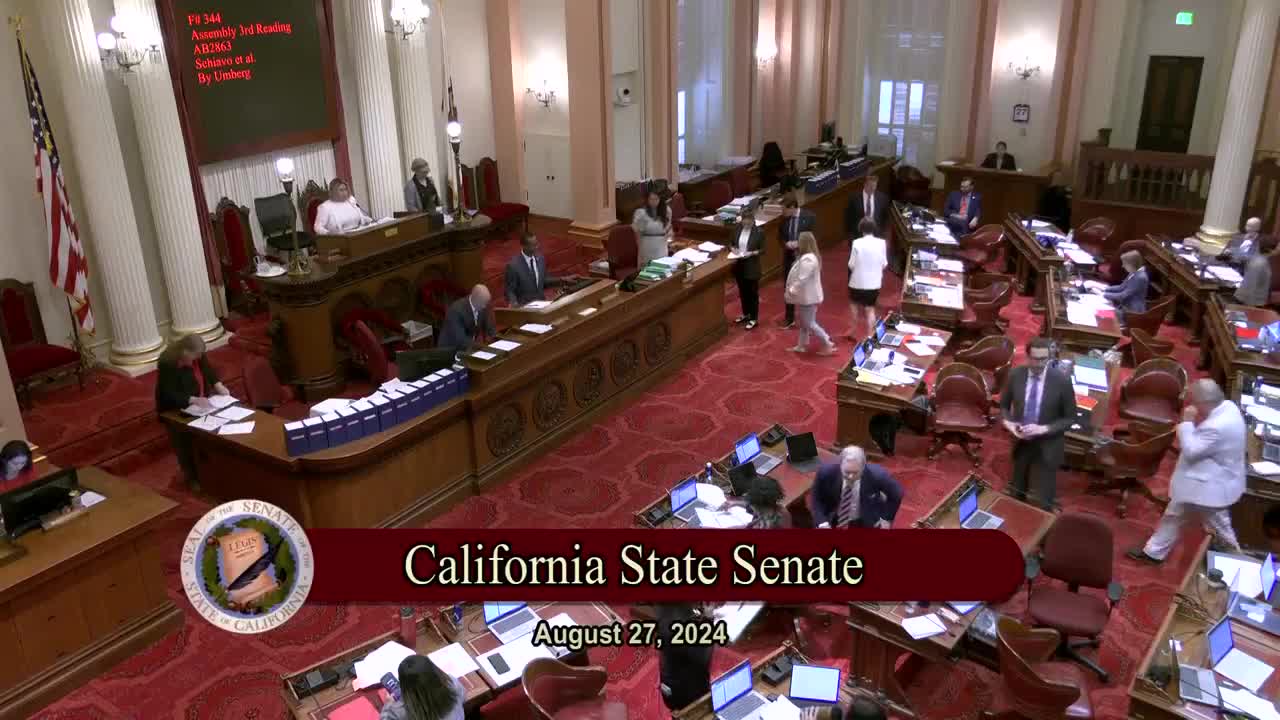 3MIN
Senate Floor
 4MIN
Senate Standing Committee on Judiciary
 4MIN
Senate Standing Committee on Labor, Public Employment and Retirement
 1MIN
Assembly Floor
 4MIN
Assembly Standing Committee on Privacy and Consumer Protection
 19MIN
Assembly Standing Committee on Privacy and Consumer Protection
48SEC





