AB 2656: Tribal gaming: compact ratification.
- Session Year: 2023-2024
- House: Assembly
- Latest Version Date: 2024-09-20
Current Status:
Passed
(2024-09-20: Chaptered by Secretary of State - Chapter 313, Statutes of 2024.)
Introduced
In Committee
First Chamber
In Committee
Second Chamber
Enacted
The existing federal Indian Gaming Regulatory Act of 1988 provides for the negotiation and execution of tribal-state gaming compacts for the purpose of authorizing certain types of gaming on Indian lands within a state. The California Constitution authorizes the Governor to negotiate and conclude tribal-state gaming compacts, subject to ratification by the Legislature. Existing law expressly ratifies a number of tribal-state gaming compacts between the State of California and specified Indian tribes.
The California Environmental Quality Act (CEQA) requires a lead agency to prepare, or cause to be prepared, and certify the completion of, an environmental impact report on a project, as defined, that it proposes to carry out or approve that may have a significant effect on the environment, as defined, or to adopt a negative declaration if it finds that the project will not have that effect.
This bill would ratify the tribal-state gaming compact entered into between the State of California and the Table Mountain Rancheria, executed on November 1, 2023. The bill would provide that, in deference to tribal sovereignty, certain actions related to this compact are not projects for purposes of CEQA.
This bill would declare that it is to take effect immediately as an urgency statute.
The existing federal Indian Gaming Regulatory Act of 1988 provides for the negotiation and execution of tribal-state gaming compacts for the purpose of authorizing certain types of gaming on Indian lands within a state. The California Constitution authorizes the Governor to negotiate and conclude tribal-state gaming compacts, subject to ratification by the Legislature. Existing law expressly ratifies a number of tribal-state gaming compacts between the State of California and specified Indian tribes.
The California Environmental Quality Act (CEQA) requires a lead agency to prepare, or cause to be prepared, and certify the completion of, an environmental impact report on a project, as defined, that it proposes to carry out or approve that may have a significant effect on the environment, as defined, or to adopt a negative declaration if it finds that the project will not have that effect.
This bill would ratify the tribal-state gaming compact entered into between the State of California and the Table Mountain Rancheria, executed on November 1, 2023. The bill would provide that, in deference to tribal sovereignty, certain actions related to this compact are not projects for purposes of CEQA.
Existing federal law, the Indian Gaming Regulatory Act of 1988, provides for the negotiation and execution of tribal-state gaming compacts for the purpose of authorizing certain types of gaming on Indian lands within a state. The California Constitution authorizes the Governor to negotiate and conclude compacts, subject to ratification by the Legislature. Existing law establishes the Indian Gaming Revenue Sharing Trust Fund within the State Treasury for the receipt and deposit of moneys received by the state from an Indian tribe pursuant to the terms of a tribal-state gaming compact for the purpose of making distributions to an eligible recipient Indian tribe.This bill would make technical, nonsubstantive changes to that latter provision governing the fund.Existing federal law, the Indian Gaming Regulatory Act of 1988, provides for the negotiation and execution of tribal-state gaming compacts for the purpose of authorizing certain types of gaming on Indian lands within a state. The California Constitution authorizes the Governor to negotiate and conclude compacts, subject to ratification by the Legislature. Existing law establishes the Indian Gaming Revenue Sharing Trust Fund within the State Treasury for the receipt and deposit of moneys received by the state from an Indian tribe pursuant to the terms of a tribal-state gaming compact for the purpose of making distributions to an eligible recipient Indian tribe.
This bill would make technical, nonsubstantive changes to that latter provision governing the fund.
(a)The tribal-state gaming compact entered into in accordance with the federal Indian Gaming Regulatory Act of 1988 (18 U.S.C. Secs. 1166 to 1168, inclusive, and 25 U.S.C. Sec. 2701 et seq.) between the State of California and the Table Mountain Rancheria, executed on November 1, 2023, is hereby ratified.
(b)(1)In deference to tribal sovereignty, none of the following shall be deemed a project for purposes of the California Environmental Quality Act (Division 13 (commencing with Section 21000) of the Public Resources Code):
(A)The execution of the tribal-state gaming compact ratified by this section.
(B)The execution of an amendment to the tribal-state gaming compact ratified by this section.
(C)The execution of an intergovernmental agreement between the tribe and a county or city government negotiated pursuant to the express authority of, or as expressly referenced in, the tribal-state gaming compact ratified by this section.
(D)The execution of an intergovernmental agreement between the tribe and the Department of Transportation, or other state agency, negotiated pursuant to the express authority of, or as expressly referenced in, the tribal-state gaming compact ratified by this section.
(E)The on-reservation impacts of compliance with the terms of the tribal-state gaming compact ratified by this section.
(2)Except as expressly provided in this section, this subdivision does not exempt a city, county, or city and county, or the Department of Transportation, or any state agency or local jurisdiction, from the requirements of the California Environmental Quality Act.
SEC. 2.This act is an urgency statute necessary for the immediate preservation of the public peace, health, or safety within the meaning of Article IV of the California Constitution and shall go into immediate effect. The facts constituting the necessity are:
In order to enhance the economic development, stability, and self-sufficiency of the Table Mountain Rancheria, and to protect the interests of the tribe and its members, the surrounding communities, and the California public at the earliest possible time, it is necessary that this act take effect immediately.
(a)The tribal-state gaming compact entered into in accordance with the federal Indian Gaming Regulatory Act of 1988 (18 U.S.C. Secs. 1166 to 1168, inclusive, and 25 U.S.C. Sec. 2701 et seq.) between the State of California and the Table Mountain Rancheria, executed on November 1, 2023, is hereby ratified.
(b)(1)In deference to tribal sovereignty, none of the following shall be deemed a project for purposes of the California Environmental Quality Act (Division 13 (commencing with Section 21000) of the Public Resources Code):
(A)The execution of the tribal-state gaming compact ratified by this section.
(B)The execution of an amendment to the tribal-state gaming compact ratified by this section.
(C)The execution of an intergovernmental agreement between the tribe and a county or city government negotiated pursuant to the express authority of, or as expressly referenced in, the tribal-state gaming compact ratified by this section.
(D)The execution of an intergovernmental agreement between the tribe and the Department of Transportation, or other state agency, negotiated pursuant to the express authority of, or as expressly referenced in, the tribal-state gaming compact ratified by this section.
(E)The on-reservation impacts of compliance with the terms of the tribal-state gaming compact ratified by this section.
(2)Except as expressly provided in this section, this subdivision does not exempt a city, county, or city and county, or the Department of Transportation, or any state agency or local jurisdiction, from the requirements of the California Environmental Quality Act.
SECTION 1.Section 12012.75 of the Government Code is amended to read:12012.75.There is hereby created in the State Treasury a special fund called the Indian Gaming Revenue Sharing Trust Fund for the receipt and deposit of moneys received by the state from an Indian tribe pursuant to the terms of a tribal-state gaming compact for the purpose of making distributions to an eligible recipient Indian tribe. Moneys in the Indian Gaming Revenue Sharing Trust Fund shall be available to the California Gambling Control Commission, upon appropriation by the Legislature, for the purpose of making distributions to an eligible recipient Indian tribe in accordance with a distribution plan specified in a tribal-state gaming compact.There is hereby created in the State Treasury a special fund called the Indian Gaming Revenue Sharing Trust Fund for the receipt and deposit of moneys received by the state from an Indian tribes tribe pursuant to the terms of a tribal-state gaming compacts compact for the purpose of making distributions to an eligible recipient Indian tribes. tribe. Moneys in the Indian Gaming Revenue Sharing Trust Fund shall be available to the California Gambling Control Commission, upon appropriation by the Legislature, for the purpose of making distributions to an eligible recipient Indian tribes, tribe in accordance with a distribution plans plan specified in a tribal-state gaming compacts. compact.
|
Date
|
Status
|
|---|---|
| Sep 20, 2024 | Chaptered by Secretary of State - Chapter 313, Statutes of 2024. |
| Sep 20, 2024 | Approved by the Governor. |
| Sep 9, 2024 | Enrolled and presented to the Governor at 3:30 p.m. |
| Aug 28, 2024 | In Assembly. Ordered to Engrossing and Enrolling. |
| Aug 28, 2024 | Read third time. Urgency clause adopted. Passed. Ordered to the Assembly. (Ayes 39. Noes 0.). |
| Aug 27, 2024 | Read second time. Ordered to third reading. |
| Aug 26, 2024 | Ordered to second reading. |
| Aug 26, 2024 | Withdrawn from committee. |
| Aug 26, 2024 | In Senate. Read first time. To Com. on RLS. for assignment. |
| Aug 26, 2024 | Read third time. Urgency clause adopted. Passed. Ordered to the Senate. (Ayes 77. Noes 0. Page 6572.). |
| Aug 20, 2024 | Read third time and amended. Ordered to third reading. (Page 6396.) |
| May 22, 2024 | Read third time and amended. Ordered to third reading. (Page 5550.) |
| May 21, 2024 | Ordered to third reading. |
| May 21, 2024 | Withdrawn from committee. |
| May 21, 2024 | Assembly Rule 96 suspended. (Page 5377.) |
| Mar 21, 2024 | Re-referred to Com. on RLS. pursuant to Assembly Rule 96. |
| Mar 19, 2024 | Re-referred to Com. on G.O. |
| Mar 18, 2024 | From committee chair, with author's amendments: Amend, and re-refer to Com. on G.O. Read second time and amended. |
| Mar 18, 2024 | Referred to Com. on G.O. |
| Feb 15, 2024 | From printer. May be heard in committee March 16. |
| Feb 14, 2024 | Read first time. To print. |
|
Date
|
Description
|
Location
|
Votes
|
|
|---|---|---|---|---|
| Aug 28, 2024 | Assembly 3rd Reading AB2656 Ramos By Grove Urgency Clause | Senate Floor |
Passed |
|
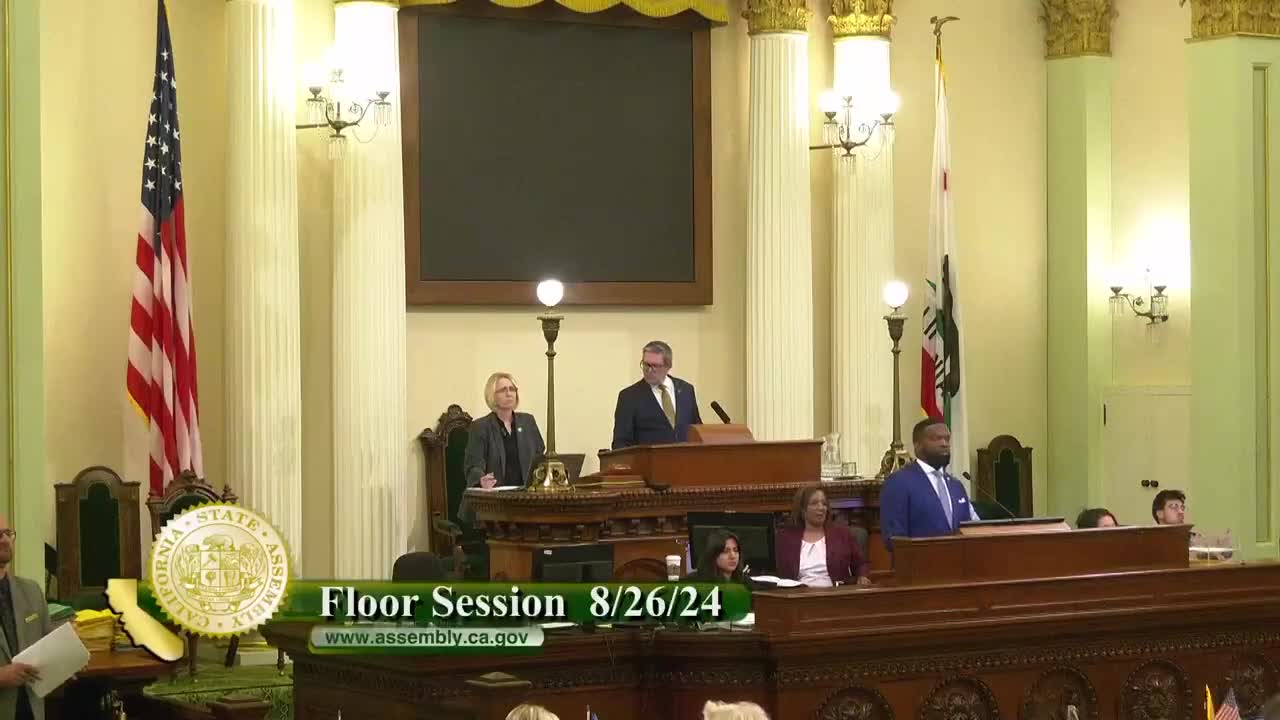
| Aug 26, 2024 | AB 2656 Ramos Third Reading Urgency | Assembly Floor |
Passed |
This list shows positions taken on this bill by organizations on the date displayed, which is linked to the original source.
Positions by individuals are not included.
|
Organization
|
Position
|
Date
|
|---|---|---|
| Click here to enter text. | ** Against |
SENATE RULES COMMITTEE Office of Senate Floor Analyses (916) 651-1520 Fax: (916) 327-4478 | AB 2656 |
THIRD READING
Bill No: AB 2656
Author: Ramos (D)
Amended: 8/20/24 in Assembly
Vote: 27 - Urgency
NOTE: On August 22, 2024, the Senate Governmental Organization Committee held an informational hearing on the tribal-state gaming compact between the State of California and Table Mountain Rancheria.
Click here to enter text.
SUBJECT: Tribal gaming: compact ratification
SOURCE: Author
DIGEST:
This bill ratifies the tribal-state gaming compact between the State of California and Table Mountain Rancheria (Tribe)
ANALYSIS:
Existing law:
- Provides, under the Indian Gaming Regulatory Act (IGRA), for the negotiation and conclusion of compacts between federally recognized Indian tribes and the State for the purpose of conducting Class III gaming activities on Indian lands within a State as a means of promoting tribal economic development, self-sufficiency, and strong tribal governments.
- Authorizes expressly a number of tribal-state gaming compacts between the State of California and specified Indian tribes.
- Authorizes the conduct of Class III gaming activities to the extent such activities are permitted by state law, a gaming compact has been concluded by a federally recognized tribe and the State, and the compact has been approved by the Secretary of the Interior.
- Limits the operation of Class III gaming activities to Indian lands acquired on or before October 17, 1988. Provides, for certain exceptions to conduct gaming activities on Indian lands acquired after October 17, 1988.
- Defines “Indian lands” to mean all lands within the limits of any Indian reservation, and any lands title to which is either held in trust by the United States for the benefit of any Indian tribe, or individual, or held by any Indian tribe or individual subject to restriction by the U.S. against alienation and over which an Indian tribe exercises governmental power.
- Requires the State to negotiate to conclude a compact in good faith with an Indian tribe having jurisdiction over the Indian lands upon which the Class III gaming activity is to be conducted. Provides the U.S. district courts with jurisdiction over any cause of action initiated by a tribal government alleging that the State failed to negotiate in good faith to conclude a compact. Prescribes the remedy, mediation supervised by the courts, if it is found that the State failed to negotiate in good faith to conclude a compact.
- Authorizes the Governor, under the California Constitution, to negotiate and conclude compacts, subject to ratification by the Legislature.
This bill:
- Ratifies the tribal-state gaming compact between the State of California and the Tribe.
- Provides that, in deference to tribal sovereignty, certain actions are not deemed projects for purposes of the California Environmental Quality Act (CEQA); and, stipulate, except as expressly provided, that none of the provisions shall be construed to exempt a city, county, or city and county, or the Department of Transportation, or any state agency or local jurisdiction, from CEQA requirements.
- Contains an urgency clause.
Background
The Tribal-State Gaming Compact between the State of California and the Tribe was executed on November 1, 2023. The Compact authorizes the Tribe to operate a maximum of 3,000 slot machines at no more than three gaming facilities, in one of which the Tribe operates no more than 50 slot machines, located on eligible Indian lands held in trust for the Tribe, and located within the boundaries of the Tribe’s reservation.
The Tribe has agreed to pay the State its pro rata share of costs the State incurs for the performance of its duties under the Compact. If the Tribe operates up to 1,200 slot machines, the Compact does not require the Tribe to pay into either the Revenue Sharing Trust Fund (RSTF) or the Tribal Nation Grant Fund (TNGF). If the Tribe operates 1,201 slot machines or more the Tribe is required to pay 4.25% of its Gross Gaming Revenue from the operation of slot machines in excess of 350 slot machines.
Specifically, from its payments to the RSTF or the TNGF, if the Tribe operates between 1,201 and 2,250 slot machines the Tribe may take an annual credit up to 65%, if the Tribe operates 2,251 or more slot machines, the Tribe may take annual credits up to 60% for in-kind contributions made to Fresno County, local and state jurisdictions, and non-profit and civic organizations operating facilities or providing services within the County for fire, emergency medical services, law enforcement, public transit, education, tourism, and other services and infrastructure projects or improvements that serve the needs of the Tribe and the surrounding community or the County.
The Tribe agrees to establish an Impact Mitigation Fund for the purposes of providing assistance to non-tribal law enforcement, emergency services, and service agencies with demonstrated impacts from the Gaming Facilities. The Tribe shall withhold 0.75% of Gross Gaming Revenue for deposit into the Impact Mitigation Fund and distribute those funds to neighboring jurisdictions to mitigate impacts upon those jurisdictions resulting from the operation of the Gaming Facility, or other purposes the Tribe and a jurisdiction may agree.
Certain terms of the Compact related to licensing, regulatory, patron protection, and public health provisions are substantially the same as recent compacts. Specifically, the Compact includes a Tribal Labor Relations Ordinance (TLRO), which provides that gaming may commence only after the Tribe has adopted a TLRO that allows for a secret ballot election and union neutrality.
The Compact’s preamble notes that the Tribe and the State have concluded that this Compact protects the interests of the Tribe and its members, the surrounding community, and the California public, and will promote and secure long-term stability, mutual respect, and the mutual benefits of two equal sovereigns, the State of California and Table Mountain Rancheria, on a government-to-government basis.
The Table Mountain Rancheria is a federally recognized tribe from the Chukchansi band of Yokuts and the Monache Tribe. It is also the Tribe’s Rancheria, located in Fresno County, California. Founded in 1916, the Table Mountain Rancheria is 61 acres near Friant, California. The reservation’s population is approximately 11 people, with 34 tribal members living in the general area.
The Tribe owns and operates Table Mountain Casino Resort, which includes slot machines and table games, a 171-guest room hotel, and a variety of dining options. The casino includes a 140,000-square foot gaming floor featuring over 2,000 slot machines. The casino’s High Limits room offers exclusive slots and table games and the Dragon’s Den offers $5 Table Games every day.
Once effective (legislative ratification and federal approval required), this Compact will be in full force and effect for 25 years following the effective date.
Brief History of the Tribe. The Table Mountain Rancheria is a federally recognized tribe from the Chukchansi band of Yokuts and the Monache Tribe, located in Fresno County, California. Founded in 1916, the Table Mountain Rancheria is 61 acres near Friant, California. The reservation’s population is approximately 11 people, with 34 tribal members living in the general area.
The Tribe owns and operates Table Mountain Casino Resort, which includes: slot machines and table games, a 171 guest room hotel, and a variety of dining options. The casino includes a 140,000-square foot gaming floor featuring over 2,000 slot machines. The casino’s High Limits room offers exclusive slots and table games and the Dragon’s Den offers $5 Table Games every day.
Additionally, the Tribe owns and operates Eagle Springs Golf and Country Club and the Beach Club restaurant. The preamble of the Tribe’s Compact notes that, “through the revenue generated by its Gaming Operation under its 1999 Compact, the Tribe has been able to improve the health, education, safety and general welfare of its tribal members, while promoting a strong tribal government that is self-sufficient and a committed participant in the surrounding community.”
KEY PROVISIONS OF THE COMPACT:
Scope of Class III Gaming Authorized. The Tribe is authorized to operate up to 3,000 slot machines, banking or percentage card games, and any devices or games that are authorized under state law to the California State Lottery, provided that the Tribe will not offer such games through use of the Internet unless others in the state not affiliated with or licensed by the California State Lottery are permitted to do so under state and federal law. The Tribe can operate off-track wagering on horse races at a satellite wagering facility pursuant to the requirements outlined in the Compact. The Tribe shall not engage in Class III Gaming that is not expressly authorized in the Compact.
Authorized Gaming Facility. The Tribe may establish and operate no more than three gaming facilities, in one of which the Tribe operates no more than 50 slot machines and engage in Class III gaming only on eligible Indian lands held in trust for the Tribe, located within the boundaries of the Tribe’s reservation and on parcels that are contiguous to the Tribe’s reservation, as specified.
Payments to the Special Distribution Fund (SDF). The Tribe shall pay to the State, on a pro rata basis, the costs the State incurs for the performance of all its duties under this Compact, as established by the monies appropriated in the annual Budget Act for the performance of their duties under the Class III Gaming Compacts.
Payments to the RSTF or the TNGF. If the Tribe operates up to 1,200 slot machines, the Compact does not require the Tribe to pay into either the RSTF or the TNGF. If the Tribe operates 1,201 slot machines or more the Tribe is required to pay 4.25% of its Gross Gaming Revenue from the operation of slot machines in excess of 350 slot machines.
Distribution to Local Governments. The Tribe agrees to establish an Impact Mitigation Fund for the purposes of providing assistance to non-tribal law enforcement, emergency services, and service agencies with demonstrated impacts from the Gaming Facilities. The Tribe shall withhold 0.75% of Gross Gaming Revenue for deposit into the Impact Mitigation Fund and distribute those funds to neighboring jurisdictions to mitigate impacts upon those jurisdictions resulting from the operation of the Gaming Facility, or other purposes the Tribe and a jurisdiction may agree.
Credits Applied to the RSTF or the TNGF. Specifically, from its payments to the RSTF or the TNGF, if the Tribe operates between 1,201 and 2,250 slot machines the Tribe make take an annual credit up to 65%, if the Tribe operates 2,251 or more slot machines, the Tribe make take annual credits up to 60% for in-kind contributions made to Fresno County (County), local and state jurisdictions, and non-profit and civic organizations operating facilities or providing services within the County for fire, emergency medical services, law enforcement, public transit, education, tourism, and other services and infrastructure projects or improvements that serve the needs of the Tribe and the surrounding community or the County.
Labor Provisions. Similar to recent compacts, the Tribe has entered into an agreement under the federal Labor Management Relations Act and has maintained the TLRO from its 2012 compact. Under the TLRO, if the tribe employs 250 or more persons in a tribal casino facility, then the provisions of the TLRO become effective. The TLRO makes it clear that employees shall have the right to self-organization, to form, to join, or assist employee organizations, to bargain collectively through representatives of their own choosing. The TLRO provides for a secret ballot election and union neutrality. After verification that 30% of the eligible employees in a bargaining unit have expressed an interest in the union, a notice of election shall be issued and the election shall be concluded within 30 calendar days thereafter. Union representation requires a majority of all votes cast.
FISCAL EFFECT: Appropriation: No Fiscal Com.: Yes Local: No
SUPPORT: (Verified 8/23/24)
None received
OPPOSITION: (Verified 8/23/24)
None received
Click here to enter text.
Prepared by: Felipe Lopez / G.O. / (916) 651-1530
8/26/24 21:34:19
**** END ****
ASSEMBLY THIRD READING
ATR Bill Id:AB 2656
Author:(Ramos)
As Amended Ver:August 20, 2024
2/3 vote. Urgency
SUMMARY
This bill would ratify a tribal-state gaming compact (Compact) between the State of California (State) and the Table Mountain Rancheria (Tribe) pursuant to the Indian Gaming Regulatory Act of 1988 (IGRA) that was executed on November 1, 2023.
Major Provisions
- Ratifies a tribal-state gaming compact between the State of California and the Table Mountain Rancheria that was executed on November 1, 2023.
- Provides that, in deference to tribal sovereignty, certain actions are not deemed projects for purposes of the California Environmental Quality Act (CEQA); and, stipulate, except as expressly provided, that none of the provisions shall be construed to exempt a city, county, or city and county, or the Department of Transportation, or any state agency or local jurisdiction, from CEQA requirements.
- Provides, once effective (legislative ratification and federal approval required), the Compact will be in full force and effect for state law purposes for twenty-five (25) years following the effective date.
- Contains an urgency clause.
COMMENTS
Background.
On August 22, 2024, the Assembly Governmental Organization Committee held an informational hearing on the tribal-state gaming compact between the State of California and the Tribe.
General Compact Overview:
On November 1, 2023, the Table Mountain Rancheria, a federally recognized Indian Tribe, and the State entered into a Compact on a sovereign government-to-government basis pursuant to the IGRA.
The Compact authorizes the Tribe to operate a maximum of 3,000 slot machines at no more than three gaming facilities, in one of which the Tribe operates no more than 50 slot machines, located on eligible Indian lands held in trust for the Tribe, and located within the boundaries of the Tribe's reservation.
The Tribe has agreed to pay the State its pro rata share of costs the State incurs for the performance of its duties under the Compact. If the Tribe operates up to 1,200 slot machines, the Compact does not require the Tribe to pay into either the RSTF or the TNGF. If the Tribe operates 1,201 slot machines the Tribe is required to pay 4.25% of its Gross Gaming Revenue from the operation of slot machines in excess of 350 slot machines.
Specifically, from its payments to the RSTF or the TNGF, if the Tribe operates between 1,201 and 2,250 slot machines the Tribe make take an annual credit up to 65%, if the Tribe operates between 2,251 or more slot machines, the Tribe make take annual credits up to 60% for in-kind contributions made to the County, local and state jurisdictions, and non-profit and civic organizations operating facilities or providing services within the County for fire, emergency medical services, law enforcement, public transit, education, tourism, and other services and infrastructure projects or improvements that serve the needs of the Tribe and the surrounding community or the County.
The Tribe agrees to establish an Impact Mitigation Fund for the purposes of providing assistance to non-tribal law enforcement, emergency services, and service agencies with demonstrated impacts from the gaming facilities. The Tribe shall withhold 0.75% of Gross Gaming Revenue for deposit into the Impact Mitigation Fund and distribute those funds to neighboring jurisdictions to mitigate impacts upon those jurisdictions resulting from the operation of the gaming facility, or other purposes of the Tribe and a jurisdiction may agree.
Certain terms of the Compact related to licensing, regulatory, patron protection, and public health provisions are substantially the same as recent compacts. Specifically, the Compact includes a Tribal Labor Relations Ordinance (TLRO), which provides that gaming may commence only after the Tribe has adopted a TLRO that allows for a secret ballot election and union neutrality.
The Compact's preamble notes that "the Tribe and the State have concluded that this Compact protects the interests of the Tribe and its members, the surrounding community, and the California public, and will promote and secure long-term stability, mutual respect, and the mutual benefits of two equal sovereigns, the State of California and Table Mountain Rancheria, on a government-to-government basis."
Once effective (legislative ratification and federal approval required), this Compact will be in full force and effect for 25 years following the effective date.
Brief History of the Tribe. The Table Mountain Rancheria is a federally recognized tribe from the Chukchansi band of Yokuts and the Monache Tribe. It is also the Tribe's Rancheria, located in Fresno County, California. Founded in 1916, the Table Mountain Rancheria is 61 acres near Friant, California. The reservation's population is approximately 11 people, with 34 tribal members living in the general area
The Tribe adopted its Constitution and Bylaws in 1980. In 1983, the Tribe's Federal recognition status was reaffirmed and 57.8 acres of trust land was restored to support the economic and cultural welfare of the Tribe. Developments on the tribal trust land include Tribal administration offices, a public works office, medical offices, a Tribal police department office, single family homes, a church, a preschool, and learning center.
The Tribe owns and operates the new Table Mountain Casino Resort, which includes: slot machines and table games, a 171 guest room hotel, and a variety of dining options. The casino includes 140,000-square foot gaming floor featuring over 2,000 slot machines, and a concert venue that seats 2,100. The venue features a 23,000 square foot entertainment and convention space that can be sub-divided into four specific rooms to host a range of events including wedding receptions, business meetings and conferences. The casino is also home to multiple restaurants including the Blue Oak Grille and local Eagles Landing Steakhouse, offering indoor and outdoor patio seating, with a food court near the 23,000 square foot event center. A rooftop restaurant offers panoramic views of Friant and the valley.
Additionally, the Tribe owns and operates Eagle Springs Golf and Country Club and the Beach Club restaurant. The preamble of the Tribe's Compact notes that, "through the revenue generated by its gaming operation under its 1999 Compact, the Tribe has been able to improve the health, education, safety and general welfare of its tribal members, while promoting a strong tribal government that is self-sufficient and a committed participant in the surrounding community."
Key Provisions of the Compact:
Scope of Class III Gaming Authorized. The Tribe is authorized to operate up to 3,000 slot machines, banking or percentage card games, and any devices or games that are authorized under state law to the California State Lottery, provided that the Tribe will not offer such games through use of the Internet unless others in the state not affiliated with or licensed by the California State Lottery are permitted to do so under state and federal law. The Tribe can operate off-track wagering on horse races at a satellite wagering facility pursuant to the requirements outlined in the Compact. The Tribe shall not engage in Class III gaming that is not expressly authorized in the Compact.
Authorized Gaming Facility. The Tribe may establish and operate no more than three gaming facilities, in one of which the Tribe operates no more than 50 slot machines and engage in Class III gaming only on eligible Indian lands held in trust for the Tribe, located within the boundaries of the Tribe's reservation and on parcels that are contiguous to the Tribe's reservation, as specified.
Payments to the Special Distribution Fund (SDF). The Tribe shall pay to the State, on a pro rata basis, the costs the State incurs for the performance of all its duties under this Compact, as established by the monies appropriated in the annual Budget Act for the performance of their duties under the Class III gaming compacts.
Payments to the RSTF or the TNGF. If the Tribe operates up to 1,200 slot machines, the Compact does not require the Tribe to pay into either the RSTF or the TNGF. If the Tribe operates 1,201 slot machines the Tribe is required to pay 4.25% of its Gross Gaming Revenue from the operation of slot machines in excess of 350 slot machines.
Distribution by Tribe to Local Governments and Neighboring Tribes. The Tribe agrees to establish an Impact Mitigation Fund for the purposes of providing assistance to non-tribal law enforcement, emergency services, and service agencies with demonstrated impacts from the gaming facilities. The Tribe shall withhold 0.75% of Gross Gaming Revenue for deposit into the Impact Mitigation Fund and distribute those funds to neighboring jurisdictions to mitigate impacts upon those jurisdictions resulting from the operation of the gaming facility, or other purposes of the Tribe and a jurisdiction may agree.
Credits Applied to the RSTF or the TNGF. Specifically, from its payments to the RSTF or the TNGF, if the Tribe operates between 1,201 and 2,250 slot machines the Tribe make take an annual credit up to 65%, if the Tribe operates between 2,251 or more slot machines, the Tribe make take annual credits up to 60% for in-kind contributions made to the County, local and state jurisdictions, and non-profit and civic organizations operating facilities or providing services within the County for fire, emergency medical services, law enforcement, public transit, education, tourism, and other services and infrastructure projects or improvements that serve the needs of the Tribe and the surrounding community or the County.
Exclusivity. Provides that in the event the exclusive right of Indian tribes to operate Class III gaming in California pursuant to the California Constitution is abrogated by the enactment, amendment, or repeal of a state statute or constitutional provision or the conclusive and dispositive judicial construction of a statute or the State Constitution by a California appellate court after the effective date of this Compact, that gaming devices may lawfully be operated by non-Indian entities, the Tribe shall have the right to terminate this Compact, as specified.
Labor Provisions. Provides that the gaming activities authorized by this Compact may only commence after the Tribe has adopted an ordinance identical to the TRLO, referenced as Appendix B of the Compact, and the gaming activities may only continue as long as the Tribe maintains the ordinance. If the Tribe employs 250 or more persons in a tribal casino facility, then the provisions of the TLRO become effective. The TLRO makes it clear that employees shall have the right to self-organization, to form, to join, or assist employee organizations, to bargain collectively through representatives of their own choosing. The TLRO provides for a secret ballot election and union neutrality. After the certification that 30% of the eligible employees in a bargaining unit have expressed an interest in the union, a notice of election shall be issued and the election shall be concluded within 30 calendar days thereafter. Employees may mail in ballots provided they are received by election day. Union representation requires an affirmative vote of 50% plus one of all votes cast.
Amendment by Agreement. The terms and conditions of this Compact may be amended at any time by the mutual and written agreement of both parties, provided that each party voluntarily consents to such negotiations in writing. Any amendments to this Compact shall be deemed to supersede, supplant and extinguish all previous understandings and agreements on the subject.
Effective Date. This Compact shall not be effective unless and until all of the following have occurred: the Compact is ratified by statute in accordance with state law and notice of approval or constructive approval is published in the Federal Register. Once effective, this Compact shall be in full force and effect for 25 years following the effective date.
According to the Author
The Compact's preamble states that "the Tribe remains committed to improving the general welfare of its tribal members, as well as committed to improving the environment, education status, and the health, safety and general welfare of its members and the surrounding community. Additionally, the State and the Tribe agree that all terms of this Compact are intended to be binding and enforceable only between the State and the Tribe, unless otherwise expressly stated in this Compact."
Arguments in Support
None on file.
Arguments in Opposition
None on file.
FISCAL COMMENTS
Unknown.
VOTES
UPDATED
VERSION: August 20, 2024
CONSULTANT: Eric Johnson / G.O. / (916) 319-2531 FN: 0004560
ASSEMBLY THIRD READING
ATR Bill Id:AB 2656
Author:(Jim Patterson)
As Amended Ver:May 22, 2024
2/3 vote. Urgency
SUMMARY
This bill ratifies a tribal-state gaming compact (Compact) between the State of California (State) and the Table Mountain Rancheria (Tribe) pursuant to the Indian Gaming Regulatory Act of 1988 (IGRA).
Major Provisions
1) Ratifies a tribal-state gaming compact between the State of California and the Table Mountain Rancheria that was executed on November 1, 2023.
2) Provides that, in deference to tribal sovereignty, certain actions are not deemed projects for purposes of the California Environmental Quality Act (CEQA); and, stipulate, except as expressly provided, that none of the provisions shall be construed to exempt a city, county, or city and county, or the Department of Transportation, or any state agency or local jurisdiction, from CEQA requirements.
3) Provides, once effective (legislative ratification and federal approval required), the Compact will be in full force and effect for state law purposes for twenty-five (25) years following the effective date.
4) Contains an urgency clause.
COMMENTS
EXISTING LAW:
1) Provides, under the IGRA, for the negotiation and conclusion of compacts between federally recognized Indian tribes and the State for the purpose of conducting Class III gaming activities on Indian lands within a State as a means of promoting tribal economic development, self-sufficiency, and strong tribal governments.
2) Authorizes expressly a number of tribal-state gaming compacts between the State and specified Indian tribes.
3) Authorizes the conduct of Class III gaming activities to the extent such activities are permitted by state law, a gaming compact has been concluded by a federally recognized tribe and the State, and the compact has been approved by the Secretary of the Interior. 4
4) Limits the operation of Class III gaming activities to Indian lands acquired on or before October 17, 1988. Provides exceptions to conduct gaming activities on Indian lands acquired after October 17, 1988.
5) Defines Indian lands to mean all lands within the limits of any Indian reservation, and any lands title to which is either held in trust by the United States (U.S.) for the benefit of any Indian tribe, or individual, or held by any Indian tribe or individual subject to restriction by the U.S. against alienation and over which an Indian tribe exercises governmental power.
6) Requires the State to negotiate to conclude a compact in good faith with an Indian tribe having jurisdiction over the Indian lands upon which the Class III gaming activity is to be conducted. Provides the U.S. district courts with jurisdiction over any cause of action initiated by a tribal government alleging that the State failed to negotiate in good faith to conclude a compact. Prescribes the remedy, mediation supervised by the courts, if it is found that the State failed to negotiate in good faith to conclude a compact.
7) Authorizes the Governor, under the California Constitution, to negotiate and conclude compacts, subject to ratification by the Legislature.
Background.
In 1988, Congress enacted the IGRA to provide a statutory basis for the operation and regulation of gaming on Indian lands. IGRA provides that an Indian tribe may conduct gaming activity on Indian lands if the activity "is not specifically prohibited by federal law and is conducted within a State which does not prohibit such gaming activity."
IGRA distinguishes between three classes of gaming (Class I, Class II, and Class III) and provides for different forms of regulation for each class. Class I gaming includes "social games" for minor prizes or "traditional forms of Indian gaming." Class II gaming is defined to include bingo and card games that are explicitly authorized by the laws of the state, or that are not explicitly prohibited by the laws of the state and are played at any location in the State, so long as the card games are played in conformity with those laws and regulations. Class III gaming includes such things as slot machines, casino games and banked card games such as blackjack and baccarat. Class III gaming may only be conducted under terms of a compact negotiated between an Indian tribe and a State.
IGRA was enacted against a legal background in which Indian tribes and individuals generally are exempt from state taxation within their own territory. IGRA provides that with the exception of assessments permitted under the statute, to defray the State's costs of regulating gaming activity, IGRA shall not be interpreted as conferring upon a State authority to impose any tax, fee, charge, or other assessment upon an Indian tribe to engage in Class III activity. Nor may a State refuse to enter into negotiations based on the lack of authority to impose such a tax, fee, charge, or other assessment.
When a tribe requests negotiations for a Class III compact, IGRA requires the State to negotiate with the Indian tribe in good faith. IGRA provides a comprehensive process to prevent an impasse in compact negotiations, which is triggered when a tribe files suit alleging that the State has refused to negotiate or has failed to negotiate in good faith.
Before 2000, the California Constitution prohibited Class III gaming. In 2000, California voters approved Proposition 1A, which had been proposed by the Governor and passed by the Legislature. Proposition 1A amended the California Constitution to permit the State to negotiate compacts with federally recognized Indian tribes for certain Class III gaming activities.
In 1999, the Tribe and the State entered into a tribal-state gaming compact. The Compact's preamble states that "through the revenue generated by its gaming operation under its 1999 Compact, the Tribe has been able to improve the health, education, safety and general welfare of its tribal members, while promoting a strong tribal government that is self-sufficient and a committed participant in the surrounding community. The Tribe remains committed to improving the general welfare of its tribal members, as well as committed to improving the environment, education status, and the health, safety and general welfare of its members and the surrounding community."
The Compact's preamble further states that "the terms of this Compact are designed and intended to evidence the goodwill and cooperation between the Tribe and the State in fostering a mutually respectful government-to-government relationship that will serve the mutual interests of the parties."
According to the Author
The Compact's preamble states that "the State and the Tribe have concluded that this Compact protects the interests of the Tribe and its members, the surrounding community, and the California public, and will promote and secure long-term stability, mutual respect, and the mutual benefits of two equal sovereigns, the State of California and Table Mountain Rancheria, on a government-to-government basis. Additionally, the State and the Tribe agree that all terms of this Compact are intended to be binding and enforceable only between the State and the Tribe, unless otherwise expressly stated in this Compact."
Arguments in Support
None on file.
Arguments in Opposition
None on file.
FISCAL COMMENTS
Unknown.
VOTES
UPDATED
VERSION: May 22, 2024
CONSULTANT: Eric Johnson / G.O. / (916) 319-2531 FN: 0003475
ASSEMBLY THIRD READING
ATR Bill Id:AB 2656
Author:(Jim Patterson)
As Amended Ver:March 18, 2024
Majority vote
SUMMARY
This bill ratifies a tribal-state gaming compact (Compact) between the State of California (State) and the Table Mountain Rancheria (Tribe) pursuant to the Indian Gaming Regulatory Act of 1988 (IGRA).
Major Provisions
- Ratifies a tribal-state gaming compact between the State of California and the Table Mountain Rancheria that was executed on November 1, 2023.
- Provides that, in deference to tribal sovereignty, certain actions are not deemed projects for purposes of the California Environmental Quality Act (CEQA); and, stipulate, except as expressly provided, that none of the provisions shall be construed to exempt a city, county, or city and county, or the Department of Transportation, or any state agency or local jurisdiction, from CEQA requirements.
- Provides, once effective (legislative ratification and federal approval required), the Compact will be in full force and effect for state law purposes for twenty-five (25) years following the effective date.
- Contains an urgency clause.
COMMENTS
EXISTING LAW:
- Provides, under the IGRA, for the negotiation and conclusion of compacts between federally recognized Indian tribes and the State for the purpose of conducting Class III gaming activities on Indian lands within a State as a means of promoting tribal economic development, self-sufficiency, and strong tribal governments.
- Authorizes expressly a number of tribal-state gaming compacts between the State and specified Indian tribes.
- Authorizes the conduct of Class III gaming activities to the extent such activities are permitted by state law, a gaming compact has been concluded by a federally recognized tribe and the State, and the compact has been approved by the Secretary of the Interior. 4
- Limits the operation of Class III gaming activities to Indian lands acquired on or before October 17, 1988. Provides exceptions to conduct gaming activities on Indian lands acquired after October 17, 1988.
- Defines Indian lands to mean all lands within the limits of any Indian reservation, and any lands title to which is either held in trust by the United States (U.S.) for the benefit of any Indian tribe, or individual, or held by any Indian tribe or individual subject to restriction by the U.S. against alienation and over which an Indian tribe exercises governmental power.
- Requires the State to negotiate to conclude a compact in good faith with an Indian tribe having jurisdiction over the Indian lands upon which the Class III gaming activity is to be conducted. Provides the U.S. district courts with jurisdiction over any cause of action initiated by a tribal government alleging that the State failed to negotiate in good faith to conclude a compact. Prescribes the remedy, mediation supervised by the courts, if it is found that the State failed to negotiate in good faith to conclude a compact.
- Authorizes the Governor, under the California Constitution, to negotiate and conclude compacts, subject to ratification by the Legislature.
Background.
In 1988, Congress enacted the IGRA to provide a statutory basis for the operation and regulation of gaming on Indian lands. IGRA provides that an Indian tribe may conduct gaming activity on Indian lands if the activity "is not specifically prohibited by federal law and is conducted within a State which does not prohibit such gaming activity."
IGRA distinguishes between three classes of gaming (Class I, Class II, and Class III) and provides for different forms of regulation for each class. Class I gaming includes "social games" for minor prizes or "traditional forms of Indian gaming." Class II gaming is defined to include bingo and card games that are explicitly authorized by the laws of the state, or that are not explicitly prohibited by the laws of the state and are played at any location in the State, so long as the card games are played in conformity with those laws and regulations. Class III gaming includes such things as slot machines, casino games and banked card games such as blackjack and baccarat. Class III gaming may only be conducted under terms of a compact negotiated between an Indian tribe and a State.
IGRA was enacted against a legal background in which Indian tribes and individuals generally are exempt from state taxation within their own territory. IGRA provides that with the exception of assessments permitted under the statute, to defray the State's costs of regulating gaming activity, IGRA shall not be interpreted as conferring upon a State authority to impose any tax, fee, charge, or other assessment upon an Indian tribe to engage in Class III activity. Nor may a State refuse to enter into negotiations based on the lack of authority to impose such a tax, fee, charge, or other assessment.
When a tribe requests negotiations for a Class III compact, IGRA requires the State to negotiate with the Indian tribe in good faith. IGRA provides a comprehensive process to prevent an impasse in compact negotiations, which is triggered when a tribe files suit alleging that the State has refused to negotiate or has failed to negotiate in good faith.
Before 2000, the California Constitution prohibited Class III gaming. In 2000, California voters approved Proposition 1A, which had been proposed by the Governor and passed by the Legislature. Proposition 1A amended the California Constitution to permit the State to negotiate compacts with federally recognized Indian tribes for certain Class III gaming activities.
In 1999, the Tribe and the State entered into a tribal-state gaming compact. The Compact's preamble states that "through the revenue generated by its gaming operation under its 1999 Compact, the Tribe has been able to improve the health, education, safety and general welfare of its tribal members, while promoting a strong tribal government that is self-sufficient and a committed participant in the surrounding community. The Tribe remains committed to improving the general welfare of its tribal members, as well as committed to improving the environment, education status, and the health, safety and general welfare of its members and the surrounding community."
The Compact's preamble further states that "the terms of this Compact are designed and intended to evidence the goodwill and cooperation between the Tribe and the State in fostering a mutually respectful government-to-government relationship that will serve the mutual interests of the parties."
According to the Author
The Compact's preamble states that "the State and the Tribe have concluded that this Compact protects the interests of the Tribe and its members, the surrounding community, and the California public, and will promote and secure long-term stability, mutual respect, and the mutual benefits of two equal sovereigns, the State of California and Table Mountain Rancheria, on a government-to-government basis. Additionally, the State and the Tribe agree that all terms of this Compact are intended to be binding and enforceable only between the State and the Tribe, unless otherwise expressly stated in this Compact."
Arguments in Support
None on file
Arguments in Opposition
None on file
FISCAL COMMENTS
Unknown
VOTES
UPDATED
VERSION: March 18, 2024
CONSULTANT: Eric Johnson / G.O. / (916) 319-2531 FN: 0003475
Discussed in Hearing
View Older Hearings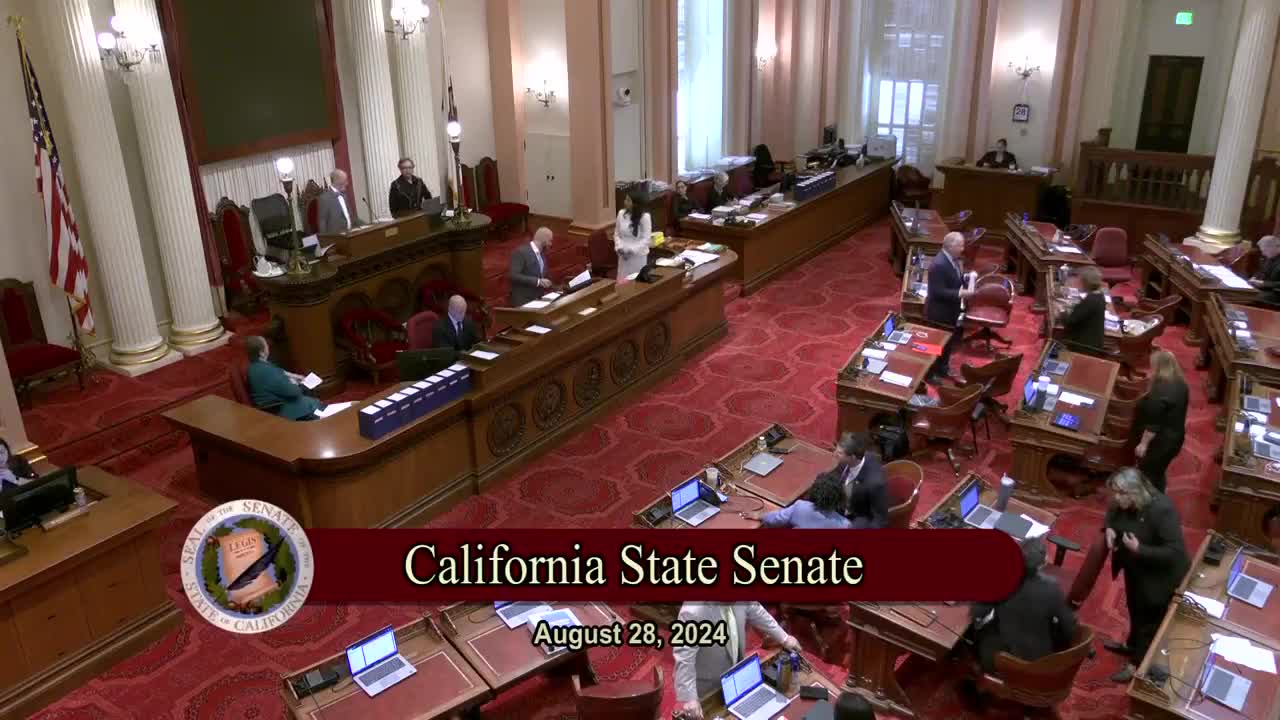

Bill Co-Author(s):