AB 2670: Awareness campaign: abortion services.
- Session Year: 2023-2024
- House: Assembly
- Latest Version Date: 2024-09-03
Current Status:
Failed
(2024-09-20: Vetoed by Governor.)
Introduced
In Committee
First Chamber
In Committee
Second Chamber
Enacted
Under existing law, the State Department of Public Health is responsible for the statewide administration of various programs and policies relating to personal health, including maternal, child, and adolescent health. Existing law requires the department to develop a coordinated state strategy for addressing the health-related needs of women, including implementation of goals and objectives for womens health, as specified.
This bill would require the department to develop an awareness campaign to publicize the internet website abortion.ca.gov to the general public, health care providers, health care professional associations and societies, health care employers, local public health officers, and local health departments. The bill would require the department to implement the awareness campaign upon an appropriation by the Legislature for that purpose.
Under existing law, the State Department of Public Health is responsible for the statewide administration of various programs and policies relating to personal health, including maternal, child, and adolescent health. Existing law requires the department to develop a coordinated state strategy for addressing the health-related needs of women, including implementation of goals and objectives for womens health, as specified.
This bill would require the department to develop an awareness campaign to publicize the internet website abortion.ca.gov to the general public, health care providers, health care professional associations and societies, health care employers, and local public health officers and officers, and local health departments. The bill would require the department to implement the awareness campaign upon an appropriation by the Legislature for that purpose.
Under existing law, the State Department of Public Health is responsible for the statewide administration of various programs and policies relating to personal health, including maternal, child, and adolescent health. Existing law requires the department to develop a coordinated state strategy for addressing the health-related needs of women, including implementation of goals and objectives for womens health, as specified.
This bill would require the department to develop an awareness campaign to publicize the internet website abortion.ca.gov to the general public, health care providers, health care professional associations and societies, health care employers, and local public health officers and health departments. The bill would require the department to implement the awareness campaign upon an appropriation by the Legislature for that purpose.
Under existing law, the Lanterman-Petris-Short Act, when a person, as a result of a mental health disorder, is a danger to others or to themselves, or gravely disabled, as defined, the person may, upon probable cause, be taken into custody for a period of up to 72 hours for assessment, evaluation, and crisis intervention, or placement for evaluation and treatment in a facility designated by the county for evaluation and treatment and approved by the State Department of Health Care Services. The act sets forth various conditions and procedures for extensions for further treatment, including 14-day or 180-day periods.This bill would require the department, by January 1, 2026, to prepare a document, and to post it on the departments internet website, for the purpose of making available resource information for individuals who are released or discharged by a facility after being detained for evaluation and treatment. Under the bill, the information would relate to potential methods for covering any applicable costs resulting from evaluation and treatment services in a manner that eliminates or reduces any share of cost for the individual.The bill would require the document to contain certain information, including information on how the individual, if uninsured or underinsured, might be able to have the services be covered by any applicable public or private programs. The bill would require the document to include a blank section that each county would be required to use for adding county-specific resource information, as specified. The bill would require a county, by July 1, 2026, to post the completed document on the countys internet website. The bill would require the above-described facilities to provide a copy of that document to a detained individual upon their release or discharge by the facility. By creating new duties for counties relating to the document, the bill would impose a state-mandated local program.The California Constitution requires the state to reimburse local agencies and school districts for certain costs mandated by the state. Statutory provisions establish procedures for making that reimbursement.This bill would provide that, if the Commission on State Mandates determines that the bill contains costs mandated by the state, reimbursement for those costs shall be made pursuant to the statutory provisions noted above.Under existing law, the Lanterman-Petris-Short Act, when a person, as a result of a mental health disorder, is a danger to others or to themselves, or gravely disabled, as defined, the person may, upon probable cause, be taken into custody for a period of up to 72 hours for assessment, evaluation, and crisis intervention, or placement for evaluation and treatment in a facility designated by the county for evaluation and treatment and approved by the State Department of Health Care Services. The act sets forth various conditions and procedures for extensions for further treatment, including 14-day or 180-day periods.
This bill would require the department department, by January 1, 2026, to prepare a document, and to post it on the departments internet website, for the purpose of making available resource information for individuals who are released or discharged by a facility after being detained for evaluation and treatment. Under the bill, the information would relate to potential methods for covering any applicable costs resulting from evaluation and treatment services in a manner that eliminates or reduces any share of cost for the individual.
The bill would require the document to contain certain information, including information on how the individual, if uninsured or underinsured, might be able to have the services be covered by any applicable public or private programs. The bill would require the document to include a blank section that each county would be required to use for adding county-specific resource information, as specified. The bill would require a county county, by July 1, 2026, to post the completed document on the countys internet website. The bill would require the above-described facilities to provide a copy of that document to a detained individual upon their release or discharge by the facility. By creating new duties for counties relating to the document, the bill would impose a state-mandated local program.
The California Constitution requires the state to reimburse local agencies and school districts for certain costs mandated by the state. Statutory provisions establish procedures for making that reimbursement.
This bill would provide that, if the Commission on State Mandates determines that the bill contains costs mandated by the state, reimbursement for those costs shall be made pursuant to the statutory provisions noted above.
Under existing law, the Lanterman-Petris-Short Act, when a person, as a result of a mental health disorder, is a danger to others or to themselves, or gravely disabled, as defined, the person may, upon probable cause, be taken into custody for a period of up to 72 hours for assessment, evaluation, and crisis intervention, or placement for evaluation and treatment in a facility designated by the county for evaluation and treatment and approved by the State Department of Health Care Services. The act sets forth various conditions and procedures for extensions for further treatment, including 14-day or 180-day periods.
This bill would require the department to prepare a document, and to post it on the departments internet website, for the purpose of making available resource information for individuals who are released or discharged by a facility after being detained for evaluation and treatment. Under the bill, the information would relate to potential methods for covering any applicable costs resulting from evaluation and treatment services in a manner that eliminates or reduces any share of cost for the individual.
The bill would require the document to contain certain information, including information on how the individual, if uninsured or underinsured, might be able to have the services be covered by any applicable public or private programs. The bill would require the document to include a blank section that each county would be required to use for adding county-specific resource information, as specified. The bill would require a county to post the completed document on the countys internet website. The bill would require the above-described facilities to provide a copy of that document to a detained individual upon their release or discharge by the facility. By creating new duties for counties relating to the document, the bill would impose a state-mandated local program.
The California Constitution requires the state to reimburse local agencies and school districts for certain costs mandated by the state. Statutory provisions establish procedures for making that reimbursement.
This bill would provide that, if the Commission on State Mandates determines that the bill contains costs mandated by the state, reimbursement for those costs shall be made pursuant to the statutory provisions noted above.
Existing law, the California Small Business Financial Development Corporation Law, requires that a contract between the California Infrastructure and Economic Development Bank and a nonprofit California small business financial development corporation created pursuant to the law include certain requirements related to the composition of that corporations board of directors. The law requires a director who ceases to meet those requirements to immediately vacate the directors position.This bill would make nonsubstantive changes to that provision.Existing law, the California Small Business Financial Development Corporation Law, requires that a contract between the California Infrastructure and Economic Development Bank and a nonprofit California small business financial development corporation created pursuant to the law include certain requirements related to the composition of that corporations board of directors. The law requires a director who ceases to meet those requirements to immediately vacate the directors position.
This bill would make nonsubstantive changes to that provision.
(a)To combat the delays and impairments to timely abortion and reproductive services that individuals face when they are misled by certain pregnancy clinics, the State Department of Public Health shall develop an awareness campaign to publicize the internet website abortion.ca.gov to the general public, health care providers, health care professional associations and societies, health care employers, local public health officers, and local health departments.
(b)The department shall implement the awareness campaign described in subdivision (a) upon an appropriation by the Legislature for that purpose.
(a)To combat the delays and impairments to timely abortion and reproductive services that individuals face when they are misled by certain pregnancy clinics, the State Department of Public Health shall develop an awareness campaign to publicize the internet website abortion.ca.gov to the general public, health care providers, health care professional associations and societies, health care employers, and local public health officers and officers, and local health departments.
(b)The department shall implement the awareness campaign described in subdivision (a) upon an appropriation by the Legislature for that purpose.
(a)To combat the delays and impairments to timely abortion and reproductive services that individuals face when they are misled by certain pregnancy clinics, the State Department of Public Health shall develop an awareness campaign to publicize the internet website abortion.ca.gov to the general public, health care providers, health care professional associations and societies, health care employers, and local public health officers and health departments.
(b)The department shall implement the awareness campaign described in subdivision (a) upon an appropriation by the Legislature for that purpose.
SECTION 1.Section 5011 is added to the Welfare and Institutions Code, to read:5011.(a)By January 1, 2026, the State Department of Health Care Services shall prepare a document, and shall post it on the departments internet website, for the purpose of making available resource information for individuals who are released or discharged by a facility after being detained for evaluation and treatment pursuant to this part. The resource information shall relate to potential methods for covering any applicable costs resulting from evaluation and treatment services in a manner that eliminates or reduces any share of cost for the individual. The department shall prepare the document in consultation with the Department of Managed Health Care and the Department of Insurance.(b)The resource information contained in the document described in subdivision (a) shall include, but not be limited to, all of the following items:(1)Information on how the individual might be able to have the services described in subdivision (a) be covered, to the greatest extent possible, by the individuals health care plan, if any, whether through the Medi-Cal program, the federal Medicare Program, employer-sponsored coverage, Covered California, or any other applicable public or private health care coverage.(2)Information on how the individual, if uninsured or underinsured, might be able to have the services be covered, to the greatest extent possible, by any applicable public or private programs.(3)Information on how applicable provisions that address treatment under this part, including, but not limited to, Sections 5150, 5250, and 5300, could affect coverage of the services.(4)Information listing applicable provisions that address payment or reimbursement for health care services, including, but not limited to, Sections 5012, 5014, and 14021.8, for an individual who has been detained under this part.(c)The document described in subdivision (a) shall include a blank section that enables a county to fill with additional information pursuant to subdivision (d).(d)(1)Each county shall use the blank section described in subdivision (c) to add county-specific resource information, as applicable, that facilitates the purpose described in subdivision (a). The county may include information describing county programs that contribute to coverage of the services, contact information for entities that assist individuals described in subdivision (a), or any other information that the county deems relevant and appropriate.(2)By July 1, 2026, each county shall make the document publicly available by posting it on the countys internet website, with the blank section filled as described in paragraph (1).(e)Upon the availability of the document, as described in paragraph (2) of subdivision (d), a facility that is located in the corresponding county and that provides evaluation and treatment to a detained individual pursuant to this part shall provide a copy of that document to the individual upon their release or discharge by the facility.SEC. 2.If the Commission on State Mandates determines that this act contains costs mandated by the state, reimbursement to local agencies and school districts for those costs shall be made pursuant to Part 7 (commencing with Section 17500) of Division 4 of Title 2 of the Government Code.(a)By January 1, ______, 2026, the State Department of Health Care Services shall prepare a document, and shall post it on the departments internet website, for the purpose of making available resource information for individuals who are released or discharged by a facility after being detained for evaluation and treatment pursuant to this part. The resource information shall relate to potential methods for covering any applicable costs resulting from evaluation and treatment services in a manner that eliminates or reduces any share of cost for the individual. The department shall prepare the document in consultation with the Department of Managed Health Care and the Department of Insurance.
(b)The resource information contained in the document described in subdivision (a) shall include, but not be limited to, all of the following items:
(1)Information on how the individual might be able to have the services described in subdivision (a) be covered, to the greatest extent possible, by the individuals health care plan, if any, whether through the Medi-Cal program, the federal Medicare Program, employer-sponsored coverage, Covered California, or any other applicable public or private health care coverage.
(2)Information on how the individual, if uninsured or underinsured, might be able to have the services be covered, to the greatest extent possible, by any applicable public or private programs.
(3)Information on how applicable provisions that address treatment under this part, including, but not limited to, Sections 5150, 5250, and 5300, could affect coverage of the services.
(4)Information listing applicable provisions that address payment or reimbursement for health care services, including, but not limited to, Sections 5012, 5014, and 14021.8, for an individual who has been detained under this part.
(c)The document described in subdivision (a) shall include a blank section that enables a county to fill with additional information pursuant to subdivision (d).
(d)(1)Each county shall use the blank section described in subdivision (c) to add county-specific resource information, as applicable, that facilitates the purpose described in subdivision (a). The county may include information describing county programs that contribute to coverage of the services, contact information for entities that assist individuals described in subdivision (a), or any other information that the county deems relevant and appropriate.
(2)By January 1, ______, July 1, 2026, each county shall make the document publicly available by posting it on the countys internet website, with the blank section filled as described in paragraph (1).
(e)Upon the availability of the document, as described in paragraph (2) of subdivision (d), a facility that is located in the corresponding county and that provides evaluation and treatment to a detained individual pursuant to this part shall provide a copy of that document to the individual upon their release or discharge by the facility.
SEC. 2.If the Commission on State Mandates determines that this act contains costs mandated by the state, reimbursement to local agencies and school districts for those costs shall be made pursuant to Part 7 (commencing with Section 17500) of Division 4 of Title 2 of the Government Code.
(a)By January 1, ______, the State Department of Health Care Services shall prepare a document, and shall post it on the departments internet website, for the purpose of making available resource information for individuals who are released or discharged by a facility after being detained for evaluation and treatment pursuant to this part. The resource information shall relate to potential methods for covering any applicable costs resulting from evaluation and treatment services in a manner that eliminates or reduces any share of cost for the individual. The department shall prepare the document in consultation with the Department of Managed Health Care and the Department of Insurance.
(b)The resource information contained in the document described in subdivision (a) shall include, but not be limited to, all of the following items:
(1)Information on how the individual might be able to have the services described in subdivision (a) be covered, to the greatest extent possible, by the individuals health care plan, if any, whether through the Medi-Cal program, the federal Medicare Program, employer-sponsored coverage, Covered California, or any other applicable public or private health care coverage.
(2)Information on how the individual, if uninsured or underinsured, might be able to have the services be covered, to the greatest extent possible, by any applicable public or private programs.
(3)Information on how applicable provisions that address treatment under this part, including, but not limited to, Sections 5150, 5250, and 5300, could affect coverage of the services.
(4)Information listing applicable provisions that address payment or reimbursement for health care services, including, but not limited to, Sections 5012, 5014, and 14021.8, for an individual who has been detained under this part.
(c)The document described in subdivision (a) shall include a blank section that enables a county to fill with additional information pursuant to subdivision (d).
(d)(1)Each county shall use the blank section described in subdivision (c) to add county-specific resource information, as applicable, that facilitates the purpose described in subdivision (a). The county may include information describing county programs that contribute to coverage of the services, contact information for entities that assist individuals described in subdivision (a), or any other information that the county deems relevant and appropriate.
(2)By January 1, ______, each county shall make the document publicly available by posting it on the countys internet website, with the blank section filled as described in paragraph (1).
(e)Upon the availability of the document, as described in paragraph (2) of subdivision (d), a facility that is located in the corresponding county and that provides evaluation and treatment to a detained individual pursuant to this part shall provide a copy of that document to the individual upon their release or discharge by the facility.
SEC. 2.If the Commission on State Mandates determines that this act contains costs mandated by the state, reimbursement to local agencies and school districts for those costs shall be made pursuant to Part 7 (commencing with Section 17500) of Division 4 of Title 2 of the Government Code.
SECTION 1.Section 14015 of the Corporations Code is amended to read:14015.If any director ceases to meet the qualifications established in Section 14014, that director shall immediately vacate the position and the position shall be deemed vacant.If any director ceases to meet the qualifications established in Section 14014, he or she that director shall immediately vacate his or her the position as a director and the position shall be deemed vacant.
|
Date
|
Status
|
|---|---|
| Sep 20, 2024 | Vetoed by Governor. |
| Sep 11, 2024 | Enrolled and presented to the Governor at 4 p.m. |
| Aug 29, 2024 | Senate amendments concurred in. To Engrossing and Enrolling. (Ayes 59. Noes 16.). |
| Aug 29, 2024 | Assembly Rule 77 suspended. |
| Aug 28, 2024 | In Assembly. Concurrence in Senate amendments pending. May be considered on or after August 30 pursuant to Assembly Rule 77. |
| Aug 28, 2024 | Read third time. Passed. Ordered to the Assembly. (Ayes 31. Noes 8.). |
| Aug 19, 2024 | Read second time. Ordered to third reading. |
| Aug 15, 2024 | From committee: Do pass. (Ayes 5. Noes 2.) (August 15). |
| Aug 5, 2024 | In committee: Referred to APPR suspense file. |
| Jul 3, 2024 | From committee: Do pass and re-refer to Com. on APPR. (Ayes 9. Noes 2.) (July 3). Re-referred to Com. on APPR. |
| Jun 26, 2024 | From committee chair, with author's amendments: Amend, and re-refer to committee. Read second time, amended, and re-referred to Com. on HEALTH. |
| Jun 5, 2024 | Referred to Com. on HEALTH. |
| May 23, 2024 | In Senate. Read first time. To Com. on RLS. for assignment. |
| May 22, 2024 | Read third time. Passed. Ordered to the Senate. (Ayes 58. Noes 13. Page 5497.) |
| May 20, 2024 | Read second time. Ordered to third reading. |
| May 16, 2024 | From committee: Do pass. (Ayes 11. Noes 4.) (May 16). |
| May 16, 2024 | Joint Rule 62(a), file notice suspended. (Page 5215.) |
| May 15, 2024 | In committee: Set, first hearing. Referred to APPR. suspense file. |
| Apr 24, 2024 | From committee: Do pass and re-refer to Com. on APPR. (Ayes 12. Noes 4.) (April 23). Re-referred to Com. on APPR. |
| Apr 11, 2024 | Re-referred to Com. on HEALTH. |
| Apr 10, 2024 | In committee: Hearing postponed by committee. |
| Apr 10, 2024 | From committee chair, with author's amendments: Amend, and re-refer to Com. on HEALTH. Read second time and amended. |
| Apr 9, 2024 | Re-referred to Com. on HEALTH. |
| Apr 8, 2024 | From committee chair, with author's amendments: Amend, and re-refer to Com. on HEALTH. Read second time and amended. |
| Mar 19, 2024 | Re-referred to Com. on HEALTH. |
| Mar 18, 2024 | From committee chair, with author's amendments: Amend, and re-refer to Com. on HEALTH. Read second time and amended. |
| Mar 18, 2024 | Referred to Com. on HEALTH. |
| Feb 15, 2024 | From printer. May be heard in committee March 16. |
| Feb 14, 2024 | Read first time. To print. |
|
Date
|
Description
|
Location
|
Votes
|
|
|---|---|---|---|---|
| Aug 29, 2024 | AB 2670 Schiavo Concurrence in Senate Amendments | Assembly Floor |
Passed |
|
| Aug 28, 2024 | Assembly 3rd Reading AB2670 Schiavo et al. By Caballero | Senate Floor |
Passed |
|
| Aug 15, 2024 | Do pass | Senate Standing Committee on Appropriations |
Passed |
|
| Aug 5, 2024 | Placed on suspense file | Senate Standing Committee on Appropriations |
Passed |
|
| Jul 3, 2024 | Do pass, but first be re-referred to the Committee on [Appropriations] | Senate Standing Committee on Health |
Passed |
|
| May 22, 2024 | AB 2670 Schiavo Assembly Third Reading | Assembly Floor |
Passed |
|
| May 16, 2024 | Do pass. | Assembly Standing Committee on Appropriations |
Passed |
|
| Apr 23, 2024 | Do pass and be re-referred to the Committee on [Appropriations] | Assembly Standing Committee on Health |
Passed |
This list shows positions taken on this bill by organizations on the date displayed, which is linked to the original source.
Positions by individuals are not included.
|
Organization
|
Position
|
Date
|
|---|---|---|
| Access Reproductive Justice | ** Support | |
| California Catholic Conference | ** Against | |
| Mental Health America of California | ** Support | |
| Parenthood Affiliates of California | ** Support | |
| Reproductive Freedom for All California | ** Support | |
| Right to Life League | ** Against | |
| Steinberg Institute | ** Support |
GOVERNOR'S VETO
GV Bill Id:AB 2670
Author:(Schiavo and Holden)
As Enrolled Ver:September 3, 2024
2/3 vote
SUMMARY
Requires the Department of Public Health (DPH) to develop an awareness campaign to publicize the internet website "abortion.ca.gov" to the general public, health care providers, health care professional associations and societies, health care employers, and local public health officers and health departments to combat the delays and impairments to timely abortion and reproductive services that individuals face when they are misled by certain pregnancy clinics.
Senate Amendments
Are technical and clarifying and add a coauthor.
Governor's Veto Message
This bill would require the California Department of Public Health (CDPH) to develop an awareness campaign to promote the state's abortion.ca.gov website.
I strongly support increasing the availability of and promoting access to safe and affordable reproductive health care in California. This is why we created abortion.ca.gov, so women can have access to reliable abortion care information. This bill proposes a campaign that is well-intentioned but unfunded.
Furthermore, even if provided with adequate funding, legislation would not be required for CDPH to do this work.
In partnership with the Legislature this year, my Administration has enacted a balanced budget that avoids deep program cuts to vital services and protected investments in education, health care, climate, public safety, housing, and social service programs that millions of Californians rely on. It is important to remain disciplined when considering bills with significant fiscal implications that are not included in the budget, such as this measure.
COMMENTS
Under the Reproductive Privacy Act, California law prohibits the State from denying or interfering with a woman's right to choose or obtain an abortion prior to viability of the fetus, or when medically necessary. The state defines viability as the point in a pregnancy when, in the good faith medical judgment of a physician, there is a reasonable likelihood that a fetus will survive outside the uterus without "extraordinary medical measures." Abortion is considered a basic health care service in California and, therefore, is required to be covered by commercial health insurance plans and policies and the California Public Employees' Retirement System. Medically necessary follow-up services to abortions that constitute basic health care services must also be covered. However, the state does not mandate which types of abortion methods (i.e., procedural or medication) must be covered, nor does it mandate cost-sharing requirements specific to these services. California's Medi-Cal program is one of 16 state Medicaid programs that use their own funds to cover abortion services and follow-up services for beneficiaries. The Medi-Cal program covers abortions as a physician service without cost sharing for all enrollees. California law prohibits family planning grants distributed by the Department of Health Care Services (DHCS) from funding abortions or associated services, including post-abortion examinations.
Restriction on Abortion. On December 1, 2021, the United States (US) Supreme Court heard oral arguments in Dobbs v. Jackson Women's Health Organization, a case about a Mississippi law that would ban abortion after 15 weeks of pregnancy. This case is a direct challenge to Roe v. Wade, the 1973 Supreme Court decision that affirmed the constitutional right to abortion and demanding that the Supreme Court ignore established legal precedent and completely overturn Roe v. Wade.
On June 24, 2022, the US Supreme Court held that the U.S. does not confer a right to abortion. The court's decision overruled both Roe v. Wade and Planned Parenthood v. Casey (1992), returning to individual states the power to regulate any aspect of abortion not protected by federal law. This ruling had the effect of deferring issues of abortion rights and access to the state level, allowing states to impose restrictions on abortion rights. Consequently, abortion access in the US now diverges starkly at the state level, with some states protecting the right to abortion, some having passed laws to ban abortion, and other states imposing gestational time limits or other restrictions. Although a landmark decision nationally, the ruling did not directly affect abortion coverage in California.
California Future of Abortion Council (Council). In September 2021, more than 40 organizations joined together to form the Council. Sexual and reproductive health care providers, reproductive rights and reproductive justice advocacy organizations, legal and policy experts, researchers, and advocates, as well as representatives from the Office of Governor Newsom and legislative leaders, convened to identify barriers to abortion services and recommend policy proposals supporting equitable and affordable access to abortion care for Californians and all who seek care in the state.
2023 Budget. A number of budget items were approved in 2023 to support aspects of the reproductive health care safety net in California. California allocated over $200 million in 2022-23 to support people seeking abortion care and abortion providers over several fiscal years. Specifically, the 2022-23 Budget Act appropriated $120 million to the California Department of Health Care Access and Information (HCAI) to establish and administer five programs designed to support and expand abortion-related care and reproductive health services across the State, including funding for capital infrastructure, uncompensated care, workforce, and practical support. The 2022-23 Budget Act also allocated $20 million to the Department of Health Care Services for the Los Angeles County Abortion Access Safe Haven Pilot Program for the purpose of expanding and improving access to the full spectrum of sexual and reproductive health care, including abortion, in the County of Los Angeles.
Abortion.ca.gov. One of the provisions of SB 1142 (Caballero), Chapter 566, Statutes of 2022, requires the California Health and Human Services Agency, or an entity designated by the agency, to establish an internet website where the public can find information on abortion services in the state. Recently, the internet website abortion.ca.gov was launched and includes information about abortion steps, types of abortion, abortion provider finder, telehealth-only options, fake abortion information that includes information on clinics that do not perform abortions and may provide "false, medically inaccurate information online or in person about abortion to convince you not to have an abortion. They are sometimes called crisis pregnancy centers." The website also includes a link to the consumer alert published by the California Department of Justice entitled: "Know the Difference: Crisis Pregnancy Centers v. Reproductive HealthCare Facilities."
According to the Author
Crisis pregnancy centers (CPC's) intentionally mislead, and lie to people about their reproductive healthcare options to block them from accessing abortion care in a timely manner and from making choices that are best suited to them. CPC's are so widespread that they outnumber abortion clinics in California by 20%. This bill will prompt the launch of a public awareness campaign regarding abortion.ca.gov where the public can find facilities that actually provide abortions.
Arguments in Support
Planned Parenthood Affiliates of California (PPAC), supports this bill and notes that people who seek abortions are often derailed in their search for care as CPCs outnumber abortion providers in California. Disinformation provided by CPCs shame and intentionally mislead people about their reproductive health care options preventing pregnant people from receiving care in a timely manner. PPAC states that this bill will launch a public campaign through DPH to bring awareness to the abortion.ca.gov website and prevent delays to abortion and reproductive health care due to misinformation.
Arguments in Opposition
The Right to Life League of Southern California is opposed to this bill and states that Abortion.ca.gov by its very existence is an awareness campaign for where women can get an abortion in the state. Furthermore, this bill is clearly a method through which those who support abortion clinics are aiming to slander and disavow the value and usefulness of pregnancy clinics.
The Department of Finance is opposed to this bill because it results in ongoing General Fund costs to implement the requirements, and notes that California has invested over $400 million to protect the right to safe and accessible reproductive health care.
FISCAL COMMENTS
According to the Senate Appropriations Committee, DPH estimates annual costs of approximately $2.4 million to $3.7 million starting in 2027-28; and additional costs of $1.6 million to $1.8 million in 2025-26 and $2.4 million to $3.5 million in 2026-27 for state administration (General Fund).
VOTES
ASM HEALTH: 12-4-0
YES: Bonta, Aguiar-Curry, Arambula, Wendy Carrillo, Haney, Jones-Sawyer, Maienschein, McCarty, Rodriguez, Santiago, Schiavo, Weber
NO: Waldron, Flora, Joe Patterson, Sanchez
ASM APPROPRIATIONS: 11-4-0
YES: Wicks, Arambula, Bryan, Calderon, Wendy Carrillo, Mike Fong, Grayson, Haney, Hart, Pellerin, Villapudua
NO: Sanchez, Dixon, Jim Patterson, Ta
ASSEMBLY FLOOR: 58-13-9
YES: Addis, Aguiar-Curry, Alvarez, Arambula, Bains, Bauer-Kahan, Bennett, Berman, Boerner, Bonta, Bryan, Juan Carrillo, Wendy Carrillo, Connolly, Mike Fong, Gabriel, Garcia, Gipson, Grayson, Haney, Hart, Irwin, Jackson, Jones-Sawyer, Kalra, Lee, Low, Lowenthal, Maienschein, McCarty, McKinnor, Muratsuchi, Stephanie Nguyen, Ortega, Pacheco, Papan, Pellerin, Petrie-Norris, Quirk-Silva, Ramos, Rendon, Reyes, Rodriguez, Blanca Rubio, Santiago, Schiavo, Soria, Ting, Valencia, Villapudua, Wallis, Ward, Weber, Wicks, Wilson, Wood, Zbur, Robert Rivas
NO: Alanis, Chen, Davies, Dixon, Vince Fong, Gallagher, Hoover, Lackey, Jim Patterson, Joe Patterson, Sanchez, Ta, Waldron
ABS, ABST OR NV: Calderon, Cervantes, Megan Dahle, Essayli, Flora, Friedman, Holden, Mathis, Luz Rivas
SENATE FLOOR: 31-8-1
YES: Allen, Archuleta, Ashby, Atkins, Becker, Blakespear, Bradford, Caballero, Cortese, Dodd, Durazo, Eggman, Glazer, Gonzalez, Hurtado, Laird, Limón, McGuire, Menjivar, Min, Newman, Padilla, Portantino, Roth, Rubio, Skinner, Smallwood-Cuevas, Stern, Umberg, Wahab, Wiener
NO: Dahle, Grove, Jones, Nguyen, Niello, Ochoa Bogh, Seyarto, Wilk
ABS, ABST OR NV: Alvarado-Gil
ASSEMBLY FLOOR: 59-16-4
YES: Addis, Aguiar-Curry, Alvarez, Arambula, Bains, Bauer-Kahan, Bennett, Berman, Boerner, Bonta, Bryan, Calderon, Juan Carrillo, Wendy Carrillo, Connolly, Mike Fong, Friedman, Gabriel, Garcia, Gipson, Grayson, Haney, Hart, Holden, Irwin, Jackson, Jones-Sawyer, Kalra, Lee, Low, Lowenthal, Maienschein, McCarty, McKinnor, Muratsuchi, Stephanie Nguyen, Pacheco, Papan, Pellerin, Petrie- Norris, Quirk-Silva, Ramos, Rendon, Reyes, Luz Rivas, Rodriguez, Blanca Rubio, Santiago, Schiavo, Soria, Ting, Villapudua, Wallis, Ward, Weber, Wicks, Wilson, Wood, Robert Rivas
NO: Alanis, Chen, Megan Dahle, Davies, Dixon, Essayli, Flora, Gallagher, Hoover, Lackey, Mathis, Jim Patterson, Joe Patterson, Sanchez, Ta, Waldron
ABS, ABST OR NV: Cervantes, Ortega, Valencia, Zbur
UPDATED
VERSION: September 3, 2024
CONSULTANT: Lara Flynn / HEALTH / (916) 319-2097 FN: 0005100
CONCURRENCE IN SENATE AMENDMENTS
CSA1 Bill Id:AB 2670
Author:(Schiavo and Holden)
As Amended Ver:June 26, 2024
Majority vote
SUMMARY
Requires the Department of Public Health (DPH) to develop an awareness campaign to publicize the internet website "abortion.ca.gov" to the general public, health care providers, health care professional associations and societies, health care employers, and local public health officers and health departments to combat the delays and impairments to timely abortion and reproductive services that individuals face when they are misled by certain pregnancy clinics.
Senate Amendments
Are technical and clarifying and add a coauthor.
COMMENTS
Under the Reproductive Privacy Act, California law prohibits the State from denying or interfering with a woman's right to choose or obtain an abortion prior to viability of the fetus, or when medically necessary. The state defines viability as the point in a pregnancy when, in the good faith medical judgment of a physician, there is a reasonable likelihood that a fetus will survive outside the uterus without "extraordinary medical measures." Abortion is considered a basic health care service in California and, therefore, is required to be covered by commercial health insurance plans and policies and the California Public Employees' Retirement System. Medically necessary follow-up services to abortions that constitute basic health care services must also be covered. However, the state does not mandate which types of abortion methods (i.e., procedural or medication) must be covered, nor does it mandate cost-sharing requirements specific to these services. California's Medi-Cal program is one of 16 state Medicaid programs that use their own funds to cover abortion services and follow-up services for beneficiaries. The Medi-Cal program covers abortions as a physician service without cost sharing for all enrollees. California law prohibits family planning grants distributed by the Department of Health Care Services (DHCS) from funding abortions or associated services, including post-abortion examinations.
Restriction on Abortion. On December 1, 2021, the United States (US) Supreme Court heard oral arguments in Dobbs v. Jackson Women's Health Organization, a case about a Mississippi law that would ban abortion after 15 weeks of pregnancy. This case is a direct challenge to Roe v. Wade, the 1973 Supreme Court decision that affirmed the constitutional right to abortion and demanding that the Supreme Court ignore established legal precedent and completely overturn Roe v. Wade.
On June 24, 2022, the US Supreme Court held that the U.S. does not confer a right to abortion. The court's decision overruled both Roe v. Wade and Planned Parenthood v. Casey (1992), returning to individual states the power to regulate any aspect of abortion not protected by federal law. This ruling had the effect of deferring issues of abortion rights and access to the state level, allowing states to impose restrictions on abortion rights. Consequently, abortion access in the US now diverges starkly at the state level, with some states protecting the right to abortion, some having passed laws to ban abortion, and other states imposing gestational time limits or other restrictions. Although a landmark decision nationally, the ruling did not directly affect abortion coverage in California.
California Future of Abortion Council (Council). In September 2021, more than 40 organizations joined together to form the Council. Sexual and reproductive health care providers, reproductive rights and reproductive justice advocacy organizations, legal and policy experts, researchers, and advocates, as well as representatives from the Office of Governor Newsom and legislative leaders, convened to identify barriers to abortion services and recommend policy proposals supporting equitable and affordable access to abortion care for Californians and all who seek care in the state.
2023 Budget. A number of budget items were approved in 2023 to support aspects of the reproductive health care safety net in California. California allocated over $200 million in 2022-23 to support people seeking abortion care and abortion providers over several fiscal years. Specifically, the 2022-23 Budget Act appropriated $120 million to the California Department of Health Care Access and Information (HCAI) to establish and administer five programs designed to support and expand abortion-related care and reproductive health services across the State, including funding for capital infrastructure, uncompensated care, workforce, and practical support. The 2022-23 Budget Act also allocated $20 million to the Department of Health Care Services for the Los Angeles County Abortion Access Safe Haven Pilot Program for the purpose of expanding and improving access to the full spectrum of sexual and reproductive health care, including abortion, in the County of Los Angeles.
Abortion.ca.gov. One of the provisions of SB 1142 (Caballero), Chapter 566, Statutes of 2022, requires the California Health and Human Services Agency, or an entity designated by the agency, to establish an internet website where the public can find information on abortion services in the state. Recently, the internet website abortion.ca.gov was launched and includes information about abortion steps, types of abortion, abortion provider finder, telehealth-only options, fake abortion information that includes information on clinics that do not perform abortions and may provide "false, medically inaccurate information online or in person about abortion to convince you not to have an abortion. They are sometimes called crisis pregnancy centers." The website also includes a link to the consumer alert published by the California Department of Justice entitled: "Know the Difference: Crisis Pregnancy Centers v. Reproductive HealthCare Facilities."
According to the Author
Crisis pregnancy centers (CPC's) intentionally mislead, and lie to people about their reproductive healthcare options to block them from accessing abortion care in a timely manner and from making choices that are best suited to them. CPC's are so widespread that they outnumber abortion clinics in California by 20%. This bill will prompt the launch of a public awareness campaign regarding abortion.ca.gov where the public can find facilities that actually provide abortions.
Arguments in Support
Planned Parenthood Affiliates of California (PPAC), supports this bill and notes that people who seek abortions are often derailed in their search for care as CPCs outnumber abortion providers in California. Disinformation provided by CPCs shame and intentionally mislead people about their reproductive health care options preventing pregnant people from receiving care in a timely manner. PPAC states that this bill will launch a public campaign through DPH to bring awareness to the abortion.ca.gov website and prevent delays to abortion and reproductive health care due to misinformation.
Arguments in Opposition
The Right to Life League of Southern California is opposed to this bill and states that Abortion.ca.gov by its very existence is an awareness campaign for where women can get an abortion in the state. Furthermore, this bill is clearly a method through which those who support abortion clinics are aiming to slander and disavow the value and usefulness of pregnancy clinics.
The Department of Finance is opposed to this bill because it results in ongoing General Fund costs to implement the requirements, and notes that California has invested over $400 million to protect the right to safe and accessible reproductive health care.
FISCAL COMMENTS
According to the Senate Appropriations Committee, DPH estimates annual costs of approximately $2.4 million to $3.7 million starting in 2027-28; and additional costs of $1.6 million to $1.8 million in 2025-26 and $2.4 million to $3.5 million in 2026-27 for state administration (General Fund).
VOTES:
ASM HEALTH: 12-4-0
YES: Bonta, Aguiar-Curry, Arambula, Wendy Carrillo, Haney, Jones-Sawyer, Maienschein, McCarty, Rodriguez, Santiago, Schiavo, Weber
NO: Waldron, Flora, Joe Patterson, Sanchez
ASM APPROPRIATIONS: 11-4-0
YES: Wicks, Arambula, Bryan, Calderon, Wendy Carrillo, Mike Fong, Grayson, Haney, Hart, Pellerin, Villapudua
NO: Sanchez, Dixon, Jim Patterson, Ta
ASSEMBLY FLOOR: 58-13-9
YES: Addis, Aguiar-Curry, Alvarez, Arambula, Bains, Bauer-Kahan, Bennett, Berman, Boerner, Bonta, Bryan, Juan Carrillo, Wendy Carrillo, Connolly, Mike Fong, Gabriel, Garcia, Gipson, Grayson, Haney, Hart, Irwin, Jackson, Jones-Sawyer, Kalra, Lee, Low, Lowenthal, Maienschein, McCarty, McKinnor, Muratsuchi, Stephanie Nguyen, Ortega, Pacheco, Papan, Pellerin, Petrie-Norris, Quirk-Silva, Ramos, Rendon, Reyes, Rodriguez, Blanca Rubio, Santiago, Schiavo, Soria, Ting, Valencia, Villapudua, Wallis, Ward, Weber, Wicks, Wilson, Wood, Zbur, Robert Rivas
NO: Alanis, Chen, Davies, Dixon, Vince Fong, Gallagher, Hoover, Lackey, Jim Patterson, Joe Patterson, Sanchez, Ta, Waldron
ABS, ABST OR NV: Calderon, Cervantes, Megan Dahle, Essayli, Flora, Friedman, Holden, Mathis, Luz Rivas
SENATE FLOOR: 31-8-1
YES: Allen, Archuleta, Ashby, Atkins, Becker, Blakespear, Bradford, Caballero, Cortese, Dodd, Durazo, Eggman, Glazer, Gonzalez, Hurtado, Laird, Limón, McGuire, Menjivar, Min, Newman, Padilla, Portantino, Roth, Rubio, Skinner, Smallwood-Cuevas, Stern, Umberg, Wahab, Wiener
NO: Dahle, Grove, Jones, Nguyen, Niello, Ochoa Bogh, Seyarto, Wilk
ABS, ABST OR NV: Alvarado-Gil
UPDATED
VERSION: June 26, 2024
CONSULTANT: Lara Flynn / HEALTH / (916) 319-2097 FN: 0004182
CONCURRENCE IN SENATE AMENDMENTS
CSA1 Bill Id:AB 2670
Author:(Schiavo and Holden)
As Amended Ver:June 26, 2024
Majority vote
SUMMARY
Requires the Department of Public Health (DPH) to develop an awareness campaign to publicize the internet website "abortion.ca.gov" to the general public, health care providers, health care professional associations and societies, health care employers, and local public health officers and health departments to combat the delays and impairments to timely abortion and reproductive services that individuals face when they are misled by certain pregnancy clinics.
Senate Amendments
Are technical and clarifying and add a coauthor.
COMMENTS
Under the Reproductive Privacy Act, California law prohibits the State from denying or interfering with a woman's right to choose or obtain an abortion prior to viability of the fetus, or when medically necessary. The state defines viability as the point in a pregnancy when, in the good faith medical judgment of a physician, there is a reasonable likelihood that a fetus will survive outside the uterus without "extraordinary medical measures." Abortion is considered a basic health care service in California and, therefore, is required to be covered by commercial health insurance plans and policies and the California Public Employees' Retirement System. Medically necessary follow-up services to abortions that constitute basic health care services must also be covered. However, the state does not mandate which types of abortion methods (i.e., procedural or medication) must be covered, nor does it mandate cost-sharing requirements specific to these services. California's Medi-Cal program is one of 16 state Medicaid programs that use their own funds to cover abortion services and follow-up services for beneficiaries. The Medi-Cal program covers abortions as a physician service without cost sharing for all enrollees. California law prohibits family planning grants distributed by the Department of Health Care Services (DHCS) from funding abortions or associated services, including post-abortion examinations.
Restriction on Abortion. On December 1, 2021, the United States (US) Supreme Court heard oral arguments in Dobbs v. Jackson Women's Health Organization, a case about a Mississippi law that would ban abortion after 15 weeks of pregnancy. This case is a direct challenge to Roe v. Wade, the 1973 Supreme Court decision that affirmed the constitutional right to abortion and demanding that the Supreme Court ignore established legal precedent and completely overturn Roe v. Wade.
On June 24, 2022, the US Supreme Court held that the U.S. does not confer a right to abortion. The court's decision overruled both Roe v. Wade and Planned Parenthood v. Casey (1992), returning to individual states the power to regulate any aspect of abortion not protected by federal law. This ruling had the effect of deferring issues of abortion rights and access to the state level, allowing states to impose restrictions on abortion rights. Consequently, abortion access in the US now diverges starkly at the state level, with some states protecting the right to abortion, some having passed laws to ban abortion, and other states imposing gestational time limits or other restrictions. Although a landmark decision nationally, the ruling did not directly affect abortion coverage in California.
California Future of Abortion Council (Council). In September 2021, more than 40 organizations joined together to form the Council. Sexual and reproductive health care providers, reproductive rights and reproductive justice advocacy organizations, legal and policy experts, researchers, and advocates, as well as representatives from the Office of Governor Newsom and legislative leaders, convened to identify barriers to abortion services and recommend policy proposals supporting equitable and affordable access to abortion care for Californians and all who seek care in the state.
2023 Budget. A number of budget items were approved in 2023 to support aspects of the reproductive health care safety net in California. California allocated over $200 million in 2022-23 to support people seeking abortion care and abortion providers over several fiscal years. Specifically, the 2022-23 Budget Act appropriated $120 million to the California Department of Health Care Access and Information (HCAI) to establish and administer five programs designed to support and expand abortion-related care and reproductive health services across the State, including funding for capital infrastructure, uncompensated care, workforce, and practical support. The 2022-23 Budget Act also allocated $20 million to the Department of Health Care Services for the Los Angeles County Abortion Access Safe Haven Pilot Program for the purpose of expanding and improving access to the full spectrum of sexual and reproductive health care, including abortion, in the County of Los Angeles.
Abortion.ca.gov. One of the provisions of SB 1142 (Caballero), Chapter 566, Statutes of 2022, requires the California Health and Human Services Agency, or an entity designated by the agency, to establish an internet website where the public can find information on abortion services in the state. Recently, the internet website abortion.ca.gov was launched and includes information about abortion steps, types of abortion, abortion provider finder, telehealth-only options, fake abortion information that includes information on clinics that do not perform abortions and may provide "false, medically inaccurate information online or in person about abortion to convince you not to have an abortion. They are sometimes called crisis pregnancy centers." The website also includes a link to the consumer alert published by the California Department of Justice entitled: "Know the Difference: Crisis Pregnancy Centers v. Reproductive HealthCare Facilities."
According to the Author
Crisis pregnancy centers (CPC's) intentionally mislead, and lie to people about their reproductive healthcare options to block them from accessing abortion care in a timely manner and from making choices that are best suited to them. CPC's are so widespread that they outnumber abortion clinics in California by 20%. This bill will prompt the launch of a public awareness campaign regarding abortion.ca.gov where the public can find facilities that actually provide abortions.
Arguments in Support
Planned Parenthood Affiliates of California (PPAC), supports this bill and notes that people who seek abortions are often derailed in their search for care as CPCs outnumber abortion providers in California. Disinformation provided by CPCs shame and intentionally mislead people about their reproductive health care options preventing pregnant people from receiving care in a timely manner. PPAC states that this bill will launch a public campaign through DPH to bring awareness to the abortion.ca.gov website and prevent delays to abortion and reproductive health care due to misinformation.
Arguments in Opposition
The Right to Life League of Southern California is opposed to this bill and states that Abortion.ca.gov by its very existence is an awareness campaign for where women can get an abortion in the state. Furthermore, this bill is clearly a method through which those who support abortion clinics are aiming to slander and disavow the value and usefulness of pregnancy clinics.
The Department of Finance is opposed to this bill because it results in ongoing General Fund costs to implement the requirements, and notes that California has invested over $400 million to protect the right to safe and accessible reproductive health care.
FISCAL COMMENTS
According to the Senate Appropriations Committee, DPH estimates annual costs of approximately $2.4 million to $3.7 million starting in 2027-28; and additional costs of $1.6 million to $1.8 million in 2025-26 and $2.4 million to $3.5 million in 2026-27 for state administration (General Fund).
VOTES:
ASM HEALTH: 12-4-0
YES: Bonta, Aguiar-Curry, Arambula, Wendy Carrillo, Haney, Jones-Sawyer, Maienschein, McCarty, Rodriguez, Santiago, Schiavo, Weber
NO: Waldron, Flora, Joe Patterson, Sanchez
ASM APPROPRIATIONS: 11-4-0
YES: Wicks, Arambula, Bryan, Calderon, Wendy Carrillo, Mike Fong, Grayson, Haney, Hart, Pellerin, Villapudua
NO: Sanchez, Dixon, Jim Patterson, Ta
ASSEMBLY FLOOR: 58-13-9
YES: Addis, Aguiar-Curry, Alvarez, Arambula, Bains, Bauer-Kahan, Bennett, Berman, Boerner, Bonta, Bryan, Juan Carrillo, Wendy Carrillo, Connolly, Mike Fong, Gabriel, Garcia, Gipson, Grayson, Haney, Hart, Irwin, Jackson, Jones-Sawyer, Kalra, Lee, Low, Lowenthal, Maienschein, McCarty, McKinnor, Muratsuchi, Stephanie Nguyen, Ortega, Pacheco, Papan, Pellerin, Petrie-Norris, Quirk-Silva, Ramos, Rendon, Reyes, Rodriguez, Blanca Rubio, Santiago, Schiavo, Soria, Ting, Valencia, Villapudua, Wallis, Ward, Weber, Wicks, Wilson, Wood, Zbur, Robert Rivas
NO: Alanis, Chen, Davies, Dixon, Vince Fong, Gallagher, Hoover, Lackey, Jim Patterson, Joe Patterson, Sanchez, Ta, Waldron
ABS, ABST OR NV: Calderon, Cervantes, Megan Dahle, Essayli, Flora, Friedman, Holden, Mathis, Luz Rivas
UPDATED
VERSION: June 26, 2024
CONSULTANT: Lara Flynn / HEALTH / (916) 319-2097 FN: 0004182
SENATE RULES COMMITTEE Office of Senate Floor Analyses (916) 651-1520 Fax: (916) 327-4478 | AB 2670 |
THIRD READING
Bill No: AB 2670
Author: Schiavo (D) and Holden (D), et al.
Amended: 6/26/24 in Senate
Vote: 21
SENATE HEALTH COMMITTEE: 9-2, 7/3/24
AYES: Roth, Glazer, Gonzalez, Hurtado, Limón, Menjivar, Rubio, Smallwood-Cuevas, Wiener
NOES: Nguyen, Grove
SENATE APPROPRIATIONS COMMITTEE: 5-2, 8/15/24
AYES: Caballero, Ashby, Becker, Bradford, Wahab
NOES: Jones, Seyarto
ASSEMBLY FLOOR: 58-13, 5/22/24 - See last page for vote
SUBJECT: Awareness campaign: abortion services
SOURCE: Author
DIGEST:
This bill requires the California Department of Public Health to develop an awareness campaign to publicize the website “abortion.ca.gov.”
ANALYSIS:
Existing law:
Requires the California Health and Human Services Agency (CHHSA) or its designated entity, in order to ensure people have accurate and comprehensive information when accessing abortion services in California, to establish a website where the public can access information on abortion services in the state. [HSC §123430]
This bill:requires the California Department of Public Health (CDPH), in order to combat the delays and impairments to timely abortion and reproductive services that individuals face when they are misled by certain pregnancy clinics, to develop an awareness campaign to publicize “abortion.ca.gov” to the general public, health care providers, health care professional associations and societies, health care employers, and local public health officers and local health departments. Requires CDPH to do this upon an appropriation by the Legislature.
Comments
- Author’s statement. According to the author, “crisis pregnancy centers (CPCs) intentionally mislead, and lie to people about their reproductive healthcare options to block them from accessing abortion care in a timely manner and from making choices that are best suited to them. CPC’s are so widespread that they outnumber abortion clinics in California by 20%. This legislation will prompt the launch of a public awareness campaign regarding abortion.ca.gov where the public can find facilities that actually provide abortions.”
- Abortion. According to the Centers for Disease Control and Prevention (CDC), a legal induced abortion is defined as an intervention performed by a licensed clinician that is intended to terminate an ongoing pregnancy. Ending a pregnancy with medication is an option for women who are less than ten weeks pregnant and would like to have an abortion at home with a less invasive procedure. The CDC reports that a total of 625,978 abortions were reported nationally from 48 reporting areas in 2021. From 2020 to 2021, the total number of abortions increased 5%, and from 2012 to 2021, the total number of reported abortions decreased 8%. In 2021, women in their 20s accounted for more than half of abortions (57%). By contrast, adolescents under 15 years (0.2%) and women over 40 years (3.6%) accounted for the lowest percentages of abortions. In 2021, 80.8% of abortions were performed at or less than nine weeks gestation and nearly all (93.5%) were performed at or less than 13 weeks gestation. In 2021, the highest proportion of abortions were performed by early medical abortion at less than nine weeks gestation (53%) followed by surgical abortion at less than 13 weeks gestation (37.6%). In 2020, the most recent year for which data was reviewed for pregnancy-related deaths, six women died as a result of complications from legal induced abortion. This CDC data was collected before the Dobbs v. Jackson Women's Health Organization decision, under which the U.S. Supreme Court overturned Roe v. Wade on June 24, 2022.
After the Dobbs decision, the Guttmacher Institute collected data on abortion care across the country. Data released in May 2024 shows that an estimated 1,037,000 abortions occurred in the formal health care system in 2023. This is an 11% increase since 2020, and is the highest number and rate measured in the U.S. in over a decade. Since the Dobbs decision, 14 states have banned abortion with limited exceptions. Seven states (Arizona, Florida, Georgia, Nebraska, North Carolina, South Carolina, and Utah) have implemented laws that restrict abortion access on the basis of gestational duration. While access has decreased dramatically in states with bans, almost all other states have experienced substantial increases in the number of abortions provided. The data shows that in 2023, more than 171,000 patients traveled for an abortion (either to have a surgical procedure or to obtain abortion pills). Most traveling patients went to the next closest state that allowed abortions. Those in the South, where 13 states banned or restricted the procedure, had to go farther. Texas, the largest state to ban abortion, had the most residents travel across state lines for the procedure, and Illinois saw the most out-of-state patients for the procedure. According to the Guttmacher Institute, there were approximately 179,700 clinician-provided abortions in California in 2023, an increase of 16.6% since 2020.
- Abortion.ca.gov. After the Dobbs decision, the Legislature passed and the Governor signed a number of laws meant to protect access to abortion in California. SB 1142 (Caballero, Chapter 566, Statutes of 2022) requires CHHSA, or its designated entity, to establish a website where the public can access information about abortion services. The resulting website, abortion.ca.gov, reminds users that abortion is safe, legal, and accessible in California, whether or not the website user lives in the state. The website has current information about accessing abortion services in California, and users can search for providers via city or ZIP code. The website also contains general information about abortion, how to get one, and what is entailed in the process; how to pay for an abortion (including resources for getting help to cover abortion costs); and, information about the legal right to access abortion in California (even if you live outside of the state or are under the age of 18). The website does not collect any identifying information or user search data.
- CPCs and pregnancy resource centers. According to a 2020 study published in the journal Perspectives on Sexual and Reproductive Health, the primary mission of pregnancy resource centers is to dissuade women from choosing abortion. The centers, most of which are religiously affiliated, typically offer services like pregnancy tests and sometimes resources like diapers or baby clothes, alongside counseling with an anti-abortion message. The study, which was conducted by researchers at Advancing New Standards in Reproductive Health (ANSIRH - a group at UC San Francisco), concluded that pregnancy resource centers play a role in meeting the acute material and social needs of low-income pregnant women. However, the constraints on the resources the centers offer mean that this support cannot be part of a reliable system of care.
The American Medical Association’s (AMA) stated position on pregnancy counseling centers states that any entity that represents itself as offering health-related services should uphold the standards of truthfulness, transparency, and confidentiality that govern health care professionals. The AMA urges the development of effective oversight for entities offering pregnancy-related health services and counseling, and that any entity offering crisis pregnancy services truthfully describe the services they offer or for which they refer (including prenatal care, family planning, termination, or adoption services) in communications on site and in their advertising, and before any services are provided to an individual patient; and, be transparent with respect to their funding and sponsorship relationships. The AMA further states that any entity licensed to provide medical or health services to pregnant women ensure that care is provided by appropriately qualified, licensed personnel; and, abide by federal health information privacy laws.
FISCAL EFFECT: Appropriation: No Fiscal Com.: Yes Local: No
According to the Senate Appropriations Committee, CDPH estimates annual costs of approximately $2.4 million to $3.7 million starting in 2027-28; and additional costs of $1.6 million to $1.8 million in 2025-26 and $2.4 million to $3.5 million in 2026-27 for state administration (General Fund).
SUPPORT: (Verified 8/8/24)
Access Reproductive Justice
Mental Health America of California
Parenthood Affiliates of California
Reproductive Freedom for All California
Steinberg Institute
OPPOSITION: (Verified 8/8/24)
California Catholic Conference
Right to Life League
ARGUMENTS IN SUPPORT: Access Reproductive Justice and Reproductive Freedom for All California (who co-sponsored SB 1142) write that the right to abortion and contraception is constitutionally protected in the state of California, and California has a multitude of strong legal protections related to reproductive rights and access. Unfortunately, networks of fake health centers, sometimes called CPCs, pose a real threat to Californians’ ability to access medically accurate, unbiased, comprehensive sexual and reproductive health information and care. California must ensure that all communities, including immigrants, LGBTQIA+, limited English speakers, BIPOC, foster youth, and people experiencing homelessness and other extreme barriers to information and care have access to medically accurate, honest, inclusive, and comprehensive information about their options, including regarding abortion services available in our state. Planned Parenthood Affiliates of California writes that people who seek abortions are often derailed in their search for care as CPCs outnumber abortion providers in California. Disinformation provided by CPCs shame and intentionally mislead people about their reproductive health care options preventing pregnant people from receiving care in a timely manner. This bill will provide accurate information about the pregnancy and abortion services to ensure persons who are seeking abortion care know where to receive medically accurate information.
ARGUMENTS IN OPPOSITION: The California Catholic Conference writes that they are always opposed to the violence of abortion. However, reducing the health care needs of women for abortions, at the expense of every other kind of reproductive healthcare will only worsen gender biases and the outcomes for women’s and maternal health. Comprehensive reproductive and sexual health understands the totality of the person, including the physiological, nutritional, endocrine, cardiovascular, and psychological needs of women across the lifespan. Use these funds to address the healthcare shortage by incentivizing solutions to OBGYN training, lowering C-section rates, maternal mortality, increasing prenatal care options, or addressing social determinants of health. Abortion is already free and ubiquitous in California - performed by doctors, nurse practitioners, midwives, and physician assistants, at 400 facilities, on college campuses, and via telehealth and a dozen sources by mail. Pushing unwanted abortion on our communities is exploitative and is reproductive coercion.
ASSEMBLY FLOOR: 58-13, 5/22/24
AYES: Addis, Aguiar-Curry, Alvarez, Arambula, Bains, Bauer-Kahan, Bennett, Berman, Boerner, Bonta, Bryan, Juan Carrillo, Wendy Carrillo, Connolly, Mike Fong, Gabriel, Garcia, Gipson, Grayson, Haney, Hart, Irwin, Jackson, Jones-Sawyer, Kalra, Lee, Low, Lowenthal, Maienschein, McCarty, McKinnor, Muratsuchi, Stephanie Nguyen, Ortega, Pacheco, Papan, Pellerin, Petrie-Norris, Quirk-Silva, Ramos, Rendon, Reyes, Rodriguez, Blanca Rubio, Santiago, Schiavo, Soria, Ting, Valencia, Villapudua, Wallis, Ward, Weber, Wicks, Wilson, Wood, Zbur, Robert Rivas
NOES: Alanis, Chen, Davies, Dixon, Vince Fong, Gallagher, Hoover, Lackey, Jim Patterson, Joe Patterson, Sanchez, Ta, Waldron
NO VOTE RECORDED: Calderon, Cervantes, Megan Dahle, Essayli, Flora, Friedman, Holden, Mathis, Luz Rivas
Prepared by: Melanie Moreno / HEALTH / (916) 651-4111
8/18/24 9:19:26
**** END ****
SENATE COMMITTEE ON APPROPRIATIONS
Senator Anna Caballero, Chair
2023 - 2024 Regular Session
AB 2670 (Schiavo) - Awareness campaign: abortion services
Version: June 26, 2024 | Policy Vote: HEALTH 9 - 2 |
Urgency: No | Mandate: No |
Hearing Date: August 5, 2024 | Consultant: Agnes Lee |
Bill Summary:
AB 2670 would require the California Department of Public Health (CDPH) to develop an awareness campaign to publicize the website “abortion.ca.gov.”
Fiscal Impact:
The CDPH estimates annual costs of approximately $2.4 million to $3.7 million starting in 2027-28; and additional costs of $1.6 million to $1.8 million in 2025-26 and $2.4 million to $3.5 million in 2026-27 for state administration (General Fund).
Background:
Current law requires the California Health and Human Services Agency, or its designated entity, to establish a website where the public can access information about abortion services. The resulting website, abortion.ca.gov, reminds users that abortion is safe, legal, and accessible in California, whether or not the website user lives in the state. The website has current information about accessing abortion services in California, and users can search for providers via city or ZIP code. The website also contains general information about abortion, how to get one, and what is entailed in the process; how to pay for an abortion (including resources for getting help to cover abortion costs); and, information about the legal right to access abortion in California (even if you live outside of the state or are under the age of 18).
Proposed Law:
AB 2670 would require the CDPH, upon appropriation, to develop an awareness campaign to publicize the internet website “abortion.ca.gov” to the general public, health care providers, health care professional associations and societies, health care employers, local public health officers, and local health departments.
-- END --
SENATE COMMITTEE ON HEALTH
Senator Richard Roth, Chair
BILL NO: AB 2670
AUTHOR: | Schiavo, Holden | ||
VERSION: | June 26, 2024 | ||
HEARING DATE: | July 3, 2024 | ||
CONSULTANT: | Melanie Moreno | ||
SUBJECT: Awareness campaign: abortion services
SUMMARY:
Requires the California Department of Public Health to develop an awareness campaign to publicize the website “abortion.ca.gov.”
Existing law: Requires the California Health and Human Services Agency (CHHSA) or its designated entity, in order to ensure people have accurate and comprehensive information when accessing abortion services in California, to establish a website where the public can access information on abortion services in the state. [HSC §123430]
This bill: Requires the California Department of Public Health (CDPH), in order to combat the delays and impairments to timely abortion and reproductive services that individuals face when they are misled by certain pregnancy clinics, to develop an awareness campaign to publicize “abortion.ca.gov” to the general public, health care providers, health care professional associations and societies, health care employers, and local public health officers and health departments. Requires CDPH to do this upon an appropriation by the Legislature.
FISCAL EFFECT:
According to the Assembly Appropriations Committee, cost pressure, likely in the millions of dollars, for CDPH to hire staff and issue contracts to implement and evaluate the campaign (General Fund).
PRIOR VOTES:
Assembly Floor: | 58 - 13 |
Assembly Appropriations Committee: | 11 - 4 |
Assembly Health Committee: | 12 - 4 |
COMMENTS:
- Author’s statement. According to the author, crisis pregnancy centers (CPCs) intentionally mislead, and lie to people about their reproductive healthcare options to block them from accessing abortion care in a timely manner and from making choices that are best suited to them. CPC’s are so widespread that they outnumber abortion clinics in California by 20%. This legislation will prompt the launch of a public awareness campaign regarding abortion.ca.gov where the public can find facilities that actually provide abortions.
- Abortion. According to the Centers for Disease Control and Prevention (CDC), a legal induced abortion is defined as an intervention performed by a licensed clinician that is intended to terminate an ongoing pregnancy. Ending a pregnancy with medication is an option for women who are less than ten weeks pregnant and would like to have an abortion at home with a less invasive procedure. The CDC reports that a total of 625,978 abortions were reported nationally from 48 reporting areas in 2021. From 2020 to 2021, the total number of abortions increased 5%, and from 2012 to 2021, the total number of reported abortions decreased 8%. In 2021, women in their 20s accounted for more than half of abortions (57%). By contrast, adolescents under 15 years (0.2%) and women over 40 years (3.6%) accounted for the lowest percentages of abortions. In 2021, 80.8% of abortions were performed at or less than nine weeks gestation and nearly all (93.5%) were performed at or less than 13 weeks gestation. In 2021, the highest proportion of abortions were performed by early medical abortion at less than nine weeks gestation (53%) followed by surgical abortion at less than 13 weeks gestation (37.6%). In 2020, the most recent year for which data was reviewed for pregnancy-related deaths, six women died as a result of complications from legal induced abortion. This CDC data was collected before the Dobbs v. Jackson Women's Health Organization decision, under which the U.S. Supreme Court overturned Roe v. Wade on June 24, 2022.
After the Dobbs decision, the Guttmacher Institute collected data on abortion care across the country. Data released in May 2024 shows that an estimated 1,037,000 abortions occurred in the formal health care system in 2023. This is an 11% increase since 2020, and is the highest number and rate measured in the U.S. in over a decade. Since the Dobbs decision, 14 states have banned abortion with limited exceptions. Seven states (Arizona, Florida, Georgia, Nebraska, North Carolina, South Carolina, and Utah) have implemented laws that restrict abortion access on the basis of gestational duration. While access has decreased dramatically in states with bans, almost all other states have experienced substantial increases in the number of abortions provided. The data shows that in 2023, more than 171,000 patients traveled for an abortion (either to have a surgical procedure or to obtain abortion pills). Most traveling patients went to the next closest state that allowed abortions. But, those in the South, where 13 states banned or restricted the procedure, had to go farther. Texas, the largest state to ban abortion, had the most residents travel across state lines for the procedure, and Illinois saw the most out-of-state patients for the procedure. According to the Guttmacher Institute, there were approximately 179,700 clinician-provided abortions in California in 2023, an increase of 16.6% since 2020.
- Abortion.ca.gov. After the Dobbs decision, the Legislature passed and the Governor signed a number of laws meant to protect access to abortion in California. SB 1142 (Caballero, Chapter 566, Statutes of 2022) requires CHHSA, or its designated entity, to establish a website where the public can access information about abortion services. The resulting website, abortion.ca.gov, reminds users that abortion is safe, legal, and accessible in California, whether or not the website user lives in the state. The website has current information about accessing abortion services in California, and users can search for providers via city or ZIP code. The website also contains general information about abortion, how to get one, and what is entailed in the process; how to pay for an abortion (including resources for getting help to cover abortion costs); and, information about the legal right to access abortion in California (even if you live outside of the state or are under the age of 18). The website does not collect any identifying information or user search data.
- CPCs and pregnancy resource centers. According to a 2020 study published in the journal Perspectives on Sexual and Reproductive Health, the primary mission of pregnancy resource centers is to dissuade women from choosing abortion. The centers, most of which are religiously affiliated, typically offer services like pregnancy tests and sometimes resources like diapers or baby clothes, alongside counseling with an anti-abortion message. The study, which was conducted by researchers at Advancing New Standards in Reproductive Health (ANSIRH - a group at UC San Francisco), concluded that pregnancy resource centers play a role in meeting the acute material and social needs of low-income pregnant women. However, the constraints on the resources the centers offer mean that this support cannot be part of a reliable system of care.
The American Medical Association’s (AMA) stated position on pregnancy counseling centers states that any entity that represents itself as offering health-related services should uphold the standards of truthfulness, transparency, and confidentiality that govern health care professionals. The AMA urges the development of effective oversight for entities offering pregnancy-related health services and counseling, and that any entity offering crisis pregnancy services truthfully describe the services they offer or for which they refer (including prenatal care, family planning, termination, or adoption services) in communications on site and in their advertising, and before any services are provided to an individual patient; and, be transparent with respect to their funding and sponsorship relationships. The AMA further states that any entity licensed to provide medical or health services to pregnant women ensure that care is provided by appropriately qualified, licensed personnel; and, abide by federal health information privacy laws.
- Related legislation. AB 2490 (Petrie-Norris) establishes the Reproductive Health Emergency Preparedness Program (RHEPP) for the purpose of expanding and improving access to reproductive and sexual health care in emergency departments. Requires RHEPP to award grants to increase access to timely, evidence-based treatment of pregnancy loss and miscarriage, contraception, emergency contraception, and abortion. AB 2490 is set to be heard in this Committee on July 3, 2024.
- Previous legislation. AB 710 (Schiavo of 2023) would have required CDPH to conduct an awareness campaign to communicate with local health departments, health care providers and the public regarding pregnancy care and abortion-related services. AB 710 was held on the Assembly Appropriations Committee suspense file.
- Support. Access Reproductive Justice and Reproductive Freedom for All California (who co-sponsored SB 1142) write that the right to abortion and contraception is constitutionally protected in the state of California, and California has a multitude of strong legal protections related to reproductive rights and access. Unfortunately, networks of fake health centers, sometimes called CPCs, pose a real threat to Californians’ ability to access medically accurate, unbiased, comprehensive sexual and reproductive health information and care. California must ensure that all communities, including immigrants, LGBTQIA+, limited English speakers, BIPOC, foster youth, and people experiencing homelessness and other extreme barriers to information and care have access to medically accurate, honest, inclusive, and comprehensive information about their options, including regarding abortion services available in our state. Planned Parenthood Affiliates of California writes that people who seek abortions are often derailed in their search for care as CPCs outnumber abortion providers in California. Disinformation provided by CPCs shame and intentionally mislead people about their reproductive health care options preventing pregnant people from receiving care in a timely manner. This bill will provide accurate information about the pregnancy and abortion services to ensure persons who are seeking abortion care know where to receive medically accurate information.
- Opposition. The California Catholic Conference writes that they are always opposed to the violence of abortion. However, reducing the health care needs of women for abortions, at the expense of every other kind of reproductive healthcare will only worsen gender biases and the outcomes for women’s and maternal health. Comprehensive reproductive and sexual health understands the totality of the person, including the physiological, nutritional, endocrine, cardiovascular, and psychological needs of women across the lifespan. Use these funds to address the healthcare shortage by incentivizing solutions to OBGYN training, lowering C-section rates, maternal mortality, increasing prenatal care options, or addressing social determinants of health. Abortion is already free and ubiquitous in California - performed by doctors, nurse practitioners, midwives, and physician assistants, at 400 facilities, on college campuses, and via telehealth and a dozen sources by mail. Pushing unwanted abortion on our communities is exploitative and is reproductive coercion.
SUPPORT AND OPPOSITION:
Support: Access Reproductive Justice
Mental Health America of California
Parenthood Affiliates of California
Reproductive Freedom for All California
Steinberg Institute
Oppose: California Catholic Conference
-- END --
ASSEMBLY THIRD READING
ATR Bill Id:AB 2670
Author:(Schiavo and Holden)
As Amended Ver:April 10, 2024
Majority vote
SUMMARY
Requires the Department of Public Health (DPH) to develop an awareness campaign to publicize the internet website "abortion.ca.gov" to the general public, health care providers, health care professional associations and societies, health care employers, and local public health officers and health departments to combat the delays and impairments to timely abortion and reproductive services that individuals face when they are misled by certain pregnancy clinics.
Major Provisions
COMMENTS
Under the Reproductive Privacy Act, California law prohibits the State from denying or interfering with a woman's right to choose or obtain an abortion prior to viability of the fetus, or when medically necessary. The state defines viability as the point in a pregnancy when, in the good faith medical judgment of a physician, there is a reasonable likelihood that a fetus will survive outside the uterus without "extraordinary medical measures." Abortion is considered a basic health care service in California and, therefore, is required to be covered by commercial health insurance plans and policies and the California Public Employees' Retirement System. Medically necessary follow-up services to abortions that constitute basic health care services must also be covered. However, the state does not mandate which types of abortion methods (i.e., procedural or medication) must be covered, nor does it mandate cost-sharing requirements specific to these services. California's Medi-Cal program is one of 16 state Medicaid programs that use their own funds to cover abortion services and follow-up services for beneficiaries. The Medi-Cal program covers abortions as a physician service without cost sharing for all enrollees. California law prohibits family planning grants distributed by the Department of Health Care Services (DHCS) from funding abortions or associated services, including post-abortion examinations.
Restriction on Abortion. On December 1, 2021, the United States (US) Supreme Court heard oral arguments in Dobbs v. Jackson Women's Health Organization, a case about a Mississippi law that would ban abortion after 15 weeks of pregnancy. This case is a direct challenge to Roe v. Wade, the 1973 Supreme Court decision that affirmed the constitutional right to abortion and demanding that the Supreme Court ignore established legal precedent and completely overturn Roe v. Wade.
On June 24, 2022, the US Supreme Court held that the U.S. does not confer a right to abortion. The court's decision overruled both Roe v. Wade and Planned Parenthood v. Casey (1992), returning to individual states the power to regulate any aspect of abortion not protected by federal law. This ruling had the effect of deferring issues of abortion rights and access to the state level, allowing states to impose restrictions on abortion rights. Consequently, abortion access in the US now diverges starkly at the state level, with some states protecting the right to abortion, some having passed laws to ban abortion, and other states imposing gestational time limits or other restrictions. Although a landmark decision nationally, the ruling did not directly affect abortion coverage in California.
California Future of Abortion Council (Council). In September 2021, more than 40 organizations joined together to form the Council. Sexual and reproductive health care providers, reproductive rights and reproductive justice advocacy organizations, legal and policy experts, researchers, and advocates, as well as representatives from the Office of Governor Newsom and legislative leaders, convened to identify barriers to abortion services and recommend policy proposals supporting equitable and affordable access to abortion care for Californians and all who seek care in the state.
2023 Budget. A number of budget items were approved in 2023 to support aspects of the reproductive health care safety net in California. California allocated over $200 million in 2022-23 to support people seeking abortion care and abortion providers over several fiscal years. Specifically, the 2022-23 Budget Act appropriated $120 million to the California Department of Health Care Access and Information (HCAI) to establish and administer five programs designed to support and expand abortion-related care and reproductive health services across the State, including funding for capital infrastructure, uncompensated care, workforce, and practical support. The 2022-23 Budget Act also allocated $20 million to the Department of Health Care Services for the Los Angeles County Abortion Access Safe Haven Pilot Program for the purpose of expanding and improving access to the full spectrum of sexual and reproductive health care, including abortion, in the County of Los Angeles.
Abortion.ca.gov. One of the provisions of SB 1142 (Caballero), Chapter 566, Statutes of 2022, requires the California Health and Human Services Agency, or an entity designated by the agency, to establish an internet website where the public can find information on abortion services in the state. Recently, the internet website abortion.ca.gov was launched and includes information about abortion steps, types of abortion, abortion provider finder, telehealth-only options, fake abortion information that includes information on clinics that do not perform abortions and may provide "false, medically inaccurate information online or in person about abortion to convince you not to have an abortion. They are sometimes called crisis pregnancy centers." The website also includes a link to the consumer alert published by the California Department of Justice entitled: "Know the Difference: Crisis Pregnancy Centers v. Reproductive HealthCare Facilities."
According to the Author
Crisis pregnancy centers (CPC's) intentionally mislead, and lie to people about their reproductive healthcare options to block them from accessing abortion care in a timely manner and from making choices that are best suited to them. CPC's are so widespread that they outnumber abortion clinics in California by 20%. This bill will prompt the launch of a public awareness campaign regarding abortion.ca.gov where the public can find facilities that actually provide abortions.
Arguments in Support
Reproductive Freedom for All California (formerly NARAL Pro-Choice California) supports this bill and states that California must ensure that all communities, including immigrants, LGBTQIA+, limited English speakers, BIPOC, foster youth, and people experiencing homelessness and other extreme barriers to information and care, have access to medically accurate, honest, inclusive, and comprehensive information about their options, including regarding abortion services available in our state.
Arguments in Opposition
The California Catholic Conference (CCC) is opposed to this bill and states that CCC is always opposed to the violence of abortion. However, reducing the healthcare needs of women to abortion at the expense of every other kind of reproductive healthcare will only worsen gender biases and the outcomes for women's and maternal health. Comprehensive reproductive and sexual health understands the totality of the person, including the physiological, nutritional, endocrine, cardiovascular, and psychological needs of women across the lifespan. CCC encourages the Legislature to instead use funds to address the healthcare shortage by incentivizing solutions to OBGYN training, lowering C-section rates, maternal mortality, increasing prenatal care options, or addressing social determinants of health.
FISCAL COMMENTS
According to the Assembly Appropriations Committee, cost pressure, likely in the millions of dollars, for DPH to hire staff and issue contracts to implement and evaluate the campaign (General Fund).
VOTES
ASM HEALTH: 12-4-0
YES: Bonta, Aguiar-Curry, Arambula, Wendy Carrillo, Haney, Jones-Sawyer, Maienschein, McCarty, Rodriguez, Santiago, Schiavo, Weber
NO: Waldron, Flora, Joe Patterson, Sanchez
ASM APPROPRIATIONS: 11-4-0
YES: Wicks, Arambula, Bryan, Calderon, Wendy Carrillo, Mike Fong, Grayson, Haney, Hart, Pellerin, Villapudua
NO: Sanchez, Dixon, Jim Patterson, Ta
UPDATED
VERSION: April 10, 2024
CONSULTANT: Lara Flynn / HEALTH / (916) 319-2097 FN: 0003215
Date of Hearing: May 15, 2024
ASSEMBLY COMMITTEE ON APPROPRIATIONS
Buffy Wicks, Chair
ABPCA Bill Id:AB 2670
Author:(Schiavo) – As Amended Ver:April 10, 2024
Policy Committee: | Health | Vote: | 12 - 4 |
|
| ||
|
|
Urgency: No State Mandated Local Program: No Reimbursable: No
SUMMARY:
This bill requires the California Department of Public Health (CDPH) to develop an awareness campaign to publicize “abortion.ca.gov” to the general public and health professionals, and to implement the campaign upon an appropriation by the Legislature.
FISCAL EFFECT:
Cost pressure, likely in the millions of dollars, for CDPH to hire staff and issue contracts to implement and evaluate the campaign (General Fund).
COMMENTS:
- Purpose. According to the author:
Crisis pregnancy centers (CPCs) intentionally mislead, and lie to people about their reproductive healthcare options to block them from accessing abortion care in a timely manner and from making choices that are best suited to them. CPCs are so widespread that they outnumber abortion clinics in California by 20%. This bill will prompt the launch of a public awareness campaign regarding abortion.ca.gov where the public can find facilities that actually provide abortions.
- Abortion.ca.gov. SB 1142 (Caballero), Chapter 566, Statutes of 2022, requires the California Health and Human Services Agency, or its designee, to establish a website where the public can find information on abortion services in the state. CDPH launched abortion.ca.gov, which includes information about abortion steps, types of abortion, an abortion provider finder, telehealth-only options, false abortion information, and clinics that do not perform abortions and may provide “false, medically inaccurate information online or in person about abortion to convince you not to have an abortion [that] are sometimes called crisis pregnancy centers.” The website also includes a link to the consumer alert published by the California Department of Justice titled “Know the Difference: Crisis Pregnancy Centers v. Reproductive HealthCare Facilities.”
- State Funding for Abortion and Other Reproductive Health Care. California allocated over $200 million in 2022-23 to support people seeking abortion care and abortion providers over several fiscal years. Specifically, the Budget Act of 2022 appropriated $120 million to the Department of Health Care Access and Information (HCAI) to establish and administer five programs designed to support and expand abortion-related care and reproductive health services across the State, including funding for capital infrastructure, uncompensated care, workforce, and practical support. The 2022-23 budget act also allocated $20 million for the Los Angeles County Abortion Access Safe Haven Pilot Program to expand and improve access to the full spectrum of sexual and reproductive health care, including abortion, in the County of Los Angeles.
- Related Legislation. AB 710 (Schiavo) requires CDPH to conduct an awareness campaign to communicate with local health departments, health care providers and the public regarding health care facilities and the pregnancy care and abortion-related services the facilities provide. AB 710 was held in this committee.
Analysis Prepared by: Allegra Kim / APPR. / (916) 319-2081
Date of Hearing: April 23, 2024
ASSEMBLY COMMITTEE ON HEALTH
Mia Bonta, Chair
ABPCA Bill Id:AB 2670
Author:(Schiavo and Holden) – As Amended Ver:April 10, 2024
SUBJECT: Awareness campaign: abortion services.
SUMMARY: Requires the Department of Public Health (DPH) to develop an awareness campaign to publicize the internet website “abortion.ca.gov” to the general public, health care providers, health care professional associations and societies, health care employers, and local public health officers and health departments to combat the delays and impairments to timely abortion and reproductive services that individuals face when they are misled by certain pregnancy clinics.
EXISTING LAW:
- Establishes DPH, directed by a state Public Health Officer (PHO), to be vested with all the duties, powers, purposes, functions, responsibilities, and jurisdiction as they relate to public health and licensing of health facilities, as specified. Gives the PHO, broad authority to detect, monitor, and prevent the spread of communicable disease in the state. [Health & Safety Code (HSC) § 131050 and § 120130, et seq.]
- Establishes the Reproductive Privacy Act, which prohibits the state from denying or interfering with a woman’s right to choose or obtain an abortion prior to viability of the fetus, or when the abortion is necessary to protect the life or health of the woman. [HSC § 123460, et seq.]
- Requires the California Health and Human Services Agency (CHHSA) to establish an internet website where the public can access information on abortion services in the state. [HSC § 123430]
FISCAL EFFECT: Unknown. This bill has not yet been analyzed by a fiscal committee.
COMMENTS:
- PURPOSE OF THIS BILL. According to the author, crisis pregnancy centers (CPC’s) intentionally mislead, and lie to people about their reproductive healthcare options to block them from accessing abortion care in a timely manner and from making choices that are best suited to them. CPC’s are so widespread that they outnumber abortion clinics in California by 20%. This bill will prompt the launch of a public awareness campaign regarding abortion.ca.gov where the public can find facilities that actually provide abortions.
- BACKGROUND. Under the Reproductive Privacy Act, California law prohibits the State from denying or interfering with a woman's right to choose or obtain an abortion prior to viability of the fetus, or when medically necessary. The state defines viability as the point in a pregnancy when, in the good faith medical judgment of a physician, there is a reasonable likelihood that a fetus will survive outside the uterus without "extraordinary medical measures." Abortion is considered a basic health care service in California and, therefore, is required to be covered by commercial health insurance plans and policies and the California Public Employees' Retirement System. Medically necessary follow-up services to abortions that constitute basic health care services must also be covered. However, the state does not mandate which types of abortion methods (i.e., procedural or medication) must be covered, nor does it mandate cost-sharing requirements specific to these services. California's Medi-Cal program is one of 16 state Medicaid programs that use their own funds to cover abortion services and follow-up services for beneficiaries. The Medi-Cal program covers abortions as a physician service without cost sharing for all enrollees. California law prohibits family planning grants distributed by the Department of Health Care Services (DHCS) from funding abortions or associated services, including post-abortion examinations.
- Restriction on Abortion. On December 1, 2021, the United States (US) Supreme Court heard oral arguments in Dobbs v. Jackson Women's Health Organization, a case about a Mississippi law that would ban abortion after 15 weeks of pregnancy. This case is a direct challenge to Roe v. Wade, the 1973 Supreme Court decision that affirmed the constitutional right to abortion and demanding that the Supreme Court ignore established legal precedent and completely overturn Roe v. Wade.
On June 24, 2022, the US Supreme Court held that the U.S. does not confer a right to abortion. The court's decision overruled both Roe v. Wade and Planned Parenthood v. Casey (1992), returning to individual states the power to regulate any aspect of abortion not protected by federal law. This ruling had the effect of deferring issues of abortion rights and access to the state level, allowing states to impose restrictions on abortion rights. Consequently, abortion access in the US now diverges starkly at the state level, with some states protecting the right to abortion, some having passed laws to ban abortion, and other states imposing gestational time limits or other restrictions. Although a landmark decision nationally, the ruling did not directly affect abortion coverage in California.
- California Future of Abortion Council (Council). In September 2021, more than 40 organizations joined together to form the Council. Sexual and reproductive health care providers, reproductive rights and reproductive justice advocacy organizations, legal and policy experts, researchers, and advocates, as well as representatives from the Office of Governor Newsom and legislative leaders, convened to identify barriers to abortion services and recommend policy proposals supporting equitable and affordable access to abortion care for Californians and all who seek care in the state.
- 2023 Budget. A number of budget items were approved in 2023 to support aspects of the reproductive health care safety net in California. California allocated over $200 million in 2022-23 to support people seeking abortion care and abortion providers over several fiscal years. Specifically, the 2022-23 Budget Act appropriated $120 million to the California Department of Health Care Access and Information (HCAI) to establish and administer five programs designed to support and expand abortion-related care and reproductive health services across the State, including funding for capital infrastructure, uncompensated care, workforce, and practical support. The 2022-23 Budget Act also allocated $20 million to DHCS for the Los Angeles County Abortion Access Safe Haven Pilot Program for the purpose of expanding and improving access to the full spectrum of sexual and reproductive health care, including abortion, in the County of Los Angeles.
- Abortion.ca.gov. One of the provisions of SB 1142 (Caballero), Chapter 566, Statutes of 2022, requires CHHSA, or an entity designated by the agency, to establish an internet website where the public can find information on abortion services in the state. Recently, the internet website abortion.ca.gov was launched and includes information about abortion steps, types of abortion, abortion provider finder, telehealth-only options, fake abortion information that includes information on clinics that do not perform abortions and may provide “false, medically inaccurate information online or in person about abortion to convince you not to have an abortion. They are sometimes called crisis pregnancy centers.” The website also includes a link to the consumer alert published by the California Department of Justice entitled: “Know the Difference: Crisis Pregnancy Centers v. Reproductive HealthCare Facilities.”
- California Future of Abortion Council (Council). In September 2021, more than 40 organizations joined together to form the Council. Sexual and reproductive health care providers, reproductive rights and reproductive justice advocacy organizations, legal and policy experts, researchers, and advocates, as well as representatives from the Office of Governor Newsom and legislative leaders, convened to identify barriers to abortion services and recommend policy proposals supporting equitable and affordable access to abortion care for Californians and all who seek care in the state.
- SUPPORT. Reproductive Freedom for All California (formerly NARAL Pro-Choice California) supports this bill and states that California must ensure that all communities, including immigrants, LGBTQIA+, limited English speakers, BIPOC, foster youth, and people experiencing homelessness and other extreme barriers to information and care, have access to medically accurate, honest, inclusive, and comprehensive information about their options, including regarding abortion services available in our state.
- OPPOSITION. The California Catholic Conference (CCC) is opposed to this bill and states that CCC is always opposed to the violence of abortion. However, reducing the healthcare needs of women to abortion at the expense of every other kind of reproductive healthcare will only worsen gender biases and the outcomes for women’s and maternal health. Comprehensive reproductive and sexual health understands the totality of the person, including the physiological, nutritional, endocrine, cardiovascular, and psychological needs of women across the lifespan. CCC encourages the Legislature to instead use funds to address the healthcare shortage by incentivizing solutions to OBGYN training, lowering C-section rates, maternal mortality, increasing prenatal care options, or addressing social determinants of health.
- RELATED LEGISLATION. AB 2490 (Petrie-Norris) establishes the Reproductive Health Emergency Preparedness Program (RHEPP), upon appropriation by the Legislature, to expand and improve access to reproductive and sexual health care in emergency departments. Requires the Department of Health Care Access and Information to award grants and administer the RHEPP in collaboration with a California-based organization to serve as the grant administrator, trainer, and technical assistance provider. AB 2490 is pending in the Assembly Appropriations Committee.
- PREVIOUS LEGISLATION.
- AB 1918 (Petrie-Norris), Chapter 561, Statutes of 2022, establishes the California Reproductive Health Service Corps within HCAI for the purposes of recruiting, training, and retaining a diverse workforce of reproductive health care professionals who will be part of reproductive health care teams to work in underserved areas.
- AB 2091 (M. Bonta), Chapter 628, Statutes of 2022, prohibits compelling a person to identify or provide information that would identify an individual who has sought or obtained an abortion in a state, county, city, or other local criminal, administrative, legislative, or other proceeding.
- AB 2134 (Weber), Chapter 562, Statutes of 2022, establishes the California Reproductive Health Equity Program within HCAI to ensure abortion and contraception services are affordable for and accessible to all patients and to provide financial support for safety net providers of these services. AB 2134 is pending hearing in the Assembly Health Committee.
- AB 2205 (Carrillo), Chapter 563, Statutes of 2022, requires a health care service plan or health insurer offering qualified health plans, as defined, to annually report the total amount of funds in the segregated account maintained pursuant to the federal Patient Protection and Affordable Care Act. Requires the annual report to include the ending balance of the account and the total dollar amount of claims paid during a reporting year.
- AB 2320 (C. Garcia) would have required DHCS, to establish and administer a pilot program to direct funds to community health clinics that provide reproductive health care services in five counties that agree to participate. AB 2320 was vetoed by the Governor.
- SCA 10 (Atkins), Chapter 97, Statutes of 2022, amends the California Constitution to prohibit the state from denying or interfering with an individual’s reproductive freedom in their most intimate decisions, which includes their fundamental right to choose to have an abortion and their fundamental right to choose or refuse contraceptives.
- SB 245 (Lena Gonzalez), Chapter 11, Statutes of 2022, eliminates cost sharing in abortion services.
- SB 1301 (Kuehl), Chapter 385, Statutes of 2002, enacts the Reproductive Privacy Act, which provides that every individual possesses a fundamental right of privacy with respect to reproductive decisions, including the fundamental right to choose or refuse birth control, and the fundamental right to choose to bear a child or obtain an abortion.
REGISTERED SUPPORT / OPPOSITION:
Support
Access Reproductive Justice
Reproductive Freedom for All CA
Opposition
California Catholic Conference
Analysis Prepared by: Lara Flynn / HEALTH / (916) 319-2097
Date of Hearing: April 23, 2024
ASSEMBLY COMMITTEE ON HEALTH
Mia Bonta, Chair
ABPCA Bill Id:AB 2670
Author:(Schiavo and Holden) – As Amended Ver:April 10, 2024
SUBJECT: Awareness campaign: abortion services.
SUMMARY: Requires the Department of Public Health (DPH) to develop an awareness campaign to publicize the internet website “abortion.ca.gov” to the general public, health care providers, health care professional associations and societies, health care employers, and local public health officers and health departments to combat the delays and impairments to timely abortion and reproductive services that individuals face when they are misled by certain pregnancy clinics.
EXISTING LAW:
- Establishes DPH, directed by a state Public Health Officer (PHO), to be vested with all the duties, powers, purposes, functions, responsibilities, and jurisdiction as they relate to public health and licensing of health facilities, as specified. Gives the PHO, broad authority to detect, monitor, and prevent the spread of communicable disease in the state. [Health & Safety Code (HSC) § 131050 and § 120130, et seq.]
- Establishes the Reproductive Privacy Act, which prohibits the state from denying or interfering with a woman’s right to choose or obtain an abortion prior to viability of the fetus, or when the abortion is necessary to protect the life or health of the woman. [HSC § 123460, et seq.]
- Requires the California Health and Human Services Agency (CHHSA) to establish an internet website where the public can access information on abortion services in the state. [HSC § 123430]
FISCAL EFFECT: Unknown. This bill has not yet been analyzed by a fiscal committee.
COMMENTS:
- PURPOSE OF THIS BILL. According to the author, crisis pregnancy centers (CPC’s) intentionally mislead, and lie to people about their reproductive healthcare options to block them from accessing abortion care in a timely manner and from making choices that are best suited to them. CPC’s are so widespread that they outnumber abortion clinics in California by 20%. This bill will prompt the launch of a public awareness campaign regarding abortion.ca.gov where the public can find facilities that actually provide abortions.
- BACKGROUND. Under the Reproductive Privacy Act, California law prohibits the State from denying or interfering with a woman's right to choose or obtain an abortion prior to viability of the fetus, or when medically necessary. The state defines viability as the point in a pregnancy when, in the good faith medical judgment of a physician, there is a reasonable likelihood that a fetus will survive outside the uterus without "extraordinary medical measures." Abortion is considered a basic health care service in California and, therefore, is required to be covered by commercial health insurance plans and policies and the California Public Employees' Retirement System. Medically necessary follow-up services to abortions that constitute basic health care services must also be covered. However, the state does not mandate which types of abortion methods (i.e., procedural or medication) must be covered, nor does it mandate cost-sharing requirements specific to these services. California's Medi-Cal program is one of 16 state Medicaid programs that use their own funds to cover abortion services and follow-up services for beneficiaries. The Medi-Cal program covers abortions as a physician service without cost sharing for all enrollees. California law prohibits family planning grants distributed by the Department of Health Care Services (DHCS) from funding abortions or associated services, including post-abortion examinations.
- Restriction on Abortion. On December 1, 2021, the United States (US) Supreme Court heard oral arguments in Dobbs v. Jackson Women's Health Organization, a case about a Mississippi law that would ban abortion after 15 weeks of pregnancy. This case is a direct challenge to Roe v. Wade, the 1973 Supreme Court decision that affirmed the constitutional right to abortion and demanding that the Supreme Court ignore established legal precedent and completely overturn Roe v. Wade.
On June 24, 2022, the US Supreme Court held that the U.S. does not confer a right to abortion. The court's decision overruled both Roe v. Wade and Planned Parenthood v. Casey (1992), returning to individual states the power to regulate any aspect of abortion not protected by federal law. This ruling had the effect of deferring issues of abortion rights and access to the state level, allowing states to impose restrictions on abortion rights. Consequently, abortion access in the US now diverges starkly at the state level, with some states protecting the right to abortion, some having passed laws to ban abortion, and other states imposing gestational time limits or other restrictions. Although a landmark decision nationally, the ruling did not directly affect abortion coverage in California.
- California Future of Abortion Council (Council). In September 2021, more than 40 organizations joined together to form the Council. Sexual and reproductive health care providers, reproductive rights and reproductive justice advocacy organizations, legal and policy experts, researchers, and advocates, as well as representatives from the Office of Governor Newsom and legislative leaders, convened to identify barriers to abortion services and recommend policy proposals supporting equitable and affordable access to abortion care for Californians and all who seek care in the state.
- 2023 Budget. A number of budget items were approved in 2023 to support aspects of the reproductive health care safety net in California. California allocated over $200 million in 2022-23 to support people seeking abortion care and abortion providers over several fiscal years. Specifically, the 2022-23 Budget Act appropriated $120 million to the California Department of Health Care Access and Information (HCAI) to establish and administer five programs designed to support and expand abortion-related care and reproductive health services across the State, including funding for capital infrastructure, uncompensated care, workforce, and practical support. The 2022-23 Budget Act also allocated $20 million to DHCS for the Los Angeles County Abortion Access Safe Haven Pilot Program for the purpose of expanding and improving access to the full spectrum of sexual and reproductive health care, including abortion, in the County of Los Angeles.
- Abortion.ca.gov. One of the provisions of SB 1142 (Caballero), Chapter 566, Statutes of 2022, requires CHHSA, or an entity designated by the agency, to establish an internet website where the public can find information on abortion services in the state. Recently, the internet website abortion.ca.gov was launched and includes information about abortion steps, types of abortion, abortion provider finder, telehealth-only options, fake abortion information that includes information on clinics that do not perform abortions and may provide “false, medically inaccurate information online or in person about abortion to convince you not to have an abortion. They are sometimes called crisis pregnancy centers.” The website also includes a link to the consumer alert published by the California Department of Justice entitled: “Know the Difference: Crisis Pregnancy Centers v. Reproductive HealthCare Facilities.”
- California Future of Abortion Council (Council). In September 2021, more than 40 organizations joined together to form the Council. Sexual and reproductive health care providers, reproductive rights and reproductive justice advocacy organizations, legal and policy experts, researchers, and advocates, as well as representatives from the Office of Governor Newsom and legislative leaders, convened to identify barriers to abortion services and recommend policy proposals supporting equitable and affordable access to abortion care for Californians and all who seek care in the state.
- SUPPORT. Reproductive Freedom for All California (formerly NARAL Pro-Choice California) supports this bill and states that California must ensure that all communities, including immigrants, LGBTQIA+, limited English speakers, BIPOC, foster youth, and people experiencing homelessness and other extreme barriers to information and care, have access to medically accurate, honest, inclusive, and comprehensive information about their options, including regarding abortion services available in our state.
- OPPOSITION. The California Catholic Conference (CCC) is opposed to this bill and states that CCC is always opposed to the violence of abortion. However, reducing the healthcare needs of women to abortion at the expense of every other kind of reproductive healthcare will only worsen gender biases and the outcomes for women’s and maternal health. Comprehensive reproductive and sexual health understands the totality of the person, including the physiological, nutritional, endocrine, cardiovascular, and psychological needs of women across the lifespan. CCC encourages the Legislature to instead use funds to address the healthcare shortage by incentivizing solutions to OBGYN training, lowering C-section rates, maternal mortality, increasing prenatal care options, or addressing social determinants of health.
- RELATED LEGISLATION. AB 2490 (Petrie-Norris) establishes the Reproductive Health Emergency Preparedness Program (RHEPP), upon appropriation by the Legislature, to expand and improve access to reproductive and sexual health care in emergency departments. Requires the Department of Health Care Access and Information to award grants and administer the RHEPP in collaboration with a California-based organization to serve as the grant administrator, trainer, and technical assistance provider. AB 2490 is pending in the Assembly Appropriations Committee.
- PREVIOUS LEGISLATION.
- AB 1918 (Petrie-Norris), Chapter 561, Statutes of 2022, establishes the California Reproductive Health Service Corps within HCAI for the purposes of recruiting, training, and retaining a diverse workforce of reproductive health care professionals who will be part of reproductive health care teams to work in underserved areas.
- AB 2091 (M. Bonta), Chapter 628, Statutes of 2022, prohibits compelling a person to identify or provide information that would identify an individual who has sought or obtained an abortion in a state, county, city, or other local criminal, administrative, legislative, or other proceeding.
- AB 2134 (Weber), Chapter 562, Statutes of 2022, establishes the California Reproductive Health Equity Program within HCAI to ensure abortion and contraception services are affordable for and accessible to all patients and to provide financial support for safety net providers of these services. AB 2134 is pending hearing in the Assembly Health Committee.
- AB 2205 (Carrillo), Chapter 563, Statutes of 2022, requires a health care service plan or health insurer offering qualified health plans, as defined, to annually report the total amount of funds in the segregated account maintained pursuant to the federal Patient Protection and Affordable Care Act. Requires the annual report to include the ending balance of the account and the total dollar amount of claims paid during a reporting year.
- AB 2320 (C. Garcia) would have required DHCS, to establish and administer a pilot program to direct funds to community health clinics that provide reproductive health care services in five counties that agree to participate. AB 2320 was vetoed by the Governor.
- SCA 10 (Atkins), Chapter 97, Statutes of 2022, amends the California Constitution to prohibit the state from denying or interfering with an individual’s reproductive freedom in their most intimate decisions, which includes their fundamental right to choose to have an abortion and their fundamental right to choose or refuse contraceptives.
- SB 245 (Lena Gonzalez), Chapter 11, Statutes of 2022, eliminates cost sharing in abortion services.
- SB 1301 (Kuehl), Chapter 385, Statutes of 2002, enacts the Reproductive Privacy Act, which provides that every individual possesses a fundamental right of privacy with respect to reproductive decisions, including the fundamental right to choose or refuse birth control, and the fundamental right to choose to bear a child or obtain an abortion.
REGISTERED SUPPORT / OPPOSITION:
Support
Access Reproductive Justice
Mental Health America of California
Reproductive Freedom for All CA
Steinberg Institute
Opposition
California Catholic Conference
Analysis Prepared by: Lara Flynn / HEALTH / (916) 319-2097
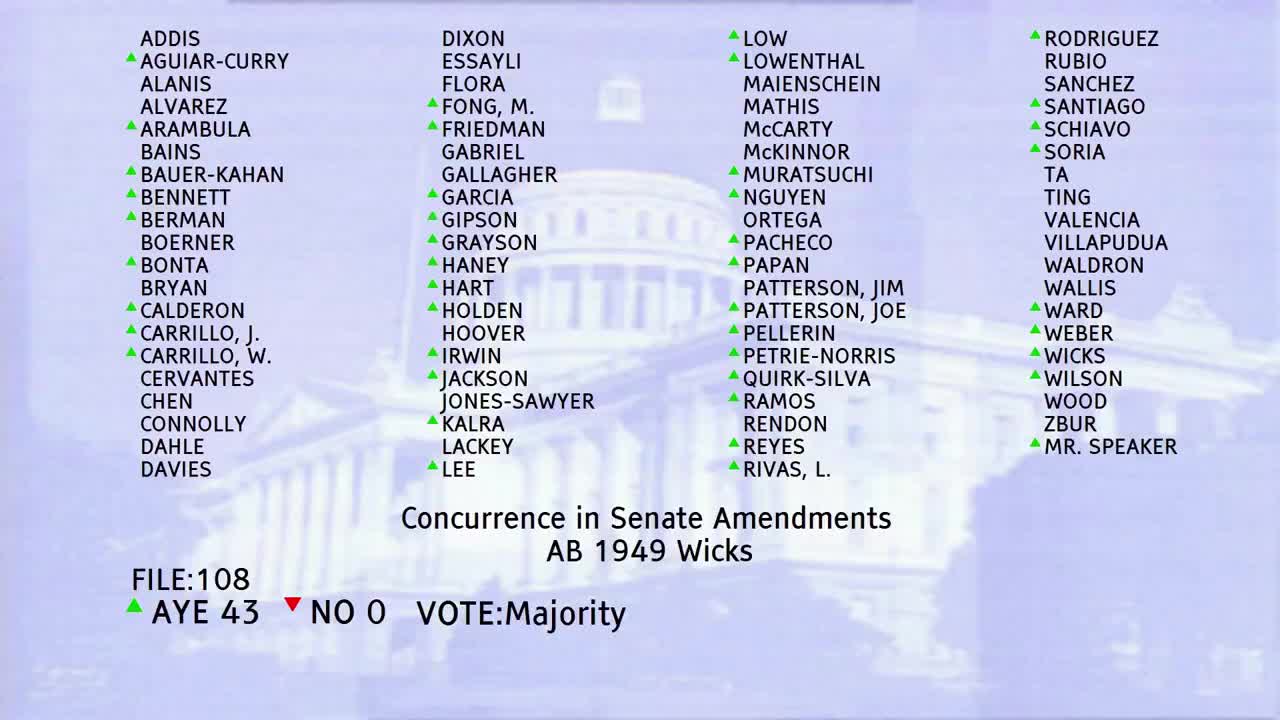
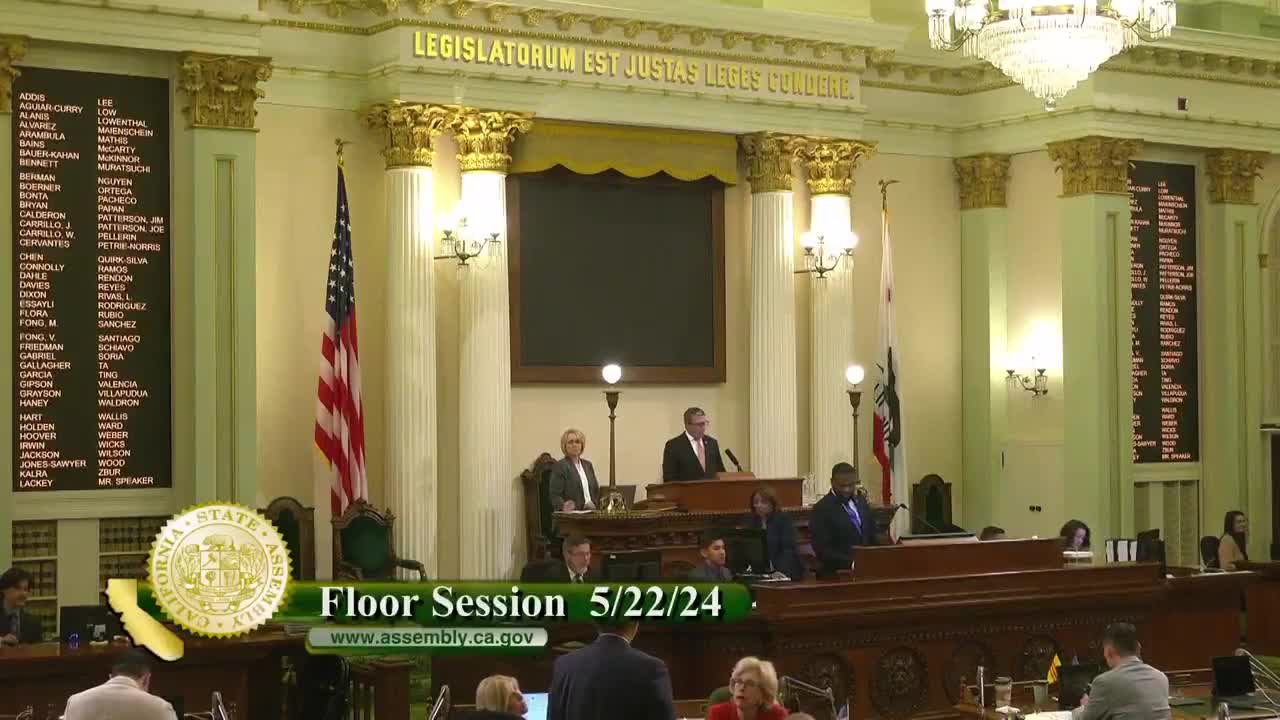


Bill Co-Author(s):
