AB 582: Entrepreneur-in-Residence Act of 2016.
- Session Year: 2015-2016
- House: Assembly
- Latest Version Date: 2016-06-15
Existing law establishes within the Governors office the Government Operations Agency, which consists of several state agencies, including the Department of General Services and the Department of Technology, and is governed by the Secretary of Government Operations.
This bill would enact the Entrepreneur-in-Residence Act of 2016, which would establish the state entrepreneur-in-residence program within the Government Operations Agency for the purpose of utilizing the expertise of private-sector entrepreneurs to help make state governmental activities and practices more streamlined and accessible. The program would authorize the Secretary of Government Operations to appoint a maximum of 10 persons each year to serve within a state agency as an entrepreneur-in-residence, with duties as established in the bill, on a voluntary basis. The bill would require the secretary to accept appointment applications for the position of an entrepreneur-in-residence and to establish prescribed procedures for complying with the bill no later than March 1, 2017. The bill would also require the secretary to establish an informal working group of entrepreneurs-in-residence to discuss best practices, experiences, obstacles, opportunities, and recommendations, and to report on the program to the Governor and the Assembly Committee on Jobs, Economic Development, and the Economy, as specified.
Existing law establishes the California State Auditors Office within state government under the direction of the Milton Marks Little Hoover Commission on California State Government Organization and Economy. Existing law makes that office independent of the executive branch and legislative control and places it under the direction of the California State Auditor.
Existing law establishes the Joint Legislative Budget Committee consisting of 8 Members of the Senate and 8 Members of the Assembly, authorizes the committee to appoint the Legislative Analyst, and sets forth his or her duties.
This bill would require the Legislative Analyst and the California State Auditor to convene a work group for the purposes of determining the most appropriate state agency to house a pilot professionals in public service program with the goal of making state government activities and practices more streamlined and accessible to small businesses. The bill would require that the recommendations of the work group be reported to the Legislature by December 31, 2016, and would repeal these provisions on January 1, 2017,
(1)Under existing law the State Board of Equalization collects and administers a variety of tax and fee programs with respect to matters including, but not limited to, vehicle fuels, timber, cigarettes and tobacco products, alcoholic beverages, emergency telephone services, integrated waste management, oil spills, hazardous materials, underground storage systems, and private railroad cars.
This bill would enact the Professionals in Public Service Act of 2015, which would establish the state professionals in public service program within the State Board of Equalization for the purpose of utilizing the expertise of private-sector entrepreneurs to help make state governmental activities and practices more streamlined and accessible to small businesses. The program would authorize the executive director of the board to appoint a maximum of 5 persons during any calendar year to serve the board, on a voluntary basis, as a professional in public service with duties as set forth in the bill. The bill would provide that these duties be performed pursuant to an agreement and subject to specified confidentiality requirements, the violation of which is a crime. By expanding the scope of a crime, this bill would impose a state-mandated local program.
This bill would require the director of the board to adopt procedures for implementing the program by March 1, 2016. The bill would preclude appointment of a professional in public service after August 1, 2016, and would establish the final date of service under the appointment as December 31, 2017. The bill would require the director to establish an informal working group of professionals in public service to discuss best practices, experiences, obstacles, opportunities, and recommendations.
This bill would, notwithstanding any law, require the director to annually report on the program to the Governor and the Assembly Committee on Jobs, Economic Development, and the Economy, with the final report due March 31, 2021.
This bill would repeal these provisions January 1, 2022.
(2)The California Constitution requires the state to reimburse local agencies and school districts for certain costs mandated by the state. Statutory provisions establish procedures for making that reimbursement.
This bill would provide that no reimbursement is required by this act for a specified reason.
(1)Under existing law the State Board of Equalization collects and administers a variety of tax and fee programs with respect to matters including, but not limited to, vehicle fuels, timber, cigarettes and tobacco products, alcoholic beverages, emergency telephone services, integrated waste management, oil spills, hazardous materials, underground storage systems, and private railroad cars.
This bill would enact the Professionals in Public Service Act of 2015, which would establish the state professionals in public service program within the State Board of Equalization for the purpose of utilizing the expertise of private-sector entrepreneurs to help make state governmental activities and practices more streamlined and accessible to small businesses. The program would authorize the executive director of the board to appoint a maximum of 5 persons during any calendar year to serve the board, on a voluntary basis, as a professional in public service with duties as set forth in the bill. The bill would provide that these duties be performed pursuant to an agreement and subject to specified confidentiality requirements, the violation of which is a crime. By expanding the scope of a crime, this bill would impose a state-mandated local program.
This bill would require the director of the board to accept appointment applications for the position of a professional in public service and to establish prescribed procedures for complying with the bill adopt procedures for implementing the program by March 1, 2016. The bill would preclude appointment of a professional in public service after August 1, 2016, and would establish the final date of service under the appointment as December 31, 2017. The bill would require the director to establish an informal working group of executives on loan professionals in public service to discuss best practices, experiences, obstacles, opportunities, and recommendations.
This bill would, notwithstanding any law, require the director to annually report on the program to the Governor and the Assembly Committee on Jobs, Economic Development, and the Economy, with the final report due January 1, 2019. March 31, 2021.
This bill would repeal these provisions January 12, 2021 January 1, 2022.
(2)The California Constitution requires the state to reimburse local agencies and school districts for certain costs mandated by the state. Statutory provisions establish procedures for making that reimbursement.
This bill would provide that no reimbursement is required by this act for a specified reason.
Under
(1)Under existing law the State Board of Equalization collects and administers a variety of tax and fee programs with respect to matters including, but not limited to, vehicle fuels, timber, cigarettes and tobacco products, alcoholic beverages, emergency telephone services, integrated waste management, oil spills, hazardous materials, underground storage systems, and private railroad cars.
This bill would enact the Entrepreneur Partnership Pilot Project Professionals in Public Service Act of 2015, which would establish the state executive-on-loan professionals in public service program within the State Board of Equalization for the purpose of utilizing the expertise of private-sector entrepreneurs to help make state governmental activities and practices more streamlined and accessible to small businesses. The program would authorize the executive director of the board to appoint a maximum of 5 persons during any calendar year to serve the board, on a voluntary basis, as an executive on loan a professional in public service with duties as set forth in the bill. The bill would provide these duties be performed pursuant to an agreement and subject to specified confidentiality requirements, the violation of which is a crime. By expanding the scope of a crime, this bill would impose a state-mandated local program.
This bill would require the director of the board to accept appointment applications for the position of an executive on loan a professional in public service and to establish prescribed procedures for complying with the bill by March 1, 2016. The bill would require the director to establish an informal working group of executives on loan to discuss best practices, experiences, obstacles, opportunities, and recommendations.
This bill would, notwithstanding any law, require the director to annually report on the program to the Governor and the Assembly Committee on Jobs, Economic Development, and the Economy, with the final report due January 1, 2019.
This bill would repeal these provisions January 12, 2021.
(2)The California Constitution requires the state to reimburse local agencies and school districts for certain costs mandated by the state. Statutory provisions establish procedures for making that reimbursement.
This bill would provide that no reimbursement is required by this act for a specified reason.
Under existing law the State Board of Equalization collects and administers a variety of tax and fee programs with respect to matters including, but not limited to, vehicle fuels, timber, cigarettes and tobacco products, alcoholic beverages, emergency telephone services, integrated waste management, oil spills, hazardous materials, underground storage systems, and private railroad cars.
This bill would enact the Entrepreneur Partnership Pilot Project Act of 2015, which would establish the state executive-on-loan program within the State Board of Equalization for the purpose of utilizing the expertise of private-sector entrepreneurs to help make state governmental activities and practices more streamlined and accessible to small businesses. The program would authorize the director of the board to appoint a maximum of 5 persons during any calendar year to serve the board, on a voluntary basis, as an executive on loan with duties as set forth in the bill.
This bill would require the director of the board to accept appointment applications for the position of an executive on loan and to establish prescribed procedures for complying with the bill by March 1, 2016. The bill would require the director to establish an informal working group of executives on loan to discuss best practices, experiences, obstacles, opportunities, and recommendations.
This bill would, notwithstanding any law, require the director to annually report on the program to the Governor and the Assembly Committee on Jobs, Economic Development, and the Economy, with the final report due January 1, 2019.
This bill would repeal these provisions January 12, 2021.
The Legislature finds and declares the following:
(a)California is home to some of the most innovative and resourceful entrepreneurs in the world, making it the nations leader in technology and related industries.
(b)The state should harness this innovation and leverage it to provide the best possible customer service to all of its citizens in the most cost-effective, efficient, and creative manner.
(c)Creativity and efficiency should not be limited to the private sector, but rather should be embraced and developed to further the public interest.
(d)Allowing the most creative private sector professionals to volunteer their time and expertise to make government work better and be more streamlined for its citizens would permit the state to utilize this creativity for the benefit of all its citizens.
(e)Establishing a professionals in public service program, in program within a California state agency would permit implementation of a model that has been applied successfully by a variety of public and private entities and has proven to be a useful tool to help various processes become more efficient.
SEC. 2.(a)The Legislative Analyst and the California State Auditor shall collaboratively convene a work group for the purposes of determining the most appropriate state agency to house a professionals in public service pilot program with the goal of making state government activities and practices more streamlined and accessible to small businesses.
(b)The Legislative Analyst and the California State Auditor shall report the work groups recommendations to the Legislature on or before December 31, 2016. The report shall be submitted as set forth in Section 9795 of the Government Code.
(c)This section is repealed on January 1, 2017.
SEC. 2.Article 7 (commencing with Section 12100.1) is added to Chapter 1.6 of Part 2 of Division 3 of Title 2 of the Government Code, to read:7.Entrepreneur-in-Residence Act of 201612100.1.This article shall be known and may be cited as the Entrepreneur-in-Residence Act of 2016.
12100.2.As used in this article, the following terms shall have the following meanings:
(a)Agency means any state agency, department, or commission.
(b)Entrepreneur-in-residence means an individual appointed to a position under the program.
(c)Office means the Government Operations Agency.
(d)Program means the entrepreneur-in-residence program, as established by this article.
(e)Secretary means the Secretary of the Government Operations Agency, or his or her designee.
12100.3.(a)The state entrepreneur-in-residence program is hereby established within the office for the purpose of utilizing the expertise of private-sector entrepreneurs to help make state governmental activities and practices more streamlined and accessible.
(b)(1)The secretary may appoint one or more entrepreneurs-in-residence under the program during each year, however, the secretary shall not appoint more than 10 entrepreneurs-in-residence during any calendar year. The secretary, with the approval of the state agency, may appoint an entrepreneur-in-residence to any state agency.
(2)Any person appointed as an entrepreneur-in-residence shall meet at least one of the following qualifications:
(A)The individual shall have demonstrated success in working with California small businesses and entrepreneurs.
(B)The individual shall have successfully developed, invented, or created a product and brought the product to the marketplace.
(3)Any person appointed as an entrepreneur-in-residence shall not have a conflict of interest with the activities of the state agency where he or she is placed, including, but not limited to, having any existing business before the state agency in which he or she is proposed to be placed or is placed.
(c)The secretary shall accept appointment applications for the position of an entrepreneur-in-residence and establish procedures for complying with this article no later than March 1, 2017. Among other requirements, the procedures shall include the following:
(1)A process for engaging with and receiving approval from state agencies about prospective appointments.
(2)A process for screening prospective appointees, including checking background and references.
(3)A standard memorandum of understanding that stipulates the responsibilities of each party in undertaking an entrepreneurship-in-residence under the program, including, but not limited to, hours, duties, goals, expected outcomes, agency support, and office participation. This standard memorandum of understanding shall be a model that shall be adapted to address each individual placement to create the memorandum of understanding into which the appointee, the agency, and the office enter.
(d) As a condition of having a placement of an entrepreneur-in-residence, the state agency shall agree to the procedures set by the secretary pursuant to subdivision (c).
(e)Before the effective date of an appointment under this article, every individual selected to participate in the program shall have entered into a memorandum of understanding with the secretary and the head of the state agency where the entrepreneur will serve. The memorandum of understanding shall be specific to the placement and clearly identify the hours, duties, goals, expected outcomes, agency support, and office participation. The memorandum of understanding shall set the benchmarks and metrics for evaluating the success of the placement.
(f)In administering the entrepreneur-in-residence program, the secretary shall appoint entrepreneurs-in-residence in a variety of interested agencies. However, to the extent practicable, the secretary shall not appoint more than two entrepreneurs-in-residence to positions in the same agency during the same year.
(g)An entrepreneur-in-residence may serve as an entrepreneur-in-residence for no longer than two years.
12100.4.(a)An entrepreneur-in-residence shall have all of the following duties:
(1)Providing recommendations to the head of the state agency the entrepreneur-in-residence serves on how to streamline, eliminate, or modify potentially inefficient or duplicative activities, processes, and programs, if any, at the state agency.
(2)Providing recommendations to the head of the state agency the entrepreneur-in-residence serves on methods to improve program efficiency at the state agency or new initiatives, if any, that may be instituted at the state agency to address the needs of small businesses and entrepreneurs.
(3)Assisting the state agency the entrepreneur-in-residence serves in improving outreach and service to small business concerns and entrepreneurs including, but not limited to, the following:
(A)Facilitating meetings and forums to educate small businesses and entrepreneurs on programs or initiatives of the state agency the entrepreneur-in-residence is serving.
(B)Facilitating in-service sessions with employees of the office and the state agency the entrepreneur-in-residence is serving on issues of concern to entrepreneurs and small businesses.
(C)Providing technical assistance or mentorship to small businesses and entrepreneurs in accessing programs at the office and the state agency the entrepreneur-in-residence is serving.
(b)An entrepreneur-in-residence shall serve on a voluntary basis, and shall dedicate at least 16 hours per week to the program, unless a greater number of hours per week is otherwise agreed upon. At the discretion of the head of a participating state agency, the entrepreneur-in-residence shall have access to an office, computer, and other related support services and equipment from the participating state agency as the state agency determines to be necessary for the entrepreneur-in-residence to discharge his or her duties.
(c)An entrepreneur-in-residence shall report directly to the head of the state agency in which the entrepreneur-in-residence is serving and shall also keep the secretary of the office updated on his or her activities, findings, and recommendations.
12100.5.(a)The secretary shall establish an informal working group of entrepreneurs-in-residence to discuss best practices, experiences, obstacles, opportunities, and recommendations.
(b)(1) The secretary shall annually prepare and submit to the Governor and the Assembly Committee on Jobs, Economic Development, and the Economy a report on the program. The report, at a minimum, shall include the following:
(A)A progress report on the activities of each entrepreneur-in-residence during the reporting period, based on the applicable memorandum of understanding.
(B)A general summary on how the overall program is addressing the goals of the program, which are as follows:
(i)Making state programs simpler, easier to access, more efficient, and more responsive to the needs and concerns of small businesses and entrepreneurs.
(ii)Providing for better outreach by the state to the private sector.
(iii)Strengthening coordination and interaction between the state and the private sector on issues relevant to entrepreneurs and small business concerns.
(2)The requirement for submitting a report imposed under paragraph (1) of this subdivision is inoperative on January 1, 2021, pursuant to Section 10231.5.
(3)It is anticipated that program impacts will not be fully measurable until recommended changes and activities are fully implemented. The office and the agency where an entrepreneur-in-residence is placed shall continue measuring and reporting the impact of the activities of the entrepreneur-in-residence for three years following the placement of an entrepreneur-in-residence.
The Legislature finds and declares the following:
(a)California is home to some of the most innovative and resourceful entrepreneurs in the world, making it the nations leader in technology and related industries.
(b)The state should harness this innovation and leverage it to provide the best possible customer service to all of its citizens in the most cost-effective, efficient, and creative manner.
(c)Creativity and efficiency should not be limited to the private sector, but rather should be embraced and developed to further the public interest.
(d)The Professionals in Public Service Act of 2015 applies a philosophy of success to state government, allowing Allowing the most creative private sector professionals to volunteer their time and expertise to make government work better for its citizens would permit the state to utilize this creativity for the benefit of all its citizens.
(e)Establishing the a professionals in public service program program, in a California state agency is would permit implementation of a model that has been applied successfully by a variety of public and private entities and has proven to be a useful tool to help various processes become more efficient.
(f)It is the intent of the Legislature that the Professionals in Public Service Act of 2015 serve as a model for similar measures authorizing other state agencies to utilize and adopt similar programs, where applicable, to support and streamline activities associated with their regulatory responsibilities.
SEC. 2.Chapter 4 (commencing with Section 15660) is added to Part 9 of Division 3 of Title 2 of the Government Code, to read:4.Professionals in Public Service Act of 201515660.(a)This chapter shall be known, and may be cited, as the Professionals in Public Service Act of 2015.
(b)As used in this chapter, the following terms have the following meanings:
(1)Board means the State Board of Equalization.
(2)Director means the Secretary of the State Board of Equalization, or his or her designee.
(3)Professional in public service means an individual appointed as a professional pursuant to the program.
(4)Program means the professionals in public service program, as established by this chapter.
15661.(a)The professionals in public service program is hereby established within the board for the purpose of utilizing the expertise of private-sector professionals to help make state governmental activities and practices more streamlined and accessible to small businesses.
(b)The board shall, by March 1, 2016, adopt procedures for implementing the program, and shall begin accepting applications within 60 days after their adoption. At a minimum, the procedures shall include all of the following:
(1)The director may appoint one or more professionals in public service under the program during the programs existence, however, the director shall not appoint more than five professionals in public service during any calendar year.
(2)Nominations for appointment may be submitted by any entity, public or private.
(3)An application for appointment may be submitted in writing on a form developed by the board, or through an online application process established by the board.
(4)Any person appointed as a professional in public service shall meet at least one of the following qualifications:
(A)The individual shall have demonstrated success in working with California small businesses and entrepreneurs.
(B)The individual shall have successfully developed, invented, or created a product and brought the product to the marketplace.
(5)A person appointed as a professional in public service shall not have a conflict of interest with the activities of the board, including, but not limited to, having any existing business before the board.
(6)A process for screening prospective appointees, including checking backgrounds and references.
(7)A standard memorandum of understanding that stipulates the responsibilities of each party in undertaking a professional in public service under the program, including, but not limited to, duties, goals, expected outcomes, administrative support, and office participation. This standard memorandum of understanding may function as a model for future professionals in public service programs.
(8)A reporting process that provides sufficient information for the director to report as set forth in subdivision (c) of Section 15663.
(c)Prior to the appointment of a professional in public service, the board shall approve the procedures established by the director pursuant to subdivision (b).
(d)The appointment of a professional in public service shall be made no later than August 1, 2016. The final date of service of a professional in public service appointed under this chapter shall be December 31, 2017.
(e)Before the effective date of an appointment under this chapter, every individual selected to participate in the program shall have entered into a memorandum of understanding with the director. The memorandum of understanding shall be specific as to the placement and clearly identify the duties, goals, expected outcomes, administrative support, and office participation. The memorandum of understanding shall set the benchmarks and metrics for evaluating the success of the placement.
(f)Procedures adopted pursuant to this chapter are hereby exempted from the rulemaking provisions of the Administrative Procedure Act (Chapter 3.5 (commencing with Section 11340) of Part 1).
15662.(a)Subject to the confidentiality requirements of Section 15619 of this code and of the Revenue and Taxation Code applicable to the board, and pursuant to an agreement that satisfies Section 6830 of the Revenue and Taxation Code, a professional in public service shall have all of the following duties:
(1)Providing recommendations to the board on how to streamline, eliminate, or modify potentially inefficient or duplicative activities, processes, and programs, if any, of the board.
(2)Providing recommendations to the board on methods to improve program efficiency at the board or new initiatives, if any, that may be instituted at the board to address the needs of small businesses and entrepreneurs.
(3)Assisting the board in improving outreach and service to small business concerns and entrepreneurs including, but not limited to, the following:
(A)Facilitating meetings and forums to educate small businesses and entrepreneurs on programs or initiatives of the board.
(B)Facilitating in-service sessions with employees of the board on issues of concern to entrepreneurs and small businesses.
(C)Providing technical assistance or mentorship to small businesses and entrepreneurs in accessing programs at the board.
(b)A professional in public service shall serve on a project-based, voluntary basis, and shall be given a timeline for completion. At the discretion of the director, the professional in public service shall have access to an office, computer, and other related support services and equipment as the director determines to be necessary for the professional in public service to discharge his or her duties.
15663.(a)A professional in public service shall report directly to the director.
(b)The director shall establish an informal working group of professionals in public service to discuss best practices, experiences, obstacles, opportunities, and recommendations.
(c)(1)Notwithstanding any law, including, but not limited to, Section 10231.5, the director shall annually prepare and submit to the Governor and the Assembly Committee on Jobs, Economic Development, and the Economy a report on the program. The report, at a minimum, shall include all of the following:
(A)A progress report on the activities of each professional in public service during the reporting period, based on the applicable memorandum of understanding.
(B)A general summary on how the overall program is addressing the goals of the program, which are as follows:
(i)Making board-administered programs simpler, easier to access, more efficient, and more responsive to the needs and concerns of small businesses and entrepreneurs.
(ii)Providing for better outreach by the board to the private sector.
(iii)Strengthening coordination and interaction between the board and the private sector on issues relevant to entrepreneurs and small business concerns.
(2)It is anticipated that program impacts will not be fully measurable until recommended changes and activities are fully implemented. The director shall continue measuring and reporting the impact of the activities of the professional in public service for three years following the placement of a professional in public service.
(3)The report shall be filed in compliance with Section 9795.
(4)The final annual report shall be filed by March 31, 2021. After the final report is filed, no further reporting is required under this chapter.
15664.This chapter shall remain in effect only until January 1, 2022, and as of that dated is repealed.
SEC. 3.No reimbursement is required by this act pursuant to Section 6 of Article XIIIB of the California Constitution because the only costs that may be incurred by a local agency or school district will be incurred because this act creates a new crime or infraction, eliminates a crime or infraction, or changes the penalty for a crime or infraction, within the meaning of Section 17556 of the Government Code, or changes the definition of a crime within the meaning of Section 6 of Article XIIIB of the California Constitution.
SEC. 2.(a)The Legislative Analyst and the California State Auditor shall collaboratively convene a work group for the purposes of determining the most appropriate state agency to house a professionals in public service pilot program with the goal of making state government activities and practices more streamlined and accessible to small businesses.
(b)The Legislative Analyst and the California State Auditor shall report the work groups recommendations to the Legislature on or before December 31, 2016. The report shall be submitted as set forth in Section 9795 of the Government Code.
(c)This section is repealed on January 1, 2017.
The Legislature finds and declares the following:
(a)California is home to some of the most innovative and resourceful entrepreneurs in the world, making it the nations leader in technology and related industries.
(b)The state should harness this innovation and leverage it to provide the best possible customer service to all of its citizens in the most cost-effective, efficient, and creative manner.
(c)Creativity and efficiency should not be limited to the private sector, but rather should be embraced and developed to further the public interest.
(d)The Professionals in Public Service Act of 2015 applies a philosophy of success to state government, allowing the most creative private sector professionals to volunteer their time and expertise to make government work better for its citizens.
(e)Establishing the professionals in public service program in a California state agency is a model that has been applied successfully by a variety of public and private entities and has proven to be a useful tool to help various processes become more efficient.
(f)It is the intent of the Legislature that the Professionals in Public Service Act of 2015 serve as a model for similar measures authorizing other state agencies to utilize and adopt similar programs, where applicable, to support and streamline activities associated with their regulatory responsibilities.
SEC. 2.Chapter 4 (commencing with Section 15660) is added to Part 9 of Division 3 of Title 2 of the Government Code, to read:4. Professionals in Public Service Act of 201515660.(a)This chapter shall be known, and may be cited, as the Professionals in Public Service Act of 2015.
(b)As used in this chapter, the following terms have the following meanings:
(1)Board means the State Board of Equalization.
(2)Director means the Secretary of the State Board of Equalization, or his or her designee.
(3)Professional in public service means an individual appointed as a professional on loan pursuant pursuant to the program.
(4)Program means the professionals in public service program, as established by this chapter.
15661.(a)The professionals in public service program is hereby established within the board for the purpose of utilizing the expertise of private-sector executives professionals to help make state governmental activities and practices more streamlined and accessible to small businesses.
(b)(1)The director The board shall, by March 1, 2016, adopt procedures for implementing the program, and shall begin accepting applications within 60 days after their adoption. At a minimum, the procedures shall include all of the following:
(1)The director may appoint one or more professionals in public service under the program during the programs existence, however, the director shall not appoint more than five professionals in public service during any calendar year. An
(2)Nominations for appointment may be submitted by any entity, public or private, may recommend candidates for the board to consider. private.
(3)An application for appointment may be submitted in writing on a form developed by the board, or through an online application process established by the board.
(2)
(4)Any person appointed as a professional in public service shall meet at least one of the following qualifications:
(A)The individual shall have demonstrated success in working with California small businesses and entrepreneurs.
(B)The individual shall have successfully developed, invented, or created a product and brought the product to the marketplace.
(3)
(5)A person appointed as a professional in public service shall not have a conflict of interest with the activities of the board, including, but not limited to, having any existing business before the board.
(c)The director shall accept appointment applications for the position of a professional in public service and shall establish procedures for complying with this chapter by March 1, 2016. Among other requirements, the procedures shall include all of the following:
(1)
(6)A process for screening prospective appointees, including checking backgrounds and references.
(2)
(7)A standard memorandum of understanding that stipulates the responsibilities of each party in undertaking an executive on loan a professional in public service under the program, including, but not limited to, duties, goals, expected outcomes, administrative support, and office participation. This standard memorandum of understanding may function as a model for future professionals in public service programs.
(3)
(8)A reporting process that provides sufficient information for the director to report as set forth in subdivision (c) of Section 15663.
(d)
(c)Prior to the appointment of a professional in public service, the board shall approve the procedures established by the director pursuant to subdivision (c). (b).
(d)The appointment of a professional in public service shall be made no later than August 1, 2016. The final date of service of a professional in public service appointed under this chapter shall be December 31, 2017.
(e)Before the effective date of an appointment under this chapter, every individual selected to participate in the program shall have entered into a memorandum of understanding with the director. The memorandum of understanding shall be specific as to the placement and clearly identify the duties, goals, expected outcomes, administrative support, and office participation. The memorandum of understanding shall set the benchmarks and metrics for evaluating the success of the placement.
(f)A professional in public service may serve in that capacity for up to the life of the program.
(g)
(f)Procedures adopted pursuant to this chapter are hereby exempted from the rulemaking provisions of the Administrative Procedure Act (Chapter 3.5 (commencing with Section 11340) of Part 1).
15662.(a)Subject to the confidentiality requirements of Section 15619 of this code and of the Revenue and Taxation Code applicable to the board, and pursuant to an agreement that satisfies Section 6830 of the Revenue and Taxation Code, a professional in public service shall have all of the following duties:
(1)Providing recommendations to the board on how to streamline, eliminate, or modify potentially inefficient or duplicative activities, processes, and programs, if any, of the board.
(2)Providing recommendations to the board on methods to improve program efficiency at the board or new initiatives, if any, that may be instituted at the board to address the needs of small businesses and entrepreneurs.
(3)Assisting the board in improving outreach and service to small business concerns and entrepreneurs including, but not limited to, the following:
(A)Facilitating meetings and forums to educate small businesses and entrepreneurs on programs or initiatives of the board.
(B)Facilitating in-service sessions with employees of the board on issues of concern to entrepreneurs and small businesses.
(C)Providing technical assistance or mentorship to small businesses and entrepreneurs in accessing programs at the board.
(b)A professional in public service shall serve on a project-based, voluntary basis, and shall be given a timeline for completion. At the discretion of the director, the professional in public service shall have access to an office, computer, and other related support services and equipment as the director determines to be necessary for the professional in public service to discharge his or her duties.
15663.(a)A professional in public service shall report directly to the director.
(b)The director shall establish an informal working group of executives on loan professionals in public service to discuss best practices, experiences, obstacles, opportunities, and recommendations.
(c)(1)Notwithstanding any law, including, but not limited to, Section 10231.5, the director shall annually prepare and submit to the Governor and the Assembly Committee on Jobs, Economic Development, and the Economy a report on the program. The report, at a minimum, shall include all of the following:
(A)A progress report on the activities of each professional in public service during the reporting period, based on the applicable memorandum of understanding.
(B)A general summary on how the overall program is addressing the goals of the program, which are as follows:
(i)Making board-administered programs simpler, easier to access, more efficient, and more responsive to the needs and concerns of small businesses and entrepreneurs.
(ii)Providing for better outreach by the board to the private sector.
(iii)Strengthening coordination and interaction between the board and the private sector on issues relevant to entrepreneurs and small business concerns.
(2)It is anticipated that program impacts will not be fully measurable until recommended changes and activities are fully implemented. The director shall continue measuring and reporting the impact of the activities of the professional in public service for three years following the placement of a professional in public service.
(3)The report shall be filed in compliance with Section 9795.
(4)The final annual report shall be filed by January 1, 2019. March 31, 2021. After the final report is filed, no further reporting is required under this chapter.
15664.This chapter shall remain in effect only until January 1, 2021, 2022, and as of that dated is repealed.
SEC. 3.No reimbursement is required by this act pursuant to Section 6 of Article XIIIB of the California Constitution because the only costs that may be incurred by a local agency or school district will be incurred because this act creates a new crime or infraction, eliminates a crime or infraction, or changes the penalty for a crime or infraction, within the meaning of Section 17556 of the Government Code, or changes the definition of a crime within the meaning of Section 6 of Article XIIIB of the California Constitution.
The Legislature finds and declares the following:
(a)California is home to some of the most innovative and resourceful entrepreneurs in the world, making it the nations leader in technology and related industries.
(b)The state should harness this innovation and leverage it to provide the best possible customer service to all of its citizens in the most cost-effective, efficient, and creative manner.
(c)Creativity and efficiency should not be limited to the private sector, but rather should be embraced and developed to further the public interest.
(d)The Professionals in Public Service Act of 2015 applies a philosophy of success to state government, allowing the most creative private sector professionals to volunteer their time and expertise to make government work better for its citizens.
SECTION 1.SEC. 2.Chapter 4 (commencing with Section 15660) is added to Part 9 of Division 3 of Title 2 of the Government Code, to read:4.Entrepreneur Partnership Pilot Project Professionals in Public Service Act of 201515660.(a)This chapter shall be known, and may be cited, as the Entrepreneur Partnership Project Professionals in Public Service Act of 2015.
(b)As used in this chapter, the following terms have the following meanings:
(1)Board means the State Board of Equalization.
(2)Director means the executive director Secretary of the State Board of Equalization, or his or her designee.
(3)Executive on loan Professional in public service means an individual appointed as an executive a professional on loan pursuant to the executive-on-loan program.
(4)Program means the executive-on-loan professionals in public service program, as established by this chapter.
15661.(a)The executive-on-loan professionals in public service program is hereby established within the board for the purpose of utilizing the expertise of private-sector executives to help make state governmental activities and practices more streamlined and accessible to small businesses.
(b)(1)The director may appoint one or more executives on loan professionals in public service under the program during the programs existence, however, the director shall not appoint more than five executives on loan professionals in public service during any calendar year. An entity, public or private, may recommend candidates for the board to consider.
(2)Any person appointed as an executive on loan a professional in public service shall meet at least one of the following qualifications:
(A)The individual shall have demonstrated success in working with California small businesses and entrepreneurs.
(B)The individual shall have successfully developed, invented, or created a product and brought the product to the marketplace.
(3)A person appointed as an executive on loan a professional in public service shall not have a conflict of interest with the activities of the board, including, but not limited to, having any existing business before the board.
(c)The director shall accept appointment applications for the position of an executive on loan a professional in public service and shall establish procedures for complying with this chapter by March 1, 2016. Among other requirements, the procedures shall include all of the following:
(1)A process for screening prospective appointees, including checking backgrounds and references.
(2)A standard memorandum of understanding that stipulates the responsibilities of each party in undertaking an executive on loan under the program, including, but not limited to, duties, goals, expected outcomes, administrative support, and office participation. This standard memorandum of understanding may function as a model for future executive-on-loan professionals in public service programs.
(3)A reporting process that provides sufficient information for the director to report as set forth in subdivision (c) of Section 15663.
(d)Prior to the appointment of an executive on loan, a professional in public service, the board shall approve the procedures established by the director pursuant to subdivision (c).
(e)Before the effective date of an appointment under this chapter, every individual selected to participate in the program shall have entered into a memorandum of understanding with the director. The memorandum of understanding shall be specific as to the placement and clearly identify the duties, goals, expected outcomes, administrative support, and office participation. The memorandum of understanding shall set the benchmarks and metrics for evaluating the success of the placement.
(f)An executive on loan A professional in public service may serve in that capacity for up to the life of the pilot program.
(g)Procedures adopted pursuant to this chapter are hereby exempted from the rulemaking provisions of the Administrative Procedure Act (Chapter 3.5 (commencing with Section 11340) of Part 1).
15662.(a)An executive on loan Subject to the confidentiality requirements of Section 15619 of this code and of the Revenue and Taxation Code applicable to the board, and pursuant to an agreement that satisfies Section 6830 of the Revenue and Taxation Code, a professional in public service shall have all of the following duties:
(1)Providing recommendations to the board on how to streamline, eliminate, or modify potentially inefficient or duplicative activities, processes, and programs, if any, of the board.
(2)Providing recommendations to the board on methods to improve program efficiency at the board or new initiatives, if any, that may be instituted at the board to address the needs of small businesses and entrepreneurs.
(3)Assisting the board in improving outreach and service to small business concerns and entrepreneurs including, but not limited to, the following:
(A)Facilitating meetings and forums to educate small businesses and entrepreneurs on programs or initiatives of the board.
(B)Facilitating in-service sessions with employees of the board on issues of concern to entrepreneurs and small businesses.
(C)Providing technical assistance or mentorship to small businesses and entrepreneurs in accessing programs at the board.
(b)An executive on loan A professional in public service shall serve on a project-based, voluntary basis, and shall be given a timeline for completion. At the discretion of the director, the executive on loan professional in public service shall have access to an office, computer, and other related support services and equipment as the director determines to be necessary for the executive on loan professional in public service to discharge his or her duties.
15663.(a)An executive on loan A professional in public service shall report directly to the director.
(b)The director shall establish an informal working group of executives on loan to discuss best practices, experiences, obstacles, opportunities, and recommendations.
(c)(1)Notwithstanding any law, including, but not limited to, Section 10231.5, the director shall annually prepare and submit to the Governor and the Assembly Committee on Jobs, Economic Development, and the Economy a report on the program. The report, at a minimum, shall include all of the following:
(A)A progress report on the activities of each executive on loan professional in public service during the reporting period, based on the applicable memorandum of understanding.
(B)A general summary on how the overall program is addressing the goals of the program, which are as follows:
(i)Making board-administered programs simpler, easier to access, more efficient, and more responsive to the needs and concerns of small businesses and entrepreneurs.
(ii)Providing for better outreach by the board to the private sector.
(iii)Strengthening coordination and interaction between the board and the private sector on issues relevant to entrepreneurs and small business concerns.
(2)It is anticipated that program impacts will not be fully measurable until recommended changes and activities are fully implemented. The director shall continue measuring and reporting the impact of the activities of the executive on loan professional in public service for three years following the placement of an executive-on-loan a professional in public service.
(3)The report shall be filed in compliance with Section 9795.
(4)The final annual report shall be filed by January 1, 2019.
15664.This chapter shall remain in effect only until January 1, 2021, and as of that dated is repealed.
SEC. 3.No reimbursement is required by this act pursuant to Section 6 of Article XIIIB of the California Constitution because the only costs that may be incurred by a local agency or school district will be incurred because this act creates a new crime or infraction, eliminates a crime or infraction, or changes the penalty for a crime or infraction, within the meaning of Section 17556 of the Government Code, or changes the definition of a crime within the meaning of Section 6 of Article XIIIB of the California Constitution.
(a)This chapter shall be known, and may be cited, as the Entrepreneur Partnership Project Act of 2015.
(b)As used in this chapter, the following terms have the following meanings:
(1)Board means the State Board of Equalization.
(2)Director means the executive director of the State Board of Equalization, or his or her designee.
(3)Executive on loan means an individual appointed as an executive on loan pursuant to the executive-on-loan program.
(4)Program means the executive-on-loan program, as established by this chapter.
15661.(a)The executive-on-loan program is hereby established within the board for the purpose of utilizing the expertise of private-sector executives to help make state governmental activities and practices more streamlined and accessible to small businesses.
(b)(1)The director may appoint one or more executives on loan under the program during the programs existence, however, the director shall not appoint more than five executives on loan during any calendar year. An entity, public or private, may recommend candidates for the board to consider.
(2)Any person appointed as an executive on loan shall meet at least one of the following qualifications:
(A)The individual shall have demonstrated success in working with California small businesses and entrepreneurs.
(B)The individual shall have successfully developed, invented, or created a product and brought the product to the marketplace.
(3)A person appointed as an executive on loan shall not have a conflict of interest with the activities of the board, including, but not limited to, having any existing business before the board.
(c)The director shall accept appointment applications for the position of an executive on loan and shall establish procedures for complying with this chapter by March 1, 2016. Among other requirements, the procedures shall include all of the following:
(1)A process for screening prospective appointees, including checking backgrounds and references.
(2)A standard memorandum of understanding that stipulates the responsibilities of each party in undertaking an executive on loan under the program, including, but not limited to, duties, goals, expected outcomes, administrative support, and office participation. This standard memorandum of understanding may function as a model for future executive-on-loan programs.
(3)A reporting process that provides sufficient information for the director to report as set forth in subdivision (c) of Section 15663.
(d)Prior to the appointment of an executive on loan, the board shall approve the procedures established by the director pursuant to subdivision (c).
(e)Before the effective date of an appointment under this chapter, every individual selected to participate in the program shall have entered into a memorandum of understanding with the director. The memorandum of understanding shall be specific as to the placement and clearly identify the duties, goals, expected outcomes, administrative support, and office participation. The memorandum of understanding shall set the benchmarks and metrics for evaluating the success of the placement.
(f)An executive on loan may serve in that capacity for up to the life of the pilot program.
(g)Procedures adopted pursuant to this chapter are hereby exempted from the rulemaking provisions of the Administrative Procedure Act (Chapter 3.5 (commencing with Section 11340) of Part 1).
15662.(a)An executive on loan shall have all of the following duties:
(1)Providing recommendations to the board on how to streamline, eliminate, or modify potentially inefficient or duplicative activities, processes, and programs, if any, of the board.
(2)Providing recommendations to the board on methods to improve program efficiency at the board or new initiatives, if any, that may be instituted at the board to address the needs of small businesses and entrepreneurs.
(3)Assisting the board in improving outreach and service to small business concerns and entrepreneurs including, but not limited to, the following:
(A)Facilitating meetings and forums to educate small businesses and entrepreneurs on programs or initiatives of the board.
(B)Facilitating in-service sessions with employees of the board on issues of concern to entrepreneurs and small businesses.
(C)Providing technical assistance or mentorship to small businesses and entrepreneurs in accessing programs at the board.
(b)An executive on loan shall serve on a project-based, voluntary basis, and shall be given a timeline for completion. At the discretion of the director, the executive on loan shall have access to an office, computer, and other related support services and equipment as the director determines to be necessary for the executive on loan to discharge his or her duties.
15663.(a)An executive on loan shall report directly to the director.
(b)The director shall establish an informal working group of executives on loan to discuss best practices, experiences, obstacles, opportunities, and recommendations.
(c)(1)Notwithstanding any law, including, but not limited to, Section 10231.5, the director shall annually prepare and submit to the Governor and the Assembly Committee on Jobs, Economic Development, and the Economy a report on the program. The report, at a minimum, shall include all of the following:
(A)A progress report on the activities of each executive on loan during the reporting period, based on the applicable memorandum of understanding.
(B)A general summary on how the overall program is addressing the goals of the program, which are as follows:
(i)Making board-administered programs simpler, easier to access, more efficient, and more responsive to the needs and concerns of small businesses and entrepreneurs.
(ii)Providing for better outreach by the board to the private sector.
(iii)Strengthening coordination and interaction between the board and the private sector on issues relevant to entrepreneurs and small business concerns.
(2)It is anticipated that program impacts will not be fully measurable until recommended changes and activities are fully implemented. The director shall continue measuring and reporting the impact of the activities of the executive on loan for three years following the placement of an executive-on-loan.
(3)The report shall be filed in compliance with Section 9795.
(4)The final annual report shall be filed by January 1, 2019.
15664.This chapter shall remain in effect only until January 1, 2021, and as of that dated is repealed.
|
Date
|
Status
|
|---|---|
| Aug 11, 2016 | In committee: Held under submission. |
| Aug 1, 2016 | In committee: Referred to APPR. suspense file. |
| Jun 28, 2016 | From committee: Do pass and re-refer to Com. on APPR. (Ayes 12. Noes 0.) (June 28). Re-referred to Com. on APPR. |
| Jun 16, 2016 | Re-referred to Com. on G.O. |
| Jun 15, 2016 | From committee chair, with author's amendments: Amend, and re-refer to committee. Read second time, amended, and re-referred to Com. on RLS. |
| Jun 11, 2015 | Referred to Com. on RLS. |
| Jun 1, 2015 | In Senate. Read first time. To Com. on RLS. for assignment. |
| Jun 1, 2015 | Read third time. Passed. Ordered to the Senate. (Ayes 80. Noes 0. Page 1713.) |
| Jun 1, 2015 | Read third time. Passed. Ordered to the Senate. |
| May 28, 2015 | From committee: Do pass. (Ayes 17. Noes 0.) (May 28). |
| May 28, 2015 | Read second time. Ordered to third reading. |
| May 20, 2015 | In committee: Set, first hearing. Referred to APPR. suspense file. |
| May 20, 2015 | In committee: Set, first hearing. Referred to suspense file. |
| May 5, 2015 | Re-referred to Com. on APPR. |
| May 4, 2015 | Read second time and amended. |
| Apr 30, 2015 | From committee: Amend, and do pass as amended and re-refer to Com. on APPR. (Ayes 9. Noes 0.) (April 27). |
| Apr 22, 2015 | Re-referred to Com. on REV. & TAX. |
| Apr 21, 2015 | From committee chair, with author's amendments: Amend, and re-refer to Com. on REV. & TAX. Read second time and amended. |
| Apr 21, 2015 | From committee: Do pass and re-refer to Com. on REV. & TAX. (Ayes 8. Noes 0.) (April 21). Re-referred to Com. on REV. & TAX. |
| Apr 6, 2015 | Re-referred to Com. on J., E.D., & E. |
| Mar 26, 2015 | From committee chair, with author's amendments: Amend, and re-refer to Com. on J., E.D., & E. Read second time and amended. |
| Mar 9, 2015 | Referred to Com. on J., E.D., & E. |
| Feb 25, 2015 | From printer. May be heard in committee March 27. |
| Feb 24, 2015 | Read first time. To print. |
|
Date
|
Description
|
Location
|
Votes
|
|
|---|---|---|---|---|
| Aug 1, 2016 | Placed on suspense file | Senate Standing Committee on Appropriations |
Passed |
|
| Jun 28, 2016 | Do pass, but first be re-referred to the Committee on [Appropriations] | Senate Standing Committee on Governmental Organization |
Passed |
|
| Jun 1, 2015 | AB 582 CALDERON Assembly Third Reading | Assembly Floor |
Passed |
|
| May 28, 2015 | Do pass. | Assembly Standing Committee on Appropriations |
Passed |
|
| Apr 27, 2015 | Do pass as amended and be re-referred to the Committee on [Appropriations] | Assembly Standing Committee on Revenue and Taxation |
Passed |
|
| Apr 21, 2015 | Do pass and be re-referred to the Committee on [Revenue and Taxation] | Assembly Standing Committee on Jobs, Economic Development, and the Economy |
Passed |
This list shows positions taken on this bill by organizations on the date displayed, which is linked to the original source.
Positions by individuals are not included.
SENATE COMMITTEE ON APPROPRIATIONS
Senator Ricardo Lara, Chair
2015 - 2016 Regular Session
AB 582 (Calderon) - Entrepreneur-in-Residence Act of 2016
Version: June 15, 2016 | Policy Vote: G.O. 12 - 0 |
Urgency: No | Mandate: No |
Hearing Date: August 1, 2016 | Consultant: Robert Ingenito |
This bill meets the criteria for referral to the Suspense File.
Bill Summary:
AB 582 would establish the Entrepreneur-in-Residence (EIR) program within the Government Operations Agency (GOA) for the purpose of utilizing the expertise of private-sector entrepreneurs to help make state governmental activities and practices more streamlined and accessible.
Fiscal Impact:
Costs resulting from this bill be would be unknown, but could potentially exceed $50,000 annually (General Fund and/or special funds) for (1) GOA to administer the program and comply with the bill’s reporting requirements, and (2) for state agencies to house the entrepreneurs, as specified.
Background:
California small businesses reportedly comprised 96 percent of the State’s exporters in 2009, accounting for 44 percent of the State’s total exports. Business owners with zero employees totaled 2.8 million, and accounted for the single largest component of the State’s 3.5 million firms in 2010. Microenterprises (businesses with less than five employees) represent over 90 percent of the total. These businesses can incur certain challenges in meeting regulatory requirements, accessing capital, and marketing their goods and services.
Proposed Law:
This bill would, among other things, do the following:
- Enact the EIR Act of 2016, which would establish the state EIR program within GOA for the purpose of utilizing the expertise of private-sector entrepreneurs to help make state governmental activities and practices more streamlined and accessible.
- Specify that GOA may appoint one or more EIRs under the program during each year, with a cap of 10 appointments during any calendar year.
- Specify that GOA, with the approval of the state agency, may appoint an EIR to any state agency.
- Specify that any person appointed as an EIR shall meet specified qualifications.
- Prohibit any person appointed as an EIR in having a conflict of interest with the activities of the state agency where he or she is placed, including, but not limited to, having any existing business before the state agency in which he or she is proposed to be placed or is placed.
- Require GOA to accept appointment applications for the position of an EIR and to establish specified procedures for complying with this bill no later than March 1, 2017.
- Require every individual selected to participate in the program, before the effective date of an appointment, to enter into a memorandum of understanding with the secretary of the GOA and the head of the state agency where the entrepreneur will serve. The memorandum of understanding shall be specific to the placement and clearly identify the hours, duties, goals, expected outcomes, agency support, and office participation. The memorandum of understanding shall set the benchmarks and metrics for evaluating the success of the placement.
- Specify that in administering the EIR program, the GOA shall appoint EIRs in a variety of interested agencies. However, to the extent practicable, the secretary shall not appoint more than two EIRs to positions in the same agency during the same year.
- Prohibit an EIR from serving as an EIR for no longer than two years.
- Require an EIR to have all of the following duties:
- Providing recommendations to the head of the state agency where the EIR serves on how to streamline, eliminate, or modify potentially inefficient or duplicative activities, processes, and programs, if any, at the state agency.
- Providing recommendations to the head of the state agency where the EIR serves on methods to improve program efficiency at the state agency or new initiatives, if any, that may be instituted at the state agency to address the needs of small businesses and entrepreneurs.
- Assisting the state agency in improving outreach and service to small business concerns and entrepreneurs including, but not limited to, the following:
- Facilitating meetings and forums to educate small businesses and entrepreneurs on programs or initiatives of the state agency the EIR is serving.
- Facilitating in-service sessions with employees of the office and the state agency the EIR is serving on issues of concern to entrepreneurs and small businesses.
- Providing technical assistance or mentorship to small businesses and entrepreneurs in accessing programs at the office and the state agency the EIR is serving.
- Require an EIR to serve on a voluntary basis, and shall dedicate at least 16 hours per week to the program, unless a greater number of hours per week is otherwise agreed upon. At the discretion of the head of a participating state agency, the EIR shall have access to an office, computer, and other related support services and equipment from the participating state agency as the state agency determines to be necessary for the EIR to discharge his or her duties.
- Require the EIR to report directly to the head of the state agency in which the EIR is serving and shall also keep the secretary of the GOA updated on his or her activities, findings, and recommendations.
- Require GOA to establish an informal working group of EIR to discuss best practices, experiences, obstacles, opportunities, and recommendations.
- Require GOA to annually prepare and submit to the Governor and the Assembly Committee on Jobs, Economic Development, and the Economy a report on the program containing specified information. The requirement for submitting a report imposed by this bill shall become inoperative on January 1, 2021.
- Require the office and the agency where an EIR is placed to continue to measure and report the impact of the activities of the EIR for three years following the placement of an EIR.
Related Legislation:
- SB 1140 (Moorlach, 2016) would have required the automatic repeal of a statute that expressly or implicitly authorizes an executive agency to promulgate regulations two years after the statute goes into effect, unless the Legislature amends the statute to state its intent that the statute not be repealed, or unless the statute was passed in response to an emergency, as defined. The bill failed passage in the Senate Governmental Organization Committee.
- AB 12 (Cooley, 2015) would have required every state agency to review all provisions of the California Code of Regulations it has adopted, and to adopt, amend, or repeal any regulations identified as duplicative, overlapping, or out of date by January 1, 2018. The bill was held under submission on the Suspense File of this Committee.
- AB 1675 (Calderon, 2014) would have established the EIR program within the Governor’s Office of Business and Economic Development to provide private sector expertise and assistance to help make government activities and practices streamlined and accessible to small business. The bill was held under submission on the Suspense File of this Committee.
-- END --
SENATE COMMITTEE ON GOVERNMENTAL ORGANIZATION
Senator Isadore Hall, III
Chair
2015 - 2016 Regular
Bill No: 582 Hearing Date: 6/28/2016
Author: | |||
Version: | 6/15/2016 Amended | ||
Urgency: | No | Fiscal: | Yes |
Consultant: | Felipe Lopez | ||
SUBJECT: Entrepreneur-in-Residence Act of 2016
DIGEST: This bill enacts the Entrepreneur-in-Residence (EIR) Act of 2016, which would establish the state EIR program within the Government Operations Agency (GOA) for the purpose of utilizing the expertise of private-sector entrepreneurs to help make state governmental activities and practices more streamlined and accessible.
ANALYSIS:
Existing law:
- Establishes the GOA, within the Governor’s office, which consists of several state agencies, including the Department of General Services and the Department of Technology.
- Finds and declares that it is in the public interest to aid, counsel, assist, and protect the interest of small business concerns in order to maintain a healthy state economy.
This bill:
- Enacts the EIR Act of 2016, which would establish the state EIR program within the GOA for the purpose of utilizing the expertise of private-sector entrepreneurs to help make state governmental activities and practices more streamlined and accessible.
- Specifies that the GOA may appoint one or more EIRs under the program during each year, however, the GOA shall not appoint more than 10 EIRs during any calendar year.
- Specifies that the GOA, with the approval of the state agency, may appoint an EIR to any state agency.
- Specifies that any person appointed as an EIR shall meet at least one of the following qualifications:
- The individual shall have demonstrated success in working with California small businesses and entrepreneurs.
- The individual shall have successfully developed, invented, or created a product and brought the product to the marketplace.
- Prohibits any person appointed as an EIR in having a conflict of interest with the activities of the state agency where he or she is placed, including, but not limited to, having any existing business before the state agency in which he or she is proposed to be placed or is placed.
- Requires the GOA to accept appointment applications for the position of an EIR and to establish procedures for complying with this bill no later than March 1, 2017. Among other requirements, the procedures shall include the following:
- A process for engaging with and receiving approval from state agencies about prospective appointments.
- A process for screening prospective appointees, including checking background and references.
- A standard memorandum of understanding that stipulates the responsibilities of each party in undertaking an EIR under the program, including, but not limited to, hours, duties, goals, expected outcomes, agency support, and office participation. This standard memorandum of understanding shall be a model that shall be adapted to address each individual placement to create the memorandum of understanding into which the appointee, the agency, and the office enter. As a condition of having a placement of an EIR, the state agency shall agree to the memorandum.
- Requires every individual selected to participate in the program, before the effective date of an appointment, to enter into a memorandum of understanding with the secretary of the GOA and the head of the state agency where the entrepreneur will serve. The memorandum of understanding shall be specific to the placement and clearly identify the hours, duties, goals, expected outcomes, agency support, and office participation. The memorandum of understanding shall set the benchmarks and metrics for evaluating the success of the placement.
- Specifies that in administering the EIR program, the GOA shall appoint EIRs in a variety of interested agencies. However, to the extent practicable, the secretary shall not appoint more than two EIRs to positions in the same agency during the same year.
- Prohibits an EIR from serving as an EIR for no longer than two years.
- Requires an EIR to have all of the following duties:
- Providing recommendations to the head of the state agency where the EIR serves on how to streamline, eliminate, or modify potentially inefficient or duplicative activities, processes, and programs, if any, at the state agency.
- Providing recommendations to the head of the state agency where the EIR serves on methods to improve program efficiency at the state agency or new initiatives, if any, that may be instituted at the state agency to address the needs of small businesses and entrepreneurs.
- Assisting the state agency in improving outreach and service to small business concerns and entrepreneurs including, but not limited to, the following:
- Facilitating meetings and forums to educate small businesses and entrepreneurs on programs or initiatives of the state agency the EIR is serving.
- Facilitating in-service sessions with employees of the office and the state agency the EIR is serving on issues of concern to entrepreneurs and small businesses.
- Providing technical assistance or mentorship to small businesses and entrepreneurs in accessing programs at the office and the state agency the EIR is serving.
- Requires an EIR to serve on a voluntary basis, and shall dedicate at least 16 hours per week to the program, unless a greater number of hours per week is otherwise agreed upon. At the discretion of the head of a participating state agency, the EIR shall have access to an office, computer, and other related support services and equipment from the participating state agency as the state agency determines to be necessary for the EIR to discharge his or her duties.
- Requires the EIR to report directly to the head of the state agency in which the EIR is serving and shall also keep the secretary of the GOA updated on his or her activities, findings, and recommendations.
- Requires the GOA to establish an informal working group of EIR to discuss best practices, experiences, obstacles, opportunities, and recommendations.
- Requires the GOA to annually prepare and submit to the Governor and the Assembly Committee on Jobs, Economic Development, and the Economy a report on the program. The report, at a minimum, shall include the following:
- A progress report on the activities of each EIR during the reporting period, based on the applicable memorandum of understanding.
- A general summary on how the overall program is addressing the goals of the program, which are as follows:
- Making state programs simpler, easier to access, more efficient, and more responsive to the needs and concerns of small businesses and entrepreneurs.
- Providing for better outreach by the state to the private sector.
- Strengthening coordination and interaction between the state and the private sector on issues relevant to entrepreneurs and small business concerns.
- Specifies that the requirement for submitting a report imposed by this bill, shall become inoperative on January 1, 2021.
- States that it is anticipated that program impacts will not be fully measurable until recommended changes and activities are fully implemented.
- Requires the office and the agency where an EIR is placed to continue to measure and report the impact of the activities of the EIR for three years following the placement of an EIR.
Background
Purpose of the bill. The author argues that, “without practical experience with the limited administrative capacity in which many small businesses operate or a realistic method for small businesses to participate in the regulatory process, it is difficult for state agencies to adopt rules that are considerate of needs of these smaller size businesses while still meeting the intended policy requirements.”
Quality of the EIR Program. The bill currently specifies that the EIR program is completely voluntary and that an EIR is required to volunteer a minimum of 16 hours per week. Without any compensation, and being required to work a minimum of 16 hours per week, it is hard to imagine that too many successful entrepreneurs would volunteer for such an assignment.
In addition, the bill currently prohibits an EIR from being placed in a state agency where the EIR might have a conflict of interest. While understandable, the prohibition does diminish the knowledge that such an EIR would provide for the state. If the EIR is prohibited from volunteering in the state agency where he/she would realistically have more of an expertise, are we not then diminishing the role of an EIR?
Similar EIR Programs. EIR Programs are not necessarily a new idea and have been used in the investment and business world for decades. The use of EIR Programs to help government agencies is more recently gaining traction. As an example, in 2012, the Federal Drug Administration (FDA) established an EIR Program to attract seasoned entrepreneurs in the medical industry that had successfully navigated the FDA's regulatory process. The six to seven month program was designed to help the FDA and small businesses work together to introduce new products in the marketplace both quickly and safely. The FDA not only improved processes, FDA staff also gained a better understanding of the challenges small businesses face and how to better network with entrepreneurs in the future.
In another example, U.S. Citizenship and Immigration Services (USCIS) established an EIR initiative with the goal of recruiting a small “tactical team” of business experts to work with USCIS staff to help streamline operations and enhance pathways within existing immigration law to help immigrant entrepreneurs start and grow businesses in the U.S. This was a 90-day project, which also included the other entities within the Department of Homeland Security and was a component of the White House Startup America initiative.
Prior/Related Legislation
SB 1140 (Moorlach, 2016) would have required the automatic repeal of a statute that expressly or implicitly authorizes an executive agency to promulgate regulations two years after the statute goes into effect, unless the Legislature amends the statute to state its intent that the statute not be repealed, or unless the statute was passed in response to an emergency, as defined. (Failed passage in Senate Governmental Organization Committee)
AB 12 (Cooley, 2015) would have required every state agency to review all provisions of the California Code of Regulations it has adopted, and to adopt, amend, or repeal any regulations identified as duplicative, overlapping, or out of date by January 1, 2018. (Held on Senate Appropriations Suspense File)
AB 1675 (Calderon, 2014) would have established the EIR program within the Governor’s Office of Business and Economic Development to provide private sector expertise and assistance to help make government activities and practices streamlined and accessible to small business. (Held on Senate Appropriations Suspense File)
SB 981 (Huff, 2014) would have required each state agency to review each regulation adopted prior to January 1, 2014, and to develop a report to the Legislature containing prescribed information. (Failed passage in Senate Governmental Organization Committee)
FISCAL EFFECT: Appropriation: Fiscal Com.: Local:
SUPPORT:
TechNet
OPPOSITION:
None received
ARGUMENTS IN SUPPORT: According to TechNet, “This bill is a great step in the right direction to support and encourage some of the best and brightest minds in the private and small business sectors to help positively influence the operation and business processes and procedures at the governmental agency level. AB 582 is a win-win for all involved and we believe will not only provide the benefit to the public sector, but will move to incent small business, private sector executives to build, maintain and enhance their businesses in the State of California.”
AB 582
Page 2
ASSEMBLY THIRD READING
AB 582
(Calderon)
As Amended May 4, 2015
Majority vote
Committee |
Votes |
Ayes |
Noes |
Jobs |
8-0 |
Eduardo Garcia, Kim, Brough, Brown, Chau, Chu, Gipson, Irwin |
|
Revenue & Taxation |
9-0 |
Ting, Brough, Dababneh, Gipson, Roger Hernández, Mullin, Patterson, Quirk, Wagner |
|
Appropriations |
17-0 |
Gomez, Bigelow, Bonta, Calderon, Chang, Daly, Eggman, Gallagher, Eduardo Garcia, Gordon, Holden, Jones, Quirk, Rendon, Wagner, Weber, Wood |
|
SUMMARY: Requires the Legislative Analyst and the California State Auditor to convene a work group to determine the most appropriate state agency to house a pilot program with the goal of making state government more streamlined and accessible to small businesses. The work group is required to submit a report to the Legislature on or before December 31, 2016.
FISCAL EFFECT: According to the Assembly Appropriations Committee, General Fund costs in the range of $75,000 to $100,000 for the State Auditor and the Legislative Analyst's Office to convene a work group and produce a report with recommendations related to the establishment of professionals in public service pilot program.
COMMENTS: Although the state has a vigorous public process that is designed to allow the rulemaking agency to fully consider the comments, suggestions, and economic impacts of proposed regulations on all business – especially small businesses – state agencies often receive few specific comments and recommendations on how to reduce the cost and complexity of the proposed implementation method, while still maintaining the same regulatory standard.
An intrinsic challenge to California's rulemaking process is that those businesses that may be most affected have the least ability to monitor the broad range of state rulemaking entities, recommend appropriate alternative implementation methods or engage meaningfully in the often complex and highly technical rule making proceedings.
Without practical experience with the limited administrative capacity in which many small businesses operate or a realistic method for small businesses to participate in the regulatory process, it is difficult for state agencies to adopt rules that are considerate of the needs of these smaller size businesses. Given that nearly 3 million firms in California have no employees and 90% of firms with employees have less than 20, having implementation methods that are appropriate for small businesses in terms of time, money, and expertise are important to the state's economic growth.
This bill calls for the establishment of a work group to determine the best process for implementing an entrepreneur-in residence program (EIR) within state government. EIRs have been used successfully by both the public and private sectors to create leaner administrative processes and provide better customer service.
Similar Programs: The EIR model has been used in the investment and business world for decades. According to Dell, a supporter of this and prior EIR legislation, the high tech sector began using the EIR model in the 1980s as a means to bring experienced professionals into startup businesses.
The use of EIR Programs to help government agencies has more recently been gaining traction. As an example, in 2012, the Federal Drug Administration (FDA) established an EIR Program to attract seasoned entrepreneurs from the medical industry who had prior experience in navigating the FDA's regulatory process. The six to seven month program was designed to help the FDA and small businesses work together to more quickly introduce safe new products into the marketplace. Under the program, the FDA not only improved processes, the FDA staff are reported to have also gained a better understanding of the challenges small businesses face and how to better network with entrepreneurs in the future. The goal of one of the first FDA EIR placements was described as delivering "transformational change" by creating opportunities for internal and external talent to collaboratively apply the principles of lean engineering by rapidly testing, validating, and scaling new approaches. EIR Programs were included as a key component of President Obama's Strategy for American Innovation.
In another example, United States Citizenship and Immigration Services (USCIS) established an EIR initiative to improve processing times and the related administrative burden for certain entrepreneur immigrants. The strategy of this EIR project was to recruit a small "tactical team" of business experts to work with USCIS staff, using the authorities and limitations in existing law, to streamline operations and enhance pathways for future business development by these immigrant entrepreneurs. This was a short 90-day project, which ultimately involved other federal agencies and was used as an example of the innovative type of relationships that are being encouraged under the White House Startup America initiative.
In March 2014, Virginia enacted an EIR Program (HB 321, Chapter 63, Statutes of 2014) and several other states are reported to be considering EIR Programs in 2015. AB 1675 (Calderon), which failed to move from the Assembly Appropriations Committee in 2014, was patterned after the Texas and Virginia legislation. This bill calls for the development of a strategic action plan to have California establish its own EIR pilot program.
Analysis Prepared by: Toni Symonds / J., E.D., & E. / (916) 319-2090 FN: 0000750
AB 582
Page 1
Date of Hearing: May 20, 2015
ASSEMBLY COMMITTEE ON APPROPRIATIONS
Jimmy Gomez, Chair
AB 582
(Calderon) – As Amended May 4, 2015
Policy Committee: |
Jobs, Economic Development, and the Economy |
Vote: |
8 - 0 |
|
Revenue and Taxation |
|
9 - 0 |
|
|
|
|
Urgency: No State Mandated Local Program: No Reimbursable: No
SUMMARY:
This bill requires the Legislative Analyst and the California State Auditor to convene a work group to determine the most appropriate state agency to house a pilot program with the goal of making state government more streamlined and accessible to small businesses. The work group is required to submit a report to the Legislature on or before December 31, 2016.
FISCAL EFFECT:
General Fund costs in the range of $75,000 to $100,000 for the State Auditor and the Legislative Analyst's Office to convene a work group and produce a report with recommendations related to the establishment of a professionals in public service pilot program.
COMMENTS:
Purpose. According to the author, entrepreneurs and local business owners responsible for California's economic prosperity are some of the best and brightest in the world. Still, entrepreneurs face many obstacles in today's economy, such as access to capital and access to different markets, and often government itself. Governmental processes are highly bureaucratic, which leads to slow decision making that can have a direct impact on the private sector.
According to the bill's findings and declarations, allowing the most creative private sector professionals to volunteer their time and expertise to make government work better for its citizens would permit the state to utilize this creativity for the benefit of all its citizens.
This bill directs the Legislative Analyst and the California State Auditor to convene a work group to determine the most appropriate state agency to house a professionals in public service pilot program with the goal of making state government activities and practices more streamlined and accessible to small businesses.
Prior legislation. AB 1675 (Calderon) of 2014, would have established the Entrepreneur-in-Residence Act of 2014 to use the expertise of private-sector entrepreneurs to help make state governmental activities and practices more streamlined and accessible to small businesses. This bill was held on the Suspense file in the Senate Appropriations Committee.
Analysis Prepared by: Misty Feusahrens / APPR. / (916) 319-2081
AB 582
Page 7
Date of Hearing: April 27, 2015
ASSEMBLY COMMITTEE ON REVENUE AND TAXATION
Philip Ting, Chair
AB 582
(Calderon) – As Amended April 21, 2015
Majority vote. Fiscal committee.
SUBJECT: Professionals in Public Service Act of 2015
SUMMARY: Establishes a professionals in public service program (Program) within the State Board of Equalization (BOE) to utilize the expertise of private-sector professionals "to help make state governmental activities and practices more streamlined and accessible to small businesses." Specifically, this bill:
Establishes the Professionals in Public Service Act of 2015 (Act).
Contains the following legislative findings:
California is home to some of the most innovative and resourceful entrepreneurs in the world, making it the nation's leader in technology and related industries;
The state should harness this innovation and leverage it to provide the best possible customer service to all of its citizens in the most cost-effective, efficient, and creative manner;
Creativity and efficiency should not be limited to the private sector, but rather should be embraced and developed to further the public interest;
The Act applies a philosophy of success to state government, allowing the most creative private sector professionals to volunteer their time and expertise to make government work better for its citizens;
Establishing the professionals in public service program in a California state agency is a model that has been applied successfully by a variety of public and private entities and has proven to be a useful tool to help various processes become more efficient; and,
It is the intent of the Legislature that the Act serve as a model for similar measures authorizing other state agencies to utilize and adopt similar programs, where applicable, to support and streamline activities associated with their regulatory responsibilities.
Directs the BOE, by March 1, 2016, to adopt procedures for implementing the Program, and to begin accepting applications within 60 days after their adoption. At a minimum, these procedures must include all of the following:
The BOE director (Director) may appoint one or more professionals in public service under the Program during the Program's existence. However, the Director shall not appoint more than five professionals in public service during any calendar year;
Nominations for appointment may be submitted by any entity, public or private;
An application for appointment may be submitted in writing on a form developed by the BOE, or through an online application process established by the BOE;
Any person appointed as a professional in public service shall meet at least one of the following qualifications: (1) The individual shall have demonstrated success in working with California small businesses and entrepreneurs; or, (2) The individual shall have successfully developed, invented, or created a product and brought the product to the marketplace;
A person appointed as a professional in public service shall not have a conflict of interest with the activities of the BOE, including, but not limited to, having any existing business before the BOE;
A process for screening prospective appointees, including checking backgrounds and references;
A standard memorandum of understanding that stipulates the responsibilities of each party in undertaking a "professional in public service" [sic] under the Program, including duties, goals, expected outcomes, administrative support, and office participation. This standard memorandum of understanding may function as a model for future professionals in public service programs; and,
A reporting process, as specified.
Provides that the appointment of a professional in public service shall be made no later than August 1, 2016. The final date of service of a professional in public service shall be December 31, 2017.
Provides that, before the effective date of an appointment, every individual selected to participate in the Program shall have entered into a memorandum of understanding with the Director, as specified.
Specifies that procedures adopted under this bill are exempt from the rulemaking provisions of the Administrative Procedure Act.
Provides that, subject to the confidentiality requirements of Government Code Section 15619 and of the Revenue and Taxation Code (R&TC) applicable to the BOE, a professional in public service shall have the following duties:
Providing recommendations to the BOE on how to streamline, eliminate, or modify potentially inefficient or duplicative activities, processes, and programs, if any, of the BOE;
Providing recommendations to the BOE on methods to improve program efficiency at the BOE or new initiatives, if any, that may be instituted at the BOE to address the needs of small businesses and entrepreneurs;
Assisting the BOE in improving outreach and service to small business concerns and entrepreneurs including the following:
Facilitating meetings and forums to educate small businesses and entrepreneurs on programs or initiatives of the BOE;
Facilitating in-service sessions with employees of the BOE on issues of concern to entrepreneurs and small businesses; and,
Providing technical assistance or mentorship to small businesses and entrepreneurs in accessing programs at the BOE.
Provides that a professional in public service shall serve on a project-based, voluntary basis, and shall be given a timeline for completion. At the discretion of the Director, the professional in public service shall have access to an office, computer, and other related support services and equipment as the Director determines to be necessary for the professional in public service to discharge his or her duties.
Specifies that a professional in public service shall report directly to the Director.
Requires the Director to establish an informal working group of professionals in public service to discuss best practices, experiences, obstacles, opportunities, and recommendations.
Requires the Director annually to prepare and submit to the Governor and the Assembly Committee on Jobs, Economic Development, and the Economy a report on the Program, as specified.
Sunsets automatically on January 1, 2022.
EXISTING LAW:
Establishes the BOE, which consists of five voting members: the State Controller and four members elected for four-year terms at gubernatorial elections. The State is divided into four BOE districts, with the voters of each district electing one member. (California Constitution Article XIII, Section 17.)
Specifies that any member or ex-member of the BOE, or any agent employed by it, or the Controller, or ex-Controller, or any person employed by him or her, or any person who has at any time obtained such knowledge from any of the foregoing officers or persons, shall not illegally divulge any of the following items of information concerning the business affairs of companies reporting to the BOE:
Any information concerning the business affairs of any company that is gained during an examination of its books and accounts or in any other manner, and is not required by law to be reported to the BOE;
Any information, other than the assessment and the amount of taxes levied, obtained by the BOE in accordance with law from any company other than one concerning which that information is required by law to be made public; and,
Any particular item of information relating to the disposition of its earnings contained in the report of a quasi-public corporation that the corporation, by written communication specifying the items and presented at the time when it files its report, requests shall be treated as confidential. (Government Code Section 15619.)
FISCAL EFFECT: The BOE estimates that this bill would have no direct revenue impact.
COMMENTS:
The author has provided the following statement in support of this bill:
California is home to the largest, richest and most diverse economy in the United States. In fact, according to Bloomberg, California has overtaken Brazil as the 7th largest economy in the world. A significant reason being the ingenuity of the citizens in our extraordinary state.
Small businesses make up 99.2% of all businesses in the state and create two-thirds of all new jobs. Subsequently, the entrepreneurs and local business owners responsible for California's economic prosperity are some of the best and brightest in the world. Still, entrepreneurs face many obstacles in today's economy, such as access to capital and access to different markets, however, the biggest obstacle to success is often government itself.
Our representative government is designed to give a voice to citizens with different views to debate in a public platform in hopes that consensus can be achieved. Sometimes, legislators pursue policies that can be out-of-touch with the public's interest, or behind the times due to the rapid growth of technological advances. More to the point, governmental processes are highly bureaucratic which leads to slow decision making that can have a direct impact on the private sector.
Incorporating a private citizen who has a diverse technical background in business, financial and governmental processes into a governmental entity (e.g. BOE) can provide government employees direct access to an expert who is knowledgeable of the various challenges facing businesses in California today. The result can potentially give California's business leaders an edge on the world competition to ensure the continued growth of our economy.
Proponents of this bill note the following:
This bill is a great step in the right direction to support and encourage some of the best and brightest minds in the private and small business sector to help positively influence the operations and business process and procedure at the governmental agency level.
AB 582 would incorporate a private citizen who has a diverse
technical background in business, finance and governmental process
into a governmental entity where they can provide the knowledge and
tools as an expert to make positive influences within the agency.
The BOE notes the following in its staff analysis of this bill:
The BOE Members discussed this bill at the March 25, 2015 Legislative Committee meeting, but could not support it: "Specific issues expressed by the BOE Members include:
"Is legislation needed to implement a professional in public service program? The BOE could internally explore a professional in public service program through the BOE's Customer Service & Administrative Efficiency Committee. This Committee's roles and responsibilities include considering issues to improve customer service and administrative efficiencies.
"Should the bill apply to state government in general? A number of state entities that currently provide oversight and investigate state government operations, such as the Little Hoover Commission and the California State Auditor, might benefit from such a program.
"The BOE is a tax administration and collection agency that deals with confidential taxpayer information. Concerns arise over appointees working in BOE offices with the secured data that BOE maintains."
BOE's confidential taxpayer information: "The bill authorizes, at the discretion of BOE's Director, the professional in public service to have access to an office, computer, and other related support services and equipment. The March 26, 2015 amendments require that the professional in public service duties comply with confidentiality requirements in law. Accordingly, a professional in public service . . . will only have access to information that is currently available on BOE's public website (nonconfidential information)."
Appointees cannot have a conflict of interest with the activities of the BOE: "The extent of the conflict is unclear. Would a corporate officer of a business that holds a seller's permit be eligible? Would corporate officers of a company with a history of not filing and paying their sales and use tax returns on time be disqualified? Does a corporation's audit liability appeal represent a conflict of interest for individuals? BOE staff will work with the author's office to identify circumstances that pose a conflict of interest, and disqualify an individual from participating in the program."
Other states: "Texas and Virginia have enacted similar, pilot programs referred to as the Entrepreneur-in Residence Program (EIR). Texas' EIR program is administered by the Texas Governor's Office of Economic Development and Tourism. The Governor or the Governor's designee may appoint not more than 10 entrepreneurs-in-residence to state agencies during each fiscal year. An appointee is a full-time employee of the state agency to which they are appointed.
"Virginia's EIR program is administered by the Virginia's Secretary of Commerce and Trade. The Secretary may appoint up to 10 entrepreneurs to serve as entrepreneurs-in-residence with state agencies. They serve without compensation but, at the discretion of the head of the agency for which they were appointed, may receive reasonable and necessary expenses incurred in the discharge of their duties as an entrepreneur-in-residence."
Committee Staff Comments
The Taxpayers' Rights Advocate: More than two decades ago, the Legislature enacted the Harris-Katz California Taxpayers' Bill of Rights (Harris-Katz). That legislation was designed to "ensure that the rights, privacy, and property of California taxpayers are adequately protected during the process of the assessment and collection of taxes." (R&TC Section 7081.) Among its many provisions, Harris-Katz directed the BOE to establish the position of the Taxpayers' Rights Advocate (TRA). (R&TC Section 7083.) The TRA is charged with facilitating the resolution of taxpayer complaints, including complaints alleging unsatisfactory treatment by BOE employees. (Id.)
The BOE notes that the TRA is also responsible for monitoring tax and fee programs for compliance with Harris-Katz and recommending new procedures or revisions to existing policy. The TRA is also charged with recommending changes in statutes, regulations, policies, and procedures to improve service to taxpayers. Finally, the BOE notes that, under existing law, the BOE must develop and maintain a taxpayer education and information program that includes all of the following:
A program of written communication with newly registered taxpayers explaining in simplified terms their duties and responsibilities, and the most common areas of noncompliance encountered by participants in their business or industry;
Participation in small business seminars and similar programs organized by federal, state, and local agencies;
Revision of taxpayer educational materials explaining the most common areas of taxpayer noncompliance in simplified terms; and,
Implementation of a continuing education program for audit and compliance personnel to include the application of new legislation to taxpayer activities and areas of recurrent taxpayer noncompliance or inconsistency of administration.
This bill, in turn, is designed with the goal of making state governmental activities and practices more streamlined and accessible to small businesses. To the extent the Legislature determines that changes in BOE processes and procedures are required to accomplish this end, Committee staff questions whether it might be preferable to augment or refine the existing authority of the TRA, who possesses extensive experience in this field, rather than implement a new program.
Defining terms and objectives: As noted above, this bill is designed to make state government more accessible to small businesses. For example, a professional in public service would be responsible for providing recommendations to the BOE on new initiatives to address the needs of small businesses and entrepreneurs. This bill, however, lacks any definition or guidance regarding what exactly constitutes a "small business". In addition, this bill requires any appointed professional to have either: (i) demonstrated success in "working with" California small businesses and entrepreneurs, or (ii) successfully developed a product and brought the product to the marketplace. These categories, however, are so broad in scope that it is questionable whether they would adequately ensure small businesses, however defined, are given a seat at the table. For example, would an external consultant or vendor to small businesses meet the definition of a professional under this bill, even if she worked for a large multi-national firm? Would a corporate executive at Apple meet the definition for having successfully developed the iPhone and brought it to market? While the expertise of such individuals may prove invaluable, would it necessarily promote a greater understanding of the issues faced by small businesses in California?
Keeping things confidential: By necessity, a tax agency such as the BOE handles highly sensitive and confidential taxpayer information. This information includes tax account information, employee personnel records, criteria used for audit selection, and information considered proprietary in nature. While this bill specifies that a professional in public service will be subject to the confidentiality requirements applicable to the BOE, the potential for inadvertent or intentional misuse of confidential information is amplified in a tax agency setting. Thus, Committee staff questions whether the BOE is the most appropriate state agency for initiating a pilot program bringing in small business professionals and entrepreneurs from the private sector.
Prior legislation: AB 1675 (Calderon), of the 2013-14 Legislative Session, would have established the Entrepreneur-in-Residence Act of 2014 to use the expertise of private-sector entrepreneurs to help make state governmental activities and practices more streamlined and accessible to small businesses. AB 1675 was held on the Senate Committee on Appropriations' Suspense File.
Double-referral: This bill was double referred to the Assembly Committee on Jobs, Economic Development, and the Economy and passed that Committee by a vote of 8-0 on April 21, 2015. For additional discussion of this bill's provisions, please refer to that Committee's analysis.
REGISTERED SUPPORT / OPPOSITION:
Support
Dell
TechNet
Opposition
None on file
Analysis Prepared by: M. David Ruff / REV. & TAX. / (916) 319-2098
AB 582
Page 9
Date of Hearing: April 21, 2015
ASSEMBLY COMMITTEE ON JOBS, ECONOMIC DEVELOPMENT, AND THE ECONOMY
Eduardo Garcia, Chair
AB 582
Calderon – As Amended March 26, 2015
SUBJECT: Professionals in Public Service
SUMMARY: Establishes the Professionals in Public Service (PPS) Program, under the administrative oversight of the Board of Equalization (BOE), for the purpose of utilizing the expertise of private sector professionals to help make BOE practices more accessible to small businesses. Specifically, this bill:
Expresses legislative intent that California is home to some of the most innovative and resourceful entrepreneurs in the world, making it the leader in technology and related industries and that the state should harness this innovation in order to provide the best possible customer service to all of its citizens in the most cost-effective, efficient, and creative manner.
Establishes the PPS Program within the BOE, which includes the annual appointment by the Secretary of the BOE of one to five private sector professionals who will assist the BOE in making state government activities and practices more streamlined and accessible to small businesses.
Sets the following goals for the program:
Making board-administered programs simpler, easier to access, more efficient, and more responsive to the needs and concerns of small businesses and entrepreneurs.
Providing for better outreach by the board to the private sector.
Strengthening coordination and interaction between the board and the private sector on issues relevant to entrepreneurs and small business concerns.
Requires an individual selected for the program to meet one of the following criteria:
The individual shall have demonstrated success in working with small business concerns and entrepreneurs; or
The individual shall have successfully developed, invented, or created a product and brought the product to the marketplace.
Prohibits an individual who is participating in the program from having any conflicts of interest, including, but not limited to, having business before the BOE.
Requires the Secretary of the BOE to establish procedures for the appointment and placement of individuals to the PPS Program by March 1, 2016. These procedures are exempt from the Administrative Procedures Act, as specified. Among other requirements, the procedures are to include:
A process for screening prospective appointees including background checks and references.
A standard memorandum of understanding that stipulates the responsibilities of each party including, but not limited to, duties, goals, expected outcomes, administrative support, and office participation.
A reporting process that provides sufficient information for the Secretary of the BOE to prepare an annual report to the Legislature, as specified.
Requires the BOE to approve the PPS Program procedures prior to the appointment of any individual.
Requires every individual to have entered into an MOU with the BOE prior to starting their appointment to the PPS Program. The contents of the MOU are to be specific to individual placement including the individuals duties, goals, expected outcomes, administrative support, and office participation. The MOU shall also include benchmarks and metrics for evaluating the success of the placement.
Specifies that an individual participating in the PPS Program reports directly to the Secretary of the BOE
Authorizes an individual to serve in the PPS Program for the life of the program.
Sets the following duties for an individual appointed to the PPS Program:
Provide recommendations on how to streamline, eliminate, or modify potentially inefficient or duplicative activities, processes, and programs;
Provide recommendations on methods to improve program efficiency or establish new programs that address the needs of small businesses and entrepreneurs.
Assist the BOE in improving outreach and service to small business concerns and entrepreneurs including, but not limited to;
Facilitating meetings and forums to educate small businesses and entrepreneurs on programs or initiatives of the BOE.
Facilitating in-service sessions with employees of the BOE on issues of concern to entrepreneurs and small businesses.
Providing technical assistance or mentorship to small businesses and entrepreneurs in accessing BOE programs.
Provides that the scope of the duties (listed above) are subject to specified the confidentiality requirements applicable to the BOE.
Requires appointees of the PPS Program to serve on a project-based, voluntary basis with a specific timeline for completion. At the discretion of the Secretary of the BOE, an individual participating in the PPS Program may have access to an office, computer, and other related support services and equipment, as specified.
Authorizes the Secretary of the BOE to establish an informal working group of PPS appointees to discuss best practices, experiences, obstacles, opportunities, and recommendations.
Requires the Secretary of the BOE to annually prepare and submit a report, as specified, on the progress of the activities of each of the appointees and a general summary of how the overall program is meeting the program goals. The final annual report on the program is to be filed by January 1, 2019.
Specifies that program impacts will not be fully measurable until recommended changes are fully implemented. The bill directs the Secretary of the BOE to continue measuring and reporting the impact of the activities of the program following each placement.
Sunsets the provisions of the bill on January 1, 2021.
Includes a crimes and infractions disclaimer.
EXISTING LAW:
Finds and declares that it is in the public interest to aid, counsel, assist, and protect the interests of small business concerns in order to maintain a healthy state economy.
Establishes the five-member BOE as a publicly elected tax board with oversight on a number of taxation issues including sales and use tax. The BOE also acts as the appellate body for franchise and personal income tax appeals, and serves a significant role in the assessment and administration of property taxes.
FISCAL EFFECT: Unknown
POLICY ISSUE FRAME:
Although the state has a vigorous public process that is designed to allow the rulemaking agency to fully consider the comments, suggestions, and economic impacts of proposed regulations on all business – especially small businesses - state agencies are often unable to assess the cost and complexity of the proposed implementation model on varying size businesses. An intrinsic challenge to California's rule making process is that those businesses that may be most affected have the least ability to monitor the broad range of state rulemaking entities, recommend appropriate alternative implementation models or engage meaningfully in the often complex and highly technical rule making proceedings.
Without practical experience with the limited administrative capacity in which many small businesses operate or a realistic method for small businesses to participate in the regulatory process, it is difficult for state agencies to adopt rules that are considerate of needs of these smaller size businesses while still meeting the intended policy requirements.
Given that nearly 3 million firms in California have no employees and 90% of firms with employees have less than 20, having implementation methods that are appropriate for small businesses in terms of time, money, and expertise are a relevant state economic development issue.
This bill establishes a process for imbedding small business professionals with the BOE in order to help facilitate change from within the government organization. It is a process that has been used by the private sector to create leaner administrative processes and is more recently being adopted by local, state, and federal governments. These types of programs are more commonly referred to as entrepreneur-in-residence (EIR) programs.
The analysis provides background on California's small business economy, previous legislative actions on regulatory reform, other examples of EIR programs, and related legislation. Amendments are discussed in Comment 7.
COMMENTS:
Author's Purpose: According to the author's statement, "California is home to the largest, richest and most diverse economy in the United States. In fact, according to Bloomberg, California is overtaking Brazil as the 7th largest economy to the world. A significant reason being the ingenuity of the citizens in our extraordinary state.
Small businesses make up 99.2% of all businesses in the state and create two-thirds of all net new jobs. Subsequently, the entrepreneurs and local business owners responsible for California’s economic prosperity are some of the best and brightest in the world. Still, entrepreneurs face many obstacles in today’s economy, such as access to capital and access to different markets, however, the biggest obstacle to success is often times government itself.
Our representative government is designed to give a voice to citizens with different views to debate in a public platform in hopes that consensus can be achieved. Sometimes, legislators pursue policies that can be out-of-touch with the public’s interest, or behind the times due to the rapid growth of technological advances. More to the point, governmental processes are highly bureaucratic which leads to slow decision making that can have a direct impact on the private sector.
Incorporating a private citizen who has a diverse technical background in business, financial and governmental processes into a governmental entity (e.g. BOE) can provide government employees direct access to an expert who is knowledgeable of the various challenges facing businesses in California today. The result can potentially give California’s business leaders an edge on the world competition to ensure the continued growth of our economy."
California's Small Business Economy: Small businesses form the core of California's $2.2 trillion economy. Research shows that net new job creation is strongest among businesses with less than 20 employees, that small businesses have historically led the state's local and regional economies out of recessions, and that these businesses are essential to the state's global competitiveness by meeting niche industry needs.
Businesses with no employees make up the single largest component of businesses in California, 2.9 million out of an estimated 3.6 million firms in 2012, representing over $149 billion in revenues with the highest number of businesses in the professional, scientific, and technical services industry sector. As these non-employer businesses grow, they continue to serve as an important component of California's dynamic economy.
Even if you exclude non-employer firms, businesses with less than 20 employees comprise nearly 90% of all businesses and employ approximately 18% of all workers. Businesses with less than 100 employees represent 97% of all businesses and employ 36% of the workforce. These non-employer and small employer firms create jobs, generate taxes, and revitalize communities.
2011 Business Profile By Size (excludes non-employer firms) |
|||||||
Area Description |
Employment Size |
Number of Firms |
Percent of Firms |
Employees |
Percent of Jobs |
Annual Payroll ($1,000) |
|
United States |
Total |
5,684,424 |
|
113,425,965 |
|
$5,164,897,905 |
|
California |
Total |
689,568 |
12% of U.S. Firms |
12,698,427 |
11% of all U.S. Jobs |
$663,570,657 |
|
|
|||||||
United States |
0-4 |
3,532,058 |
62% of U.S. Firms |
5,857,662 |
5% of U.S. Jobs |
$230,422,086 |
|
California |
0-4 |
429,139 |
62% of CA Firms |
702,508 |
5.5% of CA Jobs |
$35,472,447 |
|
|
|||||||
United States |
<20 |
5,104,014 |
89.7% of U.S. Firms |
20,250,874 |
17.8% of U.S. Jobs |
$732,759,369 |
|
California |
<20 |
614,538 |
89.1% of CA Firms |
2,386,296 |
18.7% of CA Jobs |
$99,417,066 |
|
|
|||||||
United States |
0-99 |
5,585,510 |
98.2% of U.S. Firms |
39,130,875 |
34% of U.S. Jobs |
1,478,844,420 |
|
California |
0-99 |
672,360 |
97% of CA Firms |
4,587,628 |
36.1% of CA Jobs |
194,611,832 |
|
|
|||||||
United States |
<500 |
5,666,753 |
99.6% of U.S Firms |
54,998,312 |
48.4% of U.S. Jobs |
$2,169,353,973 |
|
California |
<500 |
683,999 |
99.1% of CA Firms |
6,331,871 |
49.8% of CA Jobs |
$280,857,823 |
|
|
|||||||
United States |
500+ |
17,671 |
0.3% of U.S. Firms |
58,427,653 |
51.5% of U.S. Jobs |
$2,995,543,932 |
|
California |
500+ |
5,569 |
0.8% of CA Firms |
6,366,556 |
50.1% of CA Jobs |
$382,712,834 |
|
Source: U.S. Census http://www.census.gov/econ/susb/index.html |
|||||||
Reflective of their important role, the JEDE Committee Members regularly hear about the challenges small businesses face meeting the implementation requirements of state, local, and federal regulations. While opponents of regulatory reform accuse small businesses of trying to avert their responsibilities, businesses that have testified before the Committee have repeatedly stated that their goal is to achieve a regulatory environment that encourages small businesses development, while still maintaining public health and safety standards. AB 582 does not authorize the lowering of any regulatory standard. The bill proposes to reduce the regulatory burden on small businesses by providing the BOE with expert advice on the operation and administrative structures of small businesses.
Cost of Regulations on Business: There are two major sources of data on the cost of regulatory compliance on businesses, the federal SBA and the Office of the Small Business Advocate (OSBA). For the last 10 years, the federal SBA has conducted a peer reviewed study that analyzes the cost of federal government regulations on different size businesses. This research shows that small businesses continue to bear a disproportionate share of the federal regulatory burden. On a per employee basis, it costs about $2,400, or 45% more, for small firms to comply with federal regulations than their larger counterparts.
The first study on the impact of California regulations on small businesses was released by the OSBA in 2009. This first in-the-nation study found that the total cost of regulations to small businesses averaged about $134,000 per business in 2007. Of course, no one would advocate that there should be no regulations in the state. The report, however, importantly identifies that the cost of regulations can provide a significant cost to the everyday operations of California businesses and should therefore be a consideration among the state's economic development policies.
Regulatory costs are driven by a number of factors including multiple definitions of small business in state and federal law, the lack of e-commerce solutions to address outdated paperwork requirements, procurement requirements that favor larger size bidders, and the lack of technical assistance to alleviate such obstacles that inhibit small business success.
Different Approaches to Regulatory Reform: In general, the Legislature's engagement on regulatory reforms has taken two basic approaches. One set of policies have addressed specific regulatory challenges on a case-by-case basis. The other approach makes systemic change to the way in which rules are adopted, often adding a supplemental more targeted review pre- or post-adoption. Recommendations for systemic change have included:
Dynamic Fiscal Analysis in Appropriations Committee: These bills required an analysis of bills before the Legislature on their impact on business and the economy. Currently, the Legislature's fiscal committee reviews focus on the bill's direct impact on state funds, and most specifically on the General Fund. The fiscal committee's analysis is not intended to include legislations' potential economic impact on the state.
Substantive Administrative Review: These bills shifted the review of the Office of Administrative Law from a procedural review of the regulation package to a substantive review of its impact on business and the economy, including the sufficiency of the assessment of alternatives. Alternatively, legislation has suggested that another state entity, such as the State Auditor or Legislative Analyst's Office, could be designated to undertake an expanded review of proposed regulations.
Enhanced Analysis of Alternatives: These bills required a more meaningful consideration of alternative implementation models, which could lower costs or reduce the implementation burden on small businesses.
Post Implementation Analysis: These bills required a review of a regulation's impact five-years after its implementation. Alternatively, legislation has been suggested that all regulations have a sunset date, which would allow for full review once the actual impacts could be identified.
Until now, the first approach has been the most successful, although by its nature it has had very limited overall impact on California's regulatory business climate. Due to their potential implementation costs, a majority of the bills advancing the systemic approach to regulatory reform have failed to move from the fiscal committees - as illustrated in the comment on related legislation.
The most significant systemic change in recent years was approved in SB 617 (Calderon), Chapter 496, Statutes of 2011, which required an enhanced economic impact analysis for regulations anticipated to have an impact of $50 million or more. The SB 617 process follows the federal regulatory model (described below), however, it should be noted that the state process is silent as to the assessment of costs based on size of business.
The Legislature heard several bills to refine the SB 617 process in 2013-14 session including AB 2723 (Medina), which would have required rulemaking entities to consider the specific impact of major regulations on sole proprietorships, and AB 1711 (Cooley) which moved up the economic impact assessment to the initial statement of reasons for all regulations. Ultimately, the Governor signed AB 1711 (Cooley), Chapter 779, Statutes of 2014 and vetoed AB 2723 (veto message below).
Similar Programs: The PPS Program is not necessarily a new idea. The EIR model has been used in the investment and business world for decades. According to Dell, a supporter of this and prior EIR legislation, the high tech sector began using EIR model in the 1980's in order to bring experienced professionals into the startup process.
The use of EIR Programs to help government agencies is more recently gaining traction. As an example, in 2012, the Federal Drug Administration (FDA) established an EIR Program to attract seasoned entrepreneurs in the medical industry that had successfully navigated the FDA's regulatory process. The six to seven month program is designed to help the FDA and small businesses work together to introduce new products in the marketplace both quickly and safely. The FDA not only improved processes, FDA staff also gained a better understanding of the challenges small businesses face and how to better network with entrepreneurs in the future. The goal of one of first EIR placements deliver "transformational change by combining the best internal and external talent, applying the principles of lean engineering in rapidly testing, validating, and scaling new approaches." EIR Programs are a key component of President Obama's Strategy for American Innovation.
In another example, U.S. Citizenship and Immigration Services (USCIS) established an EIR initiative with the goal of recruiting a small “tactical team” of business experts to work with USCIS staff to help streamline operations and enhance pathways within existing immigration law to help immigrant entrepreneurs start and grow businesses in the U.S. This was a 90-day project, which also included the other entities within the Department of Homeland Security and was a component of the White House Startup America initiative.
In March 2014, Virginia enacted an EIR Program (HB 32, Chapter 63, Statutes of 2014) and several other states are reported to also be considering EIR Programs. AB 1675 (Calderon), which failed to move from the Assembly Appropriations Committee in 2014, was patterned after the Texas and Virginia legislation. AB 582 is a single department focus on last year's bill.
EIR Case Study: In March 2014, San Francisco (SF) Mayor Edwin M. Lee announced that the City had selected six startup companies to participate in its new EIR Program. The start-up businesses were selected from nearly 200 applications to participate in the 16-week collaboration. Under the program, the selected businesses will meet with SF government offices for the purpose of exploring innovative solutions to civic challenges that can lower costs, increase revenue, and enhance productivity.
Applicants came from 25 cities and countries including businesses in such areas as education, healthcare, transportation, public utilities, public safety, infrastructure, and the environment. The diverse group of applicants ranged from seed-stage startups to later stage startups and across software, hardware, and services – including serial entrepreneurs, NASA engineers, employees of leading technology companies, and several patent holders including some that have been granted more than 100 patents.
SF departments and agencies selected the finalists through a competitive process based on their needs and priorities. All businesses will be participating on a voluntary basis. SF believes that the six selected companies, "are at the forefront of developing innovative solutions to improve government efficiencies, enhance productivity, and provide better experiences to the public." Two examples of the six selected participants are:
Synthicity (synthicity.com) will work with the San Francisco Planning Department on new simulation, planning, and urban development tools and technologies. Synthicity is a software startup that builds simulation tools and solutions for urban development and planning.
BuildingEye (buildingeye.com) will work with the San Francisco Municipal Transportation Agency to engage residents and communities. BuildingEye is a software startup that makes permit and noticing information easier to discover through a mapping interface.
Proposed Amendments: Below is a list of amendments staff understands the author will be present for Committee approval at the hearing.
Add legislative intent relative to the BOE serving as a model for other state agencies and that the EIR model is not a new model, rather it has been successfully used by a variety of public and private entities.
Provide that applications can be made in paper form and through an online application process.
Clarify that the nomination process is open to everyone.
Set August 1, 2017 as the date of the last appointment and December 31, 2017 as the final day an appointee may be of service.
Modify the final reporting requirements to reflect the date of final service.
Related Legislation: Below is a list of bills from the current and prior sessions.
AB 19 (Chang) Review of Regulations by Advocate: This bill requires the Governor's Office of Business and Economic Development, under the direction of the Small Business Advocate, to review all regulations affecting small businesses adopted on or after January 1, 2016, in order to determine whether the regulations need to be amended in order to become more effective, less burdensome, or to decrease the cost impact to affected sectors. Status: scheduled to be heard on April 21, 2015, in the Assembly Committee on Jobs, Economic Development, and the Economy.
AB 419 (Kim) Compilation of Regulations: This bill requires the Governor's Office of Business and Economic Development to annually compile all regulations adopted by the state that affect small businesses and report this information to the Legislature, as specified. Status: scheduled to be heard on April 21, 2015, in the Assembly Committee on Jobs, Economic Development, and the Economy.
AB 866 (E. Garcia) Small Business Impact Data: This bill expands the duties of the Small Business Advocate to include assisting state rulemaking agencies in identifying the aggregate number and size of business which may be affected by a proposed new or amended regulation. Status: scheduled to be heard on April 21, 2015, in the Assembly Committee on Jobs, Economic Development, and the Economy.
AB 1286 (Mayes) California Regulatory Reform Council: This bill establishes the California Regulatory Reform Council for the purpose of analyzing the holistic impact of all levels of state and local regulations on specific industries operating within the state. The Council's recommendations may be made to the Governor and the Legislature, as appropriate. Status: scheduled to be heard on April 21, 2015, in the Assembly Committee on Jobs, Economic Development, and the Economy.
AB 1675 (Calderon) Entrepreneurship-in-Residence: This bill would have established the entrepreneur-in-residence program within the Governor's Office of Business and Economic Development for the purpose of improving outreach and strengthening coordination with the entrepreneur and small business community. Status: Died on the Suspense File in the Senate Committee on Appropriations, 2014.
AB 2723 (Medina) Small Businesses and Major Regulations: This bill would have added statutory protections to ensure that the costs of major regulations on the state's smallest size businesses are considered when state agencies undertake their economic impact assessment for major regulations. Status: Vetoed by the Governor, 2014. The veto message reads: " This bill would require the economic analysis for major regulations to include a separate assessment of the impact on sole proprietorships and small businesses. I signed legislation in 2011 to require a comprehensive economic analysis of proposed major regulations. The analysis must assess whether, and to what extent, the proposed regulations will affect all California jobs and businesses. Agencies must also identify alternatives that would lessen any adverse impact on small businesses. I am not convinced that an additional layer of specificity based solely on the legal structure of a business would add value to the comprehensive economic analysis already required."
SB 617 (Calderon) State Government and Financial and Administrative Accountability: This bill revises the state Administrative Procedure Act to require each state agency adopting a major regulation to prepare an economic impact analysis and requires state agencies to implement ongoing monitoring of internal auditing and financial controls and other best practices in financial accounting. Status: Signed by the Governor, Chapter 496, Statutes of 2011.
Double Referral: The Assembly Rules Committee has referred this measure to the Assembly Committee on Jobs, Economic Development, and the Economy and to the Assembly Committee on Revenue and Taxation (R&T). Should this measure pass the Committee, it will be referred to R&T for further policy consideration.
REGISTERED SUPPORT / OPPOSITION:
Support
Dell
TechNet
Opposition
None received
Analysis Prepared by: Toni Symonds / J., E.D., & E. / (916) 319-2090
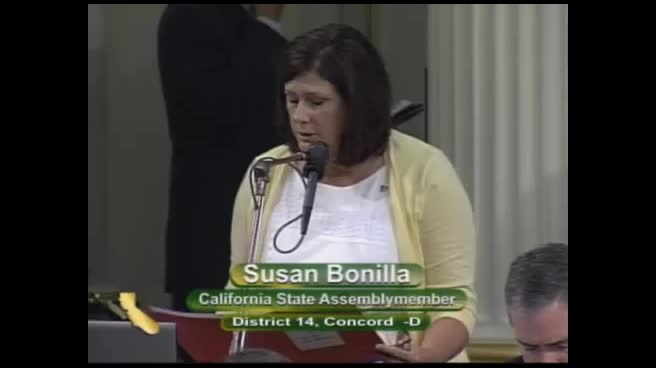
Bill Author

Bill Co-Author(s):