AB 2707: Community colleges: student housing: study.
- Session Year: 2023-2024
- House: Assembly
- Latest Version Date: 2024-05-16
Current Status:
Failed
(2024-08-15: In committee: Held under submission.)
Introduced
In Committee
First Chamber
In Committee
Second Chamber
Enacted
Existing law establishes the California Community Colleges, under the administration of the Board of Governors of the California Community Colleges, as one of the segments of postsecondary education in this state.
This bill would require the Legislative Analysts Office to conduct a study evaluating the demographics and unique issues and barriers that housing-insecure community college students 25 years of age and older and students with dependents, as defined, face in securing housing. The bill would require the Legislative Analysts Office to submit a report to the Legislature, on or before January 1, 2026, with the results of the study, including, among other things, policy recommendations, as specified.
Existing law establishes the California Community Colleges, under the administration of the Board of Governors of the California Community Colleges, as one of the segments of postsecondary education in this state.
This bill would require the Legislative Analysts Office to conduct a study evaluating the age demographics of and unique issues and barriers that housing-insecure community college students to identify the issues and unique barriers that community college students 25 years of age and older and students with dependents, as defined, face in securing housing. The bill would require the Legislative Analysts Office to submit a report to the Legislature, on or before January 1, 2027, 2026, with the results of the study, including including, among other things, policy recommendations, as specified.
Existing law establishes the California Community Colleges, under the administration of the Board of Governors of the California Community Colleges, as one of the segments of postsecondary education in this state.
This bill would require the Legislative Analysts Office to conduct a study evaluating the age demographics of housing-insecure community college students to identify the issues and unique barriers that community college students 25 years of age and older face in securing housing. The bill would require the Legislative Analysts Office to submit a report to the Legislature, on or before January 1, 2027, with the results of the study, including policy recommendations, as specified.
(a)(1)The Legislative Analysts Office shall conduct a study evaluating the demographics and unique issues and barriers that housing-insecure community college students 25 years of age and older and students with dependents face in securing housing.
(2)For purposes of this section, dependent means an individual for whom the student provided over one-half of the individuals support during the prior calendar year.
(b)(1)The Legislative Analysts Office shall submit a report to the Legislature, on or before January 1, 2026, with the results of the study conducted pursuant to subdivision (a). The report shall include, but not be limited to, all of the following:
(A)Policy recommendations and options that would alleviate nonfinancial issues and barriers, barriers that students and campuses face, such as family-style or intersegmental housing.
(B)The availability, cost, and difficulty in securing on-campus and off-campus housing suitable for students, including challenges such as discrimination, income, or other financial and legal issues.
(C)The distance and cost of travel for students who commute.(D)(C)The total number and prevalence of vacancies in on-campus housing suitable for students and reasons for those vacancies.
(E)(D)The prevalence of homelessness, temporary living, and unstable occupancy.
(F)(E)The availability of on-campus childcare and the number of students who use on-campus childcare.
(G)(F)The number of students served in on-campus housing, housing provided pursuant to a third-party campus partnership, or housing provided pursuant to an emergency grant.
(H)(G)Whether the current residents of on-campus housing units are representative of the students included in the study relative to the total student body of that campus.
(I)(H)The availability of campus resources for emergency or rapid rehousing.
(J)Nonfinancial barriers that campuses face in providing housing for students.(K)Housing stability issues experienced by former community college students resulting from transferring between educational institutions.(2)To the extent possible, the data in the report submitted pursuant to this subdivision shall be disaggregated by, but not limited to, all of the following:
(A)Age.
(B)Parenting status.
(C)First-generation college student status.
(D)Disability status.
(E)Current or former foster care status.
(F)Veteran status.
(G)Currently or formerly incarcerated.
(H)Immigration status.
(c)(1)The report submitted pursuant to subdivision (b) shall be submitted in compliance with Section 9795 of the Government Code.
(2)This section shall remain in effect only until January 1, 2027, and as of that date is repealed.
(a)(1)The Legislative Analysts Office shall conduct a study evaluating the age demographics of and unique issues and barriers that housing-insecure community college students to identify the issues and unique barriers that community college students 25 years of age and older and students with dependents face in securing housing.
(2)For purposes of this section, dependent means an individual for whom the student provided over one-half of the individuals support during the prior calendar year.
(b)(1)The Legislative Analysts Office shall submit a report to the Legislature, on or before January 1, 2027, 2026, with the results of the study conducted pursuant to subdivision (a). The report shall include policy recommendations, including support options that would alleviate the identified issues and barriers for students 25 years of age and older, such as family-style housing or other considerations in developing priority policies for student housing. include, but not be limited to, all of the following:
(A)Policy recommendations and options that would alleviate issues and barriers, such as family-style or intersegmental housing.
(B)The availability, cost, and difficulty in securing on-campus and off-campus housing suitable for students, including challenges such as discrimination, income, or other financial and legal issues.
(C)The distance and cost of travel for students who commute.
(D)The total number and prevalence of vacancies in on-campus housing suitable for students and reasons for those vacancies.
(E)The prevalence of homelessness, temporary living, and unstable occupancy.
(F)The availability of on-campus childcare and the number of students who use on-campus childcare.
(G)The number of students served in on-campus housing, housing provided pursuant to a third-party campus partnership, or housing provided pursuant to an emergency grant.
(H)Whether the current residents of on-campus housing units are representative of the students included in the study relative to the total student body of that campus.
(I)The availability of campus resources for emergency or rapid rehousing.
(J)Nonfinancial barriers that campuses face in providing housing for students.
(K)Housing stability issues experienced by former community college students resulting from transferring between educational institutions.
(2)To the extent possible, the data in the report submitted pursuant to this subdivision shall be disaggregated by, but not limited to, all of the following:
(A)Age.
(B)Parenting status.
(C)First-generation college student status.
(D)Disability status.
(E)Current or former foster care status.
(F)Veteran status.
(G)Currently or formerly incarcerated.
(H)Immigration status.
(c)(1)The report submitted pursuant to subdivision (b) shall be submitted in compliance with Section 9795 of the Government Code.
(2)This section shall remain in effect only until January 1, 2028, 2027, and as of that date is repealed.
(a)The Legislative Analysts Office shall conduct a study evaluating the age demographics of housing-insecure community college students to identify the issues and unique barriers that community college students 25 years of age and older face in securing housing.
(b)The Legislative Analysts Office shall submit a report to the Legislature, on or before January 1, 2027, with the results of the study conducted pursuant to subdivision (a). The report shall include policy recommendations, including support options that would alleviate the identified issues and barriers for students 25 years of age and older, such as family-style housing or other considerations in developing priority policies for student housing.
(c)(1)The report submitted pursuant to subdivision (b) shall be submitted in compliance with Section 9795 of the Government Code.
(2)This section shall remain in effect only until January 1, 2028, and as of that date is repealed.
|
Date
|
Status
|
|---|---|
| Aug 15, 2024 | In committee: Held under submission. |
| Jun 17, 2024 | In committee: Referred to suspense file. |
| Jun 5, 2024 | From committee: Do pass and re-refer to Com. on APPR with recommendation: To Consent Calendar. (Ayes 7. Noes 0.) (June 5). Re-referred to Com. on APPR. |
| May 29, 2024 | Referred to Coms. on ED. and APPR. |
| May 22, 2024 | In Senate. Read first time. To Com. on RLS. for assignment. |
| May 21, 2024 | Read third time. Passed. Ordered to the Senate. (Ayes 73. Noes 0. Page 5377.) |
| May 20, 2024 | Read second time. Ordered to third reading. |
| May 16, 2024 | Read second time and amended. Ordered returned to second reading. |
| May 16, 2024 | From committee: Amend, and do pass as amended. (Ayes 11. Noes 0.) (May 16). |
| May 16, 2024 | Assembly Rule 63 suspended. |
| May 1, 2024 | In committee: Set, first hearing. Referred to APPR. suspense file. |
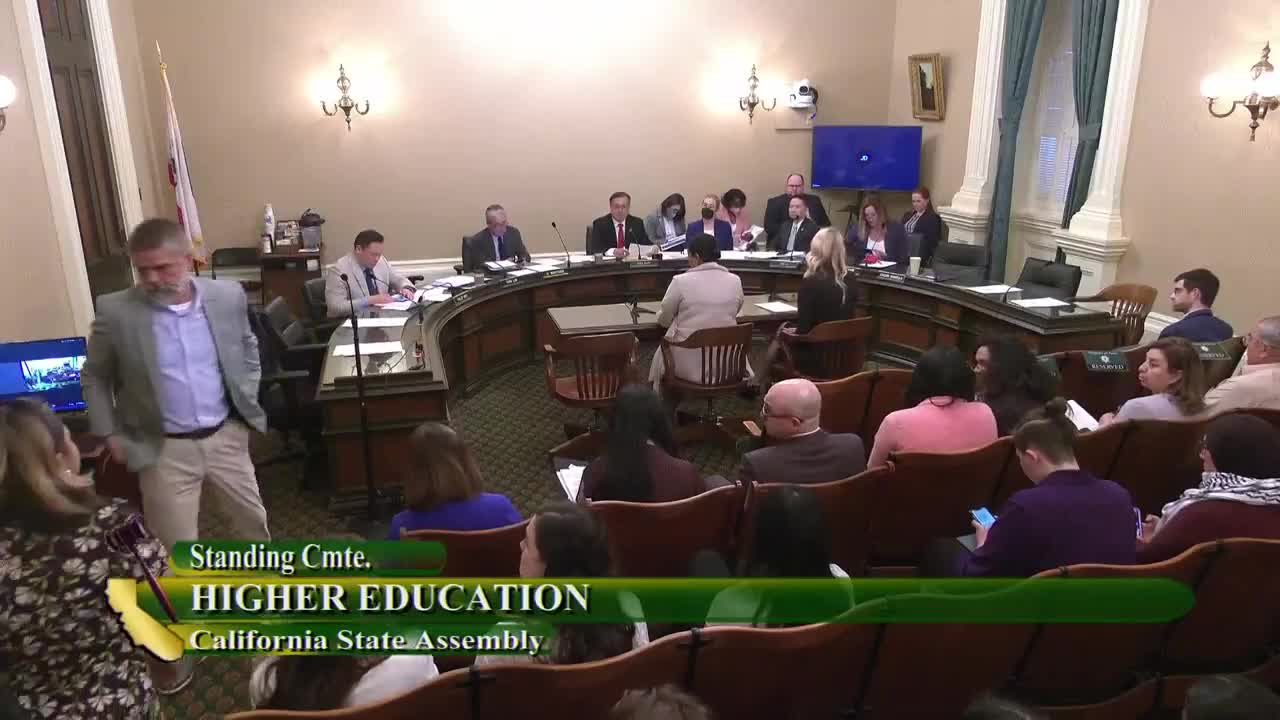
| Apr 10, 2024 | From committee: Do pass and re-refer to Com. on APPR. (Ayes 11. Noes 0.) (April 9). Re-referred to Com. on APPR. |
| Apr 2, 2024 | Re-referred to Com. on HIGHER ED. |
| Apr 1, 2024 | From committee chair, with author's amendments: Amend, and re-refer to Com. on HIGHER ED. Read second time and amended. |
| Mar 4, 2024 | Referred to Com. on HIGHER ED. |
| Feb 15, 2024 | From printer. May be heard in committee March 16. |
| Feb 14, 2024 | Read first time. To print. |
|
Date
|
Description
|
Location
|
Votes
|
|
|---|---|---|---|---|
| Jun 17, 2024 | Placed on suspense file | Senate Standing Committee on Appropriations |
Passed |
|
| Jun 5, 2024 | Do pass, but first be re-referred to the Committee on [Appropriations] with the recommendation: To Consent Calendar | Senate Standing Committee on Education |
Passed |
|
| May 21, 2024 | AB 2707 Mike Fong Assembly Third Reading | Assembly Floor |
Passed |
|
| May 16, 2024 | Do pass as amended. | Assembly Standing Committee on Appropriations |
Passed |
|
| Apr 9, 2024 | Do pass and be re-referred to the Committee on [Appropriations] | Assembly Standing Committee on Higher Education |
Passed |
This list shows positions taken on this bill by organizations on the date displayed, which is linked to the original source.
Positions by individuals are not included.
|
Organization
|
Position
|
Date
|
|---|---|---|
| Community College League of California | ** Support | |
| Faculty Association Of California Community Colleges | ** Support | |
| Powerca Action | ** Support | |
| Student Senate for California Community Colleges | ** Support |
SENATE COMMITTEE ON
Senator Anna Caballero, Chair
2023 - 2024 Regular Session
AB 2707 (Mike Fong) - Community colleges: student housing: study
Version: | Policy Vote: |
Urgency: | Mandate: |
Hearing Date: | Consultant: |
Bill Summary:
This bill requires the Legislative Analyst’s Office (LAO) to conduct a study evaluating the demographics, unique issues, and barriers that housing-insecure students at the community colleges face with securing housing.
Fiscal Impact:
- This bill could result in one-time General Fund costs, potentially in the high tens of thousands to low hundreds of thousands of dollars, for the LAO to conduct the study and submit a report to the Legislature. The bill may also impact the ability of the LAO to fulfill other existing or future legislative mandates and requests, as the LAO’s budget is subject to the Legislature’s constitutional spending cap.
- This bill could result in additional one-time Proposition 98 General Fund costs, likely to be minor, for community college districts to collect student housing data for the study and provide that information to the LAO. The Chancellor's Office indicates that while community colleges already collect and report data to the Chancellor's Office regarding the number of students served in on-campus housing and campus resources for emergency or rapid rehousing, they could receive a request for data that is not readily available or collected.
- The Chancellor’s Office estimates one-time General Fund workload costs of between $12,000 and $24,000 to provide technical assistance to the LAO and monitor the community colleges’ responses to requests for information.
Background:
Existing law requires the Chancellor of the California State University (CSU) and the Chancellor of the California Community Colleges (CCC), and requests the President of the University of California (UC), to collect data on student housing insecurity at each of their respective campuses and submit a report on that data to the Department of Finance and all relevant policy committees on or before March 1, 2023.
Existing law requires the CSU Chancellor and the CCC Chancellor, and requests the UC President, to require each campus that provides campus-owned, campus-operated, or campus-affiliated student housing to post specified information on its external and internal internet websites, at least twice each academic year. Existing law requires/requests submission of an annual report that compiles all of the campus data with specified information related to student housing to the Legislature, with the first report being due on or before October 15, 2023.
Proposed Law:
This bill requires the LAO to conduct a study evaluating the demographics and unique issues and barriers that housing-insecure community college students 25 years of age and older and students with dependents face in securing housing.
This bill requires the LAO to submit a report to the Legislature, on or before January 1, 2026, with the results of the study, and requires the report to include specified components, including:
- Policy recommendations and options that would alleviate non-financial issues and barriers that students and campuses face, such as family-style or intersegmental housing.
- The availability, cost, and difficulty in securing on-campus housing suitable for students, including challenges such as discrimination, income, or other financial and legal issues.
- The total number and prevalence of vacancies in on-campus housing suitable for students and reasons for those vacancies.
- The prevalence of homelessness, temporary living, and unstable occupancy.
- The availability of on-campus childcare and the number of students who use on-campus childcare.
- Policy recommendations and options that would alleviate non-financial issues and barriers that students and campuses face, such as family-style or intersegmental housing.
This bill requires, to the extent possible, the data in the report to be disaggregated by, but not limited to: age, parenting status, first-generation college student status, disability status, current or former foster care status, veteran status, currently or formerly incarcerated, and immigration status.
The bill’s provisions would sunset on January 1, 2027.
Related Legislation:
AB 2567 (Mathis, 2024) would expand the information related to campus-owned, campus-operated, or campus-affiliated student housing that CSU and the CCCs are required, and UC is requested, to post online to also include specified information about veterans. AB 2567 is pending in the Senate Military and Veterans Committee.
AB 2458 (Berman, 2024) would require the Chancellor’s Office to develop and disseminate a policy to estimate and adjust cost of attendance information for student parents, with student parent cost of attendance policy guidance that includes specified information such as a financial aid methodology to calculate and update a student parent’s cost of attendance that includes the actual expected costs of food, housing, transportation, and dependent childcare. AB 2458 is pending in the Senate Education Committee.
Staff Comments:
This bill requires the LAO to conduct a study evaluating the demographics and unique issues and barriers that housing-insecure community college students 25 years of age and older and students with dependents face in securing housing. Since the defunding of the California Postsecondary Education Commission in 2011, there is currently no centralized coordinating body for higher education in the state to undertake such responsibilities and report on higher education issues. Given the complexity of the study specified in the bill, it is unlikely that the LAO could absorb the workload within existing resources.
-- END --
SENATE COMMITTEE ON EDUCATION
Senator Josh Newman, Chair
2023 - 2024 Regular
Bill No: Hearing Date: June 5, 2024
Author: | Mike Fong | ||
Version: |
| ||
Urgency: | Fiscal: | ||
Consultant: | |||
Subject:
NOTE: This bill has been referred to the Committees on Education and Appropriations. A "do pass" motion should include referral to the Committee on Appropriations.
SUMMARY
This bill requires the Legislative Analyst’s Office (LAO) to (1) conduct a study evaluating the demographics and unique issues and barriers that housing-insecure community college students 25 years of age and older and students with dependents face in securing housing; and, (2) requires the LAO to submit a report to the Legislature, on or before January 1, 2026, with the results of the study and additional information, as specified.
BACKGROUND
Existing law:
- Requires the Chancellor of the California State University (CSU) and the Chancellor of the California Community Colleges (CCC), and requests the President of the University of California (UC), to collect data on student housing insecurity at each of their respective campuses and submit a report on that data to the Department of Finance and all relevant policy committees on or before March 1, 2023. (Education Code (EC) § 17203.5)
- Requires the CSU Chancellor and the CCC Chancellor, and requests the UC President, to require each campus that provides campus-owned, campus-operated, or campus-affiliated student housing to post specified information on its external and internal internet websites, at least twice each academic year. Existing law requires/requests submission of an annual report that compiles all of the campus data with specified information related to student housing to the Legislature, with the first report being due on or before October 15, 2023.
(EC § 66014.6) - Requires the CSU Chancellor, and requests the UC President, to conduct a needs assessment to determine the projected student housing needs, by campus, from the 2022–27, create a student housing plan, with a focus on affordable student housing, and update the student housing plan every three years. (EC § 66220)
- Requests each campus of the CCC that maintains student housing facilities to give priority for housing to current and former homeless youth and current and former foster youth, and requests those that are open for occupation during school breaks, or on a year-round basis, to give first priority to current and former homeless youth and current and former foster youth at no extra cost during academic or campus breaks. Existing law requests CCCs to next give priority to current and former homeless youth and current and former foster youth for housing that is open for occupation during the most days in the calendar year. (EC § 76010)
- Requests each campus of the CCC to develop a plan to ensure that current and former homeless youth and current and former foster youth can access housing resources as needed during and between academic terms, including during academic and campus breaks, regardless of whether the campus maintains student housing facilities. (EC § 76010)
- Defines a “homeless youth” as a student under 25 years of age, who has been verified, in the case of a former homeless youth, at any time during the 24 months immediately preceding the receipt of his or her application for admission by a campus of the CCC, as a homeless child or youth, as defined by the federal McKinney-Vento Homeless Assistance Act. (EC § 76010)
- Requires the governing board of a community college district with a campus that has shower facilities for student use on campus, to grant access to those facilities to any homeless student who is enrolled in coursework, has paid enrollment fees, and is in good standing with the community college district without requiring the student to enroll in additional courses. (EC § 76011)
- Requires the community college board to determine a plan of action to implement #4 that includes, but is not limited to hours of operation for the shower facilities, the minimum number of units a student must be enrolled in to use the facilities, and a plan of action if hours of operation conflict with an intercollegiate athletic program. (EC § 76011)
ANALYSIS
This bill:
- Requires the LAO to conduct a study evaluating the demographics and unique issues and barriers that housing-insecure community college students 25 years of age and older and students with dependents face in securing housing.
- Requires the LAO to submit a report to the Legislature, on or before January 1, 2026, with the results of the study, and requires the report to include, but not be limited to, all of the following:
- Policy recommendations and options that would alleviate non-financial issues and barriers that students and campuses face, such as family-style or intersegmental housing.
- The availability, cost, and difficulty in securing on-campus housing suitable for students, including challenges such as discrimination, income, or other financial and legal issues.
- The total number and prevalence of vacancies in on-campus housing suitable for students and reasons for those vacancies.
- The prevalence of homelessness, temporary living, and unstable occupancy.
- The availability of on-campus childcare and the number of students who use on-campus childcare.
- The number of students served in on-campus housing, housing provided pursuant to a third-party campus partnership, or housing provided pursuant to an emergency grant.
- Whether the current residents of on-campus housing units are representative of the students included in the study relative to the total student body of that campus.
- The availability of campus resources for emergency or rapid rehousing.
- Policy recommendations and options that would alleviate non-financial issues and barriers that students and campuses face, such as family-style or intersegmental housing.
- Requires, to the extent possible, the data in the report to be disaggregated by, but not limited to, all of the following:
- Age.
- Parenting status.
- First-generation college student status.
- Disability status.
- Current or former foster care status.
- Veteran status.
- Currently or formerly incarcerated.
- Immigration status.
- Age.
- Defines “dependent” as an individual for whom the student provided over one-half of the individual’s support during the prior calendar year.
- Sunsets the provisions of this bill on January 1, 2027.
STAFF COMMENTS
- Need for the bill. According to the author, “California’s Community Colleges serve the greatest number of students and offer the greatest potential to transform lives through career education, accreditation, and transfer. The CCC student population has evolved to include more adults and student parents. We must adapt to our students’ needs, especially as we become aware of the effects of housing insecurity on student success. If we do not have a clear picture of these issues and its effects on these students, we cannot develop proper policies or allocate resources to support their success - which is California’s success. It is imperative that we address housing insecurity for nontraditional and student parents in a data driven and clear-sighted manner through a targeted study.”
- Existing information, studies, and reports. This bill calls for a study and report that is specific to the housing needs of housing-insecure community college students 25 years of age and older and students with dependents. Relative to the housing needs of community college students, existing law:
- Requires the CCCs to collect data on student housing insecurity at each of their respective campuses and submit a report on that data to the Department of Finance and all relevant policy committees on or before March 1, 2023.
- Requires the CCC Chancellor to require each campus that provides campus-owned, campus-operated, or campus-affiliated student housing to post specified information on its external and internal internet websites, at least twice each academic year. Existing law requires/requests submission of an annual report that compiles all of the campus data with specified information related to student housing to the Legislature, with the first report being due on or before October 15, 2023.
- Requires the CCCs to collect data on student housing insecurity at each of their respective campuses and submit a report on that data to the Department of Finance and all relevant policy committees on or before March 1, 2023.
While existing law requires the CCCs to collect data on student housing insecurity at each of their respective campuses and submit a report on that data to the Department of Finance and all relevant policy committees on or before March 1, 2023, this report was never submitted.
- Capacity of the LAO. This bill requires the LAO to conduct a study evaluating the demographics and unique issues and barriers that housing-insecure community college students 25 years of age and older and students with dependents face in securing housing. The committee may wish to consider whether the LAO has the capacity to conduct new data collection/research and conduct the study as required by this bill. The Legislature has imposed several reporting requirements on LAO in the absence of a higher education coordinating body.
- Fiscal impact. According to the Assembly Appropriations Committee, this bill would impose the following costs:
- Unknown, one-time Proposition 98 General Fund costs for 72 CCC districts to collect data for the study. According to the CCC Chancellor's Office, CCC districts already collect and report some data to the Chancellor's Office regarding student housing. However, the CCC Chancellor's Office indicates this bill could lead to additional one-time costs to CCC districts to collect data for the study.
- Minor, one-time General Fund workload costs between $12,000 and $24,000 for the CCC Chancellor's Office to provide technical assistance to the LAO and CCC districts.
- LAO estimates it would direct one full-time employee to analyze data and prepare the study. LAO is funded within the Legislature's budget.
- Unknown, one-time Proposition 98 General Fund costs for 72 CCC districts to collect data for the study. According to the CCC Chancellor's Office, CCC districts already collect and report some data to the Chancellor's Office regarding student housing. However, the CCC Chancellor's Office indicates this bill could lead to additional one-time costs to CCC districts to collect data for the study.
- Related legislation.
AB 2567 (Mathis, 2024) would expand the information related to campus-owned, campus-operated, or campus-affiliated student housing that CSU and the CCCs are required, and UC is requested, to post online to also include specified information about veterans. AB 2567 is scheduled to be heard in this committee on June 5, 2024.
AB 2458 (Berman, 2024) among other things, would require the Chancellor of the CCC to develop and disseminate a policy to estimate and adjust cost of attendance information for student parents, with student parent cost of attendance policy guidance that includes specified information such as a financial aid methodology to calculate and update a student parent’s cost of attendance that includes the actual expected costs of food, housing, transportation, and dependent childcare. AB 2458 is scheduled to be heard in this committee on June 12.
SUPPORT
Faculty Association of California Community Colleges (Sponsor)
Community College League of California
Student Senate for California Community Colleges
OPPOSITION
None received
-- END --
ASSEMBLY THIRD READING
ATR Bill Id:AB 2707
Author:(Mike Fong)
As Amended Ver:May 16, 2024
Majority vote
SUMMARY
Requires the Legislative Analyst's Office (LAO) to conduct a study evaluating the demographics and unique issues and barriers that housing insecure California Community Colleges (CCC) students and older students with dependents, as defined, face in securing housing.
Major Provisions
- Requires the LAO to conduct a study evaluating the demographics and unique issues and barriers that housing-insecure CCC students 25 years of age and older and students with dependents face in securing housing.
- Requires that the LAO submit a report to the Legislature, on or before January 1, 2026, with the results of the study, as enumerated in (1) above.
- Requires that the report must include, but not be limited to, all of the following:
- Policy recommendations and options that would alleviate nonfinancial issues and barriers that students and campuses face, such as family-style or intersegmental housing;
- The availability, cost, and difficulty in securing on-campus housing suitable for students, including challenges such as discrimination, income, or other financial and legal issues;
- The total number and prevalence of vacancies in on-campus housing suitable for students and reasons for those vacancies;
- The prevalence of homelessness, temporary living, and unstable occupancy;
- The availability of on-campus childcare and the number of students who use on-campus childcare;
- The number of students served in on-campus housing, housing provided pursuant to a third-party campus partnership, or housing provided pursuant to an emergency grant;
- Whether the current residents of on-campus housing units are representative of the students included in the study relative to the total student body of that campus; and,
- The availability of campus resources for emergency or rapid rehousing.
- Requests that, to the extent possible, the data in the report be disaggregated by, but not limited to, all of the following:
- Age;
- Parenting status;
- First-generation college student status;
- Disability status;
- Current or former foster care status;
- Veteran status;
- Currently or formerly incarcerated; and,
- Immigration status.
- Defines "dependent" as an individual for whom the student provided over one-half of the individual's support during the prior calendar year.
- Sunsets the provisions of this measure on January 1, 2027.
COMMENTS
Student parents. A California Competes study released in February 2021, entitled Untapped Opportunity: Understanding and Advancing Prospects for Californians without a College Degree, found that California is home to approximately 3,900,000 residents with dependent children who lack a college degree, making it difficult to earn a family-sustaining wage.
California Competes also found in their analysis of the American Community Survey data from 2017 to 2021 and National Postsecondary Student Aid Study administrative collection data from 2020 that California is home to approximately 300,000 undergraduate student parents, 61% of which are first-generation college students and 72% are students of color. [Since this particular report was released, according to California Competes, California is now home to approximately 400,000 student parents.]
Student Housing Grant Program. As part of the 2021-22 California Budget package, the Postsecondary Education Trailer Bill established the Higher Education Student Housing and Capacity Expansion Grant Program. The CCC refer to the Higher Education Student Housing program as the Affordable Student Housing Grant Program. This Program provides the CCC with an opportunity to apply for student housing grants over a three-year period with three rounds of grant awards.
The LAO. LAO has provided fiscal and policy advice to the Legislature since 1941 (83 years). The LAO is known for its fiscal and programmatic expertise and nonpartisan analyses of the state budget. The LAO serves as the "eyes and ears" for the Legislature to ensure that the executive branch is implementing legislative policy in a cost efficient and effective manner.
Historically, one of the most important responsibilities of the LAO has been to analyze the annual Governor's Budget. In recent years, the LAO has presented a series of analyses from the beginning to the end of the budget process on overarching fiscal issues as well as specific departmental budget proposals and offered its recommendations for legislative action. In order to provide the Legislature with timely advice on these matters, the LAO has published its budget comments and advice in the form of separate written reports, handouts for hearings, and entries in an online list. These documents help set the agenda for the work of the Legislature's fiscal committees in developing a state budget. Staff of the LAO work with these Committees throughout the budget process and provide public testimony on the office's recommendations.
More generally, the LAO is a staff resource to all Legislators. The LAO also performs the following functions:
- Budget "Control." The LAO reviews requests by the administration to make changes to the budget after it is enacted. These reviews are used primarily by members of the fiscal committees.
- Special Reports. Throughout the year, the LAO prepares special reports on the state budget and topics of interest to the Legislature.
- Initiatives and Ballot Measures. The LAO estimates the fiscal effect on state and local government of all proposed initiatives (prior to circulation) and prepares analyses of all measures that qualify for the statewide ballot.
- Forecasting. The LAO forecasts the state revenues and expenditures.
According to the Author
"California's Community Colleges serve the greatest number of students and offer the greatest potential to transform lives through career technical education and transfer. Its student population has evolved to include more adults and student parents."
The author contends that, "we must adapt to our students' needs, especially as we become aware of the effects of housing insecurity on student success. If we do not have a clear picture of these issues and its effects on these students, we cannot develop proper policies or allocate resources to support their success - which is California's success."
Further, the author states that, "it is imperative that we address housing insecurity for nontraditional and student parents in a data driven and clear-sighted manner with a targeted study."
The author states that this measure, "seeks to illuminate housing insecurity and homelessness among our students, which disproportionately affects minorities. It affects inequities in student success, as student parents have worse academic outcomes than traditional students. Community colleges provide incredible opportunity to address economic achievement gaps; the power of education to increase economic security and uplift underserved populations is well recognized. By studying housing insecurity among nontraditional community college students and informing the development of student housing policy, this bill will allow the State to better help eliminate inequities experienced by students over the age of 25 and students with dependents."
Arguments in Support
According to the Faculty Association of California Community Colleges (FACCC), sponsors of this measure, "students with dependents experience significant barriers to accessing housing, which impacts two generations." According to FACCC, "70% of students with dependents are housing insecure, and 26% experience homelessness. There is a need for varied student housing arrangements that are suitable for accommodating the lifestyles of diverse students. However, recent student housing funding, including the Student Housing Grant Program, gives priority to housing models that do not accommodate older students and student parents, inadvertently excluding this disproportionately-impacted student population."
Lastly, FACCC contends that, "as the Legislature has encouraged the development of student housing on community college campuses in recent legislative sessions, it is timely to conduct the necessary research to ensure that nontraditional students do not fall through the cracks. It is of the utmost importance that housing projects are inclusive and accessible to all students– and that requires understanding what our diverse body of students need."
Arguments in Opposition
None on file.
FISCAL COMMENTS
According to the Assembly Committee on Appropriations:
- Unknown, one-time Proposition 98 General Fund costs for 72 CCC districts to collect data for the study. According to the CCC Chancellor's Office, CCC districts already collect and report some data to the Chancellor's Office regarding student housing. However, the CCC Chancellor's Office indicates this bill could lead to additional one-time costs to CCC districts to collect data for the study.
- Minor, one-time General Fund workload costs between $12,000 and $24,000 for the CCC Chancellor's Office to provide technical assistance to the LAO and CCC districts.
- LAO estimates it would direct one full-time employee to analyze data and prepare the study. LAO is funded within the Legislature's budget.
VOTES
ASM HIGHER EDUCATION: 11-0-0
YES: Mike Fong, Ta, Arambula, Boerner, Chen, Essayli, Irwin, Jackson, Low, Muratsuchi, Quirk-Silva
ASM APPROPRIATIONS: 11-0-4
YES: Wicks, Arambula, Bryan, Calderon, Wendy Carrillo, Mike Fong, Grayson, Haney, Hart, Pellerin, Villapudua
ABS, ABST OR NV: Sanchez, Dixon, Jim Patterson, Ta
UPDATED
VERSION: May 16, 2024
CONSULTANT: Jeanice Warden / HIGHER ED. / (916) 319-3960 FN: 0003416
Date of Hearing: May 1, 2024
ASSEMBLY COMMITTEE ON APPROPRIATIONS
Buffy Wicks, Chair
ABPCA Bill Id:AB 2707
Author:(Mike Fong) – As Amended Ver:April 1, 2024
Policy Committee: | Higher Education | Vote: | 11 - 0 |
|
| ||
|
|
Urgency: No State Mandated Local Program: No Reimbursable: No
SUMMARY:
This bill requires the Legislative Analyst’s Office (LAO), by January 1, 2026, to conduct a study evaluating various issues related to barriers to housing faced by California Community College (CCC) students age 25 and older and students with dependents.
Specifically, this bill requires the report to include, but not be limited to, all of the following:
- Policy recommendations and options that would alleviate issues and barriers, such as family-style or intersegmental housing.
- The availability, cost, and difficulty in securing on-campus and off-campus housing suitable for students, including challenges such as discrimination, income, or other financial and legal issues.
- The distance and cost of travel for students who commute.
- The total number and prevalence of vacancies in on-campus housing suitable for students and reasons for those vacancies.
- The prevalence of homelessness, temporary living, and unstable occupancy.
- The availability of on-campus childcare and the number of students who use on-campus childcare.
- The number of students served in on-campus housing, housing provided pursuant to a third-party campus partnership, or housing provided pursuant to an emergency grant.
- Whether the current residents of on-campus housing units are representative of the students included in the study relative to the total student body of that campus.
- The availability of campus resources for emergency or rapid rehousing.
- Nonfinancial barriers that campuses face in providing housing for students.
- Housing stability issues experienced by former community college students resulting from transferring between educational institutions.
The bill also ask that data, to the extent possible, be disaggregated by various variables, including age, veteran status, and disability status, among others.
FISCAL EFFECT:
- Unknown, one-time Proposition 98 General Fund costs for 72 CCC districts to collect data for the study. According to the CCC Chancellor’s Office, CCC districts already collect and report some data to the Chancellor’s Office regarding student housing. However, the CCC Chancellor’s Office indicates this bill could lead to additional one-time costs to CCC districts to collect data for the study.
- Minor, one-time General Fund workload costs between $12,000 and $24,000 for the CCC Chancellor’s Office to provide technical assistance to the LAO and CCC districts.
- LAO estimates it would direct one full-time employee to analyze data and prepare the study. LAO is funded within the Legislature’s budget.
This bill does not explicitly direct the CCC to provide data for the study. If CCC does not provide data, LAO indicates it would be unable to complete the requirements of the study with publicly available data.
COMMENTS:
- Purpose. According to the sponsor of this bill, the Faculty Association of California Community Colleges:
As the Legislature has encouraged the development of student housing on community college campuses in recent legislative sessions, it is timely to conduct the necessary research to ensure that nontraditional students do not fall through the cracks. It is of the utmost importance that housing projects are inclusive and accessible to all students– and that requires understanding what our diverse body of students need.
- Background. Historically, the University of California (UC) and California State University (CSU) have typically offered students housing, while CCC has not. In recent years, the Legislature has provided General Fund revenues to UC, CSU, and CCC for student housing projects.
According to the Assembly Budget Subcommittee Number 3 on Education Finance, the 2021, 2022, and 2023 budget acts provided funding for the Higher Education Student Housing Grant Program and authorized 35 housing projects: five UC projects, 11 CSU projects, 16 CCC projects, three joint UC/CCC projects, and one joint CSU/CCC project, totaling about $2.2 billion in General Fund dollars. Projects were required to provide “affordable” beds for students, which has led to projects typically providing dormitory-style housing rather than family-style housing.
The 2023 budget act shifted Higher Education Student Housing Grant Program funding from General Fund dollars for projects to General Fund bond financing for projects. Specifically, UC and CSU began receiving ongoing General Fund to cover debt service costs on bonds issued by each segment. Unlike UC and CSU, CCCs do no typically issue bonds. Therefore, final provisions of the 2023 budget act also included language stating legislative intent to create a statewide lease revenue bond to support CCC projects.
The Governor’s January 2024 Budget Summary noted the administration’s intent to propose as a part of the May budget revision a statewide lease revenue bond approach for CCC projects.
Analysis Prepared by: Natasha Collins / APPR. / (916) 319-2081
Date of Hearing: April 9, 2024
ASSEMBLY COMMITTEE ON HIGHER EDUCATION
Mike Fong, Chair
ABPCA Bill Id:AB 2707 (
Author:Mike Fong) – As Amended Ver:April 1, 2024
SUBJECT: Community colleges: student housing: study.
SUMMARY: Requires the Legislative Analyst’s Office (LAO) to conduct a study evaluating the demographics and unique issues and barriers that housing insecure California Community Colleges (CCC) students and older students with dependents, as defined, face in securing housing. Specifically, this bill:
- Requires the LAO to conduct a study evaluating the demographics and unique issues and barriers that housing-insecure CCC students 25 years of age and older and students with dependents face in securing housing.
- Requires that the LAO submit a report to the Legislature, on or before January 1, 2026, with the results of the study, as enumerated in (1) above.
- Requires that the report must include, but not be limited to, all of the following:
- Policy recommendations and options that would alleviate issues and barriers, such as family-style or intersegmental housing;
- The availability, cost, and difficulty in securing on-campus and off-campus housing suitable for students, including challenges such as discrimination, income, or other financial and legal issues;
- The distance and cost of travel for students who commute;
- The total number and prevalence of vacancies in on-campus housing suitable for students and reasons for those vacancies;
- The prevalence of homelessness, temporary living, and unstable occupancy;
- The availability of on-campus childcare and the number of students who use on-campus childcare;
- The number of students served in on-campus housing, housing provided pursuant to a third-party campus partnership, or housing provided pursuant to an emergency grant;
- Whether the current residents of on-campus housing units are representative of the students included in the study relative to the total student body of that campus;
- The availability of campus resources for emergency or rapid rehousing;
- Nonfinancial barriers that campuses face in providing housing for students; and,
- Housing stability issues experienced by former community college students resulting from transferring between educational institutions.
- Requests that, to the extent possible, the data in the report be disaggregated by, but not limited to, all of the following:
- Age;
- Parenting status;
- First-generation college student status;
- Disability status;
- Current or former foster care status;
- Veteran status;
- Currently or formerly incarcerated; and,
- Immigration status.
- Defines “dependent” as an individual for whom the student provided over one-half of the individual’s support during the prior calendar year.
- Sunsets the provisions of this measure on January 1, 2027.
EXISTING LAW:
- Establishes the mission and function of the CCC, which, in part is to: 1) offer academic and vocational instruction at the lower division level for both younger and older students, including those persons returning to school; 2) authorizes the CCC to grant the associate in arts and the associate in science degrees; 3) requires the CCC to offer English as a Second Language instruction, adult noncredit instruction, and support services which help students succeed at the postsecondary level; and, 4) advance California’s economic growth and global competitiveness through education, training, and services that contribute to continuous work force improvement (Education Code (EC) Section 66010.4).
- Establishes the Higher Education Student Housing Grant Program is to provide one-time grants for the construction of student housing, or for the acquisition and renovation of commercial properties into student housing for the purpose of providing affordable, low-cost housing options for students enrolled in public postsecondary education in California (EC Section 17201).
- Requires the CCC Office of the Chancellor to collect data, as specified, on student housing insecurity at each CCC campus and submit a report on that data to the Department of Finance and all relevant policy committees on or before March 1, 2023 (EC Section 17203.5).
FISCAL EFFECT: Unknown. This measure has been keyed non-fiscal by the Office of the Legislative Counsel.
COMMENTS: Purpose of the Measure. According to the author, “California’s Community Colleges serve the greatest number of students and offer the greatest potential to transform lives through career technical education and transfer. Its student population has evolved to include more adults and student parents.”
The author contends that, “we must adapt to our students’ needs, especially as we become aware of the effects of housing insecurity on student success. If we do not have a clear picture of these issues and its effects on these students, we cannot develop proper policies or allocate resources to support their success - which is California’s success.”
Further, the author states that, “it is imperative that we address housing insecurity for nontraditional and student parents in a data driven and clear-sighted manner with a targeted study.”
The author states that this measure, “seeks to illuminate housing insecurity and homelessness among our students, which disproportionately affects minorities. It affects inequities in student success, as student parents have worse academic outcomes than traditional students. Community colleges provide incredible opportunity to address economic achievement gaps; the power of education to increase economic security and uplift underserved populations is well recognized. By studying housing insecurity among nontraditional community college students and informing the development of student housing policy, this bill will allow the State to better help eliminate inequities experienced by students over the age of 25 and students with dependents.”
Student parents. A California Competes study released in February 2021, entitled Untapped Opportunity: Understanding and Advancing Prospects for Californians without a College Degree, found that California is home to approximately 3,900,000 residents with dependent children who lack a college degree, making it difficult to earn a family-sustaining wage.
California Competes also found in their analysis of the American Community Survey data from 2017 to 2021 and National Postsecondary Student Aid Study administrative collection data from 2020 that California is home to approximately 300,000 undergraduate student parents, 61% of which are first-generation college students and 72% are students of color.[1] [Since this particular report was released, according to California Competes, California is now home to approximately 400,000 student parents.]
Student Housing Grant Program. As part of the 2021-22 California Budget package, the Postsecondary Education Trailer Bill established the Higher Education Student Housing and Capacity Expansion Grant Program. The CCC refer to the Higher Education Student Housing program as the Affordable Student Housing Grant Program. This Program provides the CCC with an opportunity to apply for student housing grants over a three-year period with three rounds of grant awards.
The LAO. LAO has provided fiscal and policy advice to the Legislature since 1941 (83 years). The LAO is known for its fiscal and programmatic expertise and nonpartisan analyses of the state budget. The LAO serves as the "eyes and ears" for the Legislature to ensure that the executive branch is implementing legislative policy in a cost efficient and effective manner.
Historically, one of the most important responsibilities of the LAO has been to analyze the annual Governor's Budget. In recent years, the LAO has presented a series of analyses from the beginning to the end of the budget process on overarching fiscal issues as well as specific departmental budget proposals and offered its recommendations for legislative action. In order to provide the Legislature with timely advice on these matters, the LAO has published its budget comments and advice in the form of separate written reports, handouts for hearings, and entries in an online list. These documents help set the agenda for the work of the Legislature's fiscal committees in developing a state budget. Staff of the LAO work with these Committees throughout the budget process and provide public testimony on the office's recommendations.
More generally, the LAO is a staff resource to all Legislators. The LAO also performs the following functions:
- Budget "Control." The LAO reviews requests by the administration to make changes to the budget after it is enacted. These reviews are used primarily by members of the fiscal committees.
- Special Reports. Throughout the year, the LAO prepares special reports on the state budget and topics of interest to the Legislature.
- Initiatives and Ballot Measures. The LAO estimates the fiscal effect on state and local government of all proposed initiatives (prior to circulation) and prepares analyses of all measures that qualify for the statewide ballot.
- Forecasting. The LAO forecasts the state revenues and expenditures.
Arguments in support. According to the Faculty Association of California Community Colleges (FACCC), sponsors of this measure, “students with dependents experience significant barriers to accessing housing, which impacts two generations.” According to FACCC, “70% of students with dependents are housing insecure, and 26% experience homelessness. There is a need for varied student housing arrangements that are suitable for accommodating the lifestyles of diverse students. However, recent student housing funding, including the Student Housing Grant Program, gives priority to housing models that do not accommodate older students and student parents, inadvertently excluding this disproportionately-impacted student population.”
Lastly, FACCC contends that, “as the Legislature has encouraged the development of student housing on community college campuses in recent legislative sessions, it is timely to conduct the necessary research to ensure that nontraditional students do not fall through the cracks. It is of the utmost importance that housing projects are inclusive and accessible to all students– and that requires understanding what our diverse body of students need.”
Related legislation. AB 2458 (Berman), which was approved by this Committee on April 2, 2024, with a vote of 11 – 0, among other things, requires higher education institutions to uniformly collect and report data on student parents.
Prior legislation. AB 183 (Ting), Chapter 54, Statutes of 2022, requests higher education segments to collect data on housing insecurity and submit a report, as specified, on or before March 2023.
AB 2341 (McCarty), introduced in 2020, which was held in the Senate Committee on Education, would have authorized the CCC to establish a program to support justice-involved students and provide, among other things, housing assistance.
AB 2353 (McCarty), introduced in 2020, which was held in this Committee, would have established a program to be administered by the California School Finance Authority to provide grants to CCC that are exploring building affordable student rental housing.
SB 307 (Nguyen), introduced in 2017, which was held on the Suspense File in the Assembly Committee on Appropriations, would have created a task force to study the extent, causes, and effects of housing insecurity in postsecondary students.
AB 2748 (Jones), introduced in 2006, which was vetoed by the Governor, would have required the California State University and requested the University of California, to report to the Legislature, on various aspects of on-campus student housing, by March 31, 2007.
REGISTERED SUPPORT / OPPOSITION:
Support
Community College League of California
Faculty Association of California Community Colleges (Sponsor)
PowerCA Action
Student Senate for California Community Colleges
Opposition
None on file.
Analysis Prepared by: Jeanice Warden / HIGHER ED. / (916) 319-3960
Discussed in Hearing
View Older Hearings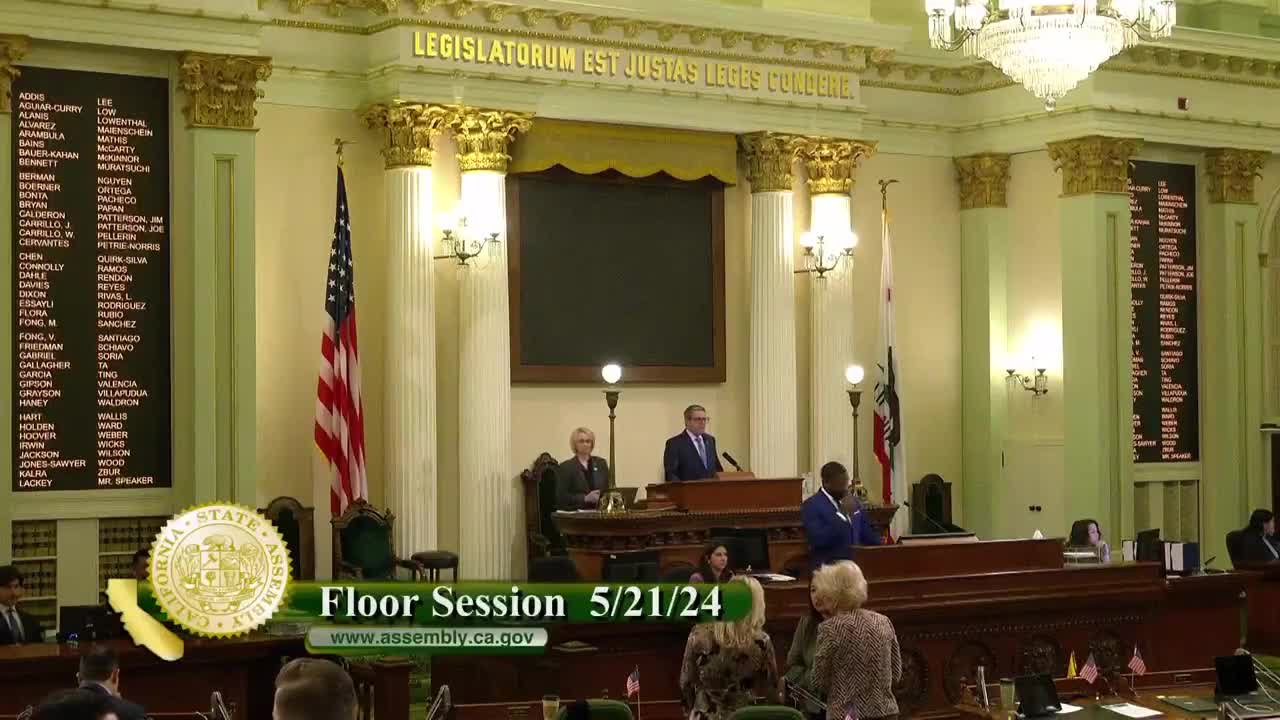
Bill Author

Bill Co-Author(s):