AB 2747: Tenancy: credit reporting.
- Session Year: 2023-2024
- House: Assembly
- Latest Version Date: 2024-09-19
Current Status:
Passed
(2024-09-19: Chaptered by Secretary of State - Chapter 279, Statutes of 2024.)
Introduced
In Committee
First Chamber
In Committee
Second Chamber
Enacted
Existing law, the Consumer Credit Reporting Agencies Act, defines and regulates consumer credit reports and consumer credit reporting agencies. Existing law, until July 1, 2025, requires a landlord of an assisted housing development to offer tenants obligated on the lease of units in the development the option of having their rental payments reported to at least one consumer reporting agency, as specified. Existing law authorizes a landlord to charge a tenant that elects to have rent reported a $10 fee and prescribes requirements regarding how the offer of rent reporting is to be made.
This bill would require a landlord of a dwelling unit of residential real property to offer any tenant obligated on a lease the option of having the tenants positive rental payment information, as defined, reported to at least one nationwide consumer reporting agency, as specified. The bill would require, for leases entered into on and after April 1, 2025, the offer of positive rental payment information reporting to be made at the time of the lease agreement and at least once annually thereafter, and for leases outstanding as of January 1, 2025, the offer of positive rental payment information reporting to be made no later than April 1, 2025, and at least once annually thereafter. The bill would authorize a tenant to request, and would require a landlord to provide, additional copies of the written election of positive rental payment information reporting at any time. The bill would authorize a tenant who elects to have positive rental payment information reported as described in these provisions to subsequently file a written request to stop that reporting and would require the landlord to comply with that request. The bill would prohibit a tenant who stops positive rental payment information reporting from electing reporting again for at least 6 months. The bill would authorize a landlord to charge a tenant that elects to have positive rental payment information reported the lesser of $10 per month or the actual cost to the landlord to provide the service, unless the landlord does not incur any actual cost to provide positive rental payment reporting. The bill would prohibit a landlord from taking certain actions if a tenant fails to pay the landlords rent reporting charge. The bill would exempt from these provisions a landlord of a residential rental building that contains 15 or fewer dwelling units, unless specified conditions are met, and an assisted housing development, as defined.
Existing law, the Consumer Credit Reporting Agencies Act, defines and regulates consumer credit reports and consumer credit reporting agencies. Existing law, until July 1, 2025, requires a landlord of an assisted housing development to offer tenants obligated on the lease of units in the development the option of having their rental payments reported to at least one consumer reporting agency, as specified. Existing law authorizes a landlord to charge a tenant that elects to have rent reported a $10 fee and prescribes requirements regarding how the offer of rent reporting is to be made.
This bill would require a landlord of a dwelling unit of residential real property to offer tenants any tenant obligated on a lease the option of having their the tenants positive rental payment information information, as defined, reported to at least one nationwide consumer reporting agency, as specified. The bill would specify that require, for leases entered into on and after April 1, 2025, the offer of rent positive rental payment information reporting shall to be made at the time of the lease agreement and at least once annually thereafter, and for leases outstanding as of January 1, 2025, the offer of rent positive rental payment information reporting shall to be made no later than April 1, 2025, and at least once annually thereafter. The bill would authorize a tenant to request, and would require a landlord to provide, additional copies of the written election of rent positive rental payment information reporting form at any time and establish that time. The bill would authorize a tenant who elects to have rent positive rental payment information reported as described in these provisions may to subsequently file a written request to stop that reporting with which the landlord shall comply, provided that, in this case, the and would require the landlord to comply with that request. The bill would prohibit the a tenant who stops positive rental payment information reporting from electing rent reporting again for at least 6 months. The bill would authorize a landlord to charge a tenant that elects to have rent positive rental payment information reported the lesser of $10 per month or the actual cost to the landlord to provide the service, unless the landlord does not incur any actual cost to provide rent positive rental payment reporting. The bill would prohibit a landlord from taking certain actions if a tenant fails to pay the landlords rent reporting charge. The bill would exempt from these provisions a landlord of a residential rental building that contains 15 or fewer dwelling units, unless specified conditions are met. met, and an assisted housing development, as defined.
Existing law, the Consumer Credit Reporting Agencies Act, defines and regulates consumer credit reports and consumer credit reporting agencies. Existing law, until July 1, 2025, requires a landlord of an assisted housing development to offer tenants obligated on the lease of units in the development the option of having their rental payments reported to at least one consumer reporting agency, as specified. Existing law authorizes a landlord to charge a tenant that elects to have rent reported a $10 fee and prescribes requirements regarding how the offer of rent reporting is to be made.
This bill would require a landlord of a dwelling unit of residential real property to offer tenants obligated on a lease the option of having their positive rental payment information reported to at least one nationwide consumer reporting agency, as specified. The bill would specify that for leases entered into on and after January April 1, 2025, the offer of rent reporting shall be made at the time of the lease agreement and at least once annually thereafter, and for leases outstanding as of January 1, 2025, the offer of rent reporting shall be made no later than March April 1, 2025, and at least once annually thereafter. The bill would authorize a tenant to request, and require a landlord to provide, additional copies of the written election of rent reporting form at any time and establish that a tenant who elects to have rent reported as described in these provisions may subsequently file a written request to stop that reporting with which the landlord shall comply, provided that, in this case, the bill would prohibit the tenant from electing rent reporting again for at least 6 months. The bill would authorize a landlord to charge a tenant that elects to have rent reported the lesser of $10 per month or the actual cost to the landlord to provide the service, unless the landlord does not incur any actual cost to provide rent reporting. The bill would prohibit a landlord from taking certain actions if a tenant fails to pay the landlords rent reporting charge. The bill would exempt from these provisions a landlord of a residential rental building that contains 15 or fewer dwelling units, unless specified conditions are met.
Existing law, the Consumer Credit Reporting Agencies Act, defines and regulates consumer credit reports and consumer credit reporting agencies. Existing law, until July 1, 2025, requires a landlord of an assisted housing development to offer tenants obligated on the lease of units in the development the option of having their rental payments reported to at least one consumer reporting agency, as specified. Existing law authorizes a landlord to charge a tenant that elects to have rent reported a $10 fee and prescribes requirements regarding how the offer of rent reporting is to be made.
This bill would require a lessor landlord of a dwelling unit of residential real property to report the lessees to offer tenants obligated on a lease the option of having their positive rental payment information reported to at least one nationwide consumer reporting agency, as specified. The bill would authorize a lessee to opt out, or opt back in after opting out, of this positive rent reporting at any time, as specified. The bill would require the lessor to provide a notice containing certain information at the time of execution of a rental agreement and at the time of execution of a renewal or extension of a rental agreement. The bill would specify that for leases entered into on and after January 1, 2025, the offer of rent reporting shall be made at the time of the lease agreement and at least once annually thereafter, and for leases outstanding as of January 1, 2025, the offer of rent reporting shall be made no later than March 1, 2025, and at least once annually thereafter. The bill would authorize a tenant to request, and require a landlord to provide, additional copies of the written election of rent reporting form at any time and establish that a tenant who elects to have rent reported as described in these provisions may subsequently file a written request to stop that reporting with which the landlord shall comply, provided that, in this case, the bill would prohibit the tenant from electing rent reporting again for at least 6 months. The bill would authorize a landlord to charge a tenant that elects to have rent reported the lesser of $10 per month or the actual cost to the landlord to provide the service, unless the landlord does not incur any actual cost to provide rent reporting. The bill would prohibit a landlord from taking certain actions if a tenant fails to pay the landlords rent reporting charge. The bill would exempt from these provisions a landlord of a residential rental building that contains 15 or fewer dwelling units, unless specified conditions are met.
Existing law, the Consumer Credit Reporting Agencies Act, defines and regulates consumer credit reports and consumer credit reporting agencies. Existing law, until July 1, 2025, requires a landlord of an assisted housing development to offer tenants obligated on the lease of units in the development the option of having their rental payments reported to at least one consumer reporting agency, as specified.
This bill would require a lessor of a dwelling unit of residential real property to report the lessees positive rental payment information to at least one nationwide consumer reporting agency, as specified. The bill would authorize a lessee to opt out, or opt back in after opting out, of this positive rent reporting at any time, as specified. The bill would require the lessor to provide a notice containing certain information at the time of execution of a rental agreement and at the time of execution of a renewal or extension of a rental agreement.
Existing law, the Civil Code, is composed of 4 divisions relating to persons, property, obligations, and general provisions relating to persons, property, and obligations.This bill would make nonsubstantive changes to the title of the 3rd division of that act.Existing law, the Civil Code, is composed of 4 divisions relating to persons, property, obligations, and general provisions relating to persons, property, and obligations.
This bill would make nonsubstantive changes to the title of the 3rd division of that act.
(a)As specified in subdivision (b), and except as provided in subdivision (j), any landlord of a dwelling unit of residential real property shall offer any tenant obligated on the lease the option of having the tenants positive rental payment information reported to at least one nationwide consumer reporting agency that meets the definition in Section 603(p) of the federal Fair Credit Reporting Act (15 U.S.C. Sec. 1681a(p)) or any other consumer reporting agency that meets the definition in Section 603(f) of the federal Fair Credit Reporting Act (15 U.S.C. Sec. 1681a(f)) as long as the consumer reporting agency resells or otherwise furnishes rental payment information to a nationwide consumer reporting agency that meets the definition in Section 603(p) of the federal Fair Credit Reporting Act (15 U.S.C. Sec. 1681a(p)).
(b)For leases entered into on and after April 1, 2025, the offer of positive rental payment information reporting shall be made at the time of the lease agreement and at least once annually thereafter. For leases outstanding as of January 1, 2025, the offer of positive rental payment information reporting shall be made no later than April 1, 2025, and at least once annually thereafter.
(c)A landlord may provide the offer of positive rental payment information reporting required by subdivision (a) to the tenant by first-class United States mail or email.
(d)The offer of positive rental payment information reporting shall include a written election of positive rental payment information reporting that contains all of the following:
(1)A statement that reporting of the tenants positive rental payment information is optional.
(2)Identification of each consumer reporting agency to which positive rental payment information will be reported.
(3)The amount of any fee charged pursuant to subdivision (g).
(4)Instructions on how to submit the written election of positive rental payment information reporting to the landlord by first-class United States mail or email.
(5)A statement that the tenant may opt into positive rental payment information reporting at any time following the initial offer by the landlord.
(6)A statement that the tenant may elect to stop positive rental payment information reporting at any time, but that the tenant will not be able to resume positive rental payment information reporting for at least six months after the election to opt out.
(7)Instructions on how to opt out of positive rental payment information reporting.
(8)A signature block that the tenant shall date and sign in order to accept the offer of positive rental payment information reporting.
(e)If the offer of positive rental payment information reporting is made by first-class United States mail, the landlord shall provide the tenant with a self-addressed, stamped envelope to return the written election of positive rental payment information reporting.
(f)(1)A tenant may submit the tenants completed written election of rent reporting at any time after the tenant receives the offer of positive rental payment information reporting from the landlord.
(2)(A)A tenant may request additional copies of the written election of positive rental payment information reporting from the landlord at any time.
(B)A landlord that receives a request from a tenant pursuant to this paragraph shall comply with the request.
(g)(1)If a tenant elects to have that tenants positive rental payment information reported to a consumer reporting agency under subdivision (a), the landlord may require that tenant to pay a fee not to exceed the lesser of the actual cost to the landlord to provide the service or ten dollars ($10) per month. If the landlord does not incur any actual cost to report positive rental payment information, no amount shall be charged from the tenant. The payment or nonpayment of this fee by the tenant shall not be reported to a consumer reporting agency.
(2)An amount tendered in full or partial satisfaction of rent or any other obligation under the lease, however designated by the party tendering the payment, shall not be applied or credited to the fee authorized by this subdivision.
(h)If a tenant fails to pay any fee required by the landlord pursuant to subdivision (g), all of the following shall apply:
(1)The failure to pay the fee shall not be cause for termination of the tenancy, whether pursuant to Section 1161 of the Code of Civil Procedure or otherwise.
(2)The landlord shall not deduct the unpaid fee from the tenants security deposit.
(3)If the fee remains unpaid for 30 days or more, the landlord may stop reporting the tenants rental payments, and the tenant shall not elect positive rental payment information reporting again for a period of six months from the date on which the fee first became due.
(i)A tenant who elects to have positive rental payment information reported as described in subdivision (a) may subsequently file a written request with the tenants landlord to stop that reporting with which the landlord shall comply. A tenant who elects to stop reporting shall not be allowed to elect positive rental payment information reporting again for a period of at least six months from the date of the tenants written request to stop reporting.
(j)This section shall not apply to either of the following:
(1)A landlord of a residential rental building that contains 15 or fewer dwelling units, unless both of the following apply:
(A)The landlord owns more than one residential rental building, regardless of the number of units in each building.
(B)The landlord is one of the following:
(i)A real estate investment trust, as defined in Section 856 of Title 26 of the United States Code.
(ii)A corporation.
(iii)A limited liability company in which at least one member is a corporation.
(2)An assisted housing development, as defined in Section 65863.10 of the Government Code.
(k)A tenant who elects to have rent reported does not forfeit any rights under Sections 1941 to 1942, inclusive. If a tenant makes deductions from rent or otherwise withholds rent as authorized by those sections, the deductions or withholding of rent shall not constitute a late rental payment. A tenant invoking the right to repair and deduct or withhold rent under those sections shall notify the tenants landlord of the deduction or withholding prior to the date rent is due. This subdivision shall not be construed to relieve a housing provider of the obligation to maintain habitable premises.
(l)(1)As used in this section, positive rental payment information means information regarding a tenants complete, timely payments of rent.
(2)Positive rental payment information does not include an instance in which a tenant did not completely or timely make a rental payment.
(a)As specified in subdivision (b), and except as provided in subdivision (j), any landlord of a dwelling unit of residential real property shall offer the any tenant or tenants obligated on the lease the option of having their the tenants positive rental payment information reported to at least one nationwide consumer reporting agency that meets the definition in Section 603(p) of the federal Fair Credit Reporting Act (15 U.S.C. Sec. 1681a(p)) or any other consumer reporting agency that meets the definition in Section 603(f) of the federal Fair Credit Reporting Act (15 U.S.C. Sec. 1681a(f)) as long as the consumer reporting agency resells or otherwise furnishes rental payment information to a nationwide consumer reporting agency that meets the definition in Section 603(p) of the federal Fair Credit Reporting Act (15 U.S.C. Sec. 1681a(p)).
(b)For leases entered into on and after April 1, 2025, the offer of rent positive rental payment information reporting shall be made at the time of the lease agreement and at least once annually thereafter. For leases outstanding as of January 1, 2025, the offer of rent positive rental payment information reporting shall be made no later than April 1, 2025, and at least once annually thereafter.
(c)A landlord may provide the offer of rent positive rental payment information reporting required by subdivision (a) to the tenant by first-class United States mail or email.
(d)The offer of rent positive rental payment information reporting shall include a written election of rent positive rental payment information reporting that contains all of the following:
(1)A statement that reporting of the tenants positive rental payment information is optional.
(2)Identification of each consumer reporting agency to which positive rental payment information will be reported.
(3)The amount of any fee charged pursuant to subdivision (g).
(4)Instructions on how to submit the written election of rent positive rental payment information reporting to the landlord by first-class United States mail or email.
(5)A statement that the tenant may opt into rent positive rental payment information reporting at any time following the initial offer by the landlord.
(6)A statement that the tenant may elect to stop rent positive rental payment information reporting at any time, but that they the tenant will not be able to resume rent positive rental payment information reporting for at least six months after their the election to opt out.
(7)Instructions on how to opt out of reporting rental payment information. positive rental payment information reporting.
(8)A signature block that the tenant shall date and sign in order to accept the offer of rent positive rental payment information reporting.
(e)If the offer of rent positive rental payment information reporting is made by first-class United States mail, the landlord shall provide the tenant with a self-addressed, stamped envelope to return the written election of rent positive rental payment information reporting.
(f)(1)A tenant may submit their the tenants completed written election of rent reporting at any time after they receive the tenant receives the offer of rent positive rental payment information reporting from the landlord. A tenant may request and shall obtain additional copies of the written election of rent reporting form from the landlord at any time.
(2)(A)A tenant may request additional copies of the written election of positive rental payment information reporting from the landlord at any time.
(B)A landlord that receives a request from a tenant pursuant to this paragraph shall comply with the request.
(g)If a tenant elects to have that tenants positive rental payments payment information reported to a consumer reporting agency under subdivision (a), the landlord may require that tenant to pay a fee not to exceed the lesser of the actual cost to the landlord to provide the service or ten dollars ($10) per month. If the landlord does not incur any actual cost to provide rent reporting, report positive rental payment information, no amount shall be charged from the tenant. The payment or nonpayment of this fee by the tenant shall not be reported to a consumer reporting agency.
(h)If a tenant fails to pay any fee required by the landlord pursuant to subdivision (g), all of the following shall apply:
(1)The failure to pay the fee shall not be cause for termination of the tenancy, whether pursuant to Section 1161 of the Code of Civil Procedure or otherwise.
(2)The landlord shall not deduct the unpaid fee from the tenants security deposit.
(3)If the fee remains unpaid for 30 days or more, the landlord may stop reporting the tenants rental payments payments, and the tenant shall be unable to not elect rent positive rental payment information reporting again for a period of six months from the date on which the fee first became due.
(i)A tenant who elects to have positive rent rental payment information reported as described in subdivision (a) may subsequently file a written request with their the tenants landlord to stop that reporting with which the landlord shall comply. A tenant who elects to stop reporting shall not be allowed to elect rent positive rental payment information reporting again for a period of at least six months from the date of the tenants written request to stop reporting.
(j)This section shall not apply to any landlord of a residential rental building that contains 15 or fewer dwelling units, unless both of the following apply: either of the following:
(1)A landlord of a residential rental building that contains 15 or fewer dwelling units, unless both of the following apply:
(1)(A)The landlord owns more than one residential rental building, regardless of the number of units in each building.
(2)(B)The landlord is one of the following:
(A)(i)A real estate investment trust, as defined in Section 856 of Title 26 of the United States Code.
(B)(ii)A corporation.
(C)(iii)A limited liability company in which at least one member is a corporation.
(2)An assisted housing development, as defined in Section 65863.10 of the Government Code.
(k)A tenant who elects to have rent reported does not forfeit any rights under Sections 1941 to 1942, inclusive. If a tenant makes deductions from rent or otherwise withholds rent as authorized by those sections, the deductions or withholding of rent shall not constitute a late rental payment. A tenant invoking the right to repair and deduct or withhold rent under those sections shall notify the tenants landlord of the deduction or withholding prior to the date rent is due. This subdivision shall not be construed to relieve a housing provider of the obligation to maintain habitable premises.
(l)(1)As used in this section, positive rental payment information means information regarding a tenants complete, timely payments of rent.
(2)Positive rental payment information does not include an instance in which a tenant did not completely or timely make a rental payment.
(a)As specified in subdivision (b), and except as provided in subdivision (i), (j), any landlord of a dwelling unit of residential real property shall offer the tenant or tenants obligated on the lease the option of having their positive rental payment information reported to at least one nationwide consumer reporting agency that meets the definition in Section 603(p) of the federal Fair Credit Reporting Act (15 U.S.C. Sec. 1681a(p)) or any other consumer reporting agency that meets the definition in Section 603(f) of the federal Fair Credit Reporting Act (15 U.S.C. Sec. 1681a(f)) as long as the consumer reporting agency resells or otherwise furnishes rental payment information to a nationwide consumer reporting agency that meets the definition in Section 603(p) of the federal Fair Credit Reporting Act (15 U.S.C. Sec. 1681a(p)).
(b)For leases entered into on and after January April 1, 2025, the offer of rent reporting shall be made at the time of the lease agreement and at least once annually thereafter. For leases outstanding as of January 1, 2025, the offer of rent reporting shall be made no later than March April 1, 2025, and at least once annually thereafter.
(c)A landlord may provide the offer of rent reporting required by subdivision (a) to the tenant by first-class United States mail or email.
(c)(d)The offer of rent reporting shall include a written election of rent reporting that contains all of the following:
(1)A statement that reporting of the tenants rental payment information is optional.
(2)Identification of each consumer reporting agency to which positive rental payment information will be reported.
(3)The amount of any fee charged pursuant to subdivision (f). (g).
(4)Instructions on how to submit the written election of rent reporting to the landlord by mail. first-class United States mail or email.
(5)A statement that the tenant may opt into rent reporting at any time following the initial offer by the landlord.
(6)A statement that the tenant may elect to stop rent reporting at any time, but that they will not be able to resume rent reporting for at least six months after their election to opt out.
(7)Instructions on how to opt out of reporting rental payment information.
(8)A signature block that the tenant shall date and sign in order to accept the offer of rent reporting.
(d)When(e)If the offer of rent reporting is made, made by first-class United States mail, the landlord shall provide the tenant with a self-addressed, stamped envelope to return the written election of rent reporting.
(e)(f)A tenant may submit their completed written election of rent reporting at any time after they receive the offer of rent reporting from the landlord. A tenant may request and shall obtain additional copies of the written election of rent reporting form from the landlord at any time.
(f)(g)If a tenant elects to have that tenants positive rental payments reported to a consumer reporting agency under subdivision (a), the landlord may require that tenant to pay a fee not to exceed the lesser of the actual cost to the landlord to provide the service or ten dollars ($10) per month. If the landlord does not incur any actual cost to provide rent reporting, no amount shall be charged from the tenant. The payment or nonpayment of this fee by the tenant shall not be reported to a consumer reporting agency.
(g)(h)If a tenant fails to pay any fee required by the landlord pursuant to subdivision (f), (g), all of the following shall apply:
(1)The failure to pay the fee shall not be cause for termination of the tenancy, whether pursuant to Section 1161 of the Code of Civil Procedure or otherwise.
(2)The landlord shall not deduct the unpaid fee from the tenants security deposit.
(3)If the fee remains unpaid for 30 days or more, the landlord may stop reporting the tenants rental payments and the tenant shall be unable to elect rent reporting again for a period of six months from the date on which the fee first became due.
(h)(i)A tenant who elects to have positive rent reported as described in subdivision (a) may subsequently file a written request with their landlord to stop that reporting with which the landlord shall comply. A tenant who elects to stop reporting shall not be allowed to elect rent reporting again for a period of at least six months from the date of the tenants written request to stop reporting.
(i)(j)This section shall not apply to any landlord of a residential rental building that contains 15 or fewer dwelling units, unless both of the following apply:
(1)The landlord owns more than one residential rental building, regardless of the number of units in each building.
(2)The landlord is one of the following:
(A)A real estate investment trust, as defined in Section 856 of Title 26 of the United States Code.
(B)A corporation.
(C)A limited liability company in which at least one member is a corporation.
(a)Except as provided As specified in subdivision (b), a lessor and except as provided in subdivision (i), any landlord of a dwelling unit of residential real property shall report the lessees offer the tenant or tenants obligated on the lease the option of having their positive rental payment information reported to at least one nationwide consumer reporting agency that meets the definition in Section 603(p) of the federal Fair Credit Reporting Act (15 U.S.C. Sec. 1681a(p)) or any other consumer reporting agency that meets the definition in Section 603(f) of the federal Fair Credit Reporting Act (15 U.S.C. Sec. 1681a(f)) as long as the consumer reporting agency resells or otherwise furnishes rental payment information to a nationwide consumer reporting agency that meets the definition in Section 603(p) of the federal Fair Credit Reporting Act (15 U.S.C. Sec. 1681a(p)).
(b)(1)A lessee may opt out of the positive rent reporting required by subdivision (a) at any time by providing the lessor with a written request to opt out.(2)If a lessee has opted out of the positive rent reporting pursuant to paragraph (1), the lessee may opt in to the positive rent reporting at any time by providing the lessor with a written request to opt in.(c)At the time of execution of a rental agreement, and at the time of execution of a renewal or extension of a rental agreement, a lessor of a dwelling unit of residential real property shall provide the lessee with a separate written notice containing all of the following:(1)A description of the positive rent reporting required by subdivision (a).(2)Notice that the lessee may opt out of the positive rent reporting.(3)A signature block that the lessee may date and sign if the lessee elects to opt out of the positive rent reporting.(4)Notice that the lessee may opt out of the positive rent reporting at any time by providing the lessor with a written request to opt out.(5)Notice that, if the lessee has opted out of the positive rent reporting, the lessee may opt in to the positive rent reporting at any time by providing the lessor with a written request to opt in.(d)A lessor shall not charge a lessee a fee for complying with this section.(b)For leases entered into on and after January 1, 2025, the offer of rent reporting shall be made at the time of the lease agreement and at least once annually thereafter. For leases outstanding as of January 1, 2025, the offer of rent reporting shall be made no later than March 1, 2025, and at least once annually thereafter.
(c)The offer of rent reporting shall include a written election of rent reporting that contains all of the following:
(1)A statement that reporting of the tenants rental payment information is optional.
(2)Identification of each consumer reporting agency to which positive rental payment information will be reported.
(3)The amount of any fee charged pursuant to subdivision (f).
(4)Instructions on how to submit the written election of rent reporting to the landlord by mail.
(5)A statement that the tenant may opt into rent reporting at any time following the initial offer by the landlord.
(6)A statement that the tenant may elect to stop rent reporting at any time, but that they will not be able to resume rent reporting for at least six months after their election to opt out.
(7)Instructions on how to opt out of reporting rental payment information.
(8)A signature block that the tenant shall date and sign in order to accept the offer of rent reporting.
(d)When the offer of rent reporting is made, the landlord shall provide the tenant with a self-addressed, stamped envelope to return the written election of rent reporting.
(e)A tenant may submit their completed written election of rent reporting at any time after they receive the offer of rent reporting from the landlord. A tenant may request and shall obtain additional copies of the written election of rent reporting form from the landlord at any time.
(f)If a tenant elects to have that tenants positive rental payments reported to a consumer reporting agency under subdivision (a), the landlord may require that tenant to pay a fee not to exceed the lesser of the actual cost to the landlord to provide the service or ten dollars ($10) per month. If the landlord does not incur any actual cost to provide rent reporting, no amount shall be charged from the tenant. The payment or nonpayment of this fee by the tenant shall not be reported to a consumer reporting agency.
(g)If a tenant fails to pay any fee required by the landlord pursuant to subdivision (f), all of the following shall apply:
(1)The failure to pay the fee shall not be cause for termination of the tenancy, whether pursuant to Section 1161 of the Code of Civil Procedure or otherwise.
(2)The landlord shall not deduct the unpaid fee from the tenants security deposit.
(3)If the fee remains unpaid for 30 days or more, the landlord may stop reporting the tenants rental payments and the tenant shall be unable to elect rent reporting again for a period of six months from the date on which the fee first became due.
(h)A tenant who elects to have positive rent reported as described in subdivision (a) may subsequently file a written request with their landlord to stop that reporting with which the landlord shall comply. A tenant who elects to stop reporting shall not be allowed to elect rent reporting again for a period of at least six months from the date of the tenants written request to stop reporting.
(i)This section shall not apply to any landlord of a residential rental building that contains 15 or fewer dwelling units, unless both of the following apply:
(1)The landlord owns more than one residential rental building, regardless of the number of units in each building.
(2)The landlord is one of the following:
(A)A real estate investment trust, as defined in Section 856 of Title 26 of the United States Code.
(B)A corporation.
(C)A limited liability company in which at least one member is a corporation.
(a)Except as provided in subdivision (b), a lessor of a dwelling unit of residential real property shall report the lessees positive rental payment information to at least one nationwide consumer reporting agency that meets the definition in Section 603(p) of the federal Fair Credit Reporting Act (15 U.S.C. Sec. 1681a(p)) or any other consumer reporting agency that meets the definition in Section 603(f) of the federal Fair Credit Reporting Act (15 U.S.C. Sec. 1681a(f)) as long as the consumer reporting agency resells or otherwise furnishes rental payment information to a nationwide consumer reporting agency that meets the definition in Section 603(p) of the federal Fair Credit Reporting Act (15 U.S.C. Sec. 1681a(p)).
(b)(1)A lessee may opt out of the positive rent reporting required by subdivision (a) at any time by providing the lessor with a written request to opt out.
(2)If a lessee has opted out of the positive rent reporting pursuant to paragraph (1), the lessee may opt in to the positive rent reporting at any time by providing the lessor with a written request to opt in.
(c)At the time of execution of a rental agreement, and at the time of execution of a renewal or extension of a rental agreement, a lessor of a dwelling unit of residential real property shall provide the lessee with a separate written notice containing all of the following:
(1)A description of the positive rent reporting required by subdivision (a).
(2)Notice that the lessee may opt out of the positive rent reporting.
(3)A signature block that the lessee may date and sign if the lessee elects to opt out of the positive rent reporting.
(4)Notice that the lessee may opt out of the positive rent reporting at any time by providing the lessor with a written request to opt out.
(5)Notice that, if the lessee has opted out of the positive rent reporting, the lessee may opt in to the positive rent reporting at any time by providing the lessor with a written request to opt in.
(d)A lessor shall not charge a lessee a fee for complying with this section.
SECTION 1.Section 1 of the Civil Code is amended to read:1.This act shall be known as The Civil Code of the State of California, and is in Four Divisions, as follows: I.THE FIRST RELATING TO PERSONS.II.THE SECOND TO PROPERTY.III.THE THIRD TO LEGAL OBLIGATIONS.IV.THE FOURTH CONTAINS GENERAL PROVISIONS RELATING TO THE THREE PRECEDING DIVISIONS. SEC. 2.The heading of Division 3 (commencing with Section 1427) of the Civil Code is amended to read:3.LEGAL OBLIGATIONSThis Act act shall be known as The Civil Code of the State of California,
The Civil Code of the State of California, and is in Four Divisions, as follows:
I.THE FIRST RELATING TO PERSONS.
II.THE SECOND TO PROPERTY.
III.THE THIRD TO LEGAL OBLIGATIONS.
IV.THE FOURTH CONTAINS GENERAL PROVISIONS RELATING TO THE THREE PRECEDING DIVISIONS.
|
Date
|
Status
|
|---|---|
| Sep 19, 2024 | Chaptered by Secretary of State - Chapter 279, Statutes of 2024. |
| Sep 19, 2024 | Approved by the Governor. |
| Sep 11, 2024 | Enrolled and presented to the Governor at 4 p.m. |
| Aug 29, 2024 | Senate amendments concurred in. To Engrossing and Enrolling. (Ayes 56. Noes 14.). |
| Aug 29, 2024 | Assembly Rule 77 suspended. |
| Aug 28, 2024 | In Assembly. Concurrence in Senate amendments pending. May be considered on or after August 30 pursuant to Assembly Rule 77. |
| Aug 28, 2024 | Read third time. Passed. Ordered to the Assembly. (Ayes 26. Noes 8.). |
| Aug 21, 2024 | Read second time. Ordered to third reading. |
| Aug 20, 2024 | Read third time and amended. Ordered to second reading. |
| Jun 20, 2024 | Read second time. Ordered to third reading. |
| Jun 19, 2024 | From committee: Do pass. (Ayes 6. Noes 2.) (June 18). |
| Jun 10, 2024 | From committee chair, with author's amendments: Amend, and re-refer to committee. Read second time, amended, and re-referred to Com. on JUD. |
| May 29, 2024 | Referred to Com. on JUD. |
| May 21, 2024 | In Senate. Read first time. To Com. on RLS. for assignment. |
| May 20, 2024 | Read third time. Passed. Ordered to the Senate. (Ayes 59. Noes 13. Page 5296.) |
| May 13, 2024 | Read third time and amended. Ordered to third reading. (Page 5181.) |
| Apr 11, 2024 | Read second time. Ordered to third reading. |
| Apr 10, 2024 | Read second time and amended. Ordered returned to second reading. |
| Apr 9, 2024 | From committee: Amend, and do pass as amended. (Ayes 9. Noes 2.) (April 9). |
| Mar 12, 2024 | Re-referred to Com. on JUD. |
| Mar 11, 2024 | From committee chair, with author's amendments: Amend, and re-refer to Com. on JUD. Read second time and amended. |
| Mar 11, 2024 | Referred to Com. on JUD. |
| Feb 16, 2024 | From printer. May be heard in committee March 17. |
| Feb 15, 2024 | Read first time. To print. |
|
Date
|
Description
|
Location
|
Votes
|
|
|---|---|---|---|---|
| Aug 29, 2024 | AB 2747 Haney Concurrence in Senate Amendments | Assembly Floor |
Passed |
|
| Aug 28, 2024 | Assembly 3rd Reading AB2747 Haney By Wiener | Senate Floor |
Passed |
|
| Jun 18, 2024 | Do pass | Senate Standing Committee on Judiciary |
Passed |
|
| May 20, 2024 | AB 2747 Haney Assembly Third Reading | Assembly Floor |
Passed |
|
| Apr 9, 2024 | Do pass as amended. | Assembly Standing Committee on Judiciary |
Passed |
This list shows positions taken on this bill by organizations on the date displayed, which is linked to the original source.
Positions by individuals are not included.
|
Organization
|
Position
|
Date
|
|---|---|---|
| Alliance of Californians for Community Empowerment Action | ** Against | |
| Apartment Association of Greater Los Angeles | ** Against | |
| California Apartment Association | ** Against | |
| California Association Of Realtors | ** Against | |
| California Rental Housing Association | ** Against | |
| California Rural Legal Assistance Foundation | ** Against | |
| California Rural Legal Assistance, Inc. | ** Against | |
| California School Employees Association | ** Support | |
| Centro Legal de la Raza | ** Against | |
| Disability Rights California | ** Against | |
| Glide | ** Support | |
| Housing and Economic Rights Advocates | ** Against | |
| Leadership Counsel for Justice and Accountability | ** Against | |
| Legal Services of Northern California | ** Against | |
| Movement Legal | ** Against | |
| PICO California | ** Against | |
| Public Advocates | ** Against | |
| Service Employees International Union, Local 1000 | ** Support | |
| Southern California Rental Housing Association | ** Against | |
| The Gubbio Project | ** Support | |
| University Of California Student Association | ** Support | |
| western center on law & poverty | ** Against |
CONCURRENCE IN SENATE AMENDMENTS
CSA1 Bill Id:AB 2747
Author:(Haney)
As Amended Ver:August 20, 2024
Majority vote
SUMMARY
Requires specified landlords to offer each tenant obligated on a lease the option of having the tenant's positive rental payment information reported to at least one nationwide consumer reporting agency.
Major Provisions
- Requires a landlord to offer the tenant obligated on the lease the option of having the tenant's rental payment information reported to at least one consumer reporting agency that meets one of the following criteria:
- Regularly engages in the practice of assembling and maintaining public record and credit account information for the purpose of furnishing consumer reports to third parties bearing on a consumer's credit worthiness, credit standing, or credit capacity, public record information, and specified credit account information regarding consumers residing nationwide; or
- Regularly engages in the practice of assembling or evaluating consumer credit information or other consumer information for the purpose of furnishing consumer reports to third parties and resells or otherwise furnishes rental payment information to a nationwide consumer reporting agency, as described in a).
- Requires that a tenant's election to have rent reported to a consumer credit agency be in writing.
- Requires that the offer of rent reporting include a written election of rent reporting that contains specified elements, including information about the terms of the reporting agreement, the rights of the tenant to opt in or out of reporting, and instructions for participation.
- Permits the landlord to make the offer of rent reporting to the tenant by first-class United States mail or email.
- Establishes that if the offer of rent reporting is made by first-class United States mail, the landlord must provide the tenant with a self-addressed, stamped envelope with which to return the written election of rent reporting.
- Allows a tenant to submit their completed written election of rent reporting at any time after they receive the offer of rent reporting from the landlord.
- Requires the landlord to provide additional copies of the written election of rent reporting form at any time, if requested by the tenant.
- Requires that, for leases entered into, on, and after April 1, 2025, the offer of rent reporting be made at the time of the lease agreement and at least once annually thereafter. Requires, for leases outstanding as of January 1, 2025, the offer of rent reporting be made no later than April 1, 2025, and at least once annually thereafter.
- Authorizes, if a tenant elects to have rental payments reported to a consumer reporting agency, the landlord to require the tenant to pay a fee not to exceed the lesser of the actual cost to the landlord to provide the service or $10 per month. Prohibits the landlord from reporting the payment or nonpayment of this fee by the tenant to a consumer reporting agency.
- Prohibits the landlord from using a tenant's failure to pay the fee in 9) as cause for termination of the tenancy.
- Prohibits a landlord from deducting the fee in 9) from an amount paid for the tenant’s monthly rent.
- Prohibits the landlord from deducting any unpaid fee from the tenant's security deposit.
- Authorizes the landlord to stop reporting the tenant's rental payments if the fee remains unpaid for 30 days or more.
- Prohibits a tenant who fails to pay the fee for a period of longer than 30 days from being allowed to elect rent reporting again for a period of at least six months from the date on which the fee first became due.
- Authorizes a tenant who elects to have positive rent reported to subsequently file a written request with their landlord to stop that reporting and requires the landlord to comply with this request.
- Prohibits a tenant who elects to stop reporting from being allowed to elect rent reporting again for a period of at least six months from the date of the tenant's written request to stop reporting.
- Exempts any landlord of a residential rental building that contains 15 or fewer dwelling units from the requirements of this bill, unless that landlord owns more than one residential rental building and is either a real estate investment trust, a corporation, or a limited liability company with at least one member corporation.
Senate Amendments
Clarify that the measure applies to positive rent reporting and that a landlord may not deduct the fee from rent.
COMMENTS
Many Californians who do not possess a robust credit history do have a history of paying rent on time. But that information does not show up on their credit reports and does not help their credit scores. This measure attempts to solve that problem by giving tenants the opportunity to have their positive rental payment information reported to consumer reporting agencies, adding to their credit history.
How does positive rent reporting work? Positive rent reporting involves reporting on-time, complete rent payments to credit bureaus to help tenants build their credit scores. Typically, in the absence of such a program, rent payments are not included in credit reports unless a tenant defaults on rent and it goes to collections. This differs from mortgage holders who do have on-time loan payments included in their credit scores. Positive rent reporting enables tenants to proactively showcase their responsible payment history, potentially boosting their creditworthiness. Tenants and landlords cannot report rental payments to the major consumer reporting agencies themselves; they must do so through a third-party servicer or via a subscription with a consumer reporting agency.
In order to address concerns that the administrative cost of reporting was being placed solely on the landlord, this bill would authorize a landlord to charge a fee to a tenant who elects to have the tenant's rental payments reported. Because the positive rent reporting services currently in the marketplace carry a low monthly fee, if any at all, the fee a landlord can collect with this measure is limited to the actual cost to the landlord to provide the service or $10 per month, whichever is less. It is anticipated that landlords will be able to recoup all or nearly all the fees they may be charged by third-party servicers through the fee that they are authorized to charge the tenant for participating in the rental payment reporting program. And to the extent there is no cost incurred at all, this measure may not be used to extract any additional fees from a renter.
How does this bill work? The measure adopts the general framework of SB 1157 (Bradford, Chapter 204, Statutes of 2020): an opt-in, exempting small landlords, and permitting recovery of actual costs not to exceed $10/month. Like SB 1157, it proposes a framework for compliance for tenant and landlord alike. It differs from SB 1157 in that it extends to all tenants--not just those in subsidized affordable housing units, and enables positive credit reporting only. Importantly, it includes safeguards such as eviction protection, so that non-payment for this opt-in results in the termination of a tenant's enrollment in the program, and not an overly punitive and unintended consequence, such as eviction.
Why is only positive rent reporting included? Unlike "full-file" reporting, where all rental payments are reported regardless of whether they are on time, late, or missed, this measure requires landlords to offer only positive rent reporting. That means that the reports include only rent payments that the resident made and excludes missed payments (or ends reporting upon a missed payment). This is intentional. One common refrain regarding the effects of SB 1157's full-file reporting was how difficult it was to overcome residents' distrust of the initiative and communicating the tangible benefits of rent reporting. (Understanding the Implementation of Rent Reporting Programs for Residents of Affordable Housing in California (June 28, 2022. HUD Office of Policy and Research, https://www.huduser.gov/portal/pdredge/pdr-edge-trending-062822.html.) By reporting the positive payments only, the benefits to the resident are self-evident. Any unpaid rent that goes to collection will still be reported to the credit bureaus, as it is currently.
Small landlords excluded. The bill excludes landlords of residential rental buildings that contain 15 or fewer units, with exceptions. This exclusion does not hold if that landlord owns more than one assisted housing development and the landlord is a real estate investment trust, a corporation, or a limited liability company in which at least one member is a corporation. The goal of this exemption is to avoid placing an onerous burden on small-scale, non-corporate landlords who are likely to own these smaller properties.
According to the Author
Many renters spend a majority of their income on rent and prioritize their rent payments over all other expenses each month – but their on-time rent payments are never reflected on their credit scores, even when their missed rent payments are. This is an unfair practice that is further pushing millions of renters into cycles of debt and poor financial health. AB 2747 ensures that renters will benefit from paying their rent on time by requiring landlords to report all positive rent payments to a credit bureau agency, which will give renters a chance to see a direct financial benefit from choosing to rent and provide them a much needed path to building equity.
Arguments in Support
GLIDE, a social service provider in San Francisco's Tenderloin neighborhood and the Gubbio Project, explain their support of the measure:
A person's credit score is often used for many financial decisions – like buying a car, opening new credit cards, and securing housing through a mortgage or rental application. A low credit score is one of the main reasons most people get denied from housing since a low score can falsely indicate to a landlord that the applicant could fall behind on their rent payment.
In 2020 California passed a law that allowed individuals living in state subsidized housing to opt into rent reporting (SB 1157, Bradford). While the law sunsets in 2025, the success of the policy is clear – on average renters in subsidized housing that opted into rent reporting have seen a 140 point increase in their credit scores.…Credit scores are crucial to securing financial equity—whether that is through homeownership or a car loan. Banks often use credit scores to determine if a person can qualify for a mortgage and what the terms of their loan would be. Not reporting a tenant's rent payment to a credit bureau is making it harder for millions of people to eventually become homeowners.
To ensure rent reporting follows the standard practice for what is reported to a credit bureau agency, AB 2747 will require landlords to report all positive rent payments to a credit bureau at no charge to the tenant. Additionally, this bill allows tenants who are not interested in rent reporting to opt out of rent reporting and opt back in at any time.
Arguments in Opposition
The California Rental Housing Association, opposes the additional burden it believes this will impose on landlords:
Furthermore, most rental housing providers in California cannot just provide rental payment data to one of the credit bureaus. To do so would require completion of a complicated application and approval process, which most rental property owners in California would not be able to undertake particularly when more than 80% of rental property owners in California are independent, "mom and pop" owners.
Accordingly, in lieu of a direct reporting relationship with the credit bureaus, rental housing providers may, instead, work through a third party reporting entity such as Rent Bureau, a subsidiary of Experian. However, in order to enable rental payment reporting through these third-party providers, a rental housing provider would need to license a property management software product such as AppFolio or Yardi that are capable of interfacing with the third-party to facilitate rent payment reporting. These property management software systems are generally very expensive, generally costing thousands of dollars per year, and are not geared towards the smaller owner who owns fewer than 50 rental units.
In effect, this proposed AB 2747 would be problematic for the majority of rental housing providers in California, and would be both an administrative and financial burden by requiring the implementation of complicated property management software that is costly to license, and would also require a costly subscription to a third-party rent payment reporting service such as Rent Bureau.
FISCAL COMMENTS
None.
VOTES:
ASM JUDICIARY: 9-2-1
YES: Kalra, Ting, Bryan, Connolly, Haney, Maienschein, McKinnor, Pacheco, Reyes
NO: Dixon, Sanchez
ABS, ABST OR NV: Waldron
ASSEMBLY FLOOR: 59-13-8
YES: Addis, Aguiar-Curry, Alvarez, Bains, Bauer-Kahan, Bennett, Berman, Boerner, Bonta, Bryan, Calderon, Juan Carrillo, Wendy Carrillo, Connolly, Mike Fong, Friedman, Garcia, Gipson, Grayson, Haney, Hart, Holden, Irwin, Jackson, Jones-Sawyer, Kalra, Lee, Low, Lowenthal, Maienschein, McCarty, McKinnor, Muratsuchi, Ortega, Pacheco, Papan, Pellerin, Petrie-Norris, Quirk-Silva, Ramos, Rendon, Reyes, Rodriguez, Blanca Rubio, Santiago, Schiavo, Soria, Ting, Valencia, Villapudua, Waldron, Wallis, Ward, Weber, Wicks, Wilson, Wood, Zbur, Robert Rivas
NO: Chen, Davies, Dixon, Essayli, Flora, Vince Fong, Gallagher, Hoover, Lackey, Jim Patterson, Joe Patterson, Sanchez, Ta
ABS, ABST OR NV: Alanis, Arambula, Cervantes, Megan Dahle, Gabriel, Mathis, Stephanie Nguyen, Luz Rivas
SENATE FLOOR: 26-8-6
YES: Allen, Archuleta, Ashby, Atkins, Becker, Blakespear, Bradford, Caballero, Cortese, Dodd, Eggman, Glazer, Gonzalez, Hurtado, Laird, Limón, McGuire, Newman, Padilla, Roth, Rubio, Skinner, Smallwood-Cuevas, Stern, Umberg, Wiener
NO: Dahle, Grove, Menjivar, Nguyen, Niello, Ochoa Bogh, Seyarto, Wilk
ABS, ABST OR NV: Alvarado-Gil, Durazo, Jones, Min, Portantino, Wahab
UPDATED
VERSION: August 20, 2024
CONSULTANT: Shiran Zohar / JUD. / (916) 319-2334 FN: 0004325
CONCURRENCE IN SENATE AMENDMENTS
CSA1 Bill Id:AB 2747
Author:(Haney)
As Amended Ver:August 20, 2024
Majority vote
SUMMARY
Requires specified landlords to offer each tenant obligated on a lease the option of having the tenant's positive rental payment information reported to at least one nationwide consumer reporting agency.
Major Provisions
- Requires a landlord to offer the tenant obligated on the lease the option of having the tenant's rental payment information reported to at least one consumer reporting agency that meets one of the following criteria:
- Regularly engages in the practice of assembling and maintaining public record and credit account information for the purpose of furnishing consumer reports to third parties bearing on a consumer's credit worthiness, credit standing, or credit capacity, public record information, and specified credit account information regarding consumers residing nationwide; or
- Regularly engages in the practice of assembling or evaluating consumer credit information or other consumer information for the purpose of furnishing consumer reports to third parties and resells or otherwise furnishes rental payment information to a nationwide consumer reporting agency, as described in a).
- Requires that a tenant's election to have rent reported to a consumer credit agency be in writing.
- Requires that the offer of rent reporting include a written election of rent reporting that contains specified elements, including information about the terms of the reporting agreement, the rights of the tenant to opt in or out of reporting, and instructions for participation.
- Permits the landlord to make the offer of rent reporting to the tenant by first-class United States mail or email.
- Establishes that if the offer of rent reporting is made by first-class United States mail, the landlord must provide the tenant with a self-addressed, stamped envelope with which to return the written election of rent reporting.
- Allows a tenant to submit their completed written election of rent reporting at any time after they receive the offer of rent reporting from the landlord.
- Requires the landlord to provide additional copies of the written election of rent reporting form at any time, if requested by the tenant.
- Requires that, for leases entered into, on, and after April 1, 2025, the offer of rent reporting be made at the time of the lease agreement and at least once annually thereafter. Requires, for leases outstanding as of January 1, 2025, the offer of rent reporting be made no later than April 1, 2025, and at least once annually thereafter.
- Authorizes, if a tenant elects to have rental payments reported to a consumer reporting agency, the landlord to require the tenant to pay a fee not to exceed the lesser of the actual cost to the landlord to provide the service or $10 per month. Prohibits the landlord from reporting the payment or nonpayment of this fee by the tenant to a consumer reporting agency.
- Prohibits the landlord from using a tenant's failure to pay the fee in 9) as cause for termination of the tenancy.
- Prohibits a landlord from deducting the fee in 9) from an amount paid for the tenant’s monthly rent.
- Prohibits the landlord from deducting any unpaid fee from the tenant's security deposit.
- Authorizes the landlord to stop reporting the tenant's rental payments if the fee remains unpaid for 30 days or more.
- Prohibits a tenant who fails to pay the fee for a period of longer than 30 days from being allowed to elect rent reporting again for a period of at least six months from the date on which the fee first became due.
- Authorizes a tenant who elects to have positive rent reported to subsequently file a written request with their landlord to stop that reporting and requires the landlord to comply with this request.
- Prohibits a tenant who elects to stop reporting from being allowed to elect rent reporting again for a period of at least six months from the date of the tenant's written request to stop reporting.
- Exempts any landlord of a residential rental building that contains 15 or fewer dwelling units from the requirements of this bill, unless that landlord owns more than one residential rental building and is either a real estate investment trust, a corporation, or a limited liability company with at least one member corporation.
Senate Amendments
Clarify that the measure applies to positive rent reporting and that a landlord may not deduct the fee from rent.
COMMENTS
Many Californians who do not possess a robust credit history do have a history of paying rent on time. But that information does not show up on their credit reports and does not help their credit scores. This measure attempts to solve that problem by giving tenants the opportunity to have their positive rental payment information reported to consumer reporting agencies, adding to their credit history.
How does positive rent reporting work? Positive rent reporting involves reporting on-time, complete rent payments to credit bureaus to help tenants build their credit scores. Typically, in the absence of such a program, rent payments are not included in credit reports unless a tenant defaults on rent and it goes to collections. This differs from mortgage holders who do have on-time loan payments included in their credit scores. Positive rent reporting enables tenants to proactively showcase their responsible payment history, potentially boosting their creditworthiness. Tenants and landlords cannot report rental payments to the major consumer reporting agencies themselves; they must do so through a third-party servicer or via a subscription with a consumer reporting agency.
In order to address concerns that the administrative cost of reporting was being placed solely on the landlord, this bill would authorize a landlord to charge a fee to a tenant who elects to have the tenant's rental payments reported. Because the positive rent reporting services currently in the marketplace carry a low monthly fee, if any at all, the fee a landlord can collect with this measure is limited to the actual cost to the landlord to provide the service or $10 per month, whichever is less. It is anticipated that landlords will be able to recoup all or nearly all the fees they may be charged by third-party servicers through the fee that they are authorized to charge the tenant for participating in the rental payment reporting program. And to the extent there is no cost incurred at all, this measure may not be used to extract any additional fees from a renter.
How does this bill work? The measure adopts the general framework of SB 1157 (Bradford, Chapter 204, Statutes of 2020): an opt-in, exempting small landlords, and permitting recovery of actual costs not to exceed $10/month. Like SB 1157, it proposes a framework for compliance for tenant and landlord alike. It differs from SB 1157 in that it extends to all tenants--not just those in subsidized affordable housing units, and enables positive credit reporting only. Importantly, it includes safeguards such as eviction protection, so that non-payment for this opt-in results in the termination of a tenant's enrollment in the program, and not an overly punitive and unintended consequence, such as eviction.
Why is only positive rent reporting included? Unlike "full-file" reporting, where all rental payments are reported regardless of whether they are on time, late, or missed, this measure requires landlords to offer only positive rent reporting. That means that the reports include only rent payments that the resident made and excludes missed payments (or ends reporting upon a missed payment). This is intentional. One common refrain regarding the effects of SB 1157's full-file reporting was how difficult it was to overcome residents' distrust of the initiative and communicating the tangible benefits of rent reporting. (Understanding the Implementation of Rent Reporting Programs for Residents of Affordable Housing in California (June 28, 2022. HUD Office of Policy and Research, https://www.huduser.gov/portal/pdredge/pdr-edge-trending-062822.html.) By reporting the positive payments only, the benefits to the resident are self-evident. Any unpaid rent that goes to collection will still be reported to the credit bureaus, as it is currently.
Small landlords excluded. The bill excludes landlords of residential rental buildings that contain 15 or fewer units, with exceptions. This exclusion does not hold if that landlord owns more than one assisted housing development and the landlord is a real estate investment trust, a corporation, or a limited liability company in which at least one member is a corporation. The goal of this exemption is to avoid placing an onerous burden on small-scale, non-corporate landlords who are likely to own these smaller properties.
According to the Author
Many renters spend a majority of their income on rent and prioritize their rent payments over all other expenses each month – but their on-time rent payments are never reflected on their credit scores, even when their missed rent payments are. This is an unfair practice that is further pushing millions of renters into cycles of debt and poor financial health. AB 2747 ensures that renters will benefit from paying their rent on time by requiring landlords to report all positive rent payments to a credit bureau agency, which will give renters a chance to see a direct financial benefit from choosing to rent and provide them a much needed path to building equity.
Arguments in Support
GLIDE, a social service provider in San Francisco's Tenderloin neighborhood and the Gubbio Project, explain their support of the measure:
A person's credit score is often used for many financial decisions – like buying a car, opening new credit cards, and securing housing through a mortgage or rental application. A low credit score is one of the main reasons most people get denied from housing since a low score can falsely indicate to a landlord that the applicant could fall behind on their rent payment.
In 2020 California passed a law that allowed individuals living in state subsidized housing to opt into rent reporting (SB 1157, Bradford). While the law sunsets in 2025, the success of the policy is clear – on average renters in subsidized housing that opted into rent reporting have seen a 140 point increase in their credit scores.…Credit scores are crucial to securing financial equity—whether that is through homeownership or a car loan. Banks often use credit scores to determine if a person can qualify for a mortgage and what the terms of their loan would be. Not reporting a tenant's rent payment to a credit bureau is making it harder for millions of people to eventually become homeowners.
To ensure rent reporting follows the standard practice for what is reported to a credit bureau agency, AB 2747 will require landlords to report all positive rent payments to a credit bureau at no charge to the tenant. Additionally, this bill allows tenants who are not interested in rent reporting to opt out of rent reporting and opt back in at any time.
Arguments in Opposition
The California Rental Housing Association, opposes the additional burden it believes this will impose on landlords:
Furthermore, most rental housing providers in California cannot just provide rental payment data to one of the credit bureaus. To do so would require completion of a complicated application and approval process, which most rental property owners in California would not be able to undertake particularly when more than 80% of rental property owners in California are independent, "mom and pop" owners.
Accordingly, in lieu of a direct reporting relationship with the credit bureaus, rental housing providers may, instead, work through a third party reporting entity such as Rent Bureau, a subsidiary of Experian. However, in order to enable rental payment reporting through these third-party providers, a rental housing provider would need to license a property management software product such as AppFolio or Yardi that are capable of interfacing with the third-party to facilitate rent payment reporting. These property management software systems are generally very expensive, generally costing thousands of dollars per year, and are not geared towards the smaller owner who owns fewer than 50 rental units.
In effect, this proposed AB 2747 would be problematic for the majority of rental housing providers in California, and would be both an administrative and financial burden by requiring the implementation of complicated property management software that is costly to license, and would also require a costly subscription to a third-party rent payment reporting service such as Rent Bureau.
FISCAL COMMENTS
None.
VOTES:
ASM JUDICIARY: 9-2-1
YES: Kalra, Ting, Bryan, Connolly, Haney, Maienschein, McKinnor, Pacheco, Reyes
NO: Dixon, Sanchez
ABS, ABST OR NV: Waldron
ASSEMBLY FLOOR: 59-13-8
YES: Addis, Aguiar-Curry, Alvarez, Bains, Bauer-Kahan, Bennett, Berman, Boerner, Bonta, Bryan, Calderon, Juan Carrillo, Wendy Carrillo, Connolly, Mike Fong, Friedman, Garcia, Gipson, Grayson, Haney, Hart, Holden, Irwin, Jackson, Jones-Sawyer, Kalra, Lee, Low, Lowenthal, Maienschein, McCarty, McKinnor, Muratsuchi, Ortega, Pacheco, Papan, Pellerin, Petrie-Norris, Quirk-Silva, Ramos, Rendon, Reyes, Rodriguez, Blanca Rubio, Santiago, Schiavo, Soria, Ting, Valencia, Villapudua, Waldron, Wallis, Ward, Weber, Wicks, Wilson, Wood, Zbur, Robert Rivas
NO: Chen, Davies, Dixon, Essayli, Flora, Vince Fong, Gallagher, Hoover, Lackey, Jim Patterson, Joe Patterson, Sanchez, Ta
ABS, ABST OR NV: Alanis, Arambula, Cervantes, Megan Dahle, Gabriel, Mathis, Stephanie Nguyen, Luz Rivas
UPDATED
VERSION: August 20, 2024
CONSULTANT: Shiran Zohar / JUD. / (916) 319-2334 FN: 0004325
SENATE RULES COMMITTEE Office of Senate Floor Analyses (916) 651-1520 Fax: (916) 327-4478 | AB 2747 |
THIRD READING
Bill No: AB 2747
Author: Haney (D)
Amended: 8/20/24 in Senate
Vote: 21
SENATE JUDICIARY COMMITTEE: 6-2, 6/18/24
AYES: Umberg, Allen, Ashby, Caballero, Roth, Stern
NOES: Wilk, Niello
NO VOTE RECORDED: Durazo, Laird, Wahab
ASSEMBLY FLOOR: 59-13, 5/20/24 - See last page for vote
SUBJECT: Tenancy: credit reporting
SOURCE: Author
DIGEST:
This bill requires, on or after April 1, 2025, a landlord of residential real property with more than 15 dwelling units to offer tenants the option of having their full, on-time rent payments reported to at least one nationwide consumer reporting agency.
Senate Floor Amendments of 8/20/24 clarify that the fee allowed in this bill for rent reporting cannot be applied or credited from a payment toward rent or other obligation under the lease.
ANALYSIS:
Existing law:
- Regulates, pursuant to federal law, how a consumer's credit information is obtained, how long it is kept, and how it is shared by credit reporting agencies. States a goal of promoting accuracy and fairness of credit reporting. (15 U.S.C. § 1681 et seq.)
- Defines, for the purposes of federal law, “consumer reporting agency” as any person who regularly engages in the practice of assembling or evaluating consumer credit information or other consumer information for the purpose of furnishing consumer reports to third parties. Defines person for the purposes of this section to include any individual, partnership, corporation, trust, estate, cooperative, association, government or governmental subdivision or agency, or other entity. (15 U.S.C. §§ 1681a (b), (f).)
- Requires, beginning July 1, 2021 and until January 1, 2025, that a landlord of an assisted housing development with more than 15 dwelling units offer a tenant obligated on the leases in the housing development the option of having their rental payments reported to at least one nationwide consumer reporting agency or other consumer reporting agency, as specified. (Civ. Code § 1954.06(a).)
This bill:
- Requires a landlord of a dwelling unit of residential real property to offer the tenant or tenants on the lease the option of having their positive rental payment information reported to at least one nationwide consumer reporting agency that meets specified federal definitions.
- Specifies that, for leases entered into on or after April 1, 2025, the offer of rent reporting must be made at the time of the lease agreement and at least once annually thereafter. Specifies that, for leases outstanding as of January 1, 2025, the offer of rent reporting must be made no later than April 1, 2025, and at least once annually thereafter.
- Specifies that a landlord may offer the rent reporting by either first-class United States mail or by email. If the landlord makes the offer by mail, requires the landlord to provide the tenant with a self-addressed, stamped envelope for the tenant to return the written election of rent reporting.
- Requires that the offer of rent reporting include a written election with:
- A statement that reporting of the tenant’s rental payment information is optional;
- Identification of each consumer reporting agency to which positive rental payment information will be reported;
- The amount of any fee the landlord will charge for the service;
- Instructions on how to submit the written election to the landlord by first-class United States mail or email;
- A statement that the tenant may opt into rent reporting at any time following the initial offer, and that the tenant may elect to stop rent reporting at any time, but that they will not be able to resume rent reporting for at least six months after they opt out;
- Instructions on how to opt out of rent reporting; and
- A signature block that the tenant must date and sign to accept the offer.
- Specifies that a tenant may submit their completed written election of rent reporting at any time after they receive the offer, and that a tenant may request and obtain additional copies of the written election form from the landlord at any time.
- Specifies that a landlord may charge a tenant who elects to have their positive rent payments reported a fee for the service not to exceed the lesser of either $10 a month or the actual cost to the landlord to provide the service. Specifies that, if the landlord does not incur any actual cost, the landlord may not charge any fee.
- Specifies that a full or partial payment toward rent or any other obligation under the lease, however designated by the tendering party, may not be applied or credited to the rent reporting fee authorized by this bill.
- Specifies that a tenant’s non-payment of the rent reporting fee may not be reported to a consumer reporting agency, and that the failure of a tenant to pay the fee shall not be a cause for termination of the tenancy. Specifies that a landlord may not deduct an unpaid rent reporting fee from the tenant’s security deposit.
- Specifies that, if the rent reporting fee remains unpaid by the tenant for 30 days or more, the landlord may stop reporting the tenant’s rental payments, and the tenant shall be unable to elect rent reporting again for six months after the date the unpaid fee first became due.
- Specifies that, if a tenant elects to stop rent reporting that they had previously elected to have reported, the tenant may not elect to restart rent reporting for a period of at least six months from the date of the request to stop rent reporting.
- Specifies that the above provisions of this bill do not apply to a landlord of a residential rental building that contains 15 or fewer dwelling units, unless:
- The landlord owns more than one residential rental building, regardless of the number of units in each building; and
- The landlord is a real estate investment trust, a corporation, or a limited liability company with at least one member who is a corporation.
Comments
According to the author:
Many renters spend a majority of their income on rent and prioritize their rent payments over all other expenses each month – but their on-time rent payments are never reflected on their credit scores, even when their missed rent payments are. This is an unfair practice that is further pushing millions of renters into cycles of debt and poor financial health. AB 2747 ensures that renters will benefit from paying their rent on time by requiring landlords to give tenants the option to opt into positive rent reporting to a credit bureau agency, which will give renters a chance to see a direct financial benefit from choosing to rent and provide them a much needed path to building equity.
FISCAL EFFECT: Appropriation: No Fiscal Com.: No Local: No
SUPPORT: (Verified 8/21/24)
California School Employees Association
Glide
Service Employees International Union, Local 1000
The Gubbio Project
University of California Student Association
OPPOSITION: (Verified 8/21/24)
Alliance of Californians for Community Empowerment Action
Apartment Association of Greater Los Angeles
California Rental Housing Association
California Rural Legal Assistance Foundation
California Rural Legal Assistance, Inc.
Centro Legal De La Raza
Disability Rights California
Housing and Economic Rights Advocates
Leadership Counsel for Justice and Accountability
Legal Services of Northern California
Movement Legal
Pico California
Public Advocates
Southern California Rental Housing Association
Western Center on Law & Poverty
ARGUMENTS IN SUPPORT: According to the California School Employees Association, which is in support of this bill:
As California’s housing affordability crisis increasingly pushes homeownership out of reach for low-income workers, it is vital that we protect renters and make it easier for them to build positive credit histories. AB 2747 will do just that, helping millions of Californians raise their scores and secure the financial equity they need to achieve their goals.
In 2020, the Legislature passed Senate Bill 1157 (Bradford), which allowed Californians living in subsidized housing to opt into rent reporting. While the law sunsets in 2025, the success of the policy is clear – on average renters in subsidized housing that opted into rent reporting have seen a 140 increase in their credit scores.
Credit scores are crucial to securing financial equity—whether that is through homeownership or a car loan. Banks often use credit scores to determine if a person can qualify for a mortgage and what the terms of their loan would be. Not reporting a tenant’s rent payment to a credit bureau is making it harder for millions of people to eventually become homeowners.
To ensure rent reporting follows the standard practice, AB 2747 will require landlords to annually offer tenants the option to opt-in to rent payment reporting. This bill will help California renters raise their scores and receive credit for payments they already make each month—just as homeowners making mortgage payments do.
ARGUMENTS IN OPPOSITION: According to the Southern California Rental Housing Association, which opposes this bill:
[AB 2747] would require that a rental property provider report a tenant’s positive rental payment information to at least one consumer credit reporting agency, unless the tenant opts out. California statute already requires that rental property owners provide their tenants of an assisted housing development the option for credit reporting to tenants and there is another bill, Senate Bill 924, which would remove the sunset date on that statute. Since a system has already been established, that is preferable over having to recreate from scratch the entire administrative process.
Furthermore, most rental housing providers in California cannot just provide rental payment data to one of the credit bureaus. To do so would require completion of a complicated application and approval process, which most rental property owners in California would not be able to undertake particularly when more than 80% of rental property owners in California are independent, “mom and pop” owners.
Accordingly, in lieu of a direct reporting relationship with the credit bureaus, rental housing providers may, instead, work through a third party reporting entity such as Rent Bureau, a subsidiary of Experian. However, in order to enable rental payment reporting through these third-party providers, a rental housing provider would need to license a property management software product such as AppFolio or Yardi that are capable of interfacing with the third-party to facilitate rent payment reporting. These property management software systems are generally very expensive, generally costing thousands of dollars per year, and are not geared towards the smaller owner who owns fewer than 50 rental units.
In effect, this proposed AB 2747 would be problematic for the majority of rental housing providers in California, and would be both an administrative and financial burden by requiring the implementation of complicated property management software that is costly to license, and would also require a costly subscription to a third-party rent payment reporting service such as Rent Bureau.
ASSEMBLY FLOOR: 59-13, 5/20/24
AYES: Addis, Aguiar-Curry, Alvarez, Bains, Bauer-Kahan, Bennett, Berman, Boerner, Bonta, Bryan, Calderon, Juan Carrillo, Wendy Carrillo, Connolly, Mike Fong, Friedman, Garcia, Gipson, Grayson, Haney, Hart, Holden, Irwin, Jackson, Jones-Sawyer, Kalra, Lee, Low, Lowenthal, Maienschein, McCarty, McKinnor, Muratsuchi, Ortega, Pacheco, Papan, Pellerin, Petrie-Norris, Quirk-Silva, Ramos, Rendon, Reyes, Rodriguez, Blanca Rubio, Santiago, Schiavo, Soria, Ting, Valencia, Villapudua, Waldron, Wallis, Ward, Weber, Wicks, Wilson, Wood, Zbur, Robert Rivas
NOES: Chen, Davies, Dixon, Essayli, Flora, Vince Fong, Gallagher, Hoover, Lackey, Jim Patterson, Joe Patterson, Sanchez, Ta
NO VOTE RECORDED: Alanis, Arambula, Cervantes, Megan Dahle, Gabriel, Mathis, Stephanie Nguyen, Luz Rivas
Prepared by: Ian Dougherty / JUD. / (916) 651-4113
8/21/24 16:12:31
**** END ****
SENATE RULES COMMITTEE Office of Senate Floor Analyses (916) 651-1520 Fax: (916) 327-4478 | AB 2747 |
THIRD READING
Bill No: AB 2747
Author: Haney (D)
Amended: 6/10/24 in Senate
Vote: 21
SENATE JUDICIARY COMMITTEE: 6-2, 6/18/24
AYES: Umberg, Allen, Ashby, Caballero, Roth, Stern
NOES: Wilk, Niello
NO VOTE RECORDED: Durazo, Laird, Wahab
ASSEMBLY FLOOR: 59-13, 5/20/24 - See last page for vote
SUBJECT: Tenancy: credit reporting
SOURCE: Author
DIGEST:
This bill requires, on or after April 1, 2025, a landlord of residential real property with more than 15 dwelling units to offer tenants the option of having their full, on-time rent payments reported to at least one nationwide consumer reporting agency.
ANALYSIS:
Existing law:
- Regulates, pursuant to federal law, how a consumer's credit information is obtained, how long it is kept, and how it is shared by credit reporting agencies. States a goal of promoting accuracy and fairness of credit reporting. (Title 15 United States Code (USC) § 1681 et seq.)
- Defines, for the purposes of federal law, “consumer reporting agency” as any person who regularly engages in the practice of assembling or evaluating consumer credit information or other consumer information for the purpose of furnishing consumer reports to third parties. Defines person for the purposes of this section to include any individual, partnership, corporation, trust, estate, cooperative, association, government or governmental subdivision or agency, or other entity. (Title 15 USC §§ 1681a (b)(f))
- Requires, beginning July 1, 2021 and until January 1, 2025, that a landlord of an assisted housing development with more than 15 dwelling units offer a tenant obligated on the leases in the housing development the option of having their rental payments reported to at least one nationwide consumer reporting agency or other consumer reporting agency, as specified. (Civil Code § 1954.06 (a))
This bill:
- Requires a landlord of a dwelling unit of residential real property to offer the tenant or tenants on the lease the option of having their positive rental payment information reported to at least one nationwide consumer reporting agency that meets specified federal definitions.
- Specifies that, for leases entered into on or after April 1, 2025, the offer of rent reporting must be made at the time of the lease agreement and at least once annually thereafter. Specifies that, for leases outstanding as of January 1, 2025, the offer of rent reporting must be made no later than April 1, 2025, and at least once annually thereafter.
- Specifies that a landlord may offer the rent reporting by either first-class United States mail or by email. If the landlord makes the offer by mail, requires the landlord to provide the tenant with a self-addressed, stamped envelope for the tenant to return the written election of rent reporting.
- Requires that the offer of rent reporting include a written election with:
- A statement that reporting of the tenant’s rental payment information is optional;
- Identification of each consumer reporting agency to which positive rental payment information will be reported;
- The amount of any fee the landlord will charge for the service;
- Instructions on how to submit the written election to the landlord by first-class United States mail or email;
- A statement that the tenant may opt into rent reporting at any time following the initial offer, and that the tenant may elect to stop rent reporting at any time, but that they will not be able to resume rent reporting for at least six months after they opt out;
- Instructions on how to opt out of rent reporting; and
- A signature block that the tenant must date and sign to accept the offer.
- Specifies that a tenant may submit their completed written election of rent reporting at any time after they receive the offer, and that a tenant may request and obtain additional copies of the written election form from the landlord at any time.
- Specifies that a landlord may charge a tenant who elects to have their positive rent payments reported a fee for the service not to exceed the lesser of either $10 a month or the actual cost to the landlord to provide the service. Specifies that, if the landlord does not incur any actual cost, the landlord may not charge any fee.
- Specifies that a tenant’s non-payment of the rent reporting fee may not be reported to a consumer reporting agency, and that the failure of a tenant to pay the fee shall not be a cause for termination of the tenancy. Specifies that a landlord may not deduct an unpaid rent reporting fee from the tenant’s security deposit.
- Specifies that, if the rent reporting fee remains unpaid by the tenant for 30 days or more, the landlord may stop reporting the tenant’s rental payments, and the tenant shall be unable to elect rent reporting again for six months after the date the unpaid fee first became due.
- Specifies that, if a tenant elects to stop rent reporting that they had previously elected to have reported, the tenant may not elect to restart rent reporting for a period of at least six months from the date of the request to stop rent reporting.
- Specifies that the above provisions of this bill do not apply to a landlord of a residential rental building that contains 15 or fewer dwelling units, unless:
- The landlord owns more than one residential rental building, regardless of the number of units in each building; and
- The landlord is a real estate investment trust, a corporation, or a limited liability company with at least one member who is a corporation.
FISCAL EFFECT: Appropriation: No Fiscal Com.: No Local: No
SUPPORT: (Verified 6/20/24)
California School Employees Association, AFL-CIO
Glide
Service Employees International Union, Local 1000
The Gubbio Project
University of California Student Association
OPPOSITION: (Verified 6/20/24)
Alliance of Californians for Community Empowerment Action
Apartment Association of Greater Los Angeles
California Rental Housing Association
California Rural Legal Assistance Foundation
Centro Legal De LA Raza
Disability Rights California
Leadership Counsel for Justice and Accountability
Movement Legal
Pico California
Public Advocates
Southern California Rental Housing Association
Western Center on Law & Poverty
ARGUMENTS IN SUPPORT: According to the California School Employees Association, which is in support of AB 2747:
As California’s housing affordability crisis increasingly pushes homeownership out of reach for low-income workers, it is vital that we protect renters and make it easier for them to build positive credit histories. AB 2747 will do just that, helping millions of Californians raise their scores and secure the financial equity they need to achieve their goals.
In 2020, the Legislature passed Senate Bill 1157 (Bradford), which allowed Californians living in subsidized housing to opt into rent reporting. While the law sunsets in 2025, the success of the policy is clear – on average renters in subsidized housing that opted into rent reporting have seen a 140 increase in their credit scores.
Credit scores are crucial to securing financial equity—whether that is through homeownership or a car loan. Banks often use credit scores to determine if a person can qualify for a mortgage and what the terms of their loan would be. Not reporting a tenant’s rent payment to a credit bureau is making it harder for millions of people to eventually become homeowners.
To ensure rent reporting follows the standard practice, AB 2747 will require landlords to annually offer tenants the option to opt-in to rent payment reporting. This bill will help California renters raise their scores and receive credit for payments they already make each month—just as homeowners making mortgage payments do.
ARGUMENTS IN OPPOSITION: According to the Southern California Rental Housing Association, which opposes AB 2747:
[AB 2747] would require that a rental property provider report a tenant’s positive rental payment information to at least one consumer credit reporting agency, unless the tenant opts out. California statute already requires that rental property owners provide their tenants of an assisted housing development the option for credit reporting to tenants and there is another bill, Senate Bill 924, which would remove the sunset date on that statute. Since a system has already been established, that is preferable over having to recreate from scratch the entire administrative process.
Furthermore, most rental housing providers in California cannot just provide rental payment data to one of the credit bureaus. To do so would require completion of a complicated application and approval process, which most rental property owners in California would not be able to undertake particularly when more than 80% of rental property owners in California are independent, “mom and pop” owners.
Accordingly, in lieu of a direct reporting relationship with the credit bureaus, rental housing providers may, instead, work through a third party reporting entity such as Rent Bureau, a subsidiary of Experian. However, in order to enable rental payment reporting through these third-party providers, a rental housing provider would need to license a property management software product such as AppFolio or Yardi that are capable of interfacing with the third-party to facilitate rent payment reporting. These property management software systems are generally very expensive, generally costing thousands of dollars per year, and are not geared towards the smaller owner who owns fewer than 50 rental units.
In effect, this proposed AB 2747 would be problematic for the majority of rental housing providers in California, and would be both an administrative and financial burden by requiring the implementation of complicated property management software that is costly to license, and would also require a costly subscription to a third-party rent payment reporting service such as Rent Bureau.
ASSEMBLY FLOOR: 59-13, 5/20/24
AYES: Addis, Aguiar-Curry, Alvarez, Bains, Bauer-Kahan, Bennett, Berman, Boerner, Bonta, Bryan, Calderon, Juan Carrillo, Wendy Carrillo, Connolly, Mike Fong, Friedman, Garcia, Gipson, Grayson, Haney, Hart, Holden, Irwin, Jackson, Jones-Sawyer, Kalra, Lee, Low, Lowenthal, Maienschein, McCarty, McKinnor, Muratsuchi, Ortega, Pacheco, Papan, Pellerin, Petrie-Norris, Quirk-Silva, Ramos, Rendon, Reyes, Rodriguez, Blanca Rubio, Santiago, Schiavo, Soria, Ting, Valencia, Villapudua, Waldron, Wallis, Ward, Weber, Wicks, Wilson, Wood, Zbur, Robert Rivas
NOES: Chen, Davies, Dixon, Essayli, Flora, Vince Fong, Gallagher, Hoover, Lackey, Jim Patterson, Joe Patterson, Sanchez, Ta
NO VOTE RECORDED: Alanis, Arambula, Cervantes, Megan Dahle, Gabriel, Mathis, Stephanie Nguyen, Luz Rivas
Prepared by: Ian Dougherty / JUD. / (916) 651-4113
6/21/24 11:02:24
**** END ****
Senator Thomas Umberg, Chair
2023-2024 Regular Session
Bill No: AB 2747 (Author:Haney)
Version: May 13, 2024
Hearing Date: June 18, 2024
Fiscal: No
Urgency: No
Consultant: ID
SUBJECT
Tenancy: credit reporting
DIGEST
This bill requires, on or after April 1, 2025, a landlord of residential real property with more than 15 dwelling units to offer tenants the option of having their full, on-time rent payments reported to at least one nationwide consumer reporting agency.
EXECUTIVE SUMMARY
Building and maintaining a good credit score is essential in today’s economy. Credit scores are calculated by companies through mathematical formulas, called scoring models, utilizing an individual’s credit information contained within a credit report. Credit scores are often utilized to gauge the credit worthiness of a consumer; for example, they are used by banks to determine if and under what conditions to provide an individual a loan, by credit card companies for a consumer to open a credit card account, and by landlords for determining whether to rent an apartment to a particular applicant. An individual’s credit score thus affects what that individual can buy, their access to important financial tools and support, their ability to borrow money, what interest rates they may be able to obtain on loans, and their ability to find affordable housing. Despite the importance of maintaining a good credit score, many in California and throughout the United States have poor credit, or no credit score at all. Moreover, while mortgage payments and other payments are reported to consumer reporting agencies, a tenant’s rent payment history is not reported. AB 2747 creates a program through which landlords of residential real property of more than 15 dwelling units must offer tenants the option of having their full, on-time rental payments reported to at least one nationwide consumer reporting agency. AB 2747 allows landlords to charge a modest fee for this service. AB 2747 is author-sponsored and is supported by GLIDE, the University of California Student Association, and a few unions and other groups. It is opposed by a number of property and apartment associations, and a coalition of tenants’ rights and social justice organizations.
PROPOSED CHANGES TO THE LAW
Existing law:
- Regulates, pursuant to federal law, how a consumer's credit information is obtained, how long it is kept, and how it is shared by credit reporting agencies. States a goal of promoting accuracy and fairness of credit reporting. (15 U.S.C. § 1681 et seq.)
- Defines, for the purposes of federal law, “consumer reporting agency” as any person who regularly engages in the practice of assembling or evaluating consumer credit information or other consumer information for the purpose of furnishing consumer reports to third parties. Defines person for the purposes of this section to include any individual, partnership, corporation, trust, estate, cooperative, association, government or governmental subdivision or agency, or other entity. (15 U.S.C. §§ 1681a (b), (f).)
- Requires, beginning July 1, 2021 and until January 1, 2025, that a landlord of an assisted housing development with more than 15 dwelling units offer a tenant obligated on the leases in the housing development the option of having their rental payments reported to at least one nationwide consumer reporting agency or other consumer reporting agency, as specified. (Civ. Code § 1954.06(a).)
This bill:
- Requires a landlord of a dwelling unit of residential real property to offer the tenant or tenants on the lease the option of having their positive rental payment information reported to at least one nationwide consumer reporting agency that meets specified federal definitions.
- Specifies that, for leases entered into on or after April 1, 2025, the offer of rent reporting must be made at the time of the lease agreement and at least once annually thereafter. Specifies that, for leases outstanding as of January 1, 2025, the offer of rent reporting must be made no later than April 1, 2025, and at least once annually thereafter.
- Specifies that a landlord may offer the rent reporting by either first-class United States mail or by email. If the landlord makes the offer by mail, requires the landlord to provide the tenant with a self-addressed, stamped envelope for the tenant to return the written election of rent reporting.
- Requires that the offer of rent reporting include a written election with:
- A statement that reporting of the tenant’s rental payment information is optional;
- Identification of each consumer reporting agency to which positive rental payment information will be reported;
- The amount of any fee the landlord will charge for the service;
- Instructions on how to submit the written election to the landlord by first-class United States mail or email;
- A statement that the tenant may opt into rent reporting at any time following the initial offer, and that the tenant may elect to stop rent reporting at any time, but that they will not be able to resume rent reporting for at least six months after they opt out;
- Instructions on how to opt out of rent reporting; and
- A signature block that the tenant must date and sign to accept the offer.
- Specifies that a tenant may submit their completed written election of rent reporting at any time after they receive the offer, and that a tenant may request and obtain additional copies of the written election form from the landlord at any time.
- Specifies that a landlord may charge a tenant who elects to have their positive rent payments reported a fee for the service not to exceed the lesser of either $10 a month or the actual cost to the landlord to provide the service. Specifies that, if the landlord does not incur any actual cost, the landlord may not charge any fee.
- Specifies that a tenant’s non-payment of the rent reporting fee may not be reported to a consumer reporting agency, and that the failure of a tenant to pay the fee shall not be a cause for termination of the tenancy. Specifies that a landlord may not deduct an unpaid rent reporting fee from the tenant’s security deposit.
- Specifies that, if the rent reporting fee remains unpaid by the tenant for 30 days or more, the landlord may stop reporting the tenant’s rental payments, and the tenant shall be unable to elect rent reporting again for six months after the date the unpaid fee first became due.
- Specifies that, if a tenant elects to stop rent reporting that they had previously elected to have reported, the tenant may not elect to restart rent reporting for a period of at least six months from the date of the request to stop rent reporting.
- Specifies that the above provisions of this bill do not apply to a landlord of a residential rental building that contains 15 or fewer dwelling units, unless:
- The landlord owns more than one residential rental building, regardless of the number of units in each building; and
- The landlord is a real estate investment trust, a corporation, or a limited liability company with at least one member who is a corporation.
COMMENTS
- Author’s statement
According to the author:
Many renters spend a majority of their income on rent and prioritize their rent payments over all other expenses each month – but their on-time rent payments are never reflected on their credit scores, even when their missed rent payments are. This is an unfair practice that is further pushing millions of renters into cycles of debt and poor financial health. AB 2747 ensures that renters will benefit from paying their rent on time by requiring landlords to give tenants the option to opt into positive rent reporting to a credit bureau agency, which will give renters a chance to see a direct financial benefit from choosing to rent and provide them a much needed path to building equity.
- The importance of helping people who are credit invisible build their credit
Many Californians have credit scores: scores that attempt to predict an individual’s credit behavior and risk based on past financial decisions and behaviors. These scores are calculated by companies through mathematical formulas, called scoring models, that utilize an individual’s credit information contained within a credit report. Credit reports are compiled by consumer reporting agencies that collect and store financial information about individuals submitted to them by creditors, lenders, credit card companies, and other entities that handle financial transactions and credit.[1] The types of information provided in credit reports often includes basic information on active and previous credit card accounts, lines of credit, loans, mortgages, credit limits, foreclosures, bankruptcies, missed payments, and unpaid bills sent to collections. There are a few major, nationwide consumer reporting agencies, and other companies that calculate credit scores with proprietary scoring models from the credit reports available from consumer reporting agencies.
Building and maintaining good credit is essential in today’s economy. This is because credit scores are often utilized to gauge the credit worthiness of an individual, such as in the context of obtaining a loan, buying high-priced items requiring monthly payments to pay off, opening a credit card account, purchasing a home, and renting an apartment. An individual’s credit score thus affects what that individual can buy, their access to important financial tools and support, their ability to borrow money, what interest rates they may be able to obtain on loans, and their ability to find affordable housing.
Despite the importance of maintaining a good credit score, many in California and throughout the United States have poor credit, or no credit score at all. Consumers without a credit record are often called “credit invisible,” while others have incomplete or stale credit records such that their record is considered “unscorable.”[2] These two groups of consumers often lack a credit score because of a lack of a complete credit record. The Consumer Financial Protection Bureau (CFPB) has found that, as of 2010, about 26 million consumers in the United States were credit invisible, while an additional 8.3 million consumers had credit records that were considered “unscorable” by a commercially-available credit scoring model.[3] Large numbers of these credit invisible consumers and consumers without scorable credit records live in California. In fact, of the metropolitan areas with the largest number of credit invisible or unscorable consumers, the Los Angeles-Long Beach-Anaheim metropolitan area ranks second in the United States. It has 1.7 million credit invisible or unscorable consumers, representing 17.4% of total consumers in metropolitan areas.[4] Four California metropolitan areas are in the top 20 metropolitan areas by number of credit invisible and unscorable consumers: Los Angeles-Long Beach-Anaheim, San Francisco-Oakland-Hayward, Riverside-San Bernardino-Ontario, and San Diego-Carlsbad, with almost 3.3 million credit invisible or unscorable consumers in total.
Credit invisible and unscorable consumers tend to be young, low-income, and people of color. Over 10 million of the 26 million who are credit invisible are between the ages of 18 and 25, while about 17.4 million consumers aged 25 to 50 are either credit invisible or have unscorable credit records.[5] Low-income consumers are more likely to lack credit records or scores, as the CFPB found that almost 30 percent of consumers in low-income neighborhoods are credit invisible and 15 percent have unscored records.[6] It also found that African American and Latino consumers are more likely than Caucasian or Asian consumers to be credit invisible or lack scorable credit records.
Lacking a credit score and credit history can have dire consequences. It can prevent an individual from qualifying for loans, from being able to obtain reasonable terms on a loan they do receive, from being able to purchase large items, from qualifying for or being selected for an apartment, and even from being offered a job. Thus, a lack of a credit score can hold many families and individuals back from being able to access basic needs or financial tools that could help them improve their financial situation, start a business, and build wealth. In a sense, lacking a credit record and credit score can thus act as a cruel sort of “catch-22,” preventing consumers from being able to access the kinds of financial tools and credit that would help them build more credit history.
- Legislative attempts to help renters improve their credit when they make rental payments
In light of this conundrum and the numbers of consumers without credit records or scores, various attempts to provide alternative data for creating credit scores have been undertaken. Some have argued for including rental payments in credit histories, as rent is often a bill that many consumers regularly pay that is not typically reflected in credit reports. Proponents of this idea argue that meeting rent payments should count for a consumer’s credit score, as an indicator of their credit worthiness. In many cases, regular payments of rent is one of the largest regular financial transactions an individual has, which, if included in a consumer’s credit record, would allow them to build their credit history and score when they otherwise would not be able to do so. Allowing such rent payments to be included in credit records may make even more sense considering that evictions and unpaid rent currently can be reflected on consumers’ credit records and negatively affect a consumer’s credit score.
In 2019, SB 619 by Senator Hueso attempted to create a pilot program for tenants living in large, state-subsidized housing developments within defined “Promise Zones” to opt into having their rent payments reported to major credit reporting agencies. The bill was passed seven to zero by the Senate Judiciary Committee. However, the entire bill was subsequently gutted and amended to amend the Military and Veterans Code and therefore did not ultimately create such a pilot program.
A year later, SB 1157 (Bradford, Ch. 204, Stats. 2020) was enacted. SB 1157 passed out of the Senate Judiciary Committee on a vote of seven to zero. Under SB 1157, landlords of assisted housing developments, or certain multi-family housing developments that receive specified Federal, state, or local assistance, must provide tenants a written offer to have their positive rental payments reported to at least one of the major nationwide consumer reporting agencies annually. It allows tenants to accept the offer in writing at any time, except for immediately at the time the offer is made, and allows tenants to request that the landlord stop reporting their rental payments at any time. However, if a tenant stops rent reporting, they cannot elect to restart rent reporting for at least six months. SB 1157 included protections to ensure that a renter’s exercising of their rights to withhold rent when a landlord has breached the warranty of habitability or deduct from rent the costs of repair when a landlord fails to repair the premises themselves does not negatively affect the renter’s credit. It also included provisions allowing a landlord to charge a fee for rent reporting of either ten dollars a month, or the actual cost of reporting the rent payments, whichever is lower. SB 1157 only pertained to positive rental payments; that is, landlords would only report when tenants paid their rent on time, not when they missed rental payments. SB 1157 included a sunset provision that repeal its provisions on July 1, 2025. This Legislative session, another bill, SB 924 (Bradford, 2024) proposes to eliminate that sunset and extend SB 1157’s program permanently.
- The impact of rent reporting programs
Data on the impact of rent reporting programs demonstrates that the program is generally a net benefit to the renters who utilize it. A 2014 report by Experian, one of the three major consumer reporting agencies, found that reporting positive rent payments for 20,000 residents in subsidized housing resulted in 100 percent of credit invisible residents (eleven percent of the population) gaining a credit record and becoming scorable, with 23 percent of those with thin credit records obtaining more complete, “thick file” credit records that help obtain better credit and terms for credit.[7] The report further found that 75 percent of residents in the survey experienced a credit score increase, the majority of which experienced a score increase of 11 points or more. The writers of the report noted that:
Positive rent reporting presents an opportunity for subsidized housing property managers and owners to play a key role in helping their residents build credit history. The ability for many of these consumers to become scorable, build a more robust credit file and potentially migrate to a better risk segment simply by paying their rent on time each month is powerful and represents an opportunity for positive change that should not be overlooked. Subsidized housing residents who pay their rent on time should not be credit-disadvantaged simply because they rent instead of own the place they call home.[8]
Other reports have found similar results. In a 2015 study, Citi Foundation, Experian RentBureau, and the Credit Builders Alliance began a pilot project in which eight affordable housing providers throughout the United States (including a provider in the Bay Area) provided rent payment reporting on behalf of 1,255 low-income renters.[9] The study found that all participants who had no credit score at the beginning of the pilot obtained a credit score with the inclusion of rental payment history in their credit record, with 79 percent of participants experiencing an increase in their credit score of an average of 23 points. 14 percent experienced no increase in their credit score, and only seven percent experienced a decrease in their credit score.[10] A 2019 study by the U.S. Department of Housing and Urban Development similarly found that the inclusion of full-file rental payment histories dramatically reduced unscorability, increased credit scores more than it decreased them, and ultimately resulted in a noticeable increase in the share of surveyed consumers who were scorable with credit scores of about 620.[11] Additionally, Esusu, one third party vendor that assists in providing rent payment information to consumer reporting agencies, reported that its analysis of a dataset of 23,972 rental units found that participating in rent reporting created 3,000 new credit scores, resulted in an average credit score increase of 140 points, created 531 million dollars in capital access and 313 million dollars in mortgage loans, and resulted in a variety of other benefits.[12]
- AB 2747 requires all landlords in California to offer positive rent reporting to their tenants
AB 2747 proposes to create a program for positive rent reporting for tenants across the state. It specifies that any landlord of a dwelling unit of residential real property must offer the tenants on their leases the option of having their positive rent payment information reported to at least one nationwide consumer reporting agency. AB 2747 specifies that this offer shall be made no later than April 1, 2025 for outstanding leases, and at the time of the lease agreement for all leases entered into on or after April 1, 2025. An offer of positive rent reporting must thereafter be made at least once annually. AB 2747’s provisions apply to all landlords of residential real property in the state that contains more than 15 dwelling units, unless the landlord owns more than one residential rental building regardless of the amount of units, and the landlord is a real estate investment trust, a corporation, or a limited liability company in which at least one member is a corporation.
AB 2747 specifies a process by which landlords must offer positive rent reporting, and by which tenants may accept the offer. A landlord may make the offer by first-class United States mail, or by email. The tenant may accept the offer at any time, and may also opt out at any time after electing to have their rent payments reported. However, if a tenant opts out, AB 2747 specifies that they will not be able to resume rent reporting for at least six months after they opt out. The offer must contain a written election of rent reporting that contains: a statement that reporting the tenant’s rent payments is optional, identification of each consumer reporting agency to which positive rental payment information will be reported; the amount of any fee charged for the rent reporting; instructions on how to submit the election by first-class United States mail or email; a statement that the tenant may opt out at any time; a statement that the tenant may elect to stop rent reporting at any time, but that if they do, they will not be able to resume doing so for at least six months; instructions on how to opt out; and a signature block that the tenant must sign and date to accept rent reporting. The landlord must provide a self-addressed, stamped envelope for returning the election by mail, if the offer of reporting is made by mail.
AB 2747 permits a landlord to charge a fee of the tenant for reporting their rent payment information. However, this fee may not exceed the lesser of 10 dollars a month, or the actual cost to provide the service. If the landlord incurs no actual cost to provide the program, the landlord may not charge any fees. If the tenant fails to pay the fee, that non-payment may not be reported to a consumer reporting agency, and the failure to pay may not be a cause for the termination of the tenant’s tenancy. A landlord also may not deduct the unpaid fee from the tenant’s security deposit. However, if the fee remains unpaid for 30 days or more, the landlord is permitted to cease reporting the tenant’s rent payments.
Through this thorough regime, AB 2747 creates a program for landlords to report a tenant’s positive rent payments, with adequate protections in place both for the tenant and for the costs a landlord may incur to run such a program. Moreover, the program is optional, such that tenants who wish for positive rent payments to be reported can have them reported, while others who do not wish so do will not have their rent payments reported. Tenants will be made aware at the time of the offer of the main contours of the program, and of the fee, if any, that they would need to pay to participate.
It should be noted, as mentioned previously, that rent reporting is currently offered to some tenants in California through the program created by SB 1157. However, the two programs differ in some important respects. While the program created by SB 1157 only applies to landlords of assisted housing developments, AB 2747 applies to all landlords of residential real property (both are limited to developments containing more than 15 units). Moreover, while SB 1157’s program is for the reporting of all rent payment information, including missed payments, AB 2747 only allows reporting of positive rent payments – that is, when tenants make their rent payments. In the structure, design, and protections of the program, both programs are otherwise substantially similar.
Lastly, SB 1157 includes the aforementioned sunset date, and will expire next year absent an act of the Legislature. If AB 2747 is enacted, it will require qualified landlords to offer positive rent reporting to their tenants beginning April 2025. If the development is an assisted housing development, and SB 1157’s program is extended by SB 924 or another act of the Legislature, the landlord would need to offer both rent reporting under SB 1157’s program and positive rent reporting under this bill. However, if SB 1157 is not extended, it will expire before AB 2747’s program for positive rent reporting takes effect.
- Arguments in support
According to the California School Employees Association, which is in support of AB 2747:
As California’s housing affordability crisis increasingly pushes homeownership out of reach for low-income workers, it is vital that we protect renters and make it easier for them to build positive credit histories. AB 2747 will do just that, helping millions of Californians raise their scores and secure the financial equity they need to achieve their goals.
In 2020, the Legislature passed Senate Bill 1157 (Bradford), which allowed Californians living in subsidized housing to opt into rent reporting. While the law sunsets in 2025, the success of the policy is clear – on average renters in subsidized housing that opted into rent reporting have seen a 140 increase in their credit scores.
Credit scores are crucial to securing financial equity—whether that is through homeownership or a car loan. Banks often use credit scores to determine if a person can qualify for a mortgage and what the terms of their loan would be. Not reporting a tenant’s rent payment to a credit bureau is making it harder for millions of people to eventually become homeowners.
To ensure rent reporting follows the standard practice, AB 2747 will require landlords to annually offer tenants the option to opt-in to rent payment reporting. This bill will help California renters raise their scores and receive credit for payments they already make each month—just as homeowners making mortgage payments do.
- Arguments in opposition
According to the Southern California Rental Housing Association, which opposes AB 2747:
[AB 2747] would require that a rental property provider report a tenant’s positive rental payment information to at least one consumer credit reporting agency, unless the tenant opts out. California statute already requires that rental property owners provide their tenants of an assisted housing development the option for credit reporting to tenants and there is another bill, Senate Bill 924, which would remove the sunset date on that statute. Since a system has already been established, that is preferable over having to recreate from scratch the entire administrative process.
Furthermore, most rental housing providers in California cannot just provide rental payment data to one of the credit bureaus. To do so would require completion of a complicated application and approval process, which most rental property owners in California would not be able to undertake particularly when more than 80% of rental property owners in California are independent, “mom and pop” owners.
Accordingly, in lieu of a direct reporting relationship with the credit bureaus, rental housing providers may, instead, work through a third party reporting entity such as Rent Bureau, a subsidiary of Experian. However, in order to enable rental payment reporting through these third-party providers, a rental housing provider would need to license a property management software product such as AppFolio or Yardi that are capable of interfacing with the third-party to facilitate rent payment reporting. These property management software systems are generally very expensive, generally costing thousands of dollars per year, and are not geared towards the smaller owner who owns fewer than 50 rental units.
In effect, this proposed AB 2747 would be problematic for the majority of rental housing providers in California, and would be both an administrative and financial burden by requiring the implementation of complicated property management software that is costly to license, and would also require a costly subscription to a third-party rent payment reporting service such as Rent Bureau.
SUPPORT
California School Employees Association, AFL-CIO
Service Employees International Union, Local 1000
University of California Student Association
OPPOSITION
Alliance of Californians for Community Empowerment
California Rental Housing Association
California Rural Legal Assistance Foundation
Centro Legal de la Raza
Disability Rights of California
Leadership Counsel for Justice and Accountability
Movement Legal
PICO California
Public Advocates
Western Center on Law and Poverty
RELATED LEGISLATION
Pending Legislation:
SB 924 (Bradford, 2024) eliminates the repeal date for the rent payment reporting program created for assisted housing developments by SB 1157 of 2020. Also allows landlords to offer and accept elections for rent reporting by email, and eliminates the independent evaluator provisions of SB 1396. SB 924 is currently in the Assembly Judiciary Committee.
Prior Legislation:
AB 485 (Davies, 2023) would have required that a landlord who charges an application screening fee and uses a credit reporting service to provide the applicant a copy of the consumer credit report within 24 hours of a request for the copy of the report from the applicant. The bill died in the Assembly Judiciary Committee.
SB 1396 (Bradford, Ch. 670, Stats. 2022) required an independent evaluator, upon appropriation of the Legislature, to be selected by the Department of Financial Protection and Innovation to conduct an annual evaluation on the impact of rental payment reporting under SB 1157, as prescribed, and to publish the report on the Department’s website and distribute to appropriate Legislative policy committees.
SB 1157 (Bradford, Ch. 204, Stats. 2020) requires, until July 1, 2025, that a landlord of an assisted housing development of more than 15 dwelling units, as defined, offer tenants the option of having their rental payments reported to at least one consumer reporting agency, as specified.
SB 619 (Hueso, 2019) would have created, prior to substantive amendments, a pilot program for tenants living in large, state-subsidized housing developments located within Promise Zones to opt into having their rent payments reported to major credit reporting agencies.
PRIOR VOTES:
Assembly Floor (Ayes 59, Noes 13)
Assembly Judiciary Committee (Ayes 9, Noes 2)
**************
“What is a credit report?” Consumer Financial Protection Bureau (Jan. 29, 2024), available at https://www.consumerfinance.gov/ask-cfpb/what-is-a-credit-report-en-309/. ↑
Kenneth P. Brevoort, Philipp Grimm, & Michelle Kambara, Data Point: Credit Invisibles (Consumer Financial Protection Bureau, Office of Research, May 2015) p. 4. ↑
Id., at 6. ↑
Consumer Financial Protection Bureau, Who are the credit invisibles? How to help people with limited credit histories (Dec. 2016), Appendix A. ↑
Brevoort et al., 14. ↑
Id., at 24. ↑
Experian Rent Bureau, Credit for Renting: The Impact of Positive Rent Reporting on Subsidized Housing Residents, Experian Information Solutions, Inc. (2014) p. 7. ↑
Id. ↑
Sarah Chenven and Carolyn Schulte, The Power of Rent Reporting Pilot: A Credit Building Strategy, Credit Builders Alliance (2015). ↑
Id., at 5. ↑
Michael Turner & Patrick Walker, Potential Impacts of Credit Reporting Public Housing Rental Payment Data, (U.S. Dept. of Housing and Urban Dev. 2019). ↑
Esusu, Rent Reporting Legislation Leads to 3,000 New Credit Scores Established in California (Aug. 23, 2023) https://esusurent.com/press/rent-reporting-legislation-leads-to-3000-new-credit-scores-established-in-california/ . ↑
ASSEMBLY THIRD READING
ATR Bill Id:AB 2747
Author:(Haney)
As Amended Ver:May 13, 2024
Majority vote
SUMMARY
Requires specified landlords to offer each tenant obligated on a lease the option of having the tenant's positive rental payment information reported to at least one nationwide consumer reporting agency.
Major Provisions
- Requires a landlord to offer the tenant obligated on the lease the option of having the tenant's rental payment information reported to at least one consumer reporting agency that meets one of the following criteria:
- Regularly engages in the practice of assembling and maintaining public record and credit account information for the purpose of furnishing consumer reports to third parties bearing on a consumer's credit worthiness, credit standing, or credit capacity, public record information, and specified credit account information regarding consumers residing nationwide; or
- Regularly engages in the practice of assembling or evaluating consumer credit information or other consumer information for the purpose of furnishing consumer reports to third parties and resells or otherwise furnishes rental payment information to a nationwide consumer reporting agency, as described in a).
- Requires that a tenant's election to have rent reported to a consumer credit agency be in writing.
- Requires that the offer of rent reporting include a written election of rent reporting that contains specified elements, including information about the terms of the reporting agreement, the rights of the tenant to opt in or out of reporting, and instructions for participation.
- Permits the landlord to make the offer of rent reporting to the tenant by first-class United States mail or email.
- Establishes that if the offer of rent reporting is made by first-class United States mail, the landlord must provide the tenant with a self-addressed, stamped envelope with which to return the written election of rent reporting.
- Allows a tenant to submit their completed written election of rent reporting at any time after they receive the offer of rent reporting from the landlord.
- Requires the landlord to provide additional copies of the written election of rent reporting form at any time, if requested by the tenant.
- Requires that, for leases entered into, on, and after April 1, 2025, the offer of rent reporting be made at the time of the lease agreement and at least once annually thereafter. Requires, for leases outstanding as of January 1, 2025, the offer of rent reporting be made no later than April 1, 2025, and at least once annually thereafter.
- Authorizes, if a tenant elects to have rental payments reported to a consumer reporting agency, the landlord to require the tenant to pay a fee not to exceed the lesser of the actual cost to the landlord to provide the service or $10 per month. Prohibits the landlord from reporting the payment or nonpayment of this fee by the tenant to a consumer reporting agency.
- Prohibits the landlord from using a tenant's failure to pay the fee described in 9) as cause for termination of the tenancy.
- Prohibits the landlord from deducting any unpaid fee from the tenant's security deposit.
- Authorizes the landlord to stop reporting the tenant's rental payments if the fee remains unpaid for 30 days or more.
- Prohibits a tenant who fails to pay the fee for a period of longer than 30 days from being allowed to elect rent reporting again for a period of at least six months from the date on which the fee first became due.
- Authorizes a tenant who elects to have positive rent reported to subsequently file a written request with their landlord to stop that reporting and requires the landlord to comply with this request.
- Prohibits a tenant who elects to stop reporting from being allowed to elect rent reporting again for a period of at least six months from the date of the tenant's written request to stop reporting.
- Exempts any landlord of a residential rental building that contains 15 or fewer dwelling units from the requirements of this bill, unless that landlord owns more than one residential rental building and is either a real estate investment trust, a corporation, or a limited liability company with at least one member corporation.
COMMENTS
Many Californians who do not possess a robust credit history do have a history of paying rent on time. But that information does not show up on their credit reports and does not help their credit scores. This measure attempts to solve that problem by giving tenants the opportunity to have their positive rental payment information reported to consumer reporting agencies, adding to their credit history.
How does positive rent reporting work? Positive rent reporting involves reporting on-time, complete rent payments to credit bureaus to help tenants build their credit scores. Typically, in the absence of such a program, rent payments are not included in credit reports unless a tenant defaults on rent and it goes to collections. This differs from mortgage holders who do have on-time loan payments included in their credit scores. Positive rent reporting enables tenants to proactively showcase their responsible payment history, potentially boosting their creditworthiness. Tenants and landlords cannot report rental payments to the major consumer reporting agencies themselves; they must do so through a third-party servicer or via a subscription with a consumer reporting agency.
In order to address concerns that the administrative cost of reporting was being placed solely on the landlord, this bill would authorize a landlord to charge a fee to a tenant who elects to have the tenant's rental payments reported. Because the positive rent reporting services currently in the marketplace carry a low monthly fee, if any at all, the fee a landlord can collect with this measure is limited to the actual cost to the landlord to provide the service or $10 per month, whichever is less. It is anticipated that landlords will be able to recoup all or nearly all the fees they may be charged by third-party servicers through the fee that they are authorized to charge the tenant for participating in the rental payment reporting program. And to the extent there is no cost incurred at all, this measure may not be used to extract any additional fees from a renter.
How does this bill work? The measure adopts the general framework of SB 1157 (Bradford, Chapter 204, Statutes of 2020): an opt-in, exempting small landlords, and permitting recovery of actual costs not to exceed $10/month. Like SB 1157, it proposes a framework for compliance for tenant and landlord alike. It differs from SB 1157 in that it extends to all tenants--not just those in subsidized affordable housing units, and enables positive credit reporting only. Importantly, it includes safeguards such as eviction protection, so that non-payment for this opt-in results in the termination of a tenant's enrollment in the program, and not an overly punitive and unintended consequence, such as eviction.
Why is only positive rent reporting included? Unlike "full-file" reporting, where all rental payments are reported regardless of whether they are on time, late, or missed, this measure requires landlords to offer only positive rent reporting. That means that the reports include only rent payments that the resident made and excludes missed payments (or ends reporting upon a missed payment). This is intentional. One common refrain regarding the effects of SB 1157's full-file reporting was how difficult it was to overcome residents' distrust of the initiative and communicating the tangible benefits of rent reporting. (Understanding the Implementation of Rent Reporting Programs for Residents of Affordable Housing in California (June 28, 2022. HUD Office of Policy and Research, https://www.huduser.gov/portal/pdredge/pdr-edge-trending-062822.html.) By reporting the positive payments only, the benefits to the resident are self-evident. Any unpaid rent that goes to collection will still be reported to the credit bureaus, as it is currently.
Small landlords excluded. The bill excludes landlords of residential rental buildings that contain 15 or fewer units, with exceptions. This exclusion does not hold if that landlord owns more than one assisted housing development and the landlord is a real estate investment trust, a corporation, or a limited liability company in which at least one member is a corporation. The goal of this exemption is to avoid placing an onerous burden on small-scale, non-corporate landlords who are likely to own these smaller properties.
According to the Author
Many renters spend a majority of their income on rent and prioritize their rent payments over all other expenses each month – but their on-time rent payments are never reflected on their credit scores, even when their missed rent payments are. This is an unfair practice that is further pushing millions of renters into cycles of debt and poor financial health. AB 2747 ensures that renters will benefit from paying their rent on time by requiring landlords to report all positive rent payments to a credit bureau agency, which will give renters a chance to see a direct financial benefit from choosing to rent and provide them a much needed path to building equity.
Arguments in Support
GLIDE, a social service provider in San Francisco's Tenderloin neighborhood and the Gubbio Project, explain their support of the measure:
A person's credit score is often used for many financial decisions – like buying a car, opening new credit cards, and securing housing through a mortgage or rental application. A low credit score is one of the main reasons most people get denied from housing since a low score can falsely indicate to a landlord that the applicant could fall behind on their rent payment.
In 2020 California passed a law that allowed individuals living in state subsidized housing to opt into rent reporting (SB 1157, Bradford). While the law sunsets in 2025, the success of the policy is clear – on average renters in subsidized housing that opted into rent reporting have seen a 140 point increase in their credit scores.…Credit scores are crucial to securing financial equity—whether that is through homeownership or a car loan. Banks often use credit scores to determine if a person can qualify for a mortgage and what the terms of their loan would be. Not reporting a tenant's rent payment to a credit bureau is making it harder for millions of people to eventually become homeowners.
To ensure rent reporting follows the standard practice for what is reported to a credit bureau agency, AB 2747 will require landlords to report all positive rent payments to a credit bureau at no charge to the tenant. Additionally, this bill allows tenants who are not interested in rent reporting to opt out of rent reporting and opt back in at any time.
Arguments in Opposition
The California Rental Housing Association, opposes the additional burden it believes this will impose on landlords:
Furthermore, most rental housing providers in California cannot just provide rental payment data to one of the credit bureaus. To do so would require completion of a complicated application and approval process, which most rental property owners in California would not be able to undertake particularly when more than 80% of rental property owners in California are independent, "mom and pop" owners.
Accordingly, in lieu of a direct reporting relationship with the credit bureaus, rental housing providers may, instead, work through a third party reporting entity such as Rent Bureau, a subsidiary of Experian. However, in order to enable rental payment reporting through these third-party providers, a rental housing provider would need to license a property management software product such as AppFolio or Yardi that are capable of interfacing with the third-party to facilitate rent payment reporting. These property management software systems are generally very expensive, generally costing thousands of dollars per year, and are not geared towards the smaller owner who owns fewer than 50 rental units.
In effect, this proposed AB 2747 would be problematic for the majority of rental housing providers in California, and would be both an administrative and financial burden by requiring the implementation of complicated property management software that is costly to license, and would also require a costly subscription to a third-party rent payment reporting service such as Rent Bureau.
FISCAL COMMENTS
None.
VOTES
ASM JUDICIARY: 9-2-1
YES: Kalra, Ting, Bryan, Connolly, Haney, Maienschein, McKinnor, Pacheco, Reyes
NO: Dixon, Sanchez
ABS, ABST OR NV: Waldron
UPDATED
VERSION: May 13, 2024
CONSULTANT: Shiran Zohar / JUD. / (916) 319-2334 FN: 0002929
ASSEMBLY THIRD READING
ATR Bill Id:AB 2747
Author:(Haney)
As Amended Ver:March 11, 2024
Majority vote
SUMMARY
Requires specified landlords to offer each tenant obligated on a lease the option of having the tenant's positive rental payment information reported to at least one nationwide consumer reporting agency.
Major Provisions
- Requires a landlord to offer the tenant obligated on the lease the option of having the tenant's rental payment information reported to at least one consumer reporting agency that meets one of the following criteria:
- Regularly engages in the practice of assembling and maintaining public record and credit account information for the purpose of furnishing consumer reports to third parties bearing on a consumer's credit worthiness, credit standing, or credit capacity, public record information, and specified credit account information regarding consumers residing nationwide; or
- Regularly engages in the practice of assembling or evaluating consumer credit information or other consumer information for the purpose of furnishing consumer reports to third parties and resells or otherwise furnishes rental payment information to a nationwide consumer reporting agency, as described in a).
- Requires that a tenant's election to have rent reported to a consumer credit agency be in writing.
- Requires that the offer of rent reporting include a written election of rent reporting that contains specified elements, including information about the terms of the reporting agreement, the rights of the tenant to opt in or out of reporting, and instructions for participation.
- Requires the landlord, when the offer of rent reporting is made, to provide the tenant with a self-addressed, stamped envelope with which to return the written election of rent reporting.
- Allows a tenant to submit their completed written election of rent reporting at any time after they receive the offer of rent reporting from the landlord.
- Requires the landlord to provide additional copies of the written election of rent reporting form at any time, if requested by the tenant.
- Requires that, for leases entered into, on, and after January 1, 2025, the offer of rent reporting be made at the time of the lease agreement and at least once annually thereafter. Requires, for leases outstanding as of January 1, 2025, the offer of rent reporting be made no later than March 1, 2025, and at least once annually thereafter.
- Authorizes, if a tenant elects to have rental payments reported to a consumer reporting agency, the landlord to require the tenant to pay a fee not to exceed the lesser of the actual cost to the landlord to provide the service or $10 per month. Prohibits the landlord from reporting the payment or nonpayment of this fee by the tenant to a consumer reporting agency.
- Prohibits the landlord from using a tenant's failure to pay the fee described in 8) as cause for termination of the tenancy.
- Prohibits the landlord from deducting any unpaid fee from the tenant's security deposit.
- Authorizes the landlord to stop reporting the tenant's rental payments if the fee remains unpaid for 30 days or more.
- Prohibits a tenant who fails to pay the fee for a period of longer than 30 days from being allowed to elect rent reporting again for a period of at least six months from the date on which the fee first became due.
- Authorizes a tenant who elects to have positive rent reported to subsequently file a written request with their landlord to stop that reporting and requires the landlord to comply with this request.
- Prohibits a tenant who elects to stop reporting from being allowed to elect rent reporting again for a period of at least six months from the date of the tenant's written request to stop reporting.
- Exempts any landlord of a residential rental building that contains 15 or fewer dwelling units from the requirements of this bill, unless that landlord owns more than one residential rental building and is either a real estate investment trust, a corporation, or a limited liability company with at least one member corporation.
COMMENTS
Many Californians who do not possess a robust credit history do have a history of paying rent on time. But that information does not show up on their credit reports and does not help their credit scores. This measure attempts to solve that problem by giving tenants the opportunity to have their positive rental payment information reported to consumer reporting agencies, adding to their credit history. .
How does positive rent reporting work? Positive rent reporting involves reporting on-time, complete rent payments to credit bureaus to help tenants build their credit scores. Typically, in the absence of such a program, rent payments are not included in credit reports unless a tenant defaults on rent and it goes to collections. This differs from mortgage holders who do have on-time loan payments included in their credit scores. Positive rent reporting enables tenants to proactively showcase their responsible payment history, potentially boosting their creditworthiness. Tenants and landlords cannot report rental payments to the major consumer reporting agencies themselves; they must do so through a third-party servicer or via a subscription with a consumer reporting agency.
In order to address concerns that the administrative cost of reporting was being placed solely on the landlord, this bill would authorize a landlord to charge a fee to a tenant who elects to have the tenant's rental payments reported. Because the positive rent reporting services currently in the marketplace carry a low monthly fee, if any at all, the fee a landlord can collect with this measure is limited to the actual cost to the landlord to provide the service or $10 per month, whichever is less. It is anticipated that landlords will be able to recoup all or nearly all the fees they may be charged by third-party servicers through the fee that they are authorized to charge the tenant for participating in the rental payment reporting program. And to the extent there is no cost incurred at all, this measure may not be used to extract any additional fees from a renter.
How does this bill work? The measure adopts the general framework of SB 1157 (Bradford, Chapter 204, Statutesof 2020): an opt-in, exempting small landlords, and permitting recovery of actual costs not to exceed $10/month. Like AB 1157, it proposes a framework for compliance for tenant and landlord alike. It differs from AB 1157 in that it extends to all tenants--not just those in subsidized affordable housing units, and enables positive credit reporting only. Importantly, it includes safeguards such as eviction protection, so that non-payment for this opt-in results in the termination of a tenant's enrollment in the program, and not an overly punitive and unintended consequence, such as eviction.
Why is only positive rent reporting included? Unlike "full-file" reporting, where all rental payments are reported regardless of whether they are on time, late, or missed, this measure requires landlords to offer only positive rent reporting. That means that the reports include only rent payments that the resident made and excludes missed payments (or ends reporting upon a missed payment). This is intentional. One common refrain regarding the effects of SB 1157's full-file reporting was how difficult it was to overcome residents' distrust of the initiative and communicating the tangible benefits of rent reporting. (Understanding the Implementation of Rent Reporting Programs for Residents of Affordable Housing in California (June 28, 2022. HUD Office of Policy and Research, https://www.huduser.gov/portal/pdredge/pdr-edge-trending-062822.html.) By reporting the positive payments only, the benefits to the resident are self-evident. Any unpaid rent that goes to collection will still be reported to the credit bureaus, as it is currently.
Small landlords excluded. The bill excludes landlords of residential rental buildings that contain 15 or fewer units, with exceptions. This exclusion does not hold if that landlord owns more than one assisted housing development and the landlord is a real estate investment trust, a corporation, or a limited liability company in which at least one member is a corporation. The goal of this exemption is to avoid placing an onerous burden on small-scale, non-corporate landlords who are likely to own these smaller properties.
According to the Author
Many renters spend a majority of their income on rent and prioritize their rent payments over all other expenses each month – but their on-time rent payments are never reflected on their credit scores, even when their missed rent payments are. This is an unfair practice that is further pushing millions of renters into cycles of debt and poor financial health. AB 2747 ensures that renters will benefit from paying their rent on time by requiring landlords to report all positive rent payments to a credit bureau agency, which will give renters a chance to see a direct financial benefit from choosing to rent and provide them a much needed path to building equity.
Arguments in Support
GLIDE, a social service provider in San Francisco's Tenderloin neighborhood and the Gubbio Project, explain their support of the measure:
A person's credit score is often used for many financial decisions – like buying a car, opening new credit cards, and securing housing through a mortgage or rental application. A low credit score is one of the main reasons most people get denied from housing since a low score can falsely indicate to a landlord that the applicant could fall behind on their rent payment.
In 2020 California passed a law that allowed individuals living in state subsidized housing to opt into rent reporting (SB 1157, Bradford). While the law sunsets in 2025, the success of the policy is clear – on average renters in subsidized housing that opted into rent reporting have seen a 140 point increase in their credit scores.
…Credit scores are crucial to securing financial equity—whether that is through homeownership or a car loan. Banks often use credit scores to determine if a person can qualify for a mortgage and what the terms of their loan would be. Not reporting a tenant's rent payment to a credit bureau is making it harder for millions of people to eventually become homeowners.
To ensure rent reporting follows the standard practice for what is reported to a credit bureau agency, AB 2747 will require landlords to report all positive rent payments to a credit bureau at no charge to the tenant. Additionally, this bill allows tenants who are not interested in rent reporting to opt out of rent reporting and opt back in at any time.
Arguments in Opposition
The California Rental Housing Association, opposes the additional burden it believes this will impose on landlords:
Furthermore, most rental housing providers in California cannot just provide rental payment data to one of the credit bureaus. To do so would require completion of a complicated application and approval process, which most rental property owners in California would not be able to undertake particularly when more than 80% of rental property owners in California are independent, "mom and pop" owners.
Accordingly, in lieu of a direct reporting relationship with the credit bureaus, rental housing providers may, instead, work through a third party reporting entity such as Rent Bureau, a subsidiary of Experian. However, in order to enable rental payment reporting through these third-party providers, a rental housing provider would need to license a property management software product such as AppFolio or Yardi that are capable of interfacing with the third-party to facilitate rent payment reporting. These property management software systems are generally very expensive, generally costing thousands of dollars per year, and are not geared towards the smaller owner who owns fewer than 50 rental units.
In effect, this proposed AB 2747 would be problematic for the majority of rental housing providers in California, and would be both an administrative and financial burden by requiring the implementation of complicated property management software that is costly to license, and would also require a costly subscription to a third-party rent payment reporting service such as Rent Bureau.
FISCAL COMMENTS
None.
VOTES
ASM JUDICIARY: 9-2-1
YES: Kalra, Ting, Bryan, Connolly, Haney, Maienschein, McKinnor, Pacheco, Reyes
NO: Dixon, Sanchez
ABS, ABST OR NV: Waldron
UPDATED
VERSION: March 11, 2024
CONSULTANT: Shiran Zohar / JUD. / (916) 319-2334 FN: 0002707
Date of Hearing: April 9, 2024
ASSEMBLY COMMITTEE ON JUDICIARY
Ash Kalra, Chair
ABPCA Bill Id:AB 2747
Author:(Haney) – As Amended Ver:March 11, 2024
As Proposed to be Amended
SUBJECT: Tenancy: credit reporting
KEY ISSUE: IN ORDER TO ASSIST TENANTS WITH BUILDING THEIR CREDIT HISTORIES SHOULD LANDLORDS BE REQUIRED TO OFFER TENANTS THE OPTION OF HAVING THEIR POSITIVE RENTAL PAYMENT INFORMATION REPORTED TO A CONSUMER credit bureau?
SYNOPSIS
Many Californians who do not have a meaningful credit history do have a history of paying rent on time. However, that information does not show up on their credit reports and does not help build their credit scores. This measure attempts to solve that problem by giving tenants the opportunity to have their positive rental payment information reported to consumer reporting agencies, adding to their credit history. Positive rent reporting is a true win-win: it helps renters establish, maintain, or improve their credit score and incentives them to pay rent on time. This is borne out by the data: renters participating in AB 1157 (Bradford, Chap. 204, Stats. 2020) which enabled lower-income individuals residing in affordable housing to opt-in to rent reporting, have seen an average credit score increase of 140 points.
The bill in print requires all landlords to automatically enroll their tenants in positive credit reporting, and permits tenants to opt-out. In response to concerns that small landlords should be excluded from the measure, and that landlords should be able to recover actual costs, if any, involved in providing this service, the author proposes certain amendments. As proposed to be amended, this measure adopts the general framework of AB 1157: an opt-in, exempting small landlords, and permitting recovery of actual costs up to $10/month. Like AB 1157, it establishes a framework for compliance for tenant and landlord alike. It differs from AB 1157 in that it extends to all tenants—not just those in subsidized affordable housing units, and enables positive credit reporting only. The amendments are incorporated into the SUMMARY, below, and explained in the analysis.
This bill is supported by GLIDE and the Gubbio Project. It is opposed by the Apartment Association of Greater Los Angeles and California Rental Housing Association. The California Apartment Association (CAA) and the California Association of Realtors (CAR) oppose the bill in print, however, it is anticipated that CAA and CAR will remove their opposition based on the proposed amendments.
SUMMARY: Requires specified landlords to offer each tenant obligated on a lease the option of having the tenant’s positive rental payment information reported to at least one nationwide consumer reporting agency. Specifically, this bill:
- Requires a landlord to offer the tenant obligated on the lease the option of having the tenant’s rental payment information reported to at least one consumer reporting agency that meets one of the following criteria:
- Regularly engages in the practice of assembling and maintaining public record and credit account information for the purpose of furnishing consumer reports to third parties bearing on a consumer’s credit worthiness, credit standing, or credit capacity, public record information, and specified credit account information regarding consumers residing nationwide; or
- Regularly engages in the practice of assembling or evaluating consumer credit information or other consumer information for the purpose of furnishing consumer reports to third parties and resells or otherwise furnishes rental payment information to a nationwide consumer reporting agency, as described in a).
- Requires that a tenant’s election to have rent reported to a consumer credit agency be in writing.
- Requires that the offer of rent reporting include a written election of rent reporting that contains specified elements, including information about the terms of the reporting agreement, the rights of the tenant to opt in or out of reporting, and instructions for participation.
- Requires the landlord, when the offer of rent reporting is made, to provide the tenant with a self-addressed, stamped envelope with which to return the written election of rent reporting.
- Allows a tenant to submit their completed written election of rent reporting at any time after they receive the offer of rent reporting from the landlord.
- Requires the landlord to provide additional copies of the written election of rent reporting form at any time, if requested by the tenant.
- Requires that, for leases entered into on and after January 1, 2025, the offer of rent reporting be made at the time of the lease agreement and at least once annually thereafter. Requires, for leases outstanding as of January 1, 2025, the offer of rent reporting be made no later than March 1, 2025, and at least once annually thereafter.
- Authorizes, if a tenant elects to have rental payments reported to a consumer reporting agency, the landlord to require the tenant to pay a fee not to exceed the lesser of the actual cost to the landlord to provide the service or $10 per month. Prohibits the landlord from reporting the payment or nonpayment of this fee by the tenant to a consumer reporting agency.
- Prohibits the landlord from using a tenant’s failure to pay the fee described in 8) as cause for termination of the tenancy.
- Prohibits the landlord from deducting any unpaid fee from the tenant’s security deposit.
- Authorizes the landlord to stop reporting the tenant’s rental payments if the fee remains unpaid for 30 days or more.
- Prohibits a tenant who fails to pay the fee for a period of longer than 30 days from being allowed to elect rent reporting again for a period of at least six months from the date on which the fee first became due.
- Authorizes a tenant who elects to have positive rent reported to subsequently file a written request with their landlord to stop that reporting and requires the landlord to comply with this request.
- Prohibits a tenant who elects to stop reporting from being allowed to elect rent reporting again for a period of at least six months from the date of the tenant’s written request to stop reporting.
- Exempts any landlord of a residential rental building that contains 15 or fewer dwelling units from the requirements of this bill, unless that landlord owns more than one residential rental building and is either a real estate investment trust, a corporation, or a limited liability company with at least one member corporation.
EXISTING LAW:
- Regulates, pursuant to federal law, how a consumer's credit information is obtained, how long it is kept, and how it is shared by credit reporting agencies. States a goal of promoting accuracy and fairness of credit reporting. (Fair Credit Reporting Act, 15 U.S.C. Section 1681.)
- Defines, for the purposes of federal law, “consumer reporting agency” as any person (defined broadly to include any individual, partnership, corporation, trust, estate, cooperative, association, government or governmental subdivision or agency, or other entity) who regularly engages in the practice of assembling or evaluating consumer credit information or other consumer information for the purpose of furnishing consumer reports to third parties. (15 U.S.C. Section 1681a (b), (f).)
- Defines, for the purposes of federal law, “consumer reporting agency that compiles and maintains files on consumers on a nationwide basis” as a consumer reporting agency that regularly engages in the practice of assembling or evaluating, and maintaining, public record and credit account information for the purpose of furnishing consumer reports to third parties bearing on a consumer’s credit worthiness, credit standing, or credit capacity, public record information, and specified credit account information regarding consumers residing nationwide. (15 U.S.C. Section 1681a (p).)
- Describes the circumstances under which a tenant of real property is guilty of unlawful detainer, including when they continue in possession, without permission of their landlord, after default in payment of rent pursuant to the lease or agreement under which the property is held. (Code of Civil Procedure Section 1161.)
- Requires any landlord of an assisted housing development, as defined, to offer each tenant obligated on a lease the option of having the tenant’s rental payment information reported to at least one nationwide consumer reporting agency. (Civil Code Section 1954.06.)
FISCAL EFFECT: As currently in print this bill is keyed non-fiscal.
COMMENTS: Many Californians who do not possess a robust credit history do have a history of paying rent on time. But that information does not show up on their credit reports and does not help their credit scores. This measure attempts to solve that problem by giving tenants the opportunity to have their positive rental payment information reported to consumer reporting agencies, adding to their credit history. Positive rent reporting services are widely available in the marketplace, with Fannie Mae launching a pilot program in September 2022, and many other private companies following suit. Positive rent reporting is a true win-win: it helps renters establish, maintain, or improve their credit score and incentives them to pay rent on time.
The author explains the impetus for AB 2747:
Many renters spend a majority of their income on rent and prioritize their rent payments over all other expenses each month – but their on-time rent payments are never reflected on their credit scores, even when their missed rent payments are. This is an unfair practice that is further pushing millions of renters into cycles of debt and poor financial health. AB 2747 ensures that renters will benefit from paying their rent on time by requiring landlords to report all positive rent payments to a credit bureau agency, which will give renters a chance to see a direct financial benefit from choosing to rent and provide them a much needed path to building equity.
How does positive rent reporting work? Positive rent reporting involves reporting on-time, complete rent payments to credit bureaus to help tenants build their credit scores. Typically, in the absence of such a program, rent payments are not included in credit reports unless a tenant defaults on rent and it goes to collections. This differs from mortgage holders who do have on-time loan payments included in their credit scores. Positive rent reporting enables tenants to proactively showcase their responsible payment history, potentially boosting their creditworthiness. Tenants and landlords cannot report rental payments to the major consumer reporting agencies themselves; they must do so through a third-party servicer or via a subscription with a consumer reporting agency. There are several third-party servicers that will report a tenant’s rental payments to one or more of the major consumer reporting agencies for free, but most charge fees to do so: Rent Reporters (one-time enrollment fee of $94.95 and $9.95 monthly fee); Rental Kharma (initial setup fee of $75 and $6.95 monthly fee); LevelCredit ($6.95 monthly fee); Rock the Score (enrollment fee of $48 and $8.95 monthly fee); PayYourRent (fees vary depending on how rent is paid); CreditMyRent (setup fee between $25 and $145, depending on tier of service, and monthly $6.95 fee). ClearNow does not charge a fee but requires a person’s rent be debited from their checking or savings account and Zingo requires a person’s financial accounts to be linked, which may not be feasible for those who are unbanked or underbanked. Esusu allows landlords to report a tenant’s rent and, according to one article, does not charge a fee, though it was hard to verify this from their website. Many of these servicers require landlord participation for verification. In 2022, Fannie Mae launched the Positive Rent Payment pilot program, which links Fannie Fae-financed owners of multifamily properties with certain vendors to allow landlords to report tenants’ on-time rent payments to credit bureaus, with Fannie Mae footing the bill. In sum, positive rent reporting is already somewhat common in the residential rental marketplace, and this measure intends to build on this trend.
In order to address concerns that the administrative cost of reporting was being placed solely on the landlord, this bill would authorize a landlord to charge a fee to a tenant who elects to have the tenant’s rental payments reported. Because the positive rent reporting services currently in the marketplace carry a low monthly fee, if any at all, the fee a landlord can collect with this measure is limited to the actual cost to the landlord to provide the service or $10 per month, whichever is less. It is anticipated that landlords will be able to recoup all or nearly all the fees they may be charged by third-party servicers through the fee that they are authorized to charge the tenant for participating in the rental payment reporting program. And to the extent there is no cost incurred at all, this measure may not be used to extract any additional fees from a renter.
The impact of rent reporting on building credit. Several studies and pilot programs have shown that reporting the full rental history of low-income tenants to the major consumer reporting agencies will have a positive impact on most of those tenants’ credit scorability and credit scores. For example, a pilot of 1,255 tenants across eight affordable housing providers nationwide, including the East Bay Asian Local Development Corporation in California resulted in dramatic findings: all residents participating in the pilot who initially had no credit score had either a high nonprime or prime score with the inclusion of their rental payment history, and a large majority (79 percent) of participants experienced an increase in credit score, with an average increase of 23 points. (Chenven and Schulte, The Power of Rent Reporting Pilot: A Credit Building Strategy (2015) Credit Builders Alliance and Citi Foundation https://creditbuildersalliance.org/wp-content/uploads/2019/06/CBA-Power-of-Rent-Reporting-Pilot-White-Paper.pdf, at p. 5.) General studies on the impact of rent payment reporting on credit conducted by the credit reporting agencies Experian and TransUnion showed similarly positive results. (See Credit for Renting (2014) Experian http://www.experian.com/assets/rentbureau/white-papers/experian-rentbureau-credit-for-rent-analysis.pdf (analysis of data on 20,000 subsidized housing residents “demonstrates the impact of positive rent reporting on credit file thickness, risk segment migration and credit scores for subsidized housing residents” at p. 6); TransUnion Analysis Finds Reporting of Rental Payments Could Benefit Renters in Just One Month (June 19, 2014) TransUnion https://newsroom.transunion.com/transunion-analysis-finds-reporting-of-rental-payments-could-benefit-renters-in-just-one-month (“reporting of rental payment information to the credit bureaus in a manner similar to other financial obligations could have a positive effect for the majority of subprime consumers’ credit”).)
The impact is not limited to increasing scores: key findings from a study commissioned by the U.S. Department of Housing and Urban Development concluded that rent reporting tended to “dramatically reduce unscorability.” The study found that the “rate of unscorability fell from 49 percent to 7 percent in one model and fell from 11 percent to 0 percent in the other model with the addition of full-file rental payment data. (Turner and Walker, Potential Impacts of Credit Reporting on Public Housing Rental Payment Data (Oct. 2019) Policy and Economic Research Council as commissioned by the U.S. Department of Housing and Urban Development https://www.huduser.gov/portal/sites/default/files/pdf/Potential-Impacts-of-Credit-Reporting.pdf, at p. 8.)
SB 1157 (Bradford. Chap. 204, Stats. 2020), which is the precursor to this measure, showed similarly positive results. A 2023 report by Esusu, a fintech company that provides rent reporting, found 3,000 new credit scores in California for previously credit-invisible renters in the aftermath of SB 1157’s adoption. (Rent Reporting Legislation Leads to 3,000 New Credit Scores Established in California (Aug. 2023), available at https://www.globenewswire.com/en/news-release/2023/08/23/2730640/0/en/Rent-Reporting-Legislation-Leads-to-3-000-New-Credit-Scores-Established-in-California.html.)
How does this bill work? The bill in print requires all landlords to automatically enroll their tenants in positive credit reporting, and permits tenants to opt-out. In response to concerns that small landlords should be excluded from the measure, and that landlords should be able to recover actual costs, if any, involved in providing this service, the author proposes certain amendments. As proposed to be amended, this measure adopts the general framework of AB 1157: an opt-in, exempting small landlords, and permitting recovery of actual costs not to exceed $10/month. Like AB 1157, it proposes a framework for compliance for tenant and landlord alike. It differs from AB 1157 in that it extends to all tenants—not just those in subsidized affordable housing units, and enables positive credit reporting only. Importantly, it includes safeguards such as eviction protection, so that non-payment for this opt-in results in the termination of a tenant’s enrollment in the program, and not an overly punitive and unintended consequence, such as eviction.
Why is only positive rent reporting included? Unlike “full-file” reporting, where all rental payments are reported regardless of whether they are on time, late, or missed, this measure requires landlords to offer only positive rent reporting. That means that the reports include only rent payments that the resident made and excludes missed payments (or ends reporting upon a missed payment). This is intentional. One common refrain regarding the effects of SB 1157’s full-file reporting was how difficult it was to overcome residents’ distrust of the initiative and communicating the tangible benefits of rent reporting. (Understanding the Implementation of Rent Reporting Programs for Residents of Affordable Housing in California (June 28, 2022) HUD Office of Policy and Research, https://www.huduser.gov/portal/pdredge/pdr-edge-trending-062822.html.) By reporting the positive payments only, the benefits to the resident are self-evident. Any unpaid rent that goes to collection will still be reported to the credit bureaus, as it is currently.
Small landlords excluded. Because this bill may impose certain administrative and cost burdens on landlords, the author agreed to amend the bill to exclude landlords of residential rental buildings that contain 15 or fewer units, with exceptions. This exclusion does not hold if that landlord owns more than one assisted housing development and the landlord is a real estate investment trust, a corporation, or a limited liability company in which at least one member is a corporation. The goal of this exemption is to avoid placing an onerous burden on small-scale, non-corporate landlords who are likely to own these smaller properties.
Author’s amendments. These amendments clarify that the measure is an opt-in, and a certain amount of actual costs is recoverable from the tenant who opts in to this service. It also excludes certain small landlords. The amendments are generally modeled on existing law on rent reporting for affordable housing tenants, and adopts many of the notice and compliance procedures established there.
1954.07. (a)As specified in subdivision (b), and Eexcept as provided in subdivision (b) (i), any lessor landlord of a dwelling unit of residential real property shall offer the tenant or tenants obligated on the lease the option of having their report the lessee’s positive rental payment information reported to at least one nationwide consumer reporting agency that meets the definition in Section 603(p) of the federal Fair Credit Reporting Act (15 U.S.C. Sec. 1681a(p)) or any other consumer reporting agency that meets the definition in Section 603(f) of the federal Fair Credit Reporting Act (15 U.S.C. Sec. 1681a(f)) as long as the consumer reporting agency resells or otherwise furnishes rental payment information to a nationwide consumer reporting agency that meets the definition in Section 603(p) of the federal Fair Credit Reporting Act (15 U.S.C. Sec. 1681a(p)).
(b) A lessee may opt out of the positive rent reporting required by subdivision (a) at any time by providing the lessor with a written request to opt out.
(b)For leases entered into on and after January 1, 2025, the offer of rent reporting shall be made at the time of the lease agreement and at least once annually thereafter. For leases outstanding as of January 1, 2025, the offer of rent reporting shall be made no later than March 1, 2025 and at least once annually thereafter.
(2) If a lessee has opted out of the positive rent reporting pursuant to paragraph (1), the lessee may opt in to the positive rent reporting at any time by providing the lessor with a written request to opt in.
(c) At the time of execution of a rental agreement, and at the time of execution of a renewal or extension of a rental agreement, a lessor of a dwelling unit of residential real property shall provide the lessee with a separate written notice containing all of the following:
(1) A description of the positive rent reporting required by subdivision (a).
(2) Notice that the lessee may opt out of the positive rent reporting.
(3) A signature block that the lessee may date and sign if the lessee elects to opt out of the positive rent reporting.
(4) Notice that the lessee may opt out of the positive rent reporting at any time by providing the lessor with a written request to opt out.
(5) Notice that, if the lessee has opted out of the positive rent reporting, the lessee may opt in to the positive rent reporting at any time by providing the lessor with a written request to opt in.
(d) A lessor shall not charge a lessee a fee for complying with this section.
(c) The offer of rent reporting shall include a written election of rent reporting that contains all of the following:
(1) A statement that reporting of the tenant’s rental payment information is optional.
(2) Identification of each consumer reporting agency to which positive rental payment information will be reported.
(3) The amount of any fee charged pursuant to subdivision (f).
(4) Instructions on how to submit the written election of rent reporting to the landlord by mail.
(5) A statement that the tenant may opt into rent reporting at any time following the initial offer by the landlord.
(6) A statement that the tenant may elect to stop rent reporting at any time, but that they will not be able to resume rent reporting for at least six months after their election to opt out.
(7) Instructions on how to opt out of reporting rental payment information.
(8) A signature block that the tenant shall date and sign in order to accept the offer of rent reporting.
(d) When the offer of rent reporting is made, the landlord shall provide the tenant with a self-addressed, stamped envelope to return the written election of rent reporting.
(e) A tenant may submit their completed written election of rent reporting at any time after they receive the offer of rent reporting from the landlord. A tenant may request and shall obtain additional copies of the written election of rent reporting form from the landlord at any time.
(f) If a tenant elects to have that tenant’s positive rental payments reported to a consumer reporting agency under subdivision (a), the landlord may require that tenant to pay a fee not to exceed the lesser of the actual cost to the landlord to provide the service or ten dollars ($10) per month. If the landlord does not incur any actual cost to provide rent reporting, no amount shall be charged from the tenant. The payment or nonpayment of this fee by the tenant shall not be reported to a consumer reporting agency.
(g) If a tenant fails to pay any fee required by the landlord pursuant to subdivision (f), all of the following shall apply:
(1) The failure to pay the fee shall not be cause for termination of the tenancy, whether pursuant to Section 1161 of the Code of Civil Procedure or otherwise.
(2) The landlord shall not deduct the unpaid fee from the tenant’s security deposit.
(3) If the fee remains unpaid for 30 days or more, the landlord may stop reporting the tenant’s rental payments and the tenant shall be unable to elect rent reporting again for a period of six months from the date on which the fee first became due.
(h) A tenant who elects to have positive rent reported as described in subdivision (a) may subsequently file a written request with their landlord to stop that reporting with which the landlord shall comply. A tenant who elects to stop reporting shall not be allowed to elect rent reporting again for a period of at least six months from the date of the tenant’s written request to stop reporting.
(i) This section shall not apply to any landlord of a residential rental building that contains 15 or fewer dwelling units unless both of the following apply:
(1) the landlord owns more than one residential rental building, regardless of the number of units in each building; and
(2) the landlord is one of the following:
(a) A real estate investment trust, as defined in Section 856 of title 26 of the United States Code.
(b) A corporation.
(c) A limited liability company in which at least one member is a corporation.
ARGUMENTS IN SUPPORT: GLIDE, a social service provider in San Francisco’s Tenderloin neighborhood and the Gubbio Project, explain their support of the measure:
A person's credit score is often used for many financial decisions – like buying a car, opening new credit cards, and securing housing through a mortgage or rental application. A low credit score is one of the main reasons most people get denied from housing since a low score can falsely indicate to a landlord that the applicant could fall behind on their rent payment.
In 2020 California passed a law that allowed individuals living in state subsidized housing to opt into rent reporting (SB 1157, Bradford). While the law sunsets in 2025, the success of the policy is clear – on average renters in subsidized housing that opted into rent reporting have seen a 140 point increase in their credit scores.
Credit scores are designed to reflect the good and the bad of a person’s financial history. Usually, if a person misses a payment their score will go down and if they stay on top of their payments their score will increase. However, this is not happening when landlords report rent payments to a credit bureau agency. Millions of renters around the state are paying their rent on time yet they never see a positive impact on their credit scores. Unfairly, if they ever fall behind on their rent payment, then that negatively shows up on their credit report and brings their scores down.
Additionally, although credit scores are a fundamental part of living in the United States, 1 in 10 Americans do not have a credit score. This is not because they have not been paying their bills on time, but because none of their monthly expenses are able to be used to build their credit. For those who have credit scores, millions of them have poor credit only because the bills that they prioritize paying are not reported to the credit bureaus. For example, none of the on time rent payments that the 17 million renters in California prioritize every month ever get reported. So even though renters pay that every month, only secondary expenses like credit card payments and student loans are ever reflected in their credit score.
Credit scores are crucial to securing financial equity—whether that is through homeownership or a car loan. Banks often use credit scores to determine if a person can qualify for a mortgage and what the terms of their loan would be. Not reporting a tenant’s rent payment to a credit bureau is making it harder for millions of people to eventually become homeowners.
To ensure rent reporting follows the standard practice for what is reported to a credit bureau agency, AB 2747 will require landlords to report all positive rent payments to a credit bureau at no charge to the tenant. Additionally, this bill allows tenants who are not interested in rent reporting to opt out of rent reporting and opt back in at any time.
ARGUMENTS IN OPPOSITION: The California Apartment Association and California Association of Realtors both oppose the bill in print because it does not allow landlords to recoup the cost of the credit reporting and does not exempt small landlords. Their concerns, which should be resolved with the author’s amendments, are as follows:
AB 2747 is similar to existing law that applies to affordable housing owners and the requirement to report a tenants rental payments to a consumer reporting agency. Unlike existing law for affordable housing, however, AB 2747 does not allow rental property owners to recoup their cost of reporting. Existing law also limits reporting for affordable housing providers who own less than 16 units. We respectfully request that you provide the same provisions for AB 2747 that currently exists for affordable housing providers.
The California Rental Housing Association, opposes the additional burden it believes this will impose on landlords:
Furthermore, most rental housing providers in California cannot just provide rental payment data to one of the credit bureaus. To do so would require completion of a complicated application and approval process, which most rental property owners in California would not be able to undertake particularly when more than 80% of rental property owners in California are independent, “mom and pop” owners.
Accordingly, in lieu of a direct reporting relationship with the credit bureaus, rental housing providers may, instead, work through a third party reporting entity such as Rent Bureau, a subsidiary of Experian. However, in order to enable rental payment reporting through these third-party providers, a rental housing provider would need to license a property management software product such as AppFolio or Yardi that are capable of interfacing with the third-party to facilitate rent payment reporting. These property management software systems are generally very expensive, generally costing thousands of dollars per year, and are not geared towards the smaller owner who owns fewer than 50 rental units.
In effect, this proposed AB 2747 would be problematic for the majority of rental housing providers in California, and would be both an administrative and financial burden by requiring the implementation of complicated property management software that is costly to license, and would also require a costly subscription to a third-party rent payment reporting service such as Rent Bureau..
Similar pending legislation. SB 924(Bradford) removes SB 1157’s (rent reporting opt in for tenants in assisted housing developments) January 1, 2025 sunset. Status: Passed 10-1 out of Senate Judiciary, pending in Senate Appropriations.
REGISTERED SUPPORT / OPPOSITION:
Support
Glide
The Gubbio Project
Opposition
California Apartment Association (oppose bill in print)
California Association of Realtors (oppose bill in print)
Apartment Association of Greater Los Angeles
California Rental Housing Association
Analysis Prepared by: Shiran Zohar / JUD. / (916) 319-2334
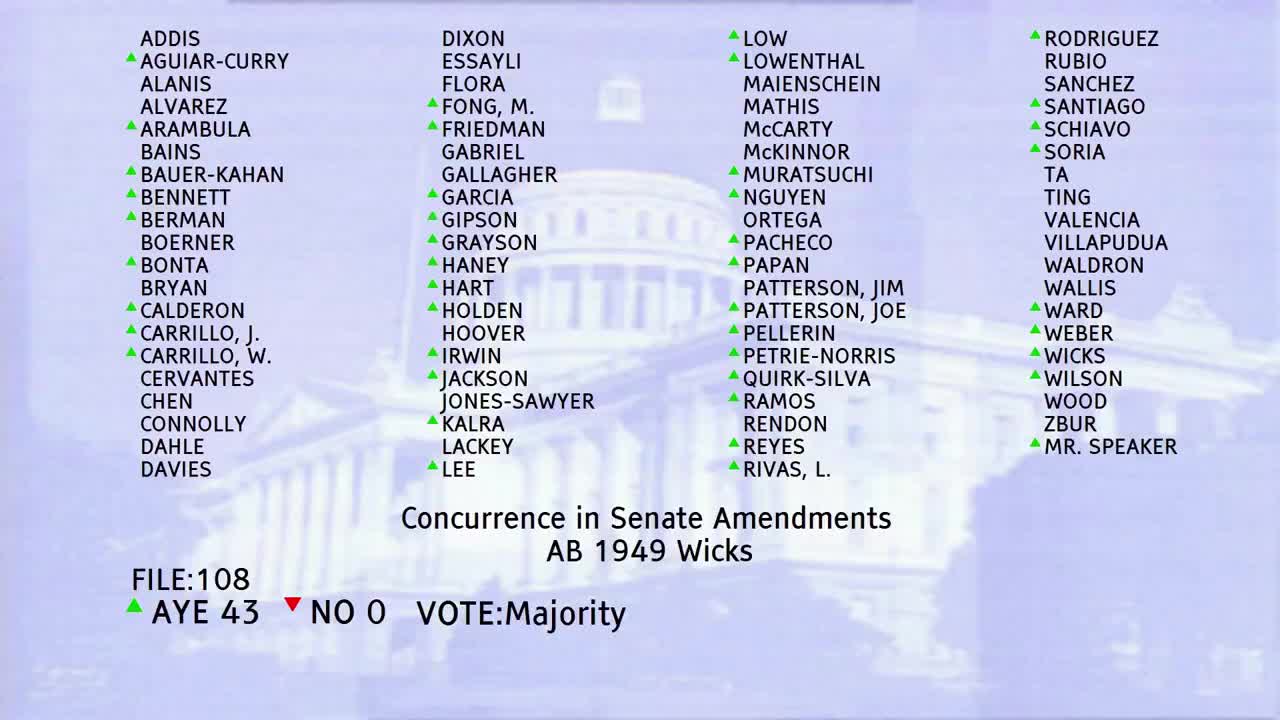


Bill Author

Bill Co-Author(s):