AB 2750: Electricity: procurement: generation from biomass.
- Session Year: 2023-2024
- House: Assembly
- Latest Version Date: 2024-09-25
Current Status:
Passed
(2024-09-25: Chaptered by Secretary of State - Chapter 575, Statutes of 2024.)
Introduced
In Committee
First Chamber
In Committee
Second Chamber
Enacted
Existing law vests the Public Utilities Commission with regulatory authority over public utilities, including electrical corporations, while local publicly owned electric utilities are under the direction of their governing boards. Existing law requires electrical corporations, in addition to other requirements to procure generating capacity from bioenergy projects, to collectively procure, by December 1, 2023, their proportionate share of 125 megawatts of cumulative rated generating capacity from bioenergy projects that commenced operations before June 1, 2013, and that use certain feedstocks.
This bill would extend that procurement deadline to July 1, 2025.
Existing law requires electrical corporations, local publicly owned electric utilities, and community choice aggregators with contracts to procure electricity generated from biomass that expire on or before December 31, 2028, to seek to amend the contracts or to seek approval for new contracts that include expiration dates 5 years later than the expiration dates in the contracts that were operative in 2022. Existing law specifies that this requirement does not apply to biomass facilities located in federal severe or extreme nonattainment areas for particulate matter or ozone.
This bill would require those entities to seek to amend the contracts or seek approval for new contracts to include expiration dates at least 5 years later, rather than expiration dates 5 years later, than the expiration dates in the contracts that were operative in 2022. The bill would specify that this contracting requirement applies to a biomass facility located in an area that voluntarily opts for severe or extreme nonattainment status for particulate matter or ozone but the air district has determined that the continued operation of the facility does not impede the air districts ability to meet its applicable attainment deadline.
This bill would prohibit the extension of a contract between an electrical corporation, local publicly owned electric utility, or community choice aggregator and a biomass generator that is located in the Sacramento federal ozone nonattainment area unless the biomass generator first obtains a letter or certificate from the air district with jurisdiction over the biomass generator that states that the Sacramento federal ozone nonattainment area voluntarily opted to be classified in one or more federal standards in a severe or extreme nonattainment zone and that the continued operation of the facility does not impede the air districts ability to meet its applicable requirements.
This bill would make legislative findings and declarations as to the necessity of a special statute for the Sacramento federal ozone nonattainment area.
This bill would incorporate additional changes to Section 399.20.3 of the Public Utilities Code proposed by AB 2276 to be operative only if this bill and AB 2276 are enacted and this bill is enacted last.
Under existing law a violation of the Public Utilities Act or an order, decision, rule, direction, demand, or requirement of the commission is a crime.
Because a provision of this bill would be a part of the act, and a violation of a commission action implementing the bills requirements would be a crime, the bill would impose a state-mandated local program.
The California Constitution requires the state to reimburse local agencies and school districts for certain costs mandated by the state. Statutory provisions establish procedures for making that reimbursement.
This bill would provide that no reimbursement is required by this act for a specified reason.
Existing law vests the Public Utilities Commission with regulatory authority over public utilities, including electrical corporations, while local publicly owned electric utilities are under the direction of their governing boards. Existing law requires electrical corporations, in addition to other requirements to procure generating capacity from bioenergy projects, to collectively procure, by December 1, 2023, their proportionate share of 125 megawatts of cumulative rated generating capacity from bioenergy projects that commenced operations before June 1, 2013, and that use certain feedstocks.
This bill would extend that procurement deadline to July 1, 2025.
Existing law requires electrical corporations, local publicly owned electric utilities, and community choice aggregators with contracts to procure electricity generated from biomass that expire on or before December 31, 2028, to seek to amend the contracts or to seek approval for new contracts that include expiration dates 5 years later than the expiration dates in the contracts that were operative in 2022. Existing law specifies that this requirement does not apply to biomass facilities located in federal severe or extreme nonattainment areas for particulate matter or ozone.
This bill would require those entities to seek to amend the contracts or seek approval for new contracts to include expiration dates at least 5 years later, rather than expiration dates 5 years later, than the expiration dates in the contracts that were operative in 2022. The bill would specify that this contracting requirement applies to a biomass facilities facility located in areas an area that voluntarily opt opts for severe or extreme nonattainment status for particulate matter or ozone, but have measured levels of particulate matter or ozone that are below the severe nonattainment classification level. ozone but the air district has determined that the continued operation of the facility does not impede the air districts ability to meet its applicable attainment deadline.
Under existing law a violation of the Public Utilities Act or an order, decision, rule, direction, demand, or requirement of the commission is a crime.
Because a provision of this bill would be a part of the act, and a violation of a commission action implementing the bills requirements would be a crime, the bill would impose a state-mandated local program.
The California Constitution requires the state to reimburse local agencies and school districts for certain costs mandated by the state. Statutory provisions establish procedures for making that reimbursement.
This bill would provide that no reimbursement is required by this act for a specified reason.
Existing law vests the Public Utilities Commission with regulatory authority over public utilities, including electrical corporations, while local publicly owned electric utilities are under the direction of their governing boards. Existing law requires electrical corporations, in addition to other requirements to procure generating capacity from bioenergy projects, to collectively procure, by December 1, 2023, their proportionate share of 125 megawatts of cumulative rated generating capacity from bioenergy projects that commenced operations before June 1, 2013, and that use certain feedstocks.
This bill would extend that procurement deadline to July 1, 2025.
Existing law requires electrical corporations, local publicly owned electric utilities, and community choice aggregators with contracts to procure electricity generated from biomass that expire on or before December 31, 2028, to seek to amend the contract contracts or to seek approval for a new contract, as provided. contracts that include expiration dates 5 years later than the expiration dates in the contracts that were operative in 2022. Existing law specifies that this requirement does not apply to biomass facilities located in federal severe or extreme nonattainment areas for particulate matter or ozone.
This bill would make nonsubstantive changes to the above provision. require those entities to seek to amend the contracts or seek approval for new contracts to include expiration dates at least 5 years later, rather than expiration dates 5 years later, than the expiration dates in the contracts that were operative in 2022. The bill would specify that this contracting requirement applies to biomass facilities located in areas that voluntarily opt for severe or extreme nonattainment status for particulate matter or ozone, but have measured levels of particulate matter or ozone that are below the severe nonattainment classification level.
Under existing law a violation of the Public Utilities Act or an order, decision, rule, direction, demand, or requirement of the commission is a crime.
Because a provision of this bill would be a part of the act, and a violation of a commission action implementing the bills requirements would be a crime, the bill would impose a state-mandated local program.
The California Constitution requires the state to reimburse local agencies and school districts for certain costs mandated by the state. Statutory provisions establish procedures for making that reimbursement.
This bill would provide that no reimbursement is required by this act for a specified reason.
Existing law requires electrical corporations, local publicly owned electric utilities, and community choice aggregators with contracts to procure electricity generated from biomass that expire on or before December 31, 2028, to seek to amend the contract or to seek approval for a new contract, as provided.
This bill would make nonsubstantive changes to the above provision.
(a)For purposes of this section, the following definitions apply:
(1)Bioenergy has the same meaning as set forth in paragraph (6) of subdivision (f) of Section 399.20.
(2)Tier 1 high hazard zone includes areas where wildlife and falling trees threaten electrical transmission and distribution lines, roads, and other evacuation corridors, critical community infrastructure, or other existing structures, as designated by the Department of Forestry and Fire Protection pursuant to the Proclamation of a State of Emergency on Tree Mortality declared by the Governor on October 30, 2015.
(3)Tier 2 high hazard zone includes watersheds that have significant tree mortality combined with community and natural resource assets, as designated by the Department of Forestry and Fire Protection pursuant to the Proclamation of a State of Emergency on Tree Mortality declared by the Governor on October 30, 2015.
(b)(1)In addition to the requirements of subdivision (f) of Section 399.20, on or before July 1, 2025, electrical corporations shall collectively procure, through financial commitments of 5 to 15 years, inclusive, their proportionate share of 125 megawatts of cumulative rated generating capacity from existing bioenergy projects that commenced operations before June 1, 2013. At least 80 percent of the feedstock of an eligible facility, on an annual basis, shall be a byproduct of sustainable forestry management, which includes removal of dead and dying trees from Tier 1 and Tier 2 high hazard zones and is not that from lands that have been clear cut. At least 60 percent of this feedstock shall be from Tier 1 and Tier 2 high hazard zones.
(2)Paragraph (1) does not apply to a utility subject to subdivision (g) if both of the following apply:
(A)The utility, either directly or through a joint powers authority, entered into five-year financial commitments for its proportionate share of 125 megawatts of cumulative rated generating capacity from existing bioenergy projects pursuant to this section as it was enacted by Chapter 368 of the Statutes of 2016.
(B)The utilitys financial commitments referenced in subparagraph (A) include either: (i) a contract with a facility operator that was, on June 1, 2022, in a bankruptcy or other insolvency proceeding; or (ii) a contract for a project that does not deliver energy to the utility.
(c)For the purpose of contracts entered into pursuant to subdivision (b), commission Resolution E-4770 (March 17, 2016), and commission Resolution E-4805 (October 13, 2016), Tier 1 and Tier 2 high hazard zone fuel or feedstock shall also include biomass fuels removed from fuel reduction operations exempt from timber harvesting plan requirements pursuant to subdivisions (a), (f), (j), and (k) of Section 4584 of the Public Resources Code.
(d)The commission shall require an electrical corporation that has entered into a contract pursuant to subdivision (b), commission Resolution E-4770 (March 17, 2016), or commission Resolution E-4805 (October 13, 2016) to allow fuel or feedstock reporting requirements to be based on a monthly or annual basis, and a bioenergy facility providing generation pursuant to that contract shall have the right to opt out of the mandated fuel or feedstock usage levels in any particular month upon providing written notice to the electrical corporation in the month of operation. For months in which a bioenergy facility opts out of the mandated fuel or feedstock usage levels or misses the mandated fuel or feedstock targets, that facility shall be paid the alternate price adopted by the commission in commission Resolution E-4770 for all megawatthours generated during that month. Contracts shall continue in force through the end of the contracted term without creating an event of default for missing mandated fuel or feedstock usage levels and without giving rise to a termination right in favor of the electrical corporation.
(e)(1)For each electrical corporation, the commission shall allocate its proportionate share of the 125 megawatts based on the ratio of the electrical corporations peak demand to the total statewide peak demand.
(2)Procurement by an electrical corporation of generation capacity pursuant to a contract under the commissions Resolution E-4770 (March 17, 2016) that is in excess of the requirement of that electrical corporation under that resolution shall count towards meeting the electrical corporations proportionate share allocated pursuant to paragraph (1).
(f)The commission may direct each electrical corporation to develop standard contract terms and conditions that reflect the operational characteristics of the bioenergy projects and to provide a streamlined contracting process or may require the electrical corporations to use the mechanism established pursuant to the commissions Resolution E-4770 (March 17, 2016) to meet the requirements of subdivision (e). The procurement pursuant to the developed standard contract shall occur on an expedited basis due to the Proclamation of a State of Emergency on Tree Mortality declared by the Governor on October 30, 2015.
(g)A local publicly owned electric utility serving more than 100,000 customers shall procure its proportionate share, based on the ratio of the utilitys peak demand to the total statewide peak demand, of 125 megawatts of cumulative rated capacity from existing bioenergy projects described in subdivision (b) subject to terms of at least five years.
(h)The commission shall ensure that the costs of any contract procured by an electrical corporation to satisfy the requirements of this section are recoverable from all customers on a nonbypassable basis.
(i)The Procurement Review Group within the commission shall advise the commission on the cost of the generation procured pursuant to this section and its impact on ratepayers.
(j)For purposes of this section, any incremental procurement of electricity products from bioenergy resources by a new contract or contract extension of five years or longer in duration shall be from a resource that meets emission limits equivalent to, or more stringent than, the applicable best available retrofit control technology, as determined by the local air pollution control district or air quality management district. The determination shall be made before the start of the operating period under the new contract or contract extension.
SEC. 1.5.Section 399.20.3 of the Public Utilities Code is amended to read:399.20.3.(a)For purposes of this section, the following definitions apply:
(1)Bioenergy has the same meaning as set forth in paragraph (6) of subdivision (f) of Section 399.20.
(2)Tier 1 high hazard zone includes areas where wildlife and falling trees threaten electrical transmission and distribution lines, roads, and other evacuation corridors, critical community infrastructure, or other existing structures, as designated by the Department of Forestry and Fire Protection pursuant to the Proclamation of a State of Emergency on Tree Mortality declared by the Governor on October 30, 2015.
(3)Tier 2 high hazard zone includes watersheds that have significant tree mortality combined with community and natural resource assets, as designated by the Department of Forestry and Fire Protection pursuant to the Proclamation of a State of Emergency on Tree Mortality declared by the Governor on October 30, 2015.
(b)(1)In addition to the requirements of subdivision (f) of Section 399.20, on or before July 1, 2025, electrical corporations shall collectively procure, through financial commitments of 5 to 15 years, inclusive, their proportionate share of 125 megawatts of cumulative rated generating capacity from existing bioenergy projects that commenced operations before June 1, 2013. At least 80 percent of the feedstock of an eligible facility, on an annual basis, shall be a byproduct of sustainable forestry management, which includes removal of dead and dying trees from Tier 1 and Tier 2 high hazard zones and is not that from lands that have been clear cut. At least 60 percent of this feedstock shall be from Tier 1 and Tier 2 high hazard zones.
(2)Paragraph (1) does not apply to a utility subject to subdivision (g) if both of the following apply:
(A)The utility, either directly or through a joint powers authority, entered into five-year financial commitments for its proportionate share of 125 megawatts of cumulative rated generating capacity from existing bioenergy projects pursuant to this section as it was enacted by Chapter 368 of the Statutes of 2016.
(B)The utilitys financial commitments referenced in subparagraph (A) include either: (i) a contract with a facility operator that was, on June 1, 2022, in a bankruptcy or other insolvency proceeding; or (ii) a contract for a project that does not deliver energy to the utility.
(c)For the purpose of contracts entered into pursuant to subdivision (b), commission Resolution E-4770 (March 17, 2016), and commission Resolution E-4805 (October 13, 2016), Tier 1 and Tier 2 high hazard zone fuel or feedstock shall also include biomass fuels removed from fuel reduction operations exempt from timber harvesting plan requirements pursuant to subdivisions (a), (f), (j), and (k) of Section 4584 of the Public Resources Code, as those subdivisions read on January 1, 2024.
(d)The commission shall require an electrical corporation that has entered into a contract pursuant to subdivision (b), commission Resolution E-4770 (March 17, 2016), or commission Resolution E-4805 (October 13, 2016) to allow fuel or feedstock reporting requirements to be based on a monthly or annual basis, and a bioenergy facility providing generation pursuant to that contract shall have the right to opt out of the mandated fuel or feedstock usage levels in any particular month upon providing written notice to the electrical corporation in the month of operation. For months in which a bioenergy facility opts out of the mandated fuel or feedstock usage levels or misses the mandated fuel or feedstock targets, that facility shall be paid the alternate price adopted by the commission in commission Resolution E-4770 for all megawatthours generated during that month. Contracts shall continue in force through the end of the contracted term without creating an event of default for missing mandated fuel or feedstock usage levels and without giving rise to a termination right in favor of the electrical corporation.
(e)(1)For each electrical corporation, the commission shall allocate its proportionate share of the 125 megawatts based on the ratio of the electrical corporations peak demand to the total statewide peak demand.
(2)Procurement by an electrical corporation of generation capacity pursuant to a contract under the commissions Resolution E-4770 (March 17, 2016) that is in excess of the requirement of that electrical corporation under that resolution shall count towards meeting the electrical corporations proportionate share allocated pursuant to paragraph (1).
(f)The commission may direct each electrical corporation to develop standard contract terms and conditions that reflect the operational characteristics of the bioenergy projects and to provide a streamlined contracting process or may require the electrical corporations to use the mechanism established pursuant to the commissions Resolution E-4770 (March 17, 2016) to meet the requirements of subdivision (e). The procurement pursuant to the developed standard contract shall occur on an expedited basis due to the Proclamation of a State of Emergency on Tree Mortality declared by the Governor on October 30, 2015.
(g)A local publicly owned electric utility serving more than 100,000 customers shall procure its proportionate share, based on the ratio of the utilitys peak demand to the total statewide peak demand, of 125 megawatts of cumulative rated capacity from existing bioenergy projects described in subdivision (b) subject to terms of at least five years.
(h)The commission shall ensure that the costs of any contract procured by an electrical corporation to satisfy the requirements of this section are recoverable from all customers on a nonbypassable basis.
(i)The Procurement Review Group within the commission shall advise the commission on the cost of the generation procured pursuant to this section and its impact on ratepayers.
(j)For purposes of this section, any incremental procurement of electricity products from bioenergy resources by a new contract or contract extension of five years or longer in duration shall be from a resource that meets emission limits equivalent to, or more stringent than, the applicable best available retrofit control technology, as determined by the local air pollution control district or air quality management district. The determination shall be made before the start of the operating period under the new contract or contract extension.
SEC. 2.Section 8388 of the Public Utilities Code is amended to read:8388.(a)An electrical corporation, local publicly owned electric utility, or community choice aggregator with a contract to procure electricity generated from biomass pursuant to Section 399.20.3, commission Resolution E-4770 (March 17, 2016), or commission Resolution E-4805 (October 13, 2016), that expires on or before December 31, 2028, shall seek to amend the contract to include, or seek approval for a new contract that includes, an expiration date at least five years later than the expiration date in the contract that was operative in 2022 if the contract extension follows the feedstock requirement of subdivision (b) of Section 399.20.3.
(b)(1)Except as provided in paragraph (2), subdivision (a) does not apply to a facility located in a federal severe or extreme nonattainment area for particulate matter or ozone.
(2)Notwithstanding paragraph (1), subdivision (a) applies to a facility in an area that voluntarily opts for severe or extreme nonattainment status but the air district has determined that the continued operation of the facility does not impede the air districts ability to meet its applicable attainment deadline.
(3)A contract between an electrical corporation, local publicly owned electric utility, or community choice aggregator and a biomass generator that is located in the Sacramento federal ozone nonattainment area shall not be extended unless the biomass generator first obtains a letter or certificate from the air district with jurisdiction over the biomass generator that states that the Sacramento federal ozone nonattainment area voluntarily opted to be classified in one or more federal standards in a severe or extreme nonattainment zone and that the continued operation of the facility does not impede the air districts ability to meet its applicable requirements.
SEC. 3.The Legislature finds and declares that a special statute is necessary and that a general statute cannot be made applicable within the meaning of Section 16 of Article IV of the California Constitution because the Sacramento federal ozone nonattainment area voluntarily reclassified its nonattainment status to severe, which had the unintended impact of disqualifying a biomass facility in Lincoln, California from a bioenergy renewable auction mechanism power purchase agreement extension.
SEC. 4.Section 1.5 of this bill incorporates amendments to Section 399.20.3 of the Public Utilities Code proposed by both this bill and Assembly Bill 2276. That section of this bill shall only become operative if (1) both bills are enacted and become effective on or before January 1, 2025, (2) each bill amends Section 399.20.3 of the Public Utilities Code, and (3) this bill is enacted after Assembly Bill 2276, in which case Section 1 of this bill shall not become operative.
SEC. 5.No reimbursement is required by this act pursuant to Section 6 of Article XIIIB of the California Constitution because the only costs that may be incurred by a local agency or school district will be incurred because this act creates a new crime or infraction, eliminates a crime or infraction, or changes the penalty for a crime or infraction, within the meaning of Section 17556 of the Government Code, or changes the definition of a crime within the meaning of Section 6 of Article XIIIB of the California Constitution.
(a)For purposes of this section, the following definitions apply:
(1)Bioenergy has the same meaning as set forth in paragraph (6) of subdivision (f) of Section 399.20.
(2)Tier 1 high hazard zone includes areas where wildlife and falling trees threaten electrical transmission and distribution lines, roads, and other evacuation corridors, critical community infrastructure, or other existing structures, as designated by the Department of Forestry and Fire Protection pursuant to the Proclamation of a State of Emergency on Tree Mortality declared by the Governor on October 30, 2015.
(3)Tier 2 high hazard zone includes watersheds that have significant tree mortality combined with community and natural resource assets, as designated by the Department of Forestry and Fire Protection pursuant to the Proclamation of a State of Emergency on Tree Mortality declared by the Governor on October 30, 2015.
(b)(1)In addition to the requirements of subdivision (f) of Section 399.20, on or before July 1, 2025, electrical corporations shall collectively procure, through financial commitments of 5 to 15 years, inclusive, their proportionate share of 125 megawatts of cumulative rated generating capacity from existing bioenergy projects that commenced operations before June 1, 2013. At least 80 percent of the feedstock of an eligible facility, on an annual basis, shall be a byproduct of sustainable forestry management, which includes removal of dead and dying trees from Tier 1 and Tier 2 high hazard zones and is not that from lands that have been clear cut. At least 60 percent of this feedstock shall be from Tier 1 and Tier 2 high hazard zones.
(2)Paragraph (1) does not apply to a utility subject to subdivision (g) if both of the following apply:
(A)The utility, either directly or through a joint powers authority, entered into five-year financial commitments for its proportionate share of 125 megawatts of cumulative rated generating capacity from existing bioenergy projects pursuant to this section as it was enacted by Chapter 368 of the Statutes of 2016.
(B)The utilitys financial commitments referenced in subparagraph (A) include either: (i) a contract with a facility operator that was, on June 1, 2022, in a bankruptcy or other insolvency proceeding; or (ii) a contract for a project that does not deliver energy to the utility.
(c)For the purpose of contracts entered into pursuant to subdivision (b), commission Resolution E-4770 (March 17, 2016), and commission Resolution E-4805 (October 13, 2016), Tier 1 and Tier 2 high hazard zone fuel or feedstock shall also include biomass fuels removed from fuel reduction operations exempt from timber harvesting plan requirements pursuant to subdivisions (a), (f), (j), and (k) of Section 4584 of the Public Resources Code.
(d)The commission shall require an electrical corporation that has entered into a contract pursuant to subdivision (b), commission Resolution E-4770 (March 17, 2016), or commission Resolution E-4805 (October 13, 2016) to allow fuel or feedstock reporting requirements to be based on a monthly or annual basis, and a bioenergy facility providing generation pursuant to that contract shall have the right to opt out of the mandated fuel or feedstock usage levels in any particular month upon providing written notice to the electrical corporation in the month of operation. For months in which a bioenergy facility opts out of the mandated fuel or feedstock usage levels or misses the mandated fuel or feedstock targets, that facility shall be paid the alternate price adopted by the commission in commission Resolution E-4770 for all megawatthours generated during that month. Contracts shall continue in force through the end of the contracted term without creating an event of default for missing mandated fuel or feedstock usage levels and without giving rise to a termination right in favor of the electrical corporation.
(e)(1)For each electrical corporation, the commission shall allocate its proportionate share of the 125 megawatts based on the ratio of the electrical corporations peak demand to the total statewide peak demand.
(2)Procurement by an electrical corporation of generation capacity pursuant to a contract under the commissions Resolution E-4770 (March 17, 2016) that is in excess of the requirement of that electrical corporation under that resolution shall count towards meeting the electrical corporations proportionate share allocated pursuant to paragraph (1).
(f)The commission may direct each electrical corporation to develop standard contract terms and conditions that reflect the operational characteristics of the bioenergy projects and to provide a streamlined contracting process or may require the electrical corporations to use the mechanism established pursuant to the commissions Resolution E-4770 (March 17, 2016) to meet the requirements of subdivision (e). The procurement pursuant to the developed standard contract shall occur on an expedited basis due to the Proclamation of a State of Emergency on Tree Mortality declared by the Governor on October 30, 2015.
(g)A local publicly owned electric utility serving more than 100,000 customers shall procure its proportionate share, based on the ratio of the utilitys peak demand to the total statewide peak demand, of 125 megawatts of cumulative rated capacity from existing bioenergy projects described in subdivision (b) subject to terms of at least five years.
(h)The commission shall ensure that the costs of any contract procured by an electrical corporation to satisfy the requirements of this section are recoverable from all customers on a nonbypassable basis.
(i)The Procurement Review Group within the commission shall advise the commission on the cost of the generation procured pursuant to this section and its impact on ratepayers.
(j)For purposes of this section, any incremental procurement of electricity products from bioenergy resources by a new contract or contract extension of five years or longer in duration shall be from a resource that meets emission limits equivalent to, or more stringent than, the applicable best available retrofit control technology, as determined by the local air pollution control district or air quality management district. The determination shall be made before the start of the operating period under the new contract or contract extension.
SEC. 1.5.Section 399.20.3 of the Public Utilities Code is amended to read:399.20.3.(a)For purposes of this section, the following definitions apply:
(1)Bioenergy has the same meaning as set forth in paragraph (6) of subdivision (f) of Section 399.20.
(2)Tier 1 high hazard zone includes areas where wildlife and falling trees threaten electrical transmission and distribution lines, roads, and other evacuation corridors, critical community infrastructure, or other existing structures, as designated by the Department of Forestry and Fire Protection pursuant to the Proclamation of a State of Emergency on Tree Mortality declared by the Governor on October 30, 2015.
(3)Tier 2 high hazard zone includes watersheds that have significant tree mortality combined with community and natural resource assets, as designated by the Department of Forestry and Fire Protection pursuant to the Proclamation of a State of Emergency on Tree Mortality declared by the Governor on October 30, 2015.
(b)(1)In addition to the requirements of subdivision (f) of Section 399.20, by December 1, 2023, on or before July 1, 2025, electrical corporations shall collectively procure, through financial commitments of 5 to 15 years, inclusive, their proportionate share of 125 megawatts of cumulative rated generating capacity from existing bioenergy projects that commenced operations before June 1, 2013. At least 80 percent of the feedstock of an eligible facility, on an annual basis, shall be a byproduct of sustainable forestry management, which includes removal of dead and dying trees from Tier 1 and Tier 2 high hazard zones and is not that from lands that have been clear cut. At least 60 percent of this feedstock shall be from Tier 1 and Tier 2 high hazard zones.
(2)Paragraph (1) shall does not apply to a utility subject to subdivision (g) if both of the following apply:
(A)The utility, either directly or through a joint powers authority, entered into five-year financial commitments for its proportionate share of 125 megawatts of cumulative rated generating capacity from existing bioenergy projects pursuant to this section as it was enacted by Chapter 368 of the Statutes of 2016.
(B)The utilitys financial commitments referenced in subparagraph (A) include, (1) include either: (i) a contract with a facility operator that was, on June 1, 2022, in a bankruptcy or other insolvency proceeding, proceeding; or (2) (ii) a contract for a project that does not deliver energy to the utility.
(c)For the purpose of contracts entered into pursuant to subdivision (b), commission Resolution E-4770 (March 17, 2016), and commission Resolution E-4805 (October 13, 2016), Tier 1 and Tier 2 high hazard zone fuel or feedstock shall also include biomass fuels removed from fuel reduction operations exempt from timber harvesting plan requirements pursuant to subdivisions (a), (f), (j), and (k) of Section 4584 of the Public Resources Code. Code, as those subdivisions read on January 1, 2024.
(d)The commission shall require an electrical corporation that has entered into a contract pursuant to subdivision (b), commission Resolution E-4770 (March 17, 2016), or commission Resolution E-4805 (October 13, 2016) to allow fuel or feedstock reporting requirements to be based on a monthly or annual basis, and a bioenergy facility providing generation pursuant to that contract shall have the right to opt out of the mandated fuel or feedstock usage levels in any particular month upon providing written notice to the electrical corporation in the month of operation. For months in which a bioenergy facility opts out of the mandated fuel or feedstock usage levels or misses the mandated fuel or feedstock targets, that facility shall be paid the alternate price adopted by the commission in commission Resolution E-4770 for all megawatthours generated during that month. Contracts shall continue in force through the end of the contracted term without creating an event of default for missing mandated fuel or feedstock usage levels and without giving rise to a termination right in favor of the electrical corporation.
(e)(1)For each electrical corporation, the commission shall allocate its proportionate share of the 125 megawatts based on the ratio of the electrical corporations peak demand to the total statewide peak demand.
(2)Procurement by an electrical corporation of generation capacity pursuant to a contract under the commissions Resolution E-4770 (March 17, 2016) that is in excess of the requirement of that electrical corporation under that resolution shall count towards meeting the electrical corporations proportionate share allocated pursuant to paragraph (1).
(f)The commission may direct each electrical corporation to develop standard contract terms and conditions that reflect the operational characteristics of the bioenergy projects and to provide a streamlined contracting process or may require the electrical corporations to use the mechanism established pursuant to the commissions Resolution E-4770 (March 17, 2016) to meet the requirements of subdivision (e). The procurement pursuant to the developed standard contract shall occur on an expedited basis due to the Proclamation of a State of Emergency on Tree Mortality declared by the Governor on October 30, 2015.
(g)A local publicly owned electric utility serving more than 100,000 customers shall procure its proportionate share, based on the ratio of the utilitys peak demand to the total statewide peak demand, of 125 megawatts of cumulative rated capacity from existing bioenergy projects described in subdivision (b) subject to terms of at least five years.
(h)The commission shall ensure that the costs of any contract procured by an electrical corporation to satisfy the requirements of this section are recoverable from all customers on a nonbypassable basis.
(i)The Procurement Review Group within the commission shall advise the commission on the cost of the generation procured pursuant to this section and its impact on ratepayers.
(j)For purposes of this section, any incremental procurement of electricity products from bioenergy resources by a new contract or contract extension of five years or longer in duration shall be from a resource that meets emission limits equivalent to, or more stringent than, the applicable best available retrofit control technology, as determined by the local air pollution control district or air quality management district. The determination shall be made before the start of the operating period under the new contract or contract extension.
SEC. 2.Section 8388 of the Public Utilities Code is amended to read:8388.(a)An electrical corporation, local publicly owned electric utility, or community choice aggregator with a contract to procure electricity generated from biomass pursuant to Section 399.20.3, commission Resolution E-4770 (March 17, 2016), or commission Resolution E-4805 (October 13, 2016), that expires on or before December 31, 2028, shall seek to amend the contract to include, or seek approval for a new contract that includes, an expiration date at least five years later than the expiration date in the contract that was operative in 2022 if the contract extension follows the feedstock requirement of subdivision (b) of Section 399.20.3.
(b)(1)Except as provided in paragraph (2), subdivision (a) does not apply to a facility located in a federal severe or extreme nonattainment area for particulate matter or ozone.
(2)Notwithstanding paragraph (1), subdivision (a) applies to a facility in an area that voluntarily opts for severe or extreme nonattainment status but the air district has determined that the continued operation of the facility does not impede the air districts ability to meet its applicable attainment deadline.
(3)A contract between an electrical corporation, local publicly owned electric utility, or community choice aggregator and a biomass generator that is located in the Sacramento federal ozone nonattainment area shall not be extended unless the biomass generator first obtains a letter or certificate from the air district with jurisdiction over the biomass generator that states that the Sacramento federal ozone nonattainment area voluntarily opted to be classified in one or more federal standards in a severe or extreme nonattainment zone and that the continued operation of the facility does not impede the air districts ability to meet its applicable requirements.
SEC. 3.The Legislature finds and declares that a special statute is necessary and that a general statute cannot be made applicable within the meaning of Section 16 of Article IV of the California Constitution because the Sacramento federal ozone nonattainment area voluntarily reclassified its nonattainment status to severe, which had the unintended impact of disqualifying a biomass facility in Lincoln, California from a bioenergy renewable auction mechanism power purchase agreement extension.
SEC. 4.Section 1.5 of this bill incorporates amendments to Section 399.20.3 of the Public Utilities Code proposed by both this bill and Assembly Bill 2276. That section of this bill shall only become operative if (1) both bills are enacted and become effective on or before January 1, 2025, (2) each bill amends Section 399.20.3 of the Public Utilities Code, and (3) this bill is enacted after Assembly Bill 2276, in which case Section 1 of this bill shall not become operative.
SEC. 3.SEC. 5.No reimbursement is required by this act pursuant to Section 6 of Article XIIIB of the California Constitution because the only costs that may be incurred by a local agency or school district will be incurred because this act creates a new crime or infraction, eliminates a crime or infraction, or changes the penalty for a crime or infraction, within the meaning of Section 17556 of the Government Code, or changes the definition of a crime within the meaning of Section 6 of Article XIIIB of the California Constitution.
(a)For purposes of this section, the following definitions apply:
(1)Bioenergy has the same meaning as set forth in paragraph (6) of subdivision (f) of Section 399.20.
(2)Tier 1 high hazard zone includes areas where wildlife and falling trees threaten electrical transmission and distribution lines, roads, and other evacuation corridors, critical community infrastructure, or other existing structures, as designated by the Department of Forestry and Fire Protection pursuant to the Proclamation of a State of Emergency on Tree Mortality declared by the Governor on October 30, 2015.
(3)Tier 2 high hazard zone includes watersheds that have significant tree mortality combined with community and natural resource assets, as designated by the Department of Forestry and Fire Protection pursuant to the Proclamation of a State of Emergency on Tree Mortality declared by the Governor on October 30, 2015.
(b)(1)In addition to the requirements of subdivision (f) of Section 399.20, on or before July 1, 2025, electrical corporations shall collectively procure, through financial commitments of 5 to 15 years, inclusive, their proportionate share of 125 megawatts of cumulative rated generating capacity from existing bioenergy projects that commenced operations before June 1, 2013. At least 80 percent of the feedstock of an eligible facility, on an annual basis, shall be a byproduct of sustainable forestry management, which includes removal of dead and dying trees from Tier 1 and Tier 2 high hazard zones and is not that from lands that have been clear cut. At least 60 percent of this feedstock shall be from Tier 1 and Tier 2 high hazard zones.
(2)Paragraph (1) does not apply to a utility subject to subdivision (g) if both of the following apply:
(A)The utility, either directly or through a joint powers authority, entered into five-year financial commitments for its proportionate share of 125 megawatts of cumulative rated generating capacity from existing bioenergy projects pursuant to this section as it was enacted by Chapter 368 of the Statutes of 2016.
(B)The utilitys financial commitments referenced in subparagraph (A) include, include either: (i) a contract with a facility operator that was, on June 1, 2022, in a bankruptcy or other insolvency proceeding, proceeding; or (ii) a contract for a project that does not deliver energy to the utility.
(c)For the purpose of contracts entered into pursuant to subdivision (b), commission Resolution E-4770 (March 17, 2016), and commission Resolution E-4805 (October 13, 2016), Tier 1 and Tier 2 high hazard zone fuel or feedstock shall also include biomass fuels removed from fuel reduction operations exempt from timber harvesting plan requirements pursuant to subdivisions (a), (f), (j), and (k) of Section 4584 of the Public Resources Code.
(d)The commission shall require an electrical corporation that has entered into a contract pursuant to subdivision (b), commission Resolution E-4770 (March 17, 2016), or commission Resolution E-4805 (October 13, 2016) to allow fuel or feedstock reporting requirements to be based on a monthly or annual basis, and a bioenergy facility providing generation pursuant to that contract shall have the right to opt out of the mandated fuel or feedstock usage levels in any particular month upon providing written notice to the electrical corporation in the month of operation. For months in which a bioenergy facility opts out of the mandated fuel or feedstock usage levels or misses the mandated fuel or feedstock targets, that facility shall be paid the alternate price adopted by the commission in commission Resolution E-4770 for all megawatthours generated during that month. Contracts shall continue in force through the end of the contracted term without creating an event of default for missing mandated fuel or feedstock usage levels and without giving rise to a termination right in favor of the electrical corporation.
(e)(1)For each electrical corporation, the commission shall allocate its proportionate share of the 125 megawatts based on the ratio of the electrical corporations peak demand to the total statewide peak demand.
(2)Procurement by an electrical corporation of generation capacity pursuant to a contract under the commissions Resolution E-4770 (March 17, 2016) that is in excess of the requirement of that electrical corporation under that resolution shall count towards meeting the electrical corporations proportionate share allocated pursuant to paragraph (1).
(f)The commission may direct each electrical corporation to develop standard contract terms and conditions that reflect the operational characteristics of the bioenergy projects and to provide a streamlined contracting process or may require the electrical corporations to use the mechanism established pursuant to the commissions Resolution E-4770 (March 17, 2016) to meet the requirements of subdivision (e). The procurement pursuant to the developed standard contract shall occur on an expedited basis due to the Proclamation of a State of Emergency on Tree Mortality declared by the Governor on October 30, 2015.
(g)A local publicly owned electric utility serving more than 100,000 customers shall procure its proportionate share, based on the ratio of the utilitys peak demand to the total statewide peak demand, of 125 megawatts of cumulative rated capacity from existing bioenergy projects described in subdivision (b) subject to terms of at least five years.
(h)The commission shall ensure that the costs of any contract procured by an electrical corporation to satisfy the requirements of this section are recoverable from all customers on a nonbypassable basis.
(i)The Procurement Review Group within the commission shall advise the commission on the cost of the generation procured pursuant to this section and its impact on ratepayers.
(j)For purposes of this section, any incremental procurement of electricity products from bioenergy resources by a new contract or contract extension of five years or longer in duration shall be from a resource that meets emission limits equivalent to, or more stringent than, the applicable best available retrofit control technology, as determined by the local air pollution control district or air quality management district. The determination shall be made before the start of the operating period under the new contract or contract extension.
SEC. 2.Section 8388 of the Public Utilities Code is amended to read:8388.(a)An electrical corporation, local publicly owned electric utility, or community choice aggregator with a contract to procure electricity generated from biomass pursuant to Section 399.20.3, commission Resolution E-4770 (March 17, 2016), or commission Resolution E-4805 (October 13, 2016), that expires on or before December 31, 2028, shall seek to amend the contract to include, or seek approval for a new contract that includes, an expiration date at least five years later than the expiration date in the contract that was operative in 2022 if the contract extension follows the feedstock requirement of subdivision (b) of Section 399.20.3.
(b)(1)Except as provided in paragraph (2), subdivision (a) does not apply to facilities a facility located in a federal severe or extreme nonattainment areas area for particulate matter or ozone.
(2)Notwithstanding paragraph (1), subdivision (a) applies to facilities a facility in areas an area that voluntarily opt opts for severe or extreme nonattainment status but have measured levels of particulate matter or ozone below the severe nonattainment classification levels. the air district has determined that the continued operation of the facility does not impede the air districts ability to meet its applicable attainment deadline.
SEC. 3.No reimbursement is required by this act pursuant to Section 6 of Article XIIIB of the California Constitution because the only costs that may be incurred by a local agency or school district will be incurred because this act creates a new crime or infraction, eliminates a crime or infraction, or changes the penalty for a crime or infraction, within the meaning of Section 17556 of the Government Code, or changes the definition of a crime within the meaning of Section 6 of Article XIIIB of the California Constitution.
(a)For purposes of this section, the following definitions apply:
(1)Bioenergy has the same meaning as set forth in paragraph (6) of subdivision (f) of Section 399.20.
(2)Tier 1 high hazard zone includes areas where wildlife and falling trees threaten electrical transmission and distribution lines, roads, and other evacuation corridors, critical community infrastructure, or other existing structures, as designated by the Department of Forestry and Fire Protection pursuant to the Proclamation of a State of Emergency on Tree Mortality declared by the Governor on October 30, 2015.
(3)Tier 2 high hazard zone includes watersheds that have significant tree mortality combined with community and natural resource assets, as designated by the Department of Forestry and Fire Protection pursuant to the Proclamation of a State of Emergency on Tree Mortality declared by the Governor on October 30, 2015.
(b)(1)In addition to the requirements of subdivision (f) of Section 399.20, by December 1, 2023, on or before July 1, 2025, electrical corporations shall collectively procure, through financial commitments of 5 to 15 years, inclusive, their proportionate share of 125 megawatts of cumulative rated generating capacity from existing bioenergy projects that commenced operations before June 1, 2013. At least 80 percent of the feedstock of an eligible facility, on an annual basis, shall be a byproduct of sustainable forestry management, which includes removal of dead and dying trees from Tier 1 and Tier 2 high hazard zones and is not that from lands that have been clear cut. At least 60 percent of this feedstock shall be from Tier 1 and Tier 2 high hazard zones.
(2)Paragraph (1) shall does not apply to a utility subject to subdivision (g) if both of the following apply:
(A)The utility, either directly or through a joint powers authority, entered into five-year financial commitments for its proportionate share of 125 megawatts of cumulative rated generating capacity from existing bioenergy projects pursuant to this section as it was enacted by Chapter 368 of the Statutes of 2016.
(B)The utilitys financial commitments referenced in subparagraph (A) include, (1) (i) a contract with a facility operator that was, on June 1, 2022, in a bankruptcy or other insolvency proceeding, or (2) (ii) a contract for a project that does not deliver energy to the utility.
(c)For the purpose of contracts entered into pursuant to subdivision (b), commission Resolution E-4770 (March 17, 2016), and commission Resolution E-4805 (October 13, 2016), Tier 1 and Tier 2 high hazard zone fuel or feedstock shall also include biomass fuels removed from fuel reduction operations exempt from timber harvesting plan requirements pursuant to subdivisions (a), (f), (j), and (k) of Section 4584 of the Public Resources Code.
(d)The commission shall require an electrical corporation that has entered into a contract pursuant to subdivision (b), commission Resolution E-4770 (March 17, 2016), or commission Resolution E-4805 (October 13, 2016) to allow fuel or feedstock reporting requirements to be based on a monthly or annual basis, and a bioenergy facility providing generation pursuant to that contract shall have the right to opt out of the mandated fuel or feedstock usage levels in any particular month upon providing written notice to the electrical corporation in the month of operation. For months in which a bioenergy facility opts out of the mandated fuel or feedstock usage levels or misses the mandated fuel or feedstock targets, that facility shall be paid the alternate price adopted by the commission in commission Resolution E-4770 for all megawatthours generated during that month. Contracts shall continue in force through the end of the contracted term without creating an event of default for missing mandated fuel or feedstock usage levels and without giving rise to a termination right in favor of the electrical corporation.
(e)(1)For each electrical corporation, the commission shall allocate its proportionate share of the 125 megawatts based on the ratio of the electrical corporations peak demand to the total statewide peak demand.
(2)Procurement by an electrical corporation of generation capacity pursuant to a contract under the commissions Resolution E-4770 (March 17, 2016) that is in excess of the requirement of that electrical corporation under that resolution shall count towards meeting the electrical corporations proportionate share allocated pursuant to paragraph (1).
(f)The commission may direct each electrical corporation to develop standard contract terms and conditions that reflect the operational characteristics of the bioenergy projects and to provide a streamlined contracting process or may require the electrical corporations to use the mechanism established pursuant to the commissions Resolution E-4770 (March 17, 2016) to meet the requirements of subdivision (e). The procurement pursuant to the developed standard contract shall occur on an expedited basis due to the Proclamation of a State of Emergency on Tree Mortality declared by the Governor on October 30, 2015.
(g)A local publicly owned electric utility serving more than 100,000 customers shall procure its proportionate share, based on the ratio of the utilitys peak demand to the total statewide peak demand, of 125 megawatts of cumulative rated capacity from existing bioenergy projects described in subdivision (b) subject to terms of at least five years.
(h)The commission shall ensure that the costs of any contract procured by an electrical corporation to satisfy the requirements of this section are recoverable from all customers on a nonbypassable basis.
(i)The Procurement Review Group within the commission shall advise the commission on the cost of the generation procured pursuant to this section and its impact on ratepayers.
(j)For purposes of this section, any incremental procurement of electricity products from bioenergy resources by a new contract or contract extension of five years or longer in duration shall be from a resource that meets emission limits equivalent to, or more stringent than, the applicable best available retrofit control technology, as determined by the local air pollution control district or air quality management district. The determination shall be made before the start of the operating period under the new contract or contract extension.
SECTION 1.SEC. 2.Section 8388 of the Public Utilities Code is amended to read:8388.(a)An electrical corporation, local publicly owned electric utility, or community choice aggregator with a contract to procure electricity generated from biomass pursuant to Section 399.20.3, commission Resolution E-4770 (March 17, 2016), or commission Resolution E-4805 (October 13, 2016), that expires on or before December 31, 2028, shall seek to amend the contract to include, or seek approval for a new contract that includes, an expiration date at least five years later than the expiration date in the contract that was operative in 2022 if the contract extension follows the feedstock requirement of subdivision (b) of Section 399.20.3.
(b)Subdivision (1)Except as provided in paragraph (2), subdivision (a) does not apply to facilities located in federal severe or extreme nonattainment areas for particulate matter or ozone.
(2)Notwithstanding paragraph (1), subdivision (a) applies to facilities in areas that voluntarily opt for severe or extreme nonattainment status but have measured levels of particulate matter or ozone below the severe nonattainment classification levels.
SEC. 3.No reimbursement is required by this act pursuant to Section 6 of Article XIIIB of the California Constitution because the only costs that may be incurred by a local agency or school district will be incurred because this act creates a new crime or infraction, eliminates a crime or infraction, or changes the penalty for a crime or infraction, within the meaning of Section 17556 of the Government Code, or changes the definition of a crime within the meaning of Section 6 of Article XIIIB of the California Constitution.
(a)An electrical corporation, local publicly owned electric utility, or community choice aggregator with a contract to procure electricity generated from biomass pursuant to Section 399.20.3, commission Resolution E-4770 (March 17, 2016), or commission Resolution E-4805 (October 13, 2016), and that expires or expired on or before December 31, 2028, shall seek to amend the contract to include, or seek approval for a new contract that includes, an expiration date five years later than the expiration date in the contract that was operative in 2022, so long as 2022 if the contract extension follows the feedstock requirement of subdivision (b) of Section 399.20.3. This section shall
(b)Subdivision (a) does not apply to facilities located in federal severe or extreme nonattainment areas for particulate matter or ozone.
|
Date
|
Status
|
|---|---|
| Sep 25, 2024 | Chaptered by Secretary of State - Chapter 575, Statutes of 2024. |
| Sep 25, 2024 | Approved by the Governor. |
| Sep 11, 2024 | Enrolled and presented to the Governor at 4 p.m. |
| Aug 30, 2024 | Senate amendments concurred in. To Engrossing and Enrolling. (Ayes 67. Noes 1.). |
| Aug 30, 2024 | In Assembly. Concurrence in Senate amendments pending. |
| Aug 29, 2024 | Read third time. Passed. Ordered to the Assembly. (Ayes 35. Noes 3.). |
| Aug 19, 2024 | Read second time. Ordered to third reading. |
| Aug 15, 2024 | Read second time and amended. Ordered returned to second reading. |
| Aug 15, 2024 | From committee: Amend, and do pass as amended. (Ayes 7. Noes 0.) (August 15). |
| Jul 1, 2024 | In committee: Referred to suspense file. |
| Jun 18, 2024 | From committee: Do pass and re-refer to Com. on APPR. (Ayes 15. Noes 0.) (June 18). Re-referred to Com. on APPR. |
| May 29, 2024 | Referred to Com. on E., U. & C. |
| May 21, 2024 | In Senate. Read first time. To Com. on RLS. for assignment. |
| May 20, 2024 | Read third time. Passed. Ordered to the Senate. (Ayes 58. Noes 0. Page 5318.) |
| May 9, 2024 | Read second time. Ordered to third reading. |
| May 8, 2024 | From committee: Do pass. (Ayes 15. Noes 0.) (May 8). |
| Apr 18, 2024 | From committee: Do pass and re-refer to Com. on APPR. (Ayes 16. Noes 0.) (April 17). Re-referred to Com. on APPR. |
| Apr 8, 2024 | Re-referred to Com. on U. & E. |
| Apr 4, 2024 | From committee chair, with author's amendments: Amend, and re-refer to Com. on U. & E. Read second time and amended. |
| Mar 19, 2024 | Re-referred to Com. on U. & E. |
| Mar 18, 2024 | From committee chair, with author's amendments: Amend, and re-refer to Com. on U. & E. Read second time and amended. |
| Mar 18, 2024 | Referred to Com. on U. & E. |
| Feb 16, 2024 | From printer. May be heard in committee March 17. |
| Feb 15, 2024 | Read first time. To print. |
|
Date
|
Description
|
Location
|
Votes
|
|
|---|---|---|---|---|
| Aug 30, 2024 | AB 2750 Gallagher Concurrence in Senate Amendments | Assembly Floor |
Passed |
|
| Aug 29, 2024 | Assembly 3rd Reading AB2750 Gallagher et al. By Caballero | Senate Floor |
Passed |
|
| Aug 15, 2024 | Do pass as amended | Senate Standing Committee on Appropriations |
Passed |
|
| Jul 1, 2024 | Placed on suspense file | Senate Standing Committee on Appropriations |
Passed |
|
| Jun 18, 2024 | Do pass, but first be re-referred to the Committee on [Appropriations] | Senate Standing Committee on Energy, Utilities and Communications |
Passed |
|
| May 20, 2024 | AB 2750 Gallagher Assembly Third Reading | Assembly Floor |
Passed |
|
| May 8, 2024 | Do pass. | Assembly Standing Committee on Appropriations |
Passed |
|
| Apr 17, 2024 | Do pass and be re-referred to the Committee on [Appropriations] | Assembly Standing Committee on Utilities and Energy |
Passed |
This list shows positions taken on this bill by organizations on the date displayed, which is linked to the original source.
Positions by individuals are not included.
|
Organization
|
Position
|
Date
|
|---|---|---|
| 350 Humboldt: Grass Roots Climate Action | ** Against | |
| 350 Sacramento | ** Against | |
| Agra Marketing Group | ** Support | |
| Apex Enterprises, Inc. | ** Support | |
| Association Of California Water Agencies | ** Support | |
| Becerra Ag | ** Support | |
| California Biomass Energy Alliance | ** Support | |
| California Farm Bureau Federation | ** Support | |
| California Forestry Association | ** Support | |
| Center For Biological Diversity | ** Against | |
| Chavarin Trucking | ** Support | |
| cleanearth4kids.org | ** Against | |
| Climate Action California | ** Against | |
| Climate Reality Project, California Coalition | ** Against | |
| FCC Environmental Service Ca. LLC | ** Support | |
| Ihi Power Services Corp. | ** Support | |
| Independent Energy Producers Association | ** Support | |
| KZB Ag | ** Support | |
| Mahill Agg | ** Support | |
| Mendocino-Humboldt Redwood Companies | ** Support | |
| Natural Resources Defense Council | ** Against | |
| Old Durham Wood, Inc. | ** Support | |
| Pioneer Community Energy | ** Support | |
| Placer County Air Pollution Control District | ** Support | |
| Rio Bravo Rocklin | ** Support | |
| Santa Cruz Climate Action Network | ** Against | |
| Sierra Pacific Industries | ** Support | |
| Sierra Waste Recycling & Transfer Station, Inc. | ** Support | |
| Tahoe Truckee Sierra Disposal | ** Support | |
| Terra Novus Ag | ** Support |
CONCURRENCE IN SENATE AMENDMENTS
CSA1 Bill Id:AB 2750
Author:(Gallagher)
As Amended Ver:August 15, 2024
Majority vote
SUMMARY
Extends requirements on electric investor-owned utilities (IOUs) and community choice aggregators (CCAs) to procure energy from biomass generating electric facilities to July 1, 2025. Also expands eligibility of the five-year extension to procurement contracts from biomass facilities to include facilities located in an air district that voluntarily reclassifies to Severe or Extreme air quality nonattainment status.
Senate Amendments
- Clarifies that, as it relates to this bill, biomass fuels removed from fuel reduction operations and considered as Tier 1 and Tier 2 high hazard zone fuel or feedstock include those exempt from timber harvesting plan requirements pursuant to Public Resources Code Section 4584 as read on January 1, 2024.
- Clarifies the scope of the bill to be a special statute for the Sacramento federal ozone nonattainment area which voluntarily reclassified its nonattainment status to Severe.
- Requires the biomass generator to first obtain a letter or certificate from the relevant air district that states that the Sacramento federal ozone nonattainment area voluntarily opted to be reclassified and that the continued operation of the facility does not impede the air district's ability to meet its applicable requirements, before entering into a contract extension with an IOU, local publicly owned electric utility, or CCA.
COMMENTS
Bioenergy, for purposes of this bill, is energy produced from the burning of biomass, most typically forest waste or, to a lesser extent, agricultural waste. Current law requires that electrical IOUs, by December 1, 2023, collectively procure their proportionate share of 146 MW of capacity from bioenergy projects commencing operation prior to June 1, 2013, that each produces its generation using specified minimum percentages of certain types of forest feedstock, including especially high hazard zones (HHZ) designated by the Department of Forestry and Fire Protection (CalFire) as being especially at risk for wildfire. This program is known as BioRAM, and is administered by the California Public Utilities Commission (CPUC).
Under direction by the Legislature through SB 1109 (Caballero, Chapter 364, Statutes of 2022), IOUs were required to extend contracts with expiration dates on or before December 31, 2028 for any bioenergy facility that was operative in 2022 and located in areas of the state with federal air quality designations below Severe or Extreme by five years. At the time of SB 1109's passage, six bioenergy facilities contracted with IOUs were eligible for the 5-year extension. However, by the time the CPUC adopted resolution E-5288 in October 2023 to implement the requirements of SB 1109, the air districts in the Sacramento Metro region had voluntarily requested reclassification from Serious to Severe to extend their attainment deadline, despite documented levels below Severe. This reclassification disqualified one of the 6 facilities, Rio Bravo Rocklin, from an extension with Southern California Edison.
This bill seeks to provide Rio Bravo Rocklin that extension by reviving the BioRAM program and qualifying bioenergy facilities located in nonattainment zones that voluntarily reclassified themselves to Severe or Extreme but are not truly Severe or Extreme for an extension. This bill would have no effect on any other biomass facility contracted under BioRAM since they have all received an extension from SB 1109. Further, this bill would not require the IOUs to solicit new contracts beyond the amendment of Rio Bravo Rocklin's contract since the current contracts fulfill the individual and shared procurement obligations for IOUs through 2025.
According to the Author
"Under current law, IOUs and CCAs are exempted from purchasing generating capacity from eligible bioenergy projects if the air district in which the biomass facility is located is in a federal "severe" or "extreme" nonattainment area for particulate matter or ozone. Although not intended to include air districts that voluntarily reclassified themselves to "severe" and "extreme" nonattainment (where actual measured levels of particulate matter are below these classifications), a voluntary reclassification by the Sacramento Federal Ozone Nonattainment Area had the unintended impact of disqualifying a biomass facility in Lincoln, California from a Bioenergy Renewable Auction Mechanism (BioRAM) power purchase agreement (PPA) extension. AB 2750 ensures that biomass plants in air districts that voluntarily reclassify to severe or extreme nonattainment status still qualify under existing law requiring utilities to procure generating capacity from biomass providers. These facilities are crucial to meeting California's renewable energy goals and effectively managing forest waste from high fire hazard severity zones."
Arguments in Support
The Placer County Air Pollution Control District writes, "[This bill] will provide invaluable, long-term support to California's biomass electricity generating infrastructure. Biomass electricity operations assist with utilization of excess woody forest biomass wastes from forest hazardous fuels reduction mechanical thinning treatments that restore our Sierra Nevada forests to a fire resilient condition and reduce wildfire size and severity. The District has oversight responsibility for two existing biomass electricity generating facilities that [this bill] would allow for participation in the BioRAM power purchase agreement extension. The biomass electricity facilities are required to comply with District-issued Permits to Operate which control and limit air pollutant emissions. Their emissions are directly included (and considered) in the inventory used in our attainment plan to meet federal air quality standards, and their continued operation does not impact the ability of the District to meet these standards by its legal deadline."
Arguments in Opposition
The Center for Biological Diversity writes, "Woody biomass energy pollutes the climate and communities and harms forest ecosystems. Logging/thinning forests for biomass does not stop wildfire and is not effective for community fire safety, particularly during extreme fire weather conditions made more prevalent by the climate crisis. Instead of prolonging requirements for utilities to purchase bioenergy, California should instead shift towards truly clean renewables, such as wind and rooftop solar."
FISCAL COMMENTS
According to the Senate Committee on Appropriations, this bill would incur unknown, likely minor costs (various funds) to the state as an electrical utility ratepayer, due to biomass procurement at above-market prices for power and at a higher price than alternative renewable energy sources.
VOTES:
ASM UTILITIES AND ENERGY: 16-0-0
YES: Petrie-Norris, Jim Patterson, Bauer-Kahan, Calderon, Chen, Connolly, Friedman, Holden, Joe Patterson, Reyes, Santiago, Schiavo, Ting, Wallis, Wood, Zbur
ASM APPROPRIATIONS: 15-0-0
YES: Wicks, Sanchez, Arambula, Bryan, Calderon, Wendy Carrillo, Dixon, Mike Fong, Friedman, Haney, Hart, Jim Patterson, Pellerin, Ta, Villapudua
ASSEMBLY FLOOR: 58-0-22
YES: Addis, Aguiar-Curry, Alanis, Bains, Bauer-Kahan, Berman, Calderon, Juan Carrillo, Wendy Carrillo, Chen, Connolly, Davies, Dixon, Essayli, Flora, Mike Fong, Vince Fong, Friedman, Gallagher, Garcia, Grayson, Haney, Hart, Hoover, Irwin, Lackey, Lee, Low, Lowenthal, Maienschein, McCarty, Ortega, Pacheco, Papan, Jim Patterson, Joe Patterson, Pellerin, Petrie-Norris, Quirk-Silva, Ramos, Rendon, Reyes, Rodriguez, Blanca Rubio, Sanchez, Santiago, Schiavo, Soria, Ta, Ting, Valencia, Villapudua, Waldron, Wallis, Ward, Wicks, Wood, Robert Rivas
ABS, ABST OR NV: Alvarez, Arambula, Bennett, Boerner, Bonta, Bryan, Cervantes, Megan Dahle, Gabriel, Gipson, Holden, Jackson, Jones-Sawyer, Kalra, Mathis, McKinnor, Muratsuchi, Stephanie Nguyen, Luz Rivas, Weber, Wilson, Zbur
SENATE FLOOR: 35-3-2
YES: Allen, Alvarado-Gil, Archuleta, Ashby, Atkins, Becker, Blakespear, Bradford, Caballero, Cortese, Dahle, Dodd, Durazo, Eggman, Glazer, Grove, Hurtado, Jones, Laird, McGuire, Menjivar, Min, Newman, Nguyen, Niello, Ochoa Bogh, Padilla, Portantino, Roth, Rubio, Seyarto, Skinner, Smallwood-Cuevas, Umberg, Wilk
NO: Stern, Wahab, Wiener
ABS, ABST OR NV: Gonzalez, Limón
UPDATED
VERSION: August 15, 2024
CONSULTANT: Kathleen Chen / U. & E. / (916) 319-2083 FN: 0004992
SENATE RULES COMMITTEE Office of Senate Floor Analyses (916) 651-1520 Fax: (916) 327-4478 | AB 2750 |
THIRD READING
Bill No: AB 2750
Author: Gallagher (R), et al.
Amended: 8/15/24 in Senate
Vote: 21
SENATE ENERGY, U. & C. COMMITTEE: 15-0, 6/18/24
AYES: Bradford, Dahle, Ashby, Becker, Caballero, Dodd, Durazo, Eggman, Grove, Min, Newman, Rubio, Seyarto, Skinner, Wilk
NO VOTE RECORDED: Gonzalez, Limón, Stern
SENATE APPROPRIATIONS COMMITTEE: 7-0, 8/15/24
AYES: Caballero, Jones, Ashby, Becker, Bradford, Seyarto, Wahab
ASSEMBLY FLOOR: 58-0, 5/20/24 - See last page for vote
SUBJECT: Electricity: procurement: generation from biomass
SOURCE: Rio Bravo Rocklin
DIGEST:
This bill extends bioenergy procurement requirement from December 1, 2023 to July 1, 2025 and authorizes an electric utility to contract with a biomass energy facility that is located in an air district that voluntarily opts for a severe or extreme air quality nonattainment status.
ANALYSIS:
Existing law:
- Authorizes the California Public Utilities Commission (CPUC) to fix the rates and charges for every public utility and requires that those rates and charges be just and reasonable. (Public Utilities Code §451)
- Requires electrical corporations, in addition to other requirements to procure generating capacity from bioenergy projects, to collectively procure, by December 1, 2023, their proportionate share of 125 megawatts (MW) of cumulative rated generating capacity from bioenergy projects that commenced operations before June 1, 2013, and that use certain feedstocks. (Public Utilities Code §399.20.3)
- Requires electrical corporations, local publicly owned electric utilities (electric POUs), and community choice aggregators (CCAs) with contracts to procure electricity generated from biomass that expire on or before December 31, 2028, to seek to amend the contracts or to seek approval for new contracts that include expiration dates five years later than the expiration dates in the contracts that were operative in 2022. Specifies that this requirement does not apply to biomass facilities located in federal severe or extreme nonattainment areas for particulate matter or ozone. (Public Utilities Code §8388)
This bill:
- Extends that procurement deadline to July 1, 2025 from December 1, 2023.
- Requires electrical corporations and CCAs to amend the contracts or seek approval for new contracts to include expiration dates “at least” five years later than the expiration dates in the contracts that were operative in 2022, rather than expiration dates five years later.
- Specifies that this contracting requirement applies to a biomass facility located in an area that voluntarily opts for severe or extreme nonattainment status for particulate matter or ozone but the air district has determined that the continued operation of the facility does not impede the air district’s ability to meet its applicable attainment deadline.
- Prohibits the extension of a contract between an electrical corporation, electric POU or CCA and a biomass generator that is located in the Sacramento federal ozone nonattainment area unless the biomass generator first obtains a letter or certificate from the air district with jurisdiction over the biomass generator that states that the Sacramento federal ozone nonattainment area voluntarily opted to be classified in one or more federal standards in a severe or extreme nonattainment zone and that the continued operation of the facility does not impede the air district’s ability to meet its applicable requirements.
- Makes legislative findings and declarations as to the necessity of a special statute for the Sacramento federal ozone nonattainment area.
- Incorporates additional changes to Section 399.20.3 of the Public Utilities Code proposed by AB 2276 (Wood, 2024) to be operative only if this bill and AB 2276 are enacted and this bill is enacted last.
Background
- Biomass. Biomass power plant is the general term for waste-to-energy power plants that burn organic material, including wood waste. According to the California Energy Commission (CEC) website, in 2020, biomass electric facilities produced 5,628 gigawatt-hours or roughly three percent of the state’s in-state electricity generation portfolio. The CEC notes there are just under 90 operating biomass power plants in California, with installed capacity of about 1,259 MW. The number of power plants and generation capacity has largely remained unchanged since 2001, per the CEC Energy Almanac data.
- SB 901 (Dodd, Chapter 626, Statutes of 2018). SB 901 required a number of actions to reduce and prevent the risk of wildfires and to address issues associated with electric IOU cost recovery of wildfire damages. SB 901 also included specific provisions related to biomass facilities, including provisions to loosen the existing requirements on the facilities, such as: revising the high hazard zones (HHZ) fuel definitions, require BioRAM contracts to include a monthly compliance option with updated reporting and payment. SB 901 also prohibits biomass facilities for the BioRAM to operate in areas of the state with severe or extreme federal air quality designations, and revise default terms. In its efforts to implement the changes noted in SB 901, the CPUC adopted resolution E-4977 in January 2019. The resolution notes, collectively, the BioRAM program requires the IOUs to procure 146 MW of qualifying biomass electricity and that 153 MW is currently under contract – 119 MW under BioRAM 1 contracts and 34 MW under BioRAM2.
- SB 1109 (Caballero, Chapter 364, Statutes of 2022). SB 1109 extended requirements on electric IOUs and CCAs to procure energy from biomass generating electric facilities by five years. The bill also required electric IOUs with a contract to procure electricity generated from biomass that expires or expired on or before December 31, 2028, to provide an extension, at a minimum of five years, on those contracts if the contract was operative in 2022, so long as the contract extension follows the feedstock requirement (80 percent shall be a byproduct of sustainable forestry management and at least 60 percent shall be from HHZs) and the facility is located in areas of the state with federal air quality designations below severe or extreme. The CPUC adopted resolution E-5288 in October 2023 to implement the requirements of SB 1109. The resolution notes that, to be consistent with previous CPUC BioRAM orders, electric IOUs are authorized to procure their allocated MW share. The resolution also determined that the IOUs are to provide 5- to 15-year extensions to all eligible sellers within 60 days of the resolution’s publication.
- BioRAM Contracts. Since 2016, the IOUs have executed contracts with seven biomass facilities to meet their BioRAM procurement requirements. There are six biomass facilities on contracts for a combined total capacity of 154 MW and an average contract price of 11.3 ¢/kWh, respectively, according to the CPUC’s 2022 Renewable Portfolio Standard cost report.
Electric IOU BioRam Procurement Orders Requires the electric IOUs to procure 146 MW of bioenergy from HHZ fuel. (Source: CPUC website) | |||
PG&E | SCE | SDG&E | |
Emergency Order (Res. E-4770) | 20 | 20 | 10 |
SB 859 (Res. E-4805) | 43 | 44 | 9 |
Total MW | 63 | 64 | 19 |
Pacific Gas and Electric (PG&E); Southern California Edison (SCE); San Diego Gas and Electric (SDG&E)
As shown in the table below, the electric IOUs collectively procure 154 MW of qualifying biomass electricity, above the required cumulative 146 MW.
Electric IOU BioRam Contracts (Source: CPUC website) | |||
Electric IOU | Facility Name | Location | Capacity (MW) |
PG&E | Burney | Shasta County | 29 |
PG&E | Wheelabrator Shasta | Shasta County | 34 |
PG&E | Woodland Biomass | Yolo County | 25 |
SCE | Rio Bravo Rocklin | Placer County | 24 |
SCE | Pacific Ultrapower Chinese Station | Tuolumne County | 18 |
SDG&E | Honey Lake Power Company | Lassen County | 24 |
Total | 154 | ||
Comments
- Need for this bill. A voluntary reclassification of the Sacramento Federal Ozone Nonattainment Area (SFNA) to a “severe” designation had the unintended impact of disqualifying the Rio Bravo biomass facility in Lincoln, California from a Bioenergy Renewable Auction Mechanism (BioRAM) Power Purchase Agreement (PPA) extension. AB 2750 ensures that biomass plants in air districts that voluntarily reclassify to severe or extreme nonattainment status still qualify under existing law requiring utilities to procure generating capacity from biomass providers.
- Costs to ratepayers. Energy procurement in general is administered via the Integrated Resources Plan (IRP) where the load serving entities develop their own procurement based on their needs and priorities while meeting the state preferred portfolio to meet the state’s energy and greenhouse gas reductions goals. The IRP process allows all energy resources to compete to serve load. However, due to concerns about tree mortality and subsequently catastrophic wildfires, the state has mandated procurement of biomass energy to help mitigate these issues. These biomass procurement costs are recovered from electric ratepayers via nonbypassable charges on their electric utility bills. According to the CPUC’s 2021 Padilla Report, Costs and Cost Savings for the RPS Program, the average price of contracts executed in 2019 that were greater than three MW was 2.8 ¢/kWh compared to 3.5 ¢/kWh in 2020, compared to average contract price of existing BioRAM contracts of nearly 12.0 ¢/kWh. In the CPUC RPS November 2021 report, the CPUC notes a number of challenges with accessing fuel for biomass facilities, including insufficient supply chain capacity, long hauling distances, and high transportation costs, as well as, the need for retrofits of existing facilities. The report notes: “Overcoming these barriers would require further, possibly substantial, investment and subsidies.”
- Rio Bravo Rocklin Biomass facility. The Rio Bravo Rocklin biomass facility in Lincoln, CA is entered into a five-year PPA with SCE beginning September 2017 to produce 24 MWs. The sponsor of this bill reports that, in 2019, SCE extended this initial contract through September 2027. When CARB requested the U.S. EPA to reclassify the SFNA to a severe nonattainment zone in 2023, the CPUC had not yet finished rulemaking for SB 1109; Resolution E-5288, released in October 2023, directed the IOUs to provide extensions accorded by SB 1109 within 60 days of the resolution’s publication. By then, the pending reclassification had disqualified Rio Bravo Rocklin from an extension. This bill seeks to provide Rio Bravo Rocklin biomass facility that extension by reviving the BioRAM program and qualifying bioenergy facilities located in nonattainment zones that voluntarily reclassified themselves to severe or extreme but are not truly severe or extreme. This bill doesnot require the electric IOUs to solicit new contracts beyond the amendment of Rio Bravo Rocklin’s contract since the current contracts fulfill the individual and shared procurement obligations for IOUs through 2025.
- Air pollution concerns. The environmental and environmental justice organizations opposed to this bill take issue with pollution from biomass facilities. They argue that the current fuel and feedstock requirements are already too expansive and allow for commercial logging waste. They express concerns with air pollution in local and nearby communities from biomass operations, as well as, the costs of procuring biomass compared to other sources of energy.
Related/Prior Legislation
AB 2276 (Wood, 2024) makes various changes to certain exemptions under the Forest Practice Act, including to consolidate the Small Timberland Owner Exemption and the Forest Fire Prevention Exemption under a new exemption called the Forest Resilience Exemption, revise the Oak Woodland Exemption, and extend specified exemption sunset dates. The bill is pending on the Senate Floor.
SB 1062 (Dahle, 2024) would have required the Department of Conservation to develop the Biomass Technology Transition Program to support the conversion of biomass energy generation facilities using traditional combustion technologies to newer advanced bioenergy technology facilities and proposes related requirements and a future grant program. The bill was held in the Assembly Committee on Appropriations.
SB 1109 (Caballero, Chapter 364, Statutes of 2021) extended requirements on electric IOUs and CCAs to procure energy from biomass generating electric facilities by five years and requires extension of existing contracts by five years. Additionally, the bill exempted publicly owned utilities from the bill’s procurement contract extension requirement that meet certain requirements, requires the local air pollution control district or air quality management district to make a determination on the emissions technology needed prior to the start of the contract extension or new contract.
SB 901 (Dodd, Chapter 626, Statutes of 2018) addressed numerous issues concerning wildfire prevention, response and recovery, including provisions related to biomass operations and electricity procurement.
SB 859 (Senate Budget and Fiscal Review, Chapter 368, Statutes of 2016) required retail sellers of electricity to purchase a total of 125 MW of power from biomass facilities that generate electricity from forest materials removed from specific HHZ, as designated by CalFire in the Governor's Proclamation of a State of Emergency issued October 30, 2015.
FISCAL EFFECT: Appropriation: No Fiscal Com.: Yes Local: Yes
According to the Senate Committee on Appropriations, unknown, likely minor costs (various funds) to the state as an electrical utility ratepayer, until July 1, 2025, due to biomass procurement at above-market prices for power and at a higher price than alternative renewable energy sources. The State of California is an electrical customer, purchasing roughly one percent of the state’s electricity. As such, the state incurs costs if rates increase.
SUPPORT: (Verified 8/13/24)
Rio Bravo Rocklin (source)
Agra Marketing Group
Apex Enterprises, Inc.
Association of California Water Agencies
Becerra Ag
California Biomass Energy Alliance
California Farm Bureau Federation
California Forestry Association
Chavarin Trucking
FCC Environmental Service CA LLC
Independent Energy Producers Association
KZB Ag
Mahill Agg
Mendocino-Humboldt Redwood Companies
Old Durham Wood, Inc.
Pioneer Community Energy
Placer County Air Pollution Control District
Sierra Pacific Industries
Sierra Waste Recycling & Transfer Station, Inc.
Tahoe Truckee Sierra Disposal
Terra Novus AG
OPPOSITION: (Verified 8/13/24)
Center for Biological Diversity
CleanEarth4Kids.org
Natural Resources Defense Council
ARGUMENTS IN SUPPORT: In support of this bill, Rio Bravo Rocklin notes:
AB 2750 ensures that biomass facilities located in air districts that voluntarily reclassify their ozone or particulate matter federal EPA classifications to a higher/more restrictive tier are not prohibited from receiving a BioRAM power purchase agreement extension. Additionally, the measure requires the air district to have determined that the continued operation of the facility does not impede the air district’s ability to meet its applicable attainment deadline. Rio Bravo Rocklin is a 24 MW biomass-to-electricity power plant. We directly employee 28 community members and indirectly employee many more. AB 2750 ensures that Rio Bravo Rocklin qualifies for a BioRAM Power Purchase Agreement extension and will continue to use 170,000 tons of wood waste every year, most of that coming from High Hazard Zones, to produce 24 MW of renewable electricity. Without a longer term PPA, we are unable to fund a high cost 10-year maintenance cycle and our future is uncertain. AB 2750 will assist with addressing California's extensive accumulation of dead and dying trees and averting open pile burning and woody waste buildup in forests. These trees, killed by drought and disease, pose an extreme fire and safety risk, which biomass facilities play a crucial role in mitigating.
ARGUMENTS IN OPPOSITION: In opposition to this bill, NRDC and Center for Biological Diversity state:
We write to express our opposition to AB 2750 (Gallagher), which would incentivize and prolong dirty forest biomass power in California’s climate plans and energy mix. Among its requirements, the bill would extend the deadline for public utilities to procure a share of their generating capacity from bioenergy projects from December 1, 2023, to July 1, 2025. Bioenergy from forest feedstocks is California’s dirtiest and most expensive electricity source. Woody biomass energy pollutes the climate and communities and harms forest ecosystems. Logging/thinning forests for biomass does not stop wildfire and is not effective for community fire safety, particularly during extreme fire weather conditions made more prevalent by the climate crisis. Instead of prolonging requirements for utilities to purchase bioenergy, California should instead shift towards truly clean renewables, such as wind and rooftop solar.
ASSEMBLY FLOOR: 58-0, 5/20/24
AYES: Addis, Aguiar-Curry, Alanis, Bains, Bauer-Kahan, Berman, Calderon, Juan Carrillo, Wendy Carrillo, Chen, Connolly, Davies, Dixon, Essayli, Flora, Mike Fong, Vince Fong, Friedman, Gallagher, Garcia, Grayson, Haney, Hart, Hoover, Irwin, Lackey, Lee, Low, Lowenthal, Maienschein, McCarty, Ortega, Pacheco, Papan, Jim Patterson, Joe Patterson, Pellerin, Petrie-Norris, Quirk-Silva, Ramos, Rendon, Reyes, Rodriguez, Blanca Rubio, Sanchez, Santiago, Schiavo, Soria, Ta, Ting, Valencia, Villapudua, Waldron, Wallis, Ward, Wicks, Wood, Robert Rivas
NO VOTE RECORDED: Alvarez, Arambula, Bennett, Boerner, Bonta, Bryan, Cervantes, Megan Dahle, Gabriel, Gipson, Holden, Jackson, Jones-Sawyer, Kalra, Mathis, McKinnor, Muratsuchi, Stephanie Nguyen, Luz Rivas, Weber, Wilson, Zbur
Prepared by: Nidia Bautista / E., U. & C. / (916) 651-4107
8/19/24 12:35:58
**** END ****
SENATE COMMITTEE ON
Senator Anna Caballero, Chair
2023 - 2024 Regular Session
AB 2750 (Gallagher) - Electricity: procurement: generation from biomass
Version: | Policy Vote: |
Urgency: | Mandate: |
Hearing Date: | Consultant: |
Bill Summary:
This bill would extend the bioenergy procurement requirement from December 1, 2023 to July 1, 2025 and authorize an electric utility to contract with a biomass energy facility in that is located in an air district that voluntarily opts for a severe or extreme air quality nonattainment status.
*********** ANALYSIS ADDENDUM – SUSPENSE FILE ***********
The following information is revised to reflect amendments
adopted by the committee on August 15, 2024
Fiscal Impact:
- Unknown, likely minor costs (various funds) to the state as an electrical utility ratepayer, until July 1, 2025, due to biomass procurement at above-market prices for power and at a higher price than alternative renewable energy sources. The State of California is an electrical customer, purchasing roughly one percent of the state’s electricity. As such, the state incurs costs if rates increase.
Author Amendments:
These amendments would clarify the scope of the bill and the number of biomass energy facilities it would affect.
-- END --
SENATE COMMITTEE ON
Senator Anna Caballero, Chair
2023 - 2024 Regular Session
AB 2750 (Gallagher) - Electricity: procurement: generation from biomass
Version: | Policy Vote: |
Urgency: | Mandate: |
Hearing Date: | Consultant: |
Bill Summary:
This bill would extend the bioenergy procurement requirement from December 1, 2023 to July 1, 2025 and authorize an electric utility to contract with a biomass energy facility in that is located in an air district that voluntarily opts for a severe or extreme air quality nonattainment status.
Fiscal Impact:
- Unknown, potentially significant costs (various funds) to the state as an electrical utility ratepayer, until July 1, 2025, due to biomass procurement at above-market prices for power and at a higher price than alternative renewable energy sources. The State of California is an electrical customer, purchasing roughly one percent of the state’s electricity. As such, the state incurs costs if rates increase.
Background:
Biomass. Biomass power plant is the general term for waste-to-energy power plants that burn organic material, including wood waste. According to the California Energy Commission (CEC) website, in 2020, biomass electric facilities produced 5,628 gigawatt-hours or roughly three percent of the state’s in-state electricity generation portfolio. The CEC notes there are just under 90 operating biomass power plants in California, with installed capacity of about 1,259 MW. The number of power plants and generation capacity has largely remained unchanged since 2001, per the CEC Energy Almanac data.
2015 Executive Order. Over 100 million trees have died and more continue to die due to many years of drought that have weakened the trees and left millions of acres of forestland highly susceptible to insect attacks. In 2015, then-Governor Brown issued an Emergency Proclamation to protect public safety and property from falling dead and dying trees and wildfire. The proclamation directed the California Department of Forestry and Fire (CalFire), the Natural Resources Agency, the Department of Transportation, and the CEC to identify the state’s high hazard zone (HHZ) as a high priority for tree removal to prevent wildfire and falling trees. The proclamation also directed the CPUC to use its authority to extend contracts for bioenergy facilities receiving feedstock from HHZs.
BioRAM 1 Contracts. On March 17, 2016, the CPUC issued Resolution E-4770 requiring each of the electric investor-owned utilities (IOUs) to enter into contracts to purchase their share of at least 50 MW of collective generating capacity from biomass generation facilities that use progressively higher annual minimum prescribed levels of HHZ material as feedstock. Specifically, the biomass facilities were required to use a minimum of 40 percent feedstock from the HHZ in 2016 and grow to 80 percent in 2018 and all subsequent years. The electric IOUs were required to provide five-year contracts to facilities, with the right to extend the five-year contract term for one year at a time, up to a cumulative total of 10 years so long as HHZ fuel is available at the minimum fuel requirement (80 percent). The CPUC utilized a renewable auction mechanism (RAM) as a streamlined procurement process.
SB 859 (Committee on Budget, Chapter 368, Statutes of 2016). SB 859 included a new requirement for electric IOUs and publicly owned utilities (POUs) to procure their respective share of 125 MW from existing biomass facilities using prescribed amounts of dead and dying trees located in HHZs as feedstock, with the IOU assigned portion at 96 MW. Specifically, the legislation required that at least 80 percent of the feedstock of an eligible biomass facility, on an annual basis, must be a byproduct of sustainable forestry management. SB 859 required that at least 60 percent of the feedstock must come from HHZs. SB 859 required that the procurement costs would be recovered from all customers on a nonbypassable basis.
CPUC Resolution E-4805. In October 2016, the CPUC issued Resolution E-4805 to implement the electric IOU procurement requirements of SB 859. Resolution E-4805 provided that the IOUs could meet their proportionate shares of the 125 MW goal using any combination of: (a) the BioRAM ordered by Resolution E-4770; (b) a subsequent RAM (BioRAM 2) authorized in the Resolution; and (c) bilateral procurement. However, in order to allow procurement under option (b), Resolution E-4805 required the IOUs to create an updated BioRAM 2 standard contract rider. Specifically, BioRAM2 contracts must contain the feedstock requirements established in SB 859, specify that the contract length is five years, required that the contracted facility is an existing bioenergy project that commenced operation prior to June 1, 2013, and update administrative details such as dates, deadlines, and process requirements.
SB 901 (Dodd, Chapter 626, Statutes of 2018). SB 901 required a number of actions to reduce and prevent the risk of wildfires and to address issues associated with electric IOU cost recovery of wildfire damages. SB 901 also included specific provisions related to biomass facilities, including provisions to loosen the requirements on the facilities, such as: revising the HHZ fuel definitions, require BioRAM contracts to include a monthly compliance option with updated reporting and payment. SB 901 also prohibits biomass facilities for the BioRAM to operate in areas of the state with severe or extreme federal air quality designations, and revise default terms.
CPUC Resolution E-4977. In its efforts to implement the changes noted in SB 901, the CPUC adopted resolution E-4977 in January 2019. The resolution notes, collectively, the BioRAM program requires the IOUs to procure 146 MW of qualifying biomass electricity and that 153 MW is currently under contract – 119 MW under BioRAM 1 contracts and 34 MW under BioRAM2.
State Budget allocated $10 million for Biomass Transportation Subsidy. Transporting fuel and feedstocks to biomass electric generating facilities is one of the main cost drivers that contributes to biomass much higher costs as compared to other generating resources. To help address transportation fuel costs, the state budget in 2022 allocated $10 million for a Biomass Transportation Subsidy targeted at post-fire cleanup and new processing capacity.
SB 1109 (Caballero, Chapter 364, Statutes of 2022). SB 1109 extended requirements on electric IOUs and CCAs to procure energy from biomass generating electric facilities by five years. The bill also required electric IOUs with a contract to procure electricity generated from biomass that expires or expired on or before December 31, 2028, to provide an extension, at a minimum of five years, on those contracts if the contract was operative in 2022, so long as the contract extension follows the feedstock requirement (80 percent shall be a byproduct of sustainable forestry management and at least 60 percent shall be from HHZs) and the facility is located in areas of the state with federal air quality designations below severe or extreme.
CPUC Resolution E-5288. The CPUC adopted resolution E-5288 in October 2023 to implement the requirements of SB 1109. The resolution notes that, to be consistent with previous CPUC BioRAM orders, electric IOUs are authorized to procure their allocated MW share. The resolution also determined that the IOUs are to provide 5- to 15-year extensions to all eligible sellers within 60 days of the resolution’s publication.
BioRAM Contracts. Pursuant to the Governor’s Emergency Order Addressing Tree Mortality, SB 859 and SB 901, the BioRAM program required the large IOUs to procure 146 MW of bioenergy from HHZs to aid in mitigating the threat of wildfires. Since 2016, the IOUs have executed contracts with seven biomass facilities to meet their BioRAM procurement requirements. There are six biomass facilities on contracts for a combined total capacity of 154 MW and an average contract price of 11.3 ¢/kWh, respectively, according to the CPUC’s 2022 Renewable Portfolio Standard cost report.
Proposed Law:
This bill would extend the bioenergy procurement requirement from December 1, 2023 to July 1, 2025 and authorize an electric utility to contract with a biomass energy facility in that is located in an air district that voluntarily opts for a severe or extreme air quality nonattainment status. Specifically, this bill would:
- Extend that procurement deadline to July 1, 2025 from December 1, 2023.
- Require those entities to seek to amend the contracts or seek approval for new contracts to include expiration dates at least five years later, rather than expiration dates five years later, than the expiration dates in the contracts that were operative in 2022.
- Specify that this contracting requirement applies to a biomass facility located in an area that voluntarily opts for severe or extreme nonattainment status for particulate matter or ozone but the air district has determined that the continued operation of the facility does not impede the air district’s ability to meet its applicable attainment deadline.
Related Legislation:
SB 1062 (Dahle, 2024) would require the Department of Conservation to develop the Biomass Technology Transition Program to support the conversion of biomass energy generation facilities using traditional combustion technologies to newer advanced bioenergy technology facilities and proposes related requirements and a future grant program.
SB 1109 (Caballero, Chapter 364, Statutes of 2021) extended requirements on electric IOUs and CCAs to procure energy from biomass generating electric facilities by five years and requires extension of existing contracts by five years. Additionally, the bill exempted publicly owned utilities from the bill’s procurement contract extension requirement that meet certain requirements, requires the local air pollution control district or air quality management district to make a determination on the emissions technology needed prior to the start of the contract extension or new contract.
SB 901 (Dodd, Chapter 626, Statutes of 2018) addressed numerous issues concerning wildfire prevention, response and recovery, including provisions related to biomass operations and electricity procurement.
SB 859 (Senate Budget and Fiscal Review, Chapter 368, Statutes of 2016) required retail sellers of electricity to purchase a total of 125 MW of power from biomass facilities that generate electricity from forest materials removed from specific HHZ, as designated by CalFire in the Governor's Proclamation of a State of Emergency issued October 30, 2015.
Staff Comments:
The State of California is an electrical customer, purchasing roughly one percent of the state’s electricity. As such, the state incurs costs when electricity rates increase. Electric generation costs are passed through directly to electric ratepayers through rates and charges on utility bills. Since this bill would require electric utilities to procure biomass-generated electricity at above-market prices for power and at a higher price than alternative renewable energy sources, it could result in increased electricity rates.
In general, biomass procurement costs are recovered from electric ratepayers via nonbypassable charges on their electric utility bills. According to the CPUC’s 2021 Padilla Report, Costs and Cost Savings for the RPS Program, the average price of contracts executed in 2019 that were greater than three MW was 2.8 ¢/kWh compared to 3.5 ¢/kWh in 2020, compared to average contract price of existing BioRAM contracts of nearly 12.0 ¢/kWh. In the CPUC RPS November 2021 report, the CPUC notes a number of challenges with accessing fuel for biomass facilities, including insufficient supply chain capacity, long hauling distances, and high transportation costs, as well as, the need for retrofits of existing facilities. The analysis notes: “Overcoming these barriers would require further, possibly substantial, investment and subsidies.”
-- END --
SENATE COMMITTEE ON ENERGY, UTILITIES AND COMMUNICATIONS
Senator Steven Bradford, Chair
2023 - 2024 Regular
Bill No: Hearing Date: 6/18/2024
Author: | |||
Version: | Amended | ||
Urgency: | Fiscal: | ||
Consultant: | |||
SUBJECT:
DIGEST: This bill extends bioenergy procurement requirement from December 1, 2023 to July 1, 2025 and authorizes an electric utility to contract with a biomass energy facility in that is located in an air district that voluntarily opts for a severe or extreme air quality nonattainment status.
ANALYSIS:
Existing law:
- Establishes and vests the California Public Utilities Commission (CPUC) with regulatory authority over public utilities, including electrical corporations. (Article XII of the California Constitution)
- Authorizes the CPUC to fix the rates and charges for every public utility and requires that those rates and charges be just and reasonable. (Public Utilities Code §451)
- Requires electrical corporations, in addition to other requirements to procure generating capacity from bioenergy projects, to collectively procure, by December 1, 2023, their proportionate share of 125 megawatts (MW) of cumulative rated generating capacity from bioenergy projects that commenced operations before June 1, 2013, and that use certain feedstocks. (Public Utilities Code §399.20.3)
- Requires electrical corporations, local publicly owned electric utilities, and community choice aggregators (CCAs) with contracts to procure electricity generated from biomass that expire on or before December 31, 2028, to seek to amend the contracts or to seek approval for new contracts that include expiration dates five years later than the expiration dates in the contracts that were operative in 2022. Specifies that this requirement does not apply to biomass facilities located in federal severe or extreme nonattainment areas for particulate matter or ozone. (Public Utilities Code §8388)
This bill:
- Extends that procurement deadline to July 1, 2025 from December 1, 2023.
- Requires those entities to seek to amend the contracts or seek approval for new contracts to include expiration dates at least five years later, rather than expiration dates five years later, than the expiration dates in the contracts that were operative in 2022.
- Specifies that this contracting requirement applies to a biomass facility located in an area that voluntarily opts for severe or extreme nonattainment status for particulate matter or ozone but the air district has determined that the continued operation of the facility does not impede the air district’s ability to meet its applicable attainment deadline.
Background
Biomass. Biomass power plant is the general term for waste-to-energy power plants that burn organic material, including wood waste. According to the California Energy Commission (CEC) website, in 2020, biomass electric facilities produced 5,628 gigawatt-hours or roughly three percent of the state’s in-state electricity generation portfolio. The CEC notes there are just under 90 operating biomass power plants in California, with installed capacity of about 1,259 MW. The number of power plants and generation capacity has largely remained unchanged since 2001, per the CEC Energy Almanac data.
2015 Executive Order. Over 100 million trees have died and more continue to die due to many years of drought that have weakened the trees and left millions of acres of forestland highly susceptible to insect attacks. In 2015, then-Governor Brown issued an Emergency Proclamation to protect public safety and property from falling dead and dying trees and wildfire. The proclamation directed the California Department of Forestry and Fire (CalFire), the Natural Resources Agency, the Department of Transportation, and the CEC to identify the state’s high hazard zone (HHZ) as a high priority for tree removal to prevent wildfire and falling trees. The proclamation also directed the CPUC to use its authority to extend contracts for bioenergy facilities receiving feedstock from HHZs.
BioRAM 1 Contracts. On March 17, 2016, the CPUC issued Resolution E-4770 requiring each of the electric investor-owned utilities (IOUs) to enter into contracts to purchase their share of at least 50 MW of collective generating capacity from biomass generation facilities that use progressively higher annual minimum prescribed levels of HHZ material as feedstock. Specifically, the biomass facilities were required to use a minimum of 40 percent feedstock from the HHZ in 2016 and grow to 80 percent in 2018 and all subsequent years. The electric IOUs were required to provide five-year contracts to facilities, with the right to extend the five-year contract term for one year at a time, up to a cumulative total of 10 years so long as HHZ fuel is available at the minimum fuel requirement (80 percent). The CPUC utilized a renewable auction mechanism (RAM) as a streamlined procurement process.
SB 859 (Committee on Budget, Chapter 368, Statutes of 2016). SB 859 included a new requirement for electric IOUs and publicly owned utilities (POUs) to procure their respective share of 125 MW from existing biomass facilities using prescribed amounts of dead and dying trees located in HHZs as feedstock, with the IOU assigned portion at 96 MW. Specifically, the legislation required that at least 80 percent of the feedstock of an eligible biomass facility, on an annual basis, must be a byproduct of sustainable forestry management. SB 859 required that at least 60 percent of the feedstock must come from HHZs. SB 859 required that the procurement costs would be recovered from all customers on a nonbypassable basis.
CPUC Resolution E-4805. In October 2016, the CPUC issued Resolution E-4805 to implement the electric IOU procurement requirements of SB 859. Resolution E-4805 provided that the IOUs could meet their proportionate shares of the 125 MW goal using any combination of: (a) the BioRAM ordered by Resolution E-4770; (b) a subsequent RAM (BioRAM 2) authorized in the Resolution; and (c) bilateral procurement. However, in order to allow procurement under option (b), Resolution E-4805 required the IOUs to create an updated BioRAM 2 standard contract rider. Specifically, BioRAM2 contracts must contain the feedstock requirements established in SB 859, specify that the contract length is five years, required that the contracted facility is an existing bioenergy project that commenced operation prior to June 1, 2013, and update administrative details such as dates, deadlines, and process requirements.
SB 901 (Dodd, Chapter 626, Statutes of 2018). SB 901 required a number of actions to reduce and prevent the risk of wildfires and to address issues associated with electric IOU cost recovery of wildfire damages. SB 901 also included specific provisions related to biomass facilities, including provisions to loosen the requirements on the facilities, such as: revising the HHZ fuel definitions, require BioRAM contracts to include a monthly compliance option with updated reporting and payment. SB 901 also prohibits biomass facilities for the BioRAM to operate in areas of the state with severe or extreme federal air quality designations, and revise default terms.
CPUC Resolution E-4977. In its efforts to implement the changes noted in SB 901, the CPUC adopted resolution E-4977 in January 2019. The resolution notes, collectively, the BioRAM program requires the IOUs to procure 146 MW of qualifying biomass electricity and that 153 MW is currently under contract – 119 MW under BioRAM 1 contracts and 34 MW under BioRAM2.
State Budget allocated $10 million for Biomass Transportation Subsidy. Transporting fuel and feedstocks to biomass electric generating facilities is one of the main cost drivers that contributes to biomass much higher costs as compared to other generating resources. To help address transportation fuel costs, the state budget in 2022 allocated $10 million for a Biomass Transportation Subsidy targeted at post-fire cleanup and new processing capacity.
SB 1109 (Caballero, Chapter 364, Statutes of 2022). SB 1109 extended requirements on electric IOUs and CCAs to procure energy from biomass generating electric facilities by five years. The bill also required electric IOUs with a contract to procure electricity generated from biomass that expires or expired on or before December 31, 2028, to provide an extension, at a minimum of five years, on those contracts if the contract was operative in 2022, so long as the contract extension follows the feedstock requirement (80 percent shall be a byproduct of sustainable forestry management and at least 60 percent shall be from HHZs) and the facility is located in areas of the state with federal air quality designations below severe or extreme.
CPUC Resolution E-5288. The CPUC adopted resolution E-5288 in October 2023 to implement the requirements of SB 1109. The resolution notes that, to be consistent with previous CPUC BioRAM orders, electric IOUs are authorized to procure their allocated MW share. The resolution also determined that the IOUs are to provide 5- to 15-year extensions to all eligible sellers within 60 days of the resolution’s publication.
BioRAM Contracts. Pursuant to the Governor’s Emergency Order Addressing Tree Mortality, SB 859 and SB 901, the BioRAM program required the large IOUs to procure 146 MW of bioenergy from HHZs to aid in mitigating the threat of wildfires. Since 2016, the IOUs have executed contracts with seven biomass facilities to meet their BioRAM procurement requirements. There are six biomass facilities on contracts for a combined total capacity of 154 MW and an average contract price of 11.3 ¢/kWh, respectively, according to the CPUC’s 2022 Renewable Portfolio Standard cost report.
Electric IOU BioRam Procurement Orders Requires the electric IOUs to procure 146 MW of bioenergy from HHZ fuel. (Source: CPUC website) | |||
PG&E | SCE | SDG&E | |
Emergency Order (Res. E-4770) | 20 | 20 | 10 |
SB 859 (Res. E-4805) | 43 | 44 | 9 |
Total MW | 63 | 64 | 19 |
Pacific Gas and Electric (PG&E); Southern California Edison (SCE); San Diego Gas and Electric (SDG&E)
As shown in the table below, the electric IOUs collectively procure 154 MW of qualifying biomass electricity, above the required cumulative 146 MW.
Electric IOU BioRam Contracts (Source: CPUC website) | |||
Electric IOU | Facility Name | Location | Capacity (MW) |
PG&E | Burney | Shasta County | 29 |
PG&E | Wheelabrator Shasta | Shasta County | 34 |
PG&E | Woodland Biomass | Yolo County | 25 |
SCE | Rio Bravo Rocklin | Placer County | 24 |
SCE | Pacific Ultrapower Chinese Station | Tuolumne County | 18 |
SDG&E | Honey Lake Power Company | Lassen County | 24 |
Total | 154 | ||
Comments
Need for this bill. According to the author, “Under current law, IOUs and CCAs are exempted from purchasing generating capacity from eligible bioenergy projects if the air district in which the biomass facility is located is in a federal “severe” or “extreme” nonattainment area for particulate matter or ozone. Although not intended to include air districts that voluntarily reclassified themselves to “severe” and “extreme” nonattainment (where actual measured levels of particulate matter are below these classifications), a voluntary reclassification by the Sacramento Federal Ozone Nonattainment Area (SFNA) had the unintended impact of disqualifying a biomass facility in Lincoln, California from a Bioenergy Renewable Auction Mechanism (BioRAM) Power Purchase Agreement (PPA) extension. AB 2750 ensures that biomass plants in air districts that voluntarily reclassify to severe or extreme nonattainment status still qualify under existing law requiring utilities to procure generating capacity from biomass providers. These facilities are crucial to meeting California’s renewable energy goals and effectively managing forest waste from high fire hazard severity zones.”
Costs to ratepayers. Energy procurement in general administered via the Integrated Resources Plan (IRP) where the load serving entities develop their own procurement based on their needs and priorities while meeting the state preferred portfolio to meet the state’s energy and greenhouse gas reductions goals. The IRP process, generally, allows all resources to compete to serve load. However, due to concerns about tree mortality and subsequently catastrophic wildfires, the state has mandated procurement of biomass energy to help mitigate these issues. In general, biomass procurement costs are recovered from electric ratepayers via nonbypassable charges on their electric utility bills. According to the CPUC’s 2021 Padilla Report, Costs and Cost Savings for the RPS Program, the average price of contracts executed in 2019 that were greater than three MW was 2.8 ¢/kWh compared to 3.5 ¢/kWh in 2020, compared to average contract price of existing BioRAM contracts of nearly 12.0 ¢/kWh. In the CPUC RPS November 2021 report, the CPUC notes a number of challenges with accessing fuel for biomass facilities, including insufficient supply chain capacity, long hauling distances, and high transportation costs, as well as, the need for retrofits of existing facilities. The analysis notes: “Overcoming these barriers would require further, possibly substantial, investment and subsidies.”
Rio Bravo Rocklin Biomass facility. The Rio Bravo Rocklin biomass facility in Lincoln, CA is entered into a five-year PPA with SCE beginning September 2017 to produce 24 MWs. The sponsor reports that, in 2019, SCE extended this initial contract through September 2027. When CARB requested the U.S. EPA to reclassify the SFNA to a Severe nonattainment zone in 2023, the CPUC had not yet finished rulemaking for SB 1109; Resolution E-5288, released in October 2023, directed the IOUs to provide extensions accorded by SB 1109 within 60 days of the resolution’s publication. By then, the pending reclassification had disqualified Rio Bravo Rocklin from an extension. This bill seeks to provide Rio Bravo Rocklin that extension by reviving the BioRAM program and qualifying bioenergy facilities located in nonattainment zones that voluntarily reclassified themselves to Severe or Extreme but are not truly Severe or Extreme. This bill would not require the electric IOUs to solicit new contracts beyond the amendment of Rio Bravo Rocklin’s contract since the current contracts fulfill the individual and shared procurement obligations for IOUs through 2025.
Air pollution concerns. The environmental and environmental justice organizations opposed to this bill take issue with pollution from biomass facilities. They argue that the current fuel and feedstock requirements are already too expansive and allow for commercial logging waste. They express concerns with air pollution in local and nearby communities from biomass operations, as well as, the costs of procuring biomass compared to other sources of energy.
Prior/Related Legislation
SB 1062 (Dahle, 2024) requires the Department of Conservation to develop the Biomass Technology Transition Program to support the conversion of biomass energy generation facilities using traditional combustion technologies to newer advanced bioenergy technology facilities and proposes related requirements and a future grant program. The bill is pending the Assembly Committee on Utilities and Energy.
SB 1109 (Caballero, Chapter 364, Statutes of 2021) extended requirements on electric IOUs and CCAs to procure energy from biomass generating electric facilities by five years and requires extension of existing contracts by five years. Additionally, the bill exempted publicly owned utilities from the bill’s procurement contract extension requirement that meet certain requirements, requires the local air pollution control district or air quality management district to make a determination on the emissions technology needed prior to the start of the contract extension or new contract.
SB 901 (Dodd, Chapter 626, Statutes of 2018) addressed numerous issues concerning wildfire prevention, response and recovery, including provisions related to biomass operations and electricity procurement.
859 (Senate Budget and Fiscal Review, Chapter 368, Statutes of 2016) required retail sellers of electricity to purchase a total of 125 MW of power from biomass facilities that generate electricity from forest materials removed from specific HHZ, as designated by CalFire in the Governor's Proclamation of a State of Emergency issued October 30, 2015.
FISCAL EFFECT: Appropriation: Fiscal Com.: Local:
SUPPORT:
Rio Bravo Rocklin, Sponsor
Association of California Water Agencies
California Farm Bureau Federation
California Forestry Association
Independent Energy Producers Association
Sierra Pacific Industries
OPPOSITION:
Center for Biological Diversity
Natural Resources Defense Council
ARGUMENTS IN SUPPORT: In support of this bill, Rio Bravo Rocklin notes:
AB 2750 ensures that biomass facilities located in air districts that voluntarily reclassify their ozone or particulate matter federal EPA classifications to a higher/more restrictive tier are not prohibited from receiving a BioRAM power purchase agreement extension. Additionally, the measure requires the air district to have determined that the continued operation of the facility does not impede the air district’s ability to meet its applicable attainment deadline. Rio Bravo Rocklin is a 24 MW biomass-to-electricity power plant. We directly employee 28 community members and indirectly employee many more. AB 2750 ensures that Rio Bravo Rocklin qualifies for a BioRAM Power Purchase Agreement extension and will continue to use 170,000 tons of wood waste every year, most of that coming from High Hazard Zones, to produce 24 MW of renewable electricity. Without a longer term PPA, we are unable to fund a high cost 10-year maintenance cycle and our future is uncertain. AB 2750 will assist with addressing California's extensive accumulation of dead and dying trees and averting open pile burning and woody waste buildup in forests. These trees, killed by drought and disease, pose an extreme fire and safety risk, which biomass facilities play a crucial role in mitigating.
ARGUMENTS IN OPPOSITION: In opposition to this bill, NRDC and Center for Biological Diversity state:
We write to express our opposition to AB 2750 (Gallagher), which would incentivize and prolong dirty forest biomass power in California’s climate plans and energy mix. Among its requirements, the bill would extend the deadline for public utilities to procure a share of their generating capacity from bioenergy projects from December 1, 2023, to July 1, 2025. Bioenergy from forest feedstocks is California’s dirtiest and most expensive electricity source. Woody biomass energy pollutes the climate and communities and harms forest ecosystems. Logging/thinning forests for biomass does not stop wildfire and is not effective for community fire safety, particularly during extreme fire weather conditions made more prevalent by the climate crisis. Instead of prolonging requirements for utilities to purchase bioenergy, California should instead shift towards truly clean renewables, such as wind and rooftop solar.
-- END --
ASSEMBLY THIRD READING
ATR Bill Id:AB 2750
Author:(Gallagher)
As Amended Ver:April 4, 2024
Majority vote
SUMMARY
Extends requirements on electric investor-owned utilities (IOUs) and community choice aggregators (CCAs) to procure energy from biomass generating electric facilities by two years. Also expands eligibility of the five-year extensions for procurement contracts from biomass facilities to include facilities located in areas that voluntarily reclassified their air pollutant levels to "severe" or "extreme" but still have documented levels below those more restricted levels.
Major Provisions
- Extends the IOUs' obligations to collectively procure their proportionate share of 125 megawatts (MW) of cumulative rated generating capacity from bioenergy projects to July 1, 2025.
- Expands eligibility of the five-year extensions for procurement contracts from biomass facilities to include facilities located in areas that voluntarily opt for federal "severe" or "extreme" nonattainment status but that have measured levels of air pollutants below "severe."
COMMENTS
Bioenergy, for purposes of this bill, is energy produced from the burning of biomass, most typically forest waste or, to a lesser extent, agricultural waste. Current law requires that electrical IOUs, by December 1, 2023, collectively procure their proportionate share of 146 MW of capacity from bioenergy projects commencing operation prior to June 1, 2013, that each produces its generation using specified minimum percentages of certain types of forest feedstock, including especially high hazard zones (HHZ) designated by the Department of Forestry and Fire Protection (CalFire) as being especially at risk for wildfire. This program is known as BioRAM, and is administered by the California Public Utilities Commission (CPUC).
Under direction by the Legislature through SB 1109 (Caballero) Chapter 364, Statutes of 2022, IOUs were required to extend contracts with expiration dates on or before December 31, 2028 for any bioenergy facility that was operative in 2022 and located in areas of the state with federal air quality designations below Severe or Extreme by five years. At the time of SB 1109's passage, six bioenergy facilities contracted with IOUs were eligible for the five-year extension. However, by the time the CPUC adopted resolution E-5288 in October 2023 to implement the requirements of SB 1109, the air districts in the Sacramento Metro region had voluntarily requested reclassification from Serious to Severe to extend their attainment deadline, despite documented levels below Severe. This reclassification disqualified one of the six facilities, Rio Bravo Rocklin, from an extension with Southern California Edison.
This bill seeks to provide Rio Bravo Rocklin that extension by reviving the BioRAM program and qualifying bioenergy facilities located in nonattainment zones that voluntarily reclassified themselves to Severe or Extreme but are not truly Severe or Extreme for an extension. This bill would have no effect on any other biomass facility contracted under BioRAM since they have all received an extension from SB 1109. Further, this bill would not require the IOUs to solicit new contracts beyond the amendment of Rio Bravo Rocklin's contract since the current contracts fulfill the individual and shared procurement obligations for IOUs through the July 1, 2025 deadline proposed by this bill.
According to the Author
"Under current law, IOUs and CCAs are exempted from purchasing generating capacity from eligible bioenergy projects if the air district in which the biomass facility is located is in a federal "severe" or "extreme" nonattainment area for particulate matter or ozone. Although not intended to include air districts that voluntarily reclassified themselves to "severe" and "extreme" nonattainment (where actual measured levels of particulate matter are below these classifications), a voluntary reclassification by the Sacramento Federal Ozone Nonattainment Area had the unintended impact of disqualifying a biomass facility in Lincoln, California from a Bioenergy Renewable Auction Mechanism (BioRAM) power purchase agreement (PPA) extension. AB 2750 ensures that biomass plants in air districts that voluntarily reclassify to severe or extreme nonattainment status still qualify under existing law requiring utilities to procure generating capacity from biomass providers. These facilities are crucial to meeting California's renewable energy goals and effectively managing forest waste from high fire hazard severity zones."
Arguments in Support
The Placer County Air Pollution Control District writes, "AB 2750 will provide invaluable, long-term support to California's biomass electricity generating infrastructure. Biomass electricity operations assist with utilization of excess woody forest biomass wastes from forest hazardous fuels reduction mechanical thinning treatments that restore our Sierra Nevada forests to a fire resilient condition and reduce wildfire size and severity. The District has oversight responsibility for two existing biomass electricity generating facilities that AB 2750 would allow for participation in the BioRAM power purchase agreement extension. The biomass electicity facilities are required to comply with District-issued Permits to Operate which control and limit air pollutant emissions. Their emissions are directly included (and considered) in the inventory used in our attainment plan to meet federal air quality standards, and their continued operation does not impact the ability of the District to meet these standards by its legal deadline."
Arguments in Opposition
Climate Action California writes, "It is obviously difficult to attain air quality standards while a wood burning, particulate-spewing facility is busy making the most greenhouse gas intensive energy generated anywhere in California. Burning woody biomass generates more carbon dioxide per kilowatt-hour than coal. The California Renewables Portfolio Standard currently recognizes biomass power as "renewable" based on the false notion that forest regrowth recaptures carbon, making biomass power carbon neutral. Fortunately, there are beneficial, non-combustion uses of forest thinning waste. California should be turning away from biomass energy, not doubling down."
FISCAL COMMENTS
According to the Assembly Committee on Appropriations, this bill has minor state costs, if any.
VOTES
ASM UTILITIES AND ENERGY: 16-0-0
YES: Petrie-Norris, Jim Patterson, Bauer-Kahan, Calderon, Chen, Connolly, Friedman, Holden, Joe Patterson, Reyes, Santiago, Schiavo, Ting, Wallis, Wood, Zbur
ASM APPROPRIATIONS: 15-0-0
YES: Wicks, Sanchez, Arambula, Bryan, Calderon, Wendy Carrillo, Dixon, Mike Fong, Friedman, Haney, Hart, Jim Patterson, Pellerin, Ta, Villapudua
UPDATED
VERSION: April 4, 2024
CONSULTANT: Kathleen Chen / U. & E. / (916) 319-2083 FN: 0002910
Date of Hearing: May 8, 2024
ASSEMBLY COMMITTEE ON APPROPRIATIONS
Buffy Wicks, Chair
ABPCA Bill Id:AB 2750
Author:(Gallagher) – As Amended Ver:April 4, 2024
Policy Committee: | Utilities and Energy | Vote: | 16 - 0 |
|
| ||
|
|
Urgency: No State Mandated Local Program: Yes Reimbursable: No
SUMMARY:
This bill allows an electric utility or purchaser of electricity to extend a contract with a biomass electricity generation facility, even if the biomass facility is in an area that voluntarily opts for severe or extreme nonattainment status.
Specifically, this bill:
- Applies an existing statutory requirement that an investor-owned electric utility (IOU), publicly owned utility (POU) or community choice aggregator (CCA) with a contract to procure electricity generated from biomass seek to extend the contract on or before December 31, 2028 for five years to a facility in an area that voluntarily opts for severe or extreme nonattainment status but the air district has determined that the continued operation of the facility does not impede the air district’s ability to meet its applicable attainment deadline.
- Extends by two years existing statutory requirements on electric IOUs and CCAs to procure energy from biomass electric generating facilities.
FISCAL EFFECT:
Minor state costs, if any.
COMMENTS:
- Purpose. The author intends this bill to allow fulfillment of a contract between an electrical utility and biomass electricity generating facility. According to the author:
Under current law, IOUs and CCAs are exempted from purchasing generating capacity from eligible bioenergy projects if the air district in which the biomass facility is located is in a federal “severe” or “extreme” nonattainment area for particulate matter or ozone. Although not intended to include air districts that voluntarily reclassified themselves to “severe” and “extreme” nonattainment (where actual measured levels of particulate matter are below these classifications), a voluntary reclassification by the Sacramento Federal Ozone Nonattainment Area had the unintended impact of disqualifying a biomass facility in Lincoln, California from a Bioenergy Renewable Auction Mechanism (BioRAM) power purchase agreement (PPA) extension. AB 2750 ensures that biomass plants in air districts that voluntarily reclassify to severe or extreme nonattainment status still qualify under existing law.
- Background. Bioenergy, for purposes of this bill, is energy produced from the burning of biomass, most typically forest waste or, to a lesser extent, agricultural waste. Current law, and direction provided by emergency order, requires that electrical IOUs, POUs and CCAs, by December 1, 2016, collectively procure, through financial commitments of five years, their proportionate share of 146 megawatts of cumulative rated generating capacity from bioenergy projects that commenced operation prior to June 1, 2013, and that produces its generation using specified minimum percentages of certain types of forest feedstock, including especially high hazard zones (HHZ) designated by the Department of Forestry and Fire Protection (Calfire) as being especially at risk for wildfire.
SB 1109 (Caballero), Chapter 364, Statutes of 2002, generally requires an IOU, a POU or a CCA with a contract to procure electricity generated from a biomass facility that expires on or before December 31, 2028, to amend the contract to include, or seek approval for a new contract that includes, an expiration date at least five years later than the expiration date in the contract. However, the requirement did not apply to a facility located in a federal severe nonattainment area for particulate matter or ozone or in an extreme nonattainment area for particulate matter or ozone. In response, IOUs, POUs and CCAs sought to extend their biomass contracts covered by the bill.
The federal Environmental Protection Agency (EPA) designates areas according to their compliance with clean air standards. In 2018, the EPA designated the Sacramento region area as a nonattainment area with a “moderate” classification. The EPA provided the region until August 2, 2024, to attain clean air standards. The Air Resources Board, in 2020, applied to EPA on behalf of the Sacramento region to be voluntarily reclassified as a “serious” nonattainment area, which would give the region more time—until August 3, 2027, to attain clean air standards. EPA approved the request in November 2019.
Southern California Edison entered into a contract in 2017 with the Rio Bravo Rocklin biomass facility to satisfy a portion of the utility’s obligation to procure electricity generated by a biomass facility using forests feedstock from a HHZ. SCE, acting pursuant to direction from the CPUC to implement SB 1109, sought in 2023 to extend its contract with Rio Bravo. However, Rio Bravo Rocklin is, despite its name, in Lincoln, which is in the Sacramento metro nonattainment area for federal air standards. Because EPA now classifies the Sacramento area as in “severe” nonattainment, existing law prevents Southern California Edison from contracting with Rio Bravo Rocklin to fulfill its obligation to procure electricity generated from biomass, even though EPA designated the Sacramento region as “severe” at the region’s request.
- Support and Opposition. This bill is supported by numerous industry organizations and the Placer County Air Pollution Control District.
The bill is opposed by several environmental advocacy organizations, such as the Center for Biological Diversity, which argues woody biomass is harmful to the climate and communities, and extending bioenergy procurement requirements costs ratepayers money and takes California in the wrong direction.
Analysis Prepared by: Jay Dickenson / APPR. / (916) 319-2081
Date of Hearing: April 17, 2024
ASSEMBLY COMMITTEE ON UTILITIES AND ENERGY
Cottie Petrie-Norris, Chair
ABPCA Bill Id:AB 2750 (
Author:Gallagher) – As Amended Ver:April 4, 2024
SUBJECT: Electricity: procurement: generation from biomass
SUMMARY: Extends requirements on electric investor-owned utilities (IOUs) and community choice aggregators (CCAs) to procure energy from biomass generating electric facilities by two years. Also expands eligibility of the 5-year extensions for procurement contracts from biomass facilities to include facilities located in areas that voluntarily reclassified their air pollutant levels to “severe” or “extreme” but still have documented levels below those more restricted levels.
Specifically, this bill:
- Extends the IOUs’ obligations to collectively procure their proportionate share of 125 megawatts (MW) of cumulative rated generating capacity from bioenergy projects to July 1, 2025.
- Expands eligibility of the 5-year extensions for procurement contracts from biomass facilities to include facilities located in areas that voluntarily opt for federal “severe” or “extreme” nonattainment status but that have measured levels of air pollutants below “severe.”
EXISTING LAW:
- Requires electric IOUs to collectively procure at least 250 MW of generated resources from bioenergy projects, and the CPUC to allocate amongst the electric IOUs shares of the 250 MW from bioenergy derived from organic waste diversion, dairy and agricultural sources, and byproducts of forest management. Requires the CPUC to encourage IOUs to develop programs and services that facilitate development of bioenergy and biogas. This program is known as BioMAT. (Public Utilities Code § 399.20)
- Establishes within the RPS a requirement that electrical corporations, by December 1, 2023, collectively procure, through financial commitments of five years, their proportionate share of 125 MW of cumulative rated generating capacity from bioenergy projects commencing operation prior to June 1, 2013, that each produces its generation using specified minimum percentages of certain types of forest feedstock, including from Tier 1 and Tier 2 high hazard zones. This program is known as BioRAM. (Public Utilities Code § 399.20.3)
- Requires IOUs, local publicly owned electric utilities (POUs), and CCAs with contracts to procure electricity generated from biomass that was operative at any time in 2022, and expires or expired on or before December 31, 2028, to seek to extend the expiration date of those contracts by 5 years so long as the contract extension follows the feedstock requirement. Excludes this requirement from any biomass facilities located in federal severe or extreme nonattainment areas for particulate matter or ozone. (Public Utilities Code § 8388)
- Requires retail sellers and POUs to increase purchases of renewable energy such that at least 60% of retail sales are procured from eligible renewable energy resources by December 31, 2030. This is known as the Renewables Portfolio Standard (RPS). Electricity generated from biomass is considered a renewable energy resource under this policy. (Public Utilities Code § 399.11-399.33)
- Establishes the policy that all of the state’s retail electricity be supplied with a mix of RPS-eligible and zero-carbon resources by December 31, 2045, for a total of 100% clean energy. Requires the CPUC, in consultation with the California Energy Commission (CEC), California Air Resources Board (CARB), and all California balancing authorities, to issue a joint report to the Legislature by January 1, 2021, reviewing and evaluating the 100% clean energy policy. (Public Utilities Code § 454.53)
FISCAL EFFECT: Unknown. This bill is keyed fiscal and will be referred to the Committee on Appropriations for its review.
BACKGROUND:
Biomass – Biomass is renewable organic material that can include wood and wood processing wastes, yard and food waste, agricultural crops, animal manure, and human sewage (municipal solid waste). Biomass can be used as feedstock to generate heat and electricity out of what would otherwise be waste material. Biomass is converted to energy through four main processes: direct combustion, and thermochemical, chemical, and biological conversion. Direct combustion, or simply burning the biomass, is the most common method for converting biomass to useful energy. Thermochemical conversion – such as pyrolysis and gasification – breaks down the biomass material with heat, usually with little to no oxygen so there is no burning. Chemical conversion breaks down the biomass material through chemical reactions; whereas biological conversion – including fermentation and bacterial decay – breaks down the biomass material through the use of enzymes, bacteria, or other microbes.
Biomass electricity – From about 1990 to 1993, California’s biomass power generation was at its highest.[1] But by 1996, the energy production from biomass combustion decreased to about 590 MW.[2] As of 2019, there were 23 operating biomass facilities, which represented approximately 3% of the state’s electrical generation capacity.[3] Electricity generated from biomass is considered a renewable energy resource for the purposes of meeting the state’s RPS requirements. Unlike variable renewable energy resources (such as solar and wind), bioenergy technologies can provide reliable and renewable baseload generation, or firm power, meaning that electricity can be generated during scheduled times and at predetermined power levels. Despite the declining number of power plants, the generation capacity of biomass facilities in sum has largely remained unchanged since 2001, per the CEC Energy Almanac data.
A number of state policies have required and encouraged the procurement of biomass, in many cases to address other policy issues, such as tree mortality and wildfires.
2015 Executive Order – In 2015, then-Governor Brown issued an Emergency Proclamation to protect public safety and property from falling dead and dying trees and wildfire. The proclamation directed the California Department of Forestry and Fire (CalFire), the Natural Resources Agency, the Department of Transportation, and the CEC to identify the state’s High Fire Hazard Severity Zones (HHZ) as high priority for tree removal to prevent wildfire and falling trees. The proclamation also directed the CPUC to use its authority to extend contracts for bioenergy facilities receiving feedstock from HHZs.
BioRAM 1 Contracts – On March 17, 2016, the CPUC issued Resolution E-4770 requiring each large electric IOU to enter into contracts to purchase their share of at least 50 MW of collective generating capacity from biomass generation facilities that use HHZ material as feedstock. Specifically, the biomass facilities were required to use a minimum of 40% feedstock from HHZ in 2016 and grow to 80% in 2018 and all subsequent years. The IOUs were required to provide 5-year contracts to facilities, with the right to extend the 5-year contract term for one year at a time, up to a cumulative total of 10 years so long as HHZ fuel is available at the minimum fuel requirement (80%). The CPUC utilized a renewable auction mechanism (RAM) as a streamlined procurement process.
SB 859 (Committee on Budget, Chapter 368, Statutes of 2016) – SB 859 included a new requirement for electric IOUs and POUs to procure their respective share of 125 MW from existing biomass facilities using prescribed amounts of dead and dying trees located in HHZs as feedstock, with the IOU assigned portion at 96 MW. Specifically, the legislation requires that at least 80% of the feedstock of an eligible biomass facility, on an annual basis, must be a byproduct of sustainable forestry management. SB 859 requires that at least 60% of the feedstock come from HHZs. SB 859 requires that the procurement costs be recovered from all customers on a non-bypassable basis.
CPUC Resolution E-4805 – In October 2016, the CPUC issued Resolution E-4805 to implement the electric IOU procurement requirements of SB 859. Resolution E-4805 provided that the IOUs could meet their proportionate shares of the 125 MW goal, detailed in Table 1, using any combination of: (a) the BioRAM ordered by Resolution E-4770; (b) a subsequent RAM (BioRAM 2) authorized in the Resolution; and (c) bilateral procurement. However, in order to allow procurement under option (b), Resolution E-4805 required the IOUs to create an updated BioRAM 2 standard contract rider. Specifically, BioRAM 2 contracts must contain the feedstock requirements established in SB 859, specify that the contract length is 5 years, requires that the contracted facility is an existing bioenergy project that commenced operation prior to June 1, 2013, and update administrative details such as dates, deadlines, and process requirements.
Table 1. IOU BioRAM Procurement Orders (MWs)[4]

PG&E = Pacific Gas and Electric; SCE = Southern California Edison; SDG&E = San Diego Gas and Electric
SB 901 (Dodd, Chapter 626, States of 2018) – After a year of catastrophic fires affected the state, including the North Bay Fires, Thomas Fire, and the Carr Fire, the Legislature passed and the governor signed SB 901. This bill requires a number of actions to reduce and prevent the risk of wildfires and to address issues associated with electric IOU cost recovery of wildfire damages. SB 901 also included specific provisions related to biomass facilities, including provisions to loosen the requirements on the facilities, such as: revising the HHZ fuel definitions, require BioRAM contracts to include a monthly compliance option with updated reporting and payment. SB 901 also prohibits biomass facilities from participating in BioRAM if they operate in areas of the state with severe or extreme federal air quality designations, and revise default terms.
CPUC Resolution E-4977 – In its efforts to implement the changes noted in SB 901, the CPUC adopted resolution E-4977 in January 2019. The resolution notes, collectively, the BioRAM program requires the IOUs to procure 146 MW of qualifying biomass electricity. At the time, 153 MW were under contract – 119 MW under BioRAM 1 contracts and 35 MW under BioRAM 2.
SB 1109 (Caballero, Chapter 364, Statutes of 2022) – SB 1109 extends the sunset date of the BioRAM program to December 31, 2023. In other words, this bill extends the electric IOUs obligation to collectively procure their proportionate share of 125 MW of cumulative rated generated capacity from existing bioenergy projects, commencing operation before June 1, 2013, through financial commitments of 5 to 15 years, inclusive. This bill also requires IOUs with a contract to procure electricity generated from biomass that expires or expired on or before December 31, 2028, to provide an extension, at a minimum of five years, on those contracts if the contract was operative in 2022, so long as the contract extension follows the feedstock requirement (80% shall be a byproduct of sustainable forestry management and at least 60% shall be from HHZs) and the facility is located in areas of the state with federal air quality designations below severe or extreme.
CPUC Resolution E-5288 – The CPUC adopted resolution E-5288 in October 2023 to implement the requirements of SB 1109. The resolution notes that, to be consistent with previous CPUC BioRAM orders, IOUs are authorized to procure their allocated MW share included in Table 1. The resolution also determined that the IOUs are to provide 5- to 15-year extensions to all eligible sellers within 60 days of the resolution’s publication.
As shown in Table 2, today, the IOUs collectively procure 154 MW of qualifying biomass electricity, above the required cumulative 146 MW.
Table 2. Current IOU BioRAM Contracts[5]

Nonattainment areas for air pollutants – In 2015, the U.S. Environmental Protection Agency (EPA) promulgated a new National Ambient Air Quality Standards (NAAQS) for ozone at a maximum daily 8-hour average of 70 parts per billion.[6] Areas of the country where air pollution levels persistently exceed the national ambient air quality standards may be designated as “nonattainment.” These nonattainment areas are required under the federal Clean Air Act to develop plans that describe how the areas will attain the 2015 NAAQS by a certain deadline, through strategies that achieve air quality improvements. The EPA classifies ozone nonattainment areas based on ozone concentrations, and these classifications determine the attainment deadline and planning requirements.[7] Areas can voluntarily request reclassification as needed to extend the attainment deadlines.
Sacramento Federal Ozone Nonattainment Area (SFNA) – Effective in 2018, the EPA designated Sacramento Metro as a nonattainment area with a Moderate classification and an August 3, 2024 attainment date.[8] In 2020, CARB submitted a request on behalf of the SFNA – which comprises of the Sacramento Metropolitan Air Quality Management District, El Dorado County Air Quality Management District, Feather River Air Quality management District, Placer County Air Pollution Control District, and Yolo-Solano Air Quality Management District – to voluntarily reclassify Sacramento Metro as a Serious nonattainment area. The EPA approved the request effective November 2021.[9] Pursuant to the reclassification, the SFNA would have until August 3, 2027 to attain the 2015 ozone NAAQS.
Since then, the SFNA air districts have been working with CARB on modeling to simulate future air quality. Their modeling results indicated that it is very unlikely that Sacramento Metro would achieve the NAAQS for ozone by the Serious attainment deadline.[10] For a similar reason of gaining more time to come into compliance with NAAQS, in August 2023 CARB once again submitted a request on behalf of SFNA to voluntarily reclassify as a Severe nonattainment area with an August 2033 attainment deadline. This request is pending approval at the EPA.
COMMENTS:
- Author’s statement. According to the author, “Under current law, IOUs and CCAs are exempted from purchasing generating capacity from eligible bioenergy projects if the air district in which the biomass facility is located is in a federal “severe” or “extreme” nonattainment area for particulate matter or ozone. Although not intended to include air districts that voluntarily reclassified themselves to “severe” and “extreme” nonattainment (where actual measured levels of particulate matter are below these classifications), a voluntary reclassification by the Sacramento Federal Ozone Nonattainment Area had the unintended impact of disqualifying a biomass facility in Lincoln, California from a Bioenergy Renewable Auction Mechanism (BioRAM) power purchase agreement (PPA) extension. AB 2750 ensures that biomass plants in air districts that voluntarily reclassify to severe or extreme nonattainment status still qualify under existing law requiring utilities to procure generating capacity from biomass providers. These facilities are crucial to meeting California’s renewable energy goals and effectively managing forest waste from high fire hazard severity zones.”
- Need for biomass energy. Wildfires have been growing in duration and ferocity over the past 20 years. Their growing risk is due to a number of factors, from accumulating forest fuels to a warming climate to expanding development in the wildland-urban interface. Better management of the fuels that contribute to this wildfire risk is one of the main strategies to help mitigate fires.
According to the Assembly Committee on Natural Resources, the State of California is responsible for fire and resource protection on nearly 13.3 million acres of private and state-owned forested lands. The state owns about 1.1 million acres of these lands, and 12.2 million acres of lands are under private ownership. In the past several years, forest management has significantly expanded on these lands. CalFire has increased its forest thinning and prescribed fire activities from about 30,000 acres in 2016 to more than 50,000 acres in 2020. Partners receiving state-funded grants treated more than 30,000 acres in 2020. Private landowners currently actively manage 250,000-300,000 acres through fuels reduction, mechanical thinning, and timber harvest projects. In addition, SB 901 (Dodd, Chapter 626, Statutes of 2018) requires California to double forest fuel removal. And in August 2020, California and the US Forest Service agreed to scale up vegetation treatment and maintenance to one million acres of federal, state, and private forest and wildlands annually by 2025.[11]
All of these efforts produce forest waste. Sometimes that waste is left in piles, contributing to wildfire risk; whereas at others times the waste is burned on site, contributing to air pollution. The need to better manage California’s forest waste is apparent. Having a robust biomass market spurring that forest management can help drive down the cost of forest waste removal activities.
- Cost of biomass energy. According to the CPUC, the average price of contracts executed in 2022 that were greater than 3 MW was 6.2 cents per kilowatt-hour (kWh). In comparison, the average contract price of existing BioRAM contracts was 11.3 cents/kWh.[12] The CPUC has cited a number of challenges with accessing fuel for biomass facilities, including insufficient supply chain capacity, long hauling distances, and high transportation costs, as well as the need for retrofits of existing facilities that contribute to BioRAM’s high price.[13]
- Sacramento is special. The Rio Bravo Rocklin biomass facility in Lincoln, CA is one of 6 facilities the IOUs are currently contracted with to meet their collective procurement requirements for BioRAM.5 Of the 6 facilities, Rio Bravo Rocklin is the only facility currently located in a nonattainment area, in the SFNA. The Pacific Ultrapower Chinese Station is located in the Tuolumne County Air Pollution Control District, which met the 2015 ozone NAAQS by the Marginal attainment date of August 2021,[14] while the other 4 facilities are located in areas designated as attained since the adoption of the 2015 NAAQS.
Rio Bravo Rocklin entered into a 5-year Power Purchase Agreement (PPA) with Southern California Edison (SCE) beginning September 2017 to produce 24 MWs. The sponsor reports that, in 2019, SCE extended this initial contract through September 2027. When CARB requested the EPA to reclassify the SFNA to a Severe nonattainment zone in 2023, the CPUC had not yet finished rulemaking for SB 1109; Resolution E-5288, released in October 2023, directed the IOUs to provide extensions accorded by SB 1109 within 60 days of the resolution’s publication.[15] By then, the pending reclassification had disqualified Rio Bravo Rocklin from an extension. This bill seeks to provide Rio Bravo Rocklin that extension by reviving the BioRAM program and qualifying bioenergy facilities located in nonattainment zones that voluntarily reclassified themselves to Severe or Extreme but are not truly Severe or Extreme. This bill would have no effect on any other biomass facility contracted under BioRAM since they have all received an extension from SB 1109.[16],[17],[18] Further, this bill would not require the IOUs to solicit new contracts beyond the amendment of Rio Bravo Rocklin’s contract since the current contracts fulfill the individual and shared procurement obligations for IOUs through 2025.
- Adding fuel to the fire. The main end-use of biomass today is as a fuel for California's existing biomass power plants. As outlined above, this is largely a result of direct legislative mandates to procure biomass electricity. Without these efforts, the viability of electricity generation from biomass is unclear. The California Energy Commission has reported that using forest waste that would have been burned in the field for bioenergy can reduce greenhouse gas emissions across a 10-year period.[19] According to the sponsor, the Lincoln facility processed over 170,000 tons of wood waste in 2023, primarily from High Hazard Zones. Still, compared to other renewable energy resources, bioenergy is a large carbon and ozone polluter.[20],[21] Thus, extending the contract for a facility located in an area – in this case the SFNA – which has shown on multiple occasions that it is having difficulty attaining NAAQS, even if it is voluntarily reclassifying itself to higher levels than actually demonstrated, could hamper efforts by encompassed air districts to reduce criteria air pollutants and improve public health, and would increase costs to ratepayers in the SCE territory.
- Related legislation.
SB 1062 (Dahle) would require the Department of Conservation to develop a grant program to support the conversion of biomass facilities to newer advanced bioenergy technology facilities that result in reduced emissions of air pollutants and greenhouse gases. Would require IOUs and POUs to collectively procure, through financial commitments of 15 years, 125 MW of cumulative rated generation capacity from those facilities that receive applicable air permits, develop business plans, and commit to the conversion of the generation facilities to advanced bioenergy technology facilities, as provided. Status: set for hearing in the Senate Committee on Energy, Utilities and Communications on April 16th, 2024.
- Prior legislation.
SB 1109 (Caballero) extended by 5 years both the requirement in existing law that an IOU or a CCA purchase generating capacity from eligible bioenergy projects, to December 31, 2023, and the expiration date of contracts with biomass projects that were operative in 2022. Status: Chapter 364, Statutes of 2022.
SB 859 (Senate Budget and Fiscal Review) required retail sellers of electricity to purchase a total of 125 MW of power from biomass facilities that generate electricity from forest materials removed from specific high fire hazard zones, as designated by CalFire in the Governor’s Proclamation of a State of Emergency issued October 30, 2015. Status: Chapter 368, Statutes of 2016.
SB 1122 (Rubio) established a statewide procurement of up to 250 MW of renewable energy from small biogas or biogas technologies that utilize low emission technologies, and required 50 MW be from small-scale bioenergy from the byproducts of sustainable forestry. This established the BioMAT program. Status: Chapter 612, Statutes of 2012.
REGISTERED SUPPORT / OPPOSITION:
Support
Agra Marketing Group
Apex Enterprises, Inc.
Becerra Ag
California Biomass Energy Alliance
California Farm Bureau Federation
California Forestry Association
Chavarin Trucking
FCC Environmental Service Ca. LLC
IHI Power Services Corp.
KZB Ag
Mahill Agg
Mendocino-Humboldt Redwood Companies
Old Durham Wood Inc.
Placer County Air Pollution Control District
Rio Bravo Rocklin
Sierra Pacific Industries
Sierra Waste Recycling & Transfer Station, Inc.
Tahoe Truckee Sierra Disposal
Terra Novus Ag
Opposition
350 Humboldt: Grass Roots Climate Action
350 Sacramento
Center for Biological Diversity
Climate Action California
Climate Reality Project, California Coalition
Santa Cruz Climate Action Network
Analysis Prepared by: Kathleen Chen / U. & E. / (916) 319-2083
CEC; “Biomass Energy in California; https://www.energy.ca.gov/data-reports/california-power-generation-and-power-sources/biomass/biomass-energy-california. ↑
The expiration of governmental subsidies was a main driver for the reduction in biomass power generation during this time. ↑
University of California Agriculture and Natural Resources; “Woody Biomass Utilization”; https://ucanr.edu/sites/WoodyBiomass/Woody_Biomass_Library/Energy/. ↑
Cumulative 146 MW across the three IOUs. CPUC; “Bioenergy Renewable Auction Mechanism (BioRAM)”; https://www.cpuc.ca.gov/industries-and-topics/electrical-energy/electric-power-procurement/rps/rps-procurement-programs/rps-bioram. ↑
Per data request from the CPUC on March 21st, 2024. ↑
EPA; “2015 Revision to 2008 Ozone National Ambient Air Quality Standards (NAAQS) Related Documents”; https://www.epa.gov/ground-level-ozone-pollution/2015-revision-2008-ozone-national-ambient-air-quality-standards-naaqs. ↑
EPA; “Ozone NAAQS Timelines”; https://www.epa.gov/ground-level-ozone-pollution/ozone-naaqs-timelines. ↑
83 FR 25776, EPA ↑
86 FR 59648, EPA ↑
CARB; “CARB Review of the Sacramento Regional 2015 NAAQS 8-Hour Ozone Attainment and Reasonable Further Progress Plan”; September 2023. ↑
Memorandum of Understanding, “Agreement for Shared Stewardship of California’s Forest and Rangelands between the State of California and the USDA, Forest Service Pacific Southwest Region”; August 2020. ↑
CPUC; 2023 Padilla Report: Costs and Cost Savings for the RPS Program; May 2023. ↑
CPUC; 2021 Padilla Report: Costs and Cost Savings for the RPS Program; May 2021. ↑
87 FR 63698, EPA ↑
Resolution E-5288; CPUC; October 2023. ↑
PG&E’s PPAs with Burney, Wheelabrator Shasta, and Woodland Biomass are expected to end in 2027, 2027, and 2026, respectively. PG&E; “Status of Advice Letter 7178E: 2024 Tree Mortality Non-Bypassable Charge Resource Adequacy – Use of Unsold Capacity”; March 2024. ↑
SCE’s PPA with Pacific Ultrapower Chinese Station is expected to end in 2035. SCE; “Status of Advice Letter 5205E: Contract Amendments to the Bioenergy Renewable Auction Mechanism Program in Compliance with Resolution E-5288”; February 2024. ↑
SDG&E’s PPA with Honey Lake Power is expected to end in 2027; “Status of Advice Letter 4334E: San Diego Gas & Electric Showing Regarding BioRAM Procurement Pursuant to Ordering Paragraphy 7 of Resolution E-5288”; January 2024. ↑
CEC; California Biopower Impacts Project; December 2021. ↑
Partnership for Policy Integrity; “Carbon emissions from burning biomass for energy”; https://www.google.com/url?sa=t&source=web&rct=j&opi=89978449&url=https://www.pfpi.net/wp-content/uploads/2011/04/PFPI-biomass-carbon-accounting-overview_April.pdf&ved=2ahUKEwi5pPezqbqFAxUgITQIHdfkC3UQFnoECA4QAw&usg=AOvVaw35WCulglsuIprhdhPUb62I; April 2021. ↑
University of California, San Diego; “Large contribution of biomass burning emissions to ozone throughout the global remote troposphere”; Proceedings of the National Academy of Sciences; https://doi.org/10.1073/pnas.2109628118; November 2021. ↑
Discussed in Hearing
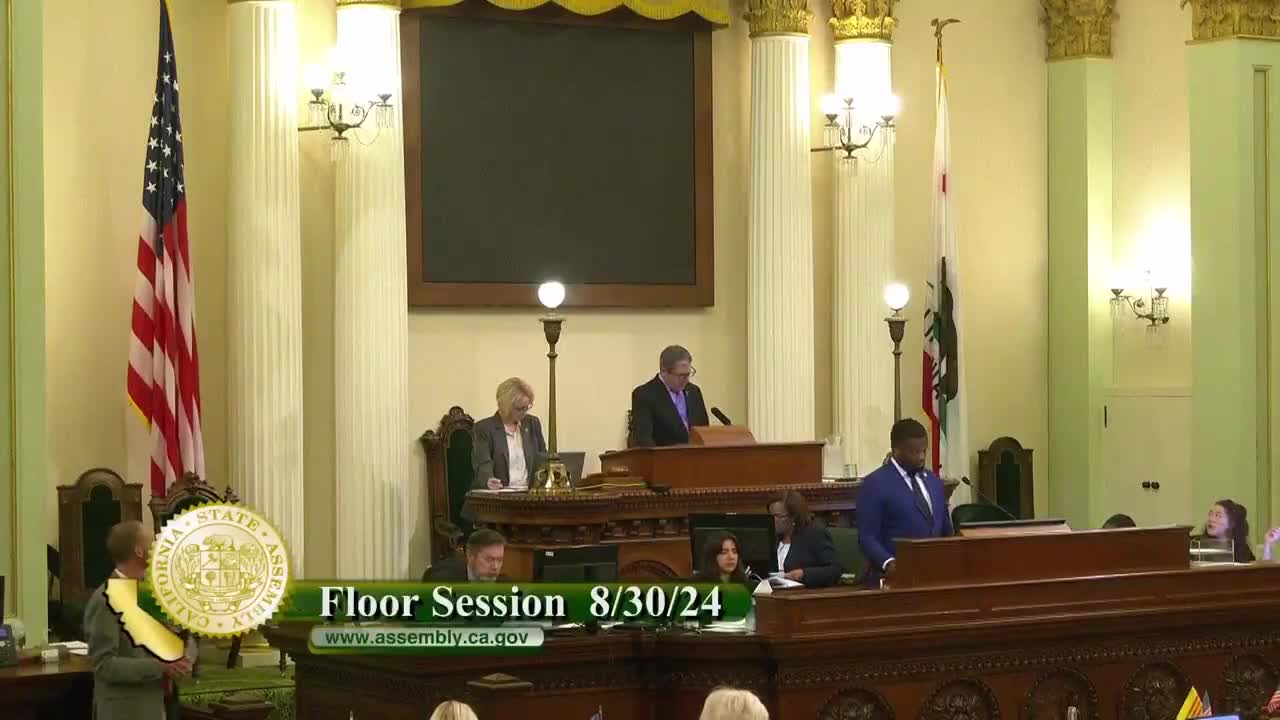 1MIN
Assembly Floor
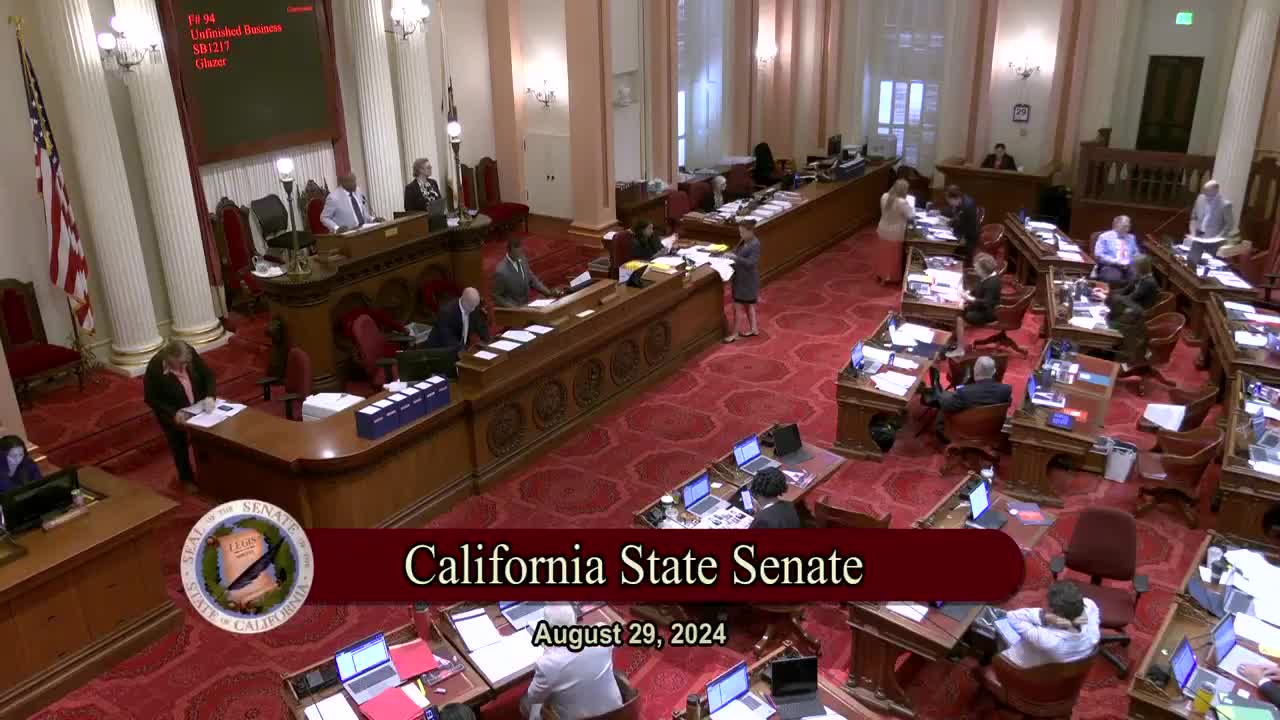 2MIN
Senate Floor
 11MIN
Senate Standing Committee on Energy, Utilities and Communications
 1MIN
Assembly Floor
 2MIN
Assembly Standing Committee on Appropriations
 14MIN
Assembly Standing Committee on Utilities and Energy
Bill Author

Bill Co-Author(s):