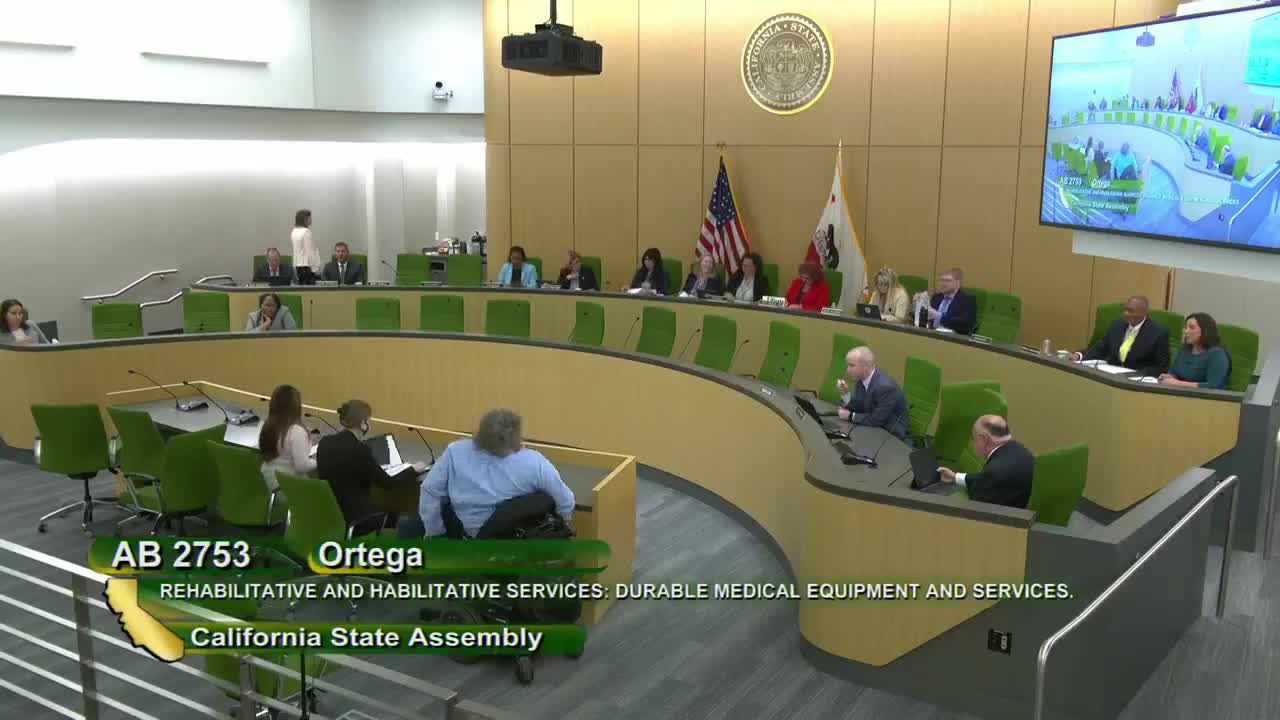
AB 2753: Rehabilitative and habilitative services: durable medical equipment and services.
- Session Year: 2023-2024
- House: Assembly
- Latest Version Date: 2024-02-15
Current Status:
Failed
(2024-05-16: In committee: Held under submission.)
Introduced
In Committee
First Chamber
In Committee
Second Chamber
Enacted
Existing law, the Knox-Keene Health Care Service Plan Act of 1975, requires the Department of Managed Health Care to license and regulate health care service plans and makes a willful violation of the act a crime. Other existing law requires the Department of Insurance to regulate health insurers. Existing law requires an individual or small group health care service plan contract or health insurance policy issued, amended, or renewed on or after January 1, 2017, to include, at a minimum, coverage for essential health benefits pursuant to the federal Patient Protection and Affordable Care Act. Under existing law, essential health benefits include, among other things, rehabilitative and habilitative services. Existing law requires habilitative services and devices to be covered under the same terms and conditions applied to rehabilitative services and devices under the plan contract or policy, and defines habilitative services to mean health care services and devices that help a person keep, learn, or improve skills and functioning for daily living.
This bill would specify that coverage of rehabilitative and habilitative services and devices under a health care service plan or health insurance policy includes durable medical equipment, services, and repairs, if the equipment, services, or repairs are prescribed or ordered by a physician, surgeon, or other health professional acting within the scope of their license. The bill would define durable medical equipment to mean devices, including replacement devices, that are designed for repeated use, and that are used for the treatment or monitoring of a medical condition or injury in order to help a person to partially or fully acquire, improve, keep, or learn, or minimize the loss of, skills and functioning of daily living. The bill would prohibit coverage of durable medical equipment and services from being subject to financial or treatment limitations, as specified.
The bill would make related findings and declarations, including that coverage of durable medical equipment is necessary to comply with federal requirements for purposes of being considered essential health benefits not subject to defrayal payments.
Because a violation of the bills provisions by a health care service plan would be a crime, the bill would impose a state-mandated local program.
The California Constitution requires the state to reimburse local agencies and school districts for certain costs mandated by the state. Statutory provisions establish procedures for making that reimbursement.
This bill would provide that no reimbursement is required by this act for a specified reason.
The Legislature finds and declares all of the following:
(a)Lack of access to durable medical equipment disproportionately affects individuals with disabilities or chronically ill individuals.
(b)Because of their effect on protected population classes, categorical exclusions of durable medical equipment by health care service plans, and burdensome financial limitations imposed by plans on durable medical equipment, result in plan designs that discriminate against people with disabilities in violation of federal and state nondiscrimination provisions, including Sections 1302 and 1557 of the federal Patient Protection and Affordable Care Act (Public Law 111-148), as amended by the federal Health Care and Education Reconciliation Act of 2010 (Public Law 111-152).
(c)In order to comply with federal and state requirements regarding nondiscrimination in benefit design, coverage of essential health benefits (EHBs) offered by all nongrandfathered individual and small-group market plans must include durable medical equipment and services.
(d)A state must defray the cost of benefits added to the EHBs through state action, unless the addition of that benefit is for purposes of compliance with Federal requirements, pursuant to Section 155.170 of Title 45 of the Code of Federal Regulations. When a benefit is added in order to comply with federal requirements, then it is not subject to the defrayal requirement. The state has authority to identify which benefits are subject to defrayal, pursuant to Section 155.170(a)(3) of Title 45 of the Code of Federal Regulations.
(e)Coverage of durable medical equipment described in subparagraph (B) of paragraph (3) of subdivision (a), paragraph (2) of subdivision (b), and paragraph (1) of subdivision (o) of Section 1367.005 is necessary to comply with federal requirements, and is therefore not subject to defrayal pursuant to the exception in Section 155.170(a)(2) of Title 45 of the Code of Federal Regulations.
(f)Because Californias EHB base-benchmark plan has been codified in state law, the Legislature has the responsibility to address the lack of durable medical equipment coverage in the current benchmark that has led to violations of federal nondiscrimination law regarding benefit design. Amending Californias durable medical equipment statute ensures that Californians with disabilities receive the benefits of these federal nondiscrimination protections without delay.
SEC. 2.Section 1367.005 of the Health and Safety Code is amended to read:1367.005.(a)An individual or small group health care service plan contract issued, amended, or renewed on or after January 1, 2017, shall include, at a minimum, coverage for essential health benefits pursuant to the federal Patient Protection and Affordable Care Act (PPACA) and as outlined in this section. For purposes of this section, essential health benefits means all of the following:
(1)Health benefits within the categories identified in Section 1302(b) of PPACA: ambulatory patient services, emergency services, hospitalization, maternity and newborn care, mental health and substance use disorder services, including behavioral health treatment, prescription drugs, rehabilitative and habilitative services and devices, laboratory services, preventive and wellness services and chronic disease management, and pediatric services, including oral and vision care.
(2)(A)The health benefits covered by the Kaiser Foundation Health Plan Small Group HMO 30 plan (federal health product identification number 40513CA035) as this plan was offered during the first quarter of 2014, as follows, regardless of whether the benefits are specifically referenced in the evidence of coverage or plan contract for that plan:
(i)Medically necessary basic health care services, as defined in subdivision (b) of Section 1345 and Section 1300.67 of Title 28 of the California Code of Regulations.
(ii)The health benefits mandated to be covered by the plan pursuant to statutes enacted before December 31, 2011, as described in the following sections: Sections 1367.002, 1367.06, and 1367.35 (preventive services for children); Section 1367.25 (prescription drug coverage for contraceptives); Section 1367.45 (AIDS vaccine); Section 1367.46 (HIV testing); Section 1367.51 (diabetes); Section 1367.54 (alpha-fetoprotein testing); Section 1367.6 (breast cancer screening); Section 1367.61 (prosthetics for laryngectomy); Section 1367.62 (maternity hospital stay); Section 1367.63 (reconstructive surgery); Section 1367.635 (mastectomies); Section 1367.64 (prostate cancer); Section 1367.65 (mammography); Section 1367.66 (cervical cancer); Section 1367.665 (cancer screening tests); Section 1367.67 (osteoporosis); Section 1367.68 (surgical procedures for jaw bones); Section 1367.71 (anesthesia for dental); Section 1367.9 (conditions attributable to diethylstilbestrol); Section 1368.2 (hospice care); Section 1370.6 (cancer clinical trials); Section 1371.5 (emergency response ambulance or ambulance transport services); subdivision (b) of Section 1373 (sterilization operations or procedures); Section 1373.4 (inpatient hospital and ambulatory maternity); Section 1374.56 (phenylketonuria); Section 1374.17 (organ transplants for HIV); Section 1374.72 (mental health parity); and Section 1374.73 (autism/behavioral health treatment).
(iii)Any other benefits mandated to be covered by the plan pursuant to statutes enacted before December 31, 2011, as described in those statutes.
(iv)The health benefits covered by the plan that are not otherwise required to be covered under this chapter, to the extent required pursuant to Sections 1367.18, 1367.21, 1367.215, 1367.22, 1367.24, and 1367.25, and Section 1300.67.24 of Title 28 of the California Code of Regulations.
(v)Any other health benefits covered by the plan that are not otherwise required to be covered under this chapter.
(B)If there are any conflicts or omissions in the plan identified in subparagraph (A) as compared with the requirements for health benefits under this chapter that were enacted prior to December 31, 2011, the requirements of this chapter shall be controlling, except as otherwise specified in this section.
(C)Notwithstanding subparagraph (B) or any other provision of this section, the home health services benefits covered under the plan identified in subparagraph (A) shall be deemed to not be in conflict with this chapter.
(D)For purposes of this section, the Paul Wellstone and Pete Domenici Mental Health Parity and Addiction Equity Act of 2008 (Public Law 110-343) shall apply to a contract subject to this section. Coverage of mental health and substance use disorder services pursuant to this paragraph, along with any scope and duration limits imposed on the benefits, shall be in compliance with the Paul Wellstone and Pete Domenici Mental Health Parity and Addiction Equity Act of 2008 (Public Law 110-343), and all rules, regulations, or guidance issued pursuant to Section 2726 of the federal Public Health Service Act (42 U.S.C. Sec. 300gg-26).
(3)(A)With respect to habilitative services, in addition to any habilitative services and devices identified in paragraph (2), coverage shall also be provided as required by federal rules, regulations, and guidance issued pursuant to Section 1302(b) of PPACA. Habilitative services and devices shall be covered under the same terms and conditions applied to rehabilitative services and devices under the plan contract. Limits on habilitative and rehabilitative services and devices shall not be combined.
(B)Coverage of rehabilitative and habilitative services and devices includes durable medical equipment, services, and repairs, if the equipment, services, or repairs are prescribed or ordered by a physician, surgeon, or other health professional acting within the scope of their license.
(4)With respect to pediatric vision care, the same health benefits for pediatric vision care covered under the Federal Employees Dental and Vision Insurance Program vision plan with the largest national enrollment as of the first quarter of 2014. The pediatric vision care benefits covered pursuant to this paragraph shall be in addition to, and shall not replace, any vision services covered under the plan identified in paragraph (2).
(5)With respect to pediatric oral care, the same health benefits for pediatric oral care covered under the dental benefit received by children under the Medi-Cal program as of 2014, including the provision of medically necessary orthodontic care provided pursuant to the federal Childrens Health Insurance Program Reauthorization Act of 2009. The pediatric oral care benefits covered pursuant to this paragraph shall be in addition to, and shall not replace, any dental or orthodontic services covered under the plan identified in paragraph (2).
(b)(1)Treatment limitations imposed on health benefits described in this section shall be no greater than the treatment limitations imposed by the corresponding plans identified in subdivision (a), subject to the requirements set forth in paragraph (2) of subdivision (a).
(2)Notwithstanding paragraph (1), with respect to rehabilitative and habilitative services and devices, coverage of durable medical equipment and services shall not be subject to financial or treatment limitations, including annual caps or requirements limiting coverage of the devices to those for home use.
(c)Except as provided in subdivision (d), this section does not permit a health care service plan to make substitutions for the benefits required to be covered under this section, regardless of whether those substitutions are actuarially equivalent.
(d)To the extent permitted under Section 1302 of PPACA and any rules, regulations, or guidance issued pursuant to that section, and to the extent that substitution would not create an obligation for the state to defray costs for any individual, a plan may substitute its prescription drug formulary for the formulary provided under the plan identified in subdivision (a) if the coverage for prescription drugs complies with the sections referenced in clauses (ii) and (iv) of subparagraph (A) of paragraph (2) of subdivision (a) that apply to prescription drugs.
(e)A health care service plan, or its agent, solicitor, or representative, shall not issue, deliver, renew, offer, market, represent, or sell any product, contract, or discount arrangement as compliant with the essential health benefits requirement in federal law, unless it meets all of the requirements of this section.
(f)This section applies regardless of whether the plan contract is offered inside or outside the California Health Benefit Exchange created by Section 100500 of the Government Code.
(g)This section does not exempt a plan or a plan contract from meeting other applicable requirements of law.
(h)This section does not prohibit a plan contract from covering additional benefits, including, but not limited to, spiritual care services that are tax deductible under Section 213 of the Internal Revenue Code.
(i)Subdivision (a) does not apply to any of the following:
(1)A specialized health care service plan contract.
(2)A Medicare supplement plan.
(3)A plan contract that qualifies as a grandfathered health plan under Section 1251 of PPACA or any rules, regulations, or guidance issued pursuant to that section.
(j)This section shall not be implemented in a manner that conflicts with a requirement of PPACA.
(k)An essential health benefit is required to be provided under this section only to the extent that federal law does not require the state to defray the costs of the benefit.
(l)This section does not obligate the state to incur costs for the coverage of benefits that are not essential health benefits as defined in this section.
(m)A plan is not required to cover, under this section, changes to health benefits that are the result of statutes enacted on or after December 31, 2011.
(n)(1)The department may adopt emergency regulations implementing this section. The department may, on a one-time basis, readopt any emergency regulation authorized by this section that is the same as, or substantially equivalent to, an emergency regulation previously adopted under this section.
(2)The initial adoption of emergency regulations implementing this section and the readoption of emergency regulations authorized by this subdivision shall be deemed an emergency and necessary for the immediate preservation of the public peace, health, safety, or general welfare. The initial emergency regulations and the readoption of emergency regulations authorized by this section shall be submitted to the Office of Administrative Law for filing with the Secretary of State and each shall remain in effect for no more than 180 days, by which time final regulations may be adopted.
(3)The initial adoption of emergency regulations implementing this section made during the 201516 Regular Session of the Legislature and the readoption of emergency regulations authorized by this subdivision shall be deemed an emergency and necessary for the immediate preservation of the public peace, health, safety, or general welfare. The initial emergency regulations and the readoption of emergency regulations authorized by this section shall be submitted to the Office of Administrative Law for filing with the Secretary of State and each shall remain in effect for no more than 180 days, by which time final regulations may be adopted.
(4)The director shall consult with the Insurance Commissioner to ensure consistency and uniformity in the development of regulations under this subdivision.
(5)This subdivision shall become inoperative on July 1, 2018.
(o)For purposes of this section, the following definitions apply:
(1)Durable medical equipment means devices, including replacement devices, that are designed for repeated use and that are used for the treatment or monitoring of a medical condition or injury in order to help a person to partially or fully acquire, improve, keep, or learn, or minimize the loss of, skills and functioning of daily living. The prescription or order for durable medical equipment shall include fittings, design, adjustment, programming, and other necessary services for the provision or maintenance of the devices.
(1)(2)Habilitative services means health care services and devices that help a person keep, learn, or improve skills and functioning for daily living. Examples include therapy for a child who is not walking or talking at the expected age. These services may include physical and occupational therapy, speech-language pathology, and other services for people with disabilities in a variety of inpatient or outpatient settings, or both. Habilitative services shall be covered under the same terms and conditions applied to rehabilitative services under the plan contract.
(2)(3)(A)Health benefits, unless otherwise required to be defined pursuant to federal rules, regulations, or guidance issued pursuant to Section 1302(b) of PPACA, means health care items or services for the diagnosis, cure, mitigation, treatment, or prevention of illness, injury, disease, or a health condition, including a behavioral health condition.
(B)Health benefits does not mean any cost-sharing requirements such as copayments, coinsurance, or deductibles.
(3)(4)PPACA means the federal Patient Protection and Affordable Care Act (Public Law 111-148), as amended by the federal Health Care and Education Reconciliation Act of 2010 (Public Law 111-152), and any rules, regulations, or guidance issued thereunder.
(4)(5)Small group health care service plan contract means a group health care service plan contract issued to a small employer, as defined in Section 1357.500.
SEC. 3.Section 10112.27 of the Insurance Code is amended to read:10112.27.(a)An individual or small group health insurance policy issued, amended, or renewed on or after January 1, 2017, shall include, at a minimum, coverage for essential health benefits pursuant to the federal Patient Protection and Affordable Care Act (PPACA) and as outlined in this section. This section shall exclusively govern the benefits a health insurer must cover as essential health benefits. For purposes of this section, essential health benefits means all of the following:
(1)Health benefits within the categories identified in Section 1302(b) of PPACA: ambulatory patient services, emergency services, hospitalization, maternity and newborn care, mental health and substance use disorder services, including behavioral health treatment, prescription drugs, rehabilitative and habilitative services and devices, laboratory services, preventive and wellness services and chronic disease management, and pediatric services, including oral and vision care.
(2)(A)The health benefits covered by the Kaiser Foundation Health Plan Small Group HMO 30 plan (federal health product identification number 40513CA035) as this plan was offered during the first quarter of 2014, as follows, regardless of whether the benefits are specifically referenced in the plan contract or evidence of coverage for that plan:
(i)Medically necessary basic health care services, as defined in subdivision (b) of Section 1345 of the Health and Safety Code and Section 1300.67 of Title 28 of the California Code of Regulations.
(ii)The health benefits mandated to be covered by the plan pursuant to statutes enacted before December 31, 2011, as described in the following sections of the Health and Safety Code: Sections 1367.002, 1367.06, and 1367.35 (preventive services for children); Section 1367.25 (prescription drug coverage for contraceptives); Section 1367.45 (AIDS vaccine); Section 1367.46 (HIV testing); Section 1367.51 (diabetes); Section 1367.54 (alpha-fetoprotein testing); Section 1367.6 (breast cancer screening); Section 1367.61 (prosthetics for laryngectomy); Section 1367.62 (maternity hospital stay); Section 1367.63 (reconstructive surgery); Section 1367.635 (mastectomies); Section 1367.64 (prostate cancer); Section 1367.65 (mammography); Section 1367.66 (cervical cancer); Section 1367.665 (cancer screening tests); Section 1367.67 (osteoporosis); Section 1367.68 (surgical procedures for jaw bones); Section 1367.71 (anesthesia for dental); Section 1367.9 (conditions attributable to diethylstilbestrol); Section 1368.2 (hospice care); Section 1370.6 (cancer clinical trials); Section 1371.5 (emergency response ambulance or ambulance transport services); subdivision (b) of Section 1373 (sterilization operations or procedures); Section 1373.4 (inpatient hospital and ambulatory maternity); Section 1374.56 (phenylketonuria); Section 1374.17 (organ transplants for HIV); Section 1374.72 (mental health parity); and Section 1374.73 (autism/behavioral health treatment).
(iii)Any other benefits mandated to be covered by the plan pursuant to statutes enacted before December 31, 2011, as described in those statutes.
(iv)The health benefits covered by the plan that are not otherwise required to be covered under Chapter 2.2 (commencing with Section 1340) of Division 2 of the Health and Safety Code, to the extent otherwise required pursuant to Sections 1367.18, 1367.21, 1367.215, 1367.22, 1367.24, and 1367.25 of the Health and Safety Code, and Section 1300.67.24 of Title 28 of the California Code of Regulations.
(v)Any other health benefits covered by the plan that are not otherwise required to be covered under Chapter 2.2 (commencing with Section 1340) of Division 2 of the Health and Safety Code.
(B)If there are any conflicts or omissions in the plan identified in subparagraph (A) as compared with the requirements for health benefits under Chapter 2.2 (commencing with Section 1340) of Division 2 of the Health and Safety Code that were enacted before December 31, 2011, the requirements of Chapter 2.2 (commencing with Section 1340) of Division 2 of the Health and Safety Code shall control, except as otherwise specified in this section.
(C)Notwithstanding subparagraph (B) or any other provision of this section, the home health services benefits covered under the plan identified in subparagraph (A) shall not be in conflict with Chapter 2.2 (commencing with Section 1340) of Division 2 of the Health and Safety Code.
(D)For purposes of this section, the Paul Wellstone and Pete Domenici Mental Health Parity and Addiction Equity Act of 2008 (Public Law 110-343) shall apply to a policy subject to this section. Coverage of mental health and substance use disorder services pursuant to this paragraph, along with any scope and duration limits imposed on the benefits, shall be in compliance with the Paul Wellstone and Pete Domenici Mental Health Parity and Addiction Equity Act of 2008 (Public Law 110-343), and all rules, regulations, and guidance issued pursuant to Section 2726 of the federal Public Health Service Act (42 U.S.C. Sec. 300gg-26).
(3)(A)With respect to habilitative services, in addition to any habilitative services and devices identified in paragraph (2), coverage shall also be provided as required by federal rules, regulations, or guidance issued pursuant to Section 1302(b) of PPACA. Habilitative services and devices shall be covered under the same terms and conditions applied to rehabilitative services and devices under the policy. Limits on habilitative and rehabilitative services and devices shall not be combined.
(B)Coverage of rehabilitative and habilitative services and devices includes durable medical equipment, services, and repairs, if the equipment, services, or repairs are prescribed or ordered by a physician, surgeon, or other health professional acting within the scope of their license.
(4)With respect to pediatric vision care, the same health benefits for pediatric vision care covered under the Federal Employees Dental and Vision Insurance Program vision plan with the largest national enrollment as of the first quarter of 2014. The pediatric vision care services covered pursuant to this paragraph shall be in addition to, and shall not replace, any vision services covered under the plan identified in paragraph (2).
(5)With respect to pediatric oral care, the same health benefits for pediatric oral care covered under the dental benefit received by children under the Medi-Cal program as of 2014, including the provision of medically necessary orthodontic care provided pursuant to the federal Childrens Health Insurance Program Reauthorization Act of 2009. The pediatric oral care benefits covered pursuant to this paragraph shall be in addition to, and shall not replace, any dental or orthodontic services covered under the plan identified in paragraph (2).
(b)(1)Treatment limitations imposed on health benefits described in this section shall be no greater than the treatment limitations imposed by the corresponding plans identified in subdivision (a), subject to the requirements set forth in paragraph (2) of subdivision (a).
(2)Notwithstanding paragraph (1), with respect to rehabilitative and habilitative services and devices, coverage of durable medical equipment and services shall not be subject to financial or treatment limitations, including annual caps or requirements limiting coverage of the devices to those for home use.
(c)Except as provided in subdivision (d), this section does not permit a health insurer to make substitutions for the benefits required to be covered under this section, regardless of whether those substitutions are actuarially equivalent.
(d)To the extent permitted under Section 1302 of PPACA and any rules, regulations, or guidance issued pursuant to that section, and to the extent that substitution would not create an obligation for the state to defray costs for any individual, an insurer may substitute its prescription drug formulary for the formulary provided under the plan identified in subdivision (a) if the coverage for prescription drugs complies with the sections referenced in clauses (ii) and (iv) of subparagraph (A) of paragraph (2) of subdivision (a) that apply to prescription drugs.
(e)A health insurer, or its agent, producer, or representative, shall not issue, deliver, renew, offer, market, represent, or sell any product, policy, or discount arrangement as compliant with the essential health benefits requirement in federal law, unless it meets all of the requirements of this section. This subdivision shall be enforced in the same manner as Section 790.03, including through the means specified in Sections 790.035 and 790.05.
(f)This section applies regardless of whether the policy is offered inside or outside the California Health Benefit Exchange created by Section 100500 of the Government Code.
(g)This section does not exempt a health insurer or a health insurance policy from meeting other applicable requirements of law.
(h)This section does not prohibit a policy from covering additional benefits, including, but not limited to, spiritual care services that are tax deductible under Section 213 of the Internal Revenue Code.
(i)Subdivision (a) does not apply to any of the following:
(1)A policy that provides excepted benefits as described in Sections 2722 and 2791 of the federal Public Health Service Act (42 U.S.C. Sec. 300gg-21; 42 U.S.C. Sec. 300gg-91).
(2)A policy that qualifies as a grandfathered health plan under Section 1251 of PPACA or any binding rules, regulations, or guidance issued pursuant to that section.
(j)This section shall not be implemented in a manner that conflicts with a requirement of PPACA.
(k)An essential health benefit is required to be provided under this section only to the extent that federal law does not require the state to defray the costs of the benefit.
(l)This section does not obligate the state to incur costs for the coverage of benefits that are not essential health benefits as defined in this section.
(m)An insurer is not required to cover, under this section, changes to health benefits that are the result of statutes enacted on or after December 31, 2011.
(n)(1)The commissioner may adopt emergency regulations implementing this section. The commissioner, on a one-time basis, may readopt any emergency regulation authorized by this section that is the same as, or substantially equivalent to, an emergency regulation previously adopted under this section.
(2)The initial adoption of emergency regulations implementing this section and the readoption of emergency regulations authorized by this subdivision shall be deemed an emergency and necessary for the immediate preservation of the public peace, health, safety, or general welfare. The initial emergency regulations and the readoption of emergency regulations authorized by this section shall be submitted to the Office of Administrative Law for filing with the Secretary of State and each shall remain in effect for no more than 180 days, by which time final regulations may be adopted.
(3)The initial adoption of emergency regulations implementing this section made during the 201516 Regular Session of the Legislature and the readoption of emergency regulations authorized by this subdivision shall be deemed an emergency and necessary for the immediate preservation of the public peace, health, safety, or general welfare. The initial emergency regulations and the readoption of emergency regulations authorized by this section shall be submitted to the Office of Administrative Law for filing with the Secretary of State and each shall remain in effect for no more than 180 days, by which time final regulations may be adopted.
(4)The commissioner shall consult with the Director of the Department of Managed Health Care to ensure consistency and uniformity in the development of regulations under this subdivision.
(5)This subdivision shall become inoperative on July 1, 2018.
(o)This section does not impose on health insurance policies the cost sharing or network limitations of the plans identified in subdivision (a) except to the extent otherwise required to comply with this code, including this section, and as otherwise applicable to all health insurance policies offered to individuals and small groups.
(p)For purposes of this section, the following definitions apply:
(1)Durable medical equipment means devices, including replacement devices, that are designed for repeated use and that are used for the treatment or monitoring of a medical condition or injury in order to help a person to partially or fully acquire, improve, keep, or learn, or minimize the loss of, skills and functioning of daily living. The prescription or order for durable medical equipment shall include fittings, design, adjustment, programming, and other necessary services for the provision or maintenance of the devices.
(1)(2)Habilitative services means health care services and devices that help a person keep, learn, or improve skills and functioning for daily living. Examples include therapy for a child who is not walking or talking at the expected age. These services may include physical and occupational therapy, speech-language pathology, and other services for people with disabilities in a variety of inpatient or outpatient settings, or both. Habilitative services shall be covered under the same terms and conditions applied to rehabilitative services under the policy.
(2)(3)(A)Health benefits, unless otherwise required to be defined pursuant to federal rules, regulations, or guidance issued pursuant to Section 1302(b) of PPACA, means health care items or services for the diagnosis, cure, mitigation, treatment, or prevention of illness, injury, disease, or a health condition, including a behavioral health condition.
(B)Health benefits does not mean any cost-sharing requirements such as copayments, coinsurance, or deductibles.
(3)(4)PPACA means the federal Patient Protection and Affordable Care Act (Public Law 111-148), as amended by the federal Health Care and Education Reconciliation Act of 2010 (Public Law 111-152), and any rules, regulations, or guidance issued thereunder.
(4)(5)Small group health insurance policy means a group health insurance policy issued to a small employer, as defined in subdivision (q) of Section 10753.
SEC. 4.Section 10112.275 is added to the Insurance Code, immediately following Section 10112.27, to read:10112.275.The Legislature finds and declares all of the following:
(a)Lack of access to durable medical equipment disproportionately affects individuals with disabilities or chronically ill individuals.
(b)Because of their effect on protected population classes, categorical exclusions of durable medical equipment by health insurers, and burdensome financial limitations imposed by those insurers on durable medical equipment, result in insurance policy designs that discriminate against people with disabilities in violation of federal and state nondiscrimination provisions, including Sections 1302 and 1557 of the federal Patient Protection and Affordable Care Act (Public Law 111-148), as amended by the federal Health Care and Education Reconciliation Act of 2010 (Public Law 111-152).
(c)In order to comply with federal and state requirements regarding nondiscrimination in benefit design, it is important that coverage of rehabilitative and habilitative services and devices include durable medical equipment and services.
(d)Coverage of durable medical equipment described in subparagraph (B) of paragraph (3) of subdivision (a), paragraph (2) of subdivision (b), and paragraph (1) of subdivision (p) of Section 10112.27 is necessary to comply with federal requirements pursuant to the exception in Section 155.170(a)(2) of Title 45 of the Code of Federal Regulations.
SEC. 5.No reimbursement is required by this act pursuant to Section 6 of Article XIIIB of the California Constitution because the only costs that may be incurred by a local agency or school district will be incurred because this act creates a new crime or infraction, eliminates a crime or infraction, or changes the penalty for a crime or infraction, within the meaning of Section 17556 of the Government Code, or changes the definition of a crime within the meaning of Section 6 of Article XIIIB of the California Constitution.
|
Date
|
Status
|
|---|---|
| May 16, 2024 | In committee: Held under submission. |
| Apr 17, 2024 | In committee: Set, first hearing. Referred to APPR. suspense file. |
| Apr 3, 2024 | From committee: Do pass and re-refer to Com. on APPR. (Ayes 12. Noes 0.) (April 2). Re-referred to Com. on APPR. |
| Mar 4, 2024 | Referred to Com. on HEALTH. |
| Feb 16, 2024 | From printer. May be heard in committee March 17. |
| Feb 15, 2024 | Read first time. To print. |
|
Date
|
Description
|
Location
|
Votes
|
|
|---|---|---|---|---|
| Apr 2, 2024 | Do pass and be re-referred to the Committee on [Appropriations] | Assembly Standing Committee on Health |
Passed |
This list shows positions taken on this bill by organizations on the date displayed, which is linked to the original source.
Positions by individuals are not included.
|
Organization
|
Position
|
Date
|
|---|---|---|
| Access Reproductive Justice | ** Support | |
| AmericaS Health Insurance Plans | ** Against | |
| Asian Americans Advancing Justice Southern California | ** Support | |
| Association Of California Life & Health Insurance Companies | ** Against | |
| Association Of Regional Center Agencies | ** Support | |
| Bay Area Legal Aid | ** Support | |
| CalChamber | ** Against | |
| California Association Of Health Plans | ** Against | |
| California Domestic Workers Coalition | ** Support | |
| California Federation of Teachers, AFL-CIO | ** Support | |
| Children Now | ** Support | |
| Children'S Specialty Care Coalition | ** Support | |
| Community Legal Aid SoCal | ** Support | |
| County Health Executives Association Of California | ** Support | |
| Courage California | ** Support | |
| Hand in Hand: The Domestic Employers Network | ** Support | |
| Health Access California | ** Support | |
| Let California Kids Hear Coalition | ** Support | |
| National Health Law Program | ** Support | |
| National Multiple Sclerosis Society | ** Support | |
| The Leukemia & Lymphoma Society | ** Support | |
| western center on law and poverty | ** Support |
Date of Hearing: April 17, 2024
ASSEMBLY COMMITTEE ON APPROPRIATIONS
Buffy Wicks, Chair
ABPCA Bill Id:AB 2753
Author:(Ortega) – As Introduced Ver:February 15, 2024
Policy Committee: | Health | Vote: | 12 - 0 |
|
| ||
|
|
Urgency: No State Mandated Local Program: Yes Reimbursable: No
SUMMARY:
This bill specifies that essential health benefits (EHBs) coverage of rehabilitative and habilitative services and devices includes durable medical equipment (DME), services, and repairs, if appropriately prescribed or ordered by a health professional, and prohibits a health care service plan (health plan) or health insurance policy from subjecting coverage of DME and services to financial or treatment limitations. This bill defines DME to mean devices that are designed for repeated use, and that are used for the treatment or monitoring of a medical condition or injury in order to help a person to partially or fully acquire, improve, keep, or learn, or minimize the loss of, skills and functioning of daily living.
FISCAL EFFECT:
- The Department of Managed Health Care (DMHC) estimates the total costs of this bill to be approximately $305,000 in fiscal year (FY) 2024-25 and $1.1 million in FY 2025-26 and annually thereafter (Managed Care Fund). DMHC states its Office of Plan Monitoring will need to develop surveys requiring a focused review of DME files and conduct clinical reviews during routine and follow-up medical survey assessments. DMHC anticipates its Help Center will incur the majority of costs for additional workload to address an increase in consumer complaints and independent medical reviews.
DMHC notes that, generally and depending on enrollment, a $1 million increase to the Managed Care Fund could result in a $0.02 increase per enrollee on assessments to full-service health plans and a $0.01 increase per enrollee to specialized health plans. To the extent this and other bills result in an additional assessment on health plans, consumers could face increased premiums. - The Department of Insurance estimates costs of $6,000 in FY 2024-25 and $14,000 in FY 2025-26 (Insurance Fund).
COMMENTS:
- Purpose. This bill is sponsored by the Western Center on Law and Poverty and the National Health Law Program. According to the author:
Private health plans regularly exclude or severely limit coverage for [DME] such as wheelchairs, hearing aids, or ventilators, causing people to go without medically necessary devices or obtaining inferior ones that put their health and safety at risk. This gap in private coverage occurs despite the Affordable Care Act’s (ACA) clear mandate to cover all [EHBs]…in a nondiscriminatory way.
Without adequate coverage, the lives of adults and children with disabilities are severely impacted – many are unable to attend school, work, or participate in community life. Others face institutionalization because they cannot function in their own homes without needed equipment.
This bill would clarify that DME is a covered EHB…and prohibit targeted limitations, such as annual dollar caps and “home use only” restrictions on DME coverage, consistent with all EHBs. This bill would be cost-neutral to the State because, when a benefit is required through state action for the purpose of complying with federal requirements (in this case federal nondiscrimination law), the State is not responsible for defraying the cost of the benefit.
- Background.
DME. According to the California Health Benefits Review Program (CHBRP), DME is not defined under California law. However, the ACA requires all state-regulated nongrandfathered health plans and policies in the individual and small-group markets to cover at least all tests, treatments, and services included in the California EHB benchmark plan, which includes limited coverage of DME. There are five major categories of DME, including personal mobility devices, bathroom safety devices, medical furniture, monitoring and therapeutic devices, and patient lifts. DME can be used for either chronic or temporary conditions, and some DME requires special modifications or customization to meet the medical needs of the user. The process of obtaining authorization for coverage of DME varies by health plan or policy. Health plans are required to cover DME for use in the enrollee’s home.
EHBs. The ACA requires coverage of EHBs for almost all enrollees in the individual and small-group markets. CHBRP estimates that in 2024, 12% of Californians are enrolled in commercial health insurance that must cover EHBs. EHB requirements do not apply to large group, self-insured and grandfathered plans and policies. (The ACA also requires Medi-Cal to cover a set of benefits referred to as EHBs, but Medi-Cal EHBs are separate from the EHBs commercial health insurance can be required to cover under the ACA.)
- CHBRP Report. CHBRP analyzed a similar bill, AB 1157 (Ortega), of the current legislative session, in 2023. CHBRP estimated AB 1157 would increase total net annual expenditures by $26.4 million, or 0.02% for enrollees with DMHC-regulated plans and CDI-regulated policies. The projected increase was due to a $57.2 million increase in total health insurance premiums paid by employers and enrollees for newly covered benefits, increased enrollee expenses for covered benefits ($11.4 million) and a decrease in enrollee expenses of $42.2 million. CHBRP projected changes in premiums in the range of $0.001 to $0.002 per member per month, with the greatest increase in the DMHC-regulated small-group and individual plans ($0.002 PMPM each). CHBRP projected increased utilization of DME and related services and repairs, and therefore increased enrollee cost sharing for covered DME. For enrollees gaining coverage of DME because of this bill, 1.6% of those in small-group or individual plans and policies would experience an average reduction in out-of-pocket expenses of $395.21 for DME benefits.
- Support. The Western Center on Law and Poverty and the National Health Law Program, sponsors of this bill, argue this bill provides the state an opportunity to correct, in a timely and cost-neutral manner, a benefit design that discriminates against people with disabilities. The sponsors state DME devices—essential for basic functions such as mobility, breathing, and communication—are primarily used by people with disabilities. Excluding or severely limiting DME from health plan coverage creates an access barrier for adults and children who rely on this equipment but who cannot afford the out-of-pocket costs of up to $50,000.
- Related Legislation. SB 1290 (Roth) expresses the intent of the Legislature to review California’s EHB benchmark plan and establish a new benchmark plan for the 2027 plan year. SB 1290 is pending in Senate Health Committee.
Analysis Prepared by: Allegra Kim / APPR. / (916) 319-2081
Date of Hearing: April 2, 2024
ASSEMBLY COMMITTEE ON HEALTH
Mia Bonta, Chair
ABPCA Bill Id:AB 2753
Author:((Ortega) – As Introduced Ver:February 15, 2024
SUBJECT: Rehabilitative and habilitative services: durable medical equipment and services.
SUMMARY: Includes durable medical equipment (DME), as specified, under essential health benefits (EHBs) coverage of rehabilitative and habilitative services and devices. Specifically, this bill:
- Includes DME, services, and repairs, if the equipment, services, or repairs are prescribed or ordered by a physician, surgeon, or other health professional acting within the scope of their license, under EHB coverage of rehabilitative and habilitative services and devices.
- Prohibits coverage of DME and services from being subject to financial or treatment limitations, including annual caps or requirements limiting coverage of the devices to those for home use.
- Defines DME as devices, including replacement devices, that are designed for repeated use and that are used for the treatment or monitoring of a medical condition or injury in order to help a person to partially or fully acquire, improve, keep, or learn, or minimize the loss of, skills and functioning of daily living. Includes, under the prescription or order for DME, fittings, design, adjustment, programming, and other necessary services for the provision or maintenance of the devices.
- Makes various findings and declarations, including the following:
- Lack of access to DME disproportionately affects individuals with disabilities or chronically ill individuals;
- In order to comply with federal and state requirements regarding nondiscrimination in benefit design, coverage of EHBs offered by all nongrandfathered individual and small-group market plans must include DME and services;
- Coverage of DME is necessary to comply with federal requirements, and is therefore not subject to defrayal, as specified; and,
- Because California’s EHB base-benchmark plan has been codified in state law, the Legislature has the responsibility to address the lack of DME coverage in the current benchmark that has led to violations of federal nondiscrimination law regarding benefit design. Amending California’s DME statute ensures that Californians with disabilities receive the benefits of these federal nondiscrimination protections without delay.
EXISTING LAW:
- Establishes the Department of Managed Health Care (DMHC) to regulate health plans under the Knox-Keene Health Care Service Plan Act of 1975 and the California Department of Insurance (CDI) to regulate health insurers. [Health and Safety Code (HSC) §1340, et seq., and Insurance Code (INS) §106, et seq.]
- Establishes as California's EHB benchmark under the Patient Protection and Affordable Care Act (ACA), the Kaiser Small Group Health Maintenance Organization, existing California health insurance mandates, and the 10 ACA mandated benefits. Specifies EHBs in the following 10 categories: ambulatory patient services; emergency services; hospitalization; maternity and newborn care; mental health and substance use disorder services; prescription drugs; rehabilitative and habilitative services and devices; laboratory services; preventive and wellness services and chronic disease management; and, pediatric services, including oral and vision care. [HSC §1367.005 and INS §10112.27]
- Includes, in regulations, DME for home use as other health benefits that EHBs must cover. [Title 28 Code of Regulations §1300.67.005]
- Defines “basic health care services” as all of the following:
- Physician services, including consultation and referral;
- Hospital inpatient services and ambulatory care services;
- Diagnostic laboratory and therapeutic radiologic services;
- Home health services;
- Preventive health services;
- Emergency health care services, including ambulance and ambulance transport services and out-of-area coverage. Basic health care services includes ambulance and ambulance transport services provided through the 911 emergency response system; and,
- Hospice care. [HSC §1345]
FISCAL EFFECT: Unknown. This bill has not yet been analyzed by a fiscal committee.
COMMENTS:
- PURPOSE OF THIS BILL. According to the author, private health plans regularly exclude or severely limit coverage for DME such as wheelchairs, hearing aids, or ventilators, causing people to go without medically necessary devices or obtaining inferior ones that put their health and safety at risk. This gap in private coverage occurs despite the ACA’s clear mandate to cover all EHBs, including rehabilitative and habilitative devices, in a nondiscriminatory way. Without adequate coverage, the lives of adults and children with disabilities are severely impacted, many are unable to attend school, work, or participate in community life. Others face institutionalization because they cannot function in their own homes without needed equipment. The author states that this bill would clarify that DME is a covered EHB in California-regulated health plans, when prescribed by a provider for rehabilitative or rehabilitative purposes. This bill would also prohibit targeted limitations, such as annual dollar caps and “home use only” restrictions on DME coverage, consistent with all EHBs. The author concludes that this bill would be cost neutral because, when a benefit is required through state action for the purpose of complying with federal requirements (in this case federal nondiscrimination law), then the State is not responsible for defraying the cost of the benefit.
- BACKGROUND. According to the California Health Benefits Review Program (CHBRP), DME is not currently defined under California law. However, the ACA requires that all state-regulated nongrandfathered health plans and policies in the individual and small-group markets — plans regulated by the DMHC and policies regulated by the CDI — cover all tests, treatments, and services included within the California EHB benchmark plan, which includes coverage for a limited number of DME. It should be noted that state-regulated health plans and policies may cover more than what is required within the EHB benchmark plan. There are five major categories of DME, including personal mobility devices, bathroom safety devices, medical furniture, monitoring and therapeutic devices, and patient lifts. DME can be used for either chronic or temporary conditions. Although some DME equipment comes in a standard size, others require special modifications or customization to meet the medical needs of the user. The process of obtaining authorization for coverage of DME varies by health plan or policy. Health plans and policies may impose terms and conditions on authorization of coverage for DME, such as limiting coverage to only a single item that meets the minimum specifications for the enrollee’s needs, limiting coverage based on the proposed location of use of the device, or authorizing only one type of DME device to be covered within a certain timeframe. Health plans and policies also typically require a prescription, medical chart notes, and a letter of medical necessity written by a physician, occupational therapist, or physical therapist as part of the prior authorization process. CHBRP states the process for authorization of coverage may take several months, depending on the request. Barriers to access to DME include challenges such as differences in commercial insurers’ coverage and a lack of transparency in guidelines; lack of understanding by health care professionals on device coverage; varying health plan and policy guidelines on patient testing, clinical policies and standards, and documentation requirements; and, communication difficulties with commercial insurers. Studies have demonstrated disparities in populations with disabilities, use of DME, and authorization of DME requests.
- DME Coverage. Health plans are required to cover DME for use in the enrollee’s home (or another location used as the enrollee’s home). DME for home use is an item that is intended for repeated use, primarily and customarily used to serve a medical purpose, generally not useful to a person who is not ill or injured, and appropriate for use in the home. Under regulations, a health plan may limit coverage to the standard equipment or supplies that adequately meet the enrollee’s medical needs. Coverage includes repair or replacement of covered equipment. The health plan may decide whether to rent or purchase the equipment, and may select the vendor. The enrollee may be required to return the equipment to the plan or pay the fair market price of the equipment or any unused supplies when they are no longer medically necessary.
- CHBRP analysis. AB 1996 (Thomson), Chapter 795, Statutes of 2002, requests the University of California to assess legislation proposing a mandated benefit or service and prepare a written analysis with relevant data on the medical, economic, and public health impacts of proposed health plan and health insurance benefit mandate legislation. CHBRP was created in response to AB 1996. SB 125 (Hernandez), Chapter 9, Statutes of 2015, added an impact assessment on EHBs, and legislation that impacts health insurance benefit designs, cost sharing, premiums, and other health insurance topics. CHBRP reviewed AB 1157 (Ortega) of 2023, which is substantially similar to this bill, and states the following in its analysis:
- Enrollees covered. This bill impacts small-group and individual plans regulated by DMHC and policies regulated by CDI, which includes the health insurance of approximately 4.7 million enrollees (12% of all Californians). This represents approximately 21% of the 22.8 million Californians who will have state-regulated health insurance that may be subject to any state mandate law. Since this bill specifies “group and individual” plans and policies, the health insurance of Medi-Cal beneficiaries enrolled in DMHC-regulated plans would not be subject to this bill’s requirements. This bill does not define or delineate specific devices or equipment that would be covered under the mandate, thus CHBRP assumes these definitions are subject to interpretation by regulators, plans, and insurers. CHBRP assumed that at baseline, some DMHC-regulated health plans and CDI-regulated policies cover only the minimum requirements for DME, per the state’s EHB benchmark plan, and that postmandate, coverage would shift to be similar to those health plans and policies that include coverage for a more expansive list of DME (i.e., plans and policies with the fewest coverage restrictions).
- DME Coverage. Health plans are required to cover DME for use in the enrollee’s home (or another location used as the enrollee’s home). DME for home use is an item that is intended for repeated use, primarily and customarily used to serve a medical purpose, generally not useful to a person who is not ill or injured, and appropriate for use in the home. Under regulations, a health plan may limit coverage to the standard equipment or supplies that adequately meet the enrollee’s medical needs. Coverage includes repair or replacement of covered equipment. The health plan may decide whether to rent or purchase the equipment, and may select the vendor. The enrollee may be required to return the equipment to the plan or pay the fair market price of the equipment or any unused supplies when they are no longer medically necessary.
CHBRP calculated those cost estimates based on those shifts in coverage. Thus, the estimates in this report are based on a modeling scenario where, while DME coverage would be expanded by the mandate, it would be principally bounded by the DME covered by health plans and policies with the fewest restrictions on coverage.
- Impact on expenditures. Estimates of utilization and cost are likely to be higher if DMHC and CDI interpret this bill to require coverage for more DME than the plans and policies with the fewest restrictions cover and without caps on coverage, prior authorization, or other techniques that plans and policies with the most restrictions use to manage utilization and cost of DME. This bill would increase total net annual expenditures by $26,410,000 or 0.02% for enrollees with DMHC-regulated plans and CDI-regulated policies. This is due to a $57,162,000 increase in total health insurance premiums paid by employers and enrollees for newly covered benefits, adjusted by an increase in enrollee expenses for covered benefits ($11,432,000) and decrease in enrollee expenses for noncovered benefits (−$42,184,000). Postmandate percent changes in premiums are in the range of $0.001 to $0.002 per member per month (PMPM), with the greatest value in the DMHC-regulated small-group and individual plans ($0.002 PMPM for both). This bill’s changes in cost sharing for covered benefits (deductibles, copays, etc.) and out-of-pocket expenses for noncovered benefits would vary by market segment. CHBRP projects no change to copayments or coinsurance rates but does project an increase in utilization of DME and related services and repairs and therefore an increase in enrollee cost sharing for covered DME. It is possible that some enrollees incurred expenses related to DME and related services and repairs for which coverage was denied, but CHBRP cannot estimate the frequency with which such situations occur and so cannot offer a calculation of impact. For enrollees with coverage for DME at baseline, 6.0% of enrollees in small-group and 5.8% of enrollees in individual plans and policies have out-of-pocket expenses due to DME. For enrollees for whom postmandate DME coverage would be new, 1.6% of enrollees in small-group and 1.6% in individual plans and policies would experience an average decrease in out-of-pocket expenses for noncovered DME benefits of −$395.21.
- EHBs. According to CHBRP, this bill requires coverage for a new state benefit mandate that may exceed the definition of EHBs in California by requiring benefit coverage for DME beyond what is present in the California EHB benchmark plan.
- Long-term impacts. Qualitatively, CHBRP expects the key long-term impact of this bill would be increased utilization of DME should a greater number of items be classified as DME by DMHC and CDI or interpreted by plans/policies over time; however, CHBRP is unable to assess the likelihood of this occurring.
- SUPPORT. The National Multiple Sclerosis Society writes that the medical costs associated with living with Multiple Sclerosis (MS) are $65,612 more each year than medical costs for individuals who do not have MS. The lack of adequate coverage for needed DME adds to that high cost and the difficulty of living with this expensive disease. By clarifying that DME is a covered EHB in California-regulated health plans and policies when prescribed by a doctor for rehabilitative or habilitative purposes and removing limitations such as annual caps, this bill will help people living with MS maintain their quality of life. Children Now states that many Californians do not have access to the wheelchairs, hearing aids, oxygen equipment, and other DME that they need. Children Now writes that the importance of this bill also extends to the fact that individuals with disabilities would be able to receive the benefits of comprehensive DME coverage without delay.
- OPPOSITION. The California Chamber of Commerce (CCC) writes that employer-based health care coverage is usually one of the largest expenses a business experiences and, while this bill is well-intentioned, it will unintentionally exacerbate health care affordability issuesWhen health plans and insurers are required to cover new services or to waive/limit cost-sharing requirements for certain services, premiums for all enrollees and purchasers go up. This is true even though only some enrollees will utilize the mandated product or services, or benefit from the reduction in cost-sharing. CCC states that premiums for employers and enrollees consistently increase year after year due to a number of issues including benefit mandates. The 2022 Kaiser Family Foundation Employer Health Benefits Survey indicated that the average premium for family coverage has increased 20% over the last five years and 43% over the last 10 years. CCC concludes that annual premiums for employer-sponsored family health coverage reached $22,463 in 2022, with workers on average paying $6,106 toward the cost of their coverage.
- RELATED LEGISLATION. SB 1290 (Roth) expresses the intent of the Legislature to review California’s EHB benchmark plan and establish a new benchmark plan for the 2027 plan year. Limits the applicability of the current benchmark plan benefits to plan years on or before the 2027 plan year. SB 1290 is pending in Senate Health Committee.
- PREVIOUS LEGISLATION.
- AB 1157 (Ortega) of 2023 is substantially similar to this bill and was held in Senate Appropriations Committee.
- SB 842 (Dodd) of 2021 would have required the Department of Rehabilitation (DOR), upon appropriation by the Legislature, to establish a device reutilization pilot program in Contra Costa, Napa, Solano, and Yolo Counties to facilitate the reuse and redistribution of assistive technology, including DME. The Governor Newsom’s veto stated, in part:
“This bill would require DOR to contract with one or more nonprofit entities to establish a three-year device reutilization pilot program in the Counties of Contra Costa, Napa, Solano, and Yolo to facilitate the reuse and redistribution of assistive technology, including durable medical equipment. The bill would also require the contracting nonprofit agency to use a computerized system to track the available inventory of equipment and supplies and organize pickup and delivery of those items.
I agree with the author's goal of increasing access to assistive technology for people with disabilities and older adults, while also reducing waste in landfills. Although the bill is subject to appropriation, the proposed pilot is duplicative of existing assistive technology reuse programs and would cost an estimated $5.1 million General Fund over a three-year period that was not included in the state budget.
The Legislature sent measures with potential costs of well over $20 billion in one-time spending commitments and more than $10 billion in ongoing commitments not accounted for in the state budget. Bills with significant fiscal impact, such as this measure, should be considered and accounted for as part of the annual budget process.”
- COMMENTS. EHBs. The ACA requires states to defray the costs of state-mandated benefits in qualified health plans that are in excess of the EHB. If a state were to choose a benchmark plan that does not include all State-mandated benefits, the ACA requires the state to defray the cost of those mandated benefits in excess of EHB as defined by the selected benchmark. CHBRP’s analysis notes that DME for use outside of the home are not included in California’s EHB package. It is unclear whether the appropriate state regulators have conducted this analysis. As this bill moves forward, the author may wish to request DMHC to conduct this analysis.
REGISTERED SUPPORT / OPPOSITION:
Support
Western Center on Law and Poverty (sponsor)
Access Reproductive Justice
Asian Americans Advancing Justice-Southern California
Association of Regional Center Agencies
Bay Area Legal Aid
California Domestic Workers Coalition
California Federation of Teachers AFL-CIO
Children Now
Children's Specialty Care Coalition
Community Legal Aid Socal
County Health Executives Association of California
Courage California
Hand in Hand: the Domestic Employers Network
Health Access California
Let California Kids Hear Coalition
National Health Law Program
National Multiple Sclerosis Society
The Leukemia & Lymphoma Society
Opposition
America’s Health Insurance Plans
Association of California Life & Health Insurance Companies
CalChamber
California Association of Health Plans
Analysis Prepared by: Kristene Mapile / HEALTH / (916) 319-2097
Bill Author

Bill Co-Author(s):