AB 276: Vehicles: electronic wireless communication devices.
- Session Year: 2023-2024
- House: Assembly
- Latest Version Date: 2023-03-13
Current Status:
Failed
(2024-02-01: From committee: Filed with the Chief Clerk pursuant to Joint Rule 56.)
Introduced
In Committee
First Chamber
In Committee
Second Chamber
Enacted
Under existing law, it is an infraction for a person to drive a motor vehicle while holding and operating a handheld wireless telephone or electronic wireless communications device, unless the device is specifically designed and configured to allow voice-operated and hands-free operation, and it is used in that manner while driving. Notwithstanding those provisions, existing law makes it an infraction for a person under 18 years of age to drive a motor vehicle while using a wireless telephone or an electronic wireless communications device, even if equipped with a hands-free device.
This bill would instead make it an infraction for a person under 21 years of age to drive a motor vehicle while using a wireless telephone or an electronic wireless communications device, even if equipped with a hands-free device. The bill would create an exception to that prohibition for a person 18 to 20 years of age, inclusive, who is using a wireless telephone or an electronic wireless communications device, as defined, while driving, when the telephone or device is used exclusively as required by, and in the course and scope of, the persons work activities. By expanding the scope of an existing crime, the bill would impose a state-mandated local program.
The California Constitution requires the state to reimburse local agencies and school districts for certain costs mandated by the state. Statutory provisions establish procedures for making that reimbursement.
This bill would provide that no reimbursement is required by this act for a specified reason.
(a)This section applies to a person under 21 years of age.
(b)Notwithstanding Sections 23123 and 23123.5, a person described in subdivision (a) shall not drive a motor vehicle while using a wireless telephone or an electronic wireless communications device, even if equipped with a hands-free device.
(c)A violation of this section is an infraction punishable by a base fine of twenty dollars ($20) for a first offense and fifty dollars ($50) for each subsequent offense.
(d)A law enforcement officer shall not stop a vehicle for the sole purpose of determining whether the driver is violating subdivision (b).
(e)Subdivision (d) does not prohibit a law enforcement officer from stopping a vehicle for a violation of Section 23123 or 23123.5. A person cited for a violation of Section 23123 or 23123.5 shall not be cited for a violation of this section.
(f)(1)This section does not apply to a person using a wireless telephone or a mobile service device for emergency purposes, including, but not limited to, an emergency call to a law enforcement agency, health care provider, fire department, or other emergency services agency or entity.
(2)This section does not apply to a person 18 to 20 years of age, inclusive, using a wireless telephone or an electronic wireless communications device while driving, when the telephone or device is used exclusively as required by, and in the course and scope of, the persons work activities. A person subject to this paragraph shall comply with Sections 23123 and 23123.5.
(g)The following definitions apply for purposes of this section:
(1)Electronic wireless communications device includes, but is not limited to, a broadband personal communication device, specialized mobile radio device, handheld device or laptop computer with mobile data access, pager, and two-way messaging device.
(2)Using a wireless telephone or an electronic wireless communications device means the wireless telephone or electronic wireless communications device is operating and is located in the motor vehicle with the screen or display visible to the driver.
SEC. 2.No reimbursement is required by this act pursuant to Section 6 of Article XIIIB of the California Constitution because the only costs that may be incurred by a local agency or school district will be incurred because this act creates a new crime or infraction, eliminates a crime or infraction, or changes the penalty for a crime or infraction, within the meaning of Section 17556 of the Government Code, or changes the definition of a crime within the meaning of Section 6 of Article XIIIB of the California Constitution.
(a)This section applies to a person under the age of 18 years. 21 years of age.
(b)Notwithstanding Sections 23123 and 23123.5, a person described in subdivision (a) shall not drive a motor vehicle while using a wireless telephone or an electronic wireless communications device, even if equipped with a hands-free device.
(c)A violation of this section is an infraction punishable by a base fine of twenty dollars ($20) for a first offense and fifty dollars ($50) for each subsequent offense.
(d)A law enforcement officer shall not stop a vehicle for the sole purpose of determining whether the driver is violating subdivision (b).
(e)Subdivision (d) does not prohibit a law enforcement officer from stopping a vehicle for a violation of Section 23123 or 23123.5.
(f)(1)This section does not apply to a person using a wireless telephone or a mobile service device for emergency purposes, including, but not limited to, an emergency call to a law enforcement agency, health care provider, fire department, or other emergency services agency or entity.
(2)This section does not apply to a person 18 to 20 years of age, inclusive, using a wireless telephone or an electronic wireless communications device while driving, when the telephone or device is used exclusively as required by, and in the course and scope of, the persons work activities. A person subject to this paragraph shall comply with Sections 23123 and 23123.5.
(g)The following definitions apply for purposes of this section:
(g)For the purposes of this section, electronic(1)Electronic wireless communications device includes, but is not limited to, a broadband personal communication device, specialized mobile radio device, handheld device or laptop computer with mobile data access, pager, and two-way messaging device.
(2)Using a wireless telephone or an electronic wireless communications device means the wireless telephone or electronic wireless communications device is operating and is located in the motor vehicle with the screen or display visible to the driver.
SEC. 2.No reimbursement is required by this act pursuant to Section 6 of Article XIIIB of the California Constitution because the only costs that may be incurred by a local agency or school district will be incurred because this act creates a new crime or infraction, eliminates a crime or infraction, or changes the penalty for a crime or infraction, within the meaning of Section 17556 of the Government Code, or changes the definition of a crime within the meaning of Section 6 of Article XIIIB of the California Constitution.
|
Date
|
Status
|
|---|---|
| Feb 1, 2024 | From committee: Filed with the Chief Clerk pursuant to Joint Rule 56. |
| Jan 31, 2024 | Died pursuant to Art. IV, Sec. 10(c) of the Constitution. |
| May 18, 2023 | In committee: Held under submission. |
| Apr 26, 2023 | In committee: Set, first hearing. Referred to APPR. suspense file. |
| Mar 28, 2023 | From committee: Do pass and re-refer to Com. on APPR. (Ayes 14. Noes 0.) (March 27). Re-referred to Com. on APPR. |
| Mar 14, 2023 | Re-referred to Com. on TRANS. |
| Mar 13, 2023 | From committee chair, with author's amendments: Amend, and re-refer to Com. on TRANS. Read second time and amended. |
| Feb 2, 2023 | Referred to Com. on TRANS. |
| Jan 24, 2023 | From printer. May be heard in committee February 23. |
| Jan 23, 2023 | Read first time. To print. |
|
Date
|
Description
|
Location
|
Votes
|
|
|---|---|---|---|---|
| Mar 27, 2023 | Do pass and be re-referred to the Committee on [Appropriations] | Assembly Standing Committee on Transportation |
Passed |
This list shows positions taken on this bill by organizations on the date displayed, which is linked to the original source.
Positions by individuals are not included.
Date of Hearing: April 26, 2023
ASSEMBLY COMMITTEE ON APPROPRIATIONS
Chris Holden, Chair
ABPCA Bill Id:AB 276
Author:(Dixon) – As Amended Ver:March 13, 2023
Policy Committee: | Transportation | Vote: | 14 - 0 |
|
| ||
|
|
Urgency: No State Mandated Local Program: Yes Reimbursable: No
SUMMARY:
This bill prohibits any person under 21 from using mobile devices while driving, even if the mobile device is configured for hands-free use.
The bill makes an exception to this general prohibition for any person aged 18 to 20 using a wireless telephone or an electronic wireless communications device while driving, when the telephone or device is used exclusively as required by, and in the course and scope of, the person’s work activities.
FISCAL EFFECT:
The Department of Motor Vehicles (DMV) contends it will need to modify its “core legacy” information technology (IT) systems to ensure, consistent with existing law and this bill, that a person cited for a violation of the provisions of this is not also cited for a violation of other sections of the Vehicle Code that, similar to this bill, also prohibit use of a cell phone or similar device while driving. DMV describes the cost of this modification as being “from the low to multiple millions of dollars.” DMV would likely fund these costs from the Motor Vehicle Account, though that account suffers from a structural deficit and, as DMV notes, this bill includes no provision to allow DMV to recover its costs to implement the bill.
DMV is—and has long been—undertaking a complete upgrade of it IT systems, a process DMV calls the “Enterprise Modernization Project – the Digital eXperience Project (DXP).” DMV expects the DXP process to last through fiscal year (FY) 2025-26. Presumably, were this bill to take effect after FY 2025-26, DMV could incorporate the programming changes the bill requires into the DXP process, thereby avoiding the need for DVM to modify its core legacy system and reducing DMV’s costs considerably.
COMMENTS:
Current law generally prohibits a person from driving a vehicle while using a mobile device, such as a cell phone, unless the device is configured for hands-free use. However, the law prohibits a person under the age of 18 from using a mobile device while driving, even if the device is configured for hands-free use.
This bill would extend to a person who is18 to 20 years of age the general prohibition on use of a mobile device while driving that is currently applicable to a person under the age of 18. This extension is in reaction to increasingly dangerous and deadly roadways and a belief that (1) younger drivers are more prone to distraction that other drivers and (2) prohibitions against the use of mobile devices while driving reduce the use of such devices while driving. According to the author:
The highest prevalence of distracted driving occurs between 15 ½ to 20 years old. Distracted driving accounted for 9% of fatal car crashes in this age bracket. AB 276 will ensure that drivers in the highest risk age bracket for distracted driving keep their eyes on the road, not their phone screen. In addition, this would only be applicable as a secondary offense and exempts drivers 18, 19, and 20 years of age who must use their phone for work purposes.
The bill is opposed by the California Hawaii State Conference of the NAACP, which describes the reasoning behind the bill as “confusing,” in that the bill exempts from its prohibition against use of a cell phone while driving if such use is for work purposes, “even though work activities require far more attention than a casual conversation.”
Analysis Prepared by: Jay Dickenson / APPR. / (916) 319-2081
Date of Hearing: March 27, 2023
ASSEMBLY COMMITTEE ON TRANSPORTATION
Laura Friedman, Chair
ABPCA Bill Id:AB 276 (
Author:Dixon) – As Amended Ver:March 13, 2023
SUBJECT: Vehicles: electronic wireless communication devices
SUMMARY: Bans the use of mobile/wireless devices while operating a motor vehicle for persons under the age of 21. Specifically, this bill:
- Increases the age restriction for using a wireless telephone or an electronic wireless communication device while driving from 18 years of age to 20 years of age.
- Allows a person of 18-20 years of age to use a mobile device if it is required to fulfill the person's work obligations.
- Clarifies that drivers under 21 cited for texting and driving or operating a handheld device while driving will not be cited for this violation.
- Defines the phrase: “using a wireless telephone or an electronic wireless communication device” to mean the wireless telephone or electronic wireless communications device is operating and is located in the motor vehicle with the screen or display visible to the driver.
EXISTING LAW:
- Prohibits drivers from using a wireless telephone unless it is configured for hands-free use and is used in that manner while driving or for an emergency specified in the code. Failure to comply results in a $20 first-time fine and a $50 fine for future infractions. Does not apply to private property. (Vehicle Code (VEH) 23123)
- Prohibits drivers from holding and operating a hand-held wireless communication device unless configured for hands-free use. Permits the use of built-in vehicle systems installed by the manufacturer. Allows hands-on use of wireless communications devices if the device is mounted like a portable GPS device and drivers can activate or deactivate a feature with a limited gesture or interaction. Failure to comply results in a $20 first-time fine and a $50 fine for future infractions. (VEH 23123.5)
- Prevents drivers under the age of 18 from using mobile devices while driving even if it is configured for hands-free use unless it is for a specified emergency. Failure to comply results in a $20 first-time fine and a $50 fine for future infractions. (VEH 23124)
FISCAL EFFECT: Unknown
COMMENTS:
In a January 2023 article for the Los Angeles Times titled “Highways are getting deadlier, with fatalities up 22%. Our smartphone addiction is a big reason why” Bruce Landsberg, vice chairman of the National Transportation Safety Board, reflects on the state of distracted driving ““This is an epidemic,” he said. And it’s not just deaths. “Everybody talks about fatalities, but there are hundreds of thousands or more life-altering injuries — broken limbs, brain injuries, horrible burns. This doesn’t have to happen. These crashes are not accidents. They are completely preventable.”’
Distracted driving is a priority for the state of California. The legislature passed the California Wireless Telephone Automobile Safety Act of 2006, which banned the handheld use of cell phones for all drives unless for emergency purposes. It did permit the use of cell phones if enabled for hands-free use. Subsequent legislation was passed to ban text-based communication for all drivers. The legislature also prohibited the handheld and hands-free use of cell phones for drivers under 18.
This bill extends the current ban on cellphone use for drivers under 18 to include drivers aged 18-20 inclusive. In addition, it creates an “eyes-free standard” by prohibiting cellphone screens from being within the driver’s view. It exempts drivers aged 18-20 from this prohibition if used exclusively for work. It also clarifies that drivers under 21 cited for texting and driving or operating a handheld device while driving will not be cited for this violation.
According to the author, “Current California law prohibits motorists under 18 from using a mobile device while driving. AB 276 will make this applicable to motorists under the age of 21. The highest prevalence of distracted driving occurs between 15 ½ to 20 years old. Distracted driving accounted for 9% of fatal car crashes in this age bracket. AB 276 will ensure that drivers in the highest risk age bracket for distracted driving keep their eyes on the road, not their phone screen. In addition, this would only be applicable as a secondary offense and exempts drivers 18, 19, and 20 years of age who must use their phone for work purposes.”
Younger drivers account for a greater proportion of traffic fatalities. In 2020, there were 38,824 traffic fatalities, a 6.8% increase from 2019 and the highest number since 2007. The National Highway Traffic Safety Administration (NHTSA) projects 42,915 traffic fatalities for 2021. In 2021, drivers under 24 made up 11.1% of licensed drivers, but accounted for 19.3% of traffic fatalities.
Drivers under 40 have the greatest proportion of distraction-related fatal crashes. In its annual report for 2022, the California Office of Traffic Safety (OTS) stated: “National research identifies three factors for distracted driving: visual (eyes off the road); manual (hands off the wheel); and cognitive (taking your mind off driving). Drivers ages 20 to 39 have the highest proportion of distraction-related fatal crashes.” A 2017 study conducted by Fresno University observed 3.58% of drivers talking on the phone in a non-hands-free configuration or manipulating a handheld electronic device. This is a decrease from a 2016 study. The authors attributed much of this change to an improved methodology for recording distracted driving and the transient nature of distracted driving. In 2020, NHTSA conducted the National Occupant Protection Use Survey (NOPUS), a probability-based survey studying the prevalence of electronic device use while driving. Electronic device usage decreased from 2.9% in 2019 to 2.6% in 2020. While the number of drivers distracted by their electronic devices is slowly reducing, the NOPUS study estimates a 2.6% observation translates to over 350,000 distracted drivers on the road.
Some other states have restricted cell phone use for drivers under 21. Illinois and Indiana have taken a similar approach, restricting cell phone use for drivers 19 younger and under 21, respectively. While states like Michigan have a graduated licensing program restricting cell phone use for novice or intermediate license holders under 18.
It is unclear if the prohibition of cell phone use changes driver behavior. Literature review of peer review studies suggests that results are mixed. Research has shown that universal bans on hand-held cell phone use while driving have led to increased hands-free cell phone use. However, it may have less effect on traffic safety due to the third criterion of distracted driving, “taking your mind off driving.” While bans on all phone use by teenage drivers have no impact on their phone use. Moreover, while most drivers are concerned about traffic safety, this concern is only sometimes reflected in their driving behaviors. For example, in a traffic safety survey by the American Automobile Association (AAA), almost all respondents agreed that reading or typing on a handheld device was extremely dangerous. Yet, nearly a quarter of respondents admitted to reading or sending a text message while driving within the past month. This trend is also reflected in state-specific surveys of traffic behaviors conducted by OTS.
Related legislation: SB 473 (Allen) Extends the provisional driver’s license (PDL) program to individuals between the ages of 18 and 21 beginning January 1, 2027.
Previous legislation: AB 47 (Daly) Chapter 603, Statutes of 2019 prohibits a person from driving a motor vehicle while using a wireless telephone unless that telephone is specifically designed and configured to allow hands-free listening and talking, and is used in that manner while driving. Prohibits a person who is 18 years of age or younger from driving while using a wireless telephone or an electronic wireless communications device, even if equipped with a hands-free device.
SB 33 (Simitian), Chapter 214, Statues of 2007, after July 1, 2008, prohibits a person under the age of 18 years from driving a motor vehicle while using a wireless telephone, even if equipped with a hands-free device, or while using a mobile service device, as defined, except for emergency purposes.
SB 1613 (Simitian), Chapter 290, Statutes of 2006, makes it an infraction, operative July 1, 2008, to drive a motor vehicle while using a wireless telephone, unless that telephone is designed and configured to allow hands-free listening and talking operation, and is used in that manner while driving.
AB 970 (Frazier of 2017) would require a mobile telephone carrier, as defined, to provide customers with the ability to disable, at the network level, the distracting capabilities of their mobile telephones when notified that the customer is driving a motor vehicle. Died in Assembly Transportation Committee.
AB 63 (Frazier of 2017) would raise the age at which a person must obtain a provisional driver’s license (PDL) from 18 to 21. AB 63 was vetoed by the Governor.
SB 1223 (Huff of 2016) would raise the age at which a person must obtain a PDL from 18 to 21. SB 1223 was held on the Senate Appropriations Committee Suspense File.
AB 235 (Frazier of 2015) would extend the driving restrictions on a PDL from just the first 12 months of licensure to the entire duration of the PDL. AB 235 passed out of this committee with a vote of 14-0 but was held on the Senate Appropriations Committee Suspense File.
AB 1801 (Frazier of 2014) was identical to AB 235 and passed out of this committee with a vote of 14-1, but was held on the Assembly Appropriations Committee Suspense File.
AB 1113 (Frazier of 2013) requires a person to hold a learner’s permit for nine months before applying for a PDL and extended and expanded the driving restrictions on a PDL to the entire duration of the PDL. Governor Brown vetoed AB 1113, and in his veto message, the Governor directed DMV, CHP, and OTS to implement a teen driver training and education program to improve transportation safety for provisional drivers.
AB 724 (Cooley of 2013) raises the age a person must obtain a PDL from 18 to 20. AB 724 passed out of this committee with a vote of 10-4, but was held in the Assembly Appropriations Committee Suspense File.
AB 2071 (Patterson of 2021) would require, upon appropriation by the Legislature, OTS to administer a grant program for qualifying law enforcement agencies to combat distracted driving. Would require grant funds be used to increase public awareness of the dangers of distracted driving. Died in Senate Appropriations suspense file.
REGISTERED SUPPORT / OPPOSITION:
Support
None on file
Opposition
None on file
Analysis Prepared by: Dirk Spencer / TRANS. / (916) 319-2093
Discussed in Hearing
 4MIN
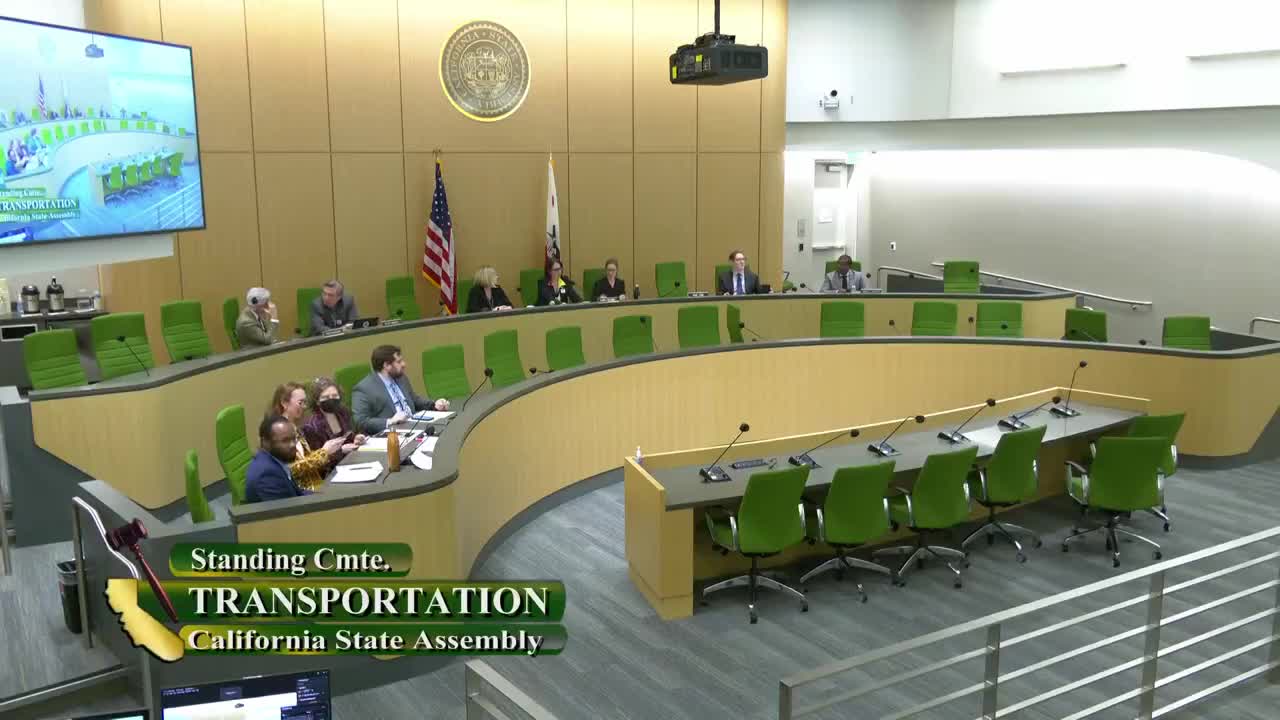
Assembly Standing Committee on Transportation
Bill Author

Bill Co-Author(s):