AB 2761: Product safety: plastic packaging: Reducing Toxics in Packaging Act.
- Session Year: 2023-2024
- House: Assembly
- Latest Version Date: 2024-06-06
Current Status:
Failed
(2024-06-13: In committee: Set, first hearing. Hearing canceled at the request of author.)
Introduced
In Committee
First Chamber
In Committee
Second Chamber
Enacted
Existing law prohibits any person from distributing, selling, or offering for sale in the state any food packaging that contains regulated perfluoroalkyl and polyfluoroalkyl substances (PFAS), as defined, and requires a manufacturer to use the least toxic alternative when replacing regulated PFAS in food packaging to comply with this requirement. Existing law similarly prohibits, beginning January 1, 2025, a person from manufacturing, distributing, selling, or offering for sale in the state any new, not previously owned, textile articles that contain regulated PFAS, except as specified.
This bill would enact the Reducing Toxics in Packaging Act, which would prohibit, beginning January 1, 2026, a person from manufacturing, selling, offering for sale, or distributing in the state plastic packaging that contains certain chemicals, as specified. The bill would exclude from that prohibition packaging used for certain medical, drug, and federally regulated products. The bill would authorize the imposition of a civil penalty for a violation of that prohibition, as specified.
Existing law prohibits any person from distributing, selling, or offering for sale in the state any food packaging that contains regulated perfluoroalkyl and polyfluoroalkyl substances (PFAS), as defined, and requires a manufacturer to use the least toxic alternative when replacing regulated PFAS in food packaging to comply with this requirement. Existing law similarly prohibits, beginning July January 1, 2025, a person from manufacturing, distributing, selling, or offering for sale in the state any new, not previously owned, textile articles that contain regulated PFAS, except as specified.
This bill would enact the Reducing Toxics in Packaging Act, which would prohibit, beginning January 1, 2026, a person from manufacturing, selling, offering for sale, or distributing in the state plastic packaging that contains certain chemicals, as specified. The bill would exclude from that prohibition packaging used for certain medical, drug, and federally regulated products. The bill would authorize the imposition of a civil penalty for a violation of that prohibition, as specified.
Existing law prohibits any person from distributing, selling, or offering for sale in the state any food packaging that contains regulated perfluoroalkyl and polyfluoroalkyl substances (PFAS), as defined, and requires a manufacturer to use the least toxic alternative when replacing regulated PFAS in food packaging to comply with this requirement. Existing law similarly prohibits, beginning July 1, 2025, a person from manufacturing, distributing, selling, or offering for sale in the state any new, not previously owned, textile articles that contain regulated PFAS, except as specified.
This bill would enact the Reducing Toxics in Packaging Act, which would prohibit, beginning January 1, 2026, a person from manufacturing, selling, offering for sale, or distributing in the state plastic packaging that contains certain chemicals, as specified. The bill would exclude from that prohibition packaging used for certain medical, drug, and federally regulated products. The bill would authorize the imposition of a civil penalty for a violation of that prohibition, as specified.
(a)This chapter shall be known, and may be cited, as the Reducing Toxics in Packaging Act.
(b)For purposes of this chapter, the following definitions apply:
(1)Intentionally added PFAS means either of the following:
(A)PFAS chemicals that a manufacturer has intentionally added to a product and that have a functional or technical effect on the product.
(B)PFAS chemicals that are intentional breakdown products of an added chemical.
(1)(2)Packaging has the same meaning as in Section 42041.
(2)Regulated perfluoroalkyl and polyfluoroalkyl substances or PFAS has the same meaning as in paragraph (3) of subdivision (a) of Section 109000 of the Health and Safety Code.(3)PFAS means a class of fluorinated organic chemicals containing at least one fully fluorinated carbon atom.
(c)Commencing January 1, 2026, no person shall manufacture, sell, offer for sale, or distribute in the state plastic packaging that contains any of the following:
(1)Regulated perfluoroalkyl and polyfluoroalkyl substances or PFAS. Intentionally added PFAS.
(2)Polyvinyl chloride (PVC), inclusive of polyvinylidene chloride (PVDC). (PVC).
(d)Notwithstanding any other law, the prohibition in subdivision (c) does not apply to either any of the following:
(1)Packaging used for any of the following products:
(A)Medical products and products defined as devices or prescription drugs, as specified in the Federal Food, Drug, and Cosmetic Act (21 U.S.C. Secs. 321(g), 321(h), and 353(b)(1)).
(B)Drugs that are used for animal medicines, including, but not limited to, parasiticide products for animals.
(C)Products intended for animals that are regulated as animal drugs, biologics, parasiticides, medical devices, or diagnostics used to treat, or be administered to, animals under the Federal Food, Drug, and Cosmetic Act (21 U.S.C. Sec. 301 et seq.), the federal Virus-Serum-Toxin Act (21 U.S.C. Sec. 151 et seq.), or the Federal Insecticide, Fungicide, and Rodenticide Act (7 U.S.C. Sec. 136 et seq.).
(2)Packaging used to contain products regulated by the Federal Insecticide, Fungicide, and Rodenticide Act (7 U.S.C. Sec. 136 et seq.).
(3)Blister packaging used for drugs as defined in the Federal Food, Drug, and Cosmetic Act (21 U.S.C. Sec. 321(g)).
(e)This chapter does not impose any requirement in direct conflict with a federal law or regulation, including, but not limited to, laws or regulations covering tamper-evident packaging pursuant to Section 211.132 of Title 21 of the Code of Federal Regulations, laws or regulations covering child-resistant packaging pursuant to Part 1700 (commencing with Section 1700.1) of Subchapter E of Chapter II of Title 16 of the Code of Federal Regulations, regulations, rules, or guidelines issued by the United States Department of Agriculture or the United States Food and Drug Administration relevant to packaging agricultural commodities, requirements for microbial contamination, structural integrity, or safety of packaging under the Federal Food, Drug, and Cosmetic Act (21 U.S.C. Sec. 301 et seq.), 21 U.S.C. Sec. 2101 et seq., the federal FDA Food Safety Modernization Act (21 U.S.C. Sec. 2201 et seq.), the federal Poultry Products Inspection Act (21 U.S.C. Sec. 451 et seq.), the Federal Meat Inspection Act (21 U.S.C. Sec. 601 et seq.), or the federal Egg Products Inspection Act (21 U.S.C. Sec. 1031 et seq.).
42091.(a)A city, a county, or the state may impose civil liability in the amount of five hundred dollars ($500) for the first violation of this chapter, one thousand dollars ($1,000) for the second violation, and two thousand dollars ($2,000) for the third and any subsequent violation.
(b)Any civil penalties collected pursuant to subdivision (a) shall be paid to the office of the city attorney, city prosecutor, district attorney, or Attorney General, whichever office brought the action. The penalties collected pursuant to this section by the Attorney General may be expended by the Attorney General, upon appropriation by the Legislature, to enforce this chapter.
(c)The remedies provided by this section are not exclusive and are in addition to the remedies that may be available pursuant to Chapter 5 (commencing with Section 17200) of Part 2 of Division 7 of the Business and Professions Code.
(d)The costs incurred by a state agency in carrying out this chapter shall be recoverable by the Attorney General, upon the request of the agency, from the liable person or persons.
(a)This chapter shall be known, and may be cited, as the Reducing Toxics in Packaging Act.
(b)For purposes of this chapter, the following definitions apply:
(1)Packaging has the same meaning as in Section 42041.
(2)Regulated perfluoroalkyl and polyfluoroalkyl substances or PFAS has the same meaning as in paragraph (3) of subdivision (a) of Section 109000 of the Health and Safety Code.
(c)Commencing January 1, 2026, no person shall manufacture, sell, offer for sale, or distribute in the state plastic packaging that contains any of the following:
(1)Regulated perfluoroalkyl and polyfluoroalkyl substances or PFAS.
(2)Polyvinyl chloride (PVC), inclusive of polyvinylidene chloride (PVDC).
(d)Notwithstanding any other law, the prohibition in subdivision (c) does not apply to either of the following:
(1)Packaging used for any of the following products:
(A)Medical products and products defined as devices or prescription drugs, as specified in the Federal Food, Drug, and Cosmetic Act (21 U.S.C. Secs. 321(g), 321(h), and 353(b)(1)).
(B)Drugs that are used for animal medicines, including, but not limited to, parasiticide products for animals.
(C)Products intended for animals that are regulated as animal drugs, biologics, parasiticides, medical devices, or diagnostics used to treat, or be administered to, animals under the Federal Food, Drug, and Cosmetic Act (21 U.S.C. Sec. 301 et seq.), the federal Virus-Serum-Toxin Act (21 U.S.C. Sec. 151 et seq.), or the Federal Insecticide, Fungicide, and Rodenticide Act (7 U.S.C. Sec. 136 et seq.).
(2)Packaging used to contain products regulated by the Federal Insecticide, Fungicide, and Rodenticide Act (7 U.S.C. Sec. 136 et seq.).
42091.(a)A city, a county, or the state may impose civil liability in the amount of five hundred dollars ($500) for the first violation of this chapter, one thousand dollars ($1,000) for the second violation, and two thousand dollars ($2,000) for the third and any subsequent violation.
(b)Any civil penalties collected pursuant to subdivision (a) shall be paid to the office of the city attorney, city prosecutor, district attorney, or Attorney General, whichever office brought the action. The penalties collected pursuant to this section by the Attorney General may be expended by the Attorney General, upon appropriation by the Legislature, to enforce this chapter.
(c)The remedies provided by this section are not exclusive and are in addition to the remedies that may be available pursuant to Chapter 5 (commencing with Section 17200) of Part 2 of Division 7 of the Business and Professions Code.
(d)The costs incurred by a state agency in carrying out this chapter shall be recoverable by the Attorney General, upon the request of the agency, from the liable person or persons.
|
Date
|
Status
|
|---|---|
| Jun 13, 2024 | In committee: Set, first hearing. Hearing canceled at the request of author. |
| Jun 6, 2024 | From committee chair, with author's amendments: Amend, and re-refer to committee. Read second time, amended, and re-referred to Com. on E.Q. |
| Jun 5, 2024 | Referred to Coms. on E.Q. and JUD. |
| May 23, 2024 | In Senate. Read first time. To Com. on RLS. for assignment. |
| May 22, 2024 | Read third time. Passed. Ordered to the Senate. (Ayes 41. Noes 11. Page 5555.) |
| May 20, 2024 | Read second time. Ordered to third reading. |
| May 16, 2024 | From committee: Do pass. (Ayes 10. Noes 4.) (May 16). |
| May 1, 2024 | In committee: Set, first hearing. Referred to APPR. suspense file. |
| Apr 16, 2024 | From committee: Do pass and re-refer to Com. on APPR. (Ayes 8. Noes 3.) (April 16). Re-referred to Com. on APPR. |
| Apr 10, 2024 | From committee: Do pass and re-refer to Com. on JUD. (Ayes 5. Noes 2.) (April 9). Re-referred to Com. on JUD. |
| Apr 2, 2024 | Re-referred to Com. on E.S. & T.M. |
| Apr 1, 2024 | From committee chair, with author's amendments: Amend, and re-refer to Com. on E.S. & T.M. Read second time and amended. |
| Mar 21, 2024 | Referred to Coms. on E.S. & T.M. and JUD. |
| Feb 16, 2024 | From printer. May be heard in committee March 17. |
| Feb 15, 2024 | Read first time. To print. |
|
Date
|
Description
|
Location
|
Votes
|
|
|---|---|---|---|---|
| May 22, 2024 | AB 2761 Hart Assembly Third Reading | Assembly Floor |
Passed |
|
| May 16, 2024 | Do pass. | Assembly Standing Committee on Appropriations |
Passed |
|
| Apr 16, 2024 | Do pass and be re-referred to the Committee on [Appropriations] | Assembly Standing Committee on Judiciary |
Passed |
|
| Apr 9, 2024 | Do pass and be re-referred to the Committee on [Judiciary] | Assembly Standing Committee on Environmental Safety and Toxic Materials |
Passed |
This list shows positions taken on this bill by organizations on the date displayed, which is linked to the original source.
Positions by individuals are not included.
|
Organization
|
Position
|
Date
|
|---|---|---|
| 350 Sacramento | ** Support | |
| 5 Gyres Institute | ** Support | |
| 7th Generation Advisors | ** Support | |
| Active San Gabriel Valley | ** Support | |
| Agricultural Council Of California | ** Against | |
| Alliance of Mission-based Recyclers | ** Support | |
| American Chemistry Council | ** Against | |
| American Cleaning Institute | ** Against | |
| American College Of Obstetricians And Gynecologists District Ix | ** Support | |
| American Forest & Paper Association | ** Against | |
| American Institute for Packaging and Environment | ** Against | |
| American Sustainable Business Council | ** Support | |
| Aveson Global Leadership Academy | ** Support | |
| A Voice for Choice Advocacy | ** Support | |
| Ban SUP | ** Support | |
| Bay Area Youth Lobbying Initiative | ** Support | |
| Beyond Plastics | ** Support | |
| Breast Cancer Fund The | ** Support | |
| Breast Cancer Prevention Partners | ** Support | |
| California Chamber Of Commerce | ** Against | |
| California Climate Action | ** Support | |
| California Food Producers | ** Against | |
| California Grocers Association | ** Against | |
| California Health Coalition Advocacy | ** Support | |
| California League of Food Producers | ** Against | |
| California Manufacturers & Technology Association | ** Against | |
| Californians Against Waste | ** Support | |
| California Product Stewardship Council | ** Support | |
| California Restaurant Association | ** Against | |
| California Retailers Association | ** Against | |
| CALPIRG, California Public Interest Research Group | ** Support | |
| CA Rethink Disposables | ** Support | |
| Center For Biological Diversity | ** Support | |
| Center For Environmental Health | ** Support | |
| cleanearth4kids.org | ** Support | |
| Clean Water Action | ** Support | |
| Community Environmental Council | ** Support | |
| Consumer Brands Association | ** Against | |
| Consumer Healthcare Products Association | ** Against | |
| Consumer Technology Association | ** Against | |
| County of Santa Barbara | ** Support | |
| Courage California | ** Support | |
| Defend Our Health | ** Support | |
| Ecology Center | ** Support | |
| Environmental Working Group | ** Support | |
| Every Neighborhood Partnership | ** Support | |
| Flexible Packaging Association | ** Against | |
| Foodservice Packaging Institute | ** Against | |
| Friends Committee On Legislation Of California | ** Support | |
| Friends of the Los Angeles River | ** Support | |
| Friends of the River | ** Support | |
| Gaia | ** Support | |
| Glendale Environmental Coalition | ** Support | |
| Green America | ** Support | |
| Green Behind the Scenes | ** Support | |
| Green Science Policy Institute | ** Support | |
| Heal The Bay | ** Support | |
| Household and Commercial Products Association | ** Against | |
| Indivisible Ca: Statestrong | ** Support | |
| Industrial Environmental Association | ** Against | |
| LA Waterkeeper | ** Support | |
| Los Angeles County Sanitation Districts | ** Support | |
| Lutheran Office Of Public Policy - California | ** Support | |
| Marine Retailers Association Of The Americas | ** Against | |
| Meat Institute | ** Against | |
| Mothers Out Front | ** Support | |
| Motorcycle Industry Council | ** Against | |
| National Marine Manufacturers Association | ** Against | |
| Natural Resources Defense Council | ** Support | |
| Naturepedic | ** Support | |
| Northern California Recycling Association | ** Support | |
| Occidental Arts and Ecology Center | ** Support | |
| Pacific Environment | ** Support | |
| Personal Care Products Council | ** Against | |
| Plastic Free Future | ** Support | |
| Plastic Pollution Coalition | ** Support | |
| Plastics Industry Association | ** Against | |
| Recreational Off-Highway Vehicle Association | ** Against | |
| Regeneración - Pajaro Valley Climate Action | ** Support | |
| Safer States | ** Support | |
| San Francisco Baykeeper | ** Support | |
| San Francisco Bay Physicians for Social Responsibility | ** Support | |
| Save Our Shores | ** Support | |
| Save The Albatross Coalition | ** Support | |
| Save The Bay | ** Support | |
| Sea Hugger | ** Support | |
| SoCal 350 Climate Action | ** Support | |
| Southwest Meat Association | ** Against | |
| Specialty Vehicle Institute of America | ** Against | |
| Surfrider Foundation | ** Support | |
| Surfrider San Francisco | ** Support | |
| The Keep a Breast Foundation | ** Support | |
| The Last Plastic Straw | ** Support | |
| The Story of Stuff Project | ** Support | |
| The Toy Association | ** Against | |
| UPSTREAM | ** Support | |
| Valley Improvement Projects | ** Support | |
| Vinyl Institute | ** Against | |
| Voices for Progress | ** Support | |
| Wholly H2O | ** Support | |
| Wishtoyo Foundation | ** Support | |
| Zero Waste USA | ** Support |
ASSEMBLY THIRD READING
ATR Bill Id:AB 2761
Author:(Hart and Lowenthal)
As Amended Ver:April 1, 2024
Majority vote
SUMMARY
Prohibits, beginning January 1, 2026, a person from manufacturing, selling, offering for sale, or distributing in the state plastic packaging that contains any of the following: regulated perfluoroalkyl and polyfluoroalkyl substances (PFAS), Polyvinyl chloride (PVC) inclusive of polyvinylidene chloride (PVDC).
Major Provisions
COMMENTS
Perfluoroalkyl and polyfluoroalkyl substances (PFAS): Per- and polyfluorinated substances (PFASs) are a large group of synthetic, highly fluorinated substances that have been widely used in industrial and consumer applications for their heat, water, and lipid resistance properties for more than seven decades. PFAS are long-lasting chemicals that break down very slowly over time. PFAS are ubiquitous, and researchers have found PFAS in indoor and outdoor environments, plants, soil, food, drinking water, wildlife, companion animals, production animals, and humans at locations across the nation and around the globe. Scientific studies have shown that exposure to some PFAS may be linked to harmful health effects in humans and animals. More than 9,000 PFAS chemicals are included in the United States Environmental Protection Agency's (US EPA's) Master List of PFAS Substances. The persistence and proliferation of PFAS chemicals makes it challenging to study and assess the overall potential human health and environmental risks of PFAS exposure.
The breadth of uses of PFAS is immense, making it nearly impossible to avoid exposure. PFAS are used extensively in surface coating and protectant formulations due to their unique ability to reduce the surface tension of liquids. In consumer products, PFAS is used in carpets, furniture fabrics, apparel, paper packaging for food, non-stick cookware, personal care products, and other products designed to be waterproof; grease, heat, water and stain resistant; or, non-stick. Commercial applications span many sectors of the economy, including aerospace, apparel, automotive, building and construction, pharmaceuticals, medical devices, paints, electronics, semiconductors, energy, oil and gas exploration, first responder safety, firefighting foams, and health care. During production, use, and disposal, PFAS can migrate into the soil, water, and air.
Exposure to PFAS: The main route of exposure to PFAS is through ingestion of contaminated food or liquid (accounting for up to half of total exposure), and through inhalation and ingestion of contaminated indoor air and dust. Food can become contaminated with PFAS through contaminated soil and water used to grow the food, food packaging containing PFAS, and equipment that uses PFAS during food processing. Some foods, such as fish, meat, eggs and leafy vegetables, may contain PFAS due to bioaccumulation and crop uptake. Studies have shown that PFAS can transfer from pregnant mothers to their fetuses via the placenta during gestation, as well as transfer from nursing mothers to their infants via breastfeeding. Dermal exposure is also possible when people touch products treated with PFAS, such as carpets or clothing. Young children may be susceptible to higher levels of exposure than adults because they ingest more dust containing PFAS and mouth PFAS-treated consumer products. Workers, such as carpet installers, carpet cleaners, firefighters, and workers in furniture, furnishings, outdoor clothing, and carpet stores, may also experience above average PFAS exposure levels.
Polyvinyl Chloride (PVC): Most vinyl chloride is used to make polyvinyl chloride (PVC) plastic and vinyl products. Acute (short-term) exposure to high levels of vinyl chloride in air has resulted in central nervous system effect, such as dizziness, drowsiness, and headaches in humans. Chronic (long-term) exposure to vinyl chloride through inhalation and oral exposure in humans has resulted in liver damage. Cancer is a major concern from exposure to vinyl chloride via inhalation, as vinyl chloride exposure has been shown to increase the risk of a rare form of liver cancer in humans. The US EPA has classified vinyl chloride as a Group A, human carcinogen.
PVC is a high-strength thermoplastic material. It is widely used in applications such as pipes, medical devices, and wire & cable insulation. It is the world's third-most widely produced synthetic plastic polymer.
Exemptions in bill: AB 2761 contains several exemptions. The overall theme of the exemptions is the same: the exemptions recognize other public health and safety benefits with those exempted packaging products. Additionally, the bill exempts certain packaging products that could be in direct conflict with a federal law or regulation for child-resistant packaging, tamper-evident packaging, or packaging of agricultural commodities.
Federal food packaging oversight: The U.S. Food and Drug Administration (FDA) approves all food packaging materials. Any material intended for use in food packaging must be formulated in compliance with FDA requirements for its intended use. The manufacturer of a new material must petition FDA and provide data proving the material is safe to use if it is not already regulated for the proposed use.
Meat and poultry products may not be packaged in a container composed of any substances that may adulterate the contents or be injurious to health. Packaging materials entering a meat or poultry plant must be accompanied or covered by a guaranty or statement of assurance from the packaging supplier. The guaranty must state that the material complies with the Federal Food, Drug and Cosmetic Act. It must also state the brand name, supplier, and conditions for use, including temperature and other limits.
Packaging that can be purchased or is available to use in grocery stores (such as produce or meat bags) have been approved by the FDA for food contact. These include:
- Plastic Wraps and Storage Bags - Consumer plastic wraps and bags are made from three major categories of plastics: polyethylene (PE), PVDC, and PVC. The plastic resins are petroleum derivatives. Plasticizers, colorants or anti-fog compounds may be added.
- In-store Produce Bags - Typically made from PE or other plastic film, these bags are used for consumer in-store packaging of fruits and vegetables. Do not use for cooking; the thin plastic may melt or burn.
- Oven Cooking Bags - Both the bags and their closure ties are made from heat-resistant nylon. They can be used in a microwave oven or in a conventional oven set no higher than 400° F (204.4 °C).
- Aluminum Foil is 98.5% aluminum with the balance primarily from iron and silicon to give strength and puncture resistance. The molten alloy is rolled thin and solidified between large, water-cooled chill rollers. During the final rolling, two layers of foil are passed through the mill at the same time. The side coming in contact with the polished steel rollers become shiny; the other side comes out dull. It does not make any difference which side of the foil contacts the food.
- Freezer Paper - white paper coated on one side with plastic to help keep air out of frozen foods, thus protecting against freezer burn and loss of moisture.
- Parchment Paper - an odorless and tasteless paper made from cotton fiber and/or pure chemical wood pulps. It may be waxed or coated and is greaseproof or grease resistant. Parchment paper is primarily used in baking as a pan liner or to wrap foods in for cooking.
- Wax Paper - a triple-waxed tissue paper; made with a food-safe paraffin wax which is forced into the pores of the paper and spread over the outside as a coating.
If any of the above packaging has a federal conflict with the requirements of this bill then that packaging could be exempt from the prohibitions in AB 2761.
This bill: Prohibits, beginning January 1, 2026, a person from manufacturing, selling, offering for sale, or distributing in the state plastic packaging that contains any of the following: regulated PFAS, PVC, inclusive of PVDC. AB 2761 is consistent with ongoing efforts to reduce or eliminate these chemicals from packaging included efforts by the Toxics in Packaging Clearinghouse and the U.S. Plastics Pact. There have been some concerns raised about packaging for food and the need to meet federal requirements. This bill contains exemptions for various federal laws and requirements including for conflicts with federal food packaging requirements.
According to the Author
"Assembly Bill 2761 takes an essential step forward in the State's effort to eliminate two particularly harmful types of plastic packaging - those containing PFAS and PVC/PVDC. The manufacturing and disposal of these toxic plastics represent a substantial threat to both human and environmental health. By removing these toxic chemicals in packaging, the bill will require the use of safer alternatives and encourage the adoption of packaging practices that better protect public health and the environment."
Arguments in Support
According to a coalition in support:
"PFAS, PVC, and PVDC all pose threats to human health throughout their lifecycle from production to disposal. PFAS are a class of approximately 9000 man-made chemicals used for a wide range of purposes, including plastic packaging. PFAS are called "forever" chemicals because they are highly persistent and mobile in the environment, making them both difficult and expensive to remediate. They also accumulate in the environment and our bodies. Virtually all Americans and Californians have PFAS in their bodies.
PVC and PVDC are materials often used in packaging to tightly seal consumer products for food, personal care products, and household goods. They are made from vinyl chloride, one of the toxic chemicals at the center of the tragic toxic train crash in East Palestine, Ohio that released 1 million pounds of chemicals into the surrounding air and water, causing serious health and environmental impacts on the surrounding community. Vinyl chloride is a known human carcinogen, as classified by the International Agency for Research on Cancer (IARC), U.S. Department of Health and Human Services (HHS), and the U.S. Environmental Protection Agency (EPA).
The United States Plastics Pact, a consortium of over 100 industry members and stakeholders, identified numerous unnecessary plastic packaging materials and additives, including PFAS and PVC / PVDC. These industry stakeholders have voluntarily pledged to eliminate these materials and additives by 2025, demonstrating the viability of eliminating these uses in the near future.
AB 2761 would eliminate the unnecessary and avoidable presence of these toxic chemicals from plastic packaging, delivering both health and environmental benefits to all Californians."
Arguments in Opposition
According to a coalition writing in opposition,
"The undersigned organizations, representing a cross-section of manufacturers, consumer product companies, agriculture, food producers, restaurants, and others, must respectfully oppose AB 2761 because the packaging mandates are already anticipated as part of the state's groundbreaking packaging recycling, composting, and waste reduction law.
The enactment of SB 54 (Stats. 2022), along with SB 343 (Stats. 2021) has resulted in arguably the most comprehensive and rigorous single-use packaging and plastics recycling and waste reduction requirements enacted domestically and internationally. As outlined below, new mandates to ensure that packaging is recyclable or compostable by 2032, are source reduced by 25%, and recycled at unprecedented rates will directly impact the types of materials used, including the specific materials subject to AB 2761. Packaging decisions will be directly influenced by a future fee schedule that will incentivize easier-to-recycle materials, and new recyclability labeling requirements will include criteria that considers substances used in packaging, including perfluoroalkyl and polyfluoroalkyl substances (PFAS).
Outright bans on certain materials such as PVdC do not consider potential important tradeoffs or unintended negative consequences. Packaging materials must meet federal standards for food contact applications and are also widely known to prevent food waste."
FISCAL COMMENTS
According to the Assembly Appropriations Committee, enactment of this bill could lead to cost pressures on the trial courts for prosecuting violations of this bill and unknown but potentially significant workload pressure on the Department of Justice for enforcing this bill.
VOTES
ASM ENVIRONMENTAL SAFETY AND TOXIC MATERIALS: 5-2-0
YES: Garcia, Connolly, McKinnor, Papan, Reyes
NO: Hoover, Ta
ASM JUDICIARY: 8-3-1
YES: Kalra, Bauer-Kahan, Bryan, Connolly, Haney, Maienschein, McKinnor, Reyes
NO: Dixon, Sanchez, Waldron
ABS, ABST OR NV: Pacheco
ASM APPROPRIATIONS: 10-4-1
YES: Wicks, Arambula, Bryan, Wendy Carrillo, Mike Fong, Grayson, Haney, Hart, Pellerin, Villapudua
NO: Sanchez, Dixon, Jim Patterson, Ta
ABS, ABST OR NV: Calderon
UPDATED
VERSION: April 1, 2024
CONSULTANT: Josh Tooker / E.S. & T.M. / (916) 319-3965 FN: 0002982
Date of Hearing: May 1, 2024
ASSEMBLY COMMITTEE ON APPROPRIATIONS
Buffy Wicks, Chair
ABPCA Bill Id:AB 2761
Author:(Hart) – As Amended Ver:April 1, 2024
Policy Committee: | Environmental Safety and Toxic Materials | Vote: | 5 - 2 |
Judiciary | 8 - 3 | ||
|
|
Urgency: No State Mandated Local Program: No Reimbursable: No
SUMMARY:
This bill prohibits, beginning January 1, 2026, a person from manufacturing, selling, offering for sale, or distributing in the state plastic packaging that contains specified chemicals.
Specifically, this bill:
- Beginning January 1, 2026, with specified exemptions, prohibits the manufacture, sale, offer for sale, or distribution in the state of plastic packaging that contains any of the following:
- Regulated perfluoroalkyl and polyfluoroalkyl substances (PFAS).
- Polyvinyl chloride (PVC), inclusive of polyvinylidene chloride (PVDC).
- Provides that this bill does not impose any requirement in direct conflict with a federal law or regulation.
- Authorizes a city, county, or the state to impose civil liability in the amount of $500 for the first violation, $1,000 for the second violation, and $2,000 for any subsequent violations. Requires that any penalties collected be paid to the office of the city attorney, city prosecutor, district attorney, or Attorney General (AG), whichever entity brought the action.
- Provides that the penalties collected pursuant to this bill by the AG may be expended by the AG, upon appropriation by the Legislature, to enforce this bill.
- Provides that costs incurred by a state agency in enforcing the provisions of this bill are recoverable by the Attorney General, upon the request of the agency, from the liable person or persons.
- Provides that the remedies provided by this bill may be sought in addition to remedies under the Unfair Competition Law.
FISCAL EFFECT:
1) Cost pressures (Trial Court Trust Fund, General Fund) to adjudicate enforcement actions filed by public prosecutors. This bill authorizes specified public prosecutors to enforce violations of the bill’s prohibition on the use of specified chemicals in plastic packaging. Actual costs will depend on the number of violations and the number of cases filed by prosecutors. It generally costs approximately $1,000 to operate a courtroom for one hour. If 10 cases are filed statewide and each requires two days of court time to resolve, the resulting workload cost to the courts would be about $160,000. Although courts are not funded on the basis of workload, increased pressure on the Trial Court Trust Fund may create a need for increased funding for courts from the General Fund. The Governor’s 2024-25 budget proposes $83.1 million ongoing from the General Fund to backfill declining revenue to the Trial Court Trust Fund.
2) Workload cost pressures (General Fund) to the Department of Justice (DOJ) of an unknown but potentially significant amount. If DOJ files enforcement actions as authorized by this bill, it may result in a significant workload increase to DOJ. If DOJ needs to hire an additional attorney to handle this workload increase, costs will likely exceed $150,000 annually. If DOJ chooses not to file enforcement actions, DOJ will not incur any costs.
According to the Legislative Analyst’s Office, the General Fund faces a structural deficit in the tens of billions of dollars over the next several fiscal years.
COMMENTS:
1) Purpose. According to the author:
Assembly Bill 2761 takes an essential step forward in the State’s effort to eliminate two particularly harmful types of plastic packaging - those containing PFAS and PVC/PVDC. The manufacturing and disposal of these toxic plastics represent a substantial threat to both human and environmental health. By removing these toxic chemicals in packaging, the bill will require the use of safer alternatives and encourage the adoption of packaging practices that better protect public health and the environment.
2) Background.
PFAS. PFAS are a ubiquitous class of more than 9,000 synthetic chemicals that have been in use in a wide range of industrial and consumer products since the 1940s for their heat, water, and lipid resistance properties. PFAS are linked to a variety of health harms, such as cancer, endocrine disruption, developmental and reproductive toxicity, and immune dysregulation. These chemicals are harmful at extremely low doses; contaminate the air, soil, drinking water, plants and wildlife during production, use and disposal; and are extremely persistent in the environment. In fact, PFAS are commonly referred to as “forever chemicals” because they do not break down and instead bioaccumulate and persist in human and animal tissues.
PVC. As noted by a coalition in support of this bill, PVC and PVDC are materials often used in packaging to tightly seal consumer products for food, personal care products, and household goods. They are made from vinyl chloride, which the U.S. Environmental Protection Agency classifies as a human carcinogen. The coalition contends:
The United States Plastics Pact, a consortium of over 100 industry members and stakeholders, identified numerous unnecessary plastic packaging materials and additives, including PFAS and PVC / PVDC. These industry stakeholders have voluntarily pledged to eliminate these materials and additives by 2025, demonstrating the viability of eliminating these uses in the near future.
Writing in opposition, a coalition of organizations argues, among other things, that this bill undermines recent legislative efforts to combat plastic pollution, namely SB 54 (Allen), Chapter 75, Statutes of 2022:
Packaging decisions will be directly influenced by a future fee schedule that will incentivize easier-to-recycle materials, and new recyclability labeling requirements will include criteria that considers substances used in packaging, including perfluoroalkyl and polyfluoroalkyl substances (PFAS)…Outright bans on certain materials such as PVdC do not consider potential important tradeoffs or unintended negative consequences.
Analysis Prepared by: Nikita Koraddi / APPR. / (916) 319-2081
Date of Hearing: April 16, 2024
ASSEMBLY COMMITTEE ON JUDICIARY
Ash Kalra, Chair
ABPCA Bill Id:AB 2761
Author:(Hart) – As Amended Ver:April 1, 2024
SUBJECT: Product safety: plastic packaging: Reducing Toxics in Packaging Act
KEY ISSUE: should the use of perfluoroalkyl and polyfluoroalkyl substances (PFAS) be prohibited in most plastic packaging for consumer products?
SYNOPSIS
California has long been a national leader in seeking to reduce pollution from plastics. Beyond eliminating single-use plastic bags, the state has sought to promote the use of recyclable or compostable packaging materials. The state has also been a leader seeking to reduce the toxicity levels of plastics that are still used in this state. Despite these efforts, perfluoroalkyl and polyfluoroalkyl substances, better known as PFAS, are still utilized in some plastic packaging in this state. Nationally, the concern regarding the significant toxicity of PFAS is growing. The chemical can cause birth defects, slow cognitive development in children, and increase the risk of several forms of cancer in adults. Due to the multitude of uses for the chemical, its proliferation into the natural environment is growing at an alarming rate.
This measure seeks to eliminate one source of PFAS contamination by prohibiting the chemical’s use in most packaging. The bill would exempt from the general ban on the use of PFAS in specific products or when required by federal law. The bill authorizes local public prosecutors and the Attorney General to enforce this measure and to seek civil penalties against those determined to have violated this bill’s provisions. This measure is supported by a coalition of environmental and public health advocates led by the bill’s co-sponsors including Californians Against Waste, Breast Cancer Prevention Partners, Clean Water Action and the Natural Resources Defense Council. The proponents of this measure highlight PFAS's health impacts and contend that despite the state’s other efforts to reduce plastic pollution, a PFAS prohibition is needed to eliminate this toxin from the environment. This bill is opposed by a coalition of business and retail organizations who contend that the bill is unnecessary and undermines the state’s prior efforts to eliminate non-recyclable plastic packaging. The measure was previously heard and approved by the Committee on Environmental Safety and Toxic Materials by a 5-2 vote.
SUMMARY: Generally prohibits the use of perfluoroalkyl and polyfluoroalkyl substances, or PFAS, in plastic packaging. Specifically, this bill:
- Prohibits, commencing January 1, 2026, the manufacture, sales, offer for sales, or distribution in the state plastic packaging that contains any of the following:
- Regulated perfluoroalkyl and polyfluoroalkyl substances or PFAS; and
- Polyvinyl chloride (PVC), inclusive of polyvinylidene chloride (PVDC).
- Provides that the prohibition of 1) does not apply to the following:
- Packaging used for medical products and products defined as devices or prescription drugs, as specified in the Federal Food, Drug, and Cosmetic Act;
- Packaging used for drugs that are used for animal medicines, including, but not limited to, parasiticide products for animals;
- Packaging used for products intended for animals that are regulated as animal drugs, biologics, parasiticides, medical devices, or diagnostics used to treat, or be administered to, animals under the Federal Food, Drug, and Cosmetic Act; and
- Packaging used to contain products regulated by the Federal Insecticide, Fungicide, and Rodenticide Act.
- Provides that nothing in this bill is to be interpreted to supersede a requirement that is in direct conflict with a federal law or regulation including but not limited to the following:
- Laws or regulations covering tamper-evident packaging;
- Laws or regulations covering child-resistant packaging;
- Regulations, rules, or guidelines issued by the United States Department of Agriculture or the United States Food and Drug Administration relevant to packaging agricultural commodities;
- Requirements for microbial contamination, structural integrity, or safety of packaging under the Federal Food, Drug, and Cosmetic Act;
- The federal FDA Food Safety Modernization Act;
- The federal Poultry Products Inspection Act;
- The Federal Meat Inspection Act; and
- The federal Egg Products Inspection Act.
- Imposes civil penalties for violating 1) in the amount of five hundred dollars ($500) for the first violation, one thousand dollars ($1,000) for the second violation, and two thousand dollars ($2,000) for the third and any subsequent violations.
- Authorizes a city attorney, city prosecutor, district attorney, or Attorney General to seek the civil penalties authorized by 4).
- Provides that any penalty revenue collected pursuant to 4) is to be provided to the prosecuting agency, as specified.
- Provides that costs incurred by a state agency in enforcing the provisions of this bill are to be recoverable by the Attorney General, upon the request of the agency, from the liable person or persons.
- Provides that the remedies provided by this bill may be sought in addition to remedies under the Unfair Competition Law.
- Defines “packaging” and “PFAS” to be consistent with the use of the terms in existing law.
EXISTING LAW:
- Defines “perfluoroalkyl and polyfluoroalkyl substances” or “PFAS” as a class of fluorinated organic chemicals containing at least one fully fluorinated carbon atom. (Health and Safety Code Section 109000 (a)(2).)
- Defines "package" as any container, produced either domestically or in a foreign country, providing a means of marketing, protecting, or handling a product from its point of manufacture to its sale or transfer to a consumer, including a unity package, an intermediate package, or a shipping container, as defined in the ASTM specification D 996. "Package" also includes, but is not limited to, unsealed receptacles, including carrying cases, crates, cups, pails, rigid foil and other trays, wrappers and wrapping films, bags, and tubs. "Package" does not include a reusable bag. (Health and Safety Code Section 25214.12 (h).)
- Defines "packaging component" as any individual assembled part of a package that is produced either domestically or in a foreign country, including, but not limited to, any interior or exterior blocking, bracing, cushioning, weatherproofing, exterior strapping, coatings, closures, inks, labels, dyes, pigments, adhesives, stabilizers, or any other additives. (Health and Safety Code Section 25214.12 (i).)
- Requires, commencing January 1, 2022, a person that sells firefighter personal protective equipment to provide a written notice to the purchaser if the firefighter personal protective equipment contains intentionally added PFAS chemicals. (Health and Safety Code Section 13029 (b)(1).)
- Prohibits, commencing January 1, 2022, a manufacturer of class B firefighting foam from manufacturing, or knowingly selling, offering for sale, distributing for sale, or distributing for use, and a person from using, class B firefighting foam containing intentionally added PFAS chemicals. (Health and Safety Code Section 13061 (b)(1).)
- Prohibits, on and after July 1, 2023, a person, including, but not limited to, a manufacturer, from selling or distributing in commerce in this state any new, not previously owned, juvenile product, as defined, that contains intentionally added PFAS or PFAS at or above 100 PPM, as measured in total organic fluorine. (Health and Safety Code Section 108946.)
- Prohibits, on or after January 1, 2025, a person from manufacturing, distributing, selling, or offering for sale in the state any new, not previously used, textile articles that contain intentionally added PFAS, or PFAS at or above 100 PPM, and on or after January 1, 2027, 50 PPM, as measured in total organic fluorine. (Health and Safety Code Section 108971.)
- Prohibits, commencing January 1, 2025, a person or entity from manufacturing, selling, delivering, holding, or offering for sale, in commerce any cosmetic product that contains any specified intentionally added ingredients, including some PFAS chemicals. (Health and Safety Code Section 108980 (a).)
- Prohibits, commencing January 1, 2025, a person or entity from manufacturing, selling, delivering, holding, or offering for sale in commerce any cosmetic product that contains intentionally added PFAS. (Health and Safety Code Section 108981.5.)
- Prohibits, commencing January 1, 2023, a person from distributing, selling, or offering for sale in the state any food packaging that contains intentionally added PFAS or PFAS at or above 100 PPM, as measured in total organic fluorine. (Health and Safety Code Section 109000.)
- Prohibits unlawful, unfair or fraudulent business acts or practices and unfair, deceptive, untrue or misleading advertising. (Business and Professions Code Section 17200.)
FISCAL EFFECT: As currently in print this bill is keyed fiscal.
COMMENTS: PFAS chemicals are highly fluorinated, volatile chemical substances that can cause significant health impacts in humans. Because of the versatility of the chemical, it is used in numerous consumer and commercial products. As a result of the widespread use of PFAS, the chemical is now present throughout the lived environment. Seeking to reduce the prevalence of PFAS, this measure would ban the chemical’s use in most plastic packaging. In support of this bill, the author states:
Assembly Bill 2761 takes an essential step forward in the State’s effort to eliminate two particularly harmful types of plastic packaging - those containing PFAS and PVC/PVDC. The manufacturing and disposal of these toxic plastics represent a substantial threat to both human and environmental health. By removing these toxic chemicals in packaging, the bill will require the use of safer alternatives and encourage the adoption of packaging practices that better protect public health and the environment.
The dangers of PFAS exposure. PFAS chemicals are frequently used in consumer products to boost the product’s ability to resist heat, water, and lipids. As a result, PFAS is found in a litany of consumer products: from carpets and furniture to non-stick cookware to consumer apparel and personal care products. PFAS chemicals are highly fluorinated, volatile chemical substances. Not only are PFAS used in the above discussed consumer products, the chemicals are also used in oil and gas exploration, firefighting foam, and electronics to name just a few of PFAS’s industrial uses. Due to the numerous uses of PFAS chemicals and the general volatility of the chemical compounds composing PFAS, the chemical is now widely dispersed throughout the lived environment. Even more troubling, the chemicals take significant time to degrade, even when exposed to the elements.
As a result of the widespread proliferation of PFAS into the environment, humans can be exposed to these chemicals in numerous ways. First, and most obvious, would be exposure through the workplace or by using a consumer product containing PFAS. Secondly, PFAS exposure can occur as a result of eating food or consuming water that contains trace amounts of the chemical from soil or waterways. Because these chemicals can build up in the food chain, meats and fish products can contain especially high levels of these PFAS.
Due to PFAS ability to bio-accumulate in the food chain and persist for years, exposure to the chemicals can have serious health impacts. According to the United States Environmental Protection Agency, PFAS exposure has been demonstrated to result in birth defects, developmental delays, immune system suppression, cancer (notably kidney, prostate, and testicular cancer), interference with hormones, and increased risk of obesity and high cholesterol. (https://www.epa.gov/pfas/our-current-understanding-human-health-and-environmental-risks-pfas.) In response to these risks, the United States Environmental Protection Agency announced a “PFAS Strategic Roadmap” to adopt an agency wide approach to addressing PFAS contamination and is now undertaking rulemaking to generate additional oversight of PFAS production, exposure, and hazards nationwide. Additionally, since 2022, the Department of Toxic Substances Control has been seeking to better regulate PFAS in consumer products, including upholstery, clothing, shoes, and carpeting. Similarly, the State Water Resources Control Board issued General Order DW 20240002DDW in March of 2024 directing local water agencies to begin monitoring for PFAS in water systems serving at-risk disadvantaged communities.
Plastic waste is a troubling source of many chemical substances seeping into the environment. Plastic waste, whether the plastic contains PFAS chemicals or not, is a significant source of chemical pollution in the environment. Due to the collapse of much of the secondary market for used plastics, this waste is now primarily sent to landfills. Once it is in a landfill, the plastic itself begins to break down, but the chemicals that compose the plastic frequently remain; and through natural process, including rainwater runoff, these chemicals make their way into the environment. As a result, plastics are now a significant source of heavy metals, lead, cadmium, mercury, and hexavalent chromium in the environment. Seeking to address this issue, the Legislature enacted AB 455 (Chu) Chap. 679, Stats. 2003, also known as the Toxics in Packaging Prevention Act, seeking to reduce the toxicity of plastic packaging. The Act generally governs plastics in food packaging, consumer electronics packaging, recycled materials, and strapping used in shipping containers. This bill is largely modeled after, and would build upon, the Act.
This bill builds upon the Toxics in Packaging Prevention Act by prohibiting the use of PFAS in most plastic packaging. The bill would exempt from the PFAS prohibition packaging that is regulated by federal law, including packaging for medication; animal products regulated by the United States Department of Agriculture; and certain pesticides. This bill would authorize city attorneys, city prosecutors, district attorneys, or the Attorney General to enforce this measure and seek civil penalties for noncompliance. The civil penalties imposed by this measure would range from $500 to $2,000 per violation, depending on the number of violations the defendant is alleged to have committed. The bill also permits public prosecutors who enforce this measure to seek cost recovery should they prevail.
Despite opposition concerns, this measure should not have a significant impact on the state’s broader efforts to reduce plastic pollution. This measure is opposed by a coalition of business organizations who contend that this measure undermines recent legislative efforts to combat plastic pollution. Indeed, in 2022, the Legislature adopted SB 54 (Allen) Chap. 75, Stats. 2022, which aimed to ensure that most packaging used in California would be recyclable or compostable by 2032. The opposition now contends, “creating new packaging mandates as proposed in AB 2761 is unnecessary and counterproductive.”
While the opposition discusses the specific needs of packaging certain food products, primarily meet and cheese, the opponents of this measure do not specifically demonstrate how this bill would undermine the efforts to implement SB 54. First, as it relates to specific packaging needs, this measure exempts packaging that is subject to federal mandates. Secondly, given that SB 54 directs producers to move to recyclable or compostable packaging by 2032 the days of using PFAS in packaging are already limited. While the opponents of this bill clearly would like PFAS to be handled as a part of the regulatory process created by SB 54, they do not clearly indicate how passing this measure would directly undermine SB 54.
The clear exemptions and exclusions proposed by this measure should avoid federal preemption issues. This measure seeks to ensure that the ban of PFAS in plastic packaging does not run afoul of federal laws. Accordingly, this measure explicitly exempts the provisions of this bill from packaging for certain products, namely medication and pesticides. Additionally, the bill explicitly gives way to federal law should any conflicts arise regarding the packaging for meat and egg products, as well as other products governed by federal agricultural laws; food and drug laws; and child safe packaging laws. These exemptions and carve-outs should sufficiently protect this measure from potential federal preemption.
ARGUMENTS IN SUPPORT: This bill is co-sponsored by Californians Against Waste, Breast Cancer Prevention Partners, Clean Water Action and the Natural Resources Defense Council. The bill is also supported by more than two-dozen other environmental and public health advocacy organizations. In support of this measure, the co-sponsors jointly write:
We are pleased to co-sponsor and register support for the Reducing Toxics in Packaging Act (AB 2761), which will phase out the use of toxic “forever” poly- and per- fluoroalkyl substances (PFAS) chemicals, polyvinyl chloride (PVC), and polyvinylidene chloride (PVDC) in plastic packaging.
PFAS, PVC, and PVDC all pose threats to human health throughout their lifecycle from production to disposal. PFAS are a class of approximately 9000 man-made chemicals used for a wide range of purposes, including plastic packaging. PFAS are called “forever” chemicals because they are highly persistent and mobile in the environment, making them both difficult and expensive to remediate. They also accumulate in the environment and our bodies. Virtually all Americans and Californians have PFAS in their bodies. PFAS have been linked to severe health problems, including but not limited to breast and other cancers, hormone disruption, kidney and liver damage, thyroid disease, harm to developing infants and children, and immune system disruption. Indeed, the International Federation of Obstetrics and Gynecology (FIGO) has called for phasing out unnecessary uses of PFAS.
PFAS are released into the environment when products containing them, including packaging, are manufactured, used, and disposed of. Californians are exposed to them when they work with PFAS or PFAS-containing products, use PFAS-containing products in their homes, drink PFAS-contaminated water, breathe PFAS pollution in the air, and consume PFAS-contaminated food. In California, water systems serving up to 25.4 million people have already been found to have PFAS contamination, and contamination is more prevalent in disadvantaged communities.
PVC and PVDC are materials often used in packaging to tightly seal consumer products for food, personal care products, and household goods. The United States Plastics Pact, a consortium of over 100 industry members and stakeholders, identified numerous unnecessary plastic packaging materials and additives, including PFAS and PVC / PVDC. These industry stakeholders have voluntarily pledged to eliminate these materials and additives by 2025, demonstrating the viability of eliminating these uses in the near future.
AB 2761 would eliminate the unnecessary and avoidable presence of these toxic chemicals from plastic packaging, delivering both health and environmental benefits to all Californians
ARGUMENTS IN OPPOSITION: As noted, a coalition of business organizations, including but not limited to the California Chamber of Commerce, the California Grocers Association, and the California Retailers Association, oppose this measure on the grounds that it is unnecessary and undermines SB 54. The opposition coalition writes:
The enactment of SB 54 (Stats. 2022), along with SB 343 (Stats. 2021) has resulted in arguably the most comprehensive and rigorous single-use packaging and plastics recycling and waste reduction requirements enacted domestically and internationally. As outlined below, new mandates to ensure that packaging is recyclable or compostable by 2032, are source reduced by 25%, and recycled at unprecedented rates will directly impact the types of materials used, including the specific materials subject to AB 2761. Packaging decisions will be directly influenced by a future fee schedule that will incentivize easier-to-recycle materials, and new recyclability labeling requirements will include criteria that considers substances used in packaging, including perfluoroalkyl and polyfluoroalkyl substances (PFAS).
These new laws will require significant resources to implement, both from the regulated community and the California Department of Resources Recycling and Recovery (CalRecycle). To date, CalRecycle is making significant progress to implement the requirements of SB 54. Formal rulemaking began March 8, 2024, with final regulations due in 2025. Additionally, the Circular Action Alliance was approved as the first producer responsibility organization (PRO) in January. Given this on-going work to implement SB 54, creating new packaging mandates as proposed in AB 2761 is unnecessary and counterproductive.
Outright bans on certain materials such as PVdC do not consider potential important tradeoffs or unintended negative consequences. Packaging materials must meet federal standards for food contact applications and are also widely known to prevent food waste.
Many perishable food products such as fresh beef, pork, and cheese require protection from oxygen to maintain product color and prevent microbial spoilage during storage and distribution. Meat and cheese can be stored safely for weeks to months thanks to advances in packaging innovation. These advancements enable both interstate and international commerce benefiting a robust local California agriculture economy.
To comply with the mandates in SB 54, producers will have no choice but to ensure their product/package meets the recyclability labeling requirements in SB 343. The changes proposed by the legislation will interfere with the state’s ability to implement SB 54 and should be addressed in the continuing regulatory process.
REGISTERED SUPPORT / OPPOSITION:
Support
Breast Cancer Prevention Partners (co-sponsor)
Californians Against Waste (co-sponsor)
Clean Water Action (so-sponsor)
Natural Resources Defense Council (co-sponsor)
350 Sacramento
5 Gyres Institute
7th Generation Advisors
A Voice for Choice Advocacy
Active San Gabriel Valley
Alliance of Mission-based Recyclers
American College of Obstetricians and Gynecologists District Ix
American Sustainable Business Council
Aveson Global Leadership Academy
Ban SUP
Bay Area Youth Lobbying Initiative
Beyond Plastics
Breast Cancer Fund; the
CA Rethink Disposables
California Climate Action
California Health Coalition Advocacy
California Product Stewardship Council
CALPIRG- California Public Interest Research Group
Center for Biological Diversity
Center for Environmental Health
Cleanearth4kids.org
Community Environmental Council
County of Santa Barbara
Courage California
Defend Our Health
Ecology Center
Environmental Working Group
Every Neighborhood Partnership
Friends Committee on Legislation of California
Friends of The Los Angeles River
Friends of The River
Gaia
Glendale Environmental Coalition
Green America
Green Behind the Scenes
Green Science Policy Institute
Heal the Bay
Indivisible CA: Statestrong
LA Waterkeeper
Los Angeles County Sanitation Districts
Lutheran Office of Public Policy - California
Mothers Out Front
Naturepedic
Northern California Recycling Association
Occidental Arts and Ecology Center
Pacific Environment
Plastic Free Future
Plastic Pollution Coalition
Regeneración - Pajaro Valley Climate Action
Safer States
San Francisco Bay Physicians for Social Responsibility
San Francisco Baykeeper
Save Our Shores
Save the Albatross Coalition
Save the Bay
Sea Hugger
SoCal 350 Climate Action
Surfrider Foundation
Surfrider San Francisco
The Keep a Breast Foundation
The Last Plastic Straw
The Story of Stuff Project
Upstream
Valley Improvement Projects
Voices for Progress
Wholly H2o
Wishtoyo Foundation
Zero Waste USA
Opposition
Agricultural Council of California
American Chemistry Council
American Cleaning Institute
American Forest & Paper Association
American Institute for Packaging and Environment
California Chamber of Commerce
California Food Producers
California Grocers Association
California League of Food Producers
California Manufacturers & Technology Association
California Restaurant Association
California Retailers Association
Consumer Brands Association
Consumer Healthcare Products Association
Consumer Technology Association
Flexible Packaging Association
Foodservice Packaging Institute
Household and Commercial Products Association
Industrial Environmental Association
Marine Retailers Association of The Americas
Meat Institute
Motorcycle Industry Council
National Marine Manufacturers Association
Personal Care Products Council
Plastics Industry Association
Recreational Off-Highway Vehicle Association
Southwest Meat Association
Specialty Vehicle Institute of America
The Toy Association
Vinyl Institute
Analysis Prepared by: Nicholas Liedtke / JUD. / (916) 319-2334
Date of Hearing: April 9, 2024
ASSEMBLY COMMITTEE ON ENVIRONMENTAL SAFETY AND TOXIC MATERIALS
Eduardo Garcia, Chair
ABPCA Bill Id:AB 2761 (
Author:Hart) – As Amended Ver:April 1, 2024
SUBJECT: Product safety: plastic packaging: Reducing Toxics in Packaging Act
SUMMARY: Prohibits, beginning January 1, 2026, a person from manufacturing, selling, offering for sale, or distributing in the state plastic packaging that contains any of the following: regulated perfluoroalkyl and polyfluoroalkyl substances (PFAS), Polyvinyl chloride (PVC) inclusive of polyvinylidene chloride (PVDC). Specifically, this bill:
1) Creates the Reducing Toxics in Packaging Act (Act).
2) As part of the Act, prohibits, beginning January 1, 2026, a person from manufacturing, selling, offering for sale, or distributing in the state plastic packaging that contains any of the following:
(a) Regulated perfluoroalkyl and polyfluoroalkyl substances or PFAS.
(b) PVC, inclusive of PVDC.
3) Exempts, from the Act, either of the following:
(a) Packaging used for any of the following products:
(i) Medical products and products defined as devices or prescription drugs, as specified in the Federal Food, Drug, and Cosmetic Act (21 U.S.C. Secs. 321(g), 321(h), and 353(b)(1)).
(ii) Drugs that are used for animal medicines, including, but not limited to, parasiticide products for animals.
(iii) Products intended for animals that are regulated as animal drugs, biologics, parasiticides, medical devices, or diagnostics used to treat, or be administered to, animals under the Federal Food, Drug, and Cosmetic Act (21 U.S.C. Sec. 301 et seq.), the federal Virus-Serum-Toxin Act (21 U.S.C. Sec. 151 et seq.), or the Federal Insecticide, Fungicide, and Rodenticide Act (7 U.S.C. Sec. 136 et seq.).
(b) Packaging used to contain products regulated by the Federal Insecticide, Fungicide, and Rodenticide Act (7 U.S.C. Sec. 136 et seq.).
4) Provides that the prohibition on PFAS, PVC, and PVDC in plastic packaging does not impose any requirement in direct conflict with a federal law or regulation, including, but not limited to, any of the following:
a) Laws or regulations covering tamper-evident packaging pursuant to Section 211.132 of Title 21 of the Code of Federal Regulations;
b) Laws or regulations covering child-resistant packaging pursuant to Part 1700 (commencing with Section 1700.1) of Subchapter E of Chapter II of Title 16 of the Code of Federal Regulations;
c) Regulations, rules, or guidelines issued by the United States Department of Agriculture or the United States Food and Drug Administration relevant to packaging agricultural commodities; or,
d) Requirements for microbial contamination, structural integrity, or safety of packaging under the Federal Food, Drug, and Cosmetic Act (21 U.S.C. Sec. 301 et seq., 21 U.S.C. Sec. 2101 et seq.), the federal FDA Food Safety Modernization Act (21 U.S.C. Sec. 2201 et seq.), the federal Poultry Products Inspection Act (21 U.S.C. Sec. 451 et seq.), the Federal Meat Inspection Act (21 U.S.C. Sec. 601 et seq.), or the federal Egg Products Inspection Act (21 U.S.C. Sec. 1031 et seq.).
5) Authorizes a city, a county, or the state to impose a civil violation of five hundred dollars ($500) for the first violation of this Act, one thousand dollars ($1,000) for the second violation of this Act, and two thousand dollars ($2,000) for the third and any subsequent violations of this Act.
6) Provides that any civil penalties collected from violations of this Act shall be paid to the entity that brought the action that resulted in penalties from the Act.
7) Provides that penalties collected by the Attorney General may be expended by the Attorney general, upon appropriation by the Legislature, to enforce this Act.
8) Provides that any costs incurred by a state agency in carrying out the provisions of the Act, shall be recoverable by the Attorney General from the liable person or persons.
EXISTING LAW:
1) Prohibits, on and after January 1, 2006, a manufacturer, supplier or person, offering for sale or for promotional purposes in this state a package or packaging component that includes a regulated metal, in the package itself, or in a packaging component, if the regulated metal has been intentionally introduced into the package or packaging component during manufacturing or distribution. (Health and Safety Code (HSC) § 25214.13 (a), (b)).
2) Prohibits, on and after January 1, 2006, a person from offering for sale or for promotional purposes in this state a package, packaging component, or product in a package if the sum of the incidental total concentration levels of all regulated metals present in a single-component package or in an individual packaging component exceeds 100 parts per million (ppm) by weight. (HSC § 25214.13 (c)).
3) Defines "package" as any container, produced either domestically or in a foreign country, providing a means of marketing, protecting, or handling a product from its point of manufacture to its sale or transfer to a consumer, including a unity package, an intermediate package, or a shipping container, as defined in the ASTM specification D 996. "Package" also includes, but is not limited to, unsealed receptacles, including carrying cases, crates, cups, pails, rigid foil and other trays, wrappers and wrapping films, bags, and tubs. "Package" does not include a reusable bag, as defined in subdivision (d) of Section 42250 of the Public Resources Code. (HSC § 25214.12 (h))
4) Defines "Packaging component" as any individual assembled part of a package that is produced either domestically or in a foreign country, including, but not necessarily limited to, any interior or exterior blocking, bracing, cushioning, weatherproofing, exterior strapping, coatings, closures, inks, labels, dyes, pigments, adhesives, stabilizers, or any other additives. Tin-plated steel that meets the ASTM specification A 623 shall be considered as a single package component. Electrogalvanized coated steel and hot dipped coated galvanized steel that meet the ASTM qualifications A 591, A 653, A 879, and A 924 shall be treated in the same manner as tin-plated steel. (HSC 25214.12 § (i))
5) Prohibits, on and after July 1, 2023, a person, including, but not limited to, a manufacturer, from selling or distributing in commerce in this state any new, not previously owned, juvenile product, as defined, that contains intentionally added PFAS or PFAS at or above 100 ppm, as measured in total organic fluorine. (HSC § 108946)
6) Prohibits, on or after January 1, 2025, a person from manufacturing, distributing, selling, or offering for sale in the state any new, not previously used, textile articles that contain intentionally added PFAS, or PFAS at or above 100 ppm, and on or after January 1, 2027, 50 ppm, as measured in total organic fluorine. (HSC § 108971)
7) Prohibits, commencing January 1, 2025, a person or entity from manufacturing, selling, delivering, holding, or offering for sale, in commerce any cosmetic product that contains any specified intentionally added ingredients, including some PFAS chemicals. (HSC § 108980 (a))
8) Prohibits, commencing January 1, 2025, a person or entity from manufacturing, selling, delivering, holding, or offering for sale in commerce any cosmetic product that contains intentionally added PFAS. (HSC § 108981.5)
9) Prohibits, commencing on January 1, 2023, a person from distributing, selling, or offering for sale in the state any food packaging that contains intentionally added PFAS or PFAS at or above 100 ppm, as measured in total organic fluorine. (HSC § 109000)
10) Defines "Packaging" as any separable and distinct material component used for the containment, protection, handling, delivery, or presentation of goods by the producer for the user or consumer, ranging from raw materials to processed goods. "Packaging" includes, but is not limited to, all of the following:
a) Sales packaging or primary packaging intended to provide the user or consumer the individual serving or unit of the product and most closely containing the product, food, or beverage.
b) Grouped packaging or secondary packaging intended to bundle, sell in bulk, brand, or display the product.
c) Transport packaging or tertiary packaging intended to protect the product during transport.
d) Packaging components and ancillary elements integrated into packaging, including ancillary elements directly hung onto or attached to a product and that perform a packaging function, except both of the following:
(i) An element of the packaging or food service ware with a de minimis weight or volume, which is not an independent plastic component, as determined by the department.
(ii) A component or element that is an integral part of the product, if all components or elements of the product are intended to be consumed or disposed of together. (Public Resources Code (PRC) 42041 (s))
11) Defines "Plastic" as a synthetic or semisynthetic material chemically synthesized by the polymerization of organic substances that can be shaped into various rigid and flexible forms, and includes coatings and adhesives. "Plastic" includes, without limitation, polyethylene terephthalate (PET), high density polyethylene (HDPE), polyvinyl chloride (PVC), low density polyethylene (LDPE), polypropylene (PP), polystyrene (PS), polylactic acid (PLA), and aliphatic biopolyesters, such as polyhydroxyalkanoate (PHA) and polyhydroxybutyrate (PHB). "Plastic" does not include natural rubber or naturally occurring polymers such as proteins or starches. (PRC 42041 (t))
FISCAL EFFECT: Unknown.
COMMENTS:
Need for the bill: According to the author: "Assembly Bill 2761 takes an essential step forward in the State’s effort to eliminate two particularly harmful types of plastic packaging - those containing PFAS and PVC/PVDC. The manufacturing and disposal of these toxic plastics represent a substantial threat to both human and environmental health. By removing these toxic chemicals in packaging, the bill will require the use of safer alternatives and encourage the adoption of packaging practices that better protect public health and the environment."
Perfluoroalkyl and polyfluoroalkyl substances (PFAS): Per- and polyfluorinated substances (PFASs) are a large group of synthetic, highly fluorinated substances that have been widely used in industrial and consumer applications for their heat, water, and lipid resistance properties for more than seven decades. PFAS are long-lasting chemicals that break down very slowly over time. PFAS are ubiquitous, and researchers have found PFAS in indoor and outdoor environments, plants, soil, food, drinking water, wildlife, companion animals, production animals, and humans at locations across the nation and around the globe. Scientific studies have shown that exposure to some PFAS may be linked to harmful health effects in humans and animals. More than 9,000 PFAS chemicals are included in the United States Environmental Protection Agency's (US EPA's) Master List of PFAS Substances. The persistence and proliferation of PFAS chemicals makes it challenging to study and assess the overall potential human health and environmental risks of PFAS exposure.
The breadth of uses of PFAS is immense, making it nearly impossible to avoid exposure. PFAS are used extensively in surface coating and protectant formulations due to their unique ability to reduce the surface tension of liquids. In consumer products, PFAS is used in carpets, furniture fabrics, apparel, paper packaging for food, non-stick cookware, personal care products, and other products designed to be waterproof; grease, heat, water and stain resistant; or, non-stick. Commercial applications span many sectors of the economy, including aerospace, apparel, automotive, building and construction, pharmaceuticals, medical devices, paints, electronics, semiconductors, energy, oil and gas exploration, first responder safety, firefighting foams, and health care. During production, use, and disposal, PFAS can migrate into the soil, water, and air.
Exposure to PFAS: The main route of exposure to PFAS is through ingestion of contaminated food or liquid (accounting for up to half of total exposure), and through inhalation and ingestion of contaminated indoor air and dust. Food can become contaminated with PFAS through contaminated soil and water used to grow the food, food packaging containing PFAS, and equipment that uses PFAS during food processing. Some foods, such as fish, meat, eggs and leafy vegetables, may contain PFAS due to bioaccumulation and crop uptake. Studies have shown that PFAS can transfer from pregnant mothers to their fetuses via the placenta during gestation, as well as transfer from nursing mothers to their infants via breastfeeding. Dermal exposure is also possible when people touch products treated with PFAS, such as carpets or clothing. Young children may be susceptible to higher levels of exposure than adults because they ingest more dust containing PFAS and mouth PFAS-treated consumer products. Workers, such as carpet installers, carpet cleaners, firefighters, and workers in furniture, furnishings, outdoor clothing, and carpet stores, may also experience above average PFAS exposure levels.
Exposure to PFAS in drinking water is an escalating concern due to the persistence of PFAS chemicals in the environment and their tendency to accumulate in groundwater. Groundwater PFAS contamination typically has been associated with industrial facilities where these chemicals were manufactured or used in other products, and in airfields where the chemicals have been used for firefighting. PFAS chemicals can also enter the environment and drinking water through composting, landfilling, recycling, and incineration of products containing PFAS. The State Water Board indicates that the four major sources of PFAS in drinking water in California are fire training/fire response sites, industrial sites, landfills, and wastewater treatment plants/biosolids. The State Water Board notes that because of their presence and persistence in many drinking water supplies, PFAS remain a serious source of exposure decades after their release into the environment.
Like humans, wildlife is exposed to PFAS by consuming contaminated water or food. Within aquatic food webs, PFAS were found to increase in concentration from ambient water to plankton and further up the food chain.
Hazard traits of PFAS: According to DTSC, all PFAS display at least one of the hazard traits identified in California's Safer Consumer Products (Green Chemistry) Hazard Traits Regulations (22 C.C.R § 69401 et seq.). An intrinsic property of PFAS is the extreme environmental persistence of either the individual compounds or their degradation products or both, resulting in their classification as "forever chemicals." Most PFAS are mobile in environmental media such as air and water, and thus are widespread in living organisms and the environment. Several PFAS bioaccumulate significantly in animals or plants and emerging evidence points to their phytotoxicity, aquatic toxicity, and terrestrial ecotoxicity.
DTSC contends that exposure to PFAS can lead to adverse health outcomes in humans. If humans are exposed to PFAS through diet, drinking water, or inhalation, some of these chemicals remain in the body for a long time. As people continue to be exposed to PFAS, the PFAS levels in their bodies may increase to the point that they suffer adverse health effects. According to the US EPA, current peer-reviewed scientific studies have shown that exposure to certain levels of PFAS may lead to: reproductive effects such as decreased fertility or increased high blood pressure in pregnant women; developmental effects or delays in children, including low birth weight, accelerated puberty, bone variations, or behavioral changes; increased risk of some cancers, including prostate, kidney, and testicular cancers; reduced ability of the body’s immune system to fight infections, including reduced vaccine response; interference with the body’s natural hormones; and, increased cholesterol levels and/or risk of obesity.
Regulating PFAS as a class: DTSC has adopted a rationale for regulating PFAS chemicals as a class, concluding, "it is both ineffective and impractical to regulate this complex class of chemicals with a piecemeal approach." This rationale was presented in the February, 2021, Environmental Health Perspectives article, "Regulating PFAS as a Chemical Class under the California Safer Consumer Products Program." The authors of the article state,
"The widespread use, large number, and diverse chemical structures of PFAS pose challenges to any sufficiently protective regulation, emissions reduction, and remediation at contaminated sites. Regulating only a subset of PFAS has led to their replacement with other members of the class with similar hazards, that is, regrettable substitutions. Regulations that focus solely on perfluoroalkyl acids (PFAAs) are ineffective, given that nearly all other PFAS can generate PFAAs in the environment… We at the California DTSC propose regulating certain consumer products if they contain any member of the class of PFAS because: a) all PFAS, or their degradation, reaction, or metabolism products, display at least one common hazard trait according to the California Code of Regulations, namely environmental persistence; and b) certain key PFAS that are the degradation, reaction or metabolism products, or impurities of nearly all other PFAS display additional hazard traits, including toxicity; are widespread in the environment, humans, and biota; and will continue to cause adverse impacts for as long as any PFAS continue to be used. Regulating PFAS as a class is thus logical, necessary, and forward-thinking."
Other researchers have made the case for managing PFAS as a chemical class, including in "Scientific Basis for Managing PFAS as a Chemical Class" published in June, 2020, in Environmental Science & Technology Letters and "Strategies for grouping per- and polyfluoroalkyl substances (PFAS) to protect human and environmental health," also published in June, 2020, in Environmental Science: Processes & Impacts.
Polyvinyl Chloride (PVC): Most vinyl chloride is used to make polyvinyl chloride (PVC) plastic and vinyl products. Acute (short-term) exposure to high levels of vinyl chloride in air has resulted in central nervous system effect, such as dizziness, drowsiness, and headaches in humans. Chronic (long-term) exposure to vinyl chloride through inhalation and oral exposure in humans has resulted in liver damage. Cancer is a major concern from exposure to vinyl chloride via inhalation, as vinyl chloride exposure has been shown to increase the risk of a rare form of liver cancer in humans. The US EPA has classified vinyl chloride as a Group A, human carcinogen.
PVC is a high-strength thermoplastic material. It is widely used in applications such as pipes, medical devices, and wire & cable insulation. It is the world's third-most widely produced synthetic plastic polymer.
Avoiding PVC: According to the National Institute of Health, here are some suggestions to avoid exposure to PVC:
- Avoid PVC products such as plastic bottles, toys, or school supplies that may contain PVC. An alternative idea is to use stainless steel or glass bottles, and purchase toys that are not plastic.
- Don’t let children play in dirt near waste sites or factories.
- Choose glass containers over plastic containers that may contain PVC materials.
- Avoid eating food stored or microwaved in PVC plastic wrap.
- Choose safer PVC-free consumer items (for instance, swapping out your shower curtain).
- Keep indoor rooms well ventilated.
- When remodeling older homes, use proper ventilation and protective equipment to minimize exposure to PVC-containing materials.
Instead of relying on consumers being informed enough to make choices to avoid PVC, this bill prohibits the use of PVC in plastic packaging.
Toxics in Packaging Prevention Act: Consumer goods packaging makes up a significant portion of waste going to the nation’s municipal solid waste landfills. Packaging containing toxic substances, especially heavy metals lead, cadmium, mercury and hexavalent chromium, can release those poisonous or dangerous substances, contaminating the soil and groundwater surrounding the landfill. To address this problem, the California Legislature passed the Toxics in Packaging Prevention Act, also known as Assembly Bill (AB) 455 (Chu, Chapter 679 , Statutes of 2003). The intent of the law is to reduce the toxicity (the degree toxins can have an effect on humans or animals) in packaging without discouraging the use of recycled materials in packaging production. This approach addresses the pollution problem at the source rather than regulating a material when it becomes a waste.
The law is based on a national model. Many other states have passed similar legislation since the 1990s. Since most packaging is manufactured for nationwide distribution, many packaging manufacturers and suppliers have already taken steps to obey similar laws in other states. The Department of Toxics Substances Control (DTSC) is required to enforce the requirements of the Toxics in Packaging Prevention Act.
This law affect all manufacturers, distributors, and resellers, regardless where the packaging was made, distributed from, or sold from. If it is eventually sold or distributed in California, then this law applies. Examples of some, but not all, packaging covered by this law:
- Food overwrap for food products sold in retail channels;
- Plastic clamshells that hold a product;
- Cardboard used to protect laptop computers;
- Steel strapping used to secure shipping containers; and,
- Recycled materials used to make new packaging.
The Toxics in Packaging Clearinghouse (TPCH): The TPCH maintains the model toxics in packaging legislation and coordinates implementation of state legislation, based on the Model, on behalf of its member states, with the goal of promoting consistency across states. TPCH is a resource and single point of contact for companies seeking information on toxics in packaging requirements or an exemption. Current state members include California, Connecticut, Iowa, Maryland, Minnesota, New Hampshire, New Jersey, New York, Rhode Island, and Washington.
TPCH's updated model legislation calls for the reduction of lead, mercury, cadmium, hexavalent chromium, PFAS and phthalates in packaging or packaging materials used or sold within the state, while also adding new processes for identifying and regulating additional chemicals of high concern in packaging.
This bill: AB 2761 proposes to prohibit the use of PFAS in plastic packaging which is consistent with TPCH's updated model legislation.
Exemptions in bill: AB 2761 contains several exemptions. The overall theme of the exemptions is the same: the exemptions recognize other public health and safety benefits with those exempted packaging products. Additionally, the bill exempts certain packaging products that could be in direct conflict with a federal law or regulation for child-resistant packaging, tamper-evident packaging, or packaging of agricultural commodities.
Federal food packaging oversight: The U.S. Food and Drug Administration (FDA) approves all food packaging materials. Any material intended for use in food packaging must be formulated in compliance with FDA requirements for its intended use. The manufacturer of a new material must petition FDA and provide data proving the material is safe to use if it is not already regulated for the proposed use.
Meat and poultry products may not be packaged in a container composed of any substances that may adulterate the contents or be injurious to health. Packaging materials entering a meat or poultry plant must be accompanied or covered by a guaranty or statement of assurance from the packaging supplier. The guaranty must state that the material complies with the Federal Food, Drug and Cosmetic Act. It must also state the brand name, supplier, and conditions for use, including temperature and other limits.
Packaging that can be purchased or is available to use in grocery stores (such as produce or meat bags) have been approved by the FDA for food contact. These include:
- Plastic Wraps and Storage Bags - Consumer plastic wraps and bags are made from three major categories of plastics: polyethylene (PE), PVDC and PVC. The plastic resins are petroleum derivatives. Plasticizers, colorants or anti-fog compounds may be added.
- In-store Produce Bags - Typically made from PE or other plastic film, these bags are used for consumer in-store packaging of fruits and vegetables. Do not use for cooking; the thin plastic may melt or burn.
- Oven Cooking Bags - Both the bags and their closure ties are made from heat-resistant nylon. They can be used in a microwave oven or in a conventional oven set no higher than 400° F (204.4 °C).
- Aluminum Foil is 98.5% aluminum with the balance primarily from iron and silicon to give strength and puncture resistance. The molten alloy is rolled thin and solidified between large, water-cooled chill rollers. During the final rolling, two layers of foil are passed through the mill at the same time. The side coming in contact with the polished steel rollers become shiny; the other side comes out dull. It does not make any difference which side of the foil contacts the food.
- Freezer Paper - white paper coated on one side with plastic to help keep air out of frozen foods, thus protecting against freezer burn and loss of moisture.
- Parchment Paper - an odorless and tasteless paper made from cotton fiber and/or pure chemical wood pulps. It may be waxed or coated and is greaseproof or grease resistant. Parchment paper is primarily used in baking as a pan liner or to wrap foods in for cooking.
- Wax Paper - a triple-waxed tissue paper; made with a food-safe paraffin wax which is forced into the pores of the paper and spread over the outside as a coating.
If any of the above packaging has a federal conflict with the requirements of this bill then that packaging would be exempt from the prohibitions in AB 2761.
Other efforts to phase out or prohibit use of certain chemicals in plastic packaging: The United States (U.S.) Plastics Pact is a consortium founded by The Recycling Partnership and World Wildlife Fund, launched as part of the Ellen MacArthur Foundation’s global Plastics Pact network. The U.S. Plastics Pact connects diverse public-private stakeholders across the plastics value chain to rethink the way we design, use, and reuse plastics, to create a path forward to realize a circular economy for plastic in the U.S..
The U.S. Plastics Pact brings together businesses, not-for-profit organizations, research institutions, government agencies, and other stakeholders to work toward scalable solutions tailored to the unique needs and challenges within the U.S. landscape, through vital knowledge sharing and coordinated action. The U.S. Plastics Pack works with its member "Activators" to take measures to eliminate 11 problematic and unnecessary resins, components, and formats by 2025, in order to accelerate progress toward a circular economy for plastic packaging in the U.S..
Definition of Problematic or Unnecessary Materials: The U.S. Plastics Pact defines problematic or unnecessary materials as plastics items, components, or materials where consumption could be avoided through elimination, reuse or replacement and items that, post-consumption, commonly do not enter the recycling and/or composting systems, or where they do, are detrimental to the recycling or composting system due to their format, composition, or size.
Problematic and unnecessary materials list: Listed below is the U.S. Plastic Pact's problematic and unnecessary materials list, where U.S. Plastic Pact Activators will take measures to eliminate these items by the end of 2025:
- Cutlery
- Intentionally added Per- and Polyfluoroalkyl Substances (PFAS)
- Non-Detectable Pigments such as Carbon Black
- Opaque or Pigmented PET – Polyethylene Terephthalate bottles (any color other than transparent blue or green)
- Oxo-Degradable Additives, including oxo-biodegradable additives
- PETG – Polyethylene Terephthalate Glycol in rigid packaging
- Problematic Label Constructions – This includes adhesives, inks, materials (e.g., PETG, PVC, PLA, paper). Avoid formats/materials/features that render a package detrimental or non-recyclable per the APR Design® Guide. Labels should meet APR Preferred Guidance for coverage and compatibility and be tested in any areas where this is unclear.
- PS – Polystyrene, including expanded polystyrene
- PVC – Polyvinyl Chloride, including PVDC
- Stirrers
- Straws
According to the U.S. Plastics Pact, these 11 items listed are not currently reusable, recyclable, or compostable with existing U.S. infrastructure at scale and are not projected to be kept in a closed loop in practice and at scale by 2025. Among the U.S. Plastics Pact Activators are: The Clorox Company, The Coca-Cola Company, The Food Industry Association, General Mills, and Walmart.
This bill: Prohibits, beginning January 1, 2026, a person from manufacturing, selling, offering for sale, or distributing in the state plastic packaging that contains any of the following: regulated PFAS, PVC, inclusive of PVDC. AB 2761 is consistent with ongoing efforts to reduce or eliminate these chemicals from packaging included efforts by the Toxics in Packaging Clearinghouse and the U.S. Plastics Pact. There have been some concerns raised about packaging for food and the need to meet federal requirements. This bill contains exemptions for various federal laws and requirements including for conflicts with federal food packaging requirements.
Further consideration: As the bill moves through the legislative process, the author may wish to consider if there should be a state agency providing oversight or enforcement for this bill. Currently there is not a state agency overseeing or enforcing this bill. An option could be to simply add this prohibition of certain chemicals in plastic packaging to the Toxics in Packaging Reduction Act, under DTSC.
Arguments in Support: According to a coalition in support:
"PFAS, PVC, and PVDC all pose threats to human health throughout their lifecycle from production to disposal. PFAS are a class of approximately 9000 man-made chemicals used for a wide range of purposes, including plastic packaging. PFAS are called "forever" chemicals because they are highly persistent and mobile in the environment, making them both difficult and expensive to remediate. They also accumulate in the environment and our bodies. Virtually all Americans and Californians have PFAS in their bodies.
PVC and PVDC are materials often used in packaging to tightly seal consumer products for food, personal care products, and household goods. They are made from vinyl chloride, one of the toxic chemicals at the center of the tragic toxic train crash in East Palestine, Ohio that released 1 million pounds of chemicals into the surrounding air and water, causing serious health and environmental impacts on the surrounding community. Vinyl chloride is a known human carcinogen, as classified by the International Agency for Research on Cancer (IARC), U.S. Department of Health and Human Services (HHS), and the U.S. Environmental Protection Agency (EPA).
Over time these toxic additives can leach out or evaporate, posing unnecessary dangers to human health in its current applications. When PVC and PVDC are produced, landfilled, or burned, highly toxic compounds called dioxins are created and released into the environment.
The United States Plastics Pact, a consortium of over 100 industry members and stakeholders, identified numerous unnecessary plastic packaging materials and additives, including PFAS and PVC / PVDC. These industry stakeholders have voluntarily pledged to eliminate these materials and additives by 2025, demonstrating the viability of eliminating these uses in the near future.
AB 2761 would eliminate the unnecessary and avoidable presence of these toxic chemicals from plastic packaging, delivering both health and environmental benefits to all Californians."
Arguments in Opposition: According to a coalition writing in opposition,
"The undersigned organizations, representing a cross-section of manufacturers, consumer product companies, agriculture, food producers, restaurants, and others, must respectfully oppose AB 2761 because the packaging mandates are already anticipated as part of the state’s groundbreaking packaging recycling, composting, and waste reduction law.
The enactment of SB 54 (Stats. 2022), along with SB 343 (Stats. 2021) has resulted in arguably the most comprehensive and rigorous single-use packaging and plastics recycling and waste reduction requirements enacted domestically and internationally. As outlined below, new mandates to ensure that packaging is recyclable or compostable by 2032, are source reduced by 25%, and recycled at unprecedented rates will directly impact the types of materials used, including the specific materials subject to AB 2761. Packaging decisions will be directly influenced by a future fee schedule that will incentivize easier-to-recycle materials, and new recyclability labeling requirements will include criteria that considers substances used in packaging, including perfluoroalkyl and polyfluoroalkyl substances (PFAS).
These new laws will require significant resources to implement, both from the regulated community and the California Department of Resources Recycling and Recovery (CalRecycle). To date, CalRecycle is making significant progress to implement the requirements of SB 54. Formal rulemaking began March 8, 2024, with final regulations due in 2025. Additionally, the Circular Action Alliance was approved as the first producer responsibility organization (PRO) in January. Given this on-going work to implement SB 54, creating new packaging mandates as proposed in AB 2761 is unnecessary and counterproductive.
Outright bans on certain materials such as PVdC do not consider potential important tradeoffs or unintended negative consequences. Packaging materials must meet federal standards for food contact applications and are also widely known to prevent food waste."
Double-referral: Should this bill pass out of the Assembly Environmental Safety and Toxic Materials Committee, it will be re-referred to the Assembly Judiciary Committee.
Related Legislation:
1) AB 2515 (Papan). Prohibits a person from manufacturing, distributing, selling, or offering for sale a menstrual product that contains regulated perfluoroalkyl or polyfluoroalkyl substances (PFAS). This bill is pending action in the Assembly Environmental Safety and Toxic Materials Committee.
2) SB 903 (Skinner). Prohibits, beginning January 1, 2030, a person from distributing, selling, or offering for sale in the state a product that contains intentionally PFAS. Authorizes DTSC to establish regulations to administer the prohibition. This bill is pending in the Senate Environmental Quality Committee.
3) AB 347 (Ting). Requires DTSC to take a number of actions regarding implementation of existing laws dealing with PFAS in food packaging and cookware, including adopting and publishing guidance and testing products. This bill is currently on the inactive file on the Senate floor.
4) AB 246 (Papan, 2023). Would have prohibited, beginning January 1, 2025, a person from manufacturing, distributing, selling, or offering for sale in the state menstrual products that contain PFAS at or above 10 ppm. This bill was vetoed by Governor Gavin Newsom.
5) AB 727 (Weber, 2023). Prohibits, beginning January 1, 2025, a person from manufacturing, selling, delivering, distributing, holding, or offering for sale, a cleaning product that contains intentionally-added PFAS or PFAS at or above 50 ppm, and on January 1, 2027, a cleaning product that contains PFAS at or above 25 ppm. This bill was vetoed by Governor Gavin Newsom.
6) AB 1423 (Schiavo, 2023). Prohibits, beginning January 1, 2025, a person or entity from manufacturing, distributing, selling, or offering for sale in the state any covered surface that contains PFAS, as defined, and prohibits, beginning January 1, 2024, a public entity, a public or private school, or a public or private institution of higher learning, as specified, from purchasing or installing a covered surface that contains PFAS. This bill was vetoed by Governor Gavin Newsom.
7) AB 1817 (Ting, Chapter 762, Statutes of 2022). Prohibits, beginning January 1, 2024, a person from distributing, selling, or offering for sale in the state a textile article, as defined, that contains regulated PFAS, and requires a manufacturer to use the least toxic alternative when removing regulated PFAS in textile articles to comply with the provisions of the bill.
8) AB 2771 (Friedman, Chapter 804, Statutes of 2022). Prohibits, beginning January 1, 2025, a person or entity from manufacturing, selling, delivering, holding, or offering for sale in commerce any cosmetic product that contains intentionally added PFAS.
9) AB 1200 (Ting, Chapter 503, Statutes of 2021). Prohibits, beginning January 1, 2023, the sale of food packaging that contains PFAS; requires, beginning January 1, 2024, cookware manufacturers to label their product if it contains an intentionally added chemical on specified lists; and prohibits, beginning January 1, 2023, for the internet and January 1, 2024, for the cookware package, a cookware manufacturer from making a claim that cookware is free of a chemical, unless no chemical from that chemical class is intentionally added to the cookware.
10) AB 652 (Freidman, Chapter 500, Statutes of 2021). Prohibits, on or after July 1, 2023, a person from selling or distributing in commerce any new juvenile products that contain PFAS.
11) AB 455 (Chu, Chapter 679, Statutes of 2003). Enacts the Toxics in Packaging Prevention Act, which bans the sale of any package that includes a specified heavy metal that was intentionally introduced during manufacturing or distribution, and would decrease the incidental concentration of these metals over a three year period.
REGISTERED SUPPORT / OPPOSITION:
Support
Breast Cancer Prevention Partners (Co-Sponsor)
Californians Against Waste (Co-Sponsor)
Clean Water Action (Co-Sponsor)
Natural Resources Defense Council (NRDC) (Co-Sponsor)
350 Sacramento
5 Gyres Institute
7th Generation Advisors
A Voice for Choice Advocacy
Active San Gabriel Valley
Alliance of Mission-based Recyclers
American College of Obstetricians and Gynecologists District IX
American Sustainable Business Council
Aveson Global Leadership Academy
Ban SUP (Single Use Plastic)
Bay Area Youth Lobbying Initiative
Beyond Plastics
CA Rethink Disposables
California Climate Action
California Health Coalition Advocacy
California Product Stewardship Council
CALPIRG, California Public Interest Research Group
Center for Biological Diversity
Center for Environmental Health
Cleanearth4kids.org
Community Environmental Council
County of Santa Barbara
Courage California
Defend Our Health
Ecology Center
Environmental Working Group
Every Neighborhood Partnership
Friends Committee on Legislation of California
Friends of The Los Angeles River
Friends of The River
Gaia
Glendale Environmental Coalition
Green America
Green Behind the Scenes
Green Science Policy Institute
Heal the Bay
Indivisible CA: Statestrong
LA Waterkeeper
Los Angeles County Sanitation Districts
Lutheran Office of Public Policy - California
Mothers Out Front
Naturepedic
Northern California Recycling Association
Occidental Arts and Ecology Center
Pacific Environment
Plastic Free Future
Plastic Pollution Coalition
Regeneración - Pajaro Valley Climate Action
Safer States
San Francisco Bay Physicians for Social Responsibility
San Francisco Baykeeper
Save Our Shores
Save the Albatross Coalition
Save the Bay
Sea Hugger
SoCal 350 Climate Action
Surfrider Foundation
Surfrider San Francisco
The Keep a Breast Foundation
The Last Plastic Straw
The Story of Stuff Project
Upstream
Valley Improvement Projects (VIP)
Voices for Progress
Wholly H2O
Wishtoyo Foundation
Zero Waste USA
Opposition
Agricultural Council of California
American Chemistry Council
American Cleaning Institute
American Forest & Paper Association
American Institute for Packaging and Environment (AMERIPEN)
California Chamber of Commerce
California Grocers Association
California League of Food Producers
California Manufacturers & Technology Association
California Restaurant Association
California Retailers Association
Consumer Brands Association
Consumer Healthcare Products Association
Consumer Technology Association
Flexible Packaging Association
Foodservice Packaging Institute
Household and Commercial Products Association
Industrial Environmental Association
Marine Retailers Association of the Americas
Meat Institute
National Marine Manufacturers Association
Personal Care Products Council
Plastics Industry Association
Southwest Meat Association
The Toy Association
Vinyl Institute
Analysis Prepared by: Josh Tooker / E.S. & T.M. /
Discussed in Hearing
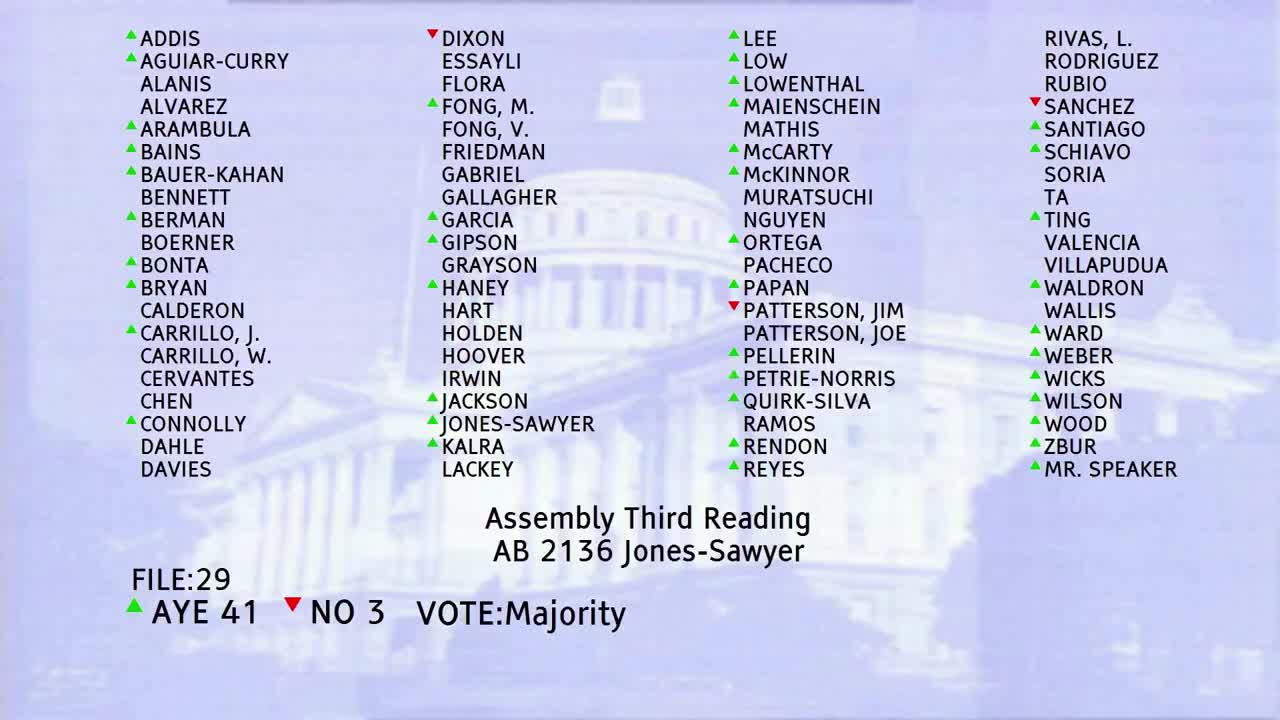 6MIN
Assembly Floor
 16MIN
Assembly Standing Committee on Judiciary
 16MIN
Assembly Standing Committee on Environmental Safety and Toxic Materials


Bill Co-Author(s):
