AB 278: High Schools: Dream Resource Center Grant Program.
- Session Year: 2023-2024
- House: Assembly
- Latest Version Date: 2023-10-08
Current Status:
Passed
(2023-10-08: Chaptered by Secretary of State - Chapter 424, Statutes of 2023.)
Introduced
In Committee
First Chamber
In Committee
Second Chamber
Enacted
Existing law authorizes the governing board of a school district to provide a comprehensive educational counseling program for all pupils enrolled in the school district. Existing law provides that educational counseling may include counseling in developing pupil knowledge of financial aid planning for postsecondary education, including, among others, financial aid programs and resources for foster and homeless youth.
This bill would establish the Dream Resource Center Grant Program for the purpose of providing pupils, including undocumented pupils, in grades 9 to 12, inclusive, with specified resources. The bill would require the State Department of Education, in administering the program, to review applications and award grants based off of a tiered point system that prioritizes applications for funding, as provided. The bill would authorize a school district, county office of education, or charter school, including those that have already established a Dream Resource Center at one or more schoolsites, to apply to the department to be eligible to receive a grant, as provided.
The bill would require a local educational agency that receives a grant under the program to use it for creating a Dream Resource Center or for supplementing, but not supplanting, an existing Dream Resource Center, as provided. The bill would require the department, on or before June 1, 2026, to submit a report to the appropriate policy committees of the Legislature detailing the successes, best practices, barriers or constraints, and outcomes of Dream Resource Centers funded with these grants.
The bill would condition the implementation of these provisions on an appropriation by the Legislature for these purposes in the annual Budget Act or other statute.
Existing law authorizes the governing board of a school district to provide a comprehensive educational counseling program for all pupils enrolled in the school district. Existing law provides that educational counseling may include counseling in developing pupil knowledge of financial aid planning for postsecondary education, including, among others, financial aid programs and resources for foster and homeless youth.
This bill would establish the Dream Resource Center Grant Program for the purpose of providing pupils, including undocumented pupils, in grades 9 to 12, inclusive, with specified resources. The bill would require the State Department of Education, in administering the program, to review applications and award grants based off of a tiered point system that prioritizes applications for funding, as provided. The bill would authorize a school district, county office of education, or charter school, including those that have already established a Dream Resource Center at one or more schoolsites, to apply to the department to be eligible to receive a grant, as provided.
The bill would require a school district local educational agency that receives a grant under the program to use it for creating a Dream Resource Center or for supplementing, but not supplanting, an existing Dream Resource Center, as provided. The bill would require the department, on or before June 1, 2026, to submit a report to the appropriate policy committees of the Legislature detailing the successes, best practices, barriers or constraints, and outcomes of Dream Resource Centers funded with these grants.
The bill would condition the implementation of these provisions on an appropriation by the Legislature for these purposes in the annual Budget Act or other statute.
Existing law authorizes the governing board of a school district to provide a comprehensive educational counseling program for all pupils enrolled in the school district. Existing law provides that educational counseling may include counseling in developing pupil knowledge of financial aid planning for postsecondary education, including, among others, financial aid programs and resources for foster and homeless youth.
This bill would establish the Dream Resource Center Grant Program for the purpose of providing pupils, including undocumented pupils, in grades 9 to 12, inclusive, with specified resources. The bill would require the State Department of Education, in administering the program, to review applications and award grants based off of a tiered point system that prioritizes applications for funding, as provided. The bill would authorize a school district, including those that have already established a Dream Resource Center at one or more schoolsites, to apply to the department to be eligible to receive a grant, as provided.
The bill would require a school district that receives a grant under the program to use it for creating a Dream Resource Center or for supplementing, but not supplanting, an existing Dream Resource Center, as provided. The bill would require the department, on or before June 1, 2026, to submit a report to the appropriate policy committees of the Legislature detailing the successes, best practices, barriers or constraints, and outcomes of Dream Resource Centers funded with these grants.
The bill would condition the implementation of these provisions on an appropriation by the Legislature for these purposes in the annual Budget Act or other statute.
Existing law authorizes the governing board of any school district to initiate and carry on any program, activity, or to otherwise act in any manner which is not in conflict with or inconsistent with, or preempted by, any law and which is not in conflict with the purposes for which school districts are established.Existing law encourages the California Community Colleges, the California State University, and the University of California to establish Dream Resource Centers, on each of their respective campuses, that are authorized to offer support services, as provided.This bill would declare the intent of the Legislature to enact subsequent legislation that would require all schools that enroll pupils in any of grades 9 to 12, inclusive, to have a Dream Resource Center.Existing law authorizes the governing board of any school district to initiate and carry on any program, activity, or to otherwise act in any manner which is not in conflict with or inconsistent with, or preempted by, any law and which is not in conflict with the purposes for which school districts are established.
Existing law encourages the California Community Colleges, the California State University, and the University of California to establish Dream Resource Centers, on each of their respective campuses, that are authorized to offer support services, as provided.
This bill would declare the intent of the Legislature to enact subsequent legislation that would require all schools that enroll pupils in any of grades 9 to 12, inclusive, to have a Dream Resource Center.
(a)The Dream Resource Center Grant Program is hereby established with the goal of creating Dream Resource Centers at schoolsites that serve pupils in grades 9 to 12, inclusive.
(b)The purpose of a Dream Resource Center is to provide pupils, including undocumented pupils, in grades 9 to 12, inclusive, with resources that include, but are not limited to, all of the following:
(1)Financial aid support.
(2)Social services support.
(3)State-funded immigration legal services.
(4)Academic opportunities.
(5)Parent and family workshops.
(c)For purposes of this article, local educational agency means a school district, county office of education, or charter school.
54681.(a)The department shall administer the Dream Resource Center Grant Program, which shall be a four-year grant program.
(b)(1)A local educational agency, including those that have already established a Dream Resource Center at one or more schoolsites, may apply for funds for one or more schoolsites within the local educational agency.
(2)An application shall demonstrate the need for a Dream Resource Center at one or more schoolsites within the local educational agency or the need for supplemental funding at one or more schoolsites within the local educational agency that has already established a Dream Resource Center.
54682.The department shall perform all of the following functions in the administration of the Dream Resource Center Grant Program:
(a)Review applications and award grants based off of a tiered point system that prioritizes applications for funding as follows:
(1)Local educational agencies that are applying for funds for multiple schoolsites shall be given additional points.
(2)Local educational agencies in underserved areas, including those in rural areas, shall be given additional points to ensure local educational agencies across the state are given fair opportunities for funding.
(3)Local educational agencies that serve a large number of English learners shall be given additional points.
(4)Local educational agencies that serve a large number of pupils who are eligible for free or reduced-price meals, as defined in Section 42238.01, shall be given additional points.
(5)Award no more than 5 percent of the total funding to supplementing the funding of existing Dream Resource Centers.
(b)Identify data to be collected by grant recipients.
(c)Identify how the department will collect data reported by grant recipients.
54683.A grant recipient shall use the grant for either of the following purposes:
(a)(1)To create a Dream Resource Center that provides pupils with the resources identified pursuant to subdivision (b) of Section 54680.
(2)Schoolsites may choose to have the Dream Resource Center solely supported by the schoolsite or can choose to have the Dream Resource Center be supported through memorandums of understanding between the schoolsite and community-based organizations or institutions of higher education.
(b)To supplement, but not supplant, funding for an existing Dream Resource Center that provides pupils with the resources identified pursuant to subdivision (b) of Section 54680.
54684.On or before June 1, 2026, the department shall submit a report to the appropriate policy committees of the Legislature detailing the successes, best practices, barriers or constraints, and outcomes of Dream Resource Centers funded with grants pursuant to this article. The report shall include the data collected pursuant to subdivision (b) of Section 54682.
54685.This article shall be implemented only upon an appropriation by the Legislature for its purposes in the annual Budget Act or other statute.
(a)The Dream Resource Center Grant Program is hereby established with the goal of creating Dream Resource Centers at schoolsites that serve pupils in grades 9 to 12, inclusive.
(b)The purpose of a Dream Resource Center is to provide pupils, including undocumented pupils, in grades 9 to 12, inclusive, with resources that include, but are not limited to, all of the following:
(1)Financial aid support.
(2)Social services support.
(3)State-funded immigration legal services.
(4)Academic opportunities.
(5)Parent and family workshops.
(c)For purposes of this article, local educational agency means a school district, county office of education, or charter school.
54681.(a)The department shall administer the Dream Resource Center Grant Program, which shall be a four-year grant program.
(b)(1)A school district, local educational agency, including those that have already established a Dream Resource Center at one or more schoolsites, may apply for funds for one or more schoolsites within the school district. local educational agency.
(2)An application shall demonstrate the need for a Dream Resource Center at one or more schoolsites within the school district local educational agency or the need for supplemental funding at one or more schoolsites within the school district local educational agency that has already established a Dream Resource Center.
54682.The department shall perform all of the following functions in the administration of the Dream Resource Center Grant Program:
(a)Review applications and award grants based off of a tiered point system that prioritizes applications for funding as follows:
(1)School districts with a large number of schoolsites in need shall be given points based off of demonstrated need, as determined by the department.(1)Local educational agencies that are applying for funds for multiple schoolsites shall be given additional points.
(2)School districts Local educational agencies in underserved areas, including those in rural areas, shall be given additional points to ensure school districts local educational agencies across the state are given fair opportunities for funding.
(3)Local educational agencies that serve a large number of English learners shall be given additional points.
(4)Local educational agencies that serve a large number of pupils who are eligible for free or reduced-price meals, as defined in Section 42238.01, shall be given additional points.
(3)(5)Award no more than 5 percent of the total funding to supplementing the funding of existing Dream Resource Centers.
(b)Identify data to be collected by grant recipients.
(c)Identify how the department will collect data reported by grant recipients.
54683.A grant recipient shall use the grant for either of the following purposes:
(a)(1)To create a Dream Resource Center that provides pupils with the resources identified pursuant to subdivision (b) of Section 54680.
(2)Schoolsites may choose to have the Dream Resource Center solely supported by the schoolsite or can choose to have the Dream Resource Center be supported through memorandums of understanding between the schoolsite and community-based organizations or institutions of higher education.
(b)To supplement, but not supplant, funding for an existing Dream Resource Center that provides pupils with the resources identified pursuant to subdivision (b) of Section 54680.
54684.On or before June 1, 2026, the department shall submit a report to the appropriate policy committees of the Legislature detailing the successes, best practices, barriers or constraints, and outcomes of Dream Resource Centers funded with grants pursuant to this article. The report shall include the data collected pursuant to subdivision (b) of Section 54682.
54685.This article shall be implemented only upon an appropriation by the Legislature for its purposes in the annual Budget Act or other statute.
(a)The Dream Resource Center Grant Program is hereby established with the goal of creating Dream Resource Centers at schoolsites that serve pupils in grades 9 to 12, inclusive.
(b)The purpose of a Dream Resource Center is to provide pupils, including undocumented pupils, in grades 9 to 12, inclusive, with resources that include, but are not limited to, all of the following:
(1)Financial aid support.
(2)Social services support.
(3)State-funded immigration legal services.
(4)Academic opportunities.
(5)Parent and family workshops.
54681.(a)The department shall administer the Dream Resource Center Grant Program, which shall be a four-year grant program.
(b)(1)A school district, including those that have already established a Dream Resource Center at one or more schoolsites, may apply for funds for one or more schoolsites within the school district.
(2)An application shall demonstrate the need for a Dream Resource Center at one or more schoolsites within the school district or the need for supplemental funding at one or more schoolsites within the school district that has already established a Dream Resource Center.
54682.The department shall perform all of the following functions in the administration of the Dream Resource Center Grant Program:
(a)Review applications and award grants based off of a tiered point system that prioritizes applications for funding as follows:
(1)School districts with a large number of schoolsites in need shall be given points based off of demonstrated need, as determined by the department.
(2)School districts in underserved areas, including those in rural areas, shall be given additional points to ensure school districts across the state are given fair opportunities for funding.
(3)Award no more than 5 percent of the total funding to supplementing the funding of existing Dream Resource Centers.
(b)Identify data to be collected by grant recipients.
(c)Identify how the department will collect data reported by grant recipients.
54683.A grant recipient shall use the grant for either of the following purposes:
(a)(1)To create a Dream Resource Center that provides pupils with the resources identified pursuant to subdivision (b) of Section 54680.
(2)Schoolsites may choose to have the Dream Resource Center solely supported by the schoolsite or can choose to have the Dream Resource Center be supported through memorandums of understanding between the schoolsite and community-based organizations or institutions of higher education.
(b)To supplement, but not supplant, funding for an existing Dream Resource Center that provides pupils with the resources identified pursuant to subdivision (b) of Section 54680.
54684.On or before June 1, 2026, the department shall submit a report to the appropriate policy committees of the Legislature detailing the successes, best practices, barriers or constraints, and outcomes of Dream Resource Centers funded with grants pursuant to this article. The report shall include the data collected pursuant to subdivision (b) of Section 54682.
54685.This article shall be implemented only upon an appropriation by the Legislature for its purposes in the annual Budget Act or other statute.
SECTION 1.It is the intent of the Legislature to enact subsequent legislation that would require all schools that enroll pupils in any of grades 9 to 12, inclusive, to have a Dream Resource Center. REVISIONS: HeadingLine 2.It is the intent of the Legislature to enact subsequent legislation that would require all schools that enroll pupils in any of grades 9 to 12, inclusive, to have a Dream Resource Center.
|
Date
|
Status
|
|---|---|
| Oct 8, 2023 | Chaptered by Secretary of State - Chapter 424, Statutes of 2023. |
| Oct 8, 2023 | Approved by the Governor. |
| Sep 15, 2023 | Enrolled and presented to the Governor at 4 p.m. |
| Sep 11, 2023 | Senate amendments concurred in. To Engrossing and Enrolling. (Ayes 76. Noes 0. Page 3201.). |
| Sep 7, 2023 | In Assembly. Concurrence in Senate amendments pending. May be considered on or after September 9 pursuant to Assembly Rule 77. |
| Sep 7, 2023 | Read third time. Passed. Ordered to the Assembly. (Ayes 37. Noes 2. Page 2485.). |
| Sep 5, 2023 | Read second time. Ordered to third reading. |
| Sep 1, 2023 | Read second time and amended. Ordered returned to second reading. |
| Sep 1, 2023 | From committee: Amend, and do pass as amended. (Ayes 5. Noes 2.) (September 1). |
| Jun 26, 2023 | In committee: Referred to APPR. suspense file. |
| Jun 14, 2023 | From committee: Do pass and re-refer to Com. on APPR. (Ayes 7. Noes 0.) (June 14). Re-referred to Com. on APPR. |
| May 31, 2023 | Referred to Com. on ED. |
| May 23, 2023 | In Senate. Read first time. To Com. on RLS. for assignment. |
| May 22, 2023 | Read third time. Passed. Ordered to the Senate. (Ayes 75. Noes 0. Page 1709.) |
| May 18, 2023 | Coauthors revised. |
| May 18, 2023 | Read second time. Ordered to third reading. |
| May 18, 2023 | From committee: Do pass. (Ayes 15. Noes 0.) (May 18). |
| Apr 19, 2023 | In committee: Set, first hearing. Referred to APPR. suspense file. |
| Mar 30, 2023 | From committee: Do pass and re-refer to Com. on APPR. with recommendation: To Consent Calendar. (Ayes 6. Noes 0.) (March 29). Re-referred to Com. on APPR. |
| Mar 30, 2023 | Coauthors revised. |
| Mar 20, 2023 | Re-referred to Com. on ED. |
| Mar 16, 2023 | From committee chair, with author's amendments: Amend, and re-refer to Com. on ED. Read second time and amended. |
| Mar 16, 2023 | Referred to Com. on ED. |
| Jan 24, 2023 | From printer. May be heard in committee February 23. |
| Jan 23, 2023 | Read first time. To print. |
|
Date
|
Description
|
Location
|
Votes
|
|
|---|---|---|---|---|
| Sep 11, 2023 | AB 278 Reyes Concurrence in Senate Amendments | Assembly Floor |
Passed |
|
| Sep 7, 2023 | Assembly 3rd Reading AB278 Reyes et al. By Limón | Senate Floor |
Passed |
|
| Sep 1, 2023 | Do pass as amended | Senate Standing Committee on Appropriations |
Passed |
|
| Jun 26, 2023 | Placed on suspense file | Senate Standing Committee on Appropriations |
Passed |
|
| Jun 14, 2023 | Do pass, but first be re-referred to the Committee on [Appropriations] | Senate Standing Committee on Education |
Passed |
|
| May 22, 2023 | AB 278 Reyes Assembly Third Reading | Assembly Floor |
Passed |
|
| May 18, 2023 | Do pass. | Assembly Standing Committee on Appropriations |
Passed |
|
| Mar 29, 2023 | Do pass and be re-referred to the Committee on [Appropriations] with recommendation: To Consent Calendar | Assembly Standing Committee on Education |
Passed |
This list shows positions taken on this bill by organizations on the date displayed, which is linked to the original source.
Positions by individuals are not included.
|
Organization
|
Position
|
Date
|
|---|---|---|
| Ahri Center | ** Support | |
| Alliance for A Better Community | ** Support | |
| Association Of California School Administrators | ** Support | |
| California Charter Schools Association | ** Support | |
| California Immigrant Policy Center | ** Support | |
| California Student Aid Commission | ** Support | |
| California Undocumented Higher Education Coalition | ** Support | |
| Central American Resource Center- Carecen- of California | ** Support | |
| Coalition for Humane Immigrant Rights | ** Support | |
| First Gen Empower | ** Support | |
| Immigrants Rising | ** Support | |
| Los Angeles County Office Of Education | ** Support | |
| National Association Of Social Workers, California Chapter | ** Support | |
| NextGen California | ** Support | |
| Unite-LA | ** Support |
CONCURRENCE IN SENATE AMENDMENTS
CSA1 Bill Id:AB 278
Author:(Reyes)
As Amended Ver:September 1, 2023
Majority vote
SUMMARY
Establishes the Dream Resource Center Grant program, administered by the California Department of Education (CDE), for purposes of creating Dream Resource Centers at high schools.
Senate Amendments
- Define eligible entities as local educational agencies (LEAs), which include school districts, county offices of education (COEs), or charter schools.
- Requires the CDE to provide additional points to LEA applications with the following:
- Applying for funding for multiple schoolsites;
- Serving large numbers of English learners; and
- Serving large numbers of students eligible for free or reduced-price meals, as defined.
COMMENTS
According to the Author
"AB 278 will establish the Dream Resource Center grant program to create and support Dream Centers across California. Dream Centers provide essential resources such as financial aid assistance and access to legal services to help students, especially those coming from undocumented and immigrant backgrounds, reach their educational and professional goals. Dream Centers have had notable success in our colleges and universities following previous legislation requiring liaisons to be present on campuses. Dream Centers have also been established in a few high schools in Los Angeles Unified School District. In our high schools, Dream Centers have served as a lifeline for students and their families. California is home to many first generation and immigrant students, many of whom have to navigate a complex immigration and education system without proper guidance or support. Students have to stay up to date on both federal and state policies in order to maneuver through our immigration process. For example, recent changes to the Deferred Action for Childhood Arrivals (DACA) Program have led to a new generation of students without DACA protections or work authorizations. This is too much for students to handle on their own. California must act to provide students with the opportunity to succeed and build upon the success of existing Dream Centers. By giving students the tools and resources needed to succeed statewide, many students will reach new higher educational and professional opportunities. AB 278 will provide access to resources, stability and hope to our students."
Arguments in Support
The Coalition for Humane Immigrant Rights (CHIRLA), sponsor of the measure states, "Dream Resource Centers on college campuses have a long track record of service to undocumented students. In 2012, in response to data that illustrated the need
for more support for its undocumented students, the University of California, Berkeley became the first in the nation to create an undocumented student center on its campus. Other UCs, CSUs and California Community Colleges soon established their own Dream Resource Centers on their respective campuses and as of 2019, 63 Dream Resource Centers operate in various California institutions of higher learning campuses. The positive impacts of DRCs on campus were further solidified when State Legislature enacted AB 1645 (Rubio) in 2019, encouraging the creation of DRCs on college campuses. AB 278 builds upon the success and effectiveness of Dream Resource Centers by allowing undocumented and immigrant students to have access to the beneficial services Dream Resource Centers provide sooner in their academic journey.
Students should not have to wait until stepping foot on a college campus to get information from trusted sources about their education, financial aid and career options. AB 278 would provide access to needed resources for districts and schools throughout the state to create these spaces on their campuses. Investing in high school Dream Resource Centers would mean undocumented students would have access to support services earlier in their academic journey, ensuring they have all the information they need to successfully navigate a path after high school."
Arguments in Opposition
None on file
FISCAL COMMENTS
According to the Senate Appropriations Committee:
- While this bill's provisions would be contingent upon an appropriation, it could lead to significant Proposition 98 General Fund cost pressure for the state to provide funding for the grant program. Assuming an average grant amount of $75,000 for 50 school sites, the cost would be $3.75 million each year or a total of $15 million for the four-year period. This amount could be higher or lower depending on the grant size and the number of recipients.
- The CDE estimates General Fund costs of about $316,000 each year over four years to administer the grant program, including the development of the request for applications, reviewing applications, selecting grantees, providing technical assistance and program monitoring, and completing the program report.
VOTES:
ASM EDUCATION: 6-0-1
YES: Muratsuchi, Megan Dahle, Juan Carrillo, Hoover, Lee, Quirk-Silva
ABS, ABST OR NV: McCarty
ASM APPROPRIATIONS: 15-0-1
YES: Holden, Megan Dahle, Bryan, Calderon, Wendy Carrillo, Dixon, Mike Fong, Hart, Lowenthal, Mathis, Papan, Pellerin, Sanchez, Weber, Ortega
ABS, ABST OR NV: Robert Rivas
ASSEMBLY FLOOR: 75-0-5
YES: Addis, Aguiar-Curry, Alanis, Alvarez, Arambula, Bains, Bauer-Kahan, Bennett, Berman, Boerner, Bonta, Bryan, Calderon, Juan Carrillo, Wendy Carrillo, Cervantes, Connolly, Megan Dahle, Davies, Dixon, Flora, Mike Fong, Vince Fong, Friedman, Gabriel, Gallagher, Garcia, Gipson, Grayson, Haney, Hart, Holden, Hoover, Irwin, Jackson, Jones-Sawyer, Kalra, Lee, Low, Lowenthal, Maienschein, Mathis, McCarty, McKinnor, Muratsuchi, Stephanie Nguyen, Ortega, Pacheco, Papan, Jim Patterson, Joe Patterson, Pellerin, Petrie-Norris, Ramos, Reyes, Luz Rivas, Robert Rivas, Rodriguez, Blanca Rubio, Sanchez, Santiago, Schiavo, Soria, Ta, Ting, Valencia, Villapudua, Waldron, Wallis, Ward, Weber, Wilson, Wood, Zbur, Rendon
ABS, ABST OR NV: Chen, Essayli, Lackey, Quirk-Silva, Wicks
SENATE FLOOR: 37-2-1
YES: Allen, Alvarado-Gil, Archuleta, Ashby, Atkins, Becker, Blakespear, Bradford, Caballero, Cortese, Dahle, Dodd, Durazo, Eggman, Glazer, Gonzalez, Grove, Hurtado, Laird, Limón, McGuire, Menjivar, Min, Newman, Niello, Ochoa Bogh, Padilla, Portantino, Roth, Rubio, Skinner, Smallwood-Cuevas, Stern, Umberg, Wahab, Wiener, Wilk
NO: Jones, Seyarto
ABS, ABST OR NV: Nguyen
UPDATED
VERSION: September 1, 2023
CONSULTANT: Debbie Look / ED. / (916) 319-2087 FN: 0001863
SENATE RULES COMMITTEE Office of Senate Floor Analyses (916) 651-1520 Fax: (916) 327-4478 | AB 278 |
THIRD READING
Bill No: AB 278
Author: Reyes (D), et al.
Amended: 9/1/23 in Senate
Vote: 21
SENATE EDUCATION COMMITTEE: 7-0, 6/14/23
AYES: Newman, Ochoa Bogh, Cortese, Glazer, McGuire, Smallwood-Cuevas, Wilk
SENATE APPROPRIATIONS COMMITTEE: 5-2, 9/1/23
AYES: Portantino, Ashby, Bradford, Wahab, Wiener
NOES: Jones, Seyarto
ASSEMBLY FLOOR: 75-0, 5/22/23 - See last page for vote
SUBJECT: High Schools: Dream Resource Center Grant Program
SOURCE: Coalition for Humane Immigrant Rights
DIGEST:
This bill establishes the Dream Resource Center Grant program, administered by the California Department of Education (CDE), for purposes of creating Dream Resource Centers at high schools.
ANALYSIS:
Existing law:
- Encourages the California Community Colleges (CCC), the California State University (CSU), and the University of California (UC) to establish Dream Resource Centers on each of their respective campuses. (Education Code (EC) § 66021.8)
- Requires that the CCC and the CSU, and requests that the UC, designate a Dreamer Resource Liaison on each of their respective campuses beginning with the 2020-21 academic year. (EC § 66021.8)
- Exempts, pursuant to AB 540 (Firebaugh, Chapter 814,Statutes of 2001), specified California nonresidents from paying nonresident tuition at UC, CSU, and CCC, also known as the AB 540 nonresident tuition waiver, if they meet all of the following:
- Attended or attained credits at a California high school, an adult school, a CCC campus, or a combination of these entities, for the equivalent of three or more years; or completed three or more years of full-time high school coursework, and a total of three or more years of attendance in California elementary schools, California secondary schools, or a combination of such elementary and secondary schools;
- Graduated from a California high school or attained an equivalent degree; attained a CCC associate degree; or fulfilled the minimum transfer requirements from a CCC campus to a UC or CSU campus;
- Registered or attended an accredited California higher education institution beginning after fall of the 2001-02 academic year; and,
- If a person without lawful immigration status has filed an affidavit stating that the student has filed an application to legalize his or her immigration status or will file such an application as soon as he or she is eligible to so do. (EC 68130.5.)
- Establishes the California DREAM Act (SB 131 (Cedillo, Chapter 604, Statutes of 2011)) to provide state financial aid, including the Cal Grant Program and the CCC California College Promise Grant, and institutional financial aid to students who qualify for the aforementioned exemption from non-resident tuition. (EC § 69508.5)
- Establishes the California DREAM Loan Program intended to provide low-interest loans to DREAM Act students who are accessing the Cal Grant Program and attending UC and CSU. These students are not eligible for federal student loans. Requires the state, the UC, and the CSU to share in the costs of launching the program. (EC § 70030-70039)
- Requires the governing boards of a school district and charter school to ensure a student receiving information completion and submission of the Free Application For Federal Student Aid or the California Dream Act application before the student enters grade 12. (EC § 51225.7)
This bill:
- Establishes the Dream Resource Center grant program, to be administered by the CDE for a period of four years, at high school sites to provide students, including undocumented students, with resources that include, but are not limited to, all of the following:
- Financial aid support.
- Social services support.
- State-funded immigration legal services.
- Academic opportunities.
- Parent and family workshops.
- Authorizes a local educational agency, including those that have already established a Dream Resource Center at school sites, to apply for funds for one or more school sites within the local educational agency and requires an application to demonstrate the need for a Dream Resource Center or the need for supplemental funding for school sites that have already established a Dream Resource Center.
- Requires that CDE perform all of the following functions in the administration of the Dream Resource Center Grant program:
- Review applications and award grants based off of a tiered point system that prioritizes applications for funding as follows:
- Local educational agencies that are applying for funds for multiple school sites are to receive additional points.
- Local educational agencies in underserved areas, including those in rural areas, be given additional points to ensure local education agencies across the state are given fair opportunities for funding.
- Local educational agencies that serve a large number of English learners are to receive additional points.
- Local educational agencies that serve a large number of pupils who are eligible for free or reduced-price meals are to receive additional points.
- Award no more than 5 percent of the total funding to supplementing the funding of existing Dream Resource Centers.
- Identify data to be collected by grant recipients.
- Identify how to collect data that is to be reported by grant recipients.
- Review applications and award grants based off of a tiered point system that prioritizes applications for funding as follows:
- Requires a grant recipient to use the grant for either of the following purposes:
- To create a Dream Resource Center that provides students with the specified resources. Local educational agencies may choose to have the Dream Resource Center solely supported by the school site or can choose to be supported through memorandums of understanding between the school site and community based organizations or institutions of higher education.
- To supplement, but not supplant, funding for an existing Dream Resource Center that provides students with the specified resources.
- Requires CDE, by June 1, 2026, to submit a report to the appropriate policy committees of the Legislature detailing the success, best practices, barriers or constraints, and outcomes of Dream Resource Centers funded with grants as specified in this bill and requires that the report include data required in this bill.
- Defines for purposes of this bill, “local educational agency” to mean a school district, county office of education, or charter school.
- Makes this bill’s provisions contingent upon an appropriation by the legislature for its purposes in the annual budget Act or other statue.
Comments
- Need for the bill. According to the author, “AB 278 will establish the Dream Resource Center grant program to create and support Dream Centers across California. Dream Centers provide essential resources such as financial aid assistance and access to legal services to help students, especially those coming from undocumented and immigrant backgrounds, reach their educational and professional goals. Dream Centers have had notable success in our colleges and universities following previous legislation requiring liaisons to be present on campuses. Dream Centers have also been established in a few high schools in Los Angeles Unified School District. In our high schools, Dream Centers have served as a lifeline for students and their families. California is home to many first generation and immigrant students, many of whom have to navigate a complex immigration and education system without proper guidance or support. Students have to stay up to date on both federal and state policies in order to maneuver through our immigration process. For example, recent changes to the Deferred Action for Childhood Arrivals (DACA) Program have led to a new generation of students without DACA protections or work authorizations. This is too much for students to handle on their own. California must act to provide students with the opportunity to succeed and build upon the success of existing Dream Centers. By giving students the tools and resources needed to succeed statewide, many students will reach new higher educational and professional opportunities. AB 278 will provide access to resources, stability and hope to our students.”
- Eligible schools. This bill creates a competitive grant process whereby local educational agencies including charter schools, may apply on behalf of one or multiple school sites to support an existing center or establish one. The grant selection process prioritizes local educational agencies in underserved areas, including rural locations and local educational agencies with a large number of sites of English learners. CDE is ultimately responsible for determining grant awardees.
- Many public higher education institutions have centers. Each UC, a majority of campuses at CSU, and some community colleges have designated centers that support undocumented students. Statute encourages the establishment of these centers and requires that public higher education institutions designate an individual on campus who is knowledgeable in financial aid and other support services to assist students. Services on each campus vary and can range from having a designated center that is independent, sharing a space, and/or having a point of contact. This bill attempts to establish similar support and resources at high school sites.
- State resources for undocumented students. State law, established by AB 540 and expanded upon by other legislation, allows non-resident students who meet certain qualifications to pay in-state tuition. These students may include undocumented students, students who are U.S. citizens but who are not California residents, and dependent students whose parents are not California residents. The California Dream Act allows AB 540 students to apply for and receive private scholarships funded through public universities, state-administered financial aid, University grants, community college fee waivers, and Cal Grants. Current law additionally establishes a loan program, known as the Dream loan, for those students attending a participating UC or CSU. Students apply for these awards using the California Dream application rather than the general FAFSA form. Lastly, prior budget actions in 2019 and 2020 provided ongoing funding to support immigrant legal services at CSU and community colleges.
- Deferred Action for Childhood Arrivals (DACA) program. DACA is a federal process that defers removal action of an individual for a specified number of years. It allows those who entered the country as children eligible to have work authorization. Some students with DACA status participate in state work-study programs in college. A person can be eligible for both the exemption established by AB 540 and DACA status or just either one. The state and federal programs are independent of each other. The program has recently (October 2022) stalled, a court order prevents the Department of Homeland Security from approving initial DACA requests, but can continue processing DACA renewals. Ensuring that students receive accurate and up to date information could be a critical component for their academic success and transition into career or college.
FISCAL EFFECT: Appropriation: No Fiscal Com.: Yes Local: No
According to the Senate Appropriations Committee:
- While this bill’s provisions would be contingent upon an appropriation, it could lead to significant Proposition 98 General Fund cost pressure for the state to provide funding for the grant program. Assuming an average grant amount of $75,000 for 50 school sites, the cost would be $3.75 million each year or a total of $15 million for the four-year period. This amount could be higher or lower depending on the grant size and the number of recipients.
- The CDE estimates General Fund costs of about $316,000 each year over four years to administer the grant program, including the development of the request for applications, reviewing applications, selecting grantees, providing technical assistance and program monitoring, and completing the program report.
SUPPORT: (Verified 9/1/23)
Coalition for Humane Immigrant Rights (source)
Ahri Center
Association of California School Administrators
California Charter Schools Association
California Immigrant Policy Center
California Student Aid Commission
Immigrants Rising
Los Angeles County Office of Education
National Association of Social Workers, California Chapter
NextGen California
Unite-LA
OPPOSITION: (Verified 9/1/23)
None received
ASSEMBLY FLOOR: 75-0, 5/22/23
AYES: Addis, Aguiar-Curry, Alanis, Alvarez, Arambula, Bains, Bauer-Kahan, Bennett, Berman, Boerner, Bonta, Bryan, Calderon, Juan Carrillo, Wendy Carrillo, Cervantes, Connolly, Megan Dahle, Davies, Dixon, Flora, Mike Fong, Vince Fong, Friedman, Gabriel, Gallagher, Garcia, Gipson, Grayson, Haney, Hart, Holden, Hoover, Irwin, Jackson, Jones-Sawyer, Kalra, Lee, Low, Lowenthal, Maienschein, Mathis, McCarty, McKinnor, Muratsuchi, Stephanie Nguyen, Ortega, Pacheco, Papan, Jim Patterson, Joe Patterson, Pellerin, Petrie-Norris, Ramos, Reyes, Luz Rivas, Robert Rivas, Rodriguez, Blanca Rubio, Sanchez, Santiago, Schiavo, Soria, Ta, Ting, Valencia, Villapudua, Waldron, Wallis, Ward, Weber, Wilson, Wood, Zbur, Rendon
NO VOTE RECORDED: Chen, Essayli, Lackey, Quirk-Silva, Wicks
Prepared by: Olgalilia Ramirez / ED. / (916) 651-4105
9/5/23 9:20:14
**** END ****
SENATE COMMITTEE ON
Senator Anthony Portantino, Chair
2023 - 2024 Regular Session
AB 278 (Reyes) - High Schools: Dream Resource Center Grant Program
Version: | Policy Vote: |
Urgency: | Mandate: |
Hearing Date: | Consultant: |
Bill Summary:
This bill establishes the Dream Resource Center Grant program, administered by the California Department of Education (CDE), for purposes of creating Dream Resource Centers at high schools.
*********** ANALYSIS ADDENDUM – SUSPENSE FILE ***********
The following information is revised to reflect amendments
adopted by the committee on September 1, 2023
Fiscal Impact:
- While the bill’s provisions would be contingent upon an appropriation, it could lead to significant Proposition 98 General Fund cost pressure for the state to provide funding for the grant program. Assuming an average grant amount of $75,000 for 50 school sites, the cost would be $3.75 million each year or a total of $15 million for the four-year period. This amount could be higher or lower depending on the grant size and the number of recipients.
- The CDE estimates General Fund costs of about $316,000 each year over four years to administer the grant program, including the development of the request for applications, reviewing applications, selecting grantees, providing technical assistance and program monitoring, and completing the program report.
Author Amendments:
Allow charter schools to be eligible to participate in the grant program, as specified.
-- END --
SENATE COMMITTEE ON
Senator Anthony Portantino, Chair
2023 - 2024 Regular Session
AB 278 (Reyes) - High Schools: Dream Resource Center Grant Program
Version: | Policy Vote: |
Urgency: | Mandate: |
Hearing Date: | Consultant: |
Bill Summary:
This bill establishes the Dream Resource Center Grant program, administered by the California Department of Education (CDE), for purposes of creating Dream Resource Centers at high schools.
Fiscal Impact:
- While the bill’s provisions would be contingent upon an appropriation, it could lead to significant Proposition 98 General Fund cost pressure for the state to provide funding for the grant program. Assuming an average grant amount of $75,000 for 50 school sites, the cost would be $3.75 million each year or a total of $15 million for the four-year period. This amount could be higher or lower depending on the grant size and the number of recipients.
- The CDE estimates General Fund costs of about $316,000 each year over four years to administer the grant program, including the development of the request for applications, reviewing applications, selecting grantees, providing technical assistance and program monitoring, and completing the program report.
Background:
Existing law encourages the California Community Colleges (CCC), the California State University (CSU), and the University of California (UC) to establish Dream Resource Centers on each of their respective campuses.
Existing law requires that the CCC and the CSU, and requests that the UC, designate a Dreamer Resource Liaison on each of their respective campuses beginning with the 2020-21 academic year.
Existing law allows non-resident students who meet certain qualifications to pay in-state tuition. These students include undocumented students, students who are US citizens but who are not CA residents, and dependent students whose parents are not California residents. The California Dream Act, established by SB 131 (Cedillo, Chapter 604, Statutes of 2011) allows AB 540 students to apply for and receive private scholarships funded through public universities, state-administered financial aid, University grants, community college fee waivers, and Cal Grants. Existing law also establishes a loan program, known as the Dream loan, for those students attending a participating UC or CSU. Students apply for these awards using the California Dream application rather than the general FAFSA form.
Proposed Law:
This bill establishes the Dream Resource Center grant program, to be administered by the CDE for a period of four years, at high school sites to provide students, including undocumented students, with resources that include, but are not limited to, all of the following: financial aid support, social services support; state-funded immigration legal services, academic opportunities, and parent and family workshops.
This bill authorizes a school district, including those that have already established a Dream Resource Center at school sites, to apply for funds for one or more school sites within the school district and requires an application demonstrate the need for a Dream Resource Center or the need for supplemental funding for school sites that have already established a Dream Resource Center.
This bill requires that CDE perform all of the following functions in the administration of the Dream Resource Center Grant program: review applications and award grants based off of a tiered point system that prioritizes applications for funding, as specified; identify data to be collected by grant recipients; and identify how collect data is to be reported by grant recipients.
This bill requires a grant recipient to use the grant for either of the following purposes: to create a Dream Resource Center that provides students with the specified resources. School sites may choose to have the Dream Resource Center solely supported by the school site or can choose to be supported through memorandums of understanding between the school site and community based organizations or institutions of higher education; and to supplement, but not supplant, funding for an existing Dream Resource Center that provides students with the specified resources.
This bill requires CDE, by June 1, 2026, to submit a report to the appropriate policy committees of the Legislature detailing the success, best practices, barriers or constraints, and outcomes of Dream Resource Centers funded with grants as specified in the bill.
This bill makes the bill’s provisions contingent upon an appropriation by the legislature for its purposes in the annual budget Act or other statue.
Related Legislation:
AB 1645 (Blanca Rubio and Reyes, Chapter 788, Statutes of 2019) requires the CCC and CSU, and requests the UC, to designate a Dreamer Resource Liaison who is knowledgeable in financial aid and other support services to assist students who qualify for the exemption from paying nonresident tuition established by AB 540 (Firebaugh, Chapter 814, Statutes of 2001). It also encourages the establishment of Dream Resource Centers on each campus, as specified.
Staff Comments:
This bill creates a competitive grant process whereby school districts may apply on behalf of one or multiple school sites to support an existing center or establish one. The grant selection process prioritizes school districts in underserved areas, including rural locations and school districts with a large number of sites that can demonstrate need. CDE is ultimately responsible for determining grant awardees. Assuming an average grant amount of $75,000 for 50 school sites, this bill could result in Proposition 98 General Fund cost pressure of $3.75 million each year or a total of $15 million for the four-year period. This amount could be higher or lower depending on the grant size and the number of recipients.
-- END --
SENATE COMMITTEE ON EDUCATION
Senator Josh Newman, Chair
2023 - 2024 Regular
Bill No: AB 278 Hearing Date: June 14, 2023
Author: | |||
Version: | March 16, 2023 | ||
Urgency: | No | Fiscal: | Yes |
Consultant: | Olgalilia Ramirez | ||
Subject: High Schools: Dream Resource Center Grant Program.
SUMMARY
This bill establishes the Dream Resource Center Grant program, administered by the California Department of Education (CDE), for purposes of creating Dream Resource Centers at schoolsites that service high school students.
BACKGROUND
Existing law:
- Encourages the California Community Colleges (CCC), the California State University (CSU), and the University of California (UC) to establish Dream Resource Centers on each of their respective campuses. (Education Code (EC) § 66021.8)
- Requires that the CCC and the CSU, and requests that the UC, designate a Dreamer Resource Liaison on each of their respective campuses beginning with the 2020-21 academic year. (EC § 66021.8)
- Exempts specified California nonresidents from paying nonresident tuition at UC, CSU, and CCC, also known as the AB 540 nonresident tuition waiver, if they meet all of the following:
- Attended or attained credits at a California high school, an adult school, a CCC campus, or a combination of these entities, for the equivalent of three or more years; or completed three or more years of full-time high school coursework, and a total of three or more years of attendance in California elementary schools, California secondary schools, or a combination of such elementary and secondary schools;
- Graduated from a California high school or attained an equivalent degree; attained a CCC associate degree; or fulfilled the minimum transfer requirements from a CCC campus to a UC or CSU campus;
- Registered or attended an accredited California higher education institution beginning after fall of the 2001-02 academic year; and,
- If a person without lawful immigration status has filed an affidavit stating that the student has filed an application to legalize his or her immigration status or will file such an application as soon as he or she is eligible to so do. (EC 68130.5.)
- Establishes the California DREAM Act to provide state financial aid, including the Cal Grant Program and the CCC California College Promise Grant, and institutional financial aid to students who qualify for the aforementioned exemption from non-resident tuition. (EC § 69508.5)
- Establishes the California DREAM Loan Program intended to provide low-interest loans to DREAM Act students who are accessing the Cal Grant Program and attending UC and CSU. These students are not eligible for federal student loans. Requires the state, the UC, and the CSU to share in the costs of launching the program. (EC § 70030-70039)
- Requires the governing boards of a school district and charter school to ensure a student receiving information completion and submission of the Free Application For Federal Student Aid or the California Dream Act application before the student enters grade 12. (EC § 51225.7)
ANALYSIS
This bill:
- Establishes the Dream Resource Center grant program, to be administered by the CDE for a period of four years, at high school sites to provide students, including undocumented students, with resources that include, but are not limited to, all of the following:
- Financial aid support.
- Social services support.
- State-funded immigration legal services.
- Academic opportunities.
- Parent and family workshops.
- Authorizes a school district, including those that have already established a Dream Resource Center at school sites, to apply for funds for one or more school sites within the school district and requires an application demonstrate the need for a Dream Resource Center or the need for supplemental funding for school sites that have already established a Dream Resource Center.
- Requires that CDE perform all of the following functions in the administration of the Dream Resource Center Grant program:
- Review applications and award grants based off of a tiered point system
that prioritizes applications for funding as follows:
- School districts with a large number of school sites in need be
given points based off of demonstrated need, as determined by CDE.
- School districts in underserved areas, including those in rural
areas, be given additional points to ensure school districts across the state are given fair opportunities for funding.
- Award no more than 5 percent of the total funding to supplementing
the funding of existing Dream Resource Centers.
- Identify data to be collected by grant recipients.
- Identify how collect data is to be reported by grant recipients.
- Requires a grant recipient to use the grant for either of the following purposes:
- To create a Dream Resource Center that provides students with the
specified resources. School sites may choose to have the Dream Resource Center solely supported by the school site or can choose to be supported through memorandums of understanding between the school site and community based organizations or institutions of higher education.
- To supplement, but not supplant, funding for an existing Dream Resource Center that provides students with the specified resources.
- Requires CDE, by June 1, 2026, to submit a report to the appropriate policy committees of the Legislature detailing the success, best practices, barriers or constraints, and outcomes of Dream Resource Centers funded with grants as specified in the bill and requires that the report include data required in the bill.
- Makes the bill’s provisions contingent upon an appropriation by the legislature for its purposes in the annual budget Act or other statue.
STAFF COMMENTS
- Need for the bill. According to the author, “AB 278 will establish the Dream Resource Center grant program to create and support Dream Centers across California. Dream Centers provide essential resources such as financial aid assistance and access to legal services to help students, especially those coming from undocumented and immigrant backgrounds, reach their educational and professional goals. Dream Centers have had notable success in our colleges and universities following previous legislation requiring liaisons to be present on campuses. Dream Centers have also been established in a few high schools in Los Angeles Unified School District. In our high schools, Dream Centers have served as a lifeline for students and their families. California is home to many first generation and immigrant students, many of whom have to navigate a complex immigration and education system without proper guidance or support. Students have to stay up to date on both federal and state policies in order to maneuver through our immigration process. For example, recent changes to the Deferred Action for Childhood Arrivals (DACA) Program have led to a new generation of students without DACA protections or work authorizations. This is too much for students to handle on their own. California must act to provide students with the opportunity to succeed and build upon the success of existing Dream Centers. By giving students the tools and resources needed to succeed statewide, many students will reach new higher educational and professional opportunities. AB 278 will provide access to resources, stability and hope to our students.”
- Eligible schools. This bill creates a competitive grant process whereby school districts may apply on behalf of one or multiple school sites to support an existing center or establish one. The grant selection process prioritizes school districts in underserved areas, including rural locations and school districts with a large number of sites that can demonstrate need. CDE is ultimately responsible for determining grant awardees. Because the applicant pool is limited to school districts, charter schools are not considered eligible entities under this measure. According to the Charter School Association, charter schools serve 12 percent of California’s K–12 public school population and equivalent amounts of undocumented students and English learners as traditional public schools. The author may wish to consider making charter schools eligible applicants for the program.
- Many public higher education institutions have centers. Each UC, a majority of campuses at CSU, and some community colleges have designated centers that support undocumented students. Statute encourages the establishment of these centers and requires that public higher education institutions designate an individual on campus who is knowledgeable in financial aid and other support services to assist students. Services on each campus vary and can range from having a designated center that is independent, sharing a space, and/or having a point of contact. This bill attempts to establish similar support and resources at high school sites.
- State resources for undocumented students. State law, established by AB 540 and expanded upon by other legislation, allows non-resident students who meet certain qualifications to pay in-state tuition. These students may include undocumented students, students who are US citizens but who are not CA residents, and dependent students whose parents are not CA residents. The California Dream Act, established by SB 131 (Cedillo, Chapter 604, Statutes of 2011) allows AB 540 students to apply for and receive private scholarships funded through public universities, state-administered financial aid, University grants, community college fee waivers, and Cal Grants. Current law additionally establishes a loan program, known as the Dream loan, for those students attending a participating UC or CSU. Students apply for these awards using the California Dream application rather than the general FAFSA form. Lastly, prior budget actions in 2019 and 2020 provided ongoing funding to support immigrant legal services at CSU and community colleges.
- Deferred Action for Childhood Arrivals (DACA) program. DACA is a federal process that defers removal action of an individual for a specified number of years. It allows those who entered the country as children eligible to have work authorization. Some students with DACA status participate in state work-study programs in college. A person can be eligible for both the exemption established by AB 540 and DACA status or just either one. The state and federal programs are independent of each other. The program has recently (October 2022) stalled, a court order prevents the Department of Homeland Security from approving initial DACA requests, but can continue processing DACA renewals. Ensuring that students receive accurate and up to date information could be a critical component for their academic success and transition into career or college.
- Related legislation.
AB 1645 (Blanca Rubio and Reyes, Chapter 788, Statutes of 2019) requires the CCC and CSU, and requests the UC, to designate a Dreamer Resource Liaison who is knowledgeable in financial aid and other support services to assist students who qualify for the exemption from paying nonresident tuition established by AB 540 (Firebaugh, Chapter 814, Statutes of 2001). It also encourages the establishment of Dream Resource Centers on each campus, as specified.
AB 2477 (Rubio, 2018) would have required the CSU and encouraged the UC, to designate a Dream resource Liaison who is knowledgeable in financial aid and other services for students who meet requirements of the AB 540 nonresident tuition waiver. AB 2477 was vetoed by Governor Brown whose message read, in part:
“As I stated in the veto of AB 2009 of 2016, all of our higher education institutions ought to be well-versed in the rights and opportunities available to undocumented students. I further called on our system higher education leaders to ensure that relevant campus personnel can ably fulfill these duties.
UC and CSU have complied by either creating designated physical spaces on campus called Dream Resource Centers, or provided such information through existing student support programs. This bill is not necessary.”
SB 247 (Lara, 2016) would have authorized the governing board of a school district or county office od education, the governing board of a CCC district, and the trustees of the CSU, and encouraged the UC Regents to establish on campus Dream Centers for the purposes of providing educational support services for undocumented students. SB 247 bill was approved by this committee but was subsequently amended to relate to operating requirements on buses.
AB 1366 (Lopez, 2016) would have encouraged high schools, CCCs, CSU, and UC to designate a Dream Resource Liaison on each of their campuses and authorized the governing boards of each segment to accept private funds to establish and operate centers. AB 1366 was approved by this committee, but it subsequently died on Senate inactive file.
AB 2009 (Lopez, 2016) would have required the CCCs, CSU and encouraged UC to designate a Dream Resource Liaison at each of their respective campuses and authorizes the governing boards of each segment to accept private funds to establish and operate a Dream Resource Center. AB 2009 l was ultimately vetoed by Governor Brown whose message read, in penitent part:
“Rather than reinforcing state law with an additional law, I am calling upon university of California president Janet Napolitano and California State University President Time White to ensure that relevant campus personnel can ably fulfill these duties, and I will requires incoming California Community Colleges Chancellor Eloy Oakley to help our 113 community college campuses dot the same.”
SUPPORT
Coalition for Humane Immigrant Rights (Sponsor)
Association of California School Administrators
California Immigrant Policy Center
California Student Aid Commission
California Undocumented Higher Education Coalition
Immigrants Rising
National Association of Social Workers, California Chapter
NextGen California
OPPOSITION
California Charter Schools Association
-- END --
ASSEMBLY THIRD READING
ATR Bill Id:AB 278
Author:(Reyes)
As Amended Ver:March 16, 2023
Majority vote
SUMMARY
Establishes the Dream Resource Center Grant Program to support Dream Resource Centers to provide resources for high school students, including undocumented students, subject to an appropriation for this purpose.
Major Provisions
- Establishes the Dream Resource Center Grant Program with the goal of creating Dream Resource Centers at schools serving high school students, including undocumented students, in grades 9 to 12, contingent upon an appropriation for this purpose.
- Specifies that the purpose of a Center is to provide students, including undocumented students, with resources that include, but are not limited to, financial aid support; social services support; state-funded immigration legal services; academic opportunities; and parent and family workshops.
- Authorizes school districts to apply to the California Department of Education (CDE) for funding under this program for one or more schoolsites, including those districts that may have one or more existing Centers.
- Requires the CDE to administer the grant program, as a 4-year grant program, and requires the CDE to perform all of the following: review applications and award grants based upon a tiered point system with consideration to school districts with a large number of schoolsites with a demonstrated need; providing additional points to school districts in underserved areas, including rural areas, to ensure that there are fair opportunities for them to access funding; and awarding no more than 5% of the total funding to existing centers.
- Requires the CDE to submit a report to the Legislature detailing the successes, best practices, barriers or constraints, outcomes of the centers funded with grants under this program, and data collected, by June 1, 2026.
COMMENTS
The Dream Act and DACA. According to the Anti-Defamation League (ADL), The DREAM Act (short for Development, Relief and Education for Alien Minors Act) was a bill in Congress that would have granted legal status to certain undocumented immigrants who were brought to the United States as children and went to school here. Although several versions of the bill have been introduced in Congress since 2001, it has never passed. In recent years the term "Dreamer" has been used to describe young undocumented immigrants who were brought to the United States as children, who have lived and gone to school here, and who in many cases identify as American.
In 2012, President Obama issued the Deferred Action on Childhood Arrivals (DACA) executive order after the DREAM Act did not pass in Congress several times. According to the ADL, since DACA began, approximately 800,000 people have been approved for the program. To be eligible, applicants had to have arrived in the U.S. before age 16 and lived here since June 15, 2007. They could not have been older than 30 when the Department of Homeland Security enacted the policy in 2012. DACA applicants have to provide evidence they were living in the U.S. at the prescribed times, proof of education and confirmation of their identities. They also had to pass background, fingerprint and other biometric checks that record identifying biological features.
State resources for non-resident students. State law, established by AB 540 and expanded upon by other legislation, allows non-resident students who meet certain qualifications to pay in-state tuition. These students may include undocumented students, students who are US citizens but who are not California residents, and dependent students whose parents are not California residents. The California Dream Act, established by AB 131 ((Cedillo) Chapter 604, Statutes of 2011) allows AB 540 students to apply for and receive private scholarships funded through public universities, state-administered financial aid, university grants, community college fee waivers, and Cal Grants. Current law additionally establishes a loan program, known as the Dream loan, for those students attending a participating UC or CSU. Students apply for these awards using the California Dream application.
Many higher education institutions have designated centers that support undocumented students. Support for AB 540 students on each campus varies and services can range from having a designated center that is independent or share a space and/or having a point of contact. As part of the President's Initiative on Undocumented Students, each UC campus has a designated physical space where knowledgeable staff is housed and available to support undocumented students. As of 2019, among the 23 CSU campuses, 19 have a designated space on campus (Dream Resource Center) others provide information through existing student support programs. Many community colleges have either a space or staff dedicated to offering support for undocumented students as they matriculate. Of the 115 community colleges, 35 community colleges have Dream Resource Centers; of the 35 centers, 19 have Dream Resource Center Coordinators. The program components, staffing patterns, and level of services provided to undocumented students varies among the community college Dream Resource Centers. Additionally, many other community college campuses have identified a person on campus to assist undocumented students as they matriculate.
According to the Author
"AB 278 will establish the Dream Resource Center grant program to create and support Dream Centers across California. Dream Centers provide essential resources such as financial aid assistance and access to legal services to help students, especially those coming from undocumented and immigrant backgrounds, reach their educational and professional goals. Dream Centers have had notable success in our colleges and universities following previous legislation requiring liaisons to be present on campuses. Dream Centers have also been established in a few high schools in Los Angeles Unified School District. In our high schools, Dream Centers have served as a lifeline for students and their families. California is home to many first generation and immigrant students, many of whom have to navigate a complex immigration and education system without proper guidance or support. Students have to stay up to date on both federal and state policies in order to maneuver through our immigration process. For example, recent changes to the Deferred Action for Childhood Arrivals (DACA) Program have led to a new generation of students without DACA protections or work authorizations. This is too much for students to handle on their own. California must act to provide students with the opportunity to succeed and build upon the success of existing Dream Centers. By giving students the tools and resources needed to succeed statewide, many students will reach new higher educational and professional opportunities. AB 278 will provide access to resources, stability and hope to our students."
Arguments in Support
The Coalition for Humane Immigrant Rights (CHIRLA), sponsor of the measure states, "Dream Resource Centers on college campuses have a long track record of service to undocumented students. In 2012, in response to data that illustrated the need for more support for its undocumented students, the University of California, Berkeley became the first in the nation to create an undocumented student center on its campus. Other UCs, CSUs and California Community Colleges soon established their own Dream Resource Centers on their respective campuses and as of 2019, 63 Dream Resource Centers operate in various California institutions of higher learning campuses. Students should not have to wait until stepping foot on a college campus to get information from trusted sources about their education, financial aid and career options. AB 278 would provide access to needed resources for districts and schools throughout the state to create these spaces on their campuses. Investing in high school Dream Resource Centers would mean undocumented students would have access to support services earlier in their academic journey, ensuring they have all the information they need to successfully navigate a path after high school."
Arguments in Opposition
The California Charter Schools Association (CCSA) states, "CCSA has taken an oppose unless amended position on AB 278 due to the lack of inclusion of charter schools as eligible entities for the grant. AB 278 would provide funding for school districts to create Dream Resource Centers to provide resources and services to California's undocumented students. However, only school districts are currently considered eligible entities for the purposes of this bill. We find this to be a terrible inequity for our students. Charter public schools are not eligible to apply for dream resource center grants, even though they serve 12% of California's K-12 public school population. Charter schools serve equivalent amounts of undocumented students and English language learners as traditional public schools, and these students deserve every bit as much access to the same resources these dream resource centers will provide as their peers in traditional public schools. Excluding charter schools from eligibility for this grant would perpetuate disparities in funding and opportunities for undocumented students in California. It is crucial that we ensure that all students, regardless of the type of public school they attend, have access to the resources they need to succeed."
FISCAL COMMENTS
According to the Assembly Appropriations Committee:
- Unspecified one-time Proposition 98 General Fund for Dream Resource Center grants. If grant funds were used to support a full time equivalent staff person at 35 schoolsites, assuming the staff person was paid $75,000, costs would be about $2.5 million annually or $10 million over four years.
- Ongoing General Fund costs of about $316,000 annually over four years for several positions at CDE to administer the grant program. This estimate is based on the costs associated with developing the request for applications, reviewing applications and selecting grantees, collecting data, providing technical assistance and monitoring, and submitting a report on the program.
VOTES
ASM EDUCATION: 6-0-1
YES: Muratsuchi, Megan Dahle, Juan Carrillo, Hoover, Lee, Quirk-Silva
ABS, ABST OR NV: McCarty
ASM APPROPRIATIONS: 15-0-1
YES: Holden, Megan Dahle, Bryan, Calderon, Wendy Carrillo, Dixon, Mike Fong, Hart, Lowenthal, Mathis, Papan, Pellerin, Sanchez, Weber, Ortega
ABS, ABST OR NV: Robert Rivas
UPDATED
VERSION: March 16, 2023
CONSULTANT: Debbie Look / ED. / (916) 319-2087 FN: 0000837
Date of Hearing: April 19, 2023
ASSEMBLY COMMITTEE ON APPROPRIATIONS
Chris Holden, Chair
ABPCA Bill Id:AB 278
Author:(Reyes) – As Amended Ver:March 16, 2023
Policy Committee: | Education | Vote: | 6 - 0 |
|
| ||
|
|
Urgency: No State Mandated Local Program: No Reimbursable: No
SUMMARY:
This bill, subject to appropriation, creates the Dream Resource Center Grant Program at the California Department of Education (CDE). The program is to be a four-year grant program to provide resources to high school students such as financial aid support, state-funded immigration legal services, and parent and family workshops. CDE is to award grants to local education agencies (LEAs) based on a tiered point system, which considers an applicant’s need for a Dream Resource Center. LEAs may apply for grant funds to create a Dream Resource Center or to supplement an existing Dream Resource Center. The bill specifies no more than 5% of grant funding may go to existing Dream Resource Centers.
The bill requires CDE to submit a report by June 1, 2026, to the Legislature detailing the successes, best practices, barriers or constraints, and outcomes of Dream Resource Centers funded by this program.
FISCAL EFFECT:
- Unspecified one-time Proposition 98 General Fund for Dream Resource Center grants. If grant funds were used to support a full time equivalent staff person at 35 schoolsites, assuming the staff person was paid $75,000, costs would be about $2.5 million annually or $10 million over four years.
- Ongoing General Fund costs of about $316,000 annually over four years for several positions at CDE to administer the grant program. This estimate is based on the costs associated with developing the request for applications, reviewing applications and selecting grantees, collecting data, providing technical assistance and monitoring, and submitting a report on the program.
COMMENTS:
- Purpose. According to the author:
AB 278 will establish the Dream Resource Center grant program to create and support Dream Centers across California. Dream Centers provide essential resources such as financial aid assistance and access to legal services to help students, especially those coming from undocumented and immigrant backgrounds, reach their educational and professional goals. Dream Centers have had notable success in our colleges and universities following previous legislation requiring liaisons to be present on campuses. Dream Centers have also been established in a few high schools in Los Angeles Unified School District. In our high schools, Dream Centers have served as a lifeline for students and their families. California is home to many first generation and immigrant students, many of whom have to navigate a complex immigration and education system without proper guidance or support.
- Background. California has one of the highest populations of undocumented immigrants in the U.S. According to a UCLA study, as of 2019, about 26,000 undocumented youth reside in California. In California, undocumented youth attend K-12 schools and attend institutions of higher education. Within higher education, the California Dream Act enables undocumented students who meet certain criteria to apply for and receive private scholarships funded through public universities, state-administered financial aid, university grants and community college fee waivers. In addition, because these students are not eligible for federal student loans, the California DREAM Loan Program provides low-interest loans to Dream Act students who access the state student financial aid program and attend California’s public universities.
AB 1645 (Blanca Rubio and Reyes) Chapter 788, Statutes of 2019, requires the California Community Colleges and the California State University, and requests the University of California, to designate an on-campus Dreamer Resource Liaison to provide assistance to undocumented students. The law also encourages the establishment of Dream Resource Centers on each campus.
This bill creates a grant program to support Dream Resource Centers in high schools.
Analysis Prepared by: Natasha Collins / APPR. / (916) 319-2081
Date of Hearing: March 29, 2023
ASSEMBLY COMMITTEE ON EDUCATION
Al Muratsuchi, Chair
ABPCA Bill Id:AB 278 (
Author:Reyes) – As Amended Ver:March 16, 2023
SUBJECT: High Schools: Dream Resource Center Grant Program
SUMMARY: Establishes the Dream Resource Center Grant Program to support Dream Resource Centers to provide resources for high school students, including undocumented students, subject to an appropriation for this purpose. Specifically, this bill:
- Establishes the Dream Resource Center Grant Program with the goal of creating Dream Resource Centers (Centers) at schools serving high school students, including undocumented students, in grades 9 to 12.
- Specifies that the purpose of a Center is to provide students, including undocumented students, with resources that include, but are not limited to, all of the following:
- Financial aid support;
- Social services support;
- State-funded immigration legal services;
- Academic opportunities; and
- Parent and family workshops.
- Authorizes school districts to apply to the California Department of Education (CDE) for funding under this program for one or more schoolsites, including those districts that may have one or more existing Centers.
- Requires the applications to demonstrate the need for a Center at one or more schoolsites within the school district, or the need for supplemental funding at one or more existing Centers.
- Requires the CDE to administer the grant program, as a 4-year grant program, and requires the CDE to perform all of the following:
- Review applications and award grants based upon a tiered point system with consideration to:
- School districts with a large number of schoolsites with a demonstrated need, as defined by the CDE;
- Providing additional points to school districts in underserved areas, including rural areas, to ensure that there are fair opportunities for them to access funding; and
- Awarding no more than 5% of the total funding to existing Centers.
- Identify the data to be collected by grant recipients and identify how the CDE will collect that data.
- Review applications and award grants based upon a tiered point system with consideration to:
- Requires a grant recipient to use the grant for the following:
- Creating a Center that provides students with the resources identified in (2) above; or
- Choose to have the Center supported through memorandums of understanding (MOUs) between the school and community-based organizations or institutions of higher education; or
- To supplement, but not supplant, funding for an existing Center that provides students with the resources identified in (2) above.
- Requires the CDE to submit a report to the Legislature detailing the successes, best practices, barriers or constraints, outcomes of the Centers funded with grants under this program, and data collected, as specified, by June 1, 2026.
- Requires this program to be implemented only upon an appropriation for this purpose.
EXISTING LAW:
- Encourages the California Community Colleges (CCC), the California State University (CSU), and the University of California (UC) to establish Dream Resource Centers on each of their respective campuses. (Education Code (EC) 66021.8
- Requires that the CCC and the CSU, and requests that the UC, designate a Dreamer Resource Liaison on each of their respective campuses beginning with the 2020-21 academic year. (EC 66021.8)
- Exempts specified California nonresidents from paying nonresident tuition at UC, CSU, and CCC, also known as the AB 540 nonresident tuition waiver, if they meet all of the following:
- Attended or attained credits at a California high school, an adult school, a CCC campus, or a combination of these entities, for the equivalent of three or more years; or completed three or more years of full-time high school coursework, and a total of three or more years of attendance in California elementary schools, California secondary schools, or a combination of such elementary and secondary schools;
- Graduated from a California high school or attained an equivalent degree; attained a CCC associate degree; or fulfilled the minimum transfer requirements from a CCC campus to a UC or CSU campus;
- Registered or attended an accredited California higher education institution beginning after fall of the 2001-02 academic year; and,
- If a person without lawful immigration status has filed an affidavit stating that the student has filed an application to legalize his or her immigration status or will file such an application as soon as he or she is eligible to so do. (EC 68130.5.)
- Establishes the California DREAM Act to provide state financial aid, including the Cal Grant Program and the CCC California College Promise Grant, and institutional financial aid to students who qualify for the aforementioned exemption from non-resident tuition. (EC 69508.5)
- Establishes the California DREAM Loan Program intended to provide low-interest loans to DREAM Act students who are accessing the Cal Grant Program and attending UC and CSU. These students are not eligible for federal student loans. Requires the state, the UC, and the CSU to share in the costs of launching the program. (EC 70030-70039)
FISCAL EFFECT: Unknown
COMMENTS:
Need for the bill. According to the author, “AB 278 will establish the Dream Resource Center grant program to create and support Dream Centers across California. Dream Centers provide essential resources such as financial aid assistance and access to legal services to help students, especially those coming from undocumented and immigrant backgrounds, reach their educational and professional goals. Dream Centers have had notable success in our colleges and universities following previous legislation requiring liaisons to be present on campuses. Dream Centers have also been established in a few high schools in Los Angeles Unified School District. In our high schools, Dream Centers have served as a lifeline for students and their families. California is home to many first generation and immigrant students, many of whom have to navigate a complex immigration and education system without proper guidance or support. Students have to stay up to date on both federal and state policies in order to maneuver through our immigration process. For example, recent changes to the Deferred Action for Childhood Arrivals (DACA) Program have led to a new generation of students without DACA protections or work authorizations. This is too much for students to handle on their own. California must act to provide students with the opportunity to succeed and build upon the success of existing Dream Centers. By giving students the tools and resources needed to succeed statewide, many students will reach new higher educational and professional opportunities. AB 278 will provide access to resources, stability and hope to our students.”
The Dream Act and DACA. According to the Anti-Defamation League (ADL), The DREAM Act (short for Development, Relief and Education for Alien Minors Act) was a bill in Congress that would have granted legal status to certain undocumented immigrants who were brought to the United States as children and went to school here. Although several versions of the bill have been introduced in Congress since 2001, it has never passed. In recent years the term “Dreamer” has been used to describe young undocumented immigrants who were brought to the United States as children, who have lived and gone to school here, and who in many cases identify as American.
In 2012, President Obama issued the Deferred Action on Childhood Arrivals (DACA) executive order after the Development, Relief and Education for Alien Minors (DREAM) Act did not pass in Congress several times. According to the ADL, since DACA began, approximately 800,000 people have been approved for the program. To be eligible, applicants had to have arrived in the U.S. before age 16 and lived here since June 15, 2007. They could not have been older than 30 when the Department of Homeland Security enacted the policy in 2012. DACA applicants have to provide evidence they were living in the U.S. at the prescribed times, proof of education and confirmation of their identities. They also had to pass background, fingerprint and other biometric checks that record identifying biological features.
According to the National Immigration Forum (NIF), there are as many as 3.6 million Dreamers residing in the U.S., many of whom either did not apply for DACA or aged into the program after it stopped accepting new applicants. Approximately 653,000 Dreamers are currently protected under DACA, less than the 800,000 protected at the height of participation. The average DACA recipient arrived in the U.S. at age 7 and has lived here for more than 20 years. Because DACA required children to have arrived in the U.S. 5 years before its 2012 implementation, younger Dreamers are not eligible for DACA.
Data from the Migration Policy Institute (MPI) identifies 168,120 DACA recipients in California as of September 2022. They estimate that 343000 individuals would have been immediately eligible for DACA under the program’s original 2012 rules as of December 2021. MPI reports that they estimate that the unauthorized immigrant population in California from 2014-18 was 2.6 million.
State resources for AB 540 students. State law, established by AB 540 and expanded upon by other legislation, allows non-resident students who meet certain qualifications to pay in-state tuition. These students may include undocumented students, students who are US citizens but who are not California residents, and dependent students whose parents are not California residents. The California Dream Act, established by SB 131 (Cedillo, chapter 604, statutes of 2010) allows AB 540 students to apply for and receive private scholarships funded through public universities, state-administered financial aid, University grants, community college fee waivers, and Cal Grants. Current law additionally establishes a loan program, known as the Dream loan, for those students attending a participating UC or CSU. Students apply for these awards using the California Dream application.
Many higher education institutions have designated centers that support undocumented students. Support for AB 540 students on each campus varies and services can range from having a designated center that is independent or share a space and/or having a point of contact. As part of the President’s Initiative on Undocumented Students, each UC campus has a designated physical space where knowledgeable staff is housed and available to support undocumented students. As of 2019, among the 23 CSU campuses, 19 have a designated space on campus (Dream Resource Center) others provide information through existing student support programs. Many community colleges have either a space or staff dedicated to offering support for undocumented students as they matriculate. Of the 115 community colleges, 35 community colleges have Dream Resource Centers; of the 35 centers, 19 have Dream Resource Center Coordinators. The program components, staffing patterns, and level of services provided to undocumented students varies among the community college Dream Resource Centers. Additionally, many other community college campuses have identified a person on campus to assist undocumented students as they matriculate.
Arguments in support. The Coalition for Humane Immigrant Rights (CHIRLA), sponsor of the measure states, “Dream Resource Centers on college campuses have a long track record of service to undocumented students. In 2012, in response to data that illustrated the need
for more support for its undocumented students, the University of California, Berkeley became the first in the nation to create an undocumented student center on its campus. Other UCs, CSUs and California Community Colleges soon established their own Dream Resource Centers on their respective campuses and as of 2019, 63 Dream Resource Centers operate in various California institutions of higher learning campuses. The positive impacts of DRCs on campus were further solidified when State Legislature enacted AB 1645 (Rubio) in 2019, encouraging the creation of DRCs on college campuses. AB 278 builds upon the success and effectiveness of Dream Resource Centers by allowing undocumented and immigrant students to have access to the beneficial services Dream Resource Centers provide sooner in their academic journey.
Students should not have to wait until stepping foot on a college campus to get information from trusted sources about their education, financial aid and career options. AB 278 would provide access to needed resources for districts and schools throughout the state to create these spaces on their campuses. Investing in high school Dream Resource Centers would mean undocumented students would have access to support services earlier in their academic journey, ensuring they have all the information they need to successfully navigate a path after high school.”
Related legislation. AB 1645 (Blanca Rubio and Reyes) Chapter 788, Statutes of 2019 requires the CCC and CSU, and requests the UC, to designate a Dreamer Resource Liaison who is knowledgeable in financial aid and other support services to assist students who qualify for the exemption from paying nonresident tuition established by AB 540 (Firebaugh, Chapter 814, Statutes of 2001). It also encourages the establishment of Dream Resource Centers on each campus, as specified.
AB 540 (Limn) Chapter 513, Statutes of 2019, establishes the California Dreamer Service Incentive Grant Program, under the administration of the California Student Aid Commission (CSAC), for students that qualify for the exemption from nonresident tuition established by AB 540 (Firebaugh), Chapter 814, Statutes of 2001.
REGISTERED SUPPORT / OPPOSITION:
Support
Alliance for A Better Community
California Immigrant Policy Center
California Student Aid Commission
Central American Resource Center- Carecen- of California
Coalition for Humane Immigrant Rights (CHIRLA)
First Gen Empower
Immigrants Rising
Opposition
None on file
Analysis Prepared by: Debbie Look / ED. / (916) 319-2087
Discussed in Hearing
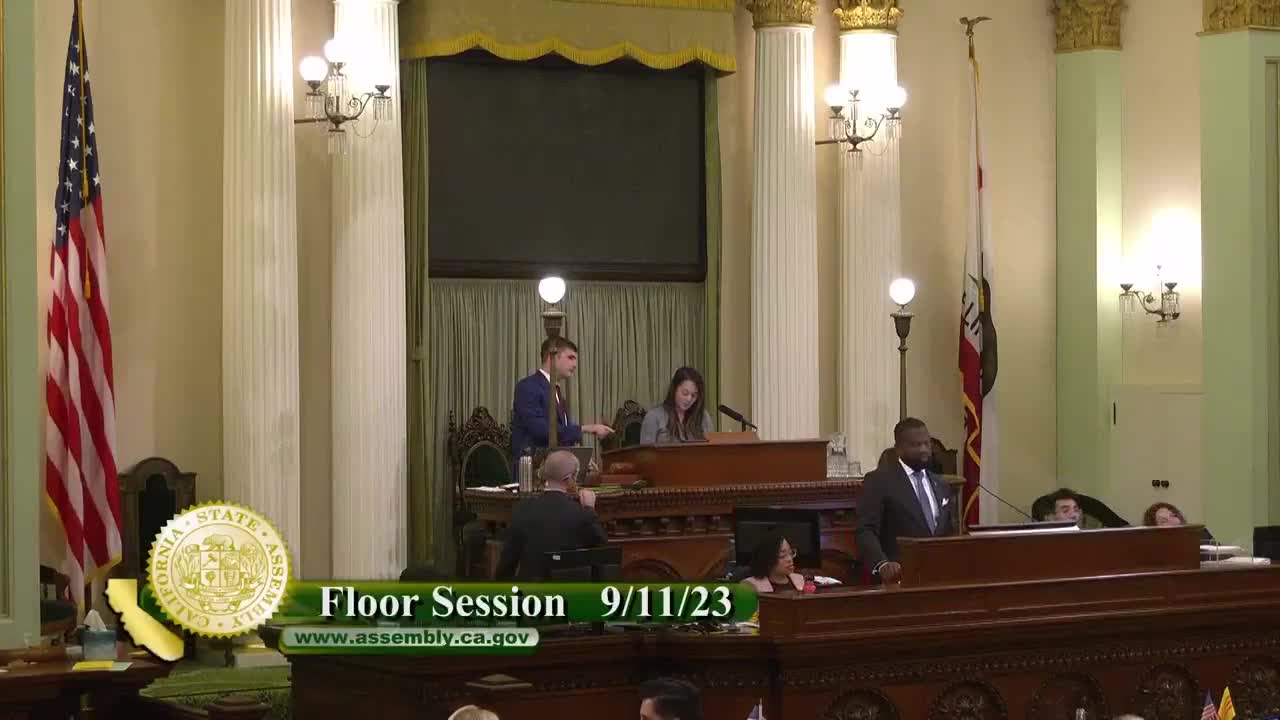 56SEC
Assembly Floor
 2MIN
Senate Floor
 15MIN
Senate Standing Committee on Education
 1MIN
Assembly Floor
Bill Author