AB 2787: Energy: building standards: photovoltaic requirements.
- Session Year: 2023-2024
- House: Assembly
- Latest Version Date: 2024-08-28
Current Status:
Failed
(2024-09-14: Vetoed by Governor.)
Introduced
In Committee
First Chamber
In Committee
Second Chamber
Enacted
Existing law authorizes the State Energy Resources Conservation and Development Commission to prescribe, by regulation, lighting, insulation, climate control system, and other building design and construction standards that increase efficiency in the use of energy and water for new residential and new nonresidential buildings, and energy and water conservation design standards for new residential and new nonresidential buildings. Pursuant to this authority, the commission has adopted regulations requiring solar-ready buildings and for the installation of photovoltaic systems meeting certain requirements for low-rise residential buildings built on or after January 1, 2020.
This bill would, until January 1, 2028, require residential construction intended to repair, restore, or replace a residential building damaged or destroyed as a result of a disaster in an area in which a state of emergency has been proclaimed by the Governor to comply only with the requirements regarding photovoltaic systems pursuant to those regulations, if any, that were in effect at the time the damaged or destroyed building was originally constructed and would prohibit that construction from being required to comply with any additional or conflicting photovoltaic system requirements in effect at the time of repair, restoration, or replacement. The bill would only apply to the construction of a building if certain conditions are met with respect to the building owners income and insurance coverage, and to the location and square footage of the construction.
Because a local agency would be required to determine whether any older applicable photovoltaic requirements are met, this bill would impose a state-mandated local program.
The California Constitution requires the state to reimburse local agencies and school districts for certain costs mandated by the state. Statutory provisions establish procedures for making that reimbursement.
This bill would provide that no reimbursement is required by this act for a specified reason.
Existing law authorizes the State Energy Resources Conservation and Development Commission to prescribe, by regulation, lighting, insulation, climate control system, and other building design and construction standards that increase efficiency in the use of energy and water for new residential and new nonresidential buildings, and energy and water conservation design standards for new residential and new nonresidential buildings. Pursuant to this authority, the commission has adopted regulations requiring solar-ready buildings and for the installation of photovoltaic systems meeting certain requirements for low-rise residential buildings built on or after January 1, 2020.
This bill, until January 1, 2028, would require residential construction intended to repair, restore, or replace a residential building damaged or destroyed as a result of a disaster in an area in which a state of emergency has been proclaimed by the Governor to comply only with the requirements regarding photovoltaic systems pursuant to the regulations, if any, that were in effect at the time the damaged or destroyed residential building was originally constructed and would not require that construction to comply with any additional or conflicting photovoltaic system requirements in effect at the time of repair, restoration, or replacement. This provision would apply only if certain conditions are met with respect to the building owners income, insurance coverage, and the location and square footage of the construction.
Because a local agency would be required to determine whether any older applicable photovoltaic requirements are met, this bill would impose a state-mandated local program.
The California Constitution requires the state to reimburse local agencies and school districts for certain costs mandated by the state. Statutory provisions establish procedures for making that reimbursement.
This bill would provide that no reimbursement is required by this act for a specified reason.
(a)Notwithstanding other law, residential construction intended to repair, restore, or replace a residential building damaged or destroyed as a result of a disaster in an area in which a state of emergency has been proclaimed by the Governor pursuant to Chapter 7 (commencing with Section 8550) of Division 1 of Title 2 of the Government Code shall comply with requirements regarding photovoltaic systems pursuant to regulations prescribed pursuant to subdivisions (a) and (b) of Section 25402, if any, that were in effect at the time the damaged or destroyed residential building was originally constructed and shall not be required to comply with any additional or conflicting photovoltaic system requirements in effect at the time of repair, restoration, or replacement.
(b)This section only applies when all of the following conditions are met:
(1)The income of the owner of the residential building is at or below the median income for the county in which the residential building is located as determined by the Department of Housing and Community Development state income limits.
(2)The square footage of the residential building after the new construction will not exceed the square footage of the residential building at the time it was damaged or destroyed.
(3)The new construction is located on the site of the residential building that was damaged or destroyed.
(4)The owner of the residential building did not have code upgrade insurance at the time the residential building was damaged or destroyed.
(c)This section shall remain in effect only until January 1, 2028, and as of that date is repealed.
SEC. 2.No reimbursement is required by this act pursuant to Section 6 of Article XIIIB of the California Constitution because a local agency or school district has the authority to levy service charges, fees, or assessments sufficient to pay for the program or level of service mandated by this act, within the meaning of Section 17556 of the Government Code.
|
Date
|
Status
|
|---|---|
| Sep 14, 2024 | Vetoed by Governor. |
| Sep 3, 2024 | Enrolled and presented to the Governor at 3:30 p.m. |
| Aug 26, 2024 | In Assembly. Ordered to Engrossing and Enrolling. |
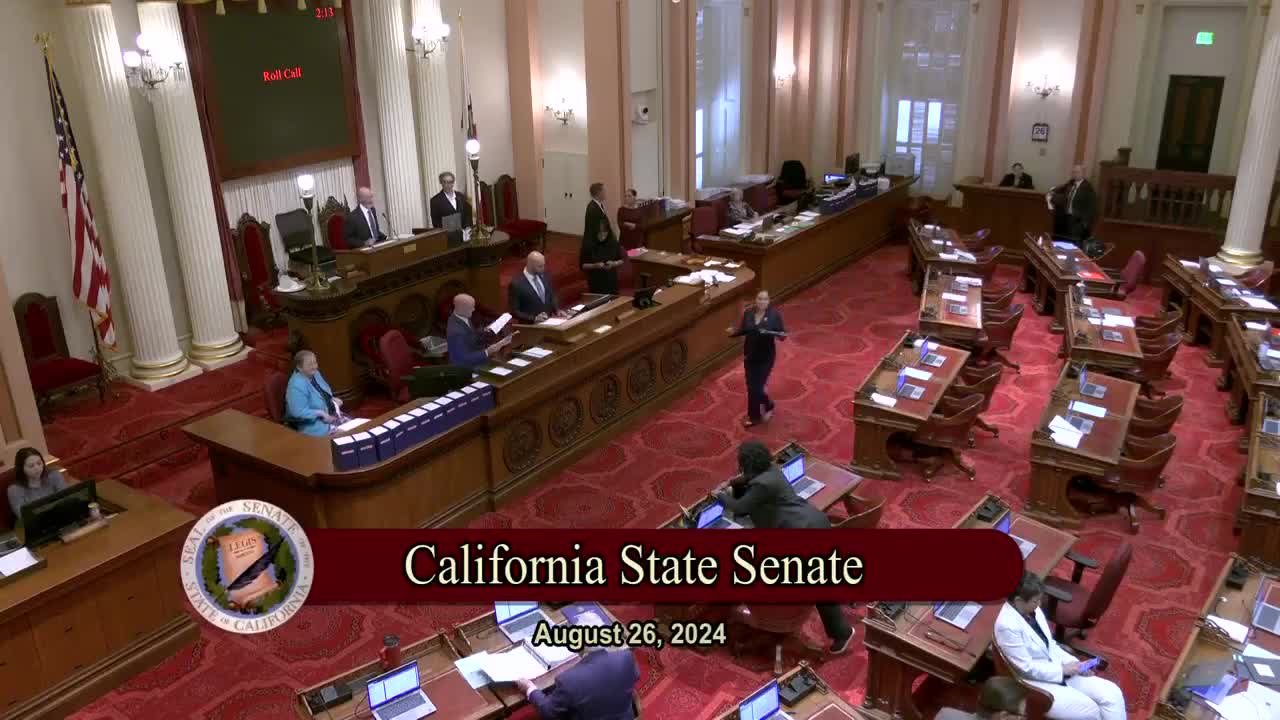
| Aug 26, 2024 | Read third time. Passed. Ordered to the Assembly. (Ayes 39. Noes 0.). |
| Jun 18, 2024 | Read second time. Ordered to third reading. |
| Jun 17, 2024 | From committee: Be ordered to second reading pursuant to Senate Rule 28.8. |
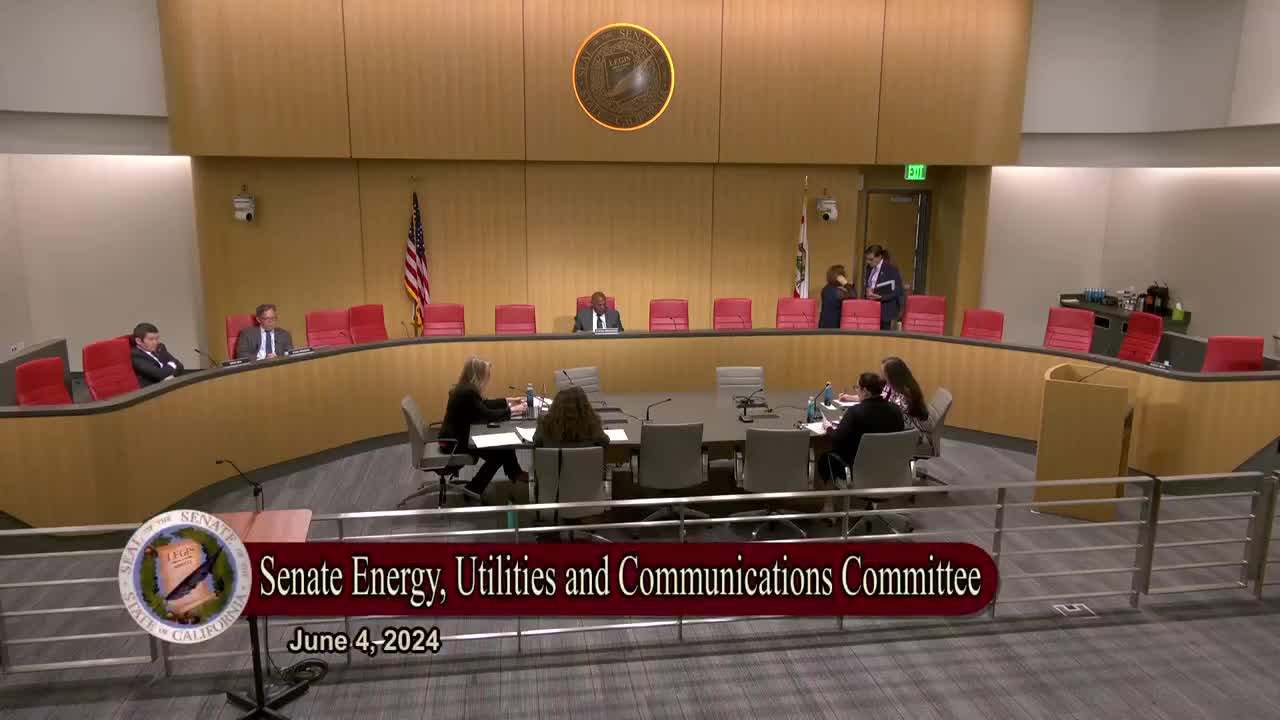
| Jun 4, 2024 | From committee: Do pass and re-refer to Com. on APPR. (Ayes 17. Noes 0.) (June 4). Re-referred to Com. on APPR. |
| May 8, 2024 | Referred to Com. on E., U. & C. |
| Apr 25, 2024 | In Senate. Read first time. To Com. on RLS. for assignment. |
| Apr 25, 2024 | Read third time. Passed. Ordered to the Senate. (Ayes 75. Noes 0. Page 4999.) |
| Apr 18, 2024 | Read second time. Ordered to Consent Calendar. |
| Apr 17, 2024 | From committee: Do pass. To Consent Calendar. (Ayes 15. Noes 0.) (April 17). |
| Apr 9, 2024 | From committee: Do pass and re-refer to Com. on APPR. (Ayes 11. Noes 0.) (April 8). Re-referred to Com. on APPR. |
| Mar 11, 2024 | Referred to Com. on NAT. RES. |
| Feb 16, 2024 | From printer. May be heard in committee March 17. |
| Feb 15, 2024 | Read first time. To print. |
|
Date
|
Description
|
Location
|
Votes
|
|
|---|---|---|---|---|
| Aug 26, 2024 | Assembly 3rd Reading AB2787 Joe Patterson et al. By Dahle | Senate Floor |
Passed |
|
| Jun 4, 2024 | Do pass, but first be re-referred to the Committee on [Appropriations] | Senate Standing Committee on Energy, Utilities and Communications |
Passed |
|
| Apr 25, 2024 | AB 2787 Joe Patterson Consent Calendar Second Day Regular Session | Assembly Floor |
Passed |
|
| Apr 17, 2024 | Do pass. To Consent Calendar. | Assembly Standing Committee on Appropriations |
Passed |
|
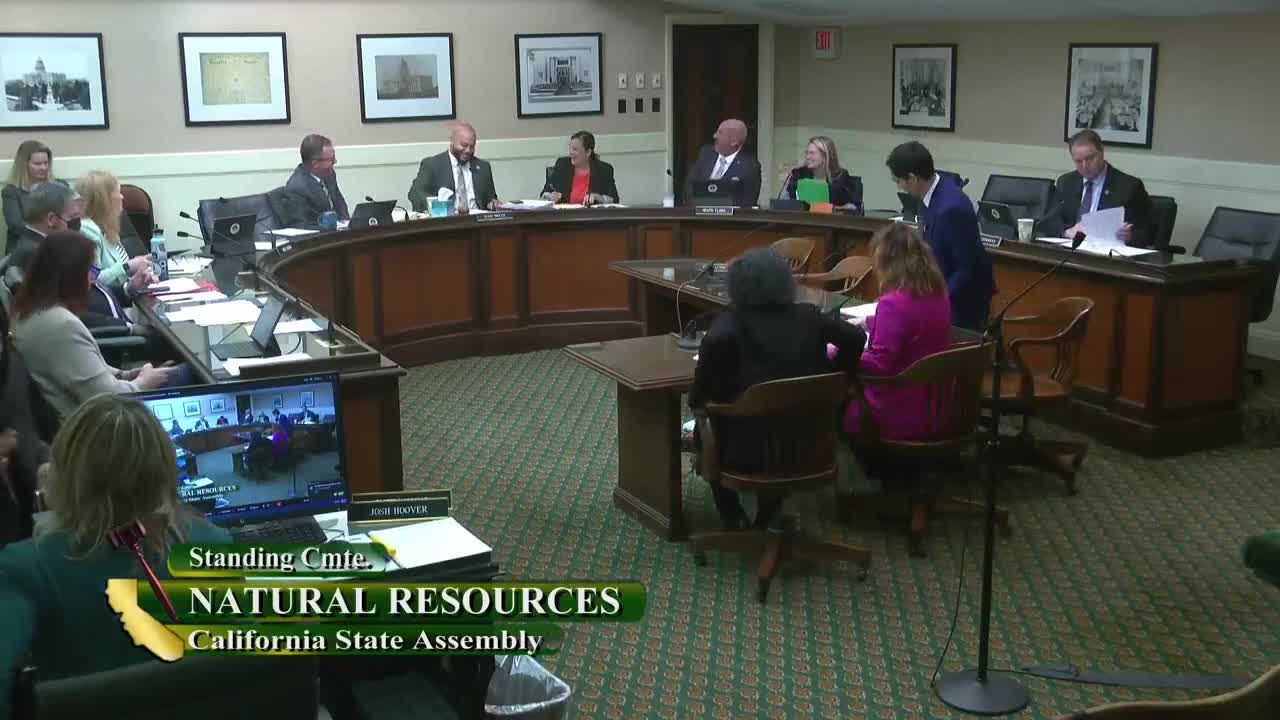
| Apr 8, 2024 | Do pass and be re-referred to the Committee on [Appropriations] | Assembly Standing Committee on Natural Resources |
Passed |
This list shows positions taken on this bill by organizations on the date displayed, which is linked to the original source.
Positions by individuals are not included.
|
Organization
|
Position
|
Date
|
|---|---|---|
| Pioneer Community Energy | ** Support |
GOVERNOR'S VETO
GV Bill Id:AB 2787
Author:(Joe Patterson and Jim Patterson)
As Enrolled Ver:August 28, 2024
2/3 vote
SUMMARY
This bill exempts residential construction to repair or replace a residential building destroyed or damaged as a result of a disaster for which the Governor has declared a state of emergency from the state's solar photovoltaic (PV) building requirements until January 1, 2028. Instead, this bill requires residential construction to comply with the state's requirement for (PV) systems that were in effect at the time the building was originally constructed.
Governor's Veto Message
This bill would adopt an exemption, until January 1, 2028, from the California Building Energy Efficiency Standards (Standards) solar ready and battery storage system installation requirements for residential buildings damaged or destroyed as a result of a disaster.
The solar ready requirement is an innovative and forward-leaning policy that requires new residential buildings to install a minimum amount of cost-effective solar photovoltaic capacity to reduce homeowner energy costs, improve energy resiliency and reduce greenhouse gas emissions.
Extending this exemption would nullify these positive outcomes and instead would increase homeowner energy costs. This exemption also undermines the energy resiliency of homes, especially those in high-fire risk areas, and increases greenhouse gas emissions. Further, this exemption is overly broad and would not assist those disaster victims who are the most disadvantaged.
COMMENTS
California's solar standards. The 2019 Building Energy Efficiency Standards went into effect on January 1, 2020. The standards were the first in the nation to require PV systems for new construction. The standards also include improved thermal building envelope standards (i.e., insulating the interior), residential and nonresidential ventilation requirements, and nonresidential lighting requirements. For residential buildings, the standards are expected to result in about 53% less energy use than under the 2016 standards. The CEC further estimates that the new standards will reduce GHG emissions by 700,000 metric tons over three years.
Statute requires that CEC's standards must be "cost-effective." Moreover, unlike other building standards, solar earns money for homeowners as their homes generate electricity. CEC estimates that based on a 30-year mortgage, the new standards will add about $40 per month in costs and result in about $80 per month in reduced energy costs. On average, a solar system adds about $9,500 to the cost of a new home and will result in a savings of $19,000 in energy costs over 30 years. The up-front costs for solar are expected to continue to decrease.
CEC established a few exemptions to the new solar requirement. Primarily, homes that are shaded by trees, hills, other structures, etc. are not required to install solar. This may exclude a number of homes impacted by fires in wooded areas. Homeowners in areas with community solar programs are also exempt from the requirement. Additionally, reduced system size is permitted for low-rise residential with two stories and for low-rise multifamily or single-family homes with three or more stories.
Emergency declarations. California has had a large number of emergency declarations over the last several years, primarily due to fires. In recent years, California has faced an alarming increase in destructive wildfires. Some of the largest and most devastating fires have taken place within the last decade. For example, the 2017 Tubbs Fire, at the time the most destructive wildfire in California history, killed 22 people and destroyed 5,000 homes. In 2018, the Camp Fire replaced the Tubbs Fire as the most destructive fires in state history, with nearly 19,000 structures destroyed and 85 deaths, including the near total destruction of the town of Paradise. While less destructive, the 2021 Caldor Fire burned more than 200,000 acres and destroyed 782 homes. This bill would allow any home damaged or destroyed in a disaster in an area in which the Governor has declared a state of emergency to comply with the PV requirements in effect at the time the home was constructed, rather than those in place at the time of the repair, restoration, or rebuild.
According to the Author
In 2021, Governor Gavin Newsom declared a state of emergency in four counties impacted by the destructive Caldor Fire located in the Sierra Foothills of California. The wildfire burned a total of 221,835 acres and destroyed 782 homes. While some Californians were fortunate enough to restore or rebuild their homes, others could not afford the exorbitant construction costs, forcing them to relocate or live in trailers for months or years. Individuals without code upgrade coverage on their homeowners insurance are stuck adding solar when rebuilding despite not having solar on their homes in the first place. By waiving solar home-building requirements for those who did not have solar prior to losing their home, and subject to income limitations, wildfire victims would be presented with the opportunity to rebuild their home.
Arguments in Support
According to the California Builders Alliance, "solar installations in particular can slow down the rebuilding process due to additional planning, permitting, and labor involved, which may keep a family out of their home longer."
Arguments in Opposition
According to the California Solar and Storage Association, "the state provides [Self-Generation Incentive Program] funds available for low income consumers. We would urge customers who have the availability to access these funds not be exempt from the requirement."
FISCAL COMMENTS
According to the Senate Appropriations Committee, pursuant to Senate Rule 28.8, this bill has negligible state costs.
VOTES
ASM NATURAL RESOURCES: 11-0-0
YES: Bryan, Flora, Connolly, Friedman, Hoover, Kalra, Joe Patterson, Muratsuchi, Pellerin, Wicks, Wood
ASM APPROPRIATIONS: 15-0-0
YES: Wicks, Sanchez, Arambula, Bryan, Calderon, Wendy Carrillo, Dixon, Mike Fong, Grayson, Haney, Hart, Jim Patterson, Pellerin, Ta, Villapudua
ASSEMBLY FLOOR: 75-0-5
YES: Addis, Aguiar-Curry, Alanis, Alvarez, Arambula, Bains, Bauer-Kahan, Bennett, Berman, Bonta, Bryan, Calderon, Juan Carrillo, Wendy Carrillo, Cervantes, Chen, Connolly, Davies, Dixon, Essayli, Flora, Mike Fong, Vince Fong, Friedman, Gabriel, Garcia, Gipson, Grayson, Haney, Holden, Hoover, Irwin, Jackson, Jones-Sawyer, Kalra, Lackey, Lee, Low, Lowenthal, Maienschein, McCarty, McKinnor, Muratsuchi, Stephanie Nguyen, Ortega, Pacheco, Papan, Jim Patterson, Joe Patterson, Pellerin, Petrie-Norris, Quirk-Silva, Ramos, Rendon, Reyes, Luz Rivas, Rodriguez, Blanca Rubio, Sanchez, Santiago, Schiavo, Soria, Ta, Ting, Valencia, Villapudua, Waldron, Wallis, Ward, Weber, Wicks, Wilson, Wood, Zbur, Robert Rivas
ABS, ABST OR NV: Boerner, Megan Dahle, Gallagher, Hart, Mathis
SENATE FLOOR: 40-0-0
YES: Allen, Alvarado-Gil, Archuleta, Ashby, Atkins, Becker, Blakespear, Bradford, Caballero, Cortese, Dahle, Dodd, Durazo, Eggman, Glazer, Gonzalez, Grove, Hurtado, Jones, Laird, Limón, McGuire, Menjivar, Min, Newman, Nguyen, Niello, Ochoa Bogh, Padilla, Portantino, Roth, Rubio, Seyarto, Skinner, Smallwood-Cuevas, Stern, Umberg, Wahab, Wiener, Wilk
UPDATED
VERSION: August 28, 2024
CONSULTANT: Elizabeth MacMillan / NAT. RES. / (916) 319-2092 FN: 0005077
SENATE RULES COMMITTEE Office of Senate Floor Analyses (916) 651-1520 Fax: (916) 327-4478 | AB 2787 |
THIRD READING
Bill No: AB 2787
Author: Joe Patterson (R) and Jim Patterson (R)
Introduced: 2/15/24
Vote: 21
SENATE ENERGY, U. & C. COMMITTEE: 17-0, 6/4/24
AYES: Bradford, Dahle, Ashby, Becker, Caballero, Dodd, Durazo, Eggman, Gonzalez, Grove, Limón, Min, Newman, Rubio, Seyarto, Skinner, Wilk
NO VOTE RECORDED: Stern
SENATE APPROPRIATIONS COMMITTEE: Senate Rule 28.8
ASSEMBLY FLOOR: 75-0, 4/25/24 (Consent) - See last page for vote
SUBJECT: Energy: building standards: photovoltaic requirements
SOURCE: Author
DIGEST:
This bill exempts, until January 1, 2028, from the Solar Mandate, as part of the state’s building standards, residential construction to repair or replace a residential building destroyed or damaged as a result of a disaster, where the Governor has declared a state of emergency, and instead requires residential construction to comply with the state’s requirement for photovoltaic (PV) systems that were in effect at the time the building was originally constructed.
ANALYSIS:
Existing law:
- Authorizes the State Energy Resources Conservation and Development Commission (CEC) to prescribe, by regulation, lighting, insulation, climate control system, and other building design and construction standards that increase efficiency in the use of energy and water for new residential and new nonresidential buildings, and energy and water conservation design standards for new residential and new nonresidential buildings. Under this authority, the CEC establishes regulations for the installation of PV systems meeting certain requirements for low-rise residential buildings built on or after January 1, 2020. (Public Resources Code §25402)
- Requires the CEC to establish building design and construction standards that increase the efficiency in the use of energy and water for new residential and new nonresidential buildings. The CEC must periodically update the standards. Six months after the CEC certifies an energy conservation manual, cities, counties, and state agencies are prohibited from issuing a building permit for a building that does not comply with the current standards created by the CEC. (Public Resources Code §25402(a)(1))
- Requires the CEC and the Department of Housing and Community Development to issue a joint finding that a building water efficiency standard is equivalent or superior in performance, safety, and for the protection of life, health, and general welfare to existing standards. The finding must also ensure that the standard does not unreasonably or unnecessarily impact Californians’ ability to purchase or rent affordable house by taking into account the overall benefit derived from the standard. (Public Resources Code §25402(a)(2))
- Requires the CEC’s building efficiency standards to be cost-effective when taken in their entirety and amortized over the economic life of the structure compared with historic practice. When determining cost-effectiveness, the CEC must consider the value of the water or energy saved, impact on product efficacy for the consumer, and the life-cycle cost of complying with the standard. The CEC must consider other relevant factors, including, but not limited to the standards’ cost on house costs, the total statewide costs and benefits of the standard over its lifetime, economic impacts on California businesses, and alternative approaches and their associated costs. (Public Resources Code §25402(b)(3))
- Requires electric utilities to procure 60 percent of their retail sales of electricity from renewable energy by 2030. This is known as the Renewable Portfolio Standard (RPS). (Public Utilities Code §399.11 et seq.)
- Requires every electric utility (other than a local public owned utilities (POU) that serves more than 750,000 customers and that also conveys water to its customers) to offer net-energy metering (NEM) to eligible customer-generators, upon request, on a first-come-first-served basis until the total rated generating capacity used by eligible customer-generators exceeds five percent of the electric utility’s aggregate customer peak demand. (Public Utilities Code §2827)
- Directs the California Public Utilities Commission (CPUC) to develop a standard tariff or contract, known as the “successor tariff,” for eligible customer-generators with a renewable electrical generation facility no later than December 31, 2015. Requires, for each large electrical corporation, using the successor tariff, to continue to offer NEM to its customers on July 1, 2017, or upon reaching the five-percent NEM program limit, whichever is earlier. (Public Utilities Code §2827.1)
This bill:
- Requires, until January 1, 2028, residential construction intended to repair, restore, or replace a residential building damaged or destroyed as a result of a disaster in an area in which a state of emergency has been proclaimed by the Governor to comply only with the requirements regarding PV systems pursuant to the regulations, if any, that were in effect at the time the damaged or destroyed residential building was originally constructed and would not require that construction to comply with any additional or conflicting photovoltaic system requirements in effect at the time of repair, restoration, or replacement.
- Applies only if all of the following conditions are met:
- The residential building owner’s income is at or below the median income for the county in which the building is located, as determined by the Department of Housing and Community Development state income limits;
- The square footage of the residential building after the new construction will not exceed the square footage of the residential building at the time it was damaged or destroyed;
- The location of the new construction is the same as the residential building that was damaged or destroyed; and,
- The owner of the residential building that was damaged or destroyed did not have upgrade insurance coverage at the time the building was damaged or destroyed.
- Because a local agency would be required to determine whether any older applicable photovoltaic requirements are met, this bill would impose a state-mandated local program.
Background
- California’s building energy efficiency standards. California’s building energy efficiency standards are updated on roughly every three years cycle. The CEC adopted the 2019 Building Energy Efficiency Standards, which went into effect on January 1, 2020. The standards are the first in the nation to require solar photovoltaic systems for new construction. The standards also include improved thermal building envelope standards (i.e., insulating the interior), residential and nonresidential ventilation requirements, and nonresidential lighting requirements. For residential buildings, according to the CEC, the standards will result in about 53 percent less energy use than under the 2016 standards. The CEC further estimates that the new standards will reduce greenhouse gas emissions by 700,000 metric tons over three years. CEC’s energy efficiency standards are adopted by Building Standards Commission as part of the California Building Standards Code, which serves as the basis for building and construction in California. The CEC first adopted building energy efficiency standards in 1977. The CEC reports that the energy efficiency building standards have saved Californians billions of dollars since their first adoption, avoided the need for powerplants and transmission lines, and helped keep California’s per-capita energy consumption flat. The CEC has since adopted the 2022 Building Energy Efficiency Standards which, after January 1, 2023, require newly constructed residential buildings to be electric-ready (including 240-volt outlets and space for electric appliances to replace installed gas appliances). The 2022 standards also allow exceptions to the solar PV standards when roof area is not available. The standards also establish combined solar PV and battery storage standards for select businesses. The CEC is currently updating the standards for 2025 Energy Code which is scheduled to take effect January 1, 2026.
- Statute requires that CEC’s standards must be “cost-effective.” CEC estimates that based on a 30-year mortgage, the new standards will add about $40 per month in costs and result in about $80 per month in reduced energy costs. According to the CEC, on average, a solar system adds about $9,500 to the cost of a new home and will result in a savings of $19,000 in energy costs over 30 years (largely based on pre-COVID numbers). Current prices for solar installations tend to range $15,000 to $20,000, based on news reports. The up-front costs for solar installations have decreased over the past several years, but experienced some increases since COVID. The CEC established a few exemptions to the new solar requirement. Primarily, homes that are shaded by trees, hills, other structures, etc. are not required to install solar. This may exclude a number of homes impacted by fires in wooded areas. Homeowners in areas with community solar programs are also exempt from the requirement. Additionally, reduced system size is permitted for low-rise residential with two stories and for low-rise multifamily or single-family homes with three or more stories. As noted above, the CEC made additional changes in the 2022 Energy Code Update.
- Emergency declarations. Unfortunately, California has been no stranger to disasters in recent years. The governor has made well over three dozen emergency declarations in recent years. Many of these are in response to wildfires which have destroyed homes in many communities, including the 2017 Tubbs Fire in Sonoma County, the 2018 Camp Fire in Butte County, and the 2021 Caldor Fire in El Dorado, Alpine, and Amador Counties.
- Incentives for residential solar and storage. The state Legislature and Governor have budgeted $630 million over three years to fund incentives for low-income residents to install solar and storage to augment the Self Generation Incentive Program. The program is administered by the CPUC and funding may be affected by state budget negotiations.
Comments
- Exemptions from solar requirements. This bill would provide that homes that are being rebuilt due to a disaster will not be required to install the rooftop solar if all the conditions are met, including: that the homeowner’s income is below the county’s average median income (AMI), the homeowner lacked code upgrade insurance coverage, the home is being built on the same location as the home that was destroyed, and the size of the new home is the same as the destroyed home. With regards to the AMI, the California Department of Housing and Community Development establishes the annual state income limits. The AMI for each county varies, as an example the AMI for Lassen County is $87,900 for a four-person household and $186,600 in Marin County. This bill would require the local building permit agency to account for these requirements. In the case of the size of the home and whether the new home is on the same land as the destroyed home, the building permit agency could easily verify this information. However, in the case of the income and lack of insurance coverage for code upgrades, the building permit agency would likely need to provide a self-certification document for the resident to attest to the information.
- Cost-effectiveness depends on many variables. As noted above, the costs of solar had been declining rather dramatically over the past 10 years or so. However, more recently, COVID supply constraints, federal tariff issues, and labor costs may have increased the costs of solar installations. The continued decline on the price of solar installations will depend on variables including national trade tariffs policy, marketing and permitting costs, and the costs of the labor and hardware. It is widely assumed that solar installations on new residential construction can be less expensive as compared to on an existing home. However, these savings may be more limited if installed on individual new residential construction which may not be afforded the economies of scales of a housing development with multiple new homes. Additionally, savings from solar installations may also depend on the NEM tariffs afforded by the respective utility which allow solar customers to sell excess energy to the electrical grid, as well as, any fees or charges on the systems. The NEM tariff rates have been declining in compensation from the original tariffs which were more generous as they were initially intended to help spur the solar market.
- Protecting victims. This bill attempts to reduce the burden on victims of disasters when they rebuild or repair their homes. As the author notes, there are many challenges for victims to rebuild their homes after a disaster. Although previous related bills provided that victims only meet one of the four conditions to forgo the solar requirement, this bill more narrowly requires all four conditions are met before the local permitting agency can allow a residential building owner to rebuild without the solar requirement. While the solar PV installation may provide savings to the resident in the long term, the initial costs would increase the costs to rebuild by $10,000 (and likely more). As such, it seems reasonable to provide these victims with the option to forgo these costs as they attempt to rebuild their lives, while still preserving the building owner’s option to install solar PV.
Related/Prior Legislation
AB 1918 (Wood, 2024) would exempt a building constructed in the service territory of the Trinity Public Utility District from the building standards requirements that such a building be solar-ready or have photovoltaic and battery storage systems installed. The bill is pending before the Senate Appropriations Committee.
AB 704 (Jim Patterson, 2023) is substantially similar to this bill. AB 704 was held in the Assembly Committee on Appropriations.
AB 1078 (Patterson, 2022) would have extended the exemption established by AB 178 for one year, until January 1, 2024. The bill was vetoed.
AB 178 (Dahle, Chapter 259, Statutes of 2019) exempted, until January 1, 2023, residential construction from complying with the solar requirements in the recently adopted building standards when the construction is in response to a disaster in an area in which a state of emergency has been proclaimed by the Governor.
AB 693 (Eggman, Chapter 582, Statutes of 2016) created the Multifamily Affordable Housing Solar Roofs Program, to provide financial incentives–up to $100 million annually, for qualified solar installations at multifamily affordable housing properties funded from IOU greenhouse gas allowances.
AB 217 (Bradford and De León, Chapter 609, Statutes of 2013) extended the low-income programs of the California Solar Initiative from 2016 until 2021, authorizes the collection of an additional $108 million for these programs, and adds additional standards to the program, as specified.
AB 327 (Perea, Chapter 611, Statutes of 2013) restructured the rate design for residential electric customers and revised the NEM program.
SB 1 (Murray, Chapter 132, Statutes of 2006) established the electric portion of the CSI with a 10-year budget of $2.2 billion collected from ratepayers.
FISCAL EFFECT: Appropriation: No Fiscal Com.: Yes Local: Yes
SUPPORT: (Verified 6/18/24)
California Builders Alliance
Junior Philanthropists Foundation
Pioneer Community Energy
Rural County Representatives of California
Sacramento Regional Builders Exchange
Valley Contractors Exchange
OPPOSITION: (Verified 6/18/24)
California Solar & Storage Association
ARGUMENTS IN SUPPORT: According to the author:
In 2021, Governor Gavin Newsom declared a state of emergency in four counties impacted by the destructive Caldor Fire located in the Sierra Foothills of California. The wildfire burned a total of 221,835 acres and destroyed 782 homes. While some Californians were fortunate enough to restore or rebuild their homes, others could not afford the exorbitant construction costs, forcing them to relocate or live in trailers for months or years. Individuals without code upgrade coverage on their homeowners insurance are stuck adding solar when rebuilding despite not having solar on their homes in the first place. By waiving solar home-building requirements for those who did not have solar prior to losing their home, and subject to income limitations, wildfire victims would be presented with the opportunity to rebuild their home.
ARGUMENTS IN OPPOSITION: The California Solar & Storage Association opposes this bill unless it is amended to include language that residential building owner does not have access to a financial incentive program that would cover a majority of photovoltaic system installation costs. CSSA states:
Currently, the state provides SGIP [Self Generation Incentive Program] funds available for low income customers. We would urge customers who have the availability to access these funds not be exempt from the requirement. We do appreciate the narrowing of the bill from previous versions.
ASSEMBLY FLOOR: 75-0, 4/25/24
AYES: Addis, Aguiar-Curry, Alanis, Alvarez, Arambula, Bains, Bauer-Kahan, Bennett, Berman, Bonta, Bryan, Calderon, Juan Carrillo, Wendy Carrillo, Cervantes, Chen, Connolly, Davies, Dixon, Essayli, Flora, Mike Fong, Vince Fong, Friedman, Gabriel, Garcia, Gipson, Grayson, Haney, Holden, Hoover, Irwin, Jackson, Jones-Sawyer, Kalra, Lackey, Lee, Low, Lowenthal, Maienschein, McCarty, McKinnor, Muratsuchi, Stephanie Nguyen, Ortega, Pacheco, Papan, Jim Patterson, Joe Patterson, Pellerin, Petrie-Norris, Quirk-Silva, Ramos, Rendon, Reyes, Luz Rivas, Rodriguez, Blanca Rubio, Sanchez, Santiago, Schiavo, Soria, Ta, Ting, Valencia, Villapudua, Waldron, Wallis, Ward, Weber, Wicks, Wilson, Wood, Zbur, Robert Rivas
NO VOTE RECORDED: Boerner, Megan Dahle, Gallagher, Hart, Mathis
Prepared by: Nidia Bautista / E., U. & C. / (916) 651-4107
6/18/24 15:49:22
**** END ****
SENATE COMMITTEE ON ENERGY, UTILITIES AND COMMUNICATIONS
Senator Steven Bradford, Chair
2023 - 2024 Regular
Bill No: AB 2787 Hearing Date: 6/4/2024
Author: | Joe Patterson | ||
Version: | 2/15/2024 Introduced | ||
Urgency: | No | Fiscal: | Yes |
Consultant: | Nidia Bautista | ||
SUBJECT: Energy: building standards: photovoltaic requirements
DIGEST: This bill exempts, until January 1, 2028, from the Solar Mandate, as part of the state’s building standards, residential construction to repair or replace a residential building destroyed or damaged as a result of a disaster, where the Governor has declared a state of emergency, and instead requires residential construction to comply with the state’s requirement for photovoltaic (PV) systems that were in effect at the time the building was originally constructed.
ANALYSIS:
Existing law:
- Authorizes the State Energy Resources Conservation and Development Commission (CEC) to prescribe, by regulation, lighting, insulation, climate control system, and other building design and construction standards that increase efficiency in the use of energy and water for new residential and new nonresidential buildings, and energy and water conservation design standards for new residential and new nonresidential buildings. Under this authority, the CEC has established regulations for the installation of PV systems meeting certain requirements for low-rise residential buildings built on or after January 1, 2020. (Public Resources Code §25402)
- Requires the CEC to establish building design and construction standards that increase the efficiency in the use of energy and water for new residential and new nonresidential buildings. The CEC must periodically update the standards. Six months after the CEC certifies an energy conservation manual, cities, counties, and state agencies are prohibited from issuing a building permit for a building that does not comply with the current standards created by the CEC. (Public Resources Code §25402(a)(1))
- Requires the CEC and the Department of Housing and Community Development to issue a joint finding that a building water efficiency standard is equivalent or superior in performance, safety, and for the protection of life, health, and general welfare to existing standards. The finding must also ensure that the standard does not unreasonably or unnecessarily impact Californians’ ability to purchase or rent affordable house by taking into account the overall benefit derived from the standard. (Public Resources Code §25402(a)(2))
- Requires the CEC’s building efficiency standards to be cost-effective when taken in their entirety and amortized over the economic life of the structure compared with historic practice. When determining cost-effectiveness, the CEC must consider the value of the water or energy saved, impact on product efficacy for the consumer, and the life-cycle cost of complying with the standard. The CEC must consider other relevant factors, including, but not limited to the standards’ cost on house costs, the total statewide costs and benefits of the standard over its lifetime, economic impacts on California businesses, and alternative approaches and their associated costs. (Public Resources Code §25402(b)(3))
- Requires electric utilities to procure 60 percent of their retail sales of electricity from renewable energy by 2030. This is known as the Renewable Portfolio Standard (RPS). (Public Utilities Code §399.11 et seq.)
- Requires every electric utility (other than a local public owned utilities (POU) that serves more than 750,000 customers and that also conveys water to its customers) to offer net-energy metering (NEM) to eligible customer-generators, upon request, on a first-come-first-served basis until the total rated generating capacity used by eligible customer-generators exceeds five percent of the electric utility’s aggregate customer peak demand. (Public Utilities Code §2827)
- Directs the California Public Utilities Commission (CPUC) to develop a standard tariff or contract, known as the “successor tariff,” for eligible customer-generators with a renewable electrical generation facility no later than December 31, 2015. Requires, for each large electrical corporation, using the successor tariff, to continue to offer NEM to its customers on July 1, 2017, or upon reaching the five-percent NEM program limit, whichever is earlier. (Public Utilities Code §2827.1)
This bill:
- Requires, until January 1, 2028, residential construction intended to repair, restore, or replace a residential building damaged or destroyed as a result of a disaster in an area in which a state of emergency has been proclaimed by the Governor to comply only with the requirements regarding PV systems pursuant to the regulations, if any, that were in effect at the time the damaged or destroyed residential building was originally constructed and would not require that construction to comply with any additional or conflicting photovoltaic system requirements in effect at the time of repair, restoration, or replacement.
- Applies only if all of the following conditions are met:
- the residential building owner’s income is at or below the median income for the county in which the building is located, as determined by the Department of Housing and Community Development state income limits.
- the square footage of the residential building after the new construction will not exceed the square footage of the residential building at the time it was damaged or destroyed
- the location of the new construction is the same as the residential building that was damaged or destroyed.
- the owner of the residential building that was damaged or destroyed did not have upgrade insurance coverage at the time the building was damaged or destroyed.
- Because a local agency would be required to determine whether any older applicable photovoltaic requirements are met, this bill would impose a state-mandated local program.
Background
California’s building energy efficiency standards. California’s building energy efficiency standards are updated on roughly every three years cycle. The CEC adopted the 2019 Building Energy Efficiency Standards, which went into effect on January 1, 2020. The standards are the first in the nation to require solar photovoltaic systems for new construction. The standards also include improved thermal building envelope standards (i.e., insulating the interior), residential and nonresidential ventilation requirements, and nonresidential lighting requirements. For residential buildings, according to the CEC, the standards will result in about 53 percent less energy use than under the 2016 standards. The CEC further estimates that the new standards will reduce greenhouse gas emissions by 700,000 metric tons over three years. CEC’s energy efficiency standards are adopted by Building Standards Commission as part of the California Building Standards Code, which serves as the basis for building and construction in California. The CEC first adopted building energy efficiency standards in 1977. The CEC reports that the energy efficiency building standards have saved Californians billions of dollars since their first adoption, avoided the need for powerplants and transmission lines, and helped keep California’s per-capita energy consumption flat. The CEC has since adopted the 2022 Building Energy Efficiency Standards which, after January 1, 2023, require newly constructed residential buildings to be electric-ready (including 240-volt outlets and space for electric appliances to replace installed gas appliances). The 2022 standards also allow exceptions to the solar PV standards when roof area is not available. The standards also establish combined solar PV and battery storage standards for select businesses. The CEC is currently updating the standards for 2025 Energy Code which is scheduled to take effect January 1, 2026.
Statute requires that CEC’s standards must be “cost-effective.” CEC estimates that based on a 30-year mortgage, the new standards will add about $40 per month in costs and result in about $80 per month in reduced energy costs. According to the CEC, on average, a solar system adds about $9,500 to the cost of a new home and will result in a savings of $19,000 in energy costs over 30 years (largely based on pre-COVID numbers). Current prices are tend to range in $15,000 to $20,000 based on news reports. The up-front costs for solar have decreased over the past several years, but experienced some increases since COVID. The CEC established a few exemptions to the new solar requirement. Primarily, homes that are shaded by trees, hills, other structures, etc. are not required to install solar. This may exclude a number of homes impacted by fires in wooded areas. Homeowners in areas with community solar programs are also exempt from the requirement. Additionally, reduced system size is permitted for low-rise residential with two stories and for low-rise multifamily or single-family homes with three or more stories. As noted above, the CEC made additional changes in the 2022 Energy Code Update.
Emergency declarations. Unfortunately, California has been no stranger to disasters in recent years. The governor has made well over three dozen emergency declarations in recent years. Many of these are in response to wildfires which have destroyed homes in many communities, including the 2017 Tubbs Fire in Sonoma County, the 2018 Camp Fire in Butte County, and the 2021 Caldor Fire in El Dorado, Alpine, and Amador Counties.
Incentives for residential solar and storage. The state Legislature and Governor have budgeted $630 million over three years to fund incentives for low-income residents to install solar and storage. The program is administered by the CPUC and funding may be affected by state budget negotiations.
Comments
Exemptions from solar requirements. This bill would provide that homes that are being rebuilt due to a disaster will not be required to install the rooftop solar if all the condition are met, including: that the homeowner’s income is below the county’s average median income (AMI), the homeowner lacked code upgrade insurance coverage, the home is being built on the same location as the home that was destroyed, and the size of the new home is the same as the destroyed home. With regards to the AMI, the California Department of Housing and Community Development establishes the annual state income limits. The AMI for each county varies, as an example the AMI for Lassen County is $87,900 for a four-person household and $186,600 in Marin County. This bill would require the local building permit agency to account for these requirements. In the case of the size of the home and whether the new home is on the same land as the destroyed home, the building permit agency could easily verify this information. However, in the case of the income and lack of insurance coverage for code upgrades, the building permit agency would likely need to provide a self-certification document for the resident to attest to the information.
Cost-effectiveness depends on many variables. As noted above, the costs of solar had been declining rather dramatically over the past 10 years or so. However, more recently, COVID supply constraints, federal tariff issues, and labor costs may have increased the costs. The continued decline on the price of solar installations will depend on variables including national trade tariffs policy, marketing and permitting costs, and the costs of the labor and hardware. It is widely assumed that solar installations on new residential construction can be less expensive as compared to on an existing home. However, these savings may be more limited if installed on individual new residential construction, not afforded the economies of scales of a housing development with multiple new homes. Additionally, savings from solar installations may also depend on the NEM tariffs afforded by the respective utility which allow solar customers to sell excess energy to the grid, as well as any fees or charges on the systems. The NEM tariff rates have been declining in compensation from the original tariffs which were more generous as they were intended to help spur the solar market.
Protecting victims. This bill attempts to reduce the burden on victims of disasters when they rebuild or repair their homes. As the author notes, there are many challenges for victims to rebuild their homes after a disaster. Although previous related bills provided that victims only meet one of the four conditions to forgo the solar requirement, this bill more narrowly requires all four conditions are met before the local permitting agency can allow a residential building owner to rebuild without the solar requirement. While the solar PV installation may provide savings to the resident in the long term, the initial costs would increase the costs to rebuild by about $10,000 (and likely more). As such, it seems reasonable to provide these victims with the option to forgo these costs as they attempt to rebuild their lives, while still preserving the building owner’s option to install solar PV.
Prior/Related Legislation
AB 1918 (Wood) exempts a building constructed in the service territory of the Trinity Public Utility District from the building standards requirements that such a building be solar-ready or have photovoltaic and battery storage systems installed. The bill is pending before this committee.
AB 704 (Jim Patterson, 2023) was substantially similar to this bill. AB 704 was held in the Assembly Committee on Appropriations.
AB 1078 (Patterson, 2022) would have extended the exemption established by AB 178 for one year, until January 1, 2024. The bill was vetoed.
AB 178 (Dahle, Chapter 259, Statutes of 2019) exempted, until January 1, 2023, residential construction from complying with the solar requirements in the recently adopted building standards when the construction is in response to a disaster in an area in which a state of emergency has been proclaimed by the Governor.
AB 693 (Eggman, Chapter 582, Statutes of 2016) created the Multifamily Affordable Housing Solar Roofs Program, to provide financial incentives–up to $100 million annually, for qualified solar installations at multifamily affordable housing properties funded from IOU greenhouse gas allowances.
AB 217 (Bradford and De León, Chapter 609, Statutes of 2013) extended the low-income programs of the California Solar Initiative from 2016 until 2021, authorizes the collection of an additional $108 million for these programs, and adds additional standards to the program, as specified.
AB 327 (Perea, Chapter 611, Statutes of 2013) restructured the rate design for residential electric customers and revised the NEM program.
SB 1 (Murray, Chapter 132, Statutes of 2006) established the electric portion of the CSI with a 10-year budget of $2.2 billion collected from ratepayers.
FISCAL EFFECT: Appropriation: No Fiscal Com.: Yes Local: Yes
SUPPORT:
Pioneer Community Energy
OPPOSITION:
California Solar & Storage Association, unless amended
ARGUMENTS IN SUPPORT: According to the author:
In 2021, Governor Gavin Newsom declared a state of emergency in four counties impacted by the destructive Caldor Fire located in the Sierra Foothills of California. The wildfire burned a total of 221,835 acres and destroyed 782 homes. While some Californians were fortunate enough to restore or rebuild their homes, others could not afford the exorbitant construction costs, forcing them to relocate or live in trailers for months or years. Individuals without code upgrade coverage on their homeowners insurance are stuck adding solar when rebuilding despite not having solar on their homes in the first place. By waiving solar home-building requirements for those who did not have solar prior to losing their home, and subject to income limitations, wildfire victims would be presented with the opportunity to rebuild their home.
ARGUMENTS IN OPPOSITION: The California Solar & Storage Association opposes the bill unless it is amended to include language that residential building owner does not have access to a financial incentive program that would cover a majority of photovoltaic system installation costs. CSSA states:
Currently, the state provides SGIP [Self Generation Incentive Program] funds available for low income customers. We would urge customers who have the availability to access these funds not be exempt from the requirement. We do appreciate the narrowing of the bill from previous versions.
-- END --
Date of Hearing: April 17, 2024
ASSEMBLY COMMITTEE ON APPROPRIATIONS
Buffy Wicks, Chair
ABPCA Bill Id:AB 2787
Author:(Joe Patterson) – As Introduced Ver:February 15, 2024
Policy Committee: | Natural Resources | Vote: | 11 - 0 |
|
| ||
|
|
Urgency: No State Mandated Local Program: Yes Reimbursable: No
SUMMARY:
This bill requires residential construction intended to repair, restore, or replace a residential building that was damaged or destroyed as a result of a disaster in an area in which the Governor has declared a state of emergency to comply with the state’s requirement for photovoltaic (PV) systems that were in effect at the time the building was originally constructed.
In addition, this bill:
- Specifies that its provisions apply only when all of the following conditions are met:
- The income of the owner of the building is at or below the median income for the county in which the residential building is located, as determined by the Department of Housing and Community Development state income limits.
- The square footage of the residential building after the new construction will not exceed the square footage of the residential building at the time it was damaged or destroyed.
- The new construction is located on the site of the residential building that was damaged or destroyed.
- The owner of the residential building did not have code upgrade insurance at the time the residential building was damaged or destroyed.
- Sunsets the above provisions on January 1, 2028.
FISCAL EFFECT:
Minor, if any, state costs.
COMMENTS:
1) Purpose. According to the author:
In 2021, Governor Gavin Newsom declared a state of emergency in four counties impacted by the destructive Caldor Fire located in the Sierra Foothills of California…While some Californians were fortunate enough to restore or rebuild their homes, others could not afford the exorbitant construction costs, forcing them to relocate or live in trailers for months or years. Individuals without code upgrade coverage on their homeowners insurance are stuck adding solar when rebuilding despite not having solar on their homes in the first place. By waiving solar home-building requirements for those who did not have solar prior to losing their home, and subject to income limitations, wildfire victims would be presented with the opportunity to rebuild their home.
2) Background. The 2019 Building Energy Efficiency Standards went into effect on January 1, 2020. The standards were the first in the nation to, among other things, require PV systems for most newly constructed low-rise residential buildings. The California Energy Commission (CEC) established a few exemptions to the solar requirement. Primarily, homes that are shaded by trees, hills, and adjacent structures are not required to install solar. This may exclude a number of homes impacted by fires in wooded areas. According to the CEC, once rooftop solar electricity generation is factored in, homes built under the 2019 standards will use about 53% less energy than those built under the 2016 standards, thereby reducing greenhouse gas emissions by 700,000 metric tons over three years.
CEC analyzed the effect of removing the solar requirement using an average home in Climate Zone 11, which includes the city of Paradise (which was devastated by the deadly Camp Fire in 2018), and in areas with very hot summers and cold winters. The solar requirement, like all building energy efficiency standards, is required by law to be cost effective. According to CEC, by rebuilding without solar, a homeowner could realize an initial savings of $7,206. Yet, over 30 years, the homeowner could pay $17,615 more in energy costs than a comparable solar-equipped home. CEC contends a homeowner can reduce their upfront costs by leasing a solar system, instead of purchasing one outright, with little or no out-of-pocket cost. CEC notes its analysis accounts for the California Public Utilities Commission’s revised net metering tariff, which reduces compensation rates for new solar customers.
Writing in an oppose-unless-amended position, the California Solar and Storage Association is requesting an amendment to add a fifth condition to the bill, namely that the owner of the residential building does not have access to a financial incentive program – such as the Self-Generation Incentive Program – that would cover a majority of PV system installation costs.
3) Related and Prior Legislation. AB 704 (Jim Patterson) of this legislative session was substantially similar to this bill. In addition, AB 704 required the CEC to collect data from local permitting agencies on the use and application of the bill’s provisions and to report its findings to the Legislature. AB 704 was held on this committee’s suspense file.
AB 1078 (Patterson), of the 2021-22 legislative session, would have extended the exemption established by AB 178 (see below) for one year, until January 1, 2024. AB 1078 was vetoed by the Governor.
AB 178 (Dahle), Chapter 259, Statutes of 2019, was substantially similar to this bill. However, while this bill applies only when all the specified conditions in the bill are met, AB 178 and AB 1078 allowed for the exemption if one or more of the conditions were met.
Analysis Prepared by: Nikita Koraddi / APPR. / (916) 319-2081
Date of Hearing: April 8, 2024
ASSEMBLY COMMITTEE ON NATURAL RESOURCES
Isaac G. Bryan, Chair
ABPCA Bill Id:AB 2787 (
Author:Joe Patterson) – As Introduced Ver:February 15, 2024
SUBJECT: Energy: building standards: photovoltaic requirements
SUMMARY: Specifies that residential construction to repair, restore, or replace homes damaged or destroyed during a disaster shall comply with the solar photovoltaic (PV) requirements that were in existence at the time the home was originally constructed.
EXISTING LAW:
- Requires the Air Resources Board (ARB), pursuant to California Global Warming Solutions Act of 2006 [AB 32 (Núñez), Chapter 488, Statutes of 2006], to adopt a statewide greenhouse gas (GHG) emissions limit equivalent to 1990 levels by 2020 and adopt regulations to achieve maximum technologically feasible and cost-effective GHG emission reductions. AB 32 authorizes ARB to permit the use of market-based compliance mechanisms to comply with GHG reduction regulations once specified conditions are met. Requires ARB to approve a statewide GHG emissions limit equivalent to 85% below the 1990 level by 2045. (Health and Safety Code 38500-38599.11)
- Requires the California Energy Commission (CEC) to establish energy efficiency standards for new residential and new nonresidential buildings. (Public Resources Code (PRC) 25402 et seq.)
- Pursuant to the California Residential Building Code, specifies that any work, addition to, remodel, repair, renovation, or alteration of any building or structure may be defined as “new construction” when 50% or more of the exterior weight bearing walls are removed or demolished. (Part 2.5 of Title 24 of the California Code of Regulations)
- Requires CEC to establish regulations to develop and implement a comprehensive program to achieve greater energy savings in California's existing residential and nonresidential building stock. The program is targeted at buildings that "fall significantly below" the current Title 24 energy efficiency standards. Requires the program to minimize the overall costs of establishing and implementing the energy efficiency program requirements. For residential buildings, specifies that the regulations ensure that the energy efficiency assessments, ratings, or improvements do not unreasonably or unnecessarily affect the home purchasing process or the ability of individuals to rent housing. (PRC 25943)
- Requires CEC to establish annual targets for statewide energy efficiency savings and demand reduction that will achieve a cumulative doubling of statewide energy efficiency savings in electricity and natural gas final end uses by January 1, 2030. (PRC 25310)
- Exempted, until January 1, 2023, residential construction intended to “repair, restore, or replace” a residential building that was damaged or destroyed as a result of a disaster in an area in which the Governor has declared a state of emergency before 2020 from the state’s requirement for PV systems, if:
- The income of the owner of the residential building is at or below the median income for the county in which the building is located;
- The construction does not exceed the square footage of the property at the time it was damaged;
- The new construction is located at the site of the home that was damaged; or,
- The owner of the residential building did not have code upgrade insurance at the time the property was damaged. (PRC 25402.13)
- The income of the owner of the residential building is at or below the median income for the county in which the building is located;
THIS BILL:
- Specifies that residential construction intended to repair, restore, or replace a residential building damaged or destroyed as a result of a disaster in an area for which a state of emergency has been proclaimed shall comply with requirements for PV systems that were in effect when the building was originally constructed and are not required to comply with any PV requirements in effect at the time of the repair, restoration, or replacement.
- Specifies that this bill only applies when:
- The income of the owner of the residential building is at or below the median income for the county in which the residential building is located, as determined by Housing and Community Development (HCD) state income limits;
- The square footage of the residential building after the new construction will not exceed the square footage of the residential building at the time is was damaged or destroyed; and,
- The new construction is located on the site of the residential building that was damaged or destroyed.
- Sunsets the bill’s provisions on January 1, 2028.
- Specifies that no reimbursement is required by this bill pursuant to Section 6 of Article XIIIB of the California Constitution because a local agency or school district has the authority to levy service charges, fees, or assessments sufficient to pay for the program or level of service mandated by the bill.
FISCAL EFFECT: Unknown
COMMENTS:
- California’s solar standards. The 2019 Building Energy Efficiency Standards went into effect on January 1, 2020. The standards were the first in the nation to require PV systems for new construction. The standards also include improved thermal building envelope standards (i.e., insulating the interior), residential and nonresidential ventilation requirements, and nonresidential lighting requirements. For residential buildings, the standards are expected to result in about 53% less energy use than under the 2016 standards. The CEC further estimates that the new standards will reduce GHG emissions by 700,000 metric tons over three years.
Statute requires that CEC’s standards must be “cost-effective.” Moreover, unlike other building standards, solar earns money for homeowners as their homes generate electricity. CEC estimates that based on a 30-year mortgage, the new standards will add about $40 per month in costs and result in about $80 per month in reduced energy costs. On average, a solar system adds about $9,500 to the cost of a new home and will result in a savings of $19,000 in energy costs over 30 years. The up-front costs for solar are expected to continue to decrease.
CEC established a few exemptions to the new solar requirement. Primarily, homes that are shaded by trees, hills, other structures, etc. are not required to install solar. This may exclude a number of homes impacted by fires in wooded areas. Homeowners in areas with community solar programs are also exempt from the requirement. Additionally, reduced system size is permitted for low-rise residential with two stories and for low-rise multifamily or single-family homes with three or more stories.
- Emergency declarations. Unfortunately, California has had a large number of emergency declarations over the last several years, primarily due to fires. In recent years, California has faced an alarming increase in destructive wildfires. Some of the largest and most devastating fires have taken place within the last decade. For example, the 2017 Tubbs Fire, at the time the most destructive wildfire in California history, killed 22 people and destroyed 5,000 homes. In 2018, the Camp Fire replaced the Tubbs Fire as the most destructive fires in state history, with nearly 19,000 structures destroyed and 85 deaths, including the near total destruction of the town of Paradise. While less destructive, the 2021 Caldor Fire burned more than 200,000 acres and destroyed 782 homes. This bill would allow any home damaged or destroyed in a disaster in an area in which the Governor has declared a state of emergency to comply with the PV requirements in effect at the time the home was constructed, rather than those in place at the time of the repair, restoration, or rebuild.
- Author’s statement:
In 2021, Governor Gavin Newsom declared a state of emergency in four counties impacted by the destructive Caldor Fire located in the Sierra Foothills of California. The wildfire burned a total of 221,835 acres and destroyed 782 homes. While some Californians were fortunate enough to restore or rebuild their homes, others could not afford the exorbitant construction costs, forcing them to relocate or live in trailers for months or years. Individuals without code upgrade coverage on their homeowners insurance are stuck adding solar when rebuilding despite not having solar on their homes in the first place. By waiving solar home-building requirements for those who did not have solar prior to losing their home, and subject to income limitations, wildfire victims would be presented with the opportunity to rebuild their home.
- Previous legislation:
AB 704 (Jim Patterson, 2023) was substantially similar to this bill. AB 704 was held in the Assembly Appropriations Committee.
AB 1078 (Patterson, 2022) would have extended the exemption established by AB 178 for one year, until January 1, 2024. This bill was vetoed by the Governor.
AB 178 (Dahle) Chapter 259, Statutes of 2019, exempted, until January 1, 2023, residential construction from complying with the solar requirements in the recently adopted building standards when the construction is in response to a disaster in an area in which a state of emergency has been proclaimed by the Governor.
REGISTERED SUPPORT / OPPOSITION:
Support
Pioneer Community Energy
Opposition
None on file
Analysis Prepared by: Elizabeth MacMillan / NAT. RES. /
Discussed in Hearing
 2MIN
Senate Floor
 15MIN
Senate Standing Committee on Energy, Utilities and Communications
 7MIN
Assembly Standing Committee on Natural Resources


Bill Co-Author(s):