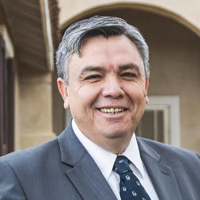
AB 2862: Department of Consumer Affairs: African American applicants.
- Session Year: 2023-2024
- House: Assembly
- Latest Version Date: 2024-04-17
Current Status:
Failed
(2024-07-01: In committee: Set, first hearing. Hearing canceled at the request of author.)
Introduced
In Committee
First Chamber
In Committee
Second Chamber
Enacted
Existing law prescribes requirements for licensure and regulation of various businesses and professions, including healing arts and real estate businesses and professions, by various boards, bureaus, commissions, committees, and departments. establishes the Department of Consumer Affairs, which is composed of specified boards that license and regulate various professions.
This bill would require those boards to prioritize African American applicants seeking licenses under these provisions, especially applicants who are descended from a person enslaved in the United States. The bill would define various terms for these purposes. repeal those provisions on January 1, 2029.
Existing law prescribes requirements for licensure and regulation of various businesses and professions, including healing arts and real estate businesses and professions, by various boards, bureaus, commissions, committees, and departments.
This bill would require boards to prioritize African American applicants seeking licenses under these provisions, especially applicants who are descended from a person enslaved in the United States. The bill would define various terms for these purposes.
(a)Notwithstanding any other law, a board shall prioritize African American applicants seeking licenses, especially applicants who are descended from a person enslaved in the United States.
(b)This section shall remain in effect only until January 1, 2029, and as of that date is repealed.
SECTION 1.Division 1.1 (commencing with Section 473) is added to the Business and Professions Code, to read:1.1.Prioritization of Licenses473.(a)For purposes of this division:(1)Board includes bureau, commission, committee, department, division, examining committee, program, and agency.(2)License includes certificate, registration, or other means to engage in a business or profession regulated by this code.(b)Notwithstanding any other law, a board shall prioritize African American applicants seeking licenses, especially applicants who are descended from a person enslaved in the United States.(a)For purposes of this division:
(1)Board includes bureau, commission, committee, department, division, examining committee, program, and agency.
(2)License includes certificate, registration, or other means to engage in a business or profession regulated by this code.
(b)Notwithstanding any other law, a board shall prioritize African American applicants seeking licenses, especially applicants who are descended from a person enslaved in the United States.
|
Date
|
Status
|
|---|---|
| Jul 1, 2024 | In committee: Set, first hearing. Hearing canceled at the request of author. |
| Jun 24, 2024 | In committee: Hearing postponed by committee. |
| Jun 5, 2024 | Referred to Coms. on B., P. & E. D. and JUD. |
| May 23, 2024 | In Senate. Read first time. To Com. on RLS. for assignment. |
| May 22, 2024 | Read third time. Passed. Ordered to the Senate. (Ayes 56. Noes 1. Page 5512.) |
| May 20, 2024 | Read second time. Ordered to third reading. |
| May 16, 2024 | From committee: Do pass. (Ayes 11. Noes 4.) (May 16). |
| May 8, 2024 | In committee: Set, first hearing. Referred to APPR. suspense file. |
| Apr 23, 2024 | From committee: Do pass and re-refer to Com. on APPR. (Ayes 9. Noes 2.) (April 23). Re-referred to Com. on APPR. |
| Apr 18, 2024 | Re-referred to Com. on JUD. |
| Apr 17, 2024 | Read second time and amended. |
| Apr 16, 2024 | From committee: Amend, and do pass as amended and re-refer to Com. on JUD. (Ayes 13. Noes 2.) (April 16). |
| Apr 8, 2024 | In committee: Set, first hearing. Hearing canceled at the request of author. |
| Mar 11, 2024 | Referred to Coms. on B. & P. and JUD. |
| Feb 16, 2024 | From printer. May be heard in committee March 17. |
| Feb 15, 2024 | Read first time. To print. |
|
Date
|
Description
|
Location
|
Votes
|
|
|---|---|---|---|---|
| May 22, 2024 | AB 2862 Gipson Assembly Third Reading | Assembly Floor |
Passed |
|
| May 16, 2024 | Do pass. | Assembly Standing Committee on Appropriations |
Passed |
|
| Apr 23, 2024 | Do pass and be re-referred to the Committee on [Appropriations] | Assembly Standing Committee on Judiciary |
Passed |
|
| Apr 16, 2024 | Do pass as amended and be re-referred to the Committee on [Judiciary] | Assembly Standing Committee on Business and Professions |
Passed |
This list shows positions taken on this bill by organizations on the date displayed, which is linked to the original source.
Positions by individuals are not included.
|
Organization
|
Position
|
Date
|
|---|---|---|
| California African American Chamber Of Commerce | ** Support | |
| Dental Board of California | ** Against | |
| Greater Sacramento Urban League | ** Support | |
| ikar | ** Support | |
| Pacific Legal Foundation | ** Against | |
| Respiratory Care Board of California | ** Against | |
| Santa Monica Democratic Club | ** Support |
SENATE COMMITTEE ON
BUSINESS, PROFESSIONS AND ECONOMIC DEVELOPMENT
Senator Angelique Ashby, Chair
2023 - 2024 Regular
Bill No: Hearing Date: July 1, 2024
Author: | |||
Version: |
| ||
Urgency: | Fiscal: | ||
Consultant: | |||
Subject:
SUMMARY:
Requires all licensing boards, bureaus, commissions, and programs (boards) within the Department of Consumer Affairs (DCA) to prioritize African American applicants seeking licensure, especially those who are descended from an enslaved person in the United States, until January 1, 2029.
NOTE:
This measure is double-referred to the Senate Committee on Judiciary, second.
Existing law:
- Prohibits including any question relative to an applicant’s race, sex, marital status, or religion in any application blank or form required to be filled in and submitted by an applicant to any department, board, commission, officer, agent, or employee of this state. (Government Code (GC) § 8310)
- Establishes the DCA within the Business, Consumer Services, and Housing Agency. (Business and Professions Code (BPC) §§ 100 et seq.)
- Establishes various boards, bureaus, and other entities within the jurisdiction of the DCA. (BPC § 101)
- Requires boards within the DCA to expedite, and authorizes boards to assist, the initial licensure process for an applicant who has served as an active duty member of the Armed Forces of the United States and was honorably discharged or who, beginning July 1, 2024, is enrolled in the United States Department of Defense SkillBridge program. (BPC § 115.4)
- Requires boards within the DCA to expedite the licensure process and waive any associated fees for applicants who hold a current license in another state and who are married to, or in a domestic partnership or other legal union with, an active duty member of the Armed Forces of the United States who is assigned to a duty station in this state under official active duty military orders. (BPC § 115.5)
- Requires boards within the DCA to expedite, and authorizes boards to assist, the initial licensure process for applicants who have been admitted to the United States as a refugee, have been granted asylum by the Secretary of Homeland Security or the Attorney General of the United States, or have a special immigrant visa. (BPC § 135.4)
- Requires the Medical Board of California (MBC), the Osteopathic Medical Board of California (OMBC), the Board of Registered Nursing (BRN), and the Physician Assistant Board (PAB) to expedite the licensure process for applicants who demonstrate that they intend to provide abortions within the scope of practice of their license. (BPC § 870)
- Requires the MBC to give priority review status to the application of an applicant for a physician’s and surgeon’s certificate who can demonstrate that they intend to practice in a medically underserved area or serve a medically underserved population. (BPC § 2092)
- Requests that the Regents of the University of California assemble a colloquium of scholars to draft a research proposal to analyze the economic benefits of slavery that accrued to owners and the businesses, including insurance companies and their subsidiaries that received those benefits. (Education Code § 92615)
- Requires the Insurance Commissioner to obtain the names of any slaveholders or slaves described in specified insurance records, and to make the information available to the public and the Legislature. (Insurance Code (IC) § 13811)
- Declares that descendants of slaves, whose ancestors were defined as private property, dehumanized, divided from their families, forced to perform labor without appropriate compensation or benefits, and whose ancestors’ owners were compensated for damages by insurers, are entitled to full disclosure. (IC § 13813)
- Requires the State Controller’s Office and the Department of Human Resources, when collecting demographic data as to the ancestry or ethnic origin of persons hired into state employment, to include collection categories and tabulations for Black or African American groups, including, but not limited to, African Americans who are descendants of persons who were enslaved in the United States. (GC § 8310.6)
- Requires the Board of Registered Nursing (BRN), the Board of Vocational Nursing and Psychiatric Technicians (BVNPT), the Physician Assistant Board (PAB), and the Respiratory Care Board of California (RCB) to collect specified workforce data from their respective licensees and registrants for future workforce planning at least biennially, with data collected at the time of electronic license or registration renewal as applicable. (BPC § 502(a)(1))
- Provides that all other healing arts boards shall request the specified workforce data for future workforce planning at least biennially, with data collected at the time of electronic license or registration renewal as applicable. (BPC § 502(a)(2))
- Specifies the optional information as included within the workforce data collected or requested by healing arts boards, including race. (BPC § 502(b))
- Requires each board to maintain the confidentiality of the information it receives from licensees and registrants and to only release information in an aggregate form that cannot be used to identify an individual. (BPC § 502(c))
- Prohibits boards from requiring a licensee or registrant to provide the workforce data as a condition for license or registration renewal, or from disciplining licensees or registrants for not providing the information. (BPC § 502(f))
- Requires the Dental Board of California (DBC) to collect information, if provided by the licensee at the time of initial licensure or renewal, including the licensee’s cultural background and foreign language proficiency. (BPC § 1715.5)
- Requires the Dental Hygienists Board (DHB) to collect information, if provided by an licensee upon initial licensure or renewal, including the licensee’s cultural background and foreign language proficiency. (BPC § 1902.2)
- Requires licensed physicians and surgeons to report to the MBC, immediately upon issuance of an initial license and at the time of license renewal, information relating to their cultural background and foreign language proficiency, unless the licensee declines to provide that information. (BPC § 2425.3)
- Requires the OMBC to collect specified information upon initial licensure and renewal, including the licensee’s cultural background and foreign language competency, if reported by the licensee. (BPC § 2455.2)
- Authorizes the Bureau of Real Estate Appraisers (BREA) to request a licensee to identify their race and other demographic information; requires BREA to maintain confidentiality of information received; prohibits requiring the information as a condition of licensure or renewal; and authorizes BREA to publish aggregate data to its website. (BPC § 11347)
- Requires the Board of Registered Nursing to incorporate regional forecasts into its biennial analyses of the nursing workforce and to develop a plan to address shortages. (BPC § 2717)
- Authorizes the California Architects Board (CAB) to request a licensee to identify their race, ethnicity, sexual orientation, gender, or gender identity; requires CAB to maintain confidentiality of information received, prohibits requiring the information as a condition of licensure or renewal; and authorizes CAB to publish aggregate data to its website. (BPC § 5552.2)
This bill currently, until January 1, 2029, requires boards to prioritize African American applicants seeking licenses, especially applicants who are descended from a person enslaved in the United States.
As proposed to be amended by the Author, the bill would, until January 1, 2029, require boards to prioritize applicants for licensing who are descendants of African American chattel enslaved persons or who are identified as descendants through a process by the California American Freedman Affairs Agency.
FISCAL EFFECT:
This bill is keyed fiscal by Legislative Counsel. According to the Assembly Committee on Appropriations, this bill creates a non-absorbable impact totaling $1.04 million with five programs reporting and one-time costs for DCA’s Office of Information Services.
COMMENTS:
- Purpose. The author is the sponsor of this bill. According to the Author, “Currently, there are barriers to employment, especially for African Americans seeking occupational licenses. Furthermore, there is severe under-representation of African Americans in professional occupations. There are also extreme disparities when comparing white professionals and African American professionals, including salary differences, and leadership or managerial positions.”
- Background.
DCA licensure and regulation of professions. The DCA consists of 36 boards, bureaus, and other entities responsible for licensing, certifying, or otherwise regulating professionals in California, including 16 that issue licenses to healing arts professionals. As of March 2023, there were over 3.4 million active licensees who were issued a license by a program within DCA. Licensure is intended to protect consumers by ensuring applicants have the knowledge, skills, and abilities to engage in regulated activity without creating a negative impact on public health, safety, and welfare.
Each of DCA’s 280 license types has its own unique requirements, with the practice act for each profession providing for various prerequisites including demonstration of prelicensure education, experience, training, passing an examination, and other requirements. Most boards require a background check to ensure the applicant does not have a history of convictions that are substantially related to the scope of the profession. Boards additionally require the applicant to pay a fee, which is set at an amount reasonable for the board to recover the cost of processing an application. Additionally, business applicants may be required to obtain insurance and/or a bond, demonstrate good standing with the Secretary of State, and appoint a qualified manager or responsible managing employee to oversee the business’ operations within the scope of the license.
Boards typically set internal targets for application processing timelines and seek adequate staffing in an effort to meet those targets. The average processing time between initial application submission and license issuance varies depending on multiple factors, some that are within the programs’ control; however, most delays occur based on factors outside the licensing programs’ control. These include, but are not limited to, the number of applications received, length of time to obtain an applicant’s criminal history, time for the applicant to take and pass a required examination, and application deficiencies that must be resolved by the applicant, among others. License processing timelines are then regularly evaluated through the Legislature’s sunset review oversight process.
California Reparations Report. AB 3121 (Weber, Chapter 319, Statutes of 2020) established a task force to study the issue of reparations for African Americans; propose ways to educate the California public about its findings; make recommendations on the forms that reparations might take; and submit a report of its findings to the Legislature. The bill’s findings and declarations stated that as “a result of the historic and continued discrimination, African Americans continue to suffer debilitating economic, educational, and health hardships,” including, among other hardships, “an unemployment rate more than twice the current white unemployment rate.”
The Task Force created by AB 3121 submitted a report to the Legislature on June 29, 2023, the California Reparations Report, drafted with staff assistance from the California Department of Justice, provides a comprehensive history of numerous systemic injustices and discriminatory practices used to “restrict the freedom and prosperity of African Americans.” The report also includes recommendations for how the state should formally apologize for slavery, provide compensation and restitution, and address the effects of enslavement and other historical atrocities.
Chapter 10 of the Task Force’s report, titled “Stolen Labor and Hindered Opportunity,” addresses how African Americans have historically been excluded from occupational licenses. The report describes how the use of licensure to regulate jobs increased beginning in the 1950s and African American workers were excluded from economic opportunity, in large part due to laws disqualifying licenses for applicants with criminal records, which disproportionately impacted African Americans. This specific issue was addressed in California through enactment of AB 2138 (Chiu, Chapter 995, Statutes of 2018), which reduced barriers to licensure for individuals with prior criminal histories by: 1) limiting the discretion of DCA’s boards to deny a license to cases where the applicant was convicted of a crime substantially related to the qualifications, functions, or functions of a licensee or to an applicant who has been subjected to discipline by a licensing board, 2) excluding nonviolent substantially related offenses from consideration in licensing decisions if the conviction is seven years or older; and 3) in cases where the applicant could be denied, requires programs to take into consideration evidence of rehabilitation submitted by the applicant to demonstrate their fitness for licensure.
The Task Force report states, “while AB 2138 represents progress, other schemes remain in California which continue to have a racially discriminatory impact.” The Task Force then provides several recommendations on how the Legislature could “expand on AB 2138.” This includes a recommendation in favor of “prioritizing African American applicants seeking occupational licenses, especially those who are descendants [of slavery].”
Expedited Licensure. On January 31, 2024, the California Legislative Black Caucus announced the introduction of the 2024 Reparations Priority Bill Package, consisting of a series of bills introduced by members of the caucus to implement the recommendations in the Task Force’s report. As part of that package, this bill seeks to implement the Task Force’s recommendation by requiring boards to prioritize African American applicants seeking licenses, especially applicants who are descended from a person enslaved in the United States. Although there are no existing prioritization laws, there are laws that require expedited licensure.
Existing expedited licensure laws include those to benefit: 1) former members of the military; 2) military spouses, domestic partners, and those in any other legal union with a current member of the military stationed in California; 3) refugees and those granted asylum; and 4) specified healing arts licensees who intend to perform abortions in California.
Each law requires the applicant to show evidence that they qualify for the expedited license. For example, BPC § 115.4 requires DCA programs to expedite applications from a former member of the Armed Services. To qualify, an applicant must provide evidence to the board that the applicant has served as an active duty member of the Armed Forces of the United States and was honorably discharged with their application.
Separately, BPC § 115.5 requires DCA programs to expedite an application received from a person who is married to, or in a domestic partnership or other legal union with, an active duty member of the military. To qualify for an expedited license, the applicant must submit evidence that the applicant is married to, or in a domestic partnership or other legal union with, an active duty member of the Armed Forces of the United States who is assigned to a duty station in California under official active duty military orders and that they hold a current license in another state, district, or territory of the United States.
Each of the remaining types of license expedition – refugees and those granted asylum under BPC § 135.4; active-duty members of a regular component of the Armed Forces who are enrolled in the U.S. Department of Defense SkillBridge program under BPC § 115.4 (b); and specified healing arts licensees who intend to provide abortions under BPC § 870 – require the applicant to provide similar forms of evidence that they qualify for expedited licensure.
- Related Legislation. ACA 8 (Wilson of 2024) would amend to the state Constitution to prohibit slavery of any kind, including as punishment for a crime. (Status: This bill is pending in the Senate Committee on Appropriations.)
ACR 135 (Weber of 2024) would formally acknowledge the harms and atrocities committed by representatives of the State of California who promoted, facilitated, enforced, and permitted the institution of chattel slavery and the legacy of ongoing badges and incidents of slavery that form the systemic structures of discrimination. (Status: This bill is pending in the Senate Committee on Judiciary.)
AB 3089 (Jones-Sawyer of 2024) would provide that the State of California apologizes for perpetuating the harms African Americans faced by having imbued racial prejudice through segregation, public and private discrimination, and unequal disbursal of state and federal funding and declares that such actions shall not be repeated. (Status: This bill is pending in the Senate Committee on Judiciary.)
AB 2442 (Zbur of 2024) would require specified healing arts boards under the DCA to expedite the licensure process for applicants who demonstrate that they intend to provide gender-affirming health care or gender-affirming mental health care services. (Status: This bill is pending third reading in the Senate.)
SB 1050 (Bradford of 2024) would establish procedures by which a person who lost property because of racially motivated eminent domain, as defined, may apply to the proposed state agency for the return of the property, if still in possession of entity that did the taking, other public property of equal value, or financial compensation. (Status: This bill is pending in the Assembly Committee on Appropriations.)
SB 1067 (Smallwood-Cuevas of 2024) would require healing arts boards to expedite the licensure process for applicants who intend to practice in a medically underserved area. (Status: This bill is pending in the Assembly Committee on Appropriations.)
AB 657 (Cooper, Chapter 560, Statutes of 2022) required specified boards under the DCA to expedite applications from applicants who demonstrate that they intend to provide abortions.
AB 3121 (Weber, Chapter 319, Statutes of 2020) established an eight-member task force to study the issue of reparations for African Americans; propose ways to educate the California public about its findings; make recommendations on the forms that reparations might take; and submit a report of its findings to the Legislature, as specified.
AB 2113 (Low, Chapter 186, Statutes of 2020) required entities under the DCA to expedite applications from refugees, asylees, and special immigrant visa holders.
AB 2138 (Chiu, Chapter 995, Statutes of 2018) reduced barriers to licensure for individuals with prior criminal convictions.
SB 1226 (Correa, Chapter 657, Statutes of 2014) requires entities under the DCA to expedite applications from honorable discharged veterans.
AB 1904 (Block, Chapter 399, Statutes of 2012) requires entities under the DCA to expedite applications from military spouses and partners.
- Arguments in Support. IKAR writes in support and states, “AB 2862 is a part of the Legislative Black Caucus’ 2024 reparations legislative package that seeks to remove historic and current discriminatory laws and barriers impacting the descendants of enslaved people. For these reasons we are pleased to support AB 2862 (Gipson) and respectfully urge your support.”
The Santa Monica Democratic Club states, Ever since the era of slavery, African-Americans in our country have suffered economic, educational, and health hardships that have prevented them as a people from achieving equality in our society. After studying these long-term and ongoing harms for two years, the Task Force to Study and Develop Reparations Proposals issued its recommendations for appropriate remedies. Based on the task force’s historic report, the California Legislative Black Caucus has introduced 14 measures in its 2024 Reparations Priority BiIl Package. This is a first step in a multi-year effort to dismantle the legacy of slavery and systemic racism in our country.”
- Arguments in Opposition. The Pacific Legal Foundation writes in opposition, “the advantage given to those racially eligible for licensing priority impacts those who are not eligible but have nonetheless experienced licensing discrimination. A license-seeker that may have experienced discrimination but is not African American would be treated worse than an eligible applicant that may have not suffered discrimination. Ultimately, the way to stop discrimination in licensing based on race is to stop discrimination in licensing based on race.”
The Dental Board of California is opposed unless amended and states, “With the recent growth in the number of groups that qualify for expedited processing, the benefits of this expedited processing may diminish because of the increase in the number of applicants that are advanced to processing. It would be useful to have guidance in the bill as to how to manage this growth in expedited processing.” - Policy Considerations and Questions.
Aside from concerns raised in the Assembly, there are several factors that may present implementation challenges if this bill were to move forward as written and as proposed to be amended.
Prioritizing applicants is not the same as expediting licensure. This bill is not clear about its intended impact to the application process and steps required for implementation. Prioritizing an “applicant” can take many forms, which may include expedited licensure. It can also refer to conducting outreach to African Americans about the licensure process and requirements, dedicating a staff member to assist African American applicants through the process, or other methods of prioritizing the applicant that do not include expedited licensure. Without clarification, this bill could be implemented in a manner that is not standard across DCA programs nor as intended by the author. The bill should be amended to clarify what is intended by “prioritize applicants” to communicate the actions to be taken by DCA’s programs. Prioritizing an applicant may take many forms and without establishing a process in statute, each of DCA’s 36 programs may need to develop regulations to define “prioritization,” a process which could take years to accomplish and could result in 36 different outcomes. The bill should be amended to delay implementation to allow DCA’s programs to promulgate regulations.
Eligibility to qualify for prioritization and documentation to establish eligibility. Although the Author has stated this bill is intended to allow for more African Americans to surpass internal barriers, the existing and proposed to be amended forms of this bill do not require expedited licensure. Additionally, the background gives examples of existing expedited license categories for DCA programs as related legislation, implying the intent of this bill is to expedite licensure for African American applicants. The bill would require “prioritization,” not expedited licensure.
Each of the existing requirements to expedite an application includes specified criteria an applicant in order to qualify for an expedited process. Each type of expedited licensure also requires the applicant to submit evidence of eligibility prior to the application being expedited (as described above in the background). Without criteria, any and all applicants could request expedited licensure and without requiring evidence of eligibility, any and all applicants may request to have their application expedited. These considerations also apply to a prioritization process. Processing the requests for prioritization may alone pose a workforce issue for programs, but establishing eligibility documentation is necessary to ensure only the applicants who are intended to receive prioritization benefit from the process.
Other pending legislation, AB 2442 (Zbur of 2024) and SB 1067 (Smallwood-Cuevas of 2024), would require specified healing arts boards within DCA to expedite the licensure process for applicants who demonstrate their intent to provide gender-affirming health care or gender-affirming mental health care services or those who intend to practice in a medically underserved area, respectively. For each bill, the methods of demonstrating the applicant’s eligibility include demonstrating intent to work in one of the relevant areas. The applicant may do this by submitting a letter from an employer or contracting entity indicating that the applicant has accepted employment or entered into a contract to provide the relevant services, as specified by each bill. As proposed to be amended, this bill would assign a new state Agency outside the DCA to establish a process to identify and verify eligibility.
Many of DCA’s programs lack of authority to request an applicant’s race, which may prevent this bill from being implemented. GC § 8310 prohibits any state department, board, commission, officer, agent, or employee of this state from including any question relative to an applicant’s race, sex, marital status, or religion in any application blank or form required to be filled in and submitted by an applicant. About half of DCA’s programs are authorized to request applicants to voluntarily indicate their race. For example, healing arts applicants may complete an optional demographic survey that includes the applicant’s race (BPC § 502) and BREA and CAB are authorized to ask demographic information that includes race, but providing that information is also voluntary (BPC §§ 11347 and 5552.2, respectively). Despite these potential data sources for some programs, nearly half of DCA’s boards do not have authority to collect information that would establish eligibility for the applicant to be prioritized. The current language of this bill does not provide that authority. In order for the intent to be realized, the bill would have to be amended to allow even the proposed new Agency to collect information on applicants’ race and whether they are descended from a person enslaved in this country, as GC § 8310 still prohibits any state department, board, commission, officer, agent, or employee of this state from including any question relative to an applicant’s race, sex, marital status, or religion in any application blank or form required to be filled in and submitted by an applicant.
Should this bill apply to all boards and all license types issued by those boards? Despite statutory attempts to ensure swifter licensing timeframes for specified applicants, factors beyond a program’s control (deficiencies in applications, the length of time fingerprint clearance is provided, delays in receiving transcripts and education program completion verification, time for the applicant to take and pass an examination, and more) can lead to lengthy holdups in the process, regardless of the program’s internal efforts to expedite processing.
Programs that bill proponents cite as having lengthy application processing timeframes are actually processing licenses in shorter timeframes than their internal goals and historic averages. For example, the Dental Board of California reported during its 2024 sunset review oversight that complete applications for licensure licenses are being processed within about 24 days. The Physician Assistant Board has been on target to meet its 30-day licensing timeframe for completed applications but is taking twice that long for applications that are missing information. Between October 2023 and December 2023 they processed the 126 complete PA applications they received within 30 days, but they also received 327 incomplete applications. In order to realize a positive impact from expedited licensure, if in fact prioritization is intended to mean expedited application processing, the Author may wish to include this mandate only for programs that have considerable backlogs and programs that have licensing requirements that include minimal factors outside the board’s control that contribute to delays.
Would this bill lead to an increase of African Americans who obtain a professional license and employment? It is questionable whether a mandate for every program to prioritize applicants will move the state forward in resolving under-representation of African Americans in professional occupations or disparities in pay and representation in leadership or managerial positions. When a person is at the point of applying for licensure, they are already in the pipeline and have likely already obtained the education, experience, training, etc. necessary to become licensed.
There is a lack of credible data to forecast this bill’s true impact. Because DCA programs are prohibited from requiring applicants to respond with their race, and many are prohibited from even asking, there is not reliable data to determine the true potential impact to the programs. As noted by the Assembly Committee on Appropriations, a few programs were unable to quantify the workload to comply with the bill. Collecting data and conducting a study on the significant barriers to employment that occupational licensure poses, and barriers to licensure that exist within DCA boards, as well as in the operations of many other occupational licensing programs like those at the California Department of Public Health and other agencies, could yield helpful information and inform meaningful policy discussions and defined reform proposals moving forward.
SUPPORT AND OPPOSITION:
Support:
IKAR
Santa Monica Democratic Club
Opposition:
Pacific Legal Foundation
Dental Board of California
-- END --
SENATE COMMITTEE ON
BUSINESS, PROFESSIONS AND ECONOMIC DEVELOPMENT
Senator Angelique Ashby, Chair
2023 - 2024 Regular
Bill No: Hearing Date: June 24, 2024
Author: | |||
Version: |
| ||
Urgency: | Fiscal: | ||
Consultant: | |||
Subject:
SUMMARY:
Requires all licensing boards, bureaus, commissions, and programs (boards) within the Department of Consumer Affairs (DCA) to prioritize African American applicants seeking licensure, especially those who are descended from an enslaved person in the United States, until January 1, 2029.
NOTE:
This measure is double-referred to the Senate Committee on Judiciary, second.
Existing law:
- Prohibits including any question relative to an applicant’s race, sex, marital status, or religion in any application blank or form required to be filled in and submitted by an applicant to any department, board, commission, officer, agent, or employee of this state. (Government Code (GC) § 8310)
- Establishes the DCA within the Business, Consumer Services, and Housing Agency. (Business and Professions Code (BPC) §§ 100 et seq.)
- Establishes various boards, bureaus, and other entities within the jurisdiction of the DCA. (BPC § 101)
- Requires boards within the DCA to expedite, and authorizes boards to assist, the initial licensure process for an applicant who has served as an active duty member of the Armed Forces of the United States and was honorably discharged or who, beginning July 1, 2024, is enrolled in the United States Department of Defense SkillBridge program. (BPC § 115.4)
- Requires boards within the DCA to expedite the licensure process and waive any associated fees for applicants who hold a current license in another state and who are married to, or in a domestic partnership or other legal union with, an active duty member of the Armed Forces of the United States who is assigned to a duty station in this state under official active duty military orders. (BPC § 115.5)
- Requires boards within the DCA to expedite, and authorizes boards to assist, the initial licensure process for applicants who have been admitted to the United States as a refugee, have been granted asylum by the Secretary of Homeland Security or the Attorney General of the United States, or have a special immigrant visa. (BPC § 135.4)
- Requires the Medical Board of California (MBC), the Osteopathic Medical Board of California (OMBC), the Board of Registered Nursing (BRN), and the Physician Assistant Board (PAB) to expedite the licensure process for applicants who demonstrate that they intend to provide abortions within the scope of practice of their license. (BPC § 870)
- Requires the MBC to give priority review status to the application of an applicant for a physician’s and surgeon’s certificate who can demonstrate that they intend to practice in a medically underserved area or serve a medically underserved population. (BPC § 2092)
- Requests that the Regents of the University of California assemble a colloquium of scholars to draft a research proposal to analyze the economic benefits of slavery that accrued to owners and the businesses, including insurance companies and their subsidiaries that received those benefits. (Education Code § 92615)
- Requires the Insurance Commissioner to obtain the names of any slaveholders or slaves described in specified insurance records, and to make the information available to the public and the Legislature. (Insurance Code (IC) § 13811)
- Declares that descendants of slaves, whose ancestors were defined as private property, dehumanized, divided from their families, forced to perform labor without appropriate compensation or benefits, and whose ancestors’ owners were compensated for damages by insurers, are entitled to full disclosure. (IC § 13813)
- Requires the State Controller’s Office and the Department of Human Resources, when collecting demographic data as to the ancestry or ethnic origin of persons hired into state employment, to include collection categories and tabulations for Black or African American groups, including, but not limited to, African Americans who are descendants of persons who were enslaved in the United States. (GC § 8310.6)
- Requires the Board of Registered Nursing (BRN), the Board of Vocational Nursing and Psychiatric Technicians (BVNPT), the Physician Assistant Board (PAB), and the Respiratory Care Board of California (RCB) to collect specified workforce data from their respective licensees and registrants for future workforce planning at least biennially, with data collected at the time of electronic license or registration renewal as applicable. (BPC § 502(a)(1))
- Provides that all other healing arts boards shall request the specified workforce data for future workforce planning at least biennially, with data collected at the time of electronic license or registration renewal as applicable. (BPC § 502(a)(2))
- Specifies the optional information as included within the workforce data collected or requested by healing arts boards, including race. (BPC § 502(b))
- Requires each board to maintain the confidentiality of the information it receives from licensees and registrants and to only release information in an aggregate form that cannot be used to identify an individual. (BPC § 502(c))
- Prohibits boards from requiring a licensee or registrant to provide the workforce data as a condition for license or registration renewal, or from disciplining licensees or registrants for not providing the information. (BPC § 502(f))
- Requires the Dental Board of California (DBC) to collect information, if provided by the licensee at the time of initial licensure or renewal, including the licensee’s cultural background and foreign language proficiency. (BPC § 1715.5)
- Requires the Dental Hygienists Board (DHB) to collect information, if provided by an licensee upon initial licensure or renewal, including the licensee’s cultural background and foreign language proficiency. (BPC § 1902.2)
- Requires licensed physicians and surgeons to report to the MBC, immediately upon issuance of an initial license and at the time of license renewal, information relating to their cultural background and foreign language proficiency, unless the licensee declines to provide that information. (BPC § 2425.3)
- Requires the OMBC to collect specified information upon initial licensure and renewal, including the licensee’s cultural background and foreign language competency, if reported by the licensee. (BPC § 2455.2)
- Authorizes the Bureau of Real Estate Appraisers (BREA) to request a licensee to identify their race and other demographic information; requires BREA to maintain confidentiality of information received; prohibits requiring the information as a condition of licensure or renewal; and authorizes BREA to publish aggregate data to its website. (BPC § 11347)
- Requires the Board of Registered Nursing to incorporate regional forecasts into its biennial analyses of the nursing workforce and to develop a plan to address shortages. (BPC § 2717)
- Authorizes the California Architects Board (CAB) to request a licensee to identify their race, ethnicity, sexual orientation, gender, or gender identity; requires CAB to maintain confidentiality of information received, prohibits requiring the information as a condition of licensure or renewal; and authorizes CAB to publish aggregate data to its website. (BPC § 5552.2)
This bill:
- Requires boards to prioritize African American applicants seeking licenses, especially applicants who are descended from a person enslaved in the United States.
- Repeals the provisions of this bill on January 1, 2029.
FISCAL EFFECT:
This bill is keyed fiscal by Legislative Counsel. According to the Assembly Committee on Appropriations, this bill creates a non-absorbable impact totaling $1.04 million with five programs reporting and one-time costs for DCA’s Office of Information Services.
COMMENTS:
- Purpose. The author is the sponsor of this bill. According to the Author, “Currently, there are barriers to employment, especially for African Americans seeking occupational licenses. Furthermore, there is severe under-representation of African Americans in professional occupations. There are also extreme disparities when comparing white professionals and African American professionals, including salary differences, and leadership or managerial positions.”
- Background.
DCA licensure and regulation of professions. The DCA consists of 36 boards, bureaus, and other entities responsible for licensing, certifying, or otherwise regulating professionals in California, including 16 that issue licenses to healing arts professionals. As of March 2023, there were over 3.4 million active licensees who were issued a license by a program within DCA. Licensure is intended to protect consumers by ensuring applicants have the knowledge, skills, and abilities to engage in regulated activity without creating a negative impact on public health, safety, and welfare.
Each of DCA’s 280 license types has its own unique requirements, with the practice act for each profession providing for various prerequisites including demonstration of prelicensure education, experience, training, passing an examination, and other requirements. Most boards require a background check to ensure the applicant does not have a history of convictions that are substantially related to the scope of the profession. Boards additionally require the applicant to pay a fee, which is set at an amount reasonable for the board to recover the cost of processing an application. Additionally, business applicants may be required to obtain insurance and/or a bond, demonstrate good standing with the Secretary of State, and appoint a qualified manager or responsible managing employee to oversee the business’ operations within the scope of the license.
Boards typically set internal targets for application processing timelines and seek adequate staffing in an effort to meet those targets. The average processing time between initial application submission and license issuance varies depending on multiple factors, some that are within the programs’ control; however, most delays occur based on factors outside the licensing programs’ control. These include, but are not limited to, the number of applications received, length of time to obtain an applicant’s criminal history, time for the applicant to take and pass a required examination, and application deficiencies that must be resolved by the applicant, among others. License processing timelines are then regularly evaluated through the Legislature’s sunset review oversight process.
California Reparations Report. AB 3121 (Weber, Chapter 319, Statutes of 2020) established a task force to study the issue of reparations for African Americans; propose ways to educate the California public about its findings; make recommendations on the forms that reparations might take; and submit a report of its findings to the Legislature. The bill’s findings and declarations stated that as “a result of the historic and continued discrimination, African Americans continue to suffer debilitating economic, educational, and health hardships,” including, among other hardships, “an unemployment rate more than twice the current white unemployment rate.”
The Task Force created by AB 3121 submitted a report to the Legislature on June 29, 2023, the California Reparations Report, drafted with staff assistance from the California Department of Justice, provides a comprehensive history of numerous systemic injustices and discriminatory practices used to “restrict the freedom and prosperity of African Americans.” The report also includes a number of recommendations for how the state should formally apologize for slavery, provide compensation and restitution, and address the pervasive effects of enslavement and other historical atrocities.
Chapter 10 of the Task Force’s report, titled “Stolen Labor and Hindered Opportunity,” addresses how African Americans have historically been excluded from occupational licenses. The report describes how the use of licensure to regulate jobs increased beginning in the 1950s and African American workers were excluded from economic opportunity, in large part due to laws disqualifying licenses for applicants with criminal records, which disproportionately impacted African Americans. This specific issue was addressed in California through enactment of AB 2138 (Chiu, Chapter 995, Statutes of 2018), which reduced barriers to licensure for individuals with prior criminal histories by: 1) limiting the discretion of DCA’s boards to deny a license to cases where the applicant was convicted of a crime substantially related to the qualifications, functions, or functions of a licensee or to an applicant who has been subjected to discipline by a licensing board, 2) excluding nonviolent substantially related offenses from consideration in licensing decisions if the conviction is seven years or older; and 3) in cases where the applicant could be denied, requires programs to take into consideration evidence of rehabilitation submitted by the applicant to demonstrate their fitness for licensure.
The Task Force report states, “while AB 2138 represents progress, other schemes remain in California which continue to have a racially discriminatory impact.” The Task Force then provides several recommendations on how the Legislature could “expand on AB 2138.” This includes a recommendation in favor of “prioritizing African American applicants seeking occupational licenses, especially those who are descendants [of slavery].”
Expedited Licensure. On January 31, 2024, the California Legislative Black Caucus announced the introduction of the 2024 Reparations Priority Bill Package, consisting of a series of bills introduced by members of the caucus to implement the recommendations in the Task Force’s report. As part of that package, this bill seeks to implement the Task Force’s recommendation by requiring boards to prioritize African American applicants seeking licenses, especially applicants who are descended from a person enslaved in the United States. This requirement is intended to be similar to existing expedited licensure processes for military families, refugee applicants, and abortion providers.
Existing expedited licensure laws include those to benefit: 1) former members of the military; 2) military spouses, domestic partners, and those in any other legal union with a current member of the military stationed in California; 3) refugees and those granted asylum; and 4) specified healing arts licensees who intend to perform abortions in California.
Each law requires the applicant to show evidence that they qualify for the expedited license. For example, BPC § 115.4 requires DCA programs to expedite applications from a former member of the Armed Services. To qualify, an applicant must provide evidence to the board that the applicant has served as an active duty member of the Armed Forces of the United States and was honorably discharged with their application.
Separately, BPC § 115.5 requires DCA programs to expedite an application received from a person who is married to, or in a domestic partnership or other legal union with, an active duty member of the military. To qualify for an expedited license, the applicant must submit evidence that the applicant is married to, or in a domestic partnership or other legal union with, an active duty member of the Armed Forces of the United States who is assigned to a duty station in California under official active duty military orders and that they hold a current license in another state, district, or territory of the United States.
Each of the remaining types of license expedition – refugees and those granted asylum under BPC § 135.4; active-duty members of a regular component of the Armed Forces who are enrolled in the U.S. Department of Defense SkillBridge program under BPC § 115.4 (b); and specified healing arts licensees who intend to provide abortions under BPC § 870 – require the applicant to provide similar forms of evidence that they qualify for expedited licensure.
- Related Legislation. ACA 8 (Wilson of 2024) would amend to the state Constitution to prohibit slavery of any kind, including as punishment for a crime. (Status: This bill is pending in the Senate Committee on Appropriations.)
ACR 135 (Weber of 2024) would formally acknowledge the harms and atrocities committed by representatives of the State of California who promoted, facilitated, enforced, and permitted the institution of chattel slavery and the legacy of ongoing badges and incidents of slavery that form the systemic structures of discrimination. (Status: This bill is pending in the Senate Committee on Judiciary.)
AB 3089 (Jones-Sawyer of 2024) would provide that the State of California apologizes for perpetuating the harms African Americans faced by having imbued racial prejudice through segregation, public and private discrimination, and unequal disbursal of state and federal funding and declares that such actions shall not be repeated. (Status: This bill is pending in the Senate Committee on Judiciary.)
AB 2442 (Zbur of 2024) requires specified healing arts boards under the DCA to expedite the licensure process for applicants who demonstrate that they intend to provide gender-affirming health care or gender-affirming mental health care services. (Status: This bill is pending third reading in the Senate.)
SB 1067 (Smallwood-Cuevas of 2024) would require healing arts boards to expedite the licensure process for applicants who intend to practice in a medically underserved area. (Status: This bill is pending in the Assembly Committee on Appropriations.)
AB 657 (Cooper, Chapter 560, Statutes of 2022) required specified boards under the DCA to expedite applications from applicants who demonstrate that they intend to provide abortions.
AB 3121 (Weber, Chapter 319, Statutes of 2020) established an eight-member task force to study the issue of reparations for African Americans; propose ways to educate the California public about its findings; make recommendations on the forms that reparations might take; and submit a report of its findings to the Legislature, as specified.
AB 2113 (Low, Chapter 186, Statutes of 2020) required entities under the DCA to expedite applications from refugees, asylees, and special immigrant visa holders.
AB 2138 (Chiu, Chapter 995, Statutes of 2018) reduced barriers to licensure for individuals with prior criminal convictions.
SB 1226 (Correa, Chapter 657, Statutes of 2014) requires entities under the DCA to expedite applications from honorable discharged veterans.
AB 1904 (Block, Chapter 399, Statutes of 2012) requires entities under the DCA to expedite applications from military spouses and partners.
- Arguments in Support. IKAR writes in support and states, “AB 2862 is a part of the Legislative Black Caucus’ 2024 reparations legislative package that seeks to remove historic and current discriminatory laws and barriers impacting the descendants of enslaved people. For these reasons we are pleased to support AB 2862 (Gipson) and respectfully urge your support.”
The Santa Monica Democratic Club states, Ever since the era of slavery, African-Americans in our country have suffered economic, educational, and health hardships that have prevented them as a people from achieving equality in our society. After studying these long-term and ongoing harms for two years, the Task Force to Study and Develop Reparations Proposals issued its recommendations for appropriate remedies. Based on the task force’s historic report, the California Legislative Black Caucus has introduced 14 measures in its 2024 Reparations Priority BiIl Package. This is a first step in a multi-year effort to dismantle the legacy of slavery and systemic racism in our country.”
- Arguments in Opposition. The Pacific Legal Foundation writes in opposition, “the advantage given to those racially eligible for licensing priority impacts those who are not eligible but have nonetheless experienced licensing discrimination. A license-seeker that may have experienced discrimination but is not African American would be treated worse than an eligible applicant that may have not suffered discrimination. Ultimately, the way to stop discrimination in licensing based on race is to stop discrimination in licensing based on race.”
The Dental Board of California is opposed unless amended and states, “With the recent growth in the number of groups that qualify for expedited processing, the benefits of this expedited processing may diminish because of the increase in the number of applicants that are advanced to processing. It would be useful to have guidance in the bill as to how to manage this growth in expedited processing.” - Policy Considerations and Questions.
Aside from concerns raised in the Assembly, there are several factors that may present implement challenges if this bill were to move forward as written.
- Prioritizing applicants is not the same as expediting licensure. The language of this bill is not clear about its intended impact to the application process and steps required for implementation. Prioritizing an “applicant” can take many forms, which may include expedited licensure. It can also refer to conducting outreach to African Americans about the licensure process and requirements, dedicating a staff member to assist African American applicants through the process, or other methods of prioritizing the applicant that do not include expedited licensure. In a worse case scenario, prioritization could be applied to a program’s enforcement efforts, since so many DCA boards are required to prioritize enforcement in certain ways, something that appears to clearly be outside of the spirit and intent of this measure. Without clarification, this bill could be implemented in a manner that is not standard across DCA programs nor as intended by the author.
The author may wish to amend the bill to clarify what is intended by “prioritize applicants” to communicate the actions to be taken by DCA’s programs.
- Eligibility to qualify for prioritization (or an expedited license) and documentation to establish eligibility. Although the current form of this bill does not require expedited licensure, the Author has stated this bill is intended to allow for more African Americans to surpass internal barriers. Additionally, the background gives examples of existing expedited license categories for DCA programs as related legislation, implying the intent of this bill is to expedite licensure for African American applicants.
Each of the existing requirements to expedite an application includes specified criteria an applicant in order to qualify for an expedited process. Each type of expedited licensure also requires the applicant to submit evidence of eligibility prior to the application being expedited (as described above in the background). Without criteria, any and all applicants could request expedited licensure and without requiring evidence of eligibility, any and all applicants may request to have their application expedited. Processing the requests alone may pose a workforce issue for programs, but establishing eligibility documentation is necessary to ensure only the applicants who are intended to receive prioritization (or expedited licensure) benefit from the process.
If the author’s intent is to enact prioritization (or an expedited license) for anyone who claims to have African American ancestry by self-certification, this process is not established by the bill. Other pending legislation, AB 2442 (Zbur of 2024), would require specified healing arts boards within DCA to expedite the licensure process for applicants who demonstrate their intent to provide gender-affirming health care or gender-affirming mental health care services. Among the methods of demonstrating the applicant’s intent, the applicant may submit a letter from an employer or contracting entity indicating that the applicant has accepted employment or entered into a contract to provide gender-affirming health care or gender-affirming mental health care, the applicant’s starting date, and the location where the applicant will be providing gender-affirming health care or gender-affirming mental health care within the scope of practice of their license.
Another pending bill, SB 1067 (Smallwood-Cuevas of 2024), would require healing arts boards to expedite the licensure process for applicants who intend to practice in a medically underserved area. To qualify for expedited licensure, the applicant must demonstrate their intent to practice in a medically underserved area or serve a medically underserved population by providing proper documentation, including, but not limited to, a letter from an employer, as specified by the bill.
When the majority of applicants are prioritized (or applications expedited), the benefit of requesting an expedited licensed is negated, especially if self-certification, or no process at all, is enacted. The lack of eligibility criteria and documentation may result in an influx of requests to expedite licensure, potentially creating an impediment to DCA’s licensing programs and increasing processing times for all applicants.
To prevent misuse and abuse, the author may wish to set criteria and documentation submission requirements to mitigate impact to programs from requests from those who would not be eligible for prioritization (or expedited licensure) based on status as an African American and descendancy from a person enslaved in the United States.
- Many of DCA’s programs lack of authority to request an applicant’s race, which may prevent this bill from being implemented. GC § 8310 prohibits any state department, board, commission, officer, agent, or employee of this state from including any question relative to an applicant’s race, sex, marital status, or religion in any application blank or form required to be filled in and submitted by an applicant. About half of DCA’s programs are authorized to request applicants to voluntarily indicate their race. For example, healing arts applicants may complete an optional demographic survey that includes the applicant’s race (BPC § 502) and BREA and CAB are authorized to ask demographic information that includes race, but providing that information is also voluntary (BPC §§ 11347 and 5552.2, respectively). Despite these potential data sources for some programs, nearly half of DCA’s boards do not have authority to collect information that would establish eligibility for the applicant to be prioritized. The current language of this bill does not provide that authority.
The author may wish to consider authorizing all DCA programs to collect information on applicants’ race and whether they are descended from a person enslaved in this country.
- Should this bill apply to all boards and all license types issued by those boards? Despite statutory attempts to ensure swifter licensing timeframes for specified applicants, factors beyond a program’s control (deficiencies in applications, the length of time fingerprint clearance is provided, delays in receiving transcripts and education program completion verification, and more) can lead to lengthy holdups in the process, regardless of the program’s internal efforts to expedite processing.
Programs that bill proponents cite as having lengthy application processing timeframes are actually processing licenses in shorter timeframes than their internal goals and historic averages. For example, the Dental Board of California reported during its 2024 sunset review oversight that complete applications for licensure licenses are being processed within about 24 days. The Physician Assistant Board has been on target to meet its 30-day licensing timeframe for completed applications but is taking twice that long for applications that are missing information. Between October 2023 and December 2023 they processed the 126 complete PA applications they received within 30 days, but they also received 327 incomplete applications.
To realize a positive impact from expedited licensure, the Author may wish to include the mandate only for programs that have considerable backlogs and programs that have licensing requirements that include minimal factors outside the board’s control that contribute to delays.
- Would this bill lead to an increase of African Americans who obtain a professional license and employment? It is questionable whether a mandate for every program to prioritize applicants or expedite the license process will move the state forward in resolving under-representation of African Americans in professional occupations or disparities in pay and representation in leadership or managerial positions. When a person is at the point of applying for licensure, they are already in the pipeline and have likely already obtained the education, experience, training, etc. necessary to become licensed. Although this bill may help applicants obtain their license incrementally sooner, it will do little to increase the number of African Americans who are engaging in licensed professions.
The author may want to consider alternatives that would make a meaningful impact toward addressing underrepresentation among California’s licensed professions.
- There is a lack of credible data to forecast this bill’s true impact. Because DCA programs are prohibited from requiring applicants to respond with their race, and many are prohibited from even asking, there is not reliable data to determine the true potential impact to the programs. As cited by the Committee on Appropriations, a few programs were unable to quantify the workload to comply with the bill as currently written.
The author may want to consider collecting data before enacting a DCA-wide prioritization (or expedited license) process, which would impact 3.4 million licensees, to assess the true impact of this legislation on licensing programs.
SUPPORT AND OPPOSITION:
Support:
IKAR
Santa Monica Democratic Club
Opposition:
Pacific Legal Foundation
Dental Board of California
-- END --
ASSEMBLY THIRD READING
ATR Bill Id:AB 2862
Author:(Gipson)
As Amended Ver:April 17, 2024
Majority vote
SUMMARY
Requires state licensing boards under the Department of Consumer Affairs (DCA) to prioritize African American applicants seeking licenses, especially applicants who are descended from a person enslaved in the United States, until January 1, 2029.
Major Provisions
- Requires boards to prioritize African American applicants seeking licenses, especially applicants who are descended from a person enslaved in the United States.
- Provides that the provisions of the bill shall remain in effect only until January 1, 2029.
COMMENTS
Expedited Licensure. The DCA consists of 36 boards, bureaus, and other entities responsible for licensing, certifying, or otherwise regulating professionals in California. As of March 2023, there are over 3.4 million licensees overseen by programs under the DCA, including health professionals regulated by healing arts boards under Division 2 of the Business and Professions Code. Each licensing program has its own unique requirements, with the governing acts for each profession providing for various prerequisites including prelicensure education, training, and examination. Most boards additionally require the payment of a fee and some form of background check for each applicant.
The average length of time between the submission of an initial license application and approval by an entity under the DCA can vary based on a number of circumstances, including increased workload, delays in obtaining an applicant's criminal history, and deficiencies in an application. Boards typically set internal targets for application processing timelines and seek adequate staffing in an effort to meet those targets consistently. License processing timelines are then regularly evaluated through the Legislature’s sunset review oversight process.
The first expedited licensure laws specifically related to the unique needs of military families. The Syracuse University Institute for Veterans and Military Families found that up to 35% of military spouses are employed in fields requiring licensure. Because each state possesses its own licensing regime for professional occupations, military family members are required to obtain a new license each time they move states, with one-third of military spouses reportedly moving four or more times while their partner is on active duty. Because of the barriers encountered by military family members who seek to relocate their licensed work to a new state, it is understood that continuing to work in their field is often challenging if not impossible.
In an effort to address these concerns, Assembly Bill 1904 (Block) was enacted in 2012 to require boards and bureaus under the DCA to expedite the licensure process for military spouses and domestic partners of a military member who is on active duty in California. Two years later, Senate Bill 1226 (Correa) was enacted to similarly require boards and bureaus under the DCA to expedite applications from honorably discharged veterans, with the goal of enabling these individuals to quickly transition into civilian employment upon retiring from service.
Statute requires entities under the DCA to annually report the number of applications for expedited licensure that were submitted by veterans and active-duty spouses and partners. For example, in Fiscal Year 2022-23, the MBC received 14 applications from military spouses or partners and 101 applications from honorably discharged veterans subject to expedited processing. In 2023, the federal Servicemembers Civil Relief Act (SCRA) imposed new requirements on states to recognize qualifying out-of-state licenses for service members and their spouses. This new form of enhanced license portability potentially displaces the need for expedited licensure for these applicants.
A decade after the first expedited licensure laws were enacted for military families, the Legislature enacted Assembly Bill 2113 (Low) in 2020 to require licensing entities under the DCA to expedite licensure applications for refugees, asylees, and Special Immigrant Visa holders. The intent of this bill was to address the urgency of allowing those forced to flee their homes to restart their lives upon acceptance into California with refugee status. It is understood that the population of license applicants who have utilized this new expedited licensure program across all DCA entities is, to date, relatively small.
Subsequently in 2022, the Legislature enacted Assembly Bill 657 (Cooper) to add another category of applicants eligible for expedited licensure. This bill required the MBC, OMBC, the BRN, and the PAB to expedite the license application for an applicant who demonstrates that they intend to provide abortions. This bill was passed in the wake of the Supreme Court’s decision to overturn Roe v. Wade, which led to concerns that with approximately half of all states likely to seek to ban abortion, patients in those states would come to California to receive abortion services, creating a swell in demand for abortion providers. Assembly Bill 657 was passed to ensure that there is an adequate health care provider workforce to provide urgent reproductive care services.
State Efforts to Provide Reparations to Descendants of Slavery. In 2020, the Legislature enacted Assembly Bill 3121 (Weber), which established the Task Force to Study and Develop Reparation Proposals for African Americans, with a Special Consideration for African Americans Who are Descendants of Persons Enslaved in the United States. The bill's findings and declarations acknowledged that "more than 4,000,000 Africans and their descendants were enslaved in the United States and the colonies that became the United States from 1619 to 1865." The bill further found that as "a result of the historic and continued discrimination, African Americans continue to suffer debilitating economic, educational, and health hardships," including, among other hardships, "an unemployment rate more than twice the current white unemployment rate."
The Task Force created by AB 3121 was given responsibility for studying and developing reparation proposals for African Americans as a result of slavery and numerous subsequent forms of discrimination based on race. The Task Force was then required to recommend appropriate remedies in consideration of its findings, which were submitted as a report to the Legislature on June 29, 2023. The California Reparations Report, drafted with staff assistance from the California Department of Justice, totals over a thousand pages and provides a comprehensive history of the numerous past injustices and persistent inequalities and discriminatory practices. The report also includes a number of recommendations for how the state should formally apologize for slavery, provide compensation and restitution, and address the pervasive effects of enslavement and other historical atrocities.
Chapter 10 of the Task Force's report, titled "Stolen Labor and Hindered Opportunity," addresses how African Americans have historically been excluded from occupational licenses. As discussed in the report, "state licensure systems worked in parallel to exclusion by unions and professional societies in a way that has been described by scholars as "particularly effective" in excluding Black workers from skilled, higher paid jobs. White craft unions implemented unfair tests, conducted exclusively by white examiners to exclude qualified Black workers."
The report additionally describes how as the use of licensure to regulate jobs increased beginning in the 1950s, African American workers continued to be excluded from economic opportunity, in large part due to laws disqualifying licenses for applicants with criminal records, which disproportionately impacted African Americans. This specific issue was previously addressed in California through the Legislature's enactment of Assembly Bill 2138 (Chiu/Low) in 2018, which reduced barriers to licensure for individuals with prior criminal histories by limiting the discretion of most regulatory boards to deny a new license application to cases where the applicant was formally convicted of a substantially related crime or subjected to formal discipline by a licensing board, with nonviolent offenses older than seven years no longer eligible for license denial.
In its discussion of issues relating to professional licensure, the Task Force concludes by stating that "while AB 2138 represents progress, other schemes remain in California which continue to have a racially discriminatory impact." The Task Force then provides several recommendations on how the Legislature could "expand on AB 2138." This includes a recommendation in favor of "prioritizing African American applicants seeking occupational licenses, especially those who are descendants [of slavery]."
On January 31, 2024, the California Legislative Black Caucus announced the introduction of the 2024 Reparations Priority Bill Package, consisting of a series of bills introduced by members of the caucus to implement the recommendations in the Task Force's report. As part of that package, this bill seeks to implement the Task Force's recommendation by requiring boards to prioritize African American applicants seeking licenses, especially applicants who are descended from a person enslaved in the United States. This requirement would be similar to existing expedited licensure processes for military families, refugee applicants, and abortion providers. While this bill would only represent a single step in what could be considered a long journey toward addressing the malignant consequences of slavery and systemic discrimination, the author believes it would meaningfully address the specific impact those transgressions have had on African Americans seeking licensure in California.
According to the Author
"AB 2465 would provide an imperative initiative of the prioritization of African Americans when seeking occupational licenses, especially those who are descendants of slaves. There has been historical long-standing deficiencies and internal barriers to African Americans seeking professional work, and by prioritizing their applications, we are bridging the gap of professional inequities of under representation and under compensation."
Arguments in Support
The California African American Chamber of Commerce supports this bill, writing: "By prioritizing African American applicants, especially those with ancestral ties to slavery, AB 2862 seeks to promote equity and provide opportunities for economic advancement within our community. This legislation is crucial in fostering diversity and inclusivity in various industries, paving the way for greater representation and participation of African Americans in the workforce. Furthermore, AB 2862 aligns with the California African American Chamber of Commerce's mission to drive economic opportunity and wealth creation for African American businesses. By ensuring fair access to licensure, this bill contributes to our overarching goal of promoting economic empowerment and prosperity for African American entrepreneurs and professionals across the state."
Arguments in Opposition
The Pacific Legal Foundation (PLF) writes in opposition to this bill: "Fewer barriers to entering the workforce, not more, will meaningfully advance opportunity in California. Barriers based on race are especially odious and detrimental. Licensing laws already hinder opportunity, and the government does not need to make things worse by injecting racial discrimination into the system." The PLF further argues that this bill violates the Equal Protection Clause of the Fourteenth Amendment to the United States Constitution.
FISCAL COMMENTS
According to the Assembly Committee on Appropriations, minor and absorbable workload to various boards and bureaus within the DCA; five programs with a non-absorbable impact totaling $1.04 million; and one-time costs of $168,000 to the DCA's Office of Information Services.
VOTES
ASM BUSINESS AND PROFESSIONS: 13-2-3
YES: Berman, Bains, Juan Carrillo, Grayson, Irwin, Jackson, Ward, Lowenthal, McKinnor, Stephanie Nguyen, Pellerin, Soria, Zbur
NO: Dixon, Sanchez
ABS, ABST OR NV: Flora, Alanis, Chen
ASM JUDICIARY: 9-2-1
YES: Kalra, Bauer-Kahan, Bryan, Connolly, Haney, Maienschein, McKinnor, Pacheco, Reyes
NO: Dixon, Sanchez
ABS, ABST OR NV: Waldron
ASM APPROPRIATIONS: 11-4-0
YES: Wicks, Arambula, Bryan, Calderon, Wendy Carrillo, Mike Fong, Grayson, Haney, Hart, Pellerin, Villapudua
NO: Sanchez, Dixon, Jim Patterson, Ta
UPDATED
VERSION: April 17, 2024
CONSULTANT: Robert Sumner / B. & P. / (916) 319-3301 FN: 0002994
Date of Hearing: May 8, 2024
ASSEMBLY COMMITTEE ON APPROPRIATIONS
Buffy Wicks, Chair
ABPCA Bill Id:AB 2862
Author:(Gipson) – As Amended Ver:April 17, 2024
Policy Committee: | Business and Professions | Vote: | 13 - 2 |
Judiciary | 9 - 2 | ||
|
|
Urgency: No State Mandated Local Program: No Reimbursable: No
SUMMARY:
This bill, until January 21, 2029, requires a state licensing board to prioritize African American applicants seeking licensure, especially those applicants who are descended from a person enslaved in the United States.
FISCAL EFFECT:
- The Department of Consumer Affairs (DCA), after surveying all DCA boards and bureaus (programs), identifies the following special fund costs (various funds):
- The majority of programs determined that additional workload, such as updates to applications, websites, materials, annual reports, procedures, regulations, as well as required training and outreach, would be minor and absorbable within existing resources.
- A few programs were unable to quantify the workload to comply with the bill as currently written. Additional resources may be required with additional amendments to the bill, or if the workload creates a significant impact that is unabsorbable within existing resources.
- The five programs below identified a non-absorbable impact totaling $1.04 million:
- Respiratory Care Board (RCB). The RCB would require 2.0 positions to conduct extensive research to determine and verify the eligibility of a licensee. This would require the use of several data sources as well as 23 & Me or Ancestry (kits) resulting in an additional cost of $12,000 to RCB. The workload would require $343,000 in 2025-26 and $327,000 ongoing to support the 2.0 positions and the kits used to verify heritage.
- Cemetery and Funeral Bureau (CFB). The CFB would require a 1.0 limited term (LT) position to assist with the changes to applications, verifying eligibility and serve as the point of contact for all questions. Currently the CFB does not collect and maintain demographic data for any applicants or licensees, so at this time there is no way to determine the number of potential applicants this would affect. CFB would require $137,000 in 2025-26 and $129,000 in 2026-27 to support the 1.0 LT position.
- Medical Board of California (MBC). The MBC assumes 5% of its licensees will participate and would create an increase in workload. In addition, the MBC will require regulations. The Board identified costs of $80,000 in 2025-26 and $23,000 ongoing to support the additional workload in the licensing unit.
- Board of Behavioral Sciences (BBS).The BBS will require 1.5 positions to research and develop regulations, review, verify, communicate, and expedite applications. The BBS assumes 800 applications per year and will require $213,000 in 2025-26, $197,000 in 2026-27 and $117,000 ongoing to support 0.5 LT position and 1.0 permanent position to address the increased workload in the licensing unit.
- Board of Barbering and Cosmetology (BBC).The BBC will require 2.0 positions to create and implement a new process, and prioritize applications for expedite. It is unclear how the Board would legally verify a person’s race, and how the Board would verify a person is descended from an enslaved person in order to qualify. The BBC will also require regulations. The increase in workload will require $271,000 in 2025-26, $255,000 in 2026-27 and $126,000 ongoing to support 1.0 LT position and 1.0 permanent position for the licensing unit.
- The Office of Information Services (OIS), within DCA, estimates a one-time informational technology (IT) General Fund cost of $168,000. OIS indicates this bill will require updates to online applications and posting of paper applications on websites, and assumes all 302 application types would be affected. OIS indicates this cost can be absorbed within existing maintenance resources.
COMMENTS:
- Purpose. This bill is part of a package of bills introduced by members of the California Legislative Black Caucus. According to the author:
Currently, there are barriers to employment, especially for African Americans seeking occupational licenses. Furthermore, there is severe under-representation of African Americans in professional occupations. There are also extreme disparities when comparing white professionals and African American professionals, including salary differences, and leadership or managerial positions. [This bill] would provide an imperative initiative of the prioritization of African Americans when seeking occupational licenses, especially those who are descendants of slaves. There has been historical long-standing deficiencies and internal barriers to African Americans seeking professional work, and by prioritizing their applications, we are bridging the gap of professional inequities of under representation and under compensation.
- Background. The DCA consists of 36 boards, bureaus, and other entities responsible for licensing, certifying, and otherwise regulating professionals in California. As of March 2023, there are over 3.4 million licensees overseen by programs under the DCA. Each licensing program has its own unique requirements, with the governing acts for each profession providing for various prerequisites including prelicensure education, training, and examination. Most boards additionally require the payment of a fee and some form of background check for each applicant.
In 2020, the Legislature enacted Assembly Bill 3121 (Weber), Chapter 319, Statutes of 2020, which established the Task Force to Study and Develop Reparation Proposals for African Americans, with a Special Consideration for African Americans Who are Descendants of Persons Enslaved in the United States. The Task Force was given responsibility for studying and developing reparation proposals for African Americans as a result of slavery and numerous subsequent forms of discrimination based on race. The Task Force was then required to recommend appropriate remedies in consideration of its findings, which were submitted as the California Reparations Report to the Legislature on June 29, 2023.
Chapter 10 of the Task Force’s report, titled “Stolen Labor and Hindered Opportunity,” addresses how African Americans have historically been excluded from occupational licenses. In its discussion of professional licensure, the Task Force includes a recommendation in favor of “prioritizing African American applicants seeking occupational licenses, especially those who are descendants [of slavery].”
On January 31, 2024, the California Legislative Black Caucus announced the introduction of the 2024 Reparations Priority Bill Package, consisting of a series of bills introduced by members of the caucus to implement the recommendations in the Task Force’s report. As part of that package, this bill seeks to implement the Task Force’s recommendation by requiring boards to prioritize African American applicants seeking licenses, especially applicants who are descended from a person enslaved in the United States. This requirement is similar to existing expedited licensure processes for military families, refugee applicants, and abortion providers. The author believes this bill would meaningfully address the specific impact those transgressions have had on African Americans seeking licensure in California.
- Arguments in Support. The California African American Chamber of Commerce writes in support:
By prioritizing African American applicants, especially those with ancestral ties to slavery, [this bill] seeks to promote equity and provide opportunities for economic advancement within our community. This legislation is crucial in fostering diversity and inclusivity in various industries, paving the way for greater representation and participation of African Americans in the workforce. By ensuring fair access to licensure, this bill contributes to our overarching goal of promoting economic empowerment and prosperity for African American entrepreneurs and professionals across the state.
- Arguments in Opposition. The Pacific Legal Foundation (PLF) writes in opposition:
Fewer barriers to entering the workforce, not more, will meaningfully advance opportunity in California. Barriers based on race are especially odious and detrimental. Licensing laws already hinder opportunity, and the government does not need to make things worse by injecting racial discrimination into the system.
The PLF further argues this bill violates the Equal Protection Clause of the Fourteenth Amendment to the United States Constitution.
- Oppose Unless Amended. The Respiratory Care Board (RCB) of California opposes this bill unless amended. RCB points to the significant time and expense that will be required to identify applicants as African American, and especially to determine if they are descended from a person enslaved in the United States. RCB asks for an amendment to “allow for self-identification of African American ethnicity by the applicant, as well as the inclusion of a provision that requires the applicant to provide evidence that he or she is the descendant of a person enslaved in the United States.”
Analysis Prepared by: Jennifer Swenson / APPR. / (916) 319-2081
Date of Hearing: April 23, 2024
ASSEMBLY COMMITTEE ON JUDICIARY
Ash Kalra, Chair
ABPCA Bill Id:AB 2862
Author:Gipson – As Amended Ver:April 17, 2024
SUBJECT: Department of Consumer Affairs: African American applicants
KEY ISSUE: should state licensing boards prioritize african-american applicants seeking professional and occupational licenses, notwithstanding possible constitutional concerns?
SYNOPSIS
African Americans are underrepresented in licensed professions and occupations. As such, this bill would require the state’s licensing boards to “prioritize” license applications from African Americans. The bill would sunset in 2029, unless the sunset is later removed or extended. Existing law has a similar provision that requires a licensing board to “expedite” the licensure process for applicants who have served in the Armed Forces of the United States. Existing law also permits the board “to assist” a veteran with the application process. While both race and veteran status are “protected characteristics” under California law, the U.S. Supreme Court, for purposes of the equal protection clause of the 14th Amendment, treats classifications based on veteran status far differently than it treats racial classifications. A classification based on veteran status would be subject to the deferential “rational basis” standard of review – meaning that the classification will pass constitutional muster so long as it plausibly serves any “legitimate” government interest. However, racial classifications are considered “suspect” classifications under the 14th Amendment subject to a “strict scrutiny” standard of review. Strict scrutiny requires the government to prove that the classification furthers a “compelling government interest” by means that are “narrowly tailored” to further that interest and only that interest.
Notwithstanding this possible constitutional infirmity, constitutional interpretation is notoriously “indeterminate.” For example, case law on racial classification has most often involved affirmative action programs in employment and college admissions. Those programs impact competition for a finite number of jobs or classroom seats, so that a person who is hired or admitted under affirmative action displaces someone who is not eligible for affirmative action. However, there are not a finite number of licenses that the state can issue, and the bill does not propose granting a license to an African American applicant instead of granting one to an applicant that is not African American. The bill merely requires that the African American’s application be expedited; the qualified non-African American applicant will still obtain a license if qualified, albeit somewhat later than they otherwise would have. Whether the current U.S. Supreme Court would see this as a distinction without a difference remains to be seen; but constitutional law would never change if statutes did not occasionally push the envelope.
The bill passed out of the Assembly Business & Professions Committee on a 13-2 vote. It is supported by the California African American Chamber of Commerce and the Greater Sacramento Urban League. It is opposed by the Pacific Legal Foundation, largely on constitutional grounds. It is opposed by the Respiratory Care Board, unless amended to allow self-identification by the applicant and a requirement that the applicant provide documentation.
SUMMARY: Requires state licensing boards to prioritize license applications from African Americans. Specifically, this bill:
- Requires a state licensing board, as defined, to prioritize African American applicants seeking licenses, especially applicants who are descended from a person enslaved in the United States.
- Provides that the provision above shall remain in effect until January 1, 2029, and as of that date is repealed.
EXISTING LAW:
- Establishes the Department of Consumer Affairs (DCA), which is comprised of several boards, bureaus, and commissions (boards) that license various professions and occupations. Specifies that these boards are established for the purpose of ensuring that private businesses and professions that engage in activities which have potential impact upon public health, safety, and welfare are adequately regulated in order to protect the people of California. (Business & Professions Code Sections 100-101, 101.6.)
- Requires any licensing board within DCA to expedite the initial licensure process for an applicant who supplies satisfactory evidence to the board that the applicant has served as an active duty member of the Armed Forces of the United States and was honorably discharged. Similarly requires a licensing board within the DCA to expedite the initial licensure process for an applicant who is married to an active duty member of Armed Forces of the United States, as specified. (Business & Professions Code Sections 115.4-115.5.)
- Provides that no person in the State of California shall, on the basis of sex, race, color, religion, ancestry, national origin, ethnic group identification, age, mental disability, physical disability, medical condition, genetic information, marital status, or sexual orientation, be unlawfully denied full and equal access to the benefits of, or be unlawfully subjected to discrimination under, any program or activity that is conducted, operated, or administered by the state or by any state agency, is funded directly by the state, or receives any financial assistance from the state. (Government Code Section 11135.)
- Prohibits a state from denying any person equal protection of the laws. (U.S. Constitution Amendment XIV, Section 1 and California Constitution Article I, Section 7(a).)
FISCAL EFFECT: As currently in print this bill is keyed fiscal.
COMMENTS: According to the author:
Currently, there are barriers to employment, especially for African Americans seeking occupational licenses. Furthermore, there is severe under-representation of African Americans in professional occupations. There are also extreme disparities when comparing white professionals and African American professionals, including salary differences, and leadership or managerial positions.
AB 2862 would provide an imperative initiative of the prioritization of African Americans when seeking occupational licenses, especially those who are descendants of slaves. There has been historical long-standing deficiencies and internal barriers to African Americans seeking professional work, and by prioritizing their applications, we are bridging the gap of professional inequities of under representation and under compensation.
Existing discrimination under state licensing law. The Department of Consumer Affairs (DCA) is comprised of several boards, bureaus, and commissions (boards) that, in order to protect consumers, license and regulate various professions and occupations. These boards are especially concerned with those occupations and professions that engage in an activity that could have a significant impact on public health, safety, and welfare if performed negligently or without proper skill. For the most part, these boards perform a strictly administrative function of issuing licenses to persons who meet all of the statutory requirements to practice that occupation or profession. In short, the boards are not supposed to issue or deny licenses on arbitrary grounds unrelated to the persons qualifications. In addition, existing state law provides that no person shall be unlawfully denied full and equal access to the benefits of, or be unlawfully subjected to discrimination under, any program or activity that is conducted, operated, or administered by the state or by any state agency based a protected characteristic, including, most relevant for this bill, “race, color, religion, ancestry, national origin, ethnic group identification.” Because the state licensing boards are state agencies that administer and conduct the “activity” of issuing professional licenses, they cannot discriminate against persons on the basis of any of the protected characteristics.
State law currently provides preference to veterans, requiring that their licensing applications are expedited. Notwithstanding state law prohibiting state agencies from discriminating on the basis of protected characteristics, state licensing law contains a discriminatory provision similar to the one proposed by this bill. Specifically, Government Code Section 115.4 requires a state licensing board to “expedite” licensure process for an applicant who supplies satisfactory evidence to the board that the applicant has served as an active duty member of the Armed Forces of the United States and was honorably discharged.
This bill provides that a licensing board shall “prioritize” applications from African-American applicants, especially if they are descendants of persons enslaved in the United States. Based on the background provided by the author to the Committee, the letters of support, and the Committee communications with the author’s office, it seems apparent that for purposes of this bill “prioritize” means something very similar, if not identical, to “expedite.” Both “race” and “ancestry,” as well as “veteran status,” are protected characteristics under other state laws, including the Unruh Civil Rights Act and the Fair Employment and Housing Act. Therefore, if expediting licensure for veterans does not discriminate, then perhaps prioritizing African American applicants also is not discriminatory. Nor would a preference for African American applicants violate the equal protection clause of the California Constitution any more than the existing preference for veterans. (This is probably not the case for the federal equal protection clause, as discussed below, however.)
Proposition 209 does not appear to be applicable to this bill. Similarly, although one of the letters of opposition cites case law arising out of California’s Proposition 209, that state constitutional provision does not prohibit the type of classification that is made by this bill. Proposition 209 amended the California state constitution as an initiative measure in 1996; it prohibited the state from discriminating against, or granting preferential treatment, on the basis of race, sex, color, ethnicity, or national origin in the operation of public employment, public education, and public contracting. (California Constitution Article II, Section 8.) However, state licensing does not fall within any one of these categories. One could certainly argue that Proposition 209 reflects a general principle of opposing racial preferences, Proposition 209 according to its plain meaning does not apply to state licensing.
Racial classification under the 14th Amendment’s “equal protection clause.” While nothing in state law or the state constitution seems to prohibit the race-based preference proposed by this bill, the same cannot be said of the equal protection clause of the 14th Amendment of the United States Constitution. The relevant language in the 14th Amendment provides simply that “no state shall deny any person equal protection of the law.” How this seemingly clear language applies to any particular state law or policy, however, is not always clear and has changed greatly over time, the claims of the “originalists” notwithstanding. In Plessy v. Ferguson (1896) the U.S. Supreme Court held that a state-mandated racial segregation law did not violate the equal protection clause so long as the state provided “separate but equal” facilities. In Brown v. Board of Education (1954) the Court held that a state-mandated racial segregation law did violate the equal protection clause and that the “separate but equal doctrine” has no place in our law. Prior to the 1970s, no court held that discrimination based on sex or gender violated any provision of the 14th Amendment; since the 1970s, no court would hold that such discrimination would not violate the equal protection clause. (Compare Bradwell v. Illinois (1873) 83 U.S. 130 and Minor v. Happersett (1875) 88 U.S. 162, with Reed v. Reed 404 (1971) U.S. 71 [holding for the first time that the equal protection clause applied to sex-based discrimination] and Craig v. Boren (1976) 429 U.S. 190 [applying heightened scrutiny to sex- and gender-based discrimination].)
However, one thing that has not changed since the Korematsu case in 1944: racial classifications are suspect and therefore held to “strict” or “exacting” scrutiny. (Korematsu v. United States (1944) 323 U.S. 214.) Although this decision is usually remembered for upholding the internment of Japanese-Americans citizens during World War II, it was also the first case to hold that racial classifications should be subjected to strict scrutiny. After making this important holding, however, the Court then proceeded to conclude, implausibly, that the internment met this high standard. However, while courts have consistently applied strict scrutiny to racial classifications, it has not struck down all racial classifications. Rather, the strict scrutiny standard of review requires the government to prove that a racial classification furthers a “compelling government interest” by means that are “narrowly tailored” to further that interest and only that interest. While this is a very high bar, it is not impossible to meet.
Classifications that benefit racial groups. For almost 50 years, affirmative action policies have sparked the most controversial equal protection cases and tested the limits of “strict scrutiny.” In Bakke v. UC Regents (1978) 438 U.S. 265, a divided U.S. Supreme Court held that affirmative action programs that established a “quota” (that is an automatic “set aside” for members of a particular group) violated the equal protection clause because it did not allow for an individualized assessment of each candidate. However, the Court held that considering race as one “factor” among many was constitutionally permissible. More recently, the Court reaffirmed that strict scrutiny is the proper test for affirmative action programs and upheld, more or less, the Bakke distinction between permissible “factors” and impermissible “quotas.” (Grutter v Bollinger (2003) 539 U.S. 306 and Gratz v. Bollinger (2003) 539 U.S. 244.) The recent Bollinger cases also reaffirmed a distinction between what constituted a constitutional purpose for affirmative action programs: generally, using affirmative action to remedy past “societal” or “generalized” discrimination is not constitutionally permissible; however, under the Bollinger cases, using affirmative action to promote “diversity” is more likely to be constitutionally permissible.
However, the settled distinctions running from Bakke to the Bollinger cases were drastically unsettled in last year’s Students for Fair Admissions, Inc. v. President & Fellows of Harvard College (2023) 600 U.S. 181. The Court held that Harvard’s admissions policies – even if it only used race as a “factor” for admission – violated the equal protection clause of the 14th Amendment. The Court held that Harvard (and the University of North Carolina in a consolidated case) could not show a “compelling state interest” in any measurable way. However, the Court did provide a slight opening for affirmative action when it conceded that a college could consider an applicant’s discussion of how race affected the applicant’s life, so long as the discussion is tied to the character or unique ability of the individual candidate. Yet, the overall message of the Court was perhaps best summarized when, quoting prior case law, the majority of the Court wrote that, “distinctions between citizens solely because of their ancestry are by their very nature odious to a free people whose institutions are founded upon the doctrine of equality.” (Students for Fair Admissions, supra, quoting Rice v. Cayetano (2000) 528 U.S. 495, which in turn was quoting Hirabayashi v. United States (1943) 320 U.S. 81.) In short, the current position of the U.S. Supreme Court appears to be that any classification based on race or ancestry is “odious” and thus most likely to fail strict scrutiny.
Does the 14th Amendment, as understood by the current U.S. Supreme Court, permit “prioritizing” African American license applicants, as proposed by this bill? In light of the Court’s decision in Students for Fair Admissions, it seems likely that this bill would face a difficult constitutional hurdle were it to be challenged and appealed all the way to the U.S. Supreme Court, at least given the current membership of the Court. The bill, after all, creates an express racial classification that confers a government benefit (expedited licensure) that only applies to African Americans. Even if the bill were amended to remove the word African American and extend the benefit only to persons who were descended from an enslaved person, this most likely would be seen as a proxy for a racial classification given that slavery in America has always been defined by race. While other racial groups – most notably Indigenous Americans – have endured forms of enforced labor that were effectively forms of slavery, they were not – like African American before the 13th Amendment – defined as slaves by express law. Moreover, given the legislative history, it would be difficult to argue that this bill is not meant to benefit a particular group, African Americans, especially those who are descended from enslaved persons.
Having said all of that, it is possible that this bill may pass constitutional muster. While this is not the place for a full constitutional analysis, a number of factors distinguish this bill from the laws considered in existing case law. First, the existing case law mostly deals with affirmative action programs in employment and, especially, college admissions. Those programs impact competition for a finite number of jobs or classroom seats, so that a person hired or admitted under affirmative action displaces someone who is not eligible for affirmative action. However, there are not a finite number of licenses that the state can issue, and the bill does not propose granting a license to an African American applicant in favor of granting one to an applicant that is not African American. The bill merely requires that the African American’s application be expedited; the qualified non-African American applicant will still obtain a license, if qualified, albeit somewhat later than they would have otherwise. Whether the current U.S. Supreme Court would see this as a distinction without a difference remains to be seen.
Second, while the holding in Students for Fair Admissions suggests that the Court will place a very high bar on what constitutes a “compelling state interest,” such an interest, if one can be found, still would justify a narrowly tailored racial classification. Here, the “compelling state interest” is that California has recently recognized its direct culpability, through express laws and policies, for perpetuating slavery in its early history, and in perpetuating Jim Crow laws, redlining, and a host of other policies that the Final Report of California’s Reparations Task Force concluded were designed to discriminate and humiliate African Americans. Efforts to remedy these specific policies, therefore, are not attempts to remedy “generalized” or “societal” racism – justifications the courts currently frown upon – but an effort to remedy the consequences of identifiable laws enacted, implemented, and adjudicated by all three branches of California’s government since it became a state.
However, at the risk of stating the obvious, the writer of this analysis is not a member of the United States Supreme Court or remotely qualified to become one. Moreover, the current majority on the U.S. Supreme Court, enamored with “color-blindness,” has overturned the few thin precedents that might have justified race-conscious policies seeking to counter the legacy of earlier race-conscious policies. Although nothing is certain, it is likely that some group – perhaps even the Pacific Legal Foundation that opposes this bill – will challenge the bill on constitutional grounds. That group might even find sympathetic ears on the U.S. Supreme Court. But constitutional law would never change if statutes did not occasionally push the envelope.
ARGUMENTS IN SUPPORT: According to the California African American Chamber of Commerce (CAACC) “AB 2862 aims to rectify historical injustices by requiring boards to prioritize African American applicants seeking licenses, particularly those who are descendants of persons enslaved in the United States.” CAACC believes that this bill will “promote equity and provide opportunities for economic advancement within our community.” Furthermore, CACC explains, “AB 2862 aligns with the California African American Chamber of Commerce's mission to drive economic opportunity and wealth creation for African American businesses. By ensuring fair access to licensure, this bill contributes to our overarching goal of promoting economic empowerment and prosperity for African American entrepreneurs and professionals across the state.” CAACC concludes that it is “imperative that we take proactive measures to address systemic inequalities and create a more inclusive and equitable business environment in California.” The Greater Sacramento Urban League supports this bill for substantially the same reasons.
ARGUMENTS IN OPPOSITION: The Pacific Legal Foundation (PLF) opposes this bill for two primary reasons. First, PLF notes that obtaining a professional or occupational license from a state board already “poses a significant barrier to entry into the workforce for many Californians,” especially for low- and moderate-income workers. PLF contends that making “race a factor for receiving a license adds another barrier standing in the way of hardworking Californians.” Second, in addition to what it sees as the general inequity of the measure, PLF also argues the bill violates the equal protection clause of the 14th Amendment of the U.S. Constitution and the parallel clause in the California Constitution. In support of this, PLF quotes from the U.S. Supreme Court’s decision in Students for Fair Admissions, Inc. v. President & Fellows of Harvard College, 600 U.S. 181 (2023): “Distinctions between citizens solely because of their ancestry are by their very nature odious to a free people whose institutions are founded upon the doctrine of equality.” PLF notes that under longstanding 14th Amendment case law, any racial classification is suspect and therefore subject to strict scrutiny, which requires that any such classification must further a compelling government interest by means narrowly tailored to serve that interest. “AB 2862,” PLF asserts, “would not survive strict scrutiny.” PLF concludes by arguing that the state should reduce barriers to licensure “for all Californians.”
Arguments in Opposition Unless Amended: The Respiratory Care Board (RCB) of California opposes this bill unless amended. RCB identifies “two areas of concern.” First, RCB points to the significant time and expense that will be required to identify applicants as African American, and especially to determine if they are descended from a person enslaved in the United States. Second, RCB points out that the time needed to identify a person as a descendant of enslaved persons will slow down the application processing, “which appears to conflict with the bill’s intent.” Therefore, RCB asks for an amendment that would “allow for self-identification of African American ethnicity by the applicant, as well as the inclusion of a provision that requires the applicant to provide evidence that he or she is the descendant of a person enslaved in the United States.”
REGISTERED SUPPORT / OPPOSITION:
Support
California African American Chamber of Commerce
Greater Sacramento Urban League
Opposition
Pacific Legal Foundation
Opposition unless amended
Respiratory Care Board of California
Analysis Prepared by: Tom Clark / JUD. / (916) 319-2334
Date of Hearing: April 16, 2024
ASSEMBLY COMMITTEE ON BUSINESS AND PROFESSIONS
Marc Berman, Chair
ABPCA Bill Id:AB 2862
Author:(Gipson) – As Introduced Ver:February 15, 2024
NOTE: This bill is double referred and if passed by this Committee will be re-referred to the Assembly Committee on Judiciary.
SUBJECT: Licenses: African American applicants.
SUMMARY: Requires state licensing boards to prioritize African American applicants seeking licenses, especially applicants who are descended from a person enslaved in the United States.
EXISTING LAW:
- Provides that the term “board” includes “bureau,” “commission,” “committee,” “department,” “division,” “examining committee,” “program,” and “agency.” (Business and Professions Code (BCP) § 22)
- States that unless otherwise expressly provided, the term “license” means license, certificate, registration, or other means to engage in a business or profession regulated by the Business and Professions Code. (BPC § 23.7)
- Establishes the Department of Consumer Affairs (DCA) within the Business, Consumer Services, and Housing Agency. (BPC § 100)
- Enumerates various regulatory boards, bureaus, committees, and commissions under the DCA’s jurisdiction. (BPC § 101)
- States that boards, bureaus, and commissions within the DCA must establish minimum qualifications and levels of competency and license persons desiring to engage in the occupations they regulate, upon determining that such persons possess the requisite skills and qualifications necessary to provide safe and effective services to the public. (BPC § 101.6)
- Requires boards within the DCA to expedite, and authorizes boards to assist, the initial licensure process for an applicant who has served as an active duty member of the Armed Forces of the United States and was honorably discharged or who, beginning July 1, 2024, is enrolled in the United States Department of Defense SkillBridge program. (BPC § 115.4)
- Requires boards within the DCA to expedite the licensure process and waive any associated fees for applicants who hold a current license in another state and who are married to, or in a domestic partnership or other legal union with, an active duty member of the Armed Forces of the United States who is assigned to a duty station in this state under official active duty military orders. (BPC § 115.5)
- Requires boards within the DCA to expedite, and authorizes boards to assist, the initial licensure process for applicants who have been admitted to the United States as a refugee, have been granted asylum by the Secretary of Homeland Security or the Attorney General of the United States, or have a special immigrant visa. (BPC § 135.4)
- Requires the Medical Board of California (MBC), the Osteopathic Medical Board of California (OMBC), the Board of Registered Nursing (BRN), and the Physician Assistant Board (PAB) to expedite the licensure process for applicants who demonstrate that they intend to provide abortions within the scope of practice of their license. (BPC § 870)
- Requires the MBC to give priority review status to the application of an applicant for a physician’s and surgeon’s certificate who can demonstrate that they intend to practice in a medically underserved area or serve a medically underserved population. (BPC § 2092)\
- Requests that the Regents of the University of California assemble a colloquium of scholars to draft a research proposal to analyze the economic benefits of slavery that accrued to owners and the businesses, including insurance companies and their subsidiaries, that received those benefits. (Education Code § 92615)
- Requires the Insurance Commissioner to obtain the names of any slaveholders or slaves described in specified insurance records, and to make the information available to the public and the Legislature. (Insurance Code § 13811)
- Declares that descendants of slaves, whose ancestors were defined as private property, dehumanized, divided from their families, forced to perform labor without appropriate compensation or benefits, and whose ancestors’ owners were compensated for damages by insurers, are entitled to full disclosure. (Insurance Code § 13813)
- Requires the State Controller’s Office and the Department of Human Resources, when collecting demographic data as to the ancestry or ethnic origin of persons hired into state employment, to include collection categories and tabulations for Black or African American groups, including, but not limited to, African Americans who are descendants of persons who were enslaved in the United States. (Government Code § 8310.6)
THIS BILL:
- Requires boards to prioritize African American applicants seeking licenses, especially applicants who are descended from a person enslaved in the United States.
- Clarifies that “board” includes “bureau,” “commission,” “committee,” “department,” “division,” “examining committee,” “program,” and “agency”; and “license” includes certificate, registration, or other means to engage in a regulated business or profession.
FISCAL EFFECT: Unknown; this bill is keyed fiscal by the Legislative Counsel.
COMMENTS:
Purpose. This bill is sponsored by the author as part of a package of bills introduced by members of the California Legislative Black Caucus. According to the author:
“AB 2465 would provide an imperative initiative of the prioritization of African Americans when seeking occupational licenses, especially those who are descendants of slaves. There has been historical long-standing deficiencies and internal barriers to African Americans seeking professional work, and by prioritizing their applications, we are bridging the gap of professional inequities of under representation and under compensation.”
Background.
Expedited Licensure. The DCA consists of 36 boards, bureaus, and other entities responsible for licensing, certifying, or otherwise regulating professionals in California. As of March 2023, there are over 3.4 million licensees overseen by programs under the DCA, including health professionals regulated by healing arts boards under Division 2 of the Business and Professions Code. Each licensing program has its own unique requirements, with the governing acts for each profession providing for various prerequisites including prelicensure education, training, and examination. Most boards additionally require the payment of a fee and some form of background check for each applicant.
The average length of time between the submission of an initial license application and approval by an entity under the DCA can vary based on a number of circumstances, including increased workload, delays in obtaining an applicant’s criminal history, and deficiencies in an application. Boards typically set internal targets for application processing timelines and seek adequate staffing in an effort to meet those targets consistently. License processing timelines are then regularly evaluated through the Legislature’s sunset review oversight process.
The first expedited licensure laws specifically related to the unique needs of military families. The Syracuse University Institute for Veterans and Military Families found that up to 35 percent of military spouses are employed in fields requiring licensure. Because each state possesses its own licensing regime for professional occupations, military family members are required to obtain a new license each time they move states, with one-third of military spouses reportedly moving four or more times while their partner is on active duty. Because of the barriers encountered by military family members who seek to relocate their licensed work to a new state, it is understood that continuing to work in their field is often challenging if not impossible.
In an effort to address these concerns, Assembly Bill 1904 (Block) was enacted in 2012 to require boards and bureaus under the DCA to expedite the licensure process for military spouses and domestic partners of a military member who is on active duty in California. Two years later, Senate Bill 1226 (Correa) was enacted to similarly require boards and bureaus under the DCA to expedite applications from honorably discharged veterans, with the goal of enabling these individuals to quickly transition into civilian employment upon retiring from service.
Statute requires entities under the DCA to annually report the number of applications for expedited licensure that were submitted by veterans and active-duty spouses and partners. For example, in Fiscal Year 2022-23, the MBC received 14 applications from military spouses or partners and 101 applications from honorably discharged veterans subject to expedited processing. In 2023, the federal Servicemembers Civil Relief Act (SCRA) imposed new requirements on states to recognize qualifying out-of-state licenses for service members and their spouses. This new form of enhanced license portability potentially displaces the need for expedited licensure for these applicants.
A decade after the first expedited licensure laws were enacted for military families, the Legislature enacted Assembly Bill 2113 (Low) in 2020 to require licensing entities under the DCA to expedite licensure applications for refugees, asylees, and Special Immigrant Visa holders. The intent of this bill was to address the urgency of allowing those forced to flee their homes to restart their lives upon acceptance into California with refugee status. It is understood that the population of license applicants who have utilized this new expedited licensure program across all DCA entities is, to date, relatively small.
Subsequently in 2022, the Legislature enacted Assembly Bill 657 (Cooper) to add another category of applicants eligible for expedited licensure. This bill required the MBC, OMBC, the BRN, and the PAB to expedite the license application for an applicant who demonstrates that they intend to provide abortions. This bill was passed in the wake of the Supreme Court’s decision to overturn Roe v. Wade, which led to concerns that with approximately half of all states likely to seek to ban abortion, patients in those states would come to California to receive abortion services, creating a swell in demand for abortion providers. Assembly Bill 657 was passed to ensure that there is an adequate health care provider workforce to provide urgent reproductive care services.
State Efforts to Provide Reparations to Descendants of Slavery. In 2020, the Legislature enacted Assembly Bill 3121 (Weber), which established the Task Force to Study and Develop Reparation Proposals for African Americans, with a Special Consideration for African Americans Who are Descendants of Persons Enslaved in the United States. The bill’s findings and declarations acknowledged that “more than 4,000,000 Africans and their descendants were enslaved in the United States and the colonies that became the United States from 1619 to 1865.” The bill further found that as “a result of the historic and continued discrimination, African Americans continue to suffer debilitating economic, educational, and health hardships,” including, among other hardships, “an unemployment rate more than twice the current white unemployment rate.”
The Task Force created by AB 3121 was given responsibility for studying and developing reparation proposals for African Americans as a result of slavery and numerous subsequent forms of discrimination based on race. The Task Force was then required to recommend appropriate remedies in consideration of its findings, which were submitted as a report to the Legislature on June 29, 2023. The California Reparations Report, drafted with staff assistance from the California Department of Justice, totals over a thousand pages and provides a comprehensive history of the numerous past injustices and persistent inequalities and discriminatory practices. The report also includes a number of recommendations for how the state should formally apologize for slavery, provide compensation and restitution, and address the pervasive effects of enslavement and other historical atrocities.
Chapter 10 of the Task Force’s report, titled “Stolen Labor and Hindered Opportunity,” addresses how African Americans have historically been excluded from occupational licenses. As discussed in the report, “state licensure systems worked in parallel to exclusion by unions and professional societies in a way that has been described by scholars as “particularly effective” in excluding Black workers from skilled, higher paid jobs. White craft unions implemented unfair tests, conducted exclusively by white examiners to exclude qualified Black workers.”
The report additionally describes how as the use of licensure to regulate jobs increased beginning in the 1950s, African American workers continued to be excluded from economic opportunity, in large part due to laws disqualifying licenses for applicants with criminal records, which disproportionately impacted African Americans. This specific issue was previously addressed in California through the Legislature’s enactment of Assembly Bill 2138 (Chiu/Low) in 2018, which reduced barriers to licensure for individuals with prior criminal histories by limiting the discretion of most regulatory boards to deny a new license application to cases where the applicant was formally convicted of a substantially related crime or subjected to formal discipline by a licensing board, with nonviolent offenses older than seven years no longer eligible for license denial.
In its discussion of issues relating to professional licensure, the Task Force concludes by stating that “while AB 2138 represents progress, other schemes remain in California which continue to have a racially discriminatory impact.” The Task Force then provides several recommendations on how the Legislature could “expand on AB 2138.” This includes a recommendation in favor of “prioritizing African American applicants seeking occupational licenses, especially those who are descendants [of slavery].”
On January 31, 2024, the California Legislative Black Caucus announced the introduction of the 2024 Reparations Priority Bill Package, consisting of a series of bills introduced by members of the caucus to implement the recommendations in the Task Force’s report. As part of that package, this bill seeks to implement the Task Force’s recommendation by requiring boards to prioritize African American applicants seeking licenses, especially applicants who are descended from a person enslaved in the United States. This requirement would be similar to existing expedited licensure processes for military families, refugee applicants, and abortion providers. While this bill would only represent a single step in what could be considered a long journey toward addressing the malignant consequences of slavery and systemic discrimination, the author believes it would meaningfully address the specific impact those transgressions have had on African Americans seeking licensure in California.
Current Related Legislation.
ACR 135 (Weber) would formally acknowledge the harms and atrocities committed by representatives of the State of California who promoted, facilitated, enforced, and permitted the institution of chattel slavery and the legacy of ongoing badges and incidents of slavery that form the systemic structures of discrimination. This bill is pending in the Senate Committee on Judiciary.
AB 3089 (Jones-Sawyer) would provide that the State of California apologizes for perpetuating the harms African Americans faced by having imbued racial prejudice through segregation, public and private discrimination, and unequal disbursal of state and federal funding and declares that such actions shall not be repeated. This bill is pending in the Assembly Committee on Judiciary.
AB 2166 (Weber) would update existing prelicensure education and examination requirements for license applicants under the State Board of Barbering and Cosmetology to include instruction and testing on the provision of services to individuals with all hair types and textures. This bill is pending in this committee.
AB 2442 (Zbur) requires specified healing arts boards under the DCA to expedite the licensure process for applicants who demonstrate that they intend to provide gender-affirming health care or gender-affirming mental health care services. This bill is pending in this committee.
SB 1067 (Smallwood-Cuevas) would require healing arts boards to expedite the licensure process for applicants who intend to practice in a medically underserved area. This bill is pending in the Senate Committee on Business, Professions, and Economic Development.
Prior Related Legislation.
AB 657 (Cooper, Chapter 560, Statutes of 2022) requires specified boards under the DCA to expedite applications from applicants who demonstrate that they intend to provide abortions.
AB 3121 (Weber, Chapter 319, Statutes of 2020) established the Task Force to Study and Develop Reparation Proposals for African Americans, with a Special Consideration for African Americans Who are Descendants of Persons Enslaved in the United States.
AB 2113 (Low, Chapter 186, Statutes of 2020) requires entities under the DCA to expedite applications from refugees, asylees, and special immigrant visa holders.
AB 2138 (Chiu, Chapter 995, Statutes of 2018) reduced barriers to licensure for individuals with prior criminal convictions.
SB 1226 (Correa, Chapter 657, Statutes of 2014) requires entities under the DCA to expedite applications from honorable discharged veterans.
AB 1904 (Block, Chapter 399, Statutes of 2012) requires entities under the DCA to expedite applications from military spouses and partners.
ARGUMENTS IN SUPPORT:
The California African American Chamber of Commerce supports this bill, writing: “By prioritizing African American applicants, especially those with ancestral ties to slavery, AB 2862 seeks to promote equity and provide opportunities for economic advancement within our community. This legislation is crucial in fostering diversity and inclusivity in various industries, paving the way for greater representation and participation of African Americans in the workforce. Furthermore, AB 2862 aligns with the California African American Chamber of Commerce's mission to drive economic opportunity and wealth creation for African American businesses. By ensuring fair access to licensure, this bill contributes to our overarching goal of promoting economic empowerment and prosperity for African American entrepreneurs and professionals across the state.”
ARGUMENTS IN OPPOSITION:
The Pacific Legal Foundation (PLF) writes in opposition to this bill: “Fewer barriers to entering the workforce, not more, will meaningfully advance opportunity in California. Barriers based on race are especially odious and detrimental. Licensing laws already hinder opportunity, and the government does not need to make things worse by injecting racial discrimination into the system.” The PLF further argues that this bill violates the Equal Protection Clause of the Fourteenth Amendment to the United States Constitution.
POLICY ISSUE(S) FOR CONSIDERATION:
Creation of Additional Expedited Licensure Processes. When expedited licensure was first established as a process in California, it was intended to address unique issues relating to military families who move frequently and can often not afford to wait to qualify for a new license each time they relocate to a new state. The addition of refugee and asylee applicants was intended to respond to a growing international refugee crisis by providing similar benefits to a small number of applicants whose relocation to California was presumably abrupt and who would need to rebuild their professions. In that same spirit, the extension of expedited licensure to abortion care providers was aimed at preparing for a potential influx of demand for those services in the wake of the Supreme Court’s decision to overturn longstanding protections for reproductive rights.
Several pieces of legislation have been introduced this year that would establish new expedited licensure requirements for additional populations of applicants. Each of these proposals is certainly meritorious, as were each of the measures previously signed into law. However, there is potentially a cause for concern that as the state contemplates adding more categories of license applicants to the growing list of applications that must be expedited by entities within the DCA, the value of expediting each applicant type becomes diluted and non-expedited applications could become unduly delayed.
If the Legislature intends to extend expedited licensure requirements to new demographics of applicants—which the author of this bill has argued cogently in favor of doing—attention should be paid to the impact that all these proposals ultimately have in their totality. The Legislature should also subsequently revisit the need for expedited licensure requirements that were established in particular contexts and determine if they are still needed, which could be achieved by the addition of sunset clauses. It may ultimately prove to be appropriate to continue expediting the licenses applications for those proposed in this bill in the future.
Constitutionality. In June of 2023, the Supreme Court of the United States issued its ruling in Students for Fair Admissions v. Harvard, in which it decided that the Equal Protection Clause of the Fourteenth Amendment prohibits universities from positively considering race as a factor in admissions. This decision strongly suggests an antagonistic position within the current composition of the Supreme Court when reviewing policies that necessarily consider race as a means of improving equitable access to opportunity or providing redress to representatives of racial groups that have been subjected to discrimination and marginalization. The likelihood of this bill’s provisions surviving a strict scrutiny examination by the Supreme Court will be more thoroughly discussed when this bill is re-referred to the Assembly Committee on Judiciary.
IMPLEMENTATION ISSUES:
As currently drafted, this bill would create a new division within the Business and Professions Code for purposes of establishing a single statute with two subdivisions—one of which contains provisions identical to those codified elsewhere that apply to the entire code. In addition to considerations of statutory organization and aesthetics, this placement potentially generates uncertainty relating to the bill’s applicability. The author may wish to relocate the provisions of the bill to a section in the chapter that currently includes other expedited licensure requirements.
AMENDMENTS:
- To allow the Legislature to revisit the expedited licensure requirements of this bill in the future to determine if those requirements are still needed, add a new subdivision providing that the bill’s provisions will sunset in four years unless extended by the Legislature.
- To relocate the bill’s contents to an existing chapter of code, strike Section 1 of the bill and instead add the language contained in subdivision (b) to a newly created Section 115.7 in Chapter 1 of the Business and Professions Code.
REGISTERED SUPPORT:
California African American Chamber of Commerce
Greater Sacramento Urban League
One individual
REGISTERED OPPOSITION:
Pacific Legal Foundation
Analysis Prepared by: Robert Sumner / B. & P. / (916) 319-3301
Date of Hearing:
ASSEMBLY COMMITTEE ON BUSINESS AND PROFESSIONS
Marc Berman, Chair
ABPCA Bill Id:AB 2862
Author:(Gipson) – As Introduced Ver:February 15, 2024
NOTE: This bill is double referred and if passed by this Committee will be re-referred to the Assembly Committee on Judiciary.
SUBJECT: Licenses: African American applicants.
SUMMARY: Requires state licensing boards to prioritize African American applicants seeking licenses, especially applicants who are descended from a person enslaved in the United States.
EXISTING LAW:
- Provides that the term “board” includes “bureau,” “commission,” “committee,” “department,” “division,” “examining committee,” “program,” and “agency.” (Business and Professions Code (BCP) §§ 22)
- States that unless otherwise expressly provided, the term “license” means license, certificate, registration, or other means to engage in a business or profession regulated by the Business and Professions Code. (BPC § 23.7)
- Establishes the Department of Consumer Affairs (DCA) within the Business, Consumer Services, and Housing Agency. (BPC § 100)
- Enumerates various regulatory boards, bureaus, committees, and commissions under the DCA’s jurisdiction. (BPC § 101)
- States that boards, bureaus, and commissions within the DCA must establish minimum qualifications and levels of competency and license persons desiring to engage in the occupations they regulate, upon determining that such persons possess the requisite skills and qualifications necessary to provide safe and effective services to the public. (BPC § 101.6)
- Requires boards within the DCA to expedite, and authorizes boards to assist, the initial licensure process for an applicant who has served as an active duty member of the Armed Forces of the United States and was honorably discharged or who, beginning July 1, 2024, is enrolled in the United States Department of Defense SkillBridge program. (BPC § 115.4)
- Requires boards within the DCA to expedite the licensure process and waive any associated fees for applicants who hold a current license in another state and who are married to, or in a domestic partnership or other legal union with, an active duty member of the Armed Forces of the United States who is assigned to a duty station in this state under official active duty military orders. (BPC § 115.5)
- Requires boards within the DCA to expedite, and authorizes boards to assist, the initial licensure process for applicants who have been admitted to the United States as a refugee, have been granted asylum by the Secretary of Homeland Security or the Attorney General of the United States, or have a special immigrant visa. (BPC § 135.4)
- Requires the Medical Board of California (MBC), the Osteopathic Medical Board of California (OMBC), the Board of Registered Nursing (BRN), and the Physician Assistant Board (PAB) to expedite the licensure process for applicants who demonstrate that they intend to provide abortions within the scope of practice of their license. (BPC § 870)
- Requires the MBC to give priority review status to the application of an applicant for a physician’s and surgeon’s certificate who can demonstrate that they intend to practice in a medically underserved area or serve a medically underserved population. (BPC § 2092)\
- Requests that the Regents of the University of California assemble a colloquium of scholars to draft a research proposal to analyze the economic benefits of slavery that accrued to owners and the businesses, including insurance companies and their subsidiaries, that received those benefits. (Education Code § 92615)
- Requires the Insurance Commissioner to obtain the names of any slaveholders or slaves described in specified insurance records, and to make the information available to the public and the Legislature. (Insurance Code § 13811)
- Declares that descendants of slaves, whose ancestors were defined as private property, dehumanized, divided from their families, forced to perform labor without appropriate compensation or benefits, and whose ancestors’ owners were compensated for damages by insurers, are entitled to full disclosure. (Insurance Code § 13813)
- Requires the State Controller’s Office and the Department of Human Resources, when collecting demographic data as to the ancestry or ethnic origin of persons hired into state employment, to include collection categories and tabulations for Black or African American groups, including, but not limited to, African Americans who are descendants of persons who were enslaved in the United States. (Government Code § 8310.6)
THIS BILL:
- Requires boards to prioritize African American applicants seeking licenses, especially applicants who are descended from a person enslaved in the United States.
- Clarifies that “board” includes “bureau,” “commission,” “committee,” “department,” “division,” “examining committee,” “program,” and “agency”; and “license” includes certificate, registration, or other means to engage in a regulated business or profession.
FISCAL EFFECT: Unknown; this bill is keyed fiscal by the Legislative Counsel.
COMMENTS:
Purpose. This bill is sponsored by the author as part of a package of bills introduced by members of the California Legislative Black Caucus. According to the author:
“AB 2465 would provide an imperative initiative of the prioritization of African Americans when seeking occupational licenses, especially those who are descendants of slaves. There has been historical long-standing deficiencies and internal barriers to African Americans seeking professional work, and by prioritizing their applications, we are bridging the gap of professional inequities of under representation and under compensation.”
Background.
Expedited Licensure. The DCA consists of 36 boards, bureaus, and other entities responsible for licensing, certifying, or otherwise regulating professionals in California. As of March 2023, there are over 3.4 million licensees overseen by programs under the DCA, including health professionals regulated by healing arts boards under Division 2 of the Business and Professions Code. Each licensing program has its own unique requirements, with the governing acts for each profession providing for various prerequisites including prelicensure education, training, and examination. Most boards additionally require the payment of a fee and some form of background check for each applicant.
The average length of time between the submission of an initial license application and approval by an entity under the DCA can vary based on a number of circumstances, including increased workload, delays in obtaining an applicant’s criminal history, and deficiencies in an application. Boards typically set internal targets for application processing timelines and seek adequate staffing in an effort to meet those targets consistently. License processing timelines are then regularly evaluated through the Legislature’s sunset review oversight process.
The first expedited licensure laws specifically related to the unique needs of military families. The Syracuse University Institute for Veterans and Military Families found that up to 35 percent of military spouses are employed in fields requiring licensure. Because each state possesses its own licensing regime for professional occupations, military family members are required to obtain a new license each time they move states, with one-third of military spouses reportedly moving four or more times while their partner is on active duty. Because of the barriers encountered by military family members who seek to relocate their licensed work to a new state, it is understood that continuing to work in their field is often challenging if not impossible.
In an effort to address these concerns, Assembly Bill 1904 (Block) was enacted in 2012 to require boards and bureaus under the DCA to expedite the licensure process for military spouses and domestic partners of a military member who is on active duty in California. Two years later, Senate Bill 1226 (Correa) was enacted to similarly require boards and bureaus under the DCA to expedite applications from honorably discharged veterans, with the goal of enabling these individuals to quickly transition into civilian employment upon retiring from service.
Statute requires entities under the DCA to annually report the number of applications for expedited licensure that were submitted by veterans and active-duty spouses and partners. For example, in Fiscal Year 2022-23, the MBC received 14 applications from military spouses or partners and 101 applications from honorably discharged veterans subject to expedited processing. In 2023, the federal Servicemembers Civil Relief Act (SCRA) imposed new requirements on states to recognize qualifying out-of-state licenses for service members and their spouses. This new form of enhanced license portability potentially displaces the need for expedited licensure for these applicants.
A decade after the first expedited licensure laws were enacted for military families, the Legislature enacted Assembly Bill 2113 (Low) in 2020 to require licensing entities under the DCA to expedite licensure applications for refugees, asylees, and Special Immigrant Visa holders. The intent of this bill was to address the urgency of allowing those forced to flee their homes to restart their lives upon acceptance into California with refugee status. It is understood that the population of license applicants who have utilized this new expedited licensure program across all DCA entities is, to date, relatively small.
Subsequently in 2022, the Legislature enacted Assembly Bill 657 (Cooper) to add another category of applicants eligible for expedited licensure. This bill required the MBC, OMBC, the BRN, and the PAB to expedite the license application for an applicant who demonstrates that they intend to provide abortions. This bill was passed in the wake of the Supreme Court’s decision to overturn Roe v. Wade, which led to concerns that with approximately half of all states likely to seek to ban abortion, patients in those states would come to California to receive abortion services, creating a swell in demand for abortion providers. Assembly Bill 657 was passed to ensure that there is an adequate health care provider workforce to provide urgent reproductive care services.
State Efforts to Provide Reparations to Descendants of Slavery. In 2020, the Legislature enacted Assembly Bill 3121 (Weber), which established the Task Force to Study and Develop Reparation Proposals for African Americans, with a Special Consideration for African Americans Who are Descendants of Persons Enslaved in the United States. The bill’s findings and declarations acknowledged that “more than 4,000,000 Africans and their descendants were enslaved in the United States and the colonies that became the United States from 1619 to 1865.” The bill further found that as “a result of the historic and continued discrimination, African Americans continue to suffer debilitating economic, educational, and health hardships,” including, among other hardships, “an unemployment rate more than twice the current white unemployment rate.”
The Task Force created by AB 3121 was given responsibility for studying and developing reparation proposals for African Americans as a result of slavery and numerous subsequent forms of discrimination based on race. The Task Force was then required to recommend appropriate remedies in consideration of its findings, which were submitted as a report to the Legislature on June 29, 2023. The California Reparations Report, drafted with staff assistance from the California Department of Justice, totals over a thousand pages and provides a comprehensive history of the numerous past injustices and persistent inequalities and discriminatory practices. The report also includes a number of recommendations for how the state should formally apologize for slavery, provide compensation and restitution, and address the pervasive effects of enslavement and other historical atrocities.
Chapter 10 of the Task Force’s report, titled “Stolen Labor and Hindered Opportunity,” addresses how African Americans have historically been excluded from occupational licenses. As discussed in the report, “state licensure systems worked in parallel to exclusion by unions and professional societies in a way that has been described by scholars as “particularly effective” in excluding Black workers from skilled, higher paid jobs. White craft unions implemented unfair tests, conducted exclusively by white examiners to exclude qualified Black workers.”
The report additionally describes how as the use of licensure to regulate jobs increased beginning in the 1950s, African American workers continued to be excluded from economic opportunity, in large part due to laws disqualifying licenses for applicants with criminal records, which disproportionately impacted African Americans. This specific issue was previously addressed in California through the Legislature’s enactment of Assembly Bill 2138 (Chiu/Low) in 2018, which reduced barriers to licensure for individuals with prior criminal histories by limiting the discretion of most regulatory boards to deny a new license application to cases where the applicant was formally convicted of a substantially related crime or subjected to formal discipline by a licensing board, with nonviolent offenses older than seven years no longer eligible for license denial.
In its discussion of issues relating to professional licensure, the Task Force concludes by stating that “while AB 2138 represents progress, other schemes remain in California which continue to have a racially discriminatory impact.” The Task Force then provides several recommendations on how the Legislature could “expand on AB 2138.” This includes a recommendation in favor of “prioritizing African American applicants seeking occupational licenses, especially those who are descendants [of slavery].”
On January 31, 2024, the California Legislative Black Caucus announced the introduction of the 2024 Reparations Priority Bill Package, consisting of a series of bills introduced by members of the caucus to implement the recommendations in the Task Force’s report. As part of that package, this bill seeks to implement the Task Force’s recommendation by requiring boards to prioritize African American applicants seeking licenses, especially applicants who are descended from a person enslaved in the United States. This requirement would be similar to existing expedited licensure processes for military families, refugee applicants, and abortion providers. While this bill would only represent a single step in what could be considered a long journey toward addressing the malignant consequences of slavery and systemic discrimination, the author believes it would meaningfully address the specific impact those transgressions have had on African Americans seeking licensure in California.
Current Related Legislation.
ACR 135 (Weber) would formally acknowledge the harms and atrocities committed by representatives of the State of California who promoted, facilitated, enforced, and permitted the institution of chattel slavery and the legacy of ongoing badges and incidents of slavery that form the systemic structures of discrimination. This bill is pending in the Senate Committee on Judiciary.
AB 3089 (Jones-Sawyer) would provide that the State of California apologizes for perpetuating the harms African Americans faced by having imbued racial prejudice through segregation, public and private discrimination, and unequal disbursal of state and federal funding and declares that such actions shall not be repeated. This bill is pending in the Assembly Committee on Judiciary.
AB 2166 (Weber) would update existing prelicensure education and examination requirements for license applicants under the State Board of Barbering and Cosmetology to include instruction and testing on the provision of services to individuals with all hair types and textures. This bill is pending in this committee.
AB 2442 (Zbur) requires specified healing arts boards under the DCA to expedite the licensure process for applicants who demonstrate that they intend to provide gender-affirming health care or gender-affirming mental health care services. This bill is pending in this committee.
SB 1067 (Smallwood-Cuevas) would require healing arts boards to expedite the licensure process for applicants who intend to practice in a medically underserved area. This bill is pending in the Senate Committee on Business, Professions, and Economic Development.
Prior Related Legislation.
AB 657 (Cooper, Chapter 560, Statutes of 2022) requires specified boards under the DCA to expedite applications from applicants who demonstrate that they intend to provide abortions.
AB 3121 (Weber, Chapter 319, Statutes of 2020) established the Task Force to Study and Develop Reparation Proposals for African Americans, with a Special Consideration for African Americans Who are Descendants of Persons Enslaved in the United States.
AB 2113 (Low, Chapter 186, Statutes of 2020) requires entities under the DCA to expedite applications from refugees, asylees, and special immigrant visa holders.
AB 2138 (Chiu, Chapter 995, Statutes of 2018) reduced barriers to licensure for individuals with prior criminal convictions.
SB 1226 (Correa, Chapter 657, Statutes of 2014) requires entities under the DCA to expedite applications from honorable discharged veterans.
AB 1904 (Block, Chapter 399, Statutes of 2012) requires entities under the DCA to expedite applications from military spouses and partners.
ARGUMENTS IN SUPPORT:
The California African American Chamber of Commerce supports this bill, writing: “By prioritizing African American applicants, especially those with ancestral ties to slavery, AB 2862 seeks to promote equity and provide opportunities for economic advancement within our community. This legislation is crucial in fostering diversity and inclusivity in various industries, paving the way for greater representation and participation of African Americans in the workforce. Furthermore, AB 2862 aligns with the California African American Chamber of Commerce's mission to drive economic opportunity and wealth creation for African American businesses. By ensuring fair access to licensure, this bill contributes to our overarching goal of promoting economic empowerment and prosperity for African American entrepreneurs and professionals across the state.”
ARGUMENTS IN OPPOSITION:
The Pacific Legal Foundation (PLF) writes in opposition to this bill: “Fewer barriers to entering the workforce, not more, will meaningfully advance opportunity in California. Barriers based on race are especially odious and detrimental. Licensing laws already hinder opportunity, and the government does not need to make things worse by injecting racial discrimination into the system.” The PLF further argues that this bill violates the Equal Protection Clause of the Fourteenth Amendment to the United States Constitution.
POLICY ISSUE(S) FOR CONSIDERATION:
Creation of Additional Expedited Licensure Processes. When expedited licensure was first established as a process in California, it was intended to address unique issues relating to military families who move frequently and can often not afford to wait to qualify for a new license each time they relocate to a new state. The addition of refugee and asylee applicants was intended to respond to a growing international refugee crisis by providing similar benefits to a small number of applicants whose relocation to California was presumably abrupt and who would need to rebuild their professions. In that same spirit, the extension of expedited licensure to abortion care providers was aimed at preparing for a potential influx of demand for those services in the wake of the Supreme Court’s decision to overturn longstanding protections for reproductive rights.
Several pieces of legislation have been introduced this year that would establish new expedited licensure requirements for additional populations of applicants. Each of these proposals is certainly meritorious, as were each of the measures previously signed into law. However, there is potentially a cause for concern that as the state contemplates adding more categories of license applicants to the growing list of applications that must be expedited by entities within the DCA, the value of expediting each applicant type becomes diluted and non-expedited applications could become unduly delayed.
If the Legislature intends to extend expedited licensure requirements to new demographics of applicants—which the author of this bill has argued cogently in favor of doing—attention should be paid to the impact that all these proposals ultimately have in their totality. The Legislature should also subsequently revisit the need for expedited licensure requirements that were established in particular contexts and determine if they are still needed, which could be achieved by the addition of sunset clauses. It may ultimately prove to be appropriate to continue expediting the licenses applications for those proposed in this bill in the future.
Constitutionality. In June of 2023, the Supreme Court of the United States issued its ruling in Students for Fair Admissions v. Harvard, in which it decided that the Equal Protection Clause of the Fourteenth Amendment prohibits universities from positively considering race as a factor in admissions. This decision strongly suggests an antagonistic position within the current composition of the Supreme Court when reviewing policies that necessarily consider race as a means of improving equitable access to opportunity or providing redress to representatives of racial groups that have been subjected to discrimination and marginalization. The likelihood of this bill’s provisions surviving a strict scrutiny examination by the Supreme Court will be more thoroughly discussed when this bill is re-referred to the Assembly Committee on Judiciary.
IMPLEMENTATION ISSUES:
As currently drafted, this bill would create a new division within the Business and Professions Code for purposes of establishing a single statute with two subdivisions—one of which contains provisions identical to those codified elsewhere that apply to the entire code. In addition to considerations of statutory organization and aesthetics, this placement potentially generates uncertainty relating to the bill’s applicability. The author may wish to relocate the provisions of the bill to a section in the chapter that currently includes other expedited licensure requirements.
AMENDMENTS:
- To allow the Legislature to revisit the expedited licensure requirements of this bill in the future to determine if those requirements are still needed, add a new subdivision providing that the bill’s provisions will sunset in four years unless extended by the Legislature.
- To relocate the bill’s contents to an existing chapter of code, strike Section 1 of the bill and instead add the language contained in subdivision (b) to a newly created Section 115.7 in Chapter 1 of the Business and Professions Code.
REGISTERED SUPPORT:
California African American Chamber of Commerce
Greater Sacramento Urban League
One individual
REGISTERED OPPOSITION:
Pacific Legal Foundation
Analysis Prepared by: Robert Sumner / B. & P. / (916) 319-3301
Discussed in Hearing
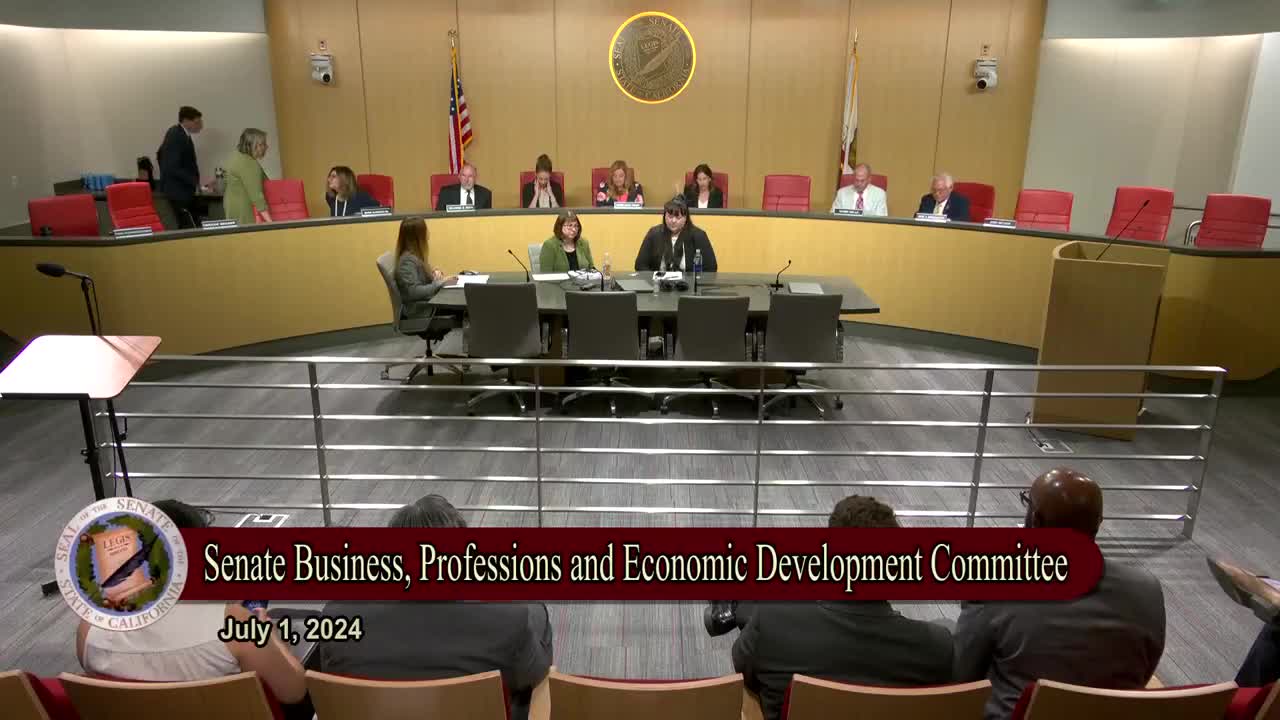 28MIN
Senate Standing Committee on Business, Professions and Economic Development
 3MIN
Senate Standing Committee on Business, Professions and Economic Development
 3MIN
Assembly Floor
 6MIN
Assembly Standing Committee on Judiciary
 16SEC
Assembly Standing Committee on Judiciary
 13MIN
Assembly Standing Committee on Business and Professions
Bill Author