AB 2864: Licensed Physicians and Dentists from Mexico Pilot Program: extension of licenses.
- Session Year: 2023-2024
- House: Assembly
- Latest Version Date: 2024-09-14
Current Status:
Passed
(2024-09-14: Chaptered by Secretary of State - Chapter 247, Statutes of 2024.)
Introduced
In Committee
First Chamber
In Committee
Second Chamber
Enacted
Existing law, the Licensed Physicians and Dentists from Mexico Pilot Program, allows up to 30 licensed physicians and up to 30 licensed dentists from Mexico to practice medicine or dentistry in California for a period not to exceed 3 years, in accordance with certain requirements. Existing law requires the Medical Board of California and the Dental Board of California to provide oversight pursuant to these provisions.
This bill would require, upon the request of an eligible licensee and the chief executive officer of the community health clinic that employs the licensee, the Medical Board of California to extend the license of a physician from Mexico issued pursuant the provisions described above for 3 years, with the extension to be effective when the license expires. To be eligible for an extension, the bill would require a requesting licensee to be licensed, as specified, in an active status at the time of their request. The bill would require a licensee who requests to extend their license to pay a prescribed fee at the time of their request. The bill would make related findings and declarations, and would repeal these provisions on January 1, 2025.
This bill would make legislative findings and declarations as to the necessity of a special statute for the licensees described above.
This bill would declare that it is to take effect immediately as an urgency statute.
Existing law, the Licensed Physicians and Dentists from Mexico Pilot Program, allows up to 30 licensed physicians and up to 30 licensed dentists from Mexico to practice medicine or dentistry in California for a period not to exceed 3 years, in accordance with certain requirements. Existing law requires the Medical Board of California and the Dental Board of California to provide oversight pursuant to these provisions.
This bill would require, upon the request of an eligible licensee and the chief executive officer of the community health clinic that employs the licensee, the Medical Board of California to extend the license of a physician from Mexico issued pursuant the provisions described above for 3 years, with the extension to be effective when the license expires. To be eligible for an extension, the bill would require a requesting licensee to be licensed, as specified, in an active status at the time of their request. The bill would require a licensee who requests to extend their license to pay a prescribed fee at the time of their request. The bill would make related findings and declarations, and would repeal these provisions on January 1, 2025.
This bill would make legislative findings and declarations as to the necessity of a special statute for the licensees described above.
This bill would declare that it is to take effect immediately as an urgency statute.
Existing law, the Licensed Physicians and Dentists from Mexico Pilot Program, allows up to 30 licensed physicians and up to 30 licensed dentists from Mexico to practice medicine or dentistry in California for a period not to exceed 3 years, in accordance with certain requirements. Existing law requires the Medical Board of California and the Dental Board of California to provide oversight pursuant to these provisions.
This bill would require require, upon the request of an eligible licensee and the chief executive officer of the community health clinic that employs the licensee, the Medical Board of California to extend the license of a physician from Mexico issued pursuant the provisions described above for 3 years, with the extension to be effective when the license expires, and would prescribe a fee for this extension. The bill would provide that these provisions apply to a license that is effective as of January 1, 2024, and that if the license expires before the effective date of the bills provisions, the provisions apply retroactively, as specified. expires. To be eligible for an extension, the bill would require a requesting licensee to be licensed, as specified, in an active status at the time of their request. The bill would require a licensee who requests to extend their license to pay a prescribed fee at the time of their request. The bill would make related findings and declarations. declarations, and would repeal these provisions on January 1, 2025.
This bill would make legislative findings and declarations as to the necessity of a special statute for the licensees described above.
This bill would declare that it is to take effect immediately as an urgency statute.
Existing law, the Licensed Physicians and Dentists from Mexico Pilot Program, allows up to 30 licensed physicians and up to 30 licensed dentists from Mexico to practice medicine or dentistry in California for a period not to exceed 3 years, in accordance with certain requirements. Existing law requires the Medical Board of California and the Dental Board of California to provide oversight pursuant to these provisions.
This bill would require the Medical Board of California to extend the license of a physician from Mexico issued pursuant the provisions described above for 3 years, with the extension to be effective when the license expires, and would prescribe a fee for this extension. The bill would provide that these provisions apply to a license that is effective as of January 1, 2024, and that if the license expires before the effective date of the bills provisions, the provisions apply retroactively, as specified. The bill would make related findings and declarations.
This bill would make legislative findings and declarations as to the necessity of a special statute for the licensees described above.
This bill would declare that it is to take effect immediately as an urgency statute.
Existing law, the Licensed Physicians and Dentists from Mexico Pilot Program, allows up to 30 licensed physicians and up to 30 licensed dentists from Mexico to practice medicine or dentistry in California for a period not to exceed 3 years, in accordance with certain requirements. Existing law requires the Medical Board of California and the Dental Board of California to provide oversight pursuant to these provisions.
This bill would require the Medical Board of California to extend the license of a physician from Mexico issued pursuant the provisions described above for 3 years, with the extension to be effective when the license expires. expires, and would prescribe a fee for this extension. The bill would provide that these provisions apply to a license that is effective as of January 1, 2024, and that if the license expires before the effective date of the bills provisions, the provisions apply retroactively, as specified. The bill would make related findings and declarations.
This bill would make legislative findings and declarations as to the necessity of a special statute for the licensees described above.
This bill would declare that it is to take effect immediately as an urgency statute.
Existing law, the Licensed Physicians and Dentists from Mexico Pilot Program, allows up to 30 licensed physicians and up to 30 licensed dentists from Mexico to practice medicine or dentistry in California for a period not to exceed 3 years, in accordance with certain requirements. Existing law requires the Medical Board of California and the Dental Board of California to provide oversight pursuant to these provisions.
This bill would require the Medical Board of California to extend the license of a physician from Mexico issued pursuant the provisions described above for 3 years, with the extension to be effective when the license expires. The bill would provide that these provisions apply to a license that is effective as of January 1, 2024, and that if the license expires before the effective date of the bills provisions, the provisions apply retroactively, as specified. The bill would make related findings and declarations.
This bill would make legislative findings and declarations as to the necessity of a special statute for the licensees described above.
This bill would declare that it is to take effect immediately as an urgency statute.
The Legislature finds and declares all of the following:
(a)The facts and sources cited in this subdivision describe the physician shortages that existed up to 2001 in California and the United States, including an emphasis on the lack of Latino medical students and licensed physicians in proportion to their population in California. These critical and dangerous shortages led to the creation of the Licensed Physicians and Dentists from Mexico Pilot Program.
(1)The 2020 United States Census determined the population of California to be over 39 million people with approximately 16 million being Latino.
(2)From July 1990 to July 1999, Californias population increased by approximately 4 million people. Approximately 61 percent of this growth can be attributed to the growth in the Latino population. The Latino population has increased at an average rate of 275,000 persons per year from 1990 to 1999. The Latino population is estimated to have grown in virtually all counties over this period.
(3)The United States General Accounting Office reports that the United States Community Health Centers patients comprise 65 percent ethnic and racial minorities.
(4)Title VI of the Civil Rights Act of 1964 requires any federally funded health facility to ensure persons with limited English proficiency may meaningfully access health care services. Persons with limited English proficiency are often excluded from programs, experience delays or denials of services, or receive care and services based on inaccurate or incomplete information.
(5)The federal Health Resources and Services Administration reports the number of physicians in California grew 17 percent between 1989 and 1998.
(6)The federal Health Resources and Services Administration found in 1998 that only 4 percent of active patient care physicians were Latino.
(7)The Association of American Medical Colleges in 1998 found only 6.8 percent of all graduates from United States medical schools were of an ethnic or racial minority group.
(8)In 1999 only 11 percent of dentists in California were a member of a racial or ethnic minority group with 5 percent being classified as Asian or Pacific Islanders.
(9)In 1996 only 4 percent of dentists in California were Latino.
(10)According to the Institute of Medicine report requested by the United States Congress, research evidence suggests that provider-patient communication is directly linked to patient satisfaction, adherence, and subsequently health outcomes. Thus, when sociocultural differences between the patient and the provider are not appreciated, explored, understood, or communicated in the medical encounter, the result is patient dissatisfaction, poor adherence, poorer health outcomes, and racial and ethnic disparities in health care.
(11)A Commonwealth Fund of New York study found that: (1) one-third of Latinos said they had problems communicating with their doctors with barriers to this poor communication including language, cultural traditions, and sensitivity; (2) communication is essential to quality health care; and (3) inadequate communication can lead to the perception of inhumane health care service delivery.
(12)The Summit on Immigration Needs & Contributions of the Bridging Borders in the Silicon Valley Project found that approximately 50 percent of participants reported that having a provider that speaks their language will improve the quality of health care services they receive.
(13)Only two states in the country have reported cultural competency standards for care.
(14)No states in the country have reported foreign language competencies for physicians or dentists.
(15)According to the Dallas Morning News, many immigrants travel to Mexico to receive health care due to the cultural and language barriers they encounter in the United States health care system. According to the San Jose Mercury News, 65 percent of the membership of the largest medical association in California reported that if they were required to pay for medical interpreters, they would stop seeing patients that required interpretation services.
(16)According to the Journal of the American Medical Association, in 1999, one medical school had a separate course covering cultural diversity, 109 medical schools included cultural diversity content as part of a required course or clerkship, and 84 medical schools included information on cultural beliefs or practices related to death or dying in a required course or clerkship.
(b)The facts and data set forth in this subdivision reflect physician shortages from 2015 onward, as projected through 2034 nationwide, but do not include the shortage of culturally and linguistically competent medical providers in the nation or California, which seriously exacerbates the problems of accessing medical care in non-English dominant communities.
(1)Despite the Latino population comprising approximately 38 percent of the people in California in 2015, the percentage of Latino physicians in California was only 7 percent in 2015.
(2)In 2015, the percentage of Doctor of Osteopathic Medicine graduates in California was 3 percent, physician assistants was 20 percent, nurse practitioners was 9 percent, and registered nurses was 20 percent.
(3)According to data reported in the Physicians Almanac, 7 percent of physicians working in the San Joaquin Valley in 2021 were Latina or Latino, whereas the Latino population in that region was 53 percent.
(4)In 2021, Latina and Latino physicians working in the County of Los Angeles accounted for 6 percent of the population, whereas the Latino population in that region was 49 percent.
(5)In 2021, Latina and Latino physicians working in the Inland Empire accounted for 7 percent of the population, whereas the Latino population in that region was 52 percent.
(6)In 2021, Latina and Latino physicians in the Sacramento area accounted for 4 percent, whereas Latinos comprised 22 percent of the population in that region.
(7)The Physicians Almanac reported in 2021 that all of the most populated regions of California where Latinos reside had less than the recommended number of primary care physicians, with only 60 per 100,000 patients.
(8)The region with the highest percentage of doctors who spoke Spanish in 2021 was the Central Coast, with 28 percent, followed by the County of Los Angeles, with 27 percent. There was no detailed information on this data based on Spanish language fluency or knowledge of cultural beliefs and practices related to health care.
(9)Based on a study published in the Journal of Health Affairs, Latino and Hispanic groups are underrepresented in medical professions that require advanced degrees and overrepresented in similar professions that dont require a bachelors or higher degree.
(10)In 2020, the American Community Survey found that, Mexican Americans made up 10.7 percent of the U.S. workforce but just 1.77 percent of U.S. physicians.
(11)According to a recent article in the Washington Post from 2023, Underrepresentation among Latino health care workers is a concern because data suggests racially, and ethnically diverse and culturally competent medical providers can help reduce health care disparities among minority populations. Minority patients with providers who share their race, ethnicity, or language report receiving better care than when they see providers from different racial or language groups. Studies have shown that providers from minority groups are more likely to work in areas with health care shortages, accept Medicaid, and spend more time with patients.
(12)As of November 1, 2023, California has the nations most federally designated Primary Care Health Professional Shortage Areas (HPSAs) with 694, followed by Texas with 436. An HPSA is an area that must have 3,500 in population for one primary care physician.
(13)The Association of American Medical Colleges (AAMC) is a leading voice in medical academia and research. The AAMC issued a significant study in June 2021 on physician shortages in the United States titled The Complexities of Physician Supply and Demand: Projections from 2019 to 2034.
(14)In this study, the AAMC projects that the United States could see an estimated shortage of between 37,800 and 124,000 physicians by 2034, including shortfalls in both primary and specialty care.
(15)The study cites the COVID-19 pandemic as exposing many of the deepest disparities in health and access to health care services and exposed vulnerabilities in the health care system, according to AAMC President and CEO David J. Skorton, MD.
(16)The AAMC projected the following physician shortages by 2034:
(A)Primary Care (e.g., family medicine, general pediatrics, geriatric medicine): between 17,800 and 48,000.
(B)Surgical Specialties (e.g., general surgery, obstetrics and gynecology, orthopedic surgery): between 15,800 and 30,200.
(C)Medical Specialties (e.g., cardiology, oncology, infectious diseases, pulmonology): between 3,800 and 13,400.
(D)Other Specialties (e.g., anesthesiology, neurology, emergency medicine, addiction medicine): between 10,300 and 35,600.
(17)The President and CEO of the AAMC, David J. Skorton, MD, testified before Congress, stating that the issue of increasing clinician burnout, which the pandemic has intensified, could cause doctors and other health workers to cut back their hours or accelerate their plans for retirement.
(18)Despite Congressional efforts in 2021 to introduce bipartisan legislation to increase medical residencies by 2,000 annually for seven years, the shortages identified by the AAMC will come about.
(19)On the matter of workforce diversity, equity, and inclusion (DEI), the AAMC stated in this study as follows:
(20)The physician workforce lacks sufficient diversity and inclusion (i.e., it lacks diversity overall and in positions of leadership and influence). The AAMC has identified addressing this lack as a core strategic priority. Extensive long-term data-collection work is needed, as is extensive and nuanced research about physician workforce diversity and the anti-racist policies that can combat the endemic structural and systemic racism that harms the current physician workforce, damages the nations ability to create a more diverse and inclusive physician workforce, and impedes a diverse population from receiving equitable health care.
(21)In 1980, the United States Census found an unprecedented growth in the Latino community that would continue beyond the decade. The United States census predicted that Latino demographic trends would have Latinos being the largest minority population in the United States during the first decade of the 2000s.
(22)Latinos were already 19 percent of the states population in California in 1980. From 1980 to 1990, the states total population grew by 26 percent, but the Latino population increased by 69 percent.
(23)In other words, the need to be more inclusive of Latinos in the health care workforce and the health care needs of Latinos was well known to California policymakers in the 1980s, 1990s, 2000s, and since 2010. However, the academic medical community and health care policymakers made no substantive move to prevent the situation from getting to the point that the AAMC and many other studies on the health care workforce have warned us to take immediate action to resolve this matter.
(24)The AAMC and the majority of all studies on health care workforce shortages have underestimated the impact of physician shortages in the Latino community over the last four decades. They have also underestimated its impact on other communities that are not predominantly English-speaking and are at least first- and, at times, second-generation foreign-born. The lack of culturally and linguistically competent physicians exacerbates and worsens the physician shortages in these communities for generations. Hence, the poor health profile of Latinos and other ethnic and racial populations in California.
(c)Underscoring the lack of preparation, creativity, and commitment to deal with the needs of a culturally and linguistically diverse society, such as California since the 1980s, and the growing physician shortages in the state, the University of California Schools of Medicine and the three private university medical schools at Stanford University, the University of Southern California, and Loma Linda University do not offer any mandatory cultural or foreign language courses to prepare medical students to serve the diverse populations that reside in California. The actions and policies taken by these medical institutions confirm the need for programs such as the Licensed Physicians from Mexico Program.
SEC. 2.Section 853.1 is added to the Business and Professions Code, to read:853.1.(a)Notwithstanding any other law, upon the request of an eligible licensee and the chief executive officer of the community health clinic that employs the licensee and pursuant to the requirements of this section, the Medical Board of California shall extend the license of a physician from Mexico issued pursuant to Section 853, as that section read on January 1, 2024, for three years.
(b)An extension of a license pursuant to subdivision (a) shall be effective when the license expires.
(c)To be eligible for an extension pursuant to subdivision (a), a requesting licensee shall be licensed under Section 853, as that section read on January 1, 2024, in an active status at the time of their request.
(d)Each licensee who requests to extend their license pursuant to subdivision (a) shall pay a fee in the amount of one thousand seven hundred twenty-six dollars and fifty cents ($1,726.50) at the time of their request.
(e)This section shall remain in effect only until January 1, 2025, and as of that date is repealed.
SEC. 3.The Legislature finds and declares that a special statute is necessary and that a general statute cannot be made applicable within the meaning of Section 16 of Article IV of the California Constitution because of the unique position of the physicians and the unique need to provide and maintain continuity of care of vital medical services to patients served by these physicians.
SEC. 4.This act is an urgency statute necessary for the immediate preservation of the public peace, health, or safety within the meaning of Article IV of the California Constitution and shall go into immediate effect. The facts constituting the necessity are:
In order to allow licensed physicians from Mexico to be issued a license by the Medical Board of California pursuant to Section 853 of the Business and Professions Code as soon as possible, and to ensure that those physicians are able to provide and maintain continuity of care of vital medical services to patients served the previous three years by these physicians, thereby preserving the health of Californians, it is necessary for this act to take effect immediately.
The Legislature finds and declares all of the following:
(a)The facts and sources cited in this subdivision describe the physician shortages that existed up to 2001 in California and the United States, including an emphasis on the lack of Latino medical students and licensed physicians in proportion to their population in California. These critical and dangerous shortages led to the creation of the Licensed Physicians and Dentists from Mexico Pilot Program.
(1)The 2020 United States Census determined the population of California to be over 39 million people with approximately 16 million being Latino.
(2)From July 1990 to July 1999, Californias population increased by approximately 4 million people. Approximately 61 percent of this growth can be attributed to the growth in the Latino population. The Latino population has increased at an average rate of 275,000 persons per year from 1990 to 1999. The Latino population is estimated to have grown in virtually all counties over this period.
(3)The United States General Accounting Office reports that the United States Community Health Centers patients comprise 65 percent ethnic and racial minorities.
(4)Title VI of the Civil Rights Act of 1964 requires any federally funded health facility to ensure persons with limited English proficiency may meaningfully access health care services. Persons with limited English proficiency are often excluded from programs, experience delays or denials of services, or receive care and services based on inaccurate or incomplete information.
(5)The federal Health Resources and Services Administration reports the number of physicians in California grew 17 percent between 1989 and 1998.
(6)The federal Health Resources and Services Administration found in 1998 that only 4 percent of active patient care physicians were Latino.
(7)The Association of American Medical Colleges in 1998 found only 6.8 percent of all graduates from United States medical schools were of an ethnic or racial minority group.
(8)In 1999 only 11 percent of dentists in California were a member of a racial or ethnic minority group with 5 percent being classified as Asian or Pacific Islanders.
(9)In 1996 only 4 percent of dentists in California were Latino.
(10)According to the Institute of Medicine report requested by the United States Congress, research evidence suggests that provider-patient communication is directly linked to patient satisfaction, adherence, and subsequently health outcomes. Thus, when sociocultural differences between the patient and the provider are not appreciated, explored, understood, or communicated in the medical encounter, the result is patient dissatisfaction, poor adherence, poorer health outcomes, and racial and ethnic disparities in health care.
(11)A Commonwealth Fund of New York study found that: (1) one-third of Latinos said they had problems communicating with their doctors with barriers to this poor communication including language, cultural traditions, and sensitivity; (2) communication is essential to quality health care; and (3) inadequate communication can lead to the perception of inhumane health care service delivery.
(12)The Summit on Immigration Needs & Contributions of the Bridging Borders in the Silicon Valley Project found that approximately 50 percent of participants reported that having a provider that speaks their language will improve the quality of health care services they receive.
(13)Only two states in the country have reported cultural competency standards for care.
(14)No states in the country have reported foreign language competencies for physicians or dentists.
(15)According to the Dallas Morning News, many immigrants travel to Mexico to receive health care due to the cultural and language barriers they encounter in the United States health care system. According to the San Jose Mercury News, 65 percent of the membership of the largest medical association in California reported that if they were required to pay for medical interpreters, they would stop seeing patients that required interpretation services.
(16)According to the Journal of the American Medical Association, in 1999, one medical school had a separate course covering cultural diversity, 109 medical schools included cultural diversity content as part of a required course or clerkship, and 84 medical schools included information on cultural beliefs or practices related to death or dying in a required course or clerkship.
(b)The facts and data set forth in this subdivision reflect physician shortages from 2015 onward, as projected through 2034 nationwide, but do not include the shortage of culturally and linguistically competent medical providers in the nation or California, which seriously exacerbates the problems of accessing medical care in non-English dominant communities.
(1)Despite the Latino population comprising approximately 38 percent of the people in California in 2015, the percentage of Latino physicians in California was only 7 percent in 2015.
(2)In 2015, the percentage of Doctor of Osteopathic Medicine graduates in California was 3 percent, physician assistants was 20 percent, nurse practitioners was 9 percent, and registered nurses was 20 percent.
(3)According to data reported in the Physicians Almanac, 7 percent of physicians working in the San Joaquin Valley in 2021 were Latina or Latino, whereas the Latino population in that region was 53 percent.
(4)In 2021, Latina and Latino physicians working in the County of Los Angeles accounted for 6 percent of the population, whereas the Latino population in that region was 49 percent.
(5)In 2021, Latina and Latino physicians working in the Inland Empire accounted for 7 percent of the population, whereas the Latino population in that region was 52 percent.
(6)In 2021, Latina and Latino physicians in the Sacramento area accounted for 4 percent, whereas Latinos comprised 22 percent of the population in that region.
(7)The Physicians Almanac reported in 2021 that all of the most populated regions of California where Latinos reside had less than the recommended number of primary care physicians, with only 60 per 100,000 patients.
(8)The region with the highest percentage of doctors who spoke Spanish in 2021 was the Central Coast, with 28 percent, followed by the County of Los Angeles, with 27 percent. There was no detailed information on this data based on Spanish language fluency or knowledge of cultural beliefs and practices related to health care.
(9)Based on a study published in the Journal of Health Affairs, Latino and Hispanic groups are underrepresented in medical professions that require advanced degrees and overrepresented in similar professions that dont require a bachelors or higher degree.
(10)In 2020, the American Community Survey found that, Mexican Americans made up 10.7 percent of the U.S. workforce but just 1.77 percent of U.S. physicians.
(11)According to a recent article in the Washington Post from 2023, Underrepresentation among Latino health care workers is a concern because data suggests racially, and ethnically diverse and culturally competent medical providers can help reduce health care disparities among minority populations. Minority patients with providers who share their race, ethnicity, or language report receiving better care than when they see providers from different racial or language groups. Studies have shown that providers from minority groups are more likely to work in areas with health care shortages, accept Medicaid, and spend more time with patients.
(12)As of November 1, 2023, California has the nations most federally designated Primary Care Health Professional Shortage Areas (HPSAs) with 694, followed by Texas with 436. An HPSA is an area that must have 3,500 in population for one primary care physician.
(13)The Association of American Medical Colleges (AAMC) is a leading voice in medical academia and research. The AAMC issued a significant study in June 2021 on physician shortages in the United States titled The Complexities of Physician Supply and Demand: Projections from 2019 to 2034.
(14)In this study, the AAMC projects that the United States could see an estimated shortage of between 37,800 and 124,000 physicians by 2034, including shortfalls in both primary and specialty care.
(15)The study cites the COVID-19 pandemic as exposing many of the deepest disparities in health and access to health care services and exposed vulnerabilities in the health care system, according to AAMC President and CEO David J. Skorton, MD.
(16)The AAMC projected the following physician shortages by 2034:
(A)Primary Care (e.g., family medicine, general pediatrics, geriatric medicine): between 17,800 and 48,000.
(B)Surgical Specialties (e.g., general surgery, obstetrics and gynecology, orthopedic surgery): between 15,800 and 30,200.
(C)Medical Specialties (e.g., cardiology, oncology, infectious diseases, pulmonology): between 3,800 and 13,400.
(D)Other Specialties (e.g., anesthesiology, neurology, emergency medicine, addiction medicine): between 10,300 and 35,600.
(17)The President and CEO of the AAMC, David J. Skorton, MD, testified before Congress, stating that the issue of increasing clinician burnout, which the pandemic has intensified, could cause doctors and other health workers to cut back their hours or accelerate their plans for retirement.
(18)Despite Congressional efforts in 2021 to introduce bipartisan legislation to increase medical residencies by 2,000 annually for seven years, the shortages identified by the AAMC will come about.
(19)On the matter of workforce diversity, equity, and inclusion (DEI), the AAMC stated in this study as follows:
(20)The physician workforce lacks sufficient diversity and inclusion (i.e., it lacks diversity overall and in positions of leadership and influence). The AAMC has identified addressing this lack as a core strategic priority. Extensive long-term data-collection work is needed, as is extensive and nuanced research about physician workforce diversity and the anti-racist policies that can combat the endemic structural and systemic racism that harms the current physician workforce, damages the nations ability to create a more diverse and inclusive physician workforce, and impedes a diverse population from receiving equitable health care.
(21)In 1980, the United States Census found an unprecedented growth in the Latino community that would continue beyond the decade. The United States census predicted that Latino demographic trends would have Latinos being the largest minority population in the United States during the first decade of the 2000s.
(22)Latinos were already 19 percent of the states population in California in 1980. From 1980 to 1990, the states total population grew by 26 percent, but the Latino population increased by 69 percent.
(23)In other words, the need to be more inclusive of Latinos in the health care workforce and the health care needs of Latinos was well known to California policymakers in the 1980s, 1990s, 2000s, and since 2010. However, the academic medical community and health care policymakers made no substantive move to prevent the situation from getting to the point that the AAMC and many other studies on the health care workforce have warned us to take immediate action to resolve this matter.
(24)The AAMC and the majority of all studies on health care workforce shortages have underestimated the impact of physician shortages in the Latino community over the last four decades. They have also underestimated its impact on other communities that are not predominantly English-speaking and are at least first- and, at times, second-generation foreign-born. The lack of culturally and linguistically competent physicians exacerbates and worsens the physician shortages in these communities for generations. Hence, the poor health profile of Latinos and other ethnic and racial populations in California.
(c)Underscoring the lack of preparation, creativity, and commitment to deal with the needs of a culturally and linguistically diverse society, such as California since the 1980s, and the growing physician shortages in the state, the University of California Schools of Medicine and the three private university medical schools at Stanford University, the University of Southern California, and Loma Linda University do not offer any mandatory cultural or foreign language courses to prepare medical students to serve the diverse populations that reside in California. The actions and policies taken by these medical institutions confirm the need for programs such as the Licensed Physicians from Mexico Program.
SEC. 2.Section 853.1 is added to the Business and Professions Code, to read:853.1.(a)Notwithstanding any other law, upon the request of an eligible licensee and the chief executive officer of the community health clinic that employs the licensee and pursuant to the requirements of this section, the Medical Board of California shall extend the license of a physician from Mexico issued pursuant to Section 853, as that section read on January 1, 2024, for three years.
(b)An extension of a license pursuant to subdivision (a) shall be effective when the license expires.
(c)To be eligible for an extension pursuant to subdivision (a), a requesting licensee shall be licensed under Section 853, as that section read on January 1, 2024, in an active status at the time of their request.
(d)Each licensee who requests to extend their license pursuant to subdivision (a) shall pay a fee in the amount of one thousand seven hundred twenty-six dollars and fifty cents ($1,726.50) at the time of their request.
(e)This section shall remain in effect only until January 1, 2025, and as of that date is repealed.
SEC. 3.The Legislature finds and declares that a special statute is necessary and that a general statute cannot be made applicable within the meaning of Section 16 of Article IV of the California Constitution because of the unique position of the physicians and the unique need to provide and maintain continuity of care of vital medical services to patients served by these physicians.
SEC. 4.This act is an urgency statute necessary for the immediate preservation of the public peace, health, or safety within the meaning of Article IV of the California Constitution and shall go into immediate effect. The facts constituting the necessity are:
In order to allow licensed physicians from Mexico to be issued a license by the Medical Board of California pursuant to Section 853 of the Business and Professions Code as soon as possible, and to ensure that those physicians are able to provide and maintain continuity of care of vital medical services to patients served the previous three years by these physicians, thereby preserving the health of Californians, it is necessary for this act to take effect immediately.
The Legislature finds and declares all of the following:
(a)The facts and sources cited in this subdivision describe the physician shortages that existed up to 2001 in California and the United States, including an emphasis on the lack of Latino medical students and licensed physicians in proportion to their population in California. These critical and dangerous shortages led to the creation of the Licensed Physicians and Dentists from Mexico Pilot Program.
(1)The 2020 United States Census determined the population of California to be over 39 million people with approximately 16 million being Latino.
(2)From July 1990 to July 1999, Californias population increased by approximately 4 million people. Approximately 61 percent of this growth can be attributed to the growth in the Latino population. The Latino population has increased at an average rate of 275,000 persons per year from 1990 to 1999. The Latino population is estimated to have grown in virtually all counties over this period.
(3)The United States General Accounting Office reports that the United States Community Health Centers patients comprise 65 percent ethnic and racial minorities.
(4)Title VI of the Civil Rights Act of 1964 requires any federally funded health facility to ensure persons with limited English proficiency may meaningfully access health care services. Persons with limited English proficiency are often excluded from programs, experience delays or denials of services, or receive care and services based on inaccurate or incomplete information.
(5)The federal Health Resources and Services Administration reports the number of physicians in California grew 17 percent between 1989 and 1998.
(6)The federal Health Resources and Services Administration found in 1998 that only 4 percent of active patient care physicians were Latino.
(7)The Association of American Medical Colleges in 1998 found only 6.8 percent of all graduates from United States medical schools were of an ethnic or racial minority group.
(8)In 1999 only 11 percent of dentists in California were a member of a racial or ethnic minority group with 5 percent being classified as Asian or Pacific Islanders.
(9)In 1996 only 4 percent of dentists in California were Latino.
(10)According to the Institute of Medicine report requested by the United States Congress, research evidence suggests that provider-patient communication is directly linked to patient satisfaction, adherence, and subsequently health outcomes. Thus, when sociocultural differences between the patient and the provider are not appreciated, explored, understood, or communicated in the medical encounter, the result is patient dissatisfaction, poor adherence, poorer health outcomes, and racial and ethnic disparities in health care.
(11)A Commonwealth Fund of New York study found that: (1) one-third of Latinos said they had problems communicating with their doctors with barriers to this poor communication including language, cultural traditions, and sensitivity; (2) communication is essential to quality health care; and (3) inadequate communication can lead to the perception of inhumane health care service delivery.
(12)The Summit on Immigration Needs & Contributions of the Bridging Borders in the Silicon Valley Project found that approximately 50 percent of participants reported that having a provider that speaks their language will improve the quality of health care services they receive.
(13)Only two states in the country have reported cultural competency standards for care.
(14)No states in the country have reported foreign language competencies for physicians or dentists.
(15)According to the Dallas Morning News, many immigrants travel to Mexico to receive health care due to the cultural and language barriers they encounter in the United States health care system. According to the San Jose Mercury News, 65 percent of the membership of the largest medical association in California reported that if they were required to pay for medical interpreters, they would stop seeing patients that required interpretation services.
(16)According to the Journal of the American Medical Association, in 1999, one medical school had a separate course covering cultural diversity, 109 medical schools included cultural diversity content as part of a required course or clerkship, and 84 medical schools included information on cultural beliefs or practices related to death or dying in a required course or clerkship.
(b)The facts and data set forth in this subdivision reflect physician shortages from 2015 onward, as projected through 2034 nationwide, but do not include the shortage of culturally and linguistically competent medical providers in the nation or California, which seriously exacerbates the problems of accessing medical care in non-English dominant communities.
(1)Despite the Latino population comprising approximately 38 percent of the people in California in 2015, the percentage of Latino physicians in California was only 7 percent in 2015.
(2)In 2015, the percentage of Doctor of Osteopathic Medicine graduates in California was 3 percent, physician assistants was 20 percent, nurse practitioners was 9 percent, and registered nurses was 20 percent.
(3)According to data reported in the Physicians Almanac, 7 percent of physicians working in the San Joaquin Valley in 2021 were Latina or Latino, whereas the Latino population in that region was 53 percent.
(4)In 2021, Latina and Latino physicians working in the County of Los Angeles accounted for 6 percent of the population, whereas the Latino population in that region was 49 percent.
(5)In 2021, Latina and Latino physicians working in the Inland Empire accounted for 7 percent of the population, whereas the Latino population in that region was 52 percent.
(6)In 2021, Latina and Latino physicians in the Sacramento area accounted for 4 percent, whereas Latinos comprised 22 percent of the population in that region.
(7)The Physicians Almanac reported in 2021 that all of the most populated regions of California where Latinos reside had less than the recommended number of primary care physicians, with only 60 per 100,000 patients.
(8)The region with the highest percentage of doctors who spoke Spanish in 2021 was the Central Coast, with 28 percent, followed by the County of Los Angeles, with 27 percent. There was no detailed information on this data based on Spanish language fluency or knowledge of cultural beliefs and practices related to health care.
(9)Based on a study published in the Journal of Health Affairs, Latino and Hispanic groups are underrepresented in medical professions that require advanced degrees and overrepresented in similar professions that dont require a bachelors or higher degree.
(10)In 2020, the American Community Survey found that, Mexican Americans made up 10.7 percent of the U.S. workforce but just 1.77 percent of U.S. physicians.
(11)According to a recent article in the Washington Post from 2023, Underrepresentation among Latino healthcare health care workers is a concern because data suggests racially, and ethnically diverse and culturally competent medical providers can help reduce healthcare health care disparities among minority populations. Minority patients with providers who share their race, ethnicity, or language report receiving better care than when they see providers from different racial or language groups. Studies have shown that providers from minority groups are more likely to work in areas with healthcare health care shortages, accept Medicaid, and spend more time with patients.
(12)As of November 1, 2023, California has the nations most federally designated Primary Care Health Professional Shortage Areas (HPSAs) with 694, followed by Texas with 436. An HPSA is an area that must have 3,500 in population for one primary care physician.
(13)The Association of American Medical Colleges (AAMC) is a leading voice in medical academia and research. The AAMC issued a significant study in June 2021 on physician shortages in the United States titled The Complexities of Physician Supply and Demand: Projections from 2019 to 2034.
(14)In this study, the AAMC projects that the United States could see an estimated shortage of between 37,800 and 124,000 physicians by 2034, including shortfalls in both primary and specialty care.
(15)The study cites the COVID-19 pandemic as exposing many of the deepest disparities in health and access to health care services and exposed vulnerabilities in the health care system, according to AAMC President and CEO David J. Skorton, MD.
(16)The AAMC projected the following physician shortages by 2034:
(A)Primary Care (e.g., family medicine, general pediatrics, geriatric medicine): between 17,800 and 48,000.
(B)Surgical Specialties (e.g., general surgery, obstetrics and gynecology, orthopedic surgery): between 15,800 and 30,200.
(C)Medical Specialties (e.g., cardiology, oncology, infectious diseases, pulmonology): between 3,800 and 13,400.
(D)Other Specialties (e.g., anesthesiology, neurology, emergency medicine, addiction medicine): between 10,300 and 35,600.
(17)The President and CEO of the AAMC, David J. Skorton, MD, testified before Congress, stating that the issue of increasing clinician burnout, which the pandemic has intensified, could cause doctors and other health workers to cut back their hours or accelerate their plans for retirement.
(18)Despite Congressional efforts in 2021 to introduce bipartisan legislation to increase medical residencies by 2,000 annually for seven years, the shortages identified by the AAMC will come about.
(19)On the matter of workforce diversity, equity, and inclusion (DEI), the AAMC stated in this study as follows:
(20)The physician workforce lacks sufficient diversity and inclusion (i.e., it lacks diversity overall and in positions of leadership and influence). The AAMC has identified addressing this lack as a core strategic priority. Extensive long-term data-collection work is needed, as is extensive and nuanced research about physician workforce diversity and the anti-racist policies that can combat the endemic structural and systemic racism that harms the current physician workforce, damages the nations ability to create a more diverse and inclusive physician workforce, and impedes a diverse population from receiving equitable health care.
(21)In 1980, the United States Census found an unprecedented growth in the Latino community that would continue beyond the decade. The United States census predicted that Latino demographic trends would have Latinos being the largest minority population in the United States during the first decade of the 2000s.
(22)Latinos were already 19 percent of the states population in California in 1980. From 1980 to 1990, the states total population grew by 26 percent, but the Latino population increased by 69 percent.
(23)In other words, the need to be more inclusive of Latinos in the health care workforce and the health care needs of Latinos was well known to California policymakers in the 1980s, 1990s, 2000s, and since 2010. However, the academic medical community and health care policymakers made no substantive move to prevent the situation from getting to the point that the AAMC and many other studies on the health care workforce have warned us to take immediate action to resolve this matter.
(24)The AAMC and the majority of all studies on health care workforce shortages have underestimated the impact of physician shortages in the Latino community over the last four decades. They have also underestimated its impact on other communities that are not predominantly English-speaking and are at least first- and, at times, second-generation foreign-born. The lack of culturally and linguistically competent physicians exacerbates and worsens the physician shortages in these communities for generations. Hence, the poor health profile of Latinos and other ethnic and racial populations in California.
(c)Underscoring the lack of preparation, creativity, and commitment to deal with the needs of a culturally and linguistically diverse society, such as California since the 1980s, and the growing physician shortages in the state, the University of California Schools of Medicine and the three private university medical schools at Stanford University, the University of Southern California, and Loma Linda University do not offer any mandatory cultural or foreign language courses to prepare medical students to serve the diverse populations that reside in California. The actions and policies taken by these medical institutions confirm the need for programs such as the Licensed Physicians from Mexico Program.
SEC. 2.Section 853.1 is added to the Business and Professions Code, to read:853.1.(a)Notwithstanding any other law, upon the request of an eligible licensee and the chief executive officer of the community health clinic that employs the licensee and pursuant to the requirements of this section, the Medical Board of California shall extend the license of a physician from Mexico issued pursuant to Section 853, as that section read on January 1, 2024, for three years.
(b)An extension of a license pursuant to subdivision (a) shall be effective when the license expires.
(c)This section applies to a license described in subdivision (a) that is effective as of January 1, 2024. If that license expires before the effective date of this section, this section shall apply retroactively and the Medical Board of California shall extend that license for three years, effective as of the date the license expired.(c)To be eligible for an extension pursuant to subdivision (a), a requesting licensee shall be licensed under Section 853, as that section read on January 1, 2024, in an active status at the time of their request.
(d)(1)The fee for a three-year license extension pursuant to this section shall be Each licensee who requests to extend their license pursuant to subdivision (a) shall pay a fee in the amount of one thousand seven hundred twenty-six dollars and fifty cents ($1,726.50). ($1,726.50) at the time of their request.
(2)The fee described in paragraph (1) shall be paid no later than October 31, 2024.(e)This section shall remain in effect only until January 1, 2025, and as of that date is repealed.
SEC. 3.The Legislature finds and declares that a special statute is necessary and that a general statute cannot be made applicable within the meaning of Section 16 of Article IV of the California Constitution because of the unique position of the physicians and the unique need to provide and maintain continuity of care of vital medical services to patients served by these physicians.
SEC. 4.This act is an urgency statute necessary for the immediate preservation of the public peace, health, or safety within the meaning of Article IV of the California Constitution and shall go into immediate effect. The facts constituting the necessity are:
In order to allow licensed physicians from Mexico to be issued a license by the Medical Board of California pursuant to Section 853 of the Business and Professions Code as soon as possible, and to ensure that those physicians are able to provide and maintain continuity of care of vital medical services to patients served the previous three years by these physicians, thereby preserving the health of Californians, it is necessary for this act to take effect immediately.
The Legislature finds and declares all of the following:
(a)The facts and sources cited in this subdivision describe the physician shortages that existed up to 2001 in California and the United States, including an emphasis on the lack of Latino medical students and licensed physicians in proportion to their population in California. These critical and dangerous shortages led to the creation of the Licensed Physicians and Dentists from Mexico Pilot Program.
(1)The 2020 United States Census determined the population of California to be over 39 million people with approximately 16 million being Latino.
(2)From July 1990 to July 1999, Californias population increased by approximately 4 million people. Approximately 61 percent of this growth can be attributed to the growth in the Latino population. The Latino population has increased at an average rate of 275,000 persons per year from 1990 to 1999. The Latino population is estimated to have grown in virtually all counties over this period.
(3)The United States General Accounting Office reports that the United States Community Health Centers patients comprise 65 percent ethnic and racial minorities.
(4)Title VI of the Civil Rights Act of 1964 requires any federally funded health facility to ensure persons with limited English proficiency may meaningfully access health care services. Persons with limited English proficiency are often excluded from programs, experience delays or denials of services, or receive care and services based on inaccurate or incomplete information.
(5)The federal Health Resources and Services Administration reports the number of physicians in California grew 17 percent between 1989 and 1998.
(6)The federal Health Resources and Services Administration found in 1998 that only 4 percent of active patient care physicians were Latino.
(7)The Association of American Medical Colleges in 1998 found only 6.8 percent of all graduates from United States medical schools were of an ethnic or racial minority group.
(8)In 1999 only 11 percent of dentists in California were a member of a racial or ethnic minority group with 5 percent being classified as Asian or Pacific Islanders.
(9)In 1996 only 4 percent of dentists in California were Latino.
(10)According to the Institute of Medicine report requested by the United States Congress, research evidence suggests that provider-patient communication is directly linked to patient satisfaction, adherence, and subsequently health outcomes. Thus, when sociocultural differences between the patient and the provider are not appreciated, explored, understood, or communicated in the medical encounter, the result is patient dissatisfaction, poor adherence, poorer health outcomes, and racial and ethnic disparities in health care.
(11)A Commonwealth Fund of New York study found that: (1) one-third of Latinos said they had problems communicating with their doctors with barriers to this poor communication including language, cultural traditions, and sensitivity; (2) communication is essential to quality health care; and (3) inadequate communication can lead to the perception of inhumane health care service delivery.
(12)The Summit on Immigration Needs & Contributions of the Bridging Borders in the Silicon Valley Project found that approximately 50 percent of participants reported that having a provider that speaks their language will improve the quality of health care services they receive.
(13)Only two states in the country have reported cultural competency standards for care.
(14)No states in the country have reported foreign language competencies for physicians or dentists.
(15)According to the Dallas Morning News, many immigrants travel to Mexico to receive health care due to the cultural and language barriers they encounter in the United States health care system. According to the San Jose Mercury News, 65 percent of the membership of the largest medical association in California reported that if they were required to pay for medical interpreters, they would stop seeing patients that required interpretation services.
(16)According to the Journal of the American Medical Association, in 1999, one medical school had a separate course covering cultural diversity, 109 medical schools included cultural diversity content as part of a required course or clerkship, and 84 medical schools included information on cultural beliefs or practices related to death or dying in a required course or clerkship.
(b)The facts and data set forth in this subdivision reflect physician shortages from 2015 onward, as projected through 2034 nationwide, but do not include the shortage of culturally and linguistically competent medical providers in the nation or California, which seriously exacerbates the problems of accessing medical care in non-English dominant communities.
(1)Despite the Latino population comprising approximately 38 percent of the people in California in 2015, the percentage of Latino physicians in California was only 7 percent in 2015.
(2)In 2015, the percentage of Doctor of Osteopathic Medicine graduates in California was 3 percent, physician assistants was 20 percent, nurse practitioners was 9 percent, and registered nurses was 20 percent.
(3)According to data reported in the Physicians Almanac, 7 percent of physicians working in the San Joaquin Valley in 2021 were Latina or Latino, whereas the Latino population in that region was 53 percent.
(4)In 2021, Latina and Latino physicians working in the County of Los Angeles accounted for 6 percent of the population, whereas the Latino population in that region was 49 percent.
(5)In 2021, Latina and Latino physicians working in the Inland Empire accounted for 7 percent of the population, whereas the Latino population in that region was 52 percent.
(6)In 2021, Latina and Latino physicians in the Sacramento area accounted for 4 percent, whereas Latinos comprised 22 percent of the population in that region.
(7)The Physicians Almanac reported in 2021 that all of the most populated regions of California where Latinos reside had less than the recommended number of primary care physicians, with only 60 per 100,000 patients.
(8)The region with the highest percentage of doctors who spoke Spanish in 2021 was the Central Coast, with 28 percent, followed by the County of Los Angeles, with 27 percent. There was no detailed information on this data based on Spanish language fluency or knowledge of cultural beliefs and practices related to health care.
(9)Based on a study published in the Journal of Health Affairs, Latino and Hispanic groups are underrepresented in medical professions that require advanced degrees and overrepresented in similar professions that dont require a bachelors or higher degree.
(10)In 2020, the American Community Survey found that, Mexican Americans made up 10.7 percent of the U.S. workforce but just 1.77 percent of U.S. physicians.
(11)According to a recent article in the Washington Post from 2023, Underrepresentation among Latino healthcare workers is a concern because data suggests racially, and ethnically diverse and culturally competent medical providers can help reduce healthcare disparities among minority populations. Minority patients with providers who share their race, ethnicity, or language report receiving better care than when they see providers from different racial or language groups. Studies have shown that providers from minority groups are more likely to work in areas with healthcare shortages, accept Medicaid, and spend more time with patients.
(12)As of November 1, 2023, California has the nations most federally designated Primary Care Health Professional Shortage Areas (HPSAs) with 694, followed by Texas with 436. An HPSA is an area that must have 3,500 in population for one primary care physician.
(13)The Association of American Medical Colleges (AAMC) is a leading voice in medical academia and research. The AAMC issued a significant study in June 2021 on physician shortages in the United States titled The Complexities of Physician Supply and Demand: Projections from 2019 to 2034.
(14)In this study, the AAMC projects that the United States could see an estimated shortage of between 37,800 and 124,000 physicians by 2034, including shortfalls in both primary and specialty care.
(15)The study cites the COVID-19 pandemic as exposing many of the deepest disparities in health and access to health care services and exposed vulnerabilities in the health care system, according to AAMC President and CEO David J. Skorton, MD.
(16)The AAMC projected the following physician shortages by 2034:
(A)Primary Care (e.g., family medicine, general pediatrics, geriatric medicine): between 17,800 and 48,000.
(B)Surgical Specialties (e.g., general surgery, obstetrics and gynecology, orthopedic surgery): between 15,800 and 30,200.
(C)Medical Specialties (e.g., cardiology, oncology, infectious diseases, pulmonology): between 3,800 and 13,400.
(D)Other Specialties (e.g., anesthesiology, neurology, emergency medicine, addiction medicine): between 10,300 and 35,600.
(17)The President and CEO of the AAMC, David J. Skorton, MD, testified before Congress, stating that the issue of increasing clinician burnout, which the pandemic has intensified, could cause doctors and other health workers to cut back their hours or accelerate their plans for retirement.
(18)Despite Congressional efforts in 2021 to introduce bipartisan legislation to increase medical residencies by 2,000 annually for seven years, the shortages identified by the AAMC will come about.
(19)On the matter of workforce diversity, equity, and inclusion (DEI), the AAMC stated in this study as follows:
(20)The physician workforce lacks sufficient diversity and inclusion (i.e., it lacks diversity overall and in positions of leadership and influence). The AAMC has identified addressing this lack as a core strategic priority. Extensive long-term data-collection work is needed, as is extensive and nuanced research about physician workforce diversity and the anti-racist policies that can combat the endemic structural and systemic racism that harms the current physician workforce, damages the nations ability to create a more diverse and inclusive physician workforce, and impedes a diverse population from receiving equitable health care.
(21)In 1980, the United States Census found an unprecedented growth in the Latino community that would continue beyond the decade. The United States census predicted that Latino demographic trends would have Latinos being the largest minority population in the United States during the first decade of the 2000s.
(22)Latinos were already 19 percent of the states population in California in 1980. From 1980 to 1990, the states total population grew by 26 percent, but the Latino population increased by 69 percent.
(23)In other words, the need to be more inclusive of Latinos in the health care workforce and the health care needs of Latinos was well known to California policymakers in the 1980s, 1990s, 2000s, and since 2010. However, the academic medical community and health care policymakers made no substantive move to prevent the situation from getting to the point that the AAMC and many other studies on the health care workforce have warned us to take immediate action to resolve this matter.
(24)The AAMC and the majority of all studies on health care workforce shortages have underestimated the impact of physician shortages in the Latino community over the last four decades. They have also underestimated its impact on other communities that are not predominantly English-speaking and are at least first- and, at times, second-generation foreign-born. The lack of culturally and linguistically competent physicians exacerbates and worsens the physician shortages in these communities for generations. Hence, the poor health profile of Latinos and other ethnic and racial populations in California.
(c)Underscoring the lack of preparation, creativity, and commitment to deal with the needs of a culturally and linguistically diverse society, such as California since the 1980s, and the growing physician shortages in the state, the University of California Schools of Medicine and the three private university medical schools at Stanford University, the University of Southern California, and Loma Linda University do not offer any mandatory cultural or foreign language courses to prepare medical students to serve the diverse populations that reside in California. The actions and policies taken by these medical institutions confirm the need for programs such as the Licensed Physicians from Mexico Program.
SEC. 2.Section 853.1 is added to the Business and Professions Code, to read:853.1.(a)Notwithstanding any other law, the Medical Board of California shall extend the license of a physician from Mexico issued pursuant to Section 853, as that section read on January 1, 2024, for three years.
(b)An extension of a license pursuant to subdivision (a) shall be effective when the license expires.
(c)This section applies to a license described in subdivision (a) that is effective as of January 1, 2024. If that license expires before the effective date of this section, this section shall apply retroactively and the Medical Board of California shall extend that license for three years, effective as of the date the license expired.
(d)(1)The fee for a three-year license extension pursuant to this section shall be ____ dollars ($____ ). one thousand seven hundred twenty-six dollars and fifty cents ($1,726.50).
(2)The fee described in paragraph (1) shall be paid no later than October 31, 2024.
SEC. 3.The Legislature finds and declares that a special statute is necessary and that a general statute cannot be made applicable within the meaning of Section 16 of Article IV of the California Constitution because of the unique position of the physicians and the unique need to provide and maintain continuity of care of vital medical services to patients served by these physicians.
SEC. 4.This act is an urgency statute necessary for the immediate preservation of the public peace, health, or safety within the meaning of Article IV of the California Constitution and shall go into immediate effect. The facts constituting the necessity are:
In order to allow licensed physicians from Mexico to be issued a license by the Medical Board of California pursuant to Section 853 of the Business and Professions Code as soon as possible, and to ensure that those physicians are able to provide and maintain continuity of care of vital medical services to patients served the previous three years by these physicians, thereby preserving the health of Californians, it is necessary for this act to take effect immediately.
The Legislature finds and declares all of the following:
(a)The facts and sources cited in this subdivision describe the physician shortages that existed up to 2001 in California and the United States, including an emphasis on the lack of Latino medical students and licensed physicians in proportion to their population in California. These critical and dangerous shortages led to the creation of the Licensed Physicians and Dentists from Mexico Pilot Program.
(1)The 2020 United States Census determined the population of California to be over 39 million people with approximately 16 million being Latino.
(2)From July 1990 to July 1999, Californias population increased by approximately 4 million people. Approximately 61 percent of this growth can be attributed to the growth in the Latino population. The Latino population has increased at an average rate of 275,000 persons per year from 1990 to 1999. The Latino population is estimated to have grown in virtually all counties over this period.
(3)The United States General Accounting Office reports that the United States Community Health Centers patients comprise 65 percent ethnic and racial minorities.
(4)Title VI of the Civil Rights Act of 1964 requires any federally funded health facility to ensure persons with limited English proficiency may meaningfully access health care services. Persons with limited English proficiency are often excluded from programs, experience delays or denials of services, or receive care and services based on inaccurate or incomplete information.
(5)The federal Health Resources and Services Administration reports the number of physicians in California grew 17 percent between 1989 and 1998.
(6)The federal Health Resources and Services Administration found in 1998 that only 4 percent of active patient care physicians were Latino.
(7)The Association of American Medical Colleges in 1998 found only 6.8 percent of all graduates from United States medical schools were of an ethnic or racial minority group.
(8)In 1999 only 11 percent of dentists in California were a member of a racial or ethnic minority group with 5 percent being classified as Asian or Pacific Islanders.
(9)In 1996 only 4 percent of dentists in California were Latino.
(10)According to the Institute of Medicine report requested by the United States Congress, research evidence suggests that provider-patient communication is directly linked to patient satisfaction, adherence, and subsequently health outcomes. Thus, when sociocultural differences between the patient and the provider are not appreciated, explored, understood, or communicated in the medical encounter, the result is patient dissatisfaction, poor adherence, poorer health outcomes, and racial and ethnic disparities in health care.
(11)A Commonwealth Fund of New York study found that: (1) one-third of Latinos said they had problems communicating with their doctors with barriers to this poor communication including language, cultural traditions, and sensitivity; (2) communication is essential to quality health care; and (3) inadequate communication can lead to the perception of inhumane health care service delivery.
(12)The Summit on Immigration Needs & Contributions of the Bridging Borders in the Silicon Valley Project found that approximately 50 percent of participants reported that having a provider that speaks their language will improve the quality of health care services they receive.
(13)Only two states in the country have reported cultural competency standards for care.
(14)No states in the country have reported foreign language competencies for physicians or dentists.
(15)According to the Dallas Morning News, many immigrants travel to Mexico to receive health care due to the cultural and language barriers they encounter in the United States health care system. According to the San Jose Mercury News, 65 percent of the membership of the largest medical association in California reported that if they were required to pay for medical interpreters, they would stop seeing patients that required interpretation services.
(16)According to the Journal of the American Medical Association, in 1999, one medical school had a separate course covering cultural diversity, 109 medical schools included cultural diversity content as part of a required course or clerkship, and 84 medical schools included information on cultural beliefs or practices related to death or dying in a required course or clerkship.
(b)The facts and data set forth in this subdivision reflect physician shortages from 2015 onward, as projected through 2034 nationwide, but do not include the shortage of culturally and linguistically competent medical providers in the nation or California, which seriously exacerbates the problems of accessing medical care in non-English dominant communities.
(1)Despite the Latino population comprising approximately 38 percent of the people in California in 2015, the percentage of Latino physicians in California was only 7 percent in 2015.
(2)In 2015, the percentage of Doctor of Osteopathic Medicine graduates in California was 3 percent, physician assistants was 20 percent, nurse practitioners was 9 percent, and registered nurses was 20 percent.
(3)According to data reported in the Physicians Almanac, 7 percent of physicians working in the San Joaquin Valley in 2021 were Latina or Latino, whereas the Latino population in that region was 53 percent.
(4)In 2021, Latina and Latino physicians working in the County of Los Angeles accounted for 6 percent of the population, whereas the Latino population in that region was 49 percent.
(5)In 2021, Latina and Latino physicians working in the Inland Empire accounted for 7 percent of the population, whereas the Latino population in that region was 52 percent.
(6)In 2021, Latina and Latino physicians in the Sacramento area accounted for 4 percent, whereas Latinos comprised 22 percent of the population in that region.
(7)The Physicians Almanac reported in 2021 that all of the most populated regions of California where Latinos reside had less than the recommended number of primary care physicians, with only 60 per 100,000 patients.
(8)The region with the highest percentage of doctors who spoke Spanish in 2021 was the Central Coast, with 28 percent, followed by the County of Los Angeles, with 27 percent. There was no detailed information on this data based on Spanish language fluency or knowledge of cultural beliefs and practices related to health care.
(9)Based on a study published in the Journal of Health Affairs, Latino and Hispanic groups are underrepresented in medical professions that require advanced degrees and overrepresented in similar professions that dont require a bachelors or higher degree.
(10)In 2020, the American Community Survey found that, Mexican Americans made up 10.7 percent of the U.S. workforce but just 1.77 percent of U.S. physicians.
(11)According to a recent article in the Washington Post from 2023, Underrepresentation among Latino healthcare workers is a concern because data suggests racially, and ethnically diverse and culturally competent medical providers can help reduce healthcare disparities among minority populations. Minority patients with providers who share their race, ethnicity, or language report receiving better care than when they see providers from different racial or language groups. Studies have shown that providers from minority groups are more likely to work in areas with healthcare shortages, accept Medicaid, and spend more time with patients.
(12)As of November 1, 2023, California has the nations most federally designated Primary Care Health Professional Shortage Areas (HPSAs) with 694, followed by Texas with 436. An HPSA is an area that must have 3,500 in population for one primary care physician.
(13)The Association of American Medical Colleges (AAMC) is a leading voice in medical academia and research. The AAMC issued a significant study in June 2021 on physician shortages in the United States titled The Complexities of Physician Supply and Demand: Projections from 2019 to 2034.
(14)In this study, the AAMC projects that the United States could see an estimated shortage of between 37,800 and 124,000 physicians by 2034, including shortfalls in both primary and specialty care.
(15)The study cites the COVID-19 pandemic as exposing many of the deepest disparities in health and access to health care services and exposed vulnerabilities in the health care system, according to AAMC President and CEO David J. Skorton, MD.
(16)The AAMC projected the following physician shortages by 2034:
(A)Primary Care (e.g., family medicine, general pediatrics, geriatric medicine): between 17,800 and 48,000.
(B)Surgical Specialties (e.g., general surgery, obstetrics and gynecology, orthopedic surgery): between 15,800 and 30,200.
(C)Medical Specialties (e.g., cardiology, oncology, infectious diseases, pulmonology): between 3,800 and 13,400.
(D)Other Specialties (e.g., anesthesiology, neurology, emergency medicine, addiction medicine): between 10,300 and 35,600.
(17)The President and CEO of the AAMC, David J. Skorton, MD, testified before Congress, stating that the issue of increasing clinician burnout, which the pandemic has intensified, could cause doctors and other health workers to cut back their hours or accelerate their plans for retirement.
(18)Despite Congressional efforts in 2021 to introduce bipartisan legislation to increase medical residencies by 2,000 annually for seven years, the shortages identified by the AAMC will come about.
(19)On the matter of workforce diversity, equity, and inclusion (DEI), the AAMC stated in this study as follows:
(20)The physician workforce lacks sufficient diversity and inclusion (i.e., it lacks diversity overall and in positions of leadership and influence). The AAMC has identified addressing this lack as a core strategic priority. Extensive long-term data-collection work is needed, as is extensive and nuanced research about physician workforce diversity and the anti-racist policies that can combat the endemic structural and systemic racism that harms the current physician workforce, damages the nations ability to create a more diverse and inclusive physician workforce, and impedes a diverse population from receiving equitable health care.
(21)In 1980, the United States Census found an unprecedented growth in the Latino community that would continue beyond the decade. The United States census predicted that Latino demographic trends would have Latinos being the largest minority population in the United States during the first decade of the 2000s.
(22)Latinos were already 19 percent of the states population in California in 1980. From 1980 to 1990, the states total population grew by 26 percent, but the Latino population increased by 69 percent.
(23)In other words, the need to be more inclusive of Latinos in the health care workforce and the health care needs of Latinos was well known to California policymakers in the 1980s, 1990s, 2000s, and since 2010. However, the academic medical community and health care policymakers made no substantive move to prevent the situation from getting to the point that the AAMC and many other studies on the health care workforce have warned us to take immediate action to resolve this matter.
(24)The AAMC and the majority of all studies on health care workforce shortages have underestimated the impact of physician shortages in the Latino community over the last four decades. They have also underestimated its impact on other communities that are not predominantly English-speaking and are at least first- and, at times, second-generation foreign-born. The lack of culturally and linguistically competent physicians exacerbates and worsens the physician shortages in these communities for generations. Hence, the poor health profile of Latinos and other ethnic and racial populations in California.
(c)Underscoring the lack of preparation, creativity, and commitment to deal with the needs of a culturally and linguistically diverse society, such as California since the 1980s, and the growing physician shortages in the state, the University of California Schools of Medicine and the three private university medical schools at Stanford University, the University of Southern California, and Loma Linda University do not offer any mandatory cultural or foreign language courses to prepare medical students to serve the diverse populations that reside in California. The actions and policies taken by these medical institutions confirm the need for programs such as the Licensed Physicians from Mexico Program.
SEC. 2.Section 853.1 is added to the Business and Professions Code, to read:853.1.(a)Notwithstanding any other law, the Medical Board of California shall extend the license of a physician from Mexico issued pursuant to Section 853, as that section read on January 1, 2024, for three years.
(b)An extension of a license pursuant to subdivision (a) shall be effective when the license expires.
(c)This section applies to a license described in subdivision (a) that is effective as of January 1, 2024. If that license expires before the effective date of this section, this section shall apply retroactively and the Medical Board of California shall extend that license for three years, effective as of the date the license expired.
(d)The fee for a three-year license extension pursuant to this section shall be ____ dollars ($____ ).
SEC. 3.The Legislature finds and declares that a special statute is necessary and that a general statute cannot be made applicable within the meaning of Section 16 of Article IV of the California Constitution because of the unique position of the physicians and the unique need to provide and maintain continuity of care of vital medical services to patients served by these physicians.
SEC. 4.This act is an urgency statute necessary for the immediate preservation of the public peace, health, or safety within the meaning of Article IV of the California Constitution and shall go into immediate effect. The facts constituting the necessity are:
In order to allow licensed physicians from Mexico to be issued a license by the Medical Board of California pursuant to Section 853 of the Business and Professions Code as soon as possible, and to ensure that those physicians are able to provide and maintain continuity of care of vital medical services to patients served the previous three years by these physicians, thereby preserving the health of Californians, it is necessary for this act to take effect immediately.
The Legislature finds and declares all of the following:
(a)The facts and sources cited in this subdivision describe the physician shortages that existed up to 2001 in California and the United States, including an emphasis on the lack of Latino medical students and licensed physicians in proportion to their population in California. These critical and dangerous shortages led to the creation of the Licensed Physicians and Dentists from Mexico Pilot Program.
(1)The 2020 United States Census determined the population of California to be over 39 million people with approximately 16 million being Latino.
(2)From July 1990 to July 1999, Californias population increased by approximately 4 million people. Approximately 61 percent of this growth can be attributed to the growth in the Latino population. The Latino population has increased at an average rate of 275,000 persons per year from 1990 to 1999. The Latino population is estimated to have grown in virtually all counties over this period.
(3)The United States General Accounting Office reports that the United States Community Health Centers patients comprise 65 percent ethnic and racial minorities.
(4)Title VI of the Civil Rights Act of 1964 requires any federally funded health facility to ensure persons with limited English proficiency may meaningfully access health care services. Persons with limited English proficiency are often excluded from programs, experience delays or denials of services, or receive care and services based on inaccurate or incomplete information.
(5)The federal Health Resources and Services Administration reports the number of physicians in California grew 17 percent between 1989 and 1998.
(6)The federal Health Resources and Services Administration found in 1998 that only 4 percent of active patient care physicians were Latino.
(7)The Association of American Medical Colleges in 1998 found only 6.8 percent of all graduates from United States medical schools were of an ethnic or racial minority group.
(8)In 1999 only 11 percent of dentists in California were a member of a racial or ethnic minority group with 5 percent being classified as Asian or Pacific Islanders.
(9)In 1996 only 4 percent of dentists in California were Latino.
(10)According to the Institute of Medicine report requested by the United States Congress, research evidence suggests that provider-patient communication is directly linked to patient satisfaction, adherence, and subsequently health outcomes. Thus, when sociocultural differences between the patient and the provider are not appreciated, explored, understood, or communicated in the medical encounter, the result is patient dissatisfaction, poor adherence, poorer health outcomes, and racial and ethnic disparities in health care.
(11)A Commonwealth Fund of New York study found that: (1) one-third of Latinos said they had problems communicating with their doctors with barriers to this poor communication including language, cultural traditions, and sensitivity; (2) communication is essential to quality health care; and (3) inadequate communication can lead to the perception of inhumane health care service delivery.
(12)The Summit on Immigration Needs & Contributions of the Bridging Borders in the Silicon Valley Project found that approximately 50 percent of participants reported that having a provider that speaks their language will improve the quality of health care services they receive.
(13)Only two states in the country have reported cultural competency standards for care.
(14)No states in the country have reported foreign language competencies for physicians or dentists.
(15)According to the Dallas Morning News, many immigrants travel to Mexico to receive health care due to the cultural and language barriers they encounter in the United States health care system. According to the San Jose Mercury News, 65 percent of the membership of the largest medical association in California reported that if they were required to pay for medical interpreters, they would stop seeing patients that required interpretation services.
(16)According to the Journal of the American Medical Association, in 1999, one medical school had a separate course covering cultural diversity, 109 medical schools included cultural diversity content as part of a required course or clerkship, and 84 medical schools included information on cultural beliefs or practices related to death or dying in a required course or clerkship.
(b)The facts and data set forth in this subdivision reflect physician shortages from 2015 onward, as projected through 2034 nationwide, but do not include the shortage of culturally and linguistically competent medical providers in the nation or California, which seriously exacerbates the problems of accessing medical care in non-English dominant communities.
(1)Despite the Latino population comprising approximately 38 percent of the people in California in 2015, the percentage of Latino physicians in California was only 7 percent in 2015.
(2)In 2015, the percentage of Doctor of Osteopathic Medicine graduates in California was 3 percent, physician assistants was 20 percent, nurse practitioners was 9 percent, and registered nurses was 20 percent.
(3)According to data reported in the Physicians Almanac, 7 percent of physicians working in the San Joaquin Valley in 2021 were Latina or Latino, whereas the Latino population in that region was 53 percent.
(4)In 2021, Latina and Latino physicians working in the County of Los Angeles accounted for 6 percent of the population, whereas the Latino population in that region was 49 percent.
(5)In 2021, Latina and Latino physicians working in the Inland Empire accounted for 7 percent of the population, whereas the Latino population in that region was 52 percent.
(6)In 2021, Latina and Latino physicians in the Sacramento area accounted for 4 percent, whereas Latinos comprised 22 percent of the population in that region.
(7)The Physicians Almanac reported in 2021 that all of the most populated regions of California where Latinos reside had less than the recommended number of primary care physicians, with only 60 per 100,000 patients.
(8)The region with the highest percentage of doctors who spoke Spanish in 2021 was the Central Coast, with 28 percent, followed by the County of Los Angeles, with 27 percent. There was no detailed information on this data based on Spanish language fluency or knowledge of cultural beliefs and practices related to health care.
(9)Based on a study published in the Journal of Health Affairs, Latino and Hispanic groups are underrepresented in medical professions that require advanced degrees and overrepresented in similar professions that dont require a bachelors or higher degree.
(10)In 2020, the American Community Survey found that, Mexican Americans made up 10.7 percent of the U.S. workforce but just 1.77 percent of U.S. physicians.
(11)According to a recent article in the Washington Post from 2023, Underrepresentation among Latino healthcare workers is a concern because data suggests racially, and ethnically diverse and culturally competent medical providers can help reduce healthcare disparities among minority populations. Minority patients with providers who share their race, ethnicity, or language report receiving better care than when they see providers from different racial or language groups. Studies have shown that providers from minority groups are more likely to work in areas with healthcare shortages, accept Medicaid, and spend more time with patients.
(12)As of November 1, 2023, California has the nations most federally designated Primary Care Health Professional Shortage Areas (HPSAs) with 694, followed by Texas with 436. An HPSA is an area that must have 3,500 in population for one primary care physician.
(13)The Association of American Medical Colleges (AAMC) is a leading voice in medical academia and research. The AAMC issued a significant study in June 2021 on physician shortages in the United States titled The Complexities of Physician Supply and Demand: Projections from 2019 to 2034.
(14)In this study, the AAMC projects that the United States could see an estimated shortage of between 37,800 and 124,000 physicians by 2034, including shortfalls in both primary and specialty care.
(15)The study cites the COVID-19 pandemic as exposing many of the deepest disparities in health and access to health care services and exposed vulnerabilities in the health care system, according to AAMC President and CEO David J. Skorton, MD.
(16)The AAMC projected the following physician shortages by 2034:
(A)Primary Care (e.g., family medicine, general pediatrics, geriatric medicine): between 17,800 and 48,000.
(B)Surgical Specialties (e.g., general surgery, obstetrics and gynecology, orthopedic surgery): between 15,800 and 30,200.
(C)Medical Specialties (e.g., cardiology, oncology, infectious diseases, pulmonology): between 3,800 and 13,400.
(D)Other Specialties (e.g., anesthesiology, neurology, emergency medicine, addiction medicine): between 10,300 and 35,600.
(17)The President and CEO of the AAMC, David J. Skorton, MD, testified before Congress, stating that the issue of increasing clinician burnout, which the pandemic has intensified, could cause doctors and other health workers to cut back their hours or accelerate their plans for retirement.
(18)Despite Congressional efforts in 2021 to introduce bipartisan legislation to increase medical residencies by 2,000 annually for seven years, the shortages identified by the AAMC will come about.
(19)On the matter of workforce diversity, equity, and inclusion (DEI), the AAMC stated in this study as follows:
(20)The physician workforce lacks sufficient diversity and inclusion (i.e., it lacks diversity overall and in positions of leadership and influence). The AAMC has identified addressing this lack as a core strategic priority. Extensive long-term data-collection work is needed, as is extensive and nuanced research about physician workforce diversity and the anti-racist policies that can combat the endemic structural and systemic racism that harms the current physician workforce, damages the nations ability to create a more diverse and inclusive physician workforce, and impedes a diverse population from receiving equitable health care.
(21)In 1980, the United States Census found an unprecedented growth in the Latino community that would continue beyond the decade. The United States census predicted that Latino demographic trends would have Latinos being the largest minority population in the United States during the first decade of the 2000s.
(22)Latinos were already 19 percent of the state's population in California in 1980. From 1980 to 1990, the state's total population grew by 26 percent, but the Latino population increased by 69 percent.
(23)In other words, the need to be more inclusive of Latinos in the health care workforce and the health care needs of Latinos was well known to California policymakers in the 1980s, 1990s, 2000s, and since 2010. However, the academic medical community and health care policymakers made no substantive move to prevent the situation from getting to the point that the AAMC and many other studies on the health care workforce have warned us to take immediate action to resolve this matter.
(24)The AAMC and the majority of all studies on health care workforce shortages have underestimated the impact of physician shortages in the Latino community over the last four decades. They have also underestimated its impact on other communities that are not predominantly English-speaking and are at least first- and, at times, second-generation foreign-born. The lack of culturally and linguistically competent physicians exacerbates and worsens the physician shortages in these communities for generations. Hence, the poor health profile of Latinos and other ethnic and racial populations in California.
(c)Underscoring the lack of preparation, creativity, and commitment to deal with the needs of a culturally and linguistically diverse society, such as California since the 1980s, and the growing physician shortages in the state, the University of California Schools of Medicine and the three private university medical schools at Stanford University, the University of Southern California, and Loma Linda University do not offer any mandatory cultural or foreign language courses to prepare medical students to serve the diverse populations that reside in California. The actions and policies taken by these medical institutions confirm the need for programs such as the Licensed Physicians from Mexico Program.
SEC. 2.Section 853.1 is added to the Business and Professions Code, to read:853.1.(a)Notwithstanding any other law, the Medical Board of California shall extend the license of a physician from Mexico issued pursuant to Section 853, as that section read on January 1, 2024, for three years.
(b)An extension of a license pursuant to subdivision (a) shall be effective when the license expires.
(c)This section applies to a license described in subdivision (a) that is effective as of January 1, 2024. If that license expires before the effective date of this section, this section shall apply retroactively and the Medical Board of California shall extend that license for three years, effective as of the date the license expired.
SEC. 3.The Legislature finds and declares that a special statute is necessary and that a general statute cannot be made applicable within the meaning of Section 16 of Article IV of the California Constitution because of the unique position of the physicians and the unique need to provide and maintain continuity of care of vital medical services to patients served by these physicians.
SEC. 4.This act is an urgency statute necessary for the immediate preservation of the public peace, health, or safety within the meaning of Article IV of the California Constitution and shall go into immediate effect. The facts constituting the necessity are:
In order to allow licensed physicians from Mexico to be issued a license by the Medical Board of California pursuant to Section 853 of the Business and Professions Code as soon as possible, and to ensure that those physicians are able to provide and maintain continuity of care of vital medical services to patients served the previous three years by these physicians, thereby preserving the health of Californians, it is necessary for this act to take effect immediately.
|
Date
|
Status
|
|---|---|
| Sep 14, 2024 | Chaptered by Secretary of State - Chapter 247, Statutes of 2024. |
| Sep 14, 2024 | Approved by the Governor. |
| Sep 3, 2024 | Enrolled and presented to the Governor at 3:30 p.m. |
| Aug 26, 2024 | Urgency clause adopted. Senate amendments concurred in. To Engrossing and Enrolling. (Ayes 77. Noes 0. Page 6554.). |
| Aug 20, 2024 | In Assembly. Concurrence in Senate amendments pending. May be considered on or after August 22 pursuant to Assembly Rule 77. |
| Aug 19, 2024 | Read third time. Urgency clause adopted. Passed. Ordered to the Assembly. (Ayes 40. Noes 0. Page 5207.). |
| Aug 13, 2024 | Read second time. Ordered to third reading. |
| Aug 12, 2024 | Read third time and amended. Ordered to second reading. |
| Jun 25, 2024 | Read second time. Ordered to third reading. |
| Jun 24, 2024 | From committee: Be ordered to second reading pursuant to Senate Rule 28.8. |
| Jun 10, 2024 | From committee: Do pass and re-refer to Com. on APPR. (Ayes 12. Noes 0.) (June 10). Re-referred to Com. on APPR. |
| Jun 3, 2024 | In committee: Set, first hearing. Hearing canceled at the request of author. |
| May 29, 2024 | From committee chair, with author's amendments: Amend, and re-refer to committee. Read second time, amended, and re-referred to Com. on B., P. & E. D. |
| May 8, 2024 | Referred to Com. on B., P. & E. D. |
| Apr 25, 2024 | In Senate. Read first time. To Com. on RLS. for assignment. |
| Apr 25, 2024 | Read third time. Urgency clause adopted. Passed. Ordered to the Senate. (Ayes 75. Noes 0. Page 4999.). |
| Apr 18, 2024 | Read second time. Ordered to Consent Calendar. |
| Apr 17, 2024 | From committee: Do pass. To Consent Calendar. (Ayes 15. Noes 0.) (April 17). |
| Apr 4, 2024 | Re-referred to Com. on APPR. |
| Apr 3, 2024 | Read second time and amended. |
| Apr 2, 2024 | From committee: Amend, and do pass as amended and re-refer to Com. on APPR. with recommendation: To Consent Calendar. (Ayes 18. Noes 0.) (April 2). |
| Mar 4, 2024 | Referred to Com. on B. & P. |
| Feb 16, 2024 | From printer. May be heard in committee March 17. |
| Feb 15, 2024 | Read first time. To print. |
|
Date
|
Description
|
Location
|
Votes
|
|
|---|---|---|---|---|
| Aug 26, 2024 | AB 2864 Garcia Concurrence in Senate Amendments | Assembly Floor |
Passed |
|
| Aug 19, 2024 | Assembly 3rd Reading AB2864 Garcia By Hurtado Urgency Clause | Senate Floor |
Passed |
|
| Jun 10, 2024 | Do pass, but first be re-referred to the Committee on [Appropriations] | Senate Standing Committee on Business, Professions and Economic Development |
Passed |
|
| Apr 25, 2024 | AB 2864 Garcia Consent Calendar Second Day Regular Session | Assembly Floor |
Passed |
|
| Apr 17, 2024 | Do pass. To Consent Calendar. | Assembly Standing Committee on Appropriations |
Passed |
|
| Apr 2, 2024 | Do pass as amended, and be re-referred to the Committee on [Appropriations] with recommendation: To Consent Calendar | Assembly Standing Committee on Business and Professions |
Passed |
This list shows positions taken on this bill by organizations on the date displayed, which is linked to the original source.
Positions by individuals are not included.
|
Organization
|
Position
|
Date
|
|---|---|---|
| Alameda Health Consortium | ** Support | |
| AltaMed Health Services | ** Support | |
| Altura Centers For Health | ** Support | |
| Arroyo Vista Family Health Center | ** Support | |
| CaliforniaHealth+ Advocates | ** Support | |
| California Medical Association | ** Support | |
| Clinica De Salud Del Valle De Salinas | ** Support | |
| Clinica Monsenor Oscar A. Romero | ** Support | |
| Communicare+OLE | ** Support | |
| Community Health Partnership | ** Support | |
| Comprehensive Community Health Centers | ** Support | |
| CPCA Advocates | ** Support | |
| Dientes Community Dental | ** Support | |
| Eisner Health | ** Support | |
| El Proyecto del Barrio, Inc. | ** Support | |
| Family Health Centers of San Diego | ** Support | |
| Golden Valley Health Centers | ** Support | |
| Gracelight Community Health | ** Support | |
| Health Alliance of Northern California | ** Support | |
| Health and Life Organization | ** Support | |
| Health Center Partners of Southern California | ** Support | |
| Hill Country Community Clinic | ** Support | |
| La Clinica de la Raza | ** Support | |
| Lifelong Medical Care | ** Support | |
| Local Health Plans Of California | ** Support | |
| Medical Board of California | ** Support | |
| Neighborhood Healthcare | ** Support | |
| North Coast Clinics Network | ** Support | |
| Petaluma Health Center | ** Support | |
| Redwoods Rural Health Center | ** Support | |
| SAC Health | ** Support | |
| San Benito Health Foundation | ** Support | |
| San Francisco Community Clinic Consortium | ** Support | |
| Santa Rosa Community Health | ** Support | |
| Share Our Selves | ** Support | |
| Shasta Community Health Center | ** Support | |
| South Central Family Health Center | ** Support | |
| The Children's Clinic | ** Support | |
| TrueCare | ** Support | |
| Valley Community Healthcare | ** Support | |
| West County Health Centers | ** Support |
CONCURRENCE IN SENATE AMENDMENTS
CSA1 Bill Id:AB 2864
Author:(Garcia)
As Amended Ver:August 12, 2024
2/3 vote. Urgency
SUMMARY
Requires the Medical Board of California (MBC) to extend the licenses of physicians participating in the Licensed Physicians and Dentists from Mexico Pilot Program by an additional three years.
Senate Amendments
- Establish the fee that would be charged by the MBC for a three-year extension at $1,726.50, to be paid at the time of their request.
- Require that the request for a license extension be made by both an eligible licensee and the chief executive officer of the community health clinic that employs the licensee.
- Require the requesting licensee to be in an active status at the time of their request.
- Provide that the bill's provisions sunset on January 1, 2025.
COMMENTS
Mexico Pilot Program. The concept of allowing physicians from Mexico to temporarily practice in California was purportedly first proposed in 1998 by board members at the Clinica de Salud del Valle de Salinas (CSVS), an FQHC in Monterey County. As described in reporting by the CHCF, "the clinic was having a hard time finding enough physicians to work in Salinas, let alone doctors who spoke Spanish and understood the culture." CSVS's chief executive officer worked with a policy consultant to develop and advocate for the proposal, which reportedly received "pushback from some California medical school officials, physicians, and the California Medical Association."
In 2001, Assemblymember Marco A. Firebaugh introduced Assembly Bill 1045, sponsored by the California Hispanic Health Care Association. The bill was amended in May 2002 to reflect language proposed to the Subcommittee of a Task Force on Culturally and Linguistically Competent Physicians and Dentists. By the time AB 1045 was heard by the Senate Committee on Business and Professions in August 2002, it had been amended several additional times but was still formally opposed by the California Medical Association, the California Dental Association, and the Federation of State Medical Boards, all of whom raised concerns that the proposed pilot program could result in undertrained, lower quality health care providers being allowed to practice in California. The committee analysis noted that further amendments were needed to clarify the author's intent and resolve outstanding questions about how the program would be implemented.
Despite the bill's opposition, AB 1045 passed the Legislature and was signed into law by Governor Gray Davis on September 30, 2002. The bill repealed the statute establishing the Subcommittee and established the Licensed Physicians and Dentists from Mexico Pilot Program. The bill allowed up to 30 physicians and 30 dentists from Mexico to participate in the program for three-year periods—a compromise from the 150 physicians and 100 dentists that were previously proposed. Participants in the pilot program were required to hold a license in good standing in Mexico, pass a board review course, complete a six-month orientation program, and enroll in adult English-as-a-second-language (ESL) classes. The bill additionally required the MBC and Dental Board of California (DBC) to provide oversight, in consultation with other entities, to provide oversight of these entities and submit reports to the Legislature.
While AB 1045 was enacted in 2002, its vision was not effectuated for over two decades. This substantial delay is attributable to several factors. First, the bill required that the pilot program could only be implemented "if the necessary amount of nonstate resources are obtained” and that "General Fund moneys shall not be used for these programs." Sponsors of the bill would have to secure private philanthropic donations to fund the pilot program. Additionally, the bill required the identification of medical schools and hospitals that would accept foreign physicians, which was reportedly a challenging task.
Supporters of the pilot program ultimately succeeded in overcoming the administrative hurdles to implementing AB 1045. Philanthropic dollars were collected and placed into a Special Deposit Fund to support the MBC's implementation of the bill, with $333,000 from that fund appropriated in the Budget Act of 2020. Similar funding has continued to be appropriated in subsequent budget bills, with an estimated $498,000 in philanthropic funds appropriated in Fiscal Year 2023-24 and $299,000 appropriated in Fiscal Year 2024-25.
Physicians from Mexico finally started serving patients under the pilot program in August 2021, beginning with physicians working at San Benito Health Foundation in August 2021. Additional physicians subsequently began serving patients at CSVS in Monterey County, Altura Centers for Health in Tulare County. From January to November 2023, additional licensed physicians from Mexico began serving patients in the Alta Med Health Corporation in Los Angeles and Orange Counties.
The first annual progress report on the pilot program, submitted to the Legislature by the University of California, Davis in August of 2022, found that many patients had positive experiences with physicians practicing through the pilot program. In particular, patients reportedly had substantially positive experiences communicating with their doctor, and frequently felt welcome. While the overall efficacy of the pilot program was still under review, initial reports appeared positive.
UC Davis submitted its second annual progress report on the pilot program to the Legislature in October of 2023. As stated in the report summary, the goal of the evaluation was to provide recommendations on the pilot program and opine on "whether it should be continued, expanded, altered, or terminated." The report summary concluded with a finding that the pilot program "has strong positive feedback from all. Physicians integrated seamlessly, making healthcare more accessible, and increasing patient trust. Staff reported excellent patient care processes and a supportive environment." The report further concluded that physicians in the program "demonstrated a solid understanding of California Medical Standards."
According to the author, there are currently 30 physicians from Mexico employed by federally qualified health centers (FQHCs) through the pilot program. As the three-year licenses of these physicians approach their expiration dates, doctors in the program will be unable to file for a visa extension or continue providing services. This bill would require the MBC to issue three-year extensions for all doctors under the program so that the current cohort may continue practicing.
According to the Author
"Perhaps the most urgent matter confronting the health care of our state and nation is ensuring that we have an adequate supply of doctors available to serve the diversity of our state and nation’s population. The shortage of physicians has only increased since 2000. AB 2864 ensures that the doctors that are already working in clinics and are serving patients are able to remain in their positions."
Arguments in Support
AltaMed Health Services supports this bill, writing: "By the end of the pilot, once all 30 physicians have practiced for three years each, we can anticipate the total number of encounters to be closer to 370,000, addressing a gap in care. As you can see, this innovative model has shown to be successful to date and needs to continue with AB 2864 allowing a one-time extension of the California medical license for all thirty doctors from Mexico should the employing FQHC offer another three years of employment and doctors continue to meet the required criteria."
Arguments in Opposition
None on file.
FISCAL COMMENTS
Pursuant to Senate Rule 28.8, negligible state costs.
VOTES:
ASM BUSINESS AND PROFESSIONS: 18-0-0
YES: Berman, Flora, Alanis, Bains, Juan Carrillo, Chen, Dixon, Grayson, Irwin, Jackson, Low, Lowenthal, McKinnor, Stephanie Nguyen, Pellerin, Sanchez, Soria, Zbur
ASM APPROPRIATIONS: 15-0-0
YES: Wicks, Sanchez, Arambula, Bryan, Calderon, Wendy Carrillo, Dixon, Mike Fong, Grayson, Haney, Hart, Jim Patterson, Pellerin, Ta, Villapudua
ASSEMBLY FLOOR: 75-0-5
YES: Addis, Aguiar-Curry, Alanis, Alvarez, Arambula, Bains, Bauer-Kahan, Bennett, Berman, Bonta, Bryan, Calderon, Juan Carrillo, Wendy Carrillo, Cervantes, Chen, Connolly, Davies, Dixon, Essayli, Flora, Mike Fong, Vince Fong, Friedman, Gabriel, Garcia, Gipson, Grayson, Haney, Holden, Hoover, Irwin, Jackson, Jones-Sawyer, Kalra, Lackey, Lee, Low, Lowenthal, Maienschein, McCarty, McKinnor, Muratsuchi, Stephanie Nguyen, Ortega, Pacheco, Papan, Jim Patterson, Joe Patterson, Pellerin, Petrie-Norris, Quirk-Silva, Ramos, Rendon, Reyes, Luz Rivas, Rodriguez, Blanca Rubio, Sanchez, Santiago, Schiavo, Soria, Ta, Ting, Valencia, Villapudua, Waldron, Wallis, Ward, Weber, Wicks, Wilson, Wood, Zbur, Robert Rivas
ABS, ABST OR NV: Boerner, Megan Dahle, Gallagher, Hart, Mathis
SENATE FLOOR: 40-0-0
YES: Allen, Alvarado-Gil, Archuleta, Ashby, Atkins, Becker, Blakespear, Bradford, Caballero, Cortese, Dahle, Dodd, Durazo, Eggman, Glazer, Gonzalez, Grove, Hurtado, Jones, Laird, Limón, McGuire, Menjivar, Min, Newman, Nguyen, Niello, Ochoa Bogh, Padilla, Portantino, Roth, Rubio, Seyarto, Skinner, Smallwood-Cuevas, Stern, Umberg, Wahab, Wiener, Wilk
UPDATED
VERSION: August 12, 2024
CONSULTANT: Robert Sumner / B. & P. / (916) 319-3301 FN: 0004214
SENATE RULES COMMITTEE Office of Senate Floor Analyses (916) 651-1520 Fax: (916) 327-4478 | AB 2864 |
THIRD READING
Bill No: AB 2864
Author: Garcia (D)
Amended: 8/12/24 in Senate
Vote: 27 - Urgency
SENATE BUS., PROF. & ECON. DEV. COMMITTEE: 12-0, 6/10/24
AYES: Ashby, Nguyen, Alvarado-Gil, Archuleta, Becker, Dodd, Eggman, Glazer, Menjivar, Niello, Roth, Wilk
NO VOTE RECORDED: Smallwood-Cuevas
SENATE APPROPRIATIONS COMMITTEE: Senate Rule 28.8
ASSEMBLY FLOOR: 75-0, 4/25/24 (Consent) - See last page for vote
SUBJECT: Licensed Physicians and Dentists from Mexico Pilot Program: extension of licenses
SOURCE: Clinicas de Salud del Valle de Salinas
DIGEST:
This bill is an urgency measure that requires the Medical Board of California (MBC) to extend the license of an individual licensed under the Licensed Physicians and Dentists from Mexico Pilot Program (Mexico Pilot Program) for three years.
Senate Floor Amendments of 8/12/24 address implementation issues raised by MBC by requiring the licensee to request an extension and to sunset the provisions of the measure on January 1, 2025.
ANALYSIS:
Existing law:
- Establishes the Mexico Pilot Program to allow up to 30 licensed physicians specializing in family practice, internal medicine, pediatrics, and obstetrics and gynecology who are certified or recertified and in good standing in their medical specialty in Mexico, and up to 30 licensed dentists from Mexico to practice medicine or dentistry in California for three years according to certain requirements. (Business and Professions Code (BPC) § 853).
- Specifies that physician program participants, prior to leaving Mexico, must complete a six-month orientation program which addresses medical protocol, community clinic history and operations, medical administration, hospital operations and protocol, medical ethics, the California medical delivery system, health maintenance organizations and managed care practices, and pharmacology differences. Requires National Autonomous University of Mexico (UNAM) and a medical school in good standing, or a facility conducting an approved medical residency training program in California, to confer to develop a mutually agreed upon distant learning program for the six-month orientation. Requires MBC to approve the orientation to ensure that it contains the requisite subject matter and meets appropriate California law and medical standards where applicable. (BPC §§ 853(c)(2)(B)(i) and 853 (c)(2)(C)).
- Authorizes physician applicants to receive a three-year nonrenewable license to work in nonprofit community health centers and requires them to participate in a six-month externship at their place of employment. Specifies that the externship commences after licensure, that the externship ensures the participant is complying with the established standards for quality assurance of nonprofit community health centers and medical practices, and that the externship be affiliated with a medical school in good standing in California. Specifies that nonprofit community health centers employing physician program participants must have medical quality assurance protocols and either be accredited by the Joint Commission on Accreditation of Health Care Organizations (Joint Commission) or have protocols similar to those required by the Joint Commission. Requires protocols to be submitted to MBC prior to the hiring of physicians. (BPC §§ 853 (c)(4) and 853 (c)(6)).
- Requires MBC and the Dental Board of California (DBC) to provide oversight review of program implementation. Requires MBC and DBC to consult with the medical schools and dental schools applying for funding to implement and evaluate this program, executive and medical and dental directors of nonprofit community health centers wanting to employ program participants, and for MBC, hospital administrators who will have these participants practicing in their hospital. Requires MBC and DBC to report to the Legislature every January during which the Mexico Pilot Program is operational regarding the status of the program and the ability of the program to secure the funding necessary to carry out its required provisions. (BPC § 853 (c)(8) and BPC § 853 (d)(8))
- Specifies that any funding necessary for the implementation of the Mexico Pilot Program by MBC and DBC, including the evaluation and oversight functions, shall be secured from nonprofit philanthropic entities. Specifies that implementation of the Mexico Pilot Program by MBC and DBC may not proceed unless appropriate funding is secured from nonprofit philanthropic entities. Authorizes MBC to accept funds from nonprofit philanthropic entities and upon appropriation in the annual Budget Act, expend funds received from nonprofit philanthropic entities for the Mexico Pilot Program. Authorizes DBC to accept funds from nonprofit philanthropic entities. (Id.)
- Requires applicants for physician and surgeon licensure by MBC, who graduated from a MBC approved international medical school, to complete one year of post-graduate training for graduates of medical schools in the U.S. or Canada or two years of Accreditation Council for Graduate Medical Education (U.S.) or Royal College of Physicians and Surgeons of Canada (Canada) accredited postgraduate training. (BPC § 2096).
This bill:
- Until January 1, 2025, requires MBC to extend the license of a physician licensed under the Mexico Pilot Program for three years.
- Requires a $1,726.50 renewal fee to be paid by October 31, 2024.
- Makes various findings and declarations about California’s population, the importance of provider-patient communication, primary care and physician shortages in California, and other related topics.
- States that the bill is an urgency and needs to take effect immediately so that Mexico Pilot Program licensees can have their license renewed as soon as possible to ensure that they are able to provide and maintain continuity of care of vital medical services to patients served the previous three years.
Background
The Mexico Pilot Program, established by AB 1045 (Firebaugh, Chapter 1157, Statutes of 2002), was designed to bring physicians and dentists from Mexico with rural experience, who speak the language, understand the culture, and know how to apply this knowledge in serving the large Latino communities in rural areas who have limited or no access to primary health care services. Proponents of the measure were concerned about addressing primary care physician and dentist shortages while maintaining a high quality of care.
The bill authorized up to 30 licensed physicians specializing in family practice, internal medicine, pediatrics, and obstetrics and gynecology and up to 30 licensed dentists from Mexico to practice medicine or dentistry in California for up to three years, and required the individuals to meet certain requirements related to training and education.
AB 1045 tasked MBC with oversight review of both the implementation of the program and an evaluation of the program once it is implemented. The bill specified that any funding necessary for the implementation of the program, including the evaluation and oversight functions, was to be secured from nonprofit philanthropic entities and further stated that implementation of the program could not move forward unless appropriate funding was secured from nonprofit philanthropic entities.
Program participants are required to undergo a six-month orientation program approved by MBC that addresses medical protocol, community clinic history and operations, medical administration, hospital operations and protocol, medical ethics, the California medical delivery system, health maintenance organizations and managed care practices and pharmacology differences.
MBC received the necessary philanthropic funding in 2018 to initiate the program and began taking the necessary steps for implementation. As of April 2019, MBC began accepting applications for the Mexico Pilot Program. MBC received the required funding commitments necessary for program implementation in December 2020. MBC reports that as of September 2022, MBC had issued 21 licenses to qualified Mexico Pilot Program applicants. One qualified applicant asked MBC to delay issuing their license pending submittal of their visa applications. The Board anticipates approving a cohort of eight additional applicants (for a total of 30, the maximum under the law) in spring 2023. Mexico Pilot Program physicians are authorized to practice in the following MBC-approved community health clinics: Clinica de Salud del Valle de Salinas in Monterey County; San Benito Health Foundation in San Benito County; Altura Centers for Health in Tulare County, and AltaMed Health Services Corporation.
FISCAL EFFECT: Appropriation: No Fiscal Com.: Yes Local: No
SUPPORT: (Verified 8/8/24)
Clinica De Salud Del Valle De Salinas (source)
Alameda Health Consortium
AltaMed Health Services
Altura Centers for Health
Arroyo Vista Family Health Center
CaliforniaHealth+ Advocates
California Medical Association
Clinica Monseñor Oscar A. Romero
CommuniCare+OLE
Community Health Partnership
Comprehensive Community Health Centers
CPCA Advocates
Dientes Community Dental
Eisner Health
El Proyecto Del Barrio, INC.
Family Health Centers of San Diego
Golden Valley Health Centers
Gracelight Community Health
Health Alliance of Northern California
Health and Life Organization (Sacramento Community Clinics)
Health Center Partners of Southern California
Hill Country Community Clinic
La Clinica De La Raza.
Lifelong Medical Care
Local Health Plans of California
Neighborhood Healthcare
North Coast Clinics Network
Petaluma Health Center
Redwoods Rural Health Center
Sac Health
San Benito Health Foundation
San Francisco Community Clinic Consortium
Santa Rosa Community Health
Share Our Selves
Shasta Community Health Center
South Central Family Health Center
The Children's Clinic
Truecare
Valley Community Healthcare
West County Health Centers
OPPOSITION: (Verified 8/8/24)
None received
ARGUMENTS IN SUPPORT: Supporters write that the physician shortage has reached a critical stage in the United States and, particularly, in California. According to the Association of American Medical Colleges, it projects that the United States could see an estimated shortage of up to 124,000 physicians by 2034, including major shortages in primary and specialty care. This of particular concern for the Latinx community in California which comprises 40 percent of the state’s population but only seven percent of all physicians. This lack of physician diversity is not only an issue within the profession but exacerbates disparities for hard-to-reach Latinx communities. The lack of culturally and linguistically competent medical providers in California seriously exacerbates the problems of accessing medical care in non-English dominant communities.
ASSEMBLY FLOOR: 75-0, 4/25/24
AYES: Addis, Aguiar-Curry, Alanis, Alvarez, Arambula, Bains, Bauer-Kahan, Bennett, Berman, Bonta, Bryan, Calderon, Juan Carrillo, Wendy Carrillo, Cervantes, Chen, Connolly, Davies, Dixon, Essayli, Flora, Mike Fong, Vince Fong, Friedman, Gabriel, Garcia, Gipson, Grayson, Haney, Holden, Hoover, Irwin, Jackson, Jones-Sawyer, Kalra, Lackey, Lee, Low, Lowenthal, Maienschein, McCarty, McKinnor, Muratsuchi, Stephanie Nguyen, Ortega, Pacheco, Papan, Jim Patterson, Joe Patterson, Pellerin, Petrie-Norris, Quirk-Silva, Ramos, Rendon, Reyes, Luz Rivas, Rodriguez, Blanca Rubio, Sanchez, Santiago, Schiavo, Soria, Ta, Ting, Valencia, Villapudua, Waldron, Wallis, Ward, Weber, Wicks, Wilson, Wood, Zbur, Robert Rivas
NO VOTE RECORDED: Boerner, Megan Dahle, Gallagher, Hart, Mathis
Prepared by: Sarah Mason / B., P. & E.D. /
8/13/24 12:59:39
**** END ****
SENATE RULES COMMITTEE Office of Senate Floor Analyses (916) 651-1520 Fax: (916) 327-4478 | AB 2864 |
THIRD READING
Bill No: AB 2864
Author: Garcia (D)
Amended: 5/29/24 in Senate
Vote: 27 - Urgency
SENATE BUS., PROF. & ECON. DEV. COMMITTEE: 12-0, 6/10/24
AYES: Ashby, Nguyen, Alvarado-Gil, Archuleta, Becker, Dodd, Eggman, Glazer, Menjivar, Niello, Roth, Wilk
NO VOTE RECORDED: Smallwood-Cuevas
SENATE APPROPRIATIONS COMMITTEE: Senate Rule 28.8
ASSEMBLY FLOOR: 75-0, 4/25/24 (Consent) - See last page for vote
SUBJECT: Licensed Physicians and Dentists from Mexico Pilot Program: extension of licenses
SOURCE: Clinicas de Salud del Valle de Salinas
DIGEST:
This bill is an urgency measure that requires the Medical Board of California (MBC) to extend the license of an individual licensed under the Licensed Physicians and Dentists from Mexico Pilot Program (Mexico Pilot Program) for three years.
ANALYSIS:
Existing law:
- Establishes the Mexico Pilot Program to allow up to 30 licensed physicians specializing in family practice, internal medicine, pediatrics, and obstetrics and gynecology who are certified or recertified and in good standing in their medical specialty in Mexico, and up to 30 licensed dentists from Mexico to practice medicine or dentistry in California for three years according to certain requirements. (Business and Professions Code (BPC) § 853).
- Specifies that physician program participants, prior to leaving Mexico, must complete a six-month orientation program which addresses medical protocol, community clinic history and operations, medical administration, hospital operations and protocol, medical ethics, the California medical delivery system, health maintenance organizations and managed care practices, and pharmacology differences. Requires National Autonomous University of Mexico (UNAM) and a medical school in good standing, or a facility conducting an approved medical residency training program in California, to confer to develop a mutually agreed upon distant learning program for the six-month orientation. Requires MBC to approve the orientation to ensure that it contains the requisite subject matter and meets appropriate California law and medical standards where applicable. (BPC §§ 853(c)(2)(B)(i) and 853 (c)(2)(C)).
- Authorizes physician applicants to receive a three-year nonrenewable license to work in nonprofit community health centers and requires them to participate in a six-month externship at their place of employment. Specifies that the externship commences after licensure, that the externship ensures the participant is complying with the established standards for quality assurance of nonprofit community health centers and medical practices, and that the externship be affiliated with a medical school in good standing in California. Specifies that nonprofit community health centers employing physician program participants must have medical quality assurance protocols and either be accredited by the Joint Commission on Accreditation of Health Care Organizations (Joint Commission) or have protocols similar to those required by the Joint Commission. Requires protocols to be submitted to MBC prior to the hiring of physicians. (BPC §§ 853 (c)(4) and 853 (c)(6)).
- Requires MBC and the Dental Board of California (DBC) to provide oversight review of program implementation. Requires MBC and DBC to consult with the medical schools and dental schools applying for funding to implement and evaluate this program, executive and medical and dental directors of nonprofit community health centers wanting to employ program participants, and for MBC, hospital administrators who will have these participants practicing in their hospital. Requires MBC and DBC to report to the Legislature every January during which the Mexico Pilot Program is operational regarding the status of the program and the ability of the program to secure the funding necessary to carry out its required provisions. (BPC § 853 (c)(8) and BPC § 853 (d)(8))
- Specifies that any funding necessary for the implementation of the Mexico Pilot Program by MBC and DBC, including the evaluation and oversight functions, shall be secured from nonprofit philanthropic entities. Specifies that implementation of the Mexico Pilot Program by MBC and DBC may not proceed unless appropriate funding is secured from nonprofit philanthropic entities. Authorizes MBC to accept funds from nonprofit philanthropic entities and upon appropriation in the annual Budget Act, expend funds received from nonprofit philanthropic entities for the Mexico Pilot Program. Authorizes DBC to accept funds from nonprofit philanthropic entities. (Id.)
- Requires applicants for physician and surgeon licensure by MBC, who graduated from a MBC approved international medical school, to complete one year of post-graduate training for graduates of medical schools in the U.S. or Canada or two years of Accreditation Council for Graduate Medical Education (U.S.) or Royal College of Physicians and Surgeons of Canada (Canada) accredited postgraduate training. (BPC § 2096).
This bill:
- Requires MBC to extend the license of a physician licensed under the Mexico Pilot Program for three years.
- Requires a $1,726.50 renewal fee to be paid by October 31, 2024.
- Makes various findings and declarations about California’s population, the importance of provider-patient communication, primary care and physician shortages in California, and other related topics.
- States that the bill is an urgency and needs to take effect immediately so that Mexico Pilot Program licensees can have their license renewed as soon as possible to ensure that they are able to provide and maintain continuity of care of vital medical services to patients served the previous three years.
Background
The Mexico Pilot Program, established by AB 1045 (Firebaugh, Chapter 1157, Statutes of 2002), was designed to bring physicians and dentists from Mexico with rural experience, who speak the language, understand the culture, and know how to apply this knowledge in serving the large Latino communities in rural areas who have limited or no access to primary health care services. Proponents of the measure were concerned about addressing primary care physician and dentist shortages while maintaining a high quality of care.
The bill authorized up to 30 licensed physicians specializing in family practice, internal medicine, pediatrics, and obstetrics and gynecology and up to 30 licensed dentists from Mexico to practice medicine or dentistry in California for up to three years, and required the individuals to meet certain requirements related to training and education.
AB 1045 tasked MBC with oversight review of both the implementation of the program and an evaluation of the program once it is implemented. The bill specified that any funding necessary for the implementation of the program, including the evaluation and oversight functions, was to be secured from nonprofit philanthropic entities and further stated that implementation of the program could not move forward unless appropriate funding was secured from nonprofit philanthropic entities.
Program participants are required to undergo a six-month orientation program approved by MBC that addresses medical protocol, community clinic history and operations, medical administration, hospital operations and protocol, medical ethics, the California medical delivery system, health maintenance organizations and managed care practices and pharmacology differences.
MBC received the necessary philanthropic funding in 2018 to initiate the program and began taking the necessary steps for implementation. As of April 2019, MBC began accepting applications for the Mexico Pilot Program. MBC received the required funding commitments necessary for program implementation in December 2020. MBC reports that as of September 2022, MBC had issued 21 licenses to qualified Mexico Pilot Program applicants. One qualified applicant asked MBC to delay issuing their license pending submittal of their visa applications. The Board anticipates approving a cohort of eight additional applicants (for a total of 30, the maximum under the law) in spring 2023. Mexico Pilot Program physicians are authorized to practice in the following MBC-approved community health clinics: Clinica de Salud del Valle de Salinas in Monterey County; San Benito Health Foundation in San Benito County; Altura Centers for Health in Tulare County, and AltaMed Health Services Corporation.
FISCAL EFFECT: Appropriation: No Fiscal Com.: Yes Local: No
SUPPORT: (Verified 6/25/24)
Clinica De Salud Del Valle De Salinas (source)
Alameda Health Consortium
AltaMed Health Services
Altura Centers for Health
Arroyo Vista Family Health Center
CaliforniaHealth+ Advocates
California Medical Association
Clinica Monseñor Oscar A. Romero
CommuniCare+OLE
Community Health Partnership
Comprehensive Community Health Centers
CPCA Advocates
Dientes Community Dental
Eisner Health
El Proyecto Del Barrio, INC.
Family Health Centers of San Diego
Golden Valley Health Centers
Gracelight Community Health
Health Alliance of Northern California
Health and Life Organization (Sacramento Community Clinics)
Health Center Partners of Southern California
Hill Country Community Clinic
La Clinica De La Raza.
Lifelong Medical Care
Local Health Plans of California
Neighborhood Healthcare
North Coast Clinics Network
Petaluma Health Center
Redwoods Rural Health Center
Sac Health
San Benito Health Foundation
San Francisco Community Clinic Consortium
Santa Rosa Community Health
Share Our Selves
Shasta Community Health Center
South Central Family Health Center
The Children's Clinic
Truecare
Valley Community Healthcare
West County Health Centers
OPPOSITION: (Verified 6/25/24)
None received
ARGUMENTS IN SUPPORT: Supporters write that the physician shortage has reached a critical stage in the United States and, particularly, in California. According to the Association of American Medical Colleges, it projects that the United States could see an estimated shortage of up to 124,000 physicians by 2034, including major shortages in primary and specialty care. This of particular concern for the Latinx community in California which comprises 40 percent of the state’s population but only seven percent of all physicians. This lack of physician diversity is not only an issue within the profession but exacerbates disparities for hard-to-reach Latinx communities. The lack of culturally and linguistically competent medical providers in California seriously exacerbates the problems of accessing medical care in non-English dominant communities.
ASSEMBLY FLOOR: 75-0, 4/25/24
AYES: Addis, Aguiar-Curry, Alanis, Alvarez, Arambula, Bains, Bauer-Kahan, Bennett, Berman, Bonta, Bryan, Calderon, Juan Carrillo, Wendy Carrillo, Cervantes, Chen, Connolly, Davies, Dixon, Essayli, Flora, Mike Fong, Vince Fong, Friedman, Gabriel, Garcia, Gipson, Grayson, Haney, Holden, Hoover, Irwin, Jackson, Jones-Sawyer, Kalra, Lackey, Lee, Low, Lowenthal, Maienschein, McCarty, McKinnor, Muratsuchi, Stephanie Nguyen, Ortega, Pacheco, Papan, Jim Patterson, Joe Patterson, Pellerin, Petrie-Norris, Quirk-Silva, Ramos, Rendon, Reyes, Luz Rivas, Rodriguez, Blanca Rubio, Sanchez, Santiago, Schiavo, Soria, Ta, Ting, Valencia, Villapudua, Waldron, Wallis, Ward, Weber, Wicks, Wilson, Wood, Zbur, Robert Rivas
NO VOTE RECORDED: Boerner, Megan Dahle, Gallagher, Hart, Mathis
Prepared by: Sarah Mason / B., P. & E.D. /
6/25/24 16:03:47
**** END ****
SENATE COMMITTEE ON
BUSINESS, PROFESSIONS AND ECONOMIC DEVELOPMENT
Senator Angelique Ashby, Chair
2023 - 2024 Regular
Bill No: AB 2864 Hearing Date: June 10, 2024
Author: | Garcia | ||
Version: |
| ||
Urgency: | Fiscal: | ||
Consultant: | |||
Subject: Licensed Physicians and Dentists from Mexico Pilot Program: extension of licenses
SUMMARY:
An urgency measure that requires the Medical Board of California (MBC) to extend the license of an individual licensed under the Licensed Physicians and Dentists from Mexico Pilot Program (Mexico Pilot Program) for three years.
Existing law:
- Establishes the Mexico Pilot Program to allow up to 30 licensed physicians specializing in family practice, internal medicine, pediatrics, and obstetrics and gynecology who are certified or recertified and in good standing in their medical specialty in Mexico, and up to 30 licensed dentists from Mexico to practice medicine or dentistry in California for three years according to certain requirements. (Business and Professions Code (BPC) § 853).
- Specifies that physician program participants, prior to leaving Mexico, must complete a six-month orientation program which addresses medical protocol, community clinic history and operations, medical administration, hospital operations and protocol, medical ethics, the California medical delivery system, health maintenance organizations and managed care practices, and pharmacology differences. Requires National Autonomous University of Mexico (UNAM) and a medical school in good standing, or a facility conducting an approved medical residency training program in California, to confer to develop a mutually agreed upon distant learning program for the six-month orientation. Requires MBC to approve the orientation to ensure that it contains the requisite subject matter and meets appropriate California law and medical standards where applicable. (BPC §§ 853(c)(2)(B)(i) and 853 (c)(2)(C)).
- Authorizes physician applicants to receive a three-year nonrenewable license to work in nonprofit community health centers and requires them to participate in a six-month externship at their place of employment. Specifies that the externship commences after licensure, that the externship ensures the participant is complying with the established standards for quality assurance of nonprofit community health centers and medical practices, and that the externship be affiliated with a medical school in good standing in California. Specifies that nonprofit community health centers employing physician program participants must have medical quality assurance protocols and either be accredited by the Joint Commission on Accreditation of Health Care Organizations (Joint Commission) or have protocols similar to those required by the Joint Commission. Requires protocols to be submitted to MBC prior to the hiring of physicians. (BPC §§ 853 (c)(4) and 853 (c)(6)).
- Requires MBC and the Dental Board of California (DBC) to provide oversight review of program implementation. Requires MBC and DBC to consult with the medical schools and dental schools applying for funding to implement and evaluate this program, executive and medical and dental directors of nonprofit community health centers wanting to employ program participants, and for MBC, hospital administrators who will have these participants practicing in their hospital. Requires MBC and DBC to report to the Legislature every January during which the Mexico Pilot Program is operational regarding the status of the program and the ability of the program to secure the funding necessary to carry out its required provisions. (BPC § 853 (c)(8) and BPC § 853 (d)(8))
- Specifies that any funding necessary for the implementation of the Mexico Pilot Program by MBC and DBC, including the evaluation and oversight functions, shall be secured from nonprofit philanthropic entities. Specifies that implementation of the Mexico Pilot Program by MBC and DBC may not proceed unless appropriate funding is secured from nonprofit philanthropic entities. Authorizes MBC to accept funds from nonprofit philanthropic entities and upon appropriation in the annual Budget Act, expend funds received from nonprofit philanthropic entities for the Mexico Pilot Program. Authorizes DBC to accept funds from nonprofit philanthropic entities. (Id.)
- Requires applicants for physician and surgeon licensure by MBC, who graduated from a MBC approved international medical school, to complete one year of post-graduate training for graduates of medical schools in the U.S. or Canada or two years of Accreditation Council for Graduate Medical Education (U.S.) or Royal College of Physicians and Surgeons of Canada (Canada) accredited postgraduate training. (BPC § 2096).
This bill:
- Requires MBC to extend the license of a physician licensed under the Mexico Pilot Program for three years.
- Requires a $1,726.50 renewal fee to be paid by October 31, 2024.
- Makes various findings and declarations about California’s population, the importance of provider-patient communication, primary care and physician shortages in California, and other related topics.
- States that the bill is an urgency and needs to take effect immediately so that Mexico Pilot Program licensees can have their license renewed as soon as possible to ensure that they are able to provide and maintain continuity of care of vital medical services to patients served the previous three years.
FISCAL EFFECT:
This bill is keyed fiscal by Legislative Counsel. According to the Assembly Committee on Appropriations, MBC anticipates workload related to regulating the current population of physicians in the Mexico Pilot Program, covering enforcement complaints, investigations, and disciplinary operations. MBC states it may require additional temporary resources to assist with the continued workload for three years. The amount of resources MBC would need is unquantifiable; however, based on current renewal fees, MBC estimates costs are absorbable. The measure was subsequently amended to include a renewal fee.
COMMENTS:
- Purpose. This bill is sponsored by Clinicas de Salud del Valle de Salinas. According to the Author, there are currently 30 physicians from Mexico employed by Federally Qualified Health Centers (FQHCs) through the Mexico Pilot Program. As the three-year licenses of these physicians approach their expiration dates, doctors in the program will be unable to file for a visa extension or continue providing services. This bill would require the MBC to issue three-year extensions for all doctors under the program so that the current cohort may continue practicing. The Author notes that that little progress has been made in reducing the physician shortage in the nation and California and educating and training more ethnic and racial minorities at medical schools. Even less progress has been made in preparing medical students to be culturally and linguistically competent. The Author states, “These realities are taking place at a time when Latinos are now the largest population group in the State of California, and the state has become more ethnically and racially diverse than at any other time in its history.”
- Background. The Mexico Pilot Program, established by AB 1045 (Firebaugh, Chapter 1157, Statutes of 2002), was designed to bring physicians and dentists from Mexico with rural experience, who speak the language, understand the culture, and know how to apply this knowledge in serving the large Latino communities in rural areas who have limited or no access to primary health care services. Proponents of the measure were concerned about addressing primary care physician and dentist shortages while maintaining a high quality of care.
The bill authorized up to 30 licensed physicians specializing in family practice, internal medicine, pediatrics, and obstetrics and gynecology and up to 30 licensed dentists from Mexico to practice medicine or dentistry in California for up to three years, and required the individuals to meet certain requirements related to training and education.
AB 1045 tasked MBC with oversight review of both the implementation of the program and an evaluation of the program once it is implemented. The bill specified that any funding necessary for the implementation of the program, including the evaluation and oversight functions, was to be secured from nonprofit philanthropic entities and further stated that implementation of the program could not move forward unless appropriate funding was secured from nonprofit philanthropic entities.
Program participants are required to undergo a six-month orientation program approved by MBC that addresses medical protocol, community clinic history and operations, medical administration, hospital operations and protocol, medical ethics, the California medical delivery system, health maintenance organizations and managed care practices and pharmacology differences.
MBC received the necessary philanthropic funding in 2018 to initiate the program and began taking the necessary steps for implementation. As of April 2019, MBC began accepting applications for the Mexico Pilot Program. MBC received the required funding commitments necessary for program implementation in December 2020. MBC reports that as of September 2022, MBC had issued 21 licenses to qualified Mexico Pilot Program applicants. One qualified applicant asked MBC to delay issuing their license pending submittal of their visa applications. The Board anticipates approving a cohort of eight additional applicants (for a total of 30, the maximum under the law) in spring 2023. Mexico Pilot Program physicians are authorized to practice in the following MBC-approved community health clinics: Clinica de Salud del Valle de Salinas in Monterey County; San Benito Health Foundation in San Benito County; Altura Centers for Health in Tulare County, and AltaMed Health Services Corporation.
- Arguments in Support. Supporters write that the physician shortage has reached a critical stage in the United States and, particularly, in California. According to the Association of American Medical Colleges, it projects that the United States could see an estimated shortage of up to 124,000 physicians by 2034, including major shortages in primary and specialty care. This of particular concern for the Latinx community in California which comprises 40 percent of the state’s population but only seven percent of all physicians. This lack of physician diversity is not only an issue within the profession but exacerbates disparities for hard-to-reach Latinx communities. The lack of culturally and linguistically competent medical providers in California seriously exacerbates the problems of accessing medical care in non-English dominant communities.
SUPPORT AND OPPOSITION:
Support:
Alameda Health Consortium
AltaMed Health Services
Altura Centers for Health
Arroyo Vista Family Health Center
CaliforniaHealth+ Advocates
California Medical Association
Clinica De Salud Del Valle De Salinas
Clinica Monseñor Oscar A. Romero
CommuniCare+OLE
Community Health Partnership
Comprehensive Community Health Centers
CPCA Advocates
Dientes Community Dental
Eisner Health
El Proyecto Del Barrio, INC.
Family Health Centers of San Diego
Golden Valley Health Centers
Gracelight Community Health
Health Alliance of Northern California
Health and Life Organization (Sacramento Community Clinics)
Health Center Partners of Southern California
Hill Country Community Clinic
La Clinica De La Raza.
Lifelong Medical Care
Local Health Plans of California
Neighborhood Healthcare
North Coast Clinics Network
Petaluma Health Center
Redwoods Rural Health Center
Sac Health
San Benito Health Foundation
San Francisco Community Clinic Consortium
Santa Rosa Community Health
Share Our Selves
Shasta Community Health Center
South Central Family Health Center
The Children's Clinic
Truecare
Valley Community Healthcare
West County Health Centers
Opposition:
None received
-- END --
SENATE COMMITTEE ON
BUSINESS, PROFESSIONS AND ECONOMIC DEVELOPMENT
Senator Angelique Ashby, Chair
2023 - 2024 Regular
Bill No: Hearing Date: June 3, 2024
Author: | |||
Version: | May 29, 2024 | ||
Urgency: | Yes | Fiscal: | Yes |
Consultant: | Sarah Mason | ||
Subject:
SUMMARY:
An urgency measure that requires the Medical Board of California (MBC) to extend the license of an individual licensed under the Licensed Physicians and Dentists from Mexico Pilot Program (Mexico Pilot Program) for three years.
Existing law:
- Establishes the Mexico Pilot Program to allow up to 30 licensed physicians specializing in family practice, internal medicine, pediatrics, and obstetrics and gynecology who are certified or recertified and in good standing in their medical specialty in Mexico, and up to 30 licensed dentists from Mexico to practice medicine or dentistry in California for three years according to certain requirements. (Business and Professions Code (BPC) § 853).
- Specifies that physician program participants, prior to leaving Mexico, must complete a six-month orientation program which addresses medical protocol, community clinic history and operations, medical administration, hospital operations and protocol, medical ethics, the California medical delivery system, health maintenance organizations and managed care practices, and pharmacology differences. Requires National Autonomous University of Mexico (UNAM) and a medical school in good standing, or a facility conducting an approved medical residency training program in California, to confer to develop a mutually agreed upon distant learning program for the six-month orientation. Requires MBC to approve the orientation to ensure that it contains the requisite subject matter and meets appropriate California law and medical standards where applicable. (BPC §§ 853(c)(2)(B)(i) and 853 (c)(2)(C)).
- Authorizes physician applicants to receive a three-year nonrenewable license to work in nonprofit community health centers and requires them to participate in a six-month externship at their place of employment. Specifies that the externship commences after licensure, that the externship ensures the participant is complying with the established standards for quality assurance of nonprofit community health centers and medical practices, and that the externship be affiliated with a medical school in good standing in California. Specifies that nonprofit community health centers employing physician program participants must have medical quality assurance protocols and either be accredited by the Joint Commission on Accreditation of Health Care Organizations (Joint Commission) or have protocols similar to those required by the Joint Commission. Requires protocols to be submitted to MBC prior to the hiring of physicians. (BPC §§ 853 (c)(4) and 853 (c)(6)).
- Requires MBC and the Dental Board of California (DBC) to provide oversight review of program implementation. Requires MBC and DBC to consult with the medical schools and dental schools applying for funding to implement and evaluate this program, executive and medical and dental directors of nonprofit community health centers wanting to employ program participants, and for MBC, hospital administrators who will have these participants practicing in their hospital. Requires MBC and DBC to report to the Legislature every January during which the Mexico Pilot Program is operational regarding the status of the program and the ability of the program to secure the funding necessary to carry out its required provisions. (BPC § 853 (c)(8) and BPC § 853 (d)(8))
- Specifies that any funding necessary for the implementation of the Mexico Pilot Program by MBC and DBC, including the evaluation and oversight functions, shall be secured from nonprofit philanthropic entities. Specifies that implementation of the Mexico Pilot Program by MBC and DBC may not proceed unless appropriate funding is secured from nonprofit philanthropic entities. Authorizes MBC to accept funds from nonprofit philanthropic entities and upon appropriation in the annual Budget Act, expend funds received from nonprofit philanthropic entities for the Mexico Pilot Program. Authorizes DBC to accept funds from nonprofit philanthropic entities. (Id.)
- Requires applicants for physician and surgeon licensure by MBC, who graduated from a MBC approved international medical school, to complete one year of post-graduate training for graduates of medical schools in the U.S. or Canada or two years of Accreditation Council for Graduate Medical Education (U.S.) or Royal College of Physicians and Surgeons of Canada (Canada) accredited postgraduate training. (BPC § 2096).
This bill:
- Requires MBC to extend the license of a physician licensed under the Mexico Pilot Program for three years.
- Requires a $1,726.50 renewal fee to be paid by October 31, 2024.
- Makes various findings and declarations about California’s population, the importance of provider-patient communication, primary care and physician shortages in California, and other related topics.
- States that the bill is an urgency and needs to take effect immediately so that Mexico Pilot Program licensees can have their license renewed as soon as possible to ensure that they are able to provide and maintain continuity of care of vital medical services to patients served the previous three years.
FISCAL EFFECT:
This bill is keyed fiscal by Legislative Counsel. According to the Assembly Committee on Appropriations, MBC anticipates workload related to regulating the current population of physicians in the Mexico Pilot Program, covering enforcement complaints, investigations, and disciplinary operations. MBC states it may require additional temporary resources to assist with the continued workload for three years. The amount of resources MBC would need is unquantifiable; however, based on current renewal fees, MBC estimates costs are absorbable. The measure was subsequently amended to include a renewal fee.
COMMENTS:
- Purpose. This bill is sponsored by Clinicas de Salud del Valle de Salinas. According to the Author, there are currently 30 physicians from Mexico employed by Federally Qualified Health Centers (FQHCs) through the Mexico Pilot Program. As the three-year licenses of these physicians approach their expiration dates, doctors in the program will be unable to file for a visa extension or continue providing services. This bill would require the MBC to issue three-year extensions for all doctors under the program so that the current cohort may continue practicing. The Author notes that that little progress has been made in reducing the physician shortage in the nation and California and educating and training more ethnic and racial minorities at medical schools. Even less progress has been made in preparing medical students to be culturally and linguistically competent. The Author states, “These realities are taking place at a time when Latinos are now the largest population group in the State of California, and the state has become more ethnically and racially diverse than at any other time in its history.”
- Background. The Mexico Pilot Program, established by AB 1045 (Firebaugh, Chapter 1157, Statutes of 2002), was designed to bring physicians and dentists from Mexico with rural experience, who speak the language, understand the culture, and know how to apply this knowledge in serving the large Latino communities in rural areas who have limited or no access to primary health care services. Proponents of the measure were concerned about addressing primary care physician and dentist shortages while maintaining a high quality of care.
The bill authorized up to 30 licensed physicians specializing in family practice, internal medicine, pediatrics, and obstetrics and gynecology and up to 30 licensed dentists from Mexico to practice medicine or dentistry in California for up to three years, and required the individuals to meet certain requirements related to training and education.
AB 1045 tasked MBC with oversight review of both the implementation of the program and an evaluation of the program once it is implemented. The bill specified that any funding necessary for the implementation of the program, including the evaluation and oversight functions, was to be secured from nonprofit philanthropic entities and further stated that implementation of the program could not move forward unless appropriate funding was secured from nonprofit philanthropic entities.
Program participants are required to undergo a six-month orientation program approved by MBC that addresses medical protocol, community clinic history and operations, medical administration, hospital operations and protocol, medical ethics, the California medical delivery system, health maintenance organizations and managed care practices and pharmacology differences.
MBC received the necessary philanthropic funding in 2018 to initiate the program and began taking the necessary steps for implementation. As of April 2019, MBC began accepting applications for the Mexico Pilot Program. MBC received the required funding commitments necessary for program implementation in December 2020. MBC reports that as of September 2022, MBC had issued 21 licenses to qualified Mexico Pilot Program applicants. One qualified applicant asked MBC to delay issuing their license pending submittal of their visa applications. The Board anticipates approving a cohort of eight additional applicants (for a total of 30, the maximum under the law) in spring 2023. Mexico Pilot Program physicians are authorized to practice in the following MBC-approved community health clinics: Clinica de Salud del Valle de Salinas in Monterey County; San Benito Health Foundation in San Benito County; Altura Centers for Health in Tulare County, and AltaMed Health Services Corporation.
- Arguments in Support. Supporters write that the physician shortage has reached a critical stage in the United States and, particularly, in California. According to the Association of American Medical Colleges, it projects that the United States could see an estimated shortage of up to 124,000 physicians by 2034, including major shortages in primary and specialty care. This of particular concern for the Latinx community in California which comprises 40 percent of the state’s population but only seven percent of all physicians. This lack of physician diversity is not only an issue within the profession but exacerbates disparities for hard-to-reach Latinx communities. The lack of culturally and linguistically competent medical providers in California seriously exacerbates the problems of accessing medical care in non-English dominant communities.
SUPPORT AND OPPOSITION:
Support:
Alameda Health Consortium
AltaMed Health Services
Altura Centers for Health
Arroyo Vista Family Health Center
CaliforniaHealth+ Advocates
California Medical Association
Clinica De Salud Del Valle De Salinas
Clinica Monseñor Oscar A. Romero
CommuniCare+OLE
Community Health Partnership
Comprehensive Community Health Centers
CPCA Advocates
Dientes Community Dental
Eisner Health
El Proyecto Del Barrio, INC.
Family Health Centers of San Diego
Golden Valley Health Centers
Gracelight Community Health
Health Alliance of Northern California
Health and Life Organization (Sacramento Community Clinics)
Health Center Partners of Southern California
Hill Country Community Clinic
La Clinica De La Raza.
Lifelong Medical Care
Local Health Plans of California
Neighborhood Healthcare
North Coast Clinics Network
Petaluma Health Center
Redwoods Rural Health Center
Sac Health
San Benito Health Foundation
San Francisco Community Clinic Consortium
Santa Rosa Community Health
Share Our Selves
Shasta Community Health Center
South Central Family Health Center
The Children's Clinic
Truecare
Valley Community Healthcare
West County Health Centers
Opposition:
None received
-- END --
Date of Hearing: April 17, 2024
ASSEMBLY COMMITTEE ON APPROPRIATIONS
Buffy Wicks, Chair
ABPCA Bill Id:AB 2864
Author:(Garcia) – As Amended Ver:April 3, 2024
Policy Committee: | Business and Professions | Vote: | 18 - 0 |
|
| ||
|
|
Urgency: Yes State Mandated Local Program: No Reimbursable: No
SUMMARY:
This bill requires the Medical Board of California (MBC) to extend the license of a physician in the Licensed Physicians and Dentists from Mexico Pilot Program (Program) for three years, and requires a license fee of an undetermined amount. The bill declares it is an urgency measure to ensure the physicians are able to provide continuity of care to patients they have been serving.
FISCAL EFFECT:
MBC anticipates workload related to regulating the current population of physicians in the Program, covering enforcement complaints, investigations, and disciplinary operations. MBC states it may require additional temporary resources to assist with the continued workload for three years. The amount of resources MBC would need is unquantifiable; however, based on current renewal fees, MBC estimates costs are absorbable.
MBC notes costs might not be absorbable if this bill prescribes a license fee that deviates from the Board’s current fees. The fee for a two-year physician and surgeon renewal is $1,151, and MBC assumes a renewal fee for Program licenses will be 50% greater than the two-year renewal fee, or $1,726.50 per licensee. This fee is projected to be sufficient to address any anticipated temporary resources required related to the regulation of licensees during their period of licensure.
COMMENTS:
- Purpose. This bill is sponsored by Clinicas de Salud del Valle de Salinas and the California Primary Care Association. According to the author:
Perhaps the most urgent matter confronting the health care of our state and nation is ensuring that we have an adequate supply of doctors available to serve the diversity of our state and nation’s population. The shortage of physicians has only increased since 2000. AB 2864 ensures that the doctors that are already working in clinics and are serving patients are able to remain in their positions.
- Proposed Amendment – Proposed Licensing Fee. The author has proposed an amendment to make the licensing fee $1730, which MBC anticipates is sufficient to cover its costs for implementing the Program.
- Background. AB 1045 (Firebaugh, Chapter 1157, Statutes of 2002) established the Program, which allows up to 30 physicians from Mexico specializing in family practice, internal medicine, pediatrics, and obstetrics and gynecology to practice medicine in California. The MBC issues three-year nonrenewable licenses to practice medicine to eligible licensed physicians from Mexico. The Program requires participating physicians from Mexico to comply with various education and practice requirements.
The 30 physicians in the Program work in community health centers, serving a medically underserved population in working poor communities that are federally designated as health professional shortage areas or medically underserved areas. All of the 30 physicians are serving predominantly Latino farmworkers, essential workers with low and moderate incomes, and communities that are predominantly Black, Latino, working poor whites, Asians, and Native Americans. These communities have documented physician shortages and limited access to comprehensive primary health care services. The MBC contracted with the Center for Reducing Health Disparities at the University of California, Davis to conduct a three-year evaluation of the Program. Interviews of Program physicians and staff and administrators at the community health centers where Program physicians practice suggest Program physicians integrate well, improve access to health care, and increase patient trust.
According to the sponsor, seven of the Program physicians must renew their visas this calendar year and must have their medical licenses extended for three years to file a visa extension.
- Related Legislation.
- AB 2860 (Garcia) splits the Program into the Licensed Physicians from Mexico Program and the Licensed Dentists from Mexico Pilot Program. AB 2860 is pending in this committee.
- AB 1395 (Garcia), Chapter 205, Statutes of 2023, requires the MBC to issue a license to prospective Program physicians who do not currently possess federal documentation but otherwise meet the pilot program’s requirements, and authorizes the MBC to extend a Program participant’s license under certain conditions. AB 1396 (Garcia), of the current legislative session, was substantially similar to AB 1395 and was held in this committee.
- AB 2860 (Garcia) splits the Program into the Licensed Physicians from Mexico Program and the Licensed Dentists from Mexico Pilot Program. AB 2860 is pending in this committee.
Analysis Prepared by: Allegra Kim / APPR. / (916) 319-2081
Date of Hearing:
ASSEMBLY COMMITTEE ON BUSINESS AND PROFESSIONS
Marc Berman, Chair
ABPCA Bill Id:AB 2864
Author:(Garcia) – As Introduced Ver:February 15, 2024
SUBJECT: Licensed Physicians and Dentists from Mexico Pilot Program: extension of licenses.
SUMMARY: Requires the Medical Board of California (MBC) to extend the licenses of physicians participating in the Licensed Physicians and Dentists from Mexico Pilot Program by an additional three years.
EXISTING LAW:
- Establishes the Medical Practice Act, which provides for the licensure and regulation of physicians and surgeons. (Business and Professions Code (BPC) §§ 2000 et seq.)
- Establishes the MBC, a regulatory board within the Department of Consumer Affairs comprised of 15 appointed members. (BPC § 2001)
- Requires all continuing medical education courses to contain curriculum that includes cultural and linguistic competency in the practice of medicine and the understanding of implicit bias. (BPC § 2190.1)
- Establishes the Licensed Physicians and Dentists from Mexico Pilot Program, which allows up to 30 physicians from Mexico specializing in family practice, internal medicine, pediatrics, and obstetrics and gynecology to practice medicine in California. (BPC § 853(a))
- Provides that the MBC shall issue three-year nonrenewable licenses to practice medicine to licensed Mexican physicians who are eligible to participate in the pilot program. (BPC § 853(b))
- Requires physicians from Mexico to comply with various requirements to participate in the pilot program, including education and practice requirements. (BPC § 853(c))
- Authorizes the MBC to extend the three-year nonrenewable license period for a physician from Mexico if, prior to January 30, 2024, the licensee was unable to practice more than 30 consecutive business days due to specified circumstances. (BPC § 853(j))
THIS BILL:
- Requires the MBC to extend the license of a physician from Mexico issued under the Licensed Physicians and Dentists from Mexico Pilot for three years.
- Provides that an extension of a license shall be effective when the license expires and that any licenses that have expired between January 1, 2024 and the effective date of the bill shall be extended retroactively, effective of the date the license expired.
- Declares that it is necessary for the bill to take effect immediately in order to allow licensed physicians from Mexico to provide and maintain continuity of care of vital medical services.
FISCAL EFFECT: Unknown; this bill is keyed fiscal by the Legislative Counsel.
COMMENTS:
Purpose. This bill is sponsored by Clinicas de Salud del Valle de Salinas and the California Primary Care Association. According to the author:
“Perhaps the most urgent matter confronting the health care of our state and nation is ensuring that we have an adequate supply of doctors available to serve the diversity of our state and nation’s population. The shortage of physicians has only increased since 2000. AB 2864 ensures that the doctors that are already working in clinics and are serving patients are able to remain in their positions.”
Background.
Health Care Workforce Inequities. There has long been an acknowledged decline in the number of accessible primary care physicians, which has disproportionately impacted communities with concentrated populations of immigrant families and people of color. A recent study found that between 2010 and 2019, the number of primary care physicians in proportion to population remained largely unchanged nationally, and that counties with a high proportion of minorities saw a decline during that period.[1] Additionally, physicians who are accessible to immigrant communities often do not possess the linguistic or cultural competence to appropriately treat all patients. A 2018 study published by the Latino Policy & Politics Initiative at the University of California, Los Angeles found that while nearly 44 percent of the California population speaks a language other than English at home, many of the state’s most commonly spoken languages are underrepresented by the physician workforce.[2]
Research cited by the California Health Care Foundation (CHCF) in its 2021 report “Health Workforce Strategies for California: A Review of the Evidence” found that while 39 percent of Californians identified as Latino/x in 2019, only 14 percent of medical school matriculants and 6 percent of active patient care physicians in California were Latino/x.[3] In February 2024, the Assembly Committee on Health held an informational hearing on diversity in California’s health care workforce. The background paper for the hearing concluded that “it is well-documented that physicians from minority backgrounds are more likely to practice in Health Profession Shortage Areas and to care for minority, Medicaid, and uninsured people than their counterparts.”[4]
Mexico Pilot Program. The concept of allowing physicians from Mexico to temporarily practice in California was purportedly first proposed in 1998 by board members at the Clinica de Salud del Valle de Salinas (CSVS), an FQHC in Monterey County. As described in reporting by the CHCF, “the clinic was having a hard time finding enough physicians to work in Salinas, let alone doctors who spoke Spanish and understood the culture.” CSVS’s chief executive officer worked with a policy consultant to develop and advocate for the proposal, which reportedly received “pushback from some California medical school officials, physicians, and the California Medical Association.”[5]
In 2000, the Legislature enacted Assembly Bill 2394 by Assemblymember Marco A. Firebaugh, sponsored by the California Hispanic Healthcare Association. As amended in the Senate, the bill established the Task Force on Culturally and Linguistically Competent Physicians and Dentists. The bill briefly included language that would have created a Doctors and Dentists from Mexico Exchange Pilot Program; however, this language was subsequently removed from the bill. Instead, a Subcommittee of the Task Force, chaired by the Director of Health Services, was charged with examining “the feasibility of establishing a pilot program that would allow Mexican and Caribbean licensed physicians and dentists to practice in nonprofit community health centers in California’s medically underserved areas.”
AB 2394 required the Subcommittee to make its report to the full Task Force by March 1, 2001, and then the full Task Force was required to forward the report to the Legislature, with any additional comments, by April 1, 2001. The achievability of this timeline was questioned by the Senate Committee on Business and Professions; the bill’s committee analysis noted that the Subcommittee was only allotted three months after the effective date of the bill to deliver its report to the Task Force. This due date was considered even more challenging in view of the fact that the sponsor of the bill had indicated a desire that the Subcommittee visit Mexico as part of its study.
In 2001, Assemblymember Firebaugh introduced Assembly Bill 1045, which was once again sponsored by the California Hispanic Health Care Association. The bill initially proposed to simply require that the Subcommittee’s recommendations be incorporated into the Medical Practice Act by statute—despite the fact that those recommendations had not yet been made. As predicted, the Subcommittee’s report had not been accomplished by the dates prescribed in the prior bill. When AB 1045 was first considered by the Assembly Committee on Health, the first meeting of the Subcommittee was scheduled to take place days later on May 10, 2001. Additional amendments to the bill proposed to push out the Subcommittee’s deadline to report to the Task Force until June 15, 2001, with the final report due on August 15, 2001. AB 1045 subsequently stalled following passage to the Senate, remaining pending in the Senate Committee on Business and Professions with multiple hearings postponed over the course of the following year.
In the meantime, the Subcommittee finally met on July 10, 2001. During this meeting, the Subcommittee discussed comments and proposals it had received from seven organizations, including the California Medical Association, the California Dental Association, the Medical Board of California, the California Hispanic Health Care Association, the California Latino Medical Association, the Latino Coalition for a Healthy California, and the chief executive officer of CSVS (the FQHC in Monterey County). The proposal submitted by the California Hispanic Health Care Foundation comprised of language creating a Licensed Doctors and Dentists from Mexico Pilot Program that was briefly amended into AB 1045 (and removed just two days later). The draft proposal was subsequently revised based on comments received from CSVS.
The Subcommittee compared each proposal in an element matrix and then discussed potential models for a pilot program during its meeting. According to the Subcommittee meeting minutes:
“Although many members agreed on a number of the proposed elements, there was significant disagreement upon the time frame for implementing a pilot project, the temporary or permanent nature of licensure, education requirements for licensure, placements of doctors and dentists who participate in a pilot project, and how to determine cultural linguistic competency.”
After extensive discussion of the different proposals and the areas of disagreement, it was determined that the Subcommittee should disband, with members arguing that “the Subcommittee has come as far as it can with decisions and proposals.” A decision was made to simply forward the element matrix and the various proposals to the full Task Force.
The chairs of the Task Force subsequently submitted the Subcommittee’s report to the Legislature on September 7, 2001. The report’s cover letter noted that while its transmittal fulfilled the Task Force’s commitment to forward the Subcommittee’s report, the contents of the report were still being discussed by the full Task Force and the submission did not constitute adoption of the report or any recommendations by the Task Force. As a result, no conclusive recommendations were ever submitted to the Legislature for consideration, but rather a collection of unresolved discussion topics and conflicting proposals.[6]
Amendments were ultimately made to AB 1045 in May 2002 that reflected the revised language proposed to the Subcommittee by the California Hispanic Health Care Association, the bill’s sponsor. By the time AB 1045 was heard by the Senate Committee on Business and Professions in August 2002, it had been amended several additional times but was still formally opposed by the California Medical Association, the California Dental Association, and the Federation of State Medical Boards, all of whom raised concerns that the proposed pilot program could result in undertrained, lower quality health care providers being allowed to practice in California. The committee analysis noted that further amendments were needed to clarify the author’s intent and resolve outstanding questions about how the program would be implemented.
Despite the bill’s opposition, AB 1045 passed the Legislature and was signed into law by Governor Gray Davis on September 30, 2002. The final amended version of the bill repealed the statute establishing the Subcommittee and established the Licensed Physicians and Dentists from Mexico Pilot Program. The bill allowed up to 30 physicians and 30 dentists from Mexico to participate in the program for three-year periods—a compromise from the 150 physicians and 100 dentists that were previously proposed. Participants in the pilot program were required to hold a license in good standing in Mexico, pass a board review course, complete a six-month orientation program, and enroll in adult English-as-a-second-language (ESL) classes. The bill additionally required the MBC and DBC to provide oversight, in consultation with other entities, to provide oversight of these entities and submit reports to the Legislature.
While AB 1045 was enacted in 2002, its vision was not effectuated for over two decades. This substantial delay is attributable to several factors. First, the bill required that the pilot program could only be implemented “if the necessary amount of nonstate resources are obtained” and that “General Fund moneys shall not be used for these programs.” Sponsors of the bill would have to secure private philanthropic donations to fund the pilot program. Additionally, the bill required the identification of medical schools and hospitals that would accept foreign physicians, which was reportedly a challenging task.[7]
Supporters of the pilot program ultimately succeeded in overcoming the administrative hurdles to implementing AB 1045. Philanthropic dollars were collected and placed into a Special Deposit Fund to support the MBC’s implementation of the bill, with $333,000 from that fund appropriated in the Budget Act of 2020. Similar funding has continued to be appropriated in subsequent budget bills, with an estimated $498,000 in philanthropic funds appropriated in Fiscal Year 2023-24 and $299,000 appropriated in Fiscal Year 2024-25.
Physicians from Mexico finally started serving patients under the pilot program in August 2021, beginning with physicians working at San Benito Health Foundation in August 2021. Additional physicians subsequently began serving patients at CSVS in Monterey County, Altura Centers for Health in Tulare County. From January to November 2023, additional physicians from Mexico began serving patients in the Alta Med Health Corporation in Los Angeles and Orange Counties.
Early in the implementation of the pilot program, some barriers were identified in the process through which physicians from Mexico receive approval to participate in the pilot program. As noncitizens, applicants typically would not have an individual taxpayer identification number (ITIN) or social security number (SSN), which is required by all regulatory boards, including the MBC, as a condition of receiving a license. However, applicants typically cannot apply to receive a visa and accompanying SSN without proof that they may legally work in California, which they cannot demonstrate without a license from the MBC. To resolve this issue, Assembly Bill 1395 (Garcia) was signed into law in 2023 to resolve this issue for physicians who had been unable to finalize their participation in the pilot program.
Another issue that was identified was that some physicians from Mexico were unable to practice for significant portions of the three-year period to which their license was limited due to factors outside their control. To address this issue, language was included in Senate Bill 815 (Roth), the MBC’s sunset bill, to authorize an extension of a license when the physician was unable to work due to a delay in the visa application process beyond the established time line by the federal Customs and Immigration Services. The MBC was also authorized to extend a license if the physician was unable to treat patients for more than 30 days due to an ongoing condition, including pregnancy, serious illness, credentialing by health plans, or serious injury. These extensions allowed those physicians from Mexico more time to serve patients under the pilot program.
The first annual progress report on the pilot program, submitted to the Legislature by the University of California, Davis in August of 2022, found that many patients had positive experiences with physicians practicing through the pilot program. In particular, patients reportedly had substantially positive experiences communicating with their doctor, and frequently felt welcome. While the overall efficacy of the pilot program was still under review, initial reports appeared positive.
UC Davis submitted its second annual progress report on the pilot program to the Legislature in October of 2023. As stated in the report summary, the goal of the evaluation was to provide recommendations on the pilot program and opine on “whether it should be continued, expanded, altered, or terminated.” The report summary concluded with a finding that the pilot program “has strong positive feedback from all. Physicians integrated seamlessly, making healthcare more accessible, and increasing patient trust. Staff reported excellent patient care processes and a supportive environment.” The report further concluded that physicians in the program “demonstrated a solid understanding of California Medical Standards.”
According to the author, there are currently 30 physicians from Mexico employed by federally qualified health centers (FQHCs) through the pilot program. As the three-year licenses of these physicians approach their expiration dates, doctors in the program will be unable to file for a visa extension or continue providing services. This bill would require the MBC to issue three-year extensions for all doctors under the program so that the current cohort may continue practicing.
Current Related Legislation.
AB 2860 (Garcia) would bifurcate the Licensed Physicians and Dentists from Mexico Pilot Program into the Licensed Physicians from Mexico Program and the Licensed Dentists from Mexico Pilot Program and revise and recast provisions of prior law relating to that program. This bill is pending in this committee.
Prior Related Legislation.
AB 1395 (Garcia, Chapter 205, Statutes of 2023) requires the MBC to issue a license to applicants for participation in the Licensed Physicians and Dentists from Mexico Pilot Program who do not currently possess federal documentation but otherwise meet the pilot program’s requirements, and authorizes the MBC to extend a pilot program participant’s license under certain conditions.
AB 1396 (Garcia) of 2023 was substantially similar to AB 1395. This bill died in the Assembly Committee on Appropriations.
AB 1045 (Firebaugh, Chapter 1157, Statutes of 2002) established the Licensed Physicians and Dentists from Mexico Pilot Program.
ARGUMENTS IN SUPPORT:
AltaMed Health Services supports this bill, writing: “By the end of the pilot, once all 30 physicians have practiced for three years each, we can anticipate the total number of encounters to be closer to 370,000, addressing a gap in care. As you can see, this innovative model has shown to be successful to date and needs to continue with AB 2864 allowing a one-time extension of the California medical license for all thirty doctors from Mexico should the employing FQHC offer another three years of employment and doctors continue to meet the required criteria.”
ARGUMENTS IN OPPOSITION:
None on file.
IMPLEMENTATION ISSUES:
As the program allowing for physicians from Mexico to serve patients in California clinics is intended to expand through additional legislation being proposed this year, there is a consensus that additional revenue will be needed to sustain the MBC’s oversight and enforcement functions in regards to those temporarily licensed physicians. Stakeholders have therefore agreed that language should be enacted establishing fees that would be charged in association with the issuance of the temporary license. While the precise dollar amount needed for this fee has not yet been determined, the author has expressed a commitment to amend the bill to reflect the eventual inclusion of a specific license fee. This bill should therefore be amended to reflect the ongoing discussion about the establishment of a fee associated with the extension of current licenses under the pilot program.
AMENDMENTS:
To provide a framework for the ultimate adoption of a fee charged by the MBC to extend the temporary licenses of participants in the pilot program, a new subdivision (d) should be added to Section 2 of the bill to read as follows:
(d) The fee for a three-year license extension pursuant to this section shall be ____ dollars ($____ ).
REGISTERED SUPPORT:
Clinicas de Salud del Valle de Salinas (Co-Sponsor)
California Primary Care Association (Co-Sponsor)
Alameda Health Consortium - San Leandro, CA
AltaMed Health Services
Altura Centers for Health
Arroyo Vista Family Health Center
CommuniCare+OLE
Community Health Partnership
Comprehensive Community Health Centers
Dientes Community Dental
Eisner Health
El Proyecto Del Barrio
Family Health Centers of San Diego
Golden Valley Health Centers
Gracelight Community Health
Health Alliance of Northern California
Health and Life Organization (Sacramento Community Clinics)
Health Center Partners of Southern California
Lifelong Medical Care
Medical Board of California (If Amended)
North Coast Clinics Network
Petaluma Health Center
Redwoods Rural Health Center
Sac Health
San Benito Health Foundation
San Francisco Community Clinic Consortium
Santa Rosa Community Health
Share Our Selves
Shasta Community Health Center
South Central Family Health Center
Valley Community Healthcare
West County Health Centers
REGISTERED OPPOSITION:
None on file.
Analysis Prepared by: Robert Sumner / B. & P. / (916) 319-3301
Liu M, Wadhera RK. Primary Care Physician Supply by County-Level Characteristics, 2010-2019. ↑
https://latino.ucla.edu/wp-content/uploads/2019/08/The_Patient_Perspective-UCLA-LPPI-Final.pdf ↑
https://www.chcf.org/publication/health-workforce-strategies-california ↑
https://ahea.assembly.ca.gov/media/1665 ↑
https://www.chcf.org/blog/doctors-mexico-treat-farmworkers-rural-california ↑
A copy of the Subcommittee’s report is available for review in the Government Publications section of the California State Library. ↑
Quintanilla, Esther. “In California, doctors from Mexico help fill the need for some patients. ‘As good as any doctor.’” Valley Public Radio, September 28, 2023. ↑
Discussed in Hearing
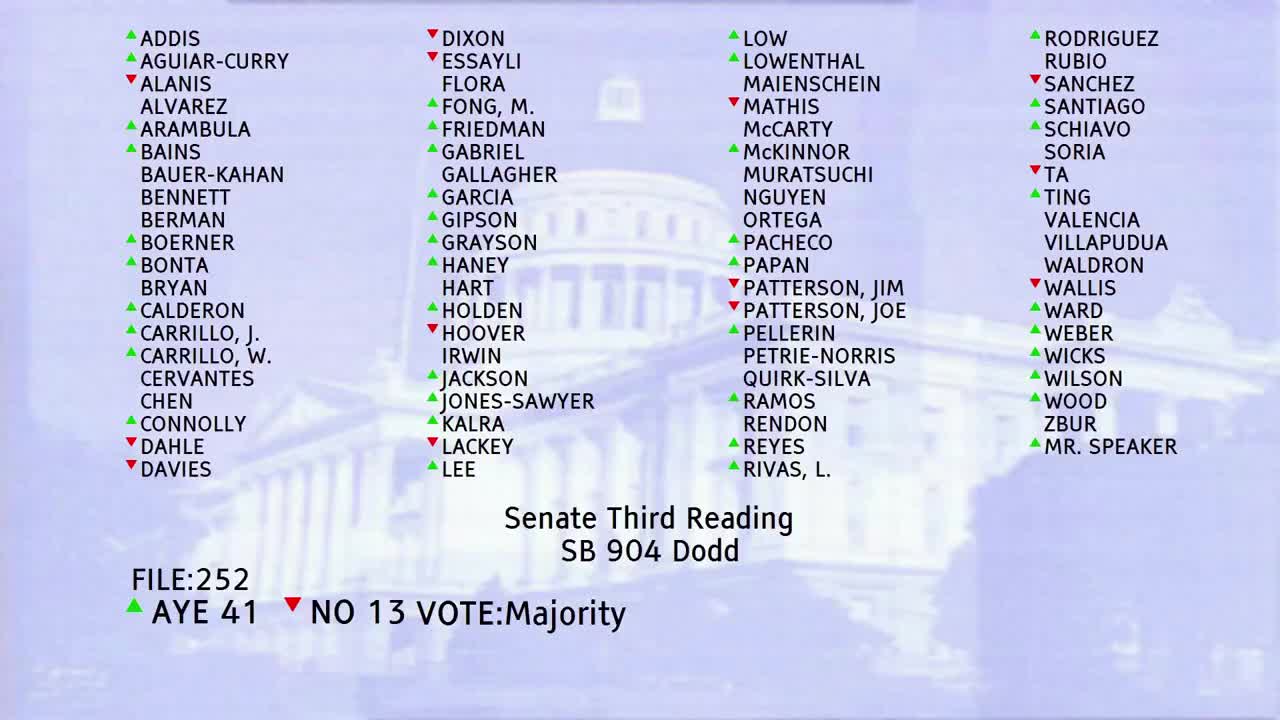 39SEC
Assembly Floor
 46SEC
Senate Floor
 3MIN
Senate Standing Committee on Business, Professions and Economic Development
Bill Author

Bill Co-Author(s):