AB 2882: California Community Corrections Performance Incentives.
- Session Year: 2023-2024
- House: Assembly
- Latest Version Date: 2024-06-20
Current Status:
Failed
(2024-08-15: In committee: Held under submission.)
Introduced
In Committee
First Chamber
In Committee
Second Chamber
Enacted
Existing law authorizes each county to establish a Community Corrections Performance Incentives Fund to receive moneys for the implementation of a community corrections program to provide supervision and rehabilitative services for adult felony offenders subject to local supervision. Existing law requires the program to be developed and implemented by probation and advised by a local Community Corrections Partnership. Existing law requires the partnership to be comprised of specified members, including, among others, a representative from a community-based organization with experience in successfully providing rehabilitative services to persons who have been convicted of a criminal offense.
This bill would add a representative of a community-based organization with experience in successfully providing behavioral health treatment services to persons who have been convicted of a criminal offense, and a representative of a Medi-Cal managed care plan that provides the Enhanced Care Management benefit, to the membership of the partnership.
Existing law requires each county local Community Corrections Partnership to recommend a local plan to the county board of supervisors, and requires the board to accept or reject the plan. Existing law requires the plan to be voted on by an executive committee of each countys partnership consisting of, among others, one department representative from the head of the county department of social services, the head of the county department of mental health, or the head of the county alcohol and substance abuse programs.
This bill would instead require the committee to consist of all 3 of the departments mentioned above and would require the department head to have the number of votes equivalent to the number of departments they represent. The bill would require the plan to, among other things, include quantifiable goals for improving the community corrections system, as specified. The bill would require the local partnership to submit the accepted plan annually to the Board of State and Community Corrections.
This bill would require each county to submit the County Community Corrections Outcomes, Accountability, and Transparency report annually to the Board of State and Community Corrections that includes, among other things, the number of people who have a serious mental illness or substance use disorder who are connected to community-based treatment and support upon release from jail or completion of community supervision. The bill would require each countys board of supervisors to verify that the report is complete and accurate before it is submitted to the board. Because this bill would expand the duties for certain local officials, it would impose a state-mandated local program.Existing law requires the Board of State and Community Corrections to collect and maintain available information and data about state and community correctional policies, practices, capacities, and needs, including, but not limited to, prevention, intervention, suppression, supervision, and incapacitation, as they relate to both adult corrections, juvenile justice, and gang problems. Existing law requires the board to collect and analyze available data regarding the implementation of the local plans and other outcome-based measures.This bill would require the board to create the Community Corrections Outcomes, Accountability, and Transparency dashboard that displays the countys goals mentioned above and the spending and outcomes data reported in the County Community Corrections Outcomes, Accountability, and Transparency report. The bill would require the dashboard to be accessible through the boards internet website.The California Constitution requires the state to reimburse local agencies and school districts for certain costs mandated by the state. Statutory provisions establish procedures for making that reimbursement.This bill would provide that, if the Commission on State Mandates determines that the bill contains costs mandated by the state, reimbursement for those costs shall be made pursuant to the statutory provisions noted above.Existing law authorizes each county to establish a Community Corrections Performance Incentives Fund to receive moneys for the implementation of a community corrections program to provide supervision and rehabilitative services for adult felony offenders subject to local supervision. Existing law requires the program to be developed and implemented by probation and advised by a local Community Corrections Partnership. Existing law requires the partnership to be comprised of specified members, including, among others, a representative from a community-based organization with experience in successfully providing rehabilitative services to persons who have been convicted of a criminal offense.
This bill would add a representative of a community-based organization with experience in successfully providing behavioral health treatment services to persons who have been convicted of a criminal offense, and a representative of a Medi-Cal managed care plan that provides the Enhanced Care Management benefit, to the membership of the partnership.
Existing law requires each county local Community Corrections Partnership to recommend a local plan to the county board of supervisors, and requires the board to accept or reject the plan. Existing law requires the plan to be voted on by an executive committee of each countys partnership consisting of, among others, one department representative from the head of the county department of social services, the head of the county department of mental health, or the head of the county alcohol and substance abuse programs.
This bill would instead require the committee to consist of all 3 of the departments mentioned above and would require the department head to have the number of votes equivalent to the number of departments they represent. The bill would require the plan to, among other things, include quantifiable goals for improving the community corrections system, as specified. The bill would require the local partnership to submit the accepted plan annually to the Board of State and Community Corrections.
This bill would require each county to submit the County Community Corrections Outcomes, Accountability, and Transparency report annually to the Board of State and Community Corrections that includes, among other things, the number of people who have a serious mental illness or substance use disorder who are connected to community-based treatment and support upon release from jail or completion of community supervision. The bill would require each countys board of supervisors to verify that the report is complete and accurate before it is submitted to the board. Because this bill would expand the duties for certain local officials, it would impose a state-mandated local program.
Existing law requires the Board of State and Community Corrections to collect and maintain available information and data about state and community correctional policies, practices, capacities, and needs, including, but not limited to, prevention, intervention, suppression, supervision, and incapacitation, as they relate to both adult corrections, juvenile justice, and gang problems. Existing law requires the board to collect and analyze available data regarding the implementation of the local plans and other outcome-based measures.
This bill would require the board to create the Community Corrections Outcomes, Accountability, and Transparency dashboard that displays the countys goals mentioned above and the spending and outcomes data reported in the County Community Corrections Outcomes, Accountability, and Transparency report. The bill would require the dashboard to be accessible through the boards internet website.
The California Constitution requires the state to reimburse local agencies and school districts for certain costs mandated by the state. Statutory provisions establish procedures for making that reimbursement.
This bill would provide that, if the Commission on State Mandates determines that the bill contains costs mandated by the state, reimbursement for those costs shall be made pursuant to the statutory provisions noted above.
(a)Each county is hereby authorized to establish in each county treasury a Community Corrections Performance Incentives Fund (CCPIF), to receive all amounts allocated to that county for the purposes of implementing this chapter.
(b)Notwithstanding any other law, in any fiscal year for which a county receives moneys to be expended for the implementation of this chapter, the moneys, including any interest, shall be made available to the CPO of that county, within 30 days of the deposit of those moneys into the fund, for the implementation of the community corrections program authorized by this chapter.
(c)(1)The community corrections program shall be developed and implemented by probation and advised by a local Community Corrections Partnership.
(2)The local Community Corrections Partnership shall be chaired by the CPO and comprised of the following membership:
(A)The presiding judge of the superior court, or their designee.
(B)A county supervisor or the chief administrative officer for the county or a designee of the board of supervisors.
(C)The district attorney.
(D)The public defender.
(E)The sheriff.
(F)A chief of police.
(G)The head of the county department of social services.
(H)The head of the county department of mental health.
(I)The head of the county department of employment.
(J)The head of the county alcohol and substance abuse programs.
(K)The head of the county office of education.
(L)A representative from a community-based organization with experience in successfully providing rehabilitative services to persons who have been convicted of a criminal offense.
(M)An individual who represents the interests of victims.
(N)A representative of a community-based organization with experience in successfully providing behavioral health treatment services to persons who have been convicted of a criminal offense.
(O)A representative of a Medi-Cal managed care plan, as defined in subdivision (j) of Section 14184.101 of the Welfare and Institutions Code, which provides the Enhanced Care Management benefit.
(d)Funds allocated to probation pursuant to this act shall be used to provide supervision and rehabilitative services for adult felony offenders subject to local supervision, and shall be spent on evidence-based community corrections practices and programs, as defined in subdivision (d) of Section 1229, which may include, but are not limited to, the following:
(1)Implementing and expanding evidence-based risk and needs assessments.
(2)Implementing and expanding intermediate sanctions that include, but are not limited to, electronic monitoring, mandatory community service, home detention, day reporting, restorative justice programs, work furlough programs, and incarceration in county jail for up to 90 days.
(3)Providing more intensive local supervision.
(4)Expanding the availability of evidence-based rehabilitation programs, including, but not limited to, drug and alcohol treatment, mental health treatment, anger management, cognitive behavior programs, and job training and employment services.
(5)Evaluating the effectiveness of rehabilitation and supervision programs and ensuring program fidelity.
(e)Notwithstanding any other law, the CPO shall have discretion to spend funds on any of the above practices and programs consistent with this act but, at a minimum, shall devote at least 5 percent of all funding received to evaluate the effectiveness of those programs and practices implemented with the funds provided pursuant to this chapter. A CPO may petition the Judicial Council to have this restriction waived, and the Judicial Council shall have the authority to grant such a petition, if the CPO can demonstrate that the department is already devoting sufficient funds to the evaluation of these programs and practices.
(f)Each probation department receiving funds under this chapter shall maintain a complete and accurate accounting of all funds received pursuant to this chapter.
SEC. 2.Section 1230.1 of the Penal Code is amended to read:1230.1.(a)Each county local Community Corrections Partnership established pursuant to subdivision (c) of Section 1230 shall recommend a local plan to the county board of supervisors for the implementation of the 2011 public safety realignment.
(b)The plan shall be voted on by an executive committee of each countys Community Corrections Partnership consisting of the chief probation officer of the county as chair, a chief of police, the sheriff, the District Attorney, the Public Defender, the presiding judge of the superior court, or their designee, the head of the county department of social services, the head of the county department of mental health, and the head of the county alcohol and substance abuse programs. In counties where one or more of the departments for social services, mental health, or alcohol and substance abuse programs are consolidated, the department head shall have the number of votes equivalent to the number of departments they represent.
(c)(1)The plan shall be deemed accepted by the county board of supervisors unless the board rejects the plan by a vote of four-fifths of the board, in which case the plan goes back to the Community Corrections Partnership for further consideration.
(2)(A)The local Community Corrections Partnership shall submit the accepted plan annually to the Board of State and Community Corrections.
(B)Each countys board of supervisors shall attest that the plan has been accepted and is accurate before it is submitted to the board.
(d)Consistent with local needs and resources, the plan shall include recommendations to maximize the effective investment of criminal justice resources in evidence-based correctional sanctions and programs, including, but not limited to, day reporting centers, drug courts, residential multiservice centers, behavioral health treatment programs, electronic and GPS monitoring programs, victim restitution programs, counseling programs, community service programs, educational programs, work training programs, and housing services.
(e)The plan shall include an analysis and recommendations of how criminal justice resources may be spent as matching funds for other sources, including, but not limited to, Medi-Cal federal financial participation.
(f)(1)The plan shall include quantifiable goals for improving the community corrections system, including, but not limited to, all of the following:
(A)Reducing the daily jail population.
(B)Reducing jail bookings.
(C)Reducing the average length of jail stay.
(D)Increasing postrelease connections to community-based behavioral health services for persons with a serious mental illness or substance use disorder.
(E)Reducing rates of recidivism.
(2)County goals shall include specific targets for reducing disparities for populations disproportionately represented in the community corrections system, including, but not limited to, individuals with a serious mental illness or substance use disorder, Black, Indigenous, people of color, and LGBTQ+ people.
(a)Each county is hereby authorized to establish in each county treasury a Community Corrections Performance Incentives Fund (CCPIF), to receive all amounts allocated to that county for purposes of implementing this chapter.
(b)Notwithstanding any other law, in any fiscal year for which a county receives moneys to be expended for the implementation of this chapter, the moneys, including any interest, shall be made available to the CPO of that county, within 30 days of the deposit of those moneys into the fund, for the implementation of the community corrections program authorized by this chapter.
(c)(1)The community corrections program shall be developed and implemented by probation and advised by a local Community Corrections Partnership.
(2)The local Community Corrections Partnership shall be chaired by the CPO and comprised of the following membership:
(A)The presiding judge of the superior court, or their designee.
(B)A county supervisor or the chief administrative officer for the county or a designee of the board of supervisors.
(C)The district attorney.
(D)The public defender.
(E)The sheriff.
(F)A chief of police.
(G)The head of the county department of social services.
(H)The head of the county department of mental health.
(I)The head of the county department of employment.
(J)The head of the county alcohol and substance abuse programs.
(K)The head of the county office of education.
(L)A representative from a community-based organization with experience in successfully providing rehabilitative services to persons who have been convicted of a criminal offense.
(M)An individual who represents the interests of victims.
(N)A representative of a community-based organization with experience in successfully providing behavioral health treatment services to persons who have been convicted of a criminal offense.
(O)A representative of a Medi-Cal managed care plan, as defined in subdivision (j) of Section 14184.101 of the Welfare and Institutions Code, which provides the Enhanced Care Management benefit.
(d)Funds allocated to probation pursuant to this act shall be used to provide supervision and rehabilitative services for adult felony offenders subject to local supervision, and shall be spent on evidence-based community corrections practices and programs, as defined in subdivision (d) of Section 1229, which may include, but are not limited to, the following:
(1)Implementing and expanding evidence-based risk and needs assessments.
(2)Implementing and expanding intermediate sanctions that include, but are not limited to, electronic monitoring, mandatory community service, home detention, day reporting, restorative justice programs, work furlough programs, and incarceration in county jail for up to 90 days.
(3)Providing more intensive local supervision.
(4)Expanding the availability of evidence-based rehabilitation programs programs, including, but not limited to, drug and alcohol treatment, mental health treatment, anger management, cognitive behavior programs, and job training and employment services.
(5)Evaluating the effectiveness of rehabilitation and supervision programs and ensuring program fidelity.
(e)Notwithstanding any other law, the CPO shall have discretion to spend funds on any of the above practices and programs consistent with this act but, at a minimum, shall devote at least 5 percent of all funding received to evaluate the effectiveness of those programs and practices implemented with the funds provided pursuant to this chapter. A CPO may petition the Judicial Council to have this restriction waived, and the Judicial Council shall have the authority to grant such a petition, if the CPO can demonstrate that the department is already devoting sufficient funds to the evaluation of these programs and practices.
(f)Each probation department receiving funds under this chapter shall maintain a complete and accurate accounting of all funds received pursuant to this chapter.
SEC. 2.Section 1230.1 of the Penal Code is amended to read:1230.1.(a)Each county local Community Corrections Partnership established pursuant to subdivision (b) (c) of Section 1230 shall recommend a local plan to the county board of supervisors for the implementation of the 2011 public safety realignment.
(b)The plan shall be voted on by an executive committee of each countys Community Corrections Partnership consisting of the chief probation officer of the county as chair, a chief of police, the sheriff, the District Attorney, the Public Defender, the presiding judge of the superior court, or their designee, the head of the county department of social services, the head of the county department of mental health, and the head of the county alcohol and substance abuse programs. In counties where one or more of the departments for social services, mental health, or alcohol and substance abuse programs are consolidated, the department head shall have the number of votes equivalent to the number of departments they represent.
(c)(1)The plan shall be deemed accepted by the county board of supervisors unless the board rejects the plan by a vote of four-fifths of the board, in which case the plan goes back to the Community Corrections Partnership for further consideration.
(2)(A)The local Community Corrections Partnership shall submit the accepted plan annually to the Board of State and Community Corrections.
(B)Each countys board of supervisors shall attest that the plan has been accepted and is accurate before it is submitted to the board.
(d)Consistent with local needs and resources, the plan shall include recommendations to maximize the effective investment of criminal justice resources in evidence-based correctional sanctions and programs, including, but not limited to, day reporting centers, drug courts, residential multiservice centers, behavioral health treatment programs, electronic and GPS monitoring programs, victim restitution programs, counseling programs, community service programs, educational programs, work training programs, and housing services.
(e)The plan shall include an analysis and recommendations of how criminal justice resources may be spent as matching funds for other sources, including, but not limited to, Medi-Cal federal financial participation.
(f)(1)The plan shall include quantifiable goals for improving the community corrections system, including, but not limited to, all of the following:
(A)Reducing the daily jail population.
(B)Reducing jail bookings.
(C)Reducing the average length of jail stay.
(D)Increasing postrelease connections to community-based behavioral health services for persons with a serious mental illness or substance use disorder.
(E)Reducing rates of recidivism.
(2)County goals shall include specific targets for reducing disparities for populations disproportionately represented in the community corrections system, including, but not limited to, individuals with a serious mental illness or substance use disorder, Black, Indigenous, people of color, and LGBTQ+ people.
SEC. 3.Section 1230.2 is added to the Penal Code, to read:1230.2.(a)(1)Each county shall submit the County Community Corrections Outcomes, Accountability, and Transparency report annually to the Board of State and Community Corrections (BSCC).(2)The report shall be submitted in a form, manner, and in accordance with timelines prescribed by the BSCC.(b)The report shall include all of the following data and information:(1)The countys annual allocation of state and federal public safety funds, including for behavioral health care, by category.(2)The countys annual expenditure of state and federal public safety funds, including for behavioral health care, by category.(3)The amounts of annual and cumulative unspent state and federal public safety funds, including funds in a reserve account, by category.(4)The countys annual expenditure of county general funds and other funds, by category, on public safety, including for behavioral health care.(5)All administrative costs associated with community corrections, by category.(6)All contracted services, including behavioral health services, and the cost of those contracted services, by category.(7)The number of behavioral health calls for services received by 911 dispatch.(8)The number of jail bookings, including the number of people who screened positive for a serious mental illness or substance use disorder according to a validated behavioral health screening conducted when booked into jail, and the number of people who were confirmed as having serious mental illness or substance use disorder through a clinical assessment at the jail or as a result of data matching with state or local behavioral health systems.(9)Length of jail stay.(10)The number of people who have a serious mental illness or substance use disorder who are connected to community-based treatment and support upon release from jail or completion of community supervision, by release type.(11)The number of people enrolled in Medi-Cal prior to release from jail or completion of community supervision, by release type.(12)The number of people who have a serious mental illness or substance use disorder on community supervision, by release type.(13)The number of persons who are convicted of a new felony or misdemeanor committed within three years of release from custody or committed within three years of placement on supervision for a previous criminal conviction.(c)Each countys board of supervisors shall verify that the report is complete and accurate before it is submitted to the BSCC.SEC. 4.Section 6027 of the Penal Code is amended to read:6027.(a)It shall be the duty of the Board of State and Community Corrections to collect and maintain available information and data about state and community correctional policies, practices, capacities, and needs, including, but not limited to, prevention, intervention, suppression, supervision, and incapacitation, as they relate to both adult corrections, juvenile justice, and gang problems. The board shall seek to collect and make publicly available up-to-date data and information reflecting the impact of state and community correctional, juvenile justice, and gang-related policies and practices enacted in the state, as well as information and data concerning promising and evidence-based practices from other jurisdictions.(b)Consistent with subdivision (c) of Section 6024, the board shall also:(1)Develop recommendations for the improvement of criminal justice and delinquency and gang prevention activity throughout the state.(2)Identify, promote, and provide technical assistance relating to evidence-based programs, practices, and promising and innovative projects consistent with the mission of the board.(3)Develop definitions of key terms, including, but not limited to, recidivism, average daily population, treatment program completion rates, and any other terms deemed relevant in order to facilitate consistency in local data collection, evaluation, and implementation of evidence-based practices, promising evidence-based practices, and evidence-based programs. In developing these definitions, the board shall consult with the following stakeholders and experts:(A)A county supervisor or county administrative officer, selected after conferring with the California State Association of Counties.(B)A county sheriff, selected after conferring with the California State Sheriffs Association.(C)A chief probation officer, selected after conferring with the Chief Probation Officers of California.(D)A district attorney, selected after conferring with the California District Attorneys Association.(E)A public defender, selected after conferring with the California Public Defenders Association.(F)The Secretary of the Department of Corrections and Rehabilitation.(G)A representative from the Judicial Council.(H)A representative from a nonpartisan, nonprofit policy institute with experience and involvement in research and data relating to Californias criminal justice system.(I)A representative from a nonprofit agency providing comprehensive reentry services.(4)Receive and disburse federal funds, and perform all necessary and appropriate services in the performance of its duties as established by federal acts.(5)Develop comprehensive, unified, and orderly procedures to ensure that applications for grants are processed fairly, efficiently, and in a manner consistent with the mission of the board.(6)Identify delinquency and gang intervention and prevention grants that have the same or similar program purpose, are allocated to the same entities, serve the same target populations, and have the same desired outcomes for the purpose of consolidating grant funds and programs and moving toward a unified single delinquency intervention and prevention grant application process in adherence with all applicable federal guidelines and mandates.(7)Cooperate with and render technical assistance to the Legislature, state agencies, units of general local government, combinations of those units, or other public or private agencies, organizations, or institutions in matters relating to criminal justice and delinquency prevention.(8)Develop incentives for units of local government to develop comprehensive regional partnerships whereby adjacent jurisdictions pool grant funds in order to deliver services, such as job training and employment opportunities, to a broader target population, including at-promise youth, and maximize the impact of state funds at the local level.(9)Conduct evaluation studies of the programs and activities assisted by the federal acts.(10)Identify and evaluate state, local, and federal gang and youth violence suppression, intervention, and prevention programs and strategies, along with funding for those efforts. The board shall assess and make recommendations for the coordination of the states programs, strategies, and funding that address gang and youth violence in a manner that maximizes the effectiveness and coordination of those programs, strategies, and resources. By January 1, 2014, the board shall develop funding allocation policies to ensure that within three years no less than 70 percent of funding for gang and youth violence suppression, intervention, and prevention programs and strategies is used in programs that utilize promising and proven evidence-based principles and practices. The board shall communicate with local agencies and programs in an effort to promote the best evidence-based principles and practices for addressing gang and youth violence through suppression, intervention, and prevention.(c)The board shall collect from each county the plan submitted pursuant to Section 1230.1 within two months of adoption by the county boards of supervisors. Commencing January 1, 2013, and annually thereafter, the board shall collect and analyze available data regarding the implementation of the local plans and other outcome-based measures, as defined by the board in consultation with the Judicial Council the Chief Probation Officers of California, and the California State Sheriffs Association. By July 1, 2013, and annually thereafter, the board shall provide to the Governor and the Legislature a report on the implementation of the plans described above.(d)Commencing on and after July 1, 2012, the board, in consultation with the Judicial Council, the California State Association of Counties, the California State Sheriffs Association, and the Chief Probation Officers of California, shall support the development and implementation of first phase baseline and ongoing data collection instruments to reflect the local impact of Chapter 15 of the Statutes of 2011, specifically related to dispositions for felony offenders and postrelease community supervision. The board shall make any data collected pursuant to this paragraph available on the boards internet website. It is the intent of the Legislature that the board promote collaboration and the reduction of duplication of data collection and reporting efforts where possible.(e)(1)The board shall create the Community Corrections Outcomes, Accountability, and Transparency dashboard that shall be accessible through the boards internet website. The dashboard shall display information including, but not limited to, both of the following:(A)Each countys plans pursuant to subdivision (f) of Section 1230.1.(B)The spending and outcomes data reported pursuant to Section 1230.2. Outcomes shall be displayed so that changes in rates can be compared year over year and between counties.(2)The board shall ensure definitions, form, and manner of the data and information submitted pursuant to Sections 1230.1 and 1230.2 are consistent so that spending and outcomes data can be compared across counties.(f)The board may do either of the following:(1)Collect, evaluate, publish, and disseminate statistics and other information on the condition and progress of criminal justice in the state.(2)Perform other functions and duties as required by federal acts, rules, regulations, or guidelines in acting as the administrative office of the state planning agency for distribution of federal grants.(g)This chapter shall not be construed to include, in the provisions set forth in this section, funds already designated to the Local Revenue Fund 2011 pursuant to Section 30025 of the Government Code.SEC. 5.If the Commission on State Mandates determines that this act contains costs mandated by the state, reimbursement to local agencies and school districts for those costs shall be made pursuant to Part 7 (commencing with Section 17500) of Division 4 of Title 2 of the Government Code.(a)Each county is hereby authorized to establish in each county treasury a Community Corrections Performance Incentives Fund (CCPIF), to receive all amounts allocated to that county for purposes of implementing this chapter.
(b)Notwithstanding any other law, in any fiscal year for which a county receives moneys to be expended for the implementation of this chapter, the moneys, including any interest, shall be made available to the CPO of that county, within 30 days of the deposit of those moneys into the fund, for the implementation of the community corrections program authorized by this chapter.
(1)(c)(1)The community corrections program shall be developed and implemented by probation and advised by a local Community Corrections Partnership.
(2)The local Community Corrections Partnership shall be chaired by the CPO and comprised of the following membership:
(A)The presiding judge of the superior court, or his or her their designee.
(B)A county supervisor or the chief administrative officer for the county or a designee of the board of supervisors.
(C)The district attorney.
(D)The public defender.
(E)The sheriff.
(F)A chief of police.
(G)The head of the county department of social services.
(H)The head of the county department of mental health.
(I)The head of the county department of employment.
(J)The head of the county alcohol and substance abuse programs.
(K)The head of the county office of education.
(L)A representative from a community-based organization with experience in successfully providing rehabilitative services to persons who have been convicted of a criminal offense.
(M)An individual who represents the interests of victims.
(N)A representative of a community-based organization with experience in successfully providing behavioral health treatment services to persons who have been convicted of a criminal offense.
(O)A representative of a Medi-Cal managed care plan, as defined in subdivision (j) of Section 14184.101 of the Welfare and Institutions Code, which provides the Enhanced Care Management benefit.
(3)(d)Funds allocated to probation pursuant to this act shall be used to provide supervision and rehabilitative services for adult felony offenders subject to local supervision, and shall be spent on evidence-based community corrections practices and programs, as defined in subdivision (d) of Section 1229, which may include, but are not limited to, the following:
(A)(1)Implementing and expanding evidence-based risk and needs assessments.
(B)(2)Implementing and expanding intermediate sanctions that include, but are not limited to, electronic monitoring, mandatory community service, home detention, day reporting, restorative justice programs, work furlough programs, and incarceration in county jail for up to 90 days.
(C)(3)Providing more intensive local supervision.
(D)(4)Expanding the availability of evidence-based rehabilitation programs including, but not limited to, drug and alcohol treatment, mental health treatment, anger management, cognitive behavior programs, and job training and employment services.
(E)(5)Evaluating the effectiveness of rehabilitation and supervision programs and ensuring program fidelity.
(4)(e)Notwithstanding any other law, the CPO shall have discretion to spend funds on any of the above practices and programs consistent with this act but, at a minimum, shall devote at least 5 percent of all funding received to evaluate the effectiveness of those programs and practices implemented with the funds provided pursuant to this chapter. A CPO may petition the Judicial Council to have this restriction waived, and the Judicial Council shall have the authority to grant such a petition, if the CPO can demonstrate that the department is already devoting sufficient funds to the evaluation of these programs and practices.
(5)(f)Each probation department receiving funds under this chapter shall maintain a complete and accurate accounting of all funds received pursuant to this chapter.
SEC. 2.Section 1230.1 of the Penal Code is amended to read:1230.1.(a)Each county local Community Corrections Partnership established pursuant to subdivision (b) of Section 1230 shall recommend a local plan to the county board of supervisors for the implementation of the 2011 public safety realignment.
(b)The plan shall be voted on by an executive committee of each countys Community Corrections Partnership consisting of the chief probation officer of the county as chair, a chief of police, the sheriff, the District Attorney, the Public Defender, the presiding judge of the superior court, or his or her designee, and one department representative listed in either subparagraph (G), (H), or (J) of paragraph (2) of subdivision (b) of Section 1230, as designated by the county board of supervisors for purposes related to the development and presentation of the plan. their designee, the head of the county department of social services, the head of the county department of mental health, and the head of the county alcohol and substance abuse programs. In counties where one or more of the departments for social services, mental health, or alcohol and substance abuse programs are consolidated, the department head shall have the number of votes equivalent to the number of departments they represent.
(c)(1)The plan shall be deemed accepted by the county board of supervisors unless the board rejects the plan by a vote of four-fifths of the board, in which case the plan goes back to the Community Corrections Partnership for further consideration.
(2)(A)The local Community Corrections Partnership shall submit the accepted plan annually to the Board of State and Community Corrections.
(B)Each countys board of supervisors shall attest that the plan has been accepted and is accurate before it is submitted to the board.
(d)Consistent with local needs and resources, the plan may shall include recommendations to maximize the effective investment of criminal justice resources in evidence-based correctional sanctions and programs, including, but not limited to, day reporting centers, drug courts, residential multiservice centers, mental behavioral health treatment programs, electronic and GPS monitoring programs, victim restitution programs, counseling programs, community service programs, educational programs, and work training programs. programs, and housing services.
(e)The plan shall include an analysis and recommendations of how criminal justice resources may be spent as matching funds for other sources, including, but not limited to, Medi-Cal federal financial participation.
(f)(1)The plan shall include quantifiable goals for improving the community corrections system, including, but not limited to, all of the following:
(A)Reducing the daily jail population.
(B)Reducing jail bookings.
(C)Reducing the average length of jail stay.
(D)Increasing postrelease connections to community-based behavioral health services for persons with a serious mental illness or substance use disorder.
(E)Reducing rates of recidivism.
(2)County goals shall include specific targets for reducing disparities for populations disproportionately represented in the community corrections system, including, but not limited to, individuals with a serious mental illness or substance use disorder, Black, Indigenous, people of color, and LGBTQ+ people.
SEC. 3.Section 1230.2 is added to the Penal Code, to read:1230.2.(a)(1)Each county shall submit the County Community Corrections Outcomes, Accountability, and Transparency report annually to the Board of State and Community Corrections (BSCC).
(2)The report shall be submitted in a form, manner, and in accordance with timelines prescribed by the BSCC.
(b)The report shall include all of the following data and information:
(1)The countys annual allocation of state and federal public safety funds, including for behavioral health care, by category.
(2)The countys annual expenditure of state and federal public safety funds, including for behavioral health care, by category.
(3)The amounts of annual and cumulative unspent state and federal public safety funds, including funds in a reserve account, by category.
(4)The countys annual expenditure of county general funds and other funds, by category, on public safety, including for behavioral health care.
(5)All administrative costs associated with community corrections, by category.
(6)All contracted services, including behavioral health services, and the cost of those contracted services, by category.
(7)The number of behavioral health calls for services received by 911 dispatch.
(8)The number of jail bookings, including the number of people who screened positive for a serious mental illness or substance use disorder according to a validated behavioral health screening conducted when booked into jail, and the number of people who were confirmed as having serious mental illness or substance use disorder through a clinical assessment at the jail or as a result of data matching with state or local behavioral health systems.
(9)Length of jail stay.
(10)The number of people who have a serious mental illness or substance use disorder who are connected to community-based treatment and support upon release from jail or completion of community supervision, by release type.
(11)The number of people enrolled in Medi-Cal prior to release from jail or completion of community supervision, by release type.
(12)The number of people who have a serious mental illness or substance use disorder on community supervision, by release type.
(13)The number of persons who are convicted of a new felony or misdemeanor committed within three years of release from custody or committed within three years of placement on supervision for a previous criminal conviction.
(c)Each countys board of supervisors shall verify that the report is complete and accurate before it is submitted to the BSCC.
SEC. 4.Section 6027 of the Penal Code is amended to read:6027.(a)It shall be the duty of the Board of State and Community Corrections to collect and maintain available information and data about state and community correctional policies, practices, capacities, and needs, including, but not limited to, prevention, intervention, suppression, supervision, and incapacitation, as they relate to both adult corrections, juvenile justice, and gang problems. The board shall seek to collect and make publicly available up-to-date data and information reflecting the impact of state and community correctional, juvenile justice, and gang-related policies and practices enacted in the state, as well as information and data concerning promising and evidence-based practices from other jurisdictions.
(b)Consistent with subdivision (c) of Section 6024, the board shall also:
(1)Develop recommendations for the improvement of criminal justice and delinquency and gang prevention activity throughout the state.
(2)Identify, promote, and provide technical assistance relating to evidence-based programs, practices, and promising and innovative projects consistent with the mission of the board.
(3)Develop definitions of key terms, including, but not limited to, recidivism, average daily population, treatment program completion rates, and any other terms deemed relevant in order to facilitate consistency in local data collection, evaluation, and implementation of evidence-based practices, promising evidence-based practices, and evidence-based programs. In developing these definitions, the board shall consult with the following stakeholders and experts:
(A)A county supervisor or county administrative officer, selected after conferring with the California State Association of Counties.
(B)A county sheriff, selected after conferring with the California State Sheriffs Association.
(C)A chief probation officer, selected after conferring with the Chief Probation Officers of California.
(D)A district attorney, selected after conferring with the California District Attorneys Association.
(E)A public defender, selected after conferring with the California Public Defenders Association.
(F)The Secretary of the Department of Corrections and Rehabilitation.
(G)A representative from the Administrative Office of the Courts. Judicial Council.
(H)A representative from a nonpartisan, nonprofit policy institute with experience and involvement in research and data relating to Californias criminal justice system.
(I)A representative from a nonprofit agency providing comprehensive reentry services.
(4)Receive and disburse federal funds, and perform all necessary and appropriate services in the performance of its duties as established by federal acts.
(5)Develop comprehensive, unified, and orderly procedures to ensure that applications for grants are processed fairly, efficiently, and in a manner consistent with the mission of the board.
(6)Identify delinquency and gang intervention and prevention grants that have the same or similar program purpose, are allocated to the same entities, serve the same target populations, and have the same desired outcomes for the purpose of consolidating grant funds and programs and moving toward a unified single delinquency intervention and prevention grant application process in adherence with all applicable federal guidelines and mandates.
(7)Cooperate with and render technical assistance to the Legislature, state agencies, units of general local government, combinations of those units, or other public or private agencies, organizations, or institutions in matters relating to criminal justice and delinquency prevention.
(8)Develop incentives for units of local government to develop comprehensive regional partnerships whereby adjacent jurisdictions pool grant funds in order to deliver services, such as job training and employment opportunities, to a broader target population, including at-promise youth, and maximize the impact of state funds at the local level.
(9)Conduct evaluation studies of the programs and activities assisted by the federal acts.
(10)Identify and evaluate state, local, and federal gang and youth violence suppression, intervention, and prevention programs and strategies, along with funding for those efforts. The board shall assess and make recommendations for the coordination of the states programs, strategies, and funding that address gang and youth violence in a manner that maximizes the effectiveness and coordination of those programs, strategies, and resources. By January 1, 2014, the board shall develop funding allocation policies to ensure that within three years no less than 70 percent of funding for gang and youth violence suppression, intervention, and prevention programs and strategies is used in programs that utilize promising and proven evidence-based principles and practices. The board shall communicate with local agencies and programs in an effort to promote the best evidence-based principles and practices for addressing gang and youth violence through suppression, intervention, and prevention.
(11)(c)The board shall collect from each county the plan submitted pursuant to Section 1230.1 within two months of adoption by the county boards of supervisors. Commencing January 1, 2013, and annually thereafter, the board shall collect and analyze available data regarding the implementation of the local plans and other outcome-based measures, as defined by the board in consultation with the Administrative Office of the Courts, Judicial Council the Chief Probation Officers of California, and the California State Sheriffs Association. By July 1, 2013, and annually thereafter, the board shall provide to the Governor and the Legislature a report on the implementation of the plans described above.
(12)(d)Commencing on and after July 1, 2012, the board, in consultation with the Administrative Office of the Courts, Judicial Council, the California State Association of Counties, the California State Sheriffs Association, and the Chief Probation Officers of California, shall support the development and implementation of first phase baseline and ongoing data collection instruments to reflect the local impact of Chapter 15 of the Statutes of 2011, specifically related to dispositions for felony offenders and postrelease community supervision. The board shall make any data collected pursuant to this paragraph available on the boards internet website. It is the intent of the Legislature that the board promote collaboration and the reduction of duplication of data collection and reporting efforts where possible.
(e)(1)The board shall create the Community Corrections Outcomes, Accountability, and Transparency dashboard that shall be accessible through the boards internet website. The dashboard shall display information including, but not limited to, both of the following:
(A)Each countys plans pursuant to subdivision (f) of Section 1230.1.
(B)The spending and outcomes data reported pursuant to Section 1230.2. Outcomes shall be displayed so that changes in rates can be compared year over year and between counties.
(2)The board shall ensure definitions, form, and manner of the data and information submitted pursuant to Sections 1230.1 and 1230.2 are consistent so that spending and outcomes data can be compared across counties.
(c)(f)The board may do either of the following:
(1)Collect, evaluate, publish, and disseminate statistics and other information on the condition and progress of criminal justice in the state.
(2)Perform other functions and duties as required by federal acts, rules, regulations, or guidelines in acting as the administrative office of the state planning agency for distribution of federal grants.
(d)Nothing in this(g)This chapter shall not be construed to include, in the provisions set forth in this section, funds already designated to the Local Revenue Fund 2011 pursuant to Section 30025 of the Government Code.
SEC. 5.If the Commission on State Mandates determines that this act contains costs mandated by the state, reimbursement to local agencies and school districts for those costs shall be made pursuant to Part 7 (commencing with Section 17500) of Division 4 of Title 2 of the Government Code.
CORRECTIONS: TextPages 6, 7, and 8.|
Date
|
Status
|
|---|---|
| Aug 15, 2024 | In committee: Held under submission. |
| Aug 5, 2024 | In committee: Referred to APPR suspense file. |
| Jul 2, 2024 | From committee: Do pass and re-refer to Com. on APPR. (Ayes 4. Noes 1.) (July 2). Re-referred to Com. on APPR. |
| Jun 20, 2024 | From committee chair, with author's amendments: Amend, and re-refer to committee. Read second time, amended, and re-referred to Com. on PUB S. |
| Jun 5, 2024 | Referred to Com. on PUB S. |
| May 24, 2024 | In Senate. Read first time. To Com. on RLS. for assignment. |
| May 23, 2024 | Read third time. Passed. Ordered to the Senate. (Ayes 46. Noes 17. Page 5642.) |
| May 20, 2024 | Read second time. Ordered to third reading. |
| May 16, 2024 | Read second time and amended. Ordered returned to second reading. |
| May 16, 2024 | From committee: Amend, and do pass as amended. (Ayes 11. Noes 4.) (May 16). |
| May 16, 2024 | Assembly Rule 63 suspended. |
| Apr 17, 2024 | In committee: Set, first hearing. Referred to APPR. suspense file. |
| Apr 3, 2024 | From committee: Do pass and re-refer to Com. on APPR. (Ayes 6. Noes 1.) (April 2). Re-referred to Com. on APPR. |
| Mar 4, 2024 | Referred to Com. on PUB. S. |
| Feb 22, 2024 | Introduced measure version corrected. |
| Feb 16, 2024 | From printer. May be heard in committee March 17. |
| Feb 15, 2024 | Read first time. To print. |
|
Date
|
Description
|
Location
|
Votes
|
|
|---|---|---|---|---|
| Aug 5, 2024 | Placed on suspense file | Senate Standing Committee on Appropriations |
Passed |
|
| Jul 2, 2024 | Do pass, but first be re-referred to the Committee on [Appropriations] | Senate Standing Committee on Public Safety |
Passed |
|
| May 23, 2024 | AB 2882 McCarty Assembly Third Reading | Assembly Floor |
Passed |
|
| May 16, 2024 | Do pass as amended. | Assembly Standing Committee on Appropriations |
Passed |
|
| Apr 2, 2024 | Do pass and be re-referred to the Committee on [Appropriations] | Assembly Standing Committee on Public Safety |
Passed |
This list shows positions taken on this bill by organizations on the date displayed, which is linked to the original source.
Positions by individuals are not included.
|
Organization
|
Position
|
Date
|
|---|---|---|
| Anti Recidivism Coalition | ** Support | |
| California Alliance for Youth and Community Justice | ** Support | |
| California Fraternal Order of Police | ** Against | |
| Californians for Safety and Justice | ** Support | |
| Californians United for a Responsible Budget | ** Support | |
| California Public Defenders Association | ** Support | |
| California State Association Of Counties | ** Against | |
| California State Association of Psychiatrists | ** Support | |
| California State Sheriffs Association | ** Against | |
| Center on Juvenile and Criminal Justice | ** Support | |
| Chief Probation Officers Of California | ** Against | |
| Communities United for Restorative Youth Justice | ** Support | |
| County Of Kern | ** Against | |
| County Of Madera | ** Against | |
| County of Mendocino | ** Against | |
| County of Monterey | ** Against | |
| County of Riverside | ** Against | |
| county of sacramento | ** Against | |
| County of San Joaquin | ** Against | |
| County of San Luis Obispo | ** Against | |
| County of Santa Barbara | ** Against | |
| County of Shasta | ** Against | |
| County of Solano | ** Against | |
| County of Ventura | ** Against | |
| Ella Baker Center For Human Rights | ** Support | |
| Felony Murder Elimination Project | ** Support | |
| Friends Committee On Legislation Of California | ** Support | |
| Initiate Justice | ** Support | |
| LA Defensa | ** Support | |
| National Alliance on Mental Illness | ** Support | |
| Peace Officers Research Association Of California | ** Against | |
| Rubicon Programs | ** Support | |
| Rural County Representatives of California | ** Against | |
| Sacramento County Probation Association | ** Against | |
| San Francisco Deputy Probation Officers Association | ** Against | |
| San Joaquin County Board of Supervisors | ** Against | |
| Santa Cruz Barrios Unidos | ** Support | |
| Sister Warriors Freedom Coalition | ** Support | |
| Smart Justice California, a project of Tides Advocacy | ** Support | |
| State Coalition Of Probation Organizations | ** Against | |
| Steinberg Institute | ** Support | |
| The Miles Hall Foundation | ** Support | |
| Urban Counties of California | ** Against | |
| VENTURA COUNTY PROFESSIONAL PEACE OFFICERS ASSOCIATION | ** Against | |
| Vera Institute Of Justice | ** Support | |
| Young Women's Freedom Center | ** Support |
SENATE COMMITTEE ON
Senator Anna Caballero, Chair
2023 - 2024 Regular Session
AB 2882 (McCarty) - California Community Corrections Performance Incentives
Version: | Policy Vote: |
Urgency: | Mandate: |
Hearing Date: | Consultant: |
Bill Summary:
AB 2882 would require the inclusion of the heads of a county’s department of social services, department of mental health, and county alcohol and substance abuse programs, on each county’s executive committee of the local Community Corrections Partnership (CCP); and require the CCP to submit the approved local plan for the implementation of the 2011 public safety realignment to the Board of State and Community Corrections (BSCC) annually.
Fiscal Impact:
- Ongoing significant costs to the counties (local funds, General Fund) of an unknown amount, possibly in the millions to tens of millions of dollars annually. Each county will incur workload costs to include the additional information required in its annual realignment implementation plan. It is unclear whether the duties required of counties by this bill are reimbursable state mandates or whether they must be paid for by the state pursuant to Proposition 30 (2012). Proposition 30 provided that any legislation enacted after September 30, 2012, that that has an overall effect of increasing costs already borne by a local agency for programs or levels of service mandated by realignment applies to local agencies only to the extent the state provides annual funding for the cost increase. If the Commission on State Mandates determines the duties imposed on the counties by this bill constitute a reimbursable state mandate, General Fund costs will depend on the amount of reimbursement requested by the counties.
- BSCC indicates minor and absorbable costs.
Background:
In 2011, AB 109, the California Public Safety Realignment Act, was enacted. Realignment, among other things, limited which felons could be sent to state prison, required that more felons serve their sentences in county jails, and affected parole supervision after release from custody. The purposes of Criminal Justice Realignment include reducing recidivism by facilitating the reintegration of low-level offenders into society, and managing incarcerated person more cost-effectively.
In the context of jail and probation services, 2011 public safety realignment shifted many supervision responsibilities from the state to the counties in exchange for increased funding for the counties, as well as increased local discretion over the funds and public safety operations. To that end, AB 109 created the Community Corrections Partnership (CCP) to plan and implement public safety realignment at the local county level.
Each CCP is required to recommend a local plan to the county board of supervisors for the implementation of the 2011 public safety realignment. Existing law requires the plan to be voted on by an executive committee of each county’s CCP consisting of the chief probation officer as chair, the chief of police, the sheriff, the District Attorney, the Public Defender, the presiding judge of the superior court, or their designee, and one representative from the county department of social services, the county department of mental health, or the county alcohol and substance abuse programs, as designated by the county board of supervisors for purposes related to the development and presentation of the plan. State law requires local CCP to be chaired by the chief probation officer and comprised of the presiding judge of the superior court, or his or her designee; a county supervisor or the chief administrative officer for the county or a designee of the board of supervisors; the district attorney; the public defender; the sheriff; a chief of police; the head of the county department of social services; the head of the county department of mental health; the head of the county department of employment; the head of the county alcohol and substance abuse programs; the head of the county office of education; a representative from a community-based organization with experience in successfully providing rehabilitative services to persons who have been convicted of a criminal offense; and, an individual who represents the interests of victims.
Proposed Law:
- Requires one representative each from the county department of social services, the county department of mental health, or the county alcohol and substance abuse programs to be on the executive committee of each local CCP.
- Provides that in counties where one or more of the departments for social services, mental health, or alcohol and substance abuse programs are consolidated, the department head has the number of votes equivalent to the number of departments the person represents.
- Requires the local CCP to submit the accepted plan annually to the BSCC.
- Requires each county’s board of supervisors to attest that the plan has been accepted and is accurate before it is submitted to the BSCC.
- Requires the plan to include an analysis and recommendations of how criminal justice resources may be spent as matching funds for other sources, including, but not limited to, Medi-Cal federal financial participation.
- Requires the plan to include quantifiable goals for improving the community corrections system, as specified.
- Requires county goals to include specific targets for reducing disparities for populations disproportionately represented in the community corrections system, including, but not limited to, individuals with a serious mental illness or substance use disorder, Black, Indigenous, people of color, and LGBTQ+ people.
-- END --
SENATE COMMITTEE ON PUBLIC SAFETY
Senator Aisha Wahab, Chair
2023 - 2024 Regular
Bill No: AB 2882 Hearing Date: July 2, 2024
Author: | McCarty | ||
Version: | June 20, 2024 | ||
Urgency: | No | Fiscal: | Yes |
Consultant: | SJ | ||
Subject: California Community Corrections Performance Incentives
HISTORY
Source: Californians for Safety and Justice
Steinberg Institute
Prior Legislation: AB 109 (Comm. on Budget), Ch. 15, Stats. 2011
SB 678 (Leno), Ch. 608, Stats. 2009
Support: California Public Defenders Association; Ella Baker Center for Human Rights; Initiate Justice; La Defensa; National Alliance on Mental Illness
Opposition: California Fraternal Order of Police; California State Association of Counties; California State Sheriffs’ Association; Chief Probation Officers of California; County of Kern; County of Madera; County of Mendocino; County of Monterey; County of Riverside; County of Sacramento; County of San Joaquin; County of San Luis Obispo; County of Santa Barbara; County of Shasta; County of Solano; County of Ventura; Peace Officers Research Association of California; Rural County Representatives of California; Sacramento County Probation Association; San Francisco Deputy Probation Officers Association; San Joaquin County Board of Supervisors; State Coalition of Probation Organizations; Urban Counties of California; Ventura County Professional Peace Officers Association
Assembly Floor Vote: 46 - 17
PURPOSE
The purpose of this bill is to require the inclusion of the heads of a county’s department of social services, department of mental health, and county alcohol and substance abuse programs, on each county’s executive committee of the local Community Corrections Partnership (CCP); and require the CCP to submit the approved local plan for the implementation of the 2011 public safety realignment to the Board of State and Community Corrections (BSCC) annually.
Existing law declares that probation is a judicially imposed suspension of sentence that attempts to supervise, treat, and rehabilitate offenders while they remain in the community under the supervision of the probation department. Declares that probation is a linchpin of the criminal justice system, closely aligned with the courts, and plays a central role in promoting public safety in California’s communities. (Pen. Code, § 1228, subd. (c).)
Existing law declares that providing sustainable funding for improved, evidence-based probation supervision practices and capacities will improve public safety outcomes among adult felons who are on probation. Provides that improving felony probation performance, measured by a reduction in felony probationers who are sent to prison because they were revoked on probation or convicted of another crime while on probation, will reduce the number of new admissions to state prison, saving taxpayer dollars and allowing a portion of those state savings to be redirected to probation for investing in community corrections programs. (Pen. Code, § 1228, subd. (d).)
Existing law provides the following definitions:
- Community corrections” means the placement of persons convicted of a felony offense under probation supervision, mandatory supervision, or postrelease community supervision for a specified period.
- “Chief probation officer” or “CPO” means the chief probation officer for the county or city and county in which an adult offender is subject to probation for the conviction of a felony offense.
- “Community corrections program” means a program established pursuant to the California Community Corrections Performance Incentives Act of 2009 (the Act) consisting of a system of services for felony offenders under local supervision dedicated to all of the following goals:
- Enhancing public safety through the management and reduction of offender risk while under local supervision and upon reentry from jail or prison into the community.
- Providing a range of supervision tools, sanctions, and services applied to felony offenders subject to local supervision based on a risk and needs assessment for the purpose of reducing criminal conduct and promoting behavioral change that results in reducing recidivism and promoting the successful reintegration of offenders into the community.
- Maximizing offender restitution, reconciliation, and restorative services to victims of crime.
- Holding offenders accountable for their criminal behaviors and for successful compliance with applicable court orders and conditions of supervision.
- Improving public safety outcomes for persons subject to local supervision for a felony offense, as measured by their successful completion of the period of local supervision and the commensurate reduction in the rate of offenders sent to prison as a result of a revocation of supervision or conviction of a new crime.
- “Evidence-based practices” refers to supervision policies, procedures, programs, and practices demonstrated by scientific research to reduce recidivism among individuals under local supervision.
- “Local supervision” means the supervision of an adult felony offender on probation, mandatory supervision, or postrelease community supervision.
(Pen. Code, § 1229.)
Existing law authorizes each county to establish in its treasury a Community Corrections Performance Incentives Fund (CCPIF) to receive all amounts allocated to that county for purposes of implementing the Act. (Pen. Code, § 1230, subd. (a).)
Existing law requires, in any fiscal year for which a county receives moneys to be expended for the implementation of this chapter, the moneys, including any interest, to be made available to the county’s chief probation officer, within 30 days of the deposit into the fund, for the implementation of the community corrections program authorized by this chapter. (Pen. Code, § 1230, subd. (b).)
Existing law requires the community corrections program to be developed and implemented by probation and advised by a local CCP. (Pen. Code, § 1230, subd. (b)(1).)
Existing law requires the local CCP to be chaired by the CPO and comprised of the following members:
- The presiding judge of the superior court, or his or her designee.
- A county supervisor or the chief administrative officer for the county or a designee of the board of supervisors.
- The district attorney.
- The public defender.
- The sheriff.
- A chief of police.
- The head of the county department of social services.
- The head of the county department of mental health.
- The head of the county department of employment.
- The head of the county alcohol and substance abuse programs.
- The head of the county office of education.
- A representative from a community-based organization with experience in successfully providing rehabilitative services to persons who have been convicted of a criminal offense.
- An individual who represents the interests of victims.
(Pen. Code, § 1230, subd. (b)(2).)
Existing law requires funds allocated to probation to be used to provide supervision and rehabilitative services for adult felony offenders subject to local supervision, and to be spent on evidence-based community corrections practices and programs, which may include, but is not limited to:
- Implementing and expanding evidence-based risk and needs assessments.
- Implementing and expanding intermediate sanctions that include, but are not limited to, electronic monitoring, mandatory community service, home detention, day reporting, restorative justice programs, work furlough programs, and incarceration in county jail for up to 90 days.
- Providing more intensive local supervision.
- Expanding the availability of evidence-based rehabilitation programs including, but not limited to, drug and alcohol treatment, mental health treatment, anger management, cognitive behavior programs, and job training and employment services.
- Evaluating the effectiveness of rehabilitation and supervision programs and ensuring program fidelity.
(Pen. Code, § 1230, subd. (b)(3).)
Existing law provides that the CPO has discretion to spend funds on any of the above practices and programs consistent with this Act but, at a minimum, requires at least 5 percent of all funding received to be used to evaluate the effectiveness of those programs and practices implemented with the funds provided. Authorizes a CPO to petition the Judicial Council to have this restriction waived, and provides the Judicial Council the authority to grant such a petition, if the CPO can demonstrate that the department is already devoting sufficient funds to the evaluation of these programs and practices. (Pen. Code, § 1230, subd. (b)(4).)
Existing law requires each probation department receiving funds to maintain a complete and accurate accounting of all funds received. (Pen. Code, § 1230, subd. (b)(5).)
Existing law requires each county local CCP to recommend a local plan to the county board of supervisors for the implementation of the 2011 public safety realignment. (Pen. Code, § 1230.1, subd. (a).)
Existing law requires the plan to be voted on by an executive committee of each county’s CCP consisting of the chief probation officer as chair, the chief of police, the sheriff, the District Attorney, the Public Defender, the presiding judge of the superior court, or their designee, and one representative from the county department of social services, the county department of mental health, or the county alcohol and substance abuse programs, as designated by the county board of supervisors for purposes related to the development and presentation of the plan. (Pen. Code, § 1230.1, subd. (b).)
Existing law requires the plan to be deemed accepted by the county board of supervisors unless the board rejects the plan by a vote of four-fifths of the board, in which case the plan goes back to the CCP for further consideration. (Pen. Code, § 1230.1, subd. (c).)
Existing law permits the plan, consistent with local needs and resources, to include recommendations to maximize the effective investment of criminal justice resources in evidence-based correctional sanctions and programs, including, but not limited to, day reporting centers, drug courts, residential multiservice centers, mental health treatment programs, electronic and GPS monitoring programs, victim restitution programs, counseling programs, community service programs, educational programs, and work training programs. (Pen. Code, § 1230.1, subd. (d).)
Existing law provides that the mission of the BSCC includes providing statewide leadership, coordination, and technical assistance to promote effective state and local efforts and partnerships in California’s adult and juvenile criminal justice system, including addressing gang problems, and to promote legal and safe conditions for youth, inmates, and staff in local detention facilities. Requires this mission to reflect the principle of aligning fiscal policy and correctional practices, including, but not limited to prevention, intervention, suppression, supervision, and incapacitation, to promote a justice investment strategy that fits each county and is consistent with the integrated statewide goal of improved public safety through cost-effective, promising, and evidence-based strategies for managing criminal justice populations. (Pen. Code, § 6024, subd. (b).)
Existing law provides that it is the duty of the BSCC to collect and maintain available information and data about state and community correctional policies, practices, capacities, and needs, including, but not limited to, prevention, intervention, suppression, supervision, and incapacitation, as they relate to both adult corrections, juvenile justice, and gang problems. The board shall seek to collect and make publicly available up-to-date data and information reflecting the impact of state and community correctional, juvenile justice, and gang-related policies and practices enacted in the state, as well as information and data concerning promising and evidence-based practices from other jurisdictions. (Pen. Code, § 6027, subd. (a).)
This bill adds the following members to the local CCP:
- A representative of a community-based organization with experience in successfully providing behavioral health treatment services to persons who have been convicted of a criminal offense.
- A representative of a Medi-Cal managed care plan, as defined, which provides the Enhanced Care Management benefit.
This bill requires one representative each from the county department of social services, the county department of mental health, or the county alcohol and substance abuse programs to be on the executive committee of each local CCP. Provides that in counties where one or more of the departments for social services, mental health, or alcohol and substance abuse programs are consolidated, the department head has the number of votes equivalent to the number of departments the person represents.
This bill requires the local CCP to submit the accepted plan annually to the BSCC.
This bill requires each county’s board of supervisors to attest that the plan has been accepted and is accurate before it is submitted to the board.
This bill requires the plan to include an analysis and recommendations of how criminal justice resources may be spent as matching funds for other sources, including, but not limited to, Medi-Cal federal financial participation.
This bill requires the plan to include quantifiable goals for improving the community corrections system, including, but not limited to, all of the following:
- Reducing the daily jail population.
- Reducing jail bookings.
- Reducing the average length of jail stay.
- Increasing postrelease connections to community-based behavioral health services for persons with a serious mental illness or substance use disorder.
- Reducing rates of recidivism.
This bill requires county goals to include specific targets for reducing disparities for populations disproportionately represented in the community corrections system, including, but not limited to, individuals with a serious mental illness or substance use disorder, Black, Indigenous, people of color, and LGBTQ+ people.
COMMENTS
- Need For This Bill
According to the author:
AB 2882 will ensure every public safety dollar is used to its fullest potential and help the state reach its goals of reduced recidivism by encouraging collaboration and communication between local public safety and behavioral health professionals. Research consistently demonstrates that addressing the behavioral health needs of our justice involved-population reduces recidivism.
- California Community Corrections Performance Incentives Act
Senate Bill 678 (Leno), Chapter 608, Statutes of 2009, codified the California Community Corrections Performance Incentives Act. The purpose of the bill was to “establish a system of performance-based funding to support evidence-based practices relating to the supervision of adult felony probationers.” (Assem. Com. on Public Safety, 3rd reading analysis of Sen. Bill No. 678 (2009-2010 Reg. Sess.) as amended Sept. 12, 2009, p. 1.) The legislative findings and declarations of SB 678 outline the circumstances at the time—a felony probation population of almost 270,000 and nearly 20,000 new prison admissions as the result of “failing probation supervision” in 2007. (Pen. Code, § 1228.)
Existing law requires the Judicial Council, in consultation with the Department of Corrections and Rehabilitation, the Department of Finance, and the Chief Probation Officers of California, to submit an annual comprehensive report to the Governor and the Legislature on the implementation of the California Community Corrections Performance Act of 2009. (Pen. Code, § 1232.) In its most recent report, the Judicial Council summarizes the act and its outcomes as follows:
The California Community Corrections Performance Incentives Act of 2009 (Sen. Bill 678) was designed to alleviate state prison overcrowding and save state General Fund monies by reducing the number of adult felony probationers sent to state prison—and to meet these objectives without compromising public safety. The SB 678 program allocates a portion of state savings from reduced prison costs to county probation departments that implement evidence-based supervision practices and achieve a reduction in the number of locally supervised felony offenders revoked to state prison. The program has been successful in supporting probation departments’ increased use of evidence-based practices (EBPs) and lowering the percentage of individuals returned to custody without evident negative impact to public safety.
By lowering the number of supervised offenders sent to state prison through the SB 678 performance-based funding mechanism, the program has resulted in allocations to county probation departments ranging from $88.6 million to $138.3 million per fiscal year (FY), for a total of $1.3 billion—including $122.8 million in FY 2022–23 alone. In addition, in each of the years since the start of the SB 678 program, the state’s overall revocation rate has been lower than the original baseline rate of 7.9 percent. And although the number of offenders revoked has decreased, California’s crime rates have remained below the 2008 baseline levels, with no evidence to suggest that public safety has been negatively affected by the SB 678 program.
A fundamental component of SB 678 is the implementation of EBPs by county probation departments. SB 678 defines evidence-based practices as “supervision policies, procedures, programs, and practices demonstrated by scientific research to reduce recidivism among individuals under probation, parole, or postrelease supervision.” Although no probation department in the state has fully implemented EBPs in all facets of supervision, findings from an annual survey indicate that the SB 678 program has been highly successful in increasing the levels of EBP implementation throughout the state. All components of EBPs measured in the survey are substantially higher than they were at baseline. The most significant advancements in EBP implementation occurred in the earliest stages of the program and have stabilized over time. Given these positive outcomes, the state and the counties have an interest in sustaining and expanding on the effectiveness of the SB 678 program.
(Judicial Council, Report on the California Community Corrections Performance Act of 2009: Findings from the SB 678 Program (2023) (Aug. 9, 2023), p. 1 available at <lr-2023-CA_Community_Corrections_Performance_Incentives_Act_2009_Penal-Code-1232.pdf>.)
The Legislative Analyst’s Office (LAO) recently reviewed the effectiveness of the SB 678 program. Despite initial success, the LAO determined that it was “unclear whether the program continues to achieve its goals” for the following reasons:
(1) [T]he effects of SB 678 on the prison population, state savings, and crime are difficult to distinguish from other policy changes; (2) components of the current formula do not align with the original goals of the program; and (3) it is unclear whether counties are actually implementing evidence-based practices, which is important for achieving the goal of improving public safety.”
(LAO, Achieving the Goals of the SB 678 County Probation Grant Program (Oct. 2023), p. 3 available at <https://lao.ca.gov/reports/2023/4806/SB-678-Funding-Formula-101023.pdf>.)
The LAO recommended creating a new funding formula for the program to better ensure that the program’s goals are achieved. (Ibid.) Specifically, the LAO recommended creating a new formula with two portions—a portion based on direct measures of performance and state savings and a portion designed to pay for specific evidence-based practices. (Ibid.) The LAO concluded that this proposed funding formula “as well as establishing additional oversight mechanisms of the program, would better ensure the program is effectively reducing failure-to-prison rates for those on county felony supervision, creating state savings, and improving public safety.” (Ibid.)
- AB 109 Realignment
AB 109 (Committee on Budget), Chapter 15, Statutes of 2011, enacted Public Safety Realignment which, among other things, limited which felons could be sent to state prison and affected supervision after release from custody. In enacting Realignment, the Legislature reaffirmed its commitment to reducing recidivism. (Pen. Code, § 17.5, subd. (a)(1).) The Legislature additionally expressed the following:
- Criminal justice policies that rely on building and operating more prisons to address community safety concerns are not sustainable, and will not result in improved public safety.
- California must reinvest its criminal justice resources to support community-based corrections programs and evidence-based practices that will achieve improved public safety returns on this state’s substantial investment in its criminal justice system.
- Realigning low-level felony offenders who do not have prior convictions for serious, violent, or sex offenses to locally run community-based corrections programs, which are strengthened through community-based punishment, evidence-based practices, improved supervision strategies, and enhanced secured capacity, will improve public safety outcomes among adult felons and facilitate their reintegration back into society.
- Community-based corrections programs require a partnership between local public safety entities and the county to provide and expand the use of community-based punishment for low-level offender populations. Each county’s Local Community Corrections Partnership should play a critical role in developing programs and ensuring appropriate outcomes for low-level offenders.
- Fiscal concerns and programs should align to promote a justice reinvestment strategy that fits each county.
- Community-based punishment means evidenced based correctional sanctions and programming other than jail incarceration alone or traditional routine probation supervision. Intermediate sanctions may be provided by local public safety entities directly or through community-based public or private correctional service provider
(See Pen. Code, § 17.5, subd. (a)(3)-(8).)
As the result of the significant changes resulting from Realignment with respect to which felony offenders could be committed to state prison as well as the shift from state supervision to local supervision of most felony offenders upon release from custody, changes were made to how the California Community Corrections Performance Act of 2009 is funded. (Judicial Council, supra, at pp. 1-2.)
The Center on Juvenile and Criminal Justice published a report earlier this year examining the use and reporting of AB 109 funding by the counties. The report concluded:
- County plans are cursory, offering little information about how funds are being spent.
- Counties report spending data inconsistently, making it difficult to track budgets over time or to compare across counties.
- The state asks far less of counties when implementing AB 109 than it does for other, much smaller, funding programs.
- Absent oversight and accountability, counties may mismanage AB 109 funds.
- Law enforcement agencies receive the vast majority of AB 109 funds despite significant declines in jail and probation populations.
(Center on Juvenile and Criminal Justice, Unseen Billions: Every year, California makes a massive investment in jails and probation, with little county transparency or state oversight (May 2024), p. 1 available at < https://www.cjcj.com/reports-publications/report/unseen-billions>.)
The report offered the following recommendations: standardize CCP reports across all counties; require BSCC to produce accessible annual budget summaries; and boost community involvement in local spending decisions. (Id. at pp. 8-9.) This bill largely adopts the recommendations in the report.
- Effect of This Bill
This bill does a number of things. First, it adds two members to a local CCP: a representative of a community-based organization with experience in successfully providing behavioral health treatment services to persons who have been convicted of a criminal offense, and a representative of a Medi-Cal managed care plan, as defined, which provides the Enhanced Care Management benefit.
This bill also requires one representative each from the county department of social services, the county department of mental health, or the county alcohol and substance abuse programs to be on the executive committee of each local CCP, and specifies that in counties where one or more of the departments for social services, mental health, or alcohol and substance abuse programs are consolidated, the department head has the number of votes equivalent to the number of departments the person represents.
This bill additionally requires the local CCP to submit the accepted plan annually to the BSCC. Finally, this bill requires the plan to include an analysis and recommendations of how criminal justice resources may be spent as matching funds for other sources, including, but not limited to, Medi-Cal federal financial participation, and requires the plan to include specific goals such as reducing the daily jail population, reducing the average length of jail stay, increasing post-release connections to community-based behavioral health services for persons with a serious mental illness or substance use disorder, among others, and reducing disparities for populations disproportionately represented in the community corrections system.
- Argument in Support
The Steinberg Institute, one of the bill’s co-sponsors writes:
Those housed in county jails are increasingly in need of mental health care. The share of people incarcerated in California county jails with mental health needs has been steadily increasing in recent decades. Today, 53% of county inmates have mental health needs – up from approximately 20% in 2010.
Research consistently demonstrates that addressing the behavioral health needs of our justice-involved population reduces recidivism, which is why it was called out in public safety realignment as a tool in reaching out statewide goals.
In 2011, California shifted responsibility for lower-level felony convictions from state prison and parole to county jail and probation. This major policy shift, known as public safety realignment, tasked counties with reducing recidivism through evidence-based programs, including behavioral health treatment. In exchange, counties received state funds–$2 billion in fiscal year 2022-23–to carry out this work. Counties determine how annual public safety realignment funds are spent through a stakeholder process.
Since public safety realignment, the mental health needs of California’s jail population have sharply risen. At the same time, the state has undertaken major behavioral health reforms intended to support this population and make improvements to how behavioral health data is reported. The largest of these reforms include: (1) the California Advancing and Innovating Medi-Cal (CalAIM) initiative enacted by the Department of Health Care Services (DHCS), including criminal justice components, and (2) Proposition 1, which, if approved by voters on the March 2024 ballot, will include justice-involved people as one focus population for billions of dollars in behavioral health funding.
The public safety realignment spending process does not account for the number of people in jail with these behavioral health needs or recent reforms in county behavioral health policy. As a result, precious dollars are being left on the table that could help counties better serve people in their care as well as meet their goals of reducing recidivism.
AB 2882 will ensure we use every dollar to its fullest potential and reach our goals of reduced recidivism, by requiring (1) county-led goal-setting to maximize all available resource and (2) the incorporation of more behavioral health stakeholders into local planning.
- Argument in Opposition
According to the Chief Probation Officers of California:
AB 2882 … would redirect and recast vital public safety planning in response to duties and populations shifted to the counties pursuant to 2011 Public Safety Realignment. We are concerned the bill upends the existing purpose and mission which is still a critical component to the public safety response in our communities due to the historic shift of population from state control to local control. … Any roll back or impediments to counties’ delivery of public safety services via the redirection of focus and/or resources away from the entities tasked with the responsibility of providing public safety is ill-advised and exacerbates public safety concerns.
In 2011, Governor Brown signed AB 109 … which reflected a landmark shift in the State’s approach to criminal justice through the transfer of criminal justice service delivery and responsibility to counties. … Associated with this realigned responsibility was the investment of funding to counties to carry out the transfer of populations and duties. Shifting the responsibilities for the justice population that was previously handled by the state to local counties requires not only a funding shift, but protections that would enable counties to support the necessary investments to minimize the public safety impact.
…
While it is true that the populations being shifted have behavioral health needs, it is inaccurate to assume that is the only need of our populations of that Realignment was done to singularly address the delivery of behavioral treatment.
This bill would change the composition of the local Community Corrections Partnership (CCP) that is responsible for developing the local public safety realignment plan. In doing so, the bill moves the public safety realignment framework further away from developing public safety responses and towards the redirection of funding for behavioral health services. The population in which the CCP’s develop plans to support, require multi-dimensional approach to meet a plethora of needs including jobs, housing, and education while also addressing criminogenic factors, safety risks, and court orders to balance accountability and rehabilitation. All these factors, in addition to behavioral health, impact our ability to supervise these populations safely and successfully.
Finally, it is inaccurate to assume that behavioral health needs are not already taken into account in CCP planning and resources and it is important to remember that funding for behavioral health needs of the justice population is not singularly contained within CCP funding. In fact, the state made changes to the Affordable Care Act (ACA) at the time and there are many other funding sources since, that have been identified for this population’s behavioral health and substance use disorder needs. The very purpose of probation is to align all of the needs, not elevate one over another in order to take on the job that was previously handled by the state. The CCP plays a critical role in coordinating local responses to address these many factors that not only serve the Realigned population but do so with the equally important outcome of public safety. … Placing other initiatives into this process as contemplated in this bill, will by definition redirect attention from the original purpose of the CCP while ignoring all other planning and funding courses intended specifically for behavioral health treatment.
Setting forth a redefined purpose of CCPs is not integration, it is redirection. … Repurposing this important planning process will have the impact of subordinating public safety to only one of the many needs of the realigned population.
-- END --
ASSEMBLY THIRD READING
ATR Bill Id:AB 2882
Author:(McCarty)
As Amended Ver:May 16, 2024
Majority vote
SUMMARY
Requires the participation of the heads of a county's department of social services and department of mental health, as well as the head of the county alcohol and substance abuse programs, on each county's Community Corrections Partnership executive committee of the local Community Corrections Partnership (CCP); and requires the local CCP to submit the accepted county plan for the implementation of the 2011 public safety realignment annually to the BSCC.
Major Provisions
- Adds to the list of required participants on a local CCP a representative of a Medi-Cal managed care plan, as defined, that provides the Enhance Care Management benefit and a representative of a community-based organization with experience in successfully providing behavior health treatment services to person who have been convicted of a criminal offense.
- Requires the plan to include an analysis and recommendations of how criminal justice resources may be spent as matching funds for other sources, including, but not limited to, Medi-Cal federal financial participation.
- Expands the parties voting on a county plan for the implementation of the 2011 public safety realignment to include, the head of the county department of social services, the head of the county department of mental health, and the head of the county alcohol and substance abuse programs.
- Provides that, in counties where one or more of the departments for social services, mental health, or alcohol and substance abuse programs are consolidated, the department head shall have the number of votes equivalent to the number of departments they represent.
- Requires the local CCP to submit the accepted county plan annually to the BSCC.
- Requires each county's board of supervisors to attest that the plan has been accepted and is accurate before submitting it to BSCC.
- Make the inclusion in the plan of recommendations to maximize the effective investment of criminal justice resources obligatory, rather than permissive, and requires the those recommendations to include recommendations regarding investment in housing services.
- Requires the plan to include an analysis and recommendations of how criminal justice resources may be spent as matching funds for other sources, including, but not limited to, Medi-Cal federal financial participation.
- Requires the plan to include quantifiable goals for improving the community corrections system.
- Requires county goals to include specific targets for reducing disparities for populations disproportionately represented in the community corrections system, including, but not limited to, individuals with a serious mental illness or substance use disorder, Black, Indigenous, people of color, and LGBTQ+ people.
COMMENTS
According to the Author
"AB 2882 will improve transparency and accountability of how we spend our county public safety funding. Doing so will ensure we use every dollar to its fullest potential and reach our goals of reduced recidivism."
Arguments in Support
According to the Center on Juvenile and Criminal Justice, "California has successfully decreased its reliance on incarceration, with the combined jail and prison population decreasing by 41% since 2007. However, those housed in county jails are increasingly in need of mental health care. The share of people incarcerated in California county jails with mental health needs has been steadily increasing in recent decades. Today, 53% of county inmates have mental health needs – up from approximately 20% in 2010.
"Local budgets have not adjusted to meet the needs of the new jail population. 46 counties spend less than 15% of Public Safety Realignment funding on behavioral health, according to an analysis conducted by the Steinberg Institute. 36 counties spend less than 10% of funding on behavioral health.
"Research consistently demonstrates that addressing the behavioral health needs of our justice-involved population reduces recidivism. If local budgets do not reflect the growing behavioral health needs of our jail population, we will not see improvement in reducing recidivism and our overreliance on incarceration.
"In 2011, California shifted responsibility for lower-level felony convictions from state prison and parole to county jail and probation. This major policy shift, known as public safety realignment, tasked counties with reducing recidivism through evidence-based programs, including behavioral health treatment. In exchange, counties received state funds–$2 billion in fiscal year 2022-23–to carry out this work. Counties determine how annual public safety realignment funds are spent through a stakeholder process known as the Community Corrections Partnership (CCP). A subset of CCP members in each county vote on the final plan that guides how dollars are spent.
"Since public safety realignment, the mental health needs of California's jail population have sharply risen. At the same time, the state has undertaken major behavioral health reforms intended to support this population and make improvements to how behavioral health data is reported. The largest of these reforms include: 1) the California Advancing and Innovating Medi-Cal (CalAIM) initiative enacted by the Department of Health Care Services (DHCS), including criminal justice components, and 2) Proposition 1, which, if approved by voters on the March 2024 ballot, will include justice-involved people as one focus population for billions of dollars in behavioral health funding.
"Currently, public safety realignment spending and outcomes data do not align with our behavioral health reforms, creating a knowledge gap that prevents California from leveraging every available dollar to meet our statewide goals of reducing recidivism and improving public safety. California now has the opportunity to leverage, expand, and coordinate services that will be invaluable for counties and, more importantly, clients.
"AB 2882 updates the public safety spending process to include broader stakeholder engagement, goal setting, and outcomes tracking. In so doing, this bill will ensure counties have the information to leverage every dollar and meet our statewide goals of reducing recidivism and improving the life outcomes of the community corrections population."
Arguments in Opposition
According to Rural County Representatives of California, "The objective of AB 2882 appears to seek reprioritization of an existing community corrections revenue stream to address the behavioral health treatment needs of justice-involved individuals. However, we are concerned that the measure focuses on the oversight and planning associated with a single subaccount in isolation, without considering 1) that the justice-involved population realigned to counties pursuant to AB 109 in 2011 has many needs, including but not limited to behavioral health treatment needs, 2) other revenue sources brought to bear in supporting the populations in counties' care, and 3) other important policy changes that took place concurrent to 2011 Realignment, as well as more recent initiatives that fundamentally revise behavioral health funding and service delivery at the local level.
"Our associations agree that the state and counties together must continue exploration of how best to improve behavioral health care for those in our communities, including justice-involved individuals. However, we have a number of specific concerns related to the approach contemplated in AB 2882."
FISCAL COMMENTS
According to the Assembly Appropriations Committee, "Ongoing costs to the counties (local funds, General Fund) of an unknown but significant amount, possibly in the hundreds of thousands to low millions of dollars annually in the aggregate statewide. Each county will incur workload costs to include the additional information required in its annual realignment implementation plan. It is unclear whether these duties are reimbursable state mandates, whether they must be paid for by the state pursuant to Proposition 30 (2012), or whether the cost for these duties must be borne by the counties. Proposition 30 provided that any legislation enacted after September 30, 2012, that that has an overall effect of increasing costs already borne by a local agency for programs or levels of service mandated by realignment applies to local agencies only to the extent the state provides annual funding for the cost increase. Proposition 30 has not been litigated its scope is unclear. If the Commission on State Mandates determines the duties imposed on the counties by this bill constitute a reimbursable state mandate, General Fund costs will depend on the amount of reimbursement requested by the counties."
VOTES
ASM PUBLIC SAFETY: 6-1-1
YES: McCarty, Stephanie Nguyen, Reyes, Ting, Wilson, Zbur
NO: Lackey
ABS, ABST OR NV: Alanis
ASM APPROPRIATIONS: 11-4-0
YES: Wicks, Arambula, Bryan, Calderon, Wendy Carrillo, Mike Fong, Grayson, Haney, Hart, Pellerin, Villapudua
NO: Sanchez, Dixon, Jim Patterson, Ta
UPDATED
VERSION: May 16, 2024
CONSULTANT: Andrew Ironside / PUB. S. / (916) 319-3744 FN: 0003434
Date of Hearing: April 17, 2024
ASSEMBLY COMMITTEE ON APPROPRIATIONS
Buffy Wicks, Chair
ABPCA Bill Id:AB 2882
Author:(McCarty) – As Introduced Ver:February 15, 2024
Policy Committee: | Public Safety | Vote: | 6 - 1 |
|
| ||
|
|
Urgency: No State Mandated Local Program: Yes Reimbursable: Yes
SUMMARY:
This bill increases county reporting requirements to the state Board of State and Community Corrections (BSCC) related to realignment implementation and requires BSCC to publish on its website county realignment implementation plans and county spending and outcomes data.
Specifically, among other provisions, this bill:
- Requires each county to add two additional members, with specified backgrounds, to its Community Corrections Partnership (CCP).
- Changes the composition of each county’s CCP executive committee, which votes on the county’s annual local plan for the implementation of 2011 public safety realignment.
- Requires each county’s annual realignment implementation plan to include additional analysis and recommendations, and quantifiable goals for improving the community corrections system.
- Requires each county’s CCP to submit its accepted annual realignment implementation to BSCC each year.
- Requires each county to submit a County Community Corrections Outcomes, Accountability, and Transparency (CCCOAT) report annually to BSCC.
- Requires each CCCOAT report to include specified data and information, including detailed information about allocation of state and federal public safety funds, annual expenditure of state and federal public safety funds, administrative costs associated with community corrections, contracted services and their costs, and case-level data pertaining to 911 calls for behavioral health services, jail bookings and stays, outcomes for people with mental illness and substance use disorders, and recidivism.
- Requires BSCC to create an accessible CCCOAT dashboard on its website that includes each county’s plan and related spending and outcomes data.
FISCAL EFFECT:
- Ongoing costs to the counties (local funds, General Fund) of an unknown but significant amount, possibly in the millions to tens of millions of dollars annually. Each county will incur workload costs to include the additional information required in its annual realignment implementation plan. Additionally, advocates for the counties report not all counties currently collect all the data elements required for the CCCOAT reports and would incur significant costs in completing the reporting requirements. Counties that already collect data required by this bill may be eligible for reimbursement by the state for those efforts if this bill passes. It is unclear whether the duties required of counties by this bill are reimbursable state mandates or whether they must be paid for by the state pursuant to Proposition 30 (2012). Proposition 30 provided that any legislation enacted after September 30, 2012, that that has an overall effect of increasing costs already borne by a local agency for programs or levels of service mandated by realignment applies to local agencies only to the extent the state provides annual funding for the cost increase. Proposition 30 has not been litigated its scope is unclear. If the Commission on State Mandates determines the duties imposed on the counties by this bill constitute a reimbursable state mandate, General Fund costs will depend on the amount of reimbursement requested by the counties.
- Costs to BSCC (General Fund), likely in the hundreds of thousands of dollars annually. BSCC reports annual ongoing workload costs of $250,000 to collect, evaluate, and publish the CCCOAT dashboard as required by this bill.
According to the Legislative Analyst’s Office, the General Fund faces a structural deficit in the tens of billions of dollars over the next several fiscal years.
COMMENTS:
- Purpose. According to the author:
AB 2882 will improve transparency and accountability of how we spend our county public safety funding. Doing so will ensure we use every dollar to its fullest potential and reach our goals of reduced recidivism.
- Background. As summarized by the analysis of this bill by the Assembly Committee on Public Safety:
AB 109 (Committee on Budget), Chapter 15, Statutes of 2011, enacted Criminal Justice Realignment which, among other things, limited which felons could be sent to state prison, required that more felons serve their sentences in county jails, and affected parole supervision after release from custody. The purposes of Criminal Justice Realignment include reducing recidivism by facilitating the reintegration of low-level offenders into society, and managing incarcerated person more cost-effectively. (See Pen. Code, § 17.5, subd. (a)(5).) However, although not stated in the legislation, one of the main underlying reasons for realignment was concerns for prison overcrowding.
To this end, realignment did two things: it changed the custodial setting where many persons convicted of a felony would serve their sentence, and it changed the repercussions for violations of supervision after release from custody. As a result, changes were made to how the California Community Corrections Performance Act of 2009 is funded. (Citations omitted.)
In the context of jail and probation services, 2011 public safety realignment shifted many responsibilities from the state to the counties in exchange for increased funding for the counties, as well as increased local discretion over the funds and public safety operations. This bill, through the provisions described above, requires increased reporting from the counties to the state on various topics pertaining to public safety realignment. It requires each county to include additional information, analysis, and goals in its annual realignment implementation plan, and to send that plan to BSCC once it is approved by the county board of supervisors. The bill also requires each county to complete a CCCOAT report, a new annual report containing detailed information about community corrections funding and spending; case-level data about jails, behavioral health systems, and community supervision; outcomes of individual cases, and recidivism. As noted above, the funding mechanism for these additional county responsibilities is uncertain but the cost to complete them will be significant statewide, potentially in the millions to tens of millions of dollars annually statewide.
Analysis Prepared by: Annika Carlson / APPR. / (916) 319-2081
Date of Hearing: April 2, 2024
Counsel: Andrew Ironside
ASSEMBLY COMMITTEE ON
Kevin McCarty, Chair
ABPCA Bill Id:
Author:() – As Ver:
SUMMARY:
Requires the participation of the heads of a county’s department of social services and department of mental health, as well as the head of the county alcohol and substance abuse programs, on each county’s Community Corrections Partnership executive committee of the local Community Corrections Partnership (CCP); and requires the CCP to submit the approved local plan for the implementation of the 2011 public safety realignment to the Board of State and Community Corrections (BSCC). Specifically, this bill:
- Adds to the list of required participants on a local CCP a representative of a Medi-Cal managed care plan, as defined, that provides the Enhance Care Management benefit and a representative of a community-based organization with experience in successfully providing behavior health treatment services to person who have been convicted of a criminal offense.
- Requires the plan to include an analysis and recommendations of how criminal justice resources may be spent as matching funds for other sources, including, but not limited to, Medi-Cal federal financial participation.
- Expands the parties voting on a county plan for the implementation of the 2011 public safety realignment to include, the head of the county department of social services, the head of the county department of mental health, and the head of the county alcohol and substance abuse programs.
- Provides that, in counties where one or more of the departments for social services, mental health, or alcohol and substance abuse programs are consolidated, the department head shall have the number of votes equivalent to the number of departments they represent.
- Requires the local CCP to submit the accepted county plan annually to the BSCC.
- Requires each county’s board of supervisors to attest that the plan has been accepted and is accurate before submitting it to BSCC.
- Make the inclusion in the plan of recommendations to maximize the effective investment of criminal justice resources obligatory, rather than permissive, and requires the those recommendations to include recommendations regarding investment in housing services.
- Requires the plan to include an analysis and recommendations of how criminal justice resources may be spent as matching funds for other sources, including, but not limited to, Medi-Cal federal financial participation.
- Requires the plan to include quantifiable goals for improving the community corrections system, including, but not limited to, all of the following:
- Reducing the daily jail population;
- Reducing jail bookings;
- Reducing the average length of jail stay;
- Increasing postrelease connections to community-based behavioral health services for persons with a serious mental illness or substance use disorder; and,
- Reducing rates of recidivism.
- Reducing the daily jail population;
- Requires county goals to include specific targets for reducing disparities for populations disproportionately represented in the community corrections system, including, but not limited to, individuals with a serious mental illness or substance use disorder, Black, Indigenous, people of color, and LGBTQ+ people.
- Requires each county to submit the County Community Corrections Outcomes, Accountability, and Transparency report, as prescribed, annually to the BSCC.
- Requires the report to include all of the following data and information:
- The county’s annual allocation of state and federal public safety funds, including for behavioral health care, by category;
- The county’s annual expenditure of state and federal public safety funds, including for behavioral health care, by category;
- The amounts of annual and cumulative unspent state and federal public safety funds, including funds in a reserve account, by category;
- The county’s annual expenditure of county general funds and other funds, by category, on public safety, including for behavioral health care;
- All administrative costs associated with community corrections, by category;
- All contracted services, including behavioral health services, and the cost of those contracted services, by category;
- The number of behavioral health calls for services received by 911 dispatch;
- The number of jail bookings, including the number of people who screened positive for a serious mental illness or substance use disorder according to a validated behavioral health screening conducted when booked into jail, and the number of people who were confirmed as having serious mental illness or substance use disorder through a clinical assessment at the jail or as a result of data matching with state or local behavioral health systems;
- Length of jail stay;
- The number of people who have a serious mental illness or substance use disorder who are connected to community-based treatment and support upon release from jail or completion of community supervision, by release type;
- The number of people enrolled in Medi-Cal prior to release from jail or completion of community supervision, by release type;
- The number of people who have a serious mental illness or substance use disorder on community supervision, by release type; and,
- The number of persons who are convicted of a new felony or misdemeanor committed within three years of release from custody or committed within three years of placement on supervision for a previous criminal conviction.
- The county’s annual allocation of state and federal public safety funds, including for behavioral health care, by category;
- Requires county’s board of supervisors to verify that the report is complete and accurate before it is submitted to the BSCC.
- Requires the BSCC to create an accessible Community Corrections Outcomes, Accountability, and Transparency dashboard on its website that includes the following:
- Each county’s plans, as specified; and,
- The spending and outcomes data, as required, displayed so that changes in rates can be compared year over year and between counties.
- Each county’s plans, as specified; and,
- Requires BSCC to ensure definitions, form, and manner of the data and information submitted, as specified, are consistent so that spending and outcomes data can be compared across counties.
EXISTING LAW:
- Authorizes each county to establish in its treasury a Community Corrections Performance Incentives Fund (CCPIF). (Pen. Code, § 1230, subd. (a).)
- Requires, in any fiscal year for which a county receives moneys to be expended for the implementation of this chapter, the moneys, including any interest, to be made available to the county’s chief probation officer, within 30 days of the deposit into the fund, for the implementation of the community corrections program authorized by this chapter. (Pen. Code, § 1230, subd. (b).)
- Requires the community corrections program to be developed and implemented by probation and advised by a local CCP, which is to be comprised of specified members. (Pen. Code, § 1230, subd. (b)(1) & (2).)
- Requires funds allocated to probation to be used to provide supervision and rehabilitative services for adult felony offenders subject to local supervision, and to be spent on evidence-based community corrections practices and programs, as specified. (Pen. Code, § 1230, subd. (b)(3).)
- Requires, despite broad discretion, the chief probation officer to devote at least 5 percent of all funding received to evaluate the effectiveness of programs and practices implemented with the allocated funds, except as specified. (Pen. Code, § 1230, subd. (b)(4).)
- Requires each county local CCP to recommend a local plan to the county board of supervisors for the implementation of the 2011 public safety realignment. (Pen. Code, § 1230.1, subd. (a).)
- Requires the plan to be voted on by an executive committee of each county’s Community Corrections Partnership consisting of the chief probation officer as chair, the chief of police, the sheriff, the District Attorney, the Public Defender, the presiding judge of the superior court, or their designee, and one department representative as designated by the county board of supervisors for purposes related to the development and presentation of the plan. (Pen. Code, § 1230.1, subd. (b).)
- Requires the plan to be deemed accepted by the county board of supervisors unless the board rejects the plan by a vote of four-fifths of the board, in which case the plan goes back to the Community Corrections Partnership for further consideration. (Pen. Code, § 1230.1, subd. (c).)
- Permits, consistent with local needs and resources, the plan to include recommendations to maximize the effective investment of criminal justice resources in evidence-based correctional sanctions and programs, including, but not limited to, day reporting centers, drug courts, residential multiservice centers, mental health treatment programs, electronic and GPS monitoring programs, victim restitution programs, counseling programs, community service programs, educational programs, and work training programs. (Pen. Code, § 1230.1, subd. (d).)
- Provides that it shall be the duty of the BSCC to collect and maintain available information and data about state and community correctional policies, practices, capacities, and needs, including, but not limited to, prevention, intervention, suppression, supervision, and incapacitation, as they relate to both adult corrections, juvenile justice, and gang problems. The board shall seek to collect and make publicly available up-to-date data and information reflecting the impact of state and community correctional, juvenile justice, and gang-related policies and practices enacted in the state, as well as information and data concerning promising and evidence-based practices from other jurisdictions. (Pen. Code, § 6027.)
FISCAL EFFECT:
Unknown
COMMENTS:
- Author's Statement: According to the author, “AB 2882 will improve transparency and accountability of how we spend our county public safety funding. Doing so will ensure we use every dollar to its fullest potential and reach our goals of reduced recidivism.”
- California Community Corrections Performance Act of 2009: Existing law requires Judicial Council to submit an annual comprehensive report to the Governor and the Legislature on the implementation of the California Community Corrections Performance Act of 2009. (Pen. Code, § 1232.) In its most recent report, Judicial Council summarizes the act and its outcomes as follows:
The California Community Corrections Performance Incentives Act of 2009 (Sen. Bill 678) was designed to alleviate state prison overcrowding and save state General Fund monies by reducing the number of adult felony probationers sent to state prison—and to meet these objectives without compromising public safety. The SB 678 program allocates a portion of state savings from reduced prison costs to county probation departments that implement evidence-based supervision practices and achieve a reduction in the number of locally supervised felony offenders revoked to state prison. The program has been successful in supporting probation departments’ increased use of evidence-based practices (EBPs) and lowering the percentage of individuals returned to custody without evident negative impact to public safety.
By lowering the number of supervised offenders sent to state prison through the SB 678 performance-based funding mechanism, the program has resulted in allocations to county probation departments ranging from $88.6 million to $138.3 million per fiscal year (FY), for a total of $1.3 billion—including $122.8 million in FY 2022–23 alone. In addition, in each of the years since the start of the SB 678 program, the state’s overall revocation rate has been lower than the original baseline rate of 7.9 percent. And although the number of offenders revoked has decreased, California’s crime rates have remained below the 2008 baseline levels, with no evidence to suggest that public safety has been negatively affected by the SB 678 program.
A fundamental component of SB 678 is the implementation of EBPs by county probation departments. SB 678 defines evidence-based practices as “supervision policies, procedures, programs, and practices demonstrated by scientific research to reduce recidivism among individuals under probation, parole, or postrelease supervision.” Although no probation department in the state has fully implemented EBPs in all facets of supervision, findings from an annual survey indicate that the SB 678 program has been highly successful in increasing the levels of EBP implementation throughout the state. All components of EBPs measured in the survey are substantially higher than they were at baseline. The most significant advancements in EBP implementation occurred in the earliest stages of the program and have stabilized over time. Given these positive outcomes, the state and the counties have an interest in sustaining and expanding on the effectiveness of the SB 678 program.
(Judicial Council, Report on the California Community Corrections Performance Act of 2009: Findings from the SB 678 Program (2023) (Aug. 9, 2023) <lr-2023-CA_Community_Corrections_Performance_Incentives_Act_2009_Penal-Code-1232.pdf> [last visited Mar. 28, 2024].)
The Legislative Analyst’s Office (LAO) also recently analyzed the effectiveness of the SB 678 program. Despite initial success, the LAO determined that it was “unclear whether the program continues to achieve its goals,” largely because of the difficulty proportioning the success between the SB 678 program and other policy changes. (Achieving the Goals of the SB 678 County Probation Grant Program, LAO (Oct. 2023) p. 3 <https://lao.ca.gov/reports/2023/4806/SB-678-Funding-Formula-101023.pdf> [last visited Mar. 28, 2024].) The LAO recommended creating a new funding formula for the program, specifically one portion based on direct measures of performance and state savings and another portion designed to pay for specific evidence-based practices. (Ibid.) As to the latter portion, LAO recommended identifying EBPs to be funded; estimating the level of savings and award amounts for each EBP; establishing total amount for grants for EBPs; and establishing oversight on the use of EBPs. (Id. at pp. 19-20.)
This bill would require each county to submit a County Community Corrections Outcomes, Accountability, and Transparency report to BSCC on, among other things, the allocation and expenditure of public safety funds, the services with which it contracts, and specified data on outcomes of people participating in the program. This reporting requirement arguably would support the LAOs recommendation by providing information needed to determine how allocated funds can be spent most effectively.
- Criminal Justice Realignment: This bill would require the participation of the heads of a county’s department of social services and department of mental health, as well as the head of the county alcohol and substance abuse programs, on each county’s Community Corrections Partnership executive committee. The committee votes on the county’s local plan for implementation of Criminal Justice Realignment.
AB 109 (Committee on Budget), Chapter 15, Statutes of 2011, enacted Criminal Justice Realignment which, among other things, limited which felons could be sent to state prison, required that more felons serve their sentences in county jails, and affected parole supervision after release from custody. The purposes of Criminal Justice Realignment include reducing recidivism by facilitating the reintegration of low-level offenders into society, and managing incarcerated person more cost-effectively. (See Pen. Code, § 17.5, subd. (a)(5).) However, although not stated in the legislation, one of the main underlying reasons for realignment was concerns for prison overcrowding. (See LAO report: Refocusing CDCR After the 2011 Realignment, Feb. 23, 2012, p.3, <https://lao.ca.gov/analysis/2012/crim_justice/cdcr-022312.pdf> [last visited Mar. 28, 2024].)
To this end, realignment did two things: it changed the custodial setting where many persons convicted of a felony would serve their sentence, and it changed the repercussions for violations of supervision after release from custody. As a result, changes were made to how the California Community Corrections Performance Act of 2009 is funded. (Judicial Council, supra, at p. 1-2.)
Among other things, this bill would require the CCP to submit its plan for the implementation of the 2011 public safety realignment to the BSCC.
- Argument in Support: According to the Center on Juvenile and Criminal Justice, “California has successfully decreased its reliance on incarceration, with the combined jail and prison population decreasing by 41% since 2007. However, those housed in county jails are increasingly in need of mental health care. The share of people incarcerated in California county jails with mental health needs has been steadily increasing in recent decades. Today, 53% of county inmates have mental health needs – up from approximately 20% in 2010.
“Local budgets have not adjusted to meet the needs of the new jail population. 46 counties spend less than 15% of Public Safety Realignment funding on behavioral health, according to an analysis conducted by the Steinberg Institute. 36 counties spend less than 10% of funding on behavioral health.
“Research consistently demonstrates that addressing the behavioral health needs of our justice-involved population reduces recidivism. If local budgets do not reflect the growing behavioral health needs of our jail population, we will not see improvement in reducing recidivism and our overreliance on incarceration.
“In 2011, California shifted responsibility for lower-level felony convictions from state prison and parole to county jail and probation. This major policy shift, known as public safety realignment, tasked counties with reducing recidivism through evidence-based programs, including behavioral health treatment. In exchange, counties received state funds–$2 billion in fiscal year 2022-23–to carry out this work. Counties determine how annual public safety realignment funds are spent through a stakeholder process known as the Community Corrections Partnership (CCP). A subset of CCP members in each county vote on the final plan that guides how dollars are spent.
“Since public safety realignment, the mental health needs of California’s jail population have sharply risen. At the same time, the state has undertaken major behavioral health reforms intended to support this population and make improvements to how behavioral health data is reported. The largest of these reforms include: (1) the California Advancing and Innovating Medi-Cal (CalAIM) initiative enacted by the Department of Health Care Services (DHCS), including criminal justice components, and (2) Proposition 1, which, if approved by voters on the March 2024 ballot, will include justice-involved people as one focus population for billions of dollars in behavioral health funding.
“Currently, public safety realignment spending and outcomes data do not align with our behavioral health reforms, creating a knowledge gap that prevents California from leveraging every available dollar to meet our statewide goals of reducing recidivism and improving public safety. California now has the opportunity to leverage, expand, and coordinate services that will be invaluable for counties and, more importantly, clients.
“AB 2882 updates the public safety spending process to include broader stakeholder engagement, goal setting, and outcomes tracking. In so doing, this bill will ensure counties have the information to leverage every dollar and meet our statewide goals of reducing recidivism and improving the life outcomes of the community corrections population.” - Argument in Opposition: According to Rural County Representatives of California, “The objective of AB 2882 appears to seek reprioritization of an existing community corrections revenue stream to address the behavioral health treatment needs of justice-involved individuals. However, we are concerned that the measure focuses on the oversight and planning associated with a single subaccount in isolation, without considering (1) that the justice-involved population realigned to counties pursuant to AB 109 in 2011 has many needs, including but not limited to behavioral health treatment needs, (2) other revenue sources brought to bear in supporting the populations in counties’ care, and (3) other important policy changes that took place concurrent to 2011 Realignment, as well as more recent initiatives that fundamentally revise behavioral health funding and service delivery at the local level.
“Our associations agree that the state and counties together must continue exploration of how best to improve behavioral health care for those in our communities, including justice-involved individuals. However, we have a number of specific concerns related to the approach contemplated in AB 2882.” - Prior Legislation:
- AB 1080 (Ta), Chapter 96, Statutes of 2023, requires the Legislative Analyst’s Office (LAO) to prepare a report evaluating the results of the Criminal Justice Realignment Legislation over the previous ten years.
- AB 1783 (Gallagher), of the 2017-2018 Legislative Session, as introduced, would have required the BSCC to collect and analyze data regarding recidivism rates of all persons who receive a felony sentence punishable by imprisonment in a county or who are placed on PRCS, as specified. AB 1783 was amended into an unrelated subject matter.
- AB 152 (Gallagher) of the 2017-2018 Legislative Session, would have required, commencing July 1, 2018, BSCC, in consultation with specified stakeholders, to collect and analyze data regarding recidivism rates of all persons who are sentenced and released on or after July 1, 2018, pursuant to 2011 realignment, as specified. This bill would have required the data to be posted quarterly on the BSCC website beginning September 1, 2019. AB 1870 was held on the Assembly Committee on Appropriations' Suspense File.
- AB 1870 (Gallagher) of the 2015-16 Legislative Session, would have required, commencing July 1, 2017, BSCC, in consultation with specified stakeholders, to collect and analyze data regarding recidivism rates of all persons who are sentenced and released on or after July 1, 2017, pursuant to 2011 realignment, as specified. This bill would have required the data to be posted quarterly on the BSCC website beginning September 1, 2018. AB 1870 was held on the Assembly Committee on Appropriations' Suspense File.
- AB 602 (Gallagher), of the 2013-14 Legislative Session, would have required, commencing July 1, 2016, BSCC, in consultation with specified stakeholders, to collect and analyze data regarding recidivism rates of all persons who are sentenced and released on or after July 1, 2016, pursuant to 2011 realignment, as specified. This bill would have required the data to be posted quarterly on the BSCC website beginning September 1, 2017. AB 602 was held on the Assembly Committee on Appropriations' Suspense File.
- AB 2521 (Hagman), of the 2013-14 Legislative Session, would have required, commencing July 1, 2015, BSCC, in consultation with specified stakeholders, to collect and analyze data regarding recidivism rates of all persons who are sentenced and released on or after July 1, 2015, pursuant to 2011 realignment, as specified. This bill would have required the data to be posted quarterly on the BSCC website beginning September 1, 2016. AB 2521 was held on the Senate Committee on Appropriations' Suspense File.
- AB 109 (Committee on Budget), Chapter 15, Statutes of 2011, enacted Criminal Justice Realignment which, among other things, limited which felons could be sent to state prison, required that more felons serve their sentences in county jails, and created PRCS.
- SB 678 (Leno), Chapter 608, Statutes of 2009, created the California Community Corrections Performance Incentives Act of 2009 which would establish a system of performance-based funding to support evidence-based practices relating to the supervision of adult felony probationers.
- AB 1080 (Ta), Chapter 96, Statutes of 2023, requires the Legislative Analyst’s Office (LAO) to prepare a report evaluating the results of the Criminal Justice Realignment Legislation over the previous ten years.
REGISTERED SUPPORT / OPPOSITION:
Support
Anti Recidivism Coalition
California Alliance for Youth and Community Justice
California State Association of Psychiatrists (CSAP)
Californians for Safety and Justice
Californians United for A Responsible Budget
Center on Juvenile and Criminal Justice
Communities United for Restorative Youth Justice (CURYJ)
Felony Murder Elimination Project
Friends Committee on Legislation of California
Initiate Justice
LA Defensa
Nami Contra Costa
Rubicon Programs
Santa Cruz Barrios Unidos
Sister Warriors Freedom Coalition
Smart Justice California, a Project of Tides Advocacy
Steinberg Institute
The Miles Hall Foundation
Vera Institute of Justice
Young Women's Freedom Center
1 Private Individual
Opposition
California State Sheriffs' Association
Chief Probation Officers' of California (CPOC)
CSAC
Rural County Representatives of California
Urban Counties of California (UCC)
Analysis Prepared by:
Discussed in Hearing
 2MIN
Senate Standing Committee on Appropriations
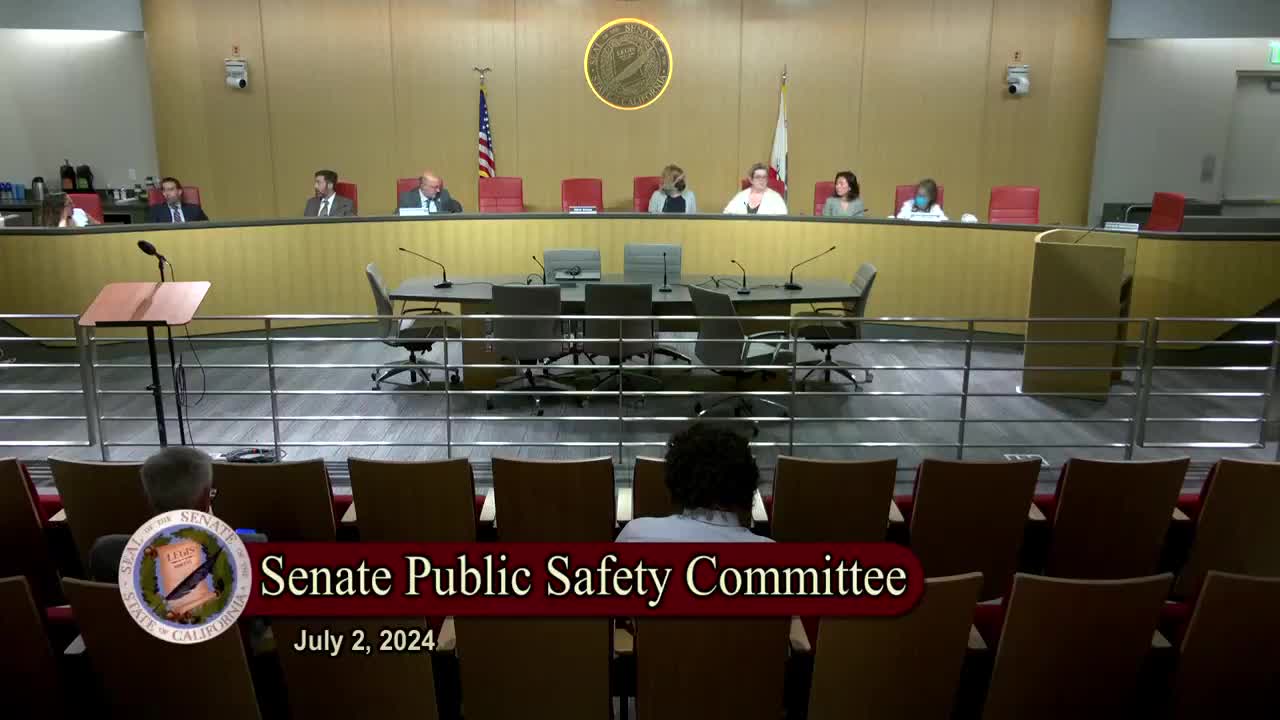 9MIN
Senate Standing Committee on Public Safety
 6MIN
Assembly Floor
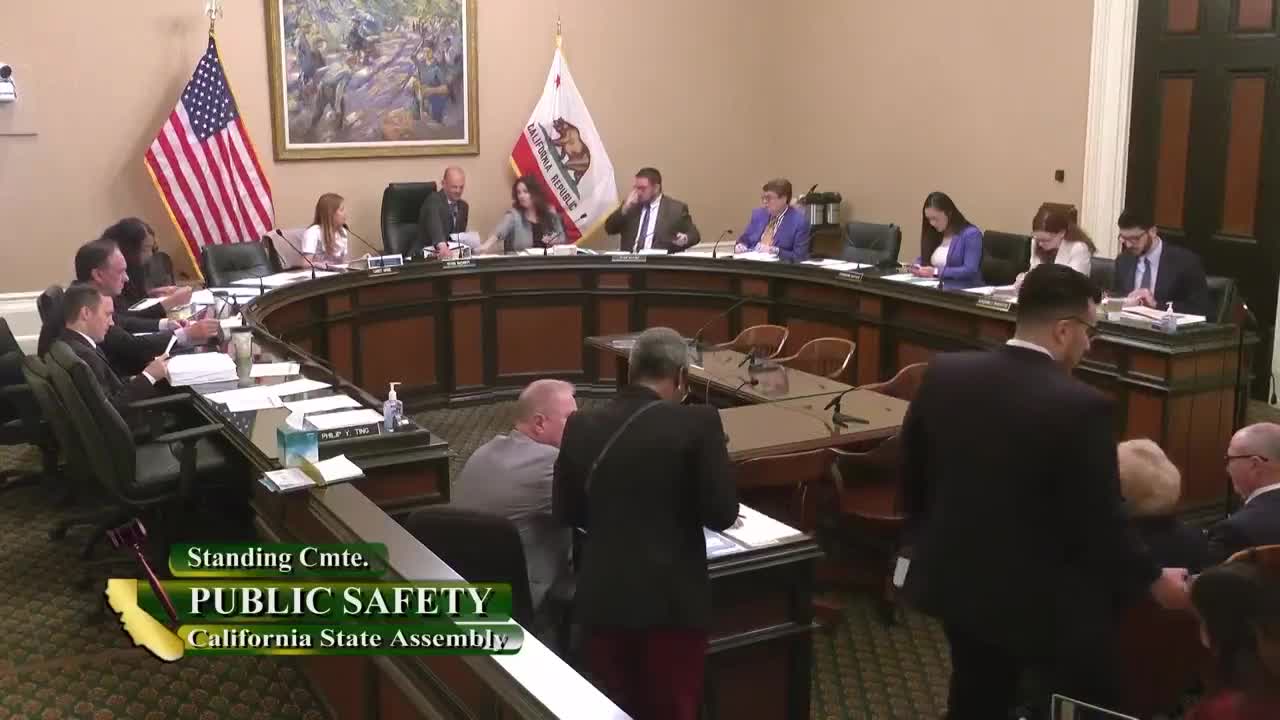 22MIN
Assembly Standing Committee on Public Safety
Bill Author


