AB 2898: Unbundled parking: exemptions: Housing Choice Vouchers.
- Session Year: 2023-2024
- House: Assembly
- Latest Version Date: 2024-09-22
Current Status:
Passed
(2024-09-22: Chaptered by Secretary of State - Chapter 420, Statutes of 2024.)
Introduced
In Committee
First Chamber
In Committee
Second Chamber
Enacted
Existing law requires the owner of qualifying residential property, as defined, that provides parking with the qualifying residential property to unbundle parking from the price of rent, as specified. Existing law defines unbundled parking as the practice of selling or leasing parking spaces separate from the lease of the residential use.
Existing federal law provides housing assistance to low-income individuals and households in the form of vouchers, commonly known as Housing Choice Vouchers.
This bill would exempt any residential unit that is leased to a tenant who receives a federal Housing Choice Voucher, including a federal Veterans Affairs Supportive Housing voucher, from the above-described requirement to unbundle parking.
Existing law requires the owner of qualifying residential property, as defined, that provides parking with the qualifying residential property to unbundle parking from the price of rent, as specified. Existing law defines unbundled parking as the practice of selling or leasing parking spaces separate from the lease of the residential use.
Existing federal law provides housing assistance to low-income individuals and households in the form of vouchers, commonly known as Housing Choice Vouchers.
This bill would exempt any residential unit that is leased to a tenant who receives a federal Housing Choice Voucher Voucher, including a federal Veterans Affairs Supportive Housing voucher, from the above-described requirement to unbundle parking.
Existing law requires the owner of qualifying residential property, as defined, that provides parking with the qualifying residential property to unbundle parking from the price of rent, as specified. Existing law defines unbundled parking as the practice of selling or leasing parking spaces separate from the lease of the residential use.
Existing federal law provides housing assistance to low-income individuals and households in the form of vouchers, commonly known as Housing Choice Vouchers.
This bill would exempt any residential unit that is leased to a tenant who receives a federal Housing Choice Voucher from the above-described requirement to unbundle parking.
(a)If an owner of a qualifying residential property provides parking with the qualifying residential property, they shall unbundle parking from the price of rent.
(b)(1)Off-street parking accessory to a qualifying residential property shall not be included in any residential rental agreement and shall be subject to a rental agreement addendum or provided in a separate rental agreement.
(2)All off-street parking spaces shall be unbundled from the qualifying residential property for the life of the property.
(c)(1)A tenant of a qualifying residential property shall have the right of first refusal to parking spaces built for their property. Remaining residential unbundled parking spaces that are not leased to tenants of the residential dwelling may be leased by the owner of the qualifying residential property to other on-site users or to off-site residential users on a month-to-month basis.
(2)If there are unavailable parking spaces on the residential property upon the occupancy of a new tenant, and parking spaces are subsequently built for the residential dwelling or otherwise becomes available on the qualifying residential property, the new tenant shall receive a right of first refusal to an available parking space.
(d)(1)A tenants failure to pay the parking fee pursuant to a separately leased parking agreement shall not form the basis of any unlawful detainer action against the tenant.
(2)If a tenant fails to pay by the 45th day following the date payment is owed for a separately leased parking space, the property owner may revoke that tenants right to lease that parking spot.
(e)For purposes of this section:
(1)Owner of qualifying residential property includes any person, acting as principal or through an agent, having the right to offer qualifying residential property for rent, and includes a predecessor in interest to the owner.
(2)(A)Qualifying residential property means any dwelling or unit that is intended for human habitation that meets all of the following criteria:
(i)The property is issued a certificate of occupancy on or after January 1, 2025.
(ii)The property consists of 16 or more residential units.
(iii)The property is located in one of the following counties:
(I)Alameda.
(II)Fresno.
(III)Los Angeles.
(IV)Riverside.
(V)Sacramento.
(VI)San Bernardino.
(VII)San Joaquin.
(VIII)Santa Clara.
(IX)Shasta.
(X)Ventura.
(B)Qualifying residential property does not include any of the following:
(i)A residential property or unit with an individual garage that is functionally a part of the property or unit, including, but not limited to, townhouses and row houses.
(ii)A housing development of which 100 percent of its units, exclusive of any managers unit or units, are restricted by deed, regulatory restriction contained in an agreement with a governmental agency, or other recorded document as affordable housing for persons and families of low or moderate income, as defined in Section 50093 of the Health and Safety Code.
(iii)A housing development that receives low-income housing tax credits pursuant to Section 42 of the Internal Revenue Code (26 U.S.C. Sec. 42).
(iv)A housing development that is financed with tax-exempt bonds pursuant to a program administered by the California Housing Finance Agency.
(v)A residential unit that is leased to a tenant who receives a federal housing assistance voucher issued under Section 8 of the United States Housing Act of 1937 (42 U.S.C. Sec. 1437f), including a federal Department of Housing and Urban Development Veterans Affairs Supportive Housing voucher.
(3)Unbundled parking means the practice of selling or leasing parking spaces separate from the lease of the residential property.
(a)If an owner of a qualifying residential property provides parking with the qualifying residential property, they shall unbundle parking from the price of rent.
(b)(1)Off-street parking accessory to a qualifying residential property shall not be included in any residential rental agreement and shall be subject to a rental agreement addendum or provided in a separate rental agreement.
(2)All off-street parking spaces shall be unbundled from the qualifying residential property for the life of the property.
(c)(1)A tenant of a qualifying residential property shall have the right of first refusal to parking spaces built for their property. Remaining residential unbundled parking spaces that are not leased to tenants of the residential dwelling may be leased by the owner of the qualifying residential property to other on-site users or to off-site residential users on a month-to-month basis.
(2)If there are unavailable parking spaces on the residential property upon the occupancy of a new tenant, and parking spaces are subsequently built for the residential dwelling or otherwise becomes available on the qualifying residential property, the new tenant shall receive a right of first refusal to an available parking space.
(d)(1)A tenants failure to pay the parking fee pursuant to a separately leased parking agreement shall not form the basis of any unlawful detainer action against the tenant.
(2)If a tenant fails to pay by the 45th day following the date payment is owed for a separately leased parking space, the property owner may revoke that tenants right to lease that parking spot.
(e)For purposes of this section:
(1)Owner of qualifying residential property includes any person, acting as principal or through an agent, having the right to offer qualifying residential property for rent, and includes a predecessor in interest to the owner.
(2)(A)Qualifying residential property means any dwelling or unit that is intended for human habitation that meets all of the following criteria:
(i)The property is issued a certificate of occupancy on or after January 1, 2025.
(ii)The property consists of 16 or more residential units.
(iii)The property is located in one of the following counties:
(I)Alameda.
(II)Fresno.
(III)Los Angeles.
(IV)Riverside.
(V)Sacramento.
(VI)San Bernardino.
(VII)San Joaquin.
(VIII)Santa Clara.
(IX)Shasta.
(X)Ventura.
(B)Qualifying residential property does not include any of the following:
(i)A residential property or unit with an individual garage that is functionally a part of the property or unit, including, but not limited to, townhouses and row houses.
(ii)A housing development of which 100 percent of its units, exclusive of any managers unit or units, are restricted by deed, regulatory restriction contained in an agreement with a governmental agency, or other recorded document as affordable housing for persons and families of low or moderate income, as defined in Section 50093 of the Health and Safety Code.
(iii)A housing development that receives low-income housing tax credits pursuant to Section 42 of the Internal Revenue Code (26 U.S.C. Sec. 42).
(iv)A housing development that is financed with tax-exempt bonds pursuant to a program administered by the California Housing Finance Agency.
(v)A residential unit that is leased to a tenant who receives a federal housing assistance voucher issued under Section 8 of the United States Housing Act of 1937 (42 U.S.C. Sec. 1437f). 1437f), including a federal Department of Housing and Urban Development Veterans Affairs Supportive Housing voucher.
(3)Unbundled parking means the practice of selling or leasing parking spaces separate from the lease of the residential property.
(a)If an owner of a qualifying residential property provides parking with the qualifying residential property, they shall unbundle parking from the price of rent.
(b)(1)Off-street parking accessory to a qualifying residential property shall not be included in any residential rental agreement and shall be subject to a rental agreement addendum or provided in a separate rental agreement.
(2)All off-street parking spaces shall be unbundled from the qualifying residential property for the life of the property.
(c)(1)A tenant of a qualifying residential property shall have the right of first refusal to parking spaces built for their property. Remaining residential unbundled parking spaces that are not leased to tenants of the residential dwelling may be leased by the owner of the qualifying residential property to other on-site users or to off-site residential users on a month-to-month basis.
(2)If there are unavailable parking spaces on the residential property upon the occupancy of a new tenant, and parking spaces are subsequently built for the residential dwelling or otherwise becomes available on the qualifying residential property, the new tenant shall receive a right of first refusal to an available parking space.
(d)(1)A tenants failure to pay the parking fee pursuant to a separately leased parking agreement shall not form the basis of any unlawful detainer action against the tenant.
(2)If a tenant fails to pay by the 45th day following the date payment is owed for a separately leased parking space, the property owner may revoke that tenants right to lease that parking spot.
(e)For purposes of this section:
(1)Owner of qualifying residential property includes any person, acting as principal or through an agent, having the right to offer qualifying residential property for rent, and includes a predecessor in interest to the owner.
(2)(A)Qualifying residential property means any dwelling or unit that is intended for human habitation that meets all of the following criteria:
(i)The property is issued a certificate of occupancy on or after January 1, 2025.
(ii)The property consists of 16 or more residential units.
(iii)The property is located in one of the following counties:
(I)Alameda.
(II)Fresno.
(III)Los Angeles.
(IV)Riverside.
(V)Sacramento.
(VI)San Bernardino.
(VII)San Joaquin.
(VIII)Santa Clara.
(IX)Shasta.
(X)Ventura.
(B)Qualifying residential property does not include any of the following:
(i)A residential property or unit with an individual garage that is functionally a part of the property or unit, including, but not limited to, townhouses and row houses.
(ii)A housing development of which 100 percent of its units, exclusive of any managers unit or units, are restricted by deed, regulatory restriction contained in an agreement with a governmental agency, or other recorded document as affordable housing for persons and families of low or moderate income, as defined in Section 50093 of the Health and Safety Code.
(iii)A housing development that receives low-income housing tax credits pursuant to Section 42 of the Internal Revenue Code (26 U.S.C. Sec. 42).
(iv)A housing development that is financed with tax-exempt bonds pursuant to a program administered by the California Housing Finance Agency.
(v)A residential unit that is leased to a tenant who receives a federal housing assistance voucher issued under Section 8 of the United States Housing Act of 1937 (42 U.S.C. Sec. 1437f).
(3)Unbundled parking means the practice of selling or leasing parking spaces separate from the lease of the residential property.
|
Date
|
Status
|
|---|---|
| Sep 22, 2024 | Chaptered by Secretary of State - Chapter 420, Statutes of 2024. |
| Sep 22, 2024 | Approved by the Governor. |
| Sep 3, 2024 | Enrolled and presented to the Governor at 3:30 p.m. |
| Aug 26, 2024 | In Assembly. Ordered to Engrossing and Enrolling. |
| Aug 26, 2024 | Read third time. Passed. Ordered to the Assembly. (Ayes 39. Noes 0.). |
| Jun 5, 2024 | Read second time. Ordered to third reading. |
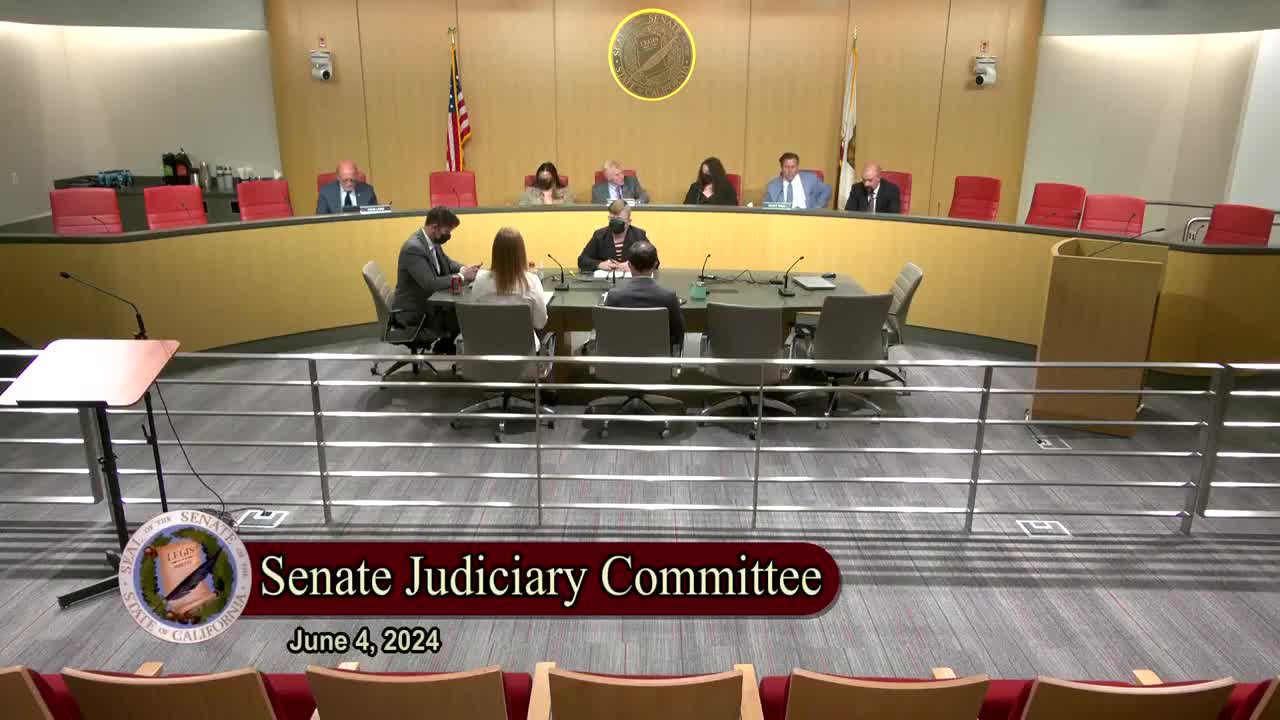
| Jun 4, 2024 | From committee: Do pass. (Ayes 11. Noes 0.) (June 4). |
| May 8, 2024 | Referred to Com. on JUD. |
| Apr 29, 2024 | In Senate. Read first time. To Com. on RLS. for assignment. |
| Apr 29, 2024 | Read third time. Passed. Ordered to the Senate. (Ayes 74. Noes 0. Page 5034.) |
| Apr 24, 2024 | Read second time. Ordered to Consent Calendar. |
| Apr 23, 2024 | From committee: Do pass. To Consent Calendar. (Ayes 11. Noes 0.) (April 23). |
| Apr 17, 2024 | From committee: Do pass and re-refer to Com. on JUD. with recommendation: To Consent Calendar. (Ayes 9. Noes 0.) (April 17). Re-referred to Com. on JUD. |
| Apr 9, 2024 | Re-referred to Com. on H. & C.D. |
| Apr 8, 2024 | From committee chair, with author's amendments: Amend, and re-refer to Com. on H. & C.D. Read second time and amended. |
| Mar 11, 2024 | Referred to Coms. on H. & C.D. and JUD. |
| Feb 16, 2024 | From printer. May be heard in committee March 17. |
| Feb 15, 2024 | Read first time. To print. |
|
Date
|
Description
|
Location
|
Votes
|
|
|---|---|---|---|---|
| Aug 26, 2024 | Assembly 3rd Reading AB2898 Wendy Carrillo By Wiener | Senate Floor |
Passed |
|
| Jun 4, 2024 | Do pass | Senate Standing Committee on Judiciary |
Passed |
|
| Apr 29, 2024 | AB 2898 Wendy Carrillo Consent Calendar Second Day Regular Session | Assembly Floor |
Passed |
|
| Apr 23, 2024 | Do pass. To Consent Calendar. | Assembly Standing Committee on Judiciary |
Passed |
|
| Apr 17, 2024 | Do pass and be re-referred to the Committee on [Judiciary] with recommendation: To Consent Calendar | Assembly Standing Committee on Housing and Community Development |
Passed |
This list shows positions taken on this bill by organizations on the date displayed, which is linked to the original source.
Positions by individuals are not included.
|
Organization
|
Position
|
Date
|
|---|---|---|
| Livable California | ** Support | |
| Streets for All | ** Support |
SENATE RULES COMMITTEE Office of Senate Floor Analyses (916) 651-1520 Fax: (916) 327-4478 | AB 2898 |
THIRD READING
Bill No: AB 2898
Author: Wendy Carrillo (D)
Amended: 4/8/24 in Assembly
Vote: 21
SENATE JUDICIARY COMMITTEE: 11-0, 6/4/24
AYES: Umberg, Wilk, Ashby, Caballero, Durazo, Laird, Niello, Roth, Stern, Wahab, Wiener
ASSEMBLY FLOOR: 74-0, 4/29/24 (Consent) - See last page for vote
SUBJECT: Unbundled parking: exemptions: Housing Choice Vouchers
SOURCE: Author
DIGEST:
This bill updates the pilot program requiring property owners of “qualifying residential properties,” new multi-family properties in 10 specified counties, to unbundle the cost of parking from the cost of the rent to exclude residential units leased to tenants utilizing specified federal, housing vouchers.
ANALYSIS:
Existing law:
- Requires a multifamily residential project certified for streamlining pursuant to the California Environmental Quality Act on an infill site to provide unbundled parking, such that private vehicle parking spaces are priced and rented or purchased separately from dwelling units. (Pub. Res. Code § 21184.5.)
- Prohibits a public agency from imposing or enforcing any minimum parking requirement on a residential, commercial, or other development project if the project is located within one-half mile of public transit. (Gov. Code § 65863.2.)
- Requires an owner of a qualifying residential property, if the owner provides parking with the property, to unbundle parking from the price of rent. (Civ. Code § 1947.1.)
- Requires all off-street parking spaces be unbundled from the qualifying residential property for the life of the property. (Civ. Code § 1947.1.)
- Defines ”qualifying residential property” as any dwelling or unit that is intended for human habitation that meets all of the following criteria:
- the property is issued a certificate of occupancy on or after January 1, 2025;
- the property consists of 16 or more residential units; and
- the property is located in one of the following counties:
- Alameda;
- Fresno;
- Los Angeles;
- Riverside;
- Sacramento;
- San Bernardino;
- San Joaquin;
- Santa Clara;
- Shasta; and
- Ventura. (Civ. Code § 1947.1(e)(2)(A).)
- the property is located in one of the following counties:
- Excludes the following from the above definition:
- A residential property or unit with an individual garage that is functionally a part of the property or unit, including townhouses and row houses.
- A housing development of which 100 percent of its units, exclusive of any manager’s unit or units, are restricted by deed, regulatory restriction contained in an agreement with a governmental agency, or other recorded document as affordable housing for persons and families of low or moderate income, as defined in Section 50093 of the Health and Safety Code.
- A housing development that receives low-income housing tax credits pursuant to Section 42 of the Internal Revenue Code (26 U.S.C. § 42).
- A housing development that is financed with tax-exempt bonds pursuant to a program administered by the California Housing Finance Agency. (Civ. Code § 1947.1(e)(2)(B).)
- Defines “owner of qualifying residential property” as any person, acting as principal or through an agent, having the right to offer qualifying residential property for rent, and includes a predecessor in interest to the owner. “Unbundled parking” means the practice of selling or leasing parking spaces separate from the lease of the residential property. (Civ. Code § 1947.1(e).)
- Prohibits off-street parking accessory to a qualifying residential property from being included in any residential rental agreement and requires it to be subject to a rental agreement addendum or provided in a separate rental agreement. (Civ. Code § 1947.1(b)(1).)
- Provides a tenant of a qualifying residential property the right of first refusal to parking spaces built for their property. Authorizes remaining residential unbundled parking spaces to be leased by the owner to other on-site users or to off-site residential users on a month-to-month basis. Spaces built subsequent to move in shall first be offered to tenants. (Civ. Code § 1947.1(c).)
- Prohibits a tenant’s failure to pay the parking fee pursuant to a separately leased parking agreement from forming the basis of any unlawful detainer action against the tenant. If a tenant fails to pay by the 45th day following the date payment is owed for a separately leased parking space, the property owner may revoke that tenant’s right to lease that parking spot. (Civ. Code § 1947.1(d).)
This bill exempts residential units leased to a tenant who receives a federal housing assistance voucher issued under Section 8 of the United States Housing Act of 1937 (42 U.S.C. Sec. 1437f), including a federal Department of Housing and Urban Development (HUD) Veterans Affairs Supportive Housing (VASH) voucher.
Background
Parking spaces included in residential properties’ rent, hide the true cost of parking and create other economic and environmental impacts. Concerns have arisen that on-site parking takes up valuable land that could otherwise be used for more housing, results in overreliance on motor vehicles, and creates an inflation in housing costs that represents a barrier to housing for low-income tenants.
AB 1317 (W. Carrillo, Chapter 757, Statutes of 2023) sought to address these issues by requiring “unbundled parking.” Property owners of multi-family properties with 16 units or more that are issued a certificate of occupancy on or after January 1, 2025, in 10 specified counties across the state, are required to unbundle the cost of parking from the rent of the residential unit. Tenants must be given the right of first refusal to any parking spaces available. The law exempts certain housing, including housing developments financed with low-income housing tax credits or tax-exempt bonds. This bill adds another exemption from this law for residential units that are leased to a tenant who receives a federal housing assistance voucher, as specified.
This bill is author-sponsored. It is supported by Livable California. No timely opposition was received by the Committee.
Comments
AB 1317 (W. Carrillo, Chapter 757, Statutes of. 2023) required parking to be “unbundled” from the cost of residential rents in multi-family properties with 16 units or more that are issued a certificate of occupancy on or after January 1, 2025. The requirement is limited to 10 specified counties across the state: Alameda, Fresno, Los Angeles, Riverside, Sacramento, San Bernardino, San Joaquin, Santa Clara, Shasta, and Ventura
Tenants must be given the right of first refusal to any parking spaces available. Proponents of this bill pointed to studies that support the conclusion that bundled parking comes at a cost to both housing affordability and environmental impacts.
The law currently exempts certain housing, including housing developments financed with low-income housing tax credits or tax-exempt bonds.
This bill adds another exemption from this law for residential units that are leased to a tenant who receives a federal housing assistance voucher, including VASH vouchers.
According to the author:
AB 2898 serves as a crucial clean-up to AB 1317, rectifying an oversight that would have placed an undue burden on tenants using federal Housing Choice Vouchers. By exempting voucher holders from the requirement to unbundle parking costs from rent, AB 2898 ensures that our efforts to increase housing affordability do not inadvertently harm our most vulnerable populations. Additionally, it’s important to note that AB 1317 already includes exemptions for several types of affordable housing, reflecting our commitment to a nuanced approach that addresses the diverse needs of Californians.
FISCAL EFFECT: Appropriation: No Fiscal Com.: No Local: No
SUPPORT: (Verified 6/4/24)
Livable California
OPPOSITION: (Verified 6/4/24)
None received
ARGUMENTS IN SUPPORT: Livable California writes in support:
AB 2898 is a common-sense way to assist low-income households. Lower income households have the greatest need for parking. The best way for lower income people to succeed economically is to have a car to access jobs. Keeping their parking bundled with their rent allows their vouchers to assist in that critical need.
ASSEMBLY FLOOR: 74-0, 4/29/24
AYES: Addis, Aguiar-Curry, Alanis, Arambula, Bains, Bauer-Kahan, Bennett, Berman, Boerner, Bonta, Bryan, Calderon, Juan Carrillo, Wendy Carrillo, Cervantes, Chen, Connolly, Davies, Dixon, Essayli, Flora, Mike Fong, Vince Fong, Friedman, Gabriel, Gallagher, Garcia, Gipson, Grayson, Haney, Hart, Holden, Hoover, Irwin, Jackson, Jones-Sawyer, Kalra, Lackey, Lee, Low, Lowenthal, Maienschein, McCarty, McKinnor, Muratsuchi, Stephanie Nguyen, Ortega, Pacheco, Papan, Jim Patterson, Joe Patterson, Pellerin, Petrie-Norris, Quirk-Silva, Ramos, Reyes, Luz Rivas, Rodriguez, Santiago, Schiavo, Soria, Ta, Ting, Valencia, Villapudua, Waldron, Wallis, Ward, Weber, Wicks, Wilson, Wood, Zbur, Robert Rivas
NO VOTE RECORDED: Alvarez, Megan Dahle, Mathis, Rendon, Blanca Rubio, Sanchez
Prepared by: Christian Kurpiewski / JUD. / (916) 651-4113
6/5/24 11:59:34
**** END ****
Senator Thomas Umberg, Chair
2023-2024 Regular Session
Bill No: AB 2898 (Author:Wendy Carrillo)
Version: April 8, 2024
Hearing Date: June 4, 2024
Fiscal: No
Urgency: No
Consultant: CK
SUBJECT
Unbundled parking: exemptions: Housing Choice Vouchers
DIGEST
This bill updates the pilot program requiring property owners of “qualifying residential properties,” new multi-family properties in 10 specified counties, to unbundle the cost of parking from the cost of the rent to exclude residential units leased to tenants utilizing specified federal, housing vouchers.
EXECUTIVE SUMMARY
Parking spaces included in residential properties’ rent hide the true cost of parking and create other economic and environmental impacts. Concerns have arisen that on-site parking takes up valuable land that could otherwise be used for more housing, results in overreliance on motor vehicles, and creates an inflation in housing costs that represents a barrier to housing for low-income tenants.
AB 1317 (W. Carrillo, Ch. 757, Stats. 2023) sought to address these issues by requiring “unbundled parking.” Property owners of multi-family properties with 16 units or more that are issued a certificate of occupancy on or after January 1, 2025, in 10 specified counties across the state, are required to unbundle the cost of parking from the rent of the residential unit. Tenants must be given the right of first refusal to any parking spaces available. The law exempts certain housing, including housing developments financed with low-income housing tax credits or tax-exempt bonds. This bill adds another exemption from this law for residential units that are leased to a tenant who receives a federal housing assistance voucher, as specified.
This bill is author-sponsored. It is supported by Livable California. No timely opposition was received by the Committee.
PROPOSED CHANGES TO THE LAW
Existing law:
- Requires a multifamily residential project certified for streamlining pursuant to the California Environmental Quality Act on an infill site to provide unbundled parking, such that private vehicle parking spaces are priced and rented or purchased separately from dwelling units. (Pub. Res. Code § 21184.5.)
- Prohibits a public agency from imposing or enforcing any minimum parking requirement on a residential, commercial, or other development project if the project is located within one-half mile of public transit. (Gov. Code § 65863.2.)
- Requires an owner of a qualifying residential property, if the owner provides parking with the property, to unbundle parking from the price of rent. (Civ. Code § 1947.1.)
- Requires all off-street parking spaces be unbundled from the qualifying residential property for the life of the property. (Civ. Code § 1947.1.)
- Defines ”qualifying residential property” as any dwelling or unit that is intended for human habitation that meets all of the following criteria:
- the property is issued a certificate of occupancy on or after January 1, 2025;
- the property consists of 16 or more residential units; and
- the property is located in one of the following counties:
- Alameda;
- Fresno;
- Los Angeles;
- Riverside;
- Sacramento;
- San Bernardino;
- San Joaquin;
- Santa Clara;
- Shasta; and
- Ventura. (Civ. Code § 1947.1(e)(2)(A).)
- Excludes the following from the above definition:
- A residential property or unit with an individual garage that is functionally a part of the property or unit, including townhouses and row houses.
- A housing development of which 100 percent of its units, exclusive of any manager’s unit or units, are restricted by deed, regulatory restriction contained in an agreement with a governmental agency, or other recorded document as affordable housing for persons and families of low or moderate income, as defined in Section 50093 of the Health and Safety Code.
- A housing development that receives low-income housing tax credits pursuant to Section 42 of the Internal Revenue Code (26 U.S.C. § 42).
- A housing development that is financed with tax-exempt bonds pursuant to a program administered by the California Housing Finance Agency. (Civ. Code § 1947.1(e)(2)(B).)
- Defines “owner of qualifying residential property” as any person, acting as principal or through an agent, having the right to offer qualifying residential property for rent, and includes a predecessor in interest to the owner. “Unbundled parking” means the practice of selling or leasing parking spaces separate from the lease of the residential property. (Civ. Code § 1947.1(e).)
- Prohibits off-street parking accessory to a qualifying residential property from being included in any residential rental agreement and requires it to be subject to a rental agreement addendum or provided in a separate rental agreement. (Civ. Code § 1947.1(b)(1).)
- Provides a tenant of a qualifying residential property the right of first refusal to parking spaces built for their property. Authorizes remaining residential unbundled parking spaces to be leased by the owner to other on-site users or to off-site residential users on a month-to-month basis. Spaces built subsequent to move in shall first be offered to tenants. (Civ. Code § 1947.1(c).)
- Prohibits a tenant’s failure to pay the parking fee pursuant to a separately leased parking agreement from forming the basis of any unlawful detainer action against the tenant. If a tenant fails to pay by the 45th day following the date payment is owed for a separately leased parking space, the property owner may revoke that tenant’s right to lease that parking spot. (Civ. Code § 1947.1(d).)
This bill exempts residential units leased to a tenant who receives a federal housing assistance voucher issued under Section 8 of the United States Housing Act of 1937 (42 U.S.C. Sec. 1437f), including a federal Department of Housing and Urban Development (HUD) Veterans Affairs Supportive Housing (VASH) voucher.
COMMENTS
- The cost of free parking
AB 1317 (W. Carrillo, Ch. 757, Stats. 2023) required parking to be “unbundled” from the cost of residential rents in multi-family properties with 16 units or more that are issued a certificate of occupancy on or after January 1, 2025. The requirement is limited to 10 specified counties across the state: Alameda, Fresno, Los Angeles, Riverside, Sacramento, San Bernardino, San Joaquin, Santa Clara, Shasta, and Ventura
Tenants must be given the right of first refusal to any parking spaces available. Proponents of the bill pointed to studies that support the conclusion that bundled parking comes at a cost to both housing affordability and environmental impacts.
The law currently exempts certain housing, including housing developments financed with low-income housing tax credits or tax-exempt bonds.
This bill adds another exemption from this law for residential units that are leased to a tenant who receives a federal housing assistance voucher, including VASH vouchers.
- Stakeholder positions
According to the author:
AB 2898 serves as a crucial clean-up to AB 1317, rectifying an oversight that would have placed an undue burden on tenants using federal Housing Choice Vouchers. By exempting voucher holders from the requirement to unbundle parking costs from rent, AB 2898 ensures that our efforts to increase housing affordability do not inadvertently harm our most vulnerable populations. Additionally, it’s important to note that AB 1317 already includes exemptions for several types of affordable housing, reflecting our commitment to a nuanced approach that addresses the diverse needs of Californians.
As stated, requiring parking to be unbundled from rent that is paid for by a voucher results in the opposite effect as that intended by the author and sponsors of the underlying statute.
Livable California writes in support:
AB 2898 is a common-sense way to assist low-income households. Lower income households have the greatest need for parking. The best way for lower income people to succeed economically is to have a car to access jobs. Keeping their parking bundled with their rent allows their vouchers to assist in that critical need.
SUPPORT
Livable California
OPPOSITION
None received
RELATED LEGISLATION
Pending Legislation: SB 611 (Menjivar, 2023) requires certain disclosures in the advertised rates for rental properties and prohibits certain fees from being charged by landlords. SB 611 is currently in the Assembly Judiciary Committee.
Prior Legislation: AB 1317 (W. Carrillo, Ch. 757, Stats. 2023) See Executive Summary.
PRIOR VOTES:
Assembly Floor (Ayes 74, Noes 0)
Assembly Judiciary Committee (Ayes 11, Noes 0)
Assembly Housing and Community Development Committee (Ayes 9, Noes 0)
**************
Date of Hearing: April 23, 2024
ASSEMBLY COMMITTEE ON JUDICIARY
Ash Kalra, Chair
ABPCA Bill Id:AB 2898
Author:(Wendy Carrillo) – As Amended Ver:April 8, 2024
PROPOSED CONSENT
SUBJECT: Unbundled parking: exemptions: Housing Choice Vouchers
KEY ISSUE: SHOULD residential units leased to a tenant who receives a federal housing choice voucher be added to the list of properties that are exempt from ab 1317’s unbundled parking requirement?
SYNOPSIS
AB 1317 ((W. Carrillo), Chap. 757, Stats. 2023) requires property owners of new multi-family properties in certain counties to unbundle the cost of parking from the cost of the residential unit. Unbundled parking separates housing costs from parking costs, allowing residents to choose the number of parking spaces they wish to use and pay for accordingly. Additionally, if residents decide to forego car ownership, or reduce their personal vehicle ownership, they can also save money by giving up their parking space. This pilot program was narrowly tailored to 10 geographically diverse counties across the state, applied to properties with only 16 or more units, and was limited to newly constructed units. It also exempted certain affordable housing developments from its unbundled parking mandate.
This measure would add to that exemption units that are leased to a tenant who receives a federal Housing Choice Voucher, including a federal Veterans Affairs Supportive Housing (VASH) Voucher. The bill recently was approved by the Assembly Housing and Community Development Committee on consent. This clean-up measure is supported by Streets For All and New Livable California and has no known opposition.
SUMMARY: Exempts any residential unit that is leased to a tenant who receives a federal Housing Choice Voucher, including a federal Veterans Affairs Supportive Housing (VASH) Voucher from the unbundled parking requirements of Civil Code Section 1947.1.
EXISTING LAW:
- Requires an owner of a residential property that provides parking with the property to unbundle the cost of parking from the price of rent, if the property meets the following requirements set forth in Civil Code Section 1947.1:
- The property is issued a certificate of occupancy on or after January 1, 2025.
- The property consists of 16 or more residential units.
- The property is located in one of the following counties:
- Alameda;
- Fresno;
- Los Angeles;
- Riverside;
- Sacramento;
- San Bernardino;
- San Joaquin;
- Santa Clara;
- Shasta; or,
- Ventura
- Prohibits an agreement to rent out a parking space in a property described in 1), above, from being included as a term of the housing rental agreement, and requires that it be provided as a rental housing agreement addendum or a separate rental agreement. (Civil Code Section 1947.1. All further statutory references are to the Civil Code, unless otherwise indicated.)
- Establishes that a parking space that is unbundled from a property described in 1), above, is to remain unbundled for the life of the property. (Ibid.)
- Establishes that a tenant in a property described in 1), above, has a right of first refusal to parking spaces built for their property. (Ibid.)
- Establishes that a residential property that would otherwise be subject to 1), above, does not include the following types of properties.
- A residential property or unit with an individual garage that is functionally a part of the property or unit, including, but not limited to, townhouses and row houses.
- A housing development of which 100 percent of its units, exclusive of any manager's unit or units, are deed-restricted affordable for persons and families of low or moderate income, as defined.
- A housing development that receives low-income housing tax credits, as specified.
- A housing development that is financed with tax-exempt bonds pursuant to a program administered by the California Housing Finance Agency. (Ibid.)
FISCAL EFFECT: As currently in print this bill is keyed non-fiscal.
COMMENTS: AB 1317, signed into law last year (Chap. 757, Stats. 2023), implemented a pilot program that required property owners of new multi-family residential properties in certain counties to unbundle the cost of parking from the cost of the housing unit. AB 1317’s mandates apply only to properties within the 10 pilot counties, that consist of 16 or more residential units, and that have certificates of occupancy dated after January 1, 2025. It also exempts several types of affordable housing. This bill adds a narrow exemption to the law.
According to the author, this measure fixes an oversight in AB 1317:
AB 1317 sought to address the bundling of parking costs with rent in new multi-family properties. By requiring property owners to separate the cost of parking from the rent, the bill aims to create more transparency and potentially reduce the overall housing costs for tenants who do not need parking spaces. However, this well-intentioned legislation inadvertently raises concerns for a particularly vulnerable group—low-income tenants utilizing federal Housing Choice Vouchers.
When costs such as parking are unbundled from the rent, they become additional out-of-pocket expenses for voucher holders. Since the housing assistance calculation is based solely on the rental cost (excluding unbundled services like parking), any extra costs directly affect the tenant's budget. This is problematic for low-income tenants, who are already financially stretched thin.
AB 2898 seeks to exempt residential units that are leased to a tenant who receives a federal housing assistance voucher. By addressing this deficiency, the bill would help to ensure that the legislation fulfills its goal of making housing more affordable and accessible for all residents without placing an undue burden on the most vulnerable populations.
Background on the HUD-VASH voucher program. Since 1992, the HUD-VASH program has sought to provide veterans with supportive services and housing assistance through a collaboration between the federal Department of Housing and Urban Development (HUD) and the Department of Veterans Affairs (VA) as part of the Housing Choice Voucher Program (commonly referred to as “Section 8”). The HUD websites states:
[The] program combines Housing Choice Voucher rental assistance for homeless Veterans with case management and clinical services provided by the Department of Veterans Affairs (VA). VA provides these services for participating Veterans at VA medical centers (VAMCs), community-based outreach clinics (CBOCs), through VA contractors, or through other VA designated entities. (HUD-VASH Vouchers, available at https://www.hud.gov/program_offices/public_indian_housing/programs/hcv/vash.)
The VA website provides additional details on the program:
Through public housing authorities, HUD provides rental assistance vouchers for privately owned housing to Veterans who are experiencing homelessness. VA case managers may connect these Veterans with support services such as health care, mental health treatment and substance use counseling to help them in their recovery process and with their ability to maintain housing in the community. Among VA homeless continuum of care programs, HUD-VASH enrolls the largest number and largest percentage of Veterans who have experienced long-term or repeated homelessness. (VA Homeless Programs, available at https://www.va.gov/homeless/hud-vash.asp.)
To qualify for a HUD-VASH voucher, a veteran must be eligible to receive medical benefits from the VA and must also not be listed on a sex offender registry. The program is primarily targeted at getting chronically homeless veterans into permanent housing. For the initial time period that a voucher is provided, the veteran must receive supportive services too. The HUD exchange website describes that eligibility as follows:
Beneficiaries are selected based on certain requirements including health care eligibility, homelessness status, and income. Since 2008, beneficiaries are no longer required to be chronically mentally ill or have chronic substance abuse disorders. However, chronically homeless veterans are a target population for HUD-VASH. (HUD-VASH Eligibility Requirements, available at https://www.hudexchange.info/programs/hud-vash/hud-vash-eligibility-requirements/)
There are a very limited number of HUD-VASH vouchers available in the state–slightly over 13,200 HUD-VASH vouchers were in use in California as of March 31, 2018. (National Homeless Information Project, VASH Utilization, available at https://www.nhipdata.org/local/upload/file/Jan%20to%20Mar%202018%20VASH%20data.pdf.)
This bill is a clean-up measure brought by the author of AB 1317 to ensure that units that are leased to recipients of housing vouchers, which otherwise would be required to unbundle parking from the cost of rent, are exempt from AB 1317. The author explains why this measure is needed:
AB 2898 serves as a crucial clean-up to AB 1317, rectifying an oversight that would have placed an undue burden on tenants using federal Housing Choice Vouchers. By exempting voucher holders from the requirement to unbundle parking costs from rent, AB 2898 ensures that our efforts to increase housing affordability do not inadvertently harm our most vulnerable populations. Additionally, it’s important to note that AB 1317 already includes exemptions for several types of affordable housing, reflecting our commitment to a nuanced approach that addresses the diverse needs of Californians.
ARGUMENTS IN SUPPORT: Streets For All, the sponsor of AB 1317, supports this clean-up measure, stating that they “we look forward to see this tweak made to our important climate and equity policy that improves the policy objectives we had when we proposed the bill.”
Livable California, another supporter of this measure, explains:
Current federal law provides housing assistance to low-income individuals and households in the form of Housing Choice Vouchers. This bill would exempt any residential unit that is leased to a tenant who receives a federal Housing Choice requirement to unbundle parking.
AB 2898 is a common-sense way to assist low income households. Lower income households have the greatest need for parking. The best way for lower income people to succeed economically is to have a car to access jobs. Keeping their parking bundled with their rent allows their vouchers to assist in that critical need.
REGISTERED SUPPORT / OPPOSITION:
Support
Livable California
Streets for All
Opposition
None on file
Analysis Prepared by: Shiran Zohar / JUD. / (916) 319-2334
Date of Hearing: April 17, 2024
ASSEMBLY COMMITTEE ON HOUSING AND COMMUNITY DEVELOPMENT
Christopher M. Ward, Chair
ABPCA Bill Id:AB 2898 (
Author:Wendy Carrillo) – As Amended Ver:April 8, 2024
SUBJECT: Unbundled parking: exemptions: Housing Choice Vouchers
SUMMARY: Exempts any residential unit that is leased to a tenant who receives a federal Housing Choice Voucher, including a federal Veterans Affairs Supportive Housing (VASH) Voucher, from the unbundled parking requirements of Civil Code Section 1947.1.
EXISTING LAW:
- Requires an owner of a residential property that provides parking with the property to unbundle the cost of parking from the price of rent, if the property meets the following requirements set forth in Civil Code (CIV) Section 1947.1:
- The property is issued a certificate of occupancy on or after January 1, 2025.
- The property consists of 16 or more residential units.
- The property is located in one of the following counties:
- Alameda;
- Fresno;
- Los Angeles;
- Riverside;
- Sacramento;
- San Bernardino;
- San Joaquin;
- Santa Clara;
- Shasta; or,
- Ventura
- Prohibits an agreement to rent out a parking space in a property described in 1), above, from being included as a term of the housing rental agreement, and requires that it be provided as a rental housing agreement addendum or a separate rental agreement. (CIV 1974.1)
- Establishes that a parking space that is unbundled from a property described in 1), above, is to remain unbundled for the life of the property. (CIV 1974.1)
- Establishes that a tenant in a property described in 1), above, has a right of first refusal to parking spaces built for their property. (CIV 1974.1)
- Establishes that a residential property that would otherwise be subject to 1), above, does not include the following types of properties (CIV 1974.1):
- A residential property or unit with an individual garage that is functionally a part of the property or unit, including, but not limited to, townhouses and row houses.
- A housing development of which 100 percent of its units, exclusive of any manager's unit or units, are deed-restricted affordable for persons and families of low or moderate income, as defined.
- A housing development that receives low-income housing tax credits, as specified.
- A housing development that is financed with tax-exempt bonds pursuant to a program administered by the California Housing Finance Agency.
FISCAL EFFECT: Unknown.
COMMENTS:
Author’s statement: According to the author, “AB 2898 serves as a crucial clean-up to AB 1317, rectifying an oversight that would have placed an undue burden on tenants using federal Housing Choice Vouchers. By exempting voucher holders from the requirement to unbundle parking costs from rent, AB 2898 ensures that our efforts to increase housing affordability do not inadvertently harm our most vulnerable populations. Additionally, it’s important to note that AB 1317 already includes exemptions for several types of affordable housing, reflecting our commitment to a nuanced approach that addresses the diverse needs of Californians.”
Unbundled parking: Unbundled parking separates rental costs from parking costs, and allows residents to choose the number of parking spaces they wish to use and pay accordingly. For example, a tenant living in a building with “unbundled parking” would make one payment for their rental unit, and a separate payment for their vehicular parking space, if applicable. If residents of a housing development decide to forego car ownership, or reduce their personal vehicle ownership, they can save money by giving up their parking spaces and simply paying for their rental unit. Unbundled parking ensures that those who choose not to own a personal vehicle, or cannot afford one, are not being charged for a parking spot that they do not use.
By unbundling parking from housing, the market assigns the parking space its proper value. A tenant maintains a right of first refusal to the parking spot on their property, but if they choose not to exercise it, they do not have to pay for it (thereby reducing their total monthly payments) and the space is made available to the open market.
AB 1317 (Wendy Carrillo), Chapter 757, Statues of 2023, requires property owners of multifamily properties of 16 or more units to unbundle the cost of the parking space from the cost of the renting the housing unit in 10 counties, with the following exceptions:
- A rental property or unit has an individual garage that is functionally a part of the property or unit, as is the case in townhouses and row houses;
- The unit is part of a deed-restricted 100% affordable housing development;
- The unit is part of a housing development that receives low-income housing tax credits; or,
- The unit is part of a development that was financed with tax-exempt bonds pursuant to a program administered by the California Housing Finance Agency.
Concerns have been raised about the equity impacts of AB 1317 for low-income tenants utilizing federal Housing Choice Vouchers, including federal VASH Vouchers, in the rental housing market. Housing Choice Vouchers, sometimes referred to as Section 8 vouchers, are a form of federal rental assistance that help low-income tenants afford safe and decent housing in the private market. VASH vouchers combine HUD’s Housing Choice Voucher rental assistance for unhoused Veterans with case management and clinical services provided by the Department of Veterans Affairs. Recipients of both conventional Housing Choice Vouchers and VASH Vouchers are free to choose any housing that meets the program's requirements, with the government Voucher covering a portion of the rent paid directly to the landlord. These Vouchers provide critical rental assistance to low-income tenants so that they can afford stable and adequate housing, without any supply-side investment.
When costs such as parking are unbundled from the rent, they become additional out-of-pocket expenses for Voucher holders. Since the housing assistance calculation is based solely on the rental cost, excluding unbundled services like parking directly affects the tenant's monthly budget. As currently written, AB 1317, applies to tenants holding Vouchers which means tenants would be unable to use those Vouchers to pay for the parking associated with their rental units in the jurisdictions and properties subjected to the requirements of AB 1317. AB 2898 would enable tenants using Housing Choice and VASH Vouchers to apply those Vouchers to the cost of their parking, while maintaining the original intent and policy goals of AB 1317.
Arguments in Support: According to Streets for All, “As the sponsors of 2023’s AB 1317 (W. Carrillo), we look forward to see this tweak made to our important climate and equity policy that improves the policy objectives we had when we proposed the bill.”
Arguments in Opposition: None on file.
Related Legislation:
AB 1317 (Wendy Carrillo), Chapter 757, Statutes of 2023. This bill required property of buildings of 16 units or more in 10 counties to separate the cost of parking from the rent, with certain exceptions.
Double referred: This bill was also referred to the Assembly Judiciary Committee, where it will be heard should it pass out of this committee.
REGISTERED SUPPORT / OPPOSITION:
Support
Streets for All (Sponsor)
Livable California
Opposition
None on file.
Analysis Prepared by: Dori Ganetsos / H. & C.D. / (916) 319-2085
Discussed in Hearing
View Older Hearings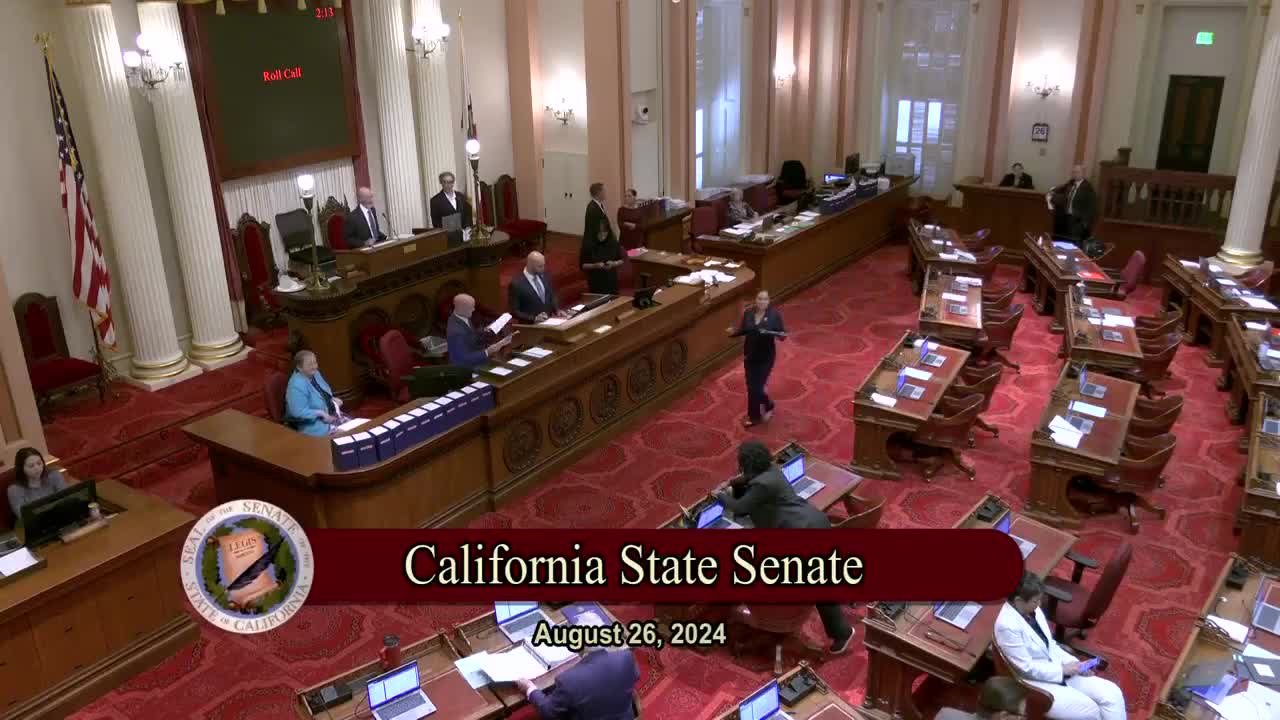
Bill Author

Bill Co-Author(s):