AB 2910: State Housing Law: City of Los Angeles: conversion of nonresidential buildings.
- Session Year: 2023-2024
- House: Assembly
- Latest Version Date: 2024-08-29
Current Status:
Failed
(2024-09-22: Vetoed by Governor.)
Introduced
In Committee
First Chamber
In Committee
Second Chamber
Enacted
The California Building Standards Law establishes the California Building Standards Commission within the Department of General Services. Existing law requires the commission to approve and adopt building standards and to codify those standards in the California Building Standards Code, which is required to be published once every 3 years.
The State Housing Law establishes statewide construction and occupancy standards for buildings used for human habitation. That law requires the building department of every city or county to enforce within its jurisdiction the provisions of the California Building Standards Code, the provisions of the State Housing Law, and specified other rules and regulations promulgated pursuant to that law. That law authorizes a city or county to adopt alternative building regulations for the conversion of commercial or industrial buildings to joint living and work quarters, as specified.
This bill would additionally authorize the City of Los Angeles (city) to adopt alternative building regulations for the conversion of nonresidential buildings to residential uses, as specified. The bill would prohibit these alternative building regulations from applying to nonresidential buildings with industrial uses. Before adopting alternative building regulations, this bill would require the city to have a housing element compliant with law, adopt an ordinance facilitating or expediting the review of adaptive reuse projects, and make specified express findings.
This bill would require the city to file the alternative building regulations and a copy of the findings expressly marked and identified with the regulation that the finding refers to with the commission. The bill would authorize the commission to reject the alternative building regulations filed by the city. The bill would prohibit the alternative building regulations from being effective or operative for any purpose until the findings and the alternative building regulations have been filed with the commission or if the commission rejects the alternative building regulations.
This bill would require the city to notice, hold at least two public meetings, and provide for public comment, as specified, before adopting alternative building regulations. The bill, if the city adopts the approved alternative building regulations, would require those regulations to be adopted at a public meeting of the legislative body of the city. The bill would require the city to submit the adopted alternative building regulations to the commission.
This bill would authorize the commission and other specified state agencies to request additional information from the city regarding regulations adopted pursuant to this bill.
This bill would repeal these provisions and any alternative building standards adopted pursuant to these provisions upon the effective date of specified state adaptive reuse building standards, or January 1, 2029, whichever is earlier.
This bill would make legislative findings and declarations as to the necessity of a special statute for the City of Los Angeles.
The California Building Standards Law establishes the California Building Standards Commission within the Department of General Services. Existing law requires the commission to approve and adopt building standards and to codify those standards in the California Building Standards Code, which is required to be published once every 3 years.
The State Housing Law establishes statewide construction and occupancy standards for buildings used for human habitation. That law requires the building department of every city or county to enforce within its jurisdiction the provisions of the California Building Standards Code, the provisions of the State Housing Law, and specified other rules and regulations promulgated pursuant to that law. That law authorizes a city or county to adopt alternative building regulations for the conversion of commercial or industrial buildings to joint living and work quarters, as specified.
This bill would additionally authorize the City of Los Angeles (city) to adopt alternative building regulations for the conversion of nonresidential buildings to residential uses, as specified. The bill would prohibit these alternative building regulations from applying to nonresidential buildings with industrial uses. The bill would require the city to have a housing element compliant with law and adopt an ordinance facilitating or expediting the review of adaptive reuse projects before the city is authorized to adopt alternative building regulations pursuant to this bill.
This bill, before the city is authorized to adopt alternative building regulations, would require the city to submit proposed alternative building regulations to the commission. The bill would require the commission to review the proposed alternative building regulations within 90 days of receiving the proposed regulations. The bill would authorize the commission to request the city to revise or amend the proposed regulations in order to protect public health, safety, and welfare.This bill, if the commission requests revisions or amendments to the proposed alternative building regulations, would require the city to consider the requested revisions or amendments and to respond, as specified, within 30 days of receiving the request for revisions or amendments. The bill would require the commission to provide written comments regarding the revisions or amendments to the proposed regulations needed to protect public health, safety, and welfare, if the commission denies the proposed alternative building regulations.This bill would require the city to make express findings that the regulations, at a minimum, are equivalent to the requirements of the California Building Standards Code, or promote the same protection for the public health, safety, and welfare, before adopting alternative building regulations. The bill would require the city to file the alternative building regulations and a copy of the findings expressly marked and identified with the regulation that the finding refers to with the commission. The bill would authorize the commission to reject the alternative building regulations filed by the city. The bill would prohibit the alternative building regulations from being effective or operative for any purpose until the findings and the alternative building regulations have been filed with the commission or if the commission rejects the alternative building regulations.
This bill, bill would require the city to notice, hold at least two public meetings, and provide for public comment, as specified, before adopting alternative building regulations. The bill, if the city adopts the approved alternative building regulations, would require those regulations to be adopted at a public meeting of the legislative body of the city. The bill would require the city to submit the adopted alternative building regulations to the commission.
This bill would authorize the commission and other specified state agencies to request additional information from the city regarding regulations adopted pursuant to this bill.
This bill would repeal these provisions and any alternative building standards adopted pursuant to these provisions upon the effective date of specified state adaptive reuse building standards, or January 1, 2029, whichever is earlier.
This bill would make legislative findings and declarations as to the necessity of a special statute for the City of Los Angeles.
The California Building Standards Law establishes the California Building Standards Commission within the Department of General Services. Existing law requires the commission to approve and adopt building standards and to codify those standards in the California Building Standards Code, which is required to be published once every 3 years.
The State Housing Law establishes statewide construction and occupancy standards for buildings used for human habitation. That law requires the building department of every city or county to enforce within its jurisdiction the provisions of the California Building Standards Code, the provisions of the State Housing Law, and specified other rules and regulations promulgated pursuant to that law. That law authorizes a city or county to adopt alternative building regulations for the conversion of commercial or industrial buildings to joint living and work quarters, as specified.
This bill would additionally authorize the City of Los Angeles (city) to adopt alternative building regulations for the conversion of commercial nonresidential buildings to residential uses, as specified. The bill would prohibit these alternative building regulations from applying to nonresidential buildings with industrial uses. The bill would require the city to have a housing element compliant with law and adopt an ordinance facilitating or expediting the review of adaptive reuse projects before the city is authorized to adopt alternative building regulations pursuant to this bill.
This bill, before the city is authorized to adopt alternative building regulations, would require the city to submit proposed alternative building regulations to the commission. The bill would require the commission, in consultation with specified state agencies, commission to review the proposed alternative building regulations within 90 days of receiving the proposed regulations. The bill would authorize the commission to request the city to revise or amend the proposed regulations in order to protect public health, safety, and welfare. If the commission does not request revisions or amendments within 30 days, the bill would authorize the city to proceed with the adoption of alternative building regulations.
This bill, if the commission requests revisions or amendments to the proposed alternative building regulations, would require the city to consider the requested revisions or amendments and to respond, as specified, within 30 days of receiving the request for revisions or amendments. The bill would require the commission to provide written comments regarding the revisions or amendments to the proposed regulations needed to protect public health, safety, and welfare, if the commission denies the proposed alternative building regulations.
This bill, if the city adopts the approved alternative building regulations, would require those regulations to be adopted at a public meeting of the legislative body of the city. The bill would require the city to submit the adopted alternative building regulations to the commission.
This bill would authorize the commission and other specified state agencies to request additional information from the city regarding regulations adopted pursuant to this bill.
This bill would repeal these provisions and any alternative building standards adopted pursuant to these provisions upon the effective date of specified state adaptive reuse building standards, or January 1, 2029, whichever is earlier.
This bill would make legislative findings and declarations as to the necessity of a special statute for the City of Los Angeles.
The California Building Standards Law establishes the California Building Standards Commission within the Department of General Services. Existing law requires the commission to approve and adopt building standards and to codify those standards in the California Building Standards Code, which is required to be published once every 3 years.
The State Housing Law establishes statewide construction and occupancy standards for buildings used for human habitation. That law requires the building department of every city or county to enforce within its jurisdiction the provisions of the California Building Standards Code, the provisions of the State Housing Law, and specified other rules and regulations promulgated pursuant to that law. That law authorizes a city or county to adopt alternative building regulations for the conversion of commercial or industrial buildings to joint living and work quarters, as specified.
This bill would additionally authorize a city the City of Los Angeles (city) to adopt alternative building regulations for the conversion of commercial buildings to residential uses, as specified. The bill would require a the city to have a housing element compliant with law, law and adopt an ordinance facilitating or expediting the review of adaptive reuse projects, and have a population of greater than 400,000 as of January 1, 2025, projects before the city is authorized to adopt alternative building regulations pursuant to this bill.
This bill, before the city is authorized to adopt alternative building regulations, would require the city to submit proposed alternative building regulations to the commission. The bill would require the commission, in consultation with specified state agencies, to review the proposed alternative building regulations within 90 days of receiving the proposed regulations. The bill would authorize the commission to request the city to revise or amend the proposed regulations in order to protect public health, safety, and welfare. If the commission does not request revisions or amendments within 30 days, the bill would authorize the city to proceed with the adoption of alternative building regulations.
This bill, if the commission requests revisions or amendments to the proposed alternative building regulations, would require the city to consider the requested revisions or amendments and to respond, as specified, within 30 days of receiving the request for revisions or amendments. The bill would require the commission to provide written comments regarding the revisions or amendments to the proposed regulations needed to protect public health, safety, and welfare, if the commission denies the proposed alternative building regulations.
This bill, if the city adopts the approved alternative building regulations, would require those regulations to be adopted at a public meeting of the legislative body of the city. The bill would require the city to submit the adopted alternative building regulations to the commission.
This bill would authorize the commission and other specified state agencies to request additional information from the city regarding regulations adopted pursuant to this bill.
This bill would repeal these provisions and any alternative building standards adopted pursuant to these provisions upon the effective date of specified state adaptive reuse building standards, or January 1, 2029, whichever is earlier.
This bill would make legislative findings and declarations as to the necessity of a special statute for the City of Los Angeles.
The California Building Standards Law establishes the California Building Standards Commission within the Department of General Services. Existing law requires the commission to approve and adopt building standards and to codify those standards in the California Building Standards Code, which is required to be published once every 3 years.
The State Housing Law establishes statewide construction and occupancy standards for buildings used for human habitation. That law requires the building department of every city or county to enforce within its jurisdiction the provisions of the California Building Standards Code, the provisions of the State Housing Law, and specified other rules and regulations promulgated pursuant to that law. That law authorizes a city or county to adopt alternative building regulations for the conversion of commercial or industrial buildings to joint living and work quarters, as specified.
This bill would additionally authorize a city or county to adopt alternative building regulations for the conversion of commercial or industrial buildings to residential uses, as specified. The bill would require a city or county to have a housing element compliant with law and to be designated prohousing, law, adopt an ordinance facilitating or expediting the review of adaptive reuse projects, and have a population of greater than 400,000 as of January 1, 2025, before the city or county is authorized to adopt alternative building regulations pursuant to this bill.
This bill, before the city or county is authorized to adopt alternative building regulations, would require the city or county to submit proposed alternative building regulations to the commission. The bill would require the commission, in consultation with specified state agencies, to review the proposed alternative building regulations within 30 90 days of receiving the proposed regulations. The bill would authorize the commission to request the city or county to revise or amend the proposed regulations in order to protect public health, safety, and welfare. If the commission does not request revisions or amendments within 30 days, the bill would authorize the city or county to proceed with the adoption of alternative building regulations.
This bill, if the commission requests revisions or amendments to the proposed alternative building regulations, would require the city or county to consider the requested revisions or amendments and to respond, as specified, within 30 days of receiving the request for revisions or amendments. Within 30 days of receiving the response from the city or county, the bill would require the commission, in consultation with specified state agencies, to approve or deny the proposed alternative building regulations. The bill would require the commission to provide written comments regarding the revisions or amendments to the proposed regulations needed to protect public health, safety, and welfare, if the commission denies the proposed alternative building regulations.
This bill, if the city or county adopts the approved alternative building regulations, would require those regulations to be adopted at a public meeting of the legislative body of the city or county. city. The bill would require the city or county to submit the adopted alternative building regulations to the commission.
This bill would authorize the commission and other specified state agencies to request additional information from the city or county regarding regulations adopted pursuant to this bill.
This bill would repeal these provisions and any alternative building standards adopted pursuant to these provisions upon the effective date of specified state adaptive reuse building standards, or January 1, 2029, whichever is earlier.
The California Building Standards Law establishes the California Building Standards Commission within the Department of General Services. Existing law requires the commission to approve and adopt building standards and to codify those standards in the California Building Standards Code, which is required to be published once every 3 years.
The State Housing Law establishes statewide construction and occupancy standards for buildings used for human habitation. That law requires the building department of every city or county to enforce within its jurisdiction the provisions of the California Building Standards Code, the provisions of the State Housing Law, and specified other rules and regulations promulgated pursuant to that law. That law authorizes a city or county to adopt alternative building regulations for the conversion of commercial or industrial buildings to joint living and work quarters, as specified.
This bill would additionally authorize a city or county to adopt alternative building regulations for the conversion of commercial or industrial buildings to residential uses, as specified. The bill would require a city or county to have a housing element compliant with law and to be designated prohousing, before the city or county is authorized to adopt alternative building regulations pursuant to this bill.
This bill, before the city or county is authorized to adopt alternative building regulations, would require the city or county to submit proposed alternative building regulations to the commission. The bill would require the commission, in consultation with specified state agencies, to review the proposed alternative building regulations within 30 days of receiving the proposed regulations. The bill would authorize the commission to request the city or county to revise or amend the proposed regulations in order to protect public health, safety, and welfare. If the commission does not request revisions or amendments within 30 days, the bill would authorize the city or county to proceed with the adoption of alternative building regulations.
This bill, if the commission requests revisions or amendments to the proposed alternative building regulations, would require the city or county to consider the requested revisions or amendments and to respond, as specified, within 30 days of receiving the request for revisions or amendments. Within 30 days of receiving the response from the city or county, the bill would require the commission, in consultation with specified state agencies, to approve or deny the proposed alternative building regulations. The bill would require the commission to provide written comments regarding the revisions or amendments to the proposed regulations needed to protect public health, safety, and welfare, if the commission denies the proposed alternative building regulations.
This bill, if the city or county adopts the alternative building regulations, would require those regulations to be adopted at a public meeting of the legislative body of the city or county. The bill would require the city or county to submit the adopted alternative building regulations to the commission.
This bill would authorize the commission and other specified state agencies to request additional information from the city or county regarding regulations adopted pursuant to this bill.
Existing law, the State Housing Law, establishes statewide construction and occupancy standards for buildings used for human habitation. That law requires the building department of every city or county to enforce within its jurisdiction the provisions of the State Building Standards Code, the provisions of the State Housing Law, and specified other rules and regulations promulgated pursuant to that law. That law authorizes a city or county to adopt alternative building regulations for the conversion of commercial or industrial buildings, as specified. This bill would make a nonsubstantive change to the provision authorizing alternative building regulations.Existing law, the State Housing Law, establishes statewide construction and occupancy standards for buildings used for human habitation. That law requires the building department of every city or county to enforce within its jurisdiction the provisions of the State Building Standards Code, the provisions of the State Housing Law, and specified other rules and regulations promulgated pursuant to that law. That law authorizes a city or county to adopt alternative building regulations for the conversion of commercial or industrial buildings, as specified.
This bill would make a nonsubstantive change to the provision authorizing alternative building regulations.
The Legislature finds and declares the following:
(a)The COVID-19 pandemic spurred a significant shift in the way people work, reducing the amount of time spent working in offices and increasing the amount of work done on a hybrid schedule or entirely remotely.
(b)Shifts in current and projected office demand have led to concerns that declining commercial office building valuations may pose fiscal challenges for local governments, which rely heavily on property taxes levied on commercial real estate to provide public goods and services.
(c)In 2022, the national office vacancy rate reached an almost three-decade high of about 17 percent, according to a report from the real estate company CBRE.
(d)According to Bloomberg News, over $900,000,000,000 of debt in commercial real estate nationally will mature in 2024.
(e)According to the sixth Regional Housing Needs Assessment cycle, local governments must plan for more than 2,500,000 homes by 2030 to meet the housing need in California.
(f)Residential homes built further away from existing neighborhoods and infrastructure are more likely to face greater risk for fires, storms, flooding, extreme heat, and other severe weather events.
(g)Homes built further away from city and town centers force residents to commute longer distances to jobs, schools, and other community services resulting in higher household transportation costs. Residents in these communities are more likely to rely on personal vehicles for daily commutes and errands, therefore increasing overall vehicle miles traveled and greenhouse gas emissions throughout the state, and continuing to contribute to climate change.
(h)Converting vacant commercial space into residential housing, through adaptive reuse, could greatly reduce underutilized and vacant buildings that have been decreasing in value, thereby helping to stabilize the commercial real estate market and filling those spaces with more valuable tax generating uses.
(i)Adaptive reuse projects can also increase activity and foot traffic in neighborhoods across the state which help support local businesses and enhance the cultural life of cities and towns.
(j)Adaptive reuse projects create new construction jobs and preserve historic structures.
(k)Adaptive reuse projects are more environmentally friendly than new construction, repurposing existing materials, reducing transportation emissions, and preserving embodied carbon.
SEC. 2.Section 17958.10 is added to the Health and Safety Code, to read:17958.10.(a)The City of Los Angeles may adopt alternative building regulations for the conversion of nonresidential buildings and structures, or portions thereof, to Residential Group R-1 or R-2 and related accessory uses, as described in the California Building Standards Code. The alternative building regulations adopted pursuant to this section shall not apply to nonresidential buildings with industrial uses.
(1)The buildings and structures subject to the alternative building regulations adopted pursuant to this section shall remain subject to local zoning regulations.
(2)The alternative building regulations adopted pursuant to this section are not required to impose the same requirements as building standards adopted pursuant to Section 17922. However, in permitting repairs, alterations, and additions necessary to accommodate the conversion of commercial buildings and structures, or portions thereof, to Residential Group R-1 or R-2 uses, the alternative building regulations shall, in the determination of the local governing body, impose requirements that protect the public health, safety, and welfare.
(3)(A)The alternative building regulations adopted pursuant to this section shall be limited to establishing minimum standards relative to ceiling height, emergency escape, exterior wall and exterior opening protection, smoke control systems, fire extinguishing systems, fire alarm systems, fire pumps and generator rooms, means of egress, accessibility, light, ventilation, light and ventilation courts, sound transmission, energy conservation, electrical systems, mechanical systems, elevators, fire command center design, vestibules, windows, structural design requirements, and room and other interior space dimensions.
(B)The alternative building regulations adopted pursuant to this section shall be equivalent to or more restrictive than the standards allowed for live-work conversions under Section 91.8502 of the Los Angeles Building Code, as that section read as of January 1, 2024, except that the city may adopt alternative building regulations that are less restrictive, but provide equivalent or greater protection for the public health, safety and welfare, than the standards set forth in Section 91.8502 of the Los Angeles Building Code, relative to fire extinguishing systems, fire command center design, vestibules, windows, means of egress, energy conservation, elevators, structural design requirements, and room and other interior space dimensions.
(4)The alternative building regulations shall include the same accessibility requirements as Chapter 11B of the California Building Standards Code.
(5)The alternative building regulations shall require approval by the Energy Commission pursuant to paragraph (2) of subdivision (h) of Section 25402.1 of the Public Resources Code.
(b)Before the City of Los Angeles may adopt alternative building regulations pursuant to this section, the city shall meet all of the following requirements:
(1)The city shall have a housing element that is compliant with law, including, but not limited to, Chapter 3 (commencing with Section 65100) of Division 1 of Title 7 of the Government Code, as determined by the Department of Housing and Community Development.
(2)The city shall adopt an ordinance to facilitate, or expedite the review of, adaptive reuse projects, as described in subparagraph (K) of paragraph (3) of subdivision (f) of Section 65589.9 of the Government Code.
(c)Before adopting alternative building regulations pursuant to this section, the City of Los Angeles shall make express findings that the regulations, at a minimum, are equivalent to the requirements in the California Building Standards Code or promote the same protection for the public health, safety, and welfare.
(1)The findings shall be available as public records.
(2)The city shall file the alternative building regulations and a copy of the findings expressly marked and identified with the regulation that the finding refers to with the California Building Standards Commission.
(3)The alternative building regulations shall not become effective or operative for any purpose until the findings and the alternative building regulations have been filed with the California Building Standards Commission.
(4)The California Building Standards Commission may reject the alternative building regulations filed by the city. If the California Building Standards Commission rejects the alternative building regulations, then those alternative building regulations shall not be effective or operative for any purpose.
(d)(1)The city shall notice, hold at least two public meetings, and provide for public comment in accordance with the Ralph M. Brown Act (Chapter 9 (commencing with Section 54950) of Part 1 of Division 2 of Title 5 of the Government Code) before adopting alternative building regulations pursuant to this section.
(2)If the city adopts the approved alternative building regulations, the regulations shall be adopted at a public meeting of the legislative body of the city. The city shall submit the adopted alternative building regulations to the California Building Standards Commission.
(e)The Legislature recognizes that while the working group established pursuant to Section 17921.9 is identifying and recommending amendments to state building standards to facilitate the creation and promotion of adaptive reuse residential projects statewide while not reducing minimum health and safety standards, there is a period of time before such amendments may be proposed during which adaptive reuse projects are subject to existing building standards which may warrant revisions or modifications.
(f)The California Building Standards Commission, Department of Housing and Community Development, Energy Commission, Public Utilities Commission, State Fire Marshal, and any member of the working group established pursuant to Section 17921.9 may request additional information from the City of Los Angeles regarding regulations adopted pursuant to this section.
(g)This section and any alternative building standards adopted pursuant to this section shall remain in effect only until the effective date of any state adaptive reuse building standards, as specified in subdivision (d) of Section 17921.9, or January 1, 2029, whichever is earlier, and as of that date shall be repealed.
SEC. 3.The Legislature finds and declares that a special statute is necessary and that a general statute cannot be made applicable within the meaning of Section 16 of Article IV of the California Constitution because of the unique circumstances facing the City of Los Angeles with regard to affordable housing, homelessness, and commercial vacancies.
The Legislature finds and declares the following:
(a)The COVID-19 pandemic spurred a significant shift in the way people work, reducing the amount of time spent working in offices and increasing the amount of work done on a hybrid schedule or entirely remotely.
(b)Shifts in current and projected office demand have led to concerns that declining commercial office building valuations may pose fiscal challenges for local governments, which rely heavily on property taxes levied on commercial real estate to provide public goods and services.
(c)In 2022, the national office vacancy rate reached an almost three-decade high of about 17 percent, according to a report from the real estate company CBRE.
(d)According to Bloomberg News, over $900,000,000,000 of debt in commercial real estate nationally will mature in 2024.
(e)According to the sixth Regional Housing Needs Assessment cycle, local governments must plan for more than 2,500,000 homes by 2030 to meet the housing need in California.
(f)Residential homes built further away from existing neighborhoods and infrastructure are more likely to face greater risk for fires, storms, flooding, extreme heat, and other severe weather events.
(g)Homes built further away from city and town centers force residents to commute longer distances to jobs, schools, and other community services resulting in higher household transportation costs. Residents in these communities are more likely to rely on personal vehicles for daily commutes and errands, therefore increasing overall vehicle miles traveled and greenhouse gas emissions throughout the state, and continuing to contribute to climate change.
(h)Converting vacant commercial space into residential housing, through adaptive reuse, could greatly reduce underutilized and vacant buildings that have been decreasing in value, thereby helping to stabilize the commercial real estate market and filling those spaces with more valuable tax generating uses.
(i)Adaptive reuse projects can also increase activity and foot traffic in neighborhoods across the state which help support local businesses and enhance the cultural life of cities and towns.
(j)Adaptive reuse projects create new construction jobs and preserve historic structures.
(k)Adaptive reuse projects are more environmentally friendly than new construction, repurposing existing materials, reducing transportation emissions, and preserving embodied carbon.
SEC. 2.Section 17958.10 is added to the Health and Safety Code, to read:17958.10.(a)The City of Los Angeles may adopt alternative building regulations for the conversion of nonresidential buildings and structures, or portions thereof, to Residential Group R-1 or R-2 and related accessory uses, as described in the California Building Standards Code. The alternative building regulations adopted pursuant to this section shall not apply to nonresidential buildings with industrial uses.
(1)The buildings and structures subject to the alternative building regulations adopted pursuant to this section shall remain subject to local zoning regulations.
(2)The alternative building regulations adopted pursuant to this section are not required to impose the same requirements as building standards adopted pursuant to Section 17922. However, in permitting repairs, alterations, and additions necessary to accommodate the conversion of commercial buildings and structures, or portions thereof, to Residential Group R-1 or R-2 uses, the alternative building regulations shall, in the determination of the local governing body, impose requirements that protect the public health, safety, and welfare.
(3)(A)The alternative building regulations adopted pursuant to this section shall be limited to establishing minimum standards relative to ceiling height, emergency escape, exterior wall and exterior opening protection, smoke control systems, fire extinguishing systems, fire alarm systems, fire pumps and generator rooms, means of egress, accessibility, light, ventilation, light and ventilation courts, sound transmission, energy conservation, electrical systems, mechanical systems, elevators, fire command center design, vestibules, windows, structural design requirements, and room and other interior space dimensions.
(B)The alternative building regulations adopted pursuant to this section shall be equivalent to or more restrictive than the standards allowed for live-work conversions under Section 91.8502 of the Los Angeles Building Code, as that section read as of January 1, 2024, except that the city may adopt alternative building regulations that are less restrictive, but provide equivalent or greater protection for the public health, safety and welfare, than the standards set forth in Section 91.8502 of the Los Angeles Building Code, relative to fire extinguishing systems, fire command center design, vestibules, windows, means of egress, energy conservation, elevators, structural design requirements, and room and other interior space dimensions.
(4)The alternative building regulations shall include the same accessibility requirements as Chapter 11B of the California Building Standards Code.
(5)The alternative building regulations shall require approval by the Energy Commission pursuant to paragraph (2) of subdivision (h) of Section 25402.1 of the Public Resources Code.
(b)Before the City of Los Angeles may adopt alternative building regulations pursuant to this section, the city shall meet all of the following requirements:
(1)The city shall have a housing element that is compliant with law, including, but not limited to, Chapter 3 (commencing with Section 65100) of Division 1 of Title 7 of the Government Code, as determined by the Department of Housing and Community Development.
(2)The city shall adopt an ordinance to facilitate, or expedite the review of, adaptive reuse projects, as described in subparagraph (K) of paragraph (3) of subdivision (f) of Section 65589.9 of the Government Code.
(c)(1)Before the City of Los Angeles may adopt alternative building regulations pursuant to this section, the city shall submit proposed alternative building regulations to the California Building Standards Commission.(2)The California Building Standards Commission shall review the proposed alternative building regulations within 90 days of receiving the proposed regulations, and shall approve or deny the proposed regulations, or may request the city to revise or amend the proposed regulations in order to protect public health, safety, and welfare.(3)If the California Building Standards Commission requests revisions or amendments to the proposed alternative building regulations, the city shall consider the requested revisions or amendments and to respond with at least one of the following within 30 days of receiving the request for revisions or amendments:(A)Revised or amended proposed alternative building regulations.(B)Written findings explaining why the city believes that the proposed alternative building regulations sufficiently protect the public health, safety, and welfare.(4)If the California Building Standards Commission denies the proposed alternative building regulations, the California Building Standards Commission shall provide written comments regarding the revisions or amendments to the proposed regulations needed to protect public health, safety, and welfare.(c)Before adopting alternative building regulations pursuant to this section, the City of Los Angeles shall make express findings that the regulations, at a minimum, are equivalent to the requirements in the California Building Standards Code or promote the same protection for the public health, safety, and welfare.
(1)The findings shall be available as public records.
(2)The city shall file the alternative building regulations and a copy of the findings expressly marked and identified with the regulation that the finding refers to with the California Building Standards Commission.
(3)The alternative building regulations shall not become effective or operative for any purpose until the findings and the alternative building regulations have been filed with the California Building Standards Commission.
(4)The California Building Standards Commission may reject the alternative building regulations filed by the city. If the California Building Standards Commission rejects the alternative building regulations, then those alternative building regulations shall not be effective or operative for any purpose.
(d)(1)The city shall notice, hold at least two public meetings, and provide for public comment in accordance with the Ralph M. Brown Act (Chapter 9 (commencing with Section 54950) of Part 1 of Division 2 of Title 5 of the Government Code) before adopting alternative building regulations pursuant to this section.
(5)(2)If the city adopts the approved alternative building regulations, the regulations shall be adopted at a public meeting of the legislative body of the city. The city shall submit the adopted alternative building regulations to the California Building Standards Commission.
(d)(e)The Legislature recognizes that while the working group established pursuant to Section 17921.9 is identifying and recommending amendments to state building standards to facilitate the creation and promotion of adaptive reuse residential projects statewide while not reducing minimum health and safety standards, there is a period of time before such amendments may be proposed during which adaptive reuse projects are subject to existing building standards which may warrant revisions or modifications.
(e)(f)The California Building Standards Commission, Department of Housing and Community Development, Energy Commission, Public Utilities Commission, State Fire Marshal, and any member of the working group established pursuant to Section 17921.9 may request additional information from the City of Los Angeles regarding regulations adopted pursuant to this section.
(f)(g)This section and any alternative building standards adopted pursuant to this section shall remain in effect only until the effective date of any state adaptive reuse building standards, as specified in subdivision (d) of Section 17921.9, or January 1, 2029, whichever is earlier, and as of that date shall be repealed.
SEC. 3.The Legislature finds and declares that a special statute is necessary and that a general statute cannot be made applicable within the meaning of Section 16 of Article IV of the California Constitution because of the unique circumstances facing the City of Los Angeles with regard to affordable housing, homelessness, and commercial vacancies.
The Legislature finds and declares the following:
(a)The COVID-19 pandemic spurred a significant shift in the way people work, reducing the amount of time spent working in offices and increasing the amount of work done on a hybrid schedule or entirely remotely.
(b)Shifts in current and projected office demand have led to concerns that declining commercial office building valuations may pose fiscal challenges for local governments, which rely heavily on property taxes levied on commercial real estate to provide public goods and services.
(c)In 2022, the national office vacancy rate reached an almost three-decade high of about 17 percent, according to a report from the real estate company CBRE.
(d)According to Bloomberg News, over $900,000,000,000 of debt in commercial real estate nationally will mature in 2024.
(e)According to the sixth Regional Housing Needs Assessment cycle, local governments must plan for more than 2,500,000 homes by 2030 to meet the housing need in California.
(f)Residential homes built further away from existing neighborhoods and infrastructure are more likely to face greater risk for fires, storms, flooding, extreme heat, and other severe weather events.
(g)Homes built further away from city and town centers force residents to commute longer distances to jobs, schools, and other community services resulting in higher household transportation costs. Residents in these communities are more likely to rely on personal vehicles for daily commutes and errands, therefore increasing overall vehicle miles traveled and greenhouse gas emissions throughout the state, and continuing to contribute to climate change.
(h)Converting vacant commercial space into residential housing, through adaptive reuse, could greatly reduce underutilized and vacant buildings that have been decreasing in value, thereby helping to stabilize the commercial real estate market and filling those spaces with more valuable tax generating uses.
(i)Adaptive reuse projects can also increase activity and foot traffic in neighborhoods across the state which help support local businesses and enhance the cultural life of cities and towns.
(j)Adaptive reuse projects create new construction jobs and preserve historic structures.
(k)Adaptive reuse projects are more environmentally friendly than new construction, repurposing existing materials, reducing transportation emissions, and preserving embodied carbon.
SEC. 2.Section 17958.10 is added to the Health and Safety Code, to read:17958.10.(a)The City of Los Angeles may adopt alternative building regulations for the conversion of commercial nonresidential buildings and structures, or portions thereof, to Residential Group R-1 or R-2 uses, as described in the California Building Standards Code. The alternative building regulations adopted pursuant to this section shall not apply to nonresidential buildings with industrial uses.
(1)The buildings and structures subject to the alternative building regulations adopted pursuant to this section shall remain subject to local zoning regulations.
(2)The alternative building regulations adopted pursuant to this section are not required to impose the same requirements as regulations building standards adopted pursuant to Section 17922. However, in permitting repairs, alterations, and additions necessary to accommodate the conversion of commercial buildings and structures, or portions thereof, to Residential Group R-1 or R-2 uses, the alternative building regulations shall, in the determination of the local governing body, impose requirements that protect the public health, safety, and welfare.
(b)Before the City of Los Angeles may adopt alternative building regulations pursuant to this section, the city shall meet all of the following requirements:
(1)The city shall have a housing element that is compliant with law, including, but not limited to, Chapter 3 (commencing with Section 65100) of Division 1 of Title 7 of the Government Code, as determined by the Department of Housing and Community Development.
(2)The city shall adopt an ordinance to facilitate, or expedite the review of, adaptive reuse projects, as described in subparagraph (K) of paragraph (3) of subdivision (f) of Section 65589.9 of the Government Code.
(c)(1)Before the City of Los Angeles may adopt alternative building regulations pursuant to this section, the city shall submit proposed alternative building regulations to the California Building Standards Commission.
(2)The California Building Standards Commission, in consultation with the Department of Housing and Community Development, Energy Commission, Public Utilities Commission, and State Fire Marshal, Commission shall review the proposed alternative building regulations within 90 days of receiving the proposed regulations, and shall approve or deny the proposed regulations, or may request the city to revise or amend the proposed regulations in order to protect public health, safety, and welfare.
(3)If the California Building Standards Commission requests revisions or amendments to the proposed alternative building regulations, the city shall consider the requested revisions or amendments and to respond with at least one of the following within 30 days of receiving the request for revisions or amendments:
(A)Revised or amended proposed alternative building regulations.
(B)Written findings explaining why the city believes that the proposed alternative building regulations sufficiently protect the public health, safety, and welfare.
(4)If the California Building Standards Commission denies the proposed alternative building regulations, the California Building Standards Commission shall provide written comments regarding the revisions or amendments to the proposed regulations needed to protect public health, safety, and welfare.
(5)If the city adopts the approved alternative building regulations, the regulations shall be adopted at a public meeting of the legislative body of the city. The city shall submit the adopted alternative building regulations to the California Building Standards Commission.
(d)The Legislature recognizes that while the working group established pursuant to Section 17921.9 is identifying and recommending amendments to state building standards to facilitate the creation and promotion of adaptive reuse residential projects statewide while not reducing minimum health and safety standards, there is a period of time before such amendments may be proposed during which adaptive reuse projects are subject to existing building standards which may warrant revisions or modifications.
(e)The California Building Standards Commission, Department of Housing and Community Development, Energy Commission, Public Utilities Commission, State Fire Marshal, and any member of the working group established pursuant to Section 17921.9 may request additional information from the City of Los Angeles regarding regulations adopted pursuant to this section.
(f)This section and any alternative building standards adopted pursuant to this section shall remain in effect only until the effective date of any state adaptive reuse building standards, as specified in subdivision (d) of Section 17921.9, or January 1, 2029, whichever is earlier, and as of that date shall be repealed.
SEC. 3.The Legislature finds and declares that a special statute is necessary and that a general statute cannot be made applicable within the meaning of Section 16 of Article IV of the California Constitution because of the unique circumstances facing the City of Los Angeles with regard to affordable housing, homelessness, and commercial vacancies.
The Legislature finds and declares the following:
(a)The COVID-19 pandemic spurred a significant shift in the way people work, reducing the amount of time spent working in offices and increasing the amount of work done on a hybrid schedule or entirely remotely.
(b)Shifts in current and projected office demand have led to concerns that declining commercial office building valuations may pose fiscal challenges for local governments, which rely heavily on property taxes levied on commercial real estate to provide public goods and services.
(c)In 2022, the national office vacancy rate reached an almost three-decade high of about 17 percent, according to a report from the real estate company CBRE.
(d)According to Bloomberg News, over $900,000,000,000 of debt in commercial real estate nationally will mature in 2024.
(e)According to the sixth Regional Housing Needs Assessment cycle, local governments must plan for more than 2,500,000 homes by 2030 to meet the housing need in California.
(f)Residential homes built further away from existing neighborhoods and infrastructure are more likely to face greater risk for fires, storms, flooding, extreme heat, and other severe weather events.
(g)Homes built further away from city and town centers force residents to commute longer distances to jobs, schools, and other community services resulting in higher household transportation costs. Residents in these communities are more likely to rely on personal vehicles for daily commutes and errands, therefore increasing overall vehicle miles traveled and greenhouse gas emissions throughout the state, and continuing to contribute to climate change.
(h)Converting vacant commercial space into residential housing, through adaptive reuse, could greatly reduce underutilized and vacant buildings that have been decreasing in value, thereby helping to stabilize the commercial real estate market and filling those spaces with more valuable tax generating uses.
(i)Adaptive reuse projects can also increase activity and foot traffic in neighborhoods across the state which help support local businesses and enhance the cultural life of cities and towns.
(j)Adaptive reuse projects create new construction jobs and preserve historic structures.
(k)Adaptive reuse projects are more environmentally friendly than new construction, repurposing existing materials, reducing transportation emissions, and preserving embodied carbon.
SEC. 2.Section 17958.10 is added to the Health and Safety Code, to read:17958.10.(a)A city The City of Los Angeles may adopt alternative building regulations for the conversion of commercial buildings and structures, or portions thereof, to Residential Group R-1 or R-2 uses, as described in the California Building Standards Code.
(1)The buildings and structures subject to the alternative building regulations adopted pursuant to this section shall remain subject to local zoning regulations.
(2)The alternative building regulations adopted pursuant to this section are not required to impose the same requirements as regulations adopted pursuant to Section 17922. However, in permitting repairs, alterations, and additions necessary to accommodate the conversion to Residential Group R-1 or R-2 uses, the alternative building regulations shall, in the determination of the local governing body, impose requirements that protect the public health, safety, and welfare.
(b)Before a city the City of Los Angeles may adopt alternative building regulations pursuant to this section, the city shall meet all of the following requirements:
(1)The city shall have a housing element that is compliant with law, including, but not limited to, Chapter 3 (commencing with Section 65100) of Division 1 of Title 7 of the Government Code, as determined by the Department of Housing and Community Development.
(2)The city shall adopt an ordinance to facilitate, or expedite the review of, adaptive reuse projects, as described in subparagraph (K) of paragraph (3) of paragraph subdivision (f) of Section 65589.9 of the Government Code.
(3)The city, as of January, 1 2025, shall have a population of 400,000 or greater.(c)(1)Before a city the City of Los Angeles may adopt alternative building regulations pursuant to this section, the city shall submit proposed alternative building regulations to the California Building Standards Commission.
(2)The California Building Standards Commission, in consultation with the Department of Housing and Community Development, Energy Commission, Public Utilities Commission, and State Fire Marshal, shall review the proposed alternative building regulations within 90 days of receiving the proposed regulations, and shall approve or deny the proposed regulations, or may request the city to revise or amend the proposed regulations in order to protect public health, safety, and welfare.
(3)If the California Building Standards Commission requests revisions or amendments to the proposed alternative building regulations, the city shall consider the requested revisions or amendments and to respond with at least one of the following within 30 days of receiving the request for revisions or amendments:
(A)Revised or amended proposed alternative building regulations.
(B)Written findings explaining why the city believes that the proposed alternative building regulations sufficiently protect the public health, safety, and welfare.
(4)If the California Building Standards Commission denies the proposed alternative building regulations, the California Building Standards Commission shall provide written comments regarding the revisions or amendments to the proposed regulations needed to protect public health, safety, and welfare.
(5)If the city adopts the approved alternative building regulations, the regulations shall be adopted at a public meeting of the legislative body of the city. The city shall submit the adopted alternative building regulations to the California Building Standards Commission.
(d)The Legislature recognizes that while the working group established pursuant to Section 17921.9 is identifying and recommending amendments to state building standards to facilitate the creation and promotion of adaptive reuse residential projects statewide while not reducing minimum health and safety standards, there is a period of time before such amendments may be proposed during which adaptive reuse projects are subject to existing building standards which may warrant revisions or modifications.
(e)The California Building Standards Commission, Department of Housing and Community Development, Energy Commission, Public Utilities Commission, State Fire Marshal, and any member of the working group established pursuant to Section 17921.9 may request additional information from the city City of Los Angeles regarding regulations adopted pursuant to this section.
(f)This section and any alternative building standards adopted pursuant to this section shall remain in effect only until the effective date of any state adaptive reuse building standards, as specified in subdivision (d) of Section 17921.9, or January 1, 2029, whichever is earlier, and as of that date shall be repealed.
SEC. 3.The Legislature finds and declares that a special statute is necessary and that a general statute cannot be made applicable within the meaning of Section 16 of Article IV of the California Constitution because of the unique circumstances facing the City of Los Angeles with regard to affordable housing, homelessness, and commercial vacancies.
The Legislature finds and declares the following:
(a)The COVID-19 pandemic spurred a significant shift in the way people work, reducing the amount of time spent working in offices and increasing the amount of work done on a hybrid schedule or entirely remotely.
(b)Shifts in current and projected office demand have led to concerns that declining commercial office building valuations may pose fiscal challenges for local governments, which rely heavily on property taxes levied on commercial real estate to provide public goods and services.
(c)In 2022, the national office vacancy rate reached an almost three-decade high of about 17 percent, according to a report from the real estate company CBRE.
(d)According to Bloomberg News, over $900,000,000,000 of debt in commercial real estate nationally will mature in 2024.
(e)According to the sixth Regional Housing Needs Assessment cycle, local governments must plan for more than 2,500,000 homes by 2030 to meet the housing need in California.
(f)Residential homes built further away from existing neighborhoods and infrastructure are more likely to face greater risk for fires, storms, flooding, extreme heat, and other severe weather events.
(g)Homes built further away from city and town centers force residents to commute longer distances to jobs, schools, and other community services resulting in higher household transportation costs. Residents in these communities are more likely to rely on personal vehicles for daily commutes and errands, therefore increasing overall vehicle miles traveled and greenhouse gas emissions throughout the state, and continuing to contribute to climate change.
(h)Converting vacant commercial space into residential housing, through adaptive reuse, could greatly reduce underutilized and vacant buildings that have been decreasing in value, thereby helping to stabilize the commercial real estate market and filling those spaces with more valuable tax generating uses.
(i)Adaptive reuse projects can also increase activity and foot traffic in neighborhoods across the state which help support local businesses and enhance the cultural life of cities and towns.
(j)Adaptive reuse projects create new construction jobs and preserve historic structures.
(k)Adaptive reuse projects are more environmentally friendly than new construction, repurposing existing materials, reducing transportation emissions, and preserving embodied carbon.
SEC. 2.Section 17958.10 is added to the Health and Safety Code, to read:17958.10.(a)A city or a county may adopt alternative building regulations for the conversion of commercial or industrial buildings and structures, or portions thereof, to Residential Group R-1 or R-2 uses, as described in the California Building Standards Code.
(1)The buildings and structures subject to the alternative building regulations adopted pursuant to this section shall remain subject to local zoning regulations.
(2)The alternative building regulations adopted pursuant to this section are not required to impose the same requirements as regulations adopted pursuant to Section 17922. However, in permitting repairs, alterations, and additions necessary to accommodate the conversion to Residential Group R-1 or R-2 uses, the alternative building regulations shall, in the determination of the local governing body, impose requirements that protect the public health, safety, and welfare.
(b)Before a city or county may adopt alternative building regulations pursuant to this section, the city or county shall meet both all of the following requirements:
(1)The city or county shall have a housing element that is compliant with law, including, but not limited to, Chapter 3 (commencing with Section 65100) of Division 1 of Title 7 of the Government Code, as determined by the Department of Housing and Community Development.
(2)The city or county shall be designated prohousing pursuant to subdivision (c) of Section 65589.9 of the Government Code. adopt an ordinance to facilitate, or expedite the review of, adaptive reuse projects, as described in subparagraph (K) of paragraph (3) of paragraph (f) of Section 65589.9 of the Government Code.
(3)The city, as of January, 1 2025, shall have a population of 400,000 or greater.
(c)(1)Before a city or county may adopt alternative building regulations pursuant to this section, the city or county shall submit proposed alternative building regulations to the California Building Standards Commission.
(2)The California Building Standards Commission, in consultation with the Department of Housing and Community Development, Energy Commission, Public Utilities Commission, and State Fire Marshal, shall review the proposed alternative building regulations within 30 90 days of receiving the proposed regulations. The California Building Standards Commission regulations, and shall approve or deny the proposed regulations, or may request the city or county to revise or amend the proposed regulations in order to protect public health, safety, and welfare. If the California Building Standards Commission does not request revisions or amendments within 30 days, then the city or county may proceed with the adoption of alternative building regulations.
(3)If the California Building Standards Commission requests revisions or amendments to the proposed alternative building regulations, the city or county shall consider the requested revisions or amendments and to respond with at least one of the following within 30 days of receiving the request for revisions or amendments:
(A)Revised or amended proposed alternative building regulations.
(B)Written findings explaining why the city or county believes that the proposed alternative building regulations sufficiently protect the public health, safety, and welfare.
(4)The California Building Standards Commission, in consultation with the Department of Housing and Community Development, Energy Commission, Public Utilities Commission, and State Fire Marshal, shall approve or deny the proposed alternative building regulations by the city or county within 30 days of receiving the response from the city or county. (5)(4)If the California Building Standards Commission denies the proposed alternative building regulations, the California Building Standards Commission shall provide written comments regarding the revisions or amendments to the proposed regulations needed to protect public health, safety, and welfare.
(6)(5)If the city or county adopts the approved alternative building regulations, the regulations shall be adopted at a public meeting of the legislative body of the city or county. city. The city or county shall submit the adopted alternative building regulations to the California Building Standards Commission.
(d)It is the intent of the Legislature that local governments have discretion to define geographic areas that may be utilized for residential uses and to establish standards for occupancy, consistent with the needs and conditions peculiar to the local environment. (e)(d)The Legislature recognizes that building code regulations applicable to residential housing may need to be relaxed or altered to provide residential uses in buildings previously used for commercial or industrial purposes. while the working group established pursuant to Section 17921.9 is identifying and recommending amendments to state building standards to facilitate the creation and promotion of adaptive reuse residential projects statewide while not reducing minimum health and safety standards, there is a period of time before such amendments may be proposed during which adaptive reuse projects are subject to existing building standards which may warrant revisions or modifications.
(f)(e)The California Building Standards Commission, Department of Housing and Community Development, Energy Commission, Public Utilities Commission, State Fire Marshal, and any member of the working group established pursuant to Section 17921.9 may request additional information from the city or county regarding regulations adopted pursuant to this section.
(f)This section and any alternative building standards adopted pursuant to this section shall remain in effect only until the effective date of any state adaptive reuse building standards, as specified in subdivision (d) of Section 17921.9, or January 1, 2029, whichever is earlier, and as of that date shall be repealed.
The Legislature finds and declares the following:
(a)The COVID-19 pandemic spurred a significant shift in the way people work, reducing the amount of time spent working in offices and increasing the amount of work done on a hybrid schedule or entirely remotely.
(b)Shifts in current and projected office demand have led to concerns that declining commercial office building valuations may pose fiscal challenges for local governments, which rely heavily on property taxes levied on commercial real estate to provide public goods and services.
(c)In 2022, the national office vacancy rate reached an almost three-decade high of about 17 percent, according to a report from the real estate company CBRE.
(d)According to Bloomberg News, over $900,000,000,000 of debt in commercial real estate nationally will mature in 2024.
(e)According to the sixth Regional Housing Needs Assessment cycle, local governments must plan for more than 2,500,000 homes by 2030 to meet the housing need in California.
(f)Residential homes built further away from existing neighborhoods and infrastructure are more likely to face greater risk for fires, storms, flooding, extreme heat, and other severe weather events.
(g)Homes built further away from city and town centers force residents to commute longer distances to jobs, schools, and other community services resulting in higher household transportation costs. Residents in these communities are more likely to rely on personal vehicles for daily commutes and errands, therefore increasing overall vehicle miles traveled and greenhouse gas emissions throughout the state, and continuing to contribute to climate change.
(h)Converting vacant commercial space into residential housing, through adaptive reuse, could greatly reduce underutilized and vacant buildings that have been decreasing in value, thereby helping to stabilize the commercial real estate market and filling those spaces with more valuable tax generating uses.
(i)Adaptive reuse projects can also increase activity and foot traffic in neighborhoods across the state which help support local businesses and enhance the cultural life of cities and towns.
(j)Adaptive reuse projects create new construction jobs and preserve historic structures.
(k)Adaptive reuse projects are more environmentally friendly than new construction, repurposing existing materials, reducing transportation emissions, and preserving embodied carbon.
SEC. 2.Section 17958.10 is added to the Health and Safety Code, to read:17958.10.(a)A city or a county may adopt alternative building regulations for the conversion of commercial or industrial buildings and structures, or portions thereof, to Residential Group R-1 or R-2 uses, as described in the California Building Standards Code.
(1)The buildings and structures subject to the alternative building regulations adopted pursuant to this section shall remain subject to local zoning regulations.
(2)The alternative building regulations adopted pursuant to this section are not required to impose the same requirements as regulations adopted pursuant to Section 17922. However, in permitting repairs, alterations, and additions necessary to accommodate the conversion to Residential Group R-1 or R-2 uses, the alternative building regulations shall, in the determination of the local governing body, impose requirements that protect the public health, safety, and welfare.
(b)Before a city or county may adopt alternative building regulations pursuant to this section, the city or county shall meet both of the following requirements:
(1)The city or county shall have a housing element that is compliant with law, including, but not limited to, Chapter 3 (commencing with Section 65100) of Division 1 of Title 7 of the Government Code, as determined by the Department of Housing and Community Development.
(2)The city or county shall be designated prohousing pursuant to subdivision (c) of Section 65589.9 of the Government Code.
(c)(1)Before a city or county may adopt alternative building regulations pursuant to this section, the city or county shall submit proposed alternative building regulations to the California Building Standards Commission.
(2)The California Building Standards Commission, in consultation with the Department of Housing and Community Development, Energy Commission, Public Utilities Commission, and State Fire Marshal, shall review the proposed alternative building regulations within 30 days of receiving the proposed regulations. The California Building Standards Commission may request the city or county to revise or amend the proposed regulations in order to protect public health, safety, and welfare. If the California Building Standards Commission does not request revisions or amendments within 30 days, then the city or county may proceed with the adoption of alternative building regulations.
(3)If the California Building Standards Commission requests revisions or amendments to the proposed alternative building regulations, the city or county shall consider the requested revisions or amendments and to respond with at least one of the following within 30 days of receiving the request for revisions or amendments:
(A)Revised or amended proposed alternative building regulations.
(B)Written findings explaining why the city or county believes that the proposed alternative building regulations sufficiently protect the public health, safety, and welfare.
(4)The California Building Standards Commission, in consultation with the Department of Housing and Community Development, Energy Commission, Public Utilities Commission, and State Fire Marshal, shall approve or deny the proposed alternative building regulations by the city or county within 30 days of receiving the response from the city or county.
(5)If the California Building Standards Commission denies the proposed alternative building regulations, the California Building Standards Commission shall provide written comments regarding the revisions or amendments to the proposed regulations needed to protect public health, safety, and welfare.
(6)If the city or county adopts the alternative building regulations, the regulations shall be adopted at a public meeting of the legislative body of the city or county. The city or county shall submit the adopted alternative building regulations to the California Building Standards Commission.
(d)It is the intent of the Legislature that local governments have discretion to define geographic areas that may be utilized for residential uses and to establish standards for occupancy, consistent with the needs and conditions peculiar to the local environment.
(e)The Legislature recognizes that building code regulations applicable to residential housing may need to be relaxed or altered to provide residential uses in buildings previously used for commercial or industrial purposes.
(f)The California Building Standards Commission, Department of Housing and Community Development, Energy Commission, Public Utilities Commission, State Fire Marshal, and any member of the working group established pursuant to Section 17921.9 may request additional information from the city or county regarding regulations adopted pursuant to this section.
SECTION 1.Section 17958.11 of the Health and Safety Code is amended to read:17958.11.(a)A city or county may adopt alternative building regulations for the conversion of commercial or industrial buildings, or portions thereof, to joint living and work quarters. As used in this section, joint living and work quarters means residential occupancy by a family maintaining a common household, or by not more than four unrelated persons, of one or more rooms or floors in a building originally designed for industrial or commercial occupancy which include (1) cooking space and sanitary facilities in conformance with local building standards adopted pursuant to Section 17958 or 17958.5 and (2) adequate working space reserved for, and regularly used by, one or more persons residing therein.The alternative building regulations adopted pursuant to this section shall be applicable in those geographic areas specifically designated for such occupancy, or as expressly permitted by a redevelopment plan with respect to a redevelopment project area. The alternative building regulations need not impose the same requirements as regulations adopted pursuant to Section 17922, except as otherwise provided in this section, but in permitting repairs, alterations, and additions necessary to accommodate joint living and work quarters, the alternative building regulations shall impose such requirements as will, in the determination of the local governing body, protect the public health, safety, and welfare.(b)The Legislature hereby finds and declares that a substantial number of manufacturing and commercial buildings in urban areas have lost manufacturing and commercial tenants to more modern manufacturing and commercial premises, and that the untenanted portions of such buildings constitute a potential resource capable, when appropriately altered, of accommodating joint living and work quarters which would be physically and economically suitable particularly for use by artists, artisans, and similarly-situated individuals. The Legislature further finds that the public will benefit by making such buildings available for joint living and work quarters for artists, artisans, and similarly-situated individuals because (1) conversion of space to joint living and work quarters provides a new use for such buildings contributing to the revitalization of central city areas, (2) such conversion results in building improvements and rehabilitation, and (3) the cultural life of cities and of the state as a whole is enhanced by the residence in such cities of large numbers of persons regularly engaged in the arts.(c)The Legislature further finds and declares that (1) persons regularly engaged in the arts require larger amounts of space for the pursuit of their artistic endeavors and for the storage of materials therefor, and of the products thereof, than are regularly found in dwellings, (2) the financial remunerations to be obtained from a career in the arts are generally small, (3) persons regularly engaged in the arts generally find it financially difficult to maintain quarters for their artistic endeavors separate and apart from their places of residence, (4) high property values and resulting rental costs make it particularly difficult for persons regularly engaged in the arts to obtain the use of the amount of space required for their work, and (5) the residential use of such space is accessory to the primary use of such space as a place of work.It is the intent of the Legislature that local governments have discretion to define geographic areas which may be utilized for joint living and work quarters and to establish standards for such occupancy, consistent with the needs and conditions peculiar to the local environment. The Legislature recognizes that building code regulations applicable to residential housing may have to be relaxed to provide joint living and work quarters in buildings previously used for commercial or industrial purposes.(a)Any A city or county may adopt alternative building regulations for the conversion of commercial or industrial buildings, or portions thereof, to joint living and work quarters. As used in this section, joint living and work quarters means residential occupancy by a family maintaining a common household, or by not more than four unrelated persons, of one or more rooms or floors in a building originally designed for industrial or commercial occupancy which include (1) cooking space and sanitary facilities in conformance with local building standards adopted pursuant to Section 17958 or 17958.5 and (2) adequate working space reserved for, and regularly used by, one or more persons residing therein.
The alternative building regulations adopted pursuant to this section shall be applicable in those geographic areas specifically designated for such occupancy, or as expressly permitted by a redevelopment plan with respect to a redevelopment project area. The alternative building regulations need not impose the same requirements as regulations adopted pursuant to Section 17922, except as otherwise provided in this section, but in permitting repairs, alterations, and additions necessary to accommodate joint living and work quarters, the alternative building regulations shall impose such requirements as will, in the determination of the local governing body, protect the public health, safety, and welfare.
(b)The Legislature hereby finds and declares that a substantial number of manufacturing and commercial buildings in urban areas have lost manufacturing and commercial tenants to more modern manufacturing and commercial premises, and that the untenanted portions of such buildings constitute a potential resource capable, when appropriately altered, of accommodating joint living and work quarters which would be physically and economically suitable particularly for use by artists, artisans, and similarly-situated individuals. The Legislature further finds that the public will benefit by making such buildings available for joint living and work quarters for artists, artisans, and similarly-situated individuals because (1) conversion of space to joint living and work quarters provides a new use for such buildings contributing to the revitalization of central city areas, (2) such conversion results in building improvements and rehabilitation, and (3) the cultural life of cities and of the state as a whole is enhanced by the residence in such cities of large numbers of persons regularly engaged in the arts.
(c)The Legislature further finds and declares that (1) persons regularly engaged in the arts require larger amounts of space for the pursuit of their artistic endeavors and for the storage of materials therefor, and of the products thereof, than are regularly found in dwellings, (2) the financial remunerations to be obtained from a career in the arts are generally small, (3) persons regularly engaged in the arts generally find it financially difficult to maintain quarters for their artistic endeavors separate and apart from their places of residence, (4) high property values and resulting rental costs make it particularly difficult for persons regularly engaged in the arts to obtain the use of the amount of space required for their work, and (5) the residential use of such space is accessory to the primary use of such space as a place of work.
It is the intent of the Legislature that local governments have discretion to define geographic areas which may be utilized for joint living and work quarters and to establish standards for such occupancy, consistent with the needs and conditions peculiar to the local environment. The Legislature recognizes that building code regulations applicable to residential housing may have to be relaxed to provide joint living and work quarters in buildings previously used for commercial or industrial purposes.
|
Date
|
Status
|
|---|---|
| Sep 22, 2024 | Vetoed by Governor. |
| Sep 5, 2024 | Enrolled and presented to the Governor at 4 p.m. |
| Aug 27, 2024 | Senate amendments concurred in. To Engrossing and Enrolling. (Ayes 77. Noes 0.). |
| Aug 27, 2024 | Assembly Rule 77 suspended. |
| Aug 26, 2024 | In Assembly. Concurrence in Senate amendments pending. May be considered on or after August 28 pursuant to Assembly Rule 77. |
| Aug 26, 2024 | Read third time. Passed. Ordered to the Assembly. (Ayes 40. Noes 0.). |
| Aug 22, 2024 | Read second time. Ordered to third reading. |
| Aug 21, 2024 | Read third time and amended. Ordered to second reading. |
| Aug 19, 2024 | Read second time. Ordered to third reading. |
| Aug 15, 2024 | Read second time and amended. Ordered returned to second reading. |
| Aug 15, 2024 | From committee: Amend, and do pass as amended. (Ayes 7. Noes 0.) (August 15). |
| Aug 5, 2024 | In committee: Referred to APPR suspense file. |
| Jul 3, 2024 | From committee: Do pass and re-refer to Com. on APPR. (Ayes 10. Noes 0.) (July 2). Re-referred to Com. on APPR. |
| Jun 24, 2024 | From committee chair, with author's amendments: Amend, and re-refer to committee. Read second time, amended, and re-referred to Com. on HOUSING. |
| Jun 5, 2024 | Referred to Com. on HOUSING. |
| May 23, 2024 | In Senate. Read first time. To Com. on RLS. for assignment. |
| May 22, 2024 | Read third time. Passed. Ordered to the Senate. (Ayes 72. Noes 0. Page 5517.) |
| May 20, 2024 | Read second time. Ordered to third reading. |
| May 16, 2024 | From committee: Do pass. (Ayes 15. Noes 0.) (May 16). |
| May 8, 2024 | In committee: Set, first hearing. Referred to APPR. suspense file. |
| Apr 25, 2024 | From committee: Do pass and re-refer to Com. on APPR. (Ayes 8. Noes 0.) (April 24). Re-referred to Com. on APPR. |
| Apr 22, 2024 | Re-referred to Com. on L. GOV. |
| Apr 18, 2024 | From committee chair, with author's amendments: Amend, and re-refer to Com. on L. GOV. Read second time and amended. |
| Apr 17, 2024 | From committee: Do pass and re-refer to Com. on L. GOV. (Ayes 9. Noes 0.) (April 17). Re-referred to Com. on L. GOV. |
| Mar 20, 2024 | Re-referred to Com. on H. & C.D. |
| Mar 19, 2024 | From committee chair, with author's amendments: Amend, and re-refer to Com. on H. & C.D. Read second time and amended. |
| Mar 18, 2024 | Referred to Coms. on H. & C.D. and L. GOV. |
| Feb 16, 2024 | From printer. May be heard in committee March 17. |
| Feb 15, 2024 | Read first time. To print. |
|
Date
|
Description
|
Location
|
Votes
|
|
|---|---|---|---|---|
| Aug 27, 2024 | AB 2910 Santiago Concurrence in Senate Amendments | Assembly Floor |
Passed |
|
| Aug 26, 2024 | Assembly 3rd Reading AB2910 Santiago By Smallwood-Cuevas | Senate Floor |
Passed |
|
| Aug 15, 2024 | Do pass as amended | Senate Standing Committee on Appropriations |
Passed |
|
| Aug 5, 2024 | Placed on suspense file | Senate Standing Committee on Appropriations |
Passed |
|
| Jul 2, 2024 | Do pass, but first be re-referred to the Committee on [Appropriations] | Senate Standing Committee on Housing |
Passed |
|
| May 22, 2024 | AB 2910 Santiago Assembly Third Reading | Assembly Floor |
Passed |
|
| May 16, 2024 | Do pass. | Assembly Standing Committee on Appropriations |
Passed |
|
| Apr 24, 2024 | Do pass and be re-referred to the Committee on [Appropriations] | Assembly Standing Committee on Local Government |
Passed |
|
| Apr 17, 2024 | Do pass and be re-referred to the Committee on [Local Government] | Assembly Standing Committee on Housing and Community Development |
Passed |
This list shows positions taken on this bill by organizations on the date displayed, which is linked to the original source.
Positions by individuals are not included.
|
Organization
|
Position
|
Date
|
|---|---|---|
| AARP | ** Support | |
| Abundant Housing LA | ** Support | |
| AXIS/GFA | ** Support | |
| Better Angels | ** Support | |
| BOMA California | ** Support | |
| California Building Officials | ** Against | |
| California Business Properties Association | ** Support | |
| California Downtown Association | ** Support | |
| Central City Association Of Los Angeles | ** Support | |
| City Of Los Angeles | ** Support | |
| Council of Infill Builders | ** Support | |
| DTLA Alliance | ** Support | |
| Housing Action Coalition | ** Support | |
| Institute of Real Estate Management | ** Support | |
| League Of California Cities | ** Support | |
| Los Angeles County Business Federation | ** Support | |
| Miyamoto International, INC. | ** Support | |
| Naiop California | ** Support | |
| Philip Yu, Ms, Se | ** Support | |
| Southern California Rental Housing Association | ** Support | |
| Structural Engineers Association of California | ** Support | |
| VALLEY INDUSTRY AND COMMERCE ASSOCIATION | ** Support |
GOVERNOR'S VETO
GV Bill Id:AB 2910
Author:(Santiago)
As Enrolled Ver:August 29, 2024
2/3 vote
SUMMARY
This bill allows the City of Los Angeles (City) to adopt alternative building regulations for the conversion of nonresidential buildings and structures to residential uses, subject to approval by the California Building Standards Commission (CBSC).
Senate Amendments
- Limit the bill to the City of Los Angeles.
- Require that any alternative building standards adopted by the City meet or exceed applicable existing standards in the Los Angeles Building Code.
- Require approval from the Energy Commission for the alternative regulations, as specified.
- Require alternative regulations to meet state accessibility requirements.
- Replace language detailing the review process for the California Building Standards Commission (CBSC) to approve or deny the regulations with language specifying the CBSC may deny regulations.
- Delete the requirement for the CBSC to consult with the Department of Housing and Community Development (HCD), the Public Utilities Commission, and the State Fire Marshal when reviewing the proposed alternative building regulations.
- Establish public processes the City must comply with before adopting alternative regulations.
Governor’s Veto Message
This bill would authorize the City of Los Angeles to adopt alternative building regulations for converting commercial buildings to residential use, subject to local zoning and public safety requirements, and requires the City to submit these regulations for state approval.
While I recognize the importance of facilitating adaptive reuse projects, this bill overlaps with ongoing state efforts recently established with the enactment of Assembly Bill 529 (Gabriel, 2023). This law requires the Department of Housing and Community Development to convene a working group to identify and recommend amendments to state building standards for converting commercial buildings into housing by December 31, 2025. With these existing efforts still being implemented, this bill would result in unnecessary duplication and added complexity.
Additionally, the Building Standards Commission does not have the resources or capacity to conduct the comprehensive reviews of local ordinances required by this bill, which would result in General Fund costs not accounted for in the 2024 Budget.
COMMENTS
Background on Building Standards: The California Building Standards Law establishes the process for adopting state building standards by CBSC. Statewide building standards are intended to provide uniformity in building across the state. CBSC's duties include the following: receiving proposed building standards from state agencies for consideration in each triennial and intervening building code adoption cycle; reviewing and approving building standards submitted by state agencies; adopting building standards for state buildings where no other state agency is authorized by law; and publishing the approved building standards in the California Building Standards Code (California Code of Regulations, Title 24). Local governments may adopt "reach codes" that incorporate additional requirements, but may not reduce requirements below the thresholds in the state standards.
There are approximately 20 state agencies that develop building standards and propose them for adoption to CBSC. HCD is responsible for the standards for residential buildings, hotels and motels. The California Building Standards Code governs the structural capacity, life-safety system, and environmental performance requirements for adaptive reuse projects. Updates and changes to building standards are adopted on two timelines: through the triennial code adoption cycle which occurs every three years and through the intervening code adoption cycle which provides an update to codes 18 months after the publication of the triennial codes. Regulatory activities for each cycle begin over two years before the effective date of the codes. The standards adopted in the next intervening code cycle will be effective on July 1, 2024 and the next triennial cycle's standards will be effective on January 1, 2026.
The building standards code adoption cycle is a formal regulatory process that involves extensive stakeholder input and public feedback. As such the Legislature generally refrains from including specific building standards in statute.
Adaptive reuse: Adaptive reuse is the process of converting an existing non-residential building to housing. The ability to adaptively reuse a building is highly dependent on the initially designed use. For example, uses such as warehouses and big box retail are not generally suitable to adaptive reuse, because their tall ceilings, single stories, and rudimentary plumbing would need to be completely redone to be appropriate for human habitation. Office buildings maintain some potential for conversion, because their multi-floor layout is conducive to housing; however, the large configuration of most office buildings makes it difficult to provide the necessary light and air that is required for residential units. For these conversions to occur, they would also need to be financially beneficial to the property owner. Other commercial properties, like hotels and motels, are more conducive to adaptive reuse, since they already have separate residential units often with bathrooms.
This bill permits the City of Los Angeles to adopt alternative regulations governing the adaptive reuse of certain nonresidential buildings. The bill prohibits the alternative regulations from applying to nonresidential buildings with industrial uses. Any alternative regulations and the bill itself would sunset on the effective date of any state adaptive reuse building standards as developed by the state's existing adaptive reuse building standards working group, or January 1, 2029, whichever is earlier.
According to the Author
"Shifts in current and projected office demand have led declining commercial office building valuations, which threaten local governments' budgets that rely heavily on property taxes on commercial real estate to provide public goods and services. Adaptive reuse of underutilized commercial buildings has the potential to provide quality, infill residential units, offering a potential solution to meeting both housing supply and environmental sustainability goals. AB 2910 would give local governments the flexibility and nuance needed to amend their local building codes to better enable conversion projects, while ensuring the State has the appropriate level of oversight and discretion in the process to protect public health, safety, and welfare."
Arguments in Support
According to the Central City Association of Los Angeles, the bill’s sponsor, "The COVID-19 pandemic spurred a significant shift in the way people work, reducing the amount of time spent working in offices and increasing the amount of work done on hybrid or remote schedules. Property values of office buildings have declined in parallel with diminished demand for office space, which has significant implications for tax revenues that cities, counties and the state depend on to fund critical public services. Adaptive reuse of underutilized commercial properties has the potential to breathe new life into downtowns across California reversing declining tax revenues while addressing the state's housing crisis and furthering our ambitious sustainability goals, among other important public objectives."
Arguments in Opposition
The California Building Officials (CALBO) are opposed to this bill and express concerns that tasking the adaptive reuse working group with reviewing alternative building standards will distract from their task of developing safe and uniform standards for adaptive reuse in the next code cycle. They also express concern that bill will authorize local governments to adopt less restrictive safety standards, and note that building officials can already accept alternative designs and standards on a case-by-case basis.
FISCAL COMMENTS
According to the Senate Appropriations Committee:
- The California Building Standards Commission (CBSC) estimates costs of $363,000 annually until January 1, 2029 for 1.0 PY of staff (Structural Engineer) to review alternative regulations for adaptive reuse and provide feedback, review LA's findings explaining why alternative regulations sufficiently protect health, safety, and welfare, and provide written comments regarding suggested revisions, approval, and/or denial of alternative regulations. (Building Standards Review Service Revolving Fund)
- Staff estimates that the Department of Housing and Community Development (HCD) could incur one-time costs of approximately $189,000 for 1.0 PY of staff time to consult with the CBSC and review the City of LA's alternative adaptive reuse building regulations to evaluate whether they sufficiently protect public health, safety, and welfare. (General Fund)
VOTES
ASM HOUSING AND COMMUNITY DEVELOPMENT: 9-0-0
YES: Ward, Joe Patterson, Grayson, Kalra, Lee, Quirk-Silva, Reyes, Sanchez, Wilson
ASM LOCAL GOVERNMENT: 8-0-1
YES: Juan Carrillo, Waldron, Valencia, Kalra, Pacheco, Ramos, Ward, Wilson
ABS, ABST OR NV: Essayli
ASM APPROPRIATIONS: 15-0-0
YES: Wicks, Sanchez, Arambula, Bryan, Calderon, Wendy Carrillo, Dixon, Mike Fong, Grayson, Haney, Hart, Jim Patterson, Pellerin, Ta, Villapudua
ASSEMBLY FLOOR: 72-0-8
YES: Addis, Aguiar-Curry, Alanis, Alvarez, Arambula, Bains, Bauer-Kahan, Bennett, Berman, Boerner, Bonta, Bryan, Juan Carrillo, Wendy Carrillo, Chen, Connolly, Davies, Dixon, Flora, Mike Fong, Vince Fong, Gabriel, Gallagher, Garcia, Gipson, Grayson, Haney, Hart, Hoover, Irwin, Jackson, Jones-Sawyer, Kalra, Lackey, Lee, Low, Lowenthal, Maienschein, McCarty, McKinnor, Muratsuchi, Stephanie Nguyen, Ortega, Pacheco, Papan, Jim Patterson, Joe Patterson, Pellerin, Petrie-Norris, Quirk-Silva, Ramos, Rendon, Reyes, Rodriguez, Blanca Rubio, Sanchez, Santiago, Schiavo, Soria, Ta, Ting, Valencia, Villapudua, Waldron, Wallis, Ward, Weber, Wicks, Wilson, Wood, Zbur, Robert Rivas
ABS, ABST OR NV: Calderon, Cervantes, Megan Dahle, Essayli, Friedman, Holden, Mathis, Luz Rivas
SENATE FLOOR: 40-0-0
YES: Allen, Alvarado-Gil, Archuleta, Ashby, Atkins, Becker, Blakespear, Bradford, Caballero, Cortese, Dahle, Dodd, Durazo, Eggman, Glazer, Gonzalez, Grove, Hurtado, Jones, Laird, Limón, McGuire, Menjivar, Min, Newman, Nguyen, Niello, Ochoa Bogh, Padilla, Portantino, Roth, Rubio, Seyarto, Skinner, Smallwood-Cuevas, Stern, Umberg, Wahab, Wiener, Wilk
ASSEMBLY FLOOR: 77-0-2
YES: Addis, Aguiar-Curry, Alanis, Alvarez, Arambula, Bains, Bauer-Kahan, Bennett, Berman, Boerner, Bonta, Bryan, Calderon, Juan Carrillo, Wendy Carrillo, Chen, Connolly, Megan Dahle, Davies, Dixon, Essayli, Flora, Mike Fong, Friedman, Gabriel, Gallagher, Garcia, Gipson, Grayson, Haney, Hart, Holden, Hoover, Irwin, Jackson, Jones-Sawyer, Kalra, Lackey, Lee, Low, Lowenthal, Maienschein, Mathis, McCarty, McKinnor, Muratsuchi, Stephanie Nguyen, Pacheco, Papan, Jim Patterson, Joe Patterson, Pellerin, Petrie-Norris, Quirk-Silva, Ramos, Rendon, Reyes, Luz Rivas, Rodriguez, Blanca Rubio, Sanchez, Santiago, Schiavo, Soria, Ta, Ting, Valencia, Villapudua, Waldron, Wallis, Ward, Weber, Wicks, Wilson, Wood, Zbur, Robert Rivas
ABS, ABST OR NV: Cervantes, Ortega
UPDATED
VERSION: August 29, 2024
CONSULTANT: Nicole Restmeyer / H. & C.D. / (916) 319-2085 FN: 0005161
CONCURRENCE IN SENATE AMENDMENTS
CSA1 Bill Id:AB 2910
Author:(Santiago)
As Amended Ver:August 21, 2024
Majority vote
SUMMARY
This bill allows the City of Los Angeles (City) to adopt alternative building regulations for the conversion of nonresidential buildings and structures to residential uses, subject to approval by the California Building Standards Commission (CBSC).
Senate Amendments
- Limit the bill to the City of Los Angeles.
- Require that any alternative building standards adopted by the City meet or exceed applicable existing standards in the Los Angeles Building Code.
- Require approval from the Energy Commission for the alternative regulations, as specified.
- Require alternative regulations to meet state accessibility requirements.
- Replace language detailing the review process for the California Building Standards Commission (CBSC) to approve or deny the regulations with language specifying the CBSC may deny regulations.
- Delete the requirement for the CBSC to consult with the Department of Housing and Community Development (HCD), the Public Utilities Commission, and the State Fire Marshal when reviewing the proposed alternative building regulations.
- Establish public processes the City must comply with before adopting alternative regulations.
COMMENTS
Background on Building Standards: The California Building Standards Law establishes the process for adopting state building standards by CBSC. Statewide building standards are intended to provide uniformity in building across the state. CBSC's duties include the following: receiving proposed building standards from state agencies for consideration in each triennial and intervening building code adoption cycle; reviewing and approving building standards submitted by state agencies; adopting building standards for state buildings where no other state agency is authorized by law; and publishing the approved building standards in the California Building Standards Code (California Code of Regulations, Title 24). Local governments may adopt "reach codes" that incorporate additional requirements, but may not reduce requirements below the thresholds in the state standards.
There are approximately 20 state agencies that develop building standards and propose them for adoption to CBSC. HCD is responsible for the standards for residential buildings, hotels and motels. The California Building Standards Code governs the structural capacity, life-safety system, and environmental performance requirements for adaptive reuse projects. Updates and changes to building standards are adopted on two timelines: through the triennial code adoption cycle which occurs every three years and through the intervening code adoption cycle which provides an update to codes 18 months after the publication of the triennial codes. Regulatory activities for each cycle begin over two years before the effective date of the codes. The standards adopted in the next intervening code cycle will be effective on July 1, 2024 and the next triennial cycle's standards will be effective on January 1, 2026.
The building standards code adoption cycle is a formal regulatory process that involves extensive stakeholder input and public feedback. As such the Legislature generally refrains from including specific building standards in statute.
Adaptive reuse: Adaptive reuse is the process of converting an existing non-residential building to housing. The ability to adaptively reuse a building is highly dependent on the initially designed use. For example, uses such as warehouses and big box retail are not generally suitable to adaptive reuse, because their tall ceilings, single stories, and rudimentary plumbing would need to be completely redone to be appropriate for human habitation. Office buildings maintain some potential for conversion, because their multi-floor layout is conducive to housing; however, the large configuration of most office buildings makes it difficult to provide the necessary light and air that is required for residential units. For these conversions to occur, they would also need to be financially beneficial to the property owner. Other commercial properties, like hotels and motels, are more conducive to adaptive reuse, since they already have separate residential units often with bathrooms.
This bill permits the City of Los Angeles to adopt alternative regulations governing the adaptive reuse of certain nonresidential buildings. The bill prohibits the alternative regulations from applying to nonresidential buildings with industrial uses. Any alternative regulations and the bill itself would sunset on the effective date of any state adaptive reuse building standards as developed by the state's existing adaptive reuse building standards working group, or January 1, 2029, whichever is earlier.
According to the Author
"Shifts in current and projected office demand have led declining commercial office building valuations, which threaten local governments' budgets that rely heavily on property taxes on commercial real estate to provide public goods and services. Adaptive reuse of underutilized commercial buildings has the potential to provide quality, infill residential units, offering a potential solution to meeting both housing supply and environmental sustainability goals. AB 2910 would give local governments the flexibility and nuance needed to amend their local building codes to better enable conversion projects, while ensuring the State has the appropriate level of oversight and discretion in the process to protect public health, safety, and welfare."
Arguments in Support
According to the Central City Association of Los Angeles, the bill's sponsor, "The COVID-19 pandemic spurred a significant shift in the way people work, reducing the amount of time spent working in offices and increasing the amount of work done on hybrid or remote schedules. Property values of office buildings have declined in parallel with diminished demand for office space, which has significant implications for tax revenues that cities, counties and the state depend on to fund critical public services. Adaptive reuse of underutilized commercial properties has the potential to breathe new life into downtowns across California reversing declining tax revenues while addressing the state's housing crisis and furthering our ambitious sustainability goals, among other important public objectives."
Arguments in Opposition
The California Building Officials (CALBO) are opposed to this bill and express concerns that tasking the adaptive reuse working group with reviewing alternative building standards will distract from their task of developing safe and uniform standards for adaptive reuse in the next code cycle. They also express concern that bill will authorize local governments to adopt less restrictive safety standards, and note that building officials can already accept alternative designs and standards on a case-by-case basis.
FISCAL COMMENTS
According to the Senate Appropriations Committee:
- The California Building Standards Commission (CBSC) estimates costs of $363,000 annually until January 1, 2029 for 1.0 PY of staff (Structural Engineer) to review alternative regulations for adaptive reuse and provide feedback, review LA's findings explaining why alternative regulations sufficiently protect health, safety, and welfare, and provide written comments regarding suggested revisions, approval, and/or denial of alternative regulations. (Building Standards Review Service Revolving Fund)
- Staff estimates that the Department of Housing and Community Development (HCD) could incur one-time costs of approximately $189,000 for 1.0 PY of staff time to consult with the CBSC and review the City of LA's alternative adaptive reuse building regulations to evaluate whether they sufficiently protect public health, safety, and welfare. (General Fund)
VOTES:
ASM HOUSING AND COMMUNITY DEVELOPMENT: 9-0-0
YES: Ward, Joe Patterson, Grayson, Kalra, Lee, Quirk-Silva, Reyes, Sanchez, Wilson
ASM LOCAL GOVERNMENT: 8-0-1
YES: Juan Carrillo, Waldron, Valencia, Kalra, Pacheco, Ramos, Ward, Wilson
ABS, ABST OR NV: Essayli
ASM APPROPRIATIONS: 15-0-0
YES: Wicks, Sanchez, Arambula, Bryan, Calderon, Wendy Carrillo, Dixon, Mike Fong, Grayson, Haney, Hart, Jim Patterson, Pellerin, Ta, Villapudua
ASSEMBLY FLOOR: 72-0-8
YES: Addis, Aguiar-Curry, Alanis, Alvarez, Arambula, Bains, Bauer-Kahan, Bennett, Berman, Boerner, Bonta, Bryan, Juan Carrillo, Wendy Carrillo, Chen, Connolly, Davies, Dixon, Flora, Mike Fong, Vince Fong, Gabriel, Gallagher, Garcia, Gipson, Grayson, Haney, Hart, Hoover, Irwin, Jackson, Jones-Sawyer, Kalra, Lackey, Lee, Low, Lowenthal, Maienschein, McCarty, McKinnor, Muratsuchi, Stephanie Nguyen, Ortega, Pacheco, Papan, Jim Patterson, Joe Patterson, Pellerin, Petrie-Norris, Quirk-Silva, Ramos, Rendon, Reyes, Rodriguez, Blanca Rubio, Sanchez, Santiago, Schiavo, Soria, Ta, Ting, Valencia, Villapudua, Waldron, Wallis, Ward, Weber, Wicks, Wilson, Wood, Zbur, Robert Rivas
ABS, ABST OR NV: Calderon, Cervantes, Megan Dahle, Essayli, Friedman, Holden, Mathis, Luz Rivas
SENATE FLOOR: 40-0-0
YES: Allen, Alvarado-Gil, Archuleta, Ashby, Atkins, Becker, Blakespear, Bradford, Caballero, Cortese, Dahle, Dodd, Durazo, Eggman, Glazer, Gonzalez, Grove, Hurtado, Jones, Laird, Limón, McGuire, Menjivar, Min, Newman, Nguyen, Niello, Ochoa Bogh, Padilla, Portantino, Roth, Rubio, Seyarto, Skinner, Smallwood-Cuevas, Stern, Umberg, Wahab, Wiener, Wilk
UPDATED
VERSION: August 21, 2024
CONSULTANT: Nicole Restmeyer / H. & C.D. / (916) 319-2085 FN: 0004763
SENATE RULES COMMITTEE Office of Senate Floor Analyses (916) 651-1520 Fax: (916) 327-4478 | AB 2910 |
THIRD READING
Bill No: AB 2910
Author: Santiago (D)
Amended: 8/21/24 in Senate
Vote: 21
SENATE HOUSING COMMITTEE: 10-0, 7/2/24
AYES: Skinner, Ochoa Bogh, Blakespear, Caballero, Cortese, Menjivar, Padilla, Seyarto, Umberg, Wahab
SENATE APPROPRIATIONS COMMITTEE: 7-0, 8/15/24
AYES: Caballero, Jones, Ashby, Becker, Bradford, Seyarto, Wahab
ASSEMBLY FLOOR: 72-0, 5/22/24 - See last page for vote
SUBJECT: State Housing Law: City of Los Angeles: conversion of nonresidential buildings
SOURCE: Central City Association of Los Angeles
DIGEST:
This bill allows the City of Los Angeles (City) to adopt alternative building regulations for the conversion of nonresidential buildings and structures to residential uses, subject to approval by the California Building Standards Commission (CBSC).
Senate Floor Amendments of 8/21/24 do the following: (a) specify that any alternative building standards adopted by the City meet or exceed applicable existing standards in the Los Angeles Building Code, (b) specify that alternative regulations must meet state accessibility requirements, (c) require approval from the Energy Commission for the alternative regulations, as specified, (d) replace language detailing the review process for the California Building Standards Commission to approve or deny the regulations with language specifying the CBSC may deny regulations (e) detail public processes the City must comply with before adopting alternative the regulation.
ANALYSIS:
Existing law:
- Defines “adaptive reuse” to mean the repurposing of building structures for residential purposes, such as former office use, commercial use, or business parks. When referring to building structures, adaptive reuse means retrofitting and repurposing of existing buildings that create new residential units, and expressly excludes a project that involves rehabilitation of any construction affecting existing residential units that are, or have been, recently occupied.
- Establishes the CBSC within the Department of General Services, and requires the commission to approve and adopt building standards and to codify those standards in the California Building Standards Code.
- Directs the Department of Housing and Community Development (HCD) to convene a working group with the CBSC, relevant state agencies, local government representatives, and stakeholders (adaptive reuse working group) to promote adaptive reuse residential projects statewide, and prepare a report on adaptive reuse building standards, as specified.
- Directs the adaptive reuse working group, to propose adaptive reuse building standards if the report noted in item #3 recommends adopting adaptive reuse building standards.
This bill:
- Allows the City to adopt alternative building regulations for the conversion of nonresidential buildings and structures to Residential Group R-1 or R-2 uses, if the City:
- Has a compliant housing element, as specified.
- Adopts an ordinance to facilitate review of adaptive reuse projects, as specified.
- Obtains approval of the alternative building regulations from the adaptive reuse working group, and relevant state agencies, as specified.
- Provides that the alternative building regulations adopted under this bill are not required to impose the same requirements as regulations adopted by the CBSC, provided that the City determines that the alternative building regulations protect public health and safety, as specified.
- Requires the CBSC, in consultation with specified state agencies, to review the alternative building regulations and to approve, deny, or request revisions within 90 days of receiving proposed regulations from the City.
- Authorizes members of the adaptive reuse working group to request additional information from the City regarding the alternative building regulations.
- Requires the City to respond to a request for revisions from CBSC within 30 days, and specifies that the City shall either:
- Revise or amend the proposed alternative building regulations.
- Adopt written findings explaining why the City believes the proposed alternative building regulations are sufficiently protective of public, health, safety and welfare.
- Requires the City to approve alternative building regulations at a public meeting of the legislative body of the City and to submit the adopted regulations to the CBSC.
- Provides that any alternative building standards adopted by the City shall only remain in effect until the state adopts adaptive reuse building standards pursuant to existing statute, or January 1, 2029, whichever occurs first.
Background
The California Building Standards Law establishes the process for adopting state building standards by CBSC. Statewide building standards are intended to provide uniformity in building across the state. CBSC’s duties include the following: receiving proposed building standards from state agencies for consideration in each triennial and intervening building code adoption cycle; reviewing and approving building standards submitted by state agencies; adopting building standards for state buildings where no other state agency is authorized by law; and publishing the approved building standards in the California Building Standards Code (California Code of Regulations, Title 24). Local governments may adopt “reach codes” that incorporate additional requirements, but may not reduce requirements below the thresholds in the state standards.
There are approximately 20 state agencies that develop building standards and propose them for adoption to CBSC. HCD is responsible for the standards for residential buildings, hotels and motels. The California Building Standards Code governs the structural capacity, life-safety system, and environmental performance requirements for adaptive reuse projects. Updates and changes to building standards are adopted on two timelines: through the triennial code adoption cycle which occurs every three years and through the intervening code adoption cycle which provides an update to codes 18 months after the publication of the triennial codes. Regulatory activities for each cycle begin over two years before the effective date of the codes. The standards adopted in the next intervening code cycle will be effective on July 1, 2024 and the next triennial cycle’s standards will be effective on January 1, 2026.
The building standards code adoption cycle is a formal regulatory process that involves extensive stakeholder input and public feedback. As such the Legislature generally refrains from including specific building standards in statute.
Comments
- Adaptive reuse. Adaptive reuse is the process of converting an existing non-residential building to housing. The ability to adaptively reuse a building is highly dependent on the initially designed use. For example, uses such as warehouses and big box retail are not generally suitable to adaptive reuse, because their tall ceilings, single stories, and rudimentary plumbing would need to be completely redone to be appropriate for human habitation. Office buildings maintain some potential for conversion, because their multi-floor layout is conducive to housing; however, the large configuration of most office buildings makes it difficult to provide the necessary light and air that is required for residential units. For these conversions to occur, they would also need to be financially beneficial to the property owner. Other commercial properties, like hotels and motels, are more conducive to adaptive reuse, since they already have separate residential units often with bathrooms.
- Appropriations amendments. Author’s amendments taken in the Senate Appropriations Committee specify that the alternative building regulations would be for the conversion of nonresidential, rather than commercial buildings and structures, and prohibit the alternative regulations from applying to nonresidential buildings with industrial uses. They also delete the explicit requirement for the CBSC to consult with HCD, the Energy Commission, the Public Utilities Commission, and State Fire Marshal when reviewing the proposed alternative building regulations. Finally, they make a clarifying change.
FISCAL EFFECT: Appropriation: No Fiscal Com.: Yes Local: No
According to the Senate Appropriations Committee:
- The California Building Standards Commission (CBSC) estimates costs of $363,000 annually until January 1, 2029 for 1.0 PY of staff (Structural Engineer) to review alternative regulations for adaptive reuse and provide feedback, review LA’s findings explaining why alternative regulations sufficiently protect health, safety, and welfare, and provide written comments regarding suggested revisions, approval, and/or denial of alternative regulations. (Building Standards Review Service Revolving Fund)
- Staff estimates that the Department of Housing and Community Development (HCD) could incur one-time costs of approximately $189,000 for 1.0 PY of staff time to consult with the CBSC and review the City of LA’s alternative adaptive reuse building regulations to evaluate whether they sufficiently protect public health, safety, and welfare. (General Fund)
SUPPORT: (Verified 8/21/24)
Central City Association of Los Angeles (source)
AARP
Abundant Housing LA
Axis/GFA
Boma California
California Business Properties Association
City of Los Angeles
Council of Infill Builders
DTLA Alliance
Housing Action Coalition
Institute of Real Estate Management (IREM)
League of California Cities
Los Angeles County Business Federation (BIZ-FED)
Miyamoto International, INC.
NAIOP California
Southern California Rental Housing Association
Structural Engineers Association of California
Valley Industry and Commerce Association (VICA)
OPPOSITION: (Verified 8/21/24)
California Building Officials
ARGUMENTS IN SUPPORT: According to the author,“Shifts in current and projected office demand have led declining commercial office building valuations, which threaten local governments’ budgets that rely heavily on property taxes on commercial real estate to provide public goods and services. Adaptive reuse of underutilized commercial buildings has the potential to provide quality, infill residential units, offering a potential solution to meeting both housing supply and environmental sustainability goals.”
ARGUMENTS IN OPPOSITION: The California Building Officials (CALBO) are opposed to this bill and express concerns that tasking the adaptive reuse working group with reviewing alternative building standards will distract from their task of developing safe and uniform standards for adaptive reuse in the next code cycle. They also express concern that bill will authorize local governments to adopt less restrictive safety standards, and note that building officials can already accept alternative designs and standards on a case-by-case basis.
ASSEMBLY FLOOR: 72-0, 5/22/24
AYES: Addis, Aguiar-Curry, Alanis, Alvarez, Arambula, Bains, Bauer-Kahan, Bennett, Berman, Boerner, Bonta, Bryan, Juan Carrillo, Wendy Carrillo, Chen, Connolly, Davies, Dixon, Flora, Mike Fong, Vince Fong, Gabriel, Gallagher, Garcia, Gipson, Grayson, Haney, Hart, Hoover, Irwin, Jackson, Jones-Sawyer, Kalra, Lackey, Lee, Low, Lowenthal, Maienschein, McCarty, McKinnor, Muratsuchi, Stephanie Nguyen, Ortega, Pacheco, Papan, Jim Patterson, Joe Patterson, Pellerin, Petrie-Norris, Quirk-Silva, Ramos, Rendon, Reyes, Rodriguez, Blanca Rubio, Sanchez, Santiago, Schiavo, Soria, Ta, Ting, Valencia, Villapudua, Waldron, Wallis, Ward, Weber, Wicks, Wilson, Wood, Zbur, Robert Rivas
NO VOTE RECORDED: Calderon, Cervantes, Megan Dahle, Essayli, Friedman, Holden, Mathis, Luz Rivas
Prepared by: Hank Brady / HOUSING / (916) 651-4124
8/22/24 16:10:41
**** END ****
SENATE RULES COMMITTEE Office of Senate Floor Analyses (916) 651-1520 Fax: (916) 327-4478 | AB 2910 |
THIRD READING
Bill No: AB 2910
Author: Santiago (D)
Amended: 8/15/24 in Senate
Vote: 21
SENATE HOUSING COMMITTEE: 10-0, 7/2/24
AYES: Skinner, Ochoa Bogh, Blakespear, Caballero, Cortese, Menjivar, Padilla, Seyarto, Umberg, Wahab
SENATE APPROPRIATIONS COMMITTEE: 7-0, 8/15/24
AYES: Caballero, Jones, Ashby, Becker, Bradford, Seyarto, Wahab
ASSEMBLY FLOOR: 72-0, 5/22/24 - See last page for vote
SUBJECT: State Housing Law: City of Los Angeles: conversion of nonresidential buildings
SOURCE: Central City Association of Los Angeles
DIGEST:
This bill allows the City of Los Angeles (City) to adopt alternative building regulations for the conversion of nonresidential buildings and structures to residential uses, subject to approval by the California Building Standards Commission (CBSC).
ANALYSIS:
Existing law:
- Defines “adaptive reuse” to mean the repurposing of building structures for residential purposes, such as former office use, commercial use, or business parks. When referring to building structures, adaptive reuse means retrofitting and repurposing of existing buildings that create new residential units, and expressly excludes a project that involves rehabilitation of any construction affecting existing residential units that are, or have been, recently occupied.
- Establishes the CBSC within the Department of General Services, and requires the commission to approve and adopt building standards and to codify those standards in the California Building Standards Code.
- Directs the Department of Housing and Community Development (HCD) to convene a working group with the CBSC, relevant state agencies, local government representatives, and stakeholders (adaptive reuse working group) to promote adaptive reuse residential projects statewide, and prepare a report on adaptive reuse building standards, as specified.
- Directs the adaptive reuse working group, to propose adaptive reuse building standards if the report noted in item #3 recommends adopting adaptive reuse building standards.
This bill:
- Allows the City to adopt alternative building regulations for the conversion of nonresidential buildings and structures to Residential Group R-1 or R-2 uses, if the City:
- Has a compliant housing element, as specified.
- Adopts an ordinance to facilitate review of adaptive reuse projects, as specified.
- Obtains approval of the alternative building regulations from the adaptive reuse working group, and relevant state agencies, as specified.
- Provides that the alternative building regulations adopted under this bill are not required to impose the same requirements as regulations adopted by the CBSC, provided that the City determines that the alternative building regulations protect public health and safety, as specified.
- Requires the CBSC, in consultation with specified state agencies, to review the alternative building regulations and to approve, deny, or request revisions within 90 days of receiving proposed regulations from the City.
- Authorizes members of the adaptive reuse working group to request additional information from the City regarding the alternative building regulations.
- Requires the City to respond to a request for revisions from CBSC within 30 days, and specifies that the City shall either:
- Revise or amend the proposed alternative building regulations.
- Adopt written findings explaining why the City believes the proposed alternative building regulations are sufficiently protective of public, health, safety and welfare.
- Requires the City to approve alternative building regulations at a public meeting of the legislative body of the City and to submit the adopted regulations to the CBSC.
- Provides that any alternative building standards adopted by the City shall only remain in effect until the state adopts adaptive reuse building standards pursuant to existing statute, or January 1, 2029, whichever occurs first.
Background
The California Building Standards Law establishes the process for adopting state building standards by CBSC. Statewide building standards are intended to provide uniformity in building across the state. CBSC’s duties include the following: receiving proposed building standards from state agencies for consideration in each triennial and intervening building code adoption cycle; reviewing and approving building standards submitted by state agencies; adopting building standards for state buildings where no other state agency is authorized by law; and publishing the approved building standards in the California Building Standards Code (California Code of Regulations, Title 24). Local governments may adopt “reach codes” that incorporate additional requirements, but may not reduce requirements below the thresholds in the state standards.
There are approximately 20 state agencies that develop building standards and propose them for adoption to CBSC. HCD is responsible for the standards for residential buildings, hotels and motels. The California Building Standards Code governs the structural capacity, life-safety system, and environmental performance requirements for adaptive reuse projects. Updates and changes to building standards are adopted on two timelines: through the triennial code adoption cycle which occurs every three years and through the intervening code adoption cycle which provides an update to codes 18 months after the publication of the triennial codes. Regulatory activities for each cycle begin over two years before the effective date of the codes. The standards adopted in the next intervening code cycle will be effective on July 1, 2024 and the next triennial cycle’s standards will be effective on January 1, 2026.
The building standards code adoption cycle is a formal regulatory process that involves extensive stakeholder input and public feedback. As such the Legislature generally refrains from including specific building standards in statute.
Comments
- Adaptive reuse. Adaptive reuse is the process of converting an existing non-residential building to housing. The ability to adaptively reuse a building is highly dependent on the initially designed use. For example, uses such as warehouses and big box retail are not generally suitable to adaptive reuse, because their tall ceilings, single stories, and rudimentary plumbing would need to be completely redone to be appropriate for human habitation. Office buildings maintain some potential for conversion, because their multi-floor layout is conducive to housing; however, the large configuration of most office buildings makes it difficult to provide the necessary light and air that is required for residential units. For these conversions to occur, they would also need to be financially beneficial to the property owner. Other commercial properties, like hotels and motels, are more conducive to adaptive reuse, since they already have separate residential units often with bathrooms.
- Appropriations amendments. Author’s amendments taken in the Senate Appropriations Committee specify that the alternative building regulations would be for the conversion of nonresidential, rather than commercial buildings and structures, and prohibit the alternative regulations from applying to nonresidential buildings with industrial uses. They also delete the explicit requirement for the CBSC to consult with HCD, the Energy Commission, the Public Utilities Commission, and State Fire Marshal when reviewing the proposed alternative building regulations. Finally, they make a clarifying change.
FISCAL EFFECT: Appropriation: No Fiscal Com.: Yes Local: No
According to the Senate Appropriations Committee:
- The California Building Standards Commission (CBSC) estimates costs of $363,000 annually until January 1, 2029 for 1.0 PY of staff (Structural Engineer) to review alternative regulations for adaptive reuse and provide feedback, review LA’s findings explaining why alternative regulations sufficiently protect health, safety, and welfare, and provide written comments regarding suggested revisions, approval, and/or denial of alternative regulations. (Building Standards Review Service Revolving Fund)
- Staff estimates that the Department of Housing and Community Development (HCD) could incur one-time costs of approximately $189,000 for 1.0 PY of staff time to consult with the CBSC and review the City of LA’s alternative adaptive reuse building regulations to evaluate whether they sufficiently protect public health, safety, and welfare. (General Fund)
SUPPORT: (Verified 8/19/24)
Central City Association of Los Angeles (source)
AARP
Abundant Housing LA
Axis/GFA
Boma California
California Business Properties Association
City of Los Angeles
Council of Infill Builders
DTLA Alliance
Housing Action Coalition
Institute of Real Estate Management (IREM)
League of California Cities
Los Angeles County Business Federation (BIZ-FED)
Miyamoto International, INC.
NAIOP California
Southern California Rental Housing Association
Structural Engineers Association of California
Valley Industry and Commerce Association (VICA)
OPPOSITION: (Verified 8/19/24)
California Building Officials
ARGUMENTS IN SUPPORT: According to the author,“Shifts in current and projected office demand have led declining commercial office building valuations, which threaten local governments’ budgets that rely heavily on property taxes on commercial real estate to provide public goods and services. Adaptive reuse of underutilized commercial buildings has the potential to provide quality, infill residential units, offering a potential solution to meeting both housing supply and environmental sustainability goals.”
ARGUMENTS IN OPPOSITION: The California Building Officials (CALBO) are opposed to this bill and express concerns that tasking the adaptive reuse working group with reviewing alternative building standards will distract from their task of developing safe and uniform standards for adaptive reuse in the next code cycle. They also express concern that bill will authorize local governments to adopt less restrictive safety standards, and note that building officials can already accept alternative designs and standards on a case-by-case basis.
ASSEMBLY FLOOR: 72-0, 5/22/24
AYES: Addis, Aguiar-Curry, Alanis, Alvarez, Arambula, Bains, Bauer-Kahan, Bennett, Berman, Boerner, Bonta, Bryan, Juan Carrillo, Wendy Carrillo, Chen, Connolly, Davies, Dixon, Flora, Mike Fong, Vince Fong, Gabriel, Gallagher, Garcia, Gipson, Grayson, Haney, Hart, Hoover, Irwin, Jackson, Jones-Sawyer, Kalra, Lackey, Lee, Low, Lowenthal, Maienschein, McCarty, McKinnor, Muratsuchi, Stephanie Nguyen, Ortega, Pacheco, Papan, Jim Patterson, Joe Patterson, Pellerin, Petrie-Norris, Quirk-Silva, Ramos, Rendon, Reyes, Rodriguez, Blanca Rubio, Sanchez, Santiago, Schiavo, Soria, Ta, Ting, Valencia, Villapudua, Waldron, Wallis, Ward, Weber, Wicks, Wilson, Wood, Zbur, Robert Rivas
NO VOTE RECORDED: Calderon, Cervantes, Megan Dahle, Essayli, Friedman, Holden, Mathis, Luz Rivas
Prepared by: Hank Brady / HOUSING / (916) 651-4124
8/19/24 12:41:00
**** END ****
SENATE COMMITTEE ON APPROPRIATIONS
Senator Anna Caballero, Chair
2023 - 2024 Regular Session
AB 2910 (Santiago) - State Housing Law: City of Los Angeles: conversion of commercial or industrial buildings
Version: June 24, 2024 | Policy Vote: HOUSING 10 - 0 |
Urgency: No | Mandate: No |
Hearing Date: August 15, 2024 | Consultant: Mark McKenzie |
Bill Summary:
AB 2910 would authorize the City of Los Angeles (LA) to adopt alternative building regulations for the conversion of commercial buildings and structures to residential uses, subject to specified conditions, as specified. The bill’s provisions and any alternative building standards adopted by the city would only remain in effect until the effective date of any state adaptive reuse building standards or January 1, 2029, whichever is earlier.
*********** ANALYSIS ADDENDUM – SUSPENSE FILE ***********
The following information is revised to reflect amendments
adopted by the committee on August 15, 2024
Fiscal Impact:
- The California Building Standards Commission (CBSC) estimates costs of $363,000 annually until January 1, 2029 for 1.0 PY of staff (Structural Engineer) to review alternative regulations for adaptive reuse and provide feedback, review LA’s findings explaining why alternative regulations sufficiently protect health, safety, and welfare, and provide written comments regarding suggested revisions, approval, and/or denial of alternative regulations. (Building Standards Review Service Revolving Fund)
- Staff estimates that the Department of Housing and Community Development (HCD) could incur one-time costs of approximately $189,000 for 1.0 PY of staff time to consult with the CBSC and review the City of LA’s alternative adaptive reuse building regulations to evaluate whether they sufficiently protect public health, safety, and welfare. (General Fund)
Author Amendments:
- Specify that the alternative building regulations would be for the conversion of nonresidential, rather than commercial buildings and structures, and prohibit the alternative regulations from applying to nonresidential buildings with industrial uses.
- Delete the explicit requirement for the CBSC to consult with HCD, the Energy Commission, the Public Utilities Commission, and State Fire Marshal when reviewing the proposed alternative building regulations.
- Make a clarifying change.
-- END --
SENATE COMMITTEE ON APPROPRIATIONS
Senator Anna Caballero, Chair
2023 - 2024 Regular Session
AB 2910 (Santiago) - State Housing Law: City of Los Angeles: conversion of commercial or industrial buildings
Version: June 24, 2024 | Policy Vote: HOUSING 10 - 0 |
Urgency: No | Mandate: No |
Hearing Date: August 5, 2024 | Consultant: Mark McKenzie |
Bill Summary:
AB 2910 would authorize the City of Los Angeles (LA) to adopt alternative building regulations for the conversion of commercial buildings and structures to residential uses, subject to specified conditions, as specified. The bill’s provisions and any alternative building standards adopted by the city would only remain in effect until the effective date of any state adaptive reuse building standards or January 1, 2029, whichever is earlier.
Fiscal Impact:
- The California Building Standards Commission (CBSC) estimates costs of $363,000 annually until January 1, 2029 for 1.0 PY of staff (Structural Engineer) to review alternative regulations for adaptive reuse and provide feedback, review LA’s findings explaining why alternative regulations sufficiently protect health, safety, and welfare, provide written comments regarding suggested revisions, approval, and/or denial of alternative regulations, and coordinating with other state agencies on technical feedback. (Building Standards Review Service Revolving Fund)
- The Department of Housing and Community Development (HCD) estimates one-time costs of approximately $189,000 for 1.0 PY of staff time to consult with the CBSC and review the City of LA’s alternative adaptive reuse building regulations to evaluate whether they sufficiently protect public health, safety, and welfare. (General Fund)
- The California Energy Commission (CEC), State Fire Marshal, and California Public Utilities Commission (CPUC) all report minor and absorbable costs to consult with CBSC on LA’s proposed alternative regulations. (various special funds)
Background:
Existing law, the California Building Standards Law, authorizes the BSC to approve and adopt building standards through a triennial rulemaking process to revise and update the California Building Standards Code. There are approximately twenty state agencies that develop building standards for submittal to the BSC for review, approval, and adoption. HCD is responsible for proposing building standards to the BSC for residential buildings including, hotels, motels, lodging houses, apartment houses, dwellings, buildings and structures. In the absence of a designated state agency, the BSC is required to adopt specific building standards, as prescribed. Building standards take effect 180 days after they are published, unless a different date is specified. The most recent update to the California Building Standards Code, the 2022 Triennial Edition, is effect from January 1, 2023 until December 31, 2025.
Existing law defines “adaptive reuse” as the repurposing of building structures for residential purposes, such as former office use, commercial use, or business parks. When referring to building structures, adaptive reuse means retrofitting and repurposing of existing buildings that create new residential rental units, and expressly excludes a project that involves rehabilitation of any construction affecting existing residential units that are, or have been, recently occupied.
Existing law, as enacted by AB 529 (Gabriel), Chap. 743/2023, requires HCD to convene a working group by December 31, 2024 that includes specified state entities and stakeholders to identify challenges to, and opportunities that help support, the creation and promotion of adaptive reuse residential projects, as specified, including identifying and recommending amendments to state building standards. HCD must report its findings to the Legislature by December 1, 2025. If the working group identifies and recommends amendments to building standards, the department must research, develop, and consider proposing those standards for adoption by the CBSC for the next triennial update of the Building Standards code that occurs on or after January 1, 2025.
Proposed Law:
AB 2910 would authorize the City of LA to adopt alternative building regulations for the conversion of commercial buildings and structures to Residential Group R-1 or R-2 uses, as specified in the California Building Standards Code. Before the City of LA may adopt alternative building regulations, it must:
- Have a housing element that is compliant with the law, as determined by HCD.
- Adopt an ordinance to facilitate, or expedite the review of, adaptive reuse projects, as specified.
- Submit proposed alternative building regulations to the CBSC for review.
The bill would also:
- Require CBSC to consult with HCD, the CEC, the CPUC, and the Fire Marshal, review the alternative building regulations within 90 days, and approve or deny the proposed regulations, or request the City of LA to revise or amend them to protect public health, safety, and welfare.
- Require the City of LA to respond to a request for revisions within 30 days and either revise or amend the regulations, or adopt written findings explaining why the city believes the alternative regulations sufficiently protect public health, safety, and welfare.
- Require the City of LA to adopt the approved regulations at a public meeting and submit the adopted regulations to the CBSC.
- Specify that the alternative building regulations adopted pursuant to this bill are not required to impose the same requirements as regulations adopted by the CBSC, provided that the City of LA determines that the alternative building regulations protect public health and safety, as specified.
- Specify that the bill and any alternative building standards adopted by the City of LA would remain in effect only until the effective date of any state adaptive reuse building regulations pursuant to existing law (AB 529, 2023), or January 1, 2029, whichever is earlier.
Related Legislation:
AB 3068 (Haney), which is currently pending in this Committee, would make an adaptive reuse project that meets specified criteria a use “by right” in all zones, and subject to a streamlined, ministerial review process, as specified.
AB 529 (Gabriel), Chap. 743/2023, required HCD to convene a specified working group regarding adaptive reuse residential projects, including identifying and recommending amendments to state building standards, and made other changes to state law related to adaptive reuse projects
-- END --
SENATE COMMITTEE ON HOUSING
Senator Nancy Skinner, Chair
2023 - 2024 Regular
Bill No: AB 2910 Hearing Date: 7/2/2024
Author: | Santiago | ||
Version: | 6/24/2024 Amended | ||
Urgency: | No | Fiscal: | Yes |
Consultant: | Hank Brady | ||
SUBJECT: State Housing Law: local regulations: conversion of commercial or industrial buildings.
DIGEST: This bill allows the City of Los Angeles to adopt alternative building regulations for the conversion of commercial or industrial buildings and structures to residential uses, subject to approval by the California Building Standards Commission (CBSC).
ANALYSIS:
Existing law:
- Defines “adaptive reuse” to mean the repurposing of building structures for residential purposes, such as former office use, commercial use, or business parks. When referring to building structures, adaptive reuse means retrofitting and repurposing of existing buildings that create new residential units, and expressly excludes a project that involves rehabilitation of any construction affecting existing residential units that are, or have been, recently occupied.
- Establishes the CBSC within the Department of General Services, and requires the commission to approve and adopt building standards and to codify those standards in the California Building Standards Code.
- Directs the Department of Housing and Community Development (HCD) to convene a working group with the CBSC, relevant state agencies, local government representatives, and stakeholders (adaptive reuse working group) to promote adaptive reuse residential projects statewide, and prepare a report on adaptive reuse building standards, as specified.
- Directs the adaptive reuse working group, to propose adaptive reuse building standards if the report noted in item #3 recommends adopting adaptive reuse building standards.
This bill:
- Allows the City of Los Angeles (City) to adopt alternative building regulations for the conversion of commercial or industrial buildings and structures to Residential Group R-1 or R-2 uses, if the city:
- Has a compliant housing element, as specified.
- Adopts an ordinance to facilitate review of adaptive reuse projects, as specified.
- Obtains approval of the alternative building regulations from the adaptive reuse working group, and relevant state agencies, as specified.
- Provides that the alternative building regulations adopted under this bill are not required to impose the same requirements as regulations adopted by the CBSC, provided that the City determines that the alternative building regulations protect public health and safety, as specified.
- Requires the CBSC, in consultation with specified state agencies, to review the alternative building regulations and to approve, deny, or request revisions within 90 days of receiving proposed regulations from the city.
- Authorizes members of the adaptive reuse working group to request additional information from the City regarding the alternative building regulations.
- Requires the City to respond to a request for revisions from CBSC within 30 days, and specifies that the city shall either:
- Revise or amend the proposed alternative building regulations.
- Adopt written findings explaining why the city believes the proposed alternative building regulations are sufficiently protective of public, health, safety and welfare.
- Requires the City to approve alternative building regulations at a public meeting of the legislative body of the city and to submit the adopted regulations to the CBSC.
- Provides that any alternative building standards adopted by the City shall only remain in effect until the state adopts adaptive reuse building standards pursuant to existing statute, or January 1, 2029, whichever occurs first.
COMMENTS:
- Author’s Statement. “Shifts in current and projected office demand have led declining commercial office building valuations, which threaten local governments’ budgets that rely heavily on property taxes on commercial real estate to provide public goods and services. Adaptive reuse of underutilized commercial buildings has the potential to provide quality, infill residential units, offering a potential solution to meeting both housing supply and environmental sustainability goals. AB 2910 would give California’s largest cities the flexibility and nuance needed to amend their local building codes to better enable conversion projects, while ensuring the State has the appropriate level of oversight in the process to protect public health, safety, and welfare, and help inform statewide building code updates.”
- Background on building standards. The California Building Standards Law establishes the process for adopting state building standards by CBSC. Statewide building standards are intended to provide uniformity in building across the state. CBSC’s duties include the following: receiving proposed building standards from state agencies for consideration in each triennial and intervening building code adoption cycle; reviewing and approving building standards submitted by state agencies; adopting building standards for state buildings where no other state agency is authorized by law; and publishing the approved building standards in the California Building Standards Code (California Code of Regulations, Title 24). Local governments may adopt “reach codes” that incorporate additional requirements, but may not reduce requirements below the thresholds in the state standards.
There are approximately 20 state agencies that develop building standards and propose them for adoption to CBSC. HCD is responsible for the standards for residential buildings, hotels and motels. The California Building Standards Code governs the structural capacity, life-safety system, and environmental performance requirements for adaptive reuse projects. Updates and changes to building standards are adopted on two timelines: through the triennial code adoption cycle which occurs every three years and through the intervening code adoption cycle which provides an update to codes 18 months after the publication of the triennial codes. Regulatory activities for each cycle begin over two years before the effective date of the codes. The standards adopted in the next intervening code cycle will be effective on July 1, 2024 and the next triennial cycle’s standards will be effective on January 1, 2026.
The building standards code adoption cycle is a formal regulatory process that involves extensive stakeholder input and public feedback. As such the Legislature generally refrains from including specific building standards in statute.
- Adaptive reuse. Adaptive reuse is the process of converting an existing non-residential building to housing. The ability to adaptively reuse a building is highly dependent on the initially designed use. For example, uses such as warehouses and big box retail are not generally suitable to adaptive reuse, because their tall ceilings, single stories, and rudimentary plumbing would need to be completely redone to be appropriate for human habitation. Office buildings maintain some potential for conversion, because their multi-floor layout is conducive to housing; however, the large configuration of most office buildings makes it difficult to provide the necessary light and air that is required for residential units. For these conversions to occur, they would also need to be financially beneficial to the property owner. Other commercial properties, like hotels and motels, are more conducive to adaptive reuse, since they already have separate residential units often with bathrooms.
- Support. Supporters of this bill contend that the bill would give flexibility and nuance needed to amend local building codes to better enable conversion projects, while ensuring the state of California has the appropriate level of oversight and discretion in the process.
- Opposition. The California Building Officials (CALBO) are opposed to this bill and express concerns that tasking the adaptive reuse working group with reviewing alternative building standards will distract from their task of developing safe and uniform standards for adaptive reuse in the next code cycle. They also express concern that bill will authorize local governments to adopt less restrictive safety standards, and note that building officials can already accept alternative designs and standards on a case-by-case basis.
Related Legislation:
AB 2488 (Ting, 2024) — allows the City and County of San Francisco to establish a downtown revitalization and economic recovery financing district to finance office-to-residential conversion projects with incremental tax revenues generated by conversion projects within the district. This measure is currently pending in this committee.
AB 529 (Gabriel, Chapter 743, Statutes of 2023) — required HCD to convene a working group regarding adaptive reuse residential projects, including identifying and recommending amendments to state building standards, and made other changes to state law related to adaptive reuse projects.
FISCAL EFFECT: Appropriation: No Fiscal Com.: Yes Local: No
POSITIONS: (Communicated to the committee before noon on Wednesday,
June 26, 2024.)
SUPPORT:
Central City Association of Los Angeles (Sponsor)
AARP
Abundant Housing LA
Axis/GFA
Boma California
California Business Properties Association
Council of Infill Builders
DTLA Alliance
Housing Action Coalition
Institute of Real Estate Management (IREM)
League of California Cities
Los Angeles County Business Federation (BIZ-FED)
Miyamoto International, INC.
NAIOP California
Southern California Rental Housing Association
Structural Engineers Association of California
Valley Industry and Commerce Association (VICA)
OPPOSITION:
California Building Officials
-- END --
ASSEMBLY THIRD READING
ATR Bill Id:AB 2910
Author:(Santiago)
As Amended Ver:April 18, 2024
Majority vote
SUMMARY
Allows certain large cities to adopt alternative building regulations for the conversion of commercial buildings and structures to residential uses, subject to review and approval by the California Building Standards Commission (CBSC) and other state entities, until the adoption of statewide adaptive reuse building standards or January 1, 2029, whichever is earlier.
Major Provisions
- Allows a city to adopt alternative building regulations for the conversion of commercial buildings and structures, or portions thereof, to Residential Group R-1 or R-2 uses, as described in the California Building Standards Code.
- Provides that the alternative building regulations adopted under this bill are not required to impose the same requirements as regulations adopted under specified laws governing alteration and repair of existing buildings; however, in permitting repairs, alterations, and additions necessary to accommodate the conversion to Residential Group R-1 or R-2 uses, the alternative building regulations must, in the determination of the local governing body, impose requirements that protect the public health, safety, and welfare.
- Requires a city to meet all of the following requirements before it may adopt alternative building regulations under this bill:
- The city must have a housing element that is compliant with law, as determined by the Department of Housing and Community Development (HCD);
- The city must adopt an ordinance to facilitate or expedite the review of adaptive reuse projects, as defined; and
- The city must have a population of 400,000 or greater as of January 1, 2025.
- Requires a city to submit proposed alternative building regulations to the CBSC before it may adopt alternative building regulations under this bill.
- Requires CBSC, in consultation with HCD, the Energy Commission, Public Utilities Commission, and State Fire Marshal (SFM), to review the proposed alternative building regulations within 90 days of receiving the proposed regulations, and requires CBSC to approve or deny the proposed regulations, or may request the city to revise or amend the proposed regulations in order to protect public health, safety, and welfare.
- Provides that if CBSC requests revisions or amendments to the proposed alternative building regulations, the city must consider the requested revisions or amendments and respond with at least one of the following within 30 days of receiving the request for revisions or amendments:
- Revised or amended proposed alternative building regulations; or
- Written findings explaining why the city believes that the proposed alternative building regulations sufficiently protect the public health, safety, and welfare.
- Requires CBSC, if it denies the proposed alternative building regulations, to provide written comments regarding the revisions or amendments to the proposed regulations needed to protect public health, safety, and welfare.
- Requires the alternative building regulations to be adopted at a public meeting of the legislative body of the city. Requires the city to submit the adopted alternative building regulations to CBSC.
- Provides that the Legislature recognizes that while the state adaptive reuse working group is identifying and recommending amendments to state building standards to facilitate the creation and promotion of adaptive reuse residential projects statewide while not reducing minimum health and safety standards, there is a period of time before such amendments may be proposed during which adaptive reuse projects are subject to existing building standards which may warrant revisions or modifications.
- Allows CBSC, HCD, the Energy Commission, Public Utilities Commission, SFM, and any member of the adaptive reuse working group established by AB 529 (Gabriel), Chapter 743, Statutes of 2023 to request additional information from the city or county regarding regulations adopted under this bill.
- Sunsets and repeals this bill and any alternative building regulations adopted under this bill upon the effective date of any state adaptive reuse building standards, or January 1, 2029, whichever is earlier.
COMMENTS
Background on Building Standards: The California Building Standards Law establishes the process for adopting state building standards by CBSC. Statewide building standards are intended to provide uniformity in building across the state. CBSC's duties include the following: receiving proposed building standards from state agencies for consideration in each triennial and intervening building code adoption cycle; reviewing and approving building standards submitted by state agencies; adopting building standards for state buildings where no other state agency is authorized by law; and publishing the approved building standards in the California Building Standards Code (California Code of Regulations, Title 24). Local governments may adopt "reach codes" that incorporate additional requirements, but may not reduce requirements below the thresholds in the state standards.
There are approximately 20 state agencies that develop building standards and propose them for adoption to CBSC. HCD is responsible for the standards for residential buildings, hotels and motels. The California Existing Building Code governs the structural capacity, life-safety system, and environmental performance requirements for adaptive reuse projects. Updates and changes to building standards are adopted on two timelines: through the triennial code adoption cycle which occurs every three years and through the intervening code adoption cycle which provides an update to codes 18 months after the publication of the triennial codes. Regulatory activities for each cycle begin over two years before the effective date of the codes. The standards adopted in the next intervening code cycle will be effective on July 1, 2024 and the next triennial cycle's standards will be effective on January 1, 2026.
Adaptive Reuse: Adaptive reuse refers to the repurposing of existing building structures for new uses. This can include small projects, like converting an old church into a storefront or restaurant, or large projects, such as converting former offices, malls, or business parks into mixed-use spaces or multifamily housing. In communities with historic architecture, adaptive reuse can serve as a form of historic preservation by maintaining exterior facades of buildings while allowing the conversion of interiors for modernized or different uses. Adaptive reuse for residential projects can also promote greenhouse gas reduction by facilitating infill development near existing jobs, transit, and retail and reducing the need for vehicle trips. In some instances, rehabilitating an existing building can bring new housing online quicker than a traditional new construction project. Adaptive reuse also eliminates the need to demolish the existing building, which can be an expensive component of the overall development costs of a project.
However, a UC Berkeley Terner Center for Housing Innovation report from November 2021, "Adaptive Reuse Challenges and Opportunities in California," finds that adaptive reuse of existing commercial buildings to multifamily housing "tends to be more expensive than new construction, particularly when unexpected expenses (e.g., seismic retrofitting or environmental remediation) are taken into account. The structure of the existing building also determines the feasibility and cost of conversion, meaning that not every commercial property will be a good candidate for redevelopment. Buildings with specific architectural characteristics, such as shallow floor plates, generous exterior exposure, or unique building features, are especially conducive to adaptive reuse."[1]
The report goes on to note that there are significant differences in building standard requirements for residential and commercial uses, which challenge the viability of these types of development in unique ways. These differences are most complex as they relate to requirements for natural light and ventilation, seismic safety, fire safety, and environmental quality or hazardous material remediation. The report recommends local jurisdictions adopt ordinances that clarify building code requirements for these projects, and notes that "the state could support more adaptive reuse projects by providing technical guidance or training in inspections, as well as by making revisions to the [California Existing Building Code] and/or to the California Residential Code."
In response to this report and recent interest in adaptive reuse as a method to revitalize urban areas with vacant office space, the Legislature passed and the Governor signed AB 529 (Gabriel). That bill established a working group of various relevant code agencies helmed by HCD to review the building codes and identify challenges to, and opportunities that help support, the creation and promotion of adaptive reuse residential projects in a manner that does not reduce health and safety standards. The working group is charged with formulating recommendations for possible amendments to the state building standards and if such recommendations are made, the bill requires the respective entities to research, develop, and consider proposing such standards for adoption either in the next intervening code cycle beginning on or after January 1, 2025, or the next triennial cycle beginning on or after January 1, 2026.
This bill, by contrast, would allow certain large cities that have adopted a local adaptive reuse ordinance the option of proposing their own alternative building regulations, along the model that the Legislature previously authorized for artist live/work quarters in the 1970s. The alternative building regulations would have to be submitted to five state agencies for review, including HCD and the CBSC, and the CBSC would have the ability to approve, request modifications to, or deny the alternative standards. This bill and any alternative local regulations would only be in effect until new statewide adaptive reuse standards pursuant to AB 529 (Gabriel) are adopted, or January 1, 2029, whichever is earlier.
According to the Author
"Shifts in current and projected office demand have led declining commercial office building valuations, which threaten local governments' budgets that rely heavily on property taxes on commercial real estate to provide public goods and services. Adaptive reuse of underutilized commercial buildings has the potential to provide quality, infill residential units, offering a potential solution to meeting both housing supply and environmental sustainability goals. AB 2910 would give local governments the flexibility and nuance needed to amend their local building codes to better enable conversion projects, while ensuring the State has the appropriate level of oversight and discretion in the process to protect public health, safety, and welfare."
Arguments in Support
According to the Central City Association of Los Angeles, the bill's sponsor, "The COVID-19 pandemic spurred a significant shift in the way people work, reducing the amount of time spent working in offices and increasing the amount of work done on hybrid or remote schedules. Property values of office buildings have declined in parallel with diminished demand for office space, which has significant implications for tax revenues that cities, counties and the state depend on to fund critical public services. Adaptive reuse of underutilized commercial properties has the potential to breathe new life into downtowns across California reversing declining tax revenues while addressing the state’s housing crisis and furthering our ambitious sustainability goals, among other important public objectives."
Arguments in Opposition
None on file.
FISCAL COMMENTS
According to the Assembly Committee on Appropriations:
- The CBSC estimates an ongoing General Fund cost of $363,000 annually for a limited-term staff member in the classification of Principal Structural Engineer to review alternative regulations for adaptive reuse, review written findings, provide written comments, coordinate with appropriate state agencies, and request additional information from the city, as needed. This cost will continue annually until January 1, 2029, or the effective date of any state adaptive reuse building standards, whichever is earlier.
- The CEC estimates costs of approximately $200,000 annually (Energy Resources Programs Account (ERPA)) for one additional CEC staff person to manage the CEC's internal review and interagency coordination required by this bill. Additional activities would include coordinating with CBSC and other agencies, reviewing alternative building regulation with current Energy Code to ensure compliance with existing regulations, and managing the CEC approval process, among other activities. This cost will continue until January 1, 2029, or the effective date of any state adaptive reuse building standards, whichever is earlier.
According to the Legislative Analyst's Office, ERPA is in a structural deficit, with its ongoing revenues failing to keep pace with its increasing expenditures, and the Governor's administration estimates these ERPA balances will be exhausted by fiscal year 2027‑28.
- Estimated costs (GF, various funds) to other state agencies that must consult with CBSC of an unknown amount, but likely similar to the costs for the CEC.
According to the Legislative Analyst's Office, the General Fund faces a structural deficit in the tens of billions of dollars over the next several fiscal years.
VOTES
ASM HOUSING AND COMMUNITY DEVELOPMENT: 9-0-0
YES: Ward, Joe Patterson, Grayson, Kalra, Lee, Quirk-Silva, Reyes, Sanchez, Wilson
ASM LOCAL GOVERNMENT: 8-0-1
YES: Juan Carrillo, Waldron, Valencia, Kalra, Pacheco, Ramos, Ward, Wilson
ABS, ABST OR NV: Essayli
ASM APPROPRIATIONS: 15-0-0
YES: Wicks, Sanchez, Arambula, Bryan, Calderon, Wendy Carrillo, Dixon, Mike Fong, Grayson, Haney, Hart, Jim Patterson, Pellerin, Ta, Villapudua
UPDATED
VERSION: April 18, 2024
CONSULTANT: Nicole Restmeyer / H. & C.D. / (916) 319-2085 FN: 0003089
Adaptive Reuse Challenges and Opportunities in California - Terner Center (berkeley.edu) ↑
Date of Hearing: May 8, 2024
ASSEMBLY COMMITTEE ON APPROPRIATIONS
Buffy Wicks, Chair
ABPCA Bill Id:AB 2910
Author:(Santiago) – As Amended Ver:April 18, 2024
Policy Committee: | Housing and Community Development | Vote: | 9 - 0 |
Local Government | 8 - 0 | ||
|
|
Urgency: No State Mandated Local Program: No Reimbursable: No
SUMMARY:
This bill allows a city to adopt alternative building regulations for the conversion of commercial or industrial buildings and structures to residential uses, subject to approval by the California Building Standards Commission (CBSC).
Specifically, this bill:
- Allows a city with a population of 400,000 or more with a compliant housing element to adopt alternative building regulations for the conversion of commercial buildings and structures, or portions thereof, to Residential Group R-1 or R-2 uses, as described in the California Building Standards Code.
- Requires a city to submit the proposed alternative building regulations to CBSC before the city can adopt the alternative building standards.
- Requires CBSC, in consultation with the Department of Housing and Community Development (HCD), Energy Commission (CEC), Public Utilities Commission (PUC), and State Fire Marshal (SFM), to review the proposed alternative building regulations within 90 days of receiving the proposed regulations, and approve or deny the proposed regulations, or request the city to revise or amend the proposed regulations in order to protect public health, safety, and welfare.
- Requires, if CBSC requests revisions or amendments to the proposed alternative building regulations, the city to consider the requested revisions or amendments and to respond within 30 days of receiving the request for revisions or amendments.
- Requires CBSC to provide written comments regarding the revisions or amendments to the proposed regulations needed to protect public health, safety, and welfare, if the revisions to the alternative building standards are still inadequate.
- Requires the approved alternative regulations be adopted at a public meeting of the legislative body of the city. Requires the city to submit the adopted alternative building regulations to the CBSC.
- Provides this bill and any alternative building standards adopted pursuant to this bill to remain in effect only until the effective date of any state adaptive reuse building standards, as specified, or January 1, 2029, whichever is earlier, and as of that date shall be repealed.
FISCAL EFFECT:
- The CBSC estimates an ongoing General Fund cost of $363,000 annually for a limited-term staff member in the classification of Principal Structural Engineer to review alternative regulations for adaptive reuse, review written findings, provide written comments, coordinate with appropriate state agencies, and request additional information from the city, as needed. This cost will continue annually until January 1, 2029, or the effective date of any state adaptive reuse building standards, whichever is earlier.
- The CEC estimates costs of approximately $200,000 annually (Energy Resources Programs Account (ERPA)) for one additional CEC staff person to manage the CEC’s internal review and interagency coordination required by this bill. Additional activities would include coordinating with CBSC and other agencies, reviewing alternative building regulation with current Energy Code to ensure compliance with existing regulations, and managing the CEC approval process, among other activities. This cost will continue until January 1, 2029, or the effective date of any state adaptive reuse building standards, whichever is earlier.
According to the Legislative Analyst’s Office, ERPA is in a structural deficit, with its ongoing revenues failing to keep pace with its increasing expenditures, and the Governor’s administration estimates these ERPA balances will be exhausted by fiscal year 2027‑28.
- Estimated costs (GF, various funds) to other state agencies that must consult with CBSC of an unknown amount, but likely similar to the costs for the CEC.
According to the Legislative Analyst’s Office, the General Fund faces a structural deficit in the tens of billions of dollars over the next several fiscal years.
COMMENTS:
- Purpose. According to the author:
Adaptive reuse of underutilized commercial buildings has the potential to provide quality, infill residential units, offering a potential solution to meeting both housing supply and environmental sustainability goals. AB 2910 would give local governments the flexibility and nuance needed to amend their local building codes to better enable conversion projects, while ensuring the State has the appropriate level of oversight and discretion in the process to protect public health, safety, and welfare.
- Background. Adaptive reuse refers to the repurposing of existing building structures for new uses. This can include small projects, like converting an old church into a storefront or restaurant, or large projects, such as converting former offices, malls, or business parks into mixed-use spaces or multifamily housing. In communities with historic architecture, adaptive reuse can serve as a form of historic preservation by maintaining exterior facades of buildings while allowing the conversion of interiors for modernized or different uses.
The UC Berkeley Terner Center for Housing Innovation report from November 2021, “Adaptive Reuse Challenges and Opportunities in California,” highlights significant differences in building standard requirements for residential and commercial uses, which challenge the viability of these types of developments in unique ways. These differences are most complex as they relate to requirements for natural light and ventilation, seismic safety, fire safety, and environmental quality or hazardous material remediation. The report recommends local jurisdictions adopt ordinances that clarify building code requirements for these projects, and notes “the state could support more adaptive reuse projects by providing technical guidance or training in inspections, as well as by making revisions to the [California Building Standards Code] or to the California Residential Code.”
AB 529 (Gabriel), Chapter 743, Statutes of 2023, established a working group of various relevant code agencies, coordinated by HCD, to assess adaptive reuse residential projects, including identifying and recommending amendments to state building standards. The bill requires the respective entities to research, develop, and consider proposing such standards for adoption either in the next intervening code cycle beginning on or after January 1, 2025, or the next triennial cycle beginning on or after January 1, 2026.
This bill, by contrast, allows a qualified city to propose its own alternative building regulations. The alternative building regulations must be submitted to five state agencies for review, including HCD and the CBSC. The CBSC would have the ability to approve, request modifications to, or deny the alternative standards.
Analysis Prepared by: Jennifer Swenson / APPR. / (916) 319-2081
Date of Hearing: April 24, 2024
ASSEMBLY COMMITTEE ON LOCAL GOVERNMENT
Juan Carrillo, Chair
ABPCA Bill Id:AB 2910 (
Author:Santiago) – As Amended Ver:April 18, 2024
SUBJECT: State Housing Law: local regulations: conversion of commercial or industrial buildings
SUMMARY: Allows a city that meets specified requirements to adopt alternative building regulations for the conversion of commercial or industrial buildings and structures to residential uses, subject to approval by the California Building Standards Commission (CBSC). Specifically, this bill:
- Allows a city to adopt alternative building regulations for the conversion of commercial buildings and structures, or portions thereof, to Residential Group R-1 or R-2 uses, as described in the California Building Standards Code.
- Requires any building and structure subject to the alternative building regulations to remain subject to local zoning regulations.
- Clarifies that the alternative building regulations adopted pursuant to this bill are not required to impose the same requirements as existing law relating to the regulation of buildings used for human habitation. However, in permitting repairs, alterations, and additions necessary to accommodate the conversion to Residential Group R-1 or R-2 uses, the alternative building regulations shall, in the determination of the local governing body, impose requirements that protect the public health, safety, and welfare.
- Requires a city to meet all of the following before a city is allowed to adopt alternative building regulations:
- The city shall have a compliant housing element.
- The city shall adopt an ordinance to facilitate, or expedite the review of, adaptive reuse projects, as specified.
- The city, as of January 1, 2025, has a population of 400,000 or greater.
- Requires a city to submit the proposed alternative building regulations to the CBSC before the city can adopt the alternative building standards.
- Requires the CBSC, in consultation with the Department of Housing and Community Development, Energy Commission, Public Utilities Commission, and State Fire Marshal, to review the proposed alternative building regulations within 90 days of receiving the proposed regulations, and shall approve or deny the proposed regulations, or may request the city to revise or amend the proposed regulations in order to protect public health, safety, and welfare.
- Requires, if CBSC requests revisions or amendments to the proposed alternative building regulations, the city to consider the requested revisions or amendments and to respond with at least one of the following within 30 days of receiving the request for revisions or amendments:
- Revised or amended proposed alternative building regulations.
- Written findings explaining why the city believes that the proposed alternative building regulations sufficiently protect the public health, safety, and welfare.
- Requires the CBSC to provide written comments regarding the revisions or amendments to the proposed regulations needed to protect public health, safety, and welfare, if the revisions to the alternative building standards are still inadequate.
- Requires that the adoption of the approved alternative regulations be adopted at a public meeting of the legislative body of the city. The city shall submit the adopted alternative building regulations to the California Building Standards Commission.
- Provides that the Legislature recognizes that while the working group established pursuant to Section 17921.9 is identifying and recommending amendments to state building standards to facilitate the creation and promotion of adaptive reuse residential projects statewide while not reducing minimum health and safety standards, there is a period of time before such amendments may be proposed during which adaptive reuse projects are subject to existing building standards which may warrant revisions or modifications.
- Allows the CBSC, HCD, Energy Commission, Public Utilities Commission, State Fire Marshal, and any member of the working group to request additional information from the city regarding regulations adopted pursuant to this section.
- Provides that this bill and any alternative building standards adopted pursuant to this bill shall remain in effect only until the effective date of any state adaptive reuse building standards, as specified, or January 1, 2029, whichever is earlier, and as of that date shall be repealed.
FISCAL EFFECT: This bill is keyed fiscal.
COMMENTS:
- Bill Summary. This bill allows pro-housing cities with populations of 400,000 or more to establish their own alternative building standards for adaptive reuse projects. These alternative building standards are intended to be less stringent than the regulations in state law for buildings used for human habitation. The alternative building standards would be subject to review by CBSC, HCD, Energy Commission, Public Utilities Commission, and State Fire Marshal. Before a city could adopt these alternative building standards, the CBSC is required to approve the alternative standards. If the CBSC denies approval, it could request revisions of the standards from the city and provide feedback on the potential threats to health and safety the alternative standards pose.
This bill is sponsored by the Central City Association of Los Angeles.
- Author’s Statement. According to the author, “Shifts in current and projected office demand have led declining commercial office building valuations, which threaten local governments’ budgets that rely heavily on property taxes on commercial real estate to provide public goods and services. Adaptive reuse of underutilized commercial buildings has the potential to provide quality, infill residential units, offering a potential solution to meeting both housing supply and environmental sustainability goals. AB 2910 would give local governments the flexibility and nuance needed to amend their local building codes to better enable conversion projects, while ensuring the State has the appropriate level of oversight and discretion in the process to protect public health, safety, and welfare.”
- Background on Building Standards. The California Building Standards Law establishes the process for adopting state building standards by CBSC. Statewide building standards are intended to provide uniformity in building across the state. CBSC’s duties include the following: receiving proposed building standards from state agencies for consideration in each triennial and intervening building code adoption cycle; reviewing and approving building standards submitted by state agencies; adopting building standards for state buildings where no other state agency is authorized by law; and publishing the approved building standards in the California Building Standards Code (California Code of Regulations, Title 24). Local governments may adopt “reach codes” that incorporate additional requirements, but may not reduce requirements below the thresholds in the state standards.
There are approximately 20 state agencies that develop building standards and propose them for adoption to CBSC. HCD is responsible for the standards for residential buildings, hotels and motels. The California Existing Building Code governs the structural capacity, life-safety system, and environmental performance requirements for adaptive reuse projects. Updates and changes to building standards are adopted on two timelines: through the triennial code adoption cycle which occurs every three years and through the intervening code adoption cycle which provides an update to codes 18 months after the publication of the triennial codes. Regulatory activities for each cycle begin over two years before the effective date of the codes. The standards adopted in the next intervening code cycle will be effective on July 1, 2024 and the next triennial cycle’s standards will be effective on January 1, 2026. - Adaptive Reuse. Adaptive reuse refers to the repurposing of existing building structures for new uses. This can include small projects, like converting an old church into a storefront or restaurant, or large projects, such as converting former offices, malls, or business parks into mixed-use spaces or multifamily housing. In communities with historic architecture, adaptive reuse can serve as a form of historic preservation by maintaining exterior facades of buildings while allowing the conversion of interiors for modernized or different uses. Adaptive reuse for residential projects can also promote greenhouse gas reduction by facilitating infill development near existing jobs, transit, and retail and reducing the need for vehicle trips. In some instances, rehabilitating an existing building can bring new housing online quicker than a traditional new construction project. Adaptive reuse also eliminates the need to demolish the existing building, which can be an expensive component of the overall development costs of a project.
However, a UC Berkeley Terner Center for Housing Innovation report from November 2021, “Adaptive Reuse Challenges and Opportunities in California,” finds that adaptive reuse of existing commercial buildings to multifamily housing “tends to be more expensive than new construction, particularly when unexpected expenses (e.g., seismic retrofitting or environmental remediation) are taken into account. The structure of the existing building also determines the feasibility and cost of conversion, meaning that not every commercial property will be a good candidate for redevelopment. Buildings with specific architectural characteristics, such as shallow floor plates, generous exterior exposure, or unique building features, are especially conducive to adaptive reuse.”
The report goes on to note that there are significant differences in building standard requirements for residential and commercial uses, which challenge the viability of these types of development in unique ways. These differences are most complex as they relate to requirements for natural light and ventilation, seismic safety, fire safety, and environmental quality or hazardous material remediation. The report recommends local jurisdictions adopt ordinances that clarify building code requirements for these projects, and notes that “the state could support more adaptive reuse projects by providing technical guidance or training in inspections, as well as by making revisions to the [California Existing Building Code] and/or to the California Residential Code.”
In response to this report and recent interest in adaptive reuse as a method to revitalize urban areas with vacant office space, the Legislature passed and the Governor signed AB 529 (Gabriel). That bill established a working group of various relevant code agencies helmed by HCD to review the building codes and identify challenges to, and opportunities that help support, the creation and promotion of adaptive reuse residential projects in a manner that does not reduce health and safety standards. The working group is charged with formulating recommendations for possible amendments to the state building standards and if such recommendations are made, the bill requires the respective entities to research, develop, and consider proposing such standards for adoption either in the next intervening code cycle beginning on or after January 1, 2025, or the next triennial cycle beginning on or after January 1, 2026.
This bill, by contrast, would allow a prohousing city the option of proposing its own alternative building regulations. The alternative building regulations would have to be submitted to five state agencies for review, including HCD and the CBSC. The CBSC would have the ability to approve, request modifications to, or deny the alternative standards.
- Previous Legislation. AB 529 (Gabriel), Chapter 743, Statutes of 2023: Required HCD to convene a working group regarding adaptive reuse residential projects, including identifying and recommending amendments to state building standards, and made other changes to state law related to adaptive reuse projects.
AB 1695 (Santiago), Chapter 639, Statutes of 2022: Required HCD’s affordable multifamily housing loan programs to allow adaptive reuse as an eligible activity for a notice of funding availability application.
AB 2592 (McCarty), Chapter 439, Statutes of 2022: Requires the Department of General Services to prepare a plan to transition underutilized multistory state buildings into housing for purposes of expanding affordable housing development and adaptive reuse opportunities of multistory state office buildings and for adaptive reuse incentive grants, and requires them to submit that plan as a report to the Legislature by January 1, 2024.
SB 1369 (Wieckowski) of the 2021-22 Session would have made an adaptive reuse project a use by right in all areas regardless of zoning, made changes to the Infill Infrastructure Grant program, and required the issuance of building standards that revise and clarify existing building codes applicable to adaptive reuse projects commencing with the next triennial edition of the California Building Standards Code adopted after January 1, 2023. This bill died pending a hearing in the Senate Committee on Governance and Finance.
- Arguments in Support. The Central City Association of Los Angeles, sponsor of this bill, writes, “The COVID-19 pandemic spurred a significant shift in the way people work, reducing the amount of time spent working in offices and increasing the amount of work done on hybrid or remote schedules. Property values of office buildings have declined in parallel with diminished demand for office space, which has significant implications for tax revenues that cities, counties and the state depend on to fund critical public services. Adaptive reuse of underutilized commercial properties has the potential to breathe new life into downtowns across California reversing declining tax revenues while addressing the state’s housing crisis and furthering our ambitious sustainability goals, among other important public objectives…
“A UC Berkeley Terner Center for Housing Innovation report from November 2021, ‘Adaptive Reuse Challenges and Opportunities in California,’ recommends that local jurisdictions adopt ordinances that clarify building code requirements for these projects, and notes that ‘the state could support more adaptive reuse projects by providing technical guidance or training in inspections, as well as by making revisions to the California Existing Building Code and/or to the California Residential Code.’
“In our 2024 issue brief ‘Building and Fire Code Updates to Support Adaptive Reuse,’ we found that ‘California Health and Safety Code Section 17958.11 was enacted in 1979 to allow local jurisdictions to establish alternative standards for conversion projects that would not be allowed otherwise in a traditional change of use project. However, this law narrowly applies to joint living and work quarters…’ As such, we recommend that ‘In order to provide a foundation for alternative standards for conversions of offices to new uses, including housing and hotels, both the California Health and Safety Code and the LA City Building Code must be updated to provide expanded flexibility for a broad range of adaptive reuse projects.’
“AB 2910 enables Prohousing jurisdictions with compliant Housing Elements to adopt alternative building regulations to facilitate the conversion of commercial or industrial buildings to residential units. Before a city or county may adopt alternative building regulations, the local jurisdiction must submit their proposed regulations to the California Building Standards Commission, which may offer technical assistance or request revisions to the proposed regulations, within a specified timeframe, in order to protect public health, safety, and welfare. This bill would give cities the flexibility and nuance needed to amend their local building codes to better enable conversion projects, while ensuring the state of California has the appropriate level of oversight and discretion in the process.”
- Arguments in Opposition. None on file.
REGISTERED SUPPORT / OPPOSITION:
Support
Central City Association of Los Angeles [SPONSOR]
Axis/GFA
Better Angels (If Amended)
California Downtown Association
Council of Infill Builders
Housing Action Coalition
Miyamoto International, INC.
Opposition
None on file.
Analysis Prepared by: Linda Rios / L. GOV. / (916) 319-3958
Date of Hearing: April 17, 2024
ASSEMBLY COMMITTEE ON HOUSING AND COMMUNITY DEVELOPMENT
Christopher M. Ward, Chair
ABPCA Bill Id:AB 2910 (
Author:Santiago) – As Amended Ver:March 19, 2024
SUBJECT: State Housing Law: local regulations: conversion of commercial or industrial buildings
SUMMARY: Allows a city or county to adopt alternative building regulations for the conversion of commercial or industrial buildings and structures to residential uses, subject to approval by the California Building Standards Commission (CBSC). Specifically, this bill:
- Allows a city or county to adopt alternative building regulations for the conversion of commercial or industrial buildings and structures, or portions thereof, to Residential Group R-1 or R-2 uses, as described in the California Building Standards Code.
- Provides that the alternative building regulations adopted under this bill are not required to impose the same requirements as regulations adopted under specified laws governing alteration and repair of existing buildings; however, in permitting repairs, alterations, and additions necessary to accommodate the conversion to Residential Group R-1 or R-2 uses, the alternative building regulations must, in the determination of the local governing body, impose requirements that protect the public health, safety, and welfare.
- Requires a city or county to meet both of the following requirements before it may adopt alternative building regulations under this bill:
- The city or county must have a housing element that is compliant with law, as determined by the Department of Housing and Community Development (HCD); and
- The city or county must be designated prohousing, as specified.
- Requires a city or county to submit proposed alternative building regulations to the CBSC before it may adopt alternative building regulations under this bill.
- Requires CBSC, in consultation with HCD, the Energy Commission, Public Utilities Commission, and State Fire Marshal (SFM), to review the proposed alternative building regulations within 30 days of receiving the proposed regulations.
- Allows CBSC to request the city or county revise or amend the proposed regulations in order to protect public health, safety, and welfare.
- Allows the city or county to proceed with adoption of the alternative building regulations if CBSC does not request revisions or amendments within 30 days of 5).
- Provides that if CBSC requests revisions or amendments to the proposed alternative building regulations, the city or county must consider the requested revisions or amendments and to respond with at least one of the following within 30 days of receiving the request for revisions or amendments:
- Revised or amended proposed alternative building regulations; or
- Written findings explaining why the city or county believes that the proposed alternative building regulations sufficiently protect the public health, safety, and welfare.
- Requires CBSC, in consultation with HCD, the Energy Commission, Public Utilities Commission, and SFM, to approve or deny the proposed alternative building regulations by the city or county within 30 days of receiving the response in 8).
- Requires CBSC, if it denies the proposed alternative building regulations, to provide written comments regarding the revisions or amendments to the proposed regulations needed to protect public health, safety, and welfare.
- Requires the alternative building regulations to be adopted at a public meeting of the legislative body of the city or county, if the city or county adopts the regulations. Requires the city or county to submit the adopted alternative building regulations to CBSC.
- Provides that it is the intent of the Legislature that local governments have discretion to define geographic areas that may be utilized for residential uses and to establish standards for occupancy, consistent with the needs and conditions peculiar to the local environment.
- Provides that the Legislature recognizes that building code regulations applicable to residential housing may need to be relaxed or altered to provide residential uses in buildings previously used for commercial or industrial purposes.
- Allows CBSC, HCD, the Energy Commission, Public Utilities Commission, SFM, and any member of the adaptive reuse working group established by AB 529 (Gabriel), Chapter 743, Statutes of 2023 to request additional information from the city or county regarding regulations adopted under this bill.
EXISTING LAW:
- Defines “adaptive reuse” to mean the repurposing of building structures for residential purposes, such as former office use, commercial use, or business parks. When referring to building structures, adaptive reuse means retrofitting and repurposing of existing buildings that create new residential units, and expressly excludes a project that involves rehabilitation of any construction affecting existing residential units that are, or have been, recently occupied. (Health and Safety Code (HSC) 53559.1)
- Establishes the CBSC within the Department of General Services (DGS), and requires the commission to approve and adopt building standards and to codify those standards in the California Building Standards Code. (HSC 18930)
- Requires proposed building standards that are submitted to CBSC for consideration to be accompanied by an analysis completed by the appropriate state agency that justifies approval based on the following criteria:
- The building standard does not conflict with, overlap, or duplicate other building standards;
- The proposed standard is within the parameters of the agency's jurisdiction;
- The public interest requires the adoption of the building standard;
- The standard is not unreasonable, arbitrary, unfair, or capricious;
- The cost to the public is reasonable, based on the overall benefit to be derived from the building standard;
- The standard is not unnecessarily ambiguous or vague; and
- The applicable national specifications, published standards, and model codes have been appropriately incorporated into the standard. (HSC 18930)
- Requires CBSC to receive proposed building standards from a state agency for consideration in an 18-month code adoption cycle. Requires CBSC to adopt regulations governing the procedures for 18-month code adoption cycle, which must include adequate provision of the following:
- Public participation in the development of standards;
- Notice in written form to the public of the compiled building standards with justifications;
- Technical review of the proposed building standards and accompanying justification by advisory boards appointed by CBSC; and,
- Time for review of recommendations by the advisory boards prior to CBSC taking action. (HSC 18929.1)
- Requires HCD to propose the adoption, amendment, or repeal of building standards to CBSC for residential buildings, including hotels, motels, lodging houses, apartment houses, dwellings, buildings, and structures. (HSC 17921)
- Provides that only those building standards that are approved by the CBSC and are in effect at the local level at the time an application for a building permit is submitted shall apply to the plans and specifications for construction. (HSC 18938.5)
- Requires HCD to convene a working group, no later than December 31, 2024, which must include but is not limited to the CBSC, Energy Commission, SFM, Public Utilities Commission, local government representatives, and stakeholders, to identify challenges to, and opportunities that help support, the creation and promotion of adaptive reuse residential projects statewide while not reducing minimum health and safety standards, including identifying and recommending amendments to state building standards. Requires each entity to provide input relative to its area of expertise and oversight. (HSC 17921.9(a))
- Allows the working group in 7) to consider the following issues:
- Energy and insulation upgrades;
- Fire-rated assemblies;
- Water and sewer piping;
- Energy infrastructure, including individual utility meter upgrades;
- Habitability; and
- Any other local or state building requirement that may render the conversion or reuse of an existing building financially infeasible for residential uses. (HSC 17921.9(b))
- Requires HCD to provide a report to the Legislature of its findings pursuant to 7) and 8) no later than December 31, 2025. (HSC 17921.9(c))
- Requires HCD and other state agencies within the working group in 7), if the working group identifies and recommends amendments to building standards in its report, to research, develop, and consider proposing for adoption by CBSC adaptive reuse building standards within each agency’s respective authority for the next triennial update of the California Building Standards Code that occurs on or after January 1, 2026, and, if available, the next intervening code adoption cycle that commences on or after January 1, 2025. (HSC 17921.9(d))
- Allows a city or county to adopt alternative building regulations for the conversion of commercial or industrial buildings, or portions thereof, to “joint living and work quarters,” defined to mean residential occupancy by a family maintaining a common household, or by not more than four unrelated persons, of one or more rooms or floors in a building originally designed for industrial or commercial occupancy which includes cooking space and sanitary facilities in conformance with local building standards, and adequate working space reserved for, and regularly used by, one or more persons residing therein. (HSC 17958.11(a))
- Provides that the alternative building regulations in 13) need not impose the same requirements as specified regulations, but in permitting repairs, alterations, and additions necessary to accommodate joint living and work quarters, the alternative building regulations must impose such requirements as will, in the determination of the local governing body, protect the public health, safety, and welfare. (HSC 17958.11(a))
FISCAL EFFECT: Unknown.
COMMENTS:
Author’s Statement: According to the author, “Shifts in current and projected office demand have led declining commercial office building valuations, which threaten local governments’ budgets that rely heavily on property taxes on commercial real estate to provide public goods and services. Adaptive reuse of underutilized commercial buildings has the potential to provide quality, infill residential units, offering a potential solution to meeting both housing supply and environmental sustainability goals. AB 2910 would give local governments the flexibility and nuance needed to amend their local building codes to better enable conversion projects, while ensuring the State has the appropriate level of oversight and discretion in the process to protect public health, safety, and welfare.”
Background on Building Standards: The California Building Standards Law establishes the process for adopting state building standards by CBSC. Statewide building standards are intended to provide uniformity in building across the state. CBSC’s duties include the following: receiving proposed building standards from state agencies for consideration in each triennial and intervening building code adoption cycle; reviewing and approving building standards submitted by state agencies; adopting building standards for state buildings where no other state agency is authorized by law; and publishing the approved building standards in the California Building Standards Code (California Code of Regulations, Title 24). Local governments may adopt “reach codes” that incorporate additional requirements, but may not reduce requirements below the thresholds in the state standards.
There are approximately 20 state agencies that develop building standards and propose them for adoption to CBSC. HCD is responsible for the standards for residential buildings, hotels and motels. The California Existing Building Code governs the structural capacity, life-safety system, and environmental performance requirements for adaptive reuse projects. Updates and changes to building standards are adopted on two timelines: through the triennial code adoption cycle which occurs every three years and through the intervening code adoption cycle which provides an update to codes 18 months after the publication of the triennial codes. Regulatory activities for each cycle begin over two years before the effective date of the codes. The standards adopted in the next intervening code cycle will be effective on July 1, 2024 and the next triennial cycle’s standards will be effective on January 1, 2026.
Adaptive Reuse: Adaptive reuse refers to the repurposing of existing building structures for new uses. This can include small projects, like converting an old church into a storefront or restaurant, or large projects, such as converting former offices, malls, or business parks into mixed-use spaces or multifamily housing. In communities with historic architecture, adaptive reuse can serve as a form of historic preservation by maintaining exterior facades of buildings while allowing the conversion of interiors for modernized or different uses. Adaptive reuse for residential projects can also promote greenhouse gas reduction by facilitating infill development near existing jobs, transit, and retail and reducing the need for vehicle trips. In some instances, rehabilitating an existing building can bring new housing online quicker than a traditional new construction project. Adaptive reuse also eliminates the need to demolish the existing building, which can be an expensive component of the overall development costs of a project.
However, a UC Berkeley Terner Center for Housing Innovation report from November 2021, “Adaptive Reuse Challenges and Opportunities in California,” finds that adaptive reuse of existing commercial buildings to multifamily housing “tends to be more expensive than new construction, particularly when unexpected expenses (e.g., seismic retrofitting or environmental remediation) are taken into account. The structure of the existing building also determines the feasibility and cost of conversion, meaning that not every commercial property will be a good candidate for redevelopment. Buildings with specific architectural characteristics, such as shallow floor plates, generous exterior exposure, or unique building features, are especially conducive to adaptive reuse.”[1]
The report goes on to note that there are significant differences in building standard requirements for residential and commercial uses, which challenge the viability of these types of development in unique ways. These differences are most complex as they relate to requirements for natural light and ventilation, seismic safety, fire safety, and environmental quality or hazardous material remediation. The report recommends local jurisdictions adopt ordinances that clarify building code requirements for these projects, and notes that “the state could support more adaptive reuse projects by providing technical guidance or training in inspections, as well as by making revisions to the [California Existing Building Code] and/or to the California Residential Code.”
In response to this report and recent interest in adaptive reuse as a method to revitalize urban areas with vacant office space, the Legislature passed and the Governor signed AB 529 (Gabriel). That bill established a working group of various relevant code agencies helmed by HCD to review the building codes and identify challenges to, and opportunities that help support, the creation and promotion of adaptive reuse residential projects in a manner that does not reduce health and safety standards. The working group is charged with formulating recommendations for possible amendments to the state building standards and if such recommendations are made, the bill requires the respective entities to research, develop, and consider proposing such standards for adoption either in the next intervening code cycle beginning on or after January 1, 2025, or the next triennial cycle beginning on or after January 1, 2026.
This bill, by contrast, would allow any prohousing local government the option of proposing its own alternative building regulations, along the model that the Legislature previously authorized for artist live/work quarters in the 1970s. The alternative building regulations would have to be submitted to five state agencies for review, including HCD and the CBSC, and the CBSC would have the ability to approve, request modifications to, or deny the alternative standards. The committee may wish to consider whether it is appropriate to grant this permission to cities that do not necessarily have a surplus of underutilized commercial space or have not expressed a local priority to adaptively reuse such buildings for housing. The committee may further wish to consider whether any local alternative regulations should continue to remain in effect after any state building standards might be updated pursuant to the AB 529 process.
Arguments in Support: According to the Central City Association of Los Angeles, the bill’s sponsor, “The COVID-19 pandemic spurred a significant shift in the way people work, reducing the amount of time spent working in offices and increasing the amount of work done on hybrid or remote schedules. Property values of office buildings have declined in parallel with diminished demand for office space, which has significant implications for tax revenues that cities, counties and the state depend on to fund critical public services. Adaptive reuse of underutilized commercial properties has the potential to breathe new life into downtowns across California reversing declining tax revenues while addressing the state’s housing crisis and furthering our ambitious sustainability goals, among other important public objectives.”
Arguments in Opposition: None on file.
Committee Amendments: Staff recommends the bill be amended as follows:
- Limit the bill to only allow cities (not counties) with a population greater than 400,000 people and that have an adaptive reuse ordinance to propose alternative building regulations under the bill’s provisions.
- Increase the timeline CBSC and the four other state entities have to review the proposed alternative regulations from 30 days to 90 days, and clarify the process for how the CBSC will approve, deny, or request changes to the proposed regulations.
- Strike HSC 17958.10 (d) and revise (e) to make reference to the AB 529 working group and the time gap before those working group’s recommendations are proposed to the state building standards.
- Sunset the bill and any alternative building standards adopted under the bill’s provisions as of the adoption of any state adaptive reuse building standards, as specified in AB 529, or January 1, 2029, whichever is earlier.
17958.10. (a) A city or a county may adopt alternative building regulations for the conversion of commercial or industrial buildings and structures, or portions thereof, to Residential Group R-1 or R-2 uses, as described in the California Building Standards Code.
(1) The buildings and structures subject to the alternative building regulations adopted pursuant to this section shall remain subject to local zoning regulations.
(2) The alternative building regulations adopted pursuant to this section are not required to impose the same requirements as regulations adopted pursuant to Section 17922. However, in permitting repairs, alterations, and additions necessary to accommodate the conversion to Residential Group R-1 or R-2 uses, the alternative building regulations shall, in the determination of the local governing body, impose requirements that protect the public health, safety, and welfare.
(b) Before a city or county may adopt alternative building regulations pursuant to this section, the city or county shall meet both all of the following requirements:
(1) The city or county shall have a housing element that is compliant with law, including, but not limited to, Chapter 3 (commencing with Section 65100) of Division 1 of Title 7 of the Government Code, as determined by the Department of Housing and Community Development.
(2) The city or county shall adopt or have adopted an ordinance to facilitate or expedite review of adaptive reuse projects, as described in subparagraph (K) of paragraph (3) of paragraph (f) of section 65589.9 of the Government Code be designated prohousing pursuant to subdivision (c) of Section 65589.9 of the Government Code.
(3) The city shall have a population on January 1, 2025 of greater than 400,000 people.
(c) (1) Before a city or county may adopt alternative building regulations pursuant to this section, the city or county shall submit proposed alternative building regulations to the California Building Standards Commission.
(2) The California Building Standards Commission, in consultation with the Department of Housing and Community Development, Energy Commission, Public Utilities Commission, and State Fire Marshal, shall review the proposed alternative building regulations within 90 days 30 days of receiving the proposed regulations, and shall approve or deny the proposed regulations, or may. The California Building Standards Commission request the city or county to revise or amend the proposed regulations in order to protect public health, safety, and welfare. If the California Building Standards Commission does not request revisions or amendments within 30 days, then the city or county may proceed with the adoption of alternative building regulations.
(3) If the California Building Standards Commission requests revisions or amendments to the proposed alternative building regulations, the city or county shall consider the requested revisions or amendments and to respond with at least one of the following within 30 days of receiving the request for revisions or amendments:
(A) Revised or amended proposed alternative building regulations.
(B) Written findings explaining why the city or county believes that the proposed alternative building regulations sufficiently protect the public health, safety, and welfare.
(4) The California Building Standards Commission, in consultation with the Department of Housing and Community Development, Energy Commission, Public Utilities Commission, and State Fire Marshal, shall approve or deny the proposed alternative building regulations by the city or county within 30 days of receiving the response from the city or county.
(5) If the California Building Standards Commission denies the proposed alternative building regulations, the California Building Standards Commission shall provide written comments regarding the revisions or amendments to the proposed regulations needed to protect public health, safety, and welfare.
(6) If the city or county adopts the approved alternative building regulations, the regulations shall be adopted at a public meeting of the legislative body of the city or county. The city or county shall submit the adopted alternative building regulations to the California Building Standards Commission.
(d) It is the intent of the Legislature that local governments have discretion to define geographic areas that may be utilized for residential uses and to establish standards for occupancy, consistent with the needs and conditions peculiar to the local environment.
(e) The Legislature recognizes that building code regulations applicable to residential housing may need to be relaxed or altered to provide residential uses in buildings previously used for commercial or industrial purposes, while the working group established pursuant to Section 17921.9 is identifying and recommending amendments to state building standards to facilitate the creation and promotion of adaptive reuse residential projects statewide while not reducing minimum health and safety standards, there is a period of time before such amendments may be proposed during which adaptive reuse projects are subject to existing building standards which may warrant revisions or modifications.
(f) The California Building Standards Commission, Department of Housing and Community Development, Energy Commission, Public Utilities Commission, State Fire Marshal, and any member of the working group established pursuant to Section 17921.9 may request additional information from the city or county regarding regulations adopted pursuant to this section.
(g) This section and any alternative building standards adopted pursuant to this section shall remain in effect only until the adoption of any state adaptive reuse building standards, as specified in paragraph (d) of Section 17921.9, or January 1, 2029, whichever is earlier, and as of that date shall be repealed.
Related Legislation:
AB 529 (Gabriel), Chapter 743, Statutes of 2023: Required HCD to convene a working group regarding adaptive reuse residential projects, including identifying and recommending amendments to state building standards, and made other changes to state law related to adaptive reuse projects.
AB 1695 (Santiago), Chapter 639, Statutes of 2022: Required HCD’s affordable multifamily housing loan programs to allow adaptive reuse as an eligible activity for a notice of funding availability application.
AB 2592 (McCarty), Chapter 439, Statutes of 2022: Requires the Department of General Services to prepare a plan to transition underutilized multistory state buildings into housing for purposes of expanding affordable housing development and adaptive reuse opportunities of multistory state office buildings and for adaptive reuse incentive grants, and requires them to submit that plan as a report to the Legislature by January 1, 2024.
SB 1369 (Wieckowski) of the 2021-22 Session would have made an adaptive reuse project a use by right in all areas regardless of zoning, made changes to the Infill Infrastructure Grant program, and required the issuance of building standards that revise and clarify existing building codes applicable to adaptive reuse projects commencing with the next triennial edition of the California Building Standards Code adopted after January 1, 2023. This bill died pending a hearing in the Senate Committee on Governance and Finance.
Double Referred: This bill was also referred to the Assembly Committee on Local Government, where it will be heard should it pass out of this committee.
REGISTERED SUPPORT / OPPOSITION:
Support
Central City Association (Sponsor)
AARP
Abundant Housing LA
AXIS/GFA
BOMA California
California Business Properties Association
California Downtown Association
Council of Infill Builders
Housing Action Coalition
League of California Cities
Miyamoto International, INC.
NAIOP California
Philip Yu, Ms, Se
Southern California Rental Housing Association
The Institute of Real Estate Management
Opposition
None on file.
Analysis Prepared by: Nicole Restmeyer / H. & C.D. / (916) 319-2085
Discussed in Hearing
 1MIN
Senate Floor
 6MIN
Senate Standing Committee on Housing
 46SEC
Assembly Floor
 3MIN
Assembly Standing Committee on Local Government
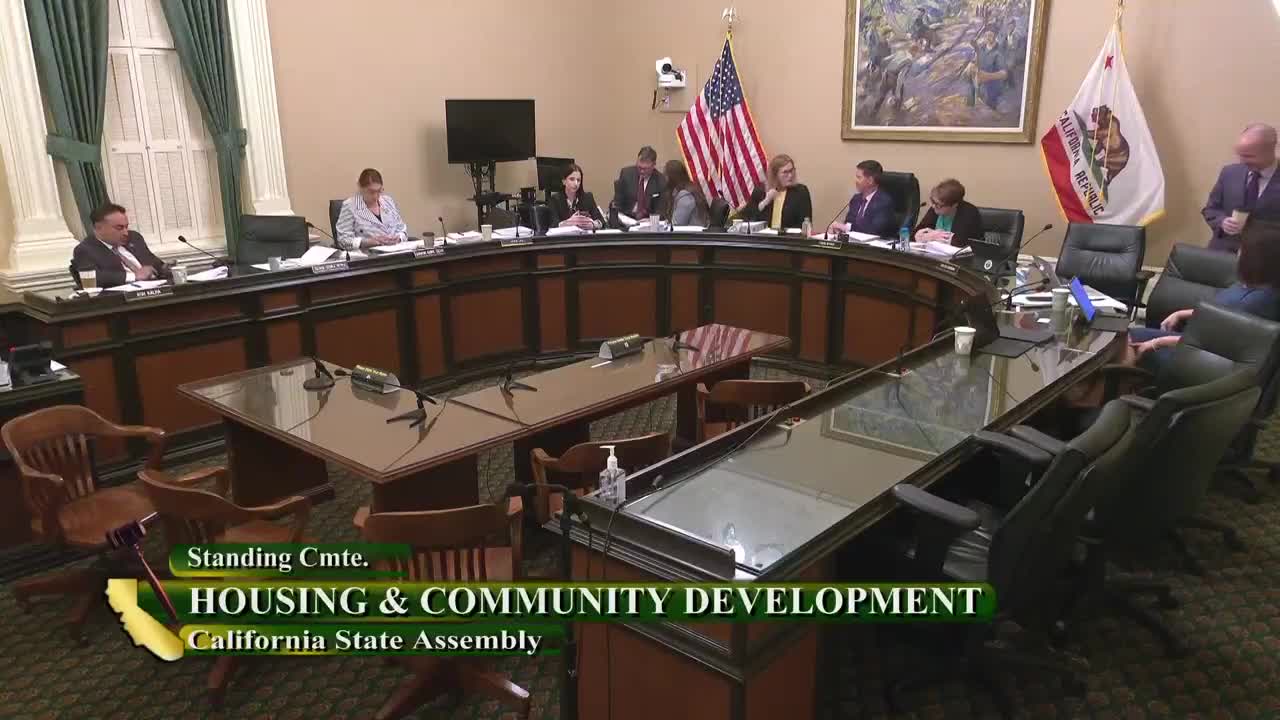 10MIN
Assembly Standing Committee on Housing and Community Development
Bill Author

Bill Co-Author(s):