AB 2991: Alcoholic beverage control: retailer payments: electronic funds transfers.
- Session Year: 2023-2024
- House: Assembly
- Latest Version Date: 2024-09-22
Current Status:
Passed
(2024-09-22: Chaptered by Secretary of State - Chapter 426, Statutes of 2024.)
Introduced
In Committee
First Chamber
In Committee
Second Chamber
Enacted
Existing law, the Alcoholic Beverage Control Act, which is administered by the Department of Alcoholic Beverage Control, regulates the application, issuance, and suspension of alcoholic beverage licenses and generally makes a violation of the act a misdemeanor. Existing law imposes various restrictions on the hours of sale and delivery of alcoholic beverages.
This bill would require, commencing January 1, 2026, a payment by a retailer licensee to a wholesaler licensee for delivery of beer, wine, or distilled spirits, to be made by electronic funds transfer, except as specified. The bill would require the wholesaler licensee to be responsible for selecting the third-party payment processor used to make an electronic funds transfer, as specified. The bill would make conforming changes to a tied-house restriction governing certain sales to retailers who make late payments, as specified. By imposing additional requirements on licensees under the act, the violation of which is a crime, this bill would impose a state-mandated local program.
The California Constitution requires the state to reimburse local agencies and school districts for certain costs mandated by the state. Statutory provisions establish procedures for making that reimbursement.
This bill would provide that no reimbursement is required by this act for a specified reason.
Existing law, the Alcoholic Beverage Control Act, which is administered by the Department of Alcoholic Beverage Control, regulates the application, issuance, and suspension of alcoholic beverage licenses and generally makes a violation of the act a misdemeanor. Existing law imposes various restrictions on the hours of sale and delivery of alcoholic beverages.
This bill would require, commencing January 1, 2026, a payment by a retailer licensee to a wholesaler licensee for a direct store delivery of beer, wine, or distilled spirits, to be made by electronic funds transfer, except as specified. The bill would require the wholesaler licensee to be responsible for selecting the third-party payment processor used to make an electronic funds transfer, as specified. The bill would make conforming changes to a tied-house restriction governing certain sales to retailers who make late payments, as specified. By imposing additional requirements on licensees under the act, the violation of which is a crime, this bill would impose a state-mandated local program.
The California Constitution requires the state to reimburse local agencies and school districts for certain costs mandated by the state. Statutory provisions establish procedures for making that reimbursement.
This bill would provide that no reimbursement is required by this act for a specified reason.
Existing law, the Alcoholic Beverage Control Act, which is administered by the Department of Alcoholic Beverage Control, regulates the application, issuance, and suspension of alcoholic beverage licenses and generally makes a violation of the act a misdemeanor. Existing law imposes various restrictions on the hours of sale and delivery of alcoholic beverages.
This bill would require, commencing January 1, 2026, a payment by a retailer licensee to a wholesaler licensee for a direct store delivery of beer, wine, or distilled spirits, to be made by electronic funds transfer, except as specified. The bill would require the wholesaler licensee to be solely responsible for selecting the third-party payment processor used to make an electronic funds transfer, as specified. The bill would make conforming changes to a tied-house restriction governing certain sales to retailers who make late payments, as specified. By imposing additional requirements on licensees under the act, the violation of which is a crime, this bill would impose a state-mandated local program.
The California Constitution requires the state to reimburse local agencies and school districts for certain costs mandated by the state. Statutory provisions establish procedures for making that reimbursement.
This bill would provide that no reimbursement is required by this act for a specified reason.
Existing law, the Alcoholic Beverage Control Act, which is administered by the Department of Alcoholic Beverage Control, regulates the application, issuance, and suspension of alcoholic beverage licenses and generally makes a violation of the act a misdemeanor. Existing law imposes various restrictions on the hours of sale and delivery of alcoholic beverages.
This bill would require, commencing January 1, 2026, a payment by a retailer licensee to a wholesaler licensee for delivery of beer, wine, or distilled spirits, to be made by electronic funds transfer, except as specified. The bill would require the wholesaler licensee to be solely responsible for selecting the third-party payment processor used to make an electronic funds transfer, as specified. The bill would make conforming changes to a tied-house restriction governing certain sales to retailers who make late payments, as specified. By imposing additional requirements on licensees under the act, the violation of which is a crime, this bill would impose a state-mandated local program.
The California Constitution requires the state to reimburse local agencies and school districts for certain costs mandated by the state. Statutory provisions establish procedures for making that reimbursement.
This bill would provide that no reimbursement is required by this act for a specified reason.
(a)A distilled spirits manufacturer, a brandy manufacturer, a beer manufacturer, a winegrower, a wine blender, a distilled spirits rectifier, a wine rectifier, a distilled spirits wholesaler, or a beer and wine wholesaler who sold and delivered beer, wine, or distilled spirits to a retailer and who did not receive payment for that beer, wine, or distilled spirits by the expiration of the 42nd day from date of delivery shall charge the retailer 1 percent of the unpaid balance for that beer, wine, and distilled spirits on the 43rd day from date of delivery and an additional 1 percent for each 30 days thereafter.
(b)A distilled spirits manufacturer, a brandy manufacturer, a beer manufacturer, a winegrower, a wine blender, distilled spirits rectifier, a wine rectifier, distilled spirits wholesaler, or beer and wine wholesaler who sold and delivered beer, wine, or distilled spirits to a retailer and who did not receive payment in full by the expiration of the 30th day from date of delivery or who has not received payment of the 1 percent charge at the expiration of the 30th day from the day the charge became due shall thereafter sell beer, wine, or distilled spirits to that retailer either for cash or by receiving payment in advance of delivery until such time as all payments are received for the beer, wine, or distilled spirits sold and delivered to the said retailer more than 30 days previously.
(c)The 42-day period and the 30-day period provided for in this section shall commence with the day immediately following the date of invoice and shall include all successive days including Sundays and holidays to and including the 42nd or 30th day as the case may be. When the 42nd day from date of invoice or the expiration of each additional 30-day period falls on Saturday, Sunday, or legal holiday, the next business day shall be deemed to be the expiration day.
(d)All moneys received from a retailer in payment for any beer, wine, or distilled spirits sold and delivered to them shall be first applied to the payment of the oldest balance on beer, wine, or distilled spirits. All checks received for such payments shall be deposited for collection not later than the second business day following receipt of said check. A promissory note, postdated check, or check dishonored on presentation shall not be deemed payment.
(e)In enacting the act that amends this section by adding this subdivision, the Legislature finds that it is necessary and proper to remove the retailer from financial or business obligations to suppliers or wholesalers by the extension of credit beyond the terms contained in this section. The Legislature further finds that the exception established by this section to the general prohibition against tied interests shall be limited to its express terms so as not to undermine the general prohibition, and intends that this section shall be construed accordingly.
(f)This section shall remain in effect only until January 1, 2026, and as of that date is repealed.
SEC. 2.Section 25509 is added to the Business and Professions Code, to read:25509.(a)A distilled spirits manufacturer, a brandy manufacturer, a beer manufacturer, a winegrower, a wine blender, a distilled spirits rectifier, a wine rectifier, a distilled spirits wholesaler, or a beer and wine wholesaler who sold and delivered beer, wine, or distilled spirits to a retailer and who did not receive payment for that beer, wine, or distilled spirits by the expiration of the 42nd day from date of delivery shall charge the retailer 1 percent of the unpaid balance for that beer, wine, and distilled spirits on the 43rd day from date of delivery and an additional 1 percent for each 30 days thereafter.
(b)A distilled spirits manufacturer, a brandy manufacturer, a beer manufacturer, a winegrower, a wine blender, distilled spirits rectifier, a wine rectifier, distilled spirits wholesaler, or beer and wine wholesaler who sold and delivered beer, wine, or distilled spirits to a retailer and who did not receive payment in full by the expiration of the 30th day from date of delivery or who has not received payment of the 1 percent charge at the expiration of the 30th day from the day the charge became due shall thereafter sell beer, wine, or distilled spirits to that retailer by receiving payment in advance of delivery until such time as all payments are received for the beer, wine, or distilled spirits sold and delivered to the said retailer more than 30 days previously.
(c)The 42-day period and the 30-day period provided for in this section shall commence with the day immediately following the date of invoice and shall include all successive days including Sundays and holidays to and including the 42nd or 30th day as the case may be. When the 42nd day from date of invoice or the expiration of each additional 30-day period falls on Saturday, Sunday, or legal holiday, the next business day shall be deemed to be the expiration day.
(d)All moneys received from a retailer in payment for any beer, wine, or distilled spirits sold and delivered to them shall be first applied to the payment of the oldest balance on beer, wine, or distilled spirits. All checks received for such payments shall be deposited for collection not later than the second business day following receipt of said check. A promissory note, postdated check, or check dishonored on presentation shall not be deemed payment.
(e)In enacting the act that amends this section by adding this subdivision, the Legislature finds that it is necessary and proper to remove the retailer from financial or business obligations to suppliers or wholesalers by the extension of credit beyond the terms contained in this section. The Legislature further finds that the exception established by this section to the general prohibition against tied interests shall be limited to its express terms so as not to undermine the general prohibition, and intends that this section shall be construed accordingly.
(f)This section shall become operative on January 1, 2026.
SEC. 3.Section 25509.1 is added to the Business and Professions Code, to read:25509.1.(a)Commencing January 1, 2026, and except as provided in subdivision (b) and paragraph (3) of subdivision (c), payment from a retailer licensee to a wholesaler licensee for delivery of beer, wine, or distilled spirits shall be made by electronic funds transfer in accordance with the following requirements:
(1)The wholesaler licensee shall initiate the electronic funds transfer by initiating the withdrawal of funds from the retailer licensees bank account.
(2)The electronic funds transfer shall occur by the expiration of the 30th day from the date of delivery of the beer, wine, or distilled spirits.
(3)Any costs related to electronic payment services shall be paid by the party that incurred those costs.
(A)Any service fees related to electronic payment transactions shall be applied in an equitable manner to each subscribing wholesaler and retailer and shall justifiably match the services they receive from the electronic payment service provider.
(B)The wholesaler shall not pay, directly or indirectly, for electronic payment service fees incurred by a retailer.
(C)The retailer shall not pay, directly or indirectly, for electronic payment service fees incurred by a wholesaler.
(b)A payment may be made using cash, check, or money order only in the following instances:
(1)If accepting payment following an electronic funds transfer of insufficient funds.
(2)If the retailer licensee holds an interim operating permit pursuant to Section 24044.5 or a temporary permit pursuant to Section 24045.5.
(3)During temporary service interruption of the third-party payment processor.
(4)During the first 30 days following the issuance of a license to the retailer licensee.
(c)(1)To maintain control of its ability to receive payment for delivery, a wholesaler licensee shall be responsible for selecting the third-party payment processor used to facilitate an electronic funds transfer pursuant to this section. The wholesaler and retailer may agree on the third-party payment processor. If the parties are unable to agree, the parties shall use the third-party payment processor used by the retailer as of July 1, 2025, to pay for wholesale alcohol purchases. If by July 1, 2025, the retailer does not use a third-party payment processor, the parties shall use the third-party payment processor selected by the wholesaler.
(2)A wholesaler licensee shall not select a third-party payment processor that does not meet the requirements of this section or that requires more than 30 days notice from the wholesaler licensee to terminate the processors agreement with the wholesaler licensee.
(3)Notwithstanding subdivision (a), a wholesaler may choose to accept credit card payments. If payment is made using a credit card, the retailer shall bear the cost of the transaction, so as to mitigate the value of secondary benefits realized by the retailer using the credit card.
(d)A retailer shall not accept a rebate, incentive, or other thing of value from a third-party payment processor for a payment made pursuant to this section.
(e)For purposes of this section, electronic funds transfer or EFT means the electronic transfer of money from one bank account to another, either within a single financial institution or across multiple institutions, via computer-based systems.
SEC. 4.No reimbursement is required by this act pursuant to Section 6 of Article XIIIB of the California Constitution because the only costs that may be incurred by a local agency or school district will be incurred because this act creates a new crime or infraction, eliminates a crime or infraction, or changes the penalty for a crime or infraction, within the meaning of Section 17556 of the Government Code, or changes the definition of a crime within the meaning of Section 6 of Article XIIIB of the California Constitution.
(a)A distilled spirits manufacturer, a brandy manufacturer, a beer manufacturer, a winegrower, a wine blender, a distilled spirits rectifier, a wine rectifier, a distilled spirits wholesaler, or a beer and wine wholesaler who sold and delivered beer, wine, or distilled spirits to a retailer and who did not receive payment for that beer, wine, or distilled spirits by the expiration of the 42nd day from date of delivery shall charge the retailer 1 percent of the unpaid balance for that beer, wine, and distilled spirits on the 43rd day from date of delivery and an additional 1 percent for each 30 days thereafter.
(b)A distilled spirits manufacturer, a brandy manufacturer, a beer manufacturer, a winegrower, a wine blender, distilled spirits rectifier, a wine rectifier, distilled spirits wholesaler, or beer and wine wholesaler who sold and delivered beer, wine, or distilled spirits to a retailer and who did not receive payment in full by the expiration of the 30th day from date of delivery or who has not received payment of the 1 percent charge at the expiration of the 30th day from the day the charge became due shall thereafter sell beer, wine, or distilled spirits to that retailer either for cash or by receiving payment in advance of delivery until such time as all payments are received for the beer, wine, or distilled spirits sold and delivered to the said retailer more than 30 days previously.
(c)The 42-day period and the 30-day period provided for in this section shall commence with the day immediately following the date of invoice and shall include all successive days including Sundays and holidays to and including the 42nd or 30th day as the case may be. When the 42nd day from date of invoice or the expiration of each additional 30-day period falls on Saturday, Sunday, or legal holiday, the next business day shall be deemed to be the expiration day.
(d)All moneys received from a retailer in payment for any beer, wine, or distilled spirits sold and delivered to them shall be first applied to the payment of the oldest balance on beer, wine, or distilled spirits. All checks received for such payments shall be deposited for collection not later than the second business day following receipt of said check. A promissory note, postdated check, or check dishonored on presentation shall not be deemed payment.
(e)In enacting the act that amends this section by adding this subdivision, the Legislature finds that it is necessary and proper to remove the retailer from financial or business obligations to suppliers or wholesalers by the extension of credit beyond the terms contained in this section. The Legislature further finds that the exception established by this section to the general prohibition against tied interests shall be limited to its express terms so as not to undermine the general prohibition, and intends that this section shall be construed accordingly.
(f)This section shall remain in effect only until January 1, 2026, and as of that date is repealed.
SEC. 2.Section 25509 is added to the Business and Professions Code, to read:25509.(a)A distilled spirits manufacturer, a brandy manufacturer, a beer manufacturer, a winegrower, a wine blender, a distilled spirits rectifier, a wine rectifier, a distilled spirits wholesaler, or a beer and wine wholesaler who sold and delivered beer, wine, or distilled spirits to a retailer and who did not receive payment for that beer, wine, or distilled spirits by the expiration of the 42nd day from date of delivery shall charge the retailer 1 percent of the unpaid balance for that beer, wine, and distilled spirits on the 43rd day from date of delivery and an additional 1 percent for each 30 days thereafter.
(b)A distilled spirits manufacturer, a brandy manufacturer, a beer manufacturer, a winegrower, a wine blender, distilled spirits rectifier, a wine rectifier, distilled spirits wholesaler, or beer and wine wholesaler who sold and delivered beer, wine, or distilled spirits to a retailer and who did not receive payment in full by the expiration of the 30th day from date of delivery or who has not received payment of the 1 percent charge at the expiration of the 30th day from the day the charge became due shall thereafter sell beer, wine, or distilled spirits to that retailer by receiving payment in advance of delivery until such time as all payments are received for the beer, wine, or distilled spirits sold and delivered to the said retailer more than 30 days previously.
(c)The 42-day period and the 30-day period provided for in this section shall commence with the day immediately following the date of invoice and shall include all successive days including Sundays and holidays to and including the 42nd or 30th day as the case may be. When the 42nd day from date of invoice or the expiration of each additional 30-day period falls on Saturday, Sunday, or legal holiday, the next business day shall be deemed to be the expiration day.
(d)All moneys received from a retailer in payment for any beer, wine, or distilled spirits sold and delivered to them shall be first applied to the payment of the oldest balance on beer, wine, or distilled spirits. All checks received for such payments shall be deposited for collection not later than the second business day following receipt of said check. A promissory note, postdated check, or check dishonored on presentation shall not be deemed payment.
(e)In enacting the act that amends this section by adding this subdivision, the Legislature finds that it is necessary and proper to remove the retailer from financial or business obligations to suppliers or wholesalers by the extension of credit beyond the terms contained in this section. The Legislature further finds that the exception established by this section to the general prohibition against tied interests shall be limited to its express terms so as not to undermine the general prohibition, and intends that this section shall be construed accordingly.
(f)This section shall become operative on January 1, 2026.
SEC. 3.Section 25625 is added to the Business and Professions Code, immediately following Section 25624, to read:25625.SEC. 3.Section 25509.1 is added to the Business and Professions Code, to read:25509.1.(a)Commencing January 1, 2026, and except as provided in subdivision (b), (b) and paragraph (3) of subdivision (c), payment from a retailer licensee to a wholesaler licensee for delivery of beer, wine, or distilled spirits shall be made by electronic funds transfer in accordance with the following requirements:
(1)The wholesaler licensee shall initiate the electronic funds transfer by initiating the withdrawal of funds from the retailer licensees bank account.
(2)The electronic funds transfer shall occur by the expiration of the 30th day from the date of delivery of the beer, wine, or distilled spirits.
(3)A single electronic funds transfer may be made for deliveries to multiple locations of a chain retailer on the same business day provided that the retailer licensee and the wholesaler licensee maintain a detailed record by location to ensure that individual delivery invoices may be traced to that electronic funds transfer.(3)Any costs related to electronic payment services shall be paid by the party that incurred those costs.
(A)Any service fees related to electronic payment transactions shall be applied in an equitable manner to each subscribing wholesaler and retailer and shall justifiably match the services they receive from the electronic payment service provider.
(B)The wholesaler shall not pay, directly or indirectly, for electronic payment service fees incurred by a retailer.
(C)The retailer shall not pay, directly or indirectly, for electronic payment service fees incurred by a wholesaler.
(b)A payment may be made using cash, check, or money order only in the following instances:
(1)If accepting payment following an electronic funds transfer of insufficient funds.
(2)If the retailer licensee holds an interim operating permit pursuant to Section 24044.5 or a temporary permit pursuant to Section 24045.5.
(3)During temporary service interruption of the third-party payment processor.
(4)During the first 30 days following the issuance of a license to the retailer licensee.
(c)(1)To maintain control of its ability to receive payment for delivery, a wholesaler licensee shall be responsible for selecting the third-party payment processor used to facilitate an electronic funds transfer pursuant to this section. The wholesaler and retailer shall make a good faith effort to may agree on the third-party payment processor. If the parties are unable to agree, the parties shall use the third-party payment processor currently used by the retailer as of July 1, 2025, to process payment, or, if pay for wholesale alcohol purchases. If by July 1, 2025, the retailer does not currently use a third-party payment processor, the parties shall use the third-party payment processor selected by the wholesaler. Notwithstanding any provision to the contrary, the wholesaler shall pay any reasonable fees charged by the third-party payment processor in connection with an EFT transaction. If the retailer elects to pay by credit card, the retailer shall pay all transaction fees.
(2)Notwithstanding paragraph (1), a wholesaler may reject use of the retailers current third-party payment processor if that processor charges fees that exceed 150 percent of the cost of the third-party payment processor selected by the wholesaler.(3)(2)A wholesaler licensee shall not select a third-party payment processor that does not meet the requirements of this section or that requires more than 30 days notice from the wholesaler licensee to terminate the processors agreement with the wholesaler licensee.
(3)Notwithstanding subdivision (a), a wholesaler may choose to accept credit card payments. If payment is made using a credit card, the retailer shall bear the cost of the transaction, so as to mitigate the value of secondary benefits realized by the retailer using the credit card.
(d)A retailer shall not accept a rebate, incentive, or other thing of value from a third-party payment processor for a payment made pursuant to this section.
(e)For purposes of this section, the following definitions apply:
(1)Electronic electronic funds transfer or EFT means the electronic transfer of money from one bank account to another, either within a single financial institution or across multiple institutions, via computer-based systems, without the direct intervention of bank staff. EFT includes a credit card transaction. systems.
(2)Reasonable fees means market competitive fees that are preestablished and agreed upon by the business relationship between a wholesaler and the third-party payment processor.SEC. 4.No reimbursement is required by this act pursuant to Section 6 of Article XIIIB of the California Constitution because the only costs that may be incurred by a local agency or school district will be incurred because this act creates a new crime or infraction, eliminates a crime or infraction, or changes the penalty for a crime or infraction, within the meaning of Section 17556 of the Government Code, or changes the definition of a crime within the meaning of Section 6 of Article XIIIB of the California Constitution.
(a)A distilled spirits manufacturer, a brandy manufacturer, a beer manufacturer, a winegrower, a wine blender, a distilled spirits rectifier, a wine rectifier, a distilled spirits wholesaler, or a beer and wine wholesaler who sold and delivered beer, wine, or distilled spirits to a retailer and who did not receive payment for that beer, wine, or distilled spirits by the expiration of the 42nd day from date of delivery shall charge the retailer 1 percent of the unpaid balance for that beer, wine, and distilled spirits on the 43rd day from date of delivery and an additional 1 percent for each 30 days thereafter.
(b)A distilled spirits manufacturer, a brandy manufacturer, a beer manufacturer, a winegrower, a wine blender, distilled spirits rectifier, a wine rectifier, distilled spirits wholesaler, or beer and wine wholesaler who sold and delivered beer, wine, or distilled spirits to a retailer and who did not receive payment in full by the expiration of the 30th day from date of delivery or who has not received payment of the 1 percent charge at the expiration of the 30th day from the day the charge became due shall thereafter sell beer, wine, or distilled spirits to that retailer either for cash or by receiving payment in advance of delivery until such time as all payments are received for the beer, wine, or distilled spirits sold and delivered to the said retailer more than 30 days previously.
(c)The 42-day period and the 30-day period provided for in this section shall commence with the day immediately following the date of invoice and shall include all successive days including Sundays and holidays to and including the 42nd or 30th day as the case may be. When the 42nd day from date of invoice or the expiration of each additional 30-day period falls on Saturday, Sunday, or legal holiday, the next business day shall be deemed to be the expiration day.
(d)All moneys received from a retailer in payment for any beer, wine, or distilled spirits sold and delivered to them shall be first applied to the payment of the oldest balance on beer, wine, or distilled spirits. All checks received for such payments shall be deposited for collection not later than the second business day following receipt of said check. A promissory note, postdated check, or check dishonored on presentation shall not be deemed payment.
(e)In enacting the act that amends this section by adding this subdivision, the Legislature finds that it is necessary and proper to remove the retailer from financial or business obligations to suppliers or wholesalers by the extension of credit beyond the terms contained in this section. The Legislature further finds that the exception established by this section to the general prohibition against tied interests shall be limited to its express terms so as not to undermine the general prohibition, and intends that this section shall be construed accordingly.
(f)This section shall remain in effect only until January 1, 2026, and as of that date is repealed.
SEC. 2.Section 25509 is added to the Business and Professions Code, to read:25509.(a)A distilled spirits manufacturer, a brandy manufacturer, a beer manufacturer, a winegrower, a wine blender, a distilled spirits rectifier, a wine rectifier, a distilled spirits wholesaler, or a beer and wine wholesaler who sold and delivered beer, wine, or distilled spirits to a retailer and who did not receive payment for that beer, wine, or distilled spirits by the expiration of the 42nd day from date of delivery shall charge the retailer 1 percent of the unpaid balance for that beer, wine, and distilled spirits on the 43rd day from date of delivery and an additional 1 percent for each 30 days thereafter.
(b)A distilled spirits manufacturer, a brandy manufacturer, a beer manufacturer, a winegrower, a wine blender, distilled spirits rectifier, a wine rectifier, distilled spirits wholesaler, or beer and wine wholesaler who sold and delivered beer, wine, or distilled spirits to a retailer and who did not receive payment in full by the expiration of the 30th day from date of delivery or who has not received payment of the 1 percent charge at the expiration of the 30th day from the day the charge became due shall thereafter sell beer, wine, or distilled spirits to that retailer either by receiving payment in advance of delivery, or, if for a delivery other than a direct store delivery, for cash delivery until such time as all payments are received for the beer, wine, or distilled spirits sold and delivered to the said retailer more than 30 days previously.
(c)The 42-day period and the 30-day period provided for in this section shall commence with the day immediately following the date of invoice and shall include all successive days including Sundays and holidays to and including the 42nd or 30th day as the case may be. When the 42nd day from date of invoice or the expiration of each additional 30-day period falls on Saturday, Sunday, or legal holiday, the next business day shall be deemed to be the expiration day.
(d)All moneys received from a retailer in payment for any beer, wine, or distilled spirits sold and delivered to them shall be first applied to the payment of the oldest balance on beer, wine, or distilled spirits. All checks received for such payments shall be deposited for collection not later than the second business day following receipt of said check. A promissory note, postdated check, or check dishonored on presentation shall not be deemed payment.
(e)In enacting the act that amends this section by adding this subdivision, the Legislature finds that it is necessary and proper to remove the retailer from financial or business obligations to suppliers or wholesalers by the extension of credit beyond the terms contained in this section. The Legislature further finds that the exception established by this section to the general prohibition against tied interests shall be limited to its express terms so as not to undermine the general prohibition, and intends that this section shall be construed accordingly.
(f)This section shall become operative on January 1, 2026.
SEC. 3.Section 25625 is added to the Business and Professions Code, immediately following Section 25624, to read:25625.(a)Commencing January 1, 2026, and except as provided in subdivision (b), payment from a retailer licensee to a wholesaler licensee for a direct store delivery of beer, wine, or distilled spirits shall be made by electronic funds transfer in accordance with the following requirements:
(1)The wholesaler licensee shall initiate the electronic funds transfer by initiating the withdrawal of funds from the retailer licensees account.
(2)The electronic funds transfer shall occur by the expiration of the 30th day from the date of delivery of the beer, wine, or distilled spirits.
(3)A single electronic funds transfer may be made for deliveries to multiple locations of a chain retailer on the same business day provided that the retailer licensee and the wholesaler licensee maintain a detailed record by location to ensure that individual delivery invoices may be traced to that electronic funds transfer.
(b)A payment may be made using cash, check, or money order only in the following instances:
(1)If accepting payment following an electronic funds transfer of insufficient funds.
(2)If the retailer licensee holds an interim operating permit pursuant to Section 24044.5 or a temporary permit pursuant to Section 24045.5.
(3)During temporary service interruption of the third-party payment processor.
(4)During the first 30 days following the issuance of a license to the retailer licensee.
(c)(1)Except as provided in paragraph (2), to (1)To maintain control of its ability to receive payment for delivery, a wholesaler licensee shall be responsible for selecting the third-party payment processor used to facilitate an electronic funds transfer pursuant to this section. The wholesaler and retailer shall make a good faith effort to agree on the third-party payment processor. If the parties are unable to agree, the parties shall use the third-party payment processor currently used by the retailer to process payment, or, if the retailer does not currently use a third-party payment processor, the parties shall use the third-party payment processor selected by the wholesaler. Notwithstanding any provision to the contrary, the wholesaler shall pay any reasonable fees charged by the third-party payment processor in connection with an EFT transaction. If the retailer elects to pay by credit card, the retailer shall pay all transaction fees.
(2)If a retailer licensee makes a reasonable objection to use of a third-party payment processor, the wholesaler licensee and retailer licensee shall agree on a substitute third-party payment processor. For purposes of this paragraph, a reasonable objection may include if the retailer licensee has a preexisting relationship with an alternate third-party payment processor.(3)(2)Notwithstanding paragraph (1), a wholesaler may reject use of the retailers current third-party payment processor if that processor charges fees that exceed 150 percent of the cost of the third-party payment processor selected by the wholesaler.
(3)A wholesaler licensee shall not select a third-party payment processor that does not meet the requirements of this section or that requires more than 30 days notice from the wholesaler licensee to terminate the processors agreement with the wholesaler licensee.
(d)A retailer shall not accept a rebate, incentive, or other thing of value from a third-party payment processor for a payment made pursuant to this section.
(e)For purposes of this section, the following definitions apply:
(1)Electronic funds transfer or EFT means the electronic transfer of money from one bank account to another, either within a single financial institution or across multiple institutions, via computer-based systems, without the direct intervention of bank staff. EFT includes a credit card transaction.
(2)Reasonable fees means market competitive fees that are preestablished and agreed upon by the business relationship between a wholesaler and the third-party payment processor.
SEC. 4.No reimbursement is required by this act pursuant to Section 6 of Article XIIIB of the California Constitution because the only costs that may be incurred by a local agency or school district will be incurred because this act creates a new crime or infraction, eliminates a crime or infraction, or changes the penalty for a crime or infraction, within the meaning of Section 17556 of the Government Code, or changes the definition of a crime within the meaning of Section 6 of Article XIIIB of the California Constitution.
(a)A distilled spirits manufacturer, a brandy manufacturer, a beer manufacturer, a winegrower, a wine blender, a distilled spirits rectifier, a wine rectifier, a distilled spirits wholesaler, or a beer and wine wholesaler who sold and delivered beer, wine, or distilled spirits to a retailer and who did not receive payment for that beer, wine, or distilled spirits by the expiration of the 42nd day from date of delivery shall charge the retailer 1 percent of the unpaid balance for that beer, wine, and distilled spirits on the 43rd day from date of delivery and an additional 1 percent for each 30 days thereafter.
(b)A distilled spirits manufacturer, a brandy manufacturer, a beer manufacturer, a winegrower, a wine blender, distilled spirits rectifier, a wine rectifier, distilled spirits wholesaler, or beer and wine wholesaler who sold and delivered beer, wine, or distilled spirits to a retailer and who did not receive payment in full by the expiration of the 30th day from date of delivery or who has not received payment of the 1 percent charge at the expiration of the 30th day from the day the charge became due shall thereafter sell beer, wine, or distilled spirits to that retailer either for cash or by receiving payment in advance of delivery until such time as all payments are received for the beer, wine, or distilled spirits sold and delivered to the said retailer more than 30 days previously.
(c)The 42-day period and the 30-day period provided for in this section shall commence with the day immediately following the date of invoice and shall include all successive days including Sundays and holidays to and including the 42nd or 30th day as the case may be. When the 42nd day from date of invoice or the expiration of each additional 30-day period falls on Saturday, Sunday, or legal holiday, the next business day shall be deemed to be the expiration day.
(d)All moneys received from a retailer in payment for any beer, wine, or distilled spirits sold and delivered to them shall be first applied to the payment of the oldest balance on beer, wine, or distilled spirits. All checks received for such payments shall be deposited for collection not later than the second business day following receipt of said check. A promissory note, postdated check check, or check dishonored on presentation shall not be deemed payment.
(e)In enacting the act that amends this section by adding this subdivision, the Legislature finds that it is necessary and proper to remove the retailer from financial or business obligations to suppliers or wholesalers by the extension of credit beyond the terms contained in this section. The Legislature further finds that the exception established by this section to the general prohibition against tied interests shall be limited to its express terms so as not to undermine the general prohibition, and intends that this section shall be construed accordingly.
(f)This section shall remain in effect only until January 1, 2026, and as of that date is repealed.
SEC. 2.Section 25509 is added to the Business and Professions Code, to read:25509.(a)A distilled spirits manufacturer, a brandy manufacturer, a beer manufacturer, a winegrower, a wine blender, a distilled spirits rectifier, a wine rectifier, a distilled spirits wholesaler, or a beer and wine wholesaler who sold and delivered beer, wine, or distilled spirits to a retailer and who did not receive payment for that beer, wine, or distilled spirits by the expiration of the 42nd day from date of delivery shall charge the retailer 1 percent of the unpaid balance for that beer, wine, and distilled spirits on the 43rd day from date of delivery and an additional 1 percent for each 30 days thereafter.
(b)A distilled spirits manufacturer, a brandy manufacturer, a beer manufacturer, a winegrower, a wine blender, distilled spirits rectifier, a wine rectifier, distilled spirits wholesaler, or beer and wine wholesaler who sold and delivered beer, wine, or distilled spirits to a retailer and who did not receive payment in full by the expiration of the 30th day from date of delivery or who has not received payment of the 1 percent charge at the expiration of the 30th day from the day the charge became due shall thereafter sell beer, wine, or distilled spirits to that retailer either by receiving payment in advance of delivery delivery, or, if for a delivery other than a direct store delivery, for cash until such time as all payments are received for the beer, wine, or distilled spirits sold and delivered to the said retailer more than 30 days previously.
(c)The 42-day period and the 30-day period provided for in this section shall commence with the day immediately following the date of invoice and shall include all successive days including Sundays and holidays to and including the 42nd or 30th day as the case may be. When the 42nd day from date of invoice or the expiration of each additional 30-day period falls on Saturday, Sunday, or legal holiday, the next business day shall be deemed to be the expiration day.
(d)All moneys received from a retailer in payment for any beer, wine, or distilled spirits sold and delivered to them shall be first applied to the payment of the oldest balance on beer, wine, or distilled spirits. All checks received for such payments shall be deposited for collection not later than the second business day following receipt of said check. A promissory note, postdated check check, or check dishonored on presentation shall not be deemed payment.
(e)In enacting the act that amends this section by adding this subdivision, the Legislature finds that it is necessary and proper to remove the retailer from financial or business obligations to suppliers or wholesalers by the extension of credit beyond the terms contained in this section. The Legislature further finds that the exception established by this section to the general prohibition against tied interests shall be limited to its express terms so as not to undermine the general prohibition, and intends that this section shall be construed accordingly.
(f)This section shall become operative on January 1, 2026.
SEC. 3.Section 25625 is added to the Business and Professions Code, immediately following Section 25624, to read:25625.(a)Commencing January 1, 2026, and except as provided in subdivision (b), payment from a retailer licensee to a wholesaler licensee for a direct store delivery of beer, wine, or distilled spirits shall be made by electronic funds transfer in accordance with the following requirements:
(1)The wholesaler licensee shall initiate the electronic funds transfer by initiating the withdrawal of funds from the retailer licensees account.
(2)The electronic funds transfer shall occur by the expiration of the 30th day from the date of delivery of the beer, wine, or distilled spirits.
(3)A single electronic funds transfer may be made for deliveries to multiple locations of a chain retailer on the same business day provided that the retailer licensee and the wholesaler licensee maintain a detailed record by location to ensure that individual delivery invoices may be traced to that electronic funds transfer.
(b)A payment may be made using cash, check, or money order only in the following instances:
(1)If accepting payment following an electronic funds transfer of insufficient funds.
(2)If the retailer licensee holds an interim operating permit pursuant to Section 24044.5 or a temporary permit pursuant to Section 24045.5.
(3)During temporary service interruption of the third-party payment processor.
(4)During the first 30 days following the issuance of a license to the retailer licensee.
(c)To (1)Except as provided in paragraph (2), to maintain control of its ability to receive payment for delivery, a wholesaler licensee shall be solely responsible for selecting the third-party payment processor used to facilitate an electronic funds transfer pursuant to this section. A
(2)If a retailer licensee makes a reasonable objection to use of a third-party payment processor, the wholesaler licensee and retailer licensee shall agree on a substitute third-party payment processor. For purposes of this paragraph, a reasonable objection may include if the retailer licensee has a preexisting relationship with an alternate third-party payment processor.
(3)A wholesaler licensee shall not select a third-party payment processor that does not meet the requirements of this section or that requires more than 30 days notice from the wholesaler licensee to terminate the processors agreement with the wholesaler licensee.
SEC. 4.No reimbursement is required by this act pursuant to Section 6 of Article XIIIB of the California Constitution because the only costs that may be incurred by a local agency or school district will be incurred because this act creates a new crime or infraction, eliminates a crime or infraction, or changes the penalty for a crime or infraction, within the meaning of Section 17556 of the Government Code, or changes the definition of a crime within the meaning of Section 6 of Article XIIIB of the California Constitution.
(a)A distilled spirits manufacturer, a brandy manufacturer, a beer manufacturer, a winegrower, a wine blender, a distilled spirits rectifier, a wine rectifier, a distilled spirits wholesaler wholesaler, or a beer and wine wholesaler who sold and delivered beer, wine, or distilled spirits to a retailer and who did not receive payment for such that beer, wine, or distilled spirits by the expiration of the 42nd day from date of delivery shall charge the retailer 1 percent of the unpaid balance for such that beer, wine, and distilled spirits on the 43rd day from date of delivery and an additional 1 percent for each 30 days thereafter.
(b)A distilled spirits manufacturer, a brandy manufacturer, a beer manufacturer, a winegrower, a wine blender, distilled spirits rectifier, a wine rectifier, distilled spirits wholesaler wholesaler, or beer and wine wholesaler who sold and delivered beer, wine, or distilled spirits to a retailer and who did not receive payment in full by the expiration of the 30th day from date of delivery or who has not received payment of the 1 percent charge at the expiration of the 30th day from the day the charge became due shall thereafter sell beer, wine, or distilled spirits to said that retailer either for cash or by receiving payment in advance of delivery until such time as all payments are received for the beer, wine, or distilled spirits sold and delivered to the said retailer more than 30 days previously.
(c)The 42-day period and the 30-day period provided for in this section shall commence with the day immediately following the date of invoice and shall include all successive days including Sundays and holidays to and including the 42nd or 30th day as the case may be. When the 42nd day from date of invoice or the expiration of each additional 30-day period falls on Saturday, Sunday, or legal holiday, the next business day shall be deemed to be the expiration day.
(d)All moneys received from a retailer in payment for any beer, wine, or distilled spirits sold and delivered to him or her them shall be first applied to the payment of the oldest balance on beer, wine, or distilled spirits. All checks received for such payments shall be deposited for collection not later than the second business day following receipt of said check. A promissory note, postdated check or check dishonored on presentation shall not be deemed payment.
(e)In enacting the act that amends this section by adding this subdivision, the Legislature finds that it is necessary and proper to remove the retailer from financial or business obligations to suppliers or wholesalers by the extension of credit beyond the terms contained in this section. The Legislature further finds that the exception established by this section to the general prohibition against tied interests shall be limited to its express terms so as not to undermine the general prohibition, and intends that this section shall be construed accordingly.
(f)This section shall remain in effect only until January 1, 2026, and as of that date is repealed.
SEC. 2.Section 25509 is added to the Business and Professions Code, to read:25509.(a)A distilled spirits manufacturer, a brandy manufacturer, a beer manufacturer, a winegrower, a wine blender, a distilled spirits rectifier, a wine rectifier, a distilled spirits wholesaler, or a beer and wine wholesaler who sold and delivered beer, wine, or distilled spirits to a retailer and who did not receive payment for that beer, wine, or distilled spirits by the expiration of the 42nd day from date of delivery shall charge the retailer 1 percent of the unpaid balance for that beer, wine, and distilled spirits on the 43rd day from date of delivery and an additional 1 percent for each 30 days thereafter.
(b)A distilled spirits manufacturer, a brandy manufacturer, a beer manufacturer, a winegrower, a wine blender, distilled spirits rectifier, a wine rectifier, distilled spirits wholesaler, or beer and wine wholesaler who sold and delivered beer, wine, or distilled spirits to a retailer and who did not receive payment in full by the expiration of the 30th day from date of delivery or who has not received payment of the 1 percent charge at the expiration of the 30th day from the day the charge became due shall thereafter sell beer, wine, or distilled spirits to that retailer by receiving payment in advance of delivery until such time as all payments are received for the beer, wine, or distilled spirits sold and delivered to the said retailer more than 30 days previously.
(c)The 42-day period and the 30-day period provided for in this section shall commence with the day immediately following the date of invoice and shall include all successive days including Sundays and holidays to and including the 42nd or 30th day as the case may be. When the 42nd day from date of invoice or the expiration of each additional 30-day period falls on Saturday, Sunday, or legal holiday, the next business day shall be deemed to be the expiration day.
(d)All moneys received from a retailer in payment for any beer, wine, or distilled spirits sold and delivered to them shall be first applied to the payment of the oldest balance on beer, wine, or distilled spirits. All checks received for such payments shall be deposited for collection not later than the second business day following receipt of said check. A promissory note, postdated check or check dishonored on presentation shall not be deemed payment.
(e)In enacting the act that amends this section by adding this subdivision, the Legislature finds that it is necessary and proper to remove the retailer from financial or business obligations to suppliers or wholesalers by the extension of credit beyond the terms contained in this section. The Legislature further finds that the exception established by this section to the general prohibition against tied interests shall be limited to its express terms so as not to undermine the general prohibition, and intends that this section shall be construed accordingly.
(f)This section shall become operative on January 1, 2026.
SEC. 3.Section 25625 is added to the Business and Professions Code, immediately following Section 25624, to read:25625.(a)Commencing January 1, 2026, and except as provided in subdivision (b), payment from a retailer licensee to a wholesaler licensee for delivery of beer, wine, or distilled spirits shall be made by electronic funds transfer in accordance with the following requirements:
(1)The wholesaler licensee shall initiate the electronic funds transfer by initiating the withdrawal of funds from the retailer licensees account.
(2)The electronic funds transfer shall occur by the expiration of the 30th day from the date of delivery of the beer, wine, or distilled spirits.
(3)A single electronic funds transfer may be made for deliveries to multiple locations of a chain retailer on the same business day provided that the retailer licensee and the wholesaler licensee maintain a detailed record by location to ensure that individual delivery invoices may be traced to that electronic funds transfer.
(b)A payment may be made using cash, check, or money order only in the following instances:
(1)If accepting payment following an electronic funds transfer of insufficient funds.
(2)If the retailer licensee holds an interim operating permit pursuant to Section 24044.5 or a temporary permit pursuant to Section 24045.5.
(3)During temporary service interruption of the third-party payment processor.
(4)During the first 30 days following the issuance of a license to the retailer licensee.
(c)To maintain control of its ability to receive payment for delivery, a wholesaler licensee shall be solely responsible for selecting the third-party payment processor used to facilitate an electronic funds transfer pursuant to this section. A wholesaler licensee shall not select a third-party payment processor that does not meet the requirements of this section or that requires more than 30 days notice from the wholesaler licensee to terminate the processors agreement with the wholesaler licensee.
SEC. 4.No reimbursement is required by this act pursuant to Section 6 of Article XIIIB of the California Constitution because the only costs that may be incurred by a local agency or school district will be incurred because this act creates a new crime or infraction, eliminates a crime or infraction, or changes the penalty for a crime or infraction, within the meaning of Section 17556 of the Government Code, or changes the definition of a crime within the meaning of Section 6 of Article XIIIB of the California Constitution.
REVISIONS: HeadingLine 2.|
Date
|
Status
|
|---|---|
| Sep 22, 2024 | Chaptered by Secretary of State - Chapter 426, Statutes of 2024. |
| Sep 22, 2024 | Approved by the Governor. |
| Sep 6, 2024 | Enrolled and presented to the Governor at 4 p.m. |
| Aug 28, 2024 | Senate amendments concurred in. To Engrossing and Enrolling. (Ayes 77. Noes 0.). |
| Aug 28, 2024 | Assembly Rule 77 suspended. |
| Aug 28, 2024 | In Assembly. Concurrence in Senate amendments pending. May be considered on or after August 30 pursuant to Assembly Rule 77. |
| Aug 27, 2024 | Read third time. Passed. Ordered to the Assembly. (Ayes 40. Noes 0.). |
| Aug 26, 2024 | Read second time. Ordered to third reading. |
| Aug 23, 2024 | Read third time and amended. Ordered to second reading. |
| Aug 15, 2024 | Ordered to third reading. |
| Aug 15, 2024 | From Consent Calendar. |
| Aug 13, 2024 | Read second time. Ordered to Consent Calendar. |
| Aug 12, 2024 | From committee: Be ordered to second reading file pursuant to Senate Rule 28.8 and ordered to Consent Calendar. |
| Jul 31, 2024 | In committee: Hearing postponed by committee. |
| Jun 25, 2024 | From committee: Do pass and re-refer to Com. on APPR with recommendation: To Consent Calendar. (Ayes 14. Noes 0.) (June 25). Re-referred to Com. on APPR. |
| Jun 19, 2024 | From committee chair, with author's amendments: Amend, and re-refer to committee. Read second time, amended, and re-referred to Com. on G.O. |
| May 29, 2024 | Referred to Com. on G.O. |
| May 22, 2024 | In Senate. Read first time. To Com. on RLS. for assignment. |
| May 21, 2024 | Read third time. Passed. Ordered to the Senate. (Ayes 74. Noes 0. Page 5353.) |
| May 9, 2024 | Read third time and amended. Ordered to third reading. (Page 5147.) |
| Apr 25, 2024 | Ordered to third reading. |
| Apr 25, 2024 | From Consent Calendar. |
| Apr 18, 2024 | Read second time. Ordered to Consent Calendar. |
| Apr 17, 2024 | From committee: Do pass. To Consent Calendar. (Ayes 15. Noes 0.) (April 17). |
| Apr 4, 2024 | From committee: Do pass and re-refer to Com. on APPR. (Ayes 21. Noes 0.) (April 3). Re-referred to Com. on APPR. |
| Apr 4, 2024 | Coauthors revised. |
| Mar 11, 2024 | Referred to Com. on G.O. |
| Feb 17, 2024 | From printer. May be heard in committee March 18. |
| Feb 16, 2024 | Read first time. To print. |
|
Date
|
Description
|
Location
|
Votes
|
|
|---|---|---|---|---|
| Aug 28, 2024 | AB 2991 Valencia Concurrence in Senate Amendments | Assembly Floor |
Passed |
|
| Aug 27, 2024 | Assembly 3rd Reading AB2991 Valencia et al. By Dodd | Senate Floor |
Passed |
|
| Jun 25, 2024 | Do pass, but first be re-referred to the Committee on [Appropriations] with the recommendation: To Consent Calendar | Senate Standing Committee on Governmental Organization |
Passed |
|
| May 21, 2024 | AB 2991 Valencia Assembly Third Reading | Assembly Floor |
Passed |
|
| Apr 17, 2024 | Do pass. To Consent Calendar. | Assembly Standing Committee on Appropriations |
Passed |
|
| Apr 3, 2024 | Do pass and be re-referred to the Committee on [Appropriations] | Assembly Standing Committee on Governmental Organization |
Passed |
This list shows positions taken on this bill by organizations on the date displayed, which is linked to the original source.
Positions by individuals are not included.
|
Organization
|
Position
|
Date
|
|---|---|---|
| California Family Beer Distributors | ** Support | |
| California Grocers Association | ** Against | |
| California Retailers Association | ** Support | |
| California Teamsters Public Affairs Council | ** Support |
CONCURRENCE IN SENATE AMENDMENTS
CSA1 Bill Id:AB 2991
Author:(Valencia)
As Amended Ver:August 23, 2024
Majority vote
SUMMARY
This bill requires, commencing on January 1, 2026, a payment by an alcohol retail licensee to a wholesaler licensee for the delivery of beer, wine, or distilled spirits, to be made by electronic funds transfer (EFT), except as specified.
Senate Amendments
1) Provide that to maintain control of its ability to receive payment for delivery, a wholesaler licensee shall be responsible for selecting the third-party payment processor used to facilitate an electronic funds transfer pursuant to this section, as specified.
2) Prohibits a retailer from accepting a rebate, incentive, or other thing of value from a third-party payment processor for a payment made pursuant to the provisions of this bill.
3) Provide any costs related to electronic payment services shall be paid by the party that incurred those costs. Any service fees related to electronic payment transactions shall be applied in an equitable manner to each subscribing wholesaler and retailer and shall justifiably match the services they receive from the electronic payment service provider. The wholesaler shall not pay, directly or indirectly, for electronic payment service fees incurred by a retailer. The retailer shall not pay, directly or indirectly, for electronic payment service fees incurred by a wholesaler.
4) Provide a wholesaler may choose to accept credit card payments. If payment is made using a credit card, the retailer shall bear the cost of the transaction, so as to mitigate the value of secondary benefits realized by the retailer using the credit card.
5) Define "electronic funds transfer" or "EFT" means the electronic transfer of money from one bank account to another, either within a single financial institution or across multiple institutions, via computer-based systems.
6) Make technical and clarifying changes.
COMMENTS
Background.
Tied-house laws. The "Tied-house" or "three-tier" system, separates the alcoholic beverage industry into three component parts of the manufacturer (the first tier), wholesaler (the second tier), and retailer (the third tier). In its simplest of forms, this set of laws is designed to separate manufacturers, distributors, and retailers of alcoholic beverages. The original policy rationale for this body of law was to: 1) promote the state's interest in an orderly market; (2) prohibit the vertical integration and dominance by a single producer in the marketplace; (3) prohibit commercial bribery and protect the public from predatory marketing practices; and, (4) discourage and/or prevent the intemperate use of alcoholic beverages.
Providing Credit and a "Thing of Value." Providing credit in excess of the permitted period is considered a "thing of value" and the prohibition on excessive credit goes back to trade practice enforcement following the repeal of Prohibition. The regulatory concern with the provision of credit from alcohol suppliers to alcohol retailers has it genesis in the pre-Prohibition American saloon. In the early part of the last century, brewers and distillers used credit and consignment sale techniques to induce saloon owners to carry their brands of beer and spirits over competing brands. Preventing abuse of credit was a core concern of alcohol regulators from the early 1930s because the technique had been used by pre-Prohibition distillers and brewers.
Long credit terms were offered by the suppliers, who did this to lock in the retailers and drive up sales of their particular alcohol brands to intemperate levels. This theory of intemperate consumption underlies the Tied-house laws as they were enacted in the original Federal Alcohol Administration Act (FTAA). Over the years, restrictions on credit have been adopted in some form in every state and are codified in the regulations implementing the FTAA. Federal law, applicable throughout the U.S., provides for a maximum of 30 days credit from a supplier to a retailer. Federal law, however, only governs suppliers (See 27 CFR 6.65 to 6.67).
Every state regulates credit between suppliers and retailers, with the majority reflecting federal law, although some governments forbid credit entirely. Many cash-only states allow no credit and require all purchases to be made COD (Cash on Delivery) or CBD (Cash Before Delivery).
California's Credit law. The state's credit law is set forth in Business & Professions Code Section 25509 of the ABC Act. The law in California limits the amount of time (30 days) that a manufacturer or wholesaler can give credit to a retailer, but it does not outright forbid credit. This statute was enacted in 1963 within the ABC Act entitled "Tied-House Restrictions." The ABC actively enforces the 30-day credit law. This law restricts the credit period between alcohol suppliers (distributors) and alcohol retailers (such as bars, restaurants, or liquor stores).
Any extension of credit by a manufacturer or a wholesaler, like a loan of money or financing, is a "thing of value" to the retailer or could give rise to creating a financial interest in the retailer. Thus, a state credit law exception serves to promote the overall objectives and purposes of the state's Tied-house laws. Presumably, when the Legislature enacted this exemption in 1963, it viewed the 30-day credit extension not to be a "thing of value" or "financial interest." Yet, if credit were allowed for a longer period, it might well be considered a loan or something of value.
Existing alcohol regulations allow various payment methods for transactions, including cash and checks, with a requirement for payment within a maximum of 30 days of delivery. While EFT has been an approved form of payment, its benefits have not been fully realized industry wide. The bill's sponsor points out that EFT makes transactions easier by transferring money straight from the retailer's bank account to the distributor's bank account and granting the distributor instant access to the funds. In summary, distributors in California must adhere to the 30-day credit limit, ensuring fair practices and responsible alcohol distribution.
According to the Author
According to the author's office, "AB 2991 addresses the issues of safety inefficiency, and financial security in the alcohol distribution payment system by proposing the exclusive use of EFT for payments between alcohol distributors and retailers. This change eliminates the need for drivers to carry cash, thus reducing safety risks. It streamlines the delivery process by removing the requirement for physical payment collection at delivery points, which in turn saves times and improves operational efficiency."
Arguments in Support
According to the California Family Beer Distributors, "for alcohol distributors, the adoption of EFT would alleviate several challenges and enhance operational efficiency. By eliminating the need for cash transactions, delivery drivers would operate in safer environments, eliminating the potential risks and threats associated with carrying large sums of money. Moreover, EFT would expedite the payment process, saving valuable time for distributors and their drivers while addressing issues such as insufficient funds more promptly."
Arguments in Opposition
According to the California Grocers Association, "many regional grocery chains and independent grocers, rely on checks to pay for their vendors. This method of payment is time tested and has worked for grocers and their vendors for decades. While concerns about safety and efficiency are valid, ultimately grocers are looking for some additional flexibility when it comes to making payments to alcohol wholesalers."
FISCAL COMMENTS
According to the Senate Appropriations Committee, pursuant to Senate Rule 28.8, negligible state costs.
VOTES:
ASM GOVERNMENTAL ORGANIZATION: 21-0-1
YES: Blanca Rubio, Lackey, Addis, Bains, Bryan, Davies, Dixon, Gabriel, Gipson, Haney, Jones-Sawyer, Low, McKinnor, Pacheco, Papan, Jim Patterson, Ramos, Soria, Waldron, Valencia, Wallis
ABS, ABST OR NV: Cervantes
ASM APPROPRIATIONS: 15-0-0
YES: Wicks, Sanchez, Arambula, Bryan, Calderon, Wendy Carrillo, Dixon, Mike Fong, Grayson, Haney, Hart, Jim Patterson, Pellerin, Ta, Villapudua
ASSEMBLY FLOOR: 74-0-6
YES: Addis, Aguiar-Curry, Alanis, Alvarez, Arambula, Bains, Bauer-Kahan, Bennett, Berman, Boerner, Bonta, Bryan, Calderon, Juan Carrillo, Wendy Carrillo, Chen, Connolly, Davies, Dixon, Essayli, Flora, Mike Fong, Vince Fong, Gallagher, Garcia, Gipson, Grayson, Haney, Hart, Hoover, Irwin, Jackson, Jones-Sawyer, Kalra, Lackey, Lee, Low, Lowenthal, Maienschein, McCarty, McKinnor, Muratsuchi, Stephanie Nguyen, Ortega, Pacheco, Papan, Jim Patterson, Joe Patterson, Pellerin, Petrie-Norris, Quirk-Silva, Ramos, Rendon, Reyes, Luz Rivas, Rodriguez, Blanca Rubio, Sanchez, Santiago, Schiavo, Soria, Ta, Ting, Valencia, Villapudua, Waldron, Wallis, Ward, Weber, Wicks, Wilson, Wood, Zbur, Robert Rivas
ABS, ABST OR NV: Cervantes, Megan Dahle, Friedman, Gabriel, Holden, Mathis
SENATE FLOOR: 40-0-0
YES: Allen, Alvarado-Gil, Archuleta, Ashby, Atkins, Becker, Blakespear, Bradford, Caballero, Cortese, Dahle, Dodd, Durazo, Eggman, Glazer, Gonzalez, Grove, Hurtado, Jones, Laird, Limón, McGuire, Menjivar, Min, Newman, Nguyen, Niello, Ochoa Bogh, Padilla, Portantino, Roth, Rubio, Seyarto, Skinner, Smallwood-Cuevas, Stern, Umberg, Wahab, Wiener, Wilk
UPDATED
VERSION: August 23, 2024
CONSULTANT: Eric Johnson / G.O. / (916) 319-2531 FN: 0004855
SENATE RULES COMMITTEE Office of Senate Floor Analyses (916) 651-1520 Fax: (916) 327-4478 | AB 2991 |
THIRD READING
Bill No: AB 2991
Author: Valencia (D), et al.
Amended: 8/23/24 in Senate
Vote: 21
SENATE GOVERNMENTAL ORG. COMMITTEE: 14-0, 6/25/24
AYES: Dodd, Wilk, Alvarado-Gil, Archuleta, Ashby, Bradford, Glazer, Nguyen, Ochoa Bogh, Padilla, Roth, Rubio, Seyarto, Smallwood-Cuevas
NO VOTE RECORDED: Jones, Portantino
SENATE APPROPRIATIONS COMMITTEE: Senate Rule 28.8
ASSEMBLY FLOOR: 74-0, 5/21/24 - See last page for vote
SUBJECT: Alcoholic beverage control: retailer payments: electronic funds transfers
SOURCE: California Family Beer Distributors
DIGEST: This bill requires, commencing on January 1, 2026, a payment by an alcohol retail licensee to a wholesaler licensee for the delivery of beer, wine, or distilled spirits, to be made by electronic funds transfer (EFT), except as specified.
Senate Floor Amendments of 8/23/24 ensure that electronic payment services fees are paid for by the wholesaler/retailer that incurred those costs.
ANALYSIS:
Existing law:
- Establishes the Department of Alcoholic Beverage Control (ABC) and grants it exclusive authority to administer the provisions of the ABC Act in accordance with laws enacted by the Legislature. This involves licensing individuals and businesses associated with the manufacture, importation, and sale of alcoholic beverages and the collection of license fees for this purpose.
- Provides, under the ABC Act, for the issuance of various alcoholic beverage licenses, including the imposition of fees, conditions, and restrictions in connection with the issuance of those licenses.
- Separates the alcoholic beverage industry into three separate component parts, or tiers, of the manufacturer (including, breweries, and distilleries), wholesaler/distributor, and retailer. This is referred to as the “tied-house” law or “three-tier” system.
- Permits a beer manufacturer or beer wholesaler to furnish, give, rent, lend, or sell any equipment, fixtures, or supplies, other than alcoholic beverages, to a retailer whose equipment, fixtures, or supplies were lost or damaged as a result of a natural disaster, except that this provision does not apply to transactions that occur six weeks or more after the Governor proclaims an area to be in a state of disaster.
- Permits a wholesaler or rectifier to sell the alcoholic beverages mentioned in his or her license to persons who take delivery of the alcoholic beverages within the state for delivery or use outside of the state within 90 days from the date of the sale in accordance with rules and regulations prescribed by the Department ABC.
- Contains a credit statute that restricts the length of time, 30 days, that a manufacturer or wholesaler can extend credit to a retailer. A manufacturer who sold and delivered beer, wine, or distilled spirits to a retailer and who did not receive payment for such product by the expiration of the 42nd day from date of delivery shall charge the retailer one percent of the unpaid balance for such product on the 43rd day from date of delivery and an additional one percent for each 30 days thereafter.
- Provides that all moneys received from a retailer in payment for any product, as defined, sold and delivered, shall be first applied to the payment of the oldest balance on beer, wine, or distilled spirits. All checks received for such payments shall be deposited for collection not later than the second business day following receipt of said check. A promissory note, postdated check or check dishonored on presentation shall not be deemed payment.
- Imposes various restrictions on the hours of sale and delivery of alcoholic beverages.
This bill:
- Requires, commencing January 1, 2026, a payment by an alcohol retailer licensee to a wholesaler licensee for delivery of beer, wine, or distilled spirits, to be made by EFT in accordance with the following requirements:
- The wholesaler licensee shall initiate the EFT by initiating the withdrawal of funds from the alcohol retailer’s account.
- The EFT shall occur by the expiration of the 30th day from the date of the delivery of beer, wine, or distilled spirits.
- Provides that any costs related to electronic payment services shall by paid by the party that incurred the costs.
- Provides that a payment may be made using cash, check, or money order only in the following instances:
- If accepting payment following an EFT of insufficient funds.
- If the alcohol retailer licensee holds an interim operating permit, as defined, or a temporary permit, as specified.
- During a temporary service interruption of the third-party payment processor.
- During the first 30 days following the issuance of a license to the retailer licensee.
- Provides that to maintain control of its ability to receive payment for delivery, a wholesaler licensee shall be responsible for selecting the third-party payment processor used to facilitate an electronic funds transfer pursuant to this section, as specified.
- Requires the wholesale to pay any reasonable fees charged by the third-party payment processor in connection with an EFT transaction, as specified.
- Prohibits a retailer from accepting a rebate, incentive, or other thing of value from a third-party payment processor for a payment made pursuant to the provisions of this bill.
- Makes technical and clarifying changes.
Background
Author Statement. According to the author’s office, “AB 2991 addresses the issues of safety inefficiency, and financial security in the alcohol distribution payment system by proposing the exclusive use of EFT for payments between alcohol distributors and retailers. This change eliminates the need for drivers to carry cash, thus reducing safety risks. It streamlines the delivery process by removing the requirement for physical payment collection at delivery points, which in turn saves times and improves operational efficiency.”
Tied-House Laws. The "tied-house” or "three-tier" system, separates the alcoholic beverage industry into three component parts of the manufacturer (the first tier), wholesaler (the second tier), and retailer (the third tier). In its simplest of forms, this set of laws is designed to separate manufacturers, distributors, and retailers of alcoholic beverages.
The original policy rationale for this body of law was to: (1) promote the state's interest in an orderly market; (2) prohibit the vertical integration and dominance by a single producer in the marketplace; (3) prohibit commercial bribery and protect the public from predatory marketing practices; and, (4) discourage and/or prevent the intemperate use of alcoholic beverages.
Providing Credit and a “Thing of Value.” Providing credit in excess of the permitted period is considered a “thing of value” and the prohibition on excessive credit goes back to trade practice enforcement following the repeal of Prohibition. The regulatory concern with the provision of credit from alcohol suppliers to alcohol retailers has it genesis in the pre-Prohibition American saloon. In the early part of the last century, brewers and distillers used credit and consignment sale techniques to induce saloon owners to carry their brands of beer and spirits over competing brands. Preventing abuse of credit was a core concern of alcohol regulators from the early 1930s because the technique had been used by pre-Prohibition distillers and brewers.
Long credit terms were offered by the suppliers, who did this to lock in the retailers and drive up sales of their particular alcohol brands to intemperate levels. This theory of intemperate consumption underlies the Tied-house laws as they were enacted in the original Federal Alcohol Administration Act (FTAA). Over the years, restrictions on credit have been adopted in some form in every state and are codified in the regulations implementing the FTAA. Federal law, applicable throughout the U.S., provides for a maximum of 30 days credit from a supplier to a retailer. Federal law, however, only governs suppliers (See 27 CFR 6.65 to 6.67).
Every state regulates credit between suppliers and retailers, with the majority reflecting federal law, although some governments forbid credit entirely. Many cash-only states allow no credit and require all purchases to be made COD (Cash on Delivery) or CBD (Cash Before Delivery).
California's Credit law. The state's credit law is set forth in Business & Professions Code Section 25509 of the ABC Act. The law in California limits the amount of time (30 days) that a manufacturer or wholesaler can give credit to a retailer, but it does not outright forbid credit. This statute was enacted in 1963 within the ABC Act entitled "Tied-House Restrictions." The Department of ABC actively enforces the 30-day credit law. This law restricts the credit period between alcohol suppliers (distributors) and alcohol retailers (such as bars, restaurants, or liquor stores).
Any extension of credit by a manufacturer or a wholesaler, like a loan of money or financing, is a "thing of value" to the retailer or could give rise to creating a financial interest in the retailer. Thus, a state credit law exception serves to promote the overall objectives and purposes of the state's Tied-house laws. Presumably, when the Legislature enacted this exemption in 1963, it viewed the 30-day credit extension not to be a "thing of value" or "financial interest." Yet, if credit were allowed for a longer period, it might well be considered a loan or something of value.
Existing alcohol regulations allow various payment methods for transactions, including cash and checks, with a requirement for payment within a maximum of 30 days of delivery. While EFT has been an approved form of payment, its benefits have not been fully realized industry wide. The bill's sponsor points out that EFT makes transactions easier by transferring money straight from the retailer's bank account to the distributor's bank account and granting the distributor instant access to the funds. In summary, distributors in California must adhere to the 30-day credit limit, ensuring fair practices and responsible alcohol distribution.
Related/Prior Legislation
AB 1149 (Villapudua, Chapter 271, Statutes of 2021) allowed specified manufacturers and wholesalers to merchandise (e.g., stock and arrange products on shelves, etc.) single-serve containers of wine and distilled spirits, similar to as currently authorized for beer, at off-sale retail licensed premises.
AB 1133 (Low, Chapter 623, Statutes of 2019) authorized a beer manufacturer to give up to five cases of retail advertising glassware to each on-sale retail licensee and allowed an on-sale retail licensee to accept, up to 10 cases of retail advertising glassware, per year per licensed premises, from any licensed beer manufacturers. This bill did not prescribe a value limit on the provided glassware.
AB 2349 (Nestande, Chapter 374, Statutes of 2012) provided that the listing of names, addresses, telephone numbers, or email addresses in other forms of electronic media do not constitute a thing of value, as specified.
SB 1096 (Wiggins, Chapter 285, Statutes of 2010) revised the direct inquiry provisions in the ABC Act pertaining to the authority of producers, wholesalers and importers to respond to consumer inquiries as to where their products may be found to include any "electronic" inquiries from consumers.
SB 1233 (Chesbro, Chapter 666, Statutes of 1999) allowed for the limited dissemination of information regarding the off-sale availability of alcoholic beverages.
AB 1407 (Wesson, Chapter 699, Statutes of 1999) modified the Act relating to wine auction sales, event permits, and the manner by which a manufacturer or distributor may stock or rotate their products at off-sale establishments.
FISCAL EFFECT: Appropriation: No Fiscal Com.: Yes Local: Yes
SUPPORT: (Verified 8/23/24)
California Family Beer Distributors (source)
California Retailers Association
California Teamsters Public Affairs Council
OPPOSITION: (Verified 8/23/24)
California Grocers Association
ARGUMENTS IN SUPPORT: According to the California Family Beer Distributors, “for alcohol distributors, the adoption of EFT would alleviate several challenges and enhance operational efficiency. By eliminating the need for cash transactions, delivery drivers would operate in safer environments, eliminating the potential risks and threats associated with carrying large sums of money. Moreover, EFT would expedite the payment process, saving valuable time for distributors and their drivers while addressing issues such as insufficient funds more promptly.”
ARGUMENTS IN OPPOSITION: According to the California Grocers Association, “many regional grocery chains and independent grocers, rely on checks to pay for their vendors. This method of payment is time tested and has worked for grocers and their vendors for decades. While concerns about safety and efficiency are valid, ultimately grocers are looking for some additional flexibility when it comes to making payments to alcohol wholesalers.”
ASSEMBLY FLOOR: 74-0, 5/21/24
AYES: Addis, Aguiar-Curry, Alanis, Alvarez, Arambula, Bains, Bauer-Kahan, Bennett, Berman, Boerner, Bonta, Bryan, Calderon, Juan Carrillo, Wendy Carrillo, Chen, Connolly, Davies, Dixon, Essayli, Flora, Mike Fong, Vince Fong, Gallagher, Garcia, Gipson, Grayson, Haney, Hart, Hoover, Irwin, Jackson, Jones-Sawyer, Kalra, Lackey, Lee, Low, Lowenthal, Maienschein, McCarty, McKinnor, Muratsuchi, Stephanie Nguyen, Ortega, Pacheco, Papan, Jim Patterson, Joe Patterson, Pellerin, Petrie-Norris, Quirk-Silva, Ramos, Rendon, Reyes, Luz Rivas, Rodriguez, Blanca Rubio, Sanchez, Santiago, Schiavo, Soria, Ta, Ting, Valencia, Villapudua, Waldron, Wallis, Ward, Weber, Wicks, Wilson, Wood, Zbur, Robert Rivas
NO VOTE RECORDED: Cervantes, Megan Dahle, Friedman, Gabriel, Holden, Mathis
Prepared by: Felipe Lopez / G.O. / (916) 651-1530
8/25/24 13:35:52
**** END ****
SENATE RULES COMMITTEE Office of Senate Floor Analyses (916) 651-1520 Fax: (916) 327-4478 | AB 2991 |
CONSENT
Bill No: AB 2991
Author: Valencia (D), et al.
Amended: 6/19/24 in Senate
Vote: 21
SENATE GOVERNMENTAL ORG. COMMITTEE: 14-0, 6/25/24
AYES: Dodd, Wilk, Alvarado-Gil, Archuleta, Ashby, Bradford, Glazer, Nguyen, Ochoa Bogh, Padilla, Roth, Rubio, Seyarto, Smallwood-Cuevas
NO VOTE RECORDED: Jones, Portantino
SENATE APPROPRIATIONS COMMITTEE: Senate Rule 28.8
ASSEMBLY FLOOR: 74-0, 5/21/24 - See last page for vote
SUBJECT: Alcoholic beverage control: retailer payments: electronic funds transfers
SOURCE: California Family Beer Distributors
DIGEST: This bill requires, commencing on January 1, 2026, a payment by an alcohol retail licensee to a wholesaler licensee for the delivery of beer, wine, or distilled spirits, to be made by electronic funds transfer (EFT), except as specified.
ANALYSIS:
Existing law:
- Establishes the Department of Alcoholic Beverage Control (ABC) and grants it exclusive authority to administer the provisions of the ABC Act in accordance with laws enacted by the Legislature. This involves licensing individuals and businesses associated with the manufacture, importation, and sale of alcoholic beverages and the collection of license fees for this purpose.
- Provides, under the ABC Act, for the issuance of various alcoholic beverage licenses, including the imposition of fees, conditions, and restrictions in connection with the issuance of those licenses.
- Separates the alcoholic beverage industry into three separate component parts, or tiers, of the manufacturer (including, breweries, and distilleries), wholesaler/distributor, and retailer. This is referred to as the “tied-house” law or “three-tier” system.
- Permits a beer manufacturer or beer wholesaler to furnish, give, rent, lend, or sell any equipment, fixtures, or supplies, other than alcoholic beverages, to a retailer whose equipment, fixtures, or supplies were lost or damaged as a result of a natural disaster, except that this provision does not apply to transactions that occur six weeks or more after the Governor proclaims an area to be in a state of disaster.
- Permits a wholesaler or rectifier to sell the alcoholic beverages mentioned in his or her license to persons who take delivery of the alcoholic beverages within the state for delivery or use outside of the state within 90 days from the date of the sale in accordance with rules and regulations prescribed by the Department ABC.
- Contains a credit statute that restricts the length of time, 30 days, that a manufacturer or wholesaler can extend credit to a retailer. A manufacturer who sold and delivered beer, wine, or distilled spirits to a retailer and who did not receive payment for such product by the expiration of the 42nd day from date of delivery shall charge the retailer one percent of the unpaid balance for such product on the 43rd day from date of delivery and an additional one percent for each 30 days thereafter.
- Provides that all moneys received from a retailer in payment for any product, as defined, sold and delivered, shall be first applied to the payment of the oldest balance on beer, wine, or distilled spirits. All checks received for such payments shall be deposited for collection not later than the second business day following receipt of said check. A promissory note, postdated check or check dishonored on presentation shall not be deemed payment.
- Imposes various restrictions on the hours of sale and delivery of alcoholic beverages.
This bill:
- Requires, commencing January 1, 2026, a payment by an alcohol retailer licensee to a wholesaler licensee for delivery of beer, wine, or distilled spirits, to be made by EFT in accordance with the following requirements:
- The wholesaler licensee shall initiate the EFT by initiating the withdrawal of funds from the alcohol retailer’s account.
- The EFT shall occur by the expiration of the 30th day from the date of the delivery of beer, wine, or distilled spirits.
- A single EFT transfer may be made for deliveries to multiple locations of a chain retailer on the same business day provided that the retailer licensee and the wholesale licensee maintain a detailed record by location to ensure that individual delivery invoices may be traced to that EFT.
- Provides that a payment may be made using cash, check, or money order only in the following instances:
- If accepting payment following an EFT of insufficient funds.
- If the alcohol retailer licensee holds an interim operating permit, as defined, or a temporary permit, as specified.
- During a temporary service interruption of the third-party payment processor.
- During the first 30 days following the issuance of a license to the retailer licensee.
- Provides that to maintain control of its ability to receive payment for delivery, a wholesaler licensee shall be solely responsible for selecting the third-party payment processor used to facilitate an electronic funds transfer pursuant to this section. The wholesaler and retailer shall make a good faith effort to agree on the third party processor, as specified.
- Requires the wholesale to pay any reasonable fees charged by the third-party payment processor in connection with an EFT transaction, as specified.
- Prohibits a retailer from accepting a rebate, incentive, or other thing of value from a third-party payment processor for a payment made pursuant to the provisions of this bill.
- Makes technical and clarifying changes.
Background
Author Statement. According to the author’s office, “AB 2991 addresses the issues of safety inefficiency, and financial security in the alcohol distribution payment system by proposing the exclusive use of EFT for payments between alcohol distributors and retailers. This change eliminates the need for drivers to carry cash, thus reducing safety risks. It streamlines the delivery process by removing the requirement for physical payment collection at delivery points, which in turn saves times and improves operational efficiency.”
Tied-House Laws. The "tied-house” or "three-tier" system, separates the alcoholic beverage industry into three component parts of the manufacturer (the first tier), wholesaler (the second tier), and retailer (the third tier). In its simplest of forms, this set of laws is designed to separate manufacturers, distributors, and retailers of alcoholic beverages.
The original policy rationale for this body of law was to: (1) promote the state's interest in an orderly market; (2) prohibit the vertical integration and dominance by a single producer in the marketplace; (3) prohibit commercial bribery and protect the public from predatory marketing practices; and, (4) discourage and/or prevent the intemperate use of alcoholic beverages.
Providing Credit and a “Thing of Value.” Providing credit in excess of the permitted period is considered a “thing of value” and the prohibition on excessive credit goes back to trade practice enforcement following the repeal of Prohibition. The regulatory concern with the provision of credit from alcohol suppliers to alcohol retailers has it genesis in the pre-Prohibition American saloon. In the early part of the last century, brewers and distillers used credit and consignment sale techniques to induce saloon owners to carry their brands of beer and spirits over competing brands. Preventing abuse of credit was a core concern of alcohol regulators from the early 1930s because the technique had been used by pre-Prohibition distillers and brewers.
Long credit terms were offered by the suppliers, who did this to lock in the retailers and drive up sales of their particular alcohol brands to intemperate levels. This theory of intemperate consumption underlies the Tied-house laws as they were enacted in the original Federal Alcohol Administration Act (FTAA). Over the years, restrictions on credit have been adopted in some form in every state and are codified in the regulations implementing the FTAA. Federal law, applicable throughout the U.S., provides for a maximum of 30 days credit from a supplier to a retailer. Federal law, however, only governs suppliers (See 27 CFR 6.65 to 6.67).
Every state regulates credit between suppliers and retailers, with the majority reflecting federal law, although some governments forbid credit entirely. Many cash-only states allow no credit and require all purchases to be made COD (Cash on Delivery) or CBD (Cash Before Delivery).
California's Credit law. The state's credit law is set forth in Business & Professions Code Section 25509 of the ABC Act. The law in California limits the amount of time (30 days) that a manufacturer or wholesaler can give credit to a retailer, but it does not outright forbid credit. This statute was enacted in 1963 within the ABC Act entitled "Tied-House Restrictions." The Department of ABC actively enforces the 30-day credit law. This law restricts the credit period between alcohol suppliers (distributors) and alcohol retailers (such as bars, restaurants, or liquor stores).
Any extension of credit by a manufacturer or a wholesaler, like a loan of money or financing, is a "thing of value" to the retailer or could give rise to creating a financial interest in the retailer. Thus, a state credit law exception serves to promote the overall objectives and purposes of the state's Tied-house laws. Presumably, when the Legislature enacted this exemption in 1963, it viewed the 30-day credit extension not to be a "thing of value" or "financial interest." Yet, if credit were allowed for a longer period, it might well be considered a loan or something of value.
Existing alcohol regulations allow various payment methods for transactions, including cash and checks, with a requirement for payment within a maximum of 30 days of delivery. While EFT has been an approved form of payment, its benefits have not been fully realized industry wide. The bill's sponsor points out that EFT makes transactions easier by transferring money straight from the retailer's bank account to the distributor's bank account and granting the distributor instant access to the funds. In summary, distributors in California must adhere to the 30-day credit limit, ensuring fair practices and responsible alcohol distribution.
Related/Prior Legislation
AB 1149 (Villapudua, Chapter 271, Statutes of 2021) allowed specified manufacturers and wholesalers to merchandise (e.g., stock and arrange products on shelves, etc.) single-serve containers of wine and distilled spirits, similar to as currently authorized for beer, at off-sale retail licensed premises.
AB 1133 (Low, Chapter 623, Statutes of 2019) authorized a beer manufacturer to give up to five cases of retail advertising glassware to each on-sale retail licensee and allowed an on-sale retail licensee to accept, up to 10 cases of retail advertising glassware, per year per licensed premises, from any licensed beer manufacturers. This bill did not prescribe a value limit on the provided glassware.
AB 2349 (Nestande, Chapter 374, Statutes of 2012) provided that the listing of names, addresses, telephone numbers, or email addresses in other forms of electronic media do not constitute a thing of value, as specified.
SB 1096 (Wiggins, Chapter 285, Statutes of 2010) revised the direct inquiry provisions in the ABC Act pertaining to the authority of producers, wholesalers and importers to respond to consumer inquiries as to where their products may be found to include any "electronic" inquiries from consumers.
SB 1233 (Chesbro, Chapter 666, Statutes of 1999) allowed for the limited dissemination of information regarding the off-sale availability of alcoholic beverages.
AB 1407 (Wesson, Chapter 699, Statutes of 1999) modified the Act relating to wine auction sales, event permits, and the manner by which a manufacturer or distributor may stock or rotate their products at off-sale establishments.
FISCAL EFFECT: Appropriation: No Fiscal Com.: Yes Local: Yes
SUPPORT: (Verified 8/9/24)
California Family Beer Distributors (source)
California Retailers Association
California Teamsters Public Affairs Council
OPPOSITION: (Verified 8/9/24)
None received
ARGUMENTS IN SUPPORT: According to the California Family Beer Distributors, “for alcohol distributors, the adoption of EFT would alleviate several challenges and enhance operational efficiency. By eliminating the need for cash transactions, delivery drivers would operate in safer environments, eliminating the potential risks and threats associated with carrying large sums of money. Moreover, EFT would expedite the payment process, saving valuable time for distributors and their drivers while addressing issues such as insufficient funds more promptly.”
ASSEMBLY FLOOR: 74-0, 5/21/24
AYES: Addis, Aguiar-Curry, Alanis, Alvarez, Arambula, Bains, Bauer-Kahan, Bennett, Berman, Boerner, Bonta, Bryan, Calderon, Juan Carrillo, Wendy Carrillo, Chen, Connolly, Davies, Dixon, Essayli, Flora, Mike Fong, Vince Fong, Gallagher, Garcia, Gipson, Grayson, Haney, Hart, Hoover, Irwin, Jackson, Jones-Sawyer, Kalra, Lackey, Lee, Low, Lowenthal, Maienschein, McCarty, McKinnor, Muratsuchi, Stephanie Nguyen, Ortega, Pacheco, Papan, Jim Patterson, Joe Patterson, Pellerin, Petrie-Norris, Quirk-Silva, Ramos, Rendon, Reyes, Luz Rivas, Rodriguez, Blanca Rubio, Sanchez, Santiago, Schiavo, Soria, Ta, Ting, Valencia, Villapudua, Waldron, Wallis, Ward, Weber, Wicks, Wilson, Wood, Zbur, Robert Rivas
NO VOTE RECORDED: Cervantes, Megan Dahle, Friedman, Gabriel, Holden, Mathis
Prepared by: Felipe Lopez / G.O. / (916) 651-1530
8/13/24 12:59:40
**** END ****
SENATE COMMITTEE ON GOVERNMENTAL ORGANIZATION
Senator Bill Dodd
Chair
2023 - 2024 Regular
Bill No: 2991 Hearing Date: 6/25/2024
Author: | , et al. | ||
Version: | 6/19/2024 Amended | ||
Urgency: | No | Fiscal: | Yes |
Consultant: | Felipe Lopez | ||
SUBJECT: Alcoholic beverage control: retailer payments: electronic funds transfers
DIGEST: This bill requires, commencing on January 1, 2026, a payment by an alcohol retail licensee to a wholesaler licensee for the delivery of beer, wine, or distilled spirits, to be made by electronic funds transfer (EFT), except as specified.
ANALYSIS:
Existing law:
- Establishes the Department of Alcoholic Beverage Control (ABC) and grants it exclusive authority to administer the provisions of the ABC Act in accordance with laws enacted by the Legislature. This involves licensing individuals and businesses associated with the manufacture, importation, and sale of alcoholic beverages and the collection of license fees for this purpose.
- Provides, under the ABC Act, for the issuance of various alcoholic beverage licenses, including the imposition of fees, conditions, and restrictions in connection with the issuance of those licenses.
- Separates the alcoholic beverage industry into three separate component parts, or tiers, of the manufacturer (including, breweries, and distilleries), wholesaler/distributor, and retailer. This is referred to as the “tied-house” law or “three-tier” system.
- Permits a beer manufacturer or beer wholesaler to furnish, give, rent, lend, or sell any equipment, fixtures, or supplies, other than alcoholic beverages, to a retailer whose equipment, fixtures, or supplies were lost or damaged as a result of a natural disaster, except that this provision does not apply to transactions that occur six weeks or more after the Governor proclaims an area to be in a state of disaster.
- Permits a wholesaler or rectifier to sell the alcoholic beverages mentioned in his or her license to persons who take delivery of the alcoholic beverages within the state for delivery or use outside of the state within 90 days from the date of the sale in accordance with rules and regulations prescribed by the Department ABC.
- Contains a credit statute that restricts the length of time, 30 days, that a manufacturer or wholesaler can extend credit to a retailer. A manufacturer who sold and delivered beer, wine, or distilled spirits to a retailer and who did not receive payment for such product by the expiration of the 42nd day from date of delivery shall charge the retailer one percent of the unpaid balance for such product on the 43rd day from date of delivery and an additional one percent for each 30 days thereafter.
- Provides that all moneys received from a retailer in payment for any product, as defined, sold and delivered, shall be first applied to the payment of the oldest balance on beer, wine, or distilled spirits. All checks received for such payments shall be deposited for collection not later than the second business day following receipt of said check. A promissory note, postdated check or check dishonored on presentation shall not be deemed payment.
- Imposes various restrictions on the hours of sale and delivery of alcoholic beverages.
This bill:
- Requires, commencing January 1, 2026, a payment by an alcohol retailer licensee to a wholesaler licensee for delivery of beer, wine, or distilled spirits, to be made by EFT in accordance with the following requirements:
- The wholesaler licensee shall initiate the EFT by initiating the withdrawal of funds from the alcohol retailer’s account.
- The EFT shall occur by the expiration of the 30th day from the date of the delivery of beer, wine, or distilled spirits.
- A single EFT transfer may be made for deliveries to multiple locations of a chain retailer on the same business day provided that the retailer licensee and the wholesale licensee maintain a detailed record by location to ensure that individual delivery invoices may be traced to that EFT.
- Provides that a payment may be made using cash, check, or money order only in the following instances:
- If accepting payment following an EFT of insufficient funds.
- If the alcohol retailer licensee holds an interim operating permit, as defined, or a temporary permit, as specified.
- During a temporary service interruption of the third-party payment processor.
- During the first 30 days following the issuance of a license to the retailer licensee.
- Provides that to maintain control of its ability to receive payment for delivery, a wholesaler licensee shall be solely responsible for selecting the third-party payment processor used to facilitate an electronic funds transfer pursuant to this section. The wholesaler and retailer shall make a good faith effort to agree on the third party processor, as specified.
- Requires the wholesale to pay any reasonable fees charged by the third-party payment processor in connection with an EFT transaction, as specified.
- Prohibits a retailer from accepting a rebate, incentive, or other thing of value from a third-party payment processor for a payment made pursuant to the provisions of this bill.
- Defines “reasonable fees” to mean market competitive fees that are pre-established and agreed upon by the business relationship between a wholesaler and the third-party payment processor.
- Makes technical and clarifying changes.
Background
Author Statement. According to the author’s office, “AB 2991 addresses the issues of safety inefficiency, and financial security in the alcohol distribution payment system by proposing the exclusive use of EFT for payments between alcohol distributors and retailers. This change eliminates the need for drivers to carry cash, thus reducing safety risks. It streamlines the delivery process by removing the requirement for physical payment collection at delivery points, which in turn saves times and improves operational efficiency.”
Tied-House Laws. The "tied-house” or "three-tier" system, separates the alcoholic beverage industry into three component parts of the manufacturer (the first tier), wholesaler (the second tier), and retailer (the third tier). In its simplest of forms, this set of laws is designed to separate manufacturers, distributors, and retailers of alcoholic beverages.
The original policy rationale for this body of law was to: (1) promote the state's interest in an orderly market; (2) prohibit the vertical integration and dominance by a single producer in the marketplace; (3) prohibit commercial bribery and protect the public from predatory marketing practices; and, (4) discourage and/or prevent the intemperate use of alcoholic beverages.
Providing Credit and a “Thing of Value.” Providing credit in excess of the permitted period is considered a “thing of value” and the prohibition on excessive credit goes back to trade practice enforcement following the repeal of Prohibition. The regulatory concern with the provision of credit from alcohol suppliers to alcohol retailers has it genesis in the pre-Prohibition American saloon. In the early part of the last century, brewers and distillers used credit and consignment sale techniques to induce saloon owners to carry their brands of beer and spirits over competing brands. Preventing abuse of credit was a core concern of alcohol regulators from the early 1930s because the technique had been used by pre-Prohibition distillers and brewers.
Long credit terms were offered by the suppliers, who did this to lock in the retailers and drive up sales of their particular alcohol brands to intemperate levels. This theory of intemperate consumption underlies the Tied-house laws as they were enacted in the original Federal Alcohol Administration Act (FTAA). Over the years, restrictions on credit have been adopted in some form in every state and are codified in the regulations implementing the FTAA. Federal law, applicable throughout the U.S., provides for a maximum of 30 days credit from a supplier to a retailer. Federal law, however, only governs suppliers (See 27 CFR 6.65 to 6.67).
Every state regulates credit between suppliers and retailers, with the majority reflecting federal law, although some governments forbid credit entirely. Many cash-only states allow no credit and require all purchases to be made COD (Cash on Delivery) or CBD (Cash Before Delivery).
California's Credit law. The state's credit law is set forth in Business & Professions Code Section 25509 of the ABC Act. The law in California limits the amount of time (30 days) that a manufacturer or wholesaler can give credit to a retailer, but it does not outright forbid credit. This statute was enacted in 1963 within the ABC Act entitled "Tied-House Restrictions." The Department of ABC actively enforces the 30-day credit law. This law restricts the credit period between alcohol suppliers (distributors) and alcohol retailers (such as bars, restaurants, or liquor stores).
Any extension of credit by a manufacturer or a wholesaler, like a loan of money or financing, is a "thing of value" to the retailer or could give rise to creating a financial interest in the retailer. Thus, a state credit law exception serves to promote the overall objectives and purposes of the state's Tied-house laws. Presumably, when the Legislature enacted this exemption in 1963, it viewed the 30-day credit extension not to be a "thing of value" or "financial interest." Yet, if credit were allowed for a longer period, it might well be considered a loan or something of value.
Existing alcohol regulations allow various payment methods for transactions, including cash and checks, with a requirement for payment within a maximum of 30 days of delivery. While EFT has been an approved form of payment, its benefits have not been fully realized industry wide. The bill's sponsor points out that EFT makes transactions easier by transferring money straight from the retailer's bank account to the distributor's bank account and granting the distributor instant access to the funds. In summary, distributors in California must adhere to the 30-day credit limit, ensuring fair practices and responsible alcohol distribution.
Prior/Related Legislation
AB 1149 (Villapudua, Chapter 271, Statutes of 2021) allows specified manufacturers and wholesalers to merchandise (e.g., stock and arrange products on shelves, etc.) single-serve containers of wine and distilled spirits, similar to as currently authorized for beer, at off-sale retail licensed premises.
AB 1133 (Low, Chapter 623, Statutes of 2019) authorizes a beer manufacturer to give up to five cases of retail advertising glassware to each on-sale retail licensee and allowed an on-sale retail licensee to accept, up to 10 cases of retail advertising glassware, per year per licensed premises, from any licensed beer manufacturers. This bill did not prescribe a value limit on the provided glassware.
AB 2349 (Nestande, Chapter 374, Statutes of 2012) provides that the listing of names, addresses, telephone numbers, or email addresses in other forms of electronic media do not constitute a thing of value, as specified.
SB 1096 (Wiggins, Chapter 285, Statutes of 2010) revises the direct inquiry provisions in the ABC Act pertaining to the authority of producers, wholesalers and importers to respond to consumer inquiries as to where their products may be found to include any "electronic" inquiries from consumers.
SB 1233 (Chesbro, Chapter 666, Statutes of 1999) allows for the limited dissemination of information regarding the off-sale availability of alcoholic beverages.
AB 1407 (Wesson, Chapter 699, Statutes of 1999) modified the Act relating to wine auction sales, event permits, and the manner by which a manufacturer or distributor may stock or rotate their products at off-sale establishments.
FISCAL EFFECT: Appropriation: Fiscal Com.: Local:
SUPPORT:
California Family Beer Distributors (Source)
California Retailers Association
California Teamsters Public Affairs Council
OPPOSITION:
None received
ARGUMENTS IN SUPPORT: According to the California Family Beer Distributors, “for alcohol distributors, the adoption of EFT would alleviate several challenges and enhance operational efficiency. By eliminating the need for cash transactions, delivery drivers would operate in safer environments, eliminating the potential risks and threats associated with carrying large sums of money. Moreover, EFT would expedite the payment process, saving valuable time for distributors and their drivers while addressing issues such as insufficient funds more promptly.”
ASSEMBLY THIRD READING
ATR Bill Id:AB 2991
Author:(Valencia)
As Introduced Ver:May 9, 2024
Majority vote
SUMMARY
This bill requires, beginning January 1, 2026, a retailer licensee to pay a wholesaler licensee for the delivery of beer, wine, or distilled spirits via electronic funds transfer (EFT).
Major Provisions
- Commencing January 1, 2026, and except as provided in b), payment from a retailer licensee to a wholesaler licensee for a direct store delivery of beer, wine, or distilled spirits shall be made by electronic funds transfer in accordance with the following requirements:
- The wholesaler licensee shall initiate the EFT by initiating the withdrawal of funds from the retailer licensee's account.
- The EFT shall occur by the expiration of the 30th day from the date of delivery of the beer, wine, or distilled spirits.
- A single EFT transfer may be made for deliveries to multiple locations of a chain retailer on the same business day provided that the retailer licensee and the wholesaler licensee maintain a detailed record by location to ensure that individual delivery invoices may be traced to that electronic funds transfer.
- Authorizes payment via cash, check, or money order in only these instances: a) if accepting payment following an EFT of insufficient funds, b) if the retailer licensee holds an interim operating permit or temporary permit, c) during temporary service interruption of the third-party payment processor, or d) during the first 30 days after issuance of the retailer's license.
- Provides to maintain control of its ability to receive payment for delivery, a wholesaler licensee shall be responsible for selecting the third-party payment processor used to facilitate an electronic funds transfer pursuant to this measure. A wholesaler licensee shall not select a third-party payment processor that does not meet the requirements of this section or that requires more than 30 days' notice from the wholesaler licensee to terminate the processor's agreement with the wholesaler licensee.
- Provides that if a retailer licensee makes a reasonable objection to use of a third-party payment processor, the wholesaler licensee and retailer licensee shall agree on a substitute third-party payment processor. For purposes of this stipulation, a "reasonable objection" may include if the retailer licensee has a preexisting relationship with an alternate third-party payment processor.
5) Makes technical and clarifying changes.
COMMENTS
Background. Tied-house laws. California's tied-house law prevents the vertical integration of the alcohol industry by keeping the manufacturer, wholesaler, and retailer separated. Generally, one type of license holder is not permitted to do business as another type of licensee, and licensees are prohibited from directly or indirectly giving away any "thing of value," such as free goods, advertising, or credit, in connection with the sale or distribution of an alcoholic beverage.
California's credit law. The state's credit law is set forth in Business and Professions Code Section 25509 of the Act. The law in California limits the amount of time (30 days) that a manufacturer or wholesaler can give credit to a retailer, but it does not outright forbid credit. This statute was enacted in 1963 within the Act entitled "Tied-House Restrictions." The ABC actively enforces the 30-day credit law. This law restricts the credit period between alcohol suppliers (distributors) and alcohol retailers (such as bars, restaurants, or liquor stores).
Any extension of credit by a manufacturer or a wholesaler, like a loan of money or financing, is a "thing of value" to the retailer or could give rise to creating a financial interest in the retailer. Thus, a state credit law exception serves to promote the overall objectives and purposes of the state's Tied-house laws. Presumably, when the Legislature enacted this exemption in 1963, it viewed the 30-day credit extension not to be a "thing of value" or "financial interest." Yet, if the credit were allowed for a longer period, it might well be considered a loan or something of value.
Existing alcohol regulations allow various payment methods for transactions, including cash and checks, with a requirement for payment within a maximum of 30 days of delivery. While EFT has been an approved form of payment, its benefits have not been fully realized industry wide. The bill's sponsor points out that EFT makes transactions easier by transferring money straight from the retailer's bank account to the distributor's bank account and granting the distributor instant access to the funds.
In summary, distributors in California must adhere to the 30-day credit limit, ensuring fair practices and responsible alcohol distribution.
According to the Author
According to the author's office, "AB 2991 addresses the issues of safety, inefficiency, and financial security by proposing the exclusive use of EFT for payments between alcohol distributors and retailers. This change eliminates the need for drivers to carry cash, thus reducing safety risks. It streamlines the delivery process by removing the requirement for physical payment collection at delivery points, which in turn saves time and improves operational efficiency."
The author's office further points out that "this bill is a common-sense solution that would increase safety for delivery drivers while making the system more efficient for businesses and transparent for regulators."
Arguments in Support
The sponsor of this bill, the California Family Beer Distributors (CFBD) writes that "As a stakeholder representing a crucial part of California's alcohol industry, CFBD firmly believes that implementing EFT as the standard method of payment would bring about significant benefits to various industry participants as well as California's regulatory bodies and ultimately consumers. For alcohol distributors, the adoption of EFT would alleviate several challenges and enhance operational efficiency. By eliminating the need for cash transactions, delivery drivers would operate in safer environments, eliminating the potential risks and threats associated with carrying large sums of money. Moreover, EFT would expedite the payment process, saving valuable time for distributors and their drivers while addressing issues such as insufficient funds more promptly.
The sponsor further notes that alcohol retailers would also benefit from the measure. "For example, the elimination of check payments reduces the risk of fraud and ensures greater security for retailers' financial information. Additionally, EFT enhances delivery efficiency by minimizing wait times and allowing retailers to maximize the use of credit terms offered by wholesalers. In summary, the adoption of EFT as a mandated form of payment for alcohol transactions represents a common-sense solution that enhances safety, efficiency, and transparency across the industry."
Arguments in Opposition
None on file.
FISCAL COMMENTS
According to the Assembly Committee on Appropriations analysis, "Likely minor and absorbable education and enforcement costs to the Department of Alcoholic Beverage Control (ABC), which oversees the activity of licensees under the Alcoholic Beverage Control Act. However, this committee sees a wide array of bills that propose to modify the scope of alcohol laws. Generally, the majority of proposals do not generate significant new enforcement workload for ABC, but taken together, these proposals could lead to significant new costs and future budget requests."
VOTES
ASM GOVERNMENTAL ORGANIZATION: 21-0-1
YES: Blanca Rubio, Lackey, Addis, Bains, Bryan, Davies, Dixon, Gabriel, Gipson, Haney, Jones-Sawyer, Low, McKinnor, Pacheco, Papan, Jim Patterson, Ramos, Soria, Waldron, Valencia, Wallis
ABS, ABST OR NV: Cervantes
ASM APPROPRIATIONS: 15-0-0
YES: Wicks, Sanchez, Arambula, Bryan, Calderon, Wendy Carrillo, Dixon, Mike Fong, Grayson, Haney, Hart, Jim Patterson, Pellerin, Ta, Villapudua
UPDATED
VERSION: May 9, 2024
CONSULTANT: Eric Johnson / G.O. / (916) 319-2531 FN: 0002897
ASSEMBLY THIRD READING
ATR Bill Id:AB 2991
Author:(Valencia)
As Introduced Ver:February 16, 2024
Majority vote
SUMMARY
This bill requires, beginning January 1, 2026, a retailer licensee to pay a wholesaler licensee for the delivery of beer, wine, or distilled spirits via electronic funds transfer (EFT).
Major Provisions
- Commencing January 1, 2026, and except as provided in b), a payment from a retailer licensee to a wholesaler licensee for delivery of beer, wine, or distilled spirits shall be made by EFT in accordance with the following requirements:
- The wholesaler licensee shall initiate the EFT by initiating the withdrawal of funds from the retailer licensee's account.
- The EFT shall occur by the expiration of the 30th day from the date of delivery of the beer, wine, or distilled spirits.
- A single EFT transfer may be made for deliveries to multiple locations of a chain retailer on the same business day provided that the retailer licensee and the wholesaler licensee maintain a detailed record by location to ensure that individual delivery invoices may be traced to that electronic funds transfer.
- Authorizes payment via cash, check, or money order in only these instances: (a) if accepting payment following an EFT of insufficient funds, (b) if the retailer licensee holds an interim operating permit or temporary permit, (c) during temporary service interruption of the third-party payment processor, or (d) during the first 30 days after issuance of the retailer's license.
- Provides to maintain control of its ability to receive payment for delivery, a wholesaler licensee shall be solely responsible for selecting the third-party payment processor used to facilitate an electronic funds transfer pursuant to this section. A wholesaler licensee shall not select a third-party payment processor that does not meet the requirements of this section or that requires more than 30 days' notice from the wholesaler licensee to terminate the processor's agreement with the wholesaler licensee.
- Makes technical and clarifying changes.
COMMENTS
Background.
Tied-house laws. California's tied-house law prevents the vertical integration of the alcohol industry by keeping the manufacturer, wholesaler, and retailer separated. Generally, one type of license holder is not permitted to do business as another type of licensee, and licensees are prohibited from directly or indirectly giving away any "thing of value," such as free goods, advertising, or credit, in connection with the sale or distribution of an alcoholic beverage.
California's credit law. The state's credit law is set forth in Business and Professions Code Section 25509 of the Act. The law in California limits the amount of time (30 days) that a manufacturer or wholesaler can give credit to a retailer, but it does not outright forbid credit. This statute was enacted in 1963 within the Act entitled "Tied-House Restrictions." The ABC actively enforces the 30-day credit law. This law restricts the credit period between alcohol suppliers (distributors) and alcohol retailers (such as bars, restaurants, or liquor stores).
Any extension of credit by a manufacturer or a wholesaler, like a loan of money or financing, is a "thing of value" to the retailer or could give rise to creating a financial interest in the retailer. Thus, a state credit law exception serves to promote the overall objectives and purposes of the state's Tied-house laws. Presumably, when the Legislature enacted this exemption in 1963, it viewed the 30-day credit extension not to be a "thing of value" or "financial interest." Yet, if the credit were allowed for a longer period, it might well be considered a loan or something of value.
Existing alcohol regulations allow various payment methods for transactions, including cash and checks, with a requirement for payment within a maximum of 30 days of delivery. While EFT has been an approved form of payment, its benefits have not been fully realized industry wide. The bill's sponsor points out that EFT makes transactions easier by transferring money straight from the retailer's bank account to the distributor's bank account and granting the distributor instant access to the funds.
In summary, distributors in California must adhere to the 30-day credit limit, ensuring fair practices and responsible alcohol distribution.
According to the Author
According to the author's office, "AB 2991 addresses the issues of safety, inefficiency, and financial security by proposing the exclusive use of EFT for payments between alcohol distributors and retailers. This change eliminates the need for drivers to carry cash, thus reducing safety risks. It streamlines the delivery process by removing the requirement for physical payment collection at delivery points, which in turn saves time and improves operational efficiency."
The author's office further points out that "this bill is a common-sense solution that would increase safety for delivery drivers while making the system more efficient for businesses and transparent for regulators."
Arguments in Support
The sponsor of this bill, the California Family Beer Distributors (CFBD) writes that "As a stakeholder representing a crucial part of California's alcohol industry, CFBD firmly believes that implementing EFT as the standard method of payment would bring about significant benefits to various industry participants as well as California's regulatory bodies and ultimately consumers. For alcohol distributors, the adoption of EFT would alleviate several challenges and enhance operational efficiency. By eliminating the need for cash transactions, delivery drivers would operate in safer environments, eliminating the potential risks and threats associated with carrying large sums of money. Moreover, EFT would expedite the payment process, saving valuable time for distributors and their drivers while addressing issues such as insufficient funds more promptly.
The sponsor further notes that alcohol retailers would also benefit from the measure. "For example, the elimination of check payments reduces the risk of fraud and ensures greater security for retailers' financial information. Additionally, EFT enhances delivery efficiency by minimizing wait times and allowing retailers to maximize the use of credit terms offered by wholesalers. In summary, the adoption of EFT as a mandated form of payment for alcohol transactions represents a common-sense solution that enhances safety, efficiency, and transparency across the industry."
Arguments in Opposition
None on file
FISCAL COMMENTS
According to the Assembly Committee on Appropriations analysis, "Likely minor and absorbable education and enforcement costs to the ABC, which oversees the activity of licensees under the Alcoholic Beverage Control Act. However, this committee sees a wide array of bills that propose to modify the scope of alcohol laws. Generally, the majority of proposals do not generate significant new enforcement workload for ABC, but taken together, these proposals could lead to significant new costs and future budget requests."
VOTES
ASM GOVERNMENTAL ORGANIZATION: 21-0-1
YES: Blanca Rubio, Lackey, Addis, Bains, Bryan, Davies, Dixon, Gabriel, Gipson, Haney, Jones-Sawyer, Low, McKinnor, Pacheco, Papan, Jim Patterson, Ramos, Soria, Waldron, Valencia, Wallis
ABS, ABST OR NV: Cervantes
ASM APPROPRIATIONS: 15-0-0
YES: Wicks, Sanchez, Arambula, Bryan, Calderon, Wendy Carrillo, Dixon, Mike Fong, Grayson, Haney, Hart, Jim Patterson, Pellerin, Ta, Villapudua
UPDATED
VERSION: February 16, 2024
CONSULTANT: Eric Johnson / G.O. / (916) 319-2531 FN: 0002805
Date of Hearing: April 17, 2024
ASSEMBLY COMMITTEE ON APPROPRIATIONS
Buffy Wicks, Chair
ABPCA Bill Id:AB 2991
Author:(Valencia) – As Introduced Ver:February 16, 2024
Policy Committee: | Governmental Organization | Vote: | 21 - 0 |
|
| ||
|
|
Urgency: No State Mandated Local Program: Yes Reimbursable: No
SUMMARY:
This bill requires, beginning January 1, 2026, a retailer licensee to pay a wholesaler licensee for the delivery of beer, wine, or distilled spirits via electronic funds transfer (EFT).
Specifically, this bill:
- Describes how an EFT payment must occur between licensees so a wholesaler licensee maintains control of their ability to receive payment for delivery. For example, a wholesaler licensee must be solely responsible for selecting the third-party payment processor used to facilitate an EFT and initiate the withdrawal of funds from the retailer licensee’s account.
- Requires the EFT to occur with 30 days of the date of delivery.
- Authorizes payment via cash, check, or money order in only these instances: (a) if accepting payment following an EFT of insufficient funds, (b) if the retailer licensee holds an interim operating permit or temporary permit, (c) during temporary service interruption of the third-party payment processor, or (d) during the first 30 days after issuance of the retailer’s license.
- Revises the requirement for a manufacturer or wholesaler licensee that has not received timely payment in full from a retailer licensee to make subsequent sales in cash or payment in advance of delivery, repealing the reference to cash sales prior to the effective date of the EFT mandate.
FISCAL EFFECT:
Likely minor and absorbable education and enforcement costs to the Department of Alcoholic Beverage Control (ABC), which oversees the activity of licensees under the Alcoholic Beverage Control Act.
However, this committee sees a wide array of bills that propose to modify the scope of alcohol laws. Generally, the majority of proposals do not generate significant new enforcement workload for ABC, but taken together, these proposals could lead to significant new costs and future budget requests.
COMMENTS:
- Purpose. According to the author:
AB 2991 addresses the issues of safety, inefficiency, and financial security by proposing the exclusive use of EFT for payments between alcohol distributors and retailers. This change eliminates the need for drivers to carry cash, thus reducing safety risks. It streamlines the delivery process by removing the requirement for physical payment collection at delivery points, which in turn saves time and improves operational efficiency.
This bill is sponsored by the California Family Beer Distributors and supported by the California Teamsters Public Affairs Council.
- Background.
Tied-house Law. California’s tied-house law prevents the vertical integration of the alcohol industry by keeping the manufacturer, wholesaler, and retailer separated. Generally, one type of license holder is not permitted to do business as another type of licensee, and licensees are prohibited from directly or indirectly giving away any “thing of value,” such as free goods, advertising, or credit, in connection with the sale or distribution of an alcoholic beverage.
Mandating EFT Payments. The regulatory concern with providing credit stems from pre-Prohibition brewers and distillers using credit and consignment sale techniques to induce saloon owners to carry their brand of beer and spirits over competitors. Thus, while state law does not outright prohibit credit, a manufacturer or wholesaler may extend credit to a retailer for only 30 days. Existing regulations allow alcohol transactions to be paid via various methods, including cash or credit, subject to the payment being made within 30 days of delivery.
This bill requires, beginning January 1, 2026, a retailer licensee to pay a wholesaler licensee via EFT within 30 days of an alcohol delivery. This bill’s sponsor notes that many of the thousands of retail licensees across the state already utilize EFT payments. To the extent some retail licensees may not be accustomed to using EFT, this bill delays the EFT requirement for one year to allow time for education efforts and continues to allow payment via other methods if there is an EFT of insufficient funds. Although it is unusual to mandate a payment method between two private parties in statute, the sponsor notes that the alcohol industry is unique, as evidenced by the history of tied-house law, and that other states are beginning to adopt the model after Michigan recently became the first state to require EFT as the method of payment for beer, wine, and mixed spirit purchases made by a retailer licensee.
Analysis Prepared by: Irene Ho / APPR. / (916) 319-2081
Date of Hearing: April 3, 2024
ASSEMBLY COMMITTEE ON GOVERNMENTAL ORGANIZATION
Blanca Rubio, Chair
ABPCA Bill Id:AB 2991 (
Author:Valencia) – As Introduced Ver:February 16, 2024
SUBJECT: Alcoholic beverage control: retailer payments: electronic funds transfers
SUMMARY: This bill would require, commencing January 1, 2026, a payment by a retailer licensee to a wholesaler licensee for delivery of beer, wine, or distilled spirits, to be made by electronic funds transfer (EFT), except as specified. The bill would require the wholesaler licensee to be solely responsible for selecting the third-party payment processor used to make an electronic funds transfer, as specified. The bill would make conforming changes to a Tied-house restriction governing certain sales to retailers who make late payments, as specified. Specifically, this bill:
1) Commencing January 1, 2026, and except as provided in b), payment from a retailer licensee to a wholesaler licensee for delivery of beer, wine, or distilled spirits shall be made by EFT in accordance with the following requirements:
a) The wholesaler licensee shall initiate the EFT by initiating the withdrawal of funds from the retailer licensee’s account.
b) The EFT shall occur by the expiration of the 30th day from the date of delivery of the beer, wine, or distilled spirits.
c) A single EFT transfer may be made for deliveries to multiple locations of a chain retailer on the same business day provided that the retailer licensee and the wholesaler licensee maintain a detailed record by location to ensure that individual delivery invoices may be traced to that electronic funds transfer.
2) Provides that a payment may be made using cash, check, or money order only in the following instances:
a) If accepting payment following an electronic funds transfer of insufficient funds.
b) If the retailer licensee holds an interim operating permit, as defined or a temporary permit pursuant, as specified.
c) During temporary service interruption of the third-party payment processor.
d) During the first 30 days following the issuance of a license to the retailer licensee.
3) Provides to maintain control of its ability to receive payment for delivery, a wholesaler licensee shall be solely responsible for selecting the third-party payment processor used to facilitate an electronic funds transfer pursuant to this section. A wholesaler licensee shall not select a third-party payment processor that does not meet the requirements of this section or that requires more than 30 days’ notice from the wholesaler licensee to terminate the processor’s agreement with the wholesaler licensee.
4) Makes technical and clarifying changes.
EXISTING LAW:
1) Establishes the state Department of Alcoholic Beverage Control (ABC) and grants it the exclusive authority to administer the provisions of the ABC Act in accordance with laws enacted by the Legislature.
2) Maintains the Alcoholic Beverage Control Act (Act) that is administered by the ABC, contains various provisions regulating the sale, storage, taxes, packing and labeling of alcoholic beverages.
3) Separates, under the "Tied-house" law, the alcoholic beverage industry into three component parts of manufacturer, wholesaler, and retailer. The original policy rationale for this body of law was to prohibit the vertical integration of the alcohol industry and to protect the public from predatory marketing practices. Generally, other than exemptions granted by the Legislature, the holder of one type of license is not permitted to do business as another type of licensee within the "three-tier" system.
4) Permits a beer manufacturer or beer wholesaler to furnish, give, rent, lend, or sell any equipment, fixtures, or supplies, other than alcoholic beverages, to a retailer whose equipment, fixtures, or supplies were lost or damaged as a result of a natural disaster, except that this provision does not apply to transactions that occur six weeks or more after the Governor proclaims an area to be in a state of disaster.
5) Permits a wholesaler or rectifier to sell the alcoholic beverages mentioned in his or her license to persons who take delivery of the alcoholic beverages within the state for delivery or use outside of the state within 90 days from the date of the sale in accordance with rules and regulations prescribed by ABC.
6) Contains a credit statute that restricts the length of time (30 days) that a manufacturer or wholesaler can extend credit to a retailer. A manufacturer who sold and delivered beer, wine, or distilled spirits to a retailer and who did not receive payment for such product by the expiration of the 42nd day from date of delivery shall charge the retailer 1 percent of the unpaid balance for such product on the 43rd day from date of delivery and an additional 1 percent for each 30 days thereafter.
7) Provides that all moneys received from a retailer in payment for any product, as defined, sold and delivered to him or her them shall be first applied to the payment of the oldest balance on beer, wine, or distilled spirits. All checks received for such payments shall be deposited for collection not later than the second business day following receipt of said check. A promissory note, postdated check or check dishonored on presentation shall not be deemed payment.
8) Imposes various restrictions on the hours of sale and delivery of alcoholic beverages.
FISCAL EFFECT: This bill has been keyed fiscal by Legislative Counsel.
COMMENTS:
Purpose of the bill. According to the author’s office, “AB 2991 addresses the issues of safety, inefficiency, and financial security by proposing the exclusive use of EFT for payments between alcohol distributors and retailers. This change eliminates the need for drivers to carry cash, thus reducing safety risks. It streamlines the delivery process by removing the requirement for physical payment collection at delivery points, which in turn saves time and improves operational efficiency.”
The author’s office further points out that “this bill is a common-sense solution that would increase safety for delivery drivers while making the system more efficient for businesses and transparent for regulators.”
Background.
Tied-house laws. As noted, Tied-house laws separate the alcoholic beverage industry into a three-tier license system (manufacturer, wholesaler, and retailers) and generally prohibit alcoholic beverage licensees from giving any gift in connection with the sale or distribution of an alcoholic beverage. The original policy rationale for this body of law was: a) promote the state’s interest in an orderly market; b) prohibit the vertical integration and dominance by a single producer in the market place; c) prohibit commercial bribery and to protect the public from predatory marketing practices; and, d) discourage and/or prevent the intemperate use of alcoholic beverages. Exceptions to these restrictions have been enacted throughout the years in those specific instances where the Legislature determined that the public's interests are protected.
Providing credit and a “thing of value.” Providing credit in excess of the permitted period is considered to be a “thing of value” and the prohibition on excessive credit goes back to trade practice enforcement following the repeal of Prohibition. The regulatory concern with the provision of credit from alcohol suppliers to alcohol retailers has it genesis in the pre-Prohibition American saloon. In the early part of the last century brewers and distillers used credit and consignment sale techniques to induce saloon owners to carry their brands of beer and spirits over competing brands. Preventing abuse of credit was a core concern of alcohol regulators from the early 1930’s because the technique had been used by pre-Prohibition distillers and brewers.
Long credit terms were offered by the suppliers, who did this to lock in the retailers and drive up sales of their particular alcohol brands to intemperate levels. This theory of intemperate consumption underlies the Tied-house laws as they were enacted in the original Federal Alcohol Administration Act (FTAA). Over the years, restrictions on credit have been adopted in some form in every state and are codified in the regulations implementing the FTAA. Federal law, applicable throughout the U.S., provides for a maximum of 30 days credit from a supplier to a retailer. Federal law, however, only governs suppliers. (See 27 CFR 6.65 to 6.67)
Every state regulates credit between suppliers and retailers, with the majority reflecting federal law, although some governments forbid credit entirely. Many cash-only states allow no credit and require all purchases to be made COD (Cash on Delivery) or CBD (Cash Before Delivery).
California's credit law. The state's credit law is set forth in Business & Professions Code Section 25509 of the Act. The law in California limits the amount of time (30 days) that a manufacturer or wholesaler can give credit to a retailer, but it does not outright forbid credit. This statute was enacted in 1963 within the Act entitled "Tied-House Restrictions." The ABC actively enforces the 30-day credit law. This law restricts the credit period between alcohol suppliers (distributors) and alcohol retailers (such as bars, restaurants, or liquor stores).
Any extension of credit by a manufacturer or a wholesaler, like a loan of money or financing, is a "thing of value" to the retailer or could give rise to creating a financial interest in the retailer. Thus, a state credit law exception serves to promote the overall objectives and purposes of the state's Tied-house laws. Presumably, when the Legislature enacted this exemption in 1963, it viewed the 30-day credit extension not to be a "thing of value" or "financial interest." Yet, if the credit were allowed for a longer period, it might well be considered a loan or something of value.
Existing alcohol regulations allow various payment methods for transactions, including cash and checks, with a requirement for payment within a maximum of 30 days of delivery. While EFT has been an approved form of payment, its benefits have not been fully realized industry wide. The bill's sponsor points out that EFT makes transactions easier by transferring money straight from the retailer's bank account to the distributor's bank account and granting the distributor instant access to the funds.
In summary, distributors in California must adhere to the 30-day credit limit, ensuring fair practices and responsible alcohol distribution.
In support. The sponsor of this bill, the California Family Beer Distributors (CFBD) writes that “As a stakeholder representing a crucial part of California’s alcohol industry, CFBD firmly believes that implementing EFT as the standard method of payment would bring about significant benefits to various industry participants as well as California’s regulatory bodies and ultimately consumers. For alcohol distributors, the adoption of EFT would alleviate several challenges and enhance operational efficiency. By eliminating the need for cash transactions, delivery drivers would operate in safer environments, eliminating the potential risks and threats associated with carrying large sums of money. Moreover, EFT would expedite the payment process, saving valuable time for distributors and their drivers while addressing issues such as insufficient funds more promptly.
The sponsor further notes that alcohol retailers would also benefit from the measure. “For example, the elimination of check payments reduces the risk of fraud and ensures greater security for retailers' financial information. Additionally, EFT enhances delivery efficiency by minimizing wait times and allowing retailers to maximize the use of credit terms offered by wholesalers. In summary, the adoption of EFT as a mandated form of payment for alcohol transactions represents a common-sense solution that enhances safety, efficiency, and transparency across the industry.”
Prior legislation. AB 1149 (Villapudua), Chapter 271, Statutes of 2021. Allowed specified manufacturers and wholesalers to merchandise (e.g., stock and arrange products on shelves, etc.) single-serve containers of wine and distilled spirits, similar to as currently authorized for beer, at off-sale retail licensed premises.
AB 1133 (Low), Chapter 623, Statutes of 2019. Authorized a beer manufacturer to give up to five cases of retail advertising glassware to each on-sale retail licensee and allowed an on-sale retail licensee to accept, up to 10 cases of retail advertising glassware, per year per licensed premises, from any licensed beer manufacturers. This bill did not prescribe a value limit on the provided glassware.
AB 2349 (Nestande), Chapter 374, Statutes of 2012. Provided that the listing of names, addresses, telephone numbers, or email addresses in other forms of electronic media do not constitute a thing of value.
SB 1096 (Wiggins), Chapter 285, Statutes of 2010. Revised the direct inquiry provisions in the Act pertaining to the authority of producers, wholesalers and importers to respond to consumer inquiries as to where their products may be found to include any "electronic" inquiries from consumers.
SB 1233 (Chesbro), Chapter 666, Statutes of 1999. Allowed for the limited dissemination of information regarding the off-sale availability of alcoholic beverages
AB 1407 (Wesson), Chapter 699, Statutes of 1999. Modified the Act relating to wine auction sales, event permits, and the manner by which a manufacturer or distributor may stock or rotate their products at off-sale establishments.
REGISTERED SUPPORT / OPPOSITION:
Support
California Family Beer Distributors (Sponsor)
California Teamsters Public Affairs Council
Opposition
None on file
Analysis Prepared by: Eric Johnson / G.O. / (916) 319-2531
Date of Hearing: April 3, 2024
ASSEMBLY COMMITTEE ON GOVERNMENTAL ORGANIZATION
Blanca Rubio, Chair
ABPCA Bill Id:AB 2991 (
Author:Valencia) – As Introduced Ver:February 16, 2024
SUBJECT: Alcoholic beverage control: retailer payments: electronic funds transfers
SUMMARY: This bill would require, commencing January 1, 2026, a payment by a retailer licensee to a wholesaler licensee for delivery of beer, wine, or distilled spirits, to be made by electronic funds transfer (EFT), except as specified. The bill would require the wholesaler licensee to be solely responsible for selecting the third-party payment processor used to make an electronic funds transfer, as specified. The bill would make conforming changes to a Tied-house restriction governing certain sales to retailers who make late payments, as specified. Specifically, this bill:
1) Commencing January 1, 2026, and except as provided in b), payment from a retailer licensee to a wholesaler licensee for delivery of beer, wine, or distilled spirits shall be made by EFT in accordance with the following requirements:
a) The wholesaler licensee shall initiate the EFT by initiating the withdrawal of funds from the retailer licensee’s account.
b) The EFT shall occur by the expiration of the 30th day from the date of delivery of the beer, wine, or distilled spirits.
c) A single EFT transfer may be made for deliveries to multiple locations of a chain retailer on the same business day provided that the retailer licensee and the wholesaler licensee maintain a detailed record by location to ensure that individual delivery invoices may be traced to that electronic funds transfer.
2) Provides that a payment may be made using cash, check, or money order only in the following instances:
a) If accepting payment following an electronic funds transfer of insufficient funds.
b) If the retailer licensee holds an interim operating permit, as defined or a temporary permit pursuant, as specified.
c) During temporary service interruption of the third-party payment processor.
d) During the first 30 days following the issuance of a license to the retailer licensee.
3) Provides to maintain control of its ability to receive payment for delivery, a wholesaler licensee shall be solely responsible for selecting the third-party payment processor used to facilitate an electronic funds transfer pursuant to this section. A wholesaler licensee shall not select a third-party payment processor that does not meet the requirements of this section or that requires more than 30 days’ notice from the wholesaler licensee to terminate the processor’s agreement with the wholesaler licensee.
4) Makes technical and clarifying changes.
EXISTING LAW:
1) Establishes the state Department of Alcoholic Beverage Control (ABC) and grants it the exclusive authority to administer the provisions of the ABC Act in accordance with laws enacted by the Legislature.
2) Maintains the Alcoholic Beverage Control Act (Act) that is administered by the ABC, contains various provisions regulating the sale, storage, taxes, packing and labeling of alcoholic beverages.
3) Separates, under the "Tied-house" law, the alcoholic beverage industry into three component parts of manufacturer, wholesaler, and retailer. The original policy rationale for this body of law was to prohibit the vertical integration of the alcohol industry and to protect the public from predatory marketing practices. Generally, other than exemptions granted by the Legislature, the holder of one type of license is not permitted to do business as another type of licensee within the "three-tier" system.
4) Permits a beer manufacturer or beer wholesaler to furnish, give, rent, lend, or sell any equipment, fixtures, or supplies, other than alcoholic beverages, to a retailer whose equipment, fixtures, or supplies were lost or damaged as a result of a natural disaster, except that this provision does not apply to transactions that occur six weeks or more after the Governor proclaims an area to be in a state of disaster.
5) Permits a wholesaler or rectifier to sell the alcoholic beverages mentioned in his or her license to persons who take delivery of the alcoholic beverages within the state for delivery or use outside of the state within 90 days from the date of the sale in accordance with rules and regulations prescribed by ABC.
6) Contains a credit statute that restricts the length of time (30 days) that a manufacturer or wholesaler can extend credit to a retailer. A manufacturer who sold and delivered beer, wine, or distilled spirits to a retailer and who did not receive payment for such product by the expiration of the 42nd day from date of delivery shall charge the retailer 1 percent of the unpaid balance for such product on the 43rd day from date of delivery and an additional 1 percent for each 30 days thereafter.
7) Provides that all moneys received from a retailer in payment for any product, as defined, sold and delivered to him or her them shall be first applied to the payment of the oldest balance on beer, wine, or distilled spirits. All checks received for such payments shall be deposited for collection not later than the second business day following receipt of said check. A promissory note, postdated check or check dishonored on presentation shall not be deemed payment.
8) Imposes various restrictions on the hours of sale and delivery of alcoholic beverages.
FISCAL EFFECT: This bill has been keyed fiscal by Legislative Counsel.
COMMENTS:
Purpose of the bill. According to the author’s office, “AB 2991 addresses the issues of safety, inefficiency, and financial security by proposing the exclusive use of EFT for payments between alcohol distributors and retailers. This change eliminates the need for drivers to carry cash, thus reducing safety risks. It streamlines the delivery process by removing the requirement for physical payment collection at delivery points, which in turn saves time and improves operational efficiency.”
The author’s office further points out that “this bill is a common-sense solution that would increase safety for delivery drivers while making the system more efficient for businesses and transparent for regulators.”
Background.
Tied-house laws. As noted, Tied-house laws separate the alcoholic beverage industry into a three-tier license system (manufacturer, wholesaler, and retailers) and generally prohibit alcoholic beverage licensees from giving any gift in connection with the sale or distribution of an alcoholic beverage. The original policy rationale for this body of law was: a) promote the state’s interest in an orderly market; b) prohibit the vertical integration and dominance by a single producer in the market place; c) prohibit commercial bribery and to protect the public from predatory marketing practices; and, d) discourage and/or prevent the intemperate use of alcoholic beverages. Exceptions to these restrictions have been enacted throughout the years in those specific instances where the Legislature determined that the public's interests are protected.
Providing credit and a “thing of value.” Providing credit in excess of the permitted period is considered to be a “thing of value” and the prohibition on excessive credit goes back to trade practice enforcement following the repeal of Prohibition. The regulatory concern with the provision of credit from alcohol suppliers to alcohol retailers has it genesis in the pre-prohibition American saloon. In the early part of the last century brewers and distillers used credit and consignment sale techniques to induce saloon owners to carry their brands of beer and spirits over competing brands. Preventing abuse of credit was a core concern of alcohol regulators from the early 1930’s because the technique had been used by pre-prohibition distillers and brewers.
Long credit terms were offered by the suppliers, who did this to lock in the retailers and drive up sales of their particular alcohol brands to intemperate levels. This theory of intemperate consumption underlies the Tied-house laws as they were enacted in the original Federal Alcohol Administration Act (FTAA). Over the years, restrictions on credit have been adopted in some form in every state and are codified in the regulations implementing the FTAA. Federal law, applicable throughout the U.S., provides for a maximum of 30 days credit from a supplier to a retailer. Federal law, however, only governs suppliers. (See 27 CFR 6.65 to 6.67)
Every state regulates credit between suppliers and retailers, with the majority reflecting federal law, although some governments forbid credit entirely. Many cash-only states allow no credit and require all purchases to be made COD (Cash on Delivery) or CBD (Cash Before Delivery).
California's credit law. The state's credit law is set forth in Business & Professions Code Section 25509 of the Act. The law in California limits the amount of time (30 days) that a manufacturer or wholesaler can give credit to a retailer, but it does not outright forbid credit. This statute was enacted in 1963 within the Act entitled "Tied-House Restrictions." The ABC actively enforces the 30-day credit law. This law restricts the credit period between alcohol suppliers (distributors) and alcohol retailers (such as bars, restaurants, or liquor stores).
Any extension of credit by a manufacturer or a wholesaler, like a loan of money or financing, is a "thing of value" to the retailer or could give rise to creating a financial interest in the retailer. Thus, a state credit law exception serves to promote the overall objectives and purposes of the state's Tied-house laws. Presumably, when the Legislature enacted this exemption in 1963, it viewed the 30-day credit extension not to be a "thing of value" or "financial interest." Yet, if the credit were allowed for a longer period, it might well be considered a loan or something of value.
Existing alcohol regulations allow various payment methods for transactions, including cash and checks, with a requirement for payment within a maximum of 30 days of delivery. While EFT has been an approved form of payment, its benefits have not been fully realized industry wide. The bill's sponsor points out that EFT makes transactions easier by transferring money straight from the retailer's bank account to the distributor's bank account and granting the distributor instant access to the funds.
In summary, distributors in California must adhere to the 30-day credit limit, ensuring fair practices and responsible alcohol distribution.
In support. The sponsor of this bill, the California Family Beer Distributors (CFBD) writes that “As a stakeholder representing a crucial part of California’s alcohol industry, CFBD firmly believes that implementing EFT as the standard method of payment would bring about significant benefits to various industry participants as well as California’s regulatory bodies and ultimately consumers. For alcohol distributors, the adoption of EFT would alleviate several challenges and enhance operational efficiency. By eliminating the need for cash transactions, delivery drivers would operate in safer environments, eliminating the potential risks and threats associated with carrying large sums of money. Moreover, EFT would expedite the payment process, saving valuable time for distributors and their drivers while addressing issues such as insufficient funds more promptly.
The sponsor further notes that alcohol retailers would also benefit from the measure. “For example, the elimination of check payments reduces the risk of fraud and ensures greater security for retailers' financial information. Additionally, EFT enhances delivery efficiency by minimizing wait times and allowing retailers to maximize the use of credit terms offered by wholesalers. In summary, the adoption of EFT as a mandated form of payment for alcohol transactions represents a common-sense solution that enhances safety, efficiency, and transparency across the industry.”
Prior legislation. AB 1149 (Villapudua), Chapter 271, Statutes of 2021. Allowed specified manufacturers and wholesalers to merchandise (e.g., stock and arrange products on shelves, etc.) single-serve containers of wine and distilled spirits, similar to as currently authorized for beer, at off-sale retail licensed premises.
AB 1133 (Low), Chapter 623, Statutes of 2019. Authorized a beer manufacturer to give up to five cases of retail advertising glassware to each on-sale retail licensee and allowed an on-sale retail licensee to accept, up to 10 cases of retail advertising glassware, per year per licensed premises, from any licensed beer manufacturers. This bill did not prescribe a value limit on the provided glassware.
AB 2349 (Nestande), Chapter 374, Statutes of 2012. Provided that the listing of names, addresses, telephone numbers, or email addresses in other forms of electronic media do not constitute a thing of value.
SB 1096 (Wiggins), Chapter 285, Statutes of 2010. Revised the direct inquiry provisions in the Act pertaining to the authority of producers, wholesalers and importers to respond to consumer inquiries as to where their products may be found to include any "electronic" inquiries from consumers.
SB 1233 (Chesbro), Chapter 666, Statutes of 1999. Allowed for the limited dissemination of information regarding the off-sale availability of alcoholic beverages
AB 1407 (Wesson), Chapter 699, Statutes of 1999. Modified the Act relating to wine auction sales, event permits, and the manner by which a manufacturer or distributor may stock or rotate their products at off-sale establishments.
REGISTERED SUPPORT / OPPOSITION:
Support
California Family Beer Distributors (Sponsor)
California Teamsters Public Affairs Council
Opposition
None on file
Analysis Prepared by: Eric Johnson / G.O. / (916) 319-2531
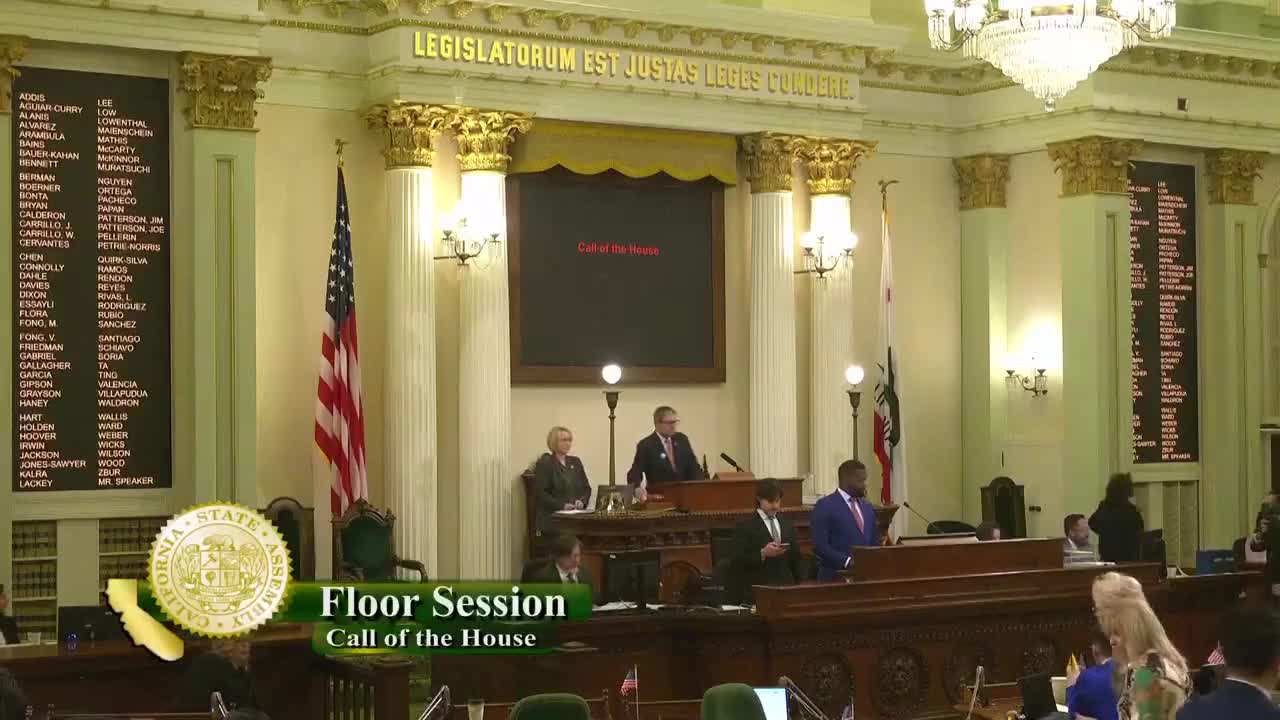
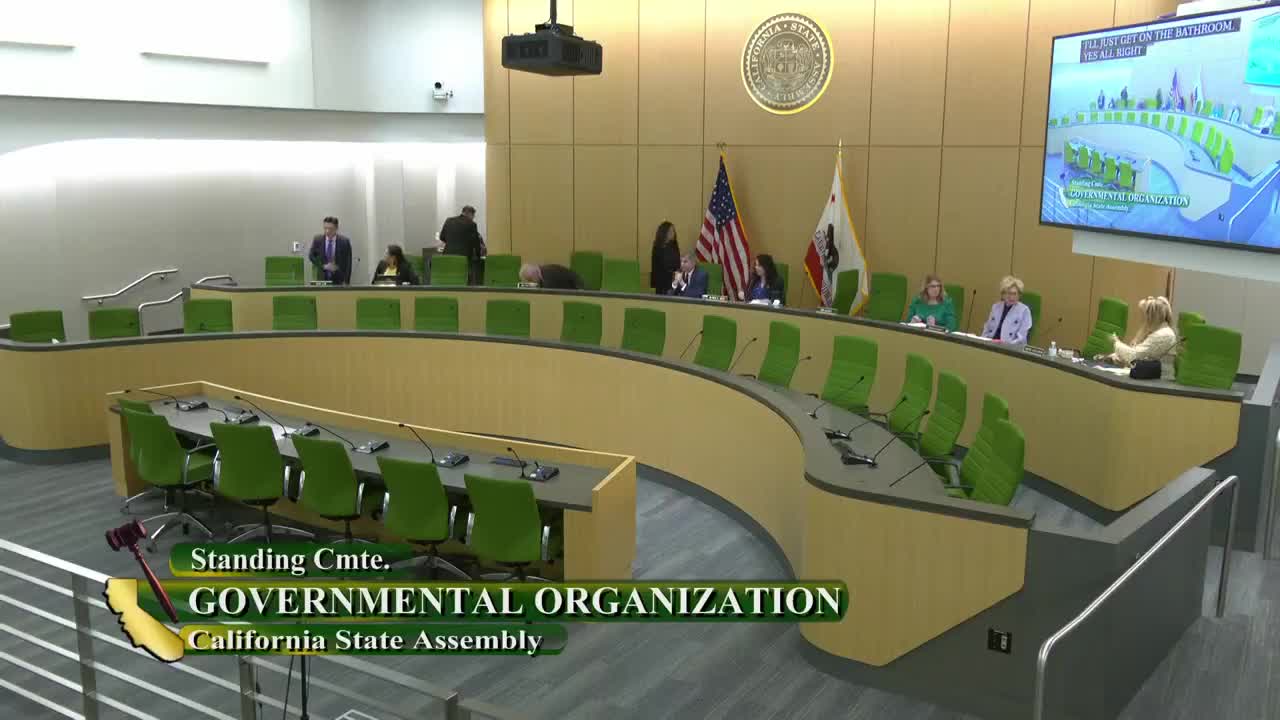
Bill Author