AB 3: Offshore wind energy: reports.
- Session Year: 2023-2024
- House: Assembly
- Latest Version Date: 2023-10-07
Current Status:
Passed
(2023-10-07: Chaptered by Secretary of State - Chapter 314, Statutes of 2023.)
Introduced
In Committee
First Chamber
In Committee
Second Chamber
Enacted
Existing law requires the State Energy Resources Conservation and Development Commission, in coordination with relevant federal, state, and local agencies, to develop a strategic plan for offshore wind energy developments installed off the California coast in federal waters, and requires the commission to submit the strategic plan to the Natural Resources Agency and the Legislature on or before June 30, 2023. Existing law requires the commission, on or before June 1, 2022, to evaluate and quantify the maximum feasible capacity of offshore wind to achieve reliability, ratepayer, employment, and decarbonization benefits and to establish megawatt offshore wind planning goals for 2030 and 2045. Existing law requires the commission, in coordination with specified state entities, to work with stakeholders, other state, local, and federal agencies, and the offshore wind energy industry to identify suitable sea space for wind energy areas in federal waters sufficient to accommodate those offshore wind planning goals. Existing law requires the commission, in coordination with relevant state and local agencies, based on those identified sea spaces, to develop a plan to improve waterfront facilities that could support a range of floating offshore wind energy development activities. Existing law requires the commission, in consultation with specified state entities, to assess the transmission investments and upgrades necessary to support those offshore wind planning goals. Existing law requires the commission to develop and produce a permitting roadmap that describes timeframes and milestones for a coordinated, comprehensive, and efficient permitting process for offshore wind energy facilities and associated electricity and transmission infrastructure off the coast of California. Existing law repeals these provisions on January 1, 2027.
This bill would require the commission, in consultation with the State Lands Commission, other specified state entities, and the California Coastal Commission, to develop a 2nd-phase plan and strategy for seaport readiness that builds upon the recommendations and alternatives in the strategic plan for offshore wind energy developments, as specified. The bill would require the commission to submit a report on its recommendations for a seaport readiness strategy to the Governor and the Legislature on or before December 31, 2026. The bill would additionally require the commission, in consultation with the California Workforce Development Board, to conduct a study on the feasibility of achieving 50% and 65% in-state assembly and manufacturing of offshore wind energy projects and specified federal domestic content thresholds for offshore wind energy projects, as provided. The bill would require the commission to submit a report on the study to the Governor and the Legislature on or before December 31, 2027. The bill would repeal these provisions, including the existing law provisions described above, on January 1, 2031.
Existing law requires the State Energy Resources Conservation and Development Commission, in coordination with relevant federal, state, and local agencies, to develop a strategic plan for offshore wind energy developments installed off the California coast in federal waters, and requires the commission to submit the strategic plan to the Natural Resources Agency and the Legislature on or before June 30, 2023. Existing law requires the commission, on or before June 1, 2022, to evaluate and quantify the maximum feasible capacity of offshore wind to achieve reliability, ratepayer, employment, and decarbonization benefits and to establish megawatt offshore wind planning goals for 2030 and 2045. Existing law requires the commission, in coordination with specified state entities, to work with stakeholders, other state, local, and federal agencies, and the offshore wind energy industry to identify suitable sea space for wind energy areas in federal waters sufficient to accommodate those offshore wind planning goals. Existing law requires the commission, in coordination with relevant state and local agencies, based on those identified sea spaces, to develop a plan to improve waterfront facilities that could support a range of floating offshore wind energy development activities. Existing law requires the commission, in consultation with specified state entities, to assess the transmission investments and upgrades necessary to support those offshore wind planning goals. Existing law requires the commission to develop and produce a permitting roadmap that describes timeframes and milestones for a coordinated, comprehensive, and efficient permitting process for offshore wind energy facilities and associated electricity and transmission infrastructure off the coast of California. Existing law repeals these provisions on January 1, 2027.
This bill would require the commission, in consultation with the State Lands Commission Commission, other specified state entities, and the California Coastal Commission, to develop a 2nd-phase plan and strategy for seaport readiness that builds upon the recommendations and alternatives in the strategic plan for offshore wind energy developments, as specified. The bill would require the commission to submit a report on the 2nd-phase plan and its recommendations for a seaport readiness strategy to the Governor and the Legislature on or before December 31, 2026. The bill would additionally require the commission commission, in consultation with the California Workforce Development Board, to conduct a study on the feasibility of achieving 70% and 85% 50% and 65% in-state assembly and manufacturing of offshore wind energy projects and specified federal domestic content thresholds for offshore wind energy projects, as provided. The bill would require the commission to submit a report on the study to the Governor and the Legislature on or before December 31, 2027. The bill would repeal these provisions, including the existing law provisions described above, on January 1, 2031.
Existing law requires the State Energy Resources Conservation and Development Commission, in coordination with relevant federal, state, and local agencies, to develop a strategic plan for offshore wind energy developments installed off the California coast in federal waters, and requires the commission to submit the strategic plan to the Natural Resources Agency and the Legislature on or before June 30, 2023. Existing law requires the commission, on or before June 1, 2022, to evaluate and quantify the maximum feasible capacity of offshore wind to achieve reliability, ratepayer, employment, and decarbonization benefits and to establish megawatt offshore wind planning goals for 2030 and 2045. Existing law requires the commission, in coordination with specified state entities, to work with stakeholders, other state, local, and federal agencies, and the offshore wind energy industry to identify suitable sea space for wind energy areas in federal waters sufficient to accommodate those offshore wind planning goals. Existing law requires the commission, in coordination with relevant state and local agencies, based on those identified sea spaces, to develop a plan to improve waterfront facilities that could support a range of floating offshore wind energy development activities. Existing law requires the commission, in consultation with specified state entities, to assess the transmission investments and upgrades necessary to support those offshore wind planning goals. Existing law requires the commission to develop and produce a permitting roadmap that describes timeframes and milestones for a coordinated, comprehensive, and efficient permitting process for offshore wind energy facilities and associated electricity and transmission infrastructure off the coast of California. Existing law repeals these provisions on January 1, 2027.
This bill would require the commission, in consultation with the State Lands Commission and the California Coastal Commission, to develop a 2nd-phase plan and strategy for seaport readiness that builds upon the recommendations and alternatives in the strategic plan for offshore wind energy developments, as specified. The bill would require the commission to submit a report on the 2nd-phase plan and strategy to the Governor and the Legislature on or before December 31, 2026. The bill would additionally require the commission to conduct a study on the feasibility of achieving 70% and 85% in-state assembly and manufacturing of offshore wind energy projects and specified federal domestic content thresholds for offshore wind energy projects, as provided. The bill would require the commission to submit a report on the study to the Governor and the Legislature on or before December 31, 2027. The bill would repeal these provisions, including the existing law provisions described above, on January 1, 2031.
Existing law requires the State Energy Resources Conservation and Development Commission, in coordination with relevant federal, state, and local agencies, to develop a strategic plan for offshore wind energy developments installed off the California coast in federal waters, and requires the commission to submit the strategic plan to the Natural Resources Agency and the Legislature on or before June 30, 2023. Existing law requires the commission, on or before June 1, 2022, to evaluate and quantify the maximum feasible capacity of offshore wind to achieve reliability, ratepayer, employment, and decarbonization benefits and to establish megawatt offshore wind planning goals for 2030 and 2045. Existing law requires the commission, in coordination with specified state entities, to work with stakeholders, other state, local, and federal agencies, and the offshore wind energy industry to identify suitable sea space for wind energy areas in federal waters sufficient to accommodate those offshore wind planning goals. Existing law requires the commission, in coordination with relevant state and local agencies, based on those identified sea spaces, to develop a plan to improve waterfront facilities that could support a range of floating offshore wind energy development activities. Existing law requires the commission, in consultation with specified state entities, to assess the transmission investments and upgrades necessary to support those offshore wind planning goals. Existing law requires the commission to develop and produce a permitting roadmap that describes timeframes and milestones for a coordinated, comprehensive, and efficient permitting process for offshore wind energy facilities and associated electricity and transmission infrastructure off the coast of California. Existing law repeals these provisions on January 1, 2027.
This bill would require the commission, in consultation with the State Lands Commission, to develop a 2nd-phase plan and strategy for seaport readiness that builds upon the recommendations and alternatives in the strategic plan for offshore wind energy developments, as specified. The bill would require the commission to submit a report on the 2nd-phase plan and strategy to the Governor and the Legislature on or before December 31, 2026. The bill would additionally require the commission to conduct a study on the feasibility of achieving 70% and 85% in-state assembly and manufacturing of offshore wind energy projects and specified federal domestic content thresholds for offshore wind energy projects, as provided. The bill would require the commission to submit a report on the study to the Governor and the Legislature on or before December 31, 2027. The bill would repeal these provisions, including the existing law provisions described above, on January 1, 2031.
Existing law requires the State Energy Resources Conservation and Development Commission, in coordination with relevant federal, state, and local agencies, to develop a strategic plan for offshore wind energy developments installed off the California coast in federal waters, and requires the commission to submit the strategic plan to the Natural Resources Agency and the Legislature on or before June 30, 2023. Existing law requires the commission, on or before June 1, 2022, to evaluate and quantify the maximum feasible capacity of offshore wind to achieve reliability, ratepayer, employment, and decarbonization benefits and to establish megawatt offshore wind planning goals for 2030 and 2045. Existing law requires the commission, in coordination with specified state entities, to work with stakeholders, other state, local, and federal agencies, and the offshore wind energy industry to identify suitable sea space for wind energy areas in federal waters sufficient to accommodate those offshore wind planning goals. Existing law requires the commission, in coordination with relevant state and local agencies, based on those identified sea spaces, to develop a plan to improve waterfront facilities that could support a range of floating offshore wind energy development activities. Existing law requires the commission, in consultation with specified state entities, to assess the transmission investments and upgrades necessary to support those offshore wind planning goals. Existing law requires the commission to develop and produce a permitting roadmap that describes timeframes and milestones for a coordinated, comprehensive, and efficient permitting process for offshore wind energy facilities and associated electricity and transmission infrastructure off the coast of California. Existing law repeals these provisions on January 1, 2027.
This bill would require the commission, in consultation with the State Lands Commission, to develop a 2nd-phase plan and strategy for seaport readiness that further analyzes builds upon the recommendations and alternatives in the strategic plan for offshore wind energy developments, and additional potential alternatives, as specified. The bill would require the commission to submit a report on the 2nd-phase plan and strategy to the Governor and the Legislature on or before January 1, December 31, 2026. The bill would additionally require the commission, in coordination with the Governors Office of Business and Economic Development, commission to conduct a study on the feasibility of achieving 70% and 85% in-state assembly and manufacturing of offshore wind energy projects, projects and specified federal domestic content thresholds for offshore wind energy projects, as provided. The bill would require the commission to submit a report on the study to the Governor and the Legislature on or before July 1, December 31, 2027. The bill would repeal these provisions, including the existing law provisions described above, on January 1, 2031.
Existing law requires the State Energy Resources Conservation and Development Commission, in coordination with relevant federal, state, and local agencies, to develop a strategic plan for offshore wind energy developments installed off the California coast in federal waters, and requires the commission to submit the strategic plan to the Natural Resources Agency and the Legislature on or before June 30, 2023. Existing law requires the commission, on or before June 1, 2022, to evaluate and quantify the maximum feasible capacity of offshore wind to achieve reliability, ratepayer, employment, and decarbonization benefits and to establish megawatt offshore wind planning goals for 2030 and 2045. Existing law requires the commission, in coordination with specified state entities, to work with stakeholders, other state, local, and federal agencies, and the offshore wind energy industry to identify suitable sea space for wind energy areas in federal waters sufficient to accommodate those offshore wind planning goals. Existing law requires the commission, in coordination with relevant state and local agencies, based on those identified sea spaces, to develop a plan to improve waterfront facilities that could support a range of floating offshore wind energy development activities. Existing law requires the commission, in consultation with specified state entities, to assess the transmission investments and upgrades necessary to support those offshore wind planning goals. Existing law requires the commission to develop and produce a permitting roadmap that describes timeframes and milestones for a coordinated, comprehensive, and efficient permitting process for offshore wind energy facilities and associated electricity and transmission infrastructure off the coast of California. Existing law repeals these provisions on January 1, 2027.
This bill would require the commission, in consultation with the State Lands Commission, to develop a 2nd-phase plan and strategy for seaport readiness that further analyzes the recommendations and alternatives in the strategic plan for offshore wind energy developments, and additional potential alternatives, as specified. The bill would require the commission to submit a report on the 2nd-phase plan and strategy to the Governor and the Legislature on or before January 1, 2026. The bill would additionally require the commission, in coordination with the Governors Office of Business and Economic Development, to conduct a study on the feasibility of achieving 70% and 85% in-state assembly and manufacturing of offshore wind energy projects, as provided. The bill would require the commission to submit a report on the study to the Governor and the Legislature on or before July 1, 2027. The bill would repeal these provisions, including the existing law provisions described above, on January 1, 2031.
Existing law requires the State Energy Resources Conservation and Development Commission, in coordination with relevant federal, state, and local agencies, to develop a strategic plan for offshore wind energy developments installed off the California coast in federal waters, and requires the commission to submit the strategic plan to the Natural Resources Agency and the Legislature on or before June 30, 2023. Existing law requires the commission, on or before June 1, 2022, to evaluate and quantify the maximum feasible capacity of offshore wind to achieve reliability, ratepayer, employment, and decarbonization benefits and to establish megawatt offshore wind planning goals for 2030 and 2045. Existing law requires the commission, in coordination with specified state entities, to work with stakeholders, other state, local, and federal agencies, and the offshore wind energy industry to identify suitable sea space for wind energy areas in federal waters sufficient to accommodate those offshore wind planning goals. Existing law requires the commission, in coordination with relevant state and local agencies, based on those identified sea spaces, to develop a plan to improve waterfront facilities that could support a range of floating offshore wind energy development activities. Existing law requires the commission, in consultation with specified state entities, to assess the transmission investments and upgrades necessary to support those offshore wind planning goals. Existing law requires the commission to develop and produce a permitting roadmap that describes timeframes and milestones for a coordinated, comprehensive, and efficient permitting process for offshore wind energy facilities and associated electricity and transmission infrastructure off the coast of California. Existing law repeals these provisions on January 1, 2027.
This bill would require the commission to consult with specified entities and prepare a report, to be submitted to the Governor and the Legislature on or before July 1, 2025, that identifies potential alternatives, analyzes, and makes recommendations regarding procurement mechanisms and procurement strategies for offshore wind energy projects to be financed, entitled, constructed, and operated within the timeframes necessary for meeting the states carbon neutrality goals. The bill would require the commission, in consultation with the State Lands Commission, to develop a 2nd-phase plan and strategy for seaport readiness that further analyzes the recommendations and alternatives in the strategic plan for offshore wind energy developments, and additional potential alternatives, as specified. The bill would require the commission to submit a report on the 2nd-phase plan and strategy to the Governor and the Legislature on or before January 1, 2026. The bill would additionally require the commission, in coordination with the Governors Office of Business and Economic Development, to conduct a study on the feasibility of achieving 70% and 85% in-state assembly and manufacturing of offshore wind energy projects, as provided. The bill would require the commission to submit a report on the study to the Governor and the Legislature on or before July 1, 2027. The bill would repeal these provisions, including the existing law provisions described above, on January 1, 2031.
Existing law requires the State Energy Resources Conservation and Development Commission, in coordination with relevant federal, state, and local agencies, to develop a strategic plan for offshore wind energy developments installed off the California coast in federal waters, and requires the commission to submit the strategic plan to the Natural Resources Agency and the Legislature on or before June 30, 2023. Existing law requires the commission, on or before June 1, 2022, to evaluate and quantify the maximum feasible capacity of offshore wind to achieve reliability, ratepayer, employment, and decarbonization benefits and to establish megawatt offshore wind planning goals for 2030 and 2045. Existing law requires the commission, in coordination with specified state entities, to work with stakeholders, other state, local, and federal agencies, and the offshore wind energy industry to identify suitable sea space for wind energy areas in federal waters sufficient to accommodate those offshore wind planning goals. Existing law requires the commission, in coordination with relevant state and local agencies, based on those identified sea spaces, to develop a plan to improve waterfront facilities that could support a range of floating offshore wind energy development activities. Existing law requires the commission, in consultation with specified state entities, to assess the transmission investments and upgrades necessary to support those offshore wind planning goals. Existing law requires the commission to develop and produce a permitting roadmap that describes timeframes and milestones for a coordinated, comprehensive, and efficient permitting process for offshore wind energy facilities and associated electricity and transmission infrastructure off the coast of California. Existing law repeals these provisions on January 1, 2027.
This bill would state the intent of the Legislature to enact future legislation to accelerate the approval, implementation, and operation of offshore wind energy projects necessary to meet Californias climate action goals and the transition to a clean energy economy, clarify the authority of California governmental agencies related to the analysis and selection of feasible alternatives for seawater ports and transmission infrastructure improvements required to construct wind energy projects along the California coast, and specify criteria for the analysis and selection of port and transmission alternatives related to offshore wind energy projects to ensure the protection of the environment and sensitive habitats and robust community participation and comment, to keep the maximum number of jobs related to the construction of offshore wind energy projects in California, and to achieve environmental justice goals.This bill would require the commission to consult with specified entities and prepare a report, to be submitted to the Governor and the Legislature on or before July 1, 2025, that identifies potential alternatives, analyzes, and makes recommendations regarding procurement mechanisms and procurement strategies for offshore wind energy projects to be financed, entitled, constructed, and operated within the timeframes necessary for meeting the states carbon neutrality goals. The bill would require the commission, in consultation with the State Lands Commission, to develop a 2nd-phase plan and strategy for seaport readiness that further analyzes the recommendations and alternatives in the strategic plan for offshore wind energy developments, and additional potential alternatives, as specified. The bill would require the commission to submit a report on the 2nd-phase plan and strategy to the Governor and the Legislature on or before January 1, 2026. The bill would additionally require the commission, in coordination with the Governors Office of Business and Economic Development, to conduct a study on the feasibility of achieving 70% and 85% in-state assembly and manufacturing of offshore wind energy projects, as provided. The bill would require the commission to submit a report on the study to the Governor and the Legislature on or before July 1, 2027. The bill would repeal these provisions, including the existing law provisions described above, on January 1, 2031.
Existing law requires the State Energy Resources Conservation and Development Commission, in coordination with relevant federal, state, and local agencies, to develop a strategic plan for offshore wind energy developments installed off the California coast in federal waters, and requires the commission to submit the strategic plan to the Natural Resources Agency and the Legislature on or before June 30, 2023. Existing law requires the commission, on or before June 1, 2022, to evaluate and quantify the maximum feasible capacity of offshore wind to achieve reliability, ratepayer, employment, and decarbonization benefits and to establish megawatt offshore wind planning goals for 2030 and 2045. Existing law requires the commission, in coordination with specified state entities, to work with stakeholders, other state, local, and federal agencies, and the offshore wind energy industry to identify suitable sea space for wind energy areas in federal waters sufficient to accommodate those offshore wind planning goals. Existing law requires the commission, in coordination with relevant state and local agencies, based on those identified sea spaces, to develop a plan to improve waterfront facilities that could support a range of floating offshore wind energy development activities. Existing law requires the commission, in consultation with specified state entities, to assess the transmission investments and upgrades necessary to support those offshore wind planning goals. Existing law requires the commission to develop and produce a permitting roadmap that describes timeframes and milestones for a coordinated, comprehensive, and efficient permitting process for offshore wind energy facilities and associated electricity and transmission infrastructure off the coast of California. Existing law repeals these provisions on January 1, 2027.
This bill would state the intent of the Legislature to enact future legislation to accelerate the approval, implementation, and operation of offshore wind energy projects necessary to meet Californias climate action goals and the transition to a clean energy economy, clarify the authority of California governmental agencies related to the analysis and selection of feasible alternatives for seawater ports and transmission infrastructure improvements required to construct wind energy projects along the California coast, and specify criteria for the analysis and selection of port and transmission alternatives related to offshore wind energy projects to ensure the protection of the environment and sensitive habitats and robust community participation and comment, to keep the maximum number of jobs related to the construction of offshore wind energy projects in California, and to achieve environmental justice goals.
This act shall be known, and may be cited, as the California Offshore Wind Advancement Act.
SEC. 2.Section 25991.8 of the Public Resources Code is amended and renumbered to read:25991.10.This chapter shall remain in effect only until January 1, 2031, and as of that date is repealed.
SEC. 3.Section 25991.8 is added to the Public Resources Code, to read:25991.8.(a)(1)The commission, in consultation with the State Lands Commission, the Ocean Protection Council, the Department of Fish and Wildlife, the Governors Office of Business and Economic Development, the Office of Planning and Research, and the California Coastal Commission, shall develop a second-phase plan and strategy for seaport readiness that builds upon the recommendations and alternatives in the strategic plan for offshore wind energy developments developed pursuant to Sections 25991 and 25991.3.
(2)(A)The commission shall make a draft report, with recommendations for implementation of a port development strategy, available for public review and comment for at least 60 days and shall submit a final report on its recommendations for a seaport readiness strategy to the Governor and the Legislature on or before December 31, 2026.
(B)The plan submitted to the Legislature pursuant to subparagraph (A) shall be submitted in compliance with Section 9795 of the Government Code.
(b)For purposes of the second-phase plan described in subdivision (a), the commission shall do all of the following:
(1)Identify feasible seaport locations for offshore wind turbine assembly to serve Central Coast and North Coast offshore wind energy projects.
(2)Recommend and prioritize only port alternatives where site control can be obtained by a port authority or state agency within five years.
(3)Recommend and prioritize alternatives only with sufficient landside and water acreage or capacity to support maximum in-state assembly and manufacturing of offshore wind energy components.
(4)Recommend and prioritize port locations that minimize impacts to cultural and natural resources, including the marine and onshore environments, sensitive species, and habitats.
(5)Identify and prioritize ports that maximize in-state workforce opportunities, including workforce opportunities for low-income and environmental justice communities.
(6)Consider transportation and other infrastructure investments needed to develop the identified seaports and waterfront facilities needed for offshore wind energy activities.
(7)Collaborate with tribal governments to develop appropriate seaport siting criteria that minimize adverse impacts to natural and cultural resources and maximize economic and workforce benefits to the tribal governments.
(8)Consult with key stakeholders, including, but not limited to, environmental organizations, environmental justice organizations, fisheries groups, labor unions, electric ratepayer advocates, offshore wind energy developers, oceangoing vessel operators, and related industry stakeholders, local governments and public port authorities, and other ocean users, to develop appropriate seaport siting criteria that minimize adverse impacts to cultural and natural resources, minimize adverse impacts to local communities, maximize local and in-state economic and workforce benefits, incorporate equity and environmental justice in seaport development, minimize impacts to California electric ratepayers, and avoid delays in the seaport entitlement process.
(9)Collaborate with the oceangoing vessel operator and commercial maritime industry to identify appropriate ocean spatial planning policies and siting criteria that minimize adverse impacts to vessel navigation and maximize maritime safety. The commission shall seek to coordinate and collaborate with the United States Coast Guard for purposes of this paragraph on matters that fall within the Coast Guards authority and jurisdiction.
(10)Assess the estimated cost and identify potential funding and financing strategies for necessary port development and redevelopment that support offshore wind energy activities, including the potential to leverage federal funding.
SEC. 4.Section 25991.9 is added to the Public Resources Code, to read:25991.9.(a)(1)The commission, in consultation with the California Workforce Development Board, shall conduct a study on the feasibility of achieving 50 percent and 65 percent in-state assembly and manufacturing of offshore wind energy projects and the domestic content thresholds for offshore wind energy projects, as specified in the federal Inflation Reduction Act of 2022 (Public Law 117-169). The commission may coordinate with the Governors Office of Business and Economic Development for purposes of the study. The commission shall submit a report on the study to the Governor and the Legislature on or before December 31, 2027.
(2)The report submitted to the Legislature pursuant to paragraph (1) shall be submitted in compliance with Section 9795 of the Government Code.
(b)For purposes of the study, the commission shall do all of the following:
(1)Assess current manufacturing capabilities within California that are potentially suitable to support the offshore wind energy supply chain and identify the tier one, tier two, and tier three components of the offshore wind energy supply chain that are best suited to in-state manufacturing of offshore wind energy projects.
(2)Identify gaps in the current supply chain and workforce for achieving the in-state assembly and manufacturing targets and domestic content thresholds described in subdivision (a), including identifying the facilities and infrastructure required to meet these in-state assembly thresholds and the estimated geographic distribution of these facilities, and estimating the number, geographic distribution, and types of jobs that will be created.
(3)When estimating the number and types of jobs required for achieving the in-state assembly and manufacturing targets and domestic content thresholds described in subdivision (a), include roles in related and supporting activities, including, but not limited to, environmental monitoring, research and development, construction, engineering and design, and manufacturing, operations, and maintenance.
(4)Identify supply chain and workforce investments needed by the state to support achieving the in-state assembly and manufacturing targets and domestic content thresholds described in subdivision (a).
(5)Identify available federal and state funds to support bringing or retaining jobs related to the manufacturing and assembly of offshore wind projects in the state.
(6)Study and estimate the potential impacts on economic activity and job growth, and resulting state tax revenues, resulting from achieving the in-state assembly and manufacturing targets and domestic content thresholds described in subdivision (a).
(7)Study and evaluate any potential impacts to project development timelines and costs as a result of achieving the in-state assembly and manufacturing targets and domestic content thresholds described in subdivision (a).
(8)Study and estimate potential impacts to electric ratepayers as a result of achieving the in-state assembly and manufacturing targets and domestic content thresholds described in subdivision (a).
(9)Develop recommendations for incorporating equity and environmental justice in economically and environmentally sustainable supply chain development.
(10)Coordinate with tribal governments to develop recommendations for tribal workforce development opportunities.
(11)Consult with environmental and environmental justice groups, fisheries groups, labor unions, including manufacturing, transportation, maritime, and longshore unions, oceangoing vessel operators, the commercial maritime industry, public port authorities, and business groups to develop recommendations for workforce development opportunities.
(12)Develop recommendations for workforce development investments at community colleges, by the California Workforce Development Board for maritime and longshore workforces, at state universities, and in apprenticeship programs necessary to meet the workforce needs resulting from the in-state targets described in this section.
(13)Consult with building and construction trades councils to develop recommendations on the use of project labor agreements to achieve workforce development and apprenticeship goals.
This act shall be known, and may be cited, as the California Offshore Wind Advancement Act.
SEC. 2.Section 25991.8 of the Public Resources Code is amended and renumbered to read:25991.10.This chapter shall remain in effect only until January 1, 2031, and as of that date is repealed.
SEC. 3.Section 25991.8 is added to the Public Resources Code, to read:25991.8.(a)(1)The commission, in consultation with the State Lands Commission Commission, the Ocean Protection Council, the Department of Fish and Wildlife, the Governors Office of Business and Economic Development, the Office of Planning and Research, and the California Coastal Commission, shall develop a second-phase plan and strategy for seaport readiness that builds upon the recommendations and alternatives in the strategic plan for offshore wind energy developments developed pursuant to Sections 25991 and 25991.3.
(2)(A)The commission shall make a draft report, with recommendations for implementation of a port development strategy, available for public review and comment for at least 60 days and shall submit a final report on their its recommendations for a seaport readiness strategy to the Governor and the Legislature on or before December 31, 2026.
(B)The plan submitted to the Legislature pursuant to subparagraph (A) shall be submitted in compliance with Section 9795 of the Government Code.
(b)For purposes of the second-phase plan described in subdivision (a), the commission shall do all of the following:
(1)Propose priority Identify feasible seaport locations for offshore wind turbine assembly to serve Central Coast and North Coast offshore wind energy projects.
(2)Recommend and prioritize only port alternatives where site control can be obtained by a port authority or state agency within five years.
(3)Recommend and prioritize alternatives only with sufficient landside and water acreage or capacity to support maximum in-state assembly and manufacturing of offshore wind energy components.
(4)Recommend and prioritize port locations that minimize impacts to cultural and natural resources, including the marine and onshore environments, sensitive species, and habitats.
(5)Identify and prioritize ports that maximize in-state workforce opportunities, including workforce opportunities for low-income and environmental justice communities.
(6)Consider transportation and other infrastructure investments needed to develop the identified seaports and waterfront facilities needed for offshore wind energy activities.
(7)Collaborate with tribal governments to develop appropriate seaport siting criteria that minimize adverse impacts to natural and cultural resources and maximize economic and workforce benefits to the tribal governments.
(8)Consult with key stakeholders, including, but not limited to, environmental organizations, environmental justice organizations, fisheries groups, labor unions, electric ratepayer advocates, offshore wind energy developers, oceangoing vessel operators, and related industry stakeholders, local governments and public port authorities, and other ocean users, to develop appropriate seaport siting criteria that minimize adverse impacts to cultural and natural resources, minimize adverse impacts to local communities, maximize local and in-state economic and workforce benefits, incorporate equity and environmental justice in seaport development, minimize impacts to California electric ratepayers, and avoid delays in the seaport entitlement process.
(9)Recommend an appropriate state agency or agencies to serve as the lead agency or agencies to undertake the entitlement and environmental review for the seaport developments required to support offshore wind energy developments.(10)(9)Collaborate with the oceangoing vessel operator and commercial maritime industry to develop identify appropriate ocean spatial planning policies and siting criteria that minimize adverse impacts to vessel navigation and maximize maritime safety. The commission shall seek to coordinate and collaborate with the United States Coast Guard for purposes of this paragraph on matters that fall within the Coast Guards authority and jurisdiction.
(11) Evaluate financing strategies suitable for port development and redevelopment, including potential to leverage federal funding.(10)Assess the estimated cost and identify potential funding and financing strategies for necessary port development and redevelopment that support offshore wind energy activities, including the potential to leverage federal funding.
SEC. 4.Section 25991.9 is added to the Public Resources Code, to read:25991.9.(a)(1)The commission commission, in consultation with the California Workforce Development Board, shall conduct a study on the feasibility of achieving 70 50 percent and 85 65 percent in-state assembly and manufacturing of offshore wind energy projects and the domestic content thresholds for offshore wind energy projects, as specified in the federal Inflation Reduction Act of 2022 (Public Law 117-169). The commission may coordinate with the Governors Office of Business and Economic Development for purposes of the study. The commission shall submit a report on the study to the Governor and the Legislature on or before December 31, 2027.
(2)The report submitted to the Legislature pursuant to paragraph (1) shall be submitted in compliance with Section 9795 of the Government Code.
(b)For purposes of the study, the commission shall do all of the following:
(1)Assess current manufacturing capabilities within California that are potentially suitable to support the offshore wind energy supply chain and identify the tier one, tier two, and tier three components of the offshore wind energy supply chain that are best suited to in-state manufacturing of offshore wind energy projects.
(2)Identify gaps in the current supply chain and workforce for achieving the in-state assembly and manufacturing targets and domestic content thresholds described in subdivision (a), including identifying the facilities and infrastructure required to meet these in-state assembly thresholds and the estimated geographic distribution of these facilities, and estimating the number, geographic distribution, and types of jobs that will be created.
(3)When estimating the number and types of jobs required for achieving the in-state assembly and manufacturing targets and domestic content thresholds described in subdivision (a), include roles in related and supporting activities, including, but not limited to, environmental monitoring, research and development, construction, engineering and design, and manufacturing, operations, and maintenance.
(4)Identify supply chain and workforce investments needed by the state to support achieving the in-state assembly and manufacturing targets and domestic content thresholds described in subdivision (a).
(5)Identify available federal and state funds to support bringing or retaining jobs related to the manufacturing and assembly of offshore wind projects in the state.
(6)Study and estimate the potential impacts on economic activity and job growth, and resulting state tax revenues, resulting from achieving the in-state assembly and manufacturing targets and domestic content thresholds described in subdivision (a).
(7)Study and evaluate any potential impacts to project development timelines and costs as a result of achieving the in-state assembly and manufacturing targets and domestic content thresholds described in subdivision (a).
(8)Study and estimate potential impacts to electric ratepayers as a result of achieving the in-state assembly and manufacturing targets and domestic content thresholds described in subdivision (a).
(9)Develop recommendations for incorporating equity and environmental justice in economically and environmentally sustainable supply chain development.
(10)Coordinate with tribal governments to develop recommendations for tribal workforce development opportunities.
(11)Consult with environmental and environmental justice groups, fisheries groups, labor unions, including manufacturing, transportation, maritime, and longshore unions, oceangoing vessel operators, the commercial maritime industry, public port authorities, and business groups to develop recommendations for workforce development opportunities.
(12)Develop recommendations for workforce development investments at community colleges, by the California Workforce Development Board for maritime and longshore workforces, at state universities, and in apprenticeship programs necessary to meet the workforce needs resulting from the in-state targets described in this section.
(13)Consult with building and construction trades councils to develop recommendations on the use of project labor agreements to achieve workforce development and apprenticeship goals.
This act shall be known, and may be cited, as the California Offshore Wind Advancement Act.
SEC. 2.Section 25991.8 of the Public Resources Code is amended and renumbered to read:25991.10.This chapter shall remain in effect only until January 1, 2031, and as of that date is repealed.
SEC. 3.Section 25991.8 is added to the Public Resources Code, to read:25991.8.(a)(1)The commission, in consultation with the State Lands Commission and the California Coastal Commission, shall develop a second-phase plan and strategy for seaport readiness that builds upon the recommendations and alternatives in the strategic plan for offshore wind energy developments pursuant to Sections 25991 and 25991.3.
(2)(A)The commission shall make a draft report, with recommendations for implementation of a port development strategy, available for public review and comment for at least 60 days and shall submit a final report on their recommendations for a seaport readiness strategy to the Governor and the Legislature on or before December 31, 2026.
(B)The plan submitted to the Legislature pursuant to subparagraph (A) shall be submitted in compliance with Section 9795 of the Government Code.
(b)For purposes of the second-phase plan described in subdivision (a), the commission shall do all of the following:
(1)Propose priority seaport locations for offshore wind turbine assembly to serve Central Coast and North Coast offshore wind energy projects.
(2)Recommend and prioritize only port alternatives where site control can be obtained by a port authority or state agency within five years.
(3)Recommend and prioritize alternatives only with sufficient landside and water acreage or capacity to support maximum in-state assembly and manufacturing of offshore wind energy components.
(4)Recommend and prioritize port locations that minimize impacts to cultural and natural resources, including the marine and onshore environments, sensitive species, and habitats.
(5)Identify and prioritize ports that maximize in-state workforce opportunities, including workforce opportunities for low-income and environmental justice communities.
(6)Consider transportation and other infrastructure investments needed to develop the identified seaports and waterfront facilities needed for offshore wind energy activities.
(7)Collaborate with tribal governments to develop appropriate seaport siting criteria that minimize adverse impacts to natural and cultural resources and maximize economic and workforce benefits to the tribal governments.
(8)Consult with key stakeholders, including, but not limited to, environmental organizations, environmental justice organizations, fisheries groups, labor unions, ratepayer advocates, offshore wind energy developers, oceangoing vessel operators, and related industry stakeholders, local governments and public port authorities, and other ocean users, to develop appropriate seaport siting criteria that minimize adverse impacts to cultural and natural resources, minimize adverse impacts to local communities, maximize local and in-state economic and workforce benefits, incorporate equity and environmental justice in seaport development, minimize impacts to California ratepayers, and avoid delays in the seaport entitlement process.
(9)Recommend an appropriate state agency or agencies to serve as the lead agency or agencies to undertake the entitlement and environmental review for the seaport developments required to support offshore wind energy developments.
(10)Collaborate with the oceangoing vessel operator and commercial maritime industry to develop appropriate ocean spatial planning policies and siting criteria that minimize adverse impacts to vessel navigation and maximize maritime safety. The commission shall seek to coordinate and collaborate with the United States Coast Guard for purposes of this paragraph on matters that fall within the Coast Guards authority and jurisdiction.
(11)Evaluate financing strategies suitable for port development and redevelopment, including potential to leverage federal funding.
SEC. 4.Section 25991.9 is added to the Public Resources Code, to read:25991.9.(a)(1)The commission shall conduct a study on the feasibility of achieving 70 percent and 85 percent in-state assembly and manufacturing of offshore wind energy projects and the domestic content thresholds for offshore wind energy projects, as specified in the federal Inflation Reduction Act of 2022 (Public Law 117-169). The commission may coordinate with the Governors Office of Business and Economic Development for purposes of the study. The commission shall submit a report on the study to the Governor and the Legislature on or before December 31, 2027.
(2)The report submitted to the Legislature pursuant to paragraph (1) shall be submitted in compliance with Section 9795 of the Government Code.
(b)For purposes of the study, the commission shall do all of the following:
(1)Assess current manufacturing capabilities within California that are potentially suitable to support the offshore wind energy supply chain and identify the tier one, tier two, and tier three components of the offshore wind energy supply chain that are best suited to in-state manufacturing of offshore wind energy projects.
(2)Identify gaps in the current supply chain and workforce for achieving the in-state assembly and manufacturing targets and domestic content thresholds described in subdivision (a), including identifying the facilities and infrastructure required to meet these in-state assembly thresholds and the estimated geographic distribution of these facilities, and estimating the number, geographic distribution, and types of jobs that will be created.
(3)When estimating the number and types of jobs required for achieving the in-state assembly and manufacturing targets and domestic content thresholds described in subdivision (a), include roles in related and supporting activities, including, but not limited to, environmental monitoring, research and development, construction, engineering and design, and manufacturing, operations, and maintenance.
(4)Identify supply chain and workforce investments needed by the state to support achieving the in-state assembly and manufacturing targets and domestic content thresholds described in subdivision (a).
(5)Identify available federal and state funds to support bringing or retaining jobs related to the manufacturing and assembly of offshore wind projects in the state.
(6)Study and estimate the potential impacts on economic activity and job growth, and resulting state tax revenues, resulting from achieving the in-state assembly and manufacturing targets and domestic content thresholds described in subdivision (a).
(7)Study and evaluate any potential impacts to project development timelines and costs as a result of achieving the in-state assembly and manufacturing targets and domestic content thresholds described in subdivision (a).
(8)Study and estimate potential impacts to ratepayers as a result of achieving the in-state assembly and manufacturing targets and domestic content thresholds described in subdivision (a).
(9)Develop recommendations for incorporating equity and environmental justice in economically and environmentally sustainable supply chain development.
(10)Coordinate with tribal governments to develop recommendations for tribal workforce development opportunities.
(11)Consult with environmental justice groups, fisheries groups, labor unions, oceangoing vessel operators, the commercial maritime industry, public port authorities, and business groups to develop recommendations for workforce development opportunities.
(12)Develop recommendations for workforce development investments at community colleges, by the California Workforce Development Board for maritime and longshore workforces, at state universities, and in apprenticeship programs necessary to meet the workforce needs resulting from the in-state targets described in this section.
(13)Consult with building and construction trades councils to develop recommendations on the use of project labor agreements to achieve workforce development and apprenticeship goals.
This act shall be known, and may be cited, as the California Offshore Wind Advancement Act.
SEC. 2.Section 25991.8 of the Public Resources Code is amended and renumbered to read:25991.10.This chapter shall remain in effect only until January 1, 2031, and as of that date is repealed.
SEC. 3.Section 25991.8 is added to the Public Resources Code, to read:25991.8.(a)(1)The commission, in consultation with the State Lands Commission, shall develop a second-phase plan and strategy for seaport readiness that builds upon the recommendations and alternatives in the strategic plan for offshore wind energy developments pursuant to Sections 25991 and 25991.3.
(2)(A)The commission shall make a draft report, with recommendations for implementation of a port development strategy, available for public review and comment for at least 60 days and shall submit a final report on their recommendations for a seaport readiness strategy to the Governor and the Legislature on or before December 31, 2026.
(B)The plan submitted to the Legislature pursuant to subparagraph (A) shall be submitted in compliance with Section 9795 of the Government Code.
(b)For purposes of the second-phase plan described in subdivision (a), the commission shall do all of the following:
(1)Propose priority seaport locations for offshore wind turbine assembly to serve Central Coast and North Coast offshore wind energy projects.
(2)Recommend and prioritize only port alternatives where site control can be obtained by a port authority or state agency within five years.
(3)Recommend and prioritize alternatives only with sufficient landside and water acreage or capacity to support maximum in-state assembly and manufacturing of offshore wind energy components.
(4)Recommend and prioritize port locations that minimize impacts to cultural and natural resources, including the marine and onshore environments, sensitive species, and habitats.
(5)Identify and prioritize ports that maximize in-state workforce opportunities, including workforce opportunities for low-income and environmental justice communities.
(6)Consider transportation and other infrastructure investments needed to develop the identified seaports and waterfront facilities needed for offshore wind energy activities.
(7)Collaborate with tribal governments to develop appropriate seaport siting criteria that minimize adverse impacts to natural and cultural resources and maximize economic and workforce benefits to the tribal governments.
(8)Consult with key stakeholders, including, but not limited to, environmental organizations, environmental justice organizations, fisheries groups, labor unions, ratepayer advocates, offshore wind energy developers, oceangoing vessel operators, and related industry stakeholders, local governments and public port authorities, and other ocean users, to develop appropriate seaport siting criteria that minimize adverse impacts to cultural and natural resources, minimize adverse impacts to local communities, maximize local and in-state economic and workforce benefits, incorporate equity and environmental justice in seaport development, minimize impacts to California ratepayers, and avoid delays in the seaport entitlement process.
(9)Recommend an appropriate state agency or agencies to serve as the lead agency or agencies to undertake the entitlement and environmental review for the seaport developments required to support offshore wind energy developments.
(10)Collaborate with the oceangoing vessel operator and commercial maritime industry to develop appropriate ocean spatial planning policies and siting criteria that minimize adverse impacts to vessel navigation and maximize maritime safety.
(11)Evaluate financing strategies suitable for port development and redevelopment, including potential to leverage federal funding.
SEC. 4.Section 25991.9 is added to the Public Resources Code, to read:25991.9.(a)(1)The commission shall conduct a study on the feasibility of achieving 70 percent and 85 percent in-state assembly and manufacturing of offshore wind energy projects and the domestic content thresholds for offshore wind energy projects, as specified in the federal Inflation Reduction Act of 2022 (Public Law 117-169). The commission may coordinate with the Governors Office of Business and Economic Development for purposes of the study. The commission shall submit a report on the study to the Governor and the Legislature on or before December 31, 2027.
(2)The report submitted to the Legislature pursuant to paragraph (1) shall be submitted in compliance with Section 9795 of the Government Code.
(b)For purposes of the study, the commission shall do all of the following:
(1)Assess current manufacturing capabilities within California that are potentially suitable to support the offshore wind energy supply chain and identify the tier one, tier two, and tier three components of the offshore wind energy supply chain that are best suited to in-state manufacturing of offshore wind energy projects.
(2)Identify gaps in the current supply chain and workforce for achieving the in-state assembly and manufacturing targets and domestic content thresholds described in subdivision (a), including identifying the facilities and infrastructure required to meet these in-state assembly thresholds and the estimated geographic distribution of these facilities, and estimating the number, geographic distribution, and types of jobs that will be created.
(3)When estimating the number and types of jobs required for achieving the in-state assembly and manufacturing targets and domestic content thresholds described in subdivision (a), include roles in related and supporting activities, including, but not limited to, environmental monitoring, research and development, construction, engineering and design, and manufacturing, operations, and maintenance.
(4)Identify supply chain and workforce investments needed by the state to support achieving the in-state assembly and manufacturing targets and domestic content thresholds described in subdivision (a).
(5)Identify available federal and state funds to support bringing or retaining jobs related to the manufacturing and assembly of offshore wind projects in the state.
(6)Study and estimate the potential impacts on economic activity and job growth, and resulting state tax revenues, resulting from achieving the in-state assembly and manufacturing targets and domestic content thresholds described in subdivision (a).
(7)Study and evaluate any potential impacts to project development timelines and costs as a result of achieving the in-state assembly and manufacturing targets and domestic content thresholds described in subdivision (a).
(8)Study and estimate potential impacts to ratepayers as a result of achieving the in-state assembly and manufacturing targets and domestic content thresholds described in subdivision (a).
(9)Develop recommendations for incorporating equity and environmental justice in economically and environmentally sustainable supply chain development.
(10)Coordinate with tribal governments to develop recommendations for tribal workforce development opportunities.
(11)Consult with environmental justice groups, fisheries groups, labor unions, oceangoing vessel operators, the commercial maritime industry, public port authorities, and business groups to develop recommendations for workforce development opportunities.
(12)Develop recommendations for workforce development investments at community colleges, by the California Workforce Development Board for maritime and longshore workforces, at state universities, and in apprenticeship programs necessary to meet the workforce needs resulting from the in-state targets described in this section.
(13)Consult with building and construction trades councils to develop recommendations on the use of project labor agreements to achieve workforce development and apprenticeship goals.
This act shall be known, and may be cited, as the California Offshore Wind Advancement Act.
SEC. 2.Section 25991.8 of the Public Resources Code is amended and renumbered to read:25991.10.This chapter shall remain in effect only until January 1, 2031, and as of that date is repealed.
SEC. 3.Section 25991.8 is added to the Public Resources Code, to read:25991.8.(a)(1)The commission, in consultation with the State Lands Commission, shall develop a second-phase plan and strategy for seaport readiness that further analyzes builds upon the recommendations and alternatives in the strategic plan for offshore wind energy developments pursuant to Sections 25991 and 25991.3, and additional potential alternatives identified as part of a public process undertaken pursuant to this section. 25991.3.
(2)(A)The commission shall make a draft report, with recommendations and an analysis of alternatives, for implementation of a port development strategy, available for public review and comment for at least 60 days and shall submit a final report on their recommendations for a seaport readiness strategy to the Governor and the Legislature on or before January 1, December 31, 2026.
(B)The plan submitted to the Legislature pursuant to subparagraph (A) shall be submitted in compliance with Section 9795 of the Government Code.
(b)For purposes of the second-phase plan described in subdivision (a), the commission shall do all of the following:
(1)Consider alternatives that require retrofits to existing ports and the development of ports in new locations.(1)Propose priority seaport locations for offshore wind turbine assembly to serve Central Coast and North Coast offshore wind energy projects.
(2)Recommend and prioritize only port alternatives where site control can be obtained by a port authority or state agency within five years.
(3)Recommend and prioritize alternatives only with sufficient landside and water acreage or capacity to support maximum in-state assembly and manufacturing of offshore wind energy components.
(4)Recommend and prioritize port locations that minimize impacts to cultural and natural resources, including the marine and onshore environments, sensitive species, and habitats.
(5)Identify and prioritize ports that maximize in-state workforce opportunities, including workforce opportunities for low-income and environmental justice communities.
(6)Consider transportation and other infrastructure investments needed to develop the identified seaports and waterfront facilities needed for offshore wind energy activities.
(7)Collaborate with tribal governments to develop appropriate seaport siting criteria that minimize adverse impacts to natural and cultural resources and maximize economic and workforce benefits to the tribal governments.
(8)Consult with key stakeholders, including, but not limited to, environmental organizations, environmental justice organizations, fisheries groups, labor unions, ratepayer advocates, offshore wind energy developers, oceangoing vessel operators, and related industry stakeholders, local governments and public port authorities, and other ocean users, to develop appropriate seaport siting criteria that minimize adverse impacts to cultural and natural resources, minimize adverse impacts to local communities, maximize local and in-state economic and workforce benefits, incorporate equity and environmental justice in seaport development, minimize impacts to California ratepayers, and avoid delays in the seaport entitlement process.
(9)Develop recommendations for the ports best suited for supporting offshore wind energy developments, incorporating criteria developed from the public input described in this subdivision.(10)(9)Recommend an appropriate state agency or agencies to serve as the lead agency or agencies to undertake the entitlement and environmental review for the seaport developments required to support offshore wind energy developments.
(11)(10)Collaborate with the oceangoing vessel operator and commercial maritime industry to develop appropriate ocean spatial planning policies and siting criteria that minimize adverse impacts to vessel navigation and maximize maritime safety.
(11)Evaluate financing strategies suitable for port development and redevelopment, including potential to leverage federal funding.
SEC. 4.Section 25991.9 is added to the Public Resources Code, to read:25991.9.(a)(1)The commission, in coordination with the Governors Office of Business and Economic Development, commission shall conduct a study on the feasibility of achieving 70 percent and 85 percent in-state assembly and manufacturing of offshore wind energy projects. projects and the domestic content thresholds for offshore wind energy projects, as specified in the federal Inflation Reduction Act of 2022 (Public Law 117-169). The commission may coordinate with the Governors Office of Business and Economic Development for purposes of the study. The commission shall submit a report on the study to the Governor and the Legislature on or before July 1, December 31, 2027.
(2)The report submitted to the Legislature pursuant to paragraph (1) shall be submitted in compliance with Section 9795 of the Government Code.
(b)For purposes of the study, the commission shall do all of the following:
(1)Identify gaps in the current supply chain and workforce for achieving 70 percent and 85 percent in-state manufacturing of offshore wind energy projects, including identifying the facilities and infrastructure required to meet these in-state manufacturing thresholds and estimating the number, geographic distribution, and types of jobs that will be created as a result of achieving 70 percent and 85 percent in-state manufacturing of offshore wind energy projects.(1)Assess current manufacturing capabilities within California that are potentially suitable to support the offshore wind energy supply chain and identify the tier one, tier two, and tier three components of the offshore wind energy supply chain that are best suited to in-state manufacturing of offshore wind energy projects.
(2)Identify gaps in the current supply chain and workforce for achieving 70 percent and 85 percent in-state assembly of offshore wind energy project components, the thresholds described in subdivision (a), including identifying the facilities and infrastructure required to meet these in-state assembly thresholds and the estimated geographic distribution of these facilities, and estimating the number, geographic distribution, and types of jobs that will be created as a result of achieving 70 percent and 85 percent in-state assembly of offshore wind energy project components. created.
(3)When estimating the number and types of jobs required for achieving 70 percent and 85 percent in-state assembly and manufacturing of offshore wind energy projects, the thresholds described in subdivision (a), include roles in related and supporting activities, including, but not limited to, environmental monitoring, research and development, construction, engineering and design, and manufacturing, operations, and maintenance.
(4)Identify supply chain and workforce investments needed by the state to support achieving 70 percent and 85 percent in-state assembly and manufacturing of offshore wind energy projects. the thresholds described in subdivision (a).
(5)Identify available federal and state funds to support bringing or retaining jobs related to the manufacturing and assembly of offshore wind projects in the state.
(6)Study and estimate the potential impacts on economic activity and job growth, and resulting state tax revenues, resulting from manufacturing and assembling 70 percent and 85 percent of offshore wind projects in the state. achieving the thresholds described in subdivision (a).
(7)Study and evaluate any potential impacts to project development timelines and costs as a result of manufacturing and assembling 70 percent and 85 percent of offshore wind projects in the state. achieving the thresholds described in subdivision (a).
(8)Study and estimate potential impacts to ratepayers as a result of manufacturing and assembling 70 percent and 85 percent of offshore wind projects in the state. achieving the thresholds described in subdivision (a).
(9)Develop recommendations for incorporating equity and environmental justice in economically and environmentally sustainable supply chain development.
(10)Coordinate with tribal governments to develop recommendations for tribal workforce development opportunities.
(11)Consult with environmental justice groups, fisheries groups, labor unions, oceangoing vessel operators, the commercial maritime industry, public port authorities, and business groups to develop recommendations for workforce development opportunities.
(12)Develop recommendations for workforce development investments at community colleges, by the California Workforce Development Board for maritime and longshore workforces, at state universities, and in apprenticeship programs necessary to meet the workforce needs resulting from the in-state targets described in this section.
(13)Consult with building and construction trades councils to develop recommendations on the use of project labor agreements to achieve workforce development and apprenticeship goals.
This act shall be known, and may be cited, as the California Offshore Wind Advancement Act.
SEC. 2.Section 25991.8 of the Public Resources Code is amended and renumbered to read:25991.10.This chapter shall remain in effect only until January 1, 2031, and as of that date is repealed.
SEC. 3.Section 25991.8 is added to the Public Resources Code, to read:25991.8.(a)(1)The commission, in consultation with the State Lands Commission, shall develop a second-phase plan and strategy for seaport readiness that further analyzes the recommendations and alternatives in the strategic plan for offshore wind energy developments pursuant to Sections 25991 and 25991.3, and additional potential alternatives identified as part of a public process undertaken pursuant to this section.
(2)(A)The commission shall make a draft report, with recommendations and an analysis of alternatives, available for public review and comment for at least 60 days and shall submit a final report on their recommendations for a seaport readiness strategy to the Governor and the Legislature on or before January 1, 2026.
(B)The plan submitted to the Legislature pursuant to subparagraph (A) shall be submitted in compliance with Section 9795 of the Government Code.
(b)For purposes of the second-phase plan described in subdivision (a), the commission shall do all of the following:
(1)Consider alternatives that require retrofits to existing ports and the development of ports in new locations.
(2)Recommend and prioritize only port alternatives where site control can be obtained by a port authority or state agency within five years.
(3)Recommend and prioritize alternatives only with sufficient landside and water acreage or capacity to support maximum in-state assembly and manufacturing of offshore wind energy components.
(4)Recommend and prioritize port locations that minimize impacts to cultural and natural resources, including the marine and onshore environments, sensitive species, and habitats.
(5)Identify and prioritize ports that maximize in-state workforce opportunities, including workforce opportunities for low-income and environmental justice communities.
(6)Consider transportation and other infrastructure investments needed to develop the identified seaports and waterfront facilities needed for offshore wind energy activities.
(7)Collaborate with tribal governments to develop appropriate seaport siting criteria that minimize adverse impacts to natural and cultural resources and maximize economic and workforce benefits to the tribal governments.
(8)Consult with key stakeholders, including, but not limited to, environmental organizations, environmental justice organizations, fisheries groups, labor unions, ratepayer advocates, offshore wind energy developers developers, oceangoing vessel operators, and related industry stakeholders, local governments and public port authorities, and other ocean users, to develop appropriate seaport siting criteria that minimize adverse impacts to cultural and natural resources, minimize adverse impacts to local communities, maximize local and in-state economic and workforce benefits, incorporate equity and environmental justice in seaport development, minimize impacts to California ratepayers, and avoid delays in the seaport entitlement process.
(9)Develop recommendations for the ports best suited for supporting offshore wind energy developments, incorporating criteria developed from the public input described in this subdivision.
(10)Recommend an appropriate state agency or agencies to serve as the lead agency or agencies to undertake the entitlement and environmental review for the seaport developments required to support offshore wind energy developments.
(11)Collaborate with the oceangoing vessel operator and commercial maritime industry to develop appropriate ocean spatial planning policies and siting criteria that minimize adverse impacts to vessel navigation and maximize maritime safety.
SEC. 4.Section 25991.9 is added to the Public Resources Code, to read:25991.9.(a)(1)The commission, in coordination with the Governors Office of Business and Economic Development, shall conduct a study on the feasibility of achieving 70 percent and 85 percent in-state assembly and manufacturing of offshore wind energy projects. The commission shall submit a report on the study to the Governor and the Legislature on or before July 1, 2027.
(2)The report submitted to the Legislature pursuant to paragraph (1) shall be submitted in compliance with Section 9795 of the Government Code.
(b)For purposes of the study, the commission shall do all of the following:
(1)Identify gaps in the current supply chain and workforce for achieving 70 percent and 85 percent in-state manufacturing of offshore wind energy projects, including identifying the facilities and infrastructure required to meet these in-state manufacturing thresholds and estimating the number, geographic distribution, and types of jobs that will be created as a result of achieving 70 percent and 85 percent in-state manufacturing of offshore wind energy projects.
(2)Identify gaps in the current supply chain and workforce for achieving 70 percent and 85 percent in-state assembly of offshore wind energy project components, including identifying the facilities and infrastructure required to meet these in-state assembly thresholds and the estimated geographic distribution of these facilities, and estimating the number, geographic distribution, and types of jobs that will be created as a result of achieving 70 percent and 85 percent in-state assembly of offshore wind energy project components.
(3)When estimating the number and types of jobs required for achieving 70 percent and 85 percent in-state assembly and manufacturing of offshore wind energy projects, include roles in related and supporting activities, including, but not limited to, environmental monitoring, research and development, construction, engineering and design, and manufacturing, operations, and maintenance.
(4)Identify supply chain and workforce investments needed by the state to support achieving 70 percent and 85 percent in-state assembly and manufacturing of offshore wind energy projects.
(5)Identify available federal and state funds to support bringing or retaining jobs related to the manufacturing and assembly of offshore wind projects in the state.
(6)Study and estimate the potential impacts on economic activity and job growth, and resulting state tax revenues, resulting from manufacturing and assembling 70 percent and 85 percent of offshore wind projects in the state.
(7)Study and evaluate any potential impacts to project development timelines and costs as a result of manufacturing and assembling 70 percent and 85 percent of offshore wind projects in the state.
(8)Study and estimate potential impacts to ratepayers as a result of manufacturing and assembling 70 percent and 85 percent of offshore wind projects in the state.
(9)Develop recommendations for incorporating equity and environmental justice in economically and environmentally sustainable supply chain development.
(10)Coordinate with tribal governments to develop recommendations for tribal workforce development opportunities.
(11)Consult with environmental justice groups, fisheries groups, labor unions, oceangoing vessel operators, the commercial maritime industry, public port authorities, and business groups to develop recommendations for workforce development opportunities.
(12)Develop recommendations for workforce development investments at community colleges, at state universities, and in apprenticeship programs necessary to meet the workforce needs resulting from the in-state targets described in this section.
This act shall be known, and may be cited, as the California Offshore Wind Advancement Act.
SEC. 2.Section 25991.8 of the Public Resources Code is amended and renumbered to read:25991.11.25991.10.This chapter shall remain in effect only until January 1, 2031, and as of that date is repealed.
SEC. 3.Section 25991.8 is added to the Public Resources Code, to read:25991.8.(a)(1)The commission, in consultation with the Public Utilities Commission, the Independent System Operator, and the Governors Office of Business and Economic Development, shall identify potential alternatives, analyze, and make recommendations regarding procurement mechanisms and procurement strategies that are necessary or advisable to ensure that offshore wind energy projects that are necessary for California to reach carbon neutrality by 2045 can be financed, entitled, constructed, and operated within the timeframes necessary for meeting the states carbon neutrality goals. (2)In conducting its analysis and making its recommendations, the commission shall consult with ratepayer advocates, environmental and environmental justice organizations, labor unions, load-serving entities and other potential purchasers of offshore wind energy, offshore wind energy developers and relevant industry stakeholders, and financing experts.(b)(1)The commission shall prepare a report for purposes of this section. The full draft report with recommendations and an analysis of alternatives shall be available for public review and comment for at least 60 days. A final report shall be submitted to the Governor and the Legislature on or before July 1, 2025.(2)The report submitted to the Legislature pursuant to paragraph (1) shall be submitted in compliance with Section 9795 of the Government Code.SEC. 4.Section 25991.9 is added to the Public Resources Code, to read:25991.9.SEC. 3.Section 25991.8 is added to the Public Resources Code, to read:25991.8.(a)(1)The commission, in consultation with the State Lands Commission, shall develop a second-phase plan and strategy for seaport readiness that further analyzes the recommendations and alternatives in the strategic plan for offshore wind energy developments pursuant to Sections 25991 and 25991.3, and additional potential alternatives identified as part of a public process undertaken pursuant to this section.
(2)(A)The commission shall make a draft report, with recommendations and an analysis of alternatives, available for public review and comment for at least 60 days and shall submit a final report on their recommendations for a seaport readiness strategy to the Governor and the Legislature on or before January 1, 2026.
(B)The plan submitted to the Legislature pursuant to subparagraph (A) shall be submitted in compliance with Section 9795 of the Government Code.
(b)For purposes of the second-phase plan described in subdivision (a), the commission shall do all of the following:
(1)Consider alternatives that require retrofits to existing ports and the development of ports in new locations.
(2)Recommend and prioritize only port alternatives where site control can be obtained by a port authority or state agency within five years.
(3)Recommend and prioritize alternatives only with sufficient landside and water acreage or capacity to support maximum in-state assembly and manufacturing of offshore wind energy components.
(4)Recommend and prioritize port locations that minimize impacts to cultural and natural resources, including the marine and onshore environments, sensitive species, and habitats.
(5)Identify and prioritize ports that maximize in-state workforce opportunities, including workforce opportunities for low-income and environmental justice communities.
(6)Consider transportation and other infrastructure investments needed to develop the identified seaports and waterfront facilities needed for offshore wind energy activities.
(7)Collaborate with tribal governments to develop appropriate seaport siting criteria that minimize adverse impacts to natural and cultural resources and maximize economic and workforce benefits to the tribal governments.
(8)Consult with key stakeholders, including, but not limited to, environmental organizations, environmental justice organizations, fisheries groups, labor unions, ratepayer advocates, offshore wind energy developers and related industry stakeholders, local governments and port authorities, and other ocean users, to develop appropriate seaport siting criteria that minimize adverse impacts to cultural and natural resources, minimize adverse impacts to local communities, maximize local and in-state economic and workforce benefits, incorporate equity and environmental justice in seaport development, minimize impacts to California ratepayers, and avoid delays in the seaport entitlement process.
(9)Develop recommendations for the ports best suited for supporting offshore wind energy developments, incorporating criteria developed from the public input described in this subdivision.
(10)Recommend an appropriate state agency or agencies to serve as the lead agency or agencies to undertake the entitlement and environmental review for the seaport developments required to support offshore wind energy developments.
SEC. 5.Section 25991.10 is added to the Public Resources Code, to read:25991.10.SEC. 4.Section 25991.9 is added to the Public Resources Code, to read:25991.9.(a)(1)The commission, in coordination with the Governors Office of Business and Economic Development, shall conduct a study on the feasibility of achieving 70 percent and 85 percent in-state assembly and manufacturing of offshore wind energy projects. The commission shall submit a report on the study to the Governor and the Legislature on or before July 1, 2027.
(2)The report submitted to the Legislature pursuant to paragraph (1) shall be submitted in compliance with Section 9795 of the Government Code.
(b)For purposes of the study, the commission shall do all of the following:
(1)Identify gaps in the current supply chain and workforce for achieving 70 percent and 85 percent in-state manufacturing of offshore wind energy projects, including identifying the facilities and infrastructure required to meet these in-state manufacturing thresholds and estimating the number, geographic distribution, and types of jobs that will be created as a result of achieving 70 percent and 85 percent in-state manufacturing of offshore wind energy projects.
(2)Identify gaps in the current supply chain and workforce for achieving 70 percent and 85 percent in-state assembly of offshore wind energy project components, including identifying the facilities and infrastructure required to meet these in-state assembly thresholds and the estimated geographic distribution of these facilities, and estimating the number, geographic distribution, and types of jobs that will be created as a result of achieving 70 percent and 85 percent in-state assembly of offshore wind energy project components.
(3)When estimating the number and types of jobs required for achieving 70 percent and 85 percent in-state assembly and manufacturing of offshore wind energy projects, include roles in related and supporting activities, including, but not limited to, environmental monitoring, research and development, construction, engineering and design, and manufacturing, operations, and maintenance.
(4)Identify supply chain and workforce investments needed by the state to support achieving 70 percent and 85 percent in-state assembly and manufacturing of offshore wind energy projects.
(5)Identify available federal and state funds to support bringing or retaining jobs related to the manufacturing and assembly of offshore wind projects in the state.
(6)Study and estimate the potential impacts on economic activity and job growth, and resulting state tax revenues, resulting from manufacturing and assembling 70 percent and 85 percent of offshore wind projects in the state.
(7)Study and evaluate any potential impacts to project development timelines and costs as a result of manufacturing and assembling 70 percent and 85 percent of offshore wind projects in the state.
(8)Study and estimate potential impacts to ratepayers as a result of manufacturing and assembling 70 percent and 85 percent of offshore wind projects in the state.
(9)Develop recommendations for incorporating equity and environmental justice in economically and environmentally sustainable supply chain development.
(10)Coordinate with tribal governments to develop recommendations for tribal workforce development opportunities.
(11)Consult with environmental justice groups, fisheries groups, labor unions, and business groups to develop recommendations for workforce development opportunities.
(12)Develop recommendations for workforce development investments at community colleges, at state universities, and in apprenticeship programs necessary to meet the workforce needs resulting from the in-state targets described in this section.
This act shall be known, and may be cited, as the California Offshore Wind Advancement Act.
SEC. 2.Section 25991.8 of the Public Resources Code is amended and renumbered to read:25991.8.25991.11.This chapter shall remain in effect only until January 1, 2027, 2031, and as of that date is repealed.
SEC. 3.Section 25991.8 is added to the Public Resources Code, to read:25991.8.(a)(1)The commission, in consultation with the Public Utilities Commission, the Independent System Operator, and the Governors Office of Business and Economic Development, shall identify potential alternatives, analyze, and make recommendations regarding procurement mechanisms and procurement strategies that are necessary or advisable to ensure that offshore wind energy projects that are necessary for California to reach carbon neutrality by 2045 can be financed, entitled, constructed, and operated within the timeframes necessary for meeting the states carbon neutrality goals.
(2)In conducting its analysis and making its recommendations, the commission shall consult with ratepayer advocates, environmental and environmental justice organizations, labor unions, load-serving entities and other potential purchasers of offshore wind energy, offshore wind energy developers and relevant industry stakeholders, and financing experts.
(b)(1)The commission shall prepare a report for purposes of this section. The full draft report with recommendations and an analysis of alternatives shall be available for public review and comment for at least 60 days. A final report shall be submitted to the Governor and the Legislature on or before July 1, 2025.
(2)The report submitted to the Legislature pursuant to paragraph (1) shall be submitted in compliance with Section 9795 of the Government Code.
SEC. 4.Section 25991.9 is added to the Public Resources Code, to read:25991.9.(a)(1)The commission, in consultation with the State Lands Commission, shall develop a second-phase plan and strategy for seaport readiness that further analyzes the recommendations and alternatives in the strategic plan for offshore wind energy developments pursuant to Sections 25991 and 25991.3, and additional potential alternatives identified as part of a public process undertaken pursuant to this section.
(2)(A)The commission shall make a draft report, with recommendations and an analysis of alternatives, available for public review and comment for at least 60 days and shall submit a final report on their recommendations for a seaport readiness strategy to the Governor and the Legislature on or before January 1, 2026.
(B)The plan submitted to the Legislature pursuant to subparagraph (A) shall be submitted in compliance with Section 9795 of the Government Code.
(b)For purposes of the second-phase plan described in subdivision (a), the commission shall do all of the following:
(1)Consider alternatives that require retrofits to existing ports and the development of ports in new locations.
(2)Recommend and prioritize only port alternatives where site control can be obtained by a port authority or state agency within five years.
(3)Recommend and prioritize alternatives only with sufficient landside and water acreage or capacity to support maximum in-state assembly and manufacturing of offshore wind energy components.
(4)Recommend and prioritize port locations that minimize impacts to cultural and natural resources, including the marine and onshore environments, sensitive species, and habitats.
(5)Identify and prioritize ports that maximize in-state workforce opportunities, including workforce opportunities for low-income and environmental justice communities.
(6)Consider transportation and other infrastructure investments needed to develop the identified seaports and waterfront facilities needed for offshore wind energy activities.
(7)Collaborate with tribal governments to develop appropriate seaport siting criteria that minimize adverse impacts to natural and cultural resources and maximize economic and workforce benefits to the tribal governments.
(8)Consult with key stakeholders, including, but not limited to, environmental organizations, environmental justice organizations, fisheries groups, labor unions, ratepayer advocates, offshore wind energy developers and related industry stakeholders, local governments and port authorities, and other ocean users, to develop appropriate seaport siting criteria that minimize adverse impacts to cultural and natural resources, minimize adverse impacts to local communities, maximize local and in-state economic and workforce benefits, incorporate equity and environmental justice in seaport development, minimize impacts to California ratepayers, and avoid delays in the seaport entitlement process.
(9)Develop recommendations for the ports best suited for supporting offshore wind energy developments, incorporating criteria developed from the public input described in this subdivision.
(10)Recommend an appropriate state agency or agencies to serve as the lead agency or agencies to undertake the entitlement and environmental review for the seaport developments required to support offshore wind energy developments.
SEC. 5.Section 25991.10 is added to the Public Resources Code, to read:25991.10.(a)(1)The commission, in coordination with the Governors Office of Business and Economic Development, shall conduct a study on the feasibility of achieving 70 percent and 85 percent in-state assembly and manufacturing of offshore wind energy projects. The commission shall submit a report on the study to the Governor and the Legislature on or before July 1, 2027.
(2)The report submitted to the Legislature pursuant to paragraph (1) shall be submitted in compliance with Section 9795 of the Government Code.
(b)For purposes of the study, the commission shall do all of the following:
(1)Identify gaps in the current supply chain and workforce for achieving 70 percent and 85 percent in-state manufacturing of offshore wind energy projects, including identifying the facilities and infrastructure required to meet these in-state manufacturing thresholds and estimating the number, geographic distribution, and types of jobs that will be created as a result of achieving 70 percent and 85 percent in-state manufacturing of offshore wind energy projects.
(2)Identify gaps in the current supply chain and workforce for achieving 70 percent and 85 percent in-state assembly of offshore wind energy project components, including identifying the facilities and infrastructure required to meet these in-state assembly thresholds and the estimated geographic distribution of these facilities, and estimating the number, geographic distribution, and types of jobs that will be created as a result of achieving 70 percent and 85 percent in-state assembly of offshore wind energy project components.
(3)When estimating the number and types of jobs required for achieving 70 percent and 85 percent in-state assembly and manufacturing of offshore wind energy projects, include roles in related and supporting activities, including, but not limited to, environmental monitoring, research and development, construction, engineering and design, and manufacturing, operations, and maintenance.
(4)Identify supply chain and workforce investments needed by the state to support achieving 70 percent and 85 percent in-state assembly and manufacturing of offshore wind energy projects.
(5)Identify available federal and state funds to support bringing or retaining jobs related to the manufacturing and assembly of offshore wind projects in the state.
(6)Study and estimate the potential impacts on economic activity and job growth, and resulting state tax revenues, resulting from manufacturing and assembling 70 percent and 85 percent of offshore wind projects in the state.
(7)Study and evaluate any potential impacts to project development timelines and costs as a result of manufacturing and assembling 70 percent and 85 percent of offshore wind projects in the state.
(8)Study and estimate potential impacts to ratepayers as a result of manufacturing and assembling 70 percent and 85 percent of offshore wind projects in the state.
(9)Develop recommendations for incorporating equity and environmental justice in economically and environmentally sustainable supply chain development.
(10)Coordinate with tribal governments to develop recommendations for tribal workforce development opportunities.
(11)Consult with environmental justice groups, fisheries groups, labor unions, and business groups to develop recommendations for workforce development opportunities.
(12)Develop recommendations for workforce development investments at community colleges, at state universities, and in apprenticeship programs necessary to meet the workforce needs resulting from the in-state targets described in this section.
SECTION 1.(a)This act shall be known, and may be cited, as the California Offshore Wind Energy and Jobs Act.(b)It is the intent of the Legislature to enact future legislation to do all of the following:(1)Accelerate the approval, implementation, and operation of offshore wind energy projects necessary to meet Californias climate action goals and the transition to a clean energy economy.(2)Clarify the authority of California governmental agencies related to the analysis and selection of feasible alternatives for seawater ports and transmission infrastructure improvements required to construct wind energy projects along the California coast.(3)Specify criteria for the analysis and selection of port and transmission alternatives related to offshore wind energy projects to ensure the protection of the environment and sensitive habitats and robust community participation and comment, to keep the maximum number of jobs related to the construction of offshore wind energy projects in California, and to achieve environmental justice goals.(a)This act shall be known, and may be cited, as the California Offshore Wind Energy and Jobs Act.
(b)It is the intent of the Legislature to enact future legislation to do all of the following:
(1)Accelerate the approval, implementation, and operation of offshore wind energy projects necessary to meet Californias climate action goals and the transition to a clean energy economy.
(2)Clarify the authority of California governmental agencies related to the analysis and selection of feasible alternatives for seawater ports and transmission infrastructure improvements required to construct wind energy projects along the California coast.
(3)Specify criteria for the analysis and selection of port and transmission alternatives related to offshore wind energy projects to ensure the protection of the environment and sensitive habitats and robust community participation and comment, to keep the maximum number of jobs related to the construction of offshore wind energy projects in California, and to achieve environmental justice goals.
|
Date
|
Status
|
|---|---|
| Oct 7, 2023 | Chaptered by Secretary of State - Chapter 314, Statutes of 2023. |
| Oct 7, 2023 | Approved by the Governor. |
| Sep 21, 2023 | Enrolled and presented to the Governor at 3:30 p.m. |
| Sep 14, 2023 | Senate amendments concurred in. To Engrossing and Enrolling. (Ayes 79. Noes 1. Page 3540.). |
| Sep 13, 2023 | In Assembly. Concurrence in Senate amendments pending. |
| Sep 13, 2023 | Read third time. Passed. Ordered to the Assembly. (Ayes 39. Noes 0. Page 2764.). |
| Sep 8, 2023 | Ordered to special consent calendar. |
| Sep 5, 2023 | Read second time. Ordered to third reading. |
| Sep 1, 2023 | Read second time and amended. Ordered returned to second reading. |
| Sep 1, 2023 | From committee: Amend, and do pass as amended. (Ayes 7. Noes 0.) (September 1). |
| Aug 14, 2023 | In committee: Referred to APPR suspense file. |
| Jul 13, 2023 | Read second time and amended. Re-referred to Com. on APPR. |
| Jul 13, 2023 | From committee: Amend, and do pass as amended and re-refer to Com. on APPR. (Ayes 10. Noes 0.) (July 10). |
| Jun 22, 2023 | Read second time and amended. Re-referred to Com. on N.R. & W. |
| Jun 21, 2023 | From committee: Amend, and do pass as amended and re-refer to Com. on N.R. & W. (Ayes 18. Noes 0.) (June 20). |
| Jun 8, 2023 | From committee chair, with author's amendments: Amend, and re-refer to committee. Read second time, amended, and re-referred to Com. on E., U. & C. |
| May 31, 2023 | Referred to Coms. on E., U. & C. and N.R. & W. |
| May 23, 2023 | In Senate. Read first time. To Com. on RLS. for assignment. |
| May 22, 2023 | Read third time. Passed. Ordered to the Senate. (Ayes 76. Noes 0. Page 1701.) |
| May 18, 2023 | Read second time. Ordered to third reading. |
| May 18, 2023 | From committee: Do pass. (Ayes 15. Noes 0.) (May 18). |
| May 10, 2023 | In committee: Set, first hearing. Referred to APPR. suspense file. |
| Apr 27, 2023 | Re-referred to Com. on APPR. |
| Apr 26, 2023 | Read second time and amended. |
| Apr 25, 2023 | From committee: Amend, and do pass as amended and re-refer to Com. on APPR. with recommendation: To Consent Calendar. (Ayes 11. Noes 0.) (April 24). |
| Apr 10, 2023 | Re-referred to Com. on NAT. RES. pursuant to Assembly Rule 96. |
| Apr 5, 2023 | In committee: Hearing postponed by committee. |
| Apr 5, 2023 | Re-referred to Com. on U. & E. |
| Apr 4, 2023 | From committee chair, with author's amendments: Amend, and re-refer to Com. on U. & E. Read second time and amended. |
| Mar 27, 2023 | Re-referred to Com. on U. & E. |
| Mar 23, 2023 | From committee chair, with author's amendments: Amend, and re-refer to Com. on U. & E. Read second time and amended. |
| Mar 23, 2023 | Referred to Coms. on U. & E. and NAT. RES. |
| Dec 6, 2022 | From printer. May be heard in committee January 5. |
| Dec 5, 2022 | Read first time. To print. |
|
Date
|
Description
|
Location
|
Votes
|
|
|---|---|---|---|---|
| Sep 14, 2023 | AB 3 Zbur Concurrence in Senate Amendments | Assembly Floor |
Passed |
|
| Sep 13, 2023 | Special Consent AB3 Zbur et al. By Limón | Senate Floor |
Passed |
|
| Sep 1, 2023 | Do pass as amended | Senate Standing Committee on Appropriations |
Passed |
|
| Aug 14, 2023 | Placed on suspense file | Senate Standing Committee on Appropriations |
Passed |
|
| Jul 10, 2023 | Do pass as amended, but first amend, and re-refer to the Committee on [Appropriations] | Senate Standing Committee on Natural Resources and Water |
Passed |
|
| Jun 20, 2023 | Do pass as amended, but first amend, and re-refer to the Committee on [Natural Resources and Water] | Senate Standing Committee on Energy, Utilities and Communications |
Passed |
|
| May 22, 2023 | AB 3 Zbur Assembly Third Reading | Assembly Floor |
Passed |
|
| May 18, 2023 | Do pass. | Assembly Standing Committee on Appropriations |
Passed |
|
| Apr 24, 2023 | Do pass as amended, and be re-referred to the Committee on [Appropriations] with recommendation: To Consent Calendar | Assembly Standing Committee on Natural Resources |
Passed |
This list shows positions taken on this bill by organizations on the date displayed, which is linked to the original source.
Positions by individuals are not included.
|
Organization
|
Position
|
Date
|
|---|---|---|
| 1000 Grandmothers for Future Generations | ** Support | |
| 350 Conejo - San Fernando Valley | ** Support | |
| 350 Humboldt: Grass Roots Climate Action | ** Support | |
| Active San Gabriel Valley | ** Support | |
| Ban SUP | ** Support | |
| Brightline Defense Project | ** Support | |
| California Association Of Port Authorities | ** Support | |
| California Association Of Professional Scientists | ** Support | |
| California Catholic Conference | ** Support | |
| California Environmental Voters | ** Support | |
| California Interfaith Power & Light | ** Support | |
| California-Nevada Conference Of Operating Engineers | ** Support | |
| California State Association Of Electrical Workers | ** Support | |
| California State Pipe Trades Council | ** Support | |
| CEERT | ** Support | |
| Center for Energy Efficiency and Renewable Technology | ** Support | |
| Ceres | ** Support | |
| Clean Air Task Force | ** Support | |
| Clean Power Alliance | ** Support | |
| Climate Action California | ** Support | |
| Climate Resolve | ** Support | |
| Coalition of California Utility Employees | ** Support | |
| County Of Los Angeles | ** Support | |
| Environmental Working Group | ** Support | |
| Environment California | ** Support | |
| Families Advocating for Chemical & Toxics Safety | ** Support | |
| Friends Committee On Legislation Of California | ** Support | |
| Natural Resources Defense Council | ** Support | |
| NRDC | ** Support | |
| Pacific Environment | ** Support | |
| Pacific Merchant Shipping Association | ** Support | |
| peninsula interfaith climate action | ** Support | |
| San Diego Unified Port District | ** Support | |
| Santa Cruz Climate Action Network | ** Support | |
| Secure the Future 2100 | ** Support | |
| Sierra Club California | ** Support | |
| State Building and Construction Trades Council of California | ** Support | |
| The Climate Center | ** Support | |
| USC Schwarzenegger Institute | ** Support | |
| Vote Solar | ** Support | |
| Western Electrical Contractors Association | ** Against |
CONCURRENCE IN SENATE AMENDMENTS
CSA1 Bill Id:AB 3
Author:(Zbur)
As Amended Ver:September 1, 2023
Majority vote
SUMMARY
Establishes the California Offshore Wind Advancement Act to develop a strategy for seaport readiness for offshore wind energy developments, and to study the feasibility of achieving 70% and 85% in-state assembly and manufacturing of offshore wind energy projects, as provided.
Senate Amendments
- Change the date to December 31, 2026, by when the California Energy Commission (CEC) must provide a final report on the implementation of a port development strategy to the Legislature. Include the Coastal Commission, the Ocean Protection Council (OPC), the Department of Fish and Wildlife (DFW), the Governor's Office of Business and Economic Development (Go-BIZ), and the Office of Planning and Research (OPR), along with the State Lands Commission (SLC), amongst the state entities with which the CEC must consult.
- Delete requirement for the CEC to consider alternatives that require retrofits to existing ports and the development of ports in new locations. Delete requirement for the CEC to develop recommendations for the ports best suited for supporting offshore wind energy developments, incorporating criteria developed from the public input described in this subdivision.
- Require the CEC to propose priority seaport locations for offshore wind turbine assembly to serve Central Coast and North Coast offshore wind energy projects. Require the CEC to assess the estimated cost and identify potential funding and financing strategies for necessary port development and redevelopment that support offshore wind energy activities, including the potential to leverage federal funding.
- Require the CEC to coordinate and collaborate with the United States Coast Guard on ocean spatial planning policies and siting criteria that minimize adverse impacts to vessel navigation and maximize maritime safety.
- Require the CEC to consult with the California Workforce Development Board on the feasibility study related to achieving the in-state assembly and manufacturing targets and domestic content goals. Authorize, instead of require, the CEC to coordinate with Go-BIZ, on the study. Change the date to December 31, 2027, by when CEC must report to the Legislature.
- Reduce the in-state manufacturing and assembly goals from 70% to 50% and from 85% to 65%.
- Modify requirement for the aforementioned study.
COMMENTS
The 100 Percent Clean Energy Act of 2018 (SB 100 (De León), Chapter 321, Statutes of 2018) increased California's renewable portfolio standard (RPS) goal to 60% by 2030 and requires RPS-eligible resources and zero-carbon resources to supply 100% of California's electricity retail sales and electricity procured to serve state agencies by 2045. Based on a joint analysis by the CEC, the Public Utilities Commission, and the California Air Resources Board, an estimated six gigawatts (GW) of renewable energy and storage resources need to come online annually to meet the state's 2045 carbon neutrality goal. To meet these bold renewable energy targets, California's offshore waters are quickly emerging as a prime location for new floating offshore wind projects. CEC offshore wind planning goals would achieve 2,000-5,000 megawatts (MW) of offshore wind by 2030 and 25,000 MW by 2045.
This bill will require the CEC to build on existing law and develop a second-phase plan and strategy for seaport readiness that further analyzes the recommendations and alternatives in the strategic plan for offshore wind energy developments, and additional potential alternatives identified as part of a public process.
This bill further requires the CEC, in coordination with Go-BIZ, to study the feasibility of achieving 70% and 85% in-state assembly and manufacturing of offshore wind energy projects and the domestic content thresholds for offshore wind energy projects.
According to the Author
Offshore wind energy will play a crucial role in meeting California's goal of achieving 100% renewable energy by 2045 and has the potential to create a significant number of high-paying jobs in the state. AB 3 requires the California Energy Commission to study and recommend strategies for procuring energy, maximizing job opportunities for the state and creating pathways for developing port infrastructure to achieve our climate change goals through offshore wind energy.
Arguments in Support
Natural Resources Defense Council writes, "California recently set ambitious goals for offshore wind power, kicking off the process of utilizing this vast renewable energy resource. AB 3 will set the state's offshore wind development on the right course by helping deliver on the technology's promise of affordable renewable energy, clean air, and quality jobs in California."
Arguments in Opposition
The Western Electrical Contractors Association (WECA) opposes language in Section 4 of the bill that obligates the CEC to consult with "building and construction trades councils to develop recommendations on the use of project labor agreements [PLAs] to achieve workforce development and apprenticeship goals." WECA does not believe that the building and construction trades councils are the sole authority on "workforce development and apprenticeship goals." Furthermore, WECA believes PLAs are discriminatory and increase the cost of construction.
FISCAL COMMENTS
According to the Senate Appropriations Committee, this bill will result in:
- One-time costs of up to $1 million (Energy Resources Program Account [ERPA] or General Fund) for the CEC to conduct supporting studies. Staff note ERPA has a significant structural deficit.
- One-time costs of up to $750,000 (General Fund) for SLC to cover contracts, staff costs, and engineering review for the second-phase plan, including a more granular analysis of the ability of the ports of Humboldt, Los Angeles, and Long Beach to serve as staging and integration sites.
- One-time costs of up to $1.8 million (General Fund) spread over three years for the Coastal Commission to ensure consistency among the port readiness strategy, the Coastal Act, and Port Master Plans, and to collaborate with the CEC.
- One-time costs of up to $1 million (General Fund) for Go-BIZ to complete the supply chain and workforce development components of the required studies and report.
- Unknown but likely minor costs for OPC, DFW, OPR, the California Workforce Development Board, and other state entities to consult as needed.
VOTES:
ASM NATURAL RESOURCES: 11-0-0
YES: Luz Rivas, Flora, Addis, Friedman, Hoover, Mathis, Muratsuchi, Pellerin, Ward, Wood, Zbur
ASM APPROPRIATIONS: 15-0-1
YES: Holden, Megan Dahle, Bryan, Calderon, Wendy Carrillo, Dixon, Mike Fong, Hart, Lowenthal, Mathis, Papan, Pellerin, Sanchez, Weber, Ortega
ABS, ABST OR NV: Robert Rivas
ASSEMBLY FLOOR: 76-0-4
YES: Addis, Aguiar-Curry, Alanis, Alvarez, Arambula, Bains, Bauer-Kahan, Bennett, Berman, Boerner, Bonta, Bryan, Calderon, Juan Carrillo, Wendy Carrillo, Cervantes, Connolly, Megan Dahle, Davies, Dixon, Flora, Mike Fong, Vince Fong, Friedman, Gabriel, Gallagher, Garcia, Gipson, Grayson, Haney, Hart, Holden, Hoover, Irwin, Jackson, Jones-Sawyer, Kalra, Lee, Low, Lowenthal, Maienschein, Mathis, McCarty, McKinnor, Muratsuchi, Stephanie Nguyen, Ortega, Pacheco, Papan, Jim Patterson, Joe Patterson, Pellerin, Petrie-Norris, Ramos, Reyes, Luz Rivas, Robert Rivas, Rodriguez, Blanca Rubio, Sanchez, Santiago, Schiavo, Soria, Ta, Ting, Valencia, Villapudua, Waldron, Wallis, Ward, Weber, Wicks, Wilson, Wood, Zbur, Rendon
ABS, ABST OR NV: Chen, Essayli, Lackey, Quirk-Silva
SENATE FLOOR: 39-0-1
YES: Allen, Alvarado-Gil, Archuleta, Ashby, Atkins, Becker, Blakespear, Bradford, Cortese, Dahle, Dodd, Durazo, Eggman, Glazer, Gonzalez, Grove, Hurtado, Jones, Laird, Limón, McGuire, Menjivar, Min, Newman, Nguyen, Niello, Ochoa Bogh, Padilla, Portantino, Roth, Rubio, Seyarto, Skinner, Smallwood-Cuevas, Stern, Umberg, Wahab, Wiener, Wilk
ABS, ABST OR NV: Caballero
UPDATED
VERSION: September 1, 2023
CONSULTANT: Paige Brokaw / NAT. RES. / (916) 319-2092 FN: 0001804
SENATE RULES COMMITTEE Office of Senate Floor Analyses (916) 651-1520 Fax: (916) 327-4478 | AB 3 |
THIRD READING
Bill No: AB 3
Author: Zbur (D), et al.
Amended: 9/1/23 in Senate
Vote: 21
SENATE ENERGY, U. & C. COMMITTEE: 18-0, 6/20/23
AYES: Bradford, Dahle, Ashby, Becker, Caballero, Dodd, Durazo, Eggman, Gonzalez, Grove, McGuire, Min, Newman, Rubio, Seyarto, Skinner, Stern, Wilk
SENATE NATURAL RES. & WATER COMMITTEE: 10-0, 7/10/23
AYES: Min, Seyarto, Allen, Dahle, Eggman, Grove, Laird, Limón, Padilla, Stern
NO VOTE RECORDED: Hurtado
SENATE APPROPRIATIONS COMMITTEE: 7-0, 9/1/23
AYES: Portantino, Jones, Ashby, Bradford, Seyarto, Wahab, Wiener
ASSEMBLY FLOOR: 76-0, 5/22/23 - See last page for vote
SUBJECT: Offshore wind energy: reports
SOURCE: Environment California
DIGEST:
This bill requires the California Energy Commission (CEC) to: (1) develop a second-phase plan and strategy for seaport readiness, by December 31, 2026, that builds upon the recommendations and alternatives in the strategic plan for offshore wind (OSW) energy developments that is due to the Legislature by June 30, 2023 (but has not been issued); and (2) conduct a study, by December 31, 2027, in consultation with the California Workforce Development Board, on the feasibility of achieving specified in-state assembly and manufacturing and federally specified domestic content thresholds for OSW energy.
ANALYSIS:
Existing law:
- Establishes the 100 Percent Clean Energy Act of 2018 as a policy of the state that eligible renewable energy resources and zero-carbon resources supply 100 percent of retail sales of electricity to California end-use customers by December 31, 2045. Requires the California Public Utilities Commission (CPUC), State Energy Resources Conservation and Development Commission (Energy Commission(CEC)), and California Air Resources Board (CARB) to, as part of a public process, issue a joint report to the Legislature by January 1, 2021, and every four years thereafter, that includes specified information relating to the implementation of the policy. (Public Utilities Code §454.53)
- Establishes the California Renewable Portfolio Standard (RPS) Program which requires retail sellers of electricity to increase purchases of renewable energy such that they each procure a minimum quantity of electricity products from eligible renewable energy resources, as defined, so that the total kilowatt hours (kWh) of those products sold to their retail end-use customers achieves a specified and escalating percent of retail sales, ultimately 60 percent by December 31, 2030. (Public Utilities Code §§399.11, 399.13, 399.15, 399.30)
- Establishes a chapter on OSW generation that requires the CEC to:
- Develop, in coordination with relevant federal, state, and local agencies, a strategic plan for OSW energy developments installed off the California coast in federal waters, and requires the CEC to submit the strategic plan to the Natural Resources Agency and the Legislature on or before June 30, 2023. (Public Resources Code §25991)
- Work, in coordination with specified state entities, with stakeholders, other state, local, and federal agencies, and the OSW energy industry to identify suitable sea space for wind energy areas in federal waters sufficient to accommodate those OSW planning goals. (Public Resources Code §25991.2)
- Develop a plan, in coordination with relevant state and local agencies, based on those identified sea spaces, to improve waterfront facilities that could support a range of floating OSW energy development activities. (Public Resources Code §25991.3)
- Repeals the chapter on OSW generation on January 1, 2027. (Public Resources Code §25991.8)
- Authorizes the United States Secretary of the Interior, in consultation with other federal agencies, with the granting of leases, easements, or rights-of-way on the outer Continental Shelf for offshore energy development. (Energy Policy Act of 2005, 42 U.S.C. §388)
This bill:
- Requires the CEC, in consultation with the State Lands Commission, several other state entities, and the California Coastal Commission, to develop a second-phase plan and strategy for seaport readiness that builds upon the recommendations and alternatives in the strategic plan for OSW energy developments of the strategic plan and waterfront development plan required by AB 525 (Chiu, 2022). Requires the CEC to submit a final report on the second-phase plan and strategy to the Governor and the Legislature on or before December 31, 2026. Requires the CEC to take specified actions for purposes of the second-phase plan, including:
- Identify feasible seaport locations for OSW turbine assembly to serve Central Coast and North Coast OSW energy projects.
- Recommend and prioritizes only port alternatives where site control can be obtained by a port authority or state agency within five years.
- Recommend and prioritize alternatives only with sufficient landside and water acreage or capacity to support maximum in-state assembly and manufacturing of OSW energy components.
- Recommend and prioritize port locations that minimize impacts to cultural and natural resources.
- Identify and prioritize ports that maximize in-state workforce opportunities for low-income and environmental justice communities.
- Consider transportation and other infrastructure investments needed to develop seaports.
- Collaborate with tribal governments to develop appropriate seaport siting criteria that minimize adverse impacts to natural and cultural resources and maximize economic and workforce benefits to tribal governments.
- Consult with key stakeholders, including environmental and environmental justice organizations, fisheries groups, labor unions, electric ratepayer advocates, offshore wind energy developers, and others, to develop seaport siting criteria that minimizes adverse impacts to cultural, natural resources, and local communities, and maximizes local and in-state economic and workforce benefits, and incorporates equity and minimizes impacts to electric ratepayers, among other criteria.
- Requires the CEC, in consultation with the California Workforce Development Board, to conduct a study on the feasibility of achieving 50 percent and 65 percent in-state assembly and manufacturing of OSW energy projects and the federal domestic content thresholds for OSW energy projects as part of the tax incentives provided via the federal Inflation Reduction Act (IRA). Authorizes the CEC to coordinate with the Governor’s Office of Business and Economic Development for purposes of the study. Requires the CEC to submit a report on the study to the Governor and the Legislature on or before December 31, 2027, and include, among its provisions:
- Require the study to assess current manufacturing capabilities within California that are suitable to support the OSW energy supply chain.
- Identify gaps in the current supply chain and workforce for achieving the domestic content thresholds specified in the federal IRA.
- Identify supply chain and workforce investments needed by the state.
- Study and evaluate any potential impacts to electric ratepayers.
- Identify federal and state funding.
- Coordinate with tribal governments and consult with various stakeholders (fisheries, environmental justice, labor unions, and other groups).
- Repeals these provisions, including the existing law provisions in the chapter on OSW generation, on January 1, 2031.
Background
- OSW potential. As of 2019, almost six gigawatts (GW) of installed wind capacity was generating in the state, the fifth largest amount of wind capacity in the United States, with all of it generated from land-based systems. Although California has no commercial OSW generation, the National Renewable Energy Laboratory has identified 200 GW of OSW technical potential for California. However, approximately 96 percent of this potential is located in water deeper than 60 meters, where the mature, fixed-bottom turbine technology is not technically feasible. Wind turbines are composed of: rotating turbine blades, the wind turbine tower or mast, and the nacelle (the ‘head’ of the wind turbine mounted on top of the support tower). Floating turbines employ mooring (cabling) and an anchored substructure underwater which steadies a platform holding the wind turbine above water. The use of cabling to anchor the turbine allows floating platforms to operate at depths between 60 and 1,300 meters.
Off the coast of California, a steep continental shelf and increased wind speeds combine to make floating turbines the primary technically feasible option. Depending on the type of floating structure, some assembly of floating turbines may need to occur offshore, requiring naval cranes and vessels to stabilize such operations, and port infrastructure and specific port water depths. In contrast, most of the development of OSW globally has occurred via fixed turbine technologies where the turbines are anchored to the seabed through a solid foundation. Due to the water depth in areas with high ambient winds, much of the OSW energy projects serving California are likely to be composed of very large floating wind turbines (as tall as the Eiffel Tower) anchored to the sea floor in federal waters offshore. These projects will include components in state waters, such as cables transporting the energy onshore, vessels navigating state waters to serve the projects, and docking and support facilities onshore.
Nearly all OSW project proposals in the United States are sited in federal waters – which start three nautical miles from shore out to 200 nautical miles – and fall under the jurisdiction of the federal Bureau of Ocean Energy Management (BOEM). In total, BOEM has designated 13 active call areas in the United States. Call areas are regions of the ocean designated by BOEM as potential areas for OSW development. In California, BOEM identified three call areas in 2018 as potentially suitable for OSW energy leasing: the Humboldt Call Area, the Morro Bay Call Area, and the Diablo Canyon Call Area. While there is a significant potential for OSW development off the California coast, considerable barriers remain. Among the challenges are significant transmission requirements and competing coastal uses, including shipping, fishing, recreation, marine conservation, cultural uses, and Department of Defense operations.
- SB 100’s Joint Agency Report. SB 100 (De León, Chapter 312, Statutes of 2018) established a target for renewable and zero-carbon resources to supply 100 percent of retail electricity sales by 2045 and includes a requirement for a Joint Agency Report as a first step to evaluate the challenges and opportunities in implementing SB 100. OSW was included as part of the core scenario in the 2021 SB 100 Joint Agency report. The OSW system availability was limited to 10 GW over four resource zones: Morro Bay, Diablo Canyon, Humboldt Bay, and Cape Mendocino. The model was given an input assumption of 2030 as the first available year for bringing OSW online, given the current California Independent System Operator interconnection queue and resource development needs of OSW, with costs for the different zones estimated between $69 and $82 per MW hour (MWh) for 2030. Given these input assumptions, nearly all 10 GW of OSW was selected when made available in the model, but this selection only occurred after 2035, regardless of the scenario, and the full 10 GW was selected only in 2045. OSW energy generation is projected to be an important component of the state’s efforts to decarbonize energy generation and to achieve carbon neutrality by 2045, particularly as OSW can be a more stable and complementary resource to help integrate with variable renewable energy resources.
In December 2022, the BOEM held a wind energy auction for five leases off the coast of California. This was the first federal OSW energy area lease in the Pacific. The leases sold for $757.1 million and covered 373,268 acres located approximately 20 miles offshore of central (San Luis Obispo County) and northern (Humboldt County) California. These lease areas have the potential to generate up to 4.6 GW of OSW energy.
- AB 525 (Chiu, Chapter 231, Statutes of 2021). AB 525 required several actions to support the development of OSW in California, including a requirement that the CEC propose targets for OSW energy generation off the coast of California. In August 2022, the CEC released ambitious targets, including a goal of two to five GW installed by 2030 and 25 GW by 2045. AB 525 also requires the CEC to develop a strategic plan in preparation for advancing the development of OSW on the coast of California. Relevant to the proposals in this bill, the strategic plan is due to the Legislature June 30, 2023 and is required to include five chapters, including one on the economic and workforce development and identification of port space and infrastructure. The requirements of this chapter of the strategic plan are detailed in Public Resources Code §25991.3, and include:
- Development of a plan to improve waterfront facilities that could support a range of floating offshore wind energy development activities, including construction and staging of foundations, manufacturing of components, final assembly, and long-term operations and maintenance facilities.
- An analysis of the workforce development needs of the California offshore wind energy industry, including occupational safety requirements, the need to require the use of a skilled and trained workforce to perform all work, and the need for the Division of Apprenticeship Standards to develop curriculum for in-person classroom and laboratory advanced safety training for workers.
As of the writing of this analysis, the CEC has not issued the strategic plan that was due by June 30th. The CEC has published interim reports, on a permitting roadmap and the Preliminary Assessment of the Economic Benefits of Offshore Wind Related to Seaport Investments and Workforce Development Needs and Standards. The report noted the largest economic benefits for California from an OSW industry would be realized with the development of a local supply chain where OSW components such as floating platforms, towers, mooring lines, and anchors could be manufactured in-state. To encourage development of a local supply chain, a sufficient OSW pipeline needs to be identified to provide confidence in the market and support early investment. However, the report stated:
Due to the proximity to offshore wind farms and local communities, seaports will be a focal point for workforce development, and most of the offshore wind industry jobs created will be at the ports… It will take time for this new industry to attract and develop manufacturers, fabricators, and assembly facilities, and offshore wind projects will likely rely on materials and components from the East Coast and abroad while supply chain businesses develop in California.
- Recent state funding to support OSW infrastructure development. In March 2022, the CEC approved a $10,450,000 grant to the Humboldt Bay Harbor, Recreation, and Conservation District (Humboldt Harbor District) to support the development of a new multipurpose OSW marine terminal at the Port of Humboldt. The CEC grant is supporting early project efforts, including environmental review studies and engineering and design work. The fiscal year 2022–2023 State Budget also appropriated $45 million to the CEC for a new program, established by AB 209 (Committee on Budget, Chapter 251, Statutes of 2022) which authorized the CEC to create and administer a new program “to support offshore wind infrastructure improvements in order to advance the capabilities of California ports, harbors, and other waterfront facilities to support the buildout of offshore wind facilities and maximize the economic and environmental benefits of an offshore wind industry in California.” Other ports are also vying to serve as the main or additional location for the assembly of the OSW turbines, including the Port of Long Beach which has recently proposed Pier Wind, a project to build a 400-acre OSW turbine assembly terminal at California’s Port of Long Beach with a price tag of $4.7 billion.
Comments
The CEC acknowledges that California ports may not be able to handle all the required activities to support the wind turbine manufacturing industry initially, even with investments and significant upgrades. Until the state can build out the infrastructure, offshore wind components will have to be manufactured elsewhere and imported to California. According to a study conducted by the U.C. Berkeley Center for Labor Research and Education, industry has identified a minimum threshold of eight GW over a 10-year period to support manufacturing and supply chain investments. Without a minimum threshold of eight GW over a 10-year period, manufacturers would be less likely to invest in a local supply chain, and the economic benefits would be far less significant. Furthermore, any California OSW turbine development will have to comply with the federal 1920 Jones Act, which requires any ship delivering goods or people from one US site to another must be built, owned, and primarily crewed by American citizens. Currently, there are a very limited number of compliant ships that could tow out the floating turbines.
This bill requires the CEC to build off the yet-to-be-released AB 525 strategic plan and delve more deeply into the questions concerning prioritizing seaports and study the feasibility of achieving 50 percent and 65 percent in-state assembly and manufacturing of OSW energy projects and the domestic content thresholds established by the federal Inflation Reduction Act tax incentives, roughly 20 percent for OSW and escalating to 55 percent by 2028. As both the federal and state governments proceed ambitiously to spur OSW development, questions remain regarding what is needed to realize the full economic benefit. According to the author, it is unclear what investments and supply chain developments are needed to manufacture OSW components in the state, and how that might impact ratepayers. This bill requires the CEC to continue to help inform these questions by requiring the identification of seaport locations for OSW turbine assembly to serve Central Coast and North Coast OSW projects and study the in-state manufacturing and assembly potential of OSW.
Related/Prior Legislation
SB 286 (McGuire, 2023) establishes the California Offshore Wind Energy Fisheries Working Group to address OSW energy project impacts to certain fisheries and other interests, including providing for compensation to those affected, and requires the California Coastal Commission to process a consolidated coastal development permit for new development associated with OSW energy projects and related transmission facilities, among other things. The bill is pending in the Assembly Floor.
AB 80 (Addis, 2023) requires the Ocean Protection Council to establish and oversee, in coordination with other state agencies, a West Coast Offshore Wind Science Entity. The bill was held in the Senate Appropriations Committee.
AB 525 (Chiu, Chapter 231, Statutes of 2021) required the CEC to establish, by June 1, 2022, planning goals, as specified, for the years 2030 and 2045 from electricity generated by OSW. The bill also required the CEC, in coordination with specified agencies, to develop a strategic plan, for OSW developments and to submit the plan to the Natural Resources Agency and the Legislature by June 30, 2023.
SB 413 (McGuire, 2021) would have required the CEC, in consultation with the Offshore Wind Project Certification, Fisheries, Community, and Indigenous Peoples Advisory Committee (which would have been created by the bill), to establish a process for the certification of OSW generation facilities that is analogous to the existing requirements for certification of thermal powerplants, and makes the CEC the exclusive authority for the certification of OSW generation facilities. The bill was held by the author in this committee.
AB 1371 (Cunningham, 2019) would have required the CPUC to determine appropriate targets for the procurement of OSW generation on behalf of retail end-use customers of California retail sellers in order to meet the state’s RPS and zero-carbon goals. The bill died in Assembly Committee on Utilities & Energy due to COVID-related legislative priorities.
SB 100 (De León, Chapter 312, Statutes of 2018) established the 100 Percent Clean Energy Act of 2017 which increases the RPS requirement from 50 percent by 2030 to 60 percent, and creates the policy of planning to meet all of the state's retail electricity supply with a mix of RPS-eligible and zero-carbon resources by December 31, 2045, for a total of 100 percent clean energy.
FISCAL EFFECT: Appropriation: No Fiscal Com.: Yes Local: No
According to the Senate Appropriations Committee:
- One-time costs of up to $1 million (Energy Resources Program Account [ERPA] or General Fund) for the CEC to conduct supporting studies. Staff note ERPA has a significant structural deficit.
- One-time costs of up to $750,000 (General Fund) for SLC to cover contracts, staff costs, and engineering review for the second-phase plan, including a more granular analysis of the ability of the ports of Humboldt, Los Angeles, and Long Beach to serve as staging and integration sites.
- One-time costs of up to $1.8 million (General Fund) spread over three years for the Coastal Commission to ensure consistency among the port readiness strategy, the Coastal Act, and Port Master Plans, and to collaborate with the CEC.
- One-time costs of up to $1 million (General Fund) for the Governor’s Office of Business and Economic Development (Go-BIZ) to complete the supply chain and workforce development components of the required studies and report.
- Unknown but likely minor costs for the Ocean Protection Council, the Department of Fish and Wildlife, the Office of Planning and Research, the California Workforce Development Board, and other state entities to consult as needed.
SUPPORT: (Verified 9/1/23)
Environment California (source)
1000 Grandmothers for Future Generations
350 Conejo / San Fernando Valley
350 Humboldt: Grassroots Climate Action
Active San Gabriel Valley
Ban SUP
Brightline Defense Project
California Association of Port Authorities
California Catholic Conference
California Environmental Voters
California Interfaith Power & Light
California-Nevada Conference of Operating Engineers
California State Association of Electrical Workers
CEERT
Ceres
Clean Air Task Force
Clean Power Alliance
Climate Action California
Climate Resolve
Coalition of California Utility Employees
County of Los Angeles
Environmental Working Group
Families Advocating for Chemical & Toxics Safety
Friends Committee on Legislation of California
Natural Resources Defense Council
Pacific Environment
Pacific Merchant Shipping Association
Peninsula Interfaith Climate Action
San Diego Unified Port District
Santa Cruz Climate Action Network
Secure the Future 2100
Sierra Club California
State Building and Construction Trades Council of California
The Climate Center
USC Schwarzenegger Institute
Vote Solar
OPPOSITION: (Verified 9/1/23)
Western Electrical Contractors Association
ARGUMENTS IN SUPPORT: According to the author:
Offshore wind energy will play a crucial role in meeting California’s goal of achieving 100% renewable energy by 2045 and has the potential to create a significant number of high-paying jobs in the state. AB 3 requires the California Energy Commission to study and recommend strategies for procuring energy, maximizing job opportunities for the state and creating pathways for developing port infrastructure to achieve our climate change goals through offshore wind energy.
ARGUMENTS IN OPPOSITION: In opposition to this bill, Western Electrical Contractors Association (WECA) opposes language in this bill that requires the CEC to consult with the building and construction trades councils to develop recommendations on the use of project labor agreements to achieve workforce development and apprenticeship goals. WECA also opposes project labor agreements (PLAs) as proposed in this bill, contending that PLAs reduce competition for construction jobs, drive up project costs, and replace an employee’s right to decide if they want union representation.
ASSEMBLY FLOOR: 76-0, 5/22/23
AYES: Addis, Aguiar-Curry, Alanis, Alvarez, Arambula, Bains, Bauer-Kahan, Bennett, Berman, Boerner, Bonta, Bryan, Calderon, Juan Carrillo, Wendy Carrillo, Cervantes, Connolly, Megan Dahle, Davies, Dixon, Flora, Mike Fong, Vince Fong, Friedman, Gabriel, Gallagher, Garcia, Gipson, Grayson, Haney, Hart, Holden, Hoover, Irwin, Jackson, Jones-Sawyer, Kalra, Lee, Low, Lowenthal, Maienschein, Mathis, McCarty, McKinnor, Muratsuchi, Stephanie Nguyen, Ortega, Pacheco, Papan, Jim Patterson, Joe Patterson, Pellerin, Petrie-Norris, Ramos, Reyes, Luz Rivas, Robert Rivas, Rodriguez, Blanca Rubio, Sanchez, Santiago, Schiavo, Soria, Ta, Ting, Valencia, Villapudua, Waldron, Wallis, Ward, Weber, Wicks, Wilson, Wood, Zbur, Rendon
NO VOTE RECORDED: Chen, Essayli, Lackey, Quirk-Silva
Prepared by: Nidia Bautista / E., U. & C. / (916) 651-4107
9/5/23 9:13:23
**** END ****
SENATE COMMITTEE ON APPROPRIATIONS
Senator Anthony Portantino, Chair
2023 - 2024 Regular Session
AB 3 (Zbur) - Offshore wind energy: reports
Version: July 13, 2023 | Policy Vote: E., U. & C. 18 - 0, N.R. & W. 10 - 0 |
Urgency: No | Mandate: No |
Hearing Date: September 1, 2023 | Consultant: Ashley Ames |
Bill Summary:
This bill would require the California Energy Commission (CEC), in consultation with the State Lands Commission (SLC) and the California Coastal Commission, to develop a seaport readiness strategy for offshore wind energy (OWE) development, and to study the feasibility of achieving certain in-state assembly and manufacturing thresholds for OWE projects, among other things.
*********** ANALYSIS ADDENDUM – SUSPENSE FILE ***********
The following information is revised to reflect amendments
adopted by the committee on September 1, 2023
Fiscal Impact:
- One-time costs of up to $1 million (Energy Resources Program Account [ERPA] or General Fund) for the CEC to conduct supporting studies. Staff note ERPA has a significant structural deficit.
- One-time costs of up to $750,000 (General Fund) for SLC to cover contracts, staff costs, and engineering review for the second-phase plan, including a more granular analysis of the ability of the ports of Humboldt, Los Angeles, and Long Beach to serve as staging and integration sites.
- One-time costs of up to $1.8 million (General Fund) spread over three years for the Coastal Commission to ensure consistency among the port readiness strategy, the Coastal Act, and Port Master Plans, and to collaborate with the CEC.
- One-time costs of up to $1 million (General Fund) for the Governor’s Office of Business and Economic Development (Go-BIZ) to complete the supply chain and workforce development components of the required studies and report.
- Unknown but likely minor costs for the Ocean Protection Council, the Department of Fish and Wildlife, the Office of Planning and Research, the California Workforce Development Board, and other state entities to consult as needed.
Author Amendments:
These amendments would expand the state entities that the CEC would need to consult with to include the Ocean Protection Council, the Department of Fish and Wildlife, the Governor’s Office of Business and Economic Development, the Office of Planning and Research, and the California Workforce Development Board, as well as the stakeholders by adding environmental groups and specifying that labor unions include manufacturing, transportation, maritime, and longshore unions. Lastly, these amendments would require the CEC to identify feasible seaport locations rather than propose priorities, and assess estimated costs and identify ways to provide funding instead of evaluating suitable financing strategies.
-- END --
SENATE COMMITTEE ON APPROPRIATIONS
Senator Anthony Portantino, Chair
2023 - 2024 Regular Session
AB 3 (Zbur) - Offshore wind energy: reports
Version: July 13, 2023 | Policy Vote: E., U. & C. 18 - 0, N.R. & W. 10 - 0 |
Urgency: No | Mandate: No |
Hearing Date: August 14, 2023 | Consultant: Ashley Ames |
Bill Summary:
This bill would require the California Energy Commission (CEC), in consultation with the State Lands Commission (SLC) and the California Coastal Commission, to develop a seaport readiness strategy for offshore wind energy (OWE) development, and to study the feasibility of achieving certain in-state assembly and manufacturing thresholds for OWE projects, among other things.
Fiscal Impact:
- The CEC estimates one-time costs of about $1 million (Energy Resources Program Account [ERPA] or General Fund) to conduct supporting studies. Staff note ERPA has a significant structural deficit.
- The SLC estimates one-time costs of approximately $750,000 (General Fund) for entering into contracts, staff costs, and engineering review for the second-phase plan, including a more granular analysis of the ability of the ports of Humboldt, Los Angeles, and Long Beach to serve as staging and integration sites.
- The Coastal Commission estimates one-time costs of about $1.8 million (General Fund) spread over three years to ensure consistency among the port readiness strategy, the Coastal Act, and Port Master Plans, and to collaborate with the CEC.
- The Governor’s Office of Business and Economic Development (Go-BIZ) estimates one-time costs of about $1 million (General Fund) to complete the supply chain and workforce development components of the required studies and report.
Background:
California has set ambitious renewable energy targets, aiming to transition to 100% clean electricity by 2045. Offshore wind, with its vast energy potential, provides a means to scale up renewable energy capacity and diversify the state's clean energy portfolio. It also complements solar power generation by providing a consistent and reliable electricity supply during hours of the day when solar energy production declines. This synergy allows for better grid stability and a more balanced energy mix. California has significant offshore wind potential, and harnessing this resource would allow the state to capitalize on its natural advantages and optimize its renewable energy capacity.
California currently has no offshore wind energy projects in operation, but does have about six GW installed onshore. The US National Renewable Energy Laboratory has estimated that California has the technical potential for 200 GW of offshore wind generation. While the potential for offshore wind development is significant, challenges include transmission requirements, competing coastal uses, seaport capabilities, and compliance with the Jones Act.
The CEC has not issued the strategic plan (due on June 30, 2023) yet, but has published interim reports, a permitting roadmap and the Preliminary Assessment of the Economic Benefits of Offshore Wind Related to Seaport Investments and Workforce Development Needs and Standards. The report noted the largest economic benefits for California from an offshore wind industry would be realized with the development of a local supply chain where offshore wind components such as floating platforms, towers, mooring lines, and anchors could be manufactured in-state. To encourage development of a local supply chain, a sufficient offshore wind pipeline needs to be identified to provide confidence in the market and support early investment. However, the report stated:
Due to the proximity to offshore wind farms and local communities, seaports will be a focal point for workforce development, and most of the offshore wind industry jobs created will be at the ports. This is especially true for multi-use ports that do manufacturing, construction, assembly, and maintenance activities as most of economic benefits from offshore wind workforce development are expected to come from creating these good-paying jobs centered at ports. Some studies estimate that upwards of 80 percent of the offshore workforce could be in the supply chain. It will take time for this new industry to attract and develop manufacturers, fabricators, and assembly facilities, and offshore wind projects will likely rely on materials and components from the East Coast and abroad while supply chain businesses develop in California. This scenario implies that benefits from the supply chain workforce will initially be low and increase significantly over time as the supply chain matures.
The CEC acknowledges that California ports may not be able to handle all the required activities to support the wind turbine manufacturing industry initially, even with investments and significant upgrades. Until the state can build out the infrastructure, offshore wind components will have to be manufactured elsewhere and imported to California. The CEC report further notes that California may need more than a single port to support the emerging offshore wind industry – one recent study suggested as many as ten ports would need to be substantially built out. In addition, any California offshore wind turbine development will have to comply with the federal 1920 Jones Act, which requires any ship delivering goods or people from one US site to another must be built, owned, and primarily crewed by American citizens. Currently, there are a limited number of compliant ships that could tow out the floating turbines.
Recent state funding to support offshore wind infrastructure development. In March 2022, the CEC approved a $10.5 million grant to the Humboldt Bay Harbor, Recreation, and Conservation District (Humboldt Harbor District) to support the development of a new multipurpose offshore wind marine terminal at the Port of Humboldt. The CEC grant is supporting early project efforts, including environmental review studies and engineering and design work. The 2022–2023 State Budget also appropriated $45 million to the CEC for a new program, established by AB 209 (Committee on Budget, Chapter 251, Statutes of 2022), which authorized the CEC to create and administer a new program “to support offshore wind infrastructure improvements in order to advance the capabilities of California ports, harbors, and other waterfront facilities to support the buildout of offshore wind facilities and maximize the economic and environmental benefits of an offshore wind industry in California.” Other ports are also vying to serve as the main or additional location for the assembly of the offshore wind turbines, including the Port of Long Beach, which has recently proposed Pier Wind, a project to build a 400-acre offshore wind turbine assembly terminal at California’s Port of Long Beach with a price tag of $4.7 billion.
Proposed Law:
This bill would require the CEC, in consultation with the SLC and the Coastal Commission, to develop a seaport readiness strategy for OWE development, and to study the feasibility of achieving certain in-state assembly and manufacturing thresholds for OWE projects, among other things. Specifically, this bill would:
- Require the CEC, in consultation with the State Lands Commission and the California Coastal Commission, to develop a second-phase plan and strategy for seaport readiness that builds upon the recommendations and alternatives in the strategic plan for offshore wind energy developments.
- Require the CEC to make a draft report, with recommendations for implementation of a port development strategy, available for public review and comment for at least 60 days.
- Require the CEC to submit a final report on the second-phase plan and strategy to the Governor and the Legislature on or before December 31, 2026.
- Require the CEC to take specified actions for purposes of the second-phase plan, including:
- Propose priority seaport locations for offshore wind turbine assembly to serve Central Coast and North Coast offshore wind energy projects.
- Recommend alternatives only with sufficient landside and water acreage or capacity to support maximum in-state assembly and manufacturing of offshore wind energy components.
- Identify ports that maximize in-state workforce opportunities.
- Consider transportation and other infrastructure investments needed to develop seaports.
- Collaborate with tribal governments to minimize impacts to natural and cultural resources and maximize economic benefits to tribal governments.
- Consult with key stakeholders, including environmental and environmental justice organizations, fisheries groups, labor unions, ratepayer advocates, wind energy developers, and others, to develop appropriate seaport siting criteria that satisfies specified criteria, including minimizes adverse impacts to cultural and natural resources and maximizes local and in-state economic and workforce benefits.
- Require the CEC to conduct a study on the feasibility of achieving 70 percent and 85 percent in-state assembly and manufacturing of offshore wind energy projects and the federal domestic content thresholds for offshore wind energy projects as part of the tax incentives provided via the federal Inflation Reduction Act (IRA).
- Authorize the CEC to coordinate with the Governor’s Office of Business and Economic Development for purposes of the study. Require the CEC to submit a report on the study to the Governor and the Legislature on or before December 31, 2027 that includes the following:
- Require the study to assess current manufacturing capabilities within California that are suitable to support the offshore wind energy supply chain, as provided.
- Identify gaps in the current supply chain and workforce, as provided.
- Identify supply chain and workforce investments needed by the state, as provided.
- Identify federal and state funding to support bringing or retraining jobs in the state, as provided.
- Coordinate with tribal governments and consult with various stakeholders, including fisheries, environmental justice, labor unions, and other groups, as specified.
- Study and evaluate any potential impacts to ratepayers, as provided.
- Develop recommendations for workforce development investments, as specified, and on the use of project labor agreements to achieve workforce development and apprenticeship goals in consultation with the building and construction trades councils.
- Develop recommendations for incorporating equity and environmental justice into sustainable supply chain development, as provided.
- Study and evaluate any potential impacts to project development timelines and costs, on economic activity and job growth, and resulting state tax revenues, as provided.
- Repeal these provisions, including the existing law provisions in the chapter on offshore wind generation, on January 1, 2031.
Related Legislation:
SB 286 (McGuire, 2023) would establish the California Offshore Wind Energy Fisheries Working Group to address offshore wind energy project impacts to certain fisheries and other interests, including providing for compensation to those affected, and require the California Coastal Commission to process a consolidated coastal development permit for new development associated with offshore wind energy projects and related transmission facilities.
AB 80 (Addis, 2023) would require the Ocean Protection Council to establish and oversee, in coordination with other state agencies, a West Coast Offshore Wind Science Entity, as provided.
AB 525 (Chiu, Chapter 231, Statutes of 2021) requires the CEC, in coordination with several state agencies, to develop a strategic plan for offshore wind energy developments installed off the California coast in federal waters, among other provisions.
Staff Comments:
ERPA, the CEC’s main funding source, has a significant structural deficit. ERPA was established to provide funds for ongoing energy programs and energy projects, including the operations of the CEC. ERPA is supported by a statutory surcharge on electricity consumption. According to the CEC, as building and appliance energy efficiency and the increase of behind-the-meter solar produce customer savings and flatten statewide electricity consumption, ERPA revenues have decreased, and the costs have been borne by fewer and fewer customers. Even as revenues drop, ERPA is repeatedly tapped to support new programs and must cover increases in employee compensation and benefit contributions.
The CEC’s building and appliance standards have led to decreased energy consumption and reduced ratepayer bills, saving California consumers well over $100 billion over the last 40 years. However, these electricity reductions and consumer savings also reduce ERPA revenues. The CEC’s standards continue to save Californians more money than they pay through the ERPA surcharge. In addition, behind-the-meter rooftop solar, wind, and non-utility generation are exempt from the ERPA surcharge. As behind-the-meter capacity grows, ERPA revenues decline correspondingly.
The surcharge generated approximately $69.1 million in 2020-21 and currently costs the average household about $2.13 annually (larger customers pay the same rate but pay more based on volume). Despite CEC efforts to reduce ERPA spending by more than $37 million over four years, a structural deficit remains and ERPA’s fund balance is projected to be in the red in 2024-25.
As part of the 2022-23 budget, the Legislature passed trailer bill language that raised the statutory cap on the ERPA surcharge, tied the statutory cap to the Consumer Price Index, and extended the surcharge to behind-the-meter electricity consumption.
-- END --
SENATE COMMITTEE ON NATURAL RESOURCES AND WATER
Senator Dave Min, Chair
2023 - 2024 Regular
Bill No: AB 3 Hearing Date: July 10, 2023
Author: | |||
Version: | Amended | ||
Urgency: | Fiscal: | ||
Consultant: | |||
Subject: Offshore wind energy: reports
BACKGROUND AND EXISTING LAW
In September 2021, the Legislature passed AB 525 (Chiu, Chapter 231, Statutes of 2021) requiring the State Energy Resources Conservation and Development Commission (California Energy Commission or CEC), in coordination with several state agencies, to develop a strategic plan for offshore wind energy developments installed off the California coast in federal waters, among other provisions. Last August, the CEC adopted the first AB 525 report, which provided targets for offshore wind energy deployment. The CEC subsequently announced ambitious targets for offshore wind energy generation off the coast of California. These include a goal of five gigawatts (GW) installed by 2030 and 25 GW by 2045. For context, one GW is estimated to be sufficient to provide electricity to 700,000 – 750,000 homes.
Offshore wind energy generation is projected to be an important component of the state’s efforts to decarbonize energy generation and to achieve carbon neutrality by 2045. The advantage of offshore wind over its land-based counterpart is that the offshore wind resource is far more consistent, reliable, and energetic, with little of the topographic and small-scale variability typically seen on land. Offshore wind is a clean energy source at night complementing solar energy by providing energy generation at the end of the day and into the evening as the sun sets.
California currently has no offshore wind energy projects in operation, but does have about six GW installed onshore. The US National Renewable Energy Laboratory has estimated that California has the technical potential for 200 GW of offshore wind generation.
Due to the water depth in areas with high ambient winds, much of the offshore wind energy projects serving California are likely to be composed of very large floating wind turbines anchored to the sea floor in federal waters (between 3 – 200 miles) offshore. These projects will include components in state waters, such as cables transporting the energy onshore, vessels transiting state waters to serve the projects, and docking and support facilities onshore.
In December 2022, the federal agency with leasing authority – the Bureau of Ocean Energy Management (BOEM) – held a wind energy auction for five leases off the coast of California. This was the first federal offshore wind energy area lease in the Pacific. The leases sold for $757.1 million and covered 373,268 acres located approximately 20 miles offshore of central (San Luis Obispo County) and northern (Humboldt County) California. These lease areas have the potential to generate up to 4.6 GW of offshore wind energy.
While there is a significant potential for offshore wind development off the California coast, considerable barriers remain. Among the challenges are significant transmission requirements and competing coastal uses, including shipping, fishing, recreation, marine conservation, cultural uses, and Department of Defense operations. Seaport capabilities are also an identified concern. Depending on the type of floating structure, some assembly of floating turbines may need to occur offshore, requiring naval cranes and vessels to stabilize such operations, and port infrastructure and specific port water depths.
One required element of AB 525’s strategic plan is a chapter regarding the economic and workforce development and identification of port space and infrastructure needs for offshore wind energy development. These include:
- Development of a plan to improve waterfront facilities that could support a range of floating offshore wind energy development activities, including construction and staging of foundations, manufacturing of components, final assembly, and long-term operations and maintenance facilities.
- An analysis of the workforce development needs of the California offshore wind energy industry, including occupational safety requirements, the need to require the use of a skilled and trained workforce to perform all work, and the need for the Division of Apprenticeship Standards to develop curriculum for in-person classroom and laboratory advanced safety training for workers.
The CEC has not issued the strategic plan (due on June 30, 2023) yet, but has published interim reports, a permitting roadmap and the Preliminary Assessment of the Economic Benefits of Offshore Wind Related to Seaport Investments and Workforce Development Needs and Standards. The report noted the largest economic benefits for California from an offshore wind industry would be realized with the development of a local supply chain where offshore wind components such as floating platforms, towers, mooring lines, and anchors could be manufactured in-state. To encourage development of a local supply chain, a sufficient offshore wind pipeline needs to be identified to provide confidence in the market and support early investment. However, the report stated:
Due to the proximity to offshore wind farms and local communities, seaports will be a focal point for workforce development, and most of the offshore wind industry jobs created will be at the ports. This is especially true for multi-use ports that do manufacturing, construction, assembly, and maintenance activities as most of economic benefits from offshore wind workforce development are expected to come from creating these good-paying jobs centered at ports. Some studies estimate that upwards of 80 percent of the offshore workforce could be in the supply chain. It will take time for this new industry to attract and develop manufacturers, fabricators, and assembly facilities, and offshore wind projects will likely rely on materials and components from the East Coast and abroad while supply chain businesses develop in California. This scenario implies that benefits from the supply chain workforce will initially be low and increase significantly over time as the supply chain matures.
The CEC acknowledges that California ports may not be able to handle all the required activities to support the wind turbine manufacturing industry initially, even with investments and significant upgrades. Until the state can build out the infrastructure, offshore wind components will have to be manufactured elsewhere and imported to California. The CEC report further notes that California may need more than a single port to support the emerging offshore wind industry – one recent study suggested as many as ten ports would need to be substantially built out. In addition, any California offshore wind turbine development will have to comply with the federal 1920 Jones Act, which requires any ship delivering goods or people from one US site to another must be built, owned, and primarily crewed by American citizens. Currently, there are a limited number of compliant ships that could tow out the floating turbines.
The state’s ports are generally subject to the oversight of the State Lands Commission. Even where the Legislature has granted the state’s public trust lands to a local grantee for use for port activities, the State Lands Commission retains oversight to ensure that the public trust requirements are satisfied.
Existing law:
- Authorizes the United States Secretary of the Interior, in consultation with other federal agencies, with the granting of leases, easements, or rights-of-way on the outer Continental Shelf for offshore energy development. (Energy Policy Act of 2005, Title 42, United States Code, §388)
- Establishes the 100 Percent Clean Energy Act of 2018 as a policy of the state that eligible renewable energy resources and zero-carbon resources supply 100 percent of retail sales of electricity to California end-use customers by December 31, 2045. Requires the California Public Utilities Commission (CPUC), CEC, and the state Air Resources Board to, as part of a public process, issue a joint report to the Legislature by January 1, 2021, and every four years thereafter, that includes specified information relating to the implementation of the policy. (Public Utilities Code (PUC) §454.53)
- Establishes the California Renewable Portfolio Standard (RPS) Program which requires investor-owned utilities, publicly owned utilities, community choice aggregators, and energy service providers to increase purchases of renewable energy such that they each procure a minimum quantity of electricity products from eligible renewable energy resources, as defined, so that the total kilowatt hours (kWh) of those products sold to their retail end-use customers achieves 25 percent of retail sales by December 31, 2016, 33 percent by December 31, 2020, 44 percent by December 31, 2024, 52 percent by December 31, 2027, and 60 percent by December 31, 2030. (PUC §§399.11, 399.13, 399.15, 399.30)
- Establishes a chapter on offshore wind generation that requires the CEC to:
- Develop, in coordination with relevant federal, state, and local agencies, a strategic plan for offshore wind energy developments installed off the California coast in federal waters, and requires the CEC to submit the strategic plan to the Natural Resources Agency and the Legislature on or before June 30, 2023. (Public Resources Code (PRC) §25991)
- Evaluate and quantify, on or before June 1, 2022, the maximum feasible capacity of offshore wind to achieve reliability, ratepayer, employment, and decarbonization benefits and to establish megawatt offshore wind planning goals for 2030 and 2045. (PRC §25991.1)
- Work, in coordination with specified state entities, with stakeholders, other state, local, and federal agencies, and the offshore wind energy industry to identify suitable sea space for wind energy areas in federal waters sufficient to accommodate those offshore wind planning goals. (PRC §25991.2)
- Develop a plan, in coordination with relevant state and local agencies, based on those identified sea spaces, to improve waterfront facilities that could support a range of floating offshore wind energy development activities. (PRC §25991.3)
- Assess, in consultation with specified state entities, the transmission investments and upgrades necessary to support those offshore wind planning goals. (PRC §25991.4)
- Develop and produce a permitting roadmap that describes timeframes and milestones for a coordinated, comprehensive, and efficient permitting process for offshore wind energy facilities and associated electricity and transmission infrastructure off the coast of California. (PRC §25991.5)
- Repeals the chapter on offshore wind generation on January 1, 2027. (PRC §25991.8)
- Requires the CPUC and the CEC to undertake various actions in furtherance of meeting the state’s clean energy and pollution reduction objectives. (PUC §400)
- Defines a “renewable electrical generation facility” to include a facility that uses wind and any additions or enhancements to the facility using that technology. (PRC §25741)
PROPOSED LAW
This bill requires the CEC to develop a second-phase plan and strategy for seaport readiness that builds upon the strategic plan for offshore wind energy development due by June 30, 2023, and to also conduct a study on the feasibility of achieving specified in-state assembly and manufacturing and federally specified domestic content thresholds, as provided.
Specifically, this bill would:
- Require the CEC, in consultation with the State Lands Commission, to develop a second-phase plan and strategy for seaport readiness that builds upon the recommendations and alternatives in the strategic plan for offshore wind energy developments.
- Require the CEC to make a draft report, with recommendations for implementation of a port development strategy, available for public review and comment for at least 60 days.
- Require the CEC to submit a final report on the second-phase plan and strategy to the Governor and the Legislature on or before December 31, 2026.
- Require the CEC to take specified actions for purposes of the second-phase plan, including:
- Propose priority seaport locations for offshore wind turbine assembly to serve Central Coast and North Coast offshore wind energy projects.
- Recommend alternatives only with sufficient landside and water acreage or capacity to support maximum in-state assembly and manufacturing of offshore wind energy components.
- Identify ports that maximize in-state workforce opportunities.
- Consider transportation and other infrastructure investments needed to develop seaports.
- Collaborate with tribal governments to minimize impacts to natural and cultural resources and maximize economic benefits to tribal governments.
- Consult with key stakeholders, including environmental and environmental justice organizations, fisheries groups, labor unions, ratepayer advocates, wind energy developers, and others, to develop appropriate seaport siting criteria that satisfies specified criteria, including minimizes adverse impacts to cultural and natural resources and maximizes local and in-state economic and workforce benefits.
- Require the CEC to conduct a study on the feasibility of achieving 70 percent and 85 percent in-state assembly and manufacturing of offshore wind energy projects and the federal domestic content thresholds for offshore wind energy projects as part of the tax incentives provided via the federal Inflation Reduction Act (IRA). Authorize the CEC to coordinate with the Governor’s Office of Business and Economic Development for purposes of the study. Require the CEC to submit a report on the study to the Governor and the Legislature on or before December 31, 2027 that includes the following:
- Require the study to assess current manufacturing capabilities within California that are suitable to support the offshore wind energy supply chain, as provided.
- Identify gaps in the current supply chain and workforce, as provided.
- Identify supply chain and workforce investments needed by the state, as provided.
- Identify federal and state funding to support bringing or retraining jobs in the state, as provided.
- Coordinate with tribal governments and consult with various stakeholders, including fisheries, environmental justice, labor unions, and other groups, as specified.
- Study and evaluate any potential impacts to ratepayers, as provided.
- Develop recommendations for workforce development investments, as specified, and on the use of project labor agreements to achieve workforce development and apprenticeship goals in consultation with the building and construction trades councils.
- Develop recommendations for incorporating equity and environmental justice into sustainable supply chain development, as provided.
- Study and evaluate any potential impacts to project development timelines and costs, on economic activity and job growth, and resulting state tax revenues, as provided.
- Repeals these provisions, including the existing law provisions in the chapter on offshore wind generation, on January 1, 2031.
ARGUMENTS IN SUPPORT
According to the author, “Offshore wind energy will play a crucial role in meeting California’s goal of achieving 100% renewable energy by 2045 and has the potential to create a significant number of high-paying jobs in the state. AB 3 requires the California Energy Commission to study and recommend strategies for procuring energy, maximizing job opportunities for the state, and creating pathways for developing port infrastructure to achieve our climate change goals through offshore wind energy.”
ARGUMENTS IN OPPOSITION
The Western Electrical Contractors Association, writing in opposition, states that they oppose “language in Section 4 of the bill that obligates the Energy Commission to consult with ‘building and construction trades councils to develop recommendations on the use of project labor agreements to achieve workforce development and apprenticeship goals.’” They acknowledge that “other provision in AB 3 have merit” and detail their specific objections to project labor agreements.
COMMENTS
This is the Committee of second referral. This bill received a double referral in the Senate and has already been heard by the Senate Energy, Utilities, and Communication Committee (where it passed 18 – 0). This bill analysis will focus on items under the jurisdiction of this Committee. Elements of the bill under the jurisdiction of the Senate Energy, Utilities, and Communication Committee were heard before that Committee and are included her for completeness and context only. Of particular note, the objections raised in opposition are not within this Committee’s jurisdiction.
The second-phase plan and strategy for seaport readiness. The AB 525 strategic plan that this bill builds upon was not finalized by the June 30, 2023 statutory deadline. The draft is expected to be released as soon as later this month with a target of CEC adoption in the fall. The CEC’s consultation requirement with the State Lands Commission is warranted for the development of the second-phase plan and strategy given the State Lands Commission’s authority and jurisdiction with respect to seaports and the state’s tide and submerged lands. The California Coastal Commission, however, exercises authority and jurisdiction over the coastal zone, and, importantly, is the only state agency with the authority to review and authorize activities in federal waters under the federal Coastal Zone Management Act. In 2022, for example, the Coastal Commission reviewed and concurred in a federal consistency determination with the state’s coastal management program[1] for BOEM’s potential lease sales for offshore wind developer in federal waters offshore both Humboldt and San Luis Obispo Counties. No other state agency had jurisdiction.
Separately, the second-phase plan and strategy calls for collaboration with oceangoing vessels and the commercial maritime industry to develop ocean spatial planning and siting criteria that minimize disruption to navigation and safety. While the US Coast Guard shares authority and jurisdiction within harbors, it exercises authority and jurisdiction in state and federal waters over vessel traffic.
In view of these points, the Committee may wish to amend the bill to require the CEC to also consult with the Coastal Commission and seek coordination and collaboration with the US Coast Guard related to the development of ocean spatial planning and siting criteria. [Amendment #1]
AB 525 Strategic Plan overdue, but expected imminently. As noted above, the strategic plan that this bill seeks to build upon is not yet public. It is difficult to reflect input from a strategic plan that is being developed essentially in parallel with this bill’s contents as it progresses through the Legislature. Committee staff is aware that the author is continuing to discuss this bill with the CEC. The Committee may wish to reserve the authority to bring this bill back to Committee for re-hearing should it change substantially after being heard.
Recent state funding to support offshore wind infrastructure development. In March 2022, the CEC approved a $10,450,000 grant to the Humboldt Bay Harbor, Recreation, and Conservation District (Humboldt Harbor District) to support the development of a new multipurpose offshore wind marine terminal at the Port of Humboldt. The CEC grant is supporting early project efforts, including environmental review studies and engineering and design work. The 2022–2023 State Budget also appropriated $45 million to the CEC for a new program, established by AB 209 (Committee on Budget, Chapter 251, Statutes of 2022), which authorized the CEC to create and administer a new program “to support offshore wind infrastructure improvements in order to advance the capabilities of California ports, harbors, and other waterfront facilities to support the buildout of offshore wind facilities and maximize the economic and environmental benefits of an offshore wind industry in California.” Other ports are also vying to serve as the main or additional location for the assembly of the offshore wind turbines, including the Port of Long Beach, which has recently proposed Pier Wind, a project to build a 400-acre offshore wind turbine assembly terminal at California’s Port of Long Beach with a price tag of $4.7 billion.
Recent related legislation
SB 286 (McGuire, 2023) would establish the California Offshore Wind Energy Fisheries Working Group to address offshore wind energy project impacts to certain fisheries and other interests, including providing for compensation to those affected, and require the California Coastal Commission to process a consolidated coastal development permit for new development associated with offshore wind energy projects and related transmission facilities. (This bill is pending before the Assembly Utilities and Energy Committee.)
AB 80 (Addis, 2023) would require the Ocean Protection Council to establish and oversee, in coordination with other state agencies, a West Coast Offshore Wind Science Entity, as provided. (This bill is pending before this Committee.)
AB 525 (Chiu, Chapter 231, Statutes of 2021) requires the CEC, in coordination with several state agencies, to develop a strategic plan for offshore wind energy developments installed off the California coast in federal waters, among other provisions.
SUGGESTED AMENDMENTS
AMENDMENT 1
In proposed PRC §25991.8 (a)(1), insert “and the California Coastal Commission,” between “State Lands Commission,” and “shall develop…”
In proposed PRC §25991.8 (b)(10), add after the first sentence “The commission shall seek coordination and collaboration with the US Coast Guard on this item given the US Coast Guard’s authority and jurisdiction in the nation’s waters.”
SUPPORT
Environment California (sponsor)
1000 Grandmothers for Future Generations
350 Conejo / San Fernando Valley
Active San Gabriel Valley
Ban SUP
Board of Supervisors, County of Los Angeles
Brightline Defense Project
California Association of Port Authorities
California Catholic Conference
California Environmental Voters
California Interfaith Power & Light
California State Association of Electrical Workers
California-Nevada Conference of Operating Engineers
Center for Energy Efficiency and Renewable Technology (CEERT)
Clean Air Task Force
Clean Power Alliance
Climate Action California
Climate Resolve
Coalition of California Utility Employees
Environmental Working Group
Families Advocating for Chemical & Toxics Safety
Friends Committee on Legislation of California
Natural Resources Defense Council
Pacific Environment
Pacific Merchant Shipping Association
Peninsula Interfaith Climate Action
San Diego Unified Port District
Santa Cruz Climate Action Network
Secure the Future 2100
Sierra Club California
State Building and Construction Trades Council of California
The Climate Center
USC Schwarzenegger Institute
Vote Solar
OPPOSITION
Western Electrical Contractors Association
-- END --
California’s Coastal Management Program consists of the enforceable policies of Chapter 3 of the California Coastal Act of 1976 (PRC §§30200 et seq.). ↑
SENATE COMMITTEE ON ENERGY, UTILITIES AND COMMUNICATIONS
Senator Steven Bradford, Chair
2023 - 2024 Regular
Bill No: Hearing Date: 6/20/2023
Author: | |||
Version: | Amended | ||
Urgency: | Fiscal: | ||
Consultant: | |||
SUBJECT:
DIGEST: This bill requires the California Energy Commission (CEC), by December 31, 2026, to develop a second-phase plan and strategy for seaport readiness that builds upon the recommendations and alternatives in the strategic plan for offshore wind (OSW) energy developments that is due to the Legislature by June 30, 2023. The bill also requires the CEC to conduct a study, by December 31, 2027, on the feasibility of achieving specified in-state assembly and manufacturing and federally specified domestic content thresholds.
ANALYSIS:
Existing law:
- Establishes the 100 Percent Clean Energy Act of 2018 as a policy of the state that eligible renewable energy resources and zero-carbon resources supply 100 percent of retail sales of electricity to California end-use customers by December 31, 2045. Requires the California Public Utilities Commission (CPUC), State Energy Resources Conservation and Development Commission (Energy Commission(CEC)), and California Air Resources Board (CARB) to, as part of a public process, issue a joint report to the Legislature by January 1, 2021, and every four years thereafter, that includes specified information relating to the implementation of the policy. (Public Utilities Code §454.53)
- Establishes the California Renewable Portfolio Standard (RPS) Program which requires investor-owned utilities (IOUs), publicly owned utilities (POUs), community choice aggregators (CCAs), and energy service providers (ESPs) to increase purchases of renewable energy such that they each procure a minimum quantity of electricity products from eligible renewable energy resources, as defined, so that the total kilowatt hours (kWh) of those products sold to their retail end-use customers achieves 25 percent of retail sales by December 31, 2016, 33 percent by December 31, 2020, 44 percent by December 31, 2024, 52 percent by December 31, 2027, and 60 percent by December 31, 2030. (Public Utilities Code §§399.11, 399.13, 399.15, 399.30)
- Establishes a chapter on OSW generation that requires the CEC to:
- Develop, in coordination with relevant federal, state, and local agencies, a strategic plan for OSW energy developments installed off the California coast in federal waters, and requires the CEC to submit the strategic plan to the Natural Resources Agency and the Legislature on or before June 30, 2023. (Public Resources Code §25991)
- Evaluate and quantify, on or before June 1, 2022, the maximum feasible capacity of OSW to achieve reliability, ratepayer, employment, and decarbonization benefits and to establish megawatt (MW) OSW planning goals for 2030 and 2045. (Public Resources Code §25991.1)
- Work, in coordination with specified state entities, with stakeholders, other state, local, and federal agencies, and the OSW energy industry to identify suitable sea space for wind energy areas in federal waters sufficient to accommodate those OSW planning goals. (Public Resources Code §25991.2)
- Develop a plan, in coordination with relevant state and local agencies, based on those identified sea spaces, to improve waterfront facilities that could support a range of floating OSW energy development activities. (Public Resources Code §25991.3)
- Assess, in consultation with specified state entities, the transmission investments and upgrades necessary to support those OSW planning goals. (Public Resources Code §25991.4)
- Develop and produce a permitting roadmap that describes timeframes and milestones for a coordinated, comprehensive, and efficient permitting process for OSW energy facilities and associated electricity and transmission infrastructure off the coast of California. (Public Resources Code §25991.5)
- Repeals the chapter on OSW generation on January 1, 2027. (Public Resources Code §25991.8)
- Requires the CPUC and the CEC to undertake various actions in furtherance of meeting the state’s clean energy and pollution reduction objectives. (Public Utilities Code §400)
- Defines a “renewable electrical generation facility” to include a facility that uses wind and any additions or enhancements to the facility using that technology. (Public Resources Code §25741)
- Establishes, as part of the Warren-Alquist State Energy Resources Conservation and Development Act, the CEC and grants the CEC the exclusive authority to certify any stationary or floating electrical generating facility using any source of thermal energy, with a generating capacity of 50 MW or more, and any facilities appurtenant thereto. (Public Resources Code §25000 et seq.)
- Authorizes the United States Secretary of the Interior, in consultation with other federal agencies, with the granting of leases, easements, or rights-of-way on the outer Continental Shelf for offshore energy development. (Energy Policy Act of 2005, 42 U.S.C. §388)
This bill:
- Requires the CEC, in consultation with the State Lands Commission, to develop a second-phase plan and strategy for seaport readiness that builds upon the recommendations and alternatives in the strategic plan for OSW energy developments.
- Requires the CEC to make a draft report, with recommendations for implementation of a port development strategy, available for public review and comment for at least 60 days.
- Requires the CEC to submit a final report on the second-phase plan and strategy to the Governor and the Legislature on or before December 31, 2026.
- Requires the CEC to take specified actions for purposes of the second-phase plan, including:
- Propose priority seaport locations for OSW turbine assembly to serve Central Coast and North Coast OSW energy projects.
- Recommend alternatives only with sufficient landside and water acreage or capacity to support maximum in-state assembly and manufacturing of OSW energy components.
- Identify ports that maximize in-state workforce opportunities.
- Consider transportation and other infrastructure investments needed to develop seaports.
- Collaborate with tribal governments to minimize impacts to natural and cultural resources and maximize economic benefits to tribal governments.
- Consult with key stakeholders, including environmental and environmental justice organizations, fisheries groups, labor unions, ratepayer advocates, wind energy developers, and others, to develop appropriate seaport siting criteria that satisfies specified criteria, including minimizes adverse impacts to cultural and natural resources and maximizes local and in-state economic and workforce benefits.
- Requires the CEC to conduct a study on the feasibility of achieving 70 percent and 85 percent in-state assembly and manufacturing of OSW energy projects and the federal domestic content thresholds for OSW energy projects as part of the tax incentives provided via the federal Inflation Reduction Act (IRA). Authorizes the CEC to coordinate with the Governor’s Office of Business and Economic Development for purposes of the study. Requires the CEC to submit a report on the study to the Governor and the Legislature on or before December 31, 2027, and include, among its provisions:
- Requires the study to assess current manufacturing capabilities within California that are suitable to support the OSW energy supply chain.
- Identify gaps in the current supply chain and workforce for achieving the domestic content thresholds specified in the federal IRA.
- Identify supply chain and workforce investments needed by the state.
- Study and evaluate any potential impacts to ratepayers.
- Identify federal and state funding.
- Coordinate with tribal governments and consult with various stakeholders (fisheries, environmental justice, labor unions, and other groups).
- Repeals these provisions, including the existing law provisions in the chapter on OSW generation, on January 1, 2031.
Background
Offshore Wind (OSW) potential. As of 2019, almost six gigawatts (GW) of installed wind capacity was generating in the state, the fifth largest amount of wind capacity in the United States, with all of it generated from land-based systems. Although California has no commercial OSW generation, the National Renewable Energy Laboratory has identified 200 GW of OSW technical potential for California. However, approximately 96 percent of this potential is located in water deeper than 60 meters, where the mature, fixed-bottom turbine technology is not technically feasible. Wind turbines are composed of: rotating turbine blades, the wind turbine tower or mast, and the nacelle (the ‘head’ of the wind turbine mounted on top of the support tower). Floating turbines employ mooring (cabling) and an anchored substructure underwater which steadies a platform holding the wind turbine above water. The use of cabling to anchor the turbine allows floating platforms to operate at depths between 60 and 1,300 meters.
Off the coast of California, a steep continental shelf and increased wind speeds combine to make floating turbines the primary technically feasible option. Depending on the type of floating structure, some assembly of floating turbines may need to occur offshore, requiring naval cranes and vessels to stabilize such operations, and port infrastructure and specific port water depths. In contrast, most of the development of OSW globally has occurred via fixed turbine technologies where the turbines are anchored to the seabed through a solid foundation. Fixed foundations typically exhibit a maximum usable water depth of 50 to 60 meters; beyond this depth, fixed wind designs are generally not economically or technically feasible. Due to the water depth in areas with high ambient winds, much of the OSW energy projects serving California are likely to be composed of very large floating wind turbines (as tall as the Eiffel Tower) anchored to the sea floor in federal waters offshore. These projects will include components in state waters, such as cables transporting the energy onshore, vessels navigating state waters to serve the projects, and docking and support facilities onshore.
Nearly all OSW project proposals in the United States are sited in federal waters – which start three nautical miles from shore out to 200 nautical miles – and fall under the jurisdiction of the federal Bureau of Ocean Energy Management (BOEM). In total, BOEM has designated 13 active call areas in the United States. Call areas are regions of the ocean designated by BOEM as potential areas for OSW development. In California, BOEM identified three call areas in 2018 as potentially suitable for OSW energy leasing: the Humboldt Call Area, the Morro Bay Call Area, and the Diablo Canyon Call Area. While there is a significant potential for OSW development off the California coast, considerable barriers remain. Among the challenges are significant transmission requirements and competing coastal uses, including shipping, fishing, recreation, marine conservation, cultural uses, and Department of Defense operations.
SB 100’s Joint Agency Report. SB 100 (De León, Chapter 312, Statutes of 2018) established a target for renewable and zero-carbon resources to supply 100 percent of retail electricity sales by 2045 and includes a requirement for a Joint Agency Report as a first step to evaluate the challenges and opportunities in implementing SB 100. OSW was included as part of the core scenario in the 2021 SB 100 Joint Agency report. The OSW system availability was limited to 10 GW over four resource zones: Morro Bay, Diablo Canyon, Humboldt Bay, and Cape Mendocino. The model was given an input assumption of 2030 as the first available year for bringing OSW online, given the current California Independent System Operator interconnection queue and resource development needs of OSW, with costs for the different zones estimated between $69 and $82 per MW hour (MWh) for 2030. Given these input assumptions, nearly all 10 GW of OSW was selected when made available in the model, but this selection only occurred after 2035, regardless of the scenario, and the full 10 GW was selected only in 2045. OSW energy generation is projected to be an important component of the state’s efforts to decarbonize energy generation and to achieve carbon neutrality by 2045, particularly as OSW can be a more stable and complementary resource to help integrate with variable renewable energy resources.
In December 2022, the BOEM held a wind energy auction for five leases off the coast of California. This was the first federal OSW energy area lease in the Pacific. The leases sold for $757.1 million and covered 373,268 acres located approximately 20 miles offshore of central (San Luis Obispo County) and northern (Humboldt County) California. These lease areas have the potential to generate up to 4.6 GW of OSW energy.
AB 525 (Chiu, Chapter 231, Statutes of 2021). AB 525 required several actions to support the development of OSW in California, including a requirement that the CEC propose targets for OSW energy generation off the coast of California. In August 2022, the CEC released ambitious targets, including a goal of two to five GW installed by 2030 and 25 GW by 2045. AB 525 also requires the CEC to develop a strategic plan in preparation for advancing the development of OSW on the coast of California. Relevant to the proposals in AB 3, the strategic plan is due to the Legislature June 30, 2023 and is required to include five chapters, including one on the economic and workforce development and identification of port space and infrastructure. The requirements of this chapter of the strategic plan are detailed in Public Resources Code §25991.3, and include:
- Development of a plan to improve waterfront facilities that could support a range of floating offshore wind energy development activities, including construction and staging of foundations, manufacturing of components, final assembly, and long-term operations and maintenance facilities.
- An analysis of the workforce development needs of the California offshore wind energy industry, including occupational safety requirements, the need to require the use of a skilled and trained workforce to perform all work, and the need for the Division of Apprenticeship Standards to develop curriculum for in-person classroom and laboratory advanced safety training for workers.
As of the writing of this analysis, the CEC has not issued the strategic plan that is due by June 30th. The CEC has published interim reports, on a permitting roadmap and the Preliminary Assessment of the Economic Benefits of Offshore Wind Related to Seaport Investments and Workforce Development Needs and Standards. The report noted the largest economic benefits for California from an OSW industry would be realized with the development of a local supply chain where OSW components such as floating platforms, towers, mooring lines, and anchors could be manufactured in-state. To encourage development of a local supply chain, a sufficient OSW pipeline needs to be identified to provide confidence in the market and support early investment. However, the report stated:
Due to the proximity to offshore wind farms and local communities, seaports will be a focal point for workforce development, and most of the offshore wind industry jobs created will be at the ports. This is especially true for multi-use ports that do manufacturing, construction, assembly, and maintenance activities as most of economic benefits from offshore wind workforce development are expected to come from creating these good-paying jobs centered at ports. Some studies estimate that upwards of 80 percent of the offshore workforce could be in the supply chain. It will take time for this new industry to attract and develop manufacturers, fabricators, and assembly facilities, and offshore wind projects will likely rely on materials and components from the East Coast and abroad while supply chain businesses develop in California. This scenario implies that benefits from the supply chain workforce will initially be low and increase significantly over time as the supply chain matures.
The CEC acknowledges that California ports may not be able to handle all the required activities to support the wind turbine manufacturing industry initially, even with investments and significant upgrades. Until the state can build out the infrastructure, offshore wind components will have to be manufactured elsewhere and imported to California. The CEC report notes that California may need more than a single port to support the emerging OSW industry, and a multiport strategy may be required, considering the upgrades and capabilities that may be needed to develop floating OSW and the expected cost of transporting equipment and workers from ports to wind farm locations. One study examined existing seaports along the California coast and found that more than 10 port terminal sites may be needed to support California’s OSW planning goal of 25 GW by 2045. According to a study conducted by the U.C. Berkeley Center for Labor Research and Education, industry has identified a minimum threshold of eight GW over a 10-year period to support manufacturing and supply chain investments. Without a minimum threshold of eight GW over a 10-year period, manufacturers would be less likely to invest in a local supply chain, and the economic benefits would be far less significant. Furthermore, any California OSW turbine development will have to comply with the federal 1920 Jones Act, which requires any ship delivering goods or people from one US site to another must be built, owned, and primarily crewed by American citizens. Currently, there are a very limited number of compliant ships that could tow out the floating turbines.
Recent state funding to support OSW infrastructure development. In March 2022, the CEC approved a $10,450,000 grant to the Humboldt Bay Harbor, Recreation, and Conservation District (Humboldt Harbor District) to support the development of a new multipurpose OSW marine terminal at the Port of Humboldt. The CEC grant is supporting early project efforts, including environmental review studies and engineering and design work. The 2022–2023 State Budget also appropriated $45 million to the CEC for a new program, established by AB 209 (Committee on Budget, Chapter 251, Statutes of 2022) which authorized the CEC to create and administer a new program “to support offshore wind infrastructure improvements in order to advance the capabilities of California ports, harbors, and other waterfront facilities to support the buildout of offshore wind facilities and maximize the economic and environmental benefits of an offshore wind industry in California.” Other ports are also vying to serve as the main or additional location for the assembly of the OSW turbines, including the Port of Long Beach which has recently proposed Pier Wind, a project to build a 400-acre OSW turbine assembly terminal at California’s Port of Long Beach with a price tag of $4.7 billion.
Comments
This bill will require the CEC to build off the yet to be released AB 525 strategic plan and delve more deeply into the questions concerning prioritizing seaports and study the feasibility of achieving 70 percent and 85 percent in-state assembly and manufacturing of OSW energy projects and the domestic content thresholds established by the federal Inflation Reduction Act tax incentives, roughly 20 percent for OSW and escalating to 55 percent by 2028. As both the federal and state governments proceed ambitiously to spur OSW development, questions remain regarding what is needed to realize the full economic benefit. According to the author, it is unclear what investments and supply chain developments are needed to manufacture OSW components in the state, and how that might impact ratepayers. This bill would require the CEC to continue to help inform these questions by requiring the prioritization of seaport locations for OSW turbine assembly to serve Central Coast and North Coast OSW projects and study the in-state manufacturing and assembly potential of OSW.
Need for technical amendments. To ensure the CEC incorporates both the in-state assembly and in-state manufacturing and domestic content thresholds, the author and committee may wish to amend this bill to ensure the language is clarified throughout this bill.
Double Referral. Should this bill be approved by this committee, it will be re-referred to the Senate Committee on Natural Resources and Water.
Prior/Related Legislation
AB 80 (Addis, 2023) requires the Ocean Protection Council to establish and oversee, in coordination with other state agencies, a West Coast Offshore Wind Science Entity. The bill is pending in the Senate Committee on Natural Resources and Water.
SB 286 (McGuire, 2023) establishes the California Offshore Wind Energy Fisheries Working Group to address OSW energy project impacts to certain fisheries and other interests, including providing for compensation to those affected, and requires the California Coastal Commission to process a consolidated coastal development permit for new development associated with OSW energy projects and related transmission facilities, among other things. The bill is pending in the Assembly Committee on Natural Resources.
AB 525 (Chiu, Chapter 231, Statutes of 2021) required the CEC to establish, by June 1, 2022, planning goals, as specified, for the years 2030 and 2045 from electricity generated by OSW. The bill also requires the CEC, in coordination with specified agencies, to develop a strategic plan, for OSW developments and to submit the plan to the Natural Resources Agency and the Legislature by June 30, 2023.
SB 413 (McGuire, 2021) among its provisions, requires the CEC, in consultation with the Offshore Wind Project Certification, Fisheries, Community, and Indigenous Peoples Advisory Committee (created by the bill), to establish a process for the certification of OSW generation facilities that is analogous to the existing requirements for certification of thermal powerplants, and makes the CEC the exclusive authority for the certification of offshore wind generation facilities. The bill was held by the author in this committee.
AB 1371 (Cunningham, 2019) would have required the CPUC to determine appropriate targets for the procurement of OSW generation on behalf of retail end-use customers of California retail sellers in order to meet the state’s RPS and zero-carbon goals. The bill died in Assembly Committee on Utilities & Energy due to COVID-related legislative priorities.
SB 100 (De León, Chapter 312, Statutes of 2018) established the 100 Percent Clean Energy Act of 2017 which increases the RPS requirement from 50 percent by 2030 to 60 percent, and creates the policy of planning to meet all of the state's retail electricity supply with a mix of RPS-eligible and zero-carbon resources by December 31, 2045, for a total of 100 percent clean energy.
FISCAL EFFECT: Appropriation: Fiscal Com.: Local:
SUPPORT:
Environment California, Sponsor
1000 Grandmothers for Future Generations
350 Conejo / San Fernando Valley
Active San Gabriel Valley
Ban SUP
Brightline Defense Project
California Association of Port Authorities
California Environmental Voters
California Interfaith Power & Light
California State Association of Electrical Workers
CEERT
Clean Air Task Force
Climate Action California
Climate Resolve
Coalition of California Utility Employees
County of Los Angeles
Environmental Working Group
Families Advocating for Chemical & Toxics Safety
Friends Committee on Legislation of California
Natural Resources Defense Council
Pacific Environment
Pacific Merchant Shipping Association
Peninsula Interfaith Climate Action
San Diego Unified Port District
Santa Cruz Climate Action Network
Secure the Future 2100
Sierra Club California
State Building and Construction Trades Council of California
The Climate Center
USC Schwarzenegger Institute
Vote Solar
OPPOSITION:
None received
ARGUMENTS IN SUPPORT: According to the author:
Offshore wind energy will play a crucial role in meeting California’s goal of achieving 100% renewable energy by 2045 and has the potential to create a significant number of high-paying jobs in the state. AB 3 requires the California Energy Commission to study and recommend strategies for procuring energy, maximizing job opportunities for the state and creating pathways for developing port infrastructure to achieve our climate change goals through offshore wind energy.
-- END --
ASSEMBLY THIRD READING
ATR Bill Id:AB 3
Author:(Zbur)
As Amended Ver:April 26, 2023
Majority vote
SUMMARY
Establishes the California Offshore Wind Advancement Act to develop a strategy for seaport readiness for offshore wind energy developments, and to study the feasibility of achieving 70% and 85% in-state assembly and manufacturing of offshore wind energy projects, as provided.
Major Provisions
- Extends the sunset date for existing offshore wind reporting requirements, from January 1, 2027, to January 1, 2031.
- Requires the California Energy Commission (CEC), in consultation with the State Lands Commission (SLC), to develop a second-phase plan and strategy for seaport readiness, as specified, that further analyzes the recommendations and alternatives in the strategic plan for offshore wind energy development, and additional potential alternatives identified as part of a public process.
- Requires the CEC to make a draft seaport readiness report, with recommendations and an analysis of alternatives, available for public review and comment for at least 60 days and to submit a final report to the Governor and the Legislature by January 1, 2026.
- Requires the CEC, in coordination with the Governor's Office of Business and Economic Development (GO-Biz), to conduct a study on the feasibility of achieving 70% and 85% in-state assembly and manufacturing of offshore wind projects, as specified, and requires the CEC to submit a report on the study to the Governor and Legislature by July 1, 2027.
COMMENTS
The 100 Percent Clean Energy Act of 2018 (SB 100, De León, Chapter 321, Statutes of 2018) increased California's renewable portfolio standard (RPS) goal to 60% by 2030 and requires RPS-eligible resources and zero-carbon resources to supply 100% of California's electricity retail sales and electricity procured to serve state agencies by 2045.
Based on a joint analysis by the CEC, the Public Utilities Commission, and the California Air Resources Board, an estimated six gigawatts (GW) of renewable energy and storage resources need to come online annually to meet the state's 2045 carbon neutrality goal. The advantage of offshore wind is that it is far more consistent, reliable, and energetic, with little of the topographic and small-scale variability typically seen on land.
In September 2021, the Legislature passed AB 525 (Chiu, Chapter 231, Statutes of 2021) requiring the CEC, in coordination with several state agencies, to develop a strategic plan for offshore wind energy developments installed off the California coast in federal waters. Pursuant to AB 525, CEC established offshore wind planning goals, based on assessments on wind speed, ocean depth, bottom slope, distance to grid interconnection, and distance to existing port infrastructure that are technically suitable for current floating technologies, to achieve 2,000-5,000 megawatts (MW) of offshore wind by 2030 and 25,000 MW by 2045.
This bill will require to CEC to build on AB 525 and develop a second-phase plan and strategy for seaport readiness that further analyzes the recommendations and alternatives in the strategic plan for offshore wind energy developments, and additional potential alternatives identified as part of a public process.
This bill further requires the CEC, in coordination with GO-Biz, to study the feasibility of achieving 70% and 85% in-state assembly and manufacturing of offshore wind energy projects.
According to the Author
Offshore wind energy will play a crucial role in meeting California's goal of achieving 100% renewable energy by 2045 and has the potential to create a significant number of high-paying jobs in the state. AB 3 requires the California Energy Commission to study and recommend strategies for procuring energy, maximizing job opportunities for the state and creating pathways for developing port infrastructure to achieve our climate change goals through offshore wind energy.
Arguments in Support
Natural Resources Defense Council writes, "California recently set ambitious goals for offshore wind power, kicking off the process of utilizing this vast renewable energy resource. AB 3 will set the state's offshore wind development on the right course by helping deliver on the technology's promise of affordable renewable energy, clean air, and quality jobs in California."
Arguments in Opposition
None on file.
FISCAL COMMENTS
According to the Assembly Appropriations Committee, this bill would result in a one-time cost of approximately $1.25 million (contract funds, staff costs, and engineering review) for the SLC for the second-phase study and strategy; a one-time cost of approximately $1.5 million for the CEC for the technical support and outside expertise needed to complete the required studies and reports (Energy Resources Program Account or General Fund); and, a one-time cost ranging from $750,000 to $1 million for GO-Biz to complete the supply chain and workforce development components of the required studies and report (General Fund).
VOTES
ASM NATURAL RESOURCES: 11-0-0
YES: Luz Rivas, Flora, Addis, Friedman, Hoover, Mathis, Muratsuchi, Pellerin, Ward, Wood, Zbur
ASM APPROPRIATIONS: 15-0-1
YES: Holden, Megan Dahle, Bryan, Calderon, Wendy Carrillo, Dixon, Mike Fong, Hart, Lowenthal, Mathis, Papan, Pellerin, Sanchez, Weber, Ortega
ABS, ABST OR NV: Robert Rivas
UPDATED
VERSION: April 26, 2023
CONSULTANT: Paige Brokaw / NAT. RES. / FN: 0000688
Date of Hearing: May 10, 2023
ASSEMBLY COMMITTEE ON APPROPRIATIONS
Chris Holden, Chair
ABPCA Bill Id:AB 3
Author:(Zbur) – As Amended Ver:April 26, 2023
Policy Committee: | Natural Resources | Vote: | 11 - 0 |
|
| ||
|
|
Urgency: No State Mandated Local Program: No Reimbursable: No
SUMMARY:
This bill establishes the California Offshore Wind Advancement Act to develop a strategy for seaport readiness for offshore wind development and to study the feasibility of achieving 70% and 85% in-state assembly and manufacturing of offshore wind projects.
Specifically, this bill, among other things:
- Extends the sunset date for existing offshore wind reporting requirements, from January 1, 2027, to January 1, 2031.
- Requires the California Energy Commission (CEC), in consultation with the State Lands Commission (SLC), to develop a second-phase plan and strategy for seaport readiness, as specified, that further analyzes the recommendations and alternatives in the strategic plan for offshore wind energy development, and additional potential alternatives identified as part of a public process.
- Requires the CEC to make a draft seaport readiness report, with recommendations and an analysis of alternatives, available for public review and comment for at least 60 days and to submit a final report to the Governor and the Legislature by January 1, 2026.
- Requires the CEC, in coordination with the Governor’s Office of Business and Economic Development (GO-Biz), to conduct a study on the feasibility of achieving 70% and 85% in-state assembly and manufacturing of offshore wind projects, as specified, and requires the CEC to submit a report on the study to the Governor and Legislature by July 1, 2027.
FISCAL EFFECT:
1) SLC estimates a one-time cost of approximately $1.25 million (contract funds, staff costs, and engineering review) for the second-phase study and strategy, which is roughly what SLC previously received as part of its implementation of AB 525 for an initial study of the investments necessary in the state’s seaports to support offshore wind development (General Fund). SLC notes its costs could vary depending on the scope and complexity of the required study.
2) CEC estimates a one-time cost of approximately $1.5 million for the technical support and outside expertise needed to complete the required studies and reports (Energy Resources Program Account or General Fund).
3) GO-Biz estimates a one-time cost ranging from $750,000 to $1 million to complete the supply chain and workforce development components of the required studies and report (General Fund).
COMMENTS:
1) Purpose. According to the author:
Offshore wind energy will play a crucial role in meeting California’s goal of achieving 100% renewable energy by 2045 and has the potential to create a significant number of high-paying jobs in the state. AB 3 requires the California Energy Commission to study and recommend strategies for procuring energy, maximizing job opportunities for the state and creating pathways for developing port infrastructure to achieve our climate change goals through offshore wind energy.
2) Background. The Legislature passed AB 525 (Chiu), Chapter 231, Statutes of 2021, which required, among other things, the CEC, in coordination with several state agencies, to develop a strategic plan for offshore wind energy developments installed off the California coast in federal waters. In August 2022, the CEC adopted the first AB 525 report and established planning goals of two to five gigawatts (GW) of offshore wind by 2030 and 25 GW by 2045. In December 2022, the federal Bureau of Ocean Energy Management (BOEM) hosted the first-ever auction of offshore wind leases on the Outer Continental Shelf off the central and northern coasts of California, as well as the first U.S. sale in support of commercial offshore wind energy projects. Earlier this year, California signed onto the 13-state Federal-State Offshore Wind Implementation Partnership.
The only product required by AB 525 that CEC still needs to complete is a strategic plan for offshore wind deployment, which is due to the Legislature by June 2023. This plan is meant to incorporate the findings of the prior reports into a cohesive framework and expand on specific aspects of the development process. This bill requires CEC to build on AB 525 and develop a second-phase plan and strategy for seaport readiness that further analyzes the recommendations and alternatives in the aforementioned strategic plan.
The CEC has also assessed the potential economic benefits of offshore wind with specific focus on seaport investments and workforce development. It has noted the largest economic benefits for California from an offshore wind industry would be realized with the development of a local supply chain where offshore wind components such as floating platforms, towers, mooring lines, and anchors could be manufactured in-state. To encourage development of a local supply chain, a sufficient offshore wind pipeline needs to be identified to provide confidence in the market and support early investment. According to the author, it is unclear what investments and supply chain developments are needed to manufacture offshore wind components in the state, how this activity might impact ratepayers, and what the state’s strategy is for procuring offshore wind energy and providing market certainty to finance and build these projects. The author intends for this bill to address these issues.
3) Related Legislation. AB 80 (Addis) requires the Ocean Protection Council (OPC) to establish and oversee, in coordination with other state agencies, a West Coast Offshore Wind Science Entity. AB 80 is pending in this committee.
AB 344 (Wood) authorizes electrical corporations, electric service providers, and community choice aggregators to jointly enter into agreements to procure electricity generated from offshore wind facilities. AB 344 is pending in this committee.
SB 286 (McGuire) establishes the California Offshore Wind Energy Fisheries Working Group to address offshore wind energy project impacts to certain fisheries, including providing for compensation to those affected. SB 286 is pending in the Senate Appropriations Committee.
SB 704 (Min), among other things, authorizes the Coastal Commission to seek expert scientific advice related to offshore wind. SB 704 is pending in the Senate Appropriations Committee.
Analysis Prepared by: Nikita Koraddi / APPR. / (916) 319-2081
Date of Hearing: April 24, 2023
ASSEMBLY COMMITTEE ON NATURAL RESOURCES
Luz Rivas, Chair
ABPCA Bill Id:AB 3 (
Author:Zbur) – As Amended Ver:April 4, 2023
SUBJECT: Offshore wind energy: reports
SUMMARY: Establishes the California Offshore Wind Advancement Act to develop a strategy for seaport readiness for offshore wind energy developments, and to study the feasibility of achieving 70% and 85% in-state assembly and manufacturing of offshore wind energy projects, as provided.
EXISTING LAW:
- Establishes that the policy goal of the state that eligible renewable energy resources and zero-carbon resources supply 100% of all retail sales of electricity to California end-use customers and 100% of electricity procured to serve all state agencies by December 31, 2045. (Public Utilities Code 454.53)
- Requires the State Energy Resources Conservation and Development Commission (CEC), in coordination with relevant federal, state, and local agencies, to develop a strategic plan for offshore wind energy developments installed off the California coast in federal waters, and requires the CEC to submit the strategic plan to the Natural Resources Agency and the Legislature on or before June 30, 2023. (Public Resources Code (PRC) 25991)
- Requires CEC to evaluate and quantify the maximum feasible capacity of offshore wind to achieve reliability, ratepayer, employment, and decarbonization benefits and to establish megawatt (MW) offshore wind planning goals for 2030 and 2045. (PRC 25991.1)
- Requires CEC, in coordination with specified state entities, to work with stakeholders, other state, local, and federal agencies, and the offshore wind energy industry to identify suitable sea space for wind energy areas in federal waters sufficient to accommodate those offshore wind planning goals. (PRC 25991.2)
- Requires CEC, in coordination with relevant state and local agencies, based on those identified sea spaces, to develop a plan to improve waterfront facilities that could support a range of floating offshore wind energy development activities. (PRC 25991.3)
- Requires CEC, in consultation with specified state entities, to assess the transmission investments and upgrades necessary to support those offshore wind planning goals. (PRC 25991.4)
- Requires CEC to develop and produce a permitting roadmap that describes timeframes and milestones for a coordinated, comprehensive, and efficient permitting process for offshore wind energy facilities and associated electricity and transmission infrastructure off the coast of California. (PRC 25991.5)
- Sunsets the policies summarized in #2 - #7 on January 1, 2027. (PRC 25991.8)
THIS BILL:
- Establishes the California Offshore Wind Advancement Act.
- Extends the sunset date for existing offshore wind reporting requirements pursuant to AB 525 (Chiu, Chapter 231, Statutes of 2021) from January 1, 2027, to January 1, 2031.
- Requires the CEC, in consultation with the State Lands Commission, to develop a second-phase plan and strategy for seaport readiness that further analyzes the recommendations and alternatives in the strategic plan for offshore wind energy developments, and additional potential alternatives identified as part of a public process.
- Requires the CEC to make a draft report, with recommendations and an analysis of alternatives, available for public review and comment for at least 60 days and to submit a final report on their recommendations for a seaport readiness strategy to the Governor and the Legislature on or before January 1, 2026.
- Requires the CEC, for purposes of the second-phase plan, to do all of the following:
- Consider alternatives that require retrofits to existing ports and the development of ports in new locations;
- Recommend and prioritize only port alternatives where site control can be obtained by a port authority or state agency within five years;
- Recommend and prioritize alternatives only with sufficient landside and water acreage or capacity to support maximum in-state assembly and manufacturing of offshore wind energy components;
- Recommend and prioritize port locations that minimize impacts to cultural and natural resources, including the marine and onshore environments, sensitive species, and habitats;
- Identify and prioritize ports that maximize in-state workforce opportunities, including workforce opportunities for low-income and environmental justice communities;
- Consider transportation and other infrastructure investments needed to develop the identified seaports and waterfront facilities needed for offshore wind energy activities;
- Collaborate with tribal governments to develop appropriate seaport siting criteria that minimize adverse impacts to natural and cultural resources and maximize economic and workforce benefits to the tribal governments;
- Consult with key stakeholders, including, but not limited to, environmental organizations, environmental justice organizations, fisheries groups, labor unions, ratepayer advocates, offshore wind energy developers and related industry stakeholders, local governments and port authorities, and other ocean users, to develop appropriate seaport siting criteria that minimize adverse impacts to cultural and natural resources, minimize adverse impacts to local communities, maximize local and in-state economic and workforce benefits, incorporate equity and environmental justice in seaport development, minimize impacts to California ratepayers, and avoid delays in the seaport entitlement process;
- Develop recommendations for the ports best suited for supporting offshore wind energy developments, incorporating criteria developed from the public input; and,
- Recommend an appropriate state agency or agencies to serve as the lead agency or agencies to undertake the entitlement and environmental review for the seaport developments required to support offshore wind energy developments.
- Requires the CEC, in coordination with the Governor’s Office of Business and Economic Development (GO-Biz), to conduct a study on the feasibility of achieving 70% and 85% in-state assembly and manufacturing of offshore wind energy projects. Requires the CEC to submit a report on the study to the Governor and the Legislature on or before July 1, 2027.
- Requires the CEC, for purposes of the study, to do all of the following:
- Identify gaps in the current supply chain and workforce for achieving 70% and 85% in-state manufacturing of offshore wind energy projects, including identifying the facilities and infrastructure required to meet these in-state manufacturing thresholds and estimating the number, geographic distribution, and types of jobs that will be created as a result of achieving 70% and 85% in-state manufacturing of offshore wind energy projects;
- Identify gaps in the current supply chain and workforce for achieving 70% and 85% in-state assembly of offshore wind energy project components, including identifying the facilities and infrastructure required to meet these in-state assembly thresholds and the estimated geographic distribution of these facilities, and estimating the number, geographic distribution, and types of jobs that will be created as a result of achieving 70% and 85% in-state assembly of offshore wind energy project components;
- When estimating the number and types of jobs required for achieving 70% and 85% in-state assembly and manufacturing of offshore wind energy projects, include roles in related and supporting activities, including, but not limited to, environmental monitoring, research and development, construction, engineering and design, and manufacturing, operations, and maintenance;
- Identify supply chain and workforce investments needed by the state to support achieving 70% and 85% in-state assembly and manufacturing of offshore wind energy projects;
- Identify available federal and state funds to support bringing or retaining jobs related to the manufacturing and assembly of offshore wind projects in the state;
- Study and estimate the potential impacts on economic activity and job growth, and resulting state tax revenues, resulting from manufacturing and assembling 70% and 85% of offshore wind projects in the state;
- Study and evaluate any potential impacts to project development timelines and costs as a result of manufacturing and assembling 70% and 85% of offshore wind projects in the state;
- Study and estimate potential impacts to ratepayers as a result of manufacturing and assembling 70% and 85% of offshore wind projects in the state;
- Develop recommendations for incorporating equity and environmental justice in economically and environmentally sustainable supply chain development;
- Coordinate with tribal governments to develop recommendations for tribal workforce development opportunities;
- Consult with environmental justice groups, fisheries groups, labor unions, and business groups to develop recommendations for workforce development opportunities; and,
- Develop recommendations for workforce development investments at community colleges, at state universities, and in apprenticeship programs necessary to meet the workforce needs resulting from the in-state targets described in this section.
FISCAL EFFECT: Unknown
COMMENTS:
- Author’s statement:
Offshore wind energy will play a crucial role in meeting California’s goal of achieving 100% renewable energy by 2045 and has the potential to create a significant number of high-paying jobs in the state. AB 3 requires the California Energy Commission to study and recommend strategies for procuring energy, maximizing job opportunities for the state and creating pathways for developing port infrastructure to achieve our climate change goals through offshore wind energy.
- Clean energy goals. The 100 Percent Clean Energy Act of 2018 (SB 100, De León, Chapter 321, Statutes of 2018) increased California’s renewable portfolio standard (RPS) goal to 60% by 2030 and requires RPS-eligible resources and zero-carbon resources to supply 100% of California’s electricity retail sales and electricity procured to serve state agencies by 2045.
Based on a joint analysis by the CEC, the Public Utilities Commission, and the California Air Resources Board (ARB), an estimated six gigawatts (GW) of renewable energy and storage resources need to come online annually to meet the state’s 2045 carbon neutrality goal. To meet these bold renewable energy targets, California’s offshore waters are quickly emerging as a prime location for new floating offshore wind projects.
- Offshore wind. The advantage of offshore wind over its land-based counterpart is that the offshore wind resource is far more consistent, reliable, and energetic, with little of the topographic and small-scale variability typically seen on land. Offshore wind is a clean energy source at night complementing solar energy by providing energy generation at the end of the day and into the evening as the sun sets.
The National Renewable Energy Laboratory has identified 200 GW of offshore wind technical potential for California. However, approximately 96% of this potential is located in water deeper than 60 meters, where the mature, fixed-bottom turbine technology is not technically feasible. Off the coast of California, a steep continental shelf and increased wind speeds combine to make floating turbines the primary technically feasible option.
In California, the U.S. Department of the Interior’s Bureau of Ocean Energy Management (BOEM) is moving forward with further environmental review for leasing two areas, one off the north coast and one off the central coast, for additional evaluation of floating offshore wind development. These areas, referred to as the Humboldt Wind Energy Area and the Morro Bay Wind Energy Area, have the combined potential to generate up to 4.6 GW of renewable energy.
In September 2021, the Legislature passed AB 525 (Chiu, Chapter 231, Statutes of 2021) requiring the CEC, in coordination with several state agencies, to develop a strategic plan for offshore wind energy developments installed off the California coast in federal waters. AB 525 requires the CEC to evaluate and quantify the maximum feasible offshore wind capacity to achieve reliability, ratepayer, employment, and decarbonization benefits and to establish offshore wind energy planning goals for 2030 and 2045, by no later than June 1, 2022. The range in the planning goals for 2030 reflects an understanding that achieving a 2030 online date for any proposed offshore wind project will take a significant mobilization of resources as well as timely infrastructure investments, while the planning goal for 2045 reflects anticipated technological developments and related cost reductions.
Last August, the CEC adopted the first AB 525 report, which included an evaluation of studies that have assessed nearly 21.8 GW of offshore wind technical potential in federal waters off the California coast. The assessments are based on wind speed, ocean depth, bottom slope, distance to grid interconnection, and distance to existing port infrastructure that are technically suitable for current floating technologies. The 21.8 GW number is a reference point for technically feasible capacity. In the report, the CEC established planning goals of 2,000-5,000 MWs of offshore wind by 2030 and, aspirationally, 25,000 MW by 2045, which would be enough electricity to power 3.75 million homes initially and 25 million homes by 2050.
The only remaining product required for the CEC by AB 525 is a strategic plan for offshore wind energy deployment off the California coast (due to the Legislature by June 2023). This plan is meant to incorporate the findings of the prior reports into a cohesive framework and expand on specific aspects of the development process, and include the following:
- An analysis of workforce development needs;
- An assessment of necessary investments and potential port retrofits in California seaports;
- An evaluation of the availability of land and water acreage at each seaport and the feasibility of developing infrastructure; and,
- An outline of the potential impacts of offshore wind support infrastructure development on coastal resources, fisheries, Native American and Indigenous peoples, and national defense, and strategies for addressing those potential impacts.
AB 3 will require to CEC to build on AB 525 and develop a second-phase plan and strategy for seaport readiness that further analyzes the recommendations and alternatives in the strategic plan for offshore wind energy developments, and additional potential alternatives identified as part of a public process.
The aspects of the anticipated AB 525 strategic plan may answer critical questions that this bill is also investigating, creating the potential for a degree of redundancy between the two reports. The author may wish to work with the CEC to refine, if needed, the statutory directions of the report pursuant to this bill.
- Wind turbines. Wind turbines are made of the following parts: rotating turbine blades, the wind turbine tower or mast, and the nacelle (the ‘head’ of the wind turbine mounted on top of the support tower). Off California’s coast, due to ocean floor depths, floating structure wind foundations will likely be used. Floating turbines employ mooring (cabling) and an anchored substructure underwater which steadies a platform holding the wind turbine above water. The use of cabling to anchor the turbine allows floating platforms to operate at depths between 60 and 1,300 meters.
The CEC released a report assessing the potential economic benefits for offshore wind with specific focus on seaport investments and workforce development. It noted the largest economic benefits for California from an offshore wind industry would be realized with the development of a local supply chain where offshore wind components such as floating platforms, towers, mooring lines, and anchors could be manufactured in-state. To encourage development of a local supply chain, a sufficient offshore wind pipeline needs to be identified to provide confidence in the market and support early investment. According to a study conducted by the U.C. Berkeley Center for Labor Research and Education, industry has identified a minimum threshold of 8 GW over a 10-year period to support manufacturing and supply chain investments. Without a minimum threshold of 8 GW over a 10-year period, manufacturers would be less likely to invest in a local supply chain, and the economic benefits would be far less significant. The CEC acknowledges that California ports may not be able to handle all the required activities to support the wind turbine manufacturing industry initially, even with investments and significant upgrades. Until the state can build out the infrastructure responsibly, offshore wind components will have to be manufactured elsewhere and imported to California.
Furthermore, any California offshore wind turbine development will have to comply with the 1920 Jones Act, which requires any ship delivering goods or people from one US site to another must be built, owned, and primarily crewed by American citizens. The issue that presents is that there are limited numbers of compliant ships that could tow out and plant the assembled floating turbines.
MIT Technology Review reports that San Francisco startup Aikido Technologies is developing a way of shipping turbines horizontally and then upending them in the deep ocean, enabling the structures to duck under bridges en route. The company believes its designs provide enough clearance for developers to access any US port. Some 80% of these ports have height limits owing to bridges or airport restrictions.
With the investments California will need to make developing its seaports, waterfronts, component manufacturing, and electrical engineering, to say the least, offshore wind development in California could spark tens of billions of dollars in investments over the next quarter-century.
AB 525 is currently underway, but questions remain regarding what is needed to realize the full economic benefit of offshore wind energy. According to the author, it is unclear what investments and supply chain developments are needed to manufacture offshore wind components in the state, and how that might impact ratepayers. Clear procurement strategies are also needed for signaling early investments in the development of a local supply chain. Beyond the preliminary GW goals adopted by the CEC, it’s unclear what the state’s strategy may be for procuring this resource and providing the certainty to finance and build these projects.
Last month, Lieutenant Governor Eleni Kounalakis and GO-Biz Director Dee Dee Myers went to Japan with 100 California business executives and signed an agreement between California-headquartered Principle Power and Tokyo Gas to supply technology and engineering to the Fukushima Floating Offshore Wind Project, which will feature two modern 15 MW wind turbines on Principle Power’s WindFloat® foundations. Companies like Principal Power could potentially contribute to California’s instate offshore wind manufacturing and development.
AB 3 requires the CEC, in coordination with GO-Biz, to study the feasibility of achieving 70% and 85% in-state assembly and manufacturing of offshore wind energy projects.
- Committee amendments. The Committee may wish to consider including the maritime shipping industry as a consulted stakeholder in the bill.
- Related legislation.
AB 80 (Addis) requires the Ocean Protection Council to establish and oversee, in coordination with other state agencies, a West Coast Offshore Wind Science Entity. This bill scheduled to be heard in the Assembly Appropriations Committee.
SB 286 (McGuire) would establish the California Offshore Wind Energy Fisheries Working Group composed of state agencies and industry stakeholders to develop a statewide strategy for ensuring that offshore wind energy projects avoid and minimize impacts to ocean fisheries to the maximum extent possible, fully mitigate unavoidable impacts, and fairly compensate persons engaged in commercial and recreational fishing for economic impacts to ocean fisheries resulting from offshore wind energy projects. This bill is scheduled to be heard in the Senate Energy, Utilities and Communications Committee on April 24.
SB 413 (McGuire, 2021) would have required the CEC, in consultation with the Offshore Wind Project Certification, Fisheries, Community, and Indigenous Peoples Advisory Committee, which the bill would create, to establish a process for the certification of offshore wind generation facilities that is analogous to the existing requirements for certification of thermal powerplants. This bill was referred to, but never heard in, the Senate Energy, Utilities and Communications Committee.
REGISTERED SUPPORT / OPPOSITION:
Support
1000 Grandmothers for Future Generations
350 Conejo / San Fernando Valley
Active San Gabriel Valley
Brightline Defense
California Association of Port Authorities
California Association of Professional Scientists
California Catholic Conference
California Environmental Voters
California State Association of Electrical Workers
California State Pipe Trades Council
CEERT
Climate Action California
Coalition of California Utility Employees
Environment California
Environmental Working Group
Los Angeles County
NRDC
Pacific Environment
Peninsula Interfaith Climate Action
Santa Cruz Climate Action Network
Secure the Future 2100
Sierra Club California
The Climate Center
Opposition
None on file
Analysis Prepared by: Paige Brokaw / NAT. RES. /
Discussed in Hearing
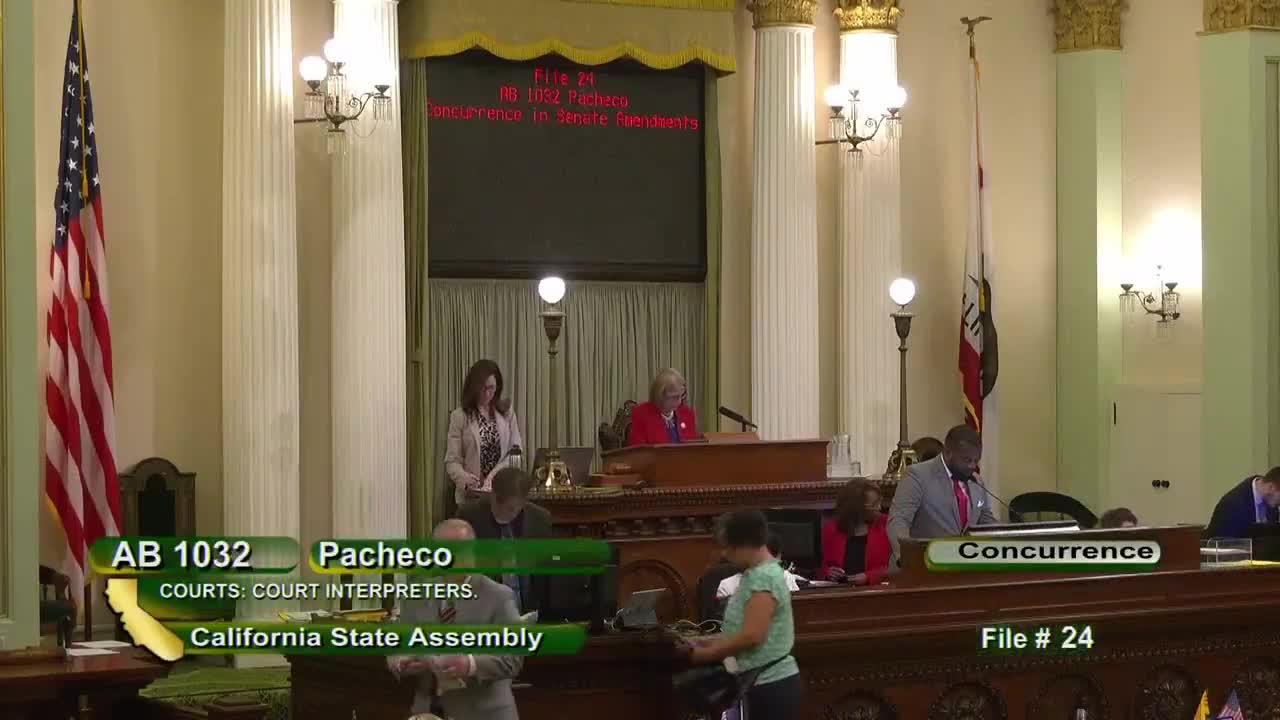 58SEC
Assembly Floor
 1MIN
Senate Standing Committee on Appropriations
 16MIN
Senate Standing Committee on Natural Resources and Water
 15MIN
Senate Standing Committee on Energy, Utilities and Communications
 4MIN
Assembly Floor
Bill Author