AB 3036: Los Angeles River: river ranger program.
- Session Year: 2023-2024
- House: Assembly
- Latest Version Date: 2024-03-21
Current Status:
Failed
(2024-05-16: In committee: Held under submission.)
Introduced
In Committee
First Chamber
In Committee
Second Chamber
Enacted
Existing law, until January 1, 2020, required specified conservancies to collaborate with the Department of Parks and Recreation, the California Conservation Corps, and the State Lands Commission to develop a river ranger program to provide a network of river rangers who provide assistance to the public at sites along the Los Angeles River and its tributaries.
This bill would state the intent of the Legislature to enact subsequent legislation to develop a permanent river ranger program to provide a network of river rangers who provide assistance to the public.This bill would require the San Gabriel and Lower Los Angeles Rivers and Mountains Conservancy and the Santa Monica Mountains Conservancy to collaborate with the Department of Parks and Recreation, the California Conservation Corps, and the State Lands Commission to develop a permanent river ranger program to provide a network of river rangers who provide assistance to the public at sites along the Los Angeles River and its tributaries. The bill would require the river ranger program to have specific objectives, including improving public safety for visitors to the Los Angeles River. The bill would make various findings and declarations relating to the river ranger program.
Existing law, until January 1, 2020, required specified conservancies to collaborate with the Department of Parks and Recreation, the California Conservation Corps, and the State Lands Commission to develop a river ranger program to provide a network of river rangers who provide assistance to the public at sites along the Los Angeles River and its tributaries.
This bill would state the intent of the Legislature to enact subsequent legislation to develop a permanent river ranger program to provide a network of river rangers who provide assistance to the public.
For purposes of this chapter, the following definitions apply:
(a)Conservancies means the San Gabriel and Lower Los Angeles Rivers and Mountains Conservancy and the Santa Monica Mountains Conservancy.
(b)River ranger program means the program established for the Los Angeles River pursuant to Section 5846.3.
5846.1.The Legislature finds and declares all of the following:
(a)The mission of the river ranger program is to foster connections between communities, agencies, and resources to promote safe, equitable usage and stewardship of the Los Angeles River and its tributaries as an activated and connected greenway that supports ecological, social, and recreational opportunities.
(b)As the Los Angeles River is being revitalized and embraced as a community resource, in alignment with the Los Angeles River Master Plan, the river ranger program will ensure safe, enjoyable, and equitable experiences along the Los Angeles River and its tributaries by promoting equitable access, recreational and educational opportunities, community engagement, and resource protection along this vital resource. The river ranger program will provide opportunities to experience the Los Angeles River as a safe and inviting place, and to participate in its enhancement through volunteer or employment programs.
(c)The consistent, dependable presence of a river ranger program along the 51 miles of the Los Angeles River and its tributaries, from Canoga Park to the City of Long Beach, will foster a new era for the river, building upon and supporting the cumulative revitalization efforts. By ensuring maintenance and protection of natural resources and accessible features, and offering diverse recreational and educational programs that reflect community interest and unique site conditions, staff from surrounding communities and partners will help to redefine the Los Angeles River as a safe and inviting community and environmental asset.
(d)The unique nature of the Los Angeles River means it flows through many city and county jurisdictions, each having authority for stewardship within their jurisdictions. In some cases, jurisdictions have encountered conflicts with other jurisdictions over responsibility for public safety along the Los Angeles River and its tributaries. Some jurisdictions with authority over segments of the river rely on other jurisdictions to respond to river-related issues.
(e)Due to its pueblo water rights, the City of Los Angeles has significant responsibility for the Upper Los Angeles River, while the County of Los Angeles has responsibility for flood management in the entire river. The Lower Los Angeles River has several cities, which have recently increased their engagement with the river, through the Lower Los Angeles River Revitalization Plan and the updated Los Angeles River Master Plan.
(f)In the last decade, the communities along the Los Angeles River have enjoyed greater access, and have increased their visits, to the river.
(g)The river ranger program intends to build collaboration among jurisdictions along the Los Angeles River to increase public safety and provide information and resources to visitors to the river.
5846.2.It is the intent of the Legislature that the river ranger program include all of the following guiding principles:
(a)Resource management and maintenance to ensure that the natural, cultural, and built resources along the Los Angeles River are protected, maintained, enhanced, and interpreted for the public in order to ensure that the river is a safe and enjoyable place to visit.
(b)Recreational opportunities and interpretive or educational programs using the Los Angeles River as an outdoor classroom that can provide resources and experiences that build understanding and inspire appreciation of the rivers ecology, history, and community benefits, as well as an experiential landscape that offers active and passive recreational opportunities that respond to the varying physical conditions along the river.
(c)Outreach and engagement that encourages visitors to use the Los Angeles River and provides information and resources to ensure safe and resource-sensitive use.
(d)Public safety measures that ensure that access points, trails, parks, and open spaces along the Los Angeles River are inviting and safe for visitors to enjoy.
(e)Administration and coordination with other agencies with jurisdiction over the Los Angeles River, organizations that provide services and programs, and members of the public to ensure the provision of dependable services that enhance the Los Angeles River as a natural and community resource. The river ranger program will act as a central conduit to bring together all parties involved.
5846.3.The conservancies shall collaborate with the department, the California Conservation Corps, and the State Lands Commission to develop a river ranger program to provide a network of river rangers who provide assistance to the public at sites along the Los Angeles River and its tributaries. The conservancies shall solicit the participation of representatives of local governments that have jurisdiction over segments of the Los Angeles River, including the City of Los Angeles and the County of Los Angeles. The river ranger program shall accomplish all of the following objectives:
(a)Establish an identity for the Los Angeles River as a place for its communities to enjoy recreational opportunities and learn about the rivers history and environmental resources.
(b)Improve public safety for visitors to the Los Angeles River.
(c)Foster collaboration among state and local governmental entities and other public agencies with jurisdiction over the Los Angeles River, and coordinate the work of these entities and public agencies with regard to the development, maintenance, and enhancement of the river and its resources.
(d)Protect the parks, open space, and other public places adjacent to the Los Angeles River.
(e)Engage communities along the Los Angeles River in the protection and preservation of the Los Angeles River and its resources.
(f)Promote equal access and equity among all communities along the Los Angeles River with regard to the development and placement of improvements along the river.
(g)Monitor the physical conditions, environmental health, and development of green space along the Los Angeles River.
(h)Provide a system for coordinating the work of river rangers with programs and services offered by local governments and conservation corps.
(i)Incorporate the findings and principles expressed in the publication titled Presidential Memorandum -- Promoting Diversity and Inclusion in Our National Parks, National Forests, and Other Public Lands and Waters, dated January 12, 2017.
SECTION 1.It is the intent of the Legislature to enact subsequent legislation to develop a permanent river ranger program to provide a network of river rangers who provide assistance to the public.It is the intent of the Legislature to enact subsequent legislation to develop a permanent river ranger program to provide a network of river rangers who provide assistance to the public.
|
Date
|
Status
|
|---|---|
| May 16, 2024 | In committee: Held under submission. |
| May 1, 2024 | In committee: Set, first hearing. Referred to APPR. suspense file. |
| Apr 16, 2024 | From committee: Do pass and re-refer to Com. on APPR. (Ayes 10. Noes 0.) (April 15). Re-referred to Com. on APPR. |
| Apr 9, 2024 | From committee: Do pass and re-refer to Com. on NAT. RES. (Ayes 12. Noes 1.) (April 9). Re-referred to Com. on NAT. RES. |
| Apr 1, 2024 | Re-referred to Com. on W., P., & W. |
| Mar 21, 2024 | From committee chair, with author's amendments: Amend, and re-refer to Com. on W., P., & W. Read second time and amended. |
| Mar 21, 2024 | Referred to Coms. on W., P., & W. and NAT. RES. |
| Feb 17, 2024 | From printer. May be heard in committee March 18. |
| Feb 16, 2024 | Read first time. To print. |
|
Date
|
Description
|
Location
|
Votes
|
|
|---|---|---|---|---|
| Apr 15, 2024 | Do pass and be re-referred to the Committee on [Appropriations] | Assembly Standing Committee on Natural Resources |
Passed |
|
| Apr 9, 2024 | Do pass and be re-referred to the Committee on [Natural Resources] | Assembly Standing Committee on Water, Parks, and Wildlife |
Passed |
This list shows positions taken on this bill by organizations on the date displayed, which is linked to the original source.
Positions by individuals are not included.
Date of Hearing: May 1, 2024
ASSEMBLY COMMITTEE ON APPROPRIATIONS
Buffy Wicks, Chair
ABPCA Bill Id:AB 3036
Author:(Rendon) – As Amended Ver:March 21, 2024
Policy Committee: | Water, Parks and Wildlife | Vote: | 12 - 1 |
Natural Resources | 10 - 0 | ||
|
|
Urgency: No State Mandated Local Program: No Reimbursable: No
SUMMARY:
This bill requires the San Gabriel and Lower Los Angeles Rivers and Mountains Conservancy (RMC) and the Santa Monica Mountains Conservancy (SMMC) to collaborate with specified state agencies to develop a permanent Los Angeles River (LA River) river ranger program.
Specifically, this bill, among other things:
- Codifies legislative intent that the river ranger program include specified guiding principles related to resource management and maintenance, recreational opportunities and interpretive or educational programs, outreach and engagement, public safety measures, and administration and coordination.
- Requires RMC and SMMC to collaborate with the Department of Parks and Recreation (State Parks), the California Conservation Corps (CCC), and the State Lands Commission (SLC) to develop a river ranger program to provide a network of river rangers who provide assistance to the public at sites along the LA River and its tributaries.
- Requires RMC and SMMC to solicit the participation of representatives of local governments that have jurisdiction over segments of the LA River.
- Requires the river ranger program to accomplish numerous specified objectives.
FISCAL EFFECT:
RMC and SMMC estimate ongoing annual costs of an unknown but significant amount, likely in the hundreds of thousands to low millions of dollars, to develop and support a permanent LA River ranger program (General Fund or bonds funds). According to the Legislative Analyst’s Office, the General Fund faces a structural deficit in the tens of billions of dollars over the next several fiscal years.
COMMENTS:
1) Purpose. According to the author:
The Los Angeles River is not only an important ecosystem, but a critical resource for communities across LA County. It’s important we continue to build on our mission of revitalizing the LA River, in order to protect vulnerable habitats and support this irreplaceable cultural resource. AB 3036 would work to further protect the river by establishing a River Ranger program, which would provide critical environmental protection and diverse educational resources in order to protect the River now, and into the future.
2) Background. In 2015, AB 530 (Rendon), Chapter 684, Statutes of 2015, established the Lower LA River Working Group (Working Group) composed of numerous stakeholders to develop revitalization plans for the LA River south of the City of LA. One idea raised through the Working Group process was to establish a river ranger program along the LA River, the San Gabriel River, and Rio Hondo.
Subsequently, AB 1558 (C. Garcia), Chapter 452, Statutes of 2017, required RMC and SMMC to collaborate with State Parks, CCC, and SLC to develop a river ranger program. AB 1558 also required the conservancies, in cooperation with the Working Group, to prepare a plan for the design and implementation of the program, including recommendations regarding ways to finance the establishment and ongoing implementation of the program. In 2019, RMC and SMMC, with the assistance of a steering committee and a large stakeholder committee, completed the LA River Ranger Program Establishment Plan. SMMC and RMC provided $1 million in Proposition 1 funding for grants for the development of the plan. State Parks, SLC, and CCC did not receive any funding for their involvement in the plan.
As a result, there have been a couple of pilot programs with the City of LA on the upper LA River and the Watershed Conservation Authority (WCA) on the lower LA River. WCA, RMC, and the Conservation Corps of Long Beach have completed three river ambassador programs since 2022, which provide six months of on-the-job training for young adults, foster connections between communities, and promote the stewardship of the LA River. The City of LA and the LA Conservation Corps launched the LA river ranger program in 2022 to employ LA youth to care for 18 miles of public space along the LA River. The program is funded by a $5.2 million grant from the California for All Youth Job Corps program through California Volunteers. To date, SMMC and RMC have not received any direct support for river ranger pilots.
AB 1558 sunset the river ranger program on January 1, 2019. This bill codifies the program (the provisions of AB 1558 were uncodified) and makes it permanent.
Analysis Prepared by: Nikita Koraddi / APPR. / (916) 319-2081
Date of Hearing: April 15, 2024
ASSEMBLY COMMITTEE ON NATURAL RESOURCES
Isaac G. Bryan, Chair
ABPCA Bill Id:AB 3036 (
Author:Rendon) – As Amended Ver:March 21, 2024
SUBJECT: Los Angeles River: river ranger program
SUMMARY: Requires the development of a permanent River Ranger Program to provide a network of river rangers who provide assistance to the public at sites along the Los Angeles (LA) River and its tributaries.
EXISTING LAW:
- Establishes the San Gabriel and Lower LA Rivers and Mountains Conservancy (RMC) in the Natural Resources Agency (NRA) and prescribes the functions and duties of the RMC with regard to the protection, preservation, and enhancement of specified areas of the Counties of LA and Orange located along the San Gabriel River and the lower LA River and tributaries along those rivers. (Public Resources Code (PRC) 32602)
- Establishes the Santa Monica Mountains Conservancy (SMMC) to acquire and protect lands within the Santa Monica Mountains Zone, which is an area of approximately 650,000 acres, generally encompassing the mountain areas of eastern Ventura County, western Los Angeles County, and the mountain areas surrounding the San Fernando, La Crescenta, and Santa Clarita Valleys. (PRC 33000-33215)
- Requires RMC and SMMC to collaborate with the Department of Parks and Recreation (DPR), the California Conservation Corps (CCC), and the State Lands Commission (SLC) to develop a River Ranger Program to provide a network of river rangers who provide assistance to the public at sites along the LA River and its tributaries. (uncodified)
THIS BILL:
- Establishes the “River Ranger Program” for the LA River.
- Defines “conservancies” as the RMC and the SMMC.
- Establishes the intent of the Legislature that the River Ranger Program include all of the following guiding principles:
- Resource management and maintenance to ensure that the natural, cultural, and built resources along the LA River are protected, maintained, enhanced, and interpreted for the public in order to ensure that the river is a safe and enjoyable place to visit;
- Recreational opportunities and interpretive or educational programs using the LA River as an outdoor classroom that can provide resources and experiences that build understanding and inspire appreciation of the river’s ecology, history, and community benefits, as well as an experiential landscape that offers active and passive recreational opportunities that respond to the varying physical conditions along the river;
- Outreach and engagement that encourages visitors to use the LA River and provides information and resources to ensure safe and resource-sensitive use;
- Public safety measures that ensure that access points, trails, parks, and open spaces along the LA River are inviting and safe for visitors to enjoy; and,
- Administration and coordination with other agencies with jurisdiction over the LA River, organizations that provide services and programs, and members of the public to ensure the provision of dependable services that enhance the LA River as a natural and community resource. The river ranger program will act as a central conduit to bring together all parties involved.
- Requires the conservancies to collaborate with DPR, CCC, and SLC to develop a river ranger program to provide a network of river rangers who provide assistance to the public at sites along the LA River and its tributaries.
- Requires the conservancies to solicit the participation of representatives of local governments that have jurisdiction over segments of the LA River, including the City of LA and the County of LA.
- Requires the River Ranger Program to accomplish all of the following objectives:
- Establish an identity for the LA River as a place for its communities to enjoy recreational opportunities and learn about the river’s history and environmental resources;
- Improve public safety for visitors to the LA River;
- Foster collaboration among state and local governmental entities and other public agencies with jurisdiction over the LA River, and coordinate the work of these entities and public agencies with regard to the development, maintenance, and enhancement of the river and its resources;
- Protect the parks, open space, and other public places adjacent to the LA River;
- Engage communities along the LA River in the protection and preservation of the LA River and its resources;
- Promote equal access and equity among all communities along the LA River with regard to the development and placement of improvements along the river;
- Monitor the physical conditions, environmental health, and development of green space along the LA River;
- Provide a system for coordinating the work of river rangers with programs and services offered by local governments and conservation corps; and,
- Incorporate the findings and principles expressed in the publication titled “Presidential Memorandum -- Promoting Diversity and Inclusion in Our National Parks, National Forests, and Other Public Lands and Waters,” dated January 12, 2017.
FISCAL EFFECT: Unknown
COMMENTS:
- Author’s statement:
The Los Angeles River is not only an important ecosystem, but a critical resource for communities across LA County. It’s important we continue to build on our mission of revitalizing the LA River, in order to protect vulnerable habitats and support this irreplaceable cultural resource. AB 3036 would work to further protect the river by establishing a River Ranger program, which would provide critical environmental protection and diverse educational resources in order to protect the River now, and into the future.
- LA River. The LA River flows 51 miles through some the most diverse communities in Southern California. It stretches 32 miles within the City of LA alone, from Owensmouth in the upper reaches of the northwest San Fernando Valley, to the border with Vernon at the southern end of Downtown. The river is typically dry during summer months, and can become a river filled with racing waters during the rainy season.
The LA River used to flow out of the San Gabriel Mountains as meandering streams carrying rocks and sand. The River stopped reaching the sea shortly after 18th century settlers arrived. Wildlands became farmland. And, then, 50 years later—after the railroad arrived—the rivers nearly disappeared beneath a wave of urban sprawl and, finally, industrialization.
After flooding in the 1930s, the federal government and the LA County Flood Control District implemented a strategy to tame the river; by 1960, the LA River was encased in concrete. In 1989, a state legislator revisited an idea once proposed in the 1940s, to run a freeway down the river corridor, and it prompted the first serious thought in decades to “restoring” the river by focusing on natural systems and open space (the freeway was not developed). LA County adopted a master plan for the LA River in 1996 that recommended environmental restoration.
For many years, community leaders, elected officials, concerned citizens, environmental groups, recreational groups, and local visionaries have been involved in exploring ways to return the splendor of the river to the people of LA while maintaining flood protection and safety. The LA River Revitalization Master Plan sprang from that collective interest, to enhance existing communities by creating a safe environment with more open space, parks, trails, recreation, environmental restoration, riverfront living and commerce, new jobs, neighborhood identity, economic development, tourism, and civic pride.
Two state of California conservancies have leadership roles related to the LA River, including RMC and the SMMC.
- River Ranger Program. In 2015, AB 530 (Rendon), Chapter 684, Statutes of 2015, established the Lower LA River Working Group (Working Group) composed of numerous stakeholders to develop revitalization plans for the River south of the City of LA. One idea raised through the Working Group process was to establish a “river rangers” program as part of a multi-team effort to provide maintenance, outreach and interpretation along the River and the San Gabriel River/Rio Hondo.
In 2018, the Legislature enacted AB 1558 (C. Garcia), Chapter 452, Statutes of 2017, to require the conservancies to collaborate with DPR, the CCC, and SLC to develop a river ranger program by June 30, 2018, to provide a network of river rangers who assist the public at sites along the LA River and its tributaries.
In 2019, the LA River Ranger Program Establishment Plan was completed, led by RMC and SMMC. As a result, there have been a couple pilot programs with the City of LA on the upper LA River and the Watershed Conservation Authority (WCA) on the lower LA River. WCA, RMC, and the Conservation Corps of Long Beach have completed three River Ambassador Programs since 2022, which provide six months of on the job training for young adults 18–26 years old and foster connections between communities and promote the stewardship of the LA River. The City of LA and the LA Conservation Corp also launched the LA River Ranger Program in 2022 to employ young residence to care for 18 miles of public space along the LA River.
AB 1558, the establishing statute, however, sunset the River Ranger Program on January 1, 2019. While RMC has maintained this program, it does not have a permanent mission.
This bill would codify the River Ranger Program (the provisions of AB 1558 were uncodified) and enact it in perpetuity.
- Double referral. This bill was heard in the Assembly Water, Parks, and Wildlife Committee on April 9 and approved 12-1.
REGISTERED SUPPORT / OPPOSITION:
Support
None on file
Opposition
None on file
Analysis Prepared by: Paige Brokaw / NAT. RES. /
Date of Hearing: April 9, 2024
ASSEMBLY COMMITTEE ON WATER, PARKS, AND WILDLIFE
Diane Papan, Chair
ABPCA Bill Id:AB 3036 (
Author:Rendon) – As Amended Ver:March 21, 2024
SUBJECT: Los Angeles River: river ranger program
SUMMARY: Requires the two state conservancies with jurisdiction along the Los Angeles (LA) River (the Conservancies) to collaborate with the Department of Parks and Recreation (State Parks), the California Conservation Corps (CCC), and the State Lands Commission (SLC), to develop a permanent river ranger program (Program) along the LA River. Specifically, this bill:
- Codifies findings and declarations regarding the LA River, the mission of the Program, and the guiding principles of the Program.
- Requires the Conservancies to collaborate with State Parks, CCC, and SLC to develop a Program to provide a network of river rangers who provide assistance to the public at sites along the LA River and its tributaries. Requires the Conservancies to solicit participation of representatives from local governments that have jurisdiction over segments of the LA River.
- Establishes the objectives of the Program, including establishing an identity for the LA River, improving public safety for visitors, promoting equal access and equity among all communities along the LA River, among other things.
- Defines “Conservancies” to be the San Gabriel and Lower LA Rivers and Mountains Conservancy and the Santa Monica Mountains Conservancy.
EXISTING LAW:
- Establishes the San Gabriel and Lower LA Rivers and Mountains Conservancy [Public Resources Code (PRC) § 32600 et seq.].
- Establishes the Santa Monica Mountains Conservancy (PRC § 33000 et seq.).
- Establishes State Parks and vests State Parks with control of the state park system. State Parks is responsible for administering and managing the state park system for the use and enjoyment of the public, protecting this system from damage, and preserving the peace (PRC §§ 501, 5001, 5003, and 5008).
- Establishes CCC and requires CCC to implement and administer the conservation corps program, which includes the management of environmentally important lands and water, public works projects, facilitating public use of resources, assistance in emergency operations, assistance in fire prevention and suppression, energy conservation, and environmental restoration (PRC § 14000 et seq.).
- Establishes that SLC is the steward and manager of the state's public trust lands. SLC has direct administrative control over the state's public trust lands and oversight authority over public trust lands granted by the Legislature to local public agencies (PRC § 6009).
FISCAL EFFECT: Unknown. This bill is keyed fiscal.
COMMENTS:
- Purpose of this bill. This bill establishes the Program for the LA River. According to the author, “The [LA] River is not only an important ecosystem, but a critical resource for communities across LA County. It’s important we continue to build on our mission of revitalizing the LA River, in order to protect vulnerable habitats and support this irreplaceable cultural resource. [This bill] would work to further protect the river by establishing a River Ranger program, which would provide critical environmental protection and diverse educational resources in order to protect the River now, and into the future.”
- Background. Parks, open spaces, recreation facilities, trails, and gardens are essential community infrastructure, but, as mentioned, not all communities have access to these resources. In LA County, communities with the fewest parks often have the environmental burdens, i.e., most pollutants and other stressors that directly impact public health and well-being. In LA, people of color account for 84% of the population living in areas with highest environmental burdens. Over time, some areas of the county have accrued significant environmental burdens as the result of historic land development practices, natural resource extraction and consumption, industrial operations, transportation projects, energy production and other impacts of urbanization.
The LA River. In the late 1700s when the Spanish founded the pueblo that became Los Angeles, the LA River supported diverse flora and fauna and much of what is now southern and western LA was marsh. The Spanish followed the example of the Native Americans and settled near the river to use its flow to supply drinking and irrigation water. As Los Angeles grew and prospered, settlements and farming continued to encroach upon the river’s floodplain, while also depending upon it for water. As time progressed, booming development along the river as well as increasing urbanization provided for larger and larger impacts from river flooding. Between 1850 and 1900, there were 11 major flood events along the river. More serious flooding in the 1930s required federal help. In 1936, Congress directed the US Army Corps of Engineers (Corps) to “channelize” the river to help control flooding. Channelization by concrete started in 1938 and was completed in 1960. The river is now straighter and deeper in many locations, moving high volumes of flood water rapidly downstream to San Pedro Harbor. The Flood Control District and the Corps share the responsibility for the operation and management of these flood control and water conservation facilities.
Although planners had envisioned greenbelts interconnecting parklands along the river as early as the 1930s, the more recent interest in the revitalization and promotion of the re-integration of the river and its tributaries into the adjacent neighborhoods began in the mid-to-late 1980s. There was growing recognition that compared to other large American cities Los Angeles has relatively fewer parks, particularly in under-represented communities. In the early 1990s, community activism over turning a railyard adjacent to the river (the Taylor Yards) into open space coincided with the County of Los Angeles beginning a process that, after considerable input from stakeholders and community outreach, resulted in the County’s Los Angeles River Master Plan in 1996.
LA River Jurisdictions. The author points out that the governance of the LA River’s entire watershed is complex. Many small cities have jurisdiction over the LA River and its tributaries. The Lower LA River includes the cities of Vernon, Commerce, Maywood, Bell, Bell Gardens, Cudahy, South Gate, Lynwood, Compton, Paramount, Carson, and Long Beach. The upper watershed includes several tributaries including the Tujunga, Pacoima, and Rio Honda, passing through a number of cities from the Santa Monica Mountains to downtown Los Angeles. Each of these cities individually has jurisdiction over their portion of the LA River for law enforcement. The LA River crosses several state agency jurisdictions, mainly the San Gabriel and Lower LA Rivers and Mountains Conservancy and the Santa Monica Mountains Conservancy.
The LA River Ranger Program. Pursuant to AB 1558 (C. Garcia, 2017), the Conservancies with LA River jurisdiction developed a program to provide a network of river rangers who assist the public at sites along the LA River and its tributaries. Work to implement AB 1558 began in January 2018 and was completed May 2019. The Program Establishment Plan[1] was developed by a stakeholder and community-driven process to gain an understanding of how a Program could help meet community needs. Representatives from 22 cities along the Los Angeles River and one mile up the tributaries, federal, state, and county agencies, and non-governmental organizations (NGOs) that do work along the River guided overall development of the program framework and components. The Conservancies also partnered with fourteen local NGOs, who attended 51 community events and collected 3,820 surveys. AB 1558 was repealed on January 1, 2019. This bill codifies the objectives that were used to guide the development of the Program Establishment Plan from AB 1558. This bill further codifies the guiding principles established in the Program Establishment Plan.
- Double referral. This bill is also referred to the Assembly Natural Resources Committee.
- Related legislation. AB 2285 (Rendon) of the current legislative session encourages the Governor’s office, state agencies, and the Legislature to recognize the coequal goals and benefits of the 30x30 goal (conserving at least 30% of the state’s land and coastal waters by 2030) and Outdoors for All when distributing resources, and, to the extent practical, maximize investment in urban communities consistent with those initiatives. AB 2285 is set for hearing in this Committee.
AB 1558 (C. Garcia), Chapter 452, Statutes of 2017, required the Conservancies in collaboration with State Parks, CCC, and SLC to develop the Program and, no later than June 30, 2018, prepare a plan for the design and implementation of the Program with the listed objectives.
AB 530 (Rendon), Chapter 684, Statutes of 2015, created the Lower Los Angeles River Working Group that developed the idea of a river ranger program for the entire LA River.
REGISTERED SUPPORT / OPPOSITION:
Support
None on file
Opposition
None on file
Analysis Prepared by: Stephanie Mitchell / W., P., & W. / (916) 319-2096
Discussed in Hearing
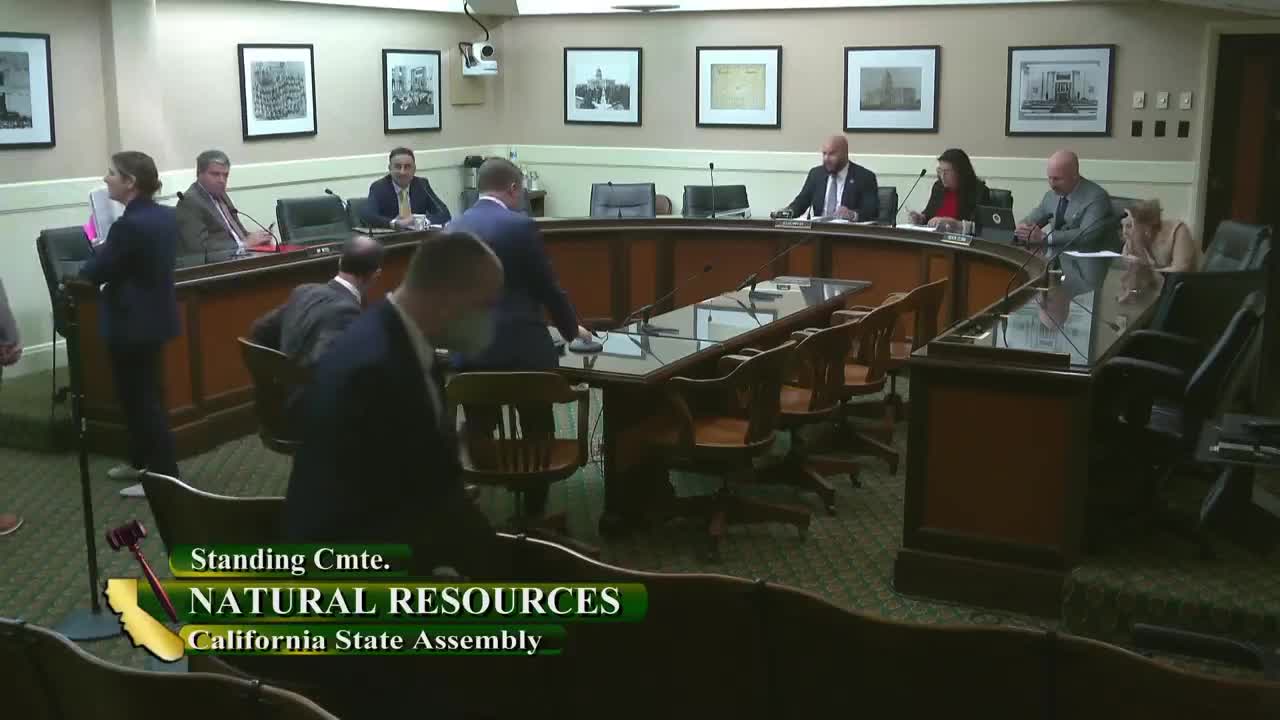 3MIN
Assembly Standing Committee on Natural Resources
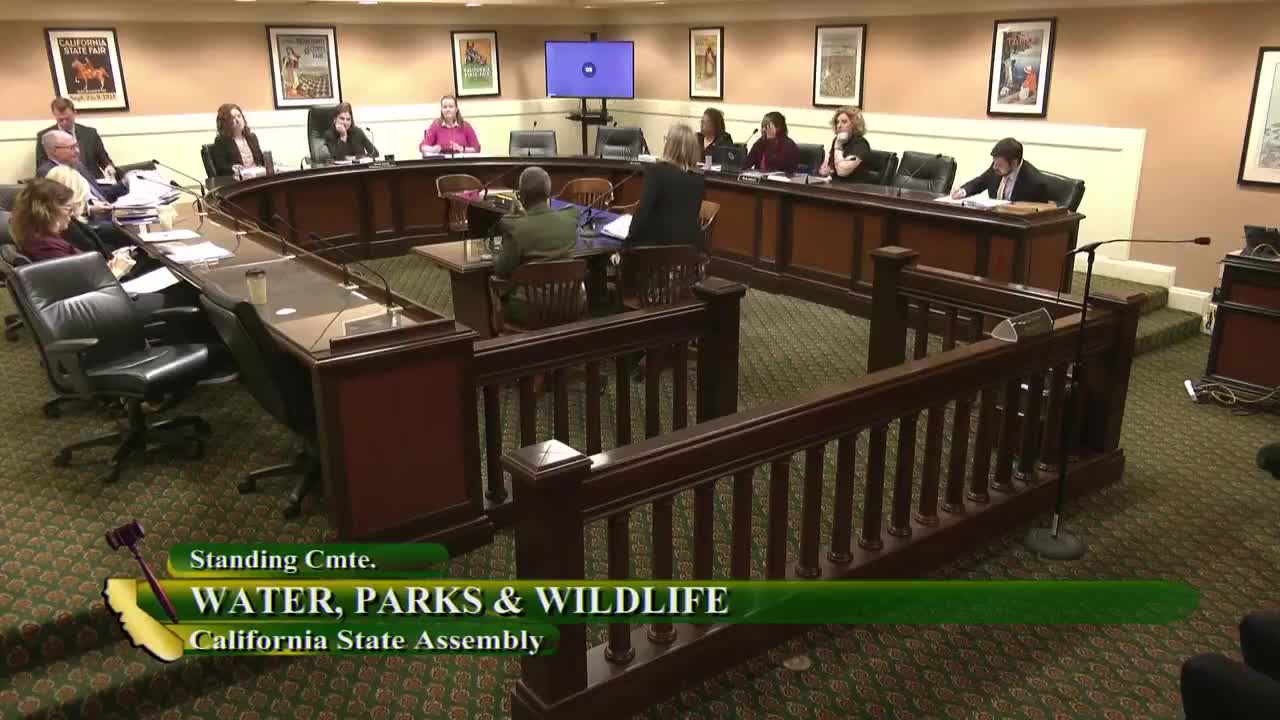 4MIN
Assembly Standing Committee on Water, Parks, and Wildlife
Bill Author

Bill Co-Author(s):