AB 307: Structural fumigation enforcement program.
- Session Year: 2023-2024
- House: Assembly
- Latest Version Date: 2023-07-21
Current Status:
Passed
(2023-07-21: Chaptered by Secretary of State - Chapter 82, Statutes of 2023.)
Introduced
In Committee
First Chamber
In Committee
Second Chamber
Enacted
Existing law, until January 1, 2024, establishes a structural fumigation enforcement program that requires the Director of the Department of Pesticide Regulation to provide oversight for the program. Existing law requires any company performing a structural fumigation in the Counties of Los Angeles, Orange, or Santa Clara to pay the county agricultural commissioner a specified fee for each fumigation conducted at a specific location. Existing law authorizes the agricultural commissioners of those counties to perform increased structural fumigation, inspection, and enforcement activities to be funded by the required fee. Existing law requires these funds to be paid to the county and used for the sole purpose of funding enforcement and training activities directly related to the structural fumigation program.
This bill would extend the operation of these provisions to January 1, 2029.
Existing law, until January 1, 2024, establishes a structural fumigation enforcement program that requires the Director of the Department of Pesticide Regulation to provide oversight for the program. Existing law requires any company performing a structural fumigation in the Counties of Los Angeles, Orange, or Santa Clara to pay the county agricultural commissioner a specified fee for each fumigation conducted at a specific location. Existing law authorizes the commissioners of those counties to perform increased structural fumigation, inspection, and enforcement activities to be funded by the required fee. Existing law requires these funds to be paid to the county and used for the sole purpose of funding enforcement and training activities directly related to the structural fumigation program.
This bill would extend the operation of these provisions to January 1, 2029.
This chapter shall remain in effect only until January 1, 2029, and as of that date is repealed.
This chapter shall remain in effect only until January 1, 2029, and as of that date is repealed.
This chapter shall remain in effect only until January 1, 2024, 2029, and as of that date is repealed.
|
Date
|
Status
|
|---|---|
| Jul 21, 2023 | Chaptered by Secretary of State - Chapter 82, Statutes of 2023. |
| Jul 21, 2023 | Approved by the Governor. |
| Jul 11, 2023 | Enrolled and presented to the Governor at 3 p.m. |
| Jun 29, 2023 | In Assembly. Ordered to Engrossing and Enrolling. |
| Jun 29, 2023 | Read third time. Passed. Ordered to the Assembly. (Ayes 39. Noes 0. Page 1826.). |
| Jun 27, 2023 | Read second time. Ordered to Consent Calendar. |
| Jun 26, 2023 | From committee: Be ordered to second reading file pursuant to Senate Rule 28.8 and ordered to Consent Calendar. |
| Jun 5, 2023 | From committee: Do pass and re-refer to Com. on APPR with recommendation: To Consent Calendar. (Ayes 13. Noes 0.) (June 5). Re-referred to Com. on APPR. |
| May 3, 2023 | Referred to Com. on B., P. & E. D. |
| Apr 18, 2023 | In Senate. Read first time. To Com. on RLS. for assignment. |
| Apr 17, 2023 | Read third time. Passed. Ordered to the Senate. (Ayes 79. Noes 0. Page 1178.) |
| Mar 30, 2023 | Read second time. Ordered to Consent Calendar. |
| Mar 29, 2023 | From committee: Do pass. To Consent Calendar. (Ayes 14. Noes 0.) (March 29). |
| Mar 15, 2023 | From committee: Do pass and re-refer to Com. on APPR. (Ayes 9. Noes 0.) (March 14). Re-referred to Com. on APPR. |
| Feb 9, 2023 | Referred to Com. on E.S. & T.M. |
| Jan 27, 2023 | From printer. May be heard in committee February 26. |
| Jan 26, 2023 | Read first time. To print. |
|
Date
|
Description
|
Location
|
Votes
|
|
|---|---|---|---|---|
| Jun 29, 2023 | Consent Calendar AB307 Chen | Senate Floor |
Passed |
|
| Jun 5, 2023 | Do pass, but first be re-referred to the Committee on [Appropriations] with the recommendation: To Consent Calendar | Senate Standing Committee on Business, Professions and Economic Development |
Passed |
|
| Apr 17, 2023 | AB 307 Chen Consent Calendar Second Day Regular Session | Assembly Floor |
Passed |
|
| Mar 29, 2023 | Do pass. To Consent Calendar. | Assembly Standing Committee on Appropriations |
Passed |
|
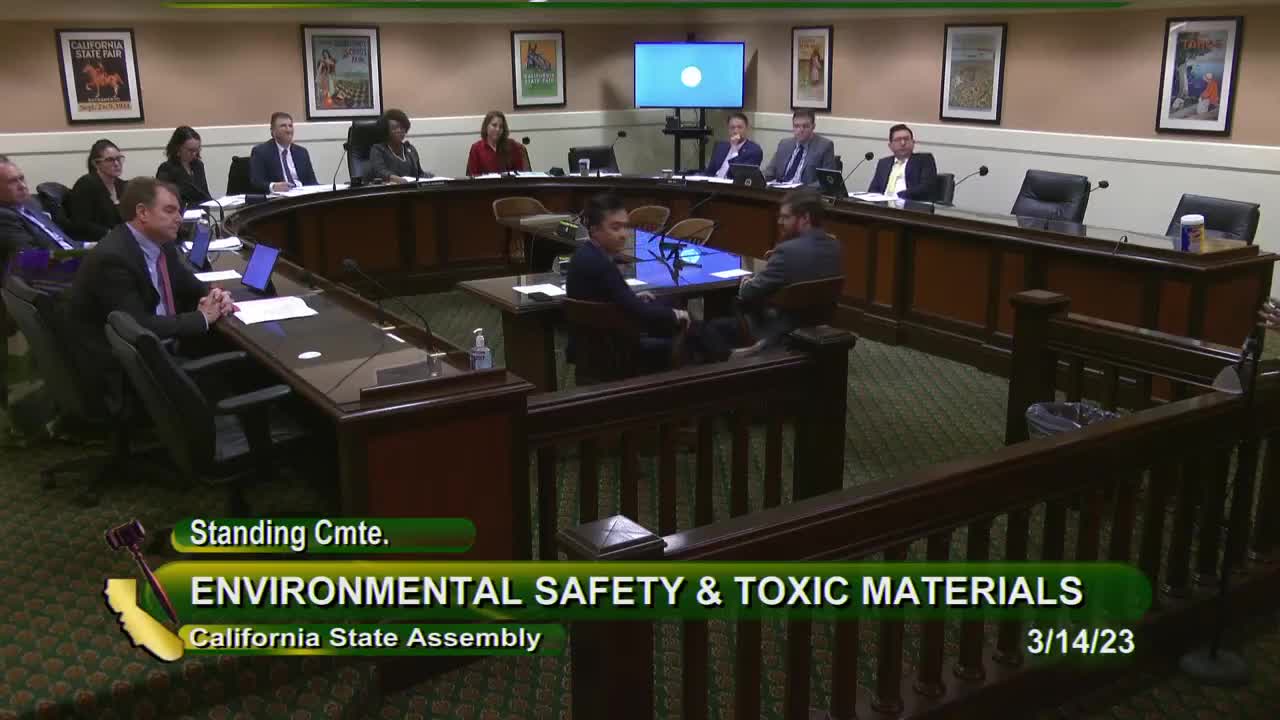
| Mar 14, 2023 | Do pass and be re-referred to the Committee on [Appropriations] | Assembly Standing Committee on Environmental Safety and Toxic Materials |
Passed |
This list shows positions taken on this bill by organizations on the date displayed, which is linked to the original source.
Positions by individuals are not included.
|
Organization
|
Position
|
Date
|
|---|---|---|
| California Agricultural Commissioners And Sealers Association | ** Support | |
| County of Los Angeles Board of Supervisors | ** Support | |
| County of Orange | ** Support | |
| County of Santa Clara | ** Support | |
| Pest Control Operators Of California | ** Support |
SENATE RULES COMMITTEE Office of Senate Floor Analyses (916) 651-1520 Fax: (916) 327-4478 | AB 307 |
CONSENT
Bill No: AB 307
Author: Chen (R)
Introduced: 1/26/23
Vote: 21
SENATE BUS., PROF. & ECON. DEV. COMMITTEE: 13-0, 6/5/23
AYES: Roth, Nguyen, Alvarado-Gil, Archuleta, Ashby, Becker, Dodd, Eggman, Glazer, Niello, Smallwood-Cuevas, Wahab, Wilk
SENATE APPROPRIATIONS COMMITTEE: Senate Rule 28.8
ASSEMBLY FLOOR: 79-0, 4/17/23 (Consent) - See last page for vote
SUBJECT: Structural fumigation enforcement program
SOURCE: Author
DIGEST:
This bill extends the sunset date for the Structural Fumigation Enforcement Program (Program) under the Department of Pesticide Regulation to January 1, 2029.
ANALYSIS:
Existing law:
- Establishes the Program in Los Angeles, Orange, and Santa Clara Counties under the oversight of the Department of Pesticide Regulations (DPR) and authorizes the county agricultural commissioner (Commissioner) of each county to perform increased structural fumigation, inspection, and enforcement activities those counties. (Business and Professions Code (BPC) § 8698)
- Requires, under the Program, any person who performs a structural fumigation in the county to pay a $8 fee to the Commissioner for each fumigation performed. (BPC § 8698.1)
- Requires the funds collected by the counties under the Program to be used for the sole purpose of funding enforcement and training activities directly related to the Program. (BPC § 8698.5)
- Defines “structural pest control” and “pest control” to refer to household pests and wood destroying pests or organisms, or other such pests which may invade households or other structures, including railroad cars, ships, docks, trucks and airplanes, and the advertisement, solicitation, or performance of identifying, eliminating, exterminating, controlling or preventing the infestation of such pests, and making structural repairs or replacements, as specified. (BPC § 8505)
- Defines a “fumigator” as any individual licensed by the Structural Pest Control Board (SPCB) as a structural pest control operator or as a structural pest control field representative in the branch of pest control which includes fumigation, or the practice relating to the control of household and wood-destroying pests or organisms by fumigation with poisonous or lethal gases. (BPC §§ 8505.14, 8560)
- Defines “fumigation” as the use of a substance to destroy plant and animal life within an enclosed space that has a vapor pressure greater than five millimeters of mercury at 25 degrees centigrade when labeled for those purposes. Further specified that lethal fumigants include: methyl bromide, sulfur dioxide, propylene oxide, sulfuryl fluoride and aluminum phosphide. (BPC § 8505.1)
- Sunsets the Program on January 1, 2024. (BPC § 8698.6)
This bill extends the sunset date for the Program to January 1, 2029.
Background
The Program was originally established in 1993 as a two-year pilot project in Los Angeles County as a way to help ensure the safety of fumigation operators. The Program sought to ensure the proper handling of chemicals and the correct use of safety equipment among other important features. The sunset date has been extended a number of times since then. In 1996, the pilot project status was removed and the Program was expanded to also include Orange County and San Diego County. San Diego was then removed from Program participation through legislation in 2022 (AB 2452, Chen, Chapter 235, Statutes of 2022).
The Program exercises oversight of the structural fumigation industry and DPR inspects fumigation companies to ensure regulatory compliance and protect the public, industry workers and the environment. Any person who performs a structural fumigation in Los Angeles, Orange, and Santa Clara Counties must pay the county agricultural commissioner a fee of $8 for each treatment. Counties use this fee-generated revenue to increase monitoring of pesticide use in structural fumigations through undercover inspections and surveillance. While the DPR licenses and regulates commercial applicators, dealers, consultants and other pesticide professionals statewide, the Program originated from an increased need to enforce local structural pest control fumigation laws in counties where most fumigations are performed by collecting fees for more inspectors and research on safer pest control methods.
"Fumigation" is the use of a substance to destroy plant and animal life within an enclosed space. Structural fumigation applies solely to the fumigation of houses or other structures, such as railroad cars, ships, docks, trucks and airplanes. It does not apply to agricultural fumigation. To fumigate a home or structure, it must be vacated and enclosed with a tent or tarps, and after a fumigant is released the home or structure must remain enclosed for a specified period of time to kill the pests. Afterwards, the home or structure must be properly ventilated before the inhabitants can return. Structural fumigation is regulated primarily because it utilizes large quantities of toxic chemicals, particularly sulfuryl fluoride. Sulfuryl fluoride is a highly toxic pesticide fumigant used to control termites and other pests in homes and other structures. Sulfuryl fluoride is colorless, odorless and leaves no residue. If used incorrectly, it can result in fluoride poisoning and cause illness or death in humans. Los Angeles, San Diego and Orange Counties are the top three users of structural fumigation in the state, based on the total pounds of sulfuryl fluoride they use.
FISCAL EFFECT: Appropriation: No Fiscal Com.: Yes Local: No
SUPPORT: (Verified 6/26/23)
California Agricultural Commissioners and Sealers Association
County of Los Angeles Board of Supervisors
County of Orange
County of Santa Clara
Pest Control Operators of California
OPPOSITION: (Verified 6/26/23)
None received
ARGUMENTS IN SUPPORT: The Pest Control Operators of California write that “Over the years this program has proven to be successful in catching bad actors of the industry that could cause harm to the public and their employees as well as holding the companies working to comply with all state and local regulations to the current enforceable standards.”
According to the County of Santa Clara, “The fumigation of human dwellings with lethal gases to control termites, bed bugs, and other pests is a very serious pesticide application with a long list of regulations and safety procedures to comply with and can result in poisoning and death in humans if performed incorrectly. The structural fumigation enforcement program provides funding to perform more frequent inspections and increases compliance among pest control operators. As a result, the program greatly benefits the industry and citizens as increased compliance also results in increased protection to workers, the public, animals, and the environment.”
The County of Los Angeles Board of Supervisors notes that “if AB 307 does not pass, the County would see a decline in resources available to support enforcement activities that have been in place for the past three decades. The SFEP is essential to protecting workers and the public through a cooperative program between regulators and the regulated community.”
The California Agricultural Commissioners and Sealers Association adds that “These inspection services, which are performed by County Agricultural Commissioners, are essential to monitor and regulate the toxic chemicals used by companies to conduct structural fumigations.”
ASSEMBLY FLOOR: 79-0, 4/17/23
AYES: Addis, Aguiar-Curry, Alanis, Alvarez, Arambula, Bains, Bauer-Kahan, Bennett, Berman, Boerner Horvath, Bonta, Bryan, Calderon, Juan Carrillo, Wendy Carrillo, Cervantes, Chen, Connolly, Megan Dahle, Davies, Dixon, Essayli, Flora, Mike Fong, Vince Fong, Friedman, Gabriel, Gallagher, Garcia, Gipson, Grayson, Hart, Holden, Hoover, Irwin, Jackson, Jones-Sawyer, Kalra, Lackey, Lee, Low, Lowenthal, Maienschein, Mathis, McCarty, McKinnor, Muratsuchi, Stephanie Nguyen, Ortega, Pacheco, Papan, Jim Patterson, Joe Patterson, Pellerin, Petrie-Norris, Quirk-Silva, Ramos, Reyes, Luz Rivas, Robert Rivas, Rodriguez, Blanca Rubio, Sanchez, Santiago, Schiavo, Soria, Ta, Ting, Valencia, Villapudua, Waldron, Wallis, Ward, Weber, Wicks, Wilson, Wood, Zbur, Rendon
NO VOTE RECORDED: Haney
Prepared by: Sarah Mason / B., P. & E.D. /
6/28/23 10:41:55
**** END ****
SENATE COMMITTEE ON
BUSINESS, PROFESSIONS AND ECONOMIC DEVELOPMENT
Senator Richard Roth, Chair
2023 - 2024 Regular
Bill No: Hearing Date: June 5, 2023
Author: | |||
Version: | January 26, 2023 | ||
Urgency: | No | Fiscal: | Yes |
Consultant: | Sarah Mason | ||
Subject:
SUMMARY:
Extends the sunset date for the Structural Fumigation Enforcement Program (Program) under the Department of Pesticide Regulation to January 1, 2029.
Existing law:
- Establishes the Program in Los Angeles, Orange, and Santa Clara Counties under the oversight of the Department of Pesticide Regulations (DPR) and authorizes the county agricultural commissioner (Commissioner) of each county to perform increased structural fumigation, inspection, and enforcement activities those counties. (Business and Professions Code (BPC) § 8698)
- Under the Program, requires any person who performs a structural fumigation in the county to pay a $8 fee to the Commissioner for each fumigation performed. (BPC § 8698.1)
- Requires the funds collected by the counties under the Program to be used for the sole purpose of funding enforcement and training activities directly related to the Program. (BPC § 8698.5)
- Defines “structural pest control” and “pest control” to refer to household pests and wood destroying pests or organisms, or other such pests which may invade households or other structures, including railroad cars, ships, docks, trucks and airplanes, and the advertisement, solicitation, or performance of identifying, eliminating, exterminating, controlling or preventing the infestation of such pests, and making structural repairs or replacements, as specified. (BPC § 8505)
- Defines a “fumigator” as any individual licensed by the Structural Pest Control Board (SPCB) as a structural pest control operator or as a structural pest control field representative in the branch of pest control which includes fumigation, or the practice relating to the control of household and wood-destroying pests or organisms by fumigation with poisonous or lethal gases. (BPC §§ 8505.14, 8560)
- Defines “fumigation” as the use of a substance to destroy plant and animal life within an enclosed space that has a vapor pressure greater than five millimeters of mercury at 25 degrees centigrade when labeled for those purposes. Further specified that lethal fumigants include: methyl bromide, sulfur dioxide, propylene oxide, sulfuryl fluoride and aluminum phosphide. (BPC § 8505.1)
- Sunsets the Program on January 1, 2024. (BPC § 8698.6)
This bill extends the sunset date for the Program to January 1, 2029.
FISCAL EFFECT:
This bill is keyed fiscal by Legislative Counsel. According to the Assembly Committee on Appropriations, the measure will result in negligible costs to DPR, SPCB, and the Department of Consumer Affairs.
COMMENTS:
- Purpose. The Pest Control Operators of California is the sponsor of this bill. According to the Author, the Program was initially established to ensure greater oversight, and proper safety procedures were being followed by the structural fumigation industry and should be extended for an additional five years.
- Background. The Program was originally established in 1993 as a two-year pilot project in Los Angeles County as a way to help ensure the safety of fumigation operators. The Program sought to ensure the proper handling of chemicals and the correct use of safety equipment among other important features. The sunset date has been extended a number of times since then. In 1996, the pilot project status was removed and the Program was expanded to also include Orange County and San Diego County. San Diego was then removed from Program participation through legislation in 2022 (AB 2452, Chen, Chapter 235, Statutes of 2022).
The Program exercises oversight of the structural fumigation industry and DPR inspects fumigation companies to ensure regulatory compliance and protect the public, industry workers and the environment. Any person who performs a structural fumigation in Los Angeles, Orange, and Santa Clara Counties must pay the county agricultural commissioner a fee of $8 for each treatment.
Counties use this fee-generated revenue to increase monitoring of pesticide use in structural fumigations through undercover inspections and surveillance. While the DPR licenses and regulates commercial applicators, dealers, consultants and other pesticide professionals statewide, the Program originated from an increased need to enforce local structural pest control fumigation laws in counties where most fumigations are performed by collecting fees for more inspectors and research on safer pest control methods.
"Fumigation" is the use of a substance to destroy plant and animal life within an enclosed space. Structural fumigation applies solely to the fumigation of houses or other structures, such as railroad cars, ships, docks, trucks and airplanes. It does not apply to agricultural fumigation. To fumigate a home or structure, it must be vacated and enclosed with a tent or tarps, and after a fumigant is released the home or structure must remain enclosed for a specified period of time to kill the pests. Afterwards, the home or structure must be properly ventilated before the inhabitants can return.
Structural fumigation is regulated primarily because it utilizes large quantities of toxic chemicals, particularly sulfuryl fluoride. Sulfuryl fluoride is a highly toxic pesticide fumigant used to control termites and other pests in homes and other structures. Sulfuryl fluoride is colorless, odorless and leaves no residue. If used incorrectly, it can result in fluoride poisoning and cause illness or death in humans. Los Angeles, San Diego and Orange Counties are the top three users of structural fumigation in the state, based on the total pounds of sulfuryl fluoride they use.
- Arguments in Support. The Pest Control Operators of California write that “Over the years this program has proven to be successful in catching bad actors of the industry that could cause harm to the public and their employees as well as holding the companies working to comply with all state and local regulations to the current enforceable standards.”
According to Santa Clara County, “The fumigation of human dwellings with lethal gases to control termites, bed bugs, and other pests is a very serious pesticide application with a long list of regulations and safety procedures to comply with and can result in poisoning and death in humans if performed incorrectly. The structural fumigation enforcement program provides funding to perform more frequent inspections and increases compliance among pest control operators. As a result, the program greatly benefits the industry and citizens as increased compliance also results in increased protection to workers, the public, animals, and the environment.”
The Los Angeles County Board of Supervisors notes that “if AB 307 does not pass, the County would see a decline in resources available to support enforcement activities that have been in place for the past three decades. The SFEP is essential to protecting workers and the public through a cooperative program between regulators and the regulated community.”
The California Agricultural Commissioners and Sealers Association adds that “These inspection services, which are performed by County Agricultural Commissioners, are essential to monitor and regulate the toxic chemicals used by companies to conduct structural fumigations.”
SUPPORT AND OPPOSITION:
Support:
California Agricultural Commissioners and Sealers Association
County of Los Angeles Board of Supervisors
County of Orange
County of Santa Clara
Pest Control Operators of California
Opposition:
None received
-- END --
Date of Hearing: March 29, 2023
ASSEMBLY COMMITTEE ON APPROPRIATIONS
Chris Holden, Chair
ABPCA Bill Id:AB 307
Author:(Chen) – As Introduced Ver:January 26, 2023
Policy Committee: | Environmental Safety and Toxic Materials | Vote: | 9 - 0 |
|
| ||
|
|
Urgency: No State Mandated Local Program: No Reimbursable: No
SUMMARY:
This bill extends the sunset on the Structural Fumigation Enforcement Program (SFEP) in Los Angeles, Orange, and Santa Clara Counties, from January 1, 2024, to January 1, 2029.
FISCAL EFFECT:
Negligible costs to the Department of Pesticide Regulation (DPR), Structural Pest Control Board (SPCB), and Department of Consumer Affairs (DCA).
COMMENTS:
1) Purpose. According to the author:
These inspection services, which are performed by County Agricultural Commissioners, are essential to monitor and regulate the toxic chemicals used by companies to conduct these structural fumigations. Products used in the fumigation are colorless, odorless and leave no residue. If improperly used, it can result in poisoning and cause illness or death in humans. Proper oversight and inspections of these fumigations are an incredibly important way to both protect the consumer and uphold the integrity of the fumigation process.
2) Structural Fumigation. Structural fumigation is a pest control method that involves filling the airspace within a structure with a toxic gas. A tarp or tent is used over the structure to trap the gas inside. The gas penetrates cracks, crevices, and pores in the wood to eliminate pests. After the tarp or tent is removed, fans are used to help the gas escape the structure into the atmosphere. Sulfuryl fluoride, the primary active ingredient used in fumigants intended for residential dwellings, is classified by the U.S. Environmental Protection Agency as a “restricted use pesticide” and by DPR as a “toxic air contaminant”. It is an odorless, colorless gas that is highly toxic and can cause severe injury and even death if used improperly. Only licensed applicators who are properly trained can handle and apply fumigants and fumigation-related equipment and procedures. According to the University of California, Berkeley Urban Pest Management Center, about 100,000 structural fumigations with sulfuryl fluoride are conducted each year in California.
3) Structural Fumigation Enforcement Program. The SFEP was originally established in 1993 as a two-year pilot project in Los Angeles County and included a fee of $5 per fumigation to fund increased enforcement and monitoring activities related to structural fumigation. Over the years, the sunset date for the pilot project has been extended several times, other jurisdictions have joined the program, and the SFEP fee has increased from $5 to $8 per fumigation. The Pest Control Operators of California, who are sponsoring this bill, note that the SFEP is an industry-supported program and the funds collected are to be used to increase enforcement activities, training operations, and compliance inspections on structural fumigations. DPR is statutorily required to provide oversight of the SFEP. SPCB, which is housed in DCA, administers the licensing of structural pest control applicators, field representatives, structural pest control operators, and registered companies; enforces structural fumigation licensing provisions; and ensures consumer protection regarding structural fumigation. Both SPCB and DPR contract with county agricultural commissioners to monitor, at the local level, pesticide use and fumigation activities under each entity's jurisdiction.
4) Prior Legislation. AB 2452 (Chen), Chapter 235, Statutes of 2022, extended the sunset on the SFEP, from January 1, 2023, to January 1, 2024, and deleted San Diego County from the SFEP.
AB 593 (Gloria), Chapter 225, Statutes of 2017, extended the sunset on the SFEP, from January 1, 2018, to January 1, 2023.
AB 1177 (Bocanegra), Chapter 596, Statutes of 2013, among other things, raised the fee for the SFEP from $5 to $8 and extended the sunset, from January 1, 2014, to January 1, 2018.
Analysis Prepared by: Nikita Koraddi / APPR. / (916) 319-2081
Date of Hearing: March 14, 2023
ASSEMBLY COMMITTEE ON ENVIRONMENTAL SAFETY AND TOXIC MATERIALS
Alex Lee, Chair
ABPCA Bill Id:AB 307 (
Author:Chen) – As Introduced Ver:January 26, 2023
SUBJECT: Structural fumigation enforcement program
SUMMARY: Extends the sunset on the Structural Fumigation Enforcement Program (SFEP) fumigation in Los Angeles, Orange, and Santa Clara Counties from January 1, 2024, to January 1, 2029.
EXISTING LAW:
- Requires the Structural Pest Control Board to designate the Director of the Department of Pesticide Regulation (DPR) as its agent to oversee the county agricultural commissioner (CAC) structural pesticide use regulatory work. Requires the Structural Pest Control Board and DPR to jointly develop a training program specifically relating to the various aspects of structural pest control and train all county agricultural commissioners and other personnel involved in structural pest control investigations and enforcement. No disciplinary action pursuant to Section 8617 may be taken by a county agricultural commissioner until training has been completed. (Business and Professions Code (BPC) § 8616 et seq.)
- Creates the SFEP by authorizing the Los Angeles County Agricultural Commissioner, the Orange County Agricultural Commissioner, and the Santa Clara County Agricultural Commissioner to perform increased structural fumigation, inspection, and enforcement activities, to be funded by the $8 fee collected pursuant to the SFEP. (BPC § 8698)
- Requires the Director of DPR to provide oversight for the purposes of carrying out the SFEP. (BPC § 8698)
- Requires any company that performs a structural fumigation in Los Angeles County, Orange County, or Santa Clara County to pay the CAC a fee of $8 for each fumigation conducted. (BPC § 8698.1 (a))
- Authorizes the Director of DPR to adopt regulations to carry out the SFEP. Requires the Director of DPR, when adopting regulations, to review, in consultation with the Structural Pest Control Board, recommendations from any individual, including any licensed pest control operator, regarding matters that pertain to the use of structural fumigation to control pests. (BPC § 8698.2)
- Authorizes the Director of DPR to levy a civil penalty against a person or company violating the SFEP, including any regulation adopted pursuant to the SFEP. (BPC § 8698.3 (a))
- Authorizes a CAC to require full payment of any delinquent fees due to that county pursuant to the SFEP as a condition to registering a structural pest control licensee to operate a structural pest control business in that county. (BPC § 8698.4)
- Requires that funds collected pursuant to the SFEP be paid to the county and be used for the sole purpose of funding enforcement and training activities directly related to the SFEP. Provides that the fees collected under the SFEP shall be in addition to, and shall not be used to supplant, pesticide mill assessment funds provided to the CAC. (BPC § 8698.5.)
- Sunsets the SFEP on January 1, 2024. (BPC § 8698.6)
FISCAL EFFECT: Unknown
COMMENTS:
Need for the bill: According to the author, "These inspection services, which are performed by County Agricultural Commissioners, are essential to monitor and regulate the toxic chemicals used by companies to conduct these structural fumigations. Products used in the fumigation are colorless, odorless and leave no residue. If improperly used, it can result in poisoning and cause illness or death in humans. Proper oversight and inspections of these fumigations are an incredibly important way to both protect the consumer and uphold the integrity of the fumigation process."
Structural fumigation: As described by the National Pesticide Information Center, structural fumigation is a pest control method that involves filling the airspace within a structure with a toxic gas. A tarp or tent is used over the structure to trap the gas inside. The gas penetrates cracks, crevices, and pores in the wood to eliminate pests. After the tarp or tent is removed, fans are used to help the gas escape the structure into the atmosphere. The primary active ingredient used in fumigants intended for residential dwellings is sulfuryl fluoride.
Sulfuryl fluoride: Sulfuryl fluoride, which acts as a central nervous system depressant, is an odorless, colorless gas used to fumigate closed structures and their contents to eliminate pests such as drywood and Formosan termites, wood infesting beetles, bedbugs, carpet beetles, clothes moths, cockroaches, and rodents. Sulfuryl fluoride is a restricted use pesticide and a designated toxic air contaminant in California.
According to the Centers for Disease Control and Prevention (CDC), symptoms of sulfuryl fluoride poisoning include nose, eye, throat, and respiratory irritation; shortness of breath; numbness; weakness; nausea; abdominal pain; slowed speech or movements; coughing; vomiting; restlessness; muscle twitching; seizures; and, pulmonary edema. Repeated exposures to high concentrations of sulfuryl fluoride may cause lung and kidney damage. Fatalities have occurred when people have entered structures during the fumigation process, or when sulfuryl fluoride had not dissipated to appropriate levels prior to re-entry as required by the product label.
Since the United States Environmental Protection Agency classified sulfuryl fluoride products as restricted use pesticides based on their inhalation toxicity, only licensed applicators can apply them. Licensed pesticide applicators are required to be trained in the proper handling of fumigants and fumigation-related equipment and procedures.
Structural fumigation oversight in California: DPR, which is housed in the California Environmental Protection Agency, is vested with the primary authority to regulate and enforce pesticide laws in California. In this capacity, DPR provides guidance and oversight to counties in planning their local outreach and enforcement programs for pesticide users. DPR is also statutorily required to provide oversight for the purposes of carrying out the SFEP, and is designated under Business and Professions Code Sections 8616 and 8698 as the agent to oversee all of the CAC structural pesticide use regulatory work including inspections, investigations, and related enforcement activities.
The Structural Pest Control Board, which is housed in the Department of Consumer Affairs, administers the licensing of structural pest control applicators, field representatives, structural pest control operators and registered companies; enforces structural fumigation licensing provisions; and, ensures consumer protection regarding structural fumigation. Both the Structural Pest Control Board and DPR contract with CACs to monitor, at the local level, pesticide use and fumigation activities under each entity's jurisdiction. According to the University of California at Berkeley Urban Pest Management Center, about 100,000 structural fumigations with sulfuryl fluoride are conducted each year in California.
Structural Fumigation Enforcement Program (SFEP): According to background information provided by the sponsors of the bill, industry-sponsored legislation created the SFEP in response to concerns about substandard structural fumigations being performed in Los Angeles County. Problems cited included operators who used the wrong fumigant, neglected to follow safety procedures, or improperly aerated a structure following fumigation.
The SFEP was originally established in 1993 as a two-year pilot project in Los Angeles County, and included a $5 per fumigation fee to fund increased enforcement and monitoring activities related to structural fumigation. The sunset date for the pilot project was then extended, and in 1996, the pilot project status was removed and the SFEP was expanded to include Orange County and San Diego County. In 1999, San Diego County opted out of the SFEP. In 2006, the sunset was removed from the SFEP, thereby continuing it indefinitely. In 2007, Santa Clara and San Diego Counties were included in the SFEP and a sunset date of January 1, 2011, was established. In 2013, the fee for the SFEP was raised from $5 to $8. The sunset has been extended numerous times, and last year, San Diego County again opted out of participation in the SFEP. A comprehensive legislative history of the program is provided at the end of this analysis.
The sponsors of the bill note that the SFEP is an industry-supported program and the funds collected can only be used to increase structural fumigation inspection, undercover surveillance, and enforcement. The SFEP uses its fee-generated revenues to pay for increased enforcement and training activities, including hiring additional staff to perform fumigation inspections, conduct undercover surveillance, and research safer pest control methods.
Oversight of the SFEP: According to DPR, the Pest Control Operators of California Fumigation Enforcement Committee meets quarterly and receives reports on structural fumigation activities from the CACs that are part of the SFEP (Los Angeles, Orange, and Santa Clara Counties). DPR and the Structural Pest Control Board regularly attend the meetings, update the committee on pertinent information, and review the CAC work reports submitted to the committee. As part of DPR’s oversight of the CAC’s pesticide use enforcement activities, DPR staff regularly review the structural enforcement work of the three participating CACs, including evaluating CAC staff conducting inspections to make sure the CACs consistently follow regulatory policies and requirements; training CAC staff on inspection and enforcement procedures; and, reviewing CAC enforcement responses to alleged violations to ensure that appropriate actions are taken.
Currently, DPR has statutory authority to oversee the SFEP; however, AB 20X4 (Strickland, Chapter 18, Statutes of 2009 Fourth Extraordinary Session) moved the Structural Pest Control Board from DPR to the Department of Consumer Affairs (DCA), where it had previously been housed.
This bill would extend the sunset on the SFEP from January 1, 2024, to January 1, 2029.
Legislative history of the SFEP:
- AB 2452 (Chen, Chapter 235, Statutes of 2022). Extended the sunset on the SFEP from January 1, 2023, to January 1, 2024, and deleted San Diego County from the SFEP.
- AB 593 (Gloria, Chapter 225, Statutes of 2017). Extended the sunset on the SFEP from January 1, 2018, to January 1, 2023.
- AB 1177 (Bocanegra, Chapter 596, Statutes of 2013). Raised the fee for the SFEP from $5 to $8 and extended the sunset from January 1, 2014 to January 1, 2018. Authorized the CACs to require full payment of any delinquent fees due to that county, as a condition of registering a structural pest control licensee to operate a structural pest control business in that county.
- AB 1736 (Ma, Chapter 238, Statutes of 2010). Removed DPR from contract responsibilities with the counties in relation to the SFEP but required DPR to oversee the SFEP. Extended the sunset to January 1, 2014.
- AB 2223 (Horton, Chapter 450, Statutes of 2008). Added San Diego back into the SFEP and extended the sunset to January 1, 2011.
- AB 126 (Jim Beall, Chapter 379, Statutes of 2007). Added Santa Clara County to the SFEP and reinstituted the sunset clause to sunset the SFEP on January 1, 2010.
- SB 230 (Figueroa, Chapter 42, Statutes of 2006). Repealed the sunset clause, creating a permanent funding source for the SFEP.
- SB 2026 (Senate Business and Professions Committee, Chapter 1013, Statutes of 2002). Extended the sunset date on the SFEP from July 1, 2003, to July 1, 2006.
- SB 2238 (Senate Business and Professions Committee, Chapter 879, Statutes of 1999). Removed San Diego County from the SFEP and authorized revenues from fees for training, in addition to the inspection and enforcement responsibilities of the SFEP. Extended the sunset date on the SFEP from January 1, 2000, to July 1, 2003.
- SB 530 (Kelley, Chapter 71, Statutes of 1996). Removed the "pilot project" status and expanded the SFEP to include Orange and San Diego counties, in addition to Los Angeles County. Extended the sunset date on the SFEP from January 1, 1997 to January 1, 1999.
- SB 378 (Calderon, Chapter 691, Statutes of 1995). Extended the sunset date on the SFEP from January 1, 1996, to January 1, 1997.
- AB 1053 (Tucker, Chapter 393, Statutes of 1993). Established the SFEP, including establishing a two-year pilot project in Los Angeles County to perform structural fumigation inspections and enforcement activities; requiring DPR to contract with Los Angeles County for this purpose; establishing a $5 fee on each fumigation in the county to fund enforcement activities; and, authorizing up to five percent of the revenue to be used for DPR or CAC administrative expenses.
REGISTERED SUPPORT / OPPOSITION:
Support
Pest Control Operators of California (Sponsor)
California Agricultural Commissioners & Sealers Association
County of Santa Clara
Opposition
None on file.
Analysis Prepared by: Shannon McKinney / E.S. & T.M. /
Discussed in Hearing
 4MIN
Assembly Standing Committee on Environmental Safety and Toxic Materials
Bill Author

Bill Co-Author(s):