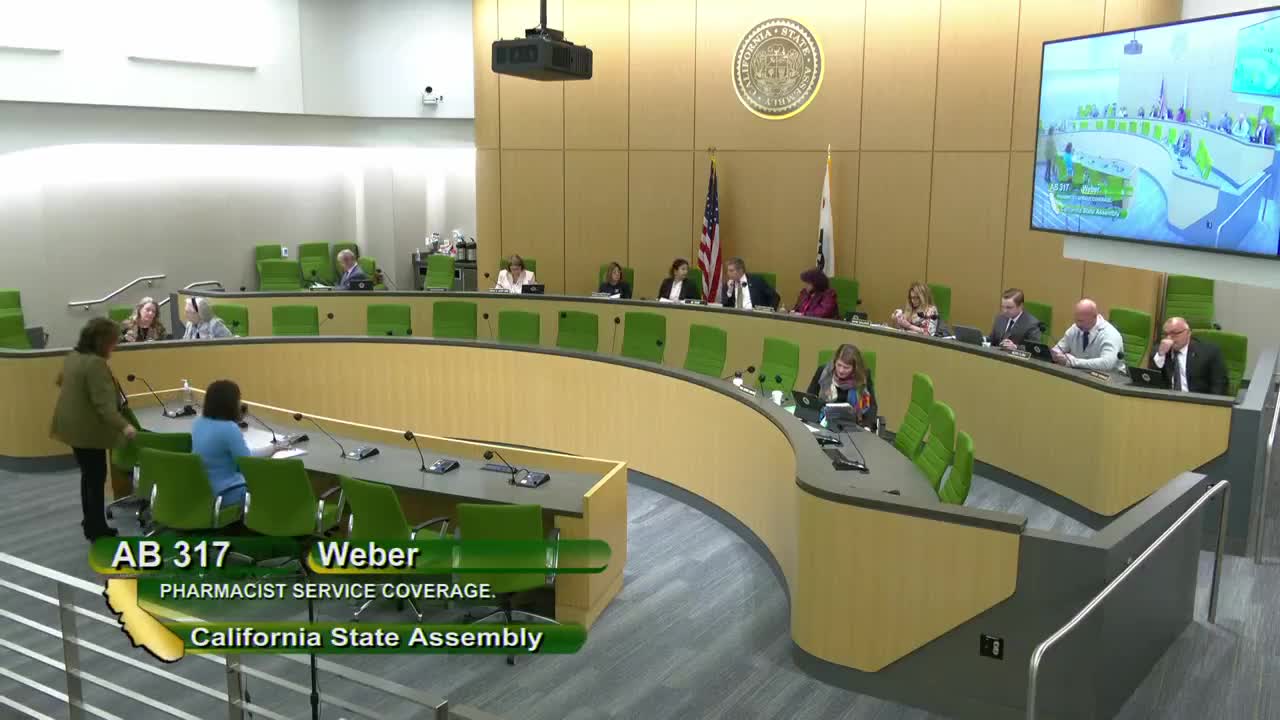
AB 317: Pharmacist service coverage.
- Session Year: 2023-2024
- House: Assembly
- Latest Version Date: 2023-10-07
Current Status:
Passed
(2023-10-07: Chaptered by Secretary of State - Chapter 322, Statutes of 2023.)
Introduced
In Committee
First Chamber
In Committee
Second Chamber
Enacted
Existing law, the Knox-Keene Health Care Service Plan Act of 1975, provides for the licensure and regulation of health care service plans by the Department of Managed Health Care under authority of the Director of the Department of Managed Health Care. Existing law provides for the regulation of health insurers by the Department of Insurance.
Existing law authorizes health care service plans and certain disability insurers, that offer coverage for a service that is within the scope of practice of a duly licensed pharmacist, to pay or reimburse the cost of the service performed by a pharmacist for the plan or insurer if the pharmacist otherwise provides services for the plan or insurer.
This bill would instead require a health care service plan and certain disability insurers that offer coverage for a service that is within the scope of practice of a duly licensed pharmacist to pay or reimburse the cost of services performed by a pharmacist at an in-network pharmacy or by a pharmacist at an out-of-network pharmacy if the health care service plan or insurer has an out-of-network pharmacy benefit. Because a willful violation of the bills requirements relative to health care service plans would be a crime, the bill would impose a state-mandated local program.
The California Constitution requires the state to reimburse local agencies and school districts for certain costs mandated by the state. Statutory provisions establish procedures for making that reimbursement.
This bill would provide that no reimbursement is required by this act for a specified reason.
(a) Every health care service plan that offers coverage for a service that is within the scope of practice of a duly licensed pharmacist shall pay or reimburse the cost of the service performed by a pharmacist at an in-network pharmacy or a pharmacist at an out-of-network pharmacy if the health care service plan has an out-of-network pharmacy benefit.
(b) Payment or reimbursement may be made pursuant to this section for a service performed by a duly licensed pharmacist only when all of the following conditions are met:
(1) The service performed is within the lawful scope of practice of the pharmacist.
(2) The coverage otherwise provides reimbursement for identical services performed by other licensed health care providers.
(c) Nothing in this section shall require the plan to pay a claim to more than one provider for duplicate service or be interpreted to limit physician reimbursement.
SEC. 2.Section 10125.1 of the Insurance Code is amended to read:10125.1.(a)Every insurer issuing disability insurance that covers hospital, medical, or surgical expenses that offers coverage for a service that is within the scope of practice of a duly licensed pharmacist shall pay or reimburse the cost of the service performed by a pharmacist at an in-network pharmacy or a pharmacist at an out-of-network pharmacy if the insurer has an out-of-network pharmacy benefit.
(b)Payment or reimbursement may be made pursuant to this section for a service performed by a duly licensed pharmacist only when all of the following conditions are met:
(1)The service performed is within the lawful scope of practice of the pharmacist.
(2)The coverage otherwise provides reimbursement for identical services performed by other licensed health care providers.
(c)Nothing in this section shall require the insurer to pay a claim to more than one provider for duplicate service or be interpreted to limit physician reimbursement.
SEC. 3.No reimbursement is required by this act pursuant to Section 6 of Article XIIIB of the California Constitution because the only costs that may be incurred by a local agency or school district will be incurred because this act creates a new crime or infraction, eliminates a crime or infraction, or changes the penalty for a crime or infraction, within the meaning of Section 17556 of the Government Code, or changes the definition of a crime within the meaning of Section 6 of Article XIIIB of the California Constitution.
(a) Every health care service plan that offers coverage for a service that is within the scope of practice of a duly licensed pharmacist shall pay or reimburse the cost of the service performed by a pharmacist at an in-network pharmacy or a pharmacist at an out-of-network pharmacy if the health care service plan has an out-of-network pharmacy benefit.
(b) Payment or reimbursement may be made pursuant to this section for a service performed by a duly licensed pharmacist only when all of the following conditions are met:
(1) The service performed is within the lawful scope of practice of the pharmacist.
(2) The coverage otherwise provides reimbursement for identical services performed by other licensed health care providers.
(c) Nothing in this section shall require the plan to pay a claim to more than one provider for duplicate service or be interpreted to limit physician reimbursement.
SEC. 2.Section 10125.1 of the Insurance Code is amended to read:10125.1.(a)Every insurer issuing group disability insurance that covers hospital, medical, or surgical expenses that offers coverage for a service that is within the scope of practice of a duly licensed pharmacist shall pay or reimburse the cost of the service performed by a pharmacist at an in-network pharmacy or a pharmacist at an out-of-network pharmacy if the insurer has an out-of-network pharmacy benefit.
(b)Payment or reimbursement may be made pursuant to this section for a service performed by a duly licensed pharmacist only when all of the following conditions are met:
(1)The service performed is within the lawful scope of practice of the pharmacist.
(2)The coverage otherwise provides reimbursement for identical services performed by other licensed health care providers.
(c)Nothing in this section shall require the insurer to pay a claim to more than one provider for duplicate service or be interpreted to limit physician reimbursement.
SEC. 3.No reimbursement is required by this act pursuant to Section 6 of Article XIIIB of the California Constitution because the only costs that may be incurred by a local agency or school district will be incurred because this act creates a new crime or infraction, eliminates a crime or infraction, or changes the penalty for a crime or infraction, within the meaning of Section 17556 of the Government Code, or changes the definition of a crime within the meaning of Section 6 of Article XIIIB of the California Constitution.
(a) Every health care service plan that offers coverage for a service that is within the scope of practice of a duly licensed pharmacist may shall pay or reimburse the cost of the service performed by a pharmacist for the plan if the pharmacist otherwise provides services for the plan. at an in-network pharmacy or a pharmacist at an out-of-network pharmacy if the health care service plan has an out-of-network pharmacy benefit.
(b) Payment or reimbursement may be made pursuant to this section for a service performed by a duly licensed pharmacist only when all of the following conditions are met:
(1) The service performed is within the lawful scope of practice of the pharmacist.
(2) The coverage otherwise provides reimbursement for identical services performed by other licensed health care providers.
(c) Nothing in this section shall require the plan to pay a claim to more than one provider for duplicate service or be interpreted to limit physician reimbursement.
SEC. 2.Section 10125.1 of the Insurance Code is amended to read:10125.1.(a)Every insurer issuing group disability insurance that covers hospital, medical, or surgical expenses that offers coverage for a service that is within the scope of practice of a duly licensed pharmacist may shall pay or reimburse the cost of the service performed by a pharmacist for the insurer if the pharmacist otherwise provides services for the insurer. at an in-network pharmacy or a pharmacist at an out-of-network pharmacy if the insurer has an out-of-network pharmacy benefit.
(b)Payment or reimbursement may be made pursuant to this section for a service performed by a duly licensed pharmacist only when all of the following conditions are met:
(1)The service performed is within the lawful scope of practice of the pharmacist.
(2)The coverage otherwise provides reimbursement for identical services performed by other licensed health care providers.
(c)Nothing in this section shall require the insurer to pay a claim to more than one provider for duplicate service or be interpreted to limit physician reimbursement.
SEC. 3.No reimbursement is required by this act pursuant to Section 6 of Article XIIIB of the California Constitution because the only costs that may be incurred by a local agency or school district will be incurred because this act creates a new crime or infraction, eliminates a crime or infraction, or changes the penalty for a crime or infraction, within the meaning of Section 17556 of the Government Code, or changes the definition of a crime within the meaning of Section 6 of Article XIIIB of the California Constitution.
|
Date
|
Status
|
|---|---|
| Oct 7, 2023 | Chaptered by Secretary of State - Chapter 322, Statutes of 2023. |
| Oct 7, 2023 | Approved by the Governor. |
| Sep 20, 2023 | Enrolled and presented to the Governor at 4 p.m. |
| Sep 13, 2023 | Senate amendments concurred in. To Engrossing and Enrolling. (Ayes 79. Noes 0. Page 3347.). |
| Sep 11, 2023 | Ordered to the unfinished business file. |
| Sep 11, 2023 | In Assembly. Held at Desk. |
| Sep 11, 2023 | Ordered to the Assembly. |
| Aug 29, 2023 | In Senate. Held at Desk. |
| Aug 28, 2023 | Ordered to the Senate. |
| Jun 29, 2023 | In Assembly. Concurrence in Senate amendments pending. May be considered on or after July 1 pursuant to Assembly Rule 77. |
| Jun 29, 2023 | Read third time. Passed. Ordered to the Assembly. (Ayes 39. Noes 0. Page 1826.). |
| Jun 27, 2023 | Read second time. Ordered to Consent Calendar. |
| Jun 26, 2023 | From committee: Be ordered to second reading file pursuant to Senate Rule 28.8 and ordered to Consent Calendar. |
| Jun 8, 2023 | Read second time and amended. Re-referred to Com. on APPR. |
| Jun 7, 2023 | From committee: Amend, and do pass as amended and re-refer to Com. on APPR with recommendation: To Consent Calendar. (Ayes 12. Noes 0.) (June 7). |
| May 10, 2023 | Referred to Com. on HEALTH. |
| Apr 27, 2023 | In Senate. Read first time. To Com. on RLS. for assignment. |
| Apr 27, 2023 | Read third time. Passed. Ordered to the Senate. (Ayes 79. Noes 0. Page 1362.) |
| Apr 20, 2023 | Read second time. Ordered to Consent Calendar. |
| Apr 19, 2023 | From committee: Do pass. To Consent Calendar. (Ayes 14. Noes 0.) (April 19). |
| Mar 22, 2023 | From committee: Do pass and re-refer to Com. on APPR. (Ayes 14. Noes 0.) (March 21). Re-referred to Com. on APPR. |
| Feb 9, 2023 | Referred to Com. on HEALTH. |
| Jan 27, 2023 | From printer. May be heard in committee February 26. |
| Jan 26, 2023 | Read first time. To print. |
|
Date
|
Description
|
Location
|
Votes
|
|
|---|---|---|---|---|
| Sep 13, 2023 | AB 317 Weber Concurrence in Senate Amendments | Assembly Floor |
Passed |
|
| Jun 29, 2023 | Consent Calendar AB317 Weber | Senate Floor |
Passed |
|
| Jun 7, 2023 | Do pass as amended, but first amend, and re-refer to the Committee on [Appropriations] with the recommendation: To Consent Calendar | Senate Standing Committee on Health |
Passed |
|
| Apr 27, 2023 | AB 317 Weber Consent Calendar Second Day Regular Session | Assembly Floor |
Passed |
|
| Apr 19, 2023 | Do pass. To Consent Calendar. | Assembly Standing Committee on Appropriations |
Passed |
|
| Mar 21, 2023 | Do pass and be re-referred to the Committee on [Appropriations] | Assembly Standing Committee on Health |
Passed |
This list shows positions taken on this bill by organizations on the date displayed, which is linked to the original source.
Positions by individuals are not included.
|
Organization
|
Position
|
Date
|
|---|---|---|
| Aids Healthcare Foundation | ** Support | |
| California Chronic Care Coalition | ** Support | |
| California Community Pharmacy Coalition | ** Support | |
| California Hospital Association | ** Support | |
| California Life Sciences | ** Support | |
| California Pharmacists Association | ** Support | |
| California State Board of Pharmacy | ** Support | |
| Loma Linda University Health | ** Support | |
| National Community Pharmacists Association | ** Support |
CONCURRENCE IN SENATE AMENDMENTS
CSA1 Bill Id:AB 317
Author:(Weber)
As Amended Ver:June 8, 2023
Majority vote
SUMMARY
Requires, instead of permits, a health care service plan (health plan) and specified disability insurers that offer coverage for a service that is within the scope of practice of a duly licensed pharmacist to pay or reimburse the cost of services performed by a pharmacist at an in-network pharmacy or by a pharmacist at an out-of-network pharmacy if the health plan or insurer has an out-of-network pharmacy benefit.
Senate Amendments
Delete the limitation to large group disability insurance to apply to all disability insurance.
COMMENTS
- Advanced Practice Pharmacist (APP) Scope of Practice. The Pharmacy Act authorizes pharmacists to furnish compounded drug products, transmit a valid prescription to another pharmacist, and administer drugs and biologicals pursuant to a prescriber's order. SB 493 (Hernandez), Chapter 469, Statutes of 2013, expanded the scope of pharmacists to authorize them to furnish self-administered hormonal contraceptives, vaccines, nicotine replacement products, and travel medications. Additionally, SB 493 authorized the Board of Pharmacy (BOP) to recognize APPs who can perform patient assessments, order and interpret drug therapy-related tests, refer patients to other health care providers, participate in the evaluation and management of diseases and health conditions in collaboration with other health care providers, and initiate, adjust, or discontinue drug therapy. AB 1535 (Bloom), Chapter 326, Statutes of 2014, additionally authorized pharmacists to furnish naloxone hydrochloride. Regulations were adopted by the BOP on the furnishing of naloxone and nicotine replacement products in January 2016 and the furnishing of self-administered hormonal contraceptives were adopted in April 2016. It should be noted that SB 493 only expanded the scope of practice for pharmacists and did not include a provision requiring reimbursement by health plans for APPs providing these services.
- Coverage and Increased Access to Services. The author provided a research brief from the Centers for Disease Control and Prevention describing the chronic disease management service opportunities for community pharmacists during the COVID-19 pandemic. Health system disruption caused by the COVID-19 pandemic prompted public health professionals to reevaluate potential barriers and opportunities to community pharmacist provision of chronic disease management services and to identify opportunities for maximizing community pharmacists' impact. According to the research brief, successfully demonstrating pharmacists' value and making the case for reimbursement from payors, as well as optimizing pharmacy workflow, are critical to maximizing pharmacists' impact in chronic disease prevention and management. The global disruption caused by the COVID-19 pandemic prompted policy makers, clinicians, and patients to consider how health care professionals deliver care, particularly as traditional avenues for care were overwhelmed with the COVID-19 response. Given their proximity to Americans, community pharmacists are well-positioned to fill gaps in chronic disease management services. Researchers sought to explore the role of community pharmacists in providing chronic disease management services to identify opportunities for maximizing community pharmacists' impact. The research brief states that given the current environment, investing in health care delivery models that include and reimburse pharmacists for their unique skill set in providing chronic disease management services is critical for both COVID-19 and chronic disease management. In the longer term, evaluating the effects of payment models for pharmacist-provided chronic disease management services on both access to and quality of care will be important. In the near term, building the case for reimbursement may entail data-driven prioritization that focuses on those services most closely aligned with pharmacists' unique skill sets. The research brief notes that future studies examining community pharmacists' roles in chronic disease care from the perspective of these health care professionals may be valuable. Nevertheless, community pharmacists can play a critical role in delivering chronic disease management services.
Despite pharmacists' standing as health care providers, according to the author, health plans do not reimburse pharmacists for services provided to patients. They are strictly reimbursed for dispensing of medications making it impossible for pharmacists to provide care which is within their scope of practice. According to the University of California at San Francisco (UCSF) School of Pharmacy, SB 493 was passed without any provision for how pharmacists would bill insurance providers, including Medicare or Medicaid, for their work, leaving only cash payments. UCSF states that because of their accessibility, expanding the role of pharmacists seems like an obvious way of easing physician shortages and helping underserved communities.
According to the Author
California is currently facing severe healthcare provider shortages. Since 2013, pharmacists have been recognized as providers with the authority to provide specific health services, including independently initiating and providing lifesaving HIV prevention medications, administering Food and Drug Administration (FDA) approved vaccinations, and perform sexually transmitted infection tests and urinary tract infection tests, among many others. However, the author states that pharmacists are not able to bill for all of the patient care services within their scope of practice. This bill removes a major barrier for pharmacists to bill commercial health plans for patient care services authorized by law. The author concludes that pharmacists must be allowed to enroll in commercial health plan provider networks and bill for covered services. Pharmacists are well trained and positioned to increase access to care and relieve strain on the healthcare system.
Arguments in Support
California Pharmacists Association (CPhA) states that the pandemic shone a glaring light on the fragility of the healthcare system as providers and facilities were stretched beyond capacity. It made it very clear that pharmacists, as one of the most accessible health care providers, must be utilized to provide care that is within their scope of practice. Unfortunately, this will not happen until health plans are required to reimburse them for providing care. Only because of federal and state funding pharmacists were reimbursed for providing COVID-19 vaccinations. Now that the state of emergency has ended, pharmacists are once again being denied payment despite the fact that they continue to provide crucial vaccinations to decrease the severity of COVID-19. Recognizing pharmacist's education and training, California has been a leader in granting pharmacists a number of authorities to provide direct care. These authorities include independently initiating and providing: hormonal contraception; travel medications; nicotine replacement products; pre-exposure prophylaxis post-exposure prophylaxis; and, all FDA and the Advisory Committee on Immunization recommended vaccinations to individuals three years and older. Furthermore, acknowledging the key role pharmacists play in managing chronic disease states, the 2021-22 Budget included funding for medication therapy management (MTM) as a covered benefit for Medi-Cal recipients. As the rate of chronic illness continues to rise, MTM will provide patients the necessary care to help manage their illnesses and prevent expensive hospitalization that often occurs as a result. There is strong evidence that the use of MTM by pharmacists is effective. It is especially effective for patients with multiple chronic conditions, complex medication therapies, and multiple prescribers. Yet, commercial health plans do not reimburse pharmacists for providing this care. It is well documented that managing chronic disease, the likelihood of hospitalization decreases significantly, thereby saving money to patients and payers. While the Legislature and the Governor have acknowledged the evolving role of pharmacists, health plans in California continue to discriminate against pharmacists by failing to reimburse them for providing critical care that is within their scope of practice. By treating pharmacists as other healthcare providers, this bill will enable pharmacists to provide and bill for patient care services within their scope of practice. CPhA concludes that this bill will increase access to care while relieving strains on the healthcare system.
Arguments in Opposition
There is no known formal opposition to this bill.
FISCAL COMMENTS
According to Senate Appropriations Committee, pursuant to Senate Rule 28.8, negligible state costs.
VOTES:
ASM HEALTH: 14-0-1
YES: Wood, Waldron, Aguiar-Curry, Arambula, Boerner Horvath, Flora, Vince Fong, Maienschein, McCarty, Joe Patterson, Rodriguez, Santiago, Villapudua, Weber
ABS, ABST OR NV: Wendy Carrillo
ASM APPROPRIATIONS: 14-0-2
YES: Holden, Megan Dahle, Calderon, Wendy Carrillo, Dixon, Mike Fong, Hart, Lowenthal, Mathis, Papan, Robert Rivas, Sanchez, Weber, Wilson
ABS, ABST OR NV: Bryan, Pellerin
ASSEMBLY FLOOR: 79-0-1
YES: Addis, Aguiar-Curry, Alanis, Alvarez, Arambula, Bains, Bauer-Kahan, Bennett, Berman, Boerner, Bonta, Bryan, Calderon, Juan Carrillo, Wendy Carrillo, Cervantes, Chen, Connolly, Megan Dahle, Davies, Dixon, Essayli, Flora, Mike Fong, Vince Fong, Friedman, Gabriel, Gallagher, Garcia, Gipson, Grayson, Haney, Hart, Holden, Hoover, Irwin, Jackson, Jones- Sawyer, Kalra, Lackey, Lee, Low, Lowenthal, Maienschein, Mathis, McCarty, McKinnor, Muratsuchi, Stephanie Nguyen, Ortega, Pacheco, Papan, Joe Patterson, Pellerin, Petrie-Norris, Quirk-Silva, Ramos, Reyes, Luz Rivas, Robert Rivas, Rodriguez, Blanca Rubio, Sanchez, Santiago, Schiavo, Soria, Ta, Ting, Valencia, Villapudua, Waldron, Wallis, Ward, Weber, Wicks, Wilson, Wood, Zbur, Rendon
ABS, ABST OR NV: Jim Patterson
SENATE FLOOR: 39-0-1
YES: Allen, Archuleta, Ashby, Atkins, Becker, Blakespear, Bradford, Caballero, Cortese, Dahle, Dodd, Durazo, Eggman, Glazer, Gonzalez, Grove, Hurtado, Jones, Laird, Limón, McGuire, Menjivar, Min, Newman, Nguyen, Niello, Ochoa Bogh, Padilla, Portantino, Roth, Rubio, Seyarto, Skinner, Smallwood-Cuevas, Stern, Umberg, Wahab, Wiener, Wilk
ABS, ABST OR NV: Alvarado-Gil
UPDATED
VERSION: June 8, 2023
CONSULTANT: Kristene Mapile / HEALTH / (916) 319-2097 FN: 0001182
SENATE RULES COMMITTEE Office of Senate Floor Analyses (916) 651-1520 Fax: (916) 327-4478 | AB 317 |
CONSENT
Bill No: AB 317
Author: Weber (D)
Amended: 6/8/23 in Senate
Vote: 21
SENATE HEALTH COMMITTEE: 12-0, 6/7/23
AYES: Eggman, Nguyen, Glazer, Gonzalez, Grove, Hurtado, Limón, Menjivar, Roth, Rubio, Wahab, Wiener
SENATE APPROPRIATIONS COMMITTEE: Senate Rule 28.8
ASSEMBLY FLOOR: 79-0, 4/27/23 (Consent) - See last page for vote
SUBJECT: Pharmacist service coverage
SOURCE: California Pharmacists Association
DIGEST:
This bill requires a health plan or disability insurer to pay or reimburse for the cost of pharmacist services provided at an in-network pharmacy or an out-of-network pharmacy if the health plan or insurer has an out-of-network pharmacy benefit, as specified in existing law.
ANALYSIS:
Existing law:
- Establishes the Department of Managed Health Care (DMHC) to regulate health plans under the Knox-Keene Health Care Service Plan Act of 1975 (Knox-Keene Act); California Department of Insurance (CDI) to regulate health and other insurance; and, the Department of Health Care Services (DHCS) to administer the Medi-Cal program. [HSC §1340, et seq., INS §106, et seq., and WIC §14000, et seq.]
- Authorizes every health plan and insurers issuing group disability insurance covering hospital, medical, or surgical expenses, that offer coverage for a service within the scope of practice of a duly licensed pharmacist, to pay or reimburse the cost of the services performed by a pharmacist for the plan or insurer if the pharmacist otherwise provides services for the plan or insurer. [HSC §1368.5 and INS §10125.1]
- Authorizes payment or reimbursement described in 2) above to be made for a service performed by a duly licensed pharmacist only when all of the following conditions are met:
- The service performed is within the lawful scope of practice of the pharmacist;
- The coverage otherwise provides reimbursement for identical services performed by other licensed health care providers; and,
- This does not require the plan or insurer to pay a claim to more than one provider for duplicate service or limit physician reimbursement. [HSC §1368.5 and INS §10125.1]
- Establishes licensure for an advanced practice pharmacist and requires the person to meet all of the following:
- Hold an active license to practice pharmacy issued that is in good standing; and,
- Satisfy any two of the following criteria:
- Earn certification in a relevant area of practice, including, but not limited to, ambulatory care, critical care, geriatric pharmacy, nuclear pharmacy, nutrition support pharmacy, oncology pharmacy, pediatric pharmacy, pharmacotherapy, or psychiatric pharmacy, from an organization recognized by the Accreditation Council for Pharmacy Education or another entity recognized by California Board of Pharmacy;
- Complete a postgraduate residency through an accredited postgraduate institution where at least 50% of the experience includes the provision of direct patient care services with interdisciplinary teams; or,
- Have provided clinical services to patients for at least one year under a collaborative practice agreement or protocol with a physician, advanced practice pharmacist, pharmacist practicing collaborative drug therapy management, or health system. [BPC §4210]
- Allows a pharmacist recognized by the Board of Pharmacy as an advanced practice pharmacist to do all of the following:
- Perform patient assessments;
- Order and interpret drug therapy-related tests;
- Refer patients to other health care providers;
- Participate in the evaluation and management of diseases and health conditions in collaboration with other health care providers; and,
- Initiate, adjust, or discontinue drug therapy, as specified. [BPC §1052.6]
This bill requires a health plan or disability insurer to pay or reimburse the cost of pharmacist services at an in-network pharmacy or a pharmacist at an out-of-network pharmacy if the health plan or insurer has an out-of-network pharmacy benefit, according to existing law described above.
Comments
According to the author, California is currently facing severe healthcare provider shortages. Since 2013, pharmacists have been recognized as providers with the authority to provide specific health services, including independently initiating and providing lifesaving HIV prevention medications, administering federal Food and Drug Administration (FDA) approved vaccinations, and perform sexually transmitted infection tests and urinary tract infection tests, among many others. However, pharmacists are not able to bill for all of the patient care services within their scope of practice. This bill removes a major barrier for pharmacists to bill commercial health plans for patient care services authorized by law. Pharmacists must be allowed to enroll in commercial health plan provider networks and bill for covered services. Pharmacists are well trained and positioned to increase access to care and relieve strain on the healthcare system.
Pharmacist health services. According to the Board of Pharmacy, under requirements in the California Business and Professions Code and the California Code of Regulations, qualified pharmacists are authorized to initiate and furnish the health services listed below to patients without a prescription:
- Self-administered hormonal contraception;
- Emergency contraception;
- Vaccinations;
- Travel medications;
- Nicotine replacement therapy;
- Naloxone; and,
- HIV preexposure prophylaxis and postexposure prophylaxis.
FISCAL EFFECT: Appropriation: No Fiscal Com.: Yes Local: Yes
SUPPORT: (Verified 6/26/23)
California Pharmacists Association (source)
AIDS Healthcare Foundation
California Chronic Care Coalition
California Community Pharmacy Coalition
California Hospital Association
California Life Sciences
California State Board of Pharmacy
Loma Linda University Health
National Community Pharmacists Association
OPPOSITION: (Verified 6/26/23)
None received
ARGUMENTS IN SUPPORT: According to the California Pharmacists Association, the pandemic highlighted the fragility of our healthcare system as providers and facilities were stretched beyond capacity. It made it very clear that pharmacists, as one of the most accessible health care providers, must be utilized to provide care that is within their scope of practice. Unfortunately, this will not happen until health plans are required to reimburse them for providing care. Only because of federal and state funding pharmacists were reimbursed for providing COVID-19 vaccinations. Now that the state of emergency has ended, pharmacists are once again being denied payment despite the fact that they continue to provide crucial vaccinations to decrease the severity of COVID. Recognizing pharmacist’s education and training, California has been a leader in granting pharmacists a number of authorities to provide direct care. While the California State Legislature and the Governor have acknowledged the evolving role of pharmacists, health plans in California continue to discriminate against pharmacists by failing to reimburse them for providing critical care that is within their scope of practice. By treating pharmacists as other healthcare providers, the bill will enable pharmacists to provide and bill for patient care services within their scope of practice. This will increase access to care while relieving strains on the healthcare system.
ASSEMBLY FLOOR: 79-0, 4/27/23
AYES: Addis, Aguiar-Curry, Alanis, Alvarez, Arambula, Bains, Bauer-Kahan, Bennett, Berman, Boerner, Bonta, Bryan, Calderon, Juan Carrillo, Wendy Carrillo, Cervantes, Chen, Connolly, Megan Dahle, Davies, Dixon, Essayli, Flora, Mike Fong, Vince Fong, Friedman, Gabriel, Gallagher, Garcia, Gipson, Grayson, Haney, Hart, Holden, Hoover, Irwin, Jackson, Jones-Sawyer, Kalra, Lackey, Lee, Low, Lowenthal, Maienschein, Mathis, McCarty, McKinnor, Muratsuchi, Stephanie Nguyen, Ortega, Pacheco, Papan, Joe Patterson, Pellerin, Petrie-Norris, Quirk-Silva, Ramos, Reyes, Luz Rivas, Robert Rivas, Rodriguez, Blanca Rubio, Sanchez, Santiago, Schiavo, Soria, Ta, Ting, Valencia, Villapudua, Waldron, Wallis, Ward, Weber, Wicks, Wilson, Wood, Zbur, Rendon
NO VOTE RECORDED: Jim Patterson
Prepared by: Teri Boughton / HEALTH / (916) 651-4111
6/28/23 11:07:35
**** END ****
SENATE COMMITTEE ON HEALTH
Senator Dr. Susan Talamantes Eggman, Chair
BILL NO: AB 317
AUTHOR: | Weber | ||
VERSION: | January 26, 2023 | ||
HEARING DATE: | June 7, 2023 | ||
CONSULTANT: | Teri Boughton | ||
SUBJECT: Pharmacist service coverage
SUMMARY:
- Requires a health plan or group disability insurer to pay or reimburse for the cost of pharmacist services provided at an in-network pharmacy or an out-of-network pharmacy if the health plan or insurer has an out-of-network pharmacy benefit, as specified in existing law.
Existing law:
- Establishes the Department of Managed Health Care (DMHC) to regulate health plans under the Knox-Keene Health Care Service Plan Act of 1975 (Knox-Keene Act); California Department of Insurance (CDI) to regulate health and other insurance; and, the Department of Health Care Services (DHCS) to administer the Medi-Cal program. [HSC §1340, et seq., INS §106, et seq., and WIC §14000, et seq.]
- Authorizes every health plan and insurers issuing group disability insurance covering hospital, medical, or surgical expenses, that offer coverage for a service within the scope of practice of a duly licensed pharmacist, to pay or reimburse the cost of the services performed by a pharmacist for the plan or insurer if the pharmacist otherwise provides services for the plan or insurer. [HSC §1368.5 and INS §10125.1]
- Authorizes payment or reimbursement described in #2) above to be made for a service performed by a duly licensed pharmacist only when all of the following conditions are met:
- The service performed is within the lawful scope of practice of the pharmacist;
- The coverage otherwise provides reimbursement for identical services performed by other licensed health care providers; and,
- This does not require the plan or insurer to pay a claim to more than one provider for duplicate service or limit physician reimbursement. [HSC §1368.5 and INS §10125.1]
- Establishes licensure for an advanced practice pharmacist and requires the person to meet all of the following:
- Hold an active license to practice pharmacy issued that is in good standing; and,
- Satisfy any two of the following criteria:
- Earn certification in a relevant area of practice, including, but not limited to, ambulatory care, critical care, geriatric pharmacy, nuclear pharmacy, nutrition support pharmacy, oncology pharmacy, pediatric pharmacy, pharmacotherapy, or psychiatric pharmacy, from an organization recognized by the Accreditation Council for Pharmacy Education or another entity recognized by California Board of Pharmacy;
- Complete a postgraduate residency through an accredited postgraduate institution where at least 50% of the experience includes the provision of direct patient care services with interdisciplinary teams; or,
- Have provided clinical services to patients for at least one year under a collaborative practice agreement or protocol with a physician, advanced practice pharmacist, pharmacist practicing collaborative drug therapy management, or health system. [BPC §4210]
- Allows a pharmacist recognized by the Board of Pharmacy as an advanced practice pharmacist to do all of the following:
- Perform patient assessments;
- Order and interpret drug therapy-related tests;
- Refer patients to other health care providers;
- Participate in the evaluation and management of diseases and health conditions in collaboration with other health care providers; and,
- Initiate, adjust, or discontinue drug therapy, as specified. [BPC §1052.6]
This bill: Requires a health plan or group disability insurer to pay or reimburse the cost of pharmacist services at an in-network pharmacy or a pharmacist at an out-of-network pharmacy if the health plan or insurer has an out-of-network pharmacy benefit, according to existing law described above.
FISCAL EFFECT:
According to the Assembly Appropriations Committee, minor and absorbable costs to CDI and DMHC, and no costs to DHCS.
PRIOR VOTES:
Assembly Floor: | 79 - 0 |
Assembly Appropriations Committee: | 14 - 0 |
Assembly Health Committee: | 14 - 0 |
COMMENTS:
- Author’s statement. According to the author, California is currently facing severe healthcare provider shortages. Since 2013, pharmacists have been recognized as providers with the authority to provide specific health services, including independently initiating and providing lifesaving HIV prevention medications, administering federal Food and Drug Administration (FDA) approved vaccinations, and perform sexually transmitted infection tests and urinary tract infection tests, among many others. However, pharmacists are not able to bill for all of the patient care services within their scope of practice. This bill removes a major barrier for pharmacists to bill commercial health plans for patient care services authorized by law. Pharmacists must be allowed to enroll in commercial health plan provider networks and bill for covered services. Pharmacists are well trained and positioned to increase access to care and relieve strain on the healthcare system.
- Pharmacist health services. According to the Board of Pharmacy, under requirements in the California Business and Professions Code and the California Code of Regulations, qualified pharmacists are authorized to initiate and furnish the health services listed below to patients without a prescription:
- Self-administered hormonal contraception;
- Emergency contraception;
- Vaccinations;
- Travel medications;
- Nicotine replacement therapy;
- Naloxone; and,
- HIV preexposure prophylaxis (PrEP) and postexposure prophylaxis (PEP).
- Related legislation. SB 339 (Wiener) authorizes a pharmacist to furnish up to a 90-day course of PrEP, or beyond 90-days if specified conditions are met, and requires the Board of Pharmacy to adopt emergency regulations to implement these provisions by July 1, 2024. SB 339 requires a health plans and health insurers to cover PrEP and PEP furnished by a pharmacist, including costs for the pharmacist’s services and related testing ordered by the pharmacist. SB 339 is pending in the Assembly Business and Professions Committee.
- Prior legislation. AB 1114 (Eggman, Chapter 602, Statutes of 2016), adds to the schedule of benefits pharmacist services, as specified, subject to DHCS protocols and utilization controls and requires the rate of reimbursement for pharmacist services to be at 85% of the fee schedule for physician services under the Medi-Cal program. AB 1114 requires these provisions to be implemented only to the extent that federal financial participation is available and the necessary federal approvals are obtained.
SB 493 (Hernandez, Chapter 469, Statutes of 2013) expands the scope of practice of a pharmacist to recognize an advanced practice pharmacist, permits pharmacists to furnish certain hormonal contraceptives, nicotine replacement products, and prescription medications for travel, as specified, and authorizes pharmacists to independently initiate and administer certain vaccines and treatments for severe allergic reactions.
SB 1596 (Kopp, Chapter 527, Statutes of 1996) authorizes health plans and insurers to reimburse pharmacists for providing covered services, within their scope of practice, for which other providers would be reimbursed.
- Support. According to the California Pharmacists Association, the pandemic highlighted the fragility of our healthcare system as providers and facilities were stretched beyond capacity. It made it very clear that pharmacists, as one of the most accessible health care providers, must be utilized to provide care that is within their scope of practice. Unfortunately, this will not happen until health plans are required to reimburse them for providing care. Only because of federal and state funding pharmacists were reimbursed for providing COVID-19 vaccinations. Now that the state of emergency has ended, pharmacists are once again being denied payment despite the fact that they continue to provide crucial vaccinations to decrease the severity of COVID. Recognizing pharmacist’s education and training, California has been a leader in granting pharmacists a number of authorities to provide direct care. While the California State Legislature and the Governor have acknowledged the evolving role of pharmacists, health plans in California continue to discriminate against pharmacists by failing to reimburse them for providing critical care that is within their scope of practice. By treating pharmacists as other healthcare providers, the bill will enable pharmacists to provide and bill for patient care services within their scope of practice. This will increase access to care while relieving strains on the healthcare system.
- Policy comment. It is not clear why the Insurance Code requirement of existing law as proposed to be amended by this bill is limited to health insurance coverage offered in the group market, excluding individual market coverage. The Health and Safety Code does not contain this exclusion of individual market coverage. The term “group” should be removed in order to make the requirements on health plans and insurers consistent.
SUPPORT AND OPPOSITION:
Support: California Pharmacists Association (sponsor)
AIDS Healthcare Foundation
California Community Pharmacy Coalition
California Chronic Care Coalition
California Hospital Association
California Life Sciences
California State Board of Pharmacy
Loma Linda University Health
National Community Pharmacists Association
Oppose: None received
-- END --
Date of Hearing: April 19, 2023
ASSEMBLY COMMITTEE ON APPROPRIATIONS
Chris Holden, Chair
ABPCA Bill Id:AB 317
Author:(Weber) – As Introduced Ver:January 26, 2023
Policy Committee: | Health | Vote: | 14 - 0 |
|
| ||
|
|
Urgency: No State Mandated Local Program: Yes Reimbursable: No
SUMMARY:
This bill requires a health care service plan (health plan) and certain disability insurers to pay or reimburse the cost of services performed by a pharmacist, as specified.
FISCAL EFFECT:
Minor and absorbable costs to the California Department of Insurance and the Department of Managed Health Care, and no costs to the Department of Health Care Services (DHCS).
COMMENTS:
- Purpose. According to the author:
California is currently facing severe healthcare provider shortages. Since 2013, pharmacists have been recognized as providers with the authority to provide specific health services, including independently initiating and providing lifesaving HIV prevention medications, administering FDA approved vaccinations, and perform sexually transmitted infection tests and urinary tract infection tests, among many others. However, pharmacists are not able to bill for all of the patient care services within their scope of practice.
AB 317 removes a major barrier for pharmacists to bill commercial health plans for patient care services authorized by law. Pharmacists must be allowed to enroll in commercial health plan provider networks and bill for covered services. Pharmacists are well trained and positioned to increase access to care and relieve strain on the healthcare system.
- Background.
- Reimbursement of Services by Pharmacists. Existing law allows, but does not require, a health plan or insurer to pay or reimburse the cost of a service by a pharmacist if (i) the service is within the scope of practice of a duly licensed pharmacist and (ii) if the pharmacist otherwise provides services for the plan or insurer and the coverage otherwise provides reimbursement for identical services performed by other licensed health care providers. [HSC §1368.5, INS §10125.1]
- Pharmacists’ Scope of Practice. SB 493 (Hernandez), Chapter 469, Statutes of 2013, expanded the scope of practice of pharmacists, authorizing them to furnish self-administered hormonal contraceptives, vaccines, nicotine replacement products, and travel medications. SB 493 authorized the Board of Pharmacy to recognize Advanced Practice Pharmacists (APPs), who can perform patient assessments, order and interpret drug therapy-related tests, refer patients to other health care providers, participate in the evaluation and management of diseases and health conditions in collaboration with other health care providers, and initiate, adjust, or discontinue drug therapy. AB 1535 (Bloom), Chapter 326, Statutes of 2014, additionally authorized pharmacists to furnish naloxone hydrochloride.
- Advanced Practice Pharmacists. The Board of Pharmacy licenses a pharmacist as an APP if the pharmacist is a pharmacy licensee in good standing and satisfies any two of the following criteria:
- Earns certification in a relevant area of practice, such as ambulatory care, critical care, geriatric pharmacy, oncology pharmacy, pediatric pharmacy, or psychiatric pharmacy, as specified.
- Completes a postgraduate residency through an accredited postgraduate institution where at least 50% of the experience includes the provision of direct patient care services with interdisciplinary teams.
- Has provided clinical services to patients for at least one year under a collaborative practice agreement or protocol with a physician, APP, pharmacist practicing collaborative drug therapy management, or health system.
- Prior Legislation. AB 1114 (Eggman), Chapter 602, Statutes of 2016, adds pharmacist services, as specified, to the schedule of benefits subject to DHCS protocols and utilization controls at 85% of the fee schedule for physician services under the Medi-Cal program.
Analysis Prepared by: Allegra Kim / APPR. / (916) 319-2081
Date of Hearing: March 21, 2023
ASSEMBLY COMMITTEE ON HEALTH
Jim Wood, Chair
ABPCA Bill Id:AB 317
Author:(Weber) – As Introduced Ver:January 26, 2023
SUBJECT: Pharmacist service coverage.
SUMMARY: Requires, instead of permits, a health care service plan (health plan) and specified disability insurers that offer coverage for a service that is within the scope of practice of a duly licensed pharmacist to pay or reimburse the cost of services performed by a pharmacist at an in-network pharmacy or by a pharmacist at an out-of-network pharmacy if the health plan or insurer has an out-of-network pharmacy benefit.
EXISTING LAW:
- Establishes the Department of Managed Health Care to regulate health plans, and the California Department of Insurance to regulate health insurance. [Health and Safety Code (HSC) §1340, et seq., Insurance Code (INS) §106, et seq.]
- Allows a health plan or insurer, as specified, that offers coverage for a service that is within the scope of practice of a duly licensed pharmacist to pay or reimburse the cost of the service by a pharmacist for the plan or insurer if the pharmacist otherwise provides services for the plan or insurer. Authorizes payment or reimbursement for a service performed by a duly licensed pharmacist only when all of the following conditions are met:
- The service performed is within the lawful scope of practice of the pharmacist; and,
- The coverage otherwise provides reimbursement for identical services performed by other licensed health care providers. [HSC §1368.5, INS §10125.1]
- Establishes licensure for an advanced practice pharmacist (APP) and requires the person to meet all of the following:
- Hold an active license to practice pharmacy issued that is in good standing; and,
- Satisfy any two of the following criteria:
- Earn certification in a relevant area of practice, including, but not limited to, ambulatory care, critical care, geriatric pharmacy, nuclear pharmacy, nutrition support pharmacy, oncology pharmacy, pediatric pharmacy, pharmacotherapy, or psychiatric pharmacy, from an organization recognized by the Accreditation Council for Pharmacy Education or another entity recognized by Board of Pharmacy (BOP);
- Complete a postgraduate residency through an accredited postgraduate institution where at least 50% of the experience includes the provision of direct patient care services with interdisciplinary teams; or,
- Have provided clinical services to patients for at least one year under a collaborative practice agreement or protocol with a physician, APP, pharmacist practicing collaborative drug therapy management, or health system. [Business and Professions Code (B&P) §4210]
- Allows a pharmacist recognized by the BOP as an APP to do all of the following:
- Perform patient assessments;
- Order and interpret drug therapy-related tests;
- Refer patients to other health care providers;
- Participate in the evaluation and management of diseases and health conditions in collaboration with other health care providers; and,
- Initiate, adjust, or discontinue drug therapy in the manner, as specified. [B&P §1052.6]
FISCAL EFFECT: Unknown. This bill has not yet been analyzed by a fiscal committee.
COMMENTS:
- PURPOSE OF THIS BILL. According to the author, California is currently facing severe healthcare provider shortages. Since 2013, pharmacists have been recognized as providers with the authority to provide specific health services, including independently initiating and providing lifesaving HIV prevention medications, administering Food and Drug Administration (FDA) approved vaccinations, and perform sexually transmitted infection tests and urinary tract infection tests, among many others. However, the author states that pharmacists are not able to bill for all of the patient care services within their scope of practice. This bill removes a major barrier for pharmacists to bill commercial health plans for patient care services authorized by law. The author concludes that pharmacists must be allowed to enroll in commercial health plan provider networks and bill for covered services. Pharmacists are well trained and positioned to increase access to care and relieve strain on the healthcare system.
- BACKGROUND.
- APP Scope of Practice. The Pharmacy Act authorizes pharmacists to furnish compounded drug products, transmit a valid prescription to another pharmacist, and administer drugs and biologicals pursuant to a prescriber's order. SB 493 (Hernandez), Chapter 469, Statutes of 2013, expanded the scope of pharmacists to authorize them to furnish self-administered hormonal contraceptives, vaccines, nicotine replacement products, and travel medications. Additionally, SB 493 authorized the BOP to recognize APPs who can perform patient assessments, order and interpret drug therapy-related tests, refer patients to other health care providers, participate in the evaluation and management of diseases and health conditions in collaboration with other health care providers, and initiate, adjust, or discontinue drug therapy. AB 1535 (Bloom), Chapter 326, Statutes of 2014, additionally authorized pharmacists to furnish naloxone hydrochloride. Regulations were adopted by the BOP on the furnishing of naloxone and nicotine replacement products in January 2016 and the furnishing of self-administered hormonal contraceptives were adopted in April 2016. It should be noted that SB 493 only expanded the scope of practice for pharmacists and did not include a provision requiring reimbursement by health plans for APPs providing these services.
- Coverage and Increased Access to Services. The author provided a research brief from the Centers for Disease Control and Prevention describing the chronic disease management service opportunities for community pharmacists during the COVID-19 pandemic. Health system disruption caused by the COVID-19 pandemic prompted public health professionals to reevaluate potential barriers and opportunities to community pharmacist provision of chronic disease management services and to identify opportunities for maximizing community pharmacists’ impact. According to the research brief, successfully demonstrating pharmacists’ value and making the case for reimbursement from payors, as well as optimizing pharmacy workflow, are critical to maximizing pharmacists’ impact in chronic disease prevention and management. The global disruption caused by the COVID-19 pandemic prompted policy makers, clinicians, and patients to consider how health care professionals deliver care, particularly as traditional avenues for care were overwhelmed with the COVID-19 response. Given their proximity to Americans, community pharmacists are well-positioned to fill gaps in chronic disease management services. Researchers sought to explore the role of community pharmacists in providing chronic disease management services to identify opportunities for maximizing community pharmacists’ impact. The research brief states that given the current environment, investing in health care delivery models that include and reimburse pharmacists for their unique skill set in providing chronic disease management services is critical for both COVID-19 and chronic disease management. In the longer term, evaluating the effects of payment models for pharmacist-provided chronic disease management services on both access to and quality of care will be important. In the near term, building the case for reimbursement may entail data-driven prioritization that focuses on those services most closely aligned with pharmacists’ unique skill sets. The research brief notes that future studies examining community pharmacists’ roles in chronic disease care from the perspective of these health care professionals may be valuable. Nevertheless, community pharmacists can play a critical role in delivering chronic disease management services.
Despite pharmacists’ standing as health care providers, according to the author, health plans do not reimburse pharmacists for services provided to patients. They are strictly reimbursed for dispensing of medications making it impossible for pharmacists to provide care which is within their scope of practice. According to the University of California at San Francisco (UCSF) School of Pharmacy, SB 493 was passed without any provision for how pharmacists would bill insurance providers, including Medicare or Medicaid, for their work, leaving only cash payments. UCSF states that because of their accessibility, expanding the role of pharmacists seems like an obvious way of easing physician shortages and helping underserved communities.
- SUPPORT. California Pharmacists Association (CPhA) states that the pandemic shone a glaring light on the fragility of the healthcare system as providers and facilities were stretched beyond capacity. It made it very clear that pharmacists, as one of the most accessible health care providers, must be utilized to provide care that is within their scope of practice. Unfortunately, this will not happen until health plans are required to reimburse them for providing care. Only because of federal and state funding pharmacists were reimbursed for providing COVID-19 vaccinations. Now that the state of emergency has ended, pharmacists are once again being denied payment despite the fact that they continue to provide crucial vaccinations to decrease the severity of COVID-19. Recognizing pharmacist’s education and training, California has been a leader in granting pharmacists a number of authorities to provide direct care. These authorities include independently initiating and providing: hormonal contraception; travel medications; nicotine replacement products; pre-exposure prophylaxis (PrEP) post-exposure prophylaxis; and, all FDA and the Advisory Committee on Immunization recommended vaccinations to individuals three years and older. Furthermore, acknowledging the key role pharmacists play in managing chronic disease states, the 2021-22 Budget included funding for medication therapy management (MTM) as a covered benefit for Medi-Cal recipients. As the rate of chronic illness continues to rise, MTM will provide patients the necessary care to help manage their illnesses and prevent expensive hospitalization that often occurs as a result. There is strong evidence that the use of MTM by pharmacists is effective. It is especially effective for patients with multiple chronic conditions, complex medication therapies, and multiple prescribers. Yet, commercial health plans do not reimburse pharmacists for providing this care. It is well documented that managing chronic disease, the likelihood of hospitalization decreases significantly, thereby saving money to patients and payers. While the Legislature and the Governor have acknowledged the evolving role of pharmacists, health plans in California continue to discriminate against pharmacists by failing to reimburse them for providing critical care that is within their scope of practice. By treating pharmacists as other healthcare providers, this bill will enable pharmacists to provide and bill for patient care services within their scope of practice. CPhA concludes that this bill will increase access to care while relieving strains on the healthcare system.
- RELATED LEGISLATION.
- SB 339 (Wiener) requires a health plan and health insurer to cover PrEP furnished by a pharmacist, including costs for the pharmacist’s services and related testing; and, includes PrEP furnished by a pharmacist as pharmacist services on the Medi-Cal schedule of benefits. SB 339 is currently pending in Senate Health Committee.
- SB 873 (Bradford) requires an enrollee’s or insured’s defined cost sharing for each prescription drug to be calculated at the point of sale based on a price that is reduced by an amount equal to 90% of all rebates received, or to be received, in connection with the dispensing or administration of the drug. Requires a health plan or health insurer to, among other things, pass through to each enrollee or insured at the point of sale a good faith estimate of the enrollee’s or insured’s decrease in cost sharing. Requires a health plan or health insurer to calculate an enrollee’s or insured’s defined cost sharing and provide that information to the dispensing pharmacy, as specified. SB 873 is pending in Senate Appropriations Committee.
- PREVIOUS LEGISLATION.
- AB 1114 (Eggman), Chapter 602, Statutes of 2016, adds to the schedule of benefits pharmacist services, as specified, subject to the Department of Health Care Services (DHCS) protocols and utilization controls. Requires the rate of reimbursement for pharmacist services to be at 85% of the fee schedule for physician services under the Medi-Cal program and would require DHCS to establish a fee schedule. Authorizes DHCS to implement these provisions by means of all-county letters, plan letters, plan or provider bulletins, or similar instructions, without taking regulatory action, until regulations are adopted, and requires DHCS to adopt those regulations by July 1, 2021. Requires these provisions to be implemented only to the extent that federal financial participation is available and the necessary federal approvals are obtained.
- SB 493 authorizes a pharmacist to administer drugs and biological products that have been ordered by a prescriber. Authorizes pharmacists to perform other functions, including, among other things, to furnish self-administered hormonal contraceptives, nicotine replacement products, and prescription medications not requiring a diagnosis that are recommended for international travelers, as specified. Authorizes pharmacists to order and interpret tests for the purpose of monitoring and managing the efficacy and toxicity of drug therapies, and to independently initiate and administer routine vaccinations, as specified. Establishes BOP recognition for an APP, as defined, and specifies the criteria for that recognition, and specifies additional functions that may be performed by an APP, including, among other things, performing patient assessments, and certain other functions, as specified. Authorizes BOP, by regulation, to set the fee for the issuance and renewal of APP recognition at the reasonable cost of regulating APPs pursuant to these provisions, not to exceed $300.
REGISTERED SUPPORT / OPPOSITION:
Support
California Pharmacists Association (sponsor)
National Community Pharmacists Association
Opposition
None on file.
Analysis Prepared by: Kristene Mapile / HEALTH / (916) 319-2097
Discussed in Hearing
View Older Hearings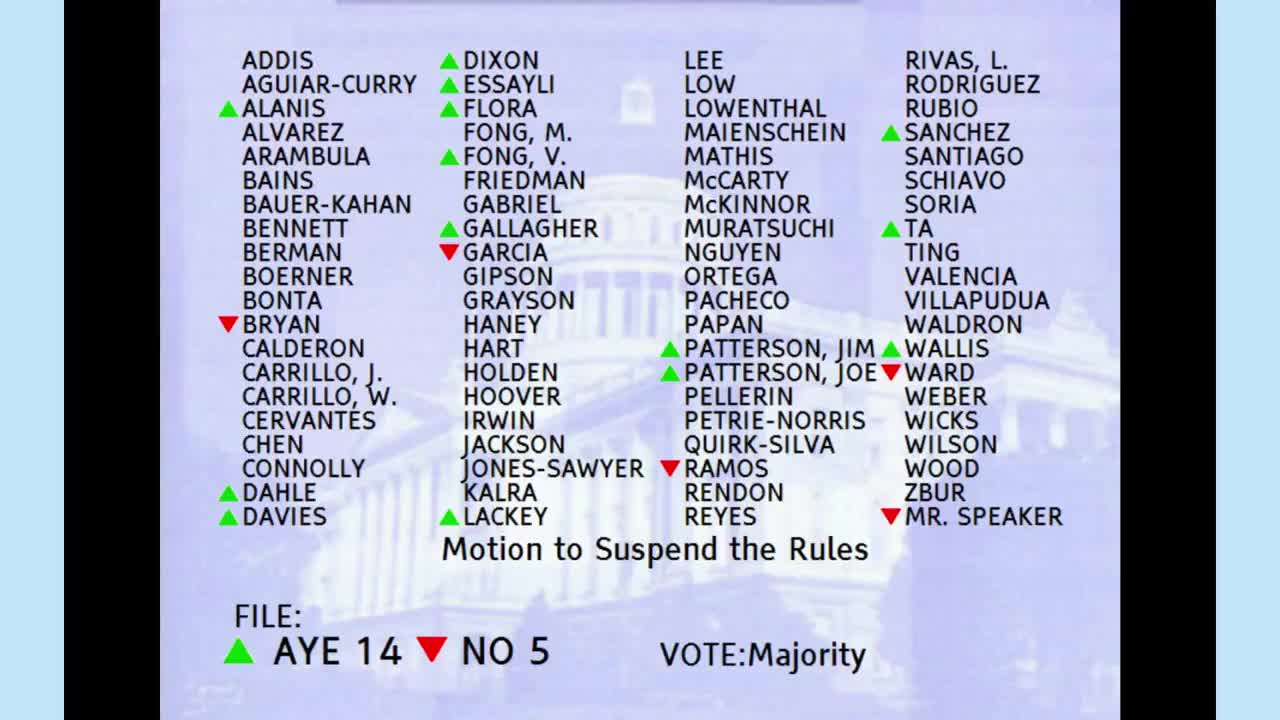
Bill Author

Bill Co-Author(s):