AB 318: Mobilehome Residency Law Protection Act.
- Session Year: 2023-2024
- House: Assembly
- Latest Version Date: 2023-10-11
Current Status:
Passed
(2023-10-11: Chaptered by Secretary of State - Chapter 736, Statutes of 2023.)
Introduced
In Committee
First Chamber
In Committee
Second Chamber
Enacted
Existing law, the Mobilehome Residency Law Protection Act, establishes the Mobilehome Residency Law Protection Program within the Department of Housing and Community Development to assist in taking and resolving complaints from homeowners relating to the Mobilehome Residency Law. Existing law requires the department to refer any alleged violations of law or regulations within the departments jurisdiction to the Division of Codes and Standards. Existing law requires the department to use good faith efforts to select the most severe, deleterious, and materially and economically impactful alleged violations, as specified.
This bill would delete the requirement that the department select the most severe, deleterious, and materially and economically impactful alleged violations.
Existing law requires the department to contract with one or more qualified and experienced nonprofit legal services providers and refer complaints selected for evaluation, as described, to those nonprofit legal services providers for possible enforcement action. If the department selects a complaint for referral to and evaluation by a nonprofit legal services provider, existing law requires the department to send a notice to the complaining party and the management or mobilehome park owner. Existing law requires that notice to advise the parties that they are required to negotiate the matter in good faith to resolve the matter in 25 days. If after 25 days either party responds to a department inquiry that the matter is not resolved, existing law authorizes the department to refer the complaint to an appropriate enforcement agency or a nonprofit legal services provider.
This bill would remove the requirement that the department send the above-described notice and the requirement that the parties negotiate the matter in good faith to resolve the matter in 25 days.
Existing law required the department, on January 1, 2023, to submit a written report to the Legislature outlining data collected from the program and to make that report available on its internet website, that included, among other things, the amount of registration fees collected, the total number of complaint allegations received, the total number of complaint allegations processed, and the total number of complaint allegations referred to another enforcement agency or to a nonprofit legal services provider.
This bill would instead require the above-described information to be included in the departments annual report, as specified.
Under existing law, the Mobilehome Residency Law Protection Act is repealed on January 1, 2024.
This bill would extend the above-described January 1, 2024, repeal date to January 1, 2027.
Existing law, the Administrative Procedure Act, sets forth procedures a state agency is required to follow when adopting, amending, or repealing any regulation, including providing public notice and time for public comment, with exceptions for emergency regulations in the case of a situation that calls for immediate action to avoid serious harm to the public peace, health, safety, or general welfare.
This bill would authorize the department to adopt regulations as necessary or appropriate to implement the Mobilehome Residency Law Protection Program. This bill, until January 1, 2027, would deem the adoption and readoption of regulations to be an emergency and necessary for the immediate preservation of the public peace, health and safety, or general welfare for purposes of the Administrative Procedure Act and would exempt the department from the requirement that it describe facts showing the need for immediate action.
This bill would require the department, before submitting an emergency regulation to the Office of Administrative Law, to solicit and consider stakeholder comments in the design and implementation of the program in at least one 30-day public comment period and provide responses in writing to substantive written comments received during the comment period.
Existing law, the Mobilehome Residency Law Protection Act, establishes the Mobilehome Residency Law Protection Program within the Department of Housing and Community Development to resolve complaints from homeowners relating to the Mobilehome Residency Law. Existing law requires the department to refer any alleged violations of law or regulations within the departments jurisdiction to the Division of Codes and Standards. Existing law requires the department to use good faith efforts to select the most severe, deleterious, and materially and economically impactful alleged violations, as specified.
This bill would delete the requirement that the department select the most severe, deleterious, and materially and economically impactful alleged violations.
Existing law required the department, on January 1, 2023, to submit a written report to the Legislature outlining data collected from the program and to make that report available on its internet website, that included, among other things, the amount of registration fees collected, the total number of complaint allegations received, the total number of complaint allegations processed, and the total number of complaint allegations referred to another enforcement agency or to a nonprofit legal services provider.
This bill would require the department to submit that written report to the Legislature and make it available on its internet website on January 1 of each year. instead require the above-described information to be included in the departments annual report, as specified.
Under existing law, the Mobilehome Residency Law Protection Act is repealed on January 1, 2024.
This bill would extend the above-described January 1, 2024, repeal date to January 1, 2027.
Existing law, the Administrative Procedure Act, sets forth procedures a state agency is required to follow when adopting, amending, or repealing any regulation, including providing public notice and time for public comment, with exceptions for emergency regulations in the case of a situation that calls for immediate action to avoid serious harm to the public peace, health, safety, or general welfare.
This bill would authorize the department to adopt regulations as necessary or appropriate to implement the Mobilehome Residency Law Protection Program. This bill, until January 1, 2027, would deem the adoption and readoption of regulations to be an emergency and necessary for the immediate preservation of the public peace, health and safety, or general welfare for purposes of the Administrative Procedure Act and would exempt the department from the requirement that it describe facts showing the need for immediate action.
This bill would require the department, before submitting an emergency regulation to the Office of Administrative Law, to solicit and consider stakeholder comments in the design and implementation of the program in at least one 30-day public comment period and provide responses in writing to substantive written comments received during the comment period.
Existing law, the Mobilehome Residency Law Protection Act, establishes the Mobilehome Residency Law Protection Program within the Department of Housing and Community Development to resolve complaints from homeowners relating to the Mobilehome Residency Law. Under Existing law requires the department to refer any alleged violations of law or regulations within the departments jurisdiction to the Division of Codes and Standards. Existing law requires the department to use good faith efforts to select the most severe, deleterious, and materially and economically impactful alleged violations, as specified.
This bill would delete the requirement that the department select the most severe, deleterious, and materially and economically impactful alleged violations.
Existing law required the department, on January 1, 2023, to submit a written report to the Legislature outlining data collected from the program and to make that report available on its internet website, that included, among other things, the amount of registration fees collected, the total number of complaint allegations received, the total number of complaint allegations processed, and the total number of complaint allegations referred to another enforcement agency or to a nonprofit legal services provider.
This bill would require the department to submit that written report to the Legislature and make it available on its internet website on January 1 of each year.
Under existing law, the act Mobilehome Residency Law Protection Act is repealed on January 1, 2024.
This bill would extend the above-described January 1, 2024, repeal date to January 1, 2027.
Existing law, the Mobilehome Residency Law Protection Act, establishes the Mobilehome Residency Law Protection Program within the Department of Housing and Community Development to resolve complaints from homeowners relating to the Mobilehome Residency Law. Under existing law, the act is repealed on January 1, 2024.
This bill would remove extend the above-described January 1, 2024, repeal date and make the act operative indefinitely. to January 1, 2027.
Existing law, the Mobilehome Residency Law Protection Act, establishes the Mobilehome Residency Law Protection Program within the Department of Housing and Community Development to resolve complaints from homeowners relating to the Mobilehome Residency Law. Under existing law, the act is repealed on January 1, 2024.
This bill would remove the January 1, 2024, repeal date and make the act operative indefinitely.
(a)The Mobilehome Residency Law Protection Program is hereby established within the department.
(b)Except as provided in subdivision (c), the department shall provide assistance in taking complaints, and helping to resolve and coordinate the resolution of those complaints, from homeowners relating to the Mobilehome Residency Law.
(c)The department shall not arbitrate, mediate, negotiate, or provide legal advice in connection with mobilehome park rent disputes, lease or rental agreements, or disputes arising from lease or rental agreements, but may provide information on these issues to the complaining party, management, or other responsible party.
(d)(1)The department shall refer any alleged violations of law or regulations within the departments jurisdiction to the Division of Codes and Standards within the department.
(2)The department may refer any alleged violations of law or regulations that are not within the jurisdiction of the department, including, but not limited to, rent disputes, criminal activity, or alleged discrimination, to the appropriate enforcement agency.
(e)(1)Upon receipt of a complaint, the department shall send the complaining party a letter confirming receipt and referencing those provisions of the Mobilehome Residency Law, if applicable, that may pertain to the complaint. If the department refers the complaint to an appropriate enforcement agency, pursuant to paragraph (2) of subdivision (d), the letter shall communicate that referral.
(2)A letter issued pursuant to this subdivision shall be in the same medium as the complaint to which the letter is in response.
(f)In evaluating a complaint, the department may request a copy of the lease, park rules, or any other relevant written documents applicable to a complaint from management. Management shall provide the information requested pursuant to this paragraph within 15 business days from the postmark date or the electronic transmission of the request. The department shall establish a mechanism for management to provide the documents electronically. Failure to comply with this requirement shall result in a noncompliance citation of two hundred fifty dollars ($250) for each failure to comply. The department shall not provide the documents it receives pursuant to this paragraph to any person or entity other than the nonprofit legal services provider, an appropriate enforcement agency, or the complainant.
(g)If the department selects a complaint for referral to and evaluation by a nonprofit legal services provider pursuant to Section 18803, it shall send a notice to the complaining party and the management or mobilehome park owner.
(h)The department may aggregate multiple complaints submitted to the program into a single investigation. Multiple complaints may be aggregated within a single mobilehome park, or within multiple mobilehome parks where there is either:
(1)A common mobilehome park owner or mobilehome park owner entity, or common principals, partners, shareholders, members, or legal ownership amongst the multiple mobilehome parks.
(2)A common third-party or off-site management entity which manages the multiple mobilehome parks.
(i)Participation in the administrative procedures authorized by this part shall not be deemed to be grounds to authorize a delay in the prosecution of an unlawful detainer action. However, this section shall not be construed as preventing a court from exercising any power to delay based upon any other grounds.
(j)This section shall become operative on July 1, 2020.
(k)(1)The department may adopt regulations as necessary or appropriate to implement this section.
(2)Until January 1, 2027, the adoption and readoption of regulations to implement this section shall be deemed to be an emergency and necessary for the immediate preservation of the public peace, health and safety, or general welfare for purposes of Sections 11346.1 and 11349.6 of the Government Code, and the department is hereby exempted from the requirement that it describe facts showing the need for immediate action.
(3)Before submitting an emergency regulation to the office the department shall solicit and consider stakeholder comments in the design and implementation of the program in at least one 30-day public comment period. The department shall provide responses in writing to substantive written comments received during the comment period.
SEC. 2.Section 18805 of the Health and Safety Code is amended to read:18805.(a)The department shall include all of the following information in the annual report submitted pursuant to Section 50408:
(1)The amount of registration fees collected pursuant to Section 18804 and the amount expended on the program.
(2)The total number of complaint allegations received, the total number of complaint allegations processed, and the total number of complaint allegations referred to another enforcement agency or to a nonprofit legal services provider.
(3)The type of complaint allegations received.
(4)To the extent possible, the outcome of each complaint received by the program.
(5)Activities completed by a nonprofit legal services provider contracted with pursuant to the program.
(6)The most common complaint allegations.
(7)Recommendations for any statutory or administrative changes to the program.
(b)The department shall additionally report the information required pursuant to paragraphs (1) to (3), inclusive, of subdivision (a) to the task force convened pursuant to Section 18400.3.
SEC. 3.Section 18806 of the Health and Safety Code is amended to read:18806.This part shall remain in effect only until January 1, 2027, and as of that date is repealed.
(a)The Mobilehome Residency Law Protection Program is hereby established within the department.
(b)Except as provided in subdivision (c), the department shall provide assistance in taking complaints, and helping to resolve and coordinate the resolution of those complaints, from homeowners relating to the Mobilehome Residency Law.
(c)The department shall not arbitrate, mediate, negotiate, or provide legal advice in connection with mobilehome park rent disputes, lease or rental agreements, or disputes arising from lease or rental agreements, but may provide information on these issues to the complaining party, management, or other responsible party.
(d)(1)The department shall refer any alleged violations of law or regulations within the departments jurisdiction to the Division of Codes and Standards within the department.
(2)The department may refer any alleged violations of law or regulations that are not within the jurisdiction of the department, including, but not limited to, rent disputes, criminal activity, or alleged discrimination, to the appropriate enforcement agency.
(e)(1)Upon receipt of a complaint, the department shall send the complaining party a letter confirming receipt and referencing those provisions of the Mobilehome Residency Law, if applicable, that may pertain to the complaint. If the department refers the complaint to an appropriate enforcement agency, pursuant to paragraph (2) of subdivision (d), the letter shall communicate that referral.
(2)A letter issued pursuant to this subdivision shall be in the same medium as the complaint to which the letter is in response.
(f)In evaluating a complaint, the department may request a copy of the lease, park rules, or any other relevant written documents applicable to a complaint from management. Management shall provide the information requested pursuant to this paragraph within 15 business days from the postmark date or the electronic transmission of the request. The department shall establish a mechanism for management to provide the documents electronically. Failure to comply with this requirement shall result in a noncompliance citation of two hundred fifty dollars ($250) for each failure to comply. The department shall not provide the documents it receives pursuant to this paragraph to any person or entity other than the nonprofit legal services provider, an appropriate enforcement agency, or the complainant.
(g)If the department selects a complaint for referral to and evaluation by a nonprofit legal services provider pursuant to Section 18803, it shall send a notice to the complaining party and the management or mobilehome park owner.
(h)The department may aggregate multiple complaints submitted to the program into a single investigation. Multiple complaints may be aggregated within a single mobilehome park, or within multiple mobilehome parks where there is either:
(1)A common mobilehome park owner or mobilehome park owner entity, or common principals, partners, shareholders, members, or legal ownership amongst the multiple mobilehome parks.
(2)A common third-party or off-site management entity which manages the multiple mobilehome parks.
(i)Participation in the administrative procedures authorized by this part shall not be deemed to be grounds to authorize a delay in the prosecution of an unlawful detainer action. However, this section shall not be construed as preventing a court from exercising any power to delay based upon any other grounds.
(j)This section shall become operative on July 1, 2020.
(k)(1)The department may adopt regulations as necessary or appropriate to implement this section.
(2)Until January 1, 2027, the adoption and readoption of regulations to implement this section shall be deemed to be an emergency and necessary for the immediate preservation of the public peace, health and safety, or general welfare for purposes of Sections 11346.1 and 11349.6 of the Government Code, and the department is hereby exempted from the requirement that it describe facts showing the need for immediate action.
(3)Before submitting an emergency regulation to the office the department shall solicit and consider stakeholder comments in the design and implementation of the program in at least one 30-day public comment period. The department shall provide responses in writing to substantive written comments received during the comment period.
SEC. 2.Section 18805 of the Health and Safety Code is amended to read:18805.(a)On January 1 of each year, the department shall submit a written report to the Legislature outlining data collected from the program and make that report available on its internet website. The data collected shall include, but not be limited to, all of the following:The department shall include all of the following information in the annual report submitted pursuant to Section 50408:
(1)The amount of registration fees collected pursuant to Section 18804 and the amount expended on the program.
(2)The total number of complaint allegations received, the total number of complaint allegations processed, and the total number of complaint allegations referred to another enforcement agency or to a nonprofit legal services provider.
(3)The type of complaint allegations received.
(4)To the extent possible, the outcome of each complaint received by the program.
(5)Activities completed by a nonprofit legal services provider contracted with pursuant to the program.
(6)The most common complaint allegations.
(7)Recommendations for any statutory or administrative changes to the program.
(b)The report required to be submitted to the Legislature by this section shall be submitted in compliance with Section 9795 of the Government Code.(c)(b)The department shall additionally report the information required pursuant to paragraphs (1) to (3), inclusive, of subdivision (a) to the task force convened pursuant to Section 18400.3.
SEC. 3.Section 18806 of the Health and Safety Code is amended to read:18806.This part shall remain in effect only until January 1, 2027, and as of that date is repealed.
(a)The Mobilehome Residency Law Protection Program is hereby established within the department.
(b)Except as provided in subdivision (c), the department shall provide assistance in taking complaints, and helping to resolve and coordinate the resolution of those complaints, from homeowners relating to the Mobilehome Residency Law.
(c)The department shall not arbitrate, mediate, negotiate, or provide legal advice in connection with mobilehome park rent disputes, lease or rental agreements, or disputes arising from lease or rental agreements, but may provide information on these issues to the complaining party, management, or other responsible party.
(d)(1)The department shall refer any alleged violations of law or regulations within the departments jurisdiction to the Division of Codes and Standards within the department.
(2)The department may refer any alleged violations of law or regulations that are not within the jurisdiction of the department, including, but not limited to, rent disputes, criminal activity, or alleged discrimination, to the appropriate enforcement agency.
(e)(1)Upon receipt of a complaint, the department shall send the complaining party a letter confirming receipt and referencing those provisions of the Mobilehome Residency Law, if applicable, that may pertain to the complaint. If the department refers the complaint to an appropriate enforcement agency, pursuant to paragraph (2) of subdivision (d), the letter shall communicate that referral.
(2)A letter issued pursuant to this subdivision shall be in the same medium as the complaint to which the letter is in response.
(f)(1)The department shall use good faith efforts to select the most severe, deleterious, and materially and economically impactful alleged violations of the Mobilehome Residency Law. The department shall select a sample of these complaints that satisfy geographic representation of the state for evaluation.(2)(f)In evaluating a complaint, the department may request a copy of the lease, park rules, or any other relevant written documents applicable to a complaint from management. Management shall provide the information requested pursuant to this paragraph within 15 business days from the postmark date or the electronic transmission of the request. The department shall establish a mechanism for management to provide the documents electronically. Failure to comply with this requirement shall result in a noncompliance citation of two hundred fifty dollars ($250) for each failure to comply. The department shall not provide the documents it receives pursuant to this paragraph to any person or entity other than the nonprofit legal services provider, an appropriate enforcement agency, or the complainant.
(g)If the department selects a complaint for referral to and evaluation by a nonprofit legal services provider pursuant to Section 18803, it shall send a notice to the complaining party and the management or mobilehome park owner. The notice shall advise the parties that they are required to negotiate the matter in good faith to resolve the matter in 25 days. If after 25 days either party responds to a department inquiry that the matter is not resolved, the department may refer the complaint to an appropriate enforcement agency or a nonprofit legal services provider. The department may combine this notice with the letter described in paragraph (e).
(h)The department may aggregate multiple complaints submitted to the program into a single investigation. Multiple complaints may be aggregated within a single mobilehome park, or within multiple mobilehome parks where there is either:
(1)A common mobilehome park owner or mobilehome park owner entity, or common principals, partners, shareholders, members, or legal ownership amongst the multiple mobilehome parks.
(2)A common third-party or off-site management entity which manages the multiple mobilehome parks.
(i)Participation in the administrative procedures authorized by this part shall not be deemed to be grounds to authorize a delay in the prosecution of an unlawful detainer action. However, this section shall not be construed as preventing a court from exercising any power to delay based upon any other grounds.
(j)This section shall become operative on July 1, 2020.
SEC. 2.Section 18805 of the Health and Safety Code is amended to read:18805.(a)On January 1, 2023, 1 of each year, the department shall submit a written report to the Legislature outlining data collected from the program and make that report available on its Internet Web site. internet website. The data collected shall include, but not be limited to, all of the following:
(1)The amount of registration fees collected pursuant to Section 18804 and the amount expended on the program.
(2)The total number of complaint allegations received, the total number of complaint allegations processed, and the total number of complaint allegations referred to another enforcement agency or to a nonprofit legal services provider.
(3)The type of complaint allegations received.
(4)To the extent possible, the outcome of each complaint received by the program.
(5)Activities completed by a nonprofit legal services provider contracted with pursuant to the program.
(6)The most common complaint allegations.
(7)Recommendations for any statutory or administrative changes to the program.
(b)The report required to be submitted to the Legislature by this section shall be submitted in compliance with Section 9795 of the Government Code.
(c)The department shall additionally report the information required pursuant to paragraphs (1) to (3), inclusive, of subdivision (a) to the task force convened pursuant to Section 18400.3.
SECTION 1.SEC. 3.Section 18806 of the Health and Safety Code is amended to read:18806.This part shall remain in effect only until January 1, 2027, and as of that date is repealed.
This part shall remain in effect only until January 1, 2024, 2027, and as of that date is repealed.
SECTION 1.Section 18806 of the Health and Safety Code is repealed.|
Date
|
Status
|
|---|---|
| Oct 11, 2023 | Chaptered by Secretary of State - Chapter 736, Statutes of 2023. |
| Oct 11, 2023 | Approved by the Governor. |
| Sep 20, 2023 | Enrolled and presented to the Governor at 4 p.m. |
| Sep 13, 2023 | Senate amendments concurred in. To Engrossing and Enrolling. (Ayes 55. Noes 15. Page 3469.). |
| Sep 13, 2023 | In Assembly. Concurrence in Senate amendments pending. |
| Sep 13, 2023 | Read third time. Passed. Ordered to the Assembly. (Ayes 29. Noes 7. Page 2702.). |
| Sep 7, 2023 | Read second time. Ordered to third reading. |
| Sep 6, 2023 | Read third time and amended. Ordered to second reading. |
| Sep 5, 2023 | Read second time. Ordered to third reading. |
| Sep 1, 2023 | From committee: Do pass. (Ayes 5. Noes 2.) (September 1). |
| Aug 14, 2023 | In committee: Referred to APPR suspense file. |
| Jul 6, 2023 | From committee: Do pass and re-refer to Com. on APPR. (Ayes 9. Noes 2.) (July 6). Re-referred to Com. on APPR. |
| Jun 23, 2023 | From committee chair, with author's amendments: Amend, and re-refer to committee. Read second time, amended, and re-referred to Com. on JUD. |
| Jun 21, 2023 | From committee: Do pass and re-refer to Com. on JUD. (Ayes 9. Noes 1.) (June 20). Re-referred to Com. on JUD. |
| Jun 14, 2023 | Referred to Coms. on HOUSING and JUD. |
| Jun 1, 2023 | In Senate. Read first time. To Com. on RLS. for assignment. |
| May 31, 2023 | Read third time. Passed. Ordered to the Senate. (Ayes 56. Noes 17. Page 1968.) |
| May 18, 2023 | Read second time. Ordered to third reading. |
| May 18, 2023 | From committee: Do pass. (Ayes 11. Noes 4.) (May 18). |
| Apr 19, 2023 | In committee: Set, first hearing. Referred to APPR. suspense file. |
| Apr 3, 2023 | Re-referred to Com. on APPR. |
| Mar 30, 2023 | Read second time and amended. |
| Mar 29, 2023 | From committee: Amend, and do pass as amended and re-refer to Com. on APPR. (Ayes 6. Noes 2.) (March 29). |
| Feb 9, 2023 | Referred to Com. on H. & C.D. |
| Jan 27, 2023 | From printer. May be heard in committee February 26. |
| Jan 26, 2023 | Read first time. To print. |
|
Date
|
Description
|
Location
|
Votes
|
|
|---|---|---|---|---|
| Sep 13, 2023 | AB 318 Addis Concurrence in Senate Amendments | Assembly Floor |
Passed |
|
| Sep 13, 2023 | Assembly 3rd Reading AB318 Addis By Laird | Senate Floor |
Passed |
|
| Sep 1, 2023 | Do pass | Senate Standing Committee on Appropriations |
Passed |
|
| Aug 14, 2023 | Placed on suspense file | Senate Standing Committee on Appropriations |
Passed |
|
| Jul 6, 2023 | Do pass, but first be re-referred to the Committee on [Appropriations] | Senate Standing Committee on Judiciary |
Passed |
|
| Jun 20, 2023 | Do pass, but first be re-referred to the Committee on [Judiciary] | Senate Standing Committee on Housing |
Passed |
|
| May 31, 2023 | AB 318 Addis Assembly Third Reading | Assembly Floor |
Passed |
|
| May 18, 2023 | Do pass. | Assembly Standing Committee on Appropriations |
Passed |
|
| Mar 29, 2023 | Do pass as amended and be re-referred to the Committee on [Appropriations] | Assembly Standing Committee on Housing and Community Development |
Passed |
This list shows positions taken on this bill by organizations on the date displayed, which is linked to the original source.
Positions by individuals are not included.
|
Organization
|
Position
|
Date
|
|---|---|---|
| California Commission on Aging | ** Support | |
| California Democratic Party | ** Support | |
| California Mobilehome Parkowners Alliance | ** Against | |
| County of Santa Cruz | ** Support | |
| Golden State Manufactured-home Owners League, Inc. | ** Support | |
| Santa Cruz County Manufactured and Mobilehome Commission | ** Support | |
| Western Manufactured Housing Communities Association | ** Against |
CONCURRENCE IN SENATE AMENDMENTS
CSA1 Bill Id:AB 318
Author:(Addis)
As Amended Ver:September 6, 2023
Majority vote
SUMMARY
Extends the sunset on the Mobilehome Residency Law Protection Program (MRLPP), which provides for the administrative review and referral of complaints alleging violations of the Mobilehome Residency Law (MRL), from January 1, 2024 to January 1, 2027, and makes several changes to the program, as specified.
Senate Amendments:
- Eliminate the requirement for the Department of Housing and Community Development (HCD) to select the most severe, deleterious, and materially and economically impactful alleged violations of the MRL.
- Eliminates the requirement for parties to a complaint to negotiate the matter in good faith for 25 days before HCD may refer the complaint to an appropriate enforcement agency or a nonprofit legal services provider.
- Makes the MRLPP report due annually.
- Authorizes HCD to adopt regulations or readopt regulations to implement the MRLPP via the Administrative Procedure Act's emergency regulations process, and requires HCD to solicit and consider stakeholder comments prior to submitting an emergency regulation.
COMMENTS
Background: More than 700,000 people live in California's approximately 4,700 mobilehome parks. Mobilehomes are not truly mobile, in that it is often cost prohibitive to relocate them. The cost to move a mobilehome ranges from $2,000 to upwards of $20,000 depending on the size of the home and the distance traveled. A mobilehome owner whose home is located in a mobilehome park does not own the land the unit sits on, and must pay rent and fees for the land and any community spaces.
The Mobilehome Residency Law (MRL) extensively regulates the relationship between landlords and homeowners who occupy a mobilehome park. The provisions cover many issues, including, but not limited to: 1) the rental and lease contract terms and specific conditions of receipt and delivery of written leases, park rules and regulations, and other mandatory notices; 2) mandatory notice and amendment procedures for mobilehome park rules and regulations; 3) mandatory notice of fees and charges, and increases or changes in them; and 4) specified conditions governing mobilehome park evictions. A dispute that arises pursuant to the application of the MRL generally must be resolved in a civil court.
HCD oversees several areas of mobilehome law, including health and safety standards, registration and titling of mobilehomes and parks, and, through the Mobilehome Ombudsman, assists the public with questions or problems associated with various aspects of mobilehome law. The Mobilehome Ombudsman provides assistance by taking complaints and helping to resolve and coordinate the resolution of those complaints. However, the Ombudsman does not have enforcement authority for the MRL, and cannot arbitrate, mediate, negotiate, or provide legal advice on mobilehome park rent disputes, lease or rental agreements, but may provide general information on these issues.
HCD also inspects parks and mobilehomes for health and safety issues. Under the Mobilehome Park Maintenance (MPM) program, HCD annually inspects 5% of parks for compliance with health and safety requirements under the Mobilehome Parks Act and Title 25. The program is funded through a $4 fee, of which the property owner may charge half to the homeowners. In addition to the MPM program, HCD also responds to health and safety complaints under the Mobilehome Parks Act.
Mobilehome Residency Law Protection Program: AB 3066 (Stone), Chapter 744, Statutes of 2018, established the MRLPP as a time-limited five year pilot program to intake complaints regarding alleged violations of the MRL and refer complaints to legal service providers (LSPs). The MRLPP was originally scheduled to sunset on January 1, 2024. This bill extends for three years the sunset date of the MRLPP to January 1, 2027 and makes changes to the program rules.
HCD Report to the Legislature on the MRLPP: AB 3066 required HCD to produce a sunset report on the MRLPP. HCD included the report in its Annual Report 2021-22. HCD was required to report the following information:
- The amount of registration fees collected pursuant to HSC Section 18804 and the amount expended on the program. HCD collected $10,878,986 in total revenue and expended $3,673,703 at the time of report publication. HCD notes that the final expenditure amount is expected to change due to the fact that nearly 70 percent of complaints referred to a LSP are currently still either in the complaint intake pipeline or receiving assistance, leaving the cases "open."
- The total number of allegations received, the total number of allegations processed, and the total number of allegations referred to another enforcement agency or to a nonprofit legal services provider. HCD reported receiving 3,561 total allegations, processing 2,999 of those allegations, referring 409 allegations to another enforcement agency, and referring 579 allegations to a LSP.
- The type of allegations received, and the most common type of allegations received. The most common types of allegations received related to violations of the following:
- Civil Code (CC) Section 798.15 – In-Writing and Required Contents of Rental Agreements (360 allegations),
- CC Section 798.56 – Seven Authorized Reasons for Termination of Tenancy (288 allegations),
- CC Section 798.25 – Notice for Amendments to Rules and Regulations (238 allegations),
- CC Section 798.37.5 – Trees and Driveways (149 allegations),
- CC Section 789.30 – Notice of Rent Increase (146 allegations),
- CC Section 798.40 – Utility Service Billing; Rate Schedule (145 allegations),
- CC Section 798.32 – Fees Charged for Unlisted Services Without Notice (144 allegations),
- CC Section 798.23 – Application of Rules and Regulations to Park Owners and Employees (136 allegations), and
- Allegations involving housing discrimination – referred to the California Civil Rights Department (124 allegations).
- To the extent possible, the outcome of each complaint received by the program.
- Activities completed by a nonprofit legal services provider contracted with pursuant to the program. LSPs have authority to determine which complaints to address or pursue and undertake a variety of activities to address complaints. This includes performing interviews with homeowners, providing legal advice or referrals, conferring with park management, conducting onsite investigations, counseling and advice, and initiating judicial or administrative actions to resolve the MRLPP complaint as appropriate.
In addition, HCD was obligated to make recommendations for any statutory or administrative changes to the program. Recommendations include:
- Extend the pilot program for two years and authorize HCD to begin implementing a grant program with an inception date of January 1, 2026. HCD notes that establishing a grant program to directly fund LSPs would allow for homeowner education opportunities and more immediate cost-free legal assistance, and would allow LSPs to provide legal services to homeowners who contact the LSP directly. Operating under a grant program would reduce HCD's operational overhead while maintaining the MRLPP fee structure as the funding source.
- Eliminate HCD's obligation to make a good faith effort to select the most severe, deleterious, and materially and economically impactful alleged violations of the MRL. HCD notes that eliminating this requirement will allow for any mobilehome owner to receive assistance until the funds are depleted.
- Eliminate the selection of a complaint sample that satisfies geographic representation of the state for evaluation.
- Eliminate the documentation request. HCD notes that this would reduce the amount of time it takes to process complaints and allow for the LSPs to obtain any necessary documents.
- Eliminate the 25-day good faith negotiation period. HCD notes that this would increase homeowner participation in the program due to fear of retaliation of engaging directly with the park and reduce complaint processing time to allow for more immediate legal assistance.
- Expand the authority for LSPs and/or HCD to establish contracts to specifically provide outreach and education to homeowners within mobilehome parks regarding the MRL.
Policy Considerations: The MRLPP was not statutorily permitted to accept complaints until July 1, 2020, and HCD did not start referring complaints to LSPs until June 2021, meaning five full years have not elapsed from the time the program became available to residents and LSPs began intake activities. HCD further notes that the program expenditures are expected to change due to the fact that nearly 70% of complaints referred to LSPs are currently still either in the complaint intake pipeline or receiving assistance, leaving the cases "open." In addition, while the bill now incorporates some of HCD's recommendations for revisions to the program, a Joint Legislative Audit Committee audit will not be complete and published for several months. Given these considerations and HCD's remaining recommendations, this bill extends the sunset date on the MRLPP by three years in order to facilitate a more robust evaluation of the program and afford sufficient time for stakeholders and HCD to seek and evaluate changes to the program structure.
According to the Author
"Mobilehomes are an underserved and often unsubsidized affordable housing for hundreds of thousands of Californians. Even so, California lacks many of the protections needed to preserve this type of housing for seniors, working families, veterans, and other community members on fixed incomes. AB 318 makes permanent the successful Mobilehome Residency Law Protection Program, which protects and safeguards the most vulnerable mobilehome homeowners. Doing so will enable residents to express concerns, report violations, and seek fair and reasonable protections in their communities."
Arguments in Support
According to the Golden State Manufactured-home Owners League (GSMOL), this bill's sponsor, "Modeled after Washington state's Manufactured Housing Dispute Resolution Program, the Mobilehome Residency Law Protection Act was the first time California enacted legislation to protect and safeguard the most vulnerable mobilehome homeowners by affording them an additional avenue to enforce violations of the MRL. HCD's most recent data regarding the MRLPP has highlighted the continued need of the MRLPP. […] The HCD's October 1, 2022 report shows revenue collected at $9,894,656 with total expenditures at $3,455,293, leaving the MRLPP solvent and with the ability to continue without any cost pressures on the state."
Arguments in Opposition
According to the Western Manufactured Housing Communities Association (WMA), "The amount of unspent non-general fund dollars, almost $8 million at this point, and the lack of substantiated complaints shows lack of need for the program. WMA believes that placing more duties on HCD only deflects from the goal of increasing affordable housing in California and that is why WMA believes the program should expire, but now that the JLAC has authorized the State Auditor to review the program; WMA believes a one-year extension of the sunset is appropriate."
FISCAL COMMENTS
According to the Senate Appropriations Committee:
- Ongoing Department of Housing and Community Development (HCD) administrative costs of approximately $1 million until January 1, 2027 to continue to administer the MRLPP. (Mobilehome Dispute Resolution Fund)
- Ongoing costs of approximately $3 million annually for HCD to contract with nonprofit legal service providers, to the extent contracts are funded at the same level as the prior three fiscal years. (Mobilehome Dispute Resolution Fund)
- Ongoing annual fee revenue gains of approximately $3 million annually until January 1, 2027 from the continued collection of an annual registration fee of $10 for each mobilehome lot located within a park that is subject to the MRL. (Mobilehome Dispute Resolution Fund)
VOTES:
ASM HOUSING AND COMMUNITY DEVELOPMENT: 6-2-0
YES: Wicks, Wendy Carrillo, Gabriel, Juan Carrillo, Quirk-Silva, Ward
NO: Joe Patterson, Sanchez
ASM APPROPRIATIONS: 11-4-1
YES: Holden, Bryan, Calderon, Wendy Carrillo, Mike Fong, Hart, Lowenthal, Papan, Pellerin, Weber, Ortega
NO: Megan Dahle, Dixon, Mathis, Sanchez
ABS, ABST OR NV: Robert Rivas
ASSEMBLY FLOOR: 56-17-7
YES: Addis, Aguiar-Curry, Alvarez, Arambula, Bauer-Kahan, Bennett, Berman, Boerner, Bonta, Bryan, Juan Carrillo, Wendy Carrillo, Cervantes, Connolly, Mike Fong, Friedman, Gabriel, Garcia, Gipson, Grayson, Haney, Hart, Holden, Irwin, Jackson, Jones-Sawyer, Kalra, Lee, Low, Lowenthal, McCarty, McKinnor, Muratsuchi, Stephanie Nguyen, Ortega, Pacheco, Papan, Pellerin, Petrie-Norris, Quirk-Silva, Ramos, Reyes, Luz Rivas, Robert Rivas, Santiago, Schiavo, Soria, Ting, Villapudua, Ward, Weber, Wicks, Wilson, Wood, Zbur, Rendon
NO: Alanis, Chen, Megan Dahle, Davies, Dixon, Essayli, Flora, Vince Fong, Gallagher, Hoover, Lackey, Mathis, Jim Patterson, Joe Patterson, Sanchez, Ta, Wallis
ABS, ABST OR NV: Bains, Calderon, Maienschein, Rodriguez, Blanca Rubio, Valencia, Waldron
UPDATED
VERSION: September 6, 2023
CONSULTANT: Nicole Restmeyer / H. & C.D. / (916) 319-2085 FN: 0002038
SENATE RULES COMMITTEE Office of Senate Floor Analyses (916) 651-1520 Fax: (916) 327-4478 | AB 318 |
THIRD READING
Bill No: AB 318
Author: Addis (D)
Amended: 9/6/23 in Senate
Vote: 21
SENATE HOUSING COMMITTEE: 9-1, 6/20/23
AYES: Wiener, Blakespear, Caballero, Cortese, McGuire, Padilla, Skinner, Umberg, Wahab
NOES: Seyarto
NO VOTE RECORDED: Ochoa Bogh
SENATE JUDICIARY COMMITTEE: 9-2, 7/6/23
AYES: Umberg, Allen, Ashby, Caballero, Durazo, Laird, Min, Stern, Wiener
NOES: Wilk, Niello
SENATE APPROPRIATIONS COMMITTEE: 5-2, 9/1/23
AYES: Portantino, Ashby, Bradford, Wahab, Wiener
NOES: Jones, Seyarto
ASSEMBLY FLOOR: 56-17, 5/31/23 - See last page for vote
SUBJECT: Mobilehome Residency Law Protection Act
SOURCE: Golden State Manufactured-Home Owners League, Inc.
DIGEST:
This bill extends the sunset on the Mobilehome Residency Law Protection Program (MRLPP), which provides for the administrative review and referral of complaints alleging violations of the Mobilehome Residency Law (MRL), from January 1, 2024 to January 1, 2027, and makes several changes to the program, as specified.
Senate Floor Amendments of 9/6/23 authorize the Department of Housing and Community Development (HCD) to adopt emergency regulations to implement the program and changes HCD’s programmatic reporting requirements.
ANALYSIS:
Existing law:
- Regulates, pursuant to the MRL, the rights, responsibilities, obligations, and relationships between mobilehome park management and park residents.
- Establishes the Mobilehome Residency Law Protection Act (MRLPA) and states the intent of the Legislature in enacting the MRLPA is to protect and safeguard the most vulnerable mobilehome homeowners by affording them an additional avenue to enforce violations of the MRL.
- Establishes the MRLPP within HCD. Requires HCD to provide assistance in taking complaints, and helping to resolve and coordinate the resolution of those complaints, from homeowners related to the MRL.
- Prohibits HCD from arbitrating, mediating, negotiating, or providing legal advice in connection with mobilehome park rent disputes, lease or rental agreements, or disputes arising from lease or rental agreements. Authorizes HCD to provide information on these issues to the complaining party, park management, or other responsible party.
- Requires HCD to refer any alleged violations of law or regulations within HCD’s jurisdiction to the Division of Codes and Standards within HCD. Authorizes HCD to refer any alleged violations of law or regulations that are not within HCD’s jurisdiction, including, but not limited to, rent disputes, criminal activity, or alleged discrimination, to the appropriate enforcement agency.
- Requires HCD to use good faith efforts to select the most severe, deleterious, and materially and economically impactful alleged violations of the MRL. Requires HCD to select a sample of these complaints that satisfy geographic representation of the state for evaluation.
- Requires HCD to send a notice to the complaining party and the management or mobilehome park owner if the department selects a complaint for referral to and evaluation by a nonprofit legal services provider (LSP). The notice must advise the parties that they are required to negotiate the matter in good faith to resolve the matter in 25 days. If after 25 days no resolution has been reached, HCD may refer the complaint to an appropriate enforcement agency or a nonprofit LSP.
- Requires HCD to contract with one or more qualified and experienced nonprofit LSPs in administering the program, and requires HCD to refer complaints selected for evaluation and not resolved by the 25-day good faith negotiation window to those nonprofit LSPs for possible enforcement action.
- Prohibits a nonprofit LSP contracted with pursuant to the MRLPA from charging any fees to a homeowner for any services performed in connection with a complaint referred to it by the department.
- Requires HCD, beginning January 1, 2019, and each subsequent year thereafter, to assess and collect from park management an annual registration fee of $10 per mobilehome lot within each mobilehome park subject to the MRL. Authorizes park management, notwithstanding any other law or local ordinance, rule, regulation, or initiative measure to the contrary, to pass on all or a portion of the amount of the annual registration fee to homeowners within the mobilehome park. Establishes the Mobilehome Dispute Resolution Fund in the State Treasury to receive all moneys collected via the MRLPA.
- Requires, by January 1, 2023, HCD to submit a report to the Legislature outlining data collected from the MRLPP and recommendations for any statutory or administrative changes to the program.
- Sunsets and repeals the MRLPA as of January 1, 2024.
This bill:
- Extends the sunset on the MRLPP from January 1, 2024 to January 1, 2027.
- Deletes a provision that requires HCD to use good faith efforts to select the most severe, deleterious, and impactful alleged violations of the MRL and to select a sample of these complaints that satisfy geographic representation of the state for evaluation.
- Deletes the 25-day good faith negotiation period that requires homeowners and park managers to negotiate in good faith to resolve the issue in 25 days, and authorizes HCD to refer the complaint to an enforcement agency or nonprofit legal services provider if either party notifies HCD that the matter is not resolved.
- Authorizes HCD to adopt emergency regulations to implement the MRLPP.
- Requires HCD, in their annual report, to include specified data collected from the program and includes recommendations for any statutory or administrative changes to the program.
Background
More than 700,000 people live in California's approximately 4,700 mobilehome parks. Mobilehomes are not truly mobile, in that it is often cost prohibitive to relocate them. The cost to move a mobilehome ranges from $2,000 to upwards of $20,000 depending on the size of the home and the distance traveled. A mobilehome owner whose home is located in a mobilehome park does not own the land the unit sits on, and must pay rent and fees for the land and any community spaces.
The MRL extensively regulates the relationship between landlords and homeowners who occupy a mobilehome park. A limited number of provisions also apply to residents who rent, as opposed to own, their mobilehome. The MRL has two parts: Articles 1 through 8 apply to most mobilehome parks and Article 9 applies to resident-owned parks or parks which are established as a subdivision, cooperative or condominium. The provisions cover many issues, including, but not limited to: 1) the rental and lease contract terms and specific conditions of receipt and delivery of written leases, park rules and regulations, and other mandatory notices; 2) mandatory notice and amendment procedures for mobilehome park rules and regulations; 3) mandatory notice of fees and charges, and increases or changes in them; and 4) specified conditions governing mobilehome park evictions. A dispute that arises pursuant to the application of the MRL generally must be resolved in a civil court of competent jurisdiction.
HCD oversees several areas of mobilehome law, including health and safety standards, registration and titling of mobilehomes and parks, and, through the Mobilehome Ombudsman, assists the public with questions or problems associated with various aspects of mobilehome law. The Mobilehome Ombudsman provides assistance by taking complaints and helping to resolve and coordinate the resolution of those complaints. However, the Ombudsman does not have enforcement authority for the MRL, and cannot arbitrate, mediate, negotiate, or provide legal advice on mobilehome park rent disputes, lease or rental agreements, but may provide general information on these issues.
HCD also inspects parks and mobilehomes for health and safety issues. Under the Mobilehome Park Maintenance (MPM) program, HCD annually inspects 5% of parks for compliance with health and safety requirements under the Health and Safety Code (Mobilehome Parks Act) and Title 25. The program is funded through a $4 fee, of which the property owner may charge half ($2) to the homeowners. In addition to the MPM program, HCD also responds to health and safety complaints under the Mobilehome Parks Act.
Comments
- Mobilehome Residency Law Protection Program. AB 3066 (Stone, Chapter 744, Statutes of 2018) established the MRLPP as a time-limited five-year pilot program to intake complaints regarding alleged violations of the MRL and refer complaints to LSPs. This bill extends the sunset date in the MRLPA by 3 years, thereby extending the MRLPP by the same length of time.
- HCD report to the Legislature on the MRLPP. The MRLPA required HCD to produce a sunset report on the MRLPP. HCD included the report in its Annual Report 2021-22, reporting the following:
- HCD collected $10,878,986 in total revenue and expended $3,673,703 at the time of report publication. HCD notes that the final expenditure amount is expected to change due to the fact that nearly 70% of complaints referred to a LSP are currently still either in the complaint intake pipeline or receiving assistance, leaving the cases “open.”
- HCD reported receiving 3,561 total allegations, processing 2,999 of those allegations, referring 409 allegations to another enforcement agency, and referring 579 allegations to a LSP.
- The most common types of allegations received related to violations of the following:
- In-Writing and Required Contents of Rental Agreements (360 allegations),
- Seven Authorized Reasons for Termination of Tenancy (288 allegations),
- Notice for Amendments to Rules and Regulations (238 allegations),
- Trees and Driveways (149 allegations),
- Notice of Rent Increase (146 allegations),
- Utility Service Billing; Rate Schedule (145 allegations),
- Fees Charged for Unlisted Services Without Notice (144 allegations),
- Application of Rules and Regulations to Park Owners and Employees (136 allegations), and
- Allegations involving housing discrimination – referred to the California Civil Rights Department (124 allegations).
- Complaint outcomes.
Outcomes – Complaints Closed as of September 29, 2022 | Number of Complaints | Number of Allegations |
Closed anonymous complaint | 51 | 13 |
Complainant requested complaint to be closed | 312 | 468 |
Duplicate complaint | 241 | 212 |
No response/unable to reach complainant during intake | 335 | 557 |
Non-jurisdictional | 613 | 323 |
Complainant requested complaint to be closed during the documentation request or good faith discussions | 25 | 66 |
Complaint was not the most severe, deleterious, and economically material and economically impactful or non-jurisdictional after review of the documentation request | 269 | 545 |
Resolved during documentation | 3 | 7 |
No response to good faith inquiry | 56 | 138 |
Resolved during good faith discussions | 47 | 100 |
In addition, HCD was obligated to make recommendations for any statutory or administrative changes to the program. Recommendations include:
- Extend the pilot program for two years and authorize HCD to begin implementing a grant program with an inception date of January 1, 2026.
- Eliminate HCD’s obligation to make a good faith effort to select the most severe, deleterious, and materially and economically impactful alleged violations of the MRL.
- Eliminate the selection of a complaint sample that satisfies geographic representation of the state for evaluation.
- Eliminate the documentation request.
- Eliminate the 25-day good faith negotiation period.
- Expand the authority for LSPs and/or HCD to establish contracts to specifically provide outreach and education to homeowners within mobilehome parks regarding the MRL.
- Pending audit. On March 22, 2023 the Joint Legislative Audit Committee (JLAC) approved an audit of the MRLPP, Audit Request 2023-112. The audit will take several months to complete so any findings from it will likely not be available until after session concludes this year.
FISCAL EFFECT: Appropriation: No Fiscal Com.: Yes Local: No
According to the Senate Appropriations Committee:
- Ongoing HCD administrative costs of approximately $1 million until January 1, 2027 to continue to administer the MRLPP. (Mobilehome Dispute Resolution Fund)
- Ongoing costs of approximately $3 million annually for HCD to contract with nonprofit legal service providers, to the extent contracts are funded at the same level as the prior three fiscal years. (Mobilehome Dispute Resolution Fund)
- Ongoing annual fee revenue gains of approximately $3 million annually until January 1, 2027 from the continued collection of an annual registration fee of $10 for each mobilehome lot located within a park that is subject to the MRL. (Mobilehome Dispute Resolution Fund)
SUPPORT: (Verified 9/7/23)
Golden State Manufactured-Home Owners League, Inc. (source)
California Commission on Aging
California Democratic Party
County of Santa Cruz
Santa Cruz County Manufactured and Mobilehome Commission
OPPOSITION: (Verified 9/7/23)
California Mobilehome Parkowners Alliance
Western Manufactured Housing Communities Association
ARGUMENTS IN SUPPORT: According to the author, “Mobilehomes are an underserved and often unsubsidized affordable housing for hundreds of thousands of Californians. Even so, California lacks many of the protections needed to preserve this type of housing for seniors, working families, veterans, and other community members on fixed incomes. AB 318 extends the sunset of the successful Mobilehome Residency Law Protection Program, which protects and safeguards the most vulnerable mobilehome homeowners. Doing so will extend protections for mobilehome residents across the state who have encountered violations in their parks, allow a self-funded program to continue to operate, and give ample time to resolve pending cases. Finally, AB 318 will enable a vulnerable and often-ignored population of Californians their right to seek justice.”
ARGUMENTS IN OPPOSITION: The California Mobilehome Parkowners Alliance and Western Manufactured Housing Communities Association have an oppose unless amended position, requesting an extension of the sunset by only one year “…to provide time for the Auditor to complete their work and for the Legislature to consider it.”
ASSEMBLY FLOOR: 56-17, 5/31/23
AYES: Addis, Aguiar-Curry, Alvarez, Arambula, Bauer-Kahan, Bennett, Berman, Boerner, Bonta, Bryan, Juan Carrillo, Wendy Carrillo, Cervantes, Connolly, Mike Fong, Friedman, Gabriel, Garcia, Gipson, Grayson, Haney, Hart, Holden, Irwin, Jackson, Jones-Sawyer, Kalra, Lee, Low, Lowenthal, McCarty, McKinnor, Muratsuchi, Stephanie Nguyen, Ortega, Pacheco, Papan, Pellerin, Petrie-Norris, Quirk-Silva, Ramos, Reyes, Luz Rivas, Robert Rivas, Santiago, Schiavo, Soria, Ting, Villapudua, Ward, Weber, Wicks, Wilson, Wood, Zbur, Rendon
NOES: Alanis, Chen, Megan Dahle, Davies, Dixon, Essayli, Flora, Vince Fong, Gallagher, Hoover, Lackey, Mathis, Jim Patterson, Joe Patterson, Sanchez, Ta, Wallis
NO VOTE RECORDED: Bains, Calderon, Maienschein, Rodriguez, Blanca Rubio, Valencia, Waldron
Prepared by: Mehgie Tabar / HOUSING / (916) 651-4124
9/8/23 14:30:32
**** END ****
SENATE RULES COMMITTEE Office of Senate Floor Analyses (916) 651-1520 Fax: (916) 327-4478 | AB 318 |
THIRD READING
Bill No: AB 318
Author: Addis (D)
Amended: 6/23/23 in Senate
Vote: 21
SENATE HOUSING COMMITTEE: 9-1, 6/20/23
AYES: Wiener, Blakespear, Caballero, Cortese, McGuire, Padilla, Skinner, Umberg, Wahab
NOES: Seyarto
NO VOTE RECORDED: Ochoa Bogh
SENATE JUDICIARY COMMITTEE: 9-2, 7/6/23
AYES: Umberg, Allen, Ashby, Caballero, Durazo, Laird, Min, Stern, Wiener
NOES: Wilk, Niello
SENATE APPROPRIATIONS COMMITTEE: 5-2, 9/1/23
AYES: Portantino, Ashby, Bradford, Wahab, Wiener
NOES: Jones, Seyarto
ASSEMBLY FLOOR: 56-17, 5/31/23 - See last page for vote
SUBJECT: Mobilehome Residency Law Protection Act
SOURCE: Golden State Manufactured-home Owners League, Inc.
DIGEST:
This bill extends the sunset on the Mobilehome Residency Law Protection Program (MRLPP), which provides for the administrative review and referral of complaints alleging violations of the Mobilehome Residency Law (MRL), from January 1, 2024 to January 1, 2027, and makes several changes to the program, as specified.
ANALYSIS:
Existing law:
- Regulates, pursuant to the Mobilehome Residency Law (MRL), the rights, responsibilities, obligations, and relationships between mobilehome park management and park residents.
- Establishes the Mobilehome Residency Law Protection Act (MRLPA) and states the intent of the Legislature in enacting the MRLPA is to protect and safeguard the most vulnerable mobilehome homeowners by affording them an additional avenue to enforce violations of the MRL.
- Establishes the MRLPP within the Department of Housing and Community Development (HCD). Requires HCD to provide assistance in taking complaints, and helping to resolve and coordinate the resolution of those complaints, from homeowners related to the MRL.
- Prohibits HCD from arbitrating, mediating, negotiating, or providing legal advice in connection with mobilehome park rent disputes, lease or rental agreements, or disputes arising from lease or rental agreements. Authorizes HCD to provide information on these issues to the complaining party, park management, or other responsible party.
- Requires HCD to refer any alleged violations of law or regulations within HCD’s jurisdiction to the Division of Codes and Standards within HCD. Authorizes HCD to refer any alleged violations of law or regulations that are not within HCD’s jurisdiction, including, but not limited to, rent disputes, criminal activity, or alleged discrimination, to the appropriate enforcement agency.
- Requires HCD to use good faith efforts to select the most severe, deleterious, and materially and economically impactful alleged violations of the MRL. Requires HCD to select a sample of these complaints that satisfy geographic representation of the state for evaluation.
- Requires HCD to send a notice to the complaining party and the management or mobilehome park owner if the department selects a complaint for referral to and evaluation by a nonprofit legal services provider (LSP). The notice must advise the parties that they are required to negotiate the matter in good faith to resolve the matter in 25 days. If after 25 days no resolution has been reached, HCD may refer the complaint to an appropriate enforcement agency or a nonprofit LSP.
- Requires HCD to contract with one or more qualified and experienced nonprofit LSPs in administering the program, and requires HCD to refer complaints selected for evaluation and not resolved by the 25-day good faith negotiation window to those nonprofit LSPs for possible enforcement action.
- Prohibits a nonprofit LSP contracted with pursuant to the MRLPA from charging any fees to a homeowner for any services performed in connection with a complaint referred to it by the department.
- Beginning January 1, 2019, and each subsequent year thereafter, requires HCD to assess and collect from park management an annual registration fee of $10 per mobilehome lot within each mobilehome park subject to the MRL. Authorizes park management, notwithstanding any other law or local ordinance, rule, regulation, or initiative measure to the contrary, to pass on all or a portion of the amount of the annual registration fee to homeowners within the mobilehome park. Establishes the Mobilehome Dispute Resolution Fund in the State Treasury to receive all moneys collected via the MRLPA.
- Requires, by January 1, 2023, HCD to submit a report to the Legislature outlining data collected from the MRLPP and recommendations for any statutory or administrative changes to the program.
- Sunsets and repeals the MRLPA as of January 1, 2024.
This bill:
- Extends the sunset on the MRLPP from January 1, 2024 to January 1, 2027.
- Deletes a provision that requires HCD to use good faith efforts to select the most severe, deleterious, and impactful alleged violations of the MRL and to select a sample of these complaints that satisfy geographic representation of the state for evaluation.
- Deletes the 25-day good faith negotiation period that requires homeowners and park managers to negotiate in good faith to resolve the issue in 25 days, and authorizes HCD to refer the complaint to an enforcement agency or nonprofit legal services provider if either party notifies HCD that the matter is not resolved.
- Requires HCD to submit a report to the Legislature by January 1 of each year that outlines specified data collected from the program and includes recommendations for any statutory or administrative changes to the program.
Background
More than 700,000 people live in California's approximately 4,700 mobilehome parks. Mobilehomes are not truly mobile, in that it is often cost prohibitive to relocate them. The cost to move a mobilehome ranges from $2,000 to upwards of $20,000 depending on the size of the home and the distance traveled. A mobilehome owner whose home is located in a mobilehome park does not own the land the unit sits on, and must pay rent and fees for the land and any community spaces.
The MRL extensively regulates the relationship between landlords and homeowners who occupy a mobilehome park. A limited number of provisions also apply to residents who rent, as opposed to own, their mobilehome. The MRL has two parts: Articles 1 through 8 apply to most mobilehome parks and Article 9 applies to resident-owned parks or parks which are established as a subdivision, cooperative or condominium. The provisions cover many issues, including, but not limited to: 1) the rental and lease contract terms and specific conditions of receipt and delivery of written leases, park rules and regulations, and other mandatory notices; 2) mandatory notice and amendment procedures for mobilehome park rules and regulations; 3) mandatory notice of fees and charges, and increases or changes in them; and 4) specified conditions governing mobilehome park evictions. A dispute that arises pursuant to the application of the MRL generally must be resolved in a civil court of competent jurisdiction.
HCD oversees several areas of mobilehome law, including health and safety standards, registration and titling of mobilehomes and parks, and, through the Mobilehome Ombudsman, assists the public with questions or problems associated with various aspects of mobilehome law. The Mobilehome Ombudsman provides assistance by taking complaints and helping to resolve and coordinate the resolution of those complaints. However, the Ombudsman does not have enforcement authority for the MRL, and cannot arbitrate, mediate, negotiate, or provide legal advice on mobilehome park rent disputes, lease or rental agreements, but may provide general information on these issues.
HCD also inspects parks and mobilehomes for health and safety issues. Under the Mobilehome Park Maintenance (MPM) program, HCD annually inspects 5% of parks for compliance with health and safety requirements under the Health and Safety Code (Mobilehome Parks Act) and Title 25. The program is funded through a $4 fee, of which the property owner may charge half ($2) to the homeowners. In addition to the MPM program, HCD also responds to health and safety complaints under the Mobilehome Parks Act.
Comments
- Author’s Statement. “Mobilehomes are an underserved and often unsubsidized affordable housing for hundreds of thousands of Californians. Even so, California lacks many of the protections needed to preserve this type of housing for seniors, working families, veterans, and other community members on fixed incomes. AB 318 extends the sunset of the successful Mobilehome Residency Law Protection Program, which protects and safeguards the most vulnerable mobilehome homeowners. Doing so will extend protections for mobilehome residents across the state who have encountered violations in their parks, allow a self-funded program to continue to operate, and give ample time to resolve pending cases. Finally, AB 318 will enable a vulnerable and often-ignored population of Californians their right to seek justice.”
- Mobilehome Residency Law Protection Program. AB 3066 (Stone, Chapter 744, Statutes of 2018) established the MRLPP as a time-limited five-year pilot program to intake complaints regarding alleged violations of the MRL and refer complaints to LSPs. This bill extends the sunset date in the MRLPA by 3 years, thereby extending the MRLPP by the same length of time.
- HCD report to the Legislature on the MRLPP. The MRLPA required HCD to produce a sunset report on the MRLPP. HCD included the report in its Annual Report 2021-22, reporting the following:
- HCD collected $10,878,986 in total revenue and expended $3,673,703 at the time of report publication. HCD notes that the final expenditure amount is expected to change due to the fact that nearly 70% of complaints referred to a LSP are currently still either in the complaint intake pipeline or receiving assistance, leaving the cases “open.”
- HCD reported receiving 3,561 total allegations, processing 2,999 of those allegations, referring 409 allegations to another enforcement agency, and referring 579 allegations to a LSP.
- The most common types of allegations received related to violations of the following:
- In-Writing and Required Contents of Rental Agreements (360 allegations),
- Seven Authorized Reasons for Termination of Tenancy (288 allegations),
- Notice for Amendments to Rules and Regulations (238 allegations),
- Trees and Driveways (149 allegations),
- Notice of Rent Increase (146 allegations),
- Utility Service Billing; Rate Schedule (145 allegations),
- Fees Charged for Unlisted Services Without Notice (144 allegations),
- Application of Rules and Regulations to Park Owners and Employees (136 allegations), and
- Allegations involving housing discrimination – referred to the California Civil Rights Department (124 allegations).
- Complaint outcomes.
Outcomes – Complaints Closed as of September 29, 2022 | Number of Complaints | Number of Allegations |
Closed anonymous complaint | 51 | 13 |
Complainant requested complaint to be closed | 312 | 468 |
Duplicate complaint | 241 | 212 |
No response/unable to reach complainant during intake | 335 | 557 |
Non-jurisdictional | 613 | 323 |
Complainant requested complaint to be closed during the documentation request or good faith discussions | 25 | 66 |
Complaint was not the most severe, deleterious, and economically material and economically impactful or non-jurisdictional after review of the documentation request | 269 | 545 |
Resolved during documentation | 3 | 7 |
No response to good faith inquiry | 56 | 138 |
Resolved during good faith discussions | 47 | 100 |
In addition, HCD was obligated to make recommendations for any statutory or administrative changes to the program. Recommendations include:
- Extend the pilot program for two years and authorize HCD to begin implementing a grant program with an inception date of January 1, 2026.
- Eliminate HCD’s obligation to make a good faith effort to select the most severe, deleterious, and materially and economically impactful alleged violations of the MRL.
- Eliminate the selection of a complaint sample that satisfies geographic representation of the state for evaluation.
- Eliminate the documentation request.
- Eliminate the 25-day good faith negotiation period.
- Expand the authority for LSPs and/or HCD to establish contracts to specifically provide outreach and education to homeowners within mobilehome parks regarding the MRL.
- Pending audit. On March 22, 2023 the Joint Legislative Audit Committee (JLAC) approved an audit of the MRLPP, Audit Request 2023-112. The audit will take several months to complete so any findings from it will likely not be available until after session concludes this year.
FISCAL EFFECT: Appropriation: No Fiscal Com.: Yes Local: No
According to the Senate Appropriations Committee:
- Ongoing HCD administrative costs of approximately $1 million until January 1, 2027 to continue to administer the MRLPP. (Mobilehome Dispute Resolution Fund)
- Ongoing costs of approximately $3 million annually for HCD to contract with nonprofit legal service providers, to the extent contracts are funded at the same level as the prior three fiscal years. (Mobilehome Dispute Resolution Fund)
- Ongoing annual fee revenue gains of approximately $3 million annually until January 1, 2027 from the continued collection of an annual registration fee of $10 for each mobilehome lot located within a park that is subject to the MRL. (Mobilehome Dispute Resolution Fund)
SUPPORT: (Verified 9/2/23)
Golden State Manufactured-home Owners League, Inc. (source)
California Commission on Aging
California Democratic Party
County of Santa Cruz
Santa Cruz County Manufactured and Mobilehome Commission
OPPOSITION: (Verified 9/2/23)
California Mobilehome Parkowners Alliance
Western Manufactured Housing Communities Association
ARGUMENTS IN SUPPORT: According to the author, “Mobilehomes are an underserved and often unsubsidized affordable housing for hundreds of thousands of Californians. Even so, California lacks many of the protections needed to preserve this type of housing for seniors, working families, veterans, and other community members on fixed incomes. AB 318 extends the sunset of the successful Mobilehome Residency Law Protection Program, which protects and safeguards the most vulnerable mobilehome homeowners. Doing so will extend protections for mobilehome residents across the state who have encountered violations in their parks, allow a self-funded program to continue to operate, and give ample time to resolve pending cases. Finally, AB 318 will enable a vulnerable and often-ignored population of Californians their right to seek justice.”
ARGUMENTS IN OPPOSITION: The California Mobilehome Parkowners Alliance and Western Manufactured Housing Communities Association have an oppose unless amended position, requesting an extension of the sunset by only one year “…to provide time for the Auditor to complete their work and for the Legislature to consider it.”
ASSEMBLY FLOOR: 56-17, 5/31/23
AYES: Addis, Aguiar-Curry, Alvarez, Arambula, Bauer-Kahan, Bennett, Berman, Boerner, Bonta, Bryan, Juan Carrillo, Wendy Carrillo, Cervantes, Connolly, Mike Fong, Friedman, Gabriel, Garcia, Gipson, Grayson, Haney, Hart, Holden, Irwin, Jackson, Jones-Sawyer, Kalra, Lee, Low, Lowenthal, McCarty, McKinnor, Muratsuchi, Stephanie Nguyen, Ortega, Pacheco, Papan, Pellerin, Petrie-Norris, Quirk-Silva, Ramos, Reyes, Luz Rivas, Robert Rivas, Santiago, Schiavo, Soria, Ting, Villapudua, Ward, Weber, Wicks, Wilson, Wood, Zbur, Rendon
NOES: Alanis, Chen, Megan Dahle, Davies, Dixon, Essayli, Flora, Vince Fong, Gallagher, Hoover, Lackey, Mathis, Jim Patterson, Joe Patterson, Sanchez, Ta, Wallis
NO VOTE RECORDED: Bains, Calderon, Maienschein, Rodriguez, Blanca Rubio, Valencia, Waldron
Prepared by: Mehgie Tabar / HOUSING / (916) 651-4124
9/2/23 16:46:05
**** END ****
SENATE COMMITTEE ON APPROPRIATIONS
Senator Anthony Portantino, Chair
2023 - 2024 Regular Session
AB 318 (Addis) - Mobilehome Residency Law Protection Act
Version: June 23, 2023 | Policy Vote: HOUSING 9 - 1, JUD. 9 - 2 |
Urgency: No | Mandate: No |
Hearing Date: August 14, 2023 | Consultant: Mark McKenzie |
Bill Summary:
AB 318 would extend the sunset on the Mobilehome Residency Law Protection Program (MRLPP), which provides for the administrative review and referral of complaints alleging violations of the Mobilehome Residency Law (MRL), from January 1, 2024 to January 1, 2027, and make several changes to the program, as specified.
Fiscal Impact:
- Ongoing Department of Housing and Community Development (HCD) administrative costs of approximately $1 million until January 1, 2027 to continue to administer the MRLPP. (Mobilehome Dispute Resolution Fund)
- Ongoing costs of approximately $3 million annually for HCD to contract with nonprofit legal service providers, to the extent contracts are funded at the same level as the prior three fiscal years. (Mobilehome Dispute Resolution Fund)
- Ongoing annual fee revenue gains of approximately $3 million annually until January 1, 2027 from the continued collection of an annual registration fee of $10 for each mobilehome lot located within a park that is subject to the MRL. (Mobilehome Dispute Resolution Fund)
Background:
Existing law, the Mobilehome Residency Law, outlines various obligations, rights, and responsibilities between mobilehome park management and park residents. Among other provisions, the MRL requires rental agreements between the management and a homeowner to be in writing and to contain specified terms and provisions, requires the management to meet and consult with homeowners, either individually, collectively, or with representatives of a group of homeowners, on specified matters within thirty days of a written request to do so, and prohibits management from terminating or refusing to renew tenancy within a park, except for specified reasons and upon giving written notice to the homeowner.
Existing law, as enacted by AB 3066 (Stone), Chap. 774/2018, establishes the MRLPP within HCD as a five-year pilot program to coordinate the resolution of alleged violations of the MRL by providing mobilehome park residents with an avenue for lodging complaints of MRL violations and receiving assistance with the resolution of those violations. Under the program, HCD is required to receive, review, and refer allegations of MRL violations to the appropriate enforcement agency. Existing law requires HCD to select the most severe, deleterious, and impactful alleged violations and select a sample of these complaints for evaluation, and may also refer complaints to nonprofit legal service providers that it contracts with for evaluation and to assist the resident in resolving the issues with park management. For any complaints selected for referral and evaluation, HCD must send a specified notice to the complaining party and management that includes a requirement for the parties to negotiate in good faith to resolve the issue within 25 days before HCD will refer the issue for enforcement or evaluation. To fund the program, existing law requires HCD to assess upon the management of a mobilehome park and collect an annual registration fee of $10 for each mobilehome lot located within the mobilehome park that is subject to the MRL. Park management may pass on all or a portion of the fee to the homeowners within the mobilehome park, as specified. Existing law requires HCD to submit a report on the program by January 1, 2023, and sunsets the MRLPP on January 1, 2024.
Proposed Law:
AB 318 would extend the sunset on the MRLPP from January 1, 2024 to January 1, 2027 and make the following changes to the program:
- Delete a provision that requires HCD to use good faith efforts to select the most severe, deleterious, and impactful alleged violations of the MRL and to select a sample of these complaints that satisfy geographic representation of the state for evaluation.
- Delete the 25-day good faith negotiation period that requires homeowners and park managers to negotiate in good faith to resolve the issue in 25 days, and authorizes HCD to refer the complaint to an enforcement agency or nonprofit legal services provider if either party notifies HCD that the matter is not resolved.
- Require HCD to submit a report to the Legislature by January 1 of each year that outlines specified data collected from the program and includes recommendations for any statutory or administrative changes to the program.
Related Legislation:
AB 3066 (Stone), Chap. 774/2018, established the MRLPP within HCD as a five-year pilot program for the administrative review and referral of complaints alleging violations of the MRL, and sunsets the program on January 1, 2024.
Staff Comments:
HCD included the required MRLPP sunset report in its 2021-22 annual report released last October. The report summarized the MRLPP’s financials, showing that it had collected $10,878,986 in total program revenue and had at the time of reporting expended $3,763,703 (which does not account fully for encumbrances related to contracts for LSPs). HCD noted that nearly 69 percent of complaints referred to legal services providers were either in the complaint intake stage or still receiving assistance, leaving cases open and more expenses to be incurred before the program’s end. HCD also reported that it received 3,561 allegations of MRL violations received under the MRLPP, and processed 2,999 of those complaints, referring 409 to another enforcement agency and 579 to a LSP for legal assistance. The report also includes a number of key findings and six specified recommendations for statutory and administrative changes to the MRLPP, several of which are included in this bill.
Based on information provided by HCD, program revenues of approximately $13.44 million have fully offset expenditures and encumbrances of approximately $13.04 million in the aggregate over the five year history of the MRLPP. Staff notes, however, that annual expenditures and encumbrances, including contract costs of $3 million per year, have exceeded revenues in each of the last three fiscal years.
Staff notes that the Joint Legislative Audit Committee approved an audit of the MRLPP on March 22, 2023 (Audit Request 2023-112). This audit is ongoing and will likely not be completed until after the conclusion of the current legislative year. The three year sunset extension in this bill is intended to provide sufficient time for evaluation of the program prior to taking action to permanently extend or end the MRLPP.
-- END --
SENATE COMMITTEE ON
Senator Anthony Portantino, Chair
2023 - 2024 Regular Session
AB 318 (Addis) - Mobilehome Residency Law Protection Act
Version: | Policy Vote: |
Urgency: | Mandate: |
Hearing Date: | Consultant: |
Bill Summary:
AB 318 would extend the sunset on the Mobilehome Residency Law Protection Program (MRLPP), which provides for the administrative review and referral of complaints alleging violations of the Mobilehome Residency Law (MRL), from January 1, 2024 to January 1, 2027, and make several changes to the program, as specified.
Fiscal Impact:
- Ongoing Department of Housing and Community Development (HCD) costs of $XXX for X PY of staff until January 1, 2027 to continue to administer the MRLPP. (Mobilehome Dispute Resolution Fund)
- Ongoing costs of $XX million for HCD to contract with nonprofit legal service providers (Mobilehome Dispute Resolution Fund)
- Ongoing annual fee revenue gains of approximately $XX million annually until January 1, 2027 from the continued collection of an annual registration fee of $10 for each mobilehome lot located within a park that is subject to the MRL. (Mobilehome Dispute Resolution Fund)
Background:
Existing law, the Mobilehome Residency Law, outlines various obligations, rights, and responsibilities between mobilehome park management and park residents. Among other provisions, the MRL requires rental agreements between the management and a homeowner to be in writing and to contain specified terms and provisions, requires the management to meet and consult with homeowners, either individually, collectively, or with representatives of a group of homeowners, on specified matters within thirty days of a written request to do so, and prohibits management from terminating or refusing to renew tenancy within a park, except for specified reasons and upon giving written notice to the homeowner.
Existing law, as enacted by AB 3066 (Stone), Chap. 774/2018, establishes the MRLPP within HCD as a five-year pilot program to coordinate the resolution of alleged violations of the MRL by providing mobilehome park residents with an avenue for lodging complaints of MRL violations and receiving assistance with the resolution of those violations. Under the program, HCD is required to receive, review, and refer allegations of MRL violations to the appropriate enforcement agency. Existing law requires HCD to select the most severe, deleterious, and impactful alleged violations and select a sample of these complaints for evaluation, and may also refer complaints to nonprofit legal service providers that it contracts with for evaluation and to assist the resident in resolving the issues with park management. For any complaints selected for referral and evaluation, HCD must send a specified notice to the complaining party and management that includes a requirement for the parties to negotiate in good faith to resolve the issue within 25 days before HCD will refer the issue for enforcement or evaluation. To fund the program, existing law requires HCD to assess upon the management of a mobilehome park and collect an annual registration fee of $10 for each mobilehome lot located within the mobilehome park that is subject to the MRL. Park management may pass on all or a portion of the fee to the homeowners within the mobilehome park, as specified. Existing law requires HCD to submit a report on the program by January 1, 2023, and sunsets the MRLPP on January 1, 2024.
Proposed Law:
AB 318 would extend the sunset on the MRLPP from January 1, 2024 to January 1, 2027 and make the following changes to the program:
- Delete a provision that requires HCD to use good faith efforts to select the most severe, deleterious, and impactful alleged violations of the MRL and to select a sample of these complaints that satisfy geographic representation of the state for evaluation.
- Delete the 25-day good faith negotiation period that requires homeowners and park managers to negotiate in good faith to resolve the issue in 25 days, and authorizes HCD to refer the complaint to an enforcement agency or nonprofit legal services provider if either party notifies HCD that the matter is not resolved.
- Require HCD to submit a report to the Legislature by January 1 of each year that outlines specified data collected from the program and includes recommendations for any statutory or administrative changes to the program.
Related Legislation:
AB 3066 (Stone), Chap. 774/2018, established the MRLPP within HCD as a five-year pilot program for the administrative review and referral of complaints alleging violations of the MRL, and sunsets the program on January 1, 2024.
Staff Comments:
HCD included the required MRLPP sunset report in its 2021-22 annual report released last October. The report summarized the MRLPP’s financials, showing that it had collected $10,878,986 in total program revenue and had at the time of reporting expended $3,763,703. HCD noted that nearly 69 percent of complaints referred to legal services providers were either in the complaint intake stage or still receiving assistance, leaving cases open and more expenses to be incurred before the program’s end. HCD also reported that it received 3,561 allegations of MRL violations received under the MRLPP, and processed 2,999 of those complaints, referring 409 to another enforcement agency and 579 to a LSP for legal assistance. The report also includes a number of key findings and six specified recommendations for statutory and administrative changes to the MRLPP, several of which are included in this bill.
Include comment about fees collected, amounts expended, and what to do about excess fee revenues?
Staff notes that the Joint Legislative Audit Committee approved an audit of the MRLPP on March 22, 2023 (Audit Request 2023-112). This audit is ongoing and will likely not be completed until after the conclusion of the current legislative year. The three year sunset extension in this bill is intended to provide sufficient time for evaluation of the program prior to taking action to permanently extend or end the MRLPP.
-- END --
Senator Thomas Umberg, Chair
2023-2024 Regular Session
Bill No: AB 318 (Author:Addis)
Version: June 23, 2023
Hearing Date: July 6, 2023
Fiscal: Yes
Urgency: No
Consultant: ID
SUBJECT
Mobilehome Residency Law Protection Act
DIGEST
Extends the sunset date of the Mobilehome Residency Law Protection Program (MRLPP) for three years, from January 1, 2024 to January 1, 2027, and implements recommendations of the Housing and Community Development Department for the MRLPP.
EXECUTIVE SUMMARY
The Mobilehome Residency Law (MRL) outlines various obligations, rights, and responsibilities between mobilehome park management and park residents. To protect and safeguard the most vulnerable mobilehome homeowners, the Legislature created the Mobilehome Residency Law Protection Program (MRLPP), a program meant to provide mobilehome park residents with an avenue for lodging complaints of MRL violations and receiving assistance with the resolution of those violations. The MRLPP is funded by a fee charged to mobilehome parks of ten dollars a year per mobilehome site. The Housing and Community Development (HCD) Department is required to select the most severe, deleterious, impactful violations for referral, and to provide both parties 25 days to negotiate the issue in good faith before referring the complaint. In two years of operation, the MRLPP has received 3,561 allegations of MRL violations and processed 2,999 of those allegations, referring 988 to enforcement agencies or a Legal Service Provider (LSP). The MRLPP was created with a sunset of January 1, 2024. AB 318 extends this sunset date three years to January 1, 2027, implements recommendations of the HCD for changes to the program, and makes the requirement that HCD report data on the program to the Legislature an annual requirement.
AB 318 is sponsored by the Golden State Mobilehome Owners League, and is opposed by the California Mobilehome Parkowners Alliance.
PROPOSED CHANGES TO THE LAW
Existing law:
- Regulates, pursuant to the Mobilehome Residency Law (MRL), the rights, responsibilities, obligations, and relationships between mobilehome park management and park residents. (Civ. Code §§ 798-799.11.)
- Establishes the Mobilehome Residency Law Protection Act (MRLPA) and states the intent of the Legislature in enacting the MRLPA is to protect and safeguard the most vulnerable mobilehome homeowners by affording them an additional avenue to enforce violations of the MRL. (Health & Saf. Code §§ 18800-18806.)
- Establishes the MRLPP within the Department of Housing and Community Development (HCD). Requires HCD to provide assistance in taking complaints, and helping to resolve and coordinate the resolution of those complaints, from homeowners related to the MRL. (Id.)
- Prohibits HCD from arbitrating, mediating, negotiating, or providing legal advice in connection with mobilehome park rent disputes, lease or rental agreements, or disputes arising from lease or rental agreements. Authorizes HCD to provide information on these issues to the complaining party, park management, or other responsible party. (Civ. Code § 18802.)
- Requires HCD to refer any alleged violations of law or regulations within HCD’s jurisdiction to the Division of Codes and Standards within HCD. Authorizes HCD to refer any alleged violations of law or regulations that are not within HCD’s jurisdiction, including, but not limited to, rent disputes, criminal activity, or alleged discrimination, to the appropriate enforcement agency. (Id.)
- Requires HCD to use good faith efforts to select the most severe, deleterious, and materially and economically impactful alleged violations of the MRL. Requires HCD to select a sample of these complaints that satisfy geographic representation of the state for evaluation. (Id.)
- Requires HCD to send a notice to the complaining party and the management or mobilehome park owner if the department selects a complaint for referral to and evaluation by a nonprofit legal services provider (LSP). The notice advises parties that they are required to negotiate the matter in good faith to resolve the matter in 25 days. If after 25 days no resolution has been reached, HCD may refer the complaint to an appropriate enforcement agency or a nonprofit LSP. (Id.)
- Requires HCD to contract with one or more qualified and experienced nonprofit LSPs in administering the program, and requires HCD to refer complaints selected for evaluation and not resolved by the 25-day good faith negotiation window to those nonprofit LSPs for possible enforcement action. (Id.)
- Prohibits a nonprofit LSP providing services under the MRLPP from charging any fees to a homeowner for any services performed in connection with a complaint referred to it under the MRLPP. (Id.)
- Beginning January 1, 2019, and each subsequent year thereafter, requires HCD to assess and collect from park management an annual registration fee of $10 per mobilehome lot within each mobilehome park subject to the MRL. Authorizes park management to pass on all or a portion of the amount of the annual registration fee to homeowners within the mobilehome park. (Civ. Code § 18804.)
- Requires, by January 1, 2023, HCD to submit a report to the Legislature on the data, as described, from the MRLPP and outlining recommendations for any statutory or administrative changes to the program. (Civ. Code § 18805.)
- Sunsets and repeals the MRLPA on January 1, 2024. (Civ. Code § 18806.)
This bill:
- Extends the sunset date of the MRLPP for three years, from January 1, 2024 until January 1, 2027.
- Eliminates the requirement that HCD select the most severe, deleterious and materially and economically impactful alleged violations of the MRL.
- Eliminates the requirement that HCD advise the mobilehome resident and the mobilehome park owner that they must in good faith negotiate to resolve the issue in 25 days, and the requirement that the HCD refers the matter to the LSC if either party notifies the HCD after 25 days that the matter is not resolved. HCD is still required to notify both parties of the complaint.
- Amends the data requirement to require that the HCD submit a report to the Legislature on January 1 of every year on the data collected.
COMMENTS
- Author’s statement
According to the author:
“Mobilehomes are an underserved and often unsubsidized affordable housing for hundreds of thousands of Californians. Even so, California lacks many of the protections needed to preserve this type of housing for seniors, working families, veterans, and other community members on fixed incomes. AB 318 extends the sunset of the successful Mobilehome Residency Law Protection Program, which protects and safeguards the most vulnerable mobilehome homeowners. Doing so will extend protections for mobilehome residents across the state who have encountered violations in their parks, allow a self-funded program to continue to operate, and give ample time to resolve pending cases. Finally, AB 318 will enable a vulnerable and often-ignored population of Californians their right to seek justice.”
- Mobilehome Parks and the laws that regulate them
There are an estimated 508,589 mobile home units in California. Mobilehome residents in California tend to be poorer and older than the average renter, for whom mobilehome ownership is an important option for affordable housing. Mobilehomes are unique among all residential options; while they are technically mobile, it often requires a significant amount of time, effort, and money to actually move a mobilehome. It often costs a few thousand to in the tens of thousands of dollars to move a mobilehome. Mobilehomes are also unique because many mobilehome residents own their mobilehome, but lease the land upon which their home is located from the mobilehome park that owns and manages the land and park. Under this relationship, while residents technically own their mobilehome, they pay rent to the park management and often rely on the park for the provision of utilities. In other mobilehome parks, the residents are tenants entirely and the park owns the home and the land on which it sits. Some mobilehome parks are entirely owned by the residents themselves in a cooperative or other arrangement.
In light of the unique nature of mobilehome parks and issues, the Legislature passed the Mobilehome Residency Law (MRL) in 1978 to regulate the relationship between mobilehome park management and park residents, and establish various rights, responsibilities and limits of both groups. (Civ. Code §§ 798-799.11.) Over time, the MRL has been amended to include additional protections for residents and limits on charges mobilehome parks can bill residents. The MRL covers a variety of areas, including: permissible rental and lease contract terms and delivery to the resident, park rules and mandatory notices to residents, limits on fees and charges, as well as increases to them, and conditions and limits related to mobilehome park evictions. Generally, disputes that arise out of the provisions or violations of the MRL are resolved in civil courts.
The Department of Housing and Community Development (HCD) is the agency that oversees a variety of areas of the MRL, including health and safety standards, the registration and titling of mobilehomes and parks, and the inspections of parks for health and safety issues. Under the Mobilehome Parks Act, the HCD must annually inspect five percent of parks for compliance with health and safety requirements under the Health and Safety Code, and must accept and respond to health and safety complaints. (Cal. Health & Safety Code §§ 18200-18700.) The inspection program is funded through a four dollar fee. The HCD also houses the Mobilehome Ombudsman, who assists the public with questions or issues related to various aspects of mobilehome law. However, the ombudsman does not have enforcement authority for the MRL, and cannot provide legal advice or arbitrate or mediate park disputes.
- The Mobilehome Residency Law Protection Program (MRLPP)
AB 3066 (Stone, Ch. 744, Stats. 2018) established the Mobilehome Residency Law Protection Program (MRLPP) to create a process through which mobilehome residents could file complaints with the HCD relating to violations of the MRL. (Health & Safety Code §§ 18800-18806.) The premise of the MRLPP was to provide a mechanism through which mobilehome park residents could raise complaints regarding violations of the MRL, and obtain enforcement without necessarily requiring an attorney or going through the often complex, drawn-out, and expensive court system.
According to the author of AB 3066, when it was before the Legislature in 2018:
This bill will create the Mobilehome Residency Law Protection Act, a 5-year pilot program within HCD set to expire in December 2023. The program will give homeowners the opportunity to file a MRL complaint; while the department will have the authority to assess such complaints, collect data regarding the complaints, and refer the substantiated claims to a contracted nonprofit legal services organization.
For homeowners, many of them low income or fixed income seniors, the ability to submit a claim rather than pursue litigation is momentous. Not only is litigation typically out of the price range of homeowners, mobilehome owners are at an even greater disadvantage since it can cost even more money to move their home and leave the park.
Funded through willing homeowners, this pilot program creates a process in which California can alleviate a power imbalance between mobilehome owners and mobilehome park owners.
Under the MRLPP, the HCD receives complaints, assesses each complaint, and refers substantiated complaints to contracted nonprofit legal services organizations or to an enforcement agency to assist the resident in resolving the issue with the mobilehome park. The MRLPP also directs the HCD to collect data regarding complaints and produce a sunset report on the MRLPP and any recommendations for statutory or administrative changes to the program. The program will sunset in December 2023, unless the Legislature extends it.
- The HCD’s Sunset Report of the Work and Success of the MRLPP
The HCD included its sunset report on the MRLPP in its annual report for the 2021-22 fiscal year.[1] The report summarized the MRLPP’s financials, showing that it had collected $10,878,986 in total program revenue and had at the time of reporting expended $3,763,703. The HCD noted that nearly 69 percent of complaints referred to Legal Services Provider (LSP) were either in the complaint intake stage or still receiving assistance, leaving cases open and more expenses to be incurred before the program’s end. The HCD also reported that the total number of allegations of MRL violations received under the MRLPP were 3,561. Of those complaints, the MRLPP processed 2,999, referring 409 to another enforcement agency and 579 to a LSP for legal assistance. Of the types of complaints received, the most were for violations of the rules on rental agreements (444), violations related to a termination of tenancy (398), and for violations of MRL provisions on park rules and regulations (661). The MRLPP also received a significant number of allegations relating to trees and driveways (149), notices of rent increases (146), utility service billing and rate schedule (145), fees charged for unlisted services without notice (144), the application of rules and regulations to park owners and employees (136), and relating to allegations involving housing discrimination (124). The MRLPP also received 409 allegations that fell under another enforcement agency’s jurisdiction and not under the MRL.
The HCD was also required in the MRLPP sunset report to make recommendations for any statutory or administrative changes to the program. The report’s recommendations were to:
- Extend the pilot program for two years and authorize HCD to begin implementing a grant program with an inception date of January 1, 2026. HCD notes that establishing a grant program to directly fund LSPs would allow for homeowner education opportunities and more immediate cost-free legal assistance. It also would allow LSPs to provide legal services to homeowners who contact the LSP directly. Operating under a grant program would reduce HCD’s operational overhead while maintaining the MRLPP fee structure as the funding source.
- Eliminate HCD’s obligation to make a good faith effort to select the most severe, deleterious, and materially and economically impactful alleged violations of the MRL. HCD notes that eliminating this requirement will allow for any mobilehome owner to receive assistance until the funds are depleted.
- Eliminate the selection of a complaint sample that satisfies geographic representation of the state for evaluation. The HCD argues eliminating this requirement will allow for any mobilehome owner to receive assistance from the MRLPP until funds are depleted.
- Eliminate the documentation request step from processing complaints. HCD notes that this would reduce the amount of time it takes to process complaints and allow for the LSPs to obtain any necessary documents.
- Eliminate the 25-day good faith negotiation period required under the MRLPP. This rule places an obligation on homeowners and parks to negotiate in good faith to resolve the issue in 25 days of notice of the complaint; if the issue is not resolved after that time, the HCD is to refer the complaint to an appropriate enforcement agency or LSP. HCD notes that eliminating this rule would increase homeowner participation in the program by lessening the fear of retaliation or engaging directly with the park, and would reduce complaint processing time to allow for more immediate legal assistance.
- Expand the authority for LSPs and/or the HCD to establish contracts to specifically provide outreach and education to homeowners within mobilehome parks regarding the MRL. The HCD notes that adding education and outreach can provide “powerful support in understanding whether mobilehome homeowner rights are being violated and encourage [residents to participate] in the program and seek legal assistance.”
In addition to these recommendations, the sunset report makes a number of key findings regarding the MRLPP pilot program. Those findings are that:
- homeowners will benefit the most if education and outreach is paired with legal assistance;
- procedural timelines limit the ability to protect and safeguard the most vulnerable mobilehome homeowners; and
- due to the fear of retaliation, mobilehome homeowners decline to file a complaint, choose not to pursue their complaint or withdraw it, or become nonresponsive to a MRLPP good faith negotiation results inquiry.
It should be noted that the MRLPP is currently undergoing an audit. The Joint Legislative Audit Committee approved an audit of the program on March 22, 2023. That audit is ongoing and will likely not be completed until after the 2023 legislative session concludes.
- AB 318 extends the sunset provisions for the Mobile Home Residency Protection Program, ensuring the program continues until at least 2027
AB 318 amends section 18806 of the Health and Safety code to extend the MRLPP to January 1, 2027. The authors argue this should be done to provide a full five years of the program running before revisiting the program and its design again. That is because, while the MRLPP was passed in 2018, it did not start accepting complaints until 2020 and did not begin processing them until 2021. Therefore, the program is currently only being reviewed on the basis of two years of operation. Extending the program another three years will provide five complete years, at the end of which the program can be re-evaluated to determine if a redesign or grant program as recommended by the HCD should be completed before the sunset date.
- AB 318 incorporates recommendations of the HCD into the MRLPP
AB 318 also incorporates various amendments to the MRLPP program to put into place some of the HCD’s recommendations and to require that data relating to the program continue to be collected. Specifically, it eliminates the requirement that the MRLPP only select the most severe, deleterious, and materially and economically impactful alleged violations of the MRL, and the requirement that the MRLPP provide a complainant and the park management the 25-day good faith negotiation period before processing the complaint. Both eliminations were recommended by the HCD in its report on the program as changes to the program. The first change will make sure any mobilehome resident receives assistance with a complaint until funds are depleted, and the second will increase resident participation by lessening the fear of retaliation, thereby reducing complaint processing time. AB 318 will also specify that on January 1 of every year, the HCD must submit a written report to the Legislature with the data collected from the program.
- Arguments in support
According to the Golden State Manufactured-Home Owners League, the sponsor of AB 318:
In 2018, the state enacted the Mobilehome Residency Law Protection Act, which amended the Health and Safety Code to establish the Mobilehome Residency Law Protection Program (MRLPP), to help coordinate the resolution of complaint from mobilehome residents relating to the Mobilehome Residency Law (MRL). The MRLPP was developed for and funded by mobilehome residents.
Under the MRLPP, the first complaint could not be filed until July 1, 2020, and it was only in June of 2021 when HCD started referring complaints to nonprofit legal service providers. AB 318, as amended, extends the MRLPP by an additional three years giving mobilehome residents the protection of the full five-years, originally intended by the pilot program.
- Arguments in opposition
According to the California Mobilehome Parkowner’s Alliance, who oppose AB 318 unless amended:
AB 3066 (Stone, 2018) established the MRLPP. CMPA worked in good faith with Assemblymember Stone, the Department of Housing and Community Development (HCD), and ultimately the Governor’s Office to resolve concerns with AB 3066 and to remove its opposition to the creation of this program. At the time, CMPA hoped that the program would provide meaningful help to mobilehome park residents while ensuring that law-abiding parkowners had the opportunity to resolve complaints without prejudice.
Unfortunately, the MRLPP has not been successful thus far. According to HCD, of the 3,866 complaints HCD has received thus far, only 77 merited referral to and pursuit by a non-profit legal services provider (LSP). This is significantly less than anticipated when the program was developed. Relatedly, while the program has cost parkowners and residents $11 million, HCD has only needed to expend $3.9 million. Given the low level of utilization thus far CMPA does not believe HCD’s experience with the MRLPP thus far points to a need for the program to continue.
Fortunately, on March 22 your colleagues on the Joint Legislative Audit Committee approved an audit of the program. CMPA believes that the State Auditor’s review of the program could provide vital insight to the Legislature as you consider whether to continue this program. As such, CMPA is respectfully requesting that AB 318 be amended to extend the sunset of the MRLPP by only one year to provide time for the Auditor to complete their work and for the Legislature to consider it before approving a longer sunset extension.
SUPPORT
Golden State Manufactured-Home Owners League (GSMOL) (sponsor)
OPPOSITION
California Mobilehome Parkowner’s Alliance (CMPA)
RELATED LEGISLATION
Pending Legislation: None known.
Prior Legislation:
AB 3066 (Stone, Ch. 774, Stats. 2018) established the Mobilehome Residency Law Protection Act.
PRIOR VOTES:
Senate Housing Committee (Ayes 9, Noes 1)
Assembly Floor (Ayes 56, Noes 17)
Assembly Appropriations Committee (Ayes 11, Noes 4)
Assembly Housing and Community Development Committee (Ayes 6, Noes 2)
**************
Cal. Dept. of Housing & Community Dev., Annual Report: Fiscal Year 2021-22, Cal. Bus., Consumer Svcs. & Housing Agency (Jun. 30, 2022), available at https://www.hcd.ca.gov/policy-and-research/plans-and-reports. ↑
SENATE COMMITTEE ON HOUSING
Senator Scott Wiener, Chair
2023 - 2024 Regular
Bill No: AB 318 Hearing Date: 6/20/2023
Author: | Addis | ||
Version: | 3/30/2023 | ||
Urgency: | No | Fiscal: | Yes |
Consultant: | Mehgie Tabar | ||
SUBJECT: Mobilehome Residency Law Protection Act
DIGEST: This bill extends the sunset date of the Mobilehome Residency Law Protection Program (MRLPP) for three years, from January 1, 2024 until January 1, 2027.
ANALYSIS:
Existing law:
- Regulates, pursuant to the Mobilehome Residency Law (MRL), the rights, responsibilities, obligations, and relationships between mobilehome park management and park residents.
- Establishes the Mobilehome Residency Law Protection Act (MRLPA) and states the intent of the Legislature in enacting the MRLPA is to protect and safeguard the most vulnerable mobilehome homeowners by affording them an additional avenue to enforce violations of the MRL.
- Establishes the MRLPP within the Department of Housing and Community Development (HCD). Requires HCD to provide assistance in taking complaints, and helping to resolve and coordinate the resolution of those complaints, from homeowners related to the MRL.
- Prohibits HCD from arbitrating, mediating, negotiating, or providing legal advice in connection with mobilehome park rent disputes, lease or rental agreements, or disputes arising from lease or rental agreements. Authorizes HCD to provide information on these issues to the complaining party, park management, or other responsible party.
- Requires HCD to refer any alleged violations of law or regulations within HCD’s jurisdiction to the Division of Codes and Standards within HCD. Authorizes HCD to refer any alleged violations of law or regulations that are not within HCD’s jurisdiction, including, but not limited to, rent disputes, criminal activity, or alleged discrimination, to the appropriate enforcement agency.
- Requires HCD to use good faith efforts to select the most severe, deleterious, and materially and economically impactful alleged violations of the MRL. Requires HCD to select a sample of these complaints that satisfy geographic representation of the state for evaluation.
- Requires HCD to send a notice to the complaining party and the management or mobilehome park owner if the department selects a complaint for referral to and evaluation by a nonprofit legal services provider (LSP). The notice must advise the parties that they are required to negotiate the matter in good faith to resolve the matter in 25 days. If after 25 days no resolution has been reached, HCD may refer the complaint to an appropriate enforcement agency or a nonprofit LSP.
- Requires HCD to contract with one or more qualified and experienced nonprofit LSPs in administering the program, and requires HCD to refer complaints selected for evaluation and not resolved by the 25-day good faith negotiation window to those nonprofit LSPs for possible enforcement action.
- Prohibits a nonprofit LSP contracted with pursuant to the MRLPA from charging any fees to a homeowner for any services performed in connection with a complaint referred to it by the department.
- Beginning January 1, 2019, and each subsequent year thereafter, requires HCD to assess and collect from park management an annual registration fee of $10 per mobilehome lot within each mobilehome park subject to the MRL. Authorizes park management, notwithstanding any other law or local ordinance, rule, regulation, or initiative measure to the contrary, to pass on all or a portion of the amount of the annual registration fee to homeowners within the mobilehome park. Establishes the Mobilehome Dispute Resolution Fund in the State Treasury to receive all moneys collected via the MRLPA.
- Requires, by January 1, 2023, HCD to submit a report to the Legislature outlining data collected from the MRLPP and recommendations for any statutory or administrative changes to the program.
- Sunsets and repeals the MRLPA as of January 1, 2024.
This bill:
- Extends the sunset date of the MRLPP for three years, from January 1, 2024 until January 1, 2027.
COMMENTS:
- Author’s statement. “Mobilehomes are an underserved and often unsubsidized affordable housing for hundreds of thousands of Californians. Even so, California lacks many of the protections needed to preserve this type of housing for seniors, working families, veterans, and other community members on fixed incomes. AB 318 extends the sunset of the successful Mobilehome Residency Law Protection Program, which protects and safeguards the most vulnerable mobilehome homeowners. Doing so will extend protections for mobilehome residents across the state who have encountered violations in their parks, allow a self-funded program to continue to operate, and give ample time to resolve pending cases. Finally, AB 318 will enable a vulnerable and often-ignored population of Californians their right to seek justice.”
- Background. More than 700,000 people live in California's approximately 4,700 mobilehome parks. Mobilehomes are not truly mobile, in that it is often cost prohibitive to relocate them. The cost to move a mobilehome ranges from $2,000 to upwards of $20,000 depending on the size of the home and the distance traveled. A mobilehome owner whose home is located in a mobilehome park does not own the land the unit sits on, and must pay rent and fees for the land and any community spaces.
The MRL extensively regulates the relationship between landlords and homeowners who occupy a mobilehome park. A limited number of provisions also apply to residents who rent, as opposed to own, their mobilehome. The MRL has two parts: Articles 1 through 8 apply to most mobilehome parks and Article 9 applies to resident-owned parks or parks which are established as a subdivision, cooperative or condominium. The provisions cover many issues, including, but not limited to: 1) the rental and lease contract terms and specific conditions of receipt and delivery of written leases, park rules and regulations, and other mandatory notices; 2) mandatory notice and amendment procedures for mobilehome park rules and regulations; 3) mandatory notice of fees and charges, and increases or changes in them; and 4) specified conditions governing mobilehome park evictions. A dispute that arises pursuant to the application of the MRL generally must be resolved in a civil court of competent jurisdiction.
HCD oversees several areas of mobilehome law, including health and safety standards, registration and titling of mobilehomes and parks, and, through the Mobilehome Ombudsman, assists the public with questions or problems associated with various aspects of mobilehome law. The Mobilehome Ombudsman provides assistance by taking complaints and helping to resolve and coordinate the resolution of those complaints. However, the Ombudsman does not have enforcement authority for the MRL, and cannot arbitrate, mediate, negotiate, or provide legal advice on mobilehome park rent disputes, lease or rental agreements, but may provide general information on these issues.
HCD also inspects parks and mobilehomes for health and safety issues. Under the Mobilehome Park Maintenance (MPM) program, HCD annually inspects 5% of parks for compliance with health and safety requirements under the Health and Safety Code (Mobilehome Parks Act) and Title 25. The program is funded through a $4 fee, of which the property owner may charge half ($2) to the homeowners. In addition to the MPM program, HCD also responds to health and safety complaints under the Mobilehome Parks Act.
- Mobilehome Residency Law Protection Program. AB 3066 (Stone), Chapter 744, Statutes of 2018, established the MRLPP as a time-limited five-year pilot program to intake complaints regarding alleged violations of the MRL and refer complaints to LSPs. This bill extends the sunset date in the MRLPA by 3 years, thereby extending the MRLPP by the same length of time.
- HCD report to the Legislature on the MRLPP. The MRLPA required HCD to produce a sunset report on the MRLPP. HCD included the report in its Annual Report 2021-22, reporting the following:
- HCD collected $10,878,986 in total revenue and expended $3,673,703 at the time of report publication. HCD notes that the final expenditure amount is expected to change due to the fact that nearly 70% of complaints referred to a LSP are currently still either in the complaint intake pipeline or receiving assistance, leaving the cases “open.”
- HCD reported receiving 3,561 total allegations, processing 2,999 of those allegations, referring 409 allegations to another enforcement agency, and referring 579 allegations to a LSP.
- The most common types of allegations received related to violations of the following:
- In-Writing and Required Contents of Rental Agreements (360 allegations),
- Seven Authorized Reasons for Termination of Tenancy (288 allegations),
- Notice for Amendments to Rules and Regulations (238 allegations),
- Trees and Driveways (149 allegations),
- Notice of Rent Increase (146 allegations),
- Utility Service Billing; Rate Schedule (145 allegations),
- Fees Charged for Unlisted Services Without Notice (144 allegations),
- Application of Rules and Regulations to Park Owners and Employees (136 allegations), and
- Allegations involving housing discrimination – referred to the California Civil Rights Department (124 allegations).
- Complaint outcomes.
Outcomes – Complaints Closed as of September 29, 2022 | Number of Complaints | Number of Allegations |
Closed anonymous complaint | 51 | 13 |
Complainant requested complaint to be closed | 312 | 468 |
Duplicate complaint | 241 | 212 |
No response/unable to reach complainant during intake | 335 | 557 |
Non-jurisdictional | 613 | 323 |
Complainant requested complaint to be closed during the documentation request or good faith discussions | 25 | 66 |
Complaint was not the most severe, deleterious, and economically material and economically impactful or non-jurisdictional after review of the documentation request | 269 | 545 |
Resolved during documentation | 3 | 7 |
No response to good faith inquiry | 56 | 138 |
Resolved during good faith discussions | 47 | 100 |
LSP referral: Closed due to no response from complainant | 10 | 19 |
LSP referral: Complainant requested complaint to be closed | 9 | 21 |
LSP referral: Complainant declined services (e.g. would not sign retainer, complainant retained their own attorney, complainant would not answer eligibility questions, complainant is no longer interested in receiving services) | 2 | 5 |
LSP referral: LSP reviewed the cases, applicable MRLPP statutes, and California law, and determined there are no viable causes of action | 3 | 16 |
LSP referral: LSP provided referral to complainant (e.g. lawyer referral service, another program) | 3 | 6 |
LSP referral: Counsel and advice provided | 27 | 95 |
LSP referral: Case resolved (e.g. settlement reached, unlawful detainer dismissed, agreement reached with park) | 14 | 38 |
- LSPs have authority to determine which complaints to address or pursue and undertake a variety of activities to address complaints. This includes performing interviews with homeowners, providing legal advice or referrals, conferring with park management, conducting onsite investigations, counseling and advice, and initiating judicial or administrative actions to resolve the MRLPP complaint as appropriate.
In addition, HCD was obligated to make recommendations for any statutory or administrative changes to the program. Recommendations include:
- Extend the pilot program for two years and authorize HCD to begin implementing a grant program with an inception date of January 1, 2026.
- Eliminate HCD’s obligation to make a good faith effort to select the most severe, deleterious, and materially and economically impactful alleged violations of the MRL.
- Eliminate the selection of a complaint sample that satisfies geographic representation of the state for evaluation.
- Eliminate the documentation request.
- Eliminate the 25-day good faith negotiation period.
- Expand the authority for LSPs and/or HCD to establish contracts to specifically provide outreach and education to homeowners within mobilehome parks regarding the MRL.
- Pending audit. On March 22, 2023 the Joint Legislative Audit Committee (JLAC) approved an audit of the MRLPP, Audit Request 2023-112. The audit will take several months to complete so any findings from it will likely not be available until after session concludes this year.
- Opposition. The California Mobilehome Parkowners Alliance and Western Manufactured Housing Communities Association have an oppose unless amended position, requesting an extension of the sunset by only one year “…to provide time for the Auditor to complete their work and for the Legislature to consider it.”
- Double-referral. This bill as also referred to the Senate Judiciary Committee.
Related Legislation:
AB 3066 (Stone, Chapter 774, Statutes of 2018) — established the Mobilehome Residency Law Protection Act.
FISCAL EFFECT: Appropriation: Fiscal Com.: Local:
POSITIONS: (Communicated to the committee before noon on Wednesday,
June 14, 2023.)
SUPPORT:
Golden State Manufactured-home Owners League, INC. (GSMOL) (Sponsor)
California Commission on Aging
County of Santa Cruz
Santa Cruz County Manufactured and Mobilehome Commission
OPPOSITION:
California Mobilehome Parkowners Alliance
Western Manufactured Housing Communities Association
-- END --
ASSEMBLY THIRD READING
ATR Bill Id:AB 318
Author:(Addis)
As Amended Ver:March 30, 2023
Majority vote
SUMMARY
Extends the sunset date of the Mobilehome Residency Law Protection Program (MRLPP) for three years, from January 1, 2024 until January 1, 2027.
Major Provisions
COMMENTS
Background: More than 700,000 people live in California's approximately 4,700 mobilehome parks. Mobilehomes are not truly mobile, in that it is often cost prohibitive to relocate them. The cost to move a mobilehome ranges from $2,000 to upwards of $20,000 depending on the size of the home and the distance traveled. A mobilehome owner whose home is located in a mobilehome park does not own the land the unit sits on, and must pay rent and fees for the land and any community spaces.
The Mobilehome Residency Law (MRL) extensively regulates the relationship between landlords and homeowners who occupy a mobilehome park. The provisions cover many issues, including, but not limited to: 1) the rental and lease contract terms and specific conditions of receipt and delivery of written leases, park rules and regulations, and other mandatory notices; 2) mandatory notice and amendment procedures for mobilehome park rules and regulations; 3) mandatory notice of fees and charges, and increases or changes in them; and 4) specified conditions governing mobilehome park evictions. A dispute that arises pursuant to the application of the MRL generally must be resolved in a civil court.
The Department of Housing and Community Development (HCD) oversees several areas of mobilehome law, including health and safety standards, registration and titling of mobilehomes and parks, and, through the Mobilehome Ombudsman, assists the public with questions or problems associated with various aspects of mobilehome law. The Mobilehome Ombudsman provides assistance by taking complaints and helping to resolve and coordinate the resolution of those complaints. However, the Ombudsman does not have enforcement authority for the MRL, and cannot arbitrate, mediate, negotiate, or provide legal advice on mobilehome park rent disputes, lease or rental agreements, but may provide general information on these issues.
HCD also inspects parks and mobilehomes for health and safety issues. Under the Mobilehome Park Maintenance (MPM) program, HCD annually inspects 5% of parks for compliance with health and safety requirements under the Mobilehome Parks Act and Title 25. The program is funded through a $4 fee, of which the property owner may charge half to the homeowners. In addition to the MPM program, HCD also responds to health and safety complaints under the Mobilehome Parks Act.
Mobilehome Residency Law Protection Program: AB 3066 (Stone), Chapter 744, Statutes of 2018, established the MRLPP as a time-limited five year pilot program to intake complaints regarding alleged violations of the MRL and refer complaints to legal service providers (LSPs). The MRLPP was originally scheduled to sunset on January 1, 2024. This bill extends for three years the sunset date of the MRLPP to January 1, 2027.
HCD report to the Legislature on the MRLPP: AB 3066 required HCD to produce a sunset report on the MRLPP. HCD included the report in its Annual Report 2021-22. HCD was required to report the following information:
- The amount of registration fees collected pursuant to HSC Section 18804 and the amount expended on the program. HCD collected $10,878,986 in total revenue and expended $3,673,703 at the time of report publication. HCD notes that the final expenditure amount is expected to change due to the fact that nearly 70% of complaints referred to a LSP are currently still either in the complaint intake pipeline or receiving assistance, leaving the cases "open."
- The total number of allegations received, the total number of allegations processed, and the total number of allegations referred to another enforcement agency or to a nonprofit legal services provider. HCD reported receiving 3,561 total allegations, processing 2,999 of those allegations, referring 409 allegations to another enforcement agency, and referring 579 allegations to a LSP.
- The type of allegations received, and the most common type of allegations received. The most common types of allegations received related to violations of the following:
- Civil Code (CC) Section 798.15 – In-Writing and Required Contents of Rental Agreements (360 allegations),
- CC Section 798.56 – Seven Authorized Reasons for Termination of Tenancy (288 allegations),
- CC Section 798.25 – Notice for Amendments to Rules and Regulations (238 allegations),
- CC Section 798.37.5 – Trees and Driveways (149 allegations),
- CC Section 789.30 – Notice of Rent Increase (146 allegations),
- CC Section 798.40 – Utility Service Billing; Rate Schedule (145 allegations),
- CC Section 798.32 – Fees Charged for Unlisted Services Without Notice (144 allegations),
- CC Section 798.23 – Application of Rules and Regulations to Park Owners and Employees (136 allegations), and
- Allegations involving housing discrimination – referred to the California Civil Rights Department (124 allegations).
- To the extent possible, the outcome of each complaint received by the program.
- Activities completed by a nonprofit legal services provider contracted with pursuant to the program. LSPs have authority to determine which complaints to address or pursue and undertake a variety of activities to address complaints. This includes performing interviews with homeowners, providing legal advice or referrals, conferring with park management, conducting onsite investigations, counseling and advice, and initiating judicial or administrative actions to resolve the MRLPP complaint as appropriate.
In addition, HCD was obligated to make recommendations for any statutory or administrative changes to the program. Recommendations include:
- Extend the pilot program for two years and authorize HCD to begin implementing a grant program with an inception date of January 1, 2026. HCD notes that establishing a grant program to directly fund LSPs would allow for homeowner education opportunities and more immediate cost-free legal assistance, and would allow LSPs to provide legal services to homeowners who contact the LSP directly. Operating under a grant program would reduce HCD's operational overhead while maintaining the MRLPP fee structure as the funding source.
- Eliminate HCD's obligation to make a good faith effort to select the most severe, deleterious, and materially and economically impactful alleged violations of the MRL. HCD notes that eliminating this requirement will allow for any mobilehome owner to receive assistance until the funds are depleted.
- Eliminate the selection of a complaint sample that satisfies geographic representation of the state for evaluation.
- Eliminate the documentation request. HCD notes that this would reduce the amount of time it takes to process complaints and allow for the LSPs to obtain any necessary documents.
- Eliminate the 25-day good faith negotiation period. HCD notes that this would increase homeowner participation in the program due to fear of retaliation of engaging directly with the park and reduce complaint processing time to allow for more immediate legal assistance.
- Expand the authority for LSPs and/or HCD to establish contracts to specifically provide outreach and education to homeowners within mobilehome parks regarding the MRL.
Policy considerations: The MRLPP was not statutorily permitted to accept complaints until July 1, 2020, and HCD did not start referring complaints to LSPs until June 2021, meaning five full years have not elapsed from the time the program became available to residents and LSPs began intake activities. HCD further notes that the program expenditures are expected to change due to the fact that nearly 70% of complaints referred to LSPs are currently still either in the complaint intake pipeline or receiving assistance, leaving the cases "open." In addition, HCD has recommendations for revisions to the program, and a recently approved Joint Legislative Audit Committee audit will not be complete and published for several months. Given these considerations, the bill extends the sunset date on the MRLPP by three years in order to facilitate a more robust evaluation of the program and afford sufficient time for stakeholders and HCD to seek changes to the program structure.
According to the Author
"Mobilehomes are an underserved and often unsubsidized affordable housing for hundreds of thousands of Californians. Even so, California lacks many of the protections needed to preserve this type of housing for seniors, working families, veterans, and other community members on fixed incomes. AB 318 makes permanent the successful Mobilehome Residency Law Protection Program, which protects and safeguards the most vulnerable mobilehome homeowners. Doing so will enable residents to express concerns, report violations, and seek fair and reasonable protections in their communities."
Arguments in Support
According to the Golden State Manufactured-home Owners League (GSMOL), the bill's sponsor, "Modeled after Washington state's Manufactured Housing Dispute Resolution Program, the Mobilehome Residency Law Protection Act was the first time California enacted legislation to protect and safeguard the most vulnerable mobilehome homeowners by affording them an additional avenue to enforce violations of the MRL. HCD's most recent data regarding the MRLPP has highlighted the continued need of the MRLPP. […] The HCD's October 1, 2022 report shows revenue collected at $9,894,656 with total expenditures at $3,455,293, leaving the MRLPP solvent and with the ability to continue without any cost pressures on the state."
Arguments in Opposition
According to the Western Manufactured Housing Communities Association (WMA), "The amount of unspent non-general fund dollars, almost $8 million at this point, and the lack of substantiated complaints shows lack of need for the program. WMA believes that placing more duties on HCD only deflects from the goal of increasing affordable housing in California and that is why WMA believes the program should expire, but now that the JLAC has authorized the State Auditor to review the program; WMA believes a one-year extension of the sunset is appropriate."
FISCAL COMMENTS
According to the Assembly Committee on Appropriations: Ongoing annual costs of approximately $1 million (Mobilehome Dispute Resolution Fund) for the continued operation of the protection program beyond the January 1, 2024 sunset date. This fund is solvent and fully self-supporting with fee revenue. Per the MRLPA, the protection program is funded through an annual registration fee on mobilehome park management of $10 for each permitted mobilehome lot within a mobilehome park.
VOTES
ASM HOUSING AND COMMUNITY DEVELOPMENT: 6-2-0
YES: Wicks, Wendy Carrillo, Gabriel, Juan Carrillo, Quirk-Silva, Ward
NO: Joe Patterson, Sanchez
ASM APPROPRIATIONS: 11-4-1
YES: Holden, Bryan, Calderon, Wendy Carrillo, Mike Fong, Hart, Lowenthal, Papan, Pellerin, Weber, Ortega
NO: Megan Dahle, Dixon, Mathis, Sanchez
ABS, ABST OR NV: Robert Rivas
UPDATED
VERSION: March 30, 2023
CONSULTANT: Nicole Restmeyer / H. & C.D. / (916) 319-2085 FN: 0000474
Date of Hearing: April 19, 2023
ASSEMBLY COMMITTEE ON APPROPRIATIONS
Chris Holden, Chair
ABPCA Bill Id:AB 318
Author:(Addis) – As Amended Ver:March 30, 2023
Policy Committee: | Housing and Community Development | Vote: | 6 - 2 |
|
| ||
|
|
Urgency: No State Mandated Local Program: No Reimbursable: No
SUMMARY:
This bill extends the repeal date on the Mobilehome Residency Law Protection Act (MRLPA), which establishes the Mobilehome Residency Law Protection Program (protection program), from January 1, 2024, to January 1, 2027.
FISCAL EFFECT:
Ongoing annual costs of approximately $1 million (Mobilehome Dispute Resolution Fund) for the continued operation of the protection program beyond the January 1, 2024 sunset date. This fund is solvent and fully self-supporting with fee revenue. Per the MRLPA, the protection program is funded through an annual registration fee on mobilehome park management of $10 for each permitted mobilehome lot within a mobilehome park.
COMMENTS:
- Purpose. According to the author:
Mobilehomes are an underserved and often unsubsidized affordable housing for hundreds of thousands of Californians. Even so, California lacks many of the protections needed to preserve this type of housing for seniors, working families, veterans, and other community members on fixed incomes. [This bill extends the sunset date on] the successful [protection program], which protects and safeguards the most vulnerable mobilehome homeowners. Doing so will enable residents to express concerns, report violations, and seek fair and reasonable protections in their communities.
- Background. The Mobilehome Residency Law (MRL) regulates the relationship between landlords and homeowners who occupy a mobilehome park. In 2018, AB 3066 (Stone), Chapter 774, Statutes of 2018, created the MRLPA and established the protection program, a five-year pilot program within HCD designed to help coordinate the resolution of complaints from homeowners relating to the MRL. The program sunsets on January 1, 2024.
Under the MRLA, HCD is charged with receiving, reviewing, and referring allegations of violations of the MRL to the appropriate resources, including nonprofit legal aid attorneys contracted with the protection program. To fund the protection program, the MRLPA imposes a $10 annual fee on mobilehome park management for each permitted mobilehome space within a mobilehome park, for deposit into the Mobilehome Dispute Resolution Fund. The MRLPA allows park management to pass on all or a portion of the fee to the homeowners within the mobilehome park.
HCD’s October 1, 2022, sunset report on the protection program shows approximately $9.9 million in revenue collections and approximately $3.5 million in expenditures. The report also includes data on complaints received and recommendations for statutory and administrative changes to the protection program. The Legislature has not yet considered the recommendations.
On March 22, 2023, the Joint Legislative Audit Committee (JLAC) approved an audit of the protection program, Audit Request 2023-112. The audit will take several months to complete and will likely not be available until late this year.
This bill, as introduced, would have repealed the sunset date and made the protection program permanent. However, given the recent HCD report and pending audit, the bill was amended to extend the sunset date for three years. The extension is intended to give sufficient time for the Legislature and others to properly evaluate the protection program prior to a decision to make the protection program permanent.
- Arguments in Support. Supporters, including manufactured-home owners groups and the California Commission on Aging, believe the protection program has been successful. According to the Golden State Manufactured-home Owners League (GSMOL):
Modeled after Washington State’s Manufactured Housing Dispute Resolution Program, the MRLPA was the first time California enacted legislation to protect and safeguard the most vulnerable mobilehome homeowners by affording them an additional avenue to enforce violations of the MRL. HCD’s most recent data regarding the [protection program] has highlighted the continued need of the program.
- Arguments in Opposition. The Western Manufactured Housing Communities Association (WMA) and the California Mobilehome Parkowner’s Alliance (CMPA) believe the protection program has not been successful and should expire. However, because JLAC has authorized the State Auditor to review the program, WMA and CMPA consider a one-year extension of the sunset to be appropriate.
- Prior Legislation. AB 1269 (Stone), of the 2017-2018 Legislative Session, would have established the Mobilehome Residents and Senior Protection Act within the Department of Fair Employment and Housing (recently renamed the Civil Rights Department) to resolve disputes related to the MRL. AB 1269 was vetoed by Governor Brown.
Analysis Prepared by: Jennifer Swenson / APPR. / (916) 319-2081
Date of Hearing: March 29, 2023
ASSEMBLY COMMITTEE ON HOUSING AND COMMUNITY DEVELOPMENT
Buffy Wicks, Chair
ABPCA Bill Id:AB 318 (
Author:Addis) – As Introduced Ver:January 26, 2023
SUBJECT: Mobilehome Residency Law Protection Act
SUMMARY: Permanently extends the Mobilehome Residency Law (MRL) Protection Act by deleting the sunset date of January 1, 2024.
EXISTING LAW:
- Regulates, pursuant to the MRL, the rights, responsibilities, obligations, and relationships between mobilehome park management and park residents. (Civil Code (CC) Section 798, et seq.)
- Establishes the Mobilehome Residency Law Protection Act (MRLPA). States the intent of the Legislature in enacting the MRLPA is to protect and safeguard the most vulnerable mobilehome homeowners by affording them an additional avenue to enforce violations of the MRL. (Health and Safety Code (HSC) Section 18800)
- Establishes the Mobilehome Residency Law Protection Program (MRLPP) within the Department of Housing and Community Development (HCD). Requires HCD to provide assistance in taking complaints, and helping to resolve and coordinate the resolution of those complaints, from homeowners related to the MRL. (HSC 18802)
- Prohibits HCD from arbitrating, mediating, negotiating, or providing legal advice in connection with mobilehome park rent disputes, lease or rental agreements, or disputes arising from lease or rental agreements. Authorizes HCD to provide information on these issues to the complaining party, park management, or other responsible party. (HSC 18802)
- Requires HCD to refer any alleged violations of law or regulations within HCD’s jurisdiction to the Division of Codes and Standards within HCD. Authorizes HCD to refer any alleged violations of law or regulations that are not within HCD’s jurisdiction, including, but not limited to, rent disputes, criminal activity, or alleged discrimination, to the appropriate enforcement agency. (HSC 18802)
- Requires HCD to use good faith efforts to select the most severe, deleterious, and materially and economically impactful alleged violations of the MRL. Requires HCD to select a sample of these complaints that satisfy geographic representation of the state for evaluation. (HSC 18802)
- Requires HCD to send a notice to the complaining party and the management or mobilehome park owner if the department selects a complaint for referral to and evaluation by a nonprofit legal services provider (LSP). The notice must advise the parties that they are required to negotiate the matter in good faith to resolve the matter in 25 days. If after 25 days no resolution has been reached, HCD may refer the complaint to an appropriate enforcement agency or a nonprofit LSP. (HSC 18802)
- Requires HCD to contract with one or more qualified and experienced nonprofit LSPs in administering the program, and requires HCD to refer complaints selected for evaluation and not resolved by the 25-day good faith negotiation window to those nonprofit LSPs for possible enforcement action. (HSC 18803)
- Prohibits a nonprofit LSP contracted with pursuant to the MRLPA from charging any fees to a homeowner for any services performed in connection with a complaint referred to it by the department. (HSC 18803)
- Beginning January 1, 2019, and each subsequent year thereafter, requires HCD to assess and collect from park management an annual registration fee of $10 per mobilehome lot within each mobilehome park subject to the MRL. Authorizes park management, notwithstanding any other law or local ordinance, rule, regulation, or initiative measure to the contrary, to pass on all or a portion of the amount of the annual registration fee to homeowners within the mobilehome park. Establishes the Mobilehome Dispute Resolution Fund in the State Treasury to receive all moneys collected via the MRLPA. (HSC 18804)
- Requires, by January 1, 2023, HCD to submit a report to the Legislature outlining data collected from the MRLPP and recommendations for any statutory or administrative changes to the program. (HSC 18805)
- Sunsets and repeals the MRLPA as of January 1, 2024. (HSC 18806)
FISCAL EFFECT: Unknown.
COMMENTS:
Author’s statement. According to the author, “Mobilehomes are an underserved and often unsubsidized affordable housing for hundreds of thousands of Californians. Even so, California lacks many of the protections needed to preserve this type of housing for seniors, working families, veterans, and other community members on fixed incomes. AB 318 makes permanent the successful Mobilehome Residency Law Protection Program, which protects and safeguards the most vulnerable mobilehome homeowners. Doing so will enable residents to express concerns, report violations, and seek fair and reasonable protections in their communities.”
Background. More than 700,000 people live in California's approximately 4,700 mobilehome parks. Mobilehomes are not truly mobile, in that it is often cost prohibitive to relocate them. The cost to move a mobilehome ranges from $2,000 to upwards of $20,000 depending on the size of the home and the distance traveled. A mobilehome owner whose home is located in a mobilehome park does not own the land the unit sits on, and must pay rent and fees for the land and any community spaces.
The MRL extensively regulates the relationship between landlords and homeowners who occupy a mobilehome park. A limited number of provisions also apply to residents who rent, as opposed to own, their mobilehome. The MRL has two parts: Articles 1 through 8 apply to most mobilehome parks and Article 9 applies to resident-owned parks or parks which are established as a subdivision, cooperative or condominium. The provisions cover many issues, including, but not limited to: 1) the rental and lease contract terms and specific conditions of receipt and delivery of written leases, park rules and regulations, and other mandatory notices; 2) mandatory notice and amendment procedures for mobilehome park rules and regulations; 3) mandatory notice of fees and charges, and increases or changes in them; and 4) specified conditions governing mobilehome park evictions. A dispute that arises pursuant to the application of the MRL generally must be resolved in a civil court of competent jurisdiction.
HCD oversees several areas of mobilehome law, including health and safety standards, registration and titling of mobilehomes and parks, and, through the Mobilehome Ombudsman, assists the public with questions or problems associated with various aspects of mobilehome law. The Mobilehome Ombudsman provides assistance by taking complaints and helping to resolve and coordinate the resolution of those complaints. However, the Ombudsman does not have enforcement authority for the MRL, and cannot arbitrate, mediate, negotiate, or provide legal advice on mobilehome park rent disputes, lease or rental agreements, but may provide general information on these issues.
HCD also inspects parks and mobilehomes for health and safety issues. Under the Mobilehome Park Maintenance (MPM) program, HCD annually inspects 5% of parks for compliance with health and safety requirements under the Health and Safety Code (Mobilehome Parks Act) and Title 25. The program is funded through a $4 fee, of which the property owner may charge half ($2) to the homeowners. In addition to the MPM program, HCD also responds to health and safety complaints under the Mobilehome Parks Act.
Mobilehome Residency Law Protection Program. AB 3066 (Stone), Chapter 744, Statutes of 2018, established the MRLPP as a time-limited five year pilot program to intake complaints regarding alleged violations of the MRL and refer complaints to LSPs. This bill deletes the sunset date in the MRLPA, thereby permanently extending the MRLPP.
HCD report to the Legislature on the MRLPP. The MRLPA required HCD to produce a sunset report on the MRLPP. HCD included the report in its Annual Report 2021-22. HCD was required to report the following information:
- The amount of registration fees collected pursuant to HSC Section 18804 and the amount expended on the program. HCD collected $10,878,986 in total revenue and expended $3,673,703 at the time of report publication. HCD notes that the final expenditure amount is expected to change due to the fact that nearly 70 percent of complaints referred to a LSP are currently still either in the complaint intake pipeline or receiving assistance, leaving the cases “open.”
- The total number of allegations received, the total number of allegations processed, and the total number of allegations referred to another enforcement agency or to a nonprofit legal services provider. HCD reported receiving 3,561 total allegations, processing 2,999 of those allegations, referring 409 allegations to another enforcement agency, and referring 579 allegations to a LSP.
- The type of allegations received, and the most common type of allegations received. The most common types of allegations received related to violations of the following:
- CC Section 798.15 – In-Writing and Required Contents of Rental Agreements (360 allegations),
- CC Section 798.56 – Seven Authorized Reasons for Termination of Tenancy (288 allegations),
- CC Section 798.25 – Notice for Amendments to Rules and Regulations (238 allegations),
- CC Section 798.37.5 – Trees and Driveways (149 allegations),
- CC Section 789.30 – Notice of Rent Increase (146 allegations),
- CC Section 798.40 – Utility Service Billing; Rate Schedule (145 allegations),
- CC Section 798.32 – Fees Charged for Unlisted Services Without Notice (144 allegations),
- CC Section 798.23 – Application of Rules and Regulations to Park Owners and Employees (136 allegations), and
- Allegations involving housing discrimination – referred to the California Civil Rights Department (124 allegations).
- To the extent possible, the outcome of each complaint received by the program.
Outcomes – Complaints Closed as of September 29, 2022 | Number of Complaints | Number of Allegations |
Closed anonymous complaint | 51 | 13 |
Complainant requested complaint to be closed | 312 | 468 |
Duplicate complaint | 241 | 212 |
No response/unable to reach complainant during intake | 335 | 557 |
Non-jurisdictional | 613 | 323 |
Complainant requested complaint to be closed during the documentation request or good faith discussions | 25 | 66 |
Complaint was not the most severe, deleterious, and economically material and economically impactful or non-jurisdictional after review of the documentation request | 269 | 545 |
Resolved during documentation | 3 | 7 |
No response to good faith inquiry | 56 | 138 |
Resolved during good faith discussions | 47 | 100 |
LSP referral: Closed due to no response from complainant | 10 | 19 |
LSP referral: Complainant requested complaint to be closed | 9 | 21 |
LSP referral: Complainant declined services (e.g. would not sign retainer, complainant retained their own attorney, complainant would not answer eligibility questions, complainant is no longer interested in receiving services) | 2 | 5 |
LSP referral: LSP reviewed the cases, applicable MRLPP statutes, and California law, and determined there are no viable causes of action | 3 | 16 |
LSP referral: LSP provided referral to complainant (e.g. lawyer referral service, another program) | 3 | 6 |
LSP referral: Counsel and advice provided | 27 | 95 |
LSP referral: Case resolved (e.g. settlement reached, unlawful detainer dismissed, agreement reached with park) | 14 | 38 |
- Activities completed by a nonprofit legal services provider contracted with pursuant to the program. LSPs have authority to determine which complaints to address or pursue and undertake a variety of activities to address complaints. This includes performing interviews with homeowners, providing legal advice or referrals, conferring with park management, conducting onsite investigations, counseling and advice, and initiating judicial or administrative actions to resolve the MRLPP complaint as appropriate.
In addition, HCD was obligated to make recommendations for any statutory or administrative changes to the program. Recommendations include:
- Extend the pilot program for two years and authorize HCD to begin implementing a grant program with an inception date of January 1, 2026. HCD notes that establishing a grant program to directly fund LSPs would allow for homeowner education opportunities and more immediate cost-free legal assistance, and would allow LSPs to provide legal services to homeowners who contact the LSP directly. Operating under a grant program would reduce HCD’s operational overhead while maintaining the MRLPP fee structure as the funding source.
- Eliminate HCD’s obligation to make a good faith effort to select the most severe, deleterious, and materially and economically impactful alleged violations of the MRL. HCD notes that eliminating this requirement will allow for any mobilehome owner to receive assistance until the funds are depleted.
- Eliminate the selection of a complaint sample that satisfies geographic representation of the state for evaluation.
- Eliminate the documentation request. HCD notes that this would reduce the amount of time it takes to process complaints and allow for the LSPs to obtain any necessary documents.
- Eliminate the 25-day good faith negotiation period. HCD notes that this would increase homeowner participation in the program due to fear of retaliation of engaging directly with the park and reduce complaint processing time to allow for more immediate legal assistance.
- Expand the authority for LSPs and/or HCD to establish contracts to specifically provide outreach and education to homeowners within mobilehome parks regarding the MRL.
Pending audit. On March 22, 2023 the Joint Legislative Audit Committee (JLAC) approved an audit of the MRLPP, Audit Request 2023-112. The audit will take several months to complete so any findings from it will likely not be available until after session concludes this year.
Arguments in support. According to the Golden State Manufactured-home Owners League (GSMOL), the bill’s sponsor, “Modeled after Washington state’s Manufactured Housing Dispute Resolution Program, the Mobilehome Residency Law Protection Act was the first time California enacted legislation to protect and safeguard the most vulnerable mobilehome homeowners by affording them an additional avenue to enforce violations of the MRL. HCD’s most recent data regarding the MRLPP has highlighted the continued need of the MRLPP. […] The HCD’s October 1, 2022 report shows revenue collected at $9,894,656 with total expenditures at $3,455,293, leaving the MRLPP solvent and with the ability to continue without any cost pressures on the state.”
Arguments in opposition. According to the Western Manufactured Housing Communities Association (WMA), “The amount of unspent non-general fund dollars, almost $8 million at this point, and the lack of substantiated complaints shows lack of need for the program. WMA believes that placing more duties on HCD only deflects from the goal of increasing affordable housing in California and that is why WMA believes the program should expire, but now that the JLAC has authorized the State Auditor to review the program; WMA believes a one-year extension of the sunset is appropriate.”
Committee amendments. The author’s office notes that the MRLPP was not statutorily permitted to accept complaints until July 1, 2020, and HCD did not start referring complaints to LSPs until June 2021, meaning five full years have not elapsed from the time the program became available to residents and LSPs began intake activities. HCD further notes that the program expenditures are expected to change due to the fact that nearly 70 percent of complaints referred to LSPs are currently still either in the complaint intake pipeline or receiving assistance, leaving the cases “open.” In addition, HCD has recommendations for revisions to the program which the Legislature has not had adequate time to consider, and the recently approved JLAC audit will not be complete and published for several months. Given these considerations, committee staff recommend extending the sunset on the MRLPP by three years in order to facilitate a more robust evaluation of the program and afford sufficient time for stakeholders and HCD to seek changes to the program structure. The following amendments would extend the sunset for the MRLPP program by three years:
- Strike out Section 1 of the bill and instead make the following changes to Section 18806 of HSC.
SECTION 1. Section 18806 of the Health and Safety Code is repealed.
SECTION 1. Section 18806. This part shall remain in effect only until January 1, 2027 2024, and as of that date is repealed.
Related legislation:
AB 3066 (Stone), Chapter 774, Statutes of 2018, established the Mobilehome Residency Law Protection Act.
AB 1269 (Stone) of the 2017-2018 Session would have established the Mobilehome Residents and Senior Protection Act, a dispute resolution and enforcement program within the Department of Fair Employment and Housing to resolve disputes related to the MRL, until January 1, 2023. The bill was vetoed by the Governor:
I am returning Assembly Bill 1269 without my signature.
Beginning July 1, 2020, this bill would require the Department of Fair Employment and Housing to enforce the Mobilehome Residency Law and conduct mandatory dispute resolution between mobilehome residents and park owners.
While well-intentioned, this bill would significantly expand the operations and duties of the Department of Fair Employment and Housing without an adequate fee structure that supports the additional workload.
I believe increased education and enforcement are needed to protect mobilehome owners and residents. For this reason, I am directing the Department of Housing and Community Development to work with the author to make changes to the Mobilehome Assistance Center to address the concerns raised by the sponsors.
AB 1803 (Nava) of the 2010-2011 Session would have created the Mobilehome Residency Law Mediation Act, a dispute resolution program within the Attorney General’s Office to resolve disputes related to the MRL. AB 1803 failed passage in the Assembly Committee on Housing and Community Development.
REGISTERED SUPPORT / OPPOSITION:
Support
Golden State Manufactured-home Owners League (Sponsor)
California Commission on Aging
Santa Cruz County Manufactured and Mobilehome Commission
Opposition
Western Manufactured Housing Communities Association
California Mobilehome Parkowners Alliance (Oppose unless amendment)
Analysis Prepared by: Nicole Restmeyer / H. & C.D. / (916) 319-2085
Discussed in Hearing
 2MIN
Senate Floor
 24SEC
Assembly Floor
2MIN
Assembly Floor
 3MIN
Senate Standing Committee on Appropriations
 10MIN
Senate Standing Committee on Judiciary
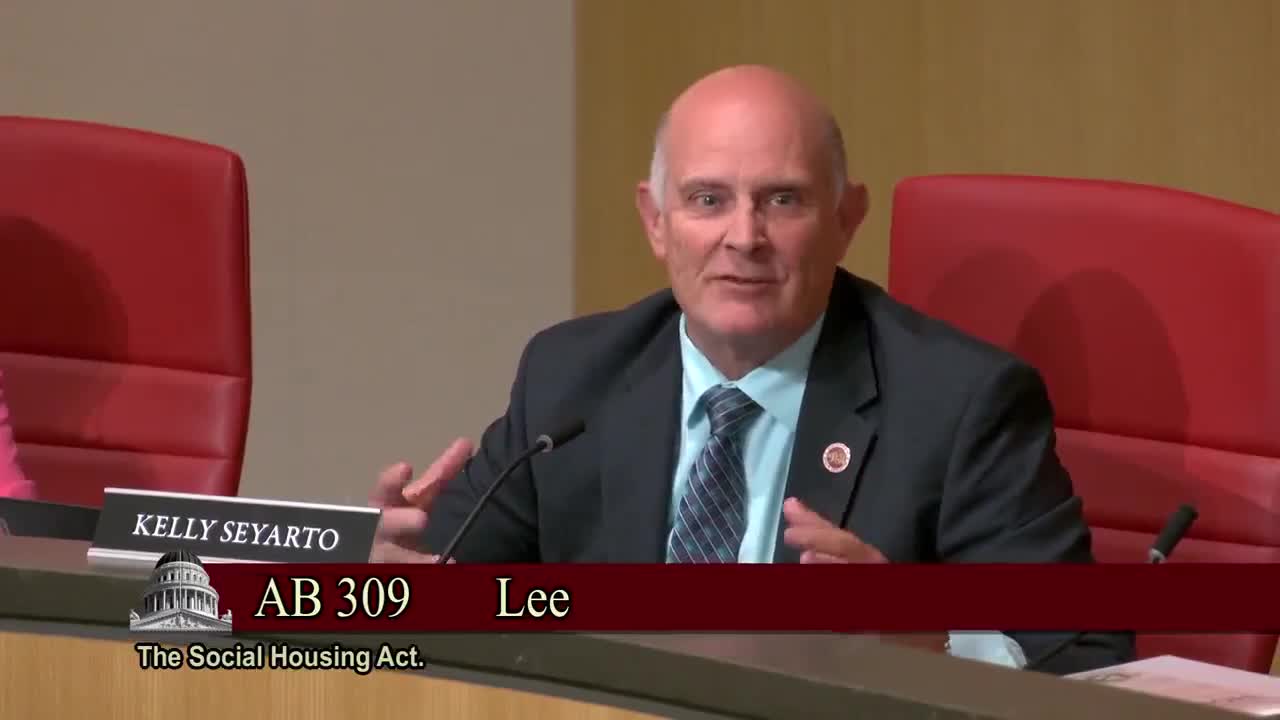 12MIN
Senate Standing Committee on Housing
 1MIN
Assembly Floor
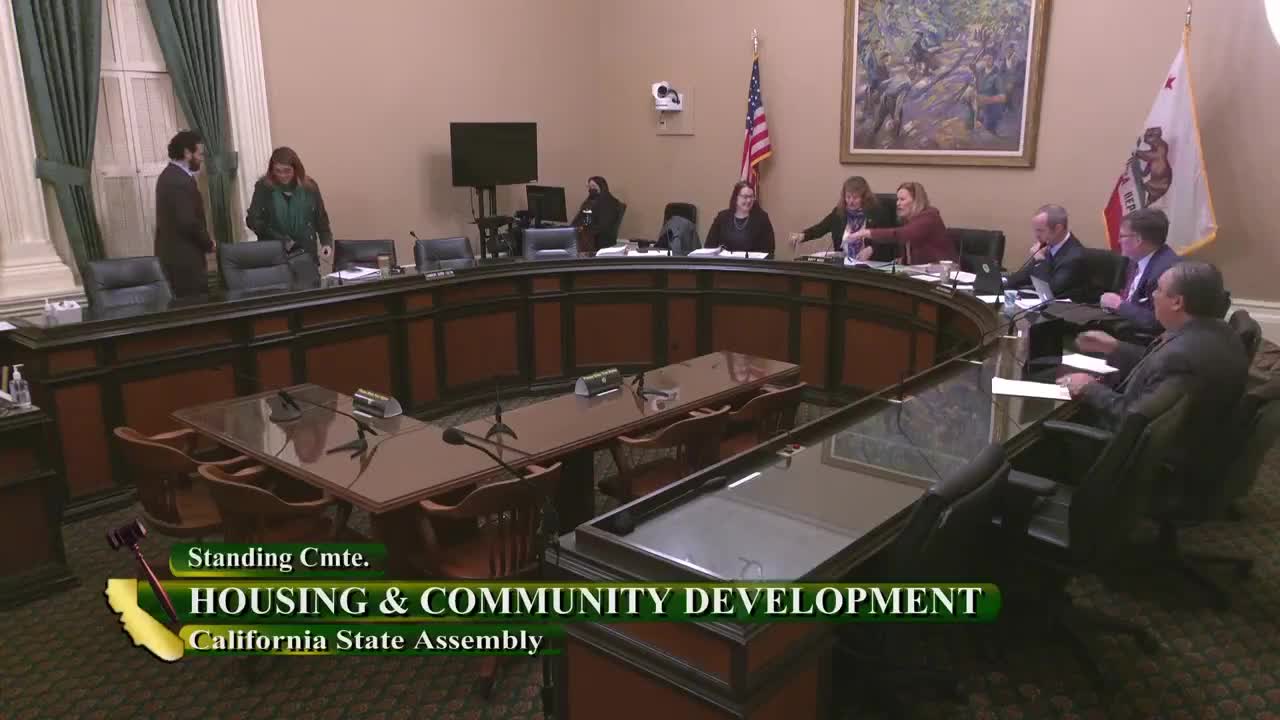 24MIN
Assembly Standing Committee on Housing and Community Development
Bill Author

Bill Co-Author(s):