AB 3206: Alcoholic beverages: hours of sale: arenas in the City of Inglewood.
- Session Year: 2023-2024
- House: Assembly
- Latest Version Date: 2024-09-29
Current Status:
Passed
(2024-09-29: Chaptered by Secretary of State - Chapter 977, Statutes of 2024.)
Introduced
In Committee
First Chamber
In Committee
Second Chamber
Enacted
Existing law, the Alcoholic Beverage Control Act, which is administered by the Department of Alcoholic Beverage Control, regulates the application for, and the issuance and suspension of, alcoholic beverage licenses. Existing law provides for moneys collected as fees pursuant to the act to be deposited in the Alcohol Beverage Control Fund, with those moneys generally allocated to the Department of Alcoholic Beverage Control upon appropriation by the Legislature. Existing law provides that any on- or off-sale licensee, or agent or employee of a licensee who sells, gives, or delivers to any person any alcoholic beverage between the hours of 2 a.m. and 6 a.m. of the same day, and any person who knowingly purchases any alcoholic beverages between those hours, is guilty of a misdemeanor.
This bill would, notwithstanding the provision described above and until January 1, 2030, authorize alcoholic beverage sales to occur between 2 a.m. and 4 a.m. upon the on-sale licensed premises operated in a fully enclosed arena with a seating capacity of at least 18,000 seats located in the City of Inglewood if specified conditions are met. In this regard, the bill would require that the sales occur in a private area in the arena no larger than 2,500 square feet in the hours immediately following a day on which a sporting event, concert, or other major event, or a private event not open to the public, has occurred in the arena, as specified. The bill would also require the licensee to file a request with the governing body of the City of Inglewood for adoption of an ordinance that would allow that activity, notify local law enforcement agencies of the request, and if such an ordinance is adopted, submit the ordnance to the department, as specified. The bill would require the licensee to have a permit issued by the department authorizing that activity. The bill would set the initial fee for this permit at $2000 and the renewal fee at $1,500, and would require those fees to be deposited into the Alcohol Beverage Control Fund.
The bill would authorize the department to adopt rules as it determines to be necessary for the administration of these provisions. The bill would require the City of Inglewood to submit a report to the department on the impact of these provisions one year after any licensee receives the required permit from the department and once annually thereafter, as specified.
This bill would make legislative findings and declarations as to the necessity of a special statute for the City of Inglewood.
Existing law, the Alcoholic Beverage Control Act, which is administered by the Department of Alcoholic Beverage Control, regulates the application for, and the issuance and suspension of, alcoholic beverage licenses. Existing law provides for moneys collected as fees pursuant to the act to be deposited in the Alcohol Beverage Control Fund, with those moneys generally allocated to the Department of Alcoholic Beverage Control upon appropriation by the Legislature. Existing law provides that any on- or off-sale licensee, or agent or employee of a licensee who sells, gives, or delivers to any person any alcoholic beverage between the hours of 2 a.m. and 6 a.m. of the same day, and any person who knowingly purchases any alcoholic beverages between those hours, is guilty of a misdemeanor.
This bill would, notwithstanding the provision described above and until January 1, 2030, authorize alcoholic beverage sales to occur between 2 a.m. and 4 a.m. upon the on-sale licensed premises operated in a fully enclosed arena with a seating capacity of at least 18,000 seats located in the City of Inglewood if specified conditions are met, including met. In this regard, the bill would require that the sales occur in a private area in the arena no larger than 2,500 square feet in the hours immediately following a day on which a sporting event, concert, or other major event, or a private event not open to the public, has occurred in the arena, as specified. The bill would also require the licensee to file a request with the governing body of the City of Inglewood for adoption of an ordinance that would allow that activity, notify local law enforcement agencies of the request, and if such an ordinance is adopted, submit the ordnance to the department, as specified. The bill would require the licensee to have a permit issued by the department authorizing that activity. The bill would set the initial fee for this permit at $2000 and the renewal fee at $1,500, and would require those fees to be deposited into the Alcohol Beverage Control Fund.
The bill would authorize the department to adopt rules as it determines to be necessary for the administration of these provisions. The bill would require the City of Inglewood to submit a report to the department on the impact of these provisions one year after any licensee receives the required permit from the department and once annually thereafter, as specified.
This bill would make legislative findings and declarations as to the necessity of a special statute for the City of Inglewood.
Existing law, the Alcoholic Beverage Control Act, provides that any on- or off-sale licensee, or agent or employee of a licensee who sells, gives, or delivers to any person any alcoholic beverage between the hours of 2 a.m. and 6 a.m. of the same day, and any person who knowingly purchases any alcoholic beverages between those hours, is guilty of a misdemeanor.
This bill would, notwithstanding the provision described above and until January 1, 2030, authorize alcoholic beverage sales to occur between 2 a.m. and 4 a.m. upon the on-sale licensed premises operated in a fully enclosed arena with a seating capacity of at least 18,000 seats located in the City of Inglewood if specified conditions are met, including that the sales occur in a private area in the arena no larger than 2,500 square feet in the hours immediately following a day on which a sporting event, concert, or other major event, or a private event not open to the public, has occurred in the arena, as specified.
This bill would make legislative findings and declarations as to the necessity of a special statute for the City of Inglewood.
(a)Notwithstanding any other provision of this division, alcoholic beverage sales may occur between 2 a.m. and 4 a.m. upon the on-sale licensed premises operated in a fully enclosed arena with a seating capacity of at least 18,000 seats located in the City of Inglewood if the requirements described in Section 25631.5 are satisfied, including that a permit is issued by the department to the licensee authorizing that activity.
(b)(1)The initial, nonrefundable fee for a permit issued pursuant to subdivision (a) shall be two thousand dollars ($2,000).
(2)The annual fee to renew a permit issued pursuant to subdivision (a) shall be one thousand five hundred dollars ($1,500).
(c)The fees collected by the department pursuant to this section shall be deposited into the Alcohol Beverage Control Fund.
(d)The department may adopt rules as it determines to be necessary for the administration of this section.
(e)This section shall remain in effect only until January 1, 2030, and as of that date is repealed.
SEC. 2.Section 25631.5 is added to the Business and Professions Code, to read:25631.5.(a)Notwithstanding Section 25631, alcoholic beverage sales may occur between 2 a.m. and 4 a.m. upon the on-sale licensed premises operated in a fully enclosed arena with a seating capacity of at least 18,000 seats located in the City of Inglewood if all of the following conditions are met:
(1)The licensee files a request with the governing body of the City of Inglewood for adoption of an ordinance that would allow alcoholic beverage sales to occur between 2 a.m. and 4 a.m. upon the on-sale licensed premises operated in a fully enclosed arena with a seating capacity of at least 18,000 seats located in the City of Inglewood, the governing body adopts such an ordinance, and the ordinance is submitted to the department.
(2)Within 30 consecutive days of filing the request pursuant to paragraph (1), the licensee notifies local law enforcement agencies of the request.
(3)The sales occur in an area in the arena no larger than 2,500 square feet, with a maximum capacity of 100 persons.
(4)The on-sale licensed premises are restricted between 2 a.m. and 4 a.m. only to patrons who are 21 years of age or older.
(5)The sales occur in a private area in the arena that is available only to members of a private club who are assessed dues in order to belong to the club and thereby gain access to the area, and guests of those members, when the member is in attendance.
(6)The sales occur in the hours immediately following a day on which a sporting event, concert, or other major event, or a private event not open to the public, has occurred in the arena.
(7)All persons engaged in the sale or service of alcoholic beverages between 2 a.m. and 4 a.m. have successfully completed a Responsible Beverage Service training course pursuant to Article 4 (commencing with Section 25680).
(8)The licensee has a permit issued by the department pursuant to Section 23398.7.
(b)The department may adopt rules as it determines to be necessary for the administration of this section.
(c)The City of Inglewood shall submit a report to the department on the impact of these provisions one year after any licensee is issued a permit from the department pursuant to Section 23398.7 and once annually thereafter. The report shall include information on any impact the additional service hours had on crime rates in the city, including arrests for driving under the influence, and related crimes.
(d)This section shall remain in effect only until January 1, 2030, and as of that date is repealed.
SEC. 3.The Legislature finds and declares that a special statute is necessary and that a general statute cannot be made applicable within the meaning of Section 16 of Article IV of the California Constitution because of the unique conditions found in the City of Inglewood, relating to fair and efficient application of the alcoholic beverage control licensing laws with respect to an eligible arena.
(a)Notwithstanding any other provision of this division, alcoholic beverage sales may occur between 2 a.m. and 4 a.m. upon the on-sale licensed premises operated in a fully enclosed arena with a seating capacity of at least 18,000 seats located in the City of Inglewood if the requirements described in Section 25631.5 are satisfied, including that a permit is issued by the department to the licensee authorizing that activity.
(b)(1)The initial, nonrefundable fee for a permit issued pursuant to subdivision (a) shall be two thousand dollars ($2,000).
(2)The annual fee to renew a permit issued pursuant to subdivision (a) shall be one thousand five hundred dollars ($1,500).
(c)The fees collected by the department pursuant to this section shall be deposited into the Alcohol Beverage Control Fund.
(d)The department may adopt rules as it determines to be necessary for the administration of this section.
(e)This section shall remain in effect only until January 1, 2030, and as of that date is repealed.
SECTION 1.SEC. 2.Section 25631.5 is added to the Business and Professions Code, to read:25631.5.(a)Notwithstanding Section 25631, alcoholic beverage sales may occur between 2 a.m. and 4 a.m. upon the on-sale licensed premises operated in a fully enclosed arena with a seating capacity of at least 18,000 seats located in the City of Inglewood if all of the following conditions are met:
(1)The licensee files a request with the governing body of the City of Inglewood for adoption of an ordinance that would allow alcoholic beverage sales to occur between 2 a.m. and 4 a.m. upon the on-sale licensed premises operated in a fully enclosed arena with a seating capacity of at least 18,000 seats located in the City of Inglewood, the governing body adopts such an ordinance, and the ordinance is submitted to the department.
(2)Within 30 consecutive days of filing the request pursuant to paragraph (1), the licensee notifies local law enforcement agencies of the request.
(1)(3)The sales occur in an area in the arena no larger than 2,500 square feet, with a maximum capacity of 100 persons.
(4)The on-sale licensed premises are restricted between 2 a.m. and 4 a.m. only to patrons who are 21 years of age or older.
(2)(5)The sales occur in a private area in the arena that is available only to members of a private club who are assessed dues in order to belong to the club and thereby gain access to the area, and guests of those members, when the member is in attendance.
(3)(6)The sales occur in the hours immediately following a day on which a sporting event, concert, or other major event, or a private event not open to the public, has occurred in the arena.
(7)All persons engaged in the sale or service of alcoholic beverages between 2 a.m. and 4 a.m. have successfully completed a Responsible Beverage Service training course pursuant to Article 4 (commencing with Section 25680).
(8)The licensee has a permit issued by the department pursuant to Section 23398.7.
(b)The department may adopt rules as it determines to be necessary for the administration of this section.
(c)The City of Inglewood shall submit a report to the department on the impact of these provisions one year after any licensee is issued a permit from the department pursuant to Section 23398.7 and once annually thereafter. The report shall include information on any impact the additional service hours had on crime rates in the city, including arrests for driving under the influence, and related crimes.
(b)(d)This section shall remain in effect only until January 1, 2030, and as of that date is repealed.
SEC. 2. SEC. 3.The Legislature finds and declares that a special statute is necessary and that a general statute cannot be made applicable within the meaning of Section 16 of Article IV of the California Constitution because of the unique conditions found in the City of Inglewood, relating to fair and efficient application of the alcoholic beverage control licensing laws with respect to an eligible arena.
(a)Notwithstanding Section 25631, alcoholic beverage sales may occur between 2 a.m. and 4 a.m. upon the on-sale licensed premises operated in a fully enclosed arena with a seating capacity of at least 18,000 seats located in the City of Inglewood if all of the following conditions are met:
(1)The sales occur in an area in the arena no larger than 2,500 square feet, with a maximum capacity of 100 persons.
(2)The sales occur in a private area in the arena that is available only to members of a private club who are assessed dues in order to belong to the club and thereby gain access to the area, and guests of those members, when the member is in attendance.
(3)The sales occur in the hours immediately following a day on which a sporting event, concert, or other major event, or a private event not open to the public, has occurred in the arena.
(b)This section shall remain in effect only until January 1, 2030, and as of that date is repealed.
SEC. 2.The Legislature finds and declares that a special statute is necessary and that a general statute cannot be made applicable within the meaning of Section 16 of Article IV of the California Constitution because of the unique conditions found in the City of Inglewood, relating to fair and efficient application of the alcoholic beverage control licensing laws with respect to an eligible arena.
|
Date
|
Status
|
|---|---|
| Sep 29, 2024 | Chaptered by Secretary of State - Chapter 977, Statutes of 2024. |
| Sep 29, 2024 | Approved by the Governor. |
| Aug 27, 2024 | Enrolled and presented to the Governor at 12 p.m. |
| Aug 20, 2024 | In Assembly. Ordered to Engrossing and Enrolling. |
| Aug 20, 2024 | Read third time. Passed. Ordered to the Assembly. (Ayes 23. Noes 12. Page 5235.). |
| Aug 20, 2024 | Reconsideration granted. (Ayes 40. Noes 0. Page 5244.) |
| Aug 20, 2024 | Read third time. Passed. Ordered to the Assembly. (Ayes 21. Noes 14. Page 5245.). |
| Aug 6, 2024 | Read second time. Ordered to third reading. |
| Aug 5, 2024 | From committee: Be ordered to second reading pursuant to Senate Rule 28.8. |
| Jun 27, 2024 | In committee: Hearing postponed by committee. |
| Jun 11, 2024 | From committee: Do pass and re-refer to Com. on APPR. (Ayes 9. Noes 4.) (June 11). Re-referred to Com. on APPR. |
| May 29, 2024 | Referred to Com. on G.O. |
| May 22, 2024 | In Senate. Read first time. To Com. on RLS. for assignment. |
| May 21, 2024 | Read third time. Passed. Ordered to the Senate. (Ayes 55. Noes 8. Page 5355.) |
| May 9, 2024 | Read second time. Ordered to third reading. |
| May 8, 2024 | From committee: Do pass. (Ayes 12. Noes 1.) (May 8). |
| Apr 25, 2024 | Re-referred to Com. on APPR. pursuant to Joint Rule 10.5. |
| Apr 25, 2024 | Read second time. Ordered to third reading. |
| Apr 24, 2024 | Read second time and amended. Ordered returned to second reading. |
| Apr 23, 2024 | From committee: Amend, and do pass as amended. (Ayes 12. Noes 2.) (April 17). |
| Mar 11, 2024 | Referred to Com. on G.O. |
| Feb 17, 2024 | From printer. May be heard in committee March 18. |
| Feb 16, 2024 | Read first time. To print. |
|
Date
|
Description
|
Location
|
Votes
|
|
|---|---|---|---|---|
| Aug 20, 2024 | Assembly 3rd Reading AB3206 McKinnor By Wiener | Senate Floor |
Passed |
|
| Aug 20, 2024 | Assembly 3rd Reading AB3206 McKinnor By Wiener Reconsider | Senate Floor |
Passed |
|
| Aug 20, 2024 | Assembly 3rd Reading AB3206 McKinnor By Wiener | Senate Floor |
Passed |
|
| Jun 11, 2024 | Do pass, but first be re-referred to the Committee on [Appropriations] | Senate Standing Committee on Governmental Organization |
Passed |
|
| May 21, 2024 | AB 3206 McKinnor Assembly Third Reading | Assembly Floor |
Passed |
|
| May 8, 2024 | Do pass. | Assembly Standing Committee on Appropriations |
Passed |
|
| Apr 17, 2024 | Do pass as amended. | Assembly Standing Committee on Governmental Organization |
Passed |
This list shows positions taken on this bill by organizations on the date displayed, which is linked to the original source.
Positions by individuals are not included.
|
Organization
|
Position
|
Date
|
|---|---|---|
| Alcohol Justice | ** Against | |
| California Alcohol Policy Alliance | ** Against | |
| California Council on Alcohol Problems | ** Against | |
| City Of Inglewood | ** Support | |
| Murphy’s Bowl, LLC | ** Support |
SENATE RULES COMMITTEE Office of Senate Floor Analyses (916) 651-1520 Fax: (916) 327-4478 | AB 3206 |
THIRD READING
Bill No: AB 3206
Author: McKinnor (D)
Amended: 4/24/24 in Assembly
Vote: 21
SENATE GOVERNMENTAL ORG. COMMITTEE: 9-4, 6/11/24
AYES: Dodd, Archuleta, Ashby, Bradford, Glazer, Jones, Padilla, Portantino, Roth
NOES: Alvarado-Gil, Nguyen, Ochoa Bogh, Seyarto
NO VOTE RECORDED: Wilk, Rubio, Smallwood-Cuevas
SENATE APPROPRIATIONS COMMITTEE: Senate Rule 28.8
ASSEMBLY FLOOR: 55-8, 5/21/24 - See last page for vote
SUBJECT: Alcoholic beverages: hours of sale: arenas in the City of Inglewood
SOURCE: Murphy’s Bowl, LLC
DIGEST: This bill allows, until January 1, 2030, the sale of alcoholic beverages between 2 a.m. and 4 a.m. at a specified location within Intuit Dome in the City of Inglewood if specified requirements are completed.
ANALYSIS:
Existing law:
- Establishes the Department of Alcoholic Beverage Control (ABC) and grants it exclusive authority to administer the provisions of the ABC Act in accordance with laws enacted by the Legislature. This involves licensing individuals and businesses associated with the manufacture, importation, and sale of alcoholic beverages in this state and the collection of license fees.
- Provides that any on-sale or off-sale licensee, or agent or employee of the licensee, who sells, gives or delivers to any person any alcoholic beverage between the hours of 2 a.m. and 6 a.m. of the same day, and any person who knowingly purchases any alcoholic beverages between those hours, is guilty of a misdemeanor.
- Provides that the Department of ABC must deny an application for a license if issuance would create a law enforcement problem, or if the issuance would result in, or add to, and undue concentration of licenses in the area where the licensee is desired.
- Establishes the Responsible Beverage Service (RBS) Training program that requires the Department of ABC to develop, implement, and administer a curriculum for an RBS training program for servers of alcohol and their managers, as specified. Alcohol servers are required to successfully complete an RBS training course offered or authorized by the Department of ABC.
- Defines an “on-sale” license as authorizing the sale of all types of alcoholic beverages: namely, beer, wine, and distilled spirits, for consumption on the premises (such as at a restaurant or bar). An “off-sale” license authorizes the sale of all types of alcoholic beverages for consumption off the premises in original, sealed containers.
- Caps the number of new on and off-sale general licenses issued by the Department of ABC at one for every 2,500 inhabitants of the county where the establishment is located for off-sale licenses, and 2,000:1 for on-sale licenses. If no licenses are available from the state due to the population restrictions, those people interested in obtaining a liquor license may purchase one from an existing licensee, for whatever price the market bears.
This bill:
- Authorizes, until January 1, 2030, the sale of alcoholic beverages between 2 a.m. and 4 a.m. upon the licensed premises operated in a fully enclosed arena with a seating capacity of at least 18,000 seats located in the City of Inglewood (Intuit Dome), if specified conditions are met.
- Requires the licensee to file a request with the governing body of the City of Inglewood for adoption of an ordinance that would allow alcoholic beverages sales between 2 a.m. and 4 a.m., the governing body to adopt such ordinance, and the ordinance to be submitted to the department.
- Requires the licensee to notify local law enforcement agencies of the request.
- Requires the sales occur in an area in the arena no longer than 2,500 square feet, with a maximum capacity of 100 persons.
- Requires the licensed premises to be restricted only to patrons who are 21 years of age or older.
- Requires the sale of alcoholic beverages to occur in a private area that is available only to members of a private club who are assessed dues in order to belong to the club and thereby gain access to the area, and guests of those members, when the member is in attendance.
- Requires the sales occur hours immediately following a day on which a sporting events, concern, or other major events, or a private event not open to the public, has occurred in the arena.
- Requires all persons engaged in the sale or service of alcoholic beverages to have completed a RBS Training.
- Requires the licensee to have a permit issued by the Department of ABC.
- Requires the City of Inglewood to submit a report to the Department of ABC on the impact of the provisions of this bill one year after any licensee is issued a permit from the department and once annually thereafter. The report shall include information on any impact the additional service hours had on crime rates in the city, including arrests for driving under the influence, and related crimes.
- Includes a sunset date of January 1, 2030.
Background
Author’s Statement. According to the author’s office, “the City of Inglewood, California, is renowned for its sports and entertainment scene, boasting several iconic venues like SoFi stadium, the Forum and the new Intuit Dome. These arenas draw large crowds for a variety of events, ranging from NFL to NBA games to concerts and exclusive private functions. However, current state law limits the sale of alcoholic beverages in these arenas during certain hours, a restriction that can significantly impact attendees. This bill seeks to stimulate our local economy by extending alcohol sales hours in our arenas during major events, providing a boost to arena operators, vendors, and surrounding businesses.”
The author’s office further argues that, “by maintaining competitiveness and ensuring responsible alcohol consumption practices, we aim to solidify Inglewood’s position as a premier entertainment destination. The provisions of this bill are tailored to align with the city’s specific needs and objectives, demonstrating our commitment to local control and effective governance.”
Intuit Dome. Intuit Dome, the new home of the Los Angeles Clippers, will open in August of 2024. The Clippers will play the 2024-25 season in their new home in Inglewood, California. The Clippers will be the Intuit Dome’s sole tenant, with concerts and other events expected to fill the empty nights without basketball. The $2 billion arena and entertainment complex is located at the intersection of Century Boulevard and Prairie Avenue, just south of the Rams SoFi stadium. Officials state that this state-of-the-art arena will redefine every aspect of the live sports experience.
The Intuit Dome will have a seating capacity of approximately 18,000 seats. These seats include standard seating, courtside options, club seats, and suites. Fans will also be able to watch games from an outdoor plaza on a screen that will stretch most of the length of an outdoor, regulation-sized court.The site will include an 85,000 square foot practice facility, 71,000 square feet of office space for the team and a 25,000-square-foot area for sports medicine. There will also be a retail shopping space and a concert stage. The Inuit Dome will be the setting for the NBA All-Star game in 2026.
According to media reports, it is more than just a venue—it’s a hub for economic prosperity and community impact, with approximately 7,000 jobs created, 30% of which will go to Inglewood residents. Additionally, the Intuit Dome aims to support underserved business enterprises, contributing to the local economy and fostering positive change in the community.
The Department of ABC and Alcohol in California. The enactment of the 21st Amendment to the United States Constitution in 1933 repealed the 18th Amendment, and ended the era of Prohibition. Accordingly, states were granted the authority to establish alcoholic beverage laws and administrative structures to regulate the sale and distribution of alcoholic beverages. In California, this responsibility was originally entrusted to the State Board of Equalization. In 1955, however, the State Constitution was amended to shift this responsibility to the then newly established Department of ABC. The intent in establishing the Department of ABC was to create a governmental organization, which would ensure strict, honest, impartial, and uniform administration and enforcement of the state’s liquor laws. The Department of ABC is vested with the exclusive authority to license and regulate the manufacture, distribution and sale of alcoholic beverages within California. The Department of ABC is a special fund department that receives funding from fees imposed upon alcoholic beverage licensees.
Retail licenses are the most common type of license encountered by the public – this includes on-sale licensees that are authorized to sell alcoholic beverages for consumption on the premises such as restaurants and bars, and off-sale licensees that are authorized to sell alcoholic beverages for consumption off of the premises such as grocery and liquor stores. The vast majority of these on-sale licenses include Types 40, 41, 42, 47, and 48, which are generally restaurants, bars, taverns, and night clubs. Since 1935, California alcohol licensed businesses have been prohibited from selling, serving and allowing open containers of beverage alcohol to remain in the public portion of the business from 2 a.m. to 6 a.m.
The Department of ABC is required to investigate both the applicant and the premises for which a license is applied to determine if the public would be adversely affected by the license issuance. These investigations include an evaluation of the moral character of the applicant and the suitability of the proposed premises. The Department of ABC must deny an application for a license if issuance would create a law enforcement problem or if issuance would result in, or add to, an undue concentration of licenses in the area where the license is desired.
Under the ABC Act, the Department of ABC has the sole authority to suspend, revoke or deny a license if it determines that granting or continuance of the license would be contrary to public welfare or morals. The Department of ABC has a clearly delineated disciplinary process for its licensees. The process usually begins with a reported violation then proceeds through an investigation after which an accusation can be filed. The Department of ABC conducts administrative hearings with decisions generally proposed by administrative law judges. The process can also include appeals to the ABC Appeals Board and, if necessary and requested, an appeal directly to the California Appellate Courts. However, there is wide variance in the period from the discovery of a violation to a final order of suspension or revocation.
State vs. Local Control of Alcohol Policy. The Department of ABC is vested with the exclusive authority to license and regulate the manufacture, distribution, and sale of alcoholic beverages within California. Currently, the Department of ABC must notify specified local officials of an application for the issuance or transfer of a liquor license, and existing law prohibits the Department of ABC from issuing or transferring a license until at least 30 days after these notices are provided. Local officials are also allowed to file a protest against the issuing of the license.
Over the years, local governments have often petitioned the Legislature for greater authority to directly regulate establishments that sell alcohol in respective communities. Much of this activity has been centered on local government’s use of zoning laws and conditional use permits that place operating conditions on new businesses that sell alcohol. In 1995, the ABC Act was amended to allow a local government to comment on a pending alcohol license application, raising the standard for an on-sale or off-sale licensee in an area of high crime or an over-concentrated census tract. Historically, the alcohol industry and retailers have opposed ceding to local government any measure of the state’s exclusive authority to regulate alcohol.
Under this bill, the licensee would be required to file a request with the City of Inglewood. The city would then be required to adopt an ordinance that would allow alcoholic beverage sales to occur between 2 a.m. and 4 a.m. upon the licensed premises inside of the Intuit Dome. All individuals involved in the sale or service of alcoholic beverages would be required to have successfully completed a RBS training. The City of Inglewood would also be required to report to the Department of ABC on the impact of this bill.
Last Call in Other States. The end of alcohol service at on-sale establishments, commonly referred to as “last call,” can vary dramatically from state to state. The State of Utah for example has last call at 12 a.m., in restaurants and 1 a.m. in bars and taverns, while the State of Nevada allows for the sale of alcohol 24-hours a day. The states of Louisiana and New Jersey additionally allow for the sale of alcohol 24-hours a day, however these two states have authorized counties and local municipalities to set or restrict opening and closing times for on-sale establishments. Alabama also allows for the service of alcohol 24-hours a day unless restricted by local ordinances, however 26 of Alabama’s 67 counties do not allow for the sale of alcohol at any time, though possession and consumption remain legal.
A number of large states, including states with high rates of tourism, tend to allow for extended service in densely populated urban centers. Examples include the state of New York, which authorizes establishments to serve until 4 a.m., however the actual closing time is left up to each of New York’s 62 counties. The 4 a.m. last call applies in New York City, Saratoga Springs, Buffalo, and Albany. In Florida, the county or municipality in which the business is located regulates the operating hours, and most cities stop serving alcohol at 2 a.m., however, some cities have exemptions to the law, notably Tampa (3 a.m.), Broward County and Key West (4 a.m.), and Miami-Dade County (5 a.m.).
Some states have a patchwork system dependent upon the day of the week. In Illinois, closing times depend on municipality, however businesses may not serve alcohol later than 2 a.m., Sunday through Friday, or later than 3 a.m. on Saturday without first obtaining an extended hour’s permit from the respective city. In Chicago, a late hour license allows for the sale of alcohol until 4 a.m., Monday through Saturday, and until 5 a.m. on Sunday. Wisconsin also allows for additional hours during the weekend compared to weekday closing times, and Washington D.C. allows for the on-sale service of alcohol until 3 a.m. the day of a federal or district holiday, and until 4 a.m. on January 1.
Related/Prior Legislation
AB 3195 (Haney, 2024) would allow on-sale licensees to sell or give alcoholic beverages until 4 a.m. on Friday, Saturdays, and certain holidays if the licensee holds an additional serving hours license, as specified. (Never Heard in the Assembly Governmental Organization Committee)
SB 969 (Wiener, 2024) would authorize specified licensees to allow consumers to leave the licensed premises with open containers of alcoholic beverages for consumption off the premises within an entertainment zone, as specified. (Pending in the Assembly Appropriations Organization Committee)
FISCAL EFFECT: Appropriation: No Fiscal Com.: Yes Local: No
SUPPORT: (Verified 8/5/24)
Murphy’s Bowl, LLC (source)
City of Inglewood
OPPOSITION: (Verified 8/5/24)
Alcohol Justice
California Alcohol Policy Alliance
California Council on Alcohol Problems
ARGUMENTS IN SUPPORT: According to the City of Inglewood, “the inclusion of a sunset provision set for 2030 demonstrates a serious commitment to ongoing evaluation and adaption of regulatory framework to suit the evolving needs of our communities. This provision empowers local legislators and government bodies to tailor alcohol sales regulations to the unique circumstances and preferences of their jurisdictions, thereby promoting flexibility and responsiveness at the grassroots level. Inglewood stands poised and ready to embrace the opportunities presented by AB 3206, recognizing its potential to support our local economy while safeguarding the well-being of our residents and visitors.”
ARGUMENTS IN OPPOSITION: According to the California Council on Alcohol Problems, “we believe AB 3206 will be the precursor to similar district bills up-and-down the state, eroding and eventually gutting the century’s long-established 2 a.m. ‘last call’ statewide. This would increase dangers to California drivers (DUI crashes) and cost to taxpayers (in the form of increased law enforcement, hospital costs, etc.), while exacerbating the growing phenomenon in which restaurants ‘morph’ into bars/clubs late at night (to peddle excessive drinking into the morning hours).”
ASSEMBLY FLOOR: 55-8, 5/21/24
AYES: Addis, Aguiar-Curry, Alanis, Alvarez, Arambula, Bauer-Kahan, Bennett, Berman, Boerner, Bonta, Bryan, Calderon, Wendy Carrillo, Chen, Connolly, Mike Fong, Garcia, Gipson, Grayson, Haney, Hart, Hoover, Irwin, Jackson, Jones-Sawyer, Kalra, Lee, Low, Lowenthal, Maienschein, McCarty, McKinnor, Stephanie Nguyen, Ortega, Papan, Joe Patterson, Pellerin, Petrie-Norris, Quirk-Silva, Rendon, Reyes, Luz Rivas, Blanca Rubio, Santiago, Soria, Ta, Ting, Villapudua, Wallis, Ward, Wicks, Wilson, Wood, Zbur, Robert Rivas
NOES: Davies, Dixon, Essayli, Gallagher, Lackey, Muratsuchi, Sanchez, Waldron
NO VOTE RECORDED: Bains, Juan Carrillo, Cervantes, Megan Dahle, Flora, Vince Fong, Friedman, Gabriel, Holden, Mathis, Pacheco, Jim Patterson, Ramos, Rodriguez, Schiavo, Valencia, Weber
Prepared by: Felipe Lopez / G.O. / (916) 651-1530
8/7/24 14:34:45
**** END ****
SENATE COMMITTEE ON GOVERNMENTAL ORGANIZATION
Senator Bill Dodd
Chair
2023 - 2024 Regular
Bill No: 3206 Hearing Date: 6/11/2024
Author: | |||
Version: | 4/24/2024 Amended | ||
Urgency: | No | Fiscal: | Yes |
Consultant: | Felipe Lopez | ||
SUBJECT: Alcoholic beverages: hours of sale: arenas in the City of Inglewood
DIGEST: This bill allows, until January 1, 2030, the sale of alcoholic beverages between 2 a.m. and 4 a.m. at a specified location within Intuit Dome in the City of Inglewood if specified requirements are completed.
ANALYSIS:
Existing law:
- Establishes the Department of Alcoholic Beverage Control (ABC) and grants it exclusive authority to administer the provisions of the ABC Act in accordance with laws enacted by the Legislature. This involves licensing individuals and businesses associated with the manufacture, importation, and sale of alcoholic beverages in this state and the collection of license fees.
- Provides that any on-sale or off-sale licensee, or agent or employee of the licensee, who sells, gives or delivers to any person any alcoholic beverage between the hours of 2 a.m. and 6 a.m. of the same day, and any person who knowingly purchases any alcoholic beverages between those hours, is guilty of a misdemeanor.
- Provides that the Department of ABC must deny an application for a license if issuance would create a law enforcement problem, or if the issuance would result in, or add to, and undue concentration of licenses in the area where the licensee is desired.
- Establishes the Responsible Beverage Service (RBS) Training program that requires the Department of ABC to develop, implement, and administer a curriculum for an RBS training program for servers of alcohol and their managers, as specified. Alcohol servers are required to successfully complete an RBS training course offered or authorized by the Department of ABC.
- Defines an “on-sale” license as authorizing the sale of all types of alcoholic beverages: namely, beer, wine, and distilled spirits, for consumption on the premises (such as at a restaurant or bar). An “off-sale” license authorizes the sale of all types of alcoholic beverages for consumption off the premises in original, sealed containers.
- Caps the number of new on and off-sale general licenses issued by the Department of ABC at one for every 2,500 inhabitants of the county where the establishment is located for off-sale licenses, and 2,000:1 for on-sale licenses. If no licenses are available from the state due to the population restrictions, those people interested in obtaining a liquor license may purchase one from an existing licensee, for whatever price the market bears.
This bill:
- Authorizes, until January 1, 2030, the sale of alcoholic beverages between 2 a.m. and 4 a.m. upon the licensed premises operated in a fully enclosed arena with a seating capacity of at least 18,000 seats located in the City of Inglewood (Intuit Dome), if specified conditions are met.
- Requires the licensee to file a request with the governing body of the City of Inglewood for adoption of an ordinance that would allow alcoholic beverages sales between 2 a.m. and 4 a.m., the governing body to adopt such ordinance, and the ordinance to be submitted to the department.
- Requires the licensee to notify local law enforcement agencies of the request.
- Requires the sales occur in an area in the arena no longer than 2,500 square feet, with a maximum capacity of 100 persons.
- Requires the licensed premises to be restricted only to patrons who are 21 years of age or older.
- Requires the sale of alcoholic beverages to occur in a private area that is available only to members of a private club who are assessed dues in order to belong to the club and thereby gain access to the area, and guests of those members, when the member is in attendance.
- Requires the sales occur hours immediately following a day on which a sporting events, concern, or other major events, or a private event not open to the public, has occurred in the arena.
- Requires all persons engaged in the sale or service of alcoholic beverages to have completed a RBS Training.
- Requires the licensee to have a permit issued by the Department of ABC.
- Requires the City of Inglewood to submit a report to the Department of ABC on the impact of the provisions of this bill one year after any licensee is issued a permit from the department and once annually thereafter. The report shall include information on any impact the additional service hours had on crime rates in the city, including arrests for driving under the influence, and related crimes.
- Includes a sunset date of January 1, 2030.
Background
Author Statement. According to the author’s office, “the City of Inglewood, California, is renowned for its sports and entertainment scene, boasting several iconic venues like SoFi stadium, the Forum and the new Intuit Dome. These arenas draw large crowds for a variety of events, ranging from NFL to NBA games to concerts and exclusive private functions. However, current state law limits the sale of alcoholic beverages in these arenas during certain hours, a restriction that can significantly impact attendees. This bill seeks to stimulate our local economy by extending alcohol sales hours in our arenas during major events, providing a boost to arena operators, vendors, and surrounding businesses.”
The author’s office further argues that, “by maintaining competitiveness and ensuring responsible alcohol consumption practices, we aim to solidify Inglewood’s position as a premier entertainment destination. The provisions of this bill are tailored to align with the city’s specific needs and objectives, demonstrating our commitment to local control and effective governance.”
Intuit Dome. Intuit Dome, the new home of the Los Angeles Clippers, will open in August of 2024. The Clippers will play the 2024-25 season in their new home in Inglewood, California. The Clippers will be the Intuit Dome’s sole tenant, with concerts and other events expected to fill the empty nights without basketball. The $2 billion arena and entertainment complex is located at the intersection of Century Boulevard and Prairie Avenue, just south of the Rams SoFi stadium. Officials state that this state-of-the-art arena will redefine every aspect of the live sports experience.
The Intuit Dome will have a seating capacity of approximately 18,000 seats. These seats include standard seating, courtside options, club seats, and suites. Fans will also be able to watch games from an outdoor plaza on a screen that will stretch most of the length of an outdoor, regulation-sized court.
The site will include an 85,000 square foot practice facility, 71,000 square feet of office space for the team and a 25,000-square-foot area for sports medicine. There will also be a retail shopping space and a concert stage. The Inuit Dome will be the setting for the NBA All-Star game in 2026.
According to media reports, it is more than just a venue—it’s a hub for economic prosperity and community impact, with approximately 7,000 jobs created, 30% of which will go to Inglewood residents. Additionally, the Intuit Dome aims to support underserved business enterprises, contributing to the local economy and fostering positive change in the community.
The Department of ABC and Alcohol in California. The enactment of the 21st Amendment to the United States Constitution in 1933 repealed the 18th Amendment, and ended the era of Prohibition. Accordingly, states were granted the authority to establish alcoholic beverage laws and administrative structures to regulate the sale and distribution of alcoholic beverages. In California, this responsibility was originally entrusted to the State Board of Equalization. In 1955, however, the State Constitution was amended to shift this responsibility to the then newly established Department of ABC. The intent in establishing the Department of ABC was to create a governmental organization, which would ensure strict, honest, impartial, and uniform administration and enforcement of the state’s liquor laws. The Department of ABC is vested with the exclusive authority to license and regulate the manufacture, distribution and sale of alcoholic beverages within California. The Department of ABC is a special fund department that receives funding from fees imposed upon alcoholic beverage licensees.
Retail licenses are the most common type of license encountered by the public – this includes on-sale licensees that are authorized to sell alcoholic beverages for consumption on the premises such as restaurants and bars, and off-sale licensees that are authorized to sell alcoholic beverages for consumption off of the premises such as grocery and liquor stores. The vast majority of these on-sale licenses include Types 40, 41, 42, 47, and 48, which are generally restaurants, bars, taverns, and night clubs. Since 1935, California alcohol licensed businesses have been prohibited from selling, serving and allowing open containers of beverage alcohol to remain in the public portion of the business from 2 a.m. to 6 a.m.
The Department of ABC is required to investigate both the applicant and the premises for which a license is applied to determine if the public would be adversely affected by the license issuance. These investigations include an evaluation of the moral character of the applicant and the suitability of the proposed premises. The Department of ABC must deny an application for a license if issuance would create a law enforcement problem or if issuance would result in, or add to, an undue concentration of licenses in the area where the license is desired.
Under the ABC Act, the Department of ABC has the sole authority to suspend, revoke or deny a license if it determines that granting or continuance of the license would be contrary to public welfare or morals. The Department of ABC has a clearly delineated disciplinary process for its licensees. The process usually begins with a reported violation then proceeds through an investigation after which an accusation can be filed. The Department of ABC conducts administrative hearings with decisions generally proposed by administrative law judges. The process can also include appeals to the ABC Appeals Board and, if necessary and requested, an appeal directly to the California Appellate Courts. However, there is wide variance in the period from the discovery of a violation to a final order of suspension or revocation.
State vs. Local Control of Alcohol Policy. The Department of ABC is vested with the exclusive authority to license and regulate the manufacture, distribution, and sale of alcoholic beverages within California. Currently, the Department of ABC must notify specified local officials of an application for the issuance or transfer of a liquor license, and existing law prohibits the Department of ABC from issuing or transferring a license until at least 30 days after these notices are provided. Local officials are also allowed to file a protest against the issuing of the license.
Over the years, local governments have often petitioned the Legislature for greater authority to directly regulate establishments that sell alcohol in respective communities. Much of this activity has been centered on local government’s use of zoning laws and conditional use permits that place operating conditions on new businesses that sell alcohol. In 1995, the ABC Act was amended to allow a local government to comment on a pending alcohol license application, raising the standard for an on-sale or off-sale licensee in an area of high crime or an over-concentrated census tract. Historically, the alcohol industry and retailers have opposed ceding to local government any measure of the state’s exclusive authority to regulate alcohol.
Under this bill, the licensee would be required to file a request with the City of Inglewood. The city would then be required to adopt an ordinance that would allow alcoholic beverage sales to occur between 2 a.m. and 4 a.m. upon the licensed premises inside of the Intuit Dome. All individuals involved in the sale or service of alcoholic beverages would be required to have successfully completed a RBS training. The City of Inglewood would also be required to report to the Department of ABC on the impact of this bill.
Last Call in Other States. The end of alcohol service at on-sale establishments, commonly referred to as “last call,” can vary dramatically from state to state. The State of Utah for example has last call at 12 a.m., in restaurants and 1 a.m. in bars and taverns, while the State of Nevada allows for the sale of alcohol 24-hours a day. The states of Louisiana and New Jersey additionally allow for the sale of alcohol 24-hours a day, however these two states have authorized counties and local municipalities to set or restrict opening and closing times for on-sale establishments. Alabama also allows for the service of alcohol 24-hours a day unless restricted by local ordinances, however 26 of Alabama’s 67 counties do not allow for the sale of alcohol at any time, though possession and consumption remain legal.
A number of large states, including states with high rates of tourism, tend to allow for extended service in densely populated urban centers. Examples include the state of New York, which authorizes establishments to serve until 4 a.m., however the actual closing time is left up to each of New York’s 62 counties. The 4 a.m. last call applies in New York City, Saratoga Springs, Buffalo, and Albany. In Florida, the county or municipality in which the business is located regulates the operating hours, and most cities stop serving alcohol at 2 a.m., however, some cities have exemptions to the law, notably Tampa (3 a.m.), Broward County and Key West (4 a.m.), and Miami-Dade County (5 a.m.).
Some states have a patchwork system dependent upon the day of the week. In Illinois, closing times depend on municipality, however businesses may not serve alcohol later than 2 a.m., Sunday through Friday, or later than 3 a.m. on Saturday without first obtaining an extended hour’s permit from the respective city. In Chicago, a late hour license allows for the sale of alcohol until 4 a.m., Monday through Saturday, and until 5 a.m. on Sunday. Wisconsin also allows for additional hours during the weekend compared to weekday closing times, and Washington D.C. allows for the on-sale service of alcohol until 3 a.m. the day of a federal or district holiday, and until 4 a.m. on January 1.
Responsible Beverage Service (RBS) Training. Anyone that is employed at an ABC on-premises licensed establishment who is responsible for checking identifications, taking customer orders, and pouring or delivering alcoholic beverages must have a valid RBS certification from the Department of ABC. Servers and their managers must register in the RBS Portal, take RBS training from an approved training provider, and pass the department’s RBS exam within 60 days of their first date of employment. On-premises locations include, but are not limited to, bars, restaurants, tasting rooms, clubs, stadiums, movie theaters, hotels, and caterers. Covered licensees are required to maintain records of their various certifications, and violators are subject to unspecified “disciplinary action.” The RBS training is currently available in several different languages.
Prior/Related Legislation
AB 3195 (Haney, 2024) would have allowed on-sale licensees to sell or give alcoholic beverages until 4 a.m. on Friday, Saturdays, and certain holidays if the licensee holds an additional serving hours license, as specified. (Never Heard in the Assembly Governmental Organization Committee)
SB 969 (Wiener, 2024) authorizes specified licensees to allow consumers to leave the licensed premises with open containers of alcoholic beverages for consumption off the premises within an entertainment zone, as specified. (Pending in the Assembly Governmental Organization Committee)
SB 392 (Bradford, Chapter 604, Statutes of 2023) authorizes specified licensees to purchase advertising space and time from, or on behalf of, an on-sale licensee that is the owner, manager, or major tenant of a fully enclosed arena with a seating capacity of at least 18,000 seats located in the City of Inglewood (Intuit Dome), as specified.
SB 930 (Wiener, 2022) would have allowed, until January 2, 2028, the Department of ABC to issue an additional hours license to an on-sale licensee located in specified cities, which would have allowed the licensee to serve alcoholic beverages between the hours of 2 a.m. and 4 a.m. on Saturdays and Sundays and specified holidays, as specified. (Failed Passage on the Assembly Floor)
SB 58 (Wiener, 2019) would have allowed, until January 2, 2027, on-sale licensees in specified cities to sell alcoholic beverages between the hours of 2 a.m. and 3 a.m. upon the completion of specified requirements. (Failed Passage on the Assembly Floor)
SB 905 (Wiener, 2018) would have authorized on-sale licensees in specified cities, to sell alcoholic beverages between the hours of 2 a.m. and 4 a.m. upon the completion of specified requirements. (Vetoed by Governor Brown)
SB 384 (Wiener, 2017) would have established a process whereby an on-sale licensee would have been able to apply to the Department of ABC for the privilege of extending hours of alcohol sales from 2 a.m. and 4 a.m. in a city where the local government approved and certified a local plan, and submitted that plan to the department. (Gutted and Amended to an Unrelated Issue)
SB 635 (Leno, 2013) would have allowed an on-sale licensee to apply to the Department of ABC to authorize the licensee to sell alcoholic beverages between the hours of 2 a.m. and 4 a.m., upon the completion of specified requirements by the local jurisdictions in which the licensee is located. (Failed Passage in the Senate Governmental Organization Committee)
AB 2433 (Leno, 2004) would have extended the hours of alcohol sale for on-sale licensees in the City and County of San Francisco from 2 a.m. and 4 a.m. (Failed Passaged in the Assembly Governmental Organization Committee)
FISCAL EFFECT: Appropriation: Fiscal Com.: Local:
SUPPORT:
Murphy’s Bowl, LLC (Source)
City of Inglewood
OPPOSITION:
Alcohol Justice
California Alcohol Policy Alliance
California Council on Alcohol Problems
ARGUMENTS IN SUPPORT: According to the City of Inglewood, “the inclusion of a sunset provision set for 2030 demonstrates a serious commitment to ongoing evaluation and adaption of regulatory framework to suit the evolving needs of our communities. This provision empowers local legislators and government bodies to tailor alcohol sales regulations to the unique circumstances and preferences of their jurisdictions, thereby promoting flexibility and responsiveness at the grassroots level. Inglewood stands poised and ready to embrace the opportunities presented by AB 3206, recognizing its potential to support our local economy while safeguarding the well-being of our residents and visitors.”
ARGUMENTS IN OPPOSITION: According to the California Council on Alcohol Problems, “we believe AB 3206 will be the precursor to similar district bills up-and-down the state, eroding and eventually gutting the century’s long-established 2 a.m. ‘last call’ statewide. This would increase dangers to California drivers (DUI crashes) and cost to taxpayers (in the form of increased law enforcement, hospital costs, etc.), while exacerbating the growing phenomenon in which restaurants ‘morph’ into bars/clubs late at night (to peddle excessive drinking into the morning hours).”
ASSEMBLY THIRD READING
ATR Bill Id:AB 3206
Author:(McKinnor)
As Amended Ver:April 24, 2024
Majority vote
SUMMARY
This bill would, until January 1, 2030, authorize alcoholic beverage sales to occur between 2 a.m. and 4 a.m. upon the on-sale licensed premises operated in a fully enclosed arena (Intuit Dome) with a seating capacity of at least 18,000 seats located in the City of Inglewood, if specified conditions are met.
Major Provisions
- Provides alcoholic beverage sales may occur between 2 a.m. and 4 a.m. upon the on-sale licensed premises operated in a fully enclosed arena with a seating capacity of at least 18,000 seats located in the City of Inglewood if all of the following conditions are met:
- The licensee files a request with the governing body of the City of Inglewood for adoption of an ordinance that would allow alcoholic beverage sales to occur between 2 a.m. and 4 a.m. upon the on-sale licensed premises operated in a fully enclosed arena with a seating capacity of at least 18,000 seats located in the City of Inglewood, the governing body adopts such an ordinance, and the ordinance is submitted to the Alcoholic Beverage Control (ABC).
- Within 30 consecutive days of filing the request, the licensee notifies local law enforcement agencies of the request.
- The sales occur in an area in the arena no larger than 2,500 square feet, with a maximum capacity of 100 persons.
- The on-sale licensed premises are restricted between 2 a.m. and 4 a.m. only to patrons who are 21 years of age or older.
- The sales occur in a private area in the arena that is available only to members of a private club who are assessed dues in order to belong to the club and thereby gain access to the area, and guests of those members, when the member is in attendance.
- The sales occur in the hours immediately following a day on which a sporting event, concert, or other major event, or a private event not open to the public, has occurred in the arena.
- All persons engaged in the sale or service of alcoholic beverages between 2 a.m. and 4 a.m. have successfully completed a Responsible Beverage Service training course, as specified.
- Requires the governing body of the City of Inglewood, if it adopts the ordinance required above, to submit the ordinance to ABC as specified.
- Prohibits such sales without obtaining a permit issued by the ABC. The initial, nonrefundable fee for a permit is $2,000, with an annual renewal fee of $1,500, deposited into the ABC Fund.
- Authorizes the ABC to adopt rules as it determines to be necessary for the administration of this bill.
- Requires the City of Inglewood to submit a report to the ABC on the impact of this bill one year after any licensee receives the required permit from the department and once annually thereafter, as specified.
- Provides a sunset date of January 1, 2030.
EXISTING LAW:
- Establishes ABC and grants it exclusive authority to administer the provisions of the Alcoholic Beverage Control Act (Act) in accordance with laws enacted by the Legislature. This involves licensing individuals and businesses associated with the manufacture, importation, and sale of alcoholic beverages in this state and the collection of license fees.
- Provides that the Act is intended to protect the safety, welfare and morals of the residents of this state, eliminate the unlawful selling and disposing of alcoholic beverages, and to promote temperance in the use and consumption of alcoholic beverages.
- Provides that any on-sale or off-sale licensee, or agent or employee of the licensee, who sells, gives or delivers to any person any alcoholic beverage between the hours of 2 a.m. and 6 a.m. of the same day, and any person who knowingly purchases any alcoholic beverages between those hours, is guilty of a misdemeanor. (Business and Professions Code Section 25632)
- Provides ABC must deny an application for a license if issuance would create a law enforcement problem, or if issuance would result in, or add to, an undue concentration of licenses in the area where the license is desired. For liquor stores and other specified retail licenses, however, the ABC is authorized to issue a license if the respective local government determines that public convenience or necessity would be served by granting the license.
COMMENTS
Background.
According to information provided by the author's office, this bill seeks to address the regulatory challenges faced by the City of Inglewood, California, particularly concerning the sale of alcoholic beverages in its large arenas. However, current state law limits the sale of alcoholic beverages in these arenas during certain hours, a restriction that can significantly impact attendees, particularly those at late-night events. The bill proposes extending alcohol sales hours until 4 a.m. in fully enclosed arenas with a seating capacity of at least 18,000 seats (Intuit Dome), provided certain conditions are met. One primary problem it tackles is the economic stimulation of Inglewood's local economy. By allowing extended alcohol sales during major events, such as concerts or sporting events, the bill aims to bolster revenue streams for arena operators, vendors, and surrounding businesses. This economic boost is vital for Inglewood's growth and development, especially considering the significant crowds these events attract.
Moreover, to ensure responsible alcohol consumption and public safety, the bill includes provisions for controlled and monitored sales. Alcohol sales are restricted to a private area within the arena, with limited capacity (100 persons) and is available only to members of a private club who are assessed dues in order to belong to the club and thereby gain access to the area, and guests of those members, when the member is in attendance. The sales can occur in the hours immediately following a day on which a sporting event, concert, or other major event, or a private event not open to the public, has occurred in the arena. The bill includes a January 1, 2030 sunset date. This tailored regulation aims to mitigate potential risks associated with extended sales hours while providing a controlled environment for attendees.
Intuit Dome. Intuit Dome, the new home of the LA Clippers, will open in August of 2024, and the Clippers will play the 2024-25 season in their new home in Inglewood, California. The Clippers will be The Intuit Dome's sole tenant, with concerts and other events expected to fill the empty nights without basketball. The $2 billion arena and entertainment complex at the intersection of Century Boulevard and Prairie Avenue, just south of the Rams SoFi stadium. Officials state that this state-of-the-art arena will redefine every aspect of the live sports experience.
The Intuit Dome will have a seating capacity of approximately 18,000 seats. These seats include standard seating, courtside options, club seats, and suites. Fans will also be able to watch games from an outdoor plaza on a screen that will stretch most of the length of an outdoor, regulation-sized court, according to the team. The Inuit Dome will be the setting for the NBA All-Star game in 2026.
This bill is supported by Murphy's Bowl LLC, which is the owner of Inuit Dome.
Hours of Sale. Over the years, local governments have requested increased authority to directly regulate establishments that sell alcohol in their respective communities, especially regarding zoning laws and conditional use permits. Since 1935, ABC licensees have been prohibited from selling, serving, or allowing open containers of alcoholic beverages to remain in the public portion of a business from 2 a.m. to 6 a.m. This bill allows the sale of alcoholic beverages between 2 a.m. and 4 a.m. at a private club within Intuit Dome (future home of the Los Angeles Clippers). Sales must be at a private event not open to the public, or in the hours immediately following a day on which a sporting event, concert, or other major event occurs at the arena. The City of Inglewood must also first adopt an ordinance allowing such sales to occur.
Last Call in Other States. The end of alcohol service at on-sale establishments, commonly referred to as "last call," can vary dramatically from state to state. The State of Maine for example has last call at 1:00 a.m., while the State of Nevada allows for the sale of alcohol 24-hours a day. The states of Louisiana and New Jersey also allow for the sale of alcohol 24-hours a day; however these two states have authorized counties and local municipalities to set or restrict opening and closing times for on-sale establishments. For instance, bars in cities like New Orleans can serve alcohol for 24-hours a day but in Baton Rouge, last call is at 2 a.m. In New Jersey, most municipalities set their last call at 2 a.m. but Atlantic City serves 24-hours a day.
According to the Author
According to the author's office, "This bill has been introduced to address the unique economic and regulatory challenges faced by our community. The City of Inglewood is renowned for its sports and entertainment scene, boasting several iconic venues like SoFi Stadium, the Forum and the new Intuit Dome. These arenas draw large crowds for a variety of events, ranging from NFL and NBA games to concerts and exclusive private functions. However, current state law limits the sale of alcoholic beverages in these arenas during certain hours, a restriction that can significantly impact attendees. AB 3206 seeks to stimulate our local economy by extending alcohol sales hours in our arenas during major events, providing a boost to arena operators, vendors, and surrounding businesses. By maintaining competitiveness and ensuring responsible alcohol consumption practices, we aim to solidify Inglewood's position as a premier entertainment destination. This bill is tailored to align with the city's specific needs and objectives, demonstrating our commitment to local control and effective governance. AB 3206 will promote economic growth and enhance the vibrancy of our community."
Arguments in Support
Murphy's Bowl, LLC writes in support that "this bill would authorize a very limited serving of alcoholic beverages between the hours of 2 a.m. and 4 a.m. at a private lounge within an arena in the City of Inglewood. The City is experiencing a renaissance of economic development with the construction of the various state of the art facilities. This economic development has created thousands of both construction jobs and ongoing permanent jobs in the region and is truly an economic engine. AB 3206 works to further that economic engine, though in a responsible, limited manner."
Arguments in Opposition
None on file.
FISCAL COMMENTS
According to the Committee on Appropriations analysis, "Costs of a likely absorbable amount to ABC to create the new permit type established by this bill and provide enforcement, partially offset by revenue from the permit application and renewal fees.
This committee sees a wide array of bills that propose to modify the scope of alcohol laws. Generally, bills such as this one that grant licensees a new privilege do not generate major new workload for ABC, but taken together, these proposals could lead to significant new costs and future budget requests. In this case, although ABC notes information technology costs of approximately $5,000 and that the authorizing ordinance may establish additional rules and restrictions on alcohol sales, which may impact the cost of ABC enforcement, this bill ultimately applies to one licensee."
VOTES
ASM GOVERNMENTAL ORGANIZATION: 12-2-8
YES: Blanca Rubio, Addis, Lee, Gabriel, Gipson, Haney, Jones-Sawyer, Low, McKinnor, Papan, Soria, Wallis
NO: Lackey, Davies
ABS, ABST OR NV: Bains, Cervantes, Dixon, Pacheco, Jim Patterson, Ramos, Ta, Valencia
ASM APPROPRIATIONS: 12-1-2
YES: Wicks, Arambula, Bryan, Calderon, Wendy Carrillo, Mike Fong, Friedman, Haney, Hart, Pellerin, Ta, Villapudua
NO: Sanchez
ABS, ABST OR NV: Dixon, Jim Patterson
UPDATED
VERSION: April 24, 2024
CONSULTANT: Eric Johnson / G.O. / (916) 319-2531 FN: 0002921
Date of Hearing: May 8, 2024
ASSEMBLY COMMITTEE ON APPROPRIATIONS
Buffy Wicks, Chair
ABPCA Bill Id:AB 3206
Author:(McKinnor) – As Amended Ver:April 24, 2024
Policy Committee: | Governmental Organization | Vote: | 12 - 2 |
|
| ||
|
|
Urgency: No State Mandated Local Program: No Reimbursable: No
SUMMARY:
This bill allows, until January 1, 2030, the sale of alcoholic beverages between 2 a.m. and 4 a.m. at a specified location within Intuit Dome in the City of Inglewood.
Specifically, this bill:
- Allows the sale of alcoholic beverages between 2 a.m. and 4 a.m. at an on-sale licensed premises operated in a fully enclosed arena with a seating capacity of at least 18,000 seats located in the City of Inglewood. The sale must occur in a small private area of the arena available only to dues-assessed members of a club during limited days and times.
- Prohibits such sales without obtaining a permit issued by the Department of Alcoholic Beverage Control (ABC). The initial, nonrefundable fee for a permit is $2,000, with an annual renewal fee of $1,500, deposited into the Alcohol Beverage Control Fund.
- Prohibits such sales without the City of Inglewood approving, upon request of the licensee, an authorizing ordinance. The licensee must notify local law enforcement of the request within 30 days and a copy of the adopted ordinance must be submitted to ABC.
- Requires the City of Inglewood to submit a report to ABC regarding the impact of such sales, including whether additional service hours affected crime rates in the city, including arrests for driving under the influence.
FISCAL EFFECT:
Costs of a likely absorbable amount to ABC to create the new permit type established by this bill and provide enforcement, partially offset by revenue from the permit application and renewal fees.
This committee sees a wide array of bills that propose to modify the scope of alcohol laws. Generally, bills such as this one that grant licensees a new privilege do not generate major new workload for ABC, but taken together, these proposals could lead to significant new costs and future budget requests. In this case, although ABC notes information technology costs of approximately $5,000 and that the authorizing ordinance may establish additional rules and restrictions on alcohol sales, which may impact the cost of ABC enforcement, this bill ultimately applies to one licensee.
COMMENTS:
- Purpose. According to the author:
This bill has been introduced to address the unique economic and regulatory challenges faced by our community. The City of Inglewood is renowned for its sports and entertainment scene, boosting several iconic venues like SoFi Stadium, the Forum and the new Intuit Dome. These arenas draw large crowds for a variety of events, ranging from NFL and NBA games to concerts and exclusive private functions. However, current state law limits the sale of alcoholic beverages in these arenas during certain hours, a restriction that can significantly impact attendees. AB 3206 seeks to stimulate our local economy by extending alcohol sales hours in our arenas during major events, providing a boost to arena operators, vendors, and surrounding businesses.
This bill is supported by Murphy’s Bowl LLC, which is the owner of Inuit Dome.
- Hours of Sale. Over the years, local governments have requested increased authority to directly regulate establishments that sell alcohol in their respective communities, especially regarding zoning laws and conditional use permits. Since 1935, ABC licensees have been prohibited from selling, serving, or allowing open containers of alcoholic beverages to remain in the public portion of a business from 2 a.m. to 6 a.m. This bill allows the sale of alcoholic beverages between 2 a.m. and 4 a.m. at a private club within Intuit Dome (future home of the Los Angeles Clippers). Sales must be at a private event not open to the public, or in the hours immediately following a day on which a sporting event, concert, or other major event occurs at the arena. The City of Inglewood must also first adopt an ordinance allowing such sales to occur.
- Related Legislation. AB 3195 (Haney) allows the sale of alcoholic beverages until 4 a.m. on Fridays, Saturdays, and certain holidays in local jurisdictions permitting such sales. AB 3195 was not heard by the Assembly Governmental Organization Committee at the request of the author.
- Prior Legislation. SB 930 (Wiener), of the 2021-22 Legislative Session, would have allowed, in certain local jurisdictions, the sale of alcoholic beverages until 3 a.m., or until 4 a.m. on Saturdays, Sundays, and certain holidays. SB 930 failed passage on the Assembly Floor.
SB 58 (Wiener), of the 2019-2020 Legislative Session, would have allowed the sale of alcoholic beverages until 3 a.m. in certain local jurisdictions. SB 58 failed passage on the Assembly Floor.
SB 905 (Wiener), of the 2017-18 Legislative Session, would have allowed the sale of alcoholic beverages until 4 a.m. in certain local jurisdictions. SB 905 was vetoed by Governor Brown, who stated, “The California Highway Patrol, however, strongly believes that this increased drinking will lead to more drunk driving...I believe we have enough mischief from midnight to 2 without adding two more hours of mayhem.”
Analysis Prepared by: Irene Ho / APPR. / (916) 319-2081
Date of Hearing: April 17, 2023
ASSEMBLY COMMITTEE ON GOVERNMENTAL ORGANIZATION
Blanca Rubio, Chair
ABPCA Bill Id:AB 3206 (
Author:McKinnor) – As Introduced Ver:February 16, 2024
SUBJECT: Alcoholic beverages: hours of sale: arenas in the City of Inglewood
SUMMARY: This bill would, until January 1, 2030, authorize alcoholic beverage sales to occur between 2 a.m. and 4 a.m. upon the on-sale licensed premises operated in a fully enclosed arena (Intuit Dome) with a seating capacity of at least 18,000 seats located in the City of Inglewood if specified conditions are met, including that the sales occur in a private area in the arena no larger than 2,500 square feet in the hours immediately following a day on which a sporting event, concert, or other major event, or a private event not open to the public, has occurred in the arena, as specified. Specifically, this bill:
1) Provides that alcoholic beverage sales may occur between 2 a.m. and 4 a.m. upon the on-sale licensed premises operated in a fully enclosed arena with a seating capacity of at least 18,000 seats located in the City of Inglewood if all of the following conditions are met:
a) The sales occur in an area in the arena no larger than 2,500 square feet, with a maximum capacity of 100 persons.
b) The sales occur in a private area in the arena that is available only to members of a private club who are assessed dues in order to belong to the club and thereby gain access to the area, and guests of those members, when the member is in attendance.
c) The sales occur in the hours immediately following a day on which a sporting event, concert, or other major event, or a private event not open to the public, has occurred in the arena.
2) Maintains a January 1, 2030 sunset date.
3) Makes legislative findings and declarations as to the necessity of a special statute for the City of Inglewood.
EXISTING LAW:
1) The enactment of the 21st Amendment to the United States Constitution in 1933 repealed the 18th Amendment and ended the era of Prohibition. Accordingly, states were granted the authority to establish alcoholic beverage laws and administrative structures to regulate the sale and distribution of alcoholic beverages.
2) Establishes ABC and grants it exclusive authority to administer the provisions of the Alcoholic Beverage Control Act (Act) in accordance with laws enacted by the Legislature. This involves licensing individuals and businesses associated with the manufacture, importation, and sale of alcoholic beverages in this state and the collection of license fees.
3) Provides that the Act is intended to protect the safety, welfare and morals of the residents of this state, eliminate the unlawful selling and disposing of alcoholic beverages, and to promote temperance in the use and consumption of alcoholic beverages.
4) Provides that any on-sale or off-sale licensee, or agent or employee of the licensee, who sells, gives or delivers to any person any alcoholic beverage between the hours of 2 a.m. and 6 a.m. of the same day, and any person who knowingly purchases any alcoholic beverages between those hours, is guilty of a misdemeanor. (Business and Professions Code Section 25632)
5) Provides ABC must deny an application for a license if issuance would create a law enforcement problem, or if issuance would result in, or add to, an undue concentration of licenses in the area where the license is desired. For liquor stores and other specified retail licenses, however, the ABC is authorized to issue a license if the respective local government determines that public convenience or necessity would be served by granting the license.
6) Caps the number of new on and off-sale general licenses issued by ABC at one for every 2,500 inhabitants of the county where the establishment is located (2,000:1 for on-sale licenses). If no licenses are available from the state due to the population restrictions, those people interested in obtaining a liquor license may purchase one from an existing licensee, for whatever price the market bears. In 1994, the Legislature approved a three-year moratorium on the issuance of new off-sale beer and wine licenses, which at the time was not bound by any population to license restriction. In 1997, this moratorium was made permanent.
7) Defines an "on-sale" license as authorizing the sale of all types of alcoholic beverages: namely, beer, wine and distilled spirits, for consumption on the premises (such as at a restaurant or bar): a) On-Sale General: Authorizes the sale of all types of alcoholic beverages: namely, beer, wine and distilled spirits, for consumption on the premises, and the sale of beer and wine for consumption off the premises. b) On-Sale Beer and Wine: Authorizes the sale of all types of wine and malt beverages (e.g., beer, porter, ale, stout and malt liquor) for consumption on and off the premises. c) On-Sale Beer: Authorizes the sale of malt beverages for consumption on and off the premises. (Business and Professions Code Sections 23393, 23394, 23396, and 23399)
8) Defines "bona fide public eating place" as a licensed premises that are maintained in good faith and used for the regular service of meals to patrons. The premises must have suitable kitchen facilities and supply an assortment of foods commonly ordered at various hours of the day. There are no restrictions regarding minors entering or remaining on premises licensed and maintained and operated as a bona fide public eating-place.
9) States an "off-sale" license authorizes the sale of all types of alcoholic beverages for consumption off the premises in original, sealed containers.
10) Authorizes the City and County of San Francisco to establish an entertainment zone, subject to certain requirements, including providing specified information relating to the entertainment zone to the ABC and establishing a process or procedure by which persons in possession of alcoholic beverages in the entertainment zone may be readily identifiable as being 21 years of age or older.
FISCAL EFFECT: This bill is keyed non-fiscal by Legislative Counsel.
COMMENTS:
Purpose of the bill. According to the author’s office, “This bill has been introduced to address the unique economic and regulatory challenges faced by our community. The City of Inglewood is renowned for its sports and entertainment scene, boasting several iconic venues like SoFi Stadium, the Forum and the new Intuit Dome. These arenas draw large crowds for a variety of events, ranging from NFL and NBA games to concerts and exclusive private functions. However, current state law limits the sale of alcoholic beverages in these arenas during certain hours, a restriction that can significantly impact attendees. AB 3206 seeks to stimulate our local economy by extending alcohol sales hours in our arenas during major events, providing a boost to arena operators, vendors, and surrounding businesses. By maintaining competitiveness and ensuring responsible alcohol consumption practices, we aim to solidify Inglewood's position as a premier entertainment destination. The provisions of this bill are tailored to align with the city's specific needs and objectives, demonstrating our commitment to local control and effective governance. AB 3206 will promote economic growth and enhance the vibrancy of our community."
Background.
According to information provided by the author’s office, AB 3206 seeks to address the regulatory challenges faced by the City of Inglewood, California, particularly concerning the sale of alcoholic beverages in its large arenas. However, current state law limits the sale of alcoholic beverages in these arenas during certain hours, a restriction that can significantly impact attendees, particularly those at late-night events. The bill proposes extending alcohol sales hours until 4 a.m. in fully enclosed arenas with a seating capacity of at least 18,000 seats (Intuit Dome), provided certain conditions are met. One primary problem it tackles is the economic stimulation of Inglewood's local economy. By allowing extended alcohol sales during major events, such as concerts or sporting events, the bill aims to bolster revenue streams for arena operators, vendors, and surrounding businesses. This economic boost is vital for Inglewood's growth and development, especially considering the significant crowds these events attract.
Moreover, to ensure responsible alcohol consumption and public safety, the bill includes provisions for controlled and monitored sales. Alcohol sales are restricted to a private area within the arena, with limited capacity (100 persons) and is available only to members of a private club who are assessed dues in order to belong to the club and thereby gain access to the area, and guests of those members, when the member is in attendance. The sales can occur in the hours immediately following a day on which a sporting event, concert, or other major event, or a private event not open to the public, has occurred in the arena. The bill includes a January 1, 2030 sunset date. This tailored regulation aims to mitigate potential risks associated with extended sales hours while providing a controlled environment for attendees.
AB 3206 acknowledges Inglewood's unique circumstances while ensuring that the conditions are tailored to suit the city's objectives while adhering to broader legislative frameworks. The bill addresses a wide range of economic, competitive, and regulatory challenges, with the goal of promoting economic growth, maintaining competitiveness, and ensuring responsible alcohol consumption.
Intuit Dome. Intuit Dome, the new home of the LA Clippers, will open in August of 2024, and the Clippers will play the 2024-25 season in their new home in Inglewood, California. The Clippers will be The Intuit Dome’s sole tenant, with concerts and other events expected to fill the empty nights without basketball. The $2 billion arena and entertainment complex at the intersection of Century Boulevard and Prairie Avenue, just south of the Rams SoFi stadium. Officials state that this state-of-the-art arena will redefine every aspect of the live sports experience.
The Intuit Dome will have a seating capacity of approximately 18,000 seats. These seats include standard seating, courtside options, club seats, and suites. Fans will also be able to watch games from an outdoor plaza on a screen that will stretch most of the length of an outdoor, regulation-sized court, according to the team.
The site will include an 85,000 square foot practice facility, 71,000 square feet of office space for the team and a 25,000-square-foot area for sports medicine. There will also be a retail shopping space and a concert stage. The Inuit Dome will be the setting for the NBA All-Star game in 2026.
According to media reports, it is more than just a venue—it’s a hub for economic prosperity and community impact, with approximately 7,000 jobs created, 30% of which will go to Inglewood residents. Additionally, the Intuit Dome aims to support underserved business enterprises, contributing to the local economy and fostering positive change in the community.
ABC Oversight in California. The enactment of the 21st Amendment to the U.S. Constitution in 1933 repealed the 18th Amendment and ended the era of Prohibition. Accordingly, states were granted the authority to establish alcoholic beverage laws and administrative structures to regulate the sale and distribution of alcoholic beverages. In California, this responsibility was originally entrusted to the State Board of Equalization. In 1955, however, the State Constitution was amended to shift this responsibility to the newly established ABC. The intent in establishing the ABC was to create a governmental organization, which would ensure strict, honest, impartial, and uniform administration and enforcement of the state's liquor laws. The ABC is vested with the exclusive authority to license and regulate the manufacture, distribution and sale of alcoholic beverages within California. ABC is a special fund department that receives funding from fees imposed upon alcoholic beverage licensees.
There are more than 92,000 ABC licenses throughout the state. Retail licenses are the most common type of license encountered by the public – this includes on-sale licensees that are authorized to sell alcoholic beverages for consumption on the premises such as restaurants and bars, and off-sale licensees that are authorized to sell alcoholic beverages for consumption off of the premises such as grocery and liquor stores. Since 1935, California alcohol licensed businesses have been prohibited from selling, serving and allowing open containers of beverage alcohol to remain in the public portion of the business from 2 a.m. to 6 a.m. All ABC licenses are renewed annually.
The ABC is required to investigate both the applicant and the premises for which a license is applied to determine if the public would be adversely affected by the license issuance. These investigations include an evaluation of the moral character of the applicant and the suitability of the proposed premises. The ABC must deny an application for a license if issuance would create a law enforcement problem or if issuance would result in, or add to, an undue concentration of licenses in the area where the license is desired.
Under the Act, ABC has the sole authority to suspend, revoke or deny a license if it determines that granting or continuance of the license would be contrary to public welfare or morals. ABC has a clearly delineated disciplinary process for its licensees. The process usually begins with a reported violation then proceeds through an investigation after which an accusation can be filed. ABC conducts administrative hearings with decisions generally proposed by administrative law judges. The process can also include appeals to the ABC Appeals Board and, if necessary and requested, an appeal directly to the California Appellate Courts. However, there is wide variance in the period from the discovery of a violation to a final order of suspension or revocation.
State v. Local Control of Alcohol Policy. ABC is vested with the exclusive authority to license and regulate the manufacture, distribution, and sale of alcoholic beverages within California. Currently, ABC must notify specified local officials of an application for the issuance or transfer of a liquor license, and existing law prohibits ABC from issuing or transferring a license until at least 30 days after these notices are provided. Local officials are also allowed to file a protest against the issuing of the license.
Over the years, local governments have often petitioned the Legislature for greater authority to directly regulate establishments that sell alcohol in respective communities. Much of this activity has been centered on local government’s use of zoning laws and conditional use permits that place operating conditions on new businesses that sell alcohol.
In 1995, the Act was amended to allow a local government to comment on a pending alcohol license application. This raised the standard for an on-sale or off-sale licensee in an area of high crime or an over-concentrated census tract to get their license application approved. ABC license applicants need to have the local government indicate that the pending license is a "public convenience or necessity" (PCN). Before a license can be issued, ABC requires an applicant to obtain any zoning permits that may be required by a local municipality. These zoning permits are most often called "conditional use permits" (CUP) and, the CUP process may occur concurrently with the state process.
Historically, the alcohol industry and retailers have opposed ceding to local government any measure of the state's exclusive authority to regulate alcohol. The industry has advocated that matters relating to the regulation of alcohol should be determined at the state level, as opposed to an assortment of local regulations, which may vary from local jurisdiction to local jurisdiction.
Try, Try Again. Since the early 2000s, there have been numerous attempts to extend the time period for alcohol sales past 2:00 a.m. for on-sale establishments (bars, nightclubs and restaurants). Each bill either failed in a policy committee, by a Floor vote, or governor veto. One of the recent attempts was SB 58 (Wiener) of 2019. The bill which was substantially similar to SB 930 of 2022, as it authorized the ABC, to establish a pilot program for a designated period to allow certain on-sale licensees (bars, nightclubs and restaurants) in specified qualifying cities to sell, give or purchase alcoholic beverages between the hours of 2:00 a.m. and 3:00 a.m., subject to specified requirements and approvals. The bill failed passage (29-35) on the Assembly floor.
SB 905 (Wiener), of the 2017-18 Legislative Session, would have extended the hours of alcohol sales to 4:00 a.m. for on-sale licensed premises, under specified conditions. Beginning January 1, 2021, and before January 2, 2026, ABC would have conducted a pilot program in the cities of Cathedral City, Coachella, Long Beach, Los Angeles, Oakland, Palm Springs, Sacramento, San Francisco, and West Hollywood. The bill was vetoed by Governor Brown, whose veto message stated: "Without question, these two extra hours will result in more drinking. The businesses and cities in support of this bill see that as a good source of revenue. The California Highway Patrol, however, strongly believes that this increased drinking will lead to more drunk driving. California's laws regulating late night drinking have been on the books since 1913. I believe we have enough mischief from midnight to 2 without adding two more hours of mayhem."
The 2022 Legislative Attempt. SB 930 (Wiener) of 2022 passed this committee but failed passage (25-31) on the Assembly floor. The bill would have required the ABC to conduct a pilot program beginning January 1, 2025, and before January 2, 2028 to issue an additional hours license to an on-sale licensee located in a qualified city (cities of Palm Springs, West Hollywood and the City and County of San Francisco), authorizing the licensee to serve alcoholic beverages at the licensed premises between the hours of 2 a.m. and 4 a.m. on Saturdays and Sundays and specified holidays, and between the hours of 2 a.m. and 3 a.m. on all other days, upon completion of specified requirements.
• See below under the heading “Prior legislation” for other related legislative attempts to extend last call times for alcohol sales in California.
Last Call in Other States. The end of alcohol service at on-sale establishments, commonly referred to as "last call," can vary dramatically from state to state. The State of Maine for example has last call at 1:00 a.m., while the State of Nevada allows for the sale of alcohol 24-hours a day. The states of Louisiana and New Jersey also allow for the sale of alcohol 24-hours a day; however these two states have authorized counties and local municipalities to set or restrict opening and closing times for on-sale establishments. For instance, bars in cities like New Orleans can serve alcohol for 24-hours a day but in Baton Rouge, last call is at 2 a.m. In New Jersey, most municipalities set their last call at 2 a.m. but Atlantic City serves 24-hours a day.
Some larger states, including states with high rates of tourism, have allowed for extended service in densely populated urban centers. Examples include the state of New York, which authorizes establishments to serve until 4 a.m., however the actual closing time is left up to each of New York's 62 counties. In Florida, last call is set statewide at 2 a.m. However, some cities have passed exemptions to the law, notably Tampa, St. Petersburg, and Pinellas County who can stay open to 3 a.m., Fort Lauderdale can sell till 4 a.m., and the City of Miami Beach in the South Beach Entertainment District allows some establishments to stay open and serve alcohol until 5 a.m.
In Support. Murphy’s Bowl, LLC writes in support that “this bill would authorize a very limited serving of alcoholic beverages between the hours of 2a.m. and 4 a.m. at a private lounge within an arena in the City of Inglewood. The City of Inglewood is experiencing a renaissance of economic development with the construction of the various state of the art facilities. This economic development has created thousands of both construction jobs and ongoing permanent jobs in the region and is truly an economic engine. AB 3206 works to further that economic engine, though in a responsible, limited manner. The sale/service of alcoholic beverages authorized by this measure is limited as follows: 1) It is allowed ONLY in a private lounge at which attendance is limited to members and guests of members; 2) It is limited in size to 2,500 square feet and an occupancy of no more than 100 persons; and 3) It can only occur on days after which sporting events, concerts or other private events are held at the arena. Allowing this limited approach to sales after 2 a.m., but no later than 4 a.m., will serve as a valuable “pilot project” which could inform the state on the positive impacts and at the same time mitigate any possible negative impacts.
Policy Consideration. In light of the narrow scope of this measure and in accordance with previous Committee actions regarding extended alcohol sales hours past 2:00 a.m., the Committee and the author should consider the following amendments:
1) Require the City of Inglewood to adopt an ordinance that allows for alcoholic beverage sales to occur between 2 a.m. and 4 a.m. at the on-sale licensed premises, as specified in the bill. Once adopted, the local governing body shall submit the ordinance to the ABC.
2) Require the on-sale licensed premises to notify the law enforcement agencies of the city within 30 consecutive days of the filing a request to the local governing body to operate past 2:00 p.m.
3) Restrict access to the on-sale licensed premises with the additional privilege to patrons 21 years of age or older during the additional hours period, as specified.
4) Require that all persons engaged in the sale or service of alcohol during the additional hours period complete a responsible beverage-training course.
5) ABC may adopt rules and regulations to enforce the provisions of this bill. Additionally, the department shall create a permit that authorizes the on-sale licensed premises to operate under extended hours, as specified.
6) Require the on-sale licensed premises pursuant to this bill, to pay a nonrefundable fee of $2000 to the ABC for a (T.B.D.) additional hours permit. The annual fee for the additional hours permit shall be $1,500. Fees collected shall be deposited into the ABC Fund.
7) The City of Inglewood shall provide the ABC with a report on the impact of the additional hours one year after the authorization of the additional hours permit and then once each year thereafter. The report shall include information on any impact the additional service hours had on crime rates in the city, including arrests for driving under the influence, and related crime.
Related Legislation. AB 3195 (Haney) of 2024. This bill, beginning January 1, 2025, would allow an on-sale licensee, or their agent or employee, to sell or give alcoholic beverages until 4 a.m. on Fridays, Saturdays, and certain holidays if the licensee holds an additional serving hours license that the bill would create, provided the local governing body of the city in which the licensed premises is located adopts an ordinance that meets certain requirements, as specified. Among those requirements are that the ordinance identify the additional serving hours area in which an on-sale licensed premises would be eligible for an additional serving hours license, include assessments of the impact of an additional hours service area, and show that the local law enforcement budget will be increased by at least 5% to mitigate public safety and transportation impacts. (Pending in the Assembly Committee on Governmental Organization)
SB 969 (Wiener) of 2024. This bill would allow local governments to designate “Entertainment Zones,” where restaurants and bars will be able to sell alcoholic beverages for consumption in a specified zone. (Pending in the Senate Committee on Appropriations)
Prior Legislation. SB 76 (Wiener), Chapter 700, Statutes of 2023. Authorized the City and County of San Francisco to create “Entertainment Zones” where people may carry and consume alcoholic beverages on public streets, sidewalks, and public rights-of-way adjacent to and during special events licensed by ABC. Beer manufacturers, winegrowers, and on-sale licensees located in entertainment zones would be authorized to sell open alcoholic beverages for consumption off the premises within the local jurisdiction-approved entertainment zone, if specified conditions are satisfied.
SB 930 (Wiener) of 2022. This bill, beginning January 1, 2025, and before January 2, 2028, would have required the ABC to conduct a pilot program that issues an additional hours license to an on-sale licensee located in a qualified city (cities of Palm Springs, West Hollywood and the City and County of San Francisco), authorizing the licensee to serve alcoholic beverages at the licensed premises between the hours of 2 a.m. and 4 a.m. on Saturdays and Sundays and specified holidays, and between the hours of 2 a.m. and 3 a.m. on all other days, upon completion of specified requirements. (Failed passage on the Assembly floor)
SB 58 (Wiener) of 2019. This bill would have authorized the to create a pilot program, beginning January 1, 2022, and before January 2, 2027, to issue an additional hours license to an on-sale licensee in a qualified city (Cathedral City, Coachella, Fresno, Long Beach, Los Angeles, Oakland, Palm Springs, Sacramento, San Francisco, and West Hollywood) that would allow the selling, giving, or purchasing of alcoholic beverages at the licensed premises between the hours of 2 a.m. and 3 a.m., upon completion of specified requirements. (Failed passage on the Assembly floor)
SB 905 (Weiner of 2018). Was substantially similar to SB 58 of 2019, and would have authorized ABC, beginning January 1, 2020, to issue an additional hours license to an on-sale licensee in a qualified city (Cathedral City, Coachella, Long Beach, Los Angeles, Oakland, Palm Springs, Sacramento, San Francisco, and West Hollywood) that would allow the selling, giving, or purchasing of alcoholic beverages at the licensed premises between the hours of 2 a.m. and 4 a.m., upon completion of specified requirements. The measure was vetoed by Governor Brown with the following veto message:
“Without question, these two extra hours will result in more drinking. The businesses and cities in support of this bill see that as a good source of revenue. The California Highway Patrol, however, strongly believes that this increased drinking will lead to more drunk driving. California's laws regulating late night drinking have been on the books since 1913. I believe we have enough mischief from midnight to 2 without adding two more hours of mayhem.”
SB 384 (Weiner) of 2017. Would have established a process whereby an on-sale licensee would have been able to apply to the ABC for the privilege of extending hours of alcohol sales from 2 a.m. to 4 a.m., in any city where the local government approved and certified a local plan, and submitted the plan to ABC. (In the Assembly Appropriations Committee, the bill was gut and amended to require ABC, on or before April 1, 2018, to convene and appoint members to an Extended Hours for Alcohol Sales Task Force that would be required to provide a report to the Legislature regarding the potential community, fiscal, health or safety impact of extending the hours of alcohol sales to 4 a.m.)
SB 635 (Leno) of 2013. Would have allowed an on-sale alcohol licensee to apply to ABC to authorize, with or without conditions, the selling, giving, delivering, or purchasing of alcoholic beverages at the licensed premises between the hours of 2 a.m. and 4 a.m., upon completion of specified requirements by the local jurisdiction in which the licensee is located. (Failed passage in Senate Committee on Governmental Organization)
AB 2433 (Leno) of 2004. Would have extended the hours of alcohol sales for on-sale licensees in the City and County of San Francisco from 2 a.m. to 4 a.m. (Failed passage in Assembly Committee on Governmental Organization)
AB 701 (Horton), Chapter 40, Statutes of 2003. Would have provided that an on-sale license that is open for business and sells or offers for sale alcoholic beverages past 1 a.m. may not sell or serve more than one alcoholic beverage to a person less than 15 minutes prior to closing time. (Failed passage in Senate Committee on Governmental Organization)
AB 1885 (Lipscomb), Chapter 152, Statutes of 1953. Codified SB 919, (Pierovich), Chapter 330, Statutes of 1935, of the Act. In part, prohibited the sale of alcoholic beverages by an on-sale licensee between the hours of 2 a.m. and 6 a.m.
REGISTERED SUPPORT / OPPOSITION:
Support
Murphy’s Bowl, LLC
Opposition
None on file
Analysis Prepared by: Eric Johnson / G.O. / (916) 319-2531
Date of Hearing: April 17, 2023
ASSEMBLY COMMITTEE ON GOVERNMENTAL ORGANIZATION
Blanca Rubio, Chair
ABPCA Bill Id:AB 3206 (
Author:McKinnor) – As Introduced Ver:February 16, 2024
SUBJECT: Alcoholic beverages: hours of sale: arenas in the City of Inglewood
SUMMARY: This bill would, until January 1, 2030, authorize alcoholic beverage sales to occur between 2 a.m. and 4 a.m. upon the on-sale licensed premises operated in a fully enclosed arena (Intuit Dome) with a seating capacity of at least 18,000 seats located in the City of Inglewood if specified conditions are met, including that the sales occur in a private area in the arena no larger than 2,500 square feet in the hours immediately following a day on which a sporting event, concert, or other major event, or a private event not open to the public, has occurred in the arena, as specified. Specifically, this bill:
1) Provides that alcoholic beverage sales may occur between 2 a.m. and 4 a.m. upon the on-sale licensed premises operated in a fully enclosed arena with a seating capacity of at least 18,000 seats located in the City of Inglewood if all of the following conditions are met:
a) The sales occur in an area in the arena no larger than 2,500 square feet, with a maximum capacity of 100 persons.
b) The sales occur in a private area in the arena that is available only to members of a private club who are assessed dues in order to belong to the club and thereby gain access to the area, and guests of those members, when the member is in attendance.
c) The sales occur in the hours immediately following a day on which a sporting event, concert, or other major event, or a private event not open to the public, has occurred in the arena.
2) Maintains a January 1, 2030 sunset date.
3) Makes legislative findings and declarations as to the necessity of a special statute for the City of Inglewood.
EXISTING LAW:
1) The enactment of the 21st Amendment to the United States Constitution in 1933 repealed the 18th Amendment and ended the era of Prohibition. Accordingly, states were granted the authority to establish alcoholic beverage laws and administrative structures to regulate the sale and distribution of alcoholic beverages.
2) Establishes ABC and grants it exclusive authority to administer the provisions of the Alcoholic Beverage Control Act (Act) in accordance with laws enacted by the Legislature. This involves licensing individuals and businesses associated with the manufacture, importation, and sale of alcoholic beverages in this state and the collection of license fees.
3) Provides that the Act is intended to protect the safety, welfare and morals of the residents of this state, eliminate the unlawful selling and disposing of alcoholic beverages, and to promote temperance in the use and consumption of alcoholic beverages.
4) Provides that any on-sale or off-sale licensee, or agent or employee of the licensee, who sells, gives or delivers to any person any alcoholic beverage between the hours of 2 a.m. and 6 a.m. of the same day, and any person who knowingly purchases any alcoholic beverages between those hours, is guilty of a misdemeanor. (Business and Professions Code Section 25632)
5) Provides ABC must deny an application for a license if issuance would create a law enforcement problem, or if issuance would result in, or add to, an undue concentration of licenses in the area where the license is desired. For liquor stores and other specified retail licenses, however, the ABC is authorized to issue a license if the respective local government determines that public convenience or necessity would be served by granting the license.
6) Caps the number of new on and off-sale general licenses issued by ABC at one for every 2,500 inhabitants of the county where the establishment is located (2,000:1 for on-sale licenses). If no licenses are available from the state due to the population restrictions, those people interested in obtaining a liquor license may purchase one from an existing licensee, for whatever price the market bears. In 1994, the Legislature approved a three-year moratorium on the issuance of new off-sale beer and wine licenses, which at the time was not bound by any population to license restriction. In 1997, this moratorium was made permanent.
7) Defines an "on-sale" license as authorizing the sale of all types of alcoholic beverages: namely, beer, wine and distilled spirits, for consumption on the premises (such as at a restaurant or bar): a) On-Sale General: Authorizes the sale of all types of alcoholic beverages: namely, beer, wine and distilled spirits, for consumption on the premises, and the sale of beer and wine for consumption off the premises. b) On-Sale Beer and Wine: Authorizes the sale of all types of wine and malt beverages (e.g., beer, porter, ale, stout and malt liquor) for consumption on and off the premises. c) On-Sale Beer: Authorizes the sale of malt beverages for consumption on and off the premises. (Business and Professions Code Sections 23393, 23394, 23396, and 23399)
8) Defines "bona fide public eating place" as a licensed premises that are maintained in good faith and used for the regular service of meals to patrons. The premises must have suitable kitchen facilities and supply an assortment of foods commonly ordered at various hours of the day. There are no restrictions regarding minors entering or remaining on premises licensed and maintained and operated as a bona fide public eating-place.
9) States an "off-sale" license authorizes the sale of all types of alcoholic beverages for consumption off the premises in original, sealed containers.
10) Authorizes the City and County of San Francisco to establish an entertainment zone, subject to certain requirements, including providing specified information relating to the entertainment zone to the ABC and establishing a process or procedure by which persons in possession of alcoholic beverages in the entertainment zone may be readily identifiable as being 21 years of age or older.
FISCAL EFFECT: This bill is keyed non-fiscal by Legislative Counsel.
COMMENTS:
Purpose of the bill. According to the author’s office, “This bill has been introduced to address the unique economic and regulatory challenges faced by our community. The City of Inglewood is renowned for its sports and entertainment scene, boasting several iconic venues like SoFi Stadium, the Forum and the new Intuit Dome. These arenas draw large crowds for a variety of events, ranging from NFL and NBA games to concerts and exclusive private functions. However, current state law limits the sale of alcoholic beverages in these arenas during certain hours, a restriction that can significantly impact attendees. AB 3206 seeks to stimulate our local economy by extending alcohol sales hours in our arenas during major events, providing a boost to arena operators, vendors, and surrounding businesses. By maintaining competitiveness and ensuring responsible alcohol consumption practices, we aim to solidify Inglewood's position as a premier entertainment destination. The provisions of this bill are tailored to align with the city's specific needs and objectives, demonstrating our commitment to local control and effective governance. AB 3206 will promote economic growth and enhance the vibrancy of our community."
Background.
According to information provided by the author’s office, AB 3206 seeks to address the regulatory challenges faced by the City of Inglewood, California, particularly concerning the sale of alcoholic beverages in its large arenas. However, current state law limits the sale of alcoholic beverages in these arenas during certain hours, a restriction that can significantly impact attendees, particularly those at late-night events. The bill proposes extending alcohol sales hours until 4 a.m. in fully enclosed arenas with a seating capacity of at least 18,000 seats (Intuit Dome), provided certain conditions are met. One primary problem it tackles is the economic stimulation of Inglewood's local economy. By allowing extended alcohol sales during major events, such as concerts or sporting events, the bill aims to bolster revenue streams for arena operators, vendors, and surrounding businesses. This economic boost is vital for Inglewood's growth and development, especially considering the significant crowds these events attract.
Moreover, to ensure responsible alcohol consumption and public safety, the bill includes provisions for controlled and monitored sales. Alcohol sales are restricted to a private area within the arena, with limited capacity (100 persons) and is available only to members of a private club who are assessed dues in order to belong to the club and thereby gain access to the area, and guests of those members, when the member is in attendance. The sales can occur in the hours immediately following a day on which a sporting event, concert, or other major event, or a private event not open to the public, has occurred in the arena. The bill includes a January 1, 2030 sunset date. This tailored regulation aims to mitigate potential risks associated with extended sales hours while providing a controlled environment for attendees.
AB 3206 acknowledges Inglewood's unique circumstances while ensuring that the conditions are tailored to suit the city's objectives while adhering to broader legislative frameworks. The bill addresses a wide range of economic, competitive, and regulatory challenges, with the goal of promoting economic growth, maintaining competitiveness, and ensuring responsible alcohol consumption.
Intuit Dome. Intuit Dome, the new home of the LA Clippers, will open in August of 2024, and the Clippers will play the 2024-25 season in their new home in Inglewood, California. The Clippers will be The Intuit Dome’s sole tenant, with concerts and other events expected to fill the empty nights without basketball. The $2 billion arena and entertainment complex at the intersection of Century Boulevard and Prairie Avenue, just south of the the Rams SoFi stadium. Officials state that this state-of-the-art arena will redefine every aspect of the live sports experience.
The Intuit Dome will have a seating capacity of approximately 18,000 seats. These seats include standard seating, courtside options, club seats, and suites. Fans will also be able to watch games from an outdoor plaza on a screen that will stretch most of the length of an outdoor, regulation-sized court, according to the team.
The site will include an 85,000 square foot practice facility, 71,000 square feet of office space for the team and a 25,000-square-foot area for sports medicine. There will also be a retail shopping space and a concert stage. The Inuit Dome will be the setting for the NBA All-Star game in 2026.
According to media reports, it is more than just a venue—it’s a hub for economic prosperity and community impact, with approximately 7,000 jobs created, 30% of which will go to Inglewood residents. Additionally, the Intuit Dome aims to support underserved business enterprises, contributing to the local economy and fostering positive change in the community.
ABC Oversight in California. The enactment of the 21st Amendment to the U.S. Constitution in 1933 repealed the 18th Amendment and ended the era of Prohibition. Accordingly, states were granted the authority to establish alcoholic beverage laws and administrative structures to regulate the sale and distribution of alcoholic beverages. In California, this responsibility was originally entrusted to the State Board of Equalization. In 1955, however, the State Constitution was amended to shift this responsibility to the newly established ABC. The intent in establishing the ABC was to create a governmental organization, which would ensure strict, honest, impartial, and uniform administration and enforcement of the state's liquor laws. The ABC is vested with the exclusive authority to license and regulate the manufacture, distribution and sale of alcoholic beverages within California. ABC is a special fund department that receives funding from fees imposed upon alcoholic beverage licensees.
There are more than 92,000 ABC licenses throughout the state. Retail licenses are the most common type of license encountered by the public – this includes on-sale licensees that are authorized to sell alcoholic beverages for consumption on the premises such as restaurants and bars, and off-sale licensees that are authorized to sell alcoholic beverages for consumption off of the premises such as grocery and liquor stores. Since 1935, California alcohol licensed businesses have been prohibited from selling, serving and allowing open containers of beverage alcohol to remain in the public portion of the business from 2 a.m. to 6 a.m. All ABC licenses are renewed annually.
The ABC is required to investigate both the applicant and the premises for which a license is applied to determine if the public would be adversely affected by the license issuance. These investigations include an evaluation of the moral character of the applicant and the suitability of the proposed premises. The ABC must deny an application for a license if issuance would create a law enforcement problem or if issuance would result in, or add to, an undue concentration of licenses in the area where the license is desired.
Under the Act, ABC has the sole authority to suspend, revoke or deny a license if it determines that granting or continuance of the license would be contrary to public welfare or morals. ABC has a clearly delineated disciplinary process for its licensees. The process usually begins with a reported violation then proceeds through an investigation after which an accusation can be filed. ABC conducts administrative hearings with decisions generally proposed by administrative law judges. The process can also include appeals to the ABC Appeals Board and, if necessary and requested, an appeal directly to the California Appellate Courts. However, there is wide variance in the period from the discovery of a violation to a final order of suspension or revocation.
State v. Local Control of Alcohol Policy. ABC is vested with the exclusive authority to license and regulate the manufacture, distribution, and sale of alcoholic beverages within California. Currently, ABC must notify specified local officials of an application for the issuance or transfer of a liquor license, and existing law prohibits ABC from issuing or transferring a license until at least 30 days after these notices are provided. Local officials are also allowed to file a protest against the issuing of the license.
Over the years, local governments have often petitioned the Legislature for greater authority to directly regulate establishments that sell alcohol in respective communities. Much of this activity has been centered on local government’s use of zoning laws and conditional use permits that place operating conditions on new businesses that sell alcohol.
In 1995, the Act was amended to allow a local government to comment on a pending alcohol license application. This raised the standard for an on-sale or off-sale licensee in an area of high crime or an over-concentrated census tract to get their license application approved. ABC license applicants need to have the local government indicate that the pending license is a "public convenience or necessity" (PCN). Before a license can be issued, ABC requires an applicant to obtain any zoning permits that may be required by a local municipality. These zoning permits are most often called "conditional use permits" (CUP) and, the CUP process may occur concurrently with the state process.
Historically, the alcohol industry and retailers have opposed ceding to local government any measure of the state's exclusive authority to regulate alcohol. The industry has advocated that matters relating to the regulation of alcohol should be determined at the state level, as opposed to an assortment of local regulations, which may vary from local jurisdiction to local jurisdiction.
Try, Try Again. Since the early 2000s, there have been numerous attempts to extend the time period for alcohol sales past 2:00 a.m. for on-sale establishments (bars, nightclubs and restaurants). Each bill either failed in a policy committee, by a Floor vote, or governor veto. One of the recent attempts was SB 58 (Wiener) of 2019. The bill which was substantially similar to SB 930 of 2022, as it authorized the ABC, to establish a pilot program for a designated period to allow certain on-sale licensees (bars, nightclubs and restaurants) in specified qualifying cities to sell, give or purchase alcoholic beverages between the hours of 2:00 a.m. and 3:00 a.m., subject to specified requirements and approvals. The bill failed passage (29-35) on the Assembly floor.
SB 905 (Wiener), of the 2017-18 Legislative Session, would have extended the hours of alcohol sales to 4:00 a.m. for on-sale licensed premises, under specified conditions. Beginning January 1, 2021, and before January 2, 2026, ABC would have conducted a pilot program in the cities of Cathedral City, Coachella, Long Beach, Los Angeles, Oakland, Palm Springs, Sacramento, San Francisco, and West Hollywood. The bill was vetoed by Governor Brown, whose veto message stated: "Without question, these two extra hours will result in more drinking. The businesses and cities in support of this bill see that as a good source of revenue. The California Highway Patrol, however, strongly believes that this increased drinking will lead to more drunk driving. California's laws regulating late night drinking have been on the books since 1913. I believe we have enough mischief from midnight to 2 without adding two more hours of mayhem."
The 2022 Legislative Attempt. SB 930 (Wiener) of 2022 passed this committee but failed passage (25-31) on the Assembly floor. The bill would have required the ABC to conduct a pilot program beginning January 1, 2025, and before January 2, 2028 to issue an additional hours license to an on-sale licensee located in a qualified city (cities of Palm Springs, West Hollywood and the City and County of San Francisco), authorizing the licensee to serve alcoholic beverages at the licensed premises between the hours of 2 a.m. and 4 a.m. on Saturdays and Sundays and specified holidays, and between the hours of 2 a.m. and 3 a.m. on all other days, upon completion of specified requirements.
• See below under the heading “Prior legislation” for other related legislative attempts to extend last call times for alcohol sales in California.
Last Call in Other States. The end of alcohol service at on-sale establishments, commonly referred to as "last call," can vary dramatically from state to state. The State of Maine for example has last call at 1:00 a.m., while the State of Nevada allows for the sale of alcohol 24-hours a day. The states of Louisiana and New Jersey also allow for the sale of alcohol 24-hours a day; however these two states have authorized counties and local municipalities to set or restrict opening and closing times for on-sale establishments. For instance, bars in cities like New Orleans can serve alcohol for 24-hours a day but in Baton Rouge, last call is at 2 a.m. In New Jersey, most municipalities set their last call at 2 a.m. but Atlantic City serves 24-hours a day.
Some larger states, including states with high rates of tourism, have allowed for extended service in densely populated urban centers. Examples include the state of New York, which authorizes establishments to serve until 4 a.m., however the actual closing time is left up to each of New York's 62 counties. In Florida, last call is set statewide at 2 a.m. However, some cities have passed exemptions to the law, notably Tampa, St. Petersburg, and Pinellas County who can stay open to 3 a.m., Fort Lauderdale can sell till 4 a.m., and the City of Miami Beach in the South Beach Entertainment District allows some establishments to stay open and serve alcohol until 5 a.m.
In Support. Murphy’s Bowl, LLC writes in support that “this bill would authorize a very limited serving of alcoholic beverages between the hours of 2a.m. and 4 a.m. at a private lounge within an arena in the City of Inglewood. The City of Inglewood is experiencing a renaissance of economic development with the construction of the various state of the art facilities. This economic development has created thousands of both construction jobs and ongoing permanent jobs in the region and is truly an economic engine. AB 3206 works to further that economic engine, though in a responsible, limited manner. The sale/service of alcoholic beverages authorized by this measure is limited as follows: 1) It is allowed ONLY in a private lounge at which attendance is limited to members and guests of members; 2) It is limited in size to 2,500 square feet and an occupancy of no more than 100 persons; and 3) It can only occur on days after which sporting events, concerts or other private events are held at the arena. Allowing this limited approach to sales after 2 a.m., but no later than 4 a.m., will serve as a valuable “pilot project” which could inform the state on the positive impacts and at the same time mitigate any possible negative impacts.
Policy Consideration. In light of the narrow scope of this measure and in accordance with previous Committee actions regarding extended alcohol sales hours past 2:00 a.m., the Committee and the author should consider the following amendments:
1) Require the City of Inglewood to adopt an ordinance that allows for alcoholic beverage sales to occur between 2 a.m. and 4 a.m. at the on-sale licensed premises, as specified in the bill. Once adopted, the local governing body shall submit the ordinance to the ABC.
2) Require the on-sale licensed premises to notify the law enforcement agencies of the city within 30 consecutive days of the filing a request to the local governing body to operate past 2:00 p.m.
3) Restrict access to the on-sale licensed premises with the additional privilege to patrons 21 years of age or older during the additional hours period, as specified.
4) Require that all persons engaged in the sale or service of alcohol during the additional hours period complete a responsible beverage-training course.
5) ABC may adopt rules and regulations to enforce the provisions of this bill. Additionally, the department shall create a permit that authorizes the on-sale licensed premises to operate under extended hours, as specified.
6) Require the on-sale licensed premises pursuant to this bill, to pay a nonrefundable fee of $2000 to the ABC for a (T.B.D.) additional hours permit. The annual fee for the additional hours permit shall be $1,500. Fees collected shall be deposited into the ABC Fund.
7) The City of Inglewood shall provide the ABC with a report on the impact of the additional hours one year after the authorization of the additional hours permit and then once each year thereafter. The report shall include information on any impact the additional service hours had on crime rates in the city, including arrests for driving under the influence, and related crime.
Related Legislation. AB 3195 (Haney) of 2024. This bill, beginning January 1, 2025, would allow an on-sale licensee, or their agent or employee, to sell or give alcoholic beverages until 4 a.m. on Fridays, Saturdays, and certain holidays if the licensee holds an additional serving hours license that the bill would create, provided the local governing body of the city in which the licensed premises is located adopts an ordinance that meets certain requirements, as specified. Among those requirements are that the ordinance identify the additional serving hours area in which an on-sale licensed premises would be eligible for an additional serving hours license, include assessments of the impact of an additional hours service area, and show that the local law enforcement budget will be increased by at least 5% to mitigate public safety and transportation impacts. (Pending in the Assembly Committee on Governmental Organization)
SB 969 (Wiener) of 2024. This bill would allow local governments to designate “Entertainment Zones,” where restaurants and bars will be able to sell alcoholic beverages for consumption in a specified zone. (Pending in the Senate Committee on Appropriations)
Prior Legislation. SB 76 (Wiener), Chapter 700, Statutes of 2023. Authorized the City and County of San Francisco to create “Entertainment Zones” where people may carry and consume alcoholic beverages on public streets, sidewalks, and public rights-of-way adjacent to and during special events licensed by ABC. Beer manufacturers, winegrowers, and on-sale licensees located in entertainment zones would be authorized to sell open alcoholic beverages for consumption off the premises within the local jurisdiction-approved entertainment zone, if specified conditions are satisfied.
SB 930 (Wiener) of 2022. This bill, beginning January 1, 2025, and before January 2, 2028, would have required the ABC to conduct a pilot program that issues an additional hours license to an on-sale licensee located in a qualified city (cities of Palm Springs, West Hollywood and the City and County of San Francisco), authorizing the licensee to serve alcoholic beverages at the licensed premises between the hours of 2 a.m. and 4 a.m. on Saturdays and Sundays and specified holidays, and between the hours of 2 a.m. and 3 a.m. on all other days, upon completion of specified requirements. (Failed passage on the Assembly floor)
SB 58 (Wiener) of 2019. This bill would have authorized the to create a pilot program, beginning January 1, 2022, and before January 2, 2027, to issue an additional hours license to an on-sale licensee in a qualified city (Cathedral City, Coachella, Fresno, Long Beach, Los Angeles, Oakland, Palm Springs, Sacramento, San Francisco, and West Hollywood) that would allow the selling, giving, or purchasing of alcoholic beverages at the licensed premises between the hours of 2 a.m. and 3 a.m., upon completion of specified requirements. (Failed passage on the Assembly floor)
SB 905 (Weiner of 2018). Was substantially similar to SB 58 of 2019, and would have authorized ABC, beginning January 1, 2020, to issue an additional hours license to an on-sale licensee in a qualified city (Cathedral City, Coachella, Long Beach, Los Angeles, Oakland, Palm Springs, Sacramento, San Francisco, and West Hollywood) that would allow the selling, giving, or purchasing of alcoholic beverages at the licensed premises between the hours of 2 a.m. and 4 a.m., upon completion of specified requirements. The measure was vetoed by Governor Brown with the following veto message:
“Without question, these two extra hours will result in more drinking. The businesses and cities in support of this bill see that as a good source of revenue. The California Highway Patrol, however, strongly believes that this increased drinking will lead to more drunk driving. California's laws regulating late night drinking have been on the books since 1913. I believe we have enough mischief from midnight to 2 without adding two more hours of mayhem.”
SB 384 (Weiner) of 2017. Would have established a process whereby an on-sale licensee would have been able to apply to the ABC for the privilege of extending hours of alcohol sales from 2 a.m. to 4 a.m., in any city where the local government approved and certified a local plan, and submitted the plan to ABC. (In the Assembly Appropriations Committee, the bill was gut and amended to require ABC, on or before April 1, 2018, to convene and appoint members to an Extended Hours for Alcohol Sales Task Force that would be required to provide a report to the Legislature regarding the potential community, fiscal, health or safety impact of extending the hours of alcohol sales to 4 a.m.)
SB 635 (Leno) of 2013. Would have allowed an on-sale alcohol licensee to apply to ABC to authorize, with or without conditions, the selling, giving, delivering, or purchasing of alcoholic beverages at the licensed premises between the hours of 2 a.m. and 4 a.m., upon completion of specified requirements by the local jurisdiction in which the licensee is located. (Failed passage in Senate Committee on Governmental Organization)
AB 2433 (Leno) of 2004. Would have extended the hours of alcohol sales for on-sale licensees in the City and County of San Francisco from 2 a.m. to 4 a.m. (Failed passage in Assembly Committee on Governmental Organization)
AB 701 (Horton), Chapter 40, Statutes of 2003. Would have provided that an on-sale license that is open for business and sells or offers for sale alcoholic beverages past 1 a.m. may not sell or serve more than one alcoholic beverage to a person less than 15 minutes prior to closing time. (Failed passage in Senate Committee on Governmental Organization)
AB 1885 (Lipscomb), Chapter 152, Statutes of 1953. Codified SB 919, (Pierovich), Chapter 330, Statutes of 1935, of the Act. In part, prohibited the sale of alcoholic beverages by an on-sale licensee between the hours of 2 a.m. and 6 a.m.
REGISTERED SUPPORT / OPPOSITION:
Support
Murphy’s Bowl, LLC
Opposition
None on file
Analysis Prepared by: Eric Johnson / G.O. / (916) 319-2531
Discussed in Hearing
 5MIN
Senate Floor
 11MIN
Senate Standing Committee on Governmental Organization
 3MIN
Assembly Floor
 1MIN
Assembly Standing Committee on Appropriations
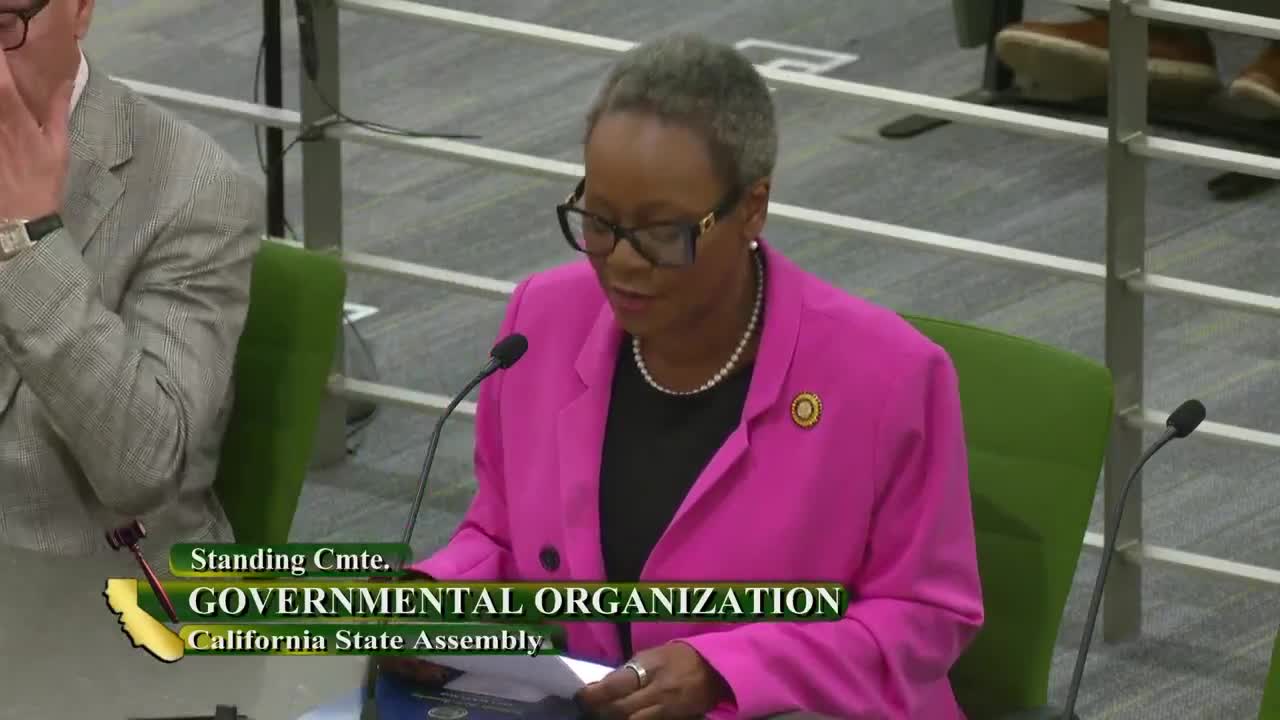 23MIN
Assembly Standing Committee on Governmental Organization
Bill Author
Bill Co-Author(s):