AB 3229: California Fruit and Vegetable EBT Pilot Project: report.
- Session Year: 2023-2024
- House: Assembly
- Latest Version Date: 2024-09-28
Current Status:
Passed
(2024-09-28: Chaptered by Secretary of State - Chapter 916, Statutes of 2024.)
Introduced
In Committee
First Chamber
In Committee
Second Chamber
Enacted
Existing federal law establishes the federal Supplemental Nutrition Assistance Program (SNAP), known in California as CalFresh, under which supplemental nutrition assistance benefits allocated to the state by the federal government are distributed to eligible individuals by each county. Existing law establishes a statewide electronic benefits transfer (EBT) system, administered by the State Department of Social Services, for the purpose of providing financial and food assistance benefits, including CalFresh benefits.
Existing law establishes the California Fruit and Vegetable EBT Pilot Project and requires the department, in consultation with the Department of Food and Agriculture and specified stakeholders, to include within the EBT system a supplemental benefits mechanism that allows an authorized retailer to deliver and redeem supplemental benefits. Existing law requires the department to submit a report to the Legislature, including the results of an evaluation of the pilot projects, as specified, 9 months after the department has received sufficient data to evaluate the pilot projects, but not later than September 1, 2025. Existing law requires the department to submit a report to the Legislature by March 1, 2026, regarding the transition of the California Fruit and Vegetable EBT Pilot Project to a supplemental benefits program that is fully state managed, without grantee intermediaries, as specified. Existing law specifies that the pilot project is to remain in effect until January 1, 2027, and is repealed as of that date.
This bill would instead require the department to submit a single report to the Legislature regarding the transition of the California Fruit and Vegetable EBT Pilot Project to a supplemental benefits program that is fully state managed, without grantee intermediaries, and including the results of an evaluation of the pilot projects, by July 1, 2025.
Existing federal law establishes the federal Supplemental Nutrition Assistance Program (SNAP), known in California as CalFresh, under which supplemental nutrition assistance benefits allocated to the state by the federal government are distributed to eligible individuals by each county. Existing law establishes a statewide electronic benefits transfer (EBT) system, administered by the State Department of Social Services, for the purpose of providing financial and food assistance benefits, including CalFresh benefits.
Existing law establishes the California Fruit and Vegetable EBT Pilot Project and requires the department, in consultation with the Department of Food and Agriculture and specified stakeholders, to include within the EBT system a supplemental benefits mechanism that allows an authorized retailer to deliver and redeem supplemental benefits. Existing law requires the department to submit a report to the Legislature, including the results of an evaluation of the pilot projects, as specified, 9 months after the department has received sufficient data to evaluate the pilot projects, but not later than September 1, 2025. Existing law requires the department to submit a report to the Legislature by March 1, 2026, regarding the transition of the California Fruit and Vegetable EBT Pilot Project to a supplemental benefits program that is fully state managed, without grantee intermediaries, as specified. Existing law specifies that the pilot project is to remain in effect until January 1, 2027, and is repealed as of that date.
This bill would instead require the department to submit a single report to the Legislature regarding the transition of the California Fruit and Vegetable EBT Pilot Project to a supplemental benefits program that is fully state managed, without grantee intermediaries, and including the results of an evaluation of the pilot projects, by January July 1, 2025.
Existing federal law establishes the federal Supplemental Nutrition Assistance Program (SNAP), known in California as CalFresh, under which supplemental nutrition assistance benefits allocated to the state by the federal government are distributed to eligible individuals by each county. Existing law establishes a statewide electronic benefits transfer (EBT) system, administered by the State Department of Social Services, for the purpose of providing financial and food assistance benefits, including CalFresh benefits.
Existing law establishes the California Fruit and Vegetable EBT Pilot Project and requires the department, in consultation with the Department of Food and Agriculture and specified stakeholders, to include within the EBT system a supplemental benefits mechanism that allows an authorized retailer to deliver and redeem supplemental benefits. Existing law requires the department to submit a report to the Legislature, including the results of an evaluation of the pilot projects, as specified, 9 months after the department has received sufficient data to evaluate the pilot projects, but not later than September 1, 2025. Existing law requires the department to submit a report to the Legislature by March 1, 2026, regarding the transition of the California Fruit and Vegetable EBT Pilot Project to a supplemental benefits program that is fully state managed, without grantee intermediaries, as specified. Existing law specifies that the pilot project is to remain in effect until January 1, 2027, and is repealed as of that date.
This bill would instead require the department to submit the a single report to the Legislature regarding the transition of the California Fruit and Vegetable EBT Pilot Project to a supplemental benefits program that is fully state managed, without grantee intermediaries, and including the results of an evaluation of the pilot projects, by January 1, 2025.
Existing federal law establishes the federal Supplemental Nutrition Assistance Program (SNAP), known in California as CalFresh, under which supplemental nutrition assistance benefits allocated to the state by the federal government are distributed to eligible individuals by each county. Existing law establishes a statewide electronic benefits transfer (EBT) system, administered by the State Department of Social Services, for the purpose of providing financial and food assistance benefits, including CalFresh benefits.
Existing law establishes the California Fruit and Vegetable EBT Pilot Project and requires the department, in consultation with the Department of Food and Agriculture and specified stakeholders, to include within the EBT system a supplemental benefits mechanism that allows an authorized retailer to deliver and redeem supplemental benefits. Existing law requires the department to submit a report to the Legislature by March 1, 2026, regarding the transition of the California Fruit and Vegetable EBT Pilot Project to a supplemental benefits program that is fully state managed, without grantee intermediaries, as specified. Existing law specifies that the pilot project is to remain in effect until January 1, 2027, and is repealed as of that date.
This bill would instead require the department to submit the report to the Legislature regarding the transition of the California Fruit and Vegetable EBT Pilot Project to a supplemental benefits program that is fully state managed, without grantee intermediaries, by January 1, 2025.
Existing law requires each county to develop and implement a memorandum of understanding, with specified components, setting forth the roles and responsibilities of agencies and other entities that serve children and youth in foster care who have experienced severe trauma.This bill would require counties to develop and implement that memorandum of understanding by January 1, 2026. To the extent the bill imposes a higher level of service on counties, the bill imposes a state-mandated local program.The California Constitution requires the state to reimburse local agencies and school districts for certain costs mandated by the state. Statutory provisions establish procedures for making that reimbursement.This bill would provide that no reimbursement is required by this act for a specified reason.Existing law requires each county to develop and implement a memorandum of understanding, with specified components, setting forth the roles and responsibilities of agencies and other entities that serve children and youth in foster care who have experienced severe trauma.
This bill would require counties to develop and implement that memorandum of understanding by January 1, 2026. To the extent the bill imposes a higher level of service on counties, the bill imposes a state-mandated local program.
The California Constitution requires the state to reimburse local agencies and school districts for certain costs mandated by the state. Statutory provisions establish procedures for making that reimbursement.
This bill would provide that no reimbursement is required by this act for a specified reason.
(a)This section shall be known, and may be cited, as the California Fruit and Vegetable EBT Pilot Project.
(b)For purposes of this section, the following definitions apply:
(1)Authorized pilot retailer means any retail establishment that is authorized to accept CalFresh benefits, including, but not limited to, grocery stores, corner stores, farmers markets, farm stands, and mobile markets.
(2)Fresh fruits and vegetables means any variety of whole or cut fruits and vegetables without added sugars, fats, oils, or salt and that have not been processed with heat, drying, canning, or freezing.
(3)Supplemental benefits means additional funds delivered to a CalFresh recipients EBT card upon purchase of fresh fruits and vegetables using CalFresh benefits, and to be redeemed only for purchases allowed under the CalFresh program at an authorized retailer.
(c)The department, in consultation with the Department of Food and Agriculture, county CalFresh administrators, and stakeholders with experience operating CalFresh nutrition incentive programs, shall include within the EBT system a supplemental benefits mechanism that allows an authorized pilot retailer to deliver and redeem supplemental benefits. The supplemental benefits mechanism shall be compatible with operational procedures at farmers markets with centralized point-of-sale terminals and at grocery stores with integrated point-of-sale terminals. The supplemental benefits mechanism shall ensure all of the following:
(1)Supplemental benefits can be transferable across any CalFresh program authorized retailer.
(2)Supplemental benefits can be accrued, tracked, and redeemed by CalFresh recipients in a seamless, integrated process through the EBT system.
(3)Supplemental benefits can only be accrued by CalFresh recipients through the purchase of fresh fruits and vegetables from an authorized pilot retailer.
(4)Supplemental benefits can only be redeemed to make eligible purchases under the CalFresh program from an authorized retailer.
(5)The supplemental benefits mechanism complies with all applicable state and federal laws governing procedures to ensure privacy and confidentiality.
(6)Authorized pilot retailers that use EBT-only point-of-sale terminals, such as farmers markets, and those that use integrated point-of-sale terminals, such as grocery stores, shall be able to integrate the new supplemental benefits mechanism into their existing systems, including the free state-issued hardware provided to certified farmers markets and farmers.
(7)The supplemental benefits mechanism provides a CalFresh benefits to supplemental benefits match ratio of at least 1:1.
(8)A CalFresh household may only accrue up to a limited amount of supplemental benefits, as determined by the department.
(9)There shall be no expiration date for use of supplemental benefits, but the benefits may be expunged in accordance with federal Supplemental Nutrition Assistance Program (SNAP) regulations.
(d)There is hereby created in the State Treasury the California Fruit and Vegetable EBT Grant Fund. The fund shall consist of moneys from state, federal, and other public and private sources to provide grants pursuant to subdivision (e).
(e)Upon the deposit of sufficient moneys into the California Fruit and Vegetable EBT Grant Fund, as determined by the department, and upon the appropriation of moneys from the fund by the Legislature for this purpose, the department shall provide grants for pilot projects to implement and test the supplemental benefits mechanism in existing retail settings. The goal of the pilot project is to develop and refine a scalable model for increasing the purchase and consumption of fresh fruits and vegetables by delivering supplemental benefits to CalFresh recipients in a way that can be easily adopted by authorized retailers of various types, sizes, and locations in the future. The department, in consultation with the Department of Food and Agriculture, shall develop and adopt guidelines for awarding the grants, which shall include, at a minimum, all of the following requirements:
(1)(A)A minimum of three grants shall be awarded to nonprofit organizations or government agencies.
(B)At least one of the grants shall provide the ability to test the supplemental benefit mechanism at farmers markets. A farmers market that operates a centralized point-of-sale terminal and a scrip system and that also participates as a pilot project pursuant to this section may disburse scrips for supplemental benefits and for fresh fruits and vegetables concurrently.
(2)Selection criteria shall require that grant applicants demonstrate all of the following:
(A)Previous experience and effectiveness in administering CalFresh nutrition incentive programs, or similar supplemental benefits programs.
(B)Partnership commitment from at least one existing authorized retailer that already accepts CalFresh benefits and sells fresh fruits and vegetables.
(C)Ability to ensure that supplemental benefits are only accrued and delivered when purchasing fresh fruits and vegetables with CalFresh benefits and will be used only to make purchases authorized under the CalFresh program.
(D)Status as a nonprofit organization or government agency.
(E)Ability to provide the minimum data deemed necessary for the department to successfully evaluate the pilot project, as described in paragraph (1) of subdivision (f).
(F)Any other criteria that the department deems necessary for successful pilot project implementation, such as the level of need in the community, the size of the CalFresh population, and the need for geographic diversity.
(3)Grantees shall be responsible for all of the following:
(A)Securing the commitment of at least one authorized retailer willing to participate in the pilot project.
(B)Conducting community outreach.
(C)Providing evaluation data to the department.
(D)Ensuring the integrity of the pilot project following guidelines adopted by the department pursuant to this subdivision.
(f)(1)The department shall evaluate the pilot projects and make recommendations to further refine and expand the supplemental benefits mechanism. These recommendations shall also include a strategy for CalFresh client education, developed in consultation with county CalFresh administrators and advocates. The evaluation shall examine the efficacy of supplemental benefits accrual, delivery, and redemption from the perspective of CalFresh recipients, participating retailers, and state administrators. The evaluation shall also provide recommendations for further modifications that would make the mechanism easier for CalFresh recipients to use, for a variety of authorized retailer types to adopt, and for the department to administer. The department may contract with an independent evaluator to conduct this evaluation.
(2)(A)The department shall provide information on the timing and steps that would be necessary to transition the California Fruit and Vegetable EBT Pilot Project to a supplemental benefits program that is fully state managed, without grantee intermediaries.
(B)The information to be submitted under this paragraph shall include both of the following:
(i)The results of the evaluation required pursuant to paragraph (1).
(ii)Scoping the staff or other resources and timelines for all of the following:
(I)Engaging with and enrolling interested retailers directly on an ongoing basis, if the state makes additional funding available for further expansion.
(II)The staffing and technical resources needed by the Office of Technology and Solutions Integration to certify new retailers EBT systems when they are onboarded into the program.
(III)Resources needed to align the EBT system and the California Statewide Automated Welfare System (CalSAWS) to fully automate financial reconciliation of fruit and vegetable supplemental benefits as the program expands.
(IV)Expansion to include online CalFresh transactions and grocery delivery services.
(3)(A)By July 1, 2025, the department shall submit a report to the Legislature on the topics described by paragraphs (1) and (2).
(B)The report submitted pursuant to subparagraph (A) shall be submitted in compliance with Section 9795 of the Government Code.
(g)Notwithstanding any other law, all of the following apply for the purposes of this section:
(1)Contracts or grants awarded pursuant to this section shall be exempt from the personal services contracting requirements of Article 4 (commencing with Section 19130) of Chapter 5 of Part 2 of Division 5 of Title 2 of the Government Code.
(2)Contracts or grants awarded pursuant to this section are exempt from the Public Contract Code and the State Contracting Manual, and are not subject to the approval of the Department of General Services or the Department of Technology.
(3)The state is immune from any liability resulting from the implementation of this section.
(4)Notwithstanding the rulemaking provisions of the Administrative Procedure Act (Chapter 3.5 (commencing with Section 11340) of Part 1 of Division 3 of Title 2 of the Government Code), the department may implement, interpret, or make specific this section without taking any regulatory action.
(h)Notwithstanding Sections 18927 and 11004, the supplemental benefits described in this section are not subject to recovery for an overissuance caused by intentional program violation, fraud, inadvertent household error, or administrative error, and are not subject to review under Section 10950.
(i)The supplemental benefits described in this section are not entitlement benefits, and the department shall provide those benefits pursuant to this section only to the extent that funding is appropriated in the annual Budget Act for purposes of this section.
(j)The department shall seek any necessary federal approvals to establish this pilot project.
(k)This section shall remain in effect only until January 1, 2027, and as of that date is repealed.
(a)This section shall be known, and may be cited, as the California Fruit and Vegetable EBT Pilot Project.
(b)For purposes of this section, the following definitions apply:
(1)Authorized pilot retailer means any retail establishment that is authorized to accept CalFresh benefits, including, but not limited to, grocery stores, corner stores, farmers markets, farm stands, and mobile markets.
(2)Fresh fruits and vegetables means any variety of whole or cut fruits and vegetables without added sugars, fats, oils, or salt and that have not been processed with heat, drying, canning, or freezing.
(3)Supplemental benefits means additional funds delivered to a CalFresh recipients EBT card upon purchase of fresh fruits and vegetables using CalFresh benefits, and to be redeemed only for purchases allowed under the CalFresh program at an authorized retailer.
(c)The department, in consultation with the Department of Food and Agriculture, county CalFresh administrators, and stakeholders with experience operating CalFresh nutrition incentive programs, shall include within the EBT system a supplemental benefits mechanism that allows an authorized pilot retailer to deliver and redeem supplemental benefits. The supplemental benefits mechanism shall be compatible with operational procedures at farmers markets with centralized point-of-sale terminals and at grocery stores with integrated point-of-sale terminals. The supplemental benefits mechanism shall ensure all of the following:
(1)Supplemental benefits can be transferable across any CalFresh program authorized retailer.
(2)Supplemental benefits can be accrued, tracked, and redeemed by CalFresh recipients in a seamless, integrated process through the EBT system.
(3)Supplemental benefits can only be accrued by CalFresh recipients through the purchase of fresh fruits and vegetables from an authorized pilot retailer.
(4)Supplemental benefits can only be redeemed to make eligible purchases under the CalFresh program from an authorized retailer.
(5)The supplemental benefits mechanism complies with all applicable state and federal laws governing procedures to ensure privacy and confidentiality.
(6)Authorized pilot retailers that use EBT-only point-of-sale terminals, such as farmers markets, and those that use integrated point-of-sale terminals, such as grocery stores, shall be able to integrate the new supplemental benefits mechanism into their existing systems, including the free state-issued hardware provided to certified farmers markets and farmers.
(7)The supplemental benefits mechanism provides a CalFresh benefits to supplemental benefits match ratio of at least 1:1.
(8)A CalFresh household may only accrue up to a limited amount of supplemental benefits, as determined by the department.
(9)There shall be no expiration date for use of supplemental benefits, but the benefits may be expunged in accordance with federal Supplemental Nutrition Assistance Program (SNAP) regulations.
(d)There is hereby created in the State Treasury the California Fruit and Vegetable EBT Grant Fund. The fund shall consist of moneys from state, federal, and other public and private sources to provide grants pursuant to subdivision (e).
(e)Upon the deposit of sufficient moneys into the California Fruit and Vegetable EBT Grant Fund, as determined by the department, and upon the appropriation of moneys from the fund by the Legislature for this purpose, the department shall provide grants for pilot projects to implement and test the supplemental benefits mechanism in existing retail settings. The goal of the pilot project is to develop and refine a scalable model for increasing the purchase and consumption of fresh fruits and vegetables by delivering supplemental benefits to CalFresh recipients in a way that can be easily adopted by authorized retailers of various types, sizes, and locations in the future. The department, in consultation with the Department of Food and Agriculture, shall develop and adopt guidelines for awarding the grants, which shall include, at a minimum, all of the following requirements:
(1)(A)A minimum of three grants shall be awarded to nonprofit organizations or government agencies.
(B)At least one of the grants shall provide the ability to test the supplemental benefit mechanism at farmers markets. A farmers market that operates a centralized point-of-sale terminal and a scrip system and that also participates as a pilot project pursuant to this section may disburse scrips for supplemental benefits and for fresh fruits and vegetables concurrently.
(2)Selection criteria shall require that grant applicants demonstrate all of the following:
(A)Previous experience and effectiveness in administering CalFresh nutrition incentive programs, or similar supplemental benefits programs.
(B)Partnership commitment from at least one existing authorized retailer that already accepts CalFresh benefits and sells fresh fruits and vegetables.
(C)Ability to ensure that supplemental benefits are only accrued and delivered when purchasing fresh fruits and vegetables with CalFresh benefits and will be used only to make purchases authorized under the CalFresh program.
(D)Status as a nonprofit organization or government agency.
(E)Ability to provide the minimum data deemed necessary for the department to successfully evaluate the pilot project, as described in paragraph (1) of subdivision (f).
(F)Any other criteria that the department deems necessary for successful pilot project implementation, such as the level of need in the community, the size of the CalFresh population, and the need for geographic diversity.
(3)Grantees shall be responsible for all of the following:
(A)Securing the commitment of at least one authorized retailer willing to participate in the pilot project.
(B)Conducting community outreach.
(C)Providing evaluation data to the department.
(D)Ensuring the integrity of the pilot project following guidelines adopted by the department pursuant to this subdivision.
(f)(1)The department shall evaluate the pilot projects and make recommendations to further refine and expand the supplemental benefits mechanism. These recommendations shall also include a strategy for CalFresh client education, developed in consultation with county CalFresh administrators and advocates. The evaluation shall examine the efficacy of supplemental benefits accrual, delivery, and redemption from the perspective of CalFresh recipients, participating retailers, and state administrators. The evaluation shall also provide recommendations for further modifications that would make the mechanism easier for CalFresh recipients to use, for a variety of authorized retailer types to adopt, and for the department to administer. The department may contract with an independent evaluator to conduct this evaluation.
(2)(A)The department shall provide information on the timing and steps that would be necessary to transition the California Fruit and Vegetable EBT Pilot Project to a supplemental benefits program that is fully state managed, without grantee intermediaries.
(B)The information to be submitted under this paragraph shall include both of the following:
(i)The results of the evaluation required pursuant to paragraph (1).
(ii)Scoping the staff or other resources and timelines for all of the following:
(I)Engaging with and enrolling interested retailers directly on an ongoing basis, if the state makes additional funding available for further expansion.
(II)The staffing and technical resources needed by the Office of Technology and Solutions Integration to certify new retailers EBT systems when they are onboarded into the program.
(III)Resources needed to align the EBT system and the California Statewide Automated Welfare System (CalSAWS) to fully automate financial reconciliation of fruit and vegetable supplemental benefits as the program expands.
(IV)Expansion to include online CalFresh transactions and grocery delivery services.
(3)(A)By January July 1, 2025, the department shall submit a report to the Legislature on the topics described by paragraphs (1) and (2).
(B)The report submitted pursuant to subparagraph (A) shall be submitted in compliance with Section 9795 of the Government Code.
(g)Notwithstanding any other law, all of the following apply for the purposes of this section:
(1)Contracts or grants awarded pursuant to this section shall be exempt from the personal services contracting requirements of Article 4 (commencing with Section 19130) of Chapter 5 of Part 2 of Division 5 of Title 2 of the Government Code.
(2)Contracts or grants awarded pursuant to this section are exempt from the Public Contract Code and the State Contracting Manual, and are not subject to the approval of the Department of General Services or the Department of Technology.
(3)The state is immune from any liability resulting from the implementation of this section.
(4)Notwithstanding the rulemaking provisions of the Administrative Procedure Act (Chapter 3.5 (commencing with Section 11340) of Part 1 of Division 3 of Title 2 of the Government Code), the department may implement, interpret, or make specific this section without taking any regulatory action.
(h)Notwithstanding Sections 18927 and 11004, the supplemental benefits described in this section are not subject to recovery for an overissuance caused by intentional program violation, fraud, inadvertent household error, or administrative error, and are not subject to review under Section 10950.
(i)The supplemental benefits described in this section are not entitlement benefits, and the department shall provide those benefits pursuant to this section only to the extent that funding is appropriated in the annual Budget Act for purposes of this section.
(j)The department shall seek any necessary federal approvals to establish this pilot project.
(k)This section shall remain in effect only until January 1, 2027, and as of that date is repealed.
(a)This section shall be known, and may be cited, as the California Fruit and Vegetable EBT Pilot Project.
(b)For purposes of this section, the following definitions apply:
(1)Authorized pilot retailer means any retail establishment that is authorized to accept CalFresh benefits, including, but not limited to, grocery stores, corner stores, farmers markets, farm stands, and mobile markets.
(2)Fresh fruits and vegetables means any variety of whole or cut fruits and vegetables without added sugars, fats, oils, or salt and that have not been processed with heat, drying, canning, or freezing.
(3)Supplemental benefits means additional funds delivered to a CalFresh recipients EBT card upon purchase of fresh fruits and vegetables using CalFresh benefits, and to be redeemed only for purchases allowed under the CalFresh program at an authorized retailer.
(c)The department, in consultation with the Department of Food and Agriculture, county CalFresh administrators, and stakeholders with experience operating CalFresh nutrition incentive programs, shall include within the EBT system a supplemental benefits mechanism that allows an authorized pilot retailer to deliver and redeem supplemental benefits. The supplemental benefits mechanism shall be compatible with operational procedures at farmers markets with centralized point-of-sale terminals and at grocery stores with integrated point-of-sale terminals. The supplemental benefits mechanism shall ensure all of the following:
(1)Supplemental benefits can be transferable across any CalFresh program authorized retailer.
(2)Supplemental benefits can be accrued, tracked, and redeemed by CalFresh recipients in a seamless, integrated process through the EBT system.
(3)Supplemental benefits can only be accrued by CalFresh recipients through the purchase of fresh fruits and vegetables from an authorized pilot retailer.
(4)Supplemental benefits can only be redeemed to make eligible purchases under the CalFresh program from an authorized retailer.
(5)The supplemental benefits mechanism complies with all applicable state and federal laws governing procedures to ensure privacy and confidentiality.
(6)Authorized pilot retailers that use EBT-only point-of-sale terminals, such as farmers markets, and those that use integrated point-of-sale terminals, such as grocery stores, shall be able to integrate the new supplemental benefits mechanism into their existing systems, including the free state-issued hardware provided to certified farmers markets and farmers.
(7)The supplemental benefits mechanism provides a CalFresh benefits to supplemental benefits match ratio of at least 1:1.
(8)A CalFresh household may only accrue up to a limited amount of supplemental benefits, as determined by the department.
(9)There shall be no expiration date for use of supplemental benefits, but the benefits may be expunged in accordance with federal Supplemental Nutrition Assistance Program (SNAP) regulations.
(d)There is hereby created in the State Treasury the California Fruit and Vegetable EBT Grant Fund. The fund shall consist of moneys from state, federal, and other public and private sources to provide grants pursuant to subdivision (e).
(e)Upon the deposit of sufficient moneys into the California Fruit and Vegetable EBT Grant Fund, as determined by the department, and upon the appropriation of moneys from the fund by the Legislature for this purpose, the department shall provide grants for pilot projects to implement and test the supplemental benefits mechanism in existing retail settings. The goal of the pilot project is to develop and refine a scalable model for increasing the purchase and consumption of fresh fruits and vegetables by delivering supplemental benefits to CalFresh recipients in a way that can be easily adopted by authorized retailers of various types, sizes, and locations in the future. The department, in consultation with the Department of Food and Agriculture, shall develop and adopt guidelines for awarding the grants, which shall include, at a minimum, all of the following requirements:
(1)(A)A minimum of three grants shall be awarded to nonprofit organizations or government agencies.
(B)At least one of the grants shall provide the ability to test the supplemental benefit mechanism at farmers markets. A farmers market that operates a centralized point-of-sale terminal and a scrip system and that also participates as a pilot project pursuant to this section may disburse scrips for supplemental benefits and for fresh fruits and vegetables concurrently.
(2)Selection criteria shall require that grant applicants demonstrate all of the following:
(A)Previous experience and effectiveness in administering CalFresh nutrition incentive programs, or similar supplemental benefits programs.
(B)Partnership commitment from at least one existing authorized retailer that already accepts CalFresh benefits and sells fresh fruits and vegetables.
(C)Ability to ensure that supplemental benefits are only accrued and delivered when purchasing fresh fruits and vegetables with CalFresh benefits and will be used only to make purchases authorized under the CalFresh program.
(D)Status as a nonprofit organization or government agency.
(E)Ability to provide the minimum data deemed necessary for the department to successfully evaluate the pilot project, as described in paragraph (1) of subdivision (f).
(F)Any other criteria that the department deems necessary for successful pilot project implementation, such as the level of need in the community, the size of the CalFresh population, and the need for geographic diversity.
(3)Grantees shall be responsible for all of the following:
(A)Securing the commitment of at least one authorized retailer willing to participate in the pilot project.
(B)Conducting community outreach.
(C)Providing evaluation data to the department.
(D)Ensuring the integrity of the pilot project following guidelines adopted by the department pursuant to this subdivision.
(f)(1)The department shall evaluate the pilot projects and make recommendations to further refine and expand the supplemental benefits mechanism. These recommendations shall also include a strategy for CalFresh client education, developed in consultation with county CalFresh administrators and advocates. The evaluation shall examine the efficacy of supplemental benefits accrual, delivery, and redemption from the perspective of CalFresh recipients, participating retailers, and state administrators. The evaluation shall also provide recommendations for further modifications that would make the mechanism easier for CalFresh recipients to use, for a variety of authorized retailer types to adopt, and for the department to administer. The department may contract with an independent evaluator to conduct this evaluation.
(2)Nine months after the department has received sufficient data to evaluate the pilot projects, but no later than September 1, 2025, the department shall submit a report to the Legislature that includes the results of the evaluation required pursuant to paragraph (1).(3)(2)(A)The department shall submit a report to the Legislature by January 1, 2025, pursuant to Section 9795 of the Government Code, provide information on the timing and steps that would be necessary to transition the California Fruit and Vegetable EBT Pilot Project to a supplemental benefits program that is fully state managed, without grantee intermediaries.
(B)The report information to be submitted under this paragraph shall include, but is not limited to, scoping the staff or other resources and timelines for all include both of the following:
(i)The results of the evaluation required pursuant to paragraph (1).
(ii)Scoping the staff or other resources and timelines for all of the following:
(i)(I)Engaging with and enrolling interested retailers directly on an ongoing basis, if the state makes additional funding available for further expansion.
(ii)(II)The staffing and technical resources needed by the Office of Technology and Solutions Integration to certify new retailers EBT systems when they are onboarded into the program.
(iii)(III)Resources needed to align the EBT system and the California Statewide Automated Welfare System (CalSAWS) to fully automate financial reconciliation of fruit and vegetable supplemental benefits as the program expands.
(iv)(IV)Expansion to include online CalFresh transactions and grocery delivery services.
(3)(A)By January 1, 2025, the department shall submit a report to the Legislature on the topics described by paragraphs (1) and (2).
(B)The report submitted pursuant to subparagraph (A) shall be submitted in compliance with Section 9795 of the Government Code.
(g)Notwithstanding any other law, all of the following apply for the purposes of this section:
(1)Contracts or grants awarded pursuant to this section shall be exempt from the personal services contracting requirements of Article 4 (commencing with Section 19130) of Chapter 5 of Part 2 of Division 5 of Title 2 of the Government Code.
(2)Contracts or grants awarded pursuant to this section are exempt from the Public Contract Code and the State Contracting Manual, and are not subject to the approval of the Department of General Services or the Department of Technology.
(3)The state is immune from any liability resulting from the implementation of this section.
(4)Notwithstanding the rulemaking provisions of the Administrative Procedure Act (Chapter 3.5 (commencing with Section 11340) of Part 1 of Division 3 of Title 2 of the Government Code), the department may implement, interpret, or make specific this section without taking any regulatory action.
(h)Notwithstanding Sections 18927 and 11004, the supplemental benefits described in this section are not subject to recovery for an overissuance caused by intentional program violation, fraud, inadvertent household error, or administrative error, and are not subject to review under Section 10950.
(i)The supplemental benefits described in this section are not entitlement benefits, and the department shall provide those benefits pursuant to this section only to the extent that funding is appropriated in the annual Budget Act for purposes of this section.
(j)The department shall seek any necessary federal approvals to establish this pilot project.
(k)This section shall remain in effect only until January 1, 2027, and as of that date is repealed.
(a)This section shall be known, and may be cited, as the California Fruit and Vegetable EBT Pilot Project.
(b)For purposes of this section, the following definitions apply:
(1)Authorized pilot retailer means any retail establishment that is authorized to accept CalFresh benefits, including, but not limited to, grocery stores, corner stores, farmers markets, farm stands, and mobile markets.
(2)Fresh fruits and vegetables means any variety of whole or cut fruits and vegetables without added sugars, fats, oils, or salt and that have not been processed with heat, drying, canning, or freezing.
(3)Supplemental benefits means additional funds delivered to a CalFresh recipients EBT card upon purchase of fresh fruits and vegetables using CalFresh benefits, and to be redeemed only for purchases allowed under the CalFresh program at an authorized retailer.
(c)The department, in consultation with the Department of Food and Agriculture, county CalFresh administrators, and stakeholders with experience operating CalFresh nutrition incentive programs, shall include within the EBT system a supplemental benefits mechanism that allows an authorized pilot retailer to deliver and redeem supplemental benefits. The supplemental benefits mechanism shall be compatible with operational procedures at farmers markets with centralized point-of-sale terminals and at grocery stores with integrated point-of-sale terminals. The supplemental benefits mechanism shall ensure all of the following:
(1)Supplemental benefits can be transferable across any CalFresh program authorized retailer.
(2)Supplemental benefits can be accrued, tracked, and redeemed by CalFresh recipients in a seamless, integrated process through the EBT system.
(3)Supplemental benefits can only be accrued by CalFresh recipients through the purchase of fresh fruits and vegetables from an authorized pilot retailer.
(4)Supplemental benefits can only be redeemed to make eligible purchases under the CalFresh program from an authorized retailer.
(5)The supplemental benefits mechanism complies with all applicable state and federal laws governing procedures to ensure privacy and confidentiality.
(6)Authorized pilot retailers that use EBT-only point-of-sale terminals, such as farmers markets, and those that use integrated point-of-sale terminals, such as grocery stores, shall be able to integrate the new supplemental benefits mechanism into their existing systems, including the free state-issued hardware provided to certified farmers markets and farmers.
(7)The supplemental benefits mechanism provides a CalFresh benefits to supplemental benefits match ratio of at least 1:1.
(8)A CalFresh household may only accrue up to a limited amount of supplemental benefits, as determined by the department.
(9)There shall be no expiration date for use of supplemental benefits, but the benefits may be expunged in accordance with federal Supplemental Nutrition Assistance Program (SNAP) regulations.
(d)There is hereby created in the State Treasury the California Fruit and Vegetable EBT Grant Fund. The fund shall consist of moneys from state, federal, and other public and private sources to provide grants pursuant to subdivision (e).
(e)Upon the deposit of sufficient moneys into the California Fruit and Vegetable EBT Grant Fund, as determined by the department, and upon the appropriation of moneys from the fund by the Legislature for this purpose, the department shall provide grants for pilot projects to implement and test the supplemental benefits mechanism in existing retail settings. The goal of the pilot project is to develop and refine a scalable model for increasing the purchase and consumption of fresh fruits and vegetables by delivering supplemental benefits to CalFresh recipients in a way that can be easily adopted by authorized retailers of various types, sizes, and locations in the future. The department, in consultation with the Department of Food and Agriculture, shall develop and adopt guidelines for awarding the grants, which shall include, at a minimum, all of the following requirements:
(1)(A)A minimum of three grants shall be awarded to nonprofit organizations or government agencies.
(B)At least one of the grants shall provide the ability to test the supplemental benefit mechanism at farmers markets. A farmers market that operates a centralized point-of-sale terminal and a scrip system and that also participates as a pilot project pursuant to this section may disburse scrips for supplemental benefits and for fresh fruits and vegetables concurrently.
(2)Selection criteria shall require that grant applicants demonstrate all of the following:
(A)Previous experience and effectiveness in administering CalFresh nutrition incentive programs, or similar supplemental benefits programs.
(B)Partnership commitment from at least one existing authorized retailer that already accepts CalFresh benefits and sells fresh fruits and vegetables.
(C)Ability to ensure that supplemental benefits are only accrued and delivered when purchasing fresh fruits and vegetables with CalFresh benefits and will be used only to make purchases authorized under the CalFresh program.
(D)Status as a nonprofit organization or government agency.
(E)Ability to provide the minimum data deemed necessary for the department to successfully evaluate the pilot project, as described in paragraph (1) of subdivision (f).
(F)Any other criteria that the department deems necessary for successful pilot project implementation, such as the level of need in the community, the size of the CalFresh population, and the need for geographic diversity.
(3)Grantees shall be responsible for all of the following:
(A)Securing the commitment of at least one authorized retailer willing to participate in the pilot project.
(B)Conducting community outreach.
(C)Providing evaluation data to the department.
(D)Ensuring the integrity of the pilot project following guidelines adopted by the department pursuant to this subdivision.
(f)(1)The department shall evaluate the pilot projects and make recommendations to further refine and expand the supplemental benefits mechanism. These recommendations shall also include a strategy for CalFresh client education, developed in consultation with county CalFresh administrators and advocates. The evaluation shall examine the efficacy of supplemental benefits accrual, delivery, and redemption from the perspective of CalFresh recipients, participating retailers, and state administrators. The evaluation shall also provide recommendations for further modifications that would make the mechanism easier for CalFresh recipients to use, for a variety of authorized retailer types to adopt, and for the department to administer. The department may contract with an independent evaluator to conduct this evaluation.
(2)Nine months after the department has received sufficient data to evaluate the pilot projects, but no later than September 1, 2025, the department shall submit a report to the Legislature that includes the results of the evaluation required pursuant to paragraph (1).
(3)(A)The department shall submit a report to the Legislature by March 1, 2026, January 1, 2025, pursuant to Section 9795 of the Government Code, on the timing and steps that would be necessary to transition the California Fruit and Vegetable EBT Pilot Project to a supplemental benefits program that is fully state-managed, state managed, without grantee intermediaries.
(B)The report to be submitted under this paragraph shall include, but is not limited to, scoping the staff or other resources and timelines for all of the following:
(i)Engaging with and enrolling interested retailers directly on an ongoing basis, if the state makes additional funding available for further expansion.
(ii)The staffing and technical resources needed by the Office of Technology and Solutions Integration to certify new retailers EBT systems when they are onboarded into the program.
(iii)Resources needed to align the EBT system and the California Statewide Automated Welfare System (CalSAWS) to fully automate financial reconciliation of fruit and vegetable supplemental benefits as the program expands.
(iv)Expansion to include online CalFresh transactions and grocery delivery services.
(g)Notwithstanding any other law, all of the following apply for the purposes of this section:
(1)Contracts or grants awarded pursuant to this section shall be exempt from the personal services contracting requirements of Article 4 (commencing with Section 19130) of Chapter 5 of Part 2 of Division 5 of Title 2 of the Government Code.
(2)Contracts or grants awarded pursuant to this section are exempt from the Public Contract Code and the State Contracting Manual, and are not subject to the approval of the Department of General Services or the Department of Technology.
(3)The state is immune from any liability resulting from the implementation of this section.
(4)Notwithstanding the rulemaking provisions of the Administrative Procedure Act (Chapter 3.5 (commencing with Section 11340) of Part 1 of Division 3 of Title 2 of the Government Code), the department may implement, interpret, or make specific this section without taking any regulatory action.
(h)Notwithstanding Sections 18927 and 11004, the supplemental benefits described in this section are not subject to recovery for an overissuance caused by intentional program violation, fraud, inadvertent household error, or administrative error, and are not subject to review under Section 10950.
(i)The supplemental benefits described in this section are not entitlement benefits, and the department shall provide those benefits pursuant to this section only to the extent that funding is appropriated in the annual Budget Act for purposes of this section.
(j)The department shall seek any necessary federal approvals to establish this pilot project.
(k) This section shall remain in effect only until January 1, 2027, and as of that date is repealed.
SECTION 1.Section 16521.6 of the Welfare and Institutions Code is amended to read:16521.6.To ensure that coordinated, timely, and trauma-informed services are provided to children and youth in foster care who have experienced severe trauma, all of the following shall occur:(a)(1)By January 1, 2026, each county shall develop and implement a memorandum of understanding setting forth the roles and responsibilities of agencies and other entities that serve children and youth in foster care who have experienced severe trauma. Participants in the development and implementation of the memorandum of understanding shall include, but not be limited to, all of the following:(A)The county child welfare agency.(B)The county probation department.(C)The county behavioral health departments.(D)The county office of education.(E)The regional center or centers that serve children and youth with developmental disabilities in the county.(F)Foster care or other child welfare advocacy groups, as deemed appropriate by the organizations that will be parties to the memorandum, serving in an advisory capacity.(2)The memorandum of understanding shall include, at a minimum, provisions addressing all of the following:(A)Establishment and operation of an interagency leadership team.(B)Establishment and operation of an interagency placement committee, as defined in Section 4096.(C)Commitment to implementation of an integrated core practice model.(D)Processes for screening, assessment, and entry to care.(E)Processes for child and family teaming and universal service planning.(F)Alignment and coordination of transportation and other foster youth services.(G)Recruitment and management of resource families and delivery of therapeutic foster care services.(H)Information and data sharing agreements.(I)Staff recruitment, training, and coaching.(J)Financial resource management and cost sharing.(K)Dispute resolution.(L)Processes, as developed through tribal consultation with the federally recognized tribes within each county, for engaging and coordinating with these tribes in the ongoing implementation of the memorandums of understanding described in this section.(3)(A)No later than October 1, 2021, members of the interagency leadership team, or its designees, shall establish a process to provide, arrange for, or ensure the provision of, at least six months of family-based aftercare service to children and youth, as described in Section 4096.6, and acknowledgment that federal financial participation under the Medi-Cal program is only available if all state and federal requirements are met and the service is medically necessary.(B)Members of the interagency leadership team described in subparagraph (A) of paragraph (2), or its designees, may, to the extent permitted by federal law, and subject to the limitations described in subparagraph (C), disclose to, and exchange with, one another information or a writing that may be designated as confidential under state law if the member of the team having that information or writing reasonably believes it is generally relevant to the identification, reduction, or elimination of barriers to services for, or to placement of, children and youth in foster care or to improve provision of those services or those placements.(C)Members of the interagency leadership team, or its designees, who receive disclosed or exchanged information or a writing pursuant to subparagraph (B) shall destroy or return that information or writing once the purposes for which it was disclosed or exchanged are satisfied. The information or writing shall be used only for the purposes described in subparagraph (B). Any information or writing disclosed or exchanged pursuant to subparagraph (B) shall be confidential and shall not be open to public inspection, unless the information or writing is aggregated and deidentified in a manner that prevents the identification of an individual who is a subject of that information or writing. Any discussion concerning the disclosed or exchanged information or writing during a team meeting shall be confidential and shall not be open to public inspection.(D)Members of an interagency placement committee, as defined in Section 4096, child abuse multidisciplinary personnel team, as defined in Section 18961.7, or child and family team, as defined in paragraph (4) of subdivision (a) of Section 16501, that is convened for the purpose of implementing the provisions of the memorandum of understanding developed pursuant to this subdivision shall comply with applicable statutory confidentiality provisions for that committee or team. Members of teams convened for purposes of implementing the memorandum of understanding shall comply with applicable records retention policies for their respective agencies or programs.(4)To the extent possible, the implementation of the memorandum of understanding shall utilize existing processes and structures within and across the respective organizations that are parties to it.(b)(1)(A)No later than June 1, 2019, the Secretary of California Health and Human Services and the Superintendent of Public Instruction shall establish a joint interagency resolution team consisting of representatives from the State Department of Social Services, the State Department of Health Care Services, the State Department of Developmental Services, and the State Department of Education.(B)(i)The primary roles of the joint interagency resolution team shall be to develop guidance to counties, county offices of education, and regional centers with regard to developing the memoranda of understanding required by this section, to support the implementation of those memoranda of understanding, and to provide technical assistance to counties to identify and secure the appropriate level of services to meet the needs of children and youth in foster care who have experienced severe trauma.(ii)The agencies shall ensure that a process is developed for counties and partner agencies that are parties to the memorandum of understanding to request interdepartmental technical assistance from the joint interagency resolution team.(2)(A)No later than January 1, 2020, the joint interagency resolution team, in consultation with county agencies, service providers, and advocates for children and resource families, shall review the placement and service options available to county child welfare agencies and county probation departments for children and youth in foster care who have experienced severe trauma and shall develop and submit recommendations to the Legislature addressing any identified gaps in placement types or availability, needed services to resource families, or other identified issues. The joint interagency resolution team shall update its review and provide recommendations to the Legislature no later than December 31, 2022, that take into account the specific needs and characteristics of youth with unplanned discharges from short-term residential therapeutic programs and youth for whom counties were unable to, or have difficulty with, securing placements and providing trauma-informed services, which may include, but is not limited to, as applicable, youth impacted by commercial sexual exploitation, youth with acute behavioral needs, and youth with intellectual or developmental disabilities. The recommendations shall also articulate a statewide plan for any additional development needed for a trauma-informed, therapeutic continuum of care to support youth in-state in the least restrictive setting.(B)A report submitted to the Legislature pursuant to this paragraph shall be submitted in compliance with Section 9795 of the Government Code.(3)No later than June 1, 2020, the joint interagency resolution team, in consultation with county agencies, service providers, behavioral health professionals, schools of social work, and advocates for children and resource families, shall develop a multiyear plan for increasing the capacity and delivery of trauma-informed care to children and youth in foster care served by short-term residential therapeutic programs and other foster care and behavioral health providers.(4)(A)Members of the joint interagency resolution team described in this subdivision may, to the extent permitted by federal law, and subject to the limitations described in subparagraph (B), disclose to, and exchange with, one another information or a writing that may be designated as confidential under state law if the member of the team or committee having that information or writing reasonably believes it is generally relevant to the identification, reduction, or elimination of barriers to services for, or to placement of, children and youth in foster care or to improve provision of those services or those placements.(B)Members of the joint interagency resolution team who receive disclosed or exchanged information, or a writing, pursuant to subparagraph (A), shall destroy or return that information or writing once the purposes for which it was disclosed or exchanged are satisfied. The information or writing shall be used only for the purposes described in subparagraph (A). Any information or writing disclosed or exchanged pursuant to subparagraph (A) shall be confidential and shall not be open to public inspection, unless the information or writing is aggregated and deidentified in a manner that prevents the identification of an individual who is a subject of that information or writing. Any discussion concerning the disclosed or exchanged information or writing during a team meeting shall be confidential and shall not be open to public inspection.(5)The joint interagency resolution team shall track and report deidentified information of children and nonminor dependents in foster care who have been assisted to preserve, or secure new, intensive therapeutic options. This information shall be posted on the internet website of the California Health and Human Services Agency beginning July 1, 2022, shall be updated annually, and shall include the number of children and nonminor dependents served through its technical assistance process, characteristics of individuals served, and, as applicable, local and statewide systemic issues identified by the team.SEC. 2.To the extent that this act has an overall effect of increasing the costs already borne by a local agency for programs or levels of service mandated by the 2011 Realignment Legislation within the meaning of Section 36 of Article XIII of the California Constitution, it shall apply to local agencies only to the extent that the state provides annual funding for the cost increase. Any new program or higher level of service provided by a local agency pursuant to this act above the level for which funding has been provided shall not require a subvention of funds by the state or otherwise be subject to Section 6 of Article XIIIB of the California Constitution.To ensure that coordinated, timely, and trauma-informed services are provided to children and youth in foster care who have experienced severe trauma, all of the following shall occur:
(a)(1)Each By January 1, 2026, each county shall develop and implement a memorandum of understanding setting forth the roles and responsibilities of agencies and other entities that serve children and youth in foster care who have experienced severe trauma. Participants in the development and implementation of the memorandum of understanding shall include, but not be limited to, all of the following:
(A)The county child welfare agency.
(B)The county probation department.
(C)The county behavioral health departments.
(D)The county office of education.
(E)The regional center or centers that serve children and youth with developmental disabilities in the county.
(F)Foster care or other child welfare advocacy groups, as deemed appropriate by the organizations that will be parties to the memorandum, serving in an advisory capacity.
(2)The memorandum of understanding shall include, at a minimum, provisions addressing all of the following:
(A)Establishment and operation of an interagency leadership team.
(B)Establishment and operation of an interagency placement committee, as defined in Section 4096.
(C)Commitment to implementation of an integrated core practice model.
(D)Processes for screening, assessment, and entry to care.
(E)Processes for child and family teaming and universal service planning.
(F)Alignment and coordination of transportation and other foster youth services.
(G)Recruitment and management of resource families and delivery of therapeutic foster care services.
(H)Information and data sharing agreements.
(I)Staff recruitment, training, and coaching.
(J)Financial resource management and cost sharing.
(K)Dispute resolution.
(L)Processes, as developed through tribal consultation with the federally recognized tribes within each county, for engaging and coordinating with these tribes in the ongoing implementation of the memorandums of understanding described in this section.
(3)(A)No later than October 1, 2021, members of the interagency leadership team, or its designees, shall establish a process to provide, arrange for, or ensure the provision of, at least six months of family-based aftercare service to children and youth, as described in Section 4096.6, and acknowledgment that federal financial participation under the Medi-Cal program is only available if all state and federal requirements are met and the service is medically necessary.
(B)Members of the interagency leadership team described in subparagraph (A) of paragraph (2), or its designees, may, to the extent permitted by federal law, and subject to the limitations described in subparagraph (C), disclose to, and exchange with, one another information or a writing that may be designated as confidential under state law if the member of the team having that information or writing reasonably believes it is generally relevant to the identification, reduction, or elimination of barriers to services for, or to placement of, children and youth in foster care or to improve provision of those services or those placements.
(C)Members of the interagency leadership team, or its designees, who receive disclosed or exchanged information or a writing pursuant to subparagraph (B) shall destroy or return that information or writing once the purposes for which it was disclosed or exchanged are satisfied. The information or writing shall be used only for the purposes described in subparagraph (B). Any information or writing disclosed or exchanged pursuant to subparagraph (B) shall be confidential and shall not be open to public inspection, unless the information or writing is aggregated and deidentified in a manner that prevents the identification of an individual who is a subject of that information or writing. Any discussion concerning the disclosed or exchanged information or writing during a team meeting shall be confidential and shall not be open to public inspection.
(D)Members of an interagency placement committee, as defined in Section 4096, child abuse multidisciplinary personnel team, as defined in Section 18961.7, or child and family team, as defined in paragraph (4) of subdivision (a) of Section 16501, that is convened for the purpose of implementing the provisions of the memorandum of understanding developed pursuant to this subdivision shall comply with applicable statutory confidentiality provisions for that committee or team. Members of teams convened for purposes of implementing the memorandum of understanding shall comply with applicable records retention policies for their respective agencies or programs.
(4)To the extent possible, the implementation of the memorandum of understanding shall utilize existing processes and structures within and across the respective organizations that are parties to it.
(b)(1)(A)No later than June 1, 2019, the Secretary of California Health and Human Services and the Superintendent of Public Instruction shall establish a joint interagency resolution team consisting of representatives from the State Department of Social Services, the State Department of Health Care Services, the State Department of Developmental Services, and the State Department of Education.
(B)(i)The primary roles of the joint interagency resolution team shall be to develop guidance to counties, county offices of education, and regional centers with regard to developing the memoranda of understanding required by this section, to support the implementation of those memoranda of understanding, and to provide technical assistance to counties to identify and secure the appropriate level of services to meet the needs of children and youth in foster care who have experienced severe trauma.
(ii)The agencies shall ensure that a process is developed for counties and partner agencies that are parties to the memorandum of understanding to request interdepartmental technical assistance from the joint interagency resolution team.
(2)(A)No later than January 1, 2020, the joint interagency resolution team, in consultation with county agencies, service providers, and advocates for children and resource families, shall review the placement and service options available to county child welfare agencies and county probation departments for children and youth in foster care who have experienced severe trauma and shall develop and submit recommendations to the Legislature addressing any identified gaps in placement types or availability, needed services to resource families, or other identified issues. The joint interagency resolution team shall update its review and provide recommendations to the Legislature no later than December 31, 2022, that take into account the specific needs and characteristics of youth with unplanned discharges from short-term residential therapeutic programs and youth for whom counties were unable to, or have difficulty with, securing placements and providing trauma-informed services, which may include, but is not limited to, as applicable, youth impacted by commercial sexual exploitation, youth with acute behavioral needs, and youth with intellectual or developmental disabilities. The recommendations shall also articulate a statewide plan for any additional development needed for a trauma-informed, therapeutic continuum of care to support youth in-state in the least restrictive setting.
(B)A report submitted to the Legislature pursuant to this paragraph shall be submitted in compliance with Section 9795 of the Government Code.
(3)No later than June 1, 2020, the joint interagency resolution team, in consultation with county agencies, service providers, behavioral health professionals, schools of social work, and advocates for children and resource families, shall develop a multiyear plan for increasing the capacity and delivery of trauma-informed care to children and youth in foster care served by short-term residential therapeutic programs and other foster care and behavioral health providers.
(4)(A)Members of the joint interagency resolution team described in this subdivision may, to the extent permitted by federal law, and subject to the limitations described in subparagraph (B), disclose to, and exchange with, one another information or a writing that may be designated as confidential under state law if the member of the team or committee having that information or writing reasonably believes it is generally relevant to the identification, reduction, or elimination of barriers to services for, or to placement of, children and youth in foster care or to improve provision of those services or those placements.
(B)Members of the joint interagency resolution team who receive disclosed or exchanged information, or a writing, pursuant to subparagraph (A), shall destroy or return that information or writing once the purposes for which it was disclosed or exchanged are satisfied. The information or writing shall be used only for the purposes described in subparagraph (A). Any information or writing disclosed or exchanged pursuant to subparagraph (A) shall be confidential and shall not be open to public inspection, unless the information or writing is aggregated and deidentified in a manner that prevents the identification of an individual who is a subject of that information or writing. Any discussion concerning the disclosed or exchanged information or writing during a team meeting shall be confidential and shall not be open to public inspection.
(5)The joint interagency resolution team shall track and report deidentified information of children and nonminor dependents in foster care who have been assisted to preserve, or secure new, intensive therapeutic options. This information shall be posted on the internet website of the California Health and Human Services Agency beginning July 1, 2022, shall be updated annually, and shall include the number of children and nonminor dependents served through its technical assistance process, characteristics of individuals served, and, as applicable, local and statewide systemic issues identified by the team.
SEC. 2.To the extent that this act has an overall effect of increasing the costs already borne by a local agency for programs or levels of service mandated by the 2011 Realignment Legislation within the meaning of Section 36 of Article XIII of the California Constitution, it shall apply to local agencies only to the extent that the state provides annual funding for the cost increase. Any new program or higher level of service provided by a local agency pursuant to this act above the level for which funding has been provided shall not require a subvention of funds by the state or otherwise be subject to Section 6 of Article XIIIB of the California Constitution.
|
Date
|
Status
|
|---|---|
| Sep 28, 2024 | Chaptered by Secretary of State - Chapter 916, Statutes of 2024. |
| Sep 28, 2024 | Approved by the Governor. |
| Sep 16, 2024 | Enrolled and presented to the Governor at 3:30 p.m. |
| Aug 31, 2024 | Senate amendments concurred in. To Engrossing and Enrolling. (Ayes 76. Noes 0.). |
| Aug 30, 2024 | In Assembly. Concurrence in Senate amendments pending. |
| Aug 30, 2024 | Read third time. Passed. Ordered to the Assembly. (Ayes 40. Noes 0.). |
| Aug 26, 2024 | Ordered to special consent calendar. |
| Aug 19, 2024 | Read second time. Ordered to third reading. |
| Aug 15, 2024 | Read second time and amended. Ordered returned to second reading. |
| Aug 15, 2024 | From committee: Amend, and do pass as amended. (Ayes 7. Noes 0.) (August 15). |
| Jul 1, 2024 | In committee: Referred to suspense file. |
| Jun 18, 2024 | From committee: Do pass and re-refer to Com. on APPR. (Ayes 5. Noes 0.) (June 17). Re-referred to Com. on APPR. |
| May 29, 2024 | Referred to Com. on HUMAN S. |
| May 16, 2024 | In Senate. Read first time. To Com. on RLS. for assignment. |
| May 16, 2024 | Read third time. Passed. Ordered to the Senate. (Ayes 71. Noes 0.) |
| May 9, 2024 | Read second time. Ordered to Consent Calendar. |
| May 8, 2024 | From committee: Do pass. To Consent Calendar. (Ayes 15. Noes 0.) (May 8). |
| Apr 24, 2024 | From committee: Do pass and re-refer to Com. on APPR. with recommendation: To Consent Calendar. (Ayes 6. Noes 0.) (April 23). Re-referred to Com. on APPR. |
| Apr 18, 2024 | Re-referred to Com. on HUM. S. |
| Apr 17, 2024 | From committee chair, with author's amendments: Amend, and re-refer to Com. on HUM. S. Read second time and amended. |
| Mar 19, 2024 | Re-referred to Com. on HUM. S. |
| Mar 18, 2024 | From committee chair, with author's amendments: Amend, and re-refer to Com. on HUM. S. Read second time and amended. |
| Mar 11, 2024 | Referred to Com. on HUM. S. |
| Feb 17, 2024 | From printer. May be heard in committee March 18. |
| Feb 16, 2024 | Read first time. To print. |
|
Date
|
Description
|
Location
|
Votes
|
|
|---|---|---|---|---|
| Aug 31, 2024 | AB 3229 Lee Concurrence in Senate Amendments | Assembly Floor |
Passed |
|
| Aug 30, 2024 | Special Consent AB3229 Lee By Hurtado | Senate Floor |
Passed |
|
| Aug 15, 2024 | Do pass as amended | Senate Standing Committee on Appropriations |
Passed |
|
| Jul 1, 2024 | Placed on suspense file | Senate Standing Committee on Appropriations |
Passed |
|
| Jun 17, 2024 | Do pass, but first be re-referred to the Committee on [Appropriations] | Senate Standing Committee on Human Services |
Passed |
|
| May 16, 2024 | AB 3229 Lee Consent Calendar Second Day Regular Session | Assembly Floor |
Passed |
|
| May 8, 2024 | Do pass. To Consent Calendar. | Assembly Standing Committee on Appropriations |
Passed |
|
| Apr 23, 2024 | Do pass and be re-referred to the Committee on [Appropriations] with recommendation: To Consent Calendar | Assembly Standing Committee on Human Services |
Passed |
This list shows positions taken on this bill by organizations on the date displayed, which is linked to the original source.
Positions by individuals are not included.
|
Organization
|
Position
|
Date
|
|---|---|---|
| ARTEAGAS FOOD CENTER | ** Support | |
| Blue Zones Project Monterey County | ** Support | |
| Buen Vecino | ** Support | |
| cleanearth4kids.org | ** Support | |
| County of Santa Clara | ** Support | |
| Food for People, the Food Bank for Humboldt County | ** Support | |
| Fullwell | ** Support | |
| Nourish California | ** Support | |
| SPUR | ** Support | |
| The SF Market | ** Support | |
| western center on law & poverty | ** Support |
CONCURRENCE IN SENATE AMENDMENTS
CSA1 Bill Id:AB 3229
Author:(Lee)
As Amended Ver:August 15, 2024
Majority vote
SUMMARY
Revises and combines reporting deadlines for two Legislative reports on the California Fruit and Vegetable Electronic benefit transfer (EBT) Pilot Project.
Senate Amendments
Delay the due date for the reports from January 1, 2025, to July 1, 2025.
COMMENTS
Background: CalFresh Fruit and Vegetable EBT Pilot Project. In 2018, the California Fruit and Vegetable EBT Pilot Project was established through AB 1811 (Committee on Budget), Chapter 35, Statutes of 2018, to develop and refine a scalable model aimed at boosting the purchase and consumption of fresh fruits and vegetables grown in California by providing additional benefits to CalFresh beneficiaries. The pilot required the California Department of Social Services (CDSS), in collaboration with CalFresh administrators and the California Department of Food and Agriculture, to integrate a supplementary benefits mechanism into the EBT system.
Additionally, the program required CDSS to evaluate the pilot, make recommendations to the Legislature to further refine the supplementary benefits mechanism and submit a report to the Legislature by January 1, 2022. However, due to the significant disruptions caused by the COVID-19 pandemic, the implementation of the pilot experienced considerable delays. Consequently, the pilot did not go live until 2023, which provided households with up to $60 per month in additional food assistance when they bought fresh fruits and vegetables with their CalFresh benefits.
Given the delayed implementation of the pilot, AB 120 (Committee on Budget), Chapter 43, Statutes of 2023, extended the deadline for CDSS to submit a report, including the results of the evaluation of the pilot projects from January 1, 2022, to September 1, 2025. While legislators sought over hundreds of millions of dollars over the past couple of years to support the pilot, the Budget Act of 2023 only allotted $9.9 million in one-time funding for the pilot. The Budget Act also extended the sunset date of the pilot from January 1, 2024, to January 1, 2027. Despite this extension, the pilot ended on April 14, 2024, due to lack of funds. The 2024-25 state budget plan allocated an additional $10 million to revive the pilot; however, CDSS has not provided a clear timeline for when the pilot would turn back on again.
The pilot integrated into the state's existing EBT system, making it seamless for recipients to receive their benefits. For every $1 of CalFresh EBT spent on any fresh fruits and vegetables at a participating retailer, CalFresh recipients got $1 back on their EBT card to spend on any CalFresh EBT-eligible food. As of February 2024, the pilot operated at 87 grocery stores and three farmers' markets across the state. The pilot also provided $1.9 million in rebates for fruits and vegetables to 43,000 households spread across 44 counties, comprising an estimated 75,000 individuals who were able to afford more fresh fruits and vegetables.
This bill combines and accelerates the report deadlines to July 1, 2025.
According to the Author
"The CalFresh and Vegetable Electronic Benefit Transfer (EBT) Pilot Project has benefited tens of thousands of Californians, making healthy foods more affordable for low-income families. But, the program has come to an end far sooner than expected given the lack of funding, leaving CalFresh families with less money to put food on their tables.
"The CalFresh Fruit and Vegetable EBT Pilot Project aims to provide food security, nutrition, and the health of CalFresh recipients. It provides up to $60 in nutrition incentives when CalFresh households purchase produce with their CalFresh benefits, serving as a critical source of supplemental benefits for families. In an effort to revive the EBT Pilot Project, this bill will advance the deadline for the report that CDSS is required to submit to the Legislature on the timing and steps to transition this pilot into a permanent program that is fully state-managed, as well as the evaluation report."
Arguments in Support
SPUR and Nourish California writes, "Because CalFresh Fruit and Vegetable Supplemental Benefits are distributed through the state's EBT system, the program has an unmatched economy of scale and administrative efficiency. Many of the fruits and vegetables purchased with these funds are grown by California farmers. Because the program is already fully operational, the money will immediately reach food insecure Californians and boost California's agricultural economy. At a time of tight budget constraints, this is an incredibly effective and efficient safety net program."
Arguments in Opposition
No opposition on file.
FISCAL COMMENTS
According to the Senate Appropriations Committee on August 15, 2024: Unknown General Fund costs, likely minor, for the California Department of Social Services.
VOTES:
ASM HUMAN SERVICES: 6-0-1
YES: Lee, Essayli, Calderon, Gipson, Jackson, Ortega
ABS, ABST OR NV: Mathis
ASM APPROPRIATIONS: 15-0-0
YES: Wicks, Sanchez, Arambula, Bryan, Calderon, Wendy Carrillo, Dixon, Mike Fong, Friedman, Haney, Hart, Jim Patterson, Pellerin, Ta, Villapudua
ASSEMBLY FLOOR: 71-0-9
YES: Aguiar-Curry, Alanis, Arambula, Bains, Bauer-Kahan, Bennett, Berman, Boerner, Bonta, Bryan, Calderon, Juan Carrillo, Wendy Carrillo, Chen, Connolly, Davies, Dixon, Essayli, Mike Fong, Friedman, Gabriel, Gallagher, Garcia, Grayson, Haney, Hart, Holden, Hoover, Jackson, Jones-Sawyer, Kalra, Lackey, Lee, Low, Lowenthal, Maienschein, McCarty, McKinnor, Muratsuchi, Stephanie Nguyen, Ortega, Pacheco, Papan, Jim Patterson, Joe Patterson, Pellerin, Petrie-Norris, Quirk-Silva, Ramos, Rendon, Reyes, Luz Rivas, Rodriguez, Blanca Rubio, Sanchez, Santiago, Schiavo, Soria, Ta, Ting, Valencia, Villapudua, Waldron, Wallis, Ward, Weber, Wicks, Wilson, Wood, Zbur, Robert Rivas
ABS, ABST OR NV: Addis, Alvarez, Cervantes, Megan Dahle, Flora, Vince Fong, Gipson, Irwin, Mathis
UPDATED
VERSION: August 15, 2024
CONSULTANT: Bri-Ann Hernández / HUM. S. / (916) 319-2089 FN: 0004728
SENATE RULES COMMITTEE Office of Senate Floor Analyses (916) 651-1520 Fax: (916) 327-4478 | AB 3229 |
THIRD READING
Bill No: AB 3229
Author: Lee (D)
Amended: 8/15/24 in Senate
Vote: 21
SENATE HUMAN SERVICES COMMITTEE: 5-0, 6/17/24
AYES: Alvarado-Gil, Ochoa Bogh, Blakespear, Hurtado, Menjivar
SENATE APPROPRIATIONS COMMITTEE: 7-0, 8/15/24
AYES: Caballero, Jones, Ashby, Becker, Bradford, Seyarto, Wahab
ASSEMBLY FLOOR: 71-0, 5/16/24 (Consent) - See last page for vote
SUBJECT: California Fruit and Vegetable EBT Pilot Project: report
SOURCE: Author
DIGEST:
This bill requires the California Department of Social Services (CDSS) to submit one report on the California Fruit and Vegetable Electronic Benefits Transfer (EBT) Pilot Project, by July 1, 2025, to the legislature that includes: (1) information about the steps necessary to transition the California Fruit and Vegetable EBT Pilot Project to a state managed supplemental benefits program; and (2) an evaluation of pilot projects that implemented and tested the California Fruit and Vegetable EBT project in existing retail settings.
ANALYSIS:
Existing law:
- Establishes under federal law the Supplemental Nutrition Assistance Program (SNAP) to promote the general welfare and to safeguard the health and wellbeing of the nation’s population by raising the levels of nutrition among low-income households. (7 United States Code [USC] Section 2011 et seq.)
- Establishes in the Electronic Benefits Transfer (EBT) Act a system for the distribution and use of public assistance benefits, such as CalWORKs and CalFresh, and requires EBT access to be provided through automated teller machines (ATMs), point-of-sale devices and other devices that accept EBT transactions. (WIC 10065, et seq.)
- Establishes in California statute the CalFresh program to administer the provision of federal SNAP benefits to families and individuals meeting specified criteria. (WIC 18900 et seq.)
- Creates the California Fruit and Vegetable EBT Pilot Project. (WIC 10072.3)
- Defines “supplemental benefits” as additional funds delivered to a CalFresh recipient’s EBT card upon purchase of fresh fruits and vegetables using CalFresh benefits, and to be redeemed only for purchases allowed under the CalFresh program at an authorized retailer. (WIC 10072.3(a)(3))
- Requires CDSS, along with the Department of Food and Agriculture, county CalFresh administrators, and stakeholders, to create a supplemental benefits mechanism in the EBT system that allow a pilot retailer to deliver and redeem supplemental benefits. (WIC 10072.3(c))
- Requires the State Treasury to create the California Fruit and Vegetable EBT Grant Fund with funds from state, federal, and other public and private sources to fund California Fruit and Vegetable EBT pilot projects. (WIC 10072.3(d))
- Requires CDSS to fund pilot projects that implement the supplemental benefits mechanism in existing retailers in order to develop and refine a scalable model for increasing the purchase and consumption of fresh fruits and vegetables by delivering supplemental benefits to CalFresh recipients in a way that can be easily adopted by authorized retailers of various types, sizes, and locations in the future. (WIC 10072.3(e))
- Requires CDSS to do an evaluation of the pilot projects that includes recommendation for a strategy for CalFresh recipient education and how to make the mechanism easier to us and administer, show the efficacy of supplemental benefits accrual, delivery, and redemption from the perspective of CalFresh recipients, participating retailers, and state administrators. Allows an independent evaluator to do the evaluation. (WIC 10072.3(f)(1))
- Requires the supplemental benefits mechanism pilot project evaluations to be submitted to the Legislature as a report nine months after the department has received enough data to evaluate the projects but no later than September 1, 2025. (WIC 10072.3(f)(2))
- Requires CDSS to submit a report to the legislature that that provides information about the timing and steps necessary to transition the California Fruit and Vegetable EBT Pilot Project to a supplemental benefits program that is fully that is managed by the state and not grantees, by March 1, 2026. The report must include a scoping of staff, resources and timelines for engaging retailers as specified, resources needed by the Office of Technology and Solutions Integration to certify new retailers’ EBT systems, expansion to include online CalFresh transactions and grocery delivery services. (WIC 10072.3(f)(3)(A-B).)
This bill:
- Requires the evaluation of the various pilot projects on the implementation of the supplemental benefits mechanism to be included in the report on the transition to the California Fruit and Vegetable EBT Pilot Project as a state managed program.
- Requires the report to be submitted to the legislature by July 1, 2025.
- Requires the report to be in compliance with Section 9795 of the Government Code.
Comments
According to the author, “The CalFresh and Vegetable Electronic Benefit Transfer (EBT) Pilot Project has benefited tens of thousands of Californians, making healthy foods more affordable for low-income families. But, the program has come to an end far sooner than expected given the lack of funding, leaving CalFresh families with less money to put food on their tables.”
“The CalFresh Fruit and Vegetable EBT Pilot Project aims to provide food security, nutrition, and the health of CalFresh recipients. It provides up to $60 in nutrition incentives when CalFresh households purchase produce with their CalFresh benefits, serving as a critical source of supplemental benefits for families. In an effort to revive the EBT Pilot Project, this bill will advance the deadline for the report that CDSS is required to submit to the Legislature on the timing and steps to transition this pilot into a permanent program that is fully state-managed, as well as the evaluation report.”
CalFresh. CalFresh, California’s version of federal SNAP, provides monthly food benefits to qualified low-income individuals and families to assist with the purchase of the food they need to maintain adequate nutrition levels. With 2.38 million households (and over 4.44 million people) receiving benefits, CalFresh is the largest nutrition assistance program in California. The program is administered by CDSS at the state level and California’s 58 counties are responsible for administering CalFresh at the local level. CalFresh benefits are 100 percent federally funded and national income eligibility standards and benefit levels are established by the federal government.
For most households, monthly gross income must be at or below 200 percent of federal poverty level (FPL), which amounts to $4,144 for a family of three, in order to be eligible for CalFresh. Additionally, eligible households’ adjusted net income must be at or below 100 percent of FPL or $2,072 for a family of three. The benefit amount a household may receive is dependent on circumstances such as household size, countable income, and monthly household expenses.
Historically, California’s CalFresh participation rate has been at or near the lowest in the nation, with only about 70 percent of eligible recipients enrolled in CalFresh. This means about 30 percent of those eligible are not receiving CalFresh. While numerous factors contribute to California’s low take up rate, two commonly cited reasons for low enrollment are the complicated enrollment and recertification processes, especially for people who are elderly or disabled. Additional barriers to senior participation in CalFresh include social and linguistic isolation, lack of knowledge about the benefit, confusion about eligibility requirements, and difficulty filling out an application.
In recent years, California has made a number of program changes intended to increase CalFresh enrollment, including removing asset tests and finger imaging requirements, increasing guidance to counties for implementing online and phone applications, integration with other social service programs, including Medi-Cal, California Work Opportunity and Responsibility to Kids (CalWORKs), and Women Infant Children. Most recently, California eliminated the “cashout” policy, which made CalFresh newly available to about 500,000 Supplemental Security Income/State Supplementary Payment recipients.
Electronic Benefits Transfer (EBT). California’s EBT system automates the delivery, redemption, and reconciliation of public assistance benefits such as CalWORKs and CalFresh. EBT cards function like a bank-issued ATM cards. EBT cardholders can slide the card through a point-of-sale device, or use the card at an ATM. California EBT cards can be used at more than 15,000 businesses and more than 54,000 ATMs in California. Unlike other types of benefits that may be accessed through an EBT card, CalFresh benefits cannot be withdrawn as cash. Additionally, unlike ATM and credit cards, EBT cards cannot be used for any online transactions.
The Office of Technology and Solutions Integration (OTSI) is charged with development and maintenance of California’s EBT system. Changes to the EBT system, such as online access to transaction history and account balances, are implemented and overseen by OTSI.
California Fruit and Vegetable EBT Pilot Project. The CalFresh Fruit and Vegetable EBT Pilot Project was created by AB 1811 (Chapter 35, Statutes of 2018). The project requires CDSS to create a supplemental benefit mechanism that increases the purchase and consumption of fruits and vegetables by CalFresh recipients. Specifically, the department must create a scalable model to deliver a supplemental benefit in a way that can be adopted by the USDA Food and Nutrition Services authorized retailers, which include both grocery stores and farmer’s markets. While CDSS took the lead, they collaborated with the OTSI and the California Department of Food & Agriculture.
The departments created a supplemental benefit mechanism that gives CalFresh recipients up to $60 a month in additional benefits by buying more fruits and vegetables. The mechanism allows a CalFresh recipient to receive one dollar for every dollar they spend on fruits and vegetables, at a participating retailer, up $60. CalFresh recipients did not need to sign up for the program and the funds earned could be spent on any EBT-eligible food item. Three organizations, Ecology Center, San Francisco Bay Area Planning and Urban Research (SPUR), and the University of California, San Diego School of Medicine Center for Community Health were given funds to implement that mechanism in grocery stores and farmers markets in 11 counties: Alameda, Los Angeles, Mendocino, Monterey, Napa, Orange, Riverside, Sacramento, San Bernardino, San Diego, and Santa Clara. According to SPUR, as of February 2024, the pilot project was available in 93 stores and $1.6 million of incentives were earned by CalFresh recipients in January 2024 alone. They also estimated that 38,000 unique households were served by the program that month.
In the enacting statute, CDSS was required to submit a report to the Legislature on the outcomes of the three pilot projects that was due on January 1, 2022 and sunsets the pilot on January 1, 2024. However, because implementation was delayed due to the COVID-19 pandemic, the Legislature extended the report deadline to September 1, 2025 and the sunset to January 1, 2027 in AB 120 (Chapter 43, Statutes of 2023). AB 120 separately required an additional report on strategy recommendations to make the CalFresh Fruit and Vegetable EBT Pilot Project a permanent supplemental benefits program that is implemented by the state and not nonprofit grantees. That report is due to the Legislature on March 1, 2026. Despite the sunset extension, the program ended in April 2024 due the initial funding running out.
This bill requires CDSS to combine the two reports into a single report, and submit the combined report earlier than currently required.
Related/Prior Legislation
AB 605 (Arambula, 2023) would have established the California Fruit and Vegetable Supplemental Benefit Expansion Program, and would have required CDSS to enroll authorized retailers to enable them to provide supplemental benefits to CalFresh recipients who purchase fresh fruits and vegetables. AB 605 was held in Assembly Appropriations Committee on suspense.
AB 120 (Committee on Budget, Chapter 43, Statutes of 2023) extended the sunset and reporting deadline for the CalFresh Fruit and Vegetable EBT Pilot Project. Required an additional report on the transition of the pilot to a permanent program.
AB 1811 (Committee on Budget, Chapter 35, Statutes of 2018) created the CalFresh Fruit and Vegetable EBT Pilot Project.
FISCAL EFFECT: Appropriation: No Fiscal Com.: Yes Local: No
According to the Senate Appropriations Committee, “Unknown General Fund costs, likely minor, for the California Department of Social Services.”
SUPPORT: (Verified 8/15/24)
Arteaga's Food Center
Blue Zones Project Monterey County
Buen Vecino
Cleanearth4kids.org
County of Santa Clara
Food for People, the Food Bank for Humboldt County
Fullwell
Nourish California
The Sf Market
Western Center on Law & Poverty
OPPOSITION: (Verified 8/5/24)
None received
ASSEMBLY FLOOR: 71-0, 5/16/24
AYES: Aguiar-Curry, Alanis, Arambula, Bains, Bauer-Kahan, Bennett, Berman, Boerner, Bonta, Bryan, Calderon, Juan Carrillo, Wendy Carrillo, Chen, Connolly, Davies, Dixon, Essayli, Mike Fong, Friedman, Gabriel, Gallagher, Garcia, Grayson, Haney, Hart, Holden, Hoover, Jackson, Jones-Sawyer, Kalra, Lackey, Lee, Low, Lowenthal, Maienschein, McCarty, McKinnor, Muratsuchi, Stephanie Nguyen, Ortega, Pacheco, Papan, Jim Patterson, Joe Patterson, Pellerin, Petrie-Norris, Quirk-Silva, Ramos, Rendon, Reyes, Luz Rivas, Rodriguez, Blanca Rubio, Sanchez, Santiago, Schiavo, Soria, Ta, Ting, Valencia, Villapudua, Waldron, Wallis, Ward, Weber, Wicks, Wilson, Wood, Zbur, Robert Rivas
NO VOTE RECORDED: Addis, Alvarez, Cervantes, Megan Dahle, Flora, Vince Fong, Gipson, Irwin, Mathis
Prepared by: Naima Ford Antal / HUMAN S. / (916) 651-1524
8/19/24 12:46:47
**** END ****
SENATE COMMITTEE ON APPROPRIATIONS
Senator Anna Caballero, Chair
2023 - 2024 Regular Session
AB 3229 (Lee) - California Fruit and Vegetable EBT Pilot Project: report
Version: April 17, 2024 | Policy Vote: HUMAN S. 5 - 0 |
Urgency: No | Mandate: No |
Hearing Date: August 15, 2024 | Consultant: Agnes Lee |
Bill Summary:
AB 3229 would revise the reporting requirement for the California Fruit and Vegetable Electronic Benefits Transfer (EBT) Pilot Project.
*********** ANALYSIS ADDENDUM – SUSPENSE FILE ***********
The following information is revised to reflect amendments
adopted by the committee on August 15, 2024
Fiscal Impact:
Unknown General Fund costs, likely minor, for the California Department of Social Services.
Author Amendments:
Delay the due date for the report from January 1, 2025 to July 1, 2025.
-- END --
SENATE COMMITTEE ON
Senator Anna Caballero, Chair
2023 - 2024 Regular Session
AB 3229 (Lee) - California Fruit and Vegetable EBT Pilot Project: report
Version: | Policy Vote: |
Urgency: | Mandate: |
Hearing Date: | Consultant: |
Bill Summary:
AB 3229 would revise the reporting requirement for the California Fruit and Vegetable Electronic Benefits Transfer (EBT) Pilot Project.
Fiscal Impact:
The California Department of Social Services (CDSS) estimates one-time General Fund costs of $125,000 for one temporary position to complete the report.
Background:
The CalFresh Fruit and Vegetable EBT Pilot Project requires CDSS to create a supplemental benefit mechanism that increases the purchase and consumption of fruits and vegetables by CalFresh recipients. The supplemental benefit gives CalFresh recipients up to $60 a month in additional benefits for buying fruits and vegetables, both at grocery stores and farmer’s markets. The benefit allows a CalFresh recipient to receive one dollar for every dollar they spend on fruits and vegetables, at a participating retailer, up to $60.
Current law requires the CDSS to submit two reports to the Legislature:
- Nine months after the department has received sufficient data to evaluate the pilot projects, but no later than September 1, 2025, the department must submit a report to the Legislature that includes the results of an evaluation.
- The CDSS must submit a report to the Legislature by March 1, 2026 on the timing and steps that would be necessary to transition the California Fruit and Vegetable EBT Pilot Project to a supplemental benefits program that is fully state-managed, without grantee intermediaries.
Proposed Law:
AB 3229 would combine the existing required reports into one required report to the Legislature, due by January 1, 2025.
-- END --
SENATE COMMITTEE ON HUMAN SERVICES
Senator Alvarado-Gil, Chair
2023 - 2024 Regular
Bill No: | AB 3229 | ||
Author: | Lee | ||
Version: | April 17, 2024 | Hearing Date: | June 17, 2024 |
Urgency: | No | Fiscal: | Yes |
Consultant: | Naima Ford Antal | ||
Subject: California Fruit and Vegetable EBT Pilot Project: report
SUMMARY
This bill requires the California Department of Social Services (CDSS) to submit one report on the California Fruit and Vegetable Electronic Benefits Transfer (EBT) Pilot Project, by January 1, 2025, to the legislature that includes:
- Information about the steps necessary to transition the California Fruit and Vegetable EBT Pilot Project to a state managed supplemental benefits program, and
- An evaluation of pilot projects that implemented and tested the California Fruit and Vegetable EBT project in existing retail settings.
ABSTRACT
Existing Law:
- Establishes under federal law the Supplemental Nutrition Assistance Program (SNAP) to promote the general welfare and to safeguard the health and wellbeing of the nation’s population by raising the levels of nutrition among low-income households. (7 United States Code [USC] Section 2011 et seq.)
- Establishes in the Electronic Benefits Transfer (EBT) Act a system for the distribution and use of public assistance benefits, such as CalWORKs and CalFresh, and requires EBT access to be provided through automated teller machines (ATMs), point-of-sale devices and other devices that accept EBT transactions. (WIC 10065, et seq.)
- Establishes in California statute the CalFresh program to administer the provision of federal SNAP benefits to families and individuals meeting specified criteria. (WIC 18900 et seq.)
- Creates the California Fruit and Vegetable EBT Pilot Project. (WIC 10072.3)
- Defines “supplemental benefits” as additional funds delivered to a CalFresh recipient’s EBT card upon purchase of fresh fruits and vegetables using CalFresh benefits, and to be redeemed only for purchases allowed under the CalFresh program at an authorized retailer. (WIC 10072.3(a)(3))
- Requires CDSS, along with the Department of Food and Agriculture, county CalFresh administrators, and stakeholders, to create a supplemental benefits mechanism in the EBT system that allow a pilot retailer to deliver and redeem supplemental benefits. (WIC 10072.3(c))
- Requires the State Treasury to create the California Fruit and Vegetable EBT Grant Fund with funds from state, federal, and other public and private sources to fund California Fruit and Vegetable EBT pilot projects. (WIC 10072.3(d))
- Requires CDSS to fund pilot projects that implement the supplemental benefits mechanism in existing retailers in order to develop and refine a scalable model for increasing the purchase and consumption of fresh fruits and vegetables by delivering supplemental benefits to CalFresh recipients in a way that can be easily adopted by authorized retailers of various types, sizes, and locations in the future. (WIC 10072.3(e))
- Requires CDSS to do an evaluation of the pilot projects that includes recommendation for a strategy for CalFresh recipient education and how to make the mechanism easier to us and administer, show the efficacy of supplemental benefits accrual, delivery, and redemption from the perspective of CalFresh recipients, participating retailers, and state administrators. Allows an independent evaluator to do the evaluation. (WIC 10072.3(f)(1))
- Requires the supplemental benefits mechanism pilot project evaluations to be submitted to the Legislature as a report nine months after the department has received enough data to evaluate the projects but no later than September 1, 2025. (WIC 10072.3(f)(2))
- Requires CDSS to submit a report to the legislature that that provides information about the timing and steps necessary to transition the California Fruit and Vegetable EBT Pilot Project to a supplemental benefits program that is fully that is managed by the state and not grantees, by March 1, 2026. The report must include a scoping of staff, resources and timelines for engaging retailers as specified, resources needed by the Office of Technology and Solutions Integration to certify new retailers’ EBT systems, expansion to include online CalFresh transactions and grocery delivery services. (WIC 10072.3(f)(3)(A-B).)
This Bill:
- Requires the evaluation of the various pilot projects on the implementation of the supplemental benefits mechanism to be included in the report on the transition to the California Fruit and Vegetable EBT Pilot Project as a state managed program.
- Requires the report to be submitted to the legislature by January 1, 2025.
- Requires the report to be in compliance with Section 9795 of the Government Code.
FISCAL IMPACT
According to the Assembly Appropriations Committee analysis, “CDSS anticipates no additional costs.”
BACKGROUND AND DISCUSSION
Purpose of the Bill:
According to the author, “The CalFresh and Vegetable Electronic Benefit Transfer (EBT) Pilot Project has benefited tens of thousands of Californians, making healthy foods more affordable for low-income families. But, the program has come to an end far sooner than expected given the lack of funding, leaving CalFresh families with less money to put food on their tables.”
“The CalFresh Fruit and Vegetable EBT Pilot Project aims to provide food security, nutrition, and the health of CalFresh recipients. It provides up to $60 in nutrition incentives when CalFresh households purchase produce with their CalFresh benefits, serving as a critical source of supplemental benefits for families. In an effort to revive the EBT Pilot Project, this bill will advance the deadline for the report that CDSS is required to submit to the Legislature on the timing and steps to transition this pilot into a permanent program that is fully state-managed, as well as the evaluation report.”
Background
CalFresh
CalFresh, California’s version of federal SNAP, provides monthly food benefits to qualified low-income individuals and families to assist with the purchase of the food they need to maintain adequate nutrition levels. With 2.38 million households (and over 4.44 million people) receiving benefits, CalFresh is the largest nutrition assistance program in California. The program is administered by CDSS at the state level and California’s 58 counties are responsible for administering CalFresh at the local level. CalFresh benefits are 100 percent federally funded and national income eligibility standards and benefit levels are established by the federal government.
For most households, monthly gross income must be at or below 200 percent of federal poverty level (FPL), which amounts to $4,144 for a family of three, in order to be eligible for CalFresh. Additionally, eligible households’ adjusted net income must be at or below 100 percent of FPL or $2,072 for a family of three. The benefit amount a household may receive is dependent on circumstances such as household size, countable income, and monthly household expenses.
Historically, California’s CalFresh participation rate has been at or near the lowest in the nation, with only about 70 percent of eligible recipients enrolled in CalFresh. This means about 30 percent of those eligible are not receiving CalFresh. While numerous factors contribute to California’s low take up rate, two commonly cited reasons for low enrollment are the complicated enrollment and recertification processes, especially for people who are elderly or disabled. Additional barriers to senior participation in CalFresh include social and linguistic isolation, lack of knowledge about the benefit, confusion about eligibility requirements, and difficulty filling out an application.
In recent years, California has made a number of program changes intended to increase CalFresh enrollment, including removing asset tests and finger imaging requirements, increasing guidance to counties for implementing online and phone applications, integration with other social service programs, including Medi-Cal, California Work Opportunity and Responsibility to Kids (CalWORKs), and Women Infant Children. Most recently, California eliminated the “cashout” policy, which made CalFresh newly available to about 500,000 Supplemental Security Income/State Supplementary Payment recipients.
Electronic Benefits Transfer (EBT)
California’s EBT system automates the delivery, redemption, and reconciliation of public assistance benefits such as CalWORKs and CalFresh. EBT cards function like a bank-issued ATM cards. EBT cardholders can slide the card through a point-of-sale device, or use the card at an ATM. California EBT cards can be used at more than 15,000 businesses and more than 54,000 ATMs in California. Unlike other types of benefits that may be accessed through an EBT card, CalFresh benefits cannot be withdrawn as cash. Additionally, unlike ATM and credit cards, EBT cards cannot be used for any online transactions.
The Office of Technology and Solutions Integration (OTSI) is charged with development and maintenance of California’s EBT system. Changes to the EBT system, such as online access to transaction history and account balances, are implemented and overseen by OTSI.
California Fruit and Vegetable EBT Pilot Project
The CalFresh Fruit and Vegetable EBT Pilot Project was created by AB 1811 (Chapter 35, Statutes of 2018). The project requires CDSS to create a supplemental benefit mechanism that increases the purchase and consumption of fruits and vegetables by CalFresh recipients. Specifically, the department must create a scalable model to deliver a supplemental benefit in a way that can be adopted by the USDA Food and Nutrition Services authorized retailers, which include both grocery stores and farmer’s markets. While CDSS took the lead, they collaborated with the OTSI and the California Department of Food & Agriculture.
The departments created a supplemental benefit mechanism that gives CalFresh recipients up to $60 a month in additional benefits by buying more fruits and vegetables. The mechanism allows a CalFresh recipient to receive one dollar for every dollar they spend on fruits and vegetables, at a participating retailer, up $60. CalFresh recipients did not need to sign up for the program and the funds earned could be spent on any EBT-eligible food item. Three organizations, Ecology Center, San Francisco Bay Area Planning and Urban Research (SPUR), and the University of California, San Diego School of Medicine Center for Community Health were given funds to implement that mechanism in grocery stores and farmers markets in 11 counties: Alameda, Los Angeles, Mendocino, Monterey, Napa, Orange, Riverside, Sacramento, San Bernardino, San Diego, and Santa Clara. According to SPUR, as of February 2024, the pilot project was available in 93 stores and $1.6 million of incentives were earned by CalFresh recipients in January 2024 alone. They also estimated that 38,000 unique households were served by the program that month.
In the enacting statute, CDSS was required to submit a report to the Legislature on the outcomes of the three pilot projects that was due on January 1, 2022 and sunsets the pilot on January 1, 2024. However, because implementation was delayed due to the COVID-19 pandemic, the Legislature extended the report deadline to September 1, 2025 and the sunset to January 1, 2027 in AB 120 (Chapter 43, Statutes of 2023). AB 120 separately required an additional report on strategy recommendations to make the CalFresh Fruit and Vegetable EBT Pilot Project a permanent supplemental benefits program that is implemented by the state and not nonprofit grantees. That report is due to the Legislature on March 1, 2026. Despite the sunset extension, the program ended in April 2024 due the initial funding running out.
This bill requires CDSS to combine the two reports into a single report, and submit the combined report earlier than currently required.
Related/Prior Legislation:
AB 605 (Arambula, 2023) would have established the California Fruit and Vegetable Supplemental Benefit Expansion Program, and would have required CDSS to enroll authorized retailers to enable them to provide supplemental benefits to CalFresh recipients who purchase fresh fruits and vegetables. AB 605 was held in Assembly Appropriations Committee on suspense.
AB 120 (Committee on Budget, Chapter 43, Statutes of 2023) extended the sunset and reporting deadline for the CalFresh Fruit and Vegetable EBT Pilot Project. Required an additional report on the transition of the pilot to a permanent program.
AB 1811 (Committee on Budget, Chapter 35, Statutes of 2018) created the CalFresh Fruit and Vegetable EBT Pilot Project.
COMMENTS
This bill requires CDSS to combine the two required reports to the Legislature into one and submit it nine months earlier than the earliest report is due. According to the author, since the pilot project ended earlier than expected, CDSS should be able to report out information sooner than required. The project grantees have gathered significant amounts of information and CDSS is currently requesting survey responses from recipients on their experience with the program. The bill that extended the initial reporting deadlines for this program was part of the budget agreement in 2023 and when that language was negotiated the sunset date was also extended to 2027 to allow the pilot project to operate longer. However, the project has already ended due to lack of funds and can no longer operate anywhere. This bill considers the urgency of the need for these programs and advances the deadline for both reports with the goal of implementing a permanent program sooner.
PRIOR VOTES
Assembly Floor: | 71 - 0 |
Assembly Appropriations Committee: | 15 - 0 |
Assembly Human Services Committee: | 6 - 0 |
POSITIONS
Support:
Fullwell (Sponsor)
Nourish California (Sponsor)
Arteaga's Food Center
Blue Zones Project Monterey County
Buen Vecino
Cleanearth4kids.org
County of Santa Clara
Food for People, the Food Bank for Humboldt County
The Sf Market
Oppose:
None
-- END --
Date of Hearing: May 8, 2024
ASSEMBLY COMMITTEE ON APPROPRIATIONS
Buffy Wicks, Chair
ABPCA Bill Id:AB 3229
Author:(Lee) – As Amended Ver:April 17, 2024
Policy Committee: | Human Services | Vote: | 6 - 0 |
|
| ||
|
|
Urgency: No State Mandated Local Program: No Reimbursable: No
SUMMARY:
This bill revises and combines reporting deadlines for two legislative reports on the California Fruit and Vegetable Electronic Benefit Transfer (EBT) Pilot Project.
Specifically, this bill:
- Deletes the requirement the California Department of Social Services (CDSS) submit a report to the Legislature:
- By September 1, 2025, that includes the results of the evaluation of the EBT Fruit and Vegetable pilot projects, including recommendations for further modifications.
- By March 1, 2026, on the timing and steps necessary to transition the California Fruit and Vegetable EBT Pilot Project to a supplemental benefits program that is fully state managed, without grantee intermediaries.
- Instead requires CDSS to submit a combined report including both of the above topics by January 1, 2025.
FISCAL EFFECT:
CDSS anticipates no additional costs.
COMMENTS:
- Purpose. According to the Author:
The CalFresh Fruit and Vegetable EBT Pilot Project aims to provide food security, nutrition, and the health of CalFresh recipients. It provides up to $60 in nutrition incentives when CalFresh households purchase produce with their CalFresh benefits, serving as a critical source of supplemental benefits for families. In an effort to revive the EBT Pilot Project, this bill will advance the deadline for the report CDSS is required to submit to the Legislature on the timing and steps to transition this pilot into a permanent program that is fully state-managed, as well as the evaluation report.
- Background. In 2018, the California Fruit and Vegetable EBT Pilot Project was established through AB 1811 (Committee on Budget), Chapter 35, Statutes of 2018, to develop and refine a scalable model aimed at boosting the purchase and consumption of fresh fruits and vegetables grown in California by providing additional benefits to CalFresh beneficiaries. The pilot required CDSS, in collaboration with CalFresh administrators, and the California Department of Food and Agriculture (CDFA) to integrate a supplementary benefits mechanism into the EBT system, enabling authorized retailers to distribute and redeem these benefits. The pilot provided households with up to $60 per month in additional food assistance when they bought fresh fruits and vegetables with their CalFresh benefits.
Additionally, the program required CDSS to evaluate the pilot, make recommendations to the Legislature to further refine the supplementary benefits mechanism, and submit a report to the Legislature by January 1, 2022. However, due to disruptions caused by the COVID-19 pandemic, the implementation of the pilot experienced delays and did not go live until 2023. AB 120 (Committee on Budget), Chapter 43, Statutes of 2023, extended the deadline for CDSS to submit a report, including the results of the evaluation of the pilot projects from January 1, 2022, to September 1, 2025. The Budget Act of 2023 allotted $9.9 million in one-time funding for the pilot. The Budget Act also extended the sunset date of the pilot from January 1, 2024, to January 1, 2027. Despite this extension, CDSS revealed during a recent budget hearing the pilot was due to end on April 14, 2024, due to lack of funds.
This bill combines and accelerates the report deadlines. The author believes this may help to revive the program.
- Related Legislation. AB 605 (Arambula), of this legislative session, establishes the California Fruit and Vegetable Supplemental Benefit Expansion Program and requires CDSS to enroll authorized retailers to enable them to provide supplemental benefits to CalFresh recipients who purchase fresh fruits and vegetables, as specified. AB 605 was held on this committee’s suspense file.
Analysis Prepared by: Jennifer Swenson / APPR. / (916) 319-2081
Date of Hearing: April 23, 2024
ASSEMBLY COMMITTEE ON HUMAN SERVICES
Alex Lee, Chair
ABPCA Bill Id:AB 3229 (
Author:Lee) – As Amended Ver:April 17, 2024
SUBJECT: California Fruit and Vegetable EBT Pilot Project: report
SUMMARY: Revises and combines reporting deadlines for two Legislative reports on the California Fruit and Vegetable EBT Pilot Project. Specifically, this bill:
- Strikes the requirement that, nine months after the California Department of Social Services (CDSS) has received sufficient data to evaluate the pilot projects, but not later than September 1, 2025, CDSS submits a report to the Legislature that includes the results of the required evaluation.
- Strikes the requirement that CDSS submit a report to the Legislature by March 1, 2026, and instead, requires CDSS to provide information on the timing and steps that would be necessary to transition the California Fruit and Vegetable EBT Pilot Project to a supplemental benefits program that is fully state managed, without grantee intermediaries.
- Requires the information to be submitted in 2) above to include both of the following:
- The results of the evaluation enumerated in existing law; and,
- Scoping the staff or other resources and timeline for specified information.
- Requires CDSS to submit a report to the Legislature by January 1, 2025, on the evaluation of the pilot projects and recommendations to further refine and expand the supplemental benefits mechanism, as well as on the timing and steps that would be necessary to transition the California Fruit and Vegetable EBT Pilot Project to a supplemental benefits program that is fully state managed, without grantee intermediaries.
EXISTING LAW:
State law:
- Establishes the California Department of Food and Agriculture (CDFA) to promote and protect the agricultural industry of the state, enhance, protect, and perpetuate the ability of the private sector to produce food in a way that benefits the general welfare and the economy of the state, and seek to maintain the economic well-being of agriculturally dependent rural communities in the state. (Food and Agriculture Code § 101 et seq.)
- Makes legislative findings and declarations related to the importance of flea markets, farmers' markets, and certified farmers' markets and their goal of providing low-cost produce for Californians needing food assistance. (Welfare and Institutions Code [WIC] § 10072.1)
- Establishes the CalFresh program for the administration of federal Supplemental Nutrition Assistance Program (SNAP) benefits to eligible individuals. Provides program requirements and eligibility, as specified. (WIC § 18900 et seq.)
- Establishes the Electronic Benefit Transfer (EBT) Act and defines the EBT system as the program designed to provide benefits to those eligible to receive public assistance benefits such as the California Work Opportunity and Responsibility to Kids and CalFresh programs. (WIC § 10065 et seq.)
- Makes legislative findings and declarations related to EBT, including that one of the primary goals of EBT is to reduce the cost of delivering benefits to recipients, to ensure that all systems within California are compatible, and to afford public social services recipients the opportunity to better and more securely manage their financial affairs. (WIC § 10065(b))
- Establishes the California Fruit and Vegetable EBT Pilot Project, requiring CDSS, in consultation with CDFA, county CalFresh administrators, and stakeholders, to include within the EBT system a supplemental benefits mechanism that allows an authorized retailer to deliver and redeem supplemental benefits, which must be compatible with operational procedures at farmers' markets with centralized point-of-sale (POS) terminals and at grocery stores with integrated POS terminals, as specified. (WIC § 10072.3(c))
- Defines the following terms:
- “Authorized pilot retailer” to mean any retail establishment that is authorized to accept CalFresh benefits, including, but not limited to, grocery stores, corner stores, farmer’s markets, farm stands, and mobile markets;
- “Fresh fruits and vegetables” to mean any variety of whole or cut fruits and vegetables without added sugars, fats, oils, or salt and that have not been processed with heat, drying, canning, or freezing; and,
- “Supplemental benefits” to mean any additional funds delivered to a CalFresh recipient’s EBT cards upon purchase of fresh fruits and vegetables using CalFresh benefits, and to be redeemed only for purchases allowed under the CalFresh program at an authorized retailer. (WIC § 10072.3(a))
- Requires CDSS to provide grants for pilot projects to implement and test the supplemental benefits mechanism in existing retail settings. Provides that the goal of the pilot project is to develop and refine a scalable model for increasing the purchase and consumption of fresh fruits and vegetables by delivering to retailers of various types, sizes, and locations in the future. (WIC § 10072.3(e))
- Requires CDSS to evaluate the pilot projects and make recommendations to further refine and expand the supplemental benefits mechanism, as well as for further modifications that would make the mechanism easier for CalFresh recipients to use, for a variety of authorized retailer types to adopt, and for CDSS to administer. Requires the evaluation to examine the efficacy of supplemental benefits accrual, delivery, and redemption from the perspective of CalFresh recipients, participating retailers, and state administrators. (WIC § 10072.3(f)(1))
- Requires, nine months after CDSS has received sufficient data to evaluate the pilot projects, but no later than September 1, 2025, CDSS to submit a report to the Legislature that includes the results of the evaluation required in 9) above. (WIC § 10072.3(f)(2))
- Requires CDSS to submit a report to the Legislature by March 1, 2026, on the timing and steps that would be necessary to transition the California Fruit and Vegetable Pilot Project to a supplemental benefits program that is fully state-managed, without grantee intermediaries. (WIC § 10072.3(f)(3)(A))
- Requires the report in 11) above to include, but not be limited to, scoping the staff or other resources and timelines for all of the following:
- Engaging with and enrolling interested retailers directly on an ongoing basis, if the state makes additional funding for further expansion;
- The staffing and technical resources needed by the Office of Technology and Solutions Integration to certify new retailers’ EBT systems when they are onboarded into the program;
- Resources needed to align the EBT system and the California Statewide Automated Welfare System (CalSAWS) to fully automate financial reconciliation of fruit and vegetable supplemental benefits as the program expands; and,
- Expansion to include online CalFresh transactions and grocery delivery services. (WIC § 10072.3(3)(B))
Federal law:
- Establishes SNAP, pursuant to the Food Stamps Act of 1964, to provide benefits to families and individuals meeting specified criteria. (7 United States Code § 2011 et seq.)
FISCAL EFFECT: Unknown, this bill has not been analyzed by a fiscal committee.
COMMENTS:
Background: Food Insecurity. The U.S. Department of Agriculture (USDA) defines “food insecurity” as the occasional or constant lack of access to the food that one needs in order to live a healthy, active life. It is considered a household-level economic and social condition while hunger is the individual-level physiological condition that may result from food insecurity. While California declared food as a human right in 2023 and produces nearly half of the nation’s fruits and vegetables, about 8 million Californians currently struggle with food insecurity, representing 20.3% of the state’s population. Factors contributing to food insecurity include economic disparities, high living costs, limited access to affordable nutritious options, and systemic barriers such as racism and discrimination.
Economic factors play a significant role in driving food insecurity, particularly among low-income households. Many Californians struggle to afford basic necessities like housing, healthcare, and transportation, leaving little room in their budgets for nutritious food. High living costs, especially in urban areas like Los Angeles and San Francisco, further exacerbate this challenge, pushing individuals and families into situations where they must choose between paying for rent, or putting food on the table.
Limited access to affordable and nutritious food options, commonly referred to as food deserts, is another critical aspect of food insecurity in California. In rural areas, residents may have to travel long distances to reach grocery stores or farmers’ markets, while in urban neighborhoods, access to fresh produce and healthy food choices may be scarce. Transportation barriers, inadequate public transportation, and the prevalence of fast food restaurants and convenience stores offering unhealthy, processed foods compound the lack of access to healthy food. The USDA defines “limited access” as living more than a mile from a large grocery store for urban communities and more than 10 miles for rural areas. In 2016, the California Endowment’s FreshWorks Food Access Report stated that “nearly one million Californians, 45% of whom are low-income, live without access to nearby supermarkets or large grocery stores.”
Moreover, systemic issues such as racism and discrimination disproportionately impact marginalized communities, including Black, Latinx, and Indigenous populations, immigrants, and individuals with disabilities, exacerbating their vulnerability to food insecurity. Data from the United States Census Bureau’s Household Pulse Survey shows that by March 2022, food insecurity for households with children in California was at 25.8%, with deep disparities for Black and Latinx households at 28.7% and 31.2%, respectively.
Beyond mere hunger, a lack of adequate food can have long-term physical and mental health consequences, particularly for children. Chronic diseases such as diabetes, obesity, and cardiovascular conditions are more prevalent among food-insecure individuals due to poor nutrition and limited access to healthcare. Children growing up in food-insecure households are at risk of developmental delays, academic struggles, and long-term health consequences, perpetuating intergenerational cycles of poverty and food insecurity.
CalFresh. SNAP is the largest federal nutrition assistance program designed to provide nutrition assistance to low-income families and individuals in the United States (U.S.). Administered by CDSS, CalFresh is California’s version of SNAP, which provides monthly benefits to help eligible households purchase nutritious food items. A CalFresh household is a group of people who live together, buy food and prepare meals together, meet CalFresh eligibility requirements, and are approved for CalFresh benefits. Participants receive benefits on EBT cards, which can be used to purchase eligible food items such as fruits and vegetables, meat, dairy products, and seeds and plants that produce food at authorized retailers, including grocery stores, supermarkets, and farmers’ markets.
The USDA sets specific eligibility requirements for SNAP programs across the country, including gross and net income, household size, assets, and certain expenses. Eligible households must have gross incomes at or below 200% of the federal poverty level, although specific income limits may vary depending on household composition. Households with a member 60 years of age or older or who has a disability are not subject to gross income criteria, and instead, would need to meet the net income limit after allowable deductions for that household size. If all members of the households are receiving some type of cash assistance, then the household may be categorically eligible, regardless of its gross or net income, which means that the applicant is automatically eligible for CalFresh because they qualify for a program that has similar requirements. CalFresh eligibility and enrollment is tracked by CalSAWS.
Effective October 1, 2023, through September 30, 2024, the maximum annual gross income for a household size of three is $49,728. Starting in 2019‑20, individuals 65 years of age and older became newly eligible to receive CalFresh benefits as a way to increase enrollment among Supplemental Security Income/State Supplementary Payment recipients. CalFresh benefits are calculated based on household size, income, and deductible living expenses, with maximum benefit levels adjusted annually based on changes in cost of living. According to the Legislative Analyst’s Office, about 5.1 million Californians received a total of $14.5 billion in CalFresh benefits, all of it federally funded, for an average monthly benefit of about $185 per recipient in 2022‑23.
CalFresh & Farmers’ Markets. Amid California's ongoing efforts to enhance access to nutritional benefits, one standout initiative has been the integration of EBT systems at farmers' markets. When CalFresh recipients seek to utilize their benefits at farmers' markets for purchasing fresh fruits and vegetables, these markets adopt a centralized POS approach. This method enables individuals to obtain scrip or vouchers from the market, which can then be used to purchase food items from vendors. CalFresh beneficiaries redeem these vouchers for fresh produce at the authorized market, while farmers receive reimbursements equivalent to the voucher's dollar value for the items sold.
Furthermore, select certified farmers' markets extend an additional incentive known as Market Match, supported by federal funding. This program effectively doubles the value of CalFresh purchases for individuals at participating farmers' markets. For each dollar spent using CalFresh scrip, customers receive an additional Market Match dollar, exclusively redeemable for fruits and vegetables. In 2023, CalFresh customers benefited from a matching fund totaling $19.4 million, significantly bolstering accessibility to nutritious food during a period marked by heightened food insecurity. An estimated 38.8 million servings of fresh fruits and vegetables were purchased through Market Match.
CalFresh Fruit and Vegetable EBT Pilot Project. In 2018, the California Fruit and Vegetable EBT Pilot Project was established through AB 1811 (Committee on Budget), Chapter 35, Statutes of 2018, to develop and refine a scalable model aimed at boosting the purchase and consumption of fresh fruits and vegetables grown in California by providing additional benefits to CalFresh beneficiaries. The pilot required CDSS, in collaboration with CalFresh administrators, and CDFA to integrate a supplementary benefits mechanism into the EBT system, enabling authorized retailers to distribute and redeem these benefits.
Additionally, the program required CDSS to evaluate the pilot, make recommendations to the Legislature to further refine the supplementary benefits mechanism, and submit a report to the Legislature by January 1, 2022. However, due to the significant disruptions caused by the COVID-19 pandemic, the implementation of the pilot experienced considerable delays. Consequently, the pilot did not go live until 2023, which provided households with up to $60 per month in additional food assistance when they bought fresh fruits and vegetables with their CalFresh benefits. Given the delayed implementation of the pilot, AB 120 (Committee on Budget), Chapter 43, Statutes of 2023, extended the deadline for CDSS to submit a report, including the results of the evaluation of the pilot projects from January 1, 2022, to September 1, 2025. While legislators sought over hundreds of millions of dollars over the past couple of years to support the pilot, the Budget Act of 2023 only allotted $9.9 million in one-time funding for the pilot. The Budget Act also extended the sunset date of the pilot from January 1, 2024, to January 1, 2027. Despite this extension, CDSS revealed during an Assembly Committee on Budget hearing that the pilot was due to end on April 14, 2024, due to money running out.
The pilot integrated into the state’s existing EBT system, making it seamless for recipients to receive their benefits. For every $1 of CalFresh EBT spent on any fresh fruits and vegetables at a participating retailer, CalFresh recipients got $1 back on their EBT card to spend on any CalFresh EBT-eligible food. As of February 2024, the pilot operated at 87 grocery stores and three farmers’ markets across the state. The pilot also provided $1.9 million in rebates for fruits and vegetables to 43,000 households spread across 44 counties, comprising an estimated 75,000 individuals who were able to afford more fresh fruits and vegetables.
Research has long shown that existing, similar programs – including Double Up Food Bucks, Más Fresco, Market Match, and others – reduce hunger, improve health, and increase revenue for agricultural communities. The USDA has also demonstrated that each dollar in federally funded CalFresh benefits generates $1.79 in economic activity. Additionally, every $1 billion in benefits leads to the creation of over 10,000 jobs across various sectors, including farm labor, transportation, and retail. This means that the state could potentially receive $1.8 billion annually in federally funded food benefits, resulting in over $3.3 billion in total annual economic activity.
On the flip side, hunger costs the U.S. economy at least $77.5 billion in healthcare costs every year through higher rates of chronic disease, higher utilization of health and mental healthcare services, more frequent and high-cost hospitalizations, and more frequent use of nursing homes. Research has demonstrated a reduction in healthcare costs of $1,400 per person per year among low-income adults who also receive SNAP benefits, a finding that indicates state Medicaid programs could see significant savings from increased SNAP participation.
This bill aims to advance the reporting deadline from March 1, 2026, to January 1, 2025, for transitioning the pilot to a state-managed supplemental benefits program as a result of the pilot ending mid-April of this year, which gives CDSS eight months to complete the report. This bill also seeks to advance the evaluation report deadline from September 1, 2025, to January 1, 2025, overall combining both reports to be due simulataneously.
Author’s Statement: According to the Author, “The CalFresh and Vegetable Electronic Benefit Transfer (EBT) Pilot Project has benefited tens of thousands of Californians, making healthy foods more affordable for low-income families. But, the program has come to an end far sooner than expected given the lack of funding, leaving CalFresh families with less money to put food on their tables.
“The CalFresh Fruit and Vegetable EBT Pilot Project aims to provide food security, nutrition, and the health of CalFresh recipients. It provides up to $60 in nutrition incentives when CalFresh households purchase produce with their CalFresh benefits, serving as a critical source of supplemental benefits for families. In an effort to revive the EBT Pilot Project, this bill will advance the deadline for the report that CDSS is required to submit to the Legislature on the timing and steps to transition this pilot into a permanent program that is fully state-managed, as well as the evaluatioin report.”
Equity Implications: Lack of access to healthy foods disproportionately impacts vulnerable communities, particularly among low-income individuals, pregnant women, households with children, Black and Latinx populations, immigrants, people who are disabled, and the elderly who often face greater food hardship.
According to an analysis conducted by the Center on Budget and Policy Priorities on the Census Bureau’s Household Pulse Survey in 2021, 18 million adults said their household didn’t get enough to eat sometimes or often in the last seven days. Additionally, 40% of Black households and 30% of Latinx households reported being food insecure in California. In Los Angeles County alone, 23% of Asian American, Native Hawaiian, and other Pacific Islander residents live in food-insecure households. Furthermore, a staggering 92% of Native American households suffer from food insecurity, according to a study of four tribes across Northern California. These stark disparities in food access is largely a result of systemic injustices, including “supermarket redlining” where land-use policies have facilitated the development of larger supermarkets in predominately wealthy and suburban neighborhoods and away from low-income neighborhoods, leading to food deserts.
Overall, this bill attempts to address inequities in food access experienced by vulnerable populations by requiring an earlier reporting requirement to transition the pilot to a permanent program and an earlier reporting requirement for the evaluation of the pilot projects. By advancing the deadlines of both reports, this bill could expand the availability of supplemental benefits for CalFresh recipients from 44 counties to all 56 counties.
RELATED AND PRIOR LEGISLATION:
AB 1961 (Wicks) of the current legislative session, subject to appropriation from the Legislature, requires the Strategic Growth Council, in consultation with specified agencies, to convene the End Hunger in California Master Plan Task Force to develop strategies for ensuring access to healthy and culturally relevant food for all Californians. AB 1961 is pending before the Assembly Agriculture Committee and set for a hearing on April 24, 2024.
SB 628 (Hurtado), Chapter 879, Statutes of 2023, declared that it is the established policy of the state that every human being has the right to access sufficient, affordable, and healthy food and required all relevant state agencies to consider this policy when revising, adopting, or establishing policies, regulations, and grant criteria when those policies, regulations, and criteria are pertinent to the distribution of sufficient affordable food.
AB 605 (Arambula) of 2023, would have established the California Fruit and Vegetable Supplemental Benefit Expansion Program and created the EBT Expansion Fund in the State Treasury; would have required CDSS to enroll authorized retailers to enable them to provide supplemental benefits to CalFresh recipients who purchase fresh fruits and vegetables, as specified. AB 606 was held on the Assembly Appropriations Committee suspense file.
AB 120 (Committee on Budget), Chapter 43, Statutes of 2023, see comments above.
AB 2153 (Arambula) of 2022, would have established the California Fruit and Vegetable Supplemental Benefits Expansion Program and was substantially similar to this bill. AB 2153 was held on the Assembly Appropriations Committee suspense file.
SB 907 (Pan), Chapter 605, Statutes of 2022, required CDSS and CDFA to establish a non-competitive grant program designed to expand the use of EBT acceptance systems at farmers' markets.
SB 108 (Hurtado) of 2021, would have declared that it is the established policy of the state that every human being has the right to access sufficient, affordable, and healthy food, and would have required state agencies to consider that policy as provided. SB 108 was held on the Assembly Appropriations Committee suspense file.
AB 534 (Mayes) of 2019, would have established the Envision a Hunger-Free California Act of 2019 and would have required CDSS, the California Department of Public Health (CDPH), the California Department of Education (CDE), and CDFA to develop a plan to end hunger, which would have included the identification of barriers to food access. AB 534 was held on the Assembly Appropriations Committee suspense file.
AB 1952 (Mayes) of 2018, would have established the Envision a Hunger-Free California Act of 2018 by requiring CDSS, CDPH, CDE, and CDFA to develop a plan to end hunger. AB 1952 was held on the Senate Appropriations Committee suspense file.
AB 1811 (Committee on Budget), Chapter 35, Statutes of 2018, see comments above.
SB 900 (Wiener) of 2018, would have established the California Fruit and Vegetable EBT Pilot Project to include within the EBT system a mechanism that would have enabled an authorized retailer to deliver and redeem supplemental CalFresh benefits. SB 918 was set to be heard by this committee but the hearing was cancelled by the author.
REGISTERED SUPPORT / OPPOSITION:
Support
Nourish California (Co-Sponsor)
SPUR (Co-Sponsor)
CleanEarth4Kids.org
County of Santa Clara
Opposition
None on file.
Analysis Prepared by: Bri-Ann Hernández / HUM. S. / (916) 319-2089
Discussed in Hearing
View Older Hearings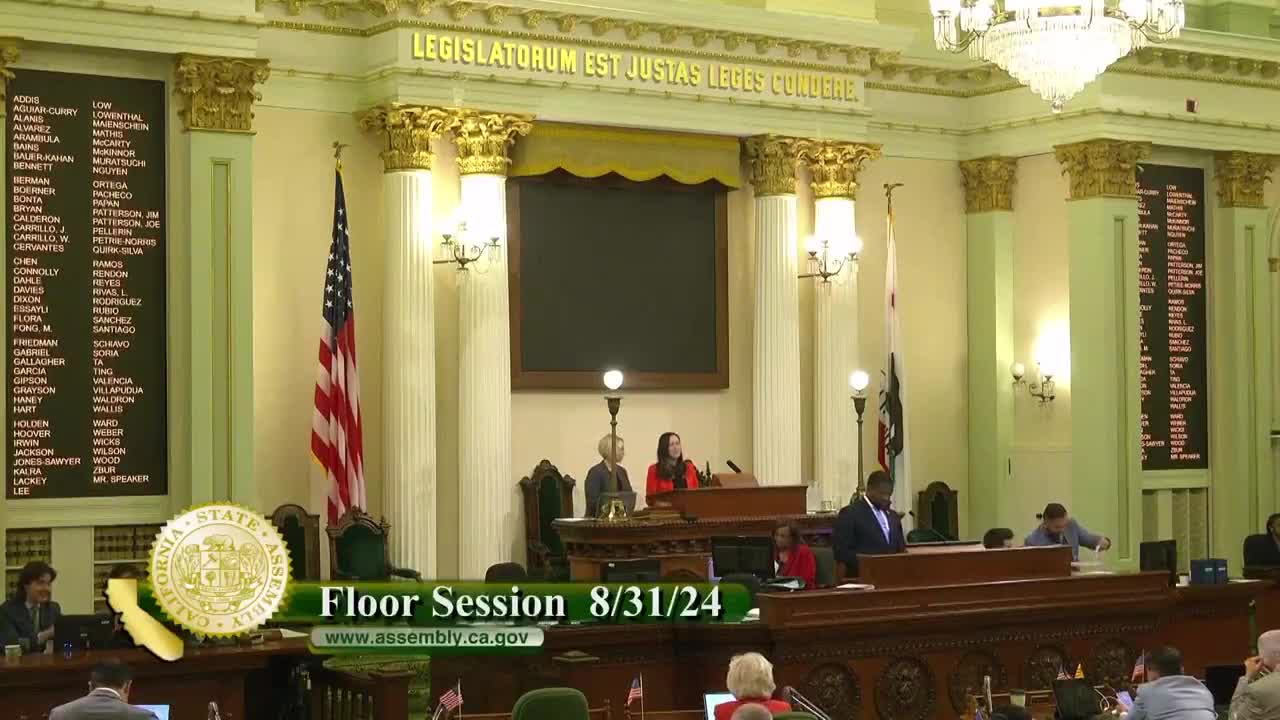
Bill Author

Bill Co-Author(s):