AB 3233: Oil and gas: operations: restrictions: local authority.
- Session Year: 2023-2024
- House: Assembly
- Latest Version Date: 2024-09-25
Current Status:
Passed
(2024-09-25: Chaptered by Secretary of State - Chapter 550, Statutes of 2024.)
Introduced
In Committee
First Chamber
In Committee
Second Chamber
Enacted
Existing law requires the State Oil and Gas Supervisor to supervise the drilling, operation, maintenance, and abandonment of wells and the operation, maintenance, and removal or abandonment of tanks and facilities attendant to oil and gas production, so as to prevent damage to life, health, property, and natural resources, as provided; to permit owners and operators of wells to utilize all known methods and practices to increase the ultimate recovery of hydrocarbons; and to perform the supervisors duties in a manner that encourages the wise development of oil and gas resources to best meet oil and gas needs in this state. Existing California Supreme Court case law holds that these provisions preempt certain local ordinances that ban certain oil production methods, as provided. Existing law provides that the laws relating to oil and gas regulation apply to any land or well situated within the boundaries of an incorporated city in which the drilling of oil wells is now or may hereafter be prohibited, as provided.
Existing law requires the operator of a well to file a written notice of intention to commence drilling with, and prohibits any drilling until approval is given by, the supervisor or district deputy. Existing law authorizes the supervisor to require other pertinent information to supplement the notice. Existing law requires an operator proposing to perform a well stimulation treatment to apply to the supervisor or district deputy for a permit to perform the well stimulation treatment and imposes other requirements and conditions on the use of well stimulation treatments.
This bill would authorize a local entity, as defined, by ordinance, to limit or prohibit oil and gas operations or development in its jurisdiction, as provided, notwithstanding any other law or any notice of intention, supplemental notice, well stimulation treatment permit, or similar authorization issued by the supervisor or district deputy. The bill would authorize these limitations or prohibitions to include, but not be limited to, limitations or prohibitions related to the methods and locations of oil and gas operations or development. If a local entity limits or prohibits oil and gas operations or development of an owner or operator, the bill would require that owner or operator to comply with existing rules related to plugging and abandoning wells, decommissioning attendant production facilities, and related measures, as provided.
This bill would state that its provisions are severable.
Under existing law, the Geologic Energy Management Division in the Department of Conservation regulates the drilling, operation, maintenance, and abandonment of oil and gas wells in the state. Existing law specifies that the purposes of the provisions relating to oil and gas include protecting public health and safety and environmental quality, including reduction and mitigation of greenhouse gas emissions associated with the development of hydrocarbon and geothermal resources in a manner that meets the energy needs of the state.
This bill would instead specify that the purposes of the provisions relating to oil and gas include protecting public health and safety and environmental quality, preserving Californias air, water, environment, and natural resources, and advancing the states climate goals in a manner that meets the energy needs of the state, and that these provisions create a mandate to minimize harm from oil and gas operation activities.
Existing law requires the State Oil and Gas Supervisor to supervise the drilling, operation, maintenance, and abandonment of wells and the operation, maintenance, and removal or abandonment of tanks and facilities attendant to oil and gas production, so as to prevent damage to life, health, property, and natural resources, as provided; to permit owners and operators of wells to utilize all known methods and practices to increase the ultimate recovery of hydrocarbons; and to perform the supervisors duties in a manner that encourages the wise development of oil and gas resources to best meet oil and gas needs in this state. Existing California Supreme Court case law holds that these provisions preempt certain local ordinances that ban certain oil production methods, as provided. Existing law provides that the laws relating to oil and gas regulation apply to any land or well situated within the boundaries of an incorporated city in which the drilling of oil wells is now or may hereafter be prohibited, as provided.
This bill would express the intent of the Legislature to enact subsequent legislation that would amend the authority of local entities to place prohibitions on oil and gas operations within their jurisdiction.Existing law requires the operator of a well to file a written notice of intention to commence drilling with, and prohibits any drilling until approval is given by, the supervisor or district deputy. Existing law authorizes the supervisor to require other pertinent information to supplement the notice. Existing law requires an operator proposing to perform a well stimulation treatment to apply to the supervisor or district deputy for a permit to perform the well stimulation treatment and imposes other requirements and conditions on the use of well stimulation treatments.
This bill would authorize a local entity, as defined, by ordinance, to limit or prohibit oil and gas operations or development in its jurisdiction, as provided, notwithstanding any other law or any notice of intention, supplemental notice, well stimulation permit, or similar authorization issued by the supervisor or district deputy. The bill would authorize these limitations or prohibitions to include, but not be limited to, limitations or prohibitions related to the methods and locations of oil and gas operations or development. If a local entity limits or prohibits oil and gas operations or development of an owner or operator, the bill would require that owner or operator to comply with existing rules related to plugging and abandoning wells, decommissioning attendant production facilities, and related measures, as provided.
This bill would state that its provisions are severable.
Existing law requires the State Oil and Gas Supervisor to supervise the drilling, operation, maintenance, and abandonment of wells and the operation, maintenance, and removal or abandonment of tanks and facilities attendant to oil and gas production, so as to prevent damage to life, health, property, and natural resources, as provided; to permit owners and operators of wells to utilize all known methods and practices to increase the ultimate recovery of hydrocarbons; and to perform the supervisors duties in a manner that encourages the wise development of oil and gas resources to best meet oil and gas needs in this state. Existing law provides that the laws relating to oil and gas regulation apply to any land or well situated within the boundaries of an incorporated city in which the drilling of oil wells is now or may hereafter be prohibited, as provided.
This bill would express the intent of the Legislature to enact subsequent legislation that would amend the authority of local entities to place prohibitions on oil and gas operations within their jurisdiction.
The Legislature finds and declares both of the following:
(a)Protecting public health, safety, and the environment is of the utmost importance to all Californians. In order to protect public health and safety, cities and counties must have the authority to regulate oil and gas operations within their jurisdictions, including operations that may otherwise be approved by the State Oil and Gas Supervisor.
(b)Empowering cities and counties to regulate, limit, or prohibit oil and gas operations in their jurisdictions will therefore enable communities to make decisions that align with their needs.
SEC. 2.Section 3106.1 is added to the Public Resources Code, to read:3106.1.(a)Notwithstanding any other law, and notwithstanding any notice of intention, supplemental notice, well stimulation treatment permit, or similar authorization issued by the supervisor or district deputy, a local entity may, by ordinance, prohibit oil and gas operations or development in its jurisdiction or impose regulations, limits, or prohibitions on oil and gas operations or development that are more protective of public health, the climate, or the environment than those prescribed by a state law, regulation, or order. These limitations or prohibitions may include, but are not limited to, limitations or prohibitions related to the methods of oil and gas operations or development and the locations of oil and gas operations or development.
(b)If a local entity limits or prohibits oil and gas operations or development of an owner or operator pursuant to subdivision (a), the owner or operator shall be responsible for plugging and abandoning its wells, decommissioning attendant production facilities, and related measures, pursuant to the rules of this division.
(c)For purposes of this section, local entity means a city, county, or city and county, including a charter city, county, and city and county.
SEC. 3.The provisions of this act are severable. If any provision of this act or its application is held invalid, that invalidity shall not affect other provisions or applications that can be given effect without the invalid provision or application.
The Legislature finds and declares both of the following:
(a)Protecting public health, safety, and the environment is of the utmost importance to all Californians. In order to protect public health and safety, cities and counties must have the authority to regulate oil and gas operations within their jurisdictions, including operations that may otherwise be approved by the State Oil and Gas Supervisor.
(b)Empowering cities and counties to regulate, limit, or prohibit oil and gas operations in their jurisdictions will therefore enable communities to make decisions that align with their needs.
SEC. 2.Section 3011 of the Public Resources Code is amended to read:3011.(a)The purposes of this division include protecting public health and safety and environmental quality, preserving Californias air, water, environment, and natural resources, and advancing the states climate goals in a manner that meets the energy needs of the state. This division creates a mandate to minimize harm from oil and gas operation activities.(b)The supervisor shall coordinate with other state agencies and entities described in subdivision (f) of Section 38501 of the Health and Safety Code in furtherance of the goals of the California Global Warming Solutions Act of 2006 (Division 25.5 (commencing with Section 38500) of the Health and Safety Code) and to help support the states clean energy goals.SEC. 3.SEC. 2.Section 3106.1 is added to the Public Resources Code, to read:3106.1.(a)Notwithstanding any other law, and notwithstanding any notice of intention, supplemental notice, well stimulation treatment permit, or similar authorization issued by the supervisor or district deputy, a local entity may, by ordinance, prohibit oil and gas operations or development in its jurisdiction or impose regulations, limits, or prohibitions on oil and gas operations or development that are more protective of public health, the climate, or the environment than those prescribed by a state law, regulation, or order. These limitations or prohibitions may include, but are not limited to, limitations or prohibitions related to the methods of oil and gas operations or development and the locations of oil and gas operations or development.
(b)If a local entity limits or prohibits oil and gas operations or development of an owner or operator pursuant to subdivision (a), the owner or operator shall be responsible for plugging and abandoning its wells, decommissioning attendant production facilities, and related measures, pursuant to the rules of this division.
(c)For purposes of this section, local entity means a city, county, or city and county, including a charter city, county, and city and county.
SEC. 4.SEC. 3.The provisions of this act are severable. If any provision of this act or its application is held invalid, that invalidity shall not affect other provisions or applications that can be given effect without the invalid provision or application.
The Legislature finds and declares both of the following:
(a)Protecting public health, safety, and the environment is of the utmost importance to all Californians. In order to protect public health and safety, cities and counties must have the authority to regulate oil and gas operations within their jurisdictions, including operations that may otherwise be approved by the State Oil and Gas Supervisor.
(b)Empowering cities and counties to regulate, limit, or prohibit oil and gas operations in their jurisdictions will therefore enable communities to make decisions that align with their needs.
SEC. 2.Section 3011 of the Public Resources Code is amended to read:3011.(a)The purposes of this division include protecting public health and safety and environmental quality, preserving Californias air, water, environment, and natural resources, and advancing the states climate goals in a manner that meets the energy needs of the state. This division creates a mandate to minimize harm from oil and gas operation activities.
(b)The supervisor shall coordinate with other state agencies and entities described in subdivision (f) of Section 38501 of the Health and Safety Code in furtherance of the goals of the California Global Warming Solutions Act of 2006 (Division 25.5 (commencing with Section 38500) of the Health and Safety Code) and to help support the states clean energy goals.
SEC. 3.Section 3106.1 is added to the Public Resources Code, to read:3106.1.(a)Notwithstanding any other law, and notwithstanding any notice of intention, supplemental notice, well stimulation treatment permit, or similar authorization issued by the supervisor or district deputy, a local entity may, by ordinance, prohibit oil and gas operations or development in its jurisdiction or impose regulations, limits, or prohibitions on oil and gas operations or development that are more protective of public health, the climate, or the environment than those prescribed by a state law, regulation, or order. These limitations or prohibitions may include, but are not limited to, limitations or prohibitions related to the methods of oil and gas operations or development and the locations of oil and gas operations or development.
(b)If a local entity limits or prohibits oil and gas operations or development of an owner or operator pursuant to subdivision (a), the owner or operator shall be responsible for plugging and abandoning its wells, decommissioning attendant production facilities, and related measures, pursuant to the rules of this division.
(c)For purposes of this section, local entity means a city, county, or city and county, including a charter city, county, and city and county.
SEC. 4.The provisions of this act are severable. If any provision of this act or its application is held invalid, that invalidity shall not affect other provisions or applications that can be given effect without the invalid provision or application.
The Legislature finds and declares both of the following:
(a)Protecting public health, safety, and the environment is of the utmost importance to all Californians. In order to protect public health and safety, cities and counties must have the authority to regulate oil and gas operations within their jurisdictions, including operations that may otherwise be approved by the State Oil and Gas Supervisor.
(b)Empowering cities and counties to regulate, limit, or prohibit oil and gas operations in their jurisdictions will therefore enable communities to make decisions that align with their needs.
SEC. 2.Section 3011 of the Public Resources Code is amended to read:3011.(a)The purposes of this division include protecting public health and safety and environmental quality, including reduction and mitigation of greenhouse gas emissions associated with the development of hydrocarbon and geothermal resources preserving Californias air, water, environment, and natural resources, and advancing the states climate goals in a manner that meets the energy needs of the state. This division creates a mandate to minimize harm from oil and gas operation activities.
(b)The supervisor shall coordinate with other state agencies and entities described in subdivision (f) of Section 38501 of the Health and Safety Code in furtherance of the goals of the California Global Warming Solutions Act of 2006 (Division 25.5 (commencing with Section 38500) of the Health and Safety Code) and to help support the states clean energy goals.
SEC. 3.Section 3106.1 is added to the Public Resources Code, to read:3106.1.(a)Notwithstanding any other law, and notwithstanding any notice of intention, supplemental notice, well stimulation permit, or similar authorization issued by the supervisor or district deputy, a local entity may, by ordinance, prohibit oil and gas operations or development in its jurisdiction or impose regulations, limits, or prohibitions on oil and gas operations or development that are more protective of public health, the climate, or the environment than those prescribed by a state law, regulation, or order. These limitations or prohibitions may include, but are not limited to, limitations or prohibitions related to the methods of oil and gas operations or development and the locations of oil and gas operations or development.
(b)If a local entity limits or prohibits oil and gas operations or development of an owner or operator pursuant to subdivision (a), the owner or operator shall be responsible for plugging and abandoning its wells, decommissioning attendant production facilities, and related measures, pursuant to the rules of this division.
(c)For purposes of this section, local entity means a city, county, or city and county, including a charter city, county, and city and county.
SEC. 4.The provisions of this act are severable. If any provision of this act or its application is held invalid, that invalidity shall not affect other provisions or applications that can be given effect without the invalid provision or application.
SECTION 1.It is the intent of the Legislature to enact subsequent legislation that would amend the authority of local entities to place prohibitions on oil and gas operations within their jurisdiction.It is the intent of the Legislature to enact subsequent legislation that would amend the authority of local entities to place prohibitions on oil and gas operations within their jurisdiction.
|
Date
|
Status
|
|---|---|
| Sep 25, 2024 | Chaptered by Secretary of State - Chapter 550, Statutes of 2024. |
| Sep 25, 2024 | Approved by the Governor. |
| Sep 16, 2024 | Enrolled and presented to the Governor at 3:30 p.m. |
| Aug 31, 2024 | Senate amendments concurred in. To Engrossing and Enrolling. (Ayes 46. Noes 15.). |
| Aug 31, 2024 | In Assembly. Concurrence in Senate amendments pending. |
| Aug 31, 2024 | Read third time. Passed. Ordered to the Assembly. (Ayes 21. Noes 12.). |
| Aug 29, 2024 | Reconsideration granted. (Ayes 40. Noes 0.) |
| Aug 29, 2024 | Motion to reconsider made by Senator Laird. |
| Aug 29, 2024 | Read third time. Refused passage. (Ayes 20. Noes 14.). |
| Aug 26, 2024 | Read second time. Ordered to third reading. |
| Aug 23, 2024 | Read third time and amended. Ordered to second reading. |
| Aug 19, 2024 | Read second time. Ordered to third reading. |
| Aug 15, 2024 | From committee: Do pass. (Ayes 5. Noes 2.) (August 15). |
| Aug 5, 2024 | In committee: Referred to suspense file. |
| Jul 3, 2024 | From committee: Do pass and re-refer to Com. on APPR. (Ayes 4. Noes 2.) (July 3). Re-referred to Com. on APPR. |
| Jun 19, 2024 | Read second time and amended. Re-referred to Com. on L. GOV. |
| Jun 18, 2024 | From committee: Amend, and do pass as amended and re-refer to Com. on L. GOV. (Ayes 7. Noes 4.) (June 17). |
| Jun 5, 2024 | Referred to Coms. on N.R. & W. and L. GOV. |
| May 23, 2024 | In Senate. Read first time. To Com. on RLS. for assignment. |
| May 22, 2024 | Read third time. Passed. Ordered to the Senate. (Ayes 43. Noes 14. Page 5519.) |
| May 20, 2024 | Read second time. Ordered to third reading. |
| May 16, 2024 | From committee: Do pass. (Ayes 11. Noes 4.) (May 16). |
| May 8, 2024 | In committee: Set, first hearing. Referred to APPR. suspense file. |
| Apr 24, 2024 | In committee: Hearing postponed by committee. |
| Apr 22, 2024 | (Ayes 50. Noes 10. Page 4912.) |
| Apr 22, 2024 | Re-referred to Com. on APPR. pursuant to Assembly Rule 96. |
| Apr 9, 2024 | From committee: Do pass and re-refer to Com. on U. & E. (Ayes 8. Noes 3.) (April 8). Re-referred to Com. on U. & E. |
| Apr 1, 2024 | Re-referred to Com. on NAT. RES. |
| Mar 21, 2024 | From committee chair, with author's amendments: Amend, and re-refer to Com. on NAT. RES. Read second time and amended. |
| Mar 21, 2024 | Referred to Coms. on NAT. RES. and U. & E. |
| Feb 17, 2024 | From printer. May be heard in committee March 18. |
| Feb 16, 2024 | Read first time. To print. |
|
Date
|
Description
|
Location
|
Votes
|
|
|---|---|---|---|---|
| Aug 31, 2024 | AB 3233 Addis Concurrence in Senate Amendments | Assembly Floor |
Passed |
|
| Aug 31, 2024 | Assembly 3rd Reading AB3233 Addis et al. By Laird | Senate Floor |
Passed |
|
| Aug 29, 2024 | Assembly 3rd Reading AB3233 Addis et al. By Laird Reconsider | Senate Floor |
Passed |
|
| Aug 29, 2024 | Assembly 3rd Reading AB3233 Addis et al. By Laird | Senate Floor |
Failed |
|
| Aug 15, 2024 | Do pass | Senate Standing Committee on Appropriations |
Passed |
|
| Aug 5, 2024 | Placed on suspense file | Senate Standing Committee on Appropriations |
Passed |
|
| Jul 3, 2024 | Do pass, but first be re-referred to the Committee on [Appropriations] | Senate Standing Committee on Local Government |
Passed |
|
| Jun 17, 2024 | Do pass as amended, but first amend, and re-refer to the Committee on [Local Government] | Senate Standing Committee on Natural Resources and Water |
Passed |
|
| May 22, 2024 | AB 3233 Addis Assembly Third Reading | Assembly Floor |
Passed |
|
| May 16, 2024 | Do pass. | Assembly Standing Committee on Appropriations |
Passed |
|
| Apr 8, 2024 | Do pass and be re-referred to the Committee on [Utilities and Energy] | Assembly Standing Committee on Natural Resources |
Passed |
This list shows positions taken on this bill by organizations on the date displayed, which is linked to the original source.
Positions by individuals are not included.
|
Organization
|
Position
|
Date
|
|---|---|---|
| 1000 Grandmothers for Future Generations | ** Support | |
| 350 Bay Area Action | ** Support | |
| 350 Conejo / San Fernando Valley | ** Support | |
| 350 Humboldt | ** Support | |
| 350 Petaluma | ** Support | |
| 350 Sacramento | ** Support | |
| 350 Santa Barbara | ** Support | |
| Acterra: Action for A Healthy Planet | ** Support | |
| Afghan American Business Alliance | ** Against | |
| African American Farmers of California | ** Against | |
| Asian Food Trade Association | ** Against | |
| Asian Pacific Environmental Network | ** Support | |
| Asians in Energy | ** Against | |
| Azul | ** Support | |
| Bay Area-System Change Not Climate Change | ** Support | |
| Bicycling Monterey | ** Support | |
| Black Women For Wellness Action Project | ** Support | |
| California Alliance of Small Business Association | ** Against | |
| California Climate Voters | ** Support | |
| California Democratic Party | ** Support | |
| California Department of Finance | ** Against | |
| California Environmental Justice Alliance Action | ** Support | |
| California Environmental Voters | ** Support | |
| California Green New Deal Coalition | ** Support | |
| California Hispanic Chambers Of Commerce | ** Against | |
| California Independent Petroleum Association | ** Against | |
| California Manufacturers And Technology Association | ** Against | |
| California-Nevada Conference Of Operating Engineers | ** Against | |
| Californians for Disability Rights, Inc. | ** Support | |
| California Nurses Association/National Nurses United | ** Support | |
| California Nurses for Environmental Health and Justice | ** Support | |
| California State Association Of Counties | ** Support | |
| California State Council Of Laborers | ** Against | |
| California Youth Versus Big Oil | ** Support | |
| California Youth vs. Big Oil | ** Support | |
| Carson Chamber of Commerce | ** Against | |
| Center For Biological Diversity | ** Support | |
| Center for Community Action and Environmental Justice | ** Support | |
| Center For Food Safety | ** Support | |
| Center on Race, Poverty & the Environment | ** Support | |
| Central California Environmental Justice Network | ** Support | |
| Central Coast Alliance United for a Sustainable Economy | ** Support | |
| Central Coast Environmental Voters | ** Support | |
| Central Valley Air Quality Coalition | ** Support | |
| Central Valley Latino Mayors and Elected Officials Coalition | ** Against | |
| Central Valley Partnership | ** Support | |
| Central Valley Yemen Association Inc. | ** Against | |
| CERBAT | ** Support | |
| CFT – A Union of Educators & Classified Professionals, AFL-CIO | ** Support | |
| City Of Los Angeles | ** Support | |
| cleanearth4kids.org | ** Support | |
| Climate Action California | ** Support | |
| Climate Breakthrough | ** Support | |
| Climatebrunch | ** Support | |
| Climate Brunch | ** Support | |
| Climate First: Replacing Oil & Gas | ** Support | |
| Climate Hawks Vote | ** Support | |
| Climate Health Now | ** Support | |
| Coalition For Clean Air | ** Support | |
| Coalition of Filipino American Chambers of Commerce | ** Against | |
| Coastal Energy Alliance | ** Against | |
| Communities for a Better Environment | ** Support | |
| Communities For Sustainable Monterey County | ** Support | |
| Community Environmental Council | ** Support | |
| Consumer Watchdog | ** Support | |
| Corporate Ethics International | ** Support | |
| County of Contra Costa | ** Support | |
| County Of Los Angeles | ** Support | |
| County of Los Angeles Board of Supervisors | ** Support | |
| County Of Madera | ** Against | |
| County of Santa Cruz | ** Support | |
| Earthjustice | ** Support | |
| Earthworks | ** Support | |
| East Yard Communities for Environmental Justice | ** Support | |
| EcoEquity | ** Support | |
| Eco Equity | ** Support | |
| Ecology Center | ** Support | |
| EconAlliance | ** Against | |
| Eco Team | ** Support | |
| Elders Climate Action, Northern California Chapter | ** Support | |
| Elders Climate Action, Southern California Chapter | ** Support | |
| Elected Officials to Protect America Code Blue | ** Support | |
| El Pueblo Para El Aire Y Agua Limpia De Kettleman City | ** Support | |
| Endangered Habitats League | ** Support | |
| Environmental Defense Center | ** Support | |
| Environmental Protection Information Center | ** Support | |
| Environmental Working Group | ** Support | |
| Esperanza Community Housing | ** Support | |
| Extinction Rebellion San Francisco Bay Area | ** Support | |
| Faith in the Valley | ** Support | |
| Food Empowerment Project | ** Support | |
| Food & Water Watch | ** Support | |
| Fossil Free California | ** Support | |
| FracTracker Alliance | ** Support | |
| Fresnans Against Fracking | ** Support | |
| Fridays for Future Fresno | ** Support | |
| Fridays for Future Sacramento | ** Support | |
| Friends Of The Earth | ** Support | |
| Glendale Environmental Coalition | ** Support | |
| Good Neighbor Steering Committee of Benicia | ** Support | |
| Greater Coachella Valley Chamber of Commerce | ** Against | |
| Greater Conejo Valley Chamber of Commerce | ** Against | |
| Greenaction for Health and Environmental Justice | ** Support | |
| Greenpeace Usa | ** Support | |
| Harvey Milk LGBT Democratic Club | ** Support | |
| Holman United Methodist Church | ** Support | |
| Idle No More SF Bay | ** Support | |
| Indivisible Marin | ** Support | |
| Indivisible San Francisco | ** Support | |
| Indivisible San Jose | ** Support | |
| Indivisible South Bay LA | ** Support | |
| Inland Empire Economic Partnership | ** Against | |
| International Brotherhood of Boilermakers, Iron Ship Builders, Blacksmiths, Forgers and Helpers | ** Against | |
| International Union of Painters and Allied Trades, District Council 16 | ** Against | |
| Junior Philanthropists Association | ** Support | |
| LA Jolla Environmental Action | ** Support | |
| Latin Business Association | ** Against | |
| Local Clean Energy Alliance | ** Support | |
| Long Beach Area Chamber of Commerce | ** Against | |
| Los Angeles Chamber of Commerce | ** Against | |
| Los Angeles City Attorney'S Office | ** Support | |
| Los Angeles Climate Reality Project | ** Support | |
| Los Angeles County Business Federation | ** Against | |
| Los Padres ForestWatch | ** Support | |
| Manhattan Beach Huddle | ** Support | |
| Methane Action | ** Support | |
| MLK Coalition of Greater Los Angeles | ** Support | |
| Moorpark Chamber of Commerce | ** Against | |
| Mothers Out Front | ** Support | |
| Murrieta/Wildomar Chamber of Commerce | ** Against | |
| Natural Resources Defense Council | ** Support | |
| NextGen California | ** Support | |
| Nisei Farmers League | ** Against | |
| Oil and Gas Action Network | ** Support | |
| Oil Change International | ** Support | |
| Orange County Business Council | ** Against | |
| Pacific Environment | ** Support | |
| Physicians for Social Responsibility, Los Angeles | ** Support | |
| Physicians for Social Responsibility, Sacramento | ** Support | |
| Physicians for Social Responsibility, San Francisco Bay | ** Support | |
| Planning And Conservation League | ** Support | |
| Port Hueneme Chamber Of Commerce | ** Against | |
| Protect Monterey County | ** Support | |
| Protect Playa Now! | ** Support | |
| Queers X Climate | ** Support | |
| Reality Project, Riverside County Chapter | ** Support | |
| Redeemer Community Partnership | ** Support | |
| Rising Communities | ** Support | |
| RootsAction.org | ** Support | |
| SAGE Monterey | ** Against | |
| San Diego 350 | ** Support | |
| San Francisco Baykeeper | ** Support | |
| San Joaquin Valley Democratic Club | ** Support | |
| Santa Barbara Standing Rock Coalition | ** Support | |
| Santa Cruz Climate Action Network | ** Support | |
| Santa Paula Chamber of Commerce | ** Against | |
| sequoia forestkeeper | ** Support | |
| Sierra Club California | ** Support | |
| Si Se Puede | ** Against | |
| Society of Fearless Grandmothers - Santa Barbara | ** Support | |
| Solano County Democratic Central Committee | ** Support | |
| Stand.earth | ** Support | |
| Stand Together Against Neighborhood Drilling | ** Support | |
| State Building and Construction Trades Council of California | ** Against | |
| Stop Oak Expansion Coalition | ** Support | |
| Sunflower Alliance | ** Support | |
| Sunrise Movement Bay Area | ** Support | |
| Sunrise Movement LA | ** Support | |
| Sunrise Santa Barbara | ** Support | |
| Sustainable Mill Valley | ** Support | |
| The Climate | ** Support | |
| The Climate Alliance of Santa Cruz County | ** Support | |
| The Climate Center | ** Support | |
| The Climate Reality Project, Bay Area Chapter | ** Support | |
| The Climate Reality Project California Coalition | ** Support | |
| The Climate Reality Project, Monterey Bay | ** Support | |
| The Climate Reality Project Orange County Chapter | ** Support | |
| The Climate Reality Project, San Fernando Valley, CA Chapter | ** Support | |
| The Climate Reality Project, Silicon Valley | ** Support | |
| The Honorable Hydee Feldstein Soto, City Attorney, City of Los Angeles | ** Support | |
| The Phoenix Group | ** Support | |
| The Unidos Network | ** Support | |
| Third Act Sacramento | ** Support | |
| VALLEY INDUSTRY AND COMMERCE ASSOCIATION | ** Against | |
| Ventura Chamber of Commerce | ** Against | |
| Ventura County Coalition of Labor, Agriculture and Business | ** Against | |
| Ventura County Democratic Party | ** Support | |
| Ventura County Taxpayers Association | ** Against | |
| Voting 4 Climate & Health | ** Support | |
| West Berkeley Alliance for Clean Air and Safe Jobs | ** Support | |
| Western States Petroleum Association | ** Against | |
| West Ventura County Business Alliance | ** Against | |
| Women's Earth and Climate Action Network | ** Support | |
| Youth Climate Strike Los Angeles | ** Support | |
| Youth for Earth | ** Support | |
| Youth v. Oil | ** Support | |
| Youth Vs. Oil | ** Support |
CONCURRENCE IN SENATE AMENDMENTS
CSA1 Bill Id:AB 3233
Author:(Addis)
As Amended Ver:August 23, 2024
Majority vote
SUMMARY
Authorizes a local entity, by ordinance, to limit or prohibit oil and gas operations or development in its jurisdiction, notwithstanding any other law or any notice of intention, supplemental notice, well stimulation permit, or similar authorization issued by the supervisor or district deputy.
Senate Amendments
- Make a technical amendment to clarify the reference to well stimulation treatment permit.
- Delete changes to the stated purposes of the Division of Oil and Gas operation regulation.
COMMENTS
California remains the third largest oil and gas producing state, and as of 2022, produced 3% of the crude oil of the nation. The Geologic Energy Management Division (CalGEM) has jurisdiction over more than 242,000 wells, including nearly 101,300 defined as active or idle oil producers. CalGEM's authority extends from onshore to three miles offshore.
Depending on the well location and other factors, the jurisdictional powers of a local government vary. Some jurisdictions have taken action to confirm their authority through ordinances or local ballot measures.
AB 3233 affirms local control over oil and gas operations by authorizing a local entity to, by ordinance, prohibit oil and gas operations or development in its jurisdiction or impose regulations, limits, or prohibitions on oil and gas operations or development that are more protective of public health, the climate, or the environment than those prescribed by a state law, regulation, or order. It authorizes those limitations or prohibitions to cover methods of oil and gas operations or development and the locations of oil and gas operations or development.
According to the Author
Pollution from oil and gas production causes grave harm to our health, climate, and environment. For more than a century, cities and counties have protected their residents' health and safety by deciding whether, where, and under what conditions to allow oil and gas projects to operate. As California transitions away from its dependency on fossil fuels, more cities and counties have introduced ordinances to ban oil and gas operations. Assembly Bill 3233 uplifts the voices of our local communities by codifying their right to enact these policies.
Arguments in Support
Climate Action Center writes that this bill will "allow counties to ban fracking or other extractive operations by popular vote. Some of us were active in passing fracking bans in San Benito and Monterey counties and were frustrated that our local concerns were overturned by the courts. This bill will return power to local jurisdictions to prevent degradation of their environment."
Arguments in Opposition
The Western States Petroleum Association expresses concern that AB 3233 has the potential to expose these local governments to significant liability. Operators hold valuable property rights in their existing oil and gas production operations. A local ordinance that results in a facial or de facto prohibition may result in an unconstitutional violation of the Takings Clause under the federal and state constitutions unless the local government pays just compensation for the taking of these property rights from the operator.
FISCAL COMMENTS
According to the Senate Appropriations Committee, this bill will result in unknown, but potentially significant costs, likely in the hundreds of thousands to low millions of dollars (General Fund or special fund) for CalGEM for CalGEM coordination with local agencies. Anticipated CalGEM workload would include field staff who would require resources to understand and track each local ordinance and its requirements as well as legal staff who may need to determine if a local ordinance conflicts or overlaps with CalGEM's existing programs, regulations, and permits. Any coordination requirement by a local jurisdiction for implementation and enforcement may also incur significant costs. If a local jurisdiction required improvements or changes to WellSTAR, CalGEM's well tracking and reporting system, such changes could potentially cost millions of dollars.
VOTES:
ASM NATURAL RESOURCES: 8-3-0
YES: Bryan, Connolly, Friedman, Kalra, Muratsuchi, Pellerin, Wicks, Wood
NO: Flora, Hoover, Joe Patterson
ASM APPROPRIATIONS: 11-4-0
YES: Wicks, Arambula, Bryan, Calderon, Wendy Carrillo, Mike Fong, Grayson, Haney, Hart, Pellerin, Villapudua
NO: Sanchez, Dixon, Jim Patterson, Ta
ASSEMBLY FLOOR: 43-14-23
YES: Addis, Aguiar-Curry, Arambula, Bauer-Kahan, Bennett, Berman, Boerner, Bonta, Bryan, Wendy Carrillo, Connolly, Mike Fong, Gabriel, Garcia, Grayson, Haney, Hart, Irwin, Jackson, Jones-Sawyer, Kalra, Lee, Low, Lowenthal, Maienschein, McCarty, McKinnor, Muratsuchi, Ortega, Papan, Pellerin, Petrie-Norris, Rendon, Reyes, Santiago, Schiavo, Ting, Ward, Weber, Wicks, Wood, Zbur, Robert Rivas
NO: Alanis, Chen, Davies, Dixon, Flora, Vince Fong, Gallagher, Hoover, Lackey, Jim Patterson, Sanchez, Ta, Waldron, Wallis
ABS, ABST OR NV: Alvarez, Bains, Calderon, Juan Carrillo, Cervantes, Megan Dahle, Essayli, Friedman, Gipson, Holden, Mathis, Stephanie Nguyen, Pacheco, Joe Patterson, Quirk-Silva, Ramos, Luz Rivas, Rodriguez, Blanca Rubio, Soria, Valencia, Villapudua, Wilson
SENATE FLOOR: 20-14-6
YES: Allen, Ashby, Atkins, Becker, Blakespear, Caballero, Cortese, Eggman, Gonzalez, Laird, Limón, McGuire, Menjivar, Min, Padilla, Skinner, Smallwood-Cuevas, Stern, Wahab, Wiener
NO: Alvarado-Gil, Archuleta, Dahle, Dodd, Glazer, Grove, Hurtado, Jones, Newman, Nguyen, Niello, Ochoa Bogh, Seyarto, Wilk
ABS, ABST OR NV: Bradford, Durazo, Portantino, Roth, Rubio, Umberg
SENATE FLOOR: 40-0-0
YES: Allen, Alvarado-Gil, Archuleta, Ashby, Atkins, Becker, Blakespear, Bradford, Caballero, Cortese, Dahle, Dodd, Durazo, Eggman, Glazer, Gonzalez, Grove, Hurtado, Jones, Laird, Limón, McGuire, Menjivar, Min, Newman, Nguyen, Niello, Ochoa Bogh, Padilla, Portantino, Roth, Rubio, Seyarto, Skinner, Smallwood-Cuevas, Stern, Umberg, Wahab, Wiener, Wilk
UPDATED
VERSION: August 23, 2024
CONSULTANT: Paige Brokaw / NAT. RES. / (916) 319-2092 FN: 0005006
SENATE RULES COMMITTEE Office of Senate Floor Analyses (916) 651-1520 Fax: (916) 327-4478 | AB 3233 |
THIRD READING
Bill No: AB 3233
Author: Addis (D), et al.
Amended: 8/23/24 in Senate
Vote: 21
SENATE NATURAL RES. & WATER COMMITTEE: 7-4, 6/17/24
AYES: Min, Allen, Eggman, Laird, Limón, Padilla, Stern
NOES: Seyarto, Dahle, Grove, Hurtado
SENATE LOCAL GOVERNMENT COMMITTEE: 4-2, 7/3/24
AYES: Durazo, Skinner, Wahab, Wiener
NOES: Seyarto, Dahle
NO VOTE RECORDED: Glazer
SENATE APPROPRIATIONS COMMITTEE: 5-2, 8/15/24
AYES: Caballero, Ashby, Becker, Bradford, Wahab
NOES: Jones, Seyarto
ASSEMBLY FLOOR: 43-14, 5/22/24 - See last page for vote
SUBJECT: Oil and gas: operations: restrictions: local authority
SOURCE: Center for Biological Diversity
DIGEST:
This bill authorizes a local entity, by ordinance, to limit or prohibit oil and gas operations or development in its jurisdiction, as provided, notwithstanding any other law or any notice of intention, supplemental notice, well stimulation permit, or similar authorization issued by the Geologic Energy Management Division (CalGEM), as provided.
Senate Floor Amendments of 8/23/24 restore CalGEM’s general purpose to existing law.
ANALYSIS:
Existing law:
- Establishes the CalGEM in the Department of Conservation under the direction of the State Oil and Gas Supervisor (supervisor), who is required to supervise the drilling, operation, maintenance, and abandonment of oil and gas wells. (Public Resources Code (PRC) §§ 3000 et seq.)
- Requires the supervisor to supervise the drilling, operation, maintenance, and abandonment of wells and the operation, maintenance, and removal or abandonment of tanks and facilities attendant to oil and gas production. (PRC §3106)
- Requires CalGEM to develop and implement an education and outreach program to provide training to local governmental entities on materials collected and maintained by CalGEM related to oil and gas operations. (PRC §3115)
- Requires the operator of any well, before commencing the work of drilling the well, re-drilling or deepening the well, plugging the well, or for any alterations of the well casing, to file with the supervisor or the district deputy a written notice of intention (NOI) to commence drilling, as provided. (PRC §3203)
- Requires the owner of any well to file a monthly statement with the supervisor that provides certain information relating to the well, including the source, volume, treatment, and disposition of water produced in oil and gas activities. (PRC §3227)
- Authorizes a city or county to request a list of idle wells in its jurisdiction from the supervisor. Authorizes a city or county to request a determination from the supervisor on whether a well should be plugged and abandoned, and requires the supervisor to make that determination when requested, as provided. (PRC §3206.5)
- Authorizes a county or city to make and enforce within its limits all local, police, sanitary, and other ordinances and regulations not in conflict with general laws. (Article XI, §7 of the California Constitution)
This bill authorizes a local entity, by ordinance, to limit or prohibit oil and gas operations or development in its jurisdiction, as provided, notwithstanding any other law or any notice of intention, supplemental notice, well stimulation permit, or similar authorization issued by the supervisor or district deputy, as provided.
Specifically, this bill:
- Authorizes, notwithstanding any other law, and notwithstanding any NOI, supplemental notice, well stimulation permit, or similar authorization issued by the supervisor or district deputy, a local entity to, by ordinance, prohibit oil and gas operations in its jurisdiction or impose regulations, limits, or prohibitions on oil and gas development that are more protective of public health, the climate, or the environment than those prescribed by a state law, regulation, or order.
- Authorizes these limitations or prohibitions to include, but not be limited to, limitations or prohibitions related to the methods of oil and gas operations and the locations of oil and gas operations.
- Requires, if a local entity limits or prohibits oil and gas operations of an owner or operator, the owner or operator to be responsible for plugging and abandoning its wells, decommissioning attendant production facilities, and related measures, pursuant to the rules of the oil and gas statutory division.
- Defines, for purposes of this bill, “local entity” as a city, county, or city and county.
- Provides that the provisions of this bill are severable, as provided.
Background
California is a major oil and gas producing state. According to the U.S. Energy Information Administration, the state was 7th and 15th for oil and marketed natural gas production, respectively, among the 50 states. Oil exploration and production in California started in the 19th century. Production of oil was about 123 million barrels in 2023, and continues to decline from the 1985 peak.
In 2015, after Monterey County Supervisors rejected a fracking moratorium in 2015, local residents drafted an initiative to ban fracking and limit certain oil operations – Measure Z. Measure Z sought to do several things: ban fracking, acidizing, and other well stimulation treatments; ban new wastewater injection wells and wastewater ponds; phase out existing wastewater injection wells and ponds; and ban new oil and gas wells within the county. The initiative did not include Monterey County’s approximately 1,500 existing oil and gas wells. Measure Z won with 56% of the vote on November 8, 2016.
On December 14, 2016, Chevron filed a petition for writ of mandate and complaint, alleging, among other things, that state and federal law preempt Measure Z and Measure Z would result in an unconstitutional taking of their property.
On January 25, 2018, the Superior Court filed its statement of decision. (31:AA.7545–7593.) In relevant part, the Superior Court concluded that certain prohibitions on oil and gas activities that Measure Z sought to enact were preempted by state and federal law.
In particular, the Superior Court found that Measure Z was contrary to the express state policy set forth in Public Resources Code (PRC) Section 3106, which mandates that the supervisor authorize the owners or operators of the wells to utilize all methods and practices known to the oil and gas industry for the purpose of increasing the ultimate recovery of underground hydrocarbons.
The California Supreme Court granted review to decide whether PRC Section 3106 preempts Measure Z and concluded that it does because Measure Z is contradictory to, and therefore conflicts with, PRC Section 3106 as Measure Z went beyond a zoning ordinance and sought to prohibit certain oil and gas operations under the supervisor’s authority.
[Additional information may be found in the Senate Natural Resources and Water and Senate Local Government Committees’ bill analyses.]
FISCAL EFFECT: Appropriation: No Fiscal Com.: Yes Local: No
According to the Senate Appropriations Committee to a previous version:
Unknown but potentially significant costs, likely in the hundreds of thousands to low millions of dollars (General Fund or special fund) for the Geologic Energy Management Division (CalGEM) for CalGEM coordination with local agencies. Antipated CalGEM workload would include field staff who would require resources to understand and track each local ordinance and its requirements as well as legal staff who may need to determine if a local ordinance conflicts or overlaps with CalGEM’s existing programs, regulations, and permits. Any coordination requirement by a local jurisdiction for implementation and enforcement may also incur significant costs. If a local jurisdiction required improvements or changes to WellSTAR, CalGEM’s well tracking and reporting system, such changes could potentially cost millions of dollars.
SUPPORT: (Verified 8/14/24)
Center for Biological Diversity (source)
1000 Grandmothers for Future Generations
350 Bay Area Action
350 Conejo / San Fernando Valley
350 Humboldt
350 Petaluma
350 Sacramento
350 Santa Barbara
Acterra: Action for a Healthy Planet
Asian Pacific Environmental Network
Azul
Bay Area-System Change not Climate Change
Bicycling Monterey
Black Women for Wellness Action Project
California Climate Voters
California Democratic Party
California Environmental Justice Alliance (CEJA) Actoin
California Environmental Voters
California Green New Deal Coalition
California Nurses Association/National Nurses United
California Nurses for Environmental Health and Justice
California State Association of Counties
California Youth vs. Big Oil
Californians for Disability Rights, Inc.
Center for Community Action and Environmental Justice
Center for Food Safety
Center on Race, Poverty & the Environment
Central California Environmental Justice Network
Central Coast Alliance United for a Sustainable Economy
Central Coast Environmental Voters
Central Valley Air Quality Coalition
Central Valley Partnership
CERBAT
CFT – A Union of Educators & Classified Professionals, AFL-CIO
City of Los Angeles
CleanEarth4Kids.org
Climate Action California
Climate Breakthrough
Climate Brunch
Climate First: Replacing Oil & Gas
Climate Hawks Vote
Climate Health Now
Coalition for Clean Air
Communities for a Better Environment
Communities for Sustainable Monterey County
Community Environmental Council
Consumer Watchdog
Corporate Ethics International
County of Contra Costa
County of Los Angeles
County of Santa Cruz
Earthjustice
Earthworks
East Yard Communities for Environmental Justice
ECO Team
EcoEquity
Ecology Center
El Pueblo Para el Aire y Agua Limpia de Kettleman City
Elders Climate Action, Northern California Chapter
Elders Climate Action, Southern California Chapter
Elected Officials to Protect America – Code Blue
Endangered Habitats League
Environmental Defense Center
Environmental Protection Information Center
Environmental Working Group
Esperanza Community Housing
Extinction Rebellion San Francisco Bay Area
Faith in the Valley
Food & Water Watch
Food Empowerment Project
Fossil Free California
FracTracker Alliance
Fresnans against Fracking
Fridays for Future Fresno
Fridays for Future Sacramento
Friends of the Earth
Glendale Environmental Coalition
Good Neighbor Steering Committee of Benicia
Greenaction for Health and Environmental Justice
Greenpeace USA
Harvey Milk LGBTQ Democratic Club
Holman United Methodist Church
Idle No More SF Bay
Indivisible Marin
Indivisible San Francisco
Indivisible San Jose
Indivisible South Bay LA
Junior Philanthropists Association
La Jolla Environmental Action
Local Clean Energy Alliance
Los Angeles Climate Reality Project
Los Padres ForestWatch
Manhattan Beach Huddle
Methane Action
MLK Coalition of Greater Los Angeles
Mothers Out Front
Natural Resources Defense Council
NextGen California
Oil and Gas Action Network
Oil Change International
Pacific Environment
Physicians for Social Responsibility, Los Angeles
Physicians for Social Responsibility, Sacramento
Physicians for Social Responsibility, San Francisco Bay
Planning and Conservation League
Protect Monterey County
Protect Playa Now!
Queers X Climate
Redeemer Community Partnership
Rising Communities
RootsAction.org
San Francisco Baykeeper
San Joaquin Valley Democratic Club
San Diego 350
Santa Barbara Standing Rock Coalition
Santa Cruz Climate Action Network
Sequoia ForestKeeper
Sierra Club California
Society of Fearless Grandmothers, Santa Barbara
Solano County Democratic Central Committee
Stand Together Against Neighborhood Drilling (STAND – LA)
Stand.earth
Stop OAK Expansion Coalition
Sunflower Alliance
Sunrise Movement LA
Sunrise Movement Bay Area
Sunrise Santa Barbara
Sustainable Mill Valley
The Climate Alliance of Santa Cruz County
The Climate Center
The Climate Reality Project, Bay Area Chapter
The Climate Reality Project: California Coalition
The Climate Reality Project, Monterey Bay
The Climate Reality Project, Orange County Chapter
The Climate
Reality Project, Riverside County Chapter
The Climate Reality Project, San Fernando Valley Chapter
The Climate Reality Project, Silicon Valley
The Honorable Hydee Feldstein Soto, City Attorney, City of Los Angeles
The Phoenix Group
The UNIDOS Network
Third Act Sacramento
Ventura County Democratic Party
Voting 4 Climate & Health
West Berkeley Alliance for Clean Air and Safe Jobs
Women’s Earth and Climate Action Network
Youth Climate Strike Los Angeles
Youth For Earth
Youth v. Oil
OPPOSITION: (Verified 8/14/24)
California Department of Finance
California Independent Petroleum Association
California State Council of Laborers
California-Nevada Conference of Operating Engineers
County of Madera
International Brotherhood of Boilermakers, Iron Ship Builders, Blacksmiths, Forgers, and Helpers
International Union of Painters and Allied Trades, District Council 16
International Union of Painters and Allied Trades, District Council 36
State Building and Construction Trades Council of California
Valley Industry and Commerce Association
Western States Petroleum Association
ARGUMENTS IN SUPPORT: According to the author, “Pollution from oil and gas production causes grave harm to our health, climate, and environment. For more than a century, cities and counties have protected their residents’ health and safety by deciding whether, where, and under what conditions to allow oil and gas projects to operate. As California transitions away from its dependency on fossil fuels, more cities and counties have introduced ordinances to ban oil and gas operations. Assembly Bill 3233 uplifts the voices of our local communities by codifying their right to enact these policies.”
ARGUMENTS IN OPPOSITION: Writing in opposition, the Western States Petroleum Association notes that “By allowing local governments to adopt ordinances that may prohibit or significantly restrict an operator’s right to operate its existing oil and gas production wells or other facilities, AB 3233 has the potential to expose these local governments to significant liability. Operators hold valuable property rights in their existing oil and gas production operations. A local ordinance that results in a facial or de facto prohibition may result in an unconstitutional violation of the Takings Clause under the federal and state constitutions unless the local government pays just compensation for the taking of these property rights from the operator.”
Western States Petroleum Association also notes the state’s dependence on sources of foreign oil to meet the state’s energy needs.
ASSEMBLY FLOOR: 43-14, 5/22/24
AYES: Addis, Aguiar-Curry, Arambula, Bauer-Kahan, Bennett, Berman, Boerner, Bonta, Bryan, Wendy Carrillo, Connolly, Mike Fong, Gabriel, Garcia, Grayson, Haney, Hart, Irwin, Jackson, Jones-Sawyer, Kalra, Lee, Low, Lowenthal, Maienschein, McCarty, McKinnor, Muratsuchi, Ortega, Papan, Pellerin, Petrie-Norris, Rendon, Reyes, Santiago, Schiavo, Ting, Ward, Weber, Wicks, Wood, Zbur, Robert Rivas
NOES: Alanis, Chen, Davies, Dixon, Flora, Vince Fong, Gallagher, Hoover, Lackey, Jim Patterson, Sanchez, Ta, Waldron, Wallis
NO VOTE RECORDED: Alvarez, Bains, Calderon, Juan Carrillo, Cervantes, Megan Dahle, Essayli, Friedman, Gipson, Holden, Mathis, Stephanie Nguyen, Pacheco, Joe Patterson, Quirk-Silva, Ramos, Luz Rivas, Rodriguez, Blanca Rubio, Soria, Valencia, Villapudua, Wilson
Prepared by: Katharine Moore / N.R. & W. / (916) 651-4116
8/27/24 20:50:07
**** END ****
SENATE RULES COMMITTEE Office of Senate Floor Analyses (916) 651-1520 Fax: (916) 327-4478 | AB 3233 |
THIRD READING
Bill No: AB 3233
Author: Addis (D), et al.
Amended: 6/19/24 in Senate
Vote: 21
SENATE NATURAL RES. & WATER COMMITTEE: 7-4, 6/17/24
AYES: Min, Allen, Eggman, Laird, Limón, Padilla, Stern
NOES: Seyarto, Dahle, Grove, Hurtado
SENATE LOCAL GOVERNMENT COMMITTEE: 4-2, 7/3/24
AYES: Durazo, Skinner, Wahab, Wiener
NOES: Seyarto, Dahle
NO VOTE RECORDED: Glazer
ASSEMBLY FLOOR: 43-14, 5/22/24 - See last page for vote
SUBJECT: Oil and gas: operations: restrictions: local authority
SOURCE: Center for Biological Diversity
DIGEST:
This bill authorizes a local entity, by ordinance, to limit or prohibit oil and gas operations or development in its jurisdiction, as provided, notwithstanding any other law or any notice of intention, supplemental notice, well stimulation permit, or similar authorization issued by the Geologic Energy Management Division (CalGEM), as provided, among other provisions.
ANALYSIS:
Existing law:
- Establishes the CalGEM in the Department of Conservation under the direction of the State Oil and Gas Supervisor (supervisor), who is required to supervise the drilling, operation, maintenance, and abandonment of oil and gas wells. (Public Resources Code (PRC) §§ 3000 et seq.)
- Provides that the purpose of the state’s oil and gas conservation laws include protecting public health and safety and environmental quality, including reduction and mitigation of greenhouse gas emissions associated with the development of hydrocarbon and geothermal resources in a manner that meets the energy needs of the state. (PRC §3011)
- Requires the supervisor to supervise the drilling, operation, maintenance, and abandonment of wells and the operation, maintenance, and removal or abandonment of tanks and facilities attendant to oil and gas production. (PRC §3106)
- Requires CalGEM to develop and implement an education and outreach program to provide training to local governmental entities on materials collected and maintained by CalGEM related to oil and gas operations. (PRC §3115)
- Requires the operator of any well, before commencing the work of drilling the well, re-drilling or deepening the well, plugging the well, or for any alterations of the well casing, to file with the supervisor or the district deputy a written notice of intention (NOI) to commence drilling, as provided. (PRC §3203)
- Requires the owner of any well to file a monthly statement with the supervisor that provides certain information relating to the well, including the source, volume, treatment, and disposition of water produced in oil and gas activities. (PRC §3227)
- Authorizes a city or county to request a list of idle wells in its jurisdiction from the supervisor. Authorizes a city or county to request a determination from the supervisor on whether a well should be plugged and abandoned, and requires the supervisor to make that determination when requested, as provided. (PRC §3206.5)
- Authorizes a county or city to make and enforce within its limits all local, police, sanitary, and other ordinances and regulations not in conflict with general laws. (Article XI, §7 of the California Constitution)
This bill authorizes a local entity, by ordinance, to limit or prohibit oil and gas operations or development in its jurisdiction, as provided, notwithstanding any other law or any notice of intention, supplemental notice, well stimulation permit, or similar authorization issued by the supervisor or district deputy, as provided, among other provisions.
Specifically, this bill:
- Replaces the stated purposes of the state’s oil and gas conservation laws to include the reduction and mitigation of the greenhouse gas emissions associated with hydrocarbon and geothermal development with to include preserving California’s air, water, environment, and natural resources, and advancing the state’s climate goals. Requires CalGEM to minimize harm from oil and gas operation activities.
- Authorizes, notwithstanding any other law, and notwithstanding any NOI, supplemental notice, well stimulation permit, or similar authorization issued by the supervisor or district deputy, a local entity to, by ordinance, prohibit oil and gas operations in its jurisdiction or impose regulations, limits, or prohibitions on oil and gas development that are more protective of public health, the climate, or the environment than those prescribed by a state law, regulation, or order.
- Authorizes these limitations or prohibitions to include, but not be limited to, limitations or prohibitions related to the methods of oil and gas operations and the locations of oil and gas operations.
- Requires, if a local entity limits or prohibits oil and gas operations of an owner or operator, the owner or operator to be responsible for plugging and abandoning its wells, decommissioning attendant production facilities, and related measures, pursuant to the rules of the oil and gas statutory division.
- Defines, for purposes of this bill, “local entity” as a city, county, or city and county.
- Provides that the provisions of this bill are severable, as provided.
Background
California is a major oil and gas producing state. According to the U.S. Energy Information Administration, the state was 7th and 15th for oil and marketed natural gas production, respectively, among the 50 states. Oil exploration and production in California started in the 19th century. Production of oil was about 123 million barrels in 2023, and continues to decline from the 1985 peak.
In 2015, after Monterey County Supervisors rejected a fracking moratorium in 2015, local residents drafted an initiative to ban fracking and limit certain oil operations – Measure Z. Measure Z sought to do several things: ban fracking, acidizing, and other well stimulation treatments; ban new wastewater injection wells and wastewater ponds; phase out existing wastewater injection wells and ponds; and ban new oil and gas wells within the county. The initiative did not include Monterey County’s approximately 1,500 existing oil and gas wells. Measure Z won with 56% of the vote on November 8, 2016.
On December 14, 2016, Chevron filed a petition for writ of mandate and complaint, alleging, among other things, that state and federal law preempt Measure Z and Measure Z would result in an unconstitutional taking of their property.
On January 25, 2018, the Superior Court filed its statement of decision. (31:AA.7545–7593.) In relevant part, the Superior Court concluded that certain prohibitions on oil and gas activities that Measure Z sought to enact were preempted by state and federal law.
In particular, the Superior Court found that Measure Z was contrary to the express state policy set forth in Public Resources Code (PRC) Section 3106, which mandates that the supervisor authorize the owners or operators of the wells to utilize all methods and practices known to the oil and gas industry for the purpose of increasing the ultimate recovery of underground hydrocarbons.
The California Supreme Court granted review to decide whether PRC Section 3106 preempts Measure Z and concluded that it does because Measure Z is contradictory to, and therefore conflicts with, PRC Section 3106 as Measure Z went beyond a zoning ordinance and sought to prohibit certain oil and gas operations under the supervisor’s authority.
[Additional information may be found in the Senate Natural Resources and Water and Senate Local Government Committees’ bill analyses.]
FISCAL EFFECT: Appropriation: No Fiscal Com.: Yes Local: No
According to the Senate Appropriations Committee:
Unknown but potentially significant costs, likely in the hundreds of thousands to low millions of dollars (General Fund or special fund) for the Geologic Energy Management Division (CalGEM) for CalGEM coordination with local agencies. Antipated CalGEM workload would include field staff who would require resources to understand and track each local ordinance and its requirements as well as legal staff who may need to determine if a local ordinance conflicts or overlaps with CalGEM’s existing programs, regulations, and permits. Any coordination requirement by a local jurisdiction for implementation and enforcement may also incur significant costs. If a local jurisdiction required improvements or changes to WellSTAR, CalGEM’s well tracking and reporting system, such changes could potentially cost millions of dollars.
SUPPORT: (Verified 8/14/24)
Center for Biological Diversity (source)
1000 Grandmothers for Future Generations
350 Bay Area Action
350 Conejo / San Fernando Valley
350 Humboldt
350 Petaluma
350 Sacramento
350 Santa Barbara
Acterra: Action for a Healthy Planet
Asian Pacific Environmental Network
Azul
Bay Area-System Change not Climate Change
Bicycling Monterey
Black Women for Wellness Action Project
California Climate Voters
California Democratic Party
California Environmental Justice Alliance (CEJA) Actoin
California Environmental Voters
California Green New Deal Coalition
California Nurses Association/National Nurses United
California Nurses for Environmental Health and Justice
California State Association of Counties
California Youth vs. Big Oil
Californians for Disability Rights, Inc.
Center for Community Action and Environmental Justice
Center for Food Safety
Center on Race, Poverty & the Environment
Central California Environmental Justice Network
Central Coast Alliance United for a Sustainable Economy
Central Coast Environmental Voters
Central Valley Air Quality Coalition
Central Valley Partnership
CERBAT
CFT – A Union of Educators & Classified Professionals, AFL-CIO
City of Los Angeles
CleanEarth4Kids.org
Climate Action California
Climate Breakthrough
Climate Brunch
Climate First: Replacing Oil & Gas
Climate Hawks Vote
Climate Health Now
Coalition for Clean Air
Communities for a Better Environment
Communities for Sustainable Monterey County
Community Environmental Council
Consumer Watchdog
Corporate Ethics International
County of Contra Costa
County of Los Angeles
County of Santa Cruz
Earthjustice
Earthworks
East Yard Communities for Environmental Justice
ECO Team
EcoEquity
Ecology Center
El Pueblo Para el Aire y Agua Limpia de Kettleman City
Elders Climate Action, Northern California Chapter
Elders Climate Action, Southern California Chapter
Elected Officials to Protect America – Code Blue
Endangered Habitats League
Environmental Defense Center
Environmental Protection Information Center
Environmental Working Group
Esperanza Community Housing
Extinction Rebellion San Francisco Bay Area
Faith in the Valley
Food & Water Watch
Food Empowerment Project
Fossil Free California
FracTracker Alliance
Fresnans against Fracking
Fridays for Future Fresno
Fridays for Future Sacramento
Friends of the Earth
Glendale Environmental Coalition
Good Neighbor Steering Committee of Benicia
Greenaction for Health and Environmental Justice
Greenpeace USA
Harvey Milk LGBTQ Democratic Club
Holman United Methodist Church
Idle No More SF Bay
Indivisible Marin
Indivisible San Francisco
Indivisible San Jose
Indivisible South Bay LA
Junior Philanthropists Association
La Jolla Environmental Action
Local Clean Energy Alliance
Los Angeles Climate Reality Project
Los Padres ForestWatch
Manhattan Beach Huddle
Methane Action
MLK Coalition of Greater Los Angeles
Mothers Out Front
Natural Resources Defense Council
NextGen California
Oil and Gas Action Network
Oil Change International
Pacific Environment
Physicians for Social Responsibility, Los Angeles
Physicians for Social Responsibility, Sacramento
Physicians for Social Responsibility, San Francisco Bay
Planning and Conservation League
Protect Monterey County
Protect Playa Now!
Queers X Climate
Redeemer Community Partnership
Rising Communities
RootsAction.org
San Francisco Baykeeper
San Joaquin Valley Democratic Club
San Diego 350
Santa Barbara Standing Rock Coalition
Santa Cruz Climate Action Network
Sequoia ForestKeeper
Sierra Club California
Society of Fearless Grandmothers, Santa Barbara
Solano County Democratic Central Committee
Stand Together Against Neighborhood Drilling (STAND – LA)
Stand.earth
Stop OAK Expansion Coalition
Sunflower Alliance
Sunrise Movement LA
Sunrise Movement Bay Area
Sunrise Santa Barbara
Sustainable Mill Valley
The Climate Alliance of Santa Cruz County
The Climate Center
The Climate Reality Project, Bay Area Chapter
The Climate Reality Project: California Coalition
The Climate Reality Project, Monterey Bay
The Climate Reality Project, Orange County Chapter
The Climate Reality Project, Riverside County Chapter
The Climate Reality Project, San Fernando Valley Chapter
The Climate Reality Project, Silicon Valley
The Honorable Hydee Feldstein Soto, City Attorney, City of Los Angeles
The Phoenix Group
The UNIDOS Network
Third Act Sacramento
Ventura County Democratic Party
Voting 4 Climate & Health
West Berkeley Alliance for Clean Air and Safe Jobs
Women’s Earth and Climate Action Network
Youth Climate Strike Los Angeles
Youth For Earth
Youth v. Oil
OPPOSITION: (Verified 8/14/24)
California Department of Finance
California Independent Petroleum Association
California State Council of Laborers
California-Nevada Conference of Operating Engineers
County of Madera
International Brotherhood of Boilermakers, Iron Ship Builders, Blacksmiths, Forgers, and Helpers
International Union of Painters and Allied Trades, District Council 16
International Union of Painters and Allied Trades, District Council 36
State Building and Construction Trades Council of California
Valley Industry and Commerce Association
Western States Petroleum Association
ARGUMENTS IN SUPPORT: According to the author, “Pollution from oil and gas production causes grave harm to our health, climate, and environment. For more than a century, cities and counties have protected their residents’ health and safety by deciding whether, where, and under what conditions to allow oil and gas projects to operate. As California transitions away from its dependency on fossil fuels, more cities and counties have introduced ordinances to ban oil and gas operations. Assembly Bill 3233 uplifts the voices of our local communities by codifying their right to enact these policies.”
ARGUMENTS IN OPPOSITION: Writing in opposition, the Western States Petroleum Association notes that “By allowing local governments to adopt ordinances that may prohibit or significantly restrict an operator’s right to operate its existing oil and gas production wells or other facilities, AB 3233 has the potential to expose these local governments to significant liability. Operators hold valuable property rights in their existing oil and gas production operations. A local ordinance that results in a facial or de facto prohibition may result in an unconstitutional violation of the Takings Clause under the federal and state constitutions unless the local government pays just compensation for the taking of these property rights from the operator.”
Western States Petroleum Association also notes the state’s dependence on sources of foreign oil to meet the state’s energy needs.
ASSEMBLY FLOOR: 43-14, 5/22/24
AYES: Addis, Aguiar-Curry, Arambula, Bauer-Kahan, Bennett, Berman, Boerner, Bonta, Bryan, Wendy Carrillo, Connolly, Mike Fong, Gabriel, Garcia, Grayson, Haney, Hart, Irwin, Jackson, Jones-Sawyer, Kalra, Lee, Low, Lowenthal, Maienschein, McCarty, McKinnor, Muratsuchi, Ortega, Papan, Pellerin, Petrie-Norris, Rendon, Reyes, Santiago, Schiavo, Ting, Ward, Weber, Wicks, Wood, Zbur, Robert Rivas
NOES: Alanis, Chen, Davies, Dixon, Flora, Vince Fong, Gallagher, Hoover, Lackey, Jim Patterson, Sanchez, Ta, Waldron, Wallis
NO VOTE RECORDED: Alvarez, Bains, Calderon, Juan Carrillo, Cervantes, Megan Dahle, Essayli, Friedman, Gipson, Holden, Mathis, Stephanie Nguyen, Pacheco, Joe Patterson, Quirk-Silva, Ramos, Luz Rivas, Rodriguez, Blanca Rubio, Soria, Valencia, Villapudua, Wilson
Prepared by: Katharine Moore / N.R. & W. / (916) 651-4116
8/18/24 17:50:30
**** END ****
SENATE COMMITTEE ON
Senator Anna Caballero, Chair
2023 - 2024 Regular Session
AB 3233 (Addis) - Oil and gas: operations: restrictions: local authority
Version: | Policy Vote: |
Urgency: | Mandate: |
Hearing Date: | Consultant: |
Bill Summary:
This bill would allow a city or county, in its jurisdiction, to prohibit oil and gas operations or impose regulations, limits, or prohibitions on oil and gas development.
Fiscal Impact:
- Unknown but potentially significant costs, likely in the hundreds of thousands to low millions of dollars (General Fund or special fund) for the Geologic Energy Management Division (CalGEM) for CalGEM coordination with local agencies. Antipated CalGEM workload would include field staff who would require resources to understand and track each local ordinance and its requirements as well as legal staff who may need to determine if a local ordinance conflicts or overlaps with CalGEM’s existing programs, regulations, and permits. Any coordination requirement by a local jurisdiction for implementation and enforcement may also incur significant costs. If a local jurisdiction required improvements or changes to WellSTAR, CalGEM’s well tracking and reporting system, such changes could potentially cost millions of dollars.
Background:
California is a major oil and gas producing state. According to the US Energy Information Administration, the state was 7th and 15th for oil and marketed natural gas production, respectively, among the 50 states. Oil exploration and production in California started in the 19th century. Production of oil was about 123 million barrels in 2022, and continues to decline from the 1985 peak.
There are approximately 128,300 active, new, and idle oil and gas wells in the state and related production facilities located in over 180 oil and gas fields. Of these, about 75,500 are active, and 50,500 are idle. In addition, there are on the order of 100,000 wells that have been plugged-and-abandoned in various manners.
Active wells are those currently in use that either produce or inject fluids related to hydrocarbon production. Wells are expensive to drill, and to seal when they are no longer needed (“plug and abandon”). Therefore, operators may prefer to keep wells idle – sometimes for extended periods of time. In the 2020 idle well report, the Geologic Energy Management Division (CalGEM), the state’s oil and gas regulator, reported that roughly half of all idle wells were long-term idle wells (idle for 15 years or more) and that less than 2% of idle wells returned to active status during that year.
The State Oil and Gas Supervisor leads CalGEM and has broad authority to supervise the drilling, operation, maintenance, and abandonment of wells and the operation, maintenance, and removal or abandonment of tanks and facilities attendant to oil and gas production. The supervisor is also equipped with authority to oversee the operation of wells and the methods to increase oil and gas extraction.
The role of local jurisdictions in the siting of oil and gas wells and related operations undertaken at those locations have sometimes been contentious. While an oil and gas operator may need a conditional use permit and other necessary permits from the local jurisdiction and/or its agencies, approval of the notices of intent (NOI) to drill, re-drill, and use the wells is at CalGEM’s sole prerogative. Some jurisdictions have taken action to assert their authority through ordinances or local ballot measures.
Proposed Law:
This bill would allow a city or county, in its jurisdiction, to prohibit oil and gas operations or impose regulations, limits, or prohibitions on oil and gas development. Specifically, it would:
- Allow a city or county, notwithstanding any state authorization from the supervisor, to, by ordinance, prohibit oil and gas operations in its jurisdiction or impose regulations, limits, or prohibitions on oil and gas development that are more protective of public health, the climate, or the environment than those prescribed by a state law, regulation, or order. These limitations or prohibitions can include, but are not limited to, limitations or prohibitions related to the methods of oil and gas operations and the locations of oil and gas operations.
- Provide that, if a local entity limits or prohibits oil and gas operations, the owner or operator is responsible for plugging and abandoning its wells, decommissioning the associated production facilities, and related measures, pursuant to the rules of state’s oil and gas laws.
- Revise the stated purposes of the state’s oil and gas conservation laws and CalGEM’s operation to include preserving California’s air, water, environment, and natural resources, and advancing the state’s climate goals, and requiring CalGEM to minimize harm from oil and gas operation activities.
- Include a severability clause.
- Include findings and declarations to support its purposes.
Related Legislation:
SB 406 (Stern, Chapter 727, Statutes of 2021) facilitated coordination between local jurisdictions and CalGEM, among other provisions.
-- END --
SENATE COMMITTEE ON LOCAL GOVERNMENT
Senator María Elena Durazo, Chair
2023 - 2024 Regular
Bill No: | AB 3233 | Hearing Date: | 7/3/24 |
Author: | Addis | Fiscal: | Yes |
Version: | 6/19/24 | Consultant: | Favorini-Csorba |
Oil and gas: operations: restrictions: local authority
Allows a city or county to prohibit oil and gas operations in its jurisdiction or impose regulations, limits, or prohibitions on oil and gas development.
Background
The California Constitution allows cities and counties to “make and enforce within its limits, all local, police, sanitary and other ordinances and regulations not in conflict with general laws.” It is from this fundamental power (commonly called the police power) that cities and counties derive their authority to regulate behavior to preserve the health, safety, and welfare of the public—including land use authority.
Local governments use their police power to enact zoning ordinances that establish the types of land uses that are allowed or authorized in an area. Zoning ordinances also contain provisions to physically shape development and impose other requirements, such as setting maximum heights and densities for housing units, setbacks between incompatible uses, and others. These ordinances can also include conditions on development to address aesthetics, community impacts, or other particular site-specific considerations.
Oil and gas regulation in California. California is a major oil and gas producing state. According to the U.S. Energy Information Administration, the state was 7th and 15th for oil and marketed natural gas production, respectively, among the 50 states. Oil exploration and production in California started in the 19th century. Production of oil was about 123 million barrels in 2023, and continues to decline from the 1985 peak. There are approximately 101,250 active, new, and idle oil and gas wells in the state and related production facilities. In addition, there are on the order of 131,300 wells that have been plugged-and-abandoned in various manners.
The Geologic Energy Management Division (CalGEM) in the Department of Conservation is the state’s oil and gas regulator. The State Oil and Gas Supervisor (supervisor) leads CalGEM. The supervisor has broad authority to supervise the drilling, operation, maintenance, and abandonment of wells and the operation, maintenance, and removal or abandonment of tanks and facilities for oil and gas production. The supervisor also oversees the operation of wells and the methods to increase oil and gas extraction.
In recent years, several cities and counties have sought to regulate oil and gas extraction, including:
- San Benito County. In 2014, San Benito County voters approved Measure J with 58.9% of the vote to prohibit hydraulic fracturing and oil and gas extraction activities, as well as other “high-intensity petroleum operations,” including acid well stimulation and cyclic steam injection. Measure J also banned any new gas or oil drilling activity in areas of the county zoned for residential or rural land use. Measure J prevented Citadel Exploration’s plan to drill up to 1,000 steam-injection wells at its Bitterwater oilfield. Citadel filed a lawsuit against the county almost immediately after Measure J was approved, claiming local governments in California do not have the authority to ban fracking. Ultimately, Citadel dropped the lawsuit.
- Culver City. In 2021, Culver City adopted an ordinance to prohibit the drilling of any new or re-drilling of any existing oil wells within the Culver City portion of the Inglewood Oil Field and require the phasing out, plugging and restoration of all existing oil and gas wells by no later than November 24, 2026. Sentinel Peak Resources California LLC challenged the ordinance, and on December 7, 2023, Culver City and Sentinel executed a Settlement Agreement to resolve Sentinel’s potential legal claims relating to the City’s Oil Termination Ordinance. Under the agreement, Sentinel must plug and abandon a minimum of 15 wells by December 31, 2027, at a rate of a minimum of three wells per calendar year over the five-year period between 2023 – 2027.
- Los Angeles County. In late 2022, Los Angeles County enacted an ordinance that, over the course of 20 years, will prohibit new oil wells and production facilities, designate existing oil wells and production facilities as nonconforming due to use, and establish consistent regulations for existing oil wells and production facilities during the 20-year period.
- City of Los Angeles. The City of Los Angeles acted similarly in late 2022 to phase out oil production over 20 years, deem all existing drill sites and oil and gas wells a legally nonconforming use, and ban the drilling of new wells.
- Monterey County. In 2015, after the Monterey County Board of Supervisors rejected a fracking moratorium, local residents drafted an initiative to ban fracking and limit certain oil operations (Measure Z). Measure Z sought to do several things: ban fracking, acidizing, and other well stimulation treatments; ban new wastewater injection wells and wastewater ponds; phase out existing wastewater injection wells and ponds; and ban new oil and gas wells within the county. The initiative did not include Monterey County’s approximately 1,500 existing oil and gas wells. Measure Z won with 56% of the vote on November 8, 2016. While there was no fracking in Monterey County at the time, Measure Z’s other two provisions, banning wastewater injection and impoundment and drilling new wells, would have resulted in a dramatic reduction of oil production in the county.
Litigation over Measure Z. On December 14, 2016, Chevron filed a petition for writ of mandate and complaint, alleging, among other things, that state and federal law preempt Measure Z and Measure Z would result in an unconstitutional taking of its property. The dispute reached the California Supreme Court, which concluded in 2023 that state law granting the supervisor the exclusive authority to regulate methods of extraction preempts, and therefore voids, Measure Z (Chevron U.S.A. Inc. v. County of Monterey, 2023 Cal. LEXIS 4349). The Court found Measure Z went beyond the county’s land use authority and sought to prohibit certain oil and gas operations under the supervisor’s authority, which is contradictory to, and therefore conflicts with, state law. However, the opinion noted:
“As the Court of Appeal stated, ‘Our narrow holding does not in any respect call into question the well-recognized authority of local entities to regulate the location of oil drilling operations, a matter not addressed by section 3106 or Measure Z.’ (Chevron, supra, 70 Cal.App.5th at p. 159, italics added.) ‘Nothing in this opinion should be construed to cast any doubt on the validity of local regulations requiring permits for oil drilling operations or restricting oil drilling operations to particular zoning districts’ because ‘[t]his case involves no such regulations.’”
The Center for Biological Diversity wants the Legislature to grant cities and counties the ability to regulate oil and gas extraction methods.
Proposed Law
Assembly Bill 3233 allows a city or county, notwithstanding any state authorization from the supervisor, to, by ordinance, prohibit oil and gas operations in its jurisdiction or impose regulations, limits, or prohibitions on oil and gas development that are more protective of public health, the climate, or the environment than those prescribed by a state law, regulation, or order. These limitations or prohibitions can include, but are not limited to, limitations or prohibitions related to the methods of oil and gas operations and the locations of oil and gas operations.
If a local entity limits or prohibits oil and gas operations, the owner or operator is responsible for plugging and abandoning its wells, decommissioning the associated production facilities, and related measures, pursuant to the rules of state’s oil and gas laws.
AB 3233 also revises the stated purposes of the state’s oil and gas conservation laws and CalGEM’s operation to include preserving California’s air, water, environment, and natural resources, and advancing the state’s climate goals, and requiring CalGEM to minimize harm from oil and gas operation activities.
AB 3233 includes a severability clause and includes findings and declarations to support its purposes.
Comments
1. Purpose of the bill. According to the author, “Pollution from oil and gas production causes grave harm to our health, climate, and environment. For more than a century, cities and counties have protected their residents’ health and safety by deciding whether, where, and under what conditions to allow oil and gas projects to operate. As California transitions away from its dependency on fossil fuels, more cities and counties have introduced ordinances to ban oil and gas operations. Assembly Bill 3233 uplifts the voices of our local communities by codifying their right to enact these policies.”
2. Tradeoffs. Opponents of AB 3233 contend that by allowing local agencies to regulate oil production, they will reduce the supply of oil produced in state, and that will necessitate increased oil imports that will be more expensive and produced subject to fewer environmental regulations. The practical effect of AB 3233 may be less clear. The California Supreme Court declined to overturn local land use authority regarding oil and gas operations in the Measure Z case, finding that Measure Z did not contain such regulations, but was only focused on methods of extraction. Accordingly, absent this bill, local governments that want to prohibit oil and gas operations would simply have to craft their ordinances to address issues of land use, as both the City and County of Los Angeles did with their recently adopted ordinances. However, AB 3233 reduces the legal uncertainty for cities and counties by clearly stating that even if their ordinances stray from the land use context, they may in any case regulate extraction methods more stringently than state law by using their land use authority.
3. Incoming! The Senate Rules Committee has ordered a double referral of AB 3233: first to the Committee on Natural Resources and Water, which approved AB 3233 at its June 17th hearing on a vote of 7 to 4, and second to the Committee on Local Government.
Assembly Actions
Assembly Natural Resources Committee: 8-3
Assembly Appropriations Committee: 11-4
Assembly Floor: 43-14
Support and Opposition
(6/28/24)
Support: Center for Biological Diversity (Sponsor)
1000 Grandmothers for Future Generations
350 Bay Area Action
350 Conejo / San Fernando Valley
350 Humboldt
350 Petaluma
350 Sacramento
350 Santa Barbara
Acterra: Action for A Healthy Planet
Asian Pacific Environmental Network (APEN)
Azul
Bay Area-system Change Not Climate Change
Bicycling Monterey
Black Women for Wellness Action Project
California Climate Voters
California Environmental Justice Alliance (CEJA) Action
California Environmental Voters
California Green New Deal Coalition
California Nurses Association
California Nurses for Environmental Health and Justice
California State Association of Counties
California Youth Versus Big Oil
Californians for Disability Rights, INC
Center for Community Action and Environmental Justice
Center for Food Safety; the
Center on Race, Poverty, & the Environment
Central California Environmental Justice Network
Central Coast Alliance United for A Sustainable Economy
Central Coast Environmental Voters (CCEV)
Central Valley Air Quality Coalition (CVAQ)
Central Valley Partnership
Cerbat
City of Los Angeles
Cleanearth4kids.org
Climate Action California
Climate Breakthrough
Climate Brunch
Climate First: Replacing Oil & Gas (CFROG)
Climate Hawks Vote
Climate Health Now
Climate Reality Bay Area
Climate Reality Project - Silicon Valley Chapter
Climate Reality Project Monterey Bay
Climate Reality Project Riverside County Chapter
Climate Reality Project San Fernando Valley Chapter
Climate Reality Project, California Coalition
Climate Reality Project, Los Angeles Chapter
Climate Reality Project, Orange County
Climate Reality San Francisco Bay Area Chapter
Coalition for Clean Air
Communities for A Better Environment
Communities for Sustainable Monterey County
Community Environmental Council
Consumer Watchdog
Contra Costa County
Corporate Ethics International
County of Los Angeles Board of Supervisors
Earthjustice
Earthworks
East Yard Communities for Environmental Justice
Eco Team
Ecoequity
Ecology Center
El Pueblo Para El Aire Y Agua Limpia De Kettleman City
Elders Climate Action Northern California Chapter
Elders Climate Action Southern California Chapter
Elected Officials to Protect America - Code Blue
Endangered Habitats League
Environmental Defense Center
Environmental Protection Information Center
Environmental Working Group
Esperanza Community Housing
Extinction Rebellion San Francisco Bay Area
Food & Water Watch
Food Empowerment Project
Fossil Free California
Fractracker Alliance
Fresnans Against Fracking
Fridays for Future Fresno
Fridays for Future Sacramento
Friends of The Earth
Glendale Environmental Coalition
Good Neighbor Steering Committee of Benicia
Greenaction for Health and Environmental Justice
Greenpeace USA
Harvey Milk Lgbtq Democratic Club
Holman United Methodist Church
Idle No More Sf Bay
Indivisible Marin
Indivisible San Francisco
Indivisible San Jose
Indivisible South Bay LA
LA Jolla Environmental Action
Local Clean Energy Alliance
Los Angeles City Attorney's Office
Los Padres Forestwatch
Manhattan Beach Huddle
Methane Action
Mlk Coalition of Greater Los Angeles
Mothers Out Front
Natural Resources Defense Council (NRDC)
Nextgen California
Oil & Gas Action Network
Oil Change International
Pacific Environment
Physicians for Social Responsibility - Sacramento Chapter
Physicians for Social Responsibility, Los Angeles
Planning and Conservation League
Protect Monterey County
Protect Playa Now!
Queers X Climate
Redeemer Community Partnership
Rising Communities
Rootsaction.org
San Diego350
San Francisco Bay Physicians for Social Responsibility
San Francisco Baykeeper
San Joaquin Valley Democratic Club
Santa Barbara Standing Rock Coalition
Santa Cruz Climate Action Network
Sequoia Forestkeeper
Sierra Club California
Society of Fearless Grandmothers - Santa Barbara
Solano County Democratic Central Committee
Stand Together Against Neighborhood Drilling (STAND-LA)
Stand.earth
Stop Oak Expansion Coalition
Sunflower Alliance
Sunrise Movement Bay Area
Sunrise Movement LA
Sunrise Santa Barbara
Sustainable Mill Valley
The Climate Alliance of Santa Cruz County
The Climate Center
The Phoenix Group
The Unidos Network
Voting 4 Climate & Health
West Berkeley Alliance for Clean Air and Safe Jobs
Women's Earth and Climate Action Network (WECAN)
Youth Climate Strike Los Angeles
Youth for Earth
Youth Vs. Oil
Opposition: Afghan American Business Alliance
African American Farmers of California
Asians in Energy
Asian Food Trade Association
California Alliance of Small Business Associations
California Hispanic Chambers of Commerce
California Independent Petroleum Association (CIPA)
California Manufacturers and Technology Association
Carson Chamber of Commerce
Central Valley Latino Mayors and Elected Officials Coalition
Central Valley Yemen Association Inc.
Coalition of Filipino American Chamber of Commerce
Coastal Energy Alliance
EconAlliance
Greater Conejo Valley Chamber of Commerce
Greater Coachella Valley Chamber of Commerce
Inland Empire Economic Partnership
Latin Business Association
Long Beach Area Chamber of Commerce
Los Angeles County Business Federation
Los Angeles Chamber of Commerce
Moorpark Chamber of Commerce
Murrieta/Wildomar Chamber of Commerce
Nisei Farmers League
Orange County Business Council
Port Hueneme Chamber of Commerce
SAGE Monterey
Santa Paula Chamber of Commerce
Si Se Puede
Valley Industry and Commerce Association (VICA)
Ventura Chamber of Commerce
Ventura County Coalition of Labor, Agriculture, and Business
Ventura County Taxpayers Association
West Ventura County Business Alliance
Western States Petroleum Association
-- END --
SENATE COMMITTEE ON NATURAL RESOURCES AND WATER
Senator Dave Min, Chair
2023 - 2024 Regular
Bill No: AB 3233 Hearing Date: June 17, 2024
Author: | |||
Version: | Amended | ||
Urgency: | Fiscal: | ||
Consultant: | |||
Subject: Oil and gas: operations: restrictions: local authority
SUMMARY
This bill would authorize a local entity, by ordinance, to limit or prohibit oil and gas operations or development in its jurisdiction, as provided, notwithstanding any other law or any notice of intention, supplemental notice, well stimulation permit, or similar authorization issued by the supervisor or district deputy, as provided, among other provisions.
BACKGROUND AND EXISTING LAW
California is a major oil and gas producing state. According to the U.S. Energy Information Administration, the state was 7th and 15th for oil and marketed natural gas production, respectively, among the 50 states[1]. Oil exploration and production in California started in the 19th century. Production of oil was about 123 million barrels in 2023[2], and continues to decline from the 1985 peak.
The Geologic Energy Management Division (CalGEM[3]) in the Department of Conservation is the state’s oil and gas regulator. The State Oil and Gas Supervisor (supervisor) leads CalGEM.
There are approximately 101,250 active, new[4], and idle oil and gas wells in the state and related production facilities[5]. Of these, about 59,300 are active, and 40,100 are idle. In addition, there are on the order of 131,300 wells that have been plugged-and-abandoned in various manners[6].
The supervisor has broad authority to supervise the drilling, operation, maintenance, and abandonment of wells and the operation, maintenance, and removal or abandonment of tanks and facilities attendant to oil and gas production. The supervisor is also equipped with authority to oversee the operation of wells and the methods to increase oil and gas extraction.
The role of local jurisdictions in the siting of oil and gas wells and related operations undertaken at those locations have sometimes been contentious. While an oil and gas operator may need a conditional use permit and other necessary permits from the local jurisdiction and/or its agencies, approval of the notices of intent (NOI) to drill, re-drill, and use the wells is at CalGEM’s sole prerogative. Some jurisdictions have taken action to assert their authority through ordinances or local ballot measures.
San Benito County. In 2014, San Benito County voters approved Measure J with 58.9% of the vote to prohibit hydraulic fracturing and oil and gas extraction activities, as well as other "high-intensity petroleum operations," including acid well stimulation and cyclic steam injection. Measure J also banned any new gas or oil drilling activity - even conventional, low-intensity activity - in areas of the county zoned for residential or rural land use.
Measure J prevented Citadel Exploration’s plan to drill up to 1,000 steam-injection wells at its Bitterwater oilfield. Citadel filed a lawsuit against the county almost immediately after Measure J was approved, claiming that local governments in California do not have the authority to ban fracking. Ultimately, Citadel dropped the lawsuit.
Culver City. In 2021, Culver City adopted an ordinance to prohibit the drilling of any new or re-drilling of any existing oil wells within the Culver City portion of the Inglewood Oil Field and require the phasing out, plugging and restoration of all existing oil and gas wells by no later than November 24, 2026. Sentinel Peak Resources California LLC challenged the ordinance, and on December 7, 2023, Culver City and Sentinel executed a Settlement Agreement to resolve Sentinel’s potential legal claims relating to the City’s Oil Termination Ordinance. Under the agreement, Sentinel must plug and abandon a minimum of 15 wells by December 31, 2027, at a rate of a minimum of three wells per calendar year over the five-year period between 2023 – 2027.
Los Angeles (LA) County and the City of LA. Also in 2021, in response to the September 15, 2021 motion by the Board of Supervisors, the LA County Planning Commission prepared an ordinance to amend its planning and zoning code. For the unincorporated areas of LA County, the proposed ordinance prohibits new oil wells and production facilities in all zones, designates existing oil wells and production facilities as nonconforming uses in all zones, and establishes regulations for existing oil wells and production facilities.
The City of Los Angeles followed in late 2022 when its City Council voted unanimously to phase out oil production over 20 years, and ban the drilling of new wells.
Monterey County. In 2015, after Monterey County Supervisors rejected a fracking moratorium in 2015, local residents drafted an initiative to ban fracking and limit certain oil operations – Measure Z. Measure Z sought to do several things: ban fracking, acidizing, and other well stimulation treatments; ban new wastewater injection wells and wastewater ponds; phase out existing wastewater injection wells and ponds; and ban new oil and gas wells within the county. The initiative did not include Monterey County’s approximately 1,500 existing oil and gas wells. Measure Z won with 56% of the vote on November 8, 2016.
While there was no fracking in Monterey County at the time, Measure Z’s other two provisions, banning wastewater injection and impoundment and drilling new wells, would have resulted in a dramatic reduction oil production in the county.
On December 14, 2016, Chevron filed a petition for writ of mandate and complaint, alleging, among other things, that state and federal law preempt Measure Z and Measure Z would result in an unconstitutional taking of their property.
On January 25, 2018, the Superior Court filed its statement of decision. (31:AA.7545–7593.) In relevant part, the Superior Court concluded that certain prohibitions on oil and gas activities that Measure Z sought to enact were preempted by state and federal law.
In particular, the Superior Court found that Measure Z was contrary to the express state policy set forth in Public Resources Code (PRC) §3106, which mandates that the supervisor authorize the owners or operators of the wells to utilize all methods and practices known to the oil and gas industry for the purpose of increasing the ultimate recovery of underground hydrocarbons.
The California Supreme Court granted review to decide whether PRC §3106 preempts Measure Z and concluded that it does because Measure Z is contradictory to, and therefore conflicts with, PRC §3106 as Measure Z went beyond a zoning ordinance and sought to prohibit certain oil and gas operations under the supervisor’s authority.
Existing law:
- Establishes the Geologic Energy Management Division (CalGEM) in the Department of Conservation under the direction of the State Oil and Gas Supervisor (supervisor), who is required to supervise the drilling, operation, maintenance, and abandonment of oil and gas wells. (PRC §§ 3000 et seq.)
- Requires the supervisor to supervise the drilling, operation, maintenance, and abandonment of wells and the operation, maintenance, and removal or abandonment of tanks and facilities attendant to oil and gas production. (PRC §3106)
- Requires CalGEM to develop and implement an education and outreach program to provide training to local governmental entities on materials collected and maintained by CalGEM related to oil and gas operations. (PRC §3115)
- Requires the owner of any well to file a monthly statement with the supervisor that provides certain information relating to the well, including the source, volume, treatment, and disposition of water produced in oil and gas activities. (PRC §3227)
- Authorizes CalGEM to seek primary enforcement responsibility for regulating the underground injection of fluids associated with oil and gas production (i.e. Class II Underground Injection Control program wells) from the US Environmental Protection Agency.
- Authorizes a city or county to request a list of idle wells in its jurisdiction from the supervisor. Authorizes a city or county to request a determination from the supervisor on whether a well should be plugged and abandoned, and requires the supervisor to make that determination when requested, as provided. (PRC §3206.5)
- Authorizes a county or city to make and enforce within its limits all local, police, sanitary, and other ordinances and regulations not in conflict with general laws. (Article XI, §7 of the California Constitution)
PROPOSED LAW
This bill would authorize a local entity, by ordinance, to limit or prohibit oil and gas operations or development in its jurisdiction, as provided, notwithstanding any other law or any notice of intention, supplemental notice, well stimulation permit, or similar authorization issued by the supervisor or district deputy, as provided, among other provisions.
Specifically, this bill would:
- Revise the stated purposes of the state’s oil and gas conservation laws and CalGEM’s operation to include
- Authorize, notwithstanding any other law, and notwithstanding any NOI, supplemental notice, well stimulation permit, or similar authorization issued by the supervisor or district deputy, a local entity to, by ordinance, prohibit oil and gas operations in its jurisdiction or impose regulations, limits, or prohibitions on oil and gas development that are more protective of public health, the climate, or the environment than those prescribed by a state law, regulation, or order.
- Authorize these limitations or prohibitions to include, but not be limited to, limitations or prohibitions related to the methods of oil and gas operations and the locations of oil and gas operations.
- Require, if a local entity limits or prohibits oil and gas operations of an owner or operator, the owner or operator to be responsible for plugging and abandoning its wells, decommissioning attendant production facilities, and related measures, pursuant to the rules of the oil and gas statutory division.
- Define, for purposes of this bill, “local entity” as a city, county, or city and county.
- Provide that the provisions of this bill are severable, as provided.
ARGUMENTS IN SUPPORT
According to the author, “Pollution from oil and gas production causes grave harm to our health, climate, and environment. For more than a century, cities and counties have protected their residents’ health and safety by deciding whether, where, and under what conditions to allow oil and gas projects to operate. As California transitions away from its dependency on fossil fuels, more cities and counties have introduced ordinances to ban oil and gas operations. Assembly Bill 3233 uplifts the voices of our local communities by codifying their right to enact these policies.”
ARGUMENTS IN OPPOSITION
Writing in opposition, the Western States Petroleum Association notes that “By allowing local governments to adopt ordinances that may prohibit or significantly restrict an operator’s right to operate its existing oil and gas production wells or other facilities, AB 3233 has the potential to expose these local governments to significant liability. Operators hold valuable property rights in their existing oil and gas production operations. A local ordinance that results in a facial or de facto prohibition may result in an unconstitutional violation of the Takings Clause under the federal and state constitutions unless the local government pays just compensation for the taking of these property rights from the operator.”
WSPA are notes the state’s dependence on sources of foreign oil to meet the state’s energy needs.
COMMENTS
This bill is double-referred. This bill is referred to both this Committee and the Senate Local Government Committee. Elements of this bill within the jurisdiction of the Senate Local Government Committee will be discussed there and are included here for completeness and context only.
Response to the Measure Z decision. This bill is in direct response to the California Supreme Court’s decision regarding Measure Z, which affirmed the supervisor’s broad authority over oil and gas operations. While existing oil and gas conservation law provides some role for local jurisdictions, the supervisor’s ultimate authority is retained. This bill acknowledges the supervisor’s broad authority, but authorizes local jurisdictions to regulate certain oil and gas operations in accordance with the public health and environmental needs of their communities. Notably, this bill is permissive, not mandatory.
While local jurisdictions have some control over location of oil and gas operations through their zoning ordinances, it is important to note that in some locations the oil and gas operations pre-date local zoning.
Property rights. An extensive discussion of property rights is beyond the scope of this bill analysis. It is, however, important to note that any determination by a court of an infringement of private property rights would depend upon the facts specific to that particular case.
Minor technical amendment. PRC §3160 provides for the issuance of well stimulation treatment permits for certain well stimulation treatments, as defined. Other forms of well stimulation, as an oil and gas industry term of art are included in the NOI or supplemental notice for a given well. To provide clarity, the Committee may wish to amend the bill to clarify that the well stimulation permit referred to is a “well stimulation treatment permit.” [Amendment #1]
Recent related legislation
SB 406 (Stern, Chapter 727, Statutes of 2021) facilitated coordination between local jurisdictions and CalGEM, among other provisions.
SUGGESTED AMENDMENTS:
AMENDMENT 1:
In proposed PRC §3106.1(a): insert “treatment” between “well stimulation” and “permit”
SUPPORT
Center for Biological Diversity (sponsor)
1000 Grandmothers for Future Generations
350 Bay Area Action
350 Conejo / San Fernando Valley
350 Humboldt
350 Petaluma
350 Sacramento
350 Santa Barbara
Acterra: Action for a Healthy Planet
Asian Pacific Environmental Network
Azul
Bay Area-System Change not Climate Change
Bicycling Monterey
Black Women for Wellness Action Project
California Climate Voters
California Democratic Party
California Environmental Voters
California Green New Deal Coalition
California Nurses Association/National Nurses United
California Nurses for Environmental Health and Justice
California State Association of Counties
California Youth vs. Big Oil
Californians for Disability Rights, Inc.
Center for Community Action and Environmental Justice
Center for Food Safety
Center on Race, Poverty & the Environment
Central California Environmental Justice Network
Central Coast Alliance United for a Sustainable Economy
Central Coast Environmental Voters
Central Valley Air Quality Coalition
Central Valley Partnership
CERBAT
City of Los Angeles
CleanEarth4Kids.org
Climate Action California
Climate Breakthrough
Climate Brunch
Climate First: Replacing Oil & Gas
Climate Hawks Vote
Climate Health Now
Coalition for Clean Air
Communities for a Better Environment
Community Environmental Council
Consumer Watchdog
Corporate Ethics International
County of Los Angeles
County of Santa Cruz
Earthjustice
Earthworks
East Yard Communities for Environmental Justice
ECO Team
EcoEquity
Ecology Center
El Pueblo Para el Aire y Agua Limpia de Kettleman City
Elders Climate Action, Northern California Chapter
Elders Climate Action, Southern California Chapter
Elected Officials to Protect America – Code Blue
Endangered Habitats League
Environmental Defense Center
Environmental Protection Information Center
Environmental Working Group
Esperanza Community Housing
Extinction Rebellion San Francisco Bay Area
Food & Water Watch
Food Empowerment Project
Fossil Free California
FracTracker Alliance
Fresnans against Fracking
Fridays for Future Fresno
Fridays for Future Sacramento
Friends of the Earth
Glendale Environmental Coalition
Good Neighbor Steering Committee of Benicia
Greenaction for Health and Environmental Justice
Greenpeace USA
Harvey Milk LGBTQ Democratic Club
Holman United Methodist Church
Idle No More SF Bay
Indivisible Marin
Indivisible San Francisco
Indivisible San Jose
Indivisible South Bay LA
Junior Philanthropists Association
La Jolla Environmental Action
Local Clean Energy Alliance
Los Angeles Climate Reality Project
Los Padres ForestWatch
Manhattan Beach Huddle
Methane Action
MLK Coalition of Greater Los Angeles
Mothers Out Front
Natural Resources Defense Council
NextGen California
Oil and Gas Action Network
Oil Change International
Pacific Environment
Physicians for Social Responsibility, Los Angeles
Physicians for Social Responsibility, Sacramento
Physicians for Social Responsibility, San Francisco Bay
Planning and Conservation League
Protect Monterey County
Protect Playa Now!
Queers X Climate
Redeemer Community Partnership
Rising Communities
RootsAction.org
San Francisco Baykeeper
San Joaquin Democratic Club
San Diego 350
Santa Barbara Standing Rock Coalition
Santa Cruz Climate Action Network
Sequoia ForestKeeper
Sierra Club California
Society of Fearless Grandmothers, Santa Barbara
Stand Together Against Neighborhood Drilling (STAND – LA)
Stand.earth
Stop OAK Expansion Coalition
Sunflower Alliance
Sunrise Movement LA
Sunrise Movement Bay Area
Sunrise Santa Barbara
Sustainable Mill Valley
The Climate Alliance of Santa Cruz County
The Climate Center
The Climate Reality Project, Bay Area Chapter
The Climate Reality Project: California Coalition
The Climate Reality Project, Monterey Bay
The Climate Reality Project, Orange County Chapter
The Climate Reality Project, Riverside County Chapter
The Climate Reality Project, San Fernando Valley Chapter
The Climate Reality Project, Silicon Valley
The Honorable Hydee Feldstein Soto, City Attorney, City of Los Angeles
The Phoenix Group
The UNIDOS Network
Voting 4 Climate & Health
West Berkeley Alliance for Clean Air and Safe Jobs
Women’s Earth and Climate Action Network
Youth Climate Strike Los Angeles
Youth For Earth
Youth v. Oil
OPPOSITION
California Independent Petroleum Association
Western States Petroleum Association
-- END --
Ranking based upon 2022 data. ↑
According to the WellSTAR data dashboard (accessed March 22, 2024). ↑
The state’s oil and gas regulator was renamed CalGEM in 2020 and CalGEM is used uniformly herein. ↑
“Permitted” according to the WellSTAR data dashboard (accessed March 22, 2024). ↑
Active (59,283), idle (40,062), permitted (1,899), plugged-and-abandoned (131,320) according to the WellSTAR data dashboard (accessed March 22, 2024). ↑
Compiled well data obtained from CalGEM’s website by Committee staff and aggregated well information reported by CalGEM in various documents do not always appear to be entirely consistent, even while making allowance for varying reporting periods. ↑
ASSEMBLY THIRD READING
ATR Bill Id:AB 3233
Author:(Addis)
As Amended Ver:March 21, 2024
Majority vote
SUMMARY
Authorizes a local entity, by ordinance, to limit or prohibit oil and gas operations or development in its jurisdiction, notwithstanding any other law or any notice of intention, supplemental notice, well stimulation permit, or similar authorization issued by the supervisor or district deputy.
Major Provisions
- Authorizes, notwithstanding any other law, and notwithstanding any notice of intention, supplemental notice, well stimulation permit, or similar authorization issued by the supervisor or district deputy, a local entity to, by ordinance, prohibit oil and gas operations in its jurisdiction or impose regulations, limits, or prohibitions on oil and gas development that are more protective of public health, the climate, or the environment than those prescribed by a state law, regulation, or order.
- Authorizes these limitations or prohibitions to include, but not be limited to, limitations or prohibitions related to the methods of oil and gas operations and the locations of oil and gas operations.
- Provides that the provisions of this bill are severable.
COMMENTS
California remains the third largest oil and gas producing state, and as of 2022, produced 3% of the crude oil of the nation. The Geologic Energy Management Division (CalGEM) has jurisdiction over more than 242,000 wells, including nearly 101,300 defined as active or idle oil producers. CalGEM's authority extends from onshore to three miles offshore.
Depending on the well location and other factors, the jurisdictional powers of a local government vary. Some jurisdictions have taken action to confirm their authority through ordinances or local ballot measures.
AB 3233 affirms local control over oil and gas operations by authorizing a local entity to, by ordinance, prohibit oil and gas operations or development in its jurisdiction or impose regulations, limits, or prohibitions on oil and gas operations or development that are more protective of public health, the climate, or the environment than those prescribed by a state law, regulation, or order. It authorizes those limitations or prohibitions to cover methods of oil and gas operations or development and the locations of oil and gas operations or development.
According to the Author
Pollution from oil and gas production causes grave harm to our health, climate, and environment. For more than a century, cities and counties have protected their residents’ health and safety by deciding whether, where, and under what conditions to allow oil and gas projects to operate. As California transitions away from its dependency on fossil fuels, more cities and counties have introduced ordinances to ban oil and gas operations. Assembly Bill 3233 uplifts the voices of our local communities by codifying their right to enact these policies.
Arguments in Support
Climate Action Center writes that this bill will "allow counties to ban fracking or other extractive operations by popular vote. Some of us were active in passing fracking bans in San Benito and Monterey counties and were frustrated that our local concerns were overturned by the courts. This bill will return power to local jurisdictions to prevent degradation of their environment."
Arguments in Opposition
The Western States Petroleum Association expresses concern that AB 3233 has the potential to expose these local governments to significant liability. Operators hold valuable property rights in their existing oil and gas production operations. A local ordinance that results in a facial or de facto prohibition may result in an unconstitutional violation of the Takings Clause under the federal and state constitutions unless the local government pays just compensation for the taking of these property rights from the operator.
FISCAL COMMENTS
According to the Assembly Appropriations Committee, CalGEM estimates costs of an unknown but potentially significant amount, likely in the hundreds of thousands of dollars to low millions of dollars (General Fund or special fund). The resources required for CalGEM to coordinate with local agencies would vary. Anticipated workload includes field staff who would require resources to understand and track each local ordinance and its requirements, and legal staff who may need to determine if a local ordinance conflicts or overlaps with CalGEM's existing programs, regulations, and permits. Any coordination requirement by a local jurisdiction for implementation and enforcement may also incur significant costs. If a local jurisdiction required improvements or changes to WellSTAR – CalGEM's well tracking and reporting system – those changes may cost millions of dollars.
VOTES
ASM NATURAL RESOURCES: 8-3-0
YES: Bryan, Connolly, Friedman, Kalra, Muratsuchi, Pellerin, Wicks, Wood
NO: Flora, Hoover, Joe Patterson
ASM APPROPRIATIONS: 11-4-0
YES: Wicks, Arambula, Bryan, Calderon, Wendy Carrillo, Mike Fong, Grayson, Haney, Hart, Pellerin, Villapudua
NO: Sanchez, Dixon, Jim Patterson, Ta
UPDATED
VERSION: March 21, 2024
CONSULTANT: Paige Brokaw / NAT. RES. / (916) 319-2092 FN: 0003036
Date of Hearing: May 8, 2024
ASSEMBLY COMMITTEE ON APPROPRIATIONS
Buffy Wicks, Chair
ABPCA Bill Id:AB 3233
Author:(Addis) – As Amended Ver:March 21, 2024
Policy Committee: | Natural Resources | Vote: | 8 - 3 |
|
| ||
|
|
Urgency: No State Mandated Local Program: No Reimbursable: No
SUMMARY:
This bill authorizes a local entity, by ordinance, to regulate, limit, or prohibit oil and gas operations or development in its jurisdiction, as specified.
Specifically, this bill, among other things:
- Revises the stated purposes of the Geologic Energy Management Division (CalGEM) to include preserving California’s air, water, environment, and natural resources, and advancing the state’s climate goals, and requires CalGEM to minimize harm from oil and gas operation activities.
- Authorizes, notwithstanding any other law, and notwithstanding any notice of intention, supplemental notice, well stimulation permit, or similar authorization issued by the supervisor or district deputy, or a local entity (city, county, or city and county), by ordinance, to prohibit oil and gas operations or development in its jurisdiction or impose regulations, limits, or prohibitions on oil and gas development that are more protective of public health, the climate, or the environment than those prescribed by a state law, regulation, or order.
- Requires, if a local entity limits or prohibits oil and gas operations of an owner or operator, the owner or operator to be responsible for plugging and abandoning its wells, decommissioning attendant production facilities, and related measures, pursuant to the rules of the oil and gas statutory division.
FISCAL EFFECT:
CalGEM estimates costs of an unknown but potentially significant amount, likely in the hundreds of thousands of dollars to low millions of dollars (General Fund or special fund). The resources required for CalGEM to coordinate with local agencies would vary. Anticipated workload includes field staff who would require resources to understand and track each local ordinance and its requirements, and legal staff who may need to determine if a local ordinance conflicts or overlaps with CalGEM’s existing programs, regulations, and permits. Any coordination requirement by a local jurisdiction for implementation and enforcement may also incur significant costs. If a local jurisdiction required improvements or changes to WellSTAR – CalGEM’s well tracking and reporting system – those changes may cost millions of dollars.
According to the Legislative Analyst’s Office, the General Fund faces a structural deficit in the tens of billions of dollars over the next several fiscal years.
COMMENTS:
1) Purpose. According to the author:
Pollution from oil and gas production causes grave harm to our health, climate, and environment. For more than a century, cities and counties have protected their residents’ health and safety by deciding whether, where, and under what conditions to allow oil and gas projects to operate. As California transitions away from its dependency on fossil fuels, more cities and counties have introduced ordinances to ban oil and gas operations. Assembly Bill 3233 uplifts the voices of our local communities by codifying their right to enact these policies.
2) Background. As described in a 2023 article on Legal Planet by Professor Richard Frank of the University of California, Davis School of Law, in 2016, a local environmental group in Monterey County sponsored a voter initiative – Measure Z – that qualified for the local ballot and was enacted by voters by a 56% margin. Measure Z would have prohibited the drilling of new oil and gas wells in Monterey County and prohibited the use of fracking technology for both new and existing wells. A coalition of oil and gas companies led by Chevron challenged Measure Z on constitutional grounds. The Monterey County Superior Court invalidated the measure, concluding that it was preempted by contrary, longstanding state law. The California Court of Appeal agreed in a 2021 decision.
After the county abandoned its defense of Measure Z on appeal, Project Monterey County sought review by the California Supreme Court. In its August 2023 decision, the Supreme Court affirmed the decision of the lower courts. The justices concluded that Measure Z contradicts, and thus is preempted by, a nearly century-old system of oil and gas regulation of the state’s oil and gas industry administered by the state. The Supreme Court’s decision focused in particular on California Public Resources Code section 3106, which grants CalGEM broad authority to permit, regulate, and condition oil and gas development in the state. Measure Z, concluded the Supreme Court, is far more restrictive of oil and gas development in Monterey County and thus conflicts with state statute.
A large coalition of organizations contends this bill safeguards the longstanding authority of local governments to regulate and phase out oil and gas operations in their jurisdictions and affirm the state’s commitment to protect the public from oil and gas pollution. They point to the fact that many cities and counties have decades-old ordinances that impose such restrictions. The coalition writes:
In an attempt to intimidate local officials, the industry asserts that a recent decision by the California Supreme Court eliminated a local government’s power to restrict oil and gas production. Even though the Court’s decision was narrowly focused on a single local ordinance and a statute enacted in 1961, the industry has distorted the ruling to sow confusion regarding how authority is split between local and state governments when regulating oil and gas. This attack on other lawful ordinances has had a chilling effect on the ability of local governments to take action to limit oil and gas pollution and protect local communities.
Writing in opposition, the Western States Petroleum Association argues that by allowing local governments to adopt ordinances that may prohibit or significantly restrict an operator’s right to operate its existing oil and gas production wells or other facilities, this bill has the potential to expose local governments to significant liability:
Operators hold valuable property rights in their existing oil and gas production operations. A local ordinance that results in a facial or de facto prohibition may result in an unconstitutional violation of the Takings Clause under the federal and state constitutions unless the local government pays just compensation for the taking of these property rights from the operator.
Analysis Prepared by: Nikita Koraddi / APPR. / (916) 319-2081
Date of Hearing: April 8, 2024
ASSEMBLY COMMITTEE ON NATURAL RESOURCES
Isaac G. Bryan, Chair
ABPCA Bill Id:AB 3233 (
Author:Addis) – As Amendedarch Ver: March 21, 2024
SUBJECT: Oil and gas: operations: restrictions: local authority.
SUMMARY: Authorizes a local entity, by ordinance, to limit or prohibit oil and gas operations or development in its jurisdiction, as provided, notwithstanding any other law or any notice of intention, supplemental notice, well stimulation permit, or similar authorization issued by the supervisor or district deputy.
EXISTING LAW:
- Establishes the Geologic Energy Management Division (CalGEM) in the Department of Conservation under the direction of the State Oil and Gas Supervisor (supervisor), who is required to supervise the drilling, operation, maintenance, and abandonment of oil and gas wells. (Public Resources Code (PRC) 3000 et seq.)
- Requires the supervisor to supervise the drilling, operation, maintenance, and abandonment of wells and the operation, maintenance, and removal or abandonment of tanks and facilities attendant to oil and gas production. (PRC 3106)
- Requires CalGEM to make all public information collected or maintained by CalGEM, including well records, well logs, notices of intention (NOI), notice of violation, supplementary notices, field reports, inspection reports, and correspondence, and requires CalGEM to develop and implement an education and outreach program to provide training to local governmental entities on materials collected and maintained by CalGEM related to oil and gas operations. (PRC 3115)
- Requires the owner of any well to file a monthly statement with the supervisor that provides certain information relating to the well, including the source, volume, treatment, and disposition of water produced in oil and gas activities. (PRC 3227)
- Authorizes the state to obtain primary enforcement responsibility for regulating the underground injection of fluids associated with oil and gas production through the state’s own state underground injection control program. (Federal Safe Drinking Water Act 1425)
- Requires the State Water Resources Control Board to develop model groundwater monitoring criteria, to be implemented either on a well-by-well basis for a well subject to well stimulation treatment or on a regional scale. Provides that the model criteria for either a well-by-well basis for a well subject to well stimulation treatment, or for a regional groundwater monitoring program, shall be used to satisfy the permitting requirements for well stimulation treatments (WST) on oil and gas wells pursuant to PRC 3160. (Water Code 10783)
- Pursuant to Governor Newsom’s direction, requires the State Air Resources Board (ARB) to evaluate how to phase out oil extraction by 2045 through the climate change scoping plan, the state’s comprehensive, multi-year regulatory and programmatic plan to achieve required reductions in greenhouse gas (GHG) emissions. (Executive Order N-79-20)
- Authorizes a county or city to make and enforce within its limits all local, police, sanitary, and other ordinances and regulations not in conflict with general laws. (Article XI, section 7 of the California Constitution)
THIS BILL:
- Revises the stated purposes of the Division of Oil and Gas operation regulation to include
- Authorizes, notwithstanding any other law, and notwithstanding any NOI, supplemental notice, well stimulation permit, or similar authorization issued by the supervisor or district deputy, a local entity to, by ordinance, prohibit oil and gas operations in its jurisdiction or impose regulations, limits, or prohibitions on oil and gas development that are more protective of public health, the climate, or the environment than those prescribed by a state law, regulation, or order.
- Authorizes these limitations or prohibitions to include, but not be limited to, limitations or prohibitions related to the methods of oil and gas operations and the locations of oil and gas operations.
- Requires, if a local entity limits or prohibits oil and gas operations of an owner or operator, the owner or operator to be responsible for plugging and abandoning its wells, decommissioning attendant production facilities, and related measures, pursuant to the rules of the oil and gas statutory division.
- Defines, for purposes of this bill, “local entity” as a city, county, or city and county.
- Provides that the provisions of this bill are severable. If any provision of this act or its application is held invalid, that invalidity shall not affect other provisions or applications that can be given effect without the invalid provision or application.
FISCAL EFFECT: Unknown
COMMENTS:
- Author’s statement:
Pollution from oil and gas production causes grave harm to our health, climate, and environment. For more than a century, cities and counties have protected their residents’ health and safety by deciding whether, where, and under what conditions to allow oil and gas projects to operate. As California transitions away from its dependency on fossil fuels, more cities and counties have introduced ordinances to ban oil and gas operations. Assembly Bill 3233 uplifts the voices of our local communities by codifying their right to enact these policies.
- Oil production in CA. Oil production began in earnest in California in the late 1800s. In 1929, at the peak of oil development in the Los Angeles Basin, California accounted for more than 22% of total world oil production. California’s oil production reached an all-time high of almost 400 million barrels in 1985 and has generally declined 2.2% annually since then. Despite that decline, California remains the third largest oil and gas producing state, and as of 2022, produced 3% of the crude oil of the nation. That same year, California supplied about 26% of all oil going into the state’s 17 oil refineries.
CalGEM has jurisdiction over more than 242,000 wells, including nearly 101,300 defined as active or idle oil producers. CalGEM's authority extends from onshore to three miles offshore.
About 112,000 people are employed in California’s fossil fuel-based industries, amounting to about 0.6% the state’s total workforce in 2019. The total job figure includes oil and gas extraction operations, as well as support activities for all oil and gas projects, and other ancillary sectors, such as fossil fuel-based power generation. According to the Western States Petroleum Association, the petroleum industry paid $26 billion in wages and benefits in California to employees doing research, exploration, production and shipping, refining, delivery, sales, and company operations.
- State oversight of oil & gas production. In 1915, the Legislature created what is now CalGEM to ensure the safe development and recovery of energy resources. CalGEM is charged with protecting public health, safety, and the environment as it oversees and regulates the drilling, operation, and eventual permanent closure of oil, gas, and geothermal wells. The supervisor has broad authority to supervise the drilling, operation, maintenance, and abandonment of wells and the operation, maintenance, and removal or abandonment of tanks and facilities attendant to oil and gas production. The supervisor is also equipped with authority to oversee the operation of wells and the methods to increase oil and gas extraction.
Further, CalGEM administers state regulations for the permitting, drilling, inspecting, testing, and sealing of underground injection wells, which covers two types of wells: 1) those that inject water or steam for enhanced oil recovery and 2) those that return the briny groundwater that comes up from oil formations during production–typically unusable for drinking or agriculture–back into the underground source from which it came.
- Local oversight. Depending on the well location and other factors, the jurisdictional powers of a local government vary. Some jurisdictions have taken action to confirm their authority through ordinances or local ballot measures.
In 2014, San Benito County voters approved Measure J with 58.9% of the vote to prohibit hydraulic fracturing and related gas and oil extraction activities, as well as other "high-intensity petroleum operations," including acid well stimulation and cyclic steam injection. Measure J also banned any new gas or oil drilling activity - even conventional, low-intensity activity - in areas of the county zoned for residential or rural land use.
Citadel Exploration’s plan to drill up to 1,000 steam-injection wells at its Bitterwater oilfield, was prevented by Measure J. Citadel filed a lawsuit against the county almost immediately after Measure J was approved, claiming that local governments in California do not have the authority to ban fracking. Ultimately, Citadel dropped the lawsuit.
In 2021, Culver City adopted an ordinance to prohibit the drilling of any new or re-drilling of any existing oil wells within the Culver City portion of the Inglewood Oil Field and require the phasing out, plugging and restoration of all existing oil and gas wells by no later than November 24, 2026. Sentinel Peak Resources California LLC challenged the ordinance, and on December 7, 2023, Culver City and Sentinel executed a Settlement Agreement to resolve Sentinel’s potential legal claims relating to the City’s Oil Termination Ordinance. Under the agreement, Sentinel must plug and abandon a minimum of 15 wells by December 31, 2027, at a rate of a minimum of three wells per calendar year over the five-year period between 2023-2027.
Also in 2021, in response to the September 15, 2021, motion by the Los Angeles (LA) County Board of Supervisors, LA County Planning prepared an ordinance to amend Title 22 – Planning and Zoning of the Los Angeles County Code. For the unincorporated areas of LA County, the proposed ordinance prohibits new oil wells and production facilities in all zones, designates existing oil wells and production facilities as nonconforming uses in all zones, and establishes regulations for existing oil wells and production facilities.
In 2015, after Monterey County Supervisors rejected a fracking moratorium in 2015, local residents drafted an initiative to ban fracking and limit certain oil operations. The resultant Measure Z sought to do several things: ban fracking, acidizing, and other WSTs; ban new wastewater injection wells and wastewater ponds and phase out existing wastewater injection wells and ponds; and, ban new oil and gas wells within Monterey County. The initiative did not cover Monterey County’s 1,500+ existing oil and gas wells. Measure Z won with 56% of the votes on November 8, 2016.
While there is no fracking in Monterey County, Measure Z’s other two provisions, banning wastewater injection and impoundment and drilling new wells, would have dramatically reduced oil production in Monterey County.
On December 14, 2016, Chevron filed a petition for writ of mandate and complaint, alleging, among other things, that Measure Z is preempted by state and federal law and would result in an unconstitutional taking of their property.
On January 25, 2018, the superior court filed its statement of decision. (31:AA.7545–7593.) In relevant part, the superior court concluded Policies LU-1.22 and LU-1.23 are each preempted by state and federal law.
In particular, the Superior Court found that Measure Z was contrary to the express state policy set forth in PRC 3106, which mandates that the supervisor to permit the owners or operators of the wells to utilize all methods and practices known to the oil and gas industry for the purpose of increasing the ultimate recovery of underground hydrocarbons.
The Supreme Court granted review to decide whether PRC 3106 preempts Measure Z and concluded it does because Measure Z is contradictory to, and therefore conflicts with, PRC 3106.
- This bill. AB 3233 affirms local control over oil and gas operations by authorizing a local entity to, by ordinance, prohibit oil and gas operations or development in its jurisdiction or impose regulations, limits, or prohibitions on oil and gas operations or development that are more protective of public health, the climate, or the environment than those prescribed by a state law, regulation, or order. It authorizes those limitations or prohibitions to cover methods of oil and gas operations or development and the locations of oil and gas operations or development.
Notably, this bill is permissive, not mandatory. It extends authority to local jurisdictions to regulate oil and gas operations in accordance with the public health and environmental needs of their communities, and maintains state regulatory oversight where local control is not enacted.
- Double referral. This bill is also referred to the Utilities and Energy Committee.
REGISTERED SUPPORT / OPPOSITION:
Support
1000 Grandmothers for Future Generations
350 Bay Area Action
350 Conejo / San Fernando Valley
350 Humboldt
350 Petaluma
350 Sacramento
350 Santa Barbara
Acterra: Action for A Healthy Planet
Asian Pacific Environmental Network
Azul
Bay Area-system Change Not Climate Change
Bicycling Monterey
Black Women for Wellness Action Project
California Climate Voters
California Environmental Voters
California Nurses for Environmental Health & Justice
California Youth Versus Big Oil
Californians for Disability Rights INC
Center for Biological Diversity
Center for Community Action and Environmental Justice
Center for Food Safety; the
Center on Race, Poverty & the Environment
Central California Environmental Justice Network
Central Coast Alliance United for A Sustainable Economy
Central Coast Environmental Voters
Central Valley Air Quality Coalition
Central Valley Partnership
CERBAT
Cleanearth4kids.org
Climate Action California
Climate Breakthrough
Climate First: Replacing Oil & Gas
Climate Hawks Vote
Climate Health Now
Climate Reality Bay Area
Climate Reality Project Riverside County Chapter
Climate Reality Project, California Coalition
Climate Reality Project, Monterey Bay Chapter
Climate Reality Project, San Fernando Valley
Climatebrunch
Coalition for Clean Air
Communities for A Better Environment
Consumer Watchdog
Corporate Ethics International
Earthjustice
Earthworks
Eco Equity
Eco Team
Ecology Center
Elders Climate Action Northern California Chapter
Elders Climate Action Southern California Chapter
Elected Officials to Protect America - Code Blue
Endangered Habitats League
Environmental Defense Center
Environmental Protection Information Center
Environmental Working Group
Esperanza Community Housing
Extinction Rebellion San Francisco Bay Area
Food & Water Watch
Fossil Free California
Fractracker Alliance
Fresnans Against Fracking
Fridays for Future Fresno
Fridays for Future Sacramento
Friends of The Earth
Glendale Environmental Coalition
Good Neighbor Steering Committee of Benicia
Greenaction for Health and Environmental Justice
Greenpeace USA
Harvey Milk LGBTQ Democratic Club
Holman United Methodist Church
Idle No More Sf Bay
Indivisible Marin
Indivisible San Francisco
Indivisible San Jose
Indivisible South Bay LA
LA Jolla Environmental Action
Local Clean Energy Alliance
Los Padres Forestwatch
Manhattan Beach Huddle
Methane Action
MLK Coalition of Greater Los Angeles
Mothers Out Front
Natural Resources Defense Council
Nextgen California
Oil & Gas Action Network
Oil Change International
Pacific Environment
Physicians for Social Responsibility - Los Angeles
Physicians for Social Responsibility - Sacramento Chapter
Planning and Conservation League
Protect Monterey County
Protect Playa Now!
Queers X Climate
Redeemer Community Partnership
Rising Communities
Rootsaction.org
San Diego350
San Francisco Bay Physicians for Social Responsibility
San Francisco Baykeeper
San Joaquin Valley Democratic Club
Santa Barbara Standing Rock Coalition
Santa Cruz Climate Action Network
Sequoia Forestkeeper
Sierra Club California
Society of Fearless Grandmothers - Santa Barbara
Stand Together Against Neighborhood Drilling
Stand.Earth
Sunrise Movement LA
Sunrise Santa Barbara
Sustainable Mill Valley
The Climate Alliance of Santa Cruz County
The Climate Center
The Climate Reality Project Los Angeles Chapter
The Climate Reality Project Orange County Chapter
The Climate Reality Project: Silicon Valley
The Phoenix Group
Voting 4 Climate & Health
West Berkeley Alliance for Clean Air and Safe Jobs
Women's Earth and Climate Action Network
Youth for Earth
Youth Vs. Oil
Opposition
Western States Petroleum Association
Analysis Prepared by: Paige Brokaw / NAT. RES. /
Discussed in Hearing
 2MIN
Senate Floor
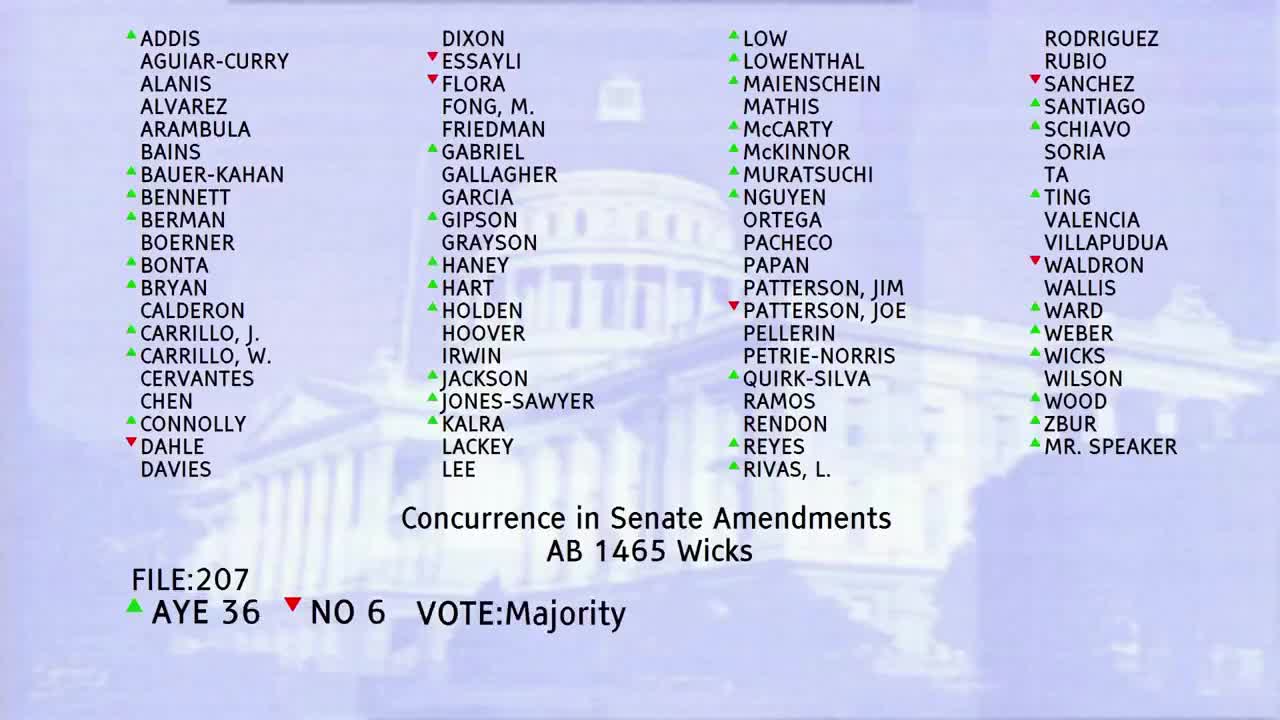 43SEC
Assembly Floor
 17MIN
Senate Floor
 3MIN
Senate Standing Committee on Appropriations
 24MIN
Senate Standing Committee on Local Government
 22MIN
Senate Standing Committee on Natural Resources and Water
 3MIN
Assembly Floor
 20MIN
Assembly Standing Committee on Natural Resources
Bill Author