AB 3240: California Ban on Scholarship Displacement Act of 2021: Cal Grant awards.
- Session Year: 2023-2024
- House: Assembly
- Latest Version Date: 2024-09-28
Current Status:
Passed
(2024-09-28: Chaptered by Secretary of State - Chapter 851, Statutes of 2024.)
Introduced
In Committee
First Chamber
In Committee
Second Chamber
Enacted
Existing law establishes the California Community Colleges, under the administration of the Board of Governors of the California Community Colleges, the California State University, under the administration of the Trustees of the California State University, the University of California, under the administration of the Regents of the University of California, independent institutions of higher education, and private postsecondary educational institutions as the segments of postsecondary education in the state.
Existing law, the Cal Grant Program, establishes the Cal Grant A Entitlement Awards, the Cal Grant B Entitlement Awards, the California Community College Expanded Entitlement Awards, the California Community College Transfer Entitlement Awards, the Competitive Cal Grant A and B Awards, the Cal Grant C Awards, and the Cal Grant T Awards under the administration of the Student Aid Commission. The Cal Grant Reform Act revises and recasts the provisions establishing and governing the existing Cal Grant Program into a new Cal Grant Program. Existing law specifies that the act becomes operative only if General Fund moneys over the multiyear forecasts beginning in the 202425 fiscal year are available to support ongoing augmentations and actions, and if funding is provided in the annual Budget Act to implement the act.
The California Ban on Scholarship Displacement Act of 2021 prohibits an institution of higher education from reducing the institutional gift aid offer of a student who is eligible to receive a federal Pell Grant award or financial assistance under the California Dream Act for an academic year as a result of private scholarship awards designated for the student unless the students gift aid exceeds the students annual cost of attendance, as specified, and prohibits the institution of higher education from considering receipt or anticipated receipt of private scholarships when considering a student who is eligible to receive a federal Pell Grant award or financial assistance under the California Dream Act for qualification for institutional gift aid.
This bill, commencing July 1, 2025, would expressly extend those protections to students who are eligible for a Cal Grant award.
As used in this article, unless the context requires otherwise, the following definitions apply:
(a)An academic year is July 1 to June 30, inclusive. The start date of a session shall determine the academic year in which it is included.
(b)Cost of attendance means the students tuition and fees, books and supplies, living expenses, transportation expenses, and any other student expenses used to calculate a students financial need for purposes of student aid programs under Title IV of the federal Higher Education Act of 1965, as amended (20 U.S.C. Sec. 1070 et seq.).
(c)Expected family contribution means a students expected family contribution calculated according to the federal methodology pursuant to subdivision (a) of Section 69506 as established by Title IV of the federal Higher Education Act of 1965, as amended (20 U.S.C. Sec. 1070 et seq.).
(d)(1)Financial need means, as used in subdivision (a) of Section 70048, the cost of attendance minus the expected family contribution.
(2)Financial need means, as used in subdivision (b) of Section 70048, the cost of attendance minus the student aid index.
(e)Gift aid means all financial aid designated for the students educational expenses, including a grant, scholarship, tuition waiver, fellowship stipend, or other third-party payment, that is not a loan or pursuant to a work-study program.
(f)Institutional gift aid means gift aid that is paid for by the institution of higher education from its funds and the recipient of the aid is selected by the institution.
(g)Institution of higher education or institution means any public or private postsecondary educational institution in the state that receives, or benefits from, state-funded financial assistance or enrolls students who receive state-funded student financial assistance.
(h)Private scholarship means financial assistance awarded to students based on one or more factors, including, but not limited to, academic merit, talent, or a particular area of study, by a private company, foundation, or nonprofit organization, or a public charity or service group. A federal, state, or institutional scholarship, including, but not limited to, financial aid provided by the Middle Class Scholarship Program established by Article 22 (commencing with Section 70020), shall not be considered a private scholarship.
(i)Scholarship displacement means the reduction of institutional gift aid due to private scholarship awards.
(j)Student means any California resident that enrolls in any institution of higher education to obtain an undergraduate degree.
(k)Student Aid Index means, with respect to a student, an index that reflects an evaluation of a students approximate financial resources to contribute toward the students postsecondary education expenses for the academic year.
SEC. 2.Section 70048 of the Education Code is amended to read:70048.(a)Commencing with the 202324 academic year, an institution of higher education shall not reduce the institutional gift aid offer of a student who is eligible to receive a federal Pell Grant award or financial assistance under the California Dream Act for an academic year as a result of private scholarship awards designated for the student unless the students gift aid exceeds the students annual cost of attendance.
(b)The institution may reduce the institutional gift aid offer of a student who is eligible to receive a federal Pell Grant award or financial assistance under the California Dream Act by no more than the amount of the students gift aid that is in excess of the students annual cost of attendance.
(c)The institution shall not consider receipt or anticipated receipt of private scholarships when considering a student who is eligible to receive a federal Pell Grant award or financial assistance under the California Dream Act for qualification for institutional gift aid.
(d)To ensure financial aid is maximized, an institution is encouraged to implement efforts to avoid scholarship displacement through consultation with scholarship providers and students to avoid situations where institutional gift aid and private scholarships can only be used for specific purposes.
(e)This article shall not be interpreted or implemented in a manner inconsistent with state or federal law. The provisions of this article are severable. If any provision of this article or its application is held invalid due to a conflict with federal requirements, that invalidity shall not affect other provisions or applications that can be given effect without the invalid provision or application.
(f)This section shall become inoperative on July 1, 2025, and, as of January 1, 2026, is repealed.
SEC. 3.Section 70048 is added to the Education Code, to read:70048.(a)An institution of higher education shall not reduce the institutional gift aid offer of a student who is eligible to receive a federal Pell Grant award, a Cal Grant award, or financial assistance under the California Dream Act for an academic year as a result of private scholarship awards designated for the student unless the students gift aid exceeds the students annual cost of attendance.
(b)The institution may reduce the institutional gift aid offer of a student who is eligible to receive a federal Pell Grant award, a Cal Grant award, or financial assistance under the California Dream Act by no more than the amount of the students gift aid that is in excess of the students annual cost of attendance.
(c)The institution shall not consider receipt or anticipated receipt of private scholarships when considering a student who is eligible to receive a federal Pell Grant award, a Cal Grant award, or financial assistance under the California Dream Act for qualification for institutional gift aid.
(d)To ensure financial aid is maximized, an institution is encouraged to implement efforts to avoid scholarship displacement through consultation with scholarship providers and students to avoid situations where institutional gift aid and private scholarships can only be used for specific purposes.
(e)This article shall not be interpreted or implemented in a manner inconsistent with state or federal law. The provisions of this article are severable. If any provision of this article or its application is held invalid due to a conflict with federal requirements, that invalidity shall not affect other provisions or applications that can be given effect without the invalid provision or application.
(f)This section shall become operative on July 1, 2025.
As used in this article, unless the context requires otherwise, the following definitions apply:
(a)An academic year is July 1 to June 30, inclusive. The start date of a session shall determine the academic year in which it is included.
(b)Cost of attendance means the students tuition and fees, books and supplies, living expenses, transportation expenses, and any other student expenses used to calculate a students financial need for purposes of student aid programs under Title IV of the federal Higher Education Act of 1965, as amended (20 U.S.C. Sec. 1070 et seq.).
(c)Expected family contribution means a students expected family contribution calculated according to the federal methodology pursuant to subdivision (a) of Section 69506 as established by Title IV of the federal Higher Education Act of 1965, as amended (20 U.S.C. Sec. 1070 et seq.).
(d)(1)Financial need means, as used in subdivision (a) of Section 70048, the cost of attendance minus the expected family contribution.
(2)Financial need means, as used in subdivision (b) of Section 70048, the cost of attendance minus the student aid index.
(e)Gift aid means all financial aid designated for the students educational expenses, including a grant, scholarship, tuition waiver, fellowship stipend, or other third-party payment, that is not a loan or pursuant to a work-study program.
(f)Institutional gift aid means gift aid that is paid for by the institution of higher education from its funds and the recipient of the aid is selected by the institution.
(g)Institution of higher education or institution means any public or private postsecondary educational institution in the state that receives, or benefits from, state-funded financial assistance or enrolls students who receive state-funded student financial assistance.
(h)Private scholarship means financial assistance awarded to students based on one or more factors, including, but not limited to, academic merit, talent, or a particular area of study, by a private company, foundation, or nonprofit organization, or a public charity or service group. A federal, state, or institutional scholarship, including, but not limited to, financial aid provided by the Middle Class Scholarship Program established by Article 22 (commencing with Section 70020), shall not be considered a private scholarship.
(i)Scholarship displacement means the reduction of institutional gift aid due to private scholarship awards.
(j)Student means any California resident that enrolls in any institution of higher education to obtain an undergraduate degree.
(k)Student Aid Index means, with respect to a student, an index that reflects an evaluation of a students approximate financial resources to contribute toward the students postsecondary education expenses for the academic year.
SECTION 1.SEC. 2.Section 70048 of the Education Code is amended to read:70048.(a)Commencing with the 202324 academic year, an institution of higher education shall not reduce the institutional gift aid offer of a student who is eligible to receive a federal Pell Grant award or financial assistance under the California Dream Act for an academic year as a result of private scholarship awards designated for the student unless the students gift aid exceeds the students annual cost of attendance.
(b)The institution may reduce the institutional gift aid offer of a student who is eligible to receive a federal Pell Grant award or financial assistance under the California Dream Act by no more than the amount of the students gift aid that is in excess of the students annual cost of attendance.
(c)The institution shall not consider receipt or anticipated receipt of private scholarships when considering a student who is eligible to receive a federal Pell Grant award or financial assistance under the California Dream Act for qualification for institutional gift aid.
(d)To ensure financial aid is maximized, an institution is encouraged to implement efforts to avoid scholarship displacement through consultation with scholarship providers and students to avoid situations where institutional gift aid and private scholarships can only be used for specific purposes.
(e)This article shall not be interpreted or implemented in a manner inconsistent with state or federal law. The provisions of this article are severable. If any provision of this article or its application is held invalid due to a conflict with federal requirements, that invalidity shall not affect other provisions or applications that can be given effect without the invalid provision or application.
(f)This section shall become inoperative on July 1, 2025, and, as of January 1, 2026, is repealed.
SEC. 2.SEC. 3.Section 70048 is added to the Education Code, to read:70048.(a)An institution of higher education shall not reduce the institutional gift aid offer of a student who is eligible to receive a federal Pell Grant award, a Cal Grant award, or financial assistance under the California Dream Act for an academic year as a result of private scholarship awards designated for the student unless the students gift aid exceeds the students annual cost of attendance.
(b)The institution may reduce the institutional gift aid offer of a student who is eligible to receive a federal Pell Grant award, a Cal Grant award, or financial assistance under the California Dream Act by no more than the amount of the students gift aid that is in excess of the students annual cost of attendance.
(c)The institution shall not consider receipt or anticipated receipt of private scholarships when considering a student who is eligible to receive a federal Pell Grant award, a Cal Grant award, or financial assistance under the California Dream Act for qualification for institutional gift aid.
(d)To ensure financial aid is maximized, an institution is encouraged to implement efforts to avoid scholarship displacement through consultation with scholarship providers and students to avoid situations where institutional gift aid and private scholarships can only be used for specific purposes.
(e)This article shall not be interpreted or implemented in a manner inconsistent with state or federal law. The provisions of this article are severable. If any provision of this article or its application is held invalid due to a conflict with federal requirements, that invalidity shall not affect other provisions or applications that can be given effect without the invalid provision or application.
(f)This section shall become operative on July 1, 2025.
(a)Commencing with the 202324 academic year, an institution of higher education shall not reduce the institutional gift aid offer of a student who is eligible to receive a federal Pell Grant award or financial assistance under the California Dream Act for an academic year as a result of private scholarship awards designated for the student unless the students gift aid exceeds the students annual cost of attendance.
(b)The institution may reduce the institutional gift aid offer of a student who is eligible to receive a federal Pell Grant award or financial assistance under the California Dream Act by no more than the amount of the students gift aid that is in excess of the students annual cost of attendance.
(c)The institution shall not consider receipt or anticipated receipt of private scholarships when considering a student who is eligible to receive a federal Pell Grant award or financial assistance under the California Dream Act for qualification for institutional gift aid.
(d)To ensure financial aid is maximized, an institution is encouraged to implement efforts to avoid scholarship displacement through consultation with scholarship providers and students to avoid situations where institutional gift aid and private scholarships can only be used for specific purposes.
(e)This article shall not be interpreted or implemented in a manner inconsistent with state or federal law. The provisions of this article are severable. If any provision of this article or its application is held invalid due to a conflict with federal requirements, that invalidity shall not affect other provisions or applications that can be given effect without the invalid provision or application.
(f)This section shall become inoperative on July 1, 2025, and, as of January 1, 2026, is repealed.
SEC. 2.Section 70048 is added to the Education Code, to read:70048.(a)An institution of higher education shall not reduce the institutional gift aid offer of a student who is eligible to receive a federal Pell Grant award, a Cal Grant award, or financial assistance under the California Dream Act for an academic year as a result of private scholarship awards designated for the student unless the students gift aid exceeds the students annual cost of attendance.
(b)The institution may reduce the institutional gift aid offer of a student who is eligible to receive a federal Pell Grant award, a Cal Grant award, or financial assistance under the California Dream Act by no more than the amount of the students gift aid that is in excess of the students annual cost of attendance.
(c)The institution shall not consider receipt or anticipated receipt of private scholarships when considering a student who is eligible to receive a federal Pell Grant award, a Cal Grant award, or financial assistance under the California Dream Act for qualification for institutional gift aid.
(d)To ensure financial aid is maximized, an institution is encouraged to implement efforts to avoid scholarship displacement through consultation with scholarship providers and students to avoid situations where institutional gift aid and private scholarships can only be used for specific purposes.
(e)This article shall not be interpreted or implemented in a manner inconsistent with state or federal law. The provisions of this article are severable. If any provision of this article or its application is held invalid due to a conflict with federal requirements, that invalidity shall not affect other provisions or applications that can be given effect without the invalid provision or application.
(f)This section shall become operative on July 1, 2025.
|
Date
|
Status
|
|---|---|
| Sep 28, 2024 | Chaptered by Secretary of State - Chapter 851, Statutes of 2024. |
| Sep 28, 2024 | Approved by the Governor. |
| Sep 6, 2024 | Enrolled and presented to the Governor at 4 p.m. |
| Aug 28, 2024 | Senate amendments concurred in. To Engrossing and Enrolling. (Ayes 77. Noes 0.). |
| Aug 28, 2024 | Assembly Rule 77 suspended. |
| Aug 28, 2024 | In Assembly. Concurrence in Senate amendments pending. May be considered on or after August 30 pursuant to Assembly Rule 77. |
| Aug 27, 2024 | Read third time. Passed. Ordered to the Assembly. (Ayes 40. Noes 0.). |
| Aug 26, 2024 | Read second time. Ordered to third reading. |
| Aug 22, 2024 | Read third time and amended. Ordered to second reading. |
| Aug 6, 2024 | Read second time. Ordered to third reading. |
| Aug 5, 2024 | From committee: Be ordered to second reading pursuant to Senate Rule 28.8. |
| Jun 26, 2024 | From committee: Do pass and re-refer to Com. on APPR. (Ayes 7. Noes 0.) (June 26). Re-referred to Com. on APPR. |
| May 29, 2024 | Referred to Com. on ED. |
| May 16, 2024 | In Senate. Read first time. To Com. on RLS. for assignment. |
| May 16, 2024 | Read third time. Passed. Ordered to the Senate. (Ayes 71. Noes 0.) |
| May 9, 2024 | Read second time. Ordered to Consent Calendar. |
| May 8, 2024 | From committee: Do pass. To Consent Calendar. (Ayes 15. Noes 0.) (May 8). |
| Apr 24, 2024 | From committee: Do pass and re-refer to Com. on APPR. with recommendation: To Consent Calendar. (Ayes 10. Noes 0.) (April 23). Re-referred to Com. on APPR. |
| Mar 11, 2024 | Referred to Com. on HIGHER ED. |
| Feb 17, 2024 | From printer. May be heard in committee March 18. |
| Feb 16, 2024 | Read first time. To print. |
|
Date
|
Description
|
Location
|
Votes
|
|
|---|---|---|---|---|
| Aug 28, 2024 | AB 3240 Calderon Concurrence in Senate Amendments | Assembly Floor |
Passed |
|
| Aug 27, 2024 | Assembly 3rd Reading AB3240 Calderon et al. By Skinner | Senate Floor |
Passed |
|
| Jun 26, 2024 | Do pass, but first be re-referred to the Committee on [Appropriations] | Senate Standing Committee on Education |
Passed |
|
| May 16, 2024 | AB 3240 Calderon Consent Calendar Second Day Regular Session | Assembly Floor |
Passed |
|
| May 8, 2024 | Do pass. To Consent Calendar. | Assembly Standing Committee on Appropriations |
Passed |
|
| Apr 23, 2024 | Do pass and be re-referred to the Committee on [Appropriations] with recommendation: To Consent Calendar | Assembly Standing Committee on Higher Education |
Passed |
This list shows positions taken on this bill by organizations on the date displayed, which is linked to the original source.
Positions by individuals are not included.
|
Organization
|
Position
|
Date
|
|---|---|---|
| California Community Colleges, Chancellor's Office | ** Support | |
| California Competes: Higher Education for a Strong Economy | ** Support | |
| California EDGE Coalition | ** Support | |
| Campaign For College Opportunity | ** Support | |
| Eden Area Regional Occupational Program | ** Support | |
| GENup | ** Support | |
| Hispanic Foundation of Silicon Valley | ** Support | |
| Latino Education Advancement Foundation | ** Support | |
| Northern California College Promise Coalition | ** Support | |
| San Jose City College | ** Support | |
| Students Rising Above | ** Support | |
| Television Academy Foundation | ** Support | |
| The NROC Project | ** Support | |
| The San Diego Foundation | ** Support | |
| What We All Deserve | ** Support |
CONCURRENCE IN SENATE AMENDMENTS
CSA1 Bill Id:AB 3240
Author:(Calderon)
As Amended Ver:August 22, 2024
Majority vote
SUMMARY
Extends the California Ban on Scholarship Displacement Act of 2021 protections on institutional gift aid to students who are eligible for a Cal Grant award, commencing July 1, 2025.
Senate Amendments
- Clarify that a federal, state, or institutional scholarship is not to be considered a private scholarship when determining an institutional gift aid offer.
- Make technical changes.
COMMENTS
Background. Existing law, prohibits public and private institutions of higher education in the state that receive, or benefit from, state-funded financial assistance, or that enroll students who receive state-funded student financial assistance, from reducing certain students' institution-based gift aid offer below their financial need. These students include those who are eligible for a Federal Pell Grant or financial aid through the California Dream Act but does not currently account for Cal Grant eligible students.
This measure extends the protections of the California Ban on Scholarship Displacement Act to students eligible to receive Cal Grant awards.
What Is Scholarship Displacement? According to Road2College, scholarship displacement, otherwise known as "over-award" by colleges, can impact need-based financial aid awards in the package from their school, even if the scholarship (or scholarships) do not cover all of their expenses. Many colleges argue that, when a student receives a scholarship, the student's "need" changes. For example, if the student is awarded a $1,000 scholarship, the school may determine that the student's need has correspondingly been reduced by $1,000. Typically, this occurs if the student is deemed "over-awarded," meaning that the combination of the student's scholarship and initial financial aid package offering exceeds the total cost of attendance of the college or university. If that occurs, the college may decide to give the $1,000 institutional grant they had originally earmarked for the student to another student who still has an unmet need.
How many? According to information provided by the author, during the 2022-23 academic year,
597,505 students received a Cal Grant. It is estimated that of those students, 487,891 students were Pell Grant eligible. Lastly, in the same academic year, 17,680 students received the California Dream Act Award.
According to the Author
The author states that, "in 2021, 62% of students reported a shrink in their institutional grants, rather than to their loans or work-study hours when they reported a private scholarship to their school. As a result, some students who see their financial aid reduced end up taking out additional student loans. Furthermore, unfulfilled non-tuition costs (including books, room and board, and transportation) are estimated to annually average $8,900 at a community college and $18,600 at the University of California (UC). Many low-income students can cover tuition and non-tuition costs through a combination of state, local, and/or federal aid. However, even if all grant aid is considered, students with the most need are, on average, still paying more than $5,000 per year to attend a community college and more than $9,000 to attend a UC."
The author contends that, "the cost of attending college is more than just paying tuition, fees, and books. Non-tuition costs, such as room and boarding, are often uncovered by financial aid, like the Cal Grant. Private scholarships often fills this gap, however students can experience a decrease in their financial aid by a higher education institution if the amount of total aid exceeds the costs of tuition. This practice is known as scholarship displacement, and it unfairly penalizes students that are fortunate enough to receive a private scholarship. To remedy this, Assembly Bill 3240 extends the protections of the California Ban on Scholarship Displacement Act, prohibiting scholarship displacement for students that are eligible for Cal Grant awards. This bill will ensure students can benefit from all forms of their financial assistance, increasing college affordability for more students."
Arguments in Support
According to GenUp, sponsors of this measure, "As an extension of AB 288 passed in 2022, this bill aims to provide a technical expansion of the scope of students who qualify for this provision to ban scholarship displacement. This bill expands these eligibility requirements to include students receiving Cal Grants, thereby fostering greater accessibility to higher education. AB 3240 is crucial as higher education plays a pivotal role in social mobility, particularly for disadvantaged communities, providing opportunities for advancement and economic empowerment."
Arguments in Opposition
None on file.
FISCAL COMMENTS
According to the Senate Committee on Appropriations, pursuant to Senate Rule 28.8, negligible state costs.
VOTES:
ASM HIGHER EDUCATION: 10-0-1
YES: Mike Fong, Ta, Arambula, Boerner, Chen, Essayli, Irwin, Jackson, Low, Muratsuchi
ABS, ABST OR NV: Quirk-Silva
ASM APPROPRIATIONS: 15-0-0
YES: Wicks, Sanchez, Arambula, Bryan, Calderon, Wendy Carrillo, Dixon, Mike Fong, Friedman, Haney, Hart, Jim Patterson, Pellerin, Ta, Villapudua
ASSEMBLY FLOOR: 71-0-9
YES: Aguiar-Curry, Alanis, Arambula, Bains, Bauer-Kahan, Bennett, Berman, Boerner, Bonta, Bryan, Calderon, Juan Carrillo, Wendy Carrillo, Chen, Connolly, Davies, Dixon, Essayli, Mike Fong, Friedman, Gabriel, Gallagher, Garcia, Grayson, Haney, Hart, Holden, Hoover, Jackson, Jones-Sawyer, Kalra, Lackey, Lee, Low, Lowenthal, Maienschein, McCarty, McKinnor, Muratsuchi, Stephanie Nguyen, Ortega, Pacheco, Papan, Jim Patterson, Joe Patterson, Pellerin, Petrie-Norris, Quirk-Silva, Ramos, Rendon, Reyes, Luz Rivas, Rodriguez, Blanca Rubio, Sanchez, Santiago, Schiavo, Soria, Ta, Ting, Valencia, Villapudua, Waldron, Wallis, Ward, Weber, Wicks, Wilson, Wood, Zbur, Robert Rivas
ABS, ABST OR NV: Addis, Alvarez, Cervantes, Megan Dahle, Flora, Vince Fong, Gipson, Irwin, Mathis
SENATE FLOOR: 40-0-0
YES: Allen, Alvarado-Gil, Archuleta, Ashby, Atkins, Becker, Blakespear, Bradford, Caballero, Cortese, Dahle, Dodd, Durazo, Eggman, Glazer, Gonzalez, Grove, Hurtado, Jones, Laird, Limón, McGuire, Menjivar, Min, Newman, Nguyen, Niello, Ochoa Bogh, Padilla, Portantino, Roth, Rubio, Seyarto, Skinner, Smallwood-Cuevas, Stern, Umberg, Wahab, Wiener, Wilk
UPDATED
VERSION: August 22, 2024
CONSULTANT: Jeanice Warden / HIGHER ED. / (916) 319-3960 FN: 0004832
SENATE RULES COMMITTEE Office of Senate Floor Analyses (916) 651-1520 Fax: (916) 327-4478 | AB 3240 |
THIRD READING
Bill No: AB 3240
Author: Calderon (D), et al.
Amended: 8/22/24 in Senate
Vote: 21
SENATE EDUCATION COMMITTEE: 7-0, 6/26/24
AYES: Newman, Ochoa Bogh, Cortese, Glazer, Gonzalez, Smallwood-Cuevas, Wilk
SENATE APPROPRIATIONS COMMITTEE: Senate Rule 28.8
ASSEMBLY FLOOR: 71-0, 5/16/24 (Consent) - See last page for vote
SUBJECT: California Ban on Scholarship Displacement Act of 2021: Cal Grant awards
SOURCE: Northern California College Promise Coalition
What We All Deserve
DIGEST:
This bill extends the California Ban on Scholarship Displacement Act of 2021 protections on institutional gift aid to students who are eligible for a Cal Grant award, commencing July 1, 2025.
Senate Floor Amendments of 8/22/24 clarify that a federal, state, or institutional scholarship is not to be considered a private scholarship when determining an institutional gift aid offer.
ANALYSIS: Existing federal law provides, through the federal Pell Grant, aid to students who demonstrate financial need. The Pell Grant award can be used for tuition and fees, books, supplies, transportation, and living expenses for the equivalent of up to six years of full-time enrollment. The maximum Pell Grant award is $7,395 for the award year 2023-24 (which covers the span of July 1, 2023, through June 30, 2024) (20 U.S.C. Section 1070). It is anticipated that the maximum award will not change for the 2024-25 award year (which covers the span of July 1, 2024, through June 30, 2025).
Existing state law:
- Establishes the California Ban on Scholarship Displacement Act of 2021, which, in part, prohibits, commencing with the 2022-23 academic year, an institution of higher education from reducing a student’s institutional financial aid offer or award for an academic year as a result of private scholarship awards received by that student unless all of the following conditions are satisfied:
- The student is ineligible to receive a federal Pell Grant award;
- The student is ineligible to receive financial assistance under the California Dream Act;
- The student’s gift aid exceeds the student’s financial need;
- The institution reduces its institutional financial aid by no more than the amount of the student’s gift aid that is in excess of the student’s financial need; and,
- The institution does not consider a student’s receipt or anticipated receipt of a private scholarship when considering a student’s qualification for institutional financial aid. (Education Code (EC) § 70045 et seq.)
- Establishes the California Student Aid Commission (CSAC) for the purpose of administering specified student financial aid programs. (EC § 69510, et seq.)
- Establishes the Cal Grant program, administered by the CSAC, to provide grants to financially needy students to attend a college or university. The Cal Grant programs include both the entitlement and the competitive Cal Grant awards. The program consists of the Cal Grant A, Cal Grant B, and Cal Grant C programs, and eligibility is based upon financial need, grade point average (GPA), California residency, and other criteria. Maximum award amounts for the California State University (CSU) and the University of California (UC) are established in the annual Budget Act and have traditionally covered all systemwide tuition and fees. Supplemental Cal Grant awards programs are available to students with dependents and former and current foster youth attending CSU, UC, or a California Community College (CCC) to assist with non-tuition costs, such as living expenses. (EC § 69430 – 69433 and § 69465 - 69470)
- Establishes, the Cal Grant Reform Act commencing in the 2024-2025 fiscal year, if General Fund moneys over the multiyear forecasts are available to support ongoing augmentations and actions, and if funding is provided in the annual Budget Act. Under the Act, the Cal Grant 2 and Cal Grant 4 programs are created. The Cal Grant 2 is for CCC students, and provides non-tuition support that grows annually with inflation. The Cal Grant 4 program is for students at the UC, CSU, and other institutions. The Act also states legislative intent that UC and CSU use institutional aid to cover non-tuition costs for their students. (EC § 69424, 69425, and 69428)
- Establishes the Middle Class Scholarship (MCS) Program to offset a portion of tuition costs for students attending the UC and the CSU. Students with family income and assets up to $201,000 may be eligible. Starting in the 2022-23 academic year, MCS awards may be used to cover the total cost of attendance at UC and CSU. (EC § 70020, et seq.)
- Extends the Cal Grant priority deadline for financial aid programs administered by CSAC, if the FAFSA application form is not available on or before October 1, 2023, to May 2, 2024, for the 2024-25 award year only. (Section 22 of Chapter 50 of the Statutes of 2023)
This bill:
Extends the California Ban on Scholarship Displacement Act of 2021 protections to students who are eligible for a Cal Grant award, commencing July 1, 2025. Specifically, this bill:
- Prohibits an institution of higher education from reducing the institutional gift aid offer a student who is eligible to receive a federal Pell Grant award, a Cal Grant award or financial assistance under the California Dream Act for an academic year as a result of private scholarship awards designated for the student unless the student’s fit aid exceeds the student’s annual cost of attendance.
- Allows the institutions to reduce the institutional gift aid offer of a student who is eligible to receive a federal Pell Grant award, a Cal Grant award, or financial assistance under the California Dream Act by no more than the amount of the student’s gift aid that is in excess of the student’s annual cost of attendance.
- Prohibits the institution from considering the receipt or anticipated receipt of private scholarships when considering a student who is eligible to receive a federal Pell Grant award, a Cal Grant award, or financial assistance under the California Dream Act for qualification for institutional gift aid.
- Encourages, to ensure financial aid is maximized, an institution to implement efforts to avoid scholarship displacement through consultation with scholarship providers and students to avoid situations where institutional gift aid and private scholarships can only be used for specific purposes.
- Stipulates that the article be not interpreted or implemented in a manner inconsistent with state or federal law and provides that the provisions of the bill are severable.
- Modifies the definition of private scholarship by excluding federal, state, or institutional scholarships including the MCS from being classified as private scholarships.
- Recasts the California Ban on Scholarship Displacement Act of 2021 provisions.
- Makes this bill’s provisions operative on July 1, 2025.
Comments
- Need for the bill. According to the author, “Students who have financial need and receive private scholarships are often unable to make full use of the awards given to them by private scholarship providers when institutions of higher education reduce students’ financial aid. When scholarship displacement occurs, financial aid is reduced by an amount equivalent to any private scholarships awarded, leaving students with a zero net-benefit.
“In 2021, 62% of students reported a shrink in their institutional grants, rather than to their loans or work-study hours when they reported a private scholarship to their school. As a result, some students who see their financial aid reduced end up taking out additional student loans.
“Furthermore, unfulfilled non-tuition costs (including books, room and board, and transportation) are estimated to annually average $8,900 at a community college and $18,600 at the University of California (UC). Many low-income students can cover tuition and non-tuition costs through a combination of state, local, and/or federal aid. However, even if all grant aid is considered, students with the most need are, on average, still paying more than $5,000 per year to attend a community college and more than $9,000 to attend a UC.
“During the 2022-23 academic year, 159,474 students received Cal Grant awards, 44% of which were of Latino descent. Some students who receive Cal Grants are protected under the California Ban on Scholarship Displacement Act. However, without further legislation, those students who are not protected by the California Ban on Scholarship Displacement Act face the possibility of taking out additional loans to pay for their education.”
- Forms of student aid. To help cover college costs, students can access financial aid from federal, state, and university, and private sources. Financial aid programs can consist of loan and gift aid programs. Grants, scholarships, and tuition waivers are considered gift aid, which simply means awards do not have to be repaid (as opposed to loan programs that students pay back). The term institutional gift aid as used California Ban on Scholarship Displacement Act refers to gift aid offered by a college, excluding loans or workstudy. Decisions about allocating institutional aid funds reflect a number of different factors, including the types of resources colleges have at their disposal as well as their commitment to providing educational opportunities to low-and middle-income students. Additionally, institutional aid programs play a unique role in supporting individual colleges’ enrollment and completion goals in that colleges have the flexibility to distribute their own grant funds; however, these funds are often tied with differential reliance on tuition revenues which can make the amount available volatile from one year to the next.
- Packaging multiple offers of student aid. If a student qualifies for more than one financial aid program, their campus financial aid office will "package" together aid to help meet the student's financial needs and cover their cost of attendance. A student’s total financial aid package will not exceed the student’s cost of attendance. When packaging aid, institutions first prioritize awarding gift aid such as scholarships or grants before awarding loans or work-study. If a student’s aid package exceeds the student’s cost of attendance, then adjustments are made to eliminate the over award. Proponents of this measure argue that when a student receives a private scholarship colleges will determine that a student’s need changes and may reduce the amount of institutional aid to account for the funding received from the private scholarship.
Current law prohibits colleges from reducing the institutional gift aid offer if a student who is eligible to receive a federal Pell Grant or California Dream Act financial assistance receives a private scholarship. This bill seeks to incorporate Cal Grant-eligible students into the aforementioned prohibition. It’s worth noting that if a private scholarship and institutional gift aid are designated for the same purpose, it could result in institutional gift aid paying for costs that might be otherwise be covered by a private source.
- The Cal Grant program. The Cal Grant program is the state’s largest financial aid program, it is intended to help students who are low-income and have financial need cover college costs. The program offers multiple types of Cal Grant awards. The amount of aid students receive depends on their award type and the segment of higher education they attend. Cal Grant A covers full systemwide tuition and fees at public universities and a portion of tuition at private universities. Cal Grant B provides the same amount of tuition coverage as Cal Grant A in most cases, while also providing an “access award” for nontuition expenses such as food and housing. Cal Grant C, which is only available to students enrolled in career technical education programs, provides lower award amounts for tuition and nontuition expenses. Across all award types, larger amounts of nontuition coverage are available to students with dependent children as well as current and former foster youth.
- How many? According to information provided by the author, during the 2022-23 academic year, 597,505 students received a Cal Grant. It is estimated that of those students, 487,891 students were Pell Grant eligible. Lastly, in the same academic year, 17,680 students received the California Dream Act Award.
FISCAL EFFECT: Appropriation: No Fiscal Com.: Yes Local: No
SUPPORT: (Verified 8/22/24)
Northern California College Promise Coalition (co-source)
What We All Deserve (co-source)
California Community Colleges, Chancellor's Office
California Competes: Higher Education for a Strong Economy
California Edge Coalition
Campaign for College Opportunity
Eden Area Regional Occupational Program
Hispanic Foundation of Silicon Valley
Latino Education Advancement Foundation
San Jose City College
Students Rising Above
Television Academy Foundation
The NROC Project
The San Diego Foundation
OPPOSITION: (Verified 8/22/24)
None received
ASSEMBLY FLOOR: 71-0, 5/16/24
AYES: Aguiar-Curry, Alanis, Arambula, Bains, Bauer-Kahan, Bennett, Berman, Boerner, Bonta, Bryan, Calderon, Juan Carrillo, Wendy Carrillo, Chen, Connolly, Davies, Dixon, Essayli, Mike Fong, Friedman, Gabriel, Gallagher, Garcia, Grayson, Haney, Hart, Holden, Hoover, Jackson, Jones-Sawyer, Kalra, Lackey, Lee, Low, Lowenthal, Maienschein, McCarty, McKinnor, Muratsuchi, Stephanie Nguyen, Ortega, Pacheco, Papan, Jim Patterson, Joe Patterson, Pellerin, Petrie-Norris, Quirk-Silva, Ramos, Rendon, Reyes, Luz Rivas, Rodriguez, Blanca Rubio, Sanchez, Santiago, Schiavo, Soria, Ta, Ting, Valencia, Villapudua, Waldron, Wallis, Ward, Weber, Wicks, Wilson, Wood, Zbur, Robert Rivas
NO VOTE RECORDED: Addis, Alvarez, Cervantes, Megan Dahle, Flora, Vince Fong, Gipson, Irwin, Mathis
Prepared by: Olgalilia Ramirez / ED. / (916) 651-4105
8/23/24 21:36:39
**** END ****
SENATE RULES COMMITTEE Office of Senate Floor Analyses (916) 651-1520 Fax: (916) 327-4478 | AB 3240 |
THIRD READING
Bill No: AB 3240
Author: Calderon (D), et al.
Introduced: 2/16/24
Vote: 21
SENATE EDUCATION COMMITTEE: 7-0, 6/26/24
AYES: Newman, Ochoa Bogh, Cortese, Glazer, Gonzalez, Smallwood-Cuevas, Wilk
SENATE APPROPRIATIONS COMMITTEE: Senate Rule 28.8
ASSEMBLY FLOOR: 71-0, 5/16/24 (Consent) - See last page for vote
SUBJECT: California Ban on Scholarship Displacement Act of 2021: Cal Grant awards
SOURCE: Northern California College Promise Coalition
What We All Deserve
DIGEST:
This bill extends the California Ban on Scholarship Displacement Act of 2021 protections to students who are eligible for a Cal Grant award, commencing July 1, 2025.
ANALYSIS:
Existing federal law:
The federal Pell Grant provides aid to students who demonstrate financial need. The Pell Grant award can be used for tuition and fees, books, supplies, transportation, and living expenses for the equivalent of up to six years of full-time enrollment. The maximum Pell Grant award is $7,395 for the award year 2023-24 (which covers the span of July 1, 2023, through June 30, 2024) (20 U.S.C. Section 1070). It is anticipated that the maximum award will not change for the 2024-25 award year (which covers the span of July 1, 2024, through June 30, 2025).
Existing state law:
- Establishes the California Ban on Scholarship Displacement Act of 2021, which, in part, prohibits, commencing with the 2022-23 academic year, an institution of higher education from reducing a student’s institutional financial aid offer or award for an academic year as a result of private scholarship awards received by that student unless all of the following conditions are satisfied:
- The student is ineligible to receive a federal Pell Grant award;
- The student is ineligible to receive financial assistance under the California Dream Act;
- The student’s gift aid exceeds the student’s financial need;
- The institution reduces its institutional financial aid by no more than the amount of the student’s gift aid that is in excess of the student’s financial need; and,
- The institution does not consider a student’s receipt or anticipated receipt of a private scholarship when considering a student’s qualification for institutional financial aid. (Education Code (EC) § 70045 et seq.)
- Establishes the California Student Aid Commission (CSAC) for the purpose of administering specified student financial aid programs. (EC § 69510, et seq.)
- Establishes the Cal Grant program, administered by the CSAC, to provide grants to financially needy students to attend a college or university. The Cal Grant programs include both the entitlement and the competitive Cal Grant awards. The program consists of the Cal Grant A, Cal Grant B, and Cal Grant C programs, and eligibility is based upon financial need, grade point average (GPA), California residency, and other criteria. Maximum award amounts for the California State University (CSU) and the University of California (UC) are established in the annual Budget Act and have traditionally covered all systemwide tuition and fees. Supplemental Cal Grant awards programs are available to students with dependents and former and current foster youth attending CSU, UC, or a California Community College (CCC) to assist with non-tuition costs, such as living expenses. (EC § 69430 – 69433 and § 69465 - 69470)
- Establishes, the Cal Grant Reform Act commencing in the 2024-2025 fiscal year, if General Fund moneys over the multiyear forecasts are available to support ongoing augmentations and actions, and if funding is provided in the annual Budget Act. Under the Act, the Cal Grant 2 and Cal Grant 4 programs are created. The Cal Grant 2 is for CCC students, and provides non-tuition support that grows annually with inflation. The Cal Grant 4 program is for students at the UC, CSU, and other institutions. The Act also states legislative intent that UC and CSU use institutional aid to cover non-tuition costs for their students. (EC § 69424, 69425, and 69428)
- Establishes the Middle Class Scholarship (MCS) Program to offset a portion of tuition costs for students attending the UC and the CSU. Students with family income and assets up to $201,000 may be eligible. Starting in the 2022-23 academic year, MCS awards may be used to cover the total cost of attendance at UC and CSU. (EC § 70020, et seq.)
7) Extends the Cal Grant priority deadline for financial aid programs administered by CSAC, if the FAFSA application form is not available on or before October 1, 2023, to May 2, 2024, for the 2024-25 award year only. (Section 22 of Chapter 50 of the Statutes of 2023)
This bill:
This bill extends the California Ban on Scholarship Displacement Act of 2021 protections to students who are eligible for a Cal Grant award, commencing July 1, 2025. Specifically, this bill:
- Prohibits an institution of higher education from reducing the institutional gift aid offer a student who is eligible to receive a federal Pell Grant award, a Cal Grant award or financial assistance under the California Dream Act for an academic year as a result of private scholarship awards designated for the student unless the student’s fit aid exceeds the student’s annual cost of attendance.
- Allows the institutions to reduce the institutional gift aid offer of a student who is eligible to receive a federal Pell Grant award, a Cal Grant award, or financial assistance under the California Dream Act by no more than the amount of the student’s gift aid that is in excess of the student’s annual cost of attendance.
- Prohibits the institution from considering the receipt or anticipated receipt of private scholarships when considering a student who is eligible to receive a federal Pell Grant award, a Cal Grant award, or financial assistance under the California Dream Act for qualification for institutional gift aid.
- Encourages, to ensure financial aid is maximized, an institution to implement efforts to avoid scholarship displacement through consultation with scholarship providers and students to avoid situations where institutional gift aid and private scholarships can only be used for specific purposes.
- Stipulates that the article be not interpreted or implemented in a manner inconsistent with state or federal law and provides that the provisions of the bill are severable.
- Recasts the California Ban on Scholarship Displacement Act of 2021 provisions.
- Makes the bill’s provisions operative on July 1, 2025.
Comments
- Need for the bill. According to the author, “Students who have financial need and receive private scholarships are often unable to make full use of the awards given to them by private scholarship providers when institutions of higher education reduce students’ financial aid. When scholarship displacement occurs, financial aid is reduced by an amount equivalent to any private scholarships awarded, leaving students with a zero net-benefit.
“In 2021, 62% of students reported a shrink in their institutional grants, rather than to their loans or work-study hours when they reported a private scholarship to their school. As a result, some students who see their financial aid reduced end up taking out additional student loans.
“Furthermore, unfulfilled non-tuition costs (including books, room and board, and transportation) are estimated to annually average $8,900 at a community college and $18,600 at the University of California (UC). Many low-income students can cover tuition and non-tuition costs through a combination of state, local, and/or federal aid. However, even if all grant aid is considered, students with the most need are, on average, still paying more than $5,000 per year to attend a community college and more than $9,000 to attend a UC.
“During the 2022-23 academic year, 159,474 students received Cal Grant awards, 44% of which were of Latino descent. Some students who receive Cal Grants are protected under the California Ban on Scholarship Displacement Act. However, without further legislation, those students who are not protected by the California Ban on Scholarship Displacement Act face the possibility of taking out additional loans to pay for their education.”
- Forms of student aid. To help cover college costs, students can access financial aid from federal, state, and university, and private sources. Financial aid programs can consist of loan and gift aid programs. Grants, scholarships, and tuition waivers are considered gift aid, which simply means awards do not have to be repaid (as opposed to loan programs that students pay back). The term institutional gift aid as used California Ban on Scholarship Displacement Act refers to gift aid offered by a college, excluding loans or workstudy. Decisions about allocating institutional aid funds reflect a number of different factors, including the types of resources colleges have at their disposal as well as their commitment to providing educational opportunities to low-and middle-income students. Additionally, institutional aid programs play a unique role in supporting individual colleges’ enrollment and completion goals in that colleges have the flexibility to distribute their own grant funds; however, these funds are often tied with differential reliance on tuition revenues which can make the amount available volatile from one year to the next.
- Packaging multiple offers of student aid. If a student qualifies for more than one financial aid program, their campus financial aid office will "package" together aid to help meet the student's financial needs and cover their cost of attendance. A student’s total financial aid package will not exceed the student’s cost of attendance. When packaging aid, institutions first prioritize awarding gift aid such as scholarships or grants before awarding loans or work-study. If a student’s aid package exceeds the student’s cost of attendance, then adjustments are made to eliminate the over award. Proponents of this measure argue that when a student receives a private scholarship colleges will determine that a student’s need changes and may reduce the amount of institutional aid to account for the funding received from the private scholarship.
Current law prohibits colleges from reducing the institutional gift aid offer if a student who is eligible to receive a federal Pell Grant or California Dream Act financial assistance receives a private scholarship. This bill seeks to incorporate Cal Grant-eligible students into the aforementioned prohibition. It’s worth noting that if a private scholarship and institutional gift aid are designated for the same purpose, it could result in institutional gift aid paying for costs that might be otherwise be covered by a private source.
- The Cal Grant program. The Cal Grant program is the state’s largest financial aid program, it is intended to help students who are low-income and have financial need cover college costs. The program offers multiple types of Cal Grant awards. The amount of aid students receive depends on their award type and the segment of higher education they attend. Cal Grant A covers full systemwide tuition and fees at public universities and a portion of tuition at private universities. Cal Grant B provides the same amount of tuition coverage as Cal Grant A in most cases, while also providing an “access award” for nontuition expenses such as food and housing. Cal Grant C, which is only available to students enrolled in career technical education programs, provides lower award amounts for tuition and nontuition expenses. Across all award types, larger amounts of nontuition coverage are available to students with dependent children as well as current and former foster youth.
- How many? According to information provided by the author, during the 2022-23 academic year, 597,505 students received a Cal Grant. It is estimated that of those students, 487,891 students were Pell Grant eligible. Lastly, in the same academic year, 17,680 students received the California Dream Act Award.
FISCAL EFFECT: Appropriation: No Fiscal Com.: Yes Local: No
SUPPORT: (Verified 8/5/24)
Northern California College Promise Coalition (co-source)
What We All Deserve (co-source)
California Community Colleges, Chancellor's Office
California Competes: Higher Education for a Strong Economy
California Edge Coalition
Campaign for College Opportunity
Eden Area Regional Occupational Program
Hispanic Foundation of Silicon Valley
Latino Education Advancement Foundation
San Jose City College
Students Rising Above
Television Academy Foundation
The NROC Project
The San Diego Foundation
OPPOSITION: (Verified 8/5/24)
None received
ASSEMBLY FLOOR: 71-0, 5/16/24
AYES: Aguiar-Curry, Alanis, Arambula, Bains, Bauer-Kahan, Bennett, Berman, Boerner, Bonta, Bryan, Calderon, Juan Carrillo, Wendy Carrillo, Chen, Connolly, Davies, Dixon, Essayli, Mike Fong, Friedman, Gabriel, Gallagher, Garcia, Grayson, Haney, Hart, Holden, Hoover, Jackson, Jones-Sawyer, Kalra, Lackey, Lee, Low, Lowenthal, Maienschein, McCarty, McKinnor, Muratsuchi, Stephanie Nguyen, Ortega, Pacheco, Papan, Jim Patterson, Joe Patterson, Pellerin, Petrie-Norris, Quirk-Silva, Ramos, Rendon, Reyes, Luz Rivas, Rodriguez, Blanca Rubio, Sanchez, Santiago, Schiavo, Soria, Ta, Ting, Valencia, Villapudua, Waldron, Wallis, Ward, Weber, Wicks, Wilson, Wood, Zbur, Robert Rivas
NO VOTE RECORDED: Addis, Alvarez, Cervantes, Megan Dahle, Flora, Vince Fong, Gipson, Irwin, Mathis
Prepared by: Olgalilia Ramirez / ED. / (916) 651-4105
8/7/24 17:59:29
**** END ****
SENATE COMMITTEE ON EDUCATION
Senator Josh Newman, Chair
2023 - 2024 Regular
Bill No: AB 3240 Hearing Date: June 26, 2024
Author: | |||
Version: | February 16, 2024 | ||
Urgency: | No | Fiscal: | Yes |
Consultant: | Olgalilia Ramirez | ||
Subject: California Ban on Scholarship Displacement Act of 2021: Cal Grant awards.
SUMMARY
This bill extends the California Ban on Scholarship Displacement Act of 2021 protections to students who are eligible for a Cal Grant award, commencing July 1, 2025.
BACKGROUND
Existing law:
Federal law
- The federal Pell Grant provides aid to students who demonstrate financial need. The Pell Grant award can be used for tuition and fees, books, supplies, transportation, and living expenses for the equivalent of up to six years of full-time enrollment. The maximum Pell Grant award is $7,395 for the award year 2023-24 (which covers the span of July 1, 2023, through June 30, 2024) (20 U.S.C. Section 1070). It is anticipated that the maximum award will not change for the 2024-25 award year (which covers the span of July 1, 2024, through June 30, 2025).
State law
- Establishes the California Ban on Scholarship Displacement Act of 2021, which, in part, prohibits, commencing with the 2022-23 academic year, an institution of higher education from reducing a student’s institutional financial aid offer or award for an academic year as a result of private scholarship awards received by that student unless all of the following conditions are satisfied:
- The student is ineligible to receive a federal Pell Grant award;
- The student is ineligible to receive financial assistance under the California Dream Act;
- The student’s gift aid exceeds the student’s financial need;
- The institution reduces its institutional financial aid by no more than the amount of the student’s gift aid that is in excess of the student’s financial need; and,
- The institution does not consider a student’s receipt or anticipated receipt of a private scholarship when considering a student’s qualification for institutional financial aid. (Education Code (EC) § 70045 et seq.)
- Establishes the California Student Aid Commission (CSAC) for the purpose of administering specified student financial aid programs. (EC § 69510, et seq.)
- Establishes the Cal Grant program, administered by the CSAC, to provide grants to financially needy students to attend a college or university. The Cal Grant programs include both the entitlement and the competitive Cal Grant awards. The program consists of the Cal Grant A, Cal Grant B, and Cal Grant C programs, and eligibility is based upon financial need, grade point average (GPA), California residency, and other criteria. Maximum award amounts for the California State University (CSU) and the University of California (UC) are established in the annual Budget Act and have traditionally covered all systemwide tuition and fees. Supplemental Cal Grant awards programs are available to students with dependents and former and current foster youth attending CSU, UC, or a California Community College (CCC) to assist with non-tuition costs, such as living expenses. (EC § 69430 – 69433 and § 69465 - 69470)
- Establishes, the Cal Grant Reform Act commencing in the 2024-2025 fiscal year, if General Fund moneys over the multiyear forecasts are available to support ongoing augmentations and actions, and if funding is provided in the annual Budget Act. Under the Act, the Cal Grant 2 and Cal Grant 4 programs are created. The Cal Grant 2 is for CCC students, and provides non-tuition support that grows annually with inflation. The Cal Grant 4 program is for students at the UC, CSU, and other institutions. The Act also states legislative intent that UC and CSU use institutional aid to cover non-tuition costs for their students. (EC § 69424, 69425, and 69428)
- Establishes the Middle Class Scholarship (MCS) Program to offset a portion of tuition costs for students attending the UC and the CSU. Students with family income and assets up to $201,000 may be eligible. Starting in the 2022-23 academic year, MCS awards may be used to cover the total cost of attendance at UC and CSU. (EC § 70020, et seq.)
7) Extends the Cal Grant priority deadline for financial aid programs administered by CSAC, if the FAFSA application form is not available on or before October 1, 2023, to May 2, 2024, for the 2024-25 award year only. (Section 22 of Chapter 50 of the Statutes of 2023)
ANALYSIS
This bill extends the California Ban on Scholarship Displacement Act of 2021 protections to students who are eligible for a Cal Grant award, commencing July 1, 2025. Specifically, it:
- Prohibits an institution of higher education from reducing the institutional gift aid offer a student who is eligible to receive a federal Pell Grant award, a Cal Grant award or financial assistance under the California Dream Act for an academic year as a result of private scholarship awards designated for the student unless the student’s fit aid exceeds the student’s annual cost of attendance.
- Allows the institutions to reduce the institutional gift aid offer of a student who is eligible to receive a federal Pell Grant award, a Cal Grant award, or financial assistance under the California Dream Act by no more than the amount of the student’s gift aid that is in excess of the student’s annual cost of attendance.
- Prohibits the institution from considering the receipt or anticipated receipt of private scholarships when considering a student who is eligible to receive a federal Pell Grant award, a Cal Grant award, or financial assistance under the California Dream Act for qualification for institutional gift aid.
- Encourages, to ensure financial aid is maximized, an institution to implement efforts to avoid scholarship displacement through consultation with scholarship providers and students to avoid situations where institutional gift aid and private scholarships can only be used for specific purposes.
- Stipulates that the article be not interpreted or implemented in a manner inconsistent with state or federal law and provides that the provisions of the bill are severable.
- Recasts the California Ban on Scholarship Displacement Act of 2021 provisions.
- Makes the bill’s provisions operative on July 1, 2025.
STAFF COMMENTS
- Need for the bill. According to the author, “Students who have financial need and receive private scholarships are often unable to make full use of the awards given to them by private scholarship providers when institutions of higher education reduce students’ financial aid. When scholarship displacement occurs, financial aid is reduced by an amount equivalent to any private scholarships awarded, leaving students with a zero net-benefit.
“In 2021, 62% of students reported a shrink in their institutional grants, rather than to their loans or work-study hours when they reported a private scholarship to their school. As a result, some students who see their financial aid reduced end up taking out additional student loans.
“Furthermore, unfulfilled non-tuition costs (including books, room and board, and transportation) are estimated to annually average $8,900 at a community college and $18,600 at the University of California (UC). Many low-income students can cover tuition and non-tuition costs through a combination of state, local, and/or federal aid. However, even if all grant aid is considered, students with the most need are, on average, still paying more than $5,000 per year to attend a community college and more than $9,000 to attend a UC.
“During the 2022-23 academic year, 159,474 students received Cal Grant awards, 44% of which were of Latino descent. Some students who receive Cal Grants are protected under the California Ban on Scholarship Displacement Act. However, without further legislation, those students who are not protected by the California Ban on Scholarship Displacement Act face the possibility of taking out additional loans to pay for their education.”
- Forms of student aid. To help cover college costs, students can access financial aid from federal, state, and university, and private sources. Financial aid programs can consist of loan and gift aid programs. Grants, scholarships, and tuition waivers are considered gift aid, which simply means awards do not have to be repaid (as opposed to loan programs that students pay back). The term institutional gift aid as used California Ban on Scholarship Displacement Act refers to gift aid offered by a college, excluding loans or workstudy. Decisions about allocating institutional aid funds reflect a number of different factors, including the types of resources colleges have at their disposal as well as their commitment to providing educational opportunities to low-and middle-income students. Additionally, institutional aid programs play a unique role in supporting individual colleges’ enrollment and completion goals in that colleges have the flexibility to distribute their own grant funds; however, these funds are often tied with differential reliance on tuition revenues which can make the amount available volatile from one year to the next.
- Packaging multiple offers of student aid. If a student qualifies for more than one financial aid program, their campus financial aid office will "package" together aid to help meet the student's financial needs and cover their cost of attendance. A student’s total financial aid package will not exceed the student’s cost of attendance. When packaging aid, institutions first prioritize awarding gift aid such as scholarships or grants before awarding loans or work-study. If a student’s aid package exceeds the student’s cost of attendance, then adjustments are made to eliminate the over award. Proponents of this measure argue that when a student receives a private scholarship colleges will determine that a student’s need changes and may reduce the amount of institutional aid to account for the funding received from the private scholarship.
Current law prohibits colleges from reducing the institutional gift aid offer if a student who is eligible to receive a federal Pell Grant or California Dream Act financial assistance receives a private scholarship. This bill seeks to incorporate Cal Grant-eligible students into the aforementioned prohibition. It’s worth noting that if a private scholarship and institutional gift aid are designated for the same purpose, it could result in institutional gift aid paying for costs that might be otherwise be covered by a private source.
- The Cal Grant program. The Cal Grant program is the state’s largest financial aid program, it is intended to help students who are low-income and have financial need cover college costs. The program offers multiple types of Cal Grant awards. The amount of aid students receive depends on their award type and the segment of higher education they attend. Cal Grant A covers full systemwide tuition and fees at public universities and a portion of tuition at private universities. Cal Grant B provides the same amount of tuition coverage as Cal Grant A in most cases, while also providing an “access award” for nontuition expenses such as food and housing. Cal Grant C, which is only available to students enrolled in career technical education programs, provides lower award amounts for tuition and nontuition expenses. Across all award types, larger amounts of nontuition coverage are available to students with dependent children as well as current and former foster youth.
- How many? According to information provided by the author, during the 2022-23 academic year, 597,505 students received a Cal Grant. It is estimated that of those students, 487,891 students were Pell Grant eligible. Lastly, in the same academic year, 17,680 students received the California Dream Act Award.
SUPPORT
Northern California College Promise Coalition (Co-Sponsor)
California Community Colleges, Chancellor's Office
California Competes: Higher Education for a Strong Economy
California Edge Coalition
Eden Area Regional Occupational Program
Latino Education Advancement Foundation
San Jose City College
Students Rising Above
Television Academy Foundation
The NROC Project
OPPOSITION
None received
-- END --
Date of Hearing: May 8, 2024
ASSEMBLY COMMITTEE ON APPROPRIATIONS
Buffy Wicks, Chair
ABPCA Bill Id:AB 3240
Author:(Calderon) – As Introduced Ver:February 16, 2024
Policy Committee: | Higher Education | Vote: | 10 - 0 |
|
| ||
|
|
Urgency: No State Mandated Local Program: No Reimbursable: No
SUMMARY:
This bill prohibits the displacement of financial aid awards if a student who is eligible to receive a Cal Grant receives a private scholarship.
FISCAL EFFECT:
- Likely minor, if any, General Fund costs to the University of California and the California State University to implement the requirements of this bill.
- Likely minor, if any, Proposition 98 General Fund costs to the California Community Colleges to implement the requirements of this bill.
COMMENTS:
- Purpose. According to Generation Up, a sponsor of this bill:
Currently, only students who receive aid under the Pell Grant or California Dream Act are granted protection under the Scholarship Displacement ban. Scholarship displacement occurs when higher education institutions decrease previously awarded institutional aid due to private scholarships a student earns…this bill aims to provide a technical expansion of the scope of students who qualify for this provision to ban scholarship displacement.
- Background. AB 288 (Calderon), Chapter 925, Statutes of 2022, established the California Ban on Scholarship Displacement Act of 2021 and prohibits an institution of higher education from reducing offers of institutional gift aid for a student who is eligible to receive a federal Pell Grant award or financial assistance under the California Dream Act as a result of private scholarship awards designated for the student unless their gift aid exceeds the student’s annual cost of attendance.
This bill extends the prohibition of scholarship displacement to students eligible for a Cal Grant. Cal Grant is the state’s preeminent need-based financial aid program.
Analysis Prepared by: Natasha Collins / APPR. / (916) 319-2081
Date of Hearing: April 23, 2024
ASSEMBLY COMMITTEE ON HIGHER EDUCATION
Mike Fong, Chair
ABPCA Bill Id:AB 3240 (
Author:Calderon) – As Introduced Ver:February 16, 2024
SUBJECT: California Ban on Scholarship Displacement Act of 2021: Cal Grant awards.
SUMMARY: Extends the California Ban on Scholarship Displacement Act of 2021 protections to students who are eligible for a Cal Grant award, commencing July 1, 2025.
EXISTING LAW: Federal law. The federal Pell Grant provides aid to students who demonstrate financial need. The Pell Grant award can be used for tuition and fees, books, supplies, transportation, and living expenses for the equivalent of up to six years of full-time enrollment. The maximum Pell Grant award is $7,395 for the award year 2023-24 (which covers the span of July 1, 2023, through June 30, 2024) (20 U.S.C. Section 1070).
It is anticipated that the maximum award will not change for the 2024-25 award year (which covers the span of July 1, 2024, through June 30, 2025).
State law.
- Establishes the California Ban on Scholarship Displacement Act of 2021, which, in part, prohibits, commencing with the 2022-23 academic year, an institution of higher education from reducing a student’s institutional financial aid offer or award for an academic year as a result of private scholarship awards received by that student unless all of the following conditions are satisfied:
- The student is ineligible to receive a federal Pell Grant award;
- The student is ineligible to receive financial assistance under the California Dream Act;
- The student’s gift aid exceeds the student’s financial need;
- The institution reduces its institutional financial aid by no more than the amount of the student’s gift aid that is in excess of the student’s financial need; and,
- The institution does not consider a student’s receipt or anticipated receipt of a private scholarship when considering a student’s qualification for institutional financial aid (Education Code (EC) Section 70045 et seq.).
- Establishes the California Student Aid Commission (CSAC) for the purpose of administering specified student financial aid programs (EC Section 69510, et seq.).
- Establishes the Cal Grant program, administered by the CSAC, to provide grants to financially needy students to attend a college or university. The Cal Grant programs include both the entitlement and the competitive Cal Grant awards. The program consists of the Cal Grant A, Cal Grant B, and Cal Grant C programs, and eligibility is based upon financial need, grade point average (GPA), California residency, and other criteria. Maximum award amounts for the California State University (CSU) and the University of California (UC) are established in the annual Budget Act and have traditionally covered all systemwide tuition and fees. Supplemental Cal Grant awards programs are available to students with dependents and former and current foster youth attending CSU, UC, or a California Community College (CCC) to assist with non-tuition costs, such as living expenses (EC Sections 69430 – 69433 and Sections 69465 - 69470).
- Establishes, the Cal Grant Reform Act commencing in the 2024-2025 fiscal year, if General Fund moneys over the multiyear forecasts are available to support ongoing augmentations and actions, and if funding is provided in the annual Budget Act. Under the Act, the Cal Grant 2 and Cal Grant 4 programs are created. The Cal Grant 2 is for CCC students, and provides non-tuition support that grows annually with inflation. The Cal Grant 4 program is for students at the UC, CSU, and other institutions. The Act also states legislative intent that UC and CSU use institutional aid to cover non-tuition costs for their students (EC Sections 69424, 69425, and 69428).
- Establishes the Middle Class Scholarship (MCS) Program to offset a portion of tuition costs for students attending the UC and the CSU. Students with family income and assets up to $201,000 may be eligible. Starting in the 2022-23 academic year, MCS awards may be used to cover the total cost of attendance at UC and CSU (EC Section 70020, et seq.).
- Extends the Cal Grant priority deadline for financial aid programs administered by CSAC, if the FAFSA application form is not available on or before October 1, 2023, to May 2, 2024, for the 2024-25 award year only (Section 22 of Chapter 50 of the Statutes of 2023).
FISCAL EFFECT: Unknown
COMMENTS: Background. Existing law, prohibits public and private institutions of higher education in the state that receive, or benefit from, state-funded financial assistance, or that enroll students who receive state-funded student financial assistance, from reducing certain students’ institution-based gift aid offer below their financial need. These students include those who are eligible for a Federal Pell Grant or financial aid through the California Dream Act but does not currently account for Cal Grant eligible students.
This measure extends the protections of the California Ban on Scholarship Displacement Act to students eligible to receive Cal Grant awards.
Purpose of the measure. According to data provided by the author, students who have financial need and receive private scholarships are often unable to make full use of the awards given to them by private scholarship providers when institutions of higher education reduce students’ financial aid. When scholarship displacement occurs, financial aid is reduced by an amount equivalent to any private scholarships awarded, leaving students with a zero net-benefit.
The author states that, “in 2021, 62% of students reported a shrink in their institutional grants, rather than to their loans or work-study hours when they reported a private scholarship to their school. As a result, some students who see their financial aid reduced end up taking out additional student loans. Furthermore, unfulfilled non-tuition costs (including books, room and board, and transportation) are estimated to annually average $8,900 at a community college and $18,600 at the University of California (UC). Many low-income students can cover tuition and non-tuition costs through a combination of state, local, and/or federal aid. However, even if all grant aid is considered, students with the most need are, on average, still paying more than $5,000 per year to attend a community college and more than $9,000 to attend a UC.”
The author contends that, “the cost of attending college is more than just paying tuition, fees, and books. Non-tuition costs, such as room and boarding, are often uncovered by financial aid, like the Cal Grant. Private scholarships often fills this gap, however students can experience a decrease in their financial aid by a higher education institution if the amount of total aid exceeds the costs of tuition. This practice is known as scholarship displacement, and it unfairly penalizes students that are fortunate enough to receive a private scholarship. To remedy this, Assembly Bill 3240 extends the protections of the California Ban on Scholarship Displacement Act, prohibiting scholarship displacement for students that are eligible for Cal Grant awards. This bill will ensure students can benefit from all forms of their financial assistance, increasing college affordability for more students.”
What Is Scholarship Displacement? According to Road2College, scholarship displacement, otherwise known as “over-award” by colleges, can impact need-based financial aid awards in the package from their school, even if the scholarship (or scholarships) do not cover all of their expenses. Many colleges argue that, when a student receives a scholarship, the student’s “need” changes. For example, if the student is awarded a $1,000 scholarship, the school may determine that the student’s need has correspondingly been reduced by $1,000. Typically, this occurs if the student is deemed “over-awarded,” meaning that the combination of the student’s scholarship and initial financial aid package offering exceeds the total cost of attendance of the college or university. If that occurs, the college may decide to give the $1,000 institutional grant they had originally earmarked for the student to another student who still has an unmet need.
How many? According to information provided by the author, during the 2022-23 academic year,
597,505 students received a Cal Grant. It is estimated that of those students, 487,891 students were Pell Grant eligible. Lastly, in the same academic year, 17,680 students received the California Dream Act Award.
Arguments in support. According to GenUp, sponsors of this measure, “As an extension of AB 288 passed in 2022, this bill aims to provide a technical expansion of the scope of students who qualify for this provision to ban scholarship displacement. This bill expands these eligibility requirements to include students receiving Cal Grants, thereby fostering greater accessibility to higher education. AB 3240 is crucial as higher education plays a pivotal role in social mobility, particularly for disadvantaged communities, providing opportunities for advancement and economic empowerment.”
Prior legislation. AB 288 (Calderon and Mia Bonta), Chapter 925, Statutes of 2022, in part, establishes the California Ban on Scholarship Displacement Act of 2021 and prohibits an institution of higher education from reducing offers of institutional gift aid of a student who is eligible to receive a Federal Pell Grant award or financial assistance under the California Dream Act as a result of private scholarship awards designated for the student unless their gift aid exceeds the student’s annual cost of attendance.
AB 1671 (Patterson), of the 2021-22 Legislative Session, which died on the Inactive File on the Assembly Floor, in part, establishes the California Ban on Scholarship Displacement for Foster Youth Act to prohibit public and private postsecondary educational institutions from reducing the institutional gift aid offer to a low-income current or former foster youth who received a private scholarship award.
AB 3086 (Rob Bonta), of the 2019-20 Legislative Session, which died due to a lack of a hearing in this Committee, was substantially similar to AB 288 (Calderon and Mia Bonta) of 2022.
SB 967 (Berryhill), Chapter 698, Statutes of 2019, established a tuition and fee waivers for qualifying foster youth, as defined, who attend either the CSU or the UC.
REGISTERED SUPPORT / OPPOSITION:
Support
GenUp (Sponsor)
Campaign for College Opportunity
Northern California College Promise Coalition
What We All Deserve (WWAD)
Opposition
None on file.
Analysis Prepared by: Jeanice Warden / HIGHER ED. / (916) 319-3960
Discussed in Hearing
 43SEC
Assembly Floor
 55SEC
Senate Floor
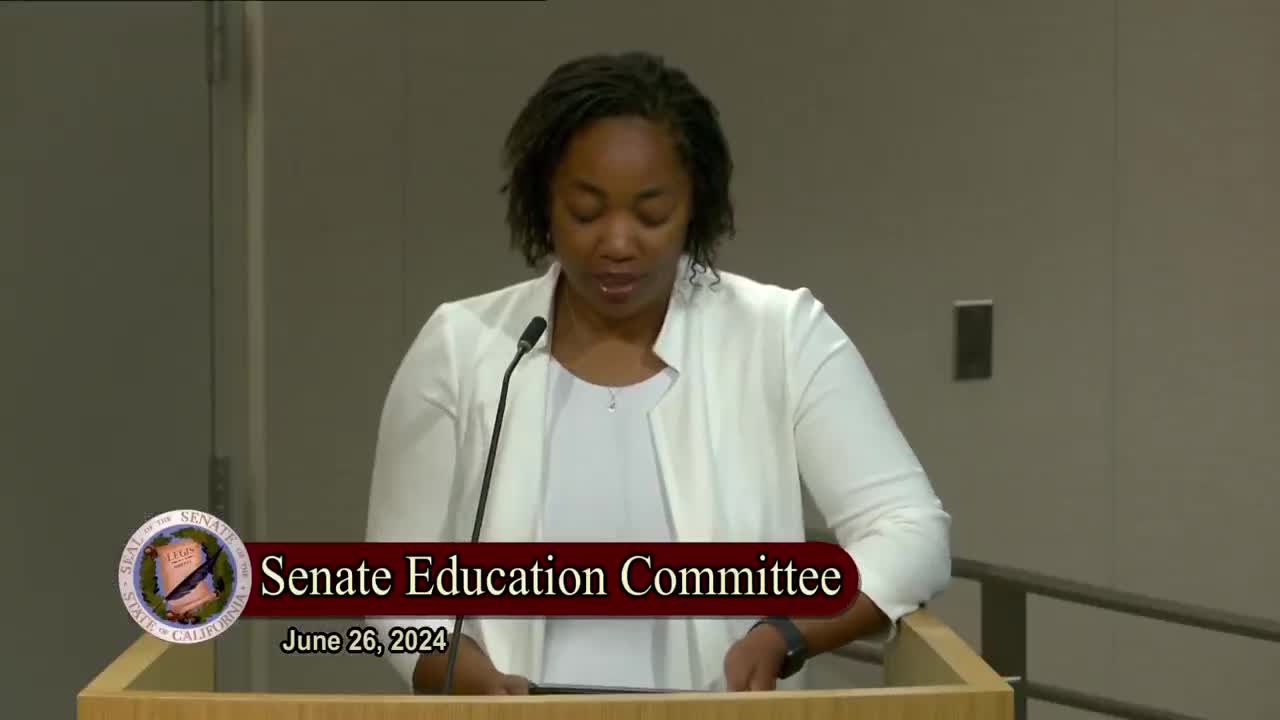 5MIN
Senate Standing Committee on Education
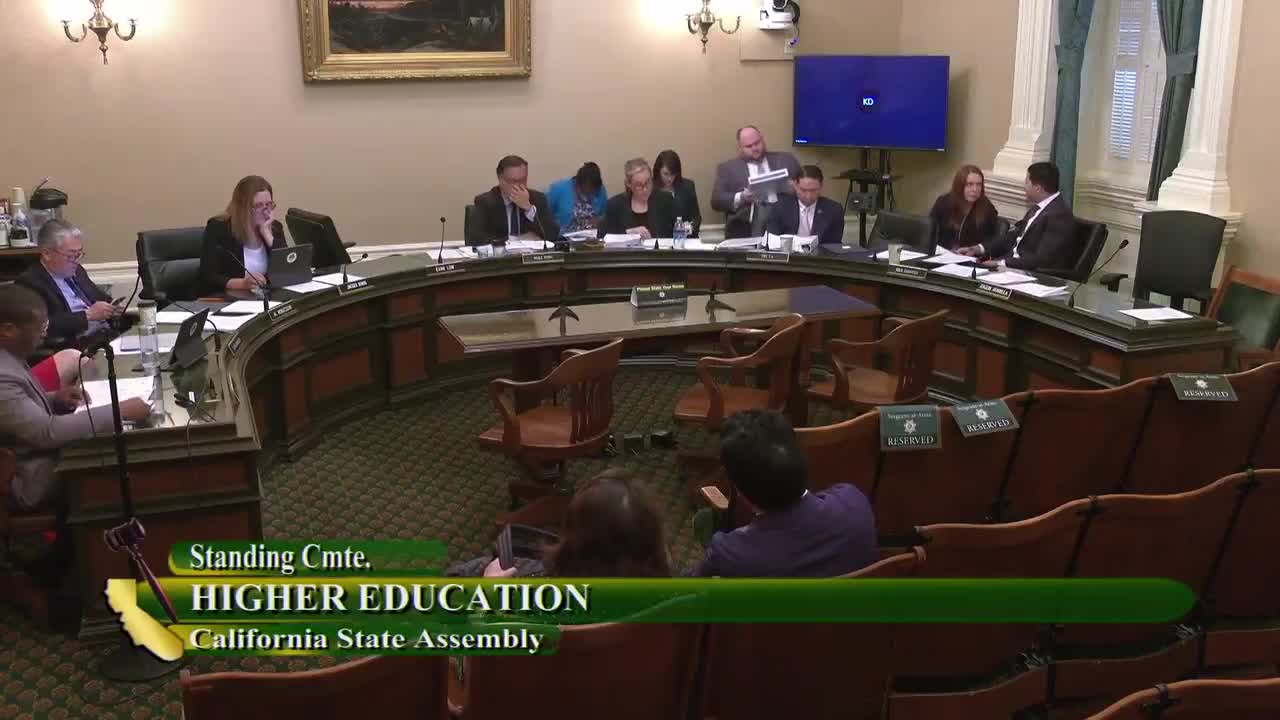 8SEC
Assembly Standing Committee on Higher Education
Bill Author

Bill Co-Author(s):