AB 3263: Electrical corporations: financing orders.
- Session Year: 2023-2024
- House: Assembly
- Latest Version Date: 2024-09-05
Current Status:
Failed
(2024-09-25: Vetoed by Governor.)
Introduced
In Committee
First Chamber
In Committee
Second Chamber
Enacted
Existing law authorizes the Public Utilities Commission to fix the rates and charges for every public utility, and requires that those rates and charges be just and reasonable. Existing law authorizes an electrical corporation to file an application requesting the commission to issue a financing order to authorize the recovery of costs and expenses related to a catastrophic wildfire, including fire risk mitigation capital expenditures, through the issuance of bonds by the electrical corporation that are secured by a rate component, as provided.
This bill would, in addition to expenses related to catastrophic wildfires, authorize the use of a financing order to recover the costs of wildfire mitigation efforts, operational and maintenance expenses related to an electrical corporations wildfire mitigation plan, wildfire risk mitigation costs, vegetation management costs and expenses, or to recover an electrical corporations costs related to any federal or state declaration of a state of emergency. The bill would authorize an application for vegetation management expenses submitted by a large electrical corporation, as defined, to include the issuance of recovery bonds for vegetation management expenses, including where bond proceeds are refunded to customers, in an amount not to exceed a specified amount with an average repayment period not to exceed 15 years.
Existing law authorizes the Public Utilities Commission to fix the rates and charges for every public utility, and requires that those rates and charges be just and reasonable. Existing law authorizes an electrical corporation to file an application requesting the commission to issue a financing order to authorize the recovery of costs and expenses related to a catastrophic wildfire, including fire risk mitigation capital expenditures, through the issuance of bonds by the electrical corporation that are secured by a rate component, as provided.
This bill would, in addition to expenses related to catastrophic wildfires, authorize the use of a financing order to recover the costs of wildfire mitigation efforts, operational and maintenance expenses related to an electrical corporations wildfire mitigation plan, wildfire risk mitigation costs, vegetation management costs and expenses, or to recover an electrical corporations costs related to any federal or state declaration of a state of emergency. The bill would authorize an application for vegetation management expenses submitted by a large electrical corporation, as defined, to issue include the issuance of recovery bonds for vegetation management expenses, including for costs already collected in rates if those costs where bond proceeds are refunded to customers, in an amount not to exceed a specified amount with an average repayment period not to exceed 15 years.
Existing law authorizes the Public Utilities Commission to fix the rates and charges for every public utility, and requires that those rates and charges be just and reasonable. Existing law authorizes an electrical corporation to file an application requesting the commission to issue a financing order to authorize the recovery of costs and expenses related to a catastrophic wildfire, including fire risk mitigation capital expenditures, through the issuance of bonds by the electrical corporation that are secured by a rate component, as provided.
This bill would, in addition to expenses related to catastrophic wildfires, authorize the use of a financing order to recover the costs of wildfire mitigation efforts, operational and maintenance expenses related to an electrical corporations wildfire mitigation plan, wildfire risk mitigation costs, and vegetation management costs and expenses. expenses, or to recover an electrical corporations costs related to any federal or state declaration of a state of emergency. The bill would authorize a large electrical corporation, as defined, to issue recovery bonds for vegetation management expenses, including for costs already collected in rates if those costs are refunded to customers, in an amount not to exceed a specified amount with an average repayment period not to exceed 15 years.
Existing law authorizes the Public Utilities Commission to fix the rates and charges for every public utility, and requires that those rates and charges be just and reasonable. Existing law authorizes an electrical corporation to file an application requesting the commission to issue a financing order to authorize the recovery of costs and expenses related to a catastrophic wildfire, including fire risk mitigation capital expenditures, through the issuance of bonds by the electrical corporation that are secured by a rate component, as provided.
This bill would, in addition to expenses related to catastrophic wildfires, authorize the use of a financing order to recover the costs of wildfire mitigation efforts, operational and maintenance expenses related to an electrical corporations wildfire mitigation plan, wildfire risk mitigation costs, and vegetation management costs and expenses.
Existing law requires the commission, upon application, to issue the financing order if either: (1) the recovery costs to be reimbursed have been found to be just and reasonable, or are allocated to ratepayers as specified; or (2) the issuance of the recovery bonds, including all material terms and conditions, is just and reasonable, consistent with the public interest, and the recovery of recovery costs through a fixed recovery charge that is assessed as a rate component, to the maximum extent possible, reduces the rate on a present value basis that consumers within the electrical corporations service territory would pay as compared to the use of traditional utility financing mechanisms, as specified. This bill would, in regards to the determination that the issuance of the recovery bonds is consistent with the public interest, as described above, require the commission, when considering whether a proposed financing order provides both short-term and long-term economic benefits in the public interest, to presume that the financing order provides short-term economic benefits if the commission has authorized an amortization period in excess of 12 months, as specified.Existing law authorizes the Public Utilities Commission to fix the rates and charges for every public utility, and requires that those rates and charges be just and reasonable. Existing law authorizes an electrical corporation to file an application requesting the commission to issue a financing order to authorize the recovery of costs and expenses related to a catastrophic wildfire, including fire risk mitigation capital expenditures, through the issuance of bonds by the electrical corporation that are secured by a rate component, as provided.
This bill would, in addition to expenses related to catastrophic wildfires, authorize the use of a financing order to recover the costs of wildfire mitigation efforts, operational and maintenance expenses related to an electrical corporations wildfire mitigation plan, wildfire risk mitigation costs, and vegetation management costs and expenses.
Existing law requires the commission, upon application, to issue the financing order if either: (1) the recovery costs to be reimbursed have been found to be just and reasonable, or are allocated to ratepayers as specified; or (2) the issuance of the recovery bonds, including all material terms and conditions, is just and reasonable, consistent with the public interest, and the recovery of recovery costs through a fixed recovery charge that is assessed as a rate component, to the maximum extent possible, reduces the rate on a present value basis that consumers within the electrical corporations service territory would pay as compared to the use of traditional utility financing mechanisms, as specified.
This bill would, in regards to the determination that the issuance of the recovery bonds is consistent with the public interest, as described above, require the commission, when considering whether a proposed financing order provides both short-term and long-term economic benefits in the public interest, to presume that the financing order provides short-term economic benefits if the commission has authorized an amortization period in excess of 12 months, as specified.
The State Aeronautics Act governs aeronautics in the state for the purpose of furthering and protecting the public interest in aviation and aeronautical progress through identified means, and authorizes the Department of Transportation to adopt, administer, and enforce rules and regulations for the administration of the act. Existing law prohibits a political subdivision, its officers or employees, or a person from operating an airport unless an appropriate airport permit required by rule of the department has been issued by the department and has not subsequently been revoked. Existing law requires a political subdivision or person planning to construct, establish, or expand an airport to apply for the appropriate permit from the department before the construction, establishment, or expansion of the airport, and to include specified information in the application to the department.This bill would make nonsubstantive changes to that requirement.The State Aeronautics Act governs aeronautics in the state for the purpose of furthering and protecting the public interest in aviation and aeronautical progress through identified means, and authorizes the Department of Transportation to adopt, administer, and enforce rules and regulations for the administration of the act. Existing law prohibits a political subdivision, its officers or employees, or a person from operating an airport unless an appropriate airport permit required by rule of the department has been issued by the department and has not subsequently been revoked. Existing law requires a political subdivision or person planning to construct, establish, or expand an airport to apply for the appropriate permit from the department before the construction, establishment, or expansion of the airport, and to include specified information in the application to the department.
This bill would make nonsubstantive changes to that requirement.
(a)This article applies in any of the following circumstances:
(1)If an electrical corporation applies to the commission for recovery of costs and expenses related to a catastrophic wildfire and the commission finds some or all of the costs and expenses to be reasonable pursuant to Section 451.1, or for the amount of costs and expenses determined pursuant to subdivision (c) of Section 451.2, then the electrical corporation may file an application requesting the commission to issue a financing order to authorize these costs and expenses to be recovered through fixed recovery charges pursuant to this article.
(2)(A)If an electrical corporation submits an application for recovery of costs and expenses related to catastrophic wildfires or wildfire mitigation efforts, including fire risk mitigation capital expenditures identified in subdivision (e) of Section 8386.3, operational and maintenance expenses related to the electrical corporations wildfire mitigation plan, wildfire risk mitigation costs identified in subdivision (b) of Section 8386.4, or vegetation management costs and expenses, or for recovery of costs related to any federal or state declaration of a state of emergency, in a proceeding to recover costs and expenses in rates and the commission finds that some or all of the costs and expenses identified in the electrical corporations application are just and reasonable pursuant to Section 451, the electrical corporation may file an application requesting the commission to issue a financing order to authorize the recovery of those just and reasonable costs and expenses by means of a financing order, with those costs and expenses being recovered through a fixed charge pursuant to this article. This paragraph does not apply for costs and expenses incurred by the electrical corporation after December 31, 2035.
(B)An application for vegetation management expenses submitted by a large electrical corporation, as defined in Section 3280, may include the issuance of recovery bonds for vegetation management expenses, including where bond proceeds are refunded to customers, in an amount not to exceed the product of ten billion dollars ($10,000,000,000) multiplied by the Wildfire Fund allocation metric, as defined in Section 3280, with an average repayment period not to exceed 15 years.
(3)(A)An electrical corporation may file an application requesting the commission to issue a financing order to authorize the recovery of verified incremental undercollection amounts for calendar year 2020 through fixed recovery charges pursuant to this article, if an electrical corporations annual true-up advice letter is accepted and either or both of the following incremental undercollection amounts are verified for calendar year 2020:
(i)An incremental undercollection amount equal to the difference between the forecasted amount of billed revenues for that year, based on the authorized sales forecast, and the revenues actually billed by an electrical corporation with respect to all revenue balancing accounts, if the incremental amount as a percent of the forecasted amount of billed revenues for that year is at least 5 percent.
(ii)An incremental undercollection amount equal to the residential and small business customer bad debt expense recorded for that year that exceeds the bad debt expense for that year that was adopted by the commission in the general rate case, if the incremental undercollection amount is otherwise eligible for recovery in rates.
(B)The incremental undercollection amounts subject to a commission-approved financing order shall be prohibited from being recovered through any other cost recovery application, mechanism, or request by the electrical corporation.
(C)The commission shall ensure any costs included in incremental undercollections described in this paragraph and subject to a financing order are just and reasonable consistent with the requirements of subdivision (a) of Section 850.1.
(D)In resolving a request for the issuance of a financing order, the commission may assign cost recovery to each customer class based on their contribution to the incremental undercollection described in this paragraph.
(b)For purposes of this article, the following definitions apply:
(1)Ancillary agreement means a bond insurance policy, letter of credit, reserve account, surety bond, swap arrangement, hedging arrangement, liquidity or credit support arrangement, or other similar agreement or arrangement entered into in connection with the issuance of recovery bonds that is designed to promote the credit quality and marketability of the bonds or to mitigate the risk of an increase in interest rates.
(2)Catastrophic wildfire amounts means the portion of costs and expenses the commission finds to be just and reasonable pursuant to Section 451.1 or the amount determined pursuant to subdivision (c) of Section 451.2.
(3)Consumer means any individual, governmental body, trust, business entity, or nonprofit organization that consumes electricity that has been transmitted or distributed by means of electric transmission or distribution facilities, whether those electric transmission or distribution facilities are owned by the consumer, the electrical corporation, or any other party.
(4)Financing costs means the costs to issue, service, repay, or refinance recovery bonds, whether incurred or paid upon issuance of the recovery bonds or over the life of the recovery bonds, if they are approved for recovery by the commission in a financing order. Financing costs may include any of the following:
(A)Principal, interest, and redemption premiums that are payable on recovery bonds.
(B)A payment required under an ancillary agreement.
(C)An amount required to fund or replenish reserve accounts or other accounts established under an indenture, ancillary agreement, or other financing document relating to the recovery bonds.
(D)Taxes, franchise fees, or license fees imposed on fixed recovery charges.
(E)Costs related to issuing and servicing recovery bonds or the application for a financing order, including, without limitation, servicing fees and expenses, trustee fees and expenses, legal fees and expenses, accounting fees, administrative fees, underwriting and placement fees, financial advisory fees, original issue discount, capitalized interest, rating agency fees, and any other related costs that are approved for recovery in the financing order.
(F)Other costs as specifically authorized by a financing order.
(5)Financing entity means the electrical corporation or any subsidiary or affiliate of the electrical corporation that is authorized by the commission to issue recovery bonds or acquire recovery property, or both.
(6)Financing order means an order of the commission adopted in accordance with this article, which shall include, without limitation, a procedure to require the expeditious approval by the commission of periodic adjustments to fixed recovery charges and to any associated fixed recovery tax amounts included in that financing order to ensure recovery of all recovery costs and the costs associated with the proposed recovery, financing, or refinancing thereof, including the costs of servicing and retiring the recovery bonds contemplated by the financing order.
(7)Fixed recovery charges means those nonbypassable rates and other charges, including, but not limited to, distribution, connection, disconnection, and termination rates and charges, that are authorized by the commission in a financing order to recover both of the following:
(A)Recovery costs specified in the financing order.
(B)The costs of recovering, financing, or refinancing those recovery costs through a plan approved by the commission in the financing order, including the costs of servicing and retiring recovery bonds.
(8)Fixed recovery tax amounts means those nonbypassable rates and other charges, including, but not limited to, distribution, connection, disconnection, and termination rates and charges, that are needed to recover federal and State of California income and franchise taxes associated with fixed recovery charges authorized by the commission in a financing order, but are not approved as financing costs financed from proceeds of recovery bonds.
(9)Recovery bonds means bonds, notes, certificates of participation or beneficial interest, or other evidences of indebtedness or ownership, issued pursuant to an executed indenture or other agreement of a financing entity, the proceeds of which are used, directly or indirectly, to recover, finance, or refinance recovery costs, and that are directly or indirectly secured by, or payable from, recovery property.
(10)Recovery costs means any of the following:
(A)The catastrophic wildfire amounts or costs pursuant to paragraph (2) of subdivision (a) authorized by the commission in a financing order for recovery.
(B)The incremental undercollection amounts that the commission authorizes for recovery in a financing order pursuant to paragraph (3) of subdivision (a).
(C)Federal and State of California income and franchise taxes associated with recovery of the amounts pursuant to subparagraph (A) or (B).
(D)Financing costs.
(E)Professional fees, consultant fees, redemption premiums, tender premiums, and other costs incurred by the electrical corporation in using proceeds of recovery bonds to acquire outstanding securities of the electrical corporation, as authorized by the commission in a financing order.
(11)(A)Recovery property means the property right created pursuant to this article, including, without limitation, the right, title, and interest of the electrical corporation or its transferee:
(i)In and to the fixed recovery charges established pursuant to a financing order, including all rights to obtain adjustments to the fixed recovery charges in accordance with Section 850.1 and the financing order.
(ii)To be paid the amount that is determined in a financing order to be the amount that the electrical corporation or its transferee is lawfully entitled to receive pursuant to the provisions of this article and the proceeds thereof, and in and to all revenues, collections, claims, payments, moneys, or proceeds of or arising from the fixed recovery charges that are the subject of a financing order.
(B)Recovery property shall not include a right to be paid fixed recovery tax amounts.
(C)Recovery property shall constitute a current property right, notwithstanding the fact that the value of the property right will depend on consumers using electricity or, in those instances where consumers are customers of the electrical corporation, the electrical corporation performing certain services.
(12)(A)Revenue balancing account means a balancing account reflecting the balance between the electrical corporations authorized revenue requirements relating to the volumetric sale of electricity and billed revenues associated with those sales. A revenue balancing account includes accounts reflecting the balance between the electrical corporations authorized distribution base revenue requirements and recorded billed revenues from authorized distribution rates, and accounts reflecting the difference between the amount of the discount provided to consumers enrolled in the California Alternative Rates for Energy (CARE) program and the CARE surcharge charged to non-CARE consumers.
(B)Revenue balancing account shall not include amounts reflecting the balance between costs and expenses relating to fuel and purchased electricity by the electrical corporation.
(13)Service territory means the geographical area that the electrical corporation provides with electric distribution service.
(14)True-up adjustment means a formulaic adjustment to the fixed recovery charges as they appear on customer bills that is necessary to correct for any overcollection or undercollection of the fixed recovery charges authorized by a financing order and to otherwise ensure the timely and complete payment and recovery of recovery costs over the authorized repayment term.
(a)This article applies in any of the following circumstances:
(1)If an electrical corporation applies to the commission for recovery of costs and expenses related to a catastrophic wildfire and the commission finds some or all of the costs and expenses to be reasonable pursuant to Section 451.1, or for the amount of costs and expenses determined pursuant to subdivision (c) of Section 451.2, then the electrical corporation may file an application requesting the commission to issue a financing order to authorize these costs and expenses to be recovered through fixed recovery charges pursuant to this article.
(2)(A)If an electrical corporation submits an application for recovery of costs and expenses related to catastrophic wildfires or wildfire mitigation efforts, including fire risk mitigation capital expenditures identified in subdivision (e) of Section 8386.3, operational and maintenance expenses related to the electrical corporations wildfire mitigation plan, wildfire risk mitigation costs identified in subdivision (b) of Section 8386.4, or vegetation management costs and expenses, or for recovery of costs related to any federal or state declaration of a state of emergency, in a proceeding to recover costs and expenses in rates and the commission finds that some or all of the costs and expenses identified in the electrical corporations application are just and reasonable pursuant to Section 451, the electrical corporation may file an application requesting the commission to issue a financing order to authorize the recovery of those just and reasonable costs and expenses by means of a financing order, with those costs and expenses being recovered through a fixed charge pursuant to this article. This paragraph does not apply for costs and expenses incurred by the electrical corporation after December 31, 2035.
(B)A An application for vegetation management expenses submitted by a large electrical corporation, as defined in Section 3280, may issue include the issuance of recovery bonds for vegetation management expenses, including for costs already collected in rates if those costs where bond proceeds are refunded to customers, in an amount not to exceed the product of ten billion dollars ($10,000,000,000) multiplied by the Wildfire Fund allocation metric, as defined in Section 3280, with an average repayment period not to exceed 15 years.
(3)(A)An electrical corporation may file an application requesting the commission to issue a financing order to authorize the recovery of verified incremental undercollection amounts for calendar year 2020 through fixed recovery charges pursuant to this article, if an electrical corporations annual true-up advice letter is accepted and either or both of the following incremental undercollection amounts are verified for calendar year 2020:
(i)An incremental undercollection amount equal to the difference between the forecasted amount of billed revenues for that year, based on the authorized sales forecast, and the revenues actually billed by an electrical corporation with respect to all revenue balancing accounts, if the incremental amount as a percent of the forecasted amount of billed revenues for that year is at least 5 percent.
(ii)An incremental undercollection amount equal to the residential and small business customer bad debt expense recorded for that year that exceeds the bad debt expense for that year that was adopted by the commission in the general rate case, if the incremental undercollection amount is otherwise eligible for recovery in rates.
(B)The incremental undercollection amounts subject to a commission-approved financing order shall be prohibited from being recovered through any other cost recovery application, mechanism, or request by the electrical corporation.
(C)The commission shall ensure any costs included in incremental undercollections described in this paragraph and subject to a financing order are just and reasonable consistent with the requirements of subdivision (a) of Section 850.1.
(D)In resolving a request for the issuance of a financing order, the commission may assign cost recovery to each customer class based on their contribution to the incremental undercollection described in this paragraph.
(b)For purposes of this article, the following definitions apply:
(1)Ancillary agreement means a bond insurance policy, letter of credit, reserve account, surety bond, swap arrangement, hedging arrangement, liquidity or credit support arrangement, or other similar agreement or arrangement entered into in connection with the issuance of recovery bonds that is designed to promote the credit quality and marketability of the bonds or to mitigate the risk of an increase in interest rates.
(2)Catastrophic wildfire amounts means the portion of costs and expenses the commission finds to be just and reasonable pursuant to Section 451.1 or the amount determined pursuant to subdivision (c) of Section 451.2.
(3)Consumer means any individual, governmental body, trust, business entity, or nonprofit organization that consumes electricity that has been transmitted or distributed by means of electric transmission or distribution facilities, whether those electric transmission or distribution facilities are owned by the consumer, the electrical corporation, or any other party.
(4)Financing costs means the costs to issue, service, repay, or refinance recovery bonds, whether incurred or paid upon issuance of the recovery bonds or over the life of the recovery bonds, if they are approved for recovery by the commission in a financing order. Financing costs may include any of the following:
(A)Principal, interest, and redemption premiums that are payable on recovery bonds.
(B)A payment required under an ancillary agreement.
(C)An amount required to fund or replenish reserve accounts or other accounts established under an indenture, ancillary agreement, or other financing document relating to the recovery bonds.
(D)Taxes, franchise fees, or license fees imposed on fixed recovery charges.
(E)Costs related to issuing and servicing recovery bonds or the application for a financing order, including, without limitation, servicing fees and expenses, trustee fees and expenses, legal fees and expenses, accounting fees, administrative fees, underwriting and placement fees, financial advisory fees, original issue discount, capitalized interest, rating agency fees, and any other related costs that are approved for recovery in the financing order.
(F)Other costs as specifically authorized by a financing order.
(5)Financing entity means the electrical corporation or any subsidiary or affiliate of the electrical corporation that is authorized by the commission to issue recovery bonds or acquire recovery property, or both.
(6)Financing order means an order of the commission adopted in accordance with this article, which shall include, without limitation, a procedure to require the expeditious approval by the commission of periodic adjustments to fixed recovery charges and to any associated fixed recovery tax amounts included in that financing order to ensure recovery of all recovery costs and the costs associated with the proposed recovery, financing, or refinancing thereof, including the costs of servicing and retiring the recovery bonds contemplated by the financing order.
(7)Fixed recovery charges means those nonbypassable rates and other charges, including, but not limited to, distribution, connection, disconnection, and termination rates and charges, that are authorized by the commission in a financing order to recover both of the following:
(A)Recovery costs specified in the financing order.
(B)The costs of recovering, financing, or refinancing those recovery costs through a plan approved by the commission in the financing order, including the costs of servicing and retiring recovery bonds.
(8)Fixed recovery tax amounts means those nonbypassable rates and other charges, including, but not limited to, distribution, connection, disconnection, and termination rates and charges, that are needed to recover federal and State of California income and franchise taxes associated with fixed recovery charges authorized by the commission in a financing order, but are not approved as financing costs financed from proceeds of recovery bonds.
(9)Recovery bonds means bonds, notes, certificates of participation or beneficial interest, or other evidences of indebtedness or ownership, issued pursuant to an executed indenture or other agreement of a financing entity, the proceeds of which are used, directly or indirectly, to recover, finance, or refinance recovery costs, and that are directly or indirectly secured by, or payable from, recovery property.
(10)Recovery costs means any of the following:
(A)The catastrophic wildfire amounts or costs pursuant to paragraph (2) of subdivision (a) authorized by the commission in a financing order for recovery.
(B)The incremental undercollection amounts that the commission authorizes for recovery in a financing order pursuant to paragraph (3) of subdivision (a).
(C)Federal and State of California income and franchise taxes associated with recovery of the amounts pursuant to subparagraph (A) or (B).
(D)Financing costs.
(E)Professional fees, consultant fees, redemption premiums, tender premiums, and other costs incurred by the electrical corporation in using proceeds of recovery bonds to acquire outstanding securities of the electrical corporation, as authorized by the commission in a financing order.
(11)(A)Recovery property means the property right created pursuant to this article, including, without limitation, the right, title, and interest of the electrical corporation or its transferee:
(i)In and to the fixed recovery charges established pursuant to a financing order, including all rights to obtain adjustments to the fixed recovery charges in accordance with Section 850.1 and the financing order.
(ii)To be paid the amount that is determined in a financing order to be the amount that the electrical corporation or its transferee is lawfully entitled to receive pursuant to the provisions of this article and the proceeds thereof, and in and to all revenues, collections, claims, payments, moneys, or proceeds of or arising from the fixed recovery charges that are the subject of a financing order.
(B)Recovery property shall not include a right to be paid fixed recovery tax amounts.
(C)Recovery property shall constitute a current property right, notwithstanding the fact that the value of the property right will depend on consumers using electricity or, in those instances where consumers are customers of the electrical corporation, the electrical corporation performing certain services.
(12)(A)Revenue balancing account means a balancing account reflecting the balance between the electrical corporations authorized revenue requirements relating to the volumetric sale of electricity and billed revenues associated with those sales. A revenue balancing account includes accounts reflecting the balance between the electrical corporations authorized distribution base revenue requirements and recorded billed revenues from authorized distribution rates, and accounts reflecting the difference between the amount of the discount provided to consumers enrolled in the California Alternative Rates for Energy (CARE) program and the CARE surcharge charged to non-CARE consumers.
(B)Revenue balancing account shall not include amounts reflecting the balance between costs and expenses relating to fuel and purchased electricity by the electrical corporation.
(13)Service territory means the geographical area that the electrical corporation provides with electric distribution service.
(14)True-up adjustment means a formulaic adjustment to the fixed recovery charges as they appear on customer bills that is necessary to correct for any overcollection or undercollection of the fixed recovery charges authorized by a financing order and to otherwise ensure the timely and complete payment and recovery of recovery costs over the authorized repayment term.
(a)This article applies in any of the following circumstances:
(1)If an electrical corporation applies to the commission for recovery of costs and expenses related to a catastrophic wildfire and the commission finds some or all of the costs and expenses to be reasonable pursuant to Section 451.1, or for the amount of costs and expenses determined pursuant to subdivision (c) of Section 451.2, then the electrical corporation may file an application requesting the commission to issue a financing order to authorize these costs and expenses to be recovered through fixed recovery charges pursuant to this article.
(2)(A)If an electrical corporation submits an application for recovery of costs and expenses related to catastrophic wildfires or wildfire mitigation efforts, including fire risk mitigation capital expenditures identified in subdivision (e) of Section 8386.3, operational and maintenance expenses related to the electrical corporations wildfire mitigation plan, wildfire risk mitigation costs identified in subdivision (b) of Section 8386.4, or vegetation management costs and expenses expenses, or for recovery of costs related to any federal or state declaration of a state of emergency, in a proceeding to recover costs and expenses in rates and the commission finds that some or all of the costs and expenses identified in the electrical corporations application are just and reasonable pursuant to Section 451, the electrical corporation may file an application requesting the commission to issue a financing order to authorize the recovery of those just and reasonable costs and expenses by means of a financing order, with those costs and expenses being recovered through a fixed charge pursuant to this article. This paragraph does not apply for costs and expenses incurred by the electrical corporation after December 31, 2035.
(B)A large electrical corporation, as defined in Section 3280, may issue recovery bonds for vegetation management expenses, including for costs already collected in rates if those costs are refunded to customers, in an amount not to exceed the product of ten billion dollars ($10,000,000,000) multiplied by the Wildfire Fund allocation metric, as defined in Section 3280, with an average repayment period not to exceed 15 years.
(3)(A)An electrical corporation may file an application requesting the commission to issue a financing order to authorize the recovery of verified incremental undercollection amounts for calendar year 2020 through fixed recovery charges pursuant to this article, if an electrical corporations annual true-up advice letter is accepted and either or both of the following incremental undercollection amounts are verified for calendar year 2020:
(i)An incremental undercollection amount equal to the difference between the forecasted amount of billed revenues for that year, based on the authorized sales forecast, and the revenues actually billed by an electrical corporation with respect to all revenue balancing accounts, if the incremental amount as a percent of the forecasted amount of billed revenues for that year is at least 5 percent.
(ii)An incremental undercollection amount equal to the residential and small business customer bad debt expense recorded for that year that exceeds the bad debt expense for that year that was adopted by the commission in the general rate case, if the incremental undercollection amount is otherwise eligible for recovery in rates.
(B)The incremental undercollection amounts subject to a commission-approved financing order shall be prohibited from being recovered through any other cost recovery application, mechanism, or request by the electrical corporation.
(C)The commission shall ensure any costs included in incremental undercollections described in this paragraph and subject to a financing order are just and reasonable consistent with the requirements of subdivision (a) of Section 850.1.
(D)In resolving a request for the issuance of a financing order, the commission may assign cost recovery to each customer class based on their contribution to the incremental undercollection described in this paragraph.
(b)For purposes of this article, the following definitions apply:
(1)Ancillary agreement means a bond insurance policy, letter of credit, reserve account, surety bond, swap arrangement, hedging arrangement, liquidity or credit support arrangement, or other similar agreement or arrangement entered into in connection with the issuance of recovery bonds that is designed to promote the credit quality and marketability of the bonds or to mitigate the risk of an increase in interest rates.
(2)Catastrophic wildfire amounts means the portion of costs and expenses the commission finds to be just and reasonable pursuant to Section 451.1 or the amount determined pursuant to subdivision (c) of Section 451.2.
(3)Consumer means any individual, governmental body, trust, business entity, or nonprofit organization that consumes electricity that has been transmitted or distributed by means of electric transmission or distribution facilities, whether those electric transmission or distribution facilities are owned by the consumer, the electrical corporation, or any other party.
(4)Financing costs means the costs to issue, service, repay, or refinance recovery bonds, whether incurred or paid upon issuance of the recovery bonds or over the life of the recovery bonds, if they are approved for recovery by the commission in a financing order. Financing costs may include any of the following:
(A)Principal, interest, and redemption premiums that are payable on recovery bonds.
(B)A payment required under an ancillary agreement.
(C)An amount required to fund or replenish reserve accounts or other accounts established under an indenture, ancillary agreement, or other financing document relating to the recovery bonds.
(D)Taxes, franchise fees, or license fees imposed on fixed recovery charges.
(E)Costs related to issuing and servicing recovery bonds or the application for a financing order, including, without limitation, servicing fees and expenses, trustee fees and expenses, legal fees and expenses, accounting fees, administrative fees, underwriting and placement fees, financial advisory fees, original issue discount, capitalized interest, rating agency fees, and any other related costs that are approved for recovery in the financing order.
(F)Other costs as specifically authorized by a financing order.
(5)Financing entity means the electrical corporation or any subsidiary or affiliate of the electrical corporation that is authorized by the commission to issue recovery bonds or acquire recovery property, or both.
(6)Financing order means an order of the commission adopted in accordance with this article, which shall include, without limitation, a procedure to require the expeditious approval by the commission of periodic adjustments to fixed recovery charges and to any associated fixed recovery tax amounts included in that financing order to ensure recovery of all recovery costs and the costs associated with the proposed recovery, financing, or refinancing thereof, including the costs of servicing and retiring the recovery bonds contemplated by the financing order.
(7)Fixed recovery charges means those nonbypassable rates and other charges, including, but not limited to, distribution, connection, disconnection, and termination rates and charges, that are authorized by the commission in a financing order to recover both of the following:
(A)Recovery costs specified in the financing order.
(B)The costs of recovering, financing, or refinancing those recovery costs through a plan approved by the commission in the financing order, including the costs of servicing and retiring recovery bonds.
(8)Fixed recovery tax amounts means those nonbypassable rates and other charges, including, but not limited to, distribution, connection, disconnection, and termination rates and charges, that are needed to recover federal and State of California income and franchise taxes associated with fixed recovery charges authorized by the commission in a financing order, but are not approved as financing costs financed from proceeds of recovery bonds.
(9)Recovery bonds means bonds, notes, certificates of participation or beneficial interest, or other evidences of indebtedness or ownership, issued pursuant to an executed indenture or other agreement of a financing entity, the proceeds of which are used, directly or indirectly, to recover, finance, or refinance recovery costs, and that are directly or indirectly secured by, or payable from, recovery property.
(10)Recovery costs means any of the following:
(A)The catastrophic wildfire amounts or costs pursuant to paragraph (2) of subdivision (a) authorized by the commission in a financing order for recovery.
(B)The incremental undercollection amounts that the commission authorizes for recovery in a financing order pursuant to paragraph (3) of subdivision (a).
(C)Federal and State of California income and franchise taxes associated with recovery of the amounts pursuant to subparagraph (A) or (B).
(D)Financing costs.
(E)Professional fees, consultant fees, redemption premiums, tender premiums, and other costs incurred by the electrical corporation in using proceeds of recovery bonds to acquire outstanding securities of the electrical corporation, as authorized by the commission in a financing order.
(11)(A)Recovery property means the property right created pursuant to this article, including, without limitation, the right, title, and interest of the electrical corporation or its transferee:
(i)In and to the fixed recovery charges established pursuant to a financing order, including all rights to obtain adjustments to the fixed recovery charges in accordance with Section 850.1 and the financing order.
(ii)To be paid the amount that is determined in a financing order to be the amount that the electrical corporation or its transferee is lawfully entitled to receive pursuant to the provisions of this article and the proceeds thereof, and in and to all revenues, collections, claims, payments, moneys, or proceeds of or arising from the fixed recovery charges that are the subject of a financing order.
(B)Recovery property shall not include a right to be paid fixed recovery tax amounts.
(C)Recovery property shall constitute a current property right, notwithstanding the fact that the value of the property right will depend on consumers using electricity or, in those instances where consumers are customers of the electrical corporation, the electrical corporation performing certain services.
(12)(A)Revenue balancing account means a balancing account reflecting the balance between the electrical corporations authorized revenue requirements relating to the volumetric sale of electricity and billed revenues associated with those sales. A revenue balancing account includes accounts reflecting the balance between the electrical corporations authorized distribution base revenue requirements and recorded billed revenues from authorized distribution rates, and accounts reflecting the difference between the amount of the discount provided to consumers enrolled in the California Alternative Rates for Energy (CARE) program and the CARE surcharge charged to non-CARE consumers.
(B)Revenue balancing account shall not include amounts reflecting the balance between costs and expenses relating to fuel and purchased electricity by the electrical corporation.
(13)Service territory means the geographical area that the electrical corporation provides with electric distribution service.
(14)True-up adjustment means a formulaic adjustment to the fixed recovery charges as they appear on customer bills that is necessary to correct for any overcollection or undercollection of the fixed recovery charges authorized by a financing order and to otherwise ensure the timely and complete payment and recovery of recovery costs over the authorized repayment term.
(a)This article applies in any of the following circumstances:
(1)If an electrical corporation applies to the commission for recovery of costs and expenses related to a catastrophic wildfire and the commission finds some or all of the costs and expenses to be reasonable pursuant to Section 451.1, or for the amount of costs and expenses determined pursuant to subdivision (c) of Section 451.2, then the electrical corporation may file an application requesting the commission to issue a financing order to authorize these costs and expenses to be recovered through fixed recovery charges pursuant to this article.
(2)If an electrical corporation submits an application for recovery of costs and expenses related to catastrophic wildfires or wildfire mitigation efforts, including fire risk mitigation capital expenditures identified in subdivision (e) of Section 8386.3, operational and maintenance expenses related to the electrical corporations wildfire mitigation plan, wildfire risk mitigation costs identified in subdivision (b) of Section 8386.4, or vegetation management costs and expenses in a proceeding to recover costs and expenses in rates and the commission finds that some or all of the costs and expenses identified in the electrical corporations application are just and reasonable pursuant to Section 451, the electrical corporation may file an application requesting the commission to issue a financing order to authorize the recovery of those just and reasonable costs and expenses by means of a financing order, with those costs and expenses being recovered through a fixed charge pursuant to this article. This paragraph does not apply for costs and expenses incurred by the electrical corporation after December 31, 2035.
(3)(A)An electrical corporation may file an application requesting the commission to issue a financing order to authorize the recovery of verified incremental undercollection amounts for calendar year 2020 through fixed recovery charges pursuant to this article, if an electrical corporations annual true-up advice letter is accepted and either or both of the following incremental undercollection amounts are verified for calendar year 2020:
(i)An incremental undercollection amount equal to the difference between the forecasted amount of billed revenues for that year, based on the authorized sales forecast, and the revenues actually billed by an electrical corporation with respect to all revenue balancing accounts, if the incremental amount as a percent of the forecasted amount of billed revenues for that year is at least 5 percent.
(ii)An incremental undercollection amount equal to the residential and small business customer bad debt expense recorded for that year that exceeds the bad debt expense for that year that was adopted by the commission in the general rate case, if the incremental undercollection amount is otherwise eligible for recovery in rates.
(B)The incremental undercollection amounts subject to a commission-approved financing order shall be prohibited from being recovered through any other cost recovery application, mechanism, or request by the electrical corporation.
(C)The commission shall ensure any costs included in incremental undercollections described in this paragraph and subject to a financing order are just and reasonable consistent with the requirements of subdivision (a) of Section 850.1.
(D)In resolving a request for the issuance of a financing order, the commission may assign cost recovery to each customer class based on their contribution to the incremental undercollection described in this paragraph.
(b)For purposes of this article, the following definitions apply:
(1)Ancillary agreement means a bond insurance policy, letter of credit, reserve account, surety bond, swap arrangement, hedging arrangement, liquidity or credit support arrangement, or other similar agreement or arrangement entered into in connection with the issuance of recovery bonds that is designed to promote the credit quality and marketability of the bonds or to mitigate the risk of an increase in interest rates.
(2)Catastrophic wildfire amounts means the portion of costs and expenses the commission finds to be just and reasonable pursuant to Section 451.1 or the amount determined pursuant to subdivision (c) of Section 451.2.
(3)Consumer means any individual, governmental body, trust, business entity, or nonprofit organization that consumes electricity that has been transmitted or distributed by means of electric transmission or distribution facilities, whether those electric transmission or distribution facilities are owned by the consumer, the electrical corporation, or any other party.
(4)Financing costs means the costs to issue, service, repay, or refinance recovery bonds, whether incurred or paid upon issuance of the recovery bonds or over the life of the recovery bonds, if they are approved for recovery by the commission in a financing order. Financing costs may include any of the following:
(A)Principal, interest, and redemption premiums that are payable on recovery bonds.
(B)A payment required under an ancillary agreement.
(C)An amount required to fund or replenish reserve accounts or other accounts established under an indenture, ancillary agreement, or other financing document relating to the recovery bonds.
(D)Taxes, franchise fees, or license fees imposed on fixed recovery charges.
(E)Costs related to issuing and servicing recovery bonds or the application for a financing order, including, without limitation, servicing fees and expenses, trustee fees and expenses, legal fees and expenses, accounting fees, administrative fees, underwriting and placement fees, financial advisory fees, original issue discount, capitalized interest, rating agency fees, and any other related costs that are approved for recovery in the financing order.
(F)Other costs as specifically authorized by a financing order.
(5)Financing entity means the electrical corporation or any subsidiary or affiliate of the electrical corporation that is authorized by the commission to issue recovery bonds or acquire recovery property, or both.
(6)Financing order means an order of the commission adopted in accordance with this article, which shall include, without limitation, a procedure to require the expeditious approval by the commission of periodic adjustments to fixed recovery charges and to any associated fixed recovery tax amounts included in that financing order to ensure recovery of all recovery costs and the costs associated with the proposed recovery, financing, or refinancing thereof, including the costs of servicing and retiring the recovery bonds contemplated by the financing order.
(7)Fixed recovery charges means those nonbypassable rates and other charges, including, but not limited to, distribution, connection, disconnection, and termination rates and charges, that are authorized by the commission in a financing order to recover both of the following:
(A)Recovery costs specified in the financing order.
(B)The costs of recovering, financing, or refinancing those recovery costs through a plan approved by the commission in the financing order, including the costs of servicing and retiring recovery bonds.
(8)Fixed recovery tax amounts means those nonbypassable rates and other charges, including, but not limited to, distribution, connection, disconnection, and termination rates and charges, that are needed to recover federal and State of California income and franchise taxes associated with fixed recovery charges authorized by the commission in a financing order, but are not approved as financing costs financed from proceeds of recovery bonds.
(9)Recovery bonds means bonds, notes, certificates of participation or beneficial interest, or other evidences of indebtedness or ownership, issued pursuant to an executed indenture or other agreement of a financing entity, the proceeds of which are used, directly or indirectly, to recover, finance, or refinance recovery costs, and that are directly or indirectly secured by, or payable from, recovery property.
(10)Recovery costs means any of the following:
(A)The catastrophic wildfire amounts or costs pursuant to paragraph (2) of subdivision (a) authorized by the commission in a financing order for recovery.
(B)The incremental undercollection amounts that the commission authorizes for recovery in a financing order pursuant to paragraph (3) of subdivision (a).
(C)Federal and State of California income and franchise taxes associated with recovery of the amounts pursuant to subparagraph (A) or (B).
(D)Financing costs.
(E)Professional fees, consultant fees, redemption premiums, tender premiums, and other costs incurred by the electrical corporation in using proceeds of recovery bonds to acquire outstanding securities of the electrical corporation, as authorized by the commission in a financing order.
(11)(A)Recovery property means the property right created pursuant to this article, including, without limitation, the right, title, and interest of the electrical corporation or its transferee:
(i)In and to the fixed recovery charges established pursuant to a financing order, including all rights to obtain adjustments to the fixed recovery charges in accordance with Section 850.1 and the financing order.
(ii)To be paid the amount that is determined in a financing order to be the amount that the electrical corporation or its transferee is lawfully entitled to receive pursuant to the provisions of this article and the proceeds thereof, and in and to all revenues, collections, claims, payments, moneys, or proceeds of or arising from the fixed recovery charges that are the subject of a financing order.
(B)Recovery property shall not include a right to be paid fixed recovery tax amounts.
(C)Recovery property shall constitute a current property right, notwithstanding the fact that the value of the property right will depend on consumers using electricity or, in those instances where consumers are customers of the electrical corporation, the electrical corporation performing certain services.
(12)(A)Revenue balancing account means a balancing account reflecting the balance between the electrical corporations authorized revenue requirements relating to the volumetric sale of electricity and billed revenues associated with those sales. A revenue balancing account includes accounts reflecting the balance between the electrical corporations authorized distribution base revenue requirements and recorded billed revenues from authorized distribution rates, and accounts reflecting the difference between the amount of the discount provided to consumers enrolled in the California Alternative Rates for Energy (CARE) program and the CARE surcharge charged to non-CARE consumers.
(B)Revenue balancing account shall not include amounts reflecting the balance between costs and expenses relating to fuel and purchased electricity by the electrical corporation.
(13)Service territory means the geographical area that the electrical corporation provides with electric distribution service.
(14)True-up adjustment means a formulaic adjustment to the fixed recovery charges as they appear on customer bills that is necessary to correct for any overcollection or undercollection of the fixed recovery charges authorized by a financing order and to otherwise ensure the timely and complete payment and recovery of recovery costs over the authorized repayment term.
SEC. 2.Section 850.1 of the Public Utilities Code is amended to read:850.1.(a)If an electrical corporation files for recovery of recovery costs and the commission finds some or all of those costs and expenses to be just and reasonable pursuant to Section 451 or 451.1, as applicable, or the commission allocates to the ratepayers some or all of those costs and expenses pursuant to subdivision (c) of Section 451.2, the commission may issue a financing order to allow recovery through fixed recovery charges, which would therefore constitute recovery property under this article, and order that any portion of the electrical corporations federal and State of California income and franchise taxes associated with those fixed recovery charges and not financed from proceeds of recovery bonds may be recovered through fixed recovery tax amounts.(1)(A)Following application by an electrical corporation, the commission shall issue a financing order if the commission determines that both of the following conditions are satisfied:(i)The recovery costs to be reimbursed from the recovery bonds have been found to be just and reasonable pursuant to Section 451 or 451.1, as applicable, or are allocated to the ratepayers pursuant to subdivision (c) of Section 451.2.(ii)The issuance of the recovery bonds, including all material terms and conditions of the recovery bonds, including, without limitation, interest rates, rating, amortization redemption, and maturity, and the imposition and collection of fixed recovery charges as set forth in an application satisfy all of the following conditions, as applicable:(I)They are just and reasonable.(II)They are consistent with the public interest. When considering whether a proposed financing order provides both short-term and long-term economic benefits in the public interest, the commission shall presume that the financing order provides short-term economic benefits if the commission has authorized an amortization period under traditional utility financing mechanisms in excess of 12 months for the just and reasonable costs that are seeking to be financed through recovery bonds.(III)The recovery of recovery costs through the designation of the fixed recovery charges and any associated fixed recovery tax amounts, and the issuance of recovery bonds in connection with the fixed recovery charges, would reduce, to the maximum extent possible, the rates on a present value basis that consumers within the electrical corporations service territory would pay as compared to the use of traditional utility financing mechanisms, which shall be calculated using the electrical corporations corporate debt and equity in the ratio approved by the commission at the time of the financing order.(B)The electrical corporation may request the determination specified in subparagraph (A) by the commission in a separate proceeding, in an existing proceeding, or both. If the commission makes the determination specified in subparagraph (A), the commission shall establish, as part of the financing order, a procedure for the electrical corporation to submit applications from time to time to request the issuance of additional financing orders designating fixed recovery charges and any associated fixed recovery tax amounts as recoverable. The electrical corporation may submit an application with respect to recovery costs that an electrical corporation (i) has paid, (ii) has an existing legal obligation to pay, or (iii) would be obligated to pay pursuant to an executed settlement agreement. The commission shall, within 180 days of the filing of that application, issue a financing order, which may take the form of a resolution, if the commission determines that the amounts identified in the application are recovery costs.(2)Fixed recovery charges and any associated fixed recovery tax amounts shall be imposed only on existing and future consumers in the service territory. Consumers within the service territory shall continue to pay fixed recovery charges and any associated fixed recovery tax amounts until the recovery bonds and associated financing costs are paid in full by the financing entity.(3)An electrical corporation may exercise the same rights and remedies under its tariff and applicable law and regulation based upon a consumers nonpayment of fixed recovery charges and any associated fixed recovery tax as it could for a consumers failure to pay any other charge payable to that electrical corporation.(b)The commission may establish in a financing order an effective mechanism that ensures recovery of recovery costs through nonbypassable fixed recovery charges and any associated fixed recovery tax amounts from existing and future consumers in the service territory, and those consumers shall be required to pay those charges until the recovery bonds and all associated financing costs are paid in full by the financing entity, at which time those charges shall be terminated. Fixed recovery charges shall be irrevocable, notwithstanding the true-up adjustment pursuant to subdivision (g).(c)Recovery bonds authorized by the commissions financing orders may be issued in one or more series on or before December 31, 2035.(d)The commission shall issue financing orders in accordance with this article to facilitate the recovery, financing, or refinancing of recovery costs. A financing order may be adopted only upon the application of the electrical corporation and shall become effective in accordance with its terms only after the electrical corporation files with the commission the electrical corporations written consent to all terms and conditions of the financing order. A financing order may specify how amounts collected from a consumer shall be allocated between fixed recovery charges, any associated fixed recovery tax amounts, and other charges.(e)Notwithstanding Section 455.5 or 1708, or any other law, and except as otherwise provided in subdivision (g), with respect to recovery property that has been made the basis for the issuance of recovery bonds and with respect to any associated fixed recovery tax amounts, the financing order, the fixed recovery charges, and any associated fixed recovery tax amounts shall be irrevocable. The commission shall not, either by rescinding, altering, or amending the financing order or otherwise, revalue or revise for ratemaking purposes the recovery costs or the costs of recovering, financing, or refinancing the recovery costs, in any way reduce or impair the value of recovery property or of the right to receive any associated fixed recovery tax amounts either directly or indirectly by taking fixed recovery charges or any associated fixed recovery tax amounts into account when setting other rates for the electrical corporation or when setting charges for the Department of Water Resources. The amount of revenues shall not be subject to reduction, impairment, postponement, or termination. The State of California does hereby pledge and agree with the electrical corporation, owners of recovery property, financing entities, and holders of recovery bonds that the state shall neither limit nor alter, except as otherwise provided with respect to the true-up adjustment of the fixed recovery charges pursuant to subdivision (i), the fixed recovery charges, any associated fixed recovery tax amounts, recovery property, financing orders, or any rights under a financing order until the recovery bonds, together with the interest on the recovery bonds and associated financing costs, are fully paid and discharged, and any associated fixed recovery tax amounts have been satisfied or, in the alternative, have been refinanced through an additional issue of recovery bonds, provided that nothing contained in this section shall preclude the limitation or alteration if and when adequate provision shall be made by law for the protection of the electrical corporation and of owners and holders of the recovery bonds. The financing entity is authorized to include this pledge and undertaking for the state in these recovery bonds. When setting other rates for the electrical corporation, nothing in this subdivision shall prevent the commission from taking into account either of the following:(1)Any collection of fixed recovery charges in excess of amounts actually required to pay recovery costs financed or refinanced by recovery bonds.(2)Any collection of fixed recovery tax amounts in excess of amounts actually required to pay federal and State of California income and franchise taxes associated with fixed recovery charges, provided that this would not result in a recharacterization of the tax, accounting, and other intended characteristics of the financing, including, but not limited to, either of the following:(A)Treating the recovery bonds as debt of the electrical corporation or its affiliates for federal income tax purposes.(B)Treating the transfer of the recovery property by the electrical corporation as a true sale for bankruptcy purposes.(f)(1)Neither financing orders nor recovery bonds issued under this article shall constitute a debt or liability of the state or of any political subdivision thereof, nor shall they constitute a pledge of the full faith and credit of the state or any of its political subdivisions, but are payable solely from the funds provided therefor under this article and shall be consistent with Sections 1 and 18 of Article XVI of the California Constitution. All recovery bonds shall contain on the face thereof a statement to the following effect: Neither the full faith and credit nor the taxing power of the State of California is pledged to the payment of the principal of, or interest on, this bond.(2)The issuance of recovery bonds under this article shall not directly, indirectly, or contingently obligate the state or any political subdivision thereof to levy or to pledge any form of taxation therefor or to make any appropriation for their payment.(g)The commission shall establish procedures for the expeditious processing of an application for a financing order, which shall provide for the approval or disapproval of the application within 120 days of the application. Any fixed recovery charge authorized by a financing order shall appear on consumer bills. The commission shall, in any financing order, provide for a procedure for periodic true-up adjustments to fixed recovery charges, which shall be made at least annually and may be made more frequently. The electrical corporation shall file an application with the commission to implement any true-up adjustment.(h)Fixed recovery charges are recovery property when, and to the extent that, a financing order authorizing the fixed recovery charges has become effective in accordance with this article, and the recovery property shall thereafter continuously exist as property for all purposes, and all of the rights and privileges relating to that property accorded by this article shall continuously exist for the period and to the extent provided in the financing order, but in any event until the recovery bonds are paid in full, including all principal, premiums, if any, and interest with respect to the recovery bonds, and all associated financing costs are paid in full. A financing order may provide that the creation of recovery property shall be simultaneous with the sale of the recovery property to a transferee or assignee as provided in the application of the pledge of the recovery property to secure the recovery bonds.(i)Recovery costs shall not be imposed upon customers participating in the California Alternative Rates for Energy or Family Electric Rate Assistance programs discount pursuant to Section 739.1.(j)Any successor to a financing entity shall be bound by the requirements of this article and shall perform and satisfy all obligations of, and have the same rights under a financing order as and to the same extent as, the financing entity, including the obligation to collect and pay energy transition revenues to persons entitled to receive the revenues.(k)This article and any financing order made pursuant to this article do not amend, reduce, modify, or otherwise affect the right of the Department of Water Resources to recover its revenue requirements and to receive the charges that it is to recover and receive pursuant to Division 27 (commencing with Section 80000) and Division 28 (commencing with Section 80500) of the Water Code, or pursuant to any agreement entered into by the commission and the Department of Water Resources pursuant to the applicable division.(a)This article applies in any of the following circumstances:
(1)If an electrical corporation applies to the commission for recovery of costs and expenses related to a catastrophic wildfire and the commission finds some or all of the costs and expenses to be reasonable pursuant to Section 451.1, or for the amount of costs and expenses determined pursuant to subdivision (c) of Section 451.2, then the electrical corporation may file an application requesting the commission to issue a financing order to authorize these costs and expenses to be recovered through fixed recovery charges pursuant to this article.
(2)If an electrical corporation submits an application for recovery of costs and expenses related to catastrophic wildfires, wildfires or wildfire mitigation efforts, including fire risk mitigation capital expenditures identified in subdivision (e) of Section 8386.3, operational and maintenance expenses related to the electrical corporations wildfire mitigation plan, wildfire risk mitigation costs identified in subdivision (b) of Section 8386.4, or vegetation management costs and expenses in a proceeding to recover costs and expenses in rates and the commission finds that some or all of the costs and expenses identified in the electrical corporations application are just and reasonable pursuant to Section 451, the electrical corporation may file an application requesting the commission to issue a financing order to authorize the recovery of those just and reasonable costs and expenses by means of a financing order, with those costs and expenses being recovered through a fixed charge pursuant to this article. This paragraph does not apply for costs and expenses incurred by the electrical corporation after December 31, 2035.
(3)(A)An electrical corporation may file an application requesting the commission to issue a financing order to authorize the recovery of verified incremental undercollection amounts for calendar year 2020 through fixed recovery charges pursuant to this article, if an electrical corporations annual true-up advice letter is accepted and either or both of the following incremental undercollection amounts are verified for calendar year 2020:
(i)An incremental undercollection amount equal to the difference between the forecasted amount of billed revenues for that year, based on the authorized sales forecast, and the revenues actually billed by an electrical corporation with respect to all revenue balancing accounts, if the incremental amount as a percent of the forecasted amount of billed revenues for that year is at least 5 percent.
(ii)An incremental undercollection amount equal to the residential and small business customer bad debt expense recorded for that year that exceeds the bad debt expense for that year that was adopted by the commission in the general rate case, if the incremental undercollection amount is otherwise eligible for recovery in rates.
(B)The incremental undercollection amounts subject to a commission-approved financing order shall be prohibited from being recovered through any other cost recovery application, mechanism, or request by the electrical corporation.
(C)The commission shall ensure any costs included in incremental undercollections described in this paragraph and subject to a financing order are just and reasonable consistent with the requirements of subdivision (a) of Section 850.1.
(D)In resolving a request for the issuance of a financing order, the commission may assign cost recovery to each customer class based on their contribution to the incremental undercollection described in this paragraph.
(b)For the purposes of this article, the following terms shall have the following meanings: definitions apply:
(1)Ancillary agreement means a bond insurance policy, letter of credit, reserve account, surety bond, swap arrangement, hedging arrangement, liquidity or credit support arrangement, or other similar agreement or arrangement entered into in connection with the issuance of recovery bonds that is designed to promote the credit quality and marketability of the bonds or to mitigate the risk of an increase in interest rates.
(2)Catastrophic wildfire amounts means the portion of costs and expenses the commission finds to be just and reasonable pursuant to Section 451.1 or the amount determined pursuant to subdivision (c) of Section 451.2.
(3)Consumer means any individual, governmental body, trust, business entity, or nonprofit organization that consumes electricity that has been transmitted or distributed by means of electric transmission or distribution facilities, whether those electric transmission or distribution facilities are owned by the consumer, the electrical corporation, or any other party.
(4)Financing costs means the costs to issue, service, repay, or refinance recovery bonds, whether incurred or paid upon issuance of the recovery bonds or over the life of the recovery bonds, if they are approved for recovery by the commission in a financing order. Financing costs may include any of the following:
(A)Principal, interest, and redemption premiums that are payable on recovery bonds.
(B)A payment required under an ancillary agreement.
(C)An amount required to fund or replenish reserve accounts or other accounts established under an indenture, ancillary agreement, or other financing document relating to the recovery bonds.
(D)Taxes, franchise fees, or license fees imposed on fixed recovery charges.
(E)Costs related to issuing and servicing recovery bonds or the application for a financing order, including, without limitation, servicing fees and expenses, trustee fees and expenses, legal fees and expenses, accounting fees, administrative fees, underwriting and placement fees, financial advisory fees, original issue discount, capitalized interest, rating agency fees, and any other related costs that are approved for recovery in the financing order.
(F)Other costs as specifically authorized by a financing order.
(5)Financing entity means the electrical corporation or any subsidiary or affiliate of the electrical corporation that is authorized by the commission to issue recovery bonds or acquire recovery property, or both.
(6)Financing order means an order of the commission adopted in accordance with this article, which shall include, without limitation, a procedure to require the expeditious approval by the commission of periodic adjustments to fixed recovery charges and to any associated fixed recovery tax amounts included in that financing order to ensure recovery of all recovery costs and the costs associated with the proposed recovery, financing, or refinancing thereof, including the costs of servicing and retiring the recovery bonds contemplated by the financing order.
(7)Fixed recovery charges means those nonbypassable rates and other charges, including, but not limited to, distribution, connection, disconnection, and termination rates and charges, that are authorized by the commission in a financing order to recover both of the following:
(A)Recovery costs specified in the financing order.
(B)The costs of recovering, financing, or refinancing those recovery costs through a plan approved by the commission in the financing order, including the costs of servicing and retiring recovery bonds.
(8)Fixed recovery tax amounts means those nonbypassable rates and other charges, including, but not limited to, distribution, connection, disconnection, and termination rates and charges, that are needed to recover federal and State of California income and franchise taxes associated with fixed recovery charges authorized by the commission in a financing order, but are not approved as financing costs financed from proceeds of recovery bonds.
(9)Recovery bonds means bonds, notes, certificates of participation or beneficial interest, or other evidences of indebtedness or ownership, issued pursuant to an executed indenture or other agreement of a financing entity, the proceeds of which are used, directly or indirectly, to recover, finance, or refinance recovery costs, and that are directly or indirectly secured by, or payable from, recovery property.
(10)Recovery costs means any of the following:
(A)The catastrophic wildfire amounts or costs pursuant to paragraph (2) of subdivision (a) authorized by the commission in a financing order for recovery.
(B)The incremental undercollection amounts that the commission authorizes for recovery in a financing order pursuant to paragraph (3) of subdivision (a).
(C)Federal and State of California income and franchise taxes associated with recovery of the amounts pursuant to subparagraph (A) or (B).
(D)Financing costs.
(E)Professional fees, consultant fees, redemption premiums, tender premiums, and other costs incurred by the electrical corporation in using proceeds of recovery bonds to acquire outstanding securities of the electrical corporation, as authorized by the commission in a financing order.
(11)(A)Recovery property means the property right created pursuant to this article, including, without limitation, the right, title, and interest of the electrical corporation or its transferee:
(i)In and to the fixed recovery charges established pursuant to a financing order, including all rights to obtain adjustments to the fixed recovery charges in accordance with Section 850.1 and the financing order.
(ii)To be paid the amount that is determined in a financing order to be the amount that the electrical corporation or its transferee is lawfully entitled to receive pursuant to the provisions of this article and the proceeds thereof, and in and to all revenues, collections, claims, payments, moneys, or proceeds of or arising from the fixed recovery charges that are the subject of a financing order.
(B)Recovery property shall not include a right to be paid fixed recovery tax amounts.
(C)Recovery property shall constitute a current property right, notwithstanding the fact that the value of the property right will depend on consumers using electricity or, in those instances where consumers are customers of the electrical corporation, the electrical corporation performing certain services.
(12)(A)Revenue balancing account means a balancing account reflecting the balance between the electrical corporations authorized revenue requirements relating to the volumetric sale of electricity and billed revenues associated with those sales. A revenue balancing account includes accounts reflecting the balance between the electrical corporations authorized distribution base revenue requirements and recorded billed revenues from authorized distribution rates, and accounts reflecting the difference between the amount of the discount provided to consumers enrolled in the California Alternative Rates for Energy (CARE) program and the CARE surcharge charged to non-CARE consumers.
(B)Revenue balancing account shall not include amounts reflecting the balance between costs and expenses relating to fuel and purchased electricity by the electrical corporation.
(13)Service territory means the geographical area that the electrical corporation provides with electric distribution service.
(14)True-up adjustment means a formulaic adjustment to the fixed recovery charges as they appear on customer bills that is necessary to correct for any overcollection or undercollection of the fixed recovery charges authorized by a financing order and to otherwise ensure the timely and complete payment and recovery of recovery costs over the authorized repayment term.
SEC. 2.Section 850.1 of the Public Utilities Code is amended to read:850.1.(a)If an electrical corporation files for recovery of recovery costs and the commission finds some or all of those costs and expenses to be just and reasonable pursuant to Section 451 or 451.1, as applicable, or the commission allocates to the ratepayers some or all of those costs and expenses pursuant to subdivision (c) of Section 451.2, the commission may issue a financing order to allow recovery through fixed recovery charges, which would therefore constitute recovery property under this article, and order that any portion of the electrical corporations federal and State of California income and franchise taxes associated with those fixed recovery charges and not financed from proceeds of recovery bonds may be recovered through fixed recovery tax amounts.
(1)(A)Following application by an electrical corporation, the commission shall issue a financing order if the commission determines that both of the following conditions are satisfied:
(i)The recovery cost costs to be reimbursed from the recovery bonds have been found to be just and reasonable pursuant to Section 451 or 451.1, as applicable, or are allocated to the ratepayers pursuant to subdivision (c) of Section 451.2.
(ii)The issuance of the recovery bonds, including all material terms and conditions of the recovery bonds, including, without limitation, interest rates, rating, amortization redemption, and maturity, and the imposition and collection of fixed recovery charges as set forth in an application satisfy all of the following conditions, as applicable:
(I)They are just and reasonable.
(II)They are consistent with the public interest. When considering whether a proposed financing order provides both short-term and long-term economic benefits in the public interest, the commission shall presume that the financing order provides short-term economic benefits if the commission has authorized an amortization period under traditional utility financing mechanisms in excess of 12 months for the just and reasonable costs that are seeking to be financed through recovery bonds.
(III)The recovery of recovery costs through the designation of the fixed recovery charges and any associated fixed recovery tax amounts, and the issuance of recovery bonds in connection with the fixed recovery charges, would reduce, to the maximum extent possible, the rates on a present value basis that consumers within the electrical corporations service territory would pay as compared to the use of traditional utility financing mechanisms, which shall be calculated using the electrical corporations corporate debt and equity in the ratio approved by the commission at the time of the financing order.
(B)The electrical corporation may request the determination specified in subparagraph (A) by the commission in a separate proceeding or proceeding, in an existing proceeding proceeding, or both. If the commission makes the determination specified in subparagraph (A), the commission shall establish, as part of the financing order, a procedure for the electrical corporation to submit applications from time to time to request the issuance of additional financing orders designating fixed recovery charges and any associated fixed recovery tax amounts as recoverable. The electrical corporation may submit an application with respect to recovery costs that an electrical corporation (i) has paid, (ii) has an existing legal obligation to pay, or (iii) would be obligated to pay pursuant to an executed settlement agreement. The commission shall, within 180 days of the filing of that application, issue a financing order, which may take the form of a resolution, if the commission determines that the amounts identified in the application are recovery costs.
(2)Fixed recovery charges and any associated fixed recovery tax amounts shall be imposed only on existing and future consumers in the service territory. Consumers within the service territory shall continue to pay fixed recovery charges and any associated fixed recovery tax amounts until the recovery bonds and associated financing costs are paid in full by the financing entity.
(3)An electrical corporation may exercise the same rights and remedies under its tariff and applicable law and regulation based upon a consumers nonpayment of fixed recovery charges and any associated fixed recovery tax as it could for a consumers failure to pay any other charge payable to that electrical corporation.
(b)The commission may establish in a financing order an effective mechanism that ensures recovery of recovery costs through nonbypassable fixed recovery charges and any associated fixed recovery tax amounts from existing and future consumers in the service territory, and those consumers shall be required to pay those charges until the recovery bonds and all associated financing costs are paid in full by the financing entity, at which time those charges shall be terminated. Fixed recovery charges shall be irrevocable, notwithstanding the true-up adjustment pursuant to subdivision (g).
(c)Recovery bonds authorized by the commissions financing orders may be issued in one or more series on or before December 31, 2035.
(d)The commission shall issue financing orders in accordance with this article to facilitate the recovery, financing, or refinancing of recovery costs. A financing order may be adopted only upon the application of the electrical corporation and shall become effective in accordance with its terms only after the electrical corporation files with the commission the electrical corporations written consent to all terms and conditions of the financing order. A financing order may specify how amounts collected from a consumer shall be allocated between fixed recovery charges, any associated fixed recovery tax amounts, and other charges.
(e)Notwithstanding Section 455.5 or 1708, or any other law, and except as otherwise provided in subdivision (g), with respect to recovery property that has been made the basis for the issuance of recovery bonds and with respect to any associated fixed recovery tax amounts, the financing order, the fixed recovery charges, and any associated fixed recovery tax amounts shall be irrevocable. The commission shall not, either by rescinding, altering, or amending the financing order or otherwise, revalue or revise for ratemaking purposes the recovery costs or the costs of recovering, financing, or refinancing the recovery costs, in any way reduce or impair the value of recovery property or of the right to receive any associated fixed recovery tax amounts either directly or indirectly by taking fixed recovery charges or any associated fixed recovery tax amounts into account when setting other rates for the electrical corporation or when setting charges for the Department of Water Resources. The amount of revenues shall not be subject to reduction, impairment, postponement, or termination. The State of California does hereby pledge and agree with the electrical corporation, owners of recovery property, financing entities, and holders of recovery bonds that the state shall neither limit nor alter, except as otherwise provided with respect to the true-up adjustment of the fixed recovery charges pursuant to subdivision (i), the fixed recovery charges, any associated fixed recovery tax amounts, recovery property, financing orders, or any rights under a financing order until the recovery bonds, together with the interest on the recovery bonds and associated financing costs, are fully paid and discharged, and any associated fixed recovery tax amounts have been satisfied or, in the alternative, have been refinanced through an additional issue of recovery bonds, provided that nothing contained in this section shall preclude the limitation or alteration if and when adequate provision shall be made by law for the protection of the electrical corporation and of owners and holders of the recovery bonds. The financing entity is authorized to include this pledge and undertaking for the state in these recovery bonds. When setting other rates for the electrical corporation, nothing in this subdivision shall prevent the commission from taking into account either of the following:
(1)Any collection of fixed recovery charges in excess of amounts actually required to pay recovery costs financed or refinanced by recovery bonds.
(2)Any collection of fixed recovery tax amounts in excess of amounts actually required to pay federal and State of California income and franchise taxes associated with fixed recovery charges, provided that this would not result in a recharacterization of the tax, accounting, and other intended characteristics of the financing, including, but not limited to, either of the following:
(A)Treating the recovery bonds as debt of the electrical corporation or its affiliates for federal income tax purposes.
(B)Treating the transfer of the recovery property by the electrical corporation as a true sale for bankruptcy purposes.
(f)(1)Neither financing orders nor recovery bonds issued under this article shall constitute a debt or liability of the state or of any political subdivision thereof, nor shall they constitute a pledge of the full faith and credit of the state or any of its political subdivisions, but are payable solely from the funds provided therefor under this article and shall be consistent with Sections 1 and 18 of Article XVI of the California Constitution. All recovery bonds shall contain on the face thereof a statement to the following effect: Neither the full faith and credit nor the taxing power of the State of California is pledged to the payment of the principal of, or interest on, this bond.
(2)The issuance of recovery bonds under this article shall not directly, indirectly, or contingently obligate the state or any political subdivision thereof to levy or to pledge any form of taxation therefor or to make any appropriation for their payment.
(g)The commission shall establish procedures for the expeditious processing of an application for a financing order, which shall provide for the approval or disapproval of the application within 120 days of the application. Any fixed recovery charge authorized by a financing order shall appear on consumer bills. The commission shall, in any financing order, provide for a procedure for periodic true-up adjustments to fixed recovery charges, which shall be made at least annually and may be made more frequently. The electrical corporation shall file an application with the commission to implement any true-up adjustment.
(h)Fixed recovery charges are recovery property when, and to the extent that, a financing order authorizing the fixed recovery charges has become effective in accordance with this article, and the recovery property shall thereafter continuously exist as property for all purposes, and all of the rights and privileges relating to that property accorded by this article shall continuously exist for the period and to the extent provided in the financing order, but in any event until the recovery bonds are paid in full, including all principal, premiums, if any, and interest with respect to the recovery bonds, and all associated financing costs are paid in full. A financing order may provide that the creation of recovery property shall be simultaneous with the sale of the recovery property to a transferee or assignee as provided in the application of the pledge of the recovery property to secure the recovery bonds.
(i)Recovery costs shall not be imposed upon customers participating in the California Alternative Rates for Energy or Family Electric Rate Assistance programs discount pursuant to Section 739.1.
(j)Any successor to a financing entity shall be bound by the requirements of this article and shall perform and satisfy all obligations of, and have the same rights under a financing order as and to the same extent as, the financing entity, including the obligation to collect and pay energy transition revenues to persons entitled to receive the revenues.
(k)This article and any financing order made pursuant to this article do not amend, reduce, modify, or otherwise affect the right of the Department of Water Resources to recover its revenue requirements and to receive the charges that it is to recover and receive pursuant to Division 27 (commencing with Section 80000) and Division 28 (commencing with Section 80500) of the Water Code, or pursuant to any agreement entered into by the commission and the Department of Water Resources pursuant to the applicable division.
SECTION 1.Section 21664 of the Public Utilities Code is amended to read:21664.A political subdivision or person planning to construct, establish, or expand an airport shall apply for the appropriate permit from the department before the construction, establishment, or expansion of the airport. The application shall set forth the location of all highways, railways, wires, cables, poles, fences, schools, residential areas, and places of public gathering, and any other information required by the rules and regulations of the department. Whenever an airport owned or operated by the United States ceases to be so owned or operated, a political subdivision or person desiring or planning to own or operate the airport shall apply to the department in compliance with this article. If the airport holds a permit issued by the department, the application shall be confined to consideration of the matters enumerated in subdivision (e) of Section 21666.Any A political subdivision or person planning to construct, establish, or expand an airport shall apply for the appropriate permit from the department prior to before the construction, establishment establishment, or expansion. expansion of the airport. The application shall set forth the location of all highways, railways, wires, cables, poles, fences, schools, residential areas areas, and places of public gathering, and any other information as may be required by the rules and regulations of the department. Whenever an airport owned or operated by the United States ceases to be so owned or operated, any a political subdivision or person desiring or planning to own or operate the airport shall apply to the department in compliance with the provisions of this article. If the airport holds a permit issued by the department, the application shall be confined to consideration of the matters enumerated in subdivision (e) of Section 21666.
|
Date
|
Status
|
|---|---|
| Sep 25, 2024 | Vetoed by Governor. |
| Sep 16, 2024 | Enrolled and presented to the Governor at 3:30 p.m. |
| Aug 31, 2024 | Senate amendments concurred in. To Engrossing and Enrolling. (Ayes 62. Noes 0.). |
| Aug 30, 2024 | In Assembly. Concurrence in Senate amendments pending. |
| Aug 29, 2024 | Read third time. Passed. Ordered to the Assembly. (Ayes 31. Noes 6.). |
| Aug 19, 2024 | Read second time. Ordered to third reading. |
| Aug 15, 2024 | From committee: Do pass. (Ayes 5. Noes 1.) (August 15). |
| Aug 5, 2024 | In committee: Referred to suspense file. |
| Jul 3, 2024 | Read second time and amended. Re-referred to Com. on APPR. |
| Jul 3, 2024 | From committee: Amend, and do pass as amended and re-refer to Com. on APPR. (Ayes 15. Noes 1.) (July 2). |
| Jun 20, 2024 | From committee chair, with author's amendments: Amend, and re-refer to committee. Read second time, amended, and re-referred to Com. on E., U. & C. |
| Jun 5, 2024 | Referred to Com. on E., U. & C. |
| May 24, 2024 | In Senate. Read first time. To Com. on RLS. for assignment. |
| May 23, 2024 | Read third time. Passed. Ordered to the Senate. (Ayes 58. Noes 0. Page 5643.) |
| May 20, 2024 | Read second time. Ordered to third reading. |
| May 16, 2024 | Read second time and amended. Ordered returned to second reading. |
| May 16, 2024 | From committee: Amend, and do pass as amended. (Ayes 11. Noes 0.) (May 16). |
| May 16, 2024 | Joint Rule 62(a), file notice suspended. (Page 5215.) |
| May 16, 2024 | Assembly Rule 63 suspended. |
| May 15, 2024 | In committee: Set, first hearing. Referred to APPR. suspense file. |
| Apr 25, 2024 | From committee: Do pass and re-refer to Com. on APPR. (Ayes 12. Noes 0.) (April 24). Re-referred to Com. on APPR. |
| Mar 19, 2024 | Re-referred to Com. on U. & E. |
| Mar 18, 2024 | From committee chair, with author's amendments: Amend, and re-refer to Com. on U. & E. Read second time and amended. |
| Mar 18, 2024 | Referred to Com. on U. & E. |
| Feb 17, 2024 | From printer. May be heard in committee March 18. |
| Feb 16, 2024 | Read first time. To print. |
|
Date
|
Description
|
Location
|
Votes
|
|
|---|---|---|---|---|
| Aug 31, 2024 | AB 3263 Calderon Concurrence in Senate Amendments By AGUIAR-CURRY | Assembly Floor |
Passed |
|
| Aug 29, 2024 | Assembly 3rd Reading AB3263 Calderon By Bradford | Senate Floor |
Passed |
|
| Aug 15, 2024 | Do pass | Senate Standing Committee on Appropriations |
Passed |
|
| Aug 5, 2024 | Placed on suspense file | Senate Standing Committee on Appropriations |
Passed |
|
| Jul 2, 2024 | Do pass as amended, but first amend, and re-refer to the Committee on [Appropriations] | Senate Standing Committee on Energy, Utilities and Communications |
Passed |
|
| May 23, 2024 | AB 3263 Calderon Assembly Third Reading | Assembly Floor |
Passed |
|
| May 16, 2024 | Do pass as amended. | Assembly Standing Committee on Appropriations |
Passed |
|
| Apr 24, 2024 | Do pass and be re-referred to the Committee on [Appropriations] | Assembly Standing Committee on Utilities and Energy |
Passed |
This list shows positions taken on this bill by organizations on the date displayed, which is linked to the original source.
Positions by individuals are not included.
|
Organization
|
Position
|
Date
|
|---|---|---|
| california hawaii state conference of the naacp | ** Support | |
| California Large Energy Consumers Association | ** Against | |
| Pacific Gas And Electric Company | ** Support | |
| Southern California Edison | ** Support | |
| The Utility Reform Network | ** Against |
GOVERNOR'S VETO
GV Bill Id:AB 3263
Author:(Calderon)
As Enrolled Ver:September 5, 2024
2/3 vote
SUMMARY
Explicitly authorizes electrical corporations to finance categories of costs that would be recovered through a fixed charge on customers' electric utility bills, including costs for vegetation management and other operational and maintenance expenses related to wildfire mitigation, and costs stemming from a state or federal emergency declaration. This bill also authorizes an application for vegetation management submitted by a large electrical corporation for recovery bonds to include costs that have already been recovered from customers.
Senate Amendments
Add costs related to any federal or state declaration of a state of emergency to the list of costs eligible for securitization. Also authorize an application for vegetation management submitted by a large electrical corporation for recovery bonds to include costs that have already been recovered from customers, not to exceed $10 billion and repaid over an average not exceeding 15 years.
Governor’s Veto Message
This bill pre-authorizes private electric utilities to finance and securitize categories of costs that would be recovered through a volumetric charge on customers' electric utility bills, including costs for vegetation management and other operational and maintenance expenses related to wildfire mitigation, and costs stemming from a state or federal emergency declaration. This bill also pre-authorizes a private electric utility to issue recovery bonds for vegetation management expenses.
I share the author's concern about the pace of increasing electric costs and its impact on customer electric rates and bills. Managing these costs and ensuring affordable electric bills for all customers is essential for electrifying our economy with clean energy resources and meeting the everyday energy needs of Californians. This is why I am deeply committed to advancing efforts both administratively and in partnership with the Legislature over the next several years.
While the premise of this bill aligns with efforts to ensure electric bill affordability, I am concerned that this bill attempts to circumvent the CPUC's existing authority to review and authorize the financing and securitization of certain electric cost categories. In addition, allowing the pre-authorization of bonds to finance private utility yearly expenses, including but not limited to vegetation management expenses, may reduce electric rates and bills marginally in the near-term, but could ultimately lead to higher electric rates and bills for ratepayers in the medium-term, unless the financing costs are offset through other means.
COMMENTS
State law authorizes the CPUC to allow an IOU to "securitize" – that is, to issue a bond or some other type of financial instrument paid by a guaranteed ratepayer charge – for costs that are approved by the CPUC as just and reasonable and related to catastrophic wildfires occurring in either 2017, or in or after 2019. Securitization is a type of debt issuance.
Typically, costs of a capital project are paid for by debt. This is because capital costs tend to be expensive and because the benefits provided by the capital project last over the period of time needed to pay off the cost of the debt: the principal, interest and financing charges. Hardening of facilities is an example of a capital project.
In contrast, reoccurring projects, especially those with short-lived benefits, generally are not paid for with debt. Rather, these costs are paid immediately, or, before the benefits of such a project expire and the project, and expense for the project, must be realized anew. These types of reoccurring projects are oftentimes referred to as operations and maintenance, or O&M. Tree trimming is an example of such an O&M project with short-lived benefits.
In October 2021, the CPUC denied a request by Southern California Edison to securitize certain O&M expenses. The CPUC explained, "we find that the time-value-of-money benefits associated with securitizing the O&M expenses over a 25-year bond term is substantially outweighed by associated financing costs and higher utility rates for future customers." The CPUC notes it rejected the electrical corporation's securitization request not because it lacked the authority to approve such a request for O&M costs but, rather, because "SCE's proposal failed the public interest test." This bill authorizes certain O&M costs of wildfire mitigation.
This bill also allows large electrical corporations to apply for authorization of rate recovery bonds for vegetation management expenses, including where bond proceeds are refunded to customers. In late June, Pacific Gas & Electric (PG&E) submitted an application to the CPUC requesting authorization to finance up to $2.356 billion in wildfire related O&M expenses incurred in 2023-2024 that have already been approved as just and reasonable in PG&E's 2023 general rate case. If approved, PG&E states the bonds will be used to provide immediate rate relief (in the form of a bill credit in the first year - $15.75/month), and distribute the costs over the life of the 10-year bonds (a charge on customers' bills for the subsequent nine years of over $2.40/month). While the opportunity to provide refunds may be appealing, it raises concerns about the particulars and necessity of such an approach. This bill does not guarantee such structured applications will be approved, but it may help better position these efforts within the CPUC's review and approval process.
According to the Author
According to the author, "With an increase of prolonged destructive wildfires, megadroughts, and other serious effects of climate change, climate resiliency efforts are imperative. All financing mechanisms should be made available so that electric utilities can continue investing in climate resiliency without subjecting California families to significant electric bill spikes. Assembly Bill 3263 will allow an electric utility to request authorization from the California Public Utilities Commission for the bonding of their ongoing wildfire mitigation efforts to achieve greater rate stabilization for electric utility ratepayers."
Arguments in Support
PG&E, SCE, and the California Hawaii State Conference of the NAACP all support this measure. SCE notes "wildfire mitigation O&M costs are associated with major projects with significant costs. Without securitization, those costs could be reflected in rates immediately resulting in sudden spikes to customer bills. With securitization, the costs would be reflected in rates over a longer period."
Arguments in Opposition
The Utility Reform Network (TURN) and the California Large Energy Consumers Association are both opposed to the measure. TURN notes "securitization is not always the best solution." They write the bill "should be rejected because it is not in ratepayers' interests and could result in even higher costs than they would otherwise face under existing ratemaking mechanisms."
FISCAL COMMENTS
According to the Senate Committee on Appropriations, the CPUC estimates ongoing costs of about $2.1 million to implement this measure.
VOTES
ASM UTILITIES AND ENERGY: 12-0-4
YES: Petrie-Norris, Calderon, Chen, Connolly, Joe Patterson, Reyes, Santiago, Schiavo, Ting, Wallis, Wood, Zbur
ABS, ABST OR NV: Jim Patterson, Bauer-Kahan, Friedman, Holden
ASM APPROPRIATIONS: 11-0-4
YES: Wicks, Arambula, Bryan, Calderon, Wendy Carrillo, Mike Fong, Grayson, Haney, Hart, Pellerin, Villapudua
ABS, ABST OR NV: Sanchez, Dixon, Jim Patterson, Ta
ASSEMBLY FLOOR: 58-0-22
YES: Addis, Aguiar-Curry, Alanis, Alvarez, Arambula, Bauer-Kahan, Bennett, Berman, Boerner, Bonta, Bryan, Calderon, Juan Carrillo, Wendy Carrillo, Chen, Connolly, Flora, Mike Fong, Vince Fong, Friedman, Gabriel, Garcia, Gipson, Grayson, Haney, Hart, Jackson, Jones-Sawyer, Kalra, Lee, Low, Lowenthal, Maienschein, McCarty, McKinnor, Muratsuchi, Stephanie Nguyen, Ortega, Pacheco, Papan, Joe Patterson, Petrie-Norris, Quirk-Silva, Ramos, Rendon, Reyes, Rodriguez, Santiago, Soria, Ting, Valencia, Villapudua, Wallis, Weber, Wilson, Wood, Zbur, Robert Rivas
ABS, ABST OR NV: Bains, Cervantes, Megan Dahle, Davies, Dixon, Essayli, Gallagher, Holden, Hoover, Irwin, Lackey, Mathis, Jim Patterson, Pellerin, Luz Rivas, Blanca Rubio, Sanchez, Schiavo, Ta, Waldron, Ward, Wicks
SENATE FLOOR: 31-6-3
YES: Alvarado-Gil, Archuleta, Ashby, Atkins, Blakespear, Bradford, Caballero, Cortese, Dahle, Dodd, Durazo, Eggman, Glazer, Gonzalez, Grove, Hurtado, Laird, Limón, McGuire, Menjivar, Newman, Padilla, Portantino, Roth, Rubio, Skinner, Smallwood-Cuevas, Stern, Umberg, Wahab, Wilk
NO: Jones, Min, Nguyen, Niello, Seyarto, Wiener
ABS, ABST OR NV: Allen, Becker, Ochoa Bogh
ASSEMBLY FLOOR: 62-0-17
YES: Aguiar-Curry, Alanis, Alvarez, Arambula, Bains, Bauer-Kahan, Bennett, Berman, Boerner, Bonta, Bryan, Juan Carrillo, Wendy Carrillo, Cervantes, Chen, Connolly, Megan Dahle, Mike Fong, Friedman, Gabriel, Garcia, Gipson, Grayson, Haney, Hart, Holden, Jackson, Jones-Sawyer, Lee, Low, Lowenthal, Maienschein, Mathis, McCarty, McKinnor, Muratsuchi, Stephanie Nguyen, Pacheco, Papan, Joe Patterson, Pellerin, Petrie-Norris, Quirk-Silva, Ramos, Rendon, Reyes, Luz Rivas, Rodriguez, Blanca Rubio, Santiago, Schiavo, Soria, Ting, Valencia, Villapudua, Waldron, Wallis, Weber, Wicks, Wood, Zbur, Robert Rivas
ABS, ABST OR NV: Addis, Calderon, Davies, Dixon, Essayli, Flora, Gallagher, Hoover, Irwin, Kalra, Lackey, Ortega, Jim Patterson, Sanchez, Ta, Ward, Wilson
UPDATED
VERSION: September 5, 2024
CONSULTANT: Laura Shybut / U. & E. / (916) 319-2083 FN: 0005134
CONCURRENCE IN SENATE AMENDMENTS
CSA1 Bill Id:AB 3263
Author:(Calderon)
As Amended Ver:July 3, 2024
Majority vote
SUMMARY
Explicitly authorizes electrical corporations to finance categories of costs that would be recovered through a fixed charge on customers' electric utility bills, including costs for vegetation management and other operational and maintenance expenses related to wildfire mitigation, and costs stemming from a state or federal emergency declaration. This bill also authorizes an application for vegetation management submitted by a large electrical corporation for recovery bonds to include costs that have already been recovered from customers.
Senate Amendments
Add costs related to any federal or state declaration of a state of emergency to the list of costs eligible for securitization. Also authorize an application for vegetation management submitted by a large electrical corporation for recovery bonds to include costs that have already been recovered from customers, not to exceed $10 billion and repaid over an average not exceeding 15 years.
COMMENTS
State law authorizes the CPUC to allow an IOU to "securitize" – that is, to issue a bond or some other type of financial instrument paid by a guaranteed ratepayer charge – for costs that are approved by the CPUC as just and reasonable and related to catastrophic wildfires occurring in either 2017, or in or after 2019. Securitization is a type of debt issuance.
Typically, costs of a capital project are paid for by debt. This is because capital costs tend to be expensive and because the benefits provided by the capital project last over the period of time needed to pay off the cost of the debt: the principal, interest and financing charges. Hardening of facilities is an example of a capital project.
In contrast, reoccurring projects, especially those with short-lived benefits, generally are not paid for with debt. Rather, these costs are paid immediately, or, before the benefits of such a project expire and the project, and expense for the project, must be realized anew. These types of reoccurring projects are oftentimes referred to as operations and maintenance, or O&M. Tree trimming is an example of such an O&M project with short-lived benefits.
In October 2021, the CPUC denied a request by Southern California Edison to securitize certain O&M expenses. The CPUC explained, "we find that the time-value-of-money benefits associated with securitizing the O&M expenses over a 25-year bond term is substantially outweighed by associated financing costs and higher utility rates for future customers." The CPUC notes it rejected the electrical corporation's securitization request not because it lacked the authority to approve such a request for O&M costs but, rather, because "SCE's proposal failed the public interest test." This bill authorizes certain O&M costs of wildfire mitigation.
This bill also allows large electrical corporations to apply for authorization of rate recovery bonds for vegetation management expenses, including where bond proceeds are refunded to customers. In late June, Pacific Gas & Electric (PG&E) submitted an application to the CPUC requesting authorization to finance up to $2.356 billion in wildfire related O&M expenses incurred in 2023-2024 that have already been approved as just and reasonable in PG&E's 2023 general rate case. If approved, PG&E states the bonds will be used to provide immediate rate relief (in the form of a bill credit in the first year - $15.75/month), and distribute the costs over the life of the 10-year bonds (a charge on customers' bills for the subsequent nine years of over $2.40/month). While the opportunity to provide refunds may be appealing, it raises concerns about the particulars and necessity of such an approach. This bill does not guarantee such structured applications will be approved, but it may help better position these efforts within the CPUC's review and approval process.
According to the Author
According to the author, "With an increase of prolonged destructive wildfires, megadroughts, and other serious effects of climate change, climate resiliency efforts are imperative. All financing mechanisms should be made available so that electric utilities can continue investing in climate resiliency without subjecting California families to significant electric bill spikes. Assembly Bill 3263 will allow an electric utility to request authorization from the California Public Utilities Commission for the bonding of their ongoing wildfire mitigation efforts to achieve greater rate stabilization for electric utility ratepayers."
Arguments in Support
PG&E, SCE, and the California Hawaii State Conference of the NAACP all support this measure. SCE notes "wildfire mitigation O&M costs are associated with major projects with significant costs. Without securitization, those costs could be reflected in rates immediately resulting in sudden spikes to customer bills. With securitization, the costs would be reflected in rates over a longer period."
Arguments in Opposition
The Utility Reform Network (TURN) and the California Large Energy Consumers Association are both opposed to the measure. TURN notes "securitization is not always the best solution." They write the bill "should be rejected because it is not in ratepayers' interests and could result in even higher costs than they would otherwise face under existing ratemaking mechanisms."
FISCAL COMMENTS
According to the Senate Committee on Appropriations, the CPUC estimates ongoing costs of about $2.1 million to implement this measure.
VOTES:
ASM UTILITIES AND ENERGY: 12-0-4
YES: Petrie-Norris, Calderon, Chen, Connolly, Joe Patterson, Reyes, Santiago, Schiavo, Ting, Wallis, Wood, Zbur
ABS, ABST OR NV: Jim Patterson, Bauer-Kahan, Friedman, Holden
ASM APPROPRIATIONS: 11-0-4
YES: Wicks, Arambula, Bryan, Calderon, Wendy Carrillo, Mike Fong, Grayson, Haney, Hart, Pellerin, Villapudua
ABS, ABST OR NV: Sanchez, Dixon, Jim Patterson, Ta
ASSEMBLY FLOOR: 58-0-22
YES: Addis, Aguiar-Curry, Alanis, Alvarez, Arambula, Bauer-Kahan, Bennett, Berman, Boerner, Bonta, Bryan, Calderon, Juan Carrillo, Wendy Carrillo, Chen, Connolly, Flora, Mike Fong, Vince Fong, Friedman, Gabriel, Garcia, Gipson, Grayson, Haney, Hart, Jackson, Jones-Sawyer, Kalra, Lee, Low, Lowenthal, Maienschein, McCarty, McKinnor, Muratsuchi, Stephanie Nguyen, Ortega, Pacheco, Papan, Joe Patterson, Petrie-Norris, Quirk-Silva, Ramos, Rendon, Reyes, Rodriguez, Santiago, Soria, Ting, Valencia, Villapudua, Wallis, Weber, Wilson, Wood, Zbur, Robert Rivas
ABS, ABST OR NV: Bains, Cervantes, Megan Dahle, Davies, Dixon, Essayli, Gallagher, Holden, Hoover, Irwin, Lackey, Mathis, Jim Patterson, Pellerin, Luz Rivas, Blanca Rubio, Sanchez, Schiavo, Ta, Waldron, Ward, Wicks
SENATE FLOOR: 31-6-3
YES: Alvarado-Gil, Archuleta, Ashby, Atkins, Blakespear, Bradford, Caballero, Cortese, Dahle, Dodd, Durazo, Eggman, Glazer, Gonzalez, Grove, Hurtado, Laird, Limón, McGuire, Menjivar, Newman, Padilla, Portantino, Roth, Rubio, Skinner, Smallwood-Cuevas, Stern, Umberg, Wahab, Wilk
NO: Jones, Min, Nguyen, Niello, Seyarto, Wiener
ABS, ABST OR NV: Allen, Becker, Ochoa Bogh
UPDATED
VERSION: July 3, 2024
CONSULTANT: Laura Shybut / U. & E. / (916) 319-2083 FN: 0005000
SENATE RULES COMMITTEE Office of Senate Floor Analyses (916) 651-1520 Fax: (916) 327-4478 | AB 3263 |
THIRD READING
Bill No: AB 3263
Author: Calderon (D)
Amended: 7/3/24 in Senate
Vote: 21
SENATE ENERGY, U. & C. COMMITTEE: 15-1, 7/2/24
AYES: Bradford, Dahle, Ashby, Becker, Caballero, Dodd, Durazo, Eggman, Gonzalez, Grove, Limón, Newman, Rubio, Stern, Wilk
NOES: Min
NO VOTE RECORDED: Seyarto, Skinner
SENATE APPROPRIATIONS COMMITTEE: 5-1, 8/15/24
AYES: Caballero, Ashby, Becker, Bradford, Wahab
NOES: Jones
NO VOTE RECORDED: Seyarto
ASSEMBLY FLOOR: 58-0, 5/23/24 - See last page for vote
SUBJECT: Electrical corporations: financing orders
SOURCE: Author
DIGEST:
This bill explicitly authorizes electrical corporations to finance categories of costs that would be recovered through a fixed charge on customers’ electric utility bills, including costs for vegetation management and other operational and maintenance expenses related to wildfire mitigation, and costs stemming from a state or federal emergency declaration. This bill also authorizes an application for vegetation management submitted by a large electrical corporation for recovery bonds to include costs that have already been recovered from customers.
ANALYSIS:
Existing law:
- Authorizes the California Public Utilities Commission (CPUC) to fix the rates and charges for every public utility, and requires that those rates and charges be just and reasonable. (Public Utilities Code §451)
- Defines “large electrical corporation” as an electrical corporation with 250,000 or more customer accounts in the state. (Public Utilities Code §3280)
- Prohibits a public utility from issuing bonds, or any form of indebtedness at periods of more than 12 months, unless first authorized by the CPUC. (Public Utilities Code §818)
- Authorizes an electrical corporation to file an application requesting the CPUC to issue a financing order to authorize the recovery of costs and expenses related to a catastrophic wildfire, including fire risk mitigation capital expenditures, through the issuance of bonds by the electrical corporation that are secured by fixed recovery charges. (Public Utilities Code §850)
- Specifies the conditions that must be satisfied, as determined by the CPUC, for recovery bonds eligible for securitization. These conditions include that the costs to be recovered in bonds are just and reasonable, the bonds are consistent with the public interest, and the bonds reduce (to the maximum extent possible) the rates consumers would pay compared to traditional financing mechanisms. (Public Utilities Code §850.1)
- Authorizes a large electric investor-owned utility (IOU) to request securitization to finance its share of the first $5 billion of approved wildfire mitigation capital expenditures and the debt financing costs of those expenditures. Prohibits the CPUC from allowing the large electric IOUs to earn a return on equity on the mandated fire risk mitigation capital expenditures. (Public Utilities Code §8386.3)
- Defines “Wildfire Fund allocation metric” as determined by the Director of the Department of Finance and to be the expectation in the statute of: 64.2 percent for Pacific Gas and Electric (PG&E), 31.5 percent for Southern California Edison (SCE), and 4.3 percent for San Diego Gas & Electric (SDG&E). (Public Utilities Code §3280 (n))
This bill:
- Authorizes the use of a financing order to recover the costs of wildfire mitigation efforts, operational and maintenance expenses related to an electrical corporation’s wildfire mitigation plan, wildfire risk mitigation costs, vegetation management costs and expenses, or to recover an electrical corporation’s costs related to any federal or state declaration of a state of emergency.
- Authorizes an application for vegetation management expenses submitted by a large electrical corporation to include the issuance of recovery bonds for vegetation management expenses, including where bond proceeds are refunded to customers, in an amount not to exceed $10 billion (multiplied by the Wildfire Fund allocation metric for each electrical corporation) with an average repayment period not to exceed 15 years.
Background
- Utility financing via rate recovery bonds (also known as securitization). Rate recovery bonds are financing mechanisms that are asset-backed securities (the asset is the collection of dedicated fees on ratepayers’ utility bills) often structured to minimize borrowing costs. These securities can often qualify for better rates, below the rate available in the marketplace, which would otherwise apply to other long-term debt. Ratepayers pay off the bonds through a special surcharge (dedicated rate component), which generates a cash flow stream. The dedicated rate component is generally in the form of an irrevocable, nonbypassable charge collected from all customers, bundled and unbundled (though low-income customers are often exempted). Beyond the reduced interest rates, credit ratings agencies will often treat this debt differently, and remove the rate recovery bonds/securitization debt from the utility’s balance sheet. As a result, securitization of debt, with some limits, can improve a utility’s credit ratings. Additionally, bonds could help reduce immediate customer utility bill spikes by allowing the payments of the expenses (plus interest and other fees) to be spread over a longer time period. Though, of course, as with all debt, the costs and benefits will depend on the particulars of the expenses and the terms of the financing (including fees).
- CPUC review of securitization by utilities. Statute authorizes the CPUC to issue financing orders that commit electric ratepayers to paying fixed charges on their utility bills to support a bond issuance by a utility. Per the statute, the issuance of a financing order requires customers to pay the principal, interest, and other costs of the bonds until those bonds are fully paid off. Statute also requires the CPUC to review requests by utilities for financing orders. As with all matters related to recovery of expenses from ratepayers, statute requires the expenses must be just and reasonable. Additionally, Public Utilities Code Section 850.1 requires the CPUC to only issue a financing order if the CPUC makes specified determinations that the recovery bonds (including all terms and conditions) are determined: to be just and reasonable, consistent with the public interest, and would reduce the rates on a present value basis that consumers would pay compared to traditional financing mechanisms.
- History of utility securitization. Rate recovery bonds are a financing mechanism used during the energy crisis to finance the settlement terms between PG&E and the CPUC. More recently, securitization or rate recovery bonds have been authorized to finance costs and expenses related to damages stemming from specified wildfires that were caused by electrical infrastructure, specifically authorized by SB 901 (Dodd, Chapter 626, Statutes of 2018) and AB 1054 (Holden, Chapter 79, Statutes of 2019). The latter legislation also authorized the state’s three large electrical corporations to securitize $5 billion of fire risk mitigation capital expenditures. Additionally, AB 913 (Calderon, Chapter 253, Statutes of 2020) authorized securitization of electrical corporation’s undercollections during a time of COVID-19 impacts. The CPUC has issued several financing orders authorizing the issuance of recovery bonds for the electrical corporations, including: for PG&E - $7.5 billion to fund costs related to the 2017 North Bay Wildfires and $1.2 billion in Wildfire Hardening Recovery Bonds to finance fire risk mitigation plan capital expenditures; and for SCE to issue bonds to recover about $526 million in wildfire-related capital expenditures. The CPUC denied SCE’s request for operations and maintenance (O&M) expenses to be recovered through this financing order.
- Securitization of capital vs operations & maintenance (O&M) expenditures. Capital expenditures, which generally involve high upfront costs for the use of a long-term asset, makes these expenditures potentially good candidates for securitization, as this type of financing generally requires long-term debt. Put more bluntly, ratepayers presumably receive the benefits of utility capital expenditures over the long-term, for the useful life of the asset, such as an electrical substation or underground vault which generally operate for over a decade or decades. On the other hand, O&M expenditures generally provide short-term benefits. These may be recurring projects or activities which are generally paid immediately. Examples include tree trimming and other vegetation management which is done on a recurring basis and where the benefits may be short-lived (as trees and vegetation continue to grow). Expenditures of recurring and short-term benefits are generally not good candidates for securitization where long-term debt would be paid by customers well beyond the short-term benefits of the activity.
Comments
- Need for this bill. According to the author: “With an increase of prolonged destructive wildfires, megadroughts, and other serious effects of climate change, climate resiliency efforts are imperative. All financing mechanisms should be made available so that electric utilities can continue investing in climate resiliency without subjecting California families to significant electric bill spikes. Assembly Bill 3263 will allow an electric utility to request authorization from the California Public Utilities Commission for the bonding of their ongoing wildfire mitigation efforts to achieve greater rate stabilization for electric utility ratepayers.”
- Wildfire related costs a driver for increasing electric utility bills. One of the main drivers (though not the only) of recent increases in electric utility bills is wildfire-related expenses, including wildfire mitigation. In recent years, much of the wildfire mitigation has been in the O&M category, particularly vegetation management and tree trimming. Additional wildfire related O&M expenses, include insurance premiums and wildfire damages. However, capital expenditures related to undergrounding lines (as PG&E has proposed) for wildfire mitigation may become in increasing expense in the near term. Nonetheless, the increased costs of O&M means these are borne on customers’ utility bills nearly immediately. Although the CPUC has authorized their recovery over a more extended, beyond one year, but still short-term (under three years) timeframe.
- Emergency declarations. California has been no stranger to the need to declare emergencies, including due to wildfires, but also related to storms, earthquakes, and other incidents. The associated impacts of these events may often impact the utility system, for example widespread downed electric lines and poles due to wind that that has toppled trees, or flooding of equipment that needs to be replaced. In conversations with utilities, they have shared that these events may often require additional expenses not fully budgeted for within the general rate case. In some cases, it may make sense to allow these costs to be securitized to allow their recovery to be born over a longer time frame.
- CPUC has denied securitization of O&M. As noted above, the CPUC reviews electrical corporations’ applications for financing orders to ensure they are just and reasonable, in the public interest, and favorable to ratepayers compared to other financing mechanisms, among other considerations. These applications undergo a formal proceeding with other stakeholders reviewing and commenting on the particulars of the request. SCE’s application for recovery of various costs included a request for approximately $517 million in wildfire-related capital expenditures, $401 million in wildfire-related O&M expenses, and $77 million in residential uncollectible bad debts expense. Ultimately, the CPUC approved $526 million in wildfire capital expenditures for the requested securitization. However, the CPUC denied recovery of the O&M expenses and uncollectible debts stating that the 25 year proposed financing for these expenses would result in intergenerational equity issues for ratepayers and not provide short- or long-term benefits for customers. However, the CPUC did authorize SCE amortizing these costs over 36 months, extending the collection over an additional one to two years to reduce impacts on utility bills.
- Making it explicit, but requiring continued CPUC review. This bill makes explicit that O&M, wildfire mitigation plan costs, and costs stemming from an emergency declared by the state or federal government would be an authorized category of costs to be securitized, assuming the CPUC determines a financing order is warranted. As The Utility Reform Network notes in its opposition, typically, O&M costs are treated as a direct pass through to utility customers. The CPUC has noted that while legally permitted to authorize securitizing of O&M costs, doing so in the case of the SCE application was not in the public interest. The CPUC stated: “The time-value-of money benefits associated with present value discounting are outweighed by the associated financing costs and sustained levels of higher utility rates over time.” However, the CPUC 2021 decision did not preclude all such proposals under all circumstances, as with all applications the electrical corporation must demonstrate benefits to ratepayers.
- Authorizing refunds to customers from rate recovery bonds. This bill also authorizes large electrical corporations to issue rate recovery bonds for vegetation management expenses, including where bond proceeds are refunded to customers. This provision also prescribes limits as to the amount, up to $10 billion multiplied by the electrical corporation’s wildfire allocation metric (amounts to roughly up to $6.4 billion for PG&E, $3.15 billion for SCE, and $430 million for SDG&E), and the average repayment of no more than 15 years. In late June, PG&E submitted an application to the CPUC requesting authorization to finance up to $2.356 billion in wildfire related O&M expenses incurred in 2023-2024 that have already been approved as just and reasonable in PG&E’s 2023 general rate case. If approved, PG&E states the bonds will be used to provide immediate rate relief (in the form of a bill credit in the first year - $15.75/month), and distribute the costs over the life of the 10-year bonds (a charge on customers’ bills for the subsequent nine years of over $2.40/month). While the opportunity to provide refunds may be appealing, it raises concerns about the particulars and necessity of such an approach. This bill does not guarantee such structured applications will be approved, but it may help better position these efforts within the CPUC’s review and approval process.
Related/Prior Legislation
AB 1513 (Calderon, 2023) the final version had related provisions to this bill, would have authorized categories of costs and expenses arising from electrical IOU wildfire mitigation to be eligible for securitization. The bill died in the Assembly Committee on Appropriations.
AB 2937 (Calderon, 2022), similar to this bill, would have sought to expand the categories of expenses for which an electric IOU may request the CPUC allow the IOU to finance through issuance of a bond. The bill died in the Assembly Committee on Appropriations.
AB 913 (Calderon, Chapter 253, Statutes of 2020) authorized the CPUC to approve the securitization by electric IOUs of undercollection of utility bill amounts for the year 2020. Additionally, the bill aligns the "eligible claims" period with a utility's insurance policy period for purposes of wildfire related claims.
AB 1054 (Holden, Chapter 79, Statutes of 2019) among its many provisions, authorized the issuance of financing orders for the recovery of costs and expenses related to catastrophic wildfires (in 2019 and after). Also permits securitization of fire risk mitigation capital expenditures associated with the electrical IOU's proportionate share of $5 billion in safety improvements.
SB 901 (Dodd, Chapter 626, Statutes of 2018) among its many provisions, authorized the issuance of financing orders to finance costs, in excess of insurance proceeds, incurred, or that are expected to be incurred, by an electrical corporation, excluding fines and penalties, related to 2017 wildfires.
FISCAL EFFECT: Appropriation: No Fiscal Com.: Yes Local: No
According to the Senate Committee on Appropriations, the California Public Utilities Commission (CPUC) estimates ongoing costs of about $2.1 million annually (ratepayer funds) to review and make determinations on financing applications and to issue financing orders if doing so is deemed to be in furtherance of the public interest.
SUPPORT: (Verified 8/15/24)
California Hawaii State Conference of the NAACP
Pacific Gas and Electric Company
Southern California Edison
OPPOSITION: (Verified 8/15/24)
The Utility Reform Network
ARGUMENTS IN SUPPORT: Southern California Edison states:
AB 3263 is an important tool for electrical utilities as it will allow for the securitization of wildfire mitigation operation and maintenance (O&M) and vegetation management costs. Like home mortgages or large purchases of a car or appliance, many people cannot afford to pay the entire cost up front and often opt to finance the purchase by paying for it over time. Wildfire mitigation O&M costs are associated with major projects with significant costs. Without securitization, those costs could be reflected in rates immediately resulting in sudden rate spikes to customer bills. With securitization, the costs would be reflected in rates over a longer period.
ARGUMENTS IN OPPOSITION: The Utility Reform Network contends:
AB 3263 would, subject to a dollar limit, permit electrical corporations to, on their own initiative and without regulatory oversight, undo Commission direction and securitize costs the Commission previously directed to be collected in rates. Securitization is not always the best solution. Securitization may or may not benefit ratepayers depending on the specific situation and costs to which this tool is applied.
ASSEMBLY FLOOR: 58-0, 5/23/24
AYES: Addis, Aguiar-Curry, Alanis, Alvarez, Arambula, Bauer-Kahan, Bennett, Berman, Boerner, Bonta, Bryan, Calderon, Juan Carrillo, Wendy Carrillo, Chen, Connolly, Flora, Mike Fong, Vince Fong, Friedman, Gabriel, Garcia, Gipson, Grayson, Haney, Hart, Jackson, Jones-Sawyer, Kalra, Lee, Low, Lowenthal, Maienschein, McCarty, McKinnor, Muratsuchi, Stephanie Nguyen, Ortega, Pacheco, Papan, Joe Patterson, Petrie-Norris, Quirk-Silva, Ramos, Rendon, Reyes, Rodriguez, Santiago, Soria, Ting, Valencia, Villapudua, Wallis, Weber, Wilson, Wood, Zbur, Robert Rivas
NO VOTE RECORDED: Bains, Cervantes, Megan Dahle, Davies, Dixon, Essayli, Gallagher, Holden, Hoover, Irwin, Lackey, Mathis, Jim Patterson, Pellerin, Luz Rivas, Blanca Rubio, Sanchez, Schiavo, Ta, Waldron, Ward, Wicks
Prepared by: Nidia Bautista / E., U. & C. / (916) 651-4107
8/18/24 17:50:34
**** END ****
SENATE COMMITTEE ON
Senator Anna Caballero, Chair
2023 - 2024 Regular Session
AB 3263 (Calderon) - Electrical corporations: financing orders
Version: | Policy Vote: |
Urgency: | Mandate: |
Hearing Date: | Consultant: |
Bill Summary:
This bill would authorize the use of bonds secured by a fixed recovery charge to finance certain costs, including for vegetation management and other operational and maintenance expenses related to wildfire mitigation as well as those stemming from a state or federal emergency declaration, that would be recovered through a fixed charge on customers’ electric utility bills. It would also authorize a large electrical corporation to issue recovery bonds for vegetation management expenses, including costs that have already been recovered from customers, of up to a $10 billion and a 15 year average repayment period.
Fiscal Impact:
- The California Public Utilities Commission (CPUC) estimates ongoing costs of about $2.1 million annually (ratepayer funds) to review and make determinations on financing applications and to issue financing orders if doing so is deemed to be in furtherance of the public interest.
Background:
State law authorizes the CPUC to allow an IOU to “securitize”—that is, to issue a bond or some other type of financial instrument—for costs that are approved by the CPUC as just and reasonable and related to catastrophic wildfires occurring in either 2017, or in or after 2019. The CPUC allows the cost of financing any such securitization to be repaid through reoccurring charges on the bills of the IOU’s ratepayers.
Typically, costs of a capital project are securitized. This is because capital costs tend to be expensive and because the benefits provided by the capital project last over the period of time needed to pay off the cost of securitization—principal, interest and financing charges. Hardening of facilities is an example of a capital project.
In contrast, reoccurring projects, especially those with short-lived benefits, generally are not securitized. Rather, these costs are paid immediately, or, before the benefits of such a project expire and the project, and expense for the project, must be realized anew. These types of reoccurring projects are oftentimes referred to as O&M. Tree trimming is an example of such an O&M project with short-lived benefits.
Utility financing via rate recovery bonds (also known as securitization). Rate recovery bonds are financing mechanisms that are asset-backed securities (collection of dedicated fees on ratepayers’ utility bills) often structured to minimize borrowing costs in order to qualify for better credit ratings well below the rate available in the marketplace which would otherwise apply to other long-term debt. Ratepayers pay off the bonds through a special surcharge (dedicated rate component), which generates a cash flow stream. The dedicated rate component is generally in the form of an irrevocable, nonbypassable charge collected from all customers, bundled and unbundled (though low-income customers are often exempted). Beyond the reduced interest rates, credit ratings agencies will often treat this debt differently, and remove the rate recovery bonds/securitization debt from the utility’s balance sheet. As a result, securitization of debt, with limits, can improve a utility’s credit ratings. Additionally, bonds could help reduce immediate customer utility bill spikes by allowing the payments of the expenses (plus interest and other fees) to be spread over a longer time period. Though, of course, as with all debt the costs and benefits will depend on the particulars of the expenses, the terms of the financing (including fees).
Use of securitization by utilities. Statute authorizes the CPUC to issue financing orders that commit electric ratepayers to paying fixed charges on their utility bills to support a bond issuance by a utility. Per the statute, the issuance of a financing order requires customers to pay the principal, interest, and other costs of the bonds until those bonds are fully paid off. Statute also requires the CPUC to review requests by utilities for financing orders. As with all matters related to recovery of expenses from ratepayers, statute requires the expenses must be just and reasonable. Additionally, Public Utilities Code §850.1 requires the CPUC to only issue a financing order if the CPUC makes specified determinations that the recovery bonds (including all terms and conditions) are determined: to be just and reasonable, consistent with the public interest, and would reduce the rates on a present value basis that consumers would pay compared to traditional financing mechanisms.
Securitization of capital vs operations & maintenance (O&M) expenditures. Since securitization generally requires long-term debt, capital expenditures by utilities generally involve high upfront costs for the use of a long term asset, which makes these expenditures potentially good candidates for securitization. Put more bluntly, ratepayers presumably receive the benefits of utility capital expenditures over the long-term, for the useful life of the asset, such as an electrical substation or underground vault which generally operate for over a decade or decades. On the other hand, O&M expenditures generally provide short-term benefits. These may be recurring projects or activities which are generally paid immediately. Examples include tree trimming and other vegetation management which is done on a recurring basis and where the benefits may be short-lived (as trees and vegetation continue to grow). Expenditures of recurring and short-term benefits are generally not good candidates for securitization where long-term debt would be paid by customers well beyond the short-term benefits of the activity.
Proposed Law:
This bill would authorize:
- Use of a financing order, in addition to expenses related to catastrophic wildfires, to recover the costs of wildfire mitigation efforts, operational and maintenance expenses related to an electrical corporation’s wildfire mitigation plan, wildfire risk mitigation costs, vegetation management costs and expenses, or to recover an electrical corporation’s costs related to any federal or state declaration of a state of emergency.
- Issuance of recovery bonds by a large electrical corporations for vegetation management expenses, including for costs already collected in rates if bond proceeds are refunded to customers, in an amount not to exceed $10 billion (multiplied by the Wildfire Fund allocation metric for each electrical corporation) and with an average repayment period not to exceed 15 years.
Related Legislation:
AB 1513 (Calderon, 2023), the final version had related provisions to this bill, would have authorized categories of costs and expenses arising from electrical IOU wildfire mitigation to be eligible for securitization.
AB 2937 (Calderon, 2022), similar to this bill, sought to expand the categories of expenses for which an electric IOU may request the CPUC allow the IOU to finance through issuance of a bond, backed by a reoccurring charge to the IOU’s ratepayers.
AB 913 (Calderon, Chapter 253, Statutes of 2020) authorized the CPUC to approve the securitization by electric IOUs of undercollection of utility bill amounts for the year 2020. Additionally, the bill aligns the "eligible claims" period with a utility's insurance policy period for purposes of wildfire related claims.
AB 1054 (Holden, Chapter 79, Statutes of 2019), among its many provisions, authorized the issuance of financing orders for the recovery of costs and expenses related to catastrophic wildfires (in 2019 and after). Also permits securitization of fire risk mitigation capital expenditures associated with the electrical IOU's proportionate share of $5 billion in safety improvements.
SB 901 (Dodd, Chapter 626, Statutes of 2018) among its many provisions, authorized the issuance of financing orders to finance costs, in excess of insurance proceeds, incurred, or that are expected to be incurred, by an electrical corporation, excluding fines and penalties, related to 2017 wildfires.
-- END --
SENATE COMMITTEE ON ENERGY, UTILITIES AND COMMUNICATIONS
Senator Steven Bradford, Chair
2023 - 2024 Regular
Bill No: AB 3263 Hearing Date: 7/2/2024
Author: | Calderon | ||
Version: | 6/20/2024 Amended | ||
Urgency: | No | Fiscal: | Yes |
Consultant: | Nidia Bautista | ||
SUBJECT: Electrical corporations: financing orders
DIGEST: This bill authorizes electrical corporations to finance categories of costs that would be recovered through a fixed charge on customers’ electric utility bills, including costs for vegetation management and other operational and maintenance expenses related to wildfire mitigation, and costs stemming from a state or federal emergency declaration. This bill also authorizes a large electrical corporation to issue recovery bonds for vegetation management expenses, including costs that have already been recovered from customers, up to a $10 billion and a 15 year average repayment period.
ANALYSIS:
Existing law:
- Establishes and vests the California Public Utilities Commission (CPUC) with regulatory authority over public utilities, including electrical corporations, also known as electric investor-owned utilities (IOUs). (Article XII of the California Constitution)
- Authorizes the CPUC to fix the rates and charges for every public utility, and requires that those rates and charges be just and reasonable. (Public Utilities Code §451)
- Defines “large electrical corporation” as an electrical corporation with 250,000 or more customer accounts in the state. (Public Utilities Code §3280)
- Requires the CPUC to authorize an electrical corporation to recover costs and expenses arising from a covered wildfire occurring after January 1, 2019, if the CPUC finds the costs and expenses are just and reasonable. Establishes a standard of reasonable conduct of an electric IOU, for purposes of cost recovery, based on whether a reasonable utility would have undertaken the action in good faith under similar circumstances. Specifies the electric IOU bears the burden to demonstrate that its conduct was reasonable, unless it has a valid safety certificate; at which point, the electric IOU’s conduct is deemed reasonable unless a third party creates serious doubt as to the reasonableness of the electric IOU’s conduct. (Public Utilities Code §451.1)
- Authorizes an electric IOU to request securitization of costs and expenses from wildfires in 2017 that were either determined by the CPUC as recoverable from ratepayers or disallowed by the CPUC for rate recovery but in excess of a CPUC determination of the maximum amount the electric IOU can pay without harming ratepayers or materially impacting its ability to provide service. This CPUC determination was known as the “stress test” or “customer harm threshold.” (Public Utilities Code §451.2)
- Prohibits a public utility from issuing bonds, or any form of indebtedness at periods of more than 12 months, unless first authorized by the CPUC. (Public Utilities Code §818)
- Authorizes the CPUC to issue a financing order for securitized bonds to finance the unamortized balance of the regulatory asset awarded to Pacific Gas and Electric Company (PG&E) following the energy crisis. (Public Utilities Code §840)
- Authorizes an electrical corporation to file an application requesting the CPUC to issue a financing order to authorize the recovery of costs and expenses related to a catastrophic wildfire, including fire risk mitigation capital expenditures, through the issuance of bonds by the electrical corporation that are secured by fixed recovery charges. Authorizes an electrical corporation to request the CPUC issue a financing order to authorize the recovery, through securitization, of costs and expenses related to a catastrophic wildfire (with an ignition date in 2017 or after January 1, 2019) or undercollection amounts accrued in 2020 with those cost and expenses recovered through a fixed charge. (Public Utilities Code §850)
- Specifies the conditions that must be satisfied, as determined by the CPUC, for recovery bonds eligible for securitization. These conditions include that the costs to be recovered in bonds are just and reasonable, the bonds are consistent with the public interest, and the bonds reduce (to the maximum extent possible) the rates consumers would pay compared to traditional financing mechanisms. (Public Utilities Code §850.1)
- Authorizes a large electric IOU to request securitization to finance its share of the first $5 billion of approved wildfire mitigation capital expenditures and the debt financing costs of those expenditures. Prohibits the CPUC from allowing the large electric IOUs to earn a return on equity on the mandated fire risk mitigation capital expenditures. (Public Utilities Code §8386.3)
- Defines “Wildfire Fund allocation metric” means for large electrical corporations the arithmetic of land area of their territory and proportion of the line miles of transmission and distribution in high fire-threat districts, among other factors. Requires the Director of the Department of Finance to determine by July 17, 2019, which was determined to be the expectation in the statute of: 64.2 percent for PG&E, 31.5 percent for Southern California Edison (SCE), and 4.3 percent for San Diego Gas & Electric (SDG&E). (Public Utilities Code §3280 (n))
This bill:
- Authorizes the use of a financing order, in addition to expenses related to catastrophic wildfires, to recover the costs of wildfire mitigation efforts, operational and maintenance expenses related to an electrical corporation’s wildfire mitigation plan, wildfire risk mitigation costs, vegetation management costs and expenses, or to recover an electrical corporation’s costs related to any federal or state declaration of a state of emergency.
- Authorizes a large electrical corporation to issue recovery bonds for vegetation management expenses, including for costs already collected in rates if those costs are refunded to customers, in an amount not to exceed $10 billion (multiplied by the Wildfire Fund allocation metric for each electrical corporation) with an average repayment period not to exceed 15 years.
Background
Authorizes utility financing via rate recovery bonds (also known as securitization). Rate recovery bonds are financing mechanisms that are asset-backed securities (collection of dedicated fees on ratepayers’ utility bills) often structured to minimize borrowing costs in order to qualify for better credit ratings well below the rate available in the marketplace which would otherwise apply to other long-term debt. Ratepayers pay off the bonds through a special surcharge (dedicated rate component), which generates a cash flow stream. The dedicated rate component is generally in the form of an irrevocable, nonbypassable charge collected from all customers, bundled and unbundled (though low-income customers are often exempted). Beyond the reduced interest rates, credit ratings agencies will often treat this debt differently, and remove the rate recovery bonds/securitization debt from the utility’s balance sheet. As a result, securitization of debt, with limits, can improve a utility’s credit ratings. Additionally, bonds could help reduce immediate customer utility bill spikes by allowing the payments of the expenses (plus interest and other fees) to be spread over a longer time period. Though, of course, as with all debt the costs and benefits will depend on the particulars of the expenses, the terms of the financing (including fees).
Use of securitization by utilities. Statute authorizes the CPUC to issue financing orders that commit electric ratepayers to paying fixed charges on their utility bills to support a bond issuance by a utility. Per the statute, the issuance of a financing order requires customers to pay the principal, interest, and other costs of the bonds until those bonds are fully paid off. Statute also requires the CPUC to review requests by utilities for financing orders. As with all matters related to recovery of expenses from ratepayers, statute requires the expenses must be just and reasonable. Additionally, Public Utilities Code §850.1 requires the CPUC to only issue a financing order if the CPUC makes specified determinations that the recovery bonds (including all terms and conditions) are determined: to be just and reasonable, consistent with the public interest, and would reduce the rates on a present value basis that consumers would pay compared to traditional financing mechanisms.
History of utility securitization. Rate recovery bonds are a financing mechanism used during the energy crisis to finance the settlement terms between PG&E and the CPUC. More recently, securitization or rate recovery bonds have been authorized to finance costs and expenses related to damages stemming from specified wildfires that were caused by electrical infrastructure, specifically authorized by SB 901 (Dodd, Chapter 626, Statutes of 2018) and AB 1054 (Holden, Chapter 79, Statutes of 2019). The latter legislation also authorized the state’s three large electrical corporations to securitize $5 billion of fire risk mitigation capital expenditures. Additionally, AB 913 (Calderon, Chapter 253, Statutes of 2020) authorized securitization of electrical corporation’s undercollections during a time of COVID-19 impacts.
The CPUC has issued several financing orders authorizing the issuance of recovery bonds for the electrical corporations:
- CPUC Decision 21-05-015 - In May 2021, the CPUC issued a financing order authorizing PG&E to issue recovery bonds for $7.5 billion to fund costs related to the 2017 North Bay Wildfires.
- CPUC Decision 21-06-030 - In June 2021, the CPUC issued another financing order for PG&E to issue $1.2 billion in Wildfire Hardening Recovery Bonds to finance fire risk mitigation plan capital expenditures authorized by Public Utilities Code §8386.3(e).
- CPUC Decision 21-10-025 - In October 2021, the CPUC issued a financing order for SCE to issue bonds to recover approximately $526 million in wildfire-related capital expenditures. The CPUC denied SCE’s request for operations and maintenance (O&M) expenses to be recovered through this financing order.
Securitization of capital vs operations & maintenance (O&M) expenditures. Since securitization generally requires long-term debt, capital expenditures by utilities generally involve high upfront costs for the use of a long term asset, which makes these expenditures potentially good candidates for securitization. Put more bluntly, ratepayers presumably receive the benefits of utility capital expenditures over the long-term, for the useful life of the asset, such as an electrical substation or underground vault which generally operate for over a decade or decades. On the other hand, O&M expenditures generally provide short-term benefits. These may be recurring projects or activities which are generally paid immediately. Examples include tree trimming and other vegetation management which is done on a recurring basis and where the benefits may be short-lived (as trees and vegetation continue to grow). Expenditures of recurring and short-term benefits are generally not good candidates for securitization where long-term debt would be paid by customers well beyond the short-term benefits of the activity.
Comments
Need for this bill. According to the author: “With an increase of prolonged destructive wildfires, megadroughts, and other serious effects of climate change, climate resiliency efforts are imperative. All financing mechanisms should be made available so that electric utilities can continue investing in climate resiliency without subjecting California families to significant electric bill spikes. Assembly Bill 3263 will allow an electric utility to request authorization from the California Public Utilities Commission for the bonding of their ongoing wildfire mitigation efforts to achieve greater rate stabilization for electric utility ratepayers.”
Wildfire related costs a driver for increasing electric utility bills. As this committee has heard, electric utility bills have been increasing and one of the main drivers (though not the only) is wildfire-related expenses, including wildfire mitigation. In recent years, much of the wildfire mitigation has been in the O&M category, particularly as vegetation management and tree trimming. Additional wildfire related O&M expenses, include insurance premiums and wildfire damages. However, to the extent conversion of above ground lines to underground becomes a principal strategy (as PG&E has proposed) capital expenditures related to undergrounding will likely increase. Nonetheless, the challenge of O&M increased costs is these are borne on customers’ utility bills nearly immediately. Although the CPUC has authorized their recovery over a more extended, but still short-term (under three years) timeframe.
CPUC has denied securitization of O&M. As noted above, the CPUC reviews electrical corporations’ applications for financing orders to ensure they are just and reasonable, in the public interest, and favorable to ratepayers compared to other financing mechanisms, among other considerations. These applications undergo a formal proceeding with other stakeholders reviewing and commenting on the particulars of the request. SCE’s application for recovery of various costs included a request for approximately $517 million in wildfire-related capital expenditures, $401 million in wildfire-related O&M expenses, and $77 million in residential uncollectible bad debts expense. Ultimately, the CPUC approved $526 million in wildfire capital expenditures for the requested securitization. However, the CPUC denied recovery of the O&M expenses and uncollectible debts stating that the 25 year proposed financing for these expenses would be result in intergenerational equity issues for ratepayers and not provide short- or long-term benefits for customers. However, the CPUC did authorize SCE amortizing these costs over 36 months, extending the collection over an additional one to two years to reduce impacts on utility bills.
PG&E’s pending application. On June 20th, PG&E filed an application to the CPUC requesting authorization to finance up to $2.356 billion in wildfire related O&M expenses incurred in 2023-2024 that have already been approved as just and reasonable in PG&E’s 2023 general rate case. PG&E contends these expenses are among the significant contributors to the increased wildfire mitigation costs in customer rates today. If approved, the bonds will be used to provide immediate rate relief in the form of a rate reduction to customers for the first year and distribute those costs over the life of the 10-year bonds. The application was only recently submitted and expected to be under review over the coming month(s).
Making it explicit, but requiring continued CPUC review. This bill makes explicit that O&M, wildfire mitigation plan costs, and costs stemming from an emergency declared by the state or federal government would be an authorized category of costs to be securitized, assuming the CPUC determines a financing order is warranted. As The Utility Reform Network notes in its opposition, typically, O&M costs are treated as a direct pass through to utility customers. The CPUC has noted that while legally permitted to authorize securitizing of O&M costs, doing so in the case of the SCE application was not in the public interest. The CPUC stated: “The time-value-of money benefits associated with present value discounting are outweighed by the associated financing costs and sustained levels of higher utility rates over time.” However, the CPUC 2021 decision did not preclude all such proposals under all circumstances, as with all applications the electrical corporation must demonstrate benefits to ratepayers.
Proceed with caution! As drafted, AB 3263 would also allow electrical corporation’s to securitize on their own without the CPUC review. However, the author has noted their intent to not circumvent the CPUC. Subparagraph (B) of paragraph (2) of subsection (a) of this bill would authorize the large electrical corporations to issue rate recovery bonds for vegetation management expenses, including for costs already collected in rates if these costs are refunded to customers. This provision also prescribes limits as to the amount, up to $10 billion multiplied by the electrical corporation’s wildfire allocation metric (roughly up to $6.4 billion for PG&E, $3.15 billion for SCE, and $430 million for SDG&E), and the average repayment of no more than 15 years. While the opportunity for customers to receive refunds may be appealing, it raises many concerns about the particulars and necessity of such an approach. As noted above, the CPUC has authority to review applications for utility’s cost recovery and requests for financing orders, including a utility’s request for rate recovery bonds. As currently drafted, this bill would authorize the large electrical corporations to issue these recovery bonds without the CPUC review. Moreover, this bill’s proposal would explicitly authorize expenses to be financed where the utility has already received recovery from ratepayers. Beyond the concerns noted above about long-term financing costs for the short-term benefits of vegetation management, this provision also raises additional questions about retroactive refunds, about the terms and amounts that would be authorized and their effects on ratepayers. Many of these issues are best addressed by the CPUC within a proceeding where a utility submits an application with necessary documents to allow for a review by the agency, including the involvement of other stakeholders. In this regard, the Legislature may wish to proceed with caution.
Need for amendments. To preserve the CPUC’s authority to review applications for cost recovery of vegetation management expenses and the review of requests for financing orders by electrical corporations, including the amount and terms, along with full consideration to existing, future, and past customers, the author and committee may wish to delete subparagraph (B) of paragraph (2) of subdivision (a) proposed in this bill.
Prior/Related Legislation
AB 1513 (Calderon, 2023), the final version had related provisions to this bill, would have authorized categories of costs and expenses arising from electrical IOU wildfire mitigation to be eligible for securitization. The bill died in the Assembly Committee on Appropriations.
AB 2937 (Calderon, 2022), similar to this bill, sought to expand the categories of expenses for which an electric IOU may request the CPUC allow the IOU to finance through issuance of a bond, backed by a reoccurring charge to the IOU’s ratepayers. The bill died in the Assembly Committee on Appropriations.
AB 913 (Calderon, Chapter 253, Statutes of 2020) authorized the CPUC to approve the securitization by electric IOUs of undercollection of utility bill amounts for the year 2020. Additionally, the bill aligns the "eligible claims" period with a utility's insurance policy period for purposes of wildfire related claims.
AB 1054 (Holden, Chapter 79, Statutes of 2019), among its many provisions, authorized the issuance of financing orders for the recovery of costs and expenses related to catastrophic wildfires (in 2019 and after). Also permits securitization of fire risk mitigation capital expenditures associated with the electrical IOU's proportionate share of $5 billion in safety improvements.
SB 901 (Dodd, Chapter 626, Statutes of 2018) among its many provisions, authorized the issuance of financing orders to finance costs, in excess of insurance proceeds, incurred, or that are expected to be incurred, by an electrical corporation, excluding fines and penalties, related to 2017 wildfires.
FISCAL EFFECT: Appropriation: No Fiscal Com.: Yes Local: No
SUPPORT:
California Hawaii State Conference of the NAACP
Pacific Gas and Electric Company
Southern California Edison
OPPOSITION:
The Utility Reform Network
ARGUMENTS IN SUPPORT: Southern California Edison (SCE) states:
AB 3263 is an important tool for electrical utilities as it will allow for the securitization of wildfire mitigation operation and maintenance (O&M) and vegetation management costs. Like home mortgages or large purchases of a car or appliance, many people cannot afford to pay the entire cost up front and often opt to finance the purchase by paying for it over time. Wildfire mitigation O&M costs are associated with major projects with significant costs. Without securitization, those costs could be reflected in rates immediately resulting in sudden rate spikes to customer bills. With securitization, the costs would be reflected in rates over a longer period.
ARGUMENTS IN OPPOSITION: The Utility Reform Network (TURN) contends:
AB 3263 would, subject to a dollar limit, permit electrical corporations to, on their own initiative and without regulatory oversight, undo Commission direction and securitize costs the Commission previously directed to be collected in rates. Securitization is not always the best solution. Securitization may or may not benefit ratepayers depending on the specific situation and costs to which this tool is applied. When securitization is requested as a means of achieving utility cost recovery, the CPUC, and the CPUC alone, must be permitted to determine whether this tool is the best option to advance the public interest. …The language of AB 3263 should be rejected because it is not in ratepayers’ interests and could result in even higher costs than they would otherwise face under existing ratemaking mechanisms. Allowing the utilities to determine, on their own, when securitization is appropriate diminishes its power as a tool for the Commission to use to protect ratepayers.
-- END --
ASSEMBLY THIRD READING
ATR Bill Id:AB 3263
Author:(Calderon)
As Amended Ver:May 16, 2024
Majority vote
SUMMARY
Authorizes categories of costs and expenses arising from electrical investor-owned utility (IOU) wildfire work to be eligible for recovery through bonds that are secured by a fixed customer charge (securitization) if the California Public Utilities Commission (CPUC) determines the costs and expenses are just and reasonable.
Major Provisions
COMMENTS
State law authorizes the CPUC to allow an IOU to "securitize" – that is, to issue a bond or some other type of financial instrument paid by a guaranteed ratepayer charge – for costs that are approved by the CPUC as just and reasonable and related to catastrophic wildfires occurring in either 2017, or in or after 2019. Securitization is a type of debt issuance.
Typically, costs of a capital project are paid for by debt. This is because capital costs tend to be expensive and because the benefits provided by the capital project last over the period of time needed to pay off the cost of the debt: the principal, interest and financing charges. Hardening of facilities is an example of a capital project.
In contrast, reoccurring projects, especially those with short-lived benefits, generally are not paid for with debt. Rather, these costs are paid immediately, or, before the benefits of such a project expire and the project, and expense for the project, must be realized anew. These types of reoccurring projects are oftentimes referred to as operations and maintenance, or O&M. Tree trimming is an example of such an O&M project with short-lived benefits.
In October 2021, the CPUC denied a request by Southern California Edison to securitize certain O&M expenses. The CPUC explained, "we find that the time-value-of-money benefits associated with securitizing the O&M expenses over a 25-year bond term is substantially outweighed by associated financing costs and higher utility rates for future customers." The CPUC notes it rejected the electrical corporation's securitization request not because it lacked the authority to approve such a request for O&M costs but, rather, because "SCE's proposal failed the public interest test."
According to the Author
"With an increase of prolonged destructive wildfires, megadroughts, and other serious effects of climate change, climate resiliency efforts are imperative. All financing mechanisms should be made available so that electric utilities can continue investing in climate resiliency without subjecting California families to significant electric bill spikes. Assembly Bill 3263 will allow an electric utility to request authorization from the California Public Utilities Commission for the securitization of their ongoing wildfire mitigation efforts to achieve greater rate stabilization for electric utility ratepayers."
Arguments in Support
None on file.
Arguments in Opposition
Writing in opposition, the California Large Energy Consumers Association points to the presumption of short-term economic benefits provided under this measure as tying the CPUC's hands in determining the public interest of this financing. However, this provision was recently amended out of the measure. It is unclear if the opposition's position has changed as a result.
FISCAL COMMENTS
According to the Assembly Committee on Appropriations, the costs to the CPUC to implement this bill would likely exceed $150,000, but would be dependent upon how many IOUs request such financing. The CPUC anticipates at least five such IOU requests, resulting in annual costs of $1.6 million. This is unknown.
VOTES
ASM UTILITIES AND ENERGY: 12-0-4
YES: Petrie-Norris, Calderon, Chen, Connolly, Joe Patterson, Reyes, Santiago, Schiavo, Ting, Wallis, Wood, Zbur
ABS, ABST OR NV: Jim Patterson, Bauer-Kahan, Friedman, Holden
ASM APPROPRIATIONS: 11-0-4
YES: Wicks, Arambula, Bryan, Calderon, Wendy Carrillo, Mike Fong, Grayson, Haney, Hart, Pellerin, Villapudua
ABS, ABST OR NV: Sanchez, Dixon, Jim Patterson, Ta
UPDATED
VERSION: May 16, 2024
CONSULTANT: Laura Shybut / U. & E. / (916) 319-2083 FN: 0003401
Date of Hearing: May 15, 2024
ASSEMBLY COMMITTEE ON APPROPRIATIONS
Buffy Wicks, Chair
ABPCA Bill Id:AB 3263
Author:(Calderon) – As Amended Ver:March 18, 2024
Policy Committee: | Utilities and Energy | Vote: | 12 - 0 |
|
| ||
|
|
Urgency: No State Mandated Local Program: No Reimbursable: No
SUMMARY:
This bill lists an electrical corporation’s wildfire and wildfire mitigation plan operation and maintenance (O&M) expenses as those that the California Public Utilities Commission (CPUC) may issue an order for long-term financing, the costs of which are to be recovered through a fixed charge on ratepayers.
Specifically, this bill explicitly references the following when describing an application in which an electrical corporation requests the CPUC to issue financing orders for cost recovery: (1) O&M expenses related to the electrical corporation’s wildfire mitigation plan, (2) certain wildfire risk mitigation costs and (3) vegetation management costs and expenses.
In addition, the bill obligates the CPUC, when it considers issuing a financing order to authorize recovery of costs through bonds prompted by an electrical corporation’s application as described above, to presume such recovery bonds provide short-term economic benefits if the CPUC has authorized an amortization period under traditional utility financing mechanisms in excess of 12 months for the just and reasonable costs that the electrical corporation seeks to be financed through the recovery bonds.
FISCAL EFFECT:
To the extend this bill leads an electrical corporation to request the CPUC allow it to collect a charge from its ratepayer to recover the cost of long-term financing of wildfire-related O&M costs, then this bill would entail workload for the CPUC. It is unclear how many electrical corporations would make such request, though, presumably, at least one would, based on past, unsuccessful attempts to finance such costs, and the CPUC would need resources to accommodate the resulting workload that would likely exceed $150,000 (Public Utilities Commission Utilities Reimbursement Account).
The CPUC assumes it will receive five such requests as a result of this bill, which the CPUC contends will necessitate workload to be handled by six new staff members—two senior attorneys, an administrative law judge and three regulatory analysts at an ongoing annual cost of $1.67 million. According to the CPUC, the work that results from these requests will “require the most skilled attorneys and analysts to provide adequate scrutiny and ensure that these types of deals are in the public interest.”
COMMENTS:
State law authorizes the CPUC to allow an IOU to “securitize”—that is, to issue a bond or some other type of financial instrument—for costs that are approved by the CPUC as just and reasonable and related to catastrophic wildfires occurring in either 2017, or in or after 2019. The CPUC allows the cost of financing any such securitization to be repaid through reoccurring charges on the bills of the IOU’s ratepayers.
Typically, costs of a capital project are securitized. This is because capital costs tend to be expensive and because the benefits provided by the capital project last over the period of time needed to pay off the cost of securitization—principal, interest and financing charges. Hardening of facilities is an example of a capital project.
In contrast, reoccurring projects, especially those with short-lived benefits, generally are not securitized. Rather, these costs are paid immediately, or, before the benefits of such a project expire and the project, and expense for the project, must be realized anew. These types of reoccurring projects are oftentimes referred to as O&M. Tree trimming is an example of such an O&M project with short-lived benefits.
In October 2021, the CPUC denied a request by Southern California Edison to securitize certain O&M expenses. The CPUC explained, “we find that the time-value-of-money benefits associated with securitizing the O&M expenses over a 25-year bond term is substantially outweighed by associated financing costs and higher utility rates for future customers.” The CPUC notes it rejected the electrical corporation’s securitization request not because it lacked the authority to approve such a request for O&M costs but, rather, because “SCE’s proposal failed the public interest test.”
This bill largely mirrors two of the author’s prior bills: AB 1513, of this legislative session, and AB 2937, of the 2021-22 Legislative Session. Both bills were held in this committee.
Analysis Prepared by: Jay Dickenson / APPR. / (916) 319-2081
Date of Hearing: April 24, 2024
ASSEMBLY COMMITTEE ON UTILITIES AND ENERGY
Cottie Petrie-Norris, Chair
ABPCA Bill Id:AB 3263 (
Author:Calderon) – As Amended Ver:March 18, 2024
SUBJECT: Electrical corporations: financing orders: wildfire mitigation expenses
SUMMARY: Authorizes categories of costs and expenses arising from electrical investor-owned utility (IOU) wildfire work to be eligible for recovery through bonds that are secured by a fixed customer charge (securitization) if the California Public Utilities Commission (CPUC) determines the costs and expenses are just and reasonable. Additionally, changes the conditions the CPUC uses to evaluate whether the bonds should be authorized.
Specifically, this bill:
- Allows costs and expenses related to wildfire mitigation efforts, operational and maintenance expenses related to the IOU’s wildfire mitigation plan, wildfire risk mitigation costs, and vegetation management costs and expenses to be eligible for recovery through securitization, if the CPUC determines the costs and expenses are just and reasonable.
- Mandates that the CPUC presume, as part of its public interest test, that a financing order provides short-term economic benefit to ratepayers, if the CPUC has authorized an amortization period in excess of 12 months for the just and reasonable costs.
- Modifies the conditions the securitized bond must satisfy in order to receive authorization from the CPUC. The new conditions may be satisfied if the bond either provides short-term rate stability, or reduces, to the maximum extent possible, the rates that IOU customers would pay as compared to a traditional IOU financing mechanism. Previously, the securitized bond must have reduced the rates the IOU customers would pay as compared to a traditional IOU financing mechanism.
EXISTING LAW:
- Requires that all charges demanded or received by any public utility for any product, commodity or service be just and reasonable, and that every unjust or unreasonable charge is unlawful. (Public Utilities Code § 451)
- Prohibits a public utility from issuing bonds, or any form of indebtedness at periods of more than 12 months, unless first authorized by the CPUC. (Public Utilities Code § 818)
- Permits the CPUC to allow for the recovery of costs and expenses arising from a covered wildfire occurring after January 1, 2019, if the CPUC finds the costs and expenses just and reasonable. Establishes a standard of reasonable conduct of an IOU, for purposes of cost recovery, based on whether a reasonable utility would have undertaken the action in good faith under similar circumstances. Specifies the IOU bears the burden to demonstrate that its conduct was reasonable, unless it has a valid safety certificate; at which point, the IOU’s conduct is deemed reasonable unless a third party creates serious doubt as to the reasonableness of the IOU’s conduct. (Public Utilities Code § 451.1)
- Authorizes an IOU to request the CPUC issue a financing order to authorize the recovery, through securitization, of costs and expenses related to a catastrophic wildfire (with an ignition date in 2017 or after January 1, 2019) or undercollection amounts accrued in 2020. (Public Utilities Code § 850)
- Specifies the conditions that must be satisfied, as determined by the CPUC, for recovery bonds eligible for securitization. These conditions include that the costs to be recovered in bonds are just and reasonable, the bonds are consistent with the public interest, and the bonds reduce (to the maximum extent possible) the rates consumers would pay compared to traditional financing mechanisms. (Public Utilities Code § 850.1)
- Authorizes an IOU to request securitization of costs and expenses from 2017 wildfires that were either determined by the CPUC as recoverable from ratepayers or disallowed by the CPUC for rate recovery but in excess of a CPUC determination of the maximum amount the IOU can pay without harming ratepayers or materially impacting its ability to provide service. This CPUC determination was known as the “stress test” or “customer harm threshold.” (Public Utilities Code § 451.2)
- Authorizes an IOU to request securitization to finance its share of the first $5 billion of approved wildfire mitigation capital expenditures and the debt financing costs of those expenditures. Prohibits the CPUC from allowing the large IOUs to earn a return on equity on the mandated fire risk mitigation capital expenditures. (Public Utilities Code § 8386.3)
- Authorizes the CPUC to issue a financing order for securitized bonds to finance the unamortized balance of the regulatory asset awarded to Pacific Gas and Electric Company (PG&E) following the energy crisis. (Public Utilities Code § 840)
FISCAL EFFECT: Unknown. This bill is keyed fiscal and will be referred to the Committee on Appropriations for its review. The Assembly Committee on Appropriations reviewed an identical measure last year and noted ongoing costs to the CPUC of approximately $977,000 annually; though the IOUs contended they would only file the applications pursuant to the measure once, suggesting the CPUC’s estimate is closer to a one-time cost rather than ongoing.
COMMENTS:
What is Securitization – To securitize a utility bond means to tie a rate collection mechanism – usually a fixed charge on utility customer bills – to the issued bond (i.e., an asset-backed security). Because securitized bonds are backed by dedicated ratepayer charges, borrowing costs for the long-term debt is usually more favorable. These bonds, like any bond, are used to spread out the recovery of large electric IOU costs over many years in order to reduce the immediate impact on ratepayers.
The Legislature has provided the CPUC with statutory authority to issue “financing orders” that commit electric ratepayers to paying fixed charges on their bills to support an electric IOU bond issuance.[1] Once a financing order is issued, electric IOU ratepayers must pay principal, interest, and other costs of the bonds until those bonds are fully paid off (amortized). These fixed charges are assessed on all bundled and unbundled ratepayer bills. Since a financing order is an unavoidable commitment to charge ratepayers for bond costs until the bonds are fully paid off, these bonds generally yield low interest rates in comparison to unsecured bonds.
Securitization in Action – SB 901 (Dodd, Chapter 626, Statutes of 2018) and AB 1054 (Holden, Chapter 79, Statutes of 2019), allowed financing and securitization of costs and expenses that are approved by the CPUC as just and reasonable and related to catastrophic wildfires occurring in either 2017 or in or after 2019. The securitization authority specifically includes, but is not limited to, $5 billion of “fire risk mitigation capital expenditures” the large electric IOUs are required to spend. Additionally, AB 913 (Calderon, Chapter 253, Statutes of 2020) allowed securitization of COVID-19 undercollections.
In 2021, the CPUC issued several financing orders authorizing the issuance of recovery bonds for the electric IOUs:
- In May 2021, the CPUC issued a financing order authorizing PG&E to issue recovery bonds for $7.5 billion to fund costs related to the 2017 North Bay Wildfires. [2]
- In June 2021, the CPUC issued another financing order[3] for PG&E to issue $1.2 billion in Wildfire Hardening Recovery Bonds to finance fire risk mitigation plan capital expenditures authorized by Public Utilities Code § 8386.3(e).
- In October 2021, the CPUC issued a financing order[4] for Southern California Edison (SCE) to issue bonds to recover approximately $526 million in wildfire-related capital expenditures. The CPUC denied SCE’s request for operations and maintenance (O&M) expenses to be recovered through this financing order.
O&M Costs versus Capital Expenditures – State law authorizes the CPUC to allow an IOU to “securitize” – that is, to issue a bond or some other type of financial instrument – for costs that are approved by the CPUC as just and reasonable and related to catastrophic wildfires occurring in either 2017, or in or after 2019. The CPUC allows the cost of financing any such securitization to be repaid through reoccurring charges on the bills of the IOU’s ratepayers.
Typically, costs of a capital project are securitized. This is because capital costs tend to be expensive and because the benefits to ratepayers provided by the capital project last over the period of time needed to pay off the cost of securitization—principal, interest and financing charges. Building a new transmission line is an example of a capital project, where the benefits of the new line persist for the lifetime of that line.
Capital expenditures for long-lived assets are financed over a period greater than one year. Capital expenditures are typically included in an electric IOU’s calculation for determining their profit, and are financed over the useful life of the assets. Bonds – either traditional or securitized – are typically taken out to fund capital projects. The upside to this method is it matches the benefits received from the capital expenditures with the same time-period of the financing from the ratepayers receiving the benefits (i.e., an asset with a 30 year lifetime could be financed on a 30 year loan). This also allows very large capital expenditures, which can be expensive to finance, to be spread out over time. However, the total costs associated with recovery from bonds will be larger than the annual pass-through recovery of typical O&M expenses. This is due to bond issuance having not only the principal but interest, utility profit, and taxes accruing as part of the bond financing.
In contrast, reoccurring projects, especially those with short-lived benefits, generally are not securitized. Rather, these costs are paid immediately, or, before the benefits of such a project expire and the project, and expense for the project, must be realized anew. These types of reoccurring projects are oftentimes referred to as operations and maintenance (O&M). Tree trimming is an example of such an O&M project with short-lived benefits.
O&M expenses are generally pass-through costs and collected in rates over the course of a year, as forecasted during electric IOU general rate cases. These expenses include all labor and non-labor expenses for the operation and maintenance of utility infrastructure, as well as general administrative expenses. They also do not have a profit mark up to shareholders. O&M expenses are meant to provide short-term benefits; such as maintenance to a powerplant which provides benefits within the year of that maintenance.[5] The O&M expenses are matched to the ratepayers that are paying for them, avoiding intergenerational equity issues (i.e., seeking to avoid a ratepayer 20 years from now paying for work that only benefitted a ratepayer today). There is also no need to incur financing costs (from bonds) since they are short expenses recovered in rates annually. One downside of traditional O&M cost recovery is that if a large O&M expenditure arises, ratepayers must absorb the entire costs in their rates in a single year. This could lead to rate shock and other bill volatility issues, such as large increases one year and potential decreases the next.
COMMENTS:
- Author’s Statement. According to the author, “With an increase of prolonged destructive wildfires, megadroughts, and other serious effects of climate change, climate resiliency efforts are imperative. All financing mechanisms should be made available so that electric utilities can continue investing in climate resiliency without subjecting California families to significant electric bill spikes. Assembly Bill 3263 will allow an electric utility to request authorization from the California Public Utilities Commission for the securitization of their ongoing wildfire mitigation efforts to achieve greater rate stabilization for electric utility ratepayers.”
- Impact of Wildfire Costs on Customer Rates. As highlighted in many discussions – most recently in this Committee’s informational hearing on March 6, 2024 – California’s electric rates are increasing and forecasted to continue to increase at an alarming pace. According to the CPUC’s 2023 Senate Bill 695 Report,[6] electric costs have been on the rise, with wildfire mitigation efforts significantly contributing to rate growth beginning in 2021.[7]
SB 901 (Dodd, Chapter 626, Statutes of 2018) and AB 1054 (Holden, Chapter 79, Statutes of 2019) permitted the IOUs to open accounts in 2019 to track spending to implement their wildfire mitigation plans (WMPs). The IOUs are allowed to seek recovery of this spending in their general rate cases or through a separate application, after the conclusion of the period covered by the WMP. Therefore, there is lag between when spending takes place and when it is reflected in rates.
Table 1 shows wildfire spending reflected in 2020-2021 rates. These values are inclusive of wildfire mitigation, wildfire insurance, and catastrophic event costs by CPUC and FERC jurisdiction. Total wildfire costs placed in rates between 2019 and 2021 are approximately $11.3 billion.
Table 1: Wildfire Mitigation and Wildfire Insurance Costs in Rates ($ millions)[8]
2019 | 2020 | 2021 | 2022 | |||||
O&M | Capital | O&M | Capital | O&M | Capital | O&M | Capital | |
PG&E | 68.9 | 5.7 | 718.8 | 24.4 | 2,572.1 | 83.1 | 3,212.5 | 201.2 |
SCE | 288.5 | - | 1,005.8 | 0.6 | 1,627.5 | 90.8 | 1,597.5 | 152.1 |
SDG&E | 114.4 | 11.8 | 145.1 | 37.4 | 278.5 | 44.7 | 328.8 | 49.4 |
As Table 1 demonstrates, wildfire costs – especially operations costs – began to show up in rates in significant amounts starting in 2020. It should be noted, while these costs are high and growing, they make up anywhere from 8-17% of the total system costs of the utilities.[9] The impact of this incremental revenue requirement on bundled residential average bills in 2022 is shown in Table 2.
Table 2: Wildfire Costs Portion of 2022 Monthly Bill, Bundled Residential Customers
(Year-end, $/month)[10]
Total Bill | Wildfire Mitigation Portion | Wildfire Mitigation Portion (%) | |
PG&E | $167.14 | $28.99 | 17.3% |
SCE | $153.32 | $15.36 | 10.0% |
SDG&E | $159.15 | $13.77 | 8.7% |
The values in Table 1 and Table 2 show the actual costs of the wildfire efforts in rates. However, the utilities have recorded costs far in excess of these values into the billions of dollars.[11] This gap between what are recorded expenses versus what appears in rates during a given year indicates the lag inherent in the CPUC ratemaking process, where costs are authorized based on forecasts; costs are recorded based on authorized spending plus other costs that arise from emergencies and CPUC orders; then costs are trued up in the recovery process. Most amortization periods for wildfire O&M costs, for instance, are for a 24-month cycle and will appear in subsequent years on customer bills.[12]
This bill seeks to alleviate this customer issue by proposing rate design strategies to redistribute the costs, so that the direct impact on customer bills is lessened. This is a laudable goal that has been discussed in various venues both in this Committee and at the CPUC. For example, the proponents of this measure put forward a sample calculation of how a $300 wildfire expense could be smoothed if securitized. If the $300 is only spread out over the year, as may be the case for some O&M expenses, that would result in $25/month increase to bills; which, based on Table 2 above is somewhere around a 15% increase in average residential monthly bills. If the $300 is securitized under a 10-year bond, the proponents estimate this would result in a $3/month increase to bills, closer to a 2% increase. In the securitization example, the total long-term cost to ratepayers would increase by $60[13] over the traditional spending mechanism; but it would cause less bill shock to customers in the short-term.
- CPUC Denial of O&M in Bonds. As mentioned previously, capital expenditures are typically financed through bonds. Once adopted by the CPUC, the fixed ratepayer charges used to pay for securitized bonds must be collected until bonds are fully paid off. As a result, bond charges take up space in customer rates for long periods of time. For example, the securitized bonds issued in 2003 to cover some of the costs from the energy crisis were finally paid off in September 2020.[14] Bonds are more expensive, over the long term, but do help smooth cost spikes that could adversely impact customer bills.
The CPUC thus weighs for each IOU application whether bond financing will provide short-term and long-term economic benefits to ratepayers. In October 2021, when considering SCE’s application to recover various wildfire-related capital expenditures, certain O&M expenses, and certain uncollectible COVID-19 arrears, the CPUC approved bonds for some, but not all, of the requested costs. Specifically, the CPUC denied securitized bonding for O&M expenses, noting: “We find that the time-value-of-money benefits associated with securitizing the O&M expenses over a 25-year bond term is substantially outweighed by associated financing costs and higher utility rates for future customers.”[15] The CPUC goes on to note that adjustments to conventional rate recovery approaches, such as paying off O&M over three years (versus the traditional one year term), can help ease bill shock concerns while not obligating ratepayers to a 25-year bond for costs that only benefit current ratepayers.
This bill reverses this CPUC decision by explicitly including O&M cost as eligible for securitization and by changing the factors the CPUC must weigh when deciding whether a bond provides economic benefits to ratepayers. Specifically, this bill provides a presumption that the bonds provide short-term rate stability if the CPUC has authorized the costs to be paid off over more than a year. As noted above, most amortization periods for wildfire O&M costs are for a 24-month cycle, almost guaranteeing the “short-term economic benefit” would be satisfied under this measure. Writing in opposition, the California Large Energy Consumers Association points to the presumption of short-term economic benefits provided under this measure as tying the CPUC’s hands in determining the public interest of this financing. However, this bill appropriately requires both short-term and long-term economic benefits be demonstrated.
The author has noted her intent is to clarify that O&M is eligible for securitization, given the recent and projected increases in these costs, largely from wildfire mitigation efforts. Providing the CPUC with more tools to ease the cost burden on ratepayers is aligned with broader efforts of this Committee, however, such tools must be used judiciously to minimize unintended consequences. This bill upends a CPUC ratemaking decision. When the Legislature modifies such decisions caution is necessary, as changes to one aspect of rate design can have unanticipated effects on other aspects of the rate structure; and the Legislature rarely has the complete picture upon which to base a decision.
- Prior Legislation.
AB 1513 (Calderon, 2023), the final version was identical to this measure, authorized categories of costs and expenses arising from electrical IOU wildfire work to be eligible for securitization. Status: Died – Assembly Committee on Appropriations.
AB 2937 (Calderon, 2022), largely similar to this bill, sought to expand the categories of expenses for which an electric IOU may request the CPUC allow the IOU to finance through issuance of a bond, backed by a reoccurring charge to the IOU’s ratepayers. Status: Died – Assembly Committee on Appropriations.
AB 913 (Calderon) authorizes the CPUC to approve the securitization by electric IOUs of undercollection of utility bill amounts for the year 2020. Additionally, the measure aligns the "eligible claims" period with a utility's insurance policy period for purposes of wildfire related claims. Status: Chapter 253, Statutes of 2020.
AB 1054 (Holden), among its many provisions, authorizes the issuance of financing orders for the recovery of costs and expenses related to catastrophic wildfires (in 2019 and after). Also permits securitization of fire risk mitigation capital expenditures associated with the IOU's proportionate share of $5 billion in safety improvements. Status: Chapter 79, Statutes of 2019.
SB 901 (Dodd) among its many provisions, authorizes the issuance of financing orders to finance costs, in excess of insurance proceeds, incurred, or that are expected to be incurred, by an electrical corporation, excluding fines and penalties, related to 2017 wildfires. Status: Chapter 626, Statutes of 2018.
REGISTERED SUPPORT / OPPOSITION:
Support
None on file.
Opposition
California Large Energy Consumers Association
Analysis Prepared by: Laura Shybut / U. & E. / (916) 319-2083
See Public Utilities Code §§ 850, 451.2, and 8386.3 ↑
D. 21-05-015 ↑
D. 21-06-030 ↑
D. 21-10-025 ↑
whereas the powerplant itself provides benefits for the lifetime of its generation (capital expenses) ↑
Pg. 11, CPUC, 2023 Senate Bill 695 Report, May 2023. ↑
Pg. 7, “Utility Costs and Affordability of the Grid of the Future: An Evaluation of Electric Costs, Rates, and Equity Issues Pursuant to P.U. Code Section 913.1,” Submitted pursuant to SB 695 (Kehoe, Chapter 337, Statutes of 2009); CPUC, February 2021 ↑
Tables 7-9, beginning on pg. 34, CPUC, 2023 Senate Bill 695 Report, May 2023. ↑
Table 10, pg. 41, Ibid. ↑
Ibid.. ↑
Data request from Committee to PG&E, SCE, and SDG&E, April 2023. ↑
This was the case for the 2021 O&M costs in rates from Table 1; they were largely attributed to amortized costs from 2020. ↑
$3/month x 12 months x 10 years = $360 ↑
At which point the DWR bond charge expired, but an equivalent charge to support the participation of large IOUs in to the Wildfire Fund was established pursuant to AB 1054 (Holden, Chapter 79, Statutes of 2019). ↑
Pg. 27-28, D. 21-10-025. ↑
Discussed in Hearing
 58SEC
Assembly Floor
 1MIN
Senate Floor
3MIN
Senate Floor
 48SEC
Senate Standing Committee on Appropriations
 9MIN
Senate Standing Committee on Energy, Utilities and Communications
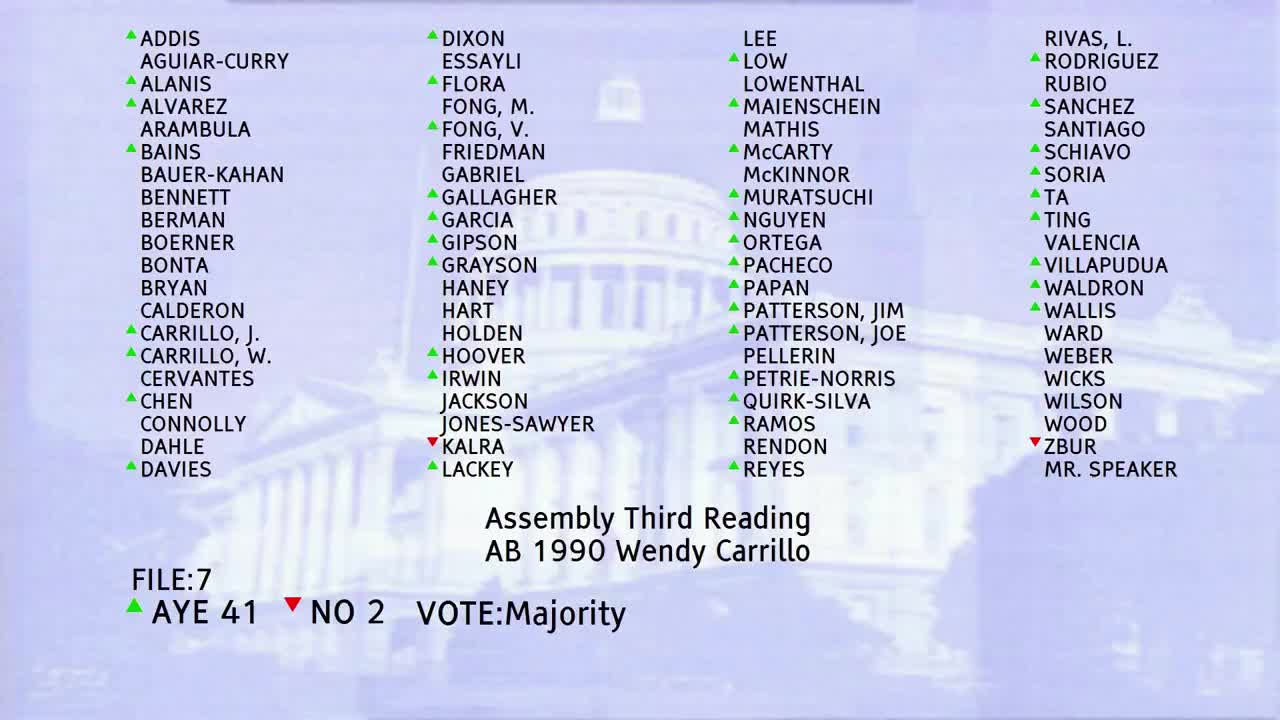 1MIN
Assembly Floor
 15MIN
Assembly Standing Committee on Utilities and Energy
Bill Author

Bill Co-Author(s):