AB 336: Contractors: workers’ compensation insurance.
- Session Year: 2023-2024
- House: Assembly
- Latest Version Date: 2023-10-07
Current Status:
Passed
(2023-10-07: Chaptered by Secretary of State - Chapter 323, Statutes of 2023.)
Introduced
In Committee
First Chamber
In Committee
Second Chamber
Enacted
Existing law, the Contractors State License Law, establishes the Contractors State License Board within the Department of Consumer Affairs and sets forth its powers and duties relating to the licensure and regulation of contractors. Existing law generally requires, as a condition precedent to the issuance, reinstatement, reactivation, renewal, or continued maintenance of a license, an applicant for a contractors license or a licensee to have on file at all times a current and valid Certificate of Workers Compensation Insurance or Certification of Self-Insurance, except as specified. Existing law makes a violation of these provisions a misdemeanor.
This bill would require an active licensee who has on file a current and valid Certificate of Workers Compensation Insurance or Certification of Self-Insurance, or is required to provide those certificates, to certify on the license renewal form the workers compensation classification codes endorsed on the licensees policy, as specified, and would prohibit renewal without that certification. The bill would provide that the board is not required to verify or investigate the accuracy of the licensees classification codes and would prohibit the board from being held liable for any misreported classification codes. The bill would require the board, when it updates the public license detail on its internet website for an active renewal, to include the classification codes certified by the licensee. The bill would make its provisions operative on July 1, 2024. Because the bill would expand the scope of a crime under the Contractors State License Law and expand the crime of perjury, the bill would impose a state-mandated local program.
The California Constitution requires the state to reimburse local agencies and school districts for certain costs mandated by the state. Statutory provisions establish procedures for making that reimbursement.
This bill would provide that no reimbursement is required by this act for a specified reason.
Existing law, the Contractors State License Law, establishes the Contractors State License Board within the Department of Consumer Affairs and sets forth its powers and duties relating to the licensure and regulation of contractors. Existing law generally requires requires, as a condition precedent to the issuance, reinstatement, reactivation, renewal, or continued maintenance of a license, an applicant for a contractors license or a licensee to have on file at all times a current and valid Certificate of Workers Compensation Insurance or Certification of Self-Insurance, except as specified. Existing law requires an active licensee with an exemption for workers compensation insurance on file with the board, at the time of renewal, to either recertify the licensees exemption or provide a current and valid Certificate of Workers Compensation Insurance or Certification of Self-Insurance, as applicable, and prohibits renewal of a license unless a licensee satisfies those requirements. Existing law makes a violation of these provisions a misdemeanor.
This bill would require an active licensee who has on file a current and valid Certificate of Workers Compensation Insurance or Certification of Self-Insurance, or is required to provide those certificates, to certify on the license renewal form the workers compensation classification codes endorsed on the licensees policy, as specified, and would prohibit renewal without that certification. The bill would provide that the board is not required to verify or investigate the accuracy of the licensees classification codes and will not be held liable for any misreported classification codes. The bill would require the board, when it updates the public license detail on its internet website for an active renewal, to include the classification codes certified by the licensee. The bill would make its provisions operative on July 1, 2024. Because the bill would expand the scope of a crime under the Contractors State License Law and expand the crime of perjury, the bill would impose a state-mandated local program. The bill would also make nonsubstantive changes to these provisions.
The California Constitution requires the state to reimburse local agencies and school districts for certain costs mandated by the state. Statutory provisions establish procedures for making that reimbursement.
This bill would provide that no reimbursement is required by this act for a specified reason.
Existing law, the Contractors State License Law, establishes the Contractors State License Board within the Department of Consumer Affairs and sets forth its powers and duties relating to the licensure and regulation of contractors. Existing law generally requires an applicant for a contractors license or a licensee to have on file at all times a current and valid Certificate of Workers Compensation Insurance or Certification of Self-Insurance, except as specified. Existing law requires an active licensee with an exemption for workers compensation insurance on file with the board, at the time of renewal, to either recertify the licensees exemption or provide a current and valid Certificate of Workers Compensation Insurance or Certification of Self-Insurance, as applicable, and prohibits renewal of a license unless a licensee satisfies those requirements. Existing law makes a violation of these provisions a misdemeanor.
This bill would require all an active licensees licensee who have has on file a current and valid Certificate of Workers Compensation Insurance or Certification of Self-Insurance, or are is required to provide those certificates, to certify on the license renewal form the workers compensation classification codes endorsed on the licensees policy, as specified, and would prohibit renewal without that certification. The bill would require the board, when it updates the public license detail on its internet website for an active renewal, to include the classification codes certified by the licensee. The bill would make its provisions operative on July 1, 2024. Because the bill would expand the scope of a crime under the Contractors State License Law and expand the crime of perjury, the bill would impose a state-mandated local program. The bill would also make nonsubstantive changes to these provisions.
The California Constitution requires the state to reimburse local agencies and school districts for certain costs mandated by the state. Statutory provisions establish procedures for making that reimbursement.
This bill would provide that no reimbursement is required by this act for a specified reason.
Existing law, the Contractors State License Law, establishes the Contractors State License Board within the Department of Consumer Affairs and sets forth its powers and duties relating to the licensure and regulation of contractors. Existing law generally requires an applicant for a contractors license or a licensee to have on file at all times a current and valid Certificate of Workers Compensation Insurance or Certification of Self-Insurance, except as specified. Existing law requires an active licensee with an exemption for workers compensation insurance on file with the board, at the time of renewal, to either recertify the licensees exemption or provide a current and valid Certificate of Workers Compensation Insurance or Certification of Self-Insurance, as applicable, and prohibits renewal of a license unless a licensee satisfies those requirements. Existing law makes a violation of these provisions a misdemeanor.
This bill would require all active licensees who have on file a current and valid Certificate of Workers Compensation Insurance or Certification of Self-Insurance, or are required to provide those certificates, to certify on the license renewal form the workers compensation classification codes endorsed on the licensees policy, as specified, and would prohibit renewal without that certification. The bill would require the board, when it updates the public license detail on its internet website for an active renewal, to include the classification codes certified by the licensee. The bill would make its provisions operative on July 1, 2024. Because the bill would expand the scope of a crime under the Contractors State License Law and expand the crime of perjury, the bill would impose a state-mandated local program.
The California Constitution requires the state to reimburse local agencies and school districts for certain costs mandated by the state. Statutory provisions establish procedures for making that reimbursement.
This bill would provide that no reimbursement is required by this act for a specified reason.
Existing law provides the Department of Food and Agriculture with general supervision of the weights and measures and weighing and measuring devices sold or used in the state. Existing law provides for the enforcement of those provisions by the State Sealer and by county sealers of weights and measures in each county. Existing law specifies the state standards of weights and measures by which all state and county standards of weights and measures shall be tried, proved, and sealed.This bill would make a nonsubstantive change to the above provision.Existing law provides the Department of Food and Agriculture with general supervision of the weights and measures and weighing and measuring devices sold or used in the state. Existing law provides for the enforcement of those provisions by the State Sealer and by county sealers of weights and measures in each county. Existing law specifies the state standards of weights and measures by which all state and county standards of weights and measures shall be tried, proved, and sealed.
This bill would make a nonsubstantive change to the above provision.
(a)(1)At the time of renewal, all active licensees who have on file a current and valid Certificate of Workers Compensation Insurance or Certification of Self-Insurance, or who are required to provide those certificates pursuant to subdivision (a) of Section 7125, shall certify on the license renewal form for the three workers compensation classification codes for which the highest estimated payroll is reported on the policy. If the licensee has fewer than three classification codes reported on the policy, the licensee shall provide every classification code reported on the policy.
(2)The board shall not be required to verify or investigate the accuracy of the licensees classification code or codes provided by the licensee pursuant to paragraph (1).
(3)The board shall not be held liable for any classification code or codes misreported by a licensee.
(b)(1)Except as provided in paragraph (2), a license shall not be renewed unless the licensee complies with this section.
(2)If the documentation and information required by subdivisions (a) and (b) is not provided with the license renewal form but is received within 30 days after notification by the board of the renewal rejection, the registrar shall grant a retroactive renewal pursuant to Section 7141.5 back to the date of the postmark of the otherwise acceptable renewal. A renewal that is still incomplete for any reason more than 30 days after notification of rejection shall not be eligible for retroactive renewal under this subdivision.
(c)When the board updates the public license detail on its internet website for an active renewal submitted by a licensee pursuant to this section, the update shall include the classification code or codes certified by the licensee pursuant to subdivision (b).
(d)This section shall become operative on July 1, 2024.
SEC. 2.No reimbursement is required by this act pursuant to Section 6 of Article XIIIB of the California Constitution because the only costs that may be incurred by a local agency or school district will be incurred because this act creates a new crime or infraction, eliminates a crime or infraction, or changes the penalty for a crime or infraction, within the meaning of Section 17556 of the Government Code, or changes the definition of a crime within the meaning of Section 6 of Article XIIIB of the California Constitution.
(a)(1)At the time of renewal, all active licensees who have on file a current and valid Certificate of Workers Compensation Insurance or Certification of Self-Insurance, or who are required to provide those certificates pursuant to subdivision (a), (a) of Section 7125, shall certify on the license renewal form for the three workers compensation classification code or codes developed by the Workers Compensation Insurance Rating Bureau or otherwise approved by the Insurance Commissioner, endorsed on the licensees policy for the three classification codes for which the highest estimated payroll is reported on the policy. If the licensee has fewer than three classification codes reported on the policy, the licensee shall provide all the every classification codes code reported on the policy.
(2)The board shall not be required to verify or investigate the accuracy of the licensees classification code or codes provided by the licensee pursuant to paragraph (1).
(3)The board shall not be held liable for any classification code or codes misreported by a licensee.
(c)(b)(1)Except as provided in subdivision (b), paragraph (2), a license shall not be renewed unless the licensee complies with this section.
(2)If the documentation and information required by subdivisions (a) and (b) is not provided with the license renewal form but is received within 30 days after notification by the board of the renewal rejection, the registrar shall grant a retroactive renewal pursuant to Section 7141.5 back to the date of the postmark of the otherwise acceptable renewal. A renewal that is still incomplete for any reason after more than 30 days after notification of rejection shall not be eligible for retroactive renewal under this subdivision.
(d)(c)When the board updates the public license detail on its internet website for an active renewal submitted by a licensee pursuant to this section, the update shall include the classification code or codes certified by the licensee pursuant to subdivision (b).
(e)(d)This section shall become operative on July 1, 2024.
SEC. 3.SEC. 2.No reimbursement is required by this act pursuant to Section 6 of Article XIIIB of the California Constitution because the only costs that may be incurred by a local agency or school district will be incurred because this act creates a new crime or infraction, eliminates a crime or infraction, or changes the penalty for a crime or infraction, within the meaning of Section 17556 of the Government Code, or changes the definition of a crime within the meaning of Section 6 of Article XIIIB of the California Constitution.
(a)At the time of renewal, all an active licensees licensee with an exemption for workers compensation insurance on file with the board, submitted pursuant to subdivision (b) of Section 7125, shall either recertify the licensees exemption by completing a recertification statement on the license renewal form, as provided by the board, or shall provide a current and valid Certificate of Workers Compensation Insurance or Certification of Self-Insurance, whichever is applicable.
(b)The license shall not be renewed unless a licensee with an exemption for workers compensation insurance on file with the board recertifies the exemption status or provides a current and valid Certificate of Workers Compensation Insurance or Certification of Self-Insurance in conjunction with the license renewal.
(c)If the documentation required by subdivision (a) is not provided with the license renewal form but is received within 30 days after notification by the board of the renewal rejection, the registrar shall grant a retroactive renewal pursuant to Section 7141.5 back to the date of the postmark of the otherwise acceptable renewal. A renewal that is still incomplete for any reason after 30 days after notification of rejection shall not be eligible for retroactive renewal under this subdivision.
(d)This section shall remain in effect only until July 1, 2024, and as of that date is repealed.
SEC. 2.Section 7125.5 is added to the Business and Professions Code, to read:7125.5.(a)At the time of renewal, all an active licensees licensee with an exemption for workers compensation insurance on file with the board, submitted pursuant to this article, shall either recertify the licensees exemption by completing a recertification statement on the license renewal form, as provided by the board, or shall provide a current and valid Certificate of Workers Compensation Insurance or Certification of Self-Insurance, whichever is applicable.
(b)At the time of renewal, all active licensees who have on file a current and valid Certificate of Workers Compensation Insurance or Certification of Self-Insurance, or who are required to provide those certificates pursuant to subdivision (a), shall certify on the license renewal form the workers compensation classification code or codes developed by the Workers Compensation Insurance Rating Bureau or otherwise approved by the Insurance Commissioner, endorsed on the licensees policy for the three classification codes for which the highest estimated payroll is reported on the policy. If the licensee has fewer than three classification codes reported on the policy, the licensee shall provide all the classification codes reported on the policy.
(c)(1)Except as provided in subdivision (b), a license shall not be renewed unless the licensee complies with this section.
(2)If the documentation and information required by subdivisions (a) and (b) is not provided with the license renewal form but is received within 30 days after notification by the board of the renewal rejection, the registrar shall grant a retroactive renewal pursuant to Section 7141.5 back to the date of the postmark of the otherwise acceptable renewal. A renewal that is still incomplete for any reason after 30 days after notification of rejection shall not be eligible for retroactive renewal under this subdivision.
(d)When the board updates the public license detail on its internet website for an active renewal submitted by a licensee pursuant to this section, the update shall include the classification code or codes certified by the licensee pursuant to subdivision (b).
(e)This section shall become operative on July 1, 2024.
SEC. 3.No reimbursement is required by this act pursuant to Section 6 of Article XIIIB of the California Constitution because the only costs that may be incurred by a local agency or school district will be incurred because this act creates a new crime or infraction, eliminates a crime or infraction, or changes the penalty for a crime or infraction, within the meaning of Section 17556 of the Government Code, or changes the definition of a crime within the meaning of Section 6 of Article XIIIB of the California Constitution.
(a)At the time of renewal, all active licensees with an exemption for workers compensation insurance on file with the board, submitted pursuant to subdivision (b) of Section 7125, shall either recertify the licensees exemption by completing a recertification statement on the license renewal form, as provided by the board, or shall provide a current and valid Certificate of Workers Compensation Insurance or Certificate Certification of Self-Insurance, whichever is applicable.
(b)The license shall not be renewed unless a licensee with an exemption for workers compensation insurance on file with the board recertifies the exemption status or provides a current and valid Certificate of Workers Compensation Insurance or Certificate Certification of Self-Insurance in conjunction with the license renewal.
(c)If the documentation required by subdivision (a) is not provided with the license renewal form but is received within 30 days after notification by the board of the renewal rejection, the registrar shall grant a retroactive renewal pursuant to Section 7141.5 back to the date of the postmark of the otherwise acceptable renewal. A renewal that is still incomplete for any reason after 30 days after notification of rejection shall not be eligible for retroactive renewal under this subdivision.
(d)This section shall remain in effect only until July 1, 2024, and as of that date is repealed.
SEC. 2.Section 7125.5 is added to the Business and Professions Code, to read:7125.5.(a)At the time of renewal, all active licensees with an exemption for workers compensation insurance on file with the board, submitted pursuant to this article, shall either recertify the licensees exemption by completing a recertification statement on the license renewal form, as provided by the board, or shall provide a current and valid Certificate of Workers Compensation Insurance or Certification of Self-Insurance, whichever is applicable.
(b)At the time of renewal, all active licensees who have on file a current and valid Certificate of Workers Compensation Insurance or Certification of Self-Insurance, or who are required to provide those certificates pursuant to subdivision (a), shall certify on the license renewal form the workers compensation classification code or codes developed by the Workers Compensation Insurance Rating Bureau or otherwise approved by the Insurance Commissioner, endorsed on the licensees policy for the three classification codes for which the highest estimated payroll is reported on the policy. If the licensee has fewer than three classification codes reported on the policy, the licensee shall provide all the classification codes reported on the policy.
(c)(1)Except as provided in subdivision (b), a license shall not be renewed unless the licensee complies with this section.
(2)If the documentation and information required by subdivisions (a) and (b) is not provided with the license renewal form but is received within 30 days after notification by the board of the renewal rejection, the registrar shall grant a retroactive renewal pursuant to Section 7141.5 back to the date of the postmark of the otherwise acceptable renewal. A renewal that is still incomplete for any reason after 30 days after notification of rejection shall not be eligible for retroactive renewal under this subdivision.
(d)When the board updates the public license detail on its internet website for an active renewal submitted by a licensee pursuant to this section, the update shall include the classification code or codes certified by the licensee pursuant to subdivision (b).
(e)This section shall become operative on July 1, 2024.
SEC. 3.No reimbursement is required by this act pursuant to Section 6 of Article XIIIB of the California Constitution because the only costs that may be incurred by a local agency or school district will be incurred because this act creates a new crime or infraction, eliminates a crime or infraction, or changes the penalty for a crime or infraction, within the meaning of Section 17556 of the Government Code, or changes the definition of a crime within the meaning of Section 6 of Article XIIIB of the California Constitution.
SECTION 1.Section 12303 of the Business and Professions Code, as amended by Section 71 of Chapter 511 of the Statutes of 2022, is amended to read:12303.The state standards of weights and measures by which all state and county standards of weights and measures shall be tried, proved, and sealed include all of the following standards, provided the standards have been certified relative to national standards under the direction of the National Institute of Standards and Technology:(a)Metrological standards provided by the United States.(b)Metrological standards procured by the state.(c)Metrological standards in the possession of county sealers.(d)Metrological standards in the possession of laboratories certified to perform measurement services pursuant to Section 12314.The state standards of weights and measures by which all state and county standards of weights and measures shall be tried, proved, and sealed include all of the following standards, provided the standards have been certified relative to national standards under the direction of the National Institute of Standards and Technology:
(a)Metrological standards provided by the United States.
(b)Metrological standards procured by the state.
(c)Metrological standards in the possession of county sealers.
(d)Metrological standards in the possession of laboratories certified to perform measurement services pursuant to Section 12314.
|
Date
|
Status
|
|---|---|
| Oct 7, 2023 | Chaptered by Secretary of State - Chapter 323, Statutes of 2023. |
| Oct 7, 2023 | Approved by the Governor. |
| Sep 13, 2023 | Enrolled and presented to the Governor at 3 p.m. |
| Sep 6, 2023 | In Assembly. Ordered to Engrossing and Enrolling. |
| Sep 6, 2023 | Read third time. Passed. Ordered to the Assembly. (Ayes 38. Noes 1. Page 2432.). |
| Sep 5, 2023 | Read second time. Ordered to third reading. |
| Sep 1, 2023 | From committee: Do pass. (Ayes 6. Noes 0.) (September 1). |
| Jun 26, 2023 | In committee: Referred to APPR. suspense file. |
| Jun 12, 2023 | From committee: Do pass and re-refer to Com. on APPR. (Ayes 12. Noes 0.) (June 12). Re-referred to Com. on APPR. |
| Jun 7, 2023 | Referred to Com. on B., P. & E. D. |
| May 26, 2023 | In Senate. Read first time. To Com. on RLS. for assignment. |
| May 25, 2023 | Read third time. Passed. Ordered to the Senate. (Ayes 78. Noes 0. Page 1751.) |
| May 18, 2023 | Read second time. Ordered to third reading. |
| May 18, 2023 | From committee: Do pass. (Ayes 15. Noes 0.) (May 18). |
| Apr 26, 2023 | In committee: Set, first hearing. Referred to APPR. suspense file. |
| Apr 17, 2023 | Re-referred to Com. on APPR. |
| Apr 12, 2023 | Read second time and amended. |
| Apr 11, 2023 | From committee: Amend, and do pass as amended and re-refer to Com. on APPR. (Ayes 18. Noes 0.) (April 11). |
| Mar 27, 2023 | Re-referred to Com. on B. & P. |
| Mar 23, 2023 | From committee chair, with author's amendments: Amend, and re-refer to Com. on B. & P. Read second time and amended. |
| Mar 6, 2023 | Re-referred to Com. on B. & P. |
| Mar 2, 2023 | From committee chair, with author's amendments: Amend, and re-refer to Com. on B. & P. Read second time and amended. |
| Mar 2, 2023 | Referred to Com. on B. & P. |
| Jan 31, 2023 | From printer. May be heard in committee March 2. |
| Jan 30, 2023 | Read first time. To print. |
|
Date
|
Description
|
Location
|
Votes
|
|
|---|---|---|---|---|
| Sep 6, 2023 | Assembly 3rd Reading AB336 Cervantes et al. | Senate Floor |
Passed |
|
| Sep 1, 2023 | Do pass | Senate Standing Committee on Appropriations |
Passed |
|
| Jun 26, 2023 | Placed on suspense file | Senate Standing Committee on Appropriations |
Passed |
|
| Jun 12, 2023 | Do pass, but first be re-referred to the Committee on [Appropriations] | Senate Standing Committee on Business, Professions and Economic Development |
Passed |
|
| May 25, 2023 | AB 336 Cervantes Assembly Third Reading | Assembly Floor |
Passed |
|
| May 18, 2023 | Do pass. | Assembly Standing Committee on Appropriations |
Passed |
|
| Apr 11, 2023 | Do pass as amended and be re-referred to the Committee on [Appropriations] | Assembly Standing Committee on Business and Professions |
Passed |
This list shows positions taken on this bill by organizations on the date displayed, which is linked to the original source.
Positions by individuals are not included.
|
Organization
|
Position
|
Date
|
|---|---|---|
| American Subcontractors Association-California | ** Support | |
| California Labor Federation, Afl-Cio | ** Support | |
| District Council Of Iron Workers Of California | ** Support | |
| International Union of Operating Engineers, Cal-Nevada Conference | ** Support | |
| State Building And Construction Trades Council Of Ca | ** Support |
SENATE RULES COMMITTEE Office of Senate Floor Analyses (916) 651-1520 Fax: (916) 327-4478 | AB 336 |
THIRD READING
Bill No: AB 336
Author: Cervantes (D) and Megan Dahle (R)
Amended: 4/12/23 in Assembly
Vote: 21
SENATE BUS., PROF. & ECON. DEV. COMMITTEE: 12-0, 6/12/23
AYES: Roth, Nguyen, Alvarado-Gil, Archuleta, Ashby, Becker, Dodd, Glazer, Niello, Smallwood-Cuevas, Wahab, Wilk
NO VOTE RECORDED: Eggman
SENATE APPROPRIATIONS COMMITTEE: 6-0, 9/1/23
AYES: Portantino, Ashby, Bradford, Seyarto, Wahab, Wiener
NO VOTE RECORDED: Jones
ASSEMBLY FLOOR: 78-0, 5/25/23 - See last page for vote
SUBJECT: Contractors: workers’ compensation insurance
SOURCE: District Council of Iron Workers of California
DIGEST:
This bill requires a contractor licensee, at the time of renewal, to certify on a license renewal form the three workers’ compensation classification codes for which the highest estimated payroll is reported, as specified.
ANALYSIS:
Existing law:
- Establishes the CSLB within the Department of Consumer Affairs (DCA) to license and regulate contractors and home improvement salespersons. (Business and Professions Code (BPC) § 7000 et seq.)
- Requires the CSLB in consultation with the Director of DCA to appoint a registrar of contractors (registrar) and sunsets the CSLB and its authority to appoint a registrar on January 1, 2024, as specified. (BPC § 7011)
- Requires as a condition of initial licensure, reinstatement, reactivation, renewal or continued maintenance of a license, a current and valid certificate of workers compensation insurance or certification of Self-Insurance, as specified, unless the applicant or licensee meets both of the following conditions:
- Has no employees and filed a statement with the CSLB certifying that they do not employ any person in any manner, as specified; and,
- Does not hold a C-8 (concrete), C-20 (air heating and air conditioning), C-22 (asbestos abatement), C-39 (roofing contractor license), D-49 (tree), and a C-61 (specialty) and sunsets these exemptions on January 1, 2026. (BPC § 7125 (a)(b))
- Requires an insurer, including the State Compensation Insurance Fund, to report to the registrar the name, license number, policy number, dates that coverage is scheduled to commence and lapse, and cancellation date if applicable, for any policy required, as specified. (BPC § 7125(d)).
- States that willful or deliberate disregard and violation of workers’ compensation insurance laws constitutes a cause for disciplinary action by the registrar against the licensee. (BPC § 7125 (d)(3))
This bill:
- Requires, at the time of renewal, all active licensees who have on file a current and valid Certificate of Workers’ Compensation Insurance or Certification of Self-Insurance, or who are required to provide those certificates, as specified, to certify om the license renewal form for the three workers’ compensation classification codes for which the highest estimated payroll is reported on the policy.
- States that for number 1) above, if the licensee has fewer than three classification codes reported on the policy, the licensee must provide every classification code reported on the policy.
- States that the CSLB is not required to verify or investigate the accuracy of the licensee’s classification code or codes provided by the licensee, and is not liable for any codes misreported by a licensee.
- Prohibits a license from being renewed unless the licensee complies with the requirements of reporting workers’ compensation classification codes as specified in 1) above, unless the documentation and information is not provided with the renewal form but is received within 30 days after notification by the CSLB of the renewal rejection, the registrar may grant a retroactive renewal, as specified.
- States that a renewal that is still incomplete after 30 days of the rejection notification is not eligible for retroactive renewal as specified in 4) above.
- Requires the CSLB to update the public license detail on its internet website with the classification code or codes certified by the licensee when it updates public licensee detail.
- Delays implementation of this bill until January 1, 2024.
Background
The CSLB is responsible for the implementation and enforcement of the Contractors’ State License Law (the laws and regulations related to the licensure, practice and discipline of the construction industry in California). As a condition of initial licensure and to maintain and active license, all license classifications are required to have on file with the CSLB, a current and valid Certificate of Workers’ Compensation Insurance or Certification of Self-Insurance in the applicant’s or licensee’s business name, unless they qualify for an exemption by certifying to the CSLB that they do not have any employees, and the licensee does not hold a C-8, C-20, C-22, C-61, D-49 or C-39 designation. (BPC § 7125(b)). As a result of SB 216 (Dodd, Chapter 978, Statutes of 2022), effective July 1, 2026, all license classifications will be required to have a Certificate of Workers’ Compensation Insurance on file with the CSLB, unless they are a specific joint venture.
Failure to maintain workers' compensation insurance coverage will result in a licensure suspension, and any work performed while the license is suspended is considered unlicensed and disciplinary action can be taken against a licensee. BPC § 7126 specifically states that any licensee or agent thereof, who violates the workers compensation requirements, under existing law, is additionally guilty of a misdemeanor.
Further, under current law, (LAB §§ 3700, 3700.5) all employers in this state are required to obtain workers’ compensation. Workers' compensation insurance provides basic benefits, including medical care, temporary disability benefits, permanent disability benefits, supplemental job displacement benefits and a return-to-work supplement, and death benefits.
Employers purchase workers’ compensation insurance either from a licensed insurance company or through the State Compensation Insurance Fund. Employers may also have the option to self-insure for workers’ compensation. As noted on the California Department of Insurance’s website, “Workers' compensation premium calculations are based on how employees are classified according to their specific work duties and the rate assigned to each corresponding employee classification. Classifications that group distinct and identifiable occupations, industries, or business are developed and assigned codes by the Workers' Compensation Insurance Rating Bureau of California and approved by the Insurance Commissioner. Workers' compensation insurers generally use these classification codes when writing workers' compensation policies.”
The CSLB does not determine the coverage amount that is required for an entity to obtain workers’ compensation insurance. As part of the licensure and renewal process, the CSLB simply verifies that the applicant or licensee has the required workers’ compensation insurance on file. This bill seeks to address a concern raised by industry, where some contractor licensees may have workers’ compensation coverage, but not under the appropriate classification code for the type of construction work performed.
As a result, this bill will require as part of the licensure renewal process, a licensee to provide the CSLB with the workers’ compensation classification code or codes, which are provided on the licensee’s policy for the three classification codes for which the highest estimated payroll is reported on the policy. If the licensee has fewer than three classification codes reported on the policy, the licensee will be required to provide all the classification codes reported on the policy. This bill would further require the CSLB to make those codes available on its internet website whenever it updates the public license detail. Currently, as part of the CSLB’s license look-up on its internet website, there is a section that notes whether the licensee has workers’ compensation coverage and notes the coverage provider. By providing the classification codes related to workers’ compensation coverage, the CSLB along with other regulatory entities, and members of the public, including industry stakeholders would be able to determine if the classification code and workers’ compensation insurance match the current work offered by the licensee in an effort to ensure that employers have the appropriate coverage for the type of construction work being performed in California.
Because the CSLB does not determine whether the workers’ compensation coverage is sufficient to the reported employees, this bill specifies that the CSLB is not required to verify the accuracy of the classification codes reported by the licensee, only that the licensee reports the codes as required. This bill would specifically prohibit a license from being renewed if it did not contain the appropriate classification codes; however, this bill does provide a 30-day period for a licensee to submit the information in order to obtain a retroactive renewal. In order to provide time for licensees to comply, this bill delays implementation until July 1, 2024. Any renewal received after July 1, 2024 will need to include the classification codes in order to renew.
FISCAL EFFECT: Appropriation: No Fiscal Com.: Yes Local: Yes
According to the Senate Committee on Appropriations, “the CSLB reports a one-time cost of approximately $227,500 for a limited-term IT consultant, which is not absorbable in the CSLB’s current resources (Contractors License Fund). The IT changes needed include adding new classification codes to the CSLB’s enterprise licensing system, custom programming to allow online entry of information, and making updates to allow data to post from CSLB’s system to the licensee’s public data portal.”
SUPPORT: (Verified 9/1/23)
District Council of Iron Workers of California (source)
American Subcontractors Association-California
California Labor Federation, AFL-CIO
International Union of Operating Engineers, Cal-Nevada Conference
State Building and Construction Trades Council of CA
OPPOSITION: (Verified 9/1/23)
None received
ARGUMENTS IN SUPPORT: Supporters note generally that this bill will help prevent fraud in the workers compensation system.
ASSEMBLY FLOOR: 78-0, 5/25/23
AYES: Addis, Alanis, Alvarez, Arambula, Bains, Bauer-Kahan, Bennett, Berman, Boerner, Bonta, Bryan, Calderon, Juan Carrillo, Wendy Carrillo, Cervantes, Chen, Connolly, Megan Dahle, Davies, Dixon, Essayli, Flora, Mike Fong, Vince Fong, Friedman, Gabriel, Gallagher, Garcia, Gipson, Grayson, Haney, Hart, Holden, Hoover, Irwin, Jackson, Jones-Sawyer, Kalra, Lackey, Lee, Low, Lowenthal, Maienschein, McCarty, McKinnor, Muratsuchi, Stephanie Nguyen, Ortega, Pacheco, Papan, Jim Patterson, Joe Patterson, Pellerin, Petrie-Norris, Quirk-Silva, Ramos, Reyes, Luz Rivas, Robert Rivas, Rodriguez, Blanca Rubio, Sanchez, Santiago, Schiavo, Soria, Ta, Ting, Valencia, Villapudua, Waldron, Wallis, Ward, Weber, Wicks, Wilson, Wood, Zbur, Rendon
NO VOTE RECORDED: Aguiar-Curry, Mathis
Prepared by: Elissa Silva / B., P. & E.D. / 916-651-4104
9/2/23 9:57:12
**** END ****
SENATE COMMITTEE ON APPROPRIATIONS
Senator Anthony Portantino, Chair
2023 - 2024 Regular Session
AB 336 (Cervantes) - Contractors: workers’ compensation insurance
Version: April 12, 2023 | Policy Vote: B., P. & E.D. 12 - 0 |
Urgency: No | Mandate: Yes |
Hearing Date: June 26, 2023 | Consultant: Janelle Miyashiro |
Bill Summary:
AB 336, beginning July 1, 2024, requires contractor licensees to provide their workers’ compensation classification codes to the Contractors State License Board (CSLB) when renewing their license, as specified.
Fiscal Impact:
The CSLB reports a one-time cost of approximately $227,500 for a limited-term IT consultant, which is not absorbable in the CSLB’s current resources (Contractors License Fund). The IT changes needed include adding new classification codes to the CSLB’s enterprise licensing system, custom programming to allow online entry of information, and making updates to allow data to post from CSLB’s system to the licensee’s public data portal.
Background:
The CSLB is responsible for the implementation and enforcement of the laws and regulations related to the licensure, practice and discipline of the construction industry in California. All businesses and individuals who construct or alter, or offer to construct or alter, any building, highway, road, parking facility, railroad, excavation, or other structure in California must be licensed by the CSLB if the total cost, including both labor and materials, of one or more contracts on the project is $500 or more.
Currently, as a condition of initial licensure and to maintain an active license, all license classifications except specified exempted designations are required to have on file with the CSLB a current and valid Certificate of Workers’ Compensation Insurance or Certification of Self-Insurance in the applicant’s or licensee’s business name. Beginning July 1, 2026, all license classifications will be required to have a Certificate of Workers’ Compensation Insurance on file with the CSLB, unless they are a specific joint venture.
Failure to maintain workers' compensation insurance coverage will result in a license being suspended and any work performed while the license is suspended is considered unlicensed and disciplinary action can be taken against a licensee. The CSLB does not determine the coverage amount that is required for an entity to obtain workers’ compensation insurance. As part of the licensure and renewal process, the CSLB simply verifies that the applicant or licensee has the required workers’ compensation insurance on file.
Proposed Law:
- Requires all active licensees who have a current and valid Certificate of Workers’ Compensation on file to certify on the renewal form when renewing their license, the three workers’ compensation classification codes for which the highest estimated payroll is reported on the policy. Specifies that if a licensee has fewer than three classification codes, the licensee shall provide every classification code reported on the policy.
- Provides that the CSLB is not required to verify or investigate the accuracy of the licensee’s classification code or codes provided and the CSLB is not liable for any classification code or codes misreported by a licensee.
- Prohibits a license from being renewed unless the licensee complies with the above reporting requirements.
- Provides that the registrar may grant a retroactive renewal to a licensee if the licensee sends the above required information within 30 days after the CSLB sends a renewal rejection.
- Provides that a licensee is not eligible for retroactive renewal if a renewal is still incomplete for any reasons more than 30 days after the CSLB send the rejection notification.
- Requires the CSLB, when updating the public license detail on its internet website for an active renewal submitted by a licensee, to include the classification code or codes certified by the licensee.
- Provides a delayed implementation date of July 1, 2024.
Related Legislation:
AB 1204 (Holden, 2023) prohibits a contractor from contracting with two or more subcontractors in the same license classification for the same work at the same jobsite, unless the subcontractor has employees who perform work in that license classification. AB 1204 is pending in the Senate Committee on Labor, Public Employment, and Retirement.
Staff Comments:
The boards and bureaus within the Department of Consumer Affairs are special fund agencies whose activities are funded by regulatory and license fees and generally receive no support from the General Fund. New legislative mandates, even those modest in scope, may in totality create new cost pressures and impact the entity’s operating costs, future budget requests, or license fees.
-- END --
SENATE COMMITTEE ON
BUSINESS, PROFESSIONS AND ECONOMIC DEVELOPMENT
Senator Richard Roth, Chair
2023 - 2024 Regular
Bill No: AB 336 Hearing Date: June 12, 2023
Author: | Cervantes and Megan Dahle | ||
Version: |
| ||
Urgency: | Fiscal: | ||
Consultant: | |||
Subject: Contractors: workers’ compensation insurance.
SUMMARY:
Requires a contractor licensee, at the time of renewal, to certify on a license renewal form the three workers’ compensation classification codes for which the highest estimated payroll is reporter, as specified.
Existing law:
- Establishes the CSLB within the Department of Consumer Affairs (DCA) to license and regulate contractors and home improvement salespersons. (Business and Professions Code (BPC) § 7000 et seq.)
- Requires the CSLB in consultation with the Director of DCA to appoint a registrar of contractors (registrar) and sunsets the CSLB and its authority to appoint a registrar on January 1, 2024, as specified. (BPC § 7011)
- Requires as a condition of initial licensure, reinstatement, reactivation, renewal or continued maintenance of a license, a current and valid certificate of workers compensation insurance or certification of Self-Insurance, as specified, unless the applicant or licensee meets both of the following conditions:
- Has no employees and filed a statement with the CSLB certifying that they do not employ any person in any manner, as specified; and,
- Does not hold a C-8 (concrete), C-20 (air heating and air conditioning), C-22 (asbestos abatement), C-39 (roofing contractor license), D-49 (tree), and a C-61 (specialty) and sunsets these exemptions on January 1, 2026. (BPC § 7125 (a)(b))
- Requires an insurer, including the State Compensation Insurance Fund, to report to the registrar the name, license number, policy number, dates that coverage is scheduled to commence and lapse, and cancellation date if applicable, for any policy required, as specified. (BPC § 7125(d)).
- Requires a workers’ compensation insurer to report to the registrar a licensee whose workers’ compensation insurance policy is canceled by the insurer, if specified conditions are met. (BPC § 7125(d)(2))
- States that willful or deliberate disregard and violation of workers’ compensation insurance laws constitutes a cause for disciplinary action by the registrar against the licensee. (BPC § 7125 (d)(3))
- Requires the registrar to remove the C-39 classification from a license unless a valid Certificate of Workers’ Compensation Insurance or Certification of Self-Insurance is received by the registrar, for any license on or after January 1, 2013, as specified. (BPC § 7125 (f)(1))
- Requires a license to be automatically suspended for a license that is a C-39 Classification removed as specified in (7) above and has been found by the registrar to have employees and to lack a valid Certificate of Workers Compensation of Self-Insurance, for any licensee who is licensed after January 1, 2013. (BPC § 7125 (f)(2))
- Requires the registrar to remove the C-8, C-20, C-22, or D-49 classification from a license unless a valid Certificate of Workers’ Compensation Insurance or Certification of Self-Insurance is received by the registrar, for any license on or after July 1, 2023, as specified.
- Requires a license to be automatically suspended for a license that is a C-8, C-20, C-22, or D-49 classification removed as specified in (9) above and has been found by the registrar to have employees and to lack a valid Certificate of Workers Compensation of Self-Insurance, for any licensee who is licensed after July 1, 2023.
This bill:
- Requires, at the time of renewal, all active licensees who have on file a current and valid Certificate of Workers’ Compensation Insurance or Certification of Self-Insurance, or who are required to provide those certificates, as specified, to certify om the license renewal form for the three workers’ compensation classification codes for which the highest estimated payroll is reported on the policy.
- States that for number 1) above, if the licensee has fewer than three classification codes reported on the policy, the licensee must provide every classification code reported on the policy.
- States that the CSLB is not required to verify or investigate the accuracy of the licensee’s classification code or codes provided by the licensee, and is not liable for any codes misreported by a licensee.
- Prohibits a license from being renewed unless the licensee complies with the requirements of reporting workers’ compensation classification codes as specified in 1) above, unless the documentation and information is not provided with the renewal form but is received within 30 days after notification by the CSLB of the renewal rejection, the registrar may grant a retroactive renewal, as specified.
- States that a renewal that is still incomplete after 30 days of the rejection notification is not eligible for retroactive renewal as specified in 4) above.
- Requires the CSLB to update the public license detail on its internet website with the classification code or codes certified by the licensee when it updates public licensee detail.
- Delays implementation of this bill until January 1, 2024.
FISCAL EFFECT:
This bill is keyed fiscal by Legislative Counsel. According to the Assembly Committee on Appropriations, “CSLB estimates one-time information technology costs of $227,500 to make changes to its enterprise licensing system and website to be able to receive and post additional workers compensation classification code data.”
COMMENTS:
- Purpose. The District Council of Iron Workers of California is the sponsor of this bill. According to the author,
“This bill is seeking to remedy the lack of transparency about the classification codes each contractor uses to acquire or maintain a license through the Contractors State License Board (CSLB).
Evidence 1#: “The Contra Costa County District Attorney's Office said in a statement unlicensed contractors pose a threat to consumers by failing to acquire skills and licensure when hired to perform home improvement or construction projects. Some unlicensed contractors illegally require excessive down payments for construction or landscaping projects, and frequently fail to begin or complete projects once they receive money. Consumers are often unaware unlicensed contractors have not completed background checks and frequently don't carry workers' compensation insurance for their employees - which increases liability risks to consumers.” https://www.danvillesanramon.com/news/2023/02/10/jury-convicts-unlicensed-contractor.”
Evidence #2: “The District Attorney’s Office prosecutes criminal violations of the contractors’ laws including unlicensed contractors, unauthorized use of someone else’s license number, requesting more than a 10% deposit, failure to have workers’ compensation insurance and even theft for failing to deliver services or materials that were paid for by the homeowner. These crimes are especially common when it comes to installing solar panels, building accessory dwelling units — commonly referred to as granny flats — or building swimming pools.” https://thecoastnews.com/com.”
- Background.
Contractors and CSLB. The CSLB is responsible for the implementation and enforcement of the Contractors’ State License Law (the laws and regulations related to the licensure, practice and discipline of the construction industry in California). All businesses and individuals who construct or alter, or offer to construct or alter, any building, highway, road, parking facility, railroad, excavation, or other structure in California must be licensed by the CSLB if the total cost, including both labor and materials, of one or more contracts on the project is $500 or more.
The CSLB licenses and regulates approximately 289,000 licensees in 44 licensing classifications and 2 certifications, and registers approximately 25,000 Home Improvement Salespersons. Each licensing classification specifies the type of contracting work permitted in that classification. To obtain licensure in each classification, applicants are required to take and pass both a trade examination and a law and business examination. Licensees may not perform work outside of a classification without having the appropriate license to do so, unless they are a “B” general contractor who is able to take a prime contract or subcontract for projects involving other trades as long as framing and carpentry (the C5 trade) is not counted among those other trades.
As a condition of initial licensure and to maintain and active license, all license classifications are required to have on file with the CSLB, a current and valid Certificate of Workers’ Compensation Insurance or Certification of Self-Insurance in the applicant’s or licensee’s business name, unless they qualify for an exemption by certifying to the CSLB that they do not have any employees, and the licensee does not hold a C-8, C-20, C-22, C-61, D-49 or C-39 designation. (BPC § 7125(b)). As a result of SB 216 (Dodd, Chapter 978, Statutes of 2022), effective July 1, 2026, all license classifications will be required to have a Certificate of Workers’ Compensation Insurance on file with the CSLB, unless they are a specific joint venture.
Failure to maintain workers' compensation insurance coverage will result in a license being suspended and any work performed while the license is suspended is considered unlicensed and disciplinary action can be taken against a licensee. BPC § 7126 specifically states that any licensee or agent thereof, who violates the workers compensation requirements, under existing law, is additionally guilty of a misdemeanor.
Further, under current law, (LAB §§ 3700, 3700.5) all employers in this state are required to obtain workers’ compensation. Workers' compensation insurance provides basic benefits, including medical care, temporary disability benefits, permanent disability benefits, supplemental job displacement benefits and a return-to-work supplement, and death benefits.
Employers purchase workers’ compensation insurance either from a licensed insurance company or through the State Compensation Insurance Fund. Employers may also have the option to self-insure for workers’ compensation. As noted on the California Department of Insurance’s website, “Workers' compensation premium calculations are based on how employees are classified according to their specific work duties and the rate assigned to each corresponding employee classification. Classifications that group distinct and identifiable occupations, industries, or business are developed and assigned codes by the Workers' Compensation Insurance Rating Bureau of California and approved by the Insurance Commissioner. Workers' compensation insurers generally use these classification codes when writing workers' compensation policies.”
The CSLB does not determine the coverage amount that is required for an entity to obtain workers’ compensation insurance. As part of the licensure and renewal process, the CSLB simply verifies that the applicant or licensee has the required workers’ compensation insurance on file. This bill seeks to address a concern raised by industry, where some contractor licensees may have workers’ compensation coverage, but not under the appropriate classification code for the type of construction work performed.
As a result, this bill will require as part of the licensure renewal process, the licensee to provide the CSLB with the workers’ compensation classification code or codes, which are provided on the licensee’s policy for the three classification codes for which the highest estimated payroll is reported on the policy. If the licensee has fewer than three classification codes reported on the policy, the licensee will be required to provide all the classification codes reported on the policy. This bill would further require the CSLB to make those codes available on its internet website whenever it updates the public license detail. Currently, as part of the CSLB’s license look-up on its internet website, there is a section that notes whether the licensee has workers’ compensation coverage, and notes the coverage provider. By providing the classification codes related to workers’ compensation coverage, the CSLB along with other regulatory entities, and members of the public, including industry stakeholders would be able to determine if the classification code and workers’ compensation insurance match the current work offered by the licensee in an effort to ensure that employers have the appropriate coverage for the type of construction work being performed in California.
Because the CSLB does not determine whether or not the workers’ compensation coverage is sufficient to the reported employees, this bill specifies that the CSLB is not required to verify the accuracy of the classification codes reported by the licensee, only that the licensee reports the codes as required. This bill would specifically prohibit a license from being renewed if it did not contain the appropriate classification codes; however, this bill does provide a 30-day period for a licensee to submit the information in order to obtain a retroactive renewal. In order to provide time for licensees to comply, this bill delays implementation until July 1, 2024. Any renewal received after July 1, 2024 will need to include the classification codes in order to renew.
- Related Legislation. AB 1204 (Holden of 2023) prohibits a contractor from contracting with two or more subcontractors in the same license classification for the same work at the same jobsite, unless the subcontractor has employees who perform work in that license classification. (Status: This bill is currently pending in the Senate Committee on Business, Professions and Economic Development)
AB 2894 (Cooper of 2022) would have required, beginning January 1, 2023, all active licensees, at the time of renewal, to provide workers’ compensation classification codes, to the CSLB. (Status: This bill was held in the Senate Committee on Appropriations)
SB 216 (Dodd, Chapter 978, Statutes of 2022) expands the license classifications required to have a certificate of workers’ compensation insurance on file with the CSLB to include a Concrete contractor (C-8), a Warm-Air Heating, Ventilating and Air-Conditioning contractor (C-20,) and a Tree Service contractor (D-49) until January 1, 2025; and, beginning January 1, 2025, extends that requirement to include all licensure classifications under the jurisdiction of the CSLB.
SB 1064 (Newman, Chapter 190, Statutes of 2022) requires structural pest control companies to provide proof of workers’ compensation for company registration with or licensure by the California Structural Pest Control Board.
AB 2705 (Holden, Chapter 323, Statutes of 2018) subjected an unlicensed person acting as a contractor to the existing criminal penalties that apply to licensed contractors for not securing the required workers’ compensation, and made this crime subject to the same two-year statute of limitations as for licensees.
AB 996 (Cunningham and Brough of 2018) would have required the CSLB to adopt an enhancement feature on its Internet Web site to allow consumers to monitor the status and progress of a workers’ compensation certification, as specified, and view the time elapsed from when the CSLB received the certification until a final disposition has been approved. (Status: This bill was held in the Senate Committee on Appropriations).
AB 2219 (Knight, Chapter 389, Statutes of 2012) deleted the sunset date, thereby extending indefinitely the law requiring roofing contractors who hold a C-39 classification to maintain workers' compensation insurance, whether or not they have employees, and makes additional changes to law regarding C-39 contractors.
AB 878 (Berryhill, Chapter 686, Statutes of 2011) required a workers' compensation insurer to report to the CSLB a licensed contractor whose insurance policy it cancels, as specified.
AB 397 (Monning, Chapter 546, Statutes of 2011) required a licensed contractor with an exemption for workers' compensation insurance to recertify the exemption upon license renewal or provide proof of workers' compensation insurance coverage.
AB 2305 (Knight, Chapter 423, Statutes of 2010) extended the sunset date, from January 1, 2011 to January 1, 2014, on the law requiring a roofing contractor to obtain and maintain workers' compensation insurance, even if he or she had no employees, and extended the parallel sunset date requiring the Department of Insurance to report on this effect.
AB 881 (Emmerson and Sharon Runner, Chapter 38, Statutes of 2006) required all licensed roofers to have workers compensation insurance, authorized the Registrar to remove the roofing classification from a contractor license for failure to maintain workers’ compensation insurance, and required insurers who issue workers compensation policies to roofing contractors to perform annual audits of these policyholders.
- Arguments in Support.
District Council of Iron Workers, State Building and Construction Trades Council of California and California-Nevada Conference of Operating Engineers writes in support, “Unfortunately, some unscrupulous contractors do not purchase the appropriate workers' compensation policies for the type of work they are performing. This allows for unfair competition as law-abiding contractors carry the burden of this unfunded liability on the workers compensation program.”
California Labor Federation writes in support, “This small change will provide significant benefits as it will make it easier for regulators to identify insurance fraud and hold violators accountable. It will also disincentivize the game playing that undermines fair competition and erodes worker protections in the construction industry.”
American Subcontractors Association of California writes in support, “…requires all licensees to have on file with the Contractors State License Board (CSLB) a valid Certificate of Workers Compensation Insurance (or certificate of self-insurance) in order to obtain a license renewal. In addition, the licensee’s classification code(s) shall also be disclosed on the CSLB’s website.”
SUPPORT AND OPPOSITION:
Support:
District Council of Iron Workers (sponsor)
Subcontractors Association-California
California Labor Federation, AFL-CIO
International Union of Operating Engineers, Cal-Nevada Conference
State Building and Construction Trades Council of CA
Opposition:
None received.
-- END --
ASSEMBLY THIRD READING
ATR Bill Id:AB 336
Author:(Cervantes and Megan Dahle)
As Amended Ver:April 12, 2023
Majority vote
SUMMARY
Requires active contractor licensees, at the time of license renewal, to report their workers' compensation insurance classification code or codes to the Contractor State License Board (CSLB) as a condition of licensure.
Major Provisions
- Beginning July 1, 2024, requires all active licensees who have a current and valid Certificate of Workers' Compensation Insurance or Certification of Self-Insurance on file, or who are required to provide those certificates, to additionally certify on their license renewal form the three workers' compensation insurance classification codes for which the highest estimated payroll is reported on the policy. If the licensee has fewer than three classification codes reported on the policy, the licensee shall provide all the classification codes reported on the policy.
- Specifies that CSLB shall not be required to verify or investigate the accuracy of the licensee's classification code or codes.
- Prohibits renewal of a license unless the licensee complies. However, a license may be renewed retroactively if the licensee complies within 30 days after notification by CSLB that the renewal was rejected.
- Requires CSLB, when it update the public license detail on its website for an active licensee, to include the classification code or codes certified by the licensee.
COMMENTS
CSLB is responsible for implementing and enforcing the Contractors State License Law and related regulations pertaining to the licensure, practice, and discipline of the construction industry in California. That law requires, in part, that any person or business that constructs or alters, or offers to construct or alter, any building, highway, road, parking facility, railroad, excavation, or other structure in California be licensed by CSLB if the total cost of labor and materials for one or more contracts on the project is $500 or more.
As a condition of licensure by CSLB, applicants and active licensees must have workers' compensation insurance unless 1) they do not have any employees and file a statement with the board attesting to that fact, and 2) are not a C-8 (Concrete), C-20 (Heating, Ventilating, and Air Conditioning), C-22 (Asbestos Abatement), C-39 (Roofing), or D-49 (Tree Service) license holder. These specialty contractor license holders are currently required to carry workers' compensation insurance regardless of whether they have any employees. Beginning January 1, 2026, every licensee other than those that are joint ventures will be required to have workers' compensation insurance even if they do not have any employees. Willful or deliberate disregard and violation of workers' compensation insurance laws constitutes a cause for disciplinary action against the licensee. However, CSLB does not verify whether contractors have an appropriate workers' compensation insurance policy for the work that their employees do. CSLB simply verifies that the applicant or licensee has a current and valid Certificate of Workers' Compensation Insurance or Certification of Self-Insurance on file.
The author and sponsor of this bill contend that unscrupulous contractors do not purchase the appropriate workers' compensation insurance policies for the types of work they do. In an effort to curb that unlawful practice, this bill would require CSLB to collect licensees' workers' compensation insurance classification codes at the time of license renewal. Classification codes are trade specific and used to calculate insurance premiums. By requiring licensed contractors to provide their workers' compensation insurance classification codes at the time of license renewal, the author and sponsors assert that this bill will level the playing field between contractors and reduce workers' compensation insurance fraud, thereby protecting construction workers in California, approximately 67.4% of whom identify as Hispanic, according to American Community Survey data from 2021.
According to the Author
"Current law does not require the Contractors State License Board (CSLB) to publicly post which of three workers' compensation classifications their licensee contractors are in. This lack of transparency incentivizes intentional misclassification by unscrupulous contractors so they can purchase workers' compensation insurance that is not appropriate for the kind of work that their employees do. This could provide these bad actors with a competitive advantage over contractors who play by the rules. [This bill] will require all contractor licensees to report to the CLSB their workers' compensation classification code as a condition of licensure. It will also require CSLB to post each licensee contractor's classification code on its website. This will ensure that licensee contractors provide their employees with the proper level of workers' compensation insurance, and create a level playing field for contractors that no longer rewards bad actors."
Arguments in Support
The District Council of Iron Workers of the State of California write as the sponsors of this bill:
Unfortunately, some unscrupulous contractors do not purchase the appropriate workers compensations policies for the type of work they are performing. This allows for unfair competition as law-abiding contractors carry the burden of this unfunded liability on the workers compensation program. [This bill] would require a licensed contractor to inform the Contractors State Licensing Board (CSLB) of their actual workers' compensation classification code from the workers compensation insurance policy purchased. The CSLB would then post that classification code to the CSLB website. Currently CLSB posts the contractors license number and the workers compensation insurance policy, however they only list the policy number and not the actual code classification for the work being insured. Listing the classification code will help prevent fraud and stress on the workers compensation system.
Arguments in Opposition
None on file.
FISCAL COMMENTS
According to the Assembly Appropriations Committee:
CSLB estimates one-time information technology (IT) costs of $227,500 to make changes to its enterprise licensing system and website to be able to receive and post additional workers compensation classification code data (Contractors License Fund). Costs would include hiring a limited-term IT consultant to, among other things, add new classification codes to CSLB's system and allow data to post from the system to the licensee's public data portal and the CSLB's website.
VOTES
ASM BUSINESS AND PROFESSIONS: 18-0-0
YES: Berman, Flora, Alanis, Alvarez, Bonta, Chen, Dixon, Gipson, Grayson, Irwin, Jackson, Lee, Lowenthal, McCarty, McKinnor, Stephanie Nguyen, Joe Patterson, Ting
ASM APPROPRIATIONS: 15-0-1
YES: Holden, Megan Dahle, Bryan, Calderon, Wendy Carrillo, Dixon, Mike Fong, Hart, Lowenthal, Mathis, Papan, Pellerin, Sanchez, Weber, Ortega
ABS, ABST OR NV: Robert Rivas
UPDATED
VERSION: April 12, 2023
CONSULTANT: Kaitlin Curry / B. & P. / (916) 319-3301 FN: 0000455
Date of Hearing: April 26, 2023
ASSEMBLY COMMITTEE ON APPROPRIATIONS
Chris Holden, Chair
ABPCA Bill Id:AB 336
Author:(Cervantes) – As Amended Ver:April 12, 2023
Policy Committee: | Business and Professions | Vote: | 18 - 0 |
|
| ||
|
|
Urgency: No State Mandated Local Program: Yes Reimbursable: No
SUMMARY:
This bill requires an active contractor licensee to provide their workers’ compensation classification codes to the Contractors State License Board (CSLB) as a condition of licensure.
Specifically, this bill:
- Beginning July 1, 2024, and at the time of renewal, requires each active licensee who has on file a current and valid Certificate of Workers’ Compensation Insurance or Certification of Self-Insurance, or who is required to provide those certificates, to certify on the license renewal form the workers’ compensation classification codes endorsed on the licensee’s policy for the three classification codes for which the highest estimated payroll is reported on the policy. If the licensee has fewer than three classification codes reported on the policy, the licensee is required to provide every classification code reported on the policy.
- Prohibits renewal without the certification described in 1), but provides for retroactive renewal if the licensee complies within 30 days after notification by CSLB that the renewal was rejected.
- Provides CSLB is not required to verify or investigate the accuracy of the licensee’s classification codes and will not be held liable for any misreported classification codes.
- When CSLB updates the public license detail on its website for an active license, requires the update to include the classification code or codes certified by the licensee.
FISCAL EFFECT:
CSLB estimates one-time information technology (IT) costs of $227,500 to make changes to its enterprise licensing system and website to be able to receive and post additional workers compensation classification code data (Contractors License Fund). Costs would include hiring a limited-term IT consultant to, among other things, add new classification codes to CSLB’s system and allow data to post from the system to the licensee’s public data portal and the CSLB’s website.
COMMENTS:
- Purpose. The author intends this bill to better ensure workers are properly protected by requiring contractors to provide additional information to CSLB regarding their workers’ compensation insurance.
- Background. CSLB is responsible for implementing and enforcing the Contractors State License Law and related regulations pertaining to the licensure, practice, and discipline of the construction industry in California. The law requires, in part, that any person or business that constructs or alters, or offers to construct or alter, any building, highway, road, parking facility, railroad, excavation, or other structure in California be licensed by CSLB if the total cost of labor and materials for one or more contracts on the project is $500 or more
As a condition of initial licensure and to maintain an active license, an applicant or licensee in any classification is required to have on file with the CSLB, a current and valid Certificate of Workers’ Compensation Insurance or Certification of Self-Insurance in the applicant’s or licensee’s business name, unless they qualify for an exemption by certifying to the CSLB that they do not have any employees, and the applicant or licensee does not hold a C-39 designation.
Failure to maintain workers' compensation insurance coverage will result in a license being suspended and any work performed while the license is suspended is considered unlicensed and disciplinary action can be taken against a licensee.
The CSLB does not determine the coverage amount that is required for an entity to obtain workers’ compensation insurance. As part of the licensure and renewal process, the CSLB simply verifies that the applicant or licensee has the required workers’ compensation insurance on file. This bill requires licensed contractors to provide their workers’ compensation insurance classification codes at the time of license renewal.
- Prior Legislation. AB 2894 (Cooper), of the 2021-22 Legislative Session, was substantially similar to this bill. AB 2894 was held on the Senate Appropriations Committee suspense file.
SB 216 (Dodd), Chapter 978, Statutes of 2022, required, until January 1, 2026, asbestos abatement contractors; concrete contractors; heating, ventilation, and air conditioning (HVAC) contractors; and tree service contractors to have workers' compensation insurance regardless of whether they have employees. As of January 1, 2026, each contractor must have workers' compensation insurance regardless of whether they have employees.
Analysis Prepared by: Jennifer Swenson / APPR. / (916) 319-2081
Date of Hearing: April 11, 2023
ASSEMBLY COMMITTEE ON BUSINESS AND PROFESSIONS
Marc Berman, Chair
ABPCA Bill Id:AB 336
Author:(Cervantes) – As Amended Ver:March 23, 2023
SUBJECT: Contractors: workers’ compensation insurance.
SUMMARY: Requires contractors, at the time of license renewal, to report their workers’ compensation insurance classification code or codes as a condition of licensure.
EXISTING LAW:
- Establishes the Division of Labor Standards Enforcement, also known as the Labor Commissioner’s Office, within the Department of Industrial Relations, which is required to enforce the state’s labor laws. (Labor Code (LAB) §§ 79-107)
- Requires an employer to carry workers’ compensation insurance. (LAB §§ 3700-3709.5)
- Establishes the Contractors’ State License Board (CSLB or board) within the Department of Consumer Affairs (DCA) to license and regulate contractors and home improvement salespersons. (Business and Professions Code (BPC) §§ 7000-7191)
- Requires the CSLB in consultation with the director of DCA to appoint a registrar of contractors (registrar) and sunsets the CSLB and its authority to appoint a registrar on January 1, 2025, as specified. (BPC § 7011)
- Requires as a condition of initial licensure, reinstatement, reactivation, renewal, or continued maintenance of a license, that an applicant or licensee have on file at all times a current and valid Certificate of Workers’ Compensation Insurance or Certification of Self-Insurance in the applicant’s or licensee’s business name. (BPC § 7125(a))
- Exempts, until January 1, 2026, any applicant or licensee from the requirement to have on file at all times a current and valid Certificate of Workers’ Compensation Insurance or Certification of Self-Insurance if they meet both of the following conditions:
- Has no employees and files a statement with the CSLB certifying that they do not employ any person in any manner subject to the workers’ compensation laws or California; and
- Does not hold a C-8 (Concrete), C-20 (Heating, Ventilating, and Air Conditioning), C-22 (Asbestos Abatement), C-39 (Roofing), or D-49 (Tree Service) license, as specified. (BPC § 7125(a),(b))
- Has no employees and files a statement with the CSLB certifying that they do not employ any person in any manner subject to the workers’ compensation laws or California; and
- Specifies that an applicant or licensee organized as a joint venture that has no employees is also exempt from the requirement to have on file at all times a current and valid Certificate of Workers’ Compensation Insurance or Certification of Self-Insurance, provided that the applicant or licensee files a statement with the CSLB certifying that they do not employ any person in any manner subject to the workers’ compensation laws of California. (BPC § 7125(c))
- Specifies that a Certificate of Workers’ Compensation Insurance, Certification of Self-insurance, or exemption certificate is not required of a holder of an inactive license. (BPC § 7125(d))
- Requires a Certificate of Workers’ Compensation Insurance to be issued and filed, electronically or otherwise, by an insurer duly licensed to write workers’ compensation insurance in this state. (BPC § 7125(a))
- Requires a Certification of Self-Insurance to be issued and filed by the Director of Industrial Relations. (BPC § 7125(a))
- Requires an insurer, including the State Compensation Insurance Fund, to report to the registrar the name, license number, policy number, dates that coverage is scheduled to commence and lapse, and cancellation date if applicable (BPC § 7125(e)(1)).
- Requires a workers’ compensation insurer to report to the registrar a licensee whose workers’ compensation insurance policy is canceled by the insurer if specified conditions are met. (BPC § 7125(e)(2))
- States that willful or deliberate disregard and violation of workers’ compensation insurance laws constitutes a cause for disciplinary action by the registrar against the licensee. (BPC § 7125(e)(3))
- Requires the registrar, until January 1, 2026, to remove from any license that is active and includes a C-39 classification in addition to any other classification to remove the C-39 classification from the license unless a valid Certificate of Workers’ Compensation Insurance or Certification of Self-Insurance is received by the registrar. (BPC § 7125(f)(1))
- Requires, until January 1, 2026, automatic suspension of a license held by a licensee who has had a C-39 classification removed and is found by the registrar to have employees and to lack a valid Certificate of Workers Compensation Insurance or Certification of Self-Insurance (BPC § 7125(f)(2)).
- Requires the registrar, from July 1, 2023, until January 1, 2026, to remove from any license that is active and includes a C-8 (Concrete), C-20 (Heating, Ventilating, and Air Conditioning), C-22 (Asbestos Abatement), or D-49 (Tree Service) classification, in addition to any other classification, to remove the C-8 (Concrete), C-20 (Heating, Ventilating, and Air Conditioning), C-22 (Asbestos Abatement), or D-49 (Tree Service) classification unless a valid Certificate of Workers’ Compensation Insurance or Certification of Self-Insurance is received by the registrar. (BPC § 7125(g)(1))
- Requires the registrar, from July 1, 2023, until January 1, 2026, to automatic suspension of a license held by a licensee who has had a C-8 (Concrete), C-20 (Heating, Ventilating, and Air Conditioning), C-22 (Asbestos Abatement), or D-49 (Tree Service) classification removed and is found by the registrar to have employees and to lack a valid Certificate of Workers Compensation Insurance or Certification of Self-Insurance (BPC § 7125(g)(2)).
- Requires the registrar to accept a Certificate of Workers Compensation Insurance or Certification of Self-Insurance as of the effective date shown on the certificate, if the Certificate of Workers Compensation Insurance or Certification of Self-Insurance is received by the registrar within 90 days after that date, and shall reinstate the license to which the Certificate of Workers Compensation Insurance or Certification of Self-Insurance pertains, if otherwise eligible, retroactive to the effective date of the Certificate of Workers Compensation Insurance or Certification of Self-Insurance, unless the failure to have a Certificate of Workers Compensation Insurance or Certification of Self-Insurance on file was due to the circumstances beyond the control of the licensee. (BPC § 7125.1)
- Specifies that the failure of a licensee to obtain or maintain worker’s compensation insurance coverage, if required, shall result in the automatic suspension of the license, effective upon the earlier of either of the following:
- On the date that the relevant workers’ compensation insurance coverage lapses.
- On the date that workers’ compensation coverage is required to be obtained.
(BPC § 7125.2(a))
- Requires the registrar to provide to a licensee whose license is suspended a notice with specified information. (BPC § 7125.2(b))
- Specifies that a license may be reinstated at any time following the suspension by showing proof of compliance. (BPC § 7125.2(c))
- Authorizes the registrar to issue a citation to an unlicensed individual acting in the capacity of a contractor who is not otherwise exempted from the Contractors State License Law for failure to comply and to maintain workers’ compensation insurance.
- Specifies that the filing of an exemption certificate for workers’ compensation that is false, or the employment of a person subject to coverage under the workers’ compensation laws after the filing of an exemption certificate without first filing a Certificate of Workers’ Compensation Insurance or Certification of Self-Insurance, or the employment of a person subject to coverage requirements without maintaining coverage is cause for disciplinary action, as specified. (BPC § 7125.4(a))
- Specifies that any qualifier for a license who is responsible for assuring that a licensee complies with the Contractors State License Law is also guilty of a misdemeanor for committing or failing to prevent the commission of any of the acts that are cause for disciplinary action. (BPC § 7125.4(b))
- Requires all active licensees with an exemption for workers’ compensation insurance on file with the board to recertify the licensee’s exemption by completing a recertification statement on the license renewal form, as provided by the board, or provide a current and valid Certificate of Workers’ Compensation Insurance or Certification of Self-Insurance, whichever is applicable. (BPC § 7125.5(a))
- Specifies that a license shall not be renewed unless a licensee with an exemption for workers’ compensation insurance on file with the board recertified the exemption status or provides a current and valid Certificate of Workers’ Compensation Insurance of Certification of Self-Insurance in conjunction with the license renewal. (BPC § 7125.5 (b))
- Specifies that if a licensee completes a recertification statement on the license renewal form, as provided by the board, or provides a current and valid Certificate of Workers’ Compensation Insurance or Certification of Self-Insurance, within 30 days after notification by the board of the renewal rejection, the registrar shall grant a retroactive renewal back to the date of the postmark of the otherwise acceptable renewal. (BPC § 7125.5(c))
- Specifies that a renewal that is still incomplete for any reason after 30 days after notification of rejection is not eligible for retroactive renewal. (BPC § 7125.5(c))
- Specifies that any licensee, or agent or officer thereof, or any unlicensed individual acting as a contractor, who violates, or omits to comply with, any of the provisions above is guilty of a misdemeanor. (BPC § 7127)
THIS BILL:
- Repeals and recasts, with nonsubstantive changes, the following provisions of existing law on July 1, 2024:
- A requirement for a renewing licensee with an exemption from workers’ compensation insurance on file with the board to either recertify the licensee’s exemption by completing a recertification statement on the license renewal form, as provided by the board, or provide a current and valid Certificate of Workers’ Compensation Insurance or Certification of Self-Insurance, whichever is applicable.
- A prohibition on CSLB renewing a license unless the licensee complies with the recertification requirements.
- A requirement for the registrar to grant retroactive renewal back to the date of the postmark of the otherwise acceptable renewal if the required documentation and information is not provided with the license renewal form but is received within 30 days after notification by the board of the renewal rejection.
- A declaration that a renewal that is still incomplete for any reason after 30 days after notification of rejection shall not be eligible for retroactive renewal.
- Requires the following, beginning July 1, 2024:
- Requires, at the time of renewal, all active licensees who have on file a current and valid Certificate of Workers’ Compensation Insurance or Certification of Self-Insurance, or who are required to provide those certificates, to additionally certify on the license renewal form the workers’ compensation classification codes that are endorsed on the licensee’s policy for the three classification codes for which the highest estimated payroll is reported on the policy. If the licensee has fewer than three classification codes reported on the policy, the licensee shall provide all the classification codes reported on the policy.
- Requires CSLB to include the classification code or codes provided by licensees on CSLB’s website, as specified.
- Makes various conforming changes.
FISCAL EFFECT: Unknown. This bill is keyed fiscal by Legislative Counsel.
COMMENTS:
Purpose. This bill is sponsored by the District Council of Iron Workers of California. According to the author:
Current law does not require the Contractors State License Board (CSLB) to publicly post which of three workers’ compensation classifications their licensee contractors are in. This lack of transparency incentivizes intentional misclassification by unscrupulous contractors so they can purchase workers’ compensation insurance that is not appropriate for the kind of work that their employees do. This could provide these bad actors with a competitive advantage over contractors who play by the rules. [This bill] will require all contractor licensees to report to the CLSB their workers’ compensation classification code as a condition of licensure. It will also require CSLB to post each licensee contractor’s classification code on its website. This will ensure that licensee contractors provide their employees with the proper level of workers’ compensation insurance, and create a level playing field for contractors that no longer rewards bad actors.
Background.
Contractors and the CSLB. The board was established in 1929 to regulate the construction industry in California and to protect consumers from unscrupulous contractors.[1] It is responsible for implementing and enforcing the Contractors State License Law and related regulations pertaining to the licensure, practice, and discipline of the construction industry in California. Notably, the law requires, in part, that any person or business that constructs or alters, or offers to construct or alter, any building, highway, road, parking facility, railroad, excavation, or other structure in California be licensed by CSLB if the total cost of labor and materials for one or more contracts on the project is $500 or more.[2]
CSLB issues licenses to sole proprietors and legal business entities such as a partnership, corporation, limited liability company, or joint venture.[3] Every license is required to have a qualifying individual (also referred to as a “qualifier”) who is the person listed in CSLB records that satisfies the experience and examination requirements for a license.[4]
CSLB issues four (4) license types: “A” General Engineering Contractor; “B” General Building Contractor; “B-2” Residential Remodeling Contractor; and “C” Specialty Contractor of which there are 42 specialty contractor classifications (e.g., electrical, drywall, painting, plumbing, roofing, and fencing).[5] Certain license holders are eligible to additionally obtain an asbestos or hazardous substance removal certification issued by CSLB.[6] As of March 1, 2023, there are 285,179 licensed contractors and 27,904 registered home improvement salespersons.
Workers’ Compensation Insurance. California law requires employers to have workers’ compensation insurance. Workers' compensation insurance provides essential benefits for employees who get injured or sick because of work, including medical care, temporary disability benefits, permanent disability benefits, supplemental job displacement benefits and a return-to-work supplement, and death benefits.[7] As a condition of licensure by CSLB, applicants and active licensees must have workers’ compensation insurance unless 1) they do not have any employees and file a statement with the board attesting to that fact, and 2) are not a C-8 (Concrete), C-20 (Heating, Ventilating, and Air Conditioning), C-22 (Asbestos Abatement), C-39 (Roofing), or D-49 (Tree Service) license holder.[8] These specialty contractor license holders are currently required to carry workers’ compensation insurance regardless of whether they have any employees. Beginning January 1, 2026, every licensee other than those that are joint ventures will be required to have workers’ compensation insurance even if they do not have any employees.[9] Inactive license holders are not required to have workers’ compensation insurance.[10] Willful or deliberate disregard and violation of workers’ compensation insurance laws constitutes a cause for disciplinary action against the licensee.[11]
Employers have the option to buy workers’ compensation insurance from a licensed insurance company or through the State Compensation Insurance Fund.[12] Employers may choose to insure themselves, but doing so requires state approval, a net worth of $5 million minimum, a net income of $500,000 annually, and the posting of a security deposit.[13]
The state does not regulate workers’ compensation insurance premium rates. The Workers’ Compensation Insurance Rating Bureau (WCIRB) recommends rates, and insurance companies must disclose their rates to the California Department of Insurance (CDI), but rates can vary among insurance companies.[14] Annual premiums are determined by a variety of factors, including industry classification.[15]
Classification codes for specific occupations, industries, or businesses are assigned by WCIRB and approved by the Insurance Commissioner.[16] Insurance companies have to option to create their own classification system and submit it to CDI for approval, but typically use the WCIRB’s classifications. Insurance companies do, however, assign a specific rate to each classification code, subject to approval by the Insurance Commissioner. The classification codes and related rates are used to calculate the base rate of the workers’ compensation insurance premium.[17]
Insurance companies are currently required to provide CSLB with specific information about an applicant’s or licensee’s workers’ compensation insurance policy, including the name, license number, policy number, dates that coverage is scheduled to commence and lapse, and cancellation date if applicable.[18] This information is available on CSLB’s website.
Applicants and licensees who are required to have workers’ compensation insurance are required to have on file with CSLB at all times a current and valid Certificate of Workers’ Compensation Insurance or Certification of Self-Insurance.[19] Current law requires a Certificate of Workers’ Compensation Insurance to be issued and filed by an insurer duly licensed to write workers’ compensation insurance in this state and a Certification of Self-Insurance to be issued and filed by the Department of Industrial Relations.[20]
This bill would require licensed contractors to provide their workers’ compensation insurance classification codes at the time of license renewal. The author and sponsors contend that this bill will level the playing field between contractors and reduce workers’ compensation insurance fraud, thereby protecting construction workers in California, approximately 67.4% of whom identify as Hispanic, according to American Community Survey data from 2021.[21] The author and sponsors have
Prior Related Legislation.
AB 2894 (Cooper) of 2022 was substantially similar to this bill. Held on the Senate Appropriations Committee Suspense File.
SB 216 (Dodd), Chapter 978, Statutes of 2022, required asbestos abatement contractors; concrete contractors; heating, ventilation, and air conditioning (HVAC) contractors; and tree service contractors to have workers' compensation insurance regardless of whether they have employees until January 1, 2026, at which time all contractors are required to have workers' compensation insurance regardless of whether they have employees.
SB 1064 (Newman) Chapter 190, Statutes of 2022, prohibited the Structural Pest Control Board from issuing, reinstating, or continuing to maintain any company registration unless the applicant or existing company has filed a current and valid Certificate of Workers’ Compensation Insurance with the Structural Pest Control Board.
AB 2705 (Holden) Chapter 323, Statutes of 2018, subjected an unlicensed person acting as a contractor to the existing criminal penalties that apply to licensed contractors for not securing the required workers’ compensation insurance and made this crime subject to the same two-year statute of limitations as for licensees.
AB 996 (Cunningham and Brough) of 2018 would have required the CSLB to adopt an enhancement feature on its website to allow consumers to monitor the status and progress of a workers’ compensation certification, as specified, and view the time elapsed from when the CSLB received the certification until a final disposition has been approved. Held on the Senate Appropriations Committee Suspense File.
SB 560 (Monning), Chapter 389, Statutes of 2015, authorized CSLB special investigators to issue a written notice to appear (NTA) to individuals who fail to secure workers’ compensation insurance. (An NTA is a court order mandating an individual’s presence at a hearing to answer to a misdemeanor charge.)
AB 878 (Berryhill), Chapter 686, Statutes of 2011, required a workers' compensation insurer to report to the CSLB a licensed contractor whose insurance policy it cancels, as specified.
AB 397 (Monning) Chapter 546, Statutes of 2011, required a licensed contractor with an exemption for workers' compensation insurance to recertify the exemption upon license renewal or provide proof of workers' compensation insurance coverage.
AB 881 (Emmerson and Sharon Runner), Chapter 38, Statutes of 2006, required all licensed roofers to have workers’ compensation insurance, authorized the Registrar to remove the roofing classification from a contractor license for failure to maintain workers’ compensation insurance, and required insurers who issue workers’ compensation policies to roofing contractors to perform annual audits of these policyholders.
ARGUMENTS IN SUPPORT:
According to the State Building and Construction Trades Council of California:
Unfortunately, some unscrupulous contractors do not purchase the appropriate workers' compensation policies for the type of work they are performing. This allows for unfair competition as law-abiding contractors carry the burden of this unfunded liability on the workers’ compensation program and put in jeopardy the ability of a worker to be properly compensated if an injury or illness at work debilitates them and takes them off the job. Listing the classification code alongside the CSLB license number and the policy number will help prevent fraud and stress on the workers' compensation system and ensure that workers know that contractors hiring them have their interests in mind.
ARGUMENTS IN OPPOSITION:
None on file.
POLICY ISSUES:
Enforcement of Insurance Fraud. The author, sponsor, and supporters of this bill contend that unscrupulous contractors do not purchase the appropriate workers' compensation policies for the type of work they do. In an effort to curb that unlawful practice, this bill would require CSLB to collect a licensee’s workers’ compensation insurance classification codes at the time of license renewal. Although workers’ compensation insurance is a condition for licensure for those contractors who have employees—and soon to be all contractors regardless of the number of employees—CSLB is not responsible for enforcing the state’s labor laws and therefore does not verify that contractors have an appropriate workers’ compensation insurance policy for the work that their employees do. Consequently, this bill is unlikely to affect enforcement. Any reduction in insurance fraud is likely to be contingent upon any deterrent effect created by this bill.
Usefulness to consumers. Although this bill would make licensees’ workers’ compensation insurance classification codes available to consumers by posting them online, this additional information is not likely to be helpful to the average consumer with limited knowledge of the construction industry, workers’ compensation insurance, or industry-specific classification codes. The following are examples of workers’ compensation insurance classification codes:
- 5467 – “GLAZIERS — away from shop — employees whose regular hourly wage does not equal or exceed $36.00 per hour”
- 5474(3) – “PAINTING — water, oil or gasoline storage tanks — including shop, yard or storage operations — employees whose regular hourly wage does not equal or exceed $31.00 per hour”
- 5484 – “PLASTERING OR STUCCO WORK — employees whose regular hourly wage does not equal or exceed $36.00 per hour”[22]
IMPLEMENTATION ISSUES:
Liability for CSLB. This bill would require CSLB to post workers’ compensation insurance classification codes self-reported by licensees on its website even though CSLB cannot verify that the classification codes have been reported correctly or that the appropriate classification codes were used to obtain workers’ compensation insurance in the first place. As a result, CSLB may be held responsible for posting incorrect information (i.e., classification codes) that it cannot verify.
Clarity. This bill would, on July 1, 2024, repeal BPC § 7125.5 and reinstate that section with its current provisions, along with the new requirements for CSLB. The reason for this is to allow the existing law to persist until the new requirements take effect. However, the existing provisions are not being amended, and the new requirements are unrelated to the provisions in BPC § 7125.5. Therefore, it may be clearer to create a new section, rather than repeal existing provisions that are not being amended.
AMENDMENTS:
This bill should be amended as follows to do all of the following:
- Relocate the proposed new requirements in a new section, and reword various provisions for clarity.
- Clarify that CSLB is not responsible for verifying or investigating the accuracy of classification codes provided by licensees.
- Clarify that CSLB shall not be held liable for posting on its website any classification codes that are misreported by licensees.
SECTION 1. Section 7125.5 of the Business and Professions Code is amended to read:
7125.5. (a) At the time of renewal, an active licensee with an exemption for workers’ compensation insurance on file with the board, submitted pursuant to subdivision (b) of Section 7125, shall either recertify the licensee’s exemption by completing a recertification statement on the license renewal form, as provided by the board, or shall provide a current and valid Certificate of Workers’ Compensation Insurance or Certification of Self-Insurance, whichever is applicable.
(b) The license shall not be renewed unless a licensee with an exemption for workers’ compensation insurance on file with the board recertifies the exemption status or provides a current and valid Certificate of Workers’ Compensation Insurance or Certification of Self-Insurance in conjunction with the license renewal.
(c) If the documentation required by subdivision (a) is not provided with the license renewal form but is received within 30 days after notification by the board of the renewal rejection, the registrar shall grant a retroactive renewal pursuant to Section 7141.5 back to the date of the postmark of the otherwise acceptable renewal. A renewal that is still incomplete for any reason after 30 days after notification of rejection shall not be eligible for retroactive renewal under this subdivision.
(d) This section shall remain in effect only until July 1, 2024, and as of that date is repealed.
SEC. 2. Section 7125.5 is added to the Business and Professions Code, to read:
7125.5. (a) At the time of renewal, an active licensee with an exemption for workers’ compensation insurance on file with the board, submitted pursuant to this article, shall either recertify the licensee’s exemption by completing a recertification statement on the license renewal form, as provided by the board, or shall provide a current and valid Certificate of Workers’ Compensation Insurance or Certification of Self-Insurance, whichever is applicable.
(b) At the time of renewal, all active licensees who have on file a current and valid Certificate of Workers’ Compensation Insurance or Certification of Self-Insurance, or who are required to provide those certificates pursuant to subdivision (a), shall certify on the license renewal form the workers’ compensation classification code or codes developed by the Workers’ Compensation Insurance Rating Bureau or otherwise approved by the Insurance Commissioner, endorsed on the licensee’s policy for the three classification codes for which the highest estimated payroll is reported on the policy. If the licensee has fewer than three classification codes reported on the policy, the licensee shall provide all the classification codes reported on the policy.
(c) (1) Except as provided in subdivision (b), a license shall not be renewed unless the licensee complies with this section.
(2) If the documentation and information required by subdivisions (a) and (b) is not provided with the license renewal form but is received within 30 days after notification by the board of the renewal rejection, the registrar shall grant a retroactive renewal pursuant to Section 7141.5 back to the date of the postmark of the otherwise acceptable renewal. A renewal that is still incomplete for any reason after 30 days after notification of rejection shall not be eligible for retroactive renewal under this subdivision.
(d) When the board updates the public license detail on its internet website for an active renewal submitted by a licensee pursuant to this section, the update shall include the classification code or codes certified by the licensee pursuant to subdivision (b).
(e) This section shall become operative on July 1, 2024.
SEC. 2. Section 7125.6 is added to the Business and Professions Code, to read:
(a)(1) At the time of renewal, all active licensees who have on file a current and valid Certificate of Workers’ Compensation Insurance or Certification of Self-Insurance, or who are required to provide those certificates pursuant to subdivision (a) of Business and Professions Code § 7125, shall certify on the license renewal form the three workers’ compensation insurance classification code or codes developed by the Workers’ Compensation Insurance Rating Bureau or otherwise approve by the Insurance Commissioner, endorsed on the licensee’s policy for the three classification codes for which the highest estimated payroll is reported on the licensee’s workers’ compensation insurance policy. If the licensee has fewer than three classification codes reported on the policy, the licensee shall provide at all every classification codes reported on the policy.
(2) The board shall not be required to verify or investigate the accuracy of the licensee’s classification code or codes.
(b)(1) Except as provided in paragraph (2), a license shall not be renewed unless the licensee complies with this section.
(2) If the documentation and information required by subdivision (a) is not provided with the license renewal form but is received within 30 days after notification by the board of the renewal rejection, the registrar shall grant a retroactive renewal pursuant to Section 7141.5 back to the date of the postmark of the otherwise acceptable renewal. A renewal that is still incomplete for any reason after more than 30 days after notification of rejection shall not be eligible for retroactive renewal under this subdivision.
(c)(1) When the board updates the public license detail on its internet website for an active renewal submitted by a licensee pursuant to this section, the update shall include the classification code or codes certified by the licensee pursuant to subdivision (b).
(2) The board shall not be held liable for any classification code or codes misreported by a licensee.
(d) This section shall become operative on July 1, 2024.
REGISTERED SUPPORT:
District Council of Iron Workers of the State of California (Sponsor)
American Subcontractors Association of California
California Labor Federation
International Union of Operating Engineers, California-Nevada Conference
State Building and Construction Trades Council of California
REGISTERED OPPOSITION:
None on file.
Analysis Prepared by: Kaitlin Curry / B. & P. / (916) 319-3301
Contractors State License Board. (n.d.). History and Background. Contractors State License Board. Retrieved April 2, 2023, from https://www.cslb.ca.gov/About_Us/History_and_BackGround.aspx ↑
BPC § 7027.2 ↑
Contractors State License Board. (2018, December). Contractors State License Board Sunset Review. Contractors State License Board. Retrieved April 2, 2023, from https://www.cslb.ca.gov/Resources/Reports/Sunset/SunsetReviewReport2018.pdf ↑
Ibid. ↑
Contractors State License Board. (n.d.). CSLB Licensing Classifications. Contractors State License Board. Retrieved April 2, 2023, from https://www.cslb.ca.gov/About_Us/Library/Licensing_Classifications/ ↑
Ibid. ↑
Contractors State License Board. (n.d.). Workers' Compensation Requirements. Contractors State License Board. Retrieved April 2, 2023, from https://www.cslb.ca.gov/contractors/maintain_license/workers_compensation.aspx ↑
BPC § 7125(a)(b) ↑
Ibid. ↑
BPC § 7125(d) ↑
BPC § 7125(e)(3) ↑
California Department of Insurance. (n.d.). Workers Compensation. California Department of Insurance. Retrieved April 2, 2023, from http://www.insurance.ca.gov/01-consumers/105-type/95-guides/09-comm/WorkersCompensation.cfm#howisworkerscompensationinsurance ↑
Department of Industrial Relations. (2023, March). Answers to frequently asked questions about workers' compensation for employers. Department of Industrial Relations. Retrieved April 2, 2023, from https://www.dir.ca.gov/dwc/faqs.html ↑
Ibid. ↑
Ibid. ↑
California Department of Insurance. (n.d.). Workers Compensation. California Department of Insurance. Retrieved April 2, 2023, from http://www.insurance.ca.gov/01-consumers/105-type/95-guides/09-comm/WorkersCompensation.cfm#howisworkerscompensationinsurance ↑
Ibid. ↑
BPC § 7125(e)(1) ↑
BPC § 7125(a) ↑
Ibid. ↑
United States Census Bureau. (n.d.). 2021 American Community Survey Sex by Occupation for the Civilian Employed Population 16 Years and Over (Hispanic or Latino). United States Census Bureau. Retrieved April 2, 2023, from https://data.census.gov/table?t=Occupation%3ARace%2Band%2BEthnicity&g=010XX00US_040XX00US06&tid=ACSDT1Y2021.B24010I ↑
Workers' Compensation Insurance Rating Bureau of California. (n.d.). Classification Search. WCIRB California. Retrieved April 5, 2023, from https://www.wcirb.com/class-search?search_api_views_fulltext=&search_api_aggregation_3=Construction%2Band%2BErection&Submit=Submit ↑
Discussed in Hearing
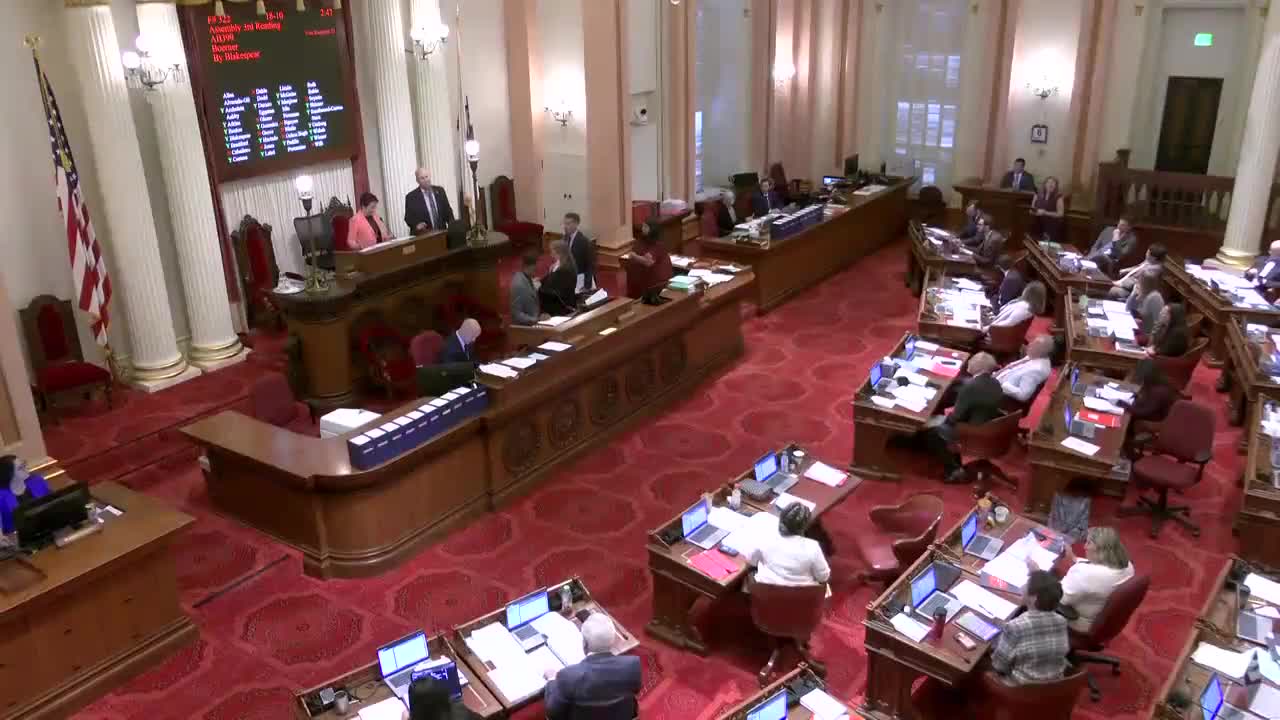 3MIN
Senate Floor
 5MIN
Senate Standing Committee on Business, Professions and Economic Development
 1MIN
Assembly Floor
 6MIN
Assembly Standing Committee on Business and Professions


Bill Co-Author(s):