AB 338: Fuel reduction work.
- Session Year: 2023-2024
- House: Assembly
- Latest Version Date: 2023-10-08
Current Status:
Passed
(2023-10-08: Chaptered by Secretary of State - Chapter 428, Statutes of 2023.)
Introduced
In Committee
First Chamber
In Committee
Second Chamber
Enacted
Existing law establishes the Department of Forestry and Fire Protection in the Natural Resources Agency and establishes the State Board of Forestry and Fire Protection within the department. Existing law requires the department to administer fire prevention programs and activities and requires the state board to adopt regulations implementing minimum fire safety standards.
Existing law requires that, except as specified, not less than the general prevailing rate of per diem wages, determined by the Director of Industrial Relations, be paid to workers employed on public works projects. Existing law defines the term public works for purposes of requirements regarding the payment of prevailing wages to include construction, alteration, demolition, installation, or repair work done under contract and paid for using public funds, except as specified.
This bill would, commencing July 1, 2026, require fuel reduction work, done under contract and paid for in whole or in part out of public funds, as specified, to meet several standards, including that all workers performing work within an apprenticeable occupation in the building and construction trades be paid at least the general prevailing rate of per diem wages. The bill would authorize the Labor Commissioner to enforce the requirement to pay prevailing wages. The bill would exempt from these requirements, among other things, contracts in the amount of $500,000 or less.
Existing law establishes the Department of Forestry and Fire Protection in the Natural Resources Agency and establishes the State Board of Forestry and Fire Protection within the department. Existing law requires the department to administer fire prevention programs and activities and requires the state board to adopt regulations implementing minimum fire safety standards.
Existing law requires that, except as specified, not less than the general prevailing rate of per diem wages, determined by the Director of Industrial Relations, be paid to workers employed on public works projects. Existing law defines the term public works for purposes of requirements regarding the payment of prevailing wages to include construction, alteration, demolition, installation, or repair work done under contract and paid for using public funds, except as specified. Existing law makes a willful violation of laws relating to the payment of prevailing wages on public works a misdemeanor.
This bill would, commencing January 1, 2025, expand the definition of public works to include fuel reduction work done under contract and paid for in whole or in part out of public funds performed as part of a fire mitigation project, as specified. The bill would limit those provisions to work that falls within an apprenticable occupation in the building and construction trades for which an apprenticeship program has been approved and to contracts in excess of $100,000. The bill would delay the application of those provisions until January 1, 2026, for nonprofits. By expanding the scope of a crime, the bill would impose a state-mandated local program. The California Constitution requires the state to reimburse local agencies and school districts for certain costs mandated by the state. Statutory provisions establish procedures for making that reimbursement.This bill would provide that no reimbursement is required by this act for a specified reason.This bill would, commencing July 1, 2026, require fuel reduction work, done under contract and paid for in whole or in part out of public funds, as specified, to meet several standards, including that all workers performing work within an apprenticeable occupation in the building and construction trades be paid at least the general prevailing rate of per diem wages. The bill would authorize the Labor Commissioner to enforce the requirement to pay prevailing wages. The bill would exempt from these requirements, among other things, contracts in the amount of $500,000 or less.
Existing law requires that, except as specified, not less than the general prevailing rate of per diem wages, determined by the Director of Industrial Relations, be paid to workers employed on public works projects. Existing law defines the term public works for purposes of requirements regarding the payment of prevailing wages to include construction, alteration, demolition, installation, or repair work done under contract and paid for using public funds, except as specified. Existing law makes a willful violation of laws relating to the payment of prevailing wages on public works a misdemeanor.
This bill would, commencing January 1, 2025, expand the definition of public works to include fuel reduction work done under contract and paid for in whole or in part out of public funds performed as part of a fire mitigation project, as specified. The bill would limit those provisions to work that falls within an apprenticable occupation in the building and construction trades for which an apprenticeship program has been approved and to contracts in excess of $100,000. The bill would delay the application of those provisions until January 1, 2026, for nonprofits. By expanding the scope of a crime, the bill would impose a state-mandated local program.
The California Constitution requires the state to reimburse local agencies and school districts for certain costs mandated by the state. Statutory provisions establish procedures for making that reimbursement.
This bill would provide that no reimbursement is required by this act for a specified reason.
(a)Any fuel reduction work, including, but not limited to, residential chipping, rural road fuel breaks, and firebreaks, done under contract and paid for in whole or in part out of public funds, as defined in subdivision (b) of Section 1720 of the Labor Code, except as specified in subdivision (b), subdivision (c), Section 80202, or Section 80203, shall be subject to the following standards:
(1)All workers employed in the execution of the contract to perform work that falls within an apprenticeable occupation in the building and construction trades for which an apprenticeship program has been approved by the Chief of the Division of Apprenticeship Standards pursuant to Section 3075 of the Labor Code shall be paid at least the general prevailing rate of per diem wages for the type of work and geographic area, as determined by the Director of Industrial Relations pursuant to Sections 1773 and 1773.9 of the Labor Code, except that apprentices registered in programs approved by the Chief of the Division of Apprenticeship Standards may be paid at least the applicable apprentice prevailing rate.
(2)All contractors and subcontractors shall maintain payroll records pursuant to Section 1776 of the Labor Code and make those records available for inspection and copying as provided in that section.
(3)A contractor shall be registered pursuant to Section 1725.6 of the Labor Code to be qualified to bid on, be awarded contracts for, or engage in the performance of, any work subject to the requirements of this section. For the purposes of this paragraph, contractor includes a subcontractor as defined by Section 1722.1 of the Labor Code.
(b)This division does not apply to fuel reduction work that is awarded by a federal entity using solely federal funds under which federal prevailing wage requirements apply.
(c)This division is applicable only to work performed under contract and is not applicable to work carried out by a public agency with its own forces.
80201.(a)The requirement to pay prevailing wages pursuant to this division may be enforced by the Labor Commissioner through the issuance of a civil wage and penalty assessment pursuant to Section 1741 of the Labor Code, which may be reviewed pursuant to Section 1742 of the Labor Code, within 18 months after the completion of the project, by an underpaid worker through an administrative complaint or civil action, or by a joint labor-management committee through a civil action under Section 1771.2 of the Labor Code.
(b)If a civil wage and penalty assessment is issued, the contractor, subcontractor, and surety on a bond issued to secure the payment of wages covered by the assessment shall be liable for liquidated damages pursuant to Section 1742.1 of the Labor Code.
80202.This division only applies to contracts in excess of five hundred thousand dollars ($500,000).
80203.(a)This division does not apply to work performed on Indian lands, as defined in Section 2703 of Title 25 of the United States Code, nor to work performed under contract with a federally recognized Native American tribe.
(b)This division does not apply to prescribed fire or grazing work.
(c)This division does not apply to work performed on private land. That work shall be considered an exception to the definition of maintenance in Section 16000 of Title 8 of the California Code of Regulations.
(d)This division does not apply to nonprofit organizations that directly contract with the state or a political subdivision until July 1, 2027, and does not apply to any contract, subcontract, or grant agreement between a nonprofit organization and the state or a political subdivision that is fully executed when this division becomes operative, unless the contract, subcontract, or grant agreement is renewed after July 1, 2027.
(e)This division does not apply to any workers who are currently exempt from public works requirements pursuant to Section 1720.4 of the Labor Code.
(f)This division does not apply to fuel reduction work performed by an inmate.
80204.This division shall become operative on July 1, 2026, and does not apply to any contract, subcontract, or grant agreement that is fully executed when this division becomes operative, unless the contract, subcontract, or grant agreement is renewed after July 1, 2026.
SECTION 1.Section 1720 of the Labor Code is amended to read:1720.(a)As used in this chapter, public works means all of the following:(1)Construction, alteration, demolition, installation, or repair work done under contract and paid for in whole or in part out of public funds, except work done directly by a public utility company pursuant to order of the Public Utilities Commission or other public authority. For purposes of this paragraph, construction includes work performed during the design, site assessment, feasibility study, and other preconstruction phases of construction, including, but not limited to, inspection and land surveying work, regardless of whether any further construction work is conducted, and work performed during the postconstruction phases of construction, including, but not limited to, all cleanup work at the jobsite. For purposes of this paragraph, installation includes, but is not limited to, the assembly and disassembly of freestanding and affixed modular office systems.(2)Work done for irrigation, utility, reclamation, and improvement districts, and other districts of this type. Public works does not include the operation of the irrigation or drainage system of an irrigation or reclamation district, except as used in Section 1778 relating to retaining wages.(3)Street, sewer, or other improvement work done under the direction and supervision or by the authority of an officer or public body of the state, or of a political subdivision or district thereof, whether the political subdivision or district operates under a freeholders charter or not.(4)The laying of carpet done under a building lease-maintenance contract and paid for out of public funds.(5)The laying of carpet in a public building done under contract and paid for in whole or in part out of public funds.(6)Public transportation demonstration projects authorized pursuant to Section 143 of the Streets and Highways Code.(7)(A)Infrastructure project grants from the California Advanced Services Fund pursuant to Section 281 of the Public Utilities Code.(B)For purposes of this paragraph, the Public Utilities Commission is not the awarding body or the body awarding the contract, as defined in Section 1722.(8)Tree removal work done in the execution of a project under paragraph (1).(9)(A) Fuel reduction work done under contract and paid for in whole or in part out of public funds performed as part of a fire mitigation project, including, but not limited to, residential chipping, rural road fuel breaks, fire breaks, and vegetation management.(B)This paragraph shall apply only to work that falls within an apprenticable occupation in the building and construction trades for which an apprenticeship program has been approved by the Chief of the Division of Apprenticeship Standards pursuant to Section 3075.(C)This paragraph shall only apply to contracts in excess of one hundred thousand dollars ($100,000).(D)This paragraph shall not apply to work performed on Indian lands, as defined in Section 2703 of Title 25 of the United States Code.(E)This paragraph shall not apply to nonprofit organizations until January 1, 2026.(F)This paragraph shall become operative on January 1, 2025.(b)For purposes of this section, paid for in whole or in part out of public funds means all of the following:(1)The payment of money or the equivalent of money by the state or political subdivision directly to or on behalf of the public works contractor, subcontractor, or developer.(2)Performance of construction work by the state or political subdivision in execution of the project.(3)Transfer by the state or political subdivision of an asset of value for less than fair market price.(4)Fees, costs, rents, insurance or bond premiums, loans, interest rates, or other obligations that would normally be required in the execution of the contract, that are paid, reduced, charged at less than fair market value, waived, or forgiven by the state or political subdivision.(5)Money loaned by the state or political subdivision that is to be repaid on a contingent basis.(6)Credits that are applied by the state or political subdivision against repayment obligations to the state or political subdivision.(c)Notwithstanding subdivision (b), all of the following apply:(1)Private residential projects built on private property are not subject to this chapter unless the projects are built pursuant to an agreement with a state agency, a redevelopment agency, a successor agency to a redevelopment agency when acting in that capacity, or a local public housing authority.(2)If the state or a political subdivision requires a private developer to perform construction, alteration, demolition, installation, or repair work on a public work of improvement as a condition of regulatory approval of an otherwise private development project, and the state or political subdivision contributes no more money, or the equivalent of money, to the overall project than is required to perform this public improvement work, and the state or political subdivision maintains no proprietary interest in the overall project, then only the public improvement work shall thereby become subject to this chapter.(3)(A)If the state or a political subdivision reimburses a private developer for costs that would normally be borne by the public, or provides directly or indirectly a public subsidy to a private development project that is de minimis in the context of the project, an otherwise private development project shall not thereby become subject to this chapter.(B)(i)For purposes of subparagraph (A), a public subsidy is de minimis if it is both less than six hundred thousand dollars ($600,000) and less than 2 percent of the total project cost.(ii)Notwithstanding clause (i), for purposes of subparagraph (A), a public subsidy for a project that consists entirely of single-family dwellings is de minimis if it is less than 2 percent of the total project cost.(iii)This subparagraph shall not apply to a project that was advertised for bid, or a contract that was awarded, before July 1, 2021.(4)The construction or rehabilitation of affordable housing units for low- or moderate-income persons pursuant to paragraph (5) or (7) of subdivision (e) of Section 33334.2 of the Health and Safety Code that are paid for solely with moneys from the Low and Moderate Income Housing Fund established pursuant to Section 33334.3 of the Health and Safety Code or that are paid for by a combination of private funds and funds available pursuant to Section 33334.2 or 33334.3 of the Health and Safety Code do not constitute a project that is paid for in whole or in part out of public funds.(5)Unless otherwise required by a public funding program, the construction or rehabilitation of privately owned residential projects is not subject to this chapter if one or more of the following conditions are met:(A)The project is a self-help housing project in which no fewer than 500 hours of construction work associated with the homes are to be performed by the home buyers.(B)The project consists of rehabilitation or expansion work associated with a facility operated on a not-for-profit basis as temporary or transitional housing for homeless persons with a total project cost of less than twenty-five thousand dollars ($25,000).(C)Assistance is provided to a household as either mortgage assistance, downpayment assistance, or for the rehabilitation of a single-family home.(D)The project consists of new construction, expansion, or rehabilitation work associated with a facility developed by a nonprofit organization to be operated on a not-for-profit basis to provide emergency or transitional shelter and ancillary services and assistance to homeless adults and children. The nonprofit organization operating the project shall provide, at no profit, not less than 50 percent of the total project cost from nonpublic sources, excluding real property that is transferred or leased. Total project cost includes the value of donated labor, materials, and architectural and engineering services.(E)The public participation in the project that would otherwise meet the criteria of subdivision (b) is public funding in the form of below-market interest rate loans for a project in which occupancy of at least 40 percent of the units is restricted for at least 20 years, by deed or regulatory agreement, to individuals or families earning no more than 80 percent of the area median income.(d)Notwithstanding any provision of this section to the contrary, the following projects are not, solely by reason of this section, subject to this chapter:(1)Qualified residential rental projects, as defined by Section 142(d) of the Internal Revenue Code, financed in whole or in part through the issuance of bonds that receive allocation of a portion of the state ceiling pursuant to Chapter 11.8 (commencing with Section 8869.80) of Division 1 of Title 2 of the Government Code on or before December 31, 2003.(2)Single-family residential projects financed in whole or in part through the issuance of qualified mortgage revenue bonds or qualified veterans mortgage bonds, as defined by Section 143 of the Internal Revenue Code, or with mortgage credit certificates under a Qualified Mortgage Credit Certificate Program, as defined by Section 25 of the Internal Revenue Code, that receive allocation of a portion of the state ceiling pursuant to Chapter 11.8 (commencing with Section 8869.80) of Division 1 of Title 2 of the Government Code on or before December 31, 2003.(3)Low-income housing projects that are allocated federal or state low-income housing tax credits pursuant to Section 42 of the Internal Revenue Code, Chapter 3.6 (commencing with Section 50199.4) of Part 1 of Division 31 of the Health and Safety Code, or Section 12206, 17058, or 23610.5 of the Revenue and Taxation Code, on or before December 31, 2003.(e)Notwithstanding paragraph (1) of subdivision (a), construction, alteration, demolition, installation, or repair work on the electric transmission system located in California constitutes a public works project for the purposes of this chapter.(f)If a statute, other than this section, or a regulation, other than a regulation adopted pursuant to this section, or an ordinance or a contract applies this chapter to a project, the exclusions set forth in subdivision (d) do not apply to that project.(g)For purposes of this section, references to the Internal Revenue Code mean the Internal Revenue Code of 1986, as amended, and include the corresponding predecessor sections of the Internal Revenue Code of 1954, as amended.(h)The amendments made to this section by either Chapter 938 of the Statutes of 2001 or the act adding this subdivision shall not be construed to preempt local ordinances requiring the payment of prevailing wages on housing projects.SEC. 2.No reimbursement is required by this act pursuant to Section 6 of Article XIIIB of the California Constitution because the only costs that may be incurred by a local agency or school district will be incurred because this act creates a new crime or infraction, eliminates a crime or infraction, or changes the penalty for a crime or infraction, within the meaning of Section 17556 of the Government Code, or changes the definition of a crime within the meaning of Section 6 of Article XIIIB of the California Constitution.(a)As used in this chapter, public works means all of the following:
(1)Construction, alteration, demolition, installation, or repair work done under contract and paid for in whole or in part out of public funds, except work done directly by a public utility company pursuant to order of the Public Utilities Commission or other public authority. For purposes of this paragraph, construction includes work performed during the design, site assessment, feasibility study, and other preconstruction phases of construction, including, but not limited to, inspection and land surveying work, regardless of whether any further construction work is conducted, and work performed during the postconstruction phases of construction, including, but not limited to, all cleanup work at the jobsite. For purposes of this paragraph, installation includes, but is not limited to, the assembly and disassembly of freestanding and affixed modular office systems.
(2)Work done for irrigation, utility, reclamation, and improvement districts, and other districts of this type. Public works does not include the operation of the irrigation or drainage system of an irrigation or reclamation district, except as used in Section 1778 relating to retaining wages.
(3)Street, sewer, or other improvement work done under the direction and supervision or by the authority of an officer or public body of the state, or of a political subdivision or district thereof, whether the political subdivision or district operates under a freeholders charter or not.
(4)The laying of carpet done under a building lease-maintenance contract and paid for out of public funds.
(5)The laying of carpet in a public building done under contract and paid for in whole or in part out of public funds.
(6)Public transportation demonstration projects authorized pursuant to Section 143 of the Streets and Highways Code.
(7)(A)Infrastructure project grants from the California Advanced Services Fund pursuant to Section 281 of the Public Utilities Code.
(B)For purposes of this paragraph, the Public Utilities Commission is not the awarding body or the body awarding the contract, as defined in Section 1722.
(8)Tree removal work done in the execution of a project under paragraph (1).
(9)(A) Fuel reduction work done under contract and paid for in whole or in part out of public funds performed as part of a fire mitigation project, including, but not limited to, residential chipping, rural road fuel breaks, fire breaks, and vegetation management.
(B)This paragraph shall apply only to work that falls within an apprenticable occupation in the building and construction trades for which an apprenticeship program has been approved by the Chief of the Division of Apprenticeship Standards pursuant to Section 3075.
(C)This paragraph shall only apply to contracts in excess of one hundred thousand dollars ($100,000).
(D)This paragraph shall not apply to work performed on Indian lands, as defined in Section 2703 of Title 25 of the United States Code.
(E)This paragraph shall not apply to nonprofit organizations until January 1, 2026.
(F)This paragraph shall become operative on January 1, 2025.
(b)For purposes of this section, paid for in whole or in part out of public funds means all of the following:
(1)The payment of money or the equivalent of money by the state or political subdivision directly to or on behalf of the public works contractor, subcontractor, or developer.
(2)Performance of construction work by the state or political subdivision in execution of the project.
(3)Transfer by the state or political subdivision of an asset of value for less than fair market price.
(4)Fees, costs, rents, insurance or bond premiums, loans, interest rates, or other obligations that would normally be required in the execution of the contract, that are paid, reduced, charged at less than fair market value, waived, or forgiven by the state or political subdivision.
(5)Money loaned by the state or political subdivision that is to be repaid on a contingent basis.
(6)Credits that are applied by the state or political subdivision against repayment obligations to the state or political subdivision.
(c)Notwithstanding subdivision (b), all of the following apply:
(1)Private residential projects built on private property are not subject to this chapter unless the projects are built pursuant to an agreement with a state agency, a redevelopment agency, a successor agency to a redevelopment agency when acting in that capacity, or a local public housing authority.
(2)If the state or a political subdivision requires a private developer to perform construction, alteration, demolition, installation, or repair work on a public work of improvement as a condition of regulatory approval of an otherwise private development project, and the state or political subdivision contributes no more money, or the equivalent of money, to the overall project than is required to perform this public improvement work, and the state or political subdivision maintains no proprietary interest in the overall project, then only the public improvement work shall thereby become subject to this chapter.
(3)(A)If the state or a political subdivision reimburses a private developer for costs that would normally be borne by the public, or provides directly or indirectly a public subsidy to a private development project that is de minimis in the context of the project, an otherwise private development project shall not thereby become subject to this chapter.
(B)(i)For purposes of subparagraph (A), a public subsidy is de minimis if it is both less than six hundred thousand dollars ($600,000) and less than 2 percent of the total project cost.
(ii)Notwithstanding clause (i), for purposes of subparagraph (A), a public subsidy for a project that consists entirely of single-family dwellings is de minimis if it is less than 2 percent of the total project cost.
(iii)This subparagraph shall not apply to a project that was advertised for bid, or a contract that was awarded, before July 1, 2021.
(4)The construction or rehabilitation of affordable housing units for low- or moderate-income persons pursuant to paragraph (5) or (7) of subdivision (e) of Section 33334.2 of the Health and Safety Code that are paid for solely with moneys from the Low and Moderate Income Housing Fund established pursuant to Section 33334.3 of the Health and Safety Code or that are paid for by a combination of private funds and funds available pursuant to Section 33334.2 or 33334.3 of the Health and Safety Code do not constitute a project that is paid for in whole or in part out of public funds.
(5)Unless otherwise required by a public funding program, the construction or rehabilitation of privately owned residential projects is not subject to this chapter if one or more of the following conditions are met:
(A)The project is a self-help housing project in which no fewer than 500 hours of construction work associated with the homes are to be performed by the home buyers.
(B)The project consists of rehabilitation or expansion work associated with a facility operated on a not-for-profit basis as temporary or transitional housing for homeless persons with a total project cost of less than twenty-five thousand dollars ($25,000).
(C)Assistance is provided to a household as either mortgage assistance, downpayment assistance, or for the rehabilitation of a single-family home.
(D)The project consists of new construction, expansion, or rehabilitation work associated with a facility developed by a nonprofit organization to be operated on a not-for-profit basis to provide emergency or transitional shelter and ancillary services and assistance to homeless adults and children. The nonprofit organization operating the project shall provide, at no profit, not less than 50 percent of the total project cost from nonpublic sources, excluding real property that is transferred or leased. Total project cost includes the value of donated labor, materials, and architectural and engineering services.
(E)The public participation in the project that would otherwise meet the criteria of subdivision (b) is public funding in the form of below-market interest rate loans for a project in which occupancy of at least 40 percent of the units is restricted for at least 20 years, by deed or regulatory agreement, to individuals or families earning no more than 80 percent of the area median income.
(d)Notwithstanding any provision of this section to the contrary, the following projects are not, solely by reason of this section, subject to this chapter:
(1)Qualified residential rental projects, as defined by Section 142(d) of the Internal Revenue Code, financed in whole or in part through the issuance of bonds that receive allocation of a portion of the state ceiling pursuant to Chapter 11.8 (commencing with Section 8869.80) of Division 1 of Title 2 of the Government Code on or before December 31, 2003.
(2)Single-family residential projects financed in whole or in part through the issuance of qualified mortgage revenue bonds or qualified veterans mortgage bonds, as defined by Section 143 of the Internal Revenue Code, or with mortgage credit certificates under a Qualified Mortgage Credit Certificate Program, as defined by Section 25 of the Internal Revenue Code, that receive allocation of a portion of the state ceiling pursuant to Chapter 11.8 (commencing with Section 8869.80) of Division 1 of Title 2 of the Government Code on or before December 31, 2003.
(3)Low-income housing projects that are allocated federal or state low-income housing tax credits pursuant to Section 42 of the Internal Revenue Code, Chapter 3.6 (commencing with Section 50199.4) of Part 1 of Division 31 of the Health and Safety Code, or Section 12206, 17058, or 23610.5 of the Revenue and Taxation Code, on or before December 31, 2003.
(e)Notwithstanding paragraph (1) of subdivision (a), construction, alteration, demolition, installation, or repair work on the electric transmission system located in California constitutes a public works project for the purposes of this chapter.
(f)If a statute, other than this section, or a regulation, other than a regulation adopted pursuant to this section, or an ordinance or a contract applies this chapter to a project, the exclusions set forth in subdivision (d) do not apply to that project.
(g)For purposes of this section, references to the Internal Revenue Code mean the Internal Revenue Code of 1986, as amended, and include the corresponding predecessor sections of the Internal Revenue Code of 1954, as amended.
(h)The amendments made to this section by either Chapter 938 of the Statutes of 2001 or the act adding this subdivision shall not be construed to preempt local ordinances requiring the payment of prevailing wages on housing projects.
SEC. 2.No reimbursement is required by this act pursuant to Section 6 of Article XIIIB of the California Constitution because the only costs that may be incurred by a local agency or school district will be incurred because this act creates a new crime or infraction, eliminates a crime or infraction, or changes the penalty for a crime or infraction, within the meaning of Section 17556 of the Government Code, or changes the definition of a crime within the meaning of Section 6 of Article XIIIB of the California Constitution.
|
Date
|
Status
|
|---|---|
| Oct 8, 2023 | Chaptered by Secretary of State - Chapter 428, Statutes of 2023. |
| Oct 8, 2023 | Approved by the Governor. |
| Sep 20, 2023 | Enrolled and presented to the Governor at 4 p.m. |
| Sep 13, 2023 | Senate amendments concurred in. To Engrossing and Enrolling. (Ayes 65. Noes 8. Page 3388.). |
| Sep 12, 2023 | In Assembly. Concurrence in Senate amendments pending. |
| Sep 12, 2023 | Read third time. Passed. Ordered to the Assembly. (Ayes 30. Noes 8. Page 2662.). |
| Sep 11, 2023 | Read second time. Ordered to third reading. |
| Sep 8, 2023 | Read third time and amended. Ordered to second reading. |
| Sep 5, 2023 | Read second time. Ordered to third reading. |
| Sep 1, 2023 | From committee: Do pass. (Ayes 5. Noes 2.) (September 1). |
| Aug 14, 2023 | In committee: Referred to APPR suspense file. |
| Jul 12, 2023 | From committee: Do pass and re-refer to Com. on APPR. (Ayes 4. Noes 0.) (July 12). Re-referred to Com. on APPR. |
| Jun 14, 2023 | Referred to Com. on L., P.E. & R. |
| Jun 1, 2023 | In Senate. Read first time. To Com. on RLS. for assignment. |
| May 31, 2023 | Read third time. Passed. Ordered to the Senate. (Ayes 66. Noes 8. Page 1969.) |
| May 18, 2023 | Read second time. Ordered to third reading. |
| May 18, 2023 | From committee: Do pass. (Ayes 11. Noes 3.) (May 18). |
| Apr 19, 2023 | In committee: Set, first hearing. Referred to APPR. suspense file. |
| Mar 22, 2023 | From committee: Do pass and re-refer to Com. on APPR. (Ayes 6. Noes 0.) (March 22). Re-referred to Com. on APPR. |
| Feb 9, 2023 | Referred to Com. on L. & E. |
| Jan 31, 2023 | From printer. May be heard in committee March 2. |
| Jan 30, 2023 | Read first time. To print. |
|
Date
|
Description
|
Location
|
Votes
|
|
|---|---|---|---|---|
| Sep 13, 2023 | AB 338 Aguiar-Curry Concurrence in Senate Amendments | Assembly Floor |
Passed |
|
| Sep 12, 2023 | Assembly 3rd Reading AB338 Aguiar-Curry By Durazo | Senate Floor |
Passed |
|
| Sep 1, 2023 | Do pass | Senate Standing Committee on Appropriations |
Passed |
|
| Aug 14, 2023 | Placed on suspense file | Senate Standing Committee on Appropriations |
Passed |
|
| Jul 12, 2023 | Do pass, but first be re-referred to the Committee on [Appropriations] | Senate Standing Committee on Labor, Public Employment and Retirement |
Passed |
|
| May 31, 2023 | AB 338 Aguiar-Curry Assembly Third Reading | Assembly Floor |
Passed |
|
| May 18, 2023 | Do pass. | Assembly Standing Committee on Appropriations |
Passed |
|
| Mar 22, 2023 | Do pass and be re-referred to the Committee on [Appropriations] | Assembly Standing Committee on Labor and Employment |
Passed |
This list shows positions taken on this bill by organizations on the date displayed, which is linked to the original source.
Positions by individuals are not included.
|
Organization
|
Position
|
Date
|
|---|---|---|
| Associated California Loggers | ** Against | |
| California Association Of Resource Conservation Districts | ** Against | |
| California Democratic Party | ** Support | |
| California Forestry Association | ** Against | |
| California Labor Federation, Afl-Cio | ** Support | |
| California Licensed Foresters Association | ** Against | |
| California Society of American Foresters | ** Against | |
| California Special Districts Association | ** Against | |
| California State Association Of Counties | ** Against | |
| California State Association Of Electrical Workers | ** Against | |
| California State Council Of Laborers | ** Support | |
| Coalition of California Utility Employees | ** Against | |
| County of Butte | ** Against | |
| County Of Del Norte | ** Against | |
| County Of Kern | ** Against | |
| County of Mendocino | ** Against | |
| County of Nevada | ** Against | |
| County Of Placer | ** Against | |
| County of Shasta | ** Against | |
| De Silva Group | ** Support | |
| District Council 16 International Union Of Painters And Allied Trades | ** Support | |
| El Dorado County Water Agency | ** Against | |
| El Dorado Irrigation District | ** Against | |
| Elsinore Valley Municipal Water District | ** Against | |
| Forest Landowners Of California | ** Against | |
| Forest Products industry National Labor Management Committee | ** Against | |
| Golden State Natural Resources | ** Against | |
| Humboldt Redwood Company LLC | ** Against | |
| International Union of Operating Engineers, Cal-Nevada Conf. | ** Support | |
| International Union of Operating Engineers, Cal-Nevada Conference | ** Support | |
| Mendocino County Fire Safe Council | ** Against | |
| Mountain Counties Water Resources Association | ** Against | |
| Pacific Forest Trust | ** Against | |
| Rostrum | ** Against | |
| Rural County Representatives of California | ** Against | |
| Southern California Contractors Association | ** Support | |
| State Building & Construction Trades Council | ** Support | |
| Tuolumne County Board of Supervisors | ** Against | |
| Tuolumne River Trust | ** Against | |
| United Contractors | ** Support |
SENATE RULES COMMITTEE Office of Senate Floor Analyses (916) 651-1520 Fax: (916) 327-4478 | AB 338 |
THIRD READING
Bill No: AB 338
Author: Aguiar-Curry (D)
Amended: 9/8/23 in Senate
Vote: 21
SENATE LABOR, PUB. EMP. & RET. COMMITTEE: 4-0, 7/12/23
AYES: Cortese, Durazo, Laird, Smallwood-Cuevas
NO VOTE RECORDED: Wilk
SENATE APPROPRIATIONS COMMITTEE: 5-2, 9/1/23
AYES: Portantino, Ashby, Bradford, Wahab, Wiener
NOES: Jones, Seyarto
ASSEMBLY FLOOR: 66-8, 5/31/23 - See last page for vote
SUBJECT: Fuel reduction work
SOURCE: California State Council of Laborers
International Union of Operating Engineers, Cal-Nevada Conf. Southern California Contractors Association
State Building & Construction Trades Council
United Contractors
DIGEST:
This bill requires, beginning July 1, 2026, prevailing wages be paid to employees and apprentices for specified contracted fuel reduction projects that cost in excess of $500,000 and makes specified labor laws subject to those projects.
Senate Floor Amendments of 9/8/23 recast the bill in the Public Resources Code, require prevailing wages, as specified, for fuel reduction contracts in excess of $500,000, exempt specified entities, change the operative date, and conform to California Labor Code prevailing wage and enforcement requirements.
ANALYSIS:
Existing law:
- Defines, for the purpose of prevailing wage, a project “paid for in whole or in part out of public funds” to mean the following:
- The payment of money or the equivalent of money by the state or political subdivision directly to or on behalf of the public works contractor, subcontractor, or developer.
- Performance of construction work by the state or political subdivision in execution of the project.
- Transfer by the state or political subdivision of an asset of value for less than fair market price.
- Fees, costs, rents, insurance or bond premiums, loans, interest rates, or other obligations that would normally be required in the execution of the contract, that are paid, reduced, charged at less than fair market value, waived, or forgiven by the state or political subdivision.
- Money loaned by the state or political subdivision that is to be repaid on a contingent basis.
- Credits that are applied by the state or political subdivision against repayment obligations to the state or political subdivision. (Labor Code §1720(b))
- Specifies that for prevailing wages, “construction” includes work performed during the design and preconstruction phase, including, but not limited to, inspection and land surveying work and work performed during the post construction phase, including, but not limited to, all cleanup work at the jobsite. (Labor Code §1720)
- Requires that the applicable general prevailing rate of per diem wages be determined by the Director of the Department of Industrial Relations (DIR) for each locality in which the public work is to be performed and for each craft, classification, or type of worker needed to execute the public works project. (Labor Code §1773)
- Requires a contractor to be registered with DIR to qualify for public works projects (Labor Code §1725.6)
- Provides that private residential projects built on private property are not subject to the requirements of public works provisions, unless the projects are built pursuant to an agreement with a state agency, redevelopment agency, or local public housing authority. (Labor Code §1720)
- Exempts from prevailing wage, work performed by a volunteer for civil, charitable, or humanitarian reasons for a public agency, or 501(c)(3) nonprofit corporation. (Labor Code §1720.4)
- Authorizes the Labor Commissioner, or their designee, to issue civil penalties for a contractor or subcontractor that fails to pay prevailing wages in connection with a public work. (Labor Code §1741)
- Provides that after 60 days following the service of a civil wage and penalty assessment or a notice of withholding the affected contractor, subcontractor, and surety on a bond or bonds issued to secure the payment of wages covered by the assessment or notice shall be liable for liquidated damages in an amount equal to the wages, or portion thereof, that still remain unpaid. If the assessment or notice subsequently is overturned or modified after administrative or judicial review, liquidated damages shall be payable only on the wages found to be due and unpaid. Any liquidated damages shall be distributed to the employee along with the unpaid wages. (Labor Code 1742.1)
This bill:
- Requires, beginning July 1, 2026, prevailing wages be paid to employees and apprentices for fuel reduction work projects in excess of $500,000 and does not apply to any contract, subcontract, or grant agreement that is fully executed when this division becomes operative, unless the contract, subcontract, or grant agreement is renewed after July 1, 2026.
- Defines fuel reduction work as, including, but not limited to, residential chipping, rural road fuel breaks, and fire breaks done under contract and paid for in whole or in part with public funds.
- Specifies apprentices shall be paid prevailing wage except apprentices registered in programs approved by the Division of Apprenticeship Standards may be paid at least the applicable apprentice prevailing wage.
- Requires contractors and subcontractors performing applicable fuel reduction work to register with DIR to be qualified to bid on and perform applicable fuel reduction work and maintain payroll records pursuant to Section 1776 of the California Labor Code and make those records available for inspection and copying.
- Exempts the following from the provisions of this bill:
- Nonprofit organizations until July 1, 2027, which directly contract with the state or a political subdivision and shall not apply to any contract, subcontract, or grant agreement between a nonprofit and the state or political subdivision that is fully executed when this bill becomes operative, unless the contract, subcontract, or grant agreement is renewed after July 1, 2027.
- Work carried out by a public agency with its own forces.
- Indian lands, as defined in Section 2703 of Title 25 of the United States Code, and work performed under contract with a federally recognized Native American tribe.
- Prescribed fire or grazing work.
- Fuel reduction work performed on private lands.
- Fuel reduction work performed by volunteers.
- Fuel reduction work performed by an inmate.
- Fuel reduction work that is awarded by a federal entity using solely federal funds under which federal prevailing wage requirements apply.
Background
In the wake of 2018, the third deadliest and most destructive wildfire season on record in California, Governor Newsom issued Executive Order N-05-19 directing CAL FIRE to submit a report with recommendations of the most impactful administrative, regulatory, and policy changes or waivers necessary to prevent and mitigate wildfires to the greatest extent possible, with an emphasis on environmental sustainability and protection of public health. The following month, CAL FIRE released its report, which found forest management efforts by the state, federal government, and private landowners were inadequate to improve the health of millions of acres of forests and wildlands that require maintenance. A reported 15 million acres of forests were in need of restoration.
In March 2019, the Governor declared a state of emergency and waived environmental regulations to expedite forest management projects. The following year, 4.3 million acres burned as another record was set in California, more than double the previous 2018 record. In 2021, nearly 2.6 million acres burned. One direct contributor to the wildfires was the increase in dead tree fuel.
Fuel Mitigation Work. Fuel reduction work is undertaken by CAL FIRE’s Fuels Reduction Crews, firefighter hand and engine crews, as well as partnerships with the California National Guard, California Conservation Corps, and California Department of Corrections and Rehabilitation. CAL FIRE also oversees millions of dollars in grant funds for ongoing local fuel reduction projects in and around communities and wildlands, which include the removal or reduction of overgrown vegetation through the use of prescribed burning, tree thinning, pruning, and roadway clearance, among other strategies. This bill addresses the types of local mitigation projects where work is already within an apprentice-able occupation, such as roadway clearance. For example, if there is a fuel mitigation project over 25 acres that costs $4000 per acre, the prevailing wage requirement in this bill would be applicable.
Apprenticeship Programs. The California-Nevada Power Lineman Joint Apprenticeship and Training Committee offers a program to train highly skilled journey level workers in outside electrical construction. There are various approved apprenticeship programs for tradespersons, who are trained in heavy equipment operation, including earth moving equipment, which is utilized when creating road fuel breaks, fire breaks, and vegetation management. There are also specialty arborist apprentices trained in tree health, pruning, tree and vegetation removal, and heavy equipment operation.
Future clarifying language. The most recent amendments exempt fuel reduction work performed on private lands from the requirements of this bill; however, it appears residential chipping work was inadvertently left in the language describing types of projects to which the bill would apply. The author may wish to consider removing this reference next year to avoid any confusion regarding the applicability of projects on private land.
Comments
Purpose of the bill. The author states “Catastrophic wildfires have unfortunately become an annual occurrence in California. In 2021 alone the state saw 8,786 active wildfires that burned approximately 2,568,941 acres of land, destroyed 3,629 structures, and, most devastating of all, took the lives of three California citizens. Given this new reality, the state has placed a strong emphasis on wildfire mitigation work as a means to reduce the intensity of wildfire season. While wildfire mitigation is often talked about as a mechanism to protect houses from wildfires, wildfire mitigation is also a critical component of protecting various public works, including transportation infrastructure, public schools, and public buildings. In this sense, wildfire mitigation can and should be seen as a “maintenance activity” that is desperately needed to ensure the safety and functionality of existing public works. This bill ensures that contracted-out wildfire mitigation work is considered a public works, which guarantees the fair payment of the workers participating in these projects and provides apprenticeship opportunities for aspiring tradesman. In an often dangerous environment, having better-paid and trained workers will prevent injuries and deliver a better, more efficient wildfire prevention.”
FISCAL EFFECT: Appropriation: No Fiscal Com.: Yes Local: No
According to the Senate Appropriations Committee:
- [DIR] indicates that, beginning in 2025, it would incur first-year costs of $138,000, and $127,000 annually thereafter, for increased oversight of new public works projects (Labor Enforcement and Compliance Fund).
- The bill would result in unknown but potentially significant costs to [CAL FIRE] if it is responsible for ensuring grantees comply with public works law (Greenhouse Gas Reduction Fund).
- To the extent that prevailing wage requirements increase costs for grantees and result in fewer acres treated, this bill could result in a cost pressure to fund more fuel reduction projects.
SUPPORT: (Verified 9/11/23)
California State Council of Laborers (co-source)
International Union of Operating Engineers, Cal-Nevada Conf. (co-source)
Southern California Contractors Association (co-source)
State Building & Construction Trades Council (co-source)
United Contractors (co-source)
California Democratic Party
California Labor Federation, AFL-CIO
California State Council of Laborers
De Silva Group
District Council 16, International Union of Painters and Allied Trades
International Union of Operating Engineers, Cal-Nevada Conference
Southern California Contractors Association
OPPOSITION: (Verified 9/11/23)
Associated California Loggers
California Forestry Association
California Licensed Foresters Association
California Society of American Foresters
California Special Districts Association
California State Association of Counties
California State Association of Electrical Workers
Coalition of California Utility Employees
County of Butte
County of Del Norte
County of Kern
County of Mendocino
County of Nevada
County of Placer
County of Shasta
El Dorado County Water Agency
El Dorado Irrigation District
Elsinore Valley Municipal Water District
Forest Landowners of California
Forest Products Industry National Labor Management Committee
Golden State Natural Resources
Humboldt Redwood Company LLC
Mendocino County Fire Safe Council
Mountain Counties Water Resources Association
Pacific Forest Trust
Rostrum
Rural County Representatives of California
Tuolumne County Board of Supervisors
Tuolumne River Trust
Individual Opposition Letters: 1
ARGUMENTS IN SUPPORT: The California State Council of Laborers, International Union of Operating Engineers, State Building and Construction Trades Council, Southern California Contractors Association, and United Contractors state “Catastrophic wildfires have unfortunately become an annual occurrence in our State. In 2021 alone, the State saw 8,786 active wildfires that burned approximately 2,568,941 acres of land, destroyed 3,629 structures, and most devastating of all took the lives of 3 California citizens. A look at the wildfire statistics over a 5 year period (2017-2021) paints a clear picture of our new reality. In that span of time the State has seen 43,830 wildfires that burned 10,610,149 acres of land, destroyed 49,355 structures, and took the lives of 186 of our fellow Californians.
Given this new reality, the state has placed a strong emphasis on wildfire mitigation work as a means to reduce the intensity of wildfire season. In the 2021-2022 budget, the Governor and the Legislature appropriated 1.5 billion towards wildfire prevention in an effort to protect California communities from wildfires and additionally ensured multi-year funding towards wildfire mitigation by requiring that 200 million greenhouse gas reduction fund dollars be spent annually on wildfire mitigation until 2028.
Wildfire mitigation is dangerous and labor-intensive work that involves the implementation of a variety of precautionary measures to protect communities from the spread of wildfires. Specifically, wildfire mitigation tasks typically include but are not limited residential chipping, rural road fuel breaks, fire breaks, and vegetation management. Simply put, successful wildfire mitigation involves the removal or thinning of natural fuels, including brush, and dead or dying trees in order to limit the uncontrolled spread of a wildfire. These projects are essential to protecting communities.
Our organizations have made good faith efforts to ensure that this piece of legislation does not have a negative impact on existing projects that are currently budgeted for, as we know the critical nature of this work should not be interrupted.”
ARGUMENTS IN OPPOSITION: The California State Association of Counties states “We are concerned that very little study has been done on the current condition of the forest resilience workforce, including wages and training needs for contractors used by both state and local agencies, to truly understand whether the state can balance its current forest resilience funding commitments with a marked increase in workforce costs.
Experience has shown that, as written, AB 338, would have the unintended consequence of eliminating local jobs rather than creating them by placing small, local contractors at a competitive disadvantage for fuels reduction work in rural areas…Prevailing wage requirements will also be an impediment to state agencies under the California Natural Resources Agency such as CAL FIRE and the various conservancies, who will struggle in the foreseeable future to continue to meet the state’s ambitious forest resilience and wildfire mitigation goals with diminishing state funding revenues. Administering prevailing wage will require additional staffing time and resources not currently allocated in the state budget and will necessarily shrink the pace and scale of forest resilience acres treated due to dramatically increased costs. Should AB 338 become law, it must be accompanied by an associated commitment from the Legislature to increase funding for forest resilience and fuels treatment grants and other programs.”
ASSEMBLY FLOOR: 66-8, 5/31/23
AYES: Addis, Aguiar-Curry, Alvarez, Arambula, Bains, Bauer-Kahan, Bennett, Berman, Boerner, Bonta, Bryan, Calderon, Juan Carrillo, Wendy Carrillo, Cervantes, Chen, Connolly, Davies, Mike Fong, Friedman, Gabriel, Garcia, Gipson, Grayson, Haney, Hart, Holden, Irwin, Jackson, Jones-Sawyer, Kalra, Lee, Low, Lowenthal, Maienschein, McCarty, McKinnor, Muratsuchi, Stephanie Nguyen, Ortega, Pacheco, Papan, Pellerin, Petrie-Norris, Quirk-Silva, Ramos, Reyes, Luz Rivas, Robert Rivas, Rodriguez, Blanca Rubio, Santiago, Schiavo, Soria, Ting, Valencia, Villapudua, Waldron, Wallis, Ward, Weber, Wicks, Wilson, Wood, Zbur, Rendon
NOES: Megan Dahle, Dixon, Essayli, Vince Fong, Hoover, Joe Patterson, Sanchez, Ta
NO VOTE RECORDED: Alanis, Flora, Gallagher, Lackey, Mathis, Jim Patterson
Prepared by: Dawn Clover / L., P.E. & R. / (916) 651-1556
9/12/23 13:55:41
**** END ****
CONCURRENCE IN SENATE AMENDMENTS
CSA1 Bill Id:AB 338
Author:(Aguiar-Curry)
As Amended Ver:September 8, 2023
Majority vote
SUMMARY
Requires, beginning on July 1, 2026, fuel reduction work, done under contract and paid for in whole or in part out of public funds, to meet specified labor standards, including that all workers performing work within an apprenticeable occupation in the building and construction trades be paid at least the general prevailing rate of per diem wages.
Senate Amendments
- Move the provisions of this bill from the Labor Code to the Public Resources Code.
- Remove fuel reduction from the definition of "public works" under the Labor Code and instead require all fuel reduction work, including, but not limited to, residential chipping, rural road fuel breaks, and firebreaks, done under contract and paid for in whole or in part out of public funds to meet the following labor standards:
- All workers employed in the execution of the contract to perform work that fall within an apprenticeable occupation in the building and construction trades for which an apprenticeship has been approved, as specified, to be paid at least the prevailing rate of per diem wages for type of work and geographic area, as specified.
- All contractors and subcontractors to maintain certified payroll records, as specified.
- All contractors to be registered with the Department of Industrial Relations (DIR), as specified, to be eligible to bid on, be awarded contracts for, or engage in the performance of, any work subject to the provisions of this bill.
- Exempt, from the the provisions of this bill, fuel reduction work that is awarded by a federal entity using solely federal funds under which federal prevailing wage requirements apply.
- Specify that the provisions of this bill are only applicable to work performed under contract and not to work carried out by a public agency with its own forces.
- Authorize the Labor Commissioner (LC) to enforce the provisions of this bill to pay prevailing wages.
- Increase the contract amount threshold for the applicability of this bill's provisions, raising it from over $100,000 to over $500,000.
- Delay the provisions of this bill, for nonprofit organizations that directly contract with the state or a political subdivision of the state, from January 1, 2026 to July 1, 2027.
- Clarify that requirements of this bill do not apply to any contract, subcontract, or grant agreement between a nonprofit organization and the state or a political subdivision that is fully executed when the provisions of this bill become operative, unless the contract, subcontract, or grant agreement is renewed after July 1, 2027.
- Exempt the following from the provisions of this bill:
- Prescribed fire or grazing work.
- Work performed on private land.
- Workers who are currently exempt from public works requirements, as specified.
- Fuel reduction work performed by an inmate.
- Clarify that the provisions of this bill do not apply to any contract, subcontract, or grant agreement that is fully executed when the provisions of this bill become operative, unless the contract, subcontract, or grant agreement is renewed after July 1, 2026.
COMMENTS
Fuel Reduction Projects
According to the National Park Service, "Fuel reduction projects and vegetation treatments have been proven as a means of lessening wildfire hazards, catastrophic fire and its threat to public and firefighter safety, and damage to property. The objective is to remove enough vegetation (fuel) so that when a wildfire burns, it is less severe and can be more easily managed. When vegetation, or fuels, accumulate, they allow fires to burn hotter, faster, and with higher flame lengths. When fire encounters areas of continuous brush or small trees, it can burn these 'ladder fuels' and may quickly move from a ground fire into the treetops, creating a crown fire."[1]
According to California Department of Forestry and Fire Protection (CAL FIRE), "Fuels reduction work is done by dedicated CAL FIRE Fuels Reduction Crews, California National Guard, California Conservation Corps, California Department of Corrections and Rehabilitation, and CAL FIRE fire suppression resources including firefighter hand crews and engine crews when they are not responding to other emergencies."[2]
"In addition, CAL FIRE funds millions of dollars of local projects through its grant programs. Fuels reduction projects are planned, implemented and funded by several CAL FIRE programs, including: The California Fire Plan, Vegetation Management Program, Forest Health Grants, and Fire Prevention Grants. Some projects may also be completed under the California Vegetation Treatment Program (CalVTP). The CAL FIRE-Office of the State Fire Marshal, Community Wildfire Preparedness & Mitigation Division also has a role in planning these fuels reduction projects that focus on increasing the protection of people, structures, and communities."[3]
Prevailing Wages in the Construction Industry
According to DIR, the wage rate relies upon such factors as "the particular craft, classification or type of work within the locality and in the nearest labor market area (if majorities of such workers are paid at a single rate). If there is no single rate paid to a majority, then the single or modal rate being paid to the greater number of workers is prevailing."[4]
On the federal level, under the Davis-Bacon Act[5], contractors and subcontractors who perform work on federally funded contracts in excess of $2,000 for the construction, alteration, or repair (including painting and decorating) of public buildings or public works must pay a prevailing wage to mechanics and laborers. The prevailing wage must be at least equal to locally prevailing wages and fringe benefits for corresponding work on similar projects in the area. The federal Department of Labor is responsible for determining prevailing wages, issuing regulations and standards to be observed by federal agencies that award or fund projects subject to Davis-Bacon labor standards, and overseeing consistent enforcement of the Davis-Bacon labor standards.[6]
The policy behind paying a prevailing wage is to ensure that contractors are not awarded public works contracts by virtue of paying low wages and undercutting competitors who provide higher compensation. Prevailing wage creates a level playing field by requiring an across-the-board rate for all bidders on publically subsidized projects.
According to a joint report by the Illinois Economic Policy Institute and the Project for Middle Class Renewal, "the minimum compensation standard provided by prevailing wage ensures that all workers-regardless of age, race, ethnicity, sex, gender identification, sexual orientation, religious affiliation, marital status, and veteran status-are paid local market rates in the county where they are building a project."[7] Additionally this report found that state prevailing wage laws raise the incomes of underprivileged groups, reduce overall inequality without having negative impacts on participation in the trades, and reduce wage discrimination in construction.[8]
Governor's Veto Message
AB 1717 (Aguiar-Curry) of 2022 proposed language identical to this bill and was vetoed. The Governor's veto message stated:
"My administration has worked tirelessly to cut red tape and distribute grant money quickly to cities, counties, special districts, and non-profits to fund fire mitigation projects. I wholeheartedly support prevailing wages for industries that do not pay livable wages to people completing public works projects. I am concerned that adding these projects to the definition of "public works" would introduce delays to critical fire mitigation projects necessary to protect vulnerable communities in the state. Such delays are a function of the administrative requirements that are imposed when executing a public works project.
I am directing my administration to work with the Legislature and sponsors of this bill to further examine this issue and propose solutions to ensure that we are both paying this critical workforce fairly while not unduly delaying these projects that protect people's lives and livelihoods."
In response to the Governor's veto, the author states, "The author still believes in the policy in AB 1717 but is prepared to amend the language and/or approach to meet the administration's needs. It is urgent to update the process of training, hiring, retaining, and fairly compensating workers in an industry plagued by a transient workforce and contractor and workforce shortages, to deliver critically needed public safety projects."
According to the Author
"Catastrophic wildfires have unfortunately become an annual occurrence in California. In 2021 alone the state saw 8,786 active wildfires that burned approximately 2,568,941 acres of land, destroyed 3,629 structures, and, most devastating of all, took the lives of three California citizens. Given this new reality, the state has placed a strong emphasis on wildfire mitigation work as a means to reduce the intensity of wildfire season. While wildfire mitigation is often talked about as a mechanism to protect houses from wildfires, wildfire mitigation is also a critical component of protecting various public works, including transportation infrastructure, public schools, and public buildings. In this sense, wild-fire mitigation can and should be seen as a "maintenance activity" that is desperately needed to ensure the safety and functionality of existing public works. This bill ensures that contracted-out wildfire mitigation work is considered a public works, which guarantees the fair payment of the workers participating in these projects and provides apprenticeship opportunities for aspiring tradesman. In an often dangerous environment, having better-paid and trained workers will prevent injuries and deliver a better, more efficient wildfire prevention."
In addition, the author points out that [this bill] will promote equity solutions and maximize benefits for underserved and marginalized communities because "expanding prevailing wages for government-funded service sector jobs raises pay standards for female workers and workers of color, who make up a substantial portion of the construction and service workforce."
Arguments in Support
The California-Nevada Conference of Operating Engineers, sponsor of the bill, states, "Wildfire mitigation is dangerous and labor-intensive work that involves the implementation of a variety of precautionary measures to protect communities from the spread of wildfires. Specifically, wildfire mitigation tasks typically include but are not limited residential chipping, rural road fuel breaks, fire breaks, and vegetation management. Simply put, successful wildfire mitigation involves the removal or thinning of natural fuels, including brush, and dead or dying trees in order to limit the uncontrolled spread of a wildfire. These projects are essential to protecting communities. Our organizations have made good faith efforts to ensure that this piece of legislation does not have a negative impact on existing projects that are currently budgeted for, as we know the critical nature of this work should not be interrupted. With that in mind, as introduced, the bill would ensure a delayed implementation for contractors until January 1st of 2025. The bill additionally recognizes the role that non-profits play in performing wildfire mitigation work, specifying that the bill only applies to contracts over $100,000 and that the Public works requirements don't apply to non-profits until January 1st of 2026."
Arguments in Opposition
The Rural County Representatives of California (RCRC), in opposition, state, "Experience has shown that, as written, [this bill], would have the unintended consequence of eliminating local jobs rather than creating them by placing small, local contractors at a competitive disadvantage for fuels reduction work in rural areas. The requirements to become a prevailing wage employer are both resource- and labor-intensive, making it difficult for many small contractors to obtain and maintain prevailing wage status. By requiring prevailing wage for fuels reduction projects, we expect to see local contractors priced out of projects while large, out-of-area contractors dominate the bidding. This exact scenario has occurred in rural communities with other prevailing wage sectors such as construction, and it has often served to restrict the affordability of projects while limiting availability of contractors to a small pool from outside the community. [This bill], while well-intended, would likely eliminate local jobs in the forestry workforce rather than creating them in communities like Lassen County, where hasty state policies have already created a cavernous need for new jobs."
FISCAL COMMENTS
According to the Senate Appropriations Committee:
- The Department of Industrial Relations (DIR) indicates that, beginning in 2025, it would incur first-year costs of $138,000, and $127,000 annually thereafter, for increased oversight of new public works projects (Labor Enforcement and Compliance Fund).
- The bill would result in unknown but potentially significant costs to the Department of Forestry and Fire Protection (CAL FIRE) if the Department is responsible for ensuring grantees comply with public works law (Greenhouse Gas Reduction Fund).
- To the extent that prevailing wage requirements increase costs for grantees and result in fewer acres treated, this bill could result in a cost pressure to fund more fuel reduction projects.
VOTES:
ASM LABOR AND EMPLOYMENT: 6-0-1
YES: Kalra, Chen, Haney, Ortega, Reyes, Ward
ABS, ABST OR NV: Flora
ASM APPROPRIATIONS: 11-3-2
YES: Holden, Bryan, Calderon, Wendy Carrillo, Mike Fong, Hart, Lowenthal, Papan, Pellerin, Weber, Ortega
NO: Megan Dahle, Dixon, Sanchez
ABS, ABST OR NV: Mathis, Robert Rivas
ASSEMBLY FLOOR: 66-8-6
YES: Addis, Aguiar-Curry, Alvarez, Arambula, Bains, Bauer-Kahan, Bennett, Berman, Boerner, Bonta, Bryan, Calderon, Juan Carrillo, Wendy Carrillo, Cervantes, Chen, Connolly, Davies, Mike Fong, Friedman, Gabriel, Garcia, Gipson, Grayson, Haney, Hart, Holden, Irwin, Jackson, Jones-Sawyer, Kalra, Lee, Low, Lowenthal, Maienschein, McCarty, McKinnor, Muratsuchi, Stephanie Nguyen, Ortega, Pacheco, Papan, Pellerin, Petrie-Norris, Quirk-Silva, Ramos, Reyes, Luz Rivas, Robert Rivas, Rodriguez, Blanca Rubio, Santiago, Schiavo, Soria, Ting, Valencia, Villapudua, Waldron, Wallis, Ward, Weber, Wicks, Wilson, Wood, Zbur, Rendon
NO: Megan Dahle, Dixon, Essayli, Vince Fong, Hoover, Joe Patterson, Sanchez, Ta
ABS, ABST OR NV: Alanis, Flora, Gallagher, Lackey, Mathis, Jim Patterson
UPDATED
VERSION: September 8, 2023
CONSULTANT: Martin Vindiola / L. & E. / (916) 319-2091 FN: 0002390
U.S. National Park Service. Wildland Fire: What is Hazard Fuel Reduction? May 2017. ↑
CAL FIRE Webpage. Fuel Reduction. March 2022 ↑
Ibid. ↑
California Department of Industrial Relations Webpage. Frequently asked questions-Prevailing Wage. March 2023. ↑
Pub. Law 107-217-Aug. 21, 2002 ↑
U.S. Department of Labor: Wage and Hour Division Webpage. Davis-Bacon and Related Acts, March 2023. ↑
Illinois Economic Policy Institute and Project for Middle Class Renewal. State Prevailing Wage Laws Reduce Racial Income Gaps in Construction, February 2018. ↑
Ibid. ↑
SENATE COMMITTEE ON APPROPRIATIONS
Senator Anthony Portantino, Chair
2023 - 2024 Regular Session
AB 338 (Aguiar-Curry) - Public works: definition
Version: January 30, 2023 | Policy Vote: L., P.E. & R. 4 - 0 |
Urgency: No | Mandate: Yes |
Hearing Date: August 14, 2023 | Consultant: Robert Ingenito |
Bill Summary:
AB 338 would expand the definition of “public works” to include fuel reduction work performed as part of a fire mitigation project contract over $100,000, thus subjecting such projects to prevailing wage requirements.
Fiscal Impact:
- The Department of Industrial Relations (DIR) indicates that, beginning in 2025, it would incur first-year costs of $138,000, and $127,000 annually thereafter, for increased oversight of new public works projects (Labor Enforcement and Compliance Fund).
- The bill would result in unknown but potentially significant costs to the Department of Forestry and Fire Protection (CAL FIRE) if the Department is responsible for ensuring grantees comply with public works law (Greenhouse Gas Reduction Fund, See Staff Comments).
- To the extent that prevailing wage requirements increase costs for grantees and result in fewer acres treated, this bill could result in a cost pressure to fund more fuel reduction projects.
Background:
Current law requires that not less than the general prevailing wage rate of per diem wages, as determined by DIR, be paid to all workers employed on a “public works” projects. The prevailing wage rate is the basic hourly rate paid on public works projects to a majority of workers engaged in a particular craft, classification or type of work within the locality and in the nearest labor market area. The determination of whether a project is deemed a "public work" is important because the Labor Code requires (except for projects of $1,000 or less) that the prevailing wage be paid to all workers employed on public works projects.
In general, the term "public works" is defined to include construction, alteration, demolition, installation or repair work done under contract and "paid for in whole or in part out of public funds." About twenty years ago, there was much administrative and legislative action over what constituted the term "paid for in whole or in part out of public funds." These debates culminated in the enactment of SB 975 (Alarcón, Chapter 938, Statutes of 2001), which codified a definition of "paid for in whole or in part out of public funds" as well as exempted certain affordable housing, residential and private development projects, as specified. Currently, “paid for in whole or in part out of public funds” is defined as, among other things, “fees, costs, rents, insurance or bond premiums, loans, interest rates, or other obligations normally required in the execution of a contract that are paid, reduced, charged at less than fair market value, waived or forgiven.”
Fuel reduction work is undertaken by (1) CAL FIRE’s Fuels Reduction Crews, firefighter hand and engine crews, and (2) partnerships with the California National Guard, California Conservation Corps, and California Department of Corrections and Rehabilitation. CAL FIRE also oversees millions of dollars in grant funds for ongoing local fuel reduction projects in and around communities and wildlands, which include the removal or reduction of overgrown vegetation through the use of prescribed burning, tree thinning, pruning, and roadway clearance, among other strategies.
The California-Nevada Power Lineman Joint Apprenticeship and Training Committee offers a program to train highly skilled journey level workers in outside electrical construction. There are various approved apprenticeship programs for tradespersons, who are trained in heavy equipment operation, including earth moving equipment, which is utilized when crating road fuel breaks, fire breaks, and vegetation management. There are also specialty arborist apprentices trained in tree health, pruning, tree and vegetation removal, and heavy equipment operation.
Proposed Law:
This bill would (1) add to the definition of public works, beginning January 1, 2025, fuel reduction work performed as part of a fire mitigation project, (2) define a fire mitigation project as residential chipping, rural road fuel breaks, fire breaks, and vegetation management projects that fall within an occupation for which an apprenticeship program has been approved and to contracts in excess of $100,000, (3) exempt nonprofit organizations until January 1, 2026, and (4) exempt work performed on federally recognized Native lands.
Related Legislation:
- AB 1644 (Burke, Chapter 202, Statutes of 2022) required the California Air Resources Board to work with the Labor and Workforce Development Agency to update, by July 1, 2025, Greenhouse Gas Reduction Fund funding guidelines for administering agencies to ensure that all applicants to grant programs funded by the fund meet specified standards, including fair and responsible employer standards and inclusive procurement policies, as provided. This bill exempted from these standards applicants for projects for healthy forest and fire prevention programs and projects, and the completion of prescribed fire and other fuel reduction projects.
- AB 1717 (Aguiar-Curry, 2022) would have expanded the definition of "public works," for the purpose of the payment of prevailing wages, beginning on January 1, 2024, to also include fuel reduction work paid for in whole or in part by public funds performed as part of a fire mitigation project, including, but not limited to, residential chipping, rural road fuel breaks, fire breaks, and vegetation management. This bill was vetoed by the Governor.
- AB 1851 (R. Rivas, Chapter 764, Statutes of 2022) expanded the definition of "public works," for the purpose of the payment of prevailing wages, to also include the on-hauling of materials used for paving, grading, and fill onto a public works site.
- AB 1886 (Cooper, 2022) would have expand the definition of public works for the purpose of the payment of prevailing wages to include street sweeping maintenance performed for the preservation, protection, and keeping of any publicly owned or publicly operated street, road, or highway done under contract and paid for in whole or in part out of public funds. The bill failed passage on the Assembly Floor.
Staff Comments:
DIR’s Division of Labor Standards Enforcement investigates complaints and imposes penalties, and its Office of the Director’s Legal Unit hears appeals. DIR cannot estimate the number of fuel reduction projects that may become public works as a result of this bill; however, the department anticipates additional complaints and resulting enforcement and appeal workload.
As noted above, CAL FIRE administers and manages grants for local fuel reduction projects. The Department is unclear whether it would be responsible for reporting to DIR the wages paid by grantees to their subrecipients or subcontractors. CAL FIRE notes that since grant funded projects are technically owned by the grantee, the grantee could be considered the awarding body and thus would have the responsibility of reporting its wages to DIR. Under this scenario, CAL FIRE would need to update its grant guidelines, as well as its grant terms and conditions, including existing grants, to clearly outline this change and the resulting division of responsibilities. CAL FIRE indicates that this workload would be absorbable by existing staff. If, however, CAL FIRE would be responsible for reporting and enforcing prevailing wage requirements for grant projects, including subrecipients or subcontractors of grantees, the Department would be unable to absorb the increased workload and would require significant number of new staff.
-- END --
SENATE COMMITTEE ON LABOR, PUBLIC EMPLOYMENT AND RETIREMENT
Senator Dave Cortese, Chair
2023 - 2024 Regular
Bill No: AB 338 Hearing Date: July 12, 2023
Author: | Aguiar-Curry | ||
Version: | January 30, 2023 | ||
Urgency: | No | Fiscal: | Yes |
Consultant: | Dawn Clover | ||
SUBJECT: Public works: definition
KEY ISSUE
Should the Legislature expand the definition of “public works” to include fuel reduction work performed as part of a fire mitigation project contract over $100,000 to require the projects be subject to prevailing wage requirements?
ANALYSIS
Existing law:
- Requires that not less than the general prevailing rate of per diem wages be paid to all workers employed on a "public works" project costing over $1,000 dollars and imposes misdemeanor penalties for violation of this requirement. (Labor Code §1771)
- Defines a "public work" to include, among other things, publicly funded projects valued over $1000, such as construction, alteration, demolition, installation, or repair work done under contract, except work done directly by any public utility company pursuant to an order of the Public Utilities Commission or other public authority. (Labor Code §1720)
- Specifies that for prevailing wages, “construction” includes work performed during the design and preconstruction phase of construction, including, but not limited to, inspection and land surveying work and work performed during the post construction phase, including, but not limited to, all cleanup work at the jobsite. (Labor Code §1720)
- Exempts from prevailing wage work performed by a volunteer for civil, charitable, or humanitarian reasons for a public agency or 501(c)(3) nonprofit corporation. (Labor Code §1720.4)
- Defines “paid for in whole or in part out of public funds” as, among other things, “fees, costs, rents, insurance or bond premiums, loans, interest rates, or other obligations normally required in the execution of a contract that are paid, reduced, charged at less than fair market value, waived or forgiven.” (Labor Code §1720)
- Requires that the applicable general prevailing rate of per diem wages be determined by the Director of the Department of Industrial Relations for each locality in which the public work is to be performed and for each craft, classification, or type of worker needed to execute the public works project. (Labor Code §1773)
- Provides that private residential projects built on private property are not subject to the requirements of public works provisions, unless the projects are built pursuant to an agreement with a state agency, redevelopment agency, or local public housing authority. (Labor Code §1720)
- Authorizes the Labor Commissioner, or their designee, to issue civil penalties for a contractor or subcontractor that fails to pay prevailing wages in connection with a public work. (Labor Code §1741)
This bill:
- Adds to the definition of public works, beginning January 1, 2025, fuel reduction work performed as part of a fire mitigation project.
- Defines a fire mitigation project as residential chipping, rural road fuel breaks, fire breaks, and vegetation management projects that fall within an occupation for which an apprenticeship program has been approved and to contracts in excess of $100,000.
- Exempts nonprofit organizations until January 1, 2026.
- Exempts work performed on federally recognized Native lands.
COMMENTS
1. Background
In the wake of 2018, the third deadliest and most destructive wildfire seasons on record in California, Governor Newsom issued Executive Order N-05-19 directing CAL FIRE to submit a report with recommendations of the most impactful administrative, regulatory, and policy changes or waivers necessary to prevent and mitigate wildfires to the greatest extent possible, with an emphasis on environmental sustainability and protection of public health. The following month, CAL FIRE released its report, which found forest management efforts by the state, federal government, and private landowners were inadequate to improve the health of millions of acres of forests and wildlands that require maintenance. Additionally, a reported 15 million acres of forests were in need of restoration.
In March 2019, the Governor declared a state of emergency and waived environmental regulations to expedite forest management projects. The following year, 4.3 million acres burned as another record was set in California, more than double the previous 2018 record. In 2021, nearly 2.6 million acres burned. One direct contributor to the wildfires was the increase in dead tree fuel.[1]
With California facing a massive backlog of forest and fuel management work, the 2019-20 state budget allocated $355 million in wildfire prevention and resource management funding. It was estimated at that time that millions of acres were in need of treatment, with a roughly estimated average cost of between $3-4 thousand dollars per acre. The following year, the 2020-21 state budget appropriated $203 million for these activities. By 2021, there was a significant increase in wildfire resilience funding with a $988 million appropriation for wildfire resilience in the 2021-22 state budget. Last year’s budget included a commitment to provide $600 million annually ongoing toward these efforts, which treats roughly 500,000 acres.
Fuel Mitigation Work
Fuel reduction work is undertaken by CAL FIRE’s Fuels Reduction Crews, firefighter hand and engine crews, as well as partnerships with the California National Guard, California Conservation Corps, and California Department of Corrections and Rehabilitation. CAL FIRE also oversees millions of dollars in grant funds for ongoing local fuel reduction projects in and around communities and wildlands, which include the removal or reduction of overgrown vegetation through the use of prescribed burning, tree thinning, pruning, and roadway clearance, among other strategies. This bill addresses the types of local mitigation projects where work is already within an apprentice able occupation, such as roadway clearance. For example, if there is a fuel mitigation project over 25 acres that costs $4000 per acre, the prevailing wage requirement in this bill would be applicable.
Apprenticeship Programs
The California-Nevada Power Lineman Joint Apprenticeship and Training Committee offers a program to train highly skilled journey level workers in outside electrical construction. There are various approved apprenticeship programs for tradespersons, who are trained in heavy equipment operation, including earth moving equipment, which is utilized when crating road fuel breaks, fire breaks, and vegetation management. There are also specialty arborist apprentices trained in tree health, pruning, tree and vegetation removal, and heavy equipment operation.
2. Need for this bill
The author states “Catastrophic wildfires have unfortunately become an annual occurrence in California. In 2021 alone the state saw 8,786 active wildfires that burned approximately 2,568,941 acres of land, destroyed 3,629 structures, and, most devastating of all, took the lives of three California citizens. Given this new reality, the state has placed a strong emphasis on wildfire mitigation work as a means to reduce the intensity of wildfire season. While wildfire mitigation is often talked about as a mechanism to protect houses from wildfires, wildfire mitigation is also a critical component of protecting various public works, including transportation infrastructure, public schools, and public buildings. In this sense, wildfire mitigation can and should be seen as a “maintenance activity” that is desperately needed to ensure the safety and functionality of existing public works. This bill ensures that contracted-out wildfire mitigation work is considered a public works, which guarantees the fair payment of the workers participating in these projects and provides apprenticeship opportunities for aspiring tradesman. In an often dangerous environment, having better-paid and trained workers will prevent injuries and deliver a better, more efficient wildfire prevention.”
3. Proponent Arguments
The California State Council of Laborers, International Union of Operating Engineers, State Building and Construction Trades Council, Southern California Contractors Association, and United Contractors state “Catastrophic wildfires have unfortunately become an annual occurrence in our State. In 2021 alone, the State saw 8,786 active wildfires that burned approximately 2,568,941 acres of land, destroyed 3,629 structures, and most devastating of all took the lives of 3 California citizens. A look at the wildfire statistics over a 5 year period (2017-2021) paints a clear picture of our new reality. In that span of time the State has seen 43,830 wildfires that burned 10,610,149 acres of land, destroyed 49,355 structures, and took the lives of 186 of our fellow Californians.
Given this new reality, the state has placed a strong emphasis on wildfire mitigation work as a means to reduce the intensity of wildfire season. In the 2021-2022 budget, the Governor and the Legislature appropriated 1.5 billion towards wildfire prevention in an effort to protect California communities from wildfires and additionally ensured multi-year funding towards wildfire mitigation by requiring that 200 million greenhouse gas reduction fund dollars be spent annually on wildfire mitigation until 2028.
Wildfire mitigation is dangerous and labor-intensive work that involves the implementation of a variety of precautionary measures to protect communities from the spread of wildfires. Specifically, wildfire mitigation tasks typically include but are not limited residential chipping, rural road fuel breaks, fire breaks, and vegetation management. Simply put, successful wildfire mitigation involves the removal or thinning of natural fuels, including brush, and dead or dying trees in order to limit the uncontrolled spread of a wildfire. These projects are essential to protecting communities.
Our organizations have made good faith efforts to ensure that this piece of legislation does not have a negative impact on existing projects that are currently budgeted for, as we know the critical nature of this work should not be interrupted. With that in mind, as introduced, the bill would ensure a delayed implementation for contractors until January 1st of 2025. The bill additionally recognizes the role that non-profits play in performing wildfire mitigation work, specifying that the bill only applies to contracts over $100,000 and that the Public works requirements don’t apply to non-profits until January 1st of 2026.
We would additionally point out that this bill will have no impact on volunteers or the conservation corps performing this work as they are currently exempted from public works laws pursuant to Labor Code Section 1720.4
Given the importance of these projects to communities, the regular occurrence that they will continue to play in day-to-day life, and the size and scale that many of these projects are expected to be, the state’s investment in wildfire mitigation work presents an opportunity for apprentices to learn a trade, while also making a living wage and contributing in a positive manner to the health and safety of their communities. Providing these apprenticeship opportunities will ensure that the State has a large pool of skilled workers to efficiently perform this critical work for years to come.
AB 338 (Aguiar-Curry) seeks to ensure that contracted out wildfire mitigation work is considered a public works, which in return would ensure the fair payment of the workers participating in these projects and provide apprenticeship opportunities for aspiring workers in this industry. By providing this change, the State will additionally be providing clarity to contractors, awarding bodies, and labor compliance groups who participate in these projects.”
4. Opponent Arguments
According to the Coalition of California Utility Employees, California State Association of Electrical Workers, and the Forest Products Industry Labor Management committee, “While we support intent of the legislation, unfortunately, the current version of AB 338 would not functionally work in the forest health sector, inclusive of forest products sector and could potentially harm unionized workforces within the forest management sector and vegetation management space.
While Operating Engineers and Laborers do perform the task of clearing land for preparation of construction projects, they DO NOT perform the work of forest thinning, mastication, site preparation and maintaining California's forests. The state's wildfire fuel reduction work does not involve simply clearing large plots of land, but rather involves highly specialized vegetation management practices, while also protecting public trust resources.
The jobs that are critical to this work involve specialized skill sets and rely upon highly specialized equipment that are not currently listed in the State's prevailing wage schedules. The International Union of Operating Engineers (IUOE) does not support classifications that include these types of expertise. The work involves highly skilled operators utilizing tracked feller bunchers, wheeled feller bunchers, tethered forwarders, heel boom loaders, masticators, and cable system operators to name just a few. In addition to trained operators of specialized equipment, forest resilience and wildfire prevention work also includes the reliance of a unique workforce, inclusive of prescribed fire crews, hand crews, herbicide application crews, reforestation crews, Registered Professional Foresters, Burn Bosses and Licensed Timber Operators. None of these classifications are currently covered by the State's prevailing wage schedules.
While the IUOE does offer skilled workforce for the purposes of construction and maintenance of infrastructure, and LIUNA does provide laborers, the type of work included in wildfire mitigation and wildfire recovery on forested landscapes simply does not fall within their purview or expertise. Neither union has a single signatory contractor that performs wildfire mitigation work.
The International Brotherhood of Electrical Workers is the ONLY union with more than 50 vegetation management contractors under agreement and more than 7,000 members working full time on vegetation management throughout the state The unions that make up the Forest Products Industry Labor Management Committee have a myriad of classifications performing work for Licensed Timber Operators and Licensed Registered Foresters in California.
Consequently, because prevailing wage classifications and wage rates in the fire mitigation and fuel reduction space have never existed before, we would remove our opposition with the following amendment:
1720 (9) (G)
"The Department of Industrial Relations shall perform a wage survey within the counties in which forestry wildfire mitigation and fuel reduction work will be performed in order to establish accurate prevailing wage rates in those counties. The survey shall cover fuel reduction and vegetation management work performed over the preceding 12 months by contractors on Forest land and wildlands using hand crews, as well as utilizing equipment common in the Forest Industry, including but not limited to tracked feller bunchers, wheeled feller bunchers, tethered forwarders, heel boom loaders, masticators, and cable system operators. The survey shall be completed within 6 months of enactment of this Section.
The Coalition of California Utility Employees, California State Association of Electrical Workers and the Forest Products Industry Labor Management Committee does not oppose the application of prevailing wage on this work, as long as an appropriate wage survey is conducted to ensure that the true and accurate prevailing wage rates are established.”
5. Prior Legislation
AB 1644 (Burke - Chapter 202, Statutes of 2022) required the air Resources Board to work with the Labor and Workforce Development Agency to update, by July 1, 2025, Greenhouse Gas Reduction Fund funding guidelines for administering agencies to ensure that all applicants to grant programs funded by the fund meet specified standards, including fair and responsible employer standards and inclusive procurement policies, as provided. This bill exempted from these standards applicants for projects for healthy forest and fire prevention programs and projects, and the completion of prescribed fire and other fuel reduction projects.
AB 1717 (Aguiar-Curry, 2022) would have expanded the definition of "public works," for the purpose of the payment of prevailing wages, beginning on January 1, 2024, to also include fuel reduction work paid for in whole or in part by public funds performed as part of a fire mitigation project, including, but not limited to, residential chipping, rural road fuel breaks, fire breaks, and vegetation management. This bill was vetoed by Governor Newsom, who stated “I am concerned that adding these projects to the definition of “public works” would introduce delays to critical fire mitigation projects necessary to protect vulnerable communities in the state. Such delays are a function of the administrative requirements that are imposed when executing a public works project. I am directing my administration to work with the Legislature and sponsors of this bill to further examine this issue and propose solutions to ensure that we are both paying this critical workforce fairly while not unduly delaying these projects that protect people’s lives and livelihoods.”
AB 1851 (R. Rivas - Chapter 764, Statutes of 2022) expanded the definition of "public works," for the purpose of the payment of prevailing wages, to also include the on-hauling of materials used for paving, grading, and fill onto a public works site.
AB 1886 (Cooper, 2022) would have expand the definition of public works for the purpose of the payment of prevailing wages to include street sweeping maintenance performed for the preservation, protection, and keeping of any publicly owned or publicly operated street, road, or highway done under contract and paid for in whole or in part out of public funds. This bill failed passage on the Assembly Floor.
SB 978 (McGuire - Chapter 472, Statutes of 2022) required the Department of Resources Recycling and Recovery to prequalify contractors to enter into contracts to perform prescribed wildfire debris cleanup and removal work in communities impacted by wildfires. Among the requirements of the contractors was that they pay a prevailing wage.
AB 2463 (Lee - Chapter 210, statutes of 2023) extended the sunset date on a public works exemption for specified volunteers until 2031.
AB 2231 (Kalra - Chapter 346, Statutes of 2020) defined a public subsidy as de minimis for the purpose of paying the prevailing wage in private projects if it is both less than $600,000 and less than 2% of the total project cost for bids advertised or contracts awarded after July 1, 2021. If the subsidy is for a residential project consisting entirely of single family dwellings, the subsidy is de minimis so long as it is less than 2 percent of the total project cost.
AB 2765 (O’Donnell - Chapter 355, Statutes of 2020) expanded the definition of "public works," for the purpose of the payment of prevailing wages, to also include any construction, alteration, demolition, installation, or repair work done under private contract on a project for a charter school, as defined, when it is paid for, in whole or in part, with the proceeds of conduit revenue bonds issued on or after January 1, 2021.
AB 1768 (Carrillo - Chapter 719, Statutes of 2019) expanded the definition of "public works" to include work performed during construction site assessments and feasibility studies, and specifies that preconstruction work is a part of "public works," regardless of whether any further construction work is conducted.
SB 247 (Dodd - Chapter 406, Statutes of 2019) made several changes related to the vegetation management requirements of electrical corporations, including: requiring specified notifications to the California Public Utilities Commission Wildfire Safety Division (WSD) about the vegetation management conducted; specifying audits by the WSD; authorizing WSD to engage an independent evaluator and issue a report; and specifying qualifications and prevailing wages for line clearance tree trimmers.
AB 1066 (Aguiar-Curry - Chapter 616, Statutes of 2017) expanded the meaning of the term “public works” to include specific types of tree removal work.
AB 852 (Burke - Chapter 745, Statutes of 2015) expanded the definition of public works projects to include any construction, alteration, demolition, installation, or repair work done under private contract on a project for a general acute care hospital funded in whole or in part by conduit revenue bonds.
AB 26 (Bonilla - Chapter 864, Statutes of 2014) expanded the definition of “public works” to include work performed during the design and preconstruction phases of construction, including, but not limited to, inspection and land surveying work, and work performed during the post-construction phases of construction, including, but not limited to, all cleanup work at the jobsite.
AB 514 (R. Hernández - Chapter 676, Statutes of 2011) expanded the definition of “public works” to include the hauling of refuse, as defined, from a public works site to an outside disposal location.
AB 219 (Daly - Chapter 739, Statutes of 2015) expanded the definition of “public works” to include the hauling and delivery of ready-mixed concrete to carry out a public works contract.
SUPPORT
California State Council of Laborers (Co-sponsor)
International Union of Operating Engineers, Cal-Nevada Conf. (Co-sponsor)
Southern California Contractors Association (Co-sponsor)
State Building & Construction Trades Council (Co-sponsor)
United Contractors (Co-sponsor)
California Labor Federation, AFL-CIO
International Union of Painters and Allied Trades, District Council 16
OPPOSITION
Associated California Loggers
Butte County
California Association of Resource Conservation Districts
California Forestry Association
California Licensed Foresters Association
California Society of American Foresters
California State Association of Electrical Workers
Coalition of California Utility Employees
Del Norte County
El Dorado County Water Agency
El Dorado Irrigation District
Elsinore Valley Municipal Water District
Forest Landowners of California
Forest Products Industry National Labor Management Committee
Golden State Natural Resources
Humboldt Redwood Company LLC
Kern County
Mendocino County
Mendocino County Fire Safe Council
Mountain Counties Water Resources Association
Nevada County
Pacific Forest Trust
Placer County
Rural County Representatives of California
Shasta County
Tuolumne River Trust
-- END --
ASSEMBLY THIRD READING
ATR Bill Id:AB 338
Author:(Aguiar-Curry)
As Introduced Ver:January 30, 2023
Majority vote
SUMMARY
Expands the definition of "public works," for the purpose of the payment of prevailing wages, beginning on January 1, 2025, to also include fuel reduction work paid for in whole or in part by public funds performed as part of a fire mitigation project, including, but not limited to, residential chipping, rural road fuel breaks, fire breaks, and vegetation management.
Major Provisions
- Specifies that the provisions of this bill apply only to work that falls within an apprenticable occupation in the building and construction trades for which an apprenticeship program has been approved by the Chief of the Division of Apprenticeship Standards (DAS).
- Specifies that the provisions of this bill to only apply to contracts in excess of one hundred thousand dollars ($100,000).
- Exempts work performed on Indian lands, as defined, from the provisions of this bill.
- Specifies that the provisions of this bill do not apply to nonprofit organizations until January 1, 2026.
COMMENTS
Fuel Reduction Projects
According to the National Park Service, "Fuel reduction projects and vegetation treatments have been proven as a means of lessening wildfire hazards, catastrophic fire and its threat to public and firefighter safety, and damage to property. The objective is to remove enough vegetation (fuel) so that when a wildfire burns, it is less severe and can be more easily managed. When vegetation, or fuels, accumulate, they allow fires to burn hotter, faster, and with higher flame lengths. When fire encounters areas of continuous brush or small trees, it can burn these 'ladder fuels' and may quickly move from a ground fire into the treetops, creating a crown fire."[1]
According to California Department of Forestry and Fire Protection (CAL FIRE), "Fuels reduction work is done by dedicated CAL FIRE Fuels Reduction Crews, California National Guard, California Conservation Corps, California Department of Corrections and Rehabilitation, and CAL FIRE fire suppression resources including firefighter hand crews and engine crews when they are not responding to other emergencies."[2]
"In addition, CAL FIRE funds millions of dollars of local projects through its grant programs. Fuels reduction projects are planned, implemented and funded by several CAL FIRE programs, including: The California Fire Plan, Vegetation Management Program, Forest Health Grants, and Fire Prevention Grants. Some projects may also be completed under the California Vegetation Treatment Program (CalVTP). The CAL FIRE-Office of the State Fire Marshal, Community Wildfire Preparedness & Mitigation Division also has a role in planning these fuels reduction projects that focus on increasing the protection of people, structures, and communities."[3]
Prevailing Wages in the Construction Industry
According to DIR, the wage rate relies upon such factors as "the particular craft, classification or type of work within the locality and in the nearest labor market area (if majorities of such workers are paid at a single rate). If there is no single rate paid to a majority, then the single or modal rate being paid to the greater number of workers is prevailing."[4]
On the federal level, under the Davis-Bacon Act[5], contractors and subcontractors who perform work on federally funded contracts in excess of $2,000 for the construction, alteration, or repair (including painting and decorating) of public buildings or public works must pay a prevailing wage to mechanics and laborers. The prevailing wage must be at least equal to locally prevailing wages and fringe benefits for corresponding work on similar projects in the area. The federal Department of Labor is responsible for determining prevailing wages, issuing regulations and standards to be observed by federal agencies that award or fund projects subject to Davis-Bacon labor standards, and overseeing consistent enforcement of the Davis-Bacon labor standards.[6]
The policy behind paying a prevailing wage is to ensure that contractors are not awarded public works contracts by virtue of paying low wages and undercutting competitors who provide higher compensation. Prevailing wage creates a level playing field by requiring an across-the-board rate for all bidders on publically subsidized projects.
According to a joint report by the Illinois Economic Policy Institute and the Project for Middle Class Renewal, "the minimum compensation standard provided by prevailing wage ensures that all workers-regardless of age, race, ethnicity, sex, gender identification, sexual orientation, religious affiliation, marital status, and veteran status-are paid local market rates in the county where they are building a project."[7] Additionally this report found that state prevailing wage laws raise the incomes of underprivileged groups, reduce overall inequality without having negative impacts on participation in the trades, and reduce wage discrimination in construction.[8]
Governor's Veto Message
AB 1717 (Aguiar-Curry) of 2022 proposed language identical to this bill and was vetoed. The Governor's veto message stated:
"My administration has worked tirelessly to cut red tape and distribute grant money quickly to cities, counties, special districts, and non-profits to fund fire mitigation projects. I wholeheartedly support prevailing wages for industries that do not pay livable wages to people completing public works projects. I am concerned that adding these projects to the definition of "public works" would introduce delays to critical fire mitigation projects necessary to protect vulnerable communities in the state. Such delays are a function of the administrative requirements that are imposed when executing a public works project.
I am directing my administration to work with the Legislature and sponsors of this bill to further examine this issue and propose solutions to ensure that we are both paying this critical workforce fairly while not unduly delaying these projects that protect people's lives and livelihoods."
In response to the Governor's veto, the author states, "The author still believes in the policy in AB 1717 but is prepared to amend the language and/or approach to meet the administration's needs. It is urgent to update the process of training, hiring, retaining, and fairly compensating workers in an industry plagued by a transient workforce and contractor and workforce shortages, to deliver critically needed public safety projects."
According to the Author
"Catastrophic wildfires have unfortunately become an annual occurrence in California. In 2021 alone the state saw 8,786 active wildfires that burned approximately 2,568,941 acres of land, destroyed 3,629 structures, and, most devastating of all, took the lives of three California citizens. Given this new reality, the state has placed a strong emphasis on wildfire mitigation work as a means to reduce the intensity of wildfire season. While wildfire mitigation is often talked about as a mechanism to protect houses from wildfires, wildfire mitigation is also a critical component of protecting various public works, including transportation infrastructure, public schools, and public buildings. In this sense, wild-fire mitigation can and should be seen as a "maintenance activity" that is desperately needed to ensure the safety and functionality of existing public works. This bill ensures that contracted-out wildfire mitigation work is considered a public works, which guarantees the fair payment of the workers participating in these projects and provides apprenticeship opportunities for aspiring tradesman. In an often dangerous environment, having better-paid and trained workers will prevent injuries and deliver a better, more efficient wildfire prevention."
In addition, the author points out that [this bill] will promote equity solutions and maximize benefits for underserved and marginalized communities because "expanding prevailing wages for government-funded service sector jobs raises pay standards for female workers and workers of color, who make up a substantial portion of the construction and service workforce."
Arguments in Support
The California-Nevada Conference of Operating Engineers, sponsor of the bill, states, "Wildfire mitigation is dangerous and labor-intensive work that involves the implementation of a variety of precautionary measures to protect communities from the spread of wildfires. Specifically, wildfire mitigation tasks typically include but are not limited residential chipping, rural road fuel breaks, fire breaks, and vegetation management. Simply put, successful wildfire mitigation involves the removal or thinning of natural fuels, including brush, and dead or dying trees in order to limit the uncontrolled spread of a wildfire. These projects are essential to protecting communities. Our organizations have made good faith efforts to ensure that this piece of legislation does not have a negative impact on existing projects that are currently budgeted for, as we know the critical nature of this work should not be interrupted. With that in mind, as introduced, the bill would ensure a delayed implementation for contractors until January 1st of 2025. The bill additionally recognizes the role that non-profits play in performing wildfire mitigation work, specifying that the bill only applies to contracts over $100,000 and that the Public works requirements don't apply to non-profits until January 1st of 2026."
Arguments in Opposition
The Rural County Representatives of California (RCRC), in opposition, state, "Experience has shown that, as written, [this bill], would have the unintended consequence of eliminating local jobs rather than creating them by placing small, local contractors at a competitive disadvantage for fuels reduction work in rural areas. The requirements to become a prevailing wage employer are both resource- and labor-intensive, making it difficult for many small contractors to obtain and maintain prevailing wage status. By requiring prevailing wage for fuels reduction projects, we expect to see local contractors priced out of projects while large, out-of-area contractors dominate the bidding. This exact scenario has occurred in rural communities with other prevailing wage sectors such as construction, and it has often served to restrict the affordability of projects while limiting availability of contractors to a small pool from outside the community. [This bill], while well-intended, would likely eliminate local jobs in the forestry workforce rather than creating them in communities like Lassen County, where hasty state policies have already created a cavernous need for new jobs."
FISCAL COMMENTS
According to the Assembly Appropriations Committee:
- Costs of approximately $138,000 in the first year and $127,000 ongoing to the Department of Industrial Relations (DIR) for increased oversight of new public works projects (Labor Enforcement and Compliance Fund). The Division of Labor Standards Enforcement investigates complaints and imposes penalties, while DIR's Office of the Director's Legal Unit hears appeals. Although DIR cannot estimate the number of fuel reduction projects that may become public works as a result of this bill, DIR anticipates additional complaints and resulting enforcement and appeal workload.
- Costs of an unknown, but potentially significant, amount to the Department of Forestry and Fire Protection (CAL FIRE) if CAL FIRE is responsible for ensuring grantees comply with public works law (Greenhouse Gas Reduction Fund (GGRF)). CAL FIRE administers and manages grants for local fuel reduction projects and it is unclear whether CAL FIRE would be responsible for keeping and submitting certified payroll records on behalf of the grantee. Additionally, to the extent prevailing wage requirements increase costs for grantees and result in fewer acres treated, this bill may increase General Fund or GGRF cost pressures to fund more fuel reduction projects.
VOTES
ASM LABOR AND EMPLOYMENT: 6-0-1
YES: Kalra, Chen, Haney, Ortega, Reyes, Ward
ABS, ABST OR NV: Flora
ASM APPROPRIATIONS: 11-3-2
YES: Holden, Bryan, Calderon, Wendy Carrillo, Mike Fong, Hart, Lowenthal, Papan, Pellerin, Weber, Ortega
NO: Megan Dahle, Dixon, Sanchez
ABS, ABST OR NV: Mathis, Robert Rivas
UPDATED
VERSION: January 30, 2023
CONSULTANT: Martin Vindiola / L. & E. / (916) 319-2091 FN: 0000472
U.S. National Park Service. Wildland Fire: What is Hazard Fuel Reduction? May 2017. ↑
CAL FIRE Webpage. Fuel Reduction. March 2022 ↑
Ibid. ↑
California Department of Industrial Relations Webpage. Frequently asked questions-Prevailing Wage. March 2023. ↑
Pub. Law 107-217-Aug. 21, 2002 ↑
U.S. Department of Labor: Wage and Hour Division Webpage. Davis-Bacon and Related Acts, March 2023. ↑
Illinois Economic Policy Institute and Project for Middle Class Renewal. State Prevailing Wage Laws Reduce Racial Income Gaps in Construction, February 2018. ↑
Ibid. ↑
Date of Hearing: April 19, 2023
ASSEMBLY COMMITTEE ON APPROPRIATIONS
Chris Holden, Chair
ABPCA Bill Id:AB 338
Author:(Aguiar-Curry) – As Introduced Ver:January 30, 2023
Policy Committee: | Labor and Employment | Vote: | 6 - 0 |
|
| ||
|
|
Urgency: No State Mandated Local Program: Yes Reimbursable: No
SUMMARY:
This bill expands the definition of public works, for which prevailing wage must be paid to workers, to include publicly funded fuel reduction work that is done under contract as part of a fire mitigation project and falls within an apprenticable occupation in the building and construction trades.
The expanded definition applies to contracts in excess of $100,000 only and does not apply to work performed on Indian lands. This bill takes effect on January 1, 2025, but delays application to nonprofit organizations until January 1, 2026.
FISCAL EFFECT:
- Costs of approximately $138,000 in the first year and $127,000 ongoing to the Department of Industrial Relations (DIR) for increased oversight of new public works projects (Labor Enforcement and Compliance Fund). The Division of Labor Standards Enforcement investigates complaints and imposes penalties, while DIR’s Office of the Director’s Legal Unit hears appeals. Although DIR cannot estimate the number of fuel reduction projects that may become public works as a result of this bill, DIR anticipates additional complaints and resulting enforcement and appeal workload.
- Costs of an unknown, but potentially significant, amount to the Department of Forestry and Fire Protection (CAL FIRE) if CAL FIRE is responsible for ensuring grantees comply with public works law (Greenhouse Gas Reduction Fund (GGRF)). CAL FIRE administers and manages grants for local fuel reduction projects and it is unclear whether CAL FIRE would be responsible for keeping and submitting certified payroll records on behalf of the grantee. Additionally, to the extent prevailing wage requirements increase costs for grantees and result in fewer acres treated, this bill may increase General Fund or GGRF cost pressures to fund more fuel reduction projects.
COMMENTS:
- Purpose. According to the author, wildfire mitigation work is not only a mechanism to protect houses from wildfires, but “also a critical component of protecting various public works, including transportation infrastructure, public schools and public buildings.” Thus, the author contends wildfire mitigation is “a ‘maintenance activity’ that is desperately needed to ensure the safety and functionality of existing public works” and “having better-paid and trained workers will prevent injuries and deliver a better, more efficient wildfire prevention.”
- Support and Opposition. This bill is jointly sponsored by the California-Nevada Conference of Operating Engineers, California State Council of Laborers, State Building and Construction Trades Council, Southern California Contractors Association, and United Contractors, which argue wildfire mitigation is dangerous and labor-intensive work essential to protecting communities. The group notes “Our organizations have made good faith efforts to ensure that this piece of legislation does not have a negative impact on existing projects that are currently budgeted for, as we know the critical nature of this work should not be interrupted.”
This bill is opposed by rural county and timber industry associations. For example, the Rural County Representatives of California (RCRC) argues this bill “would have the unintended consequence of eliminating local jobs rather than creating them by placing small, local contractors at a competitive disadvantage for fuels reduction work in rural areas.” RCRC also argues prevailing wage “will necessarily shrink the pace and scale of forest resilience acres treated due to dramatically increased costs.”
- Prevailing Wage for Public Works. Existing law requires payment of prevailing wage to all workers employed on a public works project valued over $1,000, such as publicly funded construction, alteration, demolition, installation, maintenance, or repair work done under contract. The prevailing wage rate is determined by DIR and generally based on the basic hourly rate paid on public works projects to a majority of workers engaged in a particular craft or classification within a locality. Requiring an across-the-board rate ensures bidders are not awarded public works contracts by virtue of paying low wages and undercutting competitors who provide higher compensation.
- Fuel Reduction Work. According to CAL FIRE, state fuel reduction work is undertaken by CAL FIRE’s own Fuels Reduction Crews, firefighter hand crews and engine crews, as well as partnerships with the California National Guard, California Conservation Corps and California Department of Corrections and Rehabilitation. CAL FIRE also oversees millions of dollars in grant funds for ongoing local fuel reduction projects, which include the removal or reduction of overgrown vegetation through the use of prescribed fire, tree thinning, pruning, and roadway clearance, amongst other strategies. This bill requires the payment of prevailing wage on publicly funded fuel reduction work falling within an apprenticable occupation in the building and construction trades, for which an apprenticeship program has been approved by the Division of Apprenticeship Standards, and done under a contract in excess of $100,000.
- Related Legislation. SB 830 (Smallwood-Cuevas) expands the definition of public works to include an offsite, custom fabrication of specified sheet metal ducts. SB 830 is pending hearing in the Senate Committee on Labor, Public Employment and Retirement.
- Prior Legislation. AB 1717 (Aguiar-Curry), of the 2021-2022 Legislative Session, was substantively identical to this bill. AB 1717 was vetoed by the Governor, who stated:
I am concerned that adding these projects to the definition of “public works” would introduce delays to critical fire mitigation projects necessary to protect vulnerable communities in the state. Such delays are a function of the administrative requirements that are imposed when executing a public works project.
I am directing my administration to work with the Legislature and sponsors of this bill to further examine this issue and propose solutions to ensure that we are both paying this critical workforce fairly while not unduly delaying these projects that protect people’s lives and livelihoods.
Analysis Prepared by: Irene Ho / APPR. / (916) 319-2081
Date of Hearing: March 22, 2023
ASSEMBLY COMMITTEE ON LABOR AND EMPLOYMENT
Ash Kalra, Chair
ABPCA Bill Id:AB 338 (
Author:Aguiar-Curry) – As Introduced Ver:January 30, 2023
SUBJECT: Public works: definition
SUMMARY: Expands the definition of "public works," for the purpose of the payment of prevailing wages, beginning on January 1, 2025, to also include fuel reduction work paid for in whole or in part by public funds performed as part of a fire mitigation project, including, but not limited to, residential chipping, rural road fuel breaks, fire breaks, and vegetation management.
Specifically, this bill:
- Specifies that the provisions of this bill apply only to work that falls within an apprenticable occupation in the building and construction trades for which an apprenticeship program has been approved by the Chief of the Division of Apprenticeship Standards (DAS).
- Specifies that the provisions of this bill to only apply to contracts in excess of one hundred thousand dollars ($100,000).
- Exempts work performed on Indian lands, as defined, from the provisions of this bill.
- Specifies that the provisions of this bill do not apply to nonprofit organizations until January 1, 2026.
EXISTING LAW:
- Requires that not less than the general prevailing rate of per diem wages be paid to all workers employed on a "public works" project costing over $1,000 dollars and imposes misdemeanor penalties for violation of this requirement. (Lab. Code, § 1771.)
- Defines public works, to include among other things, construction, alteration, demolition, installation, or repair work done under contract and paid for in whole or in part out of public funds, except as specified. (Lab. Code, § 1720 (a).)
- Defines “paid for in whole or in part out of public funds” as, among other things, fees, costs, rents, insurance or bond premiums, loans, interest rates, or other obligations normally required in the execution of a contract that are paid, reduced, charged at less than fair market value, waived or forgiven. (Lab. Code, § 1720 (b).)
- Requires that the applicable general prevailing rate of per diem wages be paid to workers employed on public works projects in California. This rate is determined by the Director of the Department of Industrial Relations (DIR) for each locality in which the public work is to be performed and for each craft, classification, or type of worker needed to execute the public works project. (Lab. Code, § 1773.)
- Provides that a willful violation of laws relating to the payment of prevailing wages on public works is a misdemeanor. (Lab. Code, § 1777.)
FISCAL EFFECT: Unknown
COMMENTS: According to the author, “Catastrophic wildfires have unfortunately become an annual occurrence in California. In 2021 alone the state saw 8,786 active wildfires that burned approximately 2,568,941 acres of land, destroyed 3,629 structures, and, most devastating of all, took the lives of three California citizens. Given this new reality, the state has placed a strong emphasis on wildfire mitigation work as a means to reduce the intensity of wildfire season. While wildfire mitigation is often talked about as a mechanism to protect houses from wildfires, wildfire mitigation is also a critical component of protecting various public works, including transportation infrastructure, public schools, and public buildings. In this sense, wild-fire mitigation can and should be seen as a “maintenance activity” that is desperately needed to ensure the safety and functionality of existing public works. This bill ensures that contracted-out wildfire mitigation work is considered a public works, which guarantees the fair payment of the workers participating in these projects and provides apprenticeship opportunities for aspiring tradesman. In an often dangerous environment, having better-paid and trained workers will prevent injuries and deliver a better, more efficient wildfire prevention.”
In addition, the author points out that [this bill] will promote equity solutions and maximize benefits for underserved and marginalized communities because “expanding prevailing wages for government-funded service sector jobs raises pay standards for female workers and workers of color, who make up a substantial portion of the construction and service workforce.”
Fuel Reduction Projects
According to the National Park Service, “Fuel reduction projects and vegetation treatments have been proven as a means of lessening wildfire hazards, catastrophic fire and its threat to public and firefighter safety, and damage to property. The objective is to remove enough vegetation (fuel) so that when a wildfire burns, it is less severe and can be more easily managed. When vegetation, or fuels, accumulate, they allow fires to burn hotter, faster, and with higher flame lengths. When fire encounters areas of continuous brush or small trees, it can burn these ‘ladder fuels’ and may quickly move from a ground fire into the treetops, creating a crown fire.”[1]
According to California Department of Forestry and Fire Protection (CAL FIRE), “Fuels reduction work is done by dedicated CAL FIRE Fuels Reduction Crews, California National Guard, California Conservation Corps, California Department of Corrections and Rehabilitation, and CAL FIRE fire suppression resources including firefighter hand crews and engine crews when they are not responding to other emergencies.”[2]
“In addition, CAL FIRE funds millions of dollars of local projects through its grant programs. Fuels reduction projects are planned, implemented and funded by several CAL FIRE programs, including: The California Fire Plan, Vegetation Management Program, Forest Health Grants, and Fire Prevention Grants. Some projects may also be completed under the California Vegetation Treatment Program (CalVTP). The CAL FIRE-Office of the State Fire Marshal, Community Wildfire Preparedness & Mitigation Division also has a role in planning these fuels reduction projects that focus on increasing the protection of people, structures, and communities.”[3]
Prevailing Wages in the Construction Industry
According to DIR, the wage rate relies upon such factors as “the particular craft, classification or type of work within the locality and in the nearest labor market area (if majorities of such workers are paid at a single rate). If there is no single rate paid to a majority, then the single or modal rate being paid to the greater number of workers is prevailing.”[4]
On the federal level, under the Davis-Bacon Act[5], contractors and subcontractors who perform work on federally funded contracts in excess of $2,000 for the construction, alteration, or repair (including painting and decorating) of public buildings or public works must pay a prevailing wage to mechanics and laborers. The prevailing wage must be at least equal to locally prevailing wages and fringe benefits for corresponding work on similar projects in the area. The federal Department of Labor is responsible for determining prevailing wages, issuing regulations and standards to be observed by federal agencies that award or fund projects subject to Davis-Bacon labor standards, and overseeing consistent enforcement of the Davis-Bacon labor standards.[6]
The policy behind paying a prevailing wage is to ensure that contractors are not awarded public works contracts by virtue of paying low wages and undercutting competitors who provide higher compensation. Prevailing wage creates a level playing field by requiring an across-the-board rate for all bidders on publically subsidized projects.
According to a joint report by the Illinois Economic Policy Institute and the Project for Middle Class Renewal, “the minimum compensation standard provided by prevailing wage ensures that all workers-regardless of age, race, ethnicity, sex, gender identification, sexual orientation, religious affiliation, marital status, and veteran status-are paid local market rates in the county where they are building a project.”[7] Additionally this report found that state prevailing wage laws raise the incomes of underprivileged groups, reduce overall inequality without having negative impacts on participation in the trades, and reduce wage discrimination in construction.[8]
Governor’s Veto Message
AB 1717 (Aguiar-Curry) of 2022 proposed language identical to this bill and was vetoed. The Governor’s veto message stated:
“My administration has worked tirelessly to cut red tape and distribute grant money quickly to cities, counties, special districts, and non-profits to fund fire mitigation projects. I wholeheartedly support prevailing wages for industries that do not pay livable wages to people completing public works projects. I am concerned that adding these projects to the definition of "public works" would introduce delays to critical fire mitigation projects necessary to protect vulnerable communities in the state. Such delays are a function of the administrative requirements that are imposed when executing a public works project.
I am directing my administration to work with the Legislature and sponsors of this bill to further examine this issue and propose solutions to ensure that we are both paying this critical workforce fairly while not unduly delaying these projects that protect people's lives and livelihoods.”
In response to the Governor’s veto, the author states, “The author still believes in the policy in AB 1717 but is prepared to amend the language and/or approach to meet the administration’s needs. It is urgent to update the process of training, hiring, retaining, and fairly compensating workers in an industry plagued by a transient workforce and contractor and workforce shortages, to deliver critically needed public safety projects.”
Arguments in Support
The California-Nevada Conference of Operating Engineers, sponsor of the bill, states, “Wildfire mitigation is dangerous and labor-intensive work that involves the implementation of a variety of precautionary measures to protect communities from the spread of wildfires. Specifically, wildfire mitigation tasks typically include but are not limited residential chipping, rural road fuel breaks, fire breaks, and vegetation management. Simply put, successful wildfire mitigation involves the removal or thinning of natural fuels, including brush, and dead or dying trees in order to limit the uncontrolled spread of a wildfire. These projects are essential to protecting communities. Our organizations have made good faith efforts to ensure that this piece of legislation does not have a negative impact on existing projects that are currently budgeted for, as we know the critical nature of this work should not be interrupted. With that in mind, as introduced, the bill would ensure a delayed implementation for contractors until January 1st of 2025. The bill additionally recognizes the role that non-profits play in performing wildfire mitigation work, specifying that the bill only applies to contracts over $100,000 and that the Public works requirements don’t apply to non-profits until January 1st of 2026.”
Arguments in Opposition
The Rural County Representatives of California (RCRC), in opposition, state, “Experience has shown that, as written, [this bill], would have the unintended consequence of eliminating local jobs rather than creating them by placing small, local contractors at a competitive disadvantage for fuels reduction work in rural areas. The requirements to become a prevailing wage employer are both resource- and labor-intensive, making it difficult for many small contractors to obtain and maintain prevailing wage status. By requiring prevailing wage for fuels reduction projects, we expect to see local contractors priced out of projects while large, out-of-area contractors dominate the bidding. This exact scenario has occurred in rural communities with other prevailing wage sectors such as construction, and it has often served to restrict the affordability of projects while limiting availability of contractors to a small pool from outside the community. [This bill], while well-intended, would likely eliminate local jobs in the forestry workforce rather than creating them in communities like Lassen County, where hasty state policies have already created a cavernous need for new jobs.”
Prior Legislation
AB 1717 (Aguiar-Curry) of 2022 would have expanded the definition of "public works," for the purpose of the payment of prevailing wages, beginning on January 1, 2024, to also include fuel reduction work paid for in whole or in part by public funds performed as part of a fire mitigation project, including, but not limited to, residential chipping, rural road fuel breaks, fire breaks, and vegetation management. This bill was vetoed by Governor Newsom.
AB 1851 (R. Rivas) Chapter 764, Statutes of 2022, expanded the definition of "public works," for the purpose of the payment of prevailing wages, to also include the on-hauling of materials used for paving, grading, and fill onto a public works site.
AB 1886 (Cooper) of 2022 would have expand the definition of public works for the purpose of the payment of prevailing wages to include street sweeping maintenance performed for the preservation, protection, and keeping of any publicly owned or publicly operated street, road, or highway done under contract and paid for in whole or in part out of public funds. This bill failed passage on the Assembly Floor.
AB 2231 (Kalra) Chapter 346, Statutes of 2020, defined a public subsidy as de minimis for the purpose of paying the prevailing wage in private projects if it is both less than $600,000 and less than 2% of the total project cost for bids advertised or contracts awarded after July 1, 2021. If the subsidy is for a residential project consisting entirely of single family dwellings, the subsidy is de minimis so long as it is less than 2 % of the total project cost.
AB 2765 (O’Donnell) Chapter 355, Statutes of 2020, expanded the definition of "public works," for the purpose of the payment of prevailing wages, to also include any construction, alteration, demolition, installation, or repair work done under private contract on a project for a charter school, as defined, when it is paid for, in whole or in part, with the proceeds of conduit revenue bonds issued on or after January 1, 2021.
AB 1768 (Carrillo) Chapter 719, Statutes of 2019, expanded the definition of "public works" to include work performed during construction site assessments and feasibility studies, and specifies that preconstruction work is a part of "public works," regardless of whether any further construction work is conducted.
AB 1066 (Aguiar-Curry) Chapter 616, Statutes of 2017, expanded the meaning of the term “public works” to include specific types of tree removal work.
AB 852 (Burke) Chapter 745, Statutes of 2015, expanded the definition of public works projects to include any construction, alteration, demolition, installation, or repair work done under private contract on a project for a general acute care hospital funded in whole or in part by conduit revenue bonds.
AB 26 (Bonilla) Chapter 864, Statutes of 2014, expanded the definition of “public works” to include work performed during the design and preconstruction phases of construction, including, but not limited to, inspection and land surveying work, and work performed during the post-construction phases of construction, including, but not limited to, all cleanup work at the jobsite.
AB 514 (Roger Hernández) Chapter 676, Statutes of 2011, expanded the definition of “public works” to include the hauling of refuse, as defined, from a public works site to an outside disposal location.
REGISTERED SUPPORT / OPPOSITION:
Support
International Union of Operating Engineers, Cal-Nevada Conference (Sponsor)
California State Council of Laborers (Co-Sponsor)
Southern California Contractors Association (Co-Sponsor)
State Building and Construction Trades Council (Co-Sponsor)
United Contractors (Co-Sponsor)
California Labor Federation
Oppose
Associated California Loggers
California Forestry Association
County of Kern
Mountain Counties Water Resources Association
Rural County Representatives of California (RCRC)
Other
California Association of Resource Conservation Districts
Analysis Prepared by: Martin Vindiola / L. & E. /
U.S. National Park Service. Wildland Fire: What is Hazard Fuel Reduction? May 2017. ↑
CAL FIRE Webpage. Fuel Reduction. March 2022 ↑
Ibid. ↑
California Department of Industrial Relations Webpage. Frequently asked questions-Prevailing Wage. March 2023. ↑
Pub. Law 107-217-Aug. 21, 2002 ↑
U.S. Department of Labor: Wage and Hour Division Webpage. Davis-Bacon and Related Acts, March 2023. ↑
Illinois Economic Policy Institute and Project for Middle Class Renewal. State Prevailing Wage Laws Reduce Racial Income Gaps in Construction, February 2018. ↑
Ibid. ↑
Discussed in Hearing
 1MIN
Assembly Floor
 3MIN
Senate Floor
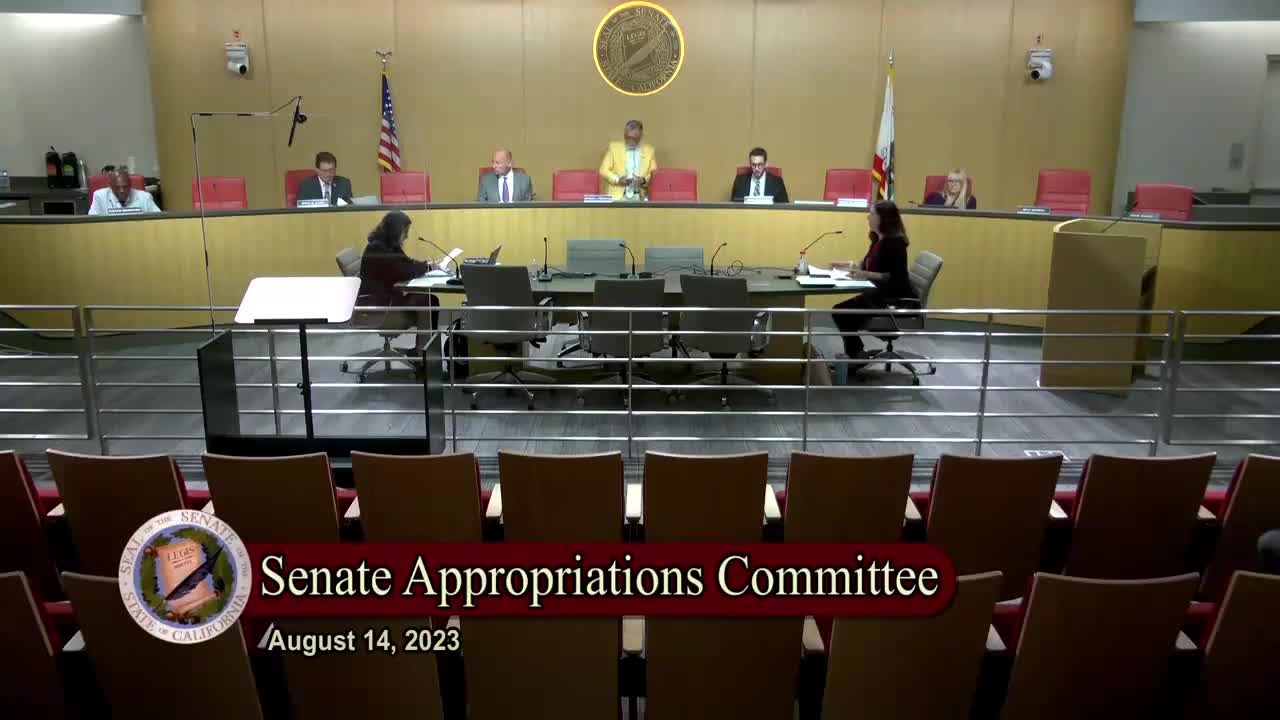 1MIN
Senate Standing Committee on Appropriations
 26MIN
Senate Standing Committee on Labor, Public Employment and Retirement
 2MIN
Assembly Floor
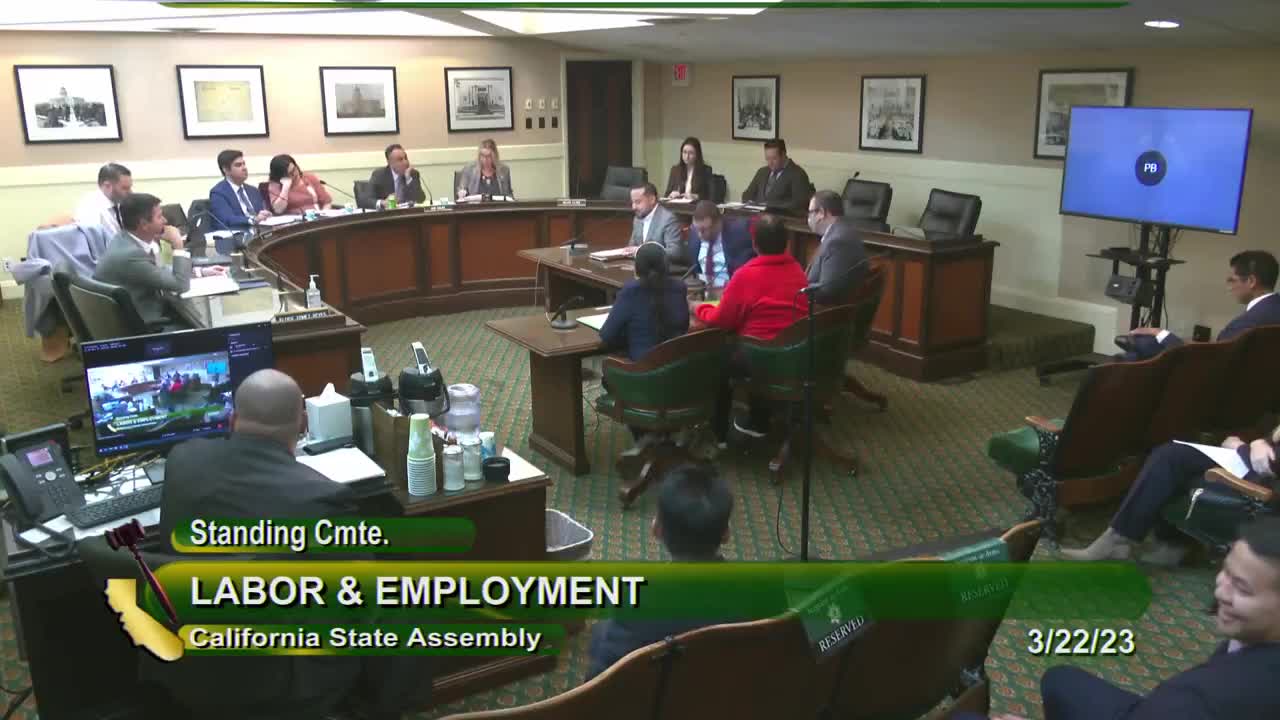 13MIN
Assembly Standing Committee on Labor and Employment
Bill Author

Bill Co-Author(s):