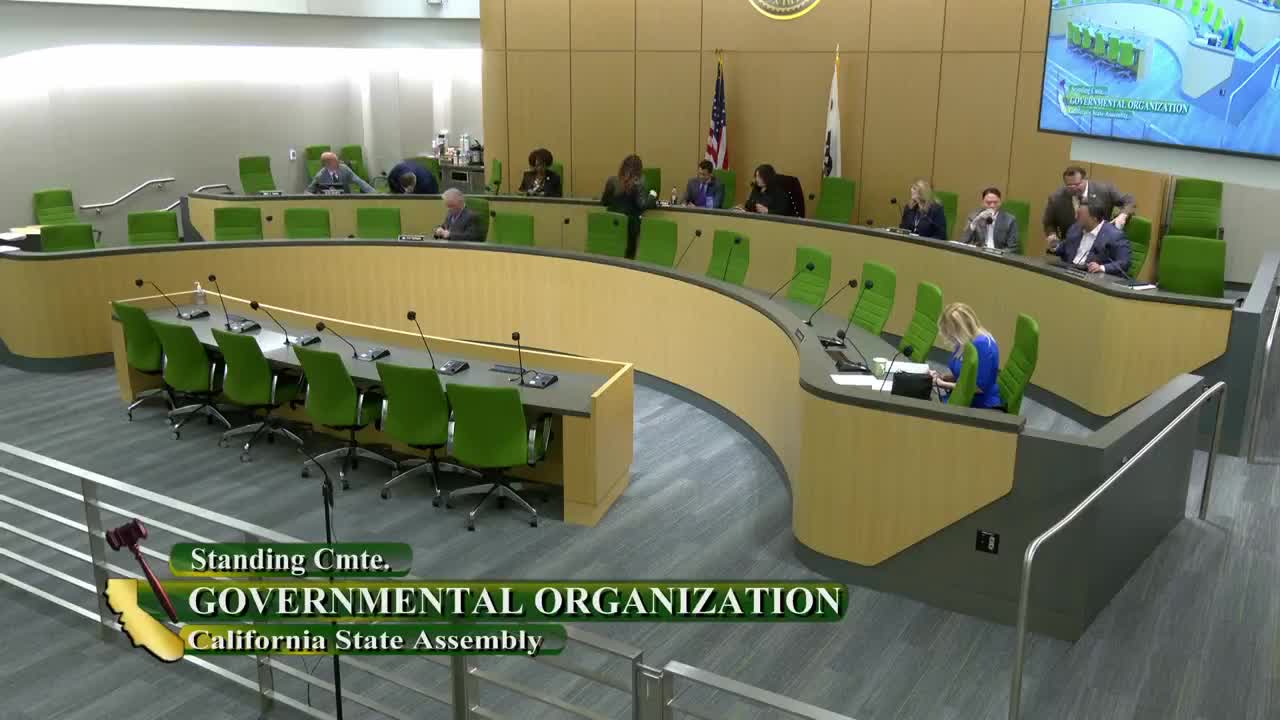
AB 341: Gambling: local moratorium.
- Session Year: 2023-2024
- House: Assembly
- Latest Version Date: 2023-05-22
Current Status:
Passed
(2023-05-22: Chaptered by Secretary of State - Chapter 8, Statutes of 2023.)
Introduced
In Committee
First Chamber
In Committee
Second Chamber
Enacted
Existing law, the Gambling Control Act, establishes the California Gambling Control Commission, which is responsible for licensing and regulating various gambling activities and establishments. Existing law requires the Department of Justice to investigate any violations of, and to enforce, the act. Under the act, a city, county, or city and county may authorize controlled gambling consistent with state law. Existing law, however, prohibits an ordinance that would result in an expansion of gambling in the city, county, or city and county from being valid unless the amendment is approved by a majority of the voters. Existing law requires an amendment to a city or county ordinance relating to a gambling establishment or the act to be submitted to the department for review and comment before the ordinance is adopted by the city or county.
Prior law, until January 1, 2023, prohibited the commission from issuing a gambling license for a gambling establishment that was not licensed to operate on December 31, 1999, except as specified.
This bill would reenact that prohibition until January 1, 2043, and would prohibit the commission from issuing a gambling license for a gambling establishment that was not licensed to operate on December 31, 2022, and that is pending before the commission as of January 1, 2024. The bill would also invalidate a gambling license for a gambling establishment that was not licensed to operate on December 31, 2022, and that was issued between December 31, 2022, and January 1, 2024.
Prior law, until January 1, 2023, prohibited the governing body or board of electors of a city, county, or city and county that had not authorized legal gambling within its boundaries prior to January 1, 1996, from authorizing legal gambling, and prohibited an ordinance in effect on January 1, 1996, that authorized legal gambling within a city, county, or city and county from being amended to expand gambling in that jurisdiction beyond that permitted on January 1, 1996.
This bill would reenact those prohibitions until January 1, 2043. The bill, notwithstanding those provisions, would authorize a city, county, or city and county to amend its ordinance to increase the number of gambling tables that may be operated in a gambling establishment that operates fewer than 20 tables, by up to 2 additional tables the first year, and up to 2 additional tables every 4 years thereafter, as provided. The bill would require an ordinance that was approved by a majority of the voters in a city, county, or city and county in an election that occurred after November 1, 2020, that authorized an increase in the number of gambling tables at a gambling establishment, and that became operative on January 1, 2023, as the result of the repealed provisions above, to remain operative on and after January 1, 2024. The bill would invalidate an amendment or adoption of an ordinance that occurred on or after January 1, 2023, by a city, county, or city and county resulting in an expansion of gambling that was not authorized or permitted under the act as of December 31, 2022, or that is not authorized or permitted under these provisions.
This bill would state that its provisions are severable.
Existing law, the Gambling Control Act, establishes the California Gambling Control Commission, which is responsible for licensing and regulating various gambling activities and establishments. Existing law requires the Department of Justice to investigate any violations of, and to enforce, the act. Under the act, a city, county, or city and county may authorize controlled gambling consistent with state law. Existing law, however, prohibits an ordinance that would result in an expansion of gambling in the city, county, or city and county from being valid unless the amendment is approved by a majority of the voters. Existing law requires an amendment to a city or county ordinance relating to a gambling establishment or the act to be submitted to the department for review and comment before the ordinance is adopted by the city or county.
Prior law, until January 1, 2023, prohibited the commission from issuing a gambling license for a gambling establishment that was not licensed to operate on December 31, 1999, except as specified.
This bill would reenact that prohibition until January 1, 2043, and would prohibit the commission from issuing a gambling license for a gambling establishment that was not licensed to operate on December 31, 2022, and that is pending before the commission as of January 1, 2024. The bill would also invalidate a gambling license for a gambling establishment that was not licensed to operate on December 31, 2022, and that was issued between December 31, 2022, and January 1, 2024.
Prior law, until January 1, 2023, prohibited the governing body or board of electors of a city, county, or city and county that had not authorized legal gambling within its boundaries prior to January 1, 1996, from authorizing legal gambling, and prohibited an ordinance in effect on January 1, 1996, that authorized legal gambling within a city, county, or city and county from being amended to expand gambling in that jurisdiction beyond that permitted on January 1, 1996.
This bill would reenact those prohibitions until January 1, 2043. The bill, notwithstanding those provisions, would authorize a city, county, or city and county to amend its ordinance to increase the number of gambling tables that may be operated in a gambling establishment that operates 20 or fewer fewer than 20 tables, by up to 2 additional tables the first year, and up to 2 additional tables every 4 years thereafter, as provided. The bill would require an ordinance that was approved by a majority of the voters in a city, county, or city and county in an election that occurred after November 1, 2020, that authorized an increase in the number of gambling tables at a gambling establishment, and that became operative on January 1, 2023, as the result of the repealed provisions above, to remain operative on and after January 1, 2024. The bill would invalidate an amendment or adoption of an ordinance that occurred on or after January 1, 2023, by a city, county, or city and county resulting in an expansion of gambling that was not authorized or permitted under the act as of December 31, 2022, or that is not authorized or permitted under these provisions.
This bill would state that its provisions are severable.
Existing law, the Gambling Control Act, establishes the California Gambling Control Commission, which is responsible for licensing and regulating various gambling activities and establishments. Existing law requires the Department of Justice to investigate any violations of, and to enforce, the act. Under the act, a city, county, or city and county may authorize controlled gambling consistent with state law. Existing law, however, prohibits an ordinance that would result in an expansion of gambling in the city, county, or city and county from being valid unless the amendment is approved by a majority of the voters. Existing law requires an amendment to a city or county ordinance relating to a gambling establishment or the act to be submitted to the department for review and comment before the ordinance is adopted by the city or county.
Prior law, until January 1, 2023, prohibited the commission from issuing a gambling license for a gambling establishment that was not licensed to operate on December 31, 1999, except as specified.
This bill would reenact that prohibition until January 1, 2043, and would prohibit the commission from issuing a gambling license for a gambling establishment that was not licensed to operate on December 31, 2022, and that is pending before the commission as of January 1, 2024. The bill would also invalidate an application for a gambling license for a gambling establishment that was not licensed to operate on December 31, 2022, and that was approved issued between December 31, 2022, and January 1, 2024.
Prior law, until January 1, 2023, prohibited the governing body or board of electors of a city, county, or city and county that had not authorized legal gambling within its boundaries prior to January 1, 1996, from authorizing legal gambling, and prohibited an ordinance in effect on January 1, 1996, that authorized legal gambling within a city, county, or city and county from being amended to expand gambling in that jurisdiction beyond that permitted on January 1, 1996.
This bill would reenact those prohibitions until January 1, 2043. The bill, notwithstanding those provisions, would authorize a city, county, or city and county to amend its ordinance to increase the number of gambling tables that may be operated in a gambling establishment that operates 20 or fewer tables, by up to 2 additional tables the first year, and up to 2 additional tables every 4 years thereafter, as provided. The bill would require an ordinance that was approved by a majority of the voters in a city, county, or city and county in an election that occurred after November 1, 2020, that authorized an increase in the number of gambling tables at a gambling establishment, and that became operative on January 1, 2023, as the result of the repealed provisions above, to remain operative on and after January 1, 2024. The bill would invalidate an amendment or adoption of an ordinance that occurred on or after January 1, 2023, by a city, county, or city and county resulting in an expansion of gambling that was not authorized or permitted under the act as of December 31, 2022, or that is not authorized or permitted under these provisions.
This bill would state that its provisions are severable.
Existing law, the Gambling Control Act, establishes the California Gambling Control Commission, which is responsible for licensing and regulating various gambling activities and establishments. Existing law requires the Department of Justice to investigate any violations of, and to enforce, the act. Under the act, a city, county, or city and county may authorize controlled gambling consistent with state law. Existing law, however, prohibits an ordinance that would result in an expansion of gambling in the city, county, or city and county from being valid unless the amendment is approved by a majority of the voters. Existing law requires an amendment to a city or county ordinance relating to a gambling establishment or the act to be submitted to the department for review and comment before the ordinance is adopted by the city or county.
Prior law, until January 1, 2023, prohibited the commission from issuing a gambling license for a gambling establishment that was not licensed to operate on December 31, 1999, except as specified.
This bill would reenact that prohibition until January 1, 2043, and would prohibit the commission from issuing a gambling license for a gambling establishment that was not licensed to operate on December 31, 2022, and that is pending before the commission as of January 1, 2024. The bill would also invalidate an application for a gambling license for a gambling establishment that was not licensed to operate on December 31, 2022, and that was approved between December 31, 2022, and January 1, 2024.
Prior law, until January 1, 2023, prohibited the governing body or board of electors of a city, county, or city and county that had not authorized legal gambling within its boundaries prior to January 1, 1996, from authorizing legal gambling, and prohibited an ordinance in effect on January 1, 1996, that authorized legal gambling within a city, county, or city and county from being amended to expand gambling in that jurisdiction beyond that permitted on January 1, 1996.
This bill would reenact those prohibitions until January 1, 2043. The bill, notwithstanding those provisions, would authorize a city, county, or city and county to amend its ordinance to increase the number of gambling tables that may be operated in a gambling establishment that operates 20 or fewer tables, by up to 2 additional tables the first year, and up to 2 additional tables every 4 years thereafter, as provided. The bill would require an ordinance that was approved by a majority of the voters in a city, county, or city and county that authorized an increase in the number of gambling tables at a gambling establishment, and that became operative on January 1, 2023, as the result of the repealed provisions above, to remain operative on and after January 1, 2024.
(a)Notwithstanding Sections 19961 and 19962, and except as provided in subdivision (b), a city, county, or city and county may amend an ordinance to increase the number of gambling tables that may be operated in a gambling establishment as follows:
(1)The ordinance shall apply only to a gambling establishment that operates fewer than 20 gambling tables.
(2)The ordinance shall allow a gambling establishment to increase the number of gambling tables operated at the gambling establishment by up to 2 additional tables within the first year after the ordinance takes effect, and up to 2 additional tables every four years thereafter, not to exceed 10 additional tables above the number of tables operated at the gambling establishment on January 1, 2023. A gambling establishment shall have all permitted gambling tables in operation and remain current in payment on all taxes and other applicable fees before an increase in gambling tables is allowed pursuant to this subdivision.
(b)(1)The authority provided in subdivision (a) shall be in addition to any authorization under any other law in effect on December 31, 2022, for a city, county, or city and county to increase the number of gambling tables that may be operated in a gambling establishment in the city, county, or city and county.
(2)Subdivision (a) does not apply to a city, county, or city and county that increased the number of gambling tables that may be operated in a gambling establishment, as described in paragraph (2) of subdivision (b) of Section 19962.
(c)A city, county, or city and countys jurisdictional limit may expand to accommodate the increase of gambling tables pursuant to this section.
SEC. 2.Section 19962 is added to the Business and Professions Code, to read:19962.(a)The governing body or the electors of a city, county, or city and county that has not authorized legal gambling within its boundaries prior to January 1, 1996, shall not authorize legal gambling.
(b)(1)An ordinance in effect on January 1, 1996, that authorizes legal gambling within a city, county, or city and county shall not be amended to expand gambling in that jurisdiction beyond that permitted on January 1, 1996.
(2)Notwithstanding paragraph (1), an ordinance that was approved by a majority of the voters in a city, county, or city and county in an election that occurred after November 1, 2020, that authorizes an increase in the number of gambling tables at a gambling establishment, and that became operative on January 1, 2023, as the result of the repeal of former Section 19962, as amended by Chapter 1 of Section 744 of the Statutes of 2018, shall continue to be valid on and after January 1, 2024.
(3)Any amendment to an ordinance or adoption of an ordinance on or after January 1, 2023, by a city, county, or city and county resulting in an expansion of gambling that was not authorized or permitted under this chapter as of December 31, 2022, or that is not authorized or permitted under this section or Section 19961.07 shall be invalid and preempted.
(c)This section shall remain in effect only until January 1, 2043, and as of that date is repealed.
SEC. 3.Section 19963 is added to the Business and Professions Code, to read:19963.(a)In addition to any other limitation on the expansion of gambling imposed by Section 19962 or any provision in this chapter, the commission shall not issue a gambling license for a gambling establishment that was not licensed to operate on December 31, 1999, unless an application to operate that establishment was on file with the department prior to September 1, 2000.
(b)An application for a gambling license for a gambling establishment that was not licensed to operate on December 31, 2022, that is pending before the commission as of January 1, 2024, shall not be approved by the commission.
(c)A gambling license for a gambling establishment that was not licensed to operate on December 31, 2022, and that was issued between December 31, 2022, and January 1, 2024, shall be invalid.
(d)This section shall remain in effect only until January 1, 2043, and as of that date is repealed.
SEC. 4.The provisions of this bill are severable. If any provision of this bill or its application is held invalid, that invalidity shall not affect other provisions or applications that can be given effect without the invalid provision or application.
(a)Notwithstanding Sections 19961 and 19962, and except as provided in subdivision (b), a city, county, or city and county may amend an ordinance to increase the number of gambling tables that may be operated in a gambling establishment as follows:
(1)The ordinance shall apply only to a gambling establishment that operates 20 or fewer fewer than 20 gambling tables.
(2)The ordinance shall allow a gambling establishment to increase the number of gambling tables operated at the gambling establishment by up to 2 additional tables within the first year after the ordinance takes effect, and up to 2 additional tables every four years thereafter, not to exceed 10 additional tables above the number of tables operated at the gambling establishment on January 1, 2023. A gambling establishment shall have all permitted gambling tables in operation and remain current in payment on all taxes and other applicable fees before an increase in gambling tables is allowed pursuant to this subdivision.
(b)(1) The authority provided in subdivision (a) shall be in addition to any authorization under any other law in effect on December 31, 2022, for a city, county, or city and county to increase the number of gambling tables that may be operated in a gambling establishment in the city, county, or city and county.
(2)Subdivision (a) does not apply to a city, county, or city and county that increased the number of gambling tables that may be operated in a gambling establishment, as described in paragraph (2) of subdivision (b) of Section 19962.
(c)A city, county, or city and countys jurisdictional limit may expand to accommodate the increase of gambling tables pursuant to this section.
SEC. 2.Section 19962 is added to the Business and Professions Code, to read:19962.(a)The governing body or the electors of a city, county, or city and county that has not authorized legal gambling within its boundaries prior to January 1, 1996, shall not authorize legal gambling.
(b)(1) An ordinance in effect on January 1, 1996, that authorizes legal gambling within a city, county, or city and county shall not be amended to expand gambling in that jurisdiction beyond that permitted on January 1, 1996.
(2)Notwithstanding paragraph (1), an ordinance that was approved by a majority of the voters in a city, county, or city and county in an election that occurred after November 1, 2020, that authorizes an increase in the number of gambling tables at a gambling establishment, and that became operative on January 1, 2023, as the result of the repeal of former Section 19962, as amended by Chapter 1 of Section 744 of the Statutes of 2018, shall continue to be valid on and after January 1, 2024.
(3)Any amendment to an ordinance or adoption of an ordinance on or after January 1, 2023, by a city, county, or city and county resulting in an expansion of gambling that was not authorized or permitted under this chapter as of December 31, 2022, or that is not authorized or permitted under this section or Section 19961.07 shall be invalid and preempted.
(c)This section shall remain in effect only until January 1, 2043, and as of that date is repealed.
SEC. 3.Section 19963 is added to the Business and Professions Code, to read:19963.(a)In addition to any other limitation on the expansion of gambling imposed by Section 19962 or any provision in this chapter, the commission shall not issue a gambling license for a gambling establishment that was not licensed to operate on December 31, 1999, unless an application to operate that establishment was on file with the department prior to September 1, 2000.
(b)An application for a gambling license for a gambling establishment that was not licensed to operate on December 31, 2022, that is pending before the commission as of January 1, 2024, shall not be approved by the commission.
(c)A gambling license for a gambling establishment that was not licensed to operate on December 31, 2022, and that was issued between December 31, 2022, and January 1, 2024, shall be invalid.
(d)This section shall remain in effect only until January 1, 2043, and as of that date is repealed.
SEC. 4.The provisions of this bill are severable. If any provision of this bill or its application is held invalid, that invalidity shall not affect other provisions or applications that can be given effect without the invalid provision or application.
(a)Notwithstanding Sections 19961 and 19962, and except as provided in subdivision (b), a city, county, or city and county may amend an ordinance to increase the number of gambling tables that may be operated in a gambling establishment as follows:
(1)The ordinance shall apply only to a gambling establishment that operates 20 or fewer gambling tables.
(2)The ordinance shall allow a gambling establishment to increase the number of gambling tables operated at the gambling establishment by up to 2 additional tables within the first year after the ordinance takes effect, and up to 2 additional tables every four years thereafter, not to exceed 10 additional tables above the number of tables operated at the gambling establishment on January 1, 2023. A gambling establishment shall have all permitted gambling tables in operation and remain current in payment on all taxes and other applicable fees before an increase in gambling tables is allowed pursuant to this subdivision.
(b)(1) The authority provided in subdivision (a) shall be in addition to any authorization under any other law in effect on December 31, 2022, for a city, county, or city and county to increase the number of gambling tables that may be operated in a gambling establishment in the city, county, or city and county.
(2)Subdivision (a) does not apply to a city, county, or city and county that increased the number of gambling tables that may be operated in a gambling establishment, as described in paragraph (2) of subdivision (b) of Section 19962.
(c)A city, county, or city and countys jurisdictional limit may expand to accommodate the increase of gambling tables pursuant to this section.
SEC. 2.Section 19962 is added to the Business and Professions Code, to read:19962.(a)The governing body or the electors of a city, county, or city and county that has not authorized legal gambling within its boundaries prior to January 1, 1996, shall not authorize legal gambling.
(b)(1) An ordinance in effect on January 1, 1996, that authorizes legal gambling within a city, county, or city and county shall not be amended to expand gambling in that jurisdiction beyond that permitted on January 1, 1996.
(2)Notwithstanding paragraph (1), an ordinance that was approved by a majority of the voters in a city, county, or city and county in an election that occurred after November 1, 2020, that authorizes an increase in the number of gambling tables at a gambling establishment, and that became operative on January 1, 2023, as the result of the repeal of former Section 19962, as amended by Chapter 1 of Section 744 of the Statutes of 2018, shall continue to be valid on and after January 1, 2024.
(3)Any amendment to an ordinance or adoption of an ordinance on or after January 1, 2023, by a city, county, or city and county resulting in an expansion of gambling that was not authorized or permitted under this chapter as of December 31, 2022, or that is not authorized or permitted under this section or Section 19961.07 shall be invalid and preempted.
(c)This section shall remain in effect only until January 1, 2043, and as of that date is repealed.
SEC. 3.Section 19963 is added to the Business and Professions Code, to read:19963.(a)In addition to any other limitation on the expansion of gambling imposed by Section 19962 or any provision in this chapter, the commission shall not issue a gambling license for a gambling establishment that was not licensed to operate on December 31, 1999, unless an application to operate that establishment was on file with the department prior to September 1, 2000.
(b)An application for a gambling license for a gambling establishment that was not licensed to operate on December 31, 2022, that is pending before the commission as of January 1, 2024, shall not be approved by the commission.
(c)An application for a A gambling license for a gambling establishment that was not licensed to operate on December 31, 2022, and that was approved issued between December 31, 2022, and January 1, 2024, shall be invalid.
(d)This section shall remain in effect only until January 1, 2043, and as of that date is repealed.
SEC. 4.The provisions of this bill are severable. If any provision of this bill or its application is held invalid, that invalidity shall not affect other provisions or applications that can be given effect without the invalid provision or application.
(a)Notwithstanding Sections 19961 and 19962, and except as provided in subdivision (b), a city, county, or city and county may amend an ordinance to increase the number of gambling tables that may be operated in a gambling establishment as follows:
(1)The ordinance shall apply only to a gambling establishment that operates 20 or fewer gambling tables.
(2)The ordinance shall allow a gambling establishment to increase the number of gambling tables operated at the gambling establishment by up to 2 additional tables within the first year after the ordinance takes effect, and up to 2 additional tables every four years thereafter, not to exceed 10 additional tables above the number of tables operated at the gambling establishment on January 1, 2023. A gambling establishment shall have all permitted gambling tables in operation and remain current in payment on all taxes and other applicable fees before an increase in gambling tables is allowed pursuant to this subdivision.
(b)(1) The authority provided in subdivision (a) shall be in addition to any authorization under any other law for a city, county, or city and county to increase the number of gambling tables that may be operated in a gambling establishment in the city, county, or city and county.
(2)Subdivision (a) does not apply to a city, county, or city and county that increased the number of gambling tables that may be operated in a gambling establishment, as described in paragraph (2) of subdivision (b) of Section 19962.
(c)A city, county, or city and countys jurisdictional limit may expand to accommodate the increase of gambling tables pursuant to this section.
SEC. 2.Section 19962 is added to the Business and Professions Code, to read:19962.(a)The governing body or the electors of a city, county, or city and county that has not authorized legal gambling within its boundaries prior to January 1, 1996, shall not authorize legal gambling.
(b)(1) An ordinance in effect on January 1, 1996, that authorizes legal gambling within a city, county, or city and county shall not be amended to expand gambling in that jurisdiction beyond that permitted on January 1, 1996.
(2)Notwithstanding paragraph (1), an ordinance that was approved by a majority of the voters in a city, county, or city and county that authorizes an increase in the number of gambling tables at a gambling establishment, and that became operative on January 1, 2023, as the result of the repeal of former Section 19962, as amended by Chapter 1 of Section 744 of the Statutes of 2018, shall continue to be valid on and after January 1, 2024.
(c)This section shall remain in effect only until January 1, 2043, and as of that date is repealed.
SEC. 3.Section 19963 is added to the Business and Professions Code, to read:19963.(a)In addition to any other limitation on the expansion of gambling imposed by Section 19962 or any provision in this chapter, the commission shall not issue a gambling license for a gambling establishment that was not licensed to operate on December 31, 1999, unless an application to operate that establishment was on file with the department prior to September 1, 2000.
(b)An application for a gambling license for a gambling establishment that was not licensed to operate on December 31, 2022, that is pending before the commission as of January 1, 2024, shall not be approved by the commission.
(c)An application for a gambling license for a gambling establishment that was not licensed to operate on December 31, 2022, and that was approved between December 31, 2022, and January 1, 2024, shall be invalid.
(d)This section shall remain in effect only until January 1, 2043, and as of that date is repealed.
REVISIONS: HeadingLine 1.|
Date
|
Status
|
|---|---|
| May 22, 2023 | Chaptered by Secretary of State - Chapter 8, Statutes of 2023. |
| May 22, 2023 | Approved by the Governor. |
| May 18, 2023 | Enrolled and presented to the Governor at 2 p.m. |
| May 15, 2023 | Senate amendments concurred in. To Engrossing and Enrolling. (Ayes 71. Noes 1. Page 1542.). |
| May 11, 2023 | In Assembly. Concurrence in Senate amendments pending. May be considered on or after May 13 pursuant to Assembly Rule 77. |
| May 11, 2023 | Read third time. Passed. Ordered to the Assembly. (Ayes 32. Noes 0. Page 1048.). |
| May 9, 2023 | Read second time. Ordered to third reading. |
| May 8, 2023 | From committee: Be ordered to second reading pursuant to Senate Rule 28.8. |
| Apr 27, 2023 | From committee chair, with author's amendments: Amend, and re-refer to committee. Read second time, amended, and re-referred to Com. on APPR. |
| Apr 25, 2023 | From committee: Do pass and re-refer to Com. on APPR. (Ayes 11. Noes 0.) (April 25). Re-referred to Com. on APPR. |
| Apr 12, 2023 | Referred to Com. on G.O. |
| Mar 23, 2023 | In Senate. Read first time. To Com. on RLS. for assignment. |
| Mar 23, 2023 | Read third time. Passed. Ordered to the Senate. (Ayes 68. Noes 1. Page 827.) |
| Mar 20, 2023 | Read second time. Ordered to third reading. |
| Mar 16, 2023 | Ordered to second reading. |
| Mar 16, 2023 | Withdrawn from committee. |
| Mar 16, 2023 | Re-referred to Com. on APPR. |
| Mar 15, 2023 | From committee chair, with author's amendments: Amend, and re-refer to Com. on APPR. Read second time and amended. |
| Mar 9, 2023 | From committee: Do pass and re-refer to Com. on APPR. (Ayes 21. Noes 1.) (March 8). Re-referred to Com. on APPR. |
| Mar 9, 2023 | Coauthors revised. |
| Feb 17, 2023 | Referred to Com. on G.O. |
| Jan 31, 2023 | From printer. May be heard in committee March 2. |
| Jan 30, 2023 | Read first time. To print. |
|
Date
|
Description
|
Location
|
Votes
|
|
|---|---|---|---|---|
| May 15, 2023 | AB 341 Ramos Concurrence in Senate Amendments | Assembly Floor |
Passed |
|
| May 11, 2023 | Assembly 3rd Reading AB341 Ramos et al. By Dodd | Senate Floor |
Passed |
|
| Apr 25, 2023 | Do pass, but first be re-referred to the Committee on [Appropriations] | Senate Standing Committee on Governmental Organization |
Passed |
|
| Mar 23, 2023 | AB 341 Ramos Assembly Third Reading | Assembly Floor |
Passed |
|
| Mar 8, 2023 | Do pass and be re-referred to the Committee on [Appropriations] | Assembly Standing Committee on Governmental Organization |
Passed |
This list shows positions taken on this bill by organizations on the date displayed, which is linked to the original source.
Positions by individuals are not included.
|
Organization
|
Position
|
Date
|
|---|---|---|
| 2 Kings Gaming INC. | ** Support | |
| Ace & Vine | ** Support | |
| Agua Caliente Band Of Cahuilla Indians | ** Support | |
| Artichoke’s Joe’s, Inc. | ** Support | |
| Blackstone Gaming | ** Support | |
| Buena Vista Rancheria Of Me-Wuk Indians | ** Support | |
| cahuilla band of indians | ** Support | |
| California Cardroom Alliance | ** Support | |
| California Cities for Self-Reliance Joint Powers Authority | ** Support | |
| California Coalition Against Gambling Expansion | ** Support | |
| California College And University Police Chiefs Association | ** Against | |
| California Grand Casino | ** Support | |
| California Hispanic Chamber Of Commerce | ** Support | |
| California Narcotic Officers Association | ** Against | |
| California Nations Indian Gaming Association | ** Support | |
| Cal-prop Services | ** Support | |
| Capitol Casino | ** Support | |
| casino club | ** Support | |
| Casino M8trix | ** Support | |
| Club One Casino, Inc. | ** Support | |
| Coalition Of Public Safety Officer Support Systems | ** Against | |
| Communities For California Cardrooms | ** Support | |
| Elevation Entertainment Group | ** Against | |
| Elk Valley Rancheria, California | ** Support | |
| Garlic City Club and Restaurant | ** Support | |
| Habematolel Pomo Of Upper Lake | ** Support | |
| Hollywood Park Casino | ** Support | |
| Jamul Indian Village | ** Against | |
| Kings Card Club | ** Support | |
| Knighted Ventures | ** Support | |
| Le Gaming | ** Support | |
| Morongo Band Of Mission Indians | ** Support | |
| Napa Valley Casino | ** Support | |
| Oaks Card Club | ** Support | |
| Parkwest Casinos | ** Support | |
| Players Casino | ** Against | |
| Players Edge | ** Support | |
| Player'S Poker Club Inc. | ** Against | |
| racxx cardroom | ** Support | |
| Rincon Band Of Luiseno Indians | ** Support | |
| San Manuel Band Of Mission Indians | ** Support | |
| Santa Ynez Band Of Chumash Indians | ** Support | |
| Seven Mile Casino | ** Against | |
| Sheriff's Employee Benefits Association | ** Support | |
| Shingle Springs Band Of Miwok Indians | ** Against | |
| Soboba Band Of Luiseno Indians | ** Support | |
| Sycuan Band Of The Kumeyaay Nation | ** Support | |
| The Commerce Casino & Hotel | ** Support | |
| The Derby Room | ** Against | |
| The Deuce and Lounge Casino | ** Support | |
| The Deuce Lounge and Casino | ** Support | |
| The Gardens Casino | ** Support | |
| The Saloon at Stones Gambling Hall | ** Against | |
| The Tavern at Stones Gambling Hall | ** Against | |
| Tule River Tribe | ** Support | |
| Turlock Poker Room | ** Support | |
| Twenty-Nine Palms Band Of Mission Indians | ** Support | |
| United Auburn Indian Community | ** Support | |
| VALLEY INDUSTRY AND COMMERCE ASSOCIATION | ** Against | |
| Wilton Rancheria | ** Support | |
| Yocha Dehe Wintun Nation | ** Against |
CONCURRENCE IN SENATE AMENDMENTS
CSA1 Bill Id:AB 341
Author:(Ramos, et al.)
As Amended Ver:April 27, 2023
Majority vote
SUMMARY
This bill reinstates a gambling moratorium until January 1, 2043, related to the expansion of cardroom gaming and the issuance of new gambling licenses in the state, except as provided. Additionally, this bill authorizes a local jurisdiction to amend its local ordinance to increase the number of gambling tables that may be operated in a gambling establishment that operates fewer than 20 tables, by up to two additional tables the first year and up to two additional tables every four years thereafter, not to exceed 10 additional tables, as specified.
Senate Amendments
Modifies a clause in the bill as to the eligibility of a cardroom to increase the number of gaming tables from "20 or fewer" to "fewer than 20," as specified.
Major Provisions:
- Creates a prohibition (moratorium) until January 1, 2043, that in addition to any other limitation on the expansion of gambling, as defined, the California Gambling Control Commission (CGCC) shall not issue a gambling license for a gambling establishment that was not licensed to operate on December 31, 1999, unless an application to operate that establishment was on file with the Department of Justice's Bureau of Gambling Control (DOJ or Bureau) prior to September 1, 2000, as specified.
- Provides that an application for a gambling license for a gambling establishment that was not licensed to operate on December 31, 2022, that is "pending" before the CGCC as of January 1, 2024, shall not be approved by the CGCC.
- States a gambling license for a gambling establishment that was not licensed to operate on December 31, 2022, and that was "issued" between December 31, 2022, and January 1, 2024, shall be invalid.
- Provides until January 1, 2043, a governing body or the electors of a city, county, or city and county that has not authorized legal gambling within its boundaries prior to January 1, 1996, shall not authorize legal gambling, as defined. An ordinance in effect on January 1, 1996, that authorizes legal gambling within a city, county, or city and county shall not be amended to expand gambling in that jurisdiction beyond that permitted on January 1, 1996, as specified.
- Authorizes a city, county, or city and county to amend its ordinance to increase the number of gambling tables that may be operated in a gambling establishment that operates fewer than 20 tables by up to two additional tables the first year and up to two additional tables every four years thereafter, not to exceed 10 additional tables above those operated on January 1, 2023, as specified.
- States that an ordinance that was approved by a majority of the voters in a city, county, or city and county in an election that occurred after November 1, 2020, that authorized an increase in the number of gambling tables at a gambling establishment, and that became operative on January 1, 2023, as the result of the recently repealed moratorium, shall remain operative on and after January 1, 2024, as specified.
- States that any amendment to an ordinance or adoption of an ordinance on or after January 1, 2023, by a city, county, or city and county resulting in an expansion of gambling that was not authorized or permitted under the Act as of December 31, 2022, or that is not authorized or permitted under the defined provisions shall be invalid and preempted.
- States that the provisions of this bill are severable, as specified.
Existing Law:
- Provides, under the Gambling Control Act (Act), for the licensure and regulation of various legalized gambling activities and gambling establishments by the CGCC and the investigation and enforcement of those activities and establishments the Bureau.
- Requires any amendment to any ordinance that would result in an expansion of gambling, as defined, in the city, county, or city and county, to be approved by the voters in that jurisdiction, unless that amendment results in an increase of less than 25% with respect to specified matters, including the number of gambling tables or the hours of operation of a gambling establishment in the city, county, or city and county.
- Provides that any amendment to a local ordinance relating to gambling establishments, or the Act, shall be submitted to the Bureau for review and comment, before the ordinance is adopted by the city or county.
- Directs the CGCC to deny gambling licenses to applicants who are not in compliance with the local ordinances governing gambling.
- Provides that no owner shall operate a gambling enterprise in violation of any local ordinance.
COMMENTS
Background.
Recently Expired Moratorium. Prior to January 1, 2023, there were two statutory moratoriums that restricted the growth of gambling establishments in California. One moratorium prohibited the state from issuing licenses for new gambling establishments. The other limited gambling establishments from expanding the number of tables they operate.
The moratorium restricting the expansion of existing gambling establishments and licensing of new establishments began in 1995. A five‐year moratorium was put in place by the enactment of SB 100 (Maddy), Chapter 387, Statutes of 1995. Since this initial moratorium, legislation continuing both moratoriums has been continually enacted. Most recently, AB 1168 (Gipson), Chapter 744, Statutes of 2018 extended the moratorium by three years, from January 1, 2020, to January 1, 2023.
However, since the enactment of the original moratorium in 1995, the Legislature passed several laws allowing gambling establishments to expand the number of tables in a licensed gambling establishment. The last expansion of tables was enacted in AB 1039 (Hall), Chapter 745, Statutes of 2013 which authorized a local jurisdiction to amend its local ordinance to increase the number of tables by two. Most local jurisdictions have modified their local ordinances to realize the maximum amount of growth authorized by law.
Despite the expiration of the recent moratorium, existing cardrooms seeking to increase their authorized permanent tables, or individuals seeking to own or operate a new cardroom, must be in compliance with all relevant federal, state, and local laws. Local ordinances limit the number of permanent gaming tables or gambling establishments allowed in their jurisdiction. Any application or request submitted must not exceed the gaming allowances provided by the local jurisdiction.
The CGCC cannot approve a request for an increase in authorized tables, or approve an application for a gambling license to own or operate a new cardroom, without the corresponding local jurisdiction having already enacted a gambling ordinance or having expanded their existing gambling ordinance in compliance with current law.
Cardrooms in the City of San Jose. A provision in this bill provides that "an ordinance that was approved by a majority of the voters in a city, county, or city and county in an election that occurred after November 1, 2020, that authorizes an increase in the number of gambling tables at a gambling establishment, and that became operative on January 1, 2023, as the result of the repeal of former Section 19962, as amended by Chapter 1 of Section 744 of the Statutes of 2018, shall continue to be valid on and after January 1, 2024."
In November 2020, the City of San Jose approved Measure H (72.63% to 27.37%), which allows two local cardrooms, Bay 101 and Casino M8trix, to increase the number of tables they operate by 15 tables per cardroom. Measure H also required both cardrooms to pay more in taxes from gaming operations to fund general services, such as fire protection, 911 emergency response, public safety, street repair, and addressing homelessness. Last year, prior to the expiration of the moratorium, the CGCC ruled that both of the city's cardroom had already reached the maximum number of tables, 49 per cardroom, and any added tables beyond that number would be inconsistent with the moratorium. This bill would grant an exemption to the reinstated moratorium contained in this bill, to allow the two cardrooms in San Jose to increase the number of gaming tables at their gambling establishments, as defined and in accordance with the law.
Prior legislation. SB 637 (Ochoa Bogh) of 2022. Would have extended the gambling moratorium related to the expansion of card room gaming and the issuance of new gambling licenses from January 1, 2023, to January 1, 2024. (Failed passage in Senate Committee on Governmental Organization)
SB 576 (Archuleta) of 2021. Would have extended the gambling moratorium related to the expansion of gaming and the issuance of new gambling licenses from January 1, 2023, to January 1, 2028. Additionally, this bill authorizes a city, county, or city and county, to amend its ordinance to increase the number of gambling tables that may be operated in a gambling establishment by up to two tables each calendar year, up to a maximum of 10 additional tables, as specified. (Never heard by the Assembly Committee on Governmental Organization)
AB 1039 (Hall), Chapter 745, Statutes of 2013. Allowed a city, county, or city and county to amend its local ordinance to increase the number of tables by two, above the number of tables authorized by local ordinance in effect on January 1, 2013.
AB 163 (Mendoza) Chapter 647, Statutes of 2008. Authorized a city or county, without voter approval, to amend an ordinance to increase the number of gambling tables that may be operated in a gambling establishment by 3 tables if the ordinance in effect on July 1, 2007, provided for five to eight tables, and by four tables if the ordinance in effect on July 1, 2007, provided for nine to 12 tables. AB 635 (Bermudez) Chapter 694, Statutes of 2005. Permitted local governments to revise their ordinances limiting the number of tables in card rooms by 24.99 percent or two tables, whichever is greater, as compared with the level or number operated or authorized on January 1, 1996, without voter approval.
AB 864 (Firebaugh) Chapter 872, Statutes of 2004. Permitted cities and counties to adopt ordinances permitting the expansion of gambling that result in less than a 25 percent increase, without voter approval.
SB 100 (Maddy) Chapter 387, Statutes of 1995. Established the original moratorium on card room expansion, prohibiting the creation of new card rooms until January 1, 1999.
According to the Author
According to the author's office, "cardrooms and the tribes are working collaboratively on this issue. Last year, the legislature ran out of time on reaching an agreement. When first proposed by the cardrooms 25 years ago, the moratorium sought to prevent an oversaturation of gaming to ensure the vitality of the cardroom industry. Those circumstances haven't changed today, and AB 341 provides a framework for measured growth in the coming years."
Arguments in Support
According to sponsors of this bill, "after a 25-year moratorium on cardroom expansion expired, the five co-sponsoring tribes have come together to support AB 341, which would allow for prudent growth of the state's cardroom industry, which is in line with voters' attitudes towards the expansion of off-reservation gaming. AB 341 would allow small cardrooms who have experienced growth in their surrounding communities to increase the number of tables they operate."
According to the California Cardroom Alliance, "AB 341 maintains consumer safety protections and preserves local tax revenues relied on by many cities across the state. It specifically provides a small increase in tables in existing small, prohibits massive gaming expansion through the licensing of new cardrooms and an unlimited number of new gaming tables, and ensures the continued economic vitality of local communities dependent on gaming revenues. Without AB 341, the state is vulnerable to the strong possibility of significant expansion of gaming as the long-standing moratorium on cardroom licensing ended as of January 1, 2023."
Arguments in Opposition
According to Seven Mile Casino, "the amendment to AB 341 from '20 or fewer' to 'fewer than 20', is not rationally related to any state interest and creates an arbitrary line within the industry. The amendment to exclude two cardrooms who have 20 tables from the ability for the modest growth proposed in the bill puts them at a severe disadvantage, upends the status quo in the industry, and adversely impacts the communities they serve."
According to the Shingle Springs Band of Miwok Indians, "the [Bureau] recognizes that the cardrooms play illegal games, but they have failed to take action to stop the practice. Approval of AB 341 in its current manner would continue and expand an environment of illegal gaming by the cardrooms. AB 341 proposes to allow all cardrooms with less than twenty tables to indiscriminately increase the number of tables in their facilities. It is important to note that almost every cardroom in our surrounding vicinity have fewer than twenty tables which would allow those cardrooms to do even greater harm to our casino due to their ability to increase the play of illegal games."
FISCAL COMMENTS
According to the Senate Appropriations Committee, pursuant to Senate Rule 28.8, negligible state costs.
VOTES:
ASM GOVERNMENTAL ORGANIZATION: 21-1-0
YES: Santiago, Lackey, Berman, Bryan, Cervantes, Megan Dahle, Davies, Garcia, Gipson, Jones-Sawyer, Low, Mathis, McCarty, McKinnor, Jim Patterson, Quirk-Silva, Ramos, Robert Rivas, Blanca Rubio, Ta, Villapudua
NO: Aguiar-Curry
ASSEMBLY FLOOR: 68-1-11
YES: Addis, Alanis, Arambula, Bains, Bauer-Kahan, Bennett, Berman, Boerner Horvath, Bonta, Bryan, Calderon, Juan Carrillo, Wendy Carrillo, Connolly, Megan Dahle, Davies, Dixon, Essayli, Mike Fong, Vince Fong, Friedman, Gabriel, Garcia, Gipson, Grayson, Haney, Hart, Holden, Hoover, Irwin, Jackson, Jones-Sawyer, Kalra, Lackey, Lee, Low, Lowenthal, McCarty, McKinnor, Muratsuchi, Stephanie Nguyen, Ortega, Pacheco, Papan, Jim Patterson, Pellerin, Petrie-Norris, Quirk-Silva, Ramos, Reyes, Luz Rivas, Robert Rivas, Rodriguez, Blanca Rubio, Santiago, Schiavo, Soria, Ta, Ting, Valencia, Villapudua, Wallis, Ward, Weber, Wicks, Wood, Zbur, Rendon
NO: Aguiar-Curry
ABS, ABST OR NV: Alvarez, Cervantes, Chen, Flora, Gallagher, Maienschein, Mathis, Joe Patterson, Sanchez, Waldron, Wilson
SENATE FLOOR: 32-0-8
YES: Allen, Archuleta, Ashby, Atkins, Becker, Blakespear, Bradford, Caballero, Dodd, Durazo, Eggman, Glazer, Gonzalez, Hurtado, Jones, Laird, Limón, McGuire, Menjivar, Min, Newman, Ochoa Bogh, Padilla, Portantino, Roth, Rubio, Skinner, Smallwood-Cuevas, Stern, Umberg, Wahab, Wilk
ABS, ABST OR NV: Alvarado-Gil, Cortese, Dahle, Grove, Nguyen, Niello, Seyarto, Wiener
UPDATED
VERSION: April 27, 2023
CONSULTANT: Eric Johnson / G.O. / (916) 319-2531 FN: 0000385
SENATE RULES COMMITTEE Office of Senate Floor Analyses (916) 651-1520 Fax: (916) 327-4478 | AB 341 |
THIRD READING
Bill No: AB 341
Author: Ramos (D), Garcia (D), Gipson (D) and Mathis (R), et al.
Amended: 4/27/23 in Senate
Vote: 21
SENATE GOVERNMENTAL ORG. COMMITTEE: 11-0, 4/25/23
AYES: Dodd, Wilk, Archuleta, Ashby, Bradford, Glazer, Ochoa Bogh, Padilla, Portantino, Roth, Rubio
NO VOTE RECORDED: Alvarado-Gil, Jones, Nguyen, Seyarto
SENATE APPROPRIATIONS COMMITTEE: Senate Rule 28.8
ASSEMBLY FLOOR: 68-1, 3/23/23 - See last page for vote
SUBJECT: Gambling: local moratorium
SOURCE: Cahuilla Band of Indians
Kings Card Club
Morongo Band of Mission Indians
Rincon Band of Luiseno Indians
San Manuel Band of Mission Indians
Santa Ynez Band of Chumas Indians
Soboba Band of Luiseno Indians
The Commerce Casino & Hotel
The Gardens Casino
DIGEST: This bill reinstates a gambling moratorium until January 1, 2043, related to the expansion of cardroom gaming and the issuance of new gambling licenses in the state, except as provided. Additionally, this bill authorizes a local jurisdiction to amend its local ordinance to increase the number of gambling tables that may be operated in a gambling establishment that operates fewer than 20 tables, by up to two additional tables the first year and up to two additional tables every four years thereafter, not to exceed 10 additional tables, as specified.
ANALYSIS:
Existing law:
- Provides, under the Gambling Control Act (Act), for the licensure and regulation of various legalized gambling activities and gambling establishments by the California Gambling Control Commission (Commission) and the investigation and enforcement of those activities and establishments the Department of Justice’s Bureau of Gambling Control (Bureau).
- Requires any amendment to any ordinance that would result in an expansion of gambling, as defined, in the city, county, or city and county, to be approved by the voters in that jurisdiction, unless that amendment results in an increase of less than 25% with respect to specified matters, including the number of gambling tables or the hours of operation of a gambling establishment in the city, county, or city and county.
- Provides that any amendment to a local ordinance relating to gambling establishments, or the Act, shall be submitted to the Bureau for review and comment, before the ordinance is adopted by the city or county.
- Directs the Commission to deny gambling licenses to applicants who are not in compliance with the local ordinances governing gambling.
- Provides that no owner shall operate a gambling enterprise in violation of any local ordinance.
This bill:
- Reinstates the gambling moratorium until January 1, 2043, related to the expansion of cardroom gaming and the issuance of new gambling licenses in the state, except as provided.
- Authorizes a city, county, or city and county to amend its ordinance to increase the number of gambling tables that may be operated in a gambling establishment that operates fewer than 20 tables by up to two additional tables the first year and up to two additional tables every four years thereafter, not to exceed 10 additional tables above those operated on January 1, 2023, as specified.
- Provides that an ordinance that was approved by a majority of the voters in a city, county, or city and county in an election that occurred after November 1, 2020, that authorizes an increase in the number of gambling tables at a gambling establishment and that became operative on January 1, 2023, as the result of the recently repealed moratorium shall remain operative on and after January 1, 2024, as specified.
- States that any amendment to a local ordinance or adoption of an ordinance on or after January 1, 2023, resulting in an expansion of gambling that was not authorized or permitted under the Act as of December 31, 2022, or that is not authorized or permitted under the defined provisions shall be invalid and preempted.
- Provides that an application for a gambling license that was not licensed to operate on December 31, 2022, that is pending before the Commission as of January 1, 2024, shall not be approved by the Commission.
- States that a gambling license that was not licensed to operate on December 31, 2022, and that was issued between December 31, 2022, and January 1, 2024, shall be invalid.
- States that the provisions of this bill are severable.
Background
Purpose of the Bill. According to the author’s office, “cardrooms and the tribes are working collaboratively on this issue. Last year, the legislature ran out of time on reaching an agreement. When first proposed by the cardrooms 25 years ago, the moratorium sought to prevent an oversaturation of gaming to ensure the vitality of the cardroom industry. Those circumstances haven’t changed today, and AB 341 provides a framework for measured growth in the coming years.”
Recently Expired Moratorium. Prior to January 1, 2023, there were two statutory moratoriums that restricted the growth of gambling establishments in California. One moratorium prohibited the state from issuing licenses for new gambling establishments. The other limited gambling establishments from expanding the number of tables they operate.
The moratorium restricting the expansion of existing gambling establishments and licensing of new establishments began in 1995. A five‐year moratorium was put in place by the enactment of SB 100 (Maddy, Chapter 387, Statutes of 1995). Since this initial moratorium, legislation continuing both moratoriums has been continually enacted. Most recently, AB 1168 (Gipson, Chapter 744, Statutes of 2018) extended the moratorium by three years, from January 1, 2020, to January 1, 2023.
However, since the enactment of the original moratorium in 1995, the Legislature passed several laws allowing gambling establishments to expand the number of tables in a licensed gambling establishment. The last expansion of tables was enacted in AB 1039 (Hall, Chapter 745, Statutes of 2013) which authorized a local jurisdiction to amend its local ordinance to increase the number of tables by two. Most local jurisdictions have modified their local ordinances to realize the maximum amount of growth authorized by law.
Despite the expiration of the recent moratorium, existing cardrooms seeking to increase their authorized permanent tables, or individuals seeking to own or operate a new cardroom, must be in compliance with all relevant federal, state, and local laws. Local ordinances limit the number of permanent gaming tables or gambling establishments allowed in their jurisdiction. Any application or request submitted must not exceed the gaming allowances provided by the local jurisdiction.
The Commission cannot approve a request for an increase in authorized tables, or approve an application for a gambling license to own or operate a new cardroom, without the corresponding local jurisdiction having already enacted a gambling ordinance or having expanded their existing gambling ordinance in compliance with current law.
City of San Jose Provision. A provision in this bill provides “that an ordinance that was approved by a majority of the voters in a city, county, or city and county in an election that occurred after November 1, 2020, that authorizes an increase in the number of gambling tables at a gambling establishment and that became operative on January 1, 2023, as the result of the recently repealed moratorium shall remain operative on and after January 1, 2024, as specified.”
In November of 2020, the City of San Jose approved Measure H, which allows two local cardrooms, Bay 101 and Casino M8trix, to increase the number of tables they operate by 15 tables per cardroom. The measure also requires both cardrooms to pay more in taxes from gaming operations to fund general services, such as fire protection, 911 emergency response, public safety, street repair, and addressing homelessness. Last year, prior to the expiration of the moratorium, the Commission ruled that both of the city’s cardroom had already reached the maximum number of tables, 49 per cardroom, and any added tables beyond that number would be inconsistent with the moratorium.
On March 23, 2023, following the expiration of the moratorium, the item was again taken up by the Commission. After much deliberation, including concerns by members of the Commission that language in the local ordinance was not consistent with requirements in the Act, the item was eventually put over to a future Commission hearing.
On April 20, 2023, the Commission denied the increase in tables for both Bay 101 and Casino M8trix on a 4-1 vote. Discussion regarding the reason for the denial once again focused on the discrepancy in the language of Measure H compared to the requirements in the Act. Following the denial, both cardrooms have the option of either appealing the decision to the Commission itself or seeking a remedy through the courts. The language in this bill, if those tables are eventually approved, allows both Bay 101 and Casino M8trix to continue to operate those tables.
Related/Prior Legislation
SB 637 (Ochoa Bogh, 2022) would have extended the gambling moratorium related to the expansion of gaming and the issuance of new gambling licenses from January 1, 2023, to January 1, 2024. (Failed Passage in the Senate Governmental Organization Committee)
SB 576 (Archuleta, 2021) would have extended the gambling moratorium related to the expansion of gaming and the issuance of new gambling licenses from January 1, 2023, to January 1, 2028. Additionally, the bill would have authorized a city, county, or city and county, to amend its ordinance to increase the number of gambling tables that may be operated in a gambling establishment by up to two tables each calendar year, up to a maximum of 10 additional tables, as specified. (Never Heard in the Assembly Committee on Governmental Organization)
AB 1168 (Gipson, Chapter 744, Statutes of 2018) extended the gambling moratorium related to the expansion of gaming and the issuance of new gambling licenses from January 1, 2020, to January 1, 2023.
FISCAL EFFECT: Appropriation: No Fiscal Com.: Yes Local: No
SUPPORT: (Verified 5/10/23)
Cahuilla Band of Indians (co-source)
Kings Card Club (co-source)
Morongo Band of Mission Indians (co-source)
Rincon Band of Luiseno Indians (co-source)
San Manuel Band of Mission Indians (co-source)
Santa Ynez Band of Chumas Indians (co-source)
Soboba Band of Luiseno Indians (co-source)
The Commerce Casino & Hotel (co-source)
The Gardens Casino (co-source)
2 Kings Gaming Inc.
Ace & Vine
Agua Caliente Band of Cahuilla Indians
Artichoke’s Joe’s, Inc.
Blackstone Gaming
Buena Vista Rancheria of Me-Wuk Indians
California Cardroom Alliance
California Cities for Self-Reliance Joint Powers Authority
California Coalition Against Gambling Expansion
California Grand Casino
California Hispanic Chamber of Commerce
California Nations Indian Gaming Association
Cal-Prop Services
Capitol Casino
Casino Club
Casino M8trix
Club One Casino, Inc.
Communities for California Cardrooms
Elk Valley Rancheria, California
Garlic City Club and Restaurant
Habematolel Pomo of Upper Lake
Hollywood Park Casino
Knighted Ventures
LE Gaming
Napa Valley Casino
Oaks Card Club
Parkwest Casinos
Players Edge
Racxx Cardroom
Sheriff’s Employee Benefits Association
Sycuan Band of the Kumeyaay Nation
The Deuce and Lounge Casino
Tule River Tribe
Turlock Poker Room
Twenty-Nine Palms Band of Mission Indians
United Auburn Indian Community
Wilton Rancheria
OPPOSITION: (Verified 5/10/23)
California College and University Police Chiefs Association
California Narcotic Officers Association
Coalition of Public Safety Officer Support System
Elevation Entertainment Group
Players Casino
Seven Mile Casino
Shingle Springs Band of Miwok Indians
The Derby Room
The Saloon at Stones Gambling Hall
The Tavern at Stones Gambling Hall
Valley Industry and Commerce Association
Yocha Dehe Wintun Nation
ARGUMENTS IN SUPPORT: According to sponsors of this bill, “after a 25-year moratorium on cardroom expansion expired, the five co-sponsoring tribes have come together to support AB 341, which would allow for prudent growth of the state’s cardroom industry, which is in line with voters’ attitudes towards the expansion of off-reservation gaming. AB 341 would allow small cardrooms who have experienced growth in their surrounding communities to increase the number of tables they operate.”
According to the California Cardroom Alliance, “AB 341 maintains consumer safety protections and preserves local tax revenues relied on by many cities across the state. It specifically provides a small increase in tables in existing small, prohibits massive gaming expansion through the licensing of new cardrooms and an unlimited number of new gaming tables, and ensures the continued economic vitality of local communities dependent on gaming revenues. Without AB 341, the state is vulnerable to the strong possibility of significant expansion of gaming as the long-standing moratorium on cardroom licensing ended as of January 1, 2023.”
ARGUMENTS IN OPPOSITION: According to the Shingle Springs Band of Miwok Indians, “the [Bureau] recognizes that the cardrooms play illegal games, but they have failed to take action to stop the practice. Approval of AB 341 in its current manner would continue and expand an environment of illegal gaming by the cardrooms. AB 341 proposes to allow all cardrooms with less than twenty tables to indiscriminately increase the number of tables in their facilities. It is important to note that almost every cardroom in our surrounding vicinity have fewer than twenty tables which would allow those cardrooms to do even greater harm to our casino due to their ability to increase the play of illegal games.”
According to Seven Mile Casino, “the amendment to AB 341 from ’20 or fewer’ to ‘fewer than 20’, is not rationally related to any state interest and creates an arbitrary line within the industry. The amendment to exclude two cardrooms who have 20 tables from the ability for the modest growth proposed in the bill puts them at a severe disadvantage, upends the status quo in the industry, and adversely impacts the communities they servie.”
ASSEMBLY FLOOR: 68-1, 3/23/23
AYES: Addis, Alanis, Arambula, Bains, Bauer-Kahan, Bennett, Berman, Boerner Horvath, Bonta, Bryan, Calderon, Juan Carrillo, Wendy Carrillo, Connolly, Megan Dahle, Davies, Dixon, Essayli, Mike Fong, Vince Fong, Friedman, Gabriel, Garcia, Gipson, Grayson, Haney, Hart, Holden, Hoover, Irwin, Jackson, Jones-Sawyer, Kalra, Lackey, Lee, Low, Lowenthal, McCarty, McKinnor, Muratsuchi, Stephanie Nguyen, Ortega, Pacheco, Papan, Jim Patterson, Pellerin, Petrie-Norris, Quirk-Silva, Ramos, Reyes, Luz Rivas, Robert Rivas, Rodriguez, Blanca Rubio, Santiago, Schiavo, Soria, Ta, Ting, Valencia, Villapudua, Wallis, Ward, Weber, Wicks, Wood, Zbur, Rendon
NOES: Aguiar-Curry
NO VOTE RECORDED: Alvarez, Cervantes, Chen, Flora, Gallagher, Maienschein, Mathis, Joe Patterson, Sanchez, Waldron, Wilson
Prepared by: Felipe Lopez / G.O. / (916) 651-1530
5/10/23 15:19:55
**** END ****
SENATE COMMITTEE ON GOVERNMENTAL ORGANIZATION
Senator Bill Dodd
Chair
2023 - 2024 Regular
Bill No: AB Hearing Date: 4/25/2023
Author: | Ramos, et al. | ||
Version: | Amended | ||
Urgency: | Fiscal: | ||
Consultant: | |||
SUBJECT:
DIGEST: This bill reinstates a gambling moratorium until January 1, 2043, related to the expansion of cardroom gaming and the issuance of new gambling licenses in the state, except as provided. Additionally, the bill authorizes a local jurisdiction to amend its local ordinance to increase the number of gambling tables that may be operated in a gambling establishment that operates 20 or fewer tables, by up to two additional tables the first year and up to two additional tables every four years thereafter, not to exceed 10 additional tables, as specified.
ANALYSIS:
Existing law:
- Provides, under the Gambling Control Act (Act), for the licensure and regulation of various legalized gambling activities and gambling establishments by the California Gambling Control Commission (Commission) and the investigation and enforcement of those activities and establishments the Department of Justice’s Bureau of Gambling Control (Bureau).
- Requires any amendment to any ordinance that would result in an expansion of gambling, as defined, in the city, county, or city and county, to be approved by the voters in that jurisdiction, unless that amendment results in an increase of less than 25% with respect to specified matters, including the number of gambling tables or the hours of operation of a gambling establishment in the city, county, or city and county.
- Provides that any amendment to a local ordinance relating to gambling establishments, or the Act, shall be submitted to the Bureau for review and comment, before the ordinance is adopted by the city or county.
- Directs the Commission to deny gambling licenses to applicants who are not in compliance with the local ordinances governing gambling.
- Provides that no owner shall operate a gambling enterprise in violation of any local ordinance.
This bill:
- Reinstates the gambling moratorium until January 1, 2043, related to the expansion of cardroom gaming and the issuance of new gambling licenses in the state, except as provided.
- Authorizes a city, county, or city and county to amend its ordinance to increase the number of gambling tables that may be operated in a gambling establishment that operates 20 or fewer table by up to two additional tables the first year and up to two additional tables every four years thereafter, not to exceed 10 additional tables above those operated on January 1, 2023, as specified.
- Provides that an ordinance that was approved by a majority of the voters in a city, county, or city and county in an election that occurred after November 1, 2020, that authorizes an increase in the number of gambling tables at a gambling establishment and that became operative on January 1, 2023 as the result of the recently repealed moratorium shall remain operative on and after January 1, 2024, as specified.
- States that any amendment to a local ordinance or adoption of an ordinance on or after January 1, 2023, resulting in an expansion of gambling that was not authorized or permitted under the Act as of December 31, 2022, or that is not authorized or permitted under the defined provisions shall be invalid and preempted.
- Provides that an application for a gambling license that was not licensed to operate on December 31, 2022, that is pending before the Commission as of January 1, 2024 shall not be approved by the Commission.
- States that a gambling license that was not licensed to operate on December 31, 2022, and that was issued between December 31, 2022, and January 1, 2024, shall be invalid.
- States that the provisions of this bill are severable. If any provision of this bill or its application is held invalid, that invalidity shall not affect other provisions or application that can be given effect without the invalid provisions or application.
Background
Purpose of the Bill. According to the author’s office, “cardrooms and the tribes are working collaboratively on this issue. Last year, the legislature ran out of time on reaching an agreement. When first proposed by the cardrooms 25 years ago, the moratorium sought to prevent an oversaturation of gaming to ensure the vitality of the cardroom industry. Those circumstances haven’t changed today, and AB 341 provides a framework for measured growth in the coming years.”
Gambling Regulation/Enforcement in California. Cardrooms are one of California’s oldest forms of legal gambling. Currently, 83 cardrooms in 32 counties in California are licensed to operate more than 2,100 gaming tables, many of which are located in Los Angeles, the Central Coast, the Bay Area, and the Central Valley. A small number are large in scale, the rest are smaller operations, sometimes as few as one or two tables, scattered throughout the State.
The Act created a comprehensive scheme for statewide regulation of legal gambling under a bifurcated system of administration involving the Bureau within DOJ and the five-member Commission appointed by the Governor. The Commission is authorized to establish minimum regulatory standards for the gambling industry and to ensure that the state gambling licenses are not issued to, or held by, unsuitable or unqualified individuals.
The Bureau monitors the conduct of gaming operations to ensure compliance with state gambling laws and conducts extensive background investigations of applicants seeking a state gambling license. The Bureau also conducts background checks for all key employees and state gambling licensees and vendor applications.
The Bureau inspects premises where gambling is conducted, examines gambling equipment, audits papers, books, and records of the gambling establishment, investigates suspected violations of gambling laws, and is ultimately responsible for enforcing compliance with all state laws pertaining to gambling.
Recently Expired Moratorium. Prior to January 1, 2023, there were two statutory moratoriums that restricted the growth of gambling establishments in California. One moratorium prohibited the state from issuing licenses for new gambling establishments. The other limited gambling establishments from expanding the number of tables they operate.
The moratorium restricting the expansion of existing gambling establishments and licensing of new establishments began in 1995. A five‐year moratorium was put in place by the enactment of SB 100 (Maddy, Chapter 387, Statutes of 1995). Since this initial moratorium, legislation continuing both moratoriums has been continually enacted. Most recently, AB 1168 (Gipson, Chapter 744, Statutes of 2018) extended the moratorium by three years, from January 1, 2020, to January 1, 2023.
However, since the enactment of the original moratorium in 1995, the Legislature passed several laws allowing gambling establishments to expand the number of tables in a licensed gambling establishment. The last expansion of tables was enacted in AB 1039 (Hall, Chapter 745, Statutes of 2013) which authorized a local jurisdiction to amend its local ordinance to increase the number of tables by two. Most local jurisdictions have modified their local ordinances to realize the maximum amount of growth authorized by law.
Despite the expiration of the recent moratorium, existing cardrooms seeking to increase their authorized permanent tables, or individuals seeking to own or operate a new cardroom, must be in compliance with all relevant federal, state, and local laws. Local ordinances limit the number of permanent gaming tables or gambling establishments allowed in their jurisdiction. Any application or request submitted must not exceed the gaming allowances provided by the local jurisdiction.
The Commission cannot approve a request for an increase in authorized tables, or approve an application for a gambling license to own or operate a new cardroom, without the corresponding local jurisdiction having already enacted a gambling ordinance or having expanded their existing gambling ordinance in compliance with current law.
Approval of Games. All controlled games (such as pai gow, poker, etc.) and gaming activities (jackpots, bonuses, tournaments, etc.) must be approved by the Bureau and are subject to local ordinance requirements, regardless of whether the Bureau has approved the game and gaming activity rules for play. The Act, charges the Bureau with the responsibility to review and approve the rules of any game/gaming activity in a cardroom prior to them being offered for play.
It is Bureau policy that all requests to review a game and/or gaming activity require an application, a $1050 fee, which consists of a non-refundable $500 application fee and $550 background investigation deposit for the review and approval, and the fee collection schedule for each wagering limit. The Bureau will only begin the review/approval process upon receipt of a complete application and the application fees.
Any amendments to a game or gaming activity must be approved prior to it being offered for play in the gambling establishment. Therefore, games that are currently being played in California’s cardrooms have been through a specified approval process by the Bureau.
City of San Jose Provision. A provision in this bill provides “that an ordinance that was approved by a majority of the voters in a city, county, or city and county in an election that occurred after November 1, 2020, that authorizes an increase in the number of gambling tables at a gambling establishment and that became operative on January 1, 2023 as the result of the recently repealed moratorium shall remain operative on and after January 1, 2024, as specified.”
In November of 2020, the City of San Jose approved Measure H, which allows two local cardrooms, Bay 101 and Casino M8trix, to increase the number of tables they operate by 15 tables per cardroom. The measure also requires both cardrooms to pay more in taxes from gaming operations to fund general services, such as fire protection, 911 emergency response, public safety, street repair, and addressing homelessness. Last year, prior to the expiration of the moratorium, the Commission ruled that both of the city’s cardroom had already reached the maximum number of tables, 49 per cardroom, and any added tables beyond that number would be inconsistent with the moratorium.
On March 23, 2023, following the expiration of the moratorium, the item was again taken up by the Commission. After much deliberation, including concerns by members of the Commission that language in the local ordinance was not consistent with requirements in the Act, the item was eventually put over to a future Commission hearing.
On April 20, 2023, the Commission denied the increase in tables for both Bay 101 and Casino M8trix on a 4-1 vote. Discussion regarding the reason for the denial once again focused on the discrepancy in the language of Measure H compared to the requirements in the Act. Following the denial, both cardrooms have the option of either appealing the decision to the Commission itself or seeking a remedy through the courts. The language in this bill would, if those tables are eventually approved, allow both Bay 101 and Casino M8trix to continue to operate those tables.
Prior/Related Legislation
SB 637 (Ochoa Bogh, 2022) would have extended the gambling moratorium related to the expansion of gaming and the issuance of new gambling licenses from January 1, 2023, to January 1, 2024. (Failed Passage in the Senate Governmental Organization Committee)
SB 576 (Archuleta, 2021) would have extended the gambling moratorium related to the expansion of gaming and the issuance of new gambling licenses from January 1, 2023, to January 1, 2028. Additionally, the bill would have authorized a city, county, or city and county, to amend its ordinance to increase the number of gambling tables that may be operated in a gambling establishment by up to two tables each calendar year, up to a maximum of 10 additional tables, as specified. (Never Heard in the Assembly Committee on Governmental Organization)
AB 1168 (Gipson, Chapter 744, Statutes of 2018) extended the gambling moratorium related to the expansion of gaming and the issuance of new gambling licenses from January 1, 2020, to January 1, 2023.
SB 654 (Dodd, Chapter 244, Statutes of 2017) authorized a city, county, or city and county to amend its local ordinance to increase the operation of hours of a gambling establishment to up to 24 hours a day, seven days a week.
AB 1039 (Hall, Chapter 745, Statutes of 2013) allowed a city, county, or city and county to amend its local ordinance to increase the number of tables by two, above the number of tables authorized by local ordinance in effect on January 1, 2013.
SB 213 (Florez, 2009) would have extended the gambling moratorium on the issuance of new gambling establishments from January 1, 2015, to January 1, 2020. (Vetoed by Governor Schwarzenegger)
SB 8 (Lockyer, Chapter 867, Statutes of 1997) repealed the Gaming Regulation Act, and instead enacted the Act, which provided for DOJ to investigate and enforce controlled gambling in the state. It also established the CGCC to regulate gambling in this state to issue, suspend, or revoke gambling licenses and extended the gambling moratorium to January 1, 2001.
SB 100 (Maddy, Chapter 387, Statutes of 1995) established the original moratorium on card room expansion, prohibiting the creation of new card rooms until January 1, 1999.
FISCAL EFFECT: Appropriation: No Fiscal Com.: Yes Local: No
SUPPORT:
Cahuilla Band of Indians (Co-source)
The Commerce Casino & Hotel (Co-source)
The Gardens Casino (Co-source)
Kings Card Club (Co-source)
Morongo Band of Mission Indians (Co-source)
Rincon Band of Luiseno Indians (Co-source)
San Manuel Band of Mission Indians (Co-source)
Santa Ynez Band of Chumas Indians (Co-source)
Soboba Band of Luiseno Indians (Co-source)
Ace & Vine
Agua Caliente Band of Cahuilla Indians
Artichoke’s Joe’s, Inc.
Blackstone Gaming
Buena Vista Rancheria of Me-Wuk Indians
California Cardroom Alliance
California Cities for Self-Reliance Joint Powers Authority
California Coalition Against Gambling Expansion
California Grand Casino
California Hispanic Chamber of Commerce
California Nations Indian Gaming Association
Cal-prop Services
Capitol Casino
Casino Club
Casino M8trix
Club One Casino, Inc.
Communities for California Cardrooms
The Deuce and Lounge Casino
Elevation Entertainment Group
Elk Valley Rancheria, California
Garlic City Club and Restaurant
Habematolel Pomo of Upper Lake
Hollywood Park Casino
Knighted Ventures
LE Gaming
Napa Valley Casino
Oaks Card Club
Parkwest Casinos
Players Edge
Racxx Cardroom
Seven Mile Casino
Sheriff’s Employee Benefits Association
Stones Gambling Hall
Tule River Tribe
Turlock Poker Room
United Auburn Indian Community
Wilton Rancheria
2 Kings Gaming Inc.
OPPOSITION:
California College and University Police Chiefs Association
California Narcotic Officers Association
Coalition of Public Safety Officer Support System
The Derby Room
Jamul Indian Village
Players Casino
Shingle Springs Band of Miwok Indians
Sycuan Band of Kumeyaay Nation
Valley Industry and Commerce Association
Yocha Dehe Wintun Nation
ARGUMENTS IN SUPPORT: According to sponsors of the bill, “after a 25-year moratorium on cardroom expansion expired, the five co-sponsoring tribes have come together to support AB 341, which would allow for prudent growth of the state’s cardroom industry, which is in line with voters’ attitudes towards the expansion of off-reservation gaming. AB 341 would allow small cardrooms who have experienced growth in their surrounding communities to increase the number of tables they operate. Specifically, the bill would allow licensed card rooms that operate 20 or fewer gambling tables to add up to 10 new tables over the length of a new 20-year moratorium. It would allow a cardroom operator the ability to add up to two gaming tables within the first year after the law takes effect, and up to two more tables every four years thereafter, ensuring continued growth without over expansion.
According to the California Cardroom Alliance, “AB 341 maintains consumer safety protections and preserves local tax revenues relied on by many cities across the state. It specifically provides a small increase in tables in existing small, prohibits massive gaming expansion through the licensing of new cardrooms and an unlimited number of new gaming tables, and ensures the continued economic vitality of local communities dependent on gaming revenues. Without AB 341, the state is vulnerable to the strong possibility of significant expansion of gaming as the long-standing moratorium on cardroom licensing ended as of January 1, 2023.”
ARGUMENTS IN OPPOSITION: According to the Shingle Springs Band of Miwok Indians, “the [Bureau] recognizes that the cardrooms play illegal games, but they have failed to take action to stop the practice. Approval of AB 341 in its current manner would continue and expand an environment of illegal gaming by the cardrooms. AB 341 proposes to allow all cardrooms with less than twenty tables to indiscriminately increase the number of tables in their facilities. It is important to note that almost every cardroom in our surrounding vicinity have fewer than twenty tables which would allow those cardrooms to do even greater harm to our casino due to their ability to increase the play of illegal games.”
According to the Sycuan Band of Kumeyaay Nation, “the language, as currently written, would allow for the expansion of cardrooms with 20 or fewer tables. This distinction is small but extremely significant. The working group that consisted of tribes and cardrooms developed this language to establish the ‘fewer than 20’ limit on cardrooms due to the specific demographics of the cardrooms throughout California, and thus the compromise for this bill hinged on that specific number. We ask that the language of the bill match the intent created it, and with the appropriate number of tables.”
According to Player’s Casino, “we must oppose the bill as the 20 table limit directly prejudices the two clubs that currently have 22 tables. The prejudice and inequity of this bill are not only to the Players Casino but to the City of Ventura which will be prohibited from collecting additional revenue from the tables that provide revenue to fund local services.”
ASSEMBLY THIRD READING
ATR Bill Id:AB 341
Author:(Ramos, et al.)
As Amended Ver:March 15, 2023
Majority vote
SUMMARY
This bill would reinstate a gambling moratorium until January 1, 2043, related to the expansion of cardroom gaming and the issuance of new gambling licenses in the state, except as provided in the bill.
Major Provisions
- Creates a prohibition (moratorium) until January 1, 2043, that in addition to any other limitation on the expansion of gambling, as defined, the California Gambling Control Commission (CGCC/commission) shall not issue a gambling license for a gambling establishment that was not licensed to operate on December 31, 1999, unless an application to operate that establishment was on file with the California Department of Justice Bureau of Gambling Control (DOJ or Bureau) prior to September 1, 2000, as specified.
- Provides that an application for a gambling license for a gambling establishment that was not licensed to operate on December 31, 2022, that is "pending" before the CGCC as of January 1, 2024, shall not be approved by the commission.
- States a gambling license for a gambling establishment that was not licensed to operate on December 31, 2022, and that was "issued" between December 31, 2022, and January 1, 2024, shall be invalid.
- Provides until January 1, 2043, a governing body or the electors of a city, county, or city and county that has not authorized legal gambling within its boundaries prior to January 1, 1996, shall not authorize legal gambling, as defined. An ordinance in effect on January 1, 1996, that authorizes legal gambling within a city, county, or city and county shall not be amended to expand gambling in that jurisdiction beyond that permitted on January 1, 1996, as specified.
- Authorizes a city, county, or city and county to amend its ordinance to increase the number of gambling tables that may be operated in a gambling establishment that operates 20 or fewer tables, by up to two additional tables the first year after the ordinance takes effect, and up to two additional tables every four years thereafter, not to exceed 10 additional tables above the number of tables operated at the gambling establishment on January 1, 2023, as specified.
- States that an ordinance that was approved by a majority of the voters in a city, county, or city and county in an election that occurred after November 1, 2020, that authorized an increase in the number of gambling tables at a gambling establishment, and that became operative on January 1, 2023, as the result of the recently repealed moratorium, shall remain operative on and after January 1, 2024, as specified.
- States that any amendment to an ordinance or adoption of an ordinance on or after January 1, 2023, by a city, county, or city and county resulting in an expansion of gambling that was not authorized or permitted under the Act as of December 31, 2022, or that is not authorized or permitted under the defined provisions shall be invalid and preempted.
- States that the provisions of this bill are severable. If any provision of this bill or its application is held invalid, that invalidity shall not affect other provisions or applications that can be given effect without the invalid provision or application.
COMMENTS
Card clubs are one of California's oldest forms of legal gambling. Currently, 83 cardrooms in 32 counties in California are licensed to operate more than 2,100 gaming tables, many of which are located in Los Angeles, the Central Coast, the Bay Area, and the Central Valley. A small percentage are large in scale, the rest are smaller operations (one to two tables) scattered throughout the State. Cardrooms in California are privately owned. That is, no public corporations can invest in the clubs.
Unlike tribal or commercial casinos, cardrooms do not offer slot machines or video poker. In addition to poker and Texas Hold'Em type games, they offer cardroom versions of card games like Blackjack, Baccarat, Three Card Poker, and Pai Gow Poker that must to be approved by the Bureau and are subject to local ordinance requirements.
Because of California gaming regulations, players do not play against the house but rather against each other. As a result, each cardroom charges a player's fee. This is how a cardroom generates revenue rather than the traditional Las Vegas casino style, in which the house doesn't charge a fee and relies instead on actually banking the game.
The CGCC and the Bureau are responsible for the development of policy, regulatory oversight, and enforcement of the state's gaming laws at California card clubs. Local governments also regulate California card clubs. At the local level, gaming interests must secure a gaming ordinance. The Bureau and CGCC must then approve the ordinance. Local ordinances must be approved by the host jurisdiction. A newly proposed cardroom or an expansion of gambling, as defined, is subject to a vote and/or referendum by the voters in that jurisdiction.
It has been reported that card club operations directly and indirectly support more than 23,000 jobs in California. The cardroom industry generates more than $2 billion in economic activity each year and contributes hundreds of millions of dollars to local communities and the state in tax revenue. Cardroom tax revenues help communities fund important local services such as park maintenance, police and fire services, and local road repairs. Some California card clubs generate more than half of the total tax revenue for the municipal general funds in their home cities. For example, one city estimates that casino payments make up about 70 percent of its general fund revenue.
History and Background of Recently Expired Moratorium. Prior to January 2023, there were two statutory moratoriums that restricted the growth of card clubs in California. One moratorium prohibited the state from issuing licenses for new gambling establishments. The other limited licensed gaming establishments from expanding the number of tables and hours they operate. Most local jurisdictions have modified their gambling ordinances to realize the maximum amount of growth allowed by the prior prohibition. As stated above, each of these moratoriums expired/sunsetted on January 1, 2023.
The prior moratorium allowed/prohibited the following actions relating to cardroom licensure and expansion (Business and Professions Code Section 19962 and 19963):
1) Prohibited the California Gambling Control Commission until January 1, 2023, from issuing a new gambling establishment that was not licensed prior to December 31, 1999 or did not have an application on file with the Department of Justice prior to September 1, 2000.
2) Prohibited, until January 1, 2023, an ordinance in effect on January 1, 1996, that authorizes legal gaming within a city, county, or city and county from being amended to expand gaming in that jurisdiction beyond that permitted on January 1, 1996, with minor exceptions. In essence, local jurisdictions could not pass ordinances that either authorize legal gambling, or amend their existing ordinances in a way that would constitute an expansion of gambling.
The moratorium restricting the expansion of existing gambling establishments and licensing of new establishments began in 1995. A five‐year moratorium was put in place by the enactment of SB 100 (Maddy), Chapter 387, Statutes of 1995. Since this initial moratorium, legislation continuing both moratoriums has been continually enacted. Most recently, AB 1168 (Gipson), Chapter 744, Statutes of 2018 extended the moratorium by three years, from January 1, 2020, to January 1, 2023.
It should be noted that since the enactment of the original moratorium in 1995, the Legislature passed several laws allowing gambling establishments to expand the number of tables in a licensed establishment. The last expansion of tables was enacted in AB 1039 (Hall), Chapter 745, Statutes of 2013, which allowed a city, county, or city and county to amend its local ordinance to increase the number of tables by two, above the number of tables authorized by local ordinance in effect on January 1, 2013. Most local jurisdictions have modified their local ordinances to realize the maximum amount of growth authorized by law.
Despite the expiration of the recent moratorium, existing cardrooms seeking to increase their authorized permanent tables, or individuals seeking to own or operate a new cardroom, must be in compliance with all relevant federal, state, and local laws. Local ordinances limit the number of permanent gaming tables or gambling establishments allowed in their jurisdiction. Any application or request submitted must not exceed the gaming allowances provided by the local jurisdiction.
The CGCC states that they cannot approve a request for an increase in authorized tables, or approve an application for a gambling license to own or operate a new cardroom, without the corresponding local jurisdiction having already enacted a gambling ordinance or expanded their existing gambling ordinance in compliance with current law.
Cardrooms in the City of San Jose. A provision in the bill would resolve an outstanding issue relating to the City of San Jose's cardroom gaming operations. AB 341 would allow for the implementation of a previous local ballot measure (Measure H of 2020) that was approved (72.63% to 27.37%) by San Jose voters but could not be implemented due to the legality of the previous statewide gaming moratorium that expired on January 1, 2023. Measure H allows local cardrooms (Bay 101 and Casino M8trix) to increase the number of gaming tables (15 more per cardroom) if they pay the city more in annual taxes from gaming operations to fund general services, such as fire protection, 911 emergency response, public safety, street repair, and addressing homelessness. The CGCC ruled that both of the city's card rooms had already reached the maximum number of tables per card room (49) and any added tables beyond that number would be inconsistent with the Act (previous moratorium).
Background:
Regulation and enforcement. Before 1998, California's gambling industry was essentially unregulated. In 1984, the Legislature enacted the Gaming Registration Act that required the Attorney General's office to provide uniform, minimum regulation of California card rooms. However, the scope of the Attorney General's authority was extremely limited and funding was inadequate. Recognizing the need for broader oversight of California's gambling industry, the Legislature enacted the Act in 1997. The Act created a comprehensive scheme for statewide regulation of legal gambling under a bifurcated system of administration involving the Bureau and the five-member CGCC that is appointed by the Governor.
The Act provides the CGCC with jurisdiction over the operation of gambling establishments in California. The Act requires every owner, lessee, or employee of a gambling establishment to obtain and maintain a valid state gambling license and assigns CGCC the responsibility of assuring that gambling licenses are not issued to, or held by, unqualified or disqualified persons, or by persons whose operations are conducted in a manner that is harmful to the public health, safety, or welfare. The Act directs CGCC to issue licenses only to those persons of good character, honesty and integrity; whose prior activities, criminal record, if any, reputation, habits, and associations do not pose a threat to the public interest of this state.
The DOJ, through the Bureau, monitors the conduct of gaming operations to ensure compliance with state gambling laws and conducts extensive background investigations of applicants seeking a state gambling license. The Bureau also conducts background checks for all key employees and state gambling licensees and vendor applications. The Bureau also inspects premises where gambling is conducted, examines gambling equipment, audits papers, books, and records of the gambling establishment, investigates suspected violations of gambling laws, and is ultimately responsible for enforcing compliance with all state laws pertaining to gambling. The Bureau is also responsible for the approval of games that cardrooms are allowed to offer.
Game/gaming activity approval at cardrooms. All controlled games (such as pai gow, poker, etc.) and gaming activities (jackpots, bonuses, tournaments, etc.) must be approved by the Bureau and are subject to local ordinance requirements, regardless of whether the Bureau has approved the game and gaming activity rules for play.
The Act, Business & Professions Code section 19800 et seq., charges the Bureau with the responsibility to review and approve the rules of any game/gaming activity in a cardroom prior to them being offered for play. It is Bureau policy that all requests to review a game and/or gaming activity require an application, a $1050 fee, which consists of a non-refundable $500 application fee and $550 background investigation deposit for the review and approval, and the fee collection schedule for each wagering limit. The Bureau will only begin the review/approval process upon receipt of a complete application and the application fees. Any amendments to a game or gaming activity must be approved prior to it being offered for play in the gambling establishment. Therefore, games that are currently being played in California's cardrooms have been through a specified approval process by the Bureau.
According to the Author
According to the author, "The cardrooms and the tribes are working collaboratively on this issue. Last year, the legislature ran out of time on reaching an agreement. When first proposed by the cardrooms 25 years ago, the moratorium sought to prevent an oversaturation of gaming to ensure the vitality of the cardroom industry. Those circumstances haven't changed today, and AB 341 provides a framework for measured growth in the coming years."
Arguments in Support
The California Cardroom Alliance (CCA) writes, "AB 341 maintains consumer safety protections and preserves local tax revenues relied on by many cities across the state. It specifically provides a small increase in tables for existing small cardrooms, prohibits massive gaming expansion through the licensing of new cardrooms and an unlimited number of new gaming tables, and ensures the continued economic vitality of local communities dependent on gaming revenues. Without AB 341, the state is vulnerable to the strong possibility of significant expansion of gaming as the long-standing moratorium on cardroom licensing ended as of January 1, 2023. This means that hundreds of dormant local ordinances will be brought back to life without the need for voter approval through a local election. State and local voters will have little ability to stop these licenses and as a result experience unbridled gaming expansion. Moreover, without a moratorium, voters in cities without gaming ordinances could vote to allow one or more cardrooms to be established."
The California Nations Indian Gaming Association (CNIGA) supports AB 341 to reinstate the cardroom moratorium that expired on January 1, 2023, and allow for prudent growth of the state's cardroom industry. "For over 20 years, California voters have consistently supported gaming on federally-recognized tribal lands. Tribal casinos have provided a pathway to self-reliance for tribes while creating thousands of jobs and generating billions in economic activity that benefits both state and local communities. AB 341 is an effort to protect that pathway to tribal self-reliance."
Arguments in Opposition
The Players Casino, a cardroom in the City of Ventura writes in opposition, "AB 341 is a collusive legislative effort that, first, has a retroactive effective date that strains Constitutional credulity, and second, is aimed at visiting serious harm on our card club. Artful and collusive wording of AB 341 prevents Players Casino from adding any tables at all throughout the twenty-year time span of the moratorium. Cardrooms, such as ours contribute to the revenue stream of our host city and any contemplated enactment of this completely valueless bill without permitting meaningful table growth is not only hostile to local cardroom businesses, but is also a deliberate effort to undermine local services and the city revenues that enable those services."
Oppose, unless amended. The Yocha Dehe Wintun Nation writes, "For nearly eleven years, our Tribe, as well as many others, have fought to stop the illegal play of banked games at California cardrooms. The Bureau has openly acknowledged that cardrooms play illegal games, but has failed to stop this conduct. AB 341 would actually foster the expansion of this illegal gaming by allowing cardrooms with fewer than twenty tables to add more. Almost all the cardrooms in our vicinity have fewer than twenty tables. Thus, the increase in the table count will allow the cardrooms to further harm our business with the play of illegal games. In addition, a significant number of our gaming facility's customers, come from the South Bay area, where San Jose is located. A greater expansion of illegal gaming in that urban market would particularly harm Yocha Dehe. Thus, our Tribe can support AB 341 only if it is amended to preclude the increase in the number of cardroom tables and includes a comprehensive and retroactive moratorium on new cardroom facilities."
FISCAL COMMENTS
Unknown
VOTES
ASM GOVERNMENTAL ORGANIZATION: 21-1-0
YES: Santiago, Lackey, Berman, Bryan, Cervantes, Megan Dahle, Davies, Garcia, Gipson, Jones-Sawyer, Low, Mathis, McCarty, McKinnor, Jim Patterson, Quirk-Silva, Ramos, Robert Rivas, Blanca Rubio, Ta, Villapudua
NO: Aguiar-Curry
UPDATED
VERSION: March 15, 2023
CONSULTANT: Eric Johnson / G.O. / (916) 319-2531 FN: 0000026
Date of Hearing: March 8, 2023
ASSEMBLY COMMITTEE ON GOVERNMENTAL ORGANIZATION
Miguel Santiago, Chair
ABPCA Bill Id:AB 341 (
Author:Ramos) – As Introduced Ver:January 30, 2023
SUBJECT: Gambling: local moratorium
SUMMARY: Reinstates a gambling moratorium until January 1, 2043, related to the expansion of cardroom gaming and the issuance of new gambling licenses in the state, except as provided in the bill. Specifically, this bill:
1) Creates a prohibition (moratorium) until January 1, 2043, that in addition to any other limitation on the expansion of gambling, as defined, the California Gambling Control Commission (CGCC/commission) shall not issue a gambling license for a gambling establishment that was not licensed to operate on December 31, 1999, unless an application to operate that establishment was on file with the California Department of Justice Bureau of Gambling Control (DOJ or Bureau) prior to September 1, 2000, as specified.
2) Provides that an application for a gambling license for a gambling establishment that was not licensed to operate on December 31, 2022, that is “pending” before the CGCC as of January 1, 2024, shall not be approved by the commission.
3) States an application for a gambling license for a gambling establishment that was not licensed to operate on December 31, 2022, and that was “approved” between December 31, 2022, and January 1, 2024, shall be invalid.
4) Provides until January 1, 2043, a governing body or the electors of a city, county, or city and county that has not authorized legal gambling within its boundaries prior to January 1, 1996, shall not authorize legal gambling, as defined. An ordinance in effect on January 1, 1996, that authorizes legal gambling within a city, county, or city and county shall not be amended to expand gambling in that jurisdiction beyond that permitted on January 1, 1996, as specified.
5) Authorizes a city, county, or city and county to amend its ordinance to increase the number of gambling tables that may be operated in a gambling establishment that operates 20 or fewer tables, by up to 2 additional tables the first year after the ordinance takes effect, and up to 2 additional tables every 4 years thereafter, not to exceed 10 additional tables above the number of tables operated at the gambling establishment on January 1, 2023, as specified.
6) States that an ordinance that was approved by a majority of the voters in a city, county, or city and county that authorized an increase in the number of gambling tables at a gambling establishment, and that became operative on January 1, 2023, as the result of the recently repealed moratorium, shall remain operative on and after January 1, 2024, as specified.
EXISTING LAW:
1) Provides, under the Gambling Control Act (Act), for the licensure and regulation of various legalized gambling activities and gambling establishments by the CGCC and the investigation and enforcement of those activities and establishments by the Bureau.
2) Expresses the intent of the Legislature that nothing in the Act shall be construed to preclude any city, county, or city and county from prohibiting any gambling activity, from imposing more stringent local controls or conditions upon gambling than are imposed by the Act or by CGCC.
3) Requires any amendment to any ordinance that would result in an expansion of gambling, as defined, in the city, county, or city and county, to be approved by the voters in that jurisdiction, unless that amendment results in an increase of less than 25% with respect to specified matters, including the number of gambling tables or the hours of operation of a gambling establishment in the city, county, or city and county. (Business and Professions Code § 19961.06)
4) Provides any amendment to a city or county ordinance relating to gambling establishments, or the Act, shall be submitted to the Bureau for review and comment, before the ordinance is adopted by the city or county. (Business and Professions Code § 19961.1)
5) Directs the CGCC to deny gambling licenses to applicants who are not in compliance with the local ordinances governing gambling. (Business and Professions Code § 19860)
6) Provides no owner licensee shall operate a gambling enterprise in violation of any governing local ordinance. (Business and Professions Code § 19923)
7) The California Constitution, Article IV, Section 19, generally prohibits casinos of the type currently operating in Nevada and New Jersey. However, constitutional amendments together with legislation have created many distinct categories of regulated and legal gambling.
8) Provides, under the Cal. Const. Art. IV, Sec. 19 (f) and any other provision of state law, the Governor is authorized to negotiate and conclude compacts, subject to ratification by the
Legislature, for the operation of slot machines and for the conduct of lottery games and banking and percentage card games by federally recognized Indian tribes on Indian lands in California in accordance with federal law. Accordingly, slot machines, lottery games, and banking and percentage card games are hereby permitted to be conducted and operated on tribal lands subject to those compacts
9) Provides, under the California Penal Code § 330, “Every person who deals, plays, or carries on, opens, or causes to be opened, or who conducts, either as owner or employee, whether for
hire or not, any game of faro, monte, roulette, lansquenet, rouge et noire, rondo, tan, fan-tan, seven-and-a-half, twenty-one, hokey-pokey, or any banking or percentage game played with
cards, dice, or any device, for money, checks, credit, or other representative of value, and every person who plays or bets at or against any of those prohibited games, is guilty of a misdemeanor, and shall be punishable by a fine not less than one hundred dollars ($100) nor more than one thousand dollars ($1,000), or by imprisonment in the county jail not exceeding six months, or by both the fine and imprisonment.”
10) Provides, under the California Penal Code § 330.11 that “Banking game” or “banked game” does not include a controlled game if the published rules of the game feature a player-dealer position and provide that this position must be continuously and systematically rotated amongst
each of the participants during the play of the game, ensure that the player-dealer is able to win or lose only a fixed and limited wager during the play of the game, and preclude the house, another entity, a player, or an observer from maintaining or operating as a bank during the course of the game. For purposes of this section it is not the intent of the Legislature to mandate acceptance of the deal by every player if the division finds that the rules of the game render the maintenance of or operation of a bank impossible by other means. The house shall not occupy the player-dealer position.”
FISCAL EFFECT: This bill is keyed fiscal by Legislative Counsel.
COMMENTS:
Purpose of the bill. According to the author, “The cardrooms and the tribes are working collaboratively on this issue. Last year, the legislature ran out of time on reaching an agreement. When first proposed by the cardrooms 25 years ago, the moratorium sought to prevent an oversaturation of gaming to ensure the vitality of the cardroom industry. Those circumstances haven’t changed today, and AB 341 provides a framework for measured growth in the coming years.”
Background:
Card clubs are one of California’s oldest forms of legal gambling. Currently, 83 cardrooms in 32 counties in California are licensed to operate more than 2,100 gaming tables, many of which are located in Los Angeles, the Central Coast, the Bay Area, and the Central Valley. A small percentage are large in scale, the rest are smaller operations (one to two tables) scattered throughout the State. Cardrooms in California are privately owned. That is, no public corporations can invest in the clubs.
Unlike tribal or commercial casinos, cardrooms do not offer slot machines or video poker. In addition to poker and Texas Hold’Em type games, they offer cardroom versions of card games like Blackjack, Baccarat, Three Card Poker, and Pai Gow Poker that must to be approved by the Bureau and are subject to local ordinance requirements.
Because of California gaming regulations, players do not play against the house but rather against each other. As a result, each cardroom charges a player’s fee. This is how a cardroom generates revenue rather than the traditional Las Vegas casino style, in which the house doesn’t charge a fee and relies instead on actually banking the game.
The CGCC and the Bureau are responsible for the development of policy, regulatory oversight, and enforcement of the state’s gaming laws at California card clubs. Local governments also regulate California card clubs. At the local level, gaming interests must secure a gaming ordinance. The Bureau and CGCC must then approve the ordinance. Local ordinances must be approved by the host jurisdiction. A newly proposed cardroom or an expansion of gambling, as defined, is subject to a vote and/or referendum by the voters in that jurisdiction.
It has been reported that card club operations directly and indirectly support more than 23,000 jobs in California. The cardroom industry generates more than $2 billion in economic activity each year and contributes hundreds of millions of dollars to local communities and the state in tax revenue. Cardroom tax revenues help communities fund important local services such as park maintenance, police and fire services, and local road repairs. Some California card clubs generate more than half of the total tax revenue for the municipal general funds in their home cities. For example, one city estimates that casino payments make up about 70 percent of its general fund revenue.
History and Background of Recently Expired Moratorium. Prior to January 2023, there were two statutory moratoriums that restricted the growth of card clubs in California. One moratorium prohibited the state from issuing licenses for new gambling establishments. The other limited licensed gaming establishments from expanding the number of tables and hours they operate. Most local jurisdictions have modified their gambling ordinances to realize the maximum amount of growth allowed by the prior prohibition. As stated above, each of these moratoriums expired/sunsetted on January 1, 2023.
The prior moratorium allowed/prohibited the following actions relating to cardroom licensure and expansion (California Business and Professions Code §§ 19962 and 19963):
1) Prohibited the California Gambling Control Commission until January 1, 2023, from issuing a new gambling establishment that was not licensed prior to December 31, 1999 or did not have an application on file with the Department of Justice prior to September 1, 2000.
2) Prohibited, until January 1, 2023, an ordinance in effect on January 1, 1996, that authorizes legal gaming within a city, county, or city and county from being amended to expand gaming in that jurisdiction beyond that permitted on January 1, 1996, with minor exceptions. In essence, local jurisdictions could not pass ordinances that either authorize legal gambling, or amend their existing ordinances in a way that would constitute an expansion of gambling.
The moratorium restricting the expansion of existing gambling establishments and licensing of new establishments began in 1995. A five‐year moratorium was put in place by the enactment of SB 100 (Maddy), Chapter 387, Statutes of 1995. Since this initial moratorium, legislation continuing both moratoriums has been continually enacted. Most recently, AB 1168 (Gipson, Chapter 744, Statutes of 2018) extended the moratorium by three years, from January 1, 2020, to January 1, 2023.
It should be noted that since the enactment of the original moratorium in 1995, the Legislature passed several laws allowing gambling establishments to expand the number of tables in a licensed establishment. The last expansion of tables was enacted in AB 1039 (Hall), Chapter 745, Statutes of 2013, which allowed a city, county, or city and county to amend its local ordinance to increase the number of tables by two, above the number of tables authorized by local ordinance in effect on January 1, 2013. Most local jurisdictions have modified their local ordinances to realize the maximum amount of growth authorized by law.
Despite the expiration of the recent moratorium, existing cardrooms seeking to increase their authorized permanent tables, or individuals seeking to own or operate a new cardroom, must be in compliance with all relevant federal, state, and local laws. Local ordinances limit the number of permanent gaming tables or gambling establishments allowed in their jurisdiction. Any application or request submitted must not exceed the gaming allowances provided by the local jurisdiction.
The CGCC states that they cannot approve a request for an increase in authorized tables, or approve an application for a gambling license to own or operate a new cardroom, without the corresponding local jurisdiction having already enacted a gambling ordinance or expanded their existing gambling ordinance in compliance with current law.
Potential impact on cardrooms in the City of San Jose. A provision in the bill would “require an ordinance that was approved by a majority of the voters in a city, county, or city and county that authorized an increase in the number of gambling tables at a gambling establishment, and that became operative on January 1, 2023, as the result of the repealed moratorium, to remain operative on and after January 1, 2024.”
The general reasoning behind this provision is to resolve an outstanding issue relating to the City of San Jose’s cardroom gaming operations. AB 341 would allow for the implementation of a previous local ballot measure (Measure H of 2020) that was approved (72.63% to 27.37%) by San Jose voters but could not be implemented due to the legality of the previous statewide gaming moratorium that expired on January 1, 2023. Measure H allows local cardrooms (Bay 101 and Casino M8trix) to increase the number of gaming tables (15 more per cardroom) if they pay the city more in annual taxes from gaming operations to fund general services, such as fire protection, 911 emergency response, public safety, street repair, and addressing homelessness. The CGCC ruled that both of the city’s card rooms had already reached the maximum number of tables per card room (49) and any added tables beyond that number would be inconsistent with the Act (previous moratorium).
Regulation and enforcement. Before 1998, California's gambling industry was essentially unregulated. In 1984, the Legislature enacted the Gaming Registration Act that required the Attorney General's office to provide uniform, minimum regulation of California card rooms. However, the scope of the Attorney General's authority was extremely limited and funding was inadequate. Recognizing the need for broader oversight of California's gambling industry, the Legislature enacted the Act in 1997. The Act created a comprehensive scheme for statewide regulation of legal gambling under a bifurcated system of administration involving the Bureau and the five-member CGCC that is appointed by the Governor.
The Act provides the CGCC with jurisdiction over the operation of gambling establishments in California. The Act requires every owner, lessee, or employee of a gambling establishment to obtain and maintain a valid state gambling license and assigns CGCC the responsibility of assuring that gambling licenses are not issued to, or held by, unqualified or disqualified persons, or by persons whose operations are conducted in a manner that is harmful to the public health, safety, or welfare. The Act directs CGCC to issue licenses only to those persons of good character, honesty and integrity; whose prior activities, criminal record, if any, reputation, habits, and associations do not pose a threat to the public interest of this state.
The DOJ, through the Bureau, monitors the conduct of gaming operations to ensure compliance with state gambling laws and conducts extensive background investigations of applicants seeking a state gambling license. The Bureau also conducts background checks for all key employees and state gambling licensees and vendor applications. The Bureau also inspects premises where gambling is conducted, examines gambling equipment, audits papers, books, and records of the gambling establishment, investigates suspected violations of gambling laws, and is ultimately responsible for enforcing compliance with all state laws pertaining to gambling. The Bureau is also responsible for the approval of games that cardrooms are allowed to offer.
Game/gaming activity approval at cardrooms. All controlled games (such as pai gow, poker, etc.) and gaming activities (jackpots, bonuses, tournaments, etc.) must be approved by the Bureau and are subject to local ordinance requirements, regardless of whether the Bureau has approved the game and gaming activity rules for play.
The Act, Business & Professions Code section 19800 et seq., charges the Bureau with the responsibility to review and approve the rules of any game/gaming activity in a cardroom prior to them being offered for play. It is Bureau policy that all requests to review a game and/or gaming activity require an application, a $1050 fee, which consists of a non-refundable $500 application fee and $550 background investigation deposit for the review and approval, and the fee collection schedule for each wagering limit. The Bureau will only begin the review/approval process upon receipt of a complete application and the application fees. Any amendments to a game or gaming activity must be approved prior to it being offered for play in the gambling establishment. Therefore, games that are currently being played in California’s cardrooms have been through a specified approval process by the Bureau.
In support. The California Cardroom Alliance (CCA) writes, “AB 341 maintains consumer safety protections and preserves local tax revenues relied on by many cities across the state. It specifically provides a small increase in tables for existing small cardrooms, prohibits massive gaming expansion through the licensing of new cardrooms and an unlimited number of new gaming tables, and ensures the continued economic vitality of local communities dependent on gaming revenues. Without AB 341, the state is vulnerable to the strong possibility of significant expansion of gaming as the long-standing moratorium on cardroom licensing ended as of January 1, 2023. This means that hundreds of dormant local ordinances will be brought back to life without the need for voter approval through a local election. State and local voters will have little ability to stop these licenses and as a result experience unbridled gaming expansion. Moreover, without a moratorium, voters in cities without gaming ordinances could vote to allow one or more cardrooms to be established. “
The California Cities for Self-Reliance Joint Powers Authority (JPA) writes, “Our member cities of Bell Gardens, Commerce, Compton, Cudahy and Hawaiian Gardens, we write to express our support for AB 341 which extends the cardroom moratorium on the expansion of gaming within California until January 2043. Not having a moratorium in place severely harm our cities, our residents and our cardroom industry partners. Extending the current moratorium would provide needed financial stability to our JPA member cities that rely upon revenue from licensed gambling, and it will continue the state’s commitment to limit the number of gambling facilities operated in the state.”
Supporters state that AB 341 also recognizes the needs of small cardrooms to remain economically viable by allowing those cardrooms with 20 tables or less to add 10 tables over the 20-year moratorium period if certain conditions are met. This is consistent with previous legislation that allowed for such increases in tables that are subject to local government approval, and needed due to the increasing costs of running these highly regulated businesses. Supporters further state that California’s cardrooms are critical to many local economies, serving sometimes as the largest employer and single source of total tax revenue helping to fund public safety and health services, housing programs, parks, and senior services. They also provide good-paying jobs and generate additional economic activity that benefits the local community.
The California Nations Indian Gaming Association (CNIGA) supports AB 341 to reinstate the cardroom moratorium that expired on January 1, 2023, and allow for prudent growth of the state’s cardroom industry. “For over 20 years, California voters have consistently supported gaming on federally-recognized tribal lands. Tribal casinos have provided a pathway to self-reliance for tribes while creating thousands of jobs and generating billions in economic activity that benefits both state and local communities. AB 341 is an effort to protect that pathway to tribal self-reliance.”
The Santa Ynez Band of Chumash Indians writes, “At the end of the legislative session, efforts to extend the cardroom moratorium for one year and allow interested parties to work on a solution for the issue was defeated. Since then, there have been ongoing discussions, led by tribes and yourself (Assemblymember Ramos), which will allow for a reasonable compromise that can be supported by all stakeholders. We strongly support this policy approach because it is fair, inclusive, and collaborative.”
In opposition. The Players Casino, a cardroom in the City of Ventura writes in opposition, “AB 341 is a collusive legislative effort that, first, has a retroactive effective date that strains Constitutional credulity, and second, is aimed at visiting serious harm on our card club. Artful and collusive wording of AB 341 prevents Players Casino from adding any tables at all throughout the twenty-year time span of the moratorium. Cardrooms, such as ours contribute to the revenue stream of our host city and any contemplated enactment of this completely valueless bill without permitting meaningful table growth is not only hostile to local cardroom businesses, but is also a deliberate effort to undermine local services and the city revenues that enable those services.”
The California College and University Police Chiefs Association writes that they “are alarmed at a potential cardroom moratorium that does not provide for reasonable table growth for cardrooms in each local jurisdiction. To our chagrin, that potential is now manifested in AB 341, which is oblivious to the reality that local card room businesses are an important revenue stream for local jurisdictions that provide essential funding for local services, including public safety protections.”
Oppose, unless amended. The Yocha Dehe Wintun Nation writes, “For nearly eleven years, our Tribe, as well as many others, have fought to stop the illegal play of banked games at California cardrooms. The Bureau has openly acknowledged that cardrooms play illegal games, but has failed to stop this conduct. AB 341 would actually foster the expansion of this illegal gaming by allowing cardrooms with fewer than twenty tables to add more. Moreover, AB 341 is designed to allow cardrooms in the City of San Jose to add even more tables than those allowed to other cardrooms. What AB 341 proposes is particularly damaging to Yocha Dehe. Almost all cardrooms in our vicinity have fewer than twenty tables. Thus, the increase in the table count will allow the cardrooms to further harm our business with the play of illegal games. In addition, a significant number of our gaming facility’s customers, come from the South Bay area, where San Jose is located. A greater expansion of illegal gaming in that urban market would particularly harm Yocha Dehe. Thus, our Tribe can support AB 341 only if it is amended to preclude the increase in the number of cardroom tables and includes a comprehensive and retroactive moratorium on new cardroom facilities.”
The Shingle Springs Band of Miwok Indians writes, “Approval of AB 341 in its current manner would continue and expand an environment of illegal gaming by the cardrooms. AB 341 proposes to allow all cardrooms with less than twenty tables to indiscriminately increase the number of tables in their facilities. It is important to note that almost every cardroom in our surrounding vicinity have fewer than twenty tables which would allow those cardrooms to do even greater harm to our casino due to their ability to increase the play of illegal games. Additionally, the bill contains a provision designed to specifically allow cardrooms that already have more than 20 tables in the City of San Jose to add even more tables than those allowed to other cardrooms. AB 341 must be amended to address the issues outlined above.”
Prior legislation. SB 637 (Ochoa Bogh) of 2022. Would have extended the gambling moratorium related to the expansion of card room gaming and the issuance of new gambling licenses from January 1, 2023, to January 1, 2024. (Failed passage in Senate Committee on Governmental Organization)
SB 576 (Archuleta) of 2021. The bill would extend the gambling moratorium related to the expansion of gaming and the issuance of new gambling licenses from January 1, 2023, to January 1, 2028. Additionally, this bill authorizes a city, county, or city and county, to amend its ordinance to increase the number of gambling tables that may be operated in a gambling establishment by up to two tables each calendar year, up to a maximum of 10 additional tables, as specified. (Never heard by the Assembly Committee on Governmental Organization)
AB 1168 (Gipson), Chapter 744, Statutes of 2018. Extended the gambling moratorium related to the expansion of gaming and the issuance of new gambling licenses from January 2, 2020, to January 1, 2023.
SB 654 (Dodd), Chapter 244, Statutes of 2017. Authorized a city, county, or city and county to amend its local ordinance to increase the operation of hours of a gambling establishment to up to
24 hours a day, seven days a week.
AB 1039 (Hall), Chapter 745, Statutes of 2013. Allowed a city, county, or city and county to amend its local ordinance to increase the number of tables by two, above the number of tables authorized by local ordinance in effect on January 1, 2013.
AB 241 (Hall), Chapter 316, Statutes of 2011. Extended the gambling moratorium related to the expansion of cardrooms and the issuance of new cardroom licenses from January 1, 2015 to
January 1, 2020.
AB 2193 (Hall) of the 2009-2010 Legislative Session. Would have extended the gambling moratorium related to the expansion of cardrooms and the issuance of new cardroom licenses from January 1, 2015 to January 1, 2020. (Vetoed by Governor)
SB 213 (Florez) of the 2009-2010 Legislative Session. Among other things, would have extended the moratorium on the issuance of new gambling establishments from January 1, 2015 to January 1, 2020. (Vetoed by Governor)
AB 441 (Hall), Chapter 530, Statutes of 2010. Modified provisions of the Act as it relates to the limit on increases in the number of gambling tables that a local jurisdiction may authorize without voter approval.
AB 293 (Mendoza) Chapter 233, Statutes of 2009. Made numerous changes to the Act, including replacing references to "gambling establishments" with "gambling enterprises" in specific sections of the Act.
AB 163 (Mendoza) Chapter 647, Statutes of 2008. Authorized a city or county, without voter approval, to amend an ordinance to increase the number of gambling tables that may be operated in a gambling establishment by 3 tables if the ordinance in effect on July 1, 2007, provided for 5 to 8 tables, and by 4 tables if the ordinance in effect on July 1, 2007, provided for 9 to 12 tables.
SB 730 (Florez) Chapter 438, Statutes of 2007. Among other things, authorized CGCC to issue licenses for a two-year period and required CGCC to establish a portable key employee license program.
AB 1973 (Bermudez) Chapter 854, Statutes of 2006. Among other things, extended the moratorium on the expansion of gambling from January 1, 2010, to January 1, 2015.
SB 1198 (Florez) Chapter 181, Statutes of 2006. Deleted "wagering limits" from the list of items that are considered expansion of gambling pursuant to the moratorium on the expansion of existing gaming in a locality.
AB 635 (Bermudez) Chapter 694, Statutes of 2005. Permitted local governments to revise their ordinances limiting the number of tables in card rooms by 24.99 percent or two tables, whichever is greater, as compared with the level or number operated or authorized on January 1, 1996, without voter approval.
AB 864 (Firebaugh) Chapter 872, Statutes of 2004. Permitted cities and counties to adopt ordinances permitting the expansion of gambling that result in less than a 25 percent increase, without voter approval.
SB 814 (Vincent) Chapter 799, Statutes of 2003. Authorized CGCC to renew gambling licenses for a period of up to 2 years. Specified that for any license issued for more than one year the licensee shall continue to pay the annual gambling license fee. Also, extended the moratorium on the expansion of gambling from January 1, 2007 to January 1, 2010.
AB 1416 (Wesson), Chapter 1023, Statutes of 2000. Defines what constitutes a prohibited “banking or banked game,” and exempts from this definition those games played in licensed card clubs in which the rules of the game utilize a player-dealer position, provided the opportunity to occupy this position continuously and systematically rotates among all seated players and preclude a person or entity form maintaining or operating as a bank during the course of the game.
SB 8 (Lockyer), Chapter 867, Statutes of 1997. Repealed the Gaming Regulation Act, and instead enacted the Gambling Control Act, which provided for DOJ to investigate and enforce controlled gambling in the state. It also establishes CGCC to regulate gambling in this state to issue, suspend, or revoke gambling licenses and extended the moratorium to January 1, 2001.
SB 100 (Maddy) Chapter 387, Statutes of 1995. Established the original moratorium on card room expansion, prohibiting the creation of new card rooms until January 1, 1999.
REGISTERED SUPPORT / OPPOSITION:
Support
2 Kings Gaming INC.
Ace & Vine
Agua Caliente Band of Cahuilla Indians
Artichoke Joe's, INC.
Buena Vista Rancheria of Me-Wuk Indians
Cahuilla Band of Indians
California Cardroom Alliance
California Cities for Self-reliance Joint Powers Authority
Capitol Casino
Casino Club
Club One Casino, INC
CNIGA - California Nations Indian Gaming Association
Communities for California Cardrooms
Elevation Entertainment Group
Elk Valley Rancheria, California
Garlic City Club and Restaurant
Hawaiian Gardens Casino
Jamul Indian Village of California
Kings Card Club
Knighted Ventures
Le Gaming
M8trix Casino
Morongo Band of Mission Indians
Parkwest Casinos
Players Edge
Rincon Band of Luiseno Indians
San Manuel Band of Mission Indians
Santa Ynez Band of Chumash Indians
Seven Mile Casino
Sheriff's Employee Benefits Association (SEBA)
Soboba Band of Luiseno Indians
Stones Gambling Hall
The Commerce Casino & Hotel
The Deuce Lounge and Casino
Tule River Tribe
United Auburn Indian Community
Wilton Rancheria
Oppose
California College and University Police Chiefs Association
California Narcotic Officers Association
Coalition of Public Safety Officer Support Systems
Player's Poker Club, INC.
Oppose Unless Amended
Shingle Springs Band of Miwok Indians
Yocha Dehe Wintun Nation
Analysis Prepared by: Eric Johnson / G.O. / (916) 319-2531