AB 357: Animal test methods: alternatives.
- Session Year: 2023-2024
- House: Assembly
- Latest Version Date: 2023-10-08
Current Status:
Passed
(2023-10-08: Chaptered by Secretary of State - Chapter 430, Statutes of 2023.)
Introduced
In Committee
First Chamber
In Committee
Second Chamber
Enacted
Existing law prohibits manufacturers and contract testing facilities from using traditional animal test methods within the state for which an appropriate alternative test method has been scientifically validated and recommended by the Inter-Agency Coordinating Committee on the Validation of Alternative Methods (ICCVAM) and adopted, as specified. Existing law excepts certain animal tests from these provisions, including animal tests performed for the purpose of medical research. Existing law provides that the exclusive remedy for a violation of these provisions is a civil action for injunctive relief brought by, among others, the Attorney General and makes a violation of these provisions punishable by a specified civil penalty. Existing law defines various terms for purposes of these provisions.
This bill would instead prohibit manufacturers and contract testing facilities from using traditional animal test methods, as defined, within this state for which an appropriate alternative test method or strategy exists, or a waiver has been granted by the agency responsible for regulating the specific product or activity for which the test is being conducted. If an appropriate alternative test method or strategy is unavailable, the bill would require a testing facility to use a traditional animal test method pursuant to prescribed standards, including using the fewest number of animals possible. The bill would define alternative test method or strategy as a test method that does not use animals, provides information of equivalent or better scientific quality and relevance compared to traditional animal test methods, and has been identified and accepted for use by a federal agency or program, as specified. The bill would except from these provisions traditional animal tests performed for the purpose of medical research, as defined, and make conforming changes.
This bill would delete the provision that the exclusive remedy for a violation of these provisions is a civil action for injunctive relief brought by, among others, the Attorney General, and would instead provide that these provisions shall be enforced in a civil action brought by those specified individuals, as prescribed.
The bill would also, starting January 1, 2027, and annually thereafter, require a manufacturer or contract testing facility that uses traditional animal test methods to report specified information to the State Department of Public Health, and would require the department to make that information publicly available on its internet website. The bill would require the department to ensure that information made available to the public does not include personally identifiable information or proprietary information.
Existing constitutional provisions require that a statute that limits the right of access to the meetings of public bodies or the writings of public officials and agencies be adopted with findings demonstrating the interest protected by the limitation and the need for protecting that interest.
This bill would make legislative findings to that effect.
Existing law prohibits manufacturers and contract testing facilities from using traditional animal test methods within the state for which an appropriate alternative test method has been scientifically validated and recommended by the Inter-Agency Coordinating Committee on the Validation of Alternative Methods (ICCVAM) and adopted, as specified. Existing law excepts certain animal tests from these provisions, including animal tests performed for the purpose of medical research. Existing law provides that the exclusive remedy for a violation of these provisions is a civil action for injunctive relief brought by, among others, the Attorney General and makes a violation of these provisions punishable by a specified civil penalty. Existing law defines various terms for purposes of these provisions.
This bill would instead prohibit manufacturers and contract testing facilities from using traditional animal test methods, as defined, within this state for which an appropriate alternative test method or strategy exists, or a waiver has been granted by the agency responsible for regulating the specific product or activity for which the test is being conducted. If an appropriate alternative test method or strategy is unavailable, the bill would require a testing facility to use a traditional animal test method pursuant to prescribed standards, including using the fewest number of animals possible. The bill would define alternative test method or strategy as a test method that does not use animals, provides information of equivalent or better scientific quality and relevance compared to traditional animal test methods, and has been identified and accepted for use by a federal agency or program, as specified. The bill would except from these provisions traditional animal tests performed for the purpose of medical research, as defined, and make conforming changes.
This bill would delete the provision that the exclusive remedy for a violation of these provisions is a civil action for injunctive relief brought by, among others, the Attorney General, and would instead provide that these provisions shall be enforced in a civil action brought by those specified individuals, as prescribed.
The bill would also, starting January 1, 2025, 2027, and annually thereafter, require a manufacturer or contract testing facility that uses traditional animal test methods to report specified information to the State Department of Public Health, and would require the department to make that information publicly available on its internet website. The bill would require the department to ensure that information made available to the public does not include personally identifiable information or proprietary information.
Existing constitutional provisions require that a statute that limits the right of access to the meetings of public bodies or the writings of public officials and agencies be adopted with findings demonstrating the interest protected by the limitation and the need for protecting that interest.
This bill would make legislative findings to that effect.
Existing law prohibits manufacturers and contract testing facilities from using traditional animal test methods within the state for which an appropriate alternative test method has been scientifically validated and recommended by the Inter-Agency Coordinating Committee on the Validation of Alternative Methods (ICCVAM) and adopted, as specified. Existing law excepts certain animal tests from these provisions, including animal tests performed for the purpose of medical research. Existing law provides that the exclusive remedy for a violation of these provisions is a civil action for injunctive relief brought by, among others, the Attorney General and makes a violation of these provisions punishable by a specified civil penalty. Existing law defines various terms for purposes of these provisions.
This bill would instead prohibit manufacturers and contract testing facilities from using traditional animal test methods, as defined, within this state for which an appropriate alternative test method or strategy exists, or a waiver has been granted by the agency responsible for regulating the specific product or activity for which the test is being conducted. If an appropriate alternative test method or strategy is unavailable, the bill would require a testing facility to use a traditional animal test method pursuant to prescribed standards, including using the fewest number of animals possible. The bill would define alternative test method or strategy as a test method that does not use animals, provides information of equivalent or better scientific quality and relevance compared to traditional animal test methods, and has been identified and accepted for use by a federal agency or program, as specified. The bill would except from these provisions traditional animal tests performed for the purpose of biomedical medical research, as defined to not include testing done to assess the safety or efficacy of chemicals, ingredients, drugs, medical devices, vaccines, product formulations, or products, defined, and make conforming changes.
The bill would also, starting January 1, 2025, and annually thereafter, require a manufacturer or contract testing facility that uses traditional animal test methods to report specified information to the Attorney General, State Department of Public Health, and would require the Attorney General department to make that information publicly available on its internet website. The bill would require the department to ensure that information made available to the public does not include personally identifiable information or proprietary information.
Existing constitutional provisions require that a statute that limits the right of access to the meetings of public bodies or the writings of public officials and agencies be adopted with findings demonstrating the interest protected by the limitation and the need for protecting that interest.
This bill would make legislative findings to that effect.
Existing law prohibits manufacturers and contract testing facilities from using traditional animal test methods within the state for which an appropriate alternative test method has been scientifically validated and recommended by the Inter-Agency Coordinating Committee on the Validation of Alternative Methods (ICCVAM) and adopted, as specified. Existing law excepts certain animal tests from these provisions, including animal tests performed for the purpose of medical research. Existing law provides that the exclusive remedy for a violation of these provisions is a civil action for injunctive relief brought by, among others, the Attorney General and makes a violation of these provisions punishable by a specified civil penalty. Existing law defines various terms for purposes of these provisions.
This bill would instead prohibit manufacturers and contract testing facilities from using traditional animal test methods methods, as defined, within this state for which an appropriate alternative test method or strategy exists, or a waiver has been granted by the agency responsible for regulating the specific product or activity for which the test is being conducted. If an appropriate alternative test method or strategy is unavailable, the bill would require a testing facility to use a traditional animal test method pursuant to prescribed standards, including using the fewest number of animals possible. The bill would define alternative test method or strategy as a test method that does not use animals, provides information of equivalent or better scientific quality and relevance compared to traditional animal test methods, and has been identified by a validation body, such as ICCVAM or the Organization for Economic Co-operation and Development, and accepted for use by a federal agency or program, as specified. The bill would except from these provisions traditional animal tests performed for the purpose of biomedical research, as defined to not include testing done to assess the safety or efficacy of chemicals, ingredients, drugs, medical devices, vaccines, product formulations, or products, and make conforming changes.
The bill would also, starting January 1, 2025, and annually thereafter, require a manufacturer or contract testing facility that uses traditional animal test methods to report specified information to the Attorney General, and would require the Attorney General to make that information publicly available on its internet website.
Existing law prohibits manufacturers and contract testing facilities from using traditional animal test methods within the state for which an appropriate alternative test method has been scientifically validated and recommended by the Inter-Agency Coordinating Committee on the Validation of Alternative Methods (ICCVAM) and adopted, as specified. Existing law excepts certain animal tests from these provisions, including animal tests performed for the purpose of medical research. Existing law provides that the exclusive remedy for a violation of these provisions is a civil action for injunctive relief brought by, among others, the Attorney General and makes a violation of these provisions punishable by a specified civil penalty. Existing law defines various terms for purposes of these provisions.
This bill would instead prohibit manufacturers and contract testing facilities from using traditional animal test methods within this state for which an appropriate alternative test method or strategy exists, or a waiver has been granted by the agency responsible for regulating the specific product or activity for which the test is being conducted. If an appropriate alternative test method or strategy is unavailable, the bill would require a testing facility to use a traditional animal test method pursuant to prescribed standards, including using the fewest number of animals possible. The bill would define alternative test method or strategy as a test method that does not use animals, provides information of equivalent or better scientific quality and relevance compared to traditional animal test methods, and has been identified by a validation body, such as ICCVAM or the Organization for Economic Co-operation and Development, or and accepted for use by a federal agency or program, as specified, and does not use animals or uses the fewest number of animals possible and reduces the level of pain, suffering, or stress of an animal used for testing to the greatest extent possible. specified. The bill would except from these provisions animal tests performed for the purpose of biomedical research, as defined to not include testing done to assess the safety or efficacy of chemicals, ingredients, drugs, medical devices, vaccines, product formulations, or products, and make conforming changes.
The bill would also, starting January 1, 2025, and annually thereafter, require a manufacturer or contract testing facility that uses traditional animal test methods to report specified information to the Attorney General, and would require the Attorney General to make that information publicly available on its internet website.
Existing law prohibits manufacturers and contract testing facilities from using traditional animal test methods within the state for which an appropriate alternative test method has been scientifically validated and recommended by the Inter-Agency Coordinating Committee on the Validation of Alternative Methods (ICCVAM) and adopted, as specified. Existing law excepts certain animal tests from these provisions, including animal tests performed for the purpose of medical research. Existing law provides that the exclusive remedy for a violation of these provisions is a civil action for injunctive relief brought by, among others, the Attorney General and makes a violation of these provisions punishable by a specified civil penalty. Existing law defines various terms for purposes of these provisions.
This bill would instead prohibit manufacturers and contract testing facilities from using traditional animal test methods within this state for which an appropriate alternative test method or strategy exists, or a waiver has been granted by the agency responsible for regulating the specific product or activity for which the test is being conducted. The bill would define alternative test method or strategy as a test method that provides information of equivalent or better scientific quality and relevance compared to traditional animal test methods, has been identified by a validation body, such as ICCVAM or the Organization for Economic Co-operation and Development, or accepted for use by a federal agency or program, as specified, and does not use animals or uses the fewest number of animals possible and reduces the level of pain, suffering, or stress of an animal used for testing to the greatest extent possible. The bill would except from these provisions animal tests performed for the purpose of biomedical research, as defined to not include testing done to assess the safety or efficacy of chemicals, ingredients, drugs, medical devices, vaccines, product formulations, or products, and make conforming changes.
The bill would also, starting January 1, 2025, and annually thereafter, require a manufacturer or contract testing facility that uses traditional animal test methods to report specified information to the Attorney General, and would require the Attorney General to make that information publicly available on its internet website.
(a)Manufacturers and contract testing facilities shall not use traditional animal test methods within this state for which an appropriate alternative test method or strategy exists, or a waiver has been granted by the agency responsible for regulating the specific product or activity for which the test is being conducted. When there is no appropriate alternative test method or strategy available, manufacturers and contract testing facilities shall use a traditional animal test method using the fewest number of animals possible and reducing the level of pain, suffering, and stress of an animal used for testing.
(b)This section does not prohibit the use of any nonanimal test method or strategy for the testing of any product, product formulation, chemical, drug, medical device, vaccine, or ingredient that is not described in paragraph (1) of subdivision (g).
(c)(1)This section does not prohibit the use of traditional animal test methods to comply with requirements of state or federal agencies.
(2)This section does not prohibit the use of traditional animal test methods to comply with requests from state or federal agencies when the agency has approved an alternative nonanimal test method or strategy pursuant to subdivision (a), but concludes that a traditional animal test method is needed to fully assess the impacts on the health or safety of consumers.
(d)This section shall be enforced in a civil action for injunctive relief brought by the Attorney General, the district attorney of the county in which the violation is alleged to have occurred, or a city attorney of a city or a city and county having a population in excess of 750,000 and in which the violation is alleged to have occurred. If the court determines that the Attorney General or district attorney is the prevailing party in the enforcement action, the official may also recover costs, attorneys fees, and a civil penalty not to exceed five thousand dollars ($5,000) in that action.
(e)This section shall not apply to any traditional animal test methods performed for the purpose of medical research.
(f)(1)Starting January 1, 2027, and annually thereafter, a manufacturer or contract testing facility in this state using traditional animal test methods, except for those traditional animal test methods exempt under subdivision (e), shall report to the department the number and species of animals used, the type and number of alternative test methods or strategies used, the number of waivers used, and the purpose of the use of the traditional animal tests, alternative test methods or strategies, and waivers.
(2)The department shall develop and maintain a portal on its internet website to receive the information required by paragraph (1) and make the information collected publicly available on its internet website. The department shall ensure that information made available to the public does not include personally identifiable information or proprietary information.
(g)For the purposes of this section, the following terms apply:
(1)Alternative test method or strategy means a test method, including a new or revised method, that fulfills all of the following criteria:
(A)Does not use animals.
(B)Provides information of equivalent or better scientific quality and relevance compared to traditional animal test methods, and includes, but is not limited to, computational toxicology and bioinformatics, high-throughput screening methods, testing of categories of chemical substances, tiered testing methods, in vitro studies, and systems biology.
(C)Has been identified and accepted for use by a federal agency or program within an agency responsible for regulating the specific product or activity for which the test is being conducted.
(2)Animal means vertebrate nonhuman animal.
(3)Contract testing facility means any partnership, corporation, association, or other legal relationship that tests chemicals, ingredients, product formulations, or products in this state.
(4)Department means the State Department of Public Health.
(5)Manufacturer means any partnership, corporation, association, or other legal relationship that produces chemicals, ingredients, product formulations, or products in this state.
(6)Medical research means research related to the causes, diagnosis, treatment, control, or prevention of physical or mental diseases and impairments of humans and animals or related to the development of biomedical products, devices, or drugs as defined in Section 321(g)(1) of Title 21 of the United States Code. Medical research does not include the testing of an ingredient that was formerly used in a drug, tested for the drug use with traditional animal methods to characterize the ingredient and to substantiate its safety for human use, and is now proposed for use in a product other than a biomedical product, medical device, or drug.
(7)Person means an individual with managerial control, or a partnership, corporation, association, or other legal relationship.
(8)Traditional animal test method means a process or procedure using animals to obtain information on the characteristics of a chemical or agent and that generates information regarding the ability of a chemical or agent to produce a specific biological effect under specified conditions.
SEC. 2.The Legislature finds and declares that Section 1 of this act, which amends Section 1834.9 of the Civil Code, imposes a limitation on the publics right of access to the meetings of public bodies or the writings of public officials and agencies within the meaning of Section 3 of Article I of the California Constitution. Pursuant to that constitutional provision, the Legislature makes the following findings to demonstrate the interest protected by this limitation and the need for protecting that interest:
The act protects the personal and proprietary information retained by the State Department of Public Health from public disclosure.
(a)Manufacturers and contract testing facilities shall not use traditional animal test methods within this state for which an appropriate alternative test method or strategy exists, or a waiver has been granted by the agency responsible for regulating the specific product or activity for which the test is being conducted. When there is no appropriate alternative test method or strategy available, manufacturers and contract testing facilities shall use a traditional animal test method using the fewest number of animals possible and reducing the level of pain, suffering, and stress of an animal used for testing.
(b)This section does not prohibit the use of any nonanimal test method or strategy for the testing of any product, product formulation, chemical, drug, medical device, vaccine, or ingredient that is not described in paragraph (1) of subdivision (g).
(c)(1)This section does not prohibit the use of traditional animal test methods to comply with requirements of state or federal agencies.
(2)This section does not prohibit the use of traditional animal test methods to comply with requests from state or federal agencies when the agency has approved an alternative nonanimal test method or strategy pursuant to subdivision (a), but concludes that a traditional animal test method is needed to fully assess the impacts on the health or safety of consumers.
(d)Notwithstanding any other law, the exclusive remedy for enforcing this section shall be This section shall be enforced in a civil action for injunctive relief brought by the Attorney General, the district attorney of the county in which the violation is alleged to have occurred, or a city attorney of a city or a city and county having a population in excess of 750,000 and in which the violation is alleged to have occurred. If the court determines that the Attorney General or district attorney is the prevailing party in the enforcement action, the official may also recover costs, attorneys fees, and a civil penalty not to exceed five thousand dollars ($5,000) in that action.
(e)This section shall not apply to any traditional animal test methods performed for the purpose of medical research.
(f)(1)Starting January 1, 2025, 2027, and annually thereafter, a manufacturer or contract testing facility in this state using traditional animal test methods, except for those traditional animal test methods exempt under subdivision (e), shall report to the department the number and species of animals used, the type and number of alternative test methods or strategies used, the number of waivers used, and the purpose of the use of the traditional animal tests, alternative test methods or strategies, and waivers.
(2)The department shall develop and maintain a portal on its internet website to receive the information required by paragraph (1) and make the information collected publicly available on its internet website. The department shall ensure that information made available to the public does not include personally identifiable information or proprietary information.
(g)For the purposes of this section, the following terms apply:
(1)Alternative test method or strategy means a test method, including a new or revised method, that fulfills all of the following criteria:
(A)Does not use animals.
(B)Provides information of equivalent or better scientific quality and relevance compared to traditional animal test methods, and includes, but is not limited to, computational toxicology and bioinformatics, high-throughput screening methods, testing of categories of chemical substances, tiered testing methods, in vitro studies, and systems biology.
(C)Has been identified and accepted for use by a federal agency or program within an agency responsible for regulating the specific product or activity for which the test is being conducted.
(2)Animal means vertebrate nonhuman animal.
(3)Contract testing facility means any partnership, corporation, association, or other legal relationship that tests chemicals, ingredients, product formulations, or products in this state.
(4)Department means the State Department of Public Health.
(5)Manufacturer means any partnership, corporation, association, or other legal relationship that produces chemicals, ingredients, product formulations, or products in this state.
(6)Medical research means research related to the causes, diagnosis, treatment, control, or prevention of physical or mental diseases and impairments of humans and animals or related to the development of biomedical products, devices, or drugs as defined in Section 321(g)(1) of Title 21 of the United States Code. Medical research does not include the testing of an ingredient that was formerly used in a drug, tested for the drug use with traditional animal methods to characterize the ingredient and to substantiate its safety for human use, and is now proposed for use in a product other than a biomedical product, medical device, or drug.
(7)Person means an individual with managerial control, or a partnership, corporation, association, or other legal relationship.
(8)Traditional animal test method means a process or procedure using animals to obtain information on the characteristics of a chemical or agent and that generates information regarding the ability of a chemical or agent to produce a specific biological effect under specified conditions.
SEC. 2.The Legislature finds and declares that Section 1 of this act, which amends Section 1834.9 of the Civil Code, imposes a limitation on the publics right of access to the meetings of public bodies or the writings of public officials and agencies within the meaning of Section 3 of Article I of the California Constitution. Pursuant to that constitutional provision, the Legislature makes the following findings to demonstrate the interest protected by this limitation and the need for protecting that interest:
The act protects the personal and proprietary information retained by the State Department of Public Health from public disclosure.
(a)Manufacturers and contract testing facilities shall not use traditional animal test methods within this state for which an appropriate alternative test method or strategy exists, or a waiver has been granted by the agency responsible for regulating the specific product or activity for which the test is being conducted. When there is no appropriate alternative test method or strategy available, manufacturers and contract testing facilities shall use a traditional animal test method using the fewest number of animals possible and reducing the level of pain, suffering, and stress of an animal used for testing to the greatest extent possible. testing.
(b)This section does not prohibit the use of any nonanimal test method or strategy for the testing of any product, product formulation, chemical, drug, medical device, vaccine, or ingredient that is not described in paragraph (1) of subdivision (g).
(c)(1)This section does not prohibit the use of traditional animal test methods to comply with requirements of state or federal agencies.
(2)This section does not prohibit the use of traditional animal test methods to comply with requests from state or federal agencies when the agency has approved an alternative nonanimal test method or strategy pursuant to subdivision (a), but concludes that a traditional animal test method is needed to fully assess the impacts on the health or safety of consumers.
(d)Notwithstanding any other law, the exclusive remedy for enforcing this section shall be a civil action for injunctive relief brought by the Attorney General, the district attorney of the county in which the violation is alleged to have occurred, or a city attorney of a city or a city and county having a population in excess of 750,000 and in which the violation is alleged to have occurred. If the court determines that the Attorney General or district attorney is the prevailing party in the enforcement action, the official may also recover costs, attorneys fees, and a civil penalty not to exceed five thousand dollars ($5,000) in that action.
(e)This section shall not apply to any traditional animal test methods performed for the purpose of biomedical medical research.
(f)(1)Starting January 1, 2025, and annually thereafter, a manufacturer or contract testing facility in this state using traditional animal test methods shall report to the Attorney General methods, except for those traditional animal test methods exempt under subdivision (e), shall report to the department the number and species of animals used, the type and number of alternative test methods or strategies used, the number of waivers used, and the purpose of the use of the traditional animal tests, alternative test methods or strategies, and waivers. The Attorney General shall make the results of this data collection publicly available on its internet website. The Attorney General shall ensure that information made available to the public does not include personally identifiable information or proprietary information.
(2)The department shall develop and maintain a portal on its internet website to receive the information required by paragraph (1) and make the information collected publicly available on its internet website. The department shall ensure that information made available to the public does not include personally identifiable information or proprietary information.
(g)For the purposes of this section, the following terms apply:
(1)Alternative test method or strategy means a test method, including a new or revised method, that fulfills all of the following criteria:
(A)Does not use animals.
(B)Provides information of equivalent or better scientific quality and relevance compared to traditional animal test methods, and includes, but is not limited to, computational toxicology and bioinformatics, high-throughput screening methods, testing of categories of chemical substances, tiered testing methods, in vitro studies, and systems biology.
(C)Has been identified and accepted for use by a federal agency or program within an agency responsible for regulating the specific product or activity for which the test is being conducted.
(2)Animal means vertebrate nonhuman animal.
(3)Biomedical research means the investigation of the biological processes and causes of disease or research conducted to increase fundamental scientific knowledge, and to expand the understanding about how processes in living organisms develop and function, but shall not include traditional animal test methods done to assess the safety or efficacy of chemicals, ingredients, drugs, medical devices, vaccines, product formulations, or products. (4)(3)Contract testing facility means any partnership, corporation, association, or other legal relationship that tests chemicals, ingredients, drugs, medical devices, vaccines, product formulations, or products in this state.
(4)Department means the State Department of Public Health.
(5)Manufacturer means any partnership, corporation, association, or other legal relationship that produces chemicals, ingredients, drugs, medical devices, vaccines, product formulations, or products in this state.
(6)Medical research means research related to the causes, diagnosis, treatment, control, or prevention of physical or mental diseases and impairments of humans and animals or related to the development of biomedical products, devices, or drugs as defined in Section 321(g)(1) of Title 21 of the United States Code. Medical research does not include the testing of an ingredient that was formerly used in a drug, tested for the drug use with traditional animal methods to characterize the ingredient and to substantiate its safety for human use, and is now proposed for use in a product other than a biomedical product, medical device, or drug.
(6)(7)Person means an individual with managerial control, or a partnership, corporation, association, or other legal relationship.
(7)(8)Traditional animal test method means a process or procedure using animals to obtain information on the characteristics of a chemical or agent and that generates information regarding the ability of a chemical or agent to produce a specific biological effect under specified conditions.
SEC. 2.The Legislature finds and declares that Section 1 of this act, which amends Section 1834.9 of the Civil Code, imposes a limitation on the publics right of access to the meetings of public bodies or the writings of public officials and agencies within the meaning of Section 3 of Article I of the California Constitution. Pursuant to that constitutional provision, the Legislature makes the following findings to demonstrate the interest protected by this limitation and the need for protecting that interest:
The act protects the personal and proprietary information retained by the State Department of Public Health from public disclosure.
(a)Manufacturers and contract testing facilities shall not use traditional animal test methods within this state for which an appropriate alternative test method or strategy exists, or a waiver has been granted by the agency responsible for regulating the specific product or activity for which the test is being conducted. When there is no appropriate alternative test method or strategy available available, manufacturers and contract testing facilities shall use a traditional animal test method using the fewest number of animals possible and reducing the level of pain, suffering, and stress of an animal used for testing to the greatest extent possible.
(b)This section does not prohibit the use of any nonanimal test method or strategy for the testing of any product, product formulation, chemical, drug, medical device, vaccine, or ingredient that is not described in paragraph (1) of subdivision (g).
(c)(1)This section does not prohibit the use of animal tests traditional animal test methods to comply with requirements of state or federal agencies.
(2)This section does not prohibit the use of traditional animal test methods to comply with requests from state or federal agencies when the agency has approved an alternative nonanimal test method or strategy pursuant to subdivision (a), but concludes that a traditional animal test method is needed to fully assess the impacts on the health or safety of consumers.
(d)Notwithstanding any other law, the exclusive remedy for enforcing this section shall be a civil action for injunctive relief brought by the Attorney General, the district attorney of the county in which the violation is alleged to have occurred, or a city attorney of a city or a city and county having a population in excess of 750,000 and in which the violation is alleged to have occurred. If the court determines that the Attorney General or district attorney is the prevailing party in the enforcement action, the official may also recover costs, attorneys fees, and a civil penalty not to exceed five thousand dollars ($5,000) in that action.
(e)This section shall not apply to any animal test traditional animal test methods performed for the purpose of biomedical research.
(f)Starting January 1, 2025, and annually thereafter, a manufacturer or contract testing facility in this state using traditional animal test methods shall report to the Attorney General the number and species of animals used, the type and number of alternative test methods or strategies used, the number of waivers used, and the purpose of the use of the traditional animal tests, alternative test methods or strategies, and waivers. The Attorney General shall make the results of this data collection publicly available on its internet website. The Attorney General shall ensure that information made available to the public does not include personally identifiable information or proprietary information.
(g)For the purposes of this section, the following terms apply:
(1)(A)Alternative test method or strategy means a test method, including a new or revised method, that fulfills all of the following criteria:
(i)(A)Does not use animals.
(ii)(B)Provides information of equivalent or better scientific quality and relevance compared to traditional animal test methods. methods, and includes, but is not limited to, computational toxicology and bioinformatics, high-throughput screening methods, testing of categories of chemical substances, tiered testing methods, in vitro studies, and systems biology.
(iii)(C)Has been identified by a validation body, such as the Interagency Coordinating Committee on the Validation of Alternative Methods or the Organization for Economic Co-operation and Development, and accepted for use by a federal agency or program within an agency responsible for regulating the specific product or activity for which the test is being conducted.
(B)Alternative test method or strategy includes, but is not limited to, computational toxicology and bioinformatics, high-throughput screening methods, testing of categories of chemical substances, tiered testing methods, in vitro studies, and systems biology.(2)Animal means vertebrate nonhuman animal.
(3)(A)Biomedical research means the investigation of the biological processes and causes of disease or research conducted to increase fundamental scientific knowledge, and to expand the understanding about how processes in living organisms develop and function. function, but shall not include traditional animal test methods done to assess the safety or efficacy of chemicals, ingredients, drugs, medical devices, vaccines, product formulations, or products.
(B)Notwithstanding subparagraph (A), biomedical research shall not include testing done to assess the safety or efficacy of chemicals, ingredients, drugs, medical devices, vaccines, product formulations, or products.(4)Contract testing facility means any partnership, corporation, association, or other legal relationship that tests chemicals, ingredients, drugs, medical devices, vaccines, product formulations, or products in this state.
(5)Manufacturer means any partnership, corporation, association, or other legal relationship that produces chemicals, ingredients, drugs, medical devices, vaccines, product formulations, or products in this state.
(6)Person means an individual with managerial control, or a partnership, corporation, association, or other legal relationship.
(7)Traditional animal test method means a process or procedure using animals to obtain information on the characteristics of a chemical or agent and that generates information regarding the ability of a chemical or agent to produce a specific biological effect under specified conditions.
(a)Manufacturers and contract testing facilities shall not use traditional animal test methods within this state for which an appropriate alternative test method or strategy exists, or a waiver has been granted by the agency responsible for regulating the specific product or activity for which the test is being conducted. When there is no appropriate alternative test method or strategy available manufacturers and contract testing facilities shall use a traditional animal test method using the fewest number of animals possible and reducing the level of pain, suffering, and stress of an animal used for testing to the greatest extent possible.
(b)This section does not prohibit the use of any nonanimal test method or strategy for the testing of any product, product formulation, chemical, drug, medical device, vaccine, or ingredient that is not described in paragraph (1) of subdivision (g).
(c)(1)This section does not prohibit the use of animal tests to comply with requirements of state or federal agencies. This
(2)This section does not prohibit the use of animal tests traditional animal test methods to comply with requirements of requests from state or federal agencies when the federal agency has approved an alternative nonanimal test method or strategy pursuant to subdivision (a) and the federal agency staff concludes that the alternative nonanimal test method or strategy does not assure the health or safety of consumers. (a), but concludes that a traditional animal test method is needed to fully assess the impacts on the health or safety of consumers.
(d)Notwithstanding any other law, the exclusive remedy for enforcing this section shall be a civil action for injunctive relief brought by the Attorney General, the district attorney of the county in which the violation is alleged to have occurred, or a city attorney of a city or a city and county having a population in excess of 750,000 and in which the violation is alleged to have occurred. If the court determines that the Attorney General or district attorney is the prevailing party in the enforcement action, the official may also recover costs, attorney attorneys fees, and a civil penalty not to exceed five thousand dollars ($5,000) in that action.
(e)This section shall not apply to any animal test performed for the purpose of biomedical research.
(f)Starting January 1, 2025, and annually thereafter, a manufacturer or contract testing facility in this state using traditional animal test methods shall report to the Attorney General the number and species of animals used, the type and number of alternative test methods or strategies used, the number of waivers used, and the purpose of the use of the traditional animal tests, alternative test methods or strategies, and waivers. The Attorney General shall make the results of this data collection publicly available on its internet website. The Attorney General shall ensure that information made available to the public does not include personally identifiable information or proprietary information.
(g)For the purposes of this section, the following terms apply:
(1)(A)Alternative test method or strategy means a test method, including a new or revised method, that fulfills all of the following criteria:
(i)Does not use animals.
(i)(ii)Provides information of equivalent or better scientific quality and relevance compared to traditional animal test methods.
(ii)(iii)Has been identified by a validation body, such as the Interagency Coordinating Committee on the Validation of Alternative Methods or the Organization for Economic Co-operation and Development, or and accepted for use by a federal agency or program within an agency responsible for regulating the specific product or activity for which the test is being conducted.
(iii)Does not use animals, or in cases when there is no test method available that does not use animals, uses the fewest number of animals possible and reduces the level of pain, suffering, or stress of an animal used for testing to the greatest extent possible.(B)Alternative test method or strategy includes, but is not limited to, computational toxicology and bioinformatics, high-throughput screening methods, testing of categories of chemical substances, tiered testing methods, in vitro studies, and systems biology.
(2)Animal means vertebrate nonhuman animal.
(3)(A)Biomedical research Biomedical research means the investigation of the biological processes and causes of disease or research conducted to increase fundamental scientific knowledge, and to expand the understanding about how processes in living organisms develop and function.
(B)Notwithstanding subparagraph (A), biomedical research shall not include testing done to assess the safety or efficacy of chemicals, ingredients, drugs, medical devices, vaccines, product formulations, or products.
(4)Contract testing facility means any partnership, corporation, association, or other legal relationship that tests chemicals, ingredients, drugs, medical devices, vaccines, product formulations, or products in this state.
(5)Manufacturer means any partnership, corporation, association, or other legal relationship that produces chemicals, ingredients, drugs, medical devices, vaccines, product formulations, or products in this state.
(6)Person means an individual with managerial control, or a partnership, corporation, association, or other legal relationship.
(7)Traditional animal test method means a process or procedure using animals to obtain information on the characteristics of a chemical or agent and that generates information regarding the ability of a chemical or agent to produce a specific biological effect under specified conditions.
(a)Manufacturers and contract testing facilities shall not use traditional animal test methods within this state for which an appropriate alternative test method has been scientifically validated and recommended by the Inter-Agency Coordinating Committee for the Validation of Alternative Methods (ICCVAM) and adopted by the relevant federal agency or agencies or program within an or strategy exists, or a waiver has been granted by the agency responsible for regulating the specific product or activity for which the test is being conducted.
(b)Nothing in this section shall This section does not prohibit the use of any alternative nonanimal test method or strategy for the testing of any product, product formulation, chemical, drug, medical device, vaccine, or ingredient that is not recommended by ICCVAM. described in paragraph (1) of subdivision (g).
(c)Nothing in this section shall This section does not prohibit the use of animal tests to comply with requirements of state agencies. Nothing in this section shall This section does not prohibit the use of animal tests to comply with requirements of federal agencies when the federal agency has approved an alternative nonanimal test method or strategy pursuant to subdivision (a) and the federal agency staff concludes that the alternative nonanimal test method or strategy does not assure the health or safety of consumers.
(d)Notwithstanding any other provision of law, the exclusive remedy for enforcing this section shall be a civil action for injunctive relief brought by the Attorney General, the district attorney of the county in which the violation is alleged to have occurred, or a city attorney of a city or a city and county having a population in excess of 750,000 and in which the violation is alleged to have occurred. If the court determines that the Attorney General or district attorney is the prevailing party in the enforcement action, the official may also recover costs, attorney fees, and a civil penalty not to exceed five thousand dollars ($5,000) in that action.
(e)This section shall not apply to any animal test performed for the purpose of medical biomedical research.
(f)Starting January 1, 2025, and annually thereafter, a manufacturer or contract testing facility in this state using traditional animal test methods shall report to the Attorney General the number and species of animals used, the type and number of alternative test methods or strategies used, the number of waivers used, and the purpose of the use of the traditional animal tests, alternative test methods or strategies, and waivers. The Attorney General shall make the results of this data collection publicly available on its internet website.
(f)(g)For the purposes of this section, these terms have the following meanings: the following terms apply:
(1)(A)Alternative test method or strategy means a test method, including a new or revised method, that fulfills all of the following criteria:
(i)Provides information of equivalent or better scientific quality and relevance compared to traditional animal test methods.
(ii)Has been identified by a validation body, such as the Interagency Coordinating Committee on the Validation of Alternative Methods or the Organization for Economic Co-operation and Development, or accepted for use by a federal agency or program within an agency responsible for regulating the specific product or activity for which the test is being conducted.
(iii)Does not use animals, or in cases when there is no test method available that does not use animals, uses the fewest number of animals possible and reduces the level of pain, suffering, or stress of an animal used for testing to the greatest extent possible.
(B)Alternative test method or strategy includes, but is not limited to, computational toxicology and bioinformatics, high-throughput screening methods, testing of categories of chemical substances, tiered testing methods, in vitro studies, and systems biology.
(1)(2)Animal means vertebrate nonhuman animal.
(3)(A)Biomedical research means the investigation of the biological processes and causes of disease or research conducted to increase fundamental scientific knowledge, and to expand the understanding about how processes in living organisms develop and function.
(B)Notwithstanding subparagraph (A), biomedical research shall not include testing done to assess the safety or efficacy of chemicals, ingredients, drugs, medical devices, vaccines, product formulations, or products.
(4)Contract testing facility means any partnership, corporation, association, or other legal relationship that tests chemicals, ingredients, drugs, medical devices, vaccines, product formulations, or products in this state.
(2)(5)Manufacturer means any partnership, corporation, association, or other legal relationship that produces chemicals, ingredients, drugs, medical devices, vaccines, product formulations, or products in this state.
(3)Contract testing facility means any partnership, corporation, association, or other legal relationship that tests chemicals, ingredients, product formulations, or products in this state.(4)ICCVAM means the Inter-Agency Coordinating Committee for the Validation of Alternative Methods, a federal committee comprised of representatives from 14 federal regulatory or research agencies, including the Food and Drug Administration, Environmental Protection Agency, and Consumer Products Safety Commission, that reviews the validity of alternative test methods. The committee is the federal mechanism for recommending appropriate, valid test methods to relevant federal agencies.(5)Medical research means research related to the causes, diagnosis, treatment, control, or prevention of physical or mental diseases and impairments of humans and animals or related to the development of biomedical products, devices, or drugs as defined in Section 321(g)(1) of Title 21 of the United States Code. Medical research does not include the testing of an ingredient that was formerly used in a drug, tested for the drug use with traditional animal methods to characterize the ingredient and to substantiate its safety for human use, and is now proposed for use in a product other than a biomedical product, medical device, or drug.(6)Traditional animal test method means a process or procedure using animals to obtain information on the characteristics of a chemical or agent. Toxicological test methods generate information regarding the ability of a chemical or agent to produce a specific biological effect under specified conditions.(7)Validated alternative test method means a test method that does not use animals, or in some cases reduces or refines the current use of animals, for which the reliability and relevance for a specific purpose has been established in validation studies as specified in the ICCVAM report provided to the relevant federal agencies.(8)(6)Person means an individual with managerial control, or a partnership, corporation, association, or other legal relationship.
(9)Adopted by a federal agency means a final action taken by an agency, published in the Federal Register, for public notice.(7)Traditional animal test method means a process or procedure using animals to obtain information on the characteristics of a chemical or agent and that generates information regarding the ability of a chemical or agent to produce a specific biological effect under specified conditions.
|
Date
|
Status
|
|---|---|
| Oct 8, 2023 | Chaptered by Secretary of State - Chapter 430, Statutes of 2023. |
| Oct 8, 2023 | Approved by the Governor. |
| Sep 13, 2023 | Enrolled and presented to the Governor at 3 p.m. |
| Sep 7, 2023 | Senate amendments concurred in. To Engrossing and Enrolling. (Ayes 69. Noes 2. Page 3074.). |
| Sep 7, 2023 | Assembly Rule 77 suspended. (Page 3011.) |
| Sep 6, 2023 | In Assembly. Concurrence in Senate amendments pending. May be considered on or after September 8 pursuant to Assembly Rule 77. |
| Sep 6, 2023 | Read third time. Passed. Ordered to the Assembly. (Ayes 38. Noes 1. Page 2433.). |
| Sep 5, 2023 | Read second time. Ordered to third reading. |
| Sep 1, 2023 | Read second time and amended. Ordered returned to second reading. |
| Sep 1, 2023 | From committee: Amend, and do pass as amended. (Ayes 5. Noes 1.) (September 1). |
| Aug 14, 2023 | In committee: Referred to APPR suspense file. |
| Jun 28, 2023 | From committee: Do pass and re-refer to Com. on APPR. (Ayes 11. Noes 0.) (June 27). Re-referred to Com. on APPR. |
| Jun 14, 2023 | Referred to Com. on JUD. |
| Jun 1, 2023 | In Senate. Read first time. To Com. on RLS. for assignment. |
| May 31, 2023 | Read third time. Passed. Ordered to the Senate. (Ayes 68. Noes 2. Page 1971.) |
| May 25, 2023 | Read third time and amended. Ordered to third reading. (Page 1752.) |
| May 18, 2023 | Read second time. Ordered to third reading. |
| May 18, 2023 | From committee: Do pass. (Ayes 12. Noes 2.) (May 18). |
| May 10, 2023 | In committee: Set, first hearing. Referred to APPR. suspense file. |
| May 3, 2023 | In committee: Hearing postponed by committee. |
| Apr 26, 2023 | In committee: Hearing postponed by committee. |
| Mar 16, 2023 | Re-referred to Com. on APPR. |
| Mar 15, 2023 | Read second time and amended. |
| Mar 14, 2023 | From committee: Amend, and do pass as amended and re-refer to Com. on APPR. (Ayes 8. Noes 0.) (March 14). |
| Mar 8, 2023 | Re-referred to Com. on JUD. |
| Mar 7, 2023 | From committee chair, with author's amendments: Amend, and re-refer to Com. on JUD. Read second time and amended. |
| Feb 9, 2023 | Referred to Com. on JUD. |
| Feb 2, 2023 | From printer. May be heard in committee March 4. |
| Feb 1, 2023 | Read first time. To print. |
|
Date
|
Description
|
Location
|
Votes
|
|
|---|---|---|---|---|
| Sep 7, 2023 | AB 357 Maienschein Concurrence in Senate Amendments | Assembly Floor |
Passed |
|
| Sep 6, 2023 | Assembly 3rd Reading AB357 Maienschein By Glazer | Senate Floor |
Passed |
|
| Sep 1, 2023 | Do pass as amended | Senate Standing Committee on Appropriations |
Passed |
|
| Aug 14, 2023 | Placed on suspense file | Senate Standing Committee on Appropriations |
Passed |
|
| Jun 27, 2023 | Do pass, but first be re-referred to the Committee on [Appropriations] | Senate Standing Committee on Judiciary |
Passed |
|
| May 31, 2023 | AB 357 Maienschein Assembly Third Reading | Assembly Floor |
Passed |
|
| May 18, 2023 | Do pass. | Assembly Standing Committee on Appropriations |
Passed |
|
| Mar 14, 2023 | Do pass as amended and be re-referred to the Committee on [Appropriations] | Assembly Standing Committee on Judiciary |
Passed |
This list shows positions taken on this bill by organizations on the date displayed, which is linked to the original source.
Positions by individuals are not included.
|
Organization
|
Position
|
Date
|
|---|---|---|
| American Society For The Prevention Of Cruelty To Animals | ** Support | |
| Animal Health Institute | ** Against | |
| Animal Legal Defense Fund | ** Support | |
| Biocom California | ** Against | |
| California Life Sciences | ** Against | |
| Cruelty Free International | ** Support | |
| GATC Health Corp. | ** Support | |
| Humane Society Of The United States | ** Support | |
| Humane Society Veterinary Medical Association | ** Support | |
| Marin Humane | ** Support | |
| National Anti-Vivisection Society | ** Support | |
| Physicians Committee For Responsible Medicine | ** Support | |
| Rise for Animals | ** Support | |
| San Diego Humane Society | ** Support | |
| Social Compassion In Legislation | ** Support |
CONCURRENCE IN SENATE AMENDMENTS
CSA1 Bill Id:AB 357
Author:(Maienschein)
As Amended Ver:September 1, 2023
Majority vote
SUMMARY
Updates the provisions of California's prohibition on testing on animals when an alternative exists.
Major Provisions
- Defines "alternative test method or strategy" to mean a test method, including a new or revised method, that fulfills all of the following criteria:
- Does not use animals;
- Provides information of equivalent or better scientific quality and relevance compared to traditional animal test methods and includes, but is not limited to, computational toxicology and bioinformatics, high-throughput screening methods, testing of categories of chemical substances, tiered testing methods, in vitro studies, and systems biology; and
- Has been identified and accepted for use by a federal agency or program within an agency responsible for regulating the specific product or activity for which the test is being conducted.
- Defines "medical research" to mean research related to the causes, diagnosis, treatment, control, or prevention of physical or mental diseases and impairments of humans and animals or related to the development of biomedical products, devices, or drugs as defined in United States Code Title 21, Section 321(g)(1). Medical research does not include the testing of an ingredient that was formerly used in a drug, tested for the drug use with traditional animal methods to characterize the ingredient and to substantiate its safety for human use, and is now proposed for use in a product other than a biomedical product, medical device, or drug.
- Defines "traditional animal test method" to mean a process or procedure using animals to obtain information on the characteristics of a chemical or agent and that generates information regarding the ability of a chemical or agent to produce a specific biological effect under specified conditions.
- Prohibits manufacturers and contract facilities from using traditional animal test methods within this state for which an appropriate alternative test method or strategy exists, or a waiver has been granted by the agency responsible for regulating the specific product or activity for which the test is being conducted.
- Requires, when an alternative test method or strategy does not exist, manufacturers and contract testing facilities to use a traditional animal test method using the fewest number of animals possible and reducing the level of pain, suffering, and stress of an animal used for testing.
- Provides that nothing in the bill prohibits the use of any nonanimal test method or strategy for the testing of any product, product formulation, chemical, drug, medical device, vaccine, or ingredient, as specified.
- Provides that nothing in this bill prohibits the use of traditional animal testing to comply with requirements of state or federal agencies.
- Deletes references in existing law to alternative animal tests scientifically validated and recommended by the Inter-Agency Coordinating Committee for the Validation of Alternative Methods and adopted by the relevant federal agency or agencies and the definition of the Inter-Agency Coordinating Committee for the Validation of Alternative Methods
- Requires, commencing January 1, 2027, and annually thereafter, a manufacturer or contract testing facility in this state using traditional animal test methods to report to the Department of Public Health the number and species of animals used, the type and number of alternative test methods or strategies used, the number of waivers used, and the purpose of the use of the traditional animal tests, alternative test methods or strategies, and waivers.
- Requires the Department of Public Health to develop a portal for collecting the information required by 9), above.
- Provides that a violation of this bill is enforceable through a civil action by the Attorney General, the district attorney of the county in which the violation is alleged to have occurred, or a city attorney of a city or a city and county having a population in excess of 750,000 and in which the violation is alleged to have occurred.
- Provides that if the court determines that the Attorney General or district attorney is the prevailing party in the enforcement action, the official may also recover costs, attorney's fees, and a civil penalty not to exceed $5,000 in that action.
Senate Amendments:
- Delay the implementation of reporting provisions of this bill until 2027.
- Adopt minor technical amendments.
COMMENTS
In 2000, California became the first state in the nation to enact a widespread prohibition on needless testing of consumer products on animals when the Legislature enacted SB 2082 (O'Connell), Chapter 476, Statutes of 2000. That measure prohibited animal testing if an alternative test were approved by the Interagency Coordinating Committee on the Validation of Alternative Methods. In the intervening years, the Interagency Coordinating Committee on the Validation of Alternative Methods has ceased validating alternatives to animal testing. Also, new methods and strategies for alternatives to animal testing developed. Accordingly, this measure revises, recasts, and updates the 2000 law to ensure that no animals will needlessly suffer because of an antiquated statutory prohibition on animal testing.
There is no doubt that the use of animals in scientific and product research has significantly benefitted human beings. However, many product developers and scientific observers are increasingly concerned that animal experimentation is based on scientifically flawed premises and that in many cases, animal testing retains its acceptability only because clear alternatives have not been identified. For example, dramatically rising costs and extremely high failure rates in drug development have led many to re-evaluate the value of animal studies. A study found that only about 12% of pharmaceuticals pass preclinical testing to enter clinical trials. Of those, only 60% successfully complete phase I trials. Overall, approximately 89% of novel drugs fail human clinical trials, with approximately one-half of those failures due to unanticipated human toxicity. (Gail Van Norman, Limitations of Animal Studies for Predicting Toxicity in Clinical Trials: Is it Time to Rethink Our Current Approach? (November 2019) JACC: Basic to Translational Science, at p. 849.)
One prominent, and recent, example of the potential deficiencies in using dogs to test the safety of products can be found in the Environmental Protection Agency's (EPA's) most recent review of the herbicide Glyphosate, more commonly known as Round Up. In 2017, the EPA required both 90-day and chronic toxicity tests on dogs; and based on the results, the EPA eventually permitted the product to keep its registration. (United States EPA Office of Pesticide Programs Draft Human Health Risk Assessment in Support of Registration Review (December 12, 2017) at. pp. 30-31.) That same year, however, the California Office of Environmental Health Hazard Assessment required Round Up to be added to the list of chemicals necessitating a warning pursuant to Proposition 65 due to the carcinogenic risks posed by the product. (https://oehha.ca.gov/public-information/press-release/press-release-proposition-65/glyphosate-be-added-proposition-65.) Although the state and federal government are presently contesting the validity of various agency findings, the ongoing debate would seem to validate the studies that call into question the veracity of the results obtained by testing the chemicals on dogs.
Further, despite the deeply rooted assumption that animal models accurately predict human toxicity, even cursory examination of the concordance of animal and human trials raises concerns. An analysis of 2,366 drugs concluded that, "results from tests on animals (specifically rat, mouse and rabbit models) were highly inconsistent predictors of toxic responses in humans." Similar results were found for nonhuman primates and dogs, where the author argued that canine data indicating an absence of toxicity would only increase the probability that the compound would show no toxic effects in humans from 70% to 72% - a very small, almost negligible effect that comes at huge costs. (Bailey, et. al, An Analysis of the Use of Animal Models in Predicting Human Toxicology and Drug Safety, (2014), Alternatives to Laboratory Animals Journal, available at https://journals.sagepub.com/doi/abs/10.1177/026119291404200306.)
Recognizing the need to move away from cruel and inaccurate tests on animals, California has been a national leader in eliminating needless animal testing. As noted in 2000, the state was a national leader in prohibiting most animal tests when an alternative existed. Building upon that legislation, in 2018 California enacted SB 1249 (Galgiani) Chapter 899, Statutes of 2018 to prohibit the use of animal testing in the development of cosmetic products starting in 2020. Additionally, last year the Legislature approved SB 879 (Wiener) Chapter 551, Statutes of 2022, to prohibit unnecessary toxicological testing on dogs and cats. Furthermore, California was a national leader in ending the practice of sending shelter pets to be used for animal research, thus ensure these pets could be adopted to loving homes and not used to test consumer products. (AB 2269 (Waldron) Chapter 568, Statutes of 2016.)
As noted above, some aspects of California's 23-year old prohibition on animal testing when an alternative exists have become unworkable, particularly those aspects of the law which are related to the obsolete Interagency Coordinating Committee on the Validation of Alternative Methods and their approval of alternatives. This bill revises, recasts, and modernizes the 2000 law to address current scientific realities. First, this measure eliminates the references to the Interagency Coordinating Committee on the Validation of Alternative Methods and instead prohibits animal tests when a viable non-animal method or strategy exists. Furthermore, recognizing the growing prevalence of biomedical research, the bill specifically defines that term to mean, "the investigation of the biological processes and causes of disease or research conducted to increase fundamental scientific knowledge, and to expand the understanding about how processes in living organisms develop and function but does not include traditional animal test methods done to assess the safety or efficacy of chemicals, ingredients, drugs, medical devices, vaccines, product formulations, or products."
According to the Author
California is a scientific and technological leader in non-animal alternatives. Science is rapidly moving away from outdated animal tests as many faster, less expensive, and more human-relevant alternative methods become available. This legislation would ensure that companies in California are taking advantage of these new testing strategies as soon as they are available and appropriate for use.
AB 357 would require companies and their contract testing facilities to use test methods that replace animal testing when they are available and provide information of equivalent or better scientific quality and relevance for the intended purpose. The bill would also require a manufacturer or contract testing facility using traditional animal testing methods to report annually to the Attorney General information regarding their use of animal testing.
Arguments in Support
This bill is sponsored the Humane Society of the United States and is supported by a half-dozen animal rights organizations. The Humane Society notes:
It is estimated that more than 50 million animals are used in experiments each year in the United States. Thousands may be used for a single test, and experiments are often excruciatingly painful for the animals and can vary in duration from days to months to years. In some instances, animals are not given any kind of pain medication to help relieve their suffering or distress during or after the experiment on the basis that it could affect the experiment. Animals are often killed once an experiment is over so that their tissues and organs can be examined, although it is not unusual for animals to be used in multiple experiments over many years.
Animal testing is costly, time-consuming, and often poorly predictive of toxicity in humans. Non-animal alternatives can provide more efficient as well as more effective chemical safety assessments. Human cell-based tests and advanced computer models, for example, deliver human-relevant results in hours or days, unlike some animal tests that can take months or years.
By minimizing animal testing and focusing on the use of faster, cost effective, and more reliable testing methods, companies can save lives, time, and money. This legislation would ensure companies take advantage of those new testing strategies as soon as they are approved for use.
Arguments in Opposition
None on file.
FISCAL COMMENTS
According to the Senate Appropriations Committee:
- CDPH reports costs of approximately $1.2 million from FY 2023-24 through FY 2027-28, with ongoing costs of $95,000 annually thereafter (General Fund). These costs would cover the Planning: Project Approval Lifecycle process, though the California Department of Technology, which allows for the proper vetting of IT projects; the one-time costs of designing, developing, and implementing the online portal; and annual, ongoing costs for maintenance and operations support.
- The University of California (UC) reports annual, ongoing costs ranging between $1.5 and $3 million in for salary and benefits for 1.0 to 2.0 personnel years at each of the UC's 10 campuses, and one-time information technology (IT) costs of $500,000 (General Fund). Actual costs will depend on amount of animal research being done at a particular institution and whether the research qualifies under the medical research exception to this bill. Research projects are likely to fluctuate year to year and depending on how much animal research is conducted at a particular campus it may not be necessary to have one or more dedicated full time equivalent positions at each campus for research review.
VOTES:
ASM JUDICIARY: 8-0-3
YES: Maienschein, Connolly, Haney, Kalra, Pacheco, Papan, Reyes, Robert Rivas
ABS, ABST OR NV: Essayli, Dixon, Sanchez
ASM APPROPRIATIONS: 12-2-2
YES: Holden, Bryan, Calderon, Wendy Carrillo, Dixon, Mike Fong, Hart, Lowenthal, Papan, Pellerin, Weber, Ortega
NO: Megan Dahle, Mathis
ABS, ABST OR NV: Robert Rivas, Sanchez
ASSEMBLY FLOOR: 68-2-10
YES: Addis, Aguiar-Curry, Alanis, Alvarez, Arambula, Bains, Bauer-Kahan, Bennett, Berman, Boerner, Bonta, Bryan, Calderon, Juan Carrillo, Wendy Carrillo, Cervantes, Connolly, Dixon, Essayli, Flora, Mike Fong, Friedman, Gabriel, Garcia, Grayson, Haney, Hart, Holden, Irwin, Jackson, Jones-Sawyer, Kalra, Lee, Low, Lowenthal, Maienschein, McCarty, McKinnor, Muratsuchi, Stephanie Nguyen, Ortega, Pacheco, Papan, Joe Patterson, Pellerin, Petrie-Norris, Quirk-Silva, Ramos, Reyes, Luz Rivas, Robert Rivas, Rodriguez, Blanca Rubio, Sanchez, Santiago, Schiavo, Soria, Ting, Valencia, Villapudua, Waldron, Wallis, Ward, Weber, Wicks, Wood, Zbur, Rendon
NO: Chen, Mathis
ABS, ABST OR NV: Megan Dahle, Davies, Vince Fong, Gallagher, Gipson, Hoover, Lackey, Jim Patterson, Ta, Wilson
SENATE FLOOR: 38-1-1
YES: Allen, Alvarado-Gil, Archuleta, Ashby, Atkins, Becker, Blakespear, Bradford, Caballero, Cortese, Dahle, Dodd, Durazo, Eggman, Glazer, Gonzalez, Grove, Hurtado, Laird, Limón, McGuire, Menjivar, Min, Newman, Nguyen, Niello, Ochoa Bogh, Padilla, Portantino, Roth, Rubio, Skinner, Smallwood-Cuevas, Stern, Umberg, Wahab, Wiener, Wilk
NO: Jones
ABS, ABST OR NV: Seyarto
UPDATED
VERSION: September 1, 2023
CONSULTANT: Nicholas Liedtke / JUD. / (916) 319-2334 FN: 0001890
SENATE RULES COMMITTEE Office of Senate Floor Analyses (916) 651-1520 Fax: (916) 327-4478 | AB 357 |
THIRD READING
Bill No: AB 357
Author: Maienschein (D)
Amended: 9/1/23 in Senate
Vote: 21
SENATE JUDICIARY COMMITTEE: 11-0, 6/27/23
AYES: Umberg, Wilk, Allen, Ashby, Caballero, Durazo, Laird, Min, Niello, Stern, Wiener
SENATE APPROPRIATIONS COMMITTEE: 5-1, 9/1/23
AYES: Portantino, Ashby, Bradford, Wahab, Wiener
NOES: Jones
NO VOTE RECORDED: Seyarto
ASSEMBLY FLOOR: 68-2, 5/31/23 - See last page for vote
SUBJECT: Animal test methods: alternatives
SOURCE: Humane Society of the United States
DIGEST:
This bill makes changes to the existing statute that prohibits testing of consumer products on animals to address obsolete provisions. The bill also requires a manufacturer or contract testing facility in this state using traditional animal test methods, except as specified, to report specified information to the State Department of Public Health (DPH), and requires DPH to post that information on its website, as provided.
ANALYSIS:
Existing law:
- Requires a depositary of living animals to provide the animals with necessary and prompt veterinary care, nutrition, and shelter, and to treat them kindly, and provides that a failure to do so may result in civil penalties, as specified. (Civ. Code § 1834.)
- Prohibits manufacturers and contract testing facilities from utilizing animal tests when an appropriate alternative test method has been scientifically validated and recommended by the Inter-Agency Coordinating Committee for the Validation of Alternative Methods, and the alternative test has been approved by the relevant federal agency or agencies or program within an agency responsible for regulating the specific product or activity for which the test is being conducted. (Civ. Code § 1834.9 (a).)
- Specifies that nothing in 2), above, prohibits the use of any alternative nonanimal test method for the testing of any product, product formulation, chemical, or ingredient that is not recommended by the Inter-Agency Coordinating Committee for the Validation of Alternative Methods. (Civ. Code § 1834.9(b).)
- Provides that nothing in 2), above, prohibits the use of animal tests to comply with requirements of federal agencies when the federal agency has approved an alternative nonanimal test, and federal agency staff concludes that the alternative nonanimal test does not assure the health or safety of consumers, or when an animal test is required by a state agency. (Civ. Code § 1834.9(c).)
- Provides that this prohibition does not apply to medical research, as defined. (Civ. Code § 1834.9(e).)
- Provides that a violation of this prohibition is exclusively enforced by a civil action for injunctive relief brought by the Attorney General, the district attorney of the county in which the violation is alleged to have occurred, or a city attorney of a city or a city and county having a population in excess of 750,000 and in which the violation is alleged to have occurred. (Civ. Code § 1834.9(d).)
- Prohibits a testing facility from conducting a canine or feline toxicological experiment in this state to achieve discovery, approval, maintenance of approval, notification, registration, or maintenance of a pesticide or chemical substance, except as specified. (Civ. Code § 1834.9.3(b).)
- Prohibits a manufacturer from importing for profit, selling, or offering for sale in this state, any cosmetic, if the cosmetic was developed or manufactured using an animal test that was conducted or contracted by the manufacturer, or any supplier of the manufacturer, as specified. (Civ. Code § 1834.9.5.)
- Governs the disclosure of information collected and maintained by public agencies pursuant to the CPRA. (Gov. Code §§ 7920.000 et seq.)
This bill:
- Prohibits manufacturers and contract facilities from using traditional animal test methods within this state for which an appropriate alternative test method or strategy exists, or a waiver has been granted by the agency responsible for regulating the specific product or activity for which the test is being conducted.
- Specifies that, when there is no appropriate alternative test method or strategy available, manufacturers and contract testing facilities must use a traditional animal test method using the fewest number of animals possible and reduce the level of pain, suffering, and stress of an animal used for testing.
- Specifies that these provisions do not prohibit the use of traditional animal test methods to comply with requirements of state or federal agencies.
- Requires, on and after January 1, 2027, a manufacturer or contract testing facility in this state using traditional animal test methods, except for those performed for the purpose of medical research, to report to DPH the number and species of animals used, the type and number of alternative test methods or strategies used, the number of waivers used, and the purpose of the use of the traditional animal tests, alternative test methods or strategies, and waivers.
- Requires the department to develop and maintain a portal on its website to receive the above information and make the information collected publicly available on its internet website. The department must ensure that information made available to the public does not include personally identifiable information or proprietary information.
- Defines “alternative test method or strategy” to mean a test method, including a new or revised method, that fulfills all of the following criteria:
- does not use animals;
- provides information of equivalent or better scientific quality and relevance compared to traditional animal test methods, and includes, but is not limited to, computational toxicology and bioinformatics, high-throughput screening methods, testing of categories of chemical substances, tiered testing methods, in vitro studies, and systems biology; and
- has been identified and accepted for use by a federal agency or program within an agency responsible for regulating the specific product or activity for which the test is being conducted.
- Deletes language making the exclusive remedy for the section a civil action by the Attorney General, the district attorney of the county in which the violation is alleged to have occurred, or a city attorney of a city or a city and county having a population in excess of 750,000 and in which the violation is alleged to have occurred and instead specifies that the section is to be enforced in a civil action brought by those entities.
- Defines “department” to mean the State Department of Public Health.
- Makes various conforming changes.
Comments
California has a long history of passing legislation to address the issue of testing on animals unnecessarily. As noted above, California became the first state in the nation to enact a widespread prohibition on unnecessary testing of consumer products on animals when the Legislature enacted SB 2082 in 2000. In 2014, the California Legislature passed the Cruelty Free Cosmetics Resolution, SJR 22 (Block, Res. Ch. 73, Stats. 2014), urging Congress to prohibit animal testing for cosmetics and to phase out marketing animal-tested cosmetics.
As detailed in SJR 22, animals have been used in tests to assess the safety of chemicals used in cosmetic products for over 50 years. However, modern alternatives to animal testing exist. In fact, in 2013 the European Union prohibited the importation and sale of cosmetics that have been tested on animals. India, Israel, Norway, Iceland, Switzerland and Mexico followed suit enacting similar laws. California continued building on this legacy in 2018 by prohibiting the use of animal testing in the development of cosmetic products starting in 2020 (SB 1249 (Galgiani, Ch. 899, Stats. 2018.)), and last year prohibited unnecessary toxicological testing on dogs and cats. (SB 879 (Wiener, Ch. 551, Stats. 2022.))
This bill is intended to update the statute that prohibits testing of consumer products on animals to address obsolete provisions and address new technologies. Proponents of this bill point to various studies showing the lack of evidence that animal testing is warranted and effective.
This bill modernizes the existing statute in several ways. First, it removes reference to approval of alternatives by the Interagency Coordinating Committee on the Validation of Alternative Methods and instead provides that if an appropriate alternative test method or strategy exists then manufacturers and contracting testing facilities are prohibited from using traditional animal test methods in the state. This is defined as a method that does not use animals, provides information of equivalent or better scientific quality and relevance compared to traditional animal test methods, and has been identified and accepted for use by a federal agency or program within an agency responsible for regulating the specific product or activity for which the test is being conducted. The bill specifically does not prohibit the use of traditional animal test methods to comply with requirements of state or federal agencies. Recent amendments to the bill maintain the existing exemption for tests performed for the purpose of medical research. The bill also deletes language that specifies that the exclusive remedy under this statute is an action brought by the Attorney General and instead states that the section is to be enforced in a civil action brought by the Attorney General.
This bill also implements a new reporting requirement beginning January 1, 2027 where a manufacturer of a consumer product or contract testing facility in this state that uses traditional animal test methods must report to the DPH the number and species of animals used, the type and number of alternative tests, methods or strategies used, the number of waivers issued, and the purpose served by the traditional animal tests, alternative test methods or strategies, and waivers beginning January 1, 2025. The bill requires the Department to develop and maintain a portal on its website to receive that information and make it publicly available on the website.
In recognition of the fact that information required to be reported to DPH could be proprietary or include information that may be personally identifiable, the bill provides that DPH must ensure that the information it posts publically on its website does not include personally identifiable information or proprietary information. California generally recognizes that public access to information concerning the conduct of the people’s business is a fundamental and necessary right. At the same time, the state recognizes that this right must be balanced against the right to privacy. The general right of access to public records may, therefore, be limited where records include personal information. In light of the nature of information that may be submitted to the DPH, the potential limiting of access to public records in this bill seems warranted.
FISCAL EFFECT: Appropriation: No Fiscal Com.: Yes Local: No
According to the Senate Appropriations Committeet:
- CDPH reports costs of approximately $1.2 million from FY 2023-24 through FY 2027-28, with ongoing costs of $95,000 annually thereafter (General Fund). These costs would cover the Planning: Project Approval Lifecycle process, though the California Department of Technology, which allows for the proper vetting of IT projects; the one-time costs of designing, developing, and implementing the online portal; and annual, ongoing costs for maintenance and operations support.
- The University of California (UC) reports annual, ongoing costs ranging between $1.5 and $3 million in for salary and benefits for 1.0 – 2.0 PY at each of the UC’s 10 campuses, and one-time IT costs of $500,000 (General Fund). Actual costs will depend on amount of animal research being done at a particular institution and whether the research qualifies under the medical research exception to AB 357. Research projects are likely to fluctuate year to year and depending on how much animal research is conducted at a particular campus it may not be necessary to have one or more dedicated full time equivalent positions at each campus for research review.
SUPPORT: (Verified 9/1/23)
Humane Society of the United States (source)
American Society for the Prevention of Cruelty to Animals
Animal Legal Defense Fund
Cruelty Free International
GATC Health Corp.
Humane Society Veterinary Medical Association
Marin Humane
National Anti-Vivisection Society
Physicians Committee for Responsible Medicine
Rise for Animals
San Diego Humane Society
Social Compassion in Legislation
OPPOSITION: (Verified 9/1/23)
None received
ARGUMENTS IN SUPPORT: The author writes:
California is a scientific and technological leader in non-animal alternatives. Science is rapidly moving away from outdated animal tests as many faster, less expensive, and more human-relevant alternative methods become available. This legislation would ensure that companies in California are taking advantage of these new testing strategies as soon as they are available and appropriate for use.
AB 357 would require companies and their contract testing facilities to use test methods that replace animal testing when they are available and provide information of equivalent or better scientific quality and relevance for the intended purpose. The bill would also require a manufacturer or contract testing facility using traditional animal testing methods to report annually to the Attorney General information regarding their use of animal testing.
A coalition of organizations, including the sponsor of the bill The Humane Society of the United States, writes in support stating:
Animal testing is costly, time-consuming, and often poorly predictive of toxicity in humans. Nonanimal alternatives can provide more efficient as well as more effective chemical safety assessments. Human cell-based tests and advanced computer models, for example, deliver human-relevant results in hours or days, unlike some animal tests that can take months or years.
By minimizing animal testing and focusing on the use of faster, cost effective, and more reliable testing methods, companies can save lives, time, and money. This legislation would ensure companies take advantage of those new testing strategies as soon as they are approved for use.
ASSEMBLY FLOOR: 68-2, 5/31/23
AYES: Addis, Aguiar-Curry, Alanis, Alvarez, Arambula, Bains, Bauer-Kahan, Bennett, Berman, Boerner, Bonta, Bryan, Calderon, Juan Carrillo, Wendy Carrillo, Cervantes, Connolly, Dixon, Essayli, Flora, Mike Fong, Friedman, Gabriel, Garcia, Grayson, Haney, Hart, Holden, Irwin, Jackson, Jones-Sawyer, Kalra, Lee, Low, Lowenthal, Maienschein, McCarty, McKinnor, Muratsuchi, Stephanie Nguyen, Ortega, Pacheco, Papan, Joe Patterson, Pellerin, Petrie-Norris, Quirk-Silva, Ramos, Reyes, Luz Rivas, Robert Rivas, Rodriguez, Blanca Rubio, Sanchez, Santiago, Schiavo, Soria, Ting, Valencia, Villapudua, Waldron, Wallis, Ward, Weber, Wicks, Wood, Zbur, Rendon
NOES: Chen, Mathis
NO VOTE RECORDED: Megan Dahle, Davies, Vince Fong, Gallagher, Gipson, Hoover, Lackey, Jim Patterson, Ta, Wilson
Prepared by: Amanda Mattson / JUD. / (916) 651-4113
9/2/23 14:07:50
**** END ****
SENATE COMMITTEE ON
Senator Anthony Portantino, Chair
2023 - 2024 Regular Session
AB 357 (Maienschein) - Animal test methods: alternatives
Version: | Policy Vote: |
Urgency: | Mandate: |
Hearing Date: | Consultant: |
Bill Summary:
AB 357 would require a manufacturer or contract testing facility using traditional animal test methods to report specified information to the State Department of Public Health (CDPH), and require CDPH to post that information on its website.
*********** ANALYSIS ADDENDUM – SUSPENSE FILE ***********
The following information is revised to reflect amendments
adopted by the committee on September 1, 2023
Fiscal Impact:
- CDPH reports costs of approximately $1.2 million from FY 2023-24 through FY 2027-28, with ongoing costs of $95,000 annually thereafter (General Fund). These costs would cover the Planning: Project Approval Lifecycle process, though the California Department of Technology, which allows for the proper vetting of IT projects; the one-time costs of designing, developing, and implementing the online portal; and annual, ongoing costs for maintenance and operations support.
- The University of California (UC) reports annual, ongoing costs ranging between $1.5 and $3 million in for salary and benefits for 1.0 – 2.0 PY at each of the UC’s 10 campuses, and one-time IT costs of $500,000 (General Fund). Actual costs will depend on amount of animal research being done at a particular institution and whether the research qualifies under the medical research exception to AB 357. Research projects are likely to fluctuate year to year and depending on how much animal research is conducted at a particular campus it may not be necessary to have one or more dedicated full time equivalent positions at each campus for research review.
Author Amendments:
- Delay implementation until January 1, 2027.
- Clarify that the remedy for a violation of the bill’s provision is a civil action for injunctive relief brought by the Attorney General, the district attorney, or the city attorney in the location where the violation allegedly occurred.
-- END --
SENATE COMMITTEE ON APPROPRIATIONS
Senator Anthony Portantino, Chair
2023 - 2024 Regular Session
AB 357 (Maienschein) - Animal test methods: alternatives
Version: May 25, 2023 | Policy Vote: JUD. 11 - 0 |
Urgency: No | Mandate: No |
Hearing Date: August 14, 2023 | Consultant: Matthew Fleming |
Bill Summary:
AB 357 would require a manufacturer or contract testing facility using traditional animal test methods to report specified information to the State Department of Public Health (CDPH), and require CDPH to post that information on its website.
Fiscal Impact:
- CDPH reports costs of approximately $1.2 million from FY 2023-24 through FY 2027-28, with ongoing costs of $95,000 annually thereafter (General Fund). These costs would cover the Planning: Project Approval Lifecycle process, though the California Department of Technology, which allows for the proper vetting of IT projects; the one-time costs of designing, developing, and implementing the online portal; and annual, ongoing costs for maintenance and operations support.
- The University of California (UC) reports annual, ongoing costs ranging between $1.5 and $3 million in for salary and benefits for 1.0 – 2.0 PY at each of the UC’s 10 campuses, and one-time IT costs of $500,000 (General Fund). Actual costs will depend on amount of animal research being done at a particular institution and whether the research qualifies under the medical research exception to AB 357. Research projects are likely to fluctuate year to year and depending on how much animal research is conducted at a particular campus it may not be necessary to have one or more dedicated full time equivalent positions at each campus for research review.
Background:
California became the first state in the nation to enact a widespread prohibition on unnecessary testing of consumer products on animals in 2000 when the Legislature enacted SB 2082 (O’Connell, Ch. 476, Stats. 2000). SB 2082 prohibited animal testing if an alternative test was approved by the Interagency Coordinating Committee on the Validation of Alternative Methods, with certain exceptions for medical research. Since that bill was enacted, the Interagency Coordinating Committee on the Validation of Alternative Methods no longer validates alternatives to animal testing. Since then, California has enacted other reforms dealing with animal testing, including the prohibition on animal testing for the development of animal products and unnecessary toxicological testing on dogs and cats.
Proposed Law:
- Prohibits manufacturers and contract facilities from using traditional animal test methods within this state for which an appropriate alternative test method or strategy exists, or a waiver has been granted by the agency responsible for regulating the specific product or activity for which the test is being conducted.
- Specifies that, when there is no appropriate alternative test method or strategy available, manufacturers and contract testing facilities must use a traditional animal test method using the fewest number of animals possible and reduce the level of pain, suffering, and stress of an animal used for testing.
- Specifies that these provisions do not prohibit the use of traditional animal test methods to comply with requirements of state or federal agencies.
- Requires, on and after January 1, 2025, a manufacturer or contract testing facility in this state using traditional animal test methods, except for those performed for the purpose of medical research, to report to CDPH the number and species of animals used, the type and number of alternative test methods or strategies used, the number of waivers used, and the purpose of the use of the traditional animal tests, alternative test methods or strategies, and waivers.
- Requires CDPH to develop and maintain a portal on its website to receive the above information and make the information collected publicly available on its internet website.
- Requires CDPH to ensure that information made available to the public does not include personally identifiable information or proprietary information.
- Defines terms for purposes of the bill and makes conforming changes.
Related Legislation:
- SB 879 (Wiener) Ch. 551, Stats. of 2022, prohibited the unnecessary testing of specified substances on dogs and cats when an alternative test method has been scientifically validated and recommended by the Inter-Agency Coordinating Committee for the Validation of Alternative Methods.
- SB 1249 (Galgiani) Ch. 899, Stats. 2018, prohibited the use of animal testing in the development of cosmetic products.
-- END --
Senator Thomas Umberg, Chair
2023-2024 Regular Session
Bill No: AB 357 (Author:Maienschein)
Version: May 25, 2023
Hearing Date: June 27, 2023
Fiscal: Yes
Urgency: No
Consultant: AM
SUBJECT
Animal test methods: alternatives
DIGEST
This bill makes changes to the existing statute that prohibits testing of consumer products on animals to address obsolete provisions. The bill also requires a manufacturer or contract testing facility in this state using traditional animal test methods, except as specified, to report specified information to the State Department of Public Health (DPH), and requires DPH to post that information on its website, as provided.
EXECUTIVE SUMMARY
California became the first state in the nation to enact a widespread prohibition on unnecessary testing of consumer products on animals in 2000 when the Legislature enacted SB 2082 (O’Connell, Ch. 476, Stats. 2000). SB 2082 prohibited animal testing if an alternative test was approved by the Interagency Coordinating Committee on the Validation of Alternative Methods, with certain exceptions for medical research. Since that bill was enacted, the Interagency Coordinating Committee on the Validation of Alternative Methods no longer validates alternatives to animal testing. This bill seeks to revises, recast, and update the existing statute enacted by SB 2082 to ensure that animals will not suffer needlessly due to outdated provisions. The bill also requires reporting to DPH regarding the use of traditional animal test methods, and requires DPH to post that information on its website, as provided.
The bill is sponsored by the Humane Society of the United States and is supported by a coalition of animal rights organizations. After recent amendments, there is no longer any opposition.
PROPOSED CHANGES TO THE LAW
Existing law:
- Requires a depositary of living animals to provide the animals with necessary and prompt veterinary care, nutrition, and shelter, and to treat them kindly, and provides that a failure to do so may result in civil penalties, as specified. (Civ. Code § 1834.)
- Prohibits manufacturers and contract testing facilities from utilizing animal tests when an appropriate alternative test method has been scientifically validated and recommended by the Inter-Agency Coordinating Committee for the Validation of Alternative Methods, and the alternative test has been approved by the relevant federal agency or agencies or program within an agency responsible for regulating the specific product or activity for which the test is being conducted. (Civ. Code § 1834.9 (a).)
- Specifies that nothing in 2), above, prohibits the use of any alternative nonanimal test method for the testing of any product, product formulation, chemical, or ingredient that is not recommended by the Inter-Agency Coordinating Committee for the Validation of Alternative Methods. (Civ. Code § 1834.9(b).)
- Provides that nothing in 2), above, prohibits the use of animal tests to comply with requirements of federal agencies when the federal agency has approved an alternative nonanimal test, and federal agency staff concludes that the alternative nonanimal test does not assure the health or safety of consumers, or when an animal test is required by a state agency. (Civ. Code § 1834.9(c).)
- Provides that this prohibition does not apply to medical research, as defined. (Civ. Code § 1834.9(e).)
- Provides that a violation of this prohibition is exclusively enforced by a civil action for injunctive relief brought by the Attorney General, the district attorney of the county in which the violation is alleged to have occurred, or a city attorney of a city or a city and county having a population in excess of 750,000 and in which the violation is alleged to have occurred. (Civ. Code § 1834.9(d).)
- Prohibits a testing facility from conducting a canine or feline toxicological experiment in this state to achieve discovery, approval, maintenance of approval, notification, registration, or maintenance of a pesticide or chemical substance, except as specified. (Civ. Code § 1834.9.3(b).)
- Prohibits a manufacturer from importing for profit, selling, or offering for sale in this state, any cosmetic, if the cosmetic was developed or manufactured using an animal test that was conducted or contracted by the manufacturer, or any supplier of the manufacturer, as specified. (Civ. Code § 1834.9.5.)
- Provides, pursuant to the California Constitution, that the people have the right of access to information concerning the conduct of the people’s business, and, therefore, the meetings of public bodies and the writings of public officials and agencies are required to be open to public scrutiny. (Cal. const. art. I, § 3(b)(1).)
- Requires a statute to be broadly construed if it furthers the people’s right of access, and narrowly construed if it limits the right of access. (Cal. const. art. I, § 3(b)(1).)
- Requires a statute that limits the public’s right of access to be adopted with findings demonstrating the interest protected by the limitation and the need for protecting that interest. (Cal. const. art. I, § 3(b)(1).)
- Governs the disclosure of information collected and maintained by public agencies pursuant to the CPRA. (Gov. Code §§ 7920.000 et seq.)
- States that the Legislature, mindful of the individual right to privacy, finds and declares that access to information concerning the conduct of the people’s business is a fundamental and necessary right of every person in this state. (Gov. Code § 7921.000.)
- Defines “public records” as any writing containing information relating to the conduct of the public’s business prepared, owned, used, or retained by any state or local agency regardless of physical form or characteristics. (Gov. Code § 7920.530.)
- Provides that all public records are accessible to the public upon request, unless the record requested is exempt from public disclosure. (Gov. Code § 7922.530.)
This bill:
- Prohibits manufacturers and contract facilities from using traditional animal test methods within this state for which an appropriate alternative test method or strategy exists, or a waiver has been granted by the agency responsible for regulating the specific product or activity for which the test is being conducted.
- Specifies that, when there is no appropriate alternative test method or strategy available, manufacturers and contract testing facilities must use a traditional animal test method using the fewest number of animals possible and reduce the level of pain, suffering, and stress of an animal used for testing.
- Specifies that these provisions do not prohibit the use of traditional animal test methods to comply with requirements of state or federal agencies.
- Requires, on and after January 1, 2025, a manufacturer or contract testing facility in this state using traditional animal test methods, except for those performed for the purpose of medical research, to report to DPH the number and species of animals used, the type and number of alternative test methods or strategies used, the number of waivers used, and the purpose of the use of the traditional animal tests, alternative test methods or strategies, and waivers.
- Requires the department to develop and maintain a portal on its website to receive the above information and make the information collected publicly available on its internet website. The department must ensure that information made available to the public does not include personally identifiable information or proprietary information.
- Defines “alternative test method or strategy” to mean a test method, including a new or revised method, that fulfills all of the following criteria:
- does not use animals;
- provides information of equivalent or better scientific quality and relevance compared to traditional animal test methods, and includes, but is not limited to, computational toxicology and bioinformatics, high-throughput screening methods, testing of categories of chemical substances, tiered testing methods, in vitro studies, and systems biology; and
- has been identified and accepted for use by a federal agency or program within an agency responsible for regulating the specific product or activity for which the test is being conducted.
- Defines “department” to mean the State Department of Public Health.
- Makes various conforming changes.
COMMENTS
- Stated need for the bill
The author writes:
California is a scientific and technological leader in non-animal alternatives. Science is rapidly moving away from outdated animal tests as many faster, less expensive, and more human-relevant alternative methods become available. This legislation would ensure that companies in California are taking advantage of these new testing strategies as soon as they are available and appropriate for use.
AB 357 would require companies and their contract testing facilities to use test methods that replace animal testing when they are available and provide information of equivalent or better scientific quality and relevance for the intended purpose. The bill would also require a manufacturer or contract testing facility using traditional animal testing methods to report annually to the Attorney General information regarding their use of animal testing.
- California has a long history of prohibiting the testing on animals unnecessarily
California has a long history of passing legislation to address the issue of testing on animals unnecessarily. As noted above, California became the first state in the nation to enact a widespread prohibition on unnecessary testing of consumer products on animals when the Legislature enacted SB 2082 in 2000. In 2014, the California Legislature passed the Cruelty Free Cosmetics Resolution, SJR 22 (Block, Res. Ch. 73, Stats. 2014), urging Congress to prohibit animal testing for cosmetics and to phase out marketing animal-tested cosmetics.
As detailed in SJR 22, animals have been used in tests to assess the safety of chemicals used in cosmetic products for over 50 years. However, modern alternatives to animal testing exist. In fact, in 2013 the European Union prohibited the importation and sale of cosmetics that have been tested on animals. India, Israel, Norway, Iceland, Switzerland and Mexico followed suit enacting similar laws. California continued building on this legacy in 2018 by prohibiting the use of animal testing in the development of cosmetic products starting in 2020 (SB 1249 (Galgiani, Ch. 899, Stats. 2018.)), and last year prohibited unnecessary toxicological testing on dogs and cats. (SB 879 (Wiener, Ch. 551, Stats. 2022.))
- Bill makes changes to update obsolete provisions and account for new technologies
This bill is intended to update the statute that prohibits testing of consumer products on animals to address obsolete provisions and address new technologies. Proponents of the bill point to various studies showing the lack of evidence that animal testing is warranted and effective.
As one study noted:
Despite the deeply rooted assumption that animal models accurately predict human toxicity, even cursory examination of the concordance of animal and human trials raises concerns. A 2006 review of 76 animal studies, for example, found that approximately 20% were contradicted in humans and only 37% were ever replicated in humans. A review of 221 animal experiments found agreement in human studies just 50% of the time—essentially randomly. […]
About 12% of pharmaceuticals pass preclinical testing to enter clinical trials. Of those, only 60% successfully complete phase I trials. Overall, approximately 89% of novel drugs fail human clinical trials, with approximately one-half of those failures due to unanticipated human toxicity. If animal tests accurately predict human toxicity, then why are toxicity-related failure rates in human clinical trials so high? (footnotes omitted)[1]
The bill modernizes the existing statute in several ways. First, it removes reference to approval of alternatives by the Interagency Coordinating Committee on the Validation of Alternative Methods and instead provides that if an appropriate alternative test method or strategy exists then manufacturers and contracting testing facilities are prohibited from using traditional animal test methods in the state. This is defined as a method that does not use animals, provides information of equivalent or better scientific quality and relevance compared to traditional animal test methods, and has been identified and accepted for use by a federal agency or program within an agency responsible for regulating the specific product or activity for which the test is being conducted. The bill specifically does not prohibit the use of traditional animal test methods to comply with requirements of state or federal agencies. Recent amendments to the bill maintain the existing exemption for tests performed for the purpose of medical research.
The bill also implements a new reporting requirement where a manufacturer of a consumer product or contract testing facility in this state that uses traditional animal test methods must report to the DPH the number and species of animals used, the type and number of alternative tests, methods or strategies used, the number of waivers issued, and the purpose served by the traditional animal tests, alternative test methods or strategies, and waivers beginning January 1, 2025. The bill requires the Department to develop and maintain a portal on its website to receive that information and make it publicly available on the website.
In recognition of the fact that information required to be reported to DPH could be proprietary or include information that may be personally identifiable, the bill provides that DPH must ensure that the information it posts publically on its website does not include personally identifiable information or proprietary information. California generally recognizes that public access to information concerning the conduct of the people’s business is a fundamental and necessary right. At the same time, the state recognizes that this right must be balanced against the right to privacy. The general right of access to public records may, therefore, be limited where records include personal information. In light of the nature of information that may be submitted to the DPH, the potential limiting of access to public records in this bill seems warranted.
- Statements in support
A coalition of organizations, including the sponsor of the bill The Humane Society of the United States, writes in support stating:
Animal testing is costly, time-consuming, and often poorly predictive of toxicity in humans. Nonanimal alternatives can provide more efficient as well as more effective chemical safety assessments. Human cell-based tests and advanced computer models, for example, deliver human-relevant results in hours or days, unlike some animal tests that can take months or years.
By minimizing animal testing and focusing on the use of faster, cost effective, and more reliable testing methods, companies can save lives, time, and money. This legislation would ensure companies take advantage of those new testing strategies as soon as they are approved for use.
SUPPORT
The Humane Society of the United States (sponsor)
American Society for the Prevention of Cruelty to Animals
Animal Legal Defense Fund
Cruelty Free International
GATC Health Corp.
Humane Society of the United States; the
Humane Society Veterinary Medical Association
Marin Humane
National Anti-Vivisection Society
Physicians Committee for Responsible Medicine
Rise for Animals
San Diego Humane Society
Social Compassion in Legislation
OPPOSITION
None known
RELATED LEGISLATION
Pending Legislation: None known.
Prior Legislation:
SB 879 (Wiener, Ch. 551, Stats. 2022, see Comment 2, above.
SB 1249 (Galgiani, Ch. 899, Stats. 2018), see Comment 2, above.
SJR 22 (Block, Res. Ch. 73, Stats. 2014), see Comment 2, above.
SB 2082 (O’Connell, Ch. 476, Stats. 2000, see Comment 2, above.
PRIOR VOTES:
Assembly Floor (Ayes 68, Noes 2)
Assembly Appropriations Committee (Ayes 12, Noes 2)
Assembly Judiciary Committee (Ayes 8, Noes 0)
**************
Gail Van Norman, Limitations of Animal Studies for Predicting Toxicity in Clinical Trials: Is it Time to Rethink Our Current Approach? (November 2019) JACC: Basic to Translational Science, at p. 849, available at https://www.sciencedirect.com/science/article/pii/S2452302X1930316X. ↑
ASSEMBLY THIRD READING
ATR Bill Id:AB 357
Author:(Maienschein)
As Amended Ver:May 25, 2023
Majority vote
SUMMARY
Updates the provisions of California's prohibition on testing on animals when an alternative exists.
Major Provisions
- Defines "alternative test method or strategy" to mean a test method, including a new or revised method, that fulfills all of the following criteria:
- Does not use animals;
- Provides information of equivalent or better scientific quality and relevance compared to traditional animal test methods and includes, but is not limited to, computational toxicology and bioinformatics, high-throughput screening methods, testing of categories of chemical substances, tiered testing methods, in vitro studies, and systems biology; and
- Has been identified and accepted for use by a federal agency or program within an agency responsible for regulating the specific product or activity for which the test is being conducted.
- Defines "medical research" to mean research related to the causes, diagnosis, treatment, control, or prevention of physical or mental diseases and impairments of humans and animals or related to the development of biomedical products, devices, or drugs as defined in United States Code Title 21, Section 321(g)(1). Medical research does not include the testing of an ingredient that was formerly used in a drug, tested for the drug use with traditional animal methods to characterize the ingredient and to substantiate its safety for human use, and is now proposed for use in a product other than a biomedical product, medical device, or drug.
- Defines "traditional animal test method" to mean a process or procedure using animals to obtain information on the characteristics of a chemical or agent and that generates information regarding the ability of a chemical or agent to produce a specific biological effect under specified conditions.
- Prohibits manufacturers and contract facilities from using traditional animal test methods within this state for which an appropriate alternative test method or strategy exists, or a waiver has been granted by the agency responsible for regulating the specific product or activity for which the test is being conducted.
- Requires, when an alternative test method or strategy does not exist, manufacturers and contract testing facilities to use a traditional animal test method using the fewest number of animals possible and reducing the level of pain, suffering, and stress of an animal used for testing.
- Provides that nothing in the bill prohibits the use of any nonanimal test method or strategy for the testing of any product, product formulation, chemical, drug, medical device, vaccine, or ingredient, as specified.
- Provides that nothing in this bill prohibits the use of traditional animal testing to comply with requirements of state or federal agencies.
- Deletes references in existing law to alternative animal tests scientifically validated and recommended by the Inter-Agency Coordinating Committee for the Validation of Alternative Methods and adopted by the relevant federal agency or agencies and the definition of the Inter-Agency Coordinating Committee for the Validation of Alternative Methods
- Requires, commencing January 1, 2025, and annually thereafter, a manufacturer or contract testing facility in this state using traditional animal test methods to report to the Department of Public Health the number and species of animals used, the type and number of alternative test methods or strategies used, the number of waivers used, and the purpose of the use of the traditional animal tests, alternative test methods or strategies, and waivers.
- Requires the Department of Public Health to develop a portal for collecting the information required by 9), above.
- Provides that a violation of this bill is enforceable through a civil action by the Attorney General, the district attorney of the county in which the violation is alleged to have occurred, or a city attorney of a city or a city and county having a population in excess of 750,000 and in which the violation is alleged to have occurred.
- Provides that if the court determines that the Attorney General or district attorney is the prevailing party in the enforcement action, the official may also recover costs, attorney's fees, and a civil penalty not to exceed $5,000 in that action.
COMMENTS
In 2000, California became the first state in the nation to enact a widespread prohibition on needless testing of consumer products on animals when the Legislature enacted SB 2082 (O'Connell), Chapter 476, Statutes of 2000. That measure prohibited animal testing if an alternative test were approved by the Interagency Coordinating Committee on the Validation of Alternative Methods. In the intervening years, the Interagency Coordinating Committee on the Validation of Alternative Methods has ceased validating alternatives to animal testing. Also, new methods and strategies for alternatives to animal testing developed. Accordingly, this measure revises, recasts, and updates the 2000 law to ensure that no animals will needlessly suffer because of an antiquated statutory prohibition on animal testing.
There is no doubt that the use of animals in scientific and product research has significantly benefitted human beings. However, many product developers and scientific observers are increasingly concerned that animal experimentation is based on scientifically flawed premises and that in many cases, animal testing retains its acceptability only because clear alternatives have not been identified. For example, dramatically rising costs and extremely high failure rates in drug development have led many to re-evaluate the value of animal studies. A study found that only about 12% of pharmaceuticals pass preclinical testing to enter clinical trials. Of those, only 60% successfully complete phase I trials. Overall, approximately 89% of novel drugs fail human clinical trials, with approximately one-half of those failures due to unanticipated human toxicity. (Gail Van Norman, Limitations of Animal Studies for Predicting Toxicity in Clinical Trials: Is it Time to Rethink Our Current Approach? (November 2019) JACC: Basic to Translational Science, at p. 849.)
One prominent, and recent, example of the potential deficiencies in using dogs to test the safety of products can be found in the Environmental Protection Agency's (EPA's) most recent review of the herbicide Glyphosate, more commonly known as Round Up. In 2017, the EPA required both 90-day and chronic toxicity tests on dogs; and based on the results, the EPA eventually permitted the product to keep its registration. (United States EPA Office of Pesticide Programs Draft Human Health Risk Assessment in Support of Registration Review (December 12, 2017) at. pp. 30-31.) That same year, however, the California Office of Environmental Health Hazard Assessment required Round Up to be added to the list of chemicals necessitating a warning pursuant to Proposition 65 due to the carcinogenic risks posed by the product. (https://oehha.ca.gov/public-information/press-release/press-release-proposition-65/glyphosate-be-added-proposition-65.) Although the state and federal government are presently contesting the validity of various agency findings, the ongoing debate would seem to validate the studies that call into question the veracity of the results obtained by testing the chemicals on dogs.
Further, despite the deeply rooted assumption that animal models accurately predict human toxicity, even cursory examination of the concordance of animal and human trials raises concerns. An analysis of 2,366 drugs concluded that, "results from tests on animals (specifically rat, mouse and rabbit models) were highly inconsistent predictors of toxic responses in humans." Similar results were found for nonhuman primates and dogs, where the author argued that canine data indicating an absence of toxicity would only increase the probability that the compound would show no toxic effects in humans from 70% to 72% - a very small, almost negligible effect that comes at huge costs. (Bailey, et. al, An Analysis of the Use of Animal Models in Predicting Human Toxicology and Drug Safety, (2014), Alternatives to Laboratory Animals Journal, available at https://journals.sagepub.com/doi/abs/10.1177/026119291404200306.)
Recognizing the need to move away from cruel and inaccurate tests on animals, California has been a national leader in eliminating needless animal testing. As noted in 2000, the state was a national leader in prohibiting most animal tests when an alternative existed. Building upon that legislation, in 2018 California enacted SB 1249 (Galgiani) Chapter 899, Statutes of 2018 to prohibit the use of animal testing in the development of cosmetic products starting in 2020. Additionally, last year the Legislature approved SB 879 (Wiener) Chapter 551, Statutes of 2022, to prohibit unnecessary toxicological testing on dogs and cats. Furthermore, California was a national leader in ending the practice of sending shelter pets to be used for animal research, thus ensure these pets could be adopted to loving homes and not used to test consumer products. (AB 2269 (Waldron) Chapter 568, Statutes of 2016.)
As noted above, some aspects of California's 23-year old prohibition on animal testing when an alternative exists have become unworkable, particularly those aspects of the law which are related to the obsolete Interagency Coordinating Committee on the Validation of Alternative Methods and their approval of alternatives. This bill revises, recasts, and modernizes the 2000 law to address current scientific realities. First, this measure eliminates the references to the Interagency Coordinating Committee on the Validation of Alternative Methods and instead prohibits animal tests when a viable non-animal method or strategy exists. Furthermore, recognizing the growing prevalence of biomedical research, the bill specifically defines that term to mean, "the investigation of the biological processes and causes of disease or research conducted to increase fundamental scientific knowledge, and to expand the understanding about how processes in living organisms develop and function but does not include traditional animal test methods done to assess the safety or efficacy of chemicals, ingredients, drugs, medical devices, vaccines, product formulations, or products."
According to the Author
California is a scientific and technological leader in non-animal alternatives. Science is rapidly moving away from outdated animal tests as many faster, less expensive, and more human-relevant alternative methods become available. This legislation would ensure that companies in California are taking advantage of these new testing strategies as soon as they are available and appropriate for use.
AB 357 would require companies and their contract testing facilities to use test methods that replace animal testing when they are available and provide information of equivalent or better scientific quality and relevance for the intended purpose. The bill would also require a manufacturer or contract testing facility using traditional animal testing methods to report annually to the Attorney General information regarding their use of animal testing.
Arguments in Support
This bill is sponsored the Humane Society of the United States and is supported by a half-dozen animal rights organizations. The Humane Society notes:
It is estimated that more than 50 million animals are used in experiments each year in the United States. Thousands may be used for a single test, and experiments are often excruciatingly painful for the animals and can vary in duration from days to months to years. In some instances, animals are not given any kind of pain medication to help relieve their suffering or distress during or after the experiment on the basis that it could affect the experiment. Animals are often killed once an experiment is over so that their tissues and organs can be examined, although it is not unusual for animals to be used in multiple experiments over many years.
Animal testing is costly, time-consuming, and often poorly predictive of toxicity in humans. Non-animal alternatives can provide more efficient as well as more effective chemical safety assessments. Human cell-based tests and advanced computer models, for example, deliver human-relevant results in hours or days, unlike some animal tests that can take months or years.
By minimizing animal testing and focusing on the use of faster, cost effective, and more reliable testing methods, companies can save lives, time, and money. This legislation would ensure companies take advantage of those new testing strategies as soon as they are approved for use.
Arguments in Opposition
As noted this bill is opposed by several biomedical and biotechnical research organizations. In opposition to the bill California Life Sciences and Biocom California jointly write:
The use of animals in testing for drug, device, vaccine, or chemical development products has long been a matter of public debate. The life sciences industry, however, is unable to fully eliminate the use of all animals in research. While the life science industry adheres to both the 3Rs principles and rigorous ethical guidelines governing the use of laboratory animals – including review of all activities by an Institutional Animal Care and Use Committee (IACUC), as mandated by PHS (Public Health Service) Policy, USDA Regulations, and voluntary accreditation bodies, such as AAALAC international – its reliance on some degree of animal research is indispensable for ensuring the safety and efficacy of drugs, medical devices, and vaccines. By excluding these forms of safety testing from its definition of "biomedical research", AB 357 would hamstring the life sciences industry's ability to ensure the safety and efficacy of these medical products.
FISCAL COMMENTS
According to the Assembly Appropriations Committee, ongoing costs to the Department of Justice (DOJ) (General Fund) in the hundreds of thousands of dollars annually. DOJ reports costs of $47,000 in fiscal year (FY) 2023-24, $319,000 in FY 2024-25, and $555,000 in FY 2025-26 and ongoing. DOJ's Consumer Protection Section anticipates adding three positions beginning in 2025 to enforce the provision so the bill, and DOJ's California Justice Information Services Division anticipates staffing costs to initiate and support the online reporting requirements of this bill.
VOTES
ASM JUDICIARY: 8-0-3
YES: Maienschein, Connolly, Haney, Kalra, Pacheco, Papan, Reyes, Robert Rivas
ABS, ABST OR NV: Essayli, Dixon, Sanchez
ASM APPROPRIATIONS: 12-2-2
YES: Holden, Bryan, Calderon, Wendy Carrillo, Dixon, Mike Fong, Hart, Lowenthal, Papan, Pellerin, Weber, Ortega
NO: Megan Dahle, Mathis
ABS, ABST OR NV: Robert Rivas, Sanchez
UPDATED
VERSION: May 25, 2023
CONSULTANT: Nicholas Liedtke / JUD. / (916) 319-2334 FN: 0000991
ASSEMBLY THIRD READING
ATR Bill Id:AB 357
Author:(Maienschein)
As Amended Ver:March 15, 2023
Majority vote
SUMMARY
Updates the provisions of California's prohibition on testing on animals when an alternative exists.
Major Provisions
- Defines "alternative test method or strategy" to mean a test method, including a new or revised method, that fulfills all of the following criteria:
- Does not use animals;
- Provides information of equivalent or better scientific quality and relevance compared to traditional animal test methods and includes, but is not limited to, computational toxicology and bioinformatics, high-throughput screening methods, testing of categories of chemical substances, tiered testing methods, in vitro studies, and systems biology; and
- Has been identified and accepted for use by a federal agency or program within an agency responsible for regulating the specific product or activity for which the test is being conducted.
- Defines "biomedical research" to mean the investigation of the biological processes and causes of disease or research conducted to increase fundamental scientific knowledge, and to expand the understanding about how processes in living organisms develop and function but does not include traditional animal test methods done to assess the safety or efficacy of chemicals, ingredients, drugs, medical devices, vaccines, product formulations, or products.
- Defines "traditional animal test method" to mean a process or procedure using animals to obtain information on the characteristics of a chemical or agent and that generates information regarding the ability of a chemical or agent to produce a specific biological effect under specified conditions.
- Prohibits manufacturers and contract facilities from using traditional animal test methods within this state for which an appropriate alternative test method or strategy exists, or a waiver has been granted by the agency responsible for regulating the specific product or activity for which the test is being conducted.
- Requires, when an alternative test method or strategy does not exist, manufacturers and contract testing facilities to use a traditional animal test method using the fewest number of animals possible and reducing the level of pain, suffering, and stress of an animal used for testing to the greatest extent possible.
- Provides that nothing in the bill prohibits the use of any nonanimal test method or strategy for the testing of any product, product formulation, chemical, drug, medical device, vaccine, or ingredient, as specified.
- Provides that nothing in this bill prohibits the use of traditional animal testing to comply with requirements of state or federal agencies.
- Deletes references in existing law to alternative animal tests scientifically validated and recommended by the Inter-Agency Coordinating Committee for the Validation of Alternative Methods and adopted by the relevant federal agency or agencies and the definition of the Inter-Agency Coordinating Committee for the Validation of Alternative Methods
- Requires, commencing January 1, 2025, and annually thereafter, a manufacturer or contract testing facility in this state using traditional animal test methods to report to the Attorney General the number and species of animals used, the type and number of alternative test methods or strategies used, the number of waivers used, and the purpose of the use of the traditional animal tests, alternative test methods or strategies, and waivers.
- Provides that a violation of this bill is enforceable through a civil action by the Attorney General, the district attorney of the county in which the violation is alleged to have occurred, or a city attorney of a city or a city and county having a population in excess of 750,000 and in which the violation is alleged to have occurred.
- Provides that if the court determines that the Attorney General or district attorney is the prevailing party in the enforcement action, the official may also recover costs, attorney's fees, and a civil penalty not to exceed five thousand dollars ($5,000) in that action.
COMMENTS
In 2000, California became the first state in the nation to enact a widespread prohibition on needless testing of consumer products on animals when the Legislature enacted SB 2082 (O'Connell) Chapter 476, Statutes of 2000. That measure prohibited animal testing if an alternative test were approved by the Interagency Coordinating Committee on the Validation of Alternative Methods. In the intervening years, the Interagency Coordinating Committee on the Validation of Alternative Methods has ceased validating alternatives to animal testing. Also, new methods and strategies for alternatives to animal testing developed. Accordingly, this measure revises, recasts, and updates the 2000 law to ensure that no animals will needlessly suffer because of an antiquated statutory prohibition on animal testing.
There is no doubt that the use of animals in scientific and product research has significantly benefitted human beings. However, many product developers and scientific observers are increasingly concerned that animal experimentation is based on scientifically flawed premises and that in many cases, animal testing retains its acceptability only because clear alternatives have not been identified. For example, dramatically rising costs and extremely high failure rates in drug development have led many to re-evaluate the value of animal studies. A study found that only about 12 percent of pharmaceuticals pass preclinical testing to enter clinical trials. Of those, only 60 percent successfully complete phase I trials. Overall, approximately 89 percent of novel drugs fail human clinical trials, with approximately one-half of those failures due to unanticipated human toxicity. (Gail Van Norman, Limitations of Animal Studies for Predicting Toxicity in Clinical Trials: Is it Time to Rethink Our Current Approach? (November 2019) JACC: Basic to Translational Science, at p. 849.)
One prominent, and recent, example of the potential deficiencies in using dogs to test the safety of products can be found in the EPA's most recent review of the herbicide Glyphosate, more commonly known as Round Up. In 2017, the EPA required both 90-day and chronic toxicity tests on dogs; and based on the results, the EPA eventually permitted the product to keep its registration. (U.S. EPA Office of Pesticide Programs Draft Human Health Risk Assessment in Support of Registration Review (Dec. 12, 2017) at. pp. 30-31.) That same year, however, the California Office of Environmental Health Hazard Assessment required Round Up to be added to the list of chemicals necessitating a warning pursuant to Proposition 65 due to the carcinogenic risks posed by the product. (https://oehha.ca.gov/public-information/press-release/press-release-proposition-65/glyphosate-be-added-proposition-65.) Although the state and federal government are presently contesting the validity of various agency findings, the ongoing debate would seem to validate the studies that call into question the veracity of the results obtained by testing the chemicals on dogs.
Further, despite the deeply rooted assumption that animal models accurately predict human toxicity, even cursory examination of the concordance of animal and human trials raises concerns. An analysis of 2,366 drugs concluded that, "results from tests on animals (specifically rat, mouse and rabbit models) were highly inconsistent predictors of toxic responses in humans." Similar results were found for nonhuman primates and dogs, where the author argued that canine data indicating an absence of toxicity would only increase the probability that the compound would show no toxic effects in humans from 70 percent to 72 percent - a very small, almost negligible effect that comes at huge costs. (Bailey, et. al, An Analysis of the Use of Animal Models in Predicting Human Toxicology and Drug Safety, (2014), Alternatives to Laboratory Animals Journal, available at https://journals.sagepub.com/doi/abs/10.1177/026119291404200306.)
Recognizing the need to move away from cruel and inaccurate tests on animals, California has been a national leader in eliminating needless animal testing. As noted in 2000, the state was a national leader in prohibiting most animal tests when an alternative existed. Building upon that legislation, in 2018 California enacted SB 1249 (Galgiani) Chapter 899, Statutes of 2018 to prohibit the use of animal testing in the development of cosmetic products starting in 2020. Additionally, last year the Legislature approved SB 879 (Wiener) Chapter 551, Statutes of 2022, to prohibit unnecessary toxicological testing on dogs and cats. Furthermore, California was a national leader in ending the practice of sending shelter pets to be used for animal research, thus ensure these pets could be adopted to loving homes and not used to test consumer products. (AB 2269 (Waldron) Chapter 568, Statutes of 2016.)
As noted above, some aspects of California's 23-year old prohibition on animal testing when an alternative exists have become unworkable, particularly those aspects of the law which are related to the obsolete Interagency Coordinating Committee on the Validation of Alternative Methods and their approval of alternatives. This bill revises, recasts, and modernizes the 2000 law to address current scientific realities. First, this measure eliminates the references to the Interagency Coordinating Committee on the Validation of Alternative Methods and instead prohibits animal tests when a viable non-animal method or strategy exists. Furthermore, recognizing the growing prevalence of biomedical research, the bill specifically defines that term to mean, "the investigation of the biological processes and causes of disease or research conducted to increase fundamental scientific knowledge, and to expand the understanding about how processes in living organisms develop and function but does not include traditional animal test methods done to assess the safety or efficacy of chemicals, ingredients, drugs, medical devices, vaccines, product formulations, or products."
According to the Author
California is a scientific and technological leader in non-animal alternatives. Science is rapidly moving away from outdated animal tests as many faster, less expensive, and more human-relevant alternative methods become available. This legislation would ensure that companies in California are taking advantage of these new testing strategies as soon as they are available and appropriate for use.
AB 357 would require companies and their contract testing facilities to use test methods that replace animal testing when they are available and provide information of equivalent or better scientific quality and relevance for the intended purpose. The bill would also require a manufacturer or contract testing facility using traditional animal testing methods to report annually to the Attorney General information regarding their use of animal testing.
Arguments in Support
This bill is sponsored the Humane Society of the United States and is supported by a half-dozen animal rights organizations. The Humane Society notes:
It is estimated that more than 50 million animals are used in experiments each year in the United States. Thousands may be used for a single test, and experiments are often excruciatingly painful for the animals and can vary in duration from days to months to years. In some instances, animals are not given any kind of pain medication to help relieve their suffering or distress during or after the experiment on the basis that it could affect the experiment. Animals are often killed once an experiment is over so that their tissues and organs can be examined, although it is not unusual for animals to be used in multiple experiments over many years.
Animal testing is costly, time-consuming, and often poorly predictive of toxicity in humans. Non-animal alternatives can provide more efficient as well as more effective chemical safety assessments. Human cell-based tests and advanced computer models, for example, deliver human-relevant results in hours or days, unlike some animal tests that can take months or years.
By minimizing animal testing and focusing on the use of faster, cost effective, and more reliable testing methods, companies can save lives, time, and money. This legislation would ensure companies take advantage of those new testing strategies as soon as they are approved for use.
Arguments in Opposition
As noted this bill is opposed by several biomedical and biotechnical research organizations. In opposition to the bill California Life Sciences and Biocom California jointly write:
The use of animals in testing for drug, device, vaccine, or chemical development products has long been a matter of public debate. The life sciences industry, however, is unable to fully eliminate the use of all animals in research. While the life science industry adheres to both the 3Rs principles and rigorous ethical guidelines governing the use of laboratory animals – including review of all activities by an Institutional Animal Care and Use Committee (IACUC), as mandated by PHS (Public Health Service) Policy, USDA Regulations, and voluntary accreditation bodies, such as AAALAC international – its reliance on some degree of animal research is indispensable for ensuring the safety and efficacy of drugs, medical devices, and vaccines. By excluding these forms of safety testing from its definition of "biomedical research", AB 357 would hamstring the life sciences industry's ability to ensure the safety and efficacy of these medical products.
FISCAL COMMENTS
According to the Assembly Appropriations analysis, ongoing costs to DOJ (General Fund) in the hundreds of thousands of dollars annually. DOJ reports costs of $47,000 in fiscal year (FY) 2023-24, $319,000 in FY 2024-25, and $555,000 in FY 2025-26 and ongoing. DOJ's Consumer Protection Section anticipates adding three positions beginning in 2025 to enforce the provision so the bill, and DOJ's California Justice Information Services Division anticipates staffing costs to initiate and support the online reporting requirements of the bill.
VOTES
ASM JUDICIARY: 8-0-3
YES: Maienschein, Connolly, Haney, Kalra, Pacheco, Papan, Reyes, Robert Rivas
ABS, ABST OR NV: Essayli, Dixon, Sanchez
ASM APPROPRIATIONS: 12-2-2
YES: Holden, Bryan, Calderon, Wendy Carrillo, Dixon, Mike Fong, Hart, Lowenthal, Papan, Pellerin, Weber, Ortega
NO: Megan Dahle, Mathis
ABS, ABST OR NV: Robert Rivas, Sanchez
UPDATED
VERSION: March 15, 2023
CONSULTANT: Nicholas Liedtke / JUD. / (916) 319-2334 FN: 0000443
Date of Hearing: May 10, 2023
ASSEMBLY COMMITTEE ON APPROPRIATIONS
Chris Holden, Chair
ABPCA Bill Id:AB 357
Author:(Maienschein) – As Amended Ver:March 15, 2023
Policy Committee: | Judiciary | Vote: | 8 - 0 |
|
| ||
|
|
Urgency: No State Mandated Local Program: No Reimbursable: No
SUMMARY:
This bill expands the current law prohibiting testing on an animal when an alternative test method exists and requires companies that use traditional animal testing methods to report annually to the Department of Justice (DOJ) information about the traditional tests they conduct.
Specifically, this bill:
- Defines “alternative test method or strategy” to mean a test method that does not use animals, provides information of equivalent or better scientific quality and relevance compared to traditional animal test methods, and has been identified and accepted for use by a federal agency or program within a relevant regulatory agency, as specified.
- Defines “biomedical research” to mean the investigation of the biological processes and causes of disease or research conducted to increase fundamental scientific knowledge, and to expand the understanding about how processes in living organisms develop and function but does not include traditional animal test methods done to assess the safety or efficacy of chemicals, ingredients, drugs, medical devices, vaccines, product formulations, or products.
- Defines “traditional animal test method” to mean a process or procedure using animals to obtain information on the characteristics of a chemical or agent and that generates information regarding the ability of a chemical or agent to produce a specific biological effect under specified conditions.
- Prohibits manufacturers and contract facilities from using traditional animal test methods for which an appropriate alternative test method or strategy exists or a waiver has been granted by the agency responsible for regulating the specific product or activity for which the test is being conducted.
- Requires, when an alternative test method or strategy does not exist, manufacturers and contract testing facilities to use a traditional animal test method using the fewest number of animals possible and reducing the level of pain, suffering, and stress of an animal used for testing to the greatest extent possible.
- Requires a manufacturer or contract testing facility using traditional animal test methods to report, on an annual basis starting in 2025, specified information to the Attorney General about the test methods they used and their purpose.
- Requires the Attorney General to publish the information submitted pursuant to 6) in a publicly available manner on its website, and ensure that information published on its website does not include personally identifiable information or proprietary information.
FISCAL EFFECT:
Ongoing costs to DOJ (General Fund) in the hundreds of thousands of dollars annually. DOJ reports costs of $47,000 in fiscal year (FY) 2023-24, $319,000 in FY 2024-25, and $555,000 in FY 2025-26 and ongoing. DOJ’s Consumer Protection Section anticipates adding three positions beginning in 2025 to enforce the provision so the bill, and DOJ’s California Justice Information Services Division anticipates staffing costs to initiate and support the online reporting requirements of the bill.
COMMENTS:
- Author’s Statement. According to the author:
California is a scientific and technological leader in non-animal alternatives. Science is rapidly moving away from outdated animal tests as many faster, less expensive, and more human-relevant alternative methods become available. This legislation would ensure that companies in California are taking advantage of these new testing strategies as soon as they are available and appropriate for use. AB 357 would require companies and their contract testing facilities to use test methods that replace animal testing when they are available and provide information of equivalent or better scientific quality and relevance for the intended purpose. The bill would also require a manufacturer or contract testing facility using traditional animal testing methods to report annually to the Attorney General information regarding their use of animal testing.
- Background. As detailed in the analysis of this bill by the Assembly Committee on Judiciary, California has been on the forefront of efforts to eliminate unnecessary testing of consumer products on animals. In 2000, the Legislature enacted SB 2082 (O’Connell), Chapter 476, Statutes of 2000, which prohibited animal testing if an alternative test was approved by the Interagency Coordinating Committee on the Validation of Alternative Methods (ICCVAM). Since then, ICCVAM has stopped validating alternatives to animal testing, and the Legislature passed additional laws limiting animal testing, including testing of cosmetic products (SB 1249 (Galgiani), Chapter 899, Statutes of 2018) and toxicological testing on dogs and cats (SB 879 (Wiener), Chapter 551, Statutes of 2022).
This bill would prohibit a manufacturer or contract testing facility from using a traditional animal test method if an appropriate alternative test method exists or a waiver has been granted by a regulatory agency. The bill also requires a manufacturer or contract testing facility to report to DOJ detailed information about the traditional animal test methods, alternative test methods, and waivers they have used. DOJ must make the reported data available on its website, but must ensure that the published information does not include personally identifiable information or proprietary information.
Analysis Prepared by: Annika Carlson / APPR. / (916) 319-2081
Date of Hearing: March 14, 2023
ASSEMBLY COMMITTEE ON JUDICIARY
Brian Maienschein, Chair
ABPCA Bill Id:AB 357
Author:(Maienschein) – As Amended Ver:March 7, 2023
As Proposed to be Amended
SUBJECT: Animal test methods: alternatives
KEY ISSUE: should the provisions of california’s landmark LAW That prohibits animal testing when an alternative exists be revised and recast to better protect animals and reflect the 23 years of improvements in science and technology since that measure was first adopted?
SYNOPSIS
In 2000, California enacted a landmark law to limit unnecessary testing on animals when a viable alternative exists. In the two decades since the passage of that act, scientific testing technology has improved dramatically and the efficacy of animal testing has come under increasing scrutiny. This modest measure seeks to update the 2000 law by revising and recasting several definitions, most notably eliminating references to medical testing and replacing them with references to biomedical testing. Additionally, this bill enhances the reporting requirements for a manufacturer or contract testing facility to submit to the Attorney General regarding the use of animals in various scientific tests, and provides greater public transparency surrounding the use of animal testing in California.
This measure is sponsored by the Humane Society of the United States and is supported by a coalition of animal rights organizations. The proponents of this measure highlight the need to modernize California’s existing animal testing laws to reflect improvements in science and best practices utilized in the testing industry. This measure is opposed by California Life Sciences, Biocom California, and Animal Health Institute, who argue that this bill may jeopardize testing on emerging medications that require various federal approvals, and that an exception for testing products to be used by animals may be necessary. Proposed amendments appear to address some of the opposition’s concerns. However, it seems likely some unresolved issues may remain and the author pledges to continue working with the various stakeholders.
SUMMARY: Updates the provisions of California’s landmark legislation that prohibited testing on animals when an alternative exists. Specifically, this bill:
- Defines “alternative test method or strategy” to mean a test method, including a new or revised method, that fulfills all of the following criteria:
- Does not use animals;
- Provides information of equivalent or better scientific quality and relevance compared to traditional animal test methods and includes, but is not limited to, computational toxicology and bioinformatics, high-throughput screening methods, testing of categories of chemical substances, tiered testing methods, in vitro studies, and systems biology; and
- Has been identified and accepted for use by a federal agency or program within an agency responsible for regulating the specific product or activity for which the test is being conducted.
- Defines “biomedical research” to mean the investigation of the biological processes and causes of disease or research conducted to increase fundamental scientific knowledge, and to expand the understanding about how processes in living organisms develop and function but does not include traditional animal test methods done to assess the safety or efficacy of chemicals, ingredients, drugs, medical devices, vaccines, product formulations, or products.
- Defines “traditional animal test method” to mean a process or procedure using animals to obtain information on the characteristics of a chemical or agent and that generates information regarding the ability of a chemical or agent to produce a specific biological effect under specified conditions.
- Prohibits manufacturers and contract facilities from using traditional animal test methods within this state for which an appropriate alternative test method or strategy exists, or a waiver has been granted by the agency responsible for regulating the specific product or activity for which the test is being conducted.
- Requires, when an alternative test method or strategy does not exist, manufacturers and contract testing facilities to use a traditional animal test method using the fewest number of animals possible and reducing the level of pain, suffering, and stress of an animal used for testing to the greatest extent possible.
- Provides that nothing in the bill prohibits the use of any nonanimal test method or strategy for the testing of any product, product formulation, chemical, drug, medical device, vaccine, or ingredient, as specified.
- Provides that nothing in this bill prohibits the use of traditional animal testing to comply with requirements of state or federal agencies.
- Deletes references in existing law to alternative animal tests scientifically validated and recommended by the Inter-Agency Coordinating Committee for the Validation of Alternative Methods and adopted by the relevant federal agency or agencies and the definition of the Inter-Agency Coordinating Committee for the Validation of Alternative Methods
- Deletes the existing definition of “medical research.”
- Requires, commencing January 1, 2025, and annually thereafter, a manufacturer or contract testing facility in this state using traditional animal test methods to report to the Attorney General the number and species of animals used, the type and number of alternative test methods or strategies used, the number of waivers used, and the purpose of the use of the traditional animal tests, alternative test methods or strategies, and waivers.
- Requires the Attorney General to publish the information submitted pursuant to 10) in a publicly available manner on its internet website.
- Provides that a violation of this bill is enforceable through a civil action by the Attorney General, the district attorney of the county in which the violation is alleged to have occurred, or a city attorney of a city or a city and county having a population in excess of 750,000 and in which the violation is alleged to have occurred.
- Provides that if the court determines that the Attorney General or district attorney is the prevailing party in the enforcement action, the official may also recover costs, attorney’s fees, and a civil penalty not to exceed five thousand dollars ($5,000) in that action.
EXISTING LAW:
- Requires a depositary of living animals to provide the animals with necessary and prompt veterinary care, nutrition, and shelter, and treat them kindly, and provides that a failure to do so may result in civil penalties, as specified. (Civil Code Section 1834.)
- Prohibits manufacturers and contract testing facilities from utilized animal tests when an appropriate alternative test method has been scientifically validated and recommended by the Inter-Agency Coordinating Committee for the Validation of Alternative Methods, and the alternative test has been approved by the relevant federal agency or agencies or program within an agency responsible for regulating the specific product or activity for which the test is being conducted. (Civil Code Section 1834.9 (a).)
- Provides that nothing in 2) prohibits the use of any alternative nonanimal test method for the testing of any product, product formulation, chemical, or ingredient that is not recommended by the Inter-Agency Coordinating Committee for the Validation of Alternative Methods. (Civil Code Section 1834.9 (b).)
- Provides that nothing in 2) prohibits the use of animal tests to comply with requirements of federal agencies when the federal agency has approved an alternative nonanimal test, and federal agency staff concludes that the alternative nonanimal test does not assure the health or safety of consumers, or when an animal test is required by a state agency. (Civil Code Section 1834.9 (c).)
- Provides that the prohibition in 2) does not apply to medical research. (Civil Code 1834.9 (e).)
- Defines several terms related to the prohibition on animal testing set forth in 2). (Civil Code Section 1834.9 (f).)
- Provides that a violation of the prohibition in 2) is enforced by a civil action for injunctive relief brought by the Attorney General, the district attorney of the county in which the violation is alleged to have occurred, or a city attorney of a city or a city and county having a population in excess of 750,000 and in which the violation is alleged to have occurred. (Civil Code Section 1834.9 (d).)
- Prohibits a testing facility from conducting a canine or feline toxicological experiment in this state to achieve discovery, approval, maintenance of approval, notification, registration, or maintenance of a pesticide or chemical substance, except as specified. (Civil Code Section 1834.9.3 (b).)
- Prohibits a manufacturer from importing for profit, selling, or offering for sale in this state, any cosmetic, if the cosmetic was developed or manufactured using an animal test that was conducted or contracted by the manufacturer, or any supplier of the manufacturer, as specified. (Civil Code Section 1834.9.5.)
FISCAL EFFECT: As currently in print this bill is keyed fiscal.
COMMENTS: In 2000, California became the first state in the nation to enact a widespread prohibition on needless testing of consumer products on animals when the Legislature enacted SB 2082 (O’Connell) Chap. 476, Stats. 2000. That measure prohibited animal testing if an alternative test were approved by the Interagency Coordinating Committee on the Validation of Alternative Methods. In the intervening years, the Interagency Coordinating Committee on the Validation of Alternative Methods has ceased validating alternatives to animal testing. Also, new methods and strategies for alternatives to animal testing developed. Accordingly, this measure revises, recasts, and updates the 2000 law to ensure that no animals will needlessly suffer because of an antiquated statutory prohibition on animal testing. In support of this measure, the author notes:
California is a scientific and technological leader in non-animal alternatives. Science is rapidly moving away from outdated animal tests as many faster, less expensive, and more human-relevant alternative methods become available. This legislation would ensure that companies in California are taking advantage of these new testing strategies as soon as they are available and appropriate for use.
AB 357 would require companies and their contract testing facilities to use test methods that replace animal testing when they are available and provide information of equivalent or better scientific quality and relevance for the intended purpose. The bill would also require a manufacturer or contract testing facility using traditional animal testing methods to report annually to the Attorney General information regarding their use of animal testing.
Animal testing frequently subjects animals to needless suffering and produces poor quality results. There is no doubt that the use of animals in scientific and product research has significantly benefitted human beings. However, many product developers and scientific observers are increasingly concerned that animal experimentation is based on scientifically flawed premises and that in many cases, animal testing retains its acceptability only because clear alternatives have not been identified. For example, dramatically rising costs and extremely high failure rates in drug development have led many to re-evaluate the value of animal studies. A study found that only about 12 percent of pharmaceuticals pass preclinical testing to enter clinical trials. Of those, only 60 percent successfully complete phase I trials. Overall, approximately 89 percent of novel drugs fail human clinical trials, with approximately one-half of those failures due to unanticipated human toxicity. (Gail Van Norman, Limitations of Animal Studies for Predicting Toxicity in Clinical Trials: Is it Time to Rethink Our Current Approach? (November 2019) JACC: Basic to Translational Science, at p. 849.)
One prominent, and recent, example of the potential deficiencies in using dogs to test the safety of products can be found in the EPA’s most recent review of the herbicide Glyphosate, more commonly known as Round Up. In 2017, the EPA required both 90-day and chronic toxicity tests on dogs; and based on the results, the EPA eventually permitted the product to keep its registration. (U.S. EPA Office of Pesticide Programs Draft Human Health Risk Assessment in Support of Registration Review (Dec. 12, 2017) at. pp. 30-31.) That same year, however, the California Office of Environmental Health Hazard Assessment required Round Up to be added to the list of chemicals necessitating a warning pursuant to Proposition 65 due to the carcinogenic risks posed by the product. (https://oehha.ca.gov/public-information/press-release/press-release-proposition-65/glyphosate-be-added-proposition-65.) Although the state and federal government are presently contesting the validity of various agency findings, the ongoing debate would seem to validate the studies that call into question the veracity of the results obtained by testing the chemicals on dogs.
Further, despite the deeply rooted assumption that animal models accurately predict human toxicity, even cursory examination of the concordance of animal and human trials raises concerns. An analysis of 2,366 drugs concluded that, “results from tests on animals (specifically rat, mouse and rabbit models) were highly inconsistent predictors of toxic responses in humans.” Similar results were found for nonhuman primates and dogs, where the author argued that canine data indicating an absence of toxicity would only increase the probability that the compound would show no toxic effects in humans from 70 percent to 72 percent - a very small, almost negligible effect that comes at huge costs. (Bailey, et. al, An Analysis of the Use of Animal Models in Predicting Human Toxicology and Drug Safety, (2014), Alternatives to Laboratory Animals Journal, available at https://journals.sagepub.com/doi/abs/10.1177/026119291404200306.)
Perhaps most troubling about the ongoing use of animal testing is that in many cases, non-animal tests could produce better results. For example, “tissue chips” are being developed that have the potential to generate 3D replicas of nearly a dozen types of human cells, including brain, liver, and skin cells. (https://ncats.nih.gov/tissuechip/chip.) One study noted that the use of these chips and similar human-like samples were actually better at predicting human skin sensitivities than animal tests. (Kleinstreuer NC et al., Non-animal methods to predict skin sensitization (II): an assessment of defined approaches. (2018) Critical Reviews in Toxicology, at pp. 359-374.) Indeed, ongoing studies by the National Institutes of Health are rapidly developing new and better methods to test a wide array of products for human consumption using non-animal methods.
Given the inadequacy of many animal tests, California has been a national leader on eliminating unnecessary tests on animals. Recognizing the need to move away from cruel and inaccurate tests on animals, California has been a national leader in eliminating needless animal testing. As noted in 2000, the state was a national leader in prohibiting most animal tests when an alternative existed. Building upon that legislation, in 2018 California enacted SB 1249 (Galgiani) Chap. 899, Stats. 2018 to prohibit the use of animal testing in the development of cosmetic products starting in 2020. Additionally, last year the Legislature approved SB 879 (Wiener) Chap. 551, Stats. 2022, to prohibit unnecessary toxicological testing on dogs and cats. Furthermore, California was a national leader in ending the practice of sending shelter pets to be used for animal research, thus ensure these pets could be adopted to loving homes and not used to test consumer products. (AB 2269 (Waldron) Chap. 568, Stats. 2016.)
This bill. As noted above, some aspects of California’s 23-year old prohibition on animal testing when an alternative exists have become unworkable, particularly those aspects of the law which are related to the obsolete Interagency Coordinating Committee on the Validation of Alternative Methods and their approval of alternatives. This bill revises, recasts, and modernizes the 2000 law to address current scientific realities. First, this measure eliminates the references to the Interagency Coordinating Committee on the Validation of Alternative Methods and instead prohibits animal tests when a viable non-animal method or strategy exists. Furthermore, recognizing the growing prevalence of biomedical research, the bill specifically defines that term to mean, “the investigation of the biological processes and causes of disease or research conducted to increase fundamental scientific knowledge, and to expand the understanding about how processes in living organisms develop and function but does not include traditional animal test methods done to assess the safety or efficacy of chemicals, ingredients, drugs, medical devices, vaccines, product formulations, or products.”
Additionally, the bill makes several changes and updates to the codes and deletes several definitions to conform to the above-described reforms to the 2000 law. Finally, the bill implements a new reporting requirement whereby a manufacturer of consumer products or contract testing facility in this state that uses traditional animal test methods must report to the Attorney General the number and species of animals used, the type and number of alternative tests, methods or strategies used, the number of waivers issued, and the purpose served by the traditional animal tests, alternative test methods or strategies, and waivers. The bill also requires that the Attorney General must post and make available the results of this data collection on the Department of Justice’s internet website. It should be noted that the Attorney General is presently vested with the power to enforce the 2000 statute. Thus, the reporting of this data to the Attorney General appears to be appropriate.
Opponents worry that this bill may prohibit some necessary tests. This bill is opposed by California Life Sciences, Biocom California, and the Animal Health Institute. One of the biggest areas of concern for the opposition is the transition from the term “medical research” to the broader term “biomedical research.” This mirrors some concerns raised by the same organizations regarding the aforementioned SB 879. The opposition contends the definitional change may impact the, “life science industry’s ability to ensure the safety and efficacy of numerous medical products.” Indeed, the current federal Food and Drug Administration standards for the required use of animal testing can be described as opaque at best. At this time the Food and Drug Administration generally still requires submission of preclinical animal data in investigational new drug applications. However, as noted above, there is a growing body of literature demonstrating alternative methods and technologies that may have utility in improving the nonclinical drug development process. These alternative methods include the following: (1) in vitro tests using cell lines; (2) tissue samples; (3) use of alternative organisms such as bacteria; (4) 3-dimensional modeling and bioprinting; (5) in silico tests; (6) organ-on-chip technologies, such as 3-dimensional organoids; (7) computer modeling; (8) and phase 0 in-human microdosing trials.
Furthermore, it should be noted that this bill does not ban all animal testing. In the event that no alternative exists and no waiver has been given by regulators, the text of Civil Code Section 1834.9 as amended by this bill appears to allow animal testing to occur. Nonetheless, as discussed below, the author is proposing several amendments to address these concerns and pledges to continue to work with stakeholders.
Proposed author’s amendments seek to address some of the opposition concerns regarding the scope of the new definitions. Seeking to ameliorate some of the concerns the author is proposing several amendments to this measure. First, and most notably, the author is proposing to revise part of the definition of “biomedical research.” Thus, as amended, the term will be defined as:
(3) (A) “Biomedical research” means the investigation of the biological processes and causes of disease or research conducted to increase fundamental scientific knowledge, and to expand the understanding about how processes in living organisms develop and function but shall not include traditional animal test methods done to assess the safety or efficacy of chemicals, ingredients, drugs, medical devices, vaccines, product formulations, or products.
(B) Notwithstanding subparagraph (A), “biomedical research” shall not include testing done to assess the safety or efficacy of chemicals, ingredients, drugs, medical devices, vaccines, product formulations, or products.
Additionally, the author is proposing to amend the definition of “alternative test method or strategy” as follows:
“Alternative test method or strategy” means a test method, including a new or revised method, that fulfills all of the following criteria:
(A) (i) Does not use animals.
(B) (ii) Provides information of equivalent or better scientific quality and relevance compared to traditional animal test methods and includes, but is not limited to, computational toxicology and bioinformatics, high-throughput screening methods, testing of categories of chemical substances, tiered testing methods, in vitro studies, and systems biology.
(C) (iii) Has been identified by a validation body, such as the Interagency Coordinating Committee on the Validation of Alternative Methods or the Organization for Economic Co-operation and Development, and accepted for use by a federal agency or program within an agency responsible for regulating the specific product or activity for which the test is being conducted.
(B) “Alternative test method or strategy” includes, but is not limited to, computational toxicology and bioinformatics, high-throughput screening methods, testing of categories of chemical substances, tiered testing methods, in vitro studies, and systems biology.
Finally, the proposed amendments make two technical changes to replace references to “animal tests” with references to “traditional animal test” for consistency through the bill’s drafting. Although the proposed narrowed definitions appear to address some of the opposition concerns, it remains unclear if the amendments are sufficient to address all of the opposition’s issues.
ARGUMENTS IN SUPPORT: This bill is sponsored the Humane Society of the United States and is supported by a half-dozen animal rights organizations. The Humane Society notes:
It is estimated that more than 50 million animals are used in experiments each year in the United States. Thousands may be used for a single test, and experiments are often excruciatingly painful for the animals and can vary in duration from days to months to years. In some instances, animals are not given any kind of pain medication to help relieve their suffering or distress during or after the experiment on the basis that it could affect the experiment. Animals are often killed once an experiment is over so that their tissues and organs can be examined, although it is not unusual for animals to be used in multiple experiments over many years.
Animal testing is costly, time-consuming, and often poorly predictive of toxicity in humans. Non-animal alternatives can provide more efficient as well as more effective chemical safety assessments. Human cell-based tests and advanced computer models, for example, deliver human-relevant results in hours or days, unlike some animal tests that can take months or years.
By minimizing animal testing and focusing on the use of faster, cost effective, and more reliable testing methods, companies can save lives, time, and money. This legislation would ensure companies take advantage of those new testing strategies as soon as they are approved for use.
ARGUMENTS IN OPPOSITION: As noted this bill is opposed by several biomedical and biotechnical research organizations. In opposition to the bill California Life Sciences and Biocom California jointly write:
AB 357 removes the exemption in current law for “medical” research and replaces it with an exemption only for “biomedical” research, and as such would prohibit animal testing for drug, device, vaccine, or chemical development when 1) an alternative test method exists and 2) such testing is not required by a state agency or a federal agency that has said the existing alternative method does not assure the health or safety of consumers. Furthermore, animal testing that is conducted would need to be reported to the state and would be publicly published.
The use of animals in testing for drug, device, vaccine, or chemical development products has long been a matter of public debate. The life sciences industry, however, is unable to fully eliminate the use of all animals in research. While the life science industry adheres to both the 3Rs principles and rigorous ethical guidelines governing the use of laboratory animals – including review of all activities by an Institutional Animal Care and Use Committee (IACUC), as mandated by PHS (Public Health Service) Policy, USDA Regulations, and voluntary accreditation bodies, such as AAALAC international – its reliance on some degree of animal research is indispensable for ensuring the safety and efficacy of drugs, medical devices, and vaccines. By excluding these forms of safety testing from its definition of “biomedical research”, AB 357 would hamstring the life sciences industry’s ability to ensure the safety and efficacy of these medical products.
REGISTERED SUPPORT / OPPOSITION:
Support
The Humane Society of the United States (sponsor)
American Society for the Prevention of Cruelty to Animals
Animal Legal Defense Fund
Cruelty Free International
Humane Society Veterinary Medical Association
Marin Humane
National Anti-Vivisection Society
Physicians Committee for Responsible Medicine
Rise for Animals
Social Compassion in Legislation
Opposition
Animal Health Institute
Biocom California
California Life Sciences
Analysis Prepared by: Nicholas Liedtke / JUD. / (916) 319-2334
Discussed in Hearing
 46SEC
Assembly Floor
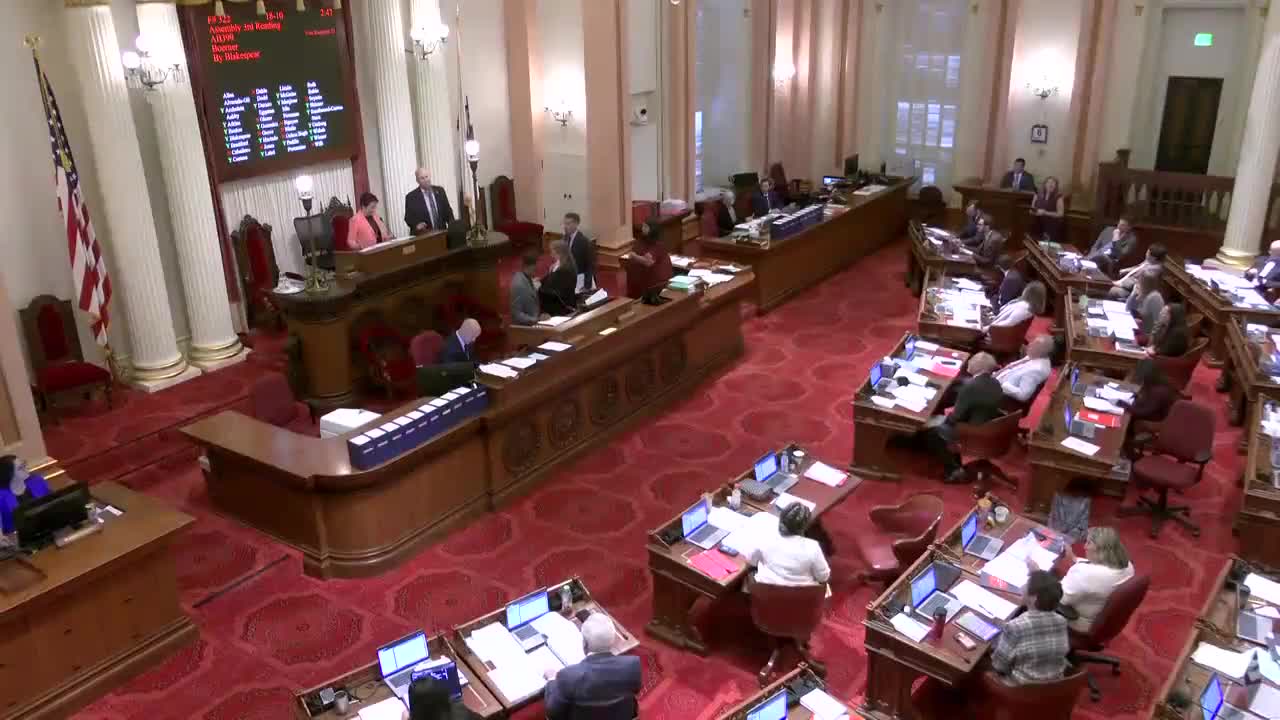 2MIN
Senate Floor
 1MIN
Senate Standing Committee on Appropriations
 5MIN
Senate Standing Committee on Judiciary
 1MIN
Assembly Floor
 22SEC
Assembly Floor
 24MIN
Assembly Standing Committee on Judiciary
Bill Author

Bill Co-Author(s):