AB 645: Electricity: California Renewables Portfolio Standard.
- Session Year: 2015-2016
- House: Assembly
- Latest Version Date: 2015-02-24
(1)Under existing law, the Public Utilities Commission (PUC) has regulatory authority over public utilities, including electrical corporations, as defined, while local publicly owned electric utilities, as defined, are under the direction of their governing boards.
Existing law establishes the California Renewables Portfolio Standard (RPS) program, which expresses the intent of the Legislature that the amount of electricity generated per year from eligible renewable energy resources be increased to an amount that equals at least 33% of the total electricity sold to retail customers in California per year by December 31, 2020. Existing law requires the PUC, by January 1, 2012, to establish the quantity of electricity products from eligible renewable energy resources to be procured by each retail seller for specified compliance periods, sufficient to ensure that the procurement of electricity products from eligible renewable energy resources achieves 25% of retail sales by December 31, 2016, and 33% of retail sales by December 31, 2020, and that retail sellers procure not less than 33% of retail sales in all subsequent years.
Existing law makes the requirements of the RPS program applicable to local publicly owned electric utilities, except that the utilitys governing board is responsible for implementation of those requirements, instead of the PUC, and certain enforcement authority with respect to local publicly owned electric utilities is given to the State Energy Resources Conservation and Development Commission and State Air Resources Board, instead of the PUC.
This bill would additionally express the intent of the Legislature for the purposes of the RPS program that the amount of electricity generated per year from eligible renewable energy resources be increased to an amount equal to at least 50% by December 31, 2030, and would require the PUC, by January 1, 2017, to establish the quantity of electricity products from eligible renewable energy resources to be procured by each retail seller for specified compliance periods sufficient to ensure that the procurement of electricity products from eligible renewable energy resources achieves 50% of retail sales by December 31, 2030, and that retail sellers procure not less than 50% of retail sales in all subsequent years. The bill would require the governing boards of local publicly owned electric utilities to ensure that specified quantities of electricity products from eligible renewable energy resources to be procured for specified compliance periods to ensure that the procurement of electricity products from eligible renewable energy resources achieve 50% of retail sales by December 31, 2030, and that the local publicly owned electric utilities procure not less than 50% of retail sales in all subsequent years.
(2)Under existing law, a violation of the RPS program is a crime.
Because the provisions of this bill would expand the RPS program, a violation of these provisions would impose a state-mandated local program by expanding the definition of a crime.
(3)By placing additional requirements upon local publicly owned electric utilities, this bill would impose a state-mandated local program.
(4)The California Constitution requires the state to reimburse local agencies and school districts for certain costs mandated by the state. Statutory provisions establish procedures for making that reimbursement.
This bill would provide that no reimbursement is required by this act for a specified reasons.
The Legislature finds and declares all of the following:
(a)In order to attain a target of generating 20 percent of total retail sales of electricity in California from eligible renewable energy resources by December 31, 2013, and 33 percent by December 31, 2020, and 50 percent by December 31, 2030, it is the intent of the Legislature that the commission and the Energy Commission implement the California Renewables Portfolio Standard Program described in this article.
(b)Achieving the renewables portfolio standard through the procurement of various electricity products from eligible renewable energy resources is intended to provide unique benefits to California, including all of the following, each of which independently justifies the program:
(1)Displacing fossil fuel consumption within the state.
(2)Adding new electrical generating facilities in the transmission network within the Western Electricity Coordinating Council service area.
(3)Reducing air pollution in the state.
(4)Meeting the states climate change goals by reducing emissions of greenhouse gases associated with electrical generation.
(5)Promoting stable retail rates for electric service.
(6)Meeting the states need for a diversified and balanced energy generation portfolio.
(7)Assistance with meeting the states resource adequacy requirements.
(8)Contributing to the safe and reliable operation of the electrical grid, including providing predictable electrical supply, voltage support, lower line losses, and congestion relief.
(9)Implementing the states transmission and land use planning activities related to development of eligible renewable energy resources.
(c)The California Renewables Portfolio Standard Program is intended to complement the Renewable Energy Resources Program administered by the Energy Commission and established pursuant to Chapter 8.6 (commencing with Section 25740) of Division 15 of the Public Resources Code.
(d)New and modified electric transmission facilities may be necessary to facilitate the state achieving its renewables portfolio standard targets.
(e)(1)Supplying electricity to California end-use customers that is generated by eligible renewable energy resources is necessary to improve Californias air quality and public health, and the commission shall ensure rates are just and reasonable, and are not significantly affected by the procurement requirements of this article. This electricity may be generated anywhere in the interconnected grid that includes many states, and areas of both Canada and Mexico.
(2)This article requires generating resources located outside of California that are able to supply that electricity to California end-use customers to be treated identically to generating resources located within the state, without discrimination.
(3)California electrical corporations have already executed, and the commission has approved, power purchase agreements with eligible renewable energy resources located outside of California that will supply electricity to California end-use customers. These resources will fully count toward meeting the renewables portfolio standard procurement requirements. In addition, there are nearly 7,000 megawatts of additional proposed renewable energy resources located outside of California that are awaiting interconnection approval from the Independent System Operator. All of these resources, if procured, will count as eligible renewable energy resources that satisfy the portfolio content requirements of paragraph (1) of subdivision (c) of Section 399.16.
SEC. 2.Section 399.15 of the Public Utilities Code is amended to read:399.15.(a)In order to fulfill unmet long-term resource needs, the commission shall establish a renewables portfolio standard requiring all retail sellers to procure a minimum quantity of electricity products from eligible renewable energy resources as a specified percentage of total kilowatthours sold to their retail end-use customers each compliance period to achieve the targets established under this article. For any retail seller procuring at least 14 percent of retail sales from eligible renewable energy resources in 2010, the deficits associated with any previous renewables portfolio standard shall not be added to any procurement requirement pursuant to this article.
(b)The commission shall implement renewables portfolio standard procurement requirements only as follows:
(1)Each retail seller shall procure a minimum quantity of eligible renewable energy resources for each of the following compliance periods:
(A)January 1, 2011, to December 31, 2013, inclusive.
(B)January 1, 2014, to December 31, 2016, inclusive.
(C)January 1, 2017, to December 31, 2020, inclusive.
(D)January 1, 2021, to December 31, 2023, inclusive.
(E)January 1, 2024, to December 31, 2026, inclusive.
(D)January 1, 2027, to December 31, 2030, inclusive.
(2)(A)No later than January 1, 2012, 2017, the commission shall establish the quantity of electricity products from eligible renewable energy resources to be procured by the retail seller for each compliance period. These quantities shall be established in the same manner for all retail sellers and result in the same percentages used to establish compliance period quantities for all retail sellers.
(B)In establishing quantities for the compliance period from January 1, 2011, to December 31, 2013, inclusive, the commission shall require procurement for each retail seller equal to an average of 20 percent of retail sales. For the following compliance periods, the quantities shall reflect reasonable progress in each of the intervening years sufficient to ensure that the procurement of electricity products from eligible renewable energy resources achieves 25 percent of retail sales by December 31, 2016, and 33 percent of retail sales by December 31, 2020. 2020, 38 percent by December 31, 2023, 44 percent by December 31, 2026, and 50 percent by December 31, 2030. The commission shall require retail sellers to procure not less than 33 50 percent of retail sales of electricity products from eligible renewable energy resources in all subsequent years.
(C)Retail sellers shall be obligated to procure no less than the quantities associated with all intervening years by the end of each compliance period. Retail sellers shall not be required to demonstrate a specific quantity of procurement for any individual intervening year.
(3)The commission may require the procurement of eligible renewable energy resources in excess of the quantities specified in paragraph (2).
(4)Only for purposes of establishing the renewables portfolio standard procurement requirements of paragraph (1) and determining the quantities pursuant to paragraph (2), the commission shall include all electricity sold to retail customers by the Department of Water Resources pursuant to Division 27 (commencing with Section 80000) of the Water Code in the calculation of retail sales by an electrical corporation.
(5)The commission shall waive enforcement of this section if it finds that the retail seller has demonstrated any of the following conditions are beyond the control of the retail seller and will prevent compliance:
(A)There is inadequate transmission capacity to allow for sufficient electricity to be delivered from proposed eligible renewable energy resource projects using the current operational protocols of the Independent System Operator. In making its findings relative to the existence of this condition with respect to a retail seller that owns transmission lines, the commission shall consider both of the following:
(i)Whether the retail seller has undertaken, in a timely fashion, reasonable measures under its control and consistent with its obligations under local, state, and federal laws and regulations, to develop and construct new transmission lines or upgrades to existing lines intended to transmit electricity generated by eligible renewable energy resources. In determining the reasonableness of a retail sellers actions, the commission shall consider the retail sellers expectations for full-cost recovery for these transmission lines and upgrades.
(ii)Whether the retail seller has taken all reasonable operational measures to maximize cost-effective deliveries of electricity from eligible renewable energy resources in advance of transmission availability.
(B)Permitting, interconnection, or other circumstances that delay procured eligible renewable energy resource projects, or there is an insufficient supply of eligible renewable energy resources available to the retail seller. In making a finding that this condition prevents timely compliance, the commission shall consider whether the retail seller has done all of the following:
(i)Prudently managed portfolio risks, including relying on a sufficient number of viable projects.
(ii)Sought to develop one of the following: its own eligible renewable energy resources, transmission to interconnect to eligible renewable energy resources, or energy storage used to integrate eligible renewable energy resources. This clause shall not require an electrical corporation to pursue development of eligible renewable energy resources pursuant to Section 399.14.
(iii)Procured an appropriate minimum margin of procurement above the minimum procurement level necessary to comply with the renewables portfolio standard to compensate for foreseeable delays or insufficient supply.
(iv)Taken reasonable measures, under the control of the retail seller, to procure cost-effective distributed generation and allowable unbundled renewable energy credits.
(C)Unanticipated curtailment of eligible renewable energy resources necessary to address the needs of a balancing authority.
(6)If the commission waives the compliance requirements of this section, the commission shall establish additional reporting requirements on the retail seller to demonstrate that all reasonable actions under the control of the retail seller are taken in each of the intervening years sufficient to satisfy future procurement requirements.
(7)The commission shall not waive enforcement pursuant to this section, unless the retail seller demonstrates that it has taken all reasonable actions under its control, as set forth in paragraph (5), to achieve full compliance.
(8)If a retail seller fails to procure sufficient eligible renewable energy resources to comply with a procurement requirement pursuant to paragraphs (1) and (2) and fails to obtain an order from the commission waiving enforcement pursuant to paragraph (5), the commission shall exercise its authority pursuant to Section 2113.
(9)Deficits associated with the compliance period shall not be added to a future compliance period.
(c)The commission shall establish a limitation for each electrical corporation on the procurement expenditures for all eligible renewable energy resources used to comply with the renewables portfolio standard. In establishing this limitation, the commission shall rely on the following:
(1)The most recent renewable energy procurement plan.
(2)Procurement expenditures that approximate the expected cost of building, owning, and operating eligible renewable energy resources.
(3)The potential that some planned resource additions may be delayed or canceled.
(d)In developing the limitation pursuant to subdivision (c), the commission shall ensure all of the following:
(1)The limitation is set at a level that prevents disproportionate rate impacts.
(2)The costs of all procurement credited toward achieving the renewables portfolio standard are counted towards the limitation.
(3)Procurement expenditures do not include any indirect expenses, including imbalance energy charges, sale of excess energy, decreased generation from existing resources, transmission upgrades, or the costs associated with relicensing any utility-owned hydroelectric facilities.
(e)(1)No later than January 1, 2016, the commission shall prepare a report to the Legislature assessing whether each electrical corporation can achieve a 33-percent renewables portfolio standard by December 31, 2020, and maintain that level thereafter, within the adopted cost limitations. If the commission determines that it is necessary to change the limitation for procurement costs incurred by any electrical corporation after that date, it may propose a revised cap consistent with the criteria in subdivisions (c) and (d). The proposed modifications shall take effect no earlier than January 1, 2017.
(2)Notwithstanding Section 10231.5 of the Government Code, the requirement for submitting a report imposed under paragraph (1) is inoperative on January 1, 2021.
(3)A report to be submitted pursuant to paragraph (1) shall be submitted in compliance with Section 9795 of the Government Code.
(f)If the cost limitation for an electrical corporation is insufficient to support the projected costs of meeting the renewables portfolio standard procurement requirements, the electrical corporation may refrain from entering into new contracts or constructing facilities beyond the quantity that can be procured within the limitation, unless eligible renewable energy resources can be procured without exceeding a de minimis increase in rates, consistent with the long-term procurement plan established for the electrical corporation pursuant to Section 454.5.
(g)(1)The commission shall monitor the status of the cost limitation for each electrical corporation in order to ensure compliance with this article.
(2)If the commission determines that an electrical corporation may exceed its cost limitation prior to achieving the renewables portfolio standard procurement requirements, the commission shall do both of the following within 60 days of making that determination:
(A)Investigate and identify the reasons why the electrical corporation may exceed its annual cost limitation.
(B)Notify the appropriate policy and fiscal committees of the Legislature that the electrical corporation may exceed its cost limitation, and include the reasons why the electrical corporation may exceed its cost limitation.
(h)The establishment of a renewables portfolio standard shall not constitute implementation by the commission of the federal Public Utility Regulatory Policies Act of 1978 (Public Law 95-617).
SEC. 3.Section 399.30 of the Public Utilities Code is amended to read:399.30.(a)To fulfill unmet long-term generation resource needs, each local publicly owned electric utility shall adopt and implement a renewable energy resources procurement plan that requires the utility to procure a minimum quantity of electricity products from eligible renewable energy resources, including renewable energy credits, as a specified percentage of total kilowatthours sold to the utilitys retail end-use customers, each compliance period, to achieve the targets of subdivision (c).
(b)The governing board shall implement procurement targets for a local publicly owned electric utility that require the utility to procure a minimum quantity of eligible renewable energy resources for each of the following compliance periods:
(1)January 1, 2011, to December 31, 2013, inclusive.
(2)January 1, 2014, to December 31, 2016, inclusive.
(3)January 1, 2017, to December 31, 2020, inclusive.
(D)January 1, 2021, to December 31, 2023, inclusive.
(E)January 1, 2024, to December 31, 2026, inclusive.
(D)January 1, 2027, to December 31, 2030, inclusive.
(c)The governing board of a local publicly owned electric utility shall ensure all of the following:
(1)The quantities of eligible renewable energy resources to be procured for the compliance period from January 1, 2011, to December 31, 2013, inclusive, are equal to an average of 20 percent of retail sales.
(2)The quantities of eligible renewable energy resources to be procured for all other compliance periods reflect reasonable progress in each of the intervening years sufficient to ensure that the procurement of electricity products from eligible renewable energy resources achieves 25 percent of retail sales by December 31, 2016, and 33 percent of retail sales by December 31, 2020. 2020, 38 percent by December 31, 2023, 44 percent by December 31, 2026, and 50 percent by December 31, 2030. The local governing board shall require the local publicly owned electric utilities utility to procure not less than 33 50 percent of retail sales of electricity products from eligible renewable energy resources in all subsequent years.
(3)A local publicly owned electric utility shall adopt procurement requirements consistent with Section 399.16.
(d)The governing board of a local publicly owned electric utility may adopt the following measures:
(1)Rules permitting the utility to apply excess procurement in one compliance period to subsequent compliance periods in the same manner as allowed for retail sellers pursuant to Section 399.13.
(2)Conditions that allow for delaying timely compliance consistent with subdivision (b) of Section 399.15.
(3)Cost limitations for procurement expenditures consistent with subdivision (c) of Section 399.15.
(e)The governing board of the local publicly owned electric utility shall adopt a program for the enforcement of this article on or before January 1, 2012. The program shall be adopted at a publicly noticed meeting offering all interested parties an opportunity to comment. Not less than 30 days notice shall be given to the public of any meeting held for purposes of adopting the program. Not less than 10 days notice shall be given to the public before any meeting is held to make a substantive change to the program.
(f)(1)Each local publicly owned electric utility shall annually post notice, in accordance with Chapter 9 (commencing with Section 54950) of Part 1 of Division 2 of Title 5 of the Government Code, whenever its governing body will deliberate in public on its renewable energy resources procurement plan.
(2)Contemporaneous with the posting of the notice of a public meeting to consider the renewable energy resources procurement plan, the local publicly owned electric utility shall notify the Energy Commission of the date, time, and location of the meeting in order to enable the Energy Commission to post the information on its Internet Web site. This requirement is satisfied if the local publicly owned electric utility provides the uniform resource locator (URL) that links to this information.
(3)Upon distribution to its governing body of information related to its renewable energy resources procurement status and future plans, for its consideration at a noticed public meeting, the local publicly owned electric utility shall make that information available to the public and shall provide the Energy Commission with an electronic copy of the documents for posting on the Energy Commissions Internet Web site. This requirement is satisfied if the local publicly owned electric utility provides the uniform resource locator (URL) that links to the documents or information regarding other manners of access to the documents.
(g)A public utility district that receives all of its electricity pursuant to a preference right adopted and authorized by the United States Congress pursuant to Section 4 of the Trinity River Division Act of August 12, 1955 (Public Law 84-386) shall be in compliance with the renewable energy procurement requirements of this article.
(h)For a local publicly owned electric utility that was in existence on or before January 1, 2009, that provides retail electric service to 15,000 or fewer customer accounts in California, and is interconnected to a balancing authority located outside this state but within the WECC, an eligible renewable energy resource includes a facility that is located outside California that is connected to the WECC transmission system, if all of the following conditions are met:
(1)The electricity generated by the facility is procured by the local publicly owned electric utility, is delivered to the balancing authority area in which the local publicly owned electric utility is located, and is not used to fulfill renewable energy procurement requirements of other states.
(2)The local publicly owned electric utility participates in, and complies with, the accounting system administered by the Energy Commission pursuant to this article.
(3)The Energy Commission verifies that the electricity generated by the facility is eligible to meet the renewables portfolio standard procurement requirements.
(i)Notwithstanding subdivision (a), for a local publicly owned electric utility that is a joint powers authority of districts established pursuant to state law on or before January 1, 2005, that furnish electric services other than to residential customers, and is formed pursuant to the Irrigation District Law (Division 11 (commencing with Section 20500) of the Water Code), the percentage of total kilowatthours sold to the districts retail end-use customers, upon which the renewables portfolio standard procurement requirements in subdivision (b) are calculated, shall be based on the authoritys average retail sales over the previous seven years. If the authority has not furnished electric service for seven years, then the calculation shall be based on average retail sales over the number of completed years during which the authority has provided electric service.
(j)A local publicly owned electric utility in a city and county that only receives greater than 67 percent of its electricity sources from hydroelectric generation located within the state that it owns and operates, and that does not meet the definition of a renewable electrical generation facility pursuant to Section 25741 of the Public Resources Code, shall be required to procure eligible renewable energy resources, including renewable energy credits, to meet only the electricity demands unsatisfied by its hydroelectric generation in any given year, in order to satisfy its renewable energy procurement requirements.
(k)(1)A local publicly owned electric utility that receives greater than 50 percent of its annual retail sales from its own hydroelectric generation that is not an eligible renewable energy resource shall not be required to procure additional eligible renewable energy resources in excess of either of the following:
(A)The portion of its retail sales not supplied by its own hydroelectric generation. For these purposes, retail sales supplied by an increase in hydroelectric generation resulting from an increase in the amount of water stored by a dam because the dam is enlarged or otherwise modified after December 31, 2012, shall not count as being retail sales supplied by the utilitys own hydroelectric generation.
(B)The cost limitation adopted pursuant to this section.
(2)For the purposes of this subdivision, hydroelectric generation means electricity generated from a hydroelectric facility that satisfies all of the following:
(A)Is owned solely and operated by the local publicly owned electric utility as of 1967.
(B)Serves a local publicly owned electric utility with a distribution system demand of less than 150 megawatts.
(C)Involves a contract in which an electrical corporation receives the benefit of the electric generation through June of 2014, at which time the benefit reverts back to the ownership and control of the local publicly owned electric utility.
(D)Has a maximum penstock flow capacity of no more than 3,200 cubic feet per second and includes a regulating reservoir with a small hydroelectric generation facility producing fewer than 20 megawatts with a maximum penstock flow capacity of no more than 3,000 cubic feet per second.
(3)This subdivision does not reduce or eliminate any renewable procurement requirement for any compliance period ending prior to January 1, 2014.
(4)This subdivision does not require a local publicly owned electric utility to purchase additional eligible renewable energy resources in excess of the procurement requirements of subdivision (c).
(l)A local publicly owned electric utility shall retain discretion over both of the following:
(1)The mix of eligible renewable energy resources procured by the utility and those additional generation resources procured by the utility for purposes of ensuring resource adequacy and reliability.
(2)The reasonable costs incurred by the utility for eligible renewable energy resources owned by the utility.
(m)On or before July 1, 2011, the Energy Commission shall adopt regulations specifying procedures for enforcement of this article. The regulations shall include a public process under which the Energy Commission may issue a notice of violation and correction against a local publicly owned electric utility for failure to comply with this article, and for referral of violations to the State Air Resources Board for penalties pursuant to subdivision (o).
(n)(1)Upon a determination by the Energy Commission that a local publicly owned electric utility has failed to comply with this article, the Energy Commission shall refer the failure to comply with this article to the State Air Resources Board, which may impose penalties to enforce this article consistent with Part 6 (commencing with Section 38580) of Division 25.5 of the Health and Safety Code. Any penalties imposed shall be comparable to those adopted by the commission for noncompliance by retail sellers.
(2)If Division 25.5 (commencing with Section 38500) of the Health and Safety Code is suspended or repealed, the State Air Resources Board may take action to enforce this article on local publicly owned electric utilities consistent with Section 41513 of the Health and Safety Code, and impose penalties on a local publicly owned electric utility consistent with Article 3 (commencing with Section 42400) of Chapter 4 of Part 4 of, and Chapter 1.5 (commencing with Section 43025) of Part 5 of, Division 26 of the Health and Safety Code.
(3)For the purpose of this subdivision, this section is an emissions reduction measure pursuant to Section 38580 of the Health and Safety Code.
(4)If the State Air Resources Board has imposed a penalty upon a local publicly owned electric utility for the utilitys failure to comply with this article, the State Air Resources Board shall not impose an additional penalty for the same infraction, or the same failure to comply, with any renewables procurement requirement imposed upon the utility pursuant to the California Global Warming Solutions Act of 2006 (Division 25.5 (commencing with Section 38500) of the Health and Safety Code).
(5)Any penalties collected by the State Air Resources Board pursuant to this article shall be deposited in the Air Pollution Control Fund and, upon appropriation by the Legislature, shall be expended for reducing emissions of air pollution or greenhouse gases within the same geographic area as the local publicly owned electric utility.
(o)The commission has no authority or jurisdiction to enforce any of the requirements of this article on a local publicly owned electric utility.
SEC. 4.No reimbursement is required by this act pursuant to Section 6 of Article XIIIB of the California Constitution because a local agency or school district has the authority to levy service charges, fees, or assessments sufficient to pay for the program or level of service mandated by this act or because costs that may be incurred by a local agency or school district will be incurred because this act creates a new crime or infraction, eliminates a crime or infraction, or changes the penalty for a crime or infraction, within the meaning of Section 17556 of the Government Code, or changes the definition of a crime within the meaning of Section 6 of Article XIIIB of the California Constitution.
|
Date
|
Status
|
|---|---|
| Aug 27, 2015 | In committee: Held under submission. |
| Aug 17, 2015 | In committee: Referred to APPR. suspense file. |
| Jul 7, 2015 | From committee: Do pass and re-refer to Com. on APPR. (Ayes 8. Noes 3.) (July 7). Re-referred to Com. on APPR. |
| Jun 18, 2015 | Referred to Com. on E., U., & C. |
| Jun 3, 2015 | Read third time. Passed. Ordered to the Senate. (Ayes 46. Noes 29. Page 1846.) |
| Jun 3, 2015 | In Senate. Read first time. To Com. on RLS. for assignment. |
| Jun 1, 2015 | Read second time. Ordered to third reading. |
| May 28, 2015 | From committee: Do pass. (Ayes 12. Noes 5.) (May 28). |
| May 13, 2015 | In committee: Set, first hearing. Referred to APPR. suspense file. |
| May 6, 2015 | In committee: Hearing postponed by committee. |
| Apr 28, 2015 | From committee: Do pass and re-refer to Com. on APPR. (Ayes 6. Noes 3.) (April 27). Re-referred to Com. on APPR. |
| Apr 21, 2015 | From committee: Do pass and re-refer to Com. on NAT. RES. (Ayes 10. Noes 5.) (April 20). Re-referred to Com. on NAT. RES. |
| Mar 9, 2015 | Referred to Coms. on U. & C. and NAT. RES. |
| Feb 25, 2015 | From printer. May be heard in committee March 27. |
| Feb 24, 2015 | Read first time. To print. |
|
Date
|
Description
|
Location
|
Votes
|
|
|---|---|---|---|---|
| Aug 17, 2015 | Placed on suspense file | Senate Standing Committee on Appropriations |
Passed |
|
| Jul 7, 2015 | Do pass, but first be re-referred to the Committee on [Appropriations] | Senate Standing Committee on Energy, Utilities and Communications |
Passed |
|
| Jun 3, 2015 | AB 645 WILLIAMS Assembly Third Reading | Assembly Floor |
Passed |
|
| Jun 3, 2015 | AB 645 WILLIAMS Assembly Third Reading Motion to Appeal the Decision of the Chair By JONES | Assembly Floor |
Failed |
|
| May 28, 2015 | Do pass. | Assembly Standing Committee on Appropriations |
Passed |
|
| Apr 27, 2015 | Do pass and be re-referred to the Committee on [Appropriations] | Assembly Standing Committee on Natural Resources |
Passed |
|
| Apr 20, 2015 | Do pass and be re-referred to the Committee on [Natural Resources] | Assembly Standing Committee on Utilities and Commerce |
Passed |
This list shows positions taken on this bill by organizations on the date displayed, which is linked to the original source.
Positions by individuals are not included.
AB 645 (Williams) Page 2 of 2
SENATE COMMITTEE ON APPROPRIATIONS
Senator Ricardo Lara, Chair
2015 - 2016 Regular Session
AB 645 (Williams) - Electricity: California Renewables Portfolio Standard.
|
|
Version: February 24, 2015 |
Policy Vote: E., U., & C. 8 - 3 |
Urgency: No |
Mandate: Yes |
Hearing Date: August 17, 2015 |
Consultant: Marie Liu |
This bill meets the criteria for referral to the Suspense File.
Bill Summary:
AB 645 would increase the Renewable Portfolio Standard target to require that 50 percent of electricity come from renewable energy resources by 2030.
Fiscal Impact:
Annual costs of $900,000 from the Energy Resources Program Account (General Fund) for the California Energy Commission (CEC) for new responsibilities ensuring compliance with RPS standards by publically-owned utilities (POUs).
Ongoing staffing needs of $350,000 annually to the Public Utilities Reimbursement Account (special) for CPUC staffing needs for ongoing enforcement of the higher RPS standards.
Unknown costs to the General Fund and various special funds to the state as a ratepayer of electricity to the extent that electricity prices may be affected by increasing the RPS standard.
Background:
Existing law requires all retail sellers of electricity – investor-owned utilities (IOU), community choice aggregators (CCAs), and energy service providers (ESPs) – and publicly-owned utilities (POU) to increase purchases of renewable energy such that at least 33 percent of retail sales are procured from renewable energy resources by December 31, 2020. This is known as the Renewable Portfolio Standard (RPS). The CPUC is explicitly authorized to require retail sellers of electricity to procure renewable energy resources in excess of the 33-percent RPS requirement. (PUC §399.11 et seq.). The CPUC oversees RPS compliance with IOUs while the CEC oversees POUs.
Proposed Law:
This bill would establish a RPS target of 50% for December 31, 2030. To reach this goal, this bill would establish compliance periods of 33% by December 31, 2020, 38% by December 31, 2023, 44% by December 31, 2026, and 50% by December 31, 2030.
Related Legislation:
SB 350 (De Leon) would direct a 50% reduction in petroleum use, require that 50% of electricity come from renewable resources, and require a doubling of the energy efficiency of existing buildings. SB 350 is awaiting hearing in the Assembly Appropriations Committee.
Staff Comments:
The CEC notes that implementation of a 50% RPS standard will require the management of a much larger amount of data than the 33% standard. To manage this additional data, the CEC anticipates needing six additional positions at an approximate cost of $897,000 annually.
The CPUC additionally anticipates it would need one position at an annual cost of $123,000 annually and $1.5 million in contract costs. These costs are needed for additional analysis and modeling of the impact of a higher RPS standard for renewable energy transmission planning, impacts of energy-only transmission on resource planning, regional RPS markets, and over-generation. Staff notes that these costs appear to be consistent with the costs associated with raising the RPS standard in SB 350.
-- END --
AB 645 (Williams) Page 7 of 7
SENATE COMMITTEE ON ENERGY, UTILITIES AND COMMUNICATIONS
Senator Ben Hueso, Chair
2015 - 2016 Regular
Bill No: AB 645 Hearing Date: 7/7/2015
Author: |
Williams |
||
Version: |
2/24/2015 As Introduced |
||
Urgency: |
No |
Fiscal: |
Yes |
Consultant: |
Jay Dickenson |
||
SUBJECT: Electricity: California Renewables Portfolio Standard
DIGEST: This bill increases the Renewable Portfolio Standard target to require that 50 percent of electricity come from renewable energy resources by 2030.
ANALYSIS:
Existing law requires retail sellers of electricity – investor-owned utilities (IOUs), community choice aggregators, and energy service providers – and publicly-owned utilities (POUs) to increase purchases of renewable energy such that at least 33 percent of retail sales are procured from renewable energy resources by December 31, 2020. This is known as the Renewable Portfolio Standard (RPS). The California Public Utilities Commission (CPUC) establishes the RPS for retail sellers and ensures they progress in achieving it, and levies penalties for failure. The governing board of each POU establishes its own RPS. The California Energy Commission (CEC) may issue a notice of violation against a POU for failure to adequately progress in meeting RPS targets and refer the POU to the California Air Resource Board (ARB), which may assess penalties against it. The RPS provides numerous cost containment provisions and exceptions to compliance obligations. (Public Utilities Code §399.11 et seq.)
This bill modifies the RPS by (1) establishing a new RPS target of 50 percent by December 31, 2030; and (2) establishes a new, interim compliance schedule of 38 percent by December 31, 2023, 44 percent by December 31, 2026, and 50 percent by December 31, 2030.
Background
State efforts to address environmental effects of energy use. In California, the energy sector, broadly defined, accounts for more than 85 percent of greenhouse gas (GHG) emissions. The two largest sources of California’s GHGs are transportation, at 39 percent, and electricity production, at 21 percent.1 Accordingly, the state’s existing clean energy and climate change programs focus on the energy sector in general and the transportation and electricity sectors specifically.
Principal among those programs are the California Global Warming Solutions Act of 2006 (more commonly known as “AB 32”), which requires a reduction of the state’s GHG emissions to 1990 levels by 2020, and the RPS, which requires the 33 percent of the state’s electricity come from renewable resources by 2020. AB 32 tasks the ARB with developing a plan of measures that reduce GHG emission levels, to be updated every five years. To that end, ARB, in 2008, adopted a scoping plan that includes regulatory and market-based measures applicable to the state’s major economic sectors. Among the regulatory measures included in the initial scoping plan was a 33-percent RPS.
The Legislature approved the statutory RPS program in 2011 with the passage of SBx1- 2 (Simitian, Chapter 1). Statute directs the CPUC to establish the RPS for retail sellers and ensure they progress in achieving it, levying penalties for failure. The governing board of each POU establishes its own RPS. The CEC may issue a notice of violation against a POU for failure to adequately progress in meeting RPS targets and refer the POU to the ARB, which may assess penalties against it. The state’s electric utilities report they are on track to meet, or exceed, the RPS goals. The following table shows the progress to date of the state’s largest electric utilities:
Progress of Major Electric Utilities Towards Meetings RPS Goals
|
||
|
RPS Procurement Percentages for the 2011-13 Procurement Period |
Percentage of RPS Procurement Currently Under Contract for 2020 |
Pacific Gas and Electric |
23.8% |
31.3% |
Southern California Edison |
21.6% |
23.5% |
San Diego Gas and Electric |
23.6% |
38.8% |
Sacramento Municipal Utilities District |
20.1% |
not available |
Los Angeles Department of Water and Power |
20.0% |
not available |
*IOU RPS procurement is as reported by the CPUC. See http://www.cpuc.ca.gov/PUC/energy/Renewables/index.htm. *The POUs report their own progress on the RPS to the CEC. See http://www.energy.ca.gov/portfolio/pou_rulemaking/2013-RPS-01/POU_Reported_2011-2013_RPS_Percentage_Table.pdf. |
||
New target; no new details. This bill establishes a new RPS target – 50 percent renewable energy by 2050 – and a new schedule of compliance – 38 percent by December 31, 2023; 44 percent by December 31, 2026; and 50 percent by December 31, 2030. This bill makes no other changes to the RPS statute. The author contends the danger of continued anthropogenic climate change renders the higher RPS goal imperative. The author contends that the RPS program has been a success, both in terms of procurement of increasing amounts of renewable energy resources and in terms of cost to California ratepayers. This contention is accurate: as shown above, the state’s major electric utilities expect to meet or exceed the 2020 RPS target, and the cost of doing so is well within costs contemplated by the Legislature when it considered the RPS statute.2
However, this committee has considered and approved another bill, SB 350 (De León), that, among other things, also establishes a goal of generating 50 percent of total retail sales of electricity from renewable resources by 2030. SB 350 also calls for several changes to the RPS program, in addition to establishing the 2030 renewable energy goal. For example, SB 350 makes the following changes to the RPS statute:
Directs the CPUC to require all retail sellers of electricity to annually prepare renewable energy procurement plans and, for each IOU procurement plan, require the IOU to include a strategy for procuring a diverse portfolio of resources that provide a reliable electricity supply, including renewable energy integration needs, using zero carbon-emitting resources to the maximum extent reasonable, the net capacity costs of which shall be allocated on a nonbypassable basis.
Requires retail sellers and POUs to ensure that, for each compliance period after 2020, at least 75 percent of the incremental renewable energy procurement is from generation either (1) directly connected to a California Balancing Authority (CBA), or, (2) connected to another balancing authority and providing power to a CBA via dynamic transfers or by scheduling power from the facility into a CBA on an hourly basis.
Limits to 10 percent, for each compliance period after 2020, the incremental renewable power a retail seller or a POU may receive from unbundled RECs from generators not directly connected to a CBA.
Directs the CPUC to establish limitations for each IOU on procurement expenditures for RPS compliance at a level that prevents disproportionate rate impacts and deletes provisions of existing law requiring the CPUC to report to the Legislature, by January 1, 2016, on the ability of each IOU to meet and maintain the 33 percent 2020 target within existing cost limitations.
Authorizes the CPUC to assess penalties against a retail seller, and the CEC to assess penalties against a POU, for noncompliance with an RPS interim goal and, in the case of an IOU, prohibits the IOU from collecting the cost of the penalties in rates.
Directs penalties collected from a retail seller or a POU to be used for renewable energy programs and research, development, and demonstration programs.
Directs the CPUC and the CEC to consider the benefits of distributed generation; allow for consideration of costs and benefits of grid integration in RPS proceedings; minimize system power and fossil fuel purchases; recommend how to better align state incentive programs with the state’s clean energy and pollution reduction goals and provide benefits to disadvantaged communities; and give preference to the manufacture and deployment of clean energy and pollution reduction technologies that create jobs and investment in the state.
This committee considered and approved the policy and program prescriptions in SB 350. The author and committee may wish to consider amending AB 645 to conform its provisions to the provisions of SB 350 as they relate to the RPS.
Prior/Related Legislation
AB 327 (Perea, Chapter 611, Statutes of 2013) authorized the CPUC to require procurement above the 33 percent RPS.
SB2 X1 (Simitian, Chapter 1, Statutes of 2011-12 First Extraordinary Session) codified the current 2020 RPS target.
AB 197 (Garcia, 2015) modifies the RPS procurement process to require consideration of the statutory GHG limit and grid reliability. The bill is awaiting consideration in the Senate Committee on Appropriations.
SB 350 (De León, 2015) enacts the Clean Energy and Pollution Reduction Act of 2015. The bill will be considered on July 6th in the Assembly Committee on Utilities and Commerce.
FISCAL EFFECT: Appropriation: No Fiscal Com.: Yes Local: Yes
ASSEMBLY VOTES:
Assembly Floor (46-29)
Assembly Appropriations Committee (12-5)
Assembly Natural Resources Committee (6-3)
Assembly Utilities and Commerce Committee (10-5)
SUPPORT:
Advanced Energy Economy
American Lung Association in California
Asian Pacific Environmental Network
Azul
California Biomass Energy Alliance
California Energy Storage Alliance
California Environmental Justice Alliance
California Hydropower Reform Coalition
California League of Conservation Voters
California Municipal Utilities Association, if amended
California State Association of Electrical Workers
California State Pipe Trades Council
California Wind Energy Association
Center for Biological Diversity
City of Santa Monica
Clean Power Campaign
Clean Water Action
Climate Action Campaign
Coalition of California Utility Employees
Coastal Environmental Rights Foundation
Elevator Constructors Union
EnergySource LLC
Environment California
Environmental Action Committee West Marin
Environmental Defense Fund
Independent Energy Producers Association
Large-Scale Solar Association
Natural Resources Defense Council
NextGen Climate
Office of Ratepayer Advocates
Sacramento Municipal Utility District, if amended
San Diego County Water Authority, if amended
Sierra Club California
Solar Energy Industries Association
State Building and Construction Trades Council
The Utility Reform Network, if amended
US Green Building Council, California
Union of Concerned Scientists
Vote Solar
Western States Council of Sheet Metal Workers
OPPOSITION:
California Chamber of Commerce
California Manufacturers & Technology Association
Southern California Edison, unless amended
Southwest California Legislative Council
ARGUMENTS IN SUPPORT: California is well on its way to meeting its near-term climate change goals as the state currently uses renewable resources for about 25 percent of its electricity use and is on a trajectory to use 33 percent by 2020. However, in order to meet long term climate change goals, we must derive 50 percent of the state’s electricity from renewable resources by 2030. Currently, most energy utilities have bought or have built enough energy resources to meet the 33 percent RPS before the target year. Without revising the state’s existing RPS requirement, there isn’t a driving force for utilities to procure beyond 33 percent. This bill provides that driving force.
ARGUMENTS IN OPPOSITION: Some opponents contend this bill fails to modify the RPS program in light of the lessons learned since the program’s implementation. Other opponents worry the bill’s higher RPS target might lead to higher electricity rates and destabilize electrical supply.
-- END --
1 2013 Integrated Energy Policy Report (http://www.energy.ca.gov/2013publications/CEC-100-2013-001/CEC-100-2013-001-CMF.pdf)
2 The CPUC’s Energy Division estimates that the RPS has increased electricity rates by four to five percent, a range well within that contemplated by the Legislature during its deliberation of SB 2 X1. See, for example, the Assembly Appropriations Committee analysis of SB 2 X1, which referenced a CPUC estimate that the 33 percent RPS might raise rates as much as 7.7 percent.
AB 645
Page 2
ASSEMBLY THIRD READING
AB 645
(Williams and Rendon)
As Introduced February 24, 2015
Majority vote
Committee |
Votes |
Ayes |
Noes |
Utilities |
10-5 |
Rendon, Bonilla, Burke, Eggman, Cristina Garcia, Roger Hernández, Quirk, Santiago, Ting, Williams |
Patterson, Achadjian, Dahle, Hadley, Jones |
Natural Resources |
6-3 |
Williams, Cristina Garcia, McCarty, Rendon, Mark Stone, Wood |
Dahle, Hadley, Harper |
Appropriations |
12-5 |
Gomez, Bonta, Calderon, Daly, Eggman, Eduardo Garcia, Gordon, Holden, Quirk, Rendon, Weber, Wood |
Bigelow, Chang, Gallagher, Jones, Wagner |
SUMMARY: Establishes a Renewables Portfolio Standard (RPS) target of 50% by 2030, including interim targets of 38% by 2023 and 44% by 2026.
FISCAL EFFECT: According the Assembly Appropriations Committee:
Annual California Public Utility Commission (CPUC) costs of $1.5 million per year over five years, beginning in 2017 to continue consultant contracts. Increased ongoing annual staffing costs of $125,000.
Ongoing annual California Energy Commission (CEC) costs of $870,000 to develop regulations and data necessary to implement and track the higher procurement standard.
COMMENTS:
Background. The California RPS program requires investor-owned utilities, local publicly-owned utilities, and energy service providers to increase purchases of renewable energy to at least 33% of retail sales by December 31, 2020.
The original RPS bill, SB 1078 (Sher), Chapter 516, Statutes of 2002, set a goal of 20% by 2017. SB 107 (Simitian), Chapter 464, Statutes of 2006, accelerated the deadline for 20% to 2010.
SB2 X1 (Simitian), Chapter 1, Statutes of 2011-12 First Extraordinary Session, codified the current 33% by 2020 RPS target, and also established product content categories (or "buckets"), which place the highest value (Bucket 1) on renewable energy that is directly delivered into California because it has the greatest economic, environmental, and reliability benefits.
Governor's objectives for 2030 and beyond. In his January 5, 2015, Inaugural Address, Governor Brown announced the following three objectives to be accomplished within the next 15 years:
Increase the RPS from 33% to 50%,
Reduce petroleum use in transportation fuels by up to 50%, and
Double the efficiency of existing buildings and make heating fuels cleaner.
This bill addresses the Governor's first policy goal by increasing the RPS from 33% to 50% by 2030.
Work in Progress. Many outstanding policy and implementation issues remain and will need to be addressed prior to enacting any legislation to increase the RPS to 50% by 2030. These include:
Enabling the procurement and integration of the broad range of renewable resources necessary to assure balanced, reliable portfolios, and maximize environmental benefits,
Determining the manner in which electricity from small-scale and distributed renewable energy resources is counted toward the RPS to assure these resources are properly valued, but not double-counted, and
Reconciling the RPS with other programs that are part of the state's overall climate and energy goals, such as energy efficiency and electrification of the transportation sector.
Analysis Prepared by: Sue Kateley / U. & C. / (916) 319-2083 FN: 0000696
AB 645
Page 2
Date of Hearing: May 13, 2015
ASSEMBLY COMMITTEE ON APPROPRIATIONS
Jimmy Gomez, Chair
AB 645
(Williams) – As Introduced February 24, 2015
Policy Committee: |
Utilities and Commerce |
Vote: |
10 - 5 |
|
Natural Resources |
|
6 - 3 |
|
|
|
|
Urgency: No State Mandated Local Program: Yes Reimbursable: No
SUMMARY:
This bill establishes a Renewables Portfolio Standard (RPS) target of 50% by 2030, including interim targets of 38% by 2023 and 44% by 2026.
FISCAL EFFECT:
Annual Public Utility Commission (PUC) costs of $1.5 million per year over 5 years, beginning in 2017 to continue consultant contracts. Increased ongoing annual staffing costs of $125,000. (Special Funds)
Ongoing annual California Energy Commission (CEC) costs of $870,000 to develop regulations and data necessary to implement and track the higher procurement standard. (Special Funds)
COMMENTS:
Purpose. According to the author, California currently uses renewable resources for about 25% of its electricity use and is on a trajectory to use 33% by 2020. However, in order to meet long term climate change goals, we must derive 50% of the state's electricity from renewable resources by 2030.
Background. The California Renewables Portfolio Standard program requires investor- owned utilities, local publicly-owned utilities, and energy service providers to increase purchases of renewable energy to at least 33% of retail sales by December 31, 2020.
The original RPS bill, SB 1078 (Sher), Chapter 516, Statutes of 2002, set a goal of 20 percent by 2017. SB 107 (Simitian), Chapter 464, Statutes of 2006, accelerated the deadline for 20 percent to 2010.
SBX1 2 (Simitian), Chapter 1, Statutes of 2011-12 First Extraordinary Session, codified the current 33 percent by 2020 RPS target and also established product content categories (or "buckets"), which place the highest value (Bucket 1) on renewable energy that is directly delivered into California because it has the greatest economic, environmental and reliability benefits.
Governor's objectives for 2030 and beyond. In his January 5, 2015, Inaugural Address, Governor Brown announced the following three objectives to be accomplished within the next 15 years:
Increase the RPS from 33% to 50%.
Reduce petroleum use in transportation fuels by up to 50%.
Double the efficiency of existing buildings and make heating fuels cleaner.
This bill addresses the Governor's first policy goal by increasing the RPS from 33% to 50% by 2030.
Work in Progress. Many outstanding policy and implementation issues remain and will need to be addressed prior to enacting any legislation to increase the RPS to 50% by 2030. These include:
Enabling the procurement and integration of the broad range of renewable resources necessary to assure balanced, reliable portfolios and maximize environmental benefits.
Determining the manner in which electricity from small-scale and distributed renewable energy resources is counted toward the RPS to assure these resources are properly valued, but not double-counted.
Reconciling the RPS with other programs that are part of the state's overall climate and energy goals, such as energy efficiency and electrification of the transportation sector.
Analysis Prepared by: Jennifer Galehouse / APPR. / (916) 319-2081
AB 645
Page 3
Date of Hearing: April 27, 2015
ASSEMBLY COMMITTEE ON NATURAL RESOURCES
Das Williams, Chair
AB 645
(Williams) – As Introduced February 24, 2015
SUBJECT: Electricity: California Renewables Portfolio Standard
SUMMARY: Establishes a Renewables Portfolio Standard (RPS) target of 50% by 2030, including interim targets of 38% by 2023 and 44% by 2026.
EXISTING LAW:
The RPS requires "retail sellers" of electricity [i.e., investor-owned utilities (IOUs), energy service providers (ESPs) and community choice aggregators (CCAs)], as well as publicly owned utilities (POUs), to procure eligible renewable energy resources to meet the following portfolio targets:
20 percent on average from January 1, 2011 to December 31, 2013.
25 percent by December 31, 2016.
33 percent by December 31, 2020 and each year thereafter.
Authorizes the Public Utilities Commission (PUC) require retail sellers to procure eligible renewable energy resources in excess of these targets.
Provides that eligible renewable generation facilities must use biomass, solar thermal, photovoltaic, wind, geothermal, renewable fuel cells, small hydroelectric, digester gas, limited non-combustion municipal solid waste conversion, landfill gas, ocean wave, ocean thermal or tidal current.
THIS BILL establishes a RPS target of 50% by December 31, 2030 for retail sellers and POUs, including interim targets of 38% by the end of the 2021-2023 compliance period, 44% by the end of the 2024-2026 compliance period, and 50% by the end of the 2027-2030 compliance period.
FISCAL EFFECT: Unknown
COMMENTS:
Background. The RPS is the centerpiece of California's effort to develop a clean energy system and reduce pollution and greenhouse gas emissions associated with electricity consumption. The original RPS bill, SB 1078 (Sher), Chapter 516, Statutes of 2002, set a goal of 20 percent by 2017. SB 107 (Simitian), Chapter 464, Statutes of 2006, accelerated the deadline for 20 percent to 2010. SBX1 2 (Simitian), Chapter 1, Statutes of 2011-12 First Extraordinary Session, codified the current 33 percent by 2020 RPS target and also established product content categories (or "buckets"), which place the highest value (Bucket 1) on renewable energy that is directly delivered into California because it has the greatest economic, environmental and reliability benefits.
Since the RPS was enacted, IOUs have advanced beyond their 2002 average starting point of 12% renewables. According to the PUC's RPS reports, IOUs' actual RPS procurement in 2013 was 23.8% for Pacific Gas and Electric (PG&E), 21.6% for Southern California Edison (SCE), and 23.6% for San Diego Gas & Electric (SDG&E). The PUC reports also show that the IOUs are on track to meet the RPS requirement of 25% renewables by 2016 and are well-positioned to meet the 33% requirement by 2020. RPS procurement currently under contract for 2020 is 31.3% for PG&E, 23.5% for SCE, and 38.8% for SDG&E.
Governor's goals. In his January 5, 2015 Inaugural Address, Governor Brown announced the following "objectives for 2030 and beyond":
Toward that end, I propose three ambitious goals to be accomplished within the next 15 years:
Increase from one-third to 50 percent our electricity derived from renewable sources;
Reduce today’s petroleum use in cars and trucks by up to 50 percent;
Double the efficiency of existing buildings and make heating fuels cleaner.
We
must also reduce the relentless release of methane, black carbon and
other potent pollutants across industries. And we must manage farm
and rangelands, forests and wetlands so they can store carbon. All
of this is a very tall order. It means that we continue to transform
our electrical grid, our transportation system and even our
communities.
I envision a wide range of initiatives: more
distributed power, expanded rooftop solar, micro-grids, an energy
imbalance market, battery storage, the full integration of
information technology and electrical distribution and millions of
electric and low-carbon vehicles. How we achieve these goals and at
what pace will take great thought and imagination mixed with
pragmatic caution. It will require enormous innovation, research and
investment. And we will need active collaboration at every stage
with our scientists, engineers, entrepreneurs, businesses and
officials at all levels.
Taking significant amounts of
carbon out of our economy without harming its vibrancy is exactly the
sort of challenge at which California excels. This is exciting, it
is bold and it is absolutely necessary if we are to have any chance
of stopping potentially catastrophic changes to our climate system.
Author's statement:
California is well on its way to meeting its near term climate change goals as the state currently uses renewable resources for about 25% of its electricity use and is on a trajectory to use 33% by 2020. However, in order to meet long term climate change goals, we must derive 50% of the state's electricity from renewable resources by 2030. Currently, most energy utilities have bought or built enough energy resources to meet the 33% RPS before the target year and without revising the state's existing RPS requirement, there isn't a driving force for utilities to procure beyond 33%.
Issues to consider. Moving to 50% renewable energy presents a number of implementation issues which may need to be addressed by the Legislature to assure the policy is successful and not only meets its own objectives, but is consistent with other climate and energy policies. These include:
Enabling the procurement and integration of the broad range of renewable resources necessary to assure balanced, reliable portfolios and maximize environmental benefits.
Determining the manner in which electricity from small-scale and distributed renewable energy resources is counted toward the RPS to assure these resources are properly valued, but not double-counted.
Reconciling the RPS with other programs that are part of the state's overall climate and energy goals, such as energy efficiency and electrification of the transportation sector.
REGISTERED SUPPORT / OPPOSITION:
Support
Advanced Energy Economy
American Lung Association in California
California Biomass Energy Alliance
California Hydropower Reform Coalition
California League of Conservation Voters
California Wind Energy Association
Energy Source
Environment California
Environmental Action Committee West Marin
Environmental Defense Fund
Independent Energy Producers Association
Large-Scale Solar Association
Natural Resources Defense Council
Nextgen Climate
Office of Ratepayer Advocates
Sierra Club California
Solar Energy Industries Association
State Building and Construction Trades Council
The Utility Reform Network
Union of Concerned Scientists
Vote Solar
Opposition
California Chamber of Commerce
California Manufacturers & Technology Association
Analysis Prepared by: Lawrence Lingbloom / NAT. RES. / (916) 319-2092
AB 645
Page 4
Date of Hearing: April 20, 2015
ASSEMBLY COMMITTEE ON UTILITIES AND COMMERCE
Anthony Rendon, Chair
AB 645
(Williams) – As Introduced February 24, 2015
SUBJECT: Electricity: California Renewables Portfolio Standard
SUMMARY: This bill would increase the State's Renewable Portfolio Standard (RPS) from 33% to 50%. Specifically, this bill:
Requires retail electricity sellers to procure renewable energy resources sufficient to achieve 50% of retail sales by December 31, 2030, and 50% of retail sales thereafter.
Requires the California Public Utilities Commission (CPUC) to establish the quantity of eligible resources to be procured by each retail electricity seller for the compliance periods specified.
Requires the governing boards of local public owned utilities to procure renewable energy resources sufficient to achieve 50% of retail sales by December 31, 2030, and 50% of retail sales thereafter.
EXISTING LAW:
States the California Renewables Portfolio Standard program requires investor owned utilities, local publicly owned utilities and energy service providers to increase purchases of renewable energy such that at least 33% of retail sales are procured from a renewable energy resource by December 31, 2020. (Public Utilities Code §399.11)
FISCAL EFFECT: Unknown.
COMMENTS:
Author's Statement. "California is a leader in reducing greenhouse gases from electricity generation while maintaining an affordable and reliable electricity system. The Renewable Portfolio Standard has been a resounding success and a prime example of California’s work on climate change and utilities are well on-track to achieving 33% renewable energy by 2020. The RPS has led to the development of new solar, wind, and geothermal power plants, as well as related manufacturing and services. These investments have created hundreds of thousands of new jobs, millions of new investment and tax dollars, and significant clean air and climate benefits. However, all the scenarios for achieving long-term climate change goals rely on further increasing zero-carbon energy resources and replacing fossil fuel as an energy source. Significantly boosting the requirement to procure renewable electricity is a key component of this strategy, and AB 645 does this by increasing the RPS to 50% by 2030."
History of RPS. Established in 2002 under SB 1078 (Sher, Chapter 516, Statutes of 2002), California's RPS was accelerated in 2006 under SB 107 (Simitian, Chapter 464, Statutes of 2006) by requiring that 20% of electricity retail sales be served by renewable energy resources by 2010. Finally, SB X1-2 (Simitian, Chapter 1, Statutes of 2011) established a 33% by 2020 goal and was signed by Governor Brown in 2011.
Additional Procurement Goals and Timelines to reach 50%. AB 645 adds additional procurement goals and timelines to the RPS.
Specifically, the bill requires all electricity retailers in the state, including publicly owned utilities, investor-owned utilities, electricity service providers, and community choice aggregators to procure 50% renewable energy by 2030. All of these entities must adopt new RPS goals of 38% of retail sales from renewables by the end of 2023, 44% by the end of 2026, and 50% by the end of 2030.
Governor's Inaugural Address. In the Governor's January 5, 2015 Inaugural Address, he stated the following with respect to renewables:
"Toward that end, I propose three ambitious goals to be accomplished within the next 15 years:
Increase from one-third to 50 percent our electricity derived from renewable sources;
Reduce today’s petroleum use in cars and trucks by up to 50 percent;
Double the efficiency of existing buildings and make heating fuels cleaner.
I envision a wide range of initiatives: more distributed power, expanded rooftop solar, micro-grids, an energy imbalance market, battery storage, the full integration of information technology and electrical distribution and millions of electric and low-carbon vehicles."
Distributed Energy Resources. For the most part, the procurement process for the RPS favors large scale renewable projects. Other programs, such as the California Solar Initiative, the Self-Generation Incentive Program, the Feed in Tariff for Small Renewable Generators, and the Combined Heat and Power Tariff have focused on increasing the use of distributed power, expanded rooftop solar, microgrids, and battery storage.
The CPUC recognized that RPS presented barriers to smaller renewable projects and authorized a program called the "Renewable Auction Mechanism" to facilitate an increase in projects sized below 20 megawatts (MWs). In addition, the Legislature enacted a small generator feed in tariff for projects sized below 3 MWs. Many of these smaller projects are located in the Central Valley (Kern County) and sell power to retail sellers of electricity throughout the state.
Addressing Greenhouse Gas Emissions. Stabilizing greenhouse gas (GHG) emission at 450 parts per mission will reduce the likelihood of catastrophic climate change, according to the recently updated Scoping Plan1 by the California Air Resources Board:
"While the path to limit emissions to 1990 levels by 2020 is transformative in its own right, reducing emissions to meet the State’s long-range objectives will require continued progress toward efficient clean energy in every sector of the economy and new opportunities to value and integrate agricultural, natural, and working lands into a comprehensive climate policy framework. The State’s 2050 objective of reducing emissions to 80 percent below 1990 levels, as reflected in Executive Order S-3-05 and Governor Brown’s Executive Order B-16-2012 (which is specific to the transportation sector), is consistent with an Intergovernmental Panel on Climate Change (IPCC) analysis of the emissions trajectory that would stabilize the atmospheric GHG concentrations at 450 parts per million carbon dioxide equivalent and reduce the likelihood of catastrophic climate change." [emphasis added]
"Scientific research indicates that an increase in the global average temperature of 2°C (3.6°F) above pre-industrial levels, which is only 1.1°C (2.0°F) above present levels, poses severe risks to natural systems and human health and well-being. Considering knowledge from the paleo-climate record with changes currently observed in the Greenland and Antarctic ice sheets, we can expect substantial sea level rise, 0.4 to 0.8 meters, with upper end uncertainties approaching one meter above present day during the 21st Century and continued substantial increase after 2100 even with stringent mitigation of emissions to achieve 2°C stabilization. Increased climate extremes, already apparent at present day climate warming (~0.9°C), will no doubt be more severe. To have a good chance (not a guarantee) of avoiding temperatures above those levels, studies focused on a goal of stabilizing the concentration of heat-trapping gases in the atmosphere at or below the 450 parts per million (ppm) CO2-equivalent (CO2e, a metric that combines the climate impact of all well- mixed GHGs, such as methane and nitrous oxide, in terms of CO2)."
Related Legislation.
Current Legislation:
AB 197 (Garcia, 2015)
SB 350 (de Leon, 2015) referred to Senate Energy.
Prior:
AB 177 (V.M. Perez, 2013 died on the Assembly Floor.)
AB 327 (Perea, Statutes of 2013, Chapter 611.)
SB 760 (Wright, 2013, died in Assembly Utilities & Commerce Committee.)
SB 1139 (Hueso, 2014, died on the Assembly Floor.)
Double Referred. This bill is double-referred to Natural Resources.
Support and Opposition.
Supporters state that AB 645 will advance California's efforts to reduce GHG emissions from the electricity sector.
The California Municipal Utilities Association neither supports nor opposes AB 645, but instead expresses concern that any renewable energy goals post-2020 should allow options for locally elected governing boards to innovate and tailor solutions to local community needs and minimize cost to consumers while increasing renewable energy in their service areas.
The California Manufacturers and Technology Association states that manufacturers currently pay a high premium for electricity rates, and that increasing the RPS arbitrarily risks higher rates.
REGISTERED SUPPORT / OPPOSITION:
Support
California Hydropower Reform Coalition
California League of Conservation Voters
California Wind Energy Association
California Biomass Energy Alliance
Clean Power Campaign
Energy Source
Environmental Action Committee West Marin
Environment California
Environmental Defense Fund
Independent Energy Producers
Large Scale Solar
Natural Resources Defense Counsel
NextGen Climate
Office of Ratepayer Advocates
Sierra Club California
State Building and Construction Trades Council
TURN
Union of Concerned Scientists
Vote Solar
Opposition
California Manufacturers and Technology Association
Analysis Prepared by: Sue Kateley / U. & C. / (916) 319-2083
Discussed in Hearing
 1MIN
Senate Standing Committee on Appropriations
 36MIN
Senate Standing Committee on Energy, Utilities and Communications
 32MIN
Assembly Floor
 14MIN
Assembly Standing Committee on Natural Resources
 23MIN
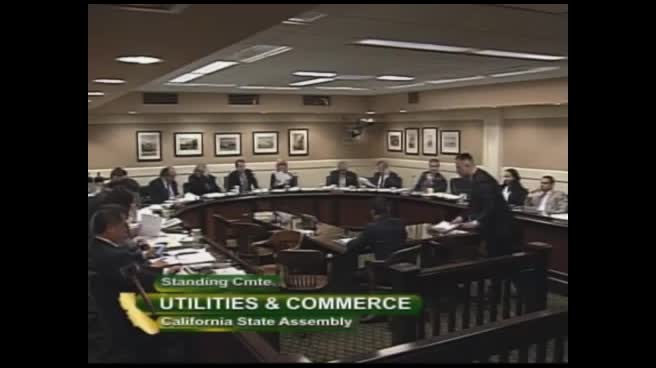
Assembly Standing Committee on Utilities and Commerce


Bill Co-Author(s):