AB 361: Vehicles: photographs of bicycle lane parking violations.
- Session Year: 2023-2024
- House: Assembly
- Latest Version Date: 2023-10-08
Current Status:
Passed
(2023-10-08: Chaptered by Secretary of State - Chapter 432, Statutes of 2023.)
Introduced
In Committee
First Chamber
In Committee
Second Chamber
Enacted
Existing law authorizes a public transit operator, as defined, to enforce parking violations in specified transit-only traffic lanes through the use of video imaging and to install automated forward facing parking control devices on public transit vehicles for the purpose of video imaging parking violations occurring in transit-only traffic lanes, as specified. Existing law requires a designated employee of a city, county, city and county, or a contracted law enforcement agency for a special transit district, who is qualified by the city and county or the district to issue parking citations, to review video image recordings for the purpose of determining whether a parking violation occurred in a transit-only traffic lane and to issue a notice of violation to the registered owner of a vehicle within 15 calendar days, as specified. Existing law makes these video image records confidential, and provides that these records are available only to public agencies to enforce parking violations. Existing law requires an operator who implements an automated enforcement system described above to report to specified committees of the Legislature on the systems effectiveness and impact on traffic outcomes, among other things, as specified.
This bill would, until January 1, 2030, authorize a local agency, as defined, to install automated forward facing parking control devices on city-owned or district-owned parking enforcement vehicles for the purpose of taking photographs of parking violations occurring in bicycle lanes. The bill would require a designated employee of a city, county, city and county, or a contracted law enforcement agency for a special transit district, who is qualified by the city and county or the district to issue parking citations, to review photographs for the purpose of determining whether a parking violation occurred in a bicycle lane and to issue a notice of violation to the registered owner of a vehicle within 15 calendar days, as specified. The bill would require these photographic records to be confidential and make these records available only to public agencies to enforce parking violations. The bill would require any local agency that implements this pilot program to report to specified committees of the Legislature on the systems effectiveness and impact on traffic outcomes, among other things, by December 31, 2028.
Existing constitutional provisions require that a statute that limits the right of access to the meetings of public bodies or the writings of public officials and agencies be adopted with findings demonstrating the interest protected by the limitation and the need for protecting that interest.
This bill would make legislative findings to that effect.
Existing law authorizes a public transit operator, as defined, to enforce parking violations in specified transit-only traffic lanes through the use of video imaging and to install automated forward facing parking control devices on public transit vehicles for the purpose of video imaging parking violations occurring in transit-only traffic lanes, as specified. Existing law requires a designated employee of a city, county, city and county, or a contracted law enforcement agency for a special transit district, who is qualified by the city and county or the district to issue parking citations, to review video image recordings for the purpose of determining whether a parking violation occurred in a transit-only traffic lane and to issue a notice of violation to the registered owner of a vehicle within 15 calendar days, as specified. Existing law makes these video image records confidential, and provides that these records are available only to public agencies to enforce parking violations. Existing law requires an operator who implements an automated enforcement system described above to report to specified committees of the Legislature on the systems effectiveness and impact on traffic outcomes, among other things, as specified.
This bill would, until January 1, 2030, authorize a local agency, as defined, to install automated forward facing parking control devices on city-owned or district-owned parking enforcement vehicles for the purpose of taking photographs of parking violations occurring in bicycle lanes. The bill would require a designated employee of a city, county, city and county, or a contracted law enforcement agency for a special transit district, who is qualified by the city and county or the district to issue parking citations, to review photographs for the purpose of determining whether a parking violation occurred in a bicycle lane and to issue a notice of violation to the registered owner of a vehicle within 15 calendar days, as specified. The bill would require these photographic records to be confidential and make these records available only to public agencies to enforce parking violations. The bill would require any local agency that implements this pilot program to report to specified committees of the Legislature on the systems effectiveness and impact on traffic outcomes, among other things, by December 31, 2029. 2028.
Existing constitutional provisions require that a statute that limits the right of access to the meetings of public bodies or the writings of public officials and agencies be adopted with findings demonstrating the interest protected by the limitation and the need for protecting that interest.
This bill would make legislative findings to that effect.
Existing law authorizes a public transit operator, as defined, to enforce parking violations in specified transit-only traffic lanes through the use of video imaging and to install automated forward facing parking control devices on public transit vehicles for the purpose of video imaging parking violations occurring in transit-only traffic lanes, as specified. Existing law requires a designated employee of a city, county, city and county, or a contracted law enforcement agency for a special transit district, who is qualified by the city and county or the district to issue parking citations, to review video image recordings for the purpose of determining whether a parking violation occurred in a transit-only traffic lane and to issue a notice of violation to the registered owner of a vehicle within 15 calendar days, as specified. Existing law makes these video image records confidential, and provides that these records are available only to public agencies to enforce parking violations. Existing law requires an operator who implements an automated enforcement system described above to report to specified committees of the Legislature on the systems effectiveness and impact on traffic outcomes, among other things, as specified.
This bill would, until January 1, 2030, authorize a local agency, as defined, to install automated forward facing parking control devices on city-owned or district-owned parking enforcement vehicles for the purpose of video imaging taking photographs of parking violations occurring in bicycle lanes. The bill would require a designated employee of a city, county, city and county, or a contracted law enforcement agency for a special transit district, who is qualified by the city and county or the district to issue parking citations, to review video image recordings photographs for the purpose of determining whether a parking violation occurred in a bicycle lane and to issue a notice of violation to the registered owner of a vehicle within 15 calendar days, as specified. The bill would require these video image photographic records to be confidential and make these records available only to public agencies to enforce parking violations. The bill would require any local agency that implements this pilot program to report to specified committees of the Legislature on the systems effectiveness and impact on traffic outcomes, among other things, by December 31, 2029.
Existing constitutional provisions require that a statute that limits the right of access to the meetings of public bodies or the writings of public officials and agencies be adopted with findings demonstrating the interest protected by the limitation and the need for protecting that interest.
This bill would make legislative findings to that effect.
Existing law authorizes a public transit operator, as defined, to enforce parking violations in specified transit-only traffic lanes through the use of video imaging and to install automated forward facing parking control devices on public transit vehicles for the purpose of video imaging parking violations occurring in transit-only traffic lanes, as specified. Existing law requires a designated employee of a city, county, city and county, or a contracted law enforcement agency for a special transit district, who is qualified by the city and county or the district to issue parking citations, to review video image recordings for the purpose of determining whether a parking violation occurred in a transit-only traffic lane and to issue a notice of violation to the registered owner of a vehicle within 15 calendar days, as specified. Existing law makes these video image records confidential, and provides that these records are available only to public agencies to enforce parking violations. Existing law requires an operator who implements an automated enforcement system described above to report to specified committees of the Legislature on the systems effectiveness and impact on traffic outcomes, among other things, as specified.
This bill would, until January 1, 2030, authorize a local agency, as defined, to install automated forward facing parking control devices on city-owned or district-owned parking enforcement vehicles for the purpose of video imaging parking violations occurring in bicycle lanes. The bill would require a designated employee of a city, county, city and county, or a contracted law enforcement agency for a special transit district, who is qualified by the city and county or the district to issue parking citations, to review video image recordings for the purpose of determining whether a parking violation occurred in a bicycle lane and to issue a notice of violation to the registered owner of a vehicle within 15 calendar days, as specified. The bill would require these video image records to be confidential and make these records available only to public agencies to enforce parking violations. The bill would require any local agency that implements this pilot program to report to specified committees of the Legislature on the systems effectiveness and impact on traffic outcomes, among other things, by December 31, 2029.
Existing constitutional provisions require that a statute that limits the right of access to the meetings of public bodies or the writings of public officials and agencies be adopted with findings demonstrating the interest protected by the limitation and the need for protecting that interest.
This bill would make legislative findings to that effect.
Existing law regulates vehicle parking and charges a fine for, among other violations, parking in a bike lane, parking in a fire lane, or blocking a driveway, as specified.This bill would state the intent of the Legislature to enact legislation relating to parking fines.Existing law regulates vehicle parking and charges a fine for, among other violations, parking in a bike lane, parking in a fire lane, or blocking a driveway, as specified.
This bill would state the intent of the Legislature to enact legislation relating to parking fines.
(a)A local agency may install automated forward facing parking control devices on city-owned or district-owned parking enforcement vehicles for the purpose of taking photographs of parking violations occurring in bicycle lanes, as described in Section 21207. The devices shall be angled and focused so as to only capture photographs of parking violations and not capture identifying images of other drivers, vehicles, and pedestrians. The devices shall record the date and time of the violation at the same time as the photographs are captured. A local agency may only install forward facing cameras pursuant to this section if the examiner or issuing agency, as described in Section 40215, includes options to reduce or waive the payment of a parking penalty if the examiner or issuing agency determines that the person is an indigent person as defined in Section 40220.
(b)Prior to issuing notices of parking violations pursuant to Section 21211, a local agency shall commence a program to issue only warning notices for 60 days and shall also make a public announcement of the program and provide the public with information about the enforcement program, existing parking regulations, and the payment options available for low-income persons at least 60 days prior to commencement of issuing notices of parking violations.
(c)A designated employee of a city, county, city and county, or a contracted law enforcement agency for a special transit district, who is qualified by a city, county, city and county, or district to issue parking citations, shall review photographs for the purpose of determining whether a parking violation occurred in a bicycle lane. A violation of a statute, regulation, or ordinance governing vehicle parking under this code, under a federal or state statute or regulation, or under an ordinance enacted by a city, county, city and county, or special transit district occurring in a bicycle lane observed by the designated employee in the recordings is subject to a civil penalty.
(d)The registered owner shall be permitted to review the photographic evidence of the alleged violation during normal business hours at no cost.
(e)(1)Except as it may be included in court records described in Section 68152 of the Government Code, or as provided in paragraph (2), the photographic evidence may be retained for up to 30 days after final disposition of the citation. The photographic evidence shall not be retained for more than six months from the date the information was first obtained, after which time the information shall be destroyed.
(2)Notwithstanding Section 26202.6 of the Government Code, photographic evidence from forward facing automated enforcement devices that does not contain evidence of a parking violation occurring in a bicycle lane shall be destroyed within 15 days after the information was first obtained. Photographic data and records collected pursuant to this section shall not be used or processed by an automated license plate recognition system, as defined in Section 1798.90.5 of the Civil Code, unless the local agency meets the requirements of this subdivision, the requirements of subdivision (f), and the requirements of subdivision (e) of Section 40247.
(f)Notwithstanding Article 1 (commencing with Section 7922.500) and Article 2 (commencing with Section 7922.525) of Chapter 1 of Part 3 of Division 10 of Title 1 of the Government Code, or any other law, the photographic records are confidential. Public agencies shall use and allow access to these records only for the purposes authorized by this article.
(g)For purposes of this article, local agency means a public transit operator as defined in Section 99210 of the Public Utilities Code or a local city, county, or city and county parking enforcement authority.
40246.(a)A local agency that implements an automated enforcement system to enforce parking violations occurring in bicycle lanes pursuant to this article shall provide to the transportation, privacy, and judiciary committees of the Legislature an evaluation report of the enforcement systems effectiveness, impact on privacy, impact on traffic outcomes, cost to implement, change in citations issued, and generation of revenue, no later than December 31, 2028.
(b)A report submitted pursuant to this section shall be submitted in compliance with Section 9795 of the Government Code.
40247.(a)A designated employee of a local agency, including a contracted law enforcement agency, shall issue a notice of parking violation to the registered owner of a vehicle within 15 calendar days of the date of the violation. A designated employee or contracted law enforcement agency may decline to issue a ticket based on the evidence in the photograph illustrating hardship. The notice of parking violation shall set forth the violation of a statute, regulation, or ordinance governing vehicle parking under this code, under a federal or state statute or regulation, or under an ordinance enacted by the local agency in a bicycle lane, a statement indicating that payment is required within 21 calendar days from the date of citation issuance, and the procedure for the registered owner, lessee, or rentee to deposit the parking penalty or contest the citation pursuant to Section 40215. The notice of parking violation shall also set forth the date, time, and location of the violation, the vehicle license number, the registration expiration date, if visible, the color of the vehicle, and a copy of the photographic evidence. The notice of parking violation, or copy of the notice, shall be considered a record kept in the ordinary course of business of the local agency and shall be prima facie evidence of the facts contained in the notice. The local agency shall send information regarding the process for requesting review of the photographic evidence along with the notice of parking violation.
(b)The notice of parking violation shall be served by depositing the notice in the United States mail to the registered owners last known address listed with the Department of Motor Vehicles. Proof of mailing demonstrating that the notice of parking violation was mailed to that address shall be maintained by the local agency. If the registered owner, by appearance or by mail, makes payment to the processing agency or contests the violation within either 21 calendar days from the date of mailing of the citation, or 14 calendar days after the mailing of the notice of delinquent parking violation, the parking penalty shall consist solely of the amount of the original penalty.
(c)If, within 21 days after the notice of parking violation is issued, the local agency determines that, in the interest of justice, the notice of parking violation should be canceled, the local agency shall cancel the notice of parking violation pursuant to subdivision (a) of Section 40215. The reason for the cancellation shall be set forth in writing.
(d)Following an initial review by the local agency and an administrative hearing pursuant to Section 40215, a contestant may seek court review by filing an appeal pursuant to Section 40230.
(e)A local agency or a contracted law enforcement agency may contract with a private vendor for the processing of notices of parking violations and notices of delinquent violations. The local agency shall maintain overall control and supervision of the program.
40248.This article shall remain in effect only until January 1, 2030, and as of that date is repealed.
SEC. 2.The Legislature finds and declares that Section 1 of this act, which adds Section 40245 of the Vehicle Code, imposes a limitation on the publics right of access to the meetings of public bodies or the writings of public officials and agencies within the meaning of Section 3 of Article I of the California Constitution. Pursuant to that constitutional provision, the Legislature makes the following findings to demonstrate the interest protected by this limitation and the need for protecting that interest:
In order to protect the individual privacy rights of those individuals depicted in photographs relating to parking violations, it is necessary that this act limit the publics right of access to the images captured by an automated parking control device installed on city-owned or district-owned parking enforcement vehicles.
(a)A local agency may install automated forward facing parking control devices on city-owned or district-owned parking enforcement vehicles for the purpose of taking photographs of parking violations occurring in bicycle lanes, as described in Section 21207. The devices shall be angled and focused so as to only capture photographs of parking violations and not capture identifying images of other drivers, vehicles, and pedestrians. The devices shall record the date and time of the violation at the same time as the photographs are captured. A local agency may only install forward facing cameras pursuant to this section if the examiner or issuing agency, as described in Section 40215, includes options to reduce or waive the payment of a parking penalty if the examiner or issuing agency determines that the person is an indigent person as defined in Section 40220.
(b)Prior to issuing notices of parking violations pursuant to Section 21211, a local agency shall commence a program to issue only warning notices for 60 days and shall also make a public announcement of the program and provide the public with information about the enforcement program, existing parking regulations, and the payment options available for low-income persons at least 60 days prior to commencement of issuing notices of parking violations.
(c)A designated employee of a city, county, city and county, or a contracted law enforcement agency for a special transit district, who is qualified by a city, county, city and county, or district to issue parking citations, shall review photographs for the purpose of determining whether a parking violation occurred in a bicycle lane. A violation of a statute, regulation, or ordinance governing vehicle parking under this code, under a federal or state statute or regulation, or under an ordinance enacted by a city, county, city and county, or special transit district occurring in a bicycle lane observed by the designated employee in the recordings is subject to a civil penalty.
(d)The registered owner shall be permitted to review the photographic evidence of the alleged violation during normal business hours at no cost.
(e)(1)Except as it may be included in court records described in Section 68152 of the Government Code, or as provided in paragraph (2), the photographic evidence may be retained for up to 30 days after final disposition of the citation. The photographic evidence shall not be retained for more than six months from the date the information was first obtained, after which time the information shall be destroyed.
(2)Notwithstanding Section 26202.6 of the Government Code, photographic evidence from forward facing automated enforcement devices that does not contain evidence of a parking violation occurring in a bicycle lane shall be destroyed within 15 days after the information was first obtained. Photographic data and records collected pursuant to this section shall not be used or processed by an automated license plate recognition system, as defined in Section 1798.90.5 of the Civil Code, unless the local agency meets the requirements of this subdivision, the requirements of subdivision (f), and the requirements of subdivision (e) of Section 40247.
(f)Notwithstanding Article 1 (commencing with Section 7922.500) and Article 2 (commencing with Section 7922.525) of Chapter 1 of Part 3 of Division 10 of Title 1 of the Government Code, or any other law, the photographic records are confidential. Public agencies shall use and allow access to these records only for the purposes authorized by this article.
(g)For purposes of this article, local agency means a public transit operator as defined in Section 99210 of the Public Utilities Code or a local city, county, or city and county parking enforcement authority.
40246.(a)A local agency that implements an automated enforcement system to enforce parking violations occurring in bicycle lanes pursuant to this article shall provide to the transportation, privacy, and judiciary committees of the Legislature an evaluation report of the enforcement systems effectiveness, impact on privacy, impact on traffic outcomes, cost to implement, change in citations issued, and generation of revenue, no later than December 31, 2029. 2028.
(b)A report submitted pursuant to this section shall be submitted in compliance with Section 9795 of the Government Code.
40247.(a)A designated employee of a local agency, including a contracted law enforcement agency, shall issue a notice of parking violation to the registered owner of a vehicle within 15 calendar days of the date of the violation. A designated employee or contracted law enforcement agency may decline to issue a ticket based on the evidence in the photograph illustrating hardship. The notice of parking violation shall set forth the violation of a statute, regulation, or ordinance governing vehicle parking under this code, under a federal or state statute or regulation, or under an ordinance enacted by the local agency in a bicycle lane, a statement indicating that payment is required within 21 calendar days from the date of citation issuance, and the procedure for the registered owner, lessee, or rentee to deposit the parking penalty or contest the citation pursuant to Section 40215. The notice of parking violation shall also set forth the date, time, and location of the violation, the vehicle license number, the registration expiration date, if visible, the color of the vehicle, and, if possible, the make of the vehicle. and a copy of the photographic evidence. The notice of parking violation, or copy of the notice, shall be considered a record kept in the ordinary course of business of the local agency and shall be prima facie evidence of the facts contained in the notice. The local agency shall send information regarding the process for requesting review of the photographic evidence along with the notice of parking violation.
(b)The notice of parking violation shall be served by depositing the notice in the United States mail to the registered owners last known address listed with the Department of Motor Vehicles. Proof of mailing demonstrating that the notice of parking violation was mailed to that address shall be maintained by the local agency. If the registered owner, by appearance or by mail, makes payment to the processing agency or contests the violation within either 21 calendar days from the date of mailing of the citation, or 14 calendar days after the mailing of the notice of delinquent parking violation, the parking penalty shall consist solely of the amount of the original penalty.
(c)If, within 21 days after the notice of parking violation is issued, the local agency determines that, in the interest of justice, the notice of parking violation should be canceled, the local agency shall cancel the notice of parking violation pursuant to subdivision (a) of Section 40215. The reason for the cancellation shall be set forth in writing.
(d)Following an initial review by the local agency and an administrative hearing pursuant to Section 40215, a contestant may seek court review by filing an appeal pursuant to Section 40230.
(e)A local agency or a contracted law enforcement agency may contract with a private vendor for the processing of notices of parking violations and notices of delinquent violations. The local agency shall maintain overall control and supervision of the program.
40248.This article shall remain in effect only until January 1, 2030, and as of that date is repealed.
SEC. 2.The Legislature finds and declares that Section 1 of this act, which adds Section 40245 of the Vehicle Code, imposes a limitation on the publics right of access to the meetings of public bodies or the writings of public officials and agencies within the meaning of Section 3 of Article I of the California Constitution. Pursuant to that constitutional provision, the Legislature makes the following findings to demonstrate the interest protected by this limitation and the need for protecting that interest:
In order to protect the individual privacy rights of those individuals depicted in photographs relating to parking violations, it is necessary that this act limit the publics right of access to the images captured by an automated parking control device installed on city-owned or district-owned parking enforcement vehicles.
(a)A local agency may install automated forward facing parking control devices on city-owned or district-owned parking enforcement vehicles for the purpose of video imaging taking photographs of parking violations occurring in bicycle lanes, as described in Section 21207. The devices shall be angled and focused so as to only capture video images photographs of parking violations and not unnecessarily capture identifying images of other drivers, vehicles, and pedestrians. The devices shall record the date and time of the violation at the same time as the video images photographs are captured. A local agency may only install forward facing cameras pursuant to this section if the examiner or issuing agency, as described in Section 40215, includes options to reduce or waive the payment of a parking penalty if the examiner or issuing agency determines that the person is an indigent person as defined in Section 40220.
(b)Prior to issuing notices of parking violations pursuant to Section 21211, a local agency shall commence a program to issue only warning notices for 60 days and shall also make a public announcement of the program and provide the public with information about the enforcement program, existing parking regulations, and the payment options available for low-income persons at least 60 days prior to commencement of issuing notices of parking violations.
(c)A designated employee of a city, county, city and county, or a contracted law enforcement agency for a special transit district, who is qualified by a city, county, city and county, or district to issue parking citations, shall review video image recordings photographs for the purpose of determining whether a parking violation occurred in a bicycle lane. A violation of a statute, regulation, or ordinance governing vehicle parking under this code, under a federal or state statute or regulation, or under an ordinance enacted by a city, county, city and county, or special transit district occurring in a bicycle lane observed by the designated employee in the recordings is subject to a civil penalty.
(d)The registered owner shall be permitted to review the video image photographic evidence of the alleged violation during normal business hours at no cost.
(e)(1)Except as it may be included in court records described in Section 68152 of the Government Code, or as provided in paragraph (2), the video image evidence may be retained for up to six months from the date the information was first obtained, or 60 days after final disposition of the citation, whichever date is later, after which time the information shall be destroyed.(e)(1)Except as it may be included in court records described in Section 68152 of the Government Code, or as provided in paragraph (2), the photographic evidence may be retained for up to 30 days after final disposition of the citation. The photographic evidence shall not be retained for more than six months from the date the information was first obtained, after which time the information shall be destroyed.
(2)Notwithstanding Section 26202.6 of the Government Code, video image photographic evidence from forward facing automated enforcement devices that does not contain evidence of a parking violation occurring in a bicycle lane shall be destroyed within 15 days after the information was first obtained. Video image Photographic data and records collected pursuant to this section shall not be used or processed by an automated license plate recognition system, as defined in Section 1798.90.5 of the Civil Code, unless the local agency meets the requirements of this subdivision, the requirements of subdivision (f), and the requirements of subdivision (e) of Section 40247.
(f)Notwithstanding Article 1 (commencing with Section 7922.500) and Article 2 (commencing with Section 7922.525) of Chapter 1 of Part 3 of Division 10 of Title 1 of the Government Code, or any other law, the video image photographic records are confidential. Public agencies shall use and allow access to these records only for the purposes authorized by this article.
(g)For purposes of this article, local agency means a public transit operator as defined in Section 99210 of the Public Utilities Code or a local city, county, or city and county parking enforcement authority.
40246.(a)A local agency that implements an automated enforcement system to enforce parking violations occurring in bicycle lanes pursuant to this article shall provide to the transportation, privacy, and judiciary committees of the Legislature an evaluation report of the enforcement systems effectiveness, impact on privacy, impact on traffic outcomes, cost to implement, change in citations issued, and generation of revenue, no later than December 31, 2029.
(b)A report submitted pursuant to this section shall be submitted in compliance with Section 9795 of the Government Code.
40247.(a)A designated employee of a local agency, including a contracted law enforcement agency, shall issue a notice of parking violation to the registered owner of a vehicle within 15 calendar days of the date of the violation. A designated employee or contracted law enforcement agency may decline to issue a ticket based on the evidence in the video photograph illustrating hardship. The notice of parking violation shall set forth the violation of a statute, regulation, or ordinance governing vehicle parking under this code, under a federal or state statute or regulation, or under an ordinance enacted by the local agency in a bicycle lane, a statement indicating that payment is required within 21 calendar days from the date of citation issuance, and the procedure for the registered owner, lessee, or rentee to deposit the parking penalty or contest the citation pursuant to Section 40215. The notice of parking violation shall also set forth the date, time, and location of the violation, the vehicle license number, registration expiration date, if visible, the color of the vehicle, and, if possible, the make of the vehicle. The notice of parking violation, or copy of the notice, shall be considered a record kept in the ordinary course of business of the local agency and shall be prima facie evidence of the facts contained in the notice. The local agency shall send information regarding the process for requesting review of the video image photographic evidence along with the notice of parking violation.
(b)The notice of parking violation shall be served by depositing the notice in the United States mail to the registered owners last known address listed with the Department of Motor Vehicles. Proof of mailing demonstrating that the notice of parking violation was mailed to that address shall be maintained by the local agency. If the registered owner, by appearance or by mail, makes payment to the processing agency or contests the violation within either 21 calendar days from the date of mailing of the citation, or 14 calendar days after the mailing of the notice of delinquent parking violation, the parking penalty shall consist solely of the amount of the original penalty.
(c)If, within 21 days after the notice of parking violation is issued, the local agency determines that, in the interest of justice, the notice of parking violation should be canceled, the local agency shall cancel the notice of parking violation pursuant to subdivision (a) of Section 40215. The reason for the cancellation shall be set forth in writing.
(d)Following an initial review by the local agency and an administrative hearing pursuant to Section 40215, a contestant may seek court review by filing an appeal pursuant to Section 40230.
(e)A local agency or a contracted law enforcement agency may contract with a private vendor for the processing of notices of parking violations and notices of delinquent violations. The local agency shall maintain overall control and supervision of the program.
40248.This article shall remain in effect only until January 1, 2030, and as of that date is repealed.
SEC. 2.The Legislature finds and declares that Section 1 of this act, which adds Section 40245 of the Vehicle Code, imposes a limitation on the publics right of access to the meetings of public bodies or the writings of public officials and agencies within the meaning of Section 3 of Article I of the California Constitution. Pursuant to that constitutional provision, the Legislature makes the following findings to demonstrate the interest protected by this limitation and the need for protecting that interest:
In order to protect the individual privacy rights of those individuals depicted in video camera footage photographs relating to parking violations, it is necessary that this act limit the publics right of access to the images captured by an automated parking control device installed on city-owned or district-owned parking enforcement vehicles.
(a)A local agency may install automated forward facing parking control devices on city-owned or district-owned parking enforcement vehicles for the purpose of video imaging of parking violations occurring in bicycle lanes, as described in Section 21207. The devices shall be angled and focused so as to capture video images of parking violations and not unnecessarily capture identifying images of other drivers, vehicles, and pedestrians. The devices shall record the date and time of the violation at the same time as the video images are captured. A local agency may only install forward facing cameras pursuant to this section if the examiner or issuing agency, as described in Section 40215, includes options to reduce or waive the payment of a parking penalty if the examiner or issuing agency determines that the person is an indigent person as defined in Section 40220.
(b)Prior to issuing notices of parking violations pursuant to Section 21211, a local agency shall commence a program to issue only warning notices for 60 days and shall also make a public announcement of the program and provide the public with information about the enforcement program, existing parking regulations, and the payment options available for low-income persons at least 60 days prior to commencement of issuing notices of parking violations.
(c)A designated employee of a city, county, city and county, or a contracted law enforcement agency for a special transit district, who is qualified by a city, county, city and county, or district to issue parking citations, shall review video image recordings for the purpose of determining whether a parking violation occurred in a bicycle lane. A violation of a statute, regulation, or ordinance governing vehicle parking under this code, under a federal or state statute or regulation, or under an ordinance enacted by a city, county, city and county, or special transit district occurring in a bicycle lane observed by the designated employee in the recordings is subject to a civil penalty.
(d)The registered owner shall be permitted to review the video image evidence of the alleged violation during normal business hours at no cost.
(e)(1)Except as it may be included in court records described in Section 68152 of the Government Code, or as provided in paragraph (2), the video image evidence may be retained for up to six months from the date the information was first obtained, or 60 days after final disposition of the citation, whichever date is later, after which time the information shall be destroyed.
(2)Notwithstanding Section 26202.6 of the Government Code, video image evidence from forward facing automated enforcement devices that does not contain evidence of a parking violation occurring in a bicycle lane shall be destroyed within 15 days after the information was first obtained. Video image data and records collected pursuant to this section shall not be used or processed by an automated license plate recognition system, as defined in Section 1798.90.5 of the Civil Code, unless the local agency meets the requirements of this subdivision, the requirements of subdivision (f), and the requirements of subdivision (e) of Section 40247.
(f)Notwithstanding Article 1 (commencing with Section 7922.500) and Article 2 (commencing with Section 7922.525) of Chapter 1 of Part 3 of Division 10 of Title 1 of the Government Code, or any other law, the video image records are confidential. Public agencies shall use and allow access to these records only for the purposes authorized by this article.
(g)For purposes of this article, local agency means a public transit operator as defined in Section 99210 of the Public Utilities Code or a local city, county, or city and county parking enforcement authority.
40246.(a)A local agency that implements an automated enforcement system to enforce parking violations occurring in bicycle lanes pursuant to this article shall provide to the transportation, privacy, and judiciary committees of the Legislature an evaluation report of the enforcement systems effectiveness, impact on privacy, impact on traffic outcomes, cost to implement, change in citations issued, and generation of revenue, no later than December 31, 2029.
(b)A report submitted pursuant to this section shall be submitted in compliance with Section 9795 of the Government Code.
40247.(a)A designated employee of a local agency, including a contracted law enforcement agency, shall issue a notice of parking violation to the registered owner of a vehicle within 15 calendar days of the date of the violation. A designated employee or contracted law enforcement agency may decline to issue a ticket based on the evidence in the video illustrating hardship. The notice of parking violation shall set forth the violation of a statute, regulation, or ordinance governing vehicle parking under this code, under a federal or state statute or regulation, or under an ordinance enacted by the local agency in a bicycle lane, a statement indicating that payment is required within 21 calendar days from the date of citation issuance, and the procedure for the registered owner, lessee, or rentee to deposit the parking penalty or contest the citation pursuant to Section 40215. The notice of parking violation shall also set forth the date, time, and location of the violation, the vehicle license number, registration expiration date, if visible, the color of the vehicle, and, if possible, the make of the vehicle. The notice of parking violation, or copy of the notice, shall be considered a record kept in the ordinary course of business of the local agency and shall be prima facie evidence of the facts contained in the notice. The local agency shall send information regarding the process for requesting review of the video image evidence along with the notice of parking violation.
(b)The notice of parking violation shall be served by depositing the notice in the United States mail to the registered owners last known address listed with the Department of Motor Vehicles. Proof of mailing demonstrating that the notice of parking violation was mailed to that address shall be maintained by the local agency. If the registered owner, by appearance or by mail, makes payment to the processing agency or contests the violation within either 21 calendar days from the date of mailing of the citation, or 14 calendar days after the mailing of the notice of delinquent parking violation, the parking penalty shall consist solely of the amount of the original penalty.
(c)If, within 21 days after the notice of parking violation is issued, the local agency determines that, in the interest of justice, the notice of parking violation should be canceled, the local agency shall cancel the notice of parking violation pursuant to subdivision (a) of Section 40215. The reason for the cancellation shall be set forth in writing.
(d)Following an initial review by the local agency and an administrative hearing pursuant to Section 40215, a contestant may seek court review by filing an appeal pursuant to Section 40230.
(e)A local agency or a contracted law enforcement agency may contract with a private vendor for the processing of notices of parking violations and notices of delinquent violations. The local agency shall maintain overall control and supervision of the program.
40248.This article shall remain in effect only until January 1, 2030, and as of that date is repealed.
SEC. 2.The Legislature finds and declares that Section 1 of this act, which adds Section 40245 of the Vehicle Code, imposes a limitation on the publics right of access to the meetings of public bodies or the writings of public officials and agencies within the meaning of Section 3 of Article I of the California Constitution. Pursuant to that constitutional provision, the Legislature makes the following findings to demonstrate the interest protected by this limitation and the need for protecting that interest:
In order to protect the individual privacy rights of those individuals depicted in video camera footage relating to parking violations, it is necessary that this act limit the publics right of access to the images captured by an automated parking control device installed on city-owned or district-owned parking enforcement vehicles.
SECTION 1.It is the intent of the Legislature to enact legislation relating to parking fines.It is the intent of the Legislature to enact legislation relating to parking fines.
|
Date
|
Status
|
|---|---|
| Oct 8, 2023 | Chaptered by Secretary of State - Chapter 432, Statutes of 2023. |
| Oct 8, 2023 | Approved by the Governor. |
| Sep 13, 2023 | Enrolled and presented to the Governor at 3 p.m. |
| Sep 7, 2023 | Senate amendments concurred in. To Engrossing and Enrolling. (Ayes 63. Noes 13. Page 3018.). |
| Sep 5, 2023 | In Assembly. Concurrence in Senate amendments pending. May be considered on or after September 7 pursuant to Assembly Rule 77. |
| Sep 5, 2023 | Read third time. Passed. Ordered to the Assembly. (Ayes 32. Noes 7. Page 2368.). |
| Jun 29, 2023 | Read second time. Ordered to third reading. |
| Jun 28, 2023 | From committee: Do pass. (Ayes 10. Noes 1.) (June 27). |
| Jun 20, 2023 | Read second time and amended. Re-referred to Com. on JUD. |
| Jun 19, 2023 | From committee: Amend, and do pass as amended and re-refer to Com. on JUD. (Ayes 12. Noes 2.) (June 13). |
| May 24, 2023 | Referred to Coms. on TRANS. and JUD. |
| May 16, 2023 | In Senate. Read first time. To Com. on RLS. for assignment. |
| May 15, 2023 | Read third time. Passed. Ordered to the Senate. (Ayes 62. Noes 11. Page 1550.) |
| May 3, 2023 | Read second time. Ordered to third reading. |
| May 2, 2023 | Read second time and amended. Ordered returned to second reading. |
| May 1, 2023 | From committee: Amend, and do pass as amended. (Ayes 7. Noes 1.) (April 25). |
| Apr 18, 2023 | From committee: Do pass and re-refer to Com. on P. & C.P. (Ayes 12. Noes 1.) (April 17). Re-referred to Com. on P. & C.P. |
| Mar 13, 2023 | Re-referred to Com. on TRANS. |
| Mar 9, 2023 | From committee chair, with author's amendments: Amend, and re-refer to Com. on TRANS. Read second time and amended. |
| Mar 9, 2023 | Referred to Coms. on TRANS. and P. & C.P. |
| Feb 2, 2023 | From printer. May be heard in committee March 4. |
| Feb 1, 2023 | Read first time. To print. |
|
Date
|
Description
|
Location
|
Votes
|
|
|---|---|---|---|---|
| Sep 7, 2023 | AB 361 Ward Concurrence in Senate Amendments | Assembly Floor |
Passed |
|
| Sep 5, 2023 | Assembly 3rd Reading AB361 Ward By Blakespear | Senate Floor |
Passed |
|
| Jun 27, 2023 | Do pass | Senate Standing Committee on Judiciary |
Passed |
|
| Jun 13, 2023 | Do pass as amended, but first amend, and re-refer to the Committee on [Judiciary] | Senate Standing Committee on Transportation |
Passed |
|
| May 15, 2023 | AB 361 Ward Assembly Third Reading | Assembly Floor |
Passed |
|
| Apr 25, 2023 | Do pass as amended. | Assembly Standing Committee on Privacy and Consumer Protection |
Passed |
|
| Apr 17, 2023 | Do pass and be re-referred to the Committee on [Privacy and Consumer Protection] | Assembly Standing Committee on Transportation |
Passed |
This list shows positions taken on this bill by organizations on the date displayed, which is linked to the original source.
Positions by individuals are not included.
|
Organization
|
Position
|
Date
|
|---|---|---|
| California Bicycle Coalition | ** Support | |
| City and County of San Francisco | ** Support | |
| City of San Jose | ** Support | |
| City of Santa Monica | ** Support | |
| San Francisco Municipal Transportation Agency | ** Support | |
| Streets for All | ** Support |
CONCURRENCE IN SENATE AMENDMENTS
CSA1 Bill Id:AB 361
Author:(Ward)
As Amended Ver:June 20, 2023
Majority vote
SUMMARY
Authorizes a local agency to install an automated forward facing parking control device on city-owned or district-owned parking enforcement vehicles for the purpose of video imaging or parking violations occurring in bicycle lanes, until January 1, 2030.
Major Provisions
- Requires local agencies to provide reduced or waive payments for parking penalties for indigent persons.
- Requires warning notices to be issued for the first 60 days and requires a public announcement of the program with information about the enforcement program, existing parking regulations, and the payment options available for low-income persons at least 60 days prior to the commencement of issuing notices of parking violations.
- Authorizes the image evidence to be retained for up to six months from the date the information was first obtained, or 60 days after final disposition of the citation, whichever date is later, after which time the information shall be destroyed.
- Requires any image evidence captured from the devices that do not contain evidence of a parking violation occurring in a bicycle lane to be destroyed within 15 days after the information was first obtained and prohibits an automated license plate recognition system from being used unless it complies with existing law.
- Requires a local agency that implements this bill to provide to the Transportation, Privacy, and Judiciary committees of the Legislature an evaluation report of the enforcement system's effectiveness, impact on privacy, impact on traffic outcomes, cost to implement, change in citations issued, and generation of revenue, no later than December 31, 2028.
- Authorizes a local agency to decline to issue a ticket based on the evidence in the image illustrating hardship.
- Authorizes the notice of parking violation to be served by depositing the notice in the United States mail to the registered owner's last known address listed with the Department of Motor Vehicles (DMV). The proof of mailing demonstrating that the notice of parking violation was mailed to that address is required to be maintained by the local agency.
Requires a local agency to charge the penalty in the notice if the registered owner, by appearance or by mail, makes payment to the processing agency or contests the violation within either 21 calendars days from the date of mailing of the citation, or 14 calendar days after the mailing of the notice of delinquent parking violation.
Senate Amendments
- Changed the date a report to the Legislature evaluating the program is due from December 31, 2029 to December 31st, 2028.
- Requires a copy of the photographic evidence of the violation to be included in the notice of violation.
COMMENTS
Bicyclist fatalities have increased in recent years. In 2020, 938 cyclists lost their lives in the United States, a 9.2% jump from the previous year and the highest level since 1987. Bicycle infrastructure, including bike lanes, separated bike lanes, and bike paths all play an important role in improving cyclist safety.
In Cycling for Sustainable Cities, Professor Rune Elvik notes that studies on bicycle infrastructure have generally found that there is a 30-40% lower injury risk for cyclists on roadways with bicycle lanes, bicycle paths, or on traffic calmed streets with few cars and low speeds. Bicycle infrastructure also increases the number of cyclists on the roads. From 2007 to 2014, Boston added 92 miles of bike lanes. The number of cyclists commuting to work doubled, while the probability of getting injured was reduced by 14%. New York City from 1996 to 2016 expanded conventional bike lanes from 250 lane miles to 1,100 lane miles. Cycling trips more than doubled to more than 134 million a year.
During that same time the fatality rate dropped by 71% and the risk of serious injury dropped 73%. When New York City added bike lanes and a road diet on Prospect Park West, neither vehicle throughput nor travel times changed, while safety significantly improved. The percentage of cars exceeding 40 mph fell from 47% to 2%, while illegal sidewalk riding by cyclists fell from 46% to 3%. Cycling volumes doubled, while the number of injuries were reduced by half.
Parking violations today are civil violations and vary from city to city. In San Francisco, parking in a bicycle lane would result in a $162 ticket. In Los Angeles, the ticket is $93. In San Diego, the ticket is $52.50. Payment plans and a waiver of late fees is required for low income individuals.
According to the Author
"Many bike lanes are on the far right side of the road near sidewalks and where cars park. Because many bike lanes do not have physical barriers blocking them from the road, it is not uncommon for cars to park in bike lanes or to park in a way that blocks them. This common problem is a big issue for those who are bicycling in the bike lanes because it forces them to swerve into car traffic, creating a hazard for themselves and motorists. This creates a direct problem in the moment for bicyclists, but it also dissuades people who observe this issue from bicycling in some of the most optimal locations: city centers. AB 361 would create a pilot program in participating cities that would allow increased enforcement of bike lane parking violations." Parking violations today are civil violations and vary from city to city. In San Francisco, parking in a bicycle lane would result in a $162 ticket. In Los Angeles, the ticket is $93. In San Diego, the ticket is $52.50. Payment plans and a waiver of late fees is required for low income individuals."
Arguments in Support
According to the San Francisco Municipal Transportation Agency, "Currently, the only tool cities have to discourage a driver from stopping in bike lane is the risk of receiving a parking ticket. Issuing a parking ticket can be time intensive as the parking enforcement official must witness the offense, approach the vehicle in violation to record the vehicle's VIN number, and affix the citation onto the vehicle. With limited city resources and enforcement personnel, it not possible to hold everyone accountable for this violation to deter this dangerous behavior. Moreover, there have been incidents of assaults of parking enforcement officers when they issue parking tickets by angry drivers receiving the ticket.
This bill would authorize cities to use existing technology to make it easier and safer to enforce violations of illegally parking in a bike lane. Similar to the successful forward-facing camera program that the SFMTA and other transit operators across the state use to enforce violations of stopping in a transit only lane, this bill would allow cities to install forward-facing cameras onto city owned enforcement vehicles to capture violations of parking in bike lanes. If passed, AB 361 would discourage motorist from parking in bikes lanes making it safer for people to ride their bikes."
Arguments in Opposition
None on file.
FISCAL COMMENTS
None. This bill has been keyed non-fiscal by legislative counsel.
VOTES:
ASM TRANSPORTATION: 12-1-2
YES: Friedman, Berman, Juan Carrillo, Davies, Gipson, Hart, Jackson, Kalra, Lowenthal, Stephanie Nguyen, Ward, Wicks
NO: Vince Fong
ABS, ABST OR NV: Sanchez, Wallis
ASM PRIVACY AND CONSUMER PROTECTION: 7-1-3
YES: Gabriel, Bauer-Kahan, Bennett, Irwin, Lowenthal, Papan, Wicks
NO: Vince Fong
ABS, ABST OR NV: Joe Patterson, Essayli, Wilson
ASSEMBLY FLOOR: 62-11-7
YES: Addis, Aguiar-Curry, Alvarez, Arambula, Bauer-Kahan, Bennett, Berman, Boerner, Bonta, Bryan, Calderon, Juan Carrillo, Wendy Carrillo, Cervantes, Connolly, Davies, Mike Fong, Gabriel, Garcia, Gipson, Grayson, Haney, Hart, Holden, Irwin, Jackson, Jones‑Sawyer, Kalra, Lee, Low, Lowenthal, Maienschein, McCarty, McKinnor, Muratsuchi, Stephanie Nguyen, Ortega, Pacheco, Papan, Pellerin, Petrie-Norris, Quirk-Silva, Ramos, Reyes, Luz Rivas, Robert Rivas, Rodriguez, Blanca Rubio, Santiago, Schiavo, Soria, Ting, Valencia, Villapudua, Wallis, Ward, Weber, Wicks, Wilson, Wood, Zbur, Rendon
NO: Alanis, Megan Dahle, Dixon, Essayli, Flora, Vince Fong, Gallagher, Lackey, Mathis, Jim Patterson, Joe Patterson
ABS, ABST OR NV: Bains, Chen, Friedman, Hoover, Sanchez, Ta, Waldron
SENATE FLOOR: 32-7-1
YES: Allen, Alvarado-Gil, Archuleta, Ashby, Atkins, Becker, Blakespear, Bradford, Caballero, Cortese, Dodd, Durazo, Eggman, Glazer, Gonzalez, Hurtado, Laird, Limón, McGuire, Menjivar, Min, Newman, Portantino, Roth, Rubio, Skinner, Smallwood-Cuevas, Stern, Umberg, Wahab, Wiener, Wilk
NO: Dahle, Grove, Jones, Nguyen, Niello, Ochoa Bogh, Seyarto
ABS, ABST OR NV: Padilla
UPDATED
VERSION: June 20, 2023
CONSULTANT: David Sforza / TRANS. / (916) 319-2093 FN: 0001771
SENATE RULES COMMITTEE Office of Senate Floor Analyses (916) 651-1520 Fax: (916) 327-4478 | AB 361 |
THIRD READING
Bill No: AB 361
Author: Ward (D)
Amended: 6/20/23 in Senate
Vote: 21
SENATE TRANSPORTATION COMMITTEE: 12-2, 6/13/23
AYES: Gonzalez, Allen, Archuleta, Becker, Blakespear, Cortese, Dodd, Limón, McGuire, Newman, Umberg, Wahab
NOES: Niello, Nguyen
NO VOTE RECORDED: Dahle, Seyarto
SENATE JUDICIARY COMMITTEE: 10-1, 6/27/23
AYES: Umberg, Wilk, Allen, Ashby, Caballero, Durazo, Laird, Min, Stern, Wiener
NOES: Niello
ASSEMBLY FLOOR: 62-11, 5/15/23 - See last page for vote
SUBJECT: Vehicles: photographs of bicycle lane parking violations
SOURCE: Author
DIGEST:
This bill authorizes a local agency to install an automated forward facing parking control device on city-owned or district-owned parking enforcement vehicles for the purpose of video imaging or parking violations occurring in bicycle lanes, until January 1, 2030.
ANALYSIS:
Existing law:
- Prohibits parking on bikeways and bike paths. (Vehicle Code §21211)
- Prohibits driving in a bicycle lane. (VC §21209)
- Authorizes public transit operators to install automated forward-facing cameras on transit vehicles for the purposes of enforcing parking violations occurring in transit-only traffic lanes and at transit stops and stations. (VC §40240)
This bill:
- Defines local agencies as public transit operators or a local city, county or city and county parking enforcement authority.
- Authorizes local agencies to install automated forward facing parking control devices on city-owned or district-owned parking enforcement vehicles for the purpose of taking photographs of parking violations occurring in bike lanes.
- Provides that the local agency may only install these devices if it has options to reduce or waive payment of the parking penalty if the vehicle owner is indigent.
- Requires the parking control devices to be angled and focused so as to only capture photographs of the parking violations and not capture identifying images of other drivers, vehicles and pedestrians.
- Provides that prior to issuing parking violations, for at least 60 days the local agency shall inform the public of the photo enforcement program and may only issue warning notices.
- Provides that before issuing a parking citation a designated employee of a city, county or city and county, or a contracted law enforcement agency for a special transit district, shall review the photographs to determine whether a parking violation occurred in a bike lane. The designated employee shall issue a notice of violation to the registered owner of the vehicle within 15 calendar days of the date of violation. A violation is subject to a civil penalty.
- Provides that the notice of violation shall set forth the violation, a statement that payment is required within 21 calendar days from the issuance of the violation, the date, time and location of the violation, and the vehicle license number, registration expiration date and color and make, if available, and a copy of the photographic evidence proving a violation.
- Permits the registered owner of the vehicle to review the photographic evidence of the alleged violation during normal business hours at no cost.
- Permits, generally, the photographic evidence to be retained for up to 30 days after final disposition of the citation, and prohibits retention for more than six months from the date the information was first obtained.
- Requires a local agency implementing the automated enforcement system to provide to the Legislature a report on the systems effectiveness, impact on privacy, impact on traffic outcomes, cost to implement, change in citations issued, and generation of revenue no later than December 31, 2028.
- Sunsets on January 1, 2030.
Comments
- Author’s Problem Statement. “Many bike lanes are on the far right side of the road near sidewalks and where cars park. Because many bike lanes do not have physical barriers blocking them from the road, it is not uncommon for cars to park in bike lanes or to park in a way that blocks them.
“This common problem is a big issue for those who are bicycling in the bike lanes because it forces them to swerve into car traffic, creating a hazard for themselves and motorists. This creates a direct problem in the moment for bicyclists, but it also dissuades people who observe this issue from bicycling in some of the most optimal locations: city centers.”
- Similar. Current law authorizes the use of automated cameras on public transit vehicles for purposes of enforcing parking violations occurring in transit-only traffic lanes. This bill is based on that statute.
- What’s the Proof? This bill requires the notice of violation to include information about the violation, including color and make of the vehicle if available and the photographic evidence of the violation. Providing this evidence with the notice seems to be a standard practice, as the Bay Area bridges do this for toll violations.
- Disproportionate Penalty? This bill streamlines the process for assessing penalties for parking violations. While the goal is to encourage better compliance with the rules, the immediate impact will be an increase in the number of parking tickets. Those tickets can be expensive, from $50 in Sacramento to $162 in San Francisco. This bill provides for reduced penalties for indigent persons.
In recent years the Legislature has been concerned that failing to pay fines for relatively minor infractions like parking violations can lead to life-changing impacts if the fines aren’t paid on time because the final collection mechanism is to report the delinquency to the Department of Motor Vehicles (DMV) who can then withhold vehicle registration. This bill allows fines to be collected through the DMV.
FISCAL EFFECT: Appropriation: No Fiscal Com.: No Local: No
SUPPORT: (Verified 6/28/23)
California Bicycle Coalition
City and County of San Francisco
City of San Jose
City of Santa Monica
San Francisco Municipal Transportation Agency
Streets for All
OPPOSITION: (Verified 6/28/23)
None received
ASSEMBLY FLOOR: 62-11, 5/15/23
AYES: Addis, Aguiar-Curry, Alvarez, Arambula, Bauer-Kahan, Bennett, Berman, Boerner, Bonta, Bryan, Calderon, Juan Carrillo, Wendy Carrillo, Cervantes, Connolly, Davies, Mike Fong, Gabriel, Garcia, Gipson, Grayson, Haney, Hart, Holden, Irwin, Jackson, Jones-Sawyer, Kalra, Lee, Low, Lowenthal, Maienschein, McCarty, McKinnor, Muratsuchi, Stephanie Nguyen, Ortega, Pacheco, Papan, Pellerin, Petrie-Norris, Quirk-Silva, Ramos, Reyes, Luz Rivas, Robert Rivas, Rodriguez, Blanca Rubio, Santiago, Schiavo, Soria, Ting, Valencia, Villapudua, Wallis, Ward, Weber, Wicks, Wilson, Wood, Zbur, Rendon
NOES: Alanis, Megan Dahle, Dixon, Essayli, Flora, Vince Fong, Gallagher, Lackey, Mathis, Jim Patterson, Joe Patterson
NO VOTE RECORDED: Bains, Chen, Friedman, Hoover, Sanchez, Ta, Waldron
Prepared by: Randy Chinn / TRANS. / (916) 651-4121
6/30/23 13:34:30
**** END ****
Senator Thomas Umberg, Chair
2023-2024 Regular Session
Bill No: AB 361 (Author:Ward)
Version: June 20, 2023
Hearing Date: June 27, 2023
Fiscal: No
Urgency: No
Consultant: CK
SUBJECT
Vehicles: photographs of bicycle lane parking violations
DIGEST
This bill authorizes a local agency to install an automated parking control device on parking enforcement vehicles for the purpose of capturing photographic images of parking violations occurring in bicycle lanes, until January 1, 2030.
EXECUTIVE SUMMARY
To this point, California has taken an incremental approach at phasing in automated enforcement of certain laws. In 1994, the Legislature authorized automated rail crossing enforcement systems, recognizing the potential fatal consequences of the relevant violations. Over the following years, the trend moved to red-light cameras under a trial basis that was then made permanent. Next, a very limited pilot was authorized in San Francisco to install cameras on public transit vehicles, for the first time explicitly authorizing automated enforcement of parking violations, but limited to transit-only lanes. A similar trial was authorized in connection with the Alameda-Contra Costa Transit District (AC Transit). Both programs came with requirements to report back to the Legislature on the impacts of the programs. This law has since been extended state-wide indefinitely. Current law also authorizes cameras on street sweeping vehicles.
Automated enforcement can provide more thorough enforcement of certain laws and reduce the need for employees conducting such enforcement, a cost savings measure. However, with these benefits come serious concerns regarding privacy and equity. Furthering the reach of automated surveillance should arguably be gradual, thoughtful, and done with an understanding of, and countermeasures to prevent, potential unintended consequences. Such enforcement gathers a vast amount of data, may reduce the judicious enforcement of parking laws, and has the ability to create a perverse incentive for governments that stand to financially benefit from increased citations.
This bill authorizes a local agency to install an automated forward facing parking control device on city-owned or district-owned parking enforcement vehicles for the purpose of capturing photographic images of parking violations occurring in bicycle lanes, until January 1, 2030.
The bill is author-sponsored. It is supported by a variety of organizations and public entities, including the City and County of San Francisco. There is no known opposition. The bill passed out of the Senate Transportation Committee on a 12 to 2 vote.
PROPOSED CHANGES TO THE LAW
Existing law:
- Provides that a violation of any regulation governing the standing or parking of a vehicle under the Vehicle Code, federal statute or regulation, or local ordinance, is subject to a civil penalty. (Veh. Code § 40200.)
- Authorizes the use of an automated enforcement system for enforcement of red light violations by a governmental agency, subject to specific requirements and limitations. (Veh. Code § 21455.5.)
- Provides that notice of a parking violation must contain certain information, including information stating that unless the parking penalty is paid or contested within 21 calendar days from the issuance of a citation, or 14 calendar days from the mailing of the violation, as specified, the renewal of the vehicle registration shall be contingent upon compliance with the notice. (Veh. Code § 40207.)
- Authorizes a public transit operator to install automated forward facing parking control devices on city-owned or district-owned public transit vehicles for the purpose of video imaging parking violations occurring in transit-only traffic lanes and at transit stops. Existing law defines a “transit-only traffic lane” to mean any designated transit-only lane on which use is restricted to mass transit vehicles, or other designated vehicles including taxis and vanpools, during posted times. (Veh. Code § 40240(a), (h).)
- States that citations shall only be issued for violations captured during the posted hours of operation for a transit-only traffic lane. Existing law requires designated employees to review video image recordings for the purpose of determining whether a parking violation occurred in a transit-only traffic lane, and permits alleged violators to review the video image evidence of the alleged violation during normal business hours at no cost. (Veh. Code § 40240(a), (c), (d).)
- Requires automated forward facing parking control devices to be angled and focused so as to capture video images of parking violations and not unnecessarily capture identifying images of other drivers, vehicles, and pedestrians. Existing law requires the devices to record the date and time of the violation at the same time video images are captured, and provides that video image records are confidential and shall not be used or accessed for any purposes not related to the enforcement of parking violations occurring in transit-only traffic lanes. (Veh. Code § 40240(a), (f).)
- Authorizes the retention of video image evidence obtained from an automated forward facing parking control device for up to six months from the date the information was obtained, or 60 days after final disposition of the citation, whichever date is later, and provides that after such time the information shall be destroyed, except as it may be included in court records, as provided. Existing law requires video image evidence from forward facing automated enforcement devices that does not contain evidence of a parking violation to be destroyed within 15 days after the information was first obtained. (Veh. Code § 40240(e).)
- Does not prohibit local authorities from establishing, by ordinance or resolution, bicycle lanes separated from any vehicular lanes upon highways, other than state and county highways, as defined. (Veh. Code § 21207.)
This bill:
- Authorizes a local agency to install automated forward facing parking control devices on city-owned or district-owned parking enforcement vehicles for the purpose of taking photographs of parking violations occurring in bicycle lanes.
- Requires the devices to be angled and focused so as to only capture photographs of parking violations and not capture identifying images of other drivers, vehicles, and pedestrians. The devices shall record the date and time of the violation at the same time as the photographs are captured. A local agency may only install forward facing cameras if the examiner or issuing agency includes options to reduce or waive the payment of a parking penalty if the examiner or issuing agency determines that the person is an indigent person as defined in Section 40220.
- Requires a local agency to commence a program to issue only warning notices for 60 days and shall also make a public announcement of the program and provide the public with information about the enforcement program, existing parking regulations, and the payment options available for low-income persons at least 60 days prior to commencement of issuing notices of parking violations.
- Limits retention of the photographic evidence to up to 30 days after final disposition of the citation, except as provided. The photographic evidence shall not be retained for more than six months from the date the information was first obtained, after which time the information shall be destroyed. If it does not contain evidence of a parking violation occurring in a bicycle lane, it must be destroyed within 15 days.
- Provides that photographic data and records collected shall not be used or processed by an automated license plate recognition system, unless the local agency meets certain requirements, including the requirements of subdivision (e) of Section 40247.
- Makes the photographic records confidential. Public agencies shall use and allow access to these records only for the purposes authorized therein.
- Defines “local agency” as a public transit operator or a local city, county, or city and county parking enforcement authority.
- Requires a local agency to provide to the transportation, privacy, and judiciary committees of the Legislature an evaluation report of the enforcement system’s effectiveness, impact on privacy, impact on traffic outcomes, cost to implement, change in citations issued, and generation of revenue, no later than December 31, 2028.
- Requires a designated employee, who is qualified to issue parking citations, to review photographs for the purpose of determining whether a parking violation occurred in a bicycle lane. Violations occurring in a bicycle lane observed by the designated employee in the recordings are subject to civil penalties. A designated employee of a local agency must issue a notice of parking violation to the registered owner within 15 calendar days of the date of the violation. A designated employee may decline to issue a ticket based on the evidence in the photograph illustrating hardship.
- Requires the notice of parking violation to set forth the following:
- the violation of the law;
- the date, time, and location of the violation;
- the vehicle license number;
- the registration expiration date, if visible;
- the color of the vehicle;
- a copy of the photographic evidence;
- a statement indicating that payment is required within 21 calendar days from the date of citation issuance; and
- the procedure for the registered owner, lessee, or rentee to deposit the parking penalty or contest the citation.
- Provides that the notice of parking violation, or copy of the notice, shall be considered a record kept in the ordinary course of business of the local agency and shall be prima facie evidence of the facts contained in the notice.
- Provides that the registered owner shall be permitted to review the photographic evidence of the alleged violation during normal business hours at no cost. The local agency shall send information regarding the process for requesting review of the photographic evidence along with the notice of parking violation.
- Requires the notice of parking violation to be served by depositing the notice in the United States mail to the registered owner’s last known address listed with the Department of Motor Vehicles. Proof of mailing demonstrating that the notice of parking violation was mailed to that address shall be maintained by the local agency. If the registered owner, by appearance or by mail, makes payment to the processing agency or contests the violation within either 21 calendar days from the date of mailing of the citation, or 14 calendar days after the mailing of the notice of delinquent parking violation, the parking penalty shall consist solely of the amount of the original penalty.
- Provides that if, within 21 days after the notice of parking violation is issued, the local agency determines that, in the interest of justice, the notice of parking violation should be canceled, the local agency shall cancel the notice of parking violation. The reason for the cancellation shall be set forth in writing.
- Authorizes a contestant, following an initial review by the local agency and an administrative hearing, to seek court review by filing an appeal.
- Authorizes a local agency or a contracted law enforcement agency to contract with a private vendor for the processing of notices of parking violations and notices of delinquent violations. The local agency shall maintain overall control and supervision of the program.
- Provides that it shall remain in effect only until January 1, 2030, and as of that date is repealed.
COMMENTS
- The history of automated parking enforcement
While some counties may have installed automated traffic enforcement systems at an earlier date, legislative authorization for automated enforcement procedures relating to traffic violations began in 1994 with SB 1802 (Rosenthal, Ch. 1216, Stats. 1994). That bill authorized the use of “automated rail crossing enforcement systems” to enforce prohibitions on drivers from passing around or under rail crossings while the gates are closed. (Veh. Code § 22451.) Those systems functioned by photographing the front license plate and the driver of vehicles who proceeded around closed rail crossing gates in violation of the Vehicle Code provisions. The drivers of photographed vehicles, in turn, received citations for their violations.
In 1995, the Legislature authorized a three-year trial for red light camera enforcement programs. (SB 833, Kopp, Ch. 922, Stats. 1995.) Using similar technology, that program used sensors connected to cameras to take photographs of the front license plate and driver upon entering an intersection on a red light. That program was permanently extended in 1998 by SB 1136 (Kopp, Ch. 54, Stats. 1998).
In 2007, the Legislature authorized a four-year pilot project where San Francisco was authorized to install video cameras on city-owned public transit vehicles for the purpose of video imaging parking violations occurring in transit-only traffic lanes. (AB 101, Ma, Ch. 377, Stats. 2007.) Three years later, the Legislature authorized a five-year statewide pilot project to allow local public agencies to use automated parking enforcement systems for street sweeping-related violations. (AB 2567, Bradford, Ch. 471, Stats. 2010.) In 2011, the Legislature extended San Francisco’s automated transit-only lane enforcement program for an additional year, and required the City and County to provide a report to the Transportation and Judiciary Committees of the Legislature no later than March 1, 2015, describing the effectiveness of the pilot program and its impact on privacy. (AB 1041, Ma, Ch. 325, Stats. 2011.) Following the receipt of that report, San Francisco’s transit-only lane enforcement program was permanently extended in AB 1287 (Chiu, Ch. 485, Stats. 2015).
The following year, AB 1051 (Hancock, Ch. 427, Stats. 2016) authorized AC Transit to operate an automated transit-only lane enforcement program similar to San Francisco’s with a sunset on January 1, 2022. AC Transit was required to provide to the Transportation, Privacy and Consumer Protection, and Judiciary Committees of the Legislature an evaluation report of the enforcement system’s effectiveness, impact on privacy, cost to implement, and generation of revenue, no later than January 1, 2021. (Veh. Code § 40240.5.)
Last session, AB 917 (Bloom, Ch. 709, Stats. 2021) expanded automated enforcement of parking violations using forward-facing cameras on transit vehicles to include both transit-only lanes and transit stops and extended the authorization statewide until January 1, 2027.
This bill authorizes a local agency to install an automated parking control device on parking enforcement vehicles for the purpose of capturing photographic images of parking violations occurring in bicycle lanes, until January 1, 2030.
- Stated intent of the bill
According to the author: “Assembly Bill (AB) 361 would create a pilot program in participating cities that would allow increased enforcement of bike lane parking violations.”
- Right to Privacy
The California Constitution provides that all people have inalienable rights, including the right to pursue and obtain privacy. (Cal. Const., art. I, Sec. 1.) The California Supreme Court writes:
The right of privacy is vitally important. It derives, in this state, not only from the protections against unreasonable searches and seizures guaranteed by the Fourth Amendment and article I, section 13, but also from article I, section 1, of our State Constitution. Homage to personhood is the foundation for individual rights protected by our state and national Constitutions.
(In re William G. (1985) 40 Cal.3d 550, 563.)
This Committee has previously expressed concern about the privacy implications of equipping large numbers of vehicles with forward-facing video cameras that record not only other vehicles, but also individuals on sidewalks and commercial and residential property adjacent to the roadway. Amendments taken to the bill limit the program to only photographic imaging, rather than video, which mitigates some of the privacy concerns that would exist.
A number of other privacy protections are also built into the program. The devices are required to be forward-facing only and angled and focused so as to only capture photographs of parking violations and not capture identifying images of other drivers, vehicles, and pedestrians. There are also strict retention limitations. Any photographic evidence may only be retained for up to 30 days after final disposition and shall in no event be retained for more than six months from the date the information was first obtained, after which time the information must be destroyed. If the photographs do not contain evidence of a parking violation occurring in a bicycle lane they must be destroyed within 15 days.
There are also use limitations placed on the evidence, allowing public agencies to use and allow access to this photographic evidence only for authorized purposes.
In addition, any entity implementing a program pursuant to this bill is required to provide a report to the relevant committees of the Legislature, including this Committee, no later than December 31, 2028, which shall specifically include an assessment of the program’s impact on privacy.
- Equity, due process, and revenue generation
This Committee has also previously expressed concern over the use of automated traffic enforcement programs not as a means to promote roadway safety, but as a mechanism for revenue generation and how that might affect the fairness and equity of the program. The Committee’s analysis of AB 101 (Ma, Ch. 377, Stats. 2007), which created San Francisco’s automated transit-only lane enforcement program noted:
While previously allowing citations based upon photographic evidence for dangerous rail crossings and red light violations appeared to be mainly supported by the lives that would be saved by increased enforcement, and deterrence of reckless conduct, parking violations do not rise to that level. . . . Thus, the program proposed by this bill represents a fundamental shift in the justification required in order to implement an automatic enforcement system. If cost savings are considered sufficient justification for such automation, many additional types of violations could be modified pursuant to the precedent set by [AB 101].
Similarly, the Committee’s analysis of AB 2567 (Bradford, Ch. 471, Stats. 2010), which authorized local public agencies to install and operate automated parking enforcement systems on street sweepers, noted:
[AB 2567] would rely upon the precedent set by AB 101 (Ma, 2007) to allow street sweepers throughout the state to capture digital photographs for purposes of issuing parking citations. That precedent – authorizing the use of cameras to save on costs – represents a fundamental change in how California has historically used cameras to enforce violations. This legislation represents another step away from the rationale previously used to justify the use of cameras for automated enforcement. Although this bill could arguably result in reduced employee costs for local governments (and increased revenue from citations), part of that cost reduction could also come in the form of fewer employees needed to patrol for those violations.
Ultimately, there is concern that those paying for whatever revenue generation there is will be disproportionately low-income communities who tend to bear the brunt of the cost of citations. Depending on how authorized local agencies administer this new power, it could lead to an unreasonable or inflexible mode of enforcement that would not necessarily be the case with enforcement by traffic officers present to witness a violation. Photographic evidence necessarily limits the field of view of an observer, and prevents consideration of relevant facts that would otherwise be available to an officer who sees an event transpire in person. In addition, the holistic assessment that can be performed by an actual person on the ground allows for more thoughtful and judicious enforcement of parking violations. Will a vehicle’s parking control device be able to clearly distinguish between a vehicle slowing to park legally but adjacent to a bicycle lane versus a vehicle parked in such a lane? Would the angle of a transit vehicle’s camera obscure critical facts that explain a would-be violator’s actions, such as the presence of a small child in a vehicle’s path of travel, or a disabled vehicle obstructing the normal flow of traffic?
Ultimately, the technology and process will inevitably lead to errors. Yet, unlike in felony cases, the overwhelming portion of people receiving parking citations are unrepresented. They also receive far fewer procedural protections than do those in traffic or criminal court. For these reasons, they are less likely to identify errors in the technology or process that led to their citation.
The bill includes a number of provisions that seek to mitigate these equity and due process concerns.
First, the examiner or ticket issuing agency must include options to reduce or waive the payment of a parking penalty if the examiner or issuing agency determines that the person is an indigent person, as defined. To ensure the public is adequately put on notice prior to the local agency issuing notices of parking violations, the agency is required to commence a program to issue only warning notices for 60 days and to also make a public announcement of the program and provide the public with information about the enforcement program, existing parking regulations, and the payment options available for low-income persons at least 60 days prior to commencement of issuing notices of parking violations.
There is also a clear process delineated in the bill for reviewing evidence, issuing tickets, providing adequate information to motorists, and allowing for contestations and appeals. The bill requires designated employees to review the photographs to determine whether a parking violation in a bicycle lane in fact occurred and must issue any citation within 15 calendar days of the violation. There is explicit discretion given to the employee to decline to issue a ticket based on evidence from the photograph illustrating a hardship on the part of the motorist.
The bill requires a detailed notice of parking violation to be served, as specified, and to set forth all of the following:
- the violation of the law alleged;
- the date, time, and location of the violation;
- the vehicle license number;
- registration expiration date, if visible;
- the color of the vehicle;
- a statement indicating that payment is required within 21 calendar days from the date of citation issuance; and
- the procedure for the registered owner, lessee, or rentee to deposit the parking penalty or contest the citation.
A copy of the photographic evidence of the violations is also required to be included.
Once issued, the registered owner must be permitted to review the photographic evidence of the alleged violation during normal business hours and at no cost. The local agency must provide information detailing the process for requesting such review.
The bill limits the penalty to only the amount of the original penalty if the registered owner makes payment or contests the violation in a timely manner, as provided. The bill again provides discretion to the local agency to cancel the ticket, should it determine that, in the interest of justice, the notice of parking violation should so be canceled.
After a local agency reviews a contested citation, an administrative hearing can be sought. If the owner so chooses, they may seek review in the courts by filing an appeal, as provided.
To ensure the Legislature is given a chance to review the efficacy of these protective provisions and the overall success of the program, the authorization sunsets on January 1, 2030.
Writing in support, the City and County of San Francisco states:
Bike lanes provide a dedicated space for cyclists to improve safety and visibility and further encourages use of this zero-carbon mode. As of May 2022, the San Francisco Municipal Transportation Agency (SFMTA) installed 463.7 miles of bike lanes and 121 protected miles. While counted bike volumes dropped substantially in 2020 and 2021 due to COVID, counted bike volumes in 2022 are the highest since 2019. SFMTA invests significant resources to plan and implement bike lanes. When a motorist parks in the bike lane, it undermines this work and creates a dangerous environment for cyclists, causing them to swerve into the traffic lane.
Currently, the only tool cities have to discourage a driver from stopping in bike lane is the risk of receiving a parking ticket. Issuing a parking ticket can be time intensive as the parking enforcement official must witness the offense, approach the vehicle in violation to record the vehicle’s VIN number, and affix the citation onto the vehicle. With limited city resources and enforcement personnel, it not possible to hold everyone accountable for this violation to deter this dangerous behavior. Moreover, there have been incidents of assaults of parking enforcement officers when they issue parking tickets by angry drivers receiving the ticket.
This bill would authorize cities to use existing technology to make it easier and safer to enforce violations of illegally parking in a bike lane.
SUPPORT
City and County of San Francisco
City of Santa Monica
San Francisco Municipal Transportation Agency (SFMTA)
OPPOSITION
None known
RELATED LEGISLATION
Pending Legislation:
AB 1463 (Lowenthal, 2023) requires a local public agency end-user of an automated license plate reader (ALPR) to purge information that does not match information on a hot list, as defined, within 30 days and explicitly prohibits the selling, sharing or transferring of ALPR data to an out-of-state or federal agency without a valid California court order or warrant. AB 1463 is currently in this Committee.
AB 645 (Friedman, 2023) establishes a five-year pilot program to give local transportation authorities in the cities of San Jose, Oakland, Los Angeles, Glendale, Long Beach, and the City and County of San Francisco the authority to install speed safety systems. AB 645 is currently in the Senate Transportation Committee.
Prior Legislation:
AB 550 (Chiu, 2021) would have authorized a pilot program for automated speed enforcement in several cities in California. AB 550 was held in the Assembly Appropriations Committee.
AB 917 (Bloom, Ch. 709, Stats. 2021) See Comment 1.
AB 1051 (Hancock, Ch. 427, Stats. 2016) See Comment 1.
AB 1287 (Chiu, Ch. 485, Stats. 2015) See Comment 1.
AB 1041 (Ma, Ch. 325, Stats. 2011) See Comment 1.
AB 2567 (Bradford, Ch. 471, Stats. 2010) See Comment 1 and 4.
AB 101 (Ma, Ch. 377, Stats. 2007) See Comment 1 and 4.
SB 1136 (Kopp, Ch. 54, Stats. 1998) See Comment 1.
SB 833 (Kopp, Ch. 922, Stats. 1995) See Comment 1.
SB 1802 (Rosenthal, Ch. 1216, Stats. 1994) See Comment 1.
PRIOR VOTES:
Senate Transportation Committee (Ayes 12, Noes 2)
Assembly Floor (Ayes 62, Noes 11)
Assembly Privacy and Consumer Protection Committee (Ayes 7, Noes 1)
Assembly Transportation Committee (Ayes 12, Noes 1)
**************
SENATE COMMITTEE ON TRANSPORTATION
Senator Lena Gonzalez, Chair
2023 - 2024 Regular
Bill No: AB 361 Hearing Date: 6/13/23
Author: | Ward | ||
Version: | 5/2/2023 amended | ||
Urgency: | No | Fiscal: | No |
Consultant: | Randy Chinn | ||
SUBJECT: Vehicles: photographs of bicycle lane parking violations
DIGEST: This bill authorizes a local agency to install an automated forward facing parking control device on city-owned or district-owned parking enforcement vehicles for the purpose of video imaging or parking violations occurring in bicycle lanes, until January 1, 2030.
ANALYSIS:
Existing law:
- Prohibits parking on bikeways and bike paths. (Vehicle Code §21211)
- Prohibits driving in a bicycle lane. (Vehicle Code §21209)
- Authorizes public transit operators to install automated forward-facing cameras on transit vehicles for the purposes of enforcing parking violations occurring in transit-only traffic lanes and at transit stops and stations. (Vehicle Code §40240)
This bill:
- Defines local agencies as public transit operators or a local city, county or city and county parking enforcement authority.
- Authorizes local agencies to install automated forward facing parking control devices on city-owned or district-owned parking enforcement vehicles for the purpose of taking photographs of parking violations occurring in bike lanes.
- Provides that the local agency may only install these devices if it has options to reduce or waive payment of the parking penalty if the vehicle owner is indigent.
- Requires the parking control devices to be angled and focused so as to only capture photographs of the parking violations and not capture identifying images of other drivers, vehicles and pedestrians.
- Provides that prior to issuing parking violations, for at least 60 days the local agency shall inform the public of the photo enforcement program and may only issue warning notices.
- Provides that before issuing a parking citation a designated employee of a city, county or city and county, or a contracted law enforcement agency for a special transit district, shall review the photographs to determine whether a parking violation occurred in a bike lane. The designated employee shall issue a notice of violation to the registered owner of the vehicle within 15 calendar days of the date of violation. A violation is subject to a civil penalty.
- Provides that the notice of violation shall set forth the violation, a statement that payment is required within 21 calendar days from the issuance of the violation, the date, time and location of the violation, and the vehicle license number, registration expiration date and color and make, if available.
- Permits the registered owner of the vehicle to review the photographic evidence of the alleged violation during normal business hours at no cost.
- Generally permits the photographic evidence to be retained for up to 30 days after final disposition of the citation, and prohibits retention for more than six months from the date the information was first obtained.
- Requires a local agency implementing the automated enforcement system to provide to the Legislature a report on the systems effectiveness, impact on privacy, impact on traffic outcomes, cost to implement, change in citations issued, and generation of revenue no later than December 31, 2029.
- Sunsets on January 1, 2030.
COMMENTS:
- Author’s Problem Statement. “Many bike lanes are on the far right side of the road near sidewalks and where cars park. Because many bike lanes do not have physical barriers blocking them from the road, it is not uncommon for cars to park in bike lanes or to park in a way that blocks them.
This common problem is a big issue for those who are bicycling in the bike lanes because it forces them to swerve into car traffic, creating a hazard for themselves and motorists. This creates a direct problem in the moment for bicyclists, but it also dissuades people who observe this issue from bicycling in some of the most optimal locations: city centers.”
- Similar. Current law authorizes the use of automated cameras on public transit vehicles for purposes of enforcing parking violations occurring in transit-only traffic lanes. This bill is based on that statute.
- What’s the Proof? This bill requires the notice of violation to include information about the violation, including color and make of the vehicle if available, but does not require the photographic evidence of the violation. Providing this evidence with the notice, as the Bay Area bridges do for toll violations, would seem to be a simple task that would remove any doubt about the violation. The author and committee may wish to consider such an amendment.
- Disproportionate Penalty? This bill streamlines the process for assessing penalties for parking violations. While the goal is to encourage better compliance with the rules, the immediate impact will be an increase in the number of parking tickets. Those tickets can be expensive, from $50 in Sacramento to $162 in San Francisco. This bill provides for reduced penalties for indigent persons.
In recent years the Legislature has been concerned that failing to pay fines for relatively minor infractions like parking violations can lead to life-changing impacts if the fines aren’t paid on time because the final collection mechanism is to report the delinquency to the Department of Motor Vehicles who can then withhold vehicle registration. The author may wish to consider amending the bill to instead require the local agency to pursue collection through the commercial collection process rather than through the DMV.
- Timing amendment. The due date of the report required by this bill is the day before the statute sunsets leaving no time to review the results and consider extending the sunset. The author and committee may wish to move up the reporting date by one year, to December 31, 2028, to provide time to extend the sunset if warranted.
- Double Referral. This bill is double referred to the Judiciary Committee.
Related Legislation:
AB 917 (Bloom) Chapter 709, Statutes of 2021 authorized all public transit operators to install automated forward-facing parking control devices on transit vehicles for the purposes of enforcing parking violations occurring in transit-only traffic lanes and at transit stops until January 1, 2027.
SB 1051 (Hancock) Chapter 427, Statutes of 2016 authorized a pilot program for video enforcement of parking violations in transit-only traffic lanes for Alameda Contra Costa Transit Authority.
AB 1287 (Chiu) Chapter 485, Statutes of 2015 removed the sunset on the authority of San Francisco’s pilot program for video enforcement of parking violations in transit-only traffic lanes.
AB 1041 (Ma) Chapter 325, Statutes of 2011 extended the sunset on the authority of San Francisco’s pilot program for video enforcement of parking violations in transit-only traffic lanes to January 1, 2016.
AB 101 (Ma) Chapter 377, Statutes of 2007 authorized San Francisco to establish a pilot program for video enforcement of parking violations in transit-only traffic lanes which expired January 1, 2012.
FISCAL EFFECT: Appropriation: Fiscal Com.: Local:
Non-fiscal
POSITIONS: (Communicated to the committee before noon on Wednesday,
June 7, 2023.)
SUPPORT:
California Bicycle Coalition
City and County of San Francisco
City of San Jose
San Francisco Municipal Transportation Agency (SFMTA)
Streets for All
OPPOSITION:
None reported
-- END --
ASSEMBLY THIRD READING
ATR Bill Id:AB 361
Author:(Ward)
As Amended Ver:March 9, 2023
Majority vote
SUMMARY
Authorizes a local agency to install an automated forward facing parking control device on city-owned or district-owned parking enforcement vehicles for the purpose of video imaging or parking violations occurring in bicycle lanes, until January 1, 2030.
Major Provisions
- Requires local agencies to provide reduced or waive payments for parking penalties for indigent persons.
- Requires warning notices to be issued for the first 60 days and requires a public announcement of the program with information about the enforcement program, existing parking regulations, and the payment options available for low-income persons at least 60 days prior to the commencement of issuing notices of parking violations.
- Authorizes the image evidence to be retained for up to six months from the date the information was first obtained, or 60 days after final disposition of the citation, whichever date is later, after which time the information shall be destroyed.
- Requires any image evidence captured from the devices that do not contain evidence of a parking violation occurring in a bicycle lane to be destroyed within 15 days after the information was first obtained and prohibits an automated license plate recognition system from being used unless it complies with existing law.
- Requires a local agency that implements this bill to provide to the Transportation, Privacy, and Judiciary committees of the Legislature an evaluation report of the enforcement system's effectiveness, impact on privacy, impact on traffic outcomes, cost to implement, change in citations issued, and generation of revenue, no later than December 31, 2029.
- Authorizes a local agency to decline to issue a ticket based on the evidence in the image illustrating hardship.
- Authorizes the notice of parking violation to be served by depositing the notice in the United States mail to the registered owner's last known address listed with the Department of Motor Vehicles (DMV). The proof of mailing demonstrating that the notice of parking violation was mailed to that address is required to be maintained by the local agency.
- Requires a local agency to charge the penalty in the notice if the registered owner, by appearance or by mail, makes payment to the processing agency or contests the violation within either 21 calendars days from the date of mailing of the citation, or 14 calendar days after the mailing of the notice of delinquent parking violation.
COMMENTS
Bicyclist fatalities have increased in recent years. In 2020, 938 cyclists lost their lives in the United States, a 9.2% jump from the previous year and the highest level since 1987. Bicycle infrastructure, including bike lanes, separated bike lanes, and bike paths all play an important role in improving cyclist safety.
In Cycling for Sustainable Cities, Professor Rune Elvik notes that studies on bicycle infrastructure have generally found that there is a 30-40% lower injury risk for cyclists on roadways with bicycle lanes, bicycle paths, or on traffic calmed streets with few cars and low speeds. Bicycle infrastructure also increases the number of cyclists on the roads. From 2007 to 2014, Boston added 92 miles of bike lanes. The number of cyclists commuting to work doubled, while the probability of getting injured was reduced by 14%. New York City from 1996 to 2016 expanded conventional bike lanes from 250 lane miles to 1,100 lane miles. Cycling trips more than doubled to more than 134 million a year.
During that same time the fatality rate dropped by 71% and the risk of serious injury dropped 73%. When New York City added bike lanes and a road diet on Prospect Park West, neither vehicle throughput nor travel times changed, while safety significantly improved. The percentage of cars exceeding 40 mph fell from 47% to 2%, while illegal sidewalk riding by cyclists fell from 46% to 3%. Cycling volumes doubled, while the number of injuries were reduced by half.
Parking violations today are civil violations and vary from city to city. In San Francisco, parking in a bicycle lane would result in a $162 ticket. In Los Angeles, the ticket is $93. In San Diego, the ticket is $52.50. Payment plans and a waiver of late fees is required for low income individuals
According to the Author
"Many bike lanes are on the far right side of the road near sidewalks and where cars park. Because many bike lanes do not have physical barriers blocking them from the road, it is not uncommon for cars to park in bike lanes or to park in a way that blocks them. This common problem is a big issue for those who are bicycling in the bike lanes because it forces them to swerve into car traffic, creating a hazard for themselves and motorists. This creates a direct problem in the moment for bicyclists, but it also dissuades people who observe this issue from bicycling in some of the most optimal locations: city centers. AB 361 would create a pilot program in participating cities that would allow increased enforcement of bike lane parking violations." Parking violations today are civil violations and vary from city to city. In San Francisco, parking in a bicycle lane would result in a $162 ticket. In Los Angeles, the ticket is $93. In San Diego, the ticket is $52.50. Payment plans and a waiver of late fees is required for low income individuals."
Arguments in Support
According to the San Francisco Municipal Transportation Agency, "Currently, the only tool cities have to discourage a driver from stopping in bike lane is the risk of receiving a parking ticket. Issuing a parking ticket can be time intensive as the parking enforcement official must witness the offense, approach the vehicle in violation to record the vehicle's VIN number, and affix the citation onto the vehicle. With limited city resources and enforcement personnel, it not possible to hold everyone accountable for this violation to deter this dangerous behavior. Moreover, there have been incidents of assaults of parking enforcement officers when they issue parking tickets by angry drivers receiving the ticket.
This bill would authorize cities to use existing technology to make it easier and safer to enforce violations of illegally parking in a bike lane. Similar to the successful forward-facing camera program that the SFMTA and other transit operators across the state use to enforce violations of stopping in a transit only lane, this bill would allow cities to install forward-facing cameras onto city owned enforcement vehicles to capture violations of parking in bike lanes. If passed, AB 361 would discourage motorist from parking in bikes lanes making it safer for people to ride their bikes."
Arguments in Opposition
None on file
FISCAL COMMENTS
None. This bill has been keyed non-fiscal by legislative counsel.
VOTES
ASM TRANSPORTATION: 12-1-2
YES: Friedman, Berman, Juan Carrillo, Davies, Gipson, Hart, Jackson, Kalra, Lowenthal, Stephanie Nguyen, Ward, Wicks
NO: Vince Fong
ABS, ABST OR NV: Sanchez, Wallis
ASM PRIVACY AND CONSUMER PROTECTION: 7-1-3
YES: Gabriel, Bauer-Kahan, Bennett, Irwin, Lowenthal, Papan, Wicks
NO: Vince Fong
ABS, ABST OR NV: Joe Patterson, Essayli, Wilson
UPDATED
VERSION: March 9, 2023
CONSULTANT: David Sforza / TRANS. / (916) 319-2093 FN: 0000242
Date of Hearing: April 25, 2023
ASSEMBLY COMMITTEE ON PRIVACY AND CONSUMER PROTECTION
Jesse Gabriel, Chair
ABPCA Bill Id:AB 361 (
Author:Ward) – As Amended Ver:March 9, 2023
As Proposed to be Amended
SUBJECT: Vehicles: video imaging of bicycle lane parking violations
SYNOPSIS
This author sponsored bill allows local traffic enforcement agencies to install automated forward facing parking control cameras on parking enforcement vehicles for the purpose of capturing photographic images of cars parking in bicycle lanes.
Many bike lanes are on the far right side of the road near sidewalks and where cars park. Because many bike lanes do not have physical barriers blocking them from the road, it is not uncommon for cars to park in bike lanes or to park in a way that blocks them.
This common problem is a big issue for those who are bicycling in the bike lanes because it forces them to swerve into car traffic, creating a hazard for themselves and motorists. This creates a direct problem in the moment for bicyclists, but it also dissuades people who observe this issue from bicycling in some of the most optimal locations: city centers.
The privacy protections in the bill strictly limit the use of the images captured by these cameras. In addition, Committee amendments further strengthen the bill by limiting the use of the cameras to capturing only photographs, rather than allowing the passive collecting of video images of cars as traffic enforcement officers drive around cities. In addition, the amendments reduce the length of time that images can be retained from six months, to 30 days after the disposition of the citation; in no case can the images be retained more than six months.
These privacy protections, including the amendments taken by this Committee, provide clear limitations on the use of the images captured by these cameras. However, as with other tools of surveillance, prohibitions in state law related to how the equipment is used do not necessarily guarantee compliance. As a result, a system that captures images of cars or faces for any law enforcement purpose, including parking violations, puts the privacy of individuals at risk. Therefore, the question before the Committee is whether the benefits of this system outweigh the erosion of privacy.
Given the potential benefits of providing additional protections for cyclists riding in bicycle lanes by more efficiently and quickly issuing citations for parking violations, the privacy protections in the bill, and the reporting requirements analyzing the effectiveness of these measures, it appears that the potential benefits outweigh privacy concerns related to misuse of the information that is being collected.
This bill is supported by the cities of San Jose and San Francisco, along with several organizations. There is no registered opposition.
This bill was previously heard by the Assembly Transportation Committee, where it passed on a 12-1-2 vote.
SUMMARY: Authorizes a local agency to install an automated forward facing parking control device on city-owned or district-owned parking enforcement vehicles for the purpose of capturing photographic images of parking violations occurring in bicycle lanes, until January 1, 2030. Specifically, this bill:
- Defines “local agency” to include a public transit operator, a local city, county, or city and county parking enforcement authority.
- Requires cameras to record the date and time of a parking violation at the same time the photograph of a violation is captured.
- Requires local agencies to provide reduced or waived payments for parking penalties for indigent persons.
- Requires warning notices to be issued for the first 60 days the automated forward facing control program is in use and requires a public announcement of program with information about the enforcement, existing parking regulations, and the payment options available for low-income persons at least 60 days prior to the commencement of issuing notices of parking violations.
- Requires a designated employee of a city, county, city and county, or a contracted law enforcement agency for a special transit district who is qualified to issue parking citations to review photographs for the purpose of determining whether a parking violation occurred in a bicycle lane.
- Requires the registered owner of the vehicle to be permitted to review the photographic evidence of the alleged violation during normal business hours at no costs.
- Authorizes the photographic evidence to be retained for up to 30 days after final disposition of the citation, and in no case to retain it for more than six months from the date the information was first obtained, after which time the information must be destroyed.
- States that the photographic records are confidential and public agencies shall use and allow access to these records only for the purposes authorized by this legislation.
- Requires any photographic evidence captured from the devices that do not contain evidence of a parking violation occurring in a bicycle lane to be destroyed within 15 days after the information was first obtained and prohibits an automated license plate recognition system from being used unless it is necessary for the purposes of this bill.
- Requires a local agency that implements this bill to provide to the Transportation, Privacy, and Judiciary Committees of the Legislature an evaluation report of the enforcement system’s effectiveness, impact on privacy, impact on traffic outcomes, cost to implement, change in citations issued, and generation of revenue, no later than December 31, 2029.
- Requires a designated employee of a local agency, including a contracted law enforcement agency, to issue a notice of parking violation to the registered owner of a vehicle within 15 calendar days of the date of violation.
- Authorizes a local agency to decline to issue a ticket based on evidence in the photograph illustrating hardship.
- Requires the notice of parking violation to list the all of the following:
- The statute, regulation, or ordinance governing vehicle parking being violated.
- A statement indicating that payment is required within 21 calendar days from the date of citation issuance.
- The procedure for the registered owner, lessee, or renter to pay the parking penalty or contest the citation pursuant to existing law governing parking tickets.
- The notice is required to set the date, time and location of the violation, the vehicle license number, registration expiration date, the color of the vehicle, and, if possible, the make of the vehicle.
- The notice of parking violation, or copy of the notice, shall be considered a record kept in the ordinary course of business of the local agency.
- The notice also is required to include information regarding the process for requesting review of the photographic evidence along with the notice of parking violation.
- Authorizes the notice of parking violation to be served by depositing the notice in the United States mail to the registered owner’s last known address listed with the Department of Motor Vehicles (DMV). The proof of mailing demonstrating that the notice of parking violation was mailed to that address is required to be maintained by the local agency.
- Requires a local agency to charge the penalty in the notice if the registered owner, by appearance or by mail, makes payment to the processing agency or contests the violation within either 21 calendars days from the date of mailing of the citation, or 14 calendar days after the mailing of the notice of delinquent parking violation.
- Authorizes a local agency to cancel a parking violation within 21 day and requires the cancellation to be set forth in writing.
- Authorizes a person, following an initial review by the local agency and an administrative hearing, to seek court review by filing an appeal.
- Authorizes a local agency or a contracted law enforcement agency to contract with a private vendor for the processing of notices of parking violations and notices of delinquent violations, but requires the local agency to maintain overall control and supervision of the program.
EXISTING LAW:
- Provides that a violation of any regulation governing the standing or parking of a vehicle under the Vehicle Code, federal statute or regulation, or local ordinance, is subject to a civil penalty. (Veh. Code § 40200)
- Requires a peace officer or person authorized to enforce parking laws and regulations to securely attach to the vehicle a notice of parking violation, unless the vehicle is driving away at the time of the violation, in which case the peace officer or employee may mail a violation. (Veh. Code § 40202)
- Authorizes all public transit operators to install automated forward facing parking control devices on transit vehicles for the purposes of enforcing parking violations occurring in transit-only traffic lanes and at transit stops and stations. (Veh. Code § 40240)
FISCAL EFFECT: As currently drafted this bill is keyed non-fiscal.
COMMENTS:
1) Background. According to the Assembly Transportation Committee analysis of this bill:
Bicyclist fatalities have increased in recent years. In 2020, 938 cyclists lost their lives in the United States, a 9.2% jump from the previous year and the highest level since 1987. Bicycle infrastructure, including bike lanes, separated bike lanes, and bike paths all play an important role in improving cyclist safety. In Cycling for Sustainable Cities, Professor Rune Elvik notes that studies on bicycle infrastructure have generally found that there is a 30-40% lower injury risk for cyclists on roadways with bicycle lanes, bicycle paths, or on traffic calmed streets with few cars and low speeds.
Bicycle infrastructure also increases the number of cyclists on the roads. From 2007 to 2014, Boston added 92 miles of bike lanes. The number of cyclists commuting to work doubled, while the probability of getting injured was reduced by 14%. New York City from 1996 to 2016 expanded conventional bike lanes from 250 lane miles to 1,100 lane miles. Cycling trips more than doubled to more than 134 million a year. During that same time the fatality rate dropped by 71% and the risk of serious injury dropped 73%.
When New York City added bike lanes and a road diet on Prospect Park West, neither vehicle throughput nor travel times changed, while safety significantly improved. The percentage of cars exceeding 40 mph fell from 47% to 2%, while illegal sidewalk riding by cyclists fell from 46% to 3%. Cycling volumes doubled, while the number of injuries were reduced by half.
2) Purpose. Many bike lanes are on the far right side of the road near sidewalks and where cars park. Because many bike lanes do not have physical barriers blocking them from the road, it is not uncommon for cars to park in bike lanes or to park in a way that blocks them.
This common problem is a big issue for those who are bicycling in the bike lanes because it forces them to swerve into car traffic, creating a hazard for themselves and motorists. This creates a direct problem in the moment for bicyclists, but it also dissuades people who observe this issue from bicycling in some of the most optimal locations: city centers.
This bill would permit cities, using parking enforcement technology already available, to more efficiently issue tickets to motorists who park their cars in bike lanes. The bill would be a pilot program for cities that are interested in implementing it. The ticket issuing would be done using forward facing cameras on parking enforcement cars that can read license plates of cars in violation and send a ticket to the address the car is registered to.
3) Author’s statement. According to the author:
By enabling cities to better enforce bike lane parking violations cities will be able to ensure their large investments in bike lane infrastructure are not voided by cars regularly parking in them, making them unusable.
4) Proposed Committee amendments. The proposed Committee amendments do two things to increase the privacy protections in the bill:
1. Instead of authorizing the use of video imaging, the amendments limit the use of the technology to photographing the violations. All references to video images will be replaced.
Of note in the amendments related to video imaging is the following:
40245. (a) A local agency may install automated forward facing parking control devices on city-owned or district-owned parking enforcement vehicles for the purpose of the photographing video imaging of parking violations occurring in bicycle lanes, as described in Section 21207. The devices shall be angled and focused so as to capture video images photographs of parking violations only and not unnecessarily capture identifying images of other drivers, vehicles, and pedestrians. The devices shall record the date and time of the violation at the same time as the video images are photographs are captured. A local agency may only install forward facing cameras pursuant to this section if the examiner or issuing agency, as described in Section 40215, includes options to reduce or waive the payment of a parking penalty if the examiner or issuing agency determines that the person is an indigent person as defined in Section 40220.
2. The retention time frame of the images will be changed from the following:
(e) (1) Except as it may be included in court records described in Section 68152 of the Government Code, or as provided in paragraph (2), the video image evidence may be retained for up to six months from the date the information was first obtained, or 60 days after final disposition of the citation, whichever date is later, after which time the information shall be destroyed.
Instead this section will read:
(e) (1) Except as it may be included in court records described in Section 68152 of the Government Code, or as provided in paragraph (2), the video image evidence may be retained for up to six months from the date the information was first obtained, or 60 days after final disposition of the citation, whichever date is later, after which time the information shall be destroyed. the photographic evidence to be retained for up to 30 days after final disposition of the citation, and in no case shall it be retained for more than six months from the date the information was first obtained, after which time the information shall be destroyed.
4) Analysis of the privacy protections contained in this bill. This bill contains a number of provisions that would protect the private information of individuals, including requirements that photographs obtained must be deleted. Specifically, footage that does not contain any evidence of a parking violation must be deleted within 15 days from the time the information was first obtained. Photographs that contains evidence of a parking violation shall be deleted within 30 days of the final disposition of the citation and under no circumstances will be retained for more than six months. The bill also requires that any cameras be angled and focused so as to only capture the parking violations in the photographs and not capture identifying images of other drivers, vehicles, and pedestrians.
The bill also states that the images are private and can only be used for the purposes outlined in this bill. In addition, the bill prohibits the use of automated license plate reader systems on these photographs, except when it is for the purposes in this bill.
Finally, the bill exempts any footage captured from disclosure under the Public Records Act and allows public agencies to use and allow access to the data only for purposes authorized by the bill. Or, in other words, only for parking enforcement.
These privacy protections, including the amendments taken by this Committee, provide clear limitations on the use of the images captured by these cameras. However, as with other tools of surveillance, prohibitions in state law related to how the equipment is used do not necessarily guarantee compliance. As a result, a system that captures images of cars or faces for any law enforcement purpose, including parking violations, puts the privacy of individuals at risk. Therefore, the question before the Committee is whether the benefits of this system, outweigh the erosion of privacy.
According to the Transportation Committee analysis of this bill:
Bicycle lanes provide life-saving protection for cyclist on public roads. Unfortunately a vehicle parking in a bicycle lane negates that benefit and increases risk for a cyclist who has to swerve into the traffic lane to avoid hitting the parked vehicle. This bill would ease a city’s ability to issue parking tickets to individuals parking in those lanes by authorizing the use of cameras to enforce parking violations on parking enforcement vehicles. Doing so may increase the speed in which a parking enforcement agent issues such tickets, as they would no longer be required to exit their vehicle and place a notice on every car parked in such a lane. Instead citations would be mailed directly to individuals.
Given the potential benefits of providing additional protections for cyclists riding in bicycle lanes by more efficiently and quickly issuing citations for parking violations, the privacy protections in the bill, and the reporting requirements analyzing the effectiveness of these measures, it appears that the potential benefits outweigh the privacy concerns related to misuse of the information that is being collected.
5) Related legislation. AB 1483 (Lowenthal, 2023) would require a local public agency end-user of an automated license plate reader (ALPR) to purge information that does not match information on a hot list, as defined, within 30 days and explicitly prohibits the selling, sharing or transferring of ALPR data with an out-of-state or federal agency without a valid California court order or warrant. That bill is currently pending before this Committee.
AB 645 (Friedman, 2023) would establish a five-year pilot program to give local transportation authorities in the cities of San Jose, Oakland, Los Angeles, Glendale, Long Beach, and the City and County of San Francisco the authority to install speed safety systems. That bill is currently pending before this Committee.
AB 917 (Bloom, Chap. 709, Stats. 2021) authorized all public transit operators to install automated forward-facing parking control devices on transit vehicles for the purposes of enforcing parking violations occurring in transit-only traffic lanes and at transit stops until January 1, 2027.
SB 1051 (Hancock, Chap. 427, Stats. 2016) authorized a pilot program for video enforcement of parking violations in transit-only traffic lanes for the Alameda Contra Costa Transit Authority.
AB 1287 (Chiu, Chap. 485, Stats 2015) removed the sunset on the authority of San Francisco’s pilot program for video enforcement of parking violations in transit-only traffic lanes.
AB 1041 (Ma, Chap. 325, Stats. 2011) extended the sunset on the authority of San Francisco’s pilot program for video enforcement of parking violations in transit-only traffic lanes to January 1, 2016.
AB 101 (Ma, Chap. 377, Stats. 2007) authorized San Francisco to establish a pilot program for video enforcement of parking violations in transit-only traffic lanes which expired January 1, 2012.
ARGUMENTS IN SUPPORT: In support of the bill, the City and County of San Francisco, notes:
Currently, the only tool cities have to discourage a driver from stopping in bike lane is the risk of receiving a parking ticket. Issuing a parking ticket can be time intensive as the parking enforcement official must witness the offense, approach the vehicle in violation to record the vehicle’s VIN number, and affix the citation onto the vehicle. With limited city resources and enforcement personnel, it not possible to hold everyone accountable for this violation to deter this dangerous behavior. Moreover, there have been incidents of assaults of parking enforcement officers when they issue parking tickets by angry drivers receiving the ticket.
This bill would authorize cities to use existing technology to make it easier and safer to enforce violations of illegally parking in a bike lane. Similar to the successful forward-facing camera program that the SFMTA and other transit operators across the state use to enforce violations of stopping in a transit only lane, this bill would allow cities to install forward-facing cameras onto city owned enforcement vehicles to capture violations of parking in bike lanes. If passed, AB 361 would discourage motorist from parking in bikes lanes making it safer for people to ride their bikes.
Also in support, the City of San Jose writes:
The effectiveness of our bikeways relies on ensuring they are free from all obstructions. We have seen a dangerous trend of parking violations in bikeways, causing bicyclists to veer into unsafe vehicular traffic…causing risk to all road users. Unfortunately, this is a widespread problem with over 1,700 known violations in the past two years, making up roughly one percent (1%) of the annual parking related requests to which the City’s thinly staffed parking compliance team responds.
However, cities also need additional tools to increase their response capacity toward clearing and reducing obstructed bike lanes. This legislation provides another enforcement tool and is an opportunity that the City of San Jose is interested in exploring. We appreciate the intent of the author and his willingness to work with interested cities to craft this pilot program so that it does not further strain staffing capacities.
Furthermore, we look forward to discussing potential ways to strengthen the equity and privacy provisions in this legislation to ensure that the general public’s data is safeguarded, and that additional financial burden is not placed on communities of concern.
REGISTERED SUPPORT / OPPOSITION:
Support
California Bicycle Coalition
City and County of San Francisco
City of San Jose
San Francisco Municipal Transportation Agency (SFMTA)
Streets for All
Opposition
None on file
Analysis Prepared by: Julie Salley / P. & C.P. / (916) 319-2200
Date of Hearing: April 17, 2023
ASSEMBLY COMMITTEE ON TRANSPORTATION
Laura Friedman, Chair
ABPCA Bill Id:AB 361 (
Author:Ward) – As Amended Ver:March 9, 2023
SUBJECT: Vehicles: video imaging of bicycle lane parking violations
SUMMARY: Authorizes a local agency to install an automated forward facing parking control device on city-owned or district-owned parking enforcement vehicles for the purpose of video imaging or parking violations occurring in bicycle lanes, until January 1, 2030. Specifically, this bill:
- Defines “local agency” to include a public transit operator, a local city, county or city and county parking enforcement authority.
- Requires the cameras to record the date and time of the violation at the same time as the video image is captured.
- Requires local agencies to provide reduced or waive payments for parking penalties for indigent persons.
- Requires warning notices to be issued for the first 60 days and requires a public announcement of the program with information about the enforcement program, existing parking regulations, and the payment options available for low-income persons at least 60 days prior to the commencement of issuing notices of parking violations.
- Requires a designated employee of a city, county, city and county, or a contracted law enforcement agency for a special transit district who is qualified to issue parking citations to review video image recordings for the purpose of determining whether a parking violation occurred in a bicycle lane.
- Requires the registered owner of the vehicle to be permitted to review the video image evidence of the alleged violation during normal business hours at no costs.
- Authorizes the video image evidence to be retained for up to six months from the date the information was first obtained, or 60 days after final disposition of the citation, whichever date is later, after which time the information shall be destroyed.
- Requires any video image evidence captured from the devices that do not contain evidence of a parking violation occurring in a bicycle lane to be destroyed within 15 days after the information was first obtained and prohibits an automated license plate recognition system from being used unless it complies with existing law.
- Requires a local agency that implements this bill to provide to the Transportation, Privacy, and Judiciary committees of the Legislature an evaluation report of the enforcement system’s effectiveness, impact on privacy, impact on traffic outcomes, cost to implement, change in citations issued, and generation of revenue, no later than December 31, 2029.
- Requires a designated employee of a local agency, including a contracted law enforcement agency, to issue a notice of parking violation to the registered owner of a vehicle within 15 calendar days of the date of violation.
- Authorizes a local agency to decline to issue a ticket based on the evidence in the video illustrating hardship.
- Requires the notice of parking violation to list the violation of a statute, regulation or ordinance governing vehicle parking, a statement indicating that payment is required within 21 calendar days from the date of citation issuance, and that procedure for the registered owner, lessee, or rentee to deposit the parking penalty or contest the citation pursuant to existing law governing parking tickets. The notice is required to set the date, time and location of the violation, the vehicle license number, registration expiration date, the color of the vehicle, and, if possible, the make of the vehicle. The notice of parking violation, or copy of the notice, shall be considered a record kept in the ordinary course of business of the local agency. The notice also is required to include information regarding the process for requesting review of the video image evidence along with the notice of parking violation.
- Authorizes the notice of parking violation to be served by depositing the notice in the United States mail to the registered owner’s last known address listed with the Department of Motor Vehicles (DMV). The proof of mailing demonstrating that the notice of parking violation was mailed to that address is required to be maintained by the local agency.
- Requires a local agency to charge the penalty in the notice if the registered owner, by appearance or by mail, makes payment to the processing agency or contests the violation within either 21 calendars days from the date of mailing of the citation, or 14 calendar days after the mailing of the notice of delinquent parking violation.
- Authorizes a local agency to cancel a parking violation within 21 day and requires the cancellation to be set forth in writing.
- Authorizes a person, following an initial review by the local agency and an administrative hearing, to seek court review by filing an appeal.
- Authorizes a local agency or a contracted law enforcement agency to contract with a private vendor for the processing of notices of parking violations and notices of delinquent violations, but requires the local agency to maintain overall control and supervision of the program.
EXISTING LAW:
- Provides that a violation of any regulation governing the standing or parking of a vehicle under the Vehicle Code, federal statute or regulation, or local ordinance, is subject to a civil penalty. (Vehicle Code Section (VEH) 40200)
- Requires a peace officer or person authorized to enforce parking laws and regulations to securely attach to the vehicle a notice of parking violation, unless the vehicle is driving away at the time of the violation, in which case the peace officer or employee may mail a violation. (VEH 40202)
- Authorizes all public transit operators to install automated forward facing parking control devices on transit vehicles for the purposes of enforcing parking violations occurring in transit-only traffic lanes and at transit stops and stations. (VEH 40240)
- Prohibits a person from stopping, standing, sitting or loitering on a class I bikeway. (VEH 21211)
- Prohibits a person from parking a bicycle, vehicle, or any other object upon any bikeway or bicycle path or trail, which impedes or blocks the normal and reasonable movement of any bicyclist unless the placement or parking is necessary for safe operation. (VEH 21211)
- Defines class 1 bikeway as a bike path which provides a completely separated right-of-way designated for the exclusive use of bicycles and pedestrians with crossflows by motorist minimized.
- Provides several options to processing agencies collecting unpaid parking penalties for tickets, including filing an itemization of unpaid parking penalties and service fees with DMV for collection with the registration of a vehicle, so long as the processing agency:
- Provides a payment plan option for indigent persons, as defined, that allows unpaid parking fines and fees to be paid off in monthly installments of no more than $25 for total amounts due that are $500 or less, in a period within 24 months. No prepayment penalty for paying off the balance prior to the payment period may be accessed.
- Waives all late fees and penalty assessments, exclusive of any state surcharges, as defined, if an indigent person enrolls in the payment plan. Waived late fees and penalty assessments may be reinstated if the person falls out of compliance with the payment plan.
- Limits the processing fee to participate in a payment plan to $5 or less for indigent persons and $25 or less for all other persons. The processing fee may be added to the payment plan amount at the discretion of the payee.
- Allows the application for indigency determination for a period of 120 calendar days from the issuance of a notice of parking violation, or 10 days after the administrative hearing determination, whichever is later. (VEH 40220)
- Requires a processing agency to allow a registered owner or lessee who falls out of compliance with a payment plan a one-time extension of 45 calendar days from the date the plan becomes delinquent to resume payments before the processing agency files an itemization of unpaid parking penalties and service fees with DMV. (VEH 40220)
- Requires a processing agency to include information regarding its payment plan option above on its public website, and a web page link and telephone number to more information on the program. (VEH 40220)
- Defines “indigent” for the purposes of this section to mean anyone who meets the income requirements for or is currently on several public assistance programs, including: Supplemental Security Income (SSI), Supplemental Nutrition Assistance Program (SNAP, or more commonly known as food stamps), Medi-Cal or IHSS. (VEH 40220)
FISCAL EFFECT: Unknown
COMMENTS: Bicyclist fatalities have increased in recent years. In 2020, 938 cyclists lost their lives in the United States, a 9.2% jump from the previous year and the highest level since 1987. Bicycle infrastructure, including bike lanes, separated bike lanes, and bike paths all play an important role in improving cyclist safety. In Cycling for Sustainable Cities, Professor Rune Elvik notes that studies on bicycle infrastructure have generally found that there is a 30-40% lower injury risk for cyclists on roadways with bicycle lanes, bicycle paths, or on traffic calmed streets with few cars and low speeds.
Bicycle infrastructure also increases the number of cyclists on the roads. From 2007 to 2014, Boston added 92 miles of bike lanes. The number of cyclists commuting to work doubled, while the probability of getting injured was reduced by 14%. New York City from 1996 to 2016 expanded conventional bike lanes from 250 lane miles to 1,100 lane miles. Cycling trips more than doubled to more than 134 million a year. During that same time the fatality rate dropped by 71% and the risk of serious injury dropped 73%.
When New York City added bike lanes and a road diet on Prospect Park West, neither vehicle throughput nor travel times changed, while safety significantly improved. The percentage of cars exceeding 40 mph fell from 47% to 2%, while illegal sidewalk riding by cyclists fell from 46% to 3%. Cycling volumes doubled, while the number of injuries were reduced by half.
According to the author, “Many bike lanes are on the far right side of the road near sidewalks and where cars park. Because many bike lanes do not have physical barriers blocking them from the road, it is not uncommon for cars to park in bike lanes or to park in a way that blocks them.
This common problem is a big issue for those who are bicycling in the bike lanes because it forces
them to swerve into car traffic, creating a hazard for themselves and motorists. This creates a direct problem in the moment for bicyclists, but it also dissuades people who observe this issue from bicycling in some of the most optimal locations: city centers. AB 361 would create a pilot program in participating cities that would allow increased enforcement of bike lane parking violations.”
Parking violations today are civil violations and vary from city to city. In San Francisco, parking in a bicycle lane would result in a $162 ticket. In Los Angeles, the ticket is $93. In San Diego, the ticket is $52.50. Payment plans and a waiver of late fees is required for low income individuals.
Committee Comments: Bicycle lanes provide life-saving protection for cyclist on public roads. Unfortunately a vehicle parking in a bicycle lane negates that benefit and increases risk for a cyclist who has to swerve into the traffic lane to avoid hitting the parked vehicle. This bill would ease a city’s ability to issue parking tickets to individuals parking in those lanes by authorizing the use of cameras to enforce parking violations on parking enforcement vehicles. Doing so may increase the speed in which a parking enforcement agent issues such tickets, as they would no longer be required to exit their vehicle and place a notice on every car parked in such a lane. Instead citations would be mailed directly to individuals.
Double referral: Should this bill pass this committee it will be referred to the Committee on Privacy and Consumer Protection.
Previous Legislation:
AB 917 (Bloom) Chapter 709, Statutes of 2021 authorized all public transit operators to install automated forward-facing parking control devices on transit vehicles for the purposes of enforcing parking violations occurring in transit-only traffic lanes and at transit stops until January 1, 2027.
SB 1051 (Hancock) Chapter 427, Statutes of 2016 authorized a pilot program for video enforcement of parking violations in transit-only traffic lanes for Alameda Contra Costa Transit Authority.
AB 1287 (Chiu) Chapter 485, Statutes of 2015 removed the sunset on the authority of San Francisco’s pilot program for video enforcement of parking violations in transit-only traffic lanes.
AB 1041 (Ma) Chapter 325, Statutes of 2011 extended the sunset on the authority of San Francisco’s pilot program for video enforcement of parking violations in transit-only traffic lanes to January 1, 2016.
AB 101 (Ma) Chapter 377, Statutes of 2007 authorized San Francisco to establish a pilot program for video enforcement of parking violations in transit-only traffic lanes which expired January 1, 2012.
REGISTERED SUPPORT / OPPOSITION:
Support
None on file
Opposition
None on file
Analysis Prepared by: David Sforza / TRANS. / (916) 319-2093
Discussed in Hearing
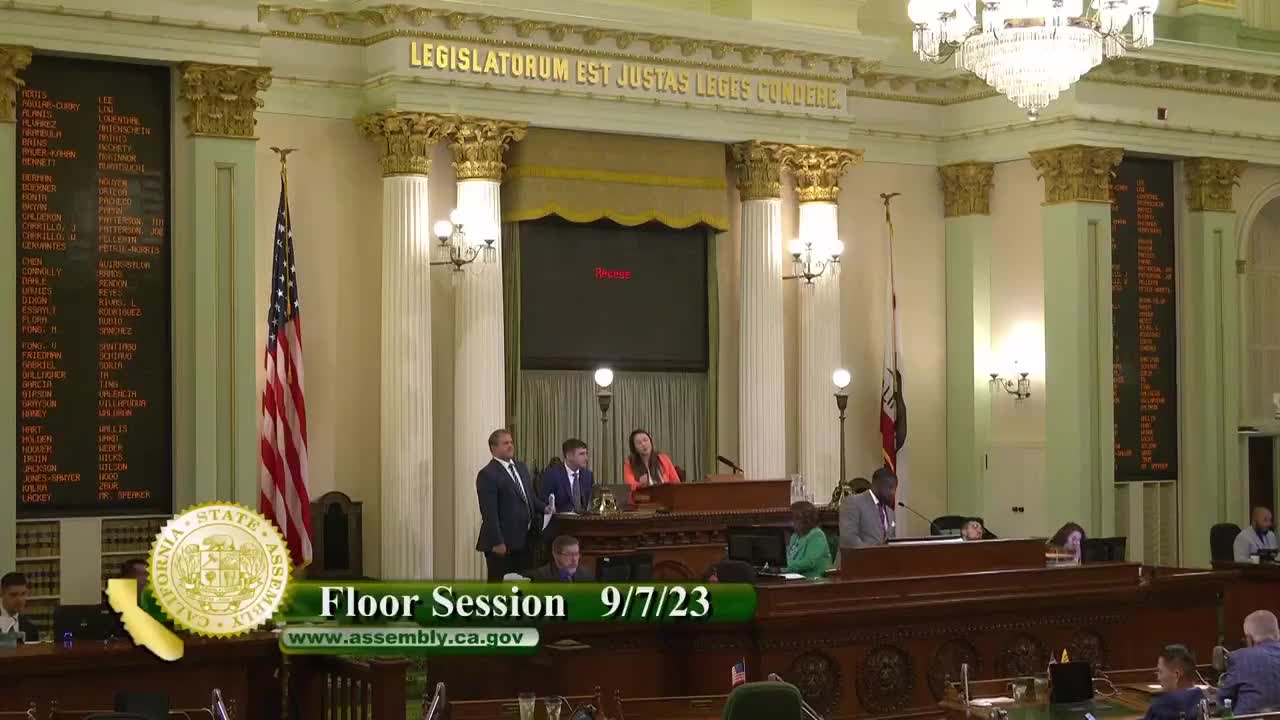 1MIN
Assembly Floor
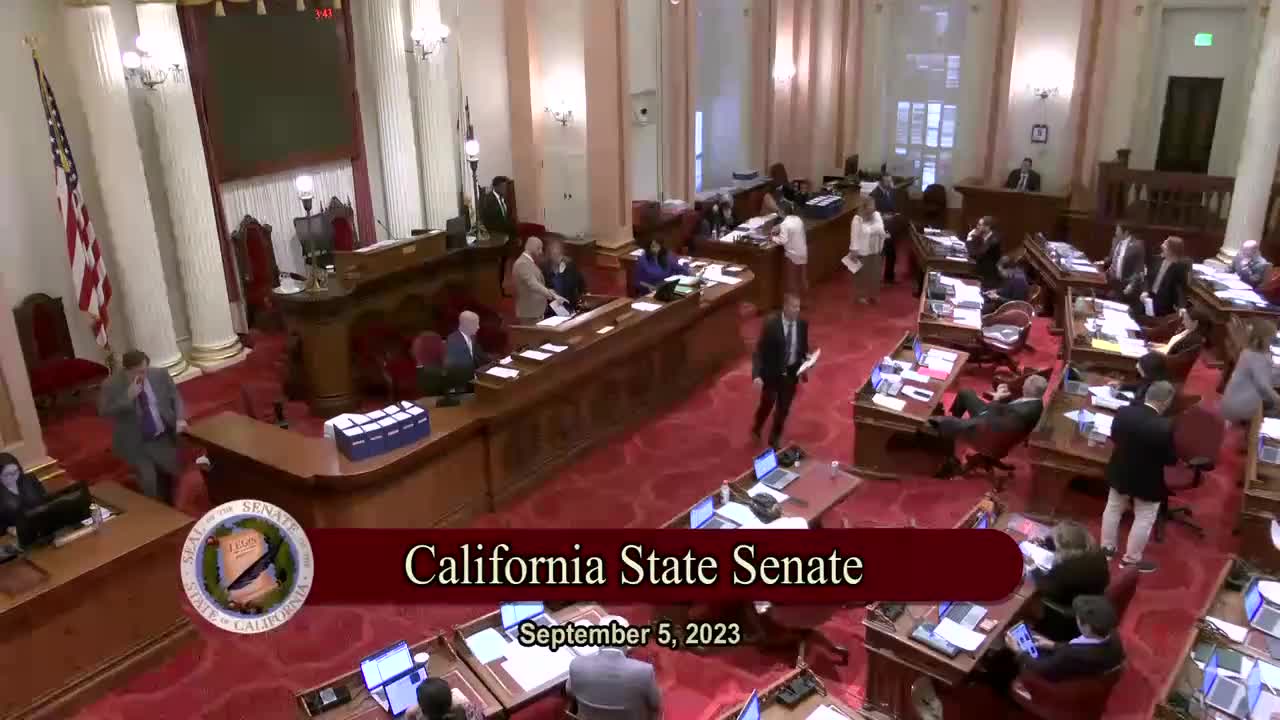 2MIN
Senate Floor
 4MIN
Senate Standing Committee on Judiciary
 19MIN
Senate Standing Committee on Transportation
 4MIN
Assembly Floor
 4MIN
Assembly Standing Committee on Privacy and Consumer Protection
Bill Author

Bill Co-Author(s):