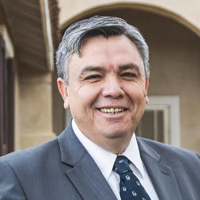
AB 373: Intersession programs: foster children and homeless youth: priority access.
- Session Year: 2023-2024
- House: Assembly
- Latest Version Date: 2023-10-07
Current Status:
Passed
(2023-10-07: Chaptered by Secretary of State - Chapter 327, Statutes of 2023.)
Introduced
In Committee
First Chamber
In Committee
Second Chamber
Enacted
Existing law states the intent of the Legislature to ensure that all pupils in foster care and those who are homeless, as defined, have a meaningful opportunity to meet the challenging state pupil academic achievement standards to which all pupils are held. Existing law requires educators, county placing agencies, care providers, advocates, and the juvenile courts to work together to maintain stable school placements and to ensure that each pupil is placed in the least restrictive educational programs, and has access to the academic resources, services, and extracurricular and enrichment activities that are available to all pupils, as provided.
Existing law authorizes the governing board of any school district to initiate and carry on any program, activity, or to otherwise act in any manner that is not in conflict with or inconsistent with, or preempted by, any law and that is not in conflict with the purposes for which school districts are established.
This bill would require a school district, county office of education, or charter school, if the local educational agency operates an intersession program, as defined, to grant priority access to foster children and homeless youth, as provided. The bill would, notwithstanding any other law, provide that if a foster child or homeless youth will be moving during an intersession period, the pupils parent, guardian, educational rights holder, or Indian custodian, as defined, in the case of an Indian child, or, if there is no parent, guardian, educational rights holder, or Indian custodian, the unaccompanied homeless youth, as applicable, shall determine which school the pupil attends for the intersession period, if applicable.
This bill would incorporate additional changes to Section 48853.5 of the Education Code proposed by AB 723 to be operative only if this bill and AB 723 are enacted and this bill is enacted last.
Existing law states the intent of the Legislature to ensure that all pupils in foster care and those who are homeless, as defined, have a meaningful opportunity to meet the challenging state pupil academic achievement standards to which all pupils are held. Existing law requires educators, county placing agencies, care providers, advocates, and the juvenile courts to work together to maintain stable school placements and to ensure that each pupil is placed in the least restrictive educational programs, and has access to the academic resources, services, and extracurricular and enrichment activities that are available to all pupils, as provided.
Existing law authorizes the governing board of any school district to initiate and carry on any program, activity, or to otherwise act in any manner that is not in conflict with or inconsistent with, or preempted by, any law and that is not in conflict with the purposes for which school districts are established.
This bill would require a school district, county office of education, or charter school, if the local educational agency operates an intersession program, as defined, to grant priority access to foster children and homeless youth, as provided. The bill would, notwithstanding any other law, provide that if a foster child or homeless youth will be moving during an intersession period, the pupils parent, guardian, or educational rights holder, or Indian custodian, as defined, in the case of an Indian child, or, if there is no parent, guardian, or educational rights holder, or Indian custodian, the unaccompanied homeless youth, as applicable, shall determine which school the pupil attends for the intersession period, if applicable.
Existing law states the intent of the Legislature to ensure that all pupils in foster care and those who are homeless, as defined, have a meaningful opportunity to meet the challenging state pupil academic achievement standards to which all pupils are held. Existing law requires educators, county placing agencies, care providers, advocates, and the juvenile courts to work together to maintain stable school placements and to ensure that each pupil is placed in the least restrictive educational programs, and has access to the academic resources, services, and extracurricular and enrichment activities that are available to all pupils, as provided.
Existing law authorizes the governing board of any school district to initiate and carry on any program, activity, or to otherwise act in any manner that is not in conflict with or inconsistent with, or preempted by, any law and that is not in conflict with the purposes for which school districts are established.
This bill would require a school district, county office of education, or charter school, if the local educational agency operates an intersession program, as defined, to grant priority access to foster children and homeless youth, as provided. The bill would, notwithstanding any other law, provide that if a foster child or homeless youth will be moving during an intersession period, the pupils parent, guardian, or educational rights holder, or, if there is no parent, guardian, or educational rights holder, the unaccompanied homeless youth, as applicable, shall determine which school the pupil attends for the intersession period, if applicable.
Existing law states the intent of the Legislature to ensure that all pupils in foster care and those who are homeless, as defined, have a meaningful opportunity to meet the challenging state pupil academic achievement standards to which all pupils are held. Existing law requires educators, county placing agencies, care providers, advocates, and the juvenile courts to work together to maintain stable school placements and to ensure that each pupil is placed in the least restrictive educational programs, and has access to the academic resources, services, and extracurricular and enrichment activities that are available to all pupils, as provided.
Existing law authorizes the governing board of any school district to initiate and carry on any program, activity, or to otherwise act in any manner that is not in conflict with or inconsistent with, or preempted by, any law and that is not in conflict with the purposes for which school districts are established.
This bill would require a school district, county office of education, or charter school, if the local educational agency operates an intersession program, including, but not limited to, summer school, as defined, to grant priority access to foster children and homeless youth, except as specified for an extended school year program for individuals with exceptional needs. as provided. The bill would, notwithstanding any other law, provide that if a foster child or homeless youth will be moving during an intersession period, the pupils parent, guardian, or educational rights holder, as applicable, shall determine which school the pupil attends for the intersession period, if applicable.
Existing law states the intent of the Legislature to ensure that all pupils in foster care and those who are homeless, as defined, have a meaningful opportunity to meet the challenging state pupil academic achievement standards to which all pupils are held. Existing law requires educators, county placing agencies, care providers, advocates, and the juvenile courts to work together to maintain stable school placements and to ensure that each pupil is placed in the least restrictive educational programs, and has access to the academic resources, services, and extracurricular and enrichment activities that are available to all pupils, as provided.
Existing law authorizes the governing board of any school district to initiate and carry on any program, activity, or to otherwise act in any manner that is not in conflict with or inconsistent with, or preempted by, any law and that is not in conflict with the purposes for which school districts are established.
This bill would require a school district, county office of education, or charter school, if the local educational agency operates an intersession program, including, but not limited to, summer school, to grant priority access to foster children and homeless youth, except as specified for an extended school year program for individuals with exceptional needs. The bill would, notwithstanding any other law, provide that if a foster child or homeless youth will be moving during an intersession period, the pupils parent, guardian, or educational rights holder, as applicable, shall determine which school the pupil attends for the intersession period, if applicable.
(a)(1)It is the intent of the Legislature to ensure that all pupils in foster care and those who are homeless, as defined by the federal McKinney-Vento Homeless Assistance Act (42 U.S.C. Sec. 11301 et seq.), have a meaningful opportunity to meet the challenging state pupil academic achievement standards to which all pupils are held. In fulfilling their responsibilities to these pupils, educators, county placing agencies, care providers, advocates, and the juvenile courts shall work together to maintain stable school placements and to ensure that each pupil is placed in the least restrictive educational programs, and has access to the academic resources, services, and extracurricular and enrichment activities that are available to all pupils, including, but not necessarily limited to, interscholastic sports administered by the California Interscholastic Federation. In all instances, educational and school placement decisions shall be based on the best interests of the child and shall consider, among other factors, educational stability and the opportunity to be educated in the least restrictive educational setting necessary to achieve academic progress.
(2)A foster child who changes residences pursuant to a court order or decision of a child welfare worker or a homeless child or youth shall be immediately deemed to meet all residency requirements for participation in interscholastic sports or other extracurricular activities.
(3)(A)Pursuant to the federal McKinney-Vento Homeless Assistance Act (42 U.S.C. Sec. 11301 et seq.), public schools, including charter schools, and county offices of education shall immediately enroll a homeless child or youth seeking enrollment except where the enrollment would be in conflict with subdivision (e) of Section 47605.
(B)The department and the State Department of Social Services shall identify representatives from the department, the State Department of Social Services, and other state agencies that have experience in homeless youth issues to develop policies and practices to support homeless children and youths and to ensure that child abuse and neglect reporting requirements do not create barriers to the school enrollment and attendance of homeless children or youths, including, but not limited to, ensuring that a pupil who is a homeless child or youth is not reported to law enforcement by school personnel if the sole reason for the report is the pupils homelessness. The selected representatives shall present the policies and practices to the Superintendent and the State Department of Social Services to be considered for implementation or dissemination, as appropriate.
(C)(i)If a local educational agency operates an intersession program, the local educational agency shall grant priority access to a homeless child or youth.
(ii)Notwithstanding any other law, if the homeless youth will be moving during an intersession period, the pupils parent, guardian, educational rights holder, or Indian custodian in the case of an Indian child, or, if there is no parent, guardian, educational rights holder, or Indian custodian, the unaccompanied homeless youth, shall determine which school the pupil attends for the intersession period, if applicable.
(b)Every county office of education shall make available to agencies that place children in licensed childrens institutions information on educational options for children residing in licensed childrens institutions within the jurisdiction of the county office of education for use by the placing agencies in assisting parents and foster children to choose educational placements.
(c)For purposes of individuals with exceptional needs residing in licensed childrens institutions, making a copy of the annual service plan, prepared pursuant to subdivision (b) of Section 56205, available to those special education local plan areas that have revised their local plans pursuant to Section 56836.03 shall meet the requirements of subdivision (b).
(d)For purposes of this section, the following definitions shall apply:
(1)Homeless child or youth and homeless children and youths as they are defined in Section 11434a(2) of Title 42 of the United States Code.
(2)Indian custodian as it is defined in Section 1903 of Title 25 of the United States Code.
(3)(A)Intersession program means an expanded learning program offered by a local educational agency on nonschooldays, including, but not limited to, summer school.
(B)An intersession program does not include an extended school year program for individuals with exceptional needs established pursuant to Section 3043 of Title 5 of the California Code of Regulations and Section 300.106 of Title 34 of the Code of Federal Regulations.
(4)Local educational agency means a school district, county office of education, or charter school.
(5)Pupils in foster care has the same meaning as foster child, as that term is defined in subdivision (a) of Section 48853.5.
(6)Unaccompanied homeless youth has the same meaning as unaccompanied youth in Section 11434a(2) of Title 42 of the United States Code.
SEC. 2.Section 48853.5 of the Education Code is amended to read:48853.5.(a)This section applies to a foster child. Foster child means any of the following:
(1)A child who has been removed from their home pursuant to Section 309 of the Welfare and Institutions Code.
(2)A child who is the subject of a petition filed under Section 300 or 602 of the Welfare and Institutions Code, whether or not the child has been removed from their home.
(3)A dependent child of the court of an Indian tribe, consortium of tribes, or tribal organization who is the subject of a petition filed in the tribal court pursuant to the tribal courts jurisdiction in accordance with the tribes law.
(4)A child who is the subject of a voluntary placement agreement, as defined in subdivision (p) of Section 11400 of the Welfare and Institutions Code.
(b)The department, in consultation with the California Foster Youth Education Task Force, shall develop a standardized notice of the educational rights of foster children, as specified in Sections 48850 to this section, inclusive, and Sections 48911, 48915.5, 49069.5, 49076, 51225.1, and 51225.2. The notice shall include complaint process information, as applicable. The department shall make the notice available to educational liaisons for foster children for dissemination by posting the notice on its internet website. Any version of this notice prepared for use by foster children shall also include, to the greatest extent practicable, the rights established pursuant to Section 16001.9 of the Welfare and Institutions Code. In developing the notice that includes the rights in Section 16001.9 of the Welfare and Institutions Code, the department shall consult with the Office of the State Foster Care Ombudsperson.
(c)Each local educational agency shall designate a staff person as the educational liaison for foster children. In a school district that operates a foster children services program pursuant to Chapter 11.3 (commencing with Section 42920) of Part 24 of Division 3, the educational liaison shall be affiliated with the local foster children services program. The educational liaison shall do both of the following:
(1)Ensure and facilitate the proper educational placement, enrollment in school, and checkout from school of foster children.
(2)Assist foster children when transferring from one school to another school or from one school district to another school district in ensuring proper transfer of credits, records, and grades.
(d)A foster childs educational rights holder, attorney, and county social worker and an Indian childs, as defined in Section 224.1 of the Welfare and Institutions Code, tribal social worker and, if applicable, county social worker shall have the same rights a parent or guardian of a child has to receive a suspension notice, expulsion notice, manifestation determination notice, involuntary transfer notice, and other documents and related information.
(e)This section does not grant authority to the educational liaison that supersedes the authority granted under state and federal law to a parent or legal guardian retaining educational rights, a responsible adult appointed by the court to represent the child pursuant to Section 361 or 726 of the Welfare and Institutions Code, a surrogate parent, or a foster parent exercising the authority granted under Section 56055. The role of the educational liaison is advisory with respect to placement decisions and determination of the school of origin.
(f)(1)At the initial detention or placement, or any subsequent change in placement of a foster child, the local educational agency serving the foster child shall allow the foster child to continue the foster childs education in the school of origin for the duration of the jurisdiction of the court.
(2)If the jurisdiction of the court is terminated before the end of an academic year, the local educational agency shall allow a former foster child who is in kindergarten or any of grades 1 to 8, inclusive, to continue the former foster childs education in the school of origin through the duration of the academic school year.
(3)(A)If the jurisdiction of the court is terminated while a foster child is in high school, the local educational agency shall allow the former foster child to continue the former foster childs education in the school of origin through graduation.
(B)For purposes of this paragraph, a school district is not required to provide transportation to a former foster child who has an individualized education program that does not require transportation as a related service and who changes residence but remains in the former foster childs school of origin pursuant to this paragraph, unless the individualized education program team determines that transportation is a necessary related service.
(4)To ensure that the foster child has the benefit of matriculating with the foster childs peers in accordance with the established feeder patterns of school districts, if the foster child is transitioning between school grade levels, the local educational agency shall allow the foster child to continue in the school district of origin in the same attendance area, or, if the foster child is transitioning to a middle school or high school, and the school designated for matriculation is in another school district, to the school designated for matriculation in that school district.
(5)(A)Paragraphs (2), (3), and (4) do not require a school district to provide transportation services to allow a foster child to attend a school or school district, unless there is an agreement with a local child welfare agency that the school district assumes part or all of the transportation costs in accordance with Section 6312(c)(5) of Title 20 of the United States Code, or unless otherwise required under federal law. This paragraph does not prohibit a school district from, at its discretion, providing transportation services to allow a foster child to attend a school or school district.
(B)In accordance with Section 6312(c)(5) of Title 20 of the United States Code, local educational agencies shall collaborate with local child welfare agencies to develop and implement clear written procedures to address the transportation needs of foster youth to maintain them in their school of origin, when it is in the best interest of the foster youth.
(6)The educational liaison, in consultation with, and with the agreement of, the foster child and the person holding the right to make educational decisions for the foster child, may recommend, in accordance with the foster childs best interests, that the foster childs right to attend the school of origin be waived and the foster child be enrolled in a public school that pupils living in the attendance area in which the foster child resides are eligible to attend.
(7)Before making a recommendation to move a foster child from the foster childs school of origin, the educational liaison shall provide the foster child and the person holding the right to make educational decisions for the foster child with a written explanation stating the basis for the recommendation and how the recommendation serves the foster childs best interests.
(8)(A)If the educational liaison, in consultation with the foster child and the person holding the right to make educational decisions for the foster child, agrees that the best interests of the foster child would best be served by the foster childs transfer to a school other than the school of origin, the foster child shall immediately be enrolled in the new school.
(B)The new school shall immediately enroll the foster child even if the foster child has outstanding fees, fines, textbooks, or other items or moneys due to the school last attended or is unable to produce clothing or records normally required for enrollment, such as previous academic records, medical records, including, but not limited to, records or other proof of immunization history pursuant to Chapter 1 (commencing with Section 120325) of Part 2 of Division 105 of the Health and Safety Code, proof of residency, other documentation, or school uniforms.
(C)Within two business days of the foster childs request for enrollment, the educational liaison for the new school shall contact the school last attended by the foster child to obtain all academic and other records. The last school attended by the foster child shall provide all required records to the new school regardless of any outstanding fees, fines, textbooks, or other items or moneys owed to the school last attended. The educational liaison for the school last attended shall provide all records to the new school within two business days of receiving the request.
(9)If a dispute arises regarding the request of a foster child to remain in the school of origin, the foster child has the right to remain in the school of origin pending resolution of the dispute. The dispute shall be resolved in accordance with the existing dispute resolution process available to a pupil served by the local educational agency.
(10)The local educational agency and the county placing agency are encouraged to collaborate to ensure maximum use of available federal moneys, explore public-private partnerships, and access any other funding sources to promote the well-being of foster children through educational stability.
(11)(A)If a local educational agency operates an intersession program, the local educational agency shall grant priority access to a foster child.
(B)Notwithstanding any other law, if the foster child will be moving during an intersession period, the pupils educational rights holder, or Indian custodian in the case of an Indian child, shall determine which school the pupil attends for the intersession period, if applicable.
(12)It is the intent of the Legislature that this subdivision shall not supersede or exceed other laws governing special education services for eligible foster children.
(g)For purposes of this section, the following definitions shall apply:
(1)Indian custodian as it is defined in Section 1903 of Title 25 of the United States Code.
(2)(A)Intersession program means an expanded learning program offered by a local educational agency on nonschooldays, including, but not limited to, summer school.
(B)An intersession program does not include an extended school year program for individuals with exceptional needs established pursuant to Section 3043 of Title 5 of the California Code of Regulations and Section 300.106 of Title 34 of the Code of Federal Regulations.
(3)School of origin means the school that the foster child attended when permanently housed or the school in which the foster child was last enrolled. If the school the foster child attended when permanently housed is different from the school in which the foster child was last enrolled, or if there is some other school that the foster child attended with which the foster child is connected and that the foster child attended within the immediately preceding 15 months, the educational liaison, in consultation with, and with the agreement of, the foster child and the person holding the right to make educational decisions for the foster child, shall determine, in the best interests of the foster child, the school that shall be deemed the school of origin.
(h)This section does not supersede other law governing the educational placements in juvenile court schools, as described in Section 48645.1, by the juvenile court under Section 602 of the Welfare and Institutions Code.
(i)(1)A complaint of noncompliance with the requirements of this section may be filed with the local educational agency under the Uniform Complaint Procedures set forth in Chapter 5.1 (commencing with Section 4600) of Division 1 of Title 5 of the California Code of Regulations.
(2)A complainant not satisfied with the decision of a local educational agency may appeal the decision to the department pursuant to Chapter 5.1 (commencing with Section 4600) of Division 1 of Title 5 of the California Code of Regulations and shall receive a written decision regarding the appeal within 60 days of the departments receipt of the appeal.
(3)If a local educational agency finds merit in a complaint, or if the Superintendent finds merit in an appeal, the local educational agency shall provide a remedy to the affected pupil.
(4)Information regarding the requirements of this section shall be included in the annual notification distributed to, among others, pupils, parents or guardians of pupils, employees, and other interested parties pursuant to Section 4622 of Title 5 of the California Code of Regulations.
SEC. 2.5.Section 48853.5 of the Education Code is amended to read:48853.5.(a)This section applies to a foster child. Foster child means any of the following:
(1)A child who has been removed from their home pursuant to Section 309 of the Welfare and Institutions Code.
(2)A child who is the subject of a petition filed under Section 300 or 602 of the Welfare and Institutions Code, whether or not the child has been removed from their home.
(3)A dependent child of the court of an Indian tribe, consortium of tribes, or tribal organization who is the subject of a petition filed in the tribal court pursuant to the tribal courts jurisdiction in accordance with the tribes law.
(4)A child who is the subject of a voluntary placement agreement, as defined in subdivision (p) of Section 11400 of the Welfare and Institutions Code.
(b)The department, in consultation with the California Foster Youth Education Task Force, shall develop a standardized notice of the educational rights of foster children, as specified in Sections 48850 to this section, inclusive, and Sections 48911, 48915.5, 49069.5, 49076, 51225.1, and 51225.2. The notice shall include complaint process information, as applicable. The department shall make the notice available to educational liaisons for foster children for dissemination by posting the notice on its internet website. Any version of this notice prepared for use by foster children shall also include, to the greatest extent practicable, the rights established pursuant to Section 16001.9 of the Welfare and Institutions Code. In developing the notice that includes the rights in Section 16001.9 of the Welfare and Institutions Code, the department shall consult with the Office of the State Foster Care Ombudsperson.
(c)Each local educational agency shall designate a staff person as the educational liaison for foster children. In a school district that operates a foster children services program pursuant to Chapter 11.3 (commencing with Section 42920) of Part 24 of Division 3, the educational liaison shall be affiliated with the local foster children services program. The educational liaison shall do both of the following:
(1)Ensure and facilitate the proper educational placement, enrollment in school, and checkout from school of foster children.
(2)Assist foster children when transferring from one school to another school or from one school district to another school district in ensuring proper transfer of credits, records, and grades.
(d)A foster childs educational rights holder, attorney, and county social worker and an Indian childs, as defined in Section 224.1 of the Welfare and Institutions Code, tribal social worker and, if applicable, county social worker shall have the same rights a parent or guardian of a child has to receive a suspension notice, expulsion notice, manifestation determination notice, involuntary transfer notice, and other documents and related information.
(e)This section does not grant authority to the educational liaison that supersedes the authority granted under state and federal law to a parent or legal guardian retaining educational rights, a responsible adult appointed by the court to represent the child pursuant to Section 361 or 726 of the Welfare and Institutions Code, a surrogate parent, or a foster parent exercising the authority granted under Section 56055. The role of the educational liaison is advisory with respect to placement decisions and determination of the school of origin.
(f)(1)At the initial detention or placement, or any subsequent change in placement of a foster child, the local educational agency serving the foster child shall allow the foster child to continue the foster childs education in the school of origin for the duration of the jurisdiction of the court.
(2)If the jurisdiction of the court is terminated before the end of an academic year, the local educational agency shall allow a former foster child who is in kindergarten or any of grades 1 to 8, inclusive, to continue the former foster childs education in the school of origin through the duration of the academic school year.
(3)(A)If the jurisdiction of the court is terminated while a foster child is in high school, the local educational agency shall allow the former foster child to continue the former foster childs education in the school of origin through graduation.
(B)For purposes of this paragraph, a school district is not required to provide transportation to a former foster child who has an individualized education program that does not require transportation as a related service and who changes residence but remains in the former foster childs school of origin pursuant to this paragraph, unless the individualized education program team determines that transportation is a necessary related service.
(4)To ensure that the foster child has the benefit of matriculating with the foster childs peers in accordance with the established feeder patterns of school districts, if the foster child is transitioning between school grade levels, the local educational agency shall allow the foster child to continue in the school district of origin in the same attendance area, or, if the foster child is transitioning to a middle school or high school, and the school designated for matriculation is in another school district, to the school designated for matriculation in that school district.
(5)(A)Paragraphs (2), (3), and (4) do not require a school district to provide transportation services to allow a foster child to attend a school or school district, unless there is an agreement with a local child welfare agency that the school district assumes part or all of the transportation costs in accordance with Section 6312(c)(5) of Title 20 of the United States Code, or unless otherwise required under federal law. This paragraph does not prohibit a school district from, at its discretion, providing transportation services to allow a foster child to attend a school or school district.
(B)In accordance with Section 6312(c)(5) of Title 20 of the United States Code, local educational agencies shall collaborate with local child welfare agencies to develop and implement clear written procedures to address the transportation needs of foster youth to maintain them in their school of origin, when it is in the best interest of the foster youth.
(6)The educational liaison, in consultation with, and with the agreement of, the foster child and the person holding the right to make educational decisions for the foster child, may recommend, in accordance with the foster childs best interests, that the foster childs right to attend the school of origin be waived and the foster child be enrolled in a public school that pupils living in the attendance area in which the foster child resides are eligible to attend.
(7)Before making a recommendation to move a foster child from the foster childs school of origin, the educational liaison shall provide the foster child and the person holding the right to make educational decisions for the foster child with a written explanation stating the basis for the recommendation and how the recommendation serves the foster childs best interests.
(8)(A)If the educational liaison, in consultation with the foster child and the person holding the right to make educational decisions for the foster child, agrees that the best interests of the foster child would best be served by the foster childs transfer to a school other than the school of origin, the foster child shall immediately be enrolled in the new school.
(B)The new school shall immediately enroll the foster child even if the foster child has outstanding fees, fines, textbooks, or other items or moneys due to the school last attended or is unable to produce clothing or records normally required for enrollment, such as previous academic records, medical records, including, but not limited to, records or other proof of immunization history pursuant to Chapter 1 (commencing with Section 120325) of Part 2 of Division 105 of the Health and Safety Code, proof of residency, other documentation, or school uniforms.
(C)Within two business days of the foster childs request for enrollment, the educational liaison for the new school shall contact the school last attended by the foster child to obtain all academic and other records. The last school attended by the foster child shall provide all required records to the new school regardless of any outstanding fees, fines, textbooks, or other items or moneys owed to the school last attended. The educational liaison for the school last attended shall provide all records to the new school within two business days of receiving the request.
(9)If a dispute arises regarding the request of a foster child to remain in the school of origin, the foster child has the right to remain in the school of origin pending resolution of the dispute. The dispute shall be resolved in accordance with the existing dispute resolution process available to a pupil served by the local educational agency.
(10)The local educational agency and the county placing agency are encouraged to collaborate to ensure maximum use of available federal moneys, explore public-private partnerships, and access any other funding sources to promote the well-being of foster children through educational stability.
(11)(A)If a local educational agency operates an intersession program, the local educational agency shall grant priority access to a foster child.
(B)Notwithstanding any other law, if the foster child will be moving during an intersession period, the pupils educational rights holder, or Indian custodian in the case of an Indian child, shall determine which school the pupil attends for the intersession period, if applicable.
(12)It is the intent of the Legislature that this subdivision shall not supersede or exceed other laws governing special education services for eligible foster children.
(g)For purposes of this section, the following definitions shall apply:
(1)Indian custodian as it is defined in Section 1903 of Title 25 of the United States Code.
(2)(A)Intersession program means an expanded learning program offered by a local educational agency on nonschooldays, including, but not limited to, summer school.
(B)An intersession program does not include an extended school year program for individuals with exceptional needs established pursuant to Section 3043 of Title 5 of the California Code of Regulations and Section 300.106 of Title 34 of the Code of Federal Regulations.
(3)(A)School of origin means the school that the foster child attended when permanently housed or the school in which the foster child was last enrolled. If the school the foster child attended when permanently housed is different from the school in which the foster child was last enrolled, or if there is some other school that the foster child attended with which the foster child is connected and that the foster child attended within the immediately preceding 15 months, the educational liaison, in consultation with, and with the agreement of, the foster child and the person holding the right to make educational decisions for the foster child, shall determine, in the best interests of the foster child, the school that shall be deemed the school of origin.
(B)For a foster child who is an individual with exceptional needs as defined in Section 56026, school as used in the definition of school of origin in subparagraph (A) includes a placement in a nonpublic, nonsectarian school as defined in Section 56034, subject to the requirements of Section 56325.
(h)This section does not supersede other law governing the educational placements in juvenile court schools, as described in Section 48645.1, by the juvenile court under Section 602 of the Welfare and Institutions Code.
(i)(1)A complaint of noncompliance with the requirements of this section may be filed with the local educational agency under the Uniform Complaint Procedures set forth in Chapter 5.1 (commencing with Section 4600) of Division 1 of Title 5 of the California Code of Regulations.
(2)A complainant not satisfied with the decision of a local educational agency may appeal the decision to the department pursuant to Chapter 5.1 (commencing with Section 4600) of Division 1 of Title 5 of the California Code of Regulations and shall receive a written decision regarding the appeal within 60 days of the departments receipt of the appeal.
(3)If a local educational agency finds merit in a complaint, or if the Superintendent finds merit in an appeal, the local educational agency shall provide a remedy to the affected pupil.
(4)Information regarding the requirements of this section shall be included in the annual notification distributed to, among others, pupils, parents or guardians of pupils, employees, and other interested parties pursuant to Section 4622 of Title 5 of the California Code of Regulations.
SEC. 3.Section 2.5 of this bill incorporates amendments to Section 48853.5 of the Education Code proposed by both this bill and Assembly Bill 723. That section of this bill shall only become operative if (1) both bills are enacted and become effective on or before January 1, 2024, (2) each bill amends Section 48853.5 of the Education Code, and (3) this bill is enacted after Assembly Bill 723, in which case Section 2 of this bill shall not become operative.
(a)(1)It is the intent of the Legislature to ensure that all pupils in foster care and those who are homeless, as defined by the federal McKinney-Vento Homeless Assistance Act (42 U.S.C. Sec. 11301 et seq.), have a meaningful opportunity to meet the challenging state pupil academic achievement standards to which all pupils are held. In fulfilling their responsibilities to these pupils, educators, county placing agencies, care providers, advocates, and the juvenile courts shall work together to maintain stable school placements and to ensure that each pupil is placed in the least restrictive educational programs, and has access to the academic resources, services, and extracurricular and enrichment activities that are available to all pupils, including, but not necessarily limited to, interscholastic sports administered by the California Interscholastic Federation. In all instances, educational and school placement decisions shall be based on the best interests of the child and shall consider, among other factors, educational stability and the opportunity to be educated in the least restrictive educational setting necessary to achieve academic progress.
(2)A foster child who changes residences pursuant to a court order or decision of a child welfare worker or a homeless child or youth shall be immediately deemed to meet all residency requirements for participation in interscholastic sports or other extracurricular activities.
(3)(A)Pursuant to the federal McKinney-Vento Homeless Assistance Act (42 U.S.C. Sec. 11301 et seq.), public schools, including charter schools, and county offices of education shall immediately enroll a homeless child or youth seeking enrollment except where the enrollment would be in conflict with subdivision (e) of Section 47605.
(B)The department and the State Department of Social Services shall identify representatives from the department, the State Department of Social Services, and other state agencies that have experience in homeless youth issues to develop policies and practices to support homeless children and youths and to ensure that child abuse and neglect reporting requirements do not create barriers to the school enrollment and attendance of homeless children or youths, including, but not limited to, ensuring that a pupil who is a homeless child or youth is not reported to law enforcement by school personnel if the sole reason for the report is the pupils homelessness. The selected representatives shall present the policies and practices to the Superintendent and the State Department of Social Services to be considered for implementation or dissemination, as appropriate.
(C)(i)If a local educational agency operates an intersession program, the local educational agency shall grant priority access to a homeless child or youth.
(ii)Notwithstanding any other law, if the homeless youth will be moving during an intersession period, the pupils parent, guardian, educational rights holder, or Indian custodian in the case of an Indian child, or, if there is no parent, guardian, educational rights holder, or Indian custodian, the unaccompanied homeless youth, shall determine which school the pupil attends for the intersession period, if applicable.
(b)Every county office of education shall make available to agencies that place children in licensed childrens institutions information on educational options for children residing in licensed childrens institutions within the jurisdiction of the county office of education for use by the placing agencies in assisting parents and foster children to choose educational placements.
(c)For purposes of individuals with exceptional needs residing in licensed childrens institutions, making a copy of the annual service plan, prepared pursuant to subdivision (b) of Section 56205, available to those special education local plan areas that have revised their local plans pursuant to Section 56836.03 shall meet the requirements of subdivision (b).
(d)For purposes of this section, the following definitions shall apply:
(1)Homeless child or youth and homeless children and youths as they are defined in Section 11434a(2) of Title 42 of the United States Code.
(2)Indian custodian as it is defined in Section 1903 of Title 25 of the United States Code.
(3)(A)Intersession program means an expanded learning program offered by a local educational agency on nonschooldays, including, but not limited to, summer school.
(B)An intersession program does not include an extended school year program for individuals with exceptional needs established pursuant to Section 3043 of Title 5 of the California Code of Regulations and Section 300.106 of Title 34 of the Code of Federal Regulations.
(4)Local educational agency means a school district, county office of education, or charter school.
(5)Pupils in foster care has the same meaning as foster child, as that term is defined in subdivision (a) of Section 48853.5.
(6)Unaccompanied homeless youth has the same meaning as unaccompanied youth in Section 11434a(2) of Title 42 of the United States Code.
SEC. 2.Section 48853.5 of the Education Code is amended to read:48853.5.(a)This section applies to a foster child. Foster child means any of the following:
(1)A child who has been removed from their home pursuant to Section 309 of the Welfare and Institutions Code.
(2)A child who is the subject of a petition filed under Section 300 or 602 of the Welfare and Institutions Code, whether or not the child has been removed from their home.
(3)A dependent child of the court of an Indian tribe, consortium of tribes, or tribal organization who is the subject of a petition filed in the tribal court pursuant to the tribal courts jurisdiction in accordance with the tribes law.
(4)A child who is the subject of a voluntary placement agreement, as defined in subdivision (p) of Section 11400 of the Welfare and Institutions Code.
(b)The department, in consultation with the California Foster Youth Education Task Force, shall develop a standardized notice of the educational rights of foster children, as specified in Sections 48850 to this section, inclusive, and Sections 48911, 48915.5, 49069.5, 49076, 51225.1, and 51225.2. The notice shall include complaint process information, as applicable. The department shall make the notice available to educational liaisons for foster children for dissemination by posting the notice on its internet website. Any version of this notice prepared for use by foster children shall also include, to the greatest extent practicable, the rights established pursuant to Section 16001.9 of the Welfare and Institutions Code. In developing the notice that includes the rights in Section 16001.9 of the Welfare and Institutions Code, the department shall consult with the Office of the State Foster Care Ombudsperson.
(c)Each local educational agency shall designate a staff person as the educational liaison for foster children. In a school district that operates a foster children services program pursuant to Chapter 11.3 (commencing with Section 42920) of Part 24 of Division 3, the educational liaison shall be affiliated with the local foster children services program. The educational liaison shall do both of the following:
(1)Ensure and facilitate the proper educational placement, enrollment in school, and checkout from school of foster children.
(2)Assist foster children when transferring from one school to another school or from one school district to another school district in ensuring proper transfer of credits, records, and grades.
(d)A foster childs educational rights holder, attorney, and county social worker and an Indian childs, as defined in Section 224.1 of the Welfare and Institutions Code, tribal social worker and, if applicable, county social worker shall have the same rights a parent or guardian of a child has to receive a suspension notice, expulsion notice, manifestation determination notice, involuntary transfer notice, and other documents and related information.
(e)This section does not grant authority to the educational liaison that supersedes the authority granted under state and federal law to a parent or legal guardian retaining educational rights, a responsible adult appointed by the court to represent the child pursuant to Section 361 or 726 of the Welfare and Institutions Code, a surrogate parent, or a foster parent exercising the authority granted under Section 56055. The role of the educational liaison is advisory with respect to placement decisions and determination of the school of origin.
(f)(1)At the initial detention or placement, or any subsequent change in placement of a foster child, the local educational agency serving the foster child shall allow the foster child to continue the foster childs education in the school of origin for the duration of the jurisdiction of the court.
(2)If the jurisdiction of the court is terminated before the end of an academic year, the local educational agency shall allow a former foster child who is in kindergarten or any of grades 1 to 8, inclusive, to continue the former foster childs education in the school of origin through the duration of the academic school year.
(3)(A)If the jurisdiction of the court is terminated while a foster child is in high school, the local educational agency shall allow the former foster child to continue the former foster childs education in the school of origin through graduation.
(B)For purposes of this paragraph, a school district is not required to provide transportation to a former foster child who has an individualized education program that does not require transportation as a related service and who changes residence but remains in the former foster childs school of origin pursuant to this paragraph, unless the individualized education program team determines that transportation is a necessary related service.
(4)To ensure that the foster child has the benefit of matriculating with the foster childs peers in accordance with the established feeder patterns of school districts, if the foster child is transitioning between school grade levels, the local educational agency shall allow the foster child to continue in the school district of origin in the same attendance area, or, if the foster child is transitioning to a middle school or high school, and the school designated for matriculation is in another school district, to the school designated for matriculation in that school district.
(5)(A)Paragraphs (2), (3), and (4) do not require a school district to provide transportation services to allow a foster child to attend a school or school district, unless there is an agreement with a local child welfare agency that the school district assumes part or all of the transportation costs in accordance with Section 6312(c)(5) of Title 20 of the United States Code, or unless otherwise required under federal law. This paragraph does not prohibit a school district from, at its discretion, providing transportation services to allow a foster child to attend a school or school district.
(B)In accordance with Section 6312(c)(5) of Title 20 of the United States Code, local educational agencies shall collaborate with local child welfare agencies to develop and implement clear written procedures to address the transportation needs of foster youth to maintain them in their school of origin, when it is in the best interest of the foster youth.
(6)The educational liaison, in consultation with, and with the agreement of, the foster child and the person holding the right to make educational decisions for the foster child, may recommend, in accordance with the foster childs best interests, that the foster childs right to attend the school of origin be waived and the foster child be enrolled in a public school that pupils living in the attendance area in which the foster child resides are eligible to attend.
(7)Before making a recommendation to move a foster child from the foster childs school of origin, the educational liaison shall provide the foster child and the person holding the right to make educational decisions for the foster child with a written explanation stating the basis for the recommendation and how the recommendation serves the foster childs best interests.
(8)(A)If the educational liaison, in consultation with the foster child and the person holding the right to make educational decisions for the foster child, agrees that the best interests of the foster child would best be served by the foster childs transfer to a school other than the school of origin, the foster child shall immediately be enrolled in the new school.
(B)The new school shall immediately enroll the foster child even if the foster child has outstanding fees, fines, textbooks, or other items or moneys due to the school last attended or is unable to produce clothing or records normally required for enrollment, such as previous academic records, medical records, including, but not limited to, records or other proof of immunization history pursuant to Chapter 1 (commencing with Section 120325) of Part 2 of Division 105 of the Health and Safety Code, proof of residency, other documentation, or school uniforms.
(C)Within two business days of the foster childs request for enrollment, the educational liaison for the new school shall contact the school last attended by the foster child to obtain all academic and other records. The last school attended by the foster child shall provide all required records to the new school regardless of any outstanding fees, fines, textbooks, or other items or moneys owed to the school last attended. The educational liaison for the school last attended shall provide all records to the new school within two business days of receiving the request.
(9)If a dispute arises regarding the request of a foster child to remain in the school of origin, the foster child has the right to remain in the school of origin pending resolution of the dispute. The dispute shall be resolved in accordance with the existing dispute resolution process available to a pupil served by the local educational agency.
(10)The local educational agency and the county placing agency are encouraged to collaborate to ensure maximum use of available federal moneys, explore public-private partnerships, and access any other funding sources to promote the well-being of foster children through educational stability.
(11)(A)If a local educational agency operates an intersession program, the local educational agency shall grant priority access to a foster child.
(B)Notwithstanding any other law, if the foster child will be moving during an intersession period, the pupils educational rights holder, or Indian custodian in the case of an Indian child, shall determine which school the pupil attends for the intersession period, if applicable.
(12)It is the intent of the Legislature that this subdivision shall not supersede or exceed other laws governing special education services for eligible foster children.
(g)For purposes of this section, the following definitions shall apply:
(1)Indian custodian as it is defined in Section 1903 of Title 25 of the United States Code.
(2)(A)Intersession program means an expanded learning program offered by a local educational agency on nonschooldays, including, but not limited to, summer school.
(B)An intersession program does not include an extended school year program for individuals with exceptional needs established pursuant to Section 3043 of Title 5 of the California Code of Regulations and Section 300.106 of Title 34 of the Code of Federal Regulations.
(3)School of origin means the school that the foster child attended when permanently housed or the school in which the foster child was last enrolled. If the school the foster child attended when permanently housed is different from the school in which the foster child was last enrolled, or if there is some other school that the foster child attended with which the foster child is connected and that the foster child attended within the immediately preceding 15 months, the educational liaison, in consultation with, and with the agreement of, the foster child and the person holding the right to make educational decisions for the foster child, shall determine, in the best interests of the foster child, the school that shall be deemed the school of origin.
(h)This section does not supersede other law governing the educational placements in juvenile court schools, as described in Section 48645.1, by the juvenile court under Section 602 of the Welfare and Institutions Code.
(i)(1)A complaint of noncompliance with the requirements of this section may be filed with the local educational agency under the Uniform Complaint Procedures set forth in Chapter 5.1 (commencing with Section 4600) of Division 1 of Title 5 of the California Code of Regulations.
(2)A complainant not satisfied with the decision of a local educational agency may appeal the decision to the department pursuant to Chapter 5.1 (commencing with Section 4600) of Division 1 of Title 5 of the California Code of Regulations and shall receive a written decision regarding the appeal within 60 days of the departments receipt of the appeal.
(3)If a local educational agency finds merit in a complaint, or if the Superintendent finds merit in an appeal, the local educational agency shall provide a remedy to the affected pupil.
(4)Information regarding the requirements of this section shall be included in the annual notification distributed to, among others, pupils, parents or guardians of pupils, employees, and other interested parties pursuant to Section 4622 of Title 5 of the California Code of Regulations.
SEC. 2.5.Section 48853.5 of the Education Code is amended to read:48853.5.(a)This section applies to a foster child. Foster child means any of the following:
(1)A child who has been removed from their home pursuant to Section 309 of the Welfare and Institutions Code.
(2)A child who is the subject of a petition filed under Section 300 or 602 of the Welfare and Institutions Code, whether or not the child has been removed from their home.
(3)A dependent child of the court of an Indian tribe, consortium of tribes, or tribal organization who is the subject of a petition filed in the tribal court pursuant to the tribal courts jurisdiction in accordance with the tribes law.
(4)A child who is the subject of a voluntary placement agreement, as defined in subdivision (p) of Section 11400 of the Welfare and Institutions Code.
(b)The department, in consultation with the California Foster Youth Education Task Force, shall develop a standardized notice of the educational rights of foster children, as specified in Sections 48850 to this section, inclusive, and Sections 48911, 48915.5, 49069.5, 49076, 51225.1, and 51225.2. The notice shall include complaint process information, as applicable. The department shall make the notice available to educational liaisons for foster children for dissemination by posting the notice on its internet website. Any version of this notice prepared for use by foster children shall also include, to the greatest extent practicable, the rights established pursuant to Section 16001.9 of the Welfare and Institutions Code. In developing the notice that includes the rights in Section 16001.9 of the Welfare and Institutions Code, the department shall consult with the Office of the State Foster Care Ombudsperson.
(c)Each local educational agency shall designate a staff person as the educational liaison for foster children. In a school district that operates a foster children services program pursuant to Chapter 11.3 (commencing with Section 42920) of Part 24 of Division 3, the educational liaison shall be affiliated with the local foster children services program. The educational liaison shall do both of the following:
(1)Ensure and facilitate the proper educational placement, enrollment in school, and checkout from school of foster children.
(2)Assist foster children when transferring from one school to another school or from one school district to another school district in ensuring proper transfer of credits, records, and grades.
(d)A foster childs educational rights holder, attorney, and county social worker and an Indian childs, as defined in Section 224.1 of the Welfare and Institutions Code, tribal social worker and, if applicable, county social worker shall have the same rights a parent or guardian of a child has to receive a suspension notice, expulsion notice, manifestation determination notice, involuntary transfer notice, and other documents and related information.
(e)This section does not grant authority to the educational liaison that supersedes the authority granted under state and federal law to a parent or legal guardian retaining educational rights, a responsible adult appointed by the court to represent the child pursuant to Section 361 or 726 of the Welfare and Institutions Code, a surrogate parent, or a foster parent exercising the authority granted under Section 56055. The role of the educational liaison is advisory with respect to placement decisions and determination of the school of origin.
(f)(1)At the initial detention or placement, or any subsequent change in placement of a foster child, the local educational agency serving the foster child shall allow the foster child to continue the foster childs education in the school of origin for the duration of the jurisdiction of the court.
(2)If the jurisdiction of the court is terminated before the end of an academic year, the local educational agency shall allow a former foster child who is in kindergarten or any of grades 1 to 8, inclusive, to continue the former foster childs education in the school of origin through the duration of the academic school year.
(3)(A)If the jurisdiction of the court is terminated while a foster child is in high school, the local educational agency shall allow the former foster child to continue the former foster childs education in the school of origin through graduation.
(B)For purposes of this paragraph, a school district is not required to provide transportation to a former foster child who has an individualized education program that does not require transportation as a related service and who changes residence but remains in the former foster childs school of origin pursuant to this paragraph, unless the individualized education program team determines that transportation is a necessary related service.
(4)To ensure that the foster child has the benefit of matriculating with the foster childs peers in accordance with the established feeder patterns of school districts, if the foster child is transitioning between school grade levels, the local educational agency shall allow the foster child to continue in the school district of origin in the same attendance area, or, if the foster child is transitioning to a middle school or high school, and the school designated for matriculation is in another school district, to the school designated for matriculation in that school district.
(5)(A)Paragraphs (2), (3), and (4) do not require a school district to provide transportation services to allow a foster child to attend a school or school district, unless there is an agreement with a local child welfare agency that the school district assumes part or all of the transportation costs in accordance with Section 6312(c)(5) of Title 20 of the United States Code, or unless otherwise required under federal law. This paragraph does not prohibit a school district from, at its discretion, providing transportation services to allow a foster child to attend a school or school district.
(B)In accordance with Section 6312(c)(5) of Title 20 of the United States Code, local educational agencies shall collaborate with local child welfare agencies to develop and implement clear written procedures to address the transportation needs of foster youth to maintain them in their school of origin, when it is in the best interest of the foster youth.
(6)The educational liaison, in consultation with, and with the agreement of, the foster child and the person holding the right to make educational decisions for the foster child, may recommend, in accordance with the foster childs best interests, that the foster childs right to attend the school of origin be waived and the foster child be enrolled in a public school that pupils living in the attendance area in which the foster child resides are eligible to attend.
(7)Before making a recommendation to move a foster child from the foster childs school of origin, the educational liaison shall provide the foster child and the person holding the right to make educational decisions for the foster child with a written explanation stating the basis for the recommendation and how the recommendation serves the foster childs best interests.
(8)(A)If the educational liaison, in consultation with the foster child and the person holding the right to make educational decisions for the foster child, agrees that the best interests of the foster child would best be served by the foster childs transfer to a school other than the school of origin, the foster child shall immediately be enrolled in the new school.
(B)The new school shall immediately enroll the foster child even if the foster child has outstanding fees, fines, textbooks, or other items or moneys due to the school last attended or is unable to produce clothing or records normally required for enrollment, such as previous academic records, medical records, including, but not limited to, records or other proof of immunization history pursuant to Chapter 1 (commencing with Section 120325) of Part 2 of Division 105 of the Health and Safety Code, proof of residency, other documentation, or school uniforms.
(C)Within two business days of the foster childs request for enrollment, the educational liaison for the new school shall contact the school last attended by the foster child to obtain all academic and other records. The last school attended by the foster child shall provide all required records to the new school regardless of any outstanding fees, fines, textbooks, or other items or moneys owed to the school last attended. The educational liaison for the school last attended shall provide all records to the new school within two business days of receiving the request.
(9)If a dispute arises regarding the request of a foster child to remain in the school of origin, the foster child has the right to remain in the school of origin pending resolution of the dispute. The dispute shall be resolved in accordance with the existing dispute resolution process available to a pupil served by the local educational agency.
(10)The local educational agency and the county placing agency are encouraged to collaborate to ensure maximum use of available federal moneys, explore public-private partnerships, and access any other funding sources to promote the well-being of foster children through educational stability.
(11)(A)If a local educational agency operates an intersession program, the local educational agency shall grant priority access to a foster child.
(B)Notwithstanding any other law, if the foster child will be moving during an intersession period, the pupils educational rights holder, or Indian custodian in the case of an Indian child, shall determine which school the pupil attends for the intersession period, if applicable.
(11)(12)It is the intent of the Legislature that this subdivision shall not supersede or exceed other laws governing special education services for eligible foster children.
(g)For purposes of this section, school the following definitions shall apply:
(1)Indian custodian as it is defined in Section 1903 of Title 25 of the United States Code.
(2)(A)Intersession program means an expanded learning program offered by a local educational agency on nonschooldays, including, but not limited to, summer school.
(B)An intersession program does not include an extended school year program for individuals with exceptional needs established pursuant to Section 3043 of Title 5 of the California Code of Regulations and Section 300.106 of Title 34 of the Code of Federal Regulations.
(3)(A)School of origin means the school that the foster child attended when permanently housed or the school in which the foster child was last enrolled. If the school the foster child attended when permanently housed is different from the school in which the foster child was last enrolled, or if there is some other school that the foster child attended with which the foster child is connected and that the foster child attended within the immediately preceding 15 months, the educational liaison, in consultation with, and with the agreement of, the foster child and the person holding the right to make educational decisions for the foster child, shall determine, in the best interests of the foster child, the school that shall be deemed the school of origin.
(B)For a foster child who is an individual with exceptional needs as defined in Section 56026, school as used in the definition of school of origin in subparagraph (A) includes a placement in a nonpublic, nonsectarian school as defined in Section 56034, subject to the requirements of Section 56325.
(h)This section does not supersede other law governing the educational placements in juvenile court schools, as described in Section 48645.1, by the juvenile court under Section 602 of the Welfare and Institutions Code.
(i)(1)A complaint of noncompliance with the requirements of this section may be filed with the local educational agency under the Uniform Complaint Procedures set forth in Chapter 5.1 (commencing with Section 4600) of Division 1 of Title 5 of the California Code of Regulations.
(2)A complainant not satisfied with the decision of a local educational agency may appeal the decision to the department pursuant to Chapter 5.1 (commencing with Section 4600) of Division 1 of Title 5 of the California Code of Regulations and shall receive a written decision regarding the appeal within 60 days of the departments receipt of the appeal.
(3)If a local educational agency finds merit in a complaint, or if the Superintendent finds merit in an appeal, the local educational agency shall provide a remedy to the affected pupil.
(4)Information regarding the requirements of this section shall be included in the annual notification distributed to, among others, pupils, parents or guardians of pupils, employees, and other interested parties pursuant to Section 4622 of Title 5 of the California Code of Regulations.
SEC. 3.Section 2.5 of this bill incorporates amendments to Section 48853.5 of the Education Code proposed by both this bill and Assembly Bill 723. That section of this bill shall only become operative if (1) both bills are enacted and become effective on or before January 1, 2024, (2) each bill amends Section 48853.5 of the Education Code, and (3) this bill is enacted after Assembly Bill 723, in which case Section 2 of this bill shall not become operative.
(a)(1)It is the intent of the Legislature to ensure that all pupils in foster care and those who are homeless, as defined by the federal McKinney-Vento Homeless Assistance Act (42 U.S.C. Sec. 11301 et seq.), have a meaningful opportunity to meet the challenging state pupil academic achievement standards to which all pupils are held. In fulfilling their responsibilities to these pupils, educators, county placing agencies, care providers, advocates, and the juvenile courts shall work together to maintain stable school placements and to ensure that each pupil is placed in the least restrictive educational programs, and has access to the academic resources, services, and extracurricular and enrichment activities that are available to all pupils, including, but not necessarily limited to, interscholastic sports administered by the California Interscholastic Federation. In all instances, educational and school placement decisions shall be based on the best interests of the child and shall consider, among other factors, educational stability and the opportunity to be educated in the least restrictive educational setting necessary to achieve academic progress.
(2)A foster child who changes residences pursuant to a court order or decision of a child welfare worker or a homeless child or youth shall be immediately deemed to meet all residency requirements for participation in interscholastic sports or other extracurricular activities.
(3)(A)Pursuant to the federal McKinney-Vento Homeless Assistance Act (42 U.S.C. Sec. 11301 et seq.), public schools, including charter schools, and county offices of education shall immediately enroll a homeless child or youth seeking enrollment except where the enrollment would be in conflict with subdivision (e) of Section 47605.
(B)The department and the State Department of Social Services shall identify representatives from the department, the State Department of Social Services, and other state agencies that have experience in homeless youth issues to develop policies and practices to support homeless children and youths and to ensure that child abuse and neglect reporting requirements do not create barriers to the school enrollment and attendance of homeless children or youths, including, but not limited to, ensuring that a pupil who is a homeless child or youth is not reported to law enforcement by school personnel if the sole reason for the report is the pupils homelessness. The selected representatives shall present the policies and practices to the Superintendent and the State Department of Social Services to be considered for implementation or dissemination, as appropriate.
(C)(i)If a local educational agency operates an intersession program, the local educational agency shall grant priority access to a homeless child or youth.
(ii)Notwithstanding any other law, if the homeless youth will be moving during an intersession period, the pupils parent, guardian, or educational rights holder, or Indian custodian in the case of an Indian child, or, if there is no parent, guardian, or educational rights holder, or Indian custodian, the unaccompanied homeless youth, shall determine which school the pupil attends for the intersession period, if applicable.
(b)Every county office of education shall make available to agencies that place children in licensed childrens institutions information on educational options for children residing in licensed childrens institutions within the jurisdiction of the county office of education for use by the placing agencies in assisting parents and foster children to choose educational placements.
(c)For purposes of individuals with exceptional needs residing in licensed childrens institutions, making a copy of the annual service plan, prepared pursuant to subdivision (b) of Section 56205, available to those special education local plan areas that have revised their local plans pursuant to Section 56836.03 shall meet the requirements of subdivision (b).
(d)For purposes of this section, the following definitions shall apply:
(1)Homeless child or youth and homeless children and youths as they are defined in Section 11434a(2) of Title 42 of the United States Code.
(2)Indian custodian as it is defined in Section 1903 of Title 25 of the United States Code.
(2)(3)(A)Intersession program means an expanded learning program offered by a local educational agency on nonschooldays, including, but not limited to, summer school.
(B)An intersession program does not include an extended school year program for individuals with exceptional needs established pursuant to Section 3043 of Title 5 of the California Code of Regulations and Section 300.106 of Title 34 of the Code of Federal Regulations.
(3)(4)Local educational agency means a school district, county office of education, or charter school.
(4)(5)Pupils in foster care has the same meaning as foster child, as that term is defined in subdivision (a) of Section 48853.5.
(5)(6)Unaccompanied homeless youth has the same meaning as unaccompanied youth in Section 11434a(2) of Title 42 of the United States Code.
SEC. 2.Section 48853.5 of the Education Code is amended to read:48853.5.(a)This section applies to a foster child. Foster child means any of the following:
(1)A child who has been removed from their home pursuant to Section 309 of the Welfare and Institutions Code.
(2)A child who is the subject of a petition filed under Section 300 or 602 of the Welfare and Institutions Code, whether or not the child has been removed from their home.
(3)A dependent child of the court of an Indian tribe, consortium of tribes, or tribal organization who is the subject of a petition filed in the tribal court pursuant to the tribal courts jurisdiction in accordance with the tribes law.
(4)A child who is the subject of a voluntary placement agreement, as defined in subdivision (p) of Section 11400 of the Welfare and Institutions Code.
(b)The department, in consultation with the California Foster Youth Education Task Force, shall develop a standardized notice of the educational rights of foster children, as specified in Sections 48850 to this section, inclusive, and Sections 48911, 48915.5, 49069.5, 49076, 51225.1, and 51225.2. The notice shall include complaint process information, as applicable. The department shall make the notice available to educational liaisons for foster children for dissemination by posting the notice on its internet website. Any version of this notice prepared for use by foster children shall also include, to the greatest extent practicable, the rights established pursuant to Section 16001.9 of the Welfare and Institutions Code. In developing the notice that includes the rights in Section 16001.9 of the Welfare and Institutions Code, the department shall consult with the Office of the State Foster Care Ombudsperson.
(c)Each local educational agency shall designate a staff person as the educational liaison for foster children. In a school district that operates a foster children services program pursuant to Chapter 11.3 (commencing with Section 42920) of Part 24 of Division 3, the educational liaison shall be affiliated with the local foster children services program. The educational liaison shall do both of the following:
(1)Ensure and facilitate the proper educational placement, enrollment in school, and checkout from school of foster children.
(2)Assist foster children when transferring from one school to another school or from one school district to another school district in ensuring proper transfer of credits, records, and grades.
(d)A foster childs educational rights holder, attorney, and county social worker and an Indian childs, as defined in Section 224.1 of the Welfare and Institutions Code, tribal social worker and, if applicable, county social worker shall have the same rights a parent or guardian of a child has to receive a suspension notice, expulsion notice, manifestation determination notice, involuntary transfer notice, and other documents and related information.
(e)This section does not grant authority to the educational liaison that supersedes the authority granted under state and federal law to a parent or legal guardian retaining educational rights, a responsible adult appointed by the court to represent the child pursuant to Section 361 or 726 of the Welfare and Institutions Code, a surrogate parent, or a foster parent exercising the authority granted under Section 56055. The role of the educational liaison is advisory with respect to placement decisions and determination of the school of origin.
(f)(1)At the initial detention or placement, or any subsequent change in placement of a foster child, the local educational agency serving the foster child shall allow the foster child to continue the foster childs education in the school of origin for the duration of the jurisdiction of the court.
(2)If the jurisdiction of the court is terminated before the end of an academic year, the local educational agency shall allow a former foster child who is in kindergarten or any of grades 1 to 8, inclusive, to continue the former foster childs education in the school of origin through the duration of the academic school year.
(3)(A)If the jurisdiction of the court is terminated while a foster child is in high school, the local educational agency shall allow the former foster child to continue the former foster childs education in the school of origin through graduation.
(B)For purposes of this paragraph, a school district is not required to provide transportation to a former foster child who has an individualized education program that does not require transportation as a related service and who changes residence but remains in the former foster childs school of origin pursuant to this paragraph, unless the individualized education program team determines that transportation is a necessary related service.
(4)To ensure that the foster child has the benefit of matriculating with the foster childs peers in accordance with the established feeder patterns of school districts, if the foster child is transitioning between school grade levels, the local educational agency shall allow the foster child to continue in the school district of origin in the same attendance area, or, if the foster child is transitioning to a middle school or high school, and the school designated for matriculation is in another school district, to the school designated for matriculation in that school district.
(5)(A)Paragraphs (2), (3), and (4) do not require a school district to provide transportation services to allow a foster child to attend a school or school district, unless there is an agreement with a local child welfare agency that the school district assumes part or all of the transportation costs in accordance with Section 6312(c)(5) of Title 20 of the United States Code, or unless otherwise required under federal law. This paragraph does not prohibit a school district from, at its discretion, providing transportation services to allow a foster child to attend a school or school district.
(B)In accordance with Section 6312(c)(5) of Title 20 of the United States Code, local educational agencies shall collaborate with local child welfare agencies to develop and implement clear written procedures to address the transportation needs of foster youth to maintain them in their school of origin, when it is in the best interest of the foster youth.
(6)The educational liaison, in consultation with, and with the agreement of, the foster child and the person holding the right to make educational decisions for the foster child, may recommend, in accordance with the foster childs best interests, that the foster childs right to attend the school of origin be waived and the foster child be enrolled in a public school that pupils living in the attendance area in which the foster child resides are eligible to attend.
(7)Before making a recommendation to move a foster child from the foster childs school of origin, the educational liaison shall provide the foster child and the person holding the right to make educational decisions for the foster child with a written explanation stating the basis for the recommendation and how the recommendation serves the foster childs best interests.
(8)(A)If the educational liaison, in consultation with the foster child and the person holding the right to make educational decisions for the foster child, agrees that the best interests of the foster child would best be served by the foster childs transfer to a school other than the school of origin, the foster child shall immediately be enrolled in the new school.
(B)The new school shall immediately enroll the foster child even if the foster child has outstanding fees, fines, textbooks, or other items or moneys due to the school last attended or is unable to produce clothing or records normally required for enrollment, such as previous academic records, medical records, including, but not limited to, records or other proof of immunization history pursuant to Chapter 1 (commencing with Section 120325) of Part 2 of Division 105 of the Health and Safety Code, proof of residency, other documentation, or school uniforms.
(C)Within two business days of the foster childs request for enrollment, the educational liaison for the new school shall contact the school last attended by the foster child to obtain all academic and other records. The last school attended by the foster child shall provide all required records to the new school regardless of any outstanding fees, fines, textbooks, or other items or moneys owed to the school last attended. The educational liaison for the school last attended shall provide all records to the new school within two business days of receiving the request.
(9)If a dispute arises regarding the request of a foster child to remain in the school of origin, the foster child has the right to remain in the school of origin pending resolution of the dispute. The dispute shall be resolved in accordance with the existing dispute resolution process available to a pupil served by the local educational agency.
(10)The local educational agency and the county placing agency are encouraged to collaborate to ensure maximum use of available federal moneys, explore public-private partnerships, and access any other funding sources to promote the well-being of foster children through educational stability.
(11)(A)If a local educational agency operates an intersession program, the local educational agency shall grant priority access to a foster child.
(B)Notwithstanding any other law, if the foster child will be moving during an intersession period, the pupils educational rights holder holder, or Indian custodian in the case of an Indian child, shall determine which school the pupil attends for the intersession period, if applicable.
(12)It is the intent of the Legislature that this subdivision shall not supersede or exceed other laws governing special education services for eligible foster children.
(g)For purposes of this section, the following definitions shall apply:
(1)Indian custodian as it is defined in Section 1903 of Title 25 of the United States Code.
(1)(2)(A)Intersession program means an expanded learning program offered by a local educational agency on nonschooldays, including, but not limited to, summer school.
(B)An intersession program does not include an extended school year program for individuals with exceptional needs established pursuant to Section 3043 of Title 5 of the California Code of Regulations and Section 300.106 of Title 34 of the Code of Federal Regulations.
(2)(3)School of origin means the school that the foster child attended when permanently housed or the school in which the foster child was last enrolled. If the school the foster child attended when permanently housed is different from the school in which the foster child was last enrolled, or if there is some other school that the foster child attended with which the foster child is connected and that the foster child attended within the immediately preceding 15 months, the educational liaison, in consultation with, and with the agreement of, the foster child and the person holding the right to make educational decisions for the foster child, shall determine, in the best interests of the foster child, the school that shall be deemed the school of origin.
(h)This section does not supersede other law governing the educational placements in juvenile court schools, as described in Section 48645.1, by the juvenile court under Section 602 of the Welfare and Institutions Code.
(i)(1)A complaint of noncompliance with the requirements of this section may be filed with the local educational agency under the Uniform Complaint Procedures set forth in Chapter 5.1 (commencing with Section 4600) of Division 1 of Title 5 of the California Code of Regulations.
(2)A complainant not satisfied with the decision of a local educational agency may appeal the decision to the department pursuant to Chapter 5.1 (commencing with Section 4600) of Division 1 of Title 5 of the California Code of Regulations and shall receive a written decision regarding the appeal within 60 days of the departments receipt of the appeal.
(3)If a local educational agency finds merit in a complaint, or if the Superintendent finds merit in an appeal, the local educational agency shall provide a remedy to the affected pupil.
(4)Information regarding the requirements of this section shall be included in the annual notification distributed to, among others, pupils, parents or guardians of pupils, employees, and other interested parties pursuant to Section 4622 of Title 5 of the California Code of Regulations.
(a)(1)It is the intent of the Legislature to ensure that all pupils in foster care and those who are homeless, as defined by the federal McKinney-Vento Homeless Assistance Act (42 U.S.C. Sec. 11301 et seq.), have a meaningful opportunity to meet the challenging state pupil academic achievement standards to which all pupils are held. In fulfilling their responsibilities to these pupils, educators, county placing agencies, care providers, advocates, and the juvenile courts shall work together to maintain stable school placements and to ensure that each pupil is placed in the least restrictive educational programs, and has access to the academic resources, services, and extracurricular and enrichment activities that are available to all pupils, including, but not necessarily limited to, interscholastic sports administered by the California Interscholastic Federation. In all instances, educational and school placement decisions shall be based on the best interests of the child and shall consider, among other factors, educational stability and the opportunity to be educated in the least restrictive educational setting necessary to achieve academic progress.
(2)A foster child who changes residences pursuant to a court order or decision of a child welfare worker or a homeless child or youth shall be immediately deemed to meet all residency requirements for participation in interscholastic sports or other extracurricular activities.
(3)(A)Pursuant to the federal McKinney-Vento Homeless Assistance Act (42 U.S.C. Sec. 11301 et seq.), public schools, including charter schools, and county offices of education shall immediately enroll a homeless child or youth seeking enrollment except where the enrollment would be in conflict with subdivision (e) of Section 47605.
(B)The department and the State Department of Social Services shall identify representatives from the department, the State Department of Social Services, and other state agencies that have experience in homeless youth issues to develop policies and practices to support homeless children and youths and to ensure that child abuse and neglect reporting requirements do not create barriers to the school enrollment and attendance of homeless children or youths, including, but not limited to, ensuring that a pupil who is a homeless child or youth is not reported to law enforcement by school personnel if the sole reason for the report is the pupils homelessness. The selected representatives shall present the policies and practices to the Superintendent and the State Department of Social Services to be considered for implementation or dissemination, as appropriate.
(C)(i)If a local educational agency operates an intersession program, the local educational agency shall grant priority access to a homeless child or youth.
(ii)Notwithstanding any other law, if the homeless youth will be moving during an intersession period, the pupils parent, guardian, or educational rights holder holder, or, if there is no parent, guardian, or educational rights holder, the unaccompanied homeless youth, shall determine which school the pupil attends for the intersession period, if applicable.
(b)Every county office of education shall make available to agencies that place children in licensed childrens institutions information on educational options for children residing in licensed childrens institutions within the jurisdiction of the county office of education for use by the placing agencies in assisting parents and foster children to choose educational placements.
(c)For purposes of individuals with exceptional needs residing in licensed childrens institutions, making a copy of the annual service plan, prepared pursuant to subdivision (b) of Section 56205, available to those special education local plan areas that have revised their local plans pursuant to Section 56836.03 shall meet the requirements of subdivision (b).
(d)For purposes of this section, the following definitions shall apply:
(1)Homeless child or youth and homeless children and youths as they are defined in Section 11434a(2) of Title 42 of the United States Code.
(2)(A)Intersession program means an expanded learning program offered by a local educational agency on nonschooldays, including, but not limited to, summer school.
(B)An intersession program does not include an extended school year program for individuals with exceptional needs established pursuant to Section 3043 of Title 5 of the California Code of Regulations and Section 300.106 of Title 34 of the Code of Federal Regulations.
(3)Local educational agency means a school district, county office of education, or charter school.
(4)Pupils in foster care has the same meaning as foster child, as that term is defined in subdivision (a) of Section 48853.5.
(5)Unaccompanied homeless youth has the same meaning as unaccompanied youth in Section 11434a(2) of Title 42 of the United States Code.
SEC. 2.Section 48853.5 of the Education Code is amended to read:48853.5.(a)This section applies to a foster child. Foster child means any of the following:
(1)A child who has been removed from their home pursuant to Section 309 of the Welfare and Institutions Code.
(2)A child who is the subject of a petition filed under Section 300 or 602 of the Welfare and Institutions Code, whether or not the child has been removed from their home.
(3)A dependent child of the court of an Indian tribe, consortium of tribes, or tribal organization who is the subject of a petition filed in the tribal court pursuant to the tribal courts jurisdiction in accordance with the tribes law.
(4)A child who is the subject of a voluntary placement agreement, as defined in subdivision (p) of Section 11400 of the Welfare and Institutions Code.
(b)The department, in consultation with the California Foster Youth Education Task Force, shall develop a standardized notice of the educational rights of foster children, as specified in Sections 48850 to this section, inclusive, and Sections 48911, 48915.5, 49069.5, 49076, 51225.1, and 51225.2. The notice shall include complaint process information, as applicable. The department shall make the notice available to educational liaisons for foster children for dissemination by posting the notice on its internet website. Any version of this notice prepared for use by foster children shall also include, to the greatest extent practicable, the rights established pursuant to Section 16001.9 of the Welfare and Institutions Code. In developing the notice that includes the rights in Section 16001.9 of the Welfare and Institutions Code, the department shall consult with the Office of the State Foster Care Ombudsperson.
(c)Each local educational agency shall designate a staff person as the educational liaison for foster children. In a school district that operates a foster children services program pursuant to Chapter 11.3 (commencing with Section 42920) of Part 24 of Division 3, the educational liaison shall be affiliated with the local foster children services program. The educational liaison shall do both of the following:
(1)Ensure and facilitate the proper educational placement, enrollment in school, and checkout from school of foster children.
(2)Assist foster children when transferring from one school to another school or from one school district to another school district in ensuring proper transfer of credits, records, and grades.
(d)A foster childs educational rights holder, attorney, and county social worker and an Indian childs, as defined in Section 224.1 of the Welfare and Institutions Code, tribal social worker and, if applicable, county social worker shall have the same rights a parent or guardian of a child has to receive a suspension notice, expulsion notice, manifestation determination notice, involuntary transfer notice, and other documents and related information.
(e)This section does not grant authority to the educational liaison that supersedes the authority granted under state and federal law to a parent or legal guardian retaining educational rights, a responsible adult appointed by the court to represent the child pursuant to Section 361 or 726 of the Welfare and Institutions Code, a surrogate parent, or a foster parent exercising the authority granted under Section 56055. The role of the educational liaison is advisory with respect to placement decisions and determination of the school of origin.
(f)(1)At the initial detention or placement, or any subsequent change in placement of a foster child, the local educational agency serving the foster child shall allow the foster child to continue the foster childs education in the school of origin for the duration of the jurisdiction of the court.
(2)If the jurisdiction of the court is terminated before the end of an academic year, the local educational agency shall allow a former foster child who is in kindergarten or any of grades 1 to 8, inclusive, to continue the former foster childs education in the school of origin through the duration of the academic school year.
(3)(A)If the jurisdiction of the court is terminated while a foster child is in high school, the local educational agency shall allow the former foster child to continue the former foster childs education in the school of origin through graduation.
(B)For purposes of this paragraph, a school district is not required to provide transportation to a former foster child who has an individualized education program that does not require transportation as a related service and who changes residence but remains in the former foster childs school of origin pursuant to this paragraph, unless the individualized education program team determines that transportation is a necessary related service.
(4)To ensure that the foster child has the benefit of matriculating with the foster childs peers in accordance with the established feeder patterns of school districts, if the foster child is transitioning between school grade levels, the local educational agency shall allow the foster child to continue in the school district of origin in the same attendance area, or, if the foster child is transitioning to a middle school or high school, and the school designated for matriculation is in another school district, to the school designated for matriculation in that school district.
(5)(A)Paragraphs (2), (3), and (4) do not require a school district to provide transportation services to allow a foster child to attend a school or school district, unless there is an agreement with a local child welfare agency that the school district assumes part or all of the transportation costs in accordance with Section 6312(c)(5) of Title 20 of the United States Code, or unless otherwise required under federal law. This paragraph does not prohibit a school district from, at its discretion, providing transportation services to allow a foster child to attend a school or school district.
(B)In accordance with Section 6312(c)(5) of Title 20 of the United States Code, local educational agencies shall collaborate with local child welfare agencies to develop and implement clear written procedures to address the transportation needs of foster youth to maintain them in their school of origin, when it is in the best interest of the foster youth.
(6)The educational liaison, in consultation with, and with the agreement of, the foster child and the person holding the right to make educational decisions for the foster child, may recommend, in accordance with the foster childs best interests, that the foster childs right to attend the school of origin be waived and the foster child be enrolled in a public school that pupils living in the attendance area in which the foster child resides are eligible to attend.
(7)Before making a recommendation to move a foster child from the foster childs school of origin, the educational liaison shall provide the foster child and the person holding the right to make educational decisions for the foster child with a written explanation stating the basis for the recommendation and how the recommendation serves the foster childs best interests.
(8)(A)If the educational liaison, in consultation with the foster child and the person holding the right to make educational decisions for the foster child, agrees that the best interests of the foster child would best be served by the foster childs transfer to a school other than the school of origin, the foster child shall immediately be enrolled in the new school.
(B)The new school shall immediately enroll the foster child even if the foster child has outstanding fees, fines, textbooks, or other items or moneys due to the school last attended or is unable to produce clothing or records normally required for enrollment, such as previous academic records, medical records, including, but not limited to, records or other proof of immunization history pursuant to Chapter 1 (commencing with Section 120325) of Part 2 of Division 105 of the Health and Safety Code, proof of residency, other documentation, or school uniforms.
(C)Within two business days of the foster childs request for enrollment, the educational liaison for the new school shall contact the school last attended by the foster child to obtain all academic and other records. The last school attended by the foster child shall provide all required records to the new school regardless of any outstanding fees, fines, textbooks, or other items or moneys owed to the school last attended. The educational liaison for the school last attended shall provide all records to the new school within two business days of receiving the request.
(9)If a dispute arises regarding the request of a foster child to remain in the school of origin, the foster child has the right to remain in the school of origin pending resolution of the dispute. The dispute shall be resolved in accordance with the existing dispute resolution process available to a pupil served by the local educational agency.
(10)The local educational agency and the county placing agency are encouraged to collaborate to ensure maximum use of available federal moneys, explore public-private partnerships, and access any other funding sources to promote the well-being of foster children through educational stability.
(11)(A)If a local educational agency operates an intersession program, the local educational agency shall grant priority access to a foster child.
(B)Notwithstanding any other law, if the foster child will be moving during an intersession period, the pupils educational rights holder shall determine which school the pupil attends for the intersession period, if applicable.
(12)It is the intent of the Legislature that this subdivision shall not supersede or exceed other laws governing special education services for eligible foster children.
(g)For purposes of this section, the following definitions shall apply:
(1)(A)Intersession program means an expanded learning program offered by a local educational agency on nonschooldays, including, but not limited to, summer school.
(B)An intersession program does not include an extended school year program for individuals with exceptional needs established pursuant to Section 3043 of Title 5 of the California Code of Regulations and Section 300.106 of Title 34 of the Code of Federal Regulations.
(2)School of origin means the school that the foster child attended when permanently housed or the school in which the foster child was last enrolled. If the school the foster child attended when permanently housed is different from the school in which the foster child was last enrolled, or if there is some other school that the foster child attended with which the foster child is connected and that the foster child attended within the immediately preceding 15 months, the educational liaison, in consultation with, and with the agreement of, the foster child and the person holding the right to make educational decisions for the foster child, shall determine, in the best interests of the foster child, the school that shall be deemed the school of origin.
(h)This section does not supersede other law governing the educational placements in juvenile court schools, as described in Section 48645.1, by the juvenile court under Section 602 of the Welfare and Institutions Code.
(i)(1)A complaint of noncompliance with the requirements of this section may be filed with the local educational agency under the Uniform Complaint Procedures set forth in Chapter 5.1 (commencing with Section 4600) of Division 1 of Title 5 of the California Code of Regulations.
(2)A complainant not satisfied with the decision of a local educational agency may appeal the decision to the department pursuant to Chapter 5.1 (commencing with Section 4600) of Division 1 of Title 5 of the California Code of Regulations and shall receive a written decision regarding the appeal within 60 days of the departments receipt of the appeal.
(3)If a local educational agency finds merit in a complaint, or if the Superintendent finds merit in an appeal, the local educational agency shall provide a remedy to the affected pupil.
(4)Information regarding the requirements of this section shall be included in the annual notification distributed to, among others, pupils, parents or guardians of pupils, employees, and other interested parties pursuant to Section 4622 of Title 5 of the California Code of Regulations.
(a)(1)It is the intent of the Legislature to ensure that all pupils in foster care and those who are homeless, as defined by the federal McKinney-Vento Homeless Assistance Act (42 U.S.C. Sec. 11301 et seq.), have a meaningful opportunity to meet the challenging state pupil academic achievement standards to which all pupils are held. In fulfilling their responsibilities to these pupils, educators, county placing agencies, care providers, advocates, and the juvenile courts shall work together to maintain stable school placements and to ensure that each pupil is placed in the least restrictive educational programs, and has access to the academic resources, services, and extracurricular and enrichment activities that are available to all pupils, including, but not necessarily limited to, interscholastic sports administered by the California Interscholastic Federation. In all instances, educational and school placement decisions shall be based on the best interests of the child and shall consider, among other factors, educational stability and the opportunity to be educated in the least restrictive educational setting necessary to achieve academic progress.
(2)A foster child who changes residences pursuant to a court order or decision of a child welfare worker or a homeless child or youth shall be immediately deemed to meet all residency requirements for participation in interscholastic sports or other extracurricular activities.
(3)(A)Pursuant to the federal McKinney-Vento Homeless Assistance Act (42 U.S.C. Sec. 11301 et seq.), public schools, including charter schools, and county offices of education shall immediately enroll a homeless child or youth seeking enrollment except where the enrollment would be in conflict with subdivision (e) of Section 47605.
(B)The department and the State Department of Social Services shall identify representatives from the department, the State Department of Social Services, and other state agencies that have experience in homeless youth issues to develop policies and practices to support homeless children and youths and to ensure that child abuse and neglect reporting requirements do not create barriers to the school enrollment and attendance of homeless children or youths, including, but not limited to, ensuring that a pupil who is a homeless child or youth is not reported to law enforcement by school personnel if the sole reason for the report is the pupils homelessness. The selected representatives shall present the policies and practices to the Superintendent and the State Department of Social Services to be considered for implementation or dissemination, as appropriate.
(C)(i)If a local educational agency operates an intersession program, the local educational agency shall grant priority access to a homeless child or youth.
(ii)Notwithstanding any other law, if the homeless youth will be moving during an intersession period, the pupils parent, guardian, or educational rights holder shall determine which school the pupil attends for the intersession period, if applicable.
(b)Every county office of education shall make available to agencies that place children in licensed childrens institutions information on educational options for children residing in licensed childrens institutions within the jurisdiction of the county office of education for use by the placing agencies in assisting parents and foster children to choose educational placements.
(c)For purposes of individuals with exceptional needs residing in licensed childrens institutions, making a copy of the annual service plan, prepared pursuant to subdivision (b) of Section 56205, available to those special education local plan areas that have revised their local plans pursuant to Section 56836.03 shall meet the requirements of subdivision (b).
(d)For purposes of this section, the following definitions shall apply:
(1)Homeless child or youth and homeless children and youths as they are defined in Section 11434a(2) of Title 42 of the United States Code.
(2)(A)Intersession program means an expanded learning program offered by a local educational agency on nonschooldays, including, but not limited to, summer school.
(B)An intersession program does not include an extended school year program for individuals with exceptional needs established pursuant to Section 3043 of Title 5 of the California Code of Regulations and Section 300.106 of Title 34 of the Code of Federal Regulations.
(3)Local educational agency means a school district, county office of education, or charter school.
(2)(4)Pupils in foster care has the same meaning as foster child, as that term is defined in subdivision (a) of Section 48853.5.
SEC. 2.Section 48853.5 of the Education Code is amended to read:48853.5.(a)This section applies to a foster child. Foster child means any of the following:
(1)A child who has been removed from their home pursuant to Section 309 of the Welfare and Institutions Code.
(2)A child who is the subject of a petition filed under Section 300 or 602 of the Welfare and Institutions Code, whether or not the child has been removed from their home.
(3)A dependent child of the court of an Indian tribe, consortium of tribes, or tribal organization who is the subject of a petition filed in the tribal court pursuant to the tribal courts jurisdiction in accordance with the tribes law.
(4)A child who is the subject of a voluntary placement agreement, as defined in subdivision (p) of Section 11400 of the Welfare and Institutions Code.
(b)The department, in consultation with the California Foster Youth Education Task Force, shall develop a standardized notice of the educational rights of foster children, as specified in Sections 48850 to this section, inclusive, and Sections 48911, 48915.5, 49069.5, 49076, 51225.1, and 51225.2. The notice shall include complaint process information, as applicable. The department shall make the notice available to educational liaisons for foster children for dissemination by posting the notice on its internet website. Any version of this notice prepared for use by foster children shall also include, to the greatest extent practicable, the rights established pursuant to Section 16001.9 of the Welfare and Institutions Code. In developing the notice that includes the rights in Section 16001.9 of the Welfare and Institutions Code, the department shall consult with the Office of the State Foster Care Ombudsperson.
(c)Each local educational agency shall designate a staff person as the educational liaison for foster children. In a school district that operates a foster children services program pursuant to Chapter 11.3 (commencing with Section 42920) of Part 24 of Division 3, the educational liaison shall be affiliated with the local foster children services program. The educational liaison shall do both of the following:
(1)Ensure and facilitate the proper educational placement, enrollment in school, and checkout from school of foster children.
(2)Assist foster children when transferring from one school to another school or from one school district to another school district in ensuring proper transfer of credits, records, and grades.
(d)A foster childs educational rights holder, attorney, and county social worker and an Indian childs, as defined in Section 224.1 of the Welfare and Institutions Code, tribal social worker and, if applicable, county social worker shall have the same rights a parent or guardian of a child has to receive a suspension notice, expulsion notice, manifestation determination notice, involuntary transfer notice, and other documents and related information.
(e)This section does not grant authority to the educational liaison that supersedes the authority granted under state and federal law to a parent or legal guardian retaining educational rights, a responsible adult appointed by the court to represent the child pursuant to Section 361 or 726 of the Welfare and Institutions Code, a surrogate parent, or a foster parent exercising the authority granted under Section 56055. The role of the educational liaison is advisory with respect to placement decisions and determination of the school of origin.
(f)(1)At the initial detention or placement, or any subsequent change in placement of a foster child, the local educational agency serving the foster child shall allow the foster child to continue the foster childs education in the school of origin for the duration of the jurisdiction of the court.
(2)If the jurisdiction of the court is terminated before the end of an academic year, the local educational agency shall allow a former foster child who is in kindergarten or any of grades 1 to 8, inclusive, to continue the former foster childs education in the school of origin through the duration of the academic school year.
(3)(A)If the jurisdiction of the court is terminated while a foster child is in high school, the local educational agency shall allow the former foster child to continue the former foster childs education in the school of origin through graduation.
(B)For purposes of this paragraph, a school district is not required to provide transportation to a former foster child who has an individualized education program that does not require transportation as a related service and who changes residence but remains in the former foster childs school of origin pursuant to this paragraph, unless the individualized education program team determines that transportation is a necessary related service.
(4)To ensure that the foster child has the benefit of matriculating with the foster childs peers in accordance with the established feeder patterns of school districts, if the foster child is transitioning between school grade levels, the local educational agency shall allow the foster child to continue in the school district of origin in the same attendance area, or, if the foster child is transitioning to a middle school or high school, and the school designated for matriculation is in another school district, to the school designated for matriculation in that school district.
(5)(A)Paragraphs (2), (3), and (4) do not require a school district to provide transportation services to allow a foster child to attend a school or school district, unless there is an agreement with a local child welfare agency that the school district assumes part or all of the transportation costs in accordance with Section 6312(c)(5) of Title 20 of the United States Code, or unless otherwise required under federal law. This paragraph does not prohibit a school district from, at its discretion, providing transportation services to allow a foster child to attend a school or school district.
(B)In accordance with Section 6312(c)(5) of Title 20 of the United States Code, local educational agencies shall collaborate with local child welfare agencies to develop and implement clear written procedures to address the transportation needs of foster youth to maintain them in their school of origin, when it is in the best interest of the foster youth.
(6)The educational liaison, in consultation with, and with the agreement of, the foster child and the person holding the right to make educational decisions for the foster child, may recommend, in accordance with the foster childs best interests, that the foster childs right to attend the school of origin be waived and the foster child be enrolled in a public school that pupils living in the attendance area in which the foster child resides are eligible to attend.
(7)Before making a recommendation to move a foster child from the foster childs school of origin, the educational liaison shall provide the foster child and the person holding the right to make educational decisions for the foster child with a written explanation stating the basis for the recommendation and how the recommendation serves the foster childs best interests.
(8)(A)If the educational liaison, in consultation with the foster child and the person holding the right to make educational decisions for the foster child, agrees that the best interests of the foster child would best be served by the foster childs transfer to a school other than the school of origin, the foster child shall immediately be enrolled in the new school.
(B)The new school shall immediately enroll the foster child even if the foster child has outstanding fees, fines, textbooks, or other items or moneys due to the school last attended or is unable to produce clothing or records normally required for enrollment, such as previous academic records, medical records, including, but not limited to, records or other proof of immunization history pursuant to Chapter 1 (commencing with Section 120325) of Part 2 of Division 105 of the Health and Safety Code, proof of residency, other documentation, or school uniforms.
(C)Within two business days of the foster childs request for enrollment, the educational liaison for the new school shall contact the school last attended by the foster child to obtain all academic and other records. The last school attended by the foster child shall provide all required records to the new school regardless of any outstanding fees, fines, textbooks, or other items or moneys owed to the school last attended. The educational liaison for the school last attended shall provide all records to the new school within two business days of receiving the request.
(9)If a dispute arises regarding the request of a foster child to remain in the school of origin, the foster child has the right to remain in the school of origin pending resolution of the dispute. The dispute shall be resolved in accordance with the existing dispute resolution process available to a pupil served by the local educational agency.
(10)The local educational agency and the county placing agency are encouraged to collaborate to ensure maximum use of available federal moneys, explore public-private partnerships, and access any other funding sources to promote the well-being of foster children through educational stability.
(11)(A)If a local educational agency operates an intersession program, including, but not limited to, summer school, the local educational agency shall grant priority access to a foster child.
(B)Notwithstanding any other law, if the foster child will be moving during an intersession period, the pupils educational rights holder shall determine which school the pupil attends for the intersession period, if applicable.
(C)For purposes of this section, an intersession program does not include an extended school year program for individuals with exceptional needs established pursuant to Section 3043 of Title 5 of the California Code of Regulations and Section 300.106 of Title 34 of the Code of Federal Regulations.(12)It is the intent of the Legislature that this subdivision shall not supersede or exceed other laws governing special education services for eligible foster children.
(g)For purposes of this section, school the following definitions shall apply:
(1)(A)Intersession program means an expanded learning program offered by a local educational agency on nonschooldays, including, but not limited to, summer school.
(B)An intersession program does not include an extended school year program for individuals with exceptional needs established pursuant to Section 3043 of Title 5 of the California Code of Regulations and Section 300.106 of Title 34 of the Code of Federal Regulations.
(2)School of origin means the school that the foster child attended when permanently housed or the school in which the foster child was last enrolled. If the school the foster child attended when permanently housed is different from the school in which the foster child was last enrolled, or if there is some other school that the foster child attended with which the foster child is connected and that the foster child attended within the immediately preceding 15 months, the educational liaison, in consultation with, and with the agreement of, the foster child and the person holding the right to make educational decisions for the foster child, shall determine, in the best interests of the foster child, the school that shall be deemed the school of origin.
(h)This section does not supersede other law governing the educational placements in juvenile court schools, as described in Section 48645.1, by the juvenile court under Section 602 of the Welfare and Institutions Code.
(i)(1)A complaint of noncompliance with the requirements of this section may be filed with the local educational agency under the Uniform Complaint Procedures set forth in Chapter 5.1 (commencing with Section 4600) of Division 1 of Title 5 of the California Code of Regulations.
(2)A complainant not satisfied with the decision of a local educational agency may appeal the decision to the department pursuant to Chapter 5.1 (commencing with Section 4600) of Division 1 of Title 5 of the California Code of Regulations and shall receive a written decision regarding the appeal within 60 days of the departments receipt of the appeal.
(3)If a local educational agency finds merit in a complaint, or if the Superintendent finds merit in an appeal, the local educational agency shall provide a remedy to the affected pupil.
(4)Information regarding the requirements of this section shall be included in the annual notification distributed to, among others, pupils, parents or guardians of pupils, employees, and other interested parties pursuant to Section 4622 of Title 5 of the California Code of Regulations.
(a)(1)It is the intent o In all instances, educational and school placement decisions shall be based on the best interests of the child and shall consider, among other factors, educational stability and the opportunity to be educated in the least restrictive educational setting necessary to achieve academic progress.
(2)A foster child who changes residences pursuant to a court order or decision of a child welfare worker or a homeless child or youth shall be immediately deemed to meet all residency requirements for participation in interscholastic sports or other extracurricular activities.
(3)(A)Pursuant to the federal McKinney-Vento Homeless Assistance Act (42 U.S.C. Sec. 11301 et seq.), public schools, including charter schools, and county offices of education shall immediately enroll a homeless child or youth seeking enrollment except where the enrollment would be in conflict with subdivision (e) of Section 47605.
(B)The department and the State Department of Social Services shall identify representatives from the department, the State Department of Social Services, and other state agencies that have experience in homeless youth issues to develop policies and practices to support homeless children and youths and to ensure that child abuse and neglect reporting requirements do not create barriers to the school enrollment and attendance of homeless children or youths, including, but not limited to, ensuring that a pupil who is a homeless child or youth is not reported to law enforcement by school personnel if the sole reason for the report is the pupils homelessness. The selected representatives shall present the policies and practices to the Superintendent and the State Department of Social Services to be considered for implementation or dissemination, as appropriate.
(C)(i)If a local educational agency operates an intersession program, including, but not limited to, summer school, the local educational agency shall grant priority access to a homeless child or youth.
(ii)Notwithstanding any other law, if the homeless youth will be moving during an intersession period, the pupils parent, guardian, or educational rights holder shall determine which school the pupil attends for the intersession period, if applicable.
(iii)For purposes of this section, an intersession program does not include an extended school year program for individuals with exceptional needs established pursuant to Section 3043 of Title 5 of the California Code of Regulations and Section 300.106 of Title 34 of the Code of Federal Regulations.
(b)Every county office of education shall make available to agencies that place children in licensed childrens institutions information on educational options for children residing in licensed childrens institutions within the jurisdiction of the county office of education for use by the placing agencies in assisting parents and foster children to choose educational placements.
(c)For purposes of individuals with exceptional needs residing in licensed childrens institutions, making a copy of the annual service plan, prepared pursuant to subdivision (b) of Section 56205, available to those special education local plan areas that have revised their local plans pursuant to Section 56836.03 shall meet the requirements of subdivision (b).
(d)For purposes of this section, the following definitions shall apply:
(1)Homeless child or youth and homeless children and youths as they are defined in Section 11434a(2) of Title 42 of the United States Code.
(2)Local educational agency means a school district, county office of education, or charter school.
(2)(3)Pupils in foster care has the same meaning as foster child, as that term is defined in subdivision (a) of Section 48853.5.
SEC. 2.Section 48853.5 of the Education Code is amended to read:48853.5.(a)This section applies to a foster child. Foster child means any of the following:
(1)A child who has been removed from their home pursuant to Section 309 of the Welfare and Institutions Code.
(2)A child who is the subject of a petition filed under Section 300 or 602 of the Welfare and Institutions Code, whether or not the child has been removed from their home.
(3)A dependent child of the court of an Indian tribe, consortium of tribes, or tribal organization who is the subject of a petition filed in the tribal court pursuant to the tribal courts jurisdiction in accordance with the tribes law.
(4)A child who is the subject of a voluntary placement agreement, as defined in subdivision (p) of Section 11400 of the Welfare and Institutions Code.
(b)The department, in consultation with the California Foster Youth Education Task Force, shall develop a standardized notice of the educational rights of foster children, as specified in Sections 48850 to this section, inclusive, and Sections 48911, 48915.5, 49069.5, 49076, 51225.1, and 51225.2. The notice shall include complaint process information, as applicable. The department shall make the notice available to educational liaisons for foster children for dissemination by posting the notice on its internet website. Any version of this notice prepared for use by foster children shall also include, to the greatest extent practicable, the rights established pursuant to Section 16001.9 of the Welfare and Institutions Code. In developing the notice that includes the rights in Section 16001.9 of the Welfare and Institutions Code, the department shall consult with the Office of the State Foster Care Ombudsperson.
(c)Each local educational agency shall designate a staff person as the educational liaison for foster children. In a school district that operates a foster children services program pursuant to Chapter 11.3 (commencing with Section 42920) of Part 24 of Division 3, the educational liaison shall be affiliated with the local foster children services program. The educational liaison shall do both of the following:
(1)Ensure and facilitate the proper educational placement, enrollment in school, and checkout from school of foster children.
(2)Assist foster children when transferring from one school to another school or from one school district to another school district in ensuring proper transfer of credits, records, and grades.
(d)A foster childs educational rights holder, attorney, and county social worker and an Indian childs, as defined in Section 224.1 of the Welfare and Institutions Code, tribal social worker and, if applicable, county social worker shall have the same rights a parent or guardian of a child has to receive a suspension notice, expulsion notice, manifestation determination notice, involuntary transfer notice, and other documents and related information.
(e)This section does not grant authority to the educational liaison that supersedes the authority granted under state and federal law to a parent or legal guardian retaining educational rights, a responsible adult appointed by the court to represent the child pursuant to Section 361 or 726 of the Welfare and Institutions Code, a surrogate parent, or a foster parent exercising the authority granted under Section 56055. The role of the educational liaison is advisory with respect to placement decisions and determination of the school of origin.
(f)(1)At the initial detention or placement, or any subsequent change in placement of a foster child, the local educational agency serving the foster child shall allow the foster child to continue the foster childs education in the school of origin for the duration of the jurisdiction of the court.
(2)If the jurisdiction of the court is terminated before the end of an academic year, the local educational agency shall allow a former foster child who is in kindergarten or any of grades 1 to 8, inclusive, to continue the former foster childs education in the school of origin through the duration of the academic school year.
(3)(A)If the jurisdiction of the court is terminated while a foster child is in high school, the local educational agency shall allow the former foster child to continue the former foster childs education in the school of origin through graduation.
(B)For purposes of this paragraph, a school district is not required to provide transportation to a former foster child who has an individualized education program that does not require transportation as a related service and who changes residence but remains in the former foster childs school of origin pursuant to this paragraph, unless the individualized education program team determines that transportation is a necessary related service.
(4)To ensure that the foster child has the benefit of matriculating with the foster childs peers in accordance with the established feeder patterns of school districts, if the foster child is transitioning between school grade levels, the local educational agency shall allow the foster child to continue in the school district of origin in the same attendance area, or, if the foster child is transitioning to a middle school or high school, and the school designated for matriculation is in another school district, to the school designated for matriculation in that school district.
(5)(A)Paragraphs (2), (3), and (4) do not require a school district to provide transportation services to allow a foster child to attend a school or school district, unless there is an agreement with a local child welfare agency that the school district assumes part or all of the transportation costs in accordance with Section 6312(c)(5) of Title 20 of the United States Code, or unless otherwise required under federal law. This paragraph does not prohibit a school district from, at its discretion, providing transportation services to allow a foster child to attend a school or school district.
(B)In accordance with Section 6312(c)(5) of Title 20 of the United States Code, local educational agencies shall collaborate with local child welfare agencies to develop and implement clear written procedures to address the transportation needs of foster youth to maintain them in their school of origin, when it is in the best interest of the foster youth.
(6)The educational liaison, in consultation with, and with the agreement of, the foster child and the person holding the right to make educational decisions for the foster child, may recommend, in accordance with the foster childs best interests, that the foster childs right to attend the school of origin be waived and the foster child be enrolled in a public school that pupils living in the attendance area in which the foster child resides are eligible to attend.
(7)Before making a recommendation to move a foster child from the foster childs school of origin, the educational liaison shall provide the foster child and the person holding the right to make educational decisions for the foster child with a written explanation stating the basis for the recommendation and how the recommendation serves the foster childs best interests.
(8)(A)If the educational liaison, in consultation with the foster child and the person holding the right to make educational decisions for the foster child, agrees that the best interests of the foster child would best be served by the foster childs transfer to a school other than the school of origin, the foster child shall immediately be enrolled in the new school.
(B)The new school shall immediately enroll the foster child even if the foster child has outstanding fees, fines, textbooks, or other items or moneys due to the school last attended or is unable to produce clothing or records normally required for enrollment, such as previous academic records, medical records, including, but not limited to, records or other proof of immunization history pursuant to Chapter 1 (commencing with Section 120325) of Part 2 of Division 105 of the Health and Safety Code, proof of residency, other documentation, or school uniforms.
(C)Within two business days of the foster childs request for enrollment, the educational liaison for the new school shall contact the school last attended by the foster child to obtain all academic and other records. The last school attended by the foster child shall provide all required records to the new school regardless of any outstanding fees, fines, textbooks, or other items or moneys owed to the school last attended. The educational liaison for the school last attended shall provide all records to the new school within two business days of receiving the request.
(9)If a dispute arises regarding the request of a foster child to remain in the school of origin, the foster child has the right to remain in the school of origin pending resolution of the dispute. The dispute shall be resolved in accordance with the existing dispute resolution process available to a pupil served by the local educational agency.
(10)The local educational agency and the county placing agency are encouraged to collaborate to ensure maximum use of available federal moneys, explore public-private partnerships, and access any other funding sources to promote the well-being of foster children through educational stability.
(11)(A)If a local educational agency operates an intersession program, including, but not limited to, summer school, the local educational agency shall grant priority access to a foster child.
(B)Notwithstanding any other law, if the foster child will be moving during an intersession period, the pupils educational rights holder shall determine which school the pupil attends for the intersession period, if applicable.
(C)For purposes of this section, an intersession program does not include an extended school year program for individuals with exceptional needs established pursuant to Section 3043 of Title 5 of the California Code of Regulations and Section 300.106 of Title 34 of the Code of Federal Regulations.
(11)(12)It is the intent of the Legislature that this subdivision shall not supersede or exceed other laws governing special education services for eligible foster children.
(g)For purposes of this section, school of origin means the school that the foster child attended when permanently housed or the school in which the foster child was last enrolled. If the school the foster child attended when permanently housed is different from the school in which the foster child was last enrolled, or if there is some other school that the foster child attended with which the foster child is connected and that the foster child attended within the immediately preceding 15 months, the educational liaison, in consultation with, and with the agreement of, the foster child and the person holding the right to make educational decisions for the foster child, shall determine, in the best interests of the foster child, the school that shall be deemed the school of origin.
(h)This section does not supersede other law governing the educational placements in juvenile court schools, as described in Section 48645.1, by the juvenile court under Section 602 of the Welfare and Institutions Code.
(i)(1)A complaint of noncompliance with the requirements of this section may be filed with the local educational agency under the Uniform Complaint Procedures set forth in Chapter 5.1 (commencing with Section 4600) of Division 1 of Title 5 of the California Code of Regulations.
(2)A complainant not satisfied with the decision of a local educational agency may appeal the decision to the department pursuant to Chapter 5.1 (commencing with Section 4600) of Division 1 of Title 5 of the California Code of Regulations and shall receive a written decision regarding the appeal within 60 days of the departments receipt of the appeal.
(3)If a local educational agency finds merit in a complaint, or if the Superintendent finds merit in an appeal, the local educational agency shall provide a remedy to the affected pupil.
(4)Information regarding the requirements of this section shall be included in the annual notification distributed to, among others, pupils, parents or guardians of pupils, employees, and other interested parties pursuant to Section 4622 of Title 5 of the California Code of Regulations.
|
Date
|
Status
|
|---|---|
| Oct 7, 2023 | Chaptered by Secretary of State - Chapter 327, Statutes of 2023. |
| Oct 7, 2023 | Approved by the Governor. |
| Sep 20, 2023 | Enrolled and presented to the Governor at 4 p.m. |
| Sep 13, 2023 | Senate amendments concurred in. To Engrossing and Enrolling. (Ayes 80. Noes 0. Page 3380.). |
| Sep 12, 2023 | In Assembly. Concurrence in Senate amendments pending. |
| Sep 12, 2023 | Read third time. Passed. Ordered to the Assembly. (Ayes 38. Noes 0. Page 2643.). |
| Sep 11, 2023 | Read second time. Ordered to third reading. |
| Sep 8, 2023 | Read third time and amended. Ordered to second reading. |
| Jul 6, 2023 | Read second time and amended. Ordered to third reading. |
| Jul 5, 2023 | From committee: Amend, and do pass as amended. (Ayes 5. Noes 0.) (July 3). |
| Jun 7, 2023 | From committee: Do pass and re-refer to Com. on HUMAN S. with recommendation: To Consent Calendar. (Ayes 7. Noes 0.) (June 7). Re-referred to Com. on HUMAN S. |
| May 22, 2023 | From committee chair, with author's amendments: Amend, and re-refer to committee. Read second time, amended, and re-referred to Com. on ED. |
| May 17, 2023 | Referred to Coms. on ED. and HUMAN S. |
| May 4, 2023 | In Senate. Read first time. To Com. on RLS. for assignment. |
| May 4, 2023 | Read third time. Passed. Ordered to the Senate. (Ayes 75. Noes 0. Page 1461.) |
| Apr 27, 2023 | Read second time. Ordered to Consent Calendar. |
| Apr 26, 2023 | From committee: Do pass. To Consent Calendar. (Ayes 8. Noes 0.) (April 25). |
| Apr 5, 2023 | Re-referred to Com. on HUM. S. |
| Apr 4, 2023 | Read second time and amended. |
| Apr 4, 2023 | From committee: Amend, and do pass as amended and re-refer to Com. on HUM. S. with recommendation: To Consent Calendar. (Ayes 6. Noes 0.) (March 29). |
| Feb 9, 2023 | Referred to Coms. on ED. and HUM. S. |
| Feb 2, 2023 | From printer. May be heard in committee March 4. |
| Feb 1, 2023 | Read first time. To print. |
|
Date
|
Description
|
Location
|
Votes
|
|
|---|---|---|---|---|
| Sep 13, 2023 | AB 373 Gipson Concurrence in Senate Amendments | Assembly Floor |
Passed |
|
| Sep 12, 2023 | Assembly 3rd Reading AB373 Gipson et al. By Wahab | Senate Floor |
Passed |
|
| Jul 3, 2023 | Do pass as amended | Senate Standing Committee on Human Services |
Passed |
|
| Jun 7, 2023 | Do pass, but first be re-referred to the Committee on [Human Services] with the recommendation: To Consent Calendar | Senate Standing Committee on Education |
Passed |
|
| May 4, 2023 | AB 373 Gipson Consent Calendar Second Day | Assembly Floor |
Passed |
|
| Apr 25, 2023 | Do pass. To Consent Calendar. | Assembly Standing Committee on Human Services |
Passed |
|
| Mar 29, 2023 | Do pass as amended, and be re-referred to the Committee on [Human Services] with recommendation: To Consent Calendar | Assembly Standing Committee on Education |
Passed |
This list shows positions taken on this bill by organizations on the date displayed, which is linked to the original source.
Positions by individuals are not included.
|
Organization
|
Position
|
Date
|
|---|---|---|
| ASPIRANET | ** Support | |
| California Academy of Child and Adolescent Psychiatry | ** Support | |
| California Alliance of Caregivers | ** Support | |
| California Alliance Of Child And Family Services | ** Support | |
| California Coalition For Youth | ** Support | |
| California County Superintendents | ** Support | |
| California Court Appointed Special Advocate Association | ** Support | |
| California Democratic Party | ** Support | |
| California School-Based Health Alliance | ** Support | |
| California Teachers Association | ** Support | |
| Children Now | ** Support | |
| ChildrenS Institute | ** Support | |
| County of Santa Clara | ** Support | |
| County Welfare Directors Association of California | ** Support | |
| John Burton Advocates for Youth | ** Support | |
| Maryvale | ** Support | |
| National Alliance to End Homelessness | ** Support | |
| National Association Of Social Workers, California Chapter | ** Support | |
| Office of the Riverside County Superintendent of Schools | ** Support | |
| Pacific Clinics | ** Support | |
| Safe Place For Youth | ** Support | |
| Schoolhouse Connection | ** Support | |
| Seneca Family of Agencies | ** Support | |
| Sycamores | ** Support | |
| The United Way of Greater Los Angeles | ** Support | |
| Union Station Homeless Services | ** Support |
CONCURRENCE IN SENATE AMENDMENTS
CSA1 Bill Id:AB 373
Author:(Gipson)
As Amended Ver:September 8, 2023
Majority vote
SUMMARY
Requires a local educational agency (LEA) operating an intersession program to grant priority access to homeless and foster children and youth.
Senate Amendments
- Adds Indian custodian as a replacement for a parent in the case of an Indian child who is homeless or a foster youth regarding the decision being made about which school the student attends for intersession.
- Defines "Indian custodian" pursuant to federal law, any Indian person who has legal custody of an Indian child under tribal law or custom or under State law or to whom temporary physical care, custody, and control has been transferred by the parent of such child.
- Defines "unaccompanied homeless youth" through reference to of United States Code Title 42, Section 11434(a)(2), which includes:
- Individuals who lack a fixed, regular, and adequate nighttime residence;
- Children and youths who are sharing the housing of other persons due to loss of housing, economic hardship, or a similar reason; are living in motels, hotels, trailer parks, or camping grounds due to the lack of alternative adequate accommodations; are living in emergency or transitional shelters; or are abandoned in hospitals;
- Children and youths who have a primary nighttime residence that is a public or private place not designed for or ordinarily used as a regular sleeping accommodation for human beings;
- Children and youths who are living in cars, parks, public spaces, abandoned buildings, substandard housing, bus or train stations, or similar settings; and
- Migratory children who qualify as homeless for the purposes of this part because the children are living in circumstances described above.
COMMENTS
This bill requires LEAs offering intersession programs to grant priority access to homeless and foster students. Intersession programs are expanded learning programs offered on non-schooldays to provide academic content, including remediation and/or enrichment, as well as engaging activities. Current law requires state and federal afterschool programs, including summer school, to prioritize foster and homeless youth for enrollment. This bill would extend those requirements to any other intersession programs offered by LEAs.
According to the Author
According to the author, "For too long, children suffering from homelessness and those going through the foster system have not been given the correct amount of attention to help ensure their success in school. During the pandemic, the issues that faced these students were only exacerbated and highlighted as they fell further behind because of the lack of resources and services available to them. It is fair to state that all students had to deal with some level of mental and educational fatigue, but these more vulnerable students oftentimes did not have opportunities to succeed as their peers have. We must give these students sufficient opportunities moving forward so they can have the skills required to flourish now and as they grow into young adulthood and then early in their careers. The majority of foster youth enrolled in California public schools are students of color - these students are the future of our communities and their struggles cannot be overlooked. This bill serves as a simple, but impactful piece of legislation that will embolden our most vulnerable populations in our California school system to a life of success and opportunity."
Arguments in Support
The California Alliance of Child and Family Services, a co-sponsor of the measure states, "This bill will ensure students in foster care and those experiencing homelessness can access additional school time to make up for any absences or loss of instructional time. Data shows that these students often encounter significant barriers to educational achievement. Specifically, foster and homeless youth experience high rates of absences, suspensions and school mobility. For example, 5% of students not in foster care changed schools during the 2018-19 school year, while 34% of students in foster care did. 5% of foster youth moved 3 or more times during this single school year. Students experiencing homelessness face similar challenges in school. The rate of chronic absence among students experiencing homelessness in 2018–19 was 25%, which is double the state average. Additionally, one in five students experiencing homelessness changed schools at least once during the school year. The Learning Policy Institute found that school mobility is associated with lower average educational achievement…especially for students who move multiple times in a single school year.
To address these barriers, AB 373 prioritizes youth in foster care and homeless youth for intersession programs when available and offered by their local educational agency. If a youth moves during an intersession program, this bill allows the youth's educational rights holder to determine which school the youth should attend for the program. AB 373 will ensure students can enroll in important academic programs even while moving schools. Youth who miss class time because of factors outside of their control should have opportunities to make up schoolwork and receive additional support through intersession programs. AB 373 will work to close these educational gaps and is a critical step towards realizing our state's vision of educational equity."
Arguments in Opposition
None on file
FISCAL COMMENTS
None. The Office of Legislative Counsel has keyed this bill as non-fiscal.
VOTES:
ASM EDUCATION: 6-0-1
YES: Muratsuchi, Megan Dahle, Juan Carrillo, Hoover, Lee, Quirk-Silva
ABS, ABST OR NV: McCarty
ASM HUMAN SERVICES: 8-0-0
YES: Jackson, Sanchez, Alanis, Arambula, Bonta, Bryan, Calderon, Garcia
ASSEMBLY FLOOR: 75-0-5
YES: Addis, Aguiar-Curry, Alanis, Alvarez, Arambula, Bains, Bauer-Kahan, Bennett, Berman, Boerner, Bonta, Bryan, Calderon, Juan Carrillo, Wendy Carrillo, Cervantes, Chen, Connolly, Megan Dahle, Davies, Dixon, Essayli, Mike Fong, Vince Fong, Friedman, Gabriel, Gallagher, Garcia, Gipson, Grayson, Haney, Hart, Holden, Hoover, Irwin, Jackson, Jones-Sawyer, Kalra, Lackey, Lee, Low, Lowenthal, Maienschein, Mathis, McCarty, Stephanie Nguyen, Ortega, Pacheco, Papan, Jim Patterson, Joe Patterson, Pellerin, Petrie-Norris, Quirk-Silva, Ramos, Reyes, Luz Rivas, Robert Rivas, Rodriguez, Blanca Rubio, Sanchez, Santiago, Schiavo, Soria, Ta, Ting, Valencia, Villapudua, Waldron, Ward, Weber, Wilson, Wood, Zbur, Rendon
ABS, ABST OR NV: Flora, McKinnor, Muratsuchi, Wallis, Wicks
UPDATED
VERSION: September 8, 2023
CONSULTANT: Debbie Look / ED. / (916) 319-2087 FN: 0001893
SENATE RULES COMMITTEE Office of Senate Floor Analyses (916) 651-1520 Fax: (916) 327-4478 | AB 373 |
THIRD READING
Bill No: AB 373
Author: Gipson (D), et al.
Amended: 9/8/23 in Senate
Vote: 21
SENATE EDUCATION COMMITTEE: 7-0, 6/7/23
AYES: Newman, Ochoa Bogh, Cortese, Glazer, McGuire, Smallwood-Cuevas, Wilk
SENATE HUMAN SERVICES COMMITTEE: 5-0, 7/3/23
AYES: Alvarado-Gil, Ochoa Bogh, Hurtado, Menjivar, Wahab
ASSEMBLY FLOOR: 75-0, 5/4/23 (Consent) - See last page for vote
SUBJECT: Intersession programs: foster children and homeless youth: priority access
SOURCE: California Alliance of Child and Family Services
Children’s Institute
Sycamores
DIGEST:
This bill requires a local educational agency (LEA) that operates an intersession program to grant priority access to a homeless child or youth.
Senate Floor Amendments of 9/8/23 add double-jointing language to avoid conflicts with AB 723 (Quirk-Silva), which relates to “school of origin” for foster children who have exceptional needs.
ANALYSIS:
Existing law:
- Requires educators, county placing agencies, care providers, advocates, and the juvenile courts to work together to maintain stable school placements and to ensure that each student in foster care is placed in the least restrictive educational programs, and has access to the academic resources, services, and extracurricular and enrichment activities that are available to all students, including, but not necessarily limited to, interscholastic sports administered by the California Interscholastic Federation. Existing law requires, in all instances, educational and school placement decisions to be based on the best interests of the child and shall consider, among other factors, educational stability and the opportunity to be educated in the least restrictive educational setting necessary to achieve academic progress. (Education Code (EC) § 48850)
- Requires that a foster child who changes residences pursuant to a court order or decision of a child welfare worker or a homeless child or youth to be immediately deemed to meet all residency requirements for participation in interscholastic sports or other extracurricular activities. (EC § 48850)
- Requires, pursuant to the federal McKinney-Vento Homeless Assistance Act (United States Code, Title 42, § 11301 et seq.), public schools, including charter schools, and county offices of education to immediately enroll a homeless child or youth seeking enrollment. (EC § 48850)
- Requires each LEA to designate a staff person as the educational liaison for foster children, and requires the educational liaison to do both of the following:
- Ensure and facilitate the proper educational placement, enrollment in school, and checkout from school of foster children.
- Assist foster children when transferring from one school to another school or from one school district to another school district in ensuring proper transfer of credits, records, and grades. (EC § 48853.5)
- Provides that a foster child’s educational rights holder, attorney, and county social worker and an Indian child’s tribal social worker and, if applicable, county social worker, has the same rights a parent or guardian of a child has to receive a suspension notice, expulsion notice, manifestation determination notice, involuntary transfer notice, and other documents and related information. (EC § 48853.5)
- Requires, at the initial detention or placement, or any subsequent change in placement of a foster child, the LEA serving the foster child to allow the foster child to continue the foster child’s education in the school of origin for the duration of the jurisdiction of the court. (EC § 48853.5)
- Establishes the After School Education and Safety Program (ASES) to create incentives for establishing locally driven before and after school enrichment programs both during schooldays and summer, intersession, or vacation days that partner public schools and communities to provide academic and literacy support and safe, constructive alternatives for youth. (EC § 8482)
- Authorizes ASES programs to operate during any combination of summer, intersession, or vacation periods for a minimum of three hours per day for the regular school year, and establishes priorities for enrollment of students in an after school program as follows:
- First priority shall go to students who are identified by the program as homeless youth, as defined by the federal McKinney-Vento Homeless Assistance Act, at the time that they apply for enrollment or at any time during the school year, to students who are identified by the program as being in foster care, and to students who are eligible for free or reduced-price meals.
- For programs serving middle and junior high school students, second priority shall go to students who attend daily. (EC § 8483)
- Defines “expanded learning” as before school, after school, summer, or intersession learning programs that focus on developing the academic, social, emotional, and physical needs and interests of students through hands-on, engaging learning experiences. Existing law defines “summer/supplemental grant” as funding to operate any program in excess of 180 regular schooldays or during any combination of summer, intersession, or vacation periods. (EC § 8482.1)
- Establishes the Expanded Learning Opportunities Program and allocates funding to school districts and charter schools based upon their unduplicated pupil count to provide access to no less than nine hours of combined in-person instructional time and expanded learning opportunities per instructional day on schooldays, and no less than nine hours of expanded learning opportunities per day for at least 30 non-schooldays during intersessional periods. (EC § 46120)
This bill requires a LEA that operates an intersession program to grant priority access to a homeless child or youth. Specifically, this bill:
- Requires a LEA, if it operates an intersession program, to grant priority access to a homeless child or youth.
- Requires, if the homeless youth will be moving during an intersession period, the student’s parent, guardian, educational rights holder, or Indian custodian in the case of an Indian child, or the unaccompanied homeless youth if there is no parent, guardian, educational rights holder, or Indian custodian, to determine which school the students attend for the intersession period, if applicable.
- Includes the following definitions:
- “Indian custodian” means, pursuant to federal law, any Indian person who has legal custody of an Indian child under tribal law or custom or under State law or to whom temporary physical care, custody, and control has been transferred by the parent of such child.
- “Intersession program” means an expanded learning program offered by a LEA on non-schooldays, including, but not limited to, summer school. An intersession program does not include an extended school year program for individuals with exceptional needs.
- “Local educational agency” means a school district, county office of education, or charter school.
- “Unaccompanied homeless youth” has the same meaning as “unaccompanied youth” in Section 11434a(2) of Title 42 of the United States Code, which includes:
- Individuals who lack a fixed, regular, and adequate nighttime residence;
- Children and youths who are sharing the housing of other persons due to loss of housing, economic hardship, or a similar reason; are living in motels, hotels, trailer parks, or camping grounds due to the lack of alternative adequate accommodations; are living in emergency or transitional shelters; or are abandoned in hospitals;
- Children and youths who have a primary nighttime residence that is a public or private place not designed for or ordinarily used as a regular sleeping accommodation for human beings;
- Children and youths who are living in cars, parks, public spaces, abandoned buildings, substandard housing, bus or train stations, or similar settings; and
- Migratory children who qualify as homeless for the purposes of this part because the children are living in circumstances described above.
Comments
- Need for the bill. According to the author, “For too long, children suffering from homelessness and those going through the foster system have not been given the correct amount of attention to help ensure their success in school. During the pandemic, the issues that faced these students were only exacerbated and highlighted as they fell further behind because of the lack of resources and services available to them. It is fair to state that all students had to deal with some level of mental and educational fatigue, but these more vulnerable students oftentimes did not have opportunities to succeed as their peers have. We must give these students sufficient opportunities moving forward so they can have the skills required to flourish now and as they grow into young adulthood and then early in their careers. The majority of foster youth enrolled in California public schools are students of color - these students are the future of our communities and their struggles cannot be overlooked. This bill serves as a simple, but impactful piece of legislation that will embolden our most vulnerable populations in our California school system to a life of success and opportunity.”
- Practical effect. Existing law gives first priority for enrollment in an after school program to students who are homeless, in foster care, or eligible for free- or reduced-price meals. This bill gives first priority for enrollment in an intersession program, defined as an expanded learning program offered on non-schooldays (such as summer school), to students who are homeless.
FISCAL EFFECT: Appropriation: No Fiscal Com.: No Local: No
SUPPORT: (Verified 9/8/23)
California Alliance of Child and Family Services (co-source)
Children's Institute (co-source)
Sycamores (co-source)
Aspiranet
California Academy of Child and Adolescent Psychiatry
California Alliance of Caregivers
California Coalition for Youth
California County Superintendents
California Court Appointed Special Advocate Association
California Democratic Party
California School-Based Health Alliance
California Teachers Association
Children Now
County of Santa Clara
County Welfare Directors Association of California
National Association of Social Workers, California Chapter
Office of the Riverside County Superintendent of Schools
Seneca Family of Agencies
OPPOSITION: (Verified 9/8/23)
None received
ASSEMBLY FLOOR: 75-0, 5/4/23
AYES: Addis, Aguiar-Curry, Alanis, Alvarez, Arambula, Bains, Bauer-Kahan, Bennett, Berman, Boerner, Bonta, Bryan, Calderon, Juan Carrillo, Wendy Carrillo, Cervantes, Chen, Connolly, Megan Dahle, Davies, Dixon, Essayli, Mike Fong, Vince Fong, Friedman, Gabriel, Gallagher, Garcia, Gipson, Grayson, Haney, Hart, Holden, Hoover, Irwin, Jackson, Jones-Sawyer, Kalra, Lackey, Lee, Low, Lowenthal, Maienschein, Mathis, McCarty, Stephanie Nguyen, Ortega, Pacheco, Papan, Jim Patterson, Joe Patterson, Pellerin, Petrie-Norris, Quirk-Silva, Ramos, Reyes, Luz Rivas, Robert Rivas, Rodriguez, Blanca Rubio, Sanchez, Santiago, Schiavo, Soria, Ta, Ting, Valencia, Villapudua, Waldron, Ward, Weber, Wilson, Wood, Zbur, Rendon
NO VOTE RECORDED: Flora, McKinnor, Muratsuchi, Wallis, Wicks
Prepared by: Lynn Lorber / ED. / (916) 651-4105
9/11/23 12:52:39
**** END ****
SENATE RULES COMMITTEE Office of Senate Floor Analyses (916) 651-1520 Fax: (916) 327-4478 | AB 373 |
THIRD READING
Bill No: AB 373
Author: Gipson (D), et al.
Amended: 7/6/23 in Senate
Vote: 21
SENATE EDUCATION COMMITTEE: 7-0, 6/7/23
AYES: Newman, Ochoa Bogh, Cortese, Glazer, McGuire, Smallwood-Cuevas, Wilk
SENATE HUMAN SERVICES COMMITTEE: 5-0, 7/3/23
AYES: Alvarado-Gil, Ochoa Bogh, Hurtado, Menjivar, Wahab
ASSEMBLY FLOOR: 75-0, 5/4/23 (Consent) - See last page for vote
SUBJECT: Intersession programs: foster children and homeless youth: priority access
SOURCE: California Alliance of Child and Family Services
Children’s Institute
Sycamores
DIGEST:
This bill requires a local educational agency (LEA) that operates an intersession program to grant priority access to a homeless child or youth.
ANALYSIS:
Existing law:
- Requires educators, county placing agencies, care providers, advocates, and the juvenile courts to work together to maintain stable school placements and to ensure that each student in foster care is placed in the least restrictive educational programs, and has access to the academic resources, services, and extracurricular and enrichment activities that are available to all students, including, but not necessarily limited to, interscholastic sports administered by the California Interscholastic Federation. Existing law requires, in all instances, educational and school placement decisions to be based on the best interests of the child and shall consider, among other factors, educational stability and the opportunity to be educated in the least restrictive educational setting necessary to achieve academic progress. (Education Code (EC) § 48850)
- Requires that a foster child who changes residences pursuant to a court order or decision of a child welfare worker or a homeless child or youth to be immediately deemed to meet all residency requirements for participation in interscholastic sports or other extracurricular activities. (EC § 48850)
- Requires, pursuant to the federal McKinney-Vento Homeless Assistance Act (United States Code, Title 42, § 11301 et seq.), public schools, including charter schools, and county offices of education to immediately enroll a homeless child or youth seeking enrollment. (EC § 48850)
- Requires each LEA to designate a staff person as the educational liaison for foster children, and requires the educational liaison to do both of the following:
- Ensure and facilitate the proper educational placement, enrollment in school, and checkout from school of foster children.
- Assist foster children when transferring from one school to another school or from one school district to another school district in ensuring proper transfer of credits, records, and grades. (EC § 48853.5)
- Provides that a foster child’s educational rights holder, attorney, and county social worker and an Indian child’s tribal social worker and, if applicable, county social worker, has the same rights a parent or guardian of a child has to receive a suspension notice, expulsion notice, manifestation determination notice, involuntary transfer notice, and other documents and related information. (EC § 48853.5)
- Requires, at the initial detention or placement, or any subsequent change in placement of a foster child, the LEA serving the foster child to allow the foster child to continue the foster child’s education in the school of origin for the duration of the jurisdiction of the court. (EC § 48853.5)
- Establishes the After School Education and Safety Program (ASES) to create incentives for establishing locally driven before and after school enrichment programs both during schooldays and summer, intersession, or vacation days that partner public schools and communities to provide academic and literacy support and safe, constructive alternatives for youth. (EC § 8482)
- Authorizes ASES programs to operate during any combination of summer, intersession, or vacation periods for a minimum of three hours per day for the regular school year, and establishes priorities for enrollment of students in an after school program as follows:
- First priority shall go to students who are identified by the program as homeless youth, as defined by the federal McKinney-Vento Homeless Assistance Act, at the time that they apply for enrollment or at any time during the school year, to students who are identified by the program as being in foster care, and to students who are eligible for free or reduced-price meals.
- For programs serving middle and junior high school students, second priority shall go to students who attend daily. (EC § 8483)
- Defines “expanded learning” as before school, after school, summer, or intersession learning programs that focus on developing the academic, social, emotional, and physical needs and interests of students through hands-on, engaging learning experiences. Existing law defines “summer/supplemental grant” as funding to operate any program in excess of 180 regular schooldays or during any combination of summer, intersession, or vacation periods. (EC § 8482.1)
- Establishes the Expanded Learning Opportunities Program and allocates funding to school districts and charter schools based upon their unduplicated pupil count to provide access to no less than nine hours of combined in-person instructional time and expanded learning opportunities per instructional day on schooldays, and no less than nine hours of expanded learning opportunities per day for at least 30 non-schooldays during intersessional periods. (EC § 46120)
This bill requires a LEA that operates an intersession program to grant priority access to a homeless child or youth. Specifically, this bill:
- Requires a LEA, if it operates an intersession program, to grant priority access to a homeless child or youth.
- Requires, if the homeless youth will be moving during an intersession period, the student’s parent, guardian, educational rights holder, or Indian custodian in the case of an Indian child, or the unaccompanied homeless youth if there is no parent, guardian, educational rights holder, or Indian custodian, to determine which school the students attends for the intersession period, if applicable.
- Includes the following definitions:
- “Indian custodian” means, pursuant to federal law, any Indian person who has legal custody of an Indian child under tribal law or custom or under State law or to whom temporary physical care, custody, and control has been transferred by the parent of such child.
- “Intersession program” means an expanded learning program offered by a LEA on non-schooldays, including, but not limited to, summer school. An intersession program does not include an extended school year program for individuals with exceptional needs.
- “Local educational agency” means a school district, county office of education, or charter school.
- “Unaccompanied homeless youth” has the same meaning as “unaccompanied youth” in Section 11434a(2) of Title 42 of the United States Code, which includes:
- Individuals who lack a fixed, regular, and adequate nighttime residence;
- Children and youths who are sharing the housing of other persons due to loss of housing, economic hardship, or a similar reason; are living in motels, hotels, trailer parks, or camping grounds due to the lack of alternative adequate accommodations; are living in emergency or transitional shelters; or are abandoned in hospitals;
- Children and youths who have a primary nighttime residence that is a public or private place not designed for or ordinarily used as a regular sleeping accommodation for human beings;
- Children and youths who are living in cars, parks, public spaces, abandoned buildings, substandard housing, bus or train stations, or similar settings; and
- Migratory children who qualify as homeless for the purposes of this part because the children are living in circumstances described above.
Comments
- Need for the bill. According to the author, “For too long, children suffering from homelessness and those going through the foster system have not been given the correct amount of attention to help ensure their success in school. During the pandemic, the issues that faced these students were only exacerbated and highlighted as they fell further behind because of the lack of resources and services available to them. It is fair to state that all students had to deal with some level of mental and educational fatigue, but these more vulnerable students oftentimes did not have opportunities to succeed as their peers have. We must give these students sufficient opportunities moving forward so they can have the skills required to flourish now and as they grow into young adulthood and then early in their careers. The majority of foster youth enrolled in California public schools are students of color - these students are the future of our communities and their struggles cannot be overlooked. This bill serves as a simple, but impactful piece of legislation that will embolden our most vulnerable populations in our California school system to a life of success and opportunity.”
- Practical effect. Existing law gives first priority for enrollment in an after school program to students who are homeless, in foster care, or eligible for free- or reduced-price meals. This bill gives first priority for enrollment in an intersession program, defined as an expanded learning program offered on non-schooldays (such as summer school), to students who are homeless.
FISCAL EFFECT: Appropriation: No Fiscal Com.: No Local: No
SUPPORT: (Verified 7/6/23)
California Alliance of Child and Family Services (co-source)
Children's Institute (co-source)
Sycamores (co-source)
Aspiranet
California Coalition for Youth
California Court Appointed Special Advocate Association
California School-Based Health Alliance
California Teachers Association
Children Now
County of Santa Clara
County Welfare Directors Association of California
National Association of Social Workers, California Chapter
Office of the Riverside County Superintendent of Schools
Seneca Family of Agencies
OPPOSITION: (Verified 7/6/23)
None received
ASSEMBLY FLOOR: 75-0, 5/4/23
AYES: Addis, Aguiar-Curry, Alanis, Alvarez, Arambula, Bains, Bauer-Kahan, Bennett, Berman, Boerner, Bonta, Bryan, Calderon, Juan Carrillo, Wendy Carrillo, Cervantes, Chen, Connolly, Megan Dahle, Davies, Dixon, Essayli, Mike Fong, Vince Fong, Friedman, Gabriel, Gallagher, Garcia, Gipson, Grayson, Haney, Hart, Holden, Hoover, Irwin, Jackson, Jones-Sawyer, Kalra, Lackey, Lee, Low, Lowenthal, Maienschein, Mathis, McCarty, Stephanie Nguyen, Ortega, Pacheco, Papan, Jim Patterson, Joe Patterson, Pellerin, Petrie-Norris, Quirk-Silva, Ramos, Reyes, Luz Rivas, Robert Rivas, Rodriguez, Blanca Rubio, Sanchez, Santiago, Schiavo, Soria, Ta, Ting, Valencia, Villapudua, Waldron, Ward, Weber, Wilson, Wood, Zbur, Rendon
NO VOTE RECORDED: Flora, McKinnor, Muratsuchi, Wallis, Wicks
Prepared by: Lynn Lorber / ED. / (916) 651-4105
7/7/23 9:12:11
**** END ****
SENATE COMMITTEE ON HUMAN SERVICES
Senator Alvarado-Gil, Chair
2023 - 2024 Regular
Bill No: | AB 373 | ||
Author: | Gipson | ||
Version: | May 22, 2023 | Hearing Date: | July 3, 2023 |
Urgency: | No | Fiscal: | No |
Consultant: | Diana Dominguez | ||
Subject: Intersession programs: foster children and homeless youth: priority access.
SUMMARY
This bill requires a local education agency (LEA), if it operates an intersession program, to grant priority access to foster children and homeless youth. This bill specifies if a foster child or homeless youth will be moving during an intercession period, the pupil’s education rights holder or the unaccompanied homeless youth shall determine which school the pupil attends for the intersession period.
ABSTRACT
Existing law:
- Defines, in the federal McKinney-Vento Homeless Assistance Act, “homeless children and youth” as individuals who lack a fixed, regular, and adequate nighttime residence, including children who are sharing the housing of other people, living in motels, hotels, trailer parks, or camp grounds, emergency or transitional shelters, abandoned in hospitals or awaiting foster care placement, or who are living in a place not generally used for sleeping, such as cars, parks, public places, abandoned buildings, substandard housing, bus or train stations, and migratory children living in the circumstances above. (42 USC 11434(a)(2))
- In state law, states the intent of the Legislature to ensure that all pupils in foster care and those who are homeless have a meaningful opportunity to meet the challenging state pupil academic achievement standards to which all pupils are held. Further states that educators, county placing agencies, care providers, advocates, and the juvenile courts shall work together to maintain stable school placements and to ensure that each pupil is placed in the least restrictive educational programs, and has access to the academic resources, services, and extracurricular and enrichment activities that are available to all pupils. Further states that educational and school placement decisions shall be based on the best interests of the child and shall consider educational stability and the opportunity to be educated in the least restrictive educational setting necessary to achieve academic progress. (EDC 48850(a)(1))
- Requires, pursuant to federal law, public schools and county offices of education to immediately enroll a homeless child or youth seeking enrollment. Specifies enrollment related to charter schools. (EDC 48850(a)(3)(A); 47605(e))
- Defines “homeless child or youth” and “homeless children and youths” as defined in the federal McKinney-Vento Homeless Assistance Act. (EDC 48850(d)(1))
- Defines “pupils in foster care” as having the same meaning as “foster child” as defined in EDC 48853.5. (EDC 48850(d)(2))
- Defines “foster child” as meaning any of the following:
- A child who has been removed from their home pursuant to WIC 309;
- A child who is the subject of a petition filed under WIC 300 or WIC 602, whether or not the child has been removed from their home;
- A dependent child of the court of an Indian tribe, consortium of tribes, or tribal organization who is the subject of a petition filed in the tribal court pursuant to the tribal court’s jurisdiction in accordance with the tribe’s law; or
- A child who is the subject of a voluntary placement agreement, as defined in WIC 11400(p). (EDC 48853.5(a))
- A child who has been removed from their home pursuant to WIC 309;
- Requires CDE, in consultation with the California Foster Youth Education Task Force, develop a standardized notice of the educational rights of foster children, as specified. (EDC 48853.5(b))
- Requires each LEA to designate a staff person as the educational liaison for foster children, and assigns the designee specified responsibilities. (EDC 48853.5 (c))
- Requires the LEA serving the foster child, at the initial detention or placement, or any subsequent change in placement, to continue to allow their education in the school of origin for the duration of the jurisdiction of the court. (EDC 48853.5.(f))
- Defines “school of origin” as the school that the foster child attended when permanently housed or the school in which the foster child was last enrolled. States that if the school the foster child attended when permanently housed is different from the school in which the foster child was last enrolled, the educational liaison, in consultation and agreement with the foster child and the person holding the right to make educational decisions for the foster child, shall determine, in the best interests of the foster child, the school that shall be deemed the school of origin. (EDC 48853.5(g))
- Requires the placing agency, in making out-of-home placement decisions, to promote educational stability by considering a placement's proximity to the child's school of origin and attendance area, the number of previous school transfers, and the school matriculation schedule, among other factors. (WIC16501.1(c)(4))
- Stipulates that unless disabled, pupils whose educational needs are due primarily to limited English proficiency; a lack of instruction in reading or mathematics; temporary physical disabilities; social maladjustment; or environmental, cultural, or economic factors are not individuals with exceptional needs. (EDC 56026 (e))
- Establishes a number of rights for students in foster care including rights to immediate enrollment, rights to have educational records transferred in a timely manner, rights to remain in their schools of origin, rights to exemptions from locally adopted graduation requirements in excess of state requirements, and the right to have partial credit awarded for coursework. (EDC 48850-48853.5; 48911; 48915.5; 49069.5; 49076; 51225.1; 51225.2)
This bill:
- Specifies that an LEA must grant priority access to a homeless child or youth if that LEA operates an intersession program. Specifies that the homeless youth pupil’s parent; guardian; or educational rights holder; or unaccompanied homeless youth if there is no parent, guardian, or educational rights holder; shall determine which school the pupil attends for the intersession period.
- Defines “intersession program” as an expanded learning program offered by an LEA on non-school days, including, but not limited to, summer school. Specifies that an intersession program does not include an extended school year program for individuals with exceptional needs established pursuant to 5 CCR 3043 and 34 CFR 300.106.
- Defines “local education agency” as a school district, county office of education, or charter school.
- Defines “unaccompanied homeless youth” as having the same meaning as “unaccompanied youth” in the federal McKinney-Vento Homeless Assistance Act.
FISCAL IMPACT
This bill has been keyed non-fiscal by the Legislative Counsel.
BACKGROUND AND DISCUSSION
Purpose of the bill:
According to the author, “For too long, children suffering from homelessness and those going through the foster system have not been given the correct amount of attention to help ensure their success in school. During the pandemic, the issues that faced these students were only exacerbated and highlighted as they fell further behind because of the lack of resources and services available to them. It is fair to state that all students had to deal with some level of mental and educational fatigue, but these more vulnerable students oftentimes did not have opportunities to succeed as their peers have. We must give these students sufficient opportunities moving forward so they can have the skills required to flourish now and as they grow into young adulthood and then early in their careers. The majority of foster youth enrolled in California public schools are students of color - these students are the future of our communities and their struggles cannot be overlooked. This bill serves as a simple, but impactful piece of legislation that will embolden our most vulnerable populations in our California school system to a life of success and opportunity.”
Education Outcomes for Foster Youth
Students in foster care represent one of the most vulnerable and academically at-risk student groups enrolled in California schools. CDE monitors the educational outcomes for foster youth and partners with multiple state agencies and nonprofit organizations to ensure these students receive the supports and services they need.
CDE administers the Foster Youth Services Coordinating Program (FYSCP), which provides funding to County Offices of Education (COEs) to improve interagency support for students in foster care. County FYSCPs develop Memorandums of Understanding (MOUs) with county child welfare agencies to draw down federal Title IV-E funds for eligible case management activities that support the coordination of services for foster youth. FYSCPs also develop policies and procedures for information-sharing among county agencies concerning foster youth. This shared information is used by education, child welfare, and probation agencies to track the progress of foster youth in both care and education and, when needed, quickly transfer students between districts.
AB 490 (Steinberg, Chapter 862, Statutes of 2003) requires LEAs that operate a foster youth services program to appoint a staff person to act as an educational liaison for foster youth. The liaison helps to ensure proper placement, enrollment in school, and checkout from school, and to assist them in transferring from one school to another by seeing that necessary records, credits, and grades are transferred.
Every foster youth under the age of 18 is required to have an educational rights holder who is required to make education decisions in the youth’s best interest. An educational rights holder can be a parent or legal guardian, caregiver, or another person chosen by the court, but cannot be a foster youth’s social worker or probation officer, attorney, or group home or school staff member. This bill would allow, if the foster youth will be moving during an intersession period, the educational rights holder to determine which school the pupil attends for the intersession period.
California’s foster youth have the poorest education outcomes of any students, due in large part to their school instability. Data shows that youth in foster care change schools an average of eight times while in care, losing four to six months of learning with each move. Youth in foster care graduate at a rate of only 56% (compared to 85% of all students), 15% are suspended at least once per year (compared to 4% of all students), 28% are chronically absent (compared to 12% of all students), and math and English language test scores are consistently far below their peers. To address this issue, existing law ensures youth in foster care the right to remain stable in school by staying in their school of origin, despite a home placement change, and federal law created a corresponding right to transportation to the school of origin, as established in the Every Student Succeeds Act.
Research has indicated that the anticipation of a child welfare placement change, as well as uncertainty about the duration of a placement, can be constant sources of distress and fear for youth and the combined effects of placement and school instability can negatively impact a foster youth’s academic progress. This bill would attempt to minimize the disruptions that placement changes that necessitate a change in schools by requiring foster youth to be given priority when enrolling in intersession programs. Often, foster youth will need to enroll in credit recovery courses during the summer to make up for failed classes and this bill would allow schools to prioritize their access to these classes and provide an opportunity to catch up and graduate on time.
Homeless Youth in California
The McKinney-Vento Homeless Assistance Act (Act) is a federal law that, among other requirements, requires public schools to count the number of students who are living on the street, in shelters, motels, in cars, or with other families. The Act requires school districts, COEs and charter schools to hire a local liaison to ensure that homeless youth are identified and coordinate education services to increase their chances of succeeding academically. This bill would require, if the homeless or foster youth will be moving during an intersession period, the pupil’s parent or guardian to determine which school the pupil attends for the intersession period.
According to the Housing and Urban Development’s (HUD) 2022 Annual Homeless Assessment Report to Congress, California reported 9,590 unaccompanied youth and 6,762 unsheltered unaccompanied youth.[1] According to CDE, homeless youth make up three percent of California’s students in 2022-23.[2]
People experiencing homelessness face a variety of challenges including food and income insecurity, as well as health problems, such as a higher risk of exposure to communicable diseases such as COVID-19, influenza, sexually transmitted diseases, Hepatitis C, HIV/AIDS, and tuberculosis. Relatedly, CDE’s report states that the chronic absence rate for homeless youth was nearly two times that for all students, while the homeless youth graduation rate was 15% lower than the rate for non-homeless students.
The number of homeless youth who identify as lesbian, gay, bisexual, transgender, and queer (LGBTQ), are current or former foster youth, are involved in the juvenile justice system, or are minorities, is disproportionately high. Data show that between 5-10% of the general youth population identify as LGBTQ, however LGBTQ youth comprise between 20-40% of the homeless youth population, with larger numbers of LGBTQ youth residing in areas that offer LGBTQ-specific supports, such as Los Angeles and San Francisco.
Related legislation:
AB 723 (Quirk-Silva) would expand the definition of “school of origin” to include a nonpublic, nonsectarian school for a foster child who is an individual with exceptional needs, and require a nonpublic, nonsectarian school, commencing with the 2024-25 school year, to include assurances and certify in writing to the Superintendent of Public Instruction that the school agrees to serve as the school of origin. AB 723 is set to be heard in the Senate Human Services Committee on July 3, 2023.
SB 918 (Wiener, Chapter 841, Statutes of 2018) established the Homeless Youth Act of 2018 to better serve the state’s homeless youth population and required the Homeless Coordinating and Financing Council (now known as the California Interagency Council on Homelessness) to take on additional related responsibilities, including setting goals to prevent and end homelessness among youth in the state, defining outcome measures, and gathering data related to those goals.
SB 828 (Committee on Budget and Fiscal Review, Chapter 29, 2016), an education omnibus trailer bill, among other things, established the FYSCP to be administered by the Superintendent of Public Instruction, commencing with the 2015-16 fiscal year, to provide supplemental funding to county offices of education to coordinate and ensure that local educational agencies within its jurisdiction are providing services to foster youth pupils with the purpose of ensuring positive educational outcomes.
AB 490 (Steinberg, Chapter 862, Statutes of 2003) expanded and stipulated authority for school records of foster, homeless, and incarcerated youth.
COMMENTS
Moving schools can come with emotional burdens, such as being introduced to new systems, teachers, expectations, and curricula, and the potential for delayed or incomplete transcripts, resulting in the loss of credits. This bill seeks to ensure that foster and homeless youth, who are more likely to move homes and between schools, have priority access to summer and winter sessions to promote access to credit recovery and improve graduation rates among these populations.
The Committee recommends amendments to ensure Tribal youth are included in the provisions of this bill.
PRIOR VOTES
Senate Education Committee: | 7 - 0 |
Assembly Floor: | 75 - 0 |
Assembly Human Services Committee: | 8 - 0 |
Assembly Education Committee: | 6 - 0 |
POSITIONS
Support:
California Alliance of Child and Family Services (Co-sponsor)
Children’s Institute (Co-sponsor)
Sycamores (Co-sponsor)
Aspiranet
California Alliance of Caregivers
California Coalition for Youth
California County Superintendents
California Court Appointed Special Advocate Association
California Teachers Association
County of Santa Clara
National Association of Social Workers, California Chapter
Office of the Riverside County Superintendent of Schools
Seneca Family of Agencies
Oppose:
None received
-- END --
SENATE COMMITTEE ON EDUCATION
Senator Josh Newman, Chair
2023 - 2024 Regular
Bill No: Hearing Date: June 7, 2023
Author: | Gipson | ||
Version: |
| ||
Urgency: | Fiscal: | ||
Consultant: | |||
Subject: .
NOTE: This bill has been referred to the Committees on Education and Human Services. A "do pass" motion should include referral to the Committee on Human Services.
SUMMARY
This bill requires a local educational agency (LEA) that operates an intersession program to grant priority access to a homeless child or youth.
BACKGROUND
Existing law:
- Requires educators, county placing agencies, care providers, advocates, and the juvenile courts to work together to maintain stable school placements and to ensure that each student in foster care is placed in the least restrictive educational programs, and has access to the academic resources, services, and extracurricular and enrichment activities that are available to all students, including, but not necessarily limited to, interscholastic sports administered by the California Interscholastic Federation. Existing law requires, in all instances, educational and school placement decisions to be based on the best interests of the child and shall consider, among other factors, educational stability and the opportunity to be educated in the least restrictive educational setting necessary to achieve academic progress. (Education Code (EC) § 48850)
- Requires that a foster child who changes residences pursuant to a court order or decision of a child welfare worker or a homeless child or youth to be immediately deemed to meet all residency requirements for participation in interscholastic sports or other extracurricular activities. (EC § 48850)
- Requires, pursuant to the federal McKinney-Vento Homeless Assistance Act (United States Code, Title 42, § 11301 et seq.), public schools, including charter schools, and county offices of education to immediately enroll a homeless child or youth seeking enrollment. (EC § 48850)
- Requires each LEA to designate a staff person as the educational liaison for foster children, and requires the educational liaison to do both of the following:
- Ensure and facilitate the proper educational placement, enrollment in school, and checkout from school of foster children.
- Assist foster children when transferring from one school to another school or from one school district to another school district in ensuring proper transfer of credits, records, and grades. (EC § 48853.5)
- Ensure and facilitate the proper educational placement, enrollment in school, and checkout from school of foster children.
- Provides that a foster child’s educational rights holder, attorney, and county social worker and an Indian child’s tribal social worker and, if applicable, county social worker, has the same rights a parent or guardian of a child has to receive a suspension notice, expulsion notice, manifestation determination notice, involuntary transfer notice, and other documents and related information. (EC § 48853.5)
- Requires, at the initial detention or placement, or any subsequent change in placement of a foster child, the LEA serving the foster child to allow the foster child to continue the foster child’s education in the school of origin for the duration of the jurisdiction of the court. (EC § 48853.5)
- Establishes the After School Education and Safety Program (ASES) to create incentives for establishing locally driven before and after school enrichment programs both during schooldays and summer, intersession, or vacation days that partner public schools and communities to provide academic and literacy support and safe, constructive alternatives for youth. (EC § 8482)
- Authorizes ASES programs to operate during any combination of summer, intersession, or vacation periods for a minimum of three hours per day for the regular school year, and establishes priorities for enrollment of students in an after school program as follows:
- First priority shall go to students who are identified by the program as homeless youth, as defined by the federal McKinney-Vento Homeless Assistance Act, at the time that they apply for enrollment or at any time during the school year, to students who are identified by the program as being in foster care, and to students who are eligible for free or reduced-price meals.
- For programs serving middle and junior high school students, second priority shall go to students who attend daily. (EC § 8483)
- First priority shall go to students who are identified by the program as homeless youth, as defined by the federal McKinney-Vento Homeless Assistance Act, at the time that they apply for enrollment or at any time during the school year, to students who are identified by the program as being in foster care, and to students who are eligible for free or reduced-price meals.
- Defines “expanded learning” as before school, after school, summer, or intersession learning programs that focus on developing the academic, social, emotional, and physical needs and interests of students through hands-on, engaging learning experiences. Existing law defines “summer/supplemental grant” as funding to operate any program in excess of 180 regular schooldays or during any combination of summer, intersession, or vacation periods. (EC § 8482.1)
- Establishes the Expanded Learning Opportunities Program and allocates funding to school districts and charter schools based upon their unduplicated pupil count to provide access to no less than 9 hours of combined in-person instructional time and expanded learning opportunities per instructional day on schooldays, and no less than 9 hours of expanded learning opportunities per day for at least 30 non-schooldays during intersessional periods. (EC § 46120)
ANALYSIS
This bill requires a LEA that operates an intersession program to grant priority access to a homeless child or youth. Specifically, this bill:
- Requires a LEA, if it operates an intersession program, to grant priority access to a homeless child or youth.
- Requires, if the homeless youth will be moving during an intersession period, the student’s parent, guardian, or educational rights holder, or the unaccompanied homeless youth if there is no parent, guardian, or educational rights holder, to determine which school the students attends for the intersession period, if applicable.
- Includes the following definitions:
- “Intersession program” means an expanded learning program offered by a LEA on non-schooldays, including, but not limited to, summer school. An intersession program does not include an extended school year program for individuals with exceptional needs.
- “Local educational agency” means a school district, county office of education, or charter school.
- “Unaccompanied homeless youth” has the same meaning as “unaccompanied youth” in Section 11434a(2) of Title 42 of the United States Code, which includes:
- Individuals who lack a fixed, regular, and adequate nighttime residence;
- Children and youths who are sharing the housing of other persons due to loss of housing, economic hardship, or a similar reason; are living in motels, hotels, trailer parks, or camping grounds due to the lack of alternative adequate accommodations; are living in emergency or transitional shelters; or are abandoned in hospitals;
- children and youths who have a primary nighttime residence that is a public or private place not designed for or ordinarily used as a regular sleeping accommodation for human beings;
- children and youths who are living in cars, parks, public spaces, abandoned buildings, substandard housing, bus or train stations, or similar settings; and
- migratory children who qualify as homeless for the purposes of this part because the children are living in circumstances described above.
- Individuals who lack a fixed, regular, and adequate nighttime residence;
- “Intersession program” means an expanded learning program offered by a LEA on non-schooldays, including, but not limited to, summer school. An intersession program does not include an extended school year program for individuals with exceptional needs.
STAFF COMMENTS
- Need for the bill. According to the author, “For too long, children suffering from homelessness and those going through the foster system have not been given the correct amount of attention to help ensure their success in school. During the pandemic, the issues that faced these students were only exacerbated and highlighted as they fell further behind because of the lack of resources and services available to them. It is fair to state that all students had to deal with some level of mental and educational fatigue, but these more vulnerable students oftentimes did not have opportunities to succeed as their peers have. We must give these students sufficient opportunities moving forward so they can have the skills required to flourish now and as they grow into young adulthood and then early in their careers. The majority of foster youth enrolled in California public schools are students of color - these students are the future of our communities and their struggles cannot be overlooked. This bill serves as a simple, but impactful piece of legislation that will embolden our most vulnerable populations in our California school system to a life of success and opportunity.”
- Practical effect. Existing law gives first priority for enrollment in an after school program to students who are homeless, in foster care, or eligible for free- or reduced-price meals. This bill gives first priority for enrollment in an intersession program, defined as an expanded learning program offered on non-schooldays (such as summer school), to students who are homeless.
SUPPORT
California Alliance of Child and Family Services (Co-Sponsor)
Children's Institute (Co-Sponsor)
Sycamores (Co-Sponsor)
Aspiranet
California Coalition for Youth
California Court Appointed Special Advocate Association
California Teachers Association
Children Now
County of Santa Clara
National Association of Social Workers, California Chapter
Office of The Riverside County Superintendent of Schools
Seneca Family of Agencies
OPPOSITION
None received
-- END --
Date of Hearing: April 25, 2023
ASSEMBLY COMMITTEE ON HUMAN SERVICES
Corey A. Jackson, Chair
ABPCA Bill Id:AB 373 (
Author:Gipson) – As Amended Ver:April 4, 2023
SUBJECT: Intersession programs: foster children and homeless youth: priority access
SUMMARY: Requires local educational agencies (LEAs) operating intersession programs to grant priority access to homeless and foster youth. Specifically, this bill:
- Requires an LEA, if they operate an intersession program, to grant priority access to homeless and foster children or youth.
- Defines a “local educational agency” to mean a school district, county office of education, or charter school.
- Defines an “intersession program” to mean an extended learning program offered by an LEA on non-schooldays, including but not limited to, summer school, and clarifies that it does not include an extended school year program for individuals with “exceptional needs,” as defined in state and federal regulations.
- Requires, notwithstanding any other law, if the homeless or foster youth will be moving during an intersession period, the pupil’s parent, guardian or educational rights holder, to determine which school the pupil attends for the intersession period, if applicable.
EXISTING LAW:
- Defines “homeless children and youth” to mean individuals who lack a fixed, regular, and adequate nighttime residence; and includes children and youth who are sharing the housing of other persons due to loss of housing, economic hardship, or a similar reason; are living in motels, hotels, trailer parks, or camping grounds due to the lack of alternative adequate accommodations; are living in emergency or transitional shelters; or are abandoned in hospitals; children and youth who have a primary nighttime residence that is a public or private place not designed for or ordinarily used as a regular sleeping accommodation for human beings; children and youth who are living in cars, parks, public spaces, abandoned buildings, substandard housing, bus or train stations, or similar settings; and migratory children who qualify as homeless because the children are living in the afore described circumstances. (United States Code Title 42 Section 11434(a))
- Requires the first priority for enrollment of pupils in an after school program to be given to homeless youth, as defined by the federal McKinney-Vento Homeless Assistance Act, foster youth, as defined by the program, and to pupils who are eligible for free or reduced-price meals. (Education Code Section [EDC] 8483(c))
- Defines a “foster youth” to mean any of the following:
- A child who is the subject of a petition filed with the court for neglect and abuse, as specified, whether or not the child has been removed from the child’s home by the juvenile court pursuant to the requirement to examine the child’s parents, guardians, or Indian custodian to hear the relevant evidence as these parties, or their counsel, desires to present;
- A child who is the subject of a petition filed when a minor who is between 12 and 17 years of age has violated the law, has been removed from their home by the juvenile court, has been adjudged a ward of the court, and is in foster care;
- A nonminor under the transition jurisdiction of the juvenile court who satisfies all of the following criteria:
- The nonminor has attained 18 years of age while under an order of foster care placement by the juvenile court, and not more than 21 years of age;
- The nonminor is in foster care under the placement and care responsibility of the county welfare department, county probation department, Indian tribe, consortium of tribes, or tribal organization that entered into an agreement, as specified;
- The nonminor is participating in a transitional independent living case plan, as contained in the federal Fostering Connections to Success and Increasing Adoptions Act of 2008 (Public Law 110-351);
- A dependent child of the court of an Indian tribe, consortium of tribes, or tribal organization who is the subject of a petition filed in the tribal court pursuant to the tribal court’s jurisdiction in accordance with the tribe’s law; and,
- A child who is the subject of a voluntary placement agreement. (EDC 48853.5(a), and 42238.01(b))
- Requires the LEA serving the foster child, at the initial detention or placement, or any subsequent change in placement, to continue to allow their education in the school of origin for the duration of the jurisdiction of the court. (EDC 48853.5.(f))
- Defines “school of origin” to mean the school that the foster child attended when permanently housed or the school in which the foster child was last enrolled. Requires, if the school the foster child attended when permanently housed is different from the school in which the foster child was last enrolled, or if there is some other school that the foster child attended with which the foster child is connected and that the foster child attended within the immediately preceding 15 months, the educational liaison, in consultation with, and with the agreement of, the foster child and the person holding the right to make educational decisions for the foster child, to determine, in the best interests of the foster child, the school that shall be deemed the school of origin. (EDC 48853.5(g))
- Requires the placing agency, in making out-of-home placement decisions, to promote educational stability by considering a placement’s proximity to the child’s school of origin and attendance area, the number of previous school transfers, and the school matriculation schedule, among other factors. (Welfare and Institutions Code Section [WIC] 16501.1(c)(4))
- Stipulates that unless disabled, pupils whose educational needs are due primarily to limited English proficiency; a lack of instruction in reading or mathematics; temporary physical disabilities; social maladjustment; or environmental, cultural, or economic factors are not individuals with exceptional needs. (EDC 56026 (e))
- Establishes a number of rights for students in foster care including rights to immediate enrollment, rights to have educational records transferred in a timely manner, rights to remain in their schools of origin, rights to exemptions from locally adopted graduation requirements in excess of state requirements, and the right to have partial credit awarded for coursework. (EDC 48850-48853.5, 48911, 48915.5, 49069.5, 49076, 51225.1, and 51225.2)
FISCAL EFFECT: This bill has been keyed non-fiscal by the Legislative Counsel.
COMMENTS:
Background: Education Outcomes for Foster Youth. Students in foster care represent one of the most vulnerable and academically at-risk student groups enrolled in California schools. The California Department of Education (CDE) monitors the educational outcomes for foster youth and partners with multiple state agencies and nonprofit organizations to ensure these students receive the supports and services they need.
Since 1981, CDE has administered a statewide grant program, the Foster Youth Services Program, now referred to as the Foster Youth Services Coordinating Program (FYSCP), which provides funding to County Offices of Education (COEs) to improve interagency support for students in foster care. In order to coordinate services across county agencies, county FYSCPs developed Memorandums of Understanding (MOUs) with county child welfare agencies for the purpose of drawing down Title IV-E federal dollars for eligible case management activities that support the coordination of services for foster youth. The FYSCPs also developed policies and procedures for information-sharing among county agencies concerning foster youth. This shared information is used by education, child welfare, and probation agencies to track the progress of foster youth in both care and education and, when needed, quickly transfer students between districts. The county-administered FYSCPs have also developed agreements to address transportation to a child’s school of origin to promote school stability.
Some of the types of educational case management activities that can be included in these MOUs enumerate what the COE agrees to provide, such as working with the child welfare department to minimize changes in school placement; assisting with the prompt transfer of educational records, including the health and education passport, between educational institutions when placement changes are necessary; and, facilitating communication between the education rights holder, the foster care provider, teacher, and any other school staff or education service providers for the child. In 2003, through the enactment of AB 490, (Steinberg), Chapter 862, Statutes of 2003, LEAs that operate a foster youth services program are required to appoint a staff person to act as an educational liaison for foster youth. The liaison helps to ensure proper placement, enrollment in school, and checkout from school, and to assist them in transferring from one school to another by seeing that necessary records, credits, and grades are transferred.
Every foster youth under the age of 18 is required to have an educational rights holder who is required to make education decisions in the youth’s best interest. An educational rights holder can be a parent or legal guardian, caregiver, or another person chosen by the court, but cannot be a foster youth’s social worker or probation officer, attorney, or group home or school staff member. This bill would allow, if the foster youth will be moving during an intersession period, the educational rights holder, to determine which school the pupil attends for the intersession period.
California’s foster youth have the poorest education outcomes of any students, due in large part to their school instability. Data shows that youth in foster care change schools an average of eight times while in care, losing four to six months of learning with each move. Youth in foster care graduate at a rate of only 56% (compared to 85% of all students), 15% are suspended at least once per year (compared to 4% of all students), 28% are chronically absent (compared to 12% of all students), and math and English language test scores are consistently far below their peers. To address this issue, existing law ensures youth in foster care the right to remain stable in school by staying in their school of origin, despite a home placement change, and federal law created a corresponding right to transportation to the school of origin, as established in the Every Student Succeeds Act.
Research has indicated that the anticipation of a child welfare placement change, as well as uncertainty about the duration of a placement, can be constant sources of distress and fear for youth and the combined effects of placement and school instability can negatively impact a foster youth’s academic progress. This bill would attempt to minimize the disruptions that placement changes that necessitate a change in schools by requiring foster youth to be given priority when enrolling in intersession programs. Often, foster youth will need to enroll in credit recovery courses during the summer to make up for failed classes and this bill would allow schools to prioritize their access to these classes and provide an opportunity to catch up and graduate on time.
Homeless Youth in California. The McKinney-Vento Homeless Assistance Act (Act) is a federal law that, among other requirements, requires public schools to count the number of students who are living on the street, in shelters, motels, in cars, or with other families. The Act further requires school districts, COEs and charter schools hire a local liaison who must ensure that homeless youth are identified and coordinate education services to increase their chances of succeeding academically. This bill would require, if the homeless or foster youth will be moving during an intersession period, for their pupil’s parent or guardian, to determine which school the pupil attends for the intersession period.
According to the Housing and Urban Development’s (HUD) 2022 Annual Homeless Assessment Report to Congress, California has 15,439 people under the age of 18 who are homeless. Children under the age of 18 made up 59% of people experiencing homelessness in families with children in 2022. Another 34% were adults over the age of 24, and 7% were young adults between 18 and 24 years of age. Data from CDE’s 2019-20 Homeless Youth Educational Outcomes report shows that 244,626 homeless youth were enrolled from kindergarten through Grade 12, which was a 9% decrease from 2018-19. The report also stated that Black students make up 5.4% of statewide enrollment, but represent 9% of homeless students. Latino homeless students make up 55% of statewide enrollment but represent 71% of homeless students.
People experiencing homelessness face a variety of challenges including food and income insecurity, as well as health problems; the homeless population faces a higher risk of exposure to communicable diseases such as COVID-19, influenza, strep throat, sexually transmitted diseases, Hepatitis C, HIV/AIDS, and tuberculosis, among others. Relatedly, CDE’s report states that the chronic absence rate for homeless youth was nearly two times that for all students, while the homeless youth graduation rate was 15% lower than the rate for non-homeless students.
The number of homeless youth who identify as lesbian, gay, bisexual, transgender, and queer (LGBTQ), are current or former foster youth, are involved in the juvenile justice system, or are minorities, is disproportionately high. Data show that between 5-10% of the general youth population identify as LGBTQ, however LGBTQ youth comprise between 20-40% of the homeless youth population, with larger numbers of LGBTQ youth residing in areas that offer LGBTQ-specific supports, such as Los Angeles and San Francisco. Studies demonstrate that between 31 and 46% of former foster youth had reported being homeless at least once by age 26, and that the odds of becoming homeless by 19 years old were higher for youth who: had run away more than once while in foster care; were placed in a group care setting; had experienced physical abuse prior to entering the child welfare system; and had engaged in delinquent behaviors.
Author’s statement: According to the Author, “For too long, children suffering from homelessness and those going through the foster system have not been given the correct amount of attention to help ensure their success in school. During the pandemic, the issues that faced these students were only exacerbated and highlighted as they fell further behind because of the lack of resources and services available to them. It is fair to state that all students had to deal with some level of mental and educational fatigue, but these more vulnerable students oftentimes did not have opportunities to succeed as their peers have. We must give these students sufficient opportunities moving forward so they can have the skills required to flourish now and as they grow into young adulthood and then early in their careers. The majority of foster youth enrolled in California public schools are students of color - these students are the future of our communities and their struggles cannot be overlooked. This bill serves as a simple, but impactful piece of legislation that will embolden our most vulnerable populations in our California school system to a life of success and opportunity.”
Need for this bill: The provisions of this bill seek expand the programs that grant priority access to homeless and foster youth when enrolling in summer school programs, like credit recovery courses. Currently, the first priority for enrollment of pupils in an after school program is to be given to homeless and foster youth, and this bill would expand that access to include intersession programs such as summer school.
Equity Impact: Research has consistently shown that California’s foster youth experience low educational outcomes, and data has shown the same dismal outcomes for youth experiencing homelessness while juggling the demands of a K-12 education. This bill aims to provide these students an equitable chance at success by ensuring they have priority access to the classes that can keep them on track to graduation. Due to the lower rates of educational success and support, foster youth often experience poor outcomes later in life, including higher unemployment, homelessness, and incarceration rates than their peers. Homeless youth are also at a disadvantage when compared to their non-homeless peers and also graduate at a lower rate. This bill is seeking to remove barriers to achieving the goal of degree completion for the vulnerable foster youth and homeless population.
Double referral: This bill passed out of the Assembly Education Committee on March 29, 2023, with a 6-0 vote.
RELATED AND PRIOR LEGISLATION:
SB 918 (Wiener), Chapter 841, Statutes of 2018, established the “Homeless Youth Act of 2018” to better serve the state’s homeless youth population and required the Homeless Coordinating and Financing Council (now known as the California Interagency Council on Homelessness) to take on additional related responsibilities, including setting goals to prevent and end homelessness among youth in the state, defining outcome measures, and gathering data related to those goals.
AB 490 (Steinberg), Chapter 862, Statutes of 2003, expanded and stipulated authority for school records of foster, homeless, and incarcerated youth.
REGISTERED SUPPORT / OPPOSITION:
Support
California Alliance of Caregivers
California Teachers Association
Office of The Riverside County Superintendent of Schools
Schoolhouse Connection
Sycamores
Union Station Homeless Services
Opposition
None on file
Analysis Prepared by: Jessica Langtry / HUM. S. / (916) 319-2089
Date of Hearing: March 29, 2023
ASSEMBLY COMMITTEE ON EDUCATION
Al Muratsuchi, Chair
ABPCA Bill Id:AB 373 (
Author:Gipson) – As Introduced Ver:February 1, 2023
[Note: This bill is double referred to the Assembly Human Services Committee and will be heard by that Committee as it relates to issues under its jurisdiction.]
SUBJECT: Intersession programs: foster children and homeless youth: priority access
SUMMARY: Requires local educational agencies (LEAs) offering intersession programs to grant priority access to foster and homeless children and youth. Specifically, this bill:
- Requires an LEA operating an intersession program, including, but not limited to, summer school, to grant priority access to a homeless child or youth and a foster child.
- Requires the pupil’s parent, guardian, or education rights holder to determine which school the pupil attends for the intersession program if the homeless or foster youth will be moving during the intersession period.
- Specifies that an extended school year program for individuals with exceptional needs is not included as an intersession program for purposes of these sections.
- Defines “local educational agency” as a school district, county office of education (COE), or charter school.
EXISTING LAW:
- Defines “Expanded learning” as before school, after school, summer, or intersession learning programs that focus on developing the academic, social, emotional, and physical needs and interests of pupils through hands-on, engaging learning experiences. States the intent of the Legislature that expanded learning programs are pupil-centered, results driven, include community partners, and complement, but do not replicate, learning activities in the regular schoolday and school year. Defines “Summer/supplemental grant” as funding to operate any program in excess of 180 regular schooldays or during any combination of summer, intersession, or vacation periods. (Education Code (EC) 8482.1)
- Establishes the ASES program, passed by voters as Proposition 49 in 2002, which provides $550 million annually for before and after school programs for K-9 students. Priority for funding is granted to schools where at least 50% of the students are eligible for free or reduced price meals. ASES programs receive direct grants, for which attendance is projected and grants are funded up-front, in three one-year increments. (EC 8482, 8482.4, & 8482.5)
- Provides for a summer grant for ASES programs in excess of 180 days or during any combination of summer and intersession.
- First priority for enrollment of students in an after school program must go to students who are homeless youth, as defined by the federal McKinney-Vento Homeless Assistance Act, at the time they apply for enrollment or at any time during the school year, to students who are in foster care, and to students who are eligible for free or reduced-price meals. Requires an after school program to inform the parent or caregiver of a student of the right of homeless children, foster children, and children eligible for free or reduced-price meals to receive priority enrollment and how to request priority enrollment. (EC 8483)
- Authorizes ASES programs to charge family fees, but requires the program to waive the cost of these fees for students who are eligible for free or reduced-price meals, for a child that is a homeless youth, or for a child who the program knows is in foster care. (EC 8482.6)
- Expresses the intent of the Legislature that the federal 21st CCLC program (Public Law 107-110) complement the ASES program to provide year-round opportunities for expanded learning. (EC 8484.7)
- Requires that at least 50% of the total amount appropriated for the 21st CCLC be allocated on a priority basis for programs serving high school pupils, and at least 40% for programs serving elementary and middle school pupils. (EC 8484.8)
- Establishes the 21st CCLC High School After School Safety and Enrichment for Teens (ASSETS) program to create incentives for establishing locally driven school enrichment programs that partner schools and communities to provide academic supports and safe, constructive alternatives for high school pupils in the hours after the regular schoolday, and that support college and career readiness and requires that the CDE implement the ASSETS program only to the extent that federal funds are available. (EC 8421 & 8425)
- Establishes the Expanded Learning Opportunities Program (ELOP) and allocates funding to school districts and charter schools based upon their unduplicated pupil count (UPP) to provide classroom-based instructional programs with ELOPs that provide access to no less than 9 hours of combined in-person instructional time and expanded learning opportunities per instructional day on schooldays, and no less than 9 hours of expanded learning opportunities per day for at least 30 non-schooldays during intersessional periods. Requires, commencing with the 2023-24 school year, as a condition of receipt of these funds, school districts and charter schools with a UPP of 75% or higher, to offer the ELOP to all TK-6 classroom-based students and provide program access to any students upon parent/guardian request. For school districts and charter schools with a UPP of less than 75% must offer the ELOP to all TK-6 unduplicated pupils and provide access to any unduplicated pupil upon parent/guardian request. (EC 46120)
- Defines, in the McKinney-Vento Act, “homeless children and youths” as individuals who lack a fixed, regular, and adequate nighttime residence, and includes:
- Children who are sharing the housing of others due to economic hardship, are living in motels, hotels, trailer parks, or campgrounds due to the lack of alternative accommodations, are living in emergency or transitional shelters, or are abandoned in hospitals;
- Children who have a primary nighttime residence not designed or ordinarily used for sleeping;
- Children who are living in cars, parks, public spaces, abandoned buildings, substandard housing, bus or train stations, or similar settings; and
- Migratory children who are living in the circumstances described above. (USC Title 42 Section 11434(a))
- Requires a school district, charter school, or COE to create a website containing the list of LEA liaisons with contact information, and information on homelessness including educational rights and resources in that school district, charter school, or CDE. (EC 48852.6)
- Confers certain rights on all children placed in foster care, including the right to be represented by an attorney to advocate for the child’s protection, safety, and well-being. (Welfare and Institutions Code (WIC) 16001.9(a)(33))
- Requires each LEA to designate a staff person as the educational liaison for foster children. (EC) 48853.5)
FISCAL EFFECT: This bill has been keyed as non-fiscal by the Office of Legislative Counsel.
COMMENTS:
This bill requires LEAs offering intersession programs to grant priority access to homeless and foster students. Intersession programs are expanded learning programs offered on non-schooldays to provide academic content, including remediation and/or enrichment, as well as engaging activities. Current law requires state and federal afterschool programs, including summer school, to prioritize foster and homeless youth for enrollment. This bill would extend those requirements to any other intersession programs offered by LEAs.
Need for the bill. According to the author, “For too long, children suffering from homelessness and those going through the foster system have not been given the correct amount of attention to help ensure their success in school. During the pandemic, the issues that faced these students were only exacerbated and highlighted as they fell further behind because of the lack of resources and services available to them. It is fair to state that all students had to deal with some level of mental and educational fatigue, but these more vulnerable students oftentimes did not have opportunities to succeed as their peers have. We must give these students sufficient opportunities moving forward so they can have the skills required to flourish now and as they grow into young adulthood and then early in their careers. The majority of foster youth enrolled in California public schools are students of color - these students are the future of our communities and their struggles cannot be overlooked. This bill serves as a simple, but impactful piece of legislation that will embolden our most vulnerable populations in our California school system to a life of success and opportunity.”
Intersession programs included in expanded learning definition. According to the CDE, “Expanded learning” means before school, after school, summer, or intersession learning programs that focus on developing the academic, social, emotional, and physical needs and interests of pupils through hands-on, engaging learning experiences. Expanded learning programs are pupil-centered, results driven, include community partners, and complement, but do not replicate, learning activities in the regular schoolday and school year.”
Intersession is meant to include non-school days and is an extension of the school year between school terms during which students can take short, accelerated classes or complete other academic work. Intersession scheduling is both a strategy for delivering content or remediating for any learning gaps that may have occurred during the regular school sessions.
Value of afterschool programs. According to a 2016 report by the Afterschool Alliance, “Research has found that when children from low-income families take part in quality afterschool programs, they see positive gains. Consistent participation in high-quality afterschool programs has been shown to help students improve their work habits and demonstrate higher levels of persistence, and helps to close the achievement gap that exists between children from low-income families and their more affluent peers.”
The California Afterschool Advocacy Alliance reports that public afterschool programs improve school attendance and reduce dropout rates; help English language learners transition to proficiency; expand STEAM learning and develop workforce skills; build social-emotional skills, health, and nutrition; prevent and reduce youth substance use and abuse; and reduce juvenile crime by keeping students engaged during the prime time for crime involving children.
Decades of research have demonstrated that disparities in out-of-school learning opportunities translate into disparities in academic achievement. By 6th grade, students from middle- and upper-income families typically spend upwards of 6,000 more hours on educational activities than students from low-income families. Research estimates that the cumulative summer learning gap accounts for more than half the difference in 9th-grade achievement between students from low-income families and their more affluent peers, which in turn contributes to the likelihood of students entering college-track high school programs and meeting college-going requirements. Out-of-school time has become an essential tool for mitigating inequitable educational outcomes for students. (Learning Policy Institute (LPI), 2021)
ASES program. The ASES program, passed by voters as Proposition 49 in 2002, provides a minimum of $550 million annually from Proposition 98 for before and afterschool programs for K-9 students. The 2017-18 Budget Act increased ongoing funding to the ASES program by $50 million for a total of $600 million. The 2021-22 funding level for ASES was $744 million, comprised of $650 million from Proposition 98 state funds and $94 million from federal ESSER III funds. The daily per-student rate for ASES is $10.18.
School districts, COEs, state special schools, and charter schools are eligible for funding. Local governments and nonprofit organizations working in partnership with LEAs may also apply for funding. Afterschool programs must commence immediately following the end of the school day and at least until 6 p.m. for 15 hours per week.
Participating afterschool programs are required to have an educational and literacy component in which tutoring or homework assistance is provided in one or more of the following areas: language arts, mathematics, history and social science, computer training, or sciences; and an educational enrichment component, which may include, but is not limited to, fine arts, career technical education, career exploration, recreation, physical fitness and prevention activities. ASES grantees are able to apply for summer/supplemental funding in order to operate for more than 180 days, including during summer, intersession or vacation periods. Characteristics of those participating in the ASES programs include the following:
- 49.8% female, 50.2% male;
- 83.3% socioeconomically disadvantaged;
- 24.8% English language learners;
- 5.7% homeless;
- 11.9% students with a disability; and
- 71.5% Latino; 9.8% White; 8.0 % Black; 5.4% Asian.
21st CCLC Program. The 21st CCLC program is a federally funded competitive grant program. The purpose of the program is to support the creation of community learning centers that provide academic enrichment opportunities during non-school hours for children, particularly students who attend high-poverty and low-performing schools. The program helps students meet state and local student standards in core academic subjects, such as reading and math; offers students a broad array of enrichment activities that can complement their regular academic programs; and offers educational services to the families of participating children. Programs must operate during every regular school day and may operate during summer, weekends, intersession, or vacation periods.
21st CCLC High School After School Safety and Enrichment for Teens (ASSETS). The purpose of the ASSETs program is to provide local flexibility in the establishment or expansion of community learning centers that provide students in grades 9 to 12 with academic enrichment opportunities and activities designed to complement the student's regular academic program and that support college and career readiness, assist with literacy and related educational development services for families of these students, and provide a safe environment for students participating in their programs. This is the only dedicated expanded learning funding currently available in California for high school students.
Expanded Learning Opportunities Program (ELOP). The ELOP program, established in 2021, provides funding for afterschool and summer school enrichment programs for Transitional Kindergarten (TK) through 6th grade pupils. The 2022-23 Budget Act provided $4 billion in annual, ongoing funding for the ELOP. School districts and charter schools are required to offer at least nine hours of combined in-person instructional time and expanded learning opportunities during the school day and for 30 nonschooldays. The program must include educational and enrichment components with maximum student to staff ratios of 20:1.
In 2022-23, districts and charter schools with a student body equal to or more than 75% unduplicated students receive $2,750 per unduplicated student enrolled in TK- 6 for ELOP allowable services. LEAs with concentrations of unduplicated students less than 75% receive approximately $2,000 per unduplicated TK-6 student, and provides a minimum apportionment of $50,000.
Beginning in the 2023-24 school year, as a condition of ELOP funding, districts and charter schools with a student body that is equal to or more than 75% unduplicated students must offer the program to all TK-6 students in classroom-based settings and provide access to any students whose parent or guardian requests their placement in a program. LEAs with less than 75% of unduplicated students must offer expanded learning opportunity programs to all unduplicated TK-6th grade students attending classroom-based programs and must provide access to at least 50% of these students.
How many California students experience homelessness? California schools identify homeless students using the definition of homeless students in the federal McKinney-Vento Act, which defines “homeless children and youths” as:
- Children and youth who are sharing the housing of other persons due to loss of housing, economic hardship, or a similar reason;
- Children and youth who may be living in motels, hotels, trailer parks, or shelters;
- Children and youth who have a primary nighttime residence that is a public or private place not designed for, or ordinarily used as, a regular sleeping accommodation for human beings;
- Children and youth who are living in cars, parks, public spaces, abandoned buildings, substandard housing, bus or train stations, or similar settings; and
- Migratory children who qualify as homeless because they are children who are living in similar circumstances listed above.
According to the CDE, in 2020-21 there were 183,312 California public school students who met the federal definition of homelessness. This represents 3% of the total California public school student population. Over 17% of the students experiencing homelessness in the U.S. reside in California (Federal Data Summary, Education for Homeless Children and Youth, 2020). According to a 2020 report by the UCLA Center for Transformation of Schools titled State of Crisis: Dismantling Student Homelessness in California, African American and Latino students are disproportionately represented among students experiencing homelessness.
Youth experiencing homelessness have poor educational outcomes. Research suggests that students experiencing homelessness hold educational aspirations like those of their peers—to graduate from high school and go on to college. What separates students experiencing homelessness from their peers are the challenges of their circumstances, often due to the cumulative effects of poverty and the instability and disruption of social relationships associated with high mobility. (Burns, 2021)
California students who experience homelessness have a significantly higher risk of poor educational outcomes than other students. The CDE’s 2022 Dashboard data shows:
- 45.1% of homeless students were chronically absent, versus 30% of all students;
- 5.5% of homeless students were suspended from school one or more times, versus 3.1% of all students;
- Homeless students were 62.9 points below standard on the Smarter Balanced Assessment in English Language Arts (versus all students at 12.2 below standard);
- Homeless students were 101.8 points on the Smarter Balanced Assessment in Mathematics (versus 51.7 points below for all students); and
- 74.4% of homeless student graduated from high school versus 87.4% of all students.
Foster youth outcomes often lag behind those of other students. Under California’s Local Control Funding Formula (LCFF), a child in foster care is any one of the following: a child subject to a juvenile dependency court petition, whether or not removed from the home; a youth who is the subject of a juvenile delinquency court petition and has been removed from the home and placed in foster care; a youth aged 18–21 in “extended foster care” enrolled in high school; a youth removed from the home under a voluntary placement agreement (between the parents and the county welfare department); or a youth who is a dependent of a tribal court.
The majority of students in foster care are students of color, and African American students are disproportionately represented. In 2018–19, around 18% of California’s K–12 youth in foster care were African American, compared to just 5% African American students in the overall student population. The majority of students in foster care were Latino/a (55%), which matches the percentage of Latino/a students in the statewide student population. California students in foster care are also more likely than the general population to identify as LGBTQ. A 2019 study using a statewide sample of California students ages 10–18 found that 30% of students in foster care identified as LGBTQ, compared to an estimated 11% among similar-age nonfoster students. Students in foster care are also disproportionately likely to be eligible for special education services. In 2018–19, 31% of students in foster care were eligible for special education, compared to just 13% of their non-foster peers. Students in foster care also include “dual system” students—those involved with both the child welfare and the juvenile justice systems. (Burns, 2022)
Districts with students in foster care receive LCFF funding to support their learning needs. In particular, districts receive increased funding based on the unduplicated percentage of enrolled students from low-income families, English learners, and students in foster care. However, students in foster care do not actually generate additional funding because they are already considered eligible for free meals. Researchers suggest that their inclusion in LCFF unduplicated counts brings important visibility to this student group and means that the needs of students in foster care should be considered in Local Control Accountability Plans (LCAPs), in which districts specify learning goals for included student groups and create plans to achieve those goals. County offices of education must also include measures of progress for students in foster care in the California School Dashboard, the state’s accountability system. (Burns, 2022)
According to the CDE’s 2022 Dashboard, there are 31,060 foster youth enrolled in California public schools. Students in foster care represent one of the most vulnerable and academically at-risk student groups enrolled in California schools. The instability in home and school placements often negatively impacts students’ learning achievement. In California, foster youth perform lower on all educational outcomes than any other student group in the state including homeless youth, English learners, and socioeconomically disadvantaged students. Foster youth data on the 2022 California School Dashboard shows:
- 42.1% of foster students were chronically absent versus 30% of all students;
- 12.4% of foster students were suspended from school one or more times versus 3.1% of all students;
- Foster students were 85.6 points below the state standard on the Smarter Balanced Assessment in English Language Arts (versus all students at 12.2 below standard);
- Foster students were 126.3 points below the state standard on the Smarter Balanced Assessment in mathematics (versus 51.7 points below for all students); and
- 64.1% of foster pupils graduated from high school versus 87.4% of all students.
Research further confirms the challenges and outcomes facing foster youth:
- 66% of students in foster care remained in the same school through the 2018-19 year, while 95% of non-foster students did so;
- 71% of students in foster care changed school during the school year in at least one of our years from 2015-16 to 2018-19, compared to 15% of all other students;
- 24% of students in foster care met or exceeded standards in English Language Arts in 2018-19, compared to 51% of other students; and
- 15% of students in foster care met or exceeded standards in mathematics in 2018-19, compared to 40% of other students. (Burns, 2022)
Arguments in support. The California Alliance of Child and Family Services, a co-sponsor of the measure states, “This bill will ensure students in foster care and those experiencing homelessness can access additional school time to make up for any absences or loss of instructional time. Data shows that these students often encounter significant barriers to educational achievement. Specifically, foster and homeless youth experience high rates of absences, suspensions and school mobility. For example, 5% of students not in foster care changed schools during the 2018-19 school year, while 34% of students in foster care did. 5% of foster youth moved 3 or more times during this single school year. Students experiencing homelessness face similar challenges in school. The rate of chronic absence among students experiencing homelessness in 2018–19 was 25%, which is double the state average. Additionally, one in five students experiencing homelessness changed schools at least once during the school year. The Learning Policy Institute found that school mobility is associated with lower average educational achievement…especially for students who move multiple times in a single school year.
To address these barriers, AB 373 prioritizes youth in foster care and homeless youth for intersession programs when available and offered by their local educational agency. If a youth moves during an intersession program, this bill allows the youth’s educational rights holder to determine which school the youth should attend for the program. AB 373 will ensure students can enroll in important academic programs even while moving schools. Youth who miss class time because of factors outside of their control should have opportunities to make up schoolwork and receive additional support through intersession programs. AB 373 will work to close these educational gaps and is a critical step towards realizing our state’s vision of educational equity.”
Recommended Committee Amendments. Staff recommend that the bill be amended as follows:
- Define “intersession program” for purposes of these sections as an expanded learning program offered by an LEA on non-schooldays.
Related legislation. AB 2507 (McCarty) of the 2021-22 Session would have established priorities for the allocation of funds appropriated for the ASES program and 21st Century CCLC Program and provided that these provisions would only be operative if the Legislature appropriates at least $5 billion in a fiscal year to fund the Expanded Learning Opportunities Program. This bill would have provided a cost-of-living adjustment (COLA) for the ASES program. This bill was held in the Senate Appropriations Committee.
AB 2501 (Carrillo) of the 2021-22 Session would have established the California Universal Afterschool Program Workgroup to develop recommendations and proposals to reduce impediments and to develop a roadmap for providing universal access to afterschool programs for all school-age children. This bill was held in the Senate Appropriations Committee.
AB 130 (Committee on Budget) Chapter 44, Statutes of 2021, establishes the ELOP and appropriates $753 million for allocation to school districts and charter schools serving a high proportion of unduplicated pupils. The bill requires, upon receipt of funding, schools serving pupils in K-6 to provide at least 50% of unduplicated pupils with expanded learning opportunity programs for a minimum of 9 hours of combined in-person instruction and expanded learning opportunities on school days and no less than 9 hours of expanded learning opportunities per day for at least 30 non-schooldays during summer and intersessional periods.
AB 408 (Quirk-Silva) Chapter 904, Statutes of 2022, requires LEAs to establish homeless education program policies consistent with federal law, requires homeless education liaisons to offer training to specified school staff, and requires the CDE to develop a risk-based monitoring plan for homeless education requirements.
REGISTERED SUPPORT / OPPOSITION:
Support
Aspiranet |
California Alliance of Caregivers |
California Alliance of Child and Family Services |
California Court Appointed Special Advocate Association |
Children Now |
Children's Institute |
John Burton Advocates for Youth |
Maryvale |
National Alliance to End Homelessness |
Pacific Clinics |
Safe Place for Youth Seneca Family of Agencies Sycamores The United Way of Greater Los Angeles One individual |
Opposition
None on file
Analysis Prepared by: Debbie Look / ED. / (916) 319-2087
Discussed in Hearing
 47SEC
Assembly Floor
 1MIN
Senate Floor
 12MIN
Senate Standing Committee on Human Services
Bill Author