AB 397: California Global Warming Solutions Act of 2006: scoping plan.
- Session Year: 2023-2024
- House: Assembly
- Latest Version Date: 2023-02-02
Current Status:
Failed
(2024-01-09: From committee: Without further action pursuant to Joint Rule 62(a).)
Introduced
In Committee
First Chamber
In Committee
Second Chamber
Enacted
The California Global Warming Solutions Act of 2006 designates the State Air Resources Board as the state agency charged with monitoring and regulating sources of emissions of greenhouse gases. The state board is required to adopt rules and regulations to achieve the maximum technologically feasible and cost-effective greenhouse gas emissions reductions to ensure that the statewide greenhouse gas emissions are reduced to at least 40% below the statewide greenhouse gas emissions limit, as defined, no later than December 31, 2030. The act requires the state board to prepare and approve a scoping plan for achieving the maximum technologically feasible and cost-effective reductions in greenhouse gas emissions and to update the scoping plan at least once every 5 years.
This bill would require the state board to include greenhouse gas emissions from wildlands and forest fires in the scoping plan.
(a)On or before January 1, 2009, the state board shall prepare and approve a scoping plan, as that term is understood by the state board, for achieving the maximum technologically feasible and cost-effective reductions in greenhouse gas emissions from sources or categories of sources of greenhouse gases by 2020 under this division. The state board shall consult with all state agencies with jurisdiction over sources of greenhouse gases, including the Public Utilities Commission and the State Energy Resources Conservation and Development Commission, on all elements of its plan that pertain to energy-related matters including, but not limited to, electrical generation, load based-standards or requirements, the provision of reliable and affordable electrical service, petroleum refining, and statewide fuel supplies to ensure the greenhouse gas emissions reduction activities to be adopted and implemented by the state board are complementary, nonduplicative, and can be implemented in an efficient and cost-effective manner.
(b)(1)The plan shall identify and make recommendations on direct emissions reduction measures, alternative compliance mechanisms, market-based compliance mechanisms, and potential monetary and nonmonetary incentives for sources and categories of sources that the state board finds are necessary or desirable to facilitate the achievement of the maximum feasible and cost-effective reductions of greenhouse gas emissions by 2020.
(2)The state board shall include greenhouse gas emissions from wildlands and forest fires in the plan.
(c)In making the determinations required by subdivision (b), the state board shall consider all relevant information pertaining to greenhouse gas emissions reduction programs in other states, localities, and nations, including the northeastern states of the United States, Canada, and the European Union.
(d)The state board shall evaluate the total potential costs and total potential economic and noneconomic benefits of the plan for reducing greenhouse gases to Californias economy, environment, and public health, using the best available economic models, emission estimation techniques, and other scientific methods.
(e)In developing its plan, the state board shall take into account the relative contribution of each source or source category to statewide greenhouse gas emissions, and the potential for adverse effects on small businesses, and shall recommend a de minimis threshold of greenhouse gas emissions below which emissions reduction requirements will not apply.
(f)In developing its plan, the state board shall identify opportunities for emissions reduction measures from all verifiable and enforceable voluntary actions, including, but not limited to, carbon sequestration projects and best management practices.
(g)The state board shall conduct a series of public workshops to give interested parties an opportunity to comment on the plan. The state board shall conduct a portion of these workshops in regions of the state that have the most significant exposure to air pollutants, including, but not limited to, areas designated as federal extreme nonattainment that have communities with minority populations, communities with low-income populations, or both.
(h)The state board shall update its plan for achieving the maximum technologically feasible and cost-effective reductions of greenhouse gas emissions at least once every five years.
|
Date
|
Status
|
|---|---|
| Jan 9, 2024 | From committee: Without further action pursuant to Joint Rule 62(a). |
| Jan 8, 2024 | In committee: Set, second hearing. Failed passage. |
| Mar 14, 2023 | In committee: Set, first hearing. Failed passage. Reconsideration granted. |
| Feb 9, 2023 | Referred to Com. on NAT. RES. |
| Feb 3, 2023 | From printer. May be heard in committee March 5. |
| Feb 2, 2023 | Read first time. To print. |
|
Date
|
Description
|
Location
|
Votes
|
|
|---|---|---|---|---|
| Jan 8, 2024 | Do pass and be re-referred to the Committee on [Appropriations] | Assembly Standing Committee on Natural Resources |
Failed |
|
| Mar 13, 2023 | Do pass and be re-referred to the Committee on [Appropriations] | Assembly Standing Committee on Natural Resources |
Failed |
This list shows positions taken on this bill by organizations on the date displayed, which is linked to the original source.
Positions by individuals are not included.
|
Organization
|
Position
|
Date
|
|---|---|---|
| California Farm Bureau Federation | ** Support | |
| Humboldt Redwood Company LLC | ** Support | |
| Sierra Club | ** Against |
Date of Hearing: January 8, 2024
ASSEMBLY COMMITTEE ON NATURAL RESOURCES
Isaac G. Bryan, Chair
ABPCA Bill Id:AB 397 (
Author:Essayli) – As Introduced Ver:February 2, 2023
SUBJECT: California Global Warming Solutions Act of 2006: scoping plan
SUMMARY: Requires the California Air Resources Board (ARB) to include greenhouse gas (GHG) emissions from wildlands and forest fires in the Scoping Plan
EXISTING LAW:
Pursuant to the California Global Warming Solutions Act of 2006 (Health and Safety Code (HSC) § 38500 et seq.):
- Establishes ARB as the state agency responsible for monitoring and regulating sources emitting GHG.
- Requires the GHG emissions reduction limit, pursuant to AB 1279 (Muratsuchi, Chapter 337, Statutes of 2022) to be at least 85% below the 1990 level by 2045, and establishes a goal of zero net carbon emissions by 2045, commonly known as carbon neutrality.
- Requires ARB to prepare and approve a scoping plan for achieving the maximum technologically feasible and cost-effective reductions in GHG emissions from sources or categories of sources of GHGs. Requires ARB to consult with all state agencies with jurisdiction over sources of GHGs. Requires the Scoping Plan to identify and make recommendations on direct GHG emissions reduction measures, among other things. Requires ARB to update Scoping Plan for at least once every five years.
- States that it is the policy of the state that the protection and management of natural and working lands is an important strategy in meeting the state’s GHG emissions reduction goals, and that the protection and management of those lands can result in the removal of carbon from the atmosphere and the sequestration of carbon in, above, and below the ground.
Pursuant to AB SB 901 (Dodd, Chapter 626, Statutes of 2018):
- Requires ARB, in consultation with the California Department of Forestry and Fire Protection (CAL FIRE), to issue a report every five years that assesses GHG associated with wildfire and forest management activities. (HSC § 38535)
FISCAL EFFECT: Unknown
COMMENTS:
- Need for the bill. According to the author,
“According to Michael Jerrett, a [University of California, Los Angeles] Public Health professor on environmental health sciences and a lead author of a study on Wildfire Emissions, “Wildfire emissions in 2020 essentially negated 18 years of reduction in greenhouse gas emissions.” Therefore, to better account and plan for future wildfires, AB 397 calls for the California Air Resource Board to include GHG emissions from wildlands and forest fires in its scoping plan.”
- Wildfires. Wildfires have always been part of California’s natural ecology and will continue to be, but climate change has been exacerbating California’s wildfire season over the last decade. Of the twenty largest wildfires ever recorded in California, nine occurred in 2020 and 2021.
The 2020 wildfires resulted in the largest wildfire season recorded in California’s modern history that was characterized by nearly 10,000 fires that burned more than 4.2 million acres.
The associated carbon losses (GHGs released into the atmosphere) of these wildfires contribute to the very problem healthy forests naturally help solve.
Over the long term, healthy and diverse forests are able to sequester carbon at a higher rate than overly dense forests under a broader range of stressful conditions. But, our forests need a lot of work before they can be considered “healthy.” Forest thinning, which can be achieved by prescribed fire, mechanical, or manual thinning, helps to prevent fire. Thinning may result in an initial loss of carbon; however, within a decade or two of treatment, the larger and more resilient trees will recover the carbon and will sequester it at a faster rate than an untreated stand.
- Natural and working lands. Current law defines natural lands as lands consisting of forests, grasslands, deserts, freshwater and riparian systems, wetlands, coastal and estuarine areas, watersheds, wildlands, or wildlife habitat, or lands used for recreational purposes such as parks, urban and community forests, trails, greenbelts, and other similar open-space land. Working lands include lands used for farming, grazing, or the production of forest products. Natural and working lands cover approximately 90% of the state’s 105 million acres, including California Native American tribes’ ancestral and cultural lands and waters.
Healthy natural and working lands can sequester and store carbon, limit future carbon emissions into the atmosphere, protect people and nature from the impacts of climate change, and build resilience to future climate risks.
In October 2020, Governor Newsom outlined a comprehensive and results-oriented nature-based solutions agenda for California in Executive Order (EO) N-82-20. The EO called on the Natural Resources Agency to enable enduring conservation measures on a broad range of landscapes, including natural areas and working lands, in partnership with land managers and natural resource user groups.
Although natural and working lands can remove carbon dioxide from the atmosphere and sequester it in soil and vegetation, disturbances such as severe wildfire, land degradation, and conversion can cause these landscapes to emit more carbon dioxide than they store.
The Natural Resources Agency has a draft Natural and Working Lands Climate Smart Strategy to guide and accelerate near- and long-term climate action across key California landscapes. This strategy will specifically identify how these lands can deliver on our climate change goals and identify priority nature-based climate solutions to address the climate crisis.
- Calculating wildfire GHG. Quantifying emissions from fires and forest management is an evolving area of science. The 2020 ARB report, Greenhouse Gas Emissions of Contemporary Wildfire, Prescribed Fire, and Forest Management Activities, pursuant to SB 901, directed ARB to prepare “a report that assesses [GHGs] associated with wildfire and forest management activities.”
Wildfire activity varies as landscapes cycle through periods of vegetation fuel abundance and scarcity in response to climate, management, and ignitions. The frequency and area extent of wildfire is the product of multiple factors, such as fuel abundance and availability, climate episodes such as drought, the strength of seasonal events such as Diablo and Santa Ana winds, topography, ignition sources, and fire behavior.
Using a vegetation combustion model and geospatial fire perimeters, annual wildfire GHG emissions in California were calculated for the years 2000–2019. ARB predicted the 2020 wildfire GHG emissions would be 112 million metric tons of CO2 (MMTCO2), the equivalent to the amount of carbon contained in the structural lumber of 6.3 million average California homes, or more than 75% of all homes in California.
The ARB notes on its website that it is challenging to determine how much wildfire emissions alter the GHG concentrations in the atmosphere and contribute to anthropogenic climate change because wildfire emissions are part of the terrestrial carbon cycle.
Since the passage of AB 32 (Nuñez, Chapter 488, Statutes of 2006), ARB has focused on reducing fossil fuel combustion emissions and other anthropogenic emissions because they are accumulating in the atmosphere at an unprecedented pace. Fossil-fuel combustion releases ancient carbon stored underground for millions of years that the atmosphere has not seen in any recent carbon cycle.
Earth’s terrestrial carbon cycle transfers carbon between the land, ocean, and atmosphere. As part of the terrestrial carbon cycle, fire, plant respiration and decomposition are balanced by plant growth and other processes that take place over decades or centuries. When in balance, these biogenic CO2 emissions from fire and other sources are offset by biogenic CO2 sequestration, resulting in relatively minimal change in the total concentration of atmospheric CO2 that drives climate change. Emissions from fossil-fuel combustion are contributing to putting this cycle out of balance. They are also contributing to a negative feedback loop for California’s forests and lands: as CO2 emission accumulate in the atmosphere and California experiences more warming, extreme heat events, droughts, and invasive species, the risk and intensity of fires also increases, which in turn push the terrestrial carbon cycle further out of balance. Because of this effect, ARB works to understand and track both the total GHG emissions from anthropogenic sources, like the combustion of fossil-fuels, and the total carbon flux (or net change in carbon on the landscape) from terrestrial carbon.
ARB does track and estimate GHG and criteria pollutant emissions from wildfires. The development of a carbon inventory for natural and working lands quantifies the carbon stored in the state’s forests, soils, and other natural lands. Looking year-over-year at the data in the inventory, ARB tracks the trends of carbon-loss in California’s natural and working lands, with most of those losses coming from wildfires.
Whether to include wildfire GHGs in the Scoping Plan is not a novel topic. When asked why ARB does not currently include wildfire emissions in the GHG accounting in the Scoping Plan, it explains:
Use of fossil fuels created the climate and air quality problems we face, so our first priority will continue to be to minimize combustion of fossil fuels and reduce emissions as much as possible. This will not just reduce future global warming, but will also provide air quality and public health improvements for Californians, particularly those living in areas of high pollution exposure near traffic or other industrial sources. We also expect that California will need to develop and utilize carbon sinks via engineered carbon removal and natural and working lands to achieve carbon neutrality.
Recent catastrophic wildfires, land conversion, and other disturbances that are largely driven by climate change and human activity, have turned our natural and working lands into a net source of emissions, which makes achieving carbon neutrality even more challenging. As part of the upcoming Scoping Plan effort, ARB will work to project the net flux (or change) of carbon on the State’s natural and working lands between now and mid-century. This flux will include both changes in carbon sequestration as well as emissions from wildfires and other disturbances, consistent with recommendations from the [Intergovernmental Panel on Climate Change] on achieving carbon neutrality.
- Scoping Plan. The climate change Scoping Plan is the state’s roadmap for reducing anthropogenic GHGs by 85% below 1990 levels no later than 2045 and for ultimately achieving carbon neutrality.
ARB modeling shows that, at this time and until our forests reach a balance through appropriate treatments, California’s natural and working lands will act as a net source of emissions, not a sink. As such, the Scoping Plan includes policy direction and actions intended to quickly move the sector toward being a net sink and a more natural state, where wildfires will continue to be an important part of the healthy forest cycle but not at the intensity and frequency observed in recent years.
- This bill. According to the author,
“given the risk of emission impacts from wildfires, CARB cannot afford to ignore emissions from wildfires in its scoping plan. AB 397 would require CARB to include GHG emissions from wildlands and forest fires in its scoping plan. Since forest fires are the source of an enormous amount of GHG emissions, this proposal will help us understand the impact of future wildland fires, which will hopefully lead to reduced GHGs and other toxic pollutants.”
AB 397 would require the ARB to include GHGs from wildlands and forest fires in the Scoping Plan. It is important to note that the Scoping Plan was just released in November 2022. Therefore, should this bill be enacted, the inclusion of GHGs from wildfires wouldn’t be realized in the Scoping Plan for another five years.
In addition, the impact of including wildfire GHGs could skew ARB’s prioritization of GHG reductions, and may not be necessary given the state’s efforts to reduce and sequester GHG in natural and working lands.
REGISTERED SUPPORT / OPPOSITION:
Support
California Farm Bureau Federation
Humboldt Redwood Company LLC
Opposition
Sierra Club
Analysis Prepared by: Paige Brokaw / NAT. RES. /
Date of Hearing: March 13, 2023
ASSEMBLY COMMITTEE ON NATURAL RESOURCES
Luz Rivas, Chair
ABPCA Bill Id:AB 397 (
Author:Essayli) – As Introduced Ver:February 2, 2023
SUBJECT: California Global Warming Solutions Act of 2006: scoping plan.
SUMMARY: Requires the California Air Resources Board (ARB) to include greenhouse gas (GHG) emissions from wildlands and forest fires in the Scoping Plan
EXISTING LAW:
Pursuant to the California Global Warming Solutions Act of 2006 (Health and Safety Code (HSC) § 38500 et seq.):
- Establishes ARB as the state agency responsible for monitoring and regulating sources emitting GHG.
- Requires the GHG emissions reduction limit, pursuant to AB 1279 (Muratsuchi, Chapter 337, Statutes of 2022) to be at least 85% below the 1990 level by 2045, and establishes a goal of zero net carbon emissions by 2045, commonly known as carbon neutrality.
- Requires ARB to prepare and approve a scoping plan for achieving the maximum technologically feasible and cost-effective reductions in GHG emissions from sources or categories of sources of GHGs. Requires ARB to consult with all state agencies with jurisdiction over sources of GHGs. Requires the Scoping Plan to identify and make recommendations on direct GHG emissions reduction measures, among other things. Requires ARB to update Scoping Plan for at least once every five years.
- States that it is the policy of the state that the protection and management of natural and working lands is an important strategy in meeting the state’s GHG emissions reduction goals, and that the protection and management of those lands can result in the removal of carbon from the atmosphere and the sequestration of carbon in, above, and below the ground.
Pursuant to AB SB 901 (Dodd, Chapter 626, Statutes of 2018):
- Requires ARB, in consultation with the California Department of Forestry and Fire Protection (CAL FIRE), to issue a report every five years that assesses GHG associated with wildfire and forest management activities. (HSC § 38535)
FISCAL EFFECT: Unknown.
COMMENTS:
- Need for the bill. According to the author,
“According to Michael Jerrett, a [University of California, Los Angeles] Public Health professor on environmental health sciences and a lead author of a study on Wildfire Emissions, “Wildfire emissions in 2020 essentially negated 18 years of reduction in greenhouse gas emissions.” Therefore, to better account and plan for future wildfires, AB 397 calls for the California Air Resource Board to include GHG emissions from wildlands and forest fires in its scoping plan.”
- Wildfires. Wildfires have always been part of California’s natural ecology and will continue to be, but climate change has been exacerbating California’s wildfire season over the last decade. Of the twenty largest wildfires ever recorded in California, nine occurred in 2020 and 2021.
The 2020 wildfires resulted in the largest wildfire season recorded in California’s modern history that was characterized by nearly 10,000 fires that burned more than 4.2 million acres.
The associated carbon losses (GHGs released into the atmosphere) of these wildfires contribute to the very problem healthy forests naturally help solve.
Over the long term, healthy and diverse forests are able to sequester carbon at a higher rate than overly dense forests under a broader range of stressful conditions. But, our forests need a lot of work before they can be considered “healthy.” Forest thinning, which can be achieved by prescribed fire, mechanical, or manual thinning, helps to prevent fire. Thinning may result in an initial loss of carbon; however, within a decade or two of treatment, the larger and more resilient trees will recover the carbon and will sequester it at a faster rate than an untreated stand.
- Natural and working lands. Current law defines natural lands as lands consisting of forests, grasslands, deserts, freshwater and riparian systems, wetlands, coastal and estuarine areas, watersheds, wildlands, or wildlife habitat, or lands used for recreational purposes such as parks, urban and community forests, trails, greenbelts, and other similar open-space land. Working lands include lands used for farming, grazing, or the production of forest products. Natural and working lands cover approximately 90% of the state’s 105 million acres, including California Native American tribes’ ancestral and cultural lands and waters.
Healthy natural and working lands can sequester and store carbon, limit future carbon emissions into the atmosphere, protect people and nature from the impacts of climate change, and build resilience to future climate risks.
In October 2020, Governor Newsom outlined a comprehensive and results-oriented nature-based solutions agenda for California in Executive Order (EO) N-82-20. The EO called on the Natural Resources Agency to enable enduring conservation measures on a broad range of landscapes, including natural areas and working lands, in partnership with land managers and natural resource user groups.
Although natural and working lands can remove carbon dioxide from the atmosphere and sequester it in soil and vegetation, disturbances such as severe wildfire, land degradation, and conversion can cause these landscapes to emit more carbon dioxide than they store.
The Natural Resources Agency has a draft Natural and Working Lands Climate Smart Strategy to guide and accelerate near- and long-term climate action across key California landscapes. This strategy will specifically identify how these lands can deliver on our climate change goals and identify priority nature-based climate solutions to address the climate crisis.
- Calculating wildfire GHG. Quantifying emissions from fires and forest management is an evolving area of science. The 2020 ARB report, Greenhouse Gas Emissions of Contemporary Wildfire, Prescribed Fire, and Forest Management Activities, pursuant to SB 901, directed ARB to prepare “a report that assesses [GHGs] associated with wildfire and forest management activities.”
Wildfire activity varies as landscapes cycle through periods of vegetation fuel abundance and scarcity in response to climate, management, and ignitions. The frequency and area extent of wildfire is the product of multiple factors, such as fuel abundance and availability, climate episodes such as drought, the strength of seasonal events such as Diablo and Santa Ana winds, topography, ignition sources, and fire behavior.
Using a vegetation combustion model and geospatial fire perimeters, annual wildfire GHG emissions in California were calculated for the years 2000–2019. ARB predicted the 2020 wildfire GHG emissions would be 112 million metric tons of CO2 (MMTCO2), the equivalent to the amount of carbon contained in the structural lumber of 6.3 million average California homes, or more than 75% of all homes in California.
The ARB notes on its website that it is challenging to determine how much wildfire emissions alter the GHG concentrations in the atmosphere and contribute to anthropogenic climate change because wildfire emissions are part of the terrestrial carbon cycle.
Since the passage of AB 32 (Nuñez, Chapter 488, Statutes of 2006), ARB has focused on reducing fossil fuel combustion emissions and other anthropogenic emissions because they are accumulating in the atmosphere at an unprecedented pace. Fossil-fuel combustion releases ancient carbon stored underground for millions of years that the atmosphere has not seen in any recent carbon cycle.
Earth’s terrestrial carbon cycle transfers carbon between the land, ocean, and atmosphere. As part of the terrestrial carbon cycle, fire, plant respiration and decomposition are balanced by plant growth and other processes that take place over decades or centuries. When in balance, these biogenic CO2 emissions from fire and other sources are offset by biogenic CO2 sequestration, resulting in relatively minimal change in the total concentration of atmospheric CO2 that drives climate change. Emissions from fossil-fuel combustion are contributing to putting this cycle out of balance. They are also contributing to a negative feedback loop for California’s forests and lands: as CO2 emission accumulate in the atmosphere and California experiences more warming, extreme heat events, droughts, and invasive species, the risk and intensity of fires also increases, which in turn push the terrestrial carbon cycle further out of balance. Because of this effect, ARB works to understand and track both the total GHG emissions from anthropogenic sources, like the combustion of fossil-fuels, and the total carbon flux (or net change in carbon on the landscape) from terrestrial carbon.
ARB does track and estimate GHG and criteria pollutant emissions from wildfires. The development of a carbon inventory for natural and working lands quantifies the carbon stored in the state’s forests, soils, and other natural lands. Looking year-over-year at the data in the inventory, ARB tracks the trends of carbon-loss in California’s natural and working lands, with most of those losses coming from wildfires.
Whether to include wildfire GHGs in the Scoping Plan is not a novel topic. When asked why ARB does not currently include wildfire emissions in the GHG accounting in the Scoping Plan, it explains:
Use of fossil fuels created the climate and air quality problems we face, so our first priority will continue to be to minimize combustion of fossil fuels and reduce emissions as much as possible. This will not just reduce future global warming, but will also provide air quality and public health improvements for Californians, particularly those living in areas of high pollution exposure near traffic or other industrial sources. We also expect that California will need to develop and utilize carbon sinks via engineered carbon removal and natural and working lands to achieve carbon neutrality.
Recent catastrophic wildfires, land conversion, and other disturbances that are largely driven by climate change and human activity, have turned our natural and working lands into a net source of emissions, which makes achieving carbon neutrality even more challenging. As part of the upcoming Scoping Plan effort, ARB will work to project the net flux (or change) of carbon on the State’s natural and working lands between now and mid-century. This flux will include both changes in carbon sequestration as well as emissions from wildfires and other disturbances, consistent with recommendations from the [Intergovernmental Panel on Climate Change] on achieving carbon neutrality.
- Scoping Plan. The climate change Scoping Plan is the state’s roadmap for reducing anthropogenic GHGs by 85% below 1990 levels no later than 2045 and for ultimately achieving carbon neutrality.
ARB modeling shows that, at this time and until our forests reach a balance through appropriate treatments, California’s natural and working lands will act as a net source of emissions, not a sink. As such, the Scoping Plan includes policy direction and actions intended to quickly move the sector toward being a net sink and a more natural state, where wildfires will continue to be an important part of the healthy forest cycle but not at the intensity and frequency observed in recent years.
- This bill. According to the author,
“given the risk of emission impacts from wildfires, CARB cannot afford to ignore emissions from wildfires in its scoping plan. AB 397 would require CARB to include GHG emissions from wildlands and forest fires in its scoping plan. Since forest fires are the source of an enormous amount of GHG emissions, this proposal will help us understand the impact of future wildland fires, which will hopefully lead to reduced GHGs and other toxic pollutants.”
AB 397 would require the ARB to include GHGs from wildlands and forest fires in the Scoping Plan. It is important to note that the Scoping Plan was just released in November 2022. Therefore, should this bill be enacted, the inclusion of GHGs from wildfires wouldn’t be realized in the Scoping Plan for another five years.
In addition, the impact of including wildfire GHGs could skew ARB’s prioritization of GHG reductions, and may not be necessary given the state’s efforts to reduce and sequester GHG in natural and working lands.
REGISTERED SUPPORT / OPPOSITION:
Support
California Farm Bureau Federation
Opposition
None on file
Analysis Prepared by: Paige Brokaw / NAT. RES. /
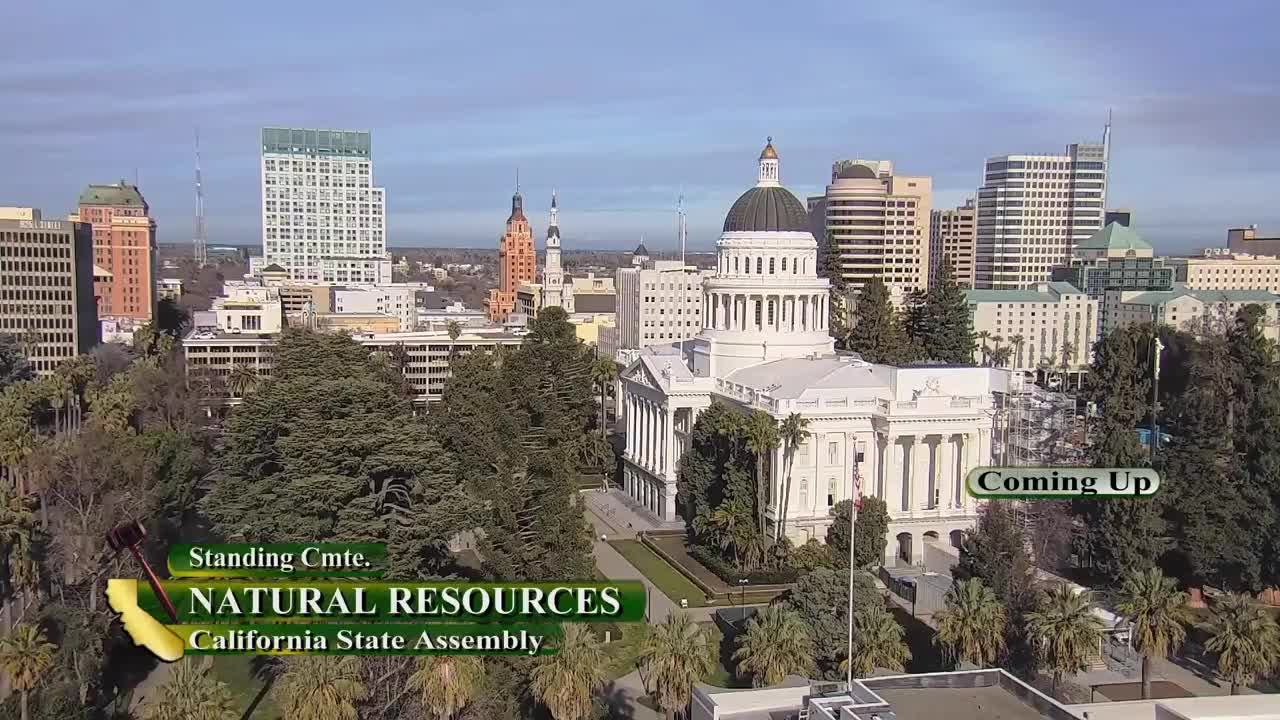
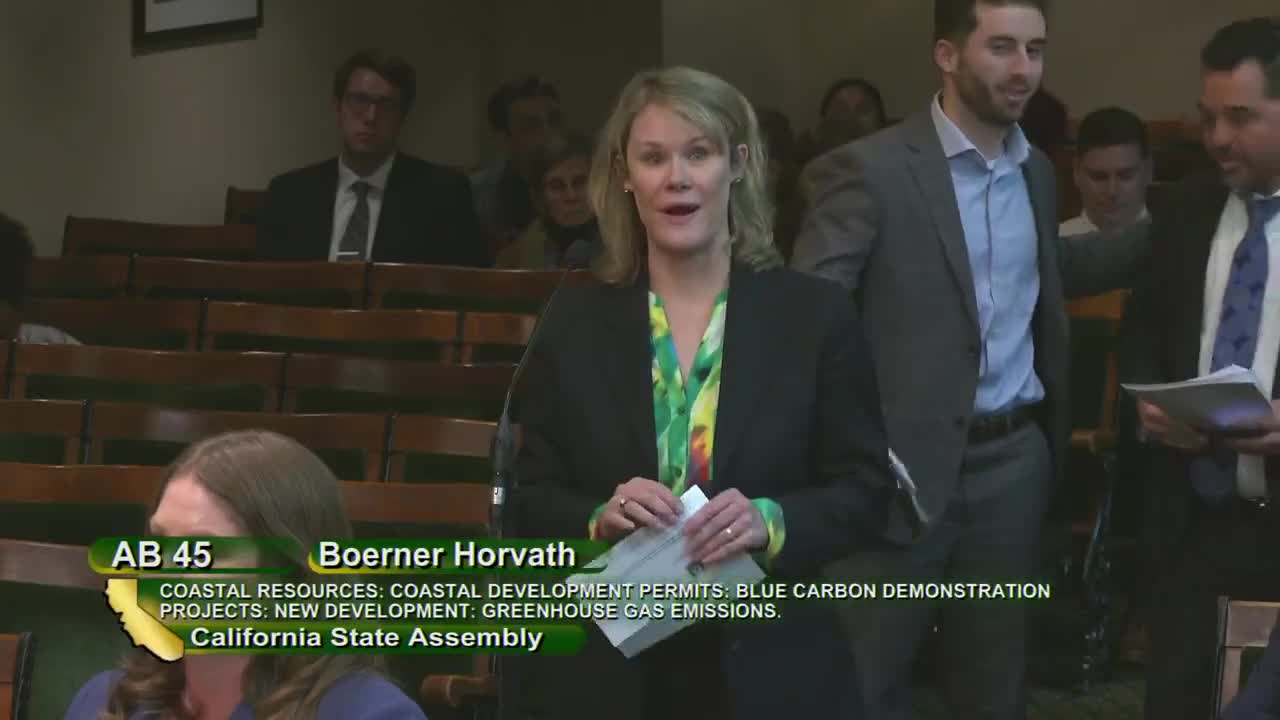
Discussed in Hearing
 2MIN
Assembly Standing Committee on Natural Resources
 13MIN
Assembly Standing Committee on Natural Resources
Bill Author